 |
|
|
HOME
|
US Navy -
ships
|
US Navy - air
units
|
USMC - air
units
|
International
Navies
|
Weapon Systems
|
Special Reports |
|
|
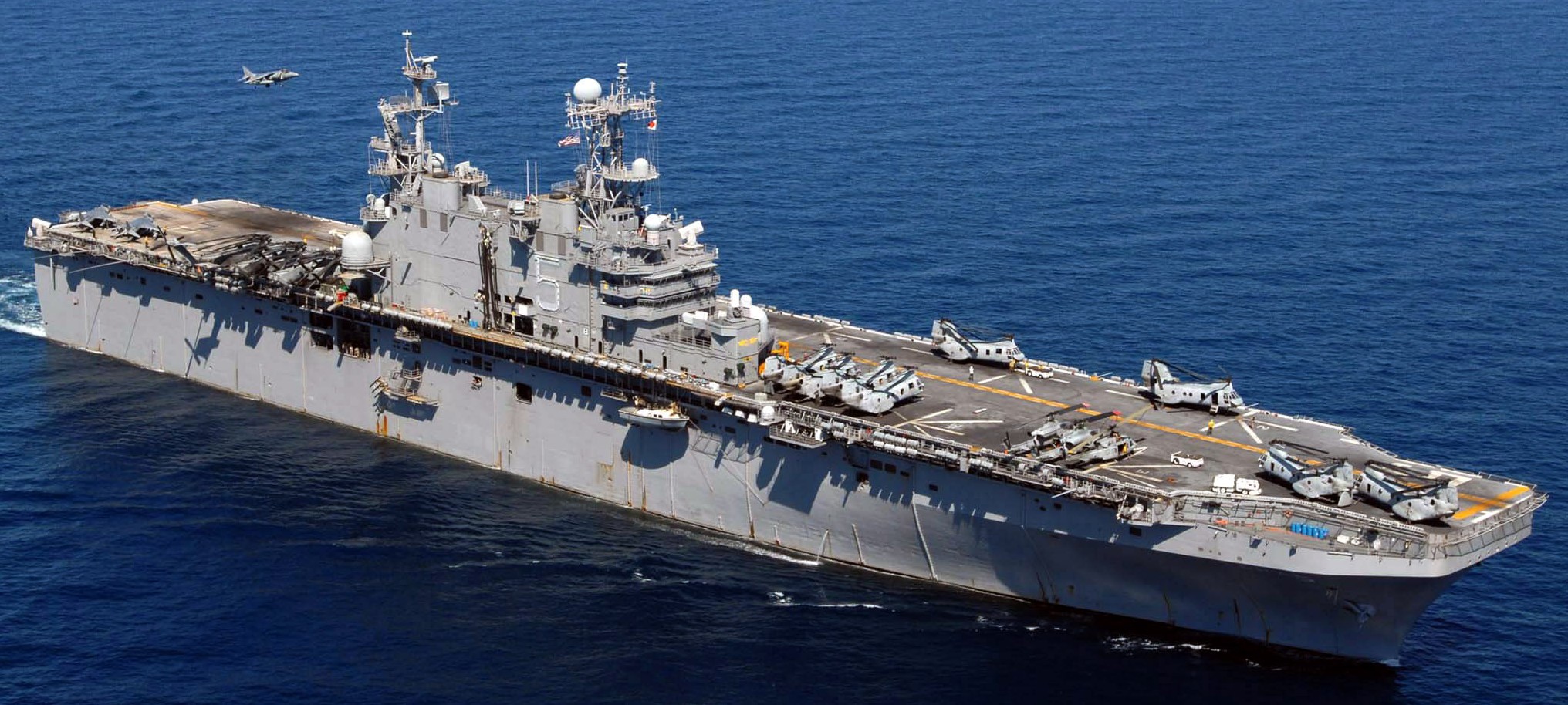
US Navy Tarawa class Amphibious Assault Ship - LHA |
|
 |
|
| 09/23 | |
| Ships: | |
|
LHA 1
USS Tarawa
(1976) LHA 2 USS Saipan (1977) LHA 3 USS Belleau Wood (1978) LHA 4 USS Nassau (1979) LHA 5 USS Peleliu (1980) |
|
| Specifications: | |
|
Displacement: 39925 tons (full load) Length: 254 meters (834 ft) Beam: 40.2 meters (131.9 ft) Draft: 7.9 meters (26 ft) Speed: 24 knots (44 km/h) Range: 10000 NM (19000 km) at 20 knots (37 km/h) Complement: Ship's Company: 56 officers, 874 enlisted Embarked Landing Force: 1703 Marines Propulsion: 2 x Combustion Engineering 2600 psi boilers 2 x Westinghouse geared steam turbines (70000 hp / 52000 kW) 2 shafts, 2 propellers, 1 bow-thruster
Aviation: full flight deck (820 x 118 foot / 250 x 36 meters) / hangar deck up to 35 Aircraft: AV-8B Harrier II / MV-22B Osprey / CH-53E Super Stallion UH-1N Huey / AH-1W Super Cobra / MH-60S Knighthawk Landing force: well deck (268 x 78 foot / 82 x 24 meters) for 2 x LCAC or 4 x LCU Systems: AN/SPS-67 surface search radar AN/SPS-40E air search radar AN/SPS-48 3D air search radar AN/SPS-64 navigation radar AN/SPN-35 aircraft control/approach radar AN/SPN-43 aircraft control/approach radar AN/SLQ-32(V)3 electronic warfare suite AN/URN-25 Tactical Air Navigation System (TACAN) Mk.23 Target Acquisition System (TAS) |
|
|
The primary war-fighting mission of the LHA-1 Tarawa class is to
land and sustain United States Marines on any shore during
hostilities. The ships serve as the centerpiece of a multi-ship
Amphibious Readiness Group (ARG). Some 3,000 Sailors and Marines
contribute to a forward-deployed ARG composed of approximately 5,000
personnel. The ships are designed to maintain what the Marine Corps calls "tactical integrity" - getting a balanced force to the same place at the same time. One LHA can carry a complete Marine battalion, along with the supplies and equipment needed in an assault, and land them ashore by either helicopter or amphibious craft. This two pronged capability, with emphasis on airborne landing of troops and equipment, enables the Navy and Marine Corps to fulfill their present-day mission. Whether the landing force is involved in an armed conflict, acting as a deterrent force in an unfavorable political situation or serving in a humanitarian mission, the class offers tactical versatility. The Tarawa class is designed to operate independently or as a unit of a force, as a flagship or individual ship unit in both air and/or surface assaults, these ships are key elements of the amphibious assault forces for the Navy. They incorporate the best design features and capabilities of several amphibious assault ships currently in service: the Amphibious Assault Ship (LPH), Amphibious Transport Dock (LPD), Amphibious Cargo Ship (LKA), and Dock Landing Ship (LSD). A capital ship, the Tarawa class can simultaneously fulfill six war-fighting requirements: flagship for embarked amphibious squadron, flag or general officer staff; aircraft carrier, with a 35-aircraft complement including AV-8B fighter/attack V/STOL Harrier jets, AH-1 helicopter gunships, CH-53E Super Sea Stallion "heavy lift" and CH-46D/E Sea Knight helicopters; amphibious assault launching platform, employing a variety of surface assault craft including the Navy's newest 40+ knot LCAC, 135-foot Landing Craft Utility (LCU), and other amphibious assault vehicles; hospital ship, equivalent to the nation's finest local hospitals with 17 ICU beds, 4 operating rooms, 300 beds, a 1,00-unit blood bank, full dental facilities, and orthopedics, trauma, general surgery, and x-ray capabilities; command and control (C4I) ship, with the Navy's most sophisticated SHF and EHF satellite communications capability; and assault provisions carrier able to sustain embarked forces with fuel, ammunition and other supplies. The LHA's full length flight deck can handle ten helicopters simultaneously, as well as the AV-8 HARRIER jump-jet aircraft and OV-10 BRONCO fixed-wing turboprop reconnaissance aircraft. There is also a large well deck in the stem of the ship for a number of amphibious assault craft, both displacement hull and air cushion. Although the LHA usually doesn't carry Landing Craft, Air Cushioned (LCAC) boats onboard, they frequently operate with them and control them. The ships have an extensive command, communication and control suite. These electronic systems give the amphibious task force commander nearly unlimited versatility in directing the assault mission. The heart of the LHA's electronic system is a tactical amphibious warfare computer which not only keeps track of the landing force's positions after leaving the ship, but tracks enemy targets ashore. With current information on troop positions in relation to enemy targets, the tactical data system can also direct the targeting of the guns and missiles from the ship as well as the support ships. Additionally, the system maintains air and surface traffic control during the landing not only for her own helicopters and assault craft, but for the combat air control and task force support ships as well. Nearly three football fields in length and 20 stories high, these ships are capable of embarking 3,000 Sailors and Marines when deployed. The ship's two-acre flight deck, 18,519 square-foot hangar deck, and 250-foot well deck enable an embarked landing force to accomplish its mission around the globe. Two-marine boilers provide steam to the turbines which drive the twin screw ship, providing 70,000 total shaft horsepower. The ships have a range of 10,000 miles at a speed of 20 knots. The ships have an extensive mechanical system for vertical and horizontal movement of containerized and palletized supplies from deep cargo holds to assault craft or helicopters. A system of five centerline elevators, conveyor lines and a monorail system move cargo and supplies. Two large elevators, one aft and one portside, move aircraft and equipment from the hangar deck to the flight deck. Wheeled vehicles, trucks, jeeps and tanks can be driven or pulled from any deck level storage position via inclined ramps to either awaiting craft in the well deck or helicopters on the flight deck. interesting facts: TARAWA stands 20 stories high, measures 820 feet in length and 106 feet in width, displaces 40,000 tons of seawater when fully loaded and has a flight deck that measures more than two acres square. TARAWA has 1,400 compartments - about the same number as a large hotel. TARAWA has nine elevators and two horizontal conveyors - more than most department stores. TARAWA has 2 boilers - the largest ever manufactured for the United States Navy. They can generate a total of 400 tons of steam per hour and develop 140,000 horsepower - equivalent to the horsepower of more than 700 average automobiles. TARAWA has electrical power subsystem creating 14,000 kilowatts to provide electrical power for the ship - adequate electrical power to light 11,500 homes for 50,000 people. TARAWA has 1,500 tons of air conditioning equipment - sufficient to environmentally control a 32-story office building or 500 average homes. TARAWA can ballast 12,000 tons of seawater for trimming the ship to receive and discharge landing craft from the well deck. TARAWA was constructed with more than 20,000 tons of steel, 3,000 tons of aluminum, 400 miles of cable and 80 miles of pipe. TARAWA has a 300 bed hospital, 4 medical operating rooms and 3 dental operating rooms. TARAWA has a 900-horsepower bow thruster for lateral movement at low speeds that can move the bow with 20,000 pounds of force - equivalent to half the pulling power of a diesel/electrical locomotive. |
|
|
class + detail images (for more images go to the individual ship pages) |
|
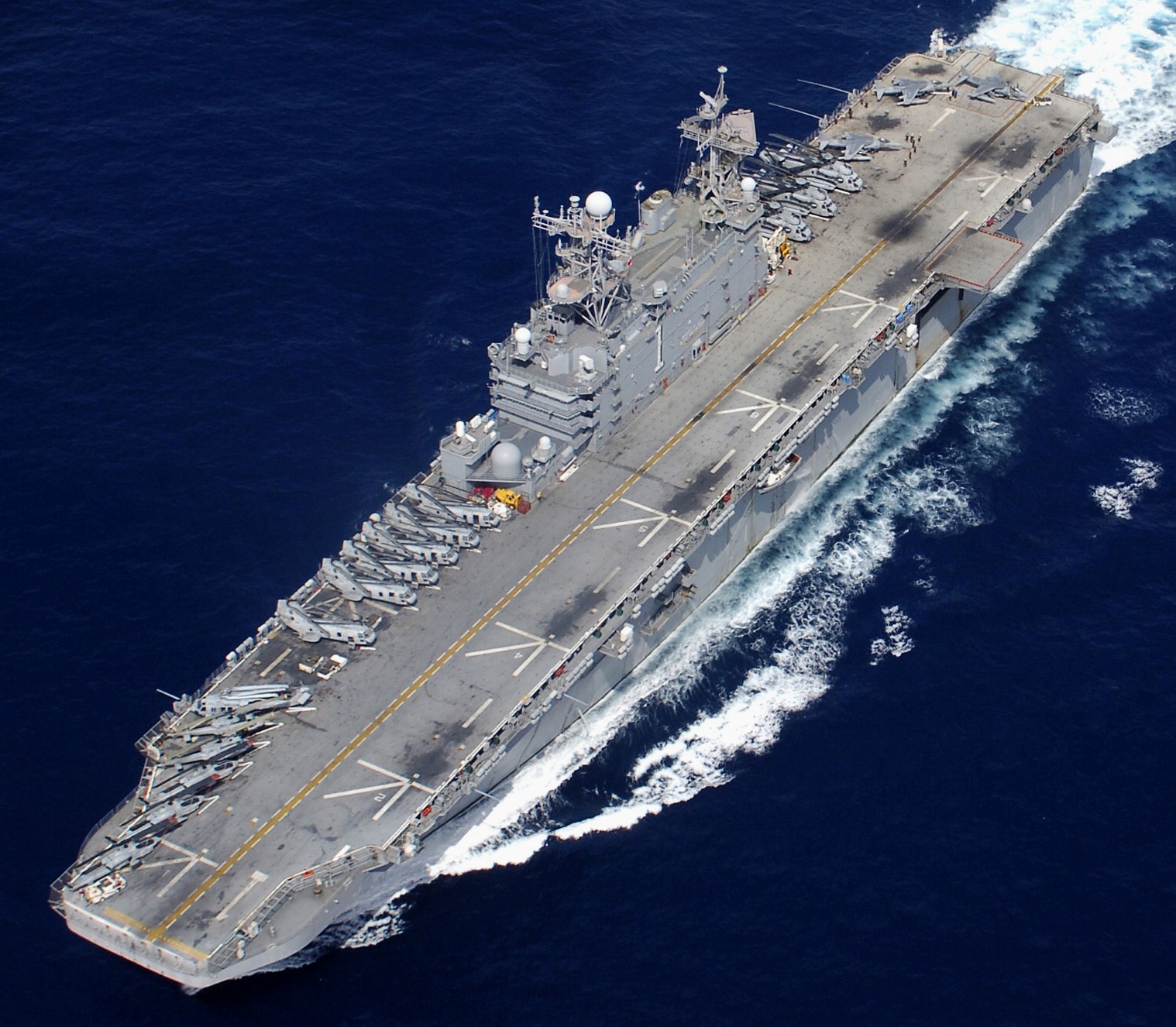 LHA 1 USS Tarawa 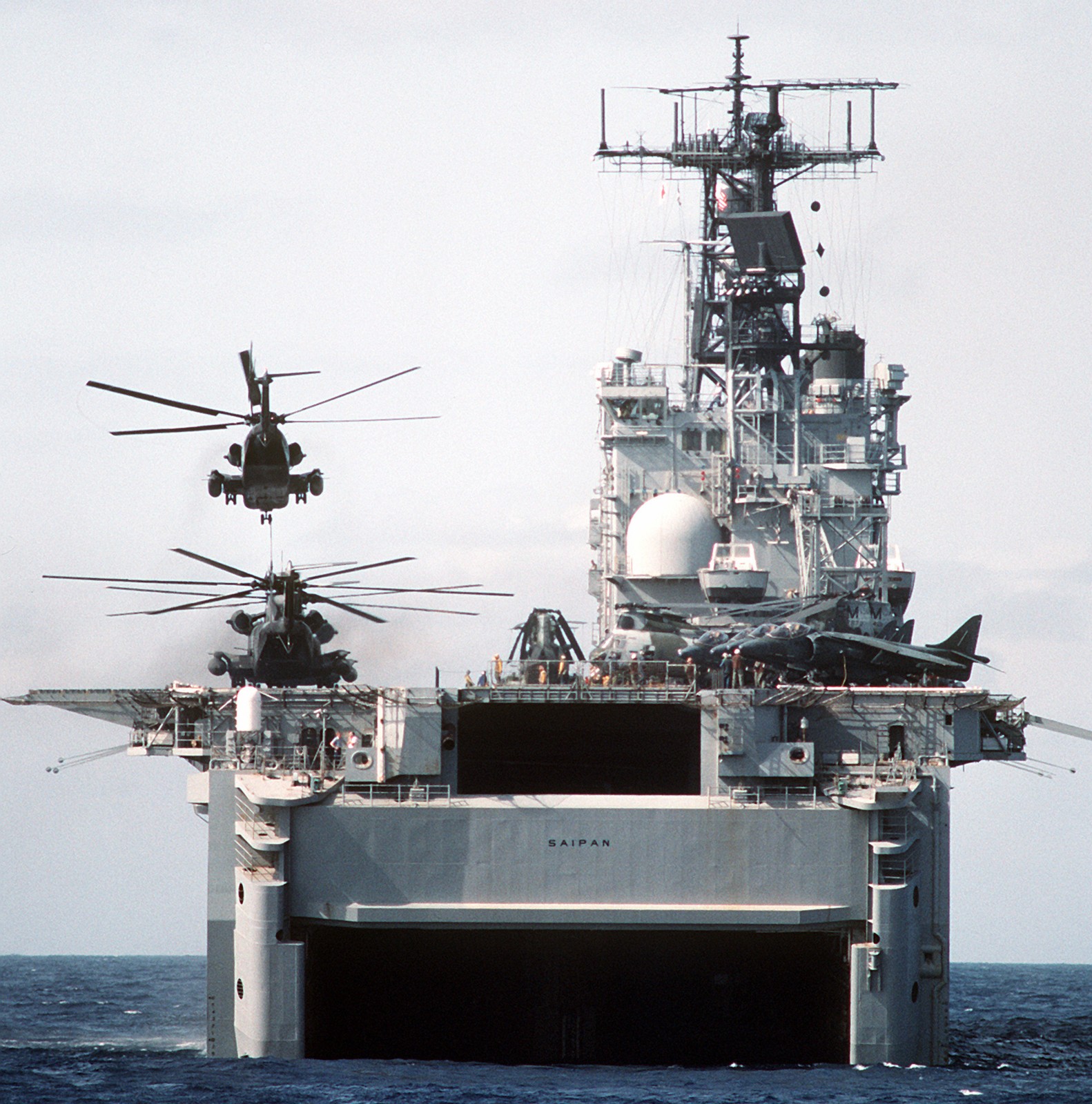 LHA 2 USS Saipan  LHA 3 USS Belleau Wood 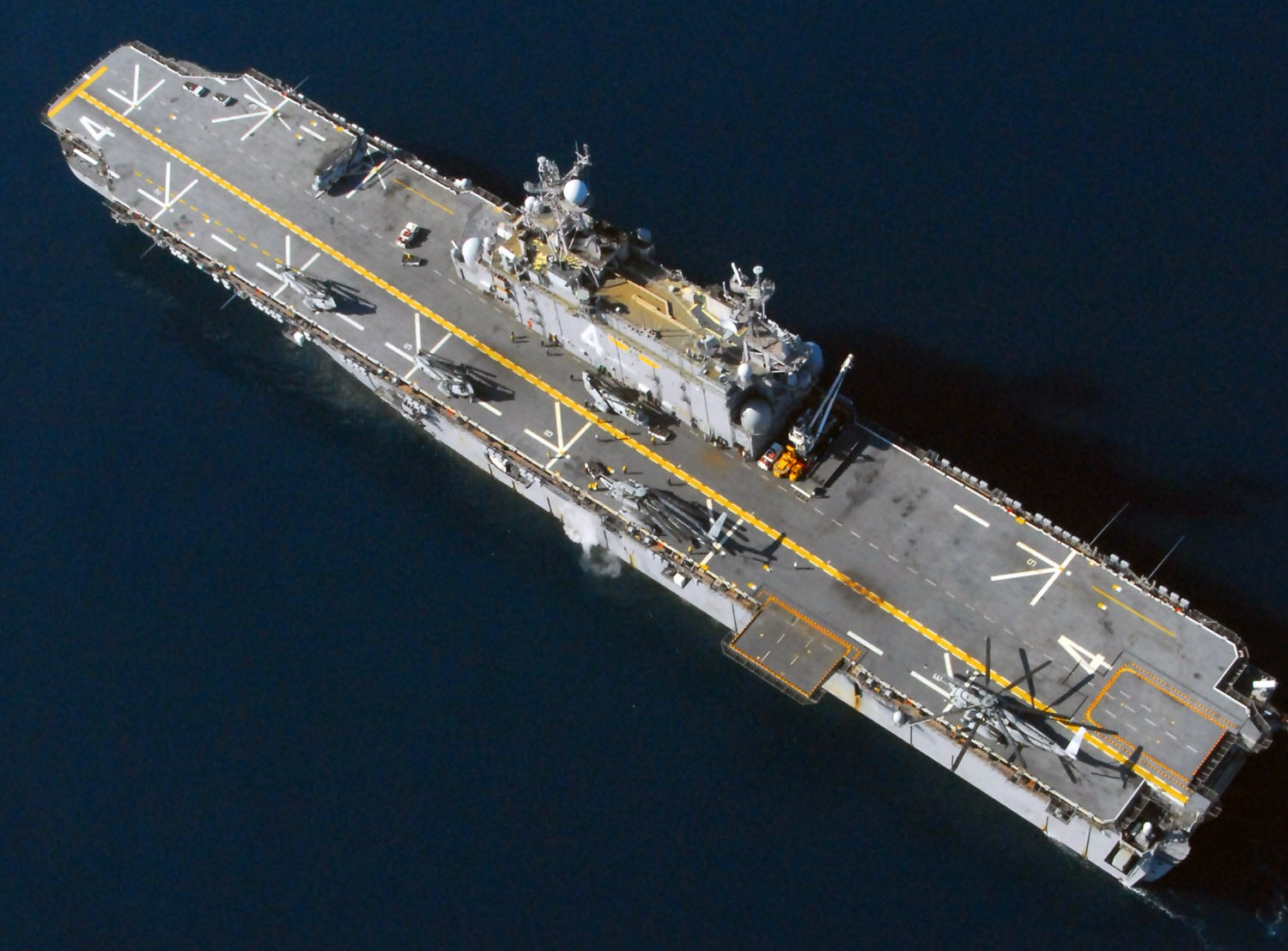 LHA 4 USS Nassau 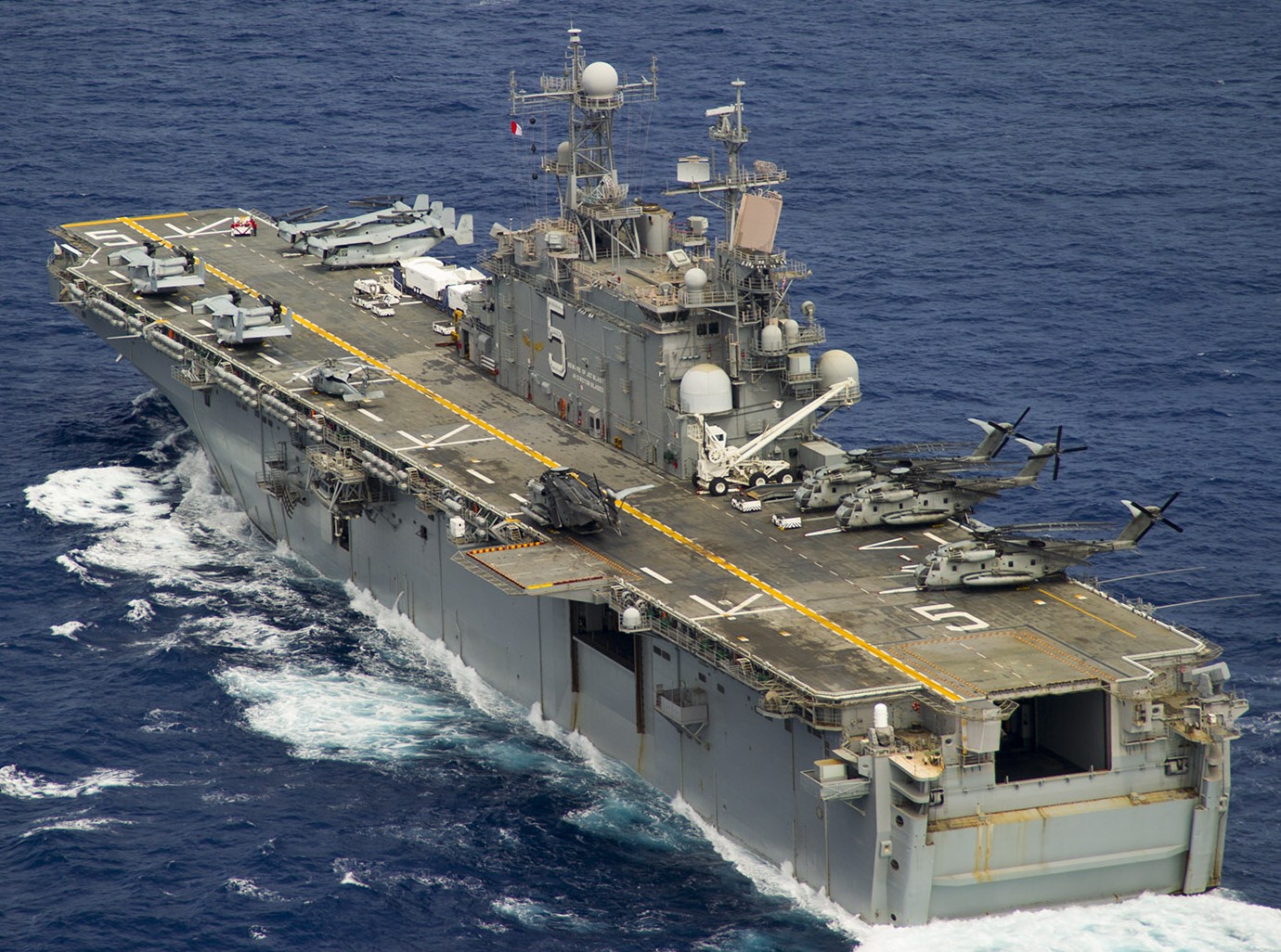 LHA 5 USS Peleliu |
|
|
|
seaforces.org |
USN ships
start page | |