|
|
|
HOME
|
US Navy -
ships
|
US Navy - air
units
|
USMC - air
units
|
International
Navies
|
Weapon Systems
|
Special Reports |
|
Royal Australian Navy Hobart class Guided Missile Destroyer (DDGH) |
 |
| 10/25 |
| Ships: |
|
DDGH 39
HMAS Hobart DDGH 41 HMAS Brisbane DDGH 42 HMAS Sydney |
| Specifications: |
|
Design:
Navantia, Spain
Project coordinator: AWD Alliance Builders: ASC Pty. Ltd. / Forgacs Group / BAE Systems Australia Displacement: 7,000 tonnes (full load) Length: 146.7 meters (481.3 feet) Beam: 18.6 meters (61 ft) Draft: 7.2 meters (23.6 ft) Speed: 28+ knots (52+ km/h) Range: 5,000 NM (9,300 km) at 18 knots (33 km/h) Complement: 186 ship / 16 aircrew / accommodation for 234 Propulsion: CODOG (combined diesel or gas) 2 x General Electric 7LM2500-SA-MLG-38 gas turbines (17,500 kW / 23,500 hp, each) 2 x Caterpillar Bravo 16V diesel engines (5,650 kW / 7,580 hp, each) 2 shafts, 2 controllable pitch propellers Armament: Mk.41 Vertical Launching System (VLS) - 48 cells for a mix of RIM-66 Standard Missile SM-2MR (1 per cell) RIM-162 Evolved Sea Sparrow Missile (ESSM) (4 per cell) 2 x Mk.141 missile launchers for up to 8 RGM-84 Harpoon SSM or 2 x quadruple box-launchers for 8 Naval Strike Missiles (NSM) 1 x Mk.45 (Mod.4) 5”/62 caliber lightweight gun 2 x Mk.32 Mod.9 surface vessel torpedo tubes (SVTT) for 4 EuroTorp MU90 torpedoes 1 x Mk.15 Phalanx Close-in Weapon System (CIWS) 2 x Rafael 25mm Typhoon Remote Weapon Systems (RWS) Aviation: flight deck and hangar for 1 x MH-60R Seahawk Systems: AEGIS Combat System (Baseline 7.1) Lockheed Martin AN/SPY-1D(V) S-band radar Northrop Grumman AN/SPQ-9B X-band pulse Doppler horizon search radar Raytheon Mark 99 fire-control system with 2 continuous wave illuminating radars 2 x L-3 Communications SAM Electronics X-band navigation radars Ultra Electronics Integrated Sonar System - hull mounted sonar and towed sonar (TASS) Ultra Electronics Series 2500 electro-optical director Sagem VAMPIR IR search & track system Rafael Toplite stabilised target acquisition sights Electronic warfare & decoys: ITT EDO Reconnaissance and Surveillance System ES-3701 ESM radar SwRI MBS-567A communications ESM system Ultra Electronics Avalon System multipurpose digital receiver Jenkins Engineering Defence System low-band receiver 4 x Nulka active missile decoy system 4 x 6-tube multipurpose decoy launchers |
|
The Hobart class is a class of three air warfare destroyers (AWD)
being built for the Royal Australian Navy (RAN). Planning for ships
to replace the Adelaide-class frigates and restore the capability
last exhibited by the Perth-class destroyers began by 2000,
initially under acquisition project SEA 1400, which was redesignated
SEA 4000. Although the designation "Air Warfare Destroyer" is used
to describe ships dedicated to the defence of a naval force (plus
assets ashore) from aircraft and missile attack, the planned
Australian destroyers are expected to also operate in anti-surface,
anti-submarine, and naval gunfire support roles. Planning for the Australian Air Warfare Destroyer (as the class was known until 2006) continued through the mid-2000s, with the selection of the Aegis combat system as the intended combat system and ASC as the primary shipbuilder in 2005. In late 2005, the AWD Alliance was formed as a consortium of the Defence Materiel Organisation (DMO), ASC, and Raytheon. Between 2005 and 2007, Gibbs & Cox's Evolved Arleigh Burke-class destroyer concept and Navantia's Álvaro de Bazán-class frigate competed for selection as the AWD design. Although the Arleigh Burke design was larger and more capable, the Álvaro de Bazán design was selected in June 2007 as it was an existing design, and would be cheaper, quicker, and less risky to build. Three ships were ordered in October 2007, and will be assembled at ASC's facility in Osborne, South Australia, from 31 pre-fabricated modules (or 'blocks'). An option to build a fourth destroyer was included in the original contract, but has not been exercised. ASC, NQEA Australia, and the Forgacs Group were selected in May 2009 to build the blocks, but within two months, NQEA was replaced by BAE Systems Australia. Construction errors and growing delays led the AWD Alliance to redistribute the construction workload in 2011, with some modules to be built by Navantia. Increasing slippage has pushed the original planned 2014-2016 commissioning dates out by at least three years, with lead ship Hobart to be completed by June 2017, Brisbane in September 2018, and Sydney by March 2020. Armament: Each ship's main weapon is a 48-cell Mark 41 Vertical Launching System, capable of firing the SM-2 Block IIIB Standard anti-aircraft missile or the quad-packed RIM-162 Evolved Sea Sparrow point-defence missile. The missiles are supplemented by two four-canister launchers for Harpoon anti-ship missiles, and a BAE Systems Mk.45 (Mod.4) 5-inch / 62-calibre gun. Two Babcock Mk.32 Mod 9 twin-tube torpedo launchers will be carried, and used to fire Eurotorp MU90 torpedoes. For close-in defence, the ships will carry an aft-facing Mk.15 Phalanx CIWS system, plus two Rafael Typhoon remote weapon systems (RWS) sited on the bridge wings. In 2009, the government announced in the 2009 Defence Whitepaper that the Hobarts would be armed with the Standard Missile 6 (SM-6). In August 2024, HMAS Sydney became the first of the Hobarts to fire a Standard Missile 6. In 2021, the government announced that the Hobarts would be armed with Tomahawk cruise missiles to enable them to strike land targets at greater distances up to 2,500 km (1,553.43 mi). In December 2024, HMAS Brisbane became the first of the Hobarts to fire a Tomahawk cruise missile. In 2022, the government announced that the Hobarts would be armed with the Naval Strike Missile (NSM) to replace the RGM-84 Harpoon Block II which would more than double the strike range of the Hobarts. In June 2024, HMAS Sydney became the first of the Hobarts to fire a Naval Strike Missile. In 2024, the government announced that the Hobarts would be armed with the SM-2 Block IIIC missile. |
|
images for more images go to the individual ship's page |
 DDGH 39 HMAS Hobart  DDGH 41 HMAS Brisbane 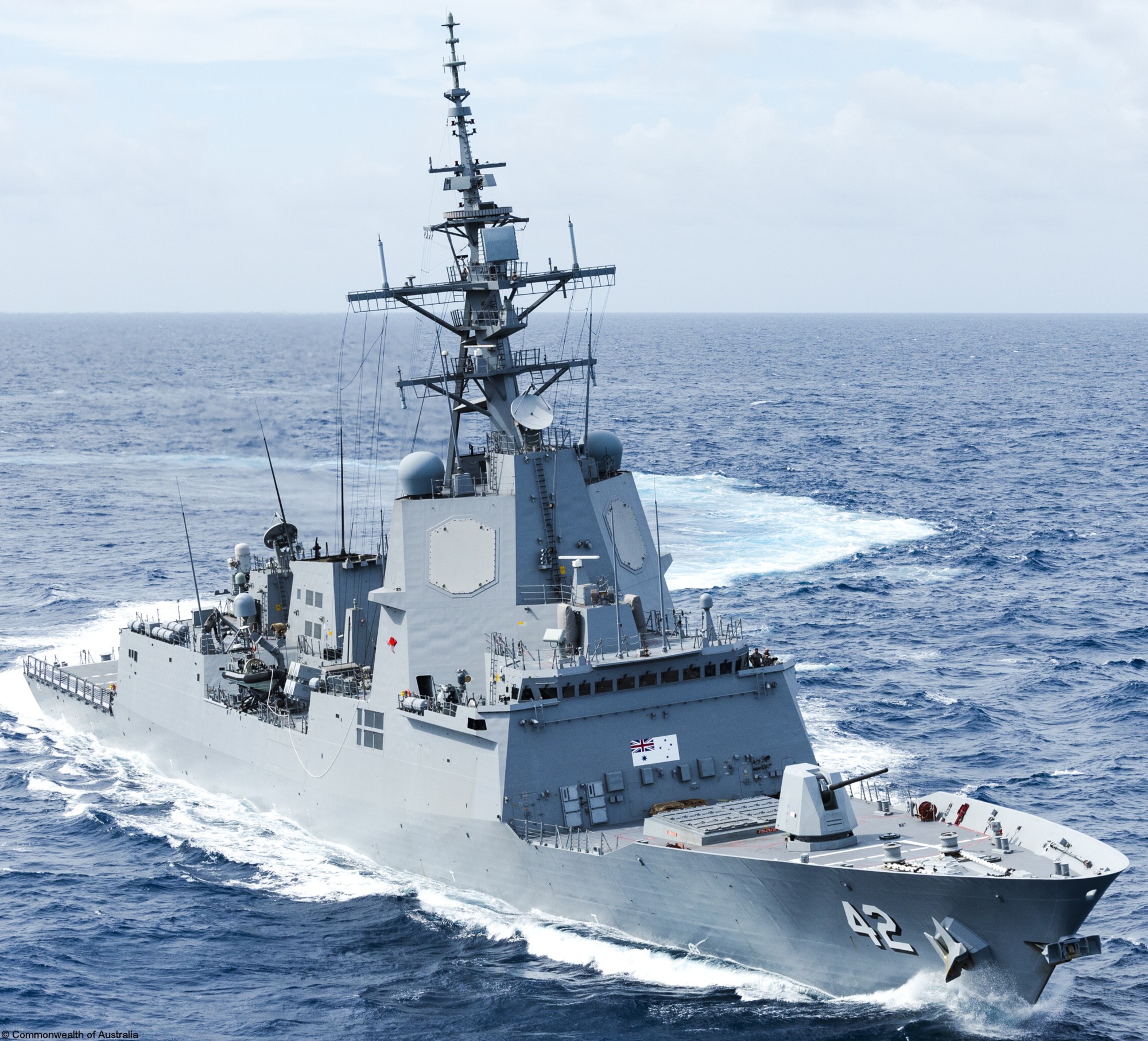 DDGH 42 HMAS Sydney ARMAMENT + DETAILS 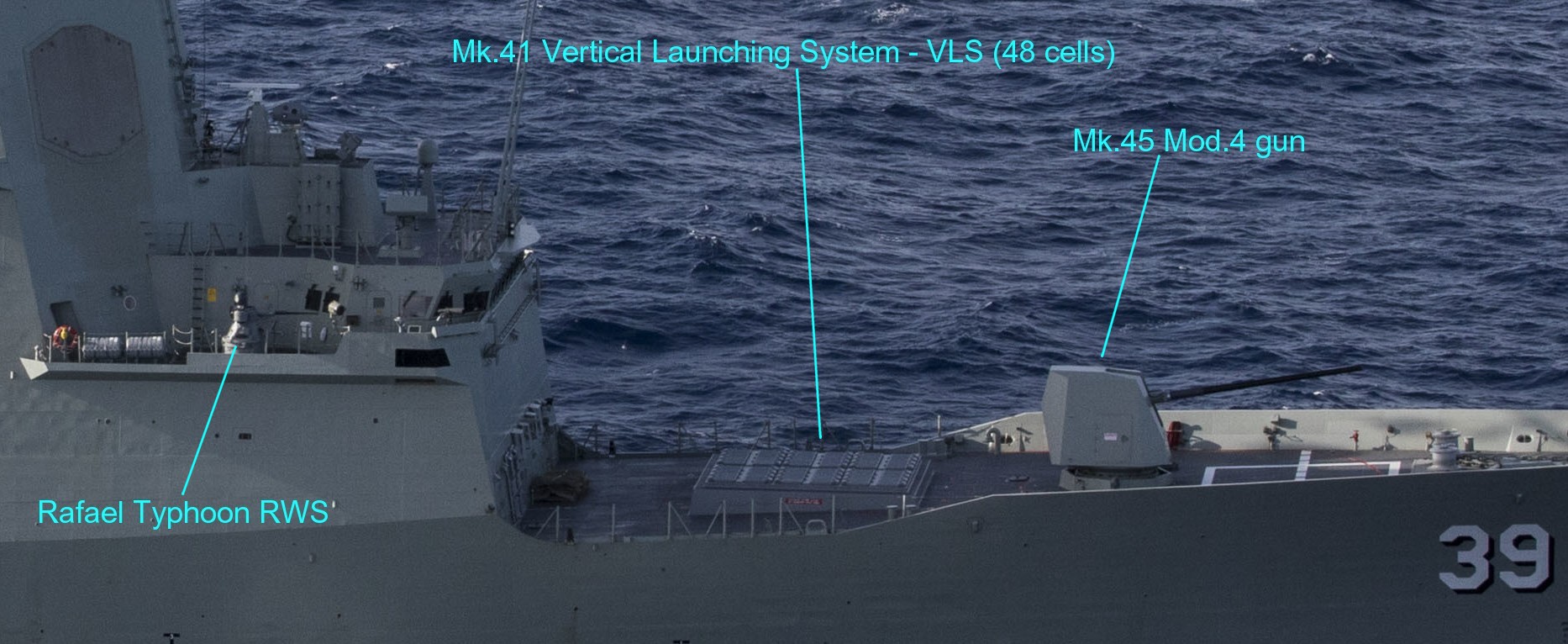 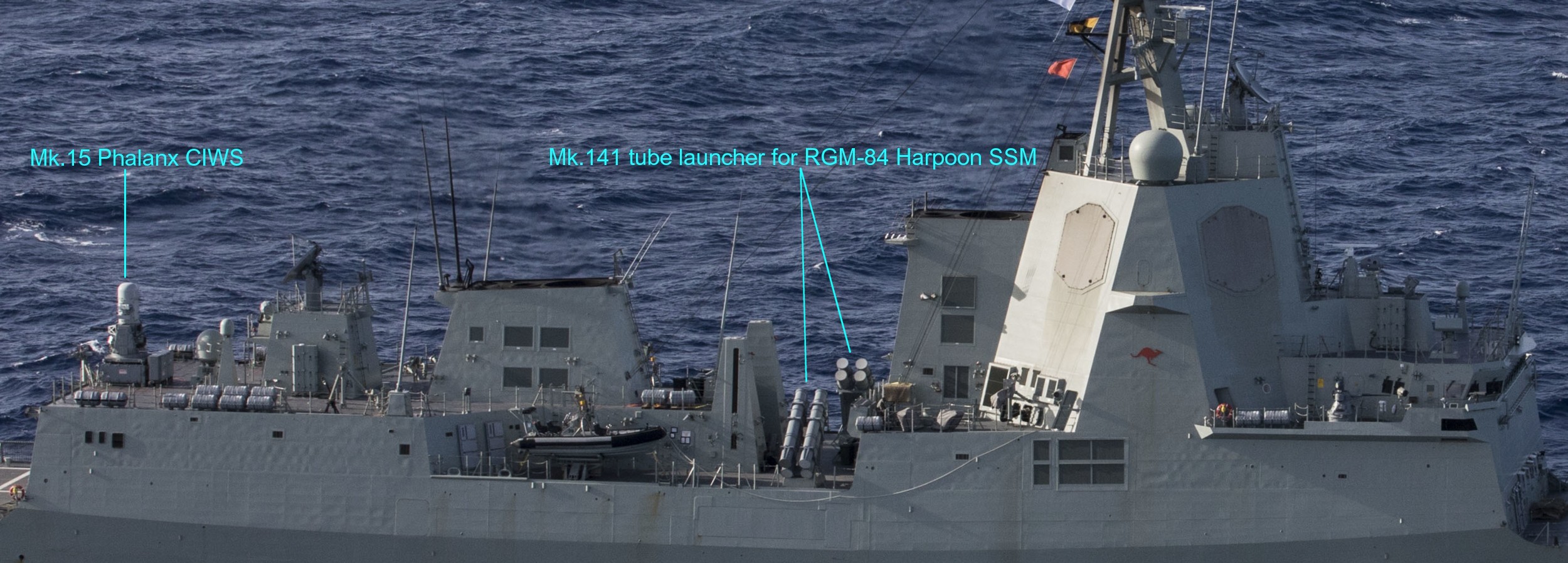 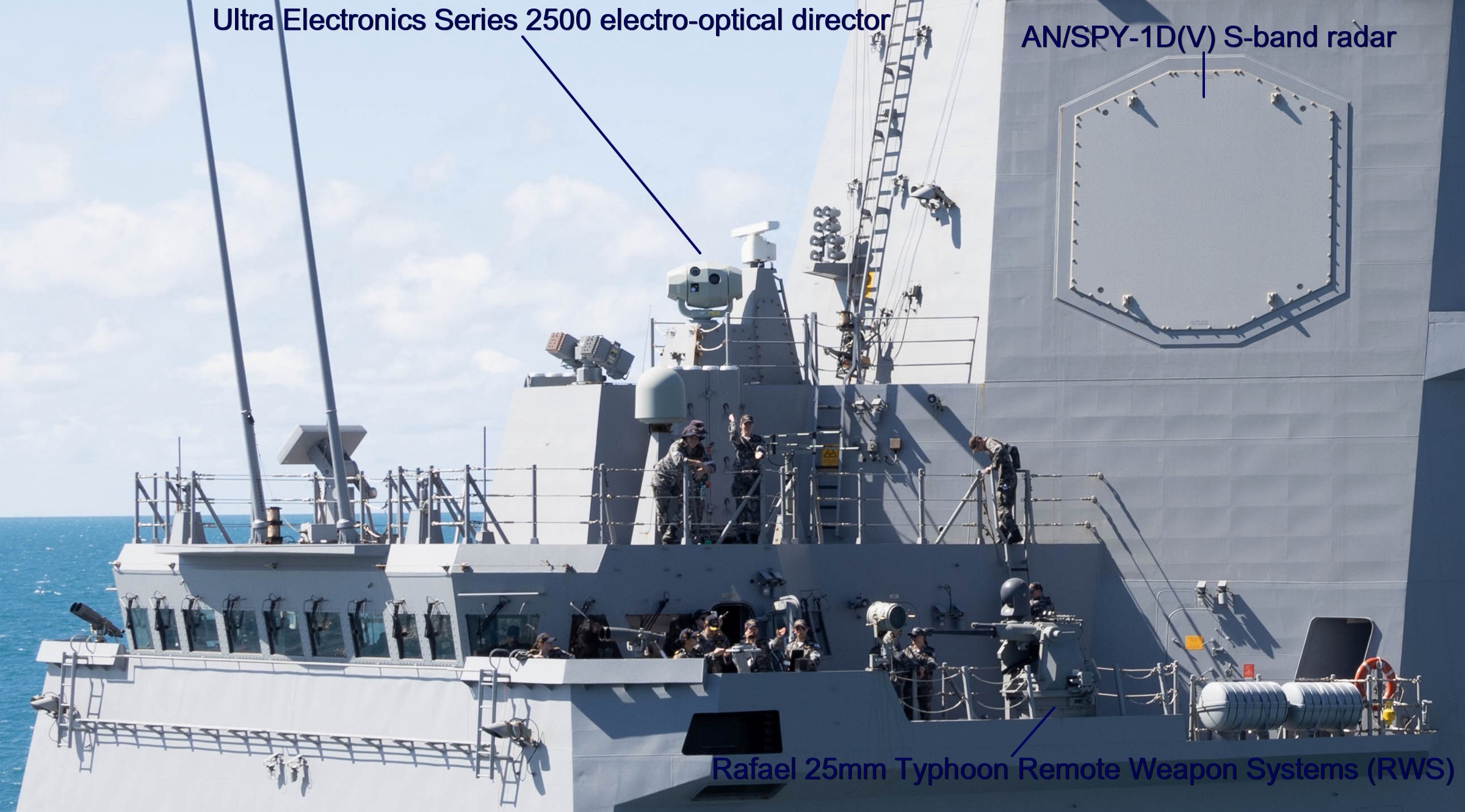  48-cell Mk.41 Vertical Launching System (VLS) for RIM-66 Standard Missiles SM-2MR, RIM-162 Evolved Sea Sparrow (ESSM) and BGM-109 Tomahawk TLAM  firing a BGM-109 Tomahawl Land Attack Missile (TLAM) from the Mk.41 VLS  firing a Naval Strike Missile (NSM) from the box-launcher (replacement for the Harpoon launcher) 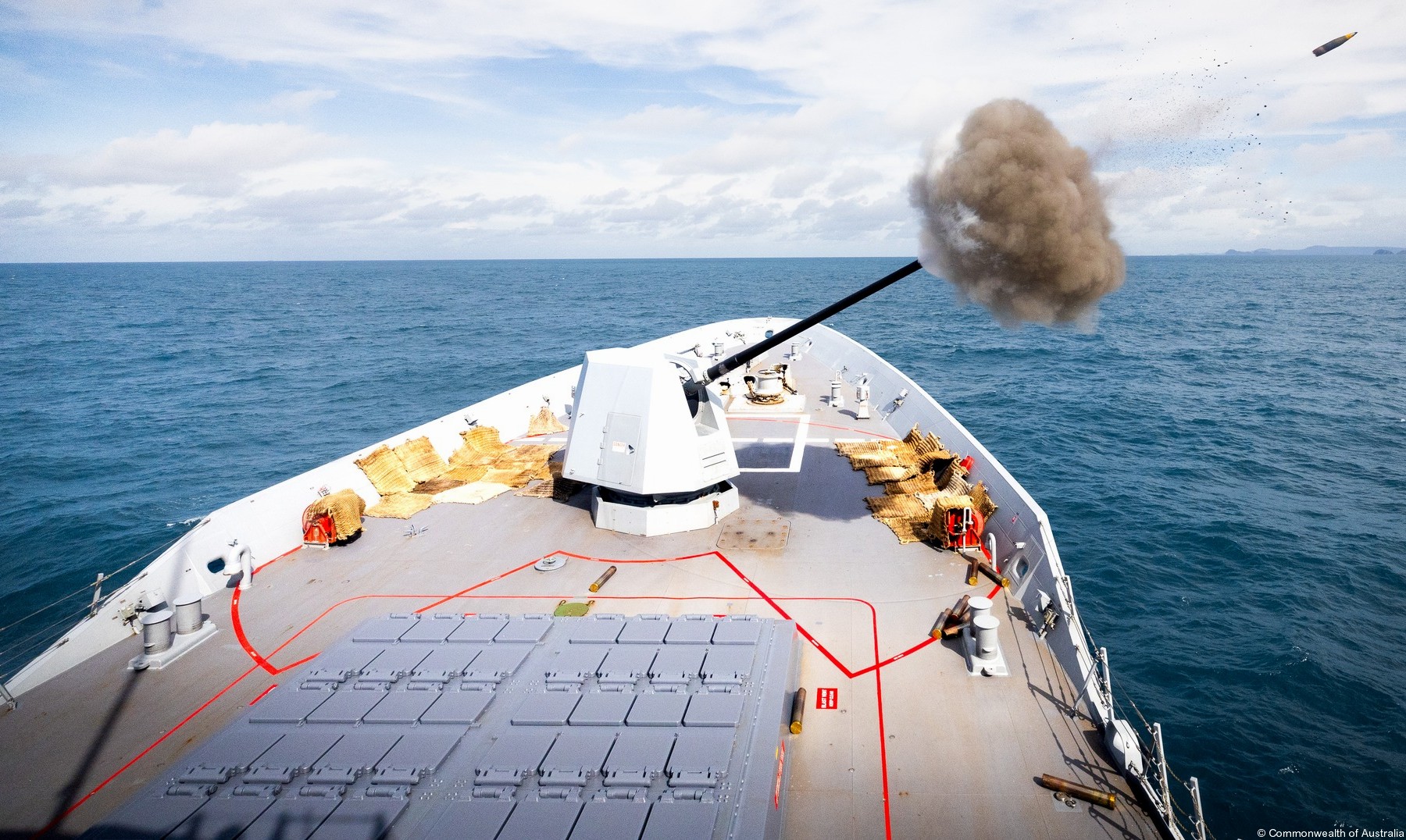 Mk.45 Mod.4 gun (5-inches, 127 mm / 62-caliber) |
|
|
seaforces.org
|
Royal
Australian
Navy start page
| |
