|
|
|||||||||||||||||||||||||||||||||||||||||||||||||||||||||||||||||||||
|
HOME
|
US Navy -
ships
|
US Navy - air
units
|
USMC - air
units
|
International
Navies
|
Weapon Systems
|
Special Reports |
|||||||||||||||||||||||||||||||||||||||||||||||||||||||||||||||||||||
|
Surface Vessel / Submarine Weapon System RGM-109 Tomahawk UGM / BGM / RGM-109 Tomahawk Land Attack Missile (TLAM) |
|||||||||||||||||||||||||||||||||||||||||||||||||||||||||||||||||||||
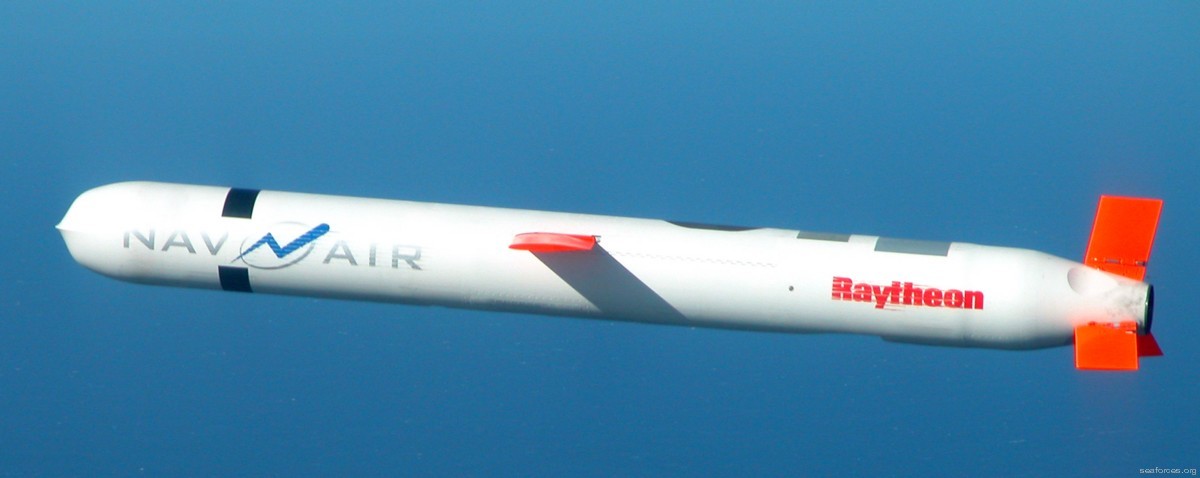 |
|||||||||||||||||||||||||||||||||||||||||||||||||||||||||||||||||||||
| 03/26 | |||||||||||||||||||||||||||||||||||||||||||||||||||||||||||||||||||||
|
The UGM/RGM/BGM-109 Tomahawk Land Attack Missile (TLAM) is an
American long-range, all-weather, jet-powered, subsonic cruise
missile that is used by the United States Navy, Royal Australian
Navy, Royal Netherlands Navy and Royal Navy in ship and
submarine-based land-attack operations. Over a dozen variants and upgraded versions have been developed since the original design, including air-, sub-, and ground-launched configurations with both conventional and nuclear armaments. The Tomahawk's manufacturing history has seen several transitions. General Dynamics served as the sole supplier in the 1970s. From 1992 until 1994, McDonnell Douglas was the sole supplier of Tomahawks, producing Block II and Block III versions and remanufacturing many Tomahawks to Block III specifications. In 1994, Hughes Aircraft, having purchased General Dynamics' missile division in 1992, outbid McDonnell Douglas to become the sole supplier of Tomahawks. A joint venture between Hughes and Raytheon manufactured the missile from 1995 until Raytheon's acquisition of Hughes in 1997, solidifying their position as the sole supplier. In 2016, the US Department of Defense purchased 149 Tomahawk Block IV missiles for $202.3 million. As of 2024, Raytheon remains the sole manufacturer of non-nuclear, sea-launched Tomahawk variants. Variants: The variants and multiple upgrades to the missile include: BGM-109A Tomahawk Land Attack Missile Nuclear (TLAM-N) with a W80 nuclear warhead. Retired from service sometime between 2010 and 2013. Reports from early 2018 state that the US Navy is considering reintroducing a (yet unknown type of) nuclear-armed cruise missile into service. RGM/UGM-109B Tomahawk Anti-Ship Missile (TASM) Anti-ship variant with active radar homing; withdrawn from service in 1994 and converted to TLAM-E Block IV version. BGM-109C Tomahawk Land Attack Missile - Conventional (TLAM-C Block II) with WDU-25/B unitary warhead also used on the AGM-12B Bullpup. The WDU-25/B warhead weighed 992 pounds (450 kg) and contained 378 pounds (171 kg) of Picratol and Composition H-6 high explosives. Starting in May 1993, the WDU-25/B warhead was replaced by the lighter WDU-36/B warhead weighing 690 pounds (310 kg) and filled with 265 pounds (120 kg) of PBXN-107 high explosive. The smaller warhead allowed the fuel tank to be enlarged, increasing the maximum range. This version was given the designation TLAM-C Block III. BGM-109D Tomahawk Land Attack Missile - Dispenser (TLAM-D) with a submunitions dispenser that carried 166 BLU-97/B Combined Effects Bomblets with 287 grams (0.633 lb) Cyclotol high explosive per munition Kit 2 Tomahawk Land Attack Missile with an unique warhead used to disable electrical grids. First used in the Gulf War. RGM/UGM-109E Tomahawk Land Attack Missile (TLAM-E Block IV) improved version of the TLAM-C Block III. Also called Tactical Tomahawk, a term which now incorporates other variants as well. RGM/UGM-109E TLAM Block V: A modernized TACTOM with upgraded navigation and communication, including anti-jam GPS. RGM/UGM-109E Block Va: Block V anti-ship version, capable of hitting moving targets at sea. Block Va's range is shorter than the Block V's, due to the extra space for the new navigation/sensor/passive radar needs. Estimate the Block Va's range is 310 to 430 mi (500 to 700 km) RGM/UGM-109E Block Vb: Uses a joint multi-effects warhead (JMEWS) that can hit more diverse land targets, using a multi-mode blast fragmentation and penetrating warhead. IOC is slated for 2027. MST kit: Converts an older Block IV TACTOM into a re-certified Block Va MST TACTOM. BGM-109G Gryphon Ground Launched Cruise Missile (GLCM) with a W84 nuclear warhead; withdrawn from service in 1991 to comply with the INF Treaty. AGM-109H/L Medium Range Air-to-Surface Missile (MRASM) a shorter-range, turbojet powered air-launched cruise missile with conventional non-nuclear warheads intended for USAF and Navy. AGM-109H for USAF, 5.84 m (19 ft 2 in) long, with TERCOM en-route and DSMAC terminal guidance, and payload of runway cratering submunitions for use against airfields. AGM-109L for US Navy, 4.87 m (16 ft 0 in) long, with unitary warhead for use against ships or high value land targets, and imaging infra-red seeker and datalink. Never entered service. Upgrades: A major improvement to the Tomahawk is network-centric warfare-capabilities, using data from multiple sensors (aircraft, UAVs, satellites, foot soldiers, tanks, ships) to find its target. It will also be able to send data from its sensors to these platforms. It will be a part of the networked force being implemented by the Pentagon. Tomahawk Block II variants were all tested during January 1981 to October 1983. Deployed in 1984, some of the improvements included: an improved booster rocket, cruise missile radar altimeter, and navigation through the Digital Scene Matching Area Corellator (DSMAC). Tomahawk Block III introduced in 1993 added time-of-arrival control and improved accuracy for Digital Scene Matching Area Correlator (DSMAC) and jam-resistant GPS, smaller, lighter WDU-36 warhead, engine improvements and extended missile's range. Tactical Tomahawk Weapons Control System (TTWCS) takes advantage of a loitering feature in the missile's flight path and allows commanders to redirect the missile to an alternative target, if required. It can be reprogrammed in-flight to attack predesignated targets with GPS coordinates stored in its memory or to any other GPS coordinates. Also, the missile can send data about its status back to the commander. It entered service with the US Navy in late 2004. The Tactical Tomahawk Weapons Control System (TTWCS) added the capability for limited mission planning on board the firing unit (FRU). Tomahawk Block IV introduced in 2006 adds the strike controller which can change the missile in flight to one of 15 preprogrammed alternate targets or redirect it to a new target. This targeting flexibility includes the capability to loiter over the battlefield awaiting a more critical target. The missile can also transmit battle damage indication imagery and missile health and status messages via the two-way satellite data link. Firing platforms now have the capability to plan and execute GPS-only missions. Block IV also has an improved anti-jam GPS receiver for enhanced mission performance. Block IV includes Tomahawk Weapons Control System (TTWCS), and Tomahawk Command and Control System (TC2S). On 16 August 2010, the Navy completed the first live test of the Joint Multi-Effects Warhead System (JMEWS), a new warhead designed to give the Tomahawk the same blast-fragmentation capabilities while introducing enhanced penetration capabilities in a single warhead. In the static test, the warhead detonated and created a hole large enough for the follow-through element to completely penetrate the concrete target. In February 2014, U.S. Central Command sponsored development and testing of the JMEWS, analyzing the ability of the programmable warhead to integrate onto the Block IV Tomahawk, giving the missile bunker buster effects to better penetrate hardened structures. In 2012, the USN studied applying Advanced Anti-Radiation Guided Missile (AARGM) anti-radiation missile technology into the Tactical Tomahawk. In 2014, Raytheon began testing Block IV improvements to attack sea and moving land targets. The new passive radar seeker will pick up the electromagnetic radar signature of a target and follow it, and actively send out a signal to bounce off potential targets before impact to discriminate its legitimacy before impact. Mounting the multi-mode sensor on the missile's nose would remove fuel space, but company officials believe the Navy would be willing to give up space for the sensor's new technologies. The previous Tomahawk Anti-Ship Missile, retired over a decade earlier, was equipped with inertial guidance and the seeker of the Harpoon missile and there was concern with its ability to clearly discriminate between targets from a long distance, since at the time Navy sensors did not have as much range as the missile itself, which would be more reliable with the new seeker's passive detection and millimeter-wave active radar homing. Raytheon estimates adding the new seeker would cost $250,000 per missile. Other upgrades include a sea-skimming flight path. The first Block IV TLAMs modified with a maritime attack capability will enter service in 2021. A supersonic version of the Tomahawk is under consideration for development with a ramjet to increase its speed to Mach 3. A limiting factor to this is the dimensions of shipboard launch tubes. Instead of modifying every ship able to carry cruise missiles, the ramjet-powered Tomahawk would still have to fit within a 21-inch diameter and 20-foot long tube. In October 2015, Raytheon announced the Tomahawk had demonstrated new capabilities in a test launch, using its onboard camera to take a reconnaissance photo and transmit it to fleet headquarters. It then entered a loitering pattern until given new targeting coordinates to strike. By January 2016, Los Alamos National Laboratory was working on a project to turn unburned fuel left over when a Tomahawk reaches its target into an additional explosive force. To do this, the missile's JP-10 fuel is turned into a fuel air explosive to combine with oxygen in the air and burn rapidly. The thermobaric explosion of the burning fuel acts, in effect, as an additional warhead and can even be more powerful than the main warhead itself when there is sufficient fuel left in the case of a short range target. Block V: Block V exists within the Tactical Tomahawk program and contains three major sub-variants. Block V started as a recertification program for existing Block IV TACTOMS. Block V missiles introduce an Advanced Communications Architecture (ACA), Maritime Strike capability (Block Va), and a new Joint Multiple Effects Warhead System (JMEWS) (Block Vb). Raytheon is re-certifying older Block IV missiles to Block V standards, extending their service life by 15 years, and producing new Tomahawks as Block V variants. In 2025, a spokesperson for the U.S. Navy's Tomahawk program announced that the MST would be operational on destroyers by the end of September that year, with deployment to attack submarines to follow in FY26. All Block IV Tomahawks will be converted to Block V standard, while the remaining Block III missiles will be retired and demilitarized. Launch Systems + Control: Each missile is stored and launched from a pressurized canister that protects it during transportation and storage, and also serves as a launch tube. These canisters were racked in Armored Box Launchers (ABL), which were installed on the four reactivated Iowa-class battleships USS Iowa, USS New Jersey, USS Missouri, and USS Wisconsin. The ABLs were also installed on eight Spruance-class destroyers, the four Virginia-class cruisers, and the cruiser USS Long Beach. These canisters are also in vertical launching systems (VLS) in other surface ships, capsule launch systems (CLS) in the later Los Angeles-class and Virginia-class submarines, and in submarines' torpedo tubes. All ABL equipped ships have been decommissioned. For submarine-launched missiles (called UGM-109s), after being ejected by gas pressure (vertically via the VLS) or by water impulse (horizontally via the torpedo tube), a solid-fuel booster is ignited to propel the missile and guide it out of the water. After achieving flight, the missile's wings are unfolded for lift, the airscoop is exposed and the turbofan engine is employed for cruise flight. Over water, the Tomahawk uses inertial guidance or GPS to follow a preset course; once over land, the missile's guidance system is aided by terrain contour matching (TERCOM). Terminal guidance is provided by the Digital Scene Matching Area Correlation (DSMAC) system or GPS, producing a claimed circular error probable of about 10 meters. The Tomahawk Weapon System consists of the missile, Theater Mission Planning Center (TMPC)/Afloat Planning System, and either the Tomahawk Weapon Control System (on surface ships) or Combat Control System (for submarines). Several versions of control systems have been used, including: v2 TWCS - Tomahawk Weapon Control System (1983), also known as "green screens," was based on an old tank computing system. v3 ATWCS - Advanced Tomahawk Weapon Control System (1994), first Commercial Off the Shelf, uses HP-UX. v4 TTWCS - Tactical Tomahawk Weapon Control System, (2003) v5 TTWCS - Next Generation Tactical Tomahawk Weapon Control System. (2006) TYPHON - Truck-launched system: Typhon, also commonly referred to as the "Strategic Mid-range Fires System" (SMRF), is a United States Army transporter erector launcher for Standard SM-6 and Tomahawk missiles. Each system contains four strike-length cells from the Mk.41 Vertical Launching System mounted in the footprint of a 40-foot (12 m) ISO container. Formerly known as the Midrange Capabilities System (MCS), it has since been renamed to the Strategic Mid-range Fires System (SMRF) and given the designation "Typhon". Munitions: The TLAM-D contains 166 sub-munitions in 24 canisters: 22 canisters of seven each, and two canisters of six each to conform to the dimensions of the airframe. The sub-munitions are the same type of Combined Effects Munition bomblet used in large quantities by the U.S. Air Force with the CBU-87 Combined Effects Munition. The sub-munitions canisters are dispensed two at a time, one per side. The missile can perform up to five separate target segments which enables it to attack multiple targets. However, in order to achieve a sufficient density of coverage typically all 24 canisters are dispensed sequentially from back to front. Navigation: TERCOM Terrain Contour Matching. A digital representation of an area of terrain is mapped based on digital terrain elevation data or stereo imagery. This map is then inserted into a TLAM mission which is then loaded onto the missile. When the missile is in flight it compares the stored map data with radar altimeter data collected as the missile overflies the map. Based on comparison results the missile's inertial navigation system is updated and the missile corrects its course. TERCOM was based on, and was a significant improvement on, "Fingerprint," a technology developed in 1964 for the SLAM. DSMAC Digital Scene Matching Area Correlation. A digitized image of an area is mapped and then inserted into a TLAM mission. During the flight the missile will verify that the images that it has stored correlates with the image it sees below itself. Based on comparison results the missile's inertial navigation system is updated and the missile corrects its course. GPS The Tomahawk relies on the Global Positioning Recognition System as a guidance mechanism. General Characteristics: Primary Function: Long-range, all-weather, subsonic cruise missile / anti-ship missile for striking high value or heavily defended targets Contractor: Raytheon (RTX) Unit Cost: Approximately $ 2.5M (Block V / FY 2026) Propulsion: Williams International F107-WR-402 cruise turbo-fan engine; ARC/CSD solid-fuel rocket booster Length: 18 feet 3 inches (5.56 meters) / with booster: 20 feet 6 inches (6.25 meters) Diameter: 20.4 inches (51.81 cm) Wingspan: 8 feet 9 inches (2.67 meters) Mass: 2,900 pounds (1,315 kg); 3,500 pounds (1,587 kg) with booster Speed: subsonic - about 570 mph (920 km/h) Flight altitude: 98-164 feet (30-50 meters) above ground level Guidance System: Block II TLAM-A - INS, TERCOM / Block III TLAM-C, D & Block IV TLAM-E - INS, TERCOM, DSMAC, GPS or active radar homing (RGM/UGM-109B) Range: Block II TLAM-A: 1,350 nautical miles (1,500 statute miles, 2,500 km) Block III TLAM-C: 900 nautical miles (1,000 statute miles, 1,650 km) Block III TLAM-D: 700 nautical miles (810 statute miles, 1,300 km) Block IV TLAM-E: 864 nautical miles (1,000 statute miles, 1,600 km) Block Vb: 900 nautical miles (1,036 statute miles, 1,666 km exact range is classified) RGM/UGM-109B TASM: 250 nautical miles (460 km) Warhead: Block II TLAM-N: W80 nuclear warhead (retired) Block III TLAM-C and Block IV+V TLAM-E: WDU-36/B 690 pounds (310 kg) unitary warhead containing 265 pounds (120 kg) of PBXN-107 high explosive Block III TLAM-D: conventional submunitions dispenser with BLU-97/B combined effect bomblets (166 submunitions in 24 canisters) Variants: BGM-109A Tomahawk Land Attack Missile - Nuclear (TLAM-N) RGM/UGM-109B Tomahawk Anti Ship Missile (TASM) BGM-109C Tomahawk Land Attack Missile - Conventional (TLAM-C) BGM-109D Tomahawk Land Attack Missile - Dispenser (TLAM-D) RGM/UGM-109E Tomahawk Land Attack Missile (TLAM Block IV - Tactical Tomahawk / TACTOM) RGM/UGM-109E Tomahawk Block V (TLAM) RGM/UGM-109E Tomahawk Block Va (MST) RGM/UGM-109E Tomahawk Block Vb (JMEWS) BGM-109G Ground Launched Cruise Missile (GLCM) AGM-109H/L Medium Range Air to Surface Missile (MRASM) Launching Systems: Surface ships: Mk.41 vertical launching system (VLS) Mk.143 armored box launcher (ABL) - retired Submarines: Mk.45 Vertical Launching System (VLS) Capsule Launch System / CLS (torpedo tubes or VLS while submerged) Virginia class SSN's: Virginia Payload Tubes (VPT), 6 cells / Virginia Payload Module (VPM), 7 cells Ohio class SSGN's: seven-shot Multiple-All-Up-Round Canisters (MAC) Ground/shore: Transporter Erector Launcher (TEL) - truck launched In service: US Navy Royal Navy Royal Australian Navy Japan Maritime Self Defense Force (JMSDF) Royal Netherlands Navy sources: US Navy, RTX + wikipedia |
|||||||||||||||||||||||||||||||||||||||||||||||||||||||||||||||||||||
| images | |||||||||||||||||||||||||||||||||||||||||||||||||||||||||||||||||||||
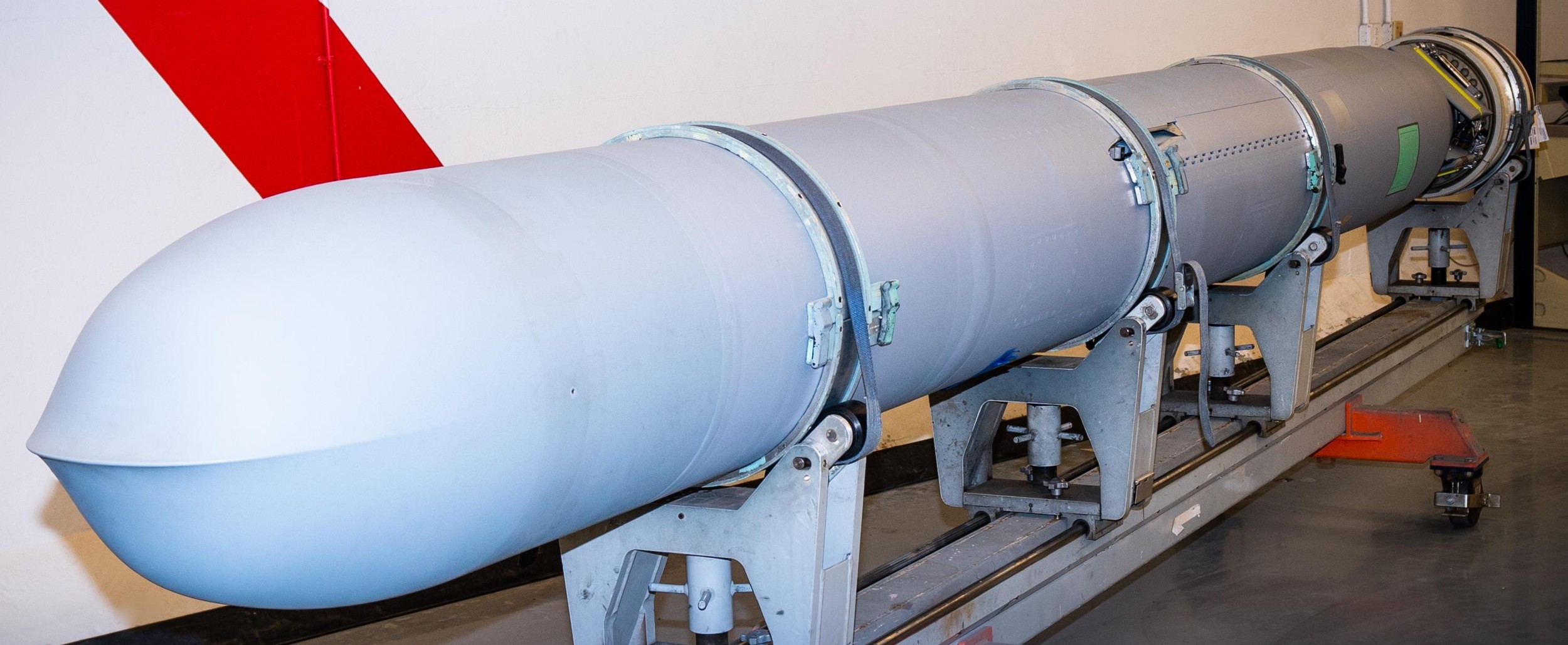 RGM-109E Tomahawk Block V 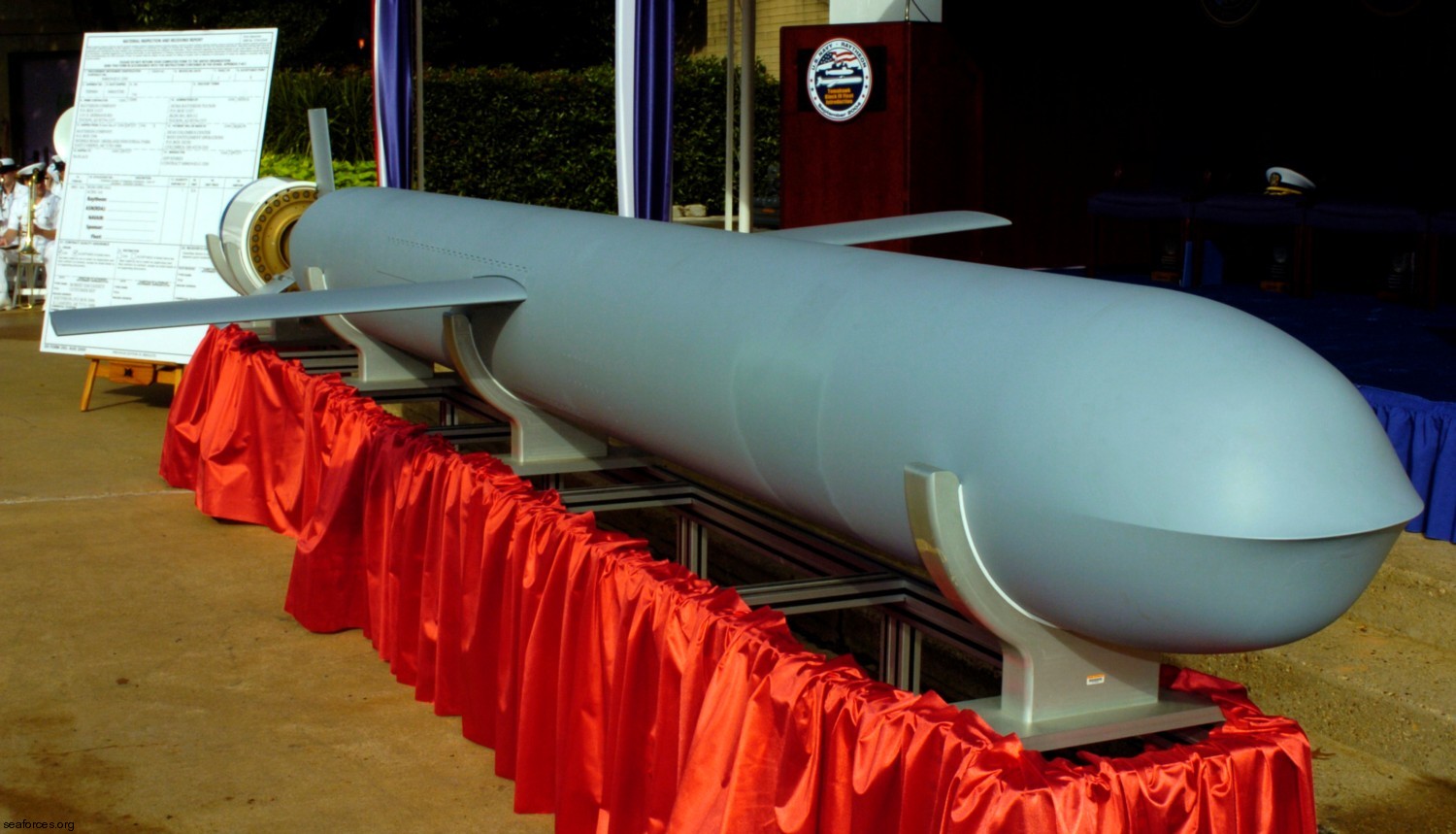 RGM-109E Tomahawk Land Attack Missile (TLAM Block IV - Tactical Tomahawk/TACTOM) 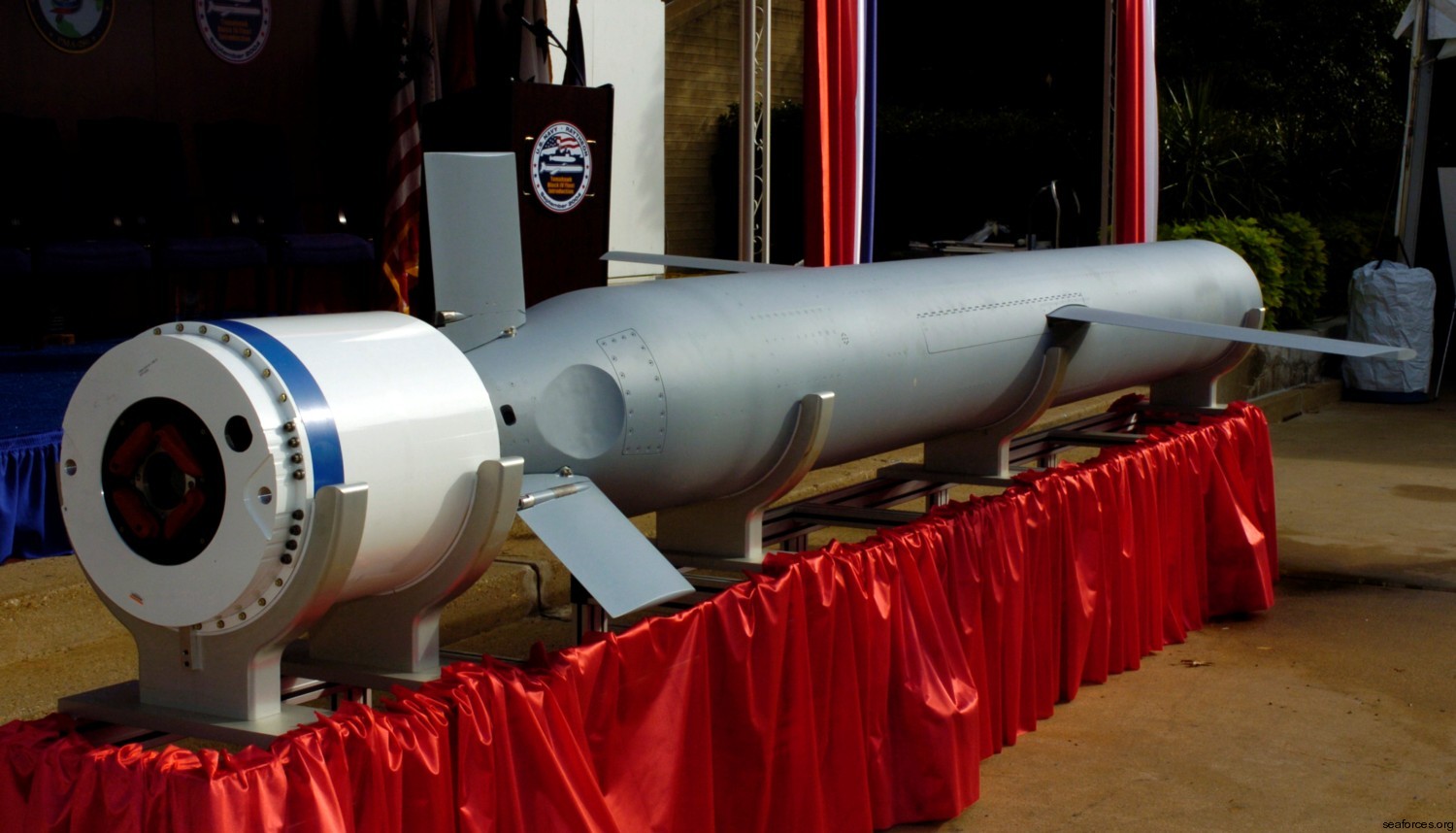 RGM-109E Tomahawk Land Attack Missile (TLAM Block IV - Tactical Tomahawk/TACTOM) 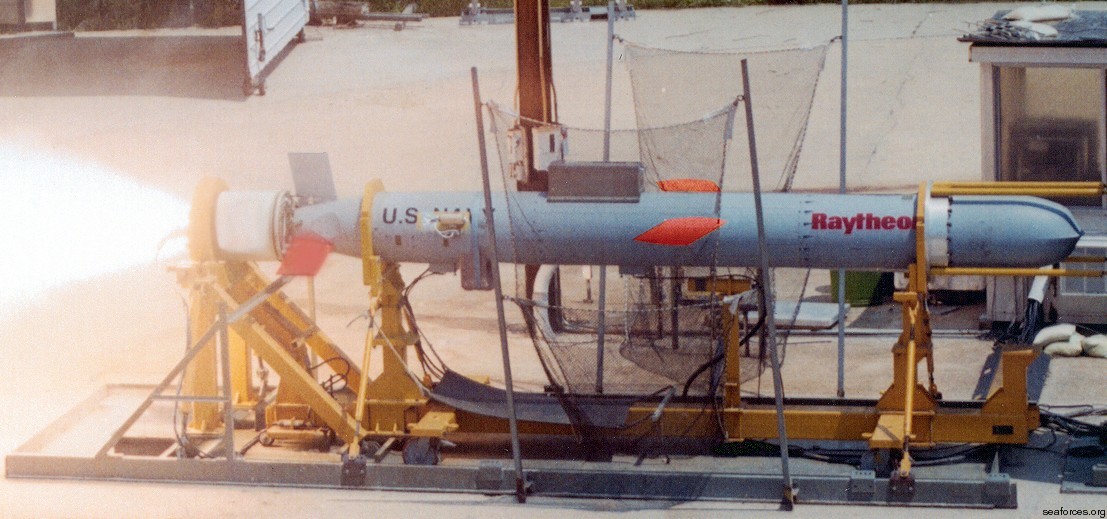 RGM-109E Tomahawk Land Attack Missile (TLAM Block IV - Tactical Tomahawk/TACTOM) - functional ground test - May 2002 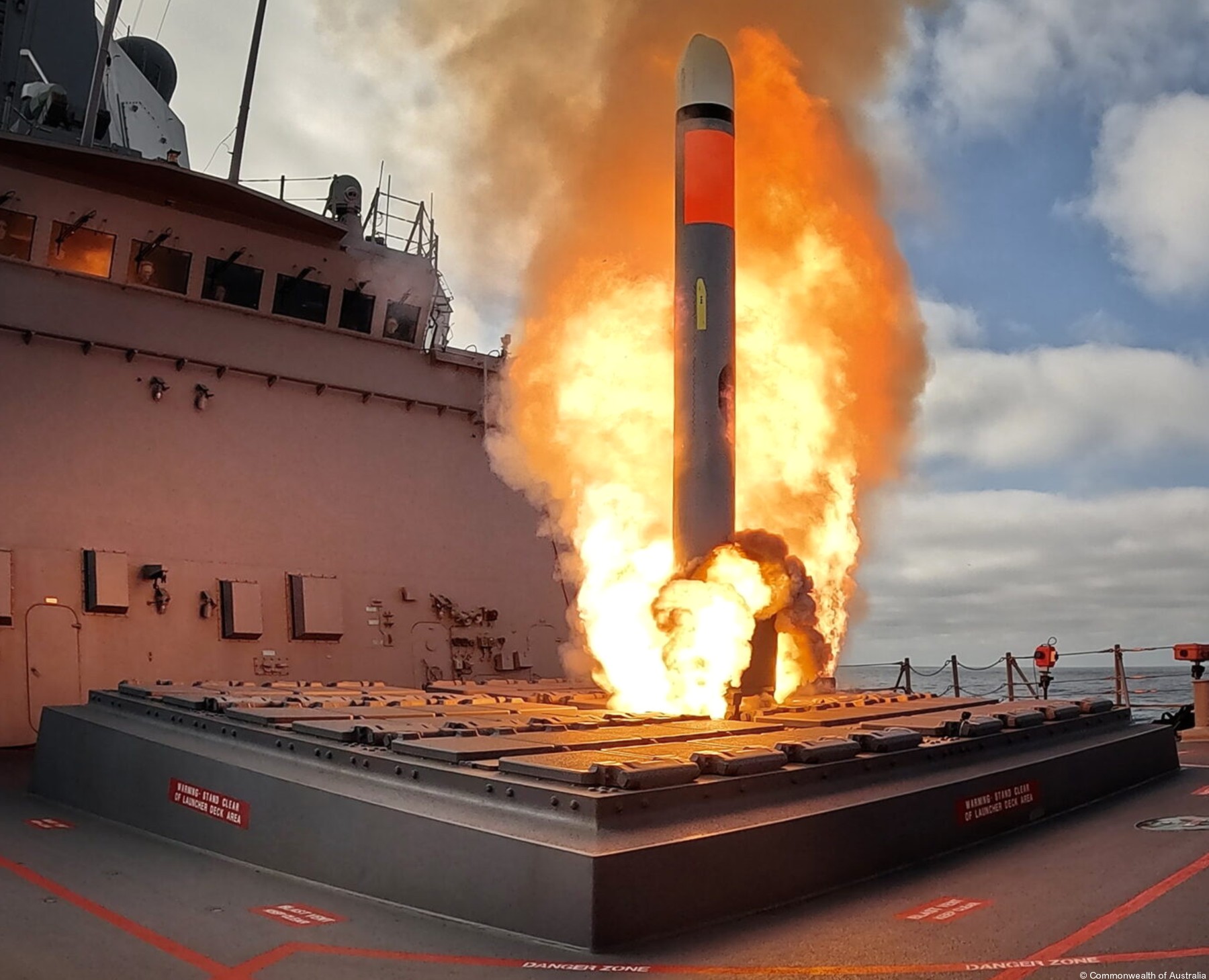 RGM-109 Tomahawk missile was launched from Mk.41 VLS aboard a Royal Australian Navy Hobart class DDG 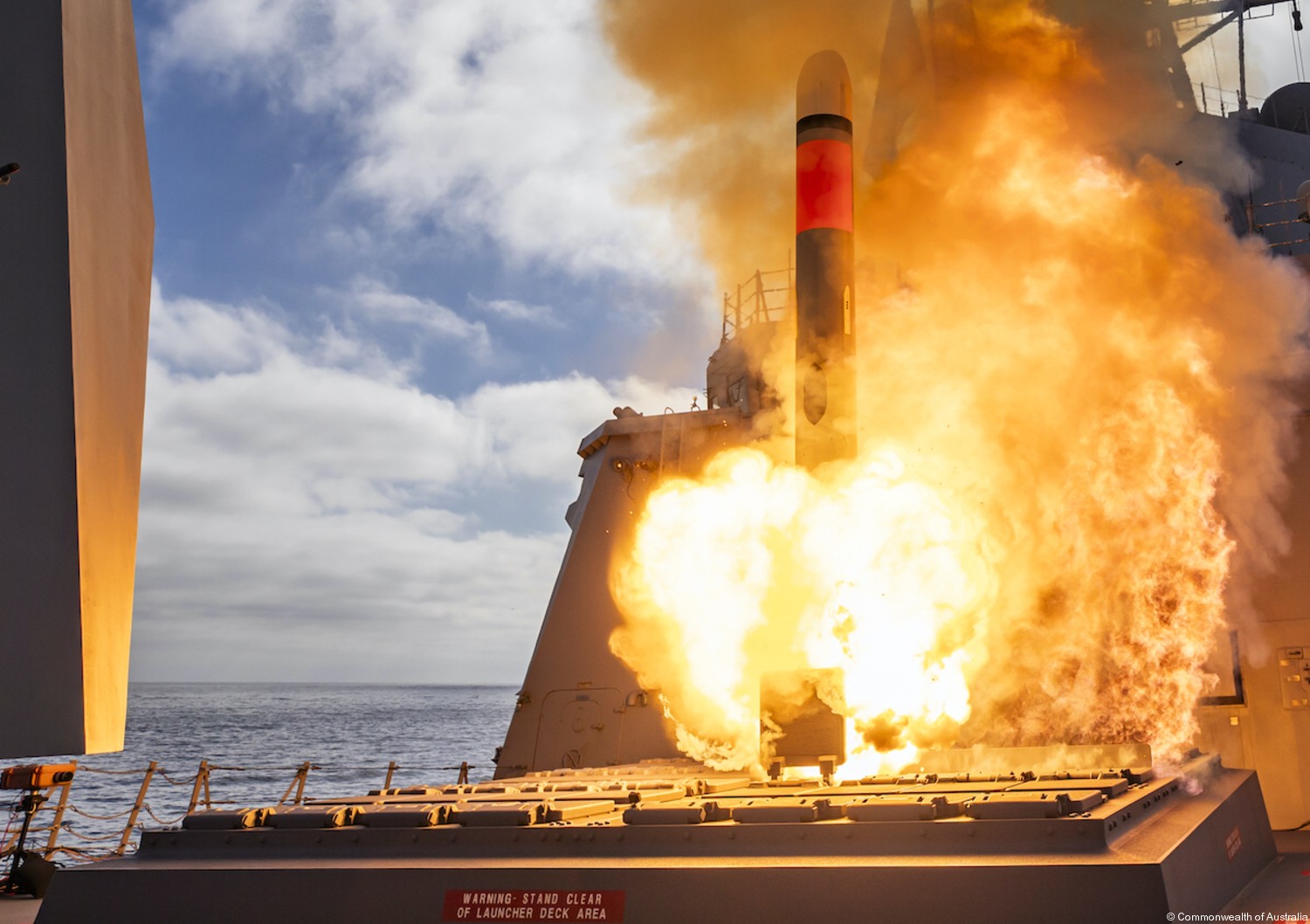 RGM-109 Tomahawk missile was launched from Mk.41 VLS aboard a Royal Australian Navy Hobart class DDG 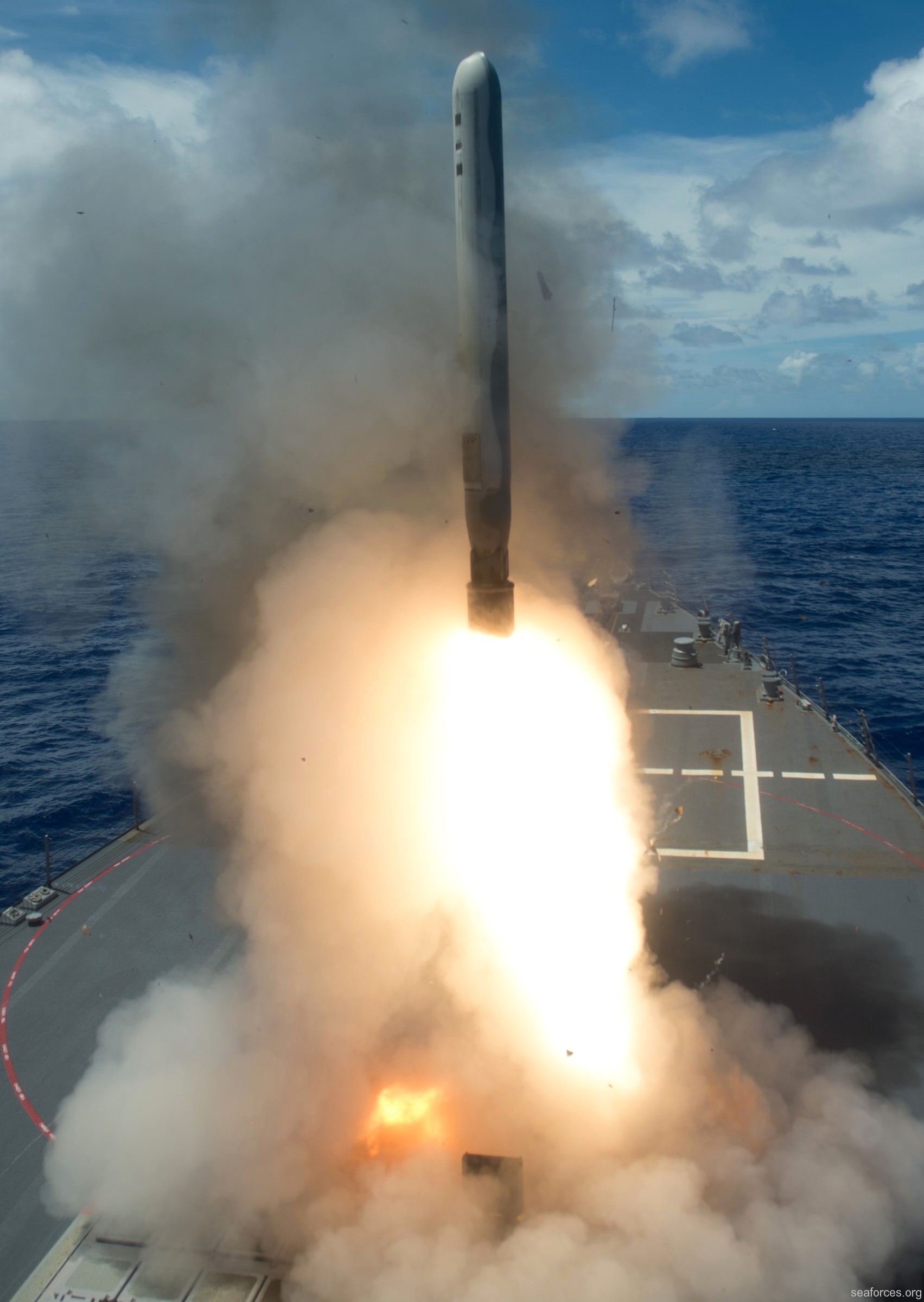 RGM-109 Tomahawk missile was launched from Mk.41 VLS aboard USS McCampbell (DDG 85) 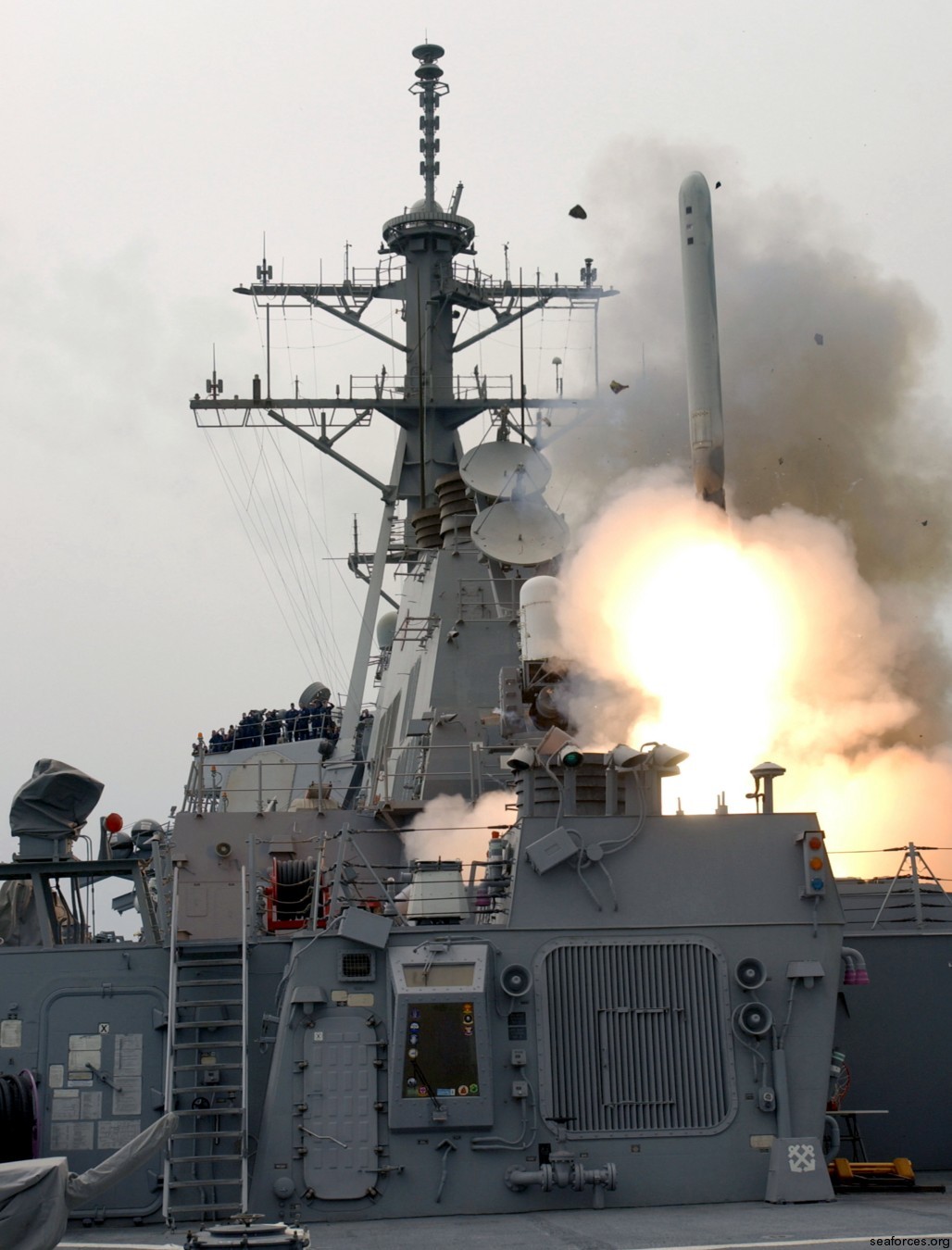 RGM-109 Tomahawk missile was launched from Mk.41 VLS aboard USS Milius (DDG 69) 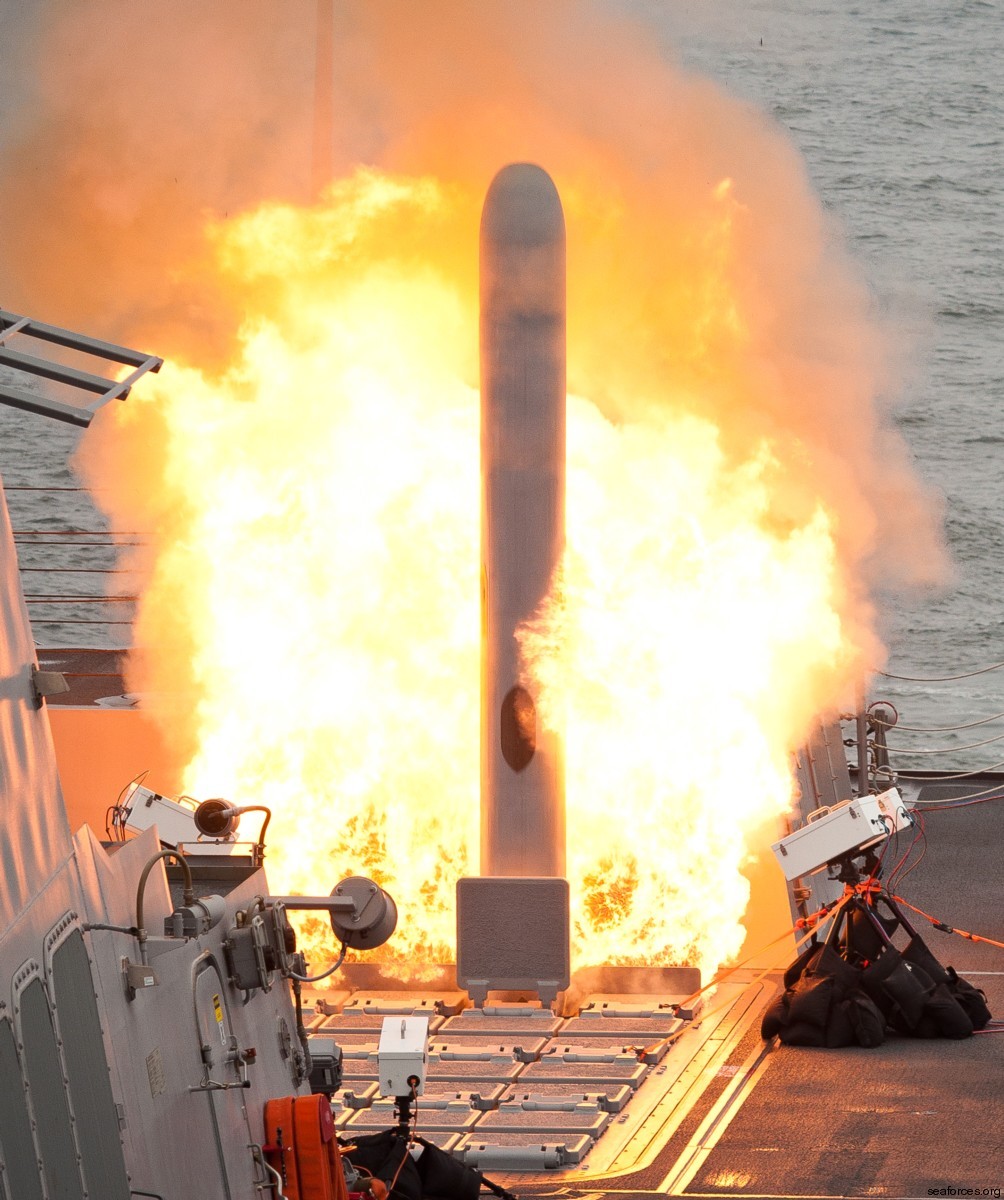 RGM-109 Tomahawk missile was launched from Mk.41 VLS aboard USS Sterett (DDG 104) 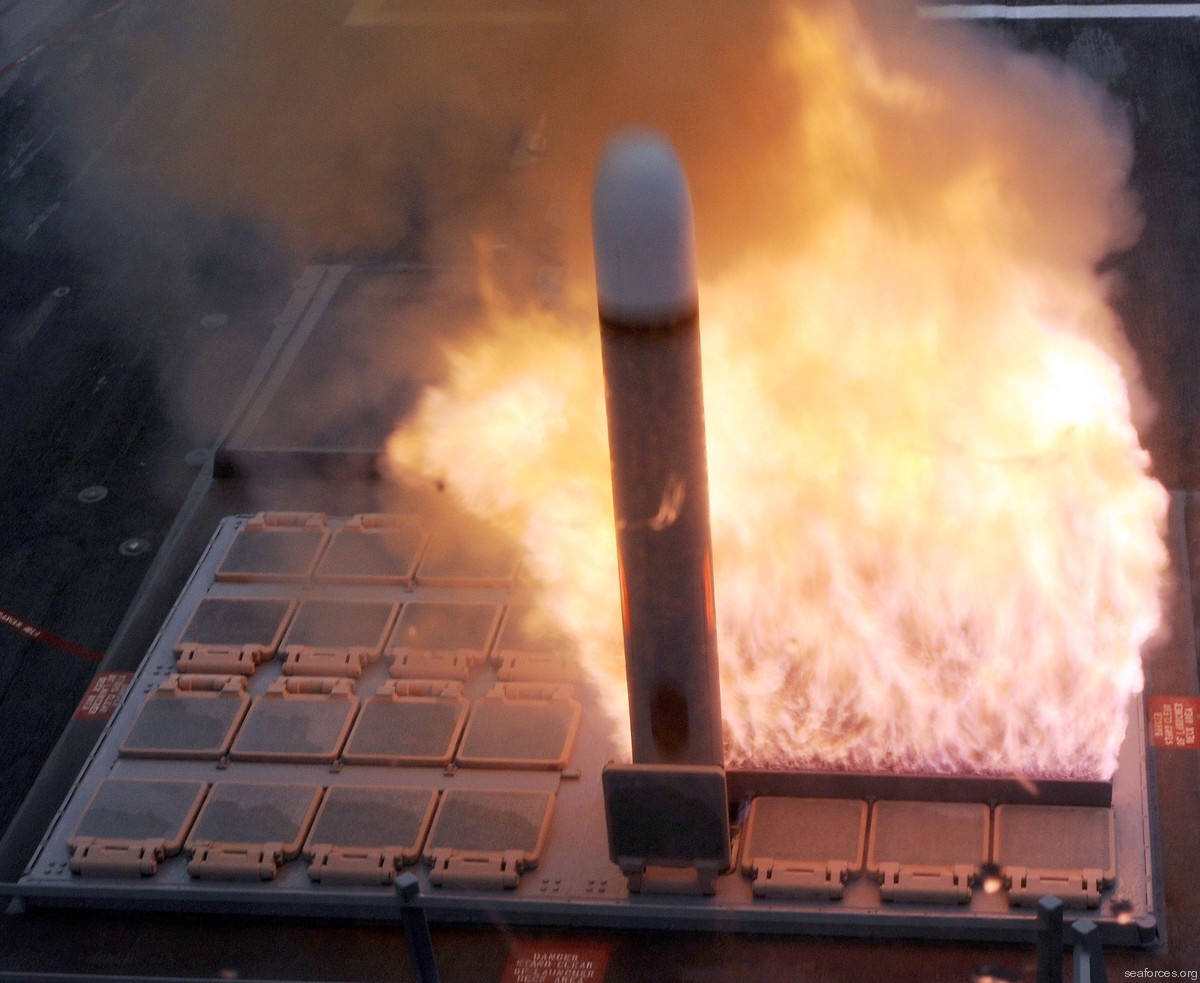 RGM-109 Tomahawk missile was launched from Mk.41 VLS aboard USS Farragut (DDG 99) 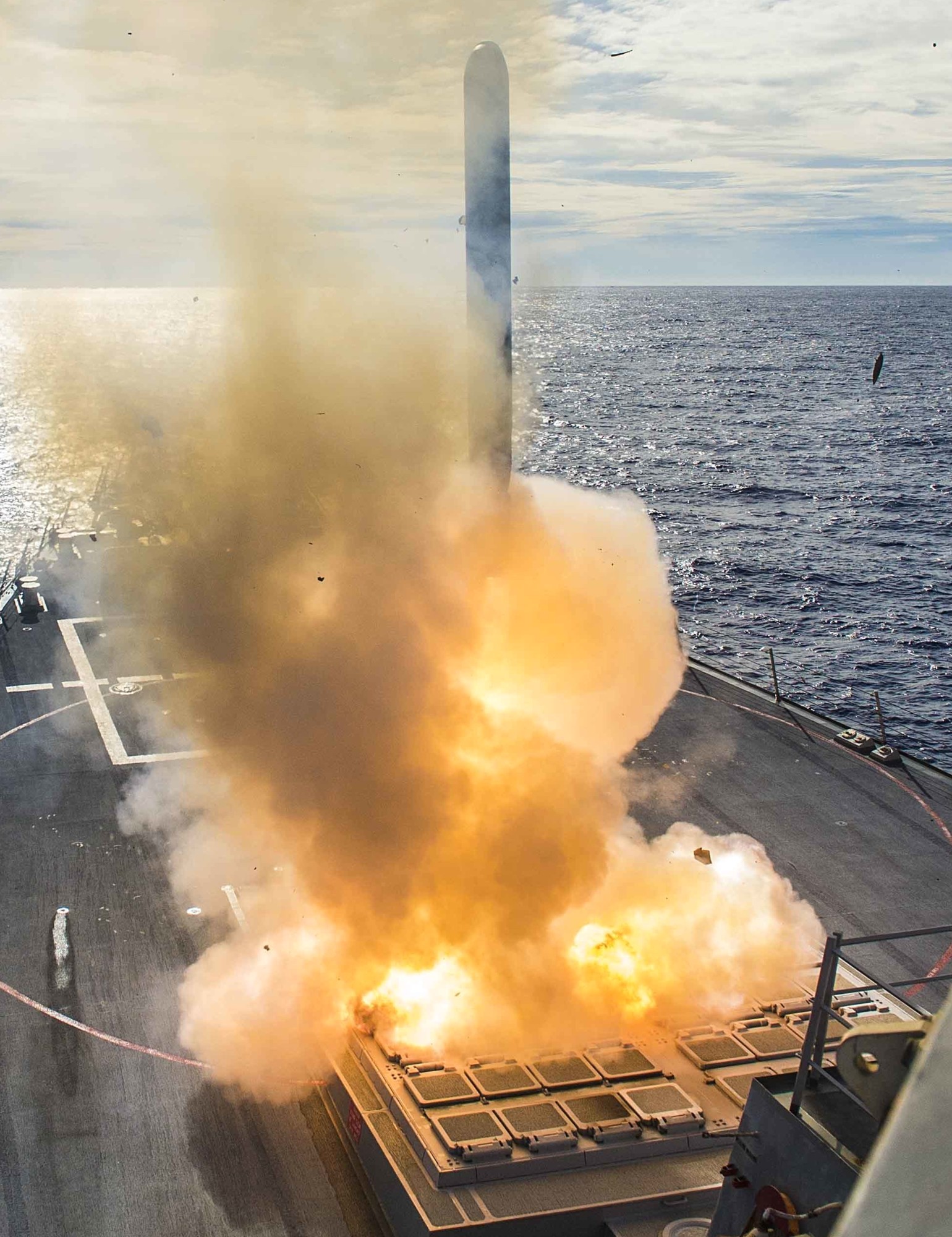 RGM-109 Tomahawk missile was launched from Mk.41 VLS aboard USS Mustin (DDG 89) 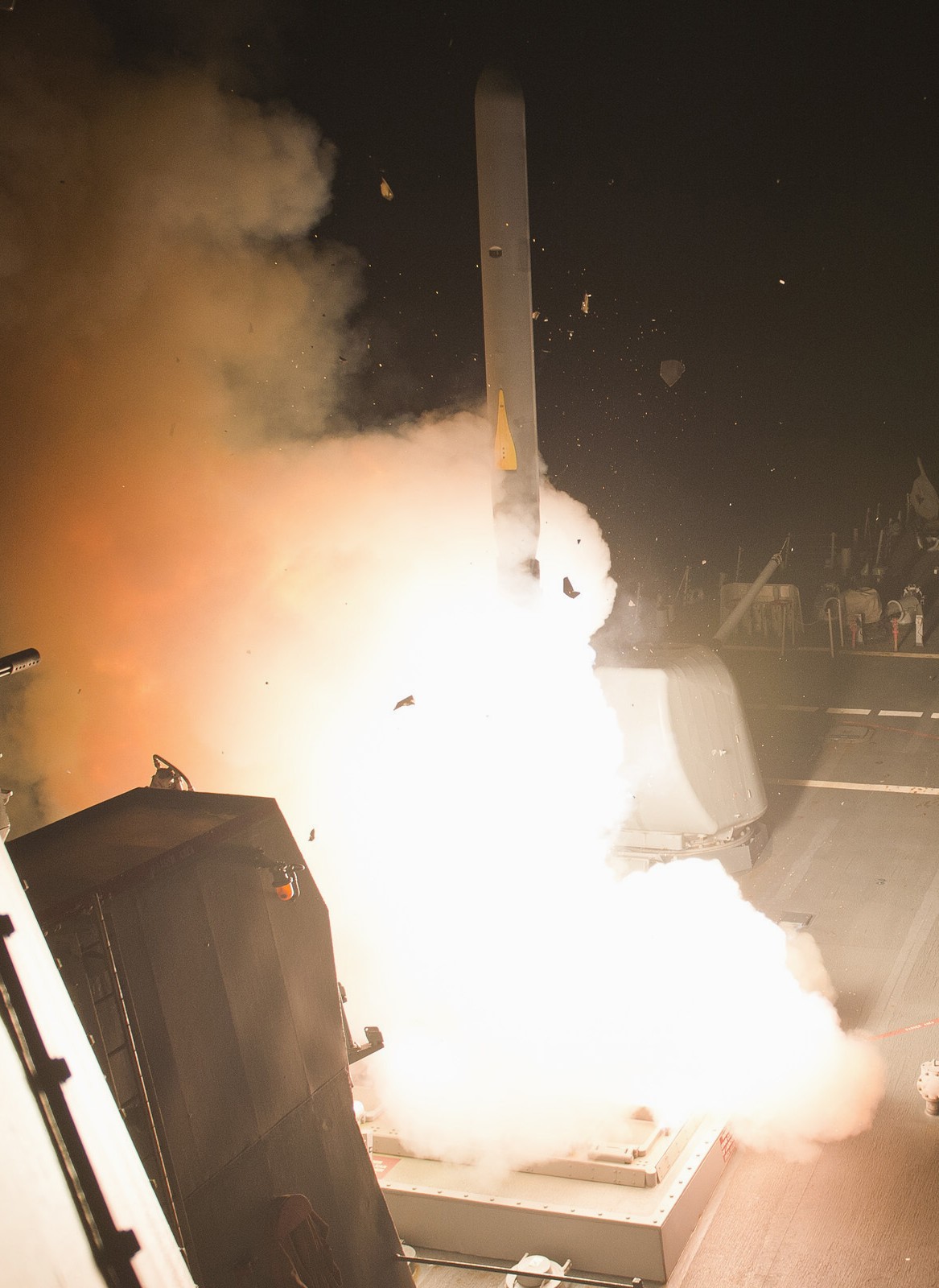 RGM-109 Tomahawk missile was launched against ISIL forces from Mk.41 VLS aboard USS Arleigh Burke (DDG 51) - September 2014 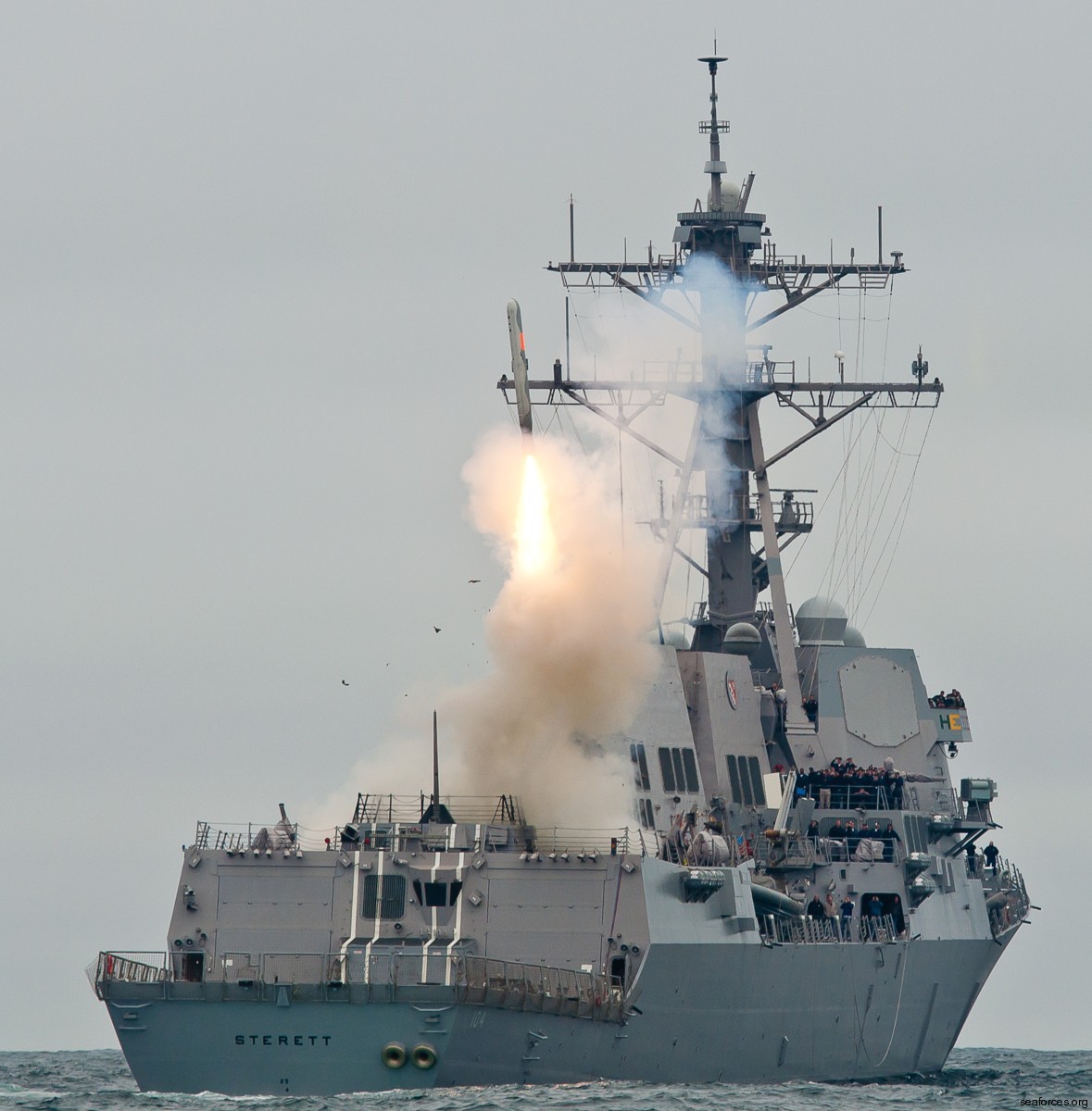 RGM-109 Tomahawk missile was launched from Mk.41 VLS aboard USS Sterett (DDG 104) 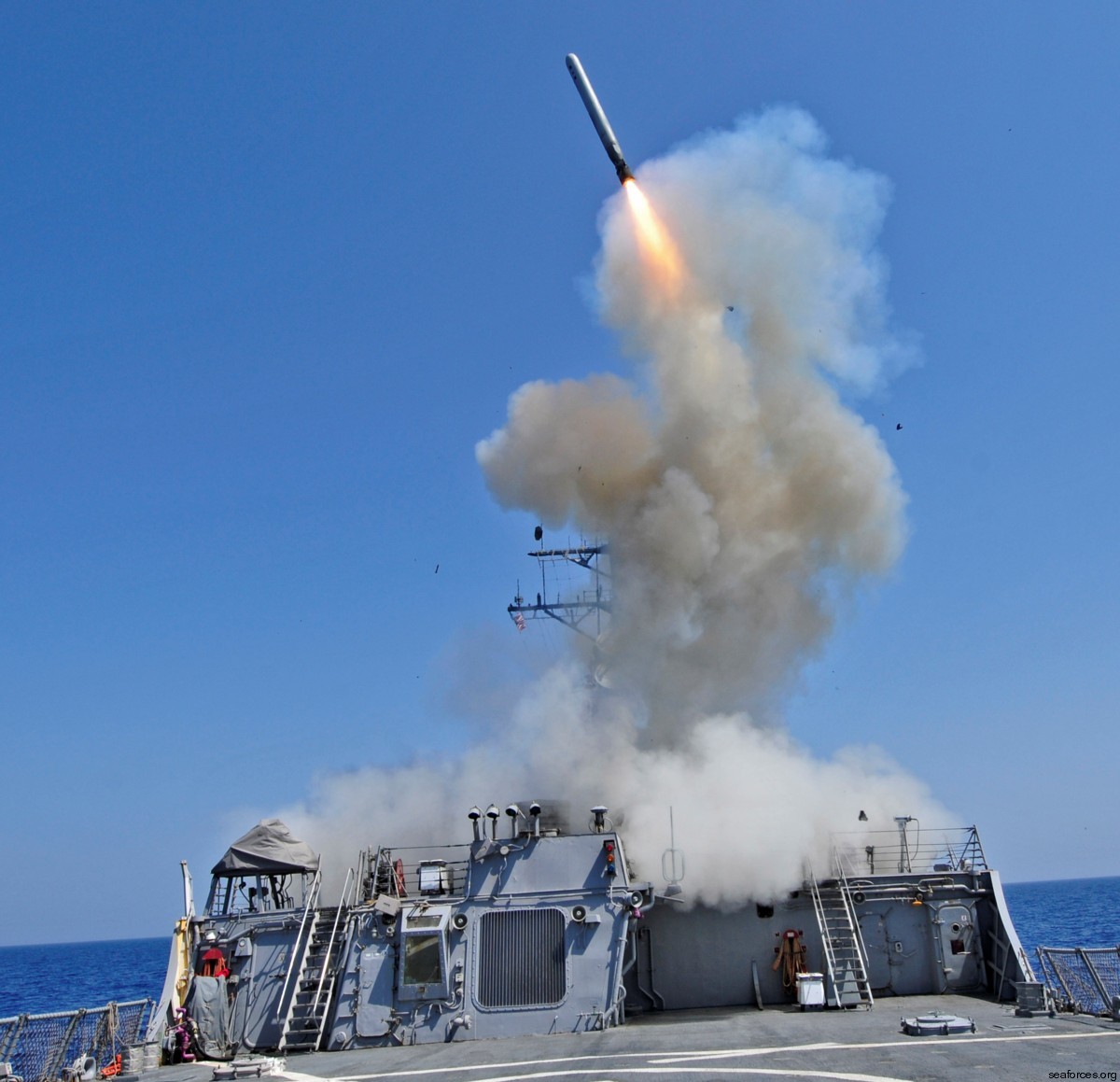 RGM-109 Tomahawk missile was launched from Mk.41 VLS aboard USS Barry (DDG 52) 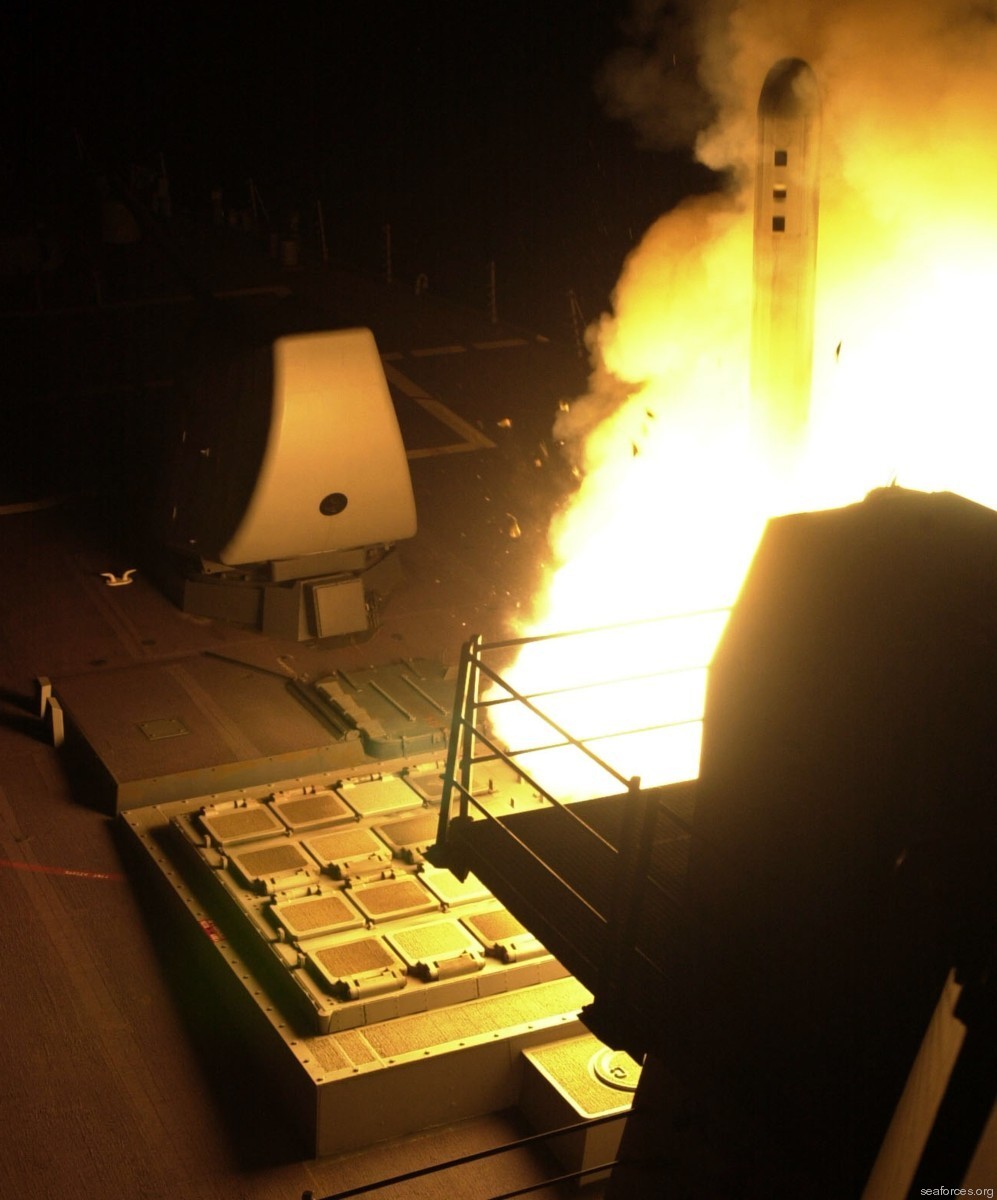 RGM-109 Tomahawk missile was launched from Mk.41 VLS aboard USS John Paul Jones (DDG 53) 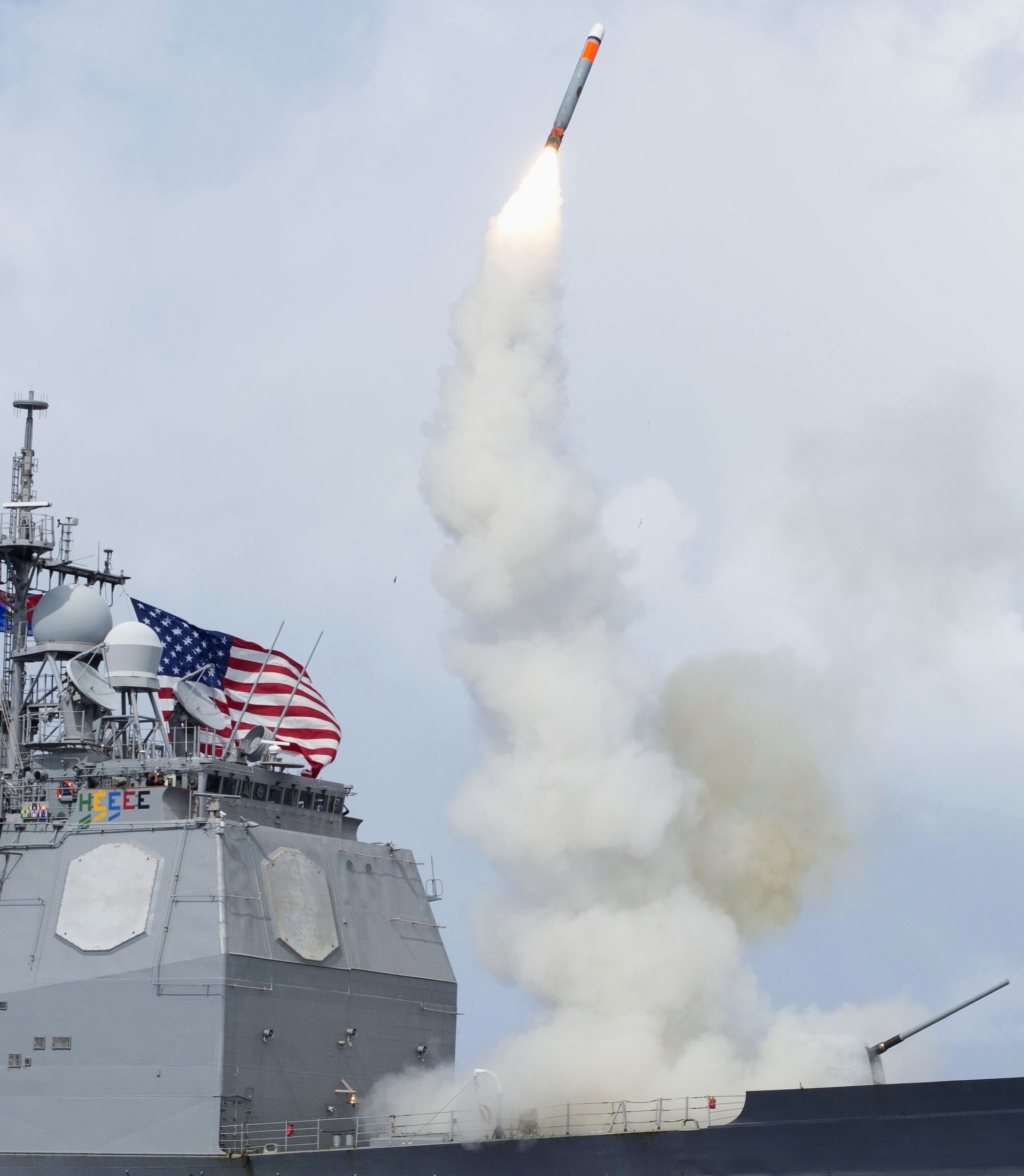 RGM-109 Tomahawk missile was launched from the forward Mk.41 VLS aboard USS Anzio (CG 68) 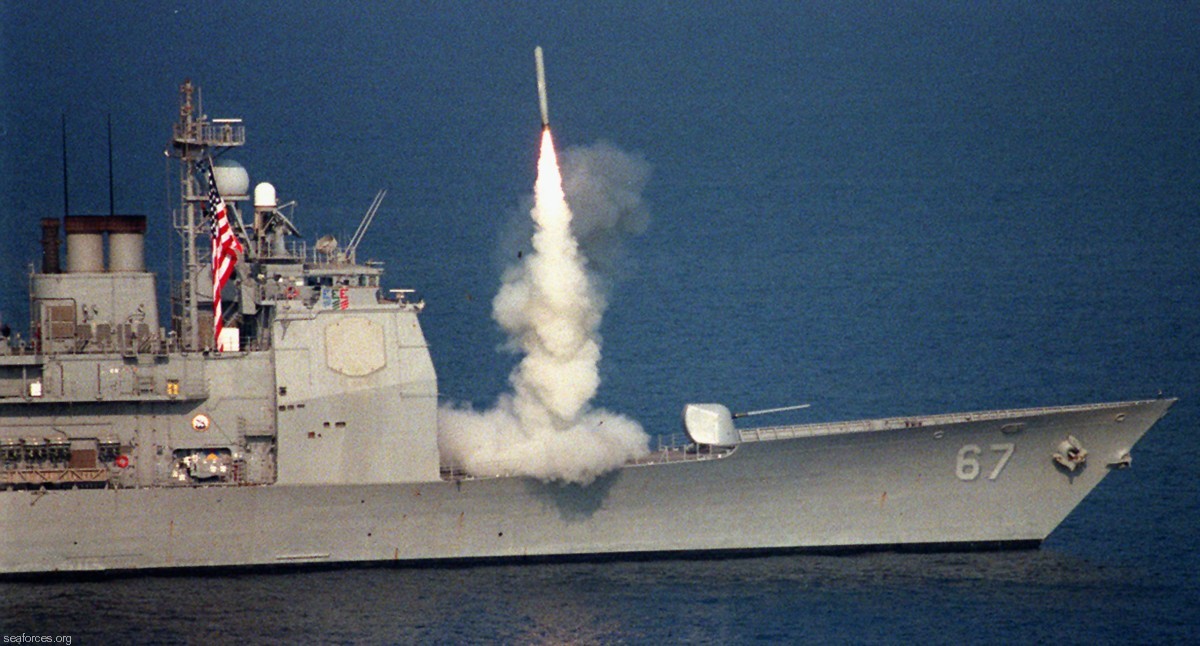 RGM-109 Tomahawk missile was launched from the forward Mk.41 VLS aboard USS Shiloh (CG 67) 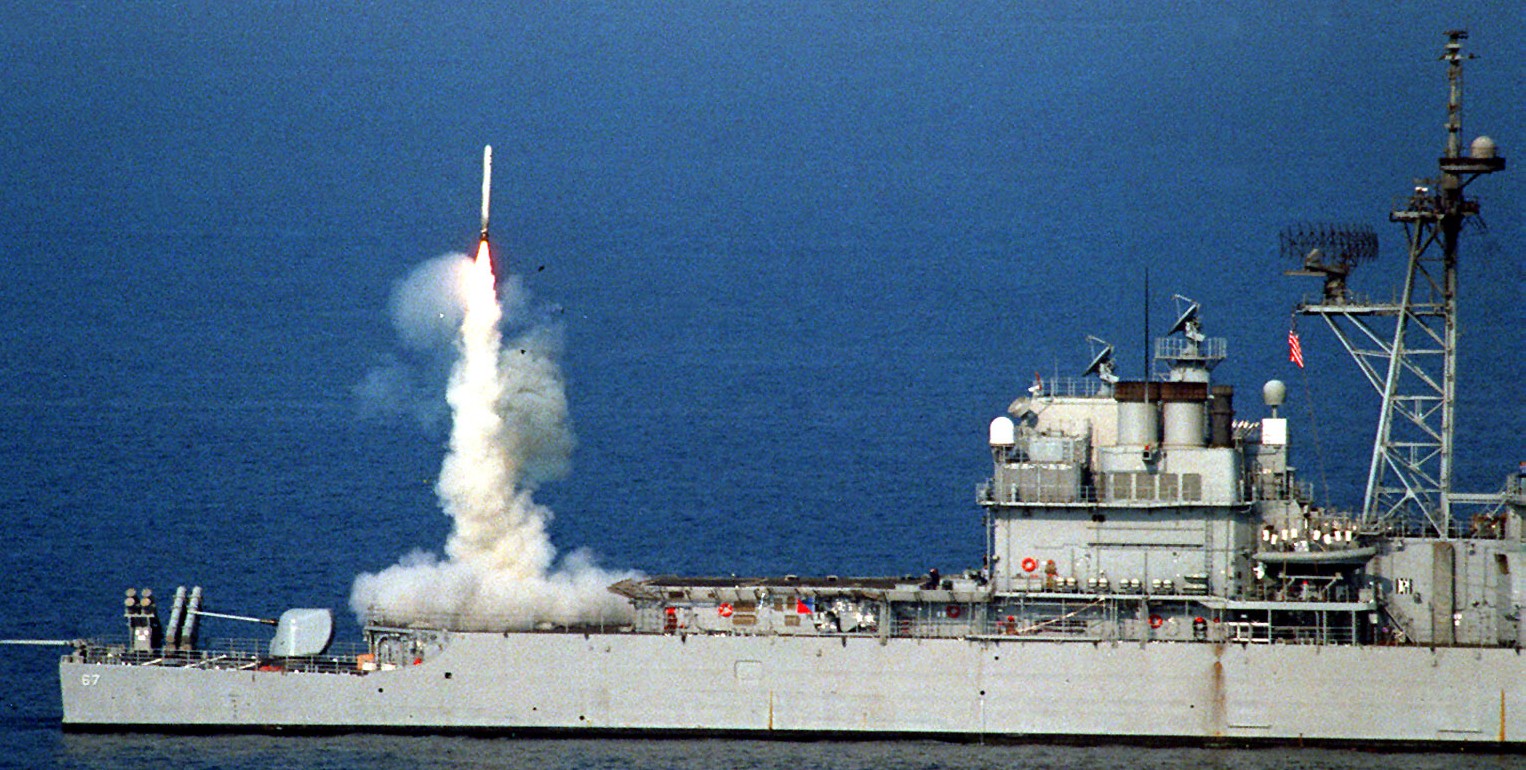 RGM-109 Tomahawk missile was launched from the aft Mk.41 VLS aboard USS Shiloh (CG 67) 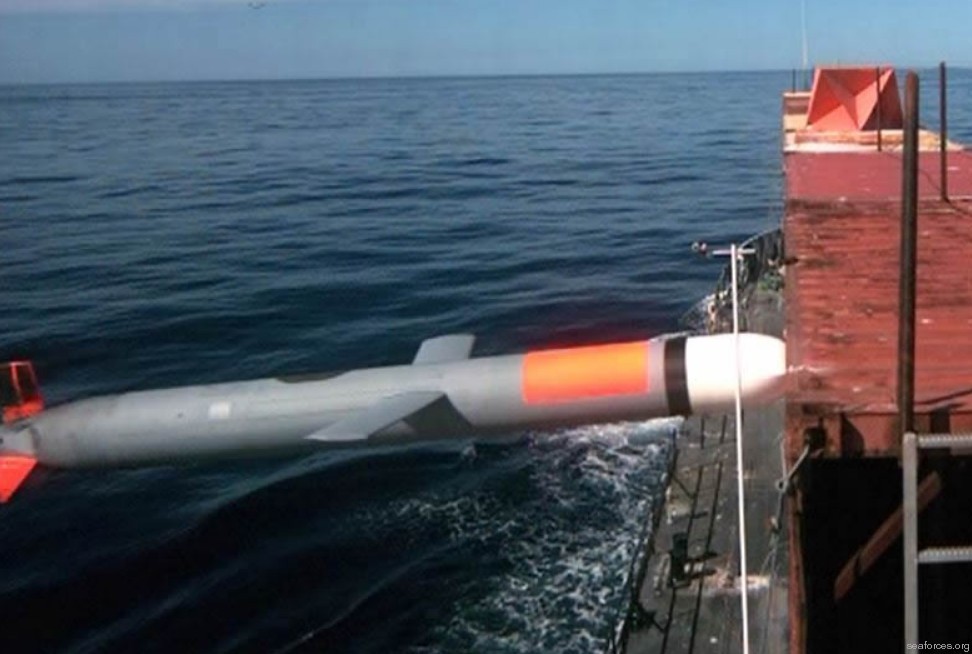 before impact 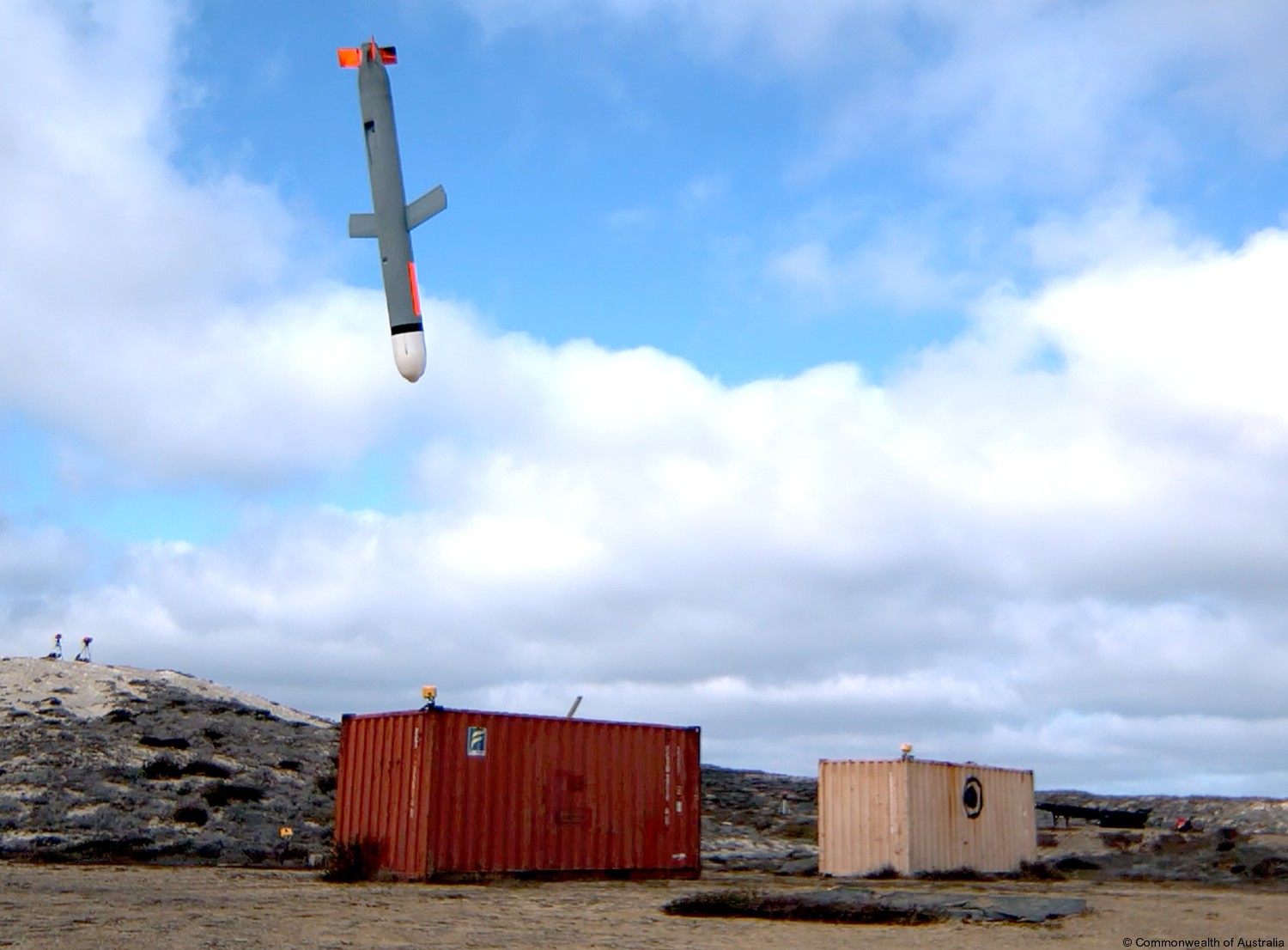 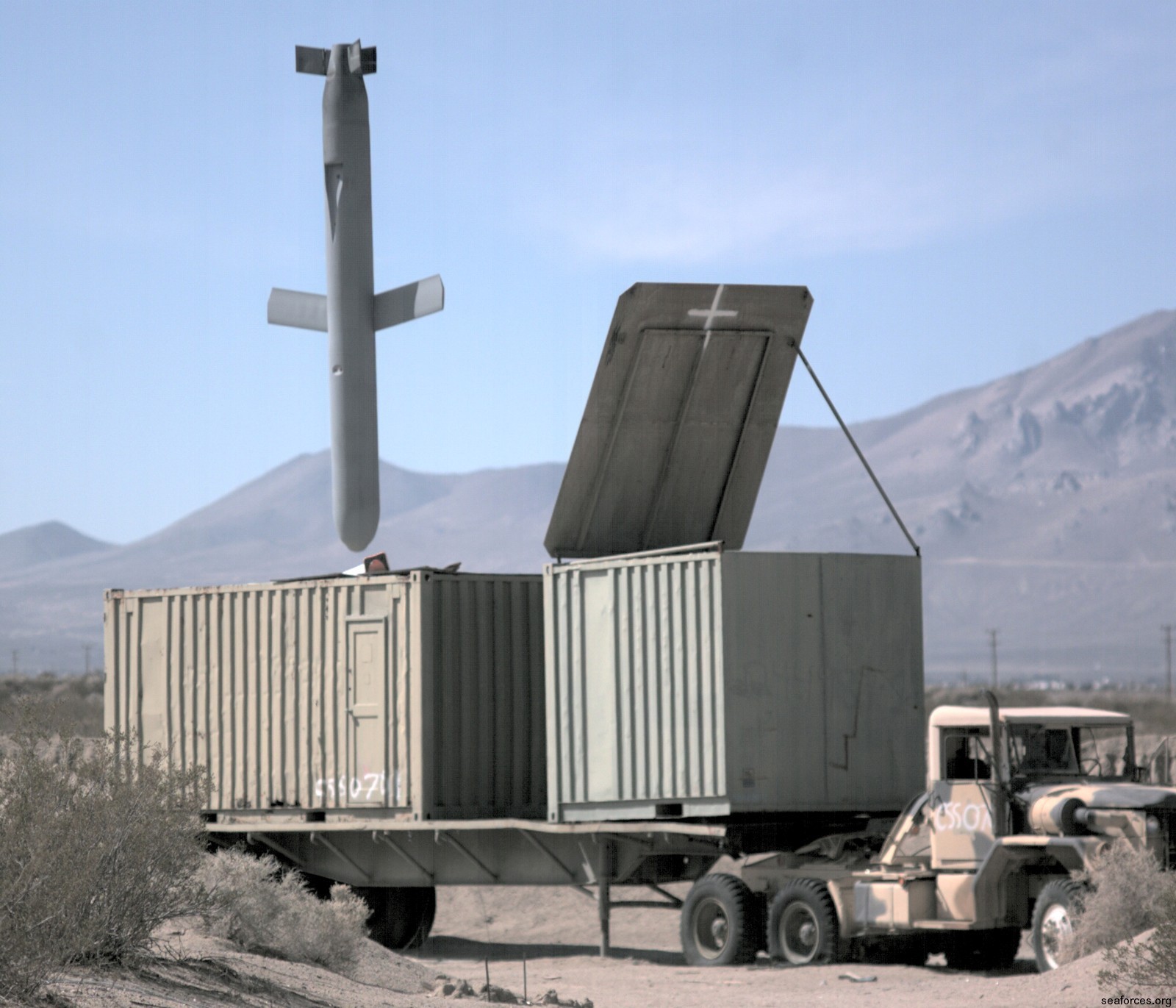 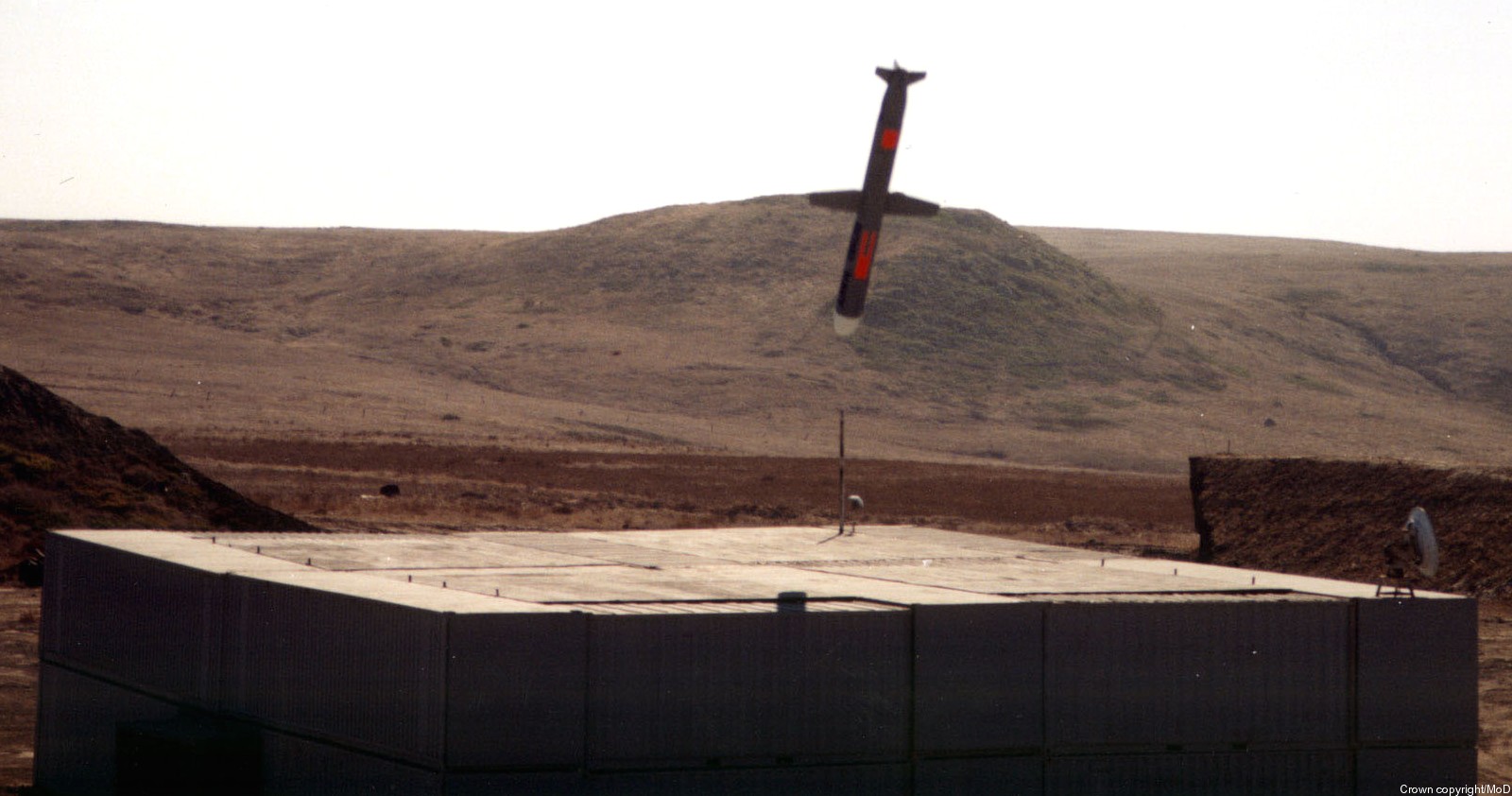 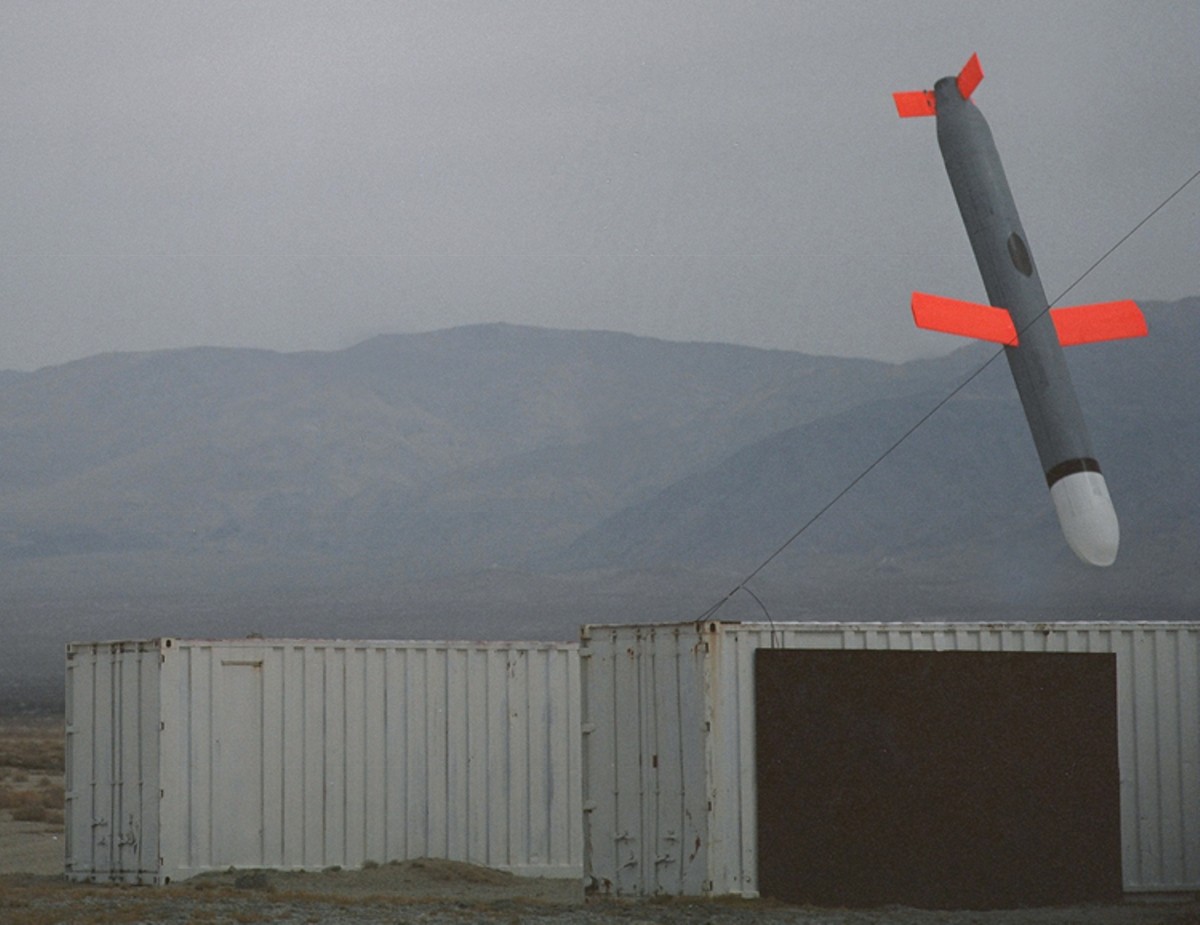 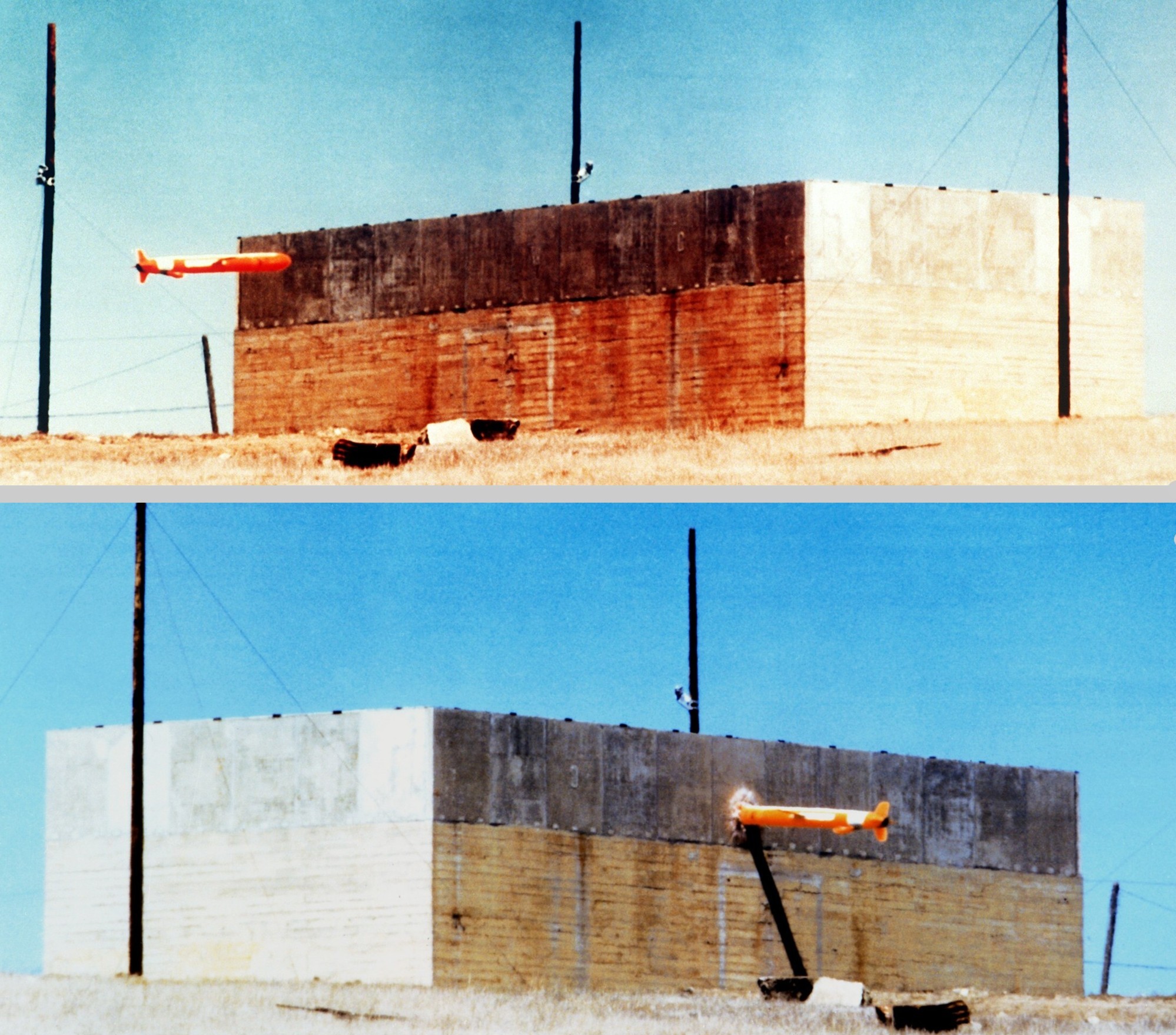 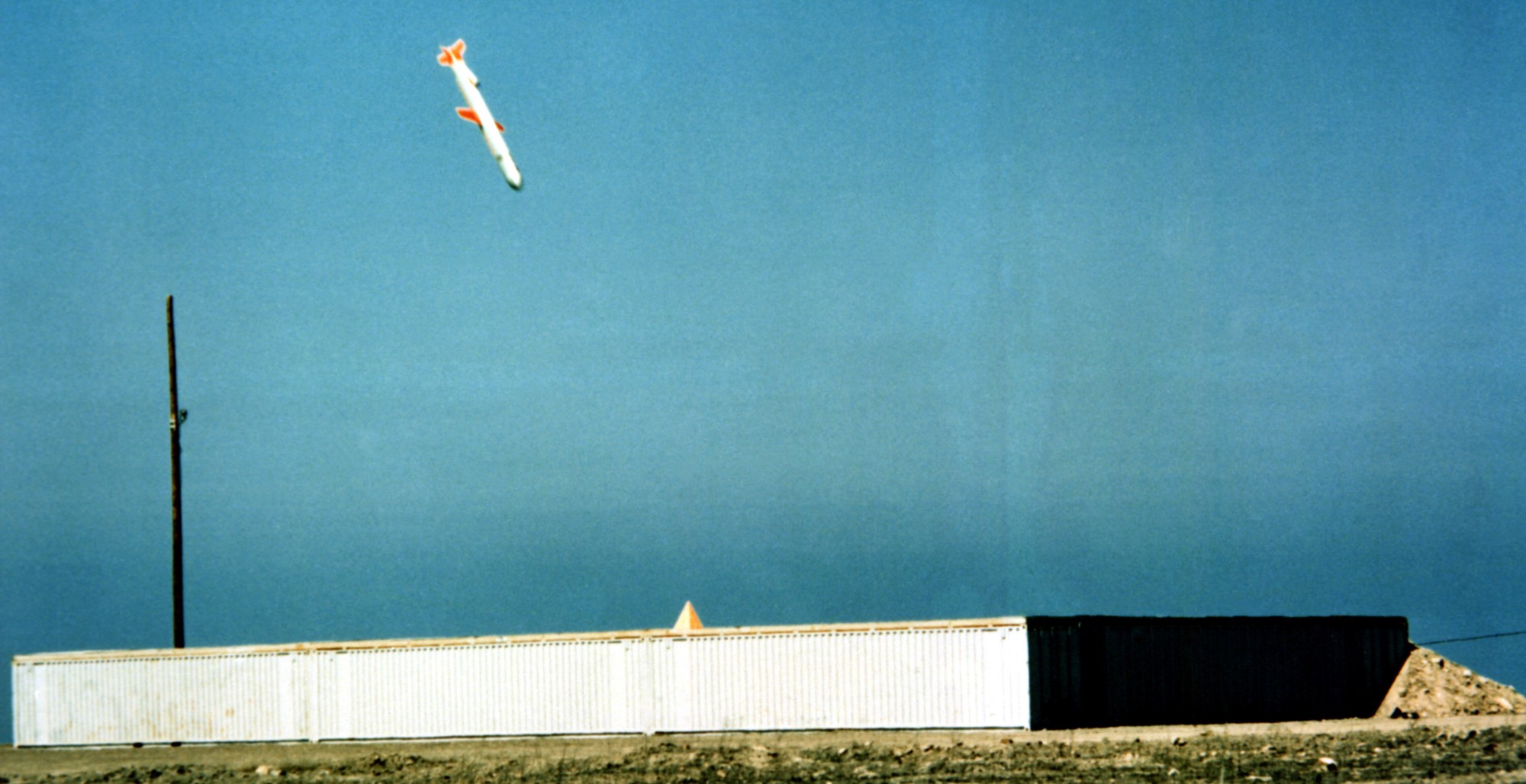 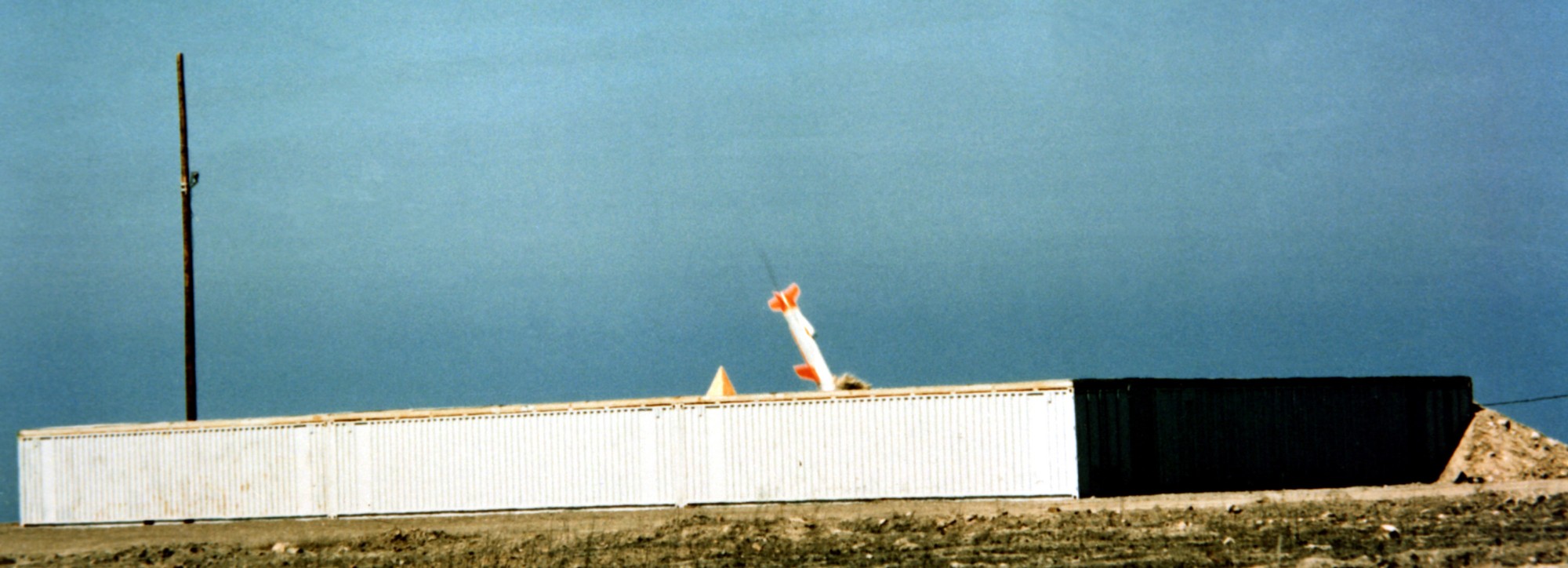 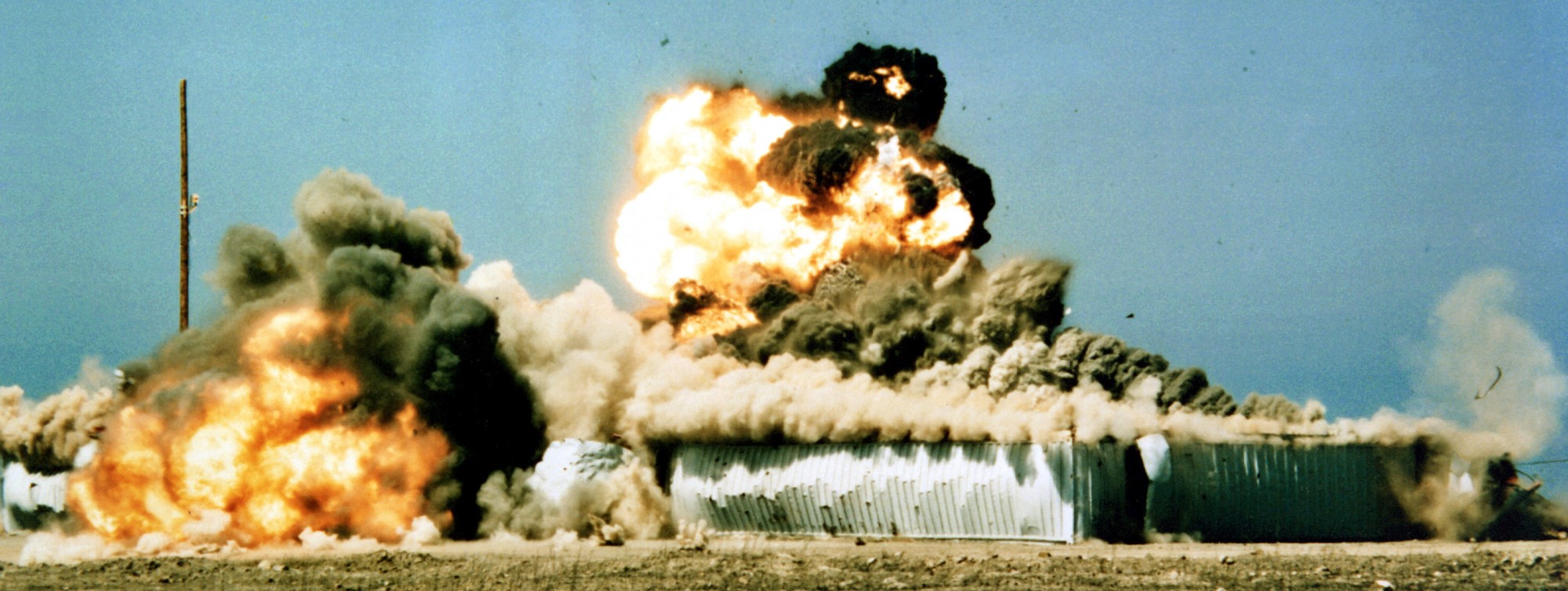 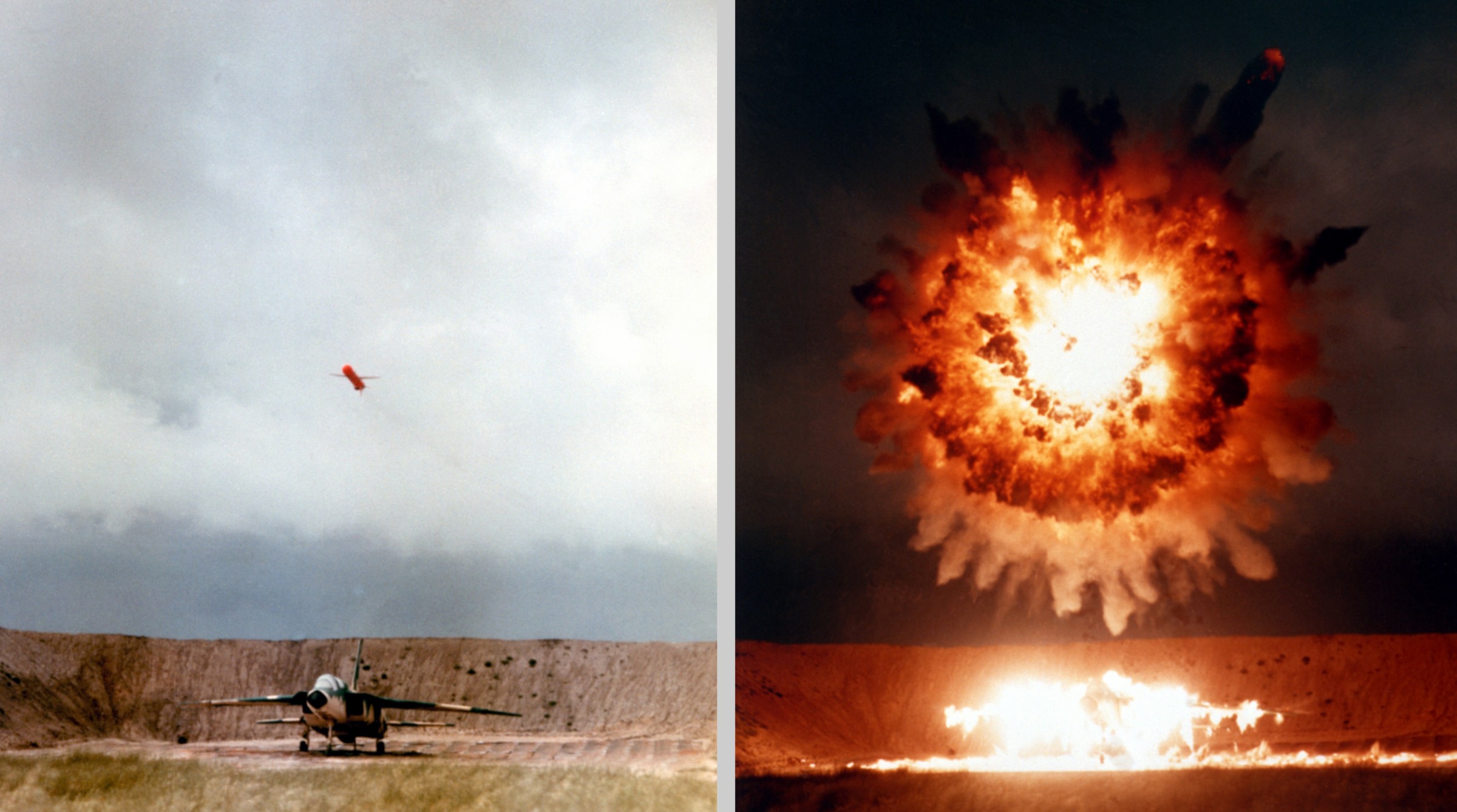 UGM-109 Tomahawk missile detonates above a test target - 1986 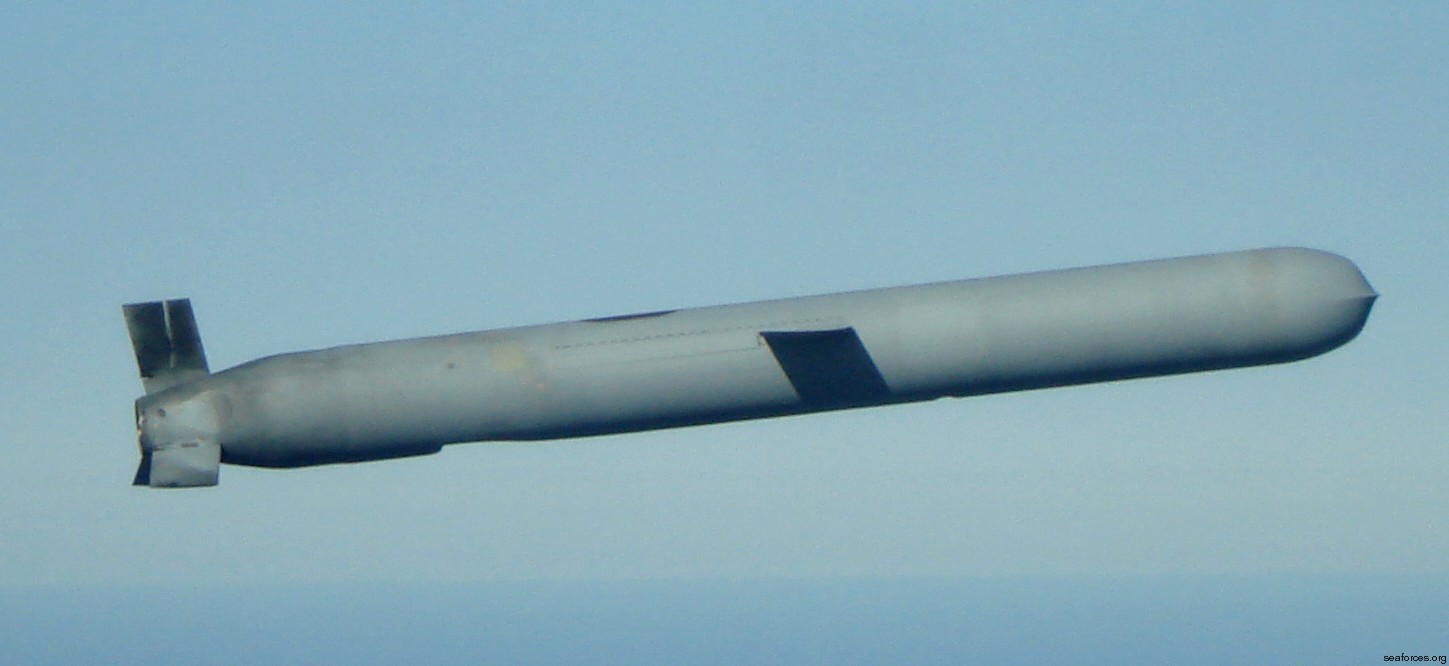 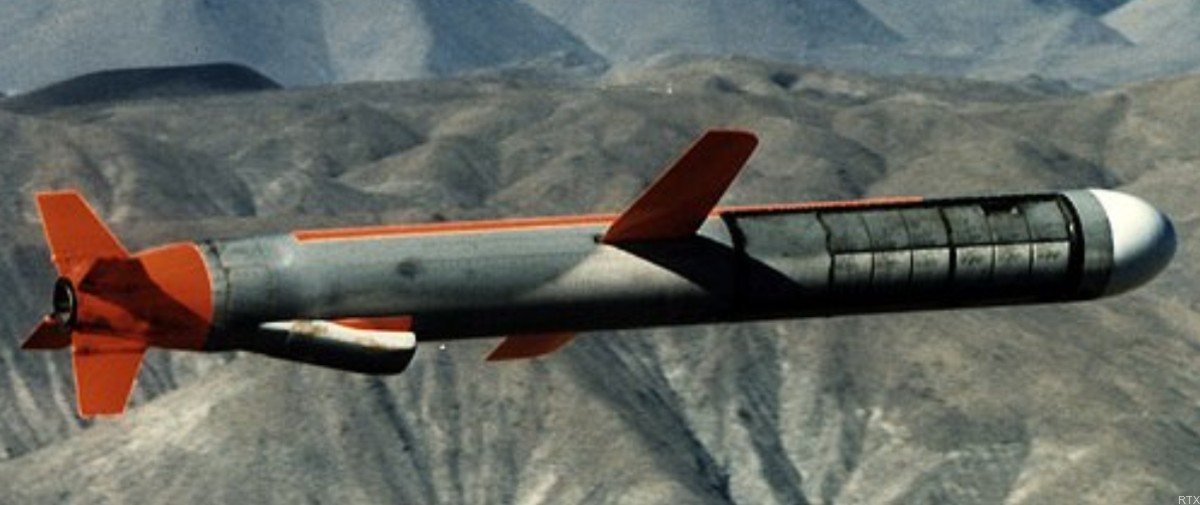 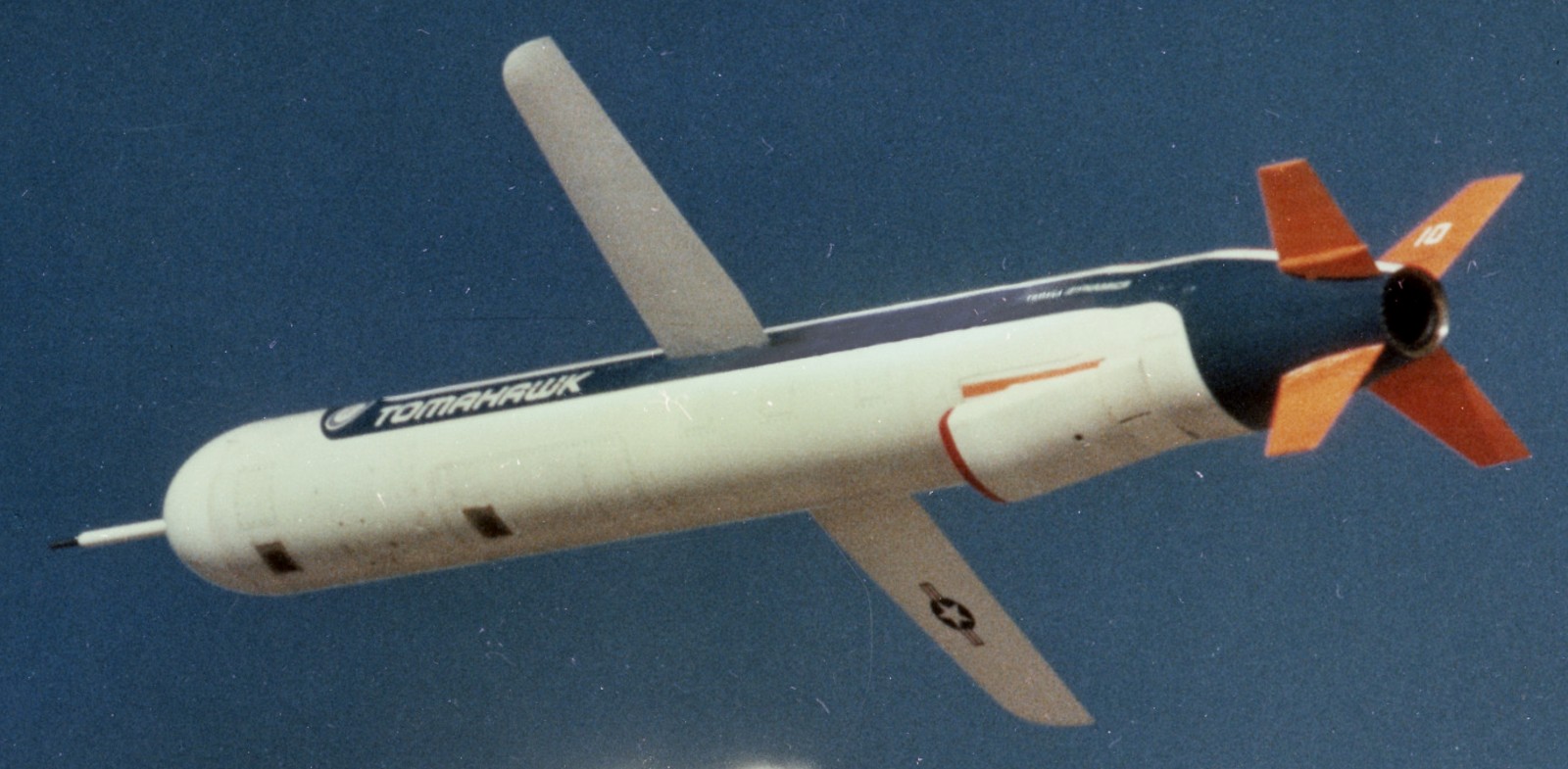 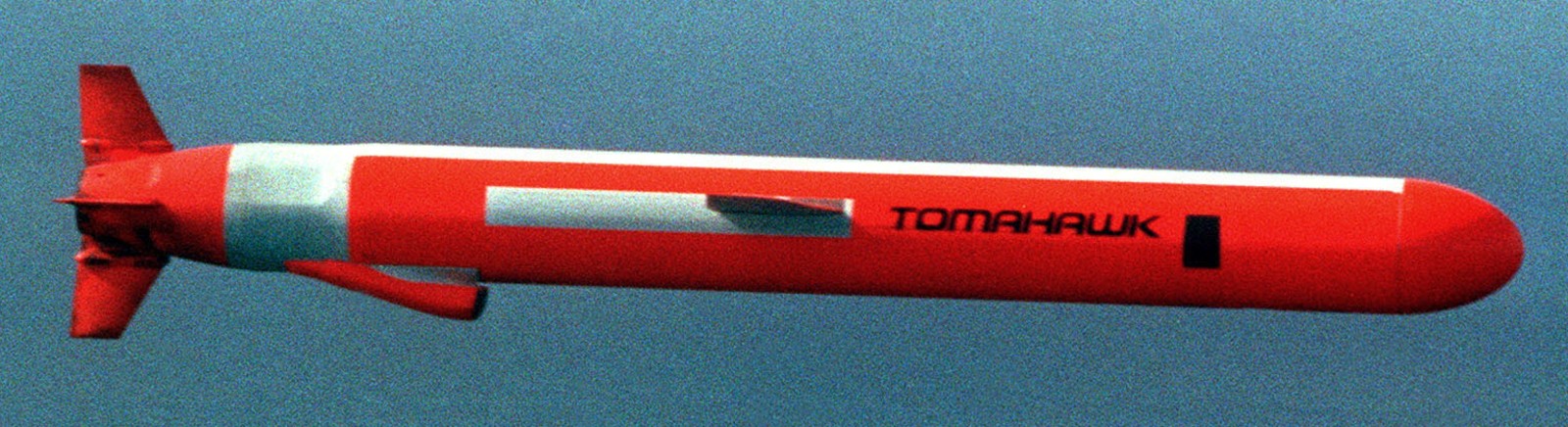 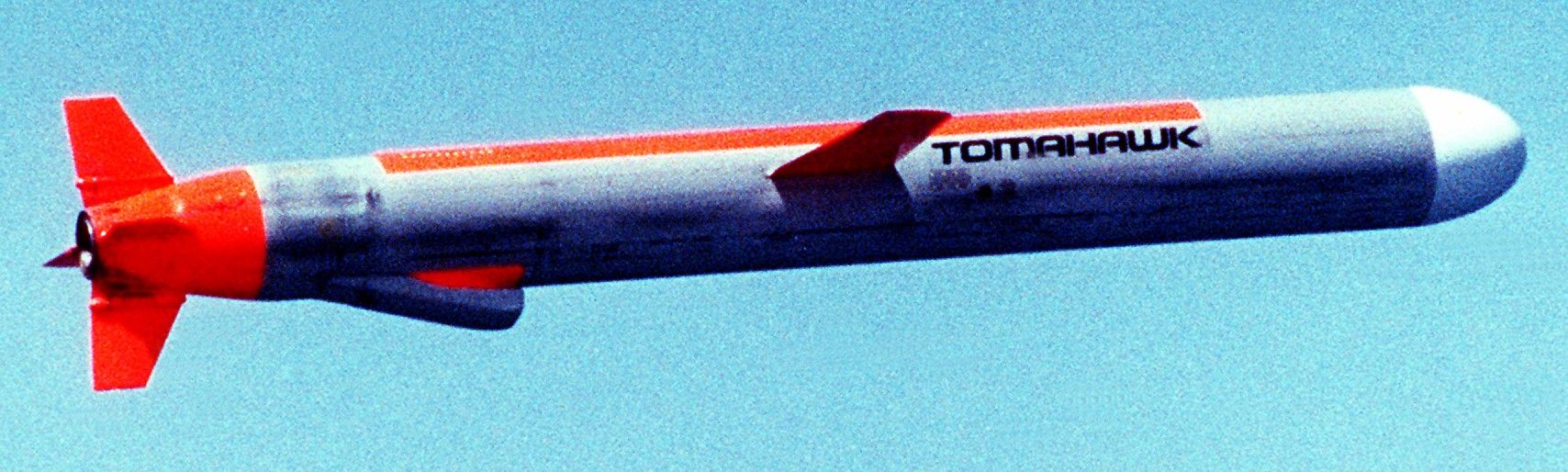 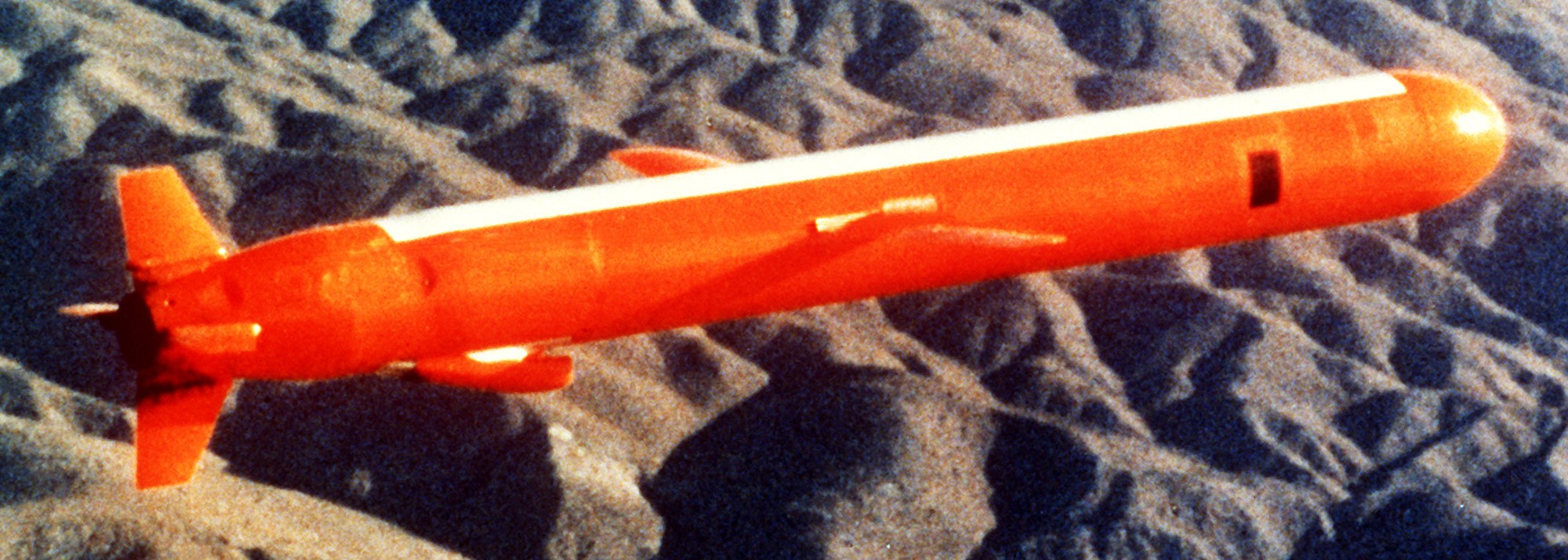 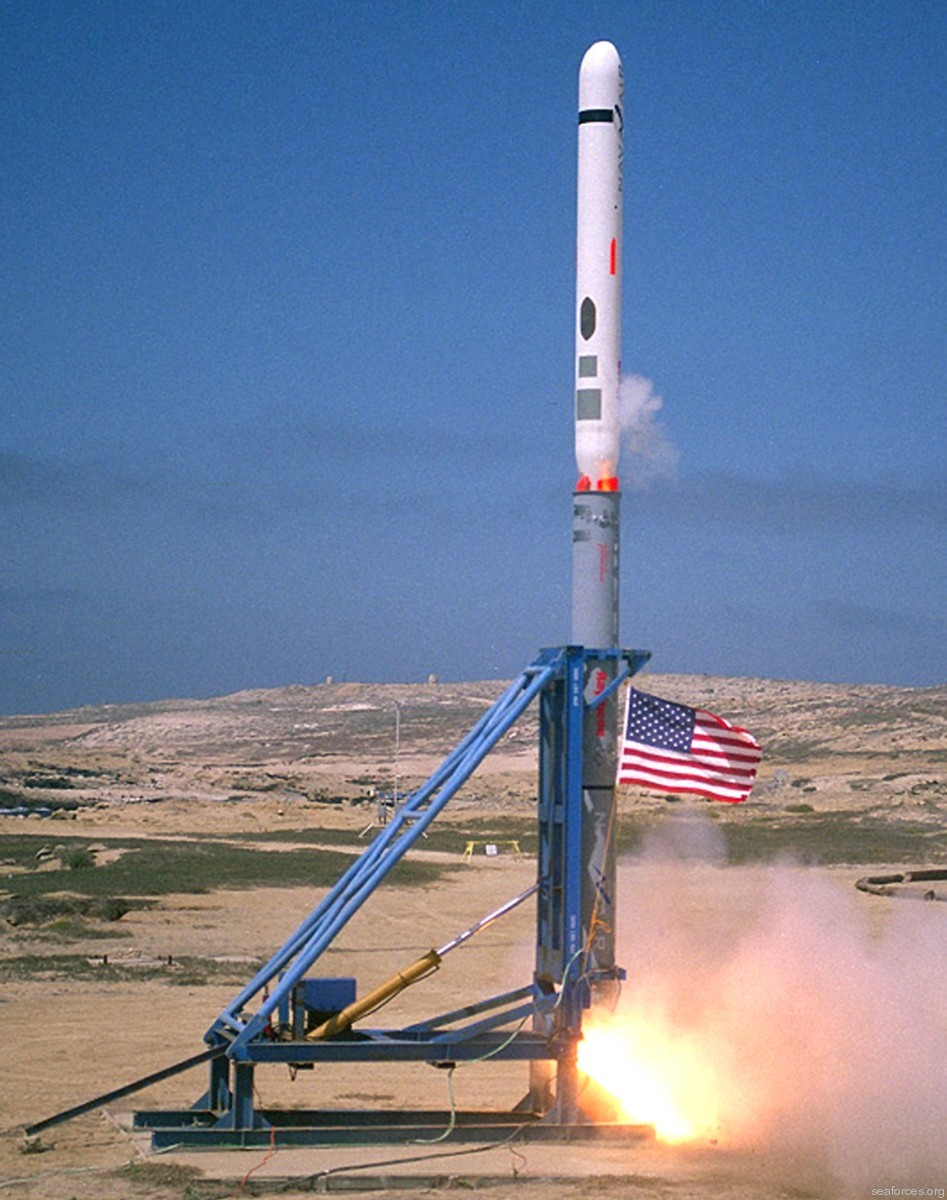 RGM-109E Tactical Tomahawk Block IV test launch - Point Mugu, California - August 2002 UGM-109 Tomahawk TLAM - Submarine-launched 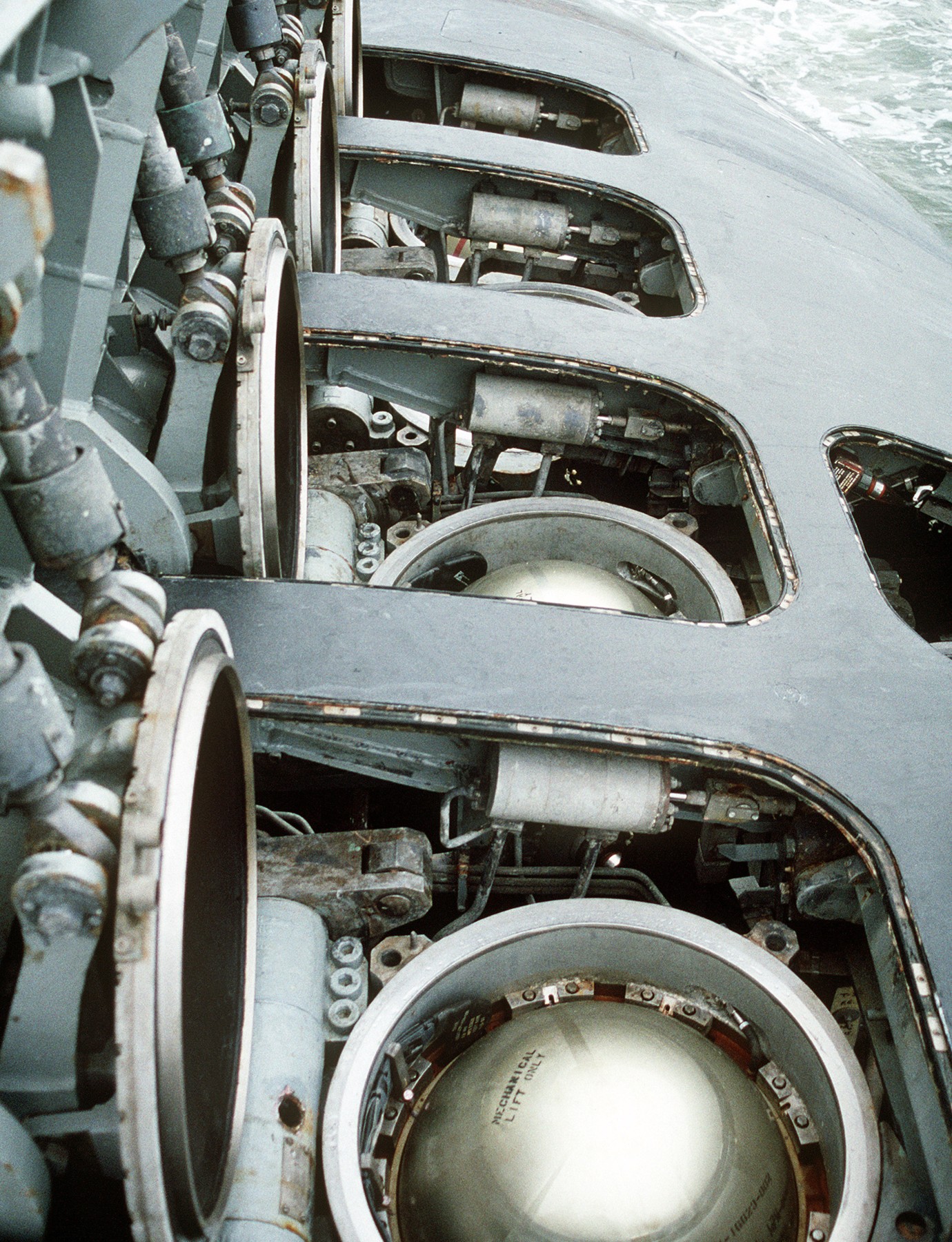 Mk.45 Vertical Launching System (VLS) for UGM-109 Tomahawk TLAM aboard a Los Angeles class SSN 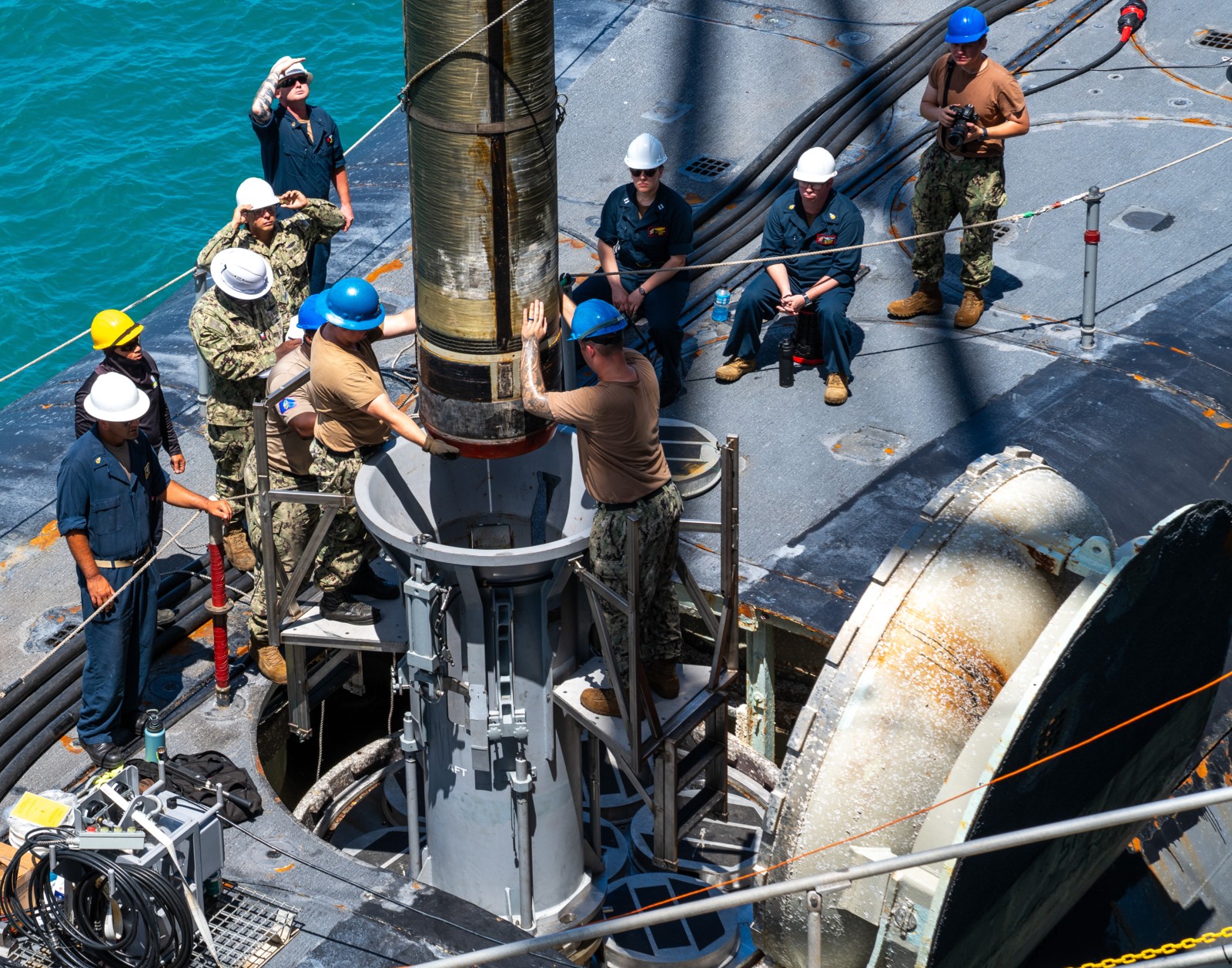 an UGM-109 Tomahawk in a Capsule Launch System (CLS) was loaded into a seven-shot Multiple-All-Up-Round Canister (MAC) aboard an Ohio class SSGN 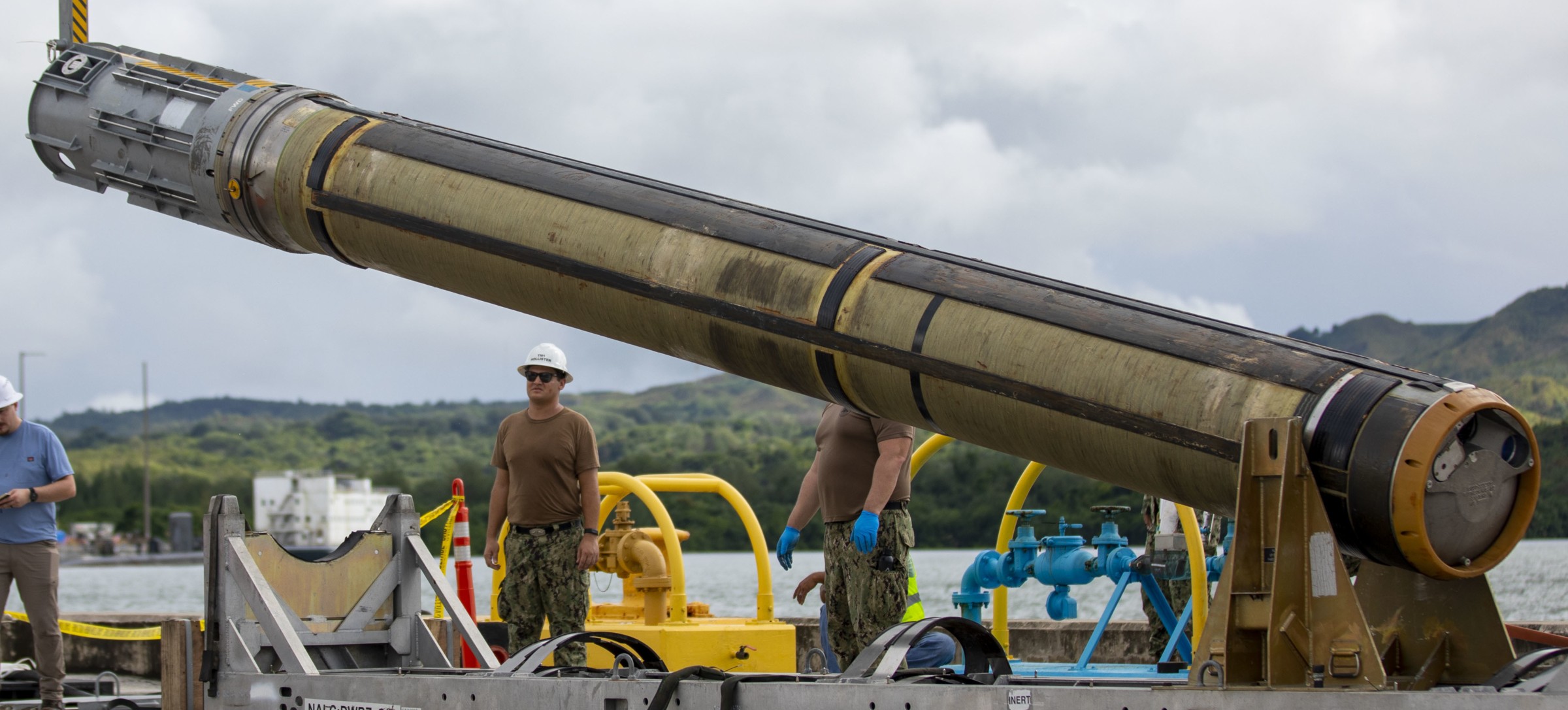 UGM-109 Tomahawk in a Capsule Launch System (CLS) for subsurface launching 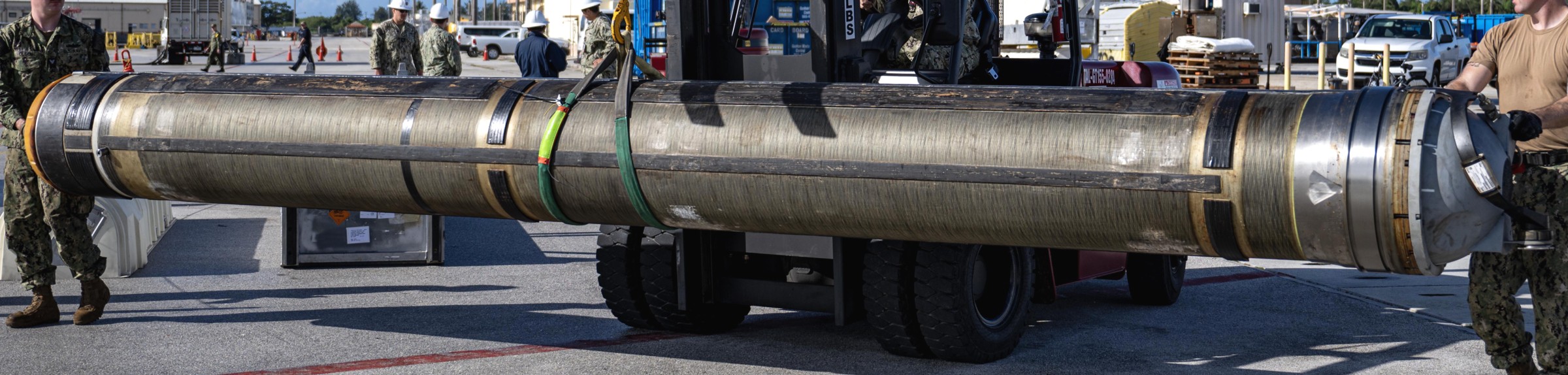 UGM-109 Tomahawk in a Capsule Launch System (CLS) for subsurface launching 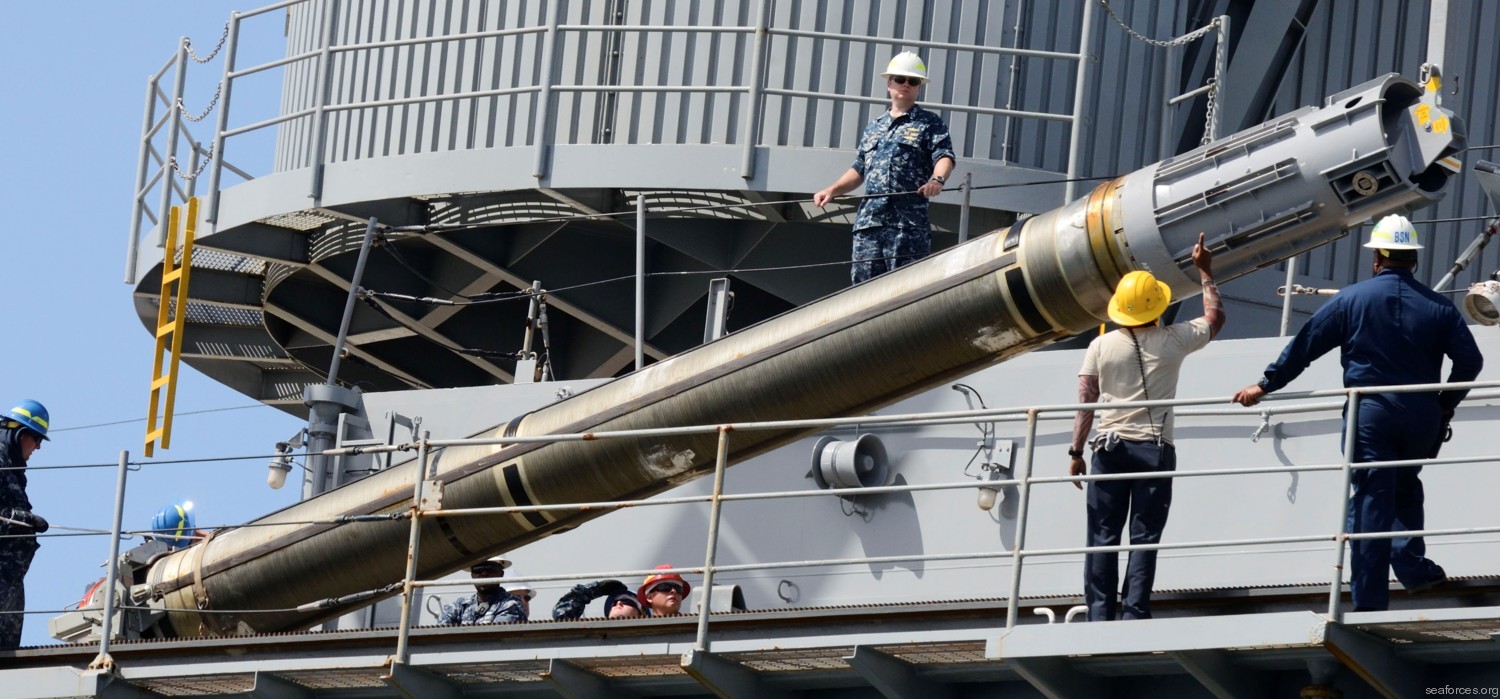 UGM-109 Tomahawk in a Capsule Launch System (CLS) for subsurface launching 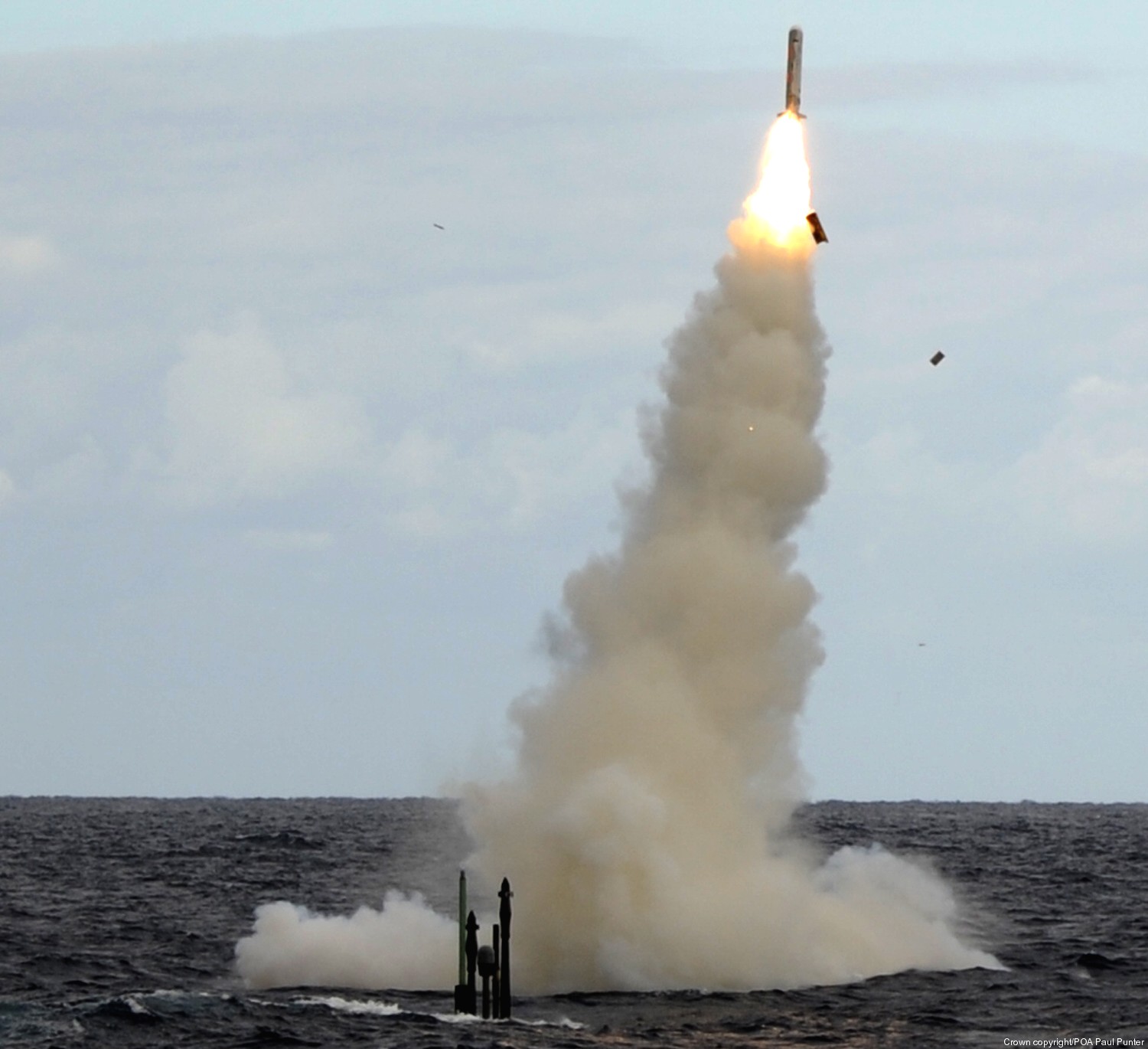 UGM-109 Tomahawk missile was launched from a Royal Navy Astute class submarine 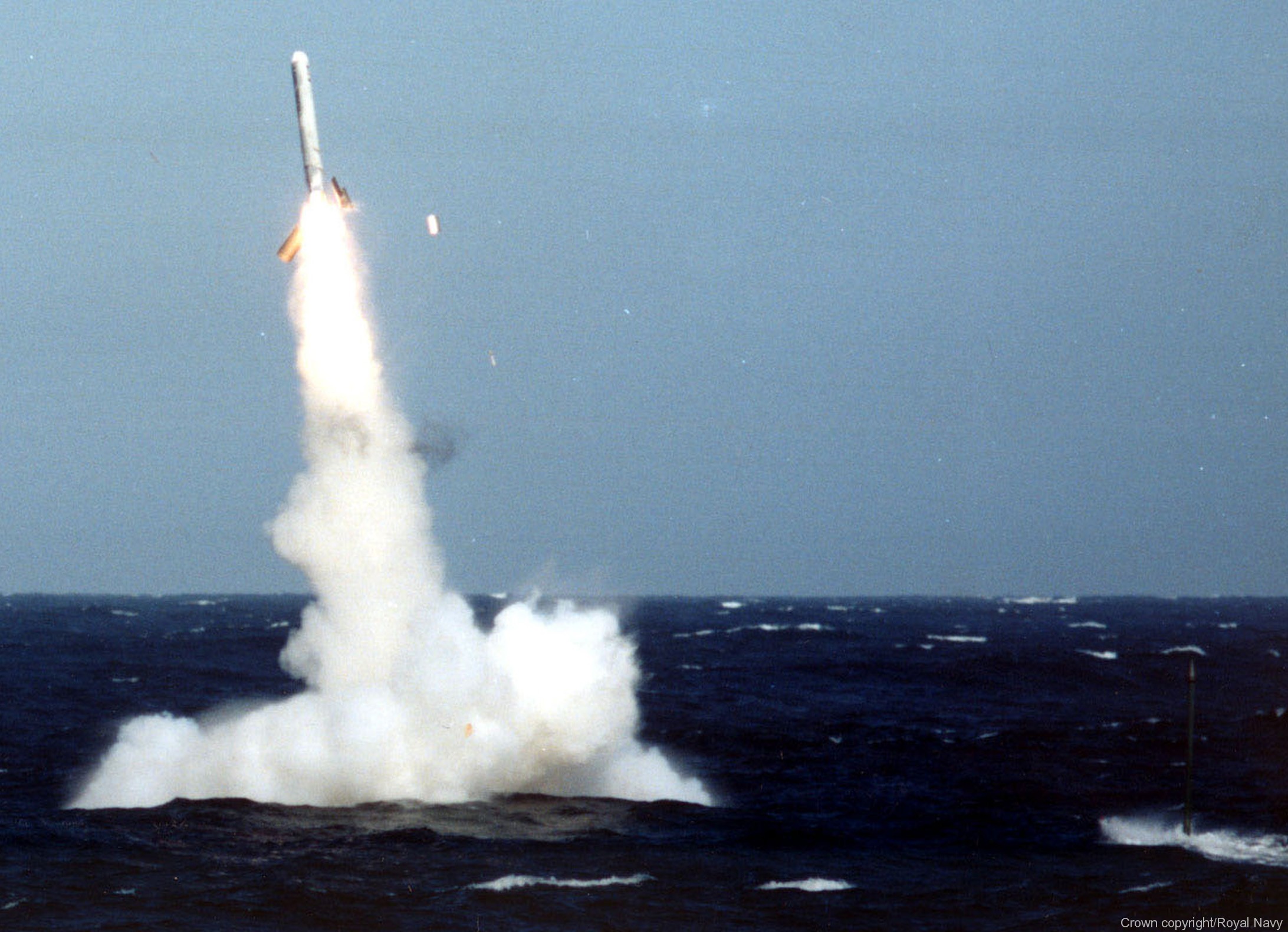 UGM-109 Tomahawk missile was launched from a Royal Navy Submarine 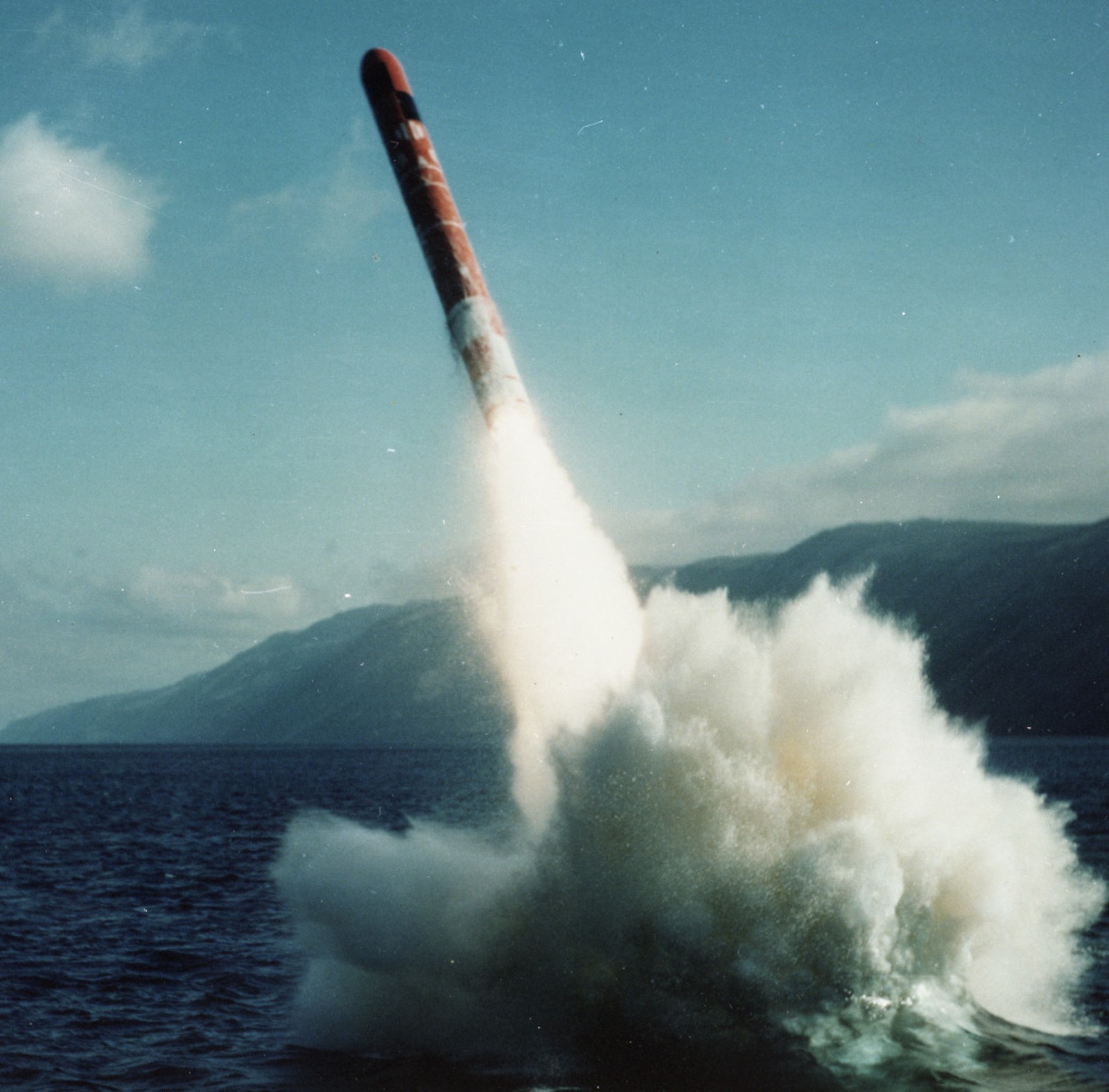 UGM-109 Tomahawk was launched from a submerged Los Angeles class SSN 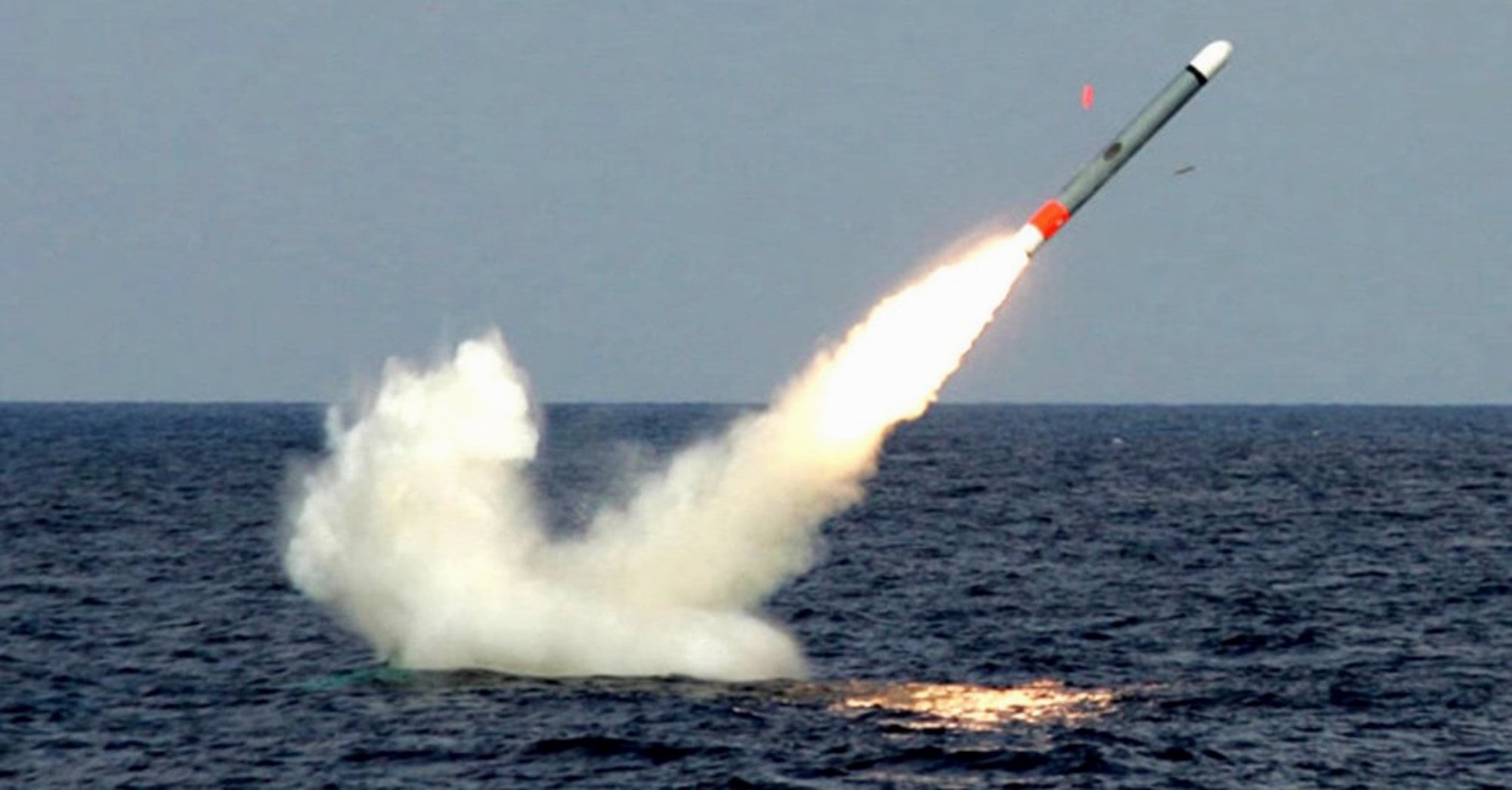 UGM-109 Tomahawk was launched from a submerged Los Angeles class SSN 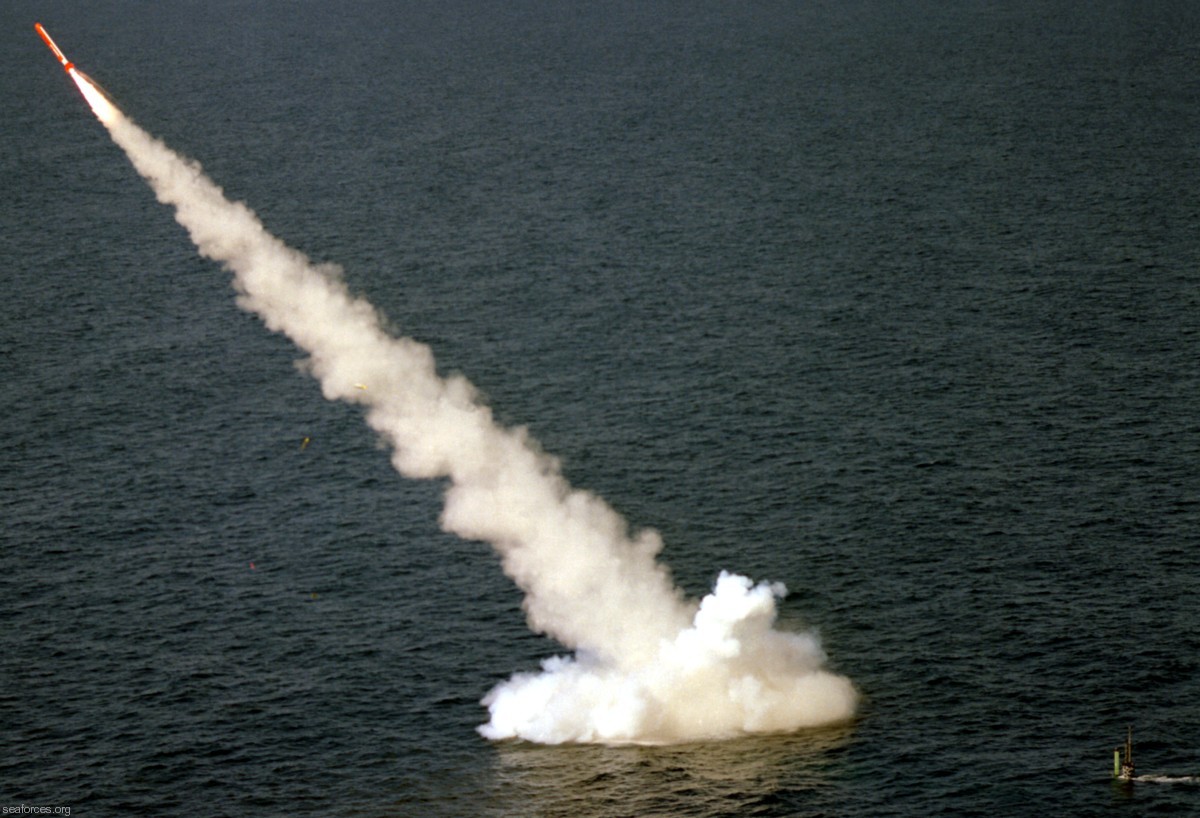 UGM-109 Tomahawk was launched from a submerged Los Angeles class SSN 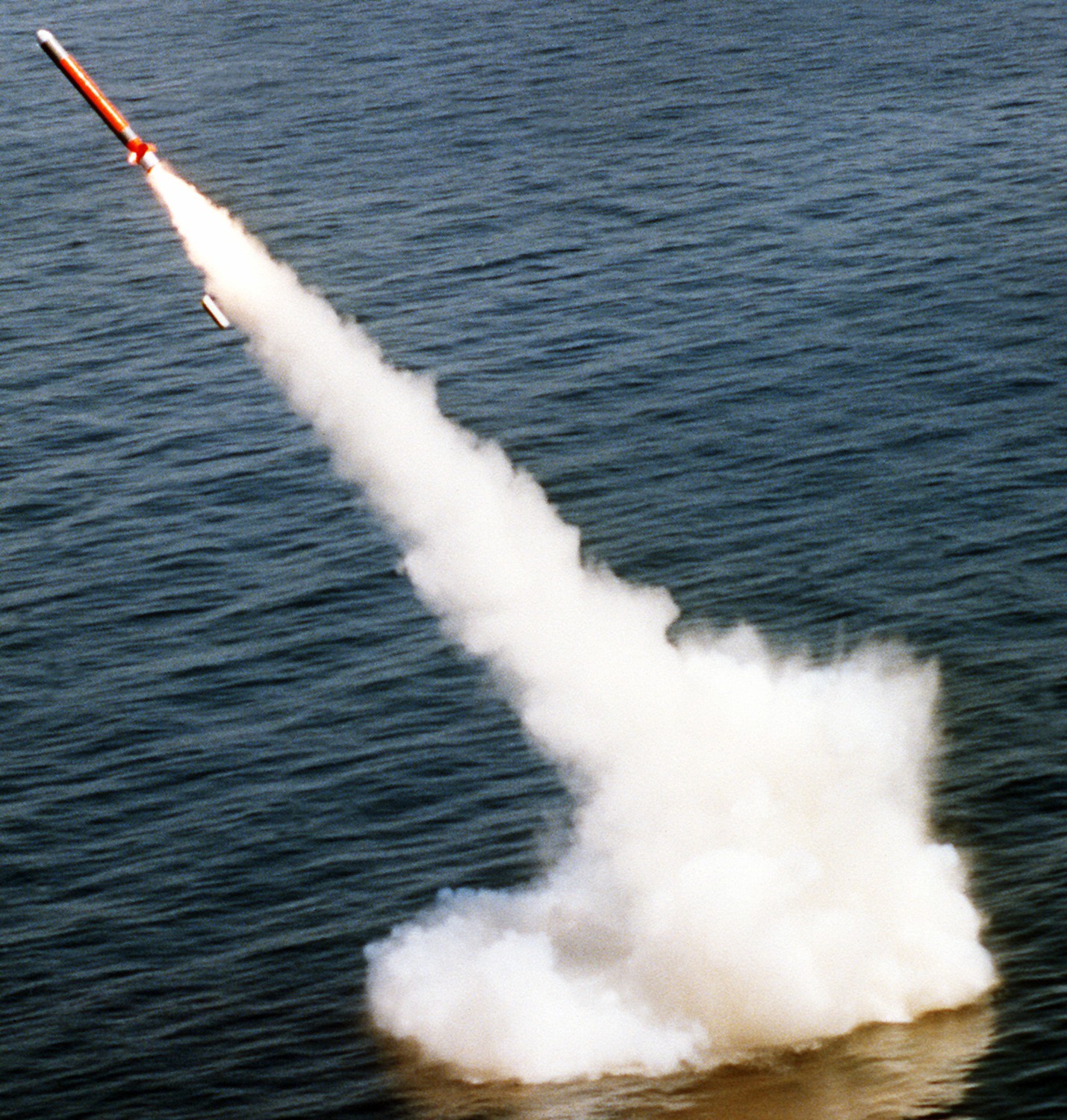 UGM-109 Tomahawk was launched from a submerged Los Angeles class SSN 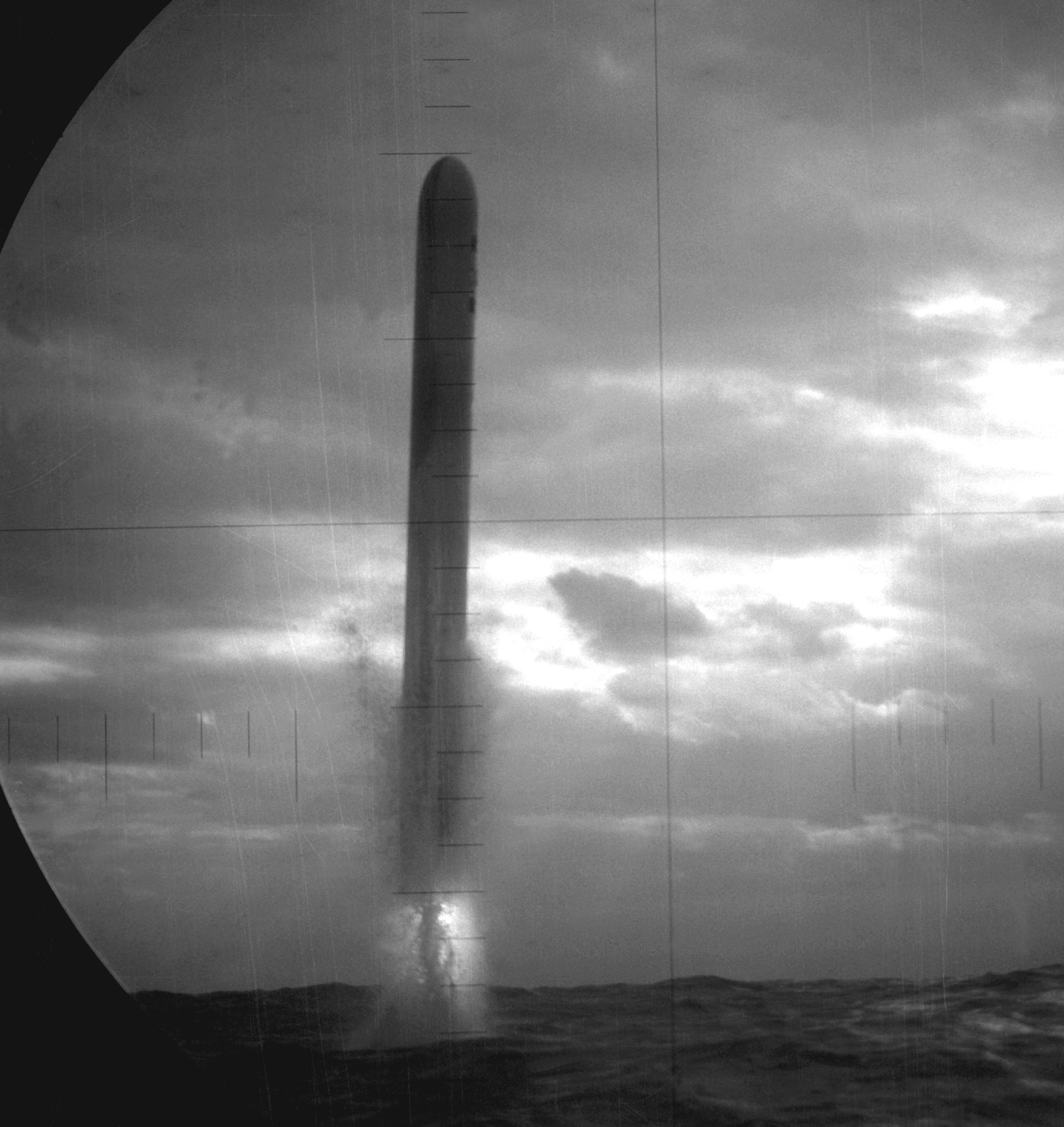 UGM-109 Tomahawk was launched from a submerged Los Angeles class SSN Mk.143 armored box launcher (ABL) 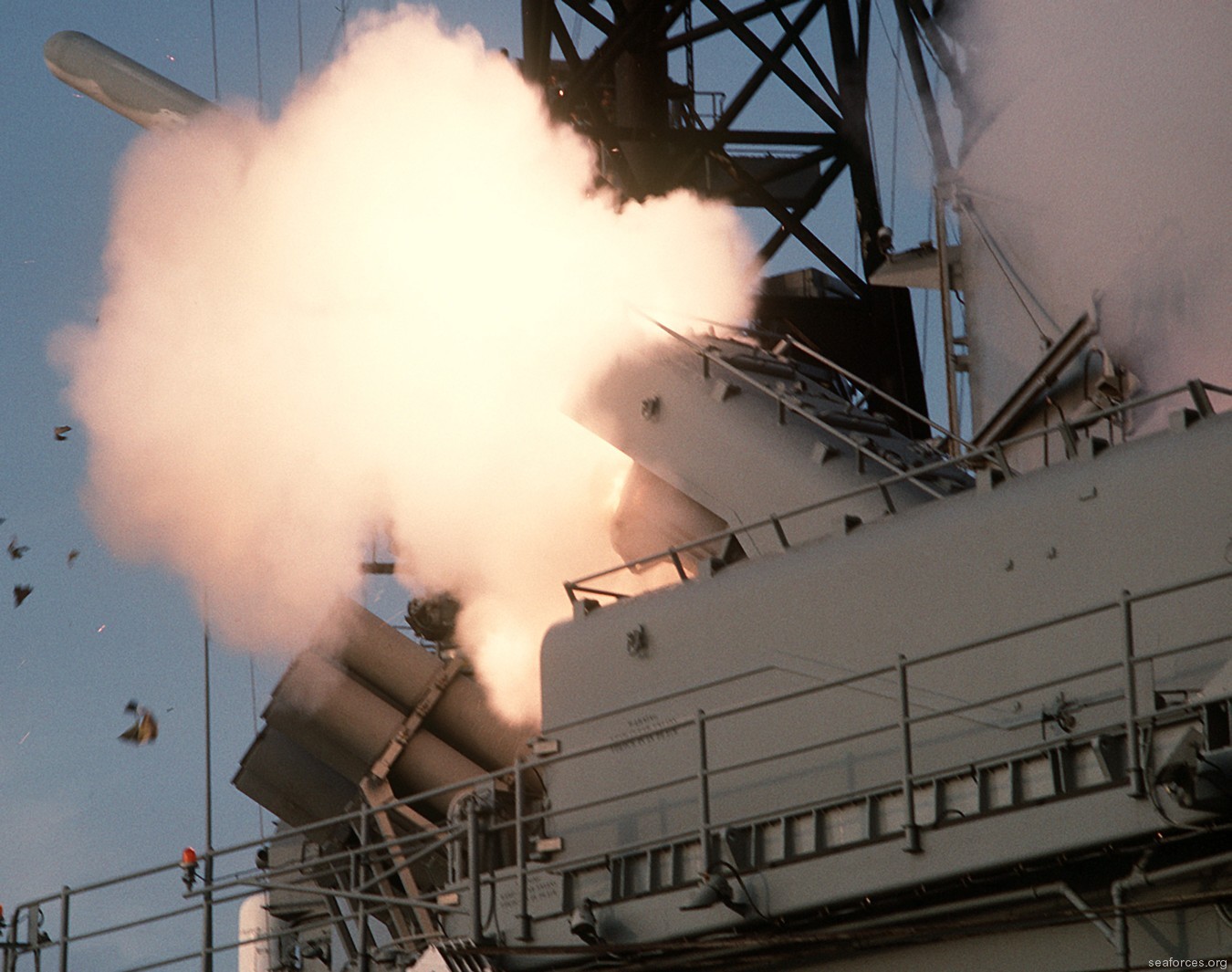 BGM-109 Tomahawk TLAM was launched from a Mk.143 armored box launcher 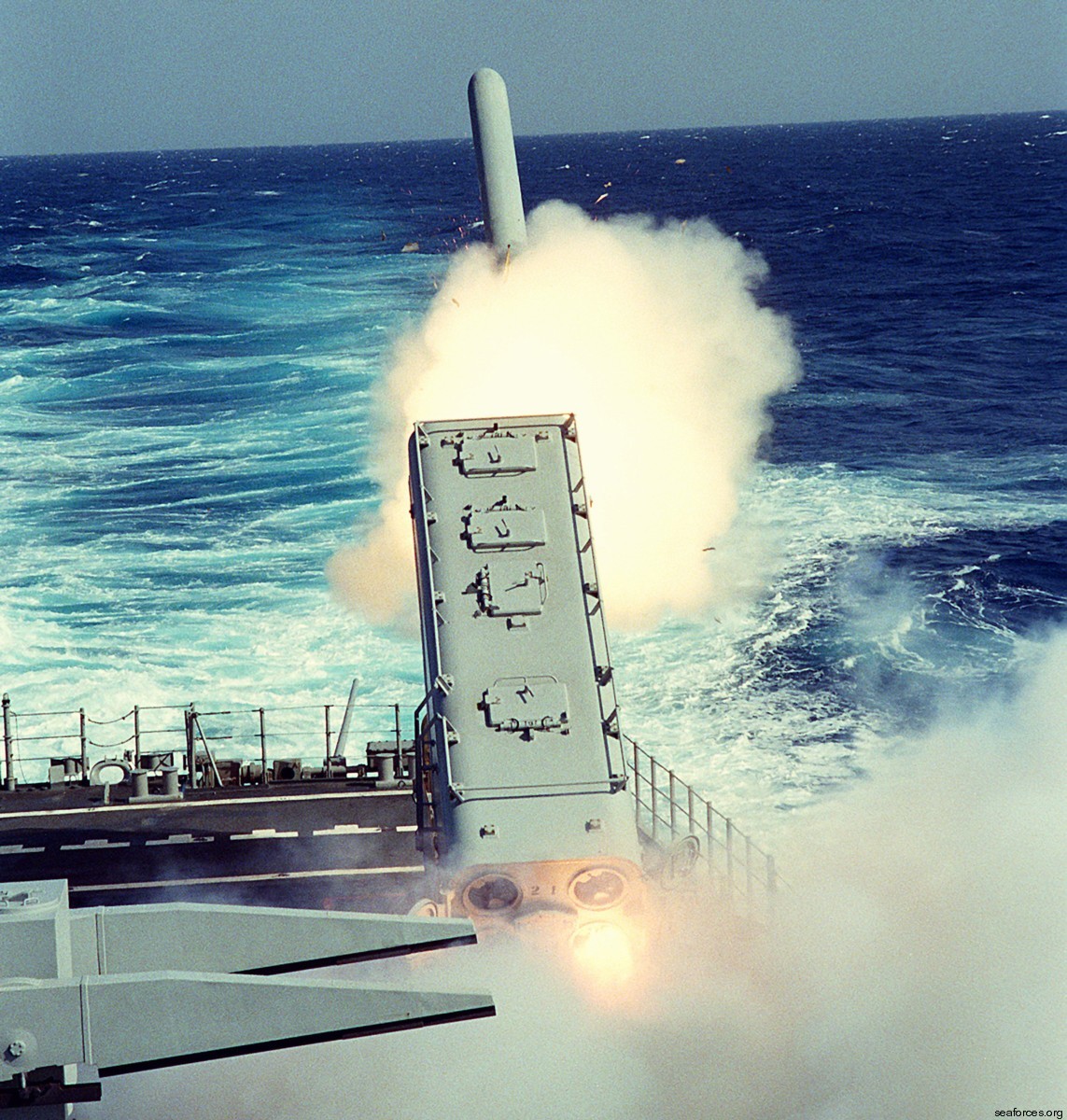 BGM-109 Tomahawk TLAM was launched from a Mk.143 armored box launcher aboard USS Mississippi (CGN 40) 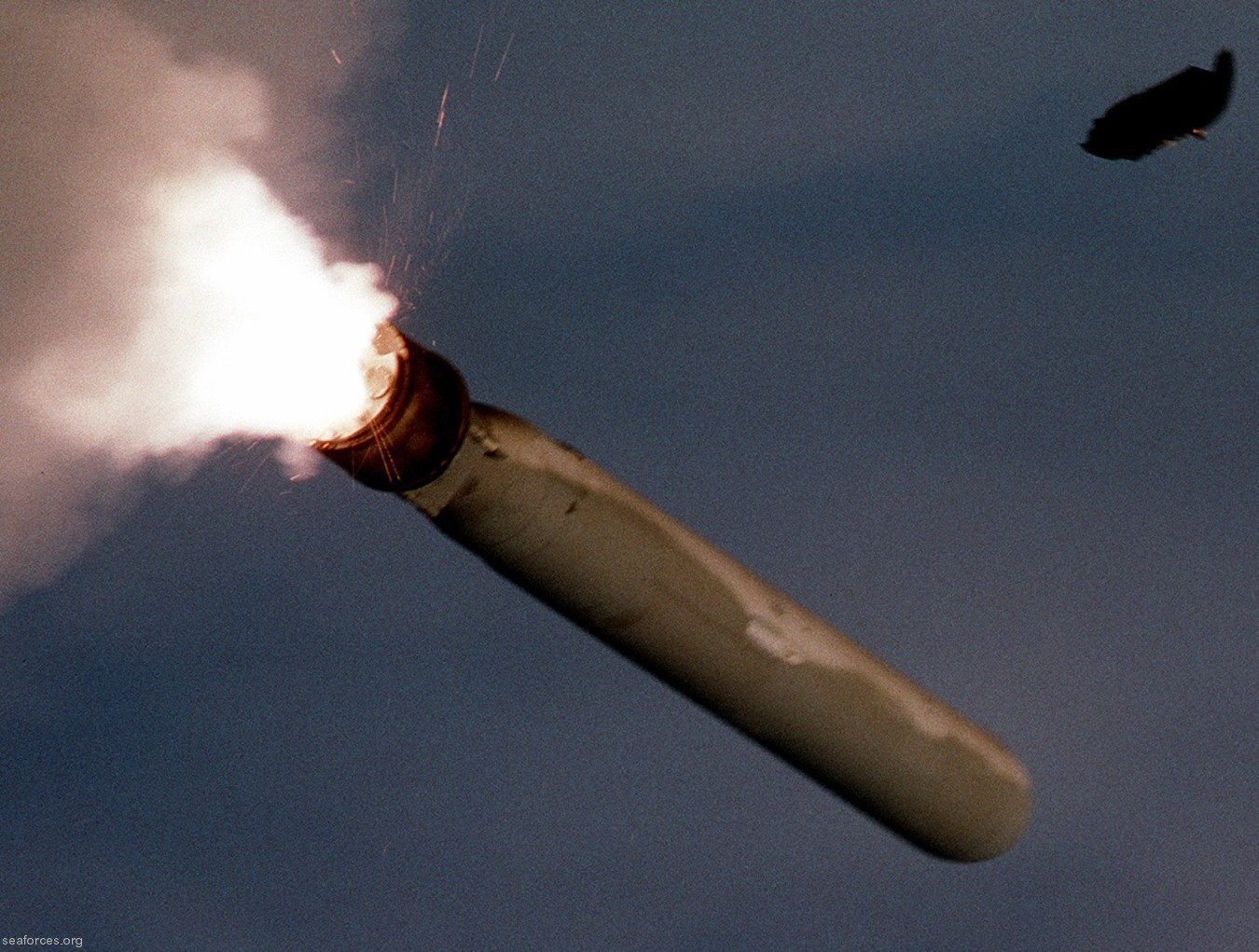 BGM-109 Tomahawk TLAM was launched from a Mk.143 armored box launcher 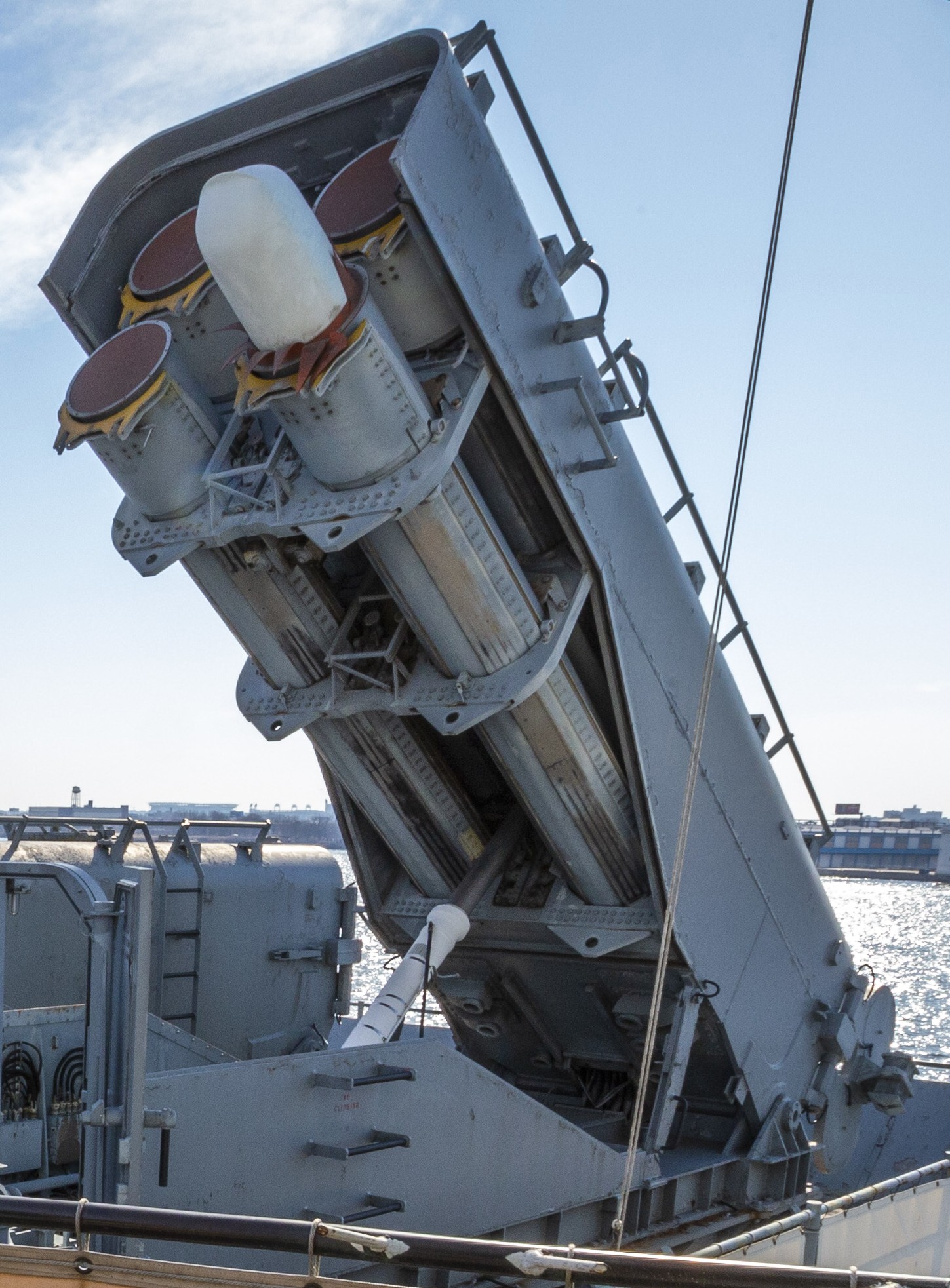 Mk.143 armored box launcher 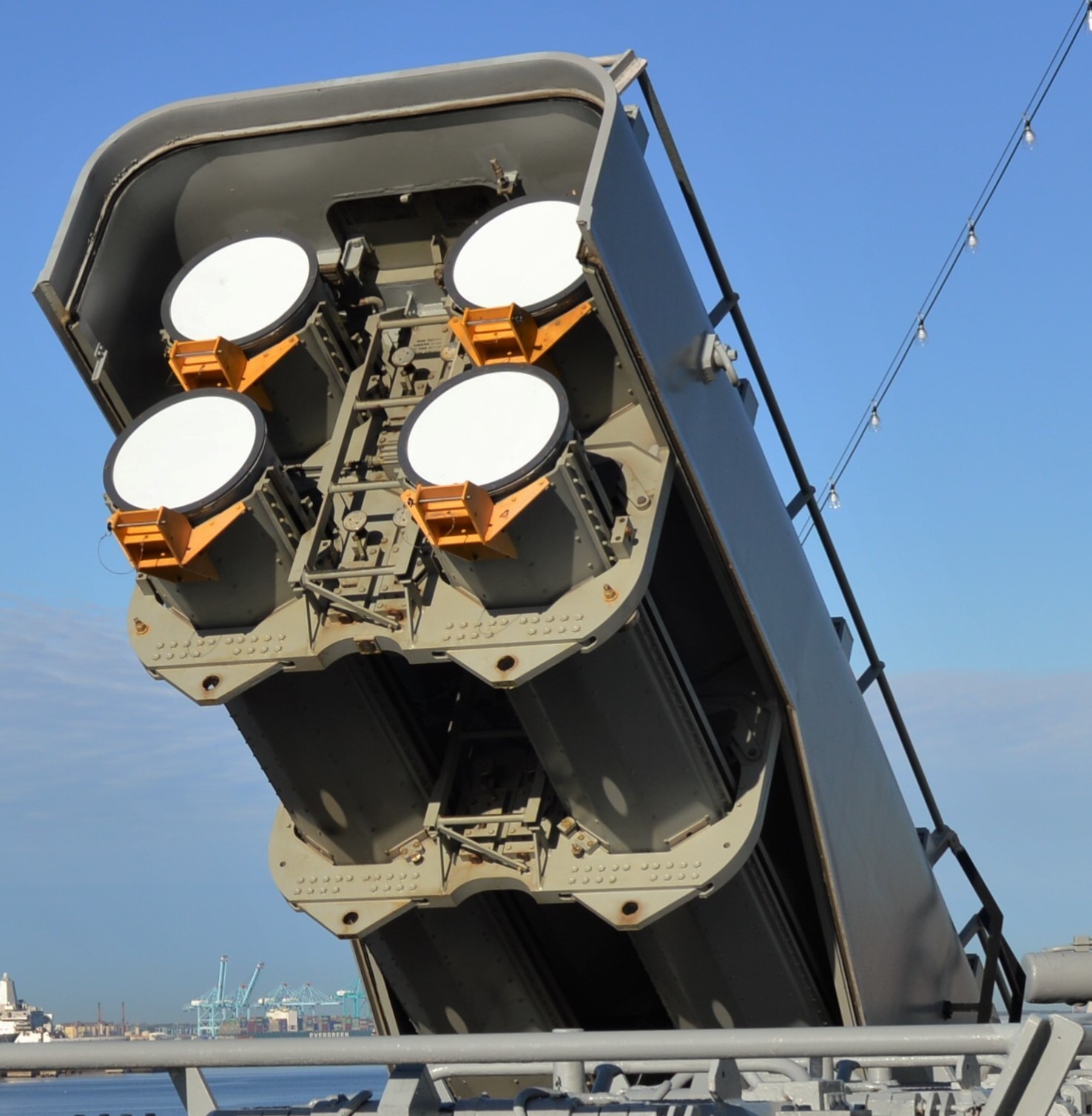 Mk.143 armored box launcher 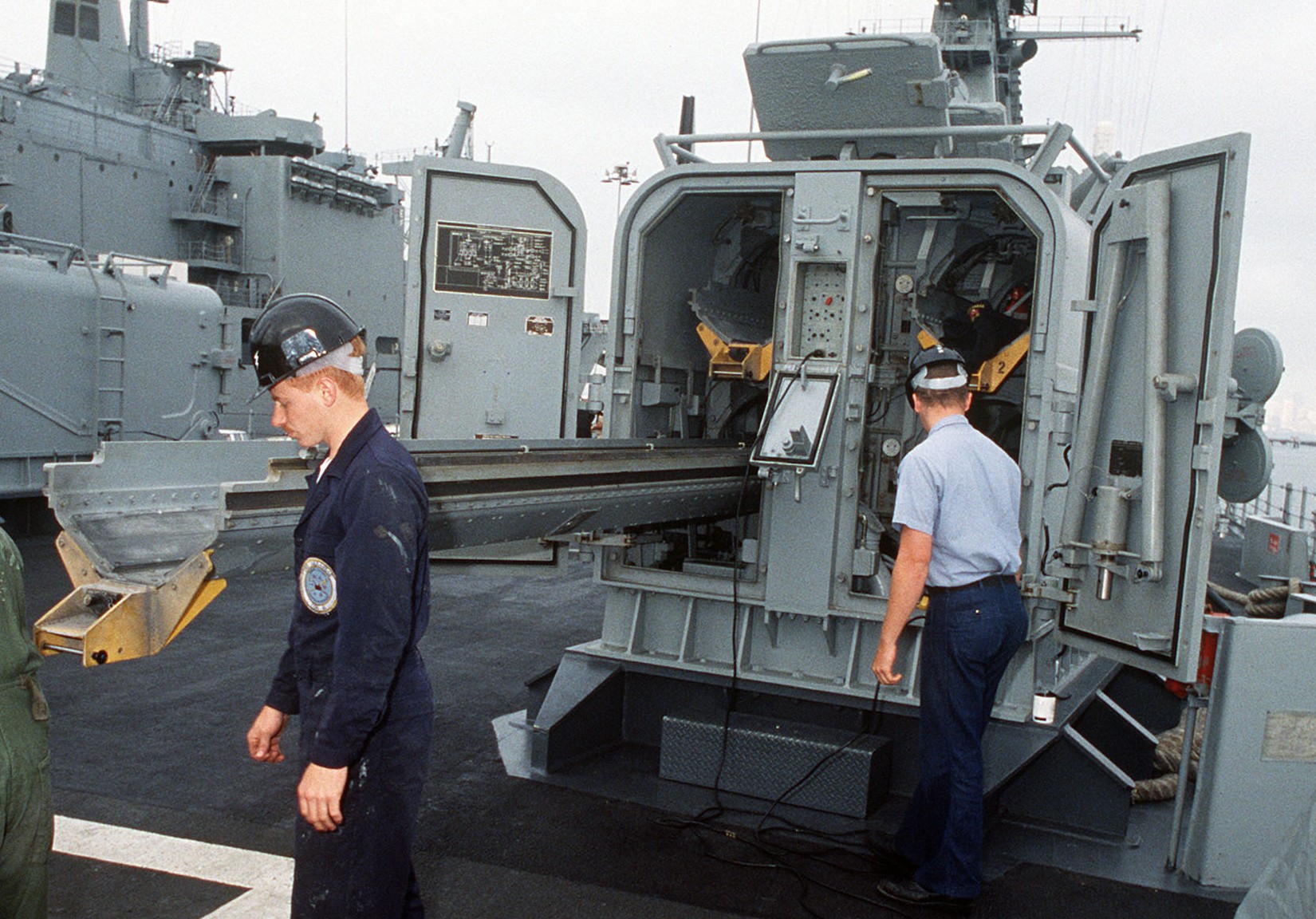 Mk.143 armored box launcher 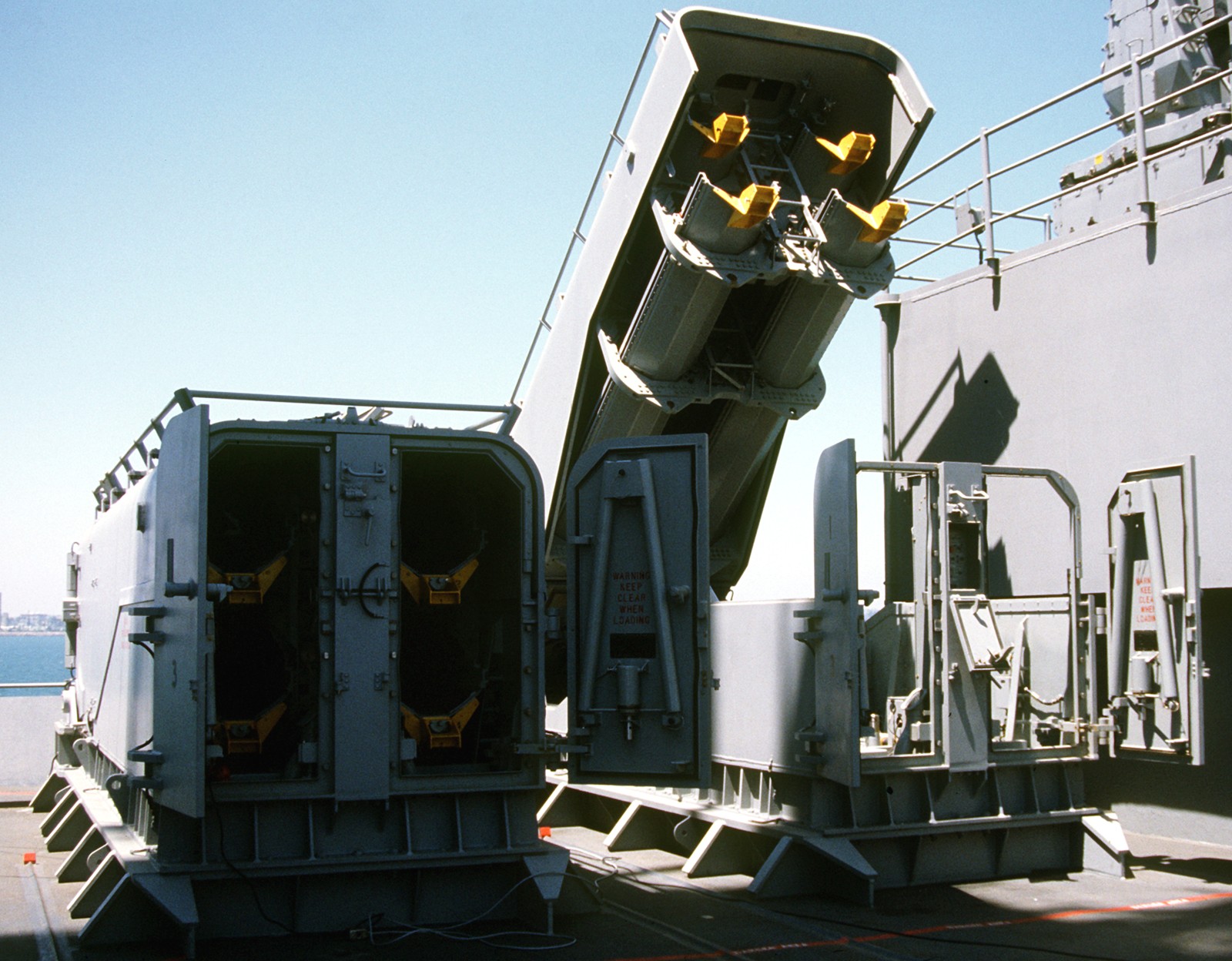 Mk.143 armored box launcher 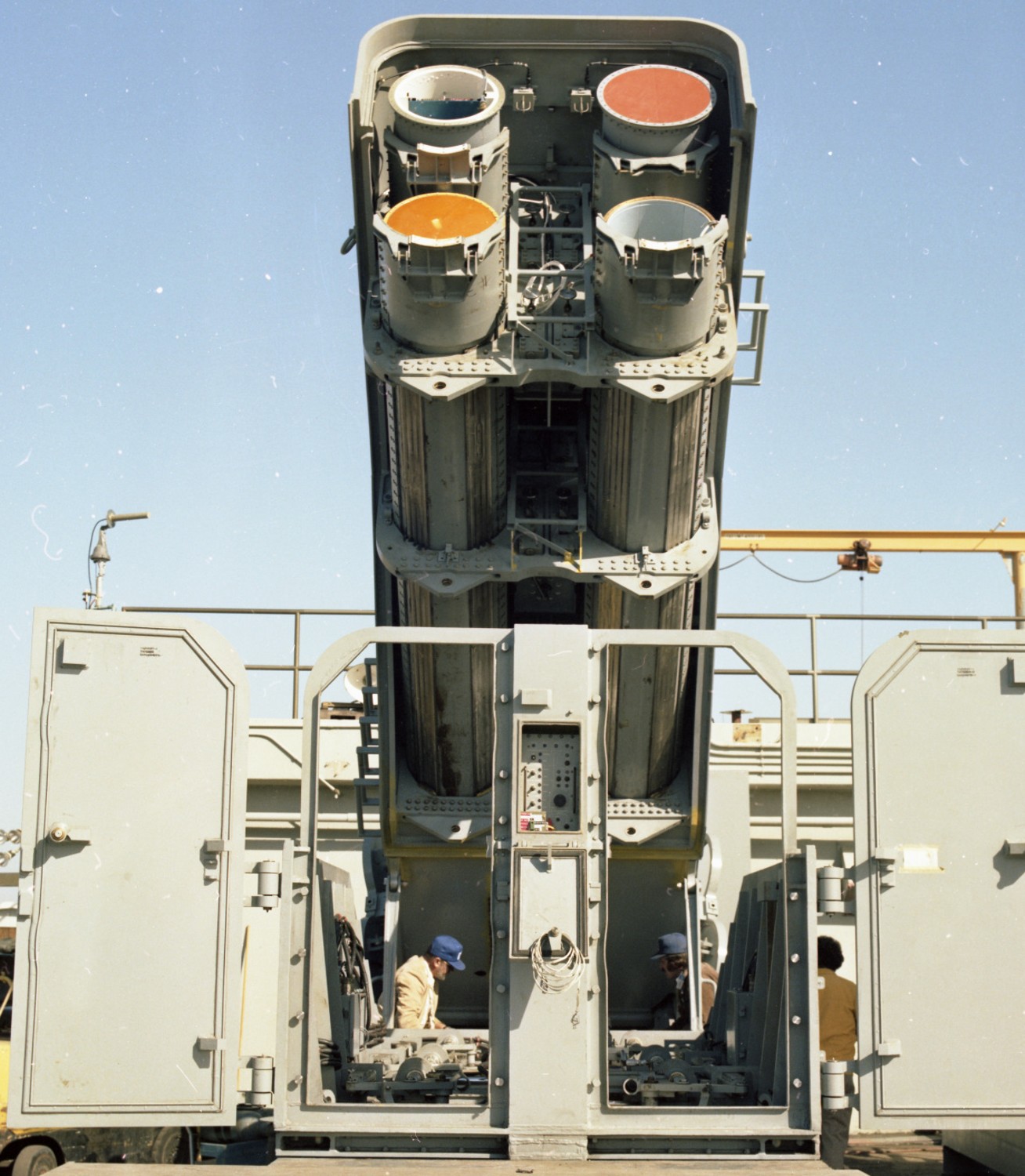 Mk.143 armored box launcher 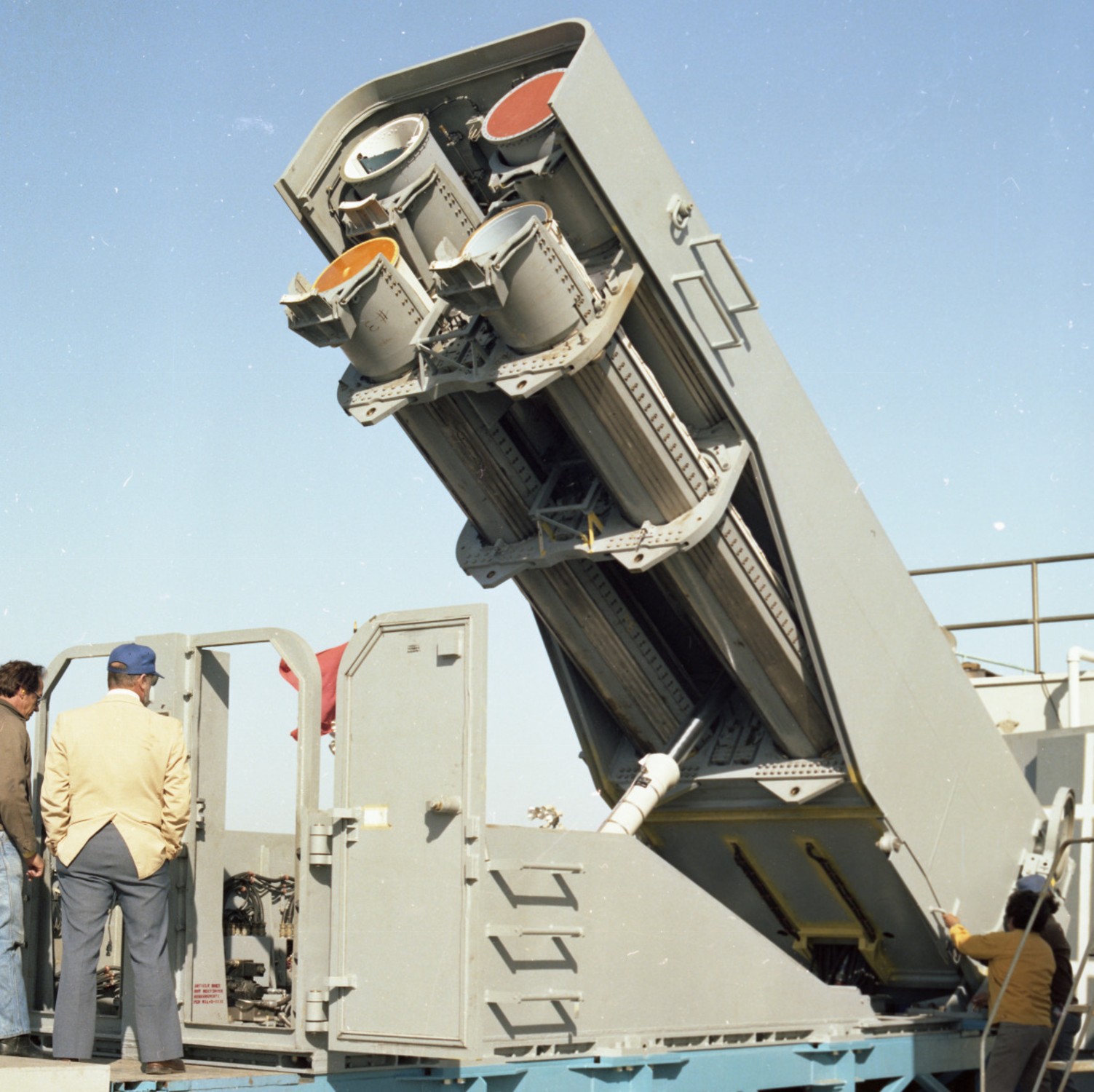 Mk.143 armored box launcher 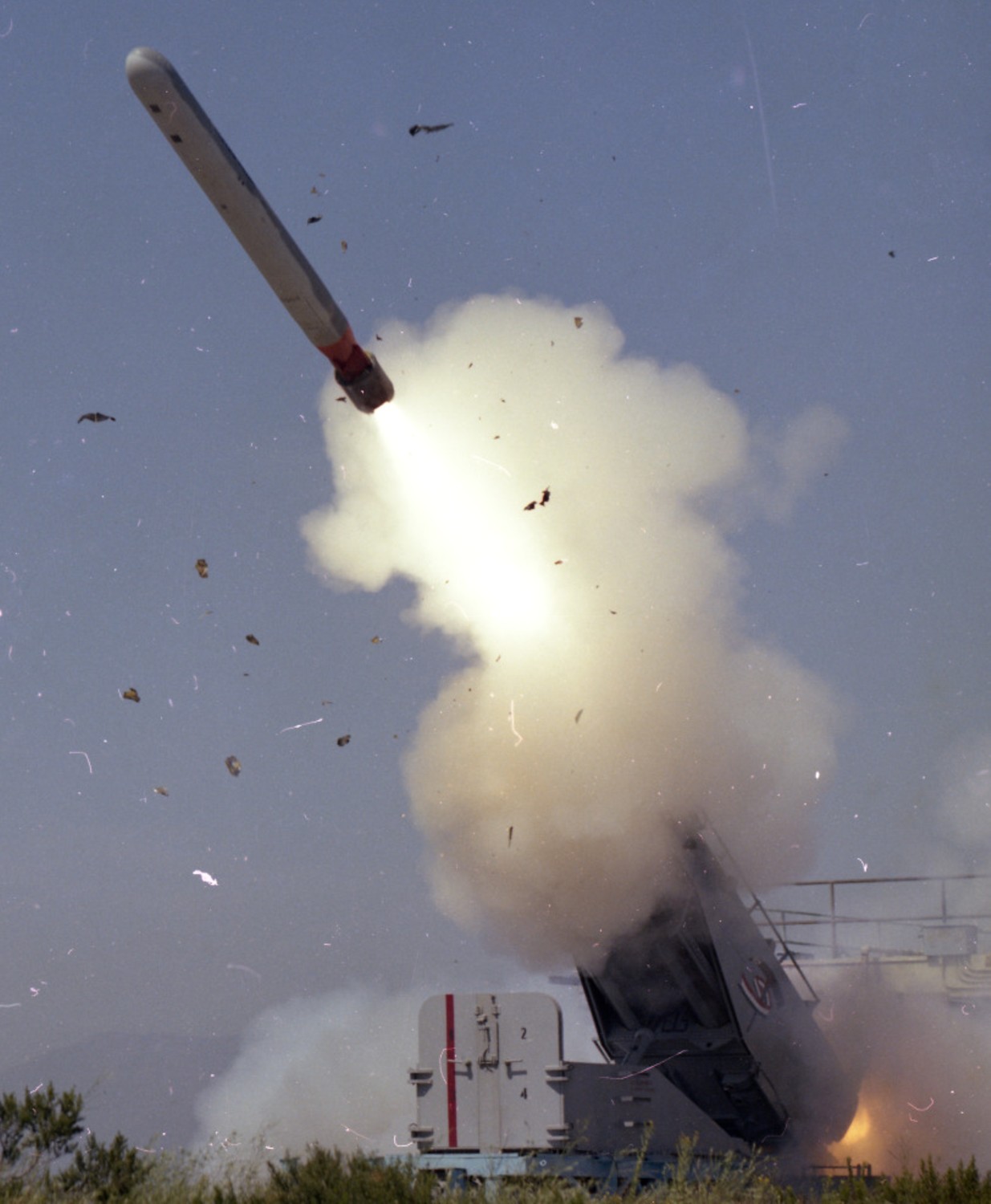 BGM-109 Tomahawk TLAM was launched from a Mk.143 armored box launcher 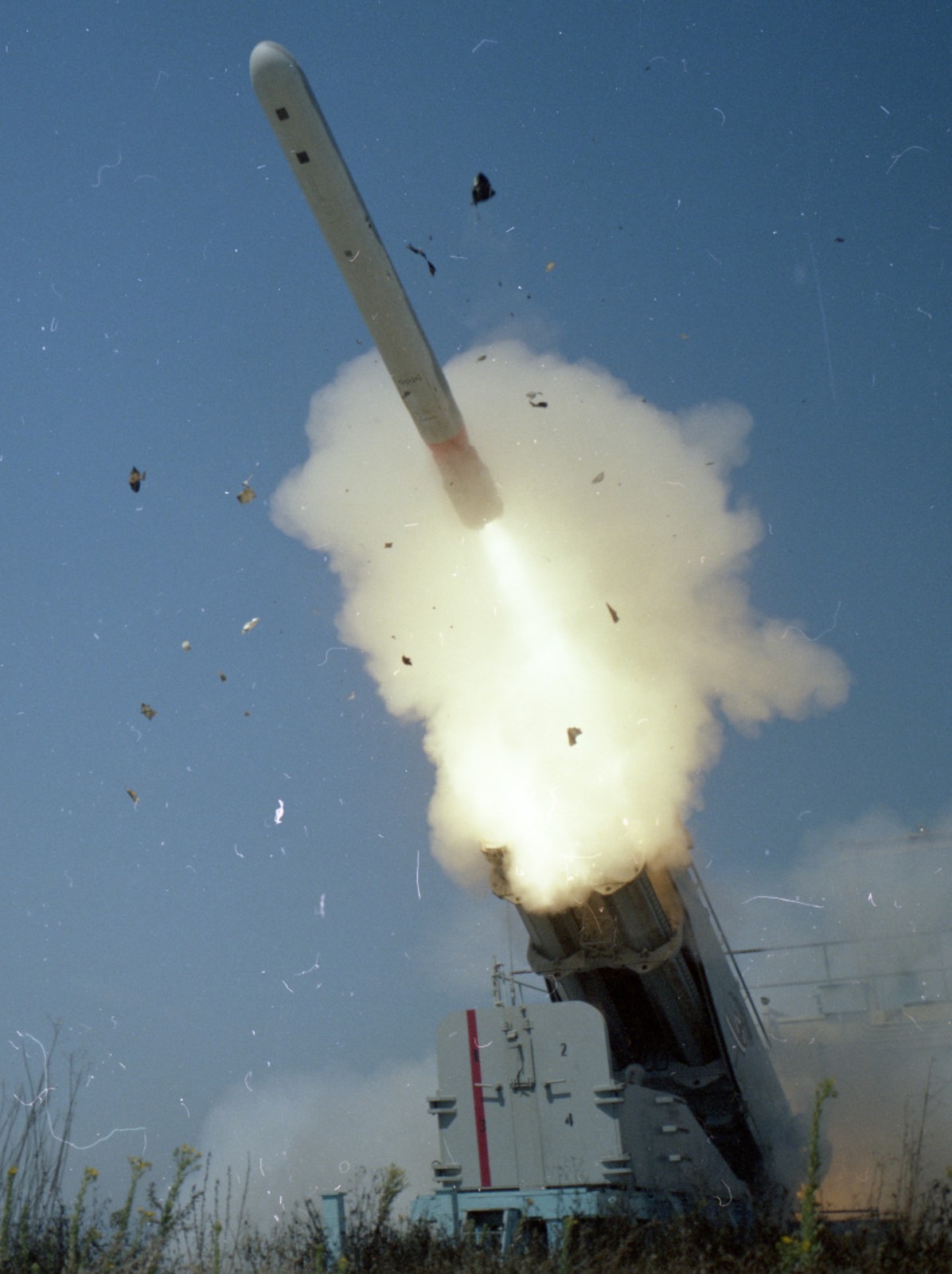 BGM-109 Tomahawk TLAM was launched from a Mk.143 armored box launcher 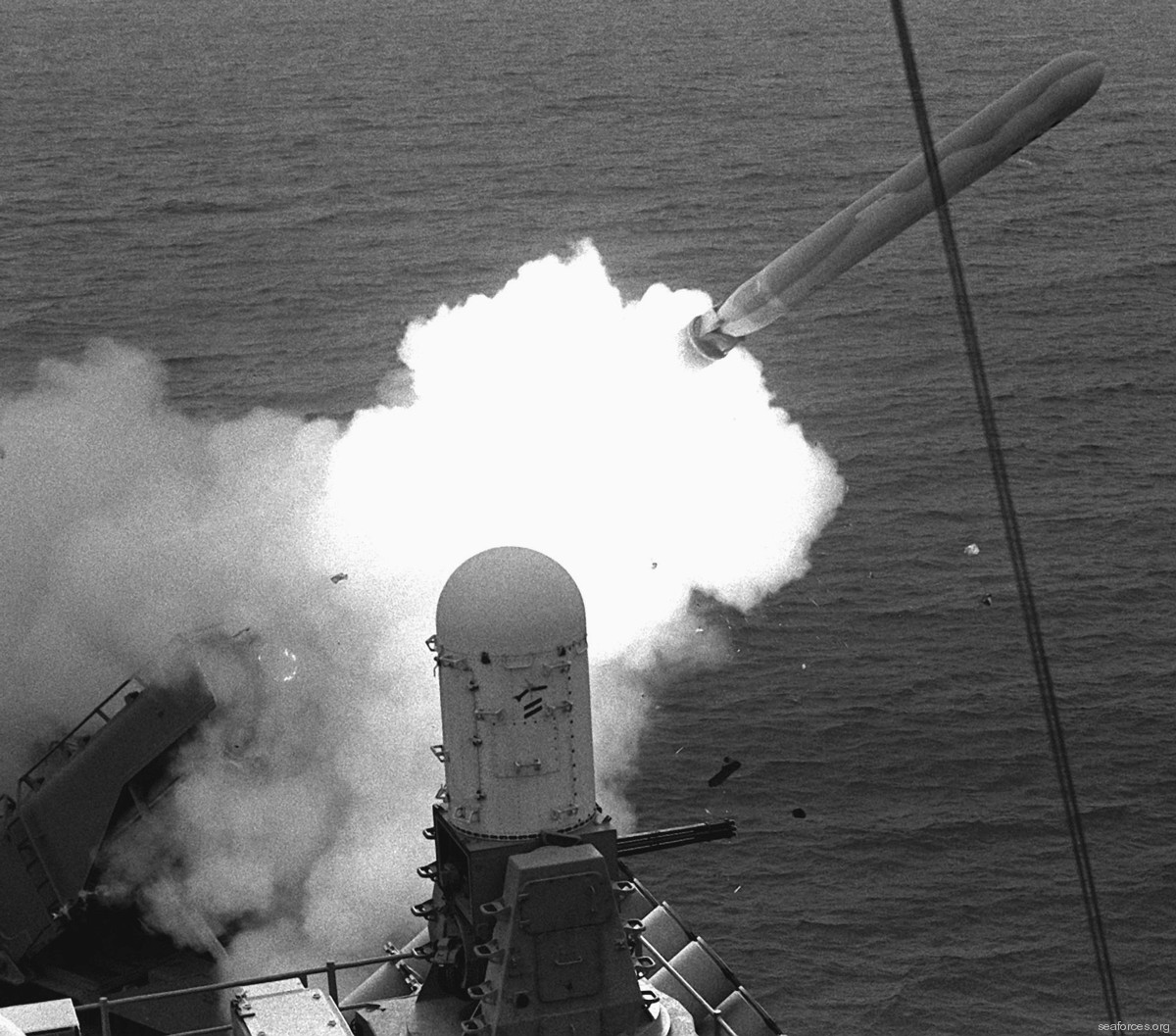 BGM-109 Tomahawk TLAM was launched from a Mk.143 armored box launcher aboard USS Missouri (BB 63) AGM-109 Tomahawk - Aircraft-launched 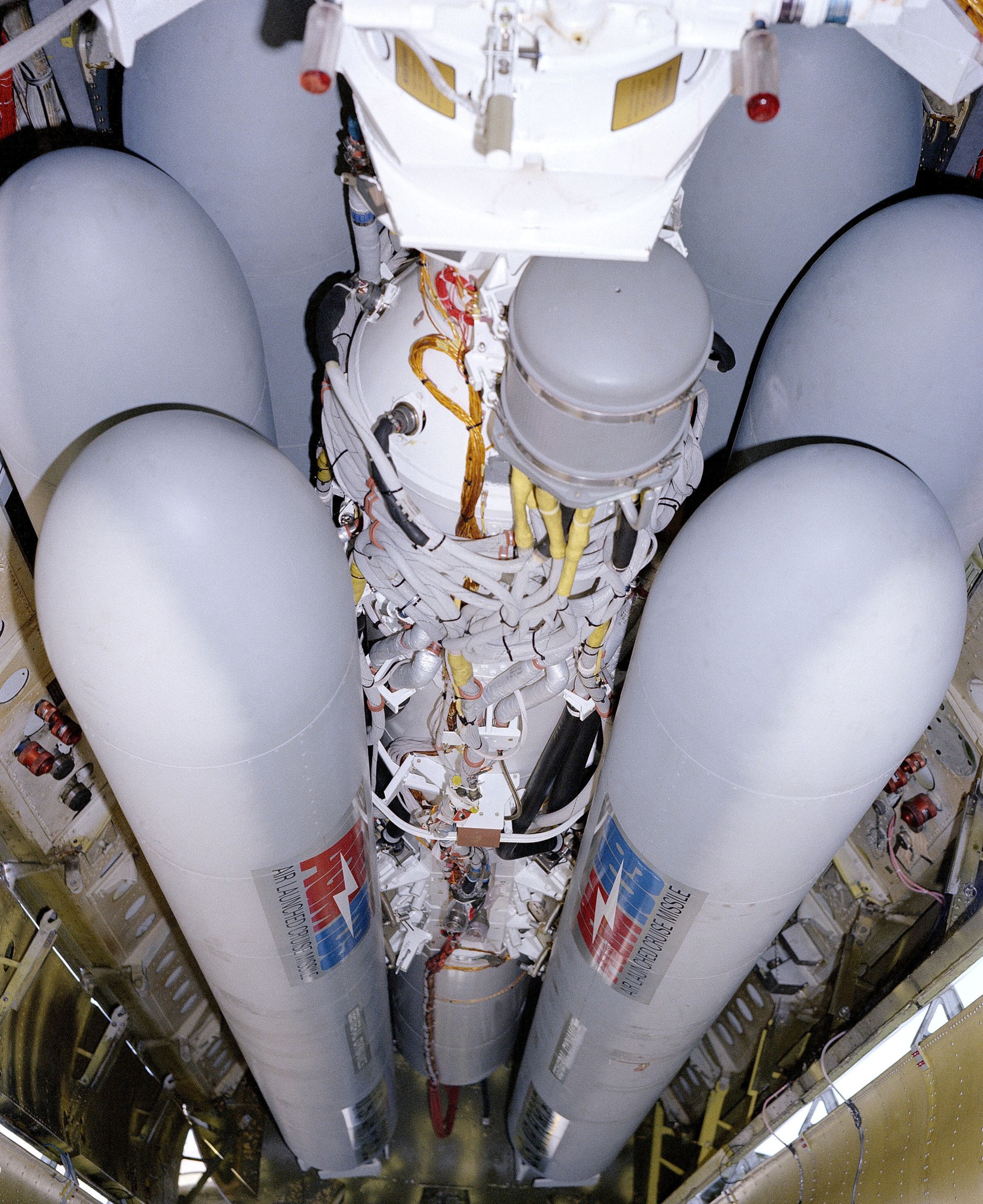 AGM-109 Tomahawk ALCM on a rotary launcher aboard an USAF B-52 Stratofortress bomber 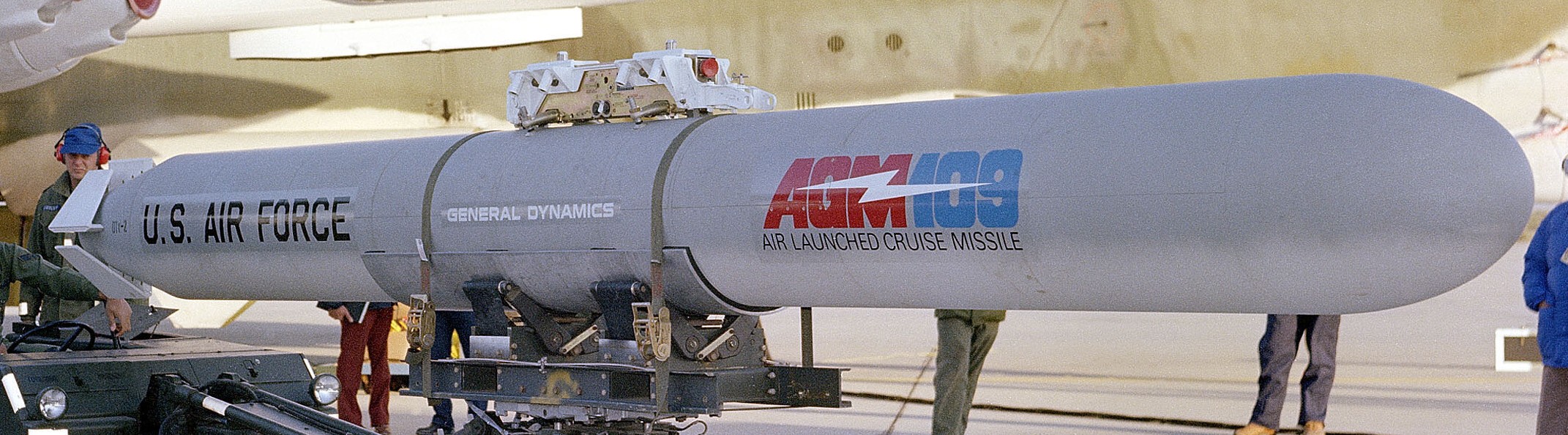 AGM-109 Tomahawk ALCM 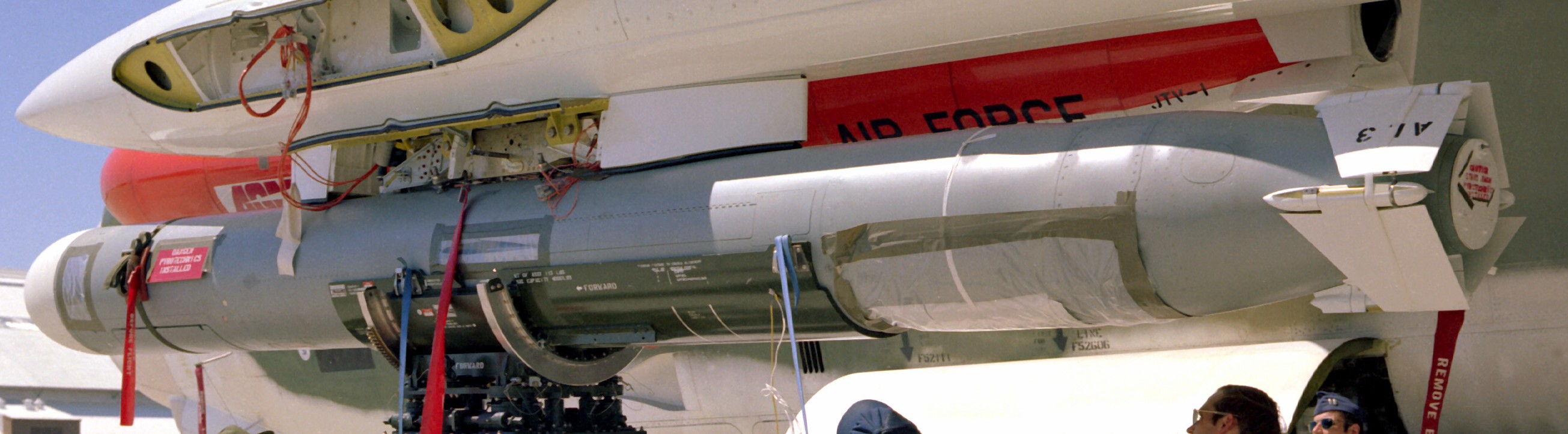 AGM-109 Tomahawk ALCM 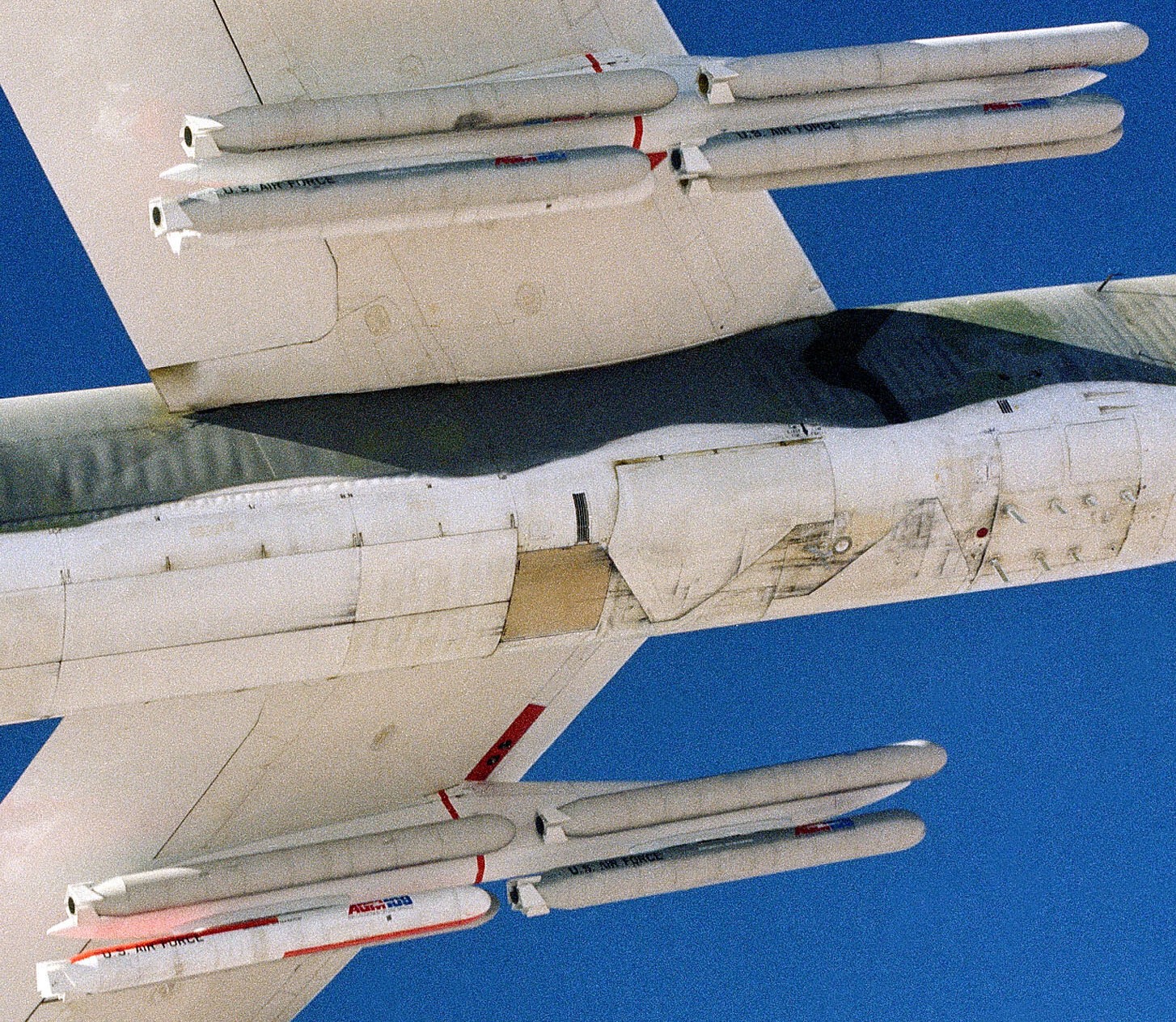 AGM-109 Tomahawk ALCM on an USAF B-52 Stratofortress bomber 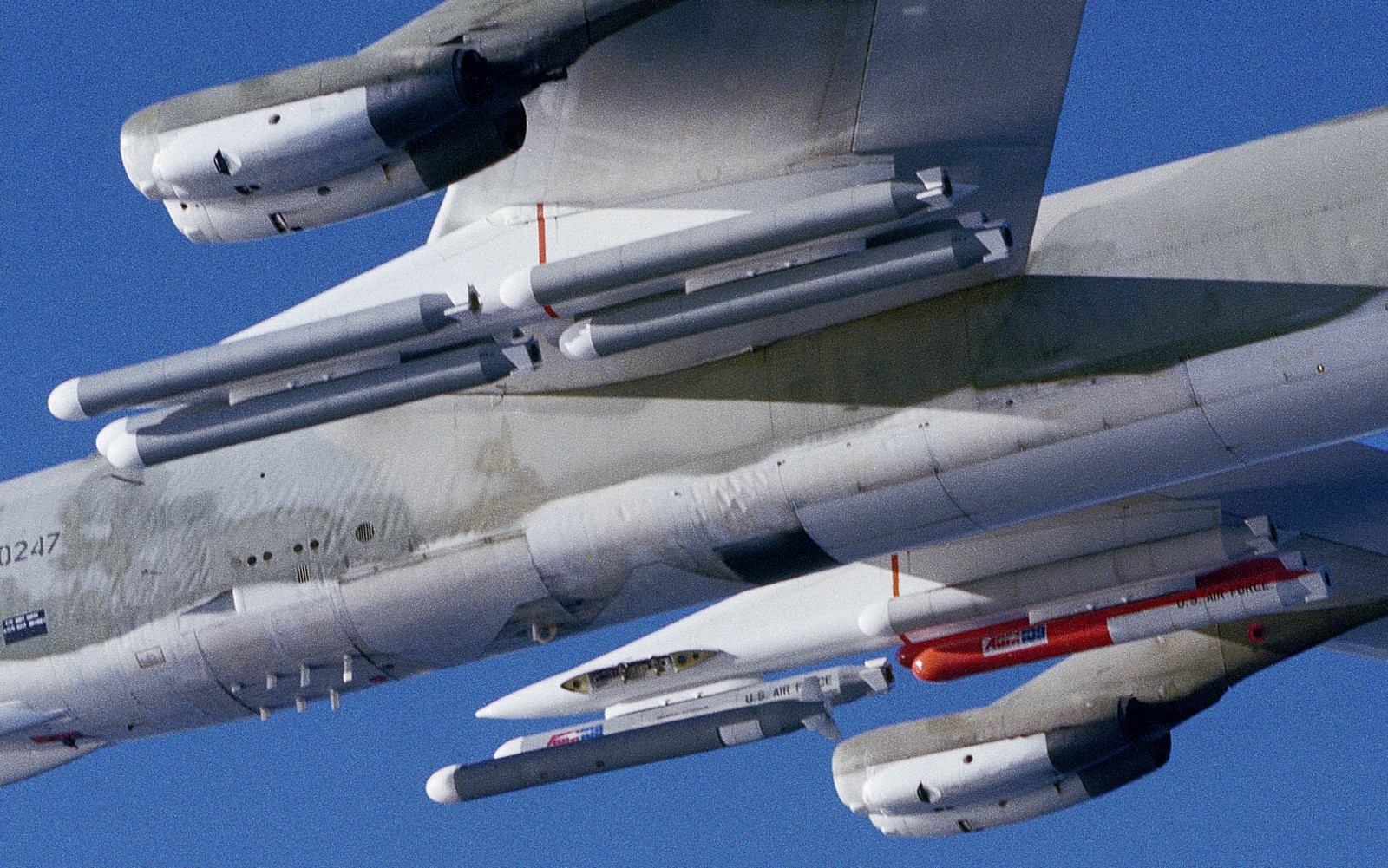 AGM-109 Tomahawk ALCM on an USAF B-52 Stratofortress bomber 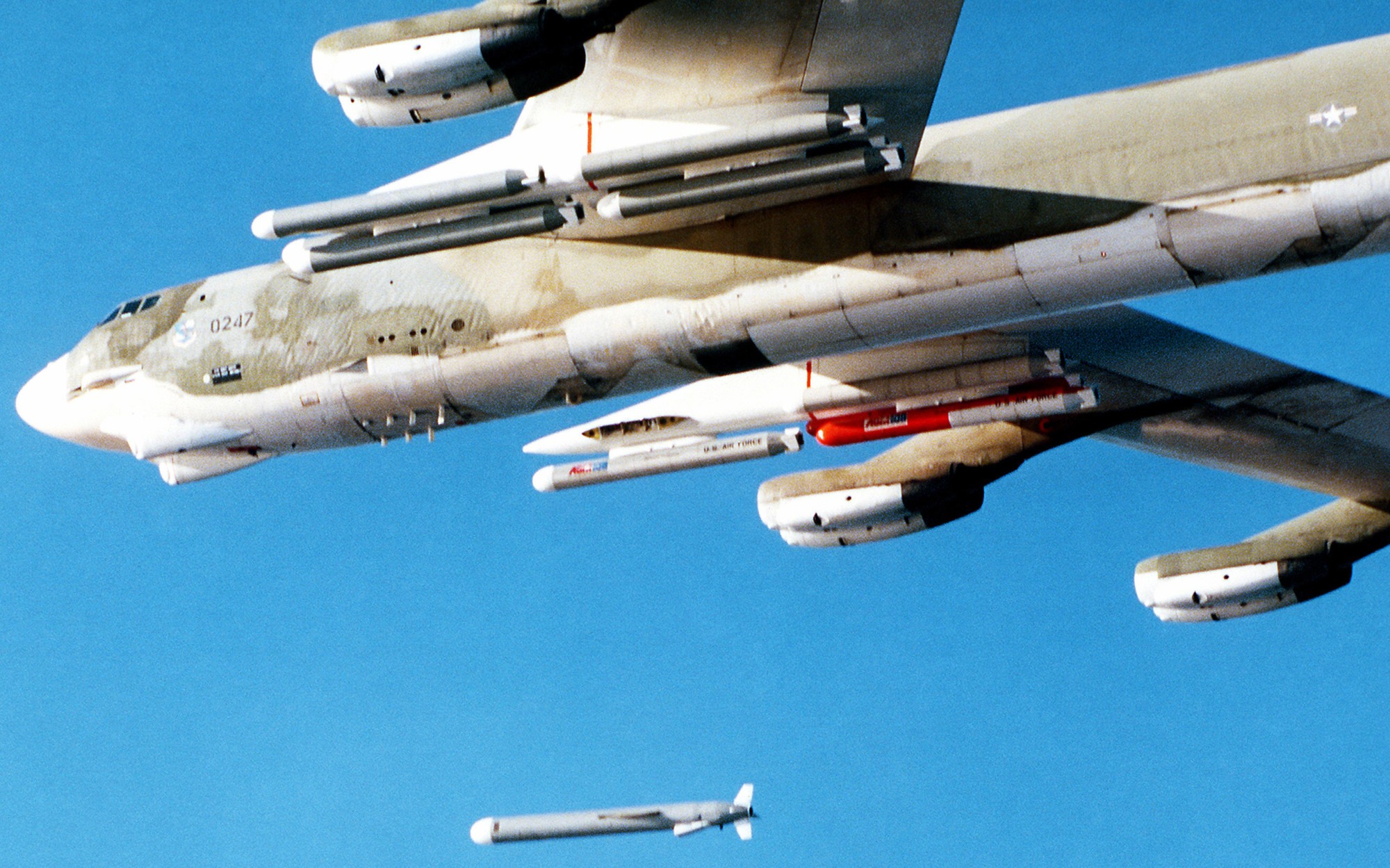 AGM-109 Tomahawk ALCM on an USAF B-52 Stratofortress bomber 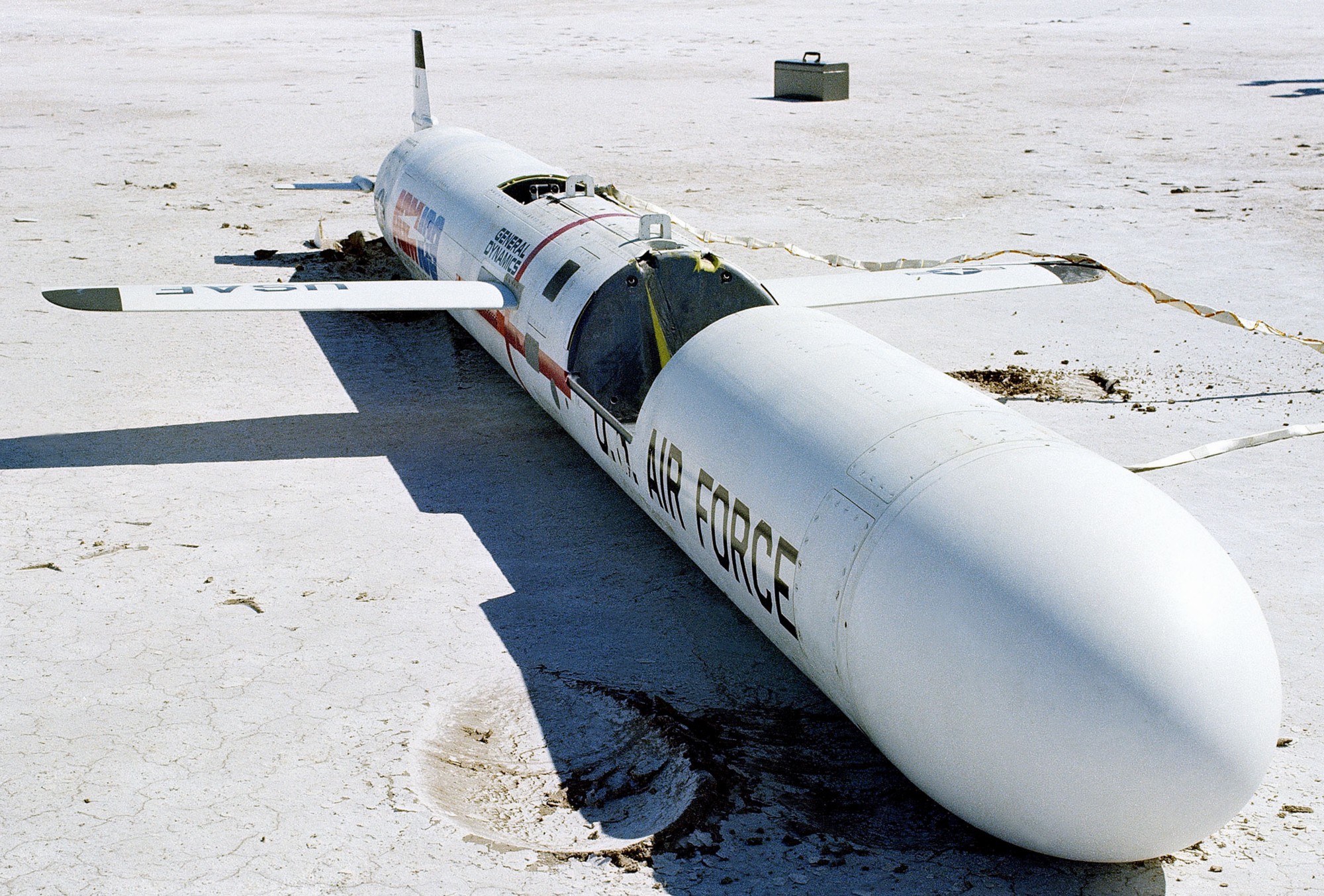 AGM-109 Tomahawk ALCM 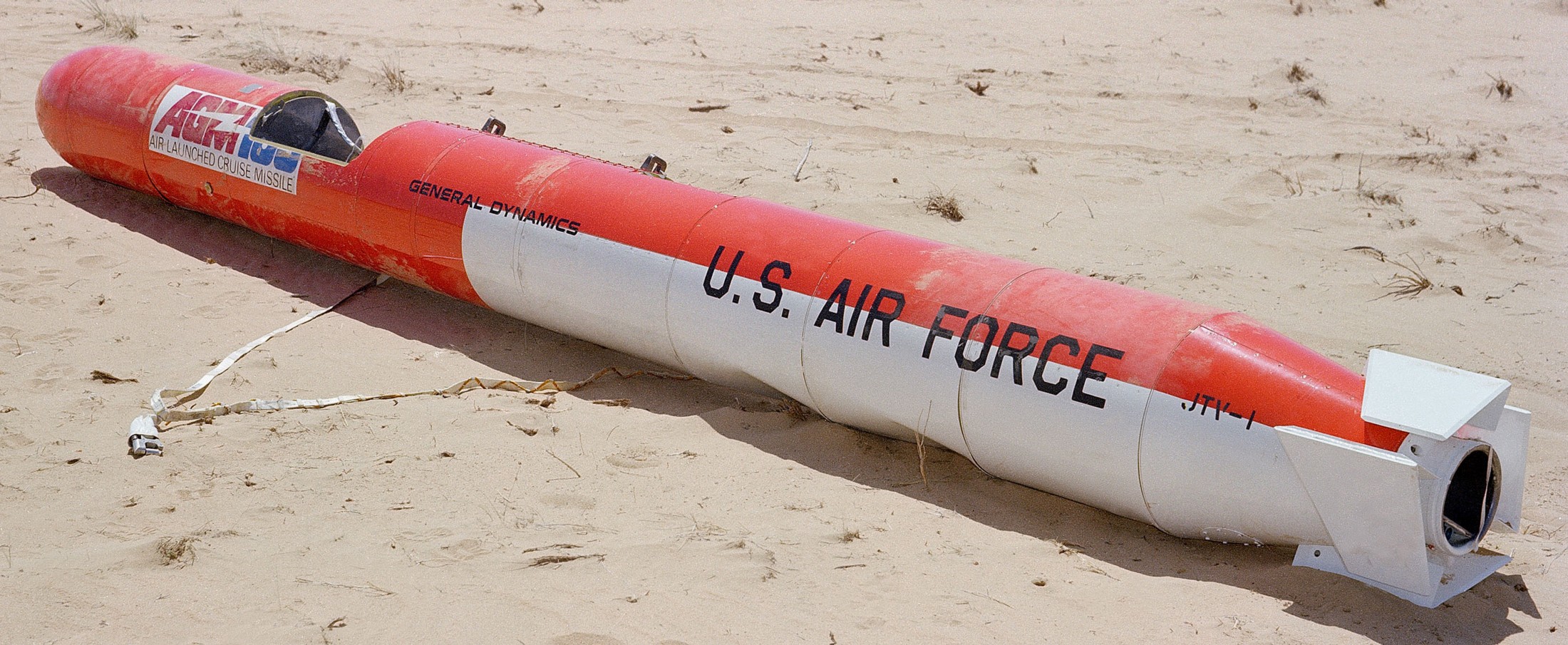 AGM-109 Tomahawk ALCM 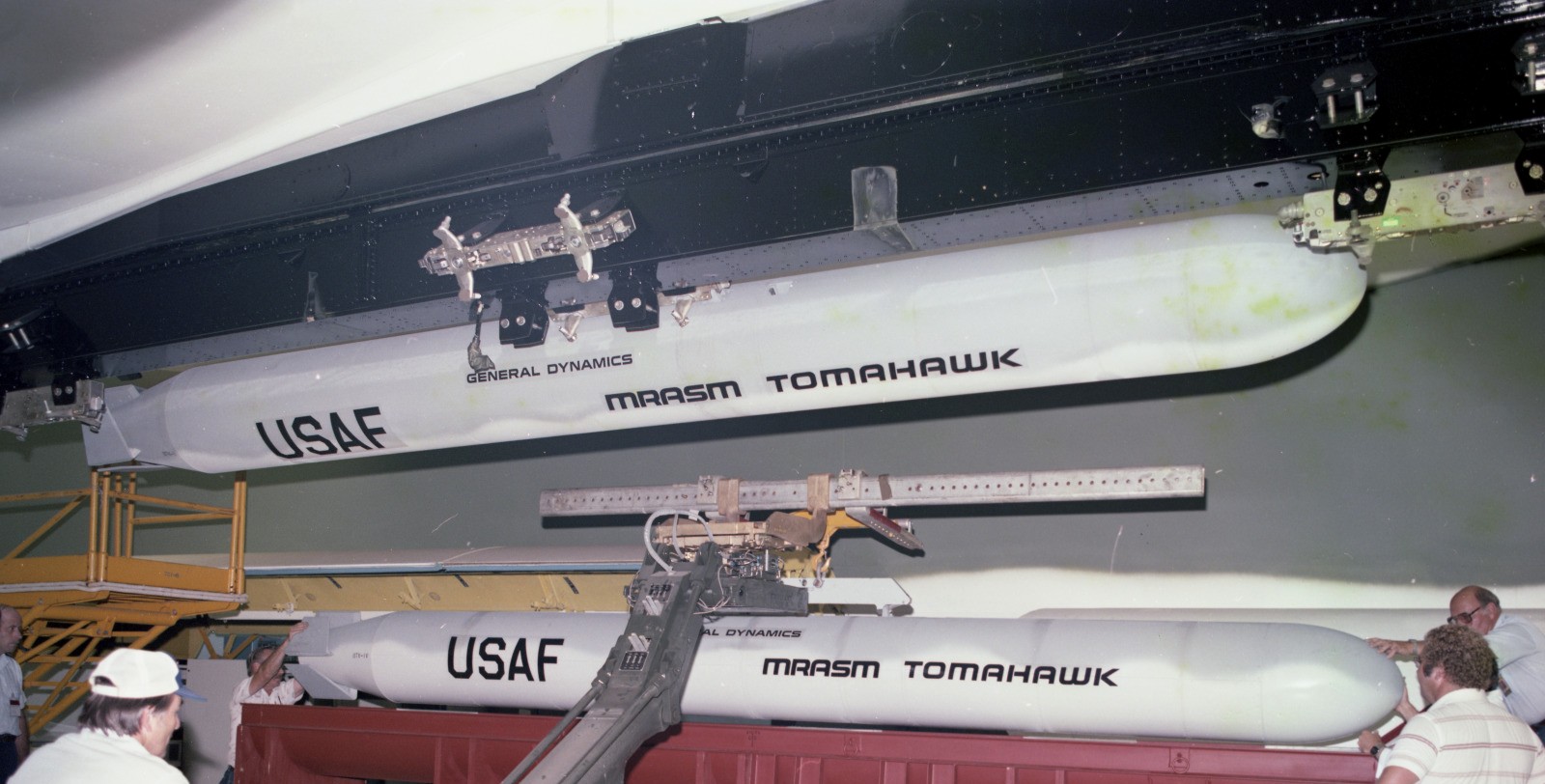 AGM-109 Medium Range Air-to-Surface Missile (MRASM) - never entered service Typhon Missile System - Ground-launched Tomahawk 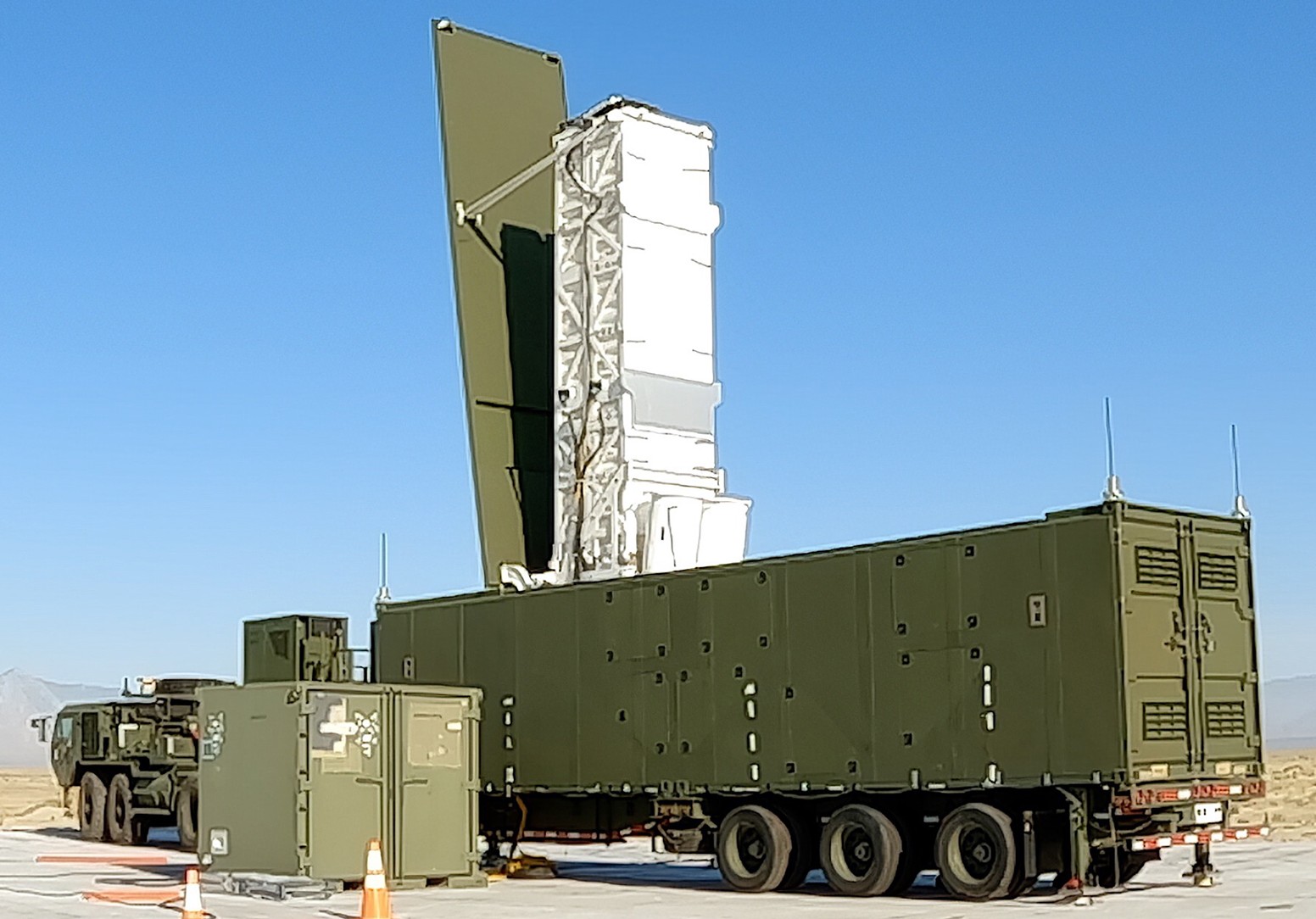 Typhon Missile System - Transporter Erector Launcher (TEL) with 4-cell Mk.41 VLS 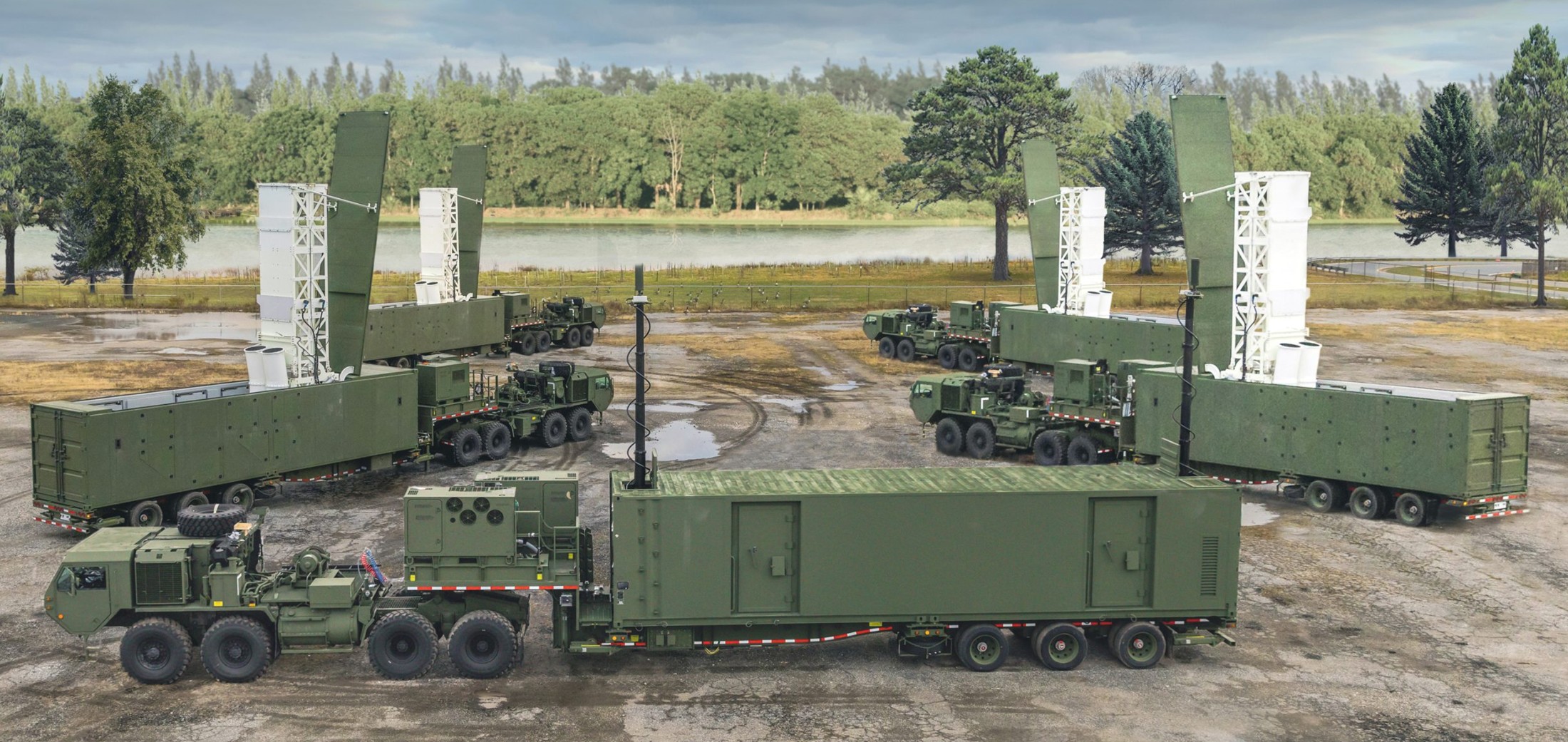 Typhon Missile System 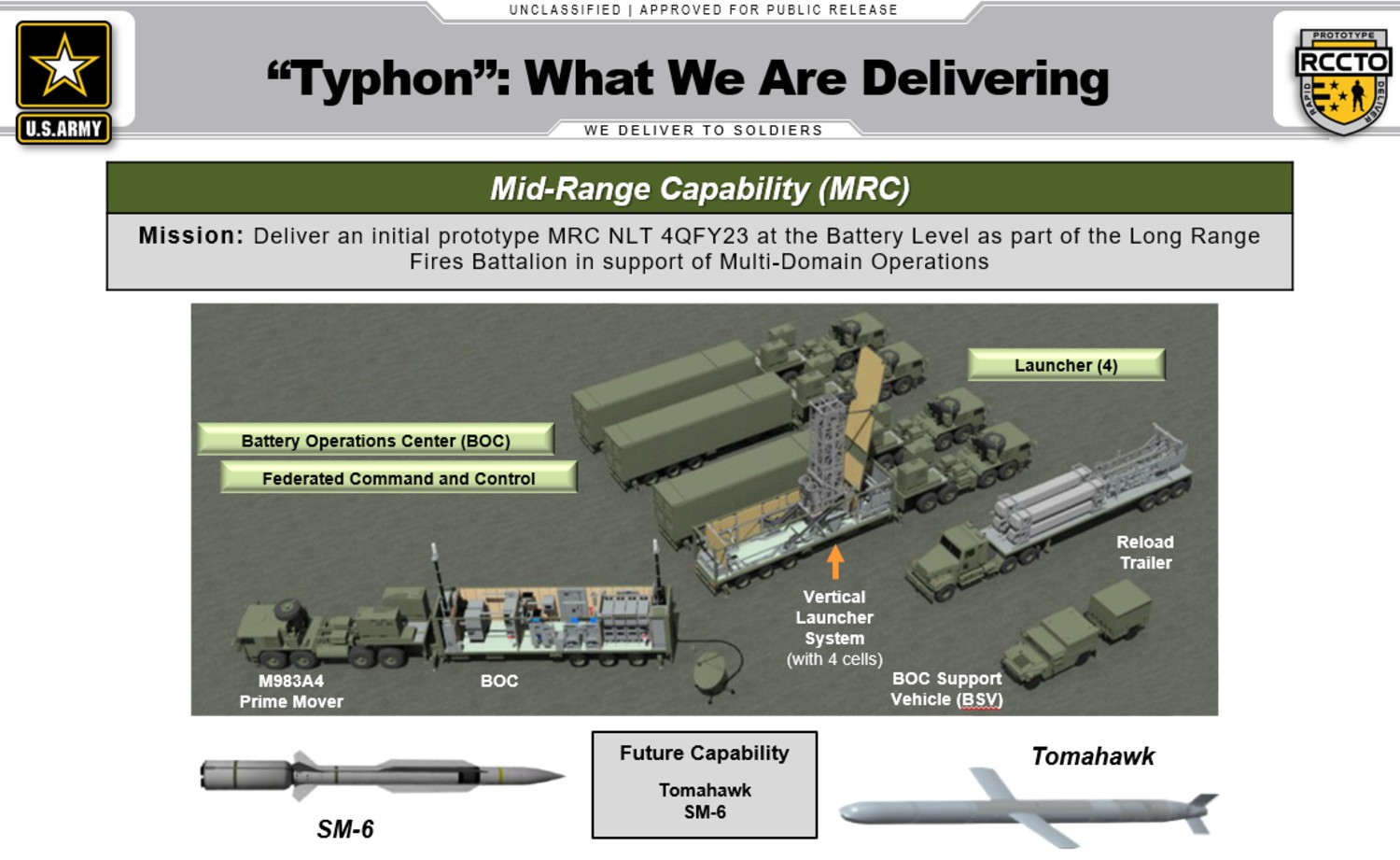 Typhon Missile System BGM-109G Gryphon Ground Launched Cruise Missile / GLCM (1984-1991) 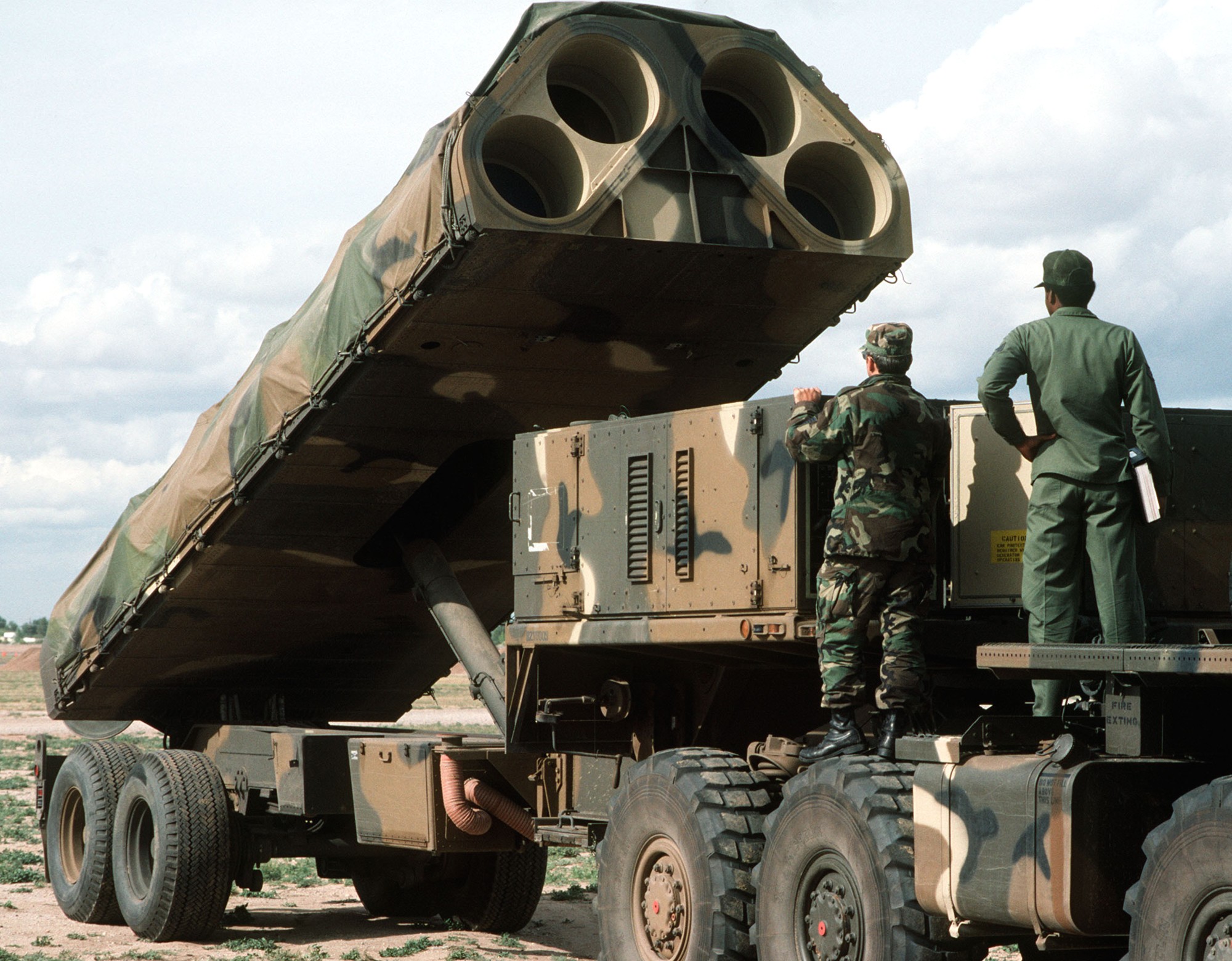 BGM-109G Gryphon ground-launched cruise missile (GLCM) - Transporter Erector Launcher (TEL) 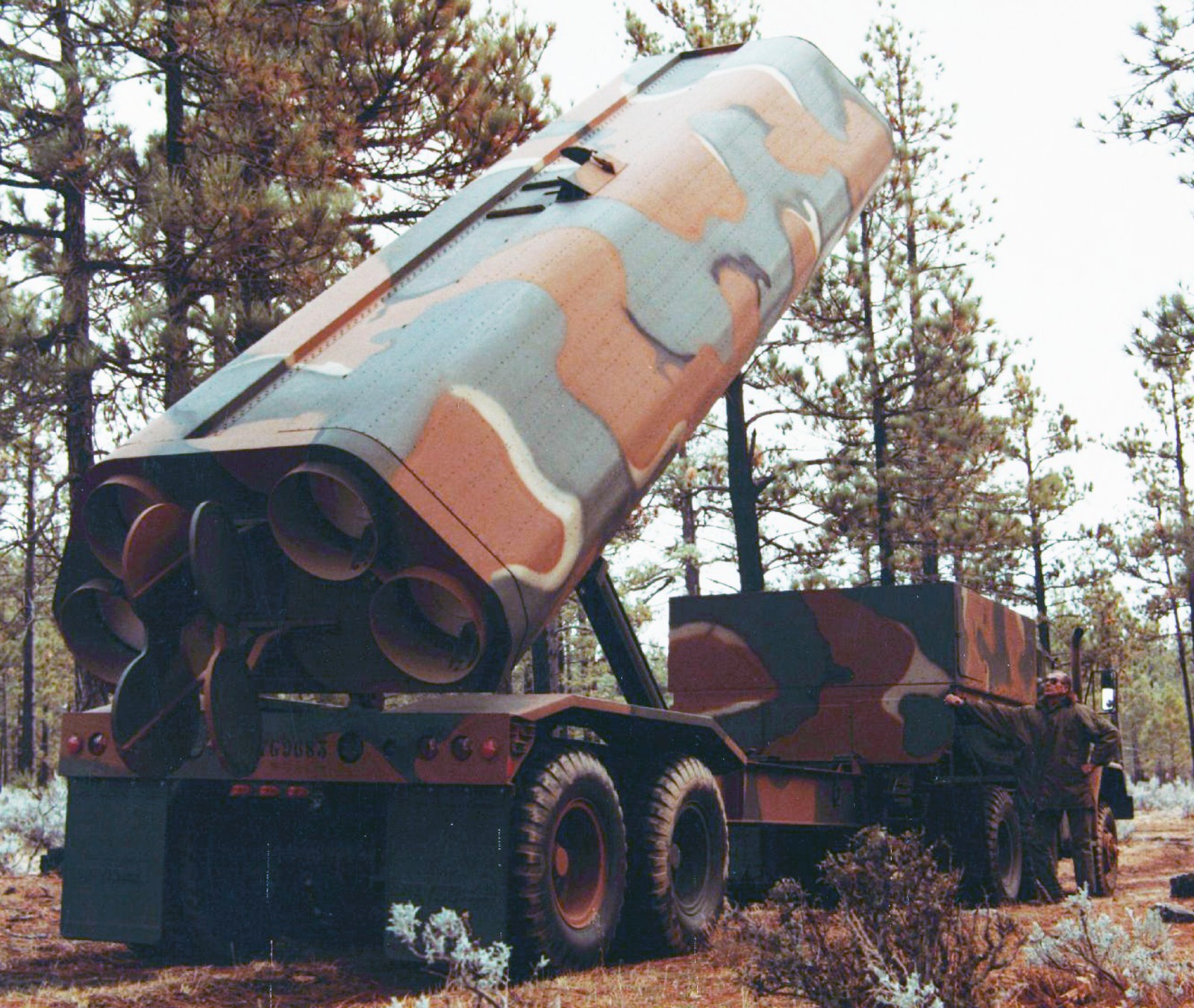 BGM-109G Gryphon ground-launched cruise missile (GLCM) - Transporter Erector Launcher (TEL) 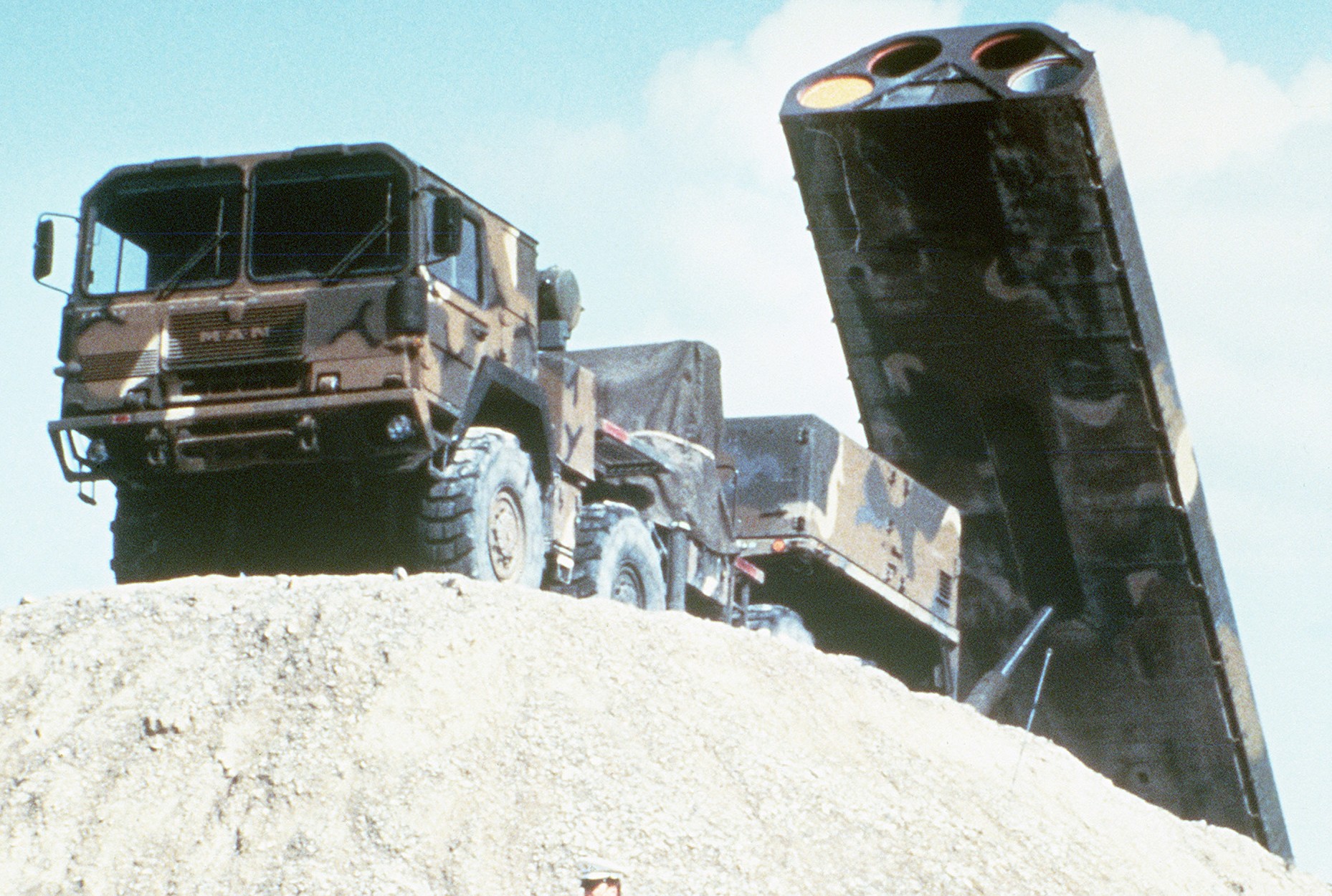 BGM-109G Gryphon ground-launched cruise missile (GLCM) - Transporter Erector Launcher (TEL) 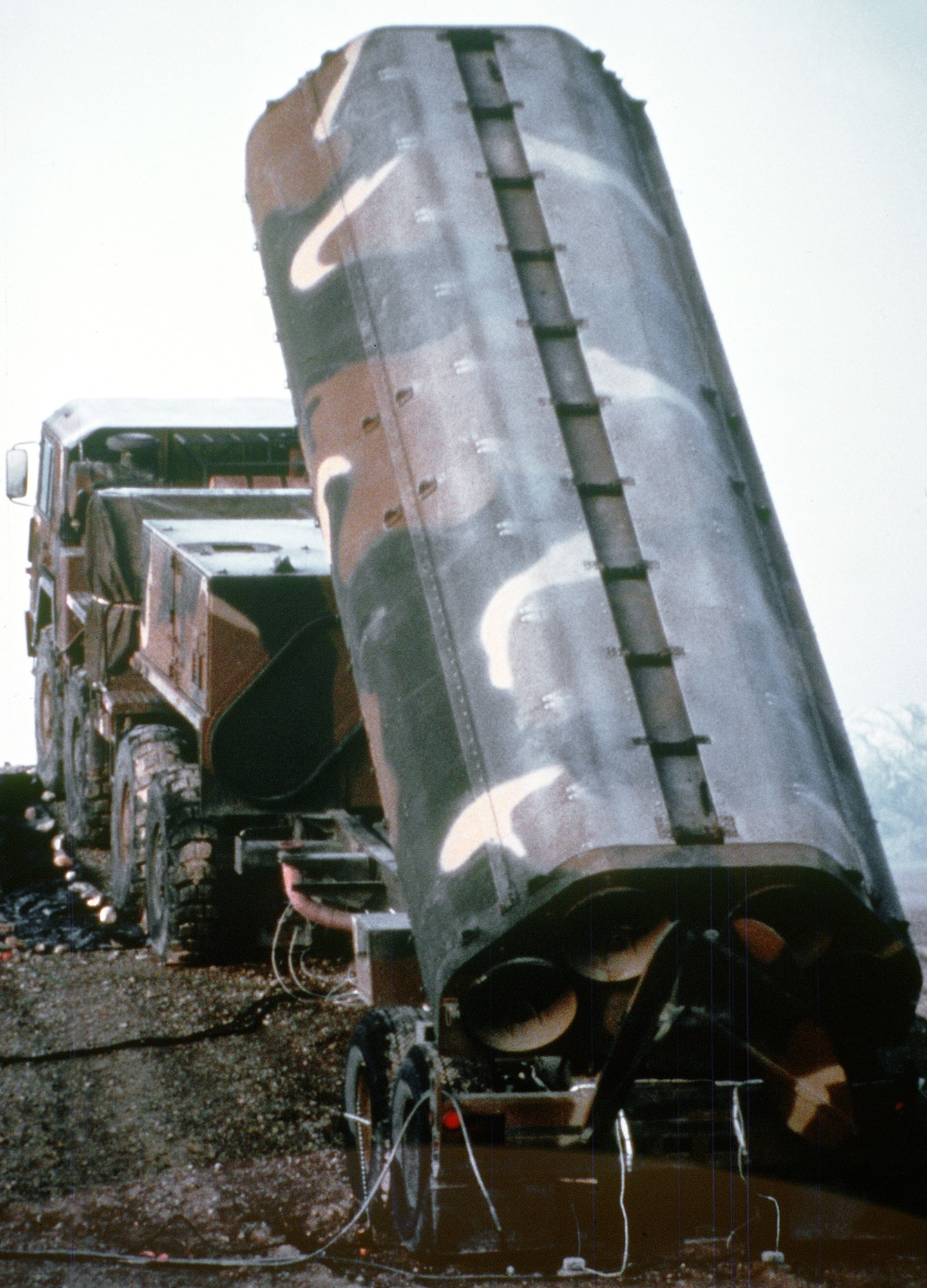 BGM-109G Gryphon ground-launched cruise missile (GLCM) - Transporter Erector Launcher (TEL) 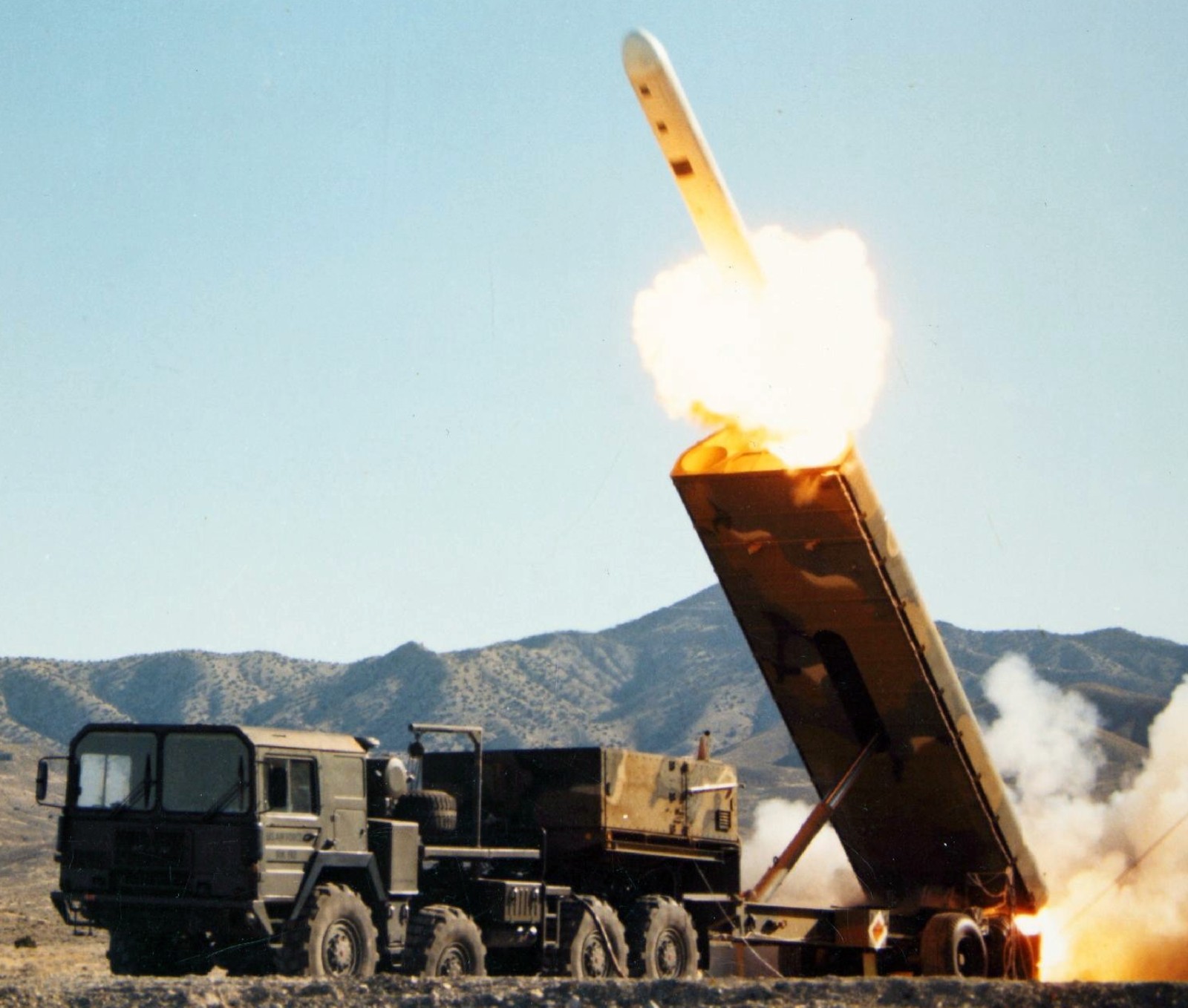 BGM-109G Gryphon ground-launched cruise missile (GLCM) - Transporter Erector Launcher (TEL) 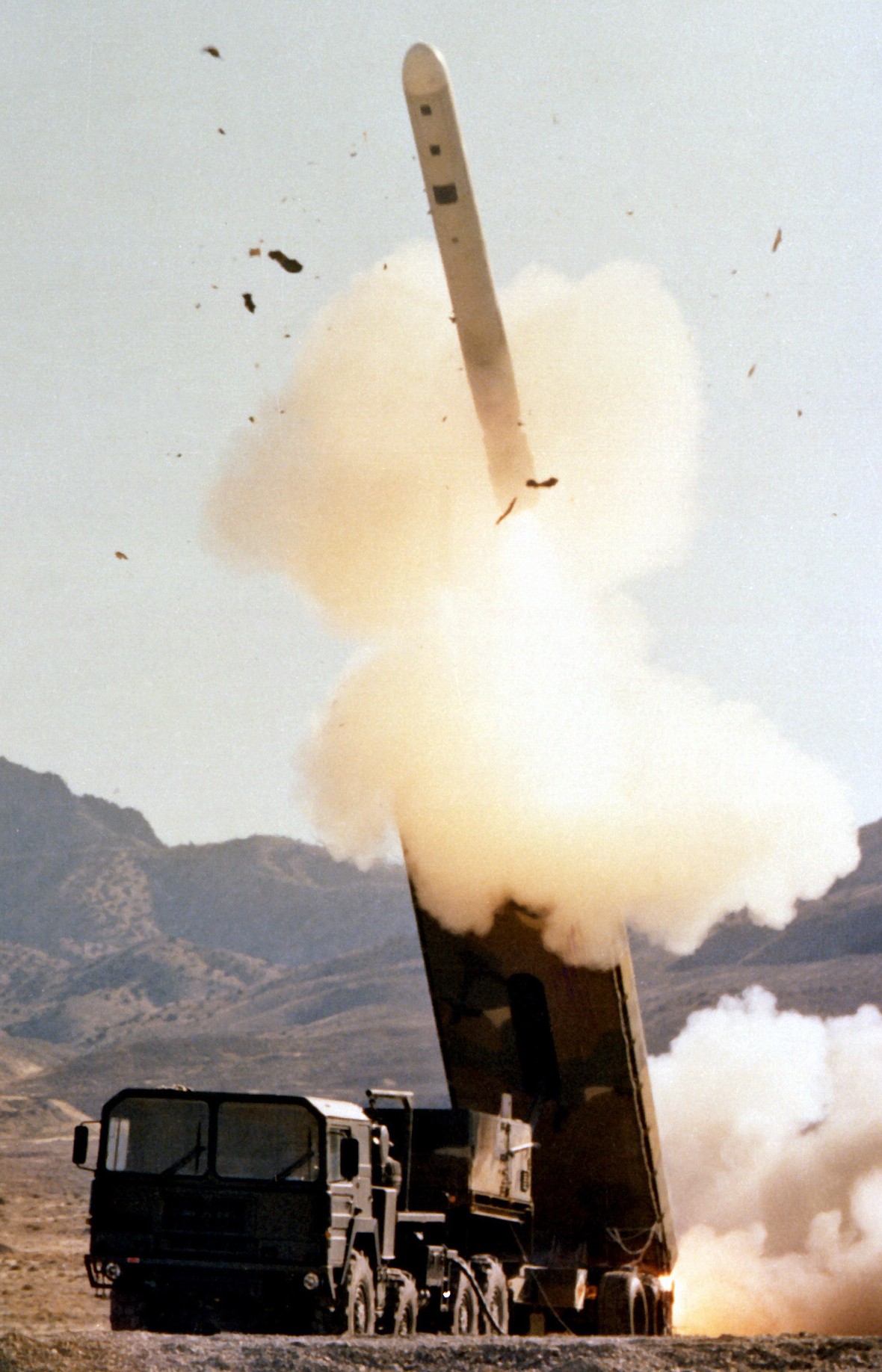 BGM-109G Gryphon ground-launched cruise missile (GLCM) - Transporter Erector Launcher (TEL) 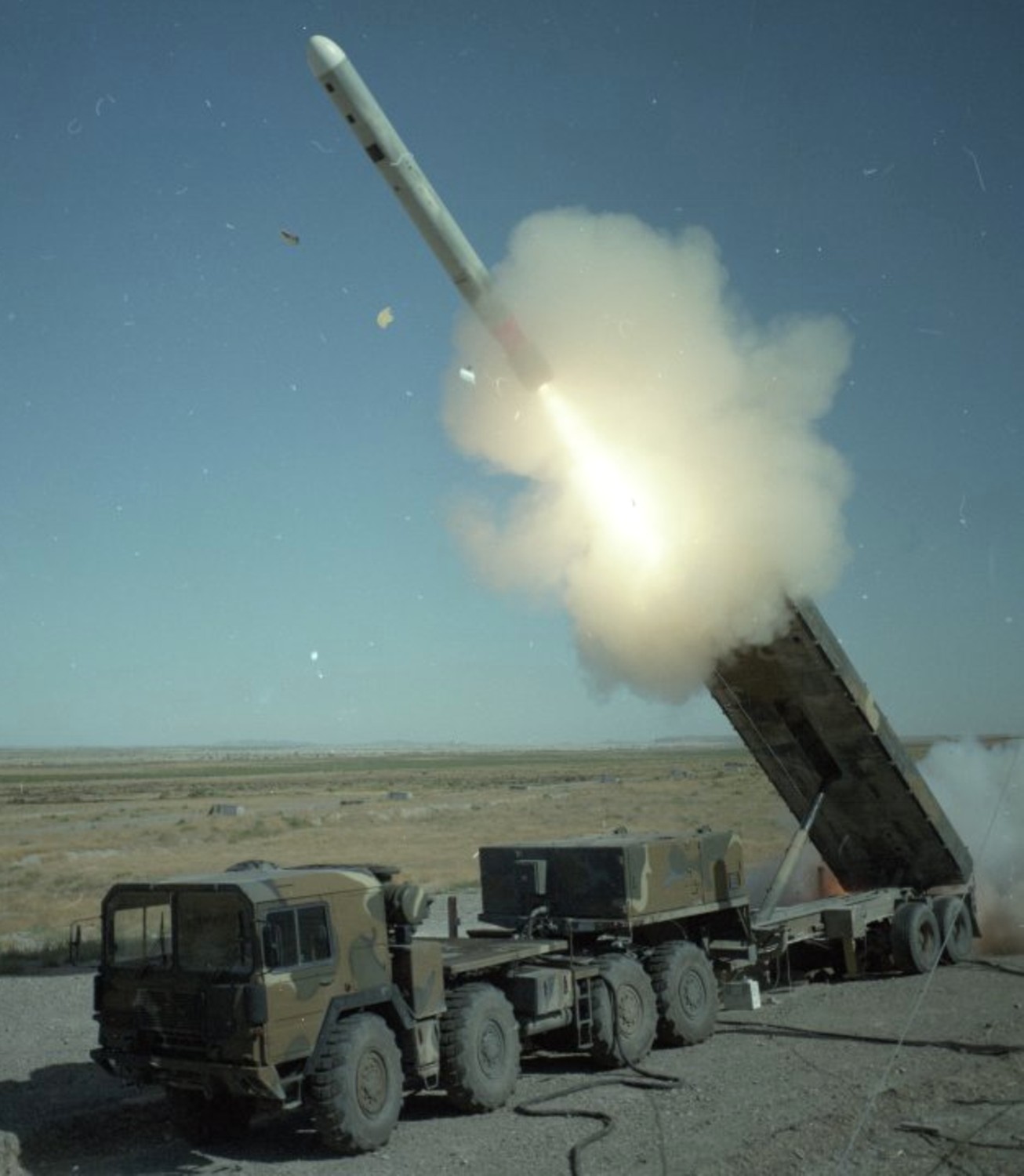 BGM-109G Gryphon ground-launched cruise missile (GLCM) - Transporter Erector Launcher (TEL) 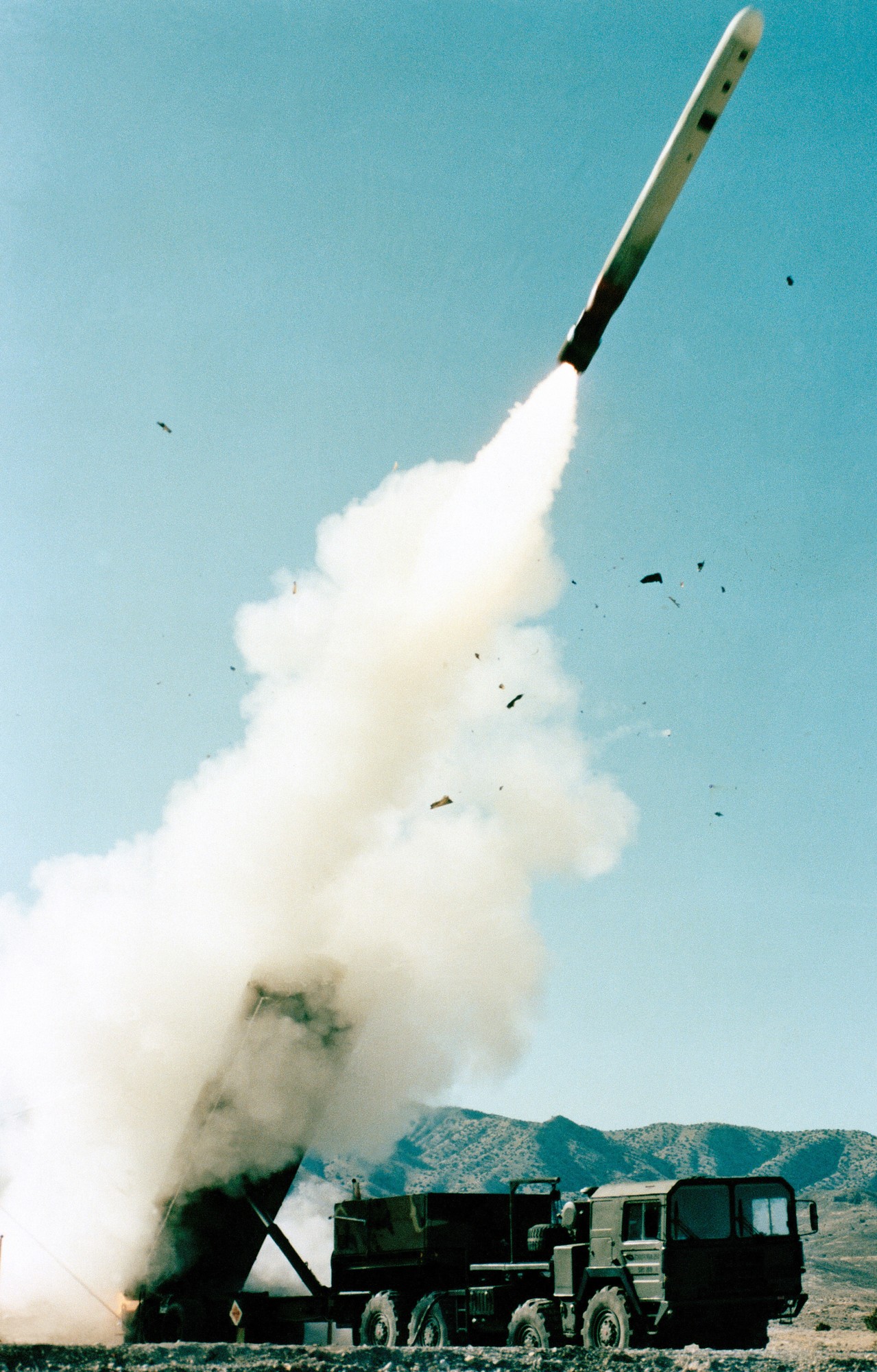 BGM-109G Gryphon ground-launched cruise missile (GLCM) - Transporter Erector Launcher (TEL) 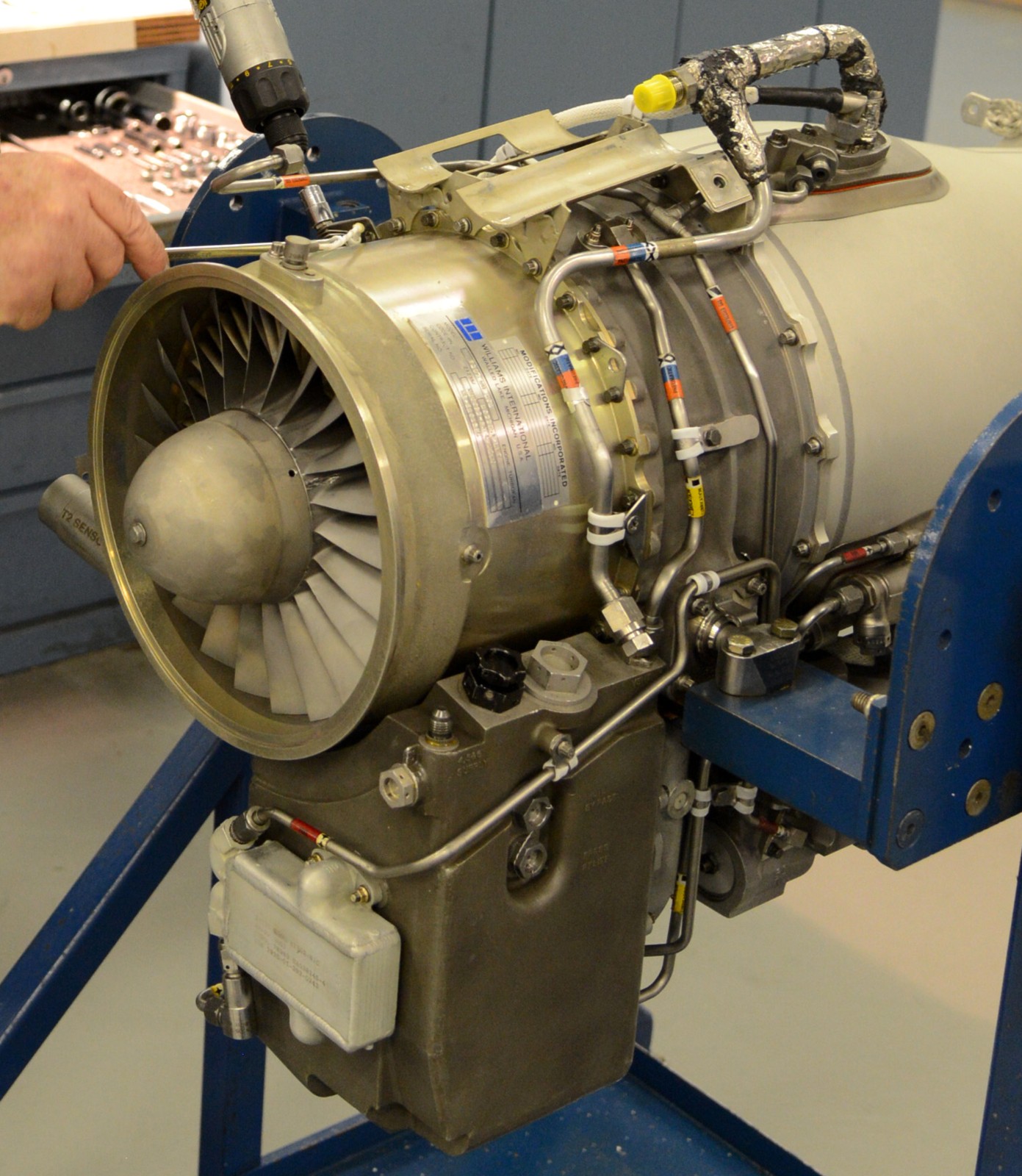 Williams International F107-WR-402 turbofan engine 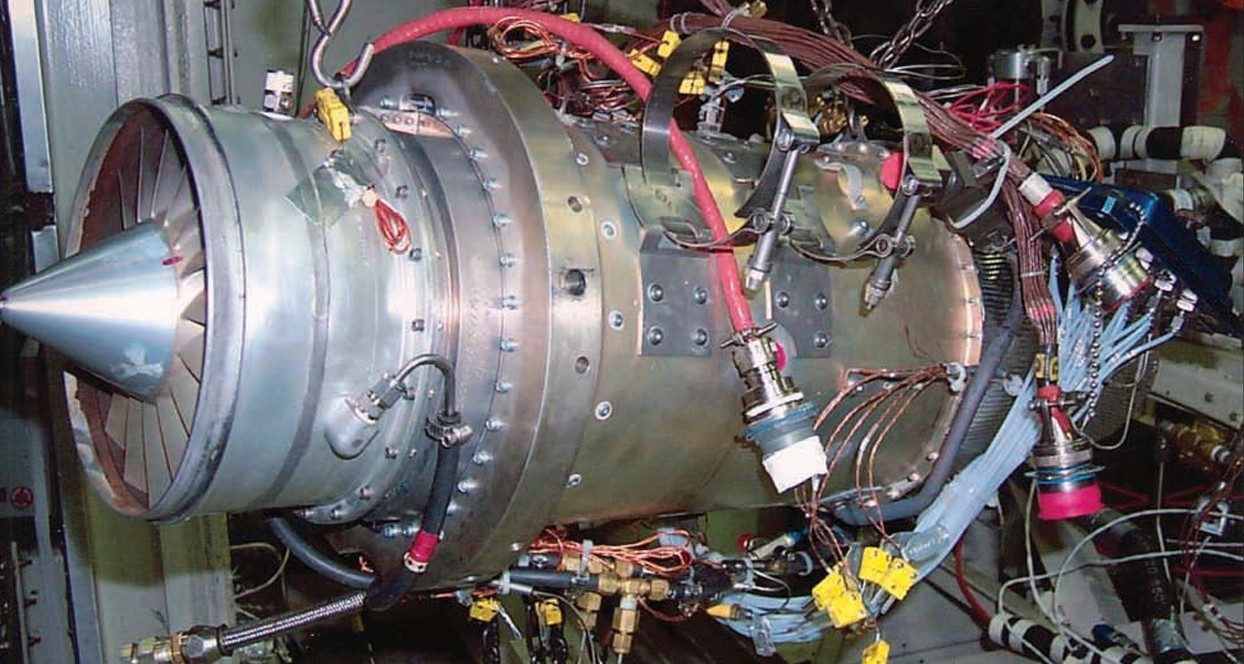 Williams International F107-WR-402 turbofan engine |
|||||||||||||||||||||||||||||||||||||||||||||||||||||||||||||||||||||
| Operational history: | |||||||||||||||||||||||||||||||||||||||||||||||||||||||||||||||||||||
|
United States Navy: In the 1991 Gulf War, 288 Tomahawks were launched, 12 from submarines and 276 from surface ships. The first salvo was fired by the Destroyer USS Paul F. Foster on January 17, 1991. The attack submarines USS Pittsburgh and USS Louisville followed. On 17 January 1993, 46 Tomahawks were fired at the Zafraniyah Nuclear Fabrication Facility outside Baghdad, in response to Iraq's refusal to cooperate with UN disarmament inspectors. One missile crashed into the side of the Al Rasheed Hotel, killing two civilians. On 26 June 1993, 23 Tomahawks were fired at the Iraqi Intelligence Service's command and control center. On 10 September 1995, USS Normandy launched 13 Tomahawk missiles from the central Adriatic Sea against a key air defense radio relay tower in Bosnian Serb territory during Operation Deliberate Force. On 3 September 1996, 44 cruise missiles between UGM-109 and B-52 launched AGM-86s, were fired at air defence targets in Southern Iraq. On 20 August 1998, 79 Tomahawk missiles were fired simultaneously at two separate targets in Afghanistan and Sudan in retaliation for the bombings of American embassies by Al-Qaeda. On 16 December 1998, 325 Tomahawk missiles were fired at key Iraqi targets during Operation Desert Fox. In early 1999, 218 Tomahawk missiles were fired by US ships and a British submarine during Operation Allied Force against key targets in the Federal Republic of Yugoslavia. In October 2001, approximately 50 Tomahawk missiles struck targets in Afghanistan in the opening hours of Operation Enduring Freedom. During the 2003 invasion of Iraq, more than 802 Tomahawk missiles were fired at key Iraqi targets. On 3 March 2008, two Tomahawk missiles were fired at a target in Somalia by a US vessel during the Dobley airstrike, reportedly in an attempt to kill Saleh Ali Saleh Nabhan, an al Qaeda militant. On 17 December 2009, two Tomahawk missiles were fired at targets in Yemen. One of the targets was hit by a TLAM-D missile. The target was described as an 'alleged Al-Qaeda training camp' in al-Ma’jalah in al-Mahfad a region of the Abyan governorate of Yemen. Amnesty International reported that 55 people were killed in the attack, including 41 civilians (21 children, 14 women, and six men). The US and Yemen governments refused to confirm or deny involvement, but diplomatic cables released as part of United States diplomatic cables leak later confirmed the missile was fired by a US Navy ship. On 19 March 2011, 124 Tomahawk missiles were fired by U.S. and British forces (112 US, 12 British) against at least 20 Libyan targets around Tripoli and Misrata. As of 22 March 2011, 159 UGM-109 were fired by US and UK ships against Libyan targets. On 23 September 2014, 47 Tomahawk missiles were fired by the United States from USS Arleigh Burke and USS Philippine Sea, which were operating from international waters in the Red Sea and Persian Gulf, against ISIL targets in Syria in the vicinity of Raqqa, Deir ez-Zor, Al-Hasakah and Abu Kamal, and against Khorasan group targets in Syria west of Aleppo. On 13 October 2016 five Tomahawk cruise missiles were launched by USS Nitze at three radar sites in Yemen held by Houthi rebels in response to anti-ship missiles fired at US Navy ships the day before. On 6 April 2017, 59 Tomahawk missiles were launched from USS Ross (DDG-71) and USS Porter (DDG-78), targeting Shayrat Airbase near Homs, in Syria. The strike was in response to a chemical weapons attack, an act allegedly carried out by Syrian President Bashar Al-Assad. U.S. Central Command stated in a press release that Tomahawk missiles hit "aircraft, hardened aircraft shelters, petroleum and logistical storage, ammunition supply bunkers, defense systems, and radars". Initial U.S. reports claimed "approximately 20 planes" were destroyed, and that 58 out of the 59 cruise missiles launched "severely degraded or destroyed" their intended target. A later report by US Secretary of Defense James Mattis claimed that the strike destroyed about 20% of the Syrian government's operational aircraft. Syrian state-run media claimed that nine civilians, including four children living in nearby villages were killed and another seven wounded as a result of the strike after missiles fell on their homes, but The Pentagon said civilians were not targeted. According to the satellite images the runways and the taxiways have been undamaged and combat flights from the attacked airbase resumed on 7 April a few hours after the attack, although U.S. officials did not state that the runway was a target. An independent bomb damage assessment conducted by ImageSat International counted hits on 44 targets, with some targets being hit by more than one missile; these figures were determined using satellite images of the airbase 10 hours after the strike. However, the Russian defense ministry contends that the combat effectiveness of the attack was extremely low; only 23 missiles hit the base destroying six aircraft, and it did not know where the other 36 landed. Russian television news, citing a Syrian source at the airfield, said that nine planes were destroyed by the strikes (5 Su-22M3s, 1 Su-22M4, and 3 Mig-23ML) and that all planes were thought to have been out of action at the time. Al-Masdar News reported that 15 fighter jets were damaged or destroyed and that the destruction of fuel tankers caused several explosions and a large fire. However, Lost Armour's online photographic database, for vehicle losses in the War in Syria, has images of 10 destroyed aircraft at Shayrat airbase. Some observers conclude that the Russian government - and therefore also the Syrian government - was warned and Syria had enough time to move most of the planes to another base. The Syrian Observatory for Human Rights said the strike damaged over a dozen hangars, a fuel depot, and an air defense base. On April 14 2018, the US launched 66 Tomahawk cruise missiles at Syrian targets near Damascus and Homs, as part of the 2018 bombing of Damascus and Homs. These strikes were done in retaliation for alleged Douma chemical attack. The United States Department of Defense said Syria fired 40 defensive missiles at the allied weapons but did not hit any targets. The Russian military said that Syrian air defenses shot down 71 of the 103 missiles launched by the US and its allies. On 11 January 2024, US officials stated that over 80 Tomahawk cruise missile were launched by USS Philippine Sea (CG-58), USS Gravely (DDG-107), USS Mason (DDG-87), and USS Florida (SSGN-728). According to US officials these strikes targeted Houthi assets including command and control nodes, munitions, depots, launching systems, production facilities, and air defense radar systems these were then followed up by attacks from aircraft launched from the carrier USS Dwight D. Eisenhower. These strikes came in response to Houthi attacks on civilian vessels transiting the Red Sea and failure to abide by repeated warnings from western officials. With strikes continuing in the following months, this number had increased to 135 missiles by 24 July 2024. On 21 June 2025, a US official stated that submarines fired 30 TLAM cruise missiles at Iranian nuclear sites in Natanz and Isfahan as part of a larger set of American strikes on Iranian nuclear sites. On 25 December 2025, more than a dozen Tomahawk missiles were launched targeting the Islamic State - West Africa Province in Northwestern Nigeria from a warship in the Gulf of Guinea. Beginning on 28 February 2026, the United States fired over 850 Tomahawk cruise missiles over two weeks as part of Operation Epic Fury, a large-scale joint US-Israeli military operation against Iran. The missiles struck hundreds of targets across Iran, targeting air defense systems, ballistic missile launchers, and command-and-control facilities. The strikes included at least one Tomahawk variant with a black, presumably low-observable paint scheme and forward-swept wings, believed by some analysts to be the Maritime Strike Tomahawk variant. According to open-source investigations by Bellingcat, a US Tomahawk cruise missile struck the Shajarah Tayyebeh elementary school in Minab, Iran, on February 28, 2026, during Operation Epic Fury. Iranian authorities reported at least 175 casualties, the majority of them children, and Tomahawk missile remnants were recovered from the school site. The school was located approximately 100 meters from an IRGC facility also struck in the attack. Iran blamed the US and Israel for the deaths and President Donald Trump blamed Iran for the blast, though a preliminary US military investigation later concluded it was likely a US strike that hit the school.
Royal Navy: In 1995 the US agreed to sell 65 Tomahawks to the UK for torpedo-launch from their nuclear attack submarines. The first missiles were acquired and test-fired in November 1998; all Royal Navy fleet submarines are now Tomahawk capable, including the Astute-class. The Kosovo War in 1999 saw the Swiftsure-class HMS Splendid become the first British submarine to fire the Tomahawk in combat. The UK subsequently bought 20 more Block III to replenish stocks. The Royal Navy has since fired Tomahawks during the 2000s Afghanistan War, in Operation Telic as the British contribution to the 2003 Iraq War, and during Operation Ellamy in Libya in 2011. In April 2004, the UK and US governments reached an agreement for the British to buy 64 of the new generation of Tomahawk missile - the Block IV or TacTom missile. It entered service with the Royal Navy on 27 March 2008, three months ahead of schedule. In July 2014 the US approved the sale to the UK of a further 65 submarine-launched Block IV's at a cost of US$140m including spares and support; as of 2011 the Block III missiles were on British books at £1.1m and the Block IV at £0.87m including VAT. The Sylver Vertical Launching System on the new Type 45 destroyer is claimed by its manufacturers to have the capability to fire the Tomahawk, although the A50 launcher carried by the Type 45 is too short for the weapon (the longer A70 silo would be required). Nevertheless, the Type 45 has been designed with weight and space margin for a strike-length Mk41 or Sylver A70 silo to be retrofitted, allowing Type 45 to use the TLAM Block IV if required. The new Type 26 frigates will have strike-length Mk41 VLS tubes. SYLVER user France is developing MdCN, a version of the Storm Shadow/Scalp cruise missile that has a shorter range but a higher speed than Tomahawk and can be launched from the SYLVER system. In June 2022, the UK announced it would be upgrading its Tomahawk cruise missiles to Block V standard through a £265 million contract with the US government. The missiles will be upgraded from 2024. |
|||||||||||||||||||||||||||||||||||||||||||||||||||||||||||||||||||||
|
|
seaforces.org
|
Weapon Systems
start page
| |
