|
|
||||||
|
HOME
|
US Navy -
ships
|
US Navy - air
units
|
USMC - air
units
|
International
Navies
|
Weapon Systems
|
Special Reports |
||||||
|
|
||||||
|
|
||||||
|
US Marine Corps - Marine Fighter Attack Squadron
533 VMFA-533 'Hawks' |
||||||
|
|
||||||
|
||||||
| 07/25 | ||||||
|
||||||
|
|
||||||
| images | ||||||
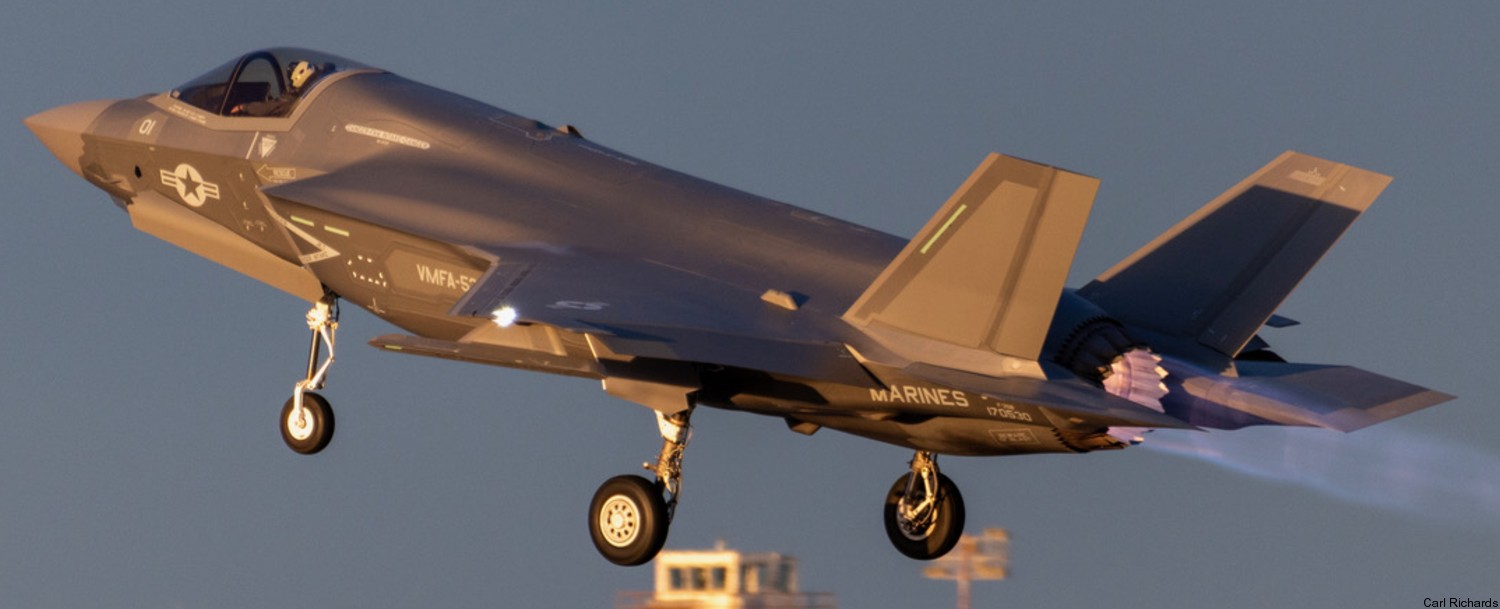 F-35B Lightning II (VMFA-533) at NAS/JRB Fort Worth, Texas - March 2025 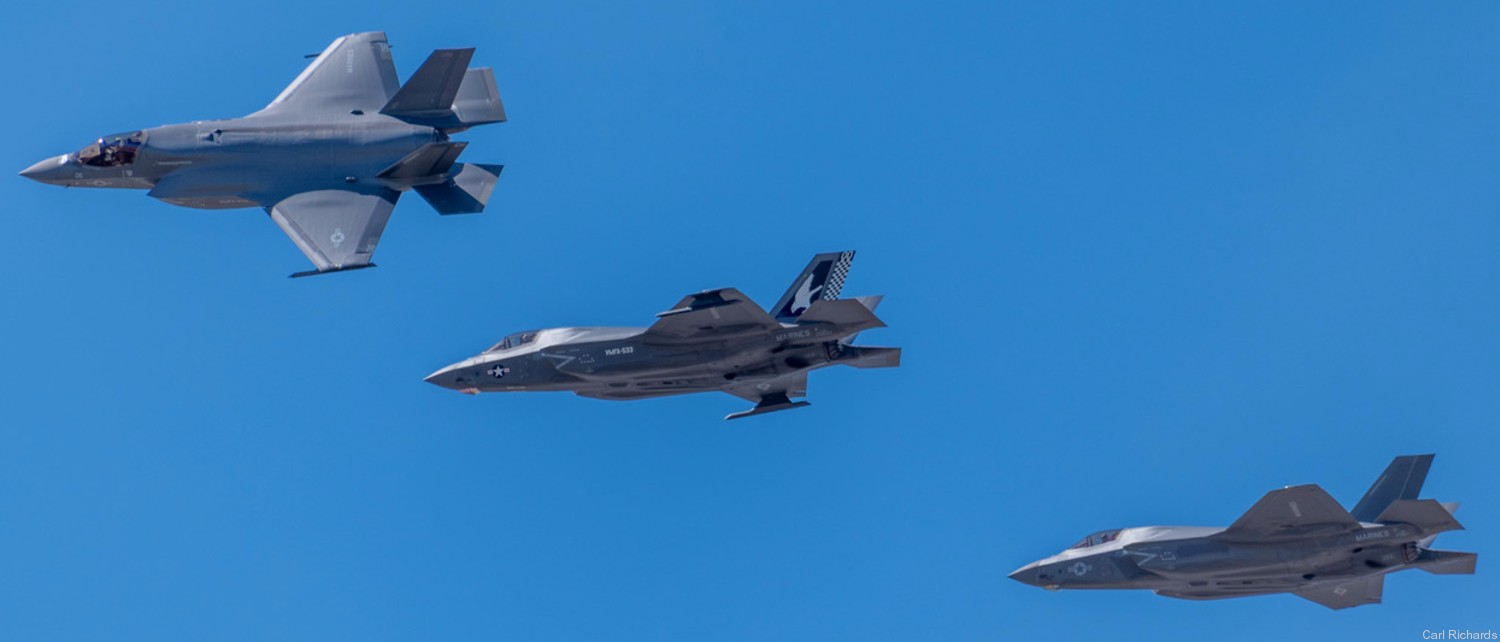 F-35B Lightning II (VMFA-533) at NAS/JRB Fort Worth, Texas - March 2025  F-35B Lightning II (VMFA-533) at NAS/JRB Fort Worth, Texas - March 2025 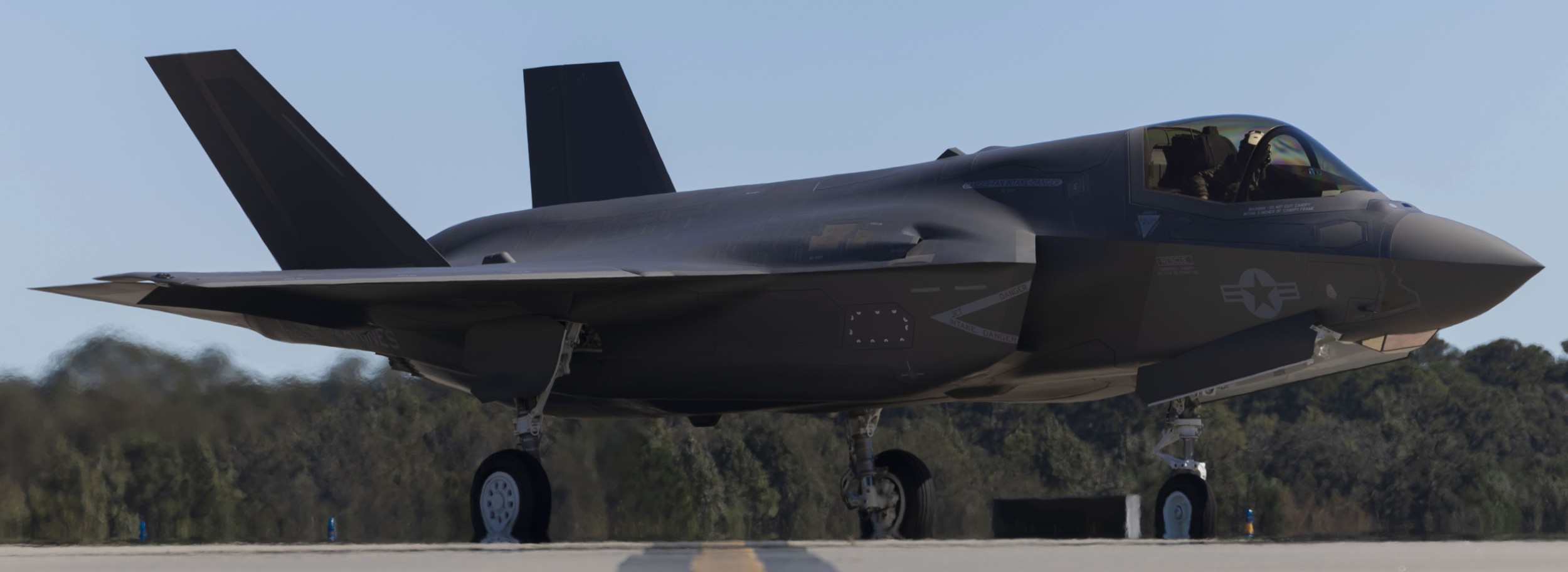 receiving the first F-35B Lightning II aircraft at MCAS Beaufort, South Carolina - October 11, 2024 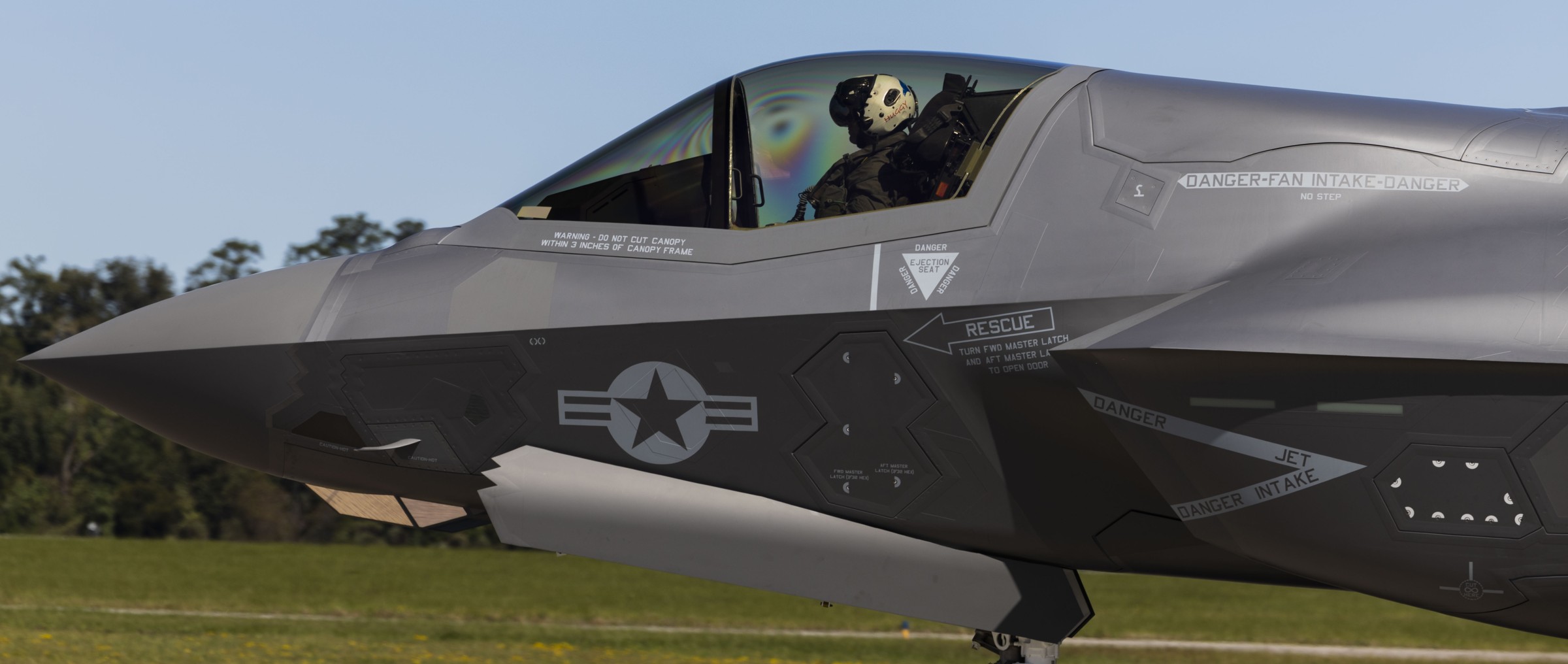 receiving the first F-35B Lightning II aircraft at MCAS Beaufort, South Carolina - October 11, 2024 |
||||||
|
|
||||||
|
VMFA-533 began its history on 1
October, 1943. On this date, Marine Night Fighter Squadron 533
(VMF(N)-533) was commissioned at MCAS Cherry Point, North Carolina.
One of three night fighter squadrons to be activated in the Marine
Corps, the squadron was initially outfitted with the Grumman F6F-3N
Hellcat, equipped with AI radar sets. VMF(N)-533 later upgraded to
the Grumman F6F-5N Hellcat with the APS-3 radar set in the fall of
1944. After a full one year deployment to Engebi in the Marshall
Islands, the squadron moved to Yontan Airfield, Okinawa in May 1945.
By doing so they completed the longest over water flight by a single
engine aircraft of the war. Before hostilities ended in the Pacific,
533 would distinguish itself by claiming the most aerial victories
of any night fighter squadron as well as the first night fighter
ace, Capt Robert Baird. In October 1945, the squadron moved to
Peiping, China and soon transitioned to its next airframe, the
Grumman F7F-3N Tigercat. The Hawks soon moved to Hawaii before
finally settling back in the U.S. at Cherry Point in January 1947.
533 would spend the Korean conflict there as well, training Tigercat
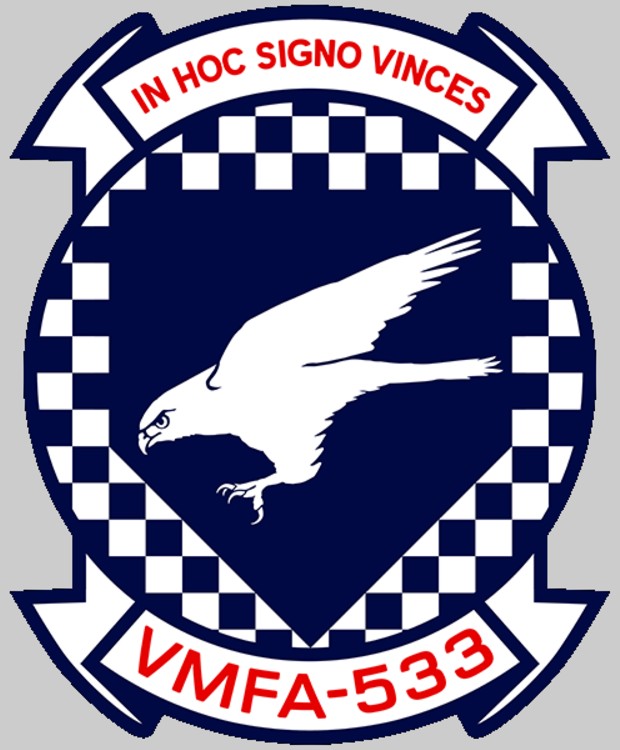
aircrew for night combat overseas. 533 entered the jet age in May 1953 with its acquisition of the F2H-A4 Banshee. They saw several carrier deployments in the ensuing years, followed by another transition to the F9F Cougar in 1957. Yet another change was soon to follow as the squadron received the A-4D Skyhawk in 1959, and with it a redesignation to Marine Attack Squadron 533 (VMA-533). The next change was to come in 1965 when the Hawks received the A-6A Intruder, giving them an all weather capability and the appropriate change in title, VMA(AW)-533. Soon after transitioning to the A-6, 533 deployed to Chu Lai, Republic of Vietnam to support combat operations. They remained there from 1967 to 1969, then redeploying to MCAS Iwakuni, Japan. All told, VMA(AW)-533 accumulated over 10,000 combat sorties in these busy years, garnering them the Commandant’s Aviation Efficiency Trophy. This would not be the last time that the Hawks would see combat over Southeast Asia. They returned to service over Vietnam in 1972, deploying for a year to Nam Phong, Thailand. They were soon flying mission over Cambodia and Laos, as well. They returned to Iwakuni in August 1973, and then to Cherry Point in November 1975, where they received their first A-6E the following year. In April of 1980, VMA(AW)-533 returned to Iwakuni, becoming the first all weather attack squadron to participate in the new Unit Deployment Program (UDP). Throughout the 1980s the squadron deployed, both to Japan and later for several carrier cruises aboard the USS Saratoga and USS John F. Kennedy. The last deployment for the Hawks proved to be longer, as the UDP that began in April 1990 ended and the squadron continued to Bahrain in December 1990 for Operations Desert Shield and Desert Storm. Following participation in those hostilities, VMA(AW)-533 returned home after an “around the world” deployment that lasted eleven and a half months. 1 September 1992 brought many changes to 533, most notably a change to the new F/A-18D Hornet, and with this its newest and current designation, and a move to MCAS Beaufort SC. This made them the first all weather fighter attack squadron in 2nd Marine Aircraft Wing. Soon to follow were countless new training opportunities as the squadron developed and refined new techniques and procedures to match the more capable platform. These techniques would soon be put to the test when VMFA(AW)-533 was deployed to Aviano Air Base in July 1993. They returned three times over the next five years, flying a wide variety of missions to support NATO operations. Following their first UDP in Hornets in 1999, 533 returned one last time to Eastern Europe, this time operating from Taszar AB, Hungary. Next for the squadron was yet another UDP, from January 2001 to July 2001. Of great tactical significance was the work that the squadron did with the 31st Marine Expeditionary Unit, Special Operations Capable (MEU (SOC)). The Hawks became the first land based fixed wing squadron to successfully a MEU (SOC) afloat, executing an island-hopping campaign throughout the Pacific that would take them to airfields not seen by US forces since World War II. Soon, preparations were underway for the next UDP in January 2003. But as that date drew near, VMFA(AW)-533 received word that the squadron would instead deploy to the CENTCOM AOR supporting Operations Southern Watch and Iraqi Freedom, arriving at Al-Jaber Air Base 11 February 2003. On 20 March coalition forces began the ground offensive with support from the squadron’s Hornets. While operating around the clock, the squadron expended over 800,000 pounds of ordnance, flying 558 sorties and 1440 flight hours. For their outstanding support of the successful campaign against the Iraqi regime, the Hawks were awarded another Presidential Unit Citation. After their safe return, the Hawks continued to train, focusing on air-to-ground skills at Combined Arms Exercises in California in January and February 2004. Soon enough the squadron was once again on the move, spending the latter half of 2004 in various locations around the Pacific for its most recent UDP. In February 2006 the Hawks deployed to Al Asad Air Base in the Al Anbar Province of Iraq. The squadron was assigned to the 3rd Marine Aircraft Wing in support of 1st Marine Expeditionary Force. The Hawks employed the F/A-18D with the Litening II FLIR/TV pod in a myriad of roles which included reconnaissance, surveillance, convoy escort, close-air support, strike missions, forward air controller airborne (FAC(A)) and tactical air controller airborne (TAC(A)). While once again operating around the clock, the squadron expended over 110,000 pounds of ordnance, flying 2480 sorties and 7456 flight hours. In late 2024, VMFA-533 officially received their first F-35B Lightning and by 2025, the squadron has acquired multiple jets. source: USMC - - - - - USMC press release (October 11, 2024) Marine Fighter Attack Squadron (VMFA) 533, Marine Aircraft Group (MAG) 31, 2nd Marine Aircraft Wing (MAW), received its first F-35B Lightning II jet today aboard Marine Corps Air Station (MCAS) Beaufort, South Carolina. VMFA-533 is the Marine Corps’ second East Coast operational F-35B Lightning II Joint Strike Fighter squadron, and the first aboard MCAS Beaufort. Prior to today, the only F-35 aircraft stationed aboard MCAS Beaufort were assigned to Marine Fighter Attack Training Squadron 501, who is tasked with conducting core introduction fighter/attack training for prospective F-35 pilots. The arrival of the aircraft marks the beginning of F-35 deliveries to MCAS Beaufort’s operational squadrons, defined as units whose primary purpose is supporting Marine Corps and Department of Defense operations. Today’s arrival continues 2nd MAW’s operational transition from legacy fixed-wing tactical aircraft to the F-35. The F-35 is a fifth-generation fighter jet with advanced stealth, agility and maneuverability, sensor and information fusion, and provides the pilot with real-time access to battlespace information. It is designed to meet an advanced threat while improving lethality, survivability, and supportability. The F-35B Lightning II is the short-takeoff and vertical-landing (STOVL) F-35 variant. This capability allows the aircraft to operate from amphibious assault ships and expeditionary airstrips less than 2,000 feet long. “The delivery of VMFA-533's first Block 4 F-35B starts another chapter in the storied history of the squadron that began almost 81 years ago to date, and is a major steppingstone to increasing the lethality of MAG-31 and our ability to contribute to the Marine Air-Ground Task Force and joint force,” said Col. Michael Cassidy, commanding officer, MAG-31. “Transitioning a squadron is no small feat, and significant preparation by VMFA-533's Marines and Sailors has occurred over the past year to get them to this point. I'm excited about what the future holds for VMFA-533 as they take this significant step in their history, and I very much look forward to their contribution to the sound of freedom at MCAS Beaufort.” Block 4 upgrades provide an advancement of several capabilities for the F-35, including upgraded weapons carriage capability, added advanced non-kinetic electronic warfare capabilities, and improved target recognition. Technology Refresh-3 (TR-3), which enables Block 4, introduces open mission systems architecture, greater computing power, enhancements to the panoramic cockpit display, and a larger memory unit. VMFA(AW)-533, colloquially known as “America’s Squadron” among squadrons assigned to MCAS Beaufort due to its red, white, and blue insignia, redesignated to VMFA-533 during a ceremony on September 28, 2023. The squadron’s redesignation concluded its 31 years as a F/A-18 Hornet squadron. The squadron then began preparing for its transition to the F-35 and is currently going through the process of aircraft acceptance and working towards receiving its Safe for Flight certification. “This arrival marks the new era in the Marine Corps’ employment of the F-35. The year long process of preparing for our first Block 4 F-35 demonstrates the patience and perseverance of the Marines in this squadron,” said Lt. Col. Zachary Hartnett, commanding officer, VMFA-533. “I’m truly proud of the exceptional professionalism and dedication that every Marine in America’s Squadron has shown over the last year, and I’m excited to see their hard work rewarded with the long-awaited delivery of an F-35 to call our own.” VMFA-533 is a subordinate unit of 2nd MAW, the aviation combat element of II Marine Expeditionary Force. |
||||||
|
|
||||||
| patches + more | ||||||
 |
||||||
|
|
||||||
| | seaforces.org | US Marine Corps Air units start page | |
