|
|
|
|
|
||
|
|
|
|
|||
|
|
|
|
|||
|
|
|||||
|
|
|||||
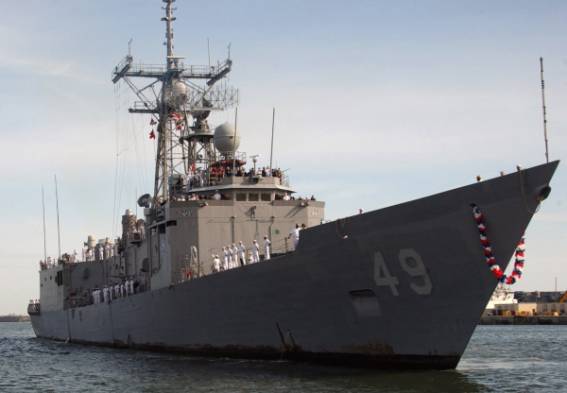
Guided Missile Frigate
|
|||||
FFG 49
- USS Robert G. Bradley
|
|||||
|
|
|||||
|
|
|||||
|
|
|
||||
Type,
Class:
|
|
Guided Missile Frigate; Oliver Hazard Perry - class (long
hull)
planned and built
as FFG 49 |
|||
Builder:
|
|
||||
STATUS:
|
|
Awarded:
April 28,
1980 Laid
down: December 28, 1982 Launched: August 13, 1983 Commissioned: June 30, 1984 ACTIVE
UNIT/ in commission (Atlantic Fleet) |
|||
Homeport:
|
|
Mayport, Florida, USA
|
|||
Namesake:
|
|
Named
after and in honor of Lieutenant Robert Graham Bradley (1921 - 1944) >
see history, below; |
|||
Ship's
Motto:
|
|
POWER TO PREVAIL |
|||
Technical Data:
(Measures, Propulsion, Armament, Aviation, etc.)
|
|
see: INFO
> Oliver Hazard Perry - class Guided Missile Frigate |
|||
|
|
|||||
ship
images
|
|||||
|
|
|||||
|
|
|||||
|
Robert Graham Bradley |
|||||
|
|
|||||
|
|
|||||
|
Namesake & History: |
|||||
|
Lieutenant
Robert Graham Bradley (September 26, 1921 – October 24, 1944): |
|||||
|
Robert G Bradley
was born in Washington D.C. on 26 September 1921. He was appointed to the
U.S. Naval Academy on 9 June 1939, and graduated with the class of 1943 on 19
June 1942, due to the exigencies of war. From 3 July to 27 October 1942, he
underwent instruction at the Atlantic Subordinate Command, Service Force, at
Norfolk, VA, before he reported to the New York Shipbuilding Corporation,
Camden, NJ, on b29 October to assist in fitting out the fleet carrier USS
Princeton (CVL-23), which was ultimately placed in commission on 25 February
1943. While serving on that ship, he received promotions to Lieutenant
(junior grade) and Lieutenant on 1 May 1943 and 1 July 1944, respectively,
and took part in every operation conducted by the ship ranging from the occupation
of Baker Island (September 1943) to the Battle of Leyte Gulf (October 1944),
in which the ship was lost. |
|||||
|
|
|||||
|
USS
Robert G. Bradley (FFG 49): |
|||||
|
-- FFG 49 history wanted -- |
|||||
|
|
|||||
|
patches |
|||||
|
|
|||||
|
|
|||||