|
Courtesy of Alabama Heritage:
"Alabama Heritage" Tells How 5 Alabama Brothers Made History:
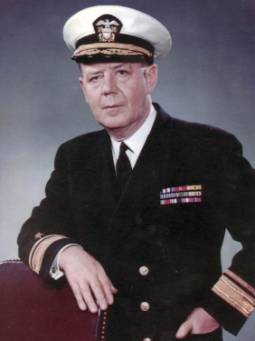
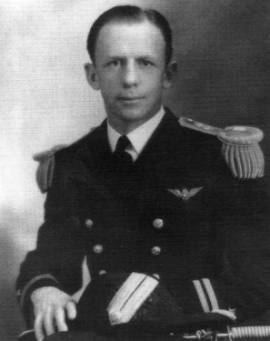
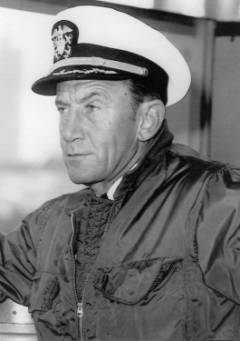
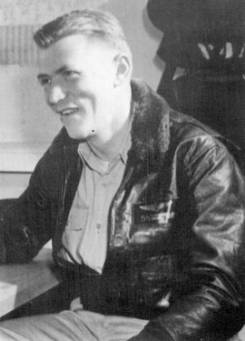
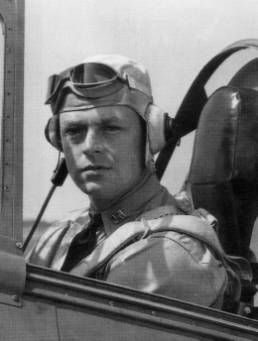
History-making seemed to come naturally to the Crommelin boys of Wetumpka,
Ala., both at sea and in the air. The five brothers made their mark in World
War II, earning a series of medals, and in the process becoming one of the
most decorated families in naval history. A monument to the Crommelins in
Battleship Park in Mobile, Alabama, commemorates their bravery.
The Crommelin family's connection to the Navy began when the boys' parents
decided to send their rambunctious eldest son, John, to the U.S. Naval
Academy at Annapolis after he had completed one year at the University of
Virginia. Thus began a family tradition, with John's four brothers also enrolling
in the academy. Four of the brothers earned their wings and engaged in air
combat in World War II, while Henry, whose eyesight prevented him from
becoming a pilot, made his mark aboard destroyers.
In the Fall 1997 issue of Alabama Heritage, John B. Scott, Jr., incorporates
the lives and heroic acts of the Crommelin brothers with the history of the
naval battles that took place in the Pacific theater in World War II. In the
first great air battle between carrier-based planes, Richard Crommelin, based
on the carrier Yorktown, fought enemy fire during his first combat engagement
in the Battle of the Coral Sea. Richard was able to eliminate six Japanese
Zeros and then, when his engine failed, successfully belly-land on the sea.
He was awarded a Navy Cross for his bravery.
John and Quentin Crommelin also distinguished themselves aboard the
Enterprise and the Saratoga in the Battle of Midway. Charles Crommelin
assumed command of Carrier Air Group 5 aboard the Yorktown after a series of
victorious attacks against the Japanese, earning a Distinguished Flying
Cross. Henry Crommelin had been in command of a destroyer in the Atlantic and
was later given command of a destroyer in the Pacific. He carried on the
Crommelin tradition by earning the Silver Star and then the Bronze Star Medal
with Combat "V" for his heroic actions in Guam.
Time magazine dubbed the Crommelin brothers "The Indestructibles"
for their amazing escapes from death, but it wasn't long before this proved
sadly untrue. Within three months of each other, Richard and Charles were
both killed in mid-air collisions with other Navy planes, and "the
fleet's most famous flying family" was broken up.
After the war, while living in Georgetown and attending the National War
College in Washington, D.C., John Crommelin challenged naval authorities by
arguing against the "Unification Act" and in favor of maintaining
the Navy's aircraft carrier force. His actions initiated what became known as
"The Revolt of the Admirals," which resulted in the saving of the
Navy's air arm, but cut short Crommelin's own brilliant career as an admiral.
He retired and went home to Alabama. Eventually, Henry and Quentin also
retired with Admiral and Captain status, respectively. Quentin, the youngest
brother and the last of the famous flying Crommelins, died at his home, on
family lands fronting the Coosa River, in April 1997.
Alabama Heritage is a nonprofit quarterly
magazine published by The University of Alabama and The University of Alabama
at Birmingham. To order the magazine, write to Alabama Heritage, Box 870342,
University of Alabama, Tuscaloosa, AL, 35487, or call (205) 348-7467.
|
|
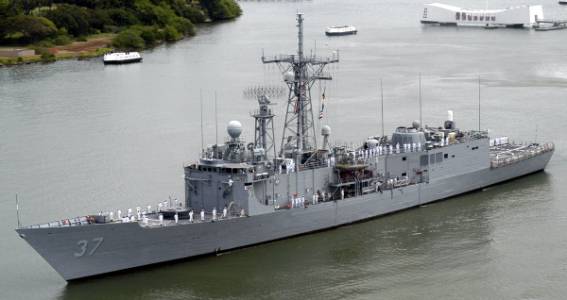
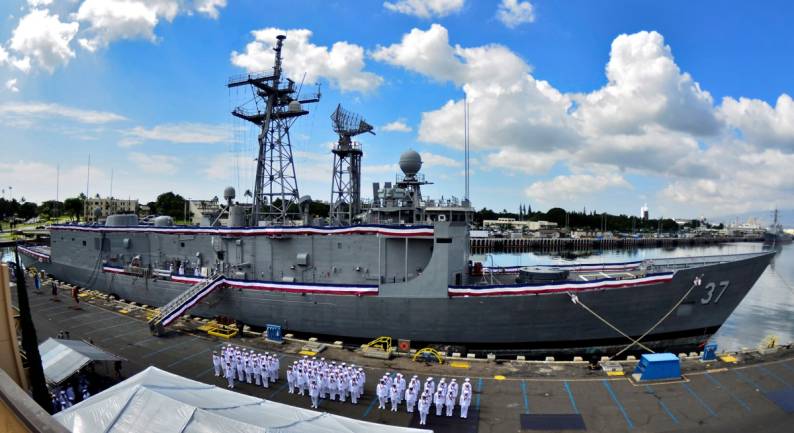
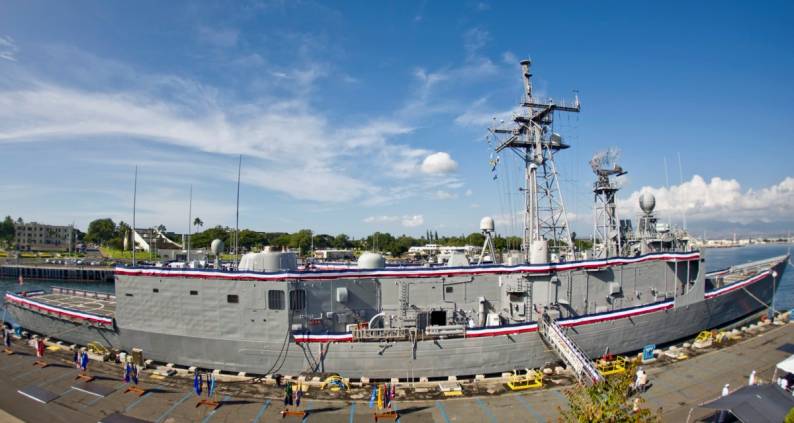
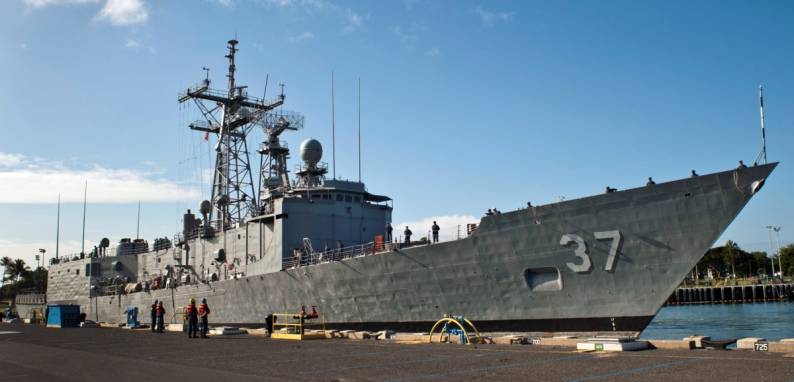
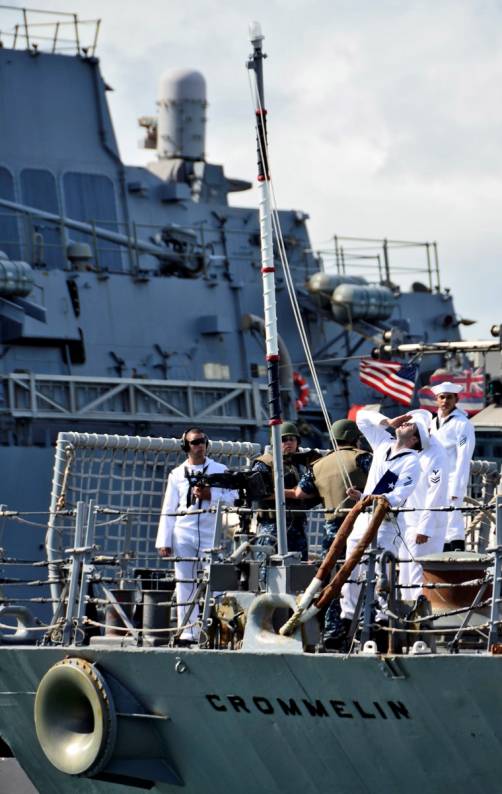
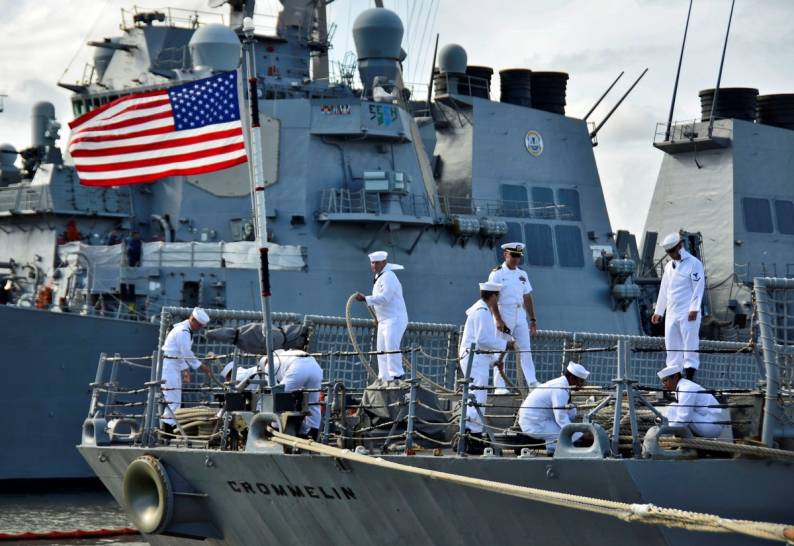
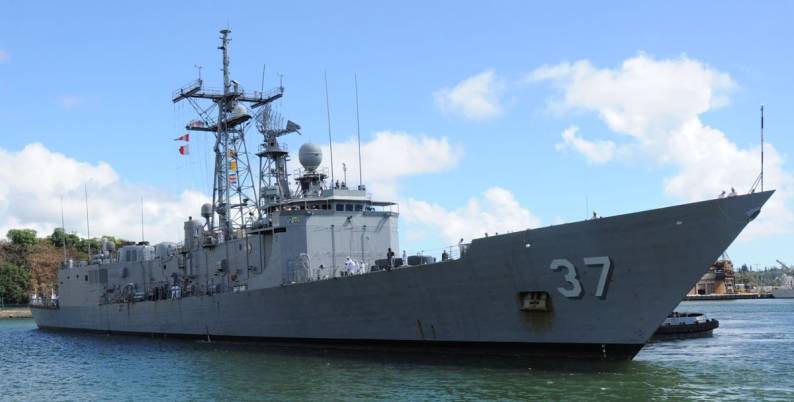
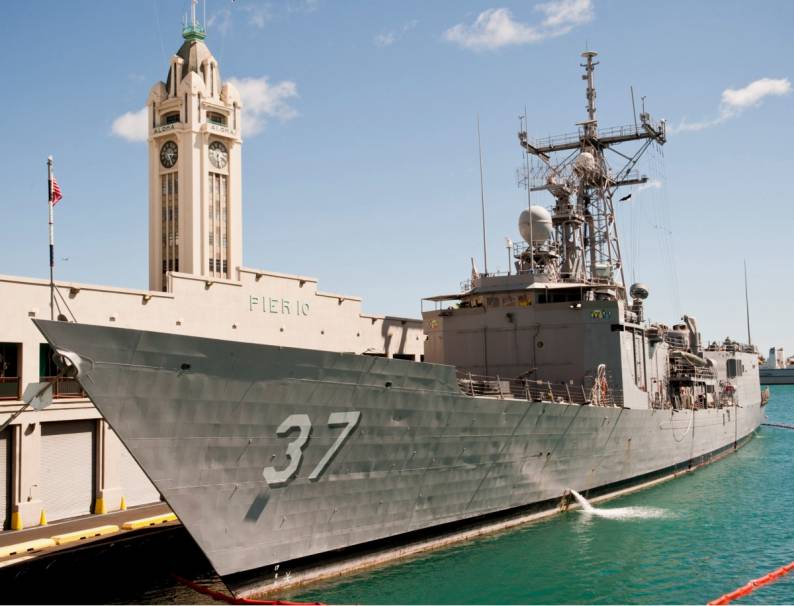
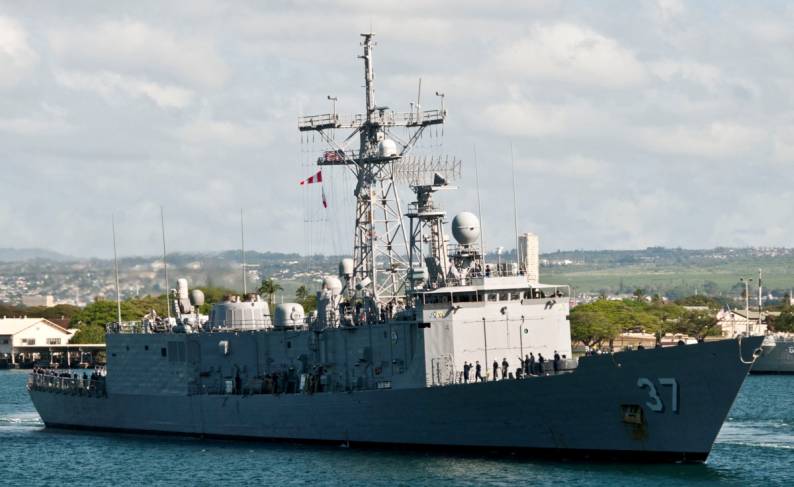
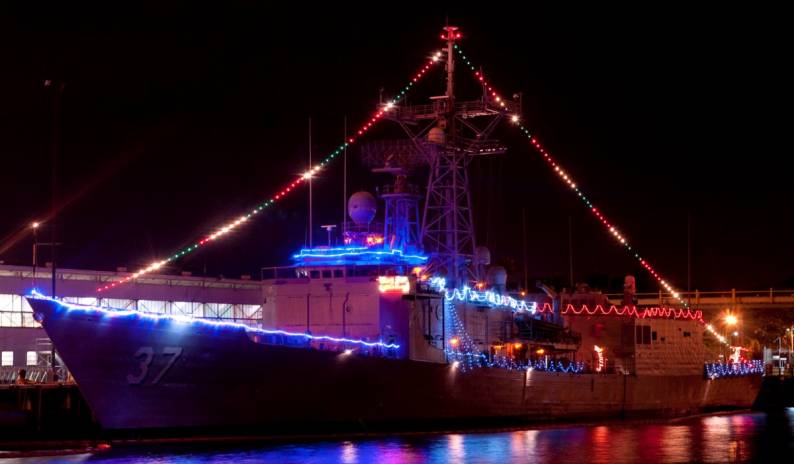
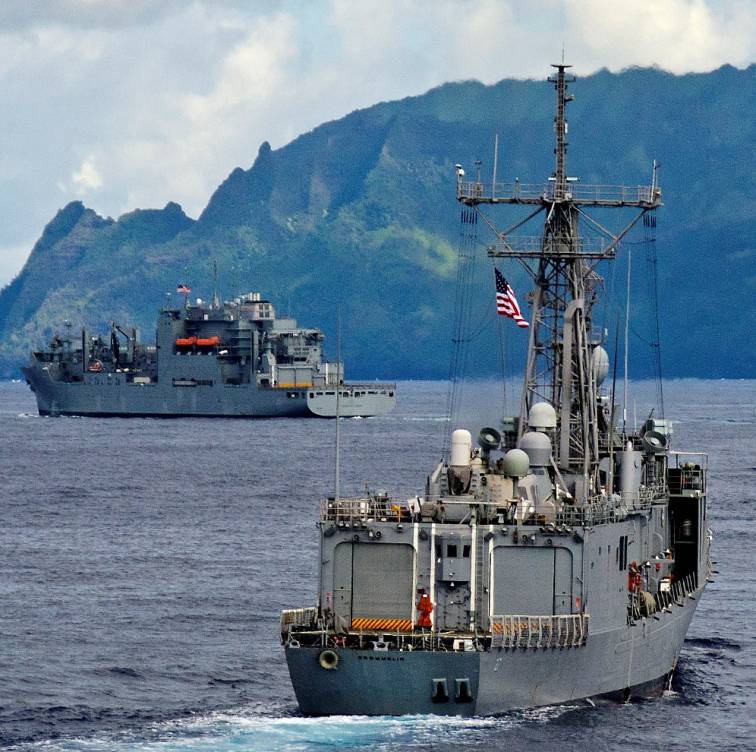
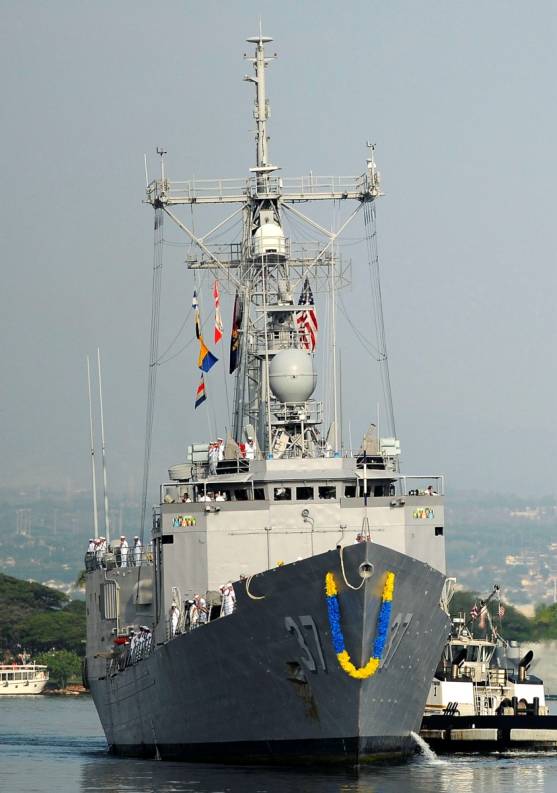
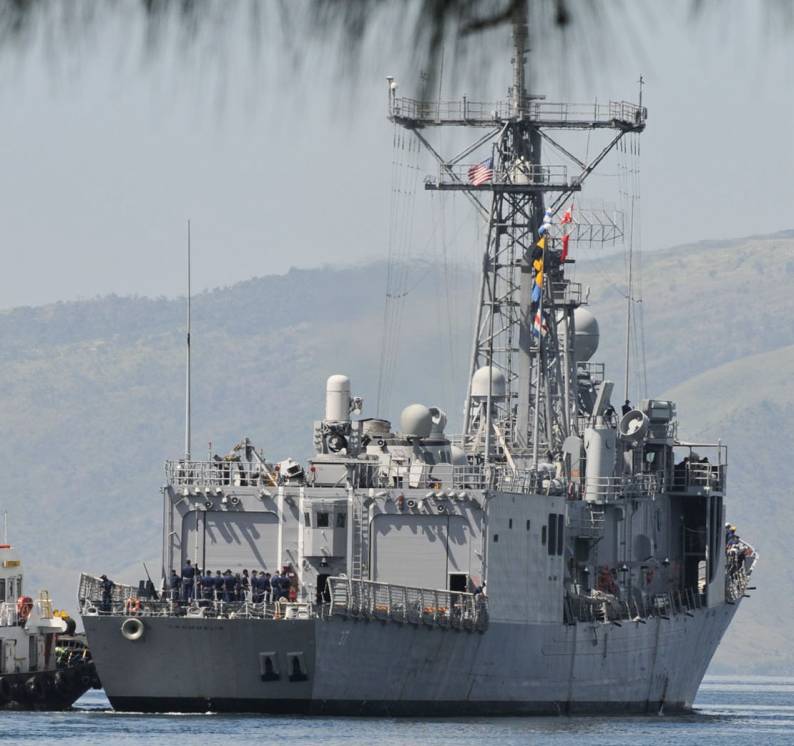
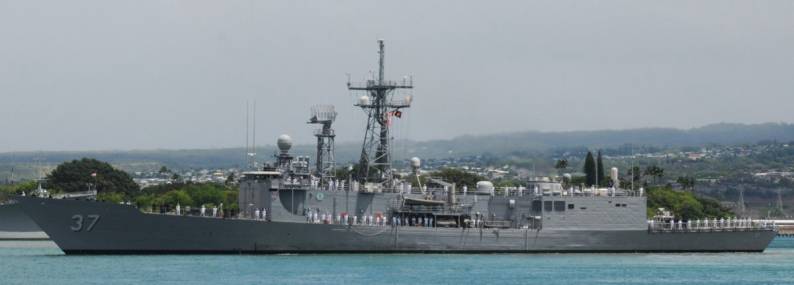
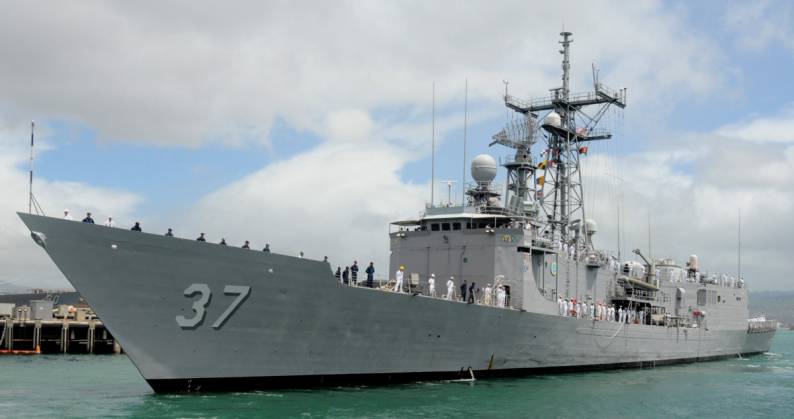
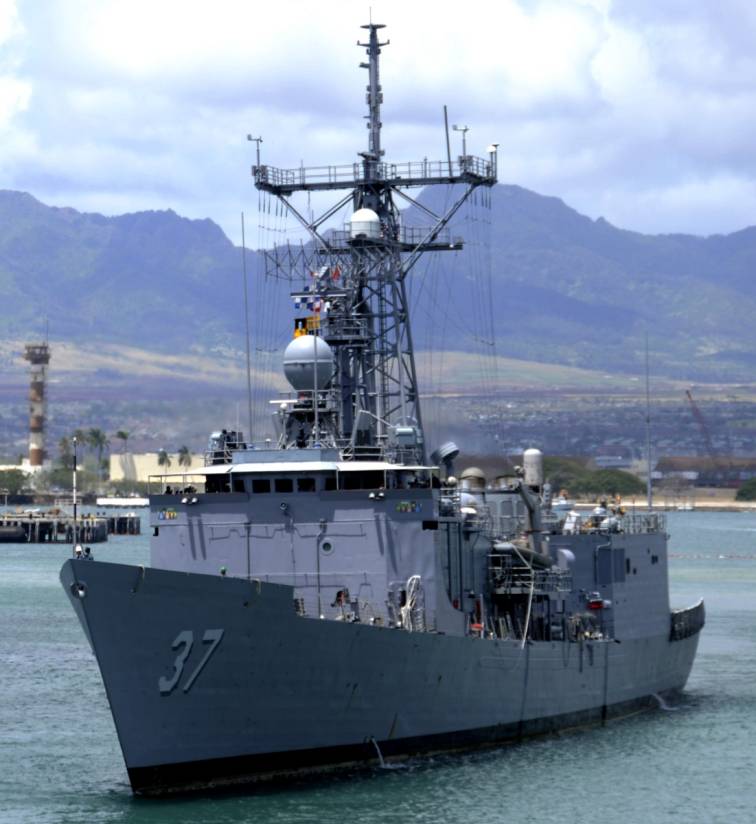
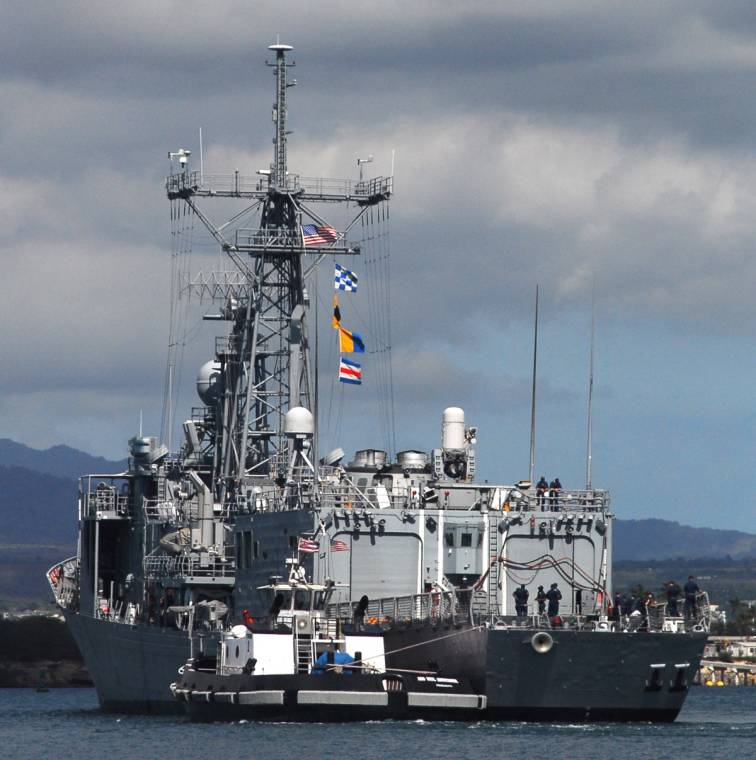
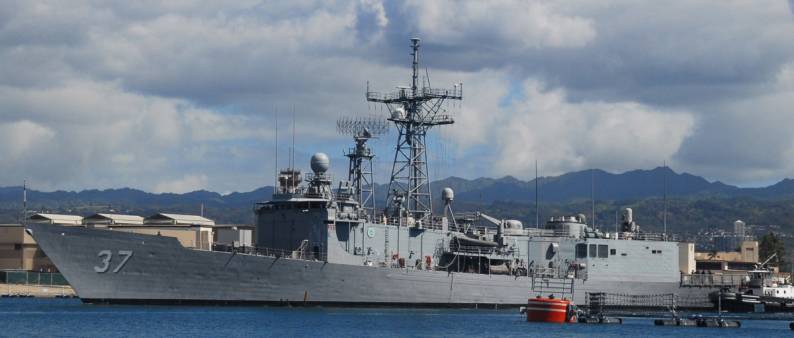
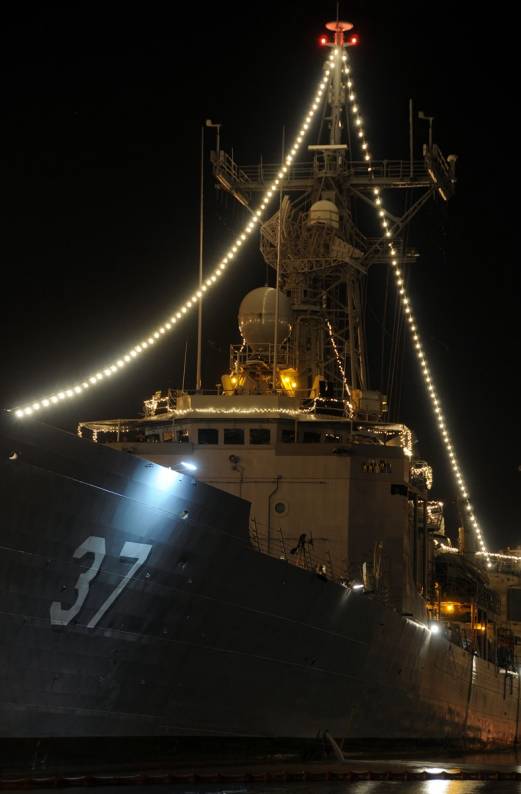
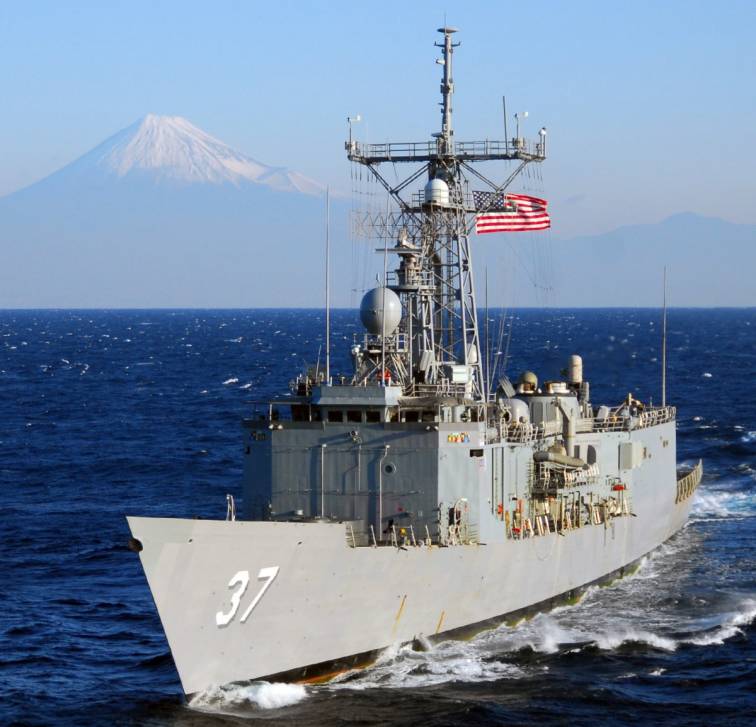
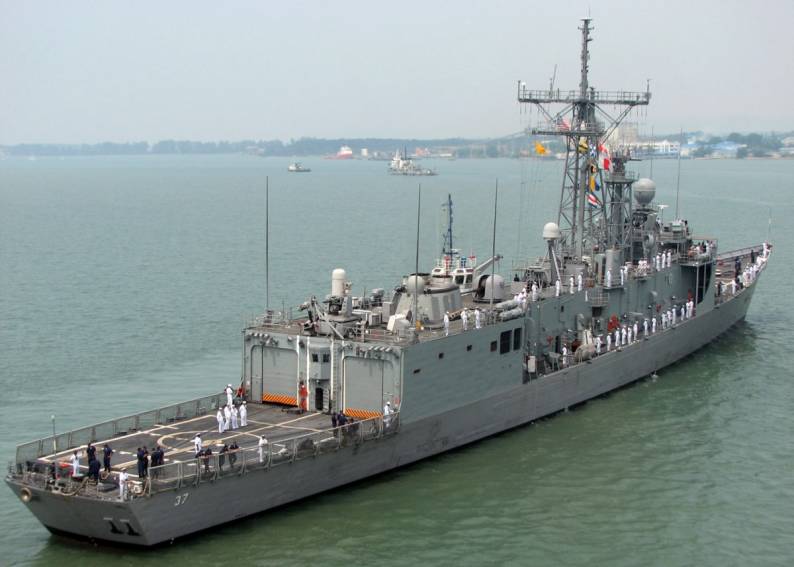
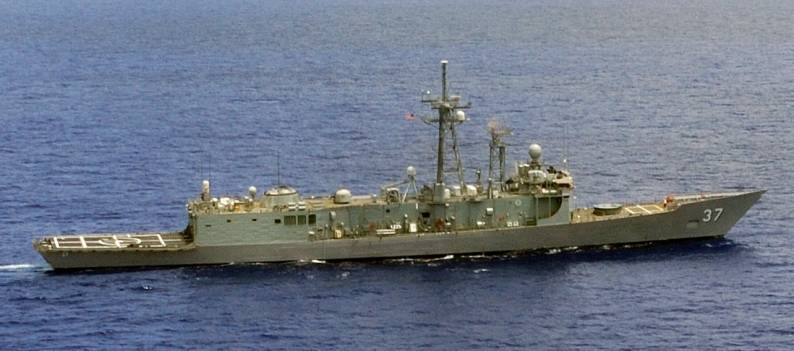
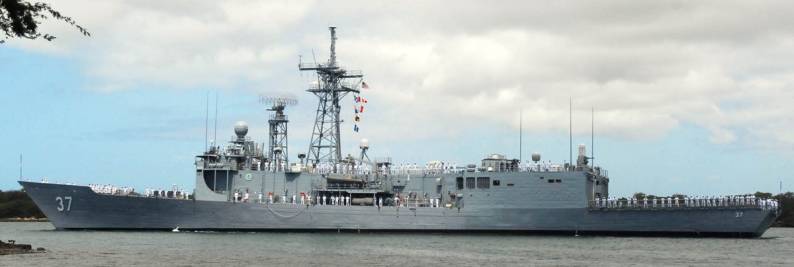
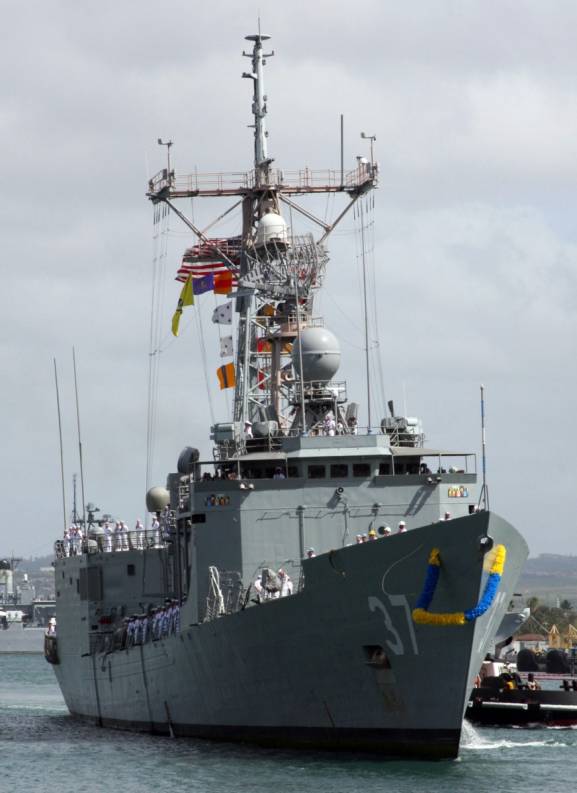
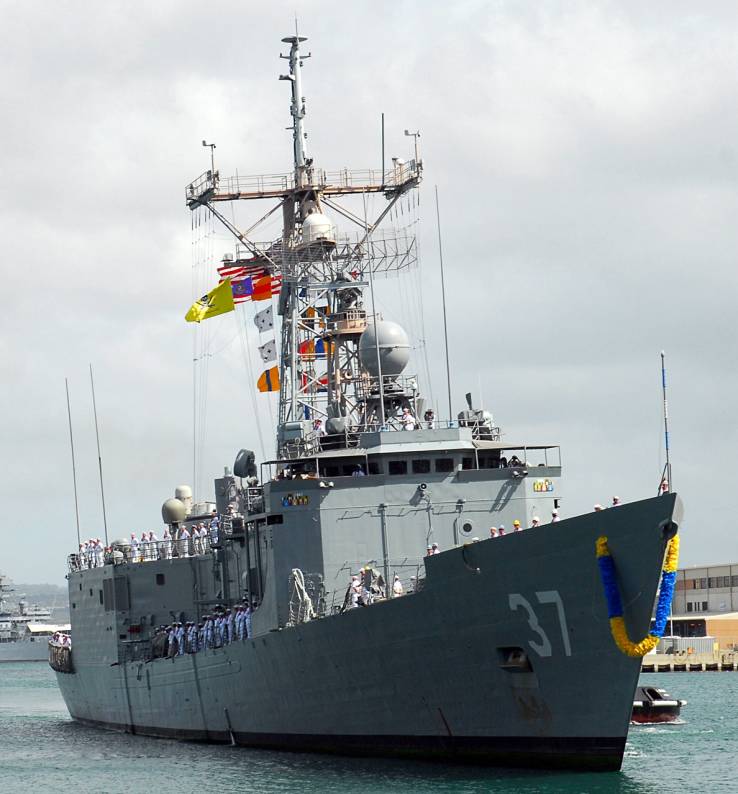
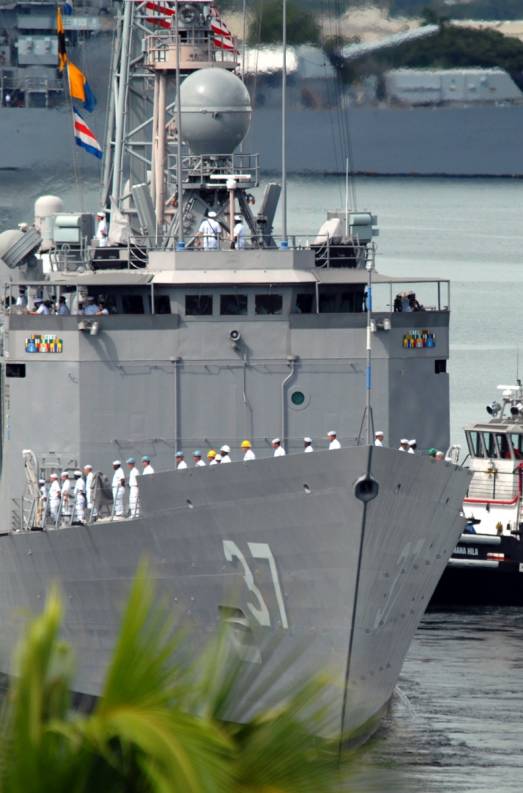
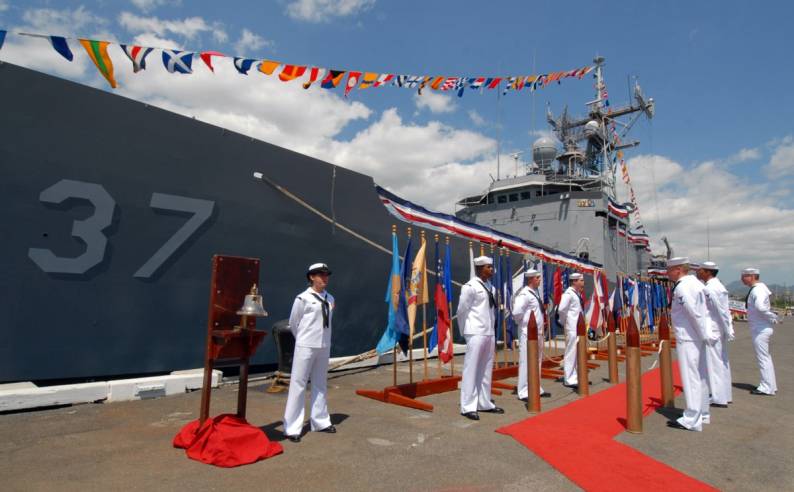
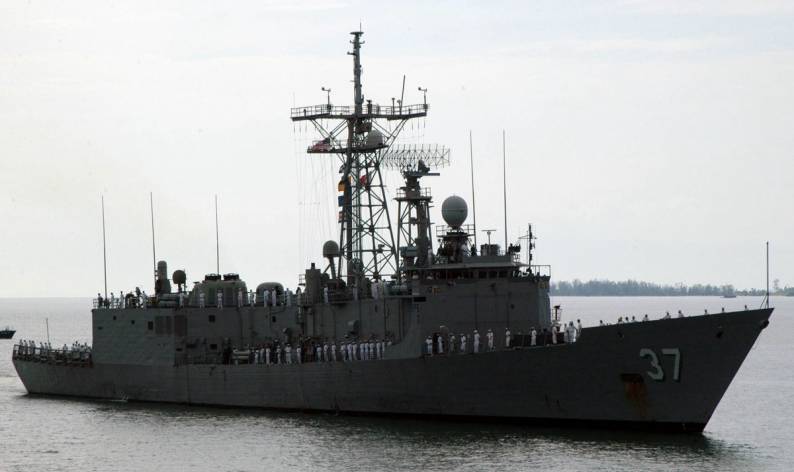
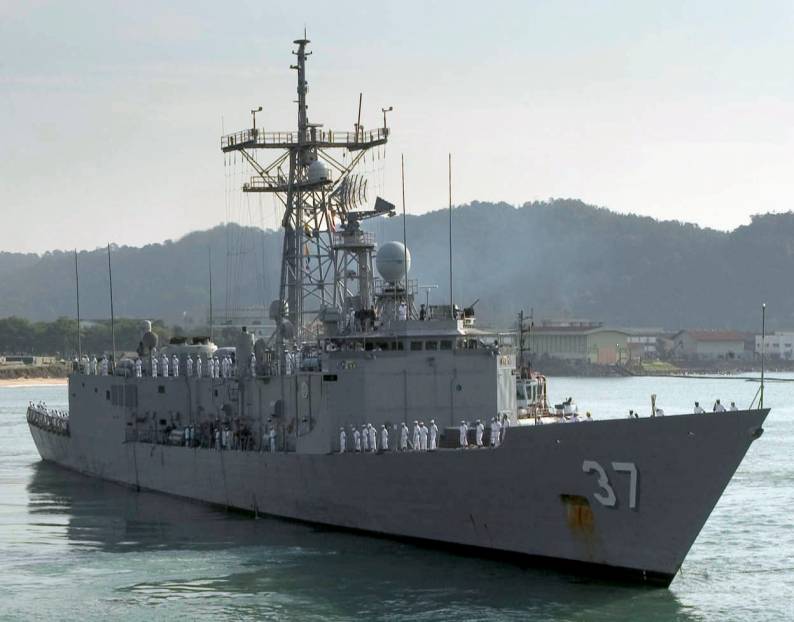
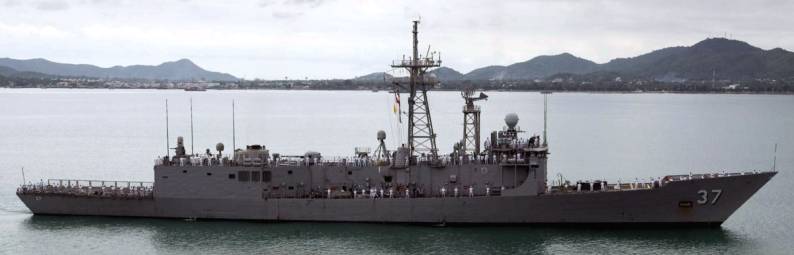
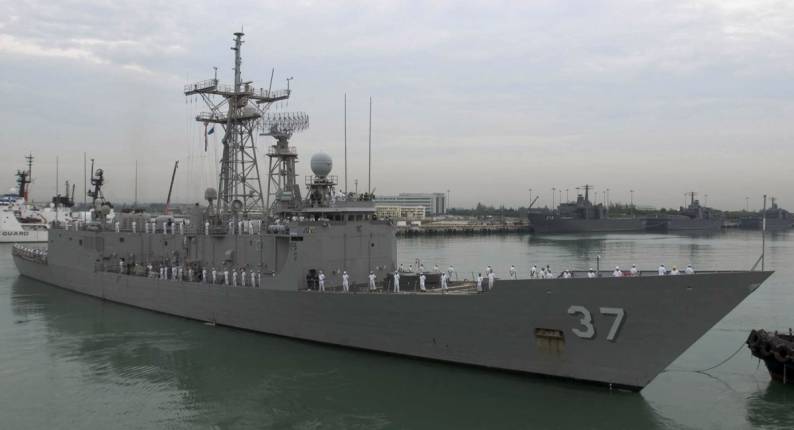
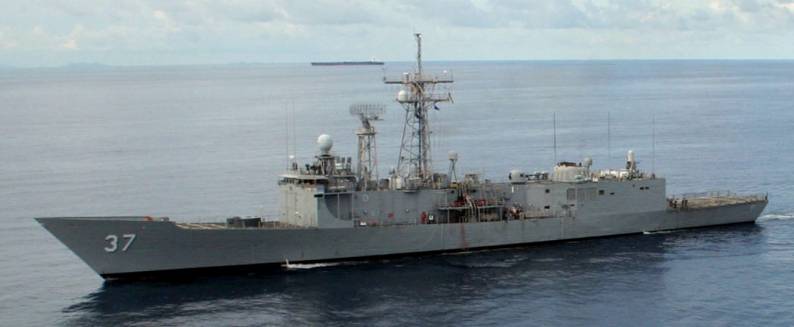
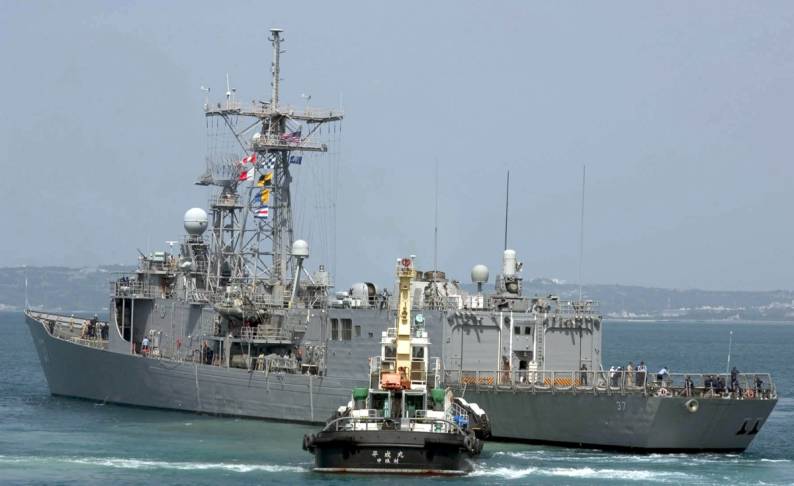
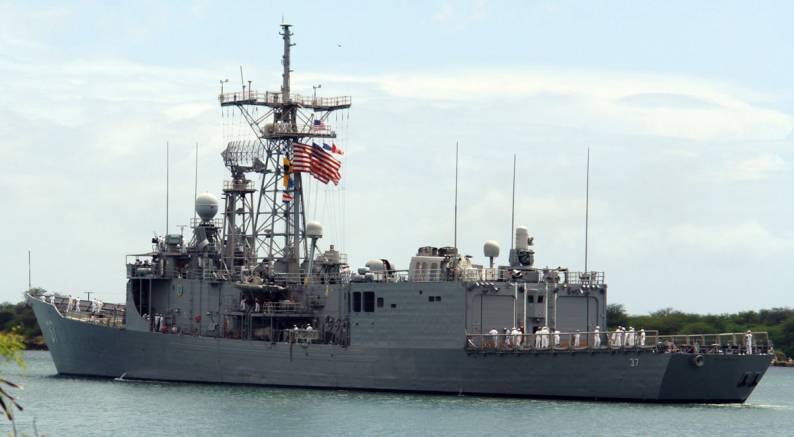
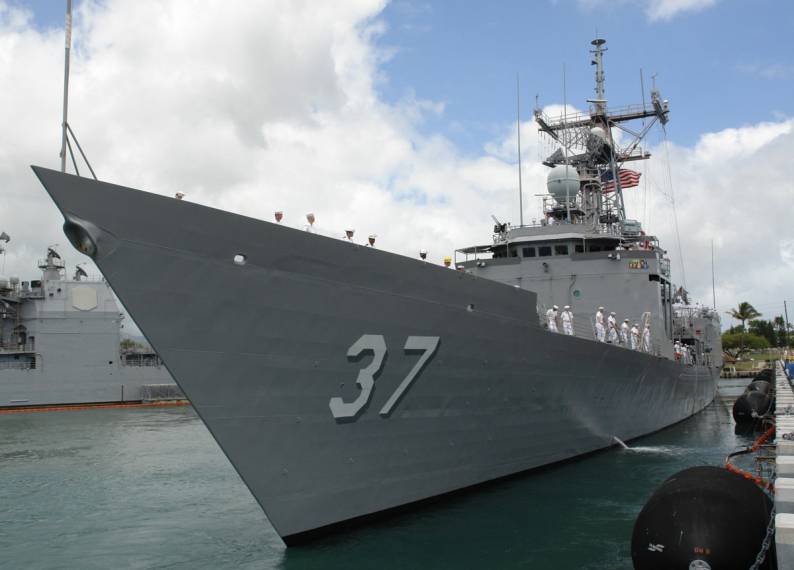
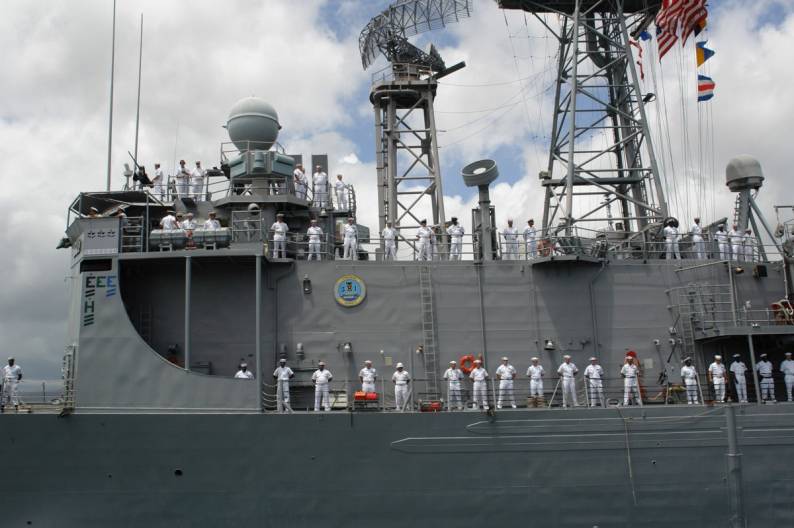
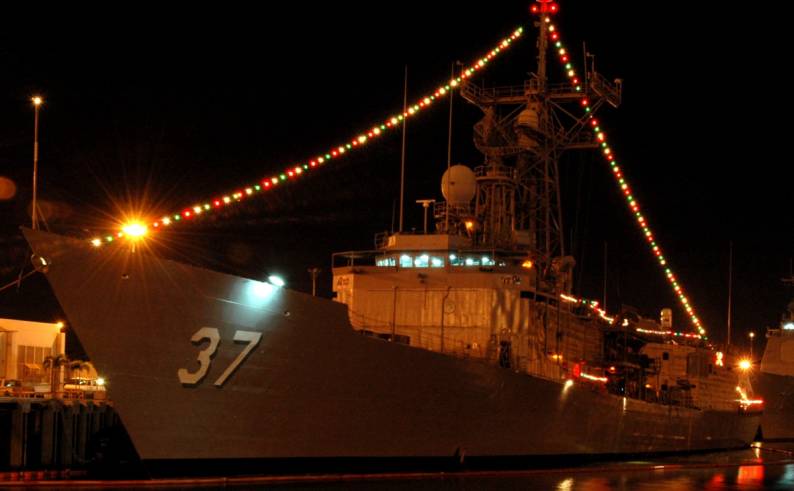
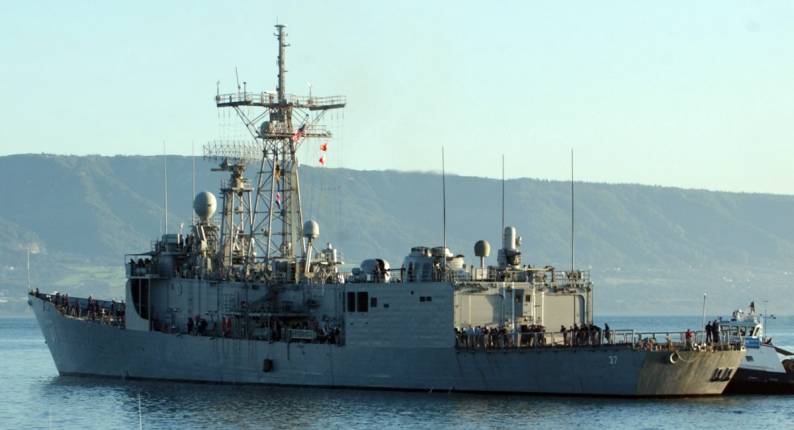
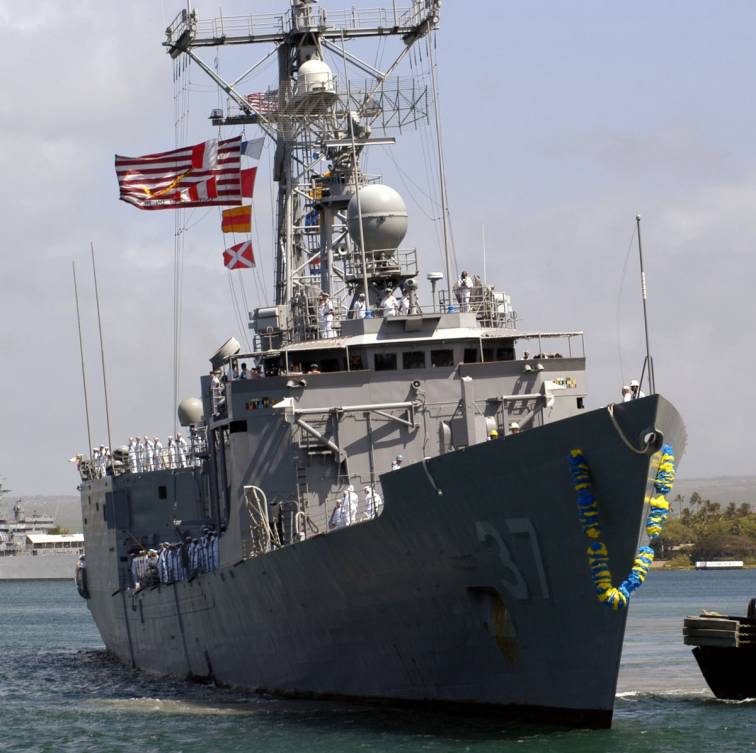
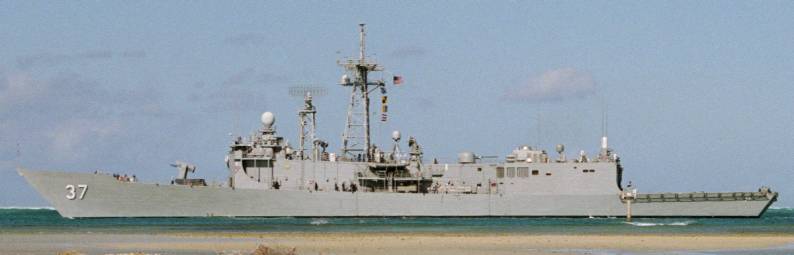
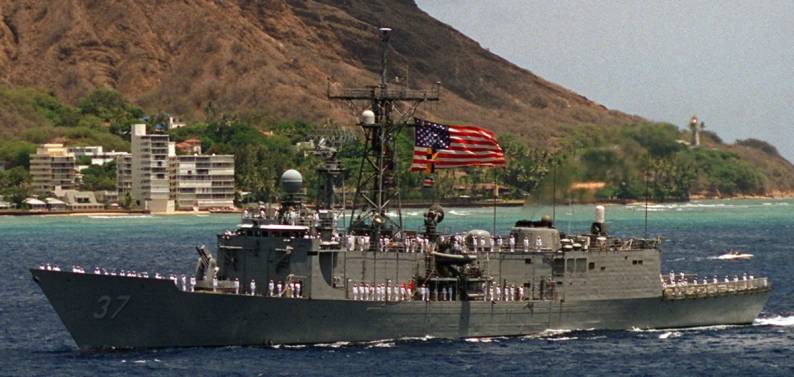
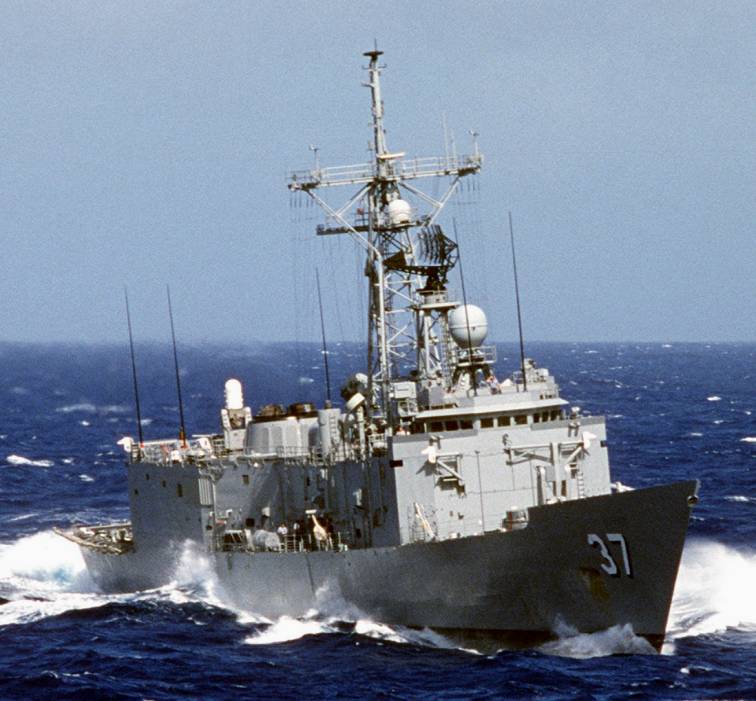
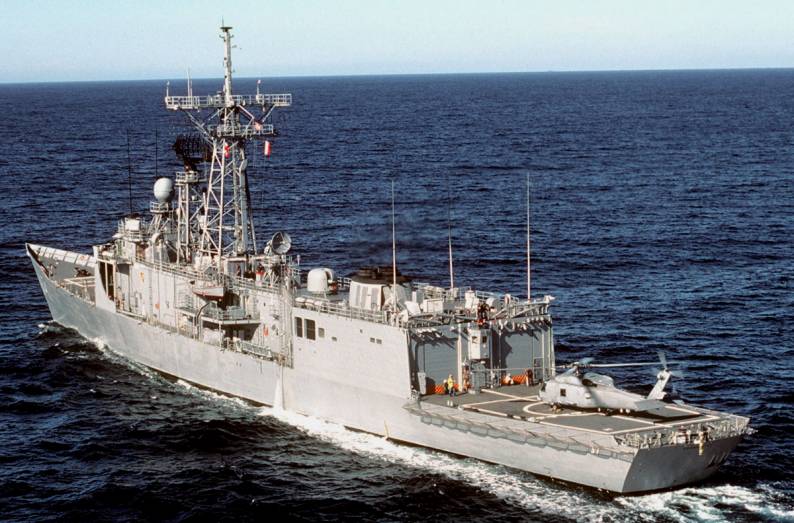
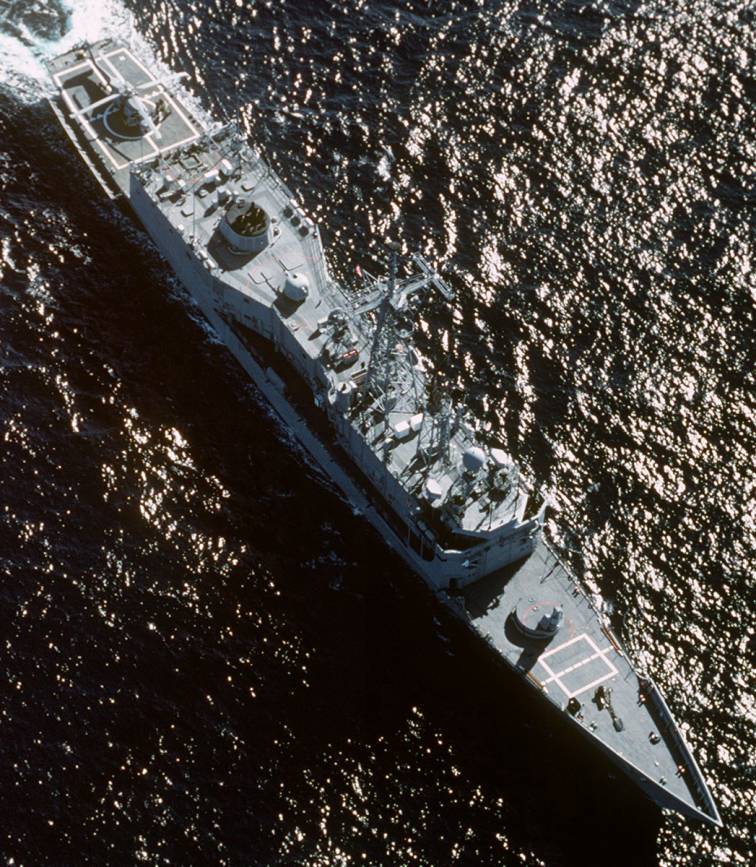
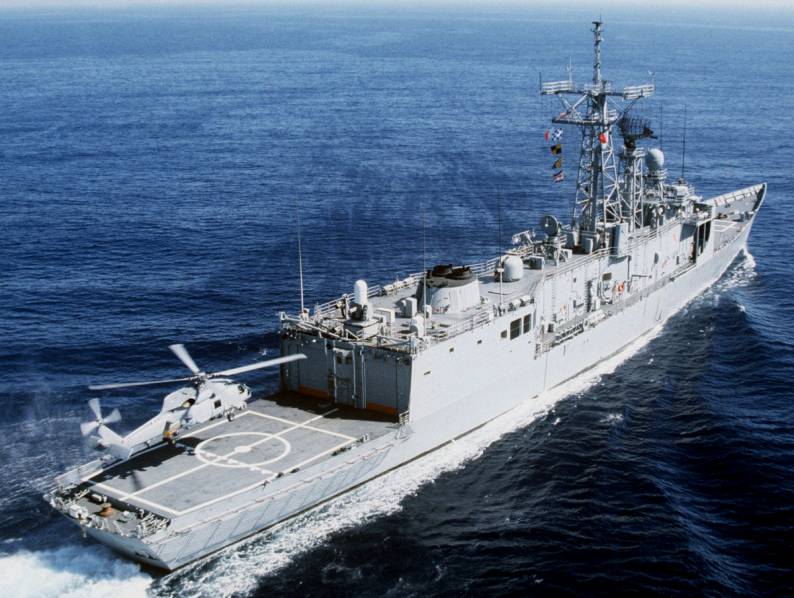
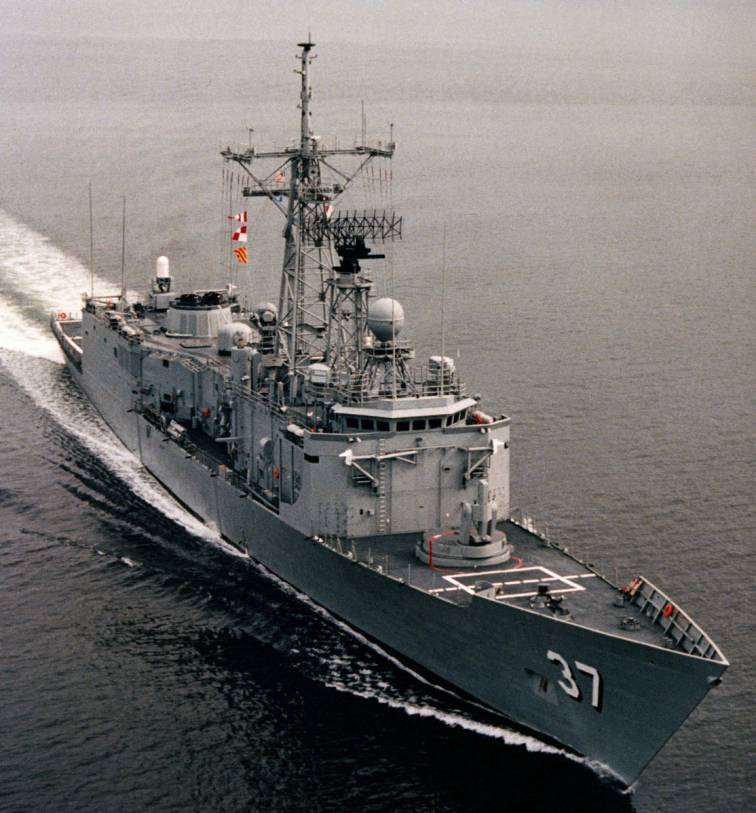
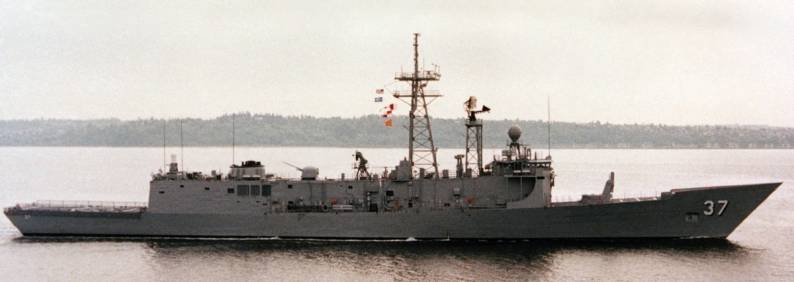
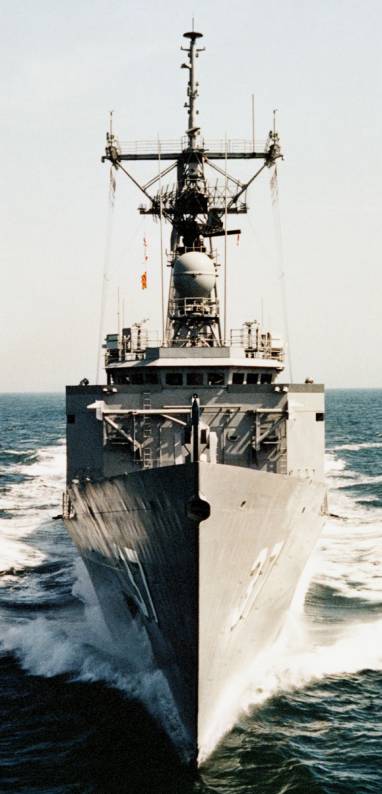
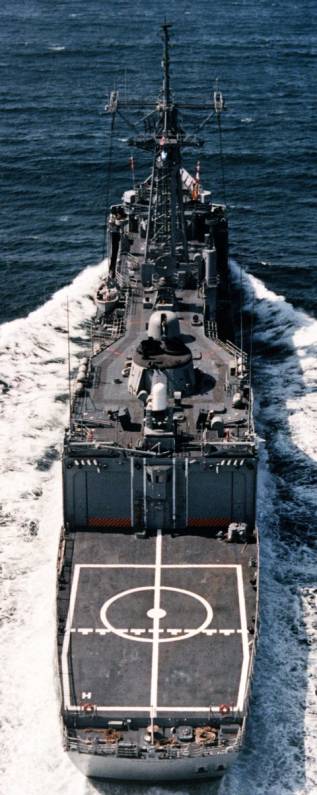
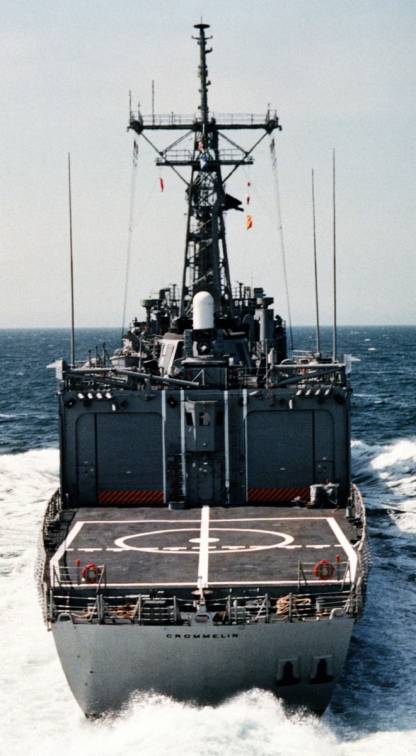
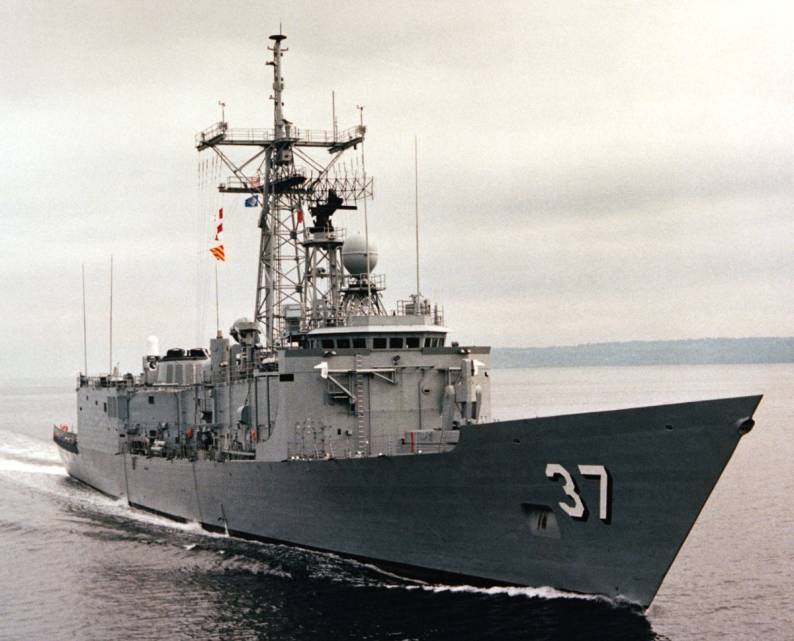
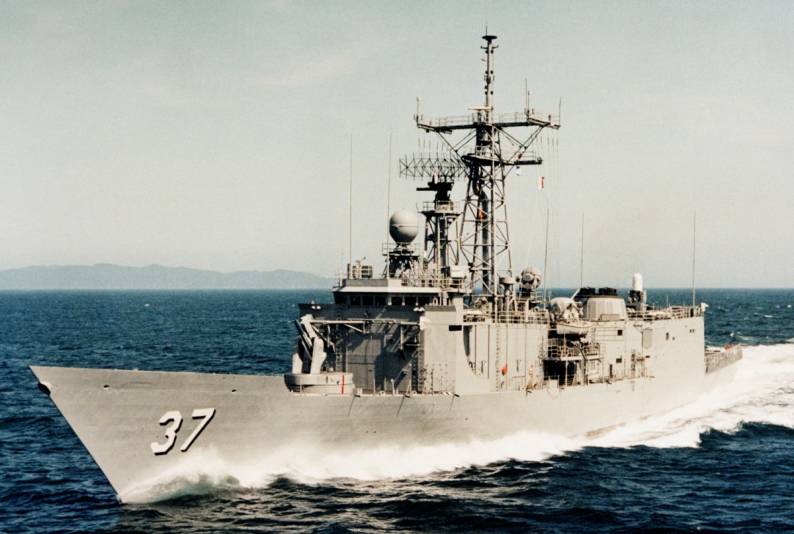
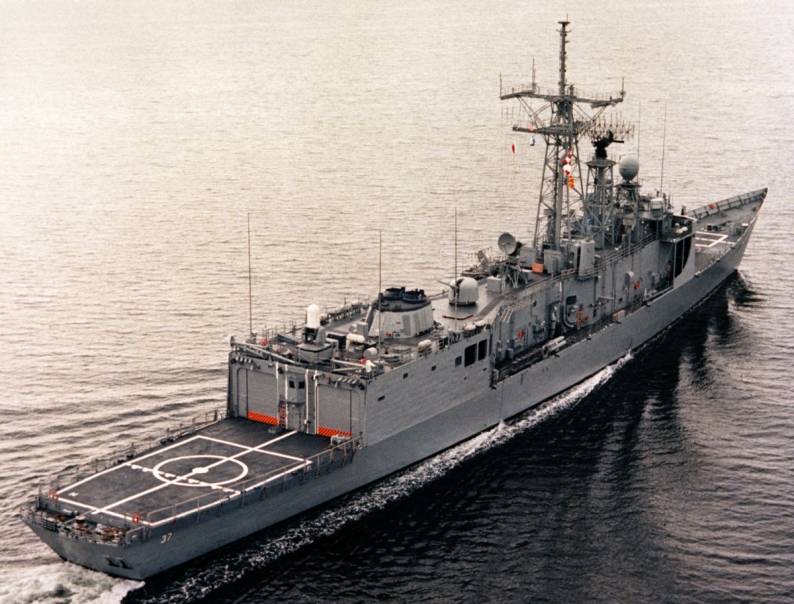
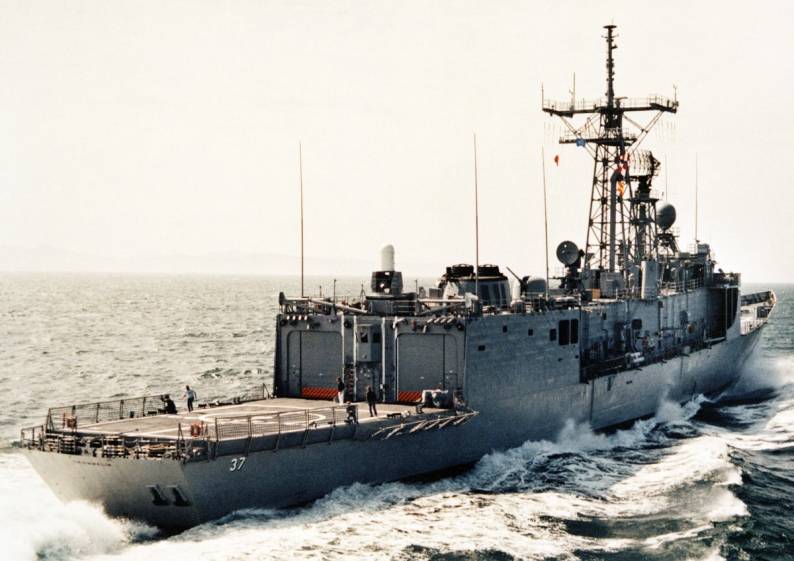
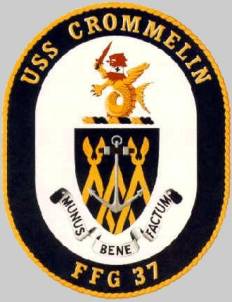
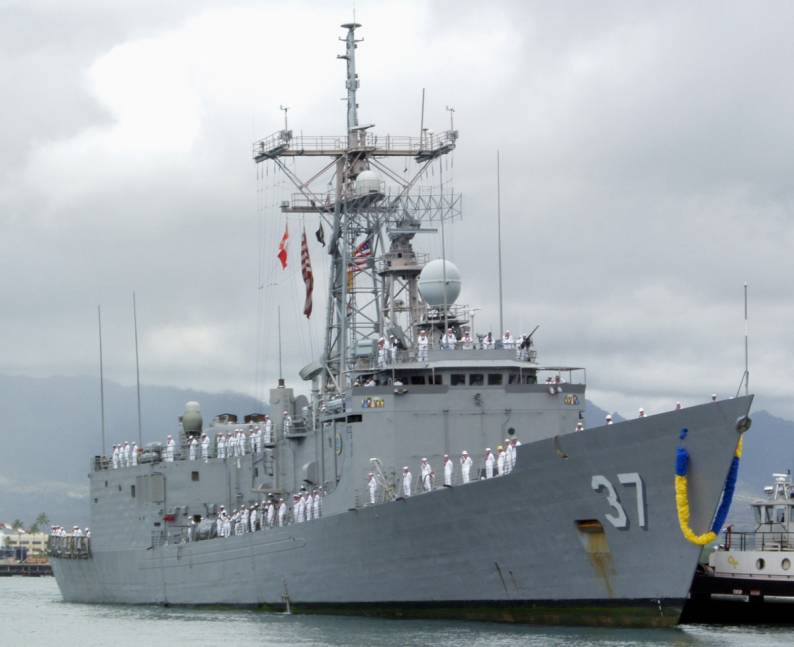
Upon it's commission, the
USS CROMMELIN was assigned to Destroyer Squadron 9 and reached its homeport
of Long Beach, California in August 1983.
In 1985, CROMMELIN was assigned to the Constellation (CV-64) carrier battle
group and deployed to the western Pacific and Indian Oceans. During this
deployment, CROMMELIN became the first FFG to successfully engage a
high-speed, maneuvering target with missiles. It was also the first ship to
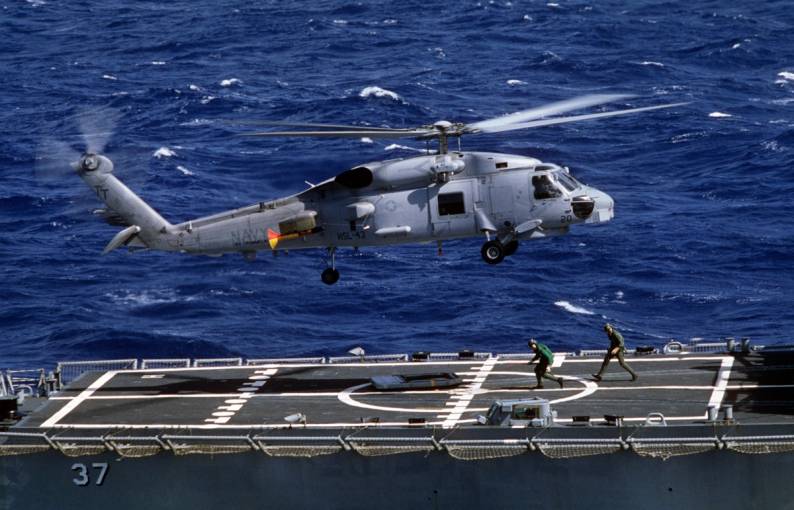
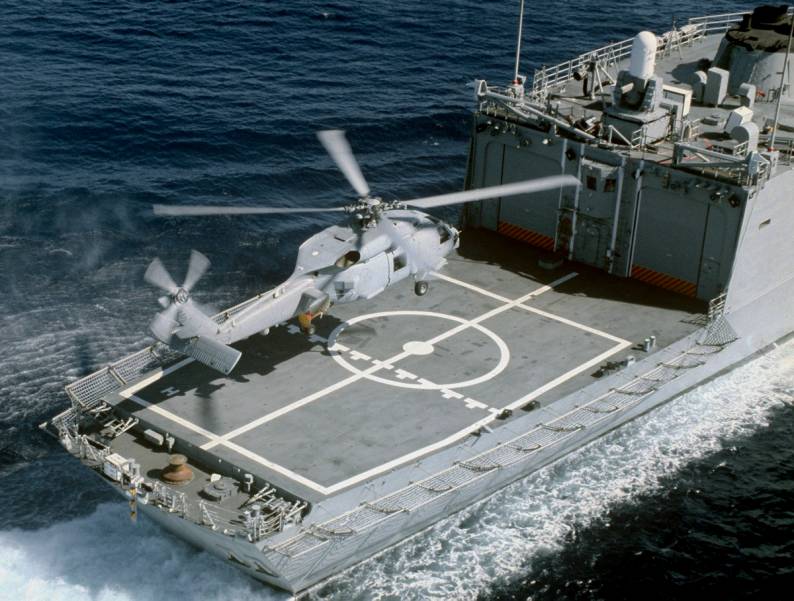
complete an operational deployment with the LAMPS MK III weapon system. In
June 1986, CROMMELIN received the first Chief of Naval Operations LAMPS MK
III Safety Award.
In the summer of 1986, CROMMELIN was awarded every departmental and
divisional excellence award and won its first Battle "E" award. In
1987, CROMMELIN was assigned to Destroyer Squadron 13 and began an
accelerated deployment with the Constellation battle group. CROMMELIN was the
first FFG to deploy with two LAMPS MK III helicopters embarked. CROMMELIN was
assigned to Commander, Middle East Force from 1 July to 25 August 1987,
earning a Meritorious Unit Commendation and Armed Forces Expeditionary Medal
for the convoy escort of the first five reflagged Kuwaiti tankers in
Operation Earnest Will.
On 1 January 1988, CROMMELIN was reassigned to Destroyer Squadron 9, and on 6
March 1988, the ship received a second consecutive Battle "E"
award. Upon completion of its second availability period at Todd Pacific
Shipyard, CROMMELIN was deployed in March 1989 again to the Persian Gulf. In
October 1990 CROMMELIN was deployed in support of joint service,
counternarcotics operations in the Central, South American, and Caribbean
theater. CROMMELIN was awarded the Joint Services Meritorious Unit Award for
its performance during this deployment. In 1991, CROMMELIN received the Navy
"E" as well as its fifth consecutive warfare excellence awards for
anti-air and anti-surface warfare, navigation and seamanship, damage control,
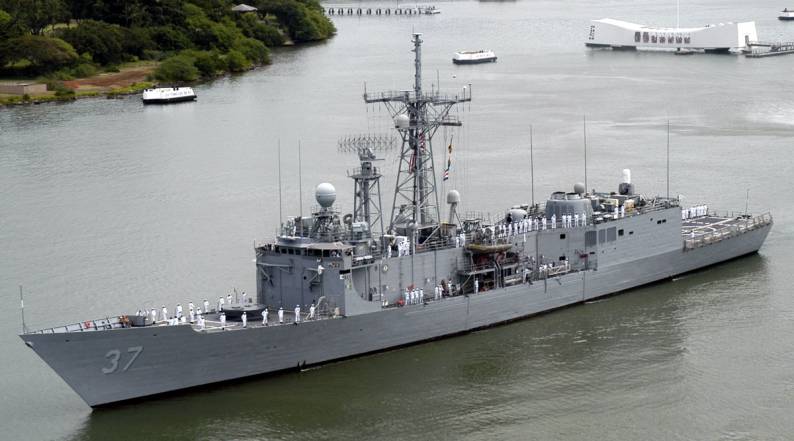
engineering, and communications. On 1 September 1991, CROMMELIN shifted
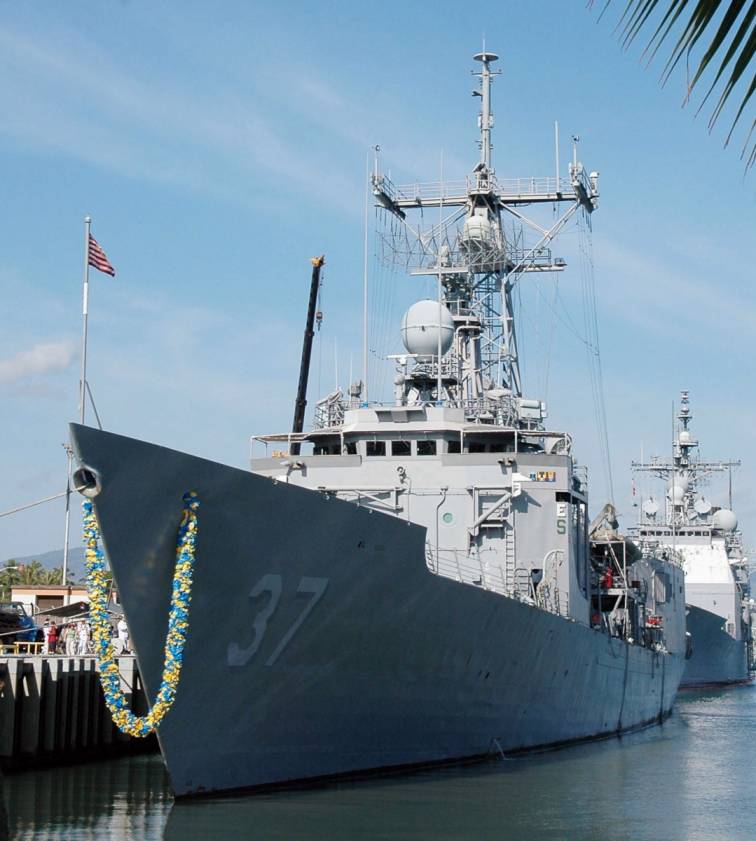
homeports to Pearl Harbor, Hawaii, and joined Destroyer Squadron 31.
CROMMELIN completed a second four-month counternarcotics deployment in the
Central, South American and Caribbean theater from November 1992 to March
1993. Upon return to its homeport of Pearl Harbor, Hawaii, CROMMELIN was assigned
to Commander Naval Surface Group, Middle Pacific.
From 6 July to 14 December 1994, CROMMELIN was assigned to the Kitty Hawk
(CV-63) battle group in the Western Pacific for Korean contingency
operations. There, CROMMELIN received the Meritorious Unit Commendation Award
for the prosecution of a Chinese Hahn Class Submarine. Upon completion of
this deployment she underwent dry-docking SRA-5 at Pearl Harbor Naval
Shipyard, following which she began the cycle for her 1996 Western Pacific
deployment with the Carl Vinson (CVN-70) battle group.
After a three month work up cycle, CROMMELIN deployed with the Carl Vinson
battle group on 20 May 1996. This deployment took CROMMELIN and her crew back
to the Persian Gulf for a variety of missions, including escorting ships
through the Straits of Hormuz, patrolling the Northern Persian Gulf, and
conducting maritime interception operations. CROMMELIN returned from that
deployment on 20 November 1996.
Following WESTPAC 96, CROMMELIN entered another yard period from January to
March 1997. CROMMELIN received upgrades to all major weapons systems as well
as the engineering plant. Following this availability, CROMMELIN and her crew
began yet another work up cycle to prepare for her fifth deployment to the
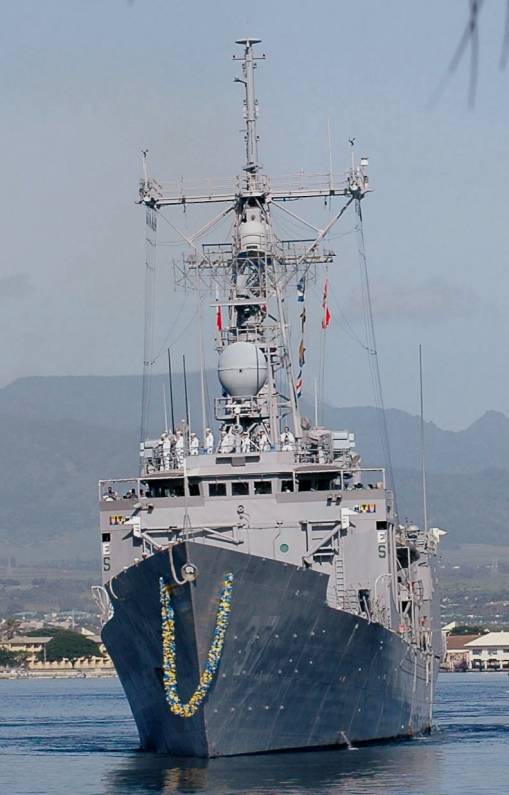
Persian Gulf as part of the U.S. 5th Fleet. CROMMELIN departed Pearl Harbor
on 21 February 1998. During this deployment CROMMELIN distinguished herself
by setting a Fifth Fleet record for number of vessels boarded and tonnage of
illegal Iraqi petroleum seized and diverted.
CROMMELIN completed a demanding nine week private sector SRA in early 1999,
where she made major repairs and upgrades throughout the ship. Immediately
following the SRA, CROMMELIN aggressively entered the inter-deployment
training cycle and proceeded to set numerous records throughout her training.
Chief among these was condensing what is normally a twelve week training
cycle into nine weeks. Other achievements were completing cruise missile test
qualification on the first day of training and completing engineering
qualification with 100% of drills and 28 of 29 evolutions graded as
"satisfactory".
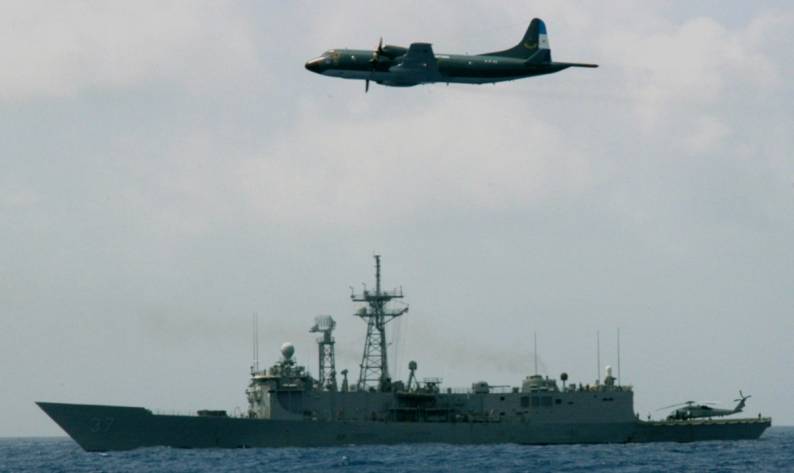
With her training cycle complete, CROMMELIN departed Pearl Harbor on 24
August 1999 for a three month deployment to the Eastern Pacific in support of
counter narcotics operations. During this deployment, CROMMELIN steamed 77 of
92 days, flew more than 350 mishap-free SH-60B flight hours, and was a key
player in four major cocaine seizures. Upon her return to Pearl Harbor on 24
November 1999, CROMMELIN immediately began the work up cycle for her next
deployment with Abraham Lincoln (CVN-72) battle group in August 2000.
In February 2000, CROMMELIN was awarded the Battle "E" for
Destroyer Squadron 31 as well as each of the four command excellence awards.
Other accomplishments included the 1999 Commander in Chief, Pacific Fleet
Retention Excellence Award, 1999, Commander Naval Surface Forces Pacific
(COMNAVSURFPAC) Surface Ship Safety Award, COMNAVSURFPAC Self-Sufficient Ship
of the Quarter Award (Q4 FY99 and Q2 FY00), and the distinction of being the
first Pearl Harbor ship to hoist the Enlisted Surface Warfare Specialist
Pennant.
During WESTPAC 2000, eighteen non-compliant vessels were boarded by
CROMMELIN's Visit Board Search and Seizure Team, twelve were found to be
smuggling petroleum products from Iraq and diverted to friendly ports for
disposal of the ships and their illegal cargo. On the eve of the homecoming
from deployment, CROMMELIN received her second consecutive Battle Efficiency
Award.
From 18 April 2001 to June 2001, CROMMELIN was dry-docked at Pearl Harbor
Naval Shipyard for Dry-dock Selected Restriced Availability. In January 2002
CROMMELIN received the 2001 COMNAVSURFPAC Surface Ship Safety Award.
CROMMELIN returned to Pearl Harbor on 22 April 2003 following a six-month
deployment to the SOUTHCOM AOR where she took part in drug interdiction
operations. CROMMELIN also was involved in three rescues at sea, rescuing 174
Ecuadorian citizens from an un-seaworthy vessel at sea, and lending
assistance to two fishing vessels. After an abbreviated training cycle to
prove the Type Commander's new surge-ready concept and the receiving of the
2003 Battle Efficiency Award, CROMMELIN deployed in May 2004.
CROMMELIN returned home to Pearl Harbor on November 12, 2004, after
completing a record-setting six-month deployment to the U.S. Southern Command
(SOUTHCOM) area of responsibility (AOR). The most significant accomplishment
of the deployment was the interdiction of the fishing vessel San Jose .
Working in conjunction with U.S. Coast Guard Law Enforcement Detachment
(LEDET) 105, CROMMELIN intercepted the vessel San Jose and recovered a total
of 525 bales of cocaine weighing approximately 10.5 metric tons. During her
tenure in the SOUTHCOM AOR, CROMMELIN intercepted and recovered a total 20.5
metric tons of cocaine worth more than $1.25 billion; detained 29 drug
smugglers; and rescued a total of 96 people adrift at sea.
CROMMELIN also participated in Latin and South American UNITAS PAC PHASE. As
part of the largest maritime exercise in the Latin and South American region,
the ship participated in numerous complex maritime exercises with ships and
submarines from 10 South American countries. Barely taking time to catch its
breath, the crew then repositioned north to Panama for PANAMAX 2004, a
two-week exercise focused on the maritime defense of the Panama Canal from
terrorist attacks.
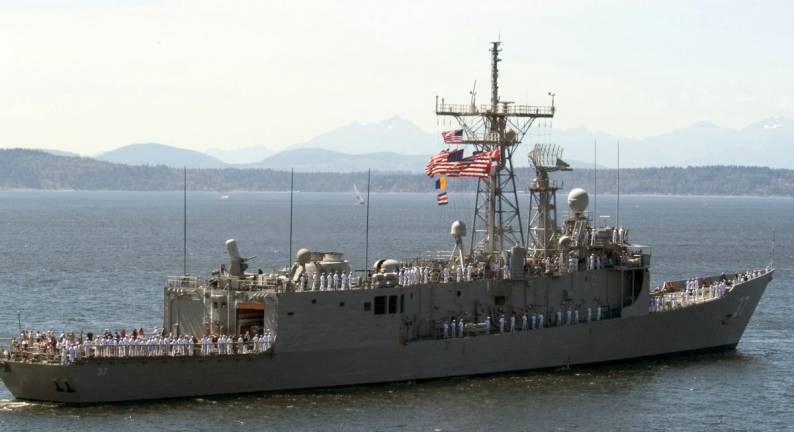
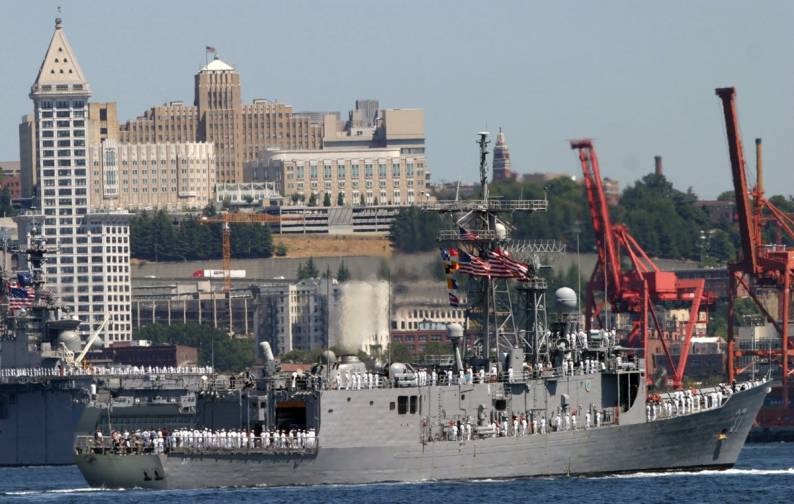
Summer 2005 brought the CROMMELIN to the West Coast, beginning with HULKEX in
San Diego, CA. She then headed to the Northern Pacific in time for Seattle,
Washington's SeaFAIR and it's parade of ships ceremony. A SINKEX was also
tasked on the way to her next port visit in Homer, Alaska. The crew enjoyed a
swim call as she headed to her final destination back to the warm waters off
Hawaii in mid-November.
May 2006 CROMMELIN departed for CARAT 06. CROMMELIN took part in coalition
exercises with the navies of Southeast Asian countries, during which
CROMMELIN trained our counterparts in many areas such as Search and Seizure,
navigation, damage control and other maritime acivities. The crew took
liberty in ports such as Singapore, Hong Kong, The Philippines, Thailand,
Malaysia, Brunei, Guam, Okinawa, Indonesia, and finally returned to home port
Pearl Harbor, HI in September 06.
Following a three month dry dock and maintenance period, CROMMELIN completed
a Board of Inspection and Survey (INSURV) Material Inspection in April 2007,
attaining successful scores in every department. After INSURV, CROMMELIN
entered a training cycle with Unit Level Training Readiness Assessment Combat
Systems (ULTRA-C), Unit Level Training Readiness Assessment Engineering
(ULTRA-E), Engineering Operational Certification (EOC), and Final Evaluation
Period (FEP). After completing FEP in August of 2007, CROMMELIN transited to
southern California to make preparations for her 2007 Counter-Narco Terrorism
deployment. While there, she conducted Week One Work-Ups (WOWUs) and FOX HUNT
with the help of her new Air Department (HSL-49, Det 6) home ported in San
Diego. CROMMELIN currently continues to prepare for deployment in the Navy’s
Best Home Port of Pearl Harbor, HI.
|