|
||
|
HOME
|
US Navy -
ships
|
US Navy - air
units
|
USMC - air
units
|
International
Navies
|
Weapon Systems
|
Special Reports |
||
|
US Navy - Guided Missile Destroyer DDG 81 - USS Winston S. Churchill |
||
|
||
| 07/20 | ||
|
Type,
class: Guided Missile Destroyer - DDG; Arleigh Burke
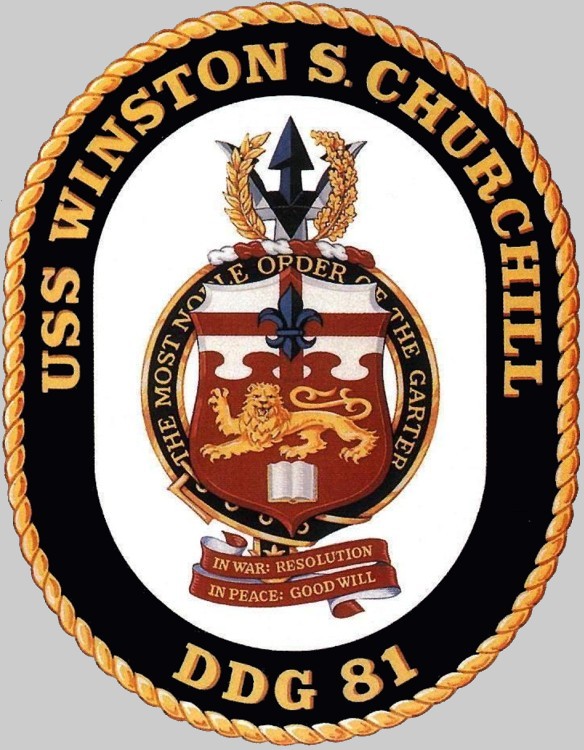
class, Flight IIA Builder: Bath Iron Works, Bath, Maine, USA STATUS: Awarded: January 6, 1995 Laid down: May 7, 1998 Launched: April 17, 1999 Commissioned: March 10, 2001 IN SERVICE Homeport: Naval Station Norfolk, Virginia Namesake: Winston Leonard Spencer Churchill (1874-1965) Ships Motto: IN WAR: RESOLUTION - IN PEACE: GOOD WILL Technical Data: see: INFO > Arleigh Burke class Guided Missile Destroyer - DDG |
||
| images | ||
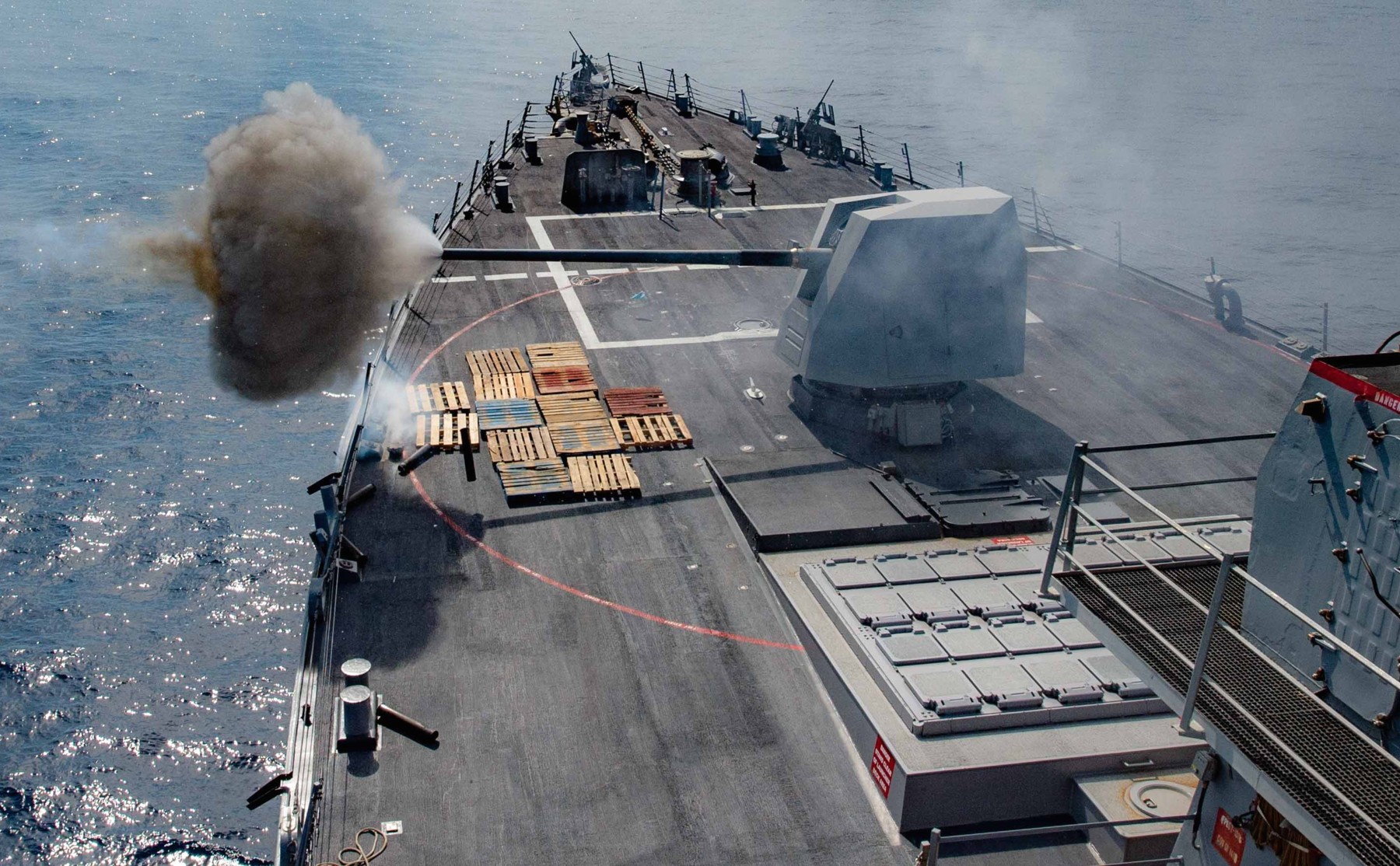 Mk.45 Mod.4 (5" / 62-caliber) gun fire exercise - July 2020 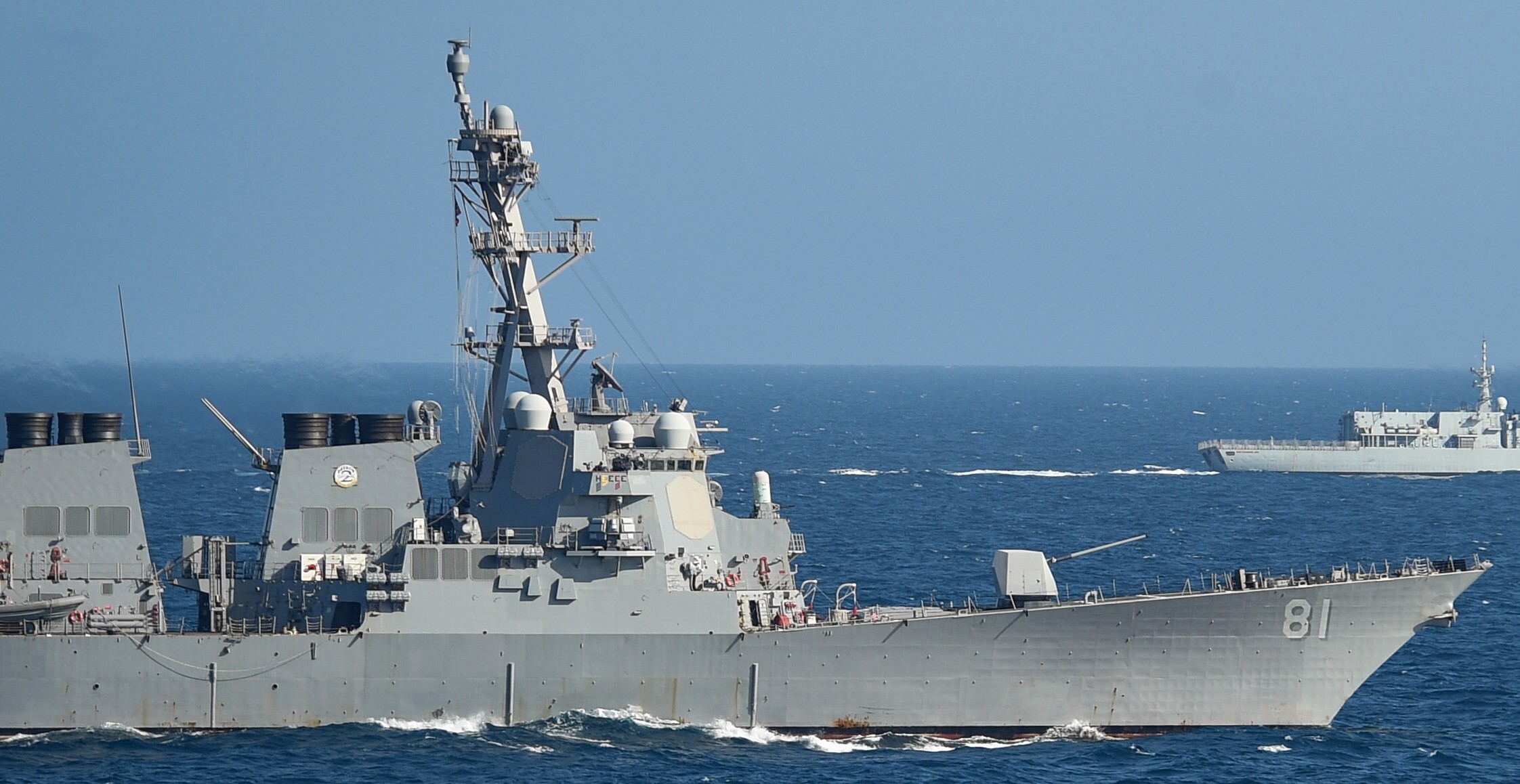 Atlantic Ocean - October 2019 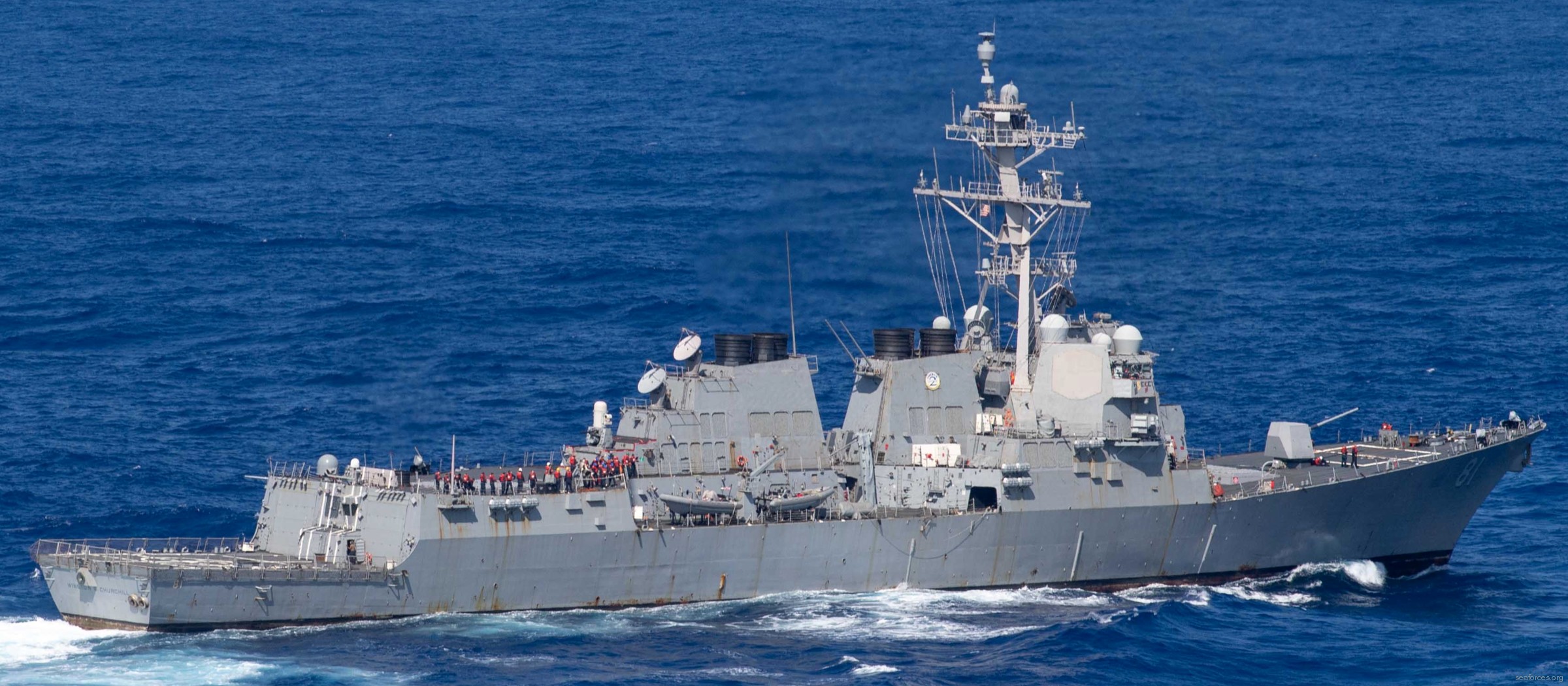 Atlantic Ocean - September 2019 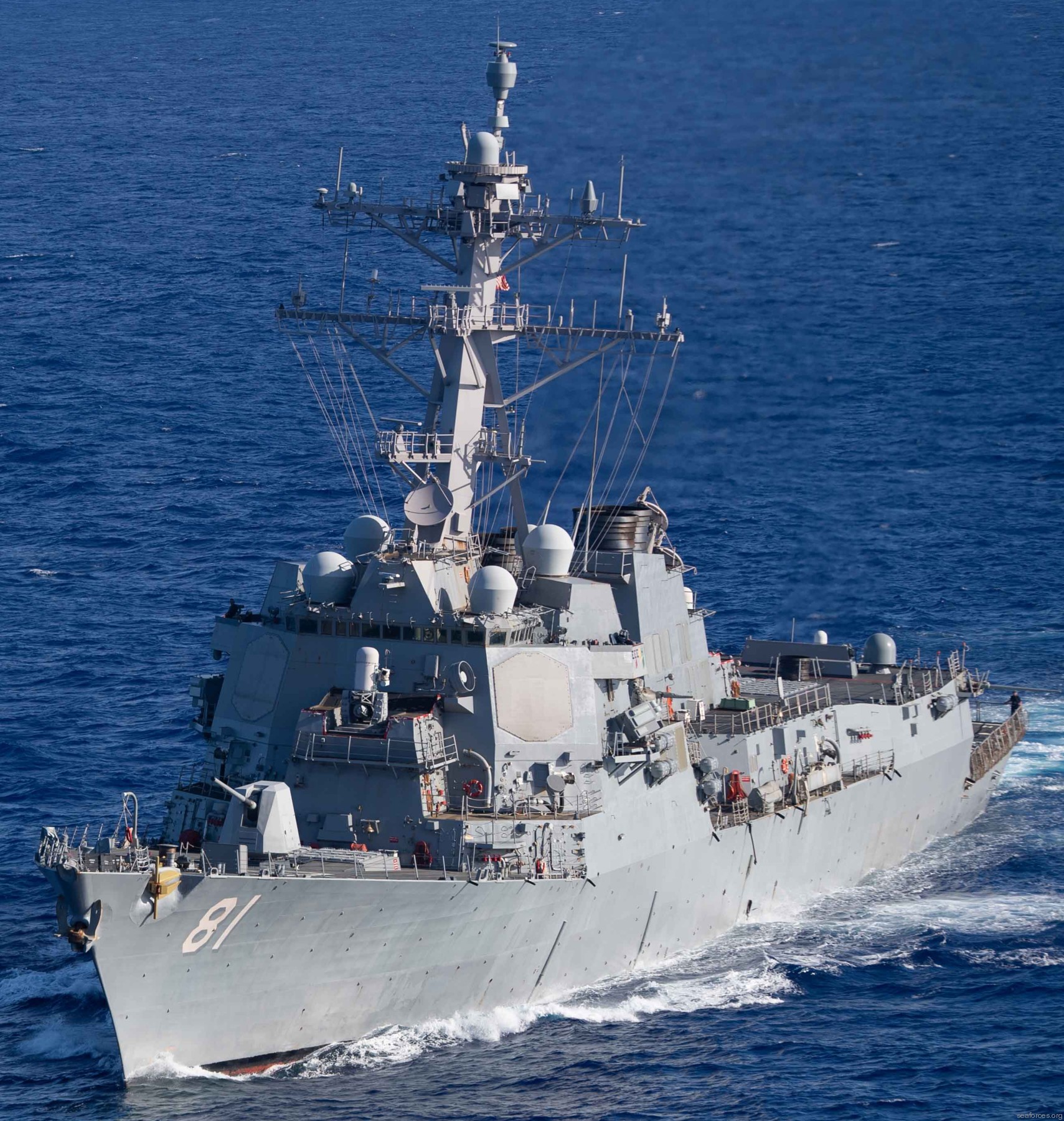 Atlantic Ocean - September 2019 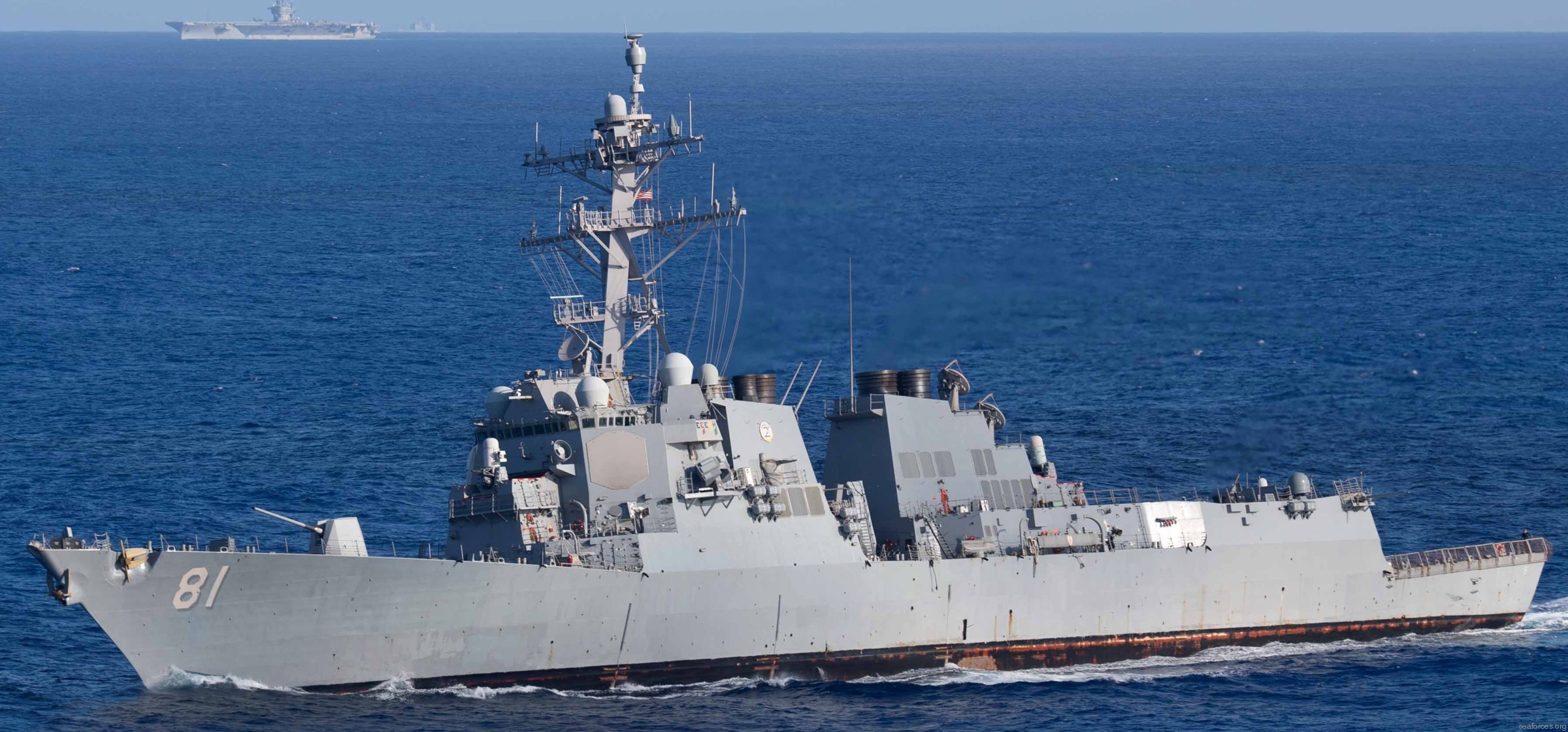 Atlantic Ocean - September 2019 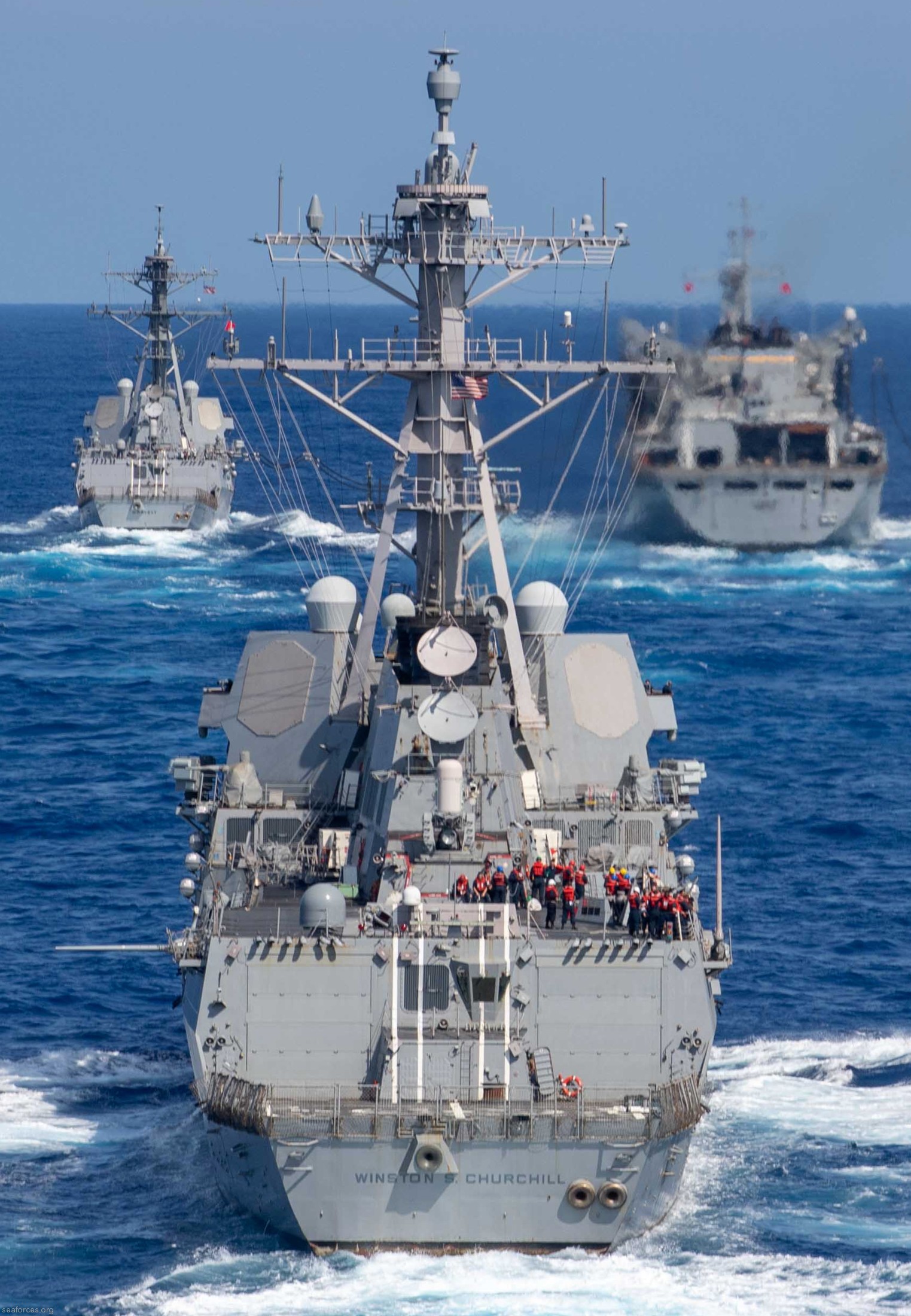 Atlantic Ocean - September 2019 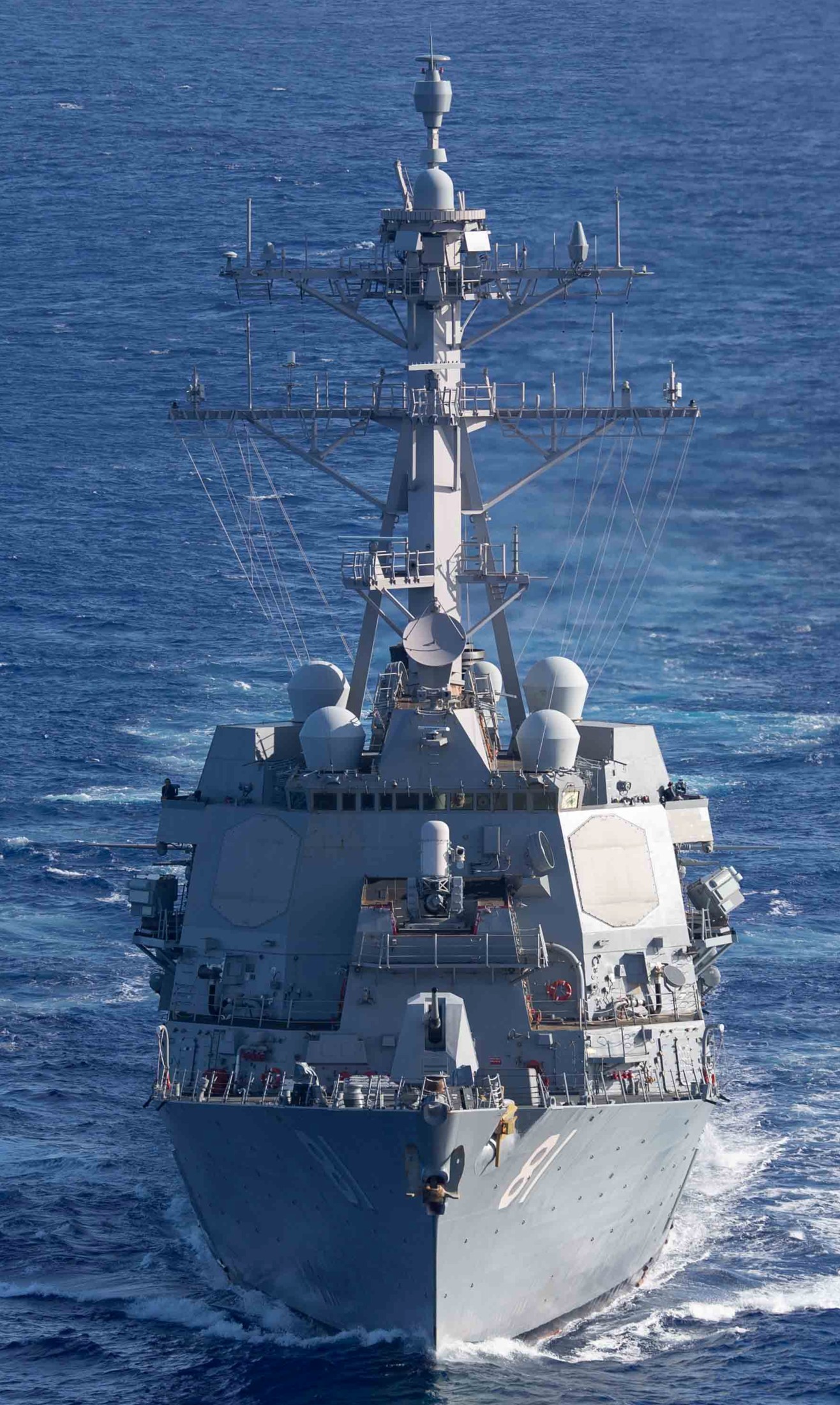 Atlantic Ocean - September 2019 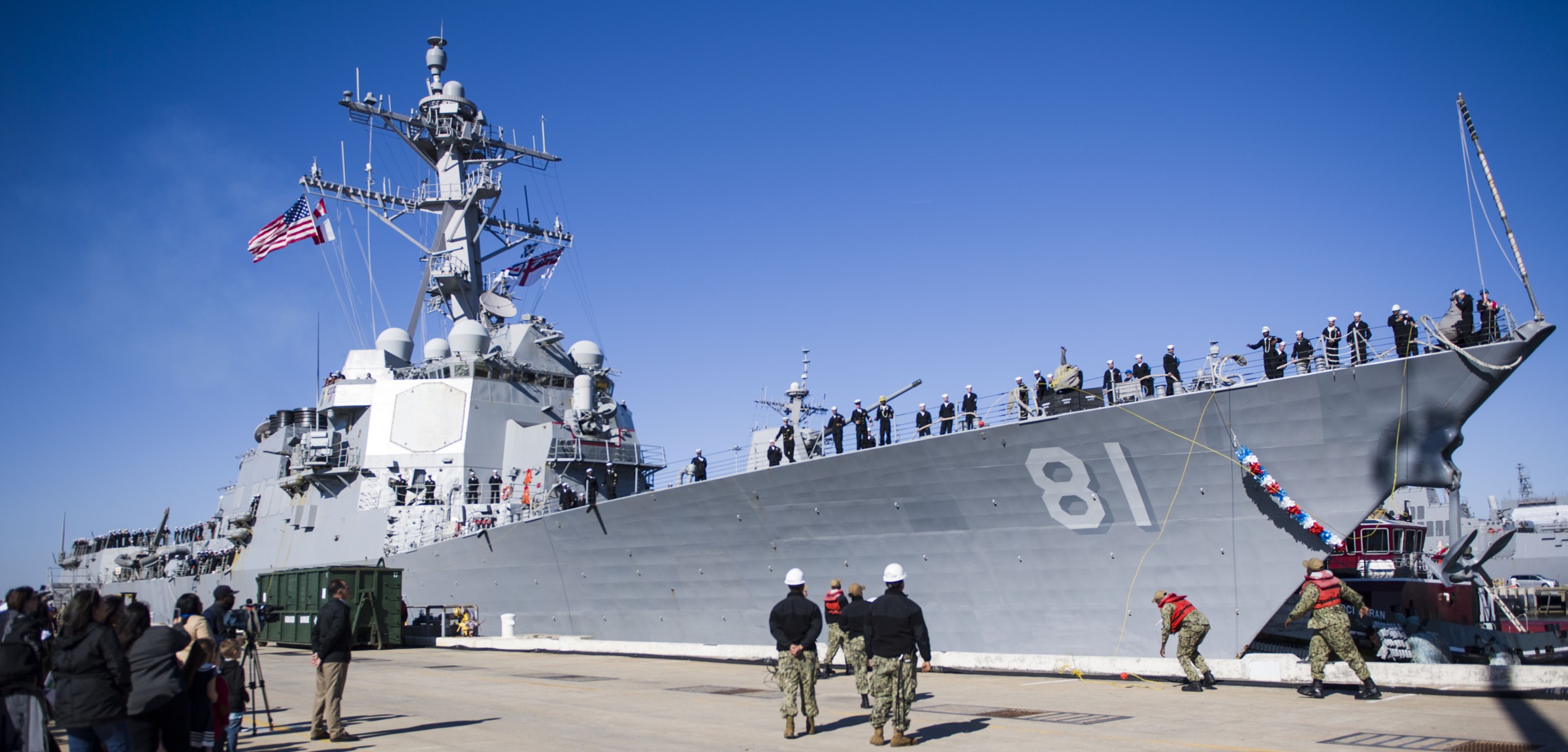 returning to Naval Station Norfolk, Virginia - November 2018 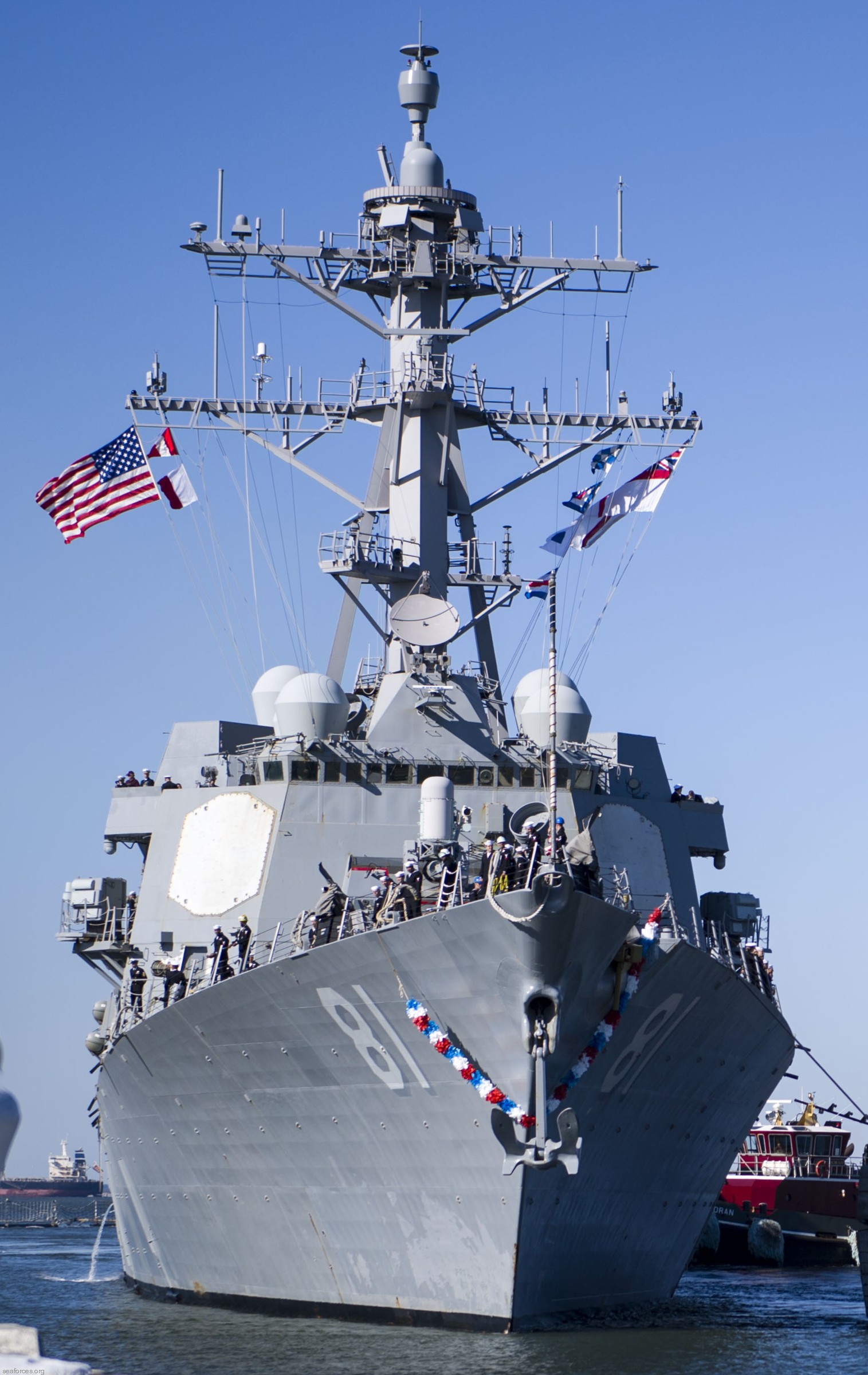 returning to Naval Station Norfolk, Virginia - November 2018 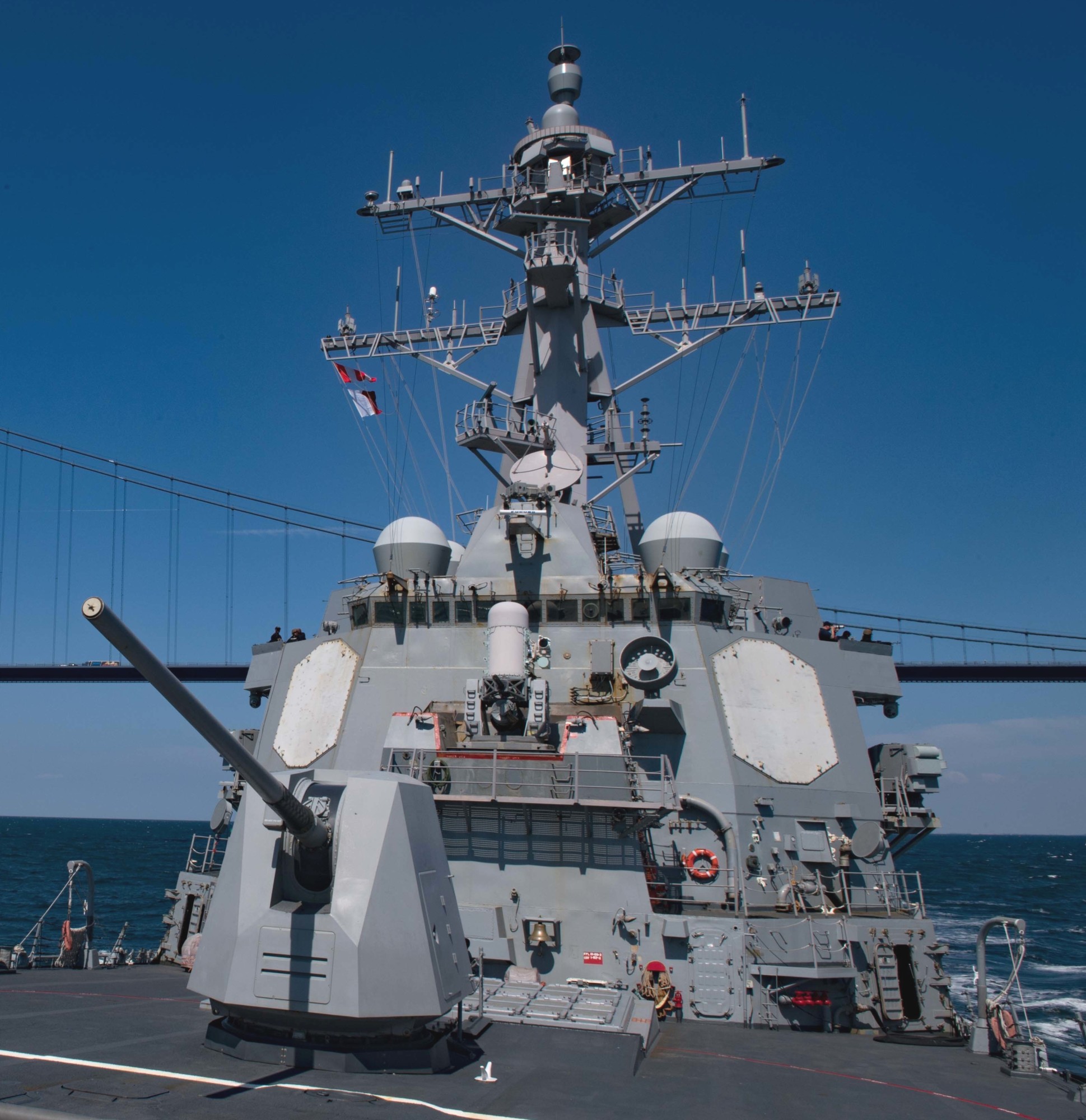 Danish Straits - July 2018 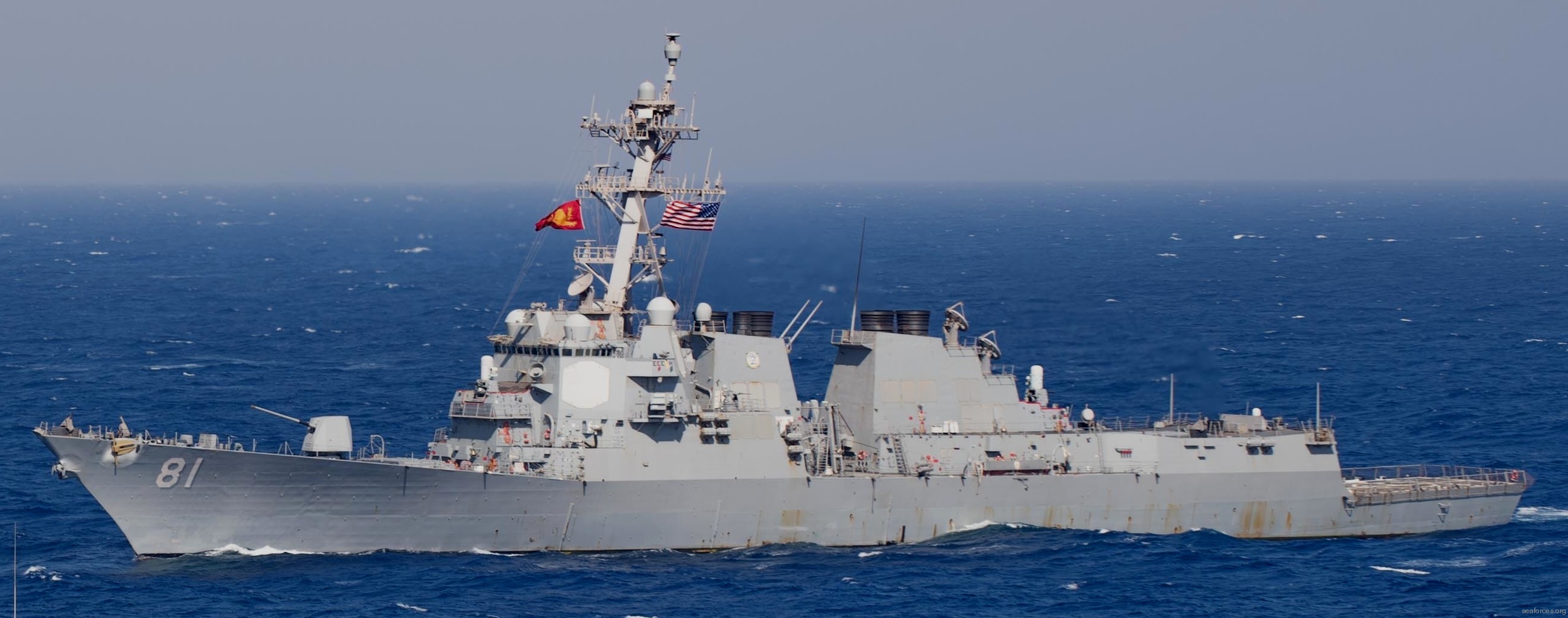 Red Sea - June 2018 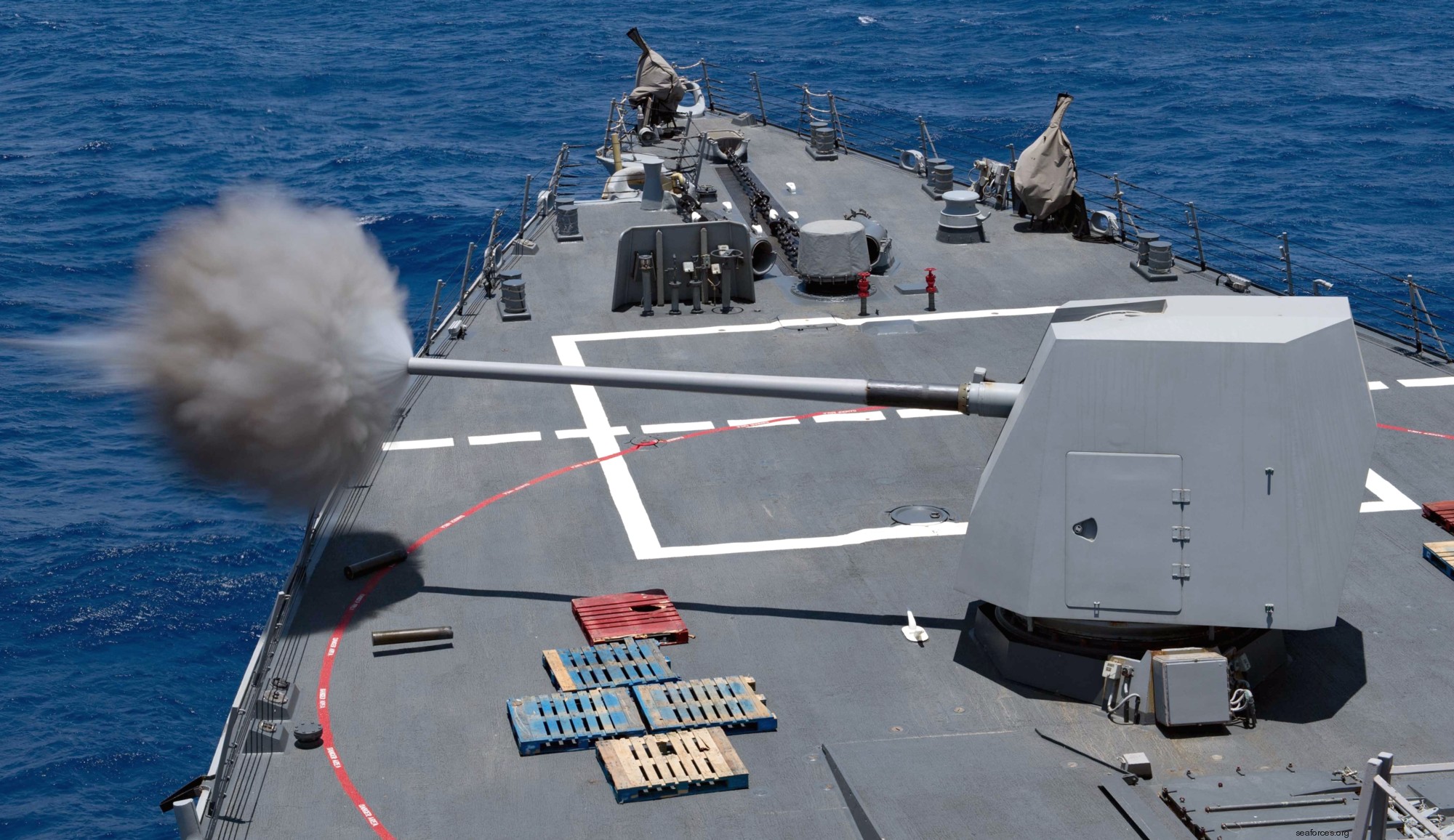 Mk.45 Mod.4 (5" / 62-caliber) gun fire exercise - Red Sea - June 2018 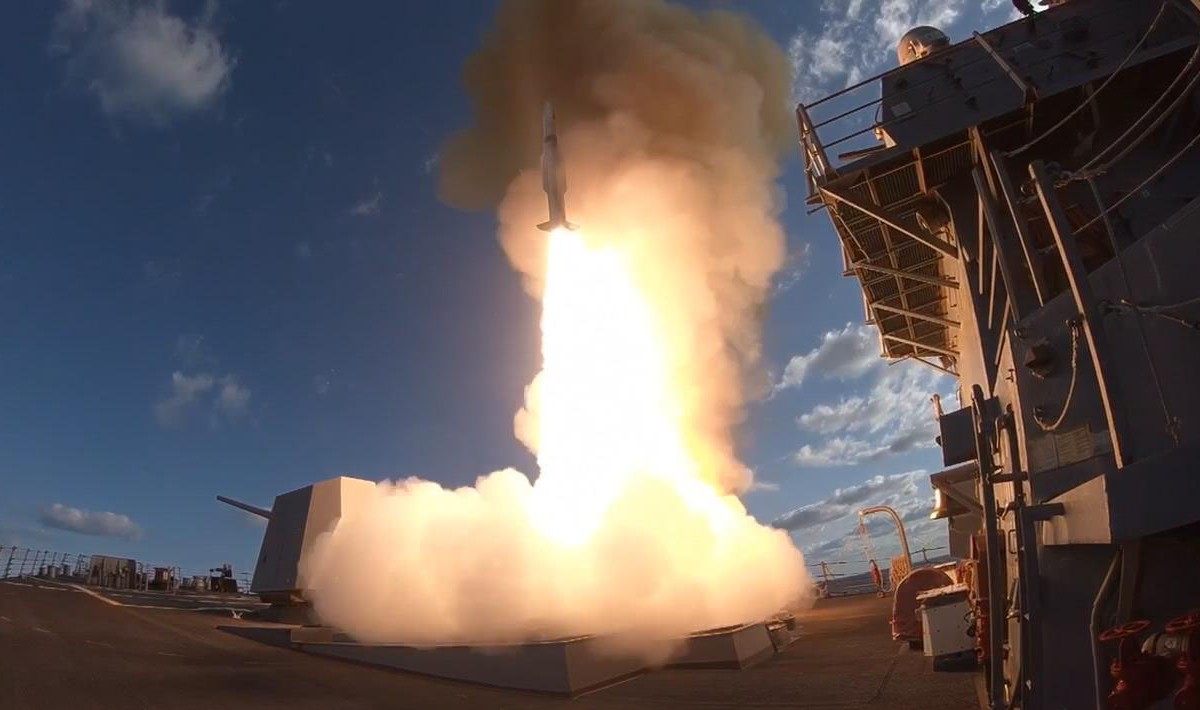 a Standard Missile SM-2MR was fired from the forward Mk.41 VLS - Atlantic Ocean - April 2018 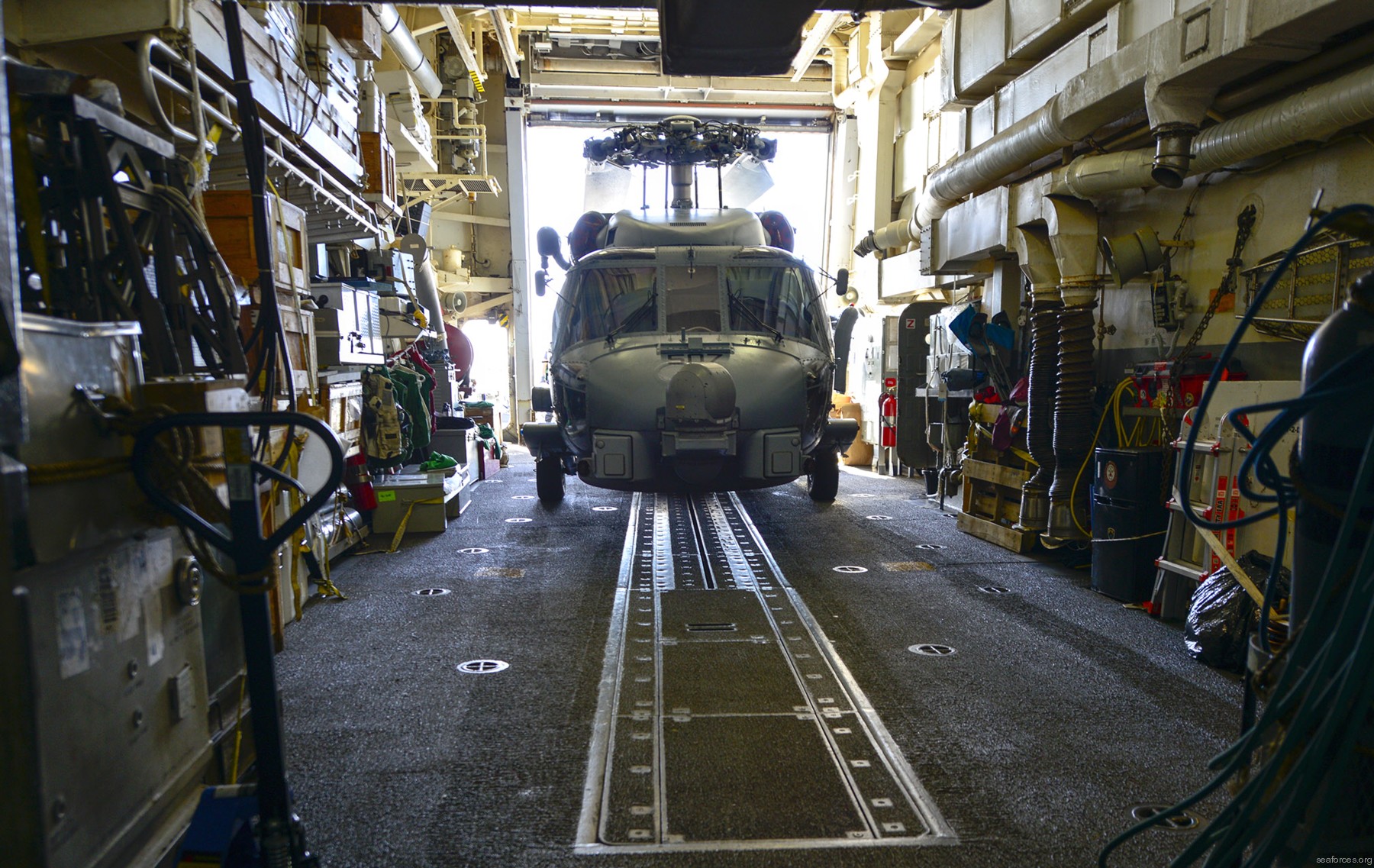 an MH-60R Seahawk helicopter was moved in the hangar bay - Atlantic Ocean - February 2018 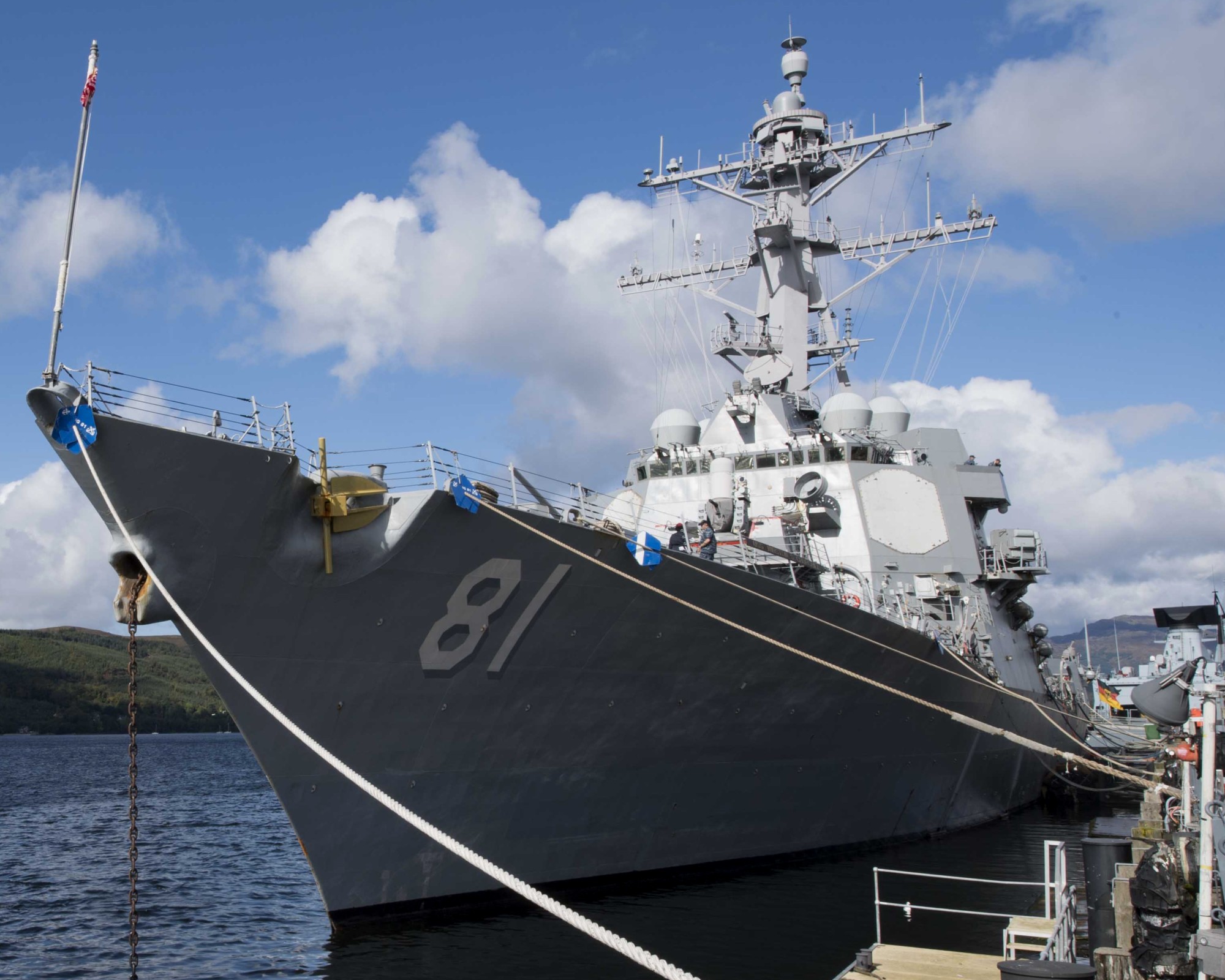 Faslane, Scotland - September 2017 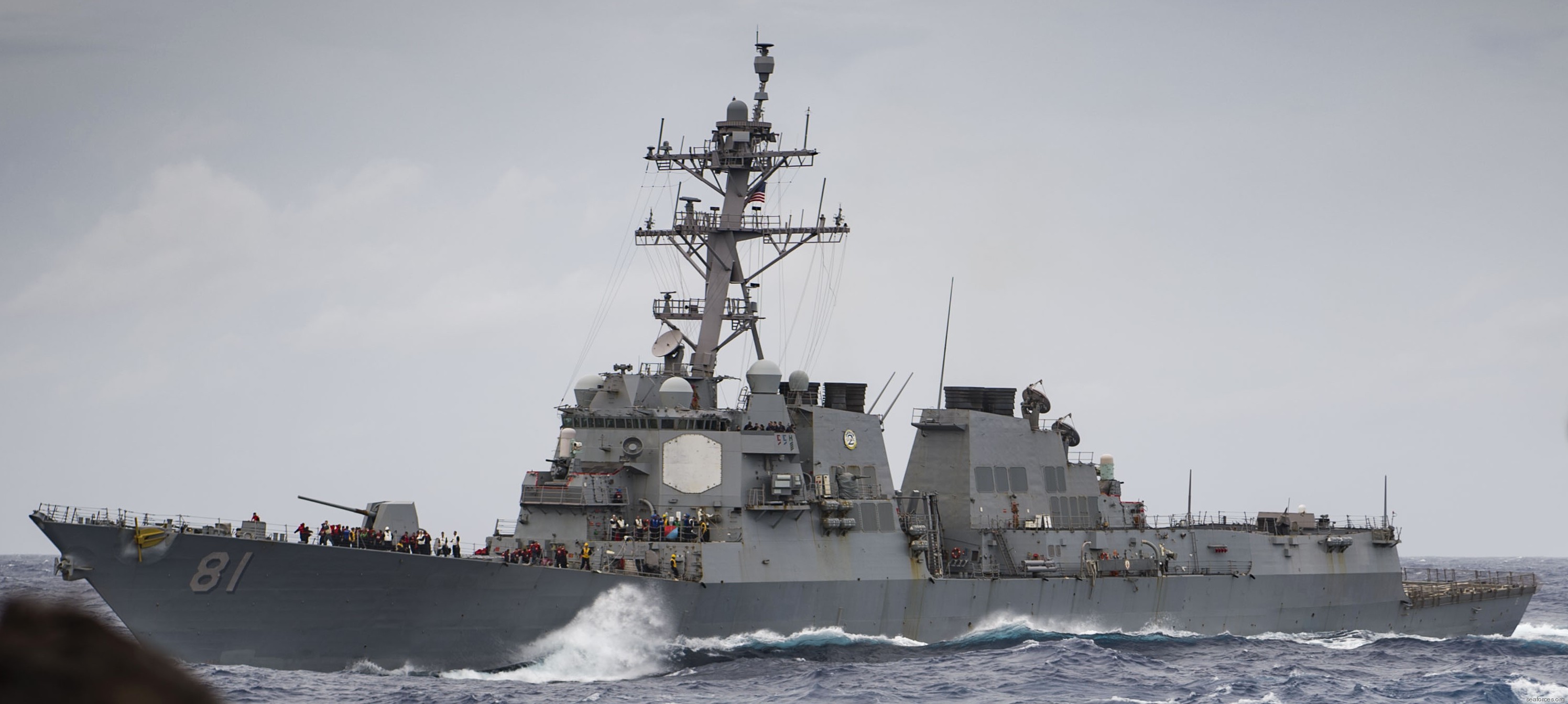 Atlantic Ocean - September 2017 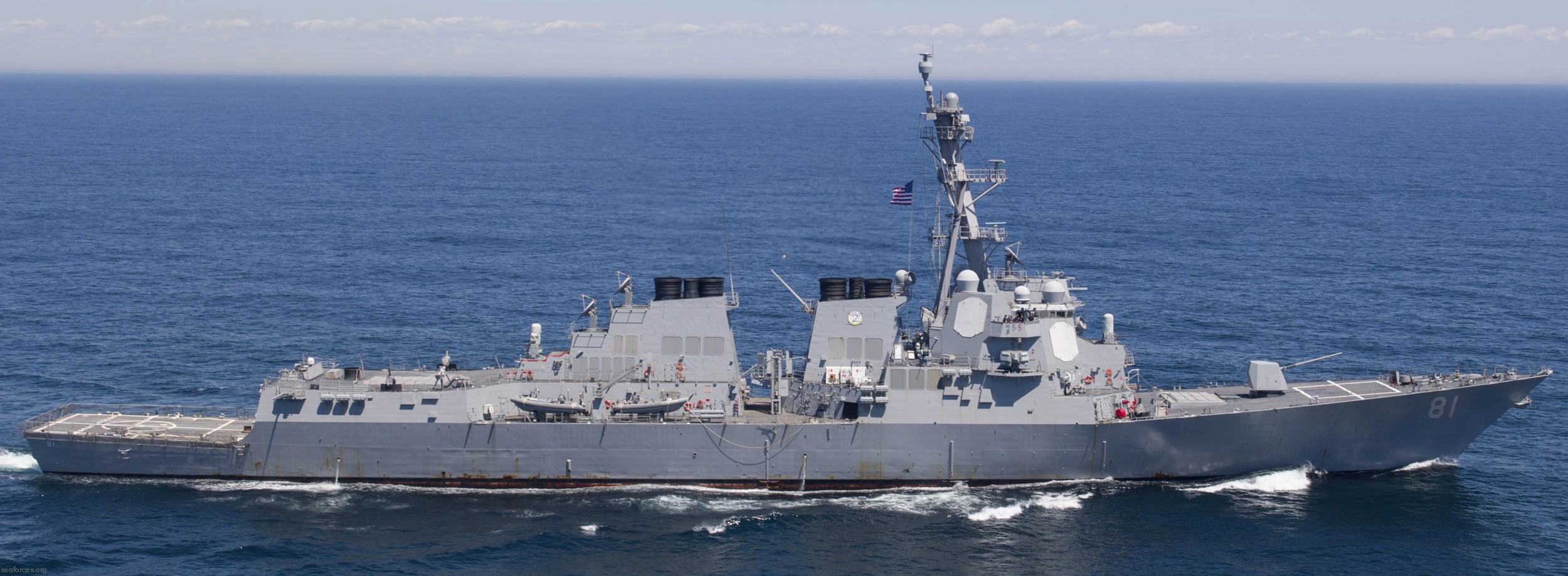 Atlantic Ocean - June 2017 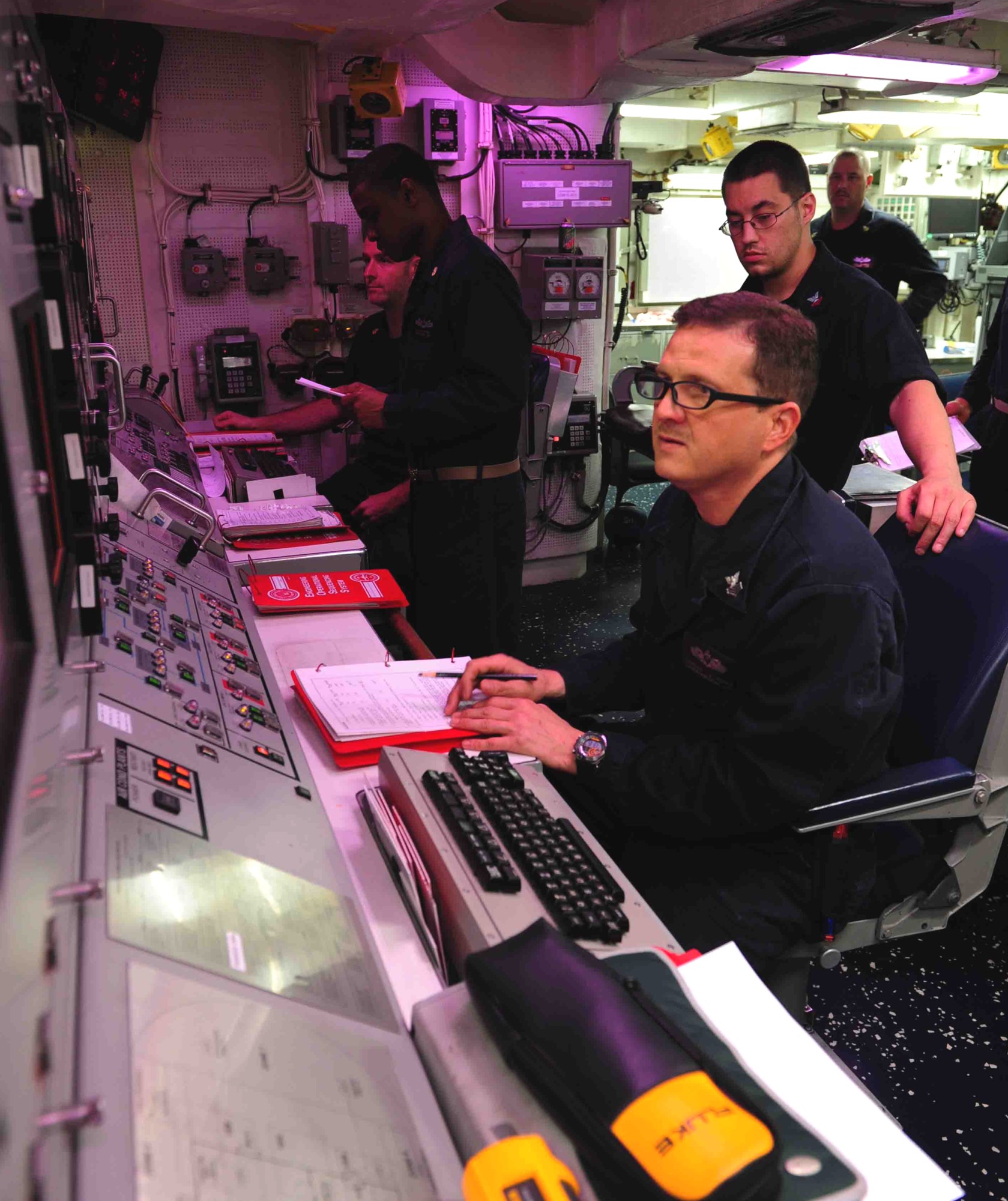 central control station - Arabian Sea - May 2015 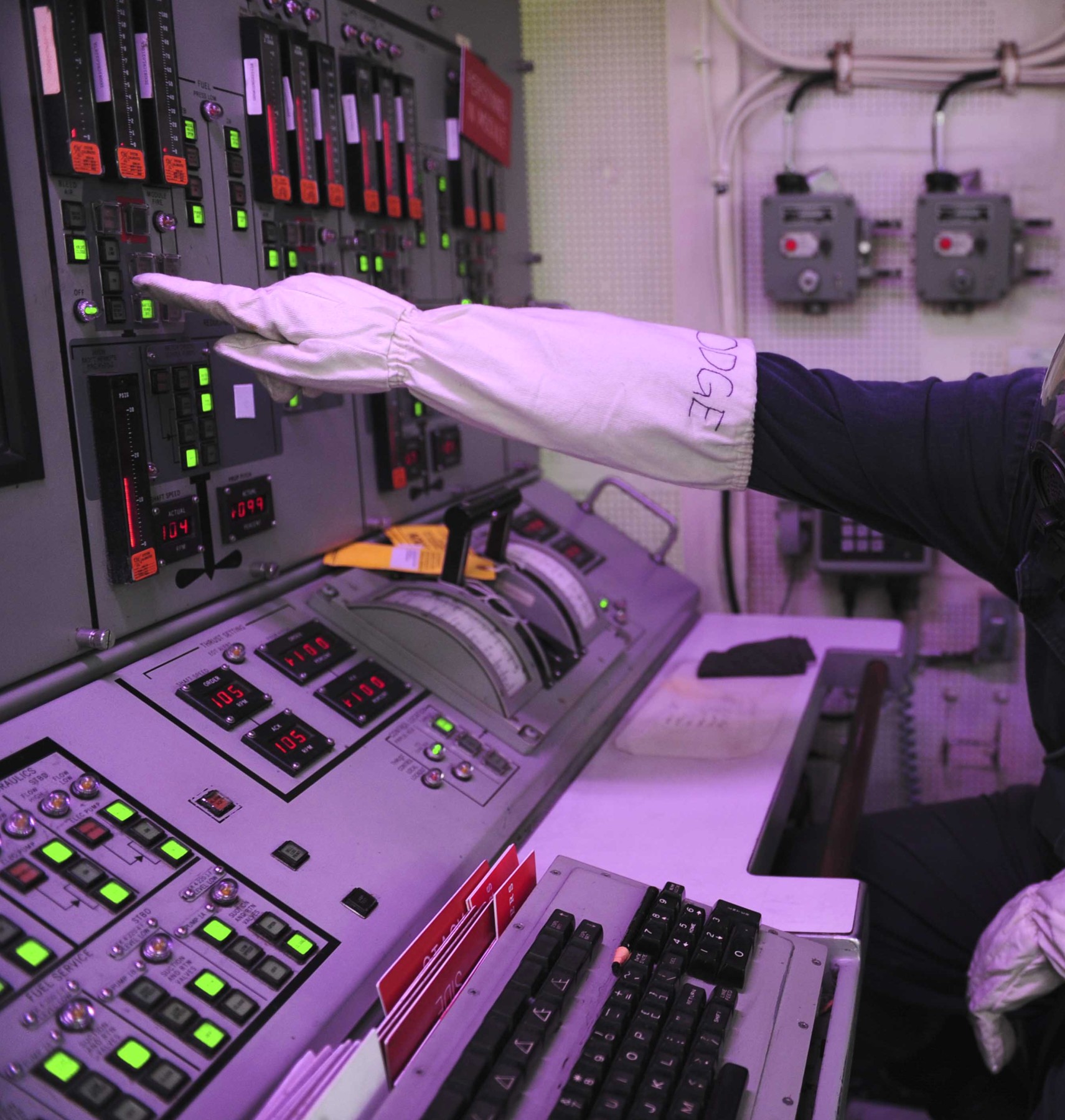 main propulsion and auxiliary control - Atlantic Ocean - March 2015 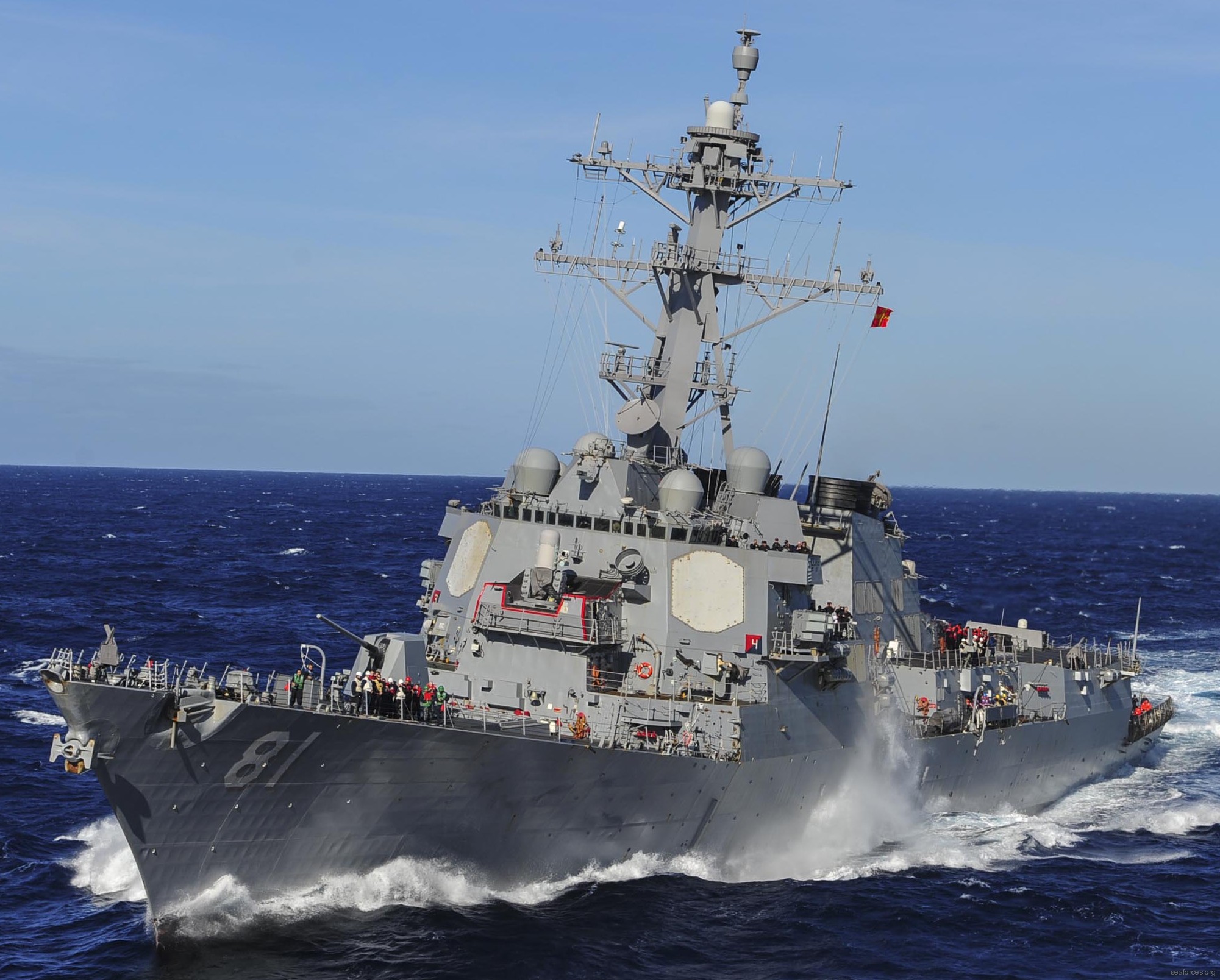 Atlantic Ocean - March 2015 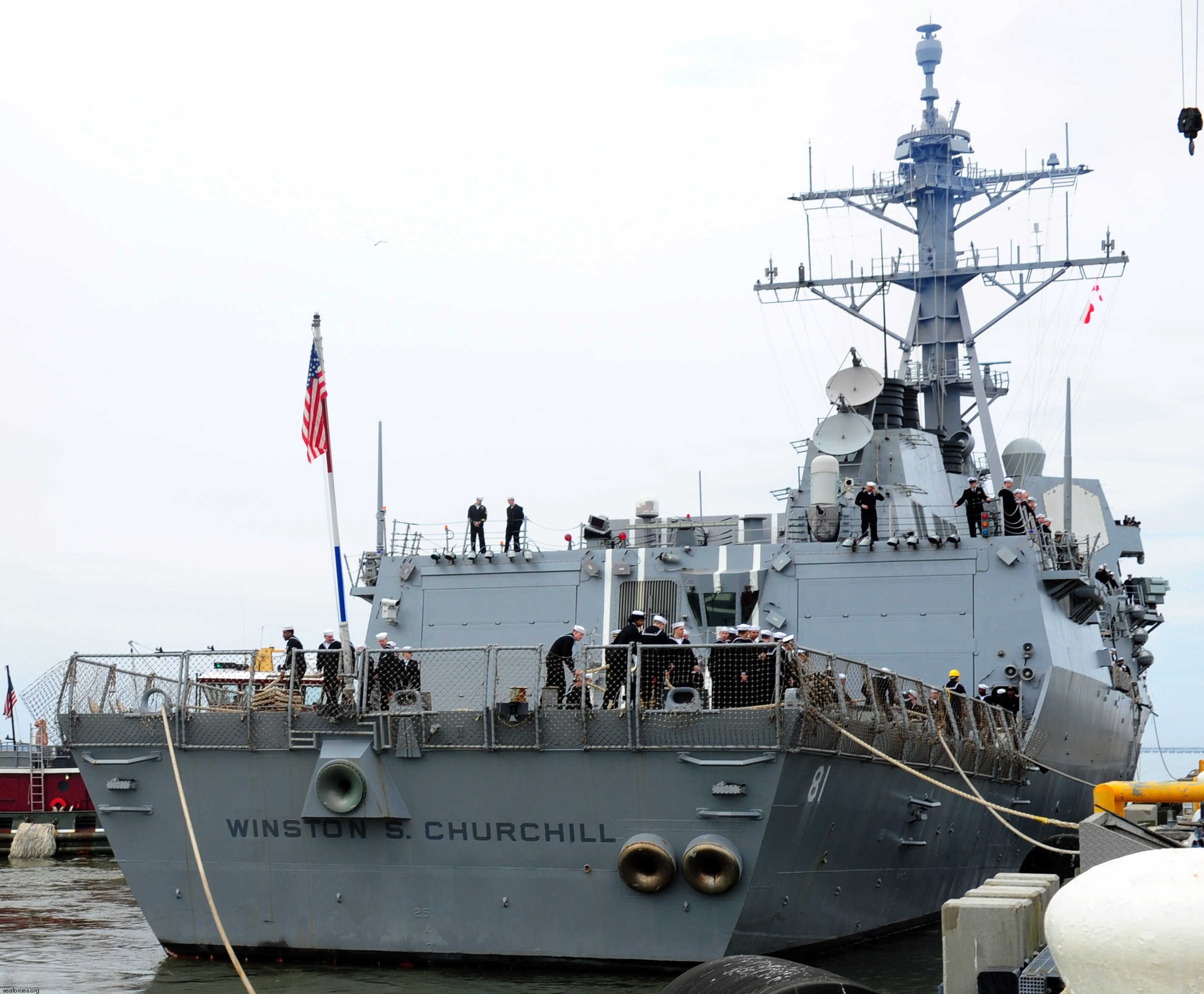 departing Naval Station Norfolk, Virginia - March 2015 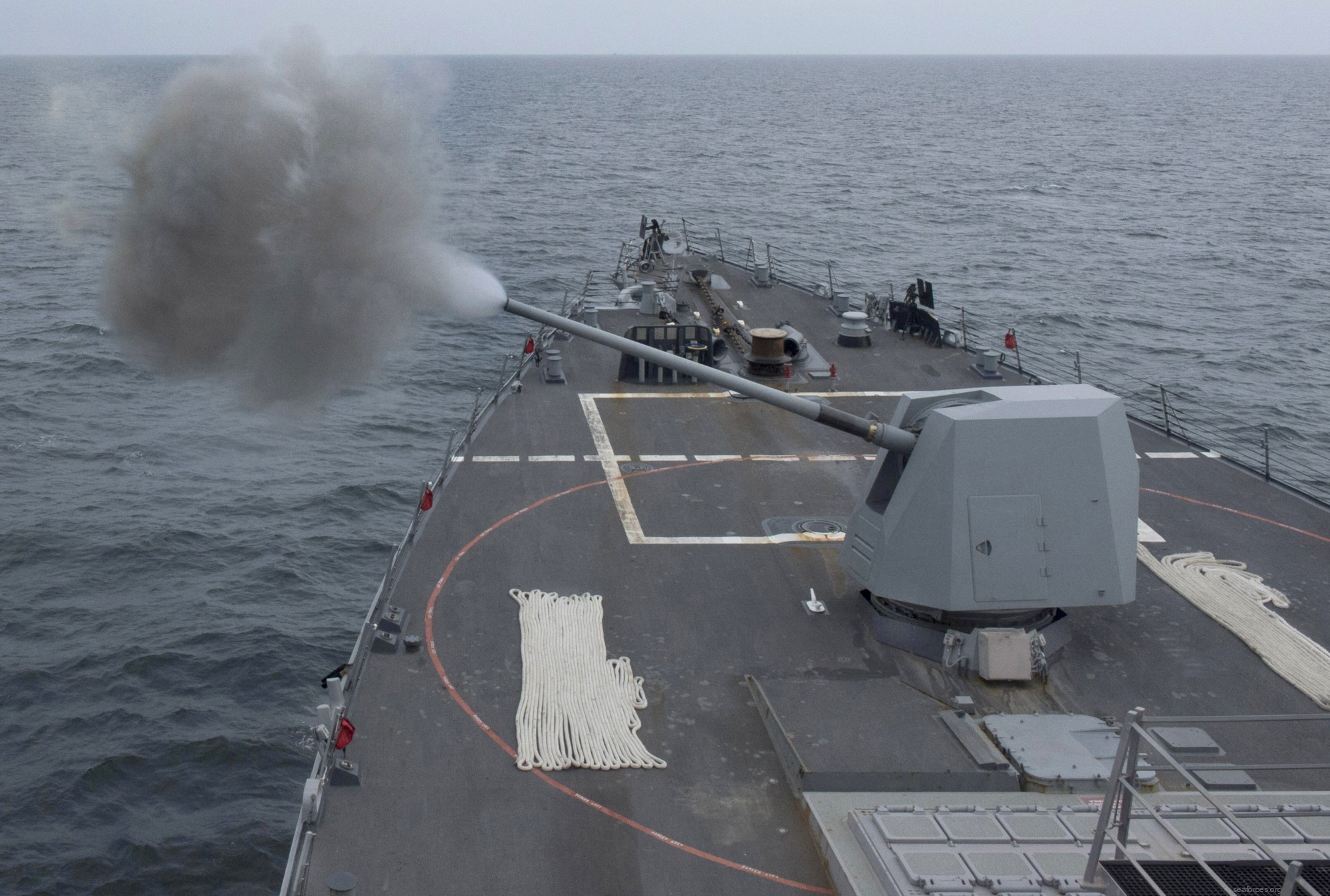 Mk.45 Mod.4 (5" / 62-caliber) gun fire exercise - Atlantic Ocean - November 2014 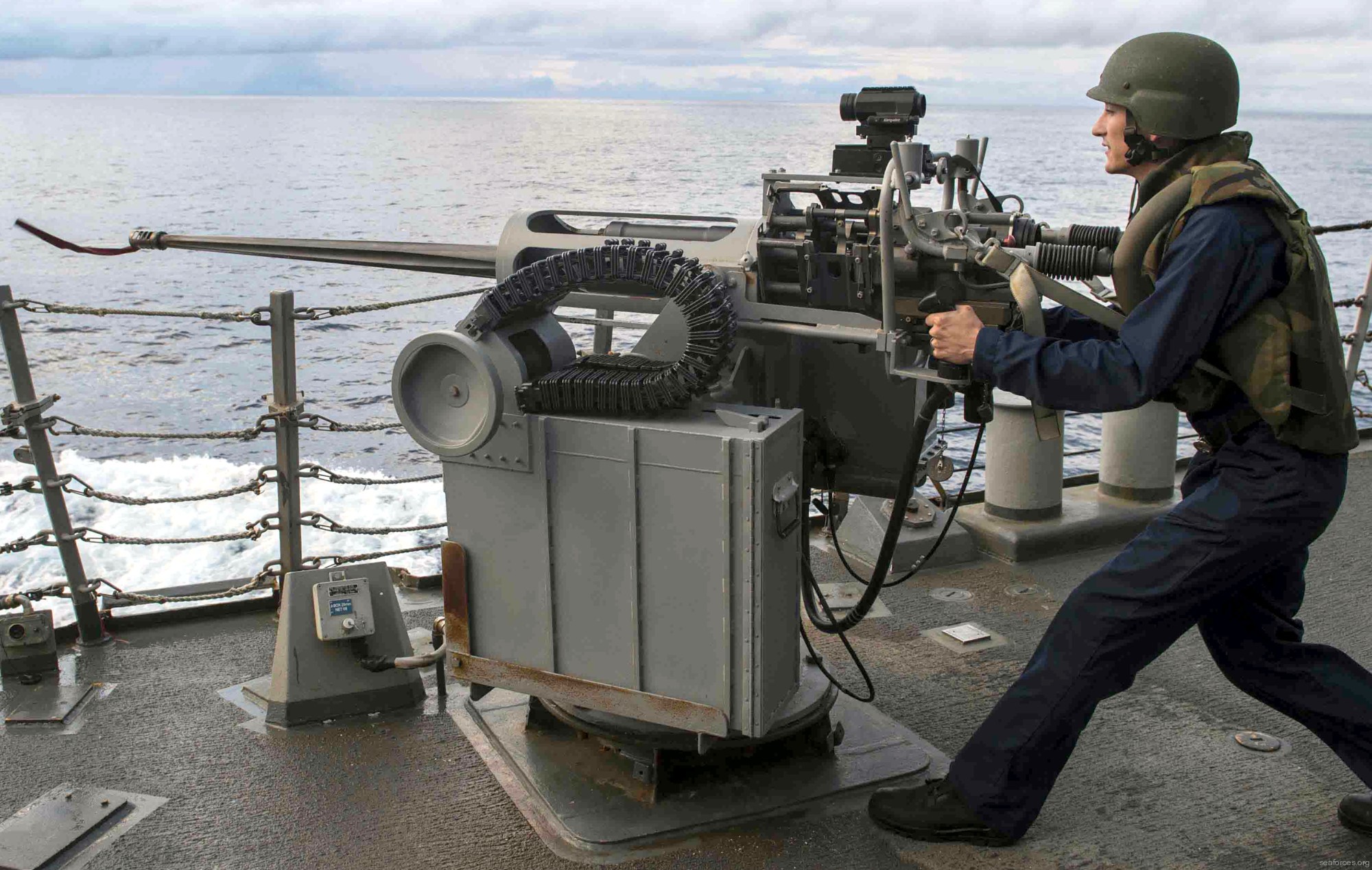 Mk.38 Mod.1 25mm machine gun fire exercise - Atlantic Ocean - September 2014 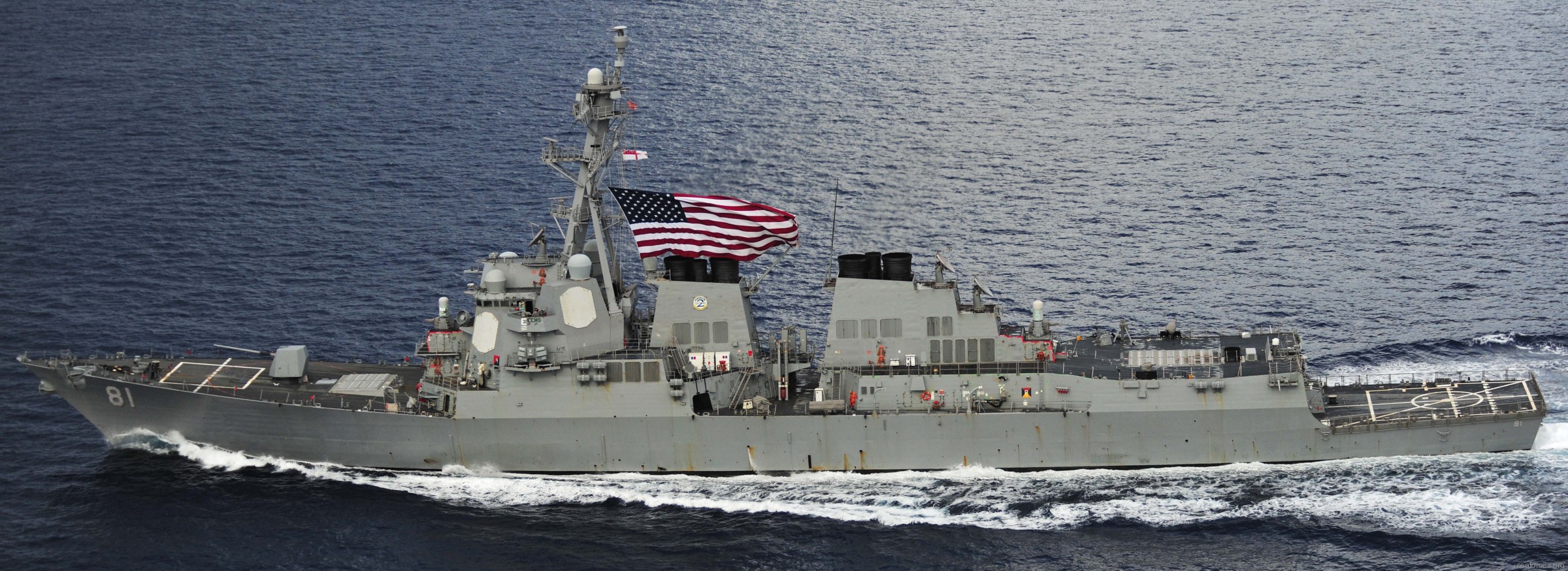 Atlantic Ocean - September 2014 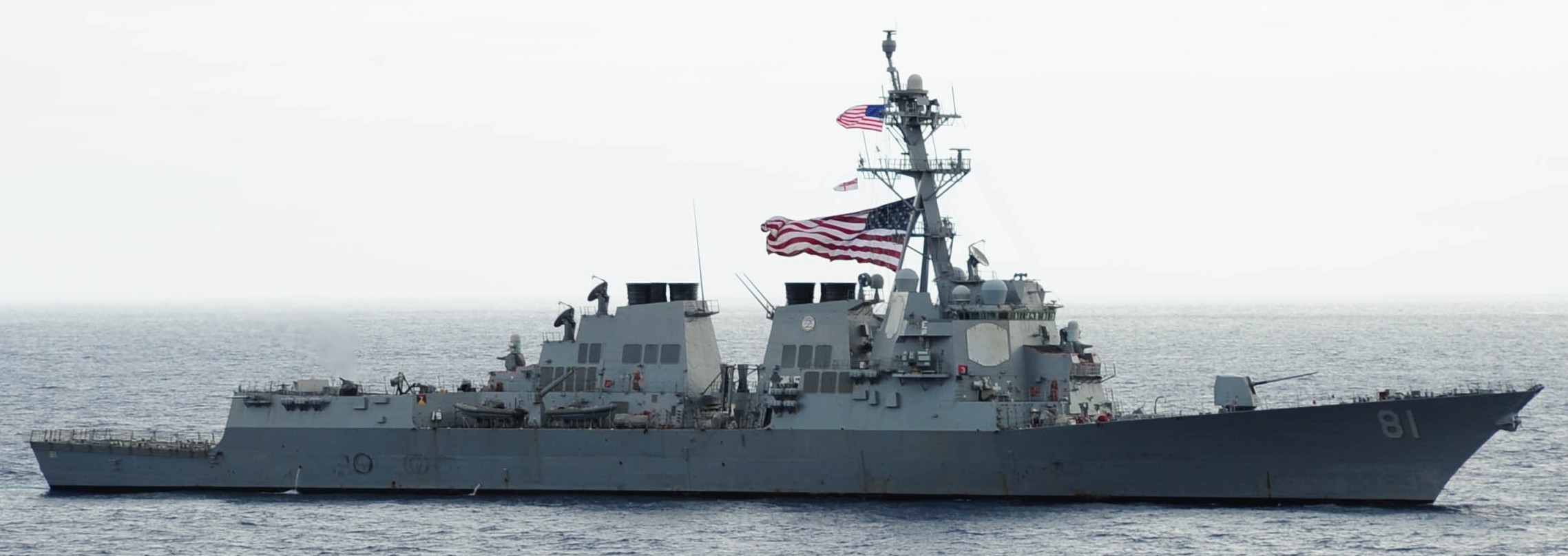 Atlantic Ocean - September 2014 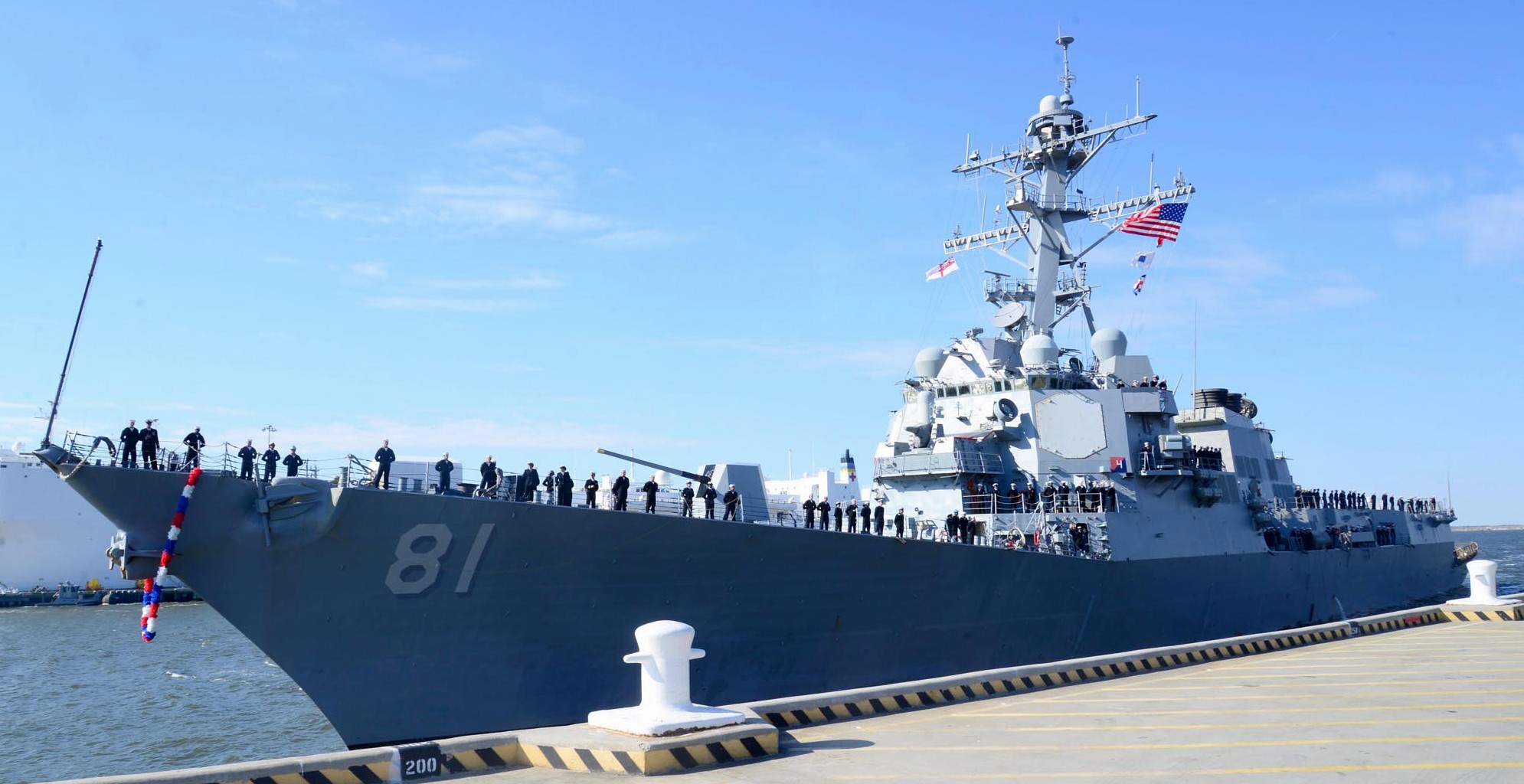 returning to Naval Station Norfolk, Virginia - March 2013 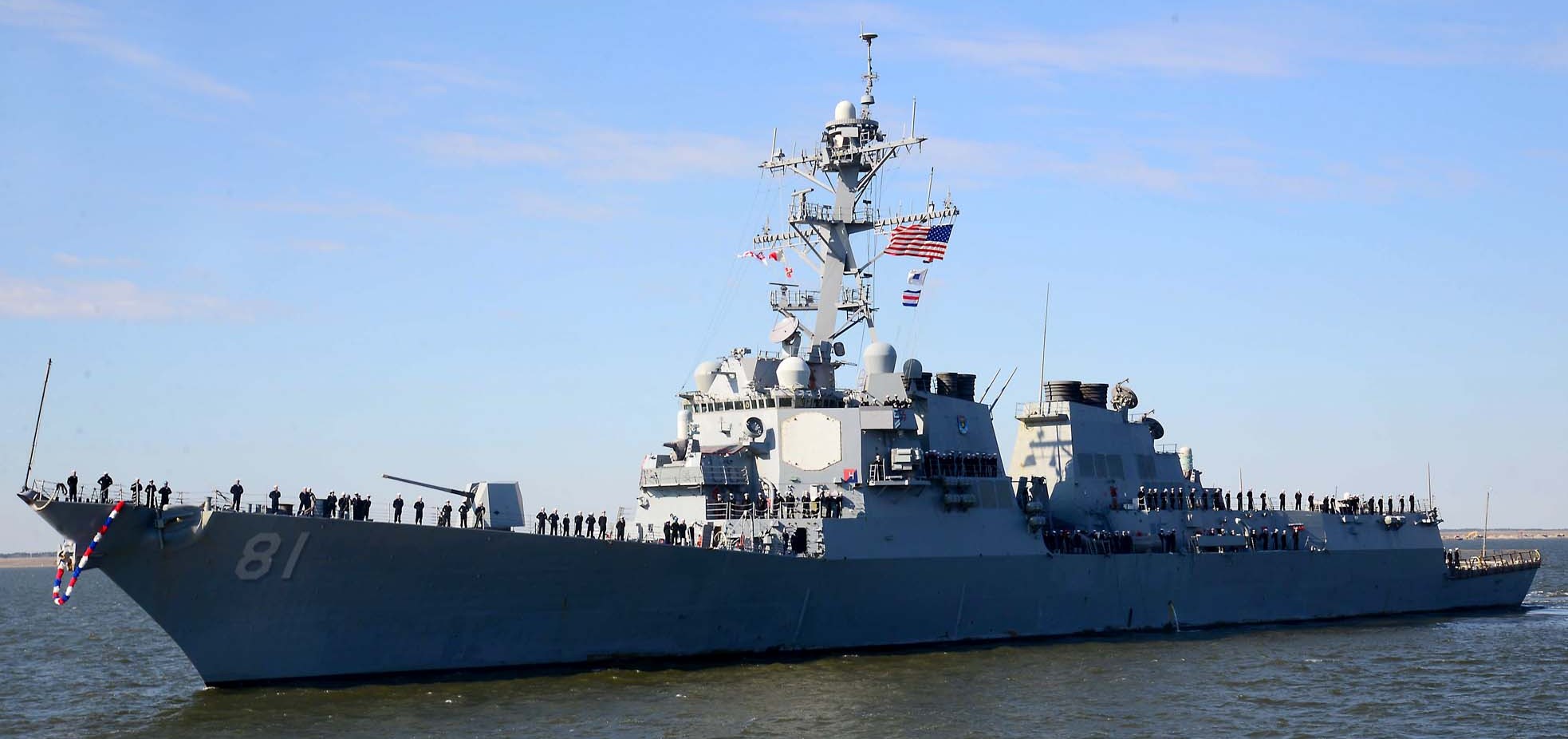 returning to Naval Station Norfolk, Virginia - March 2013 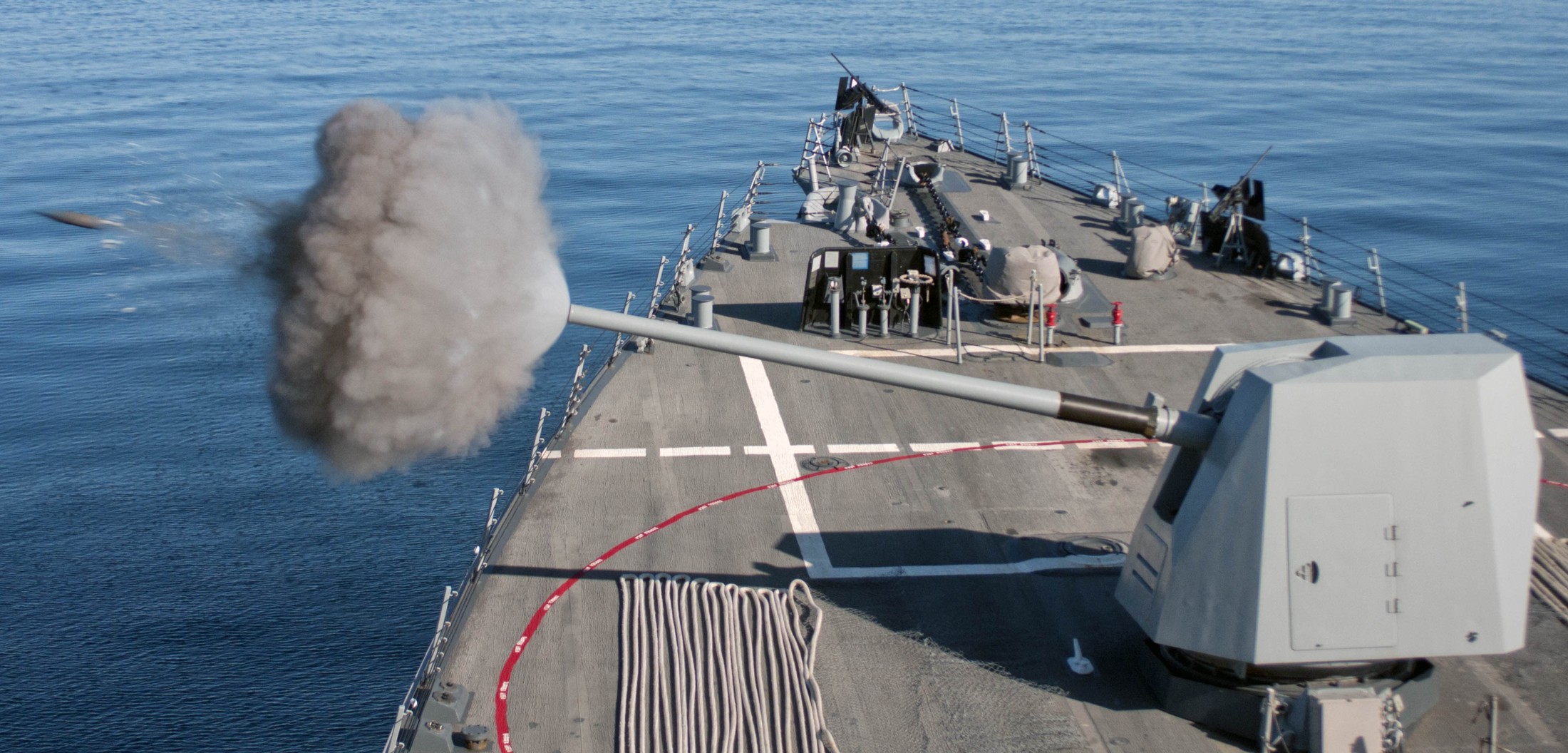 Mk.45 Mod.4 (5" / 62-caliber) gun fire exercise - 5th Fleet AOR - January 2013 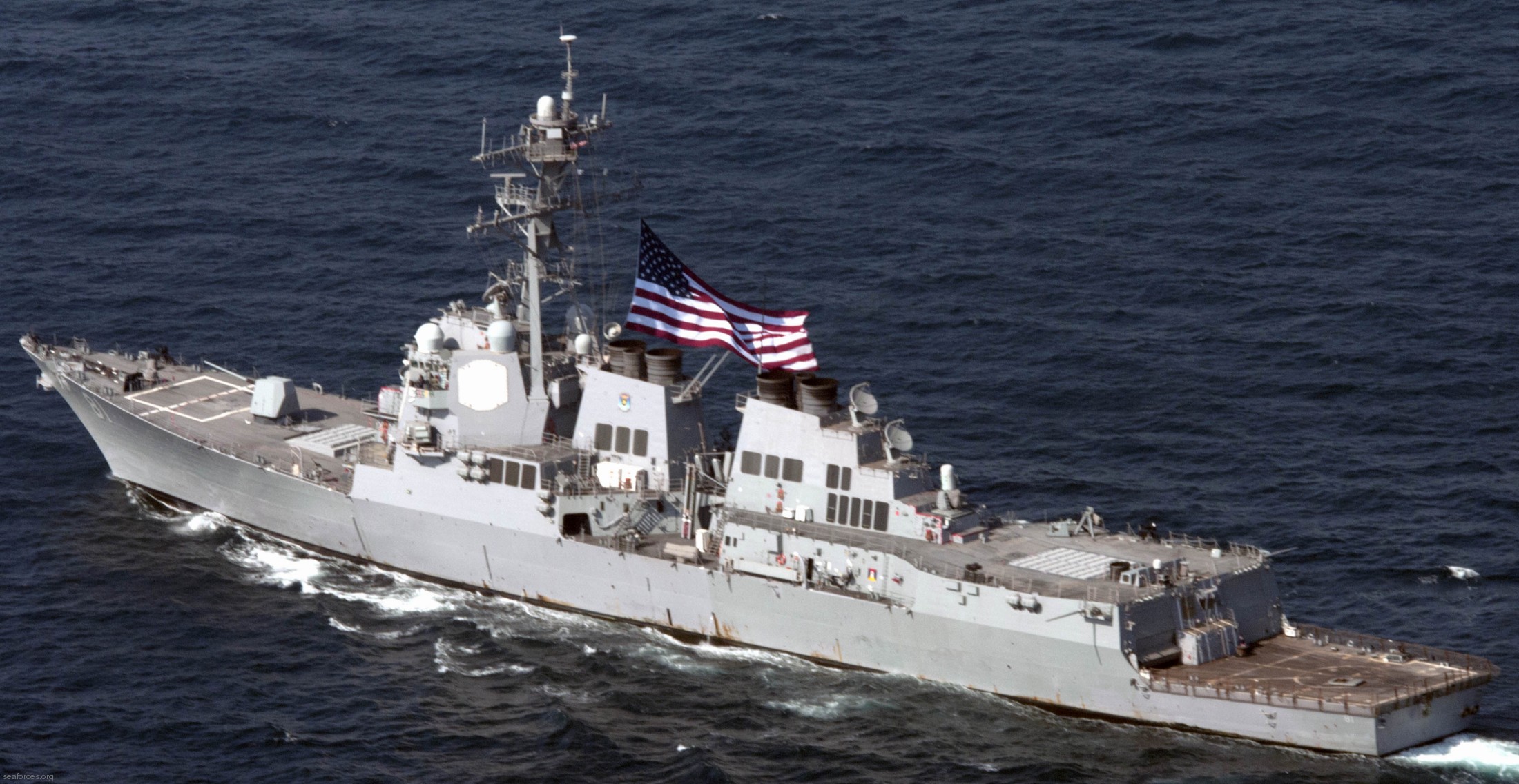 5th Fleet AOR - December 2012 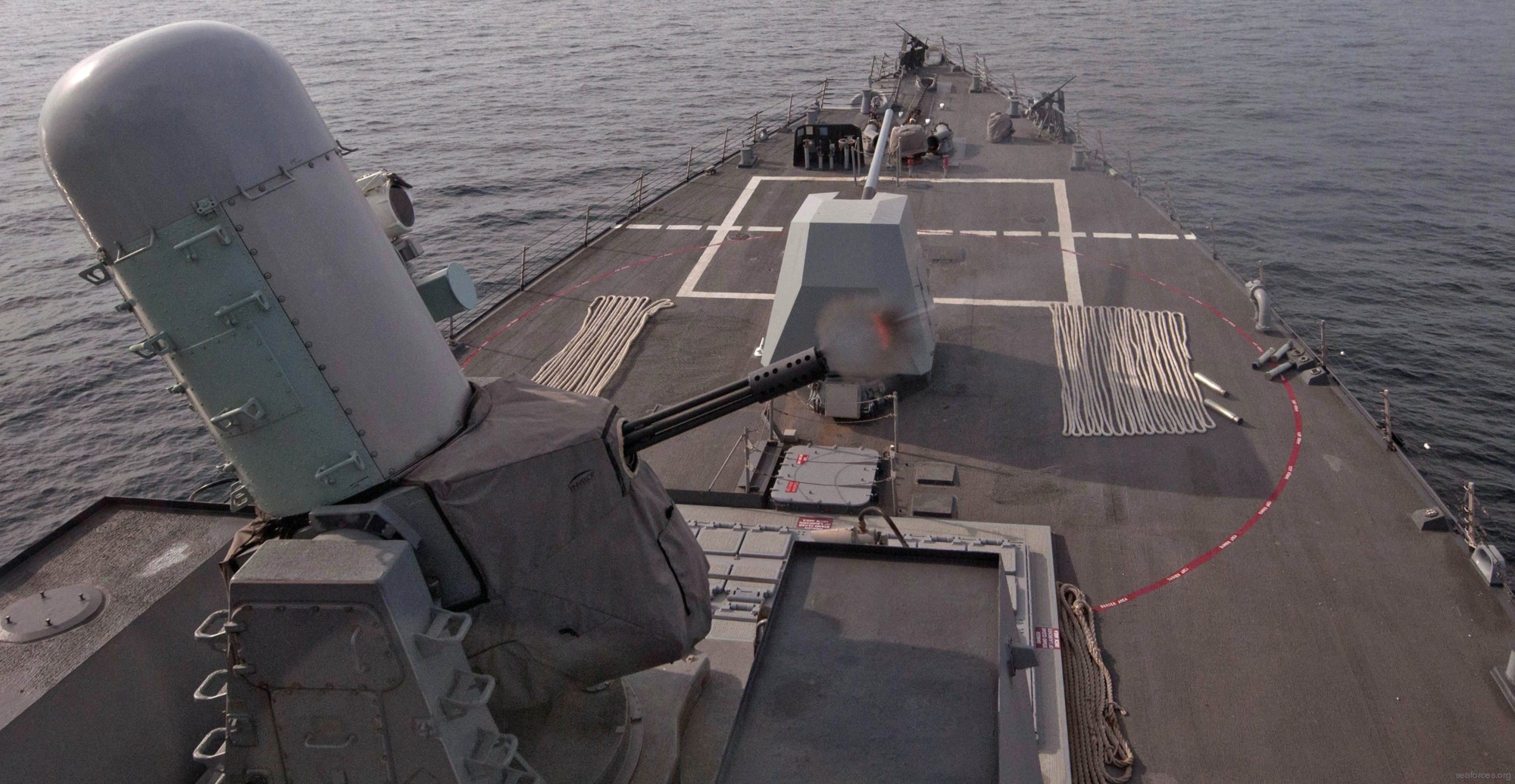 Mk.15 Phalanx CIWS live fire exercise - 5th Fleet AOR - November 2012 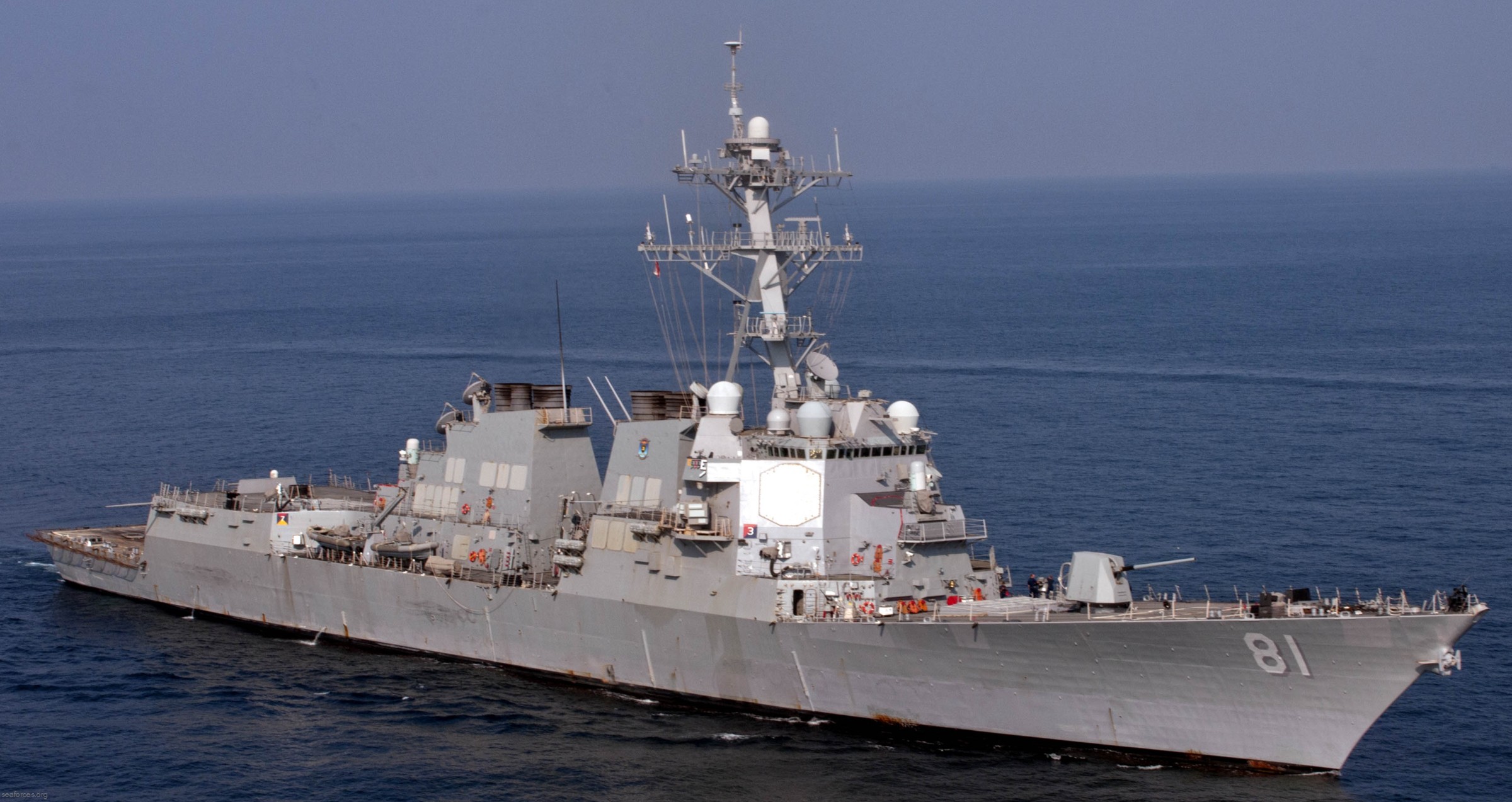 5th Fleet AOR - November 2012 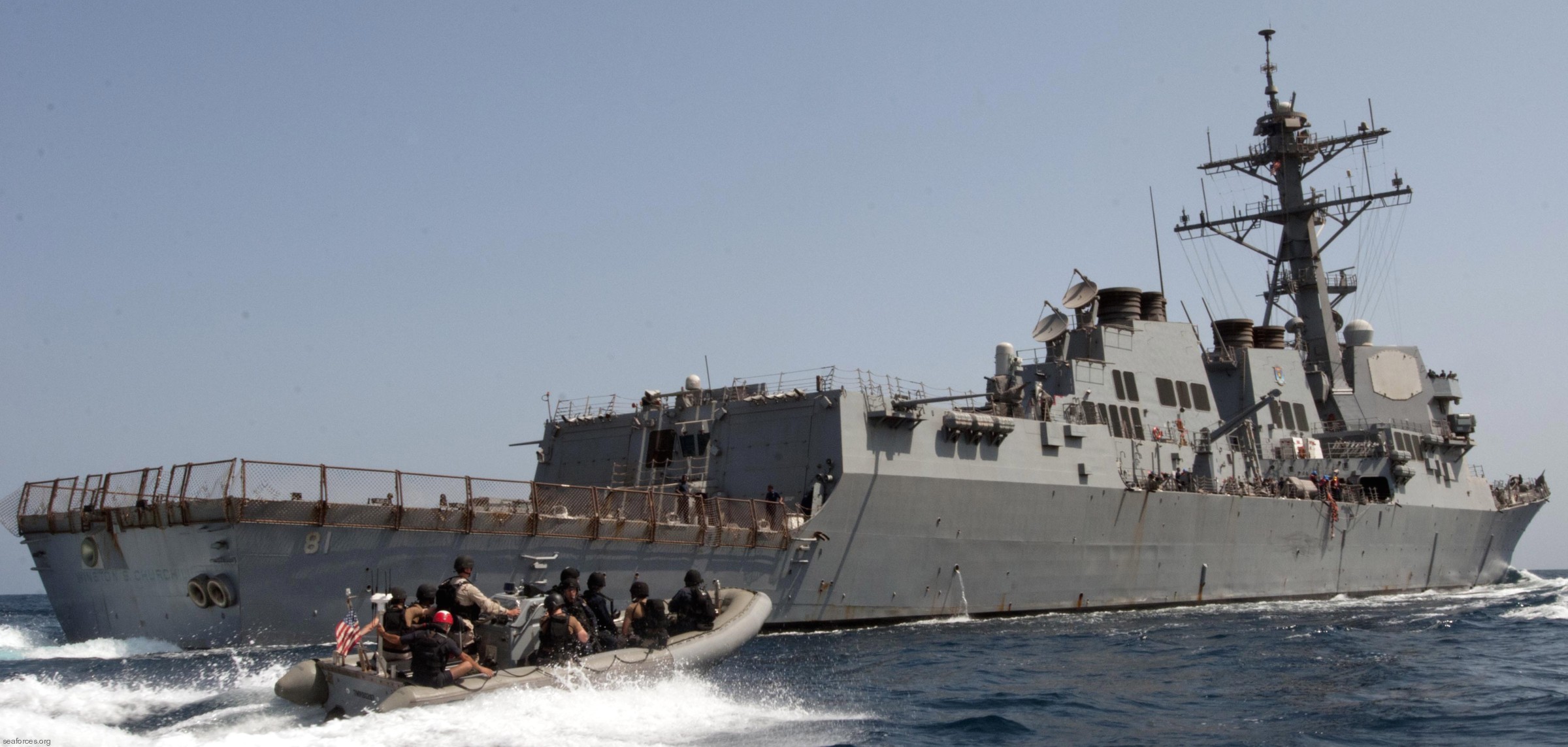 Gulf of Aden - September 2012 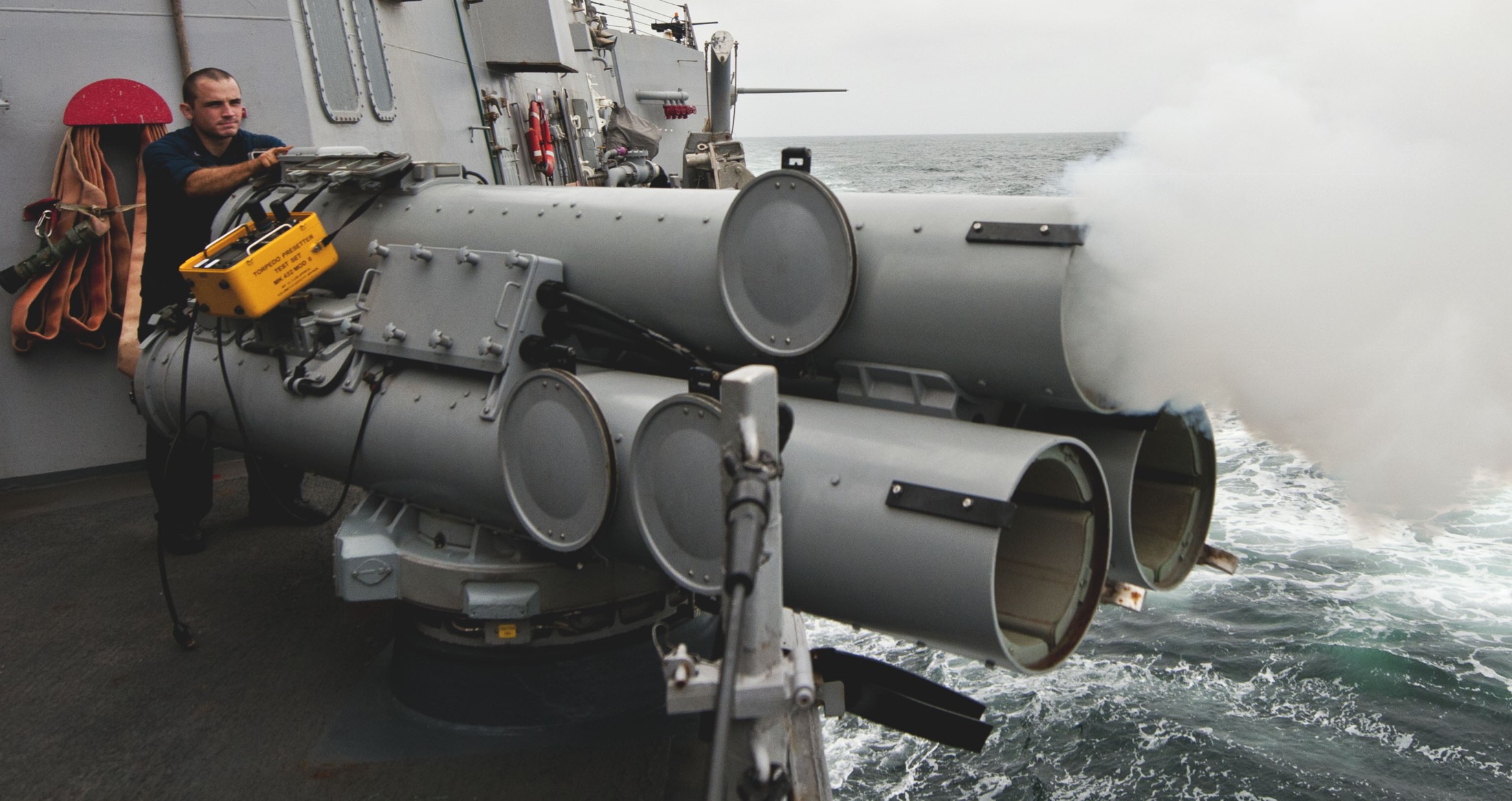 Mk.32 torpedo tubes exercise - Gulf of Aden - September 2012 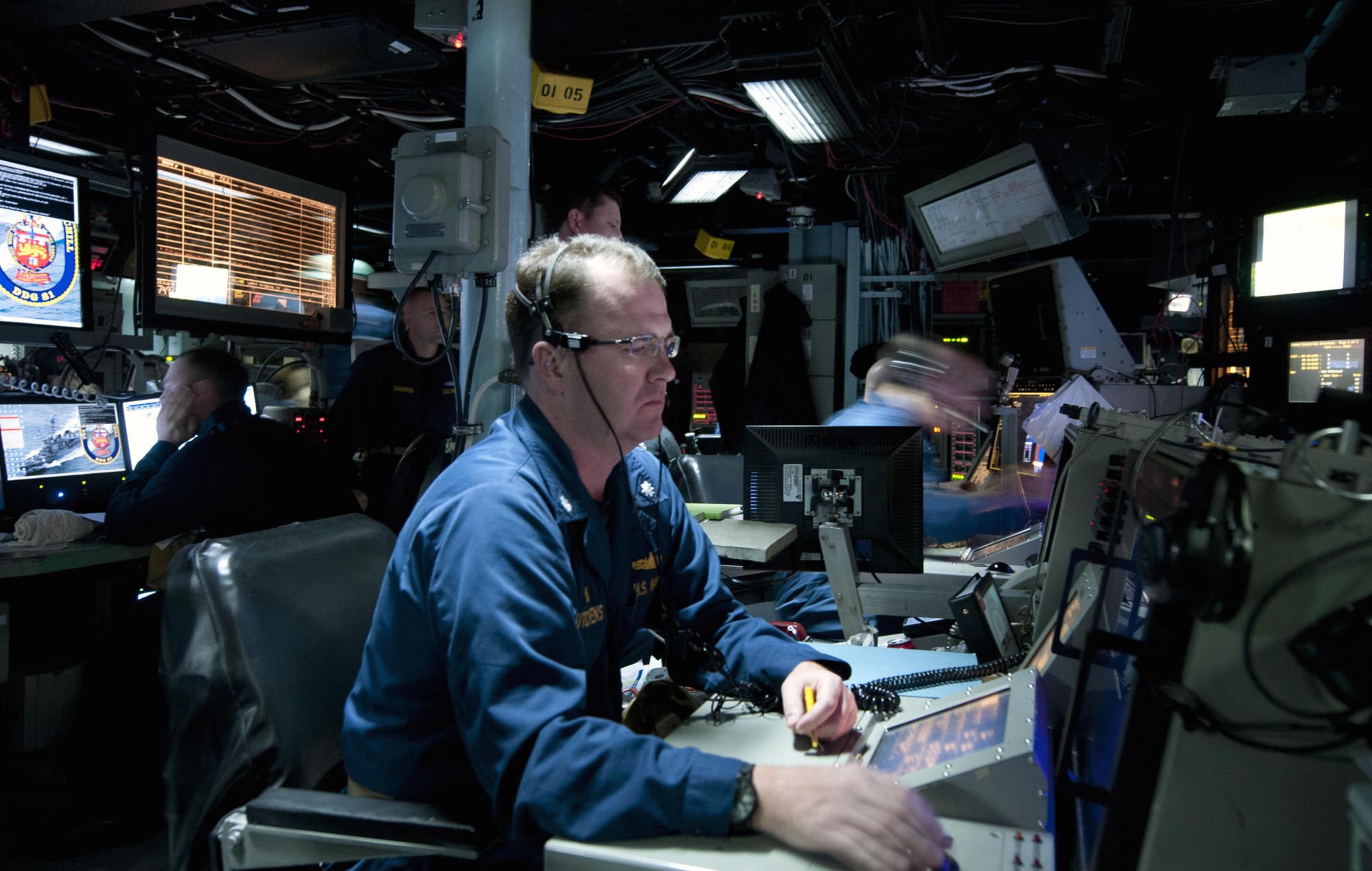 combat information center (CIC) - Gulf of Aden - August 2012 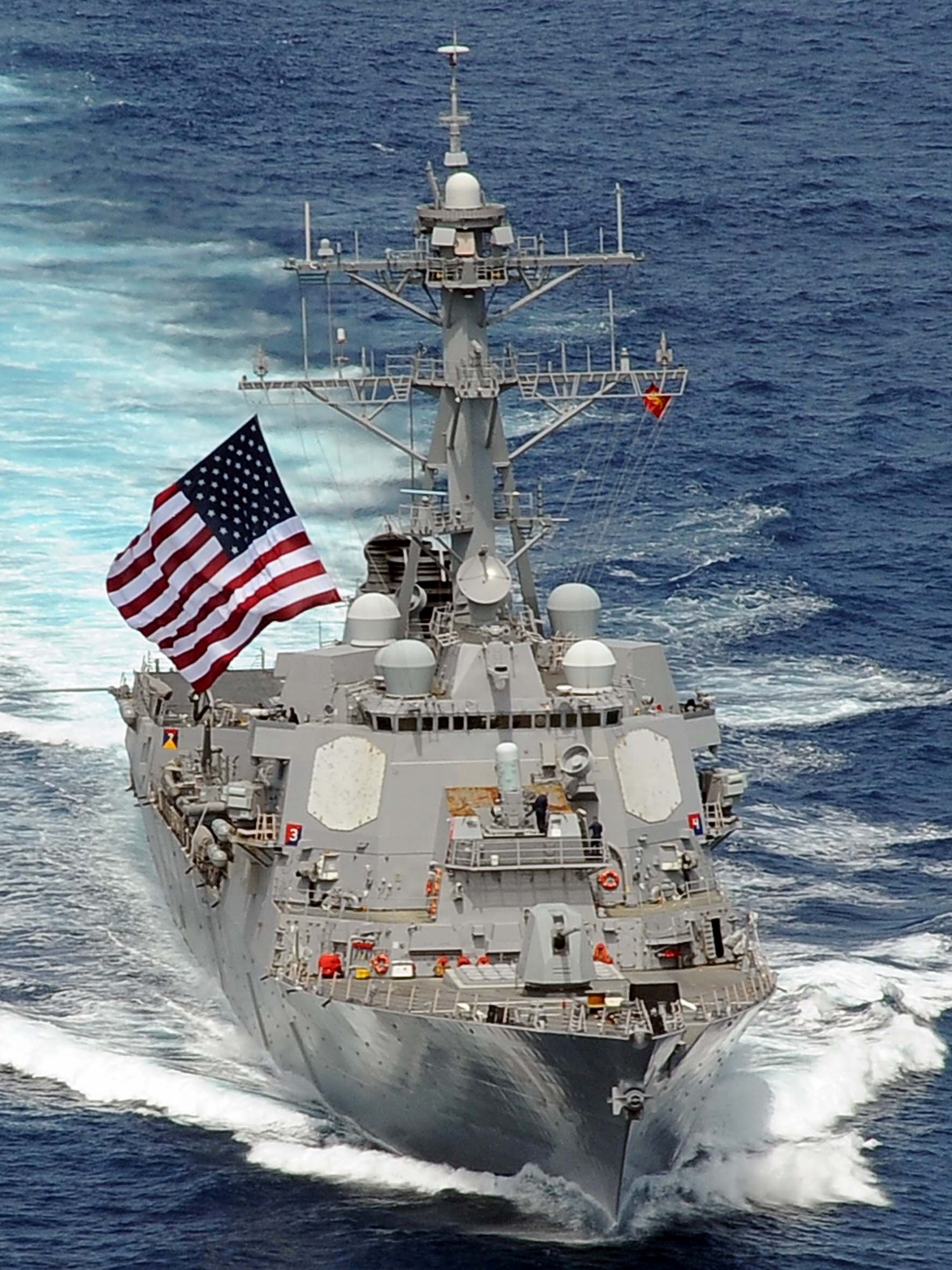 Atlantic Ocean - June 2012 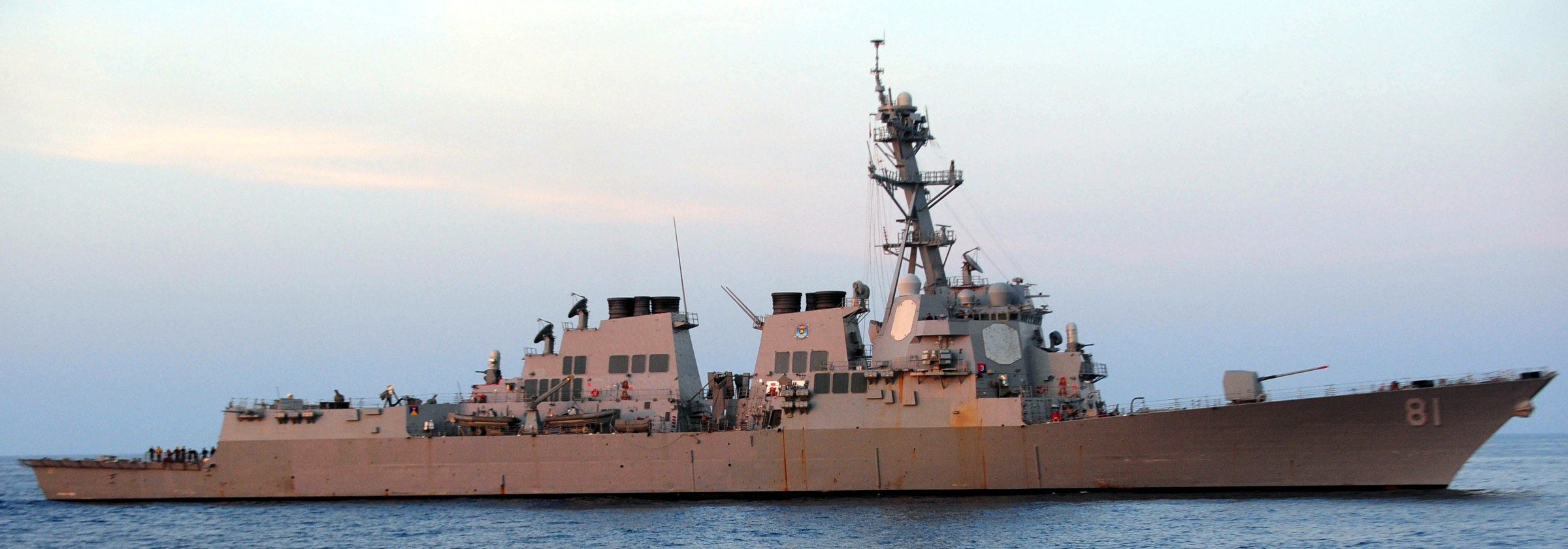 Atlantic Ocean - April 2012 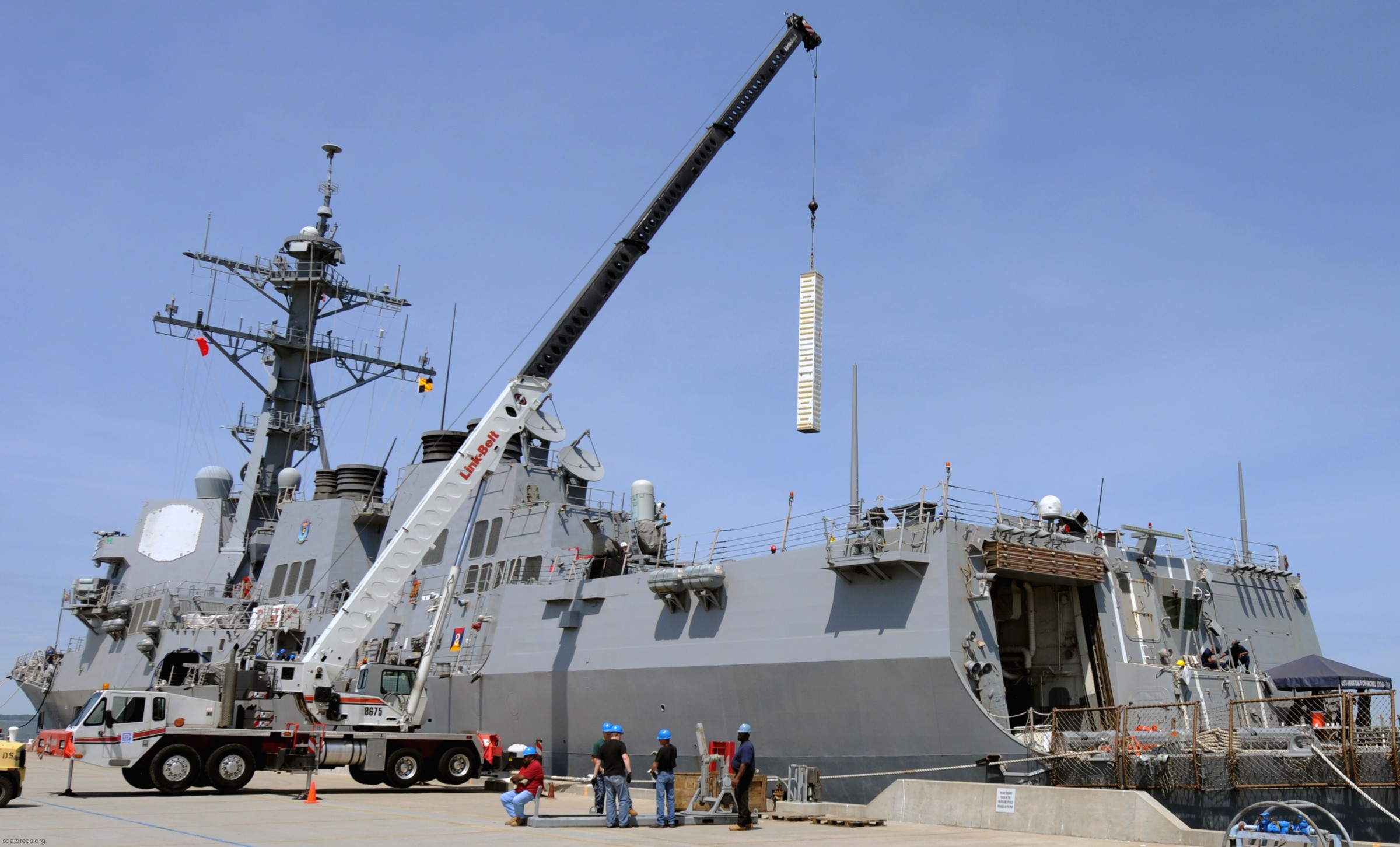 ammunition onload for an upcoming deployment - Yorktown, Virginia - April 2012 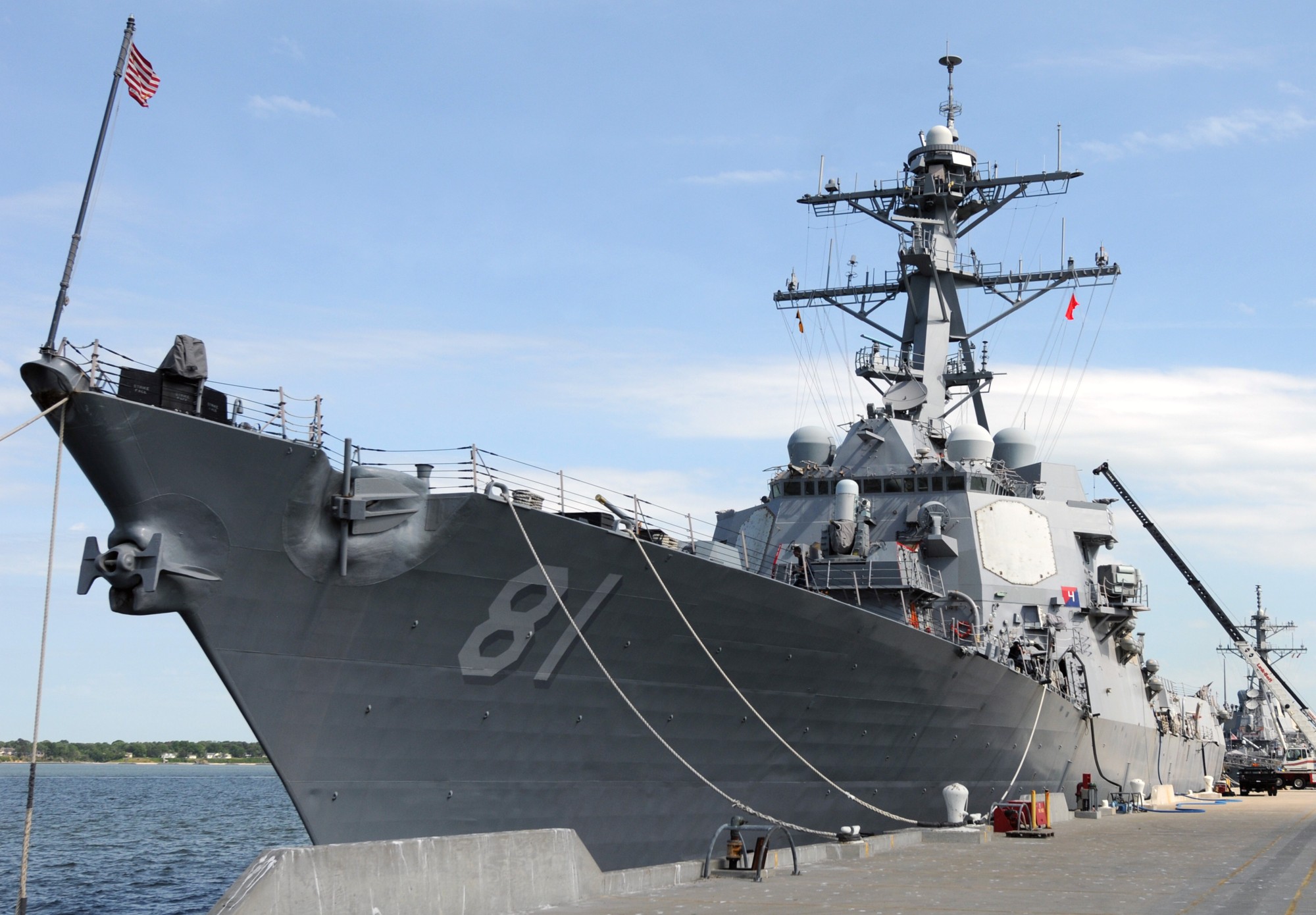 ammunition onload for an upcoming deployment - Yorktown, Virginia - April 2012 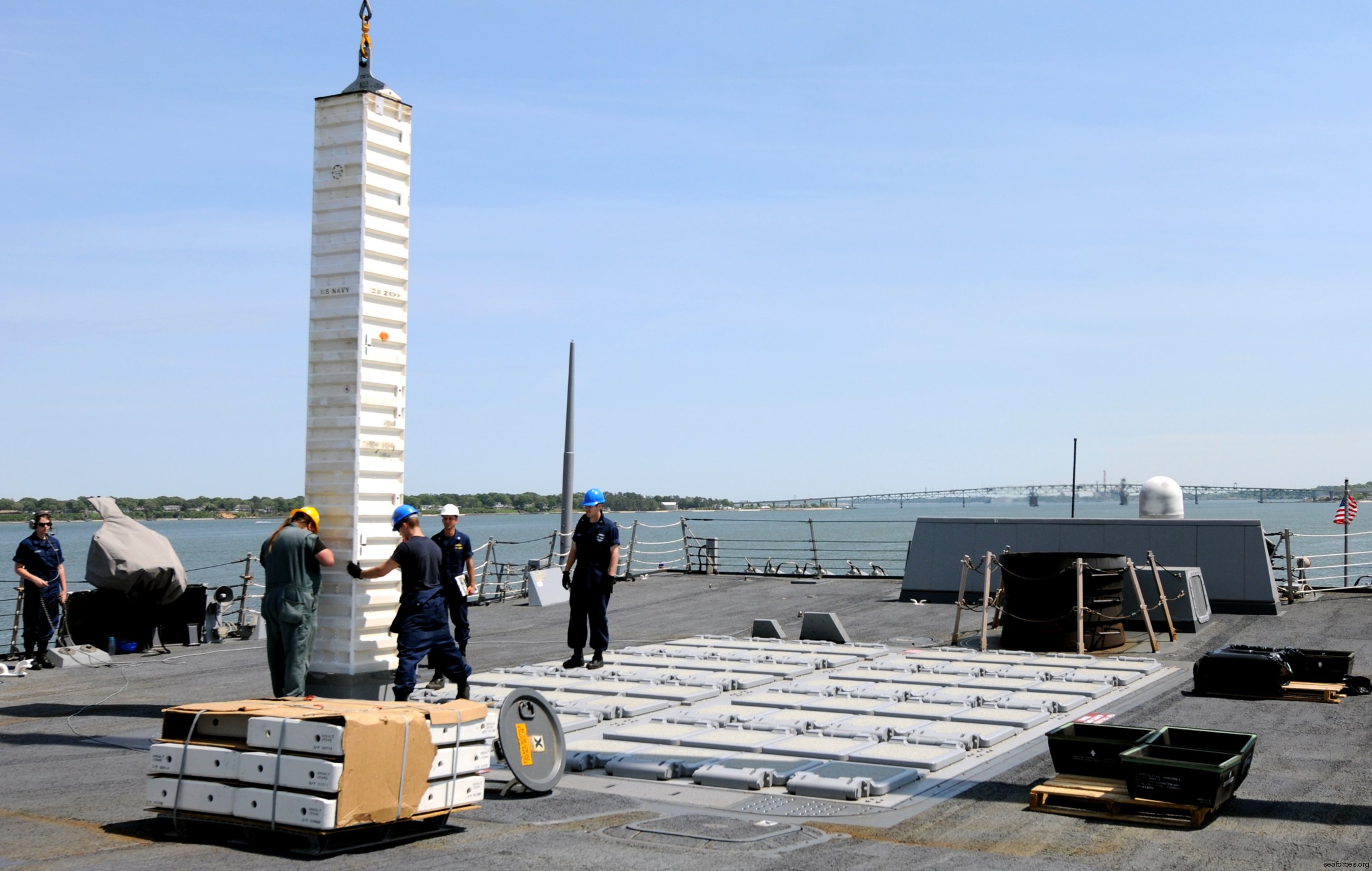 a missile canister was loaded into the aft Mk.41 vertical launching system (VLS) - Yorktown, Virginia - April 2012 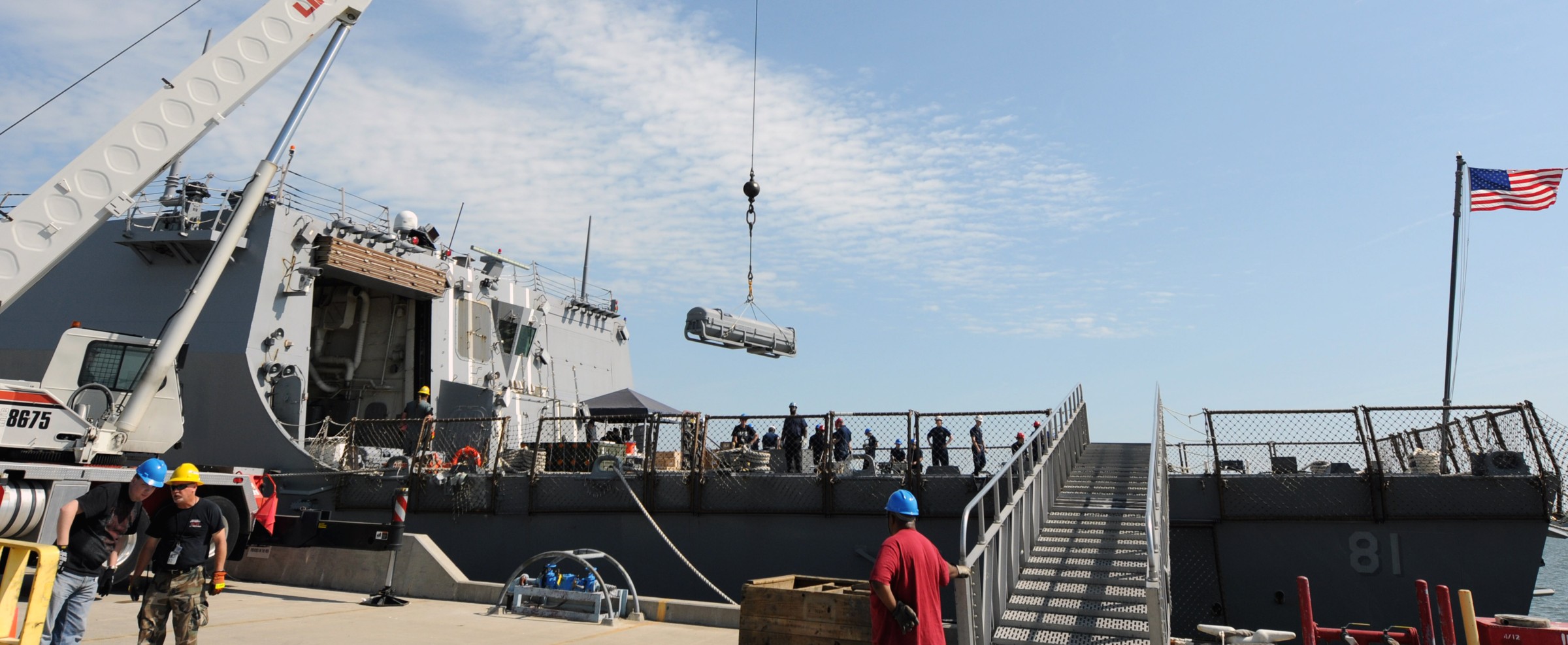 ammunition onload for an upcoming deployment - Yorktown, Virginia - April 2012 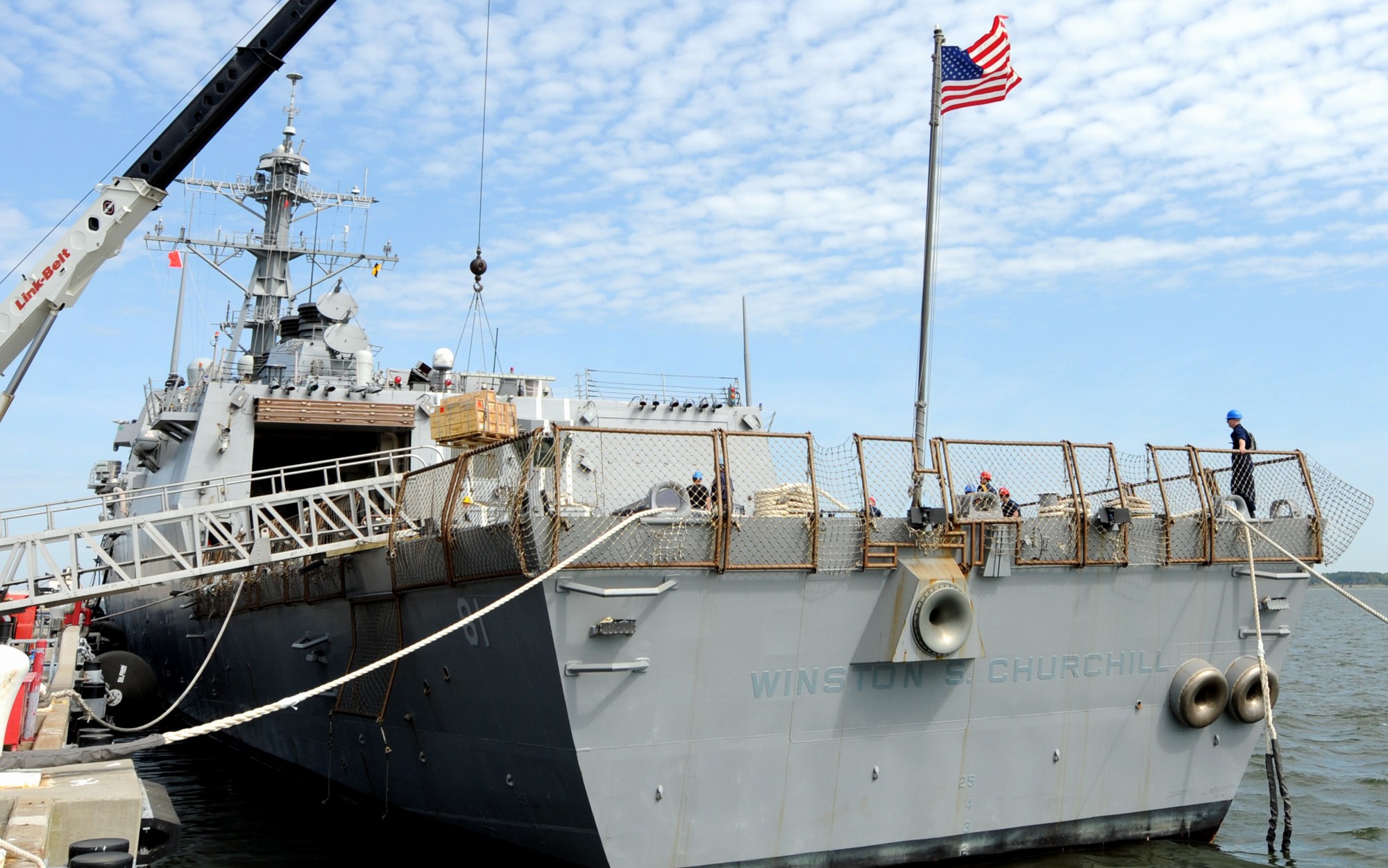 ammunition onload for an upcoming deployment - Yorktown, Virginia - April 2012 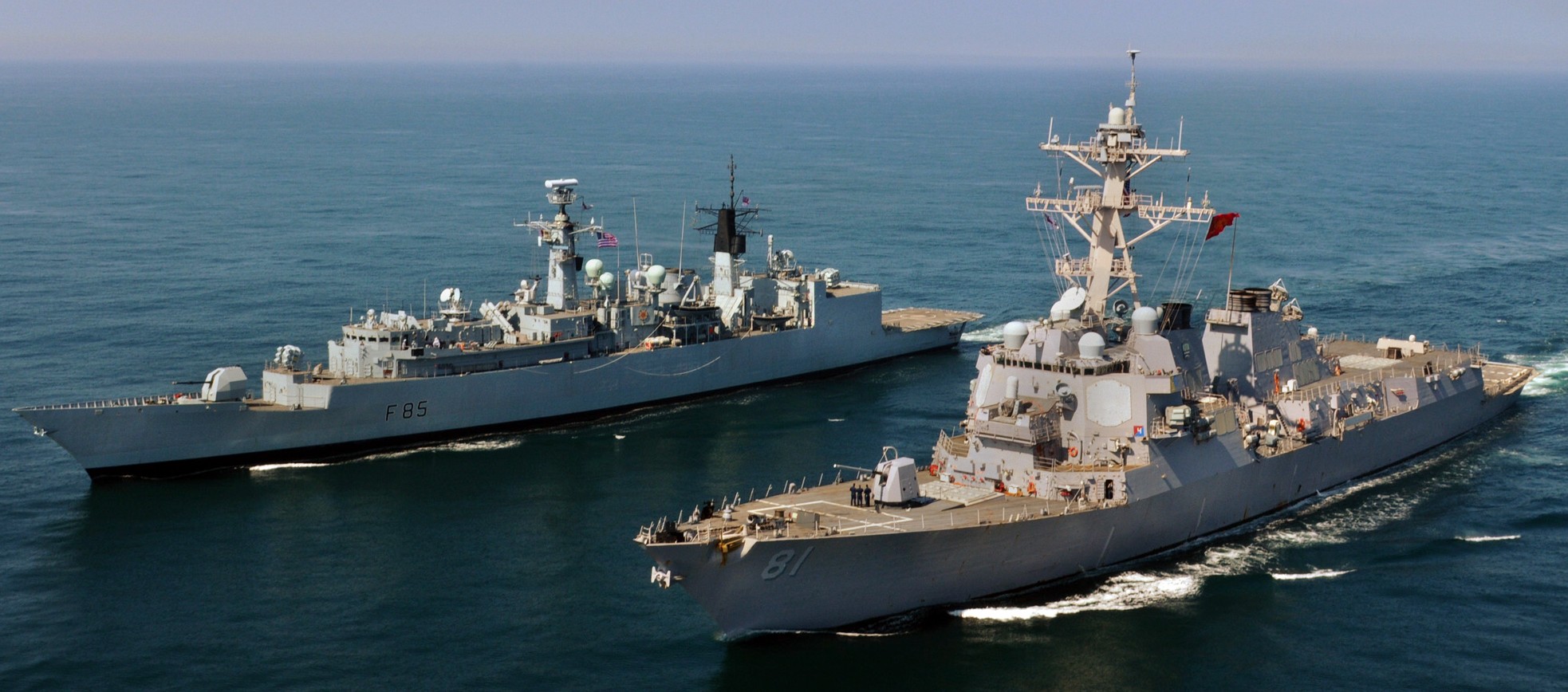 with HMS Cumberland (F 85) - English Channel - June 2010 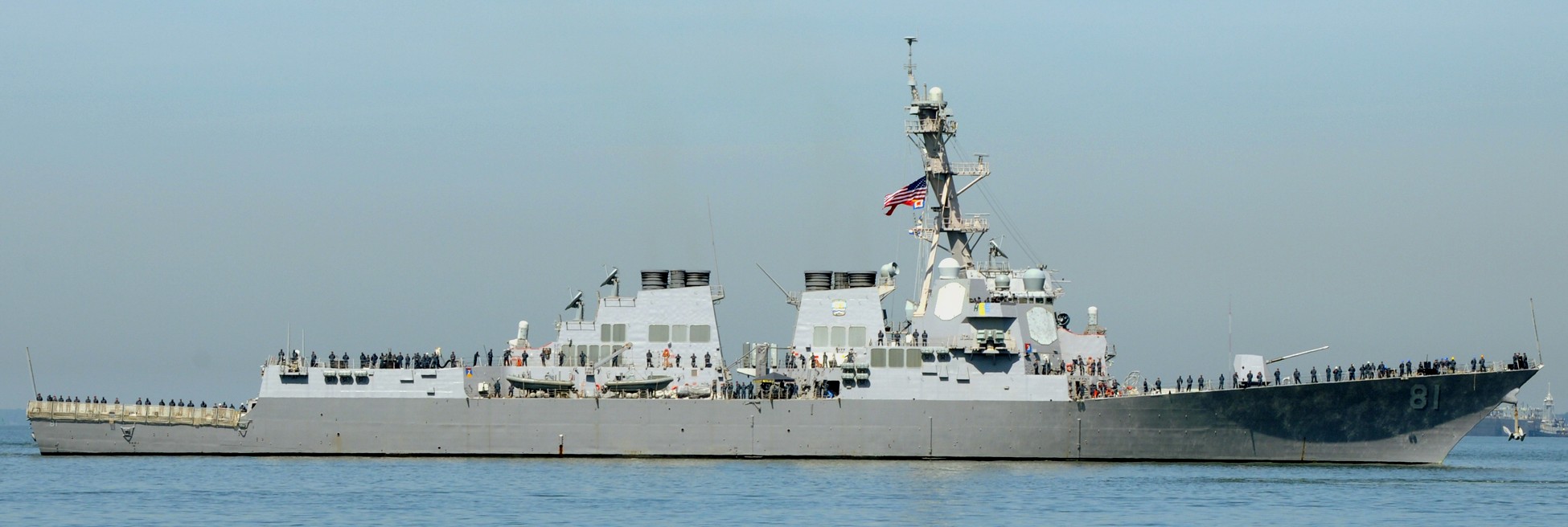 departing Naval Station Norfolk, Virginia - May 2010 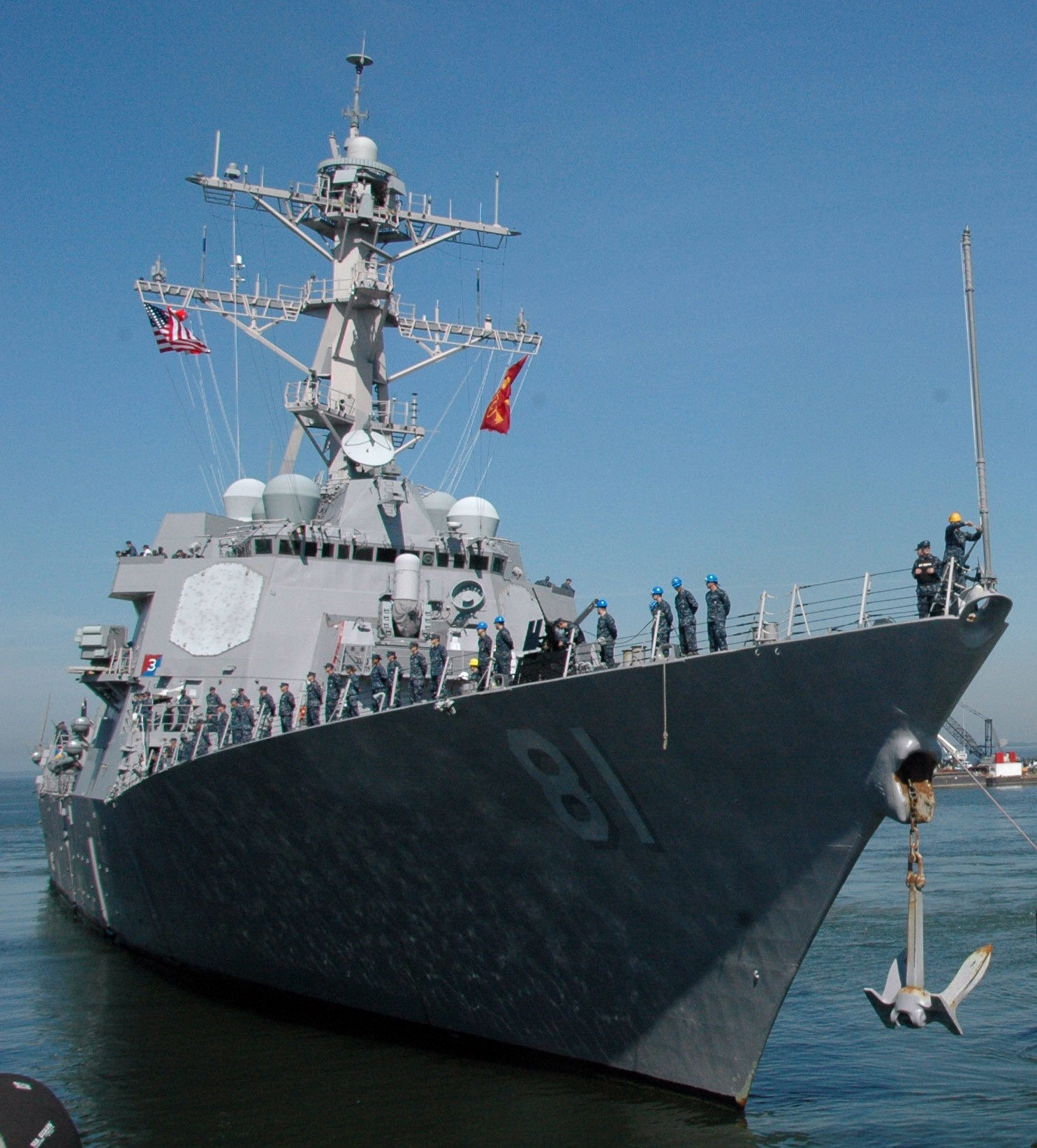 departing Naval Station Norfolk, Virginia - May 2010 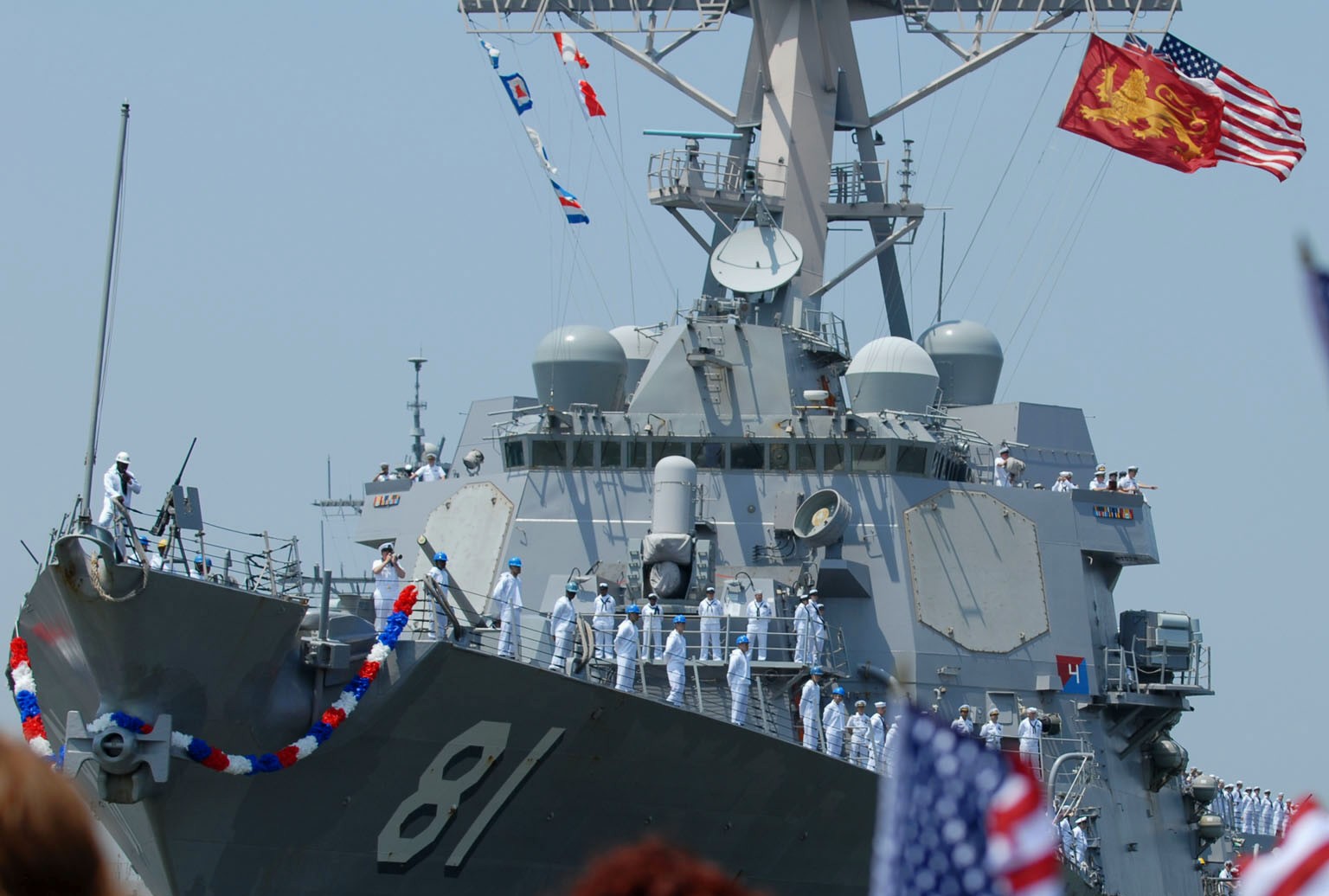 returning to Naval Station Norfolk, Virginia - June 2008 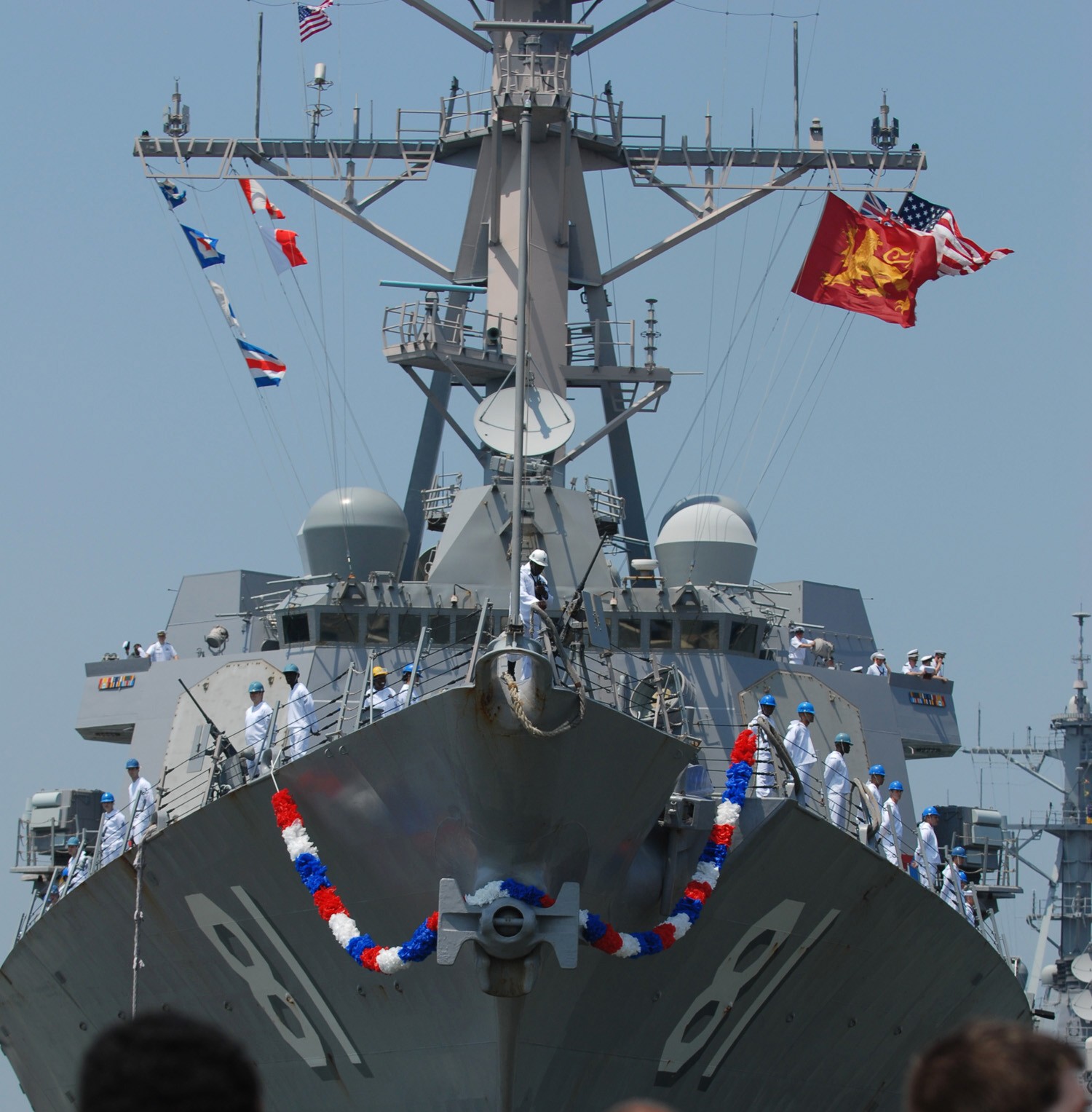 returning to Naval Station Norfolk, Virginia - June 2008 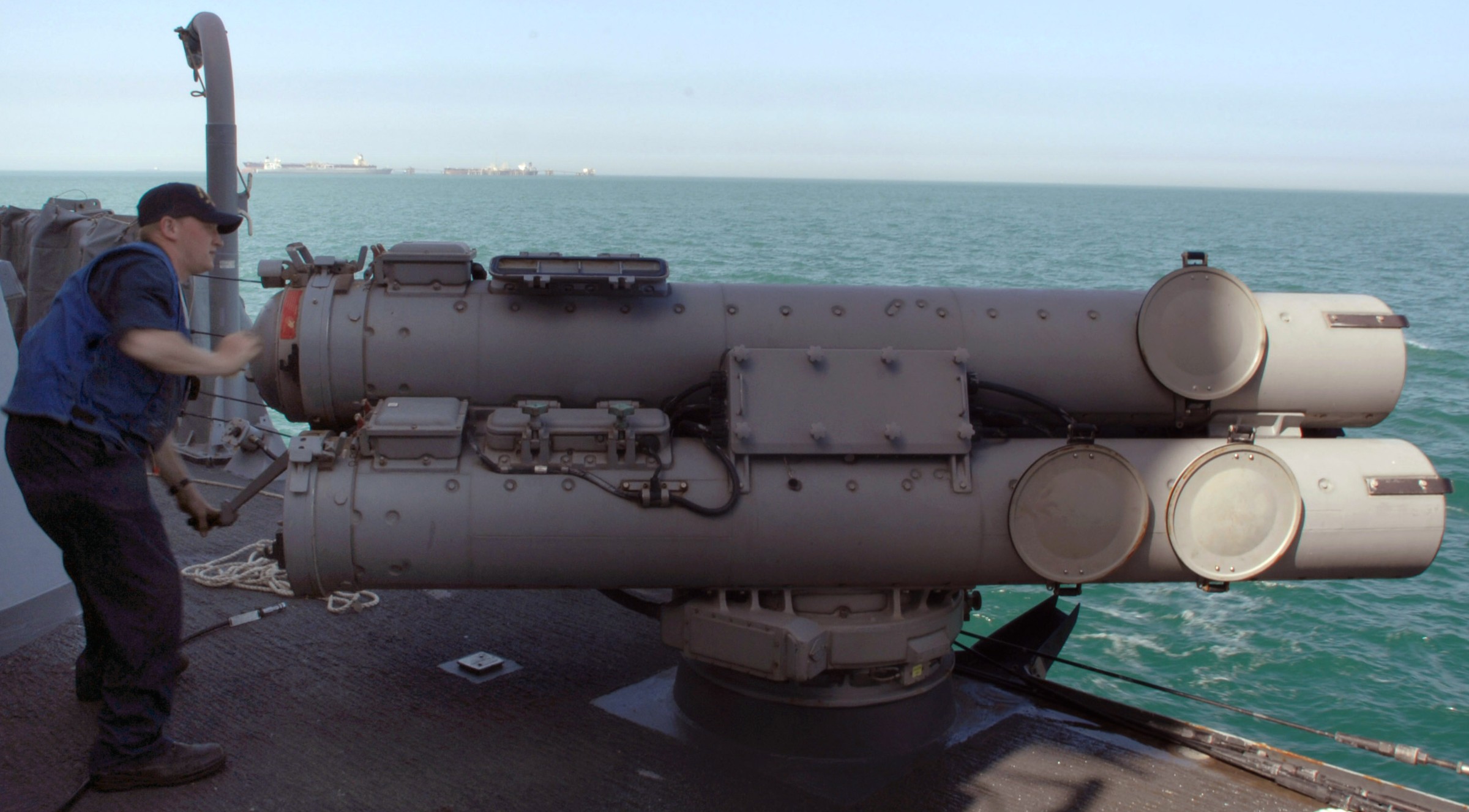 Mk.32 triple torpedo tubes - Persian Gulf - March 2008 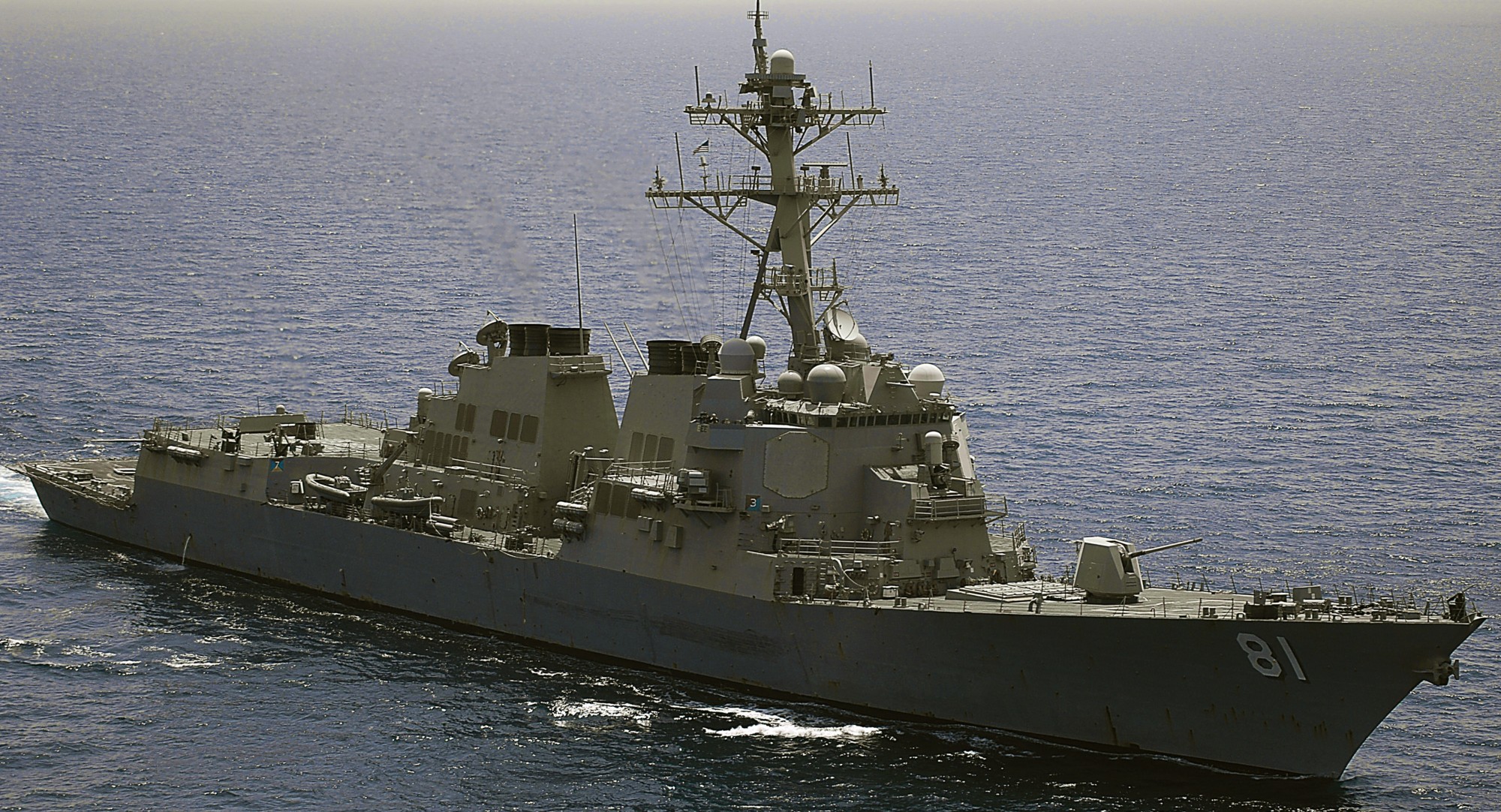 off Djibouti - March 2008 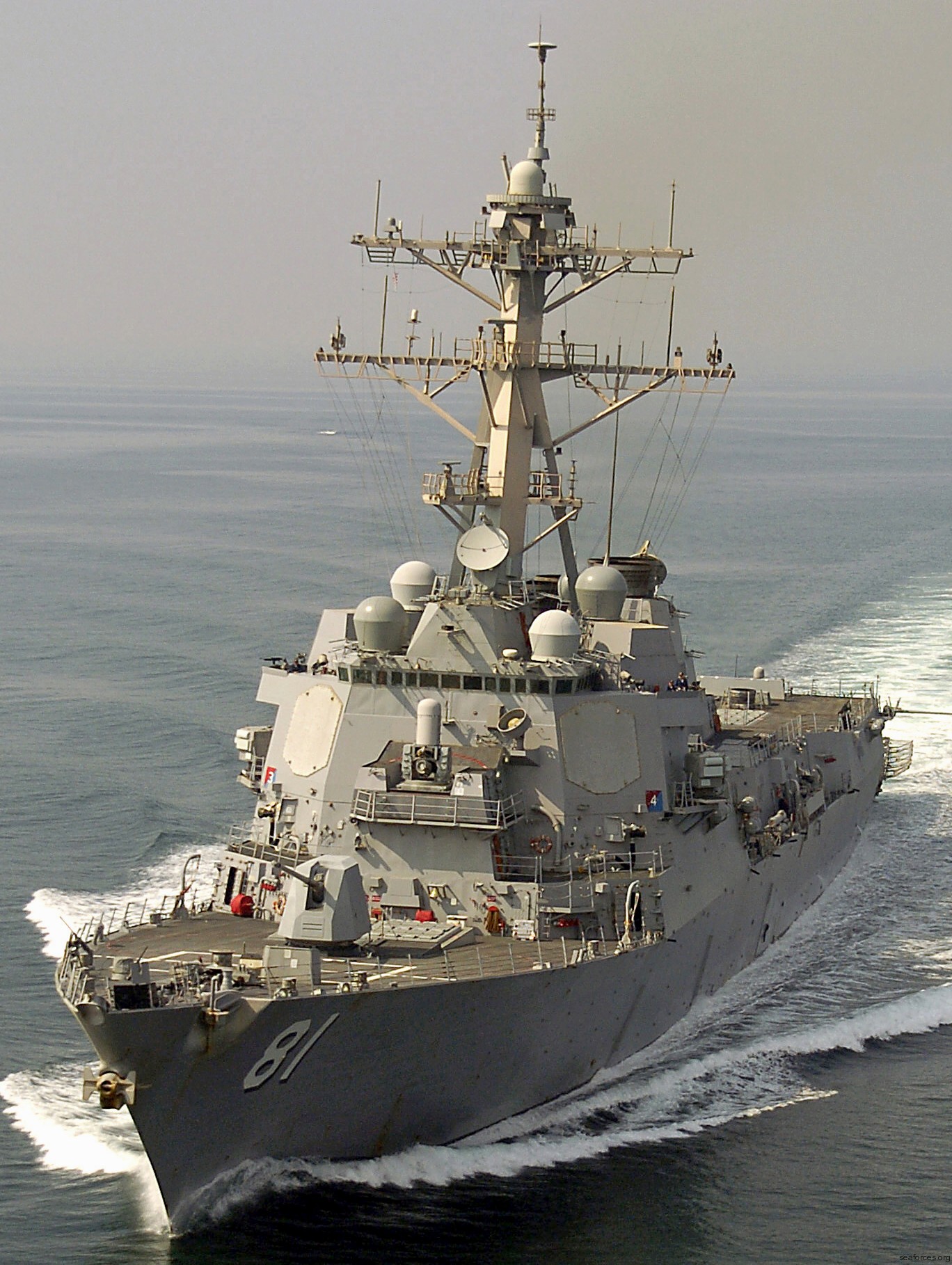 Persian Gulf - February 2008 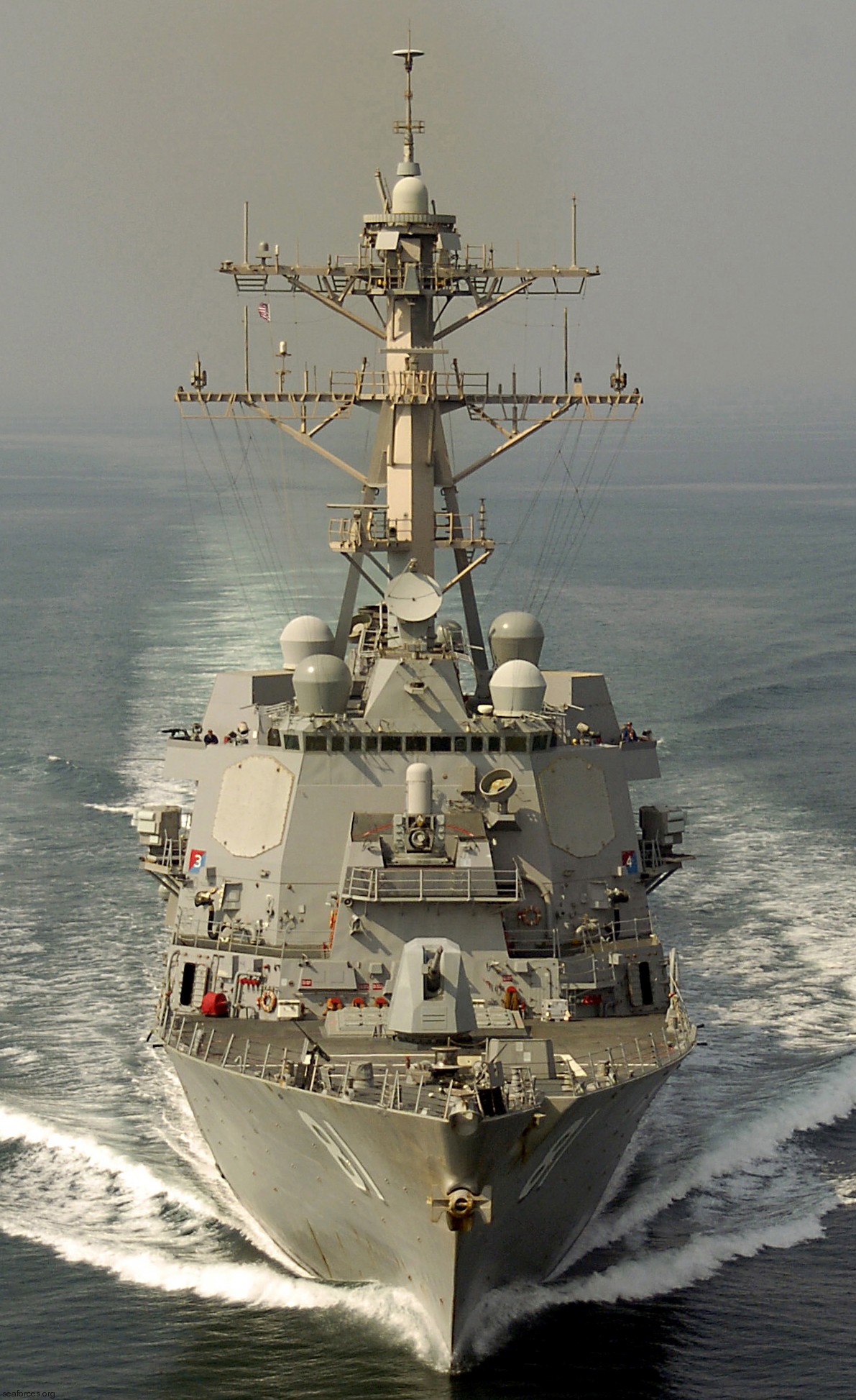 Persian Gulf - February 2008 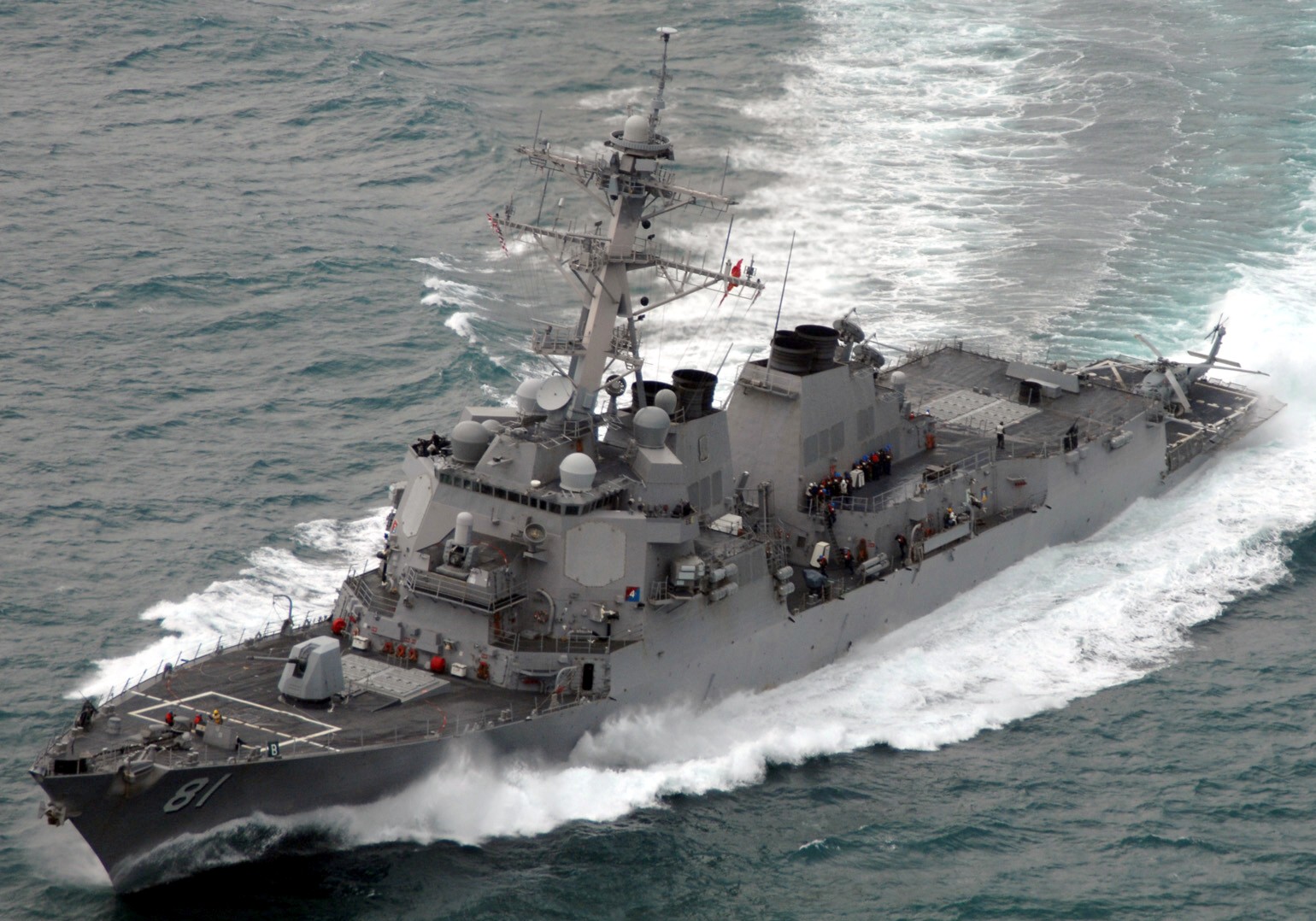 Persian Gulf - January 2008 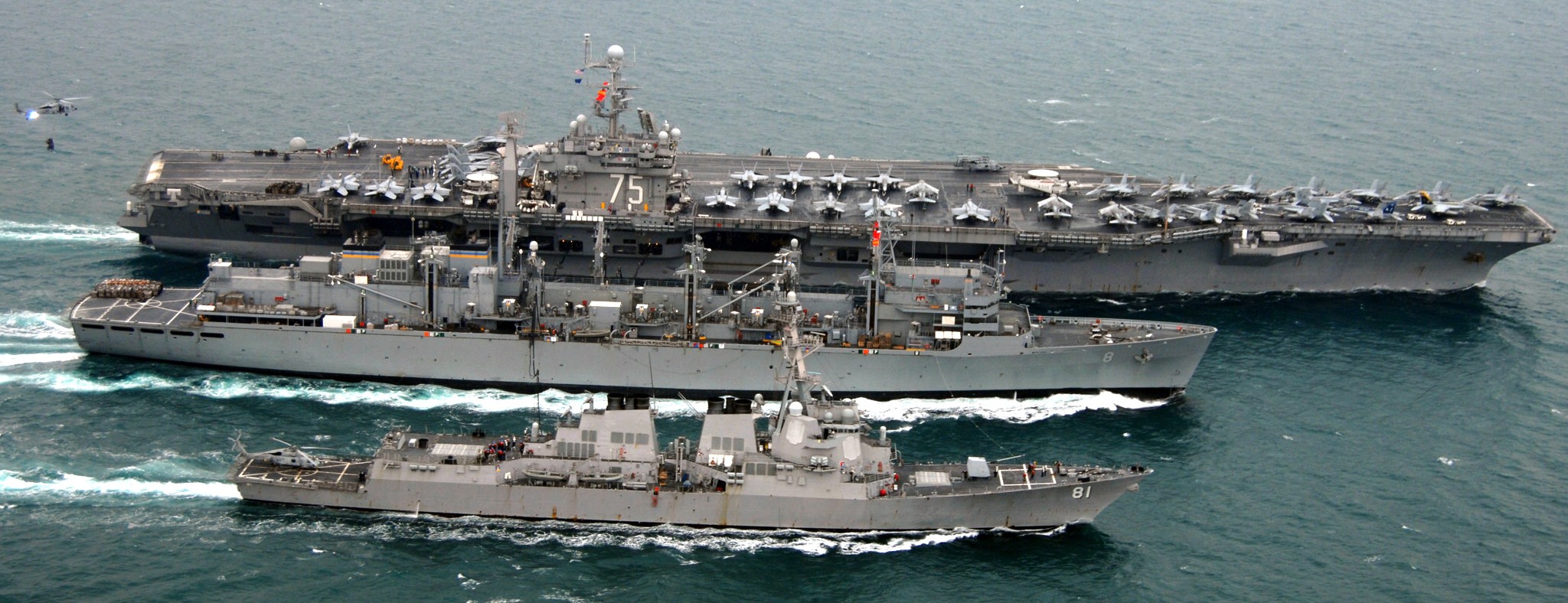 underway replenishment (UNREP) with USNS Arctic (T-AOE 8) - Persian Gulf - January 2008 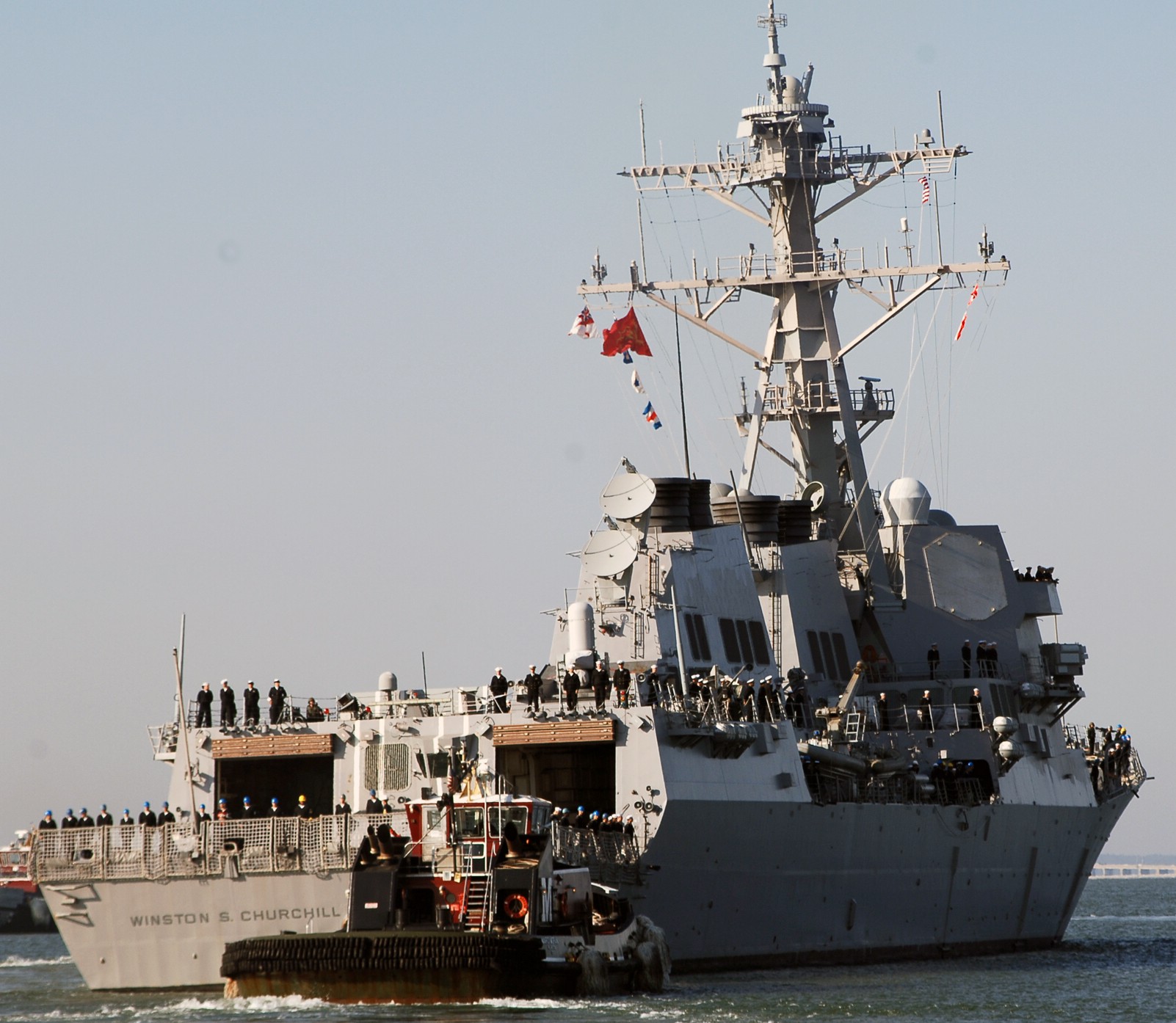 departing Naval Station Norfolk, Virginia - November 2007 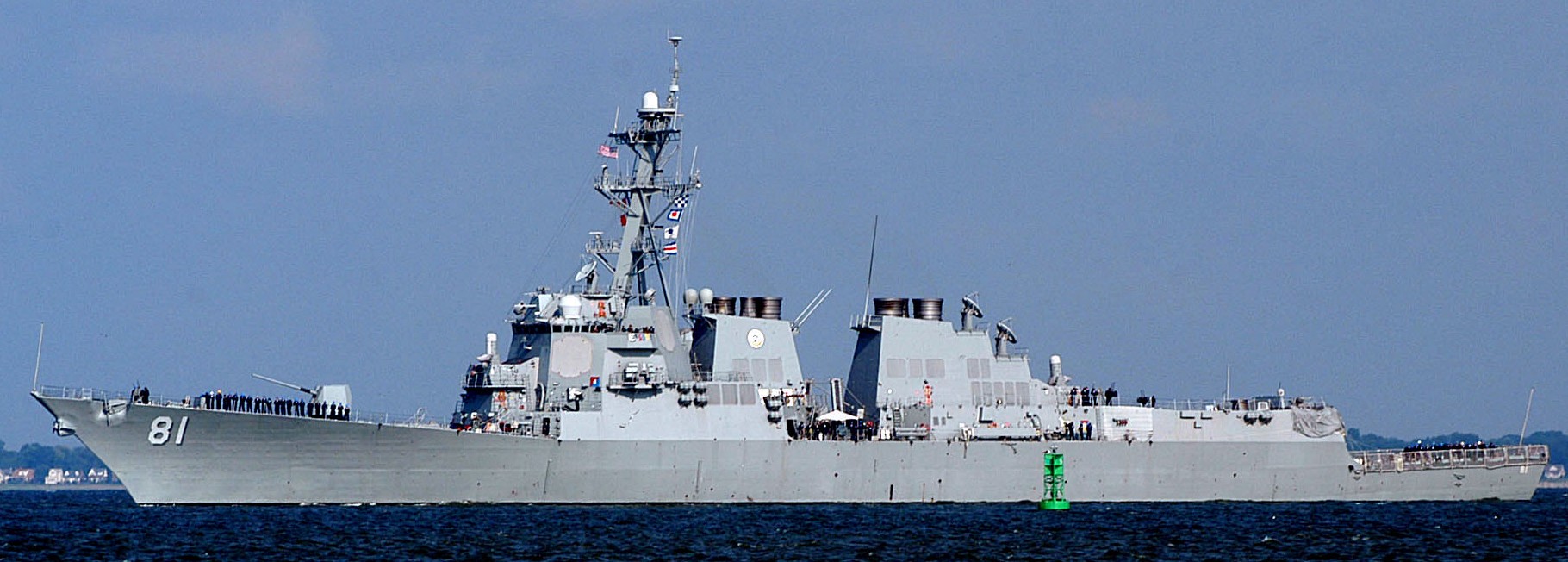 returning to Naval Station Norfolk, Virginia - August 2005 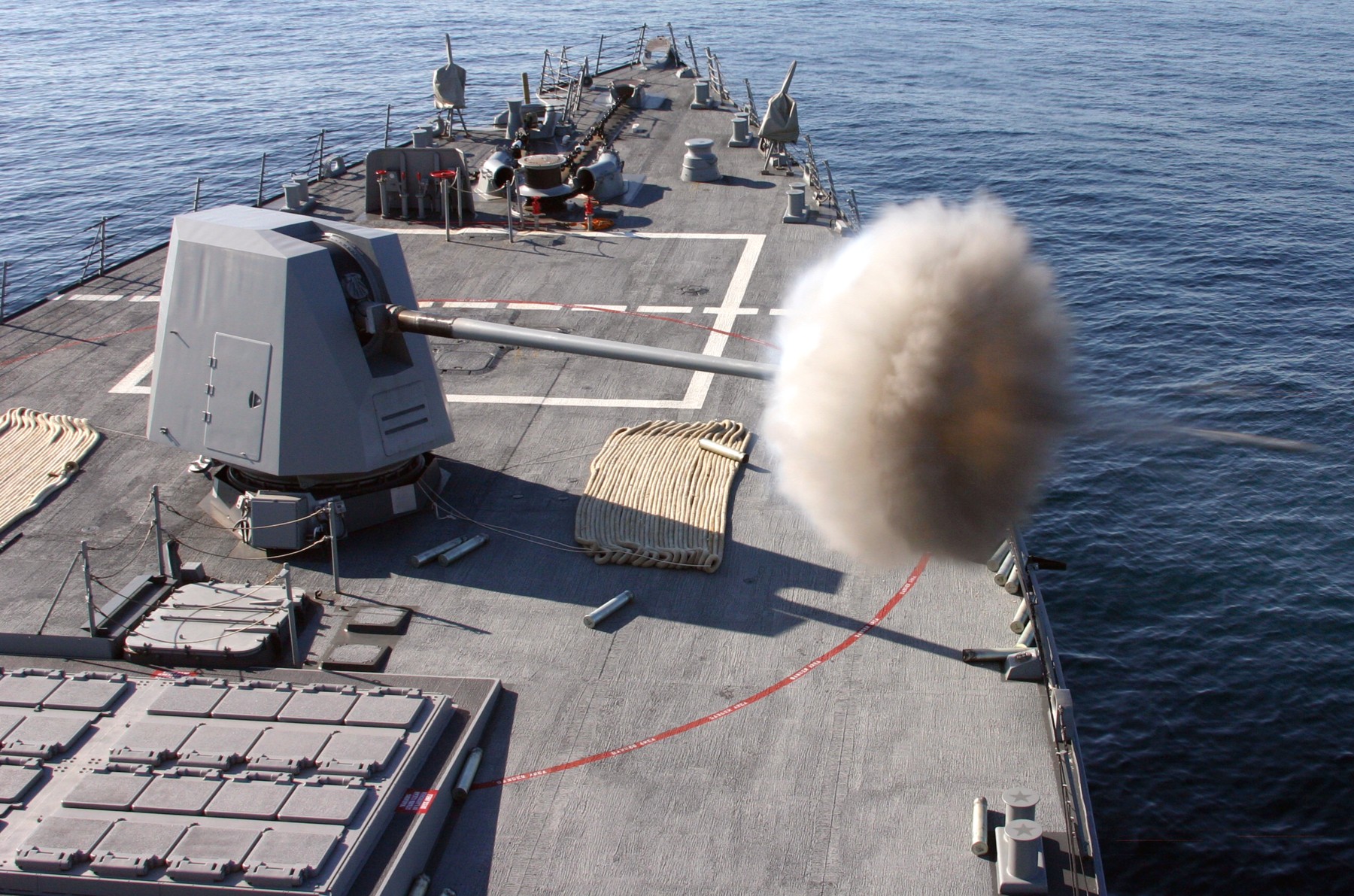 Mk.45 Mod.4 (5" / 62-caliber) gun fire exercise - Atlantic Ocean - September 2004 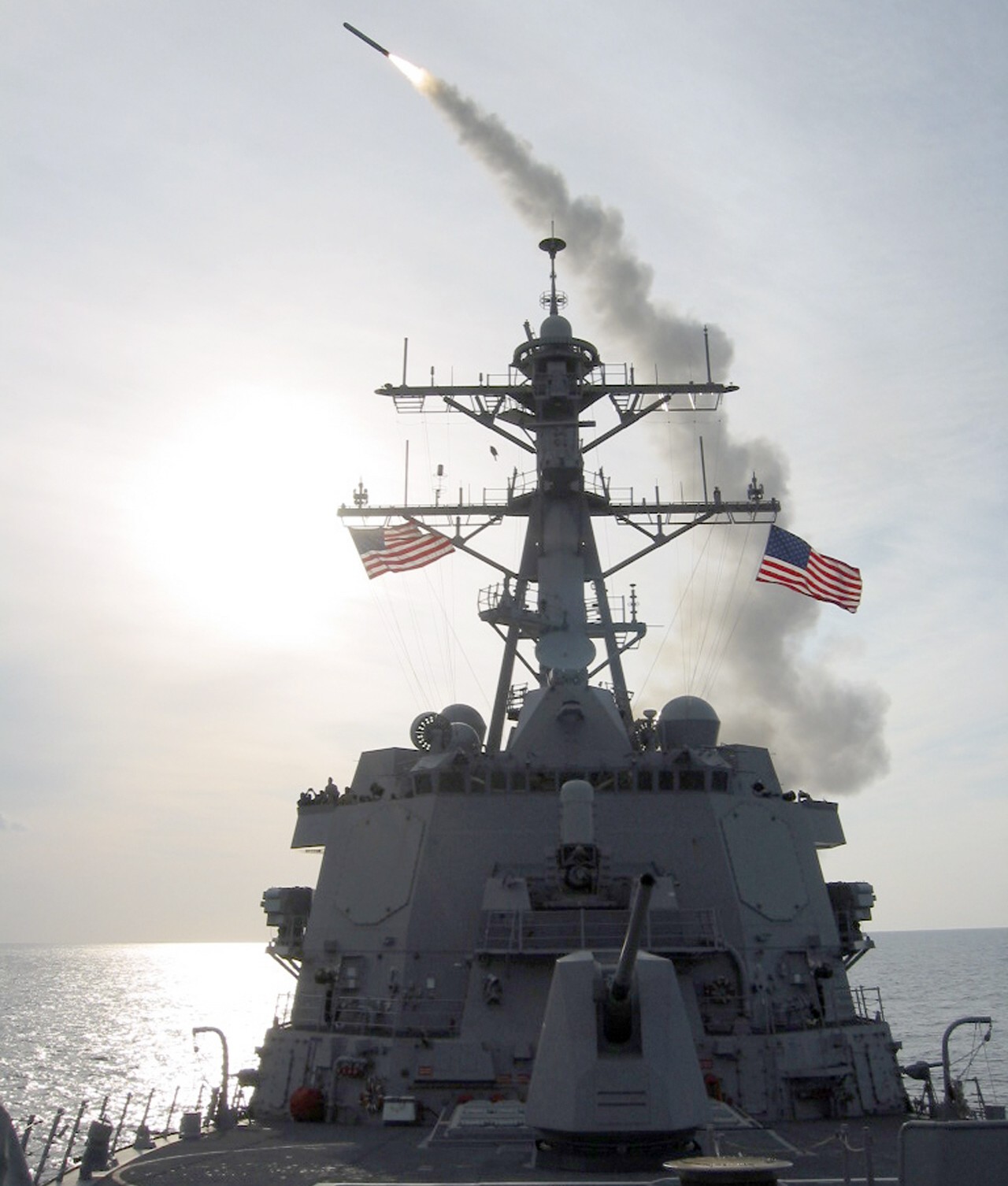 A BGM-109 Tomahawk land attack missile (TLAM) was launched during Operation Iraqi Freedom (OIF) - Mediterranean Sea - March 2003 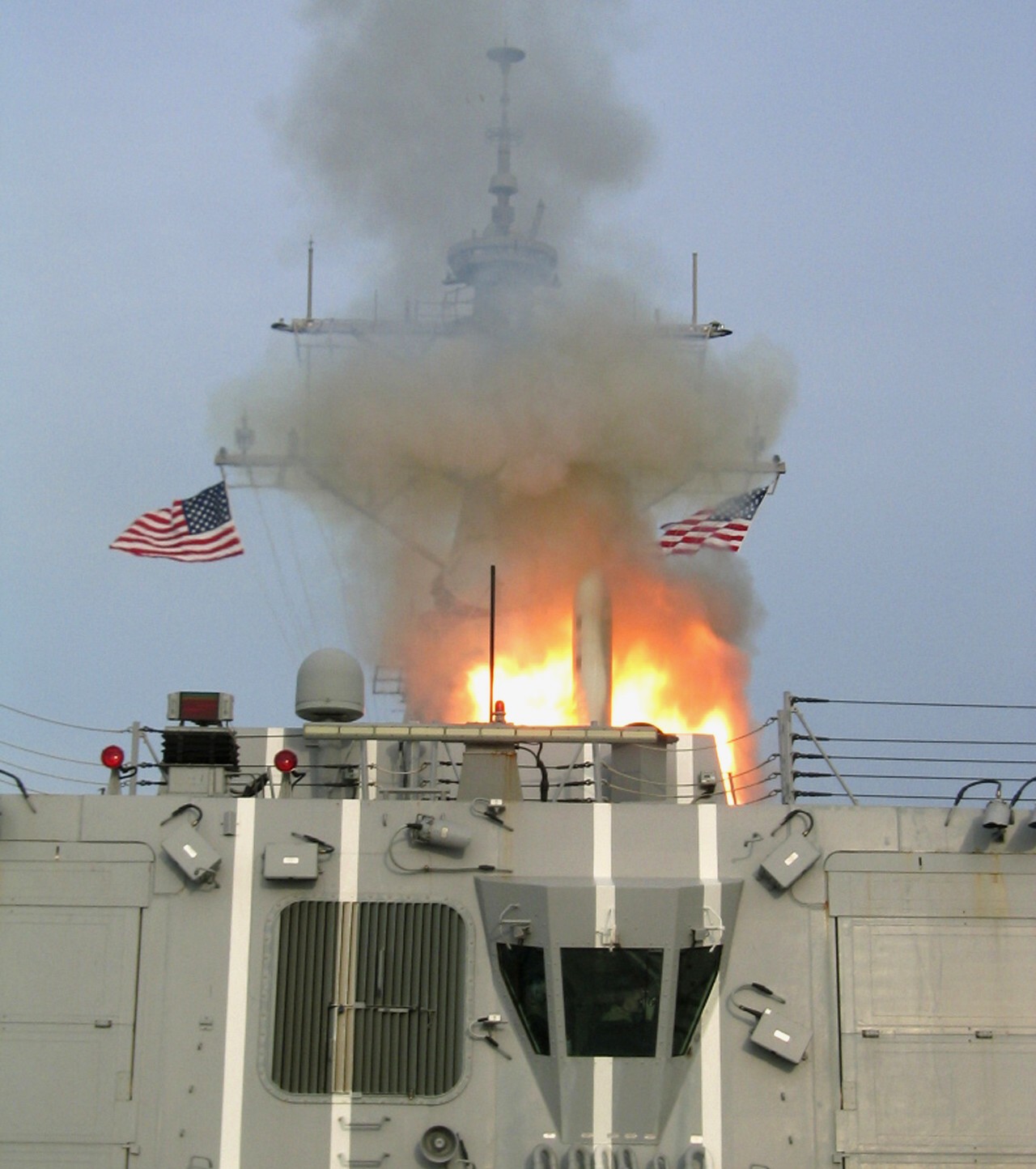 A BGM-109 Tomahawk land attack missile (TLAM) was launched during Operation Iraqi Freedom (OIF) - Mediterranean Sea - March 2003 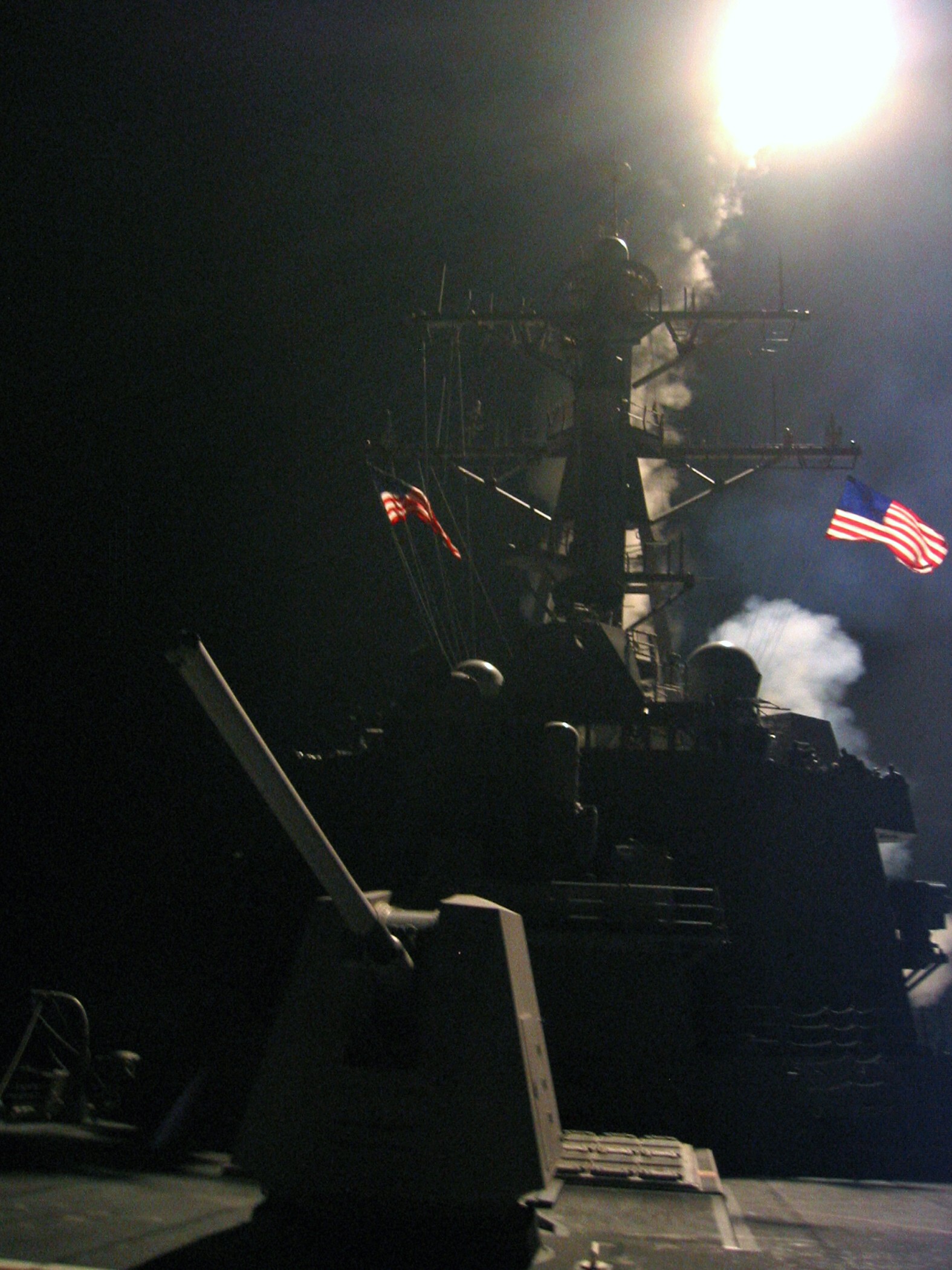 A BGM-109 Tomahawk land attack missile (TLAM) was launched during Operation Iraqi Freedom (OIF) - Mediterranean Sea - March 2003 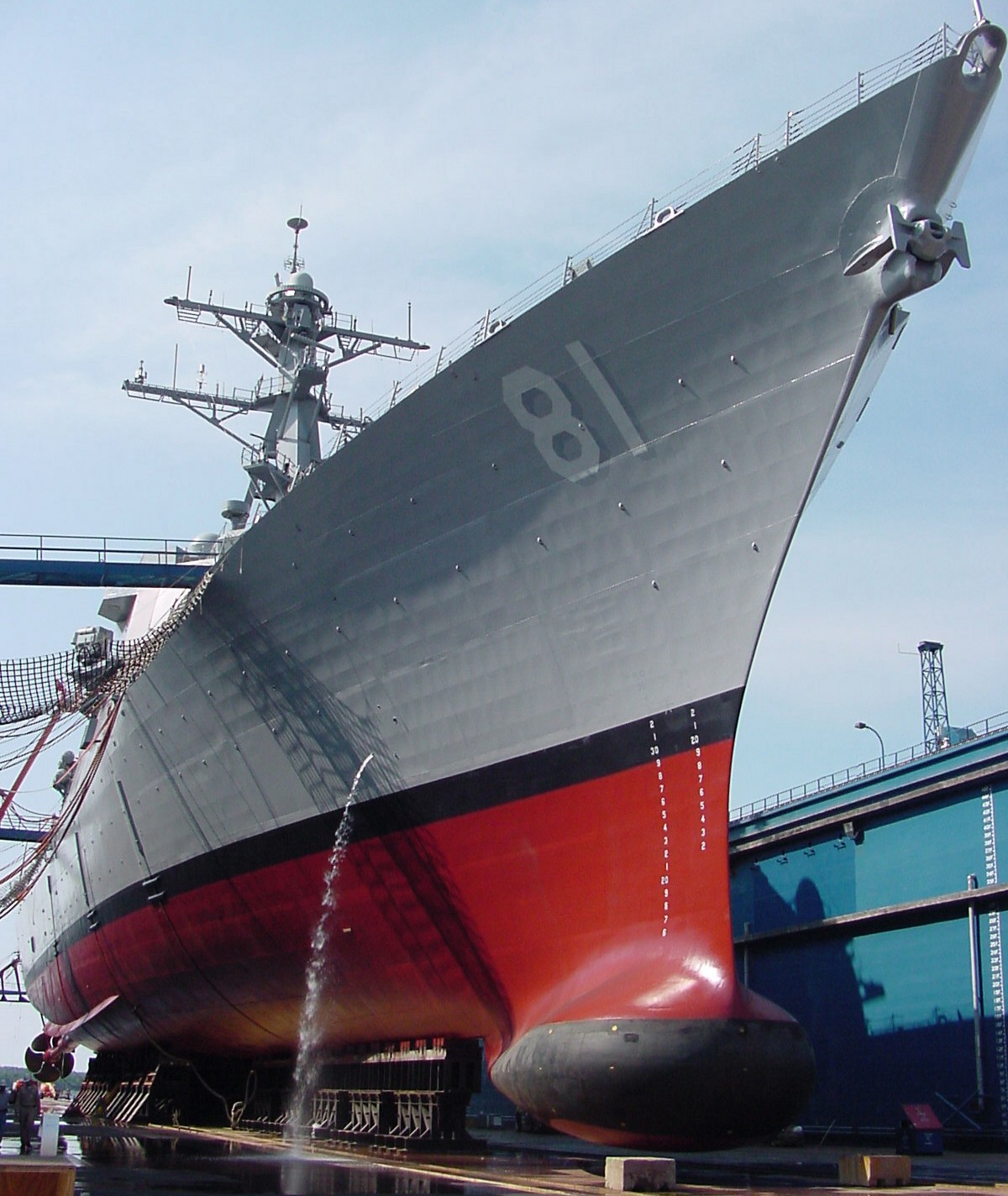 Post Shakedown Availability (PSA) at Bath Iron Works, Maine - August 2002 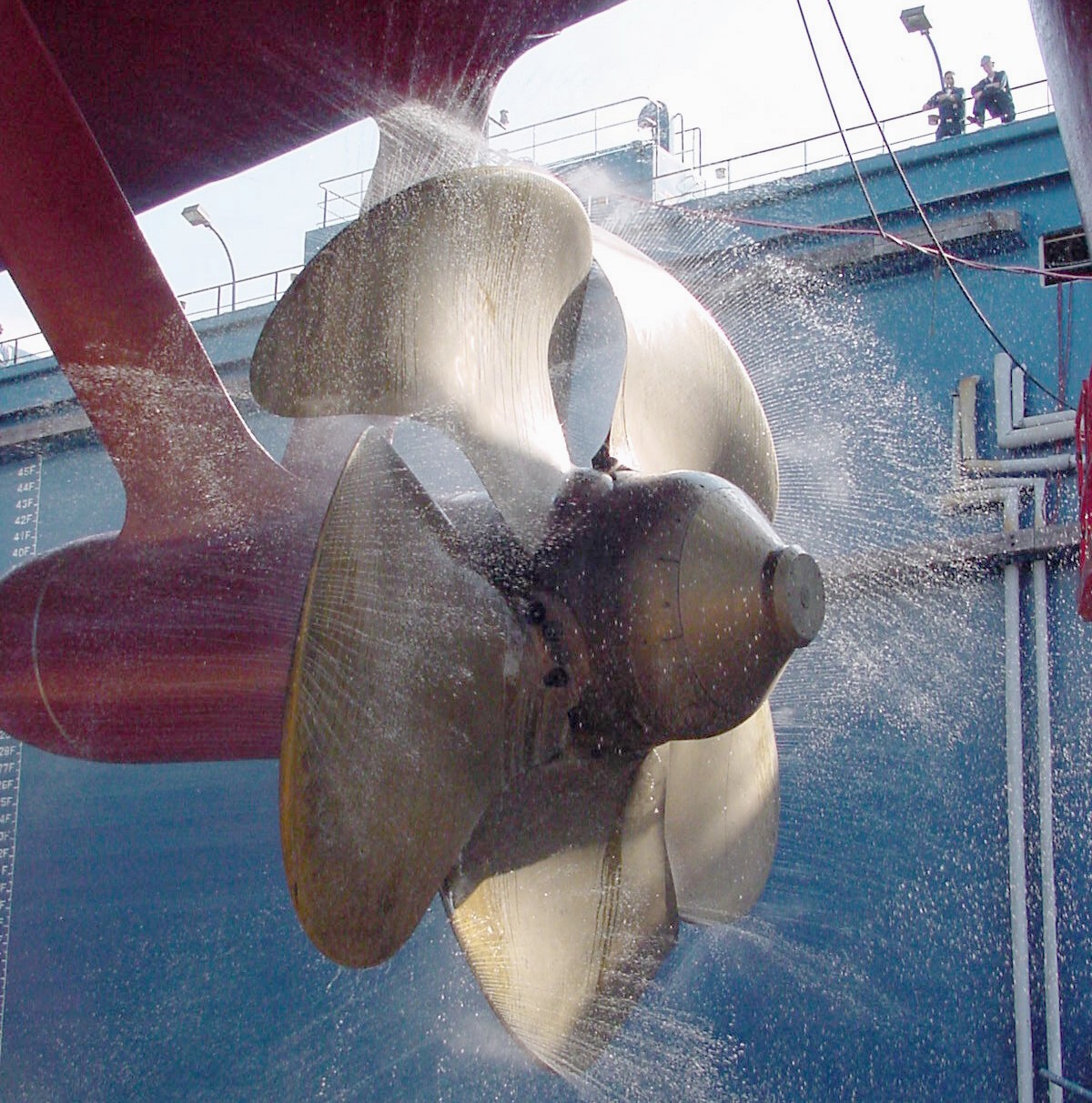 Post Shakedown Availability (PSA) at Bath Iron Works, Maine - August 2002 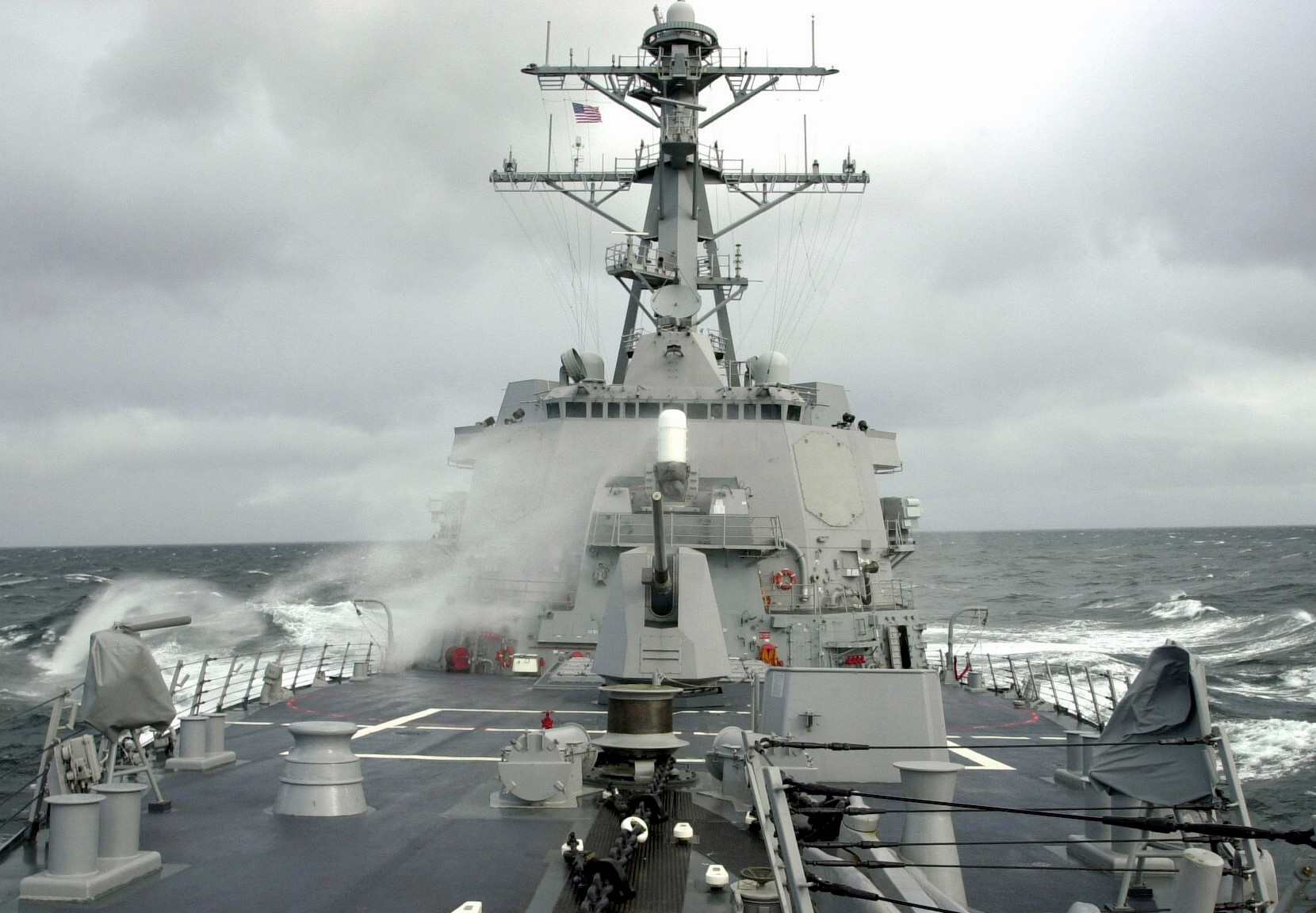 North Atlantic Ocean - October 2001 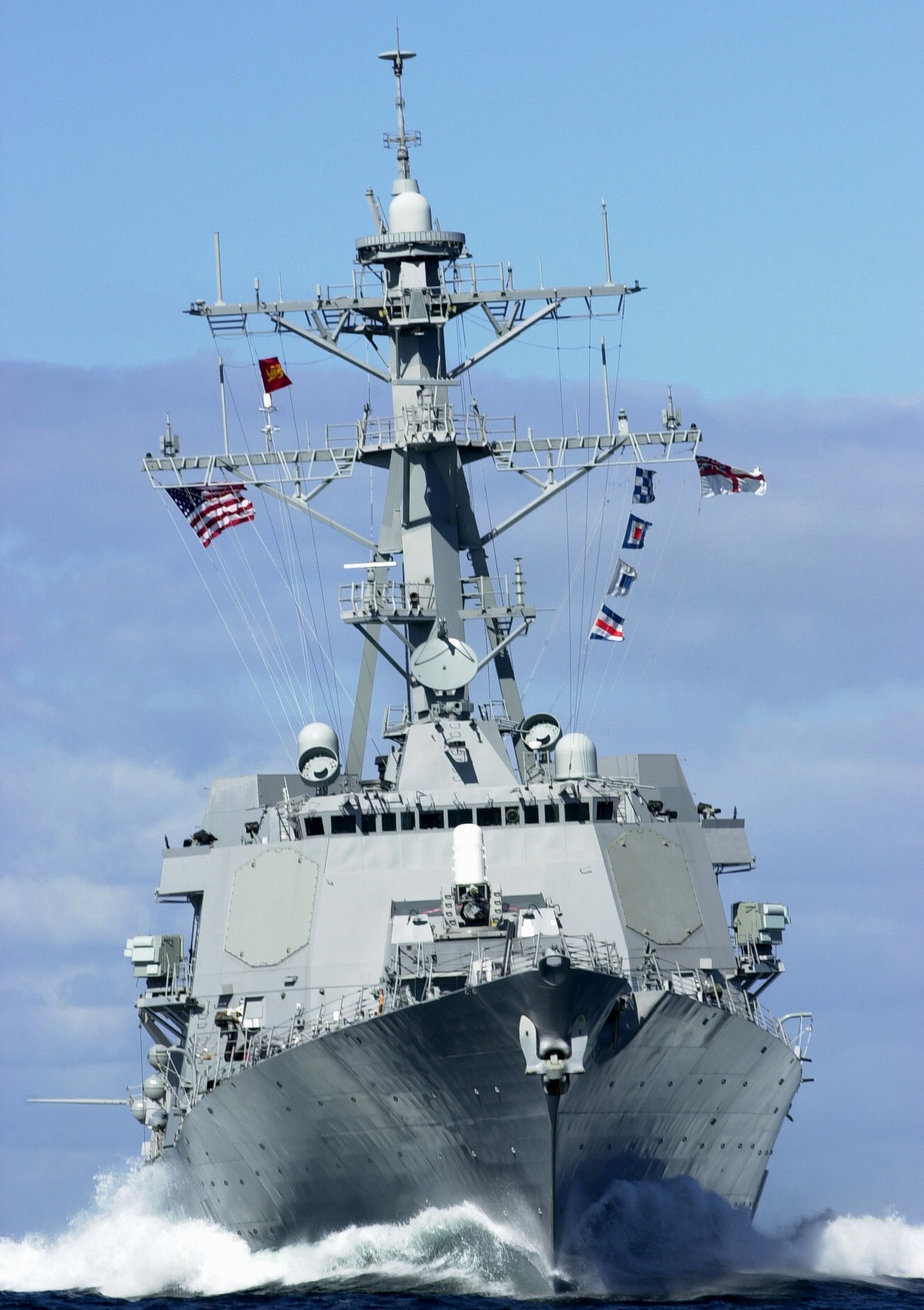 English Channel - September 2001 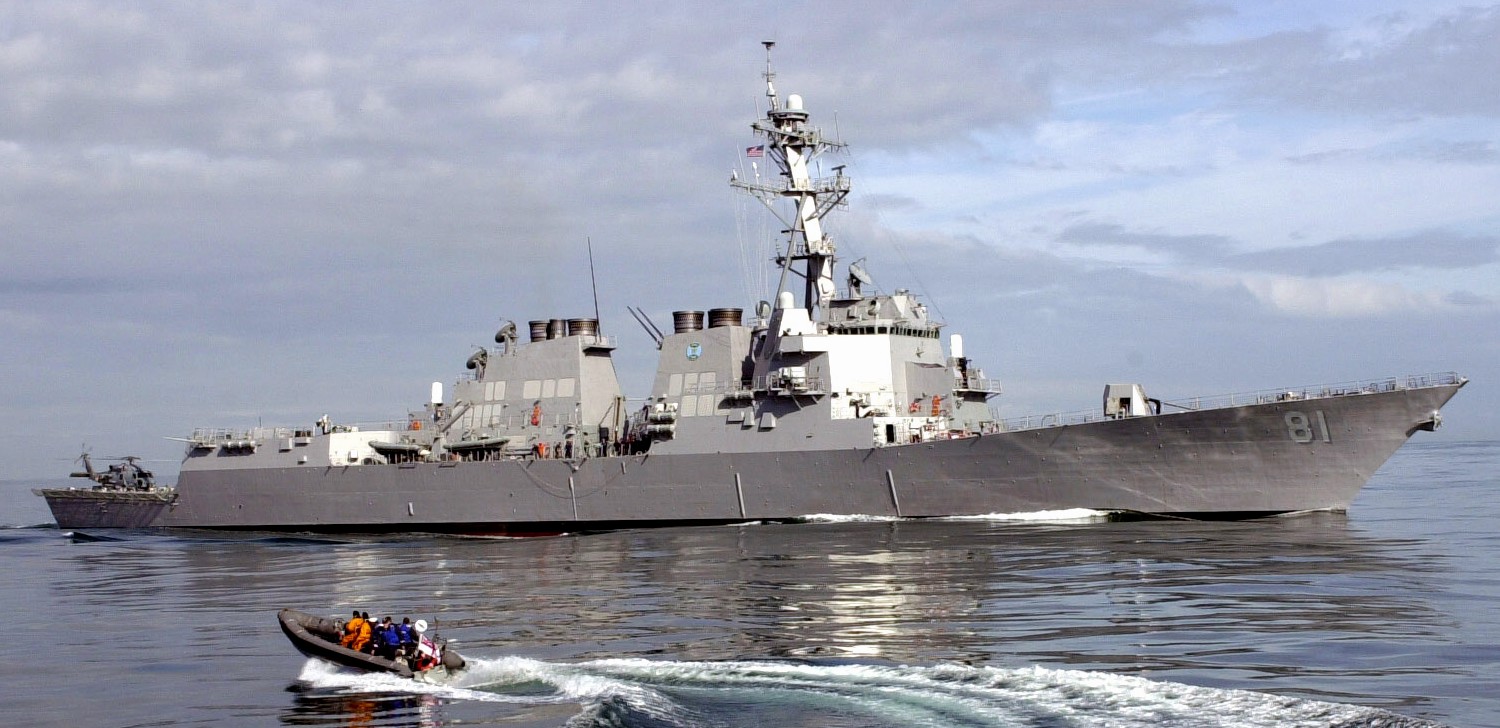 English Channel - August 2001 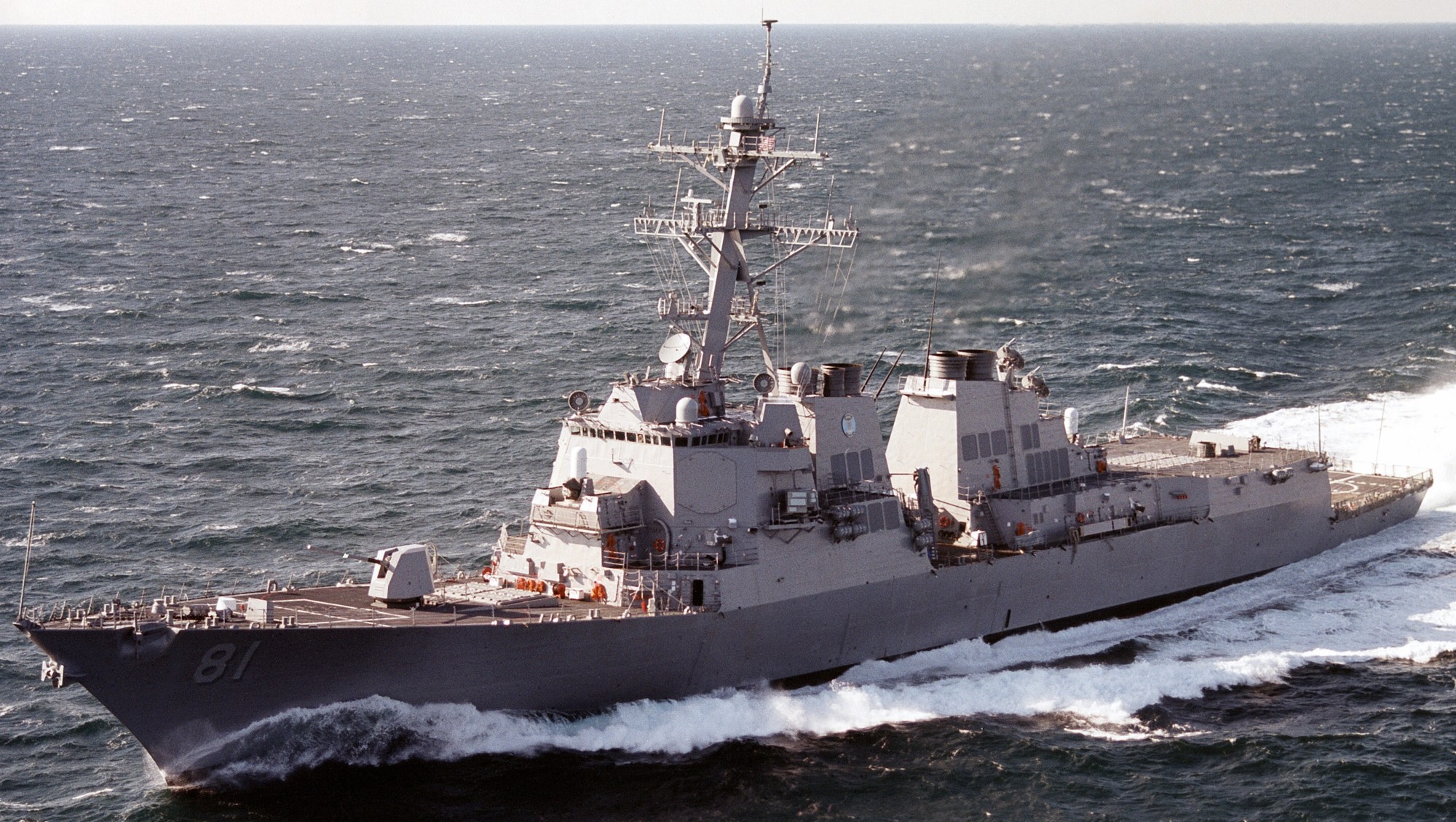 trials - February 2001 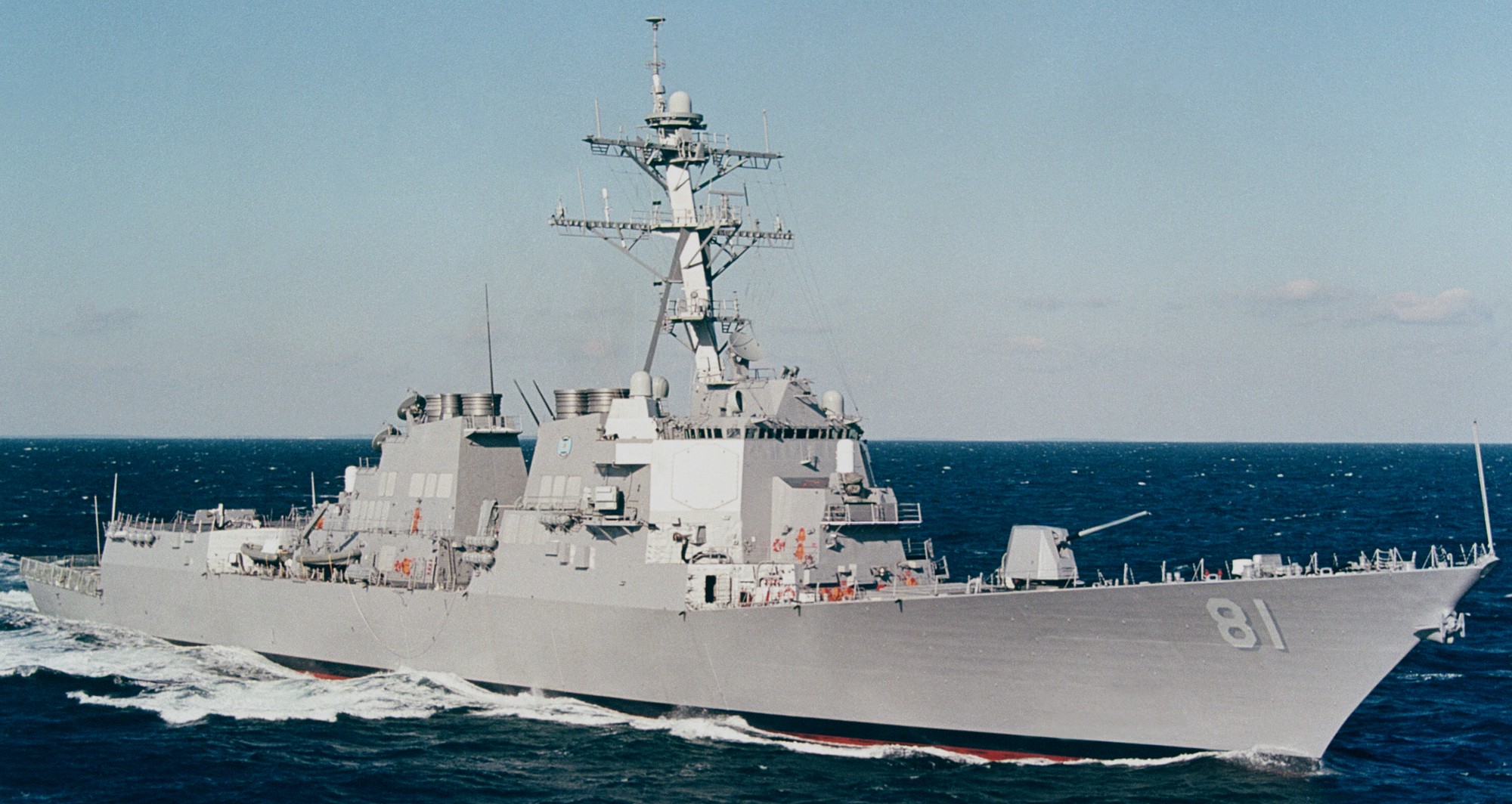 trials - February 2001 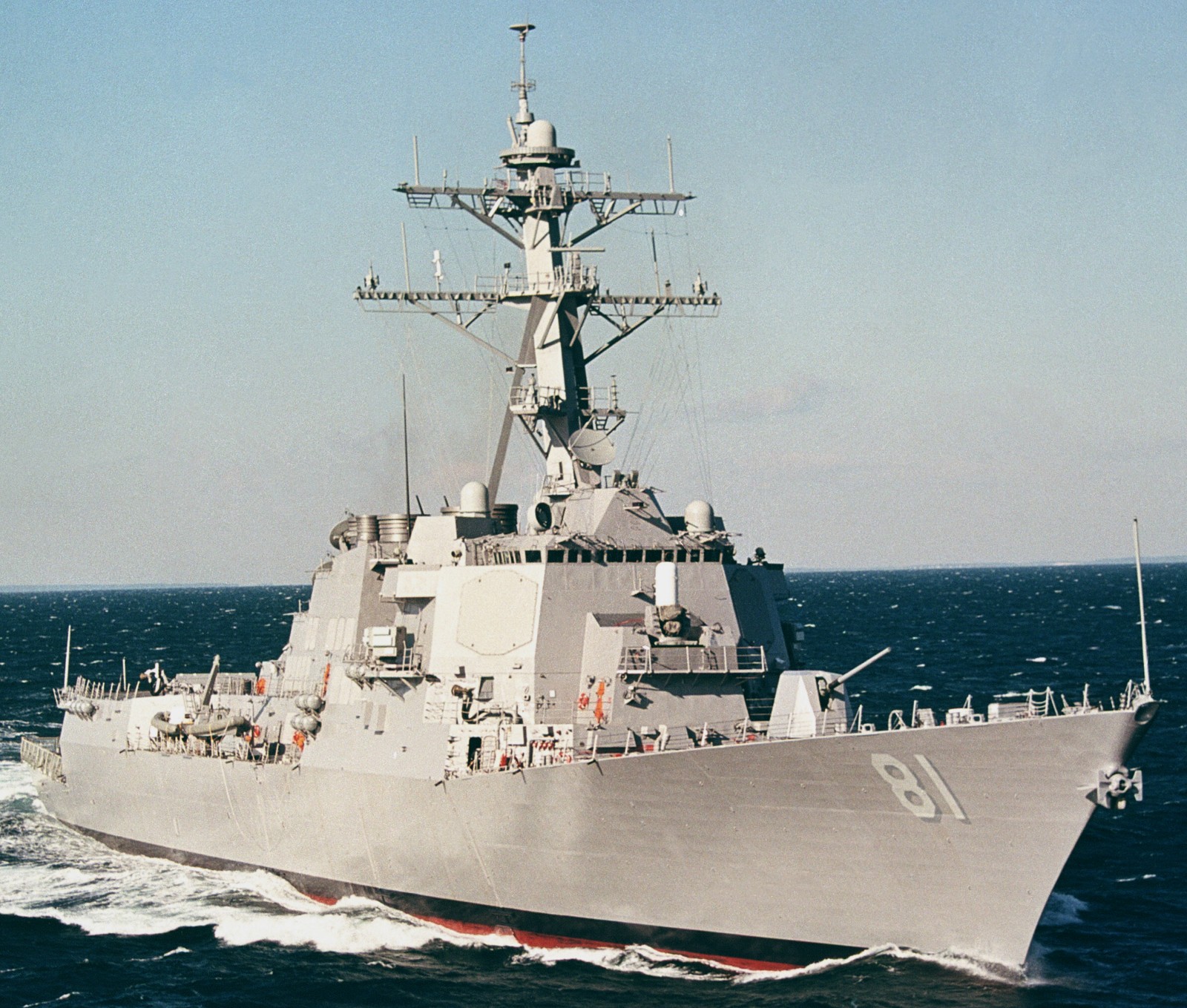 trials - February 2001 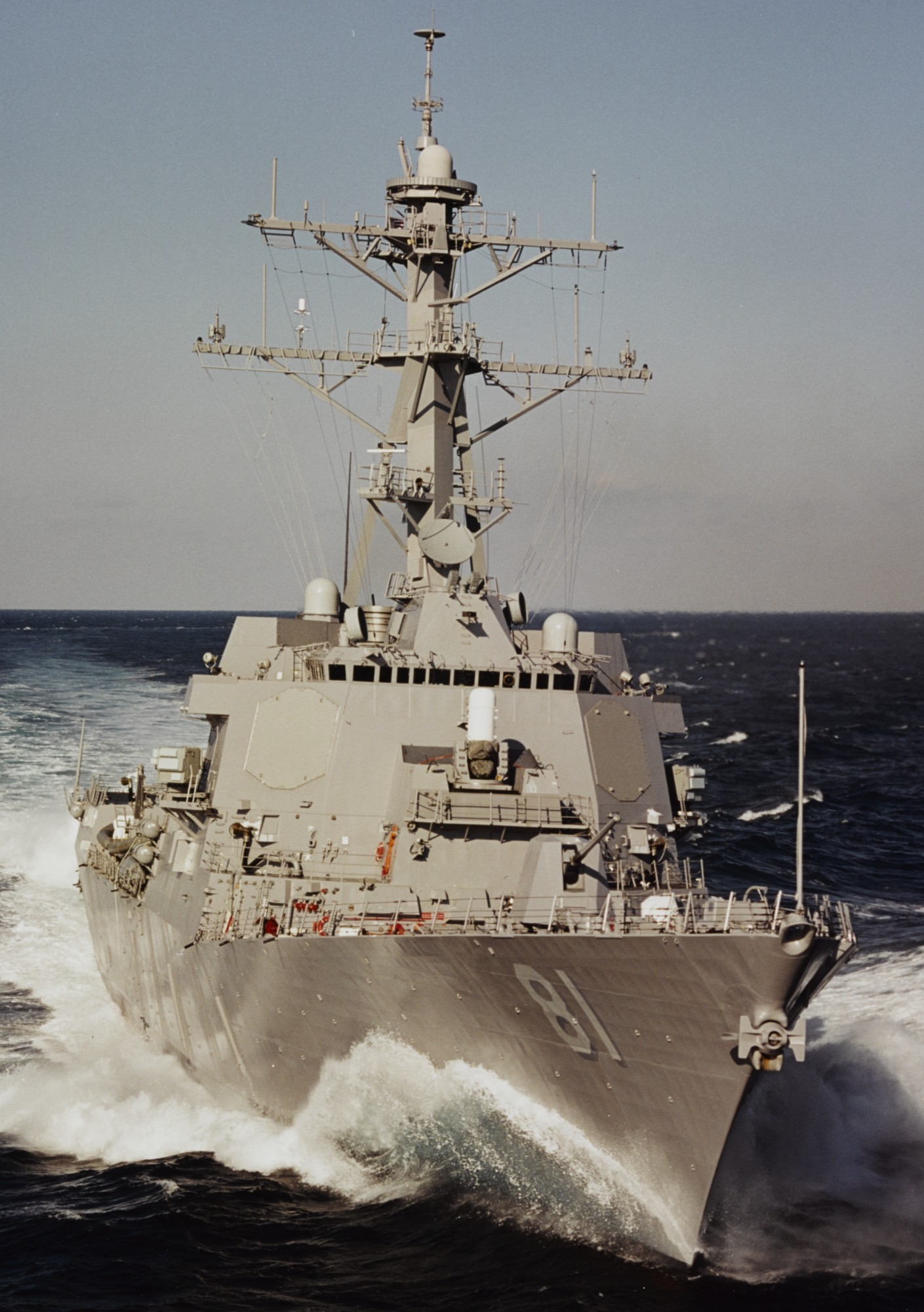 trials - February 2001 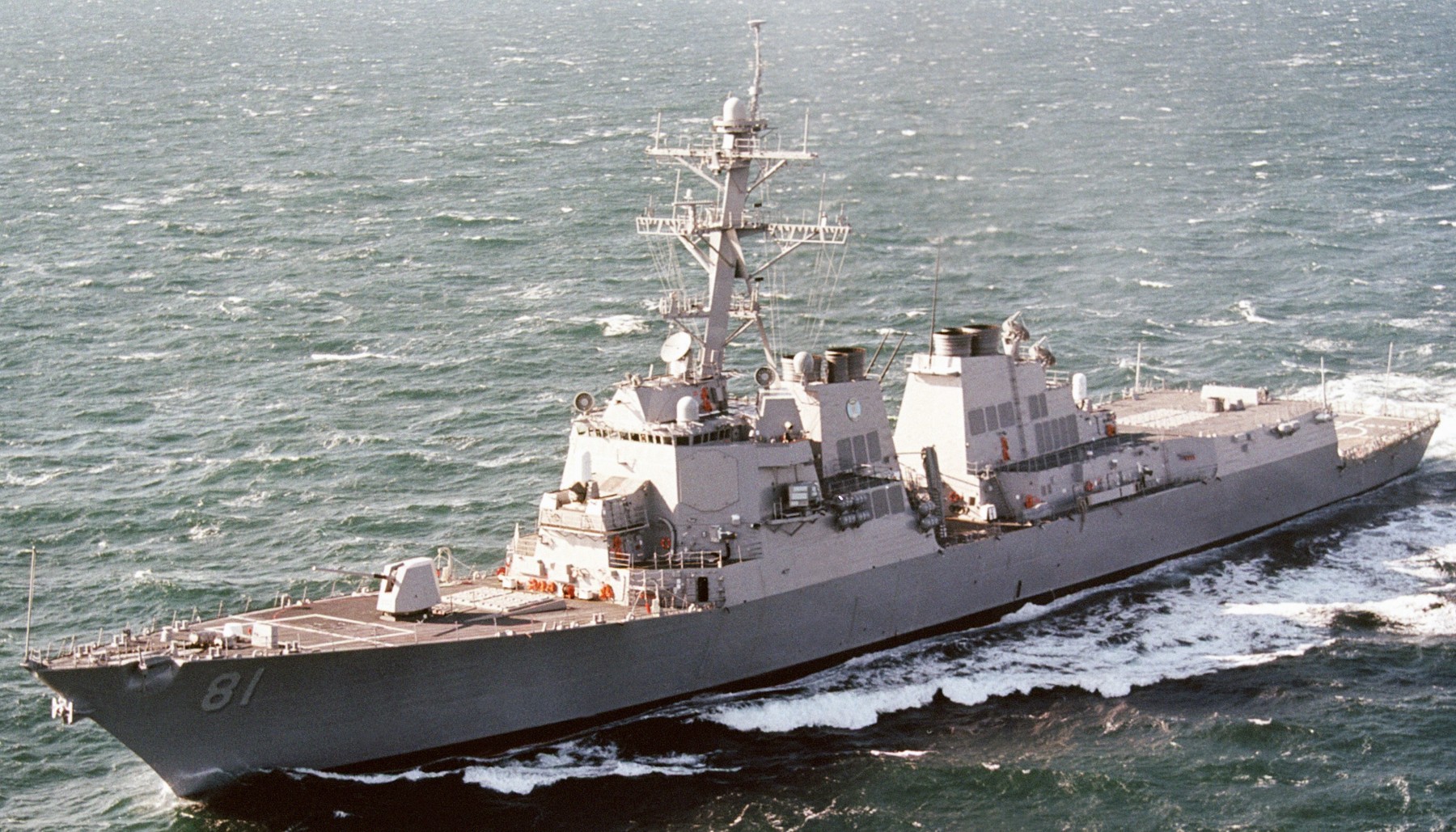 trials - February 2001 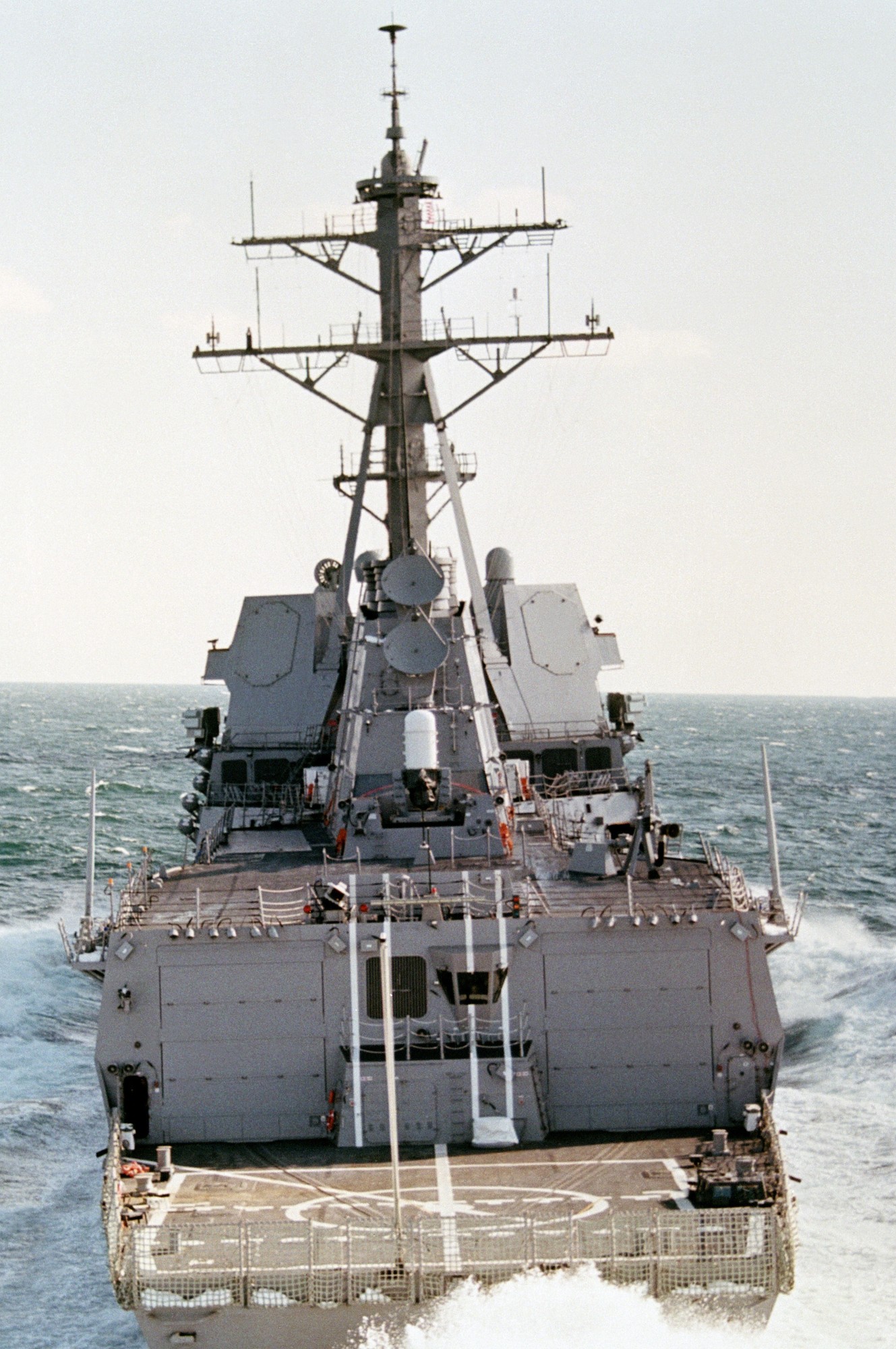 trials - February 2001 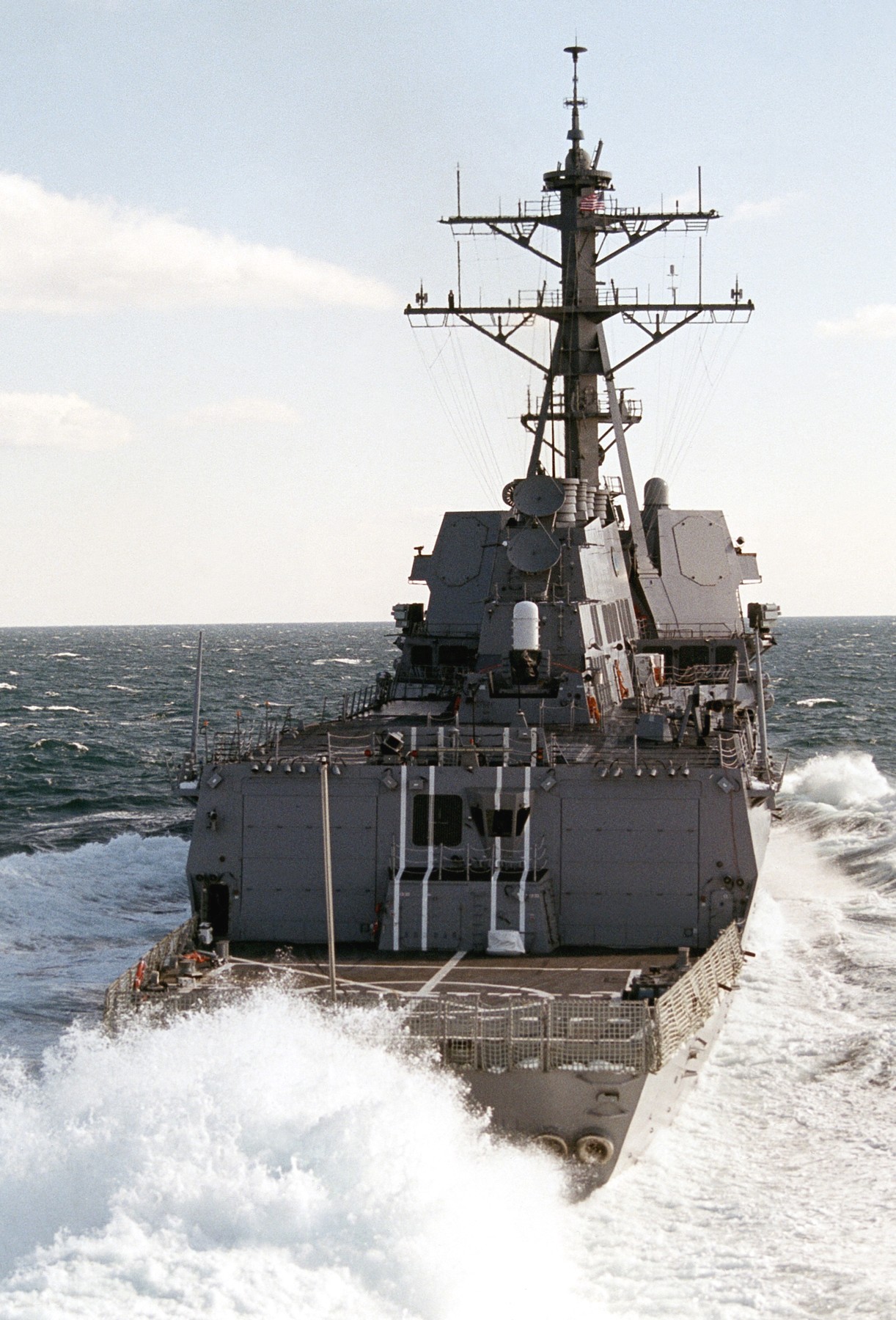 trials - February 2001 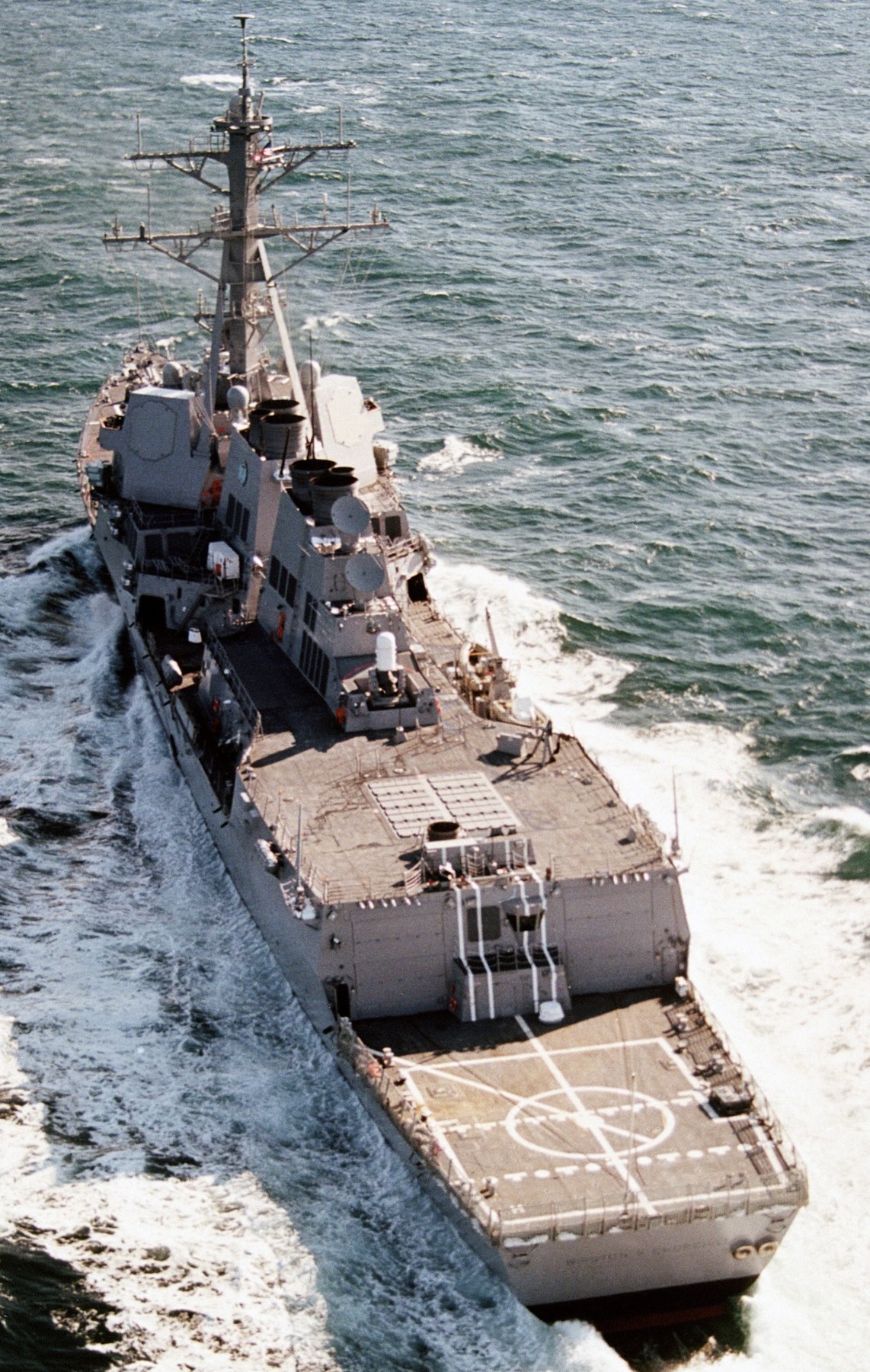 trials - February 2001 |
||
|
USS Winston S. Churchill (DDG
81): On the 6th of January 1995, Bath Iron Works Corporation was awarded the contract to construct the 4th American warship to be named in honor of an Englishman, the USS WINSTON S. CHURCHILL. Construction commenced with the keel being laid down in May of 1998, and was completed April 1999. On May 24, 2000 the US Navy detonated the first of three seven-ton underwater explosive devices near USS WINSTON S. CHURCHILL for her Shock Trials. The Shock Trials were conducted to assess the survivability of the newly constructed ship; during these massive explosions the USS Winston S. Churchill sustained only minor damage. She was launched on the 17th of April and delivered on the 13th of October 2000. The 9,500-ton, 513-foot- long Aegis equipped Arleigh Burke-Class destroyer was commissioned at her homeport of Norfolk, Virginia on March 10, 2001. Mrs. Janet Langhart Cohen, the ship’s sponsor and wife of then-Secretary of Defense William S. Cohen, and Lady Mary Soames, Sir Winston Churchill’s daughter and the ship’s honorary sponsor from the United Kingdom, took part in the ceremony. Upon her commission Commander Michael T. Franken (now Rear Admiral) took the first watch as her Commanding Officer. Commander (Rear Admiral) Franken and his crew put the USS Winston S. Churchill to sea for her first major underway. On August 22, 2001, USS Winston S. Churchill pulled into Portsmouth, England, for her historic first visit. She then returned to Norfolk in October. USS WINSTON S. CHURCHILL is the first ship to be equipped with the new 5-inch/62 gun mount designed to shoot an extended range guided munitions with incredible accuracy at targets nearly 60 miles away. She is also the only U.S. Navy ship to have a Royal Navy officer assigned as ship’s company. As part of the Personnel Exchange Program, Lieutenant Drewett, Brian J., RN, is serving as the ship’s navigator for a two-year tour of duty. The Churchill is also the only U.S. Naval Warship to fly a foreign ensign. The Royal Navy’s White Ensign is flown in addition to the Stars and Stripes. USS WINSTON S. CHURCHILL is the fifth U.S. warship to be named in honor of an Englishman and the 16th warship to be named after a foreign national - the only one in active service today. On the 11th of September, 2001, all ships were put underway to defend our nation and provide security along the U.S. Coastlines. At that time she shifted from peace time posture into wartime operations. Three days after later the USS WINSTON S. CHURCHILL received honors from the German Marine destroyer FGS Lütjens (D 185) as she passed abeam. Lütjens hoisted the Stars and Stripes at half-mast and manned her rails in support of the United States. Shortly thereafter on September 24, USS WINSTON S. CHURCHILL came to the aid of a 35-foot Bertram sport fishing boat in distress, about 40 miles off the coast of Currituck, N.C. The destroyer was conducting flight deck-landing qualifications with an aircraft from the Norfolk-based Helicopter Support Squadron Six around 6:50 p.m., when a distress call came in. July 16, 2002, she went back to her birthplace to receive a $25 million equipment upgrade after her maiden deployment. The guided-missile destroyer returned to Bath Iron Works in May for the tune-up, known as the Post Shakedown Availability (PSA). The work come after a deployment to the United Kingdom and Norway that drew international attention because of her mission and namesake. May 29, 2003, USS WINSTON S. CHURCHILL returned to Naval Station Norfolk after a five-month combat deployment, as part of USS Theodore Roosevelt CSG in eastern Mediterranean, supporting Operation Iraqi Freedom. November 8, 2004, the guided-missile destroyer pulled to Portsmouth, England, for a routine port visit upon conclusion of the Royal Navy-sponsored Joint Maritime Course-043. After the port call in Portsmouth, the USS WINSTON S. CHURCHILL returned to Virginia. August 22, 2005, USS WINSTON S. CHURCHILL collided with USS MCFAUL (DDG 74) while conducting training operations off the coast of Florida. Damage to Churchill included a 5x10 foot hole on the port side helicopter hangar, a damaged antenna, and a hydraulic leak in the hangar. McFaul sustained damage to its starboard side bow. There were no personnel casualties or flooding on either ship. The collision occurred during a pre-deployment training cycle that required aggressive ship maneuvering at high speeds. Despite being damaged, her crew managed repairs quickly and on November 7, 2005 USS WINSTON S. CHURCHILL departed from Norfolk for a deployment, with USS NASSAU Expeditionary Strike Group Five (ESG-5), in support of the Global War on Terrorism. Her mission was to provide forward naval presence and ensue the world’s oceans remain free and accessible. Midway through her deployment, while operating in the Indian Ocean, she encountered pirates. On January 21, 2006, her Sailors boarded a suspected pirate vessel and discovered small-arms weapons on board, approximately 54 miles off the eastern coast of Somalia. Upon being relieved of her watch in April of 2006, the USS WINSTON S. CHURCHILL transited through the Suez Canal, marking the end of more than four months of Maritime Security Operations in the U.S. 5th Fleet area of operations. She would return again to conduct operations in support of the Global War on Terrorism in May of 2007, after short stops in Philadelphia and New York City for Fleet Week. The deployment schedule continued in 2007, as she left as a member of the USS HARRY S. TRUMAN (CVN 75) Carrier Strike Group. November 5, 2008, USS WINSTON S. CHURCHILL departed homeport for a scheduled underway period in which she conducted Maritime Security Operations in the Persian Gulf. On 26 September 2010, USS WINSTON S. CHURCHILL came across a disabled skiff in the Gulf of Aden. After attempts to repair the skiff's engines failed the Churchill took the vessel under tow towards Somalia. On 27 September the skiff sank when the 85 passengers rushed to one side of the skiff during a food delivery causing the vessel to capsize. The Churchill was able to rescue 61 of the passengers and continued towards Somalia on 28 September. |
||
|
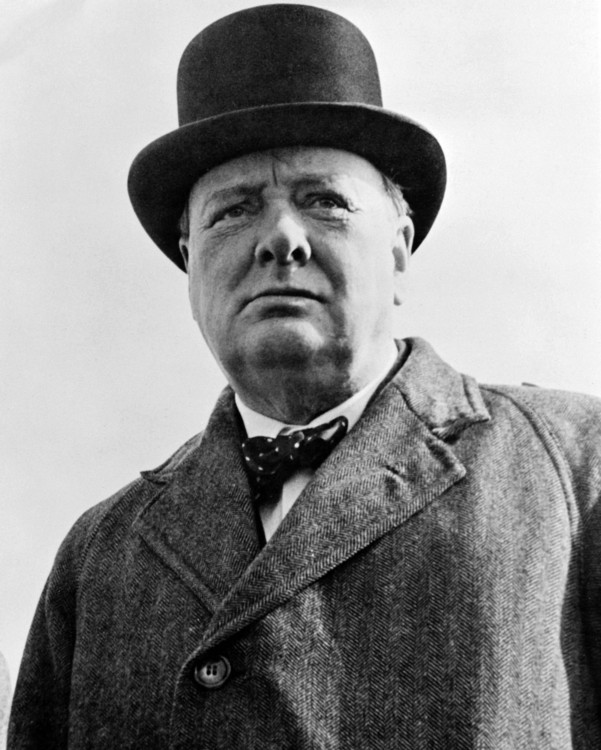
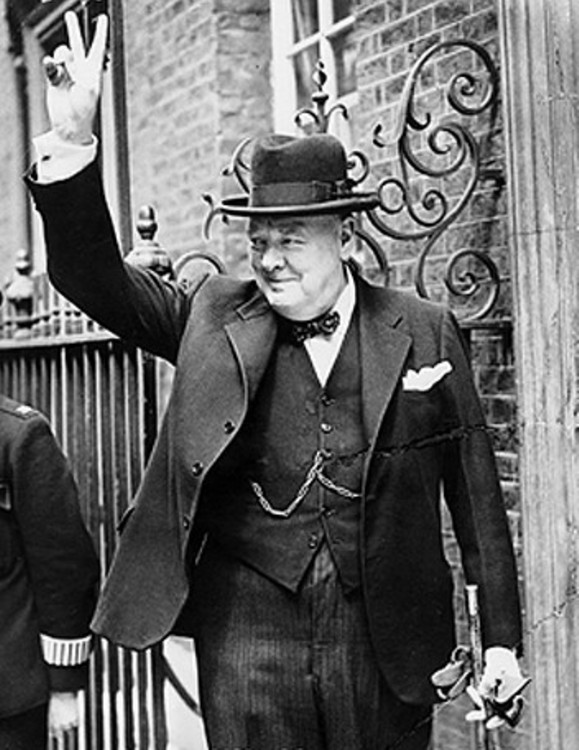
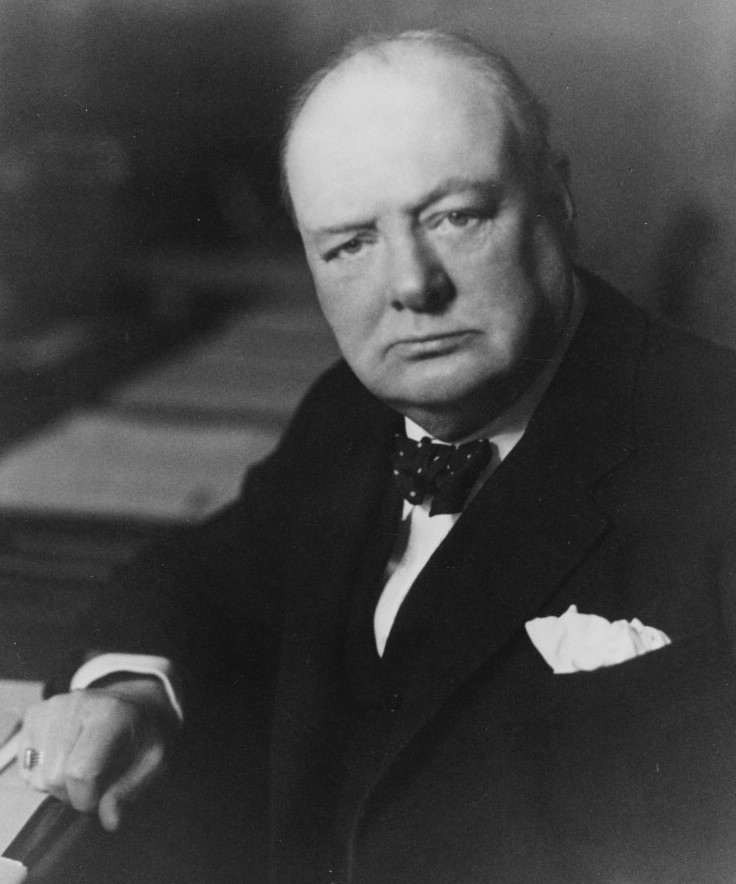
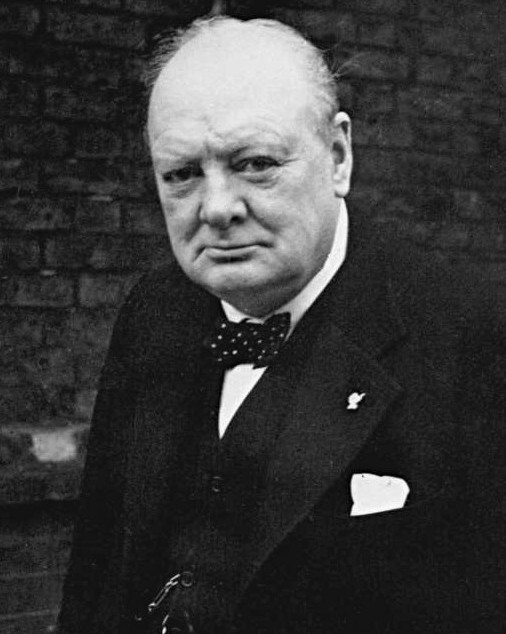
Winston Leonard Spencer Churchill (November 30, 1874 -
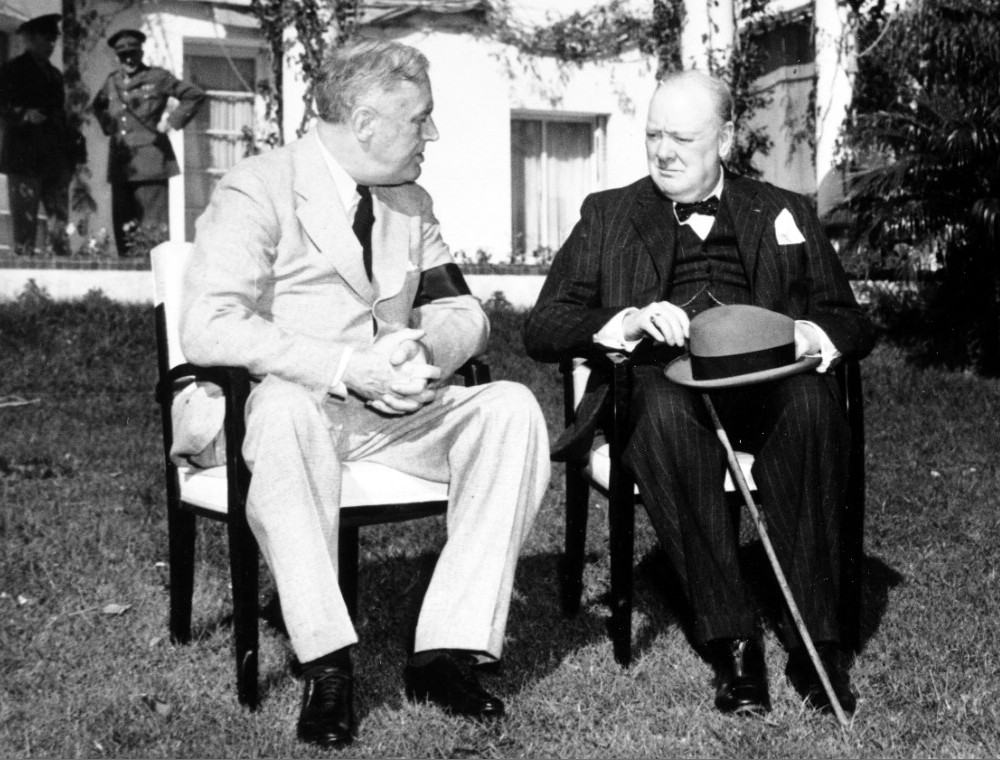
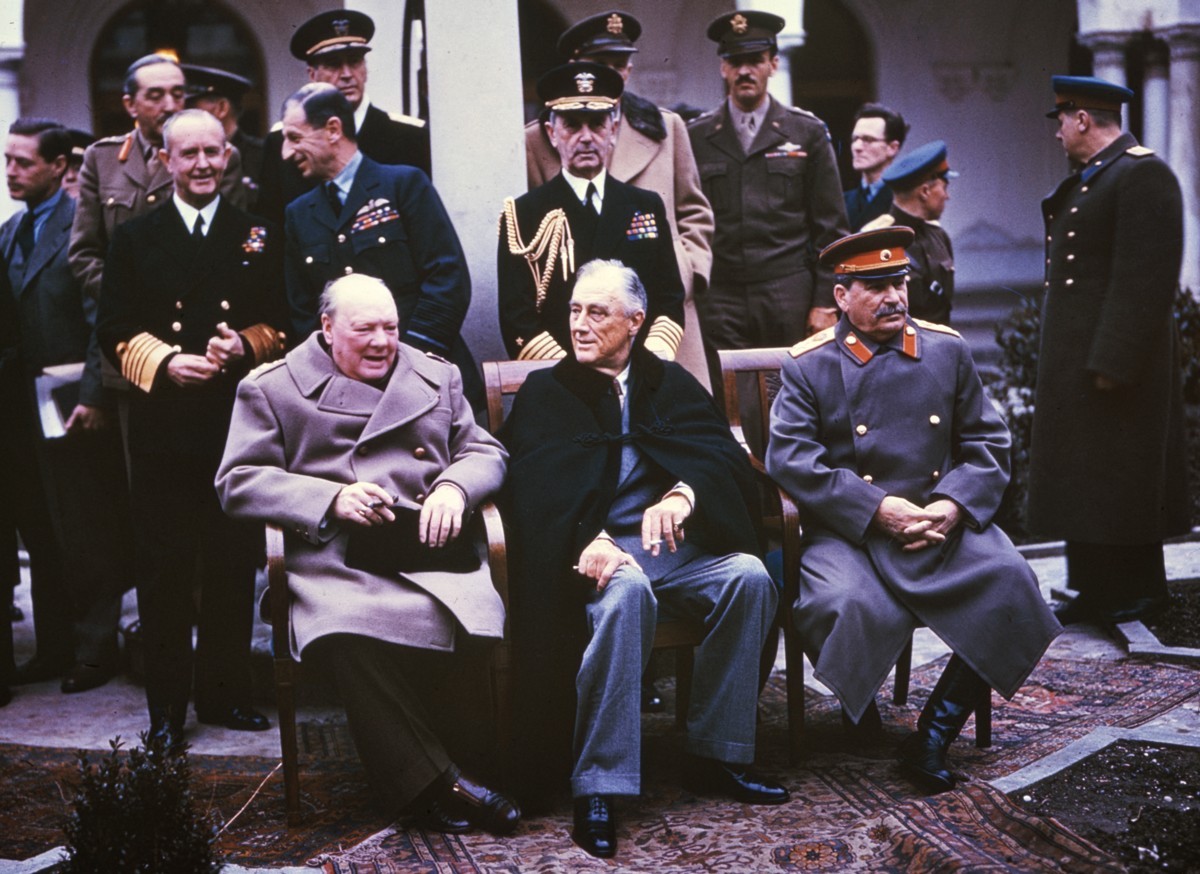
January 24, 1965): The only statesman to achieve high office in both World Wars and to write profusely about his experiences, Winston Churchill dominated the 20th Century like few other individuals. Although best known for his courageous leadership as British prime minister during World War II, Churchill was a formidable political thinker and one of the highest-paid journalists from the days of Queen Victoria's "little wars" to his memoirs of World War II. A larger-than-life character, famous for his trademark cigar and his overblown reputation as a drinker (which he joyfully exaggerated), Churchill was also a talented amateur painter and pilot, soldier, farmer, bricklayer, and orator. When he retired from the House of Commons in 1964, he had spent over six decades in public life, a career that ran from the last great British cavalry charge to the nuclear age. Born in 1874 to Lord Randolph Churchill and an American mother, the former Jennie Jerome, Winston spent a typical upperclass childhood in the hands of nurses and headmasters at a succession of private schools. While he was no more neglected than most boys of his age and class, his sensitive nature recoiled at his parents' aloofness and he always regretted his failure to achieve a close relationship with his father, who died in 1895 at the age of only 45. His mother later became his ardent ally, helping him achieve key assignments as a war reporter and smoothing his career in politics. In late 1900, Churchill was elected to Parliament as a Conservative and took his seat in early 1901. His independent nature soon saw him at odds with his party, and in 1904 he "crossed the floor" to the Liberals, who won a landslide election in early 1906. He served the Liberal government as President of the Board of Trade and Home Secretary, where he helped introduce social legislation that laid the foundations for the later welfare state. In 1911, he became First Lord of the Admiralty (civilian head of the Royal Navy), working feverishly to complete the conversion of ships from coal to oil power. Together with his two First Sea Lords, Prince Louis of Battenberg and Admiral Lord Fisher, Churchill promoted fast, powerful battleships and outbuilt the Germans to maintain British naval supremacy. He founded the Naval Air Service, and made numerous visits to ships and navy bases, where he was admired for his efforts to improve conditions for officers and crews. At Churchill's direction, the fleet was at its war station before war broke out in 1914, but it was never able to engage the Germans in a decisive early sea battle. Worse, Churchill's support of a failed campaign to force entry in the Dardanelles "by ships alone" caused his removal from the Admiralty in May 1915. Reporting to his regiment in the trenches of Belgium, he was under fire for three months before returning to Parliament. In 1917 he was appointed Minister of Munitions and, in 1919, Secretary for War and Air. As Colonial Secretary in 1921-22, Churchill enjoyed two notable diplomatic achievements. At the 1921 Cairo conference, he helped establish the borders of the modern Middle East, though he failed in his attempt to set up a Kurdish homeland "to protect the Kurds against some future bully in Iraq." Closer to home, he helped to forge the Irish Treaty, which kept the peace in Ireland for 50 years. Michael Collins, the IRA revolutionary with whom Churchill negotiated, said from his deathbed: "Tell Winston we could have done nothing without him." In 1924, Churchill rejoined the Conservatives, serving as Chancellor of the Exchequer through spring 1929. He returned Britain to the gold standard and ran a government newspaper, "The British Gazette," during the general strike of 1926. He became increasingly separated from the Conservatives in the 1930s, first over the plan to grant India dominion status; later over Britain's slow rearmament in the face of Hitler's aggression; and finally when he championed King Edward VIII, who abdicated in 1936. Not until war had broken out again in 1939 was he asked to rejoin the Government - again becoming First Lord of the Admiralty, which according to legend, signaled to its ships: "Winston is Back." He renewed his energetic naval policies but was repulsed in an attempt to wrest Norway from the invading Germans in April 1940. With the Nazi blitzkrieg pouring into the Low Countries, Churchill succeeded Neville Chamberlain as prime minister on May 10, 1940 and presided over a year of devastating defeats. In those months, when Britain stood alone and almost unarmed against Hitler, as Edward R. Murrow said, "he mobilized the English language and sent it into battle." After Hitler attacked Russia in June 1941, Churchill vowed to help the Soviets, declaring, "if Hitler invaded hell I would at least make a favorable reference to the Devil in the House of Commons." Establishing close ties with President Roosevelt, he secured American military aid and moral support, but his ultimate goal was to have America fighting at Britain's side. When the United States was drawn into the war by Japan's attack on Pearl Harbor, Churchill admitted that he "slept the sleep of the saved and the thankful." Churchill was disappointed by the failure to control an expansionist Soviet Union toward the end of the war, and watched with mounting concern another totalitarian state rise dominant in Europe. To the amazement of many outside Britain, his party was routed in the 1945 general election and he became Leader of the Opposition. His famous "Iron Curtain" speech at Fulton, Missouri in 1946 was the opening salvo and warning of the Cold War, unpopular at the time but later considered prophetic. In 1949, he predicted the demise of Communism, "ignited by a spark coming from God knows where, and in a moment the whole system of lies and oppression is on trial for its life." In 1951 the Conservatives regained an electoral majority and Churchill became prime minister again, but he was disappointed in his effort to achieve a peaceful settlement of cold war antagonisms, and his domestic record was indifferent. He became a Knight of the Garter, acquiring the title "Sir Winston," in 1953. Churchill won the 1953 Nobel Prize for Literature, bestowed for his numerous books on history, biography and politics. His greatest biography was "Marlborough" (4 volumes, 1933-38); his best-known historical work was "A History of the English-Speaking Peoples" (4 volumes, 1956-1958). His personal memoirs, "My Early Life" (1930), "The World Crisis" (5 volumes, 1923-31) and "The Second World War" (6 volumes, 1948-53) are readable personal accounts of his Victorian youth and the two world wars. In all, Churchill wrote over 40 titles in over 60 volumes, nearly 1,000 articles and uncounted speeches. His official life, by his son Randolph and Sir Martin Gilbert, is the longest biography ever published. Asked to summarize Churchill in one sentence, Gilbert said: "He was a great humanitarian who was himself distressed that the accidents of history gave him his greatest power at a time when everything had to be focused on defending the country from destruction, rather than achieving his goals of a fairer society." To Martin Gilbert also we owe these last lines from Sir Winston's biography: "When at last his life's great impulses were fading, Churchill's daughter Mary paid him perhaps the most eloquent tribute of all: 'In addition to all the feelings a daughter has for a loving, generous father, I owe you what every Englishman, woman & child does - Liberty itself.'" Suffering from age and poor health, he retired in April 1955, but remained a Member of Parliament for another nine years. In 1963 he was declared an Honorary Citizen of the United States by President John F. Kennedy. He died at age 90 on January 24, 1965.
|
||
| patches + more | ||
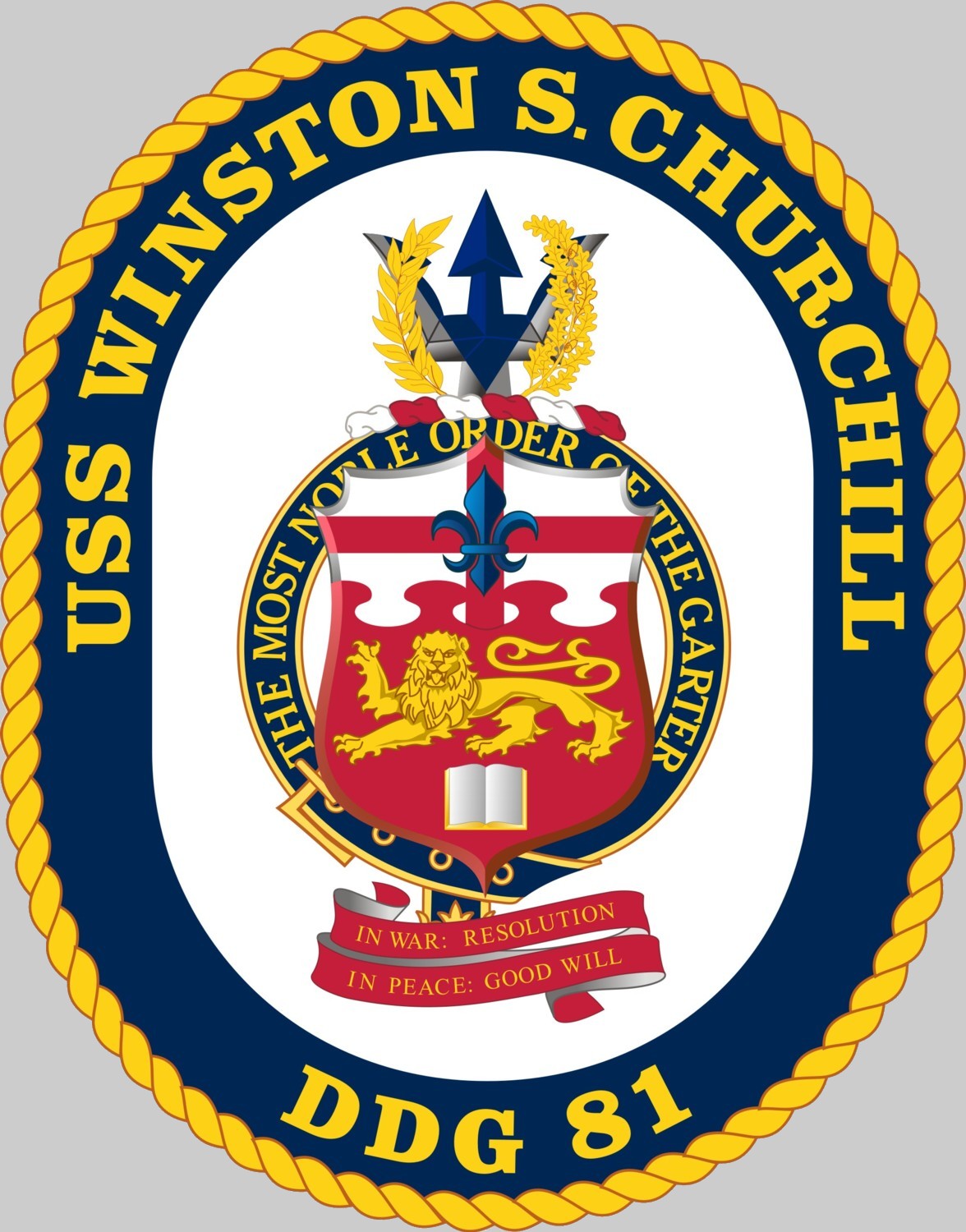  |
||
|
|
seaforces.org |
USN ships
start page | |