|
||
|
HOME
|
US Navy -
ships
|
US Navy - air
units
|
USMC - air
units
|
International
Navies
|
Weapon Systems
|
Special Reports |
||
|
US Navy - Guided Missile Destroyer DDG 80 - USS Roosevelt |
||
|
||
| 10/24 | ||
|
Type,
class: Guided Missile Destroyer - DDG; Arleigh Burke
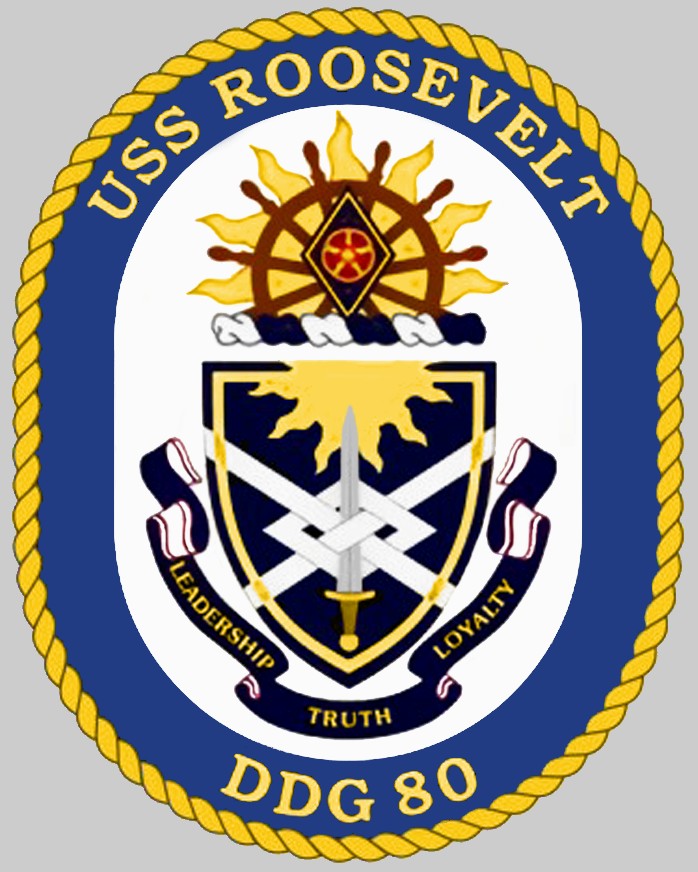
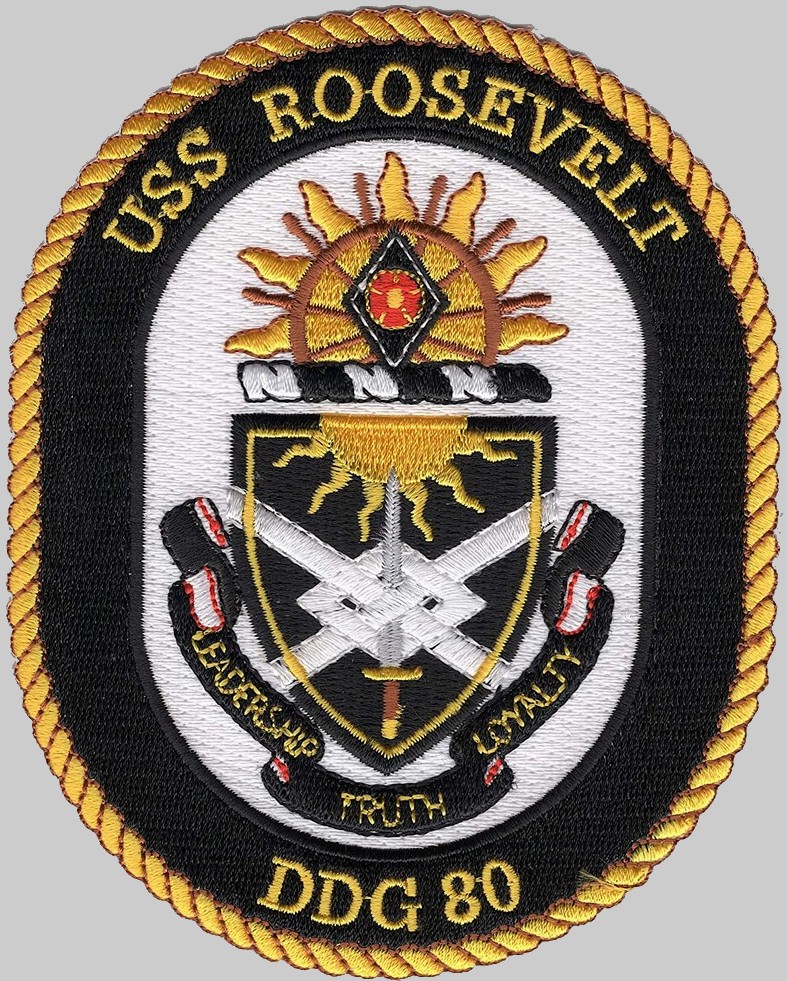
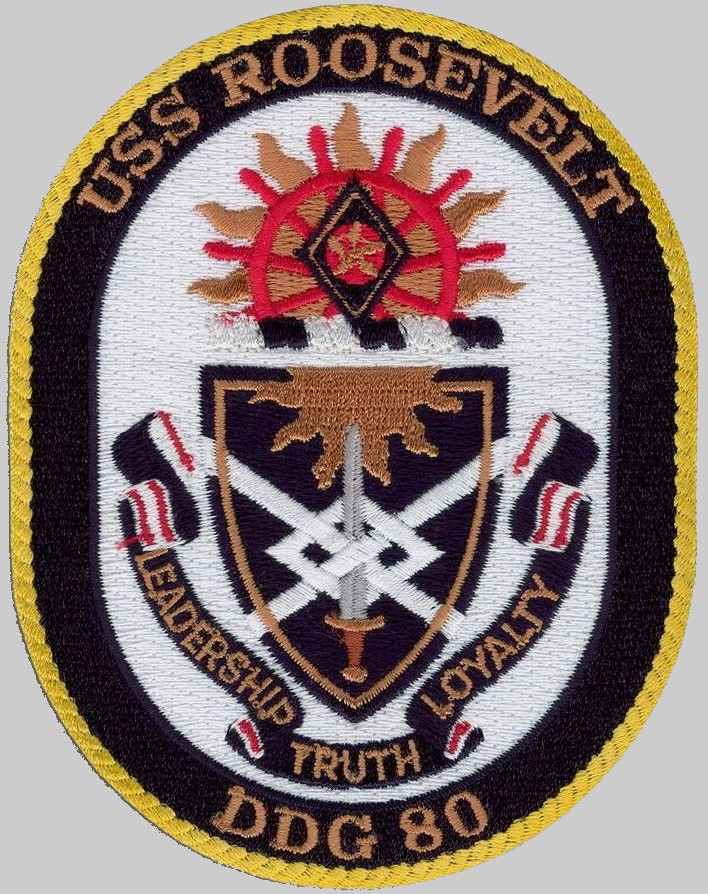
class, Flight IIA Builder: Ingalls Shipbuilding, Pascagoula, Mississippi, USA STATUS: Awarded: January 6, 1995 Laid down: December 15, 1997 Launched: January 10, 1999 Commissioned: October 14, 2000 IN SERVICE Homeport: forward deployed to Naval Station Rota, Spain Namesake: President Franklin Delano & First Lady Eleanor Roosevelt Ships Motto: LEADERSHIP - TRUTH - LOYALTY Technical Data: see: INFO > Arleigh Burke class Guided Missile Destroyer - DDG |
||
| images | ||
 returning to Naval Station Rota, Spain - September 15, 2024  returning to Naval Station Rota, Spain - September 15, 2024  ready to deploy - Naval Station Rota, Spain - April 11, 2024  Naval Station Rota, Spain - March 2024 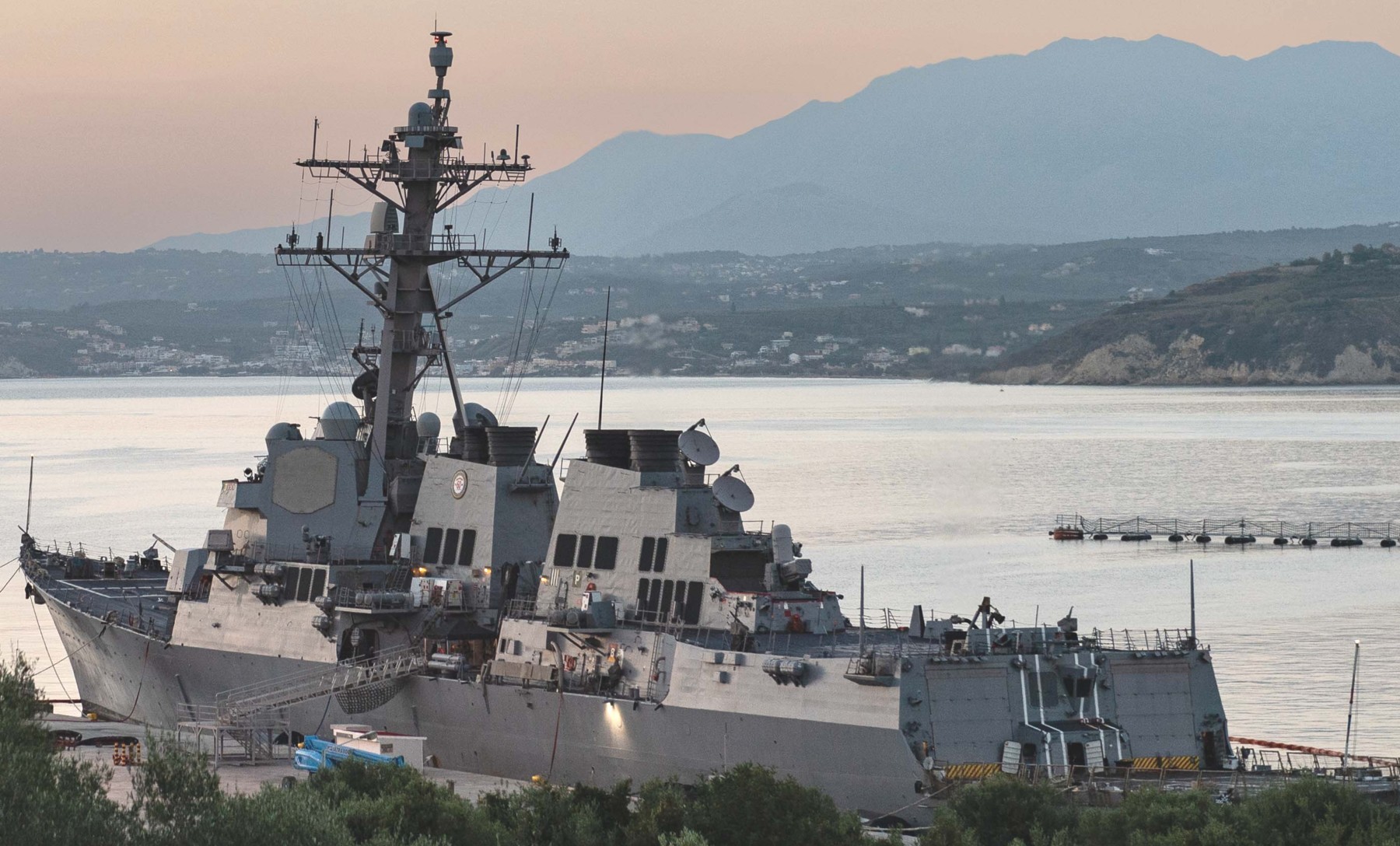 Naval Support Activity Souda Bay, Crete, Greece - October 2023  Mediterranean Sea - October 2023 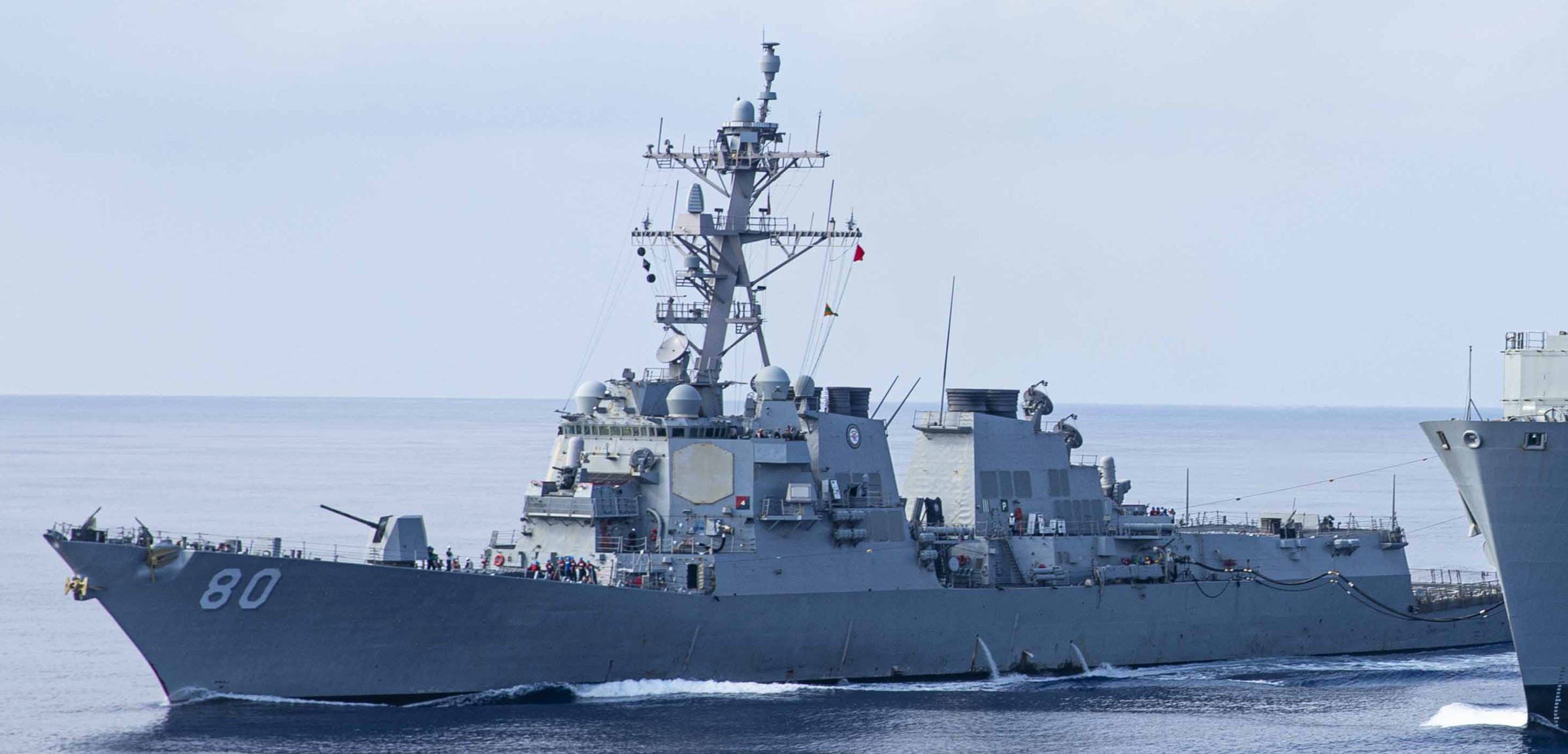 Mediterranean Sea - October 2023  Larnaca, Cyprus - August 2023  Larnaca, Cyprus - August 2023 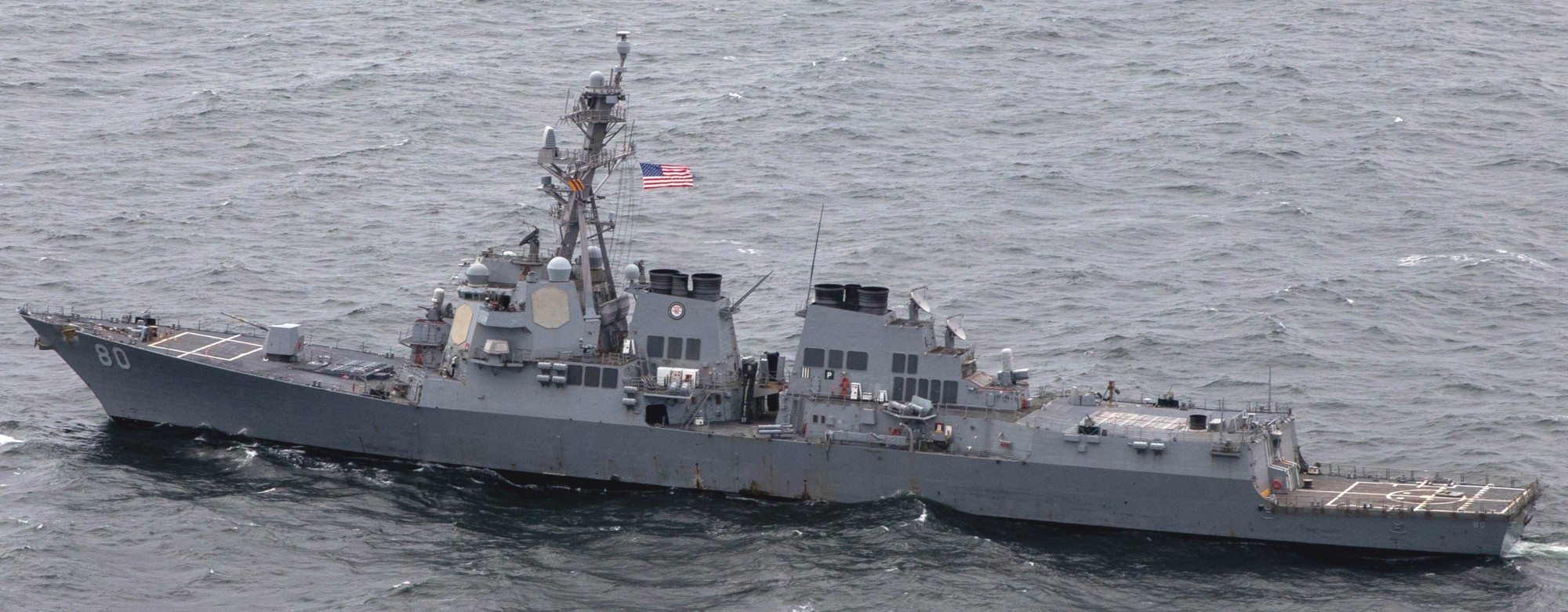 Baltic Sea - August 2023 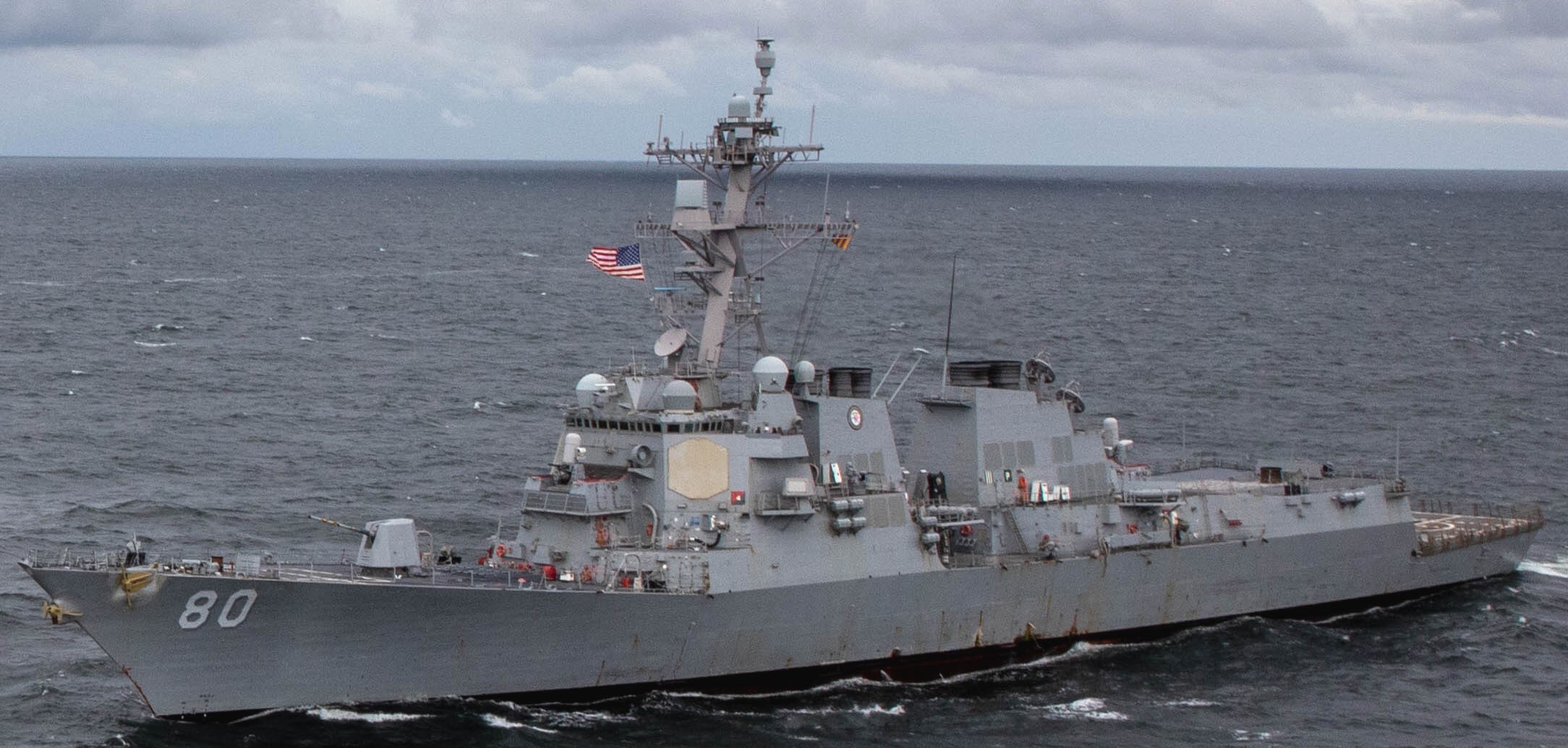 Baltic Sea - August 2023  Riga, Latvia - August 2023 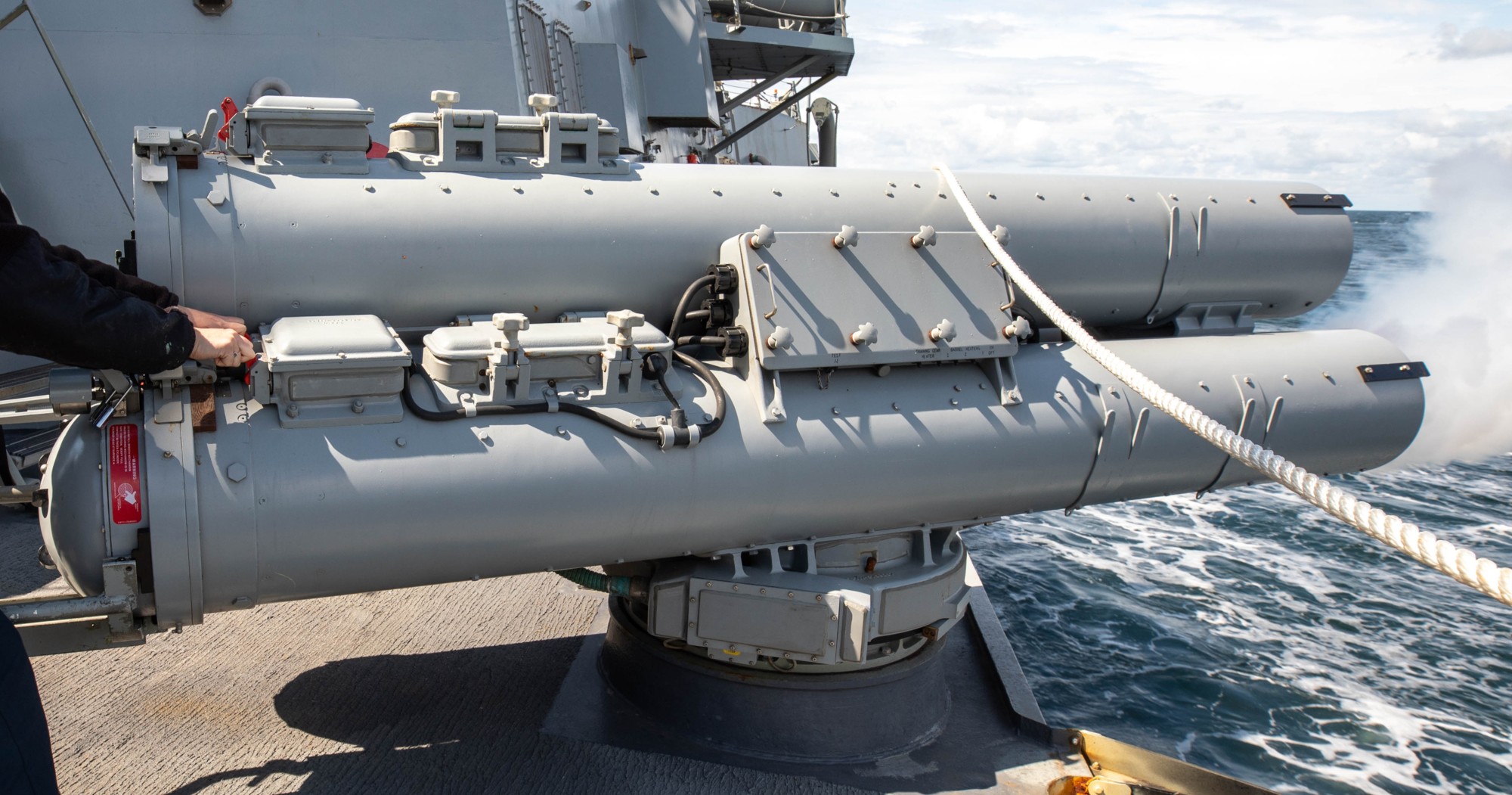 Mk.32 torpedo tube exercise - Baltic Sea - July 2023 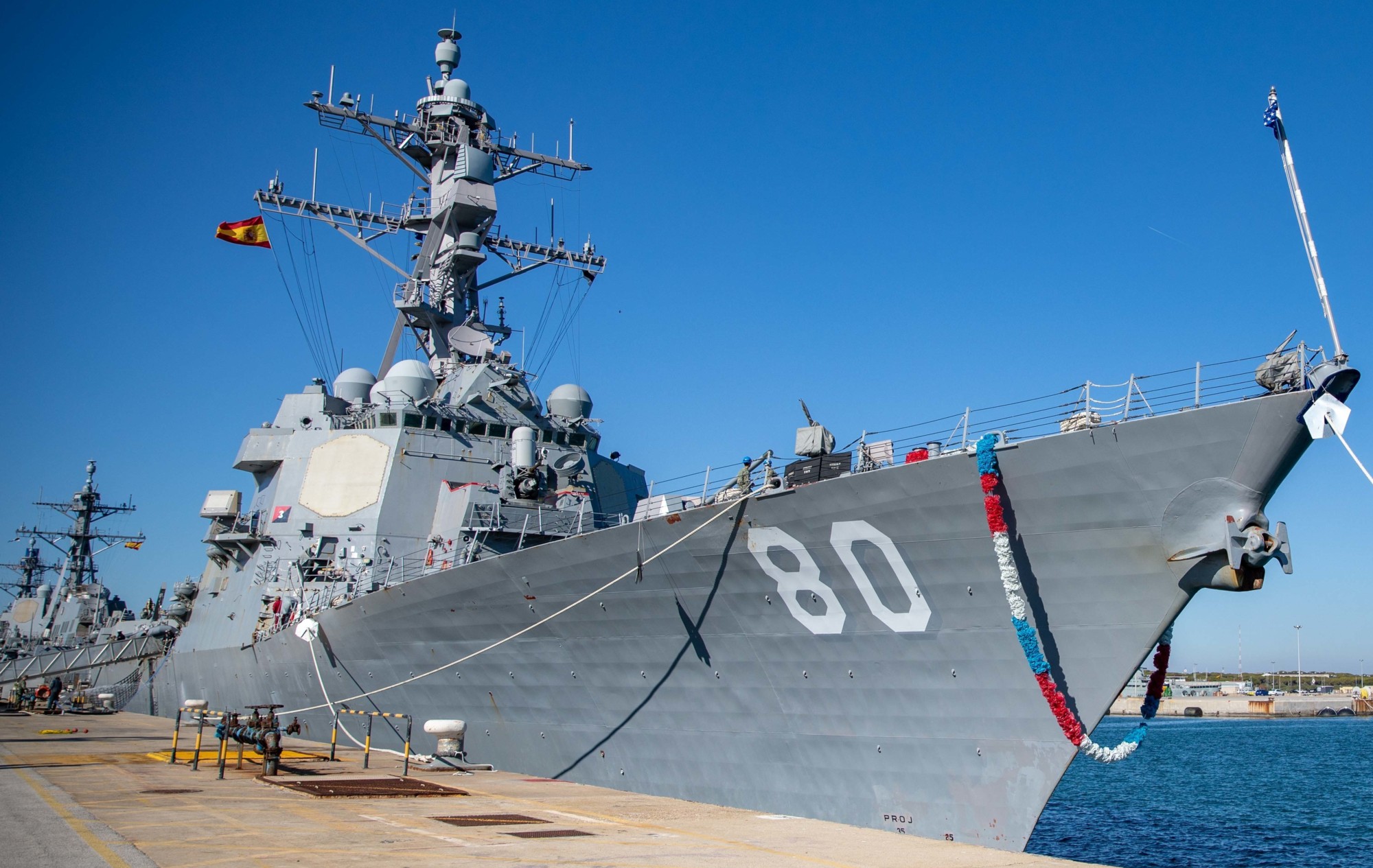 returning to Naval Station Rota, Spain - February 4, 2023  Baltic Sea - January 2023  Tallinn, Estonia - January 2023 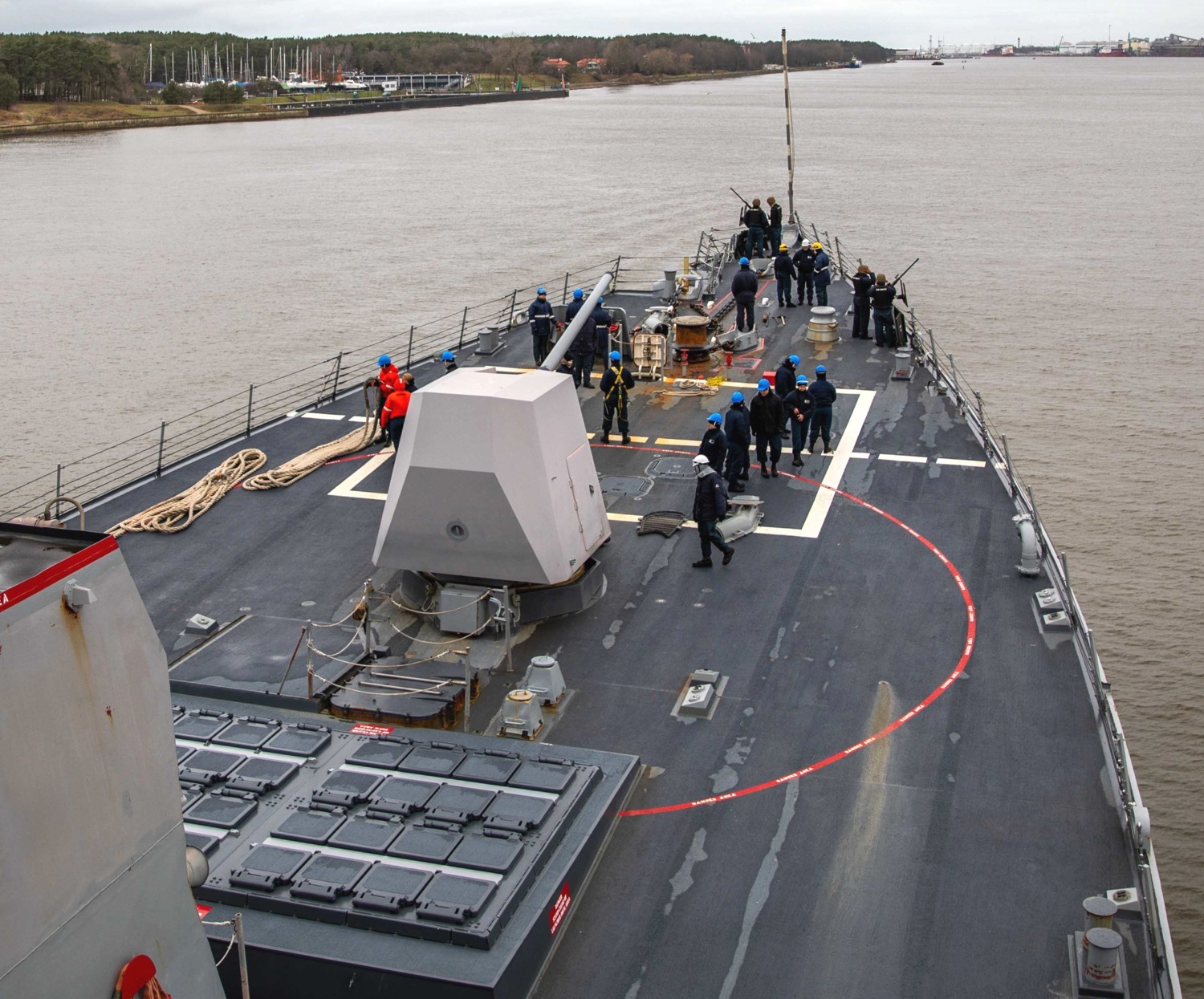 Klaipeda, Lithuania - January 2023 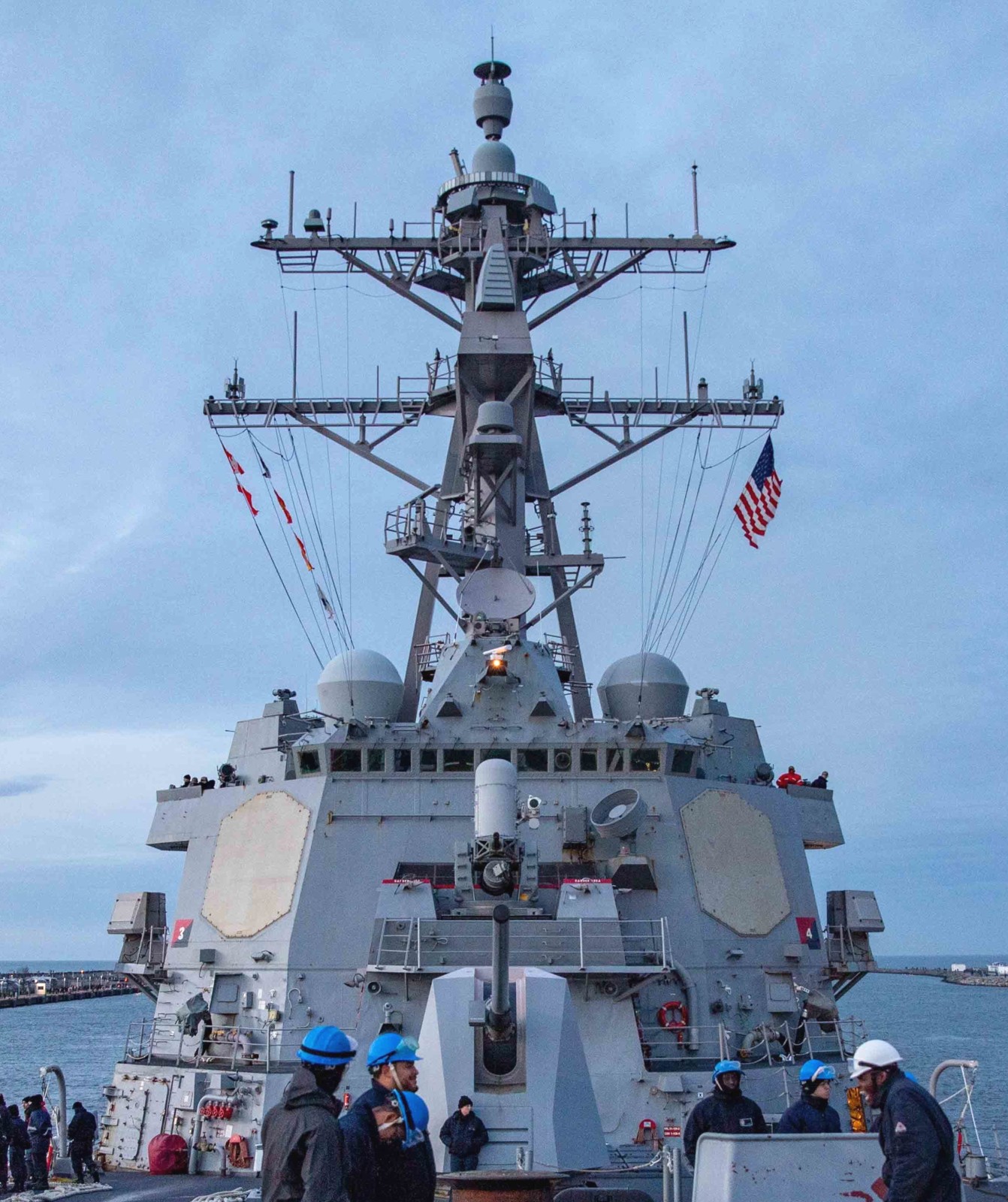 Rostock, Germany - January 2023 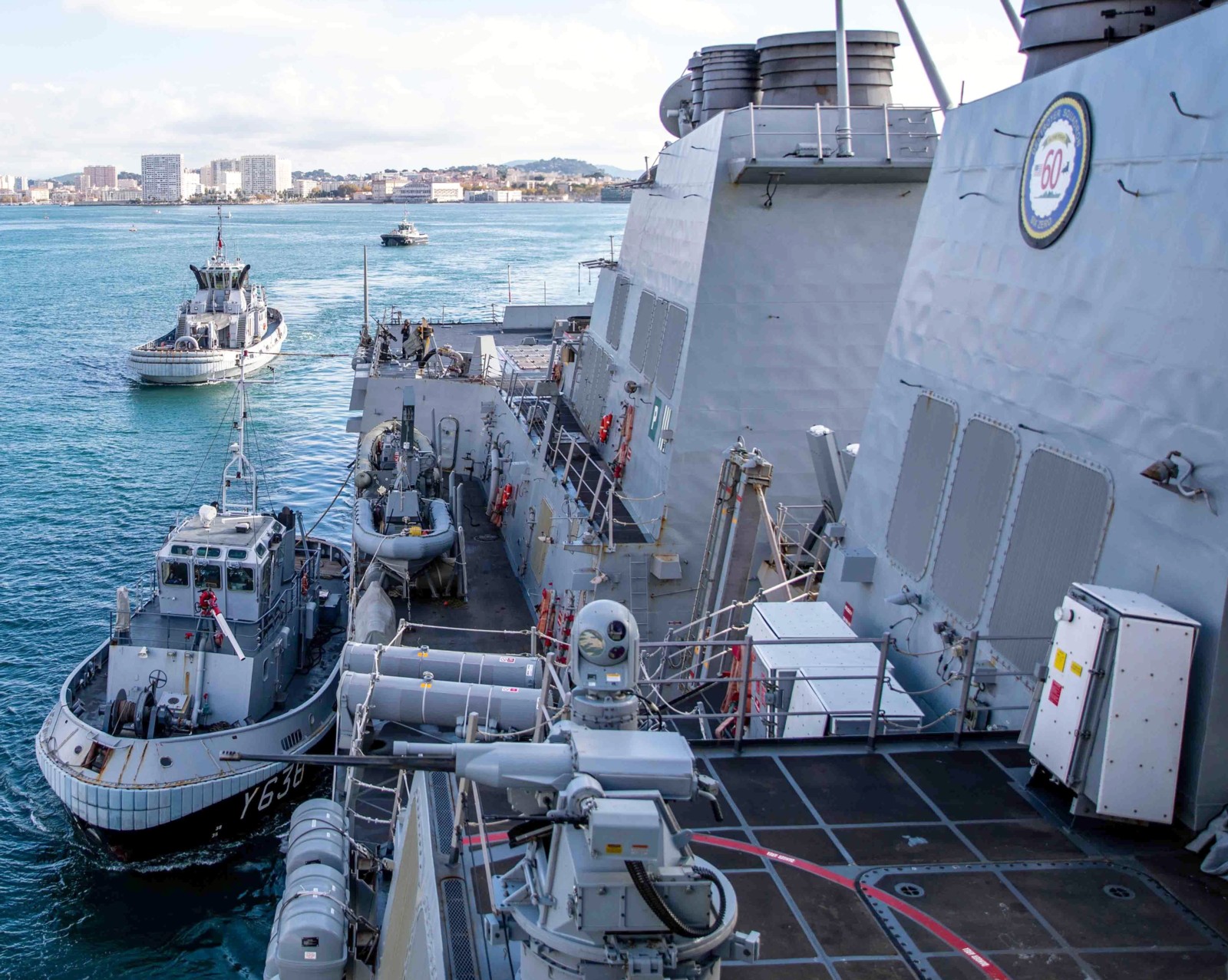 Toulon, France - November 2022 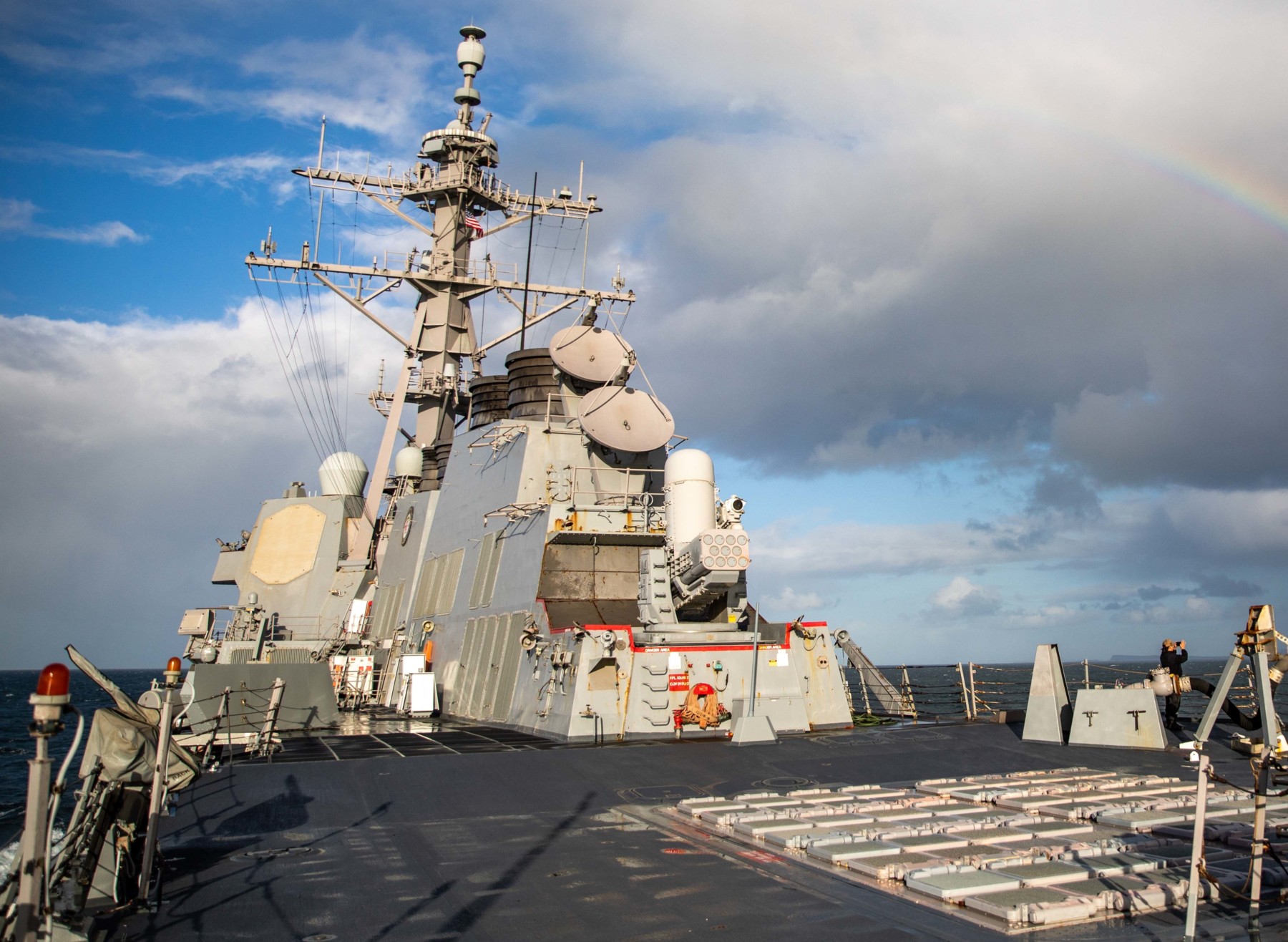 during exercise Joint Warrior 22-2 - The Minch (Strait), Scotland - October 2022  Tromso, Norway - March 2022 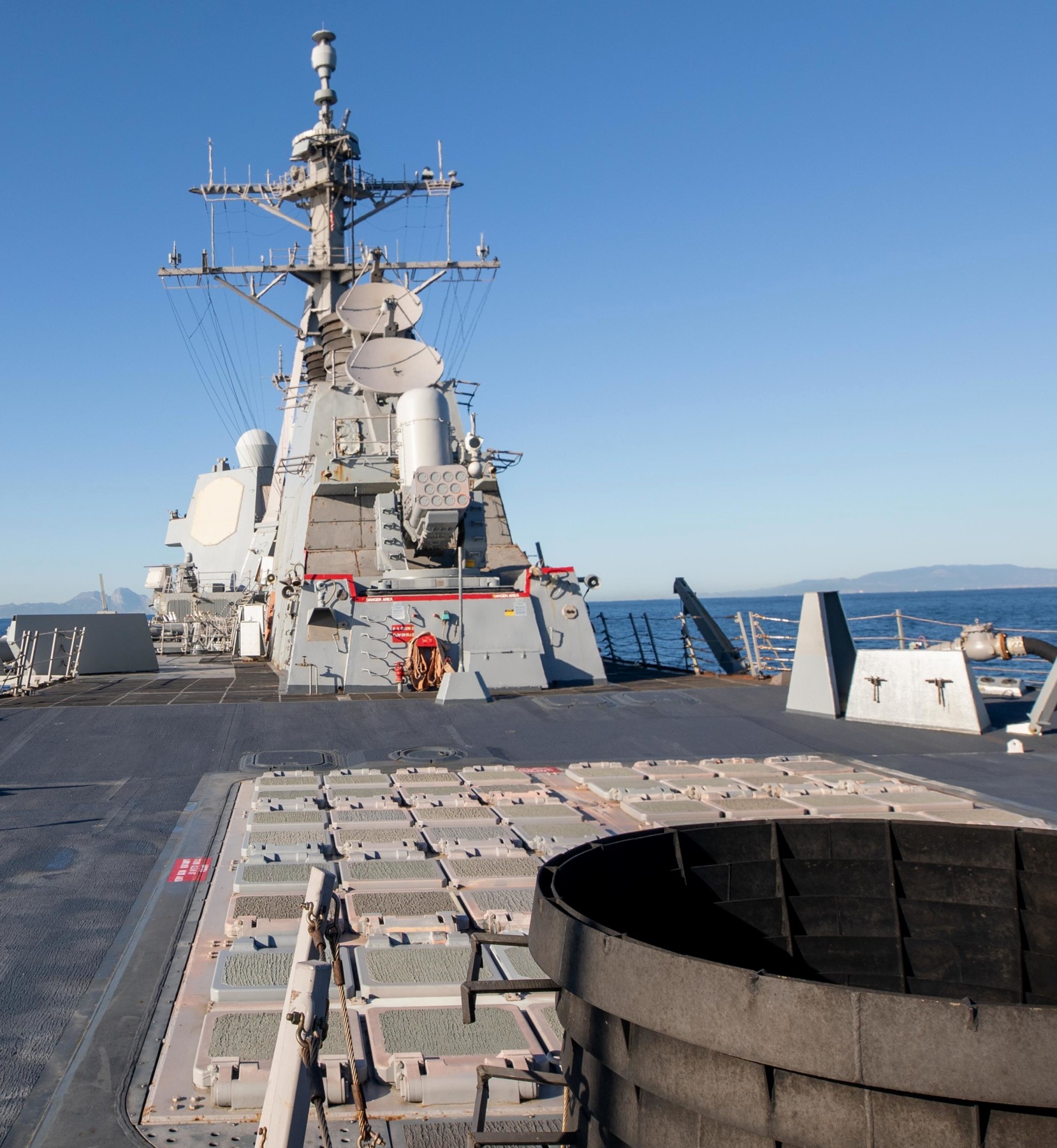 Strait of Gibraltar - February 2022 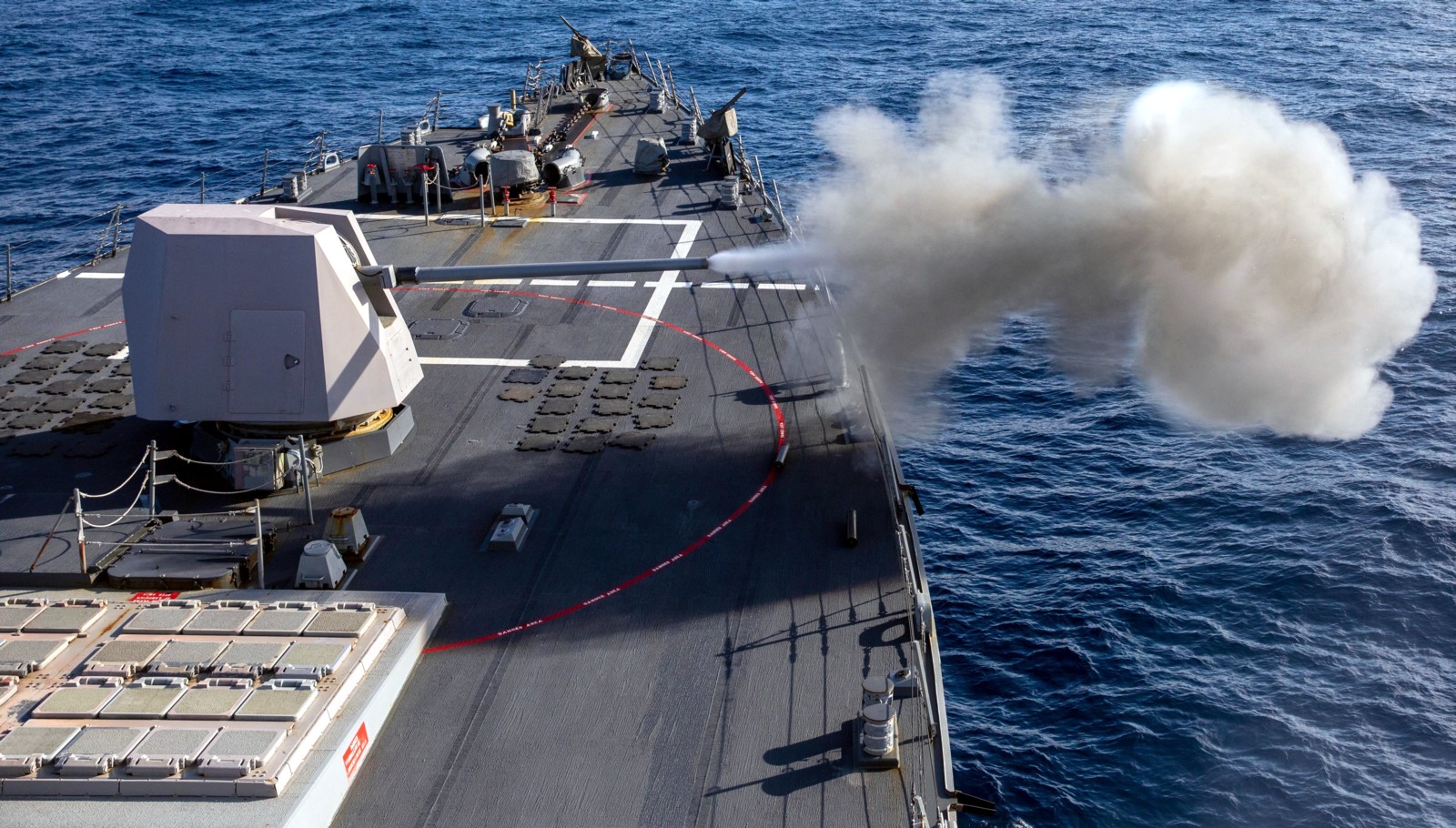 Mk.45 Mod.2 gun fire exercise - Atlantic Ocean - January 2022 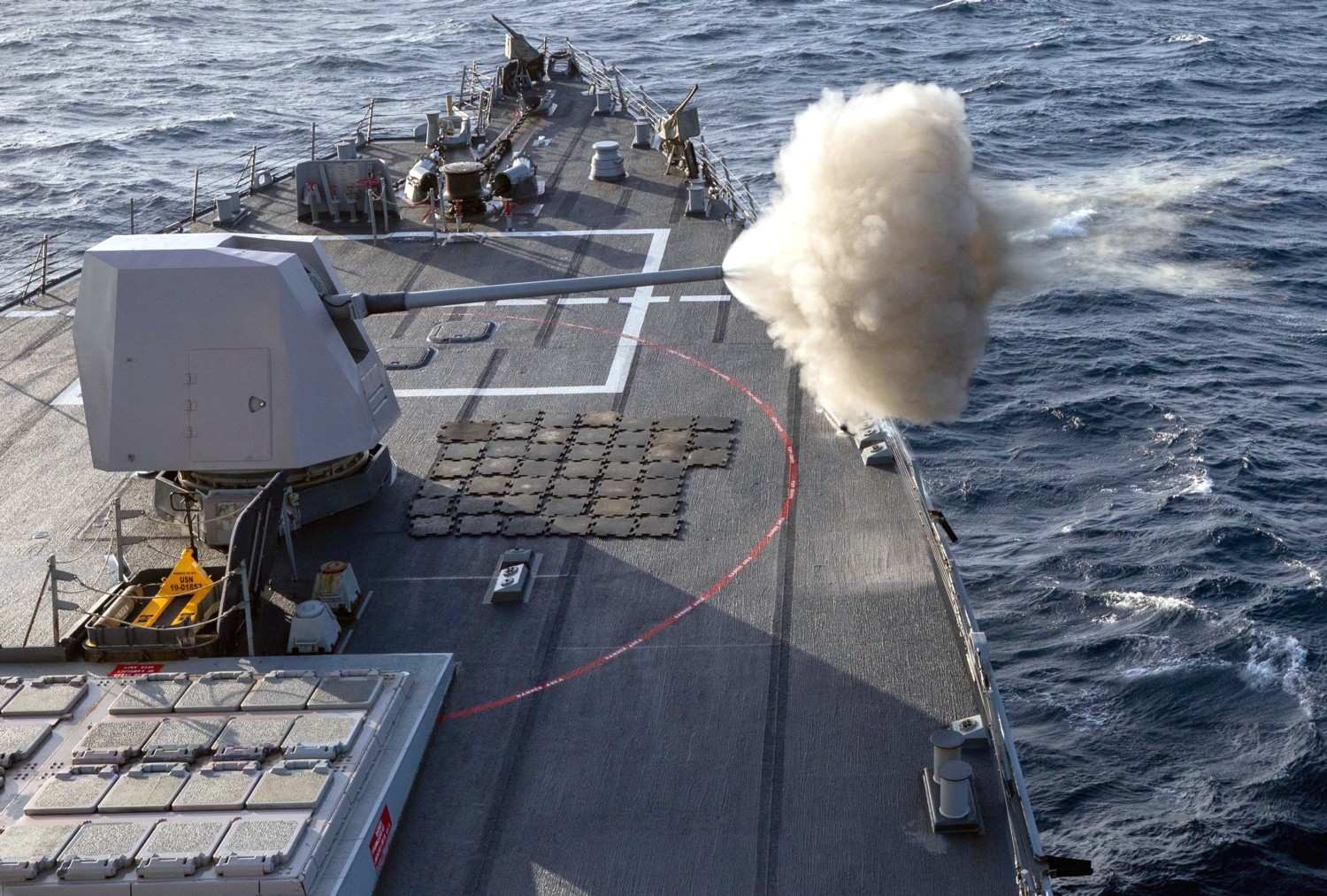 Mk.45 Mod.2 gun fire exercise - Atlantic Ocean - December 2021 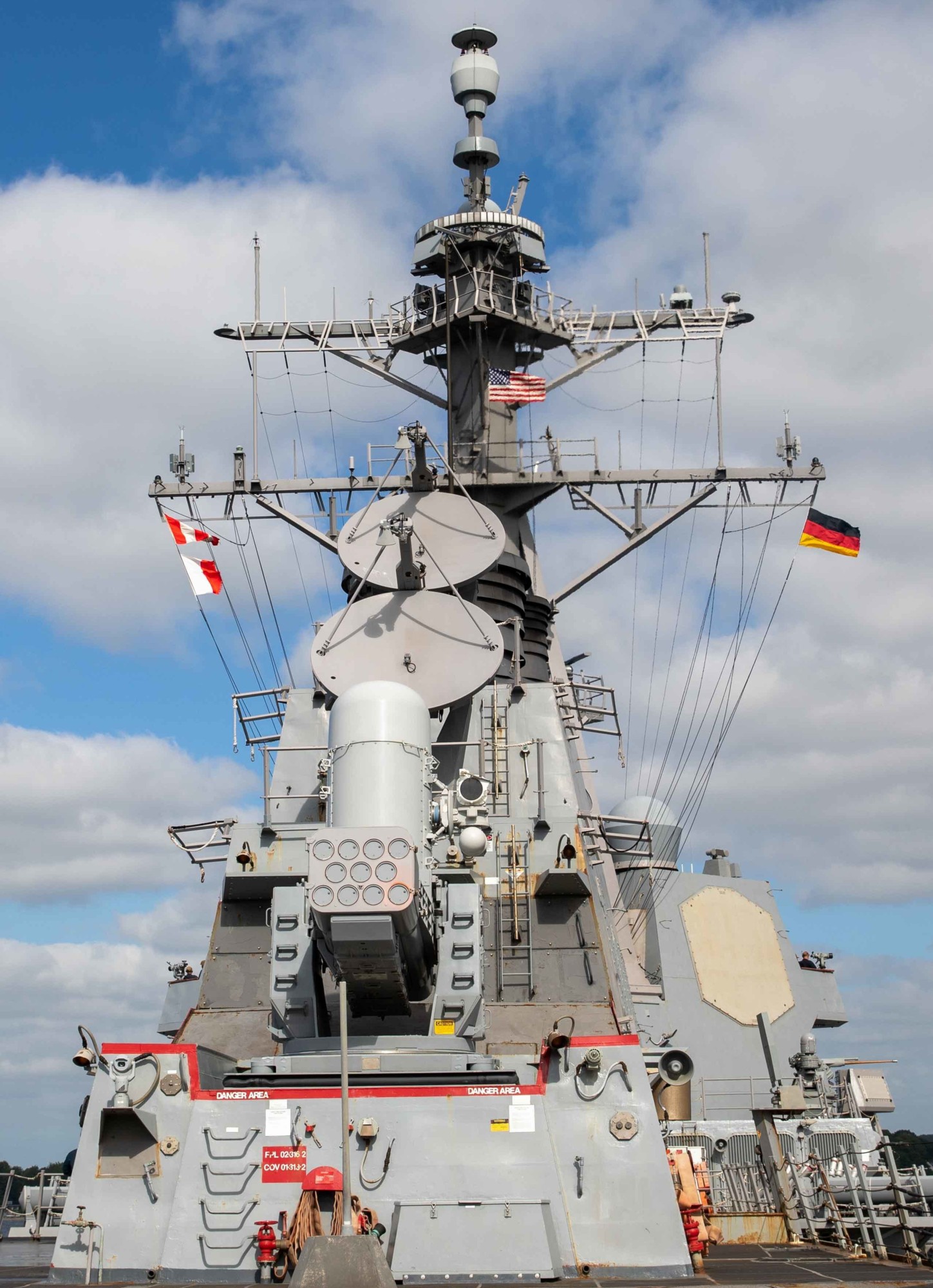 Kiel, Germany - June 2021 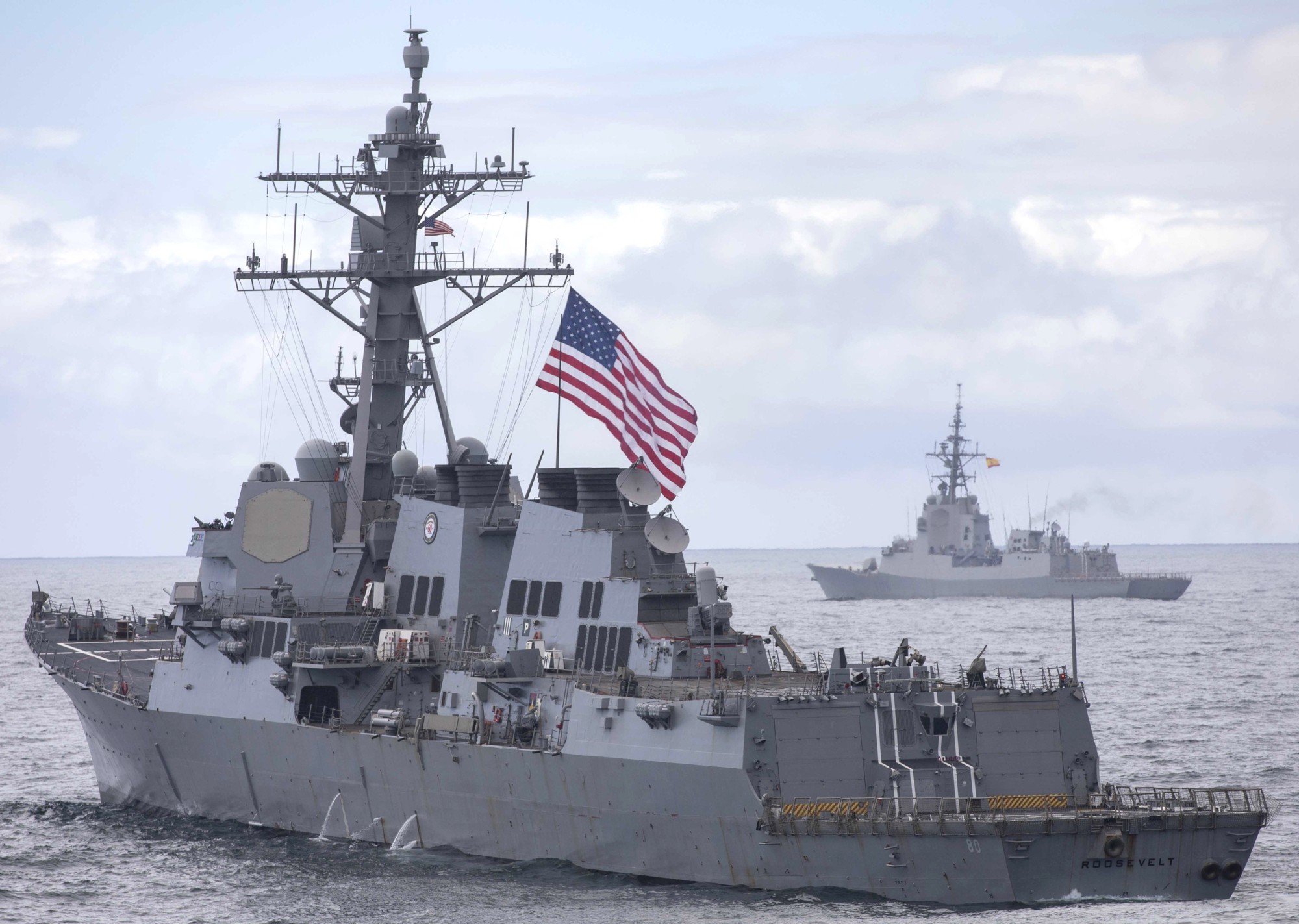 NATO Exercise At-Sea Demo/Formidable Shield (ASD/FS) - Atlantic Ocean - May 2021 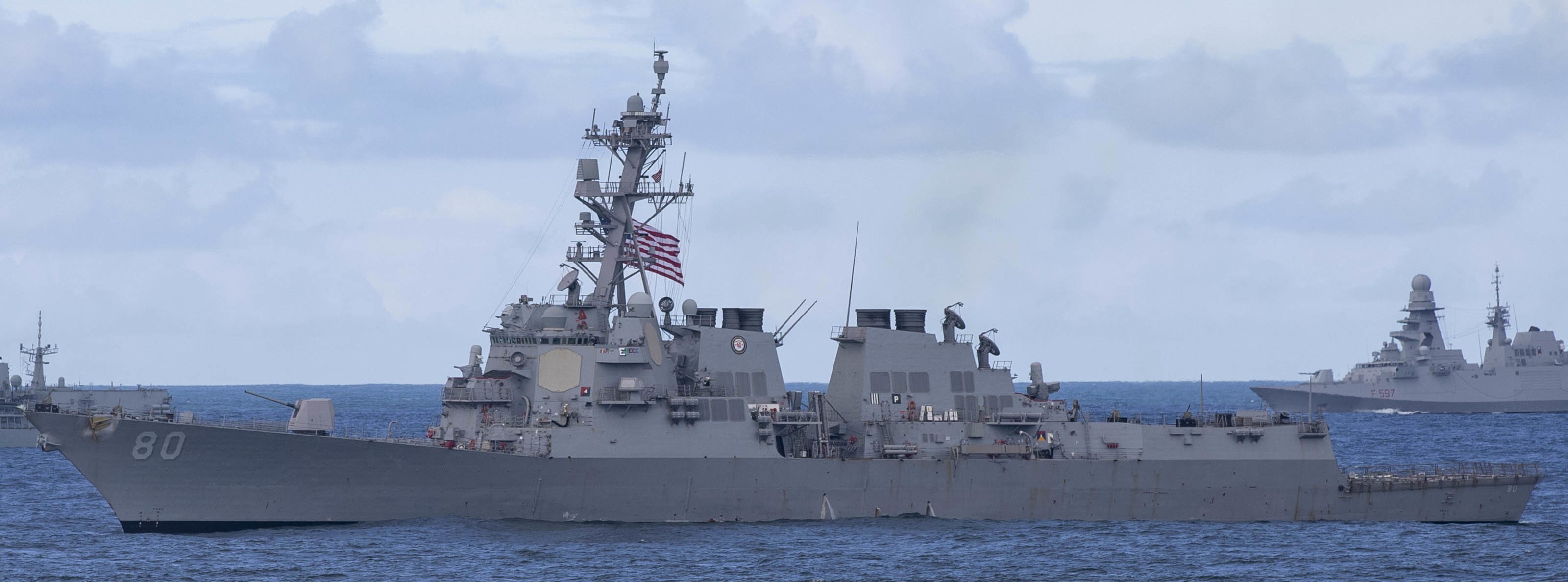 NATO Exercise At-Sea Demo/Formidable Shield (ASD/FS) - Atlantic Ocean - May 2021 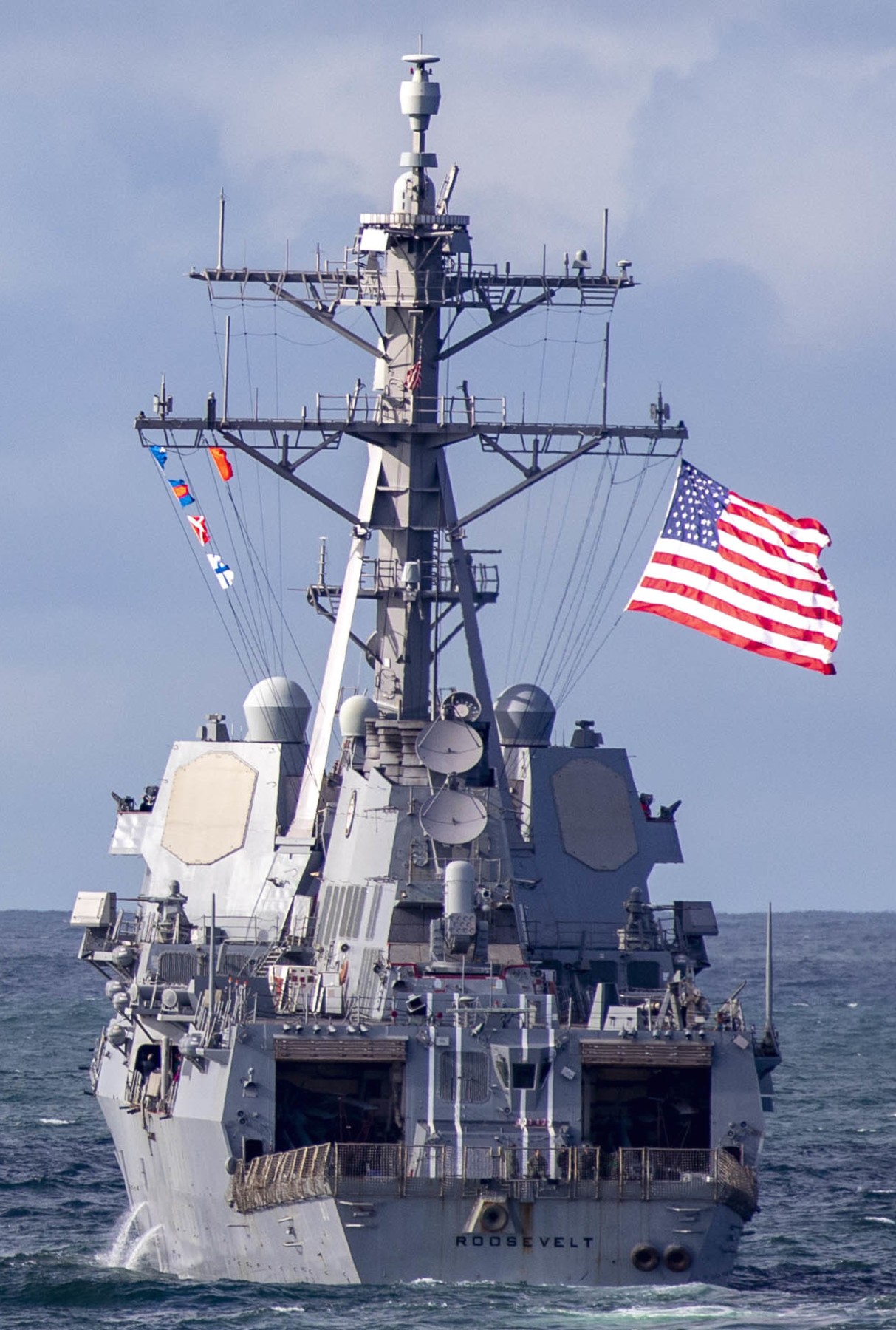 NATO Exercise At-Sea Demo/Formidable Shield (ASD/FS) - Atlantic Ocean - May 2021 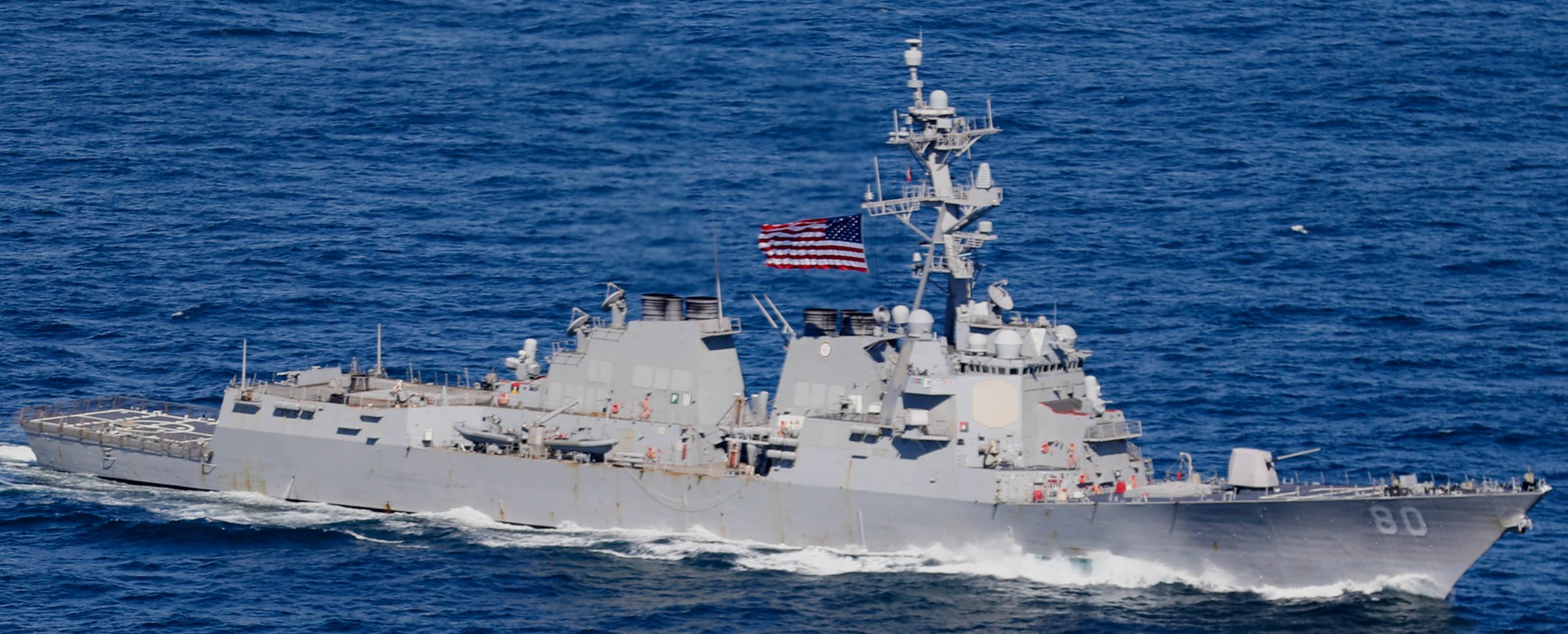 NATO Exercise At-Sea Demo/Formidable Shield (ASD/FS) - Atlantic Ocean - May 2021 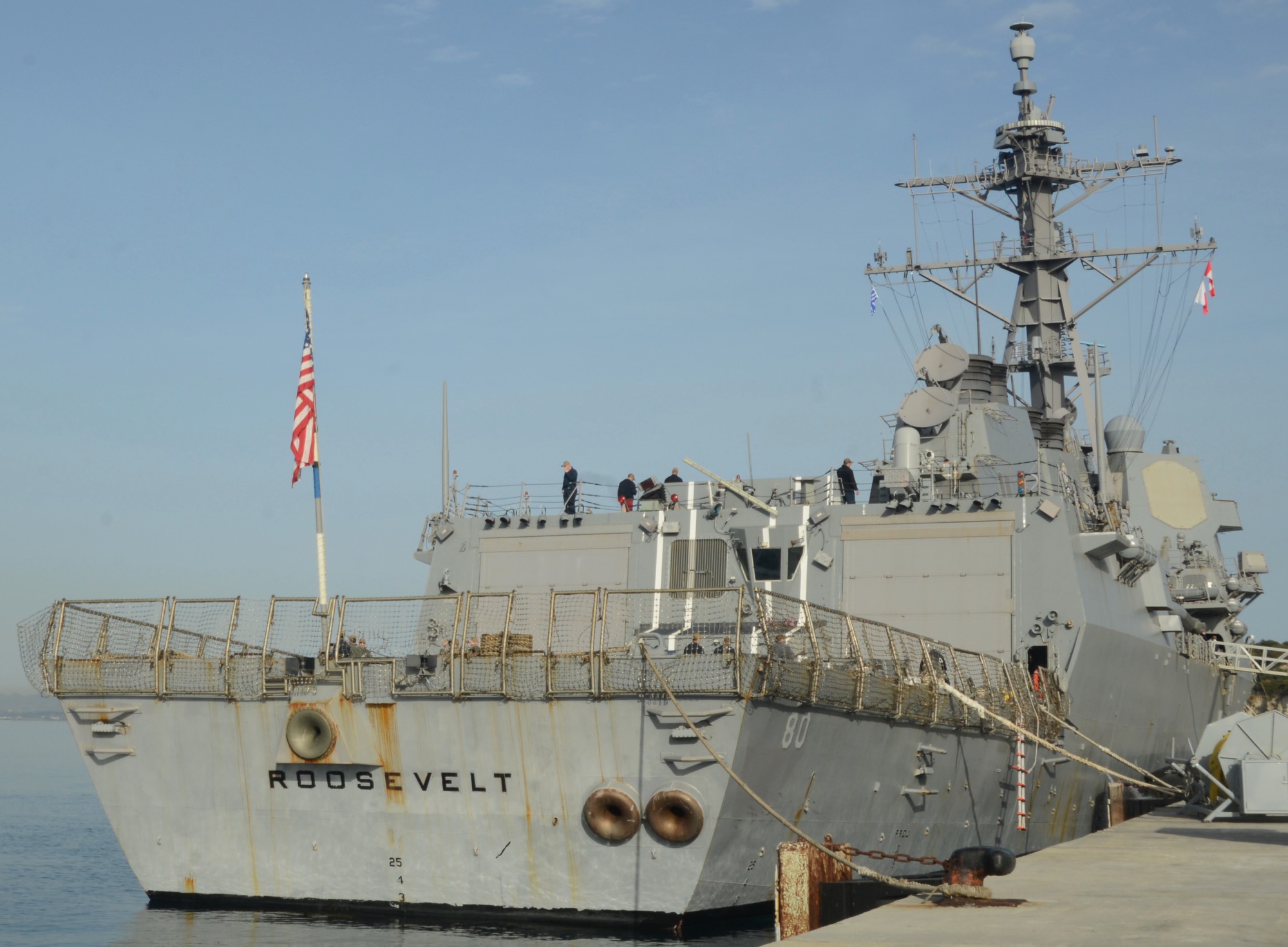 Naval Support Activity (NSA) Souda Bay, Crete, Greece - April 2021  Naval Support Activity (NSA) Souda Bay, Crete, Greece - April 2021 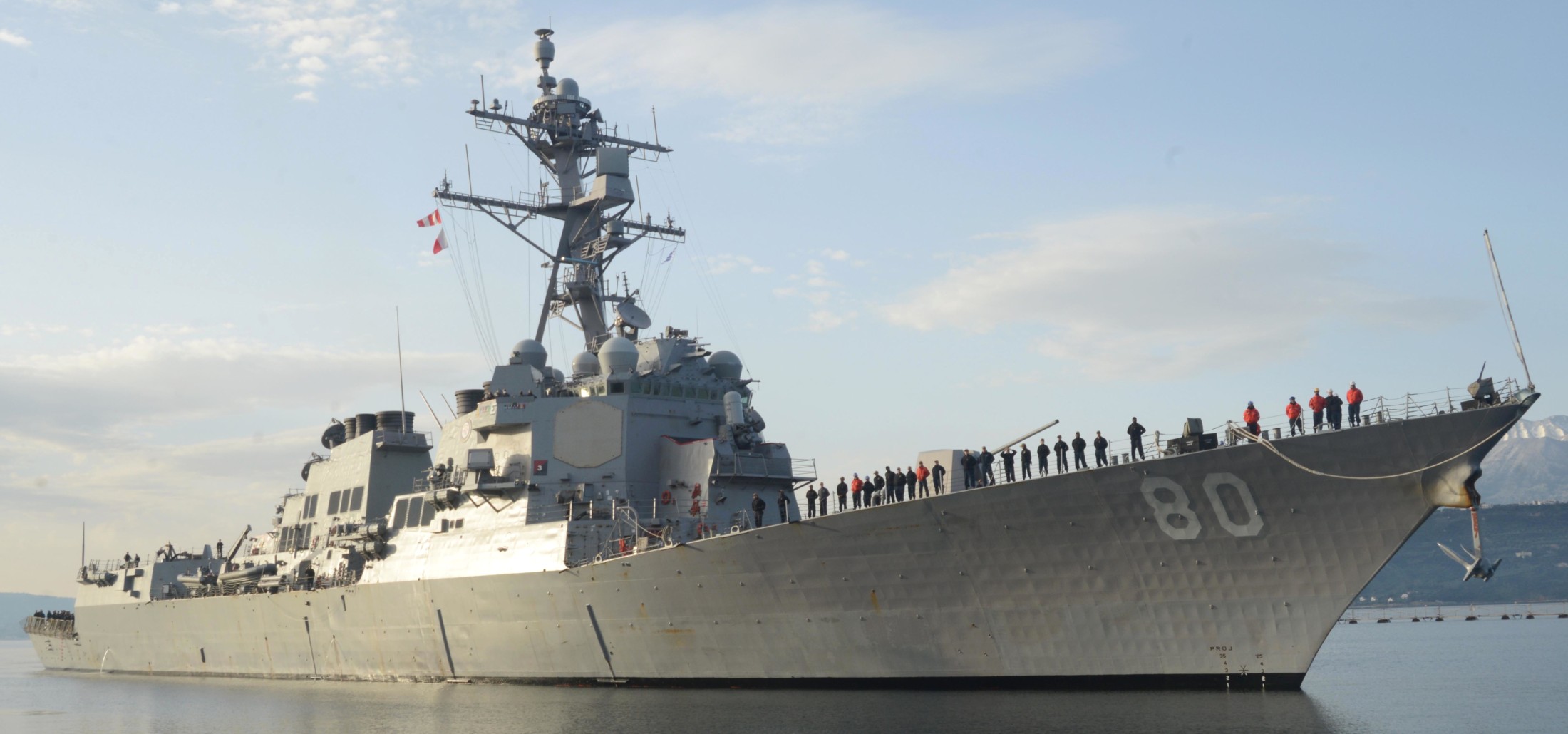 Naval Support Activity (NSA) Souda Bay, Crete, Greece - April 2021 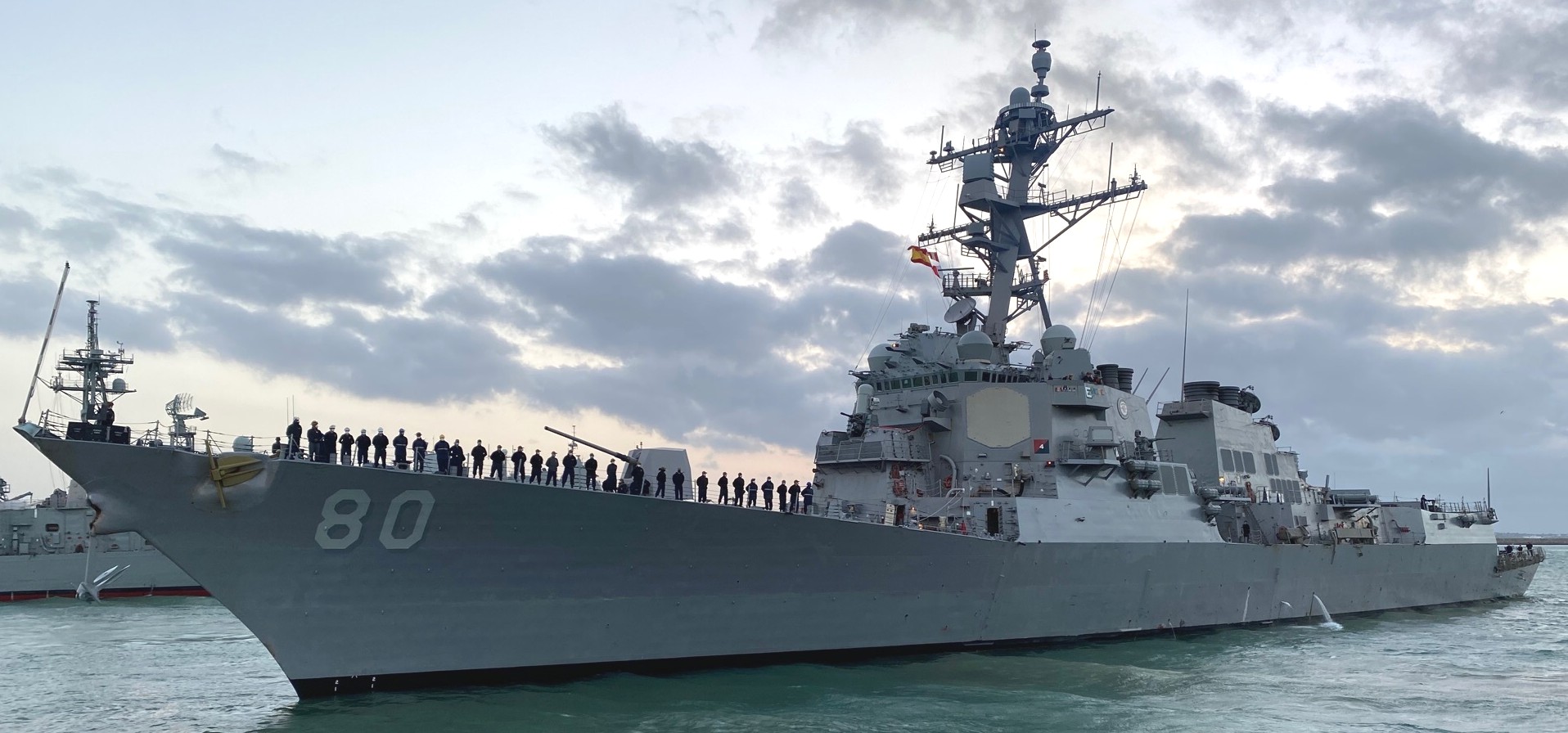 Naval Station Rota, Spain - February 2021 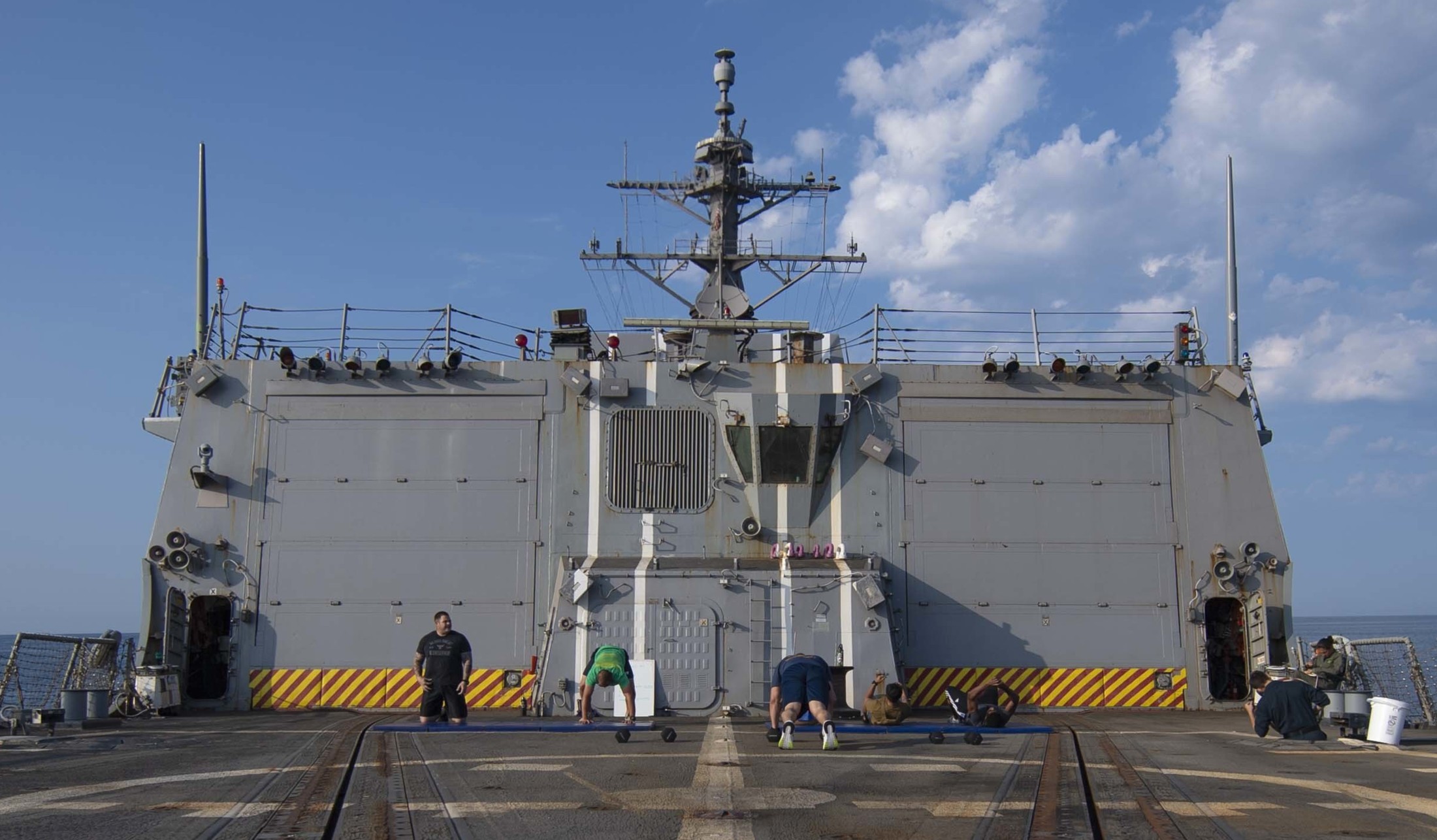 Black Sea - September 2020 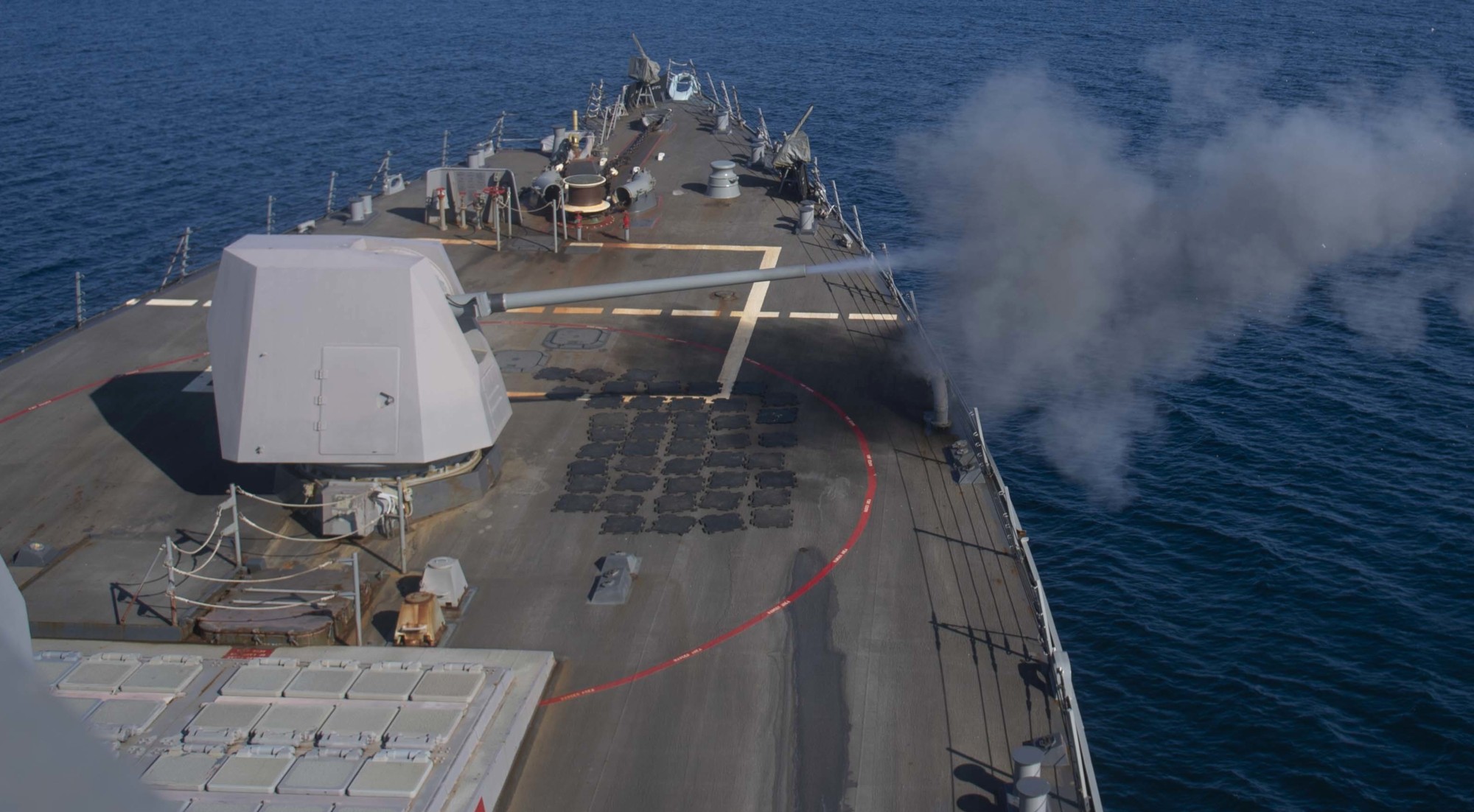 Mk.45 Mod.2 gun fire exercise - Black Sea - September 2020 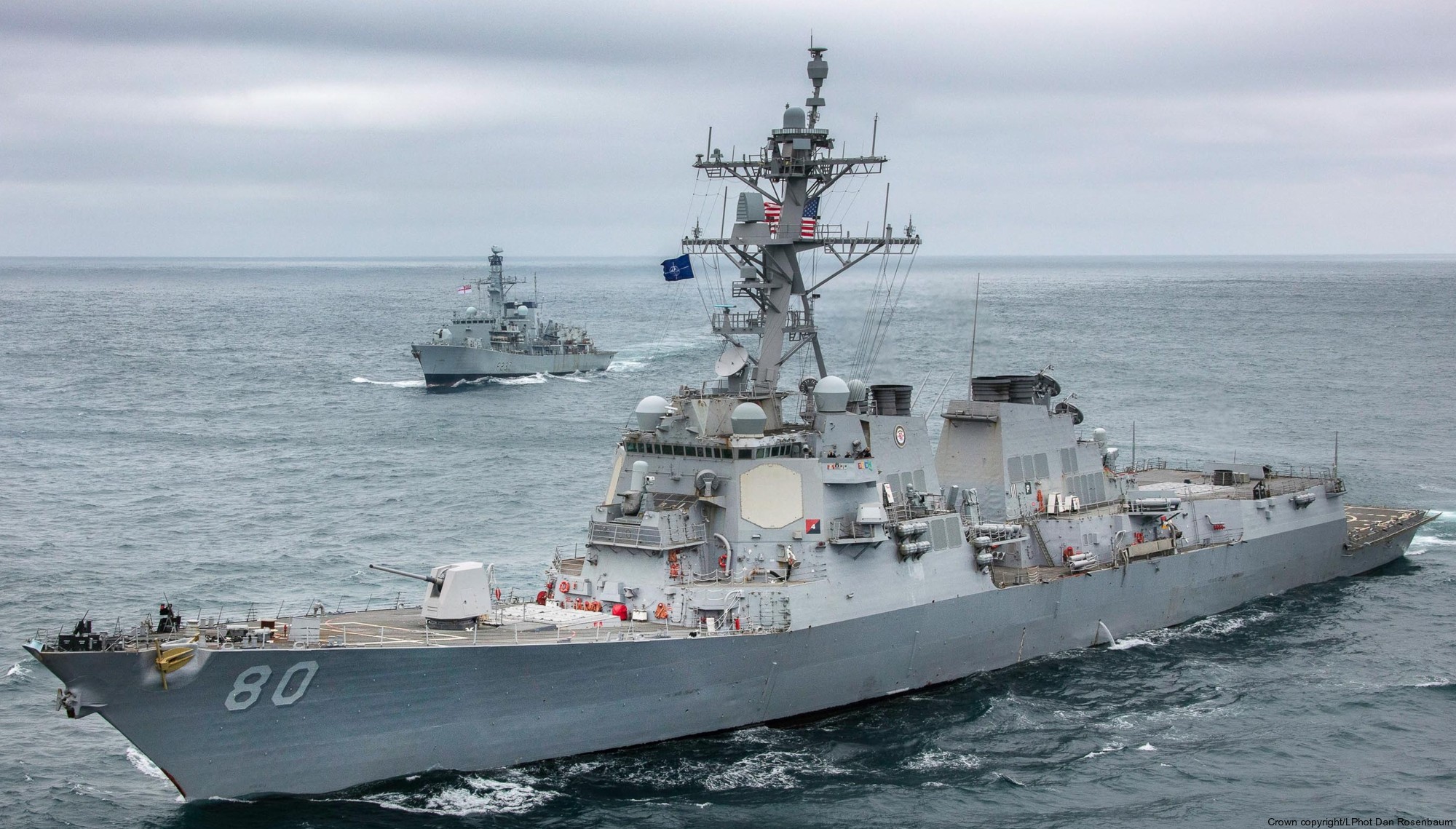 during exercise Dynamic Mongoose - Atlantic Ocean - July 2020  returning to Naval Station Rota, Spain - May 16, 2020  returning to Naval Station Rota, Spain - May 16, 2020  arriving at her new homeport at Naval Station Rota, Spain - April 2020 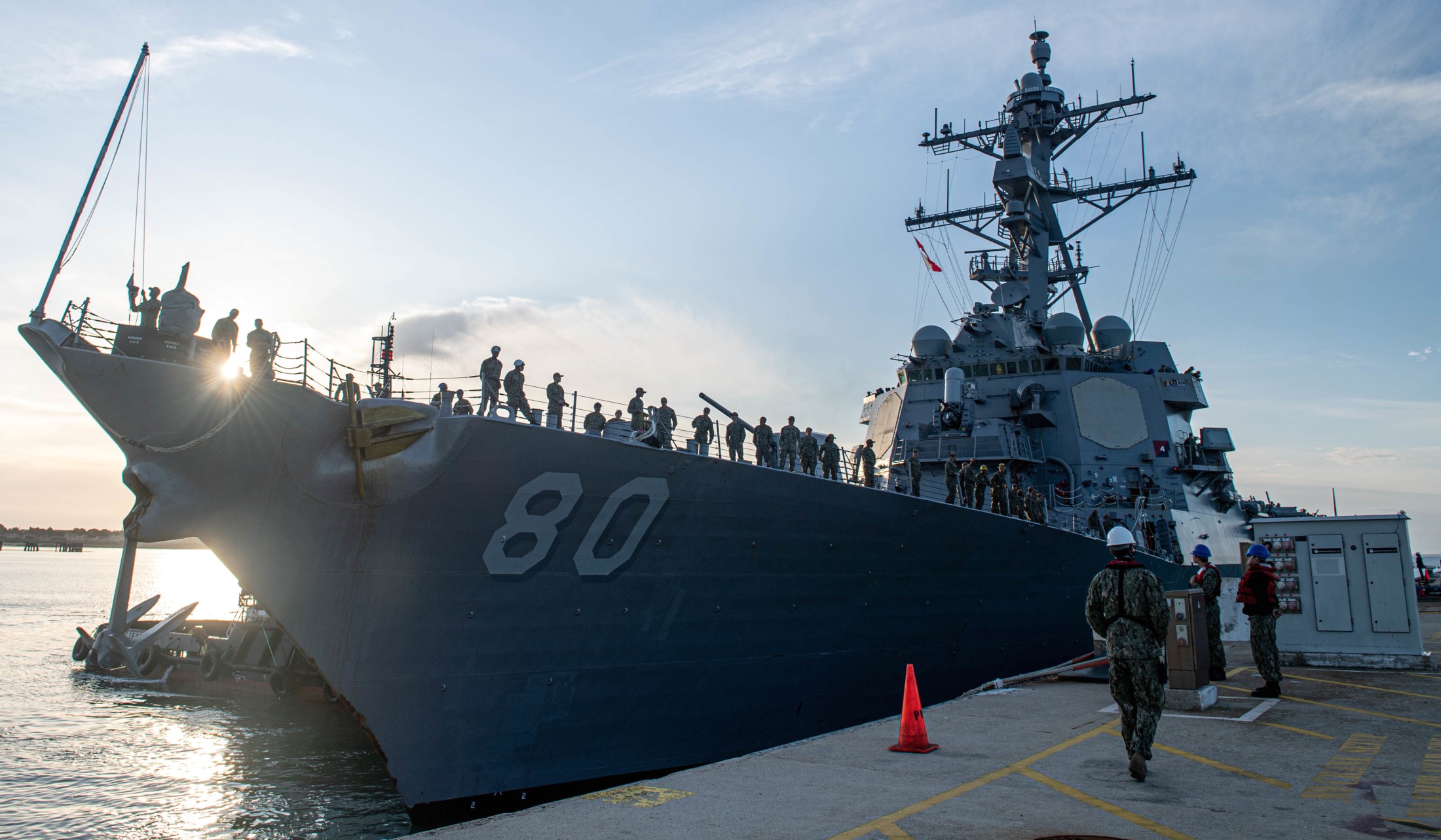 arriving at her new homeport at Naval Station Rota, Spain - April 2020 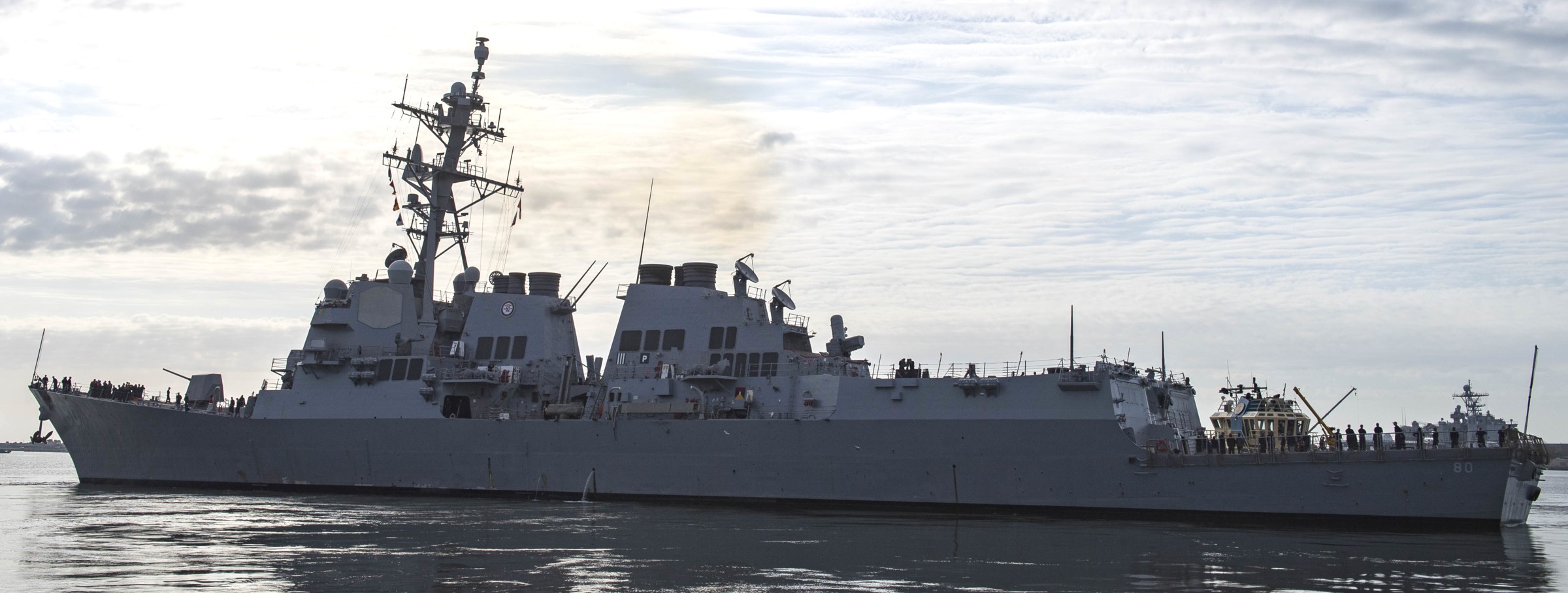 departing Naval Station Mayport, Florida to commence its homeport shift to Naval Station Rota, Spain - March 2020 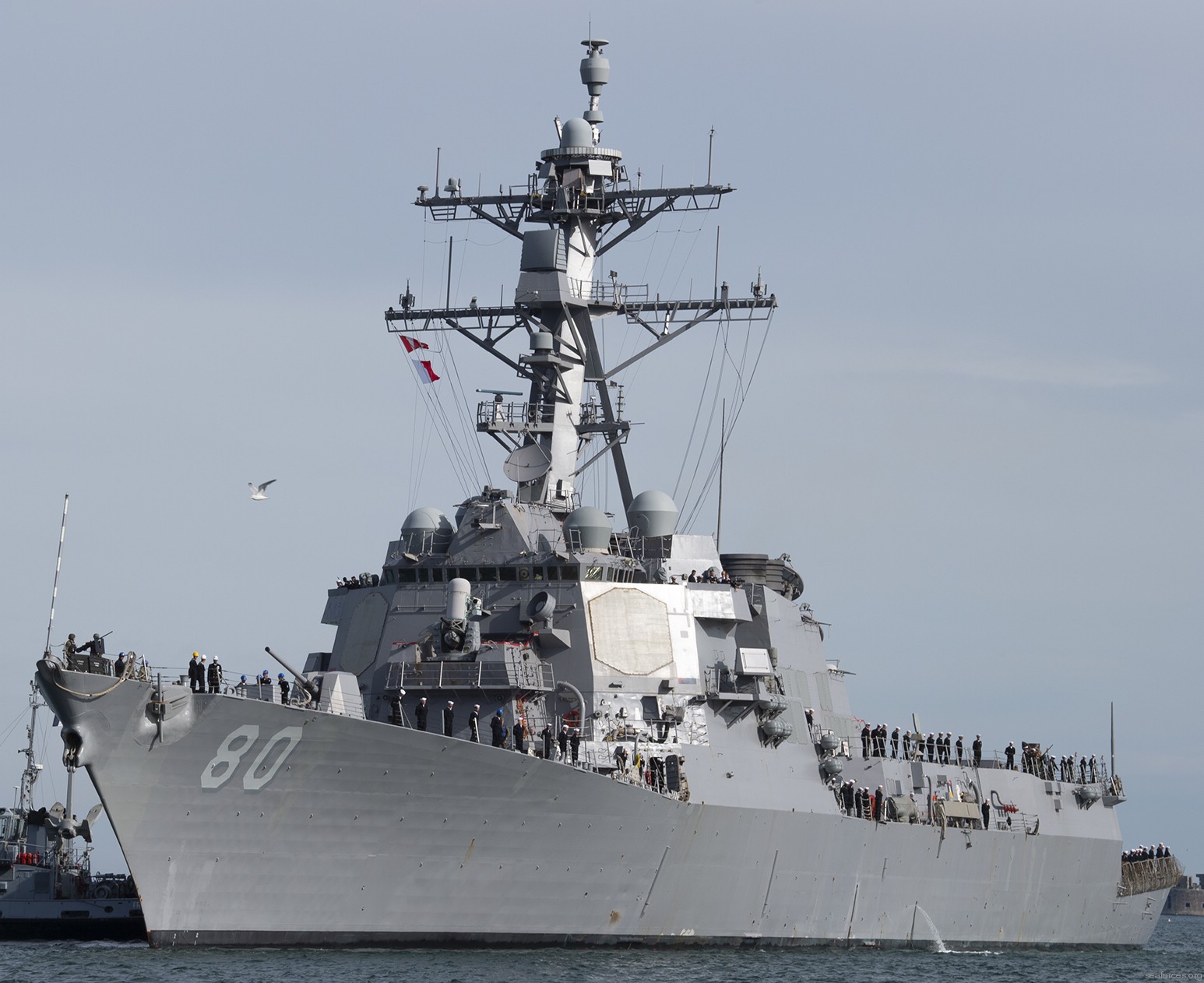 Cherbourg, France - June 2019  Naval Station Rota, Spain - May 2019 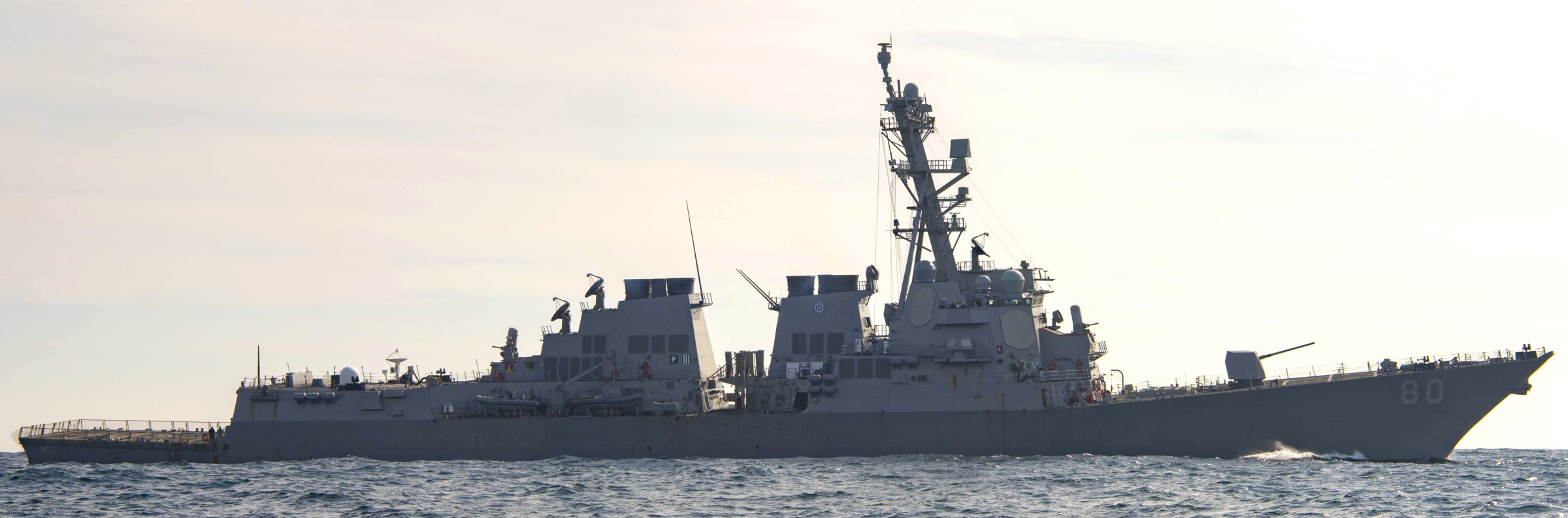 Atlantic Ocean - May 2019  propulsion auxilary control console - Atlantic Ocean - May 2019 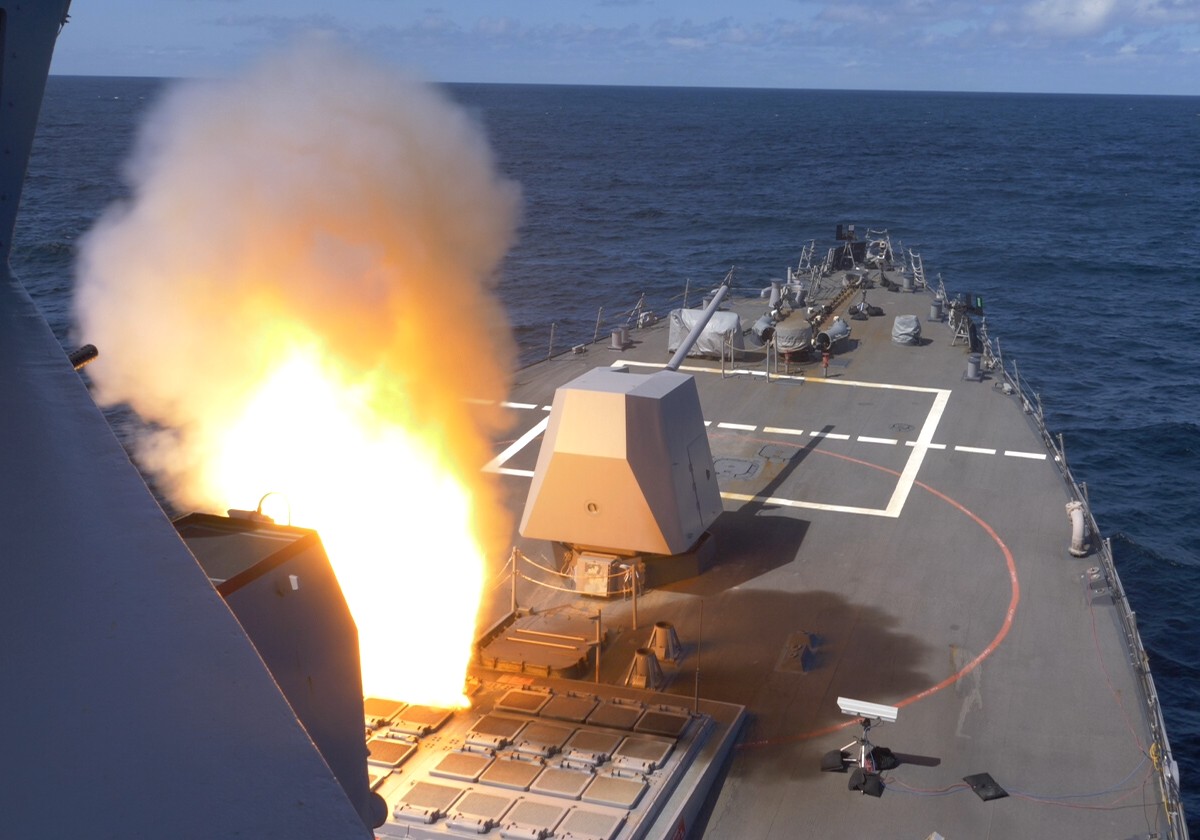 a RIM-66 Standard Missile SM-2MR was fired during exercise Formidable Shield - Atlantic Ocean - May 2019 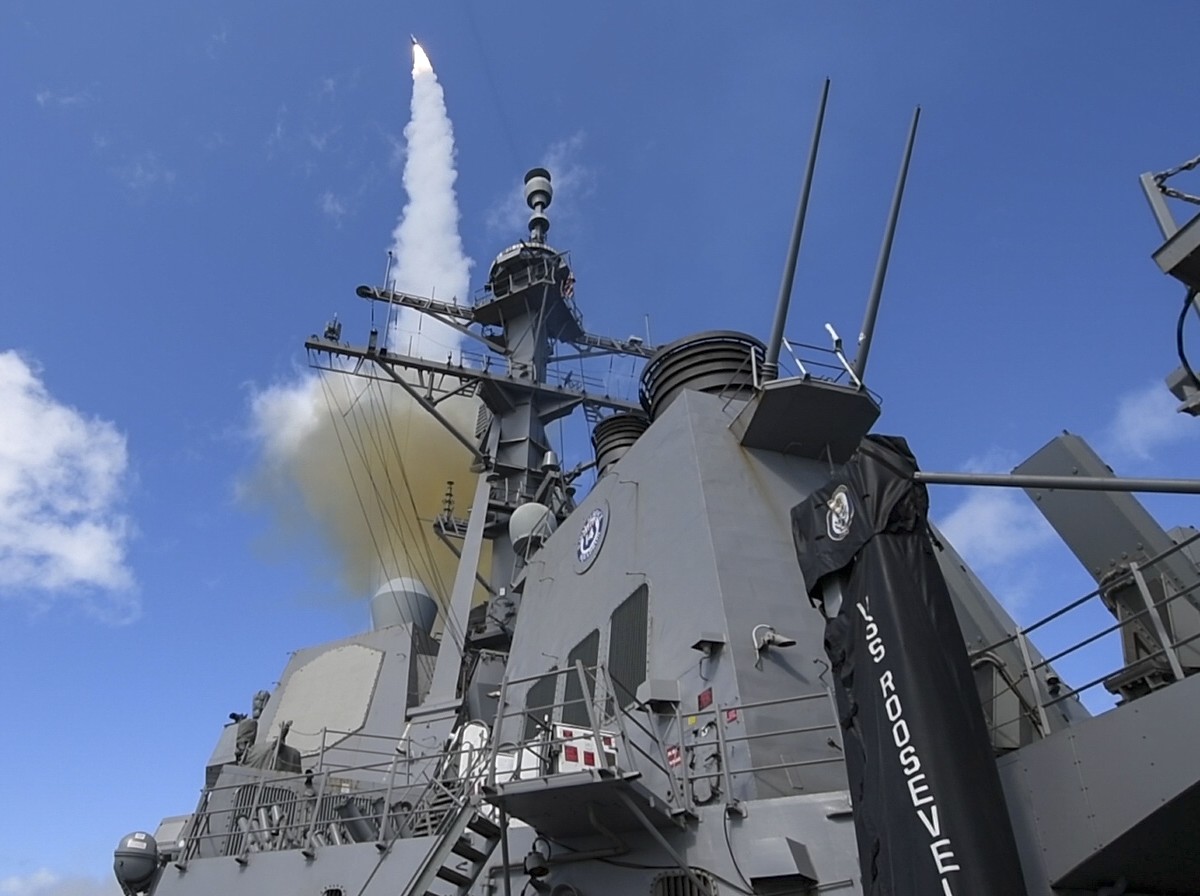 a RIM-66 Standard Missile SM-2MR was fired during exercise Formidable Shield - Atlantic Ocean - May 2019  Faslane, Scotland - May 2019  Faslane, Scotland - May 2019 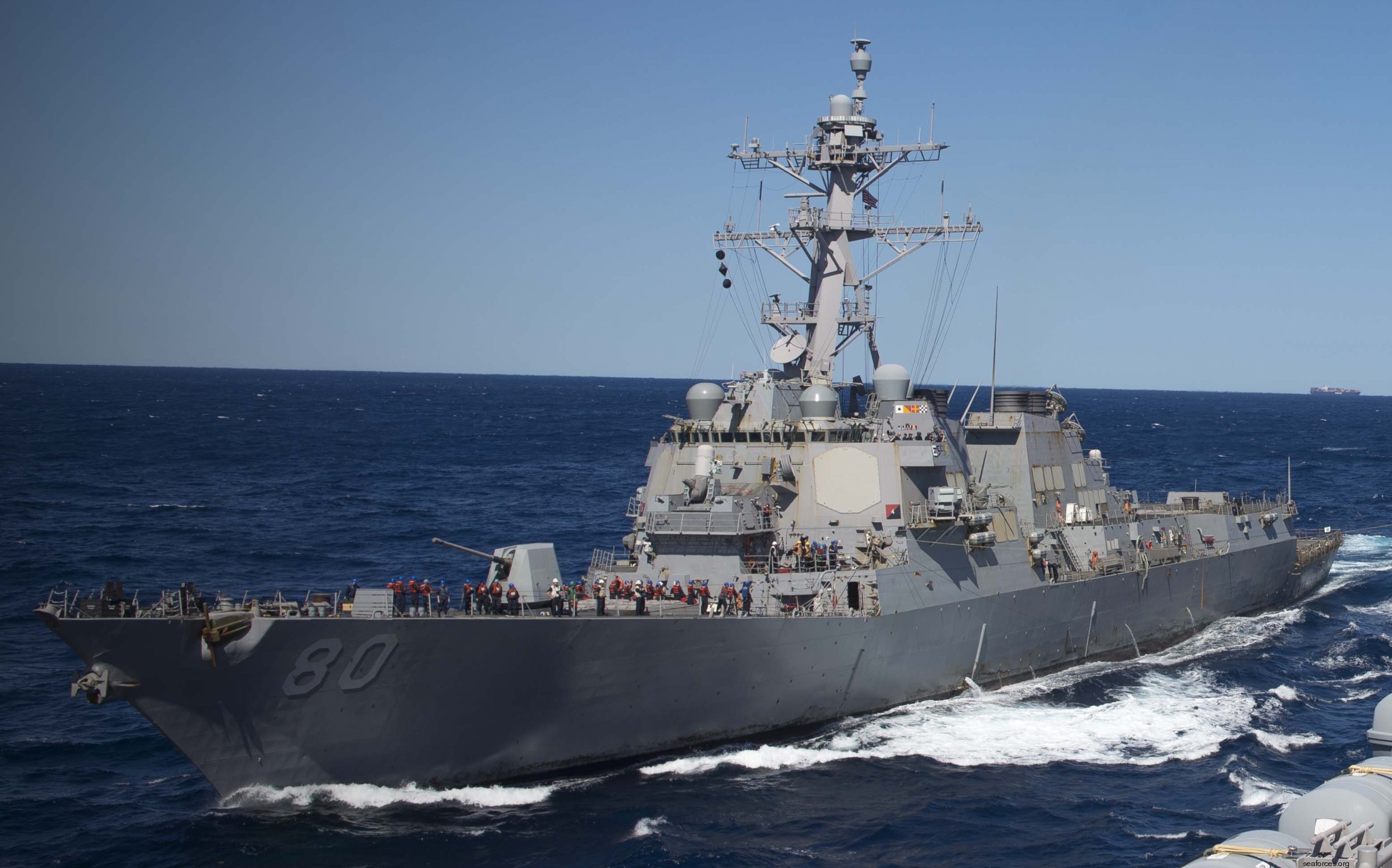 Atlantic Ocean - March 2017  Atlantic Ocean - March 2017  Eilat, Israel - September 2016 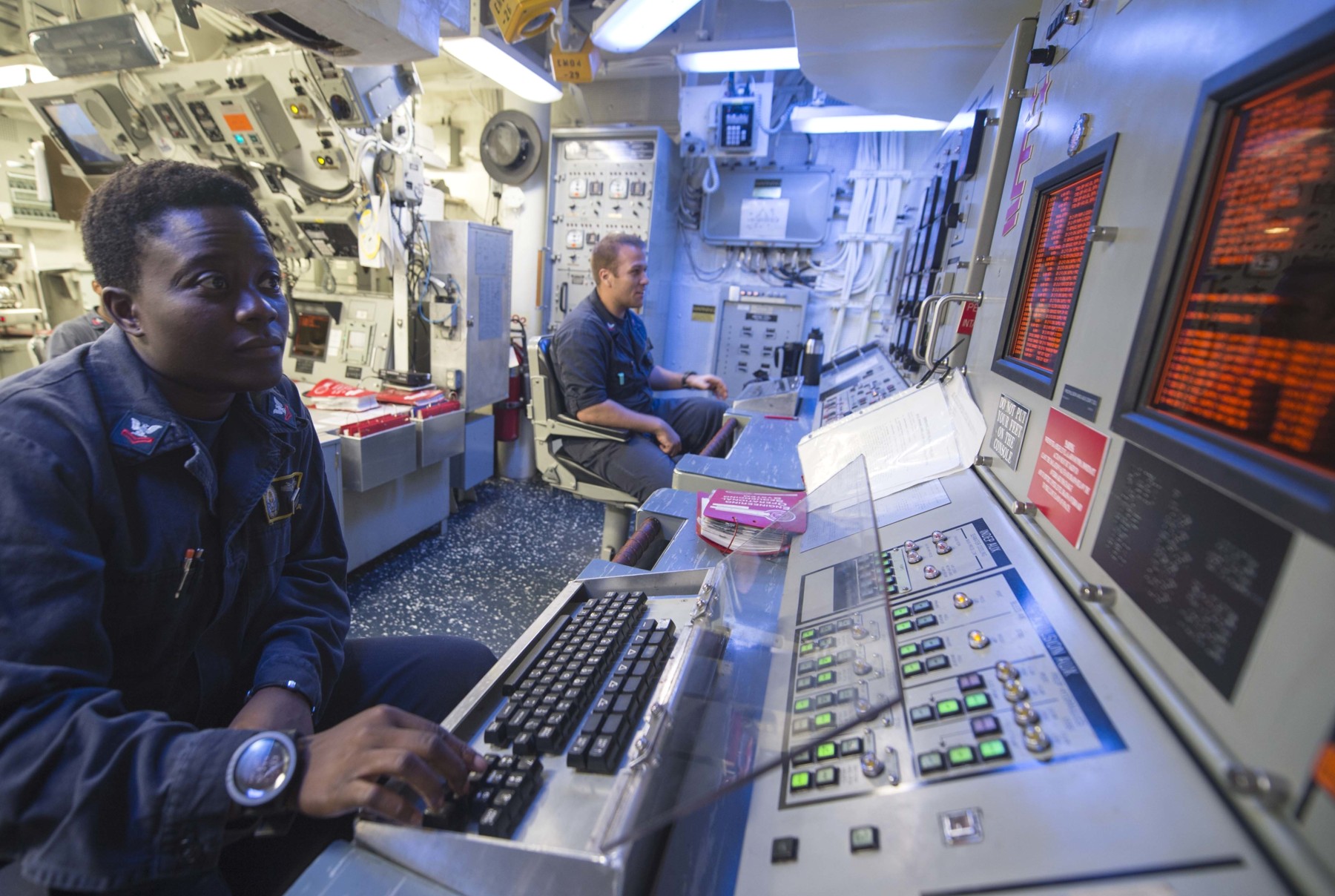 gas turbine control console - Gulf of Aden - August 2016 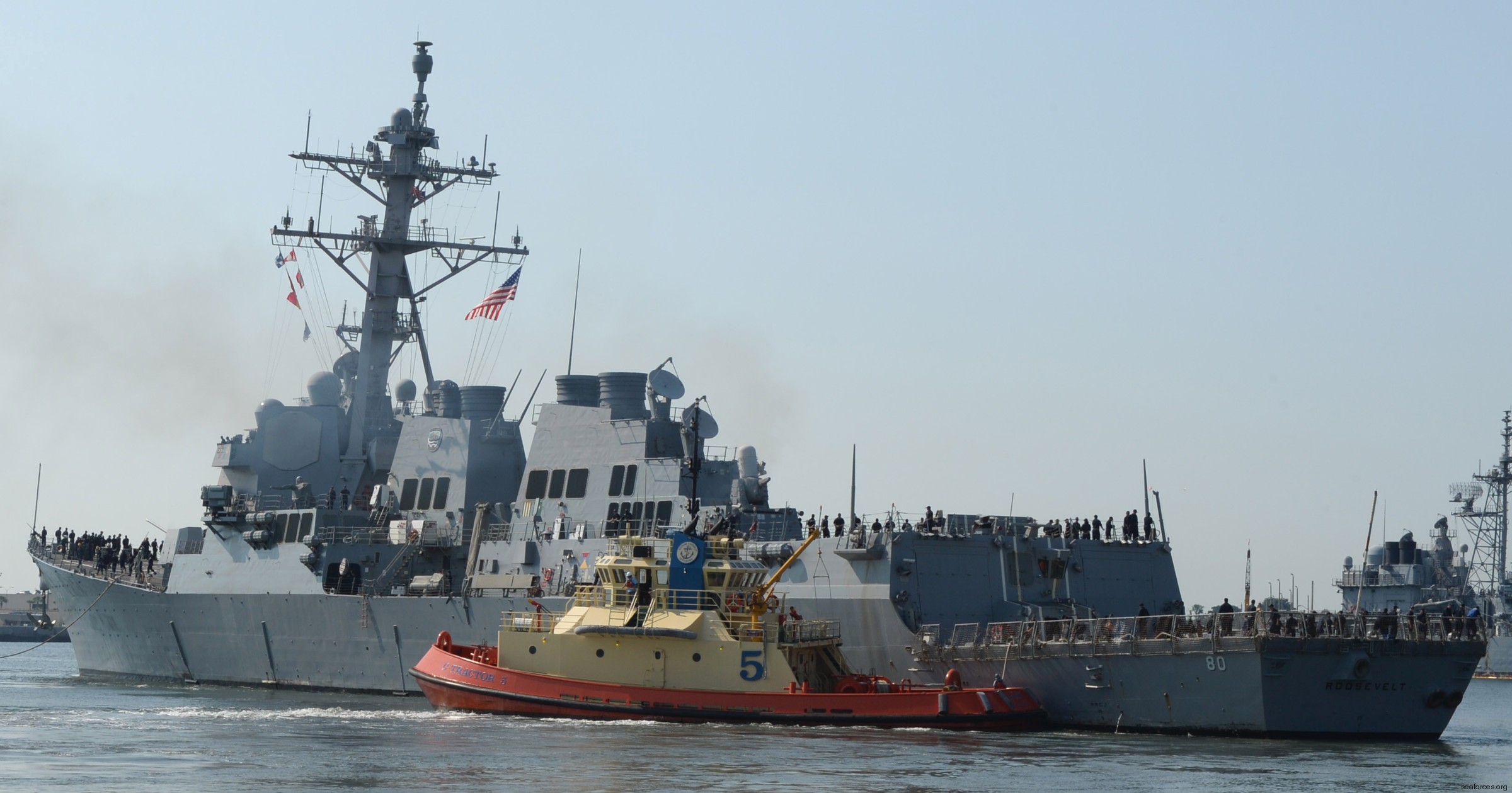 departing Naval Station Mayport, Florida - June 2016  Atlantic Ocean - March 2016  Atlantic Ocean - March 2016 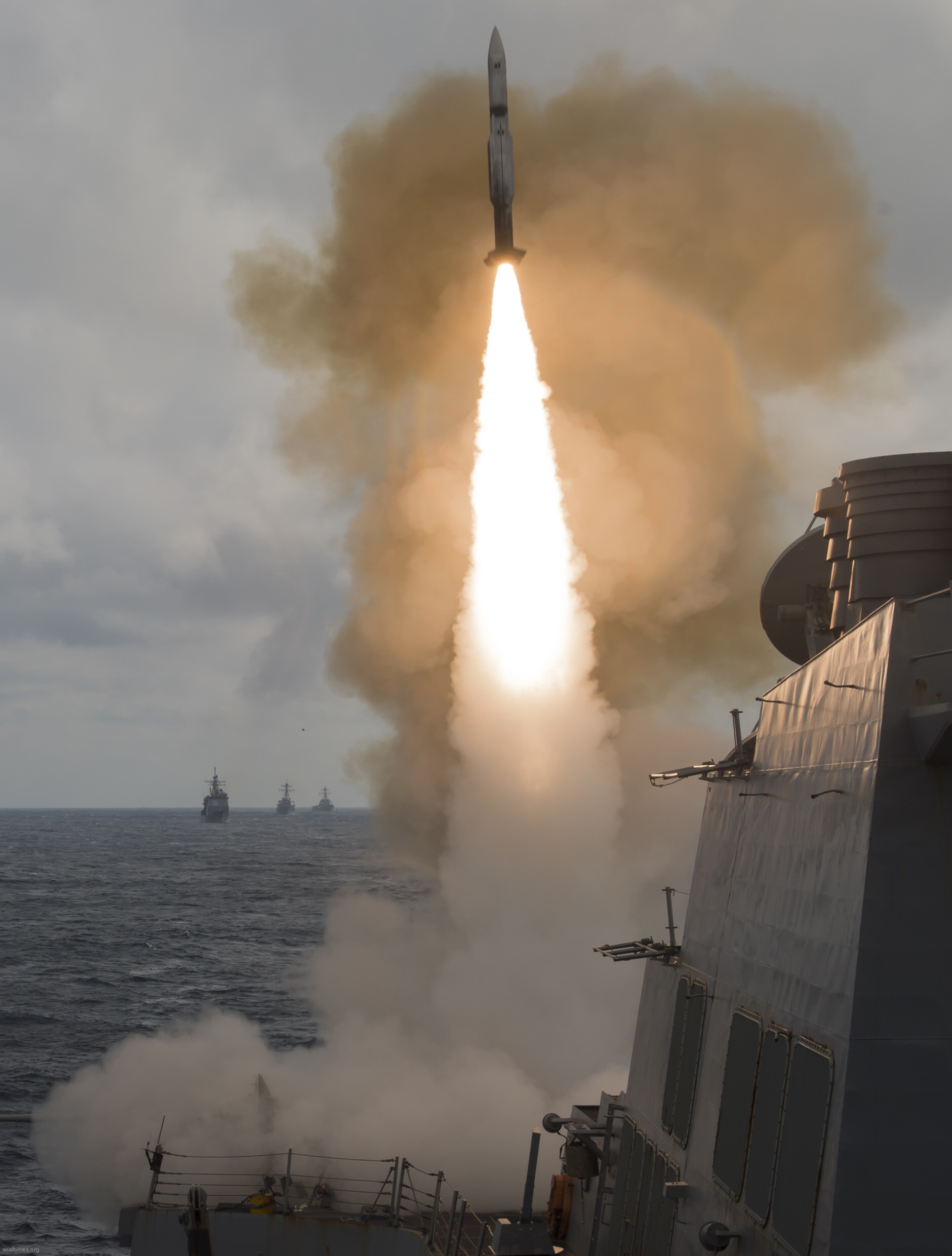 a RIM-66 Standard Missile SM-2MR Block IIIA was fired from the Mk.41 VLS - Atlantic Ocean - March 2016 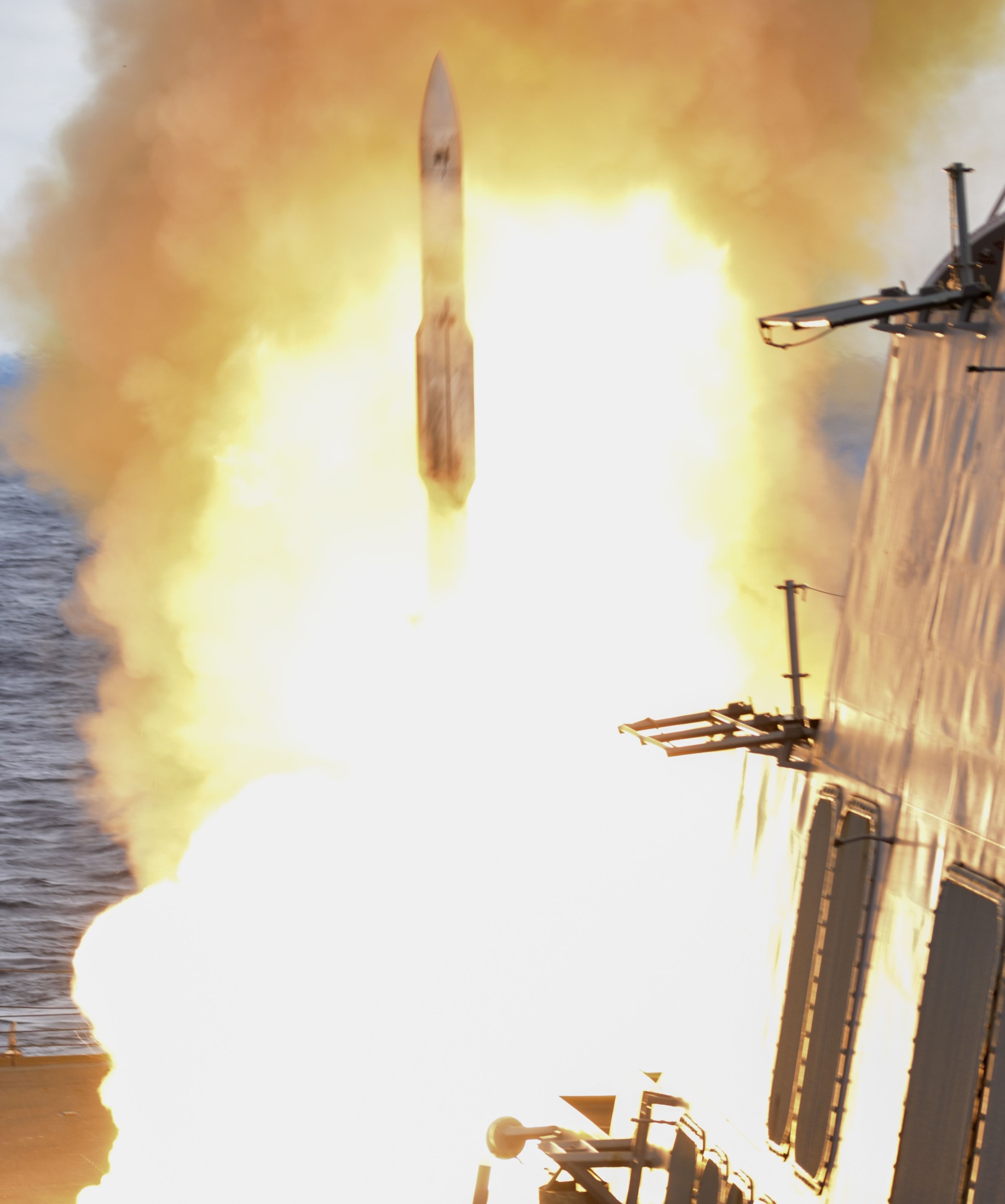 a RIM-66 Standard Missile SM-2MR Block IIIA was fired from the Mk.41 VLS - Atlantic Ocean - March 2016  Mk.38 Mod.1 25mm machine gun live fire exercise - Arabian Gulf - August 2014  Arabian Gulf - July 2014  Mk.38 Mod.1 25mm machine gun live fire exercise - Gulf of Aden - June 2014  Mk.38 Mod.1 25mm machine gun live fire exercise - Gulf of Aden - June 2014  Mk.45 Mod.2 (5" / 54-caliber) gun live fire exercise - Red Sea - May 2014  Mk.15 Phalanx close-in weapon system (CIWS) live fire exercise - Red Sea - May 2014 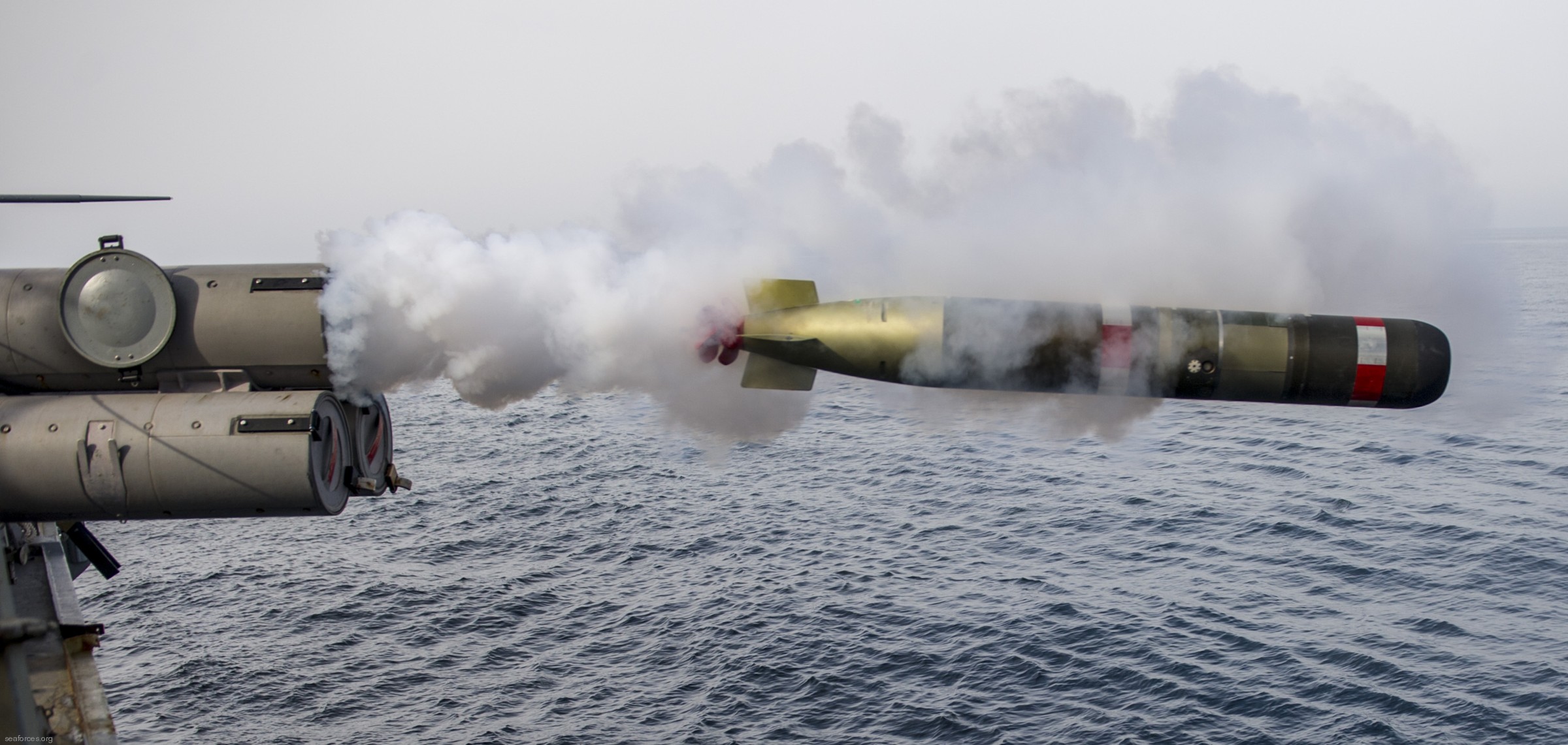 a Mk.54 exercise torpedo was launched from the Mk.32 torpedo tubes - Gulf of Oman - April 2014 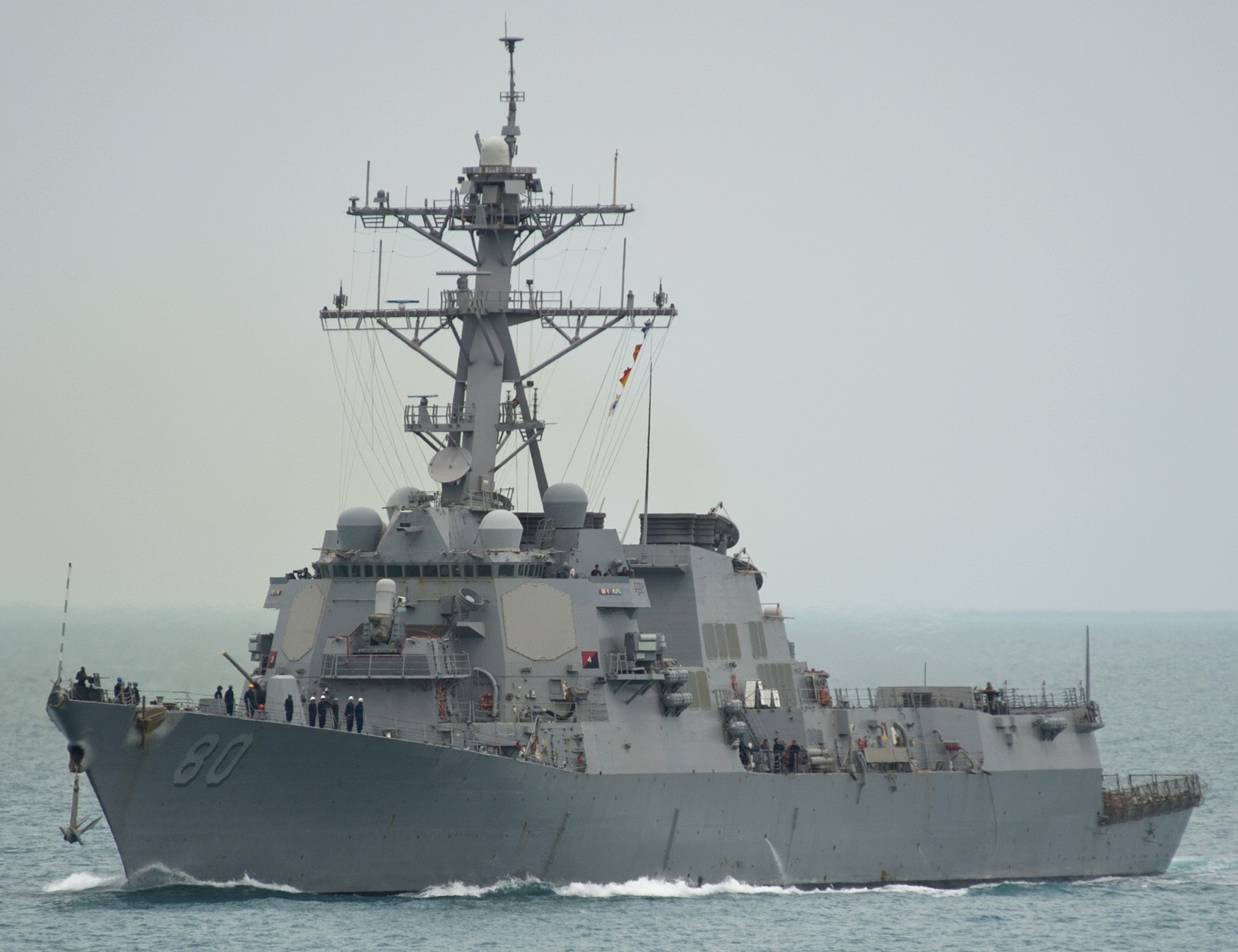 Manama, Bahrain - April 2014  Strait of Gibraltar - February 2014 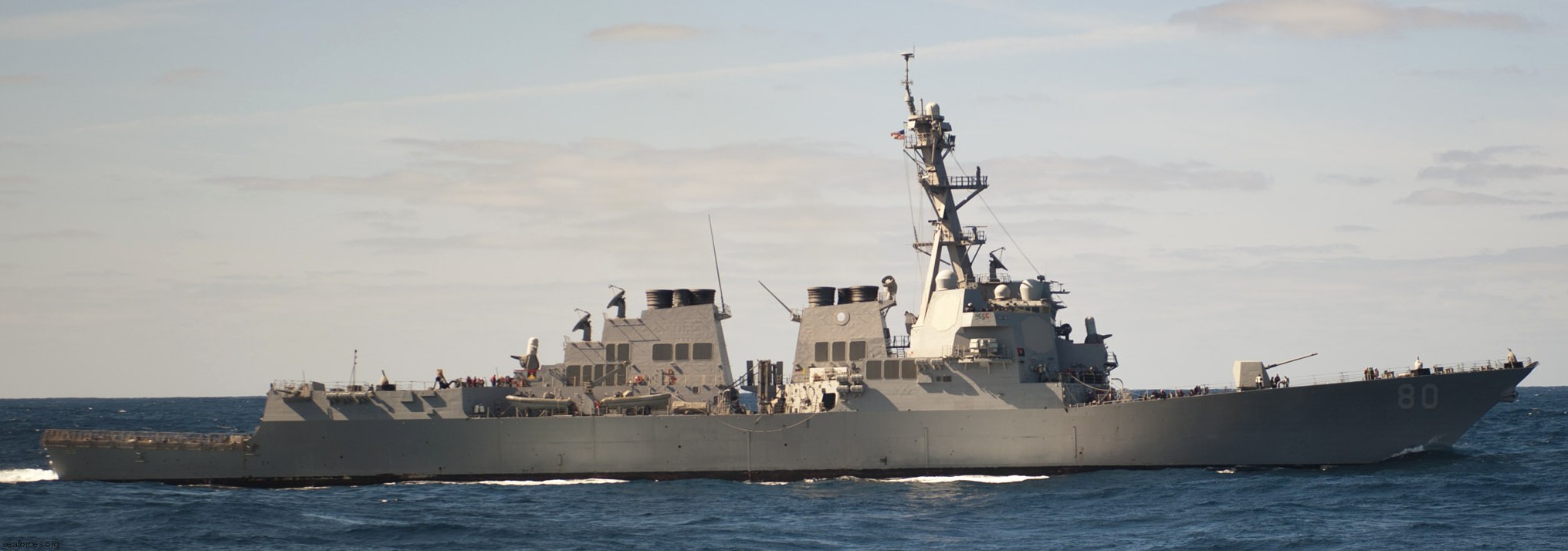 Atlantic Ocean - February 2014 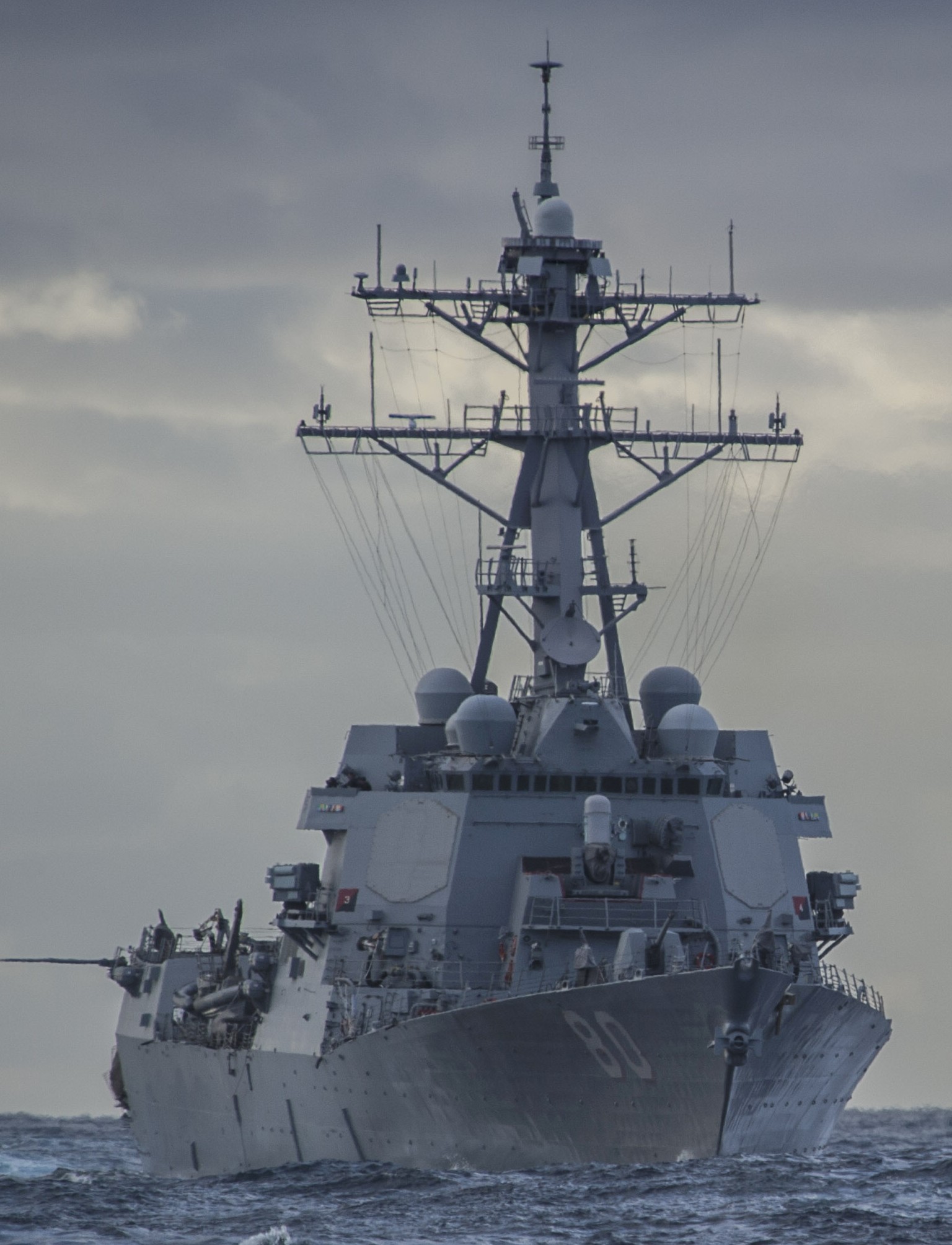 Atlantic Ocean - February 2014 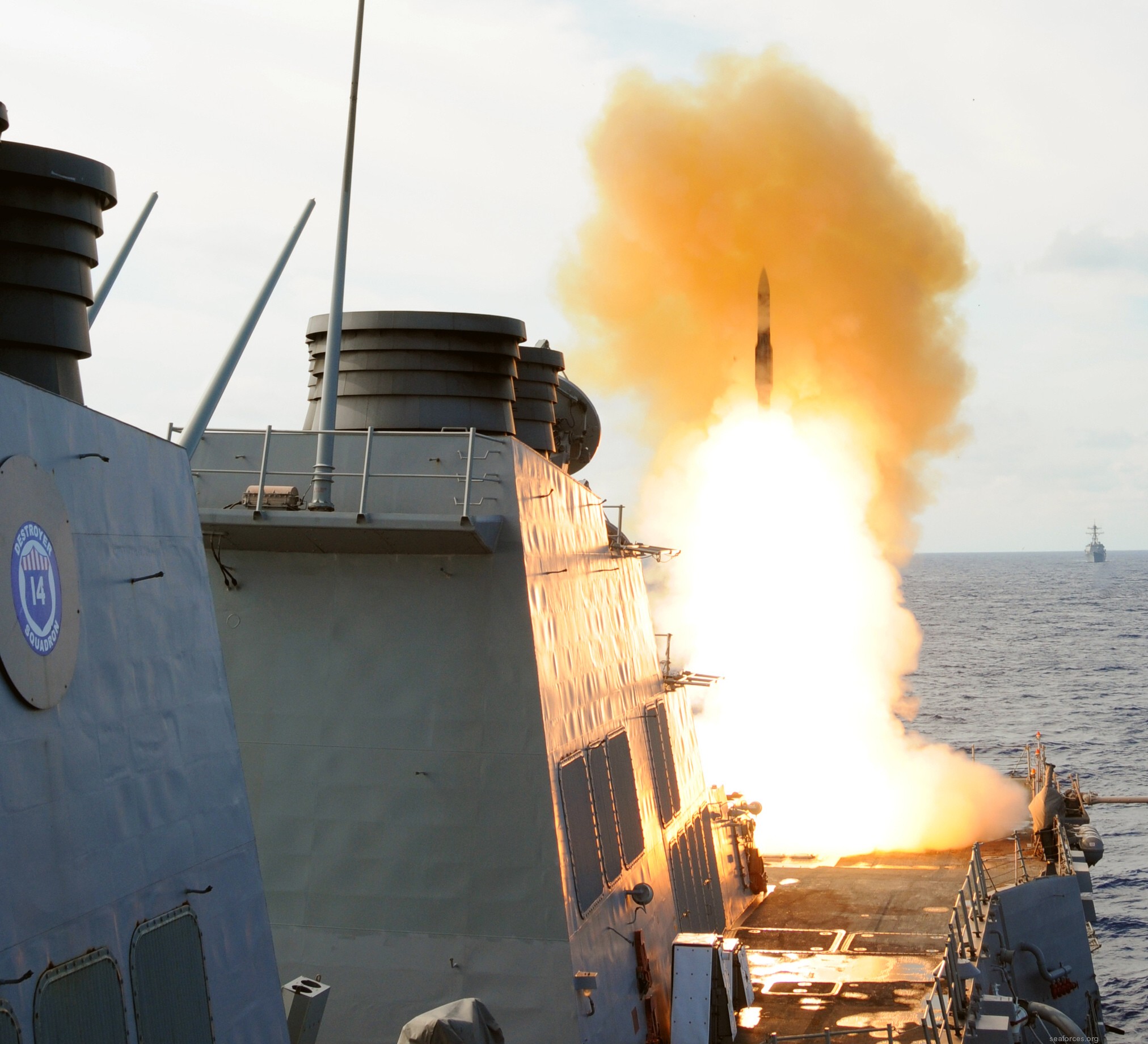 a Standard Missile SM-2 was fired from the Mk.41 VLS - Atlantic Ocean - August 2013 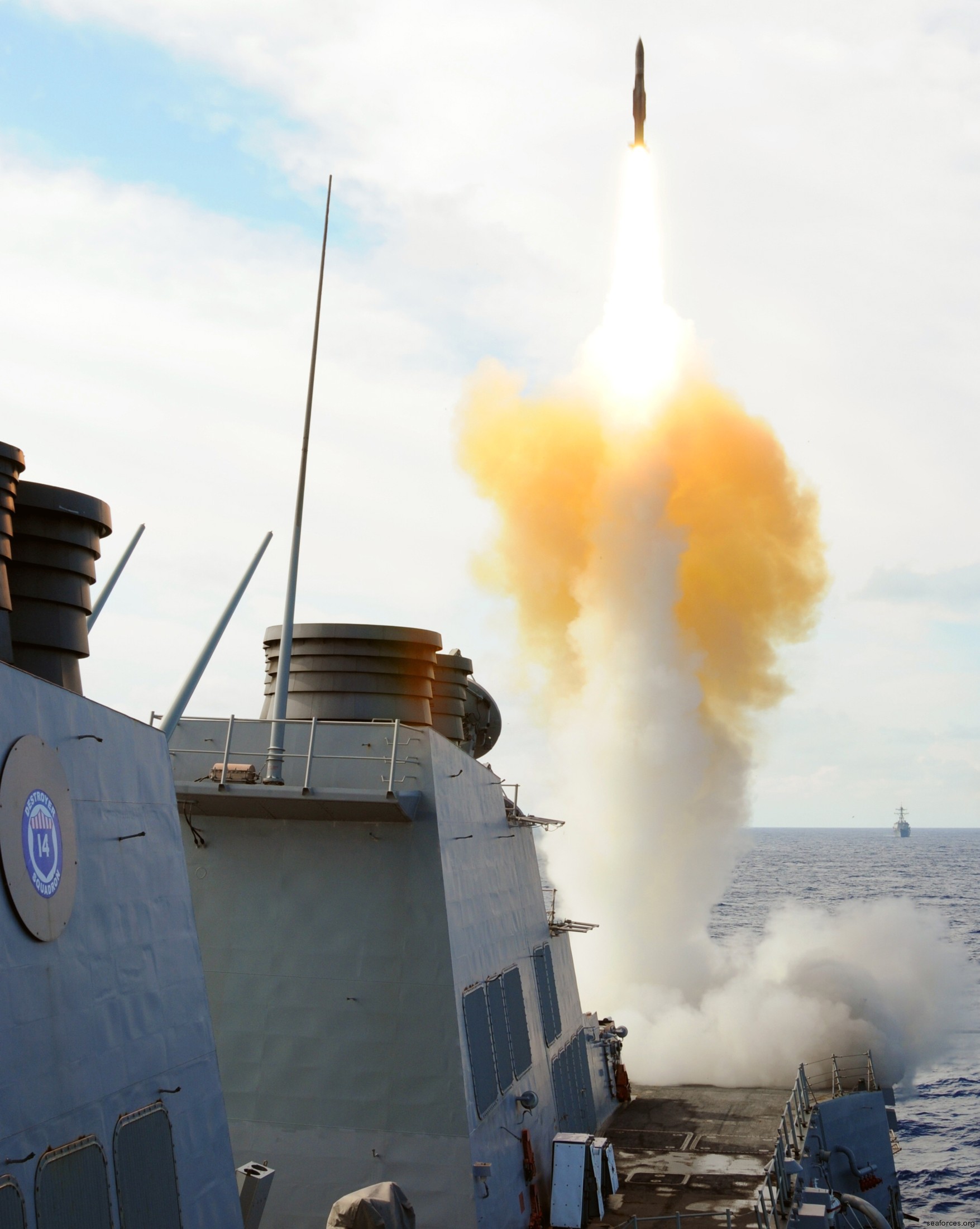 a Standard Missile SM-2 was fired from the Mk.41 VLS - Atlantic Ocean - August 2013 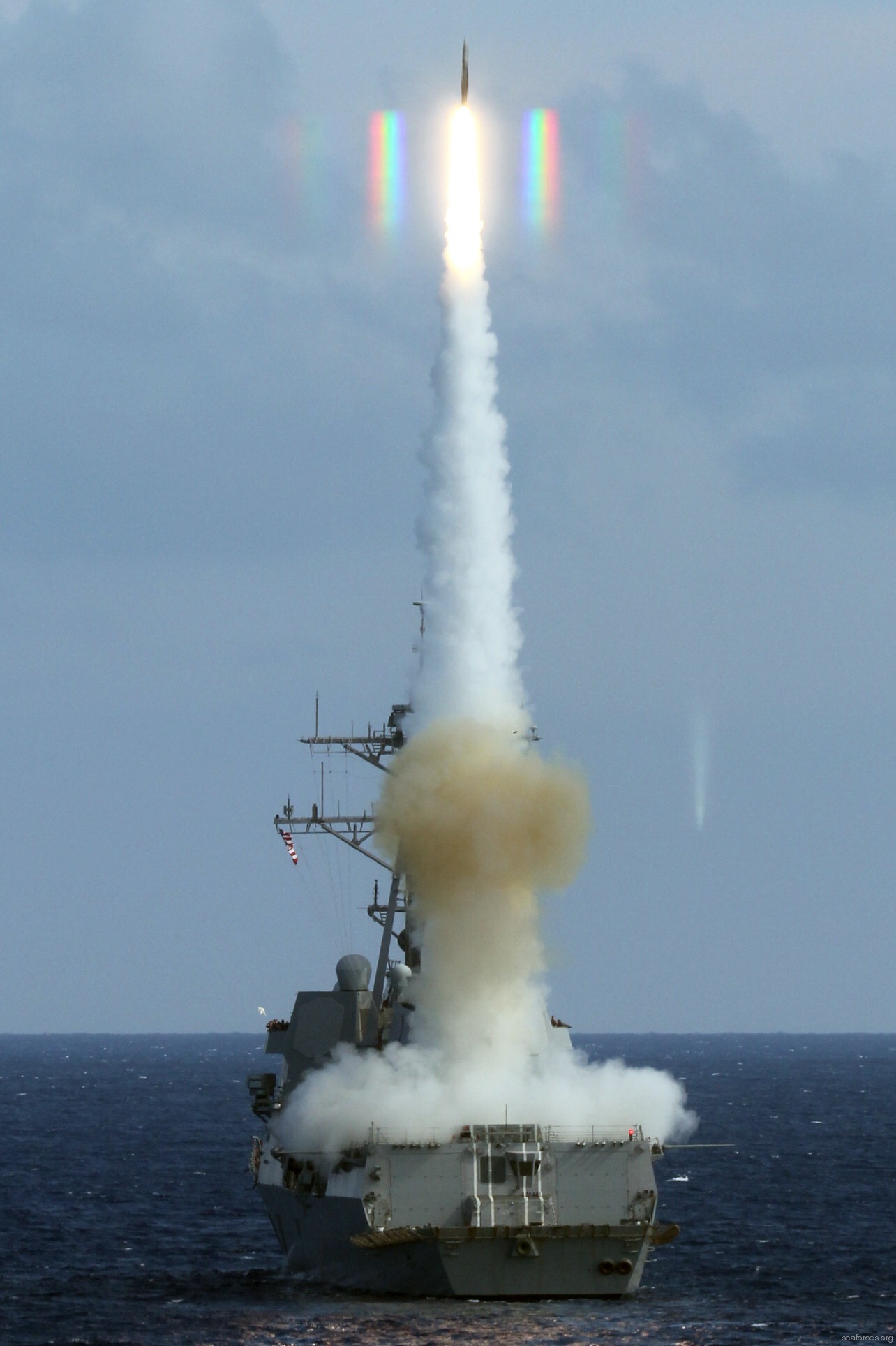 a Standard Missile SM-2 was fired from the Mk.41 VLS - Atlantic Ocean - August 2013 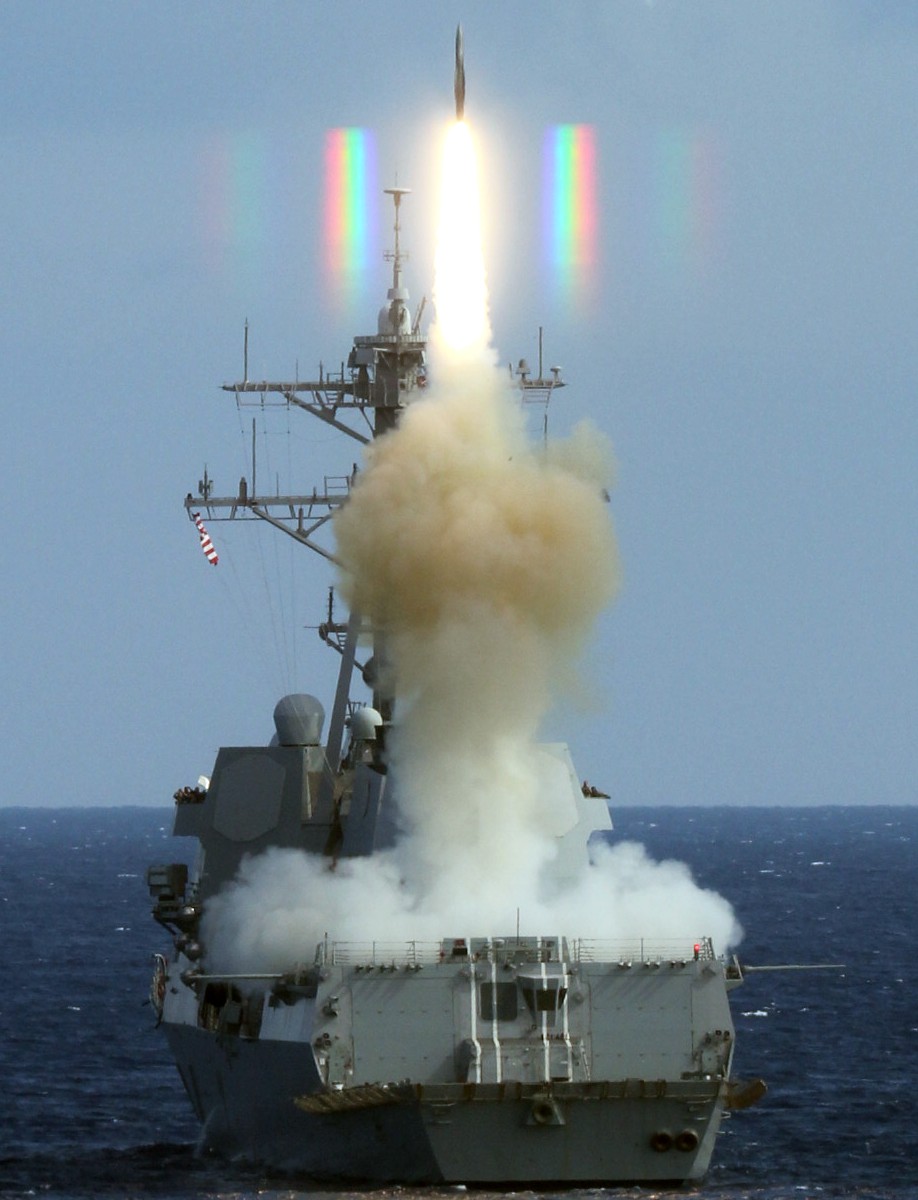 a RIM-66 Standard Missile SM-2MR was fired from the Mk.41 VLS - Atlantic Ocean - August 2013  Mk.45 Mod.2 (5" / 54-caliber) gun live fire exercise - Atlantic Ocean - August 2013  Mk.45 Mod.2 (5" / 54-caliber) gun live fire exercise - Atlantic Ocean - July 2013  Mk.15 Phalanx CIWS live fire exercise - Atlantic Ocean - July 2013  Suez Canal - April 2011 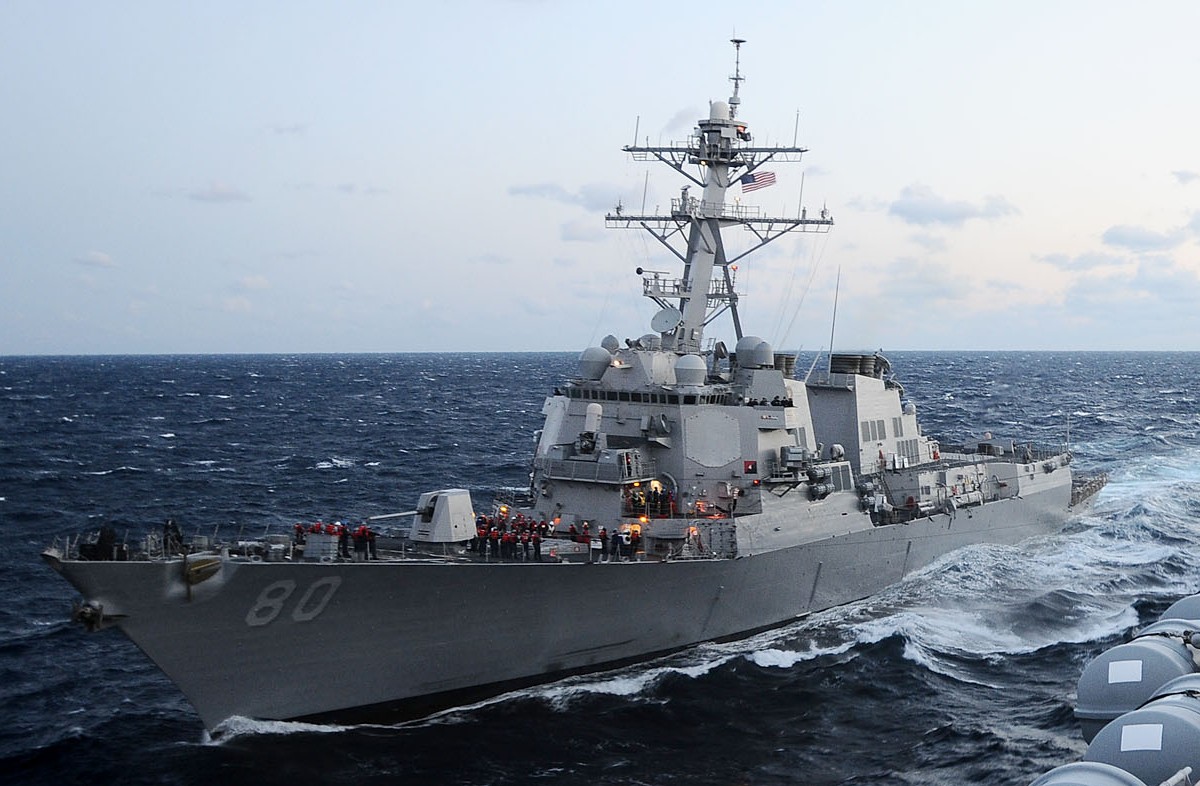 Atlantic Ocean - February 2011 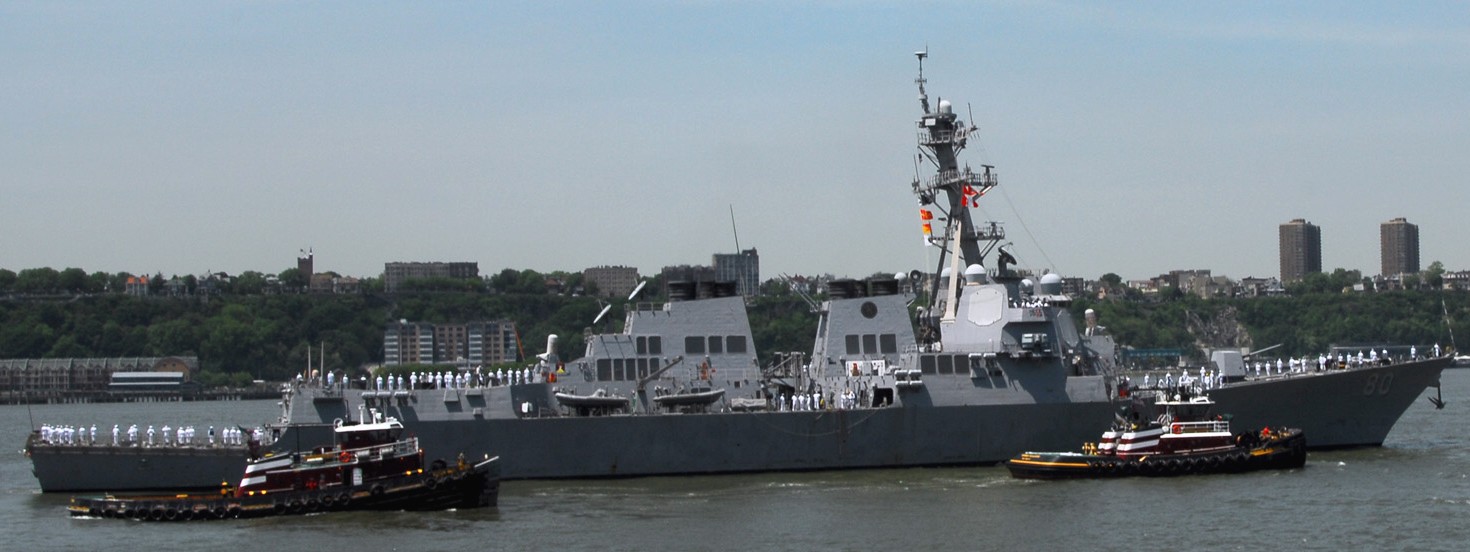 Fleet Week New York City - May 2009 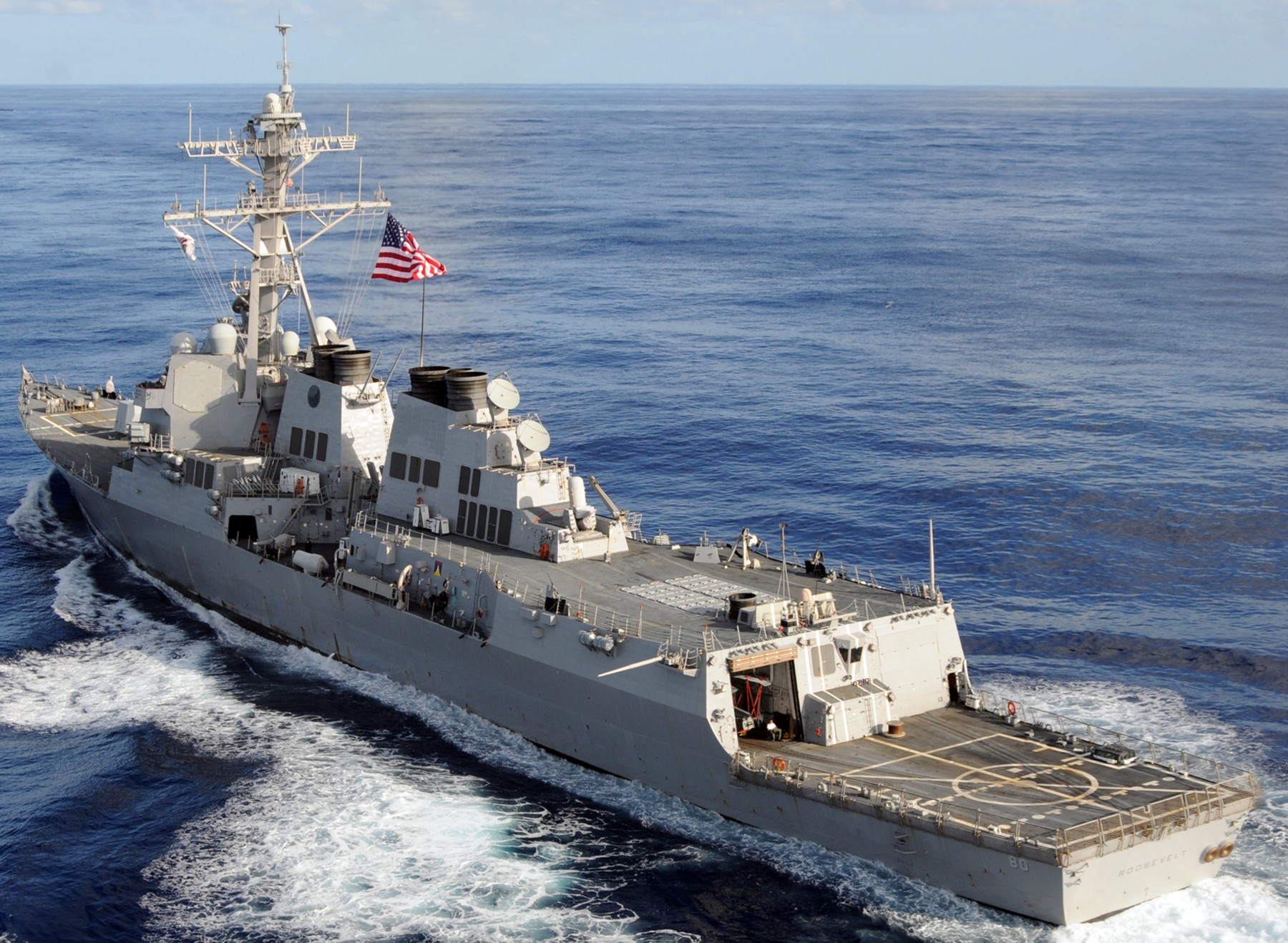 Atlantic Ocean - September 2008 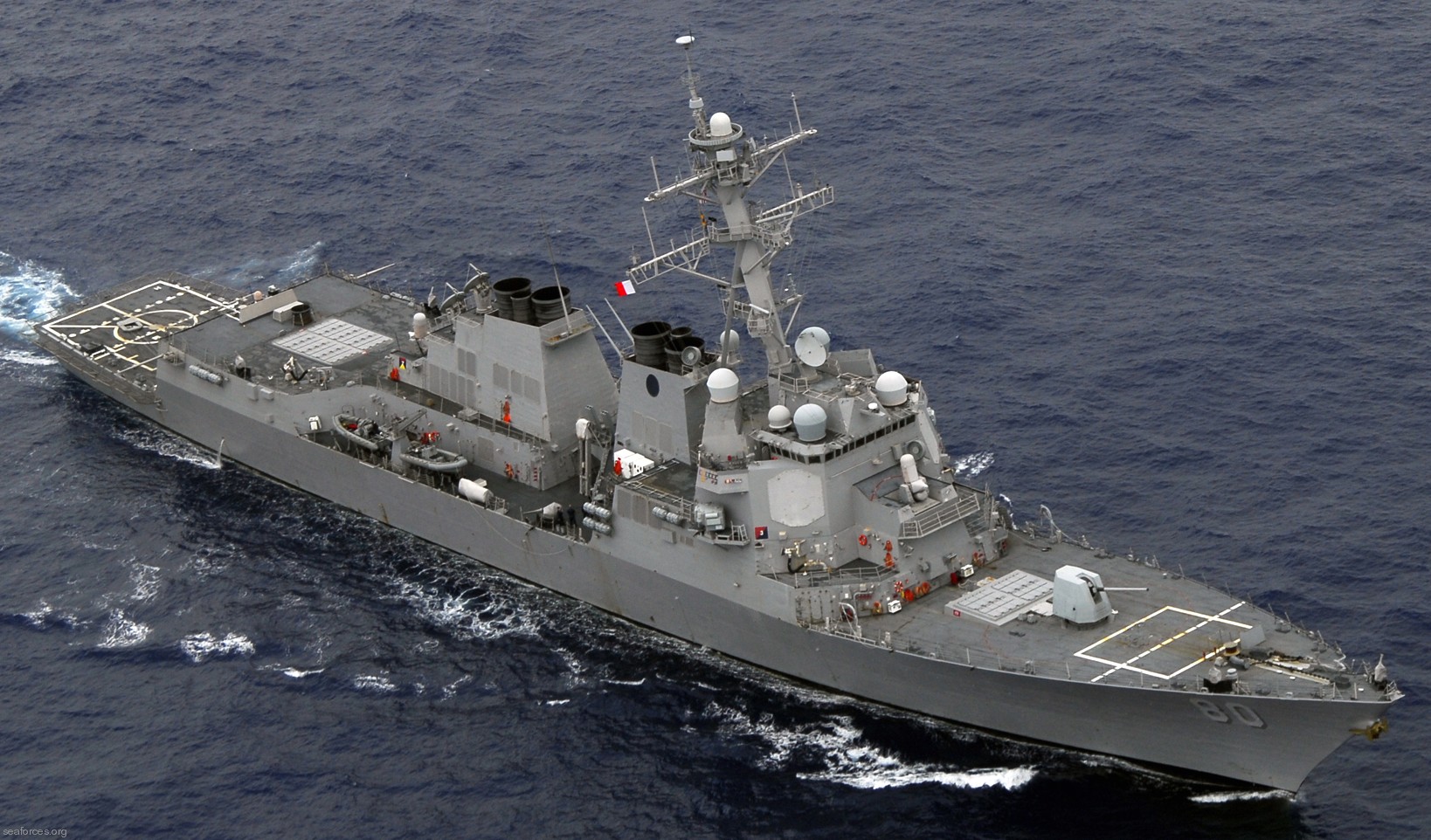 Atlantic Ocean - September 2008 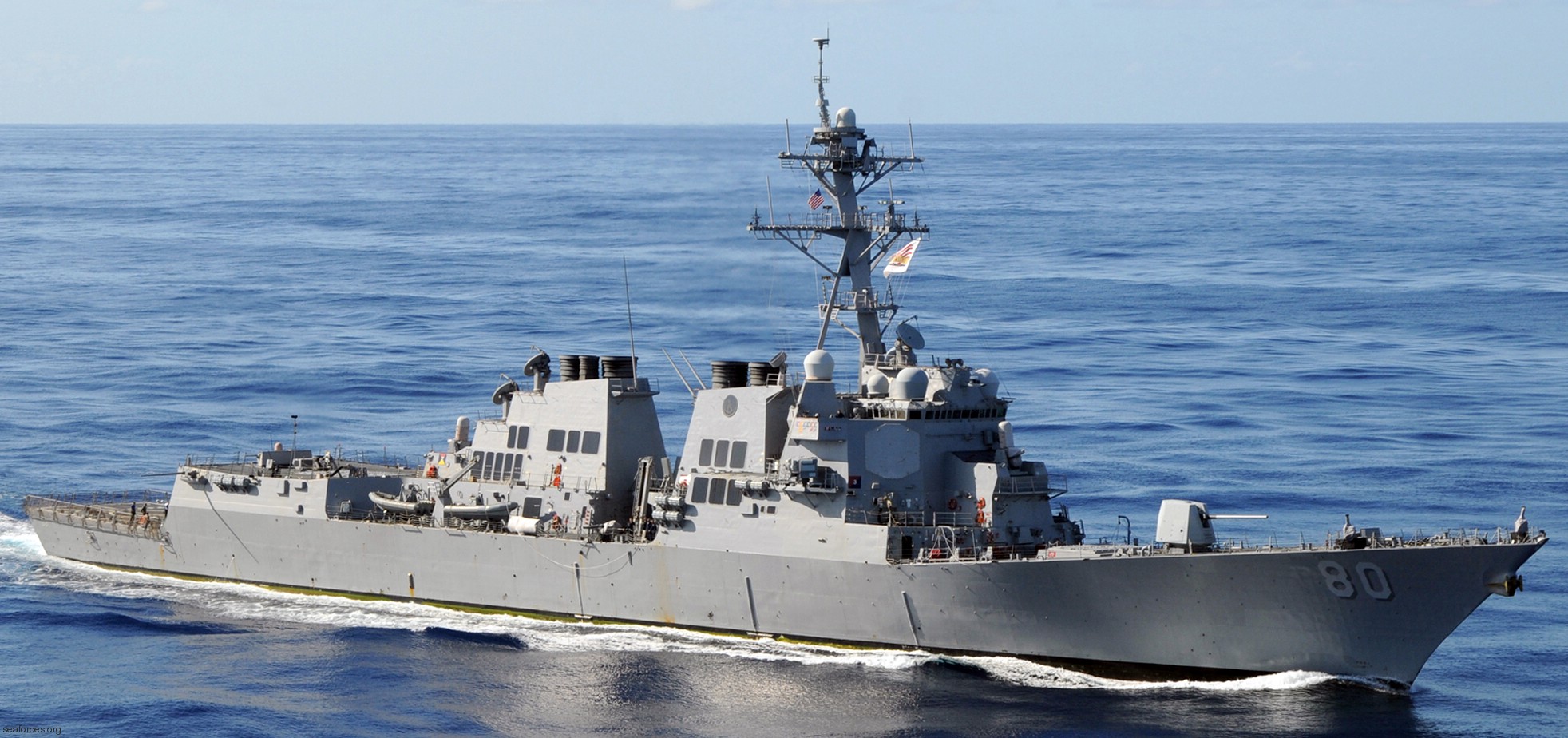 Atlantic Ocean - September 2008 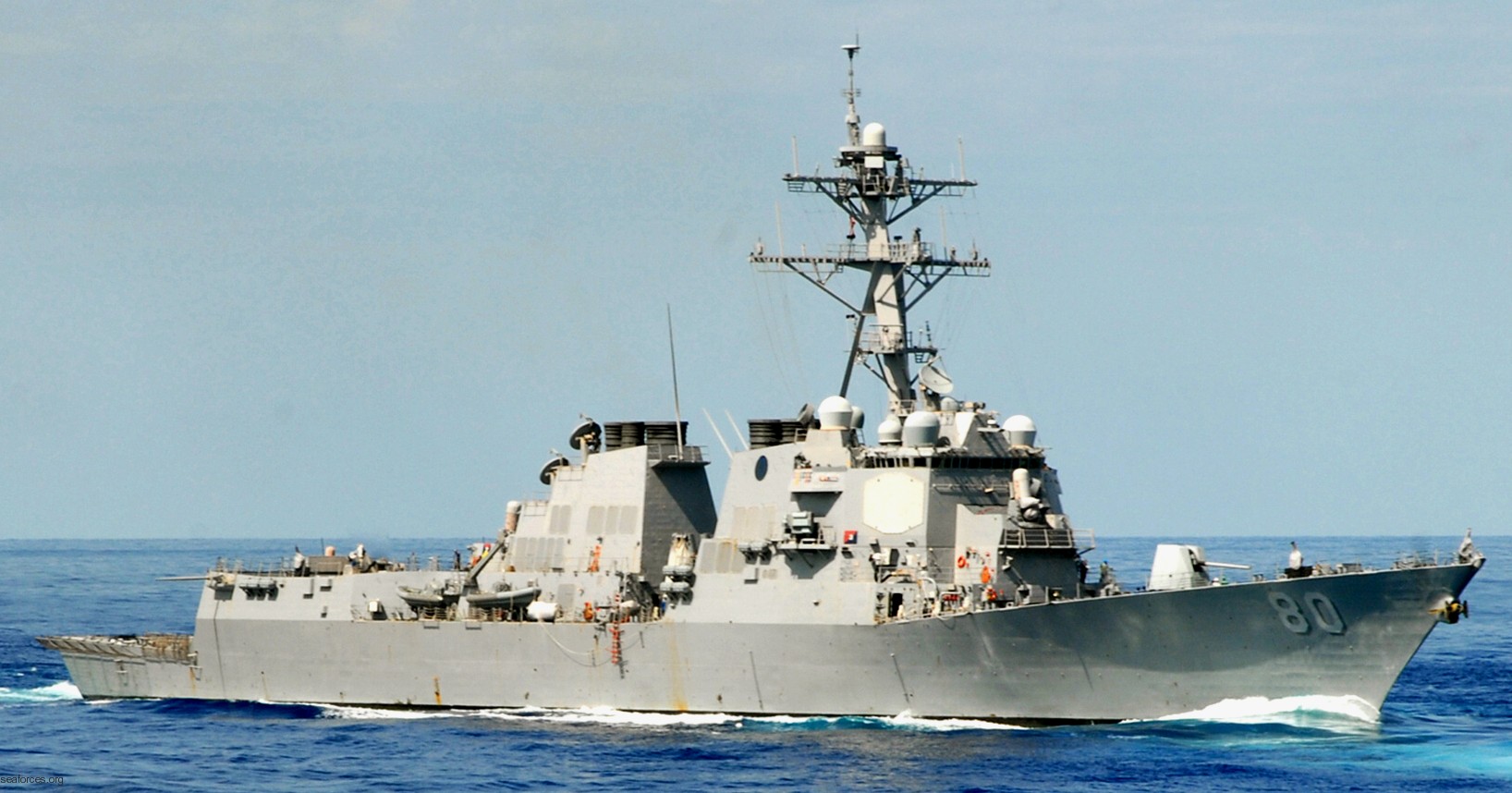 Atlantic Ocean - September 2008 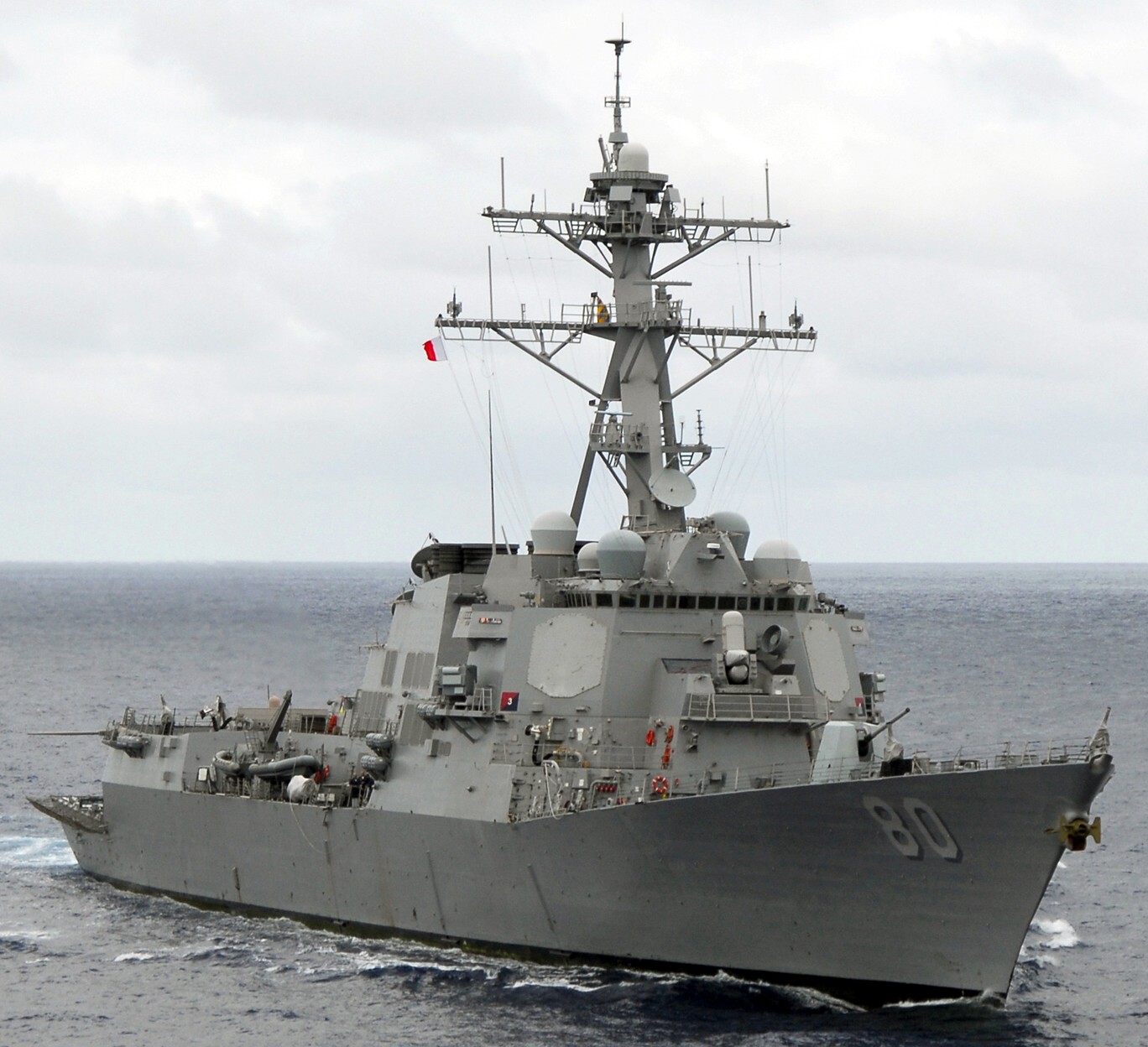 Atlantic Ocean - September 2008 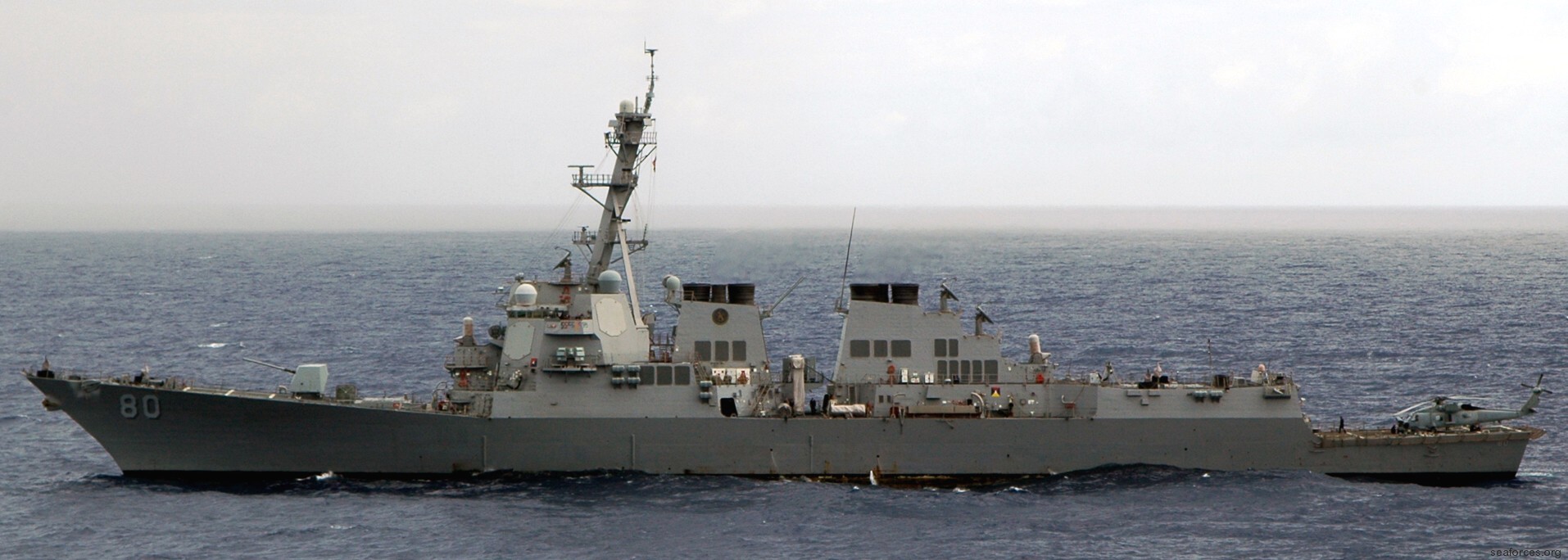 Atlantic Ocean - July 2008 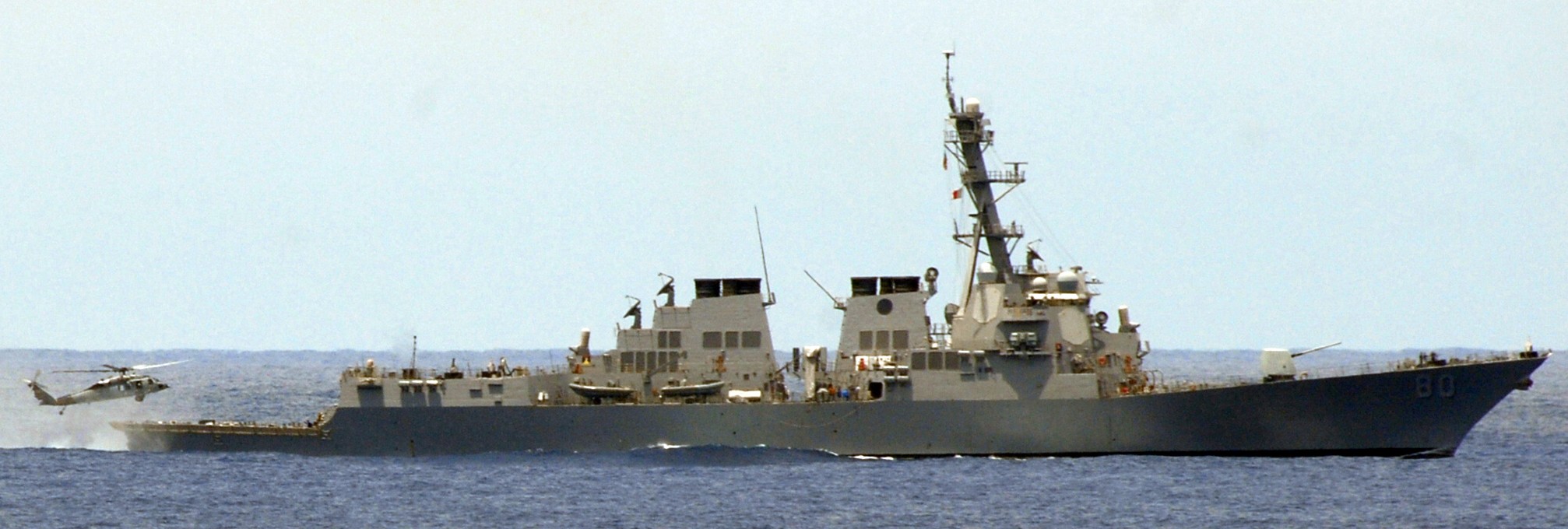 Atlantic Ocean - July 2008 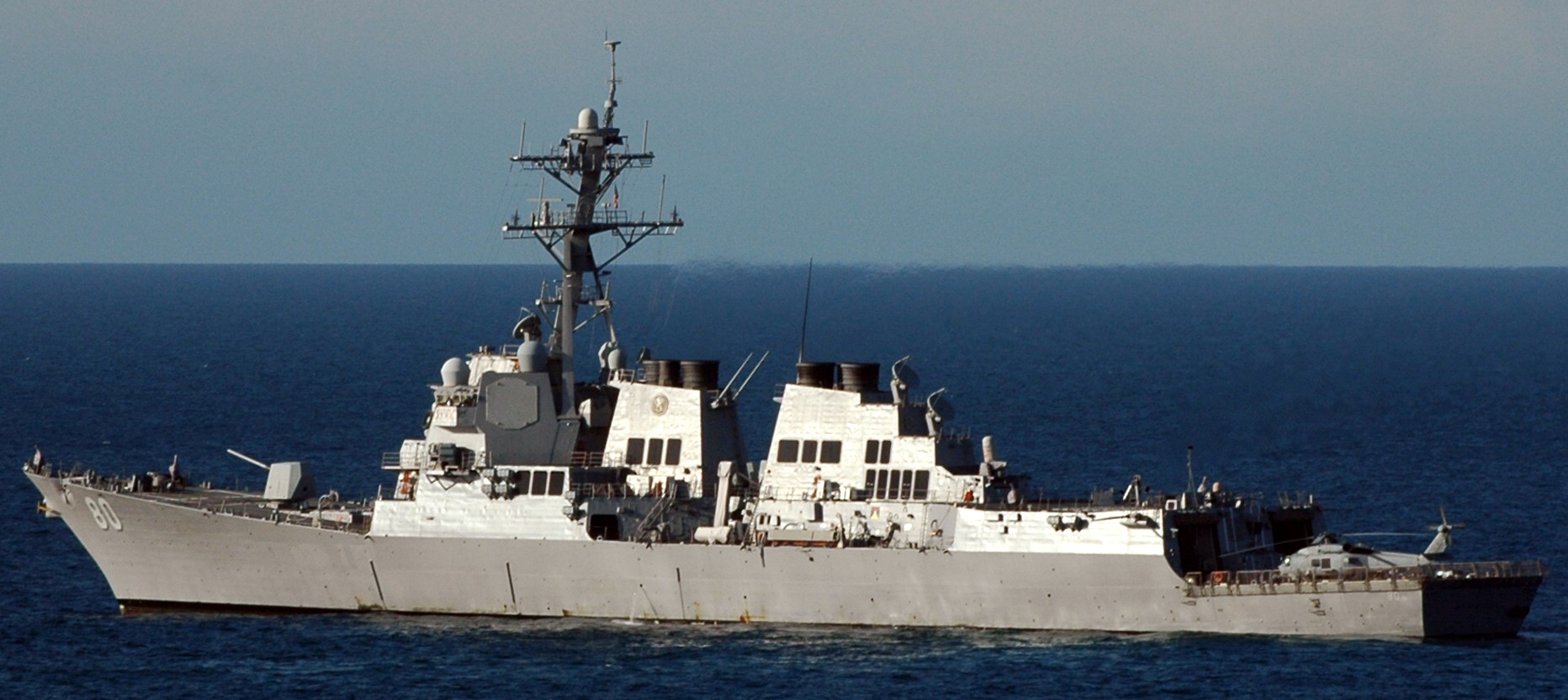 Atlantic Ocean - July 2008 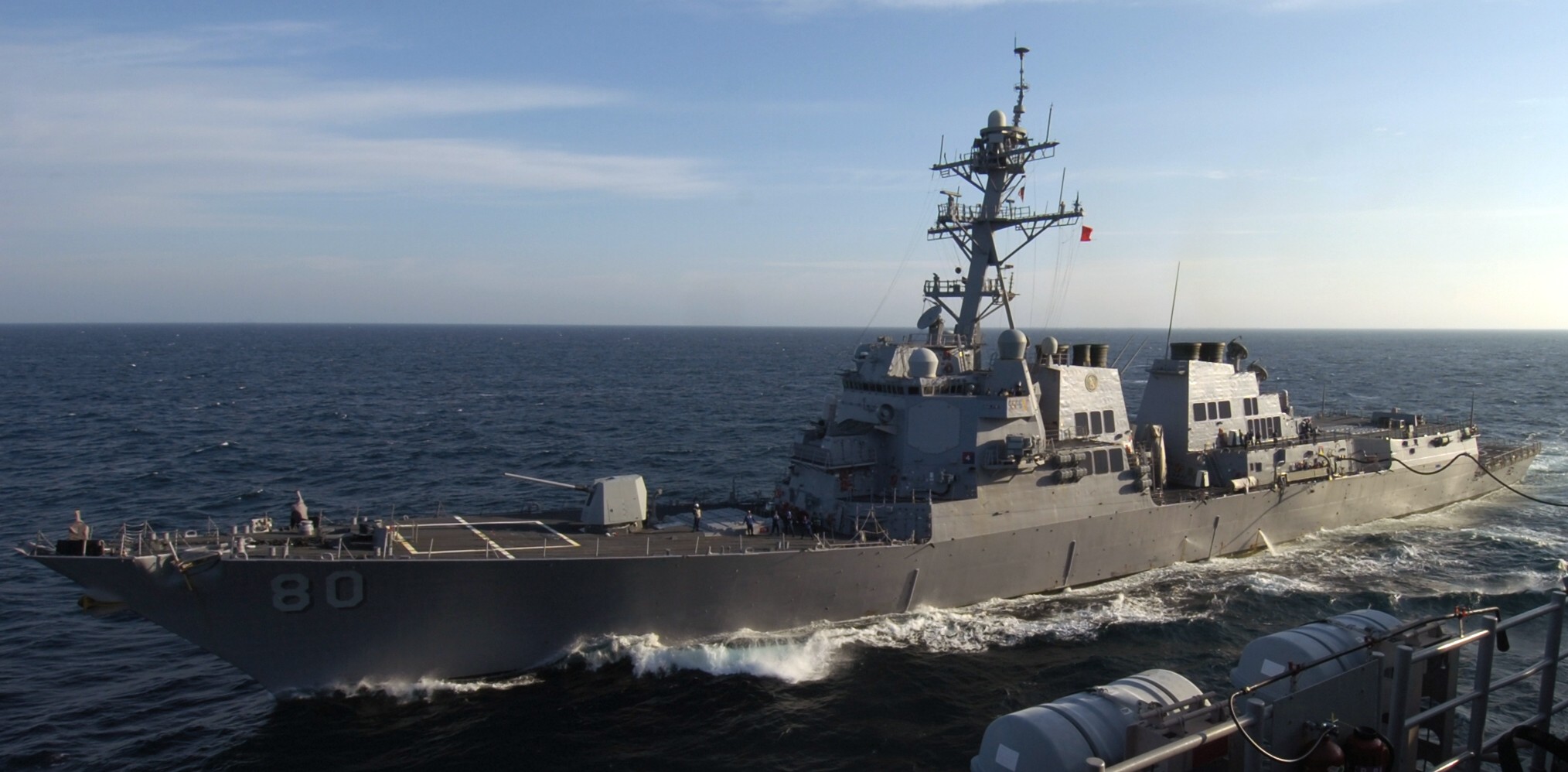 Atlantic Ocean - May 2008 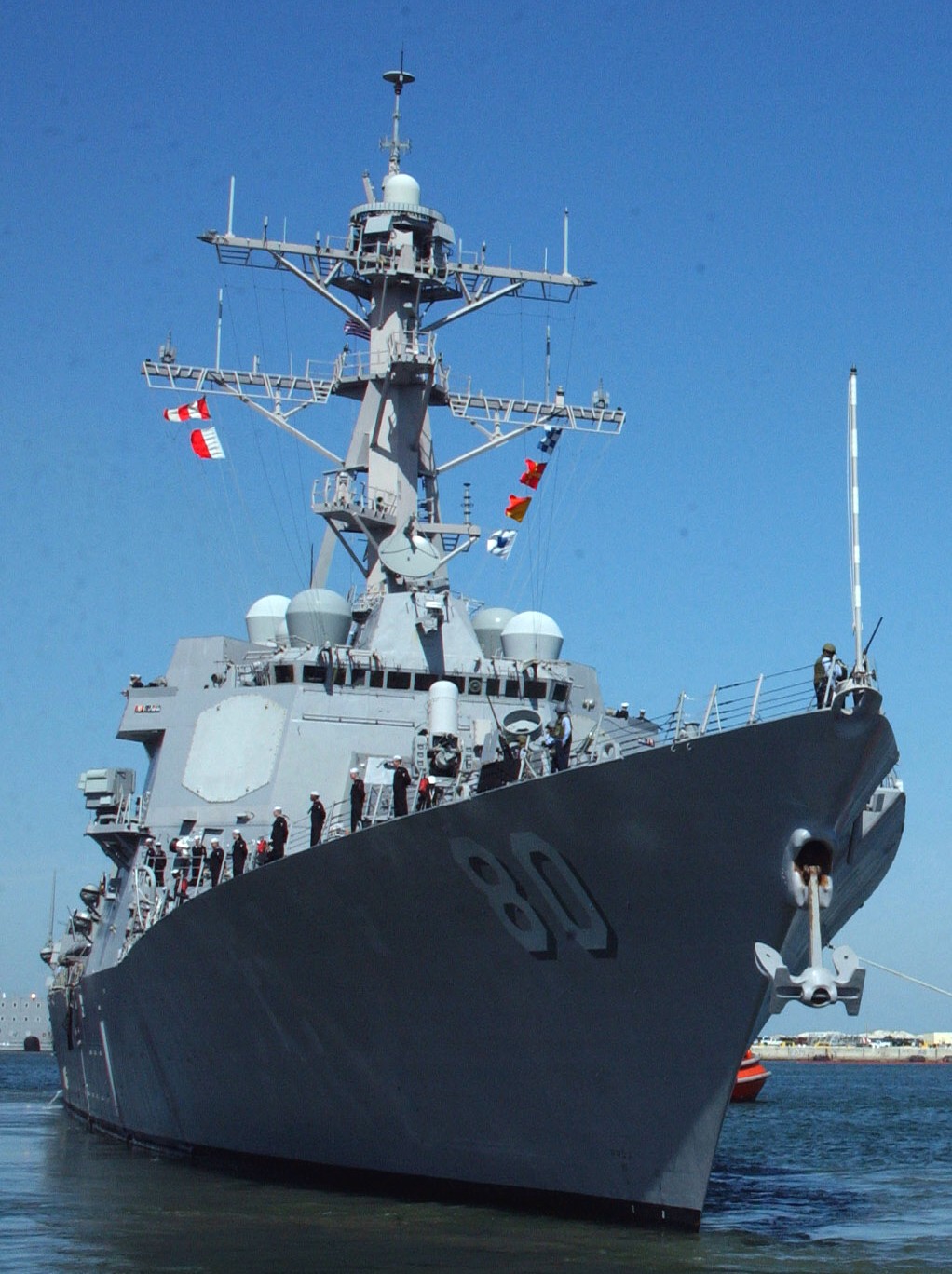 departing Naval Station Mayport, Florida - March 2007 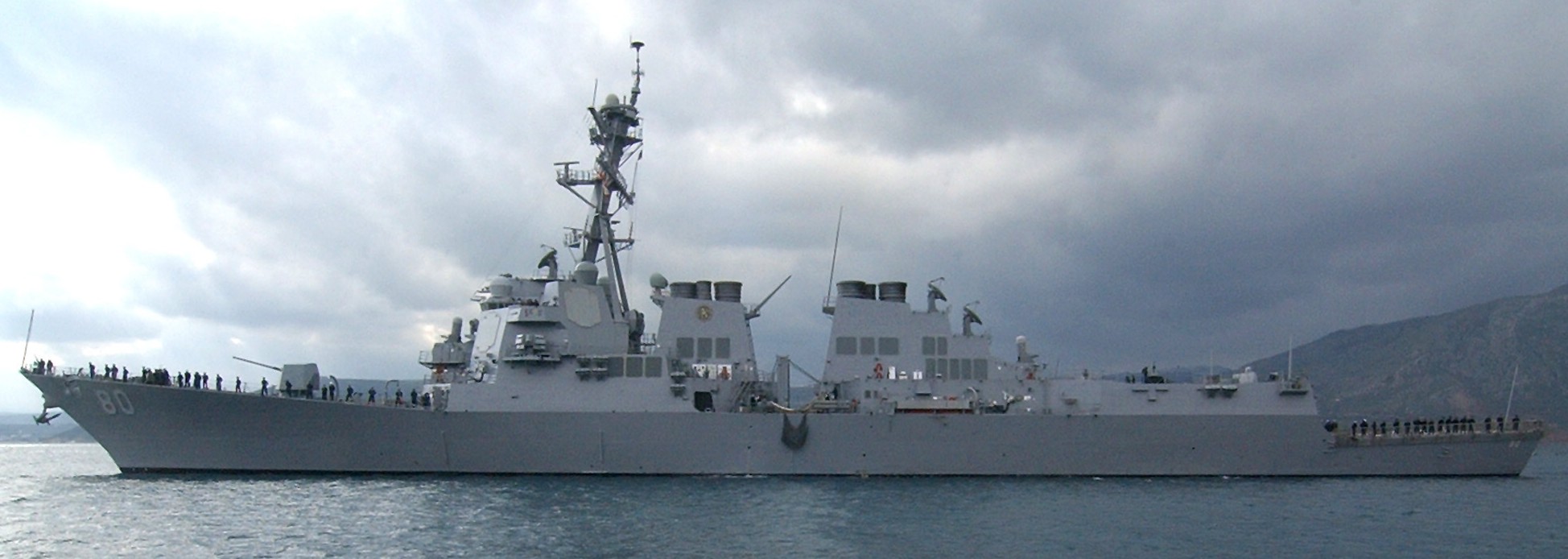 Souda Bay, Crete, Greece - February 2006 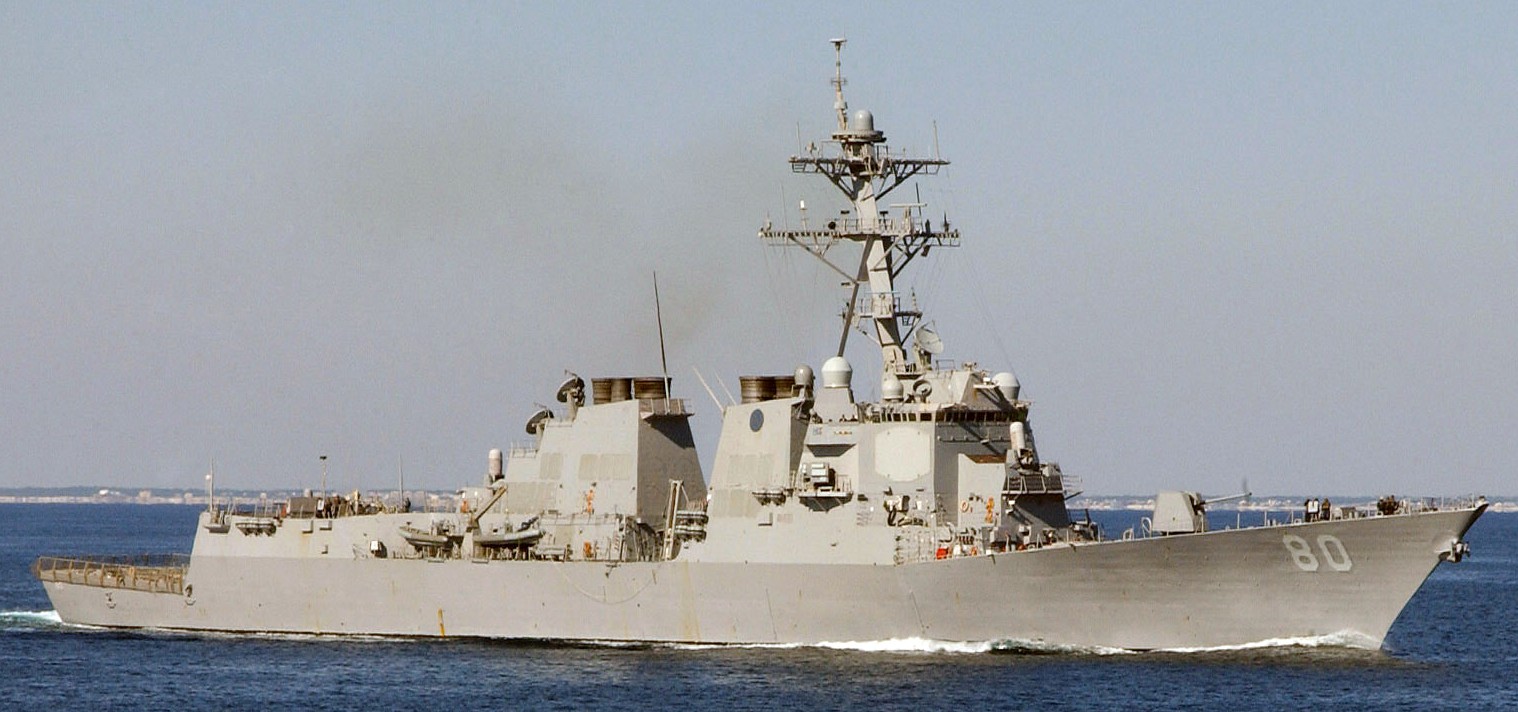 off Florida - March 2004  commissioning ceremony - Mayport, Florida - October 14, 2000 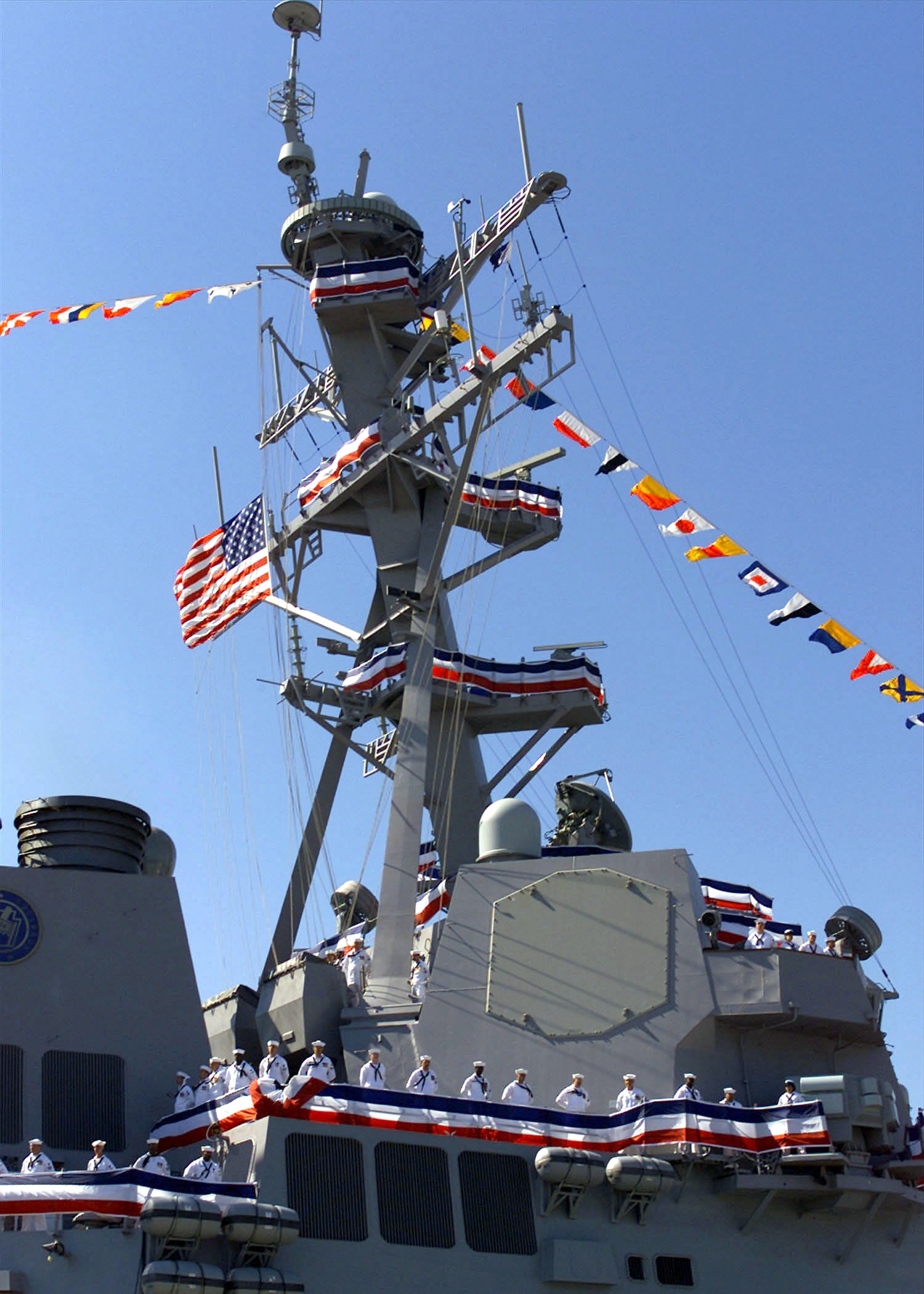 commissioning ceremony - Mayport, Florida - October 14, 2000  builder's trials - May 2000 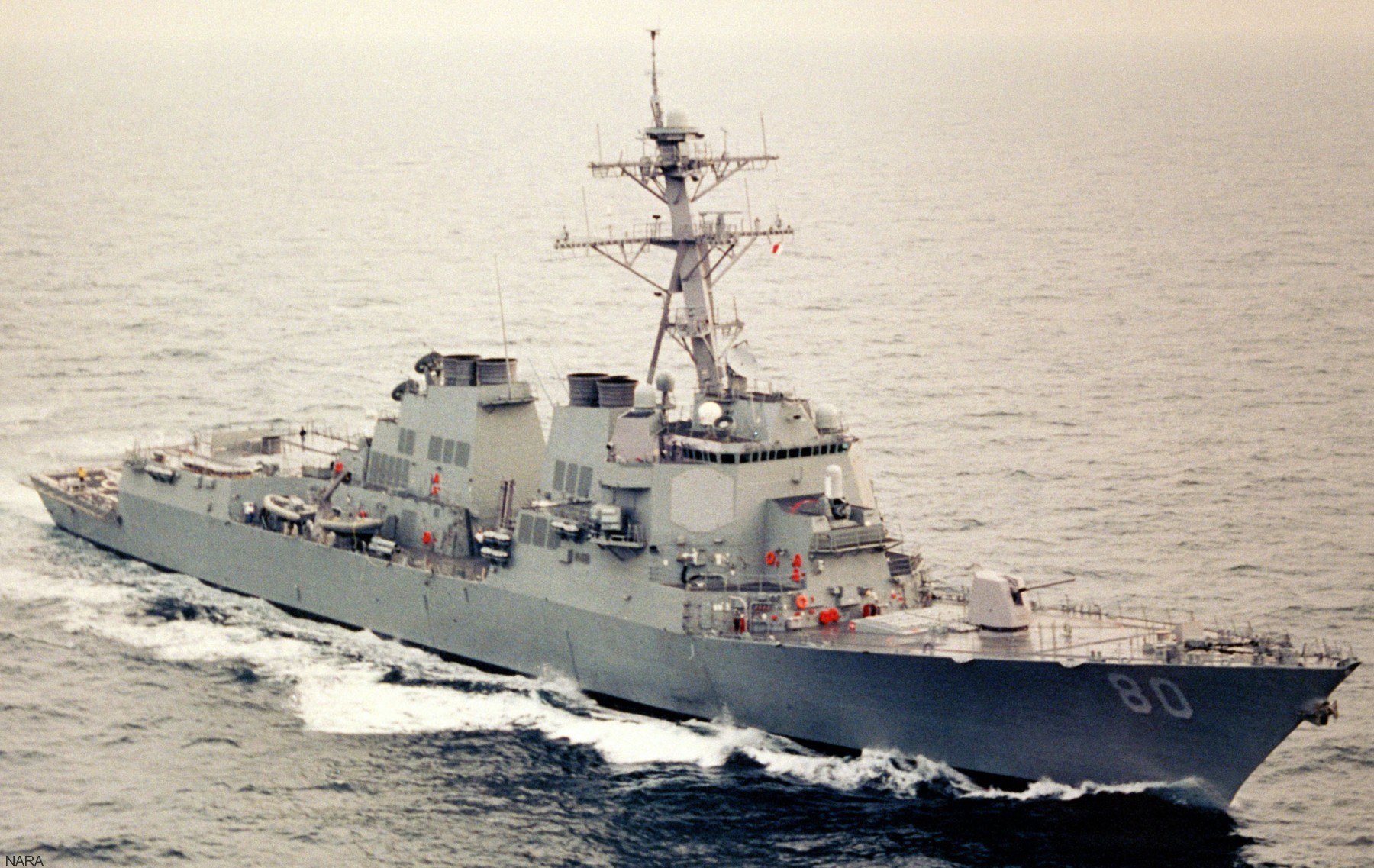 builder's trials - May 2000  builder's trials - May 2000 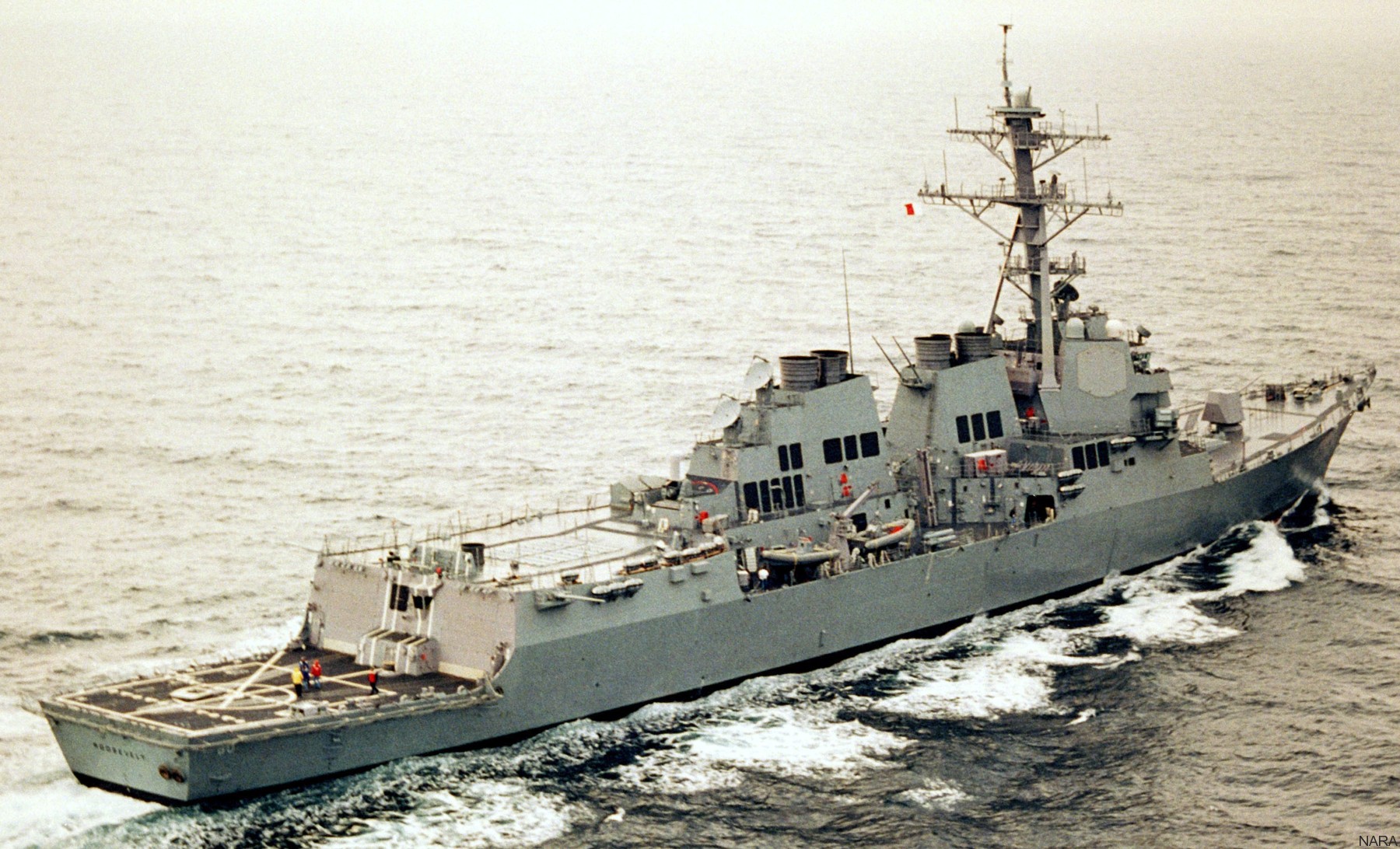 builder's trials - May 2000 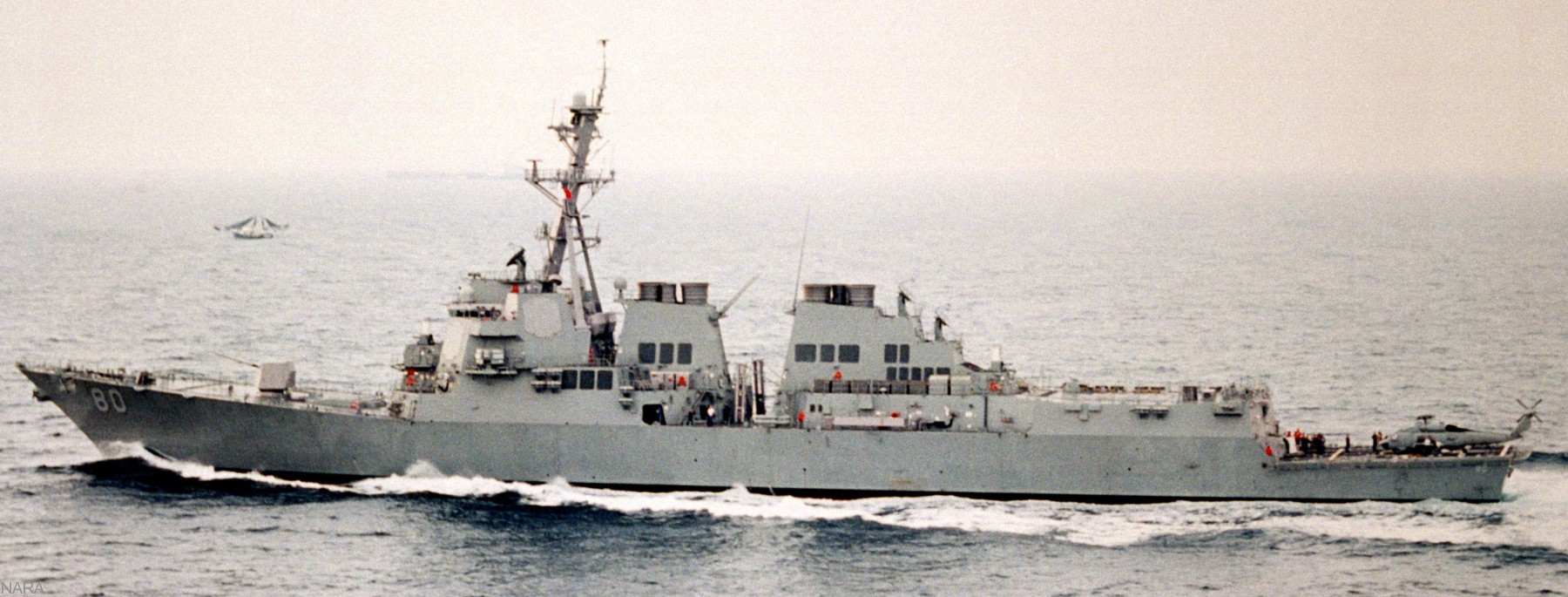 builder's trials - May 2000  builder's trials - May 2000 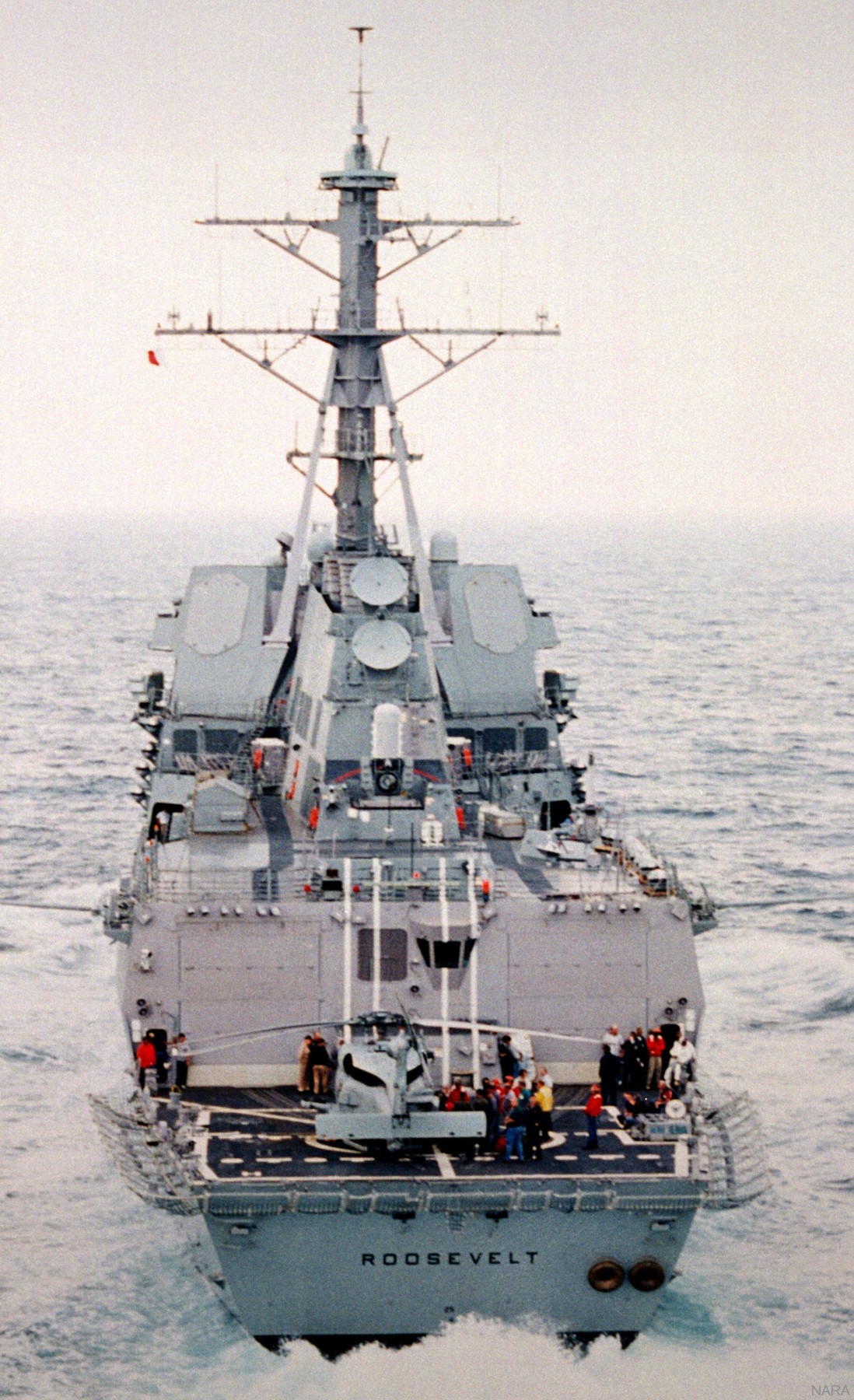 builder's trials - May 2000 |
||
|
USS Roosevelt (DDG 80): On 22 October 1996, the Secretary of the Navy, John H. Dalton, announced that the 30th ship of the Arleigh Burke class, would be named Roosevelt. This is the first ship so named to honor both Franklin D. Roosevelt, the 32nd President of the United States and the former First Lady, Eleanor Roosevelt. The keel was laid down on 15 December 1997 at Litton Industries' Ingalls Shipbuilding shipyard in Pascagoula, Mississippi. She was launched on 10 January 1999, and christened on 23 January, sponsored by Mrs. Nancy Roosevelt Ireland, granddaughter of the ship's namesakes. The ship was commissioned on 14 October 2000 at Naval Station Mayport in Florida, with CDR Matthew E. Bobola in command. On 4 April 2006, USS Roosevelt and the Dutch frigate HNLMS De Zeven Provinciën attempted to intercept a hijacked South Korean trawler off the coast of Somalia. However, both ships were forced to disengage in the pursuit because the pirates threatened the trawler's crew with firearms. The hijacked trawler escaped into Somali territorial waters. On 16 February 2007, USS Roosevelt was awarded the 2006 Battle Efficiency "E" award. On 28 October 2011, USS Roosevelt completed her seven-month deployment to the U.S. Fifth Fleet and U.S. Sixth Fleet Areas of Responsibility. During this overseas deployment, she was underway at sea for 205 days out of total of 213 days away from her homeport of Naval Station Mayport. During the 205 days at sea, she logged one period of 113 consecutive days underway, travelling over 38,000 nautical miles (70,000 km; 44,000 mi). She made only three ports of call during her 2011 deployment, to Rota, Spain; the island of Mahe in Seychelles Islands; and Port Louis, the capital of the island of Mauritius. On 16 March 2014, Navy SEALs from USS Roosevelt took possession of the rogue oil tanker Morning Glory south of Cyprus with the intent to deliver the vessel to the Libyan authorities. On 21 March 2020, USS Roosevelt left its homeport of Naval Station Mayport to homeport shift to Naval Station Rota, Spain. She arrived on 16 May 2020 to replace USS Carney (DDG-64). source: wikipedia see also: USS Franklin D. Roosevelt (CV 42) |
||
|
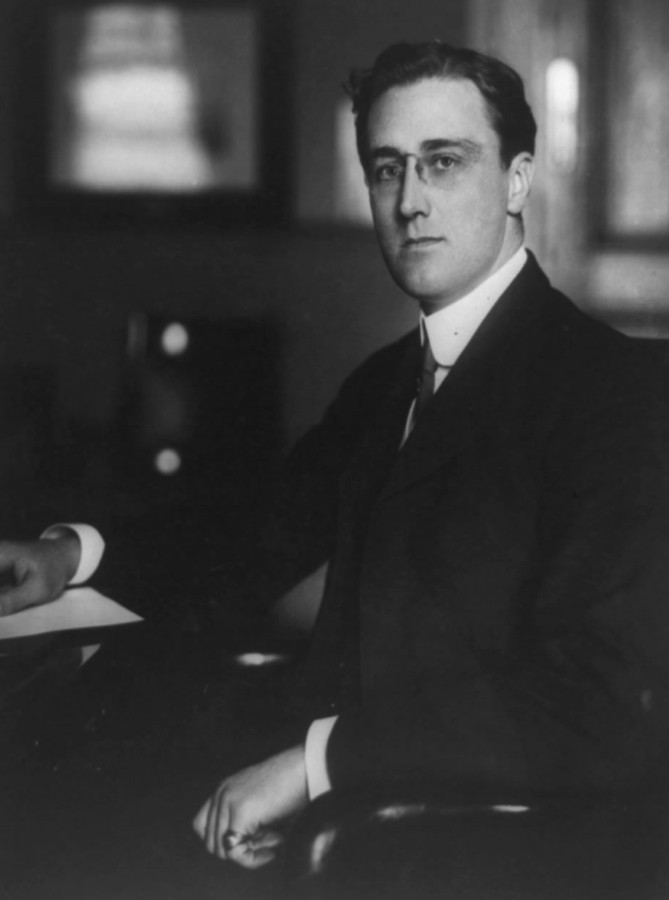
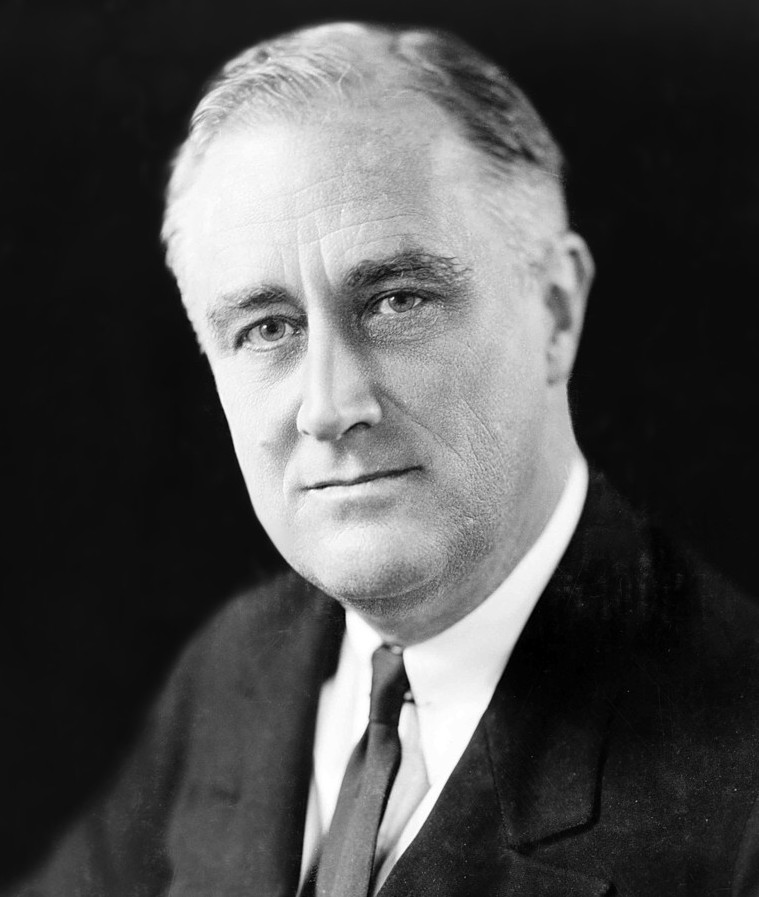
President Franklin Delano Roosevelt (January 30, 1882 -
April 12, 1945):
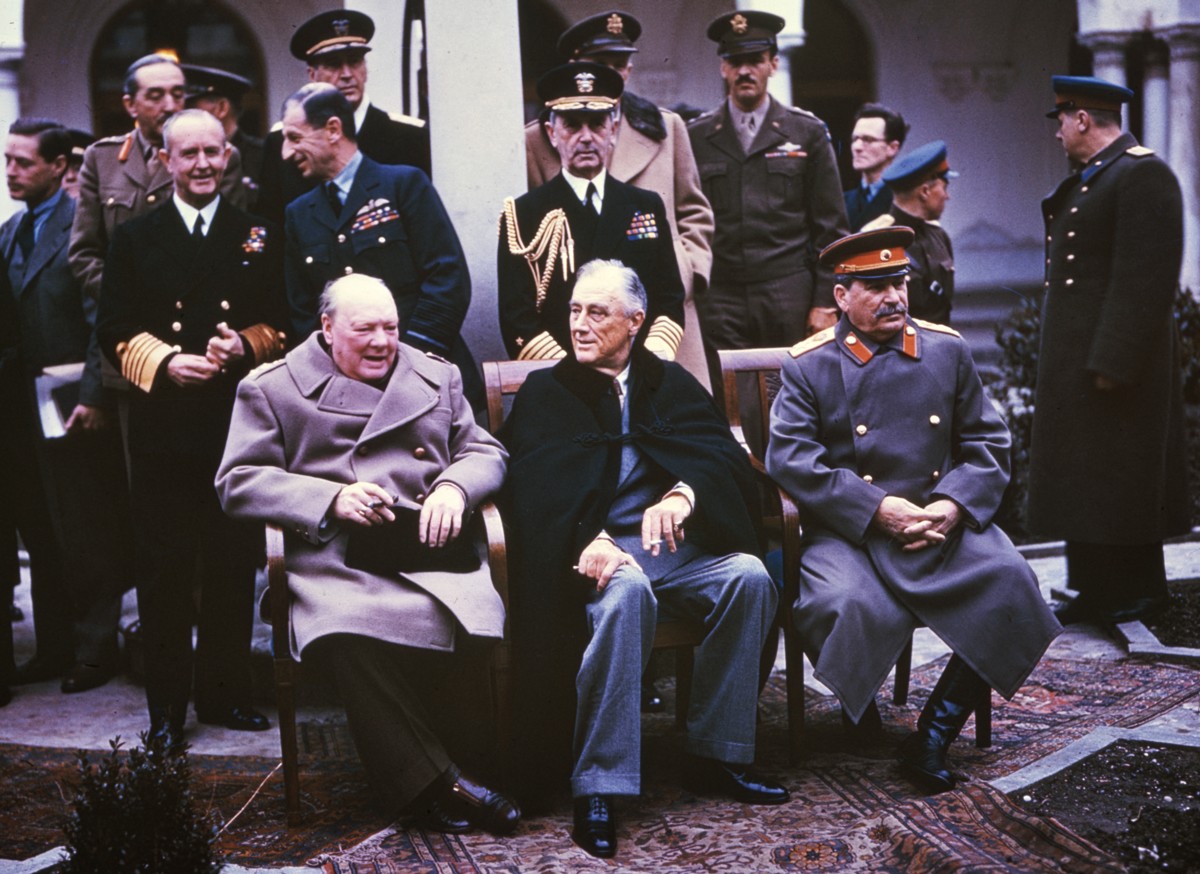
Assuming the Presidency at the depth of the Great Depression, Franklin D. Roosevelt helped the American people regain faith in themselves. He brought hope as he promised prompt, vigorous action, and asserted in his Inaugural Address, "the only thing we have to fear is fear itself." Born in 1882 at Hyde Park, New York - now a national historic site - he attended Harvard University and Columbia Law School. On St. Patrick's Day, 1905, he married Eleanor Roosevelt. Following the example of his fifth cousin, President Theodore Roosevelt, whom he greatly admired, Franklin D. Roosevelt entered public service through politics, but as a Democrat. He won election to the New York Senate in 1910. President Wilson appointed him Assistant Secretary of the Navy, and he was the Democratic nominee for Vice President in 1920. In the summer of 1921, when he was 39, disaster hit-h-e was stricken with poliomyelitis. Demonstrating indomitable courage, he fought to regain the use of his legs, particularly through swimming. At the 1924 Democratic Convention he dramatically appeared on crutches to nominate Alfred E. Smith as "the Happy Warrior." In 1928 Roosevelt became Governor of New York. He was elected President in November 1932, to the first of four terms. By March there were 13,000,000 unemployed, and almost every bank was closed. In his first "hundred days," he proposed, and Congress enacted, a sweeping program to bring recovery to business and agriculture, relief to the unemployed and to those in danger of losing farms and homes, and reform, especially through the establishment of the Tennessee Valley Authority. By 1935 the Nation had achieved some measure of recovery, but businessmen and bankers were turning more and more against Roosevelt's New Deal program. They feared his experiments, were appalled because he had taken the Nation off the gold standard and allowed deficits in the budget, and disliked the concessions to labor. Roosevelt responded with a new program of reform: Social Security, heavier taxes on the wealthy, new controls over banks and public utilities, and an enormous work relief program for the unemployed. In 1936 he was re-elected by a top-heavy margin. Feeling he was armed with a popular mandate, he sought legislation to enlarge the Supreme Court, which had been invalidating key New Deal measures. Roosevelt lost the Supreme Court battle, but a revolution in constitutional law took place. Thereafter the Government could legally regulate the economy. Roosevelt had pledged the United States to the "good neighbor" policy, transforming the Monroe Doctrine from a unilateral American manifesto into arrangements for mutual action against aggressors. He also sought through neutrality legislation to keep the United States out of the war in Europe, yet at the same time to strengthen nations threatened or attacked. When France fell and England came under siege in 1940, he began to send Great Britain all possible aid short of actual military involvement. When the Japanese attacked Pearl Harbor on December 7, 1941, Roosevelt directed organization of the Nation's manpower and resources for global war. Feeling that the future peace of the world would depend upon relations between the United States and Russia, he devoted much thought to the planning of a United Nations, in which, he hoped, international difficulties could be settled. As the war drew to a close, Roosevelt's health deteriorated, and on April 12, 1945, while at Warm Springs, Georgia, he died of a cerebral hemorrhage.
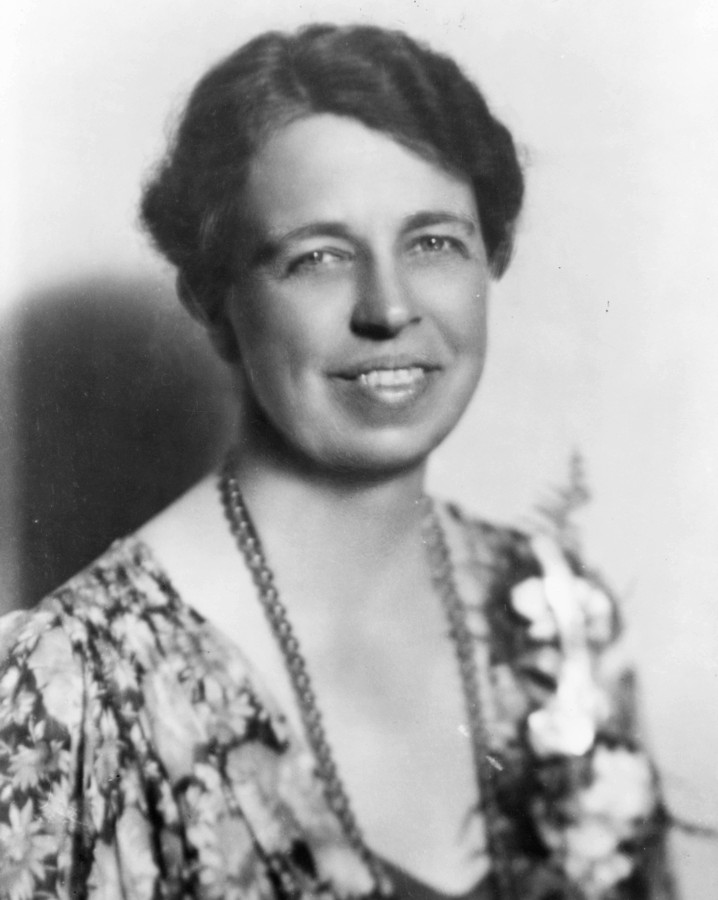
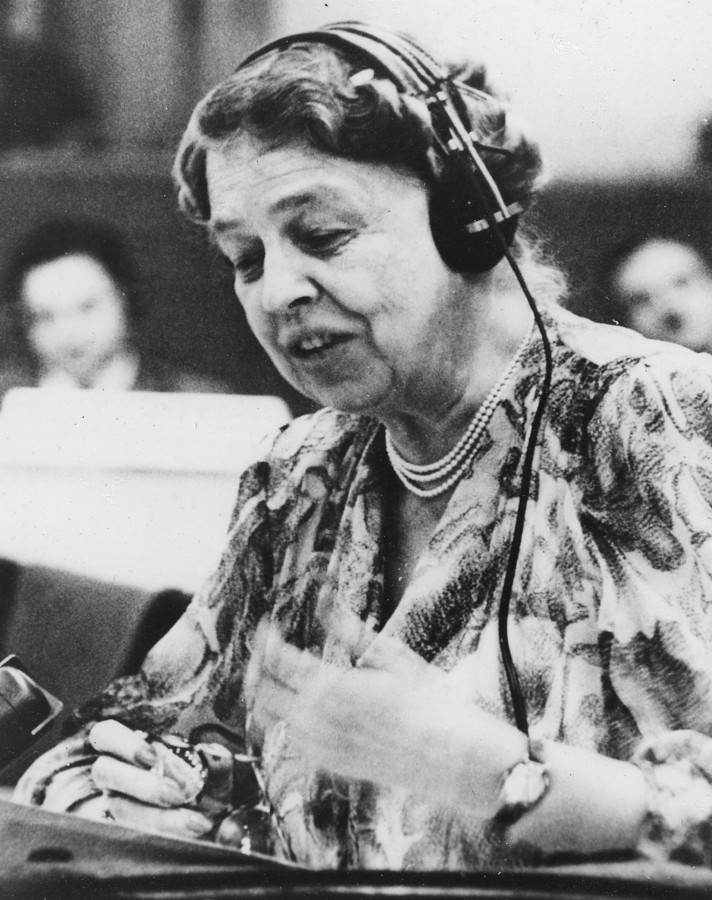
Anna Eleanor Roosevelt (October 11, 1884 - November 7, 1962): A shy, awkward child, starved for recognition and love, Eleanor Roosevelt grew into a woman with great sensitivity to the underprivileged of all creeds, races, and nations. Her constant work to improve their lot made her one of the most loved - and for some years one of the most reviled - women of her generation. She was born in New York City on October 11, 1884, daughter of lovely Anna Hall and Elliott Roosevelt, younger brother of Theodore. When her mother died in 1892, the children went to live with Grandmother Hall; her adored father died only two years later. Attending a distinguished school in England gave her, at 15, her first chance to develop self-confidence among other girls. Tall, slender, graceful of figure but apprehensive at the thought of being a wallflower, she returned for a debut that she dreaded. In her circle of friends was a distant cousin, handsome young Franklin Delano Roosevelt. They became engaged in 1903 and were married in 1905, with her uncle the President giving the bride away. Within eleven years Eleanor bore six children; one son died in infancy. "I suppose I was fitting pretty well into the pattern of a fairly conventional, quiet, young society matron," she wrote later in her autobiography. In Albany, where Franklin served in the state Senate from 1910 to 1913, Eleanor started her long career as political helpmate. She gained a knowledge of Washington and its ways while he served as Assistant Secretary of the Navy. When he was stricken with poliomyelitis in 1921, she tended him devotedly. She became active in the women's division of the State Democratic Committee to keep his interest in politics alive. From his successful campaign for governor in 1928 to the day of his death, she dedicated her life to his purposes. She became eyes and ears for him, a trusted and tireless reporter. When Mrs. Roosevelt came to the White House in 1933, she understood social conditions better than any of her predecessors and she transformed the role of First Lady accordingly. She never shirked official entertaining; she greeted thousands with charming friendliness. She also broke precedent to hold press conferences, travel to all parts of the country, give lectures and radio broadcasts, and express her opinions candidly in a daily syndicated newspaper column, "My Day." This made her a tempting target for political enemies but her integrity, her graciousness, and her sincerity of purpose endeared her personally to many--from heads of state to servicemen she visited abroad during World War II. As she had written wistfully at 14: "...no matter how plain a woman may be if truth & loyalty are stamped upon her face all will be attracted to her...." After the President's death in 1945 she returned to a cottage at his Hyde Park estate; she told reporters: "the story is over." Within a year, however, she began her service as American spokesman in the United Nations. She continued a vigorous career until her strength began to wane in 1962. She died in New York City that November, and was buried at Hyde Park beside her husband.
|
||
| patches + more | ||
 |
||
|
|
seaforces.org |
USN ships
start page | |