|
||
|
HOME
|
US Navy -
ships
|
US Navy - air
units
|
USMC - air
units
|
International
Navies
|
Weapon Systems
|
Special Reports |
||
|
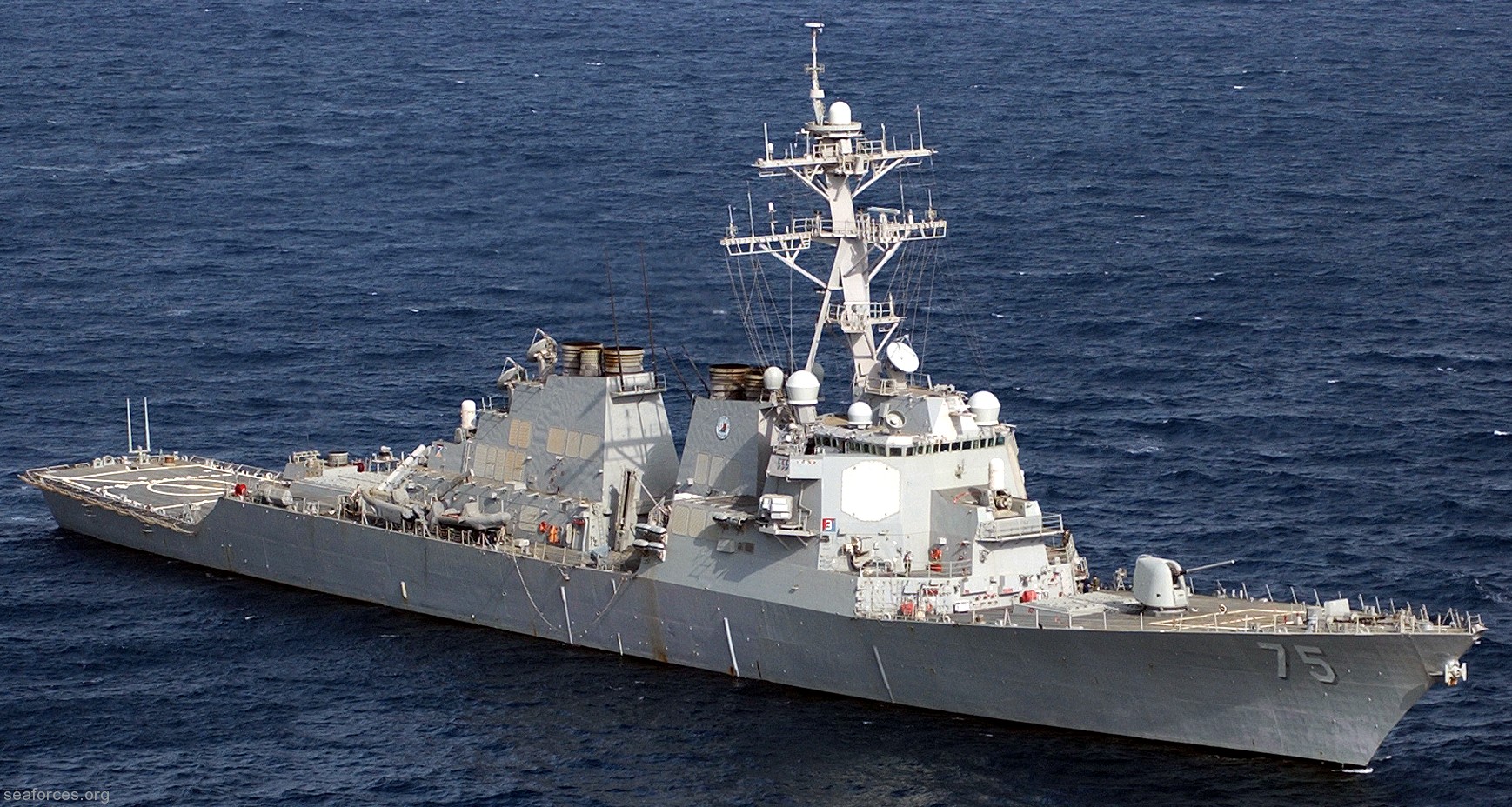
US Navy - Guided Missile Destroyer DDG 75 - USS Donald Cook |
||
|
||
| 03/20 | ||
|
Type,
class: Guided Missile Destroyer - DDG; Arleigh Burke
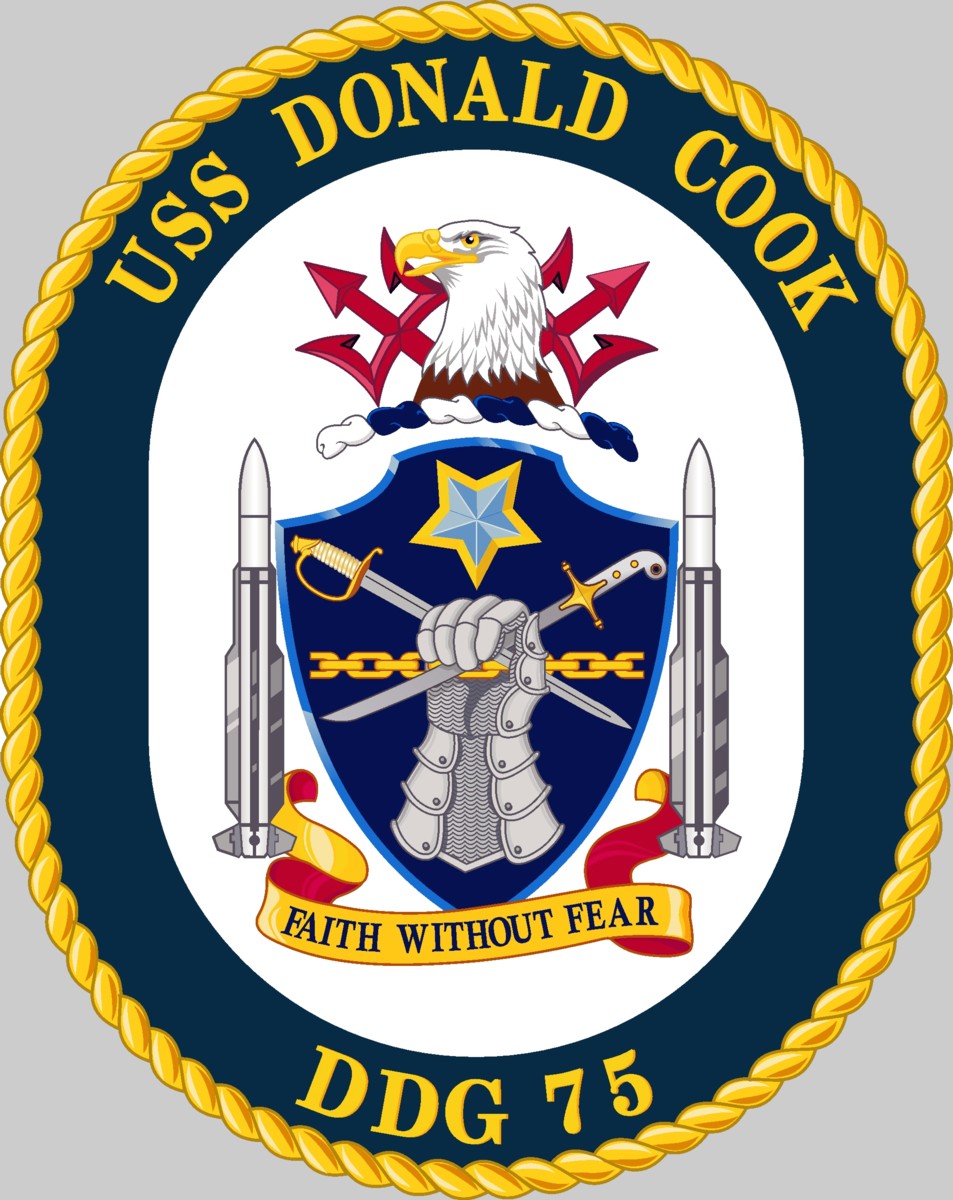
class, Flight II Builder: General Dynamics Bath Iron Works, Bath, Maine, USA STATUS: Awarded: January 19, 1993 Laid down: July 9, 1996 Launched: May 3, 1997 Commissioned: December 4, 1998 IN SERVICE Homeport: forward deployed to Naval Station Rota, Spain Namesake: Colonel Donald Gilbert Cook, USMC (1934-1967) Ships Motto: FAITH WITHOUT FEAR Technical Data: see: INFO > Arleigh Burke class Guided Missile Destroyer - DDG |
||
| images | ||
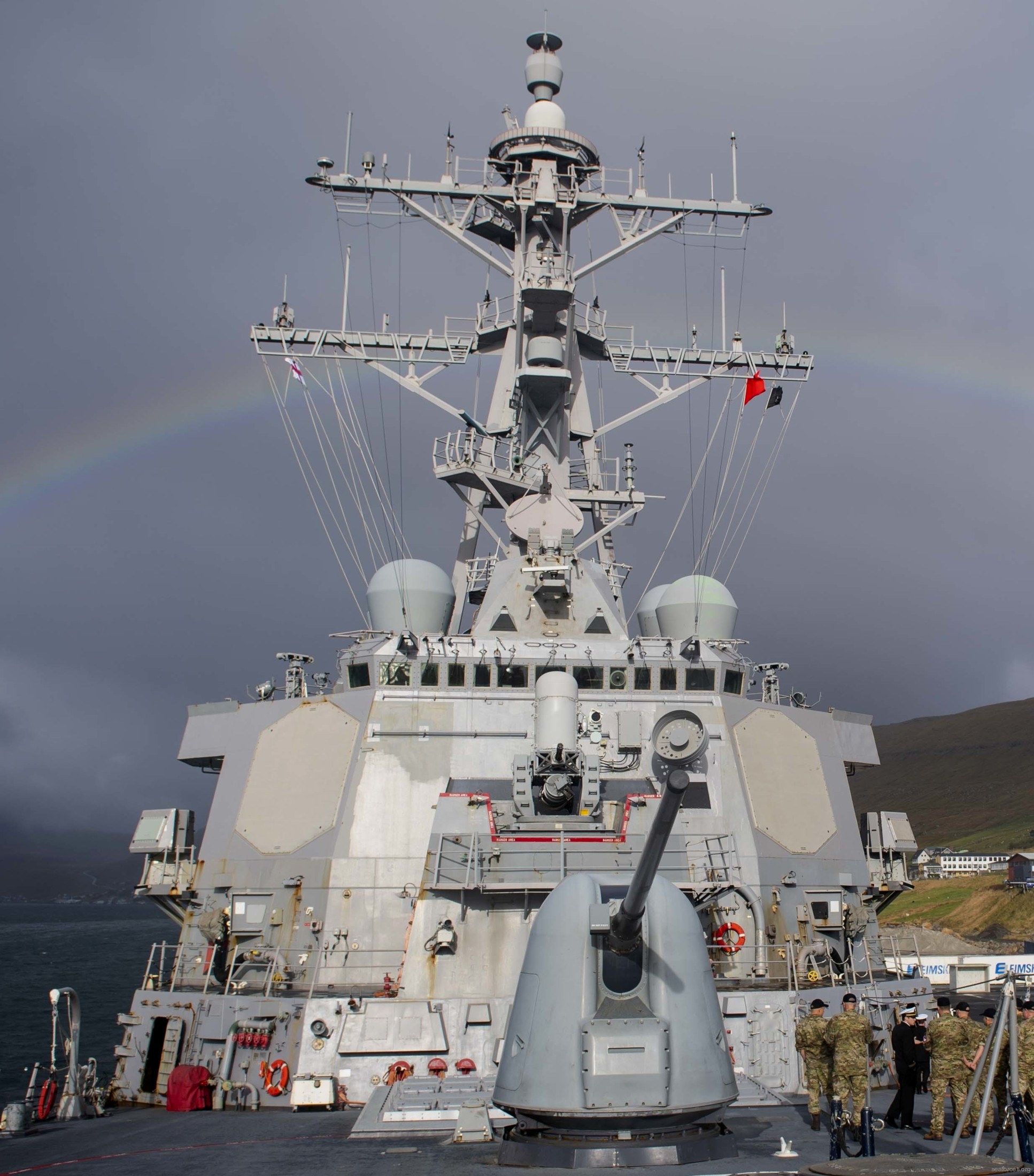 Runavik, Faroe Islands - October 2019 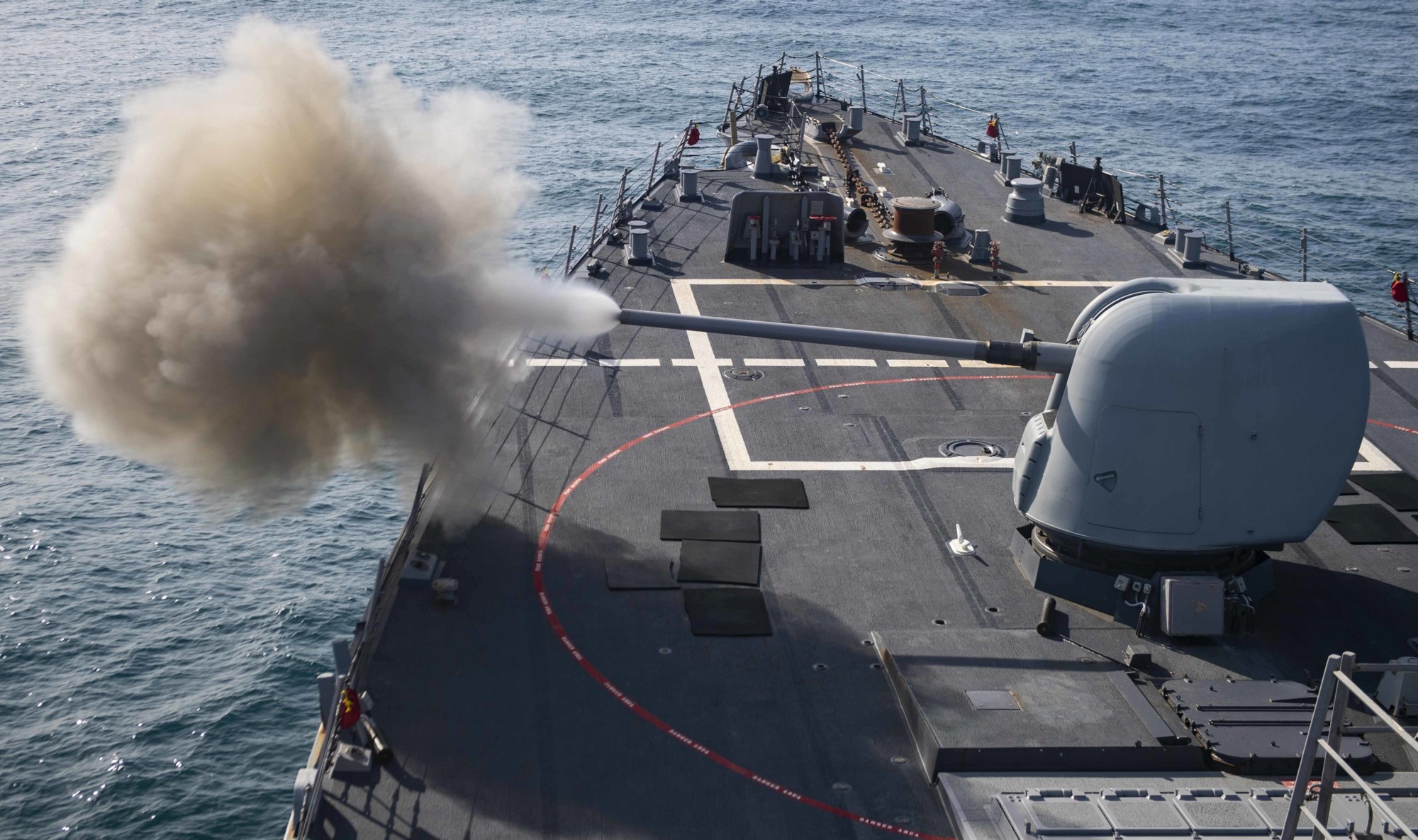 Mk-45 gun fire exercise - English Channel - October 2019 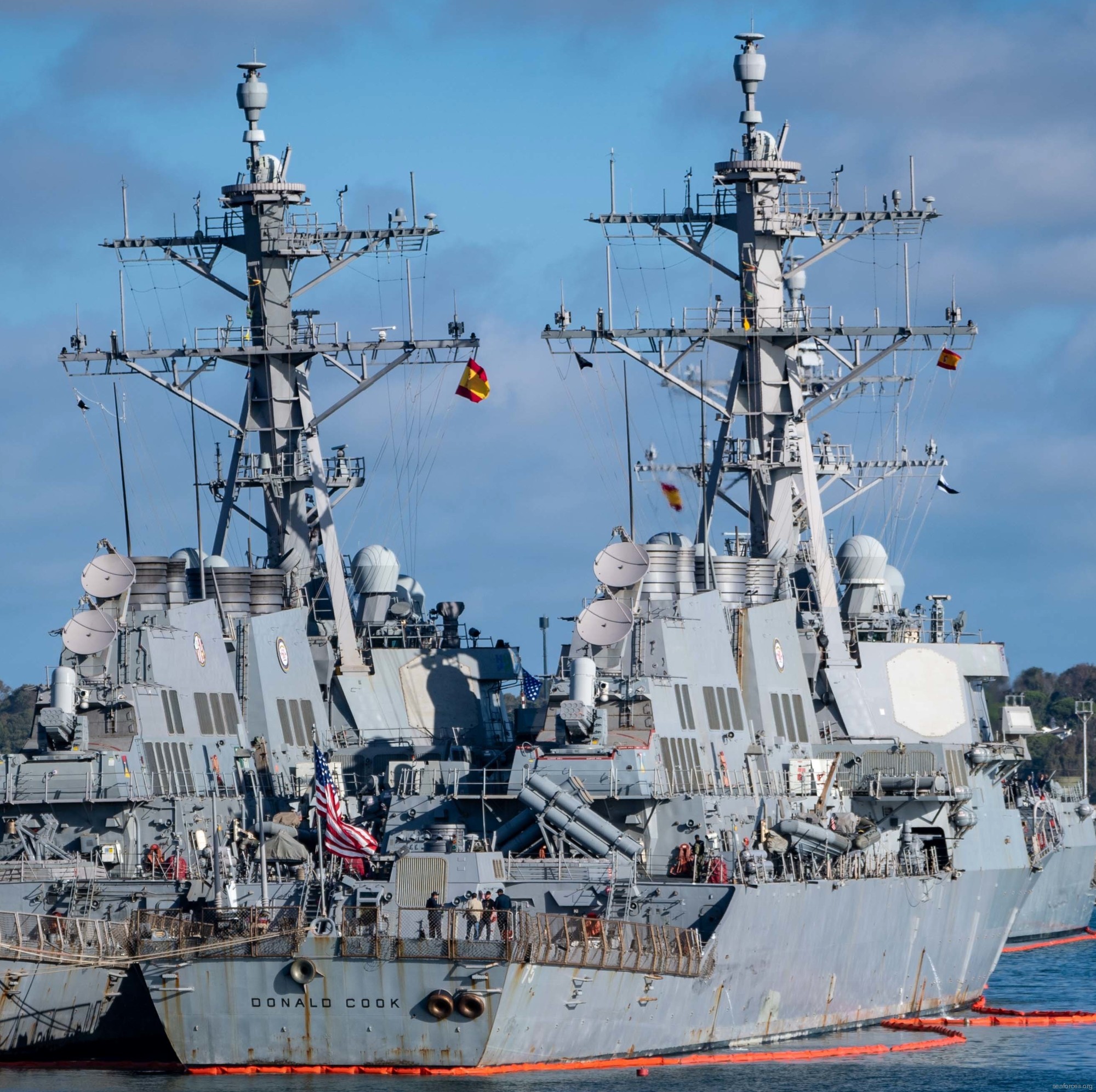 Naval Station Rota, Spain - July 2019 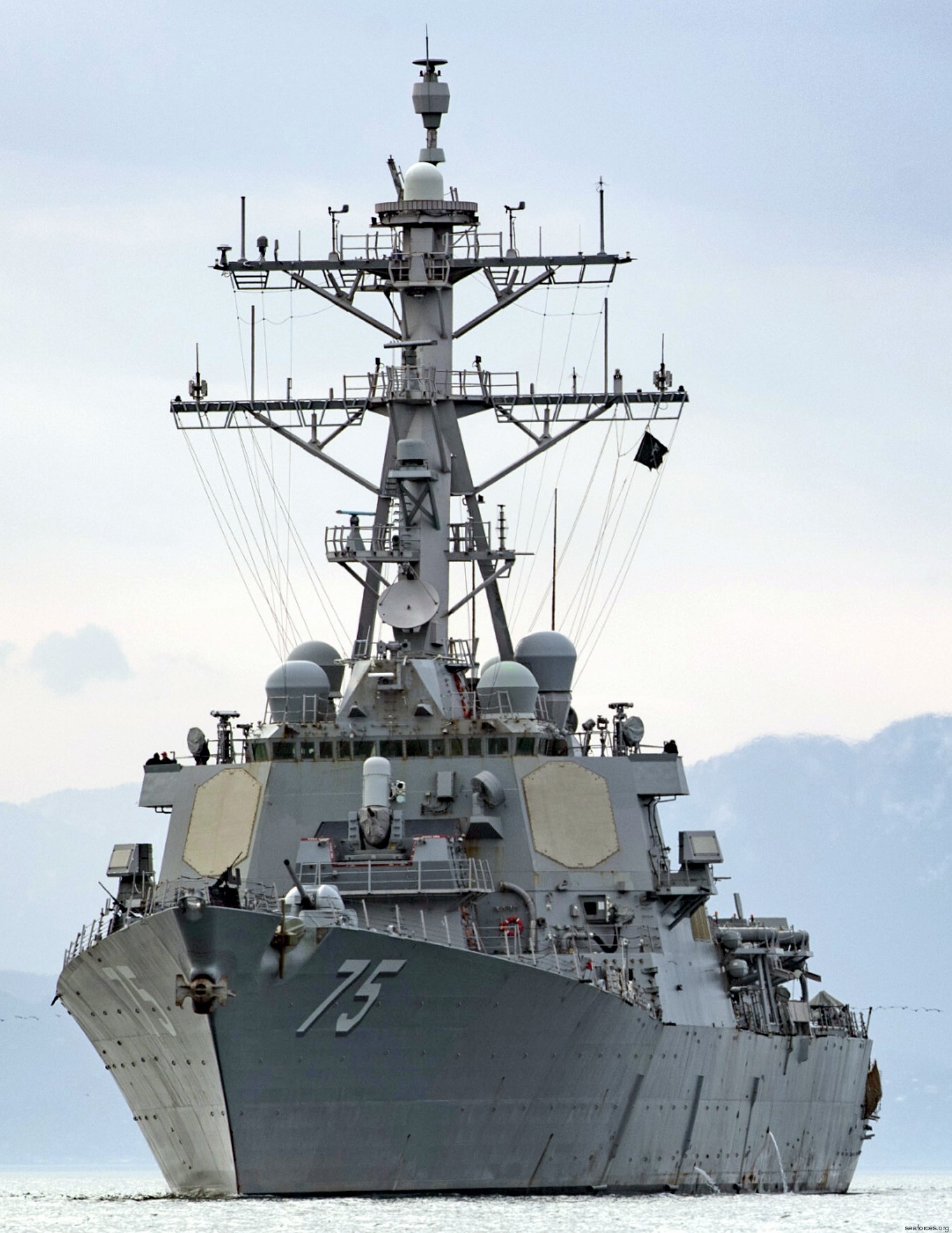 Black Sea - January 2019 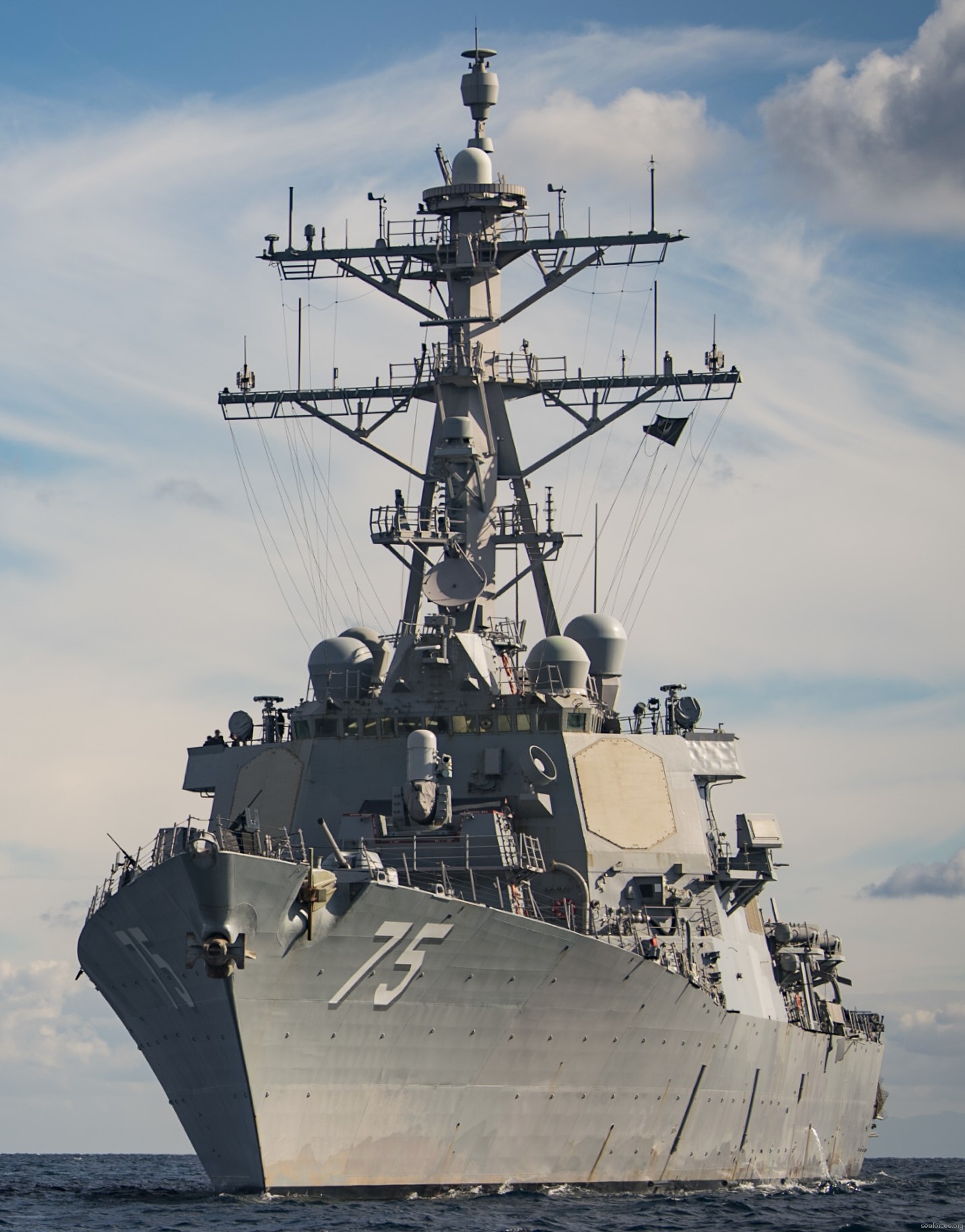 Mediterranean Sea - January 2019 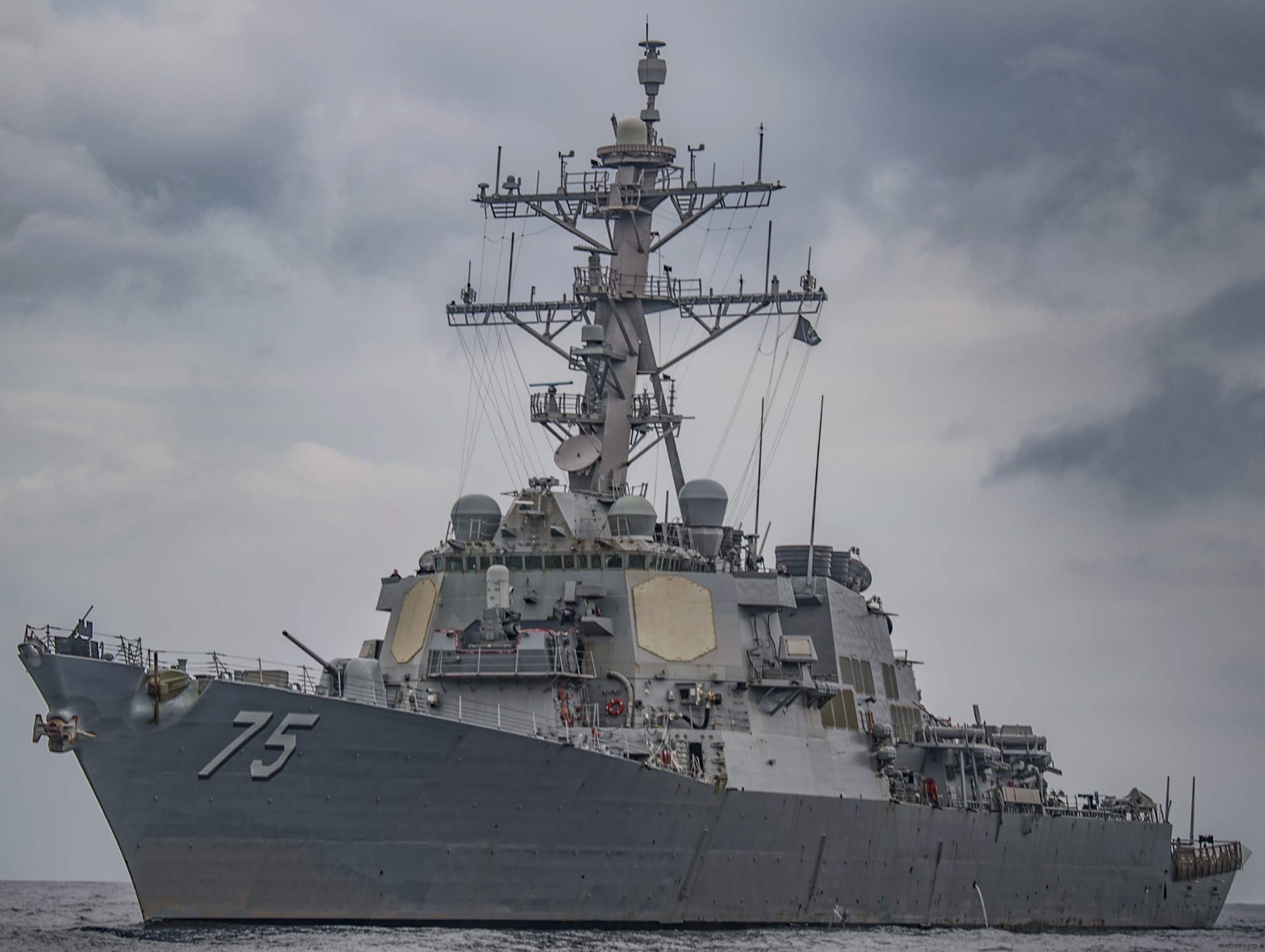 Mediterranean Sea - December 2018 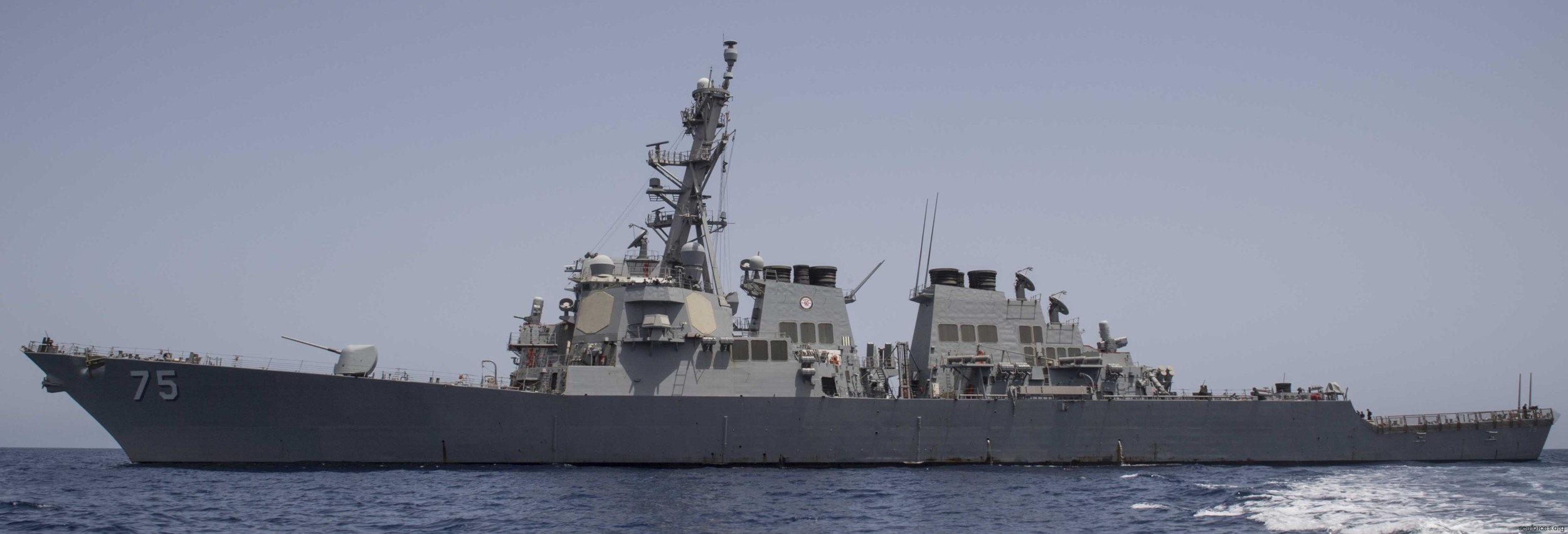 Mediterranean Sea - July 2018 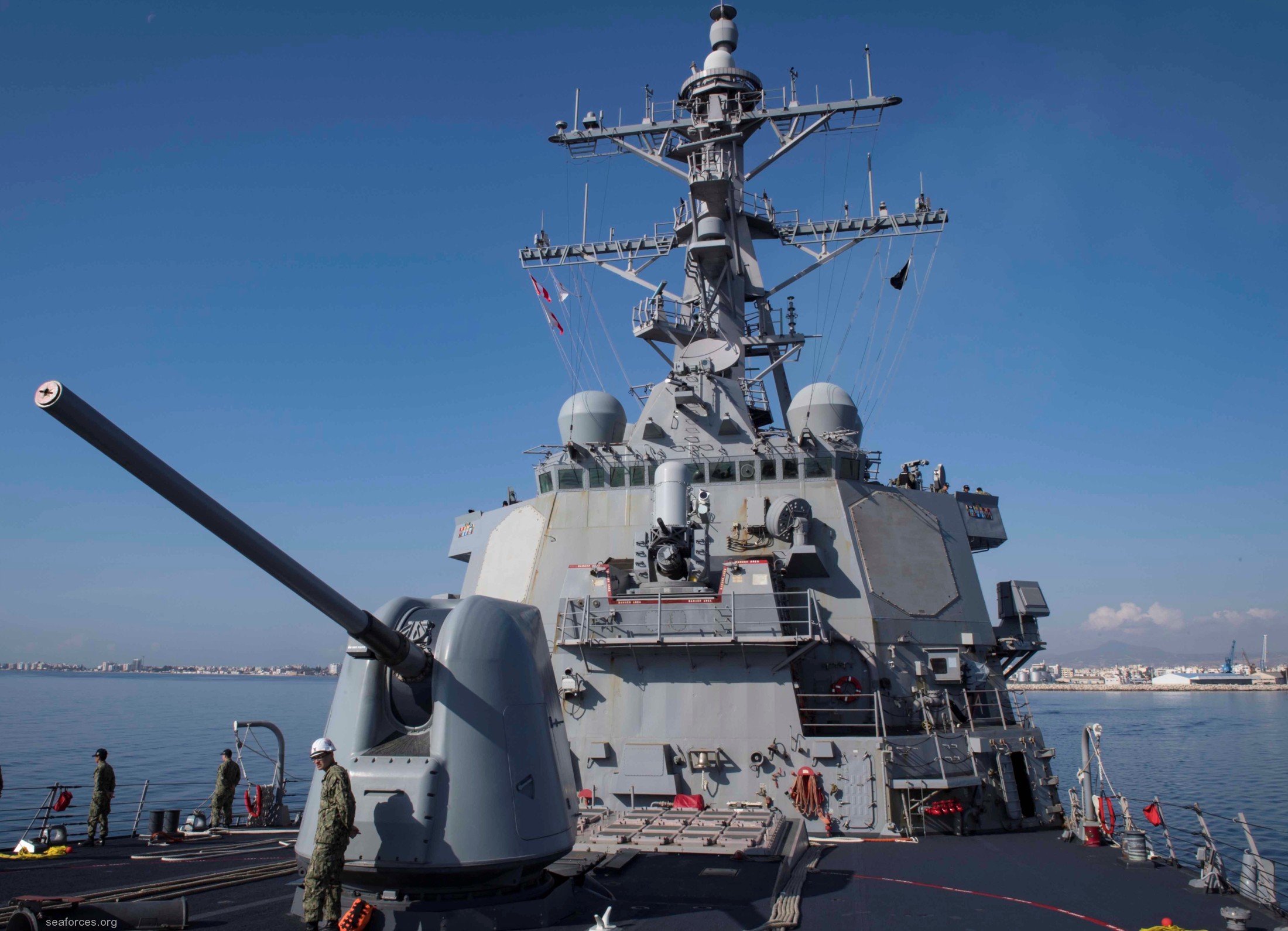 departing Larnaca, Cyprus - April 2018 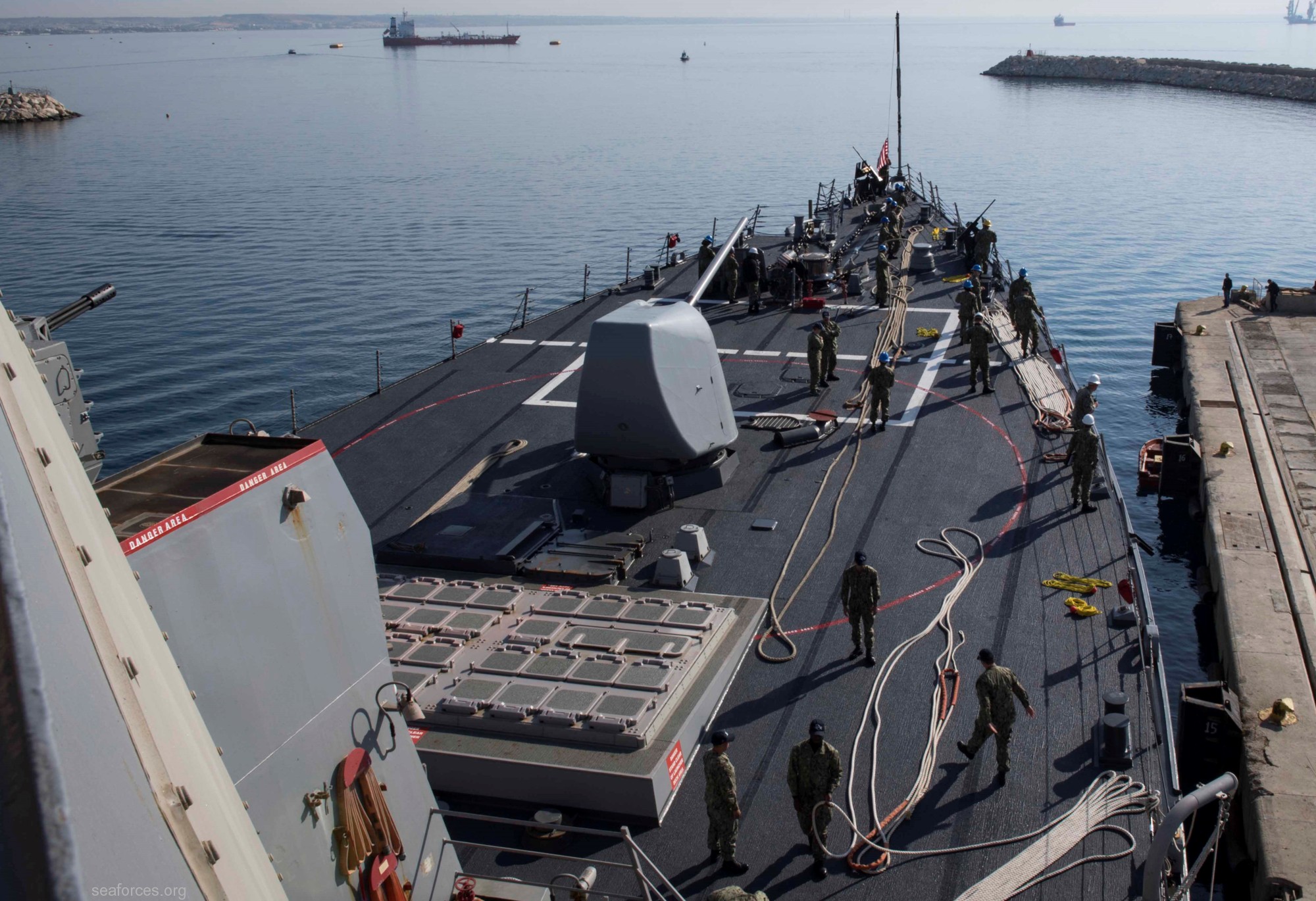 Larnaca, Cyprus - April 2018 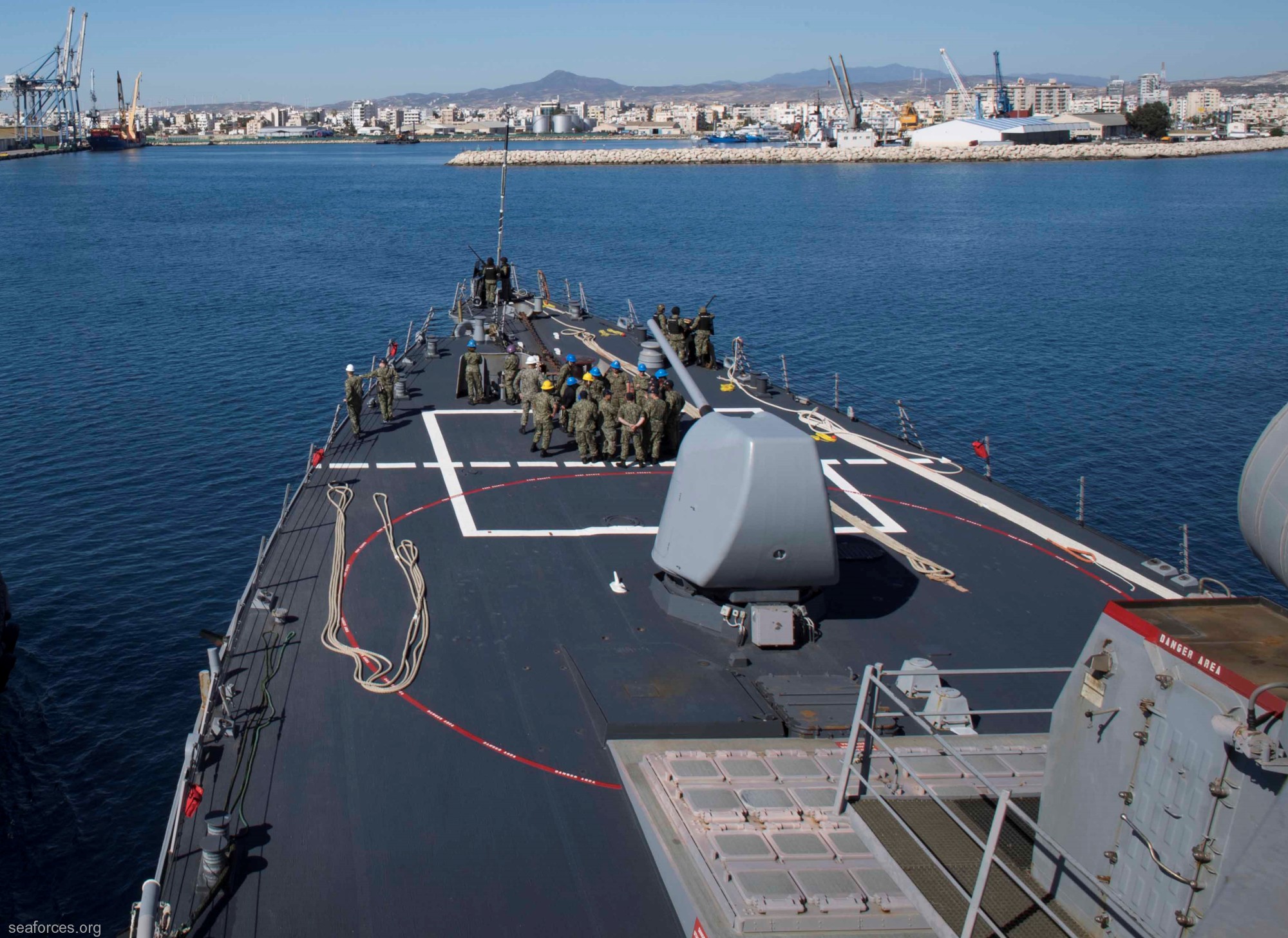 Larnaca, Cyprus - April 2018 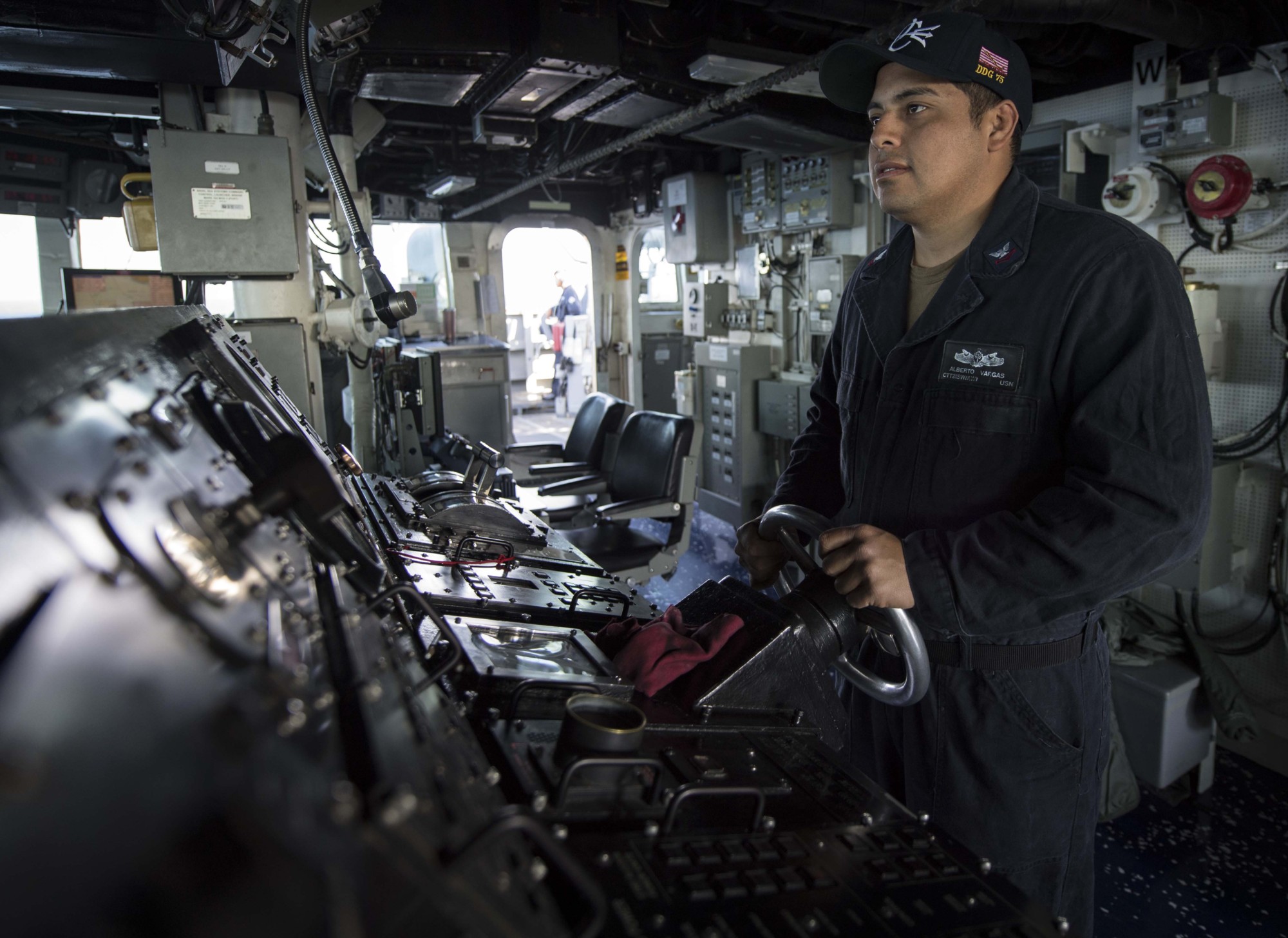 Mediterranean Sea - April 2018 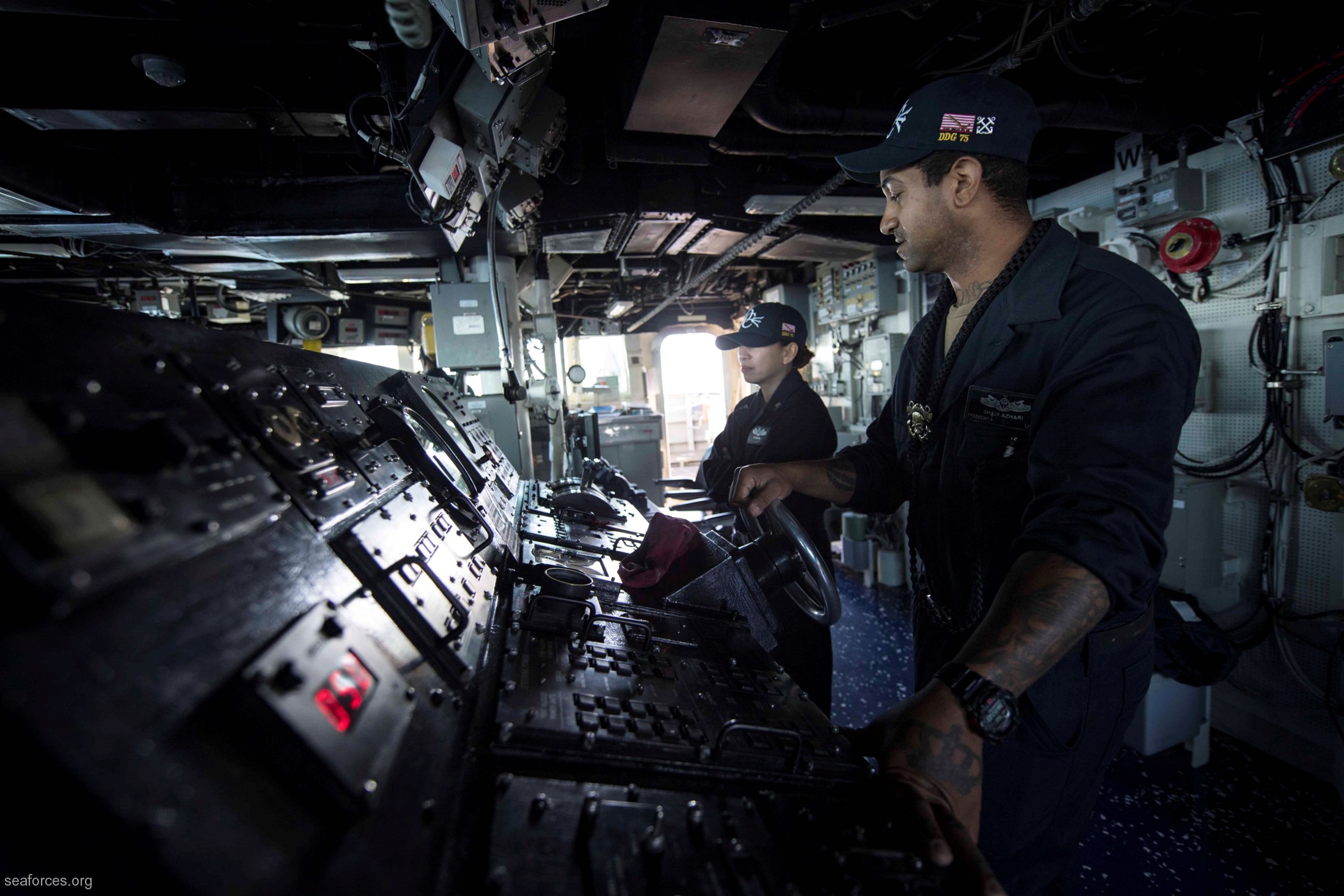 Mediterranean Sea - April 2018 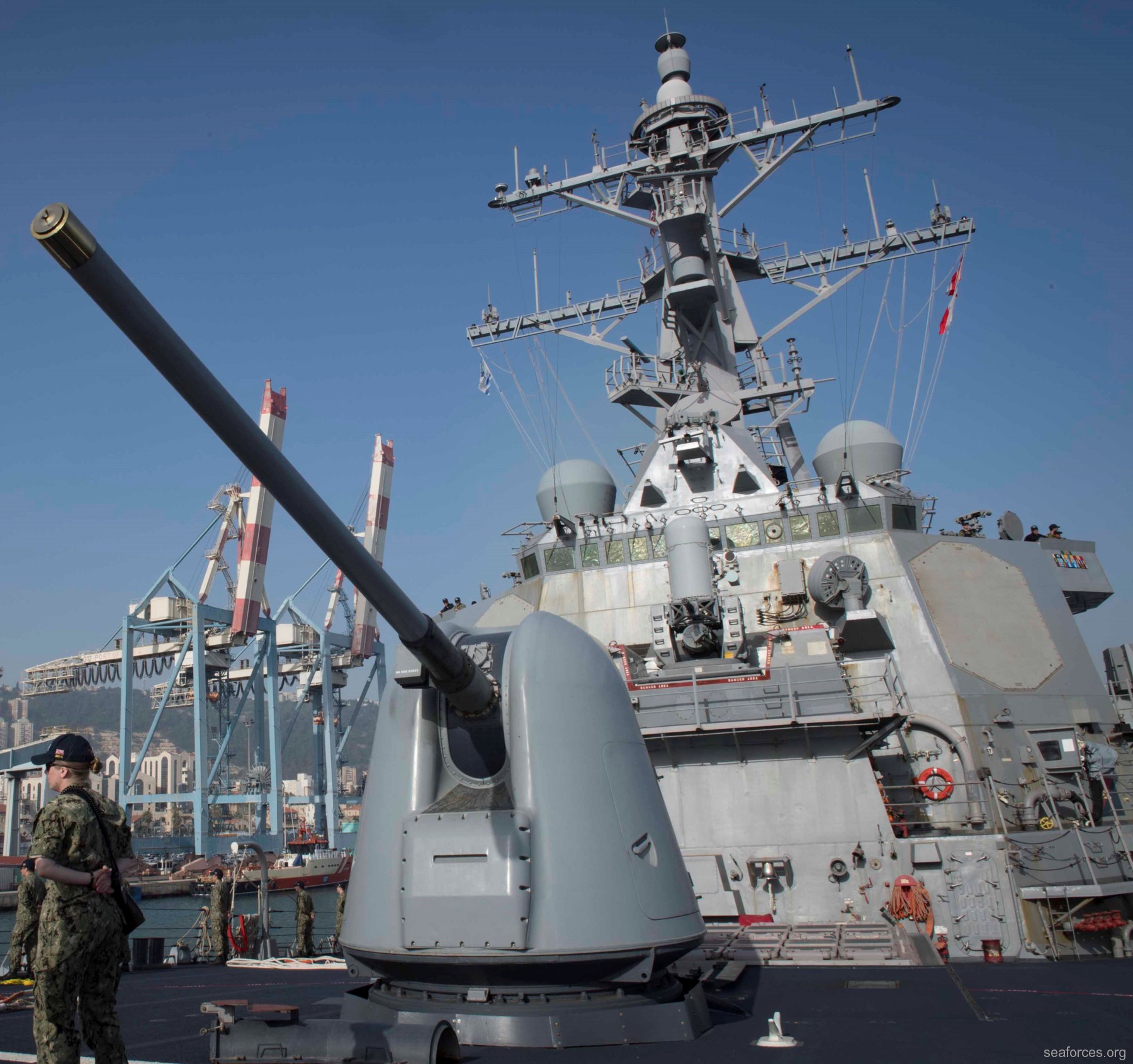 Haifa, Israel - March 2018 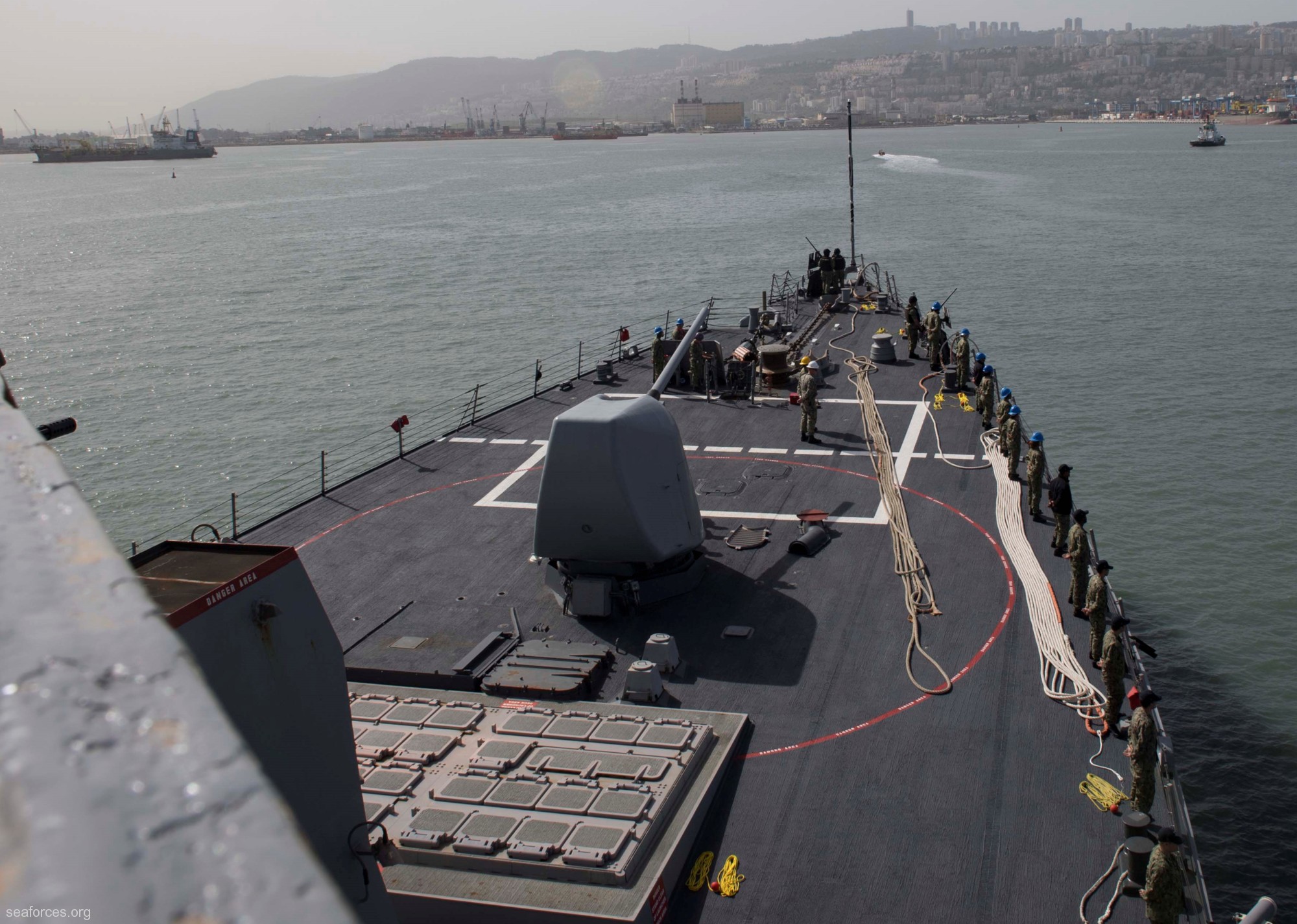 Haifa, Israel - March 2018 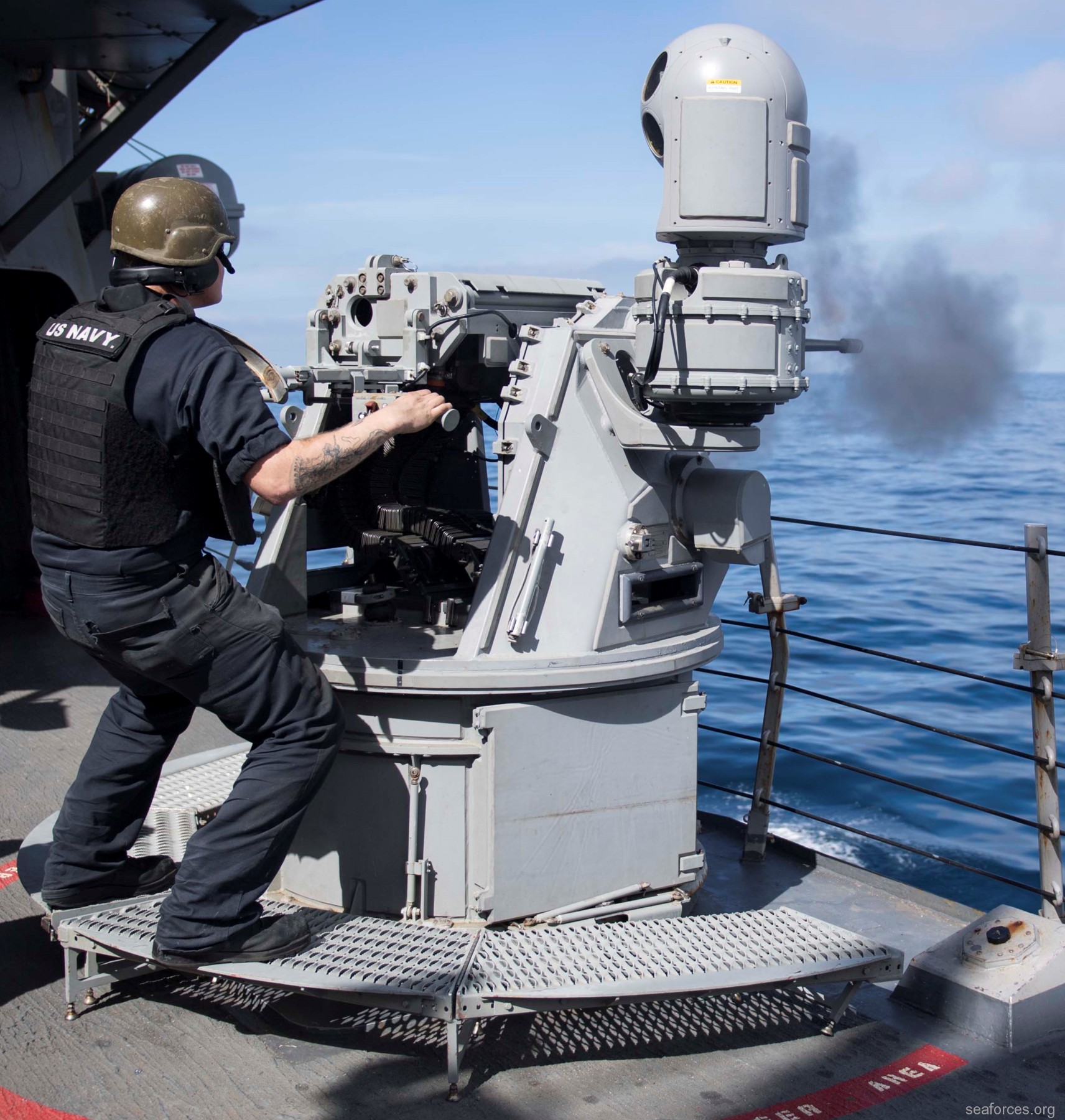 Mk-38 Mod.2 machine gun system - Mediterranean Sea - March 2018 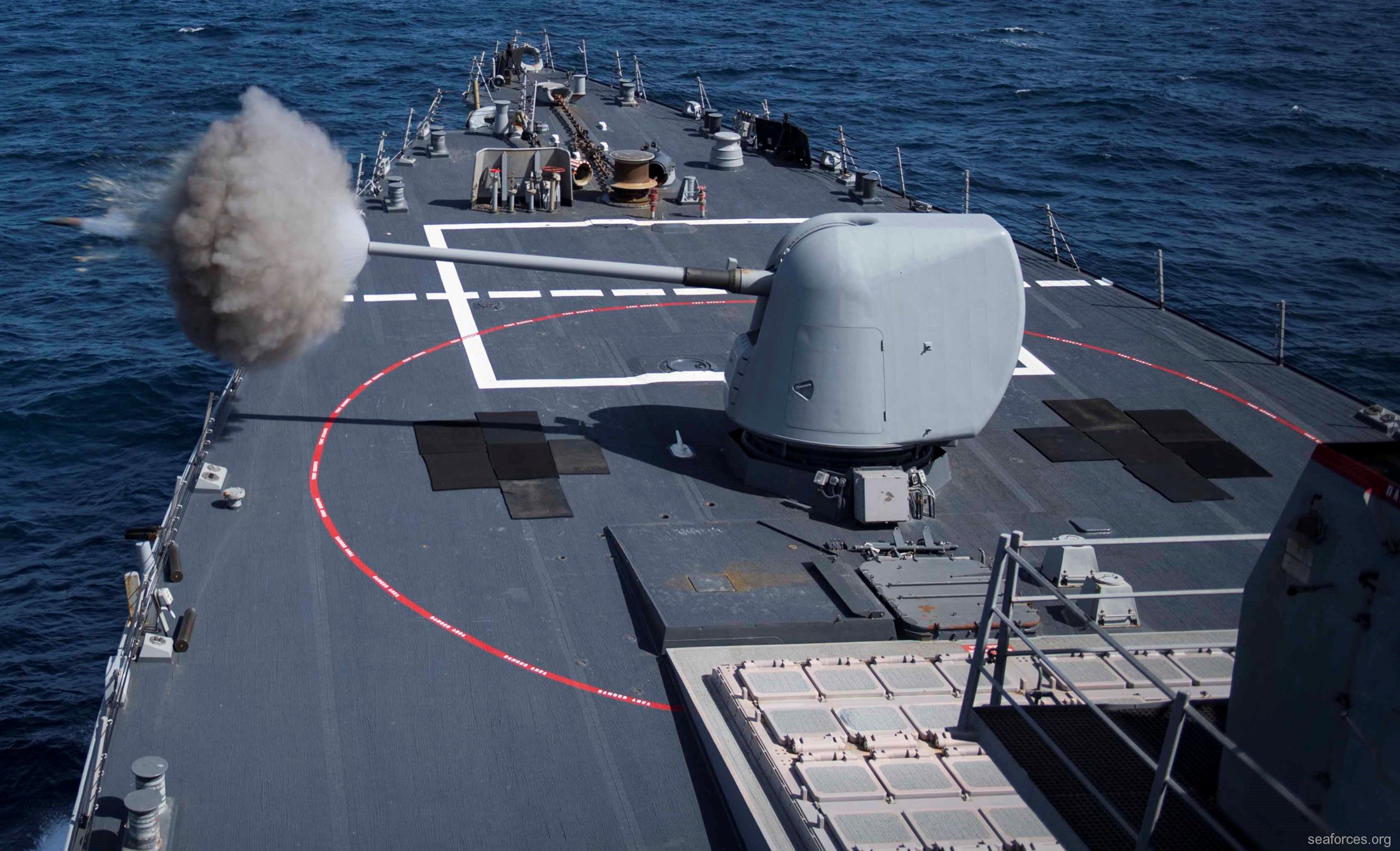 Mk-45 Mod.2 (5" / 127mm) gun fire exercise - Mediterranean Sea - March 2018 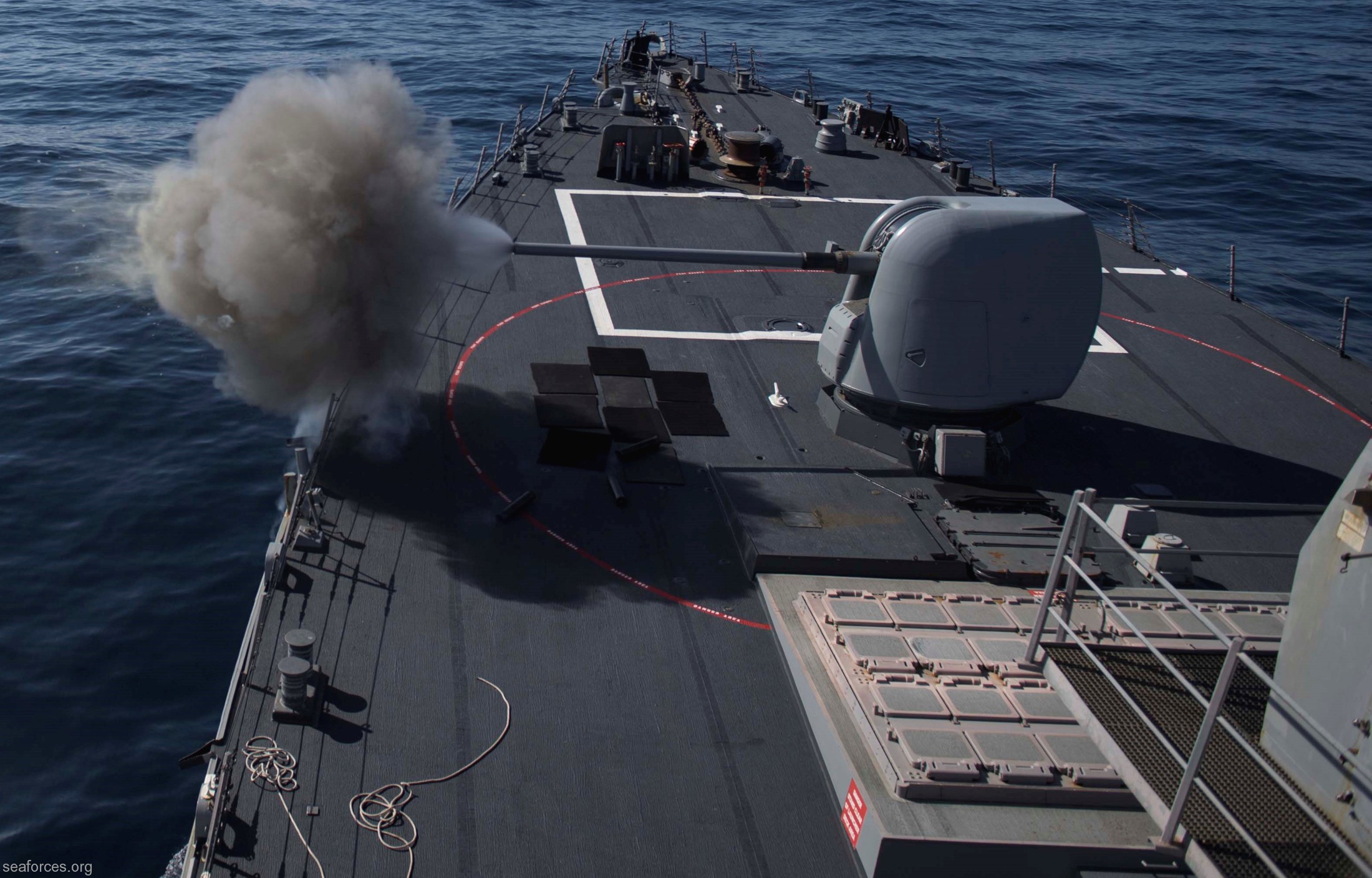 Mk-45 Mod.2 (5" / 127mm) gun fire exercise - Mediterranean Sea - March 2018 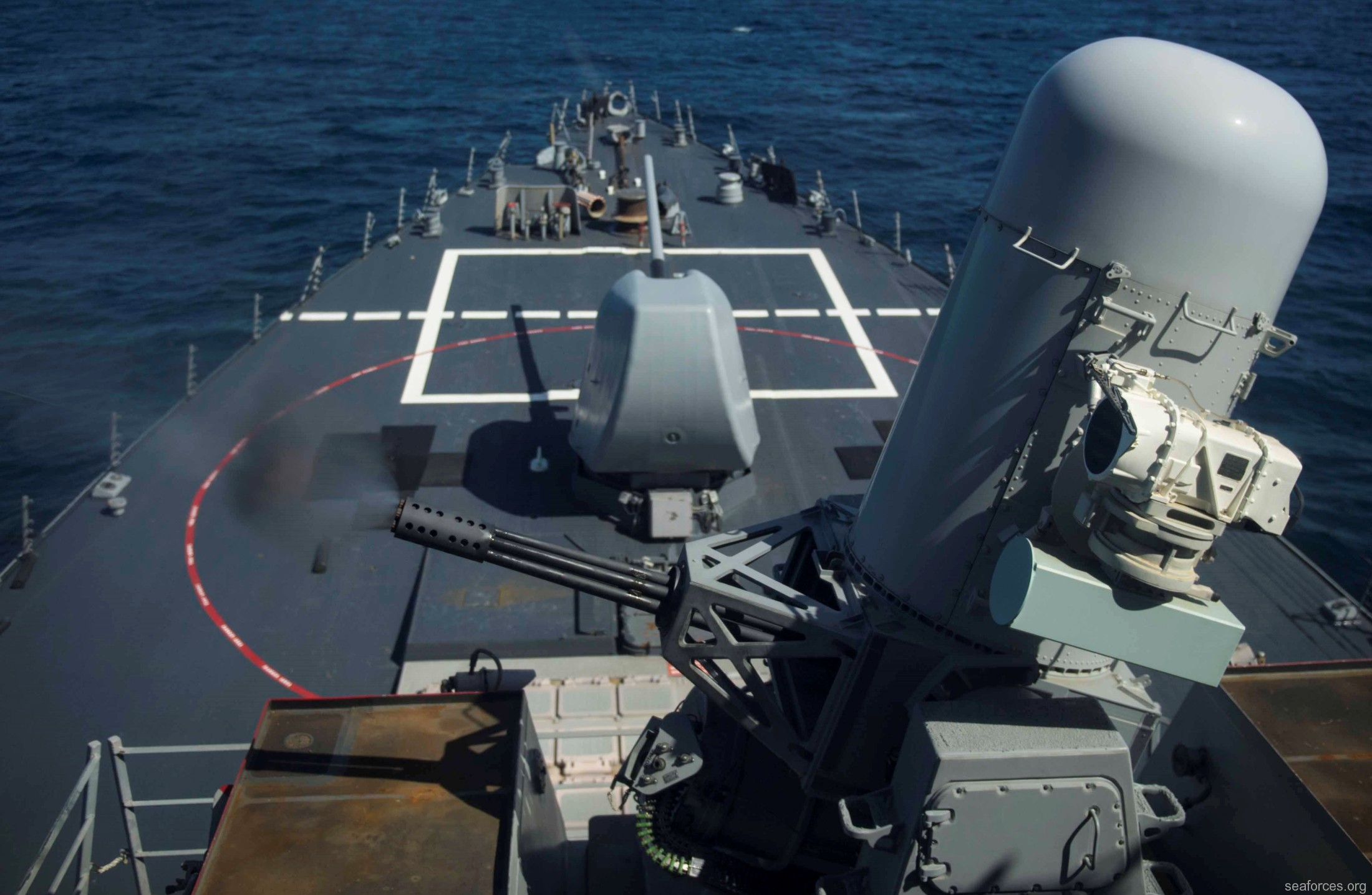 Mk-15 Phalanx CIWS fire exercise - Mediterranean Sea - March 2018 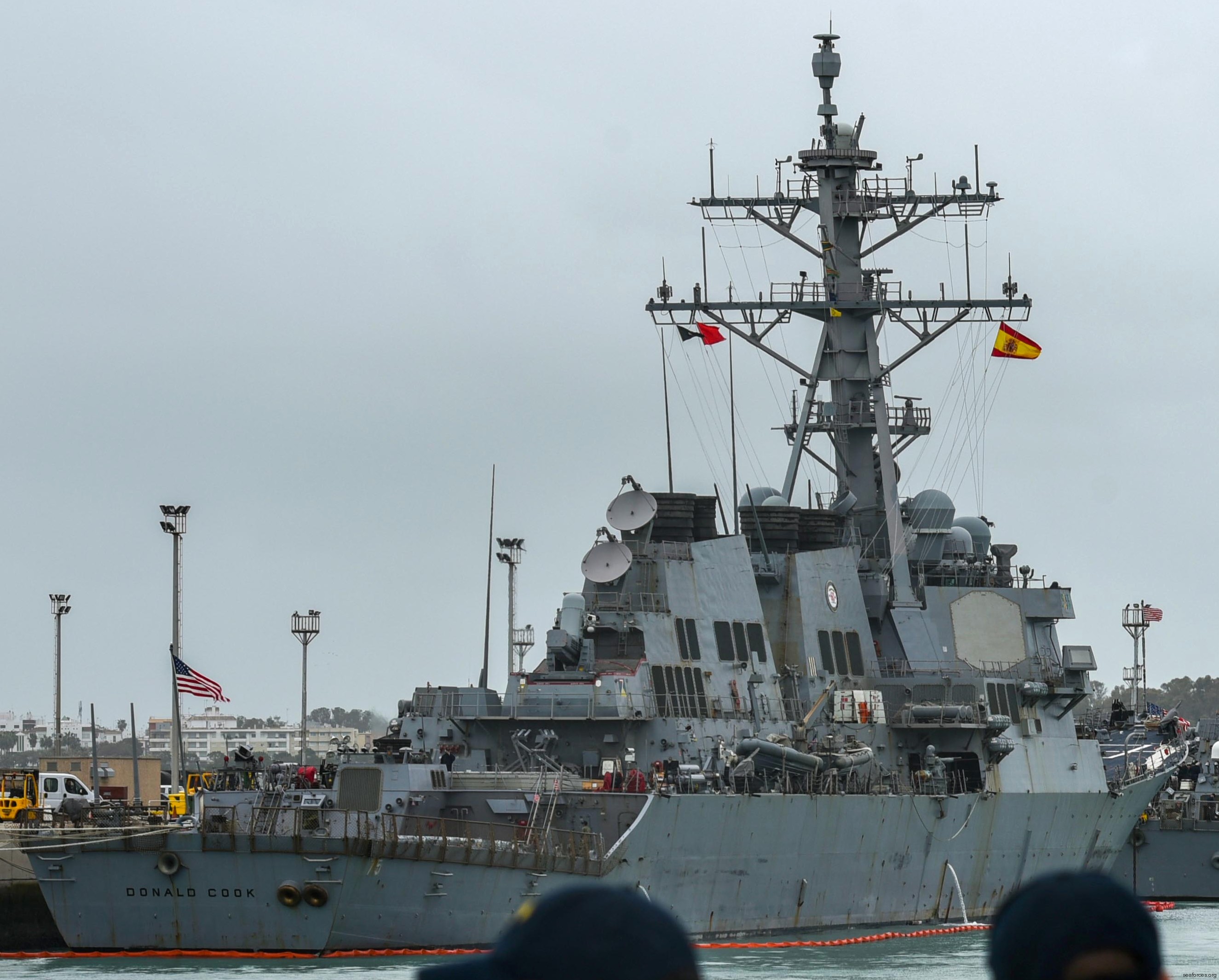 Naval Station Rota, Spain - March 2018 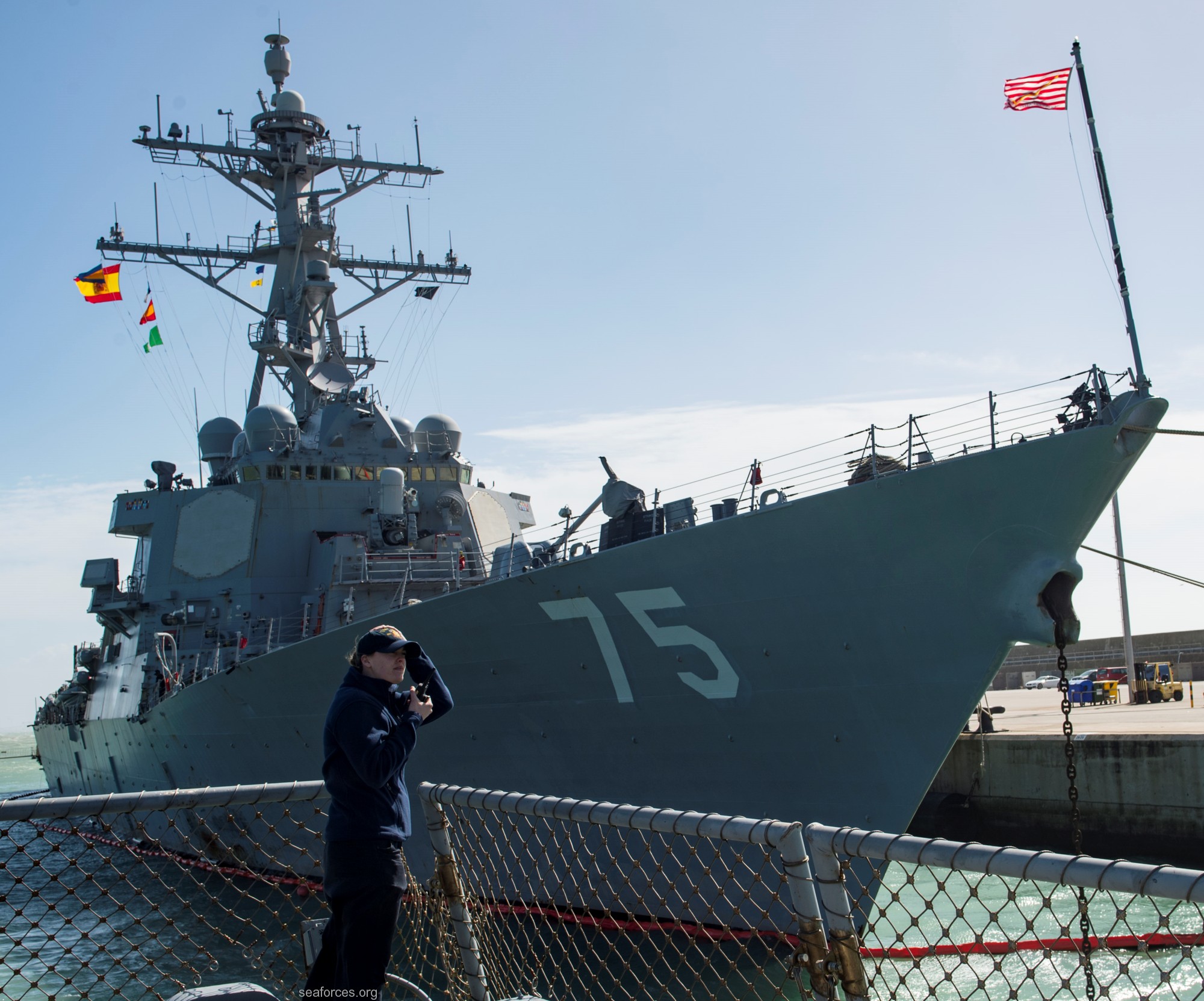 Naval Station Rota, Spain - March 2018 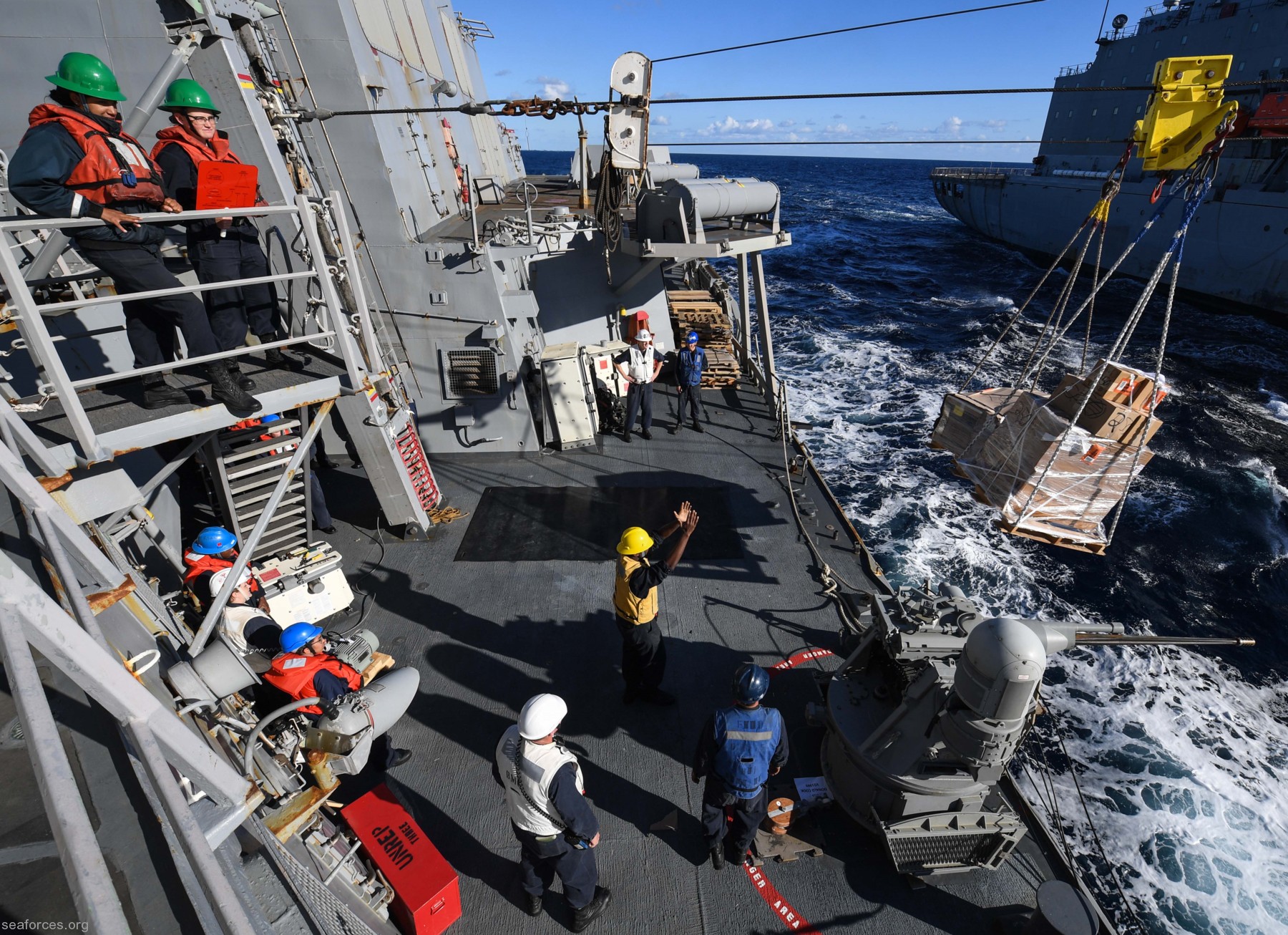 replenishment at sea - Mediterranean Sea - November 2017 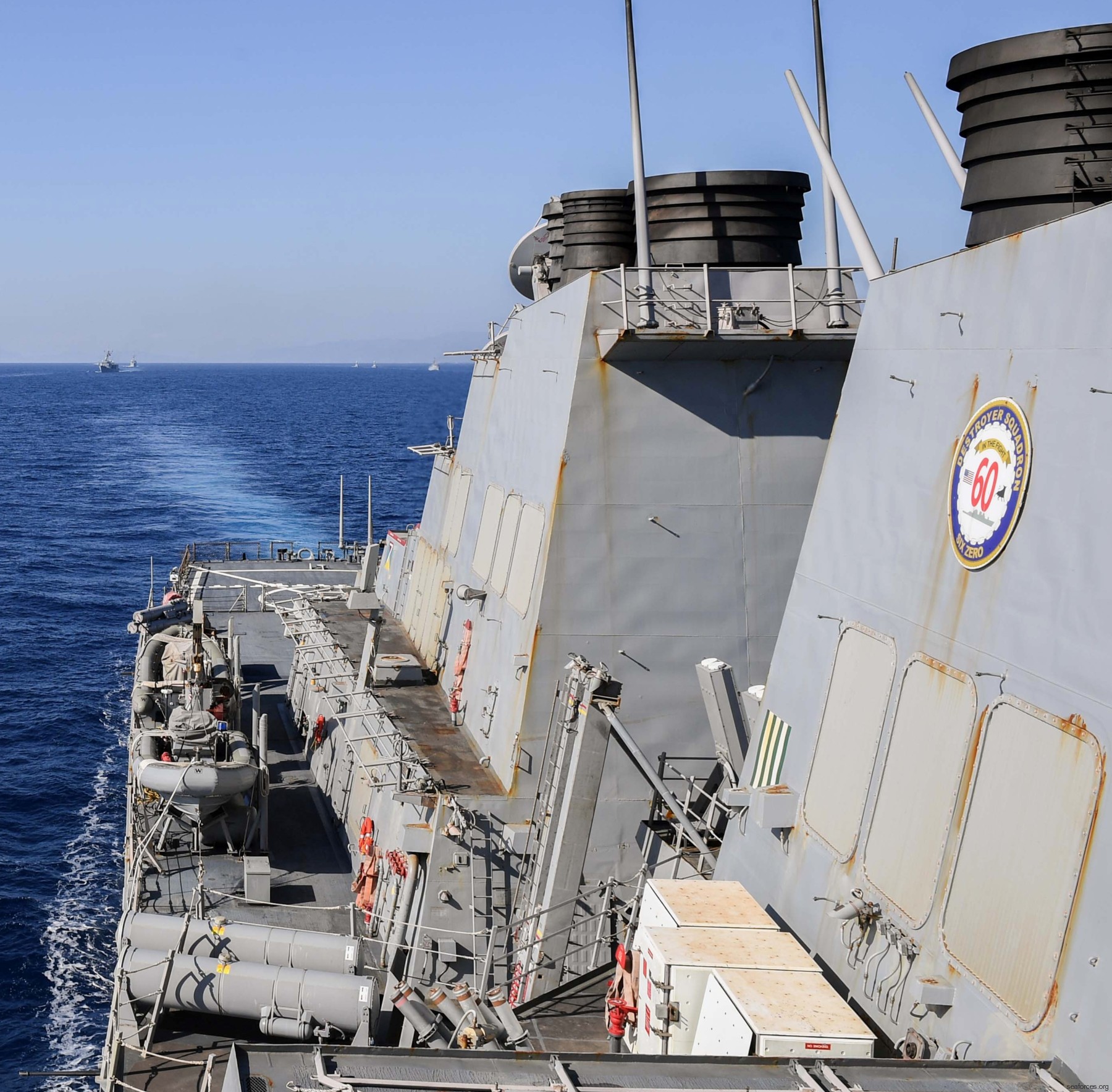 Mediterranean Sea - November 2017 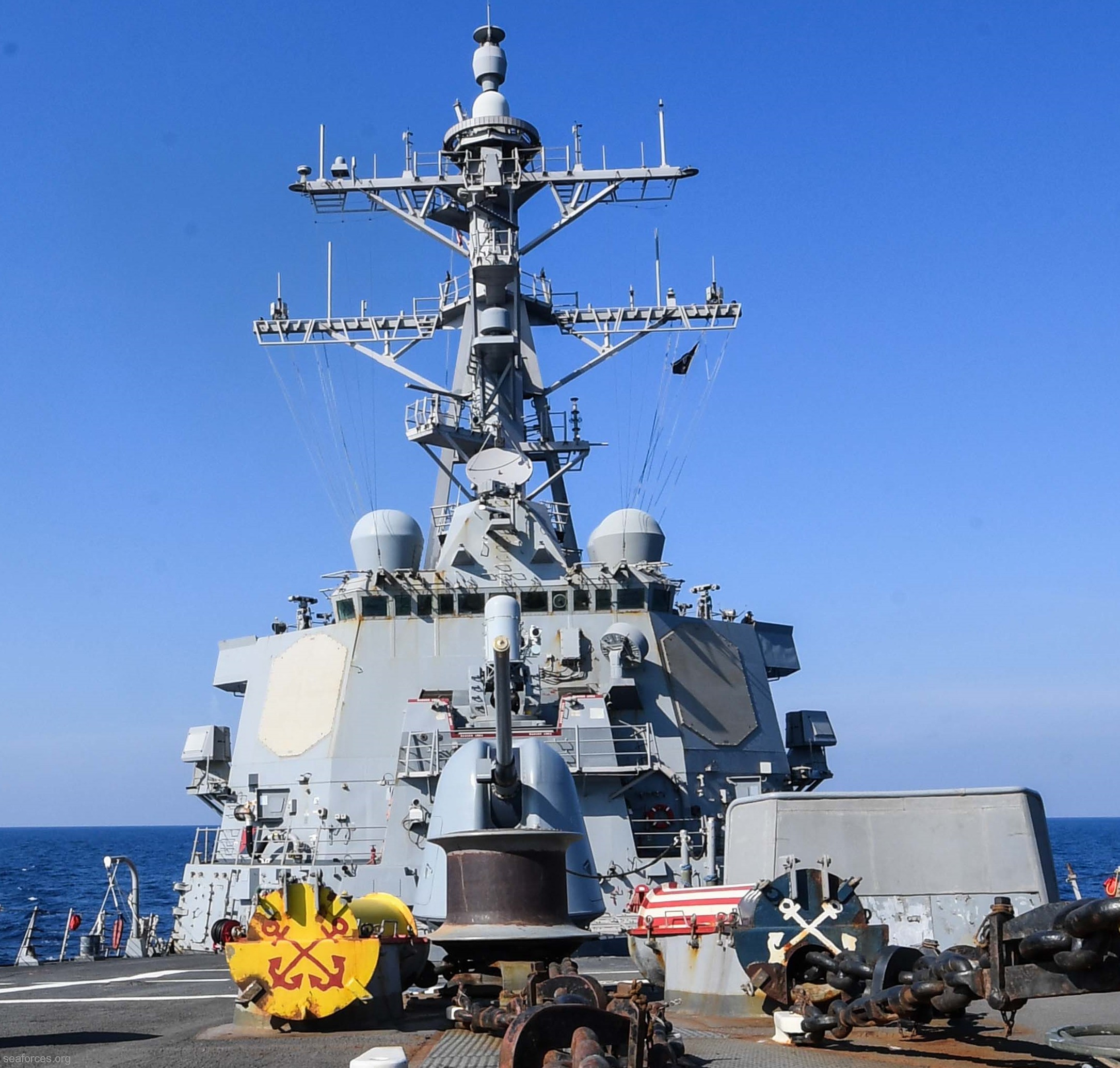 Mediterranean Sea - November 2017 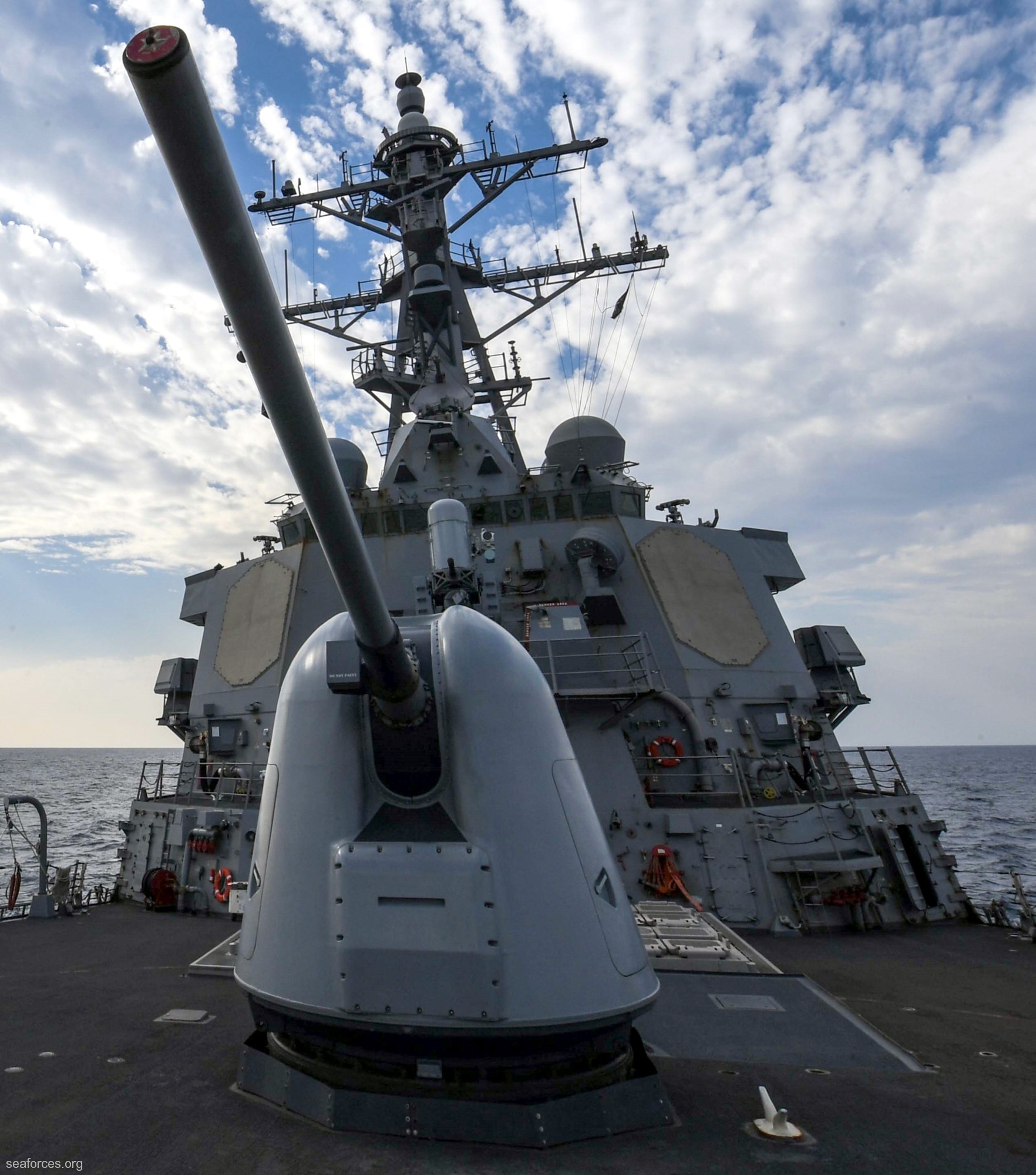 Mediterranean Sea - November 2017 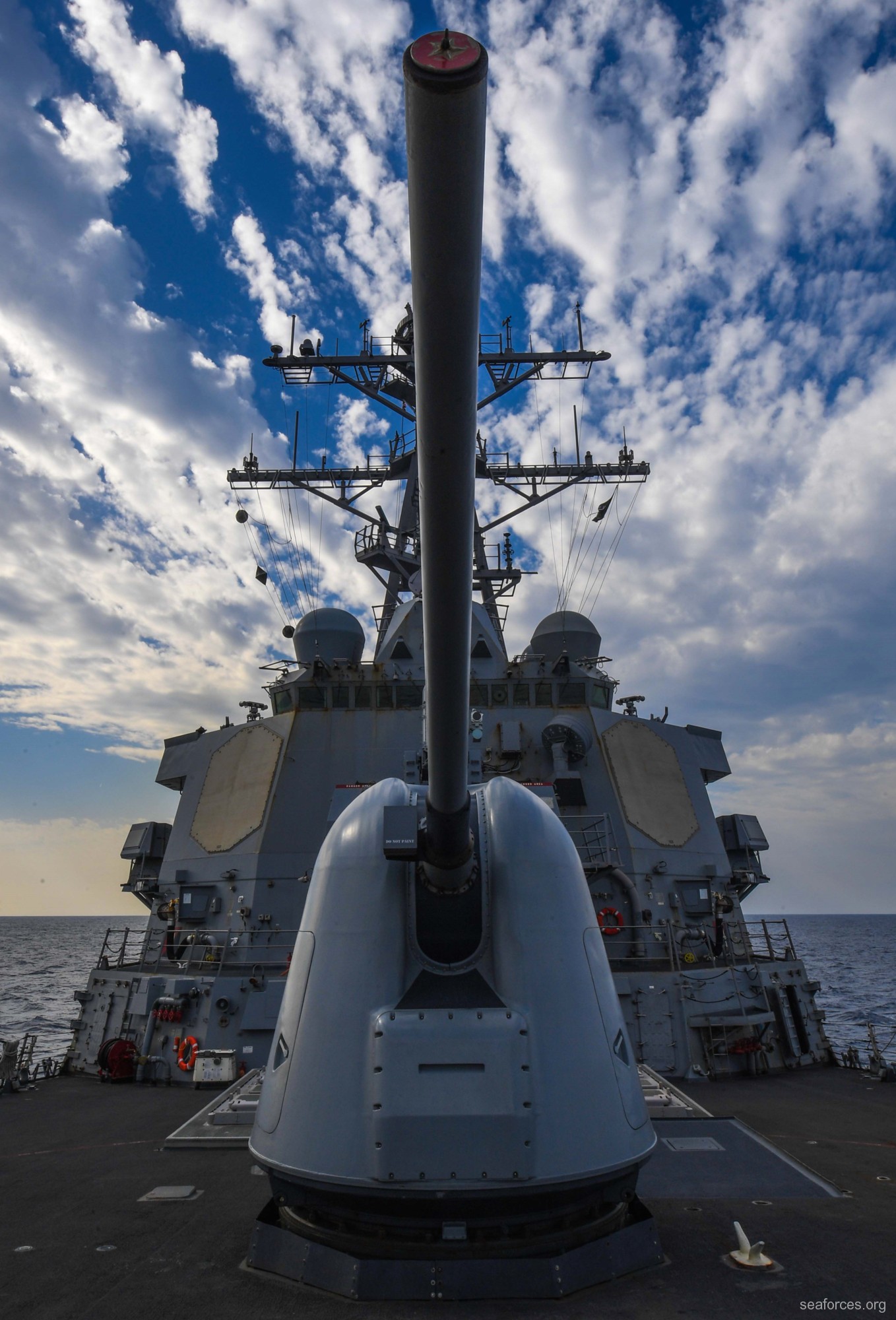 Mediterranean Sea - November 2017 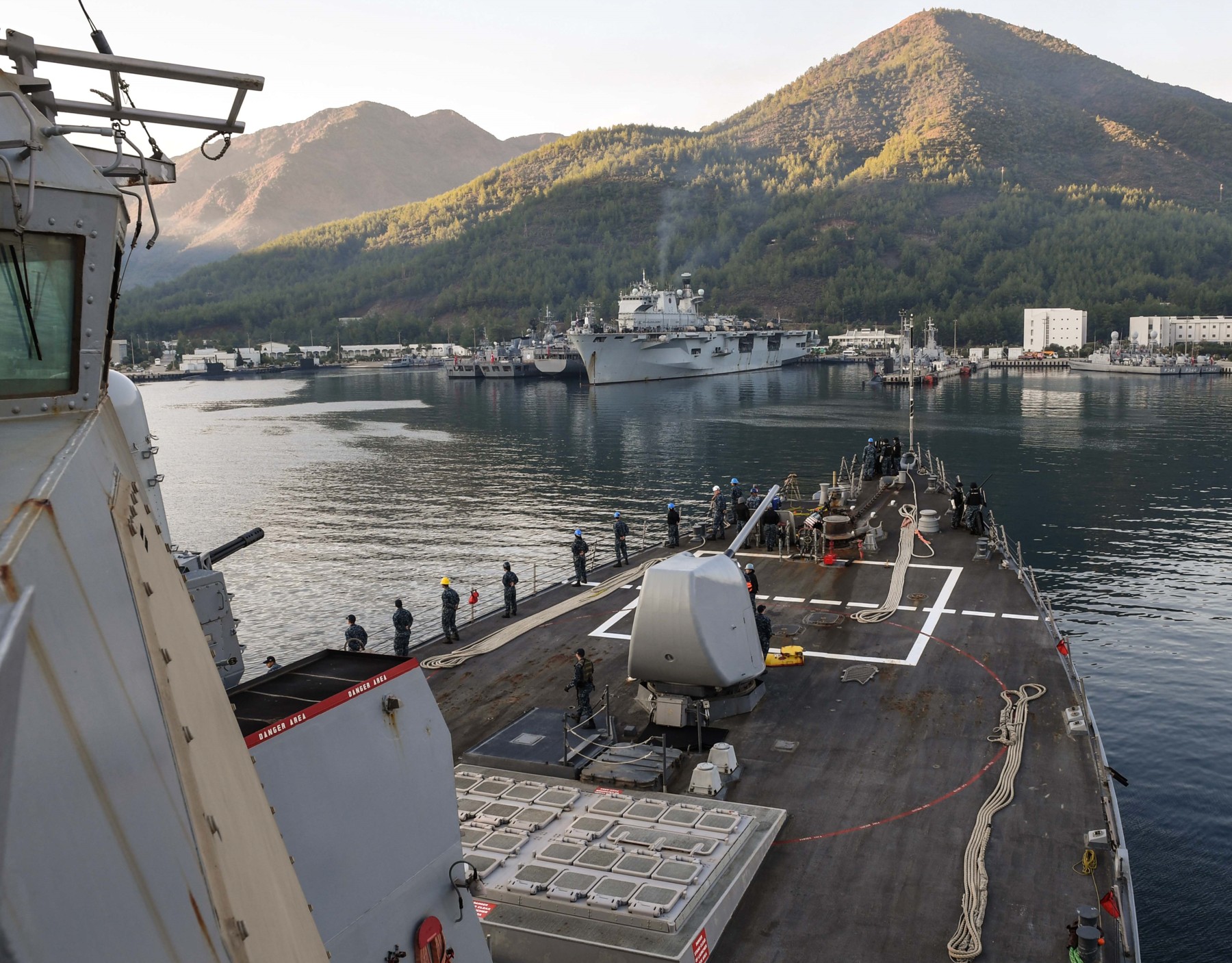 Aksaz, Turkey - November 2017 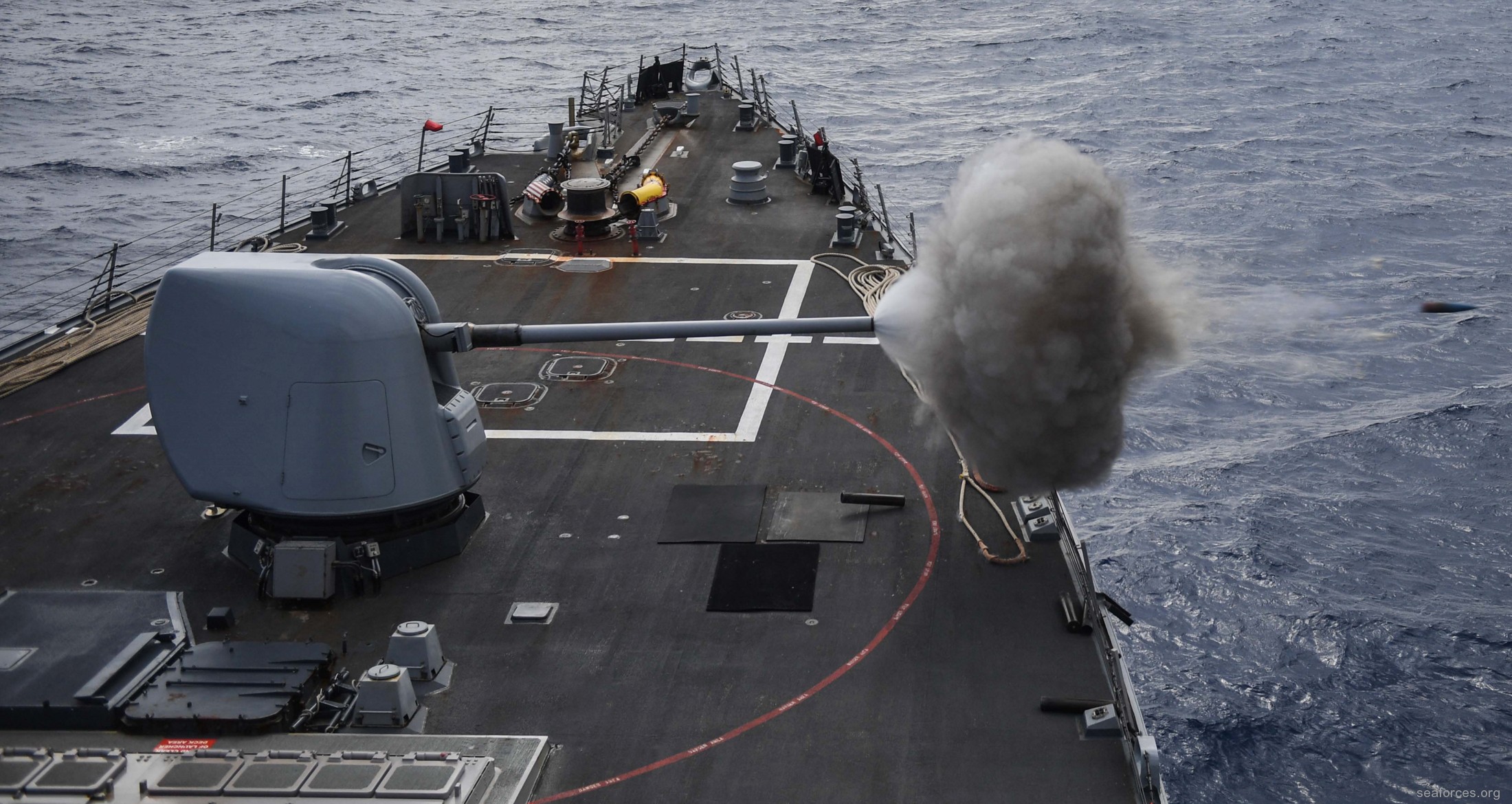 Mk-45 Mod.2 (5"/127mm) gun fire exercise - Atlantic Ocean - October 2017 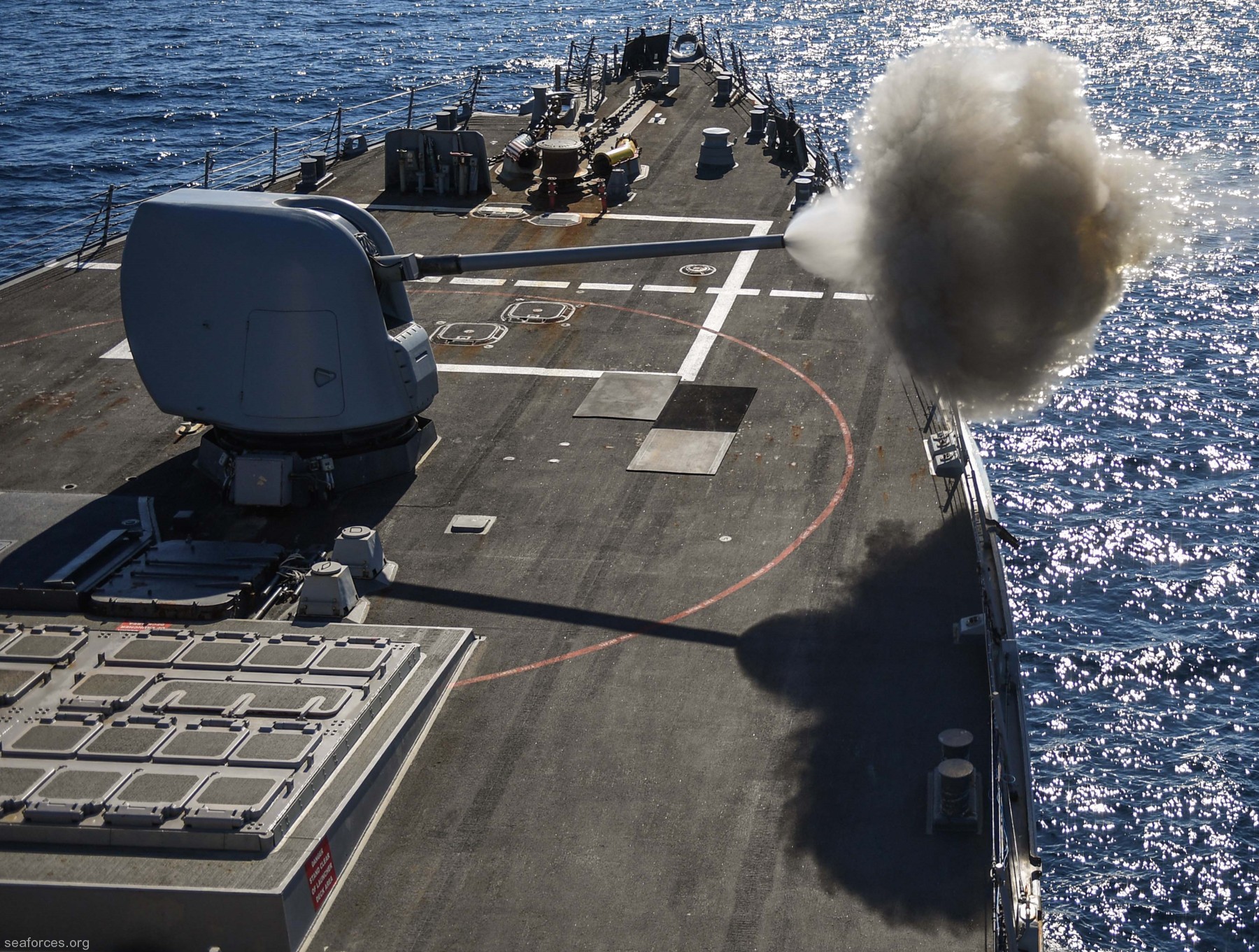 Mk-45 Mod.2 (5"/127mm) gun fire exercise - Atlantic Ocean - October 2017 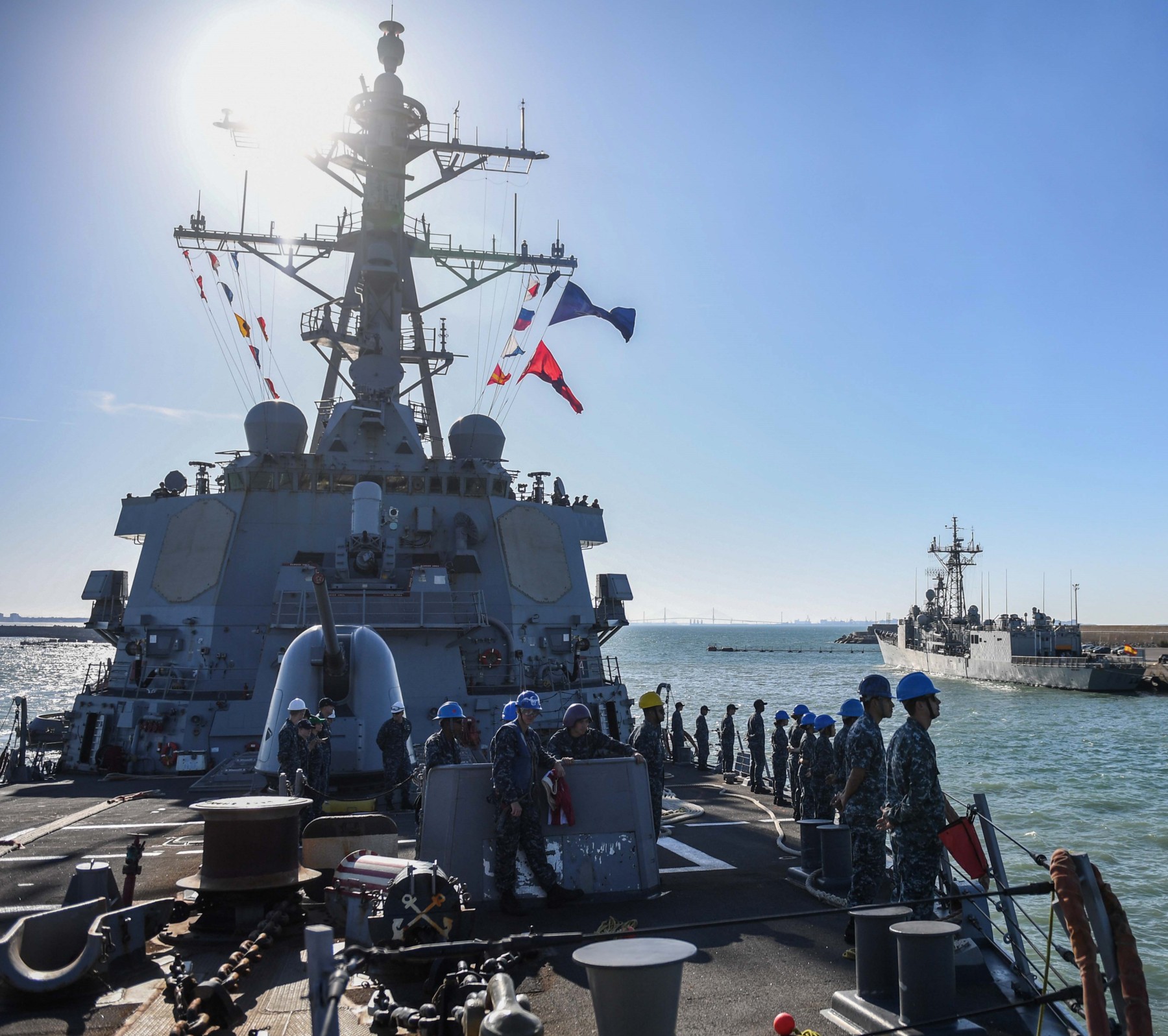 Naval Station Rota, Spain - October 2017 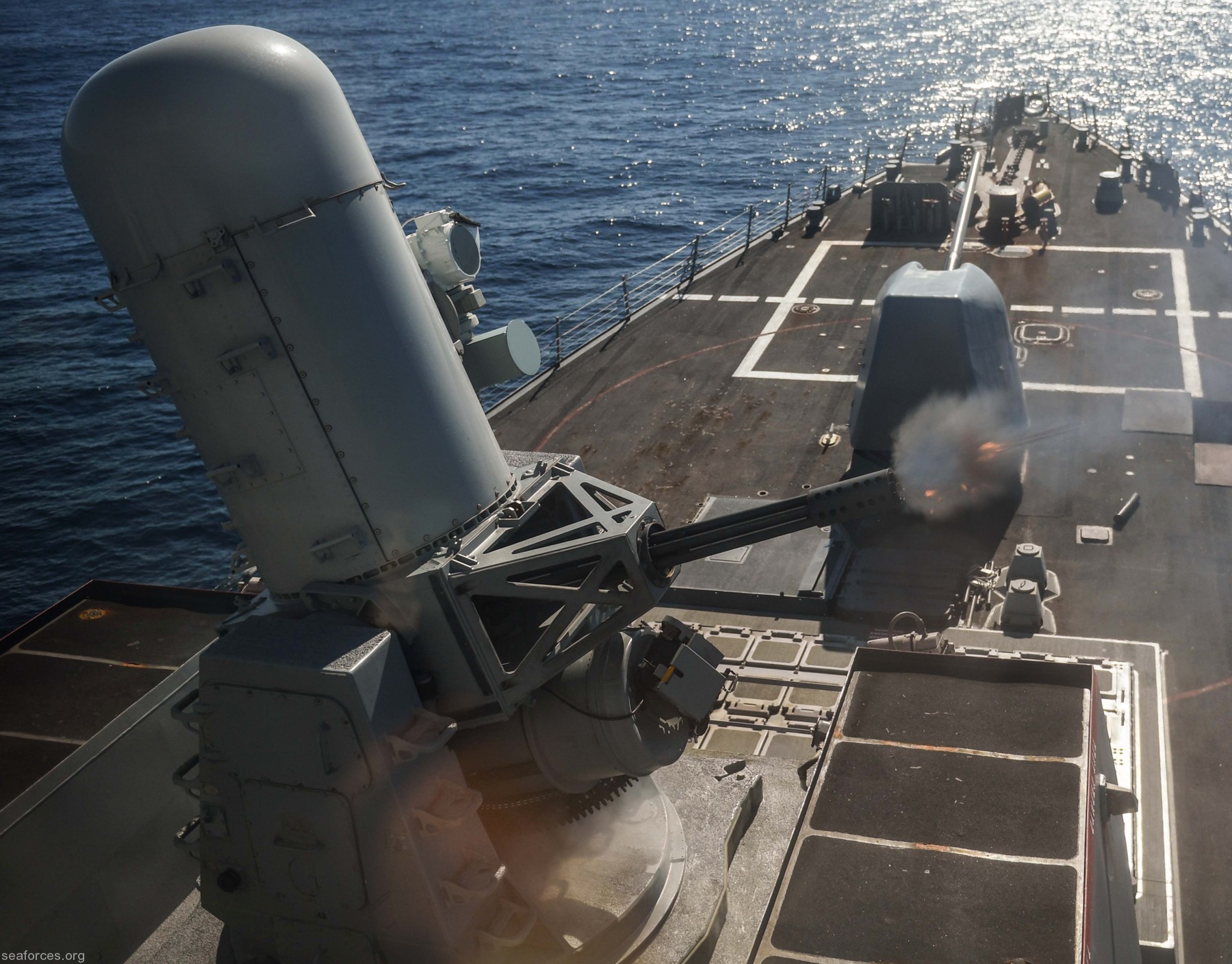 Mk-15 Phalanx CIWS fire exercise - Atlantic Ocean - October 2017 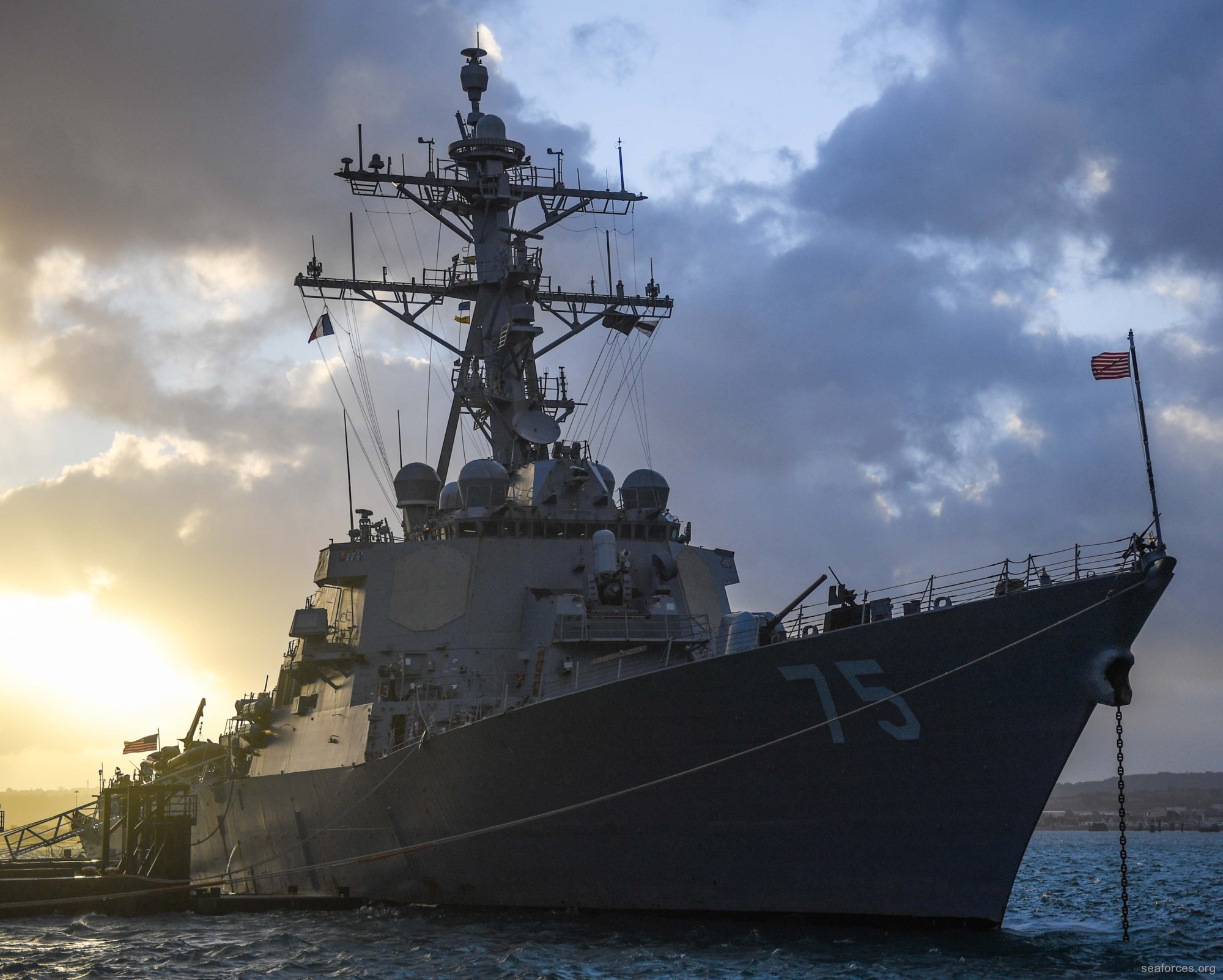 Cherbourg, France - October 2017 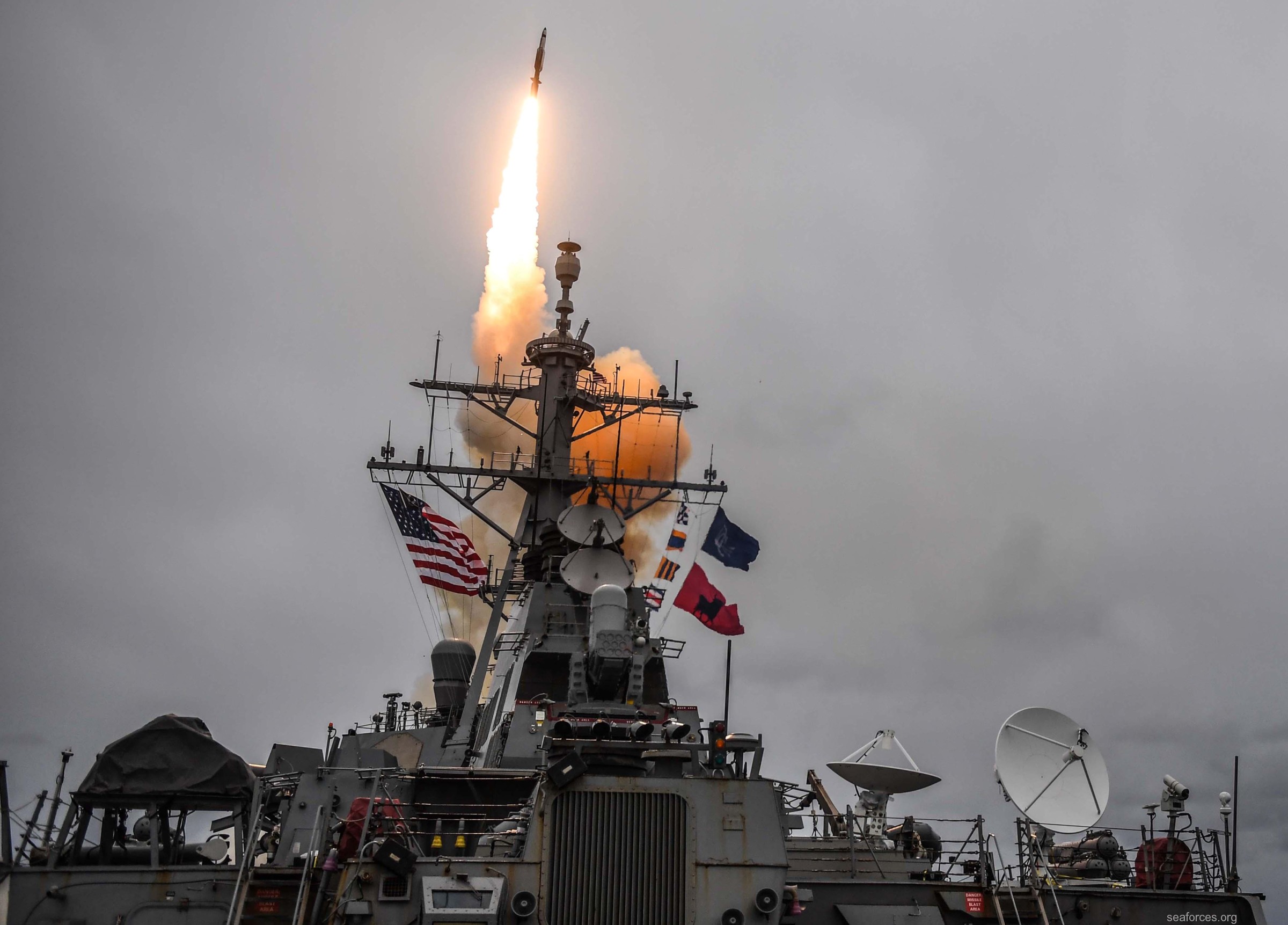 USS Donald Cook fires a RIM-161 Standard Missile SM-3 during Exercise Formidable Shield - Atlantic Ocean - October 2017 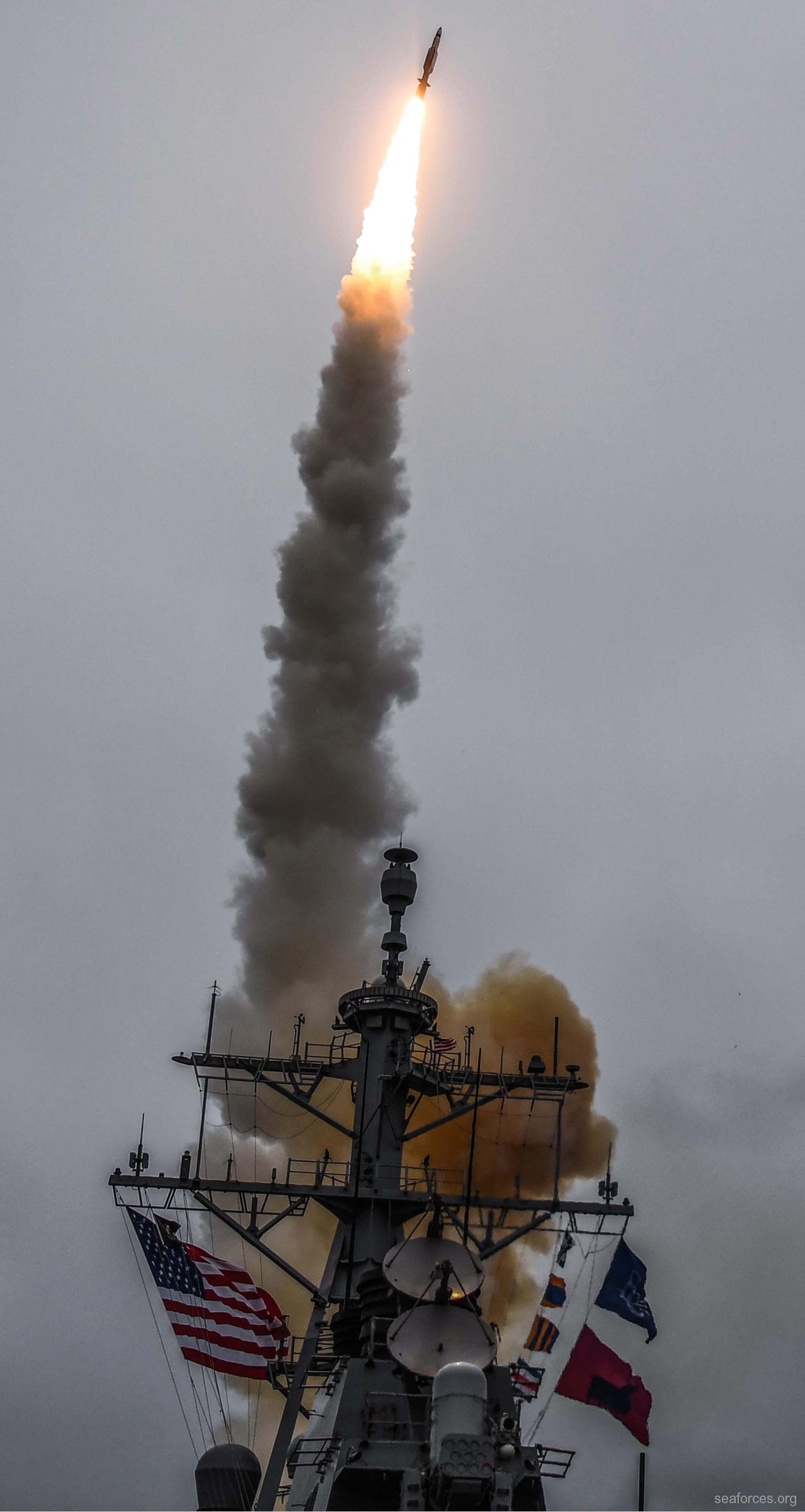 USS Donald Cook fires a RIM-161 Standard Missile SM-3 during Exercise Formidable Shield - Atlantic Ocean - October 2017 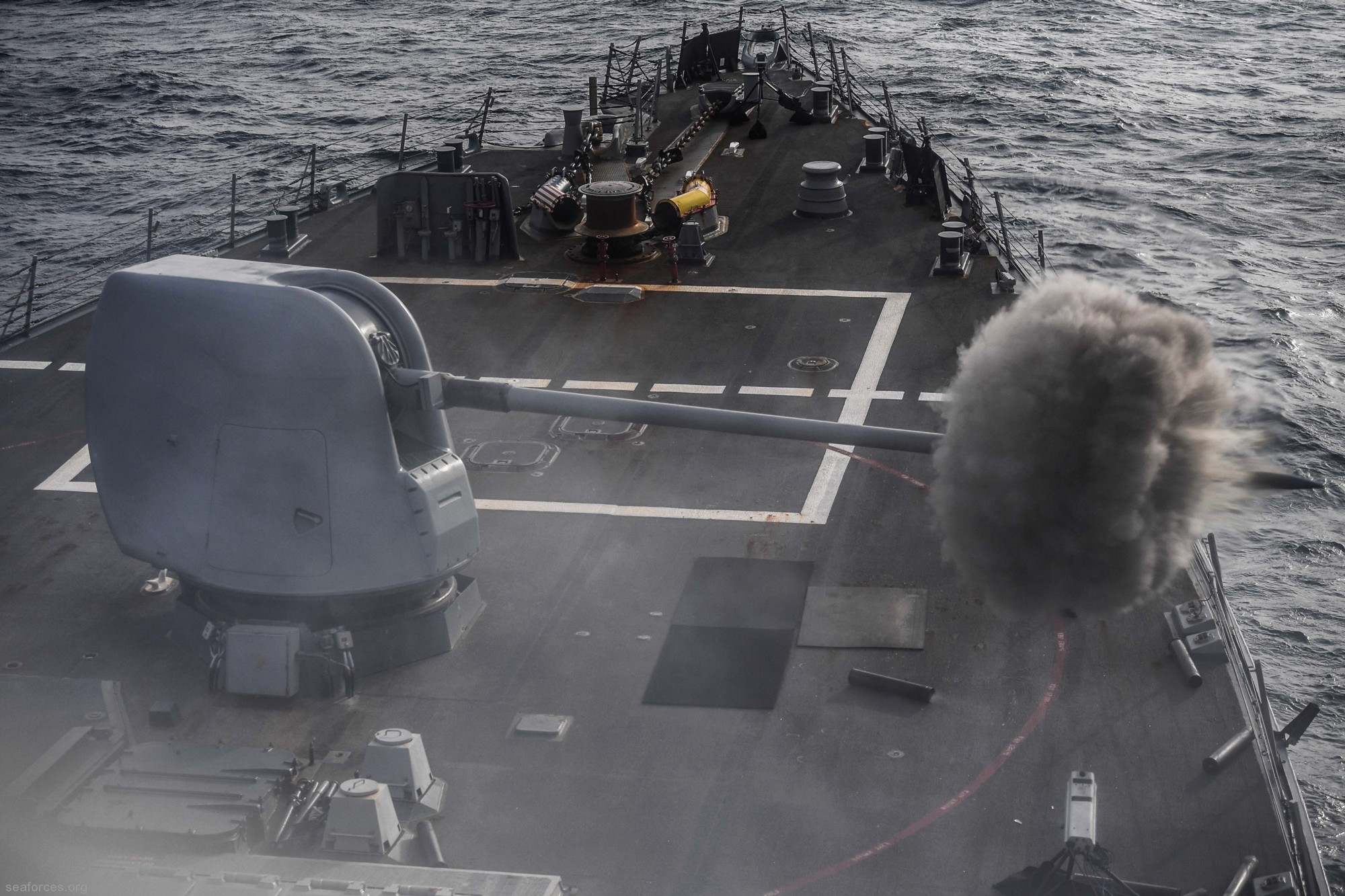 Mk-45 Mod.2 (5"/127mm) gun fire exercise during Exercise Joint Warrior 17-2 - Atlantic Ocean - October 2017 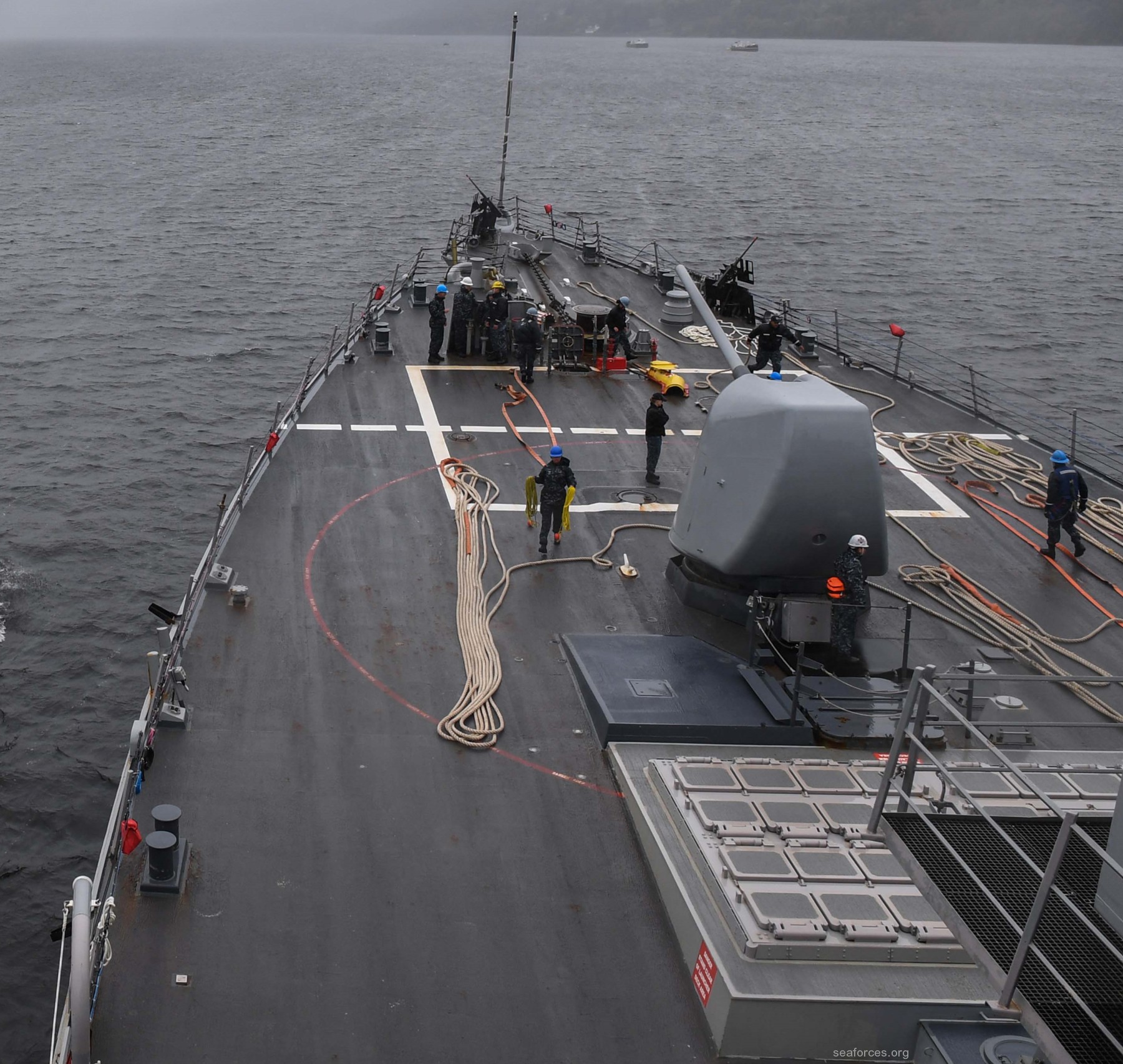 Faslane, Scotland - October 2017 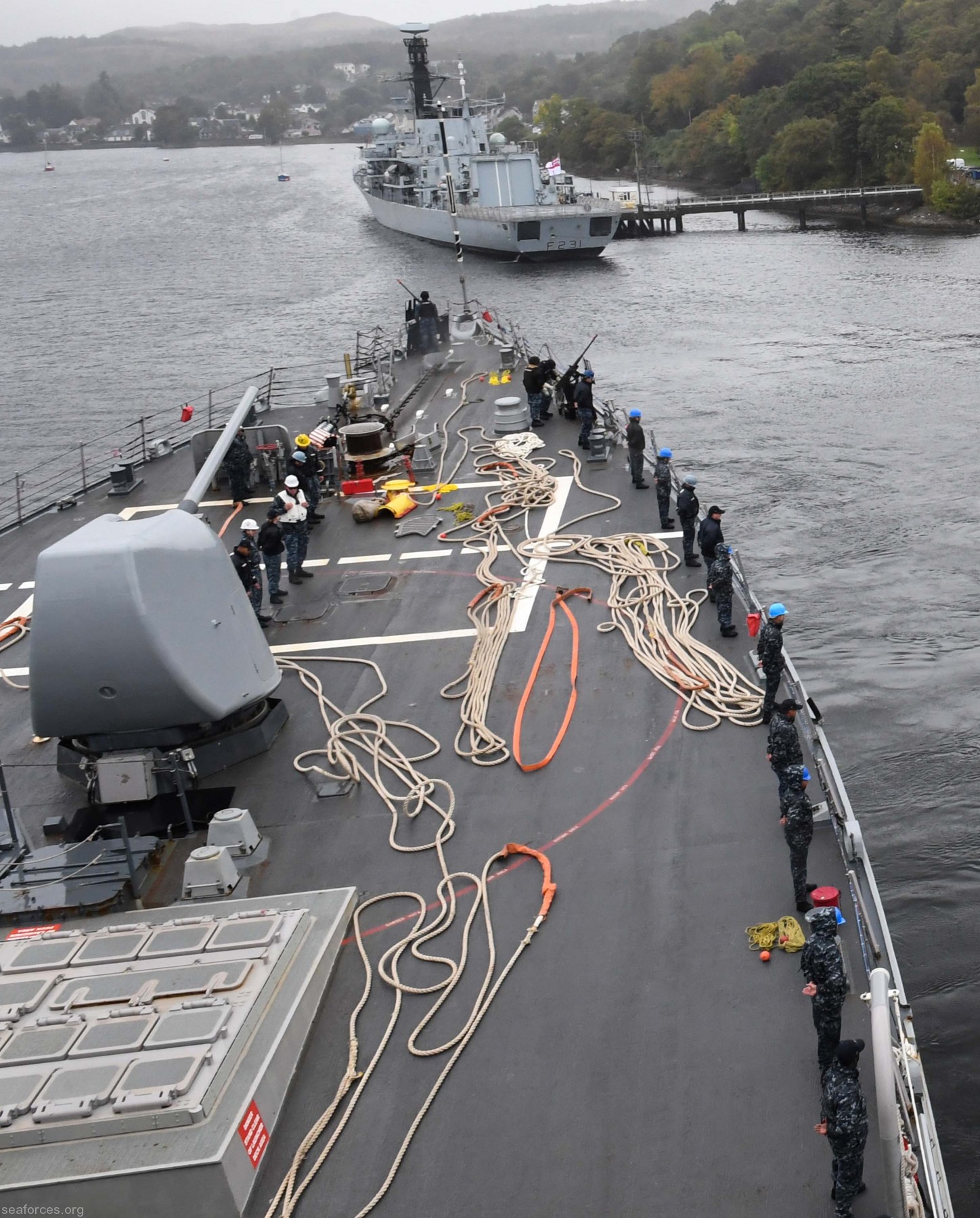 Faslane, Scotland - October 2017 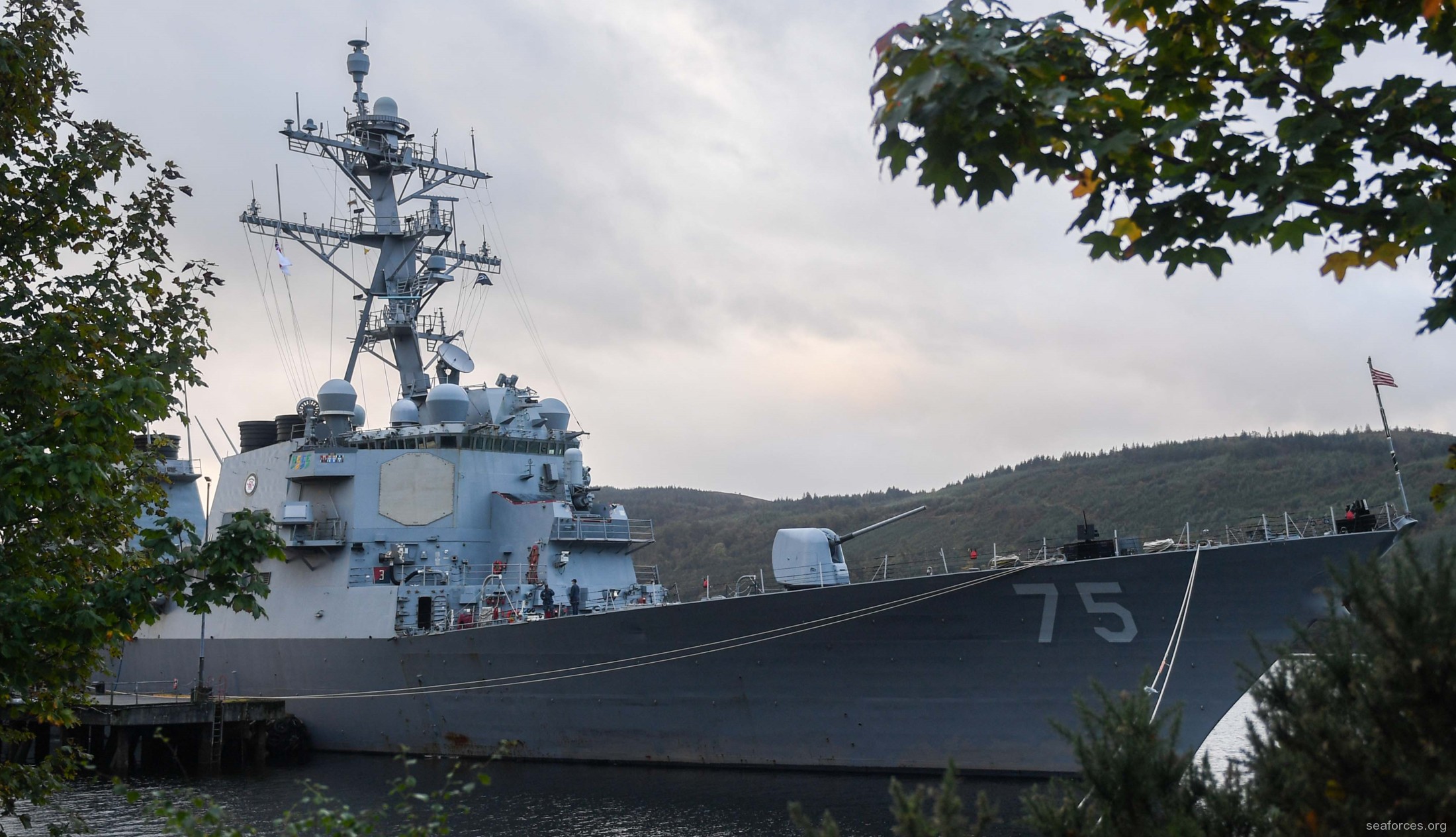 Faslane, Scotland - September 2017 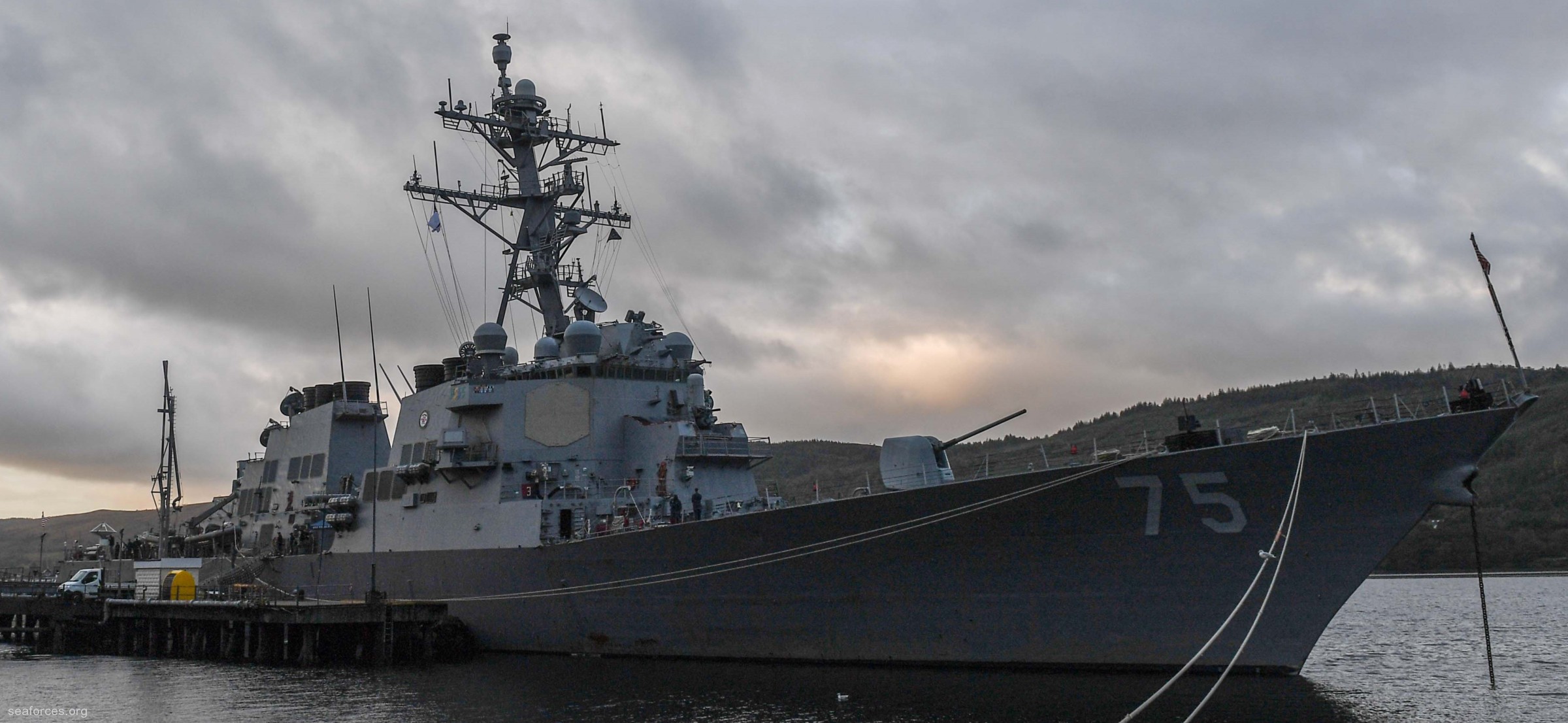 Faslane, Scotland - September 2017 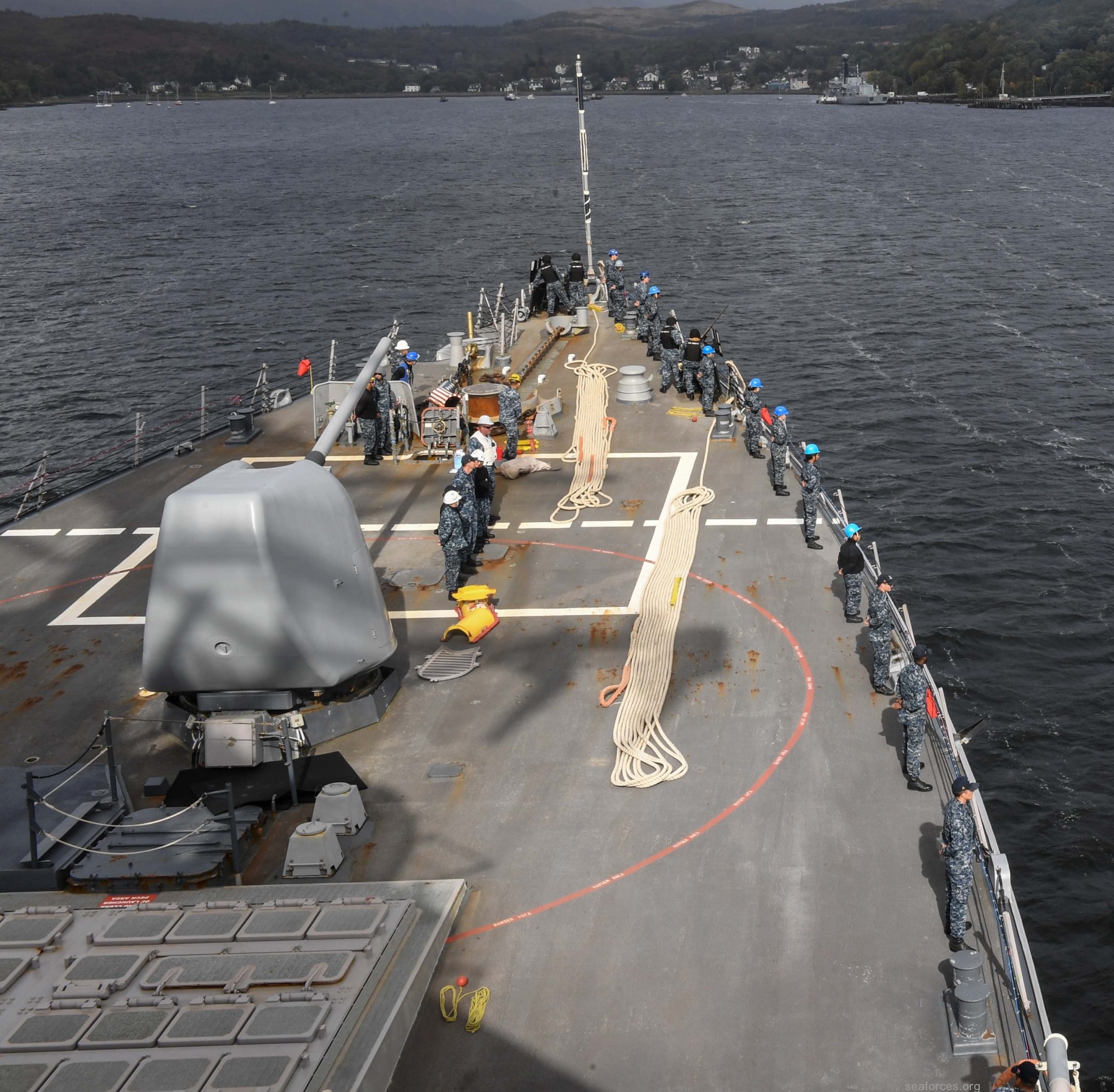 Faslane, Scotland - September 2017 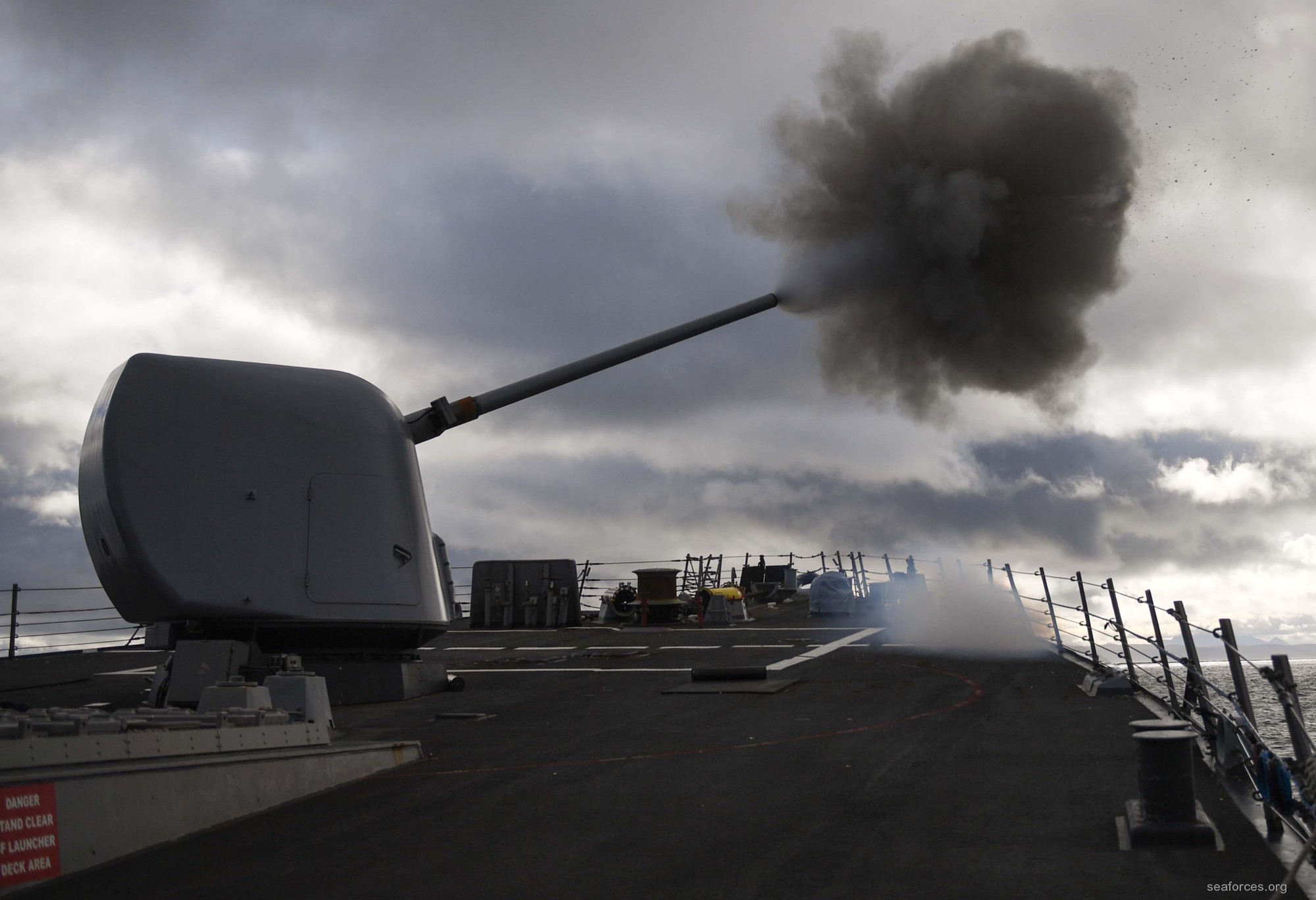 Mk-45 Mod.2 gun fire exercise - Sea of Hebrides - September 2017 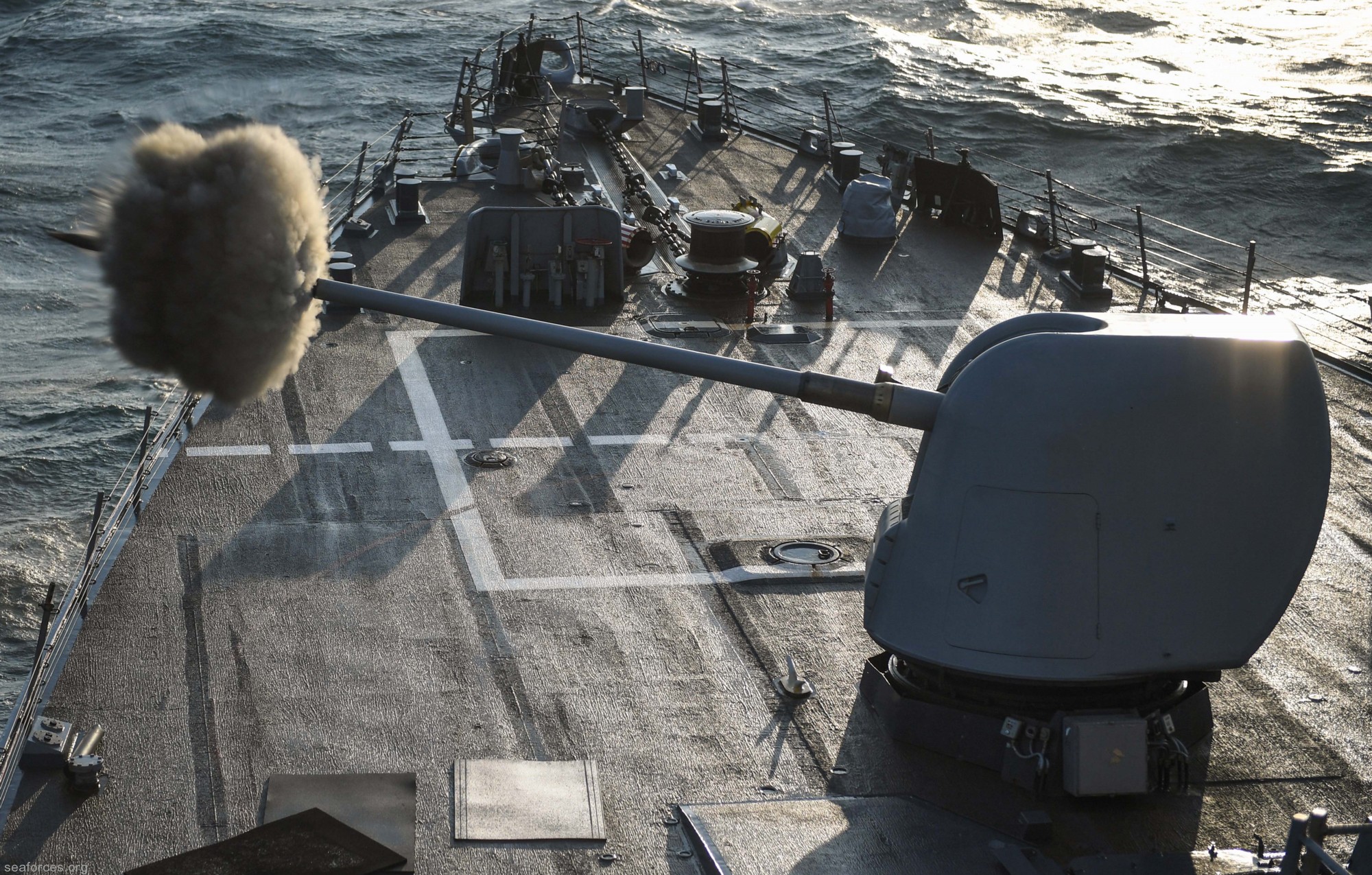 Mk-45 Mod.2 gun fire exercise - Atlantic Ocean - September 2017 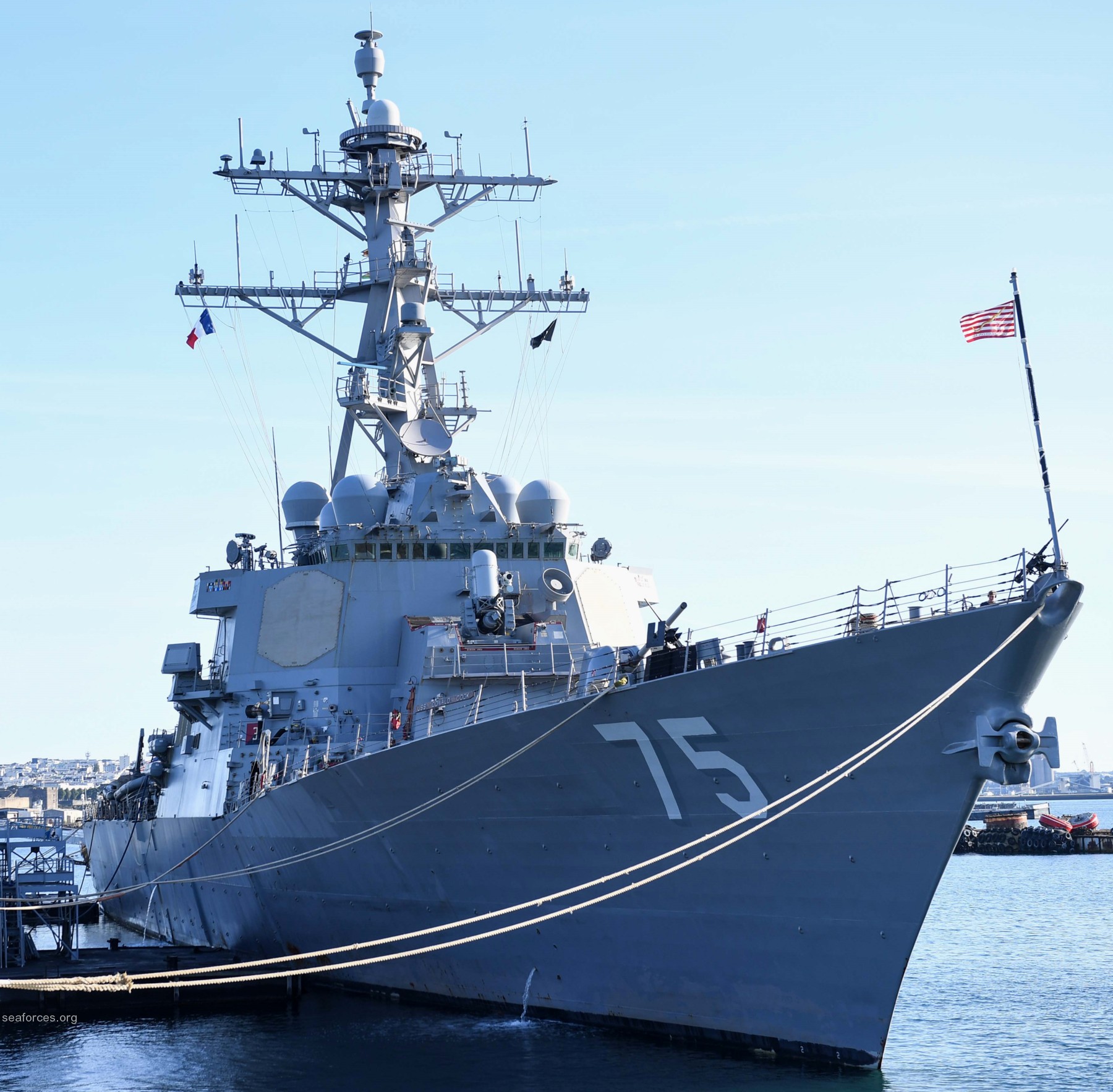 Brest, France - September 2017 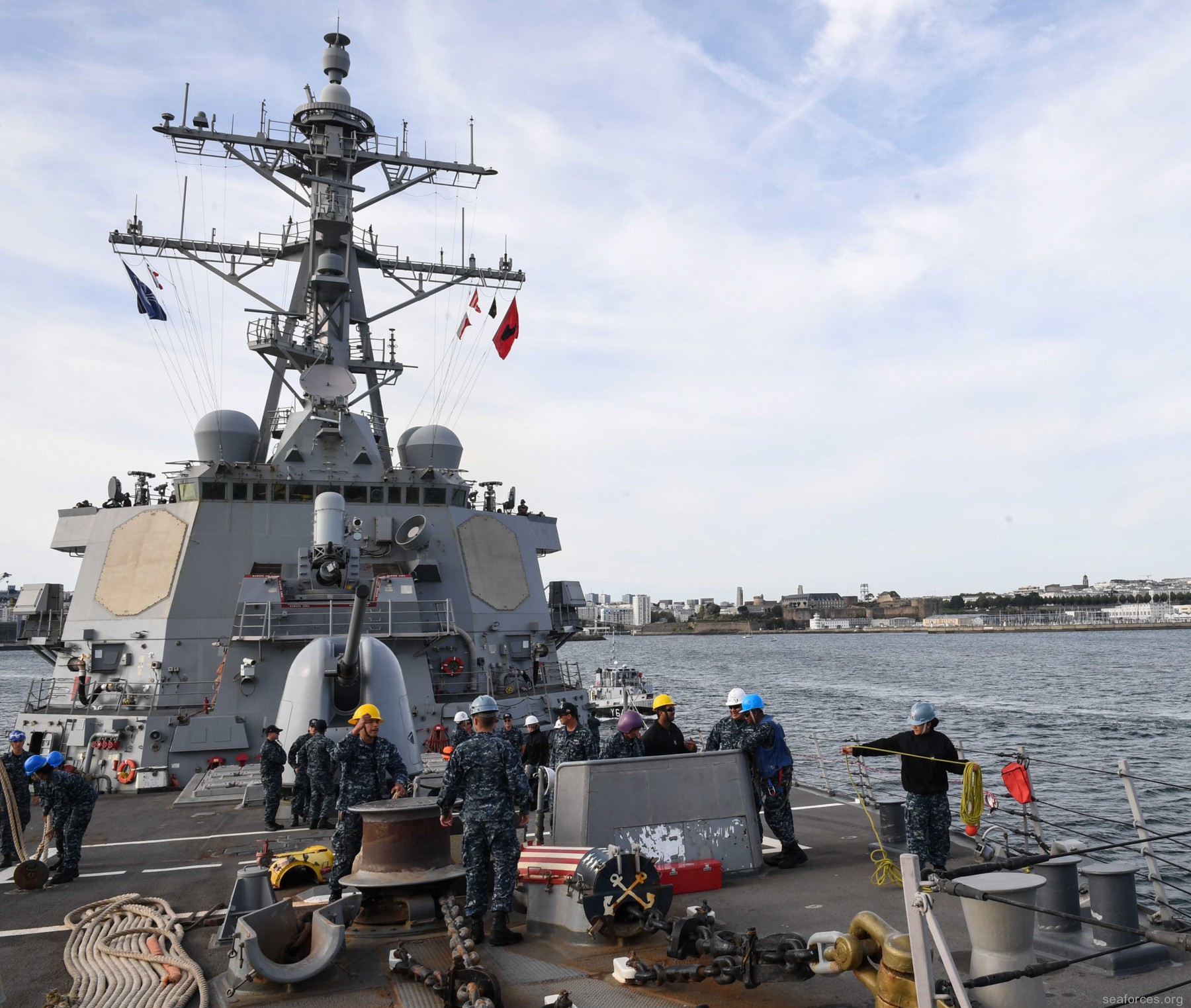 Brest, France - September 2017 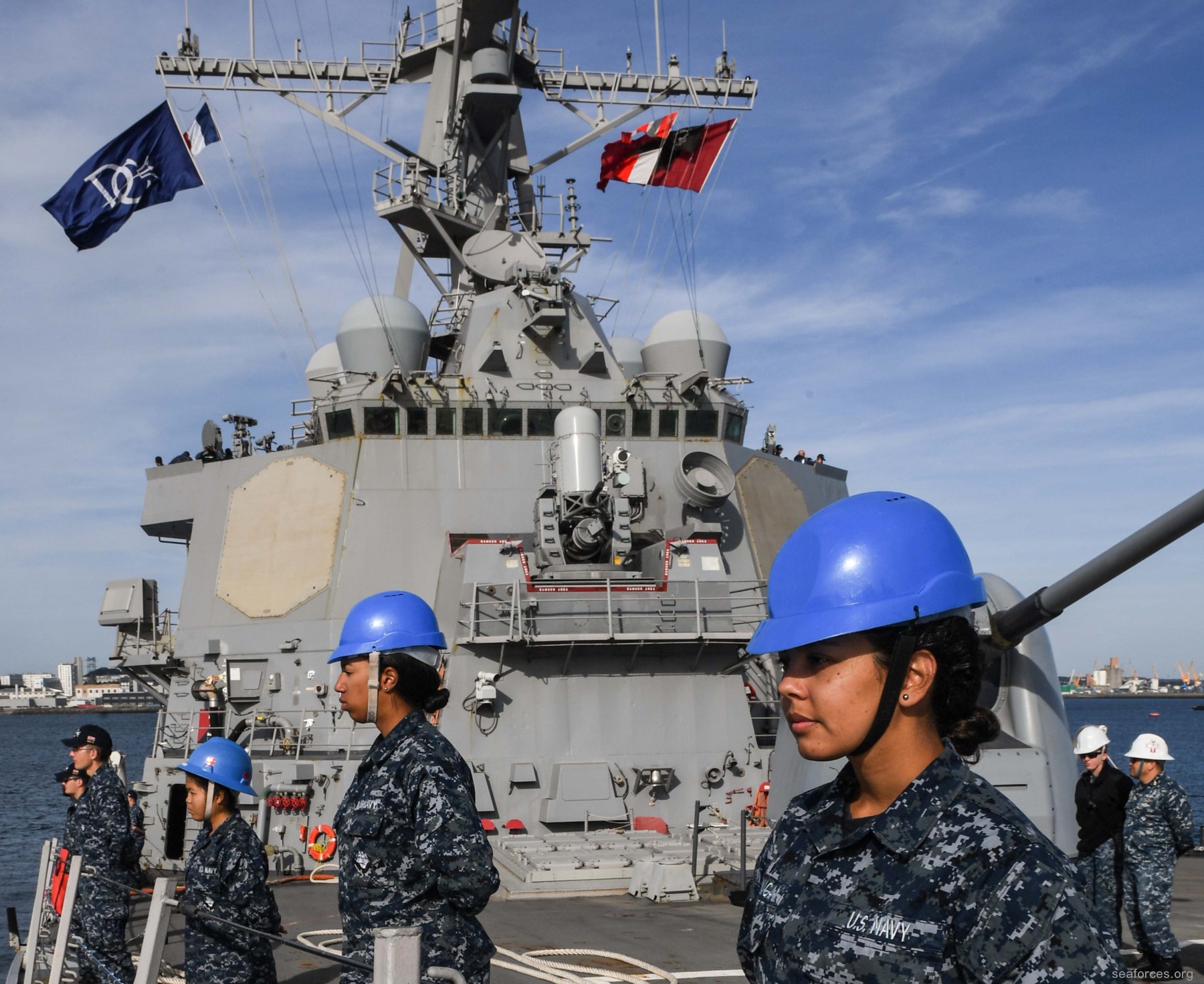 Brest, France - September 2017 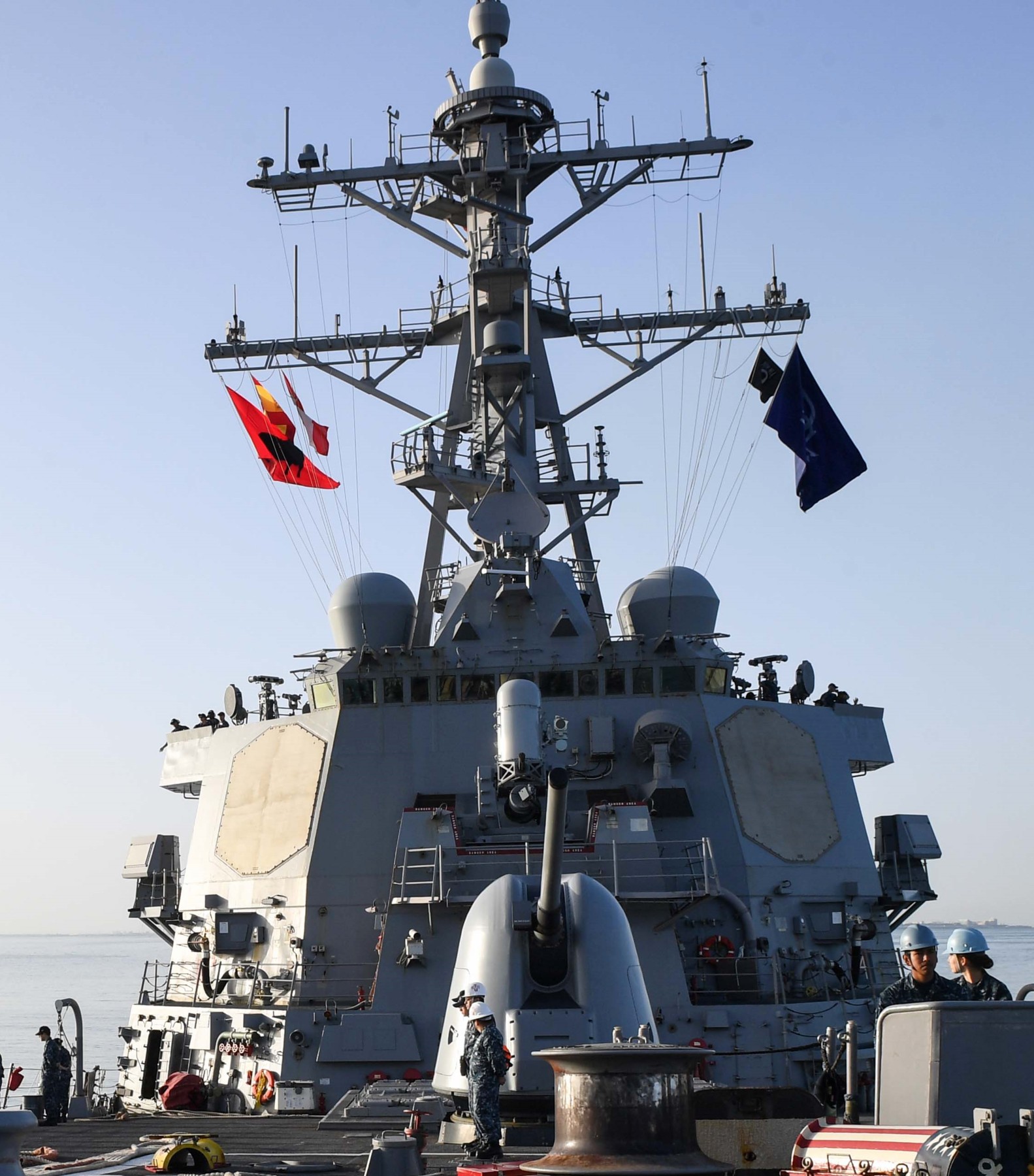 Rota, Spain - August 2017 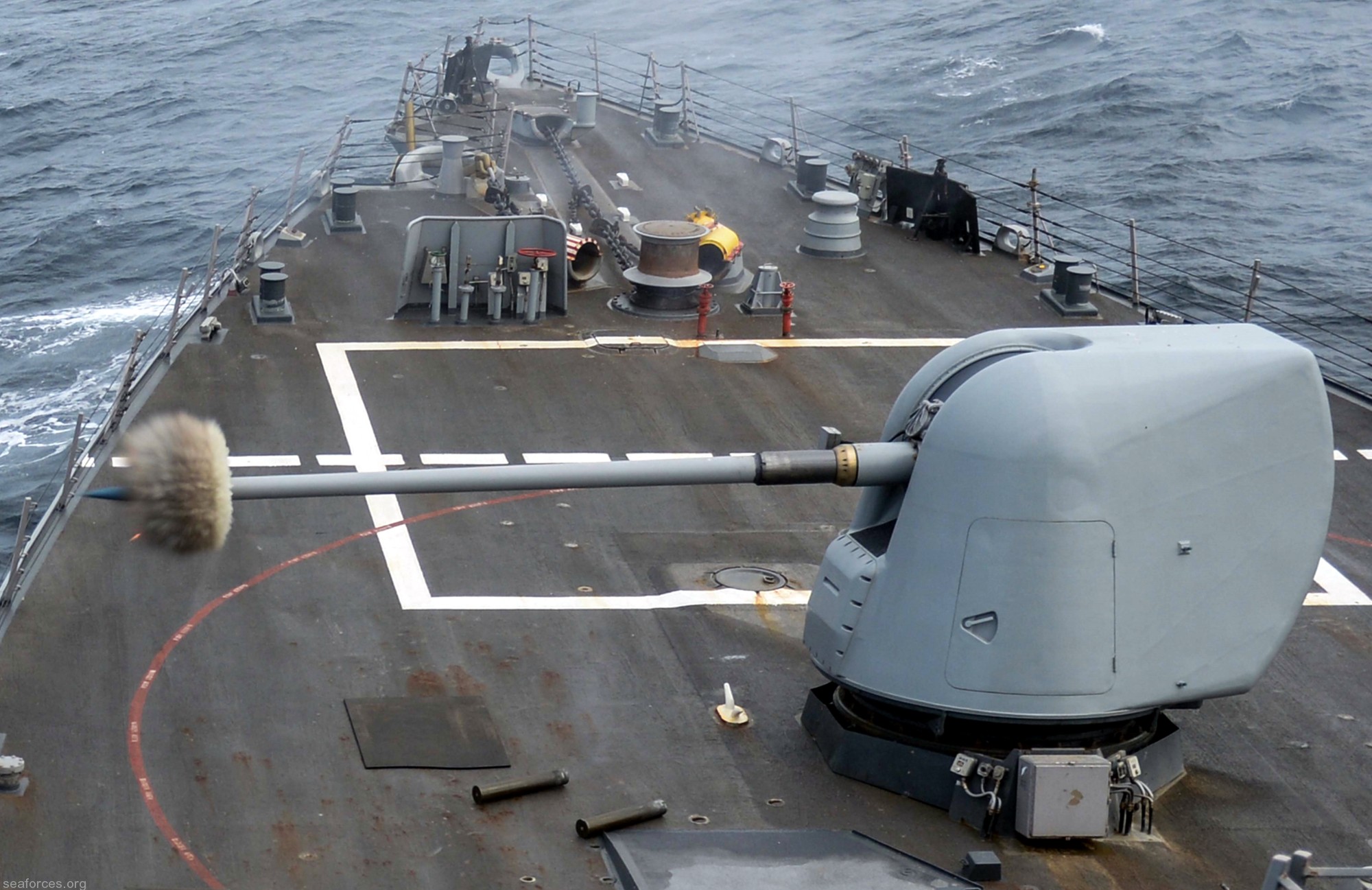 Mk-45 Mod.2 gun fire exercise - Atlantic Ocean - July 2017 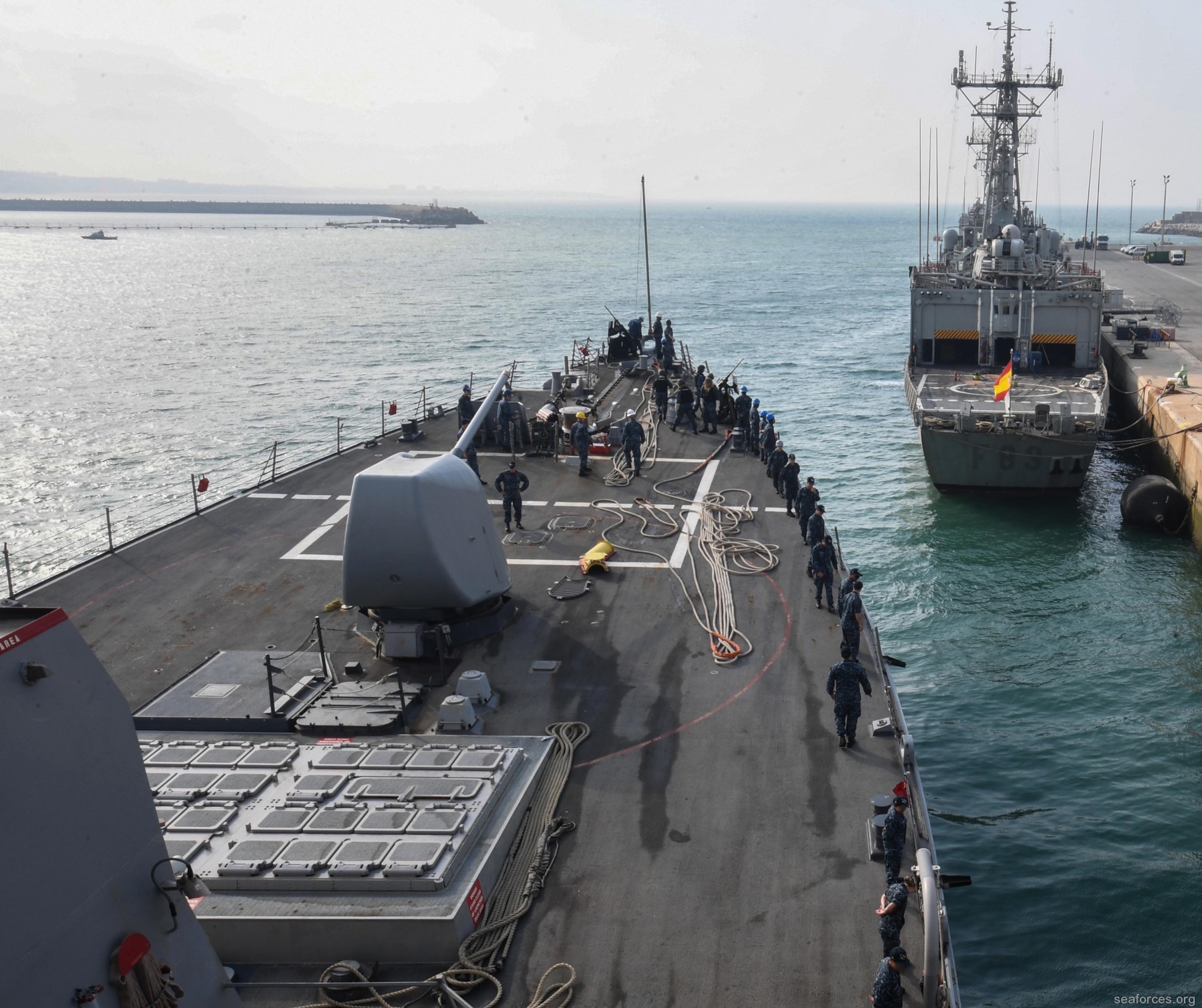 Naval Station Rota, Spain - July 2017 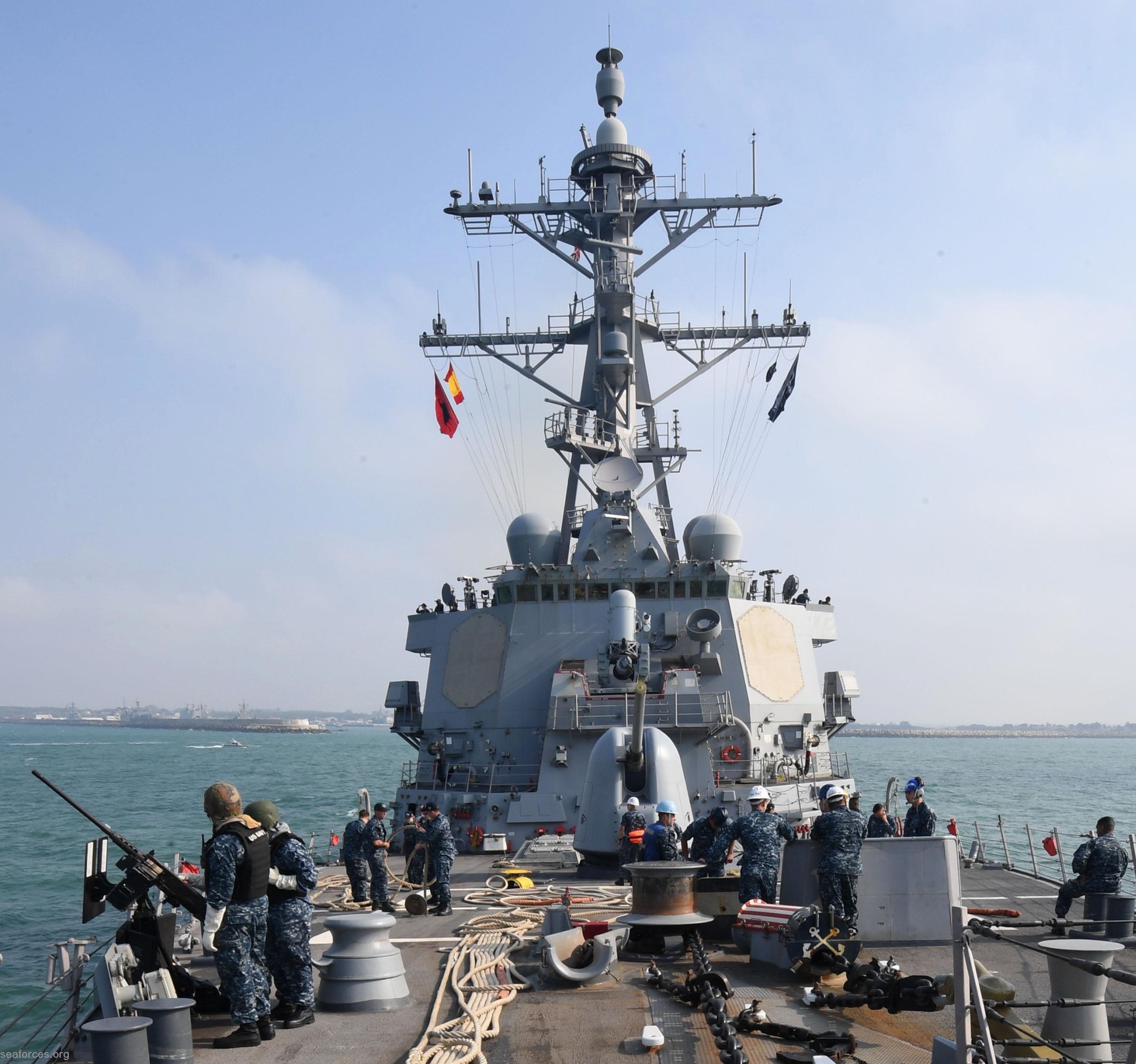 departing Naval Station Rota, Spain - June 2017 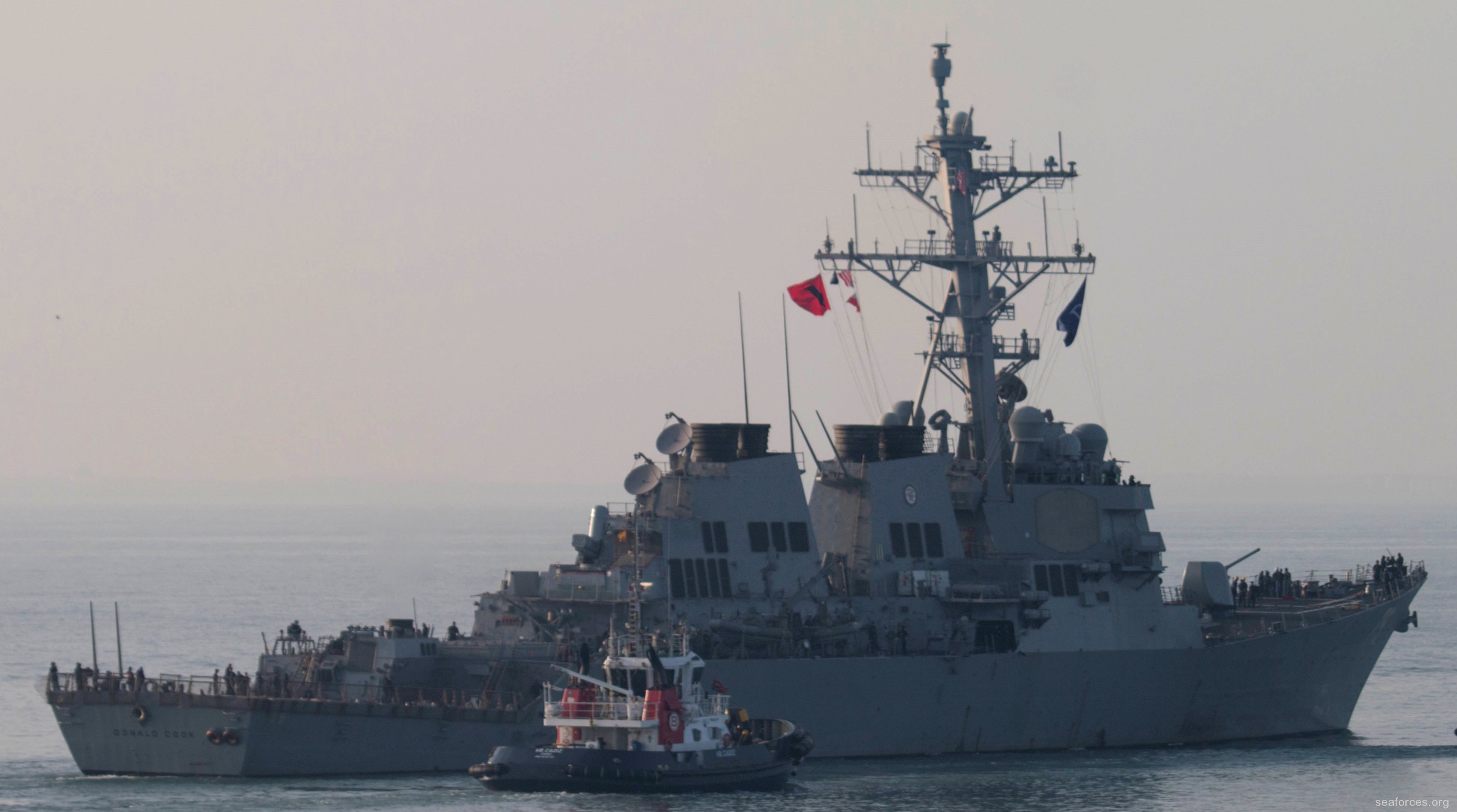 departing Naval Station Rota, Spain - June 2017 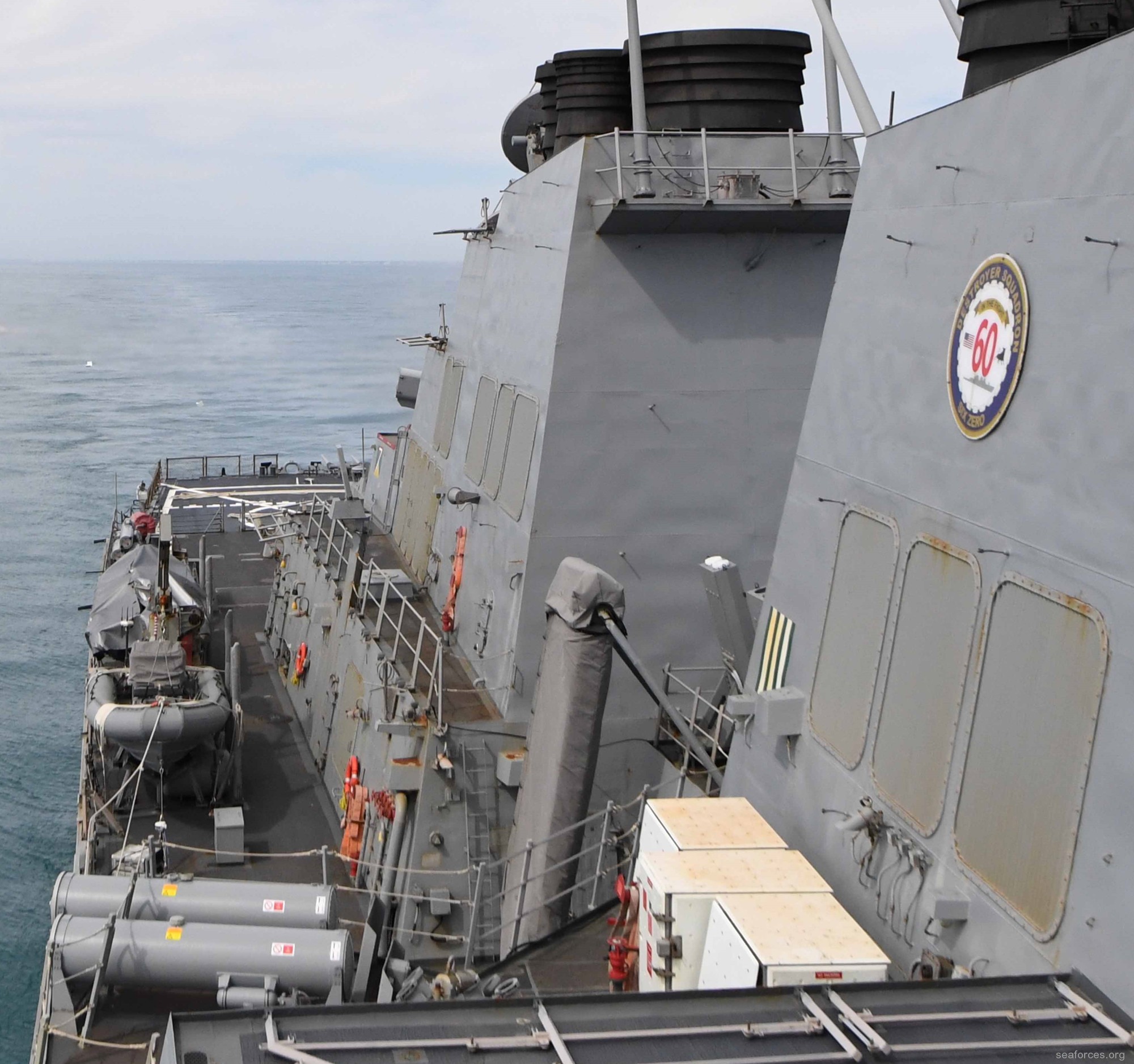 Atlantic Ocean - March 2017 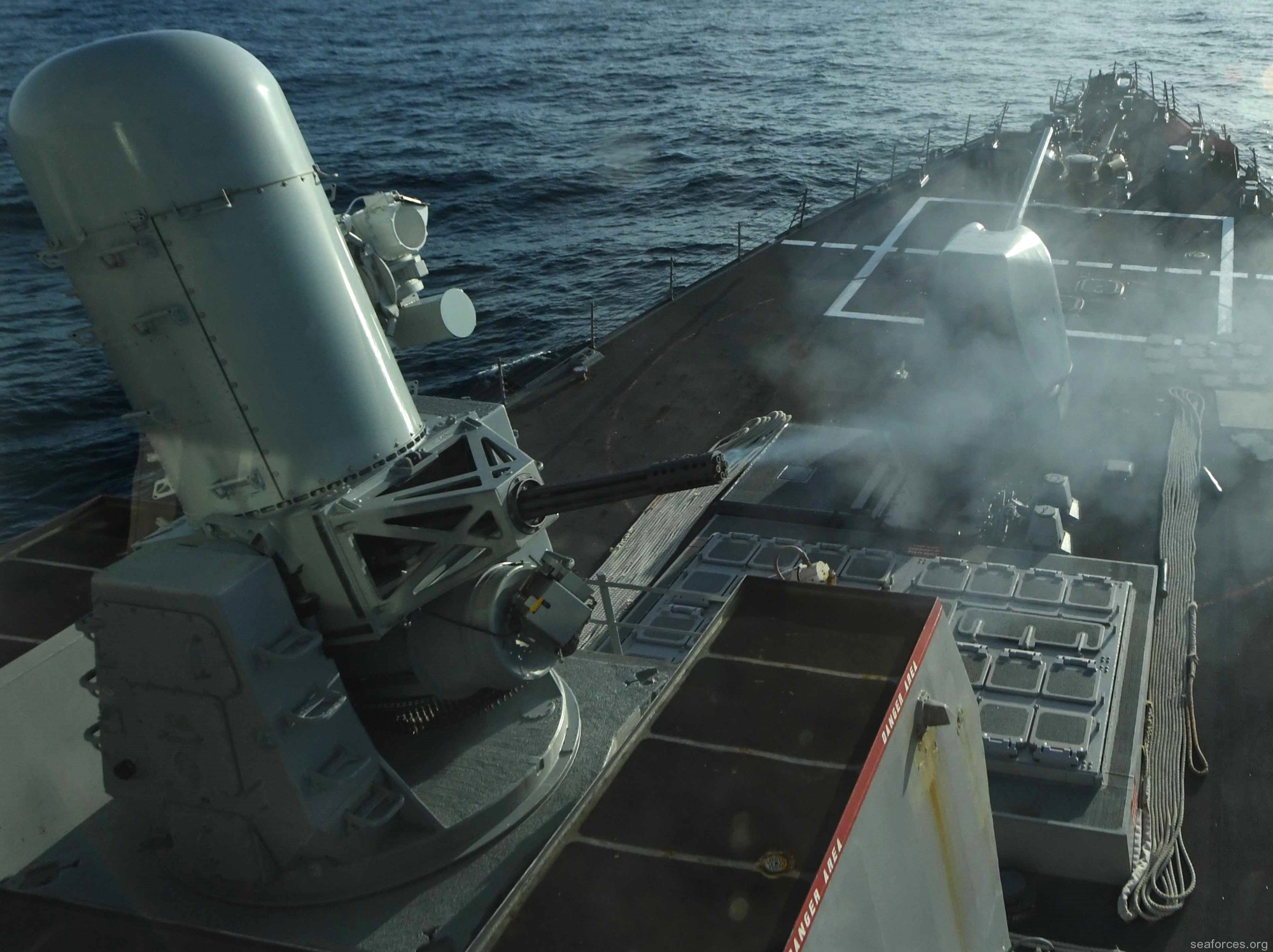 Mk-15 Phalanx CIWS fire exercise - Atlantic Ocean - March 2017 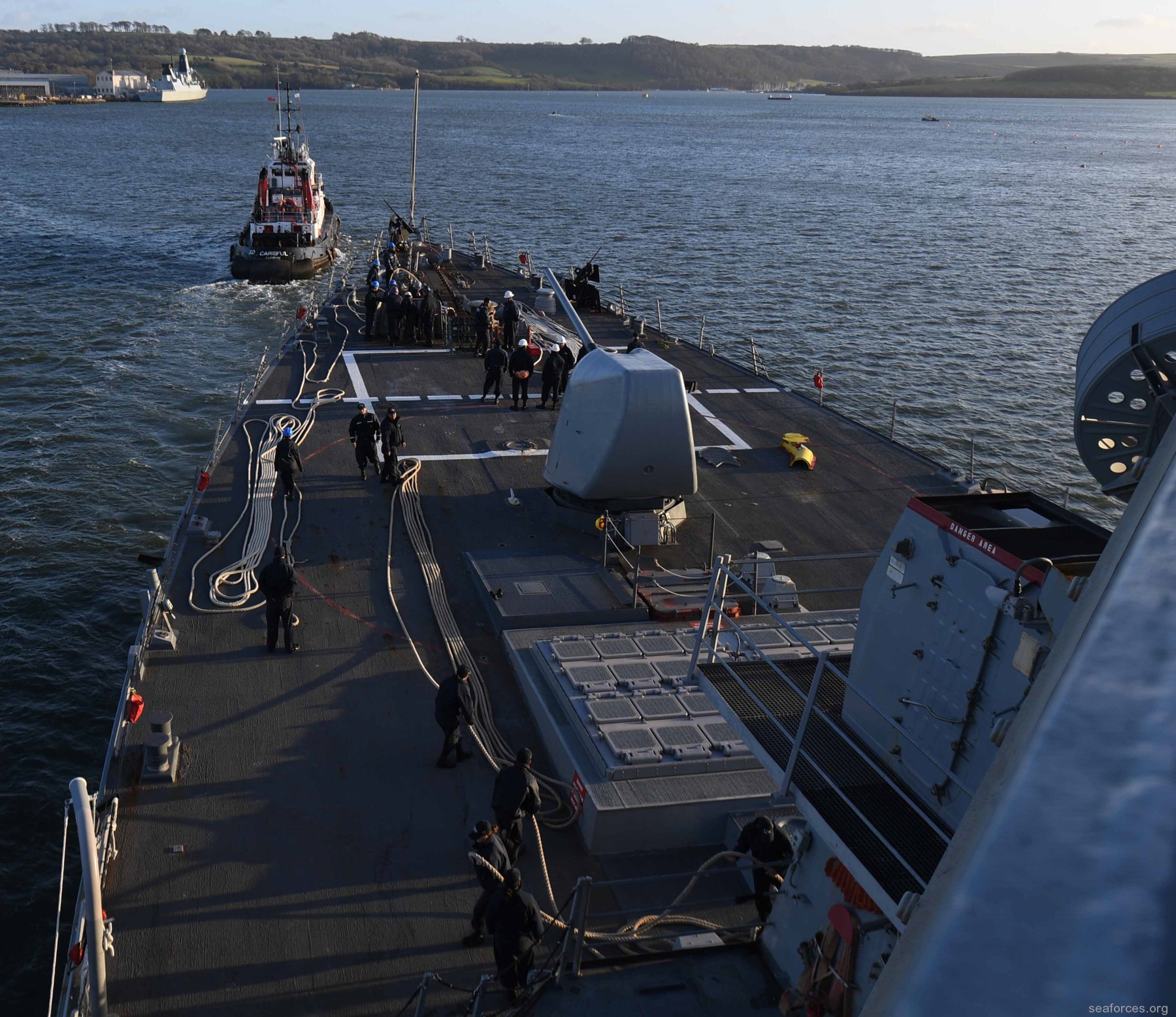 Plymouth, U.K. - March 2017 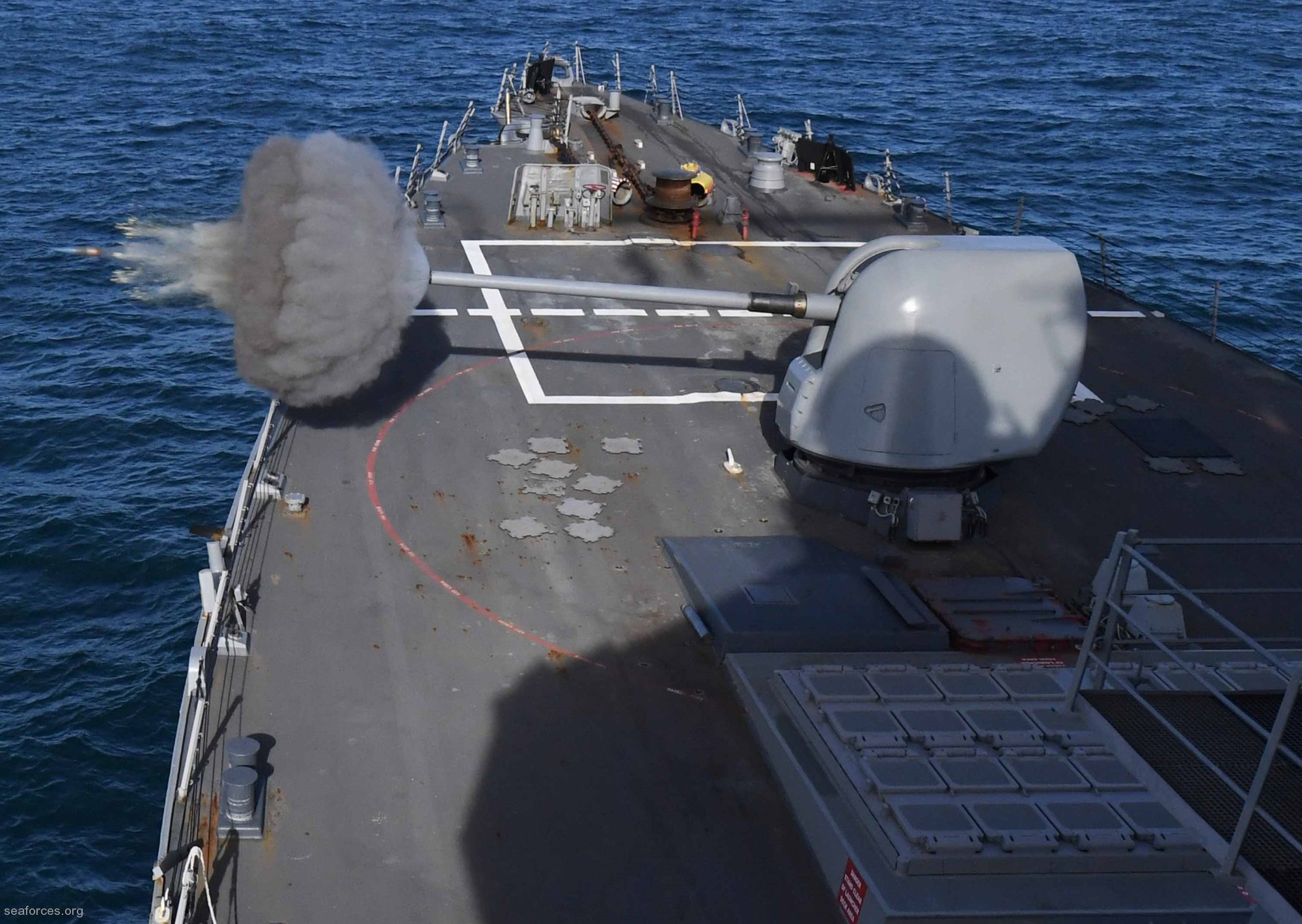 Mk-45 Mod.2 gun fire exercise - Atlantic Ocean - March 2017 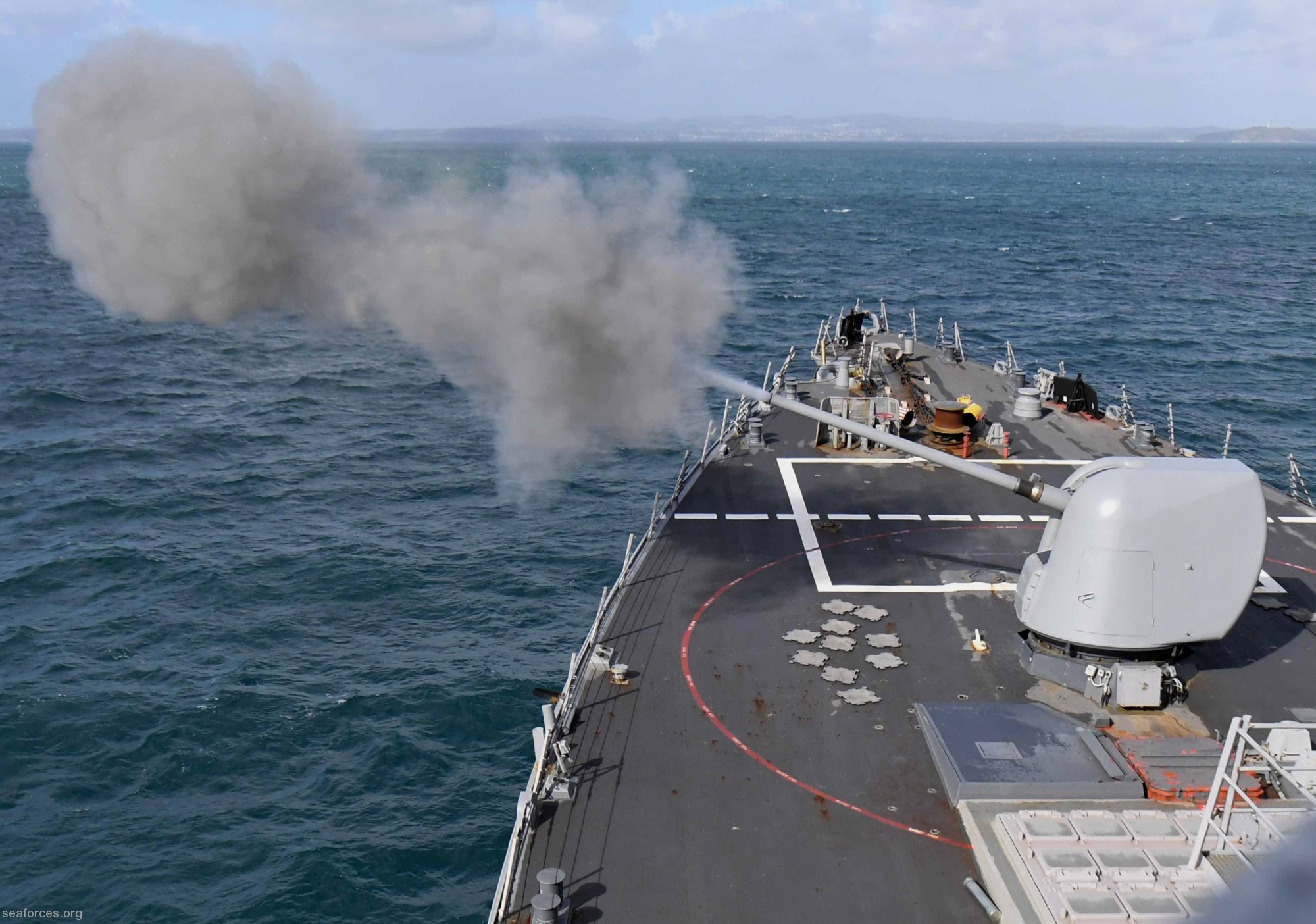 Mk-45 Mod.2 gun fire exercise - Atlantic Ocean - March 2017 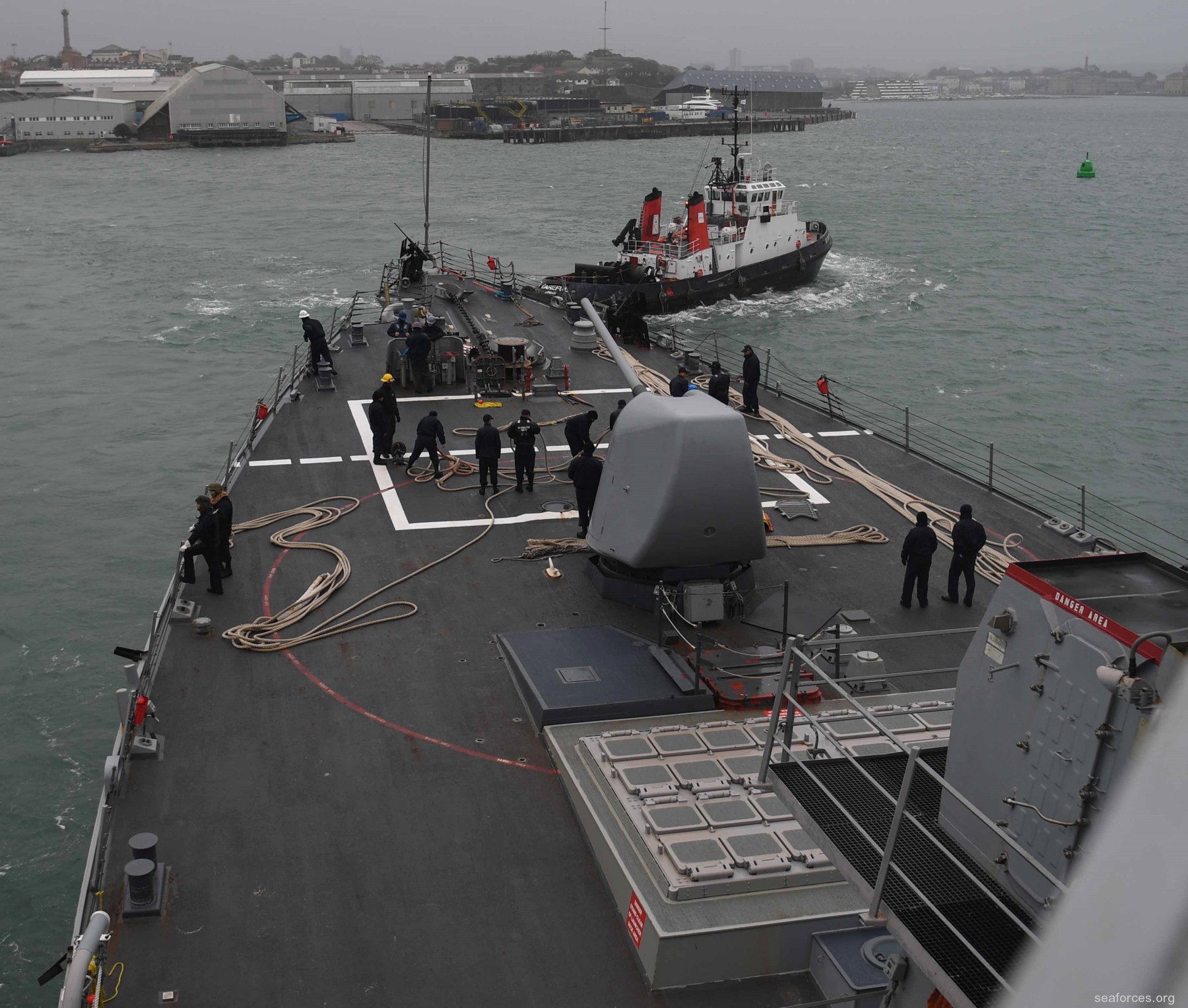 Plymouth, U.K. - February 2017 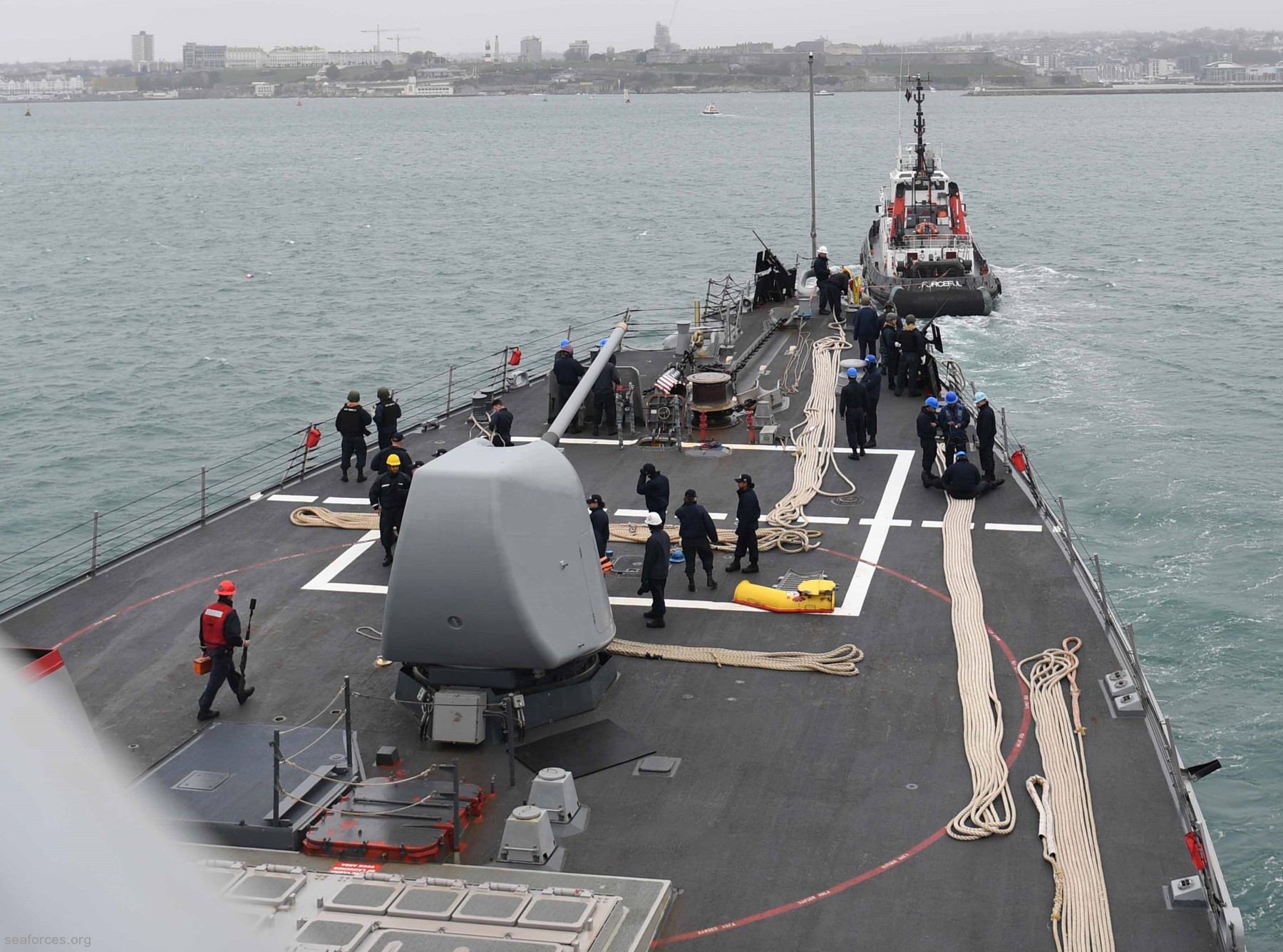 Plymouth, U.K. - February 2017 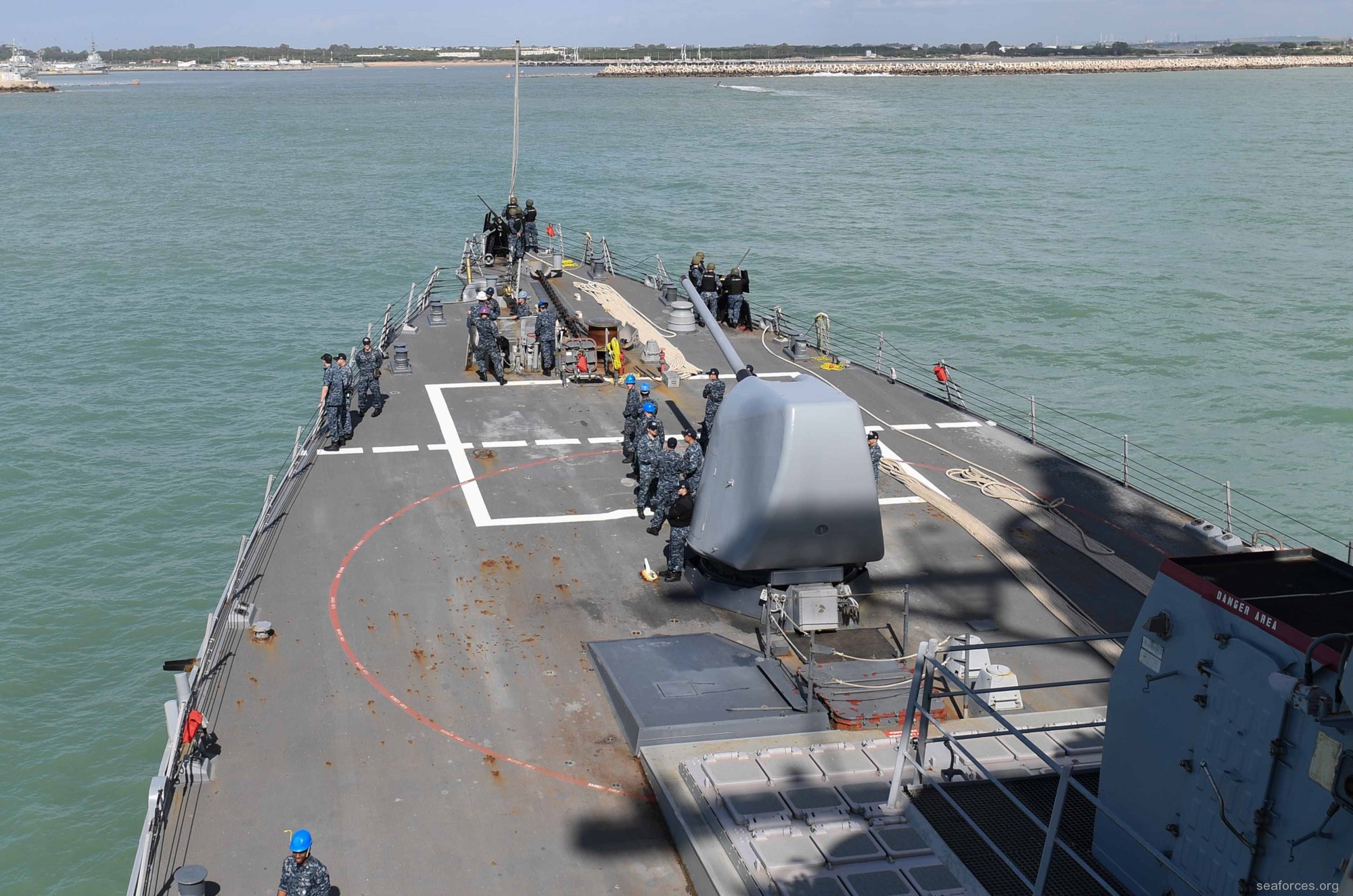 Naval Station Rota, Spain - February 2017 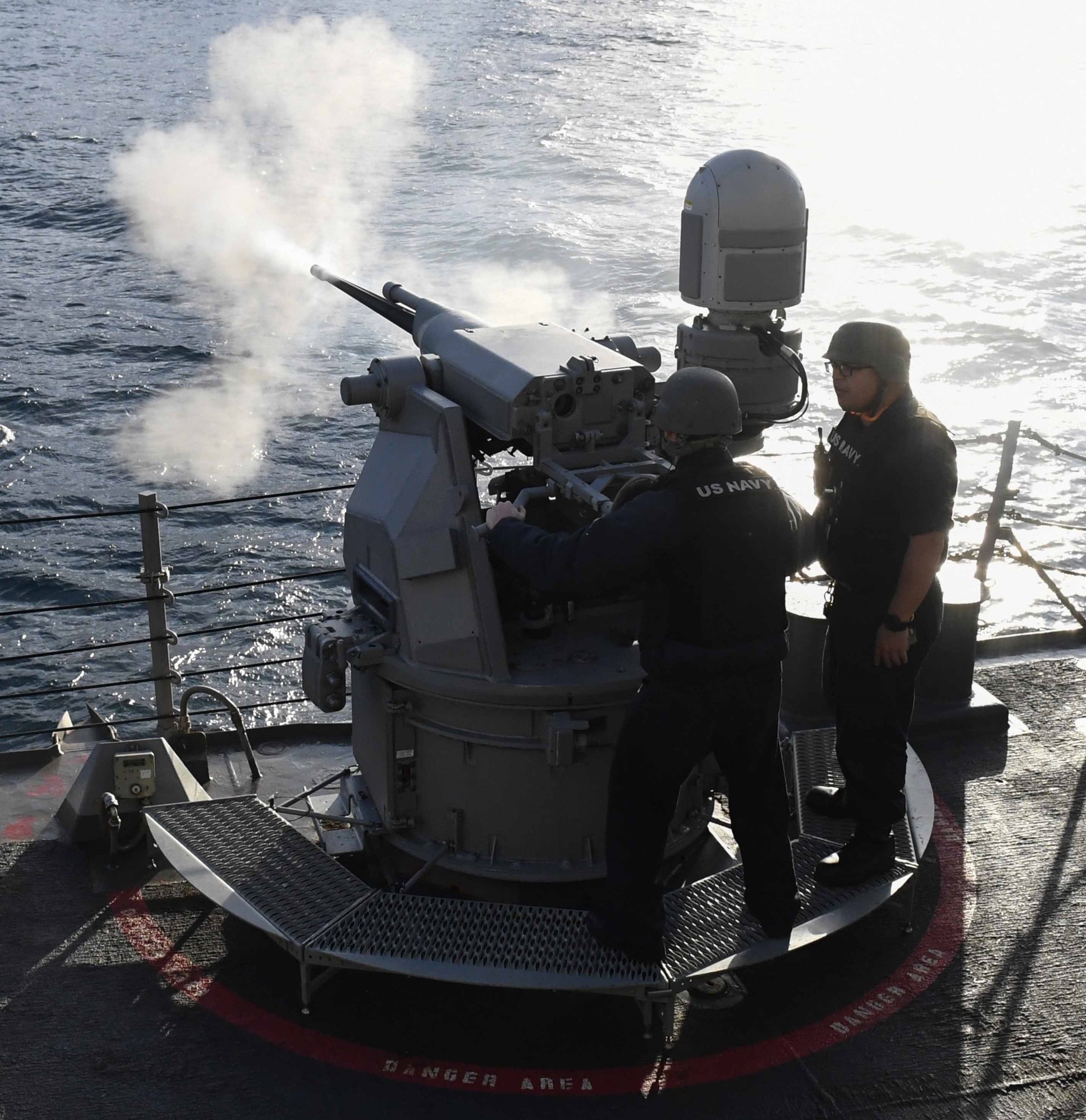 Mk-38 Mod.2 machine gun system - Mediterranean Sea - February 2017 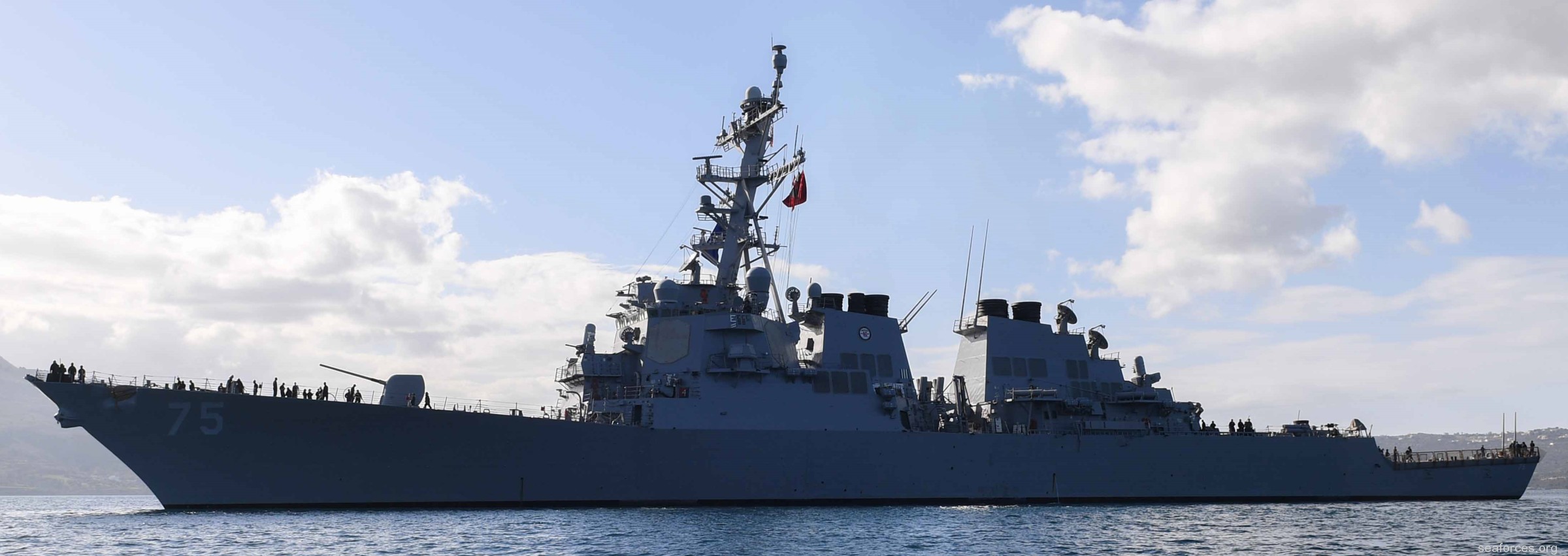 departing Souda Bay, Greece - February 2017 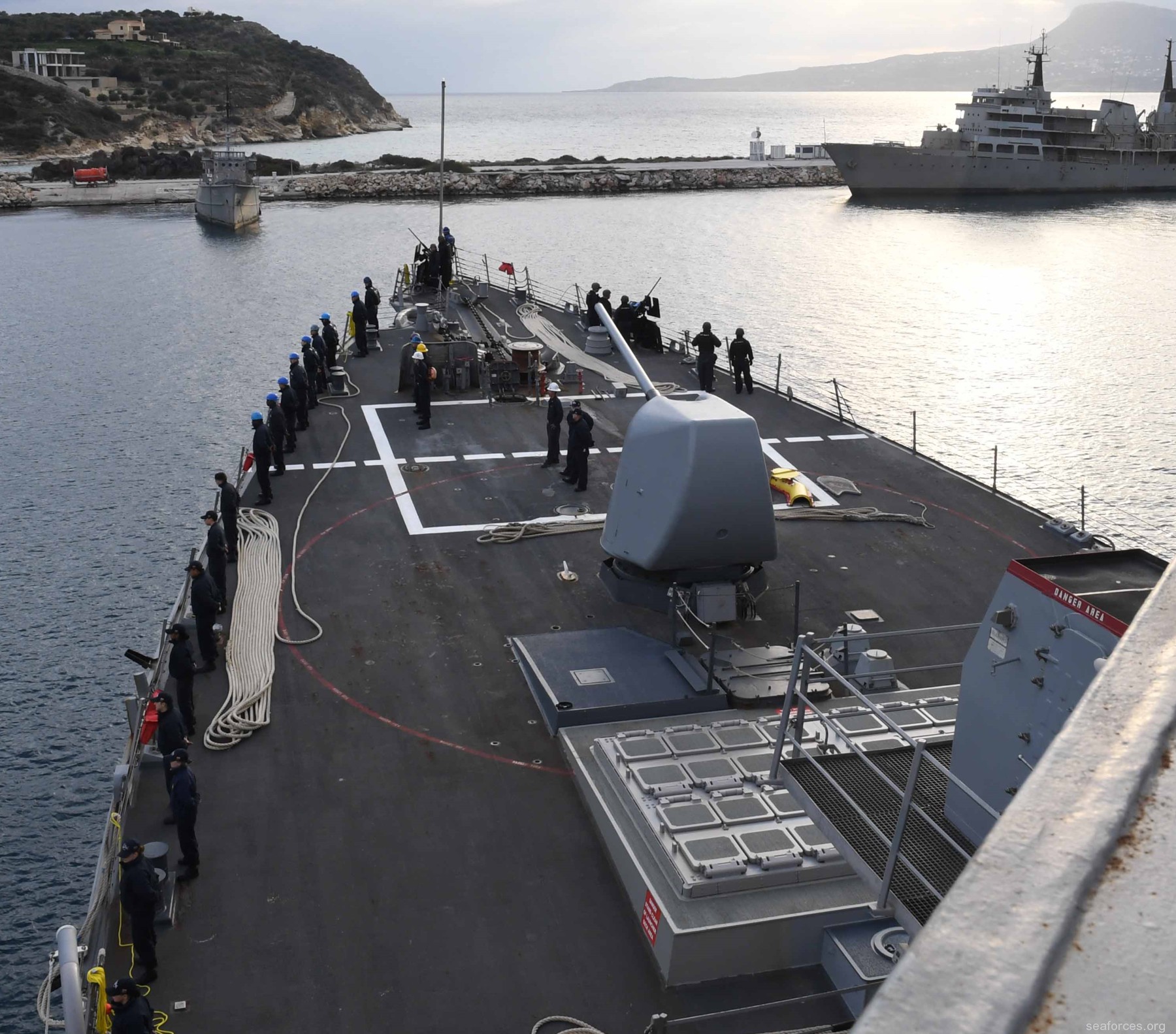 Souda Bay, Greece - January 2017 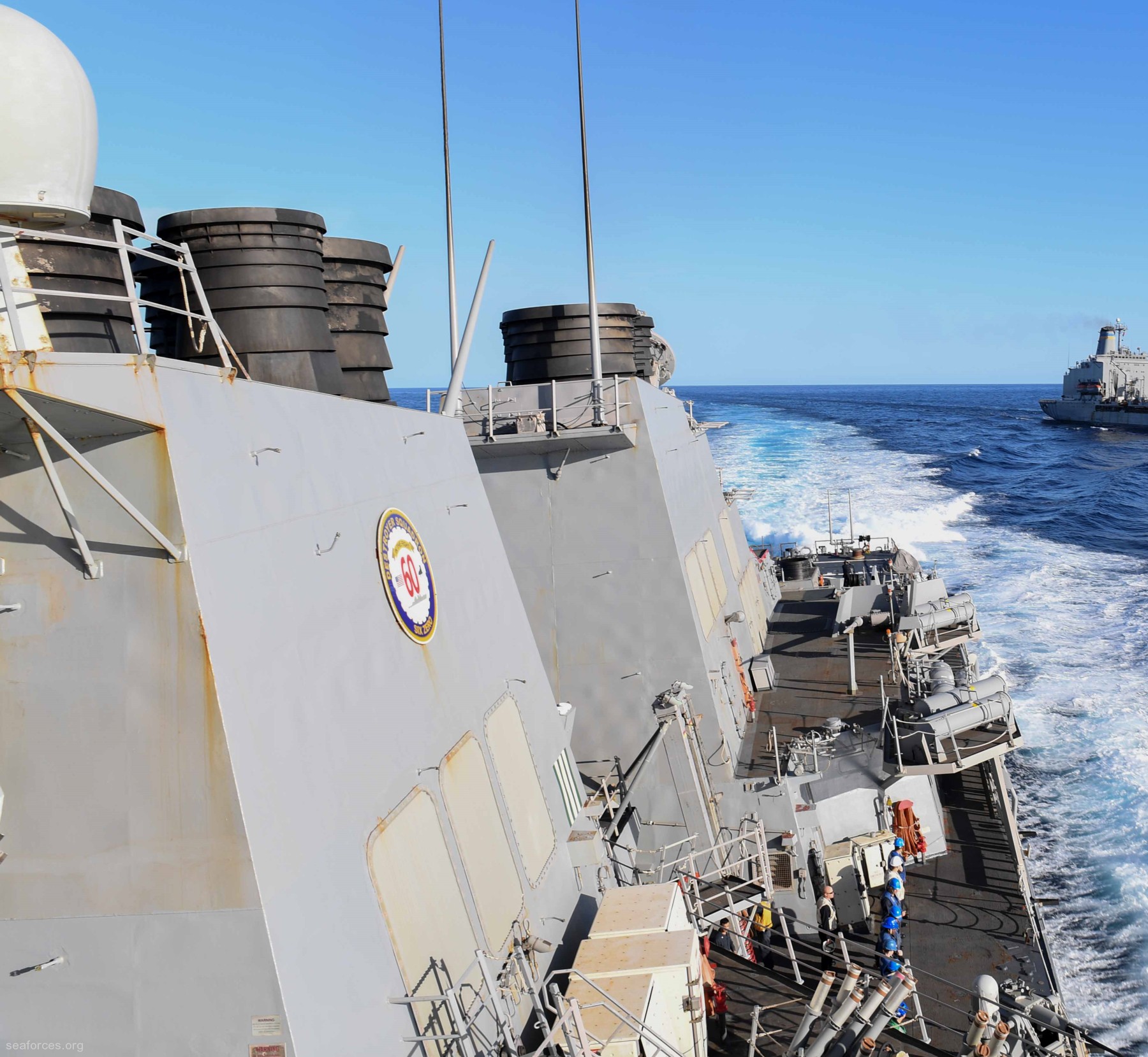 Mediterranean Sea - January 2017 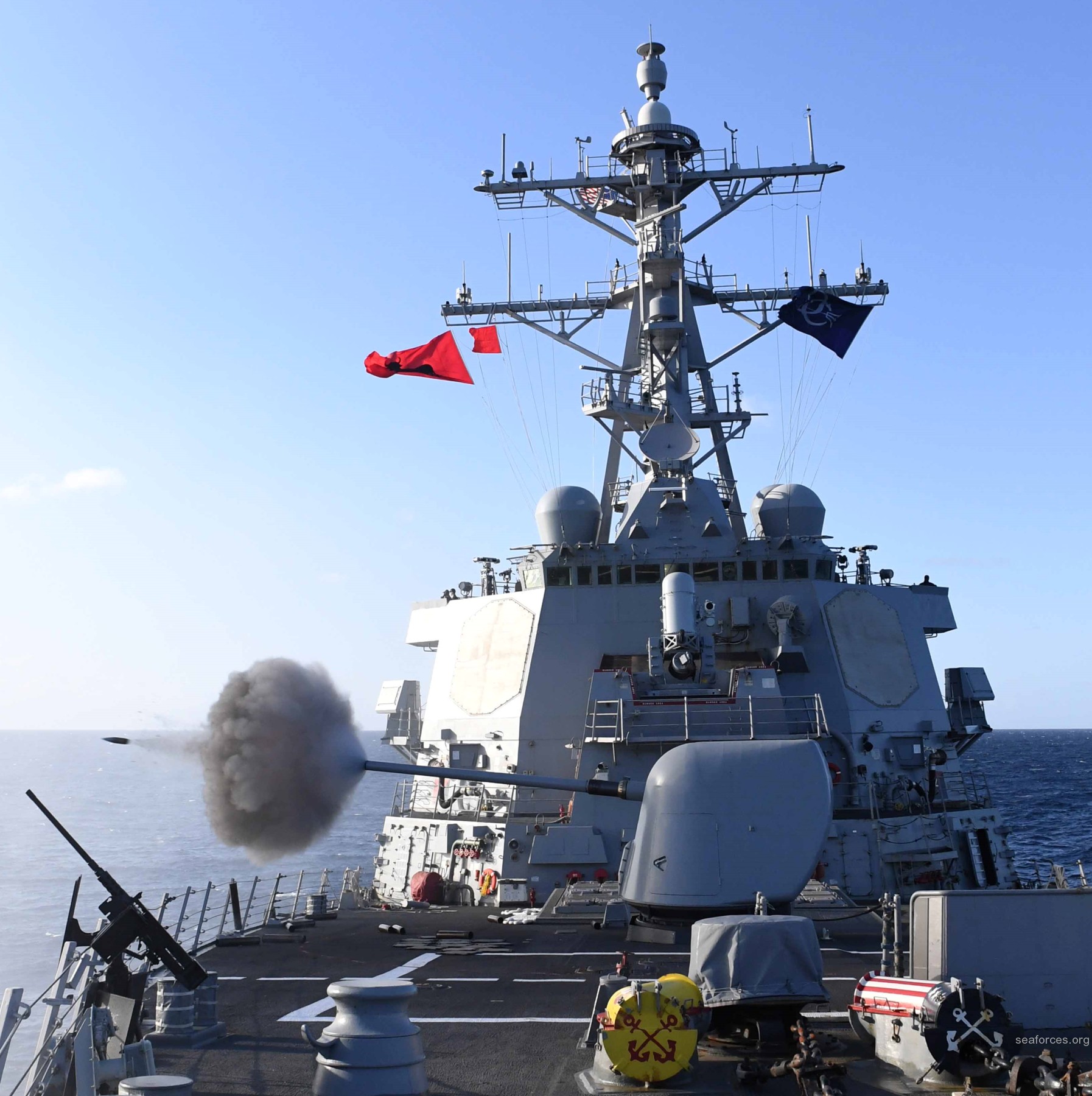 Mk-45 Mod.2 gun fire exercise - Mediterranean Sea - January 2017 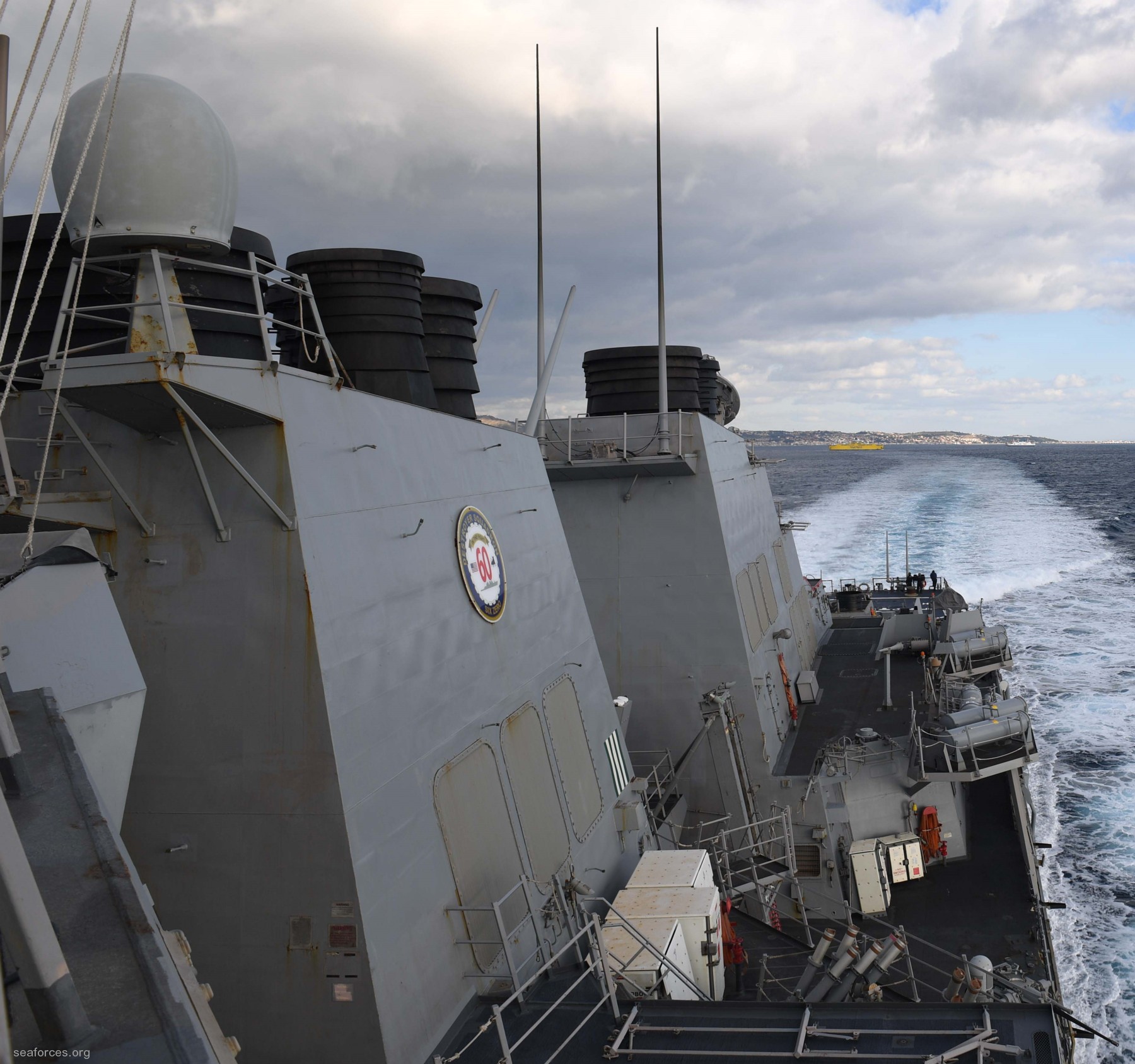 Strait of Messina, Sicily, Italy - December 2016 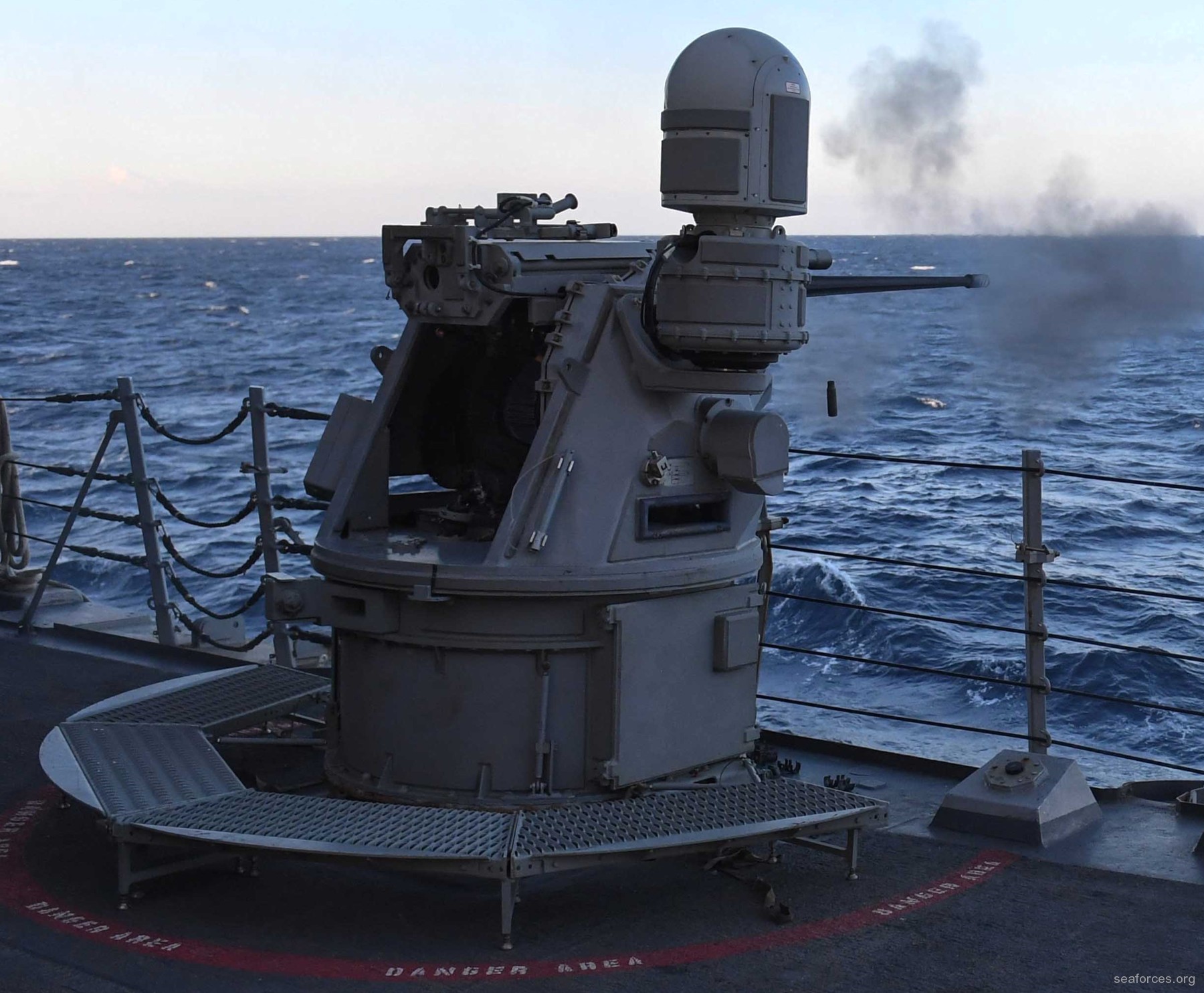 Mk-38 Mod.2 machine gun system - Mediterranean Sea - December 2016 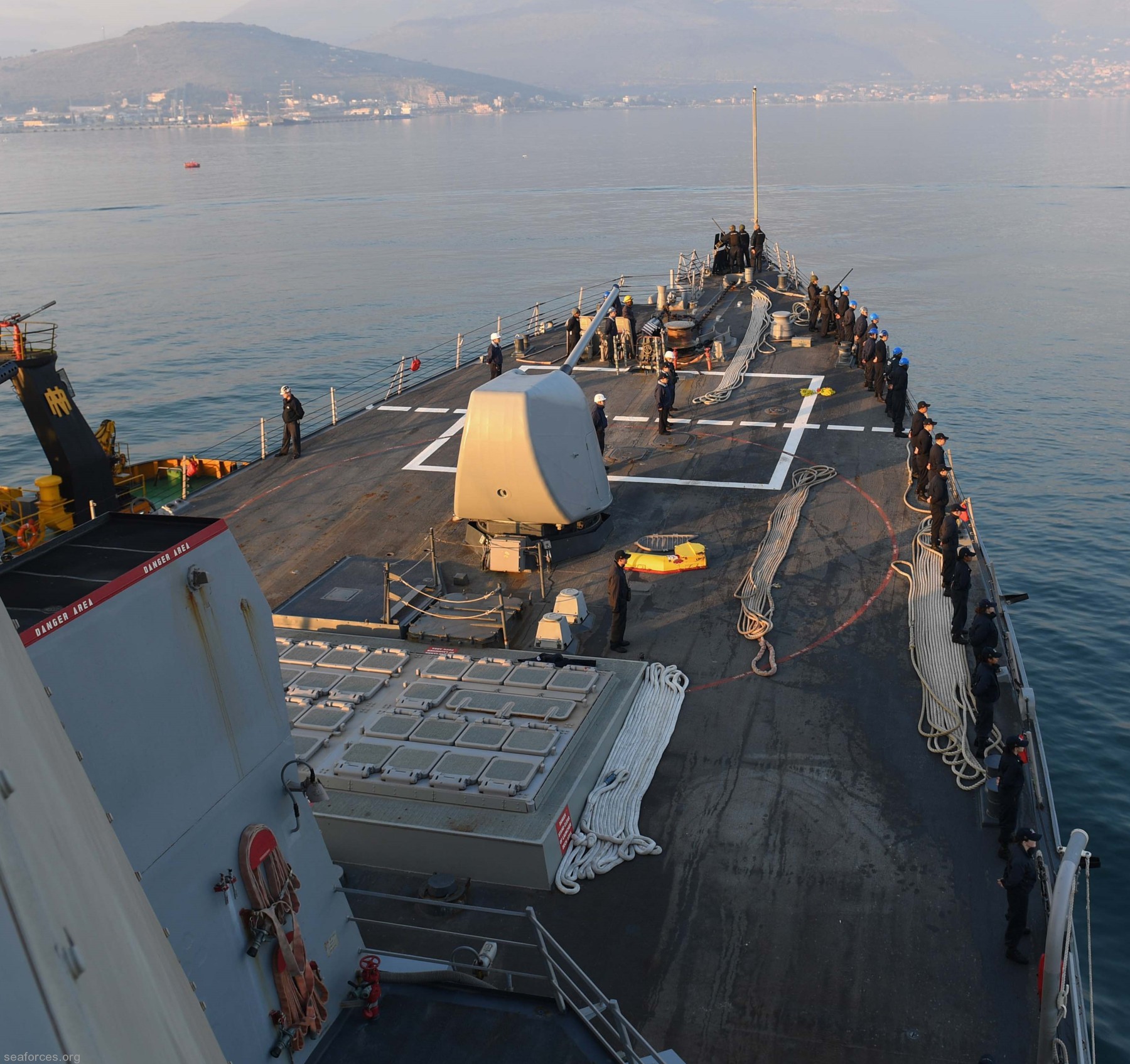 Gaeta, Italy - December 2016 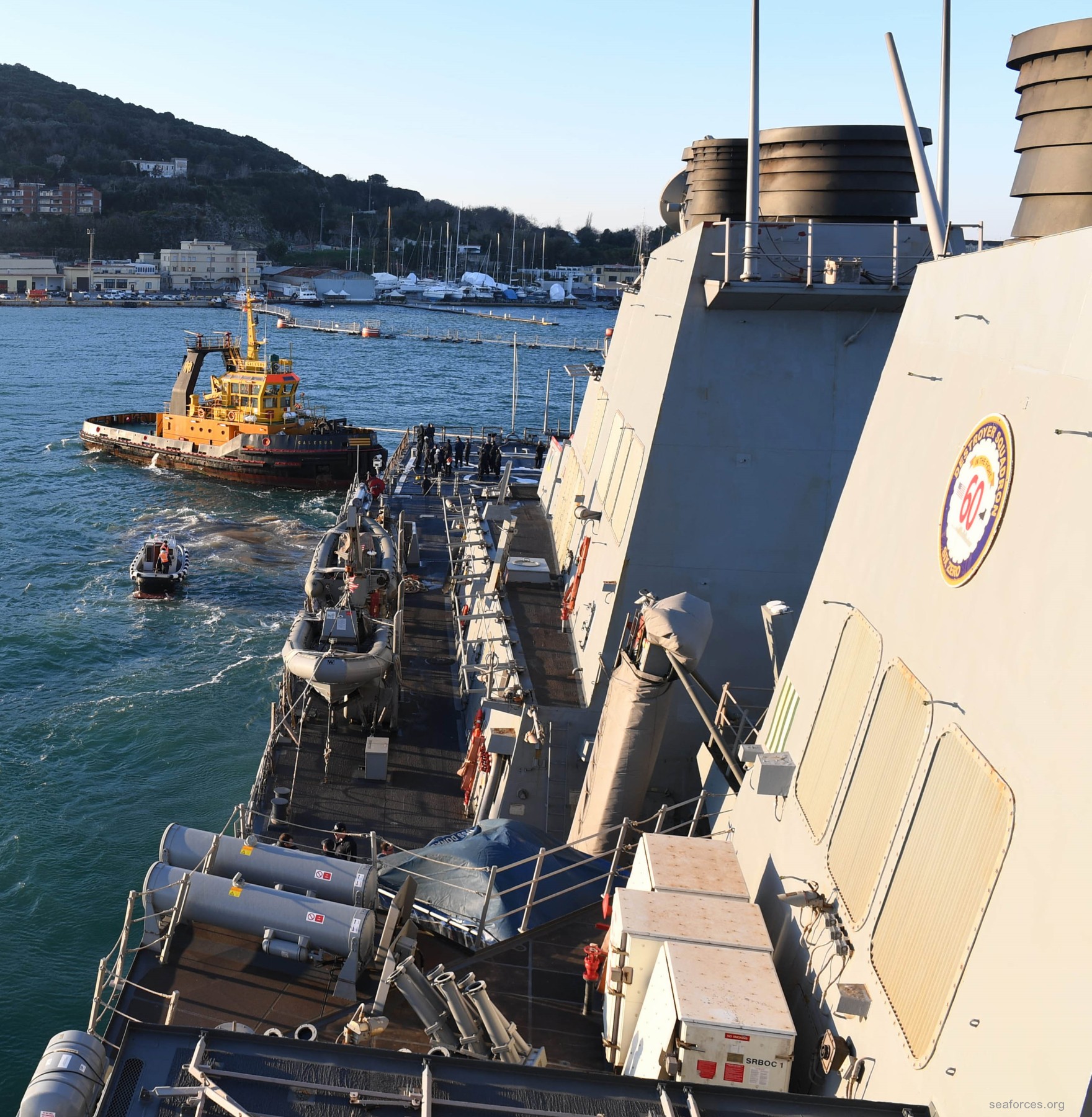 Gaeta, Italy - December 2016 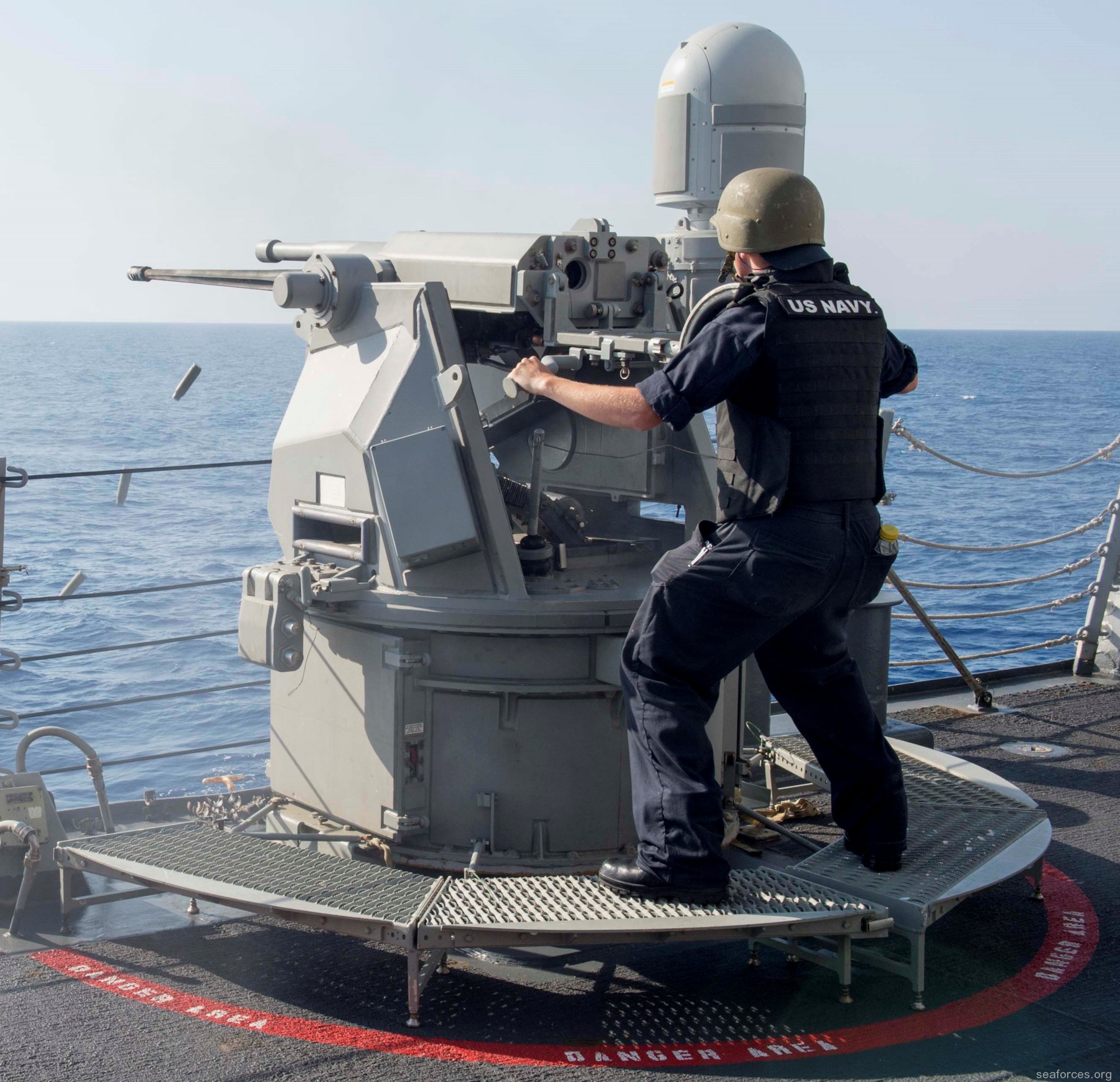 Mk-38 Mod.2 machine gun system in manual use - Mediterranean Sea - December 2016 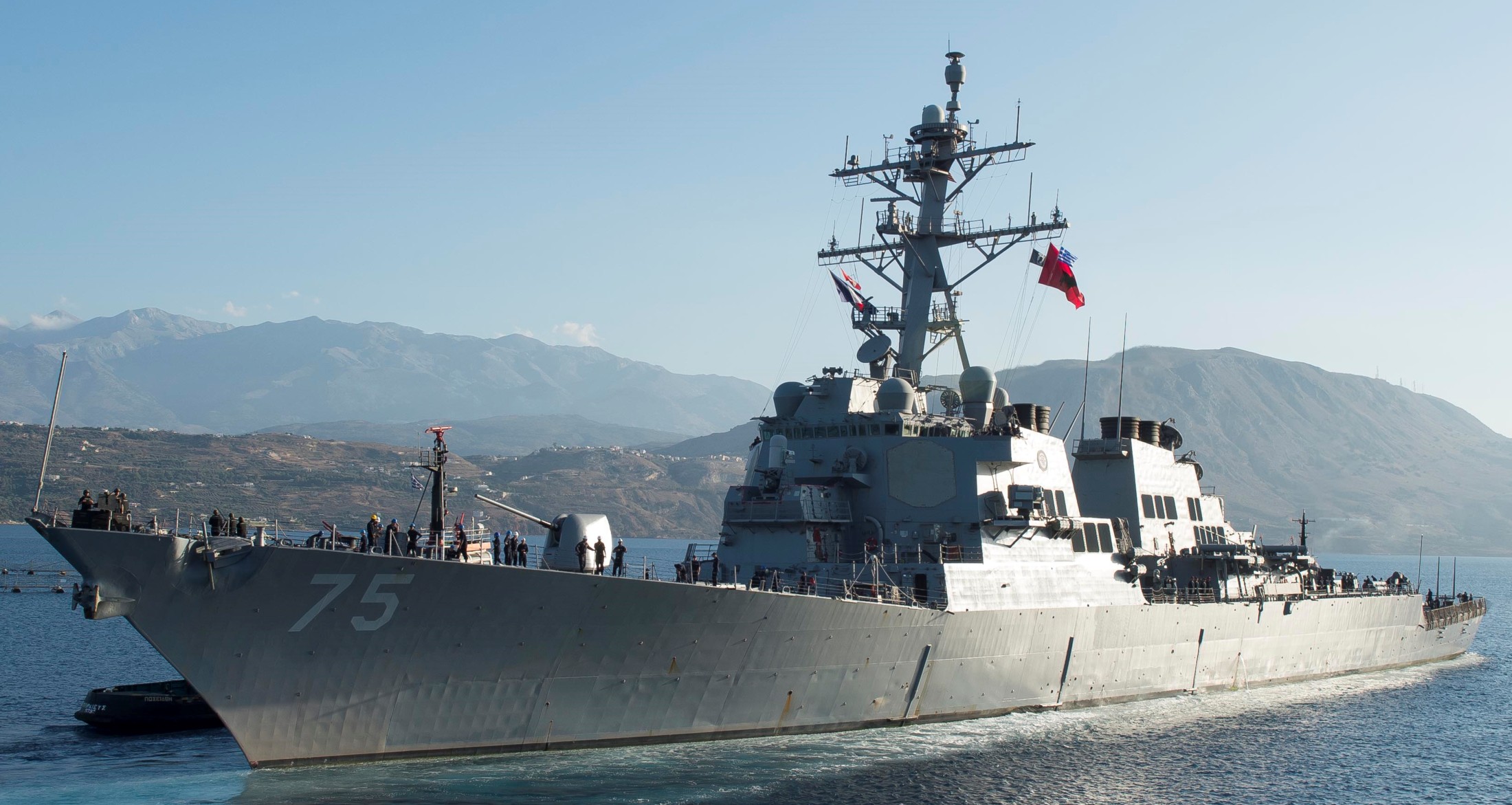 Souda Bay, Greece - June 2016 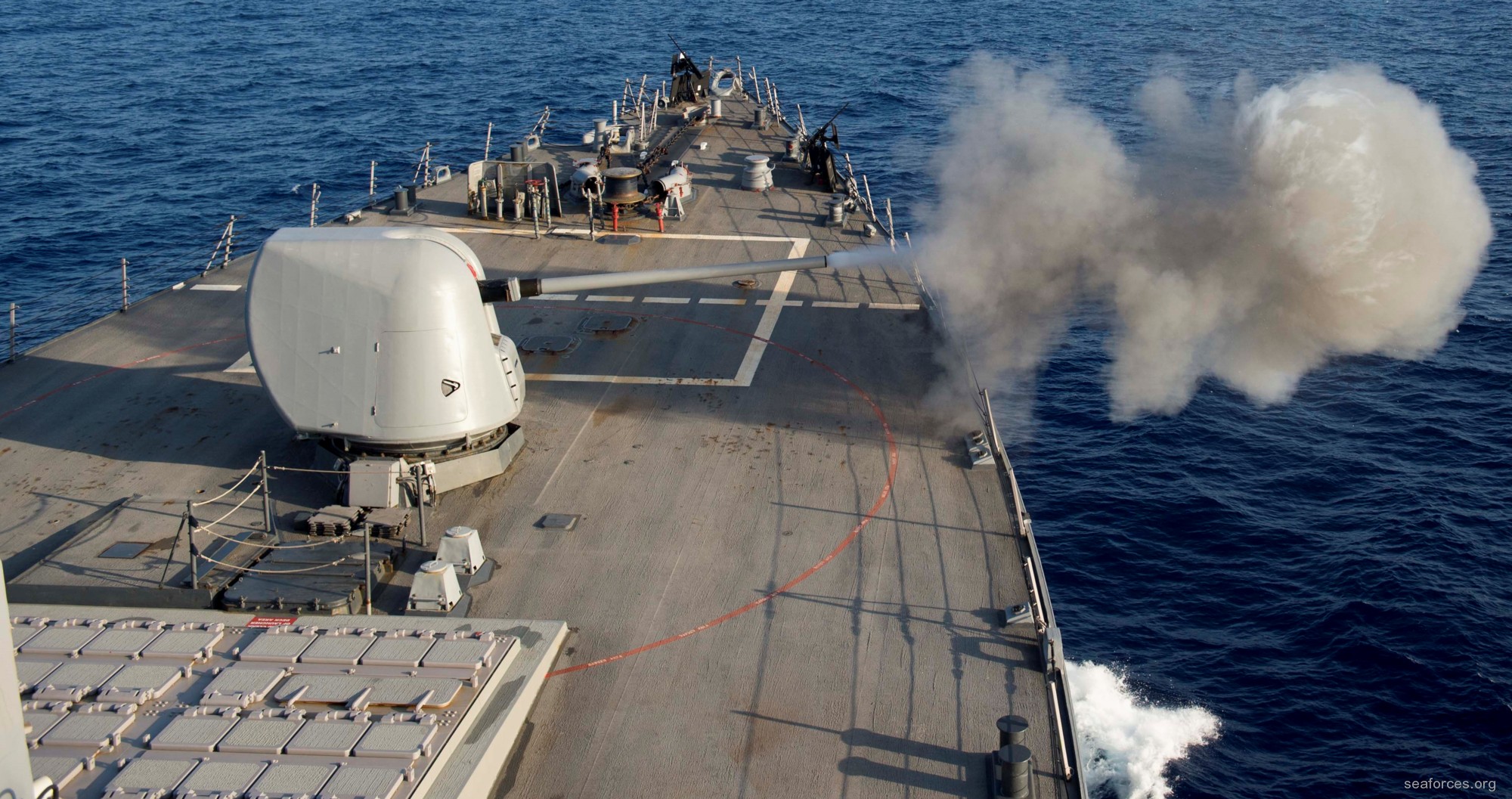 Mk-45 Mod.2 gun fire exercise - Mediterranean Sea - June 2016 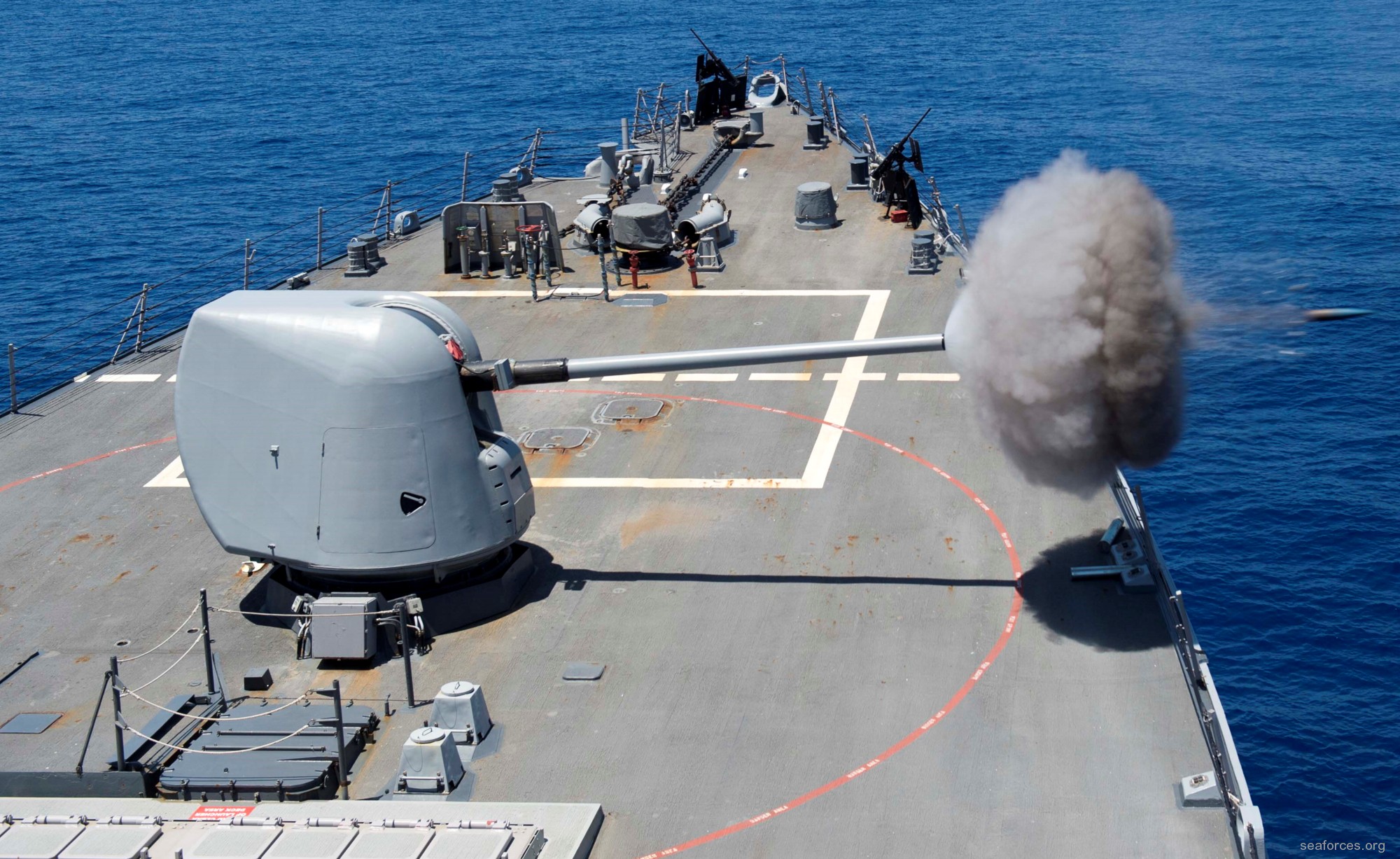 Mk-45 Mod.2 gun fire exercise - Mediterranean Sea - June 2016 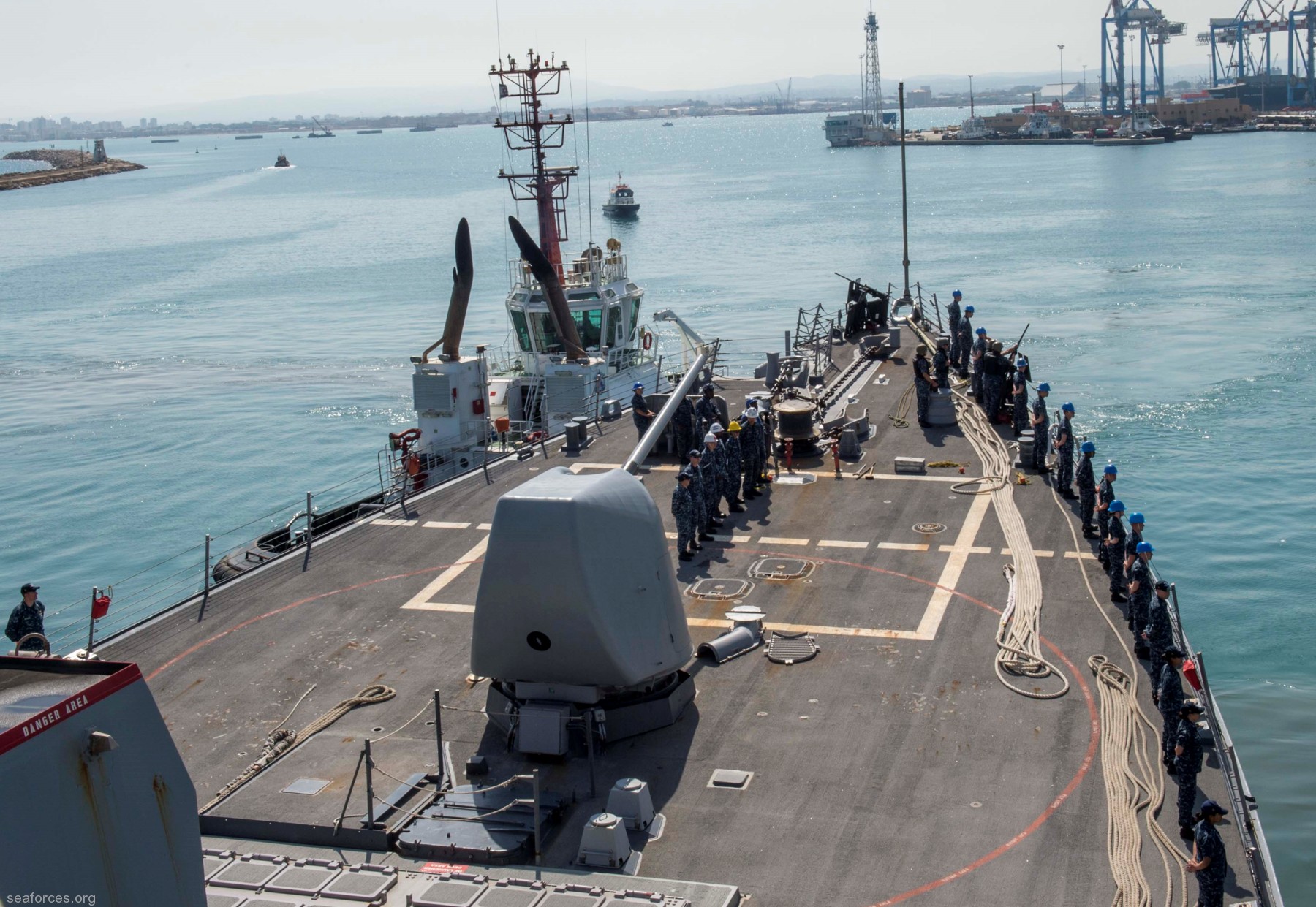 Haifa, Israel - June 2016 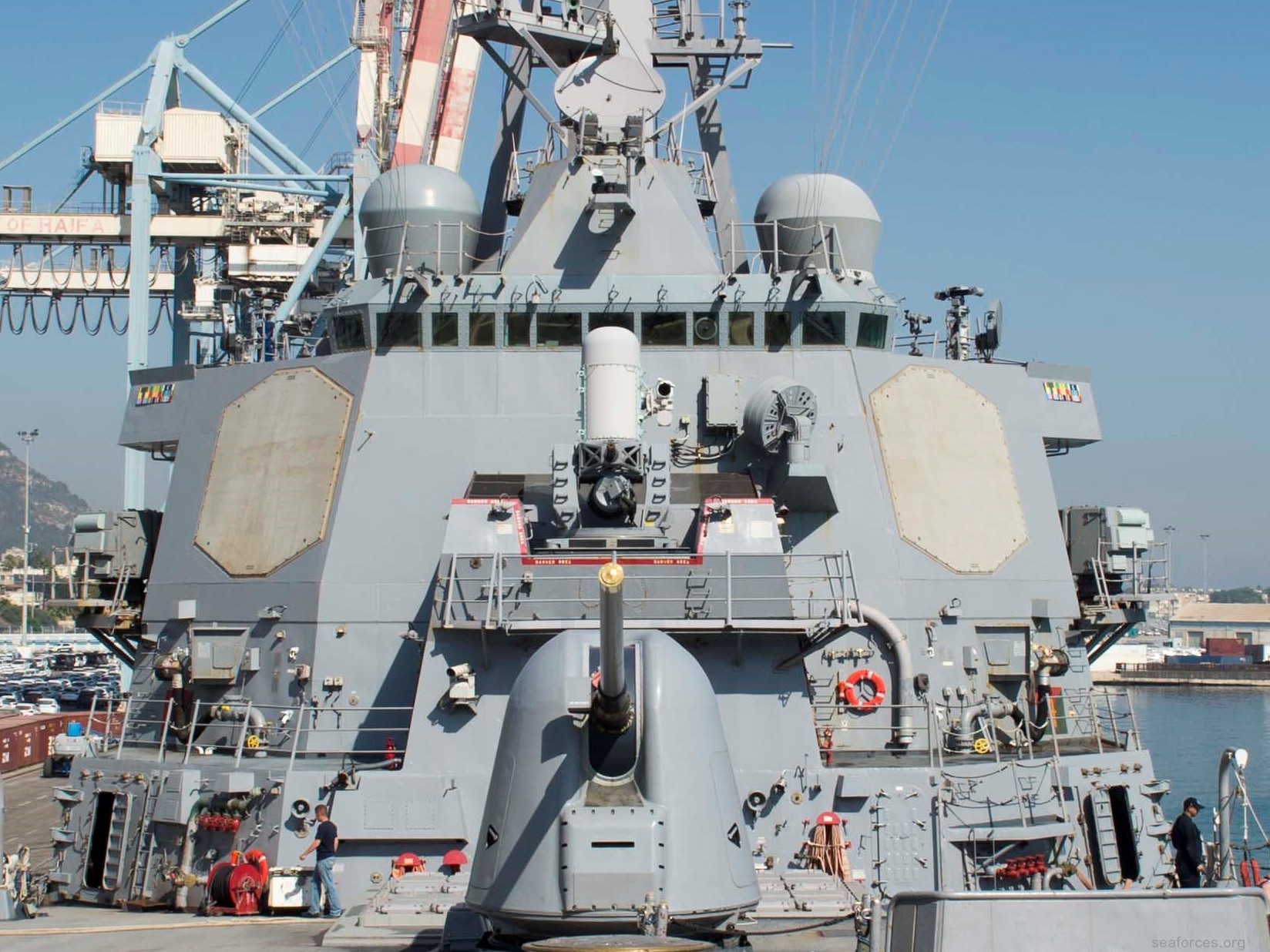 Haifa, Israel - June 2016 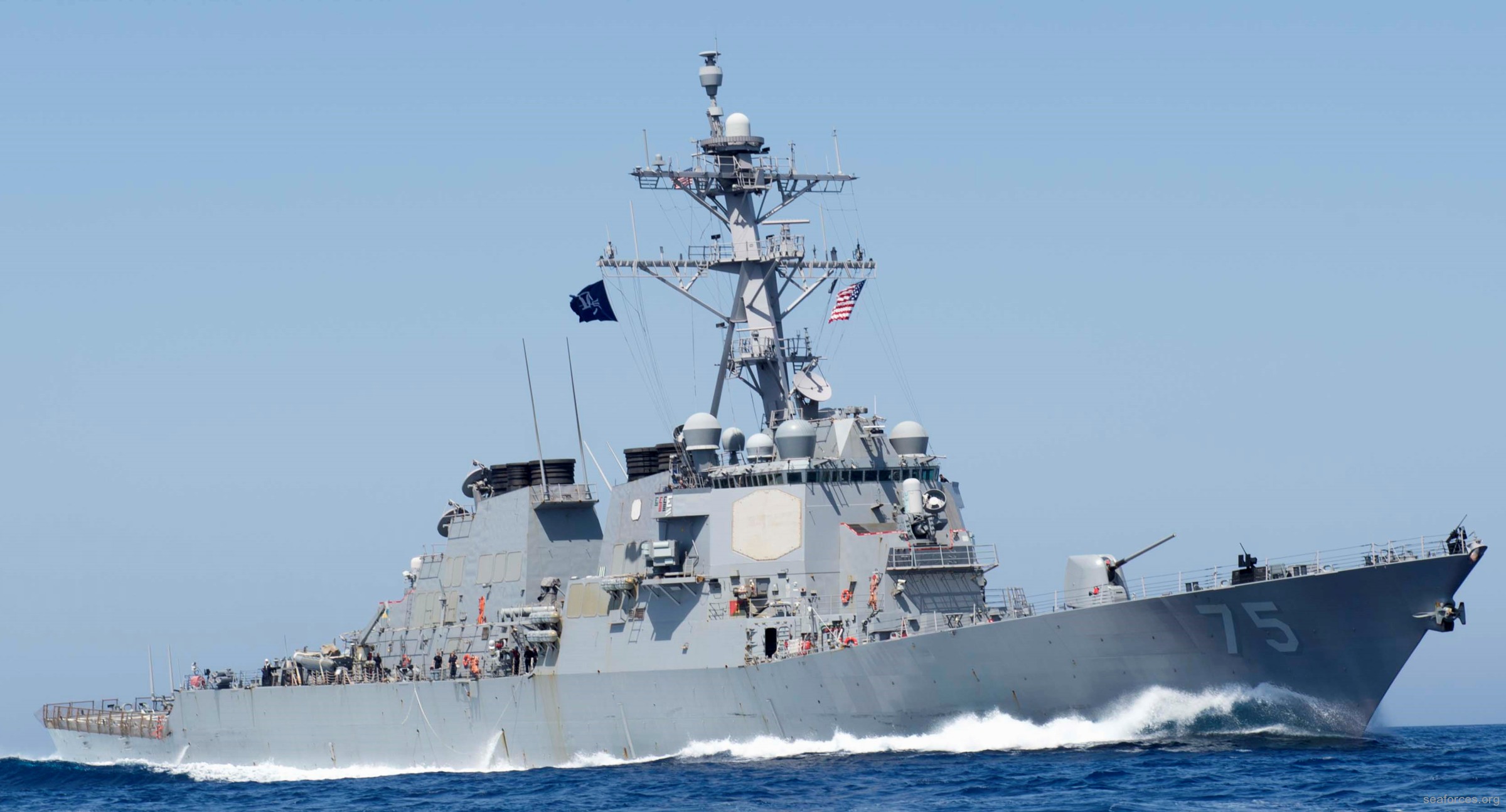 Mediterranean Sea - May 2016 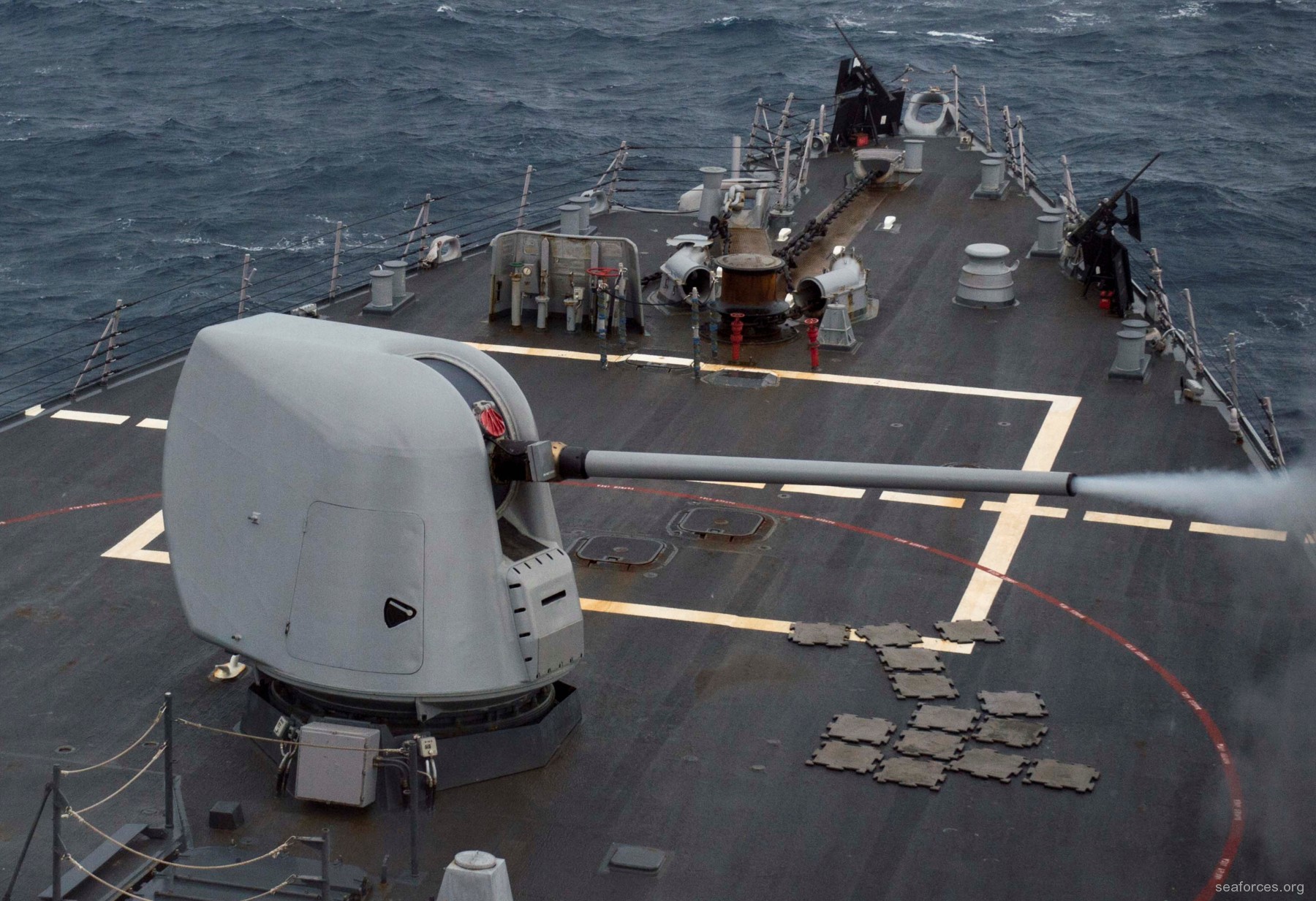 Mk-45 Mod.2 gun fire exercise - Mediterranean Sea - May 2016 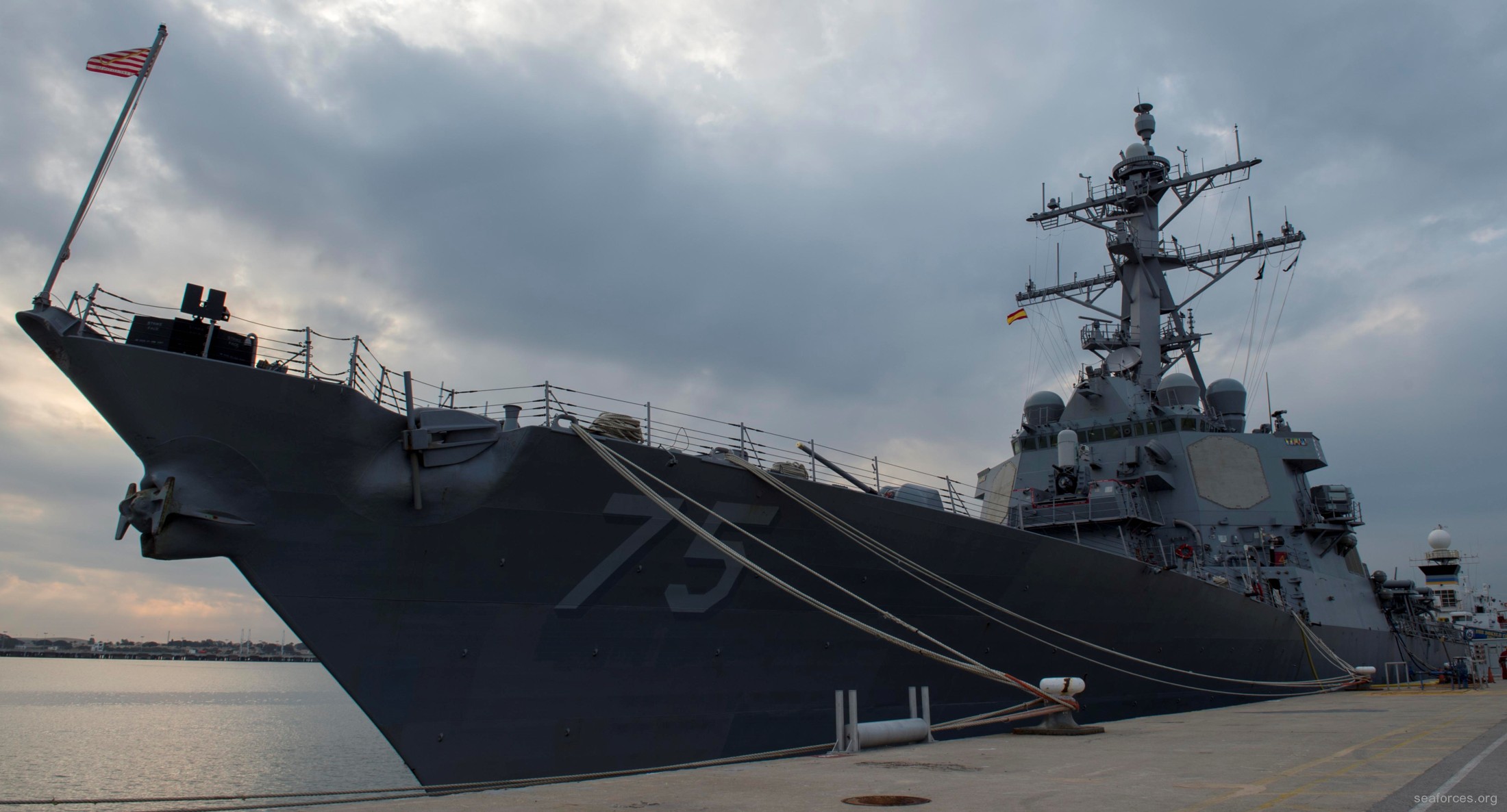 Naval Station Rota, Spain - May 2016 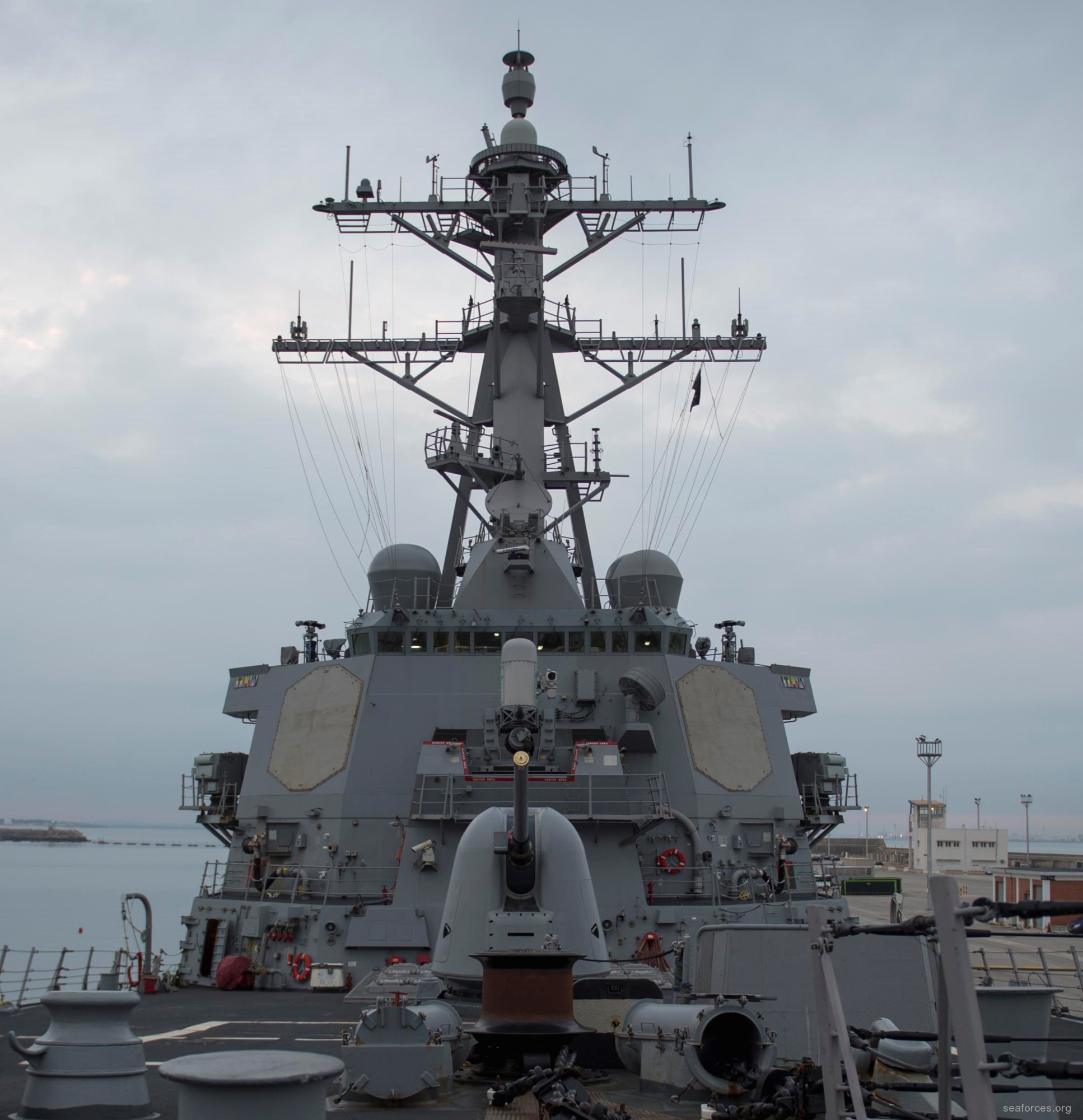 Naval Station Rota, Spain - May 2016 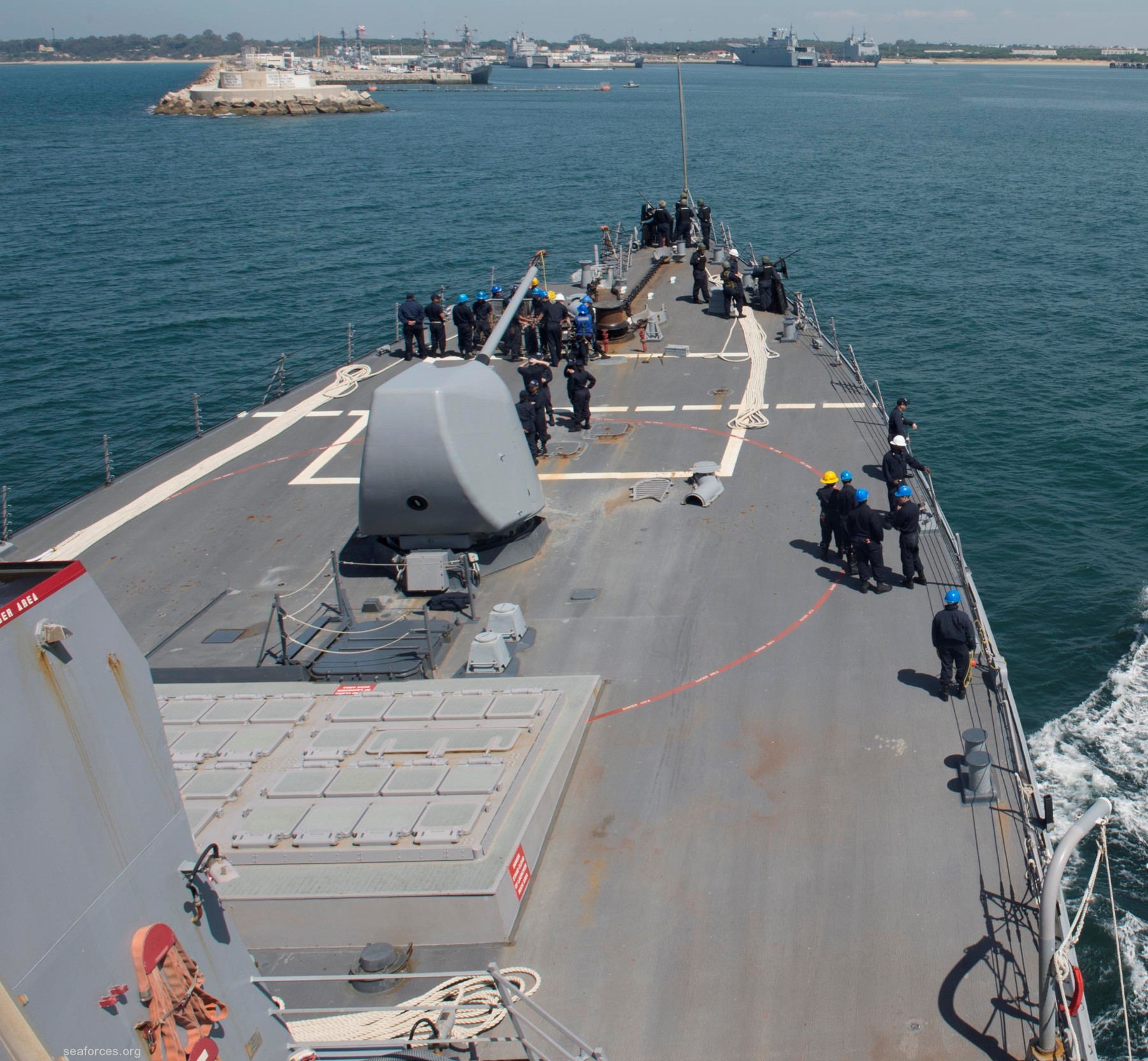 returning to Naval Station Rota, Spain - April 2016 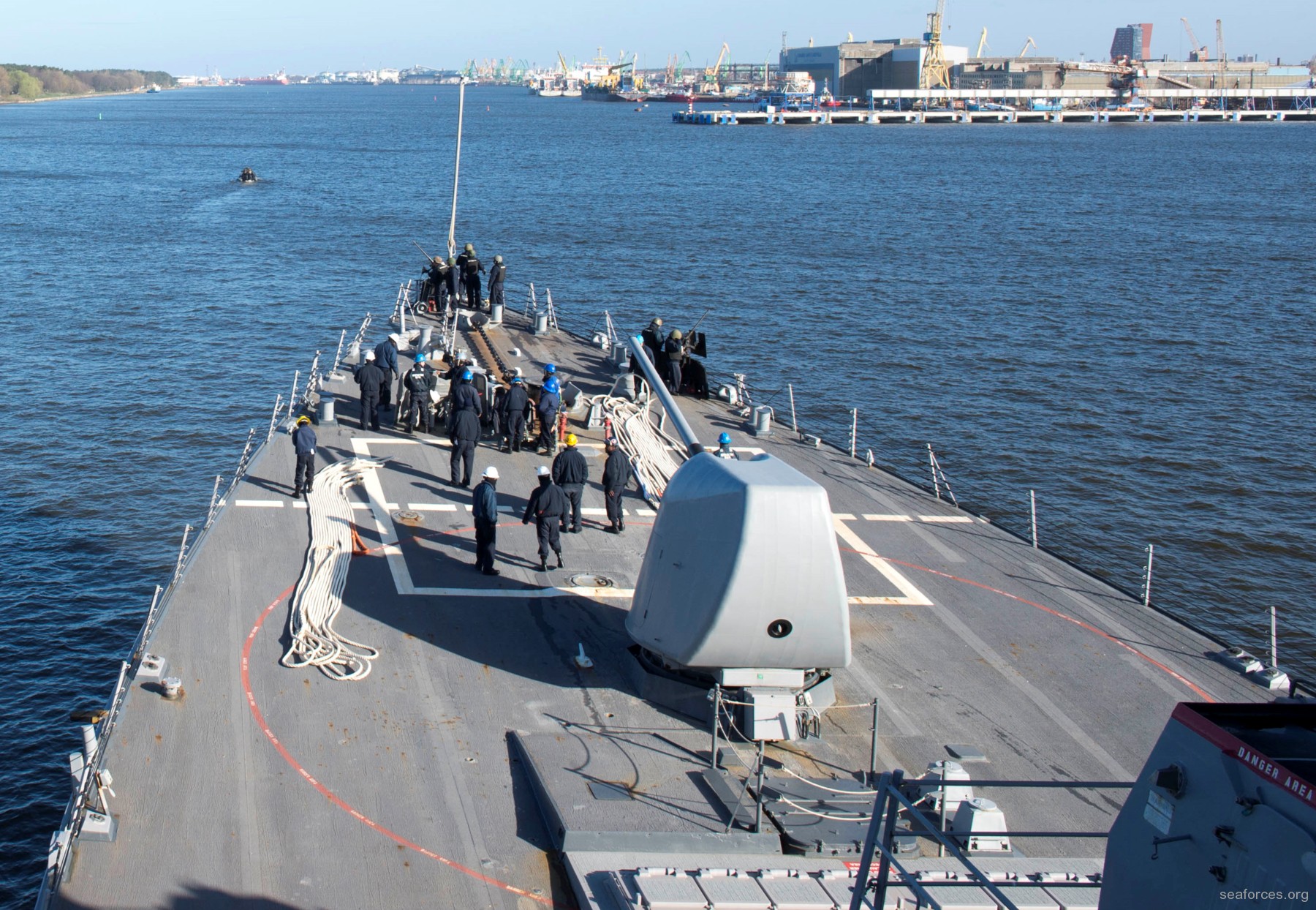 Klaipeda, Lithuania - April 2016 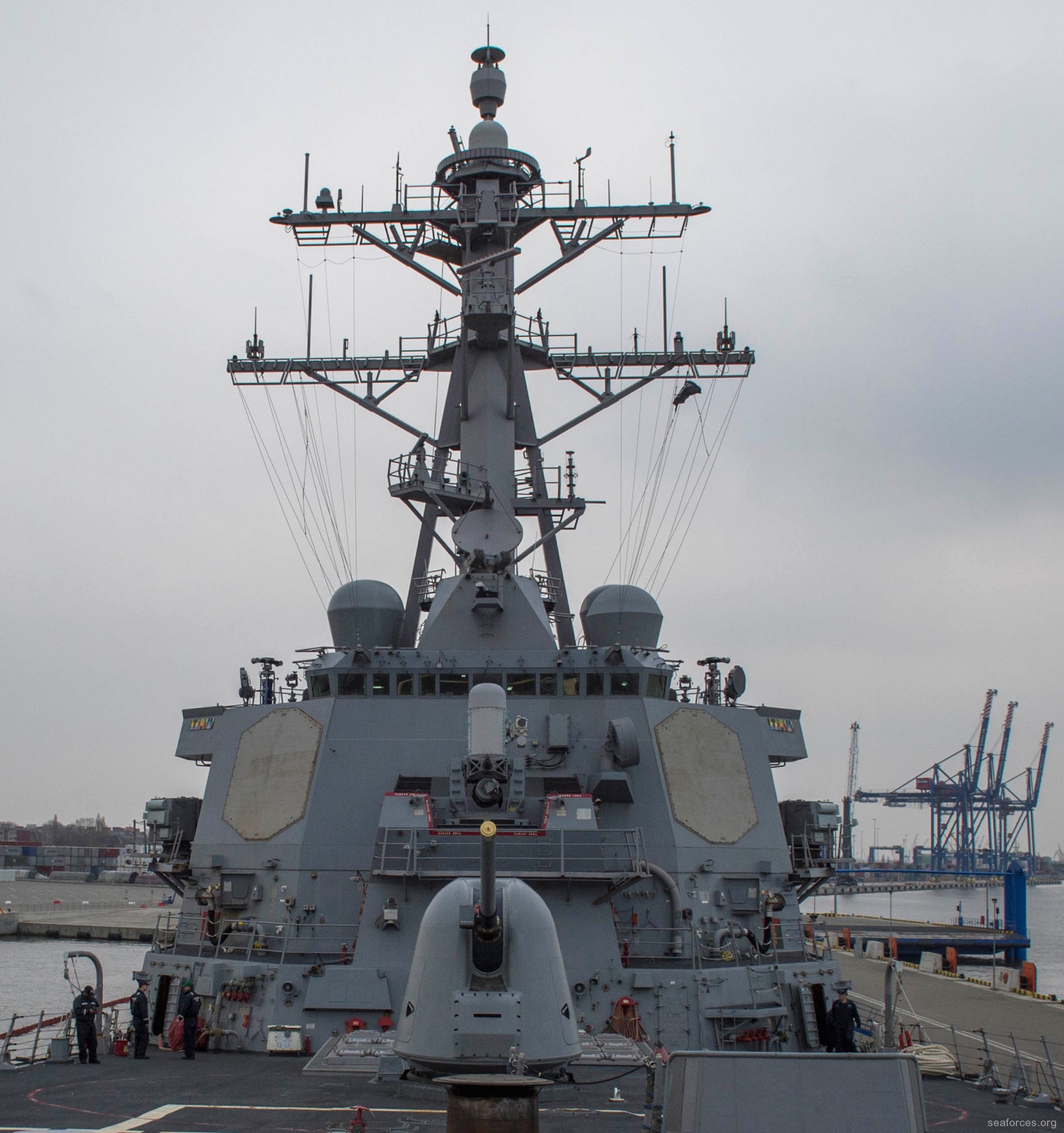 Klaipeda, Lithuania - April 2016 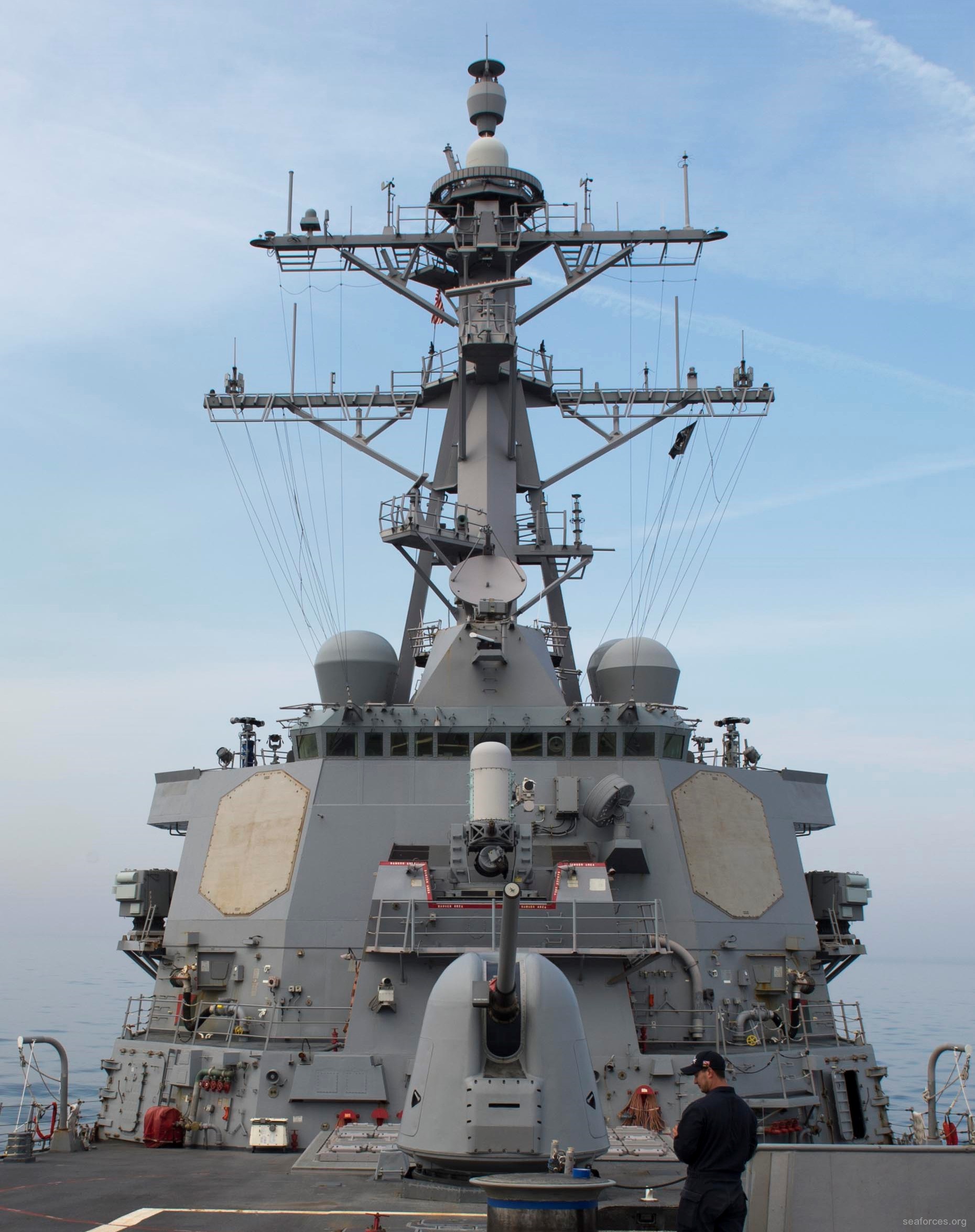 Baltic Sea - April 2016 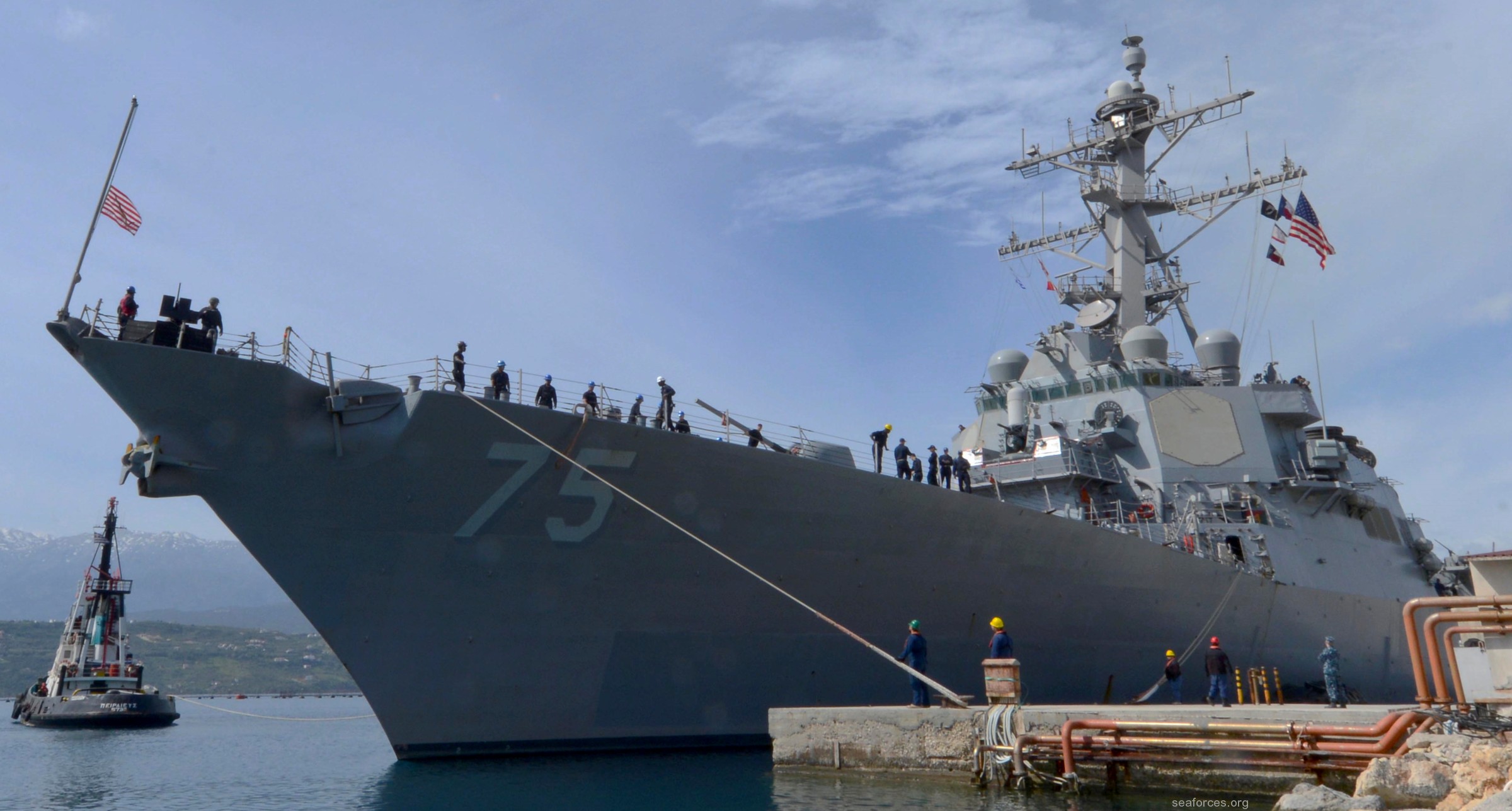 Souda Bay, Greece - March 2016 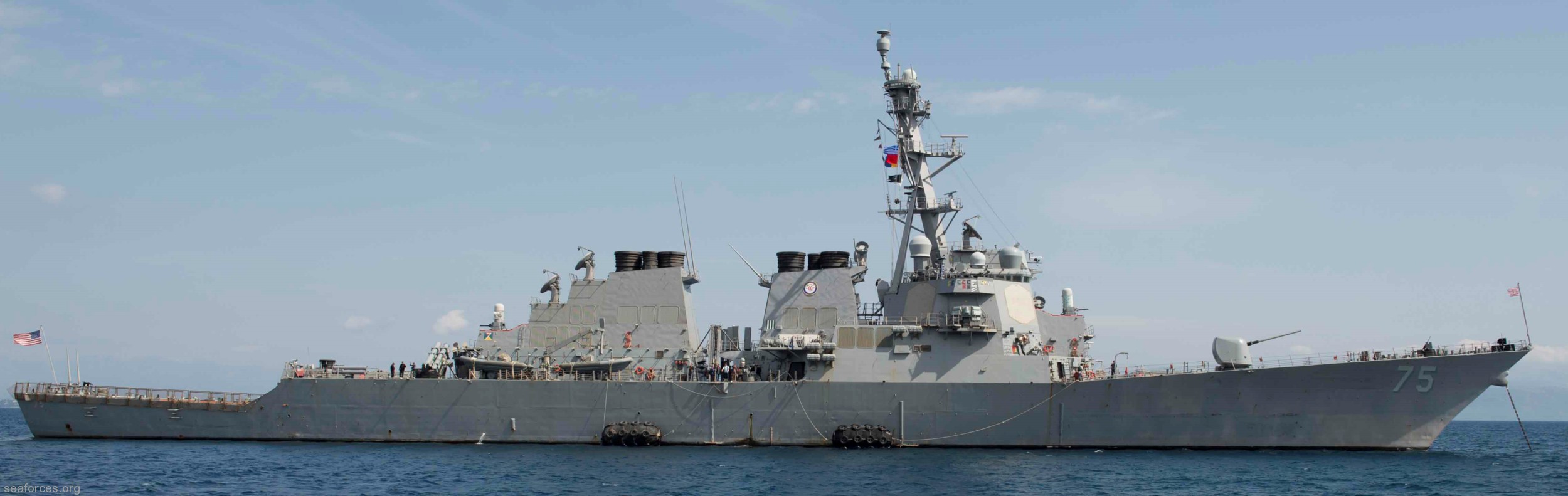 Corfu, Greece - March 2016 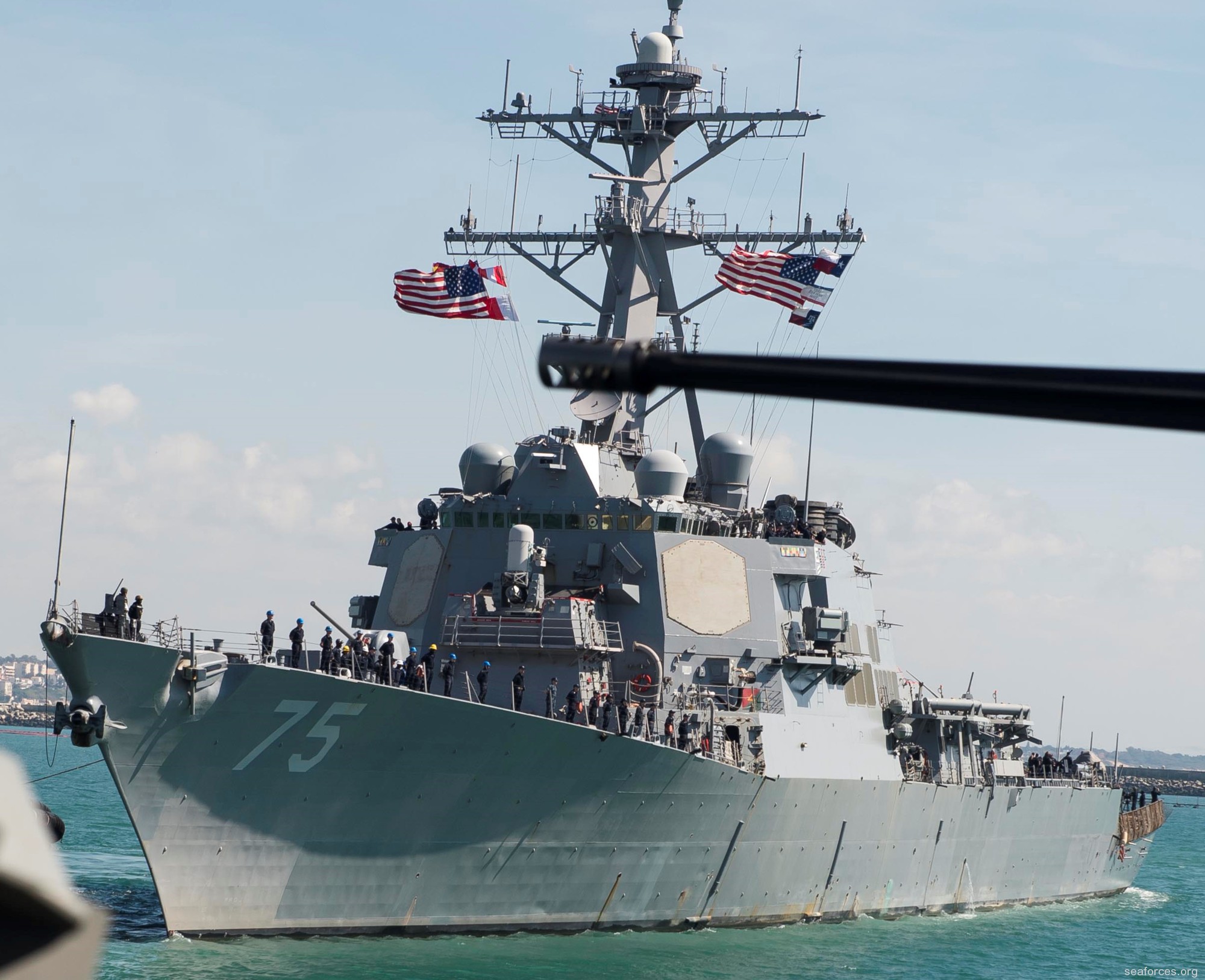 Rota, Spain - March 2016 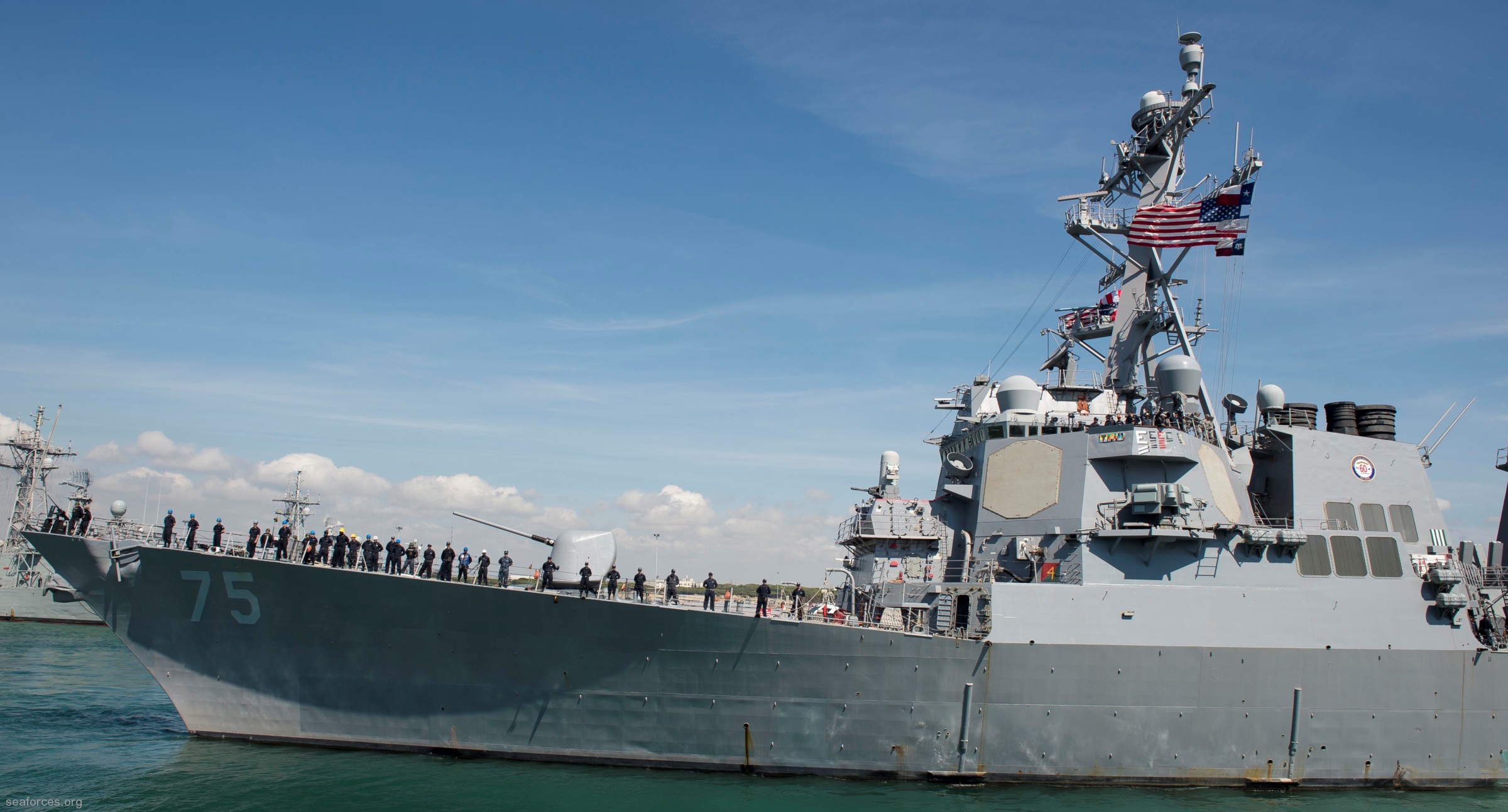 Rota, Spain - March 2016 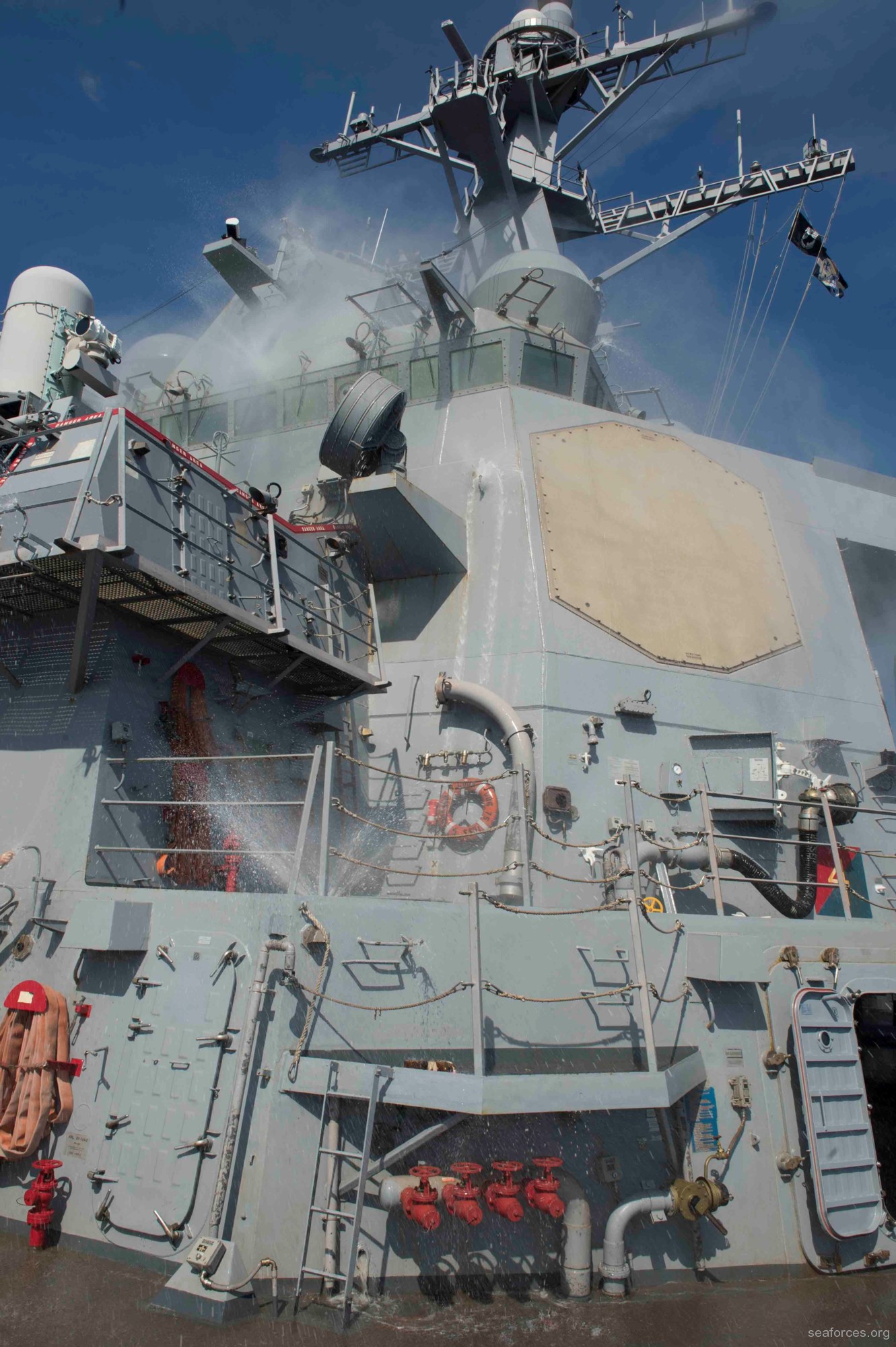 emergency counter measures washdown system test - October 2015 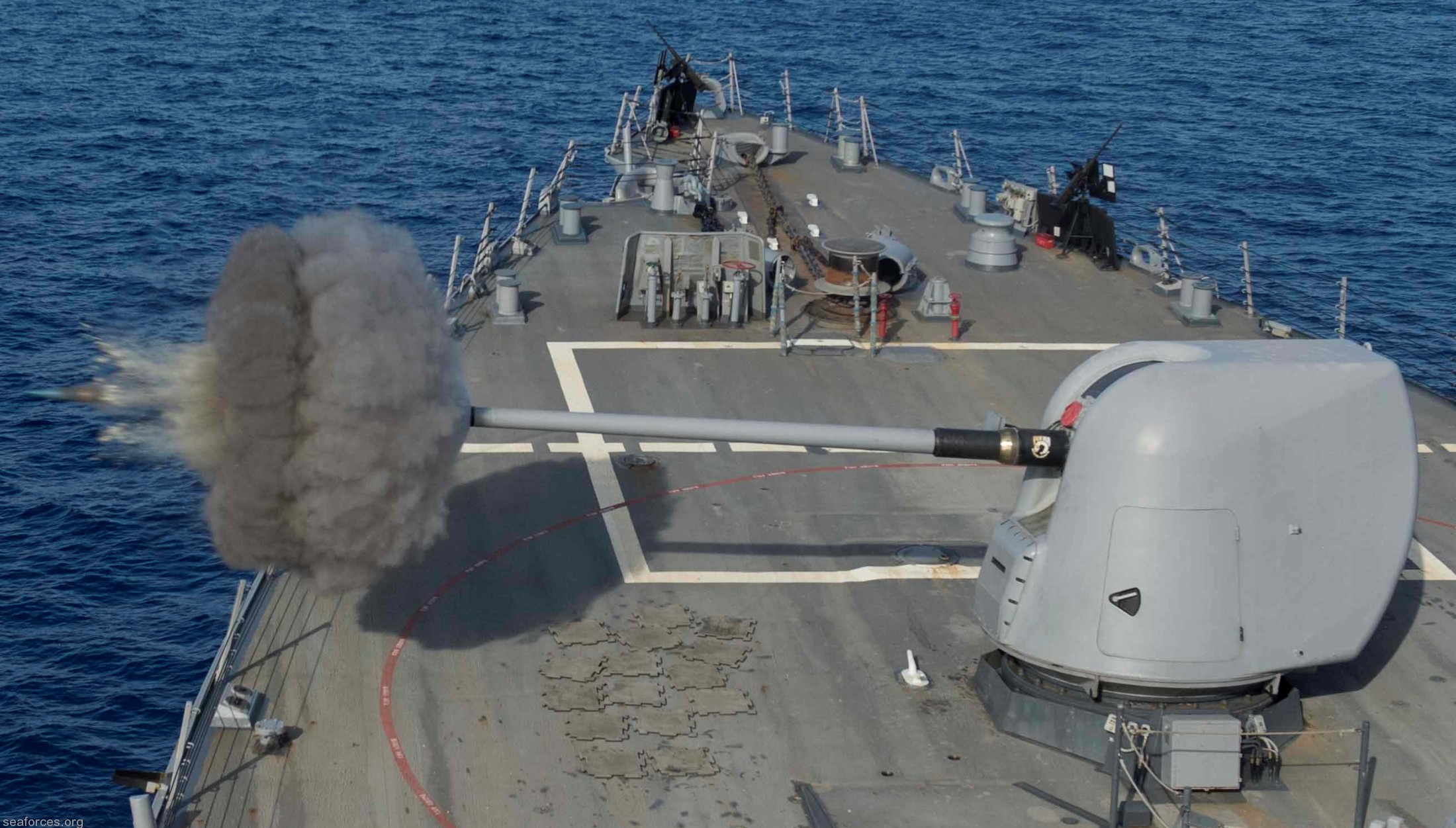 Mk-45 Mod.2 gun fire exercise - Mediterranean Sea - October 2015 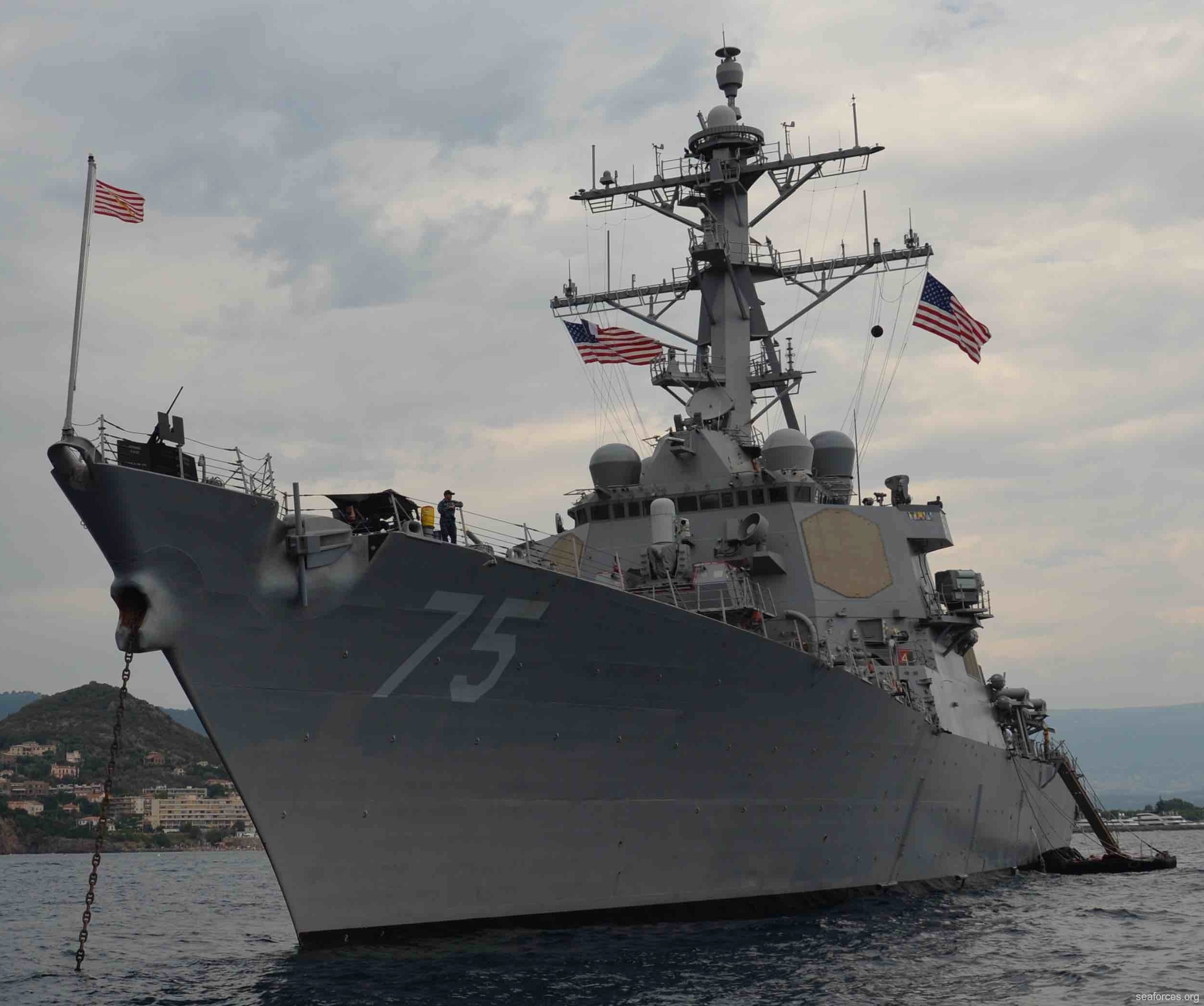 Theoule sur Mer, France - August 2015 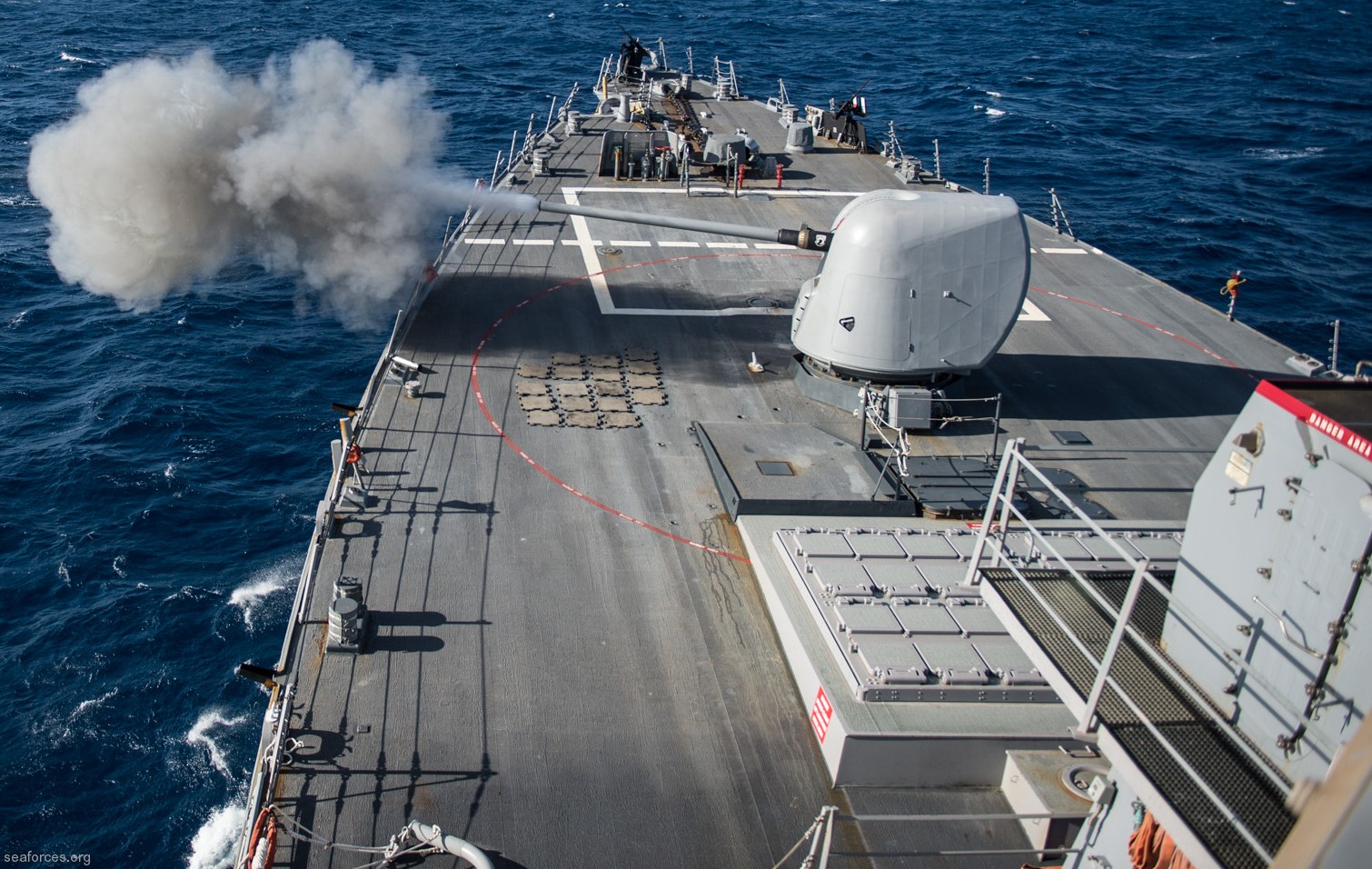 Mk-45 Mod.2 gun fire exercise - Mediterranean Sea - February 2015 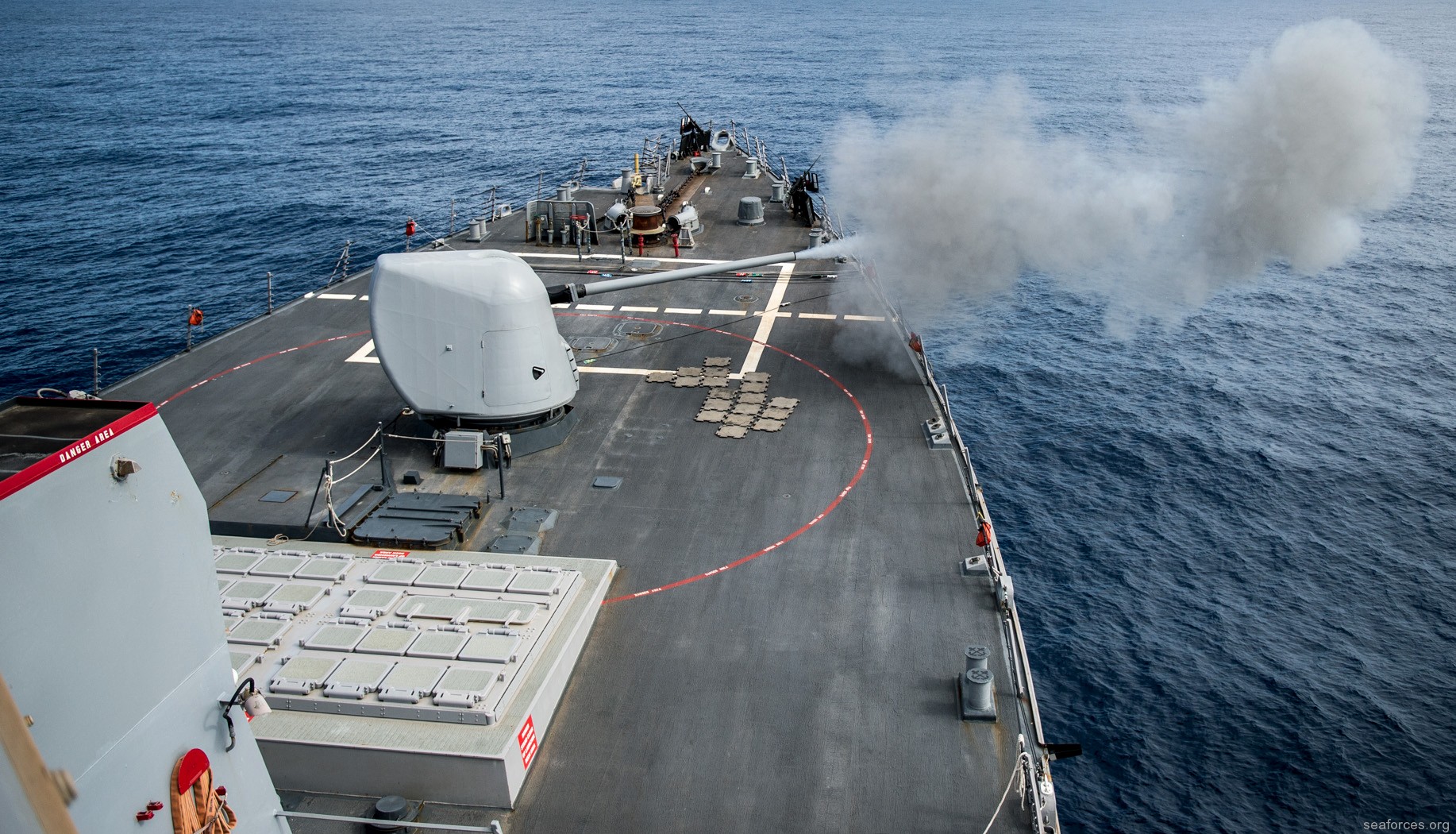 Mk-45 Mod.2 gun fire exercise - Mediterranean Sea - February 2015 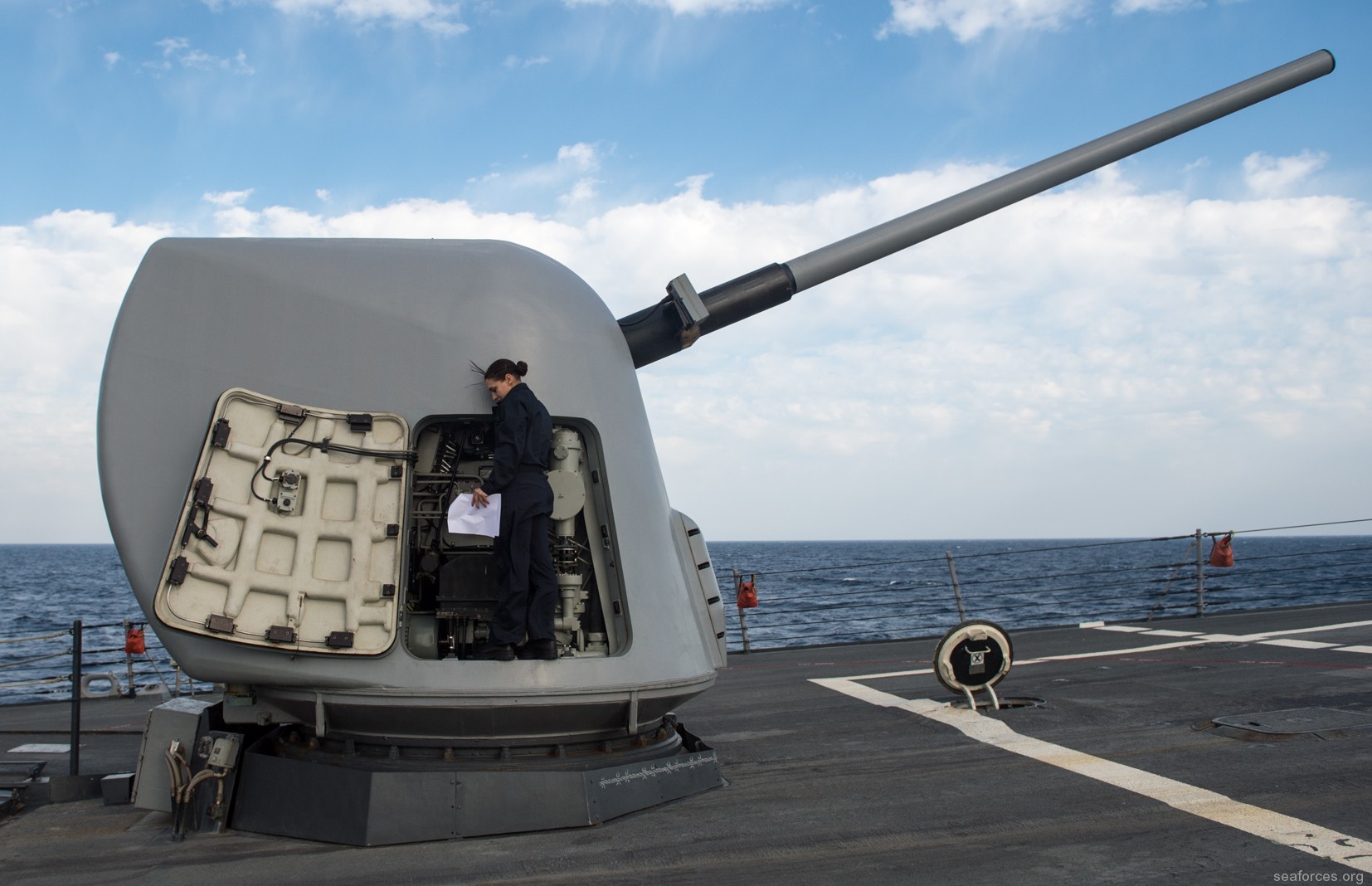 Mk-45 Mod.2 gun inspection - January 2015 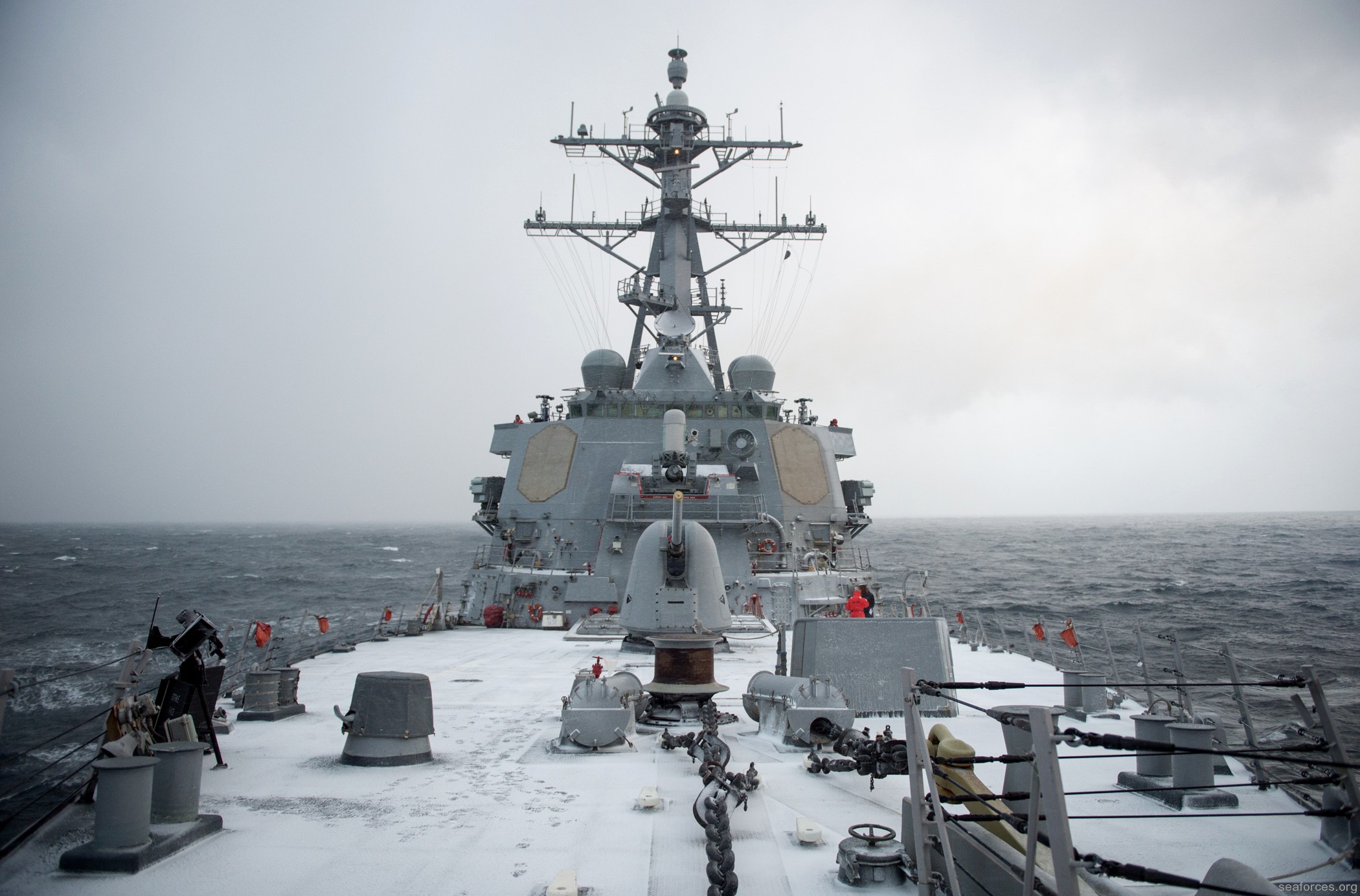 Black Sea - January 2015 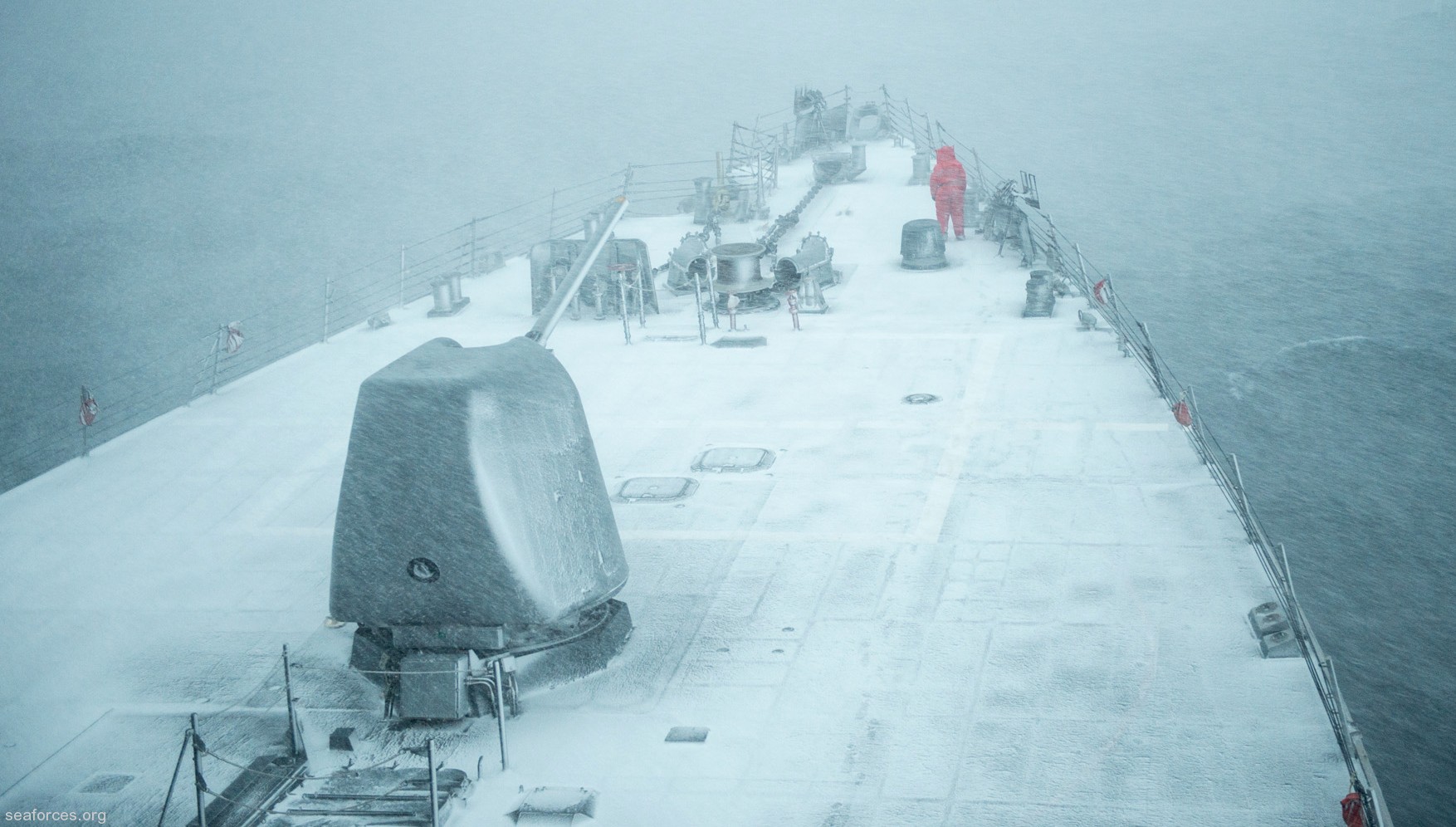 Black Sea - January 2015 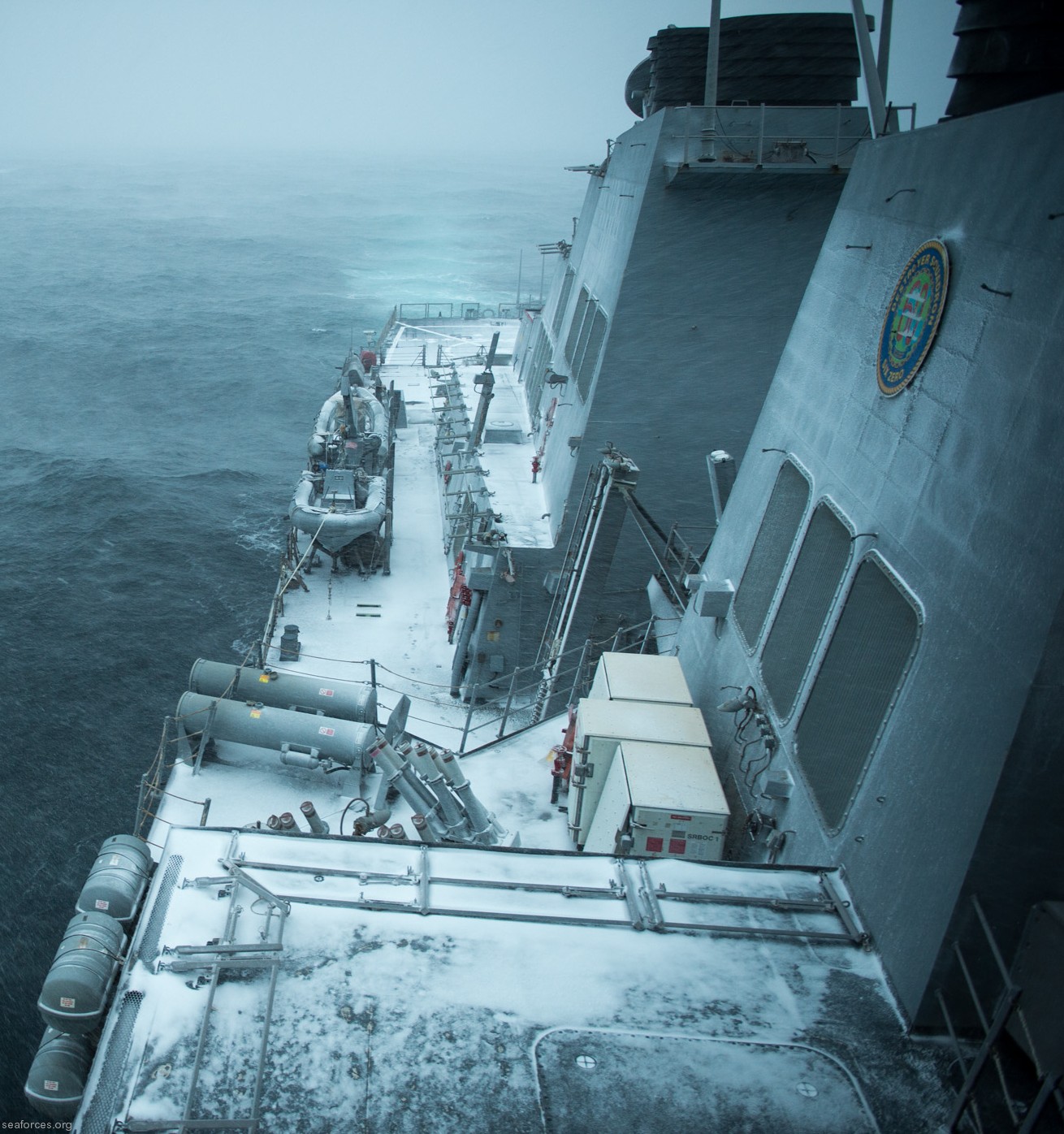 Black Sea - January 2015 >> continue - DDG 75 image page 2 << |
||
|
USS Donald Cook (DDG 75): On 24 February 2012, Donald Cook was awarded the 2011 Battle Efficiency "E" award. On 9 April 2014, U.S. military officials confirmed the deployment of Donald Cook to the Black Sea, shortly after Russia's annexation of Crimea and amid the pro-Russian unrest in Ukraine. The U.S. Department of Defense's official statement said that the vessel's mission was "to reassure NATO allies and Black Sea partners of America’s commitment to strengthen and improve interoperability while working towards mutual goals in the region". On 10 April 2014, the warship was reported to have entered the Black Sea. On 12 April 2014, an unarmed Russian Su-24 "Fencer" fighter jet made twelve close-range passes of USS Cook during a patrol of the western Black Sea. According to an allegation by a Pentagon spokesman, "The aircraft did not respond to multiple queries and warnings from Donald Cook, and the event ended without incident after approximately 90 minutes... The Donald Cook is more than capable of defending itself against two Su-24s." In 2014, Russia′s state-run news media outlets ran a series of reports that falsely asserted that during that incident the Su-24, equipped with the Khibiny electronic warfare system, had disabled the ship's Aegis combat systems. The misinformation was later picked up by the British tabloid The Sun and by Fox News. On 14 April 2014, Donald Cook visited Constanta, Romania. The President of Romania, Traian Băsescu, toured the ship during the visit. Donald Cook then conducted various exercises in concert with the Romanian Navy before departing the Black Sea on 24 April 2014. On 26 December 2014, for the second time, according to the U.S. Navy, the destroyer entered the Black Sea in order to reassure and demonstrate U.S. commitment to work closely with NATO allies. Donald Cook participated in exercises with the Turkish Navy including an underway replenishment and other exercises with Yavuz-class frigate TCG Fatih on 28 December 2014. The ship visited Constanta, Romania on 30 December and Varna, Bulgaria on 8 January 2015. Donald Cook participated in exercises with Ukrainian Navy ship Hetman Sahaydachniy on 11 January 2015. Donald Cook departed the Black Sea on 14 January 2015. On 11 and 12 April 2016 a pair of Russian Su-24s performed several low passes on Donald Cook while the ship was conducting exercises with a Polish helicopter in international waters in the Baltic Sea 70 nautical miles (130 km; 81 mi) off Kaliningrad. During these flights the aircraft passed over the destroyer at very low altitudes. A Russian Ka-27 "Helix" anti-submarine helicopter also circled the destroyer seven times. The U.S. Navy released photos and videos of the incident on 14 April, and the U.S. government lodged a complaint with the Russian government. In response to the U.S. Secretary of State commenting on the incident and saying that "under the rules of engagement, that could have been a shoot-down", the Russian Federation Council's official Igor Morozov said that the U.S. likewise "ought to know that Donald Cook approached our borders and may already be unable to depart those." Upgrade: On 12 November 2009, the Missile Defense Agency announced that Donald Cook would be upgraded during fiscal 2012 to RIM-161 Standard Missile 3 (SM-3) capability in order to function as part of the Aegis Ballistic Missile Defense System. source: wikipedia |
||
|
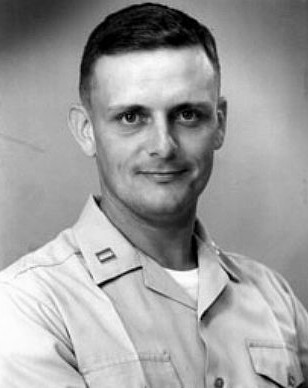
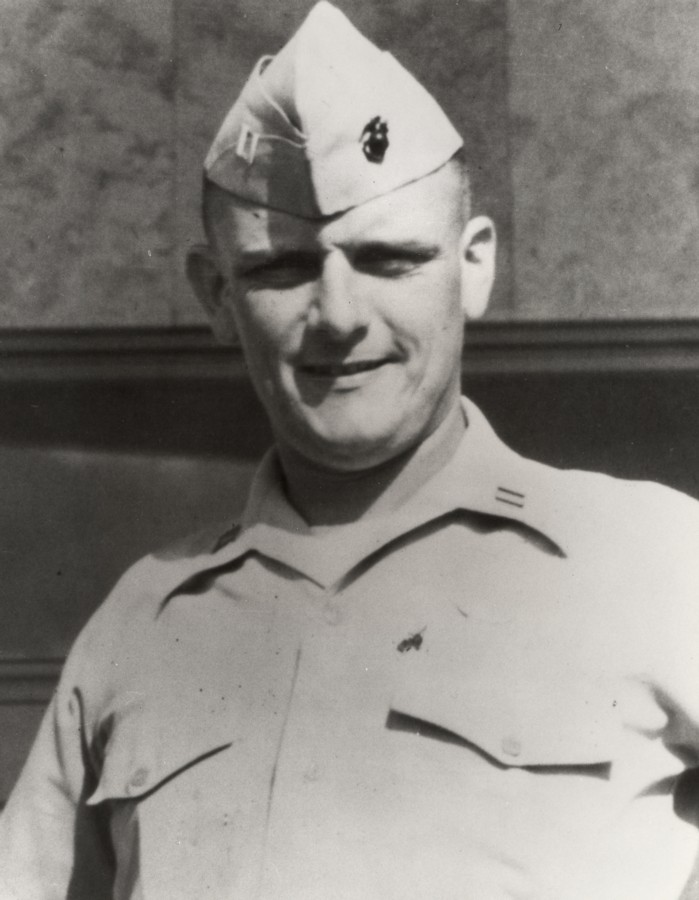
Colonel Donald Gilbert Cook, USMC (August 9, 1934 - December
8, 1967): Donald Cook grew up in Brooklyn, New York where he excelled at sports and earned the nickname "Bayridge Bomber" for his athletic prowess in football. Upon graduation from St. Francis Xavier High School, he enrolled at St. Michael's College in Vermont where he flourished academically, athletically and socially. It was there where he met his bride-to-be, Laurette Giroux. In 1956, Cook graduated, joined the Marine Corps Reserve and married Laurette. In 1957, Cook completed Officer Candidate School and went on to Communications Officer School. His effectiveness in various communications roles at Camp Pendleton earned him a regular commission in the Marine Corps. After attending the Army Intelligence School in Maryland, Cook was assigned as Officer-in-Charge of the 1st Interrogator-Translator Team with the 1st Marine Aircraft Wing in Hawaii. It was during this time that Cook became an expert on the affairs of American POWs in Korea, detailed the Communist indoctrination techniques and applied those techniques in realistic training scenarios for Marines. In December 1964, Cook was ordered to the Communications Company, Headquarters Battalion, 3rd Marine Division in Saigon, Republic of Vietnam. On December 31, 1964, Donald Cook volunteered to conduct a search-and-recovery mission for a downed American helicopter pilot and set off with the 4th Vietnamese Marines. Ambushed on their arrival at the site, Cook was wounded in the leg and captured while attempting to rally his Vietnamese allies. Incarcerated in a prison camp near the Cambodian border, Cook established himself as the senior American officer in defiance of his captor's attempts to eliminate all semblances of military rank and structure among prisoners. Enduring deprivation, exposure, malnutrition and disease, Cook nonetheless committed himself to providing inspiration for his fellow prisoners to endure and survive. He shared food, led daily exercises, provided first aid for injured prisoners and distributed what meager quantities of medicine were available. He often surrendered his own rations and medicine to aid prisoners whose conditions were more desperate than his own. It was reported in 1973 that Cook had succumbed to malaria on December 8, 1967. On May 15, 1980, a memorial stone was placed in Arlington National Cemetery and a flag was presented to his wife Laurette. The following day, Colonel Donald G. Cook was posthumously awarded the Congressional Medal of Honor. A list of Colonel Cook’s medals and decorations includes: the Medal of Honor, the Purple Heart with one bronze star, the Combat Action Ribbon, the National Defense Service Medal, the Armed Forces Expeditionary Medal, and the Republic of Vietnam Campaign Medal. Medal of Honor citation: For conspicuous gallantry and intrepidity at the risk of his life above and beyond the call of duty while interned as a Prisoner of War by the Viet Cong in the Republic of Vietnam during the period 31 December 1964 to 8 December 1967. Despite the fact that by so doing he would bring about harsher treatment for himself, Colonel (then Captain) Cook established himself as the senior prisoner, even though in actuality he was not. Repeatedly assuming more than his share of responsibility for their health, Colonel Cook willingly and unselfishly put the interests of his comrades before that of his own well-being and, eventually, his life. Giving more needy men his medicine and drug allowance while constantly nursing them, he risked infection from contagious diseases while in a rapidly deteriorating state of health. This unselfish and exemplary conduct, coupled with his refusal to stray even the slightest from the Code of Conduct, earned him the deepest respect from not only his fellow prisoners, but his captors as well. Rather than negotiate for his own release or better treatment, he steadfastly frustrated attempts by the Viet Cong to break his indomitable spirit and passed this same resolve on to the men whose well-being he so closely associated himself. Knowing his refusals would prevent his release prior to the end of the war, and also knowing his chances for prolonged survival would be small in the event of continued refusal, he chose nevertheless to adhere to a Code of Conduct far above that which could be expected. His personal valor and exceptional spirit of loyalty in the face of almost certain death reflected the highest credit upon Colonel Cook, the Marine Corps, and the United States Naval Service.
|
||
| patches + more | ||
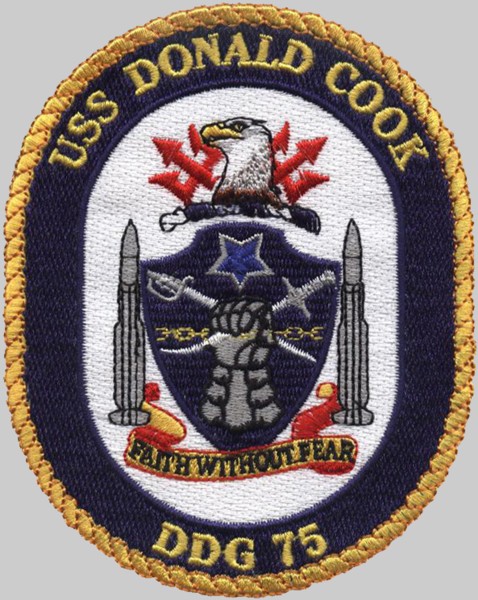
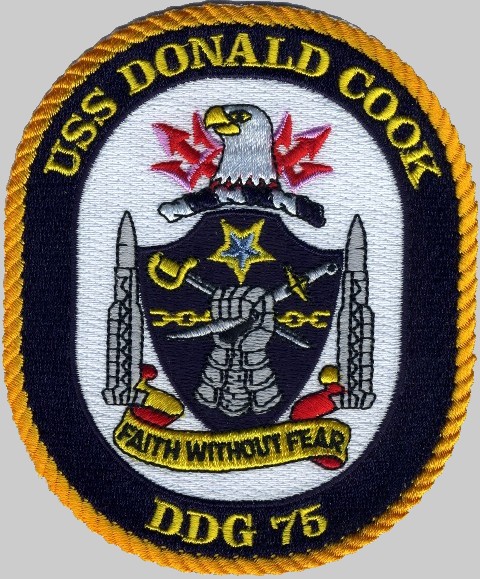 |
||
|
|
seaforces.org |
USN ships
start page | |