|
||
|
HOME
|
US Navy -
ships
|
US Navy - air
units
|
USMC - air
units
|
International
Navies
|
Weapon Systems
|
Special Reports |
||
|
US Navy - Guided Missile Destroyer DDG 69 - USS Milius |
||
|
||
| 07/25 | ||
|
Type,
class: Guided Missile Destroyer - DDG; Arleigh Burke
class, Flight I Builder: Ingalls Shipbuilding, Pascagoula, Mississippi, USA STATUS: Awarded: April 8, 1992 Laid down: August 8, 1994 Launched: August 1, 1995 Commissioned: November 23, 1996 IN SERVICE Homeport: forward deployed to Fleet Activities Yokosuka, Japan Namesake: Captain Paul Lloyd Milius (1928-1968) Ships Motto: ALII PRAE ME (others before myself) Technical Data: see: INFO > Arleigh Burke class Guided Missile Destroyer - DDG |
||
| images | ||
 replenishment at sea (RAS) - 5th Fleet AOR - May 2025  Diego Garcia, British overseas territory - April 2025  arriving at Changi Naval Base, Singapore - April 19, 2025  Mk.45 Mod.2 gun - White Beach Naval Facility, Okinawa, Japan - April 2025  forward Mk.41 Vertical Launching System (VLS), 29 cells - White Beach Naval Facility, Okinawa, Japan - April 2025 July 2023 - May 2024: 10-month Drydocking Selected Restricted Availability (DSRA) at Fleet Activities Yokosuka, Japan (Ship Repair Facility and Japan Regional Maintenance Center / SRF-JRMC)  in dry-dock at Fleet Activities Yokosuka, Japan - February 2024  Sea of Japan - March 2023  Exercise MALABAR - Philippine Sea - November 2022  Philippine Sea - October 2022  a Standard Missile SM-2MR was fired from the aft Mk.41 Vertical Launching System (VLS) - Philippine Sea - March 2022  Mk.45 Mod.2 gun fire - Pacific Ocean - March 2022  South China Sea - November 2021 May 2020 - May 2021: Drydocking Selected Restricted Availability (DSRA) at Fleet Activities Yokosuka, Japan  preparing the target for live-fire exercises - Philippine Sea - November 2019 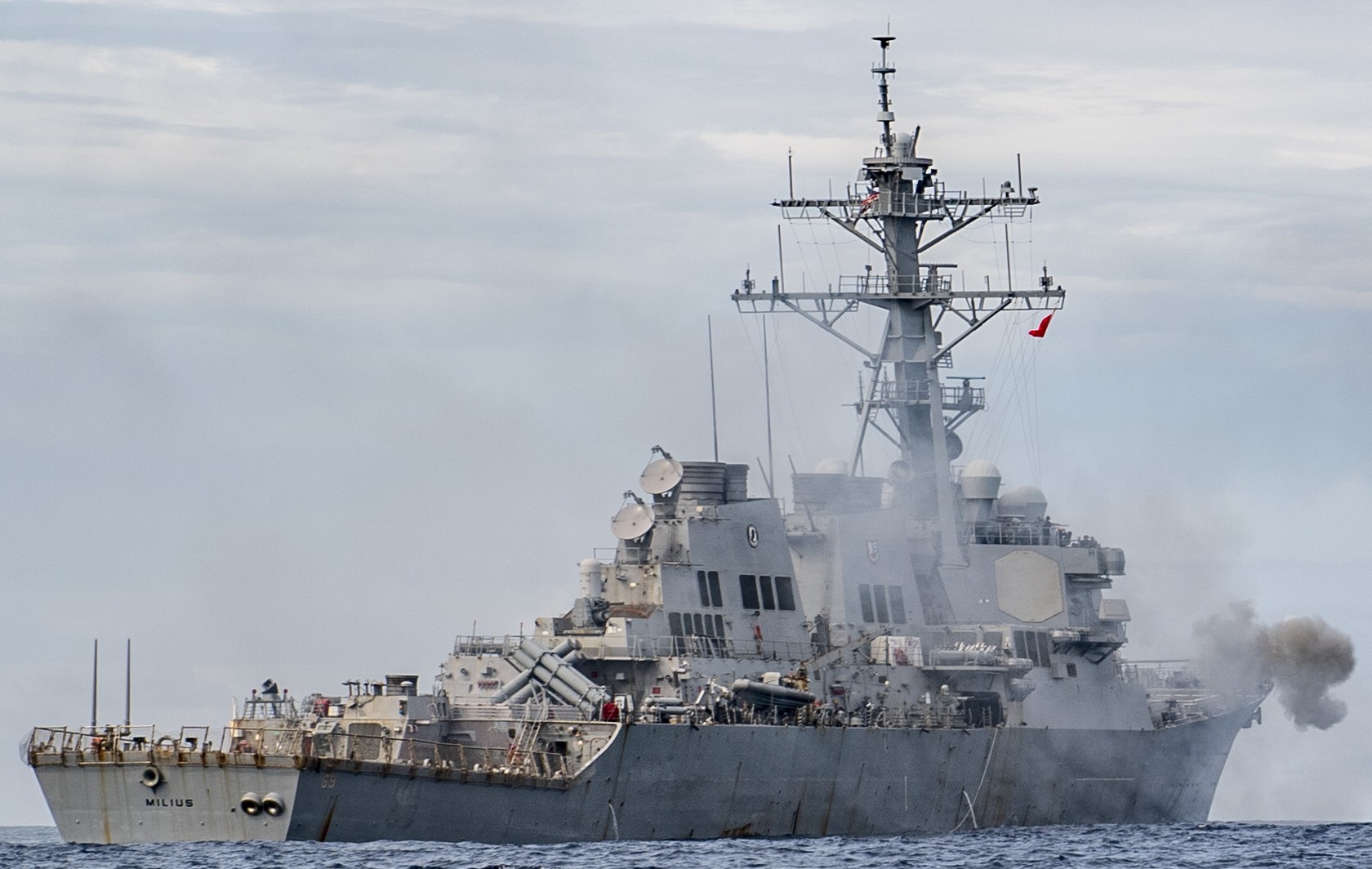 South China Sea - November 2019 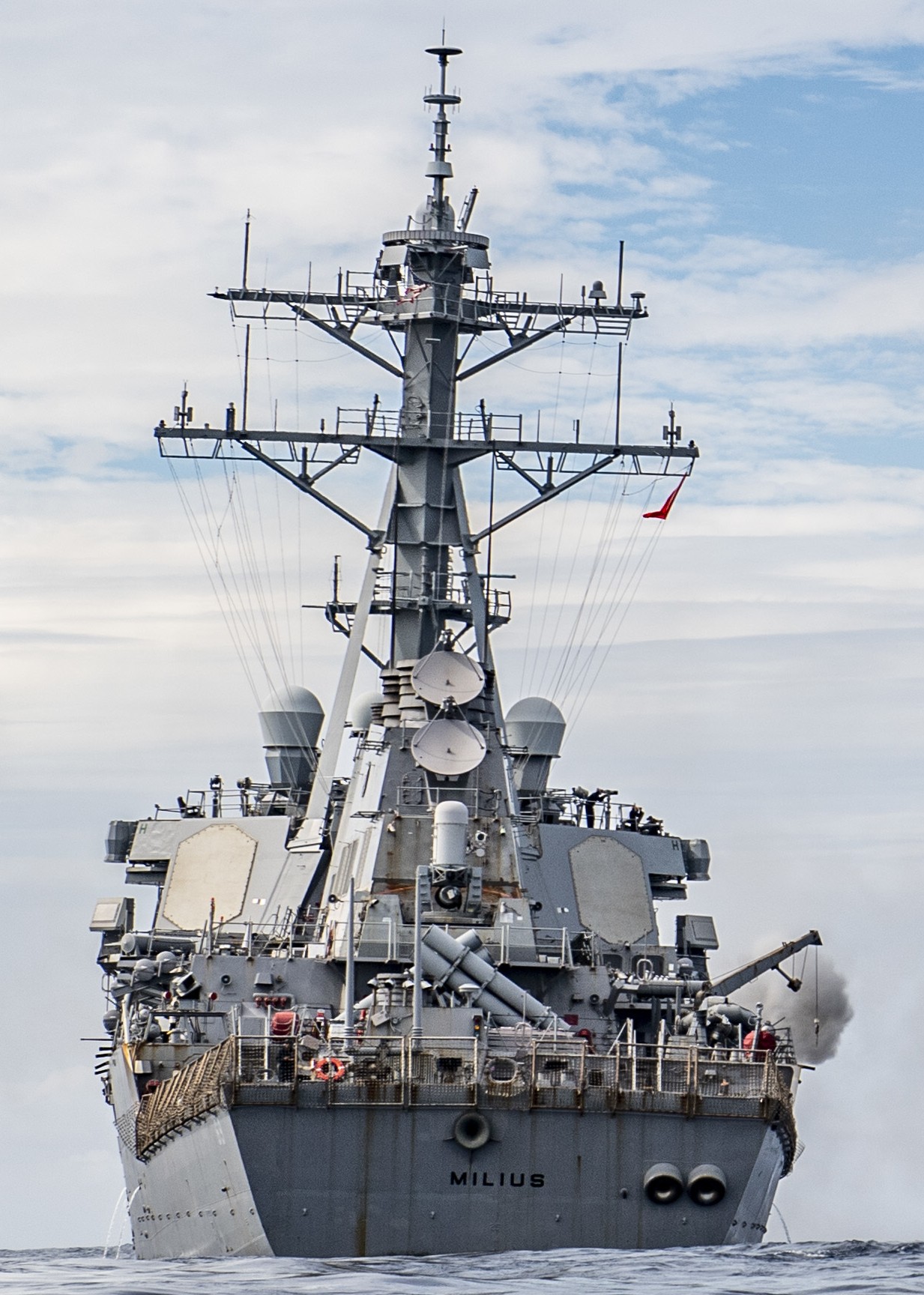 South China Sea - November 2019  Mk.32 torpedo tubes exercise - East China Sea - November 2019  Mk.45 Mod.2 gun maintenance - East China Sea - November 2019 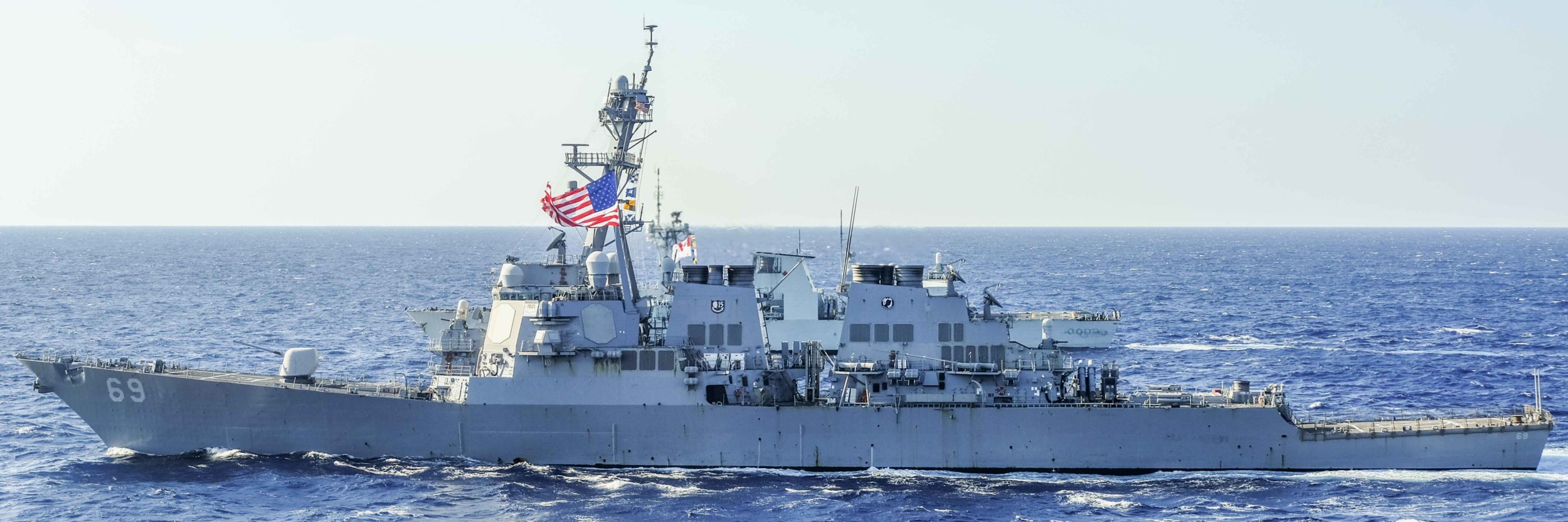 Philippine Sea - November 2019  East China Sea - October 2019 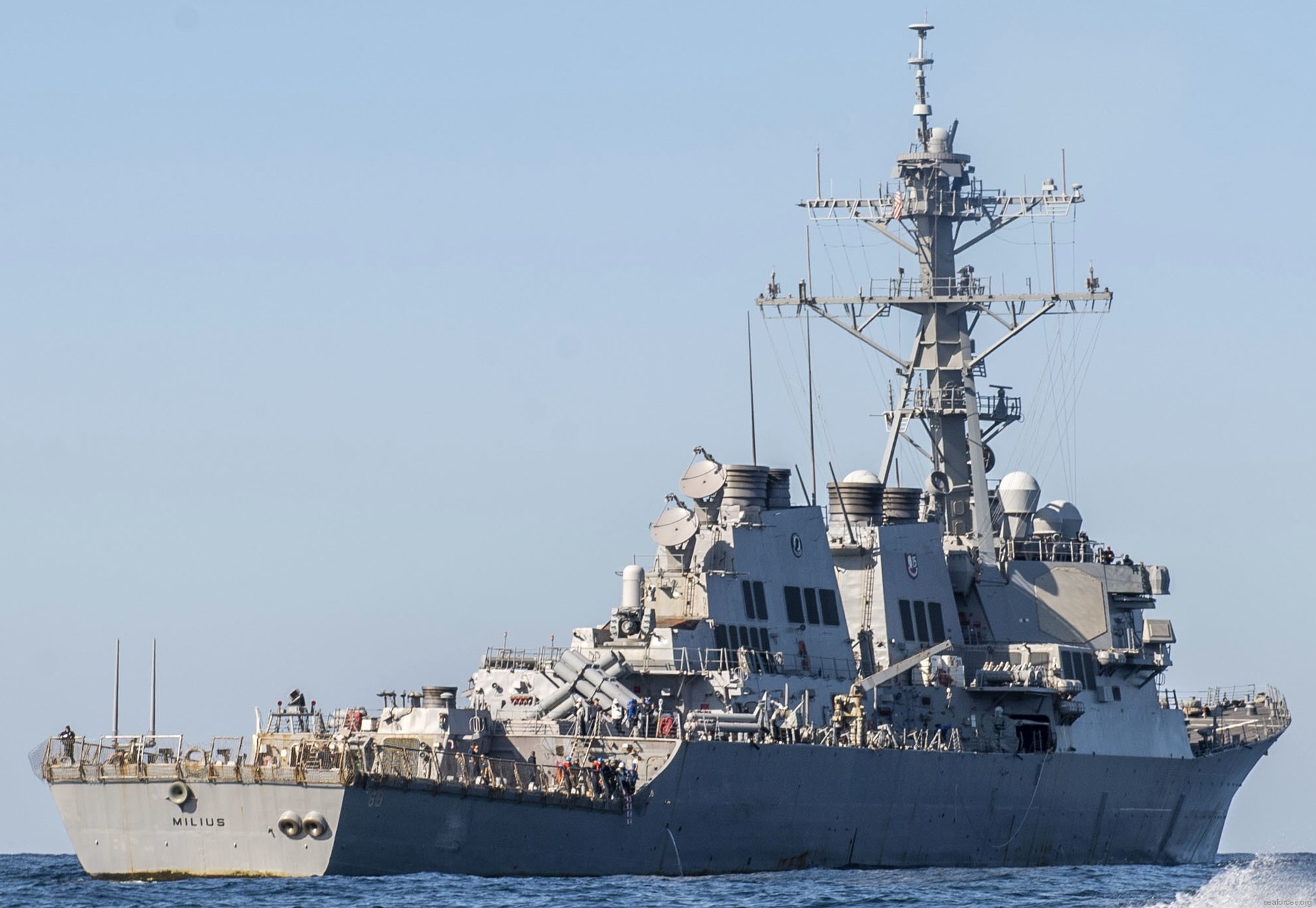 East China Sea - October 2019  Mk.32 Torpedo Tubes exercise - East China Sea - October 2019  Mk.32 Torpedo Tubes exercise - East China Sea - October 2019  Mk.15 Phalanx CIWS fire exercise - East China Sea - October 2019 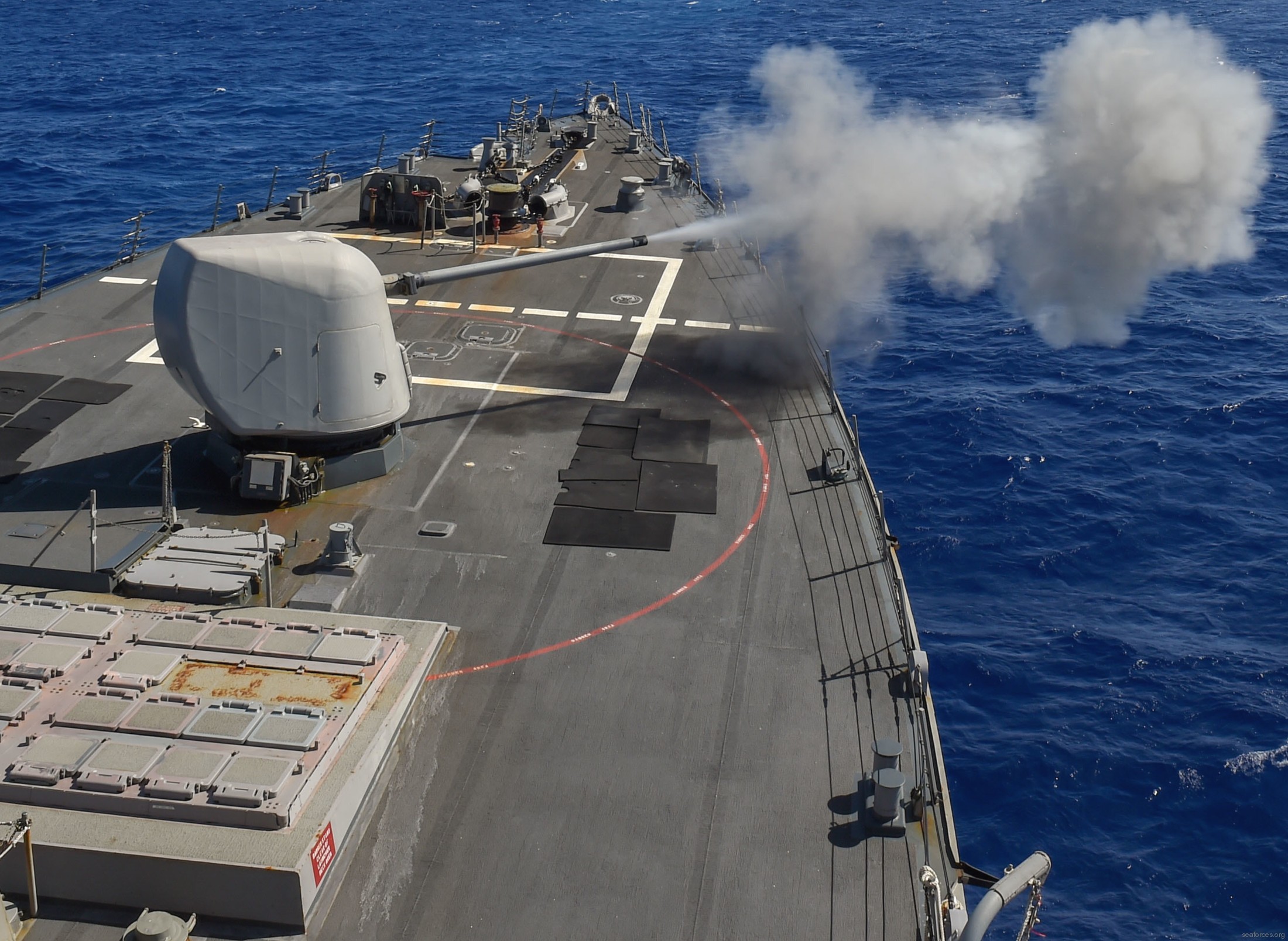 Mk.45 Mod.2 gun fire exercise - Philippine Sea - March 2019 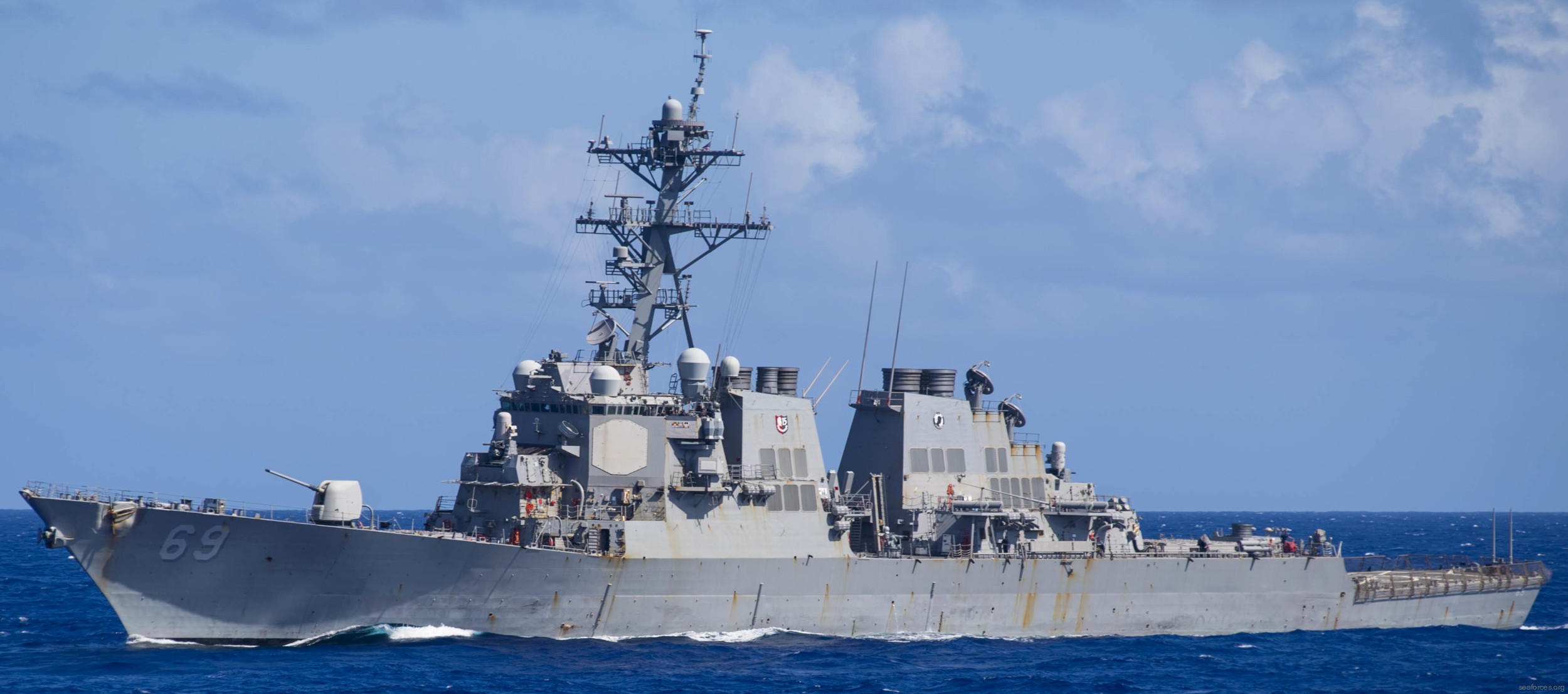 Philippine Sea - March 2019  Philippine Sea - March 2019  Philippine Sea - March 2019 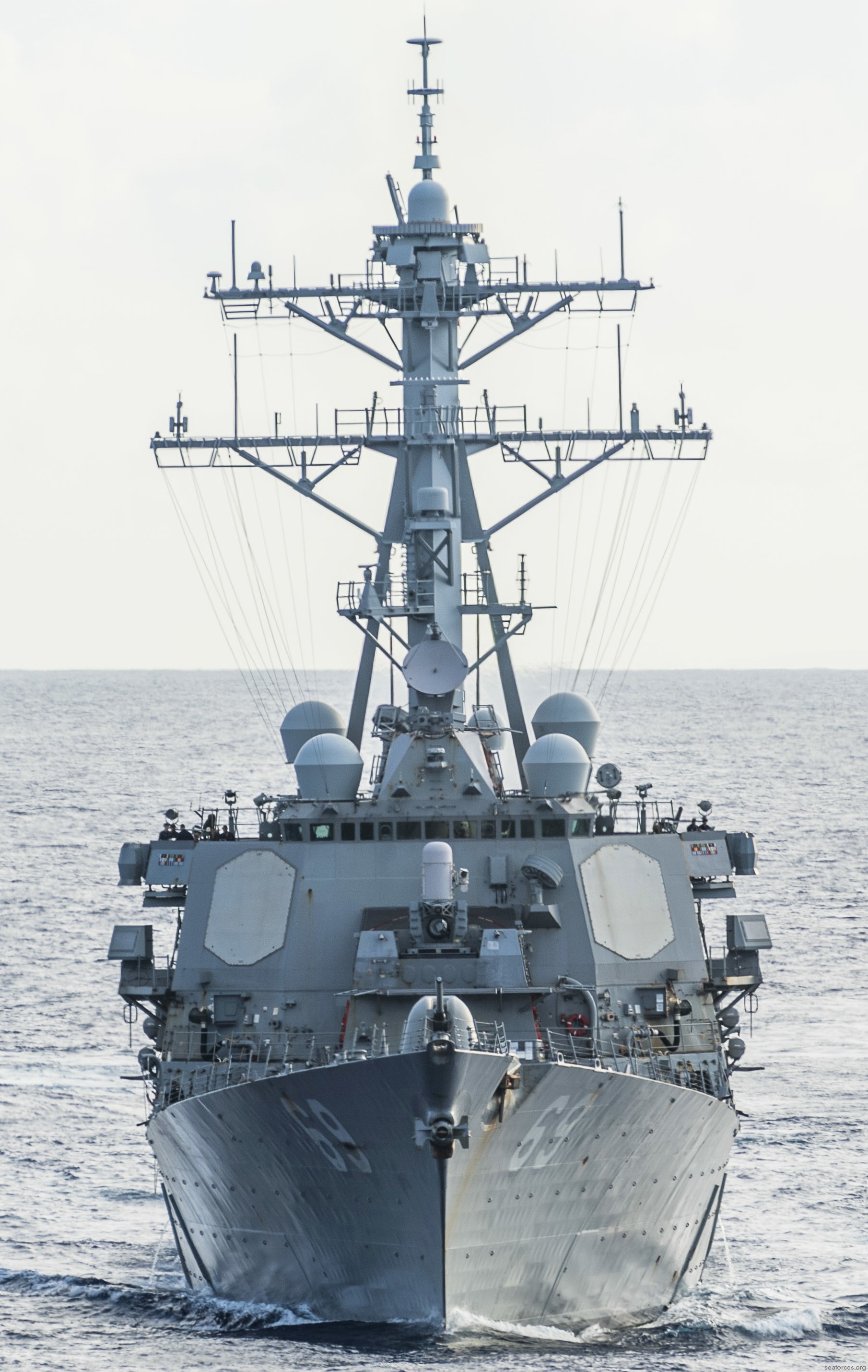 Pacific Ocean - March 2019 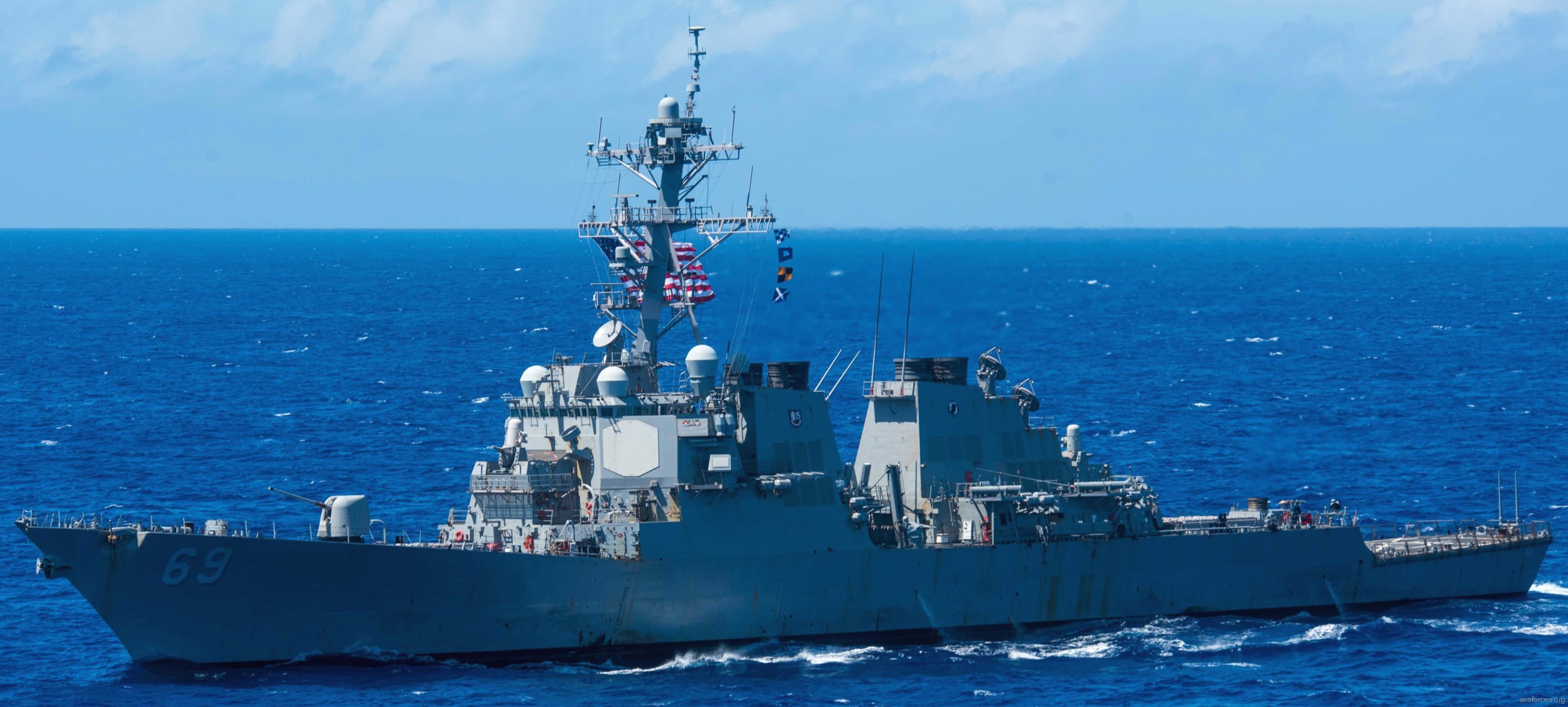 Exercise Valiant Shield - Philippine Sea - September 2018  Exercise Valiant Shield - Philippine Sea - September 2018 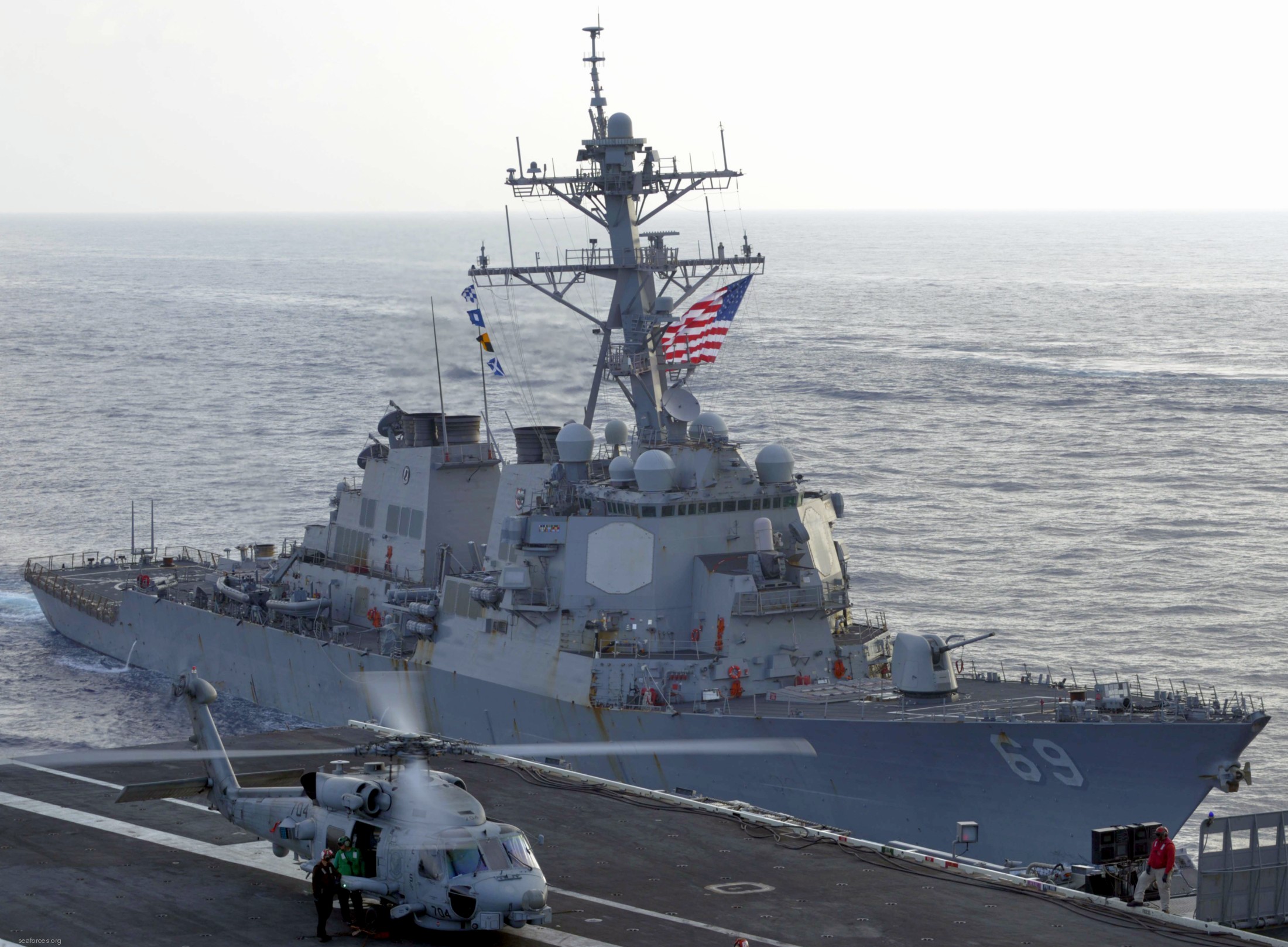 South China Sea - August 2018 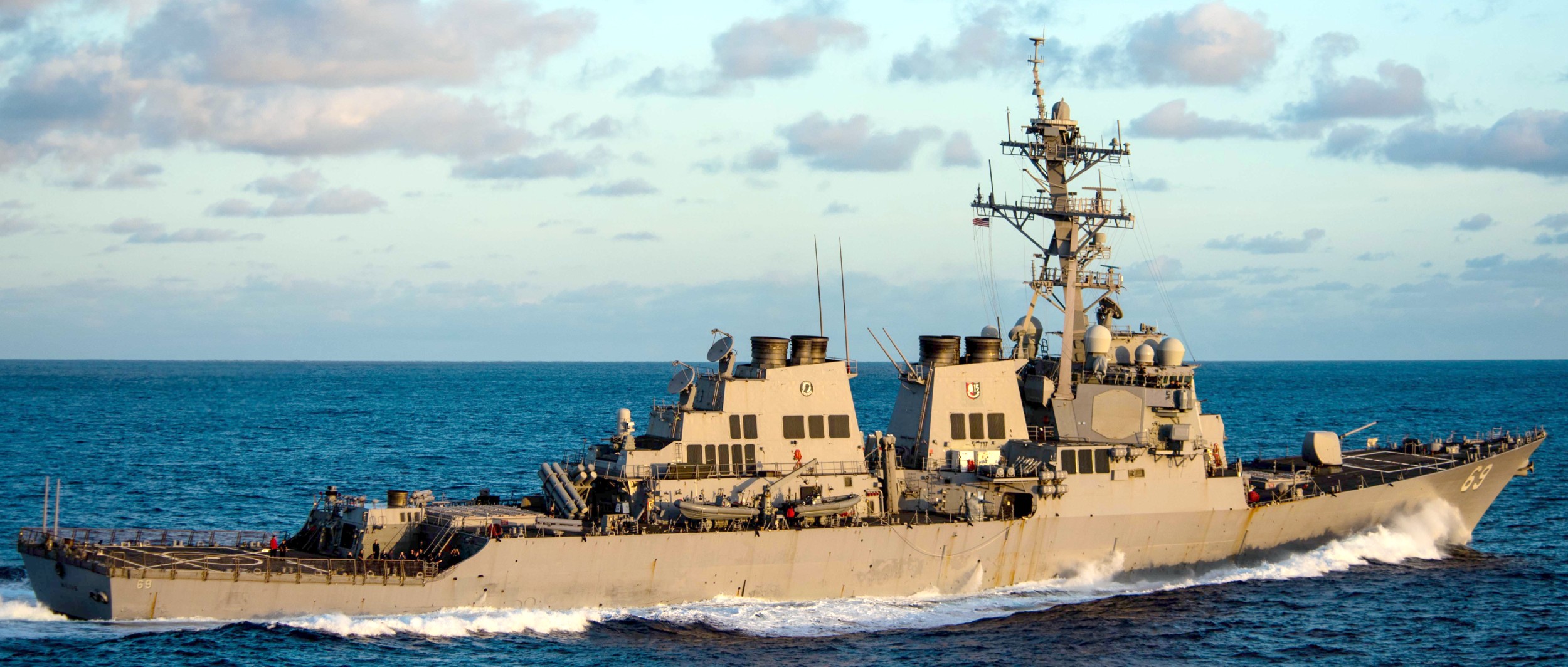 Philippine Sea - July 2018 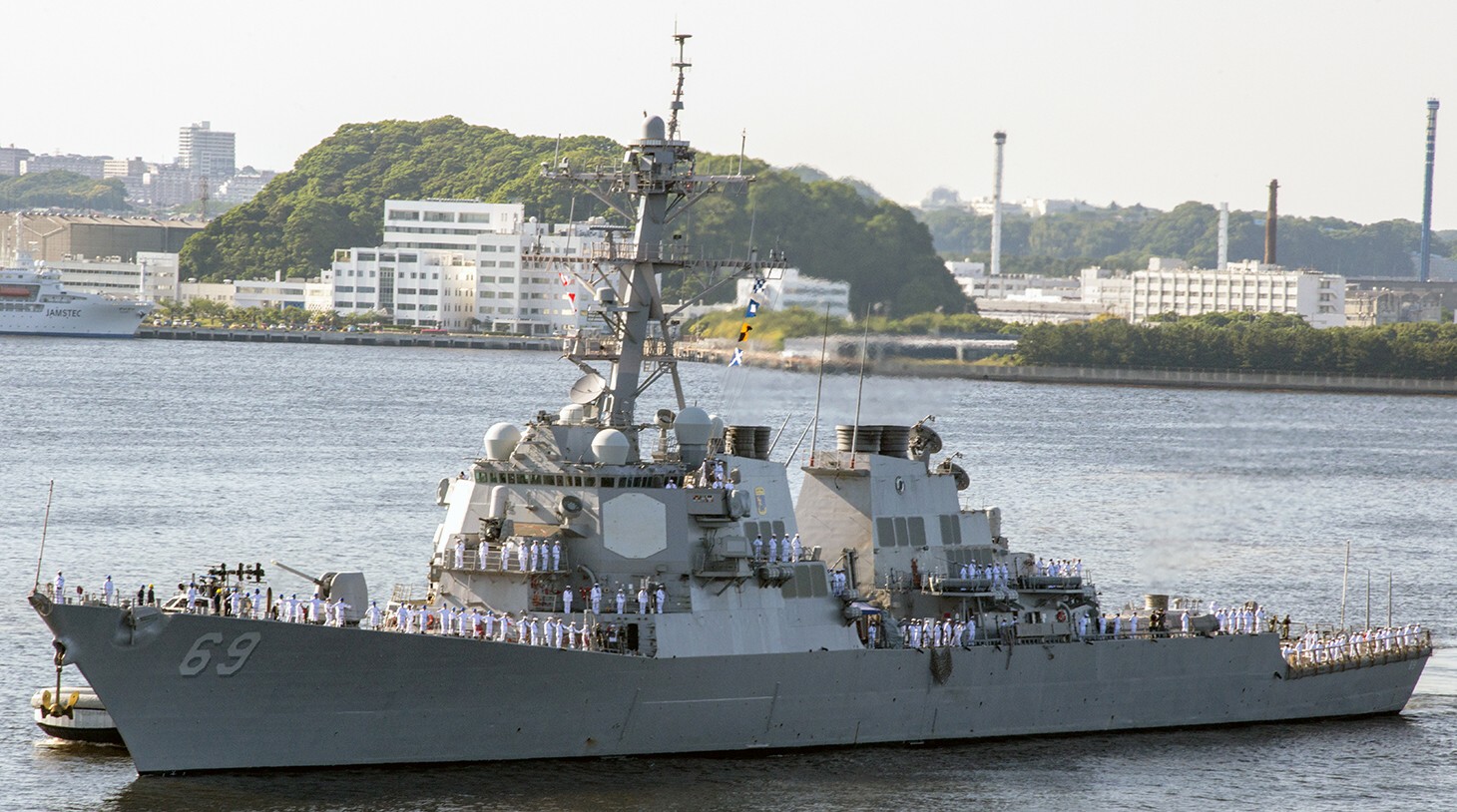 arriving at Fleet Activities Yokosuka, Japan - May 22, 2018 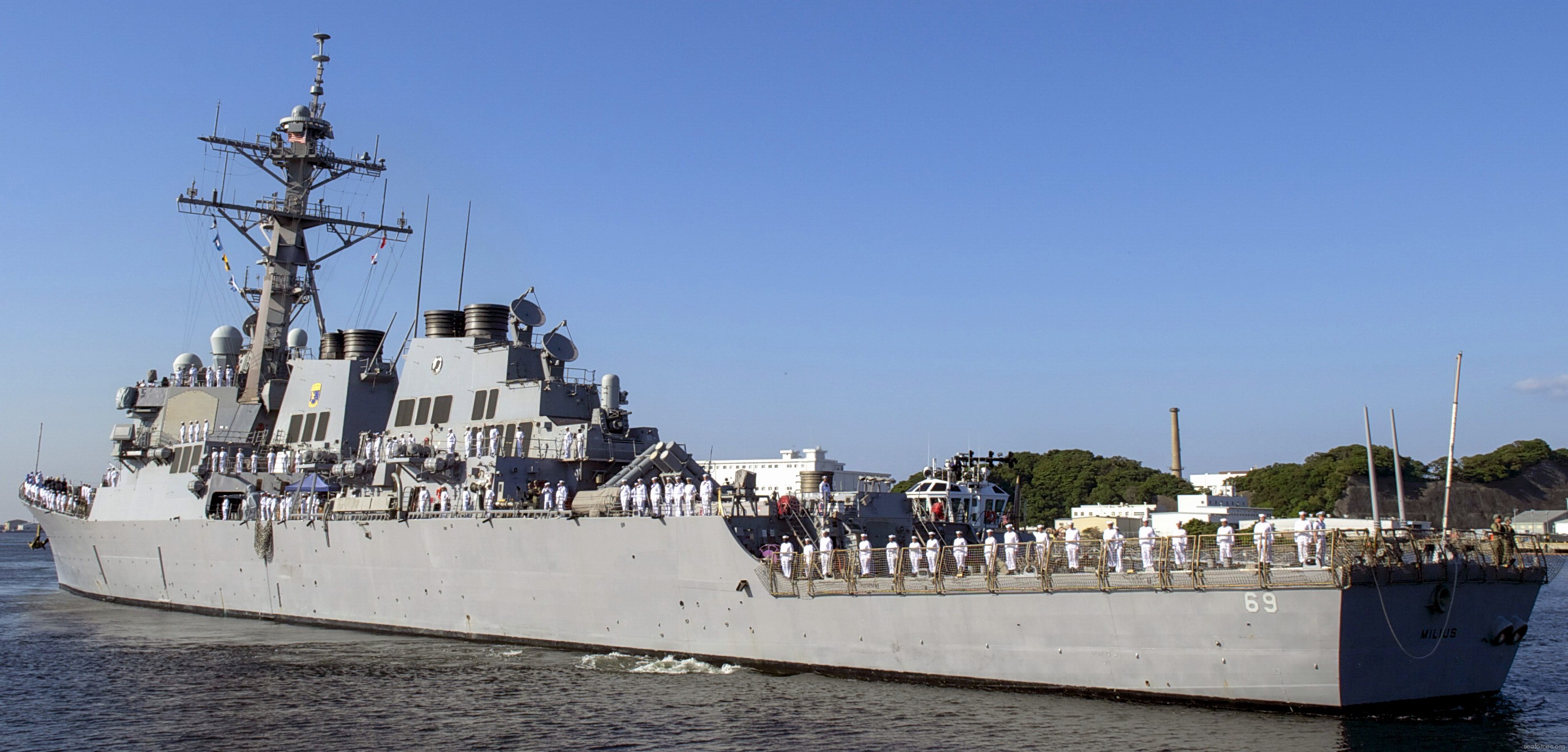 arriving at Fleet Activities Yokosuka, Japan - May 22, 2018 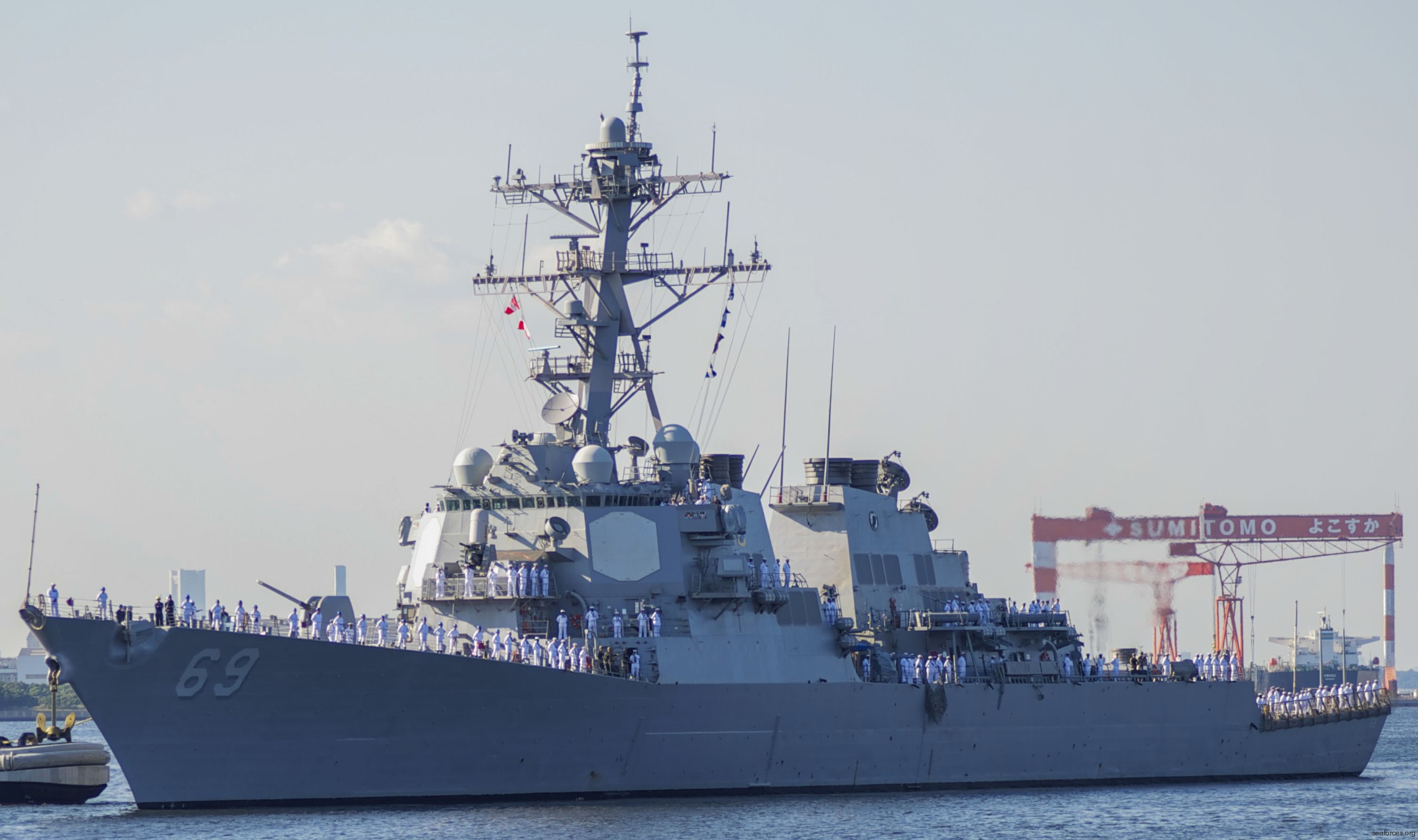 arriving at Fleet Activities Yokosuka, Japan - May 22, 2018  Joint Base Pearl Harbor-Hickam, Hawaii - May 2018 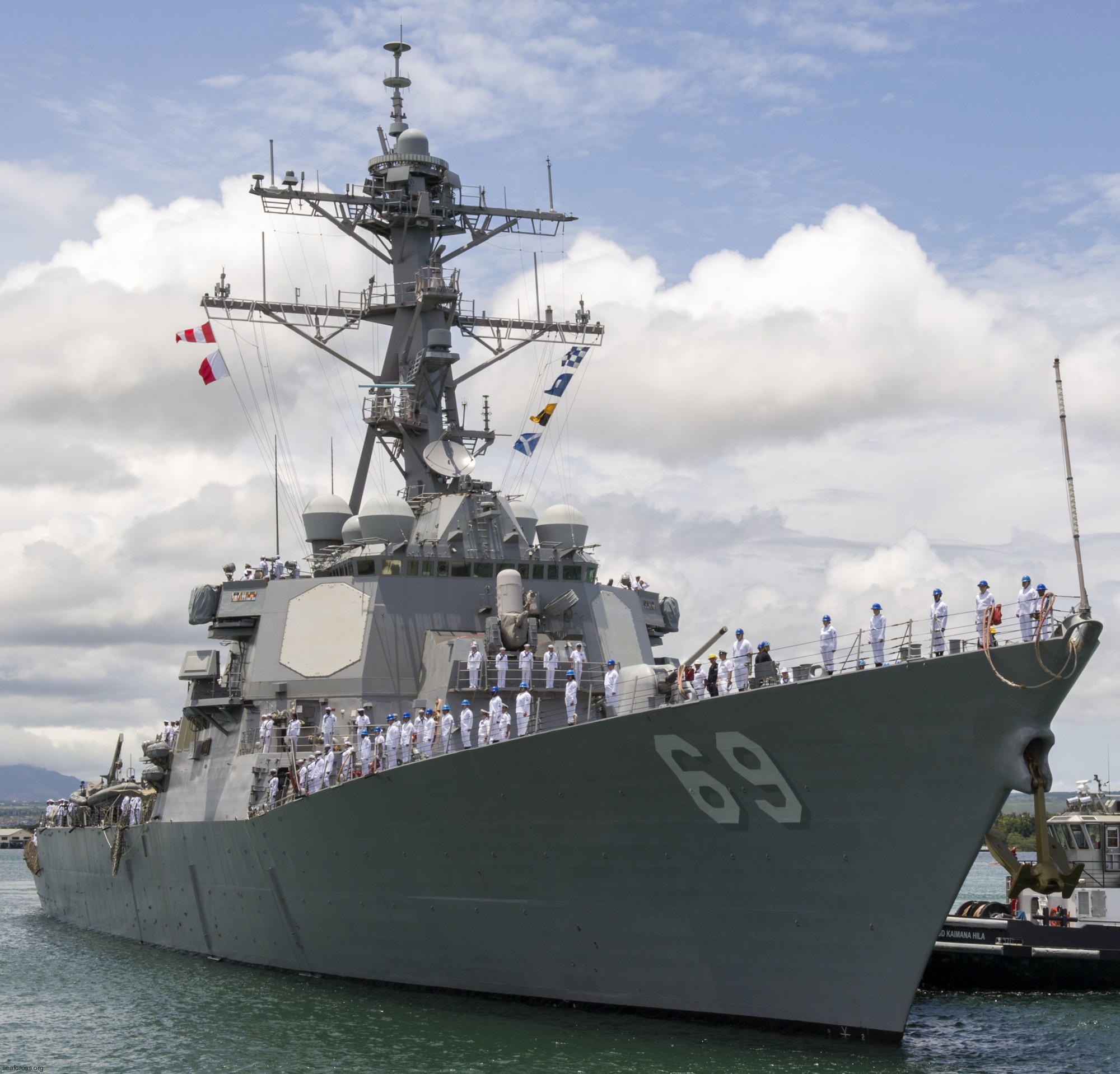 Joint Base Pearl Harbor-Hickam, Hawaii - May 2018 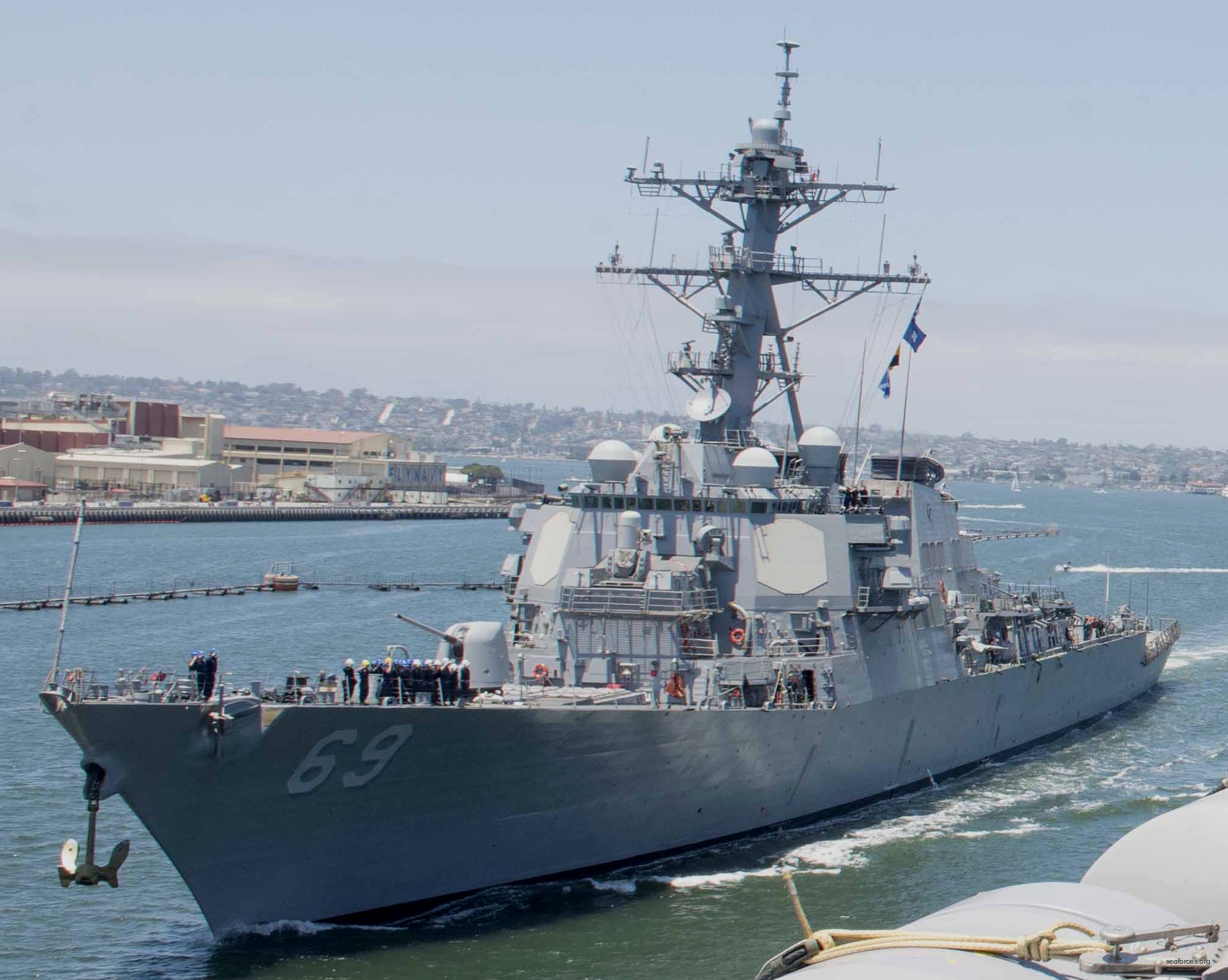 departing San Diego, California - July 2017 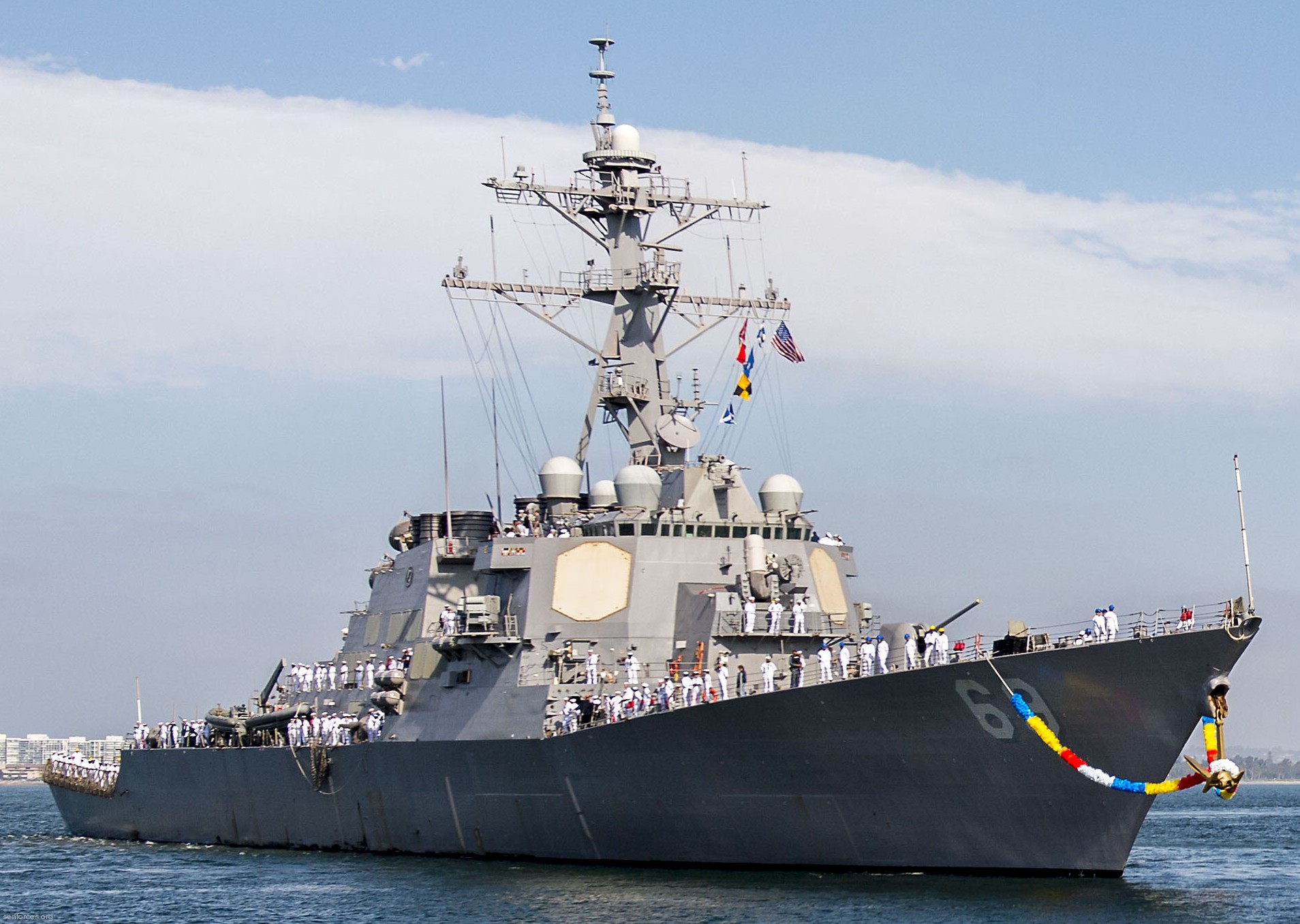 returning to San Diego, California - June 25, 2015  returning to San Diego, California - June 25, 2015 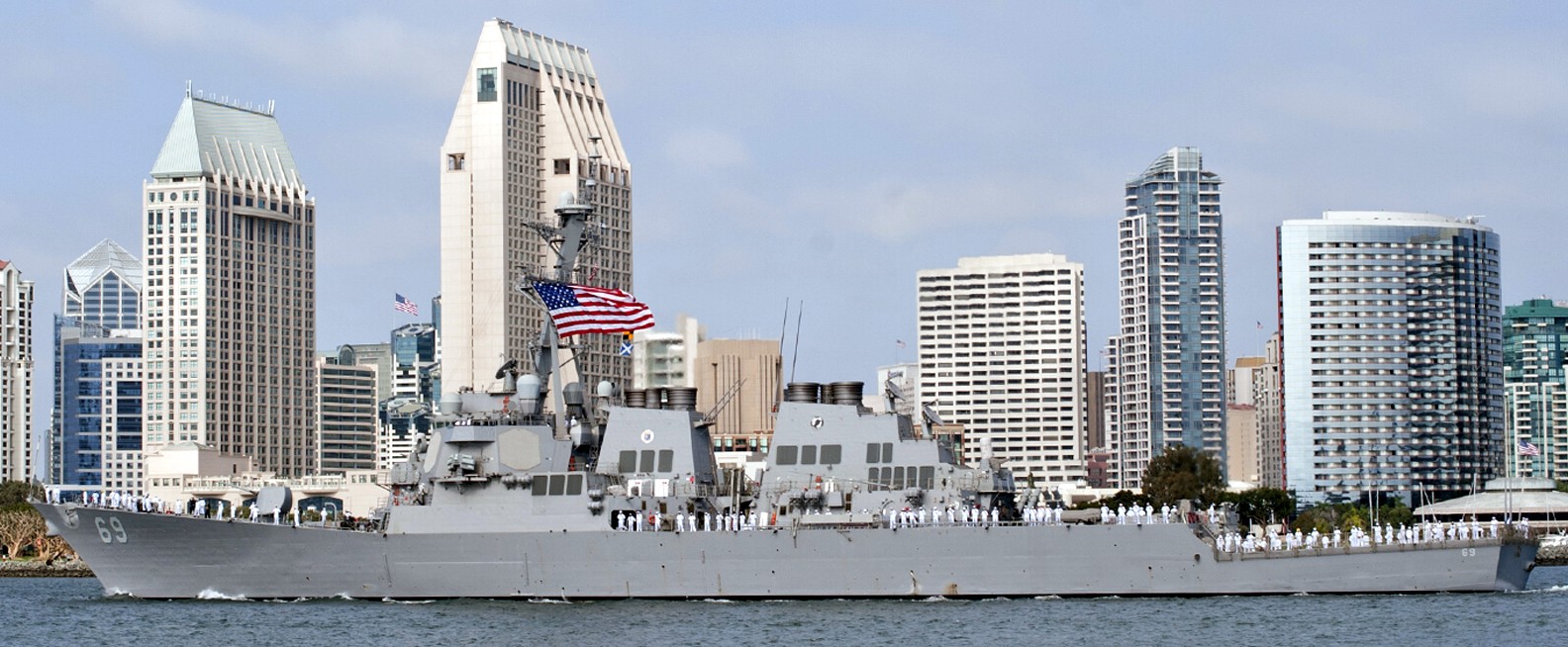 departing San Diego, California - October 20, 2014 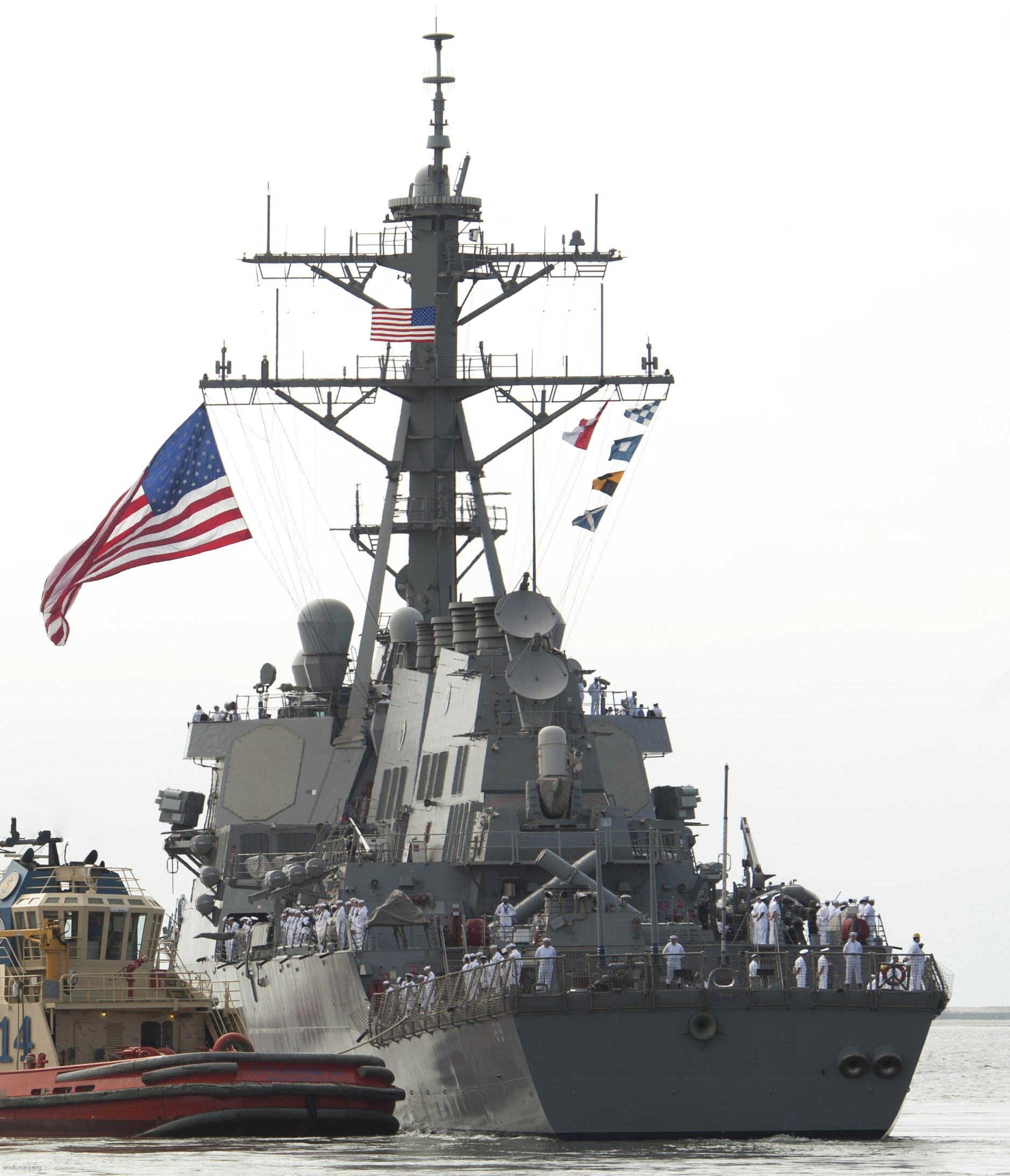 departing Naval Base San Diego, California - October 20, 2014 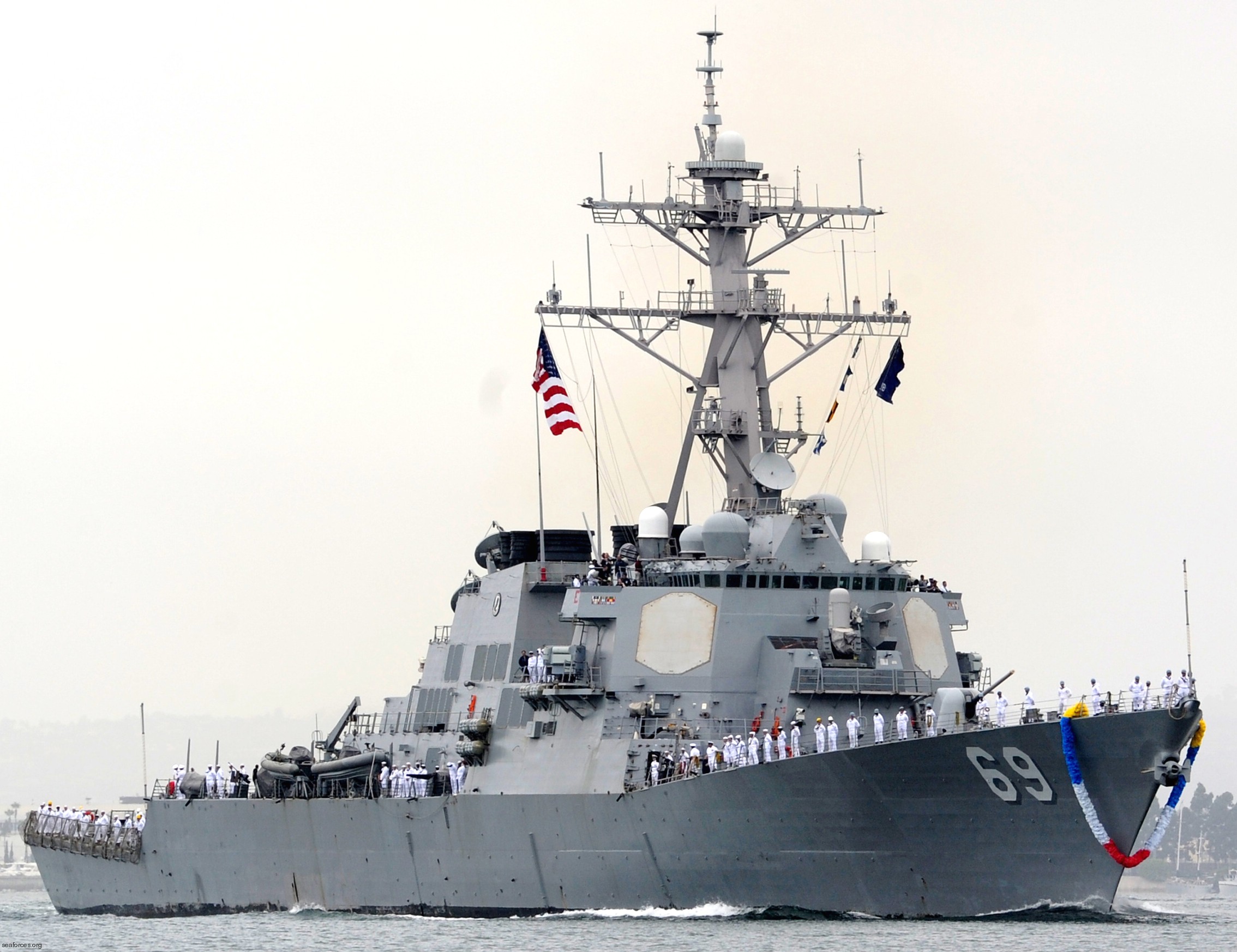 returning to Naval Base San Diego, California - September 11, 2012 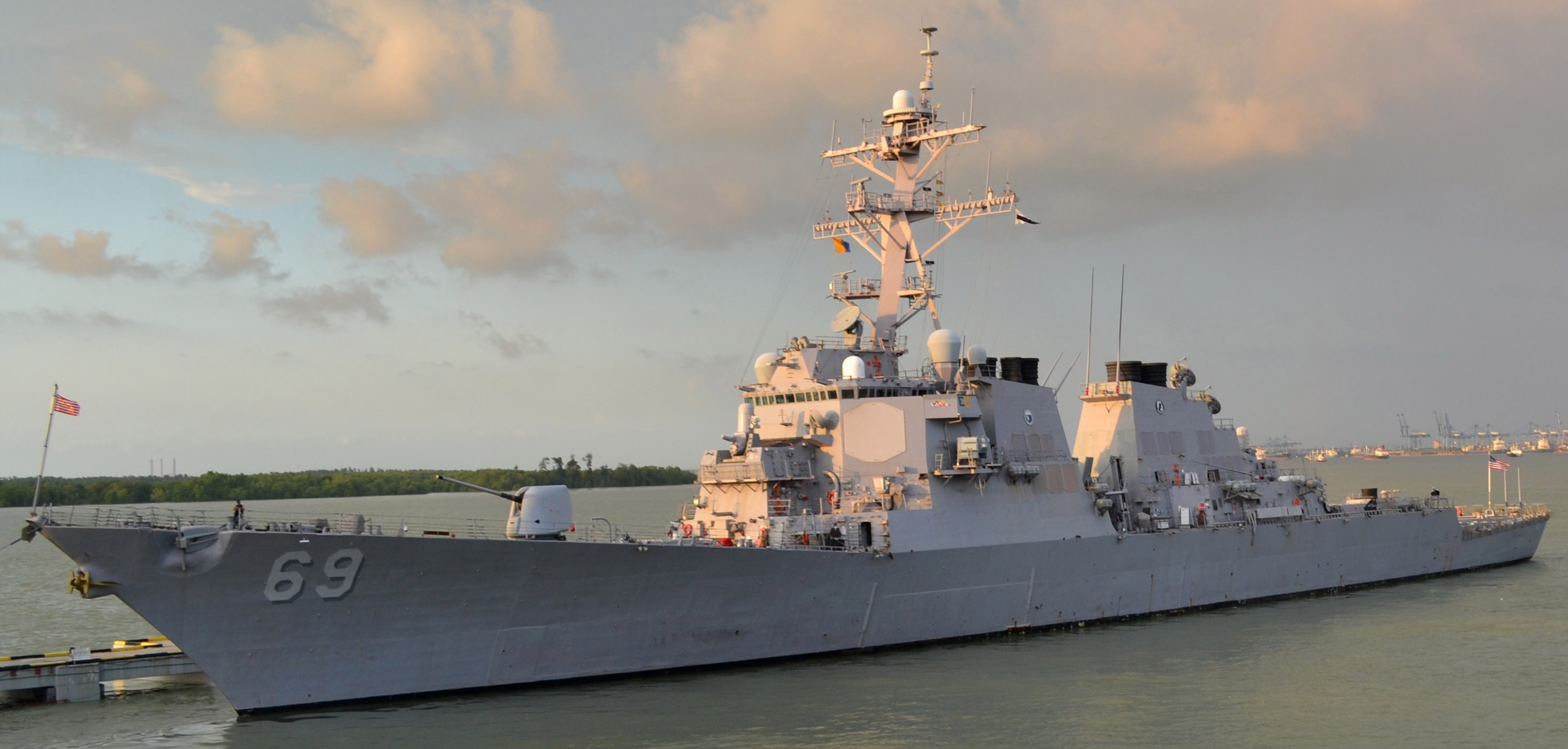 Port Klang, Malaysia - February 2012 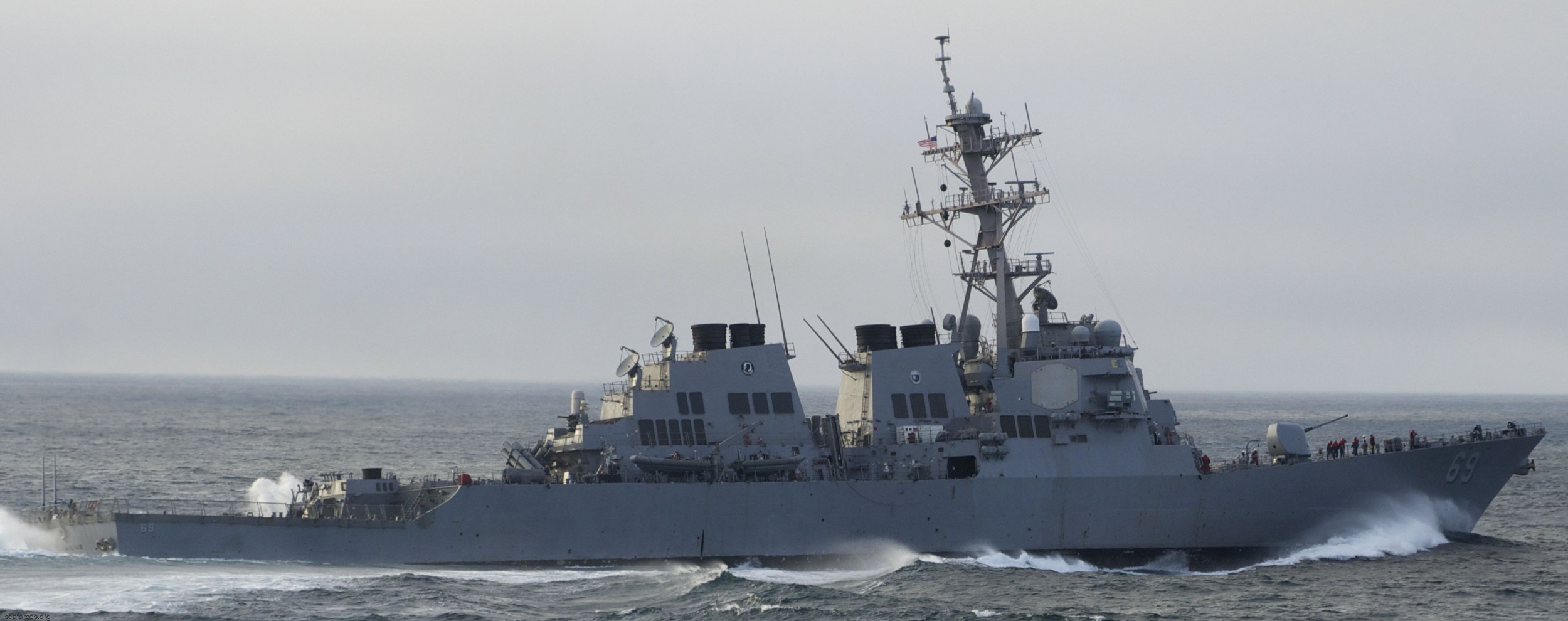 Pacific Ocean - October 2011 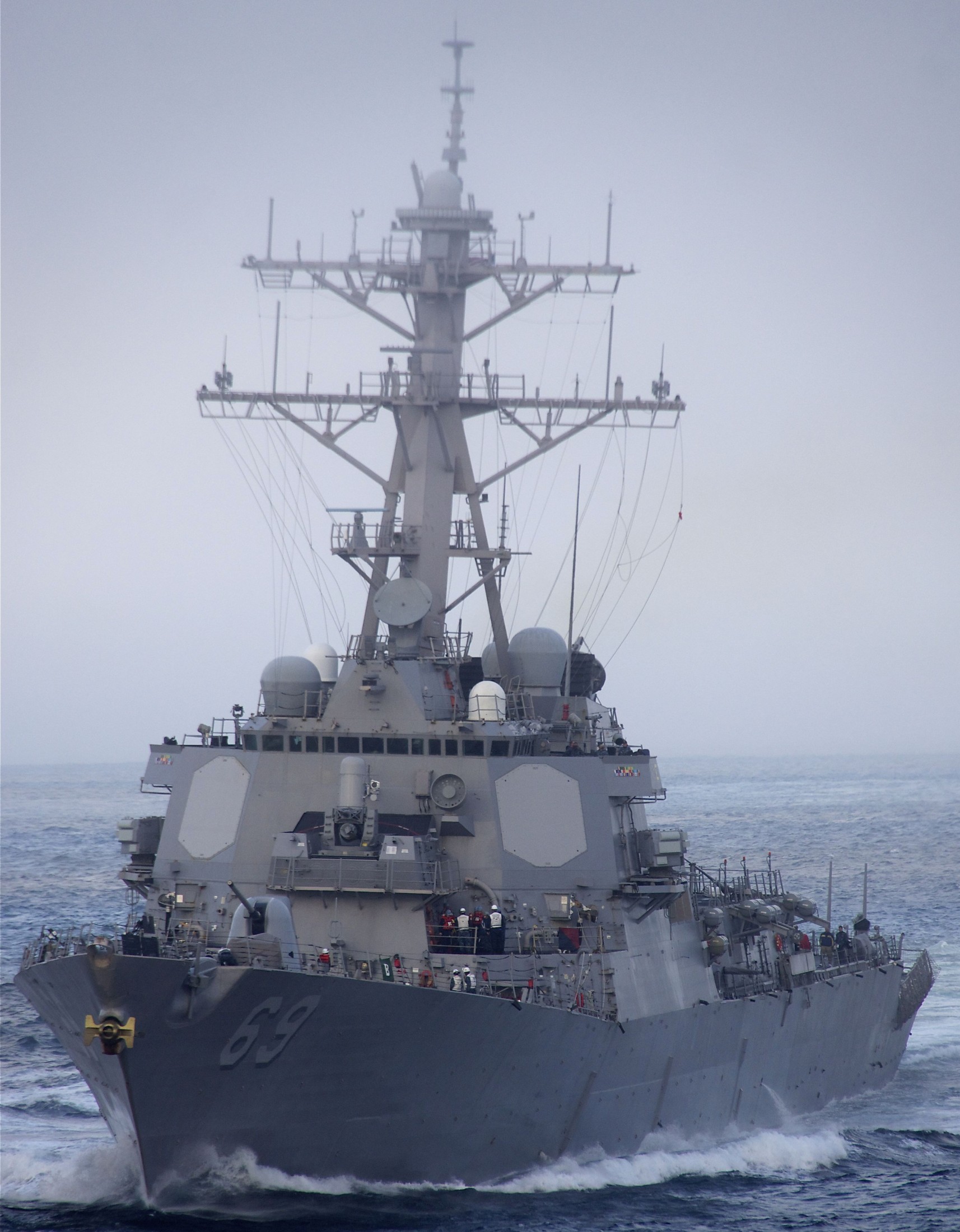 Pacific Ocean - October 2011 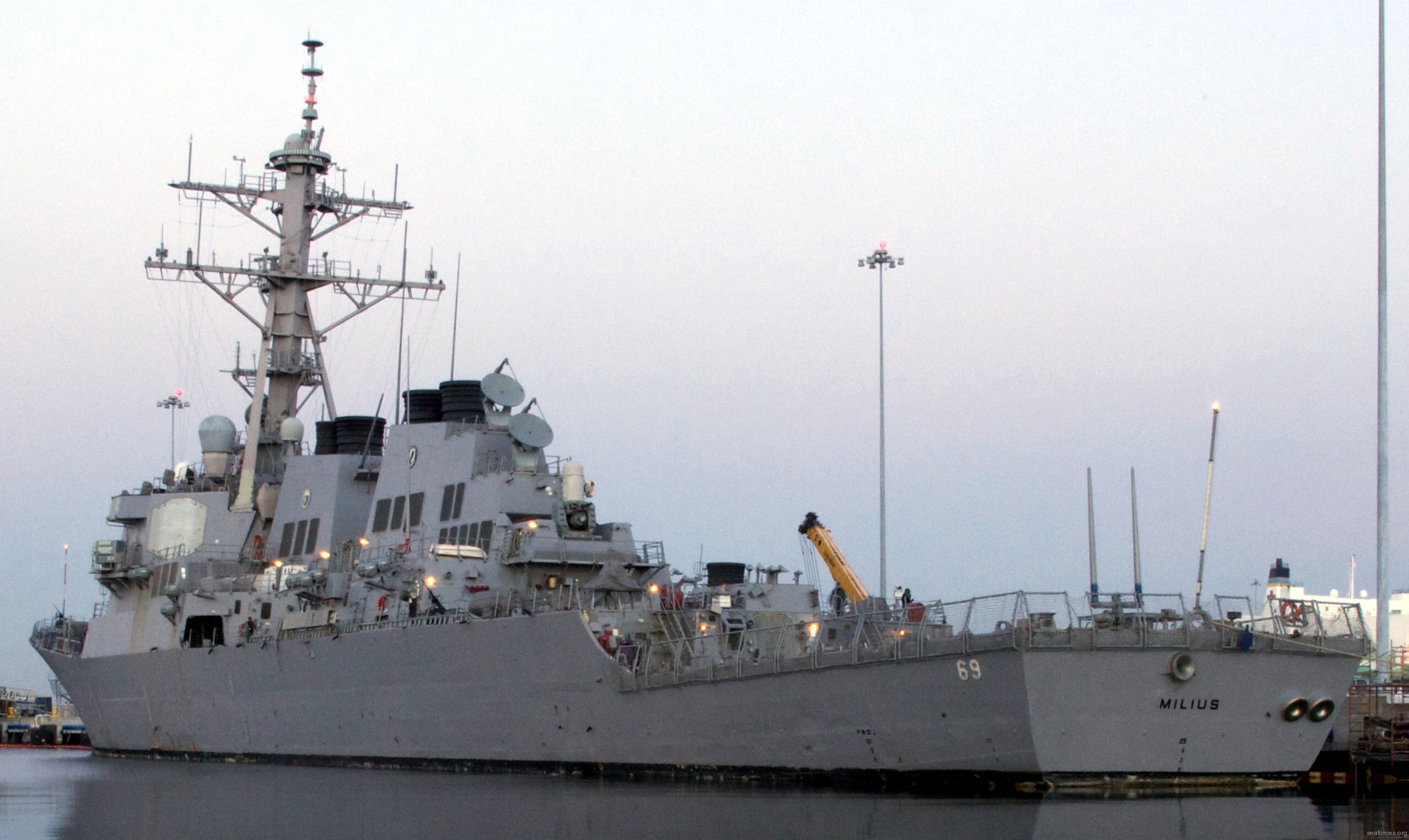 San Diego, California - April 2011 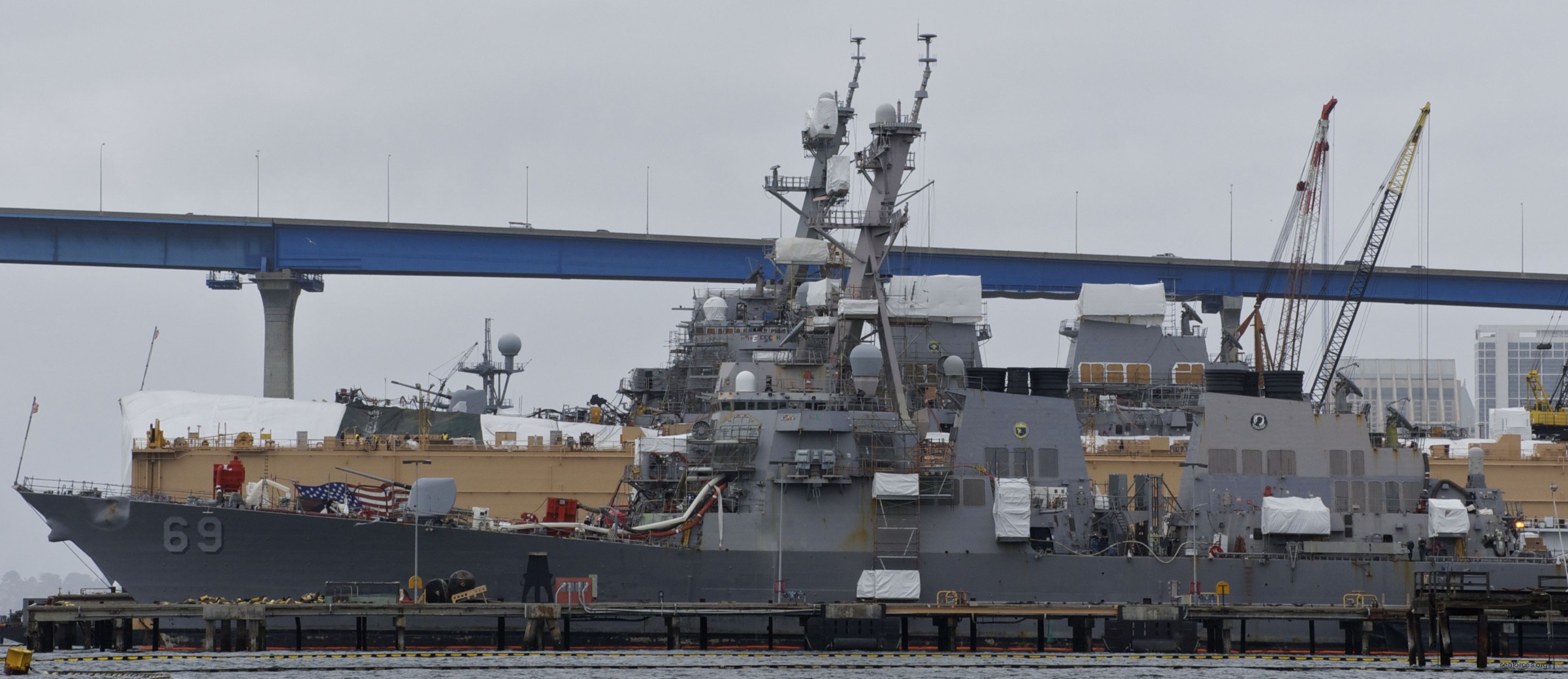 moored at the National Steel and Shipbuilding Company, San Diego - March 2011 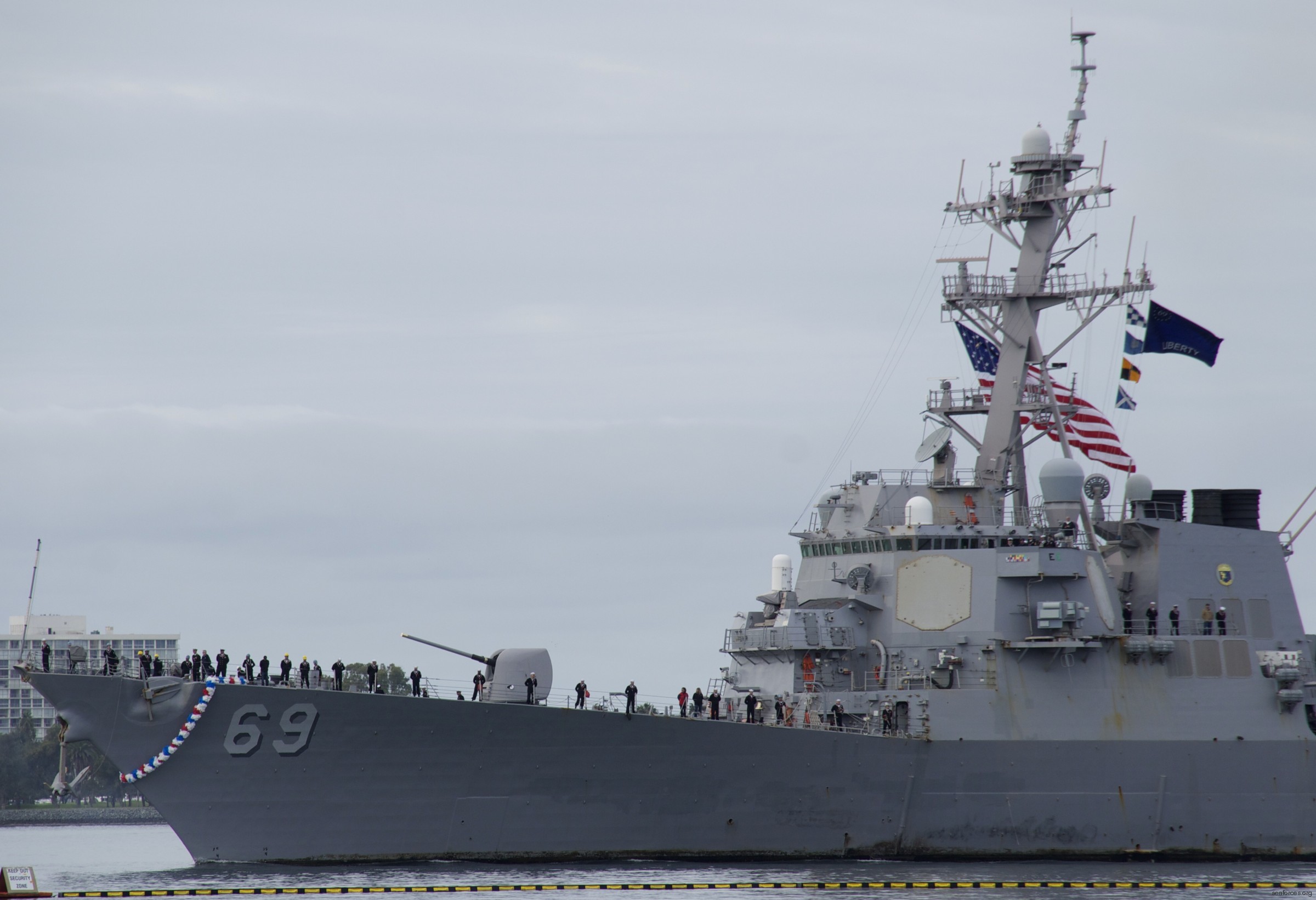 returning to San Diego, California - December 16, 2010 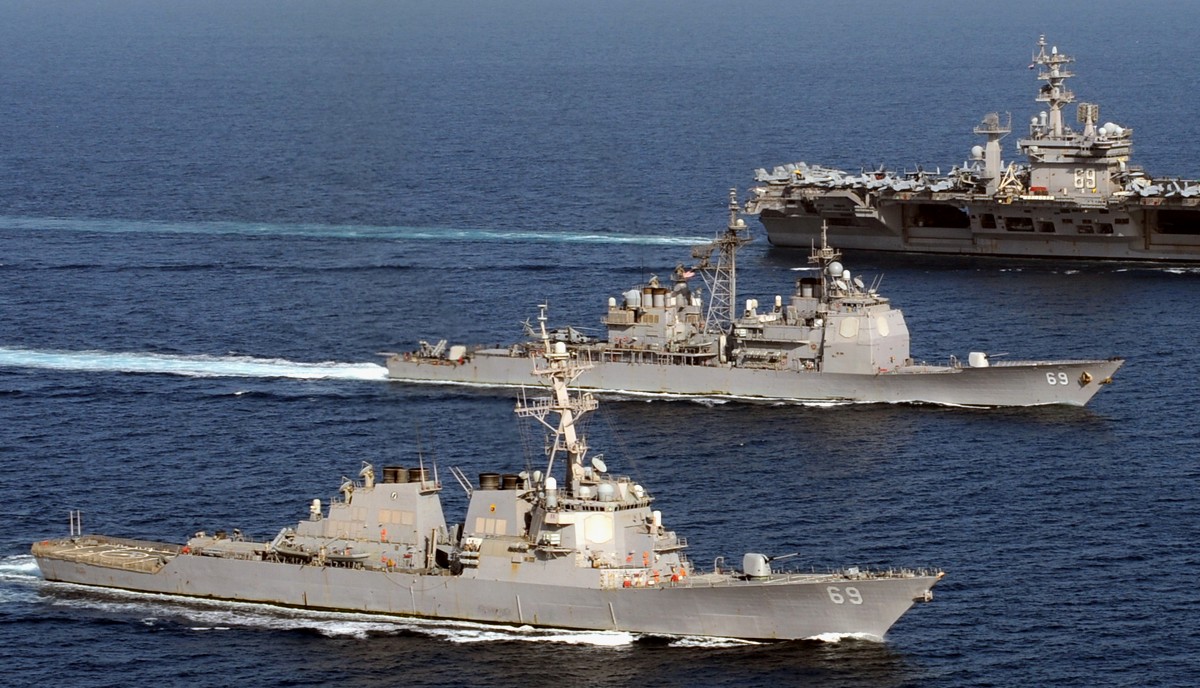 Arabian Sea - April 2009 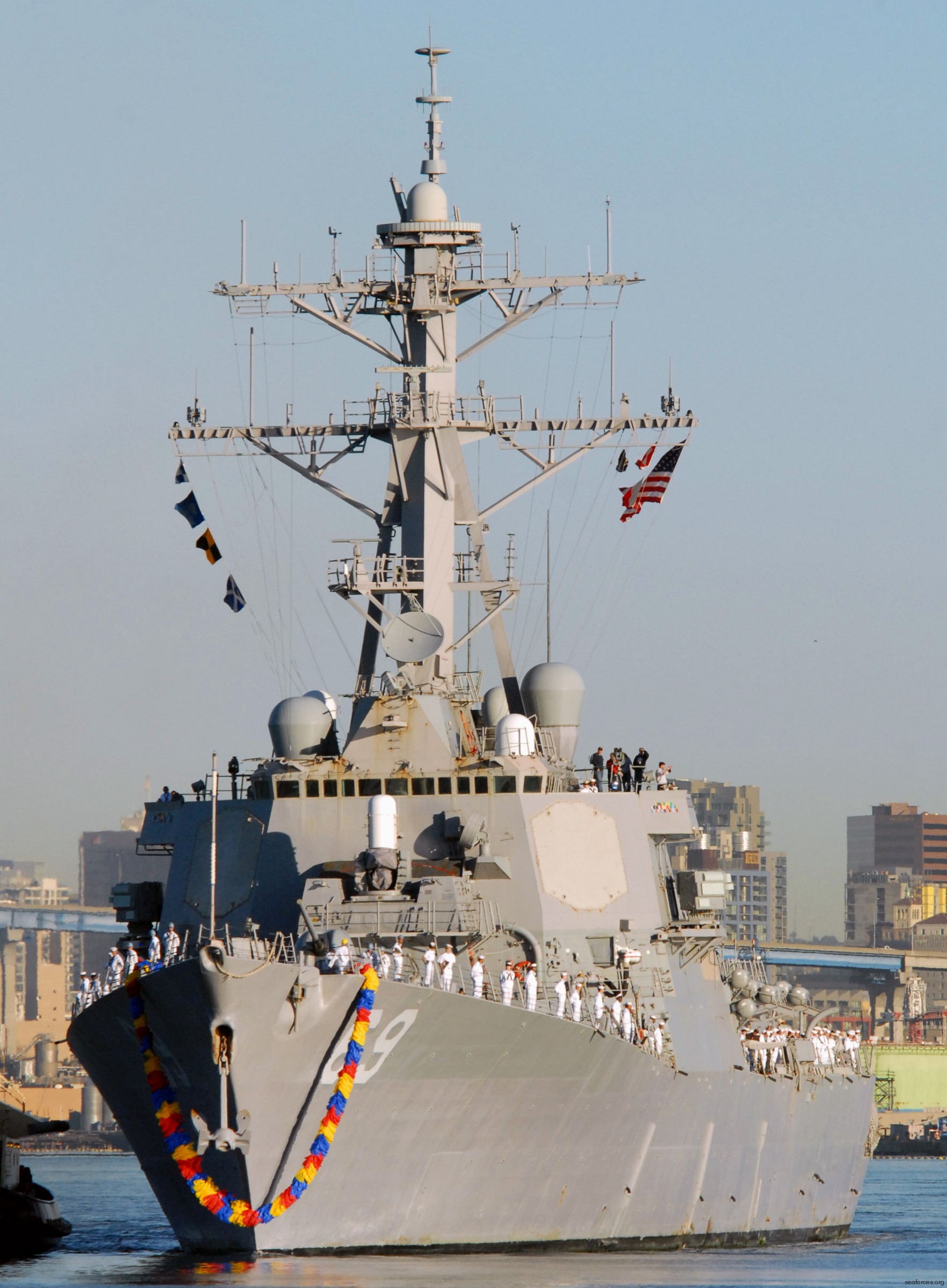 returning to San Diego, California - Octber 8, 2007 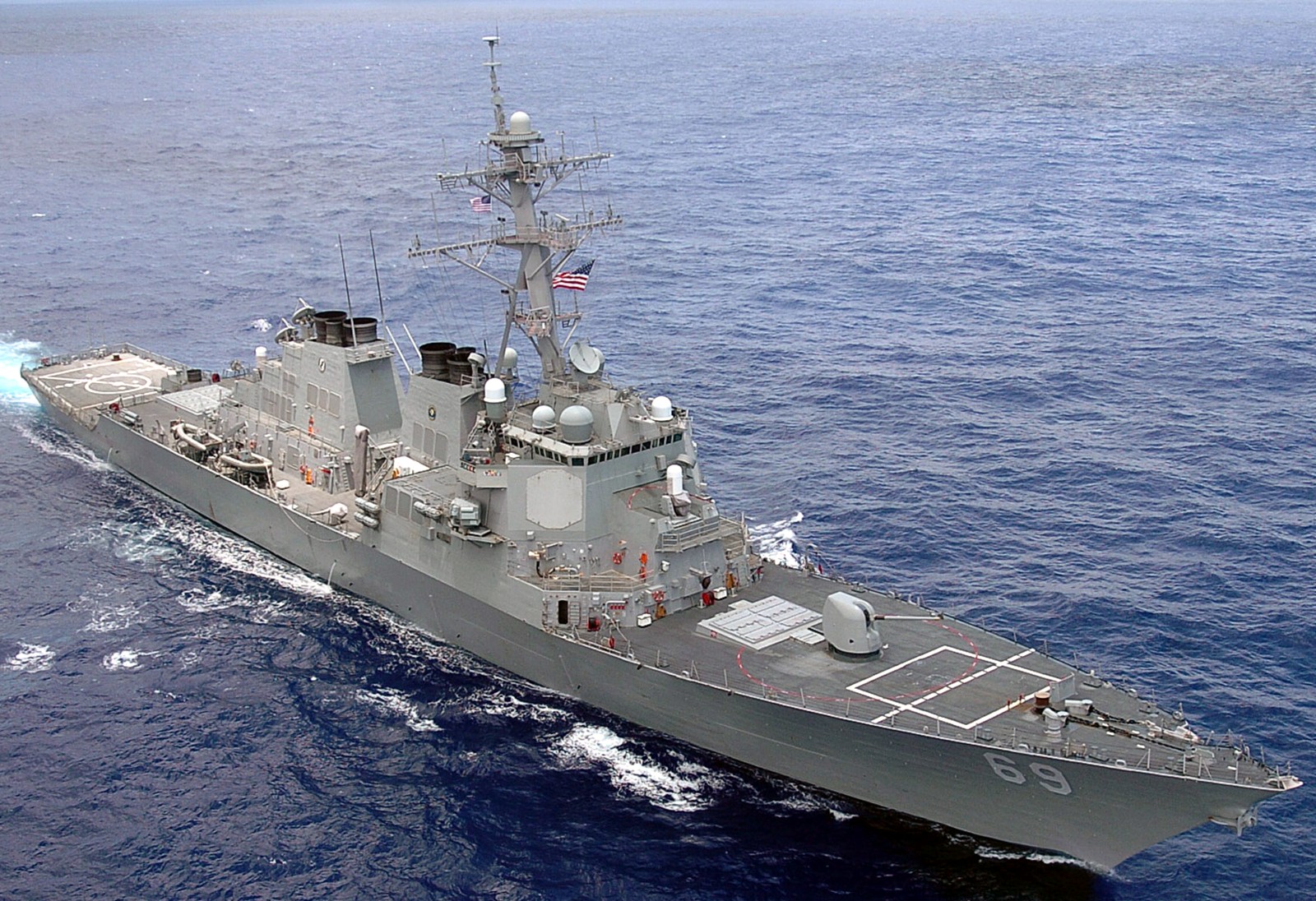 Pacific Ocean - May 2007 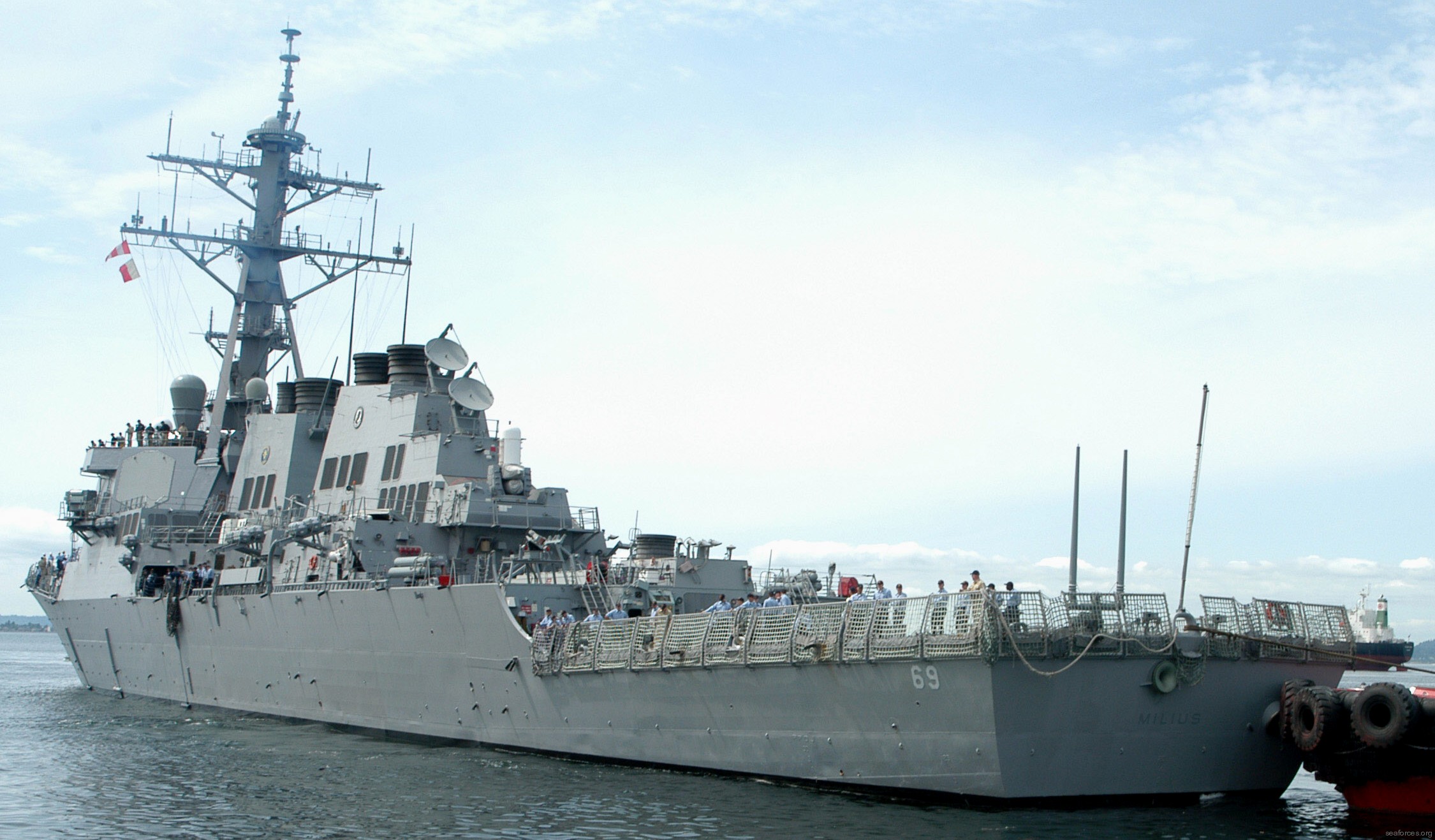 Seattle, Washington - August 2006 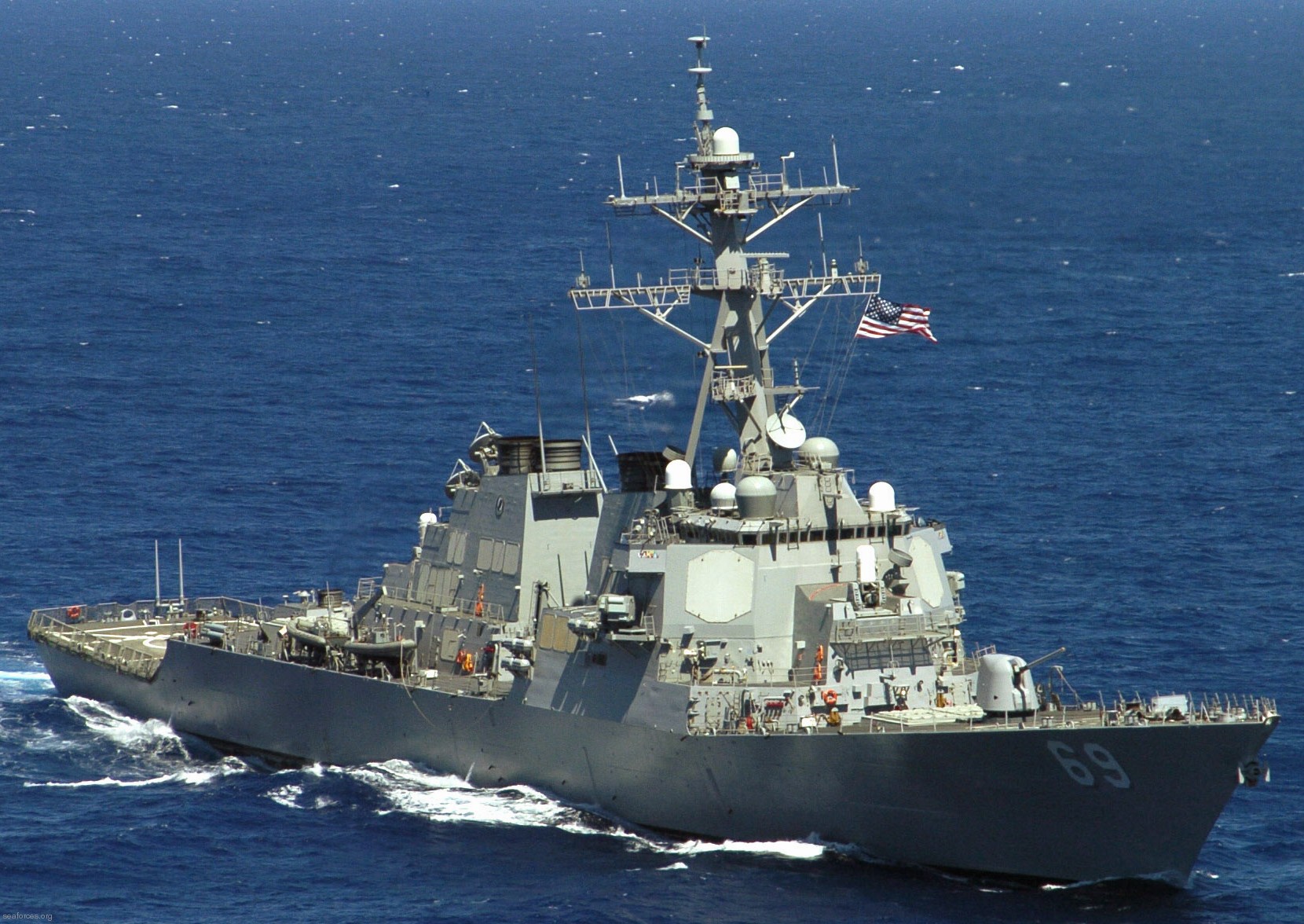 during exercise RIMPAC 06 - off Hawaii - July 2006 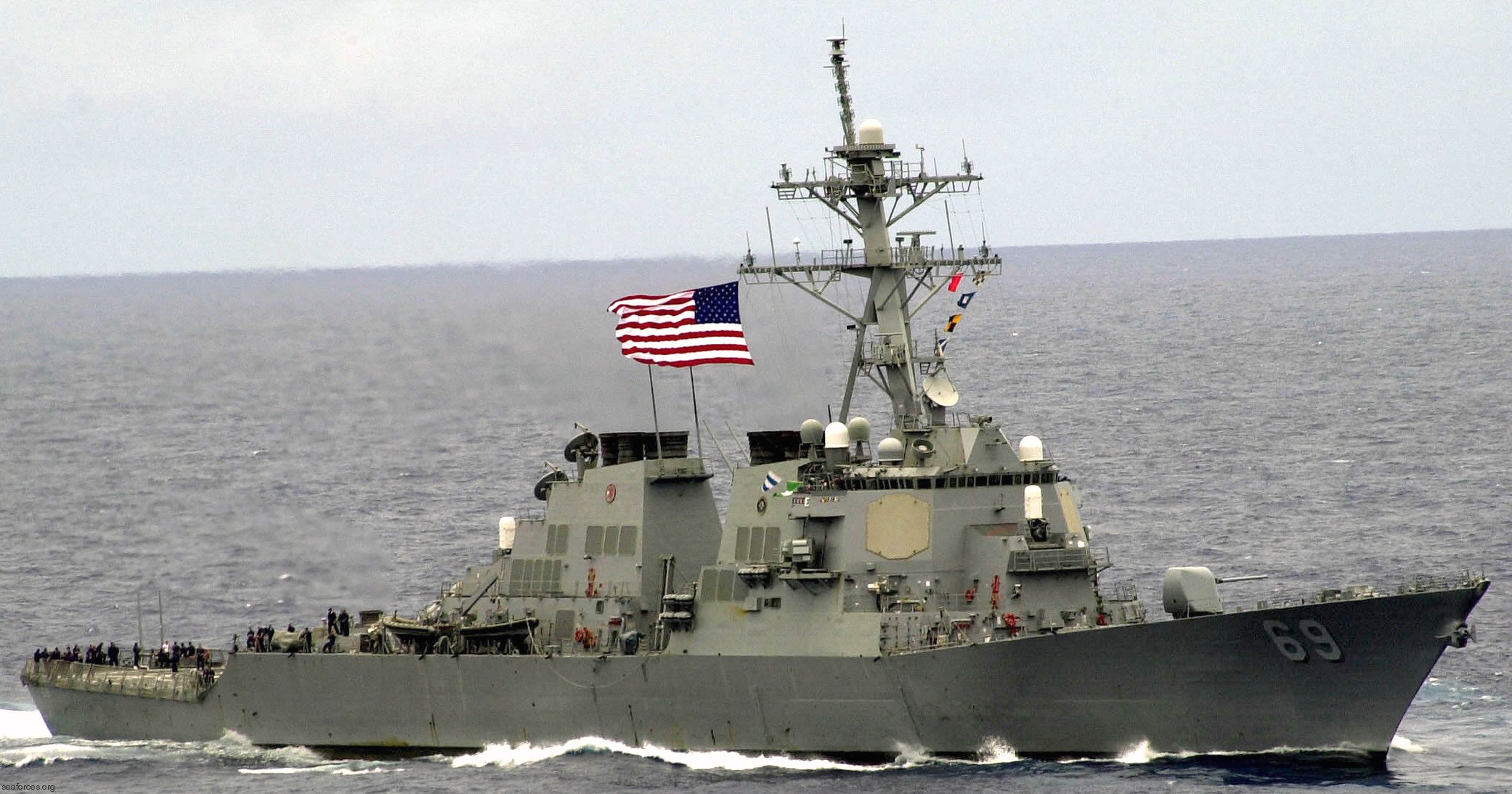 Pacific Ocean - May 2003 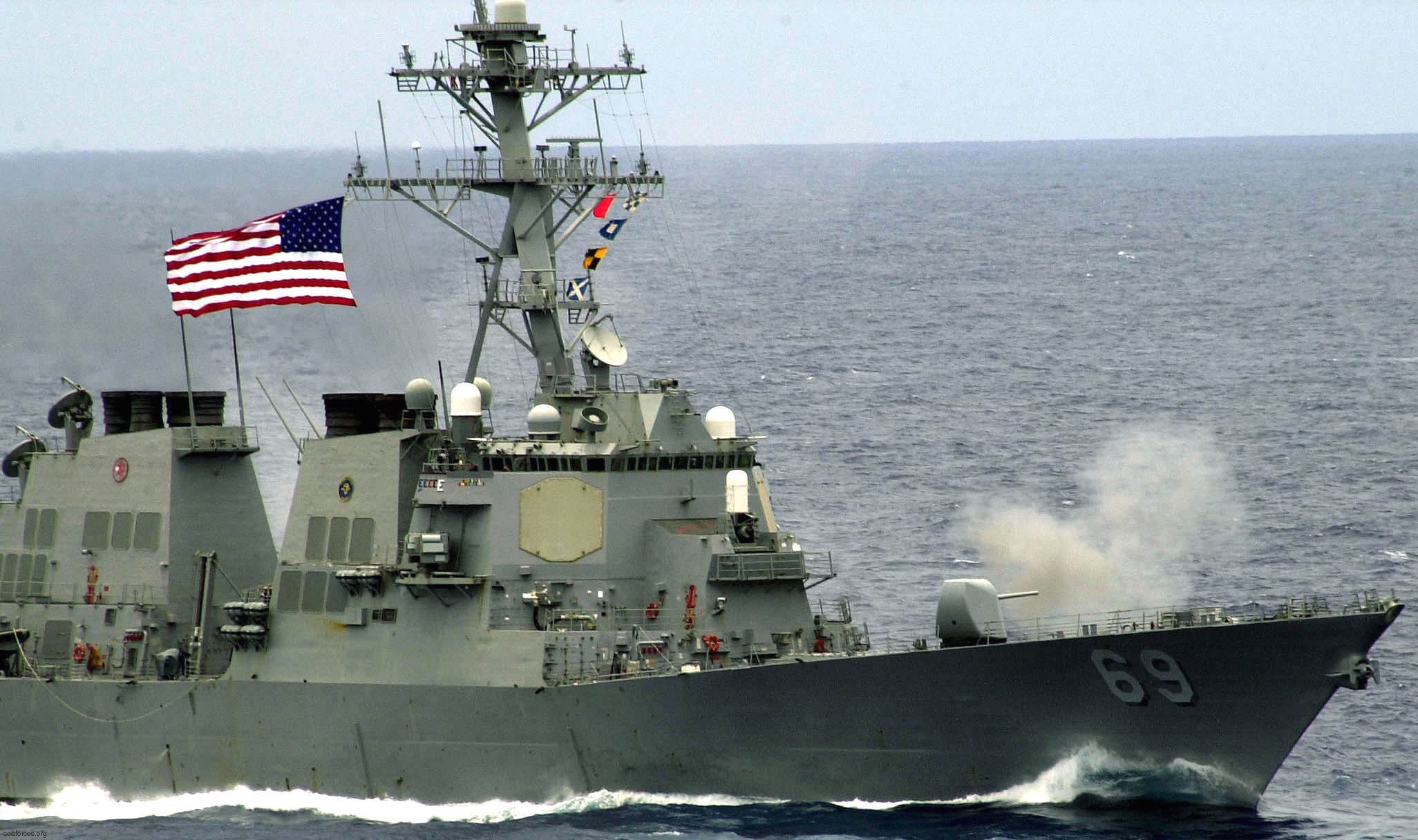 Pacific Ocean - May 2003 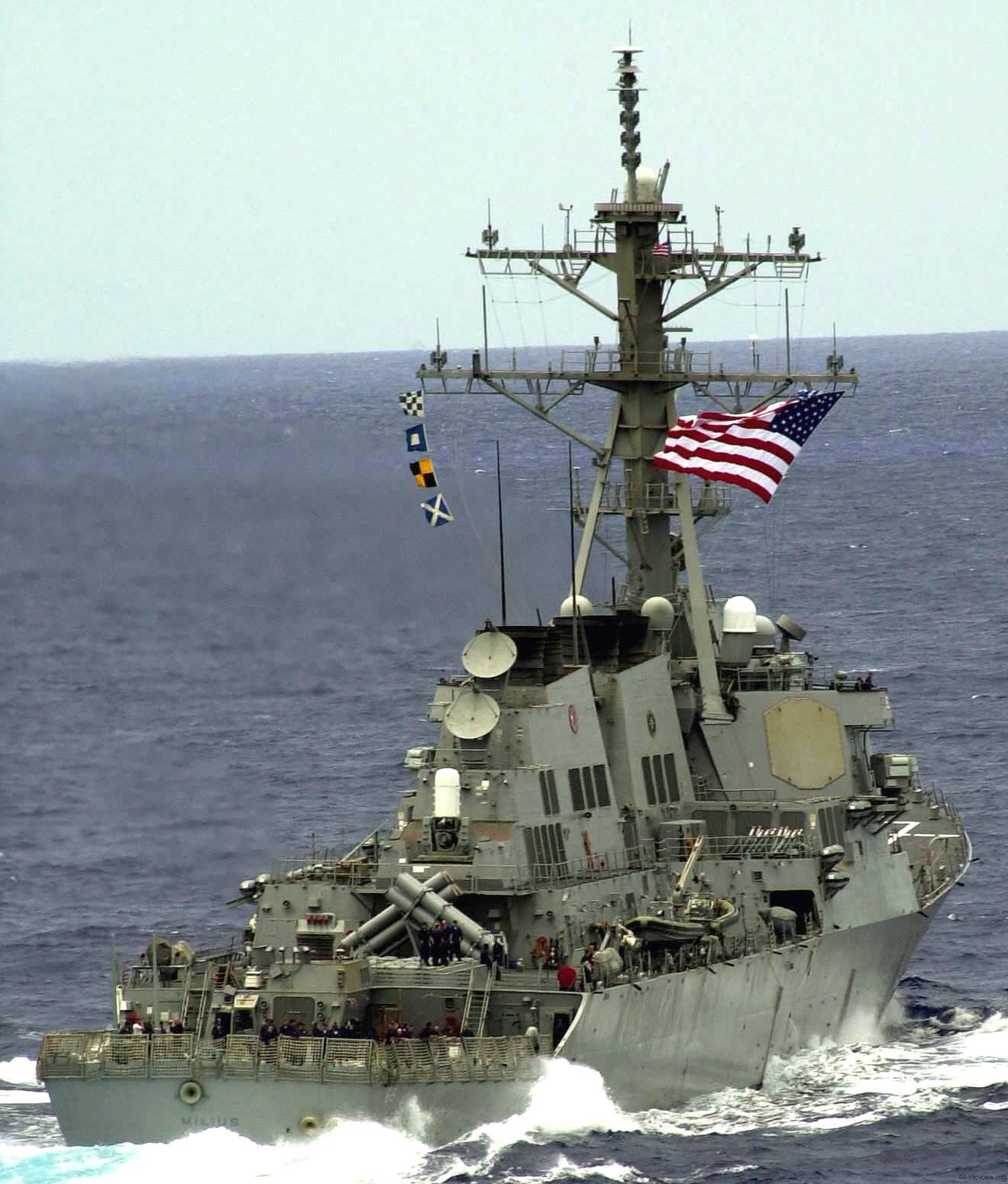 Pacific Ocean - May 2003 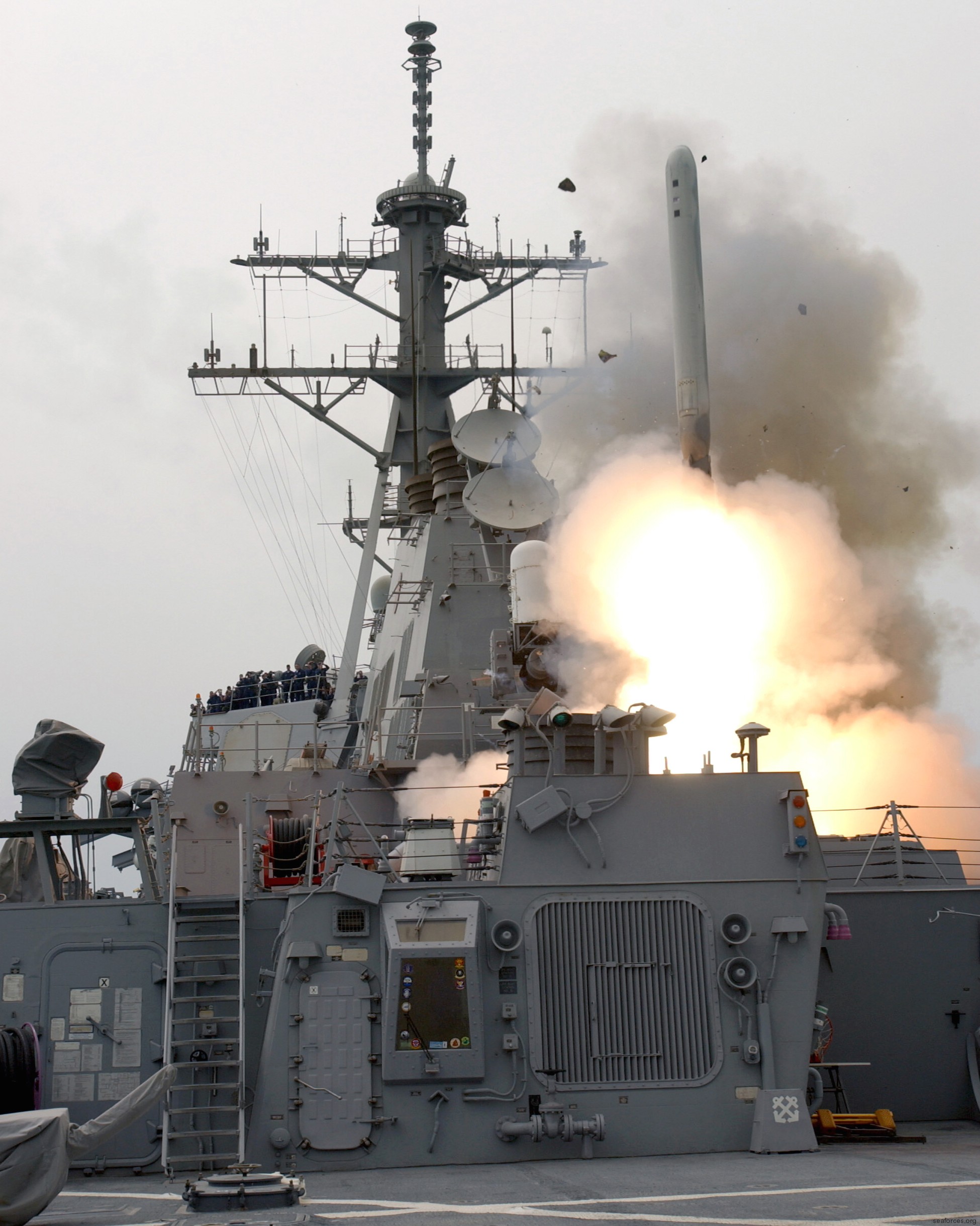 a BGM-109 Tomahawk Land Attack Missile (TLAM) was launched during Operation Iraqi Freedom - 5th Fleet AOR - March 2003 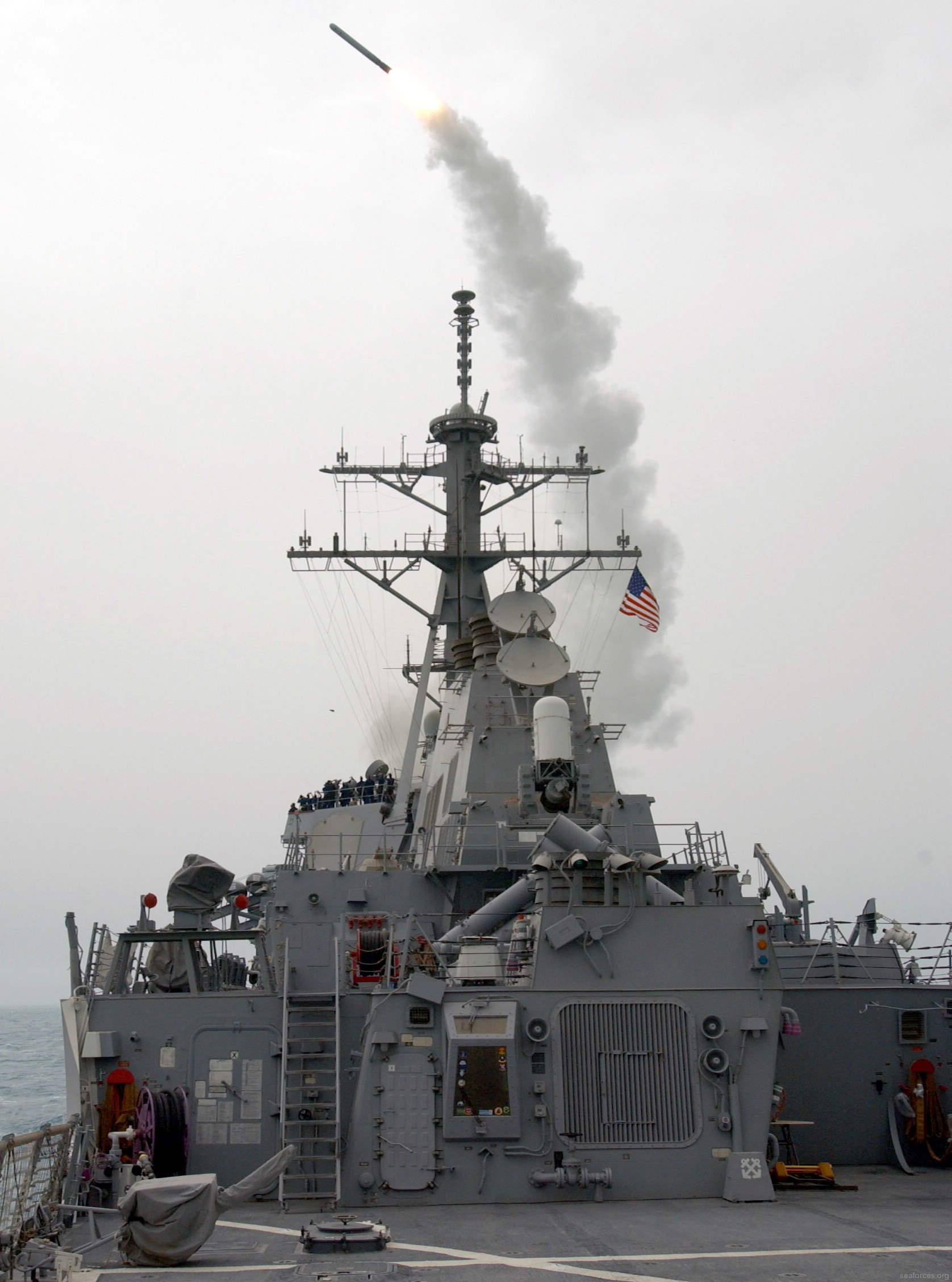 a BGM-109 Tomahawk Land Attack Missile (TLAM) was launched during Operation Iraqi Freedom - 5th Fleet AOR - March 2003 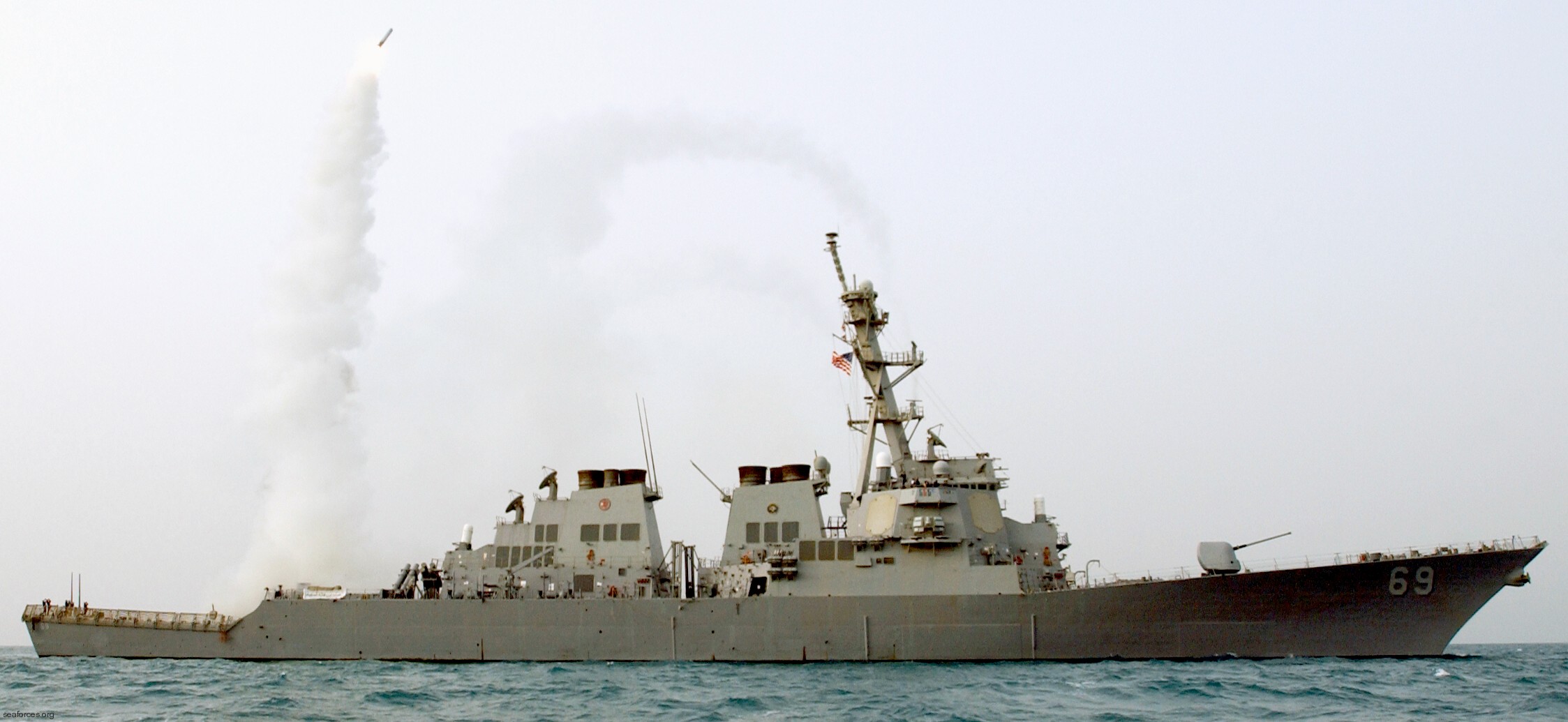 a BGM-109 Tomahawk Land Attack Missile (TLAM) was launched during Operation Iraqi Freedom - 5th Fleet AOR - March 2003 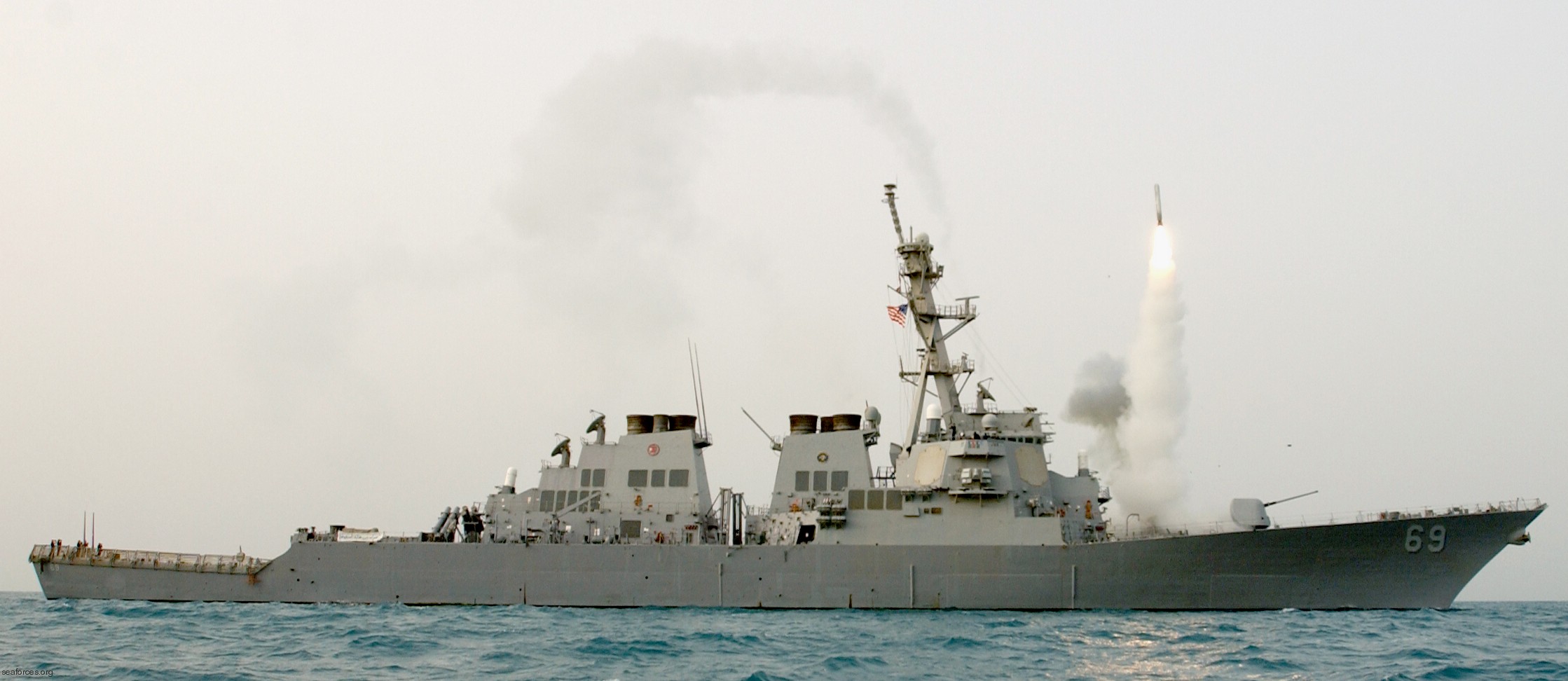 a BGM-109 Tomahawk Land Attack Missile (TLAM) was launched during Operation Iraqi Freedom - 5th Fleet AOR - March 2003 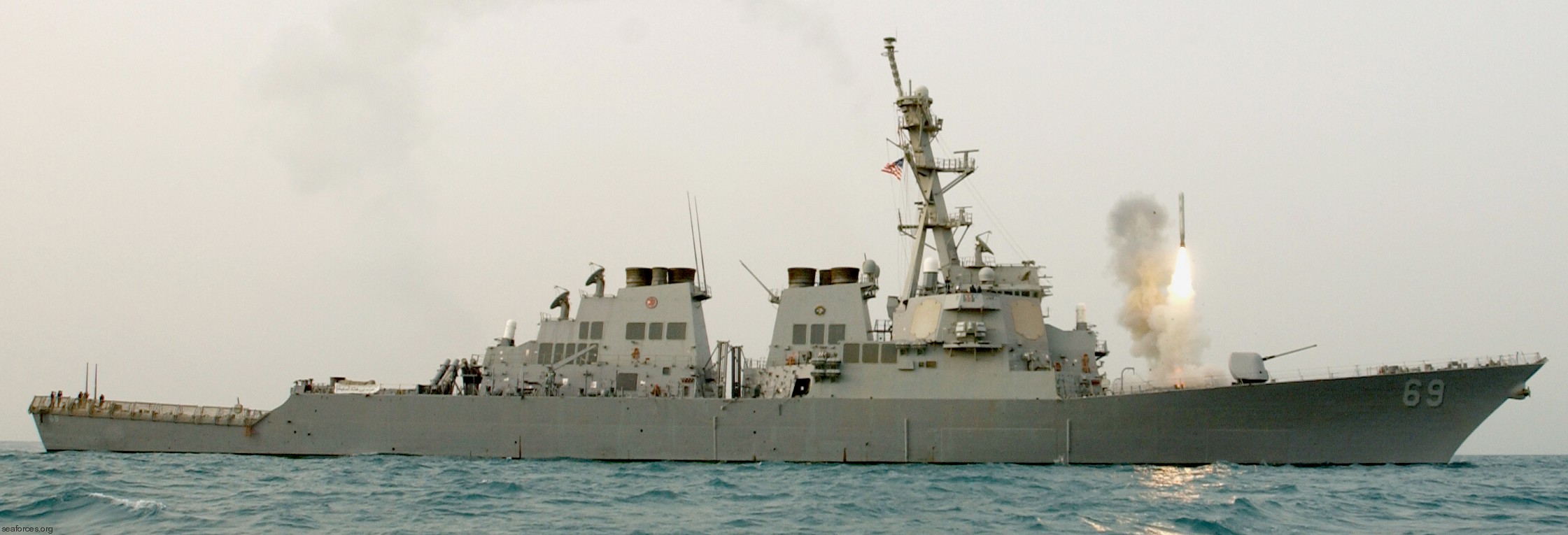 a BGM-109 Tomahawk Land Attack Missile (TLAM) was launched during Operation Iraqi Freedom - 5th Fleet AOR - March 2003 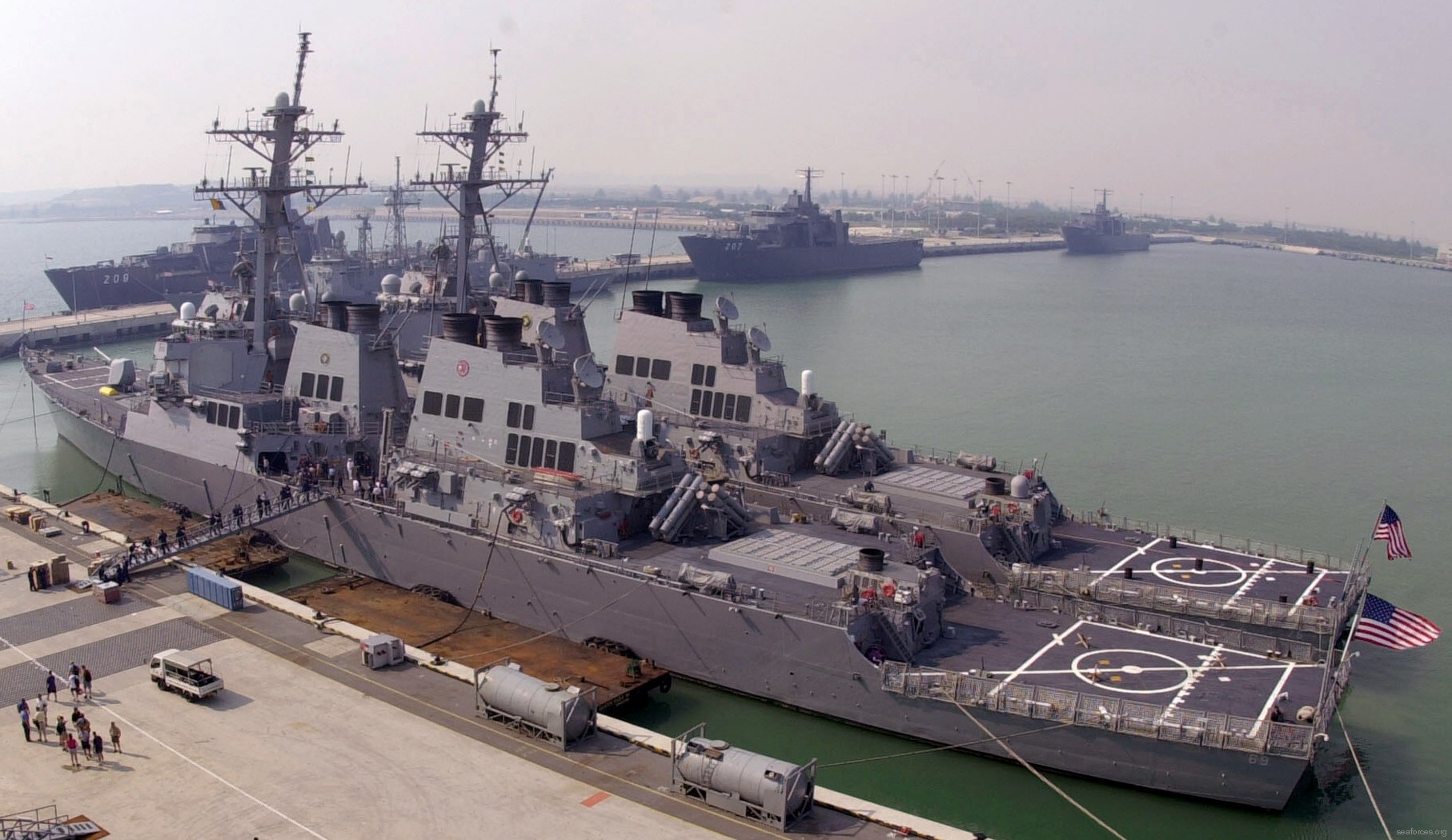 Changi Naval Base, Singapore - November 2002 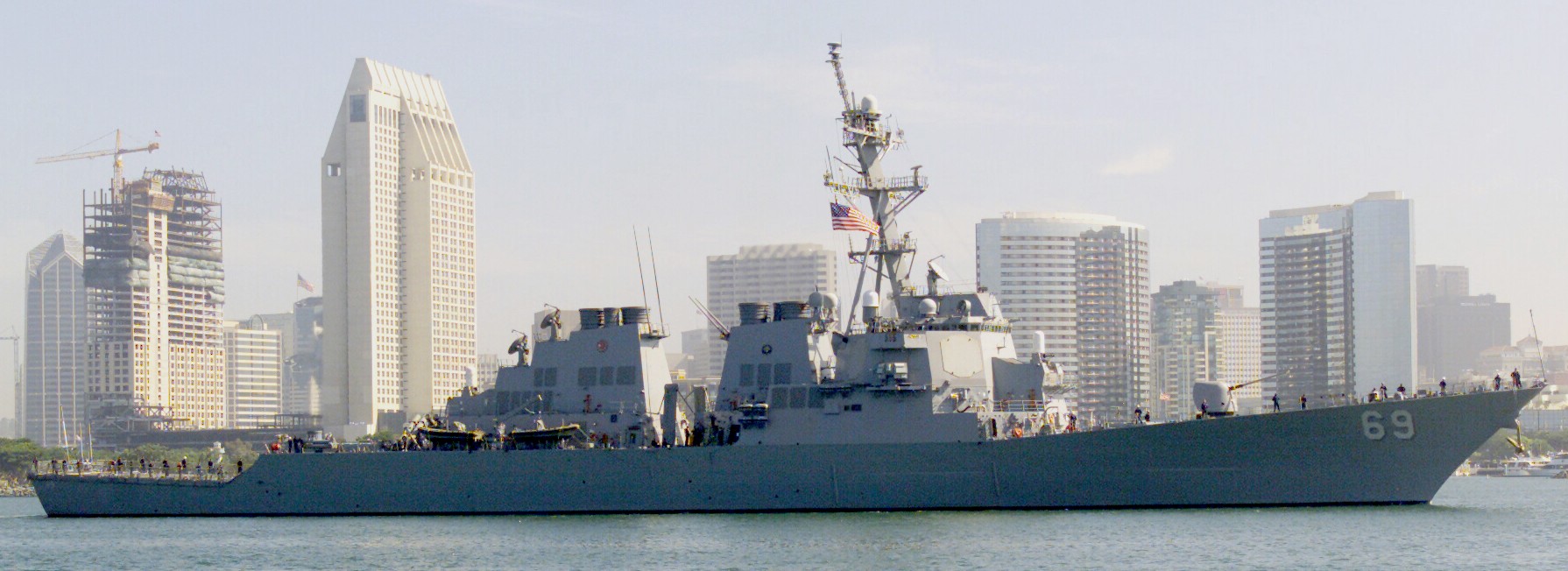 returning to San Diego, California - August 8, 2002 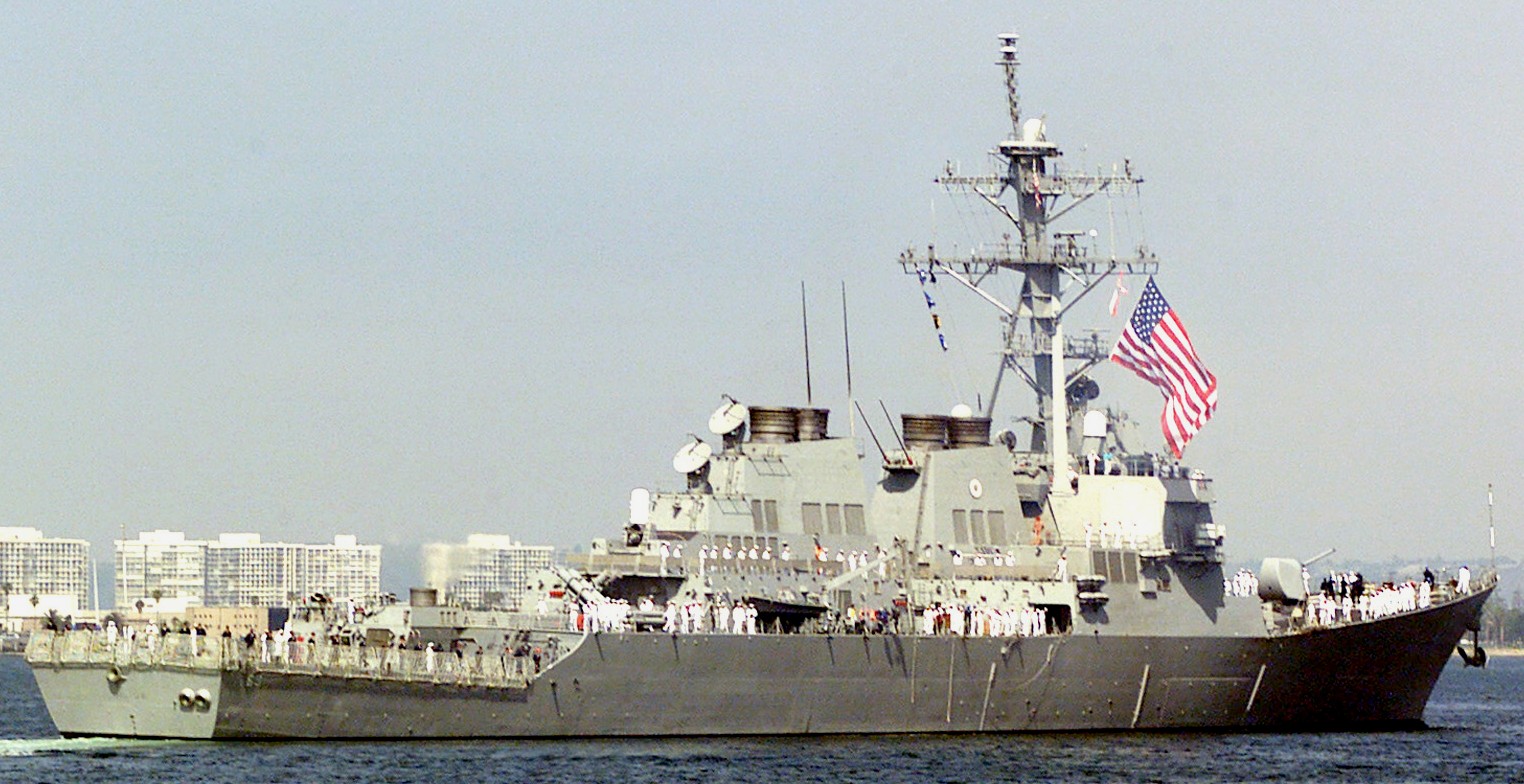 departing Naval Base San Diego, California - June 22, 2000 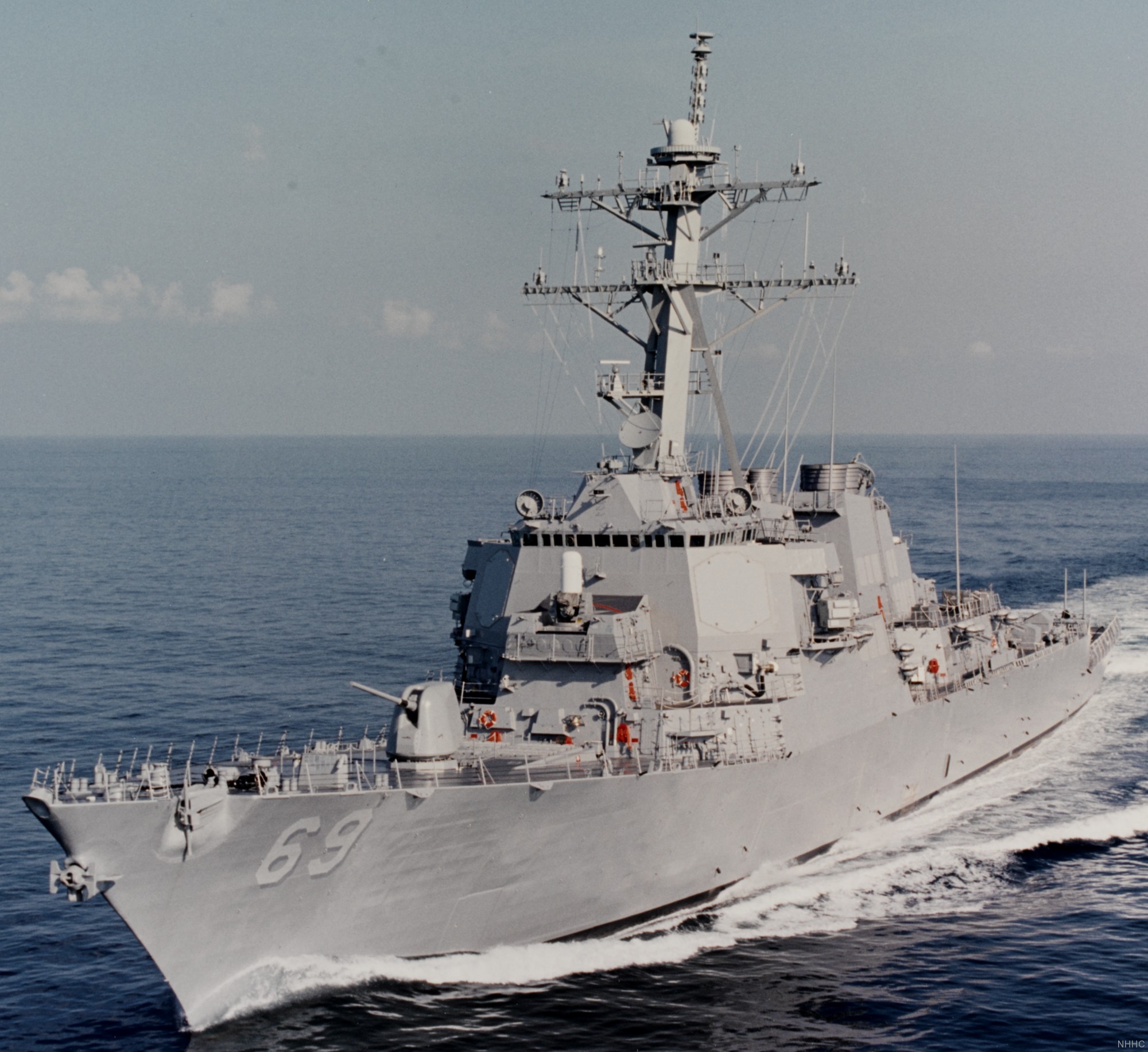 builders trials - June 1996 |
||
|
USS Milius (DDG 69): USS Milius (DDG 69) was laid down 8 August 1994, christened on 25 October 1995 and commissioned at Ingalls shipyard on November 23, 1996 with Cmdr. D. E. Eisold as the commanding officer. In May 1998 USS Milius departed Naval Station San Diego, Calif., for its maiden deployment. In August the Milius participated in Tactical Evaluation Exercise 98-1. In November USS Milius returned to San Diego after her six-month deployment in the U.S. 5th and 7th Fleet Areas of Responsibility (AoR). March 16, 1999 The guided-missile destroyer got underway for sea trials. In May the Milius participated in JTFEX as part of opposition forces. In June 2000 USS Milius left her homeport for a scheduled five-month western Pacific deployment. In April 2001 DDG 69 was underway for sea trials in SOCAL Op. Area. In May the guided-missile destroyer arrived at NWS Seal Beach for ordnance onload. She was underway for USS Carl Vinson BG's JTFEX as part of opposition forces from June 6-11. In September the Milius departed San Diego in support of Operation Noble Eagle. In January 2002 USS Milius was underway for CART II in the SOCAL Op. Area. In July USS Milius participated in Composite Training Unit Exercise (COMPTUEX) off the coast of southern California. In October she was underway for Joint Task Force Exercise (JTFEX). In November USS Milius departed Naval Station San Diego as part of USS Constellation (CV 64) Battle Group for a scheduled deployment in support of Operation Southern Watch (OSW) and Operation Enduring Freedom (OEF). In December DDG 69 entered the Arabian Gulf and commenced Maritime Interdiction Operations (MIO). In March 2003 USS Milius launched Tomahawk Land Attack Missiles (TLAMs) in support of Operation Iraqi Freedom. By March 26, the guided-missile destroyer launched 28 Tomahawk Land Attack Missiles (TLAMs). On June 2, USS Milius returned to homeport after a seven-month combat deployment. From May 3-7 2004 the Milius was underway for Group Sail operations with the Destroyer Squadron (DESRON) 7. In May USS Milius supported Operation Northern Edge, as part of USS John C. Stennis (CVN 74) CSG. She was underway for JTFEX from November 3-13. In December USS Milius departed San Diego for a scheduled deployment in the U.S. 5th and 7th Fleet AoR, with the USS Bonhomme Richard ESG-5, in support of the Global War on Terrorism - Operation Unified Assistance and Operation Iraqi Freedom. On 6 June 2005 USS Milius returned to homeport after six-month deployment. January 22, 2007 The Milius participated in Expeditionary Strike Group Integrated Training (ESGINT) exercise in preparation for her deployment with the USS Bonhomme Richard. In April USS Milius departed for a scheduled deployment with the BHR ESG-5. In August DDG 69 conducted Maritime Interdiction Operations (MIO) in the Arabian Gulf. In February 2009 USS Milius joined Combined Task Force (CTF) 152 for a five-day exercise Stake Net. In July USS Milius returned to San Diego after a seven-month deployment in the U.S. 5th and 7th Fleet Areas of Responsibility. In November the guided-missile destroyer participated in a strike group sustainment exercise (SUSTAINEX), as part of USS John C. Stennis (CVN 74) Carrier Strike Group. In May 2010 USS Milius departed for an independent deployment to the 5th Fleet AoR with a primary focus on Ballistic Missile Defense. On December 16, USS Milius returned to homeport after her seven-month deployment. In October 2011 USS Milius pulled into San Francisco, Calif., to participate in Fleet Week 2011. On January 11, 2012 USS Milius departed San Diego for a scheduled independent deployment in the U.S. 5th and 7th Fleet AoR. On September 11, USS Milius returned to Naval Base San Diego after an eight-month deployment. source: US Navy Deployments: 26 May 1998 - September 1998 Maiden deployment 22 June 2000 - December 2000 West Pac-Indian Ocean-Persian Gulf 2 November 2002 - 2 June 2003 West Pac-Indian Ocean-Persian Gulf 6 December 2004 - 6 June 2005 West Pac-Indian Ocean-Persian Gulf 10 April 2007 - 8 October 2007 Scheduled Deployment with BHR ESG December 2008 - July 2009 West Pac-Indian Ocean-Persian Gulf 18 May 2010 - 16 December 2010 West Pac-Indian Ocean-Persian Gulf 11 January 2012 - 11 September 2012 West Pac-Indian Ocean-Persian Gulf 20 October 2014 - 25 June 2015 West PAC- Indian Ocean-Persian Gulf May 2018 - TBD Forward deployed to 7th Fleet, USS Milius changes homeport from San Diego, CA to Yokosuka, Japan |
||
|
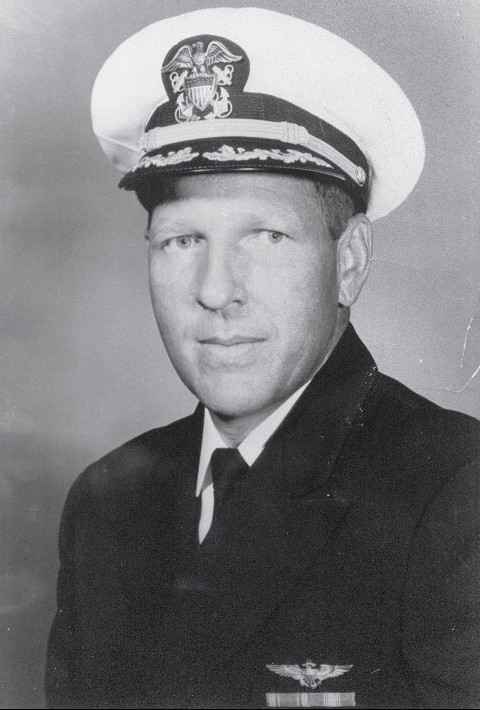
Captain Paul Lloyd Milius (February 11, 1928 - February 27,
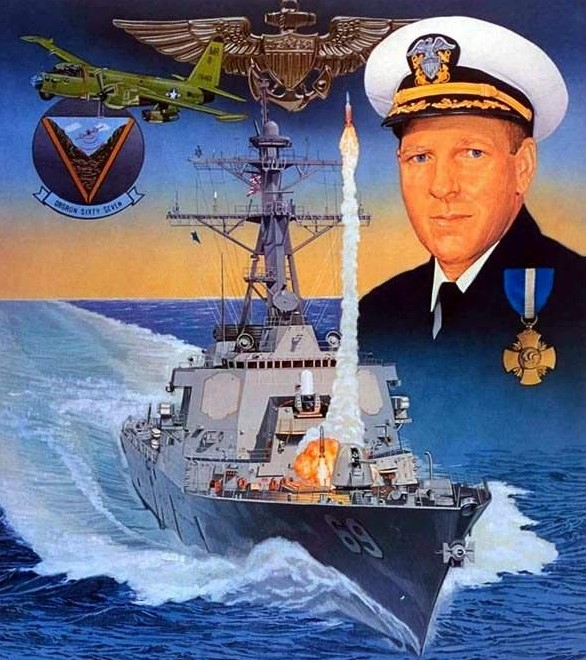
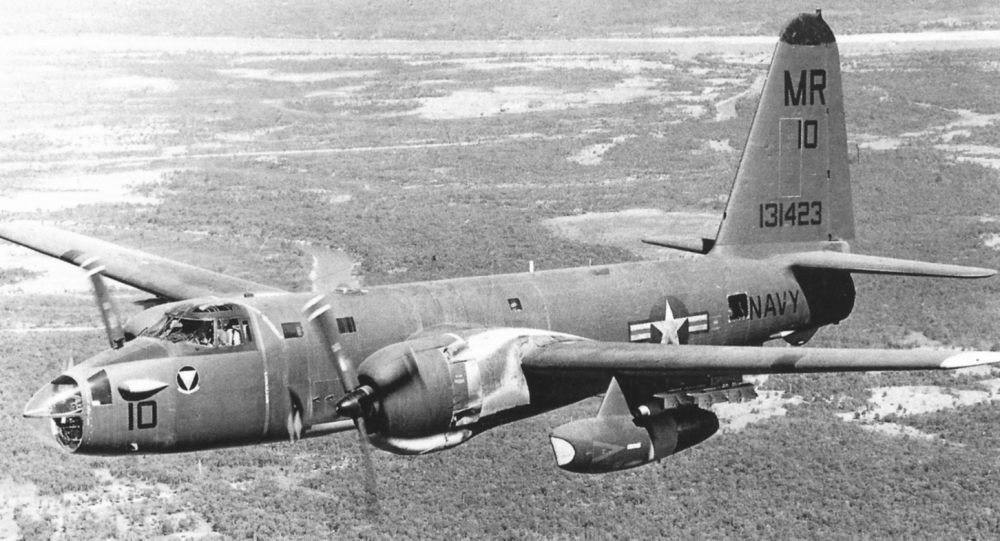
1968): DDG 69 is named in honor of the Navy pilot Captain Paul Lloyd Milius. He was born 11 February, 1928, the youngest of four children, in Denver, Iowa, a small, rural community in Bremer County in the northeastern part of the state. He and the fifteen other members of the senior class graduated from Readlyn High School in May of 1946. In April of 1946, just weeks before graduation, Captain Milius received his selective service notification and reported to his pre-induction physical examination at the local examining board on the second floor of the Waverly Savings Bank building in Waverly, Iowa. By 21 May of that year, the eighteen year old son of C. H. and Christina Milius was in "boot camp" at the Naval Training Center in San Diego, California, serving on active duty in the United States Navy. Captain Milius was discharged from active duty in March of 1948. His enlisted naval experience in the aviation community had only enhanced his lifelong intrigue with aircraft and his desire to fly. Knowing the route to the cockpit begins with a college degree, he enrolled in Iowa State Teacher's College, now the University of Northern Iowa, in Cedar Falls. Captain Milius continued to serve in the Naval Reserve throughout his time in college. In 1950, after attaining a two year degree, he applied for and was accepted into the Naval Aviation Cadet (NAVCAD) Program. In August 1950, he was back on active duty at the Naval Air Station, Pensacola, Florida, attending the U.S. Naval School, Pre-Flight course. He successfully completed this course on 16 December 1950 and was sent to advanced training at the Naval Air Station in Corpus Christi, Texas. On 16 December 1951, Aviation Cadet Milius was awarded the naval aviator's wings of gold. On 21 December, he accepted the appointment and took the oath of office as an Ensign in the United States Naval Reserve with the naval aviator's designator of 1325. On 30 December, he married his high school sweetheart (and class valedictorian), Darlene Meyerhoff. Captain Milius' early duty assignments as a naval aviator trained him in the Airborne Early Warning community. He spent the first three years of his career, from 1952 through 1955, attached to Airborne Early Squadron TWO (VW-2) at Naval Air Station, Patuxent River, Maryland, where he gained extensive experience flying the multi-engine Lockheed Constellation (WV-1) aircraft. He was subsequently posted to the Naval Air Station at Hutchinson, Kansas, where he served as a flight instructor for the P-2V patrol aircraft until 1957. His daughter, Annette, and son, David, were born during these years. Following two years as a student at the General Line School in Monterey, California, then Lieutenant Milius was assigned to Air Anti-Submarine Squadron TWENTY-THREE in San Francisco flying the S-2 aircraft. He served briefly with Air Antisubmarine Squadron TWENTY-FIVE in Long Beach, California, before he was reassigned to ship's company onboard the aircraft carrier USS KEARSARGE (CVS-33). There he served in a variety of duties including Catapult and Arresting Gear Officer from November 1960 through November 1962. While onboard KEARSARGE, Captain Milius participated in the mission to retrieve Walter Schirra's Mercury "Sigma 7" space capsule in 1962 and made two Western Pacific deployments. In 1962, now Lieutenant Commander Milius was assigned to Naval Air Station, Miramar, California, where he served with Air Antisubmarine Squadron FORTY-ONE (VS-41), filling a variety of squadron billets specifically related to antisubmarine warfare and S-2 aircraft tactics. Following an assignment as Airborne ASW training officer at the Fleet Air Electronic Training Unit Pacific, in Alameda, California, then Commander Milius volunteered for duty in the newly established Observation Squadron SIXTY SEVEN (VO 67). The new unit utilized converted P-2V aircraft, now known as the OP-2E, heavily armored and fitted with advanced land detection systems, for ground reconnaissance missions. The squadron deployed to Khon Phnom Airport in Thailand in 1967 and immediately began flying surveillance missions in the vicinity of the Ho Chi Min Trail. At 1157 local time on February 27, 1968, Commander Milius and the crew of his OP-2E aircraft were on an operational surveillance mission over Laos when the aircraft was hit in the radar well by a large explosive projectile, presumed a 37MM antiaircraft fire. One crew member was mortally wounded by the initial blast and fire broke out in the aircraft. As it became clear that the aircraft could not be saved, Captain Milius took the controls from the pilot, Lieutenant Bernie Walsh, and gave the crew the order to bail out. Captain Milius continued to control the aircraft to enable his crew to escape. Of eight surviving crew members of the initial blast, all but Captain Milius were safely rescued on the ground by the 37th Air Rescue Recovery Squadron Jolly Green Giants. Although Captain Milius was seen exiting the burning aircraft, heavy enemy fire in that area led to search efforts being discontinued before he could be recovered. He was subsequently declared Missing In Action in Southeast Asia in 1968. Captain Milius' status was changed to Presumed Killed In Action ten years later. He was posthumously awarded the Navy Cross in 1978. Warship Milius’s motto, “ALii Prae Me”, or “Others Before Myself”, was chosen to reflect the Personal ethic held throughout Captain Milius’ military career and his selfless act under fire. Navy Cross Citation: Awarded posthumously for actions during the Vietnam War The President of the United States of America takes pride in presenting the Navy Cross (Posthumously) to Captain [then Commander] Paul Lloyd Milius, United States Navy, for extraordinary heroism on 27 February 1968 as an Aircraft Commander in Observation Squadron SIXTY SEVEN (VO-67). During a combat mission in Southeast Asia, Captain Milius' aircraft received multiple hits from 37-mm. anti-aircraft-artillery fire during a run over the assigned target. Immediately, the aircraft burst into flames, several members of the crew received injuries, and dense smoke and fumes filled the fuselage. Remaining at the controls to insure stable flight, Captain Milius ordered his crew members to bail out. As a result of his action, seven of his nine crewmen were rescued within three hours of bail-out. Rescue flights, however, were unable to locate Captain Milius. His heroic efforts and inspiring devotion to duty were in keeping with the highest traditions of the United States Naval Service.
|
||
| patches + more | ||
  |
||
|
|
seaforces.org
|
USN ships
start page | |