 |
||
|
HOME
|
US Navy -
ships
|
US Navy - air
units
|
USMC - air
units
|
International
Navies
|
Weapon Systems
|
Special Reports |
||
|
US Navy - Aircraft Carrier CVA 60 / CV 60 - USS Saratoga |
||
|
||
| 08/26 | ||
|
Type, class: Aircraft Carrier, CVA, CV;
Forrestal class Builder: New York Naval Shipyard, Brooklyn, New York, USA STATUS: Awarded: July 23, 1952 Laid down: December 16, 1952 Launched: October 8, 1955 Commissioned: April 14, 1956 Decommissioned: August 20, 1994 Fate: laid up at Naval Station Mayport, Florida departed Naval Station Mayport, Florida on May 22, 1995 towed to Naval Inactive Ship Maintenance Facility Philadelphia, Pennsylvania towed to Naval Station Newport, Rhode Island in 1998 laid up at NS Newport, Rhode Island 1998-2014 departed Naval Station Newport, Rhode Island under tow on August 21, 2014 arrived in Brownsville, Texas on September 15, 2014 scrapped in Brownsville, Texas - scrapping completed on March 31, 2019 Namesake: Battles of Saratoga (Saratoga County, New York) - September 19 and October 17, 1777 Ships Motto: INVICTUS GALLUS GLADIATOR (invincible fighting cock) Technical Data: see: INFO > Forrestal class Aircraft Carrier |
||
|
Deployments / Carrier Air Wings embarked + major overhauls: August 1956 - October 1956 with Carrier Air Group 4 (CVG-4) - shakedown cruise September 1957 - October 1957 with Carrier Air Group 7 (CVG-7) - NATO exercise ‘Strike Back’ - Atlantic Ocean February 1958 - October 1958 with Carrier Air Group 3 (CVG-3) - Mediterranean Sea May 1959 - June 1959 with Carrier Air Group 3 (CVG-3) - Western Atlantic Ocean August 1959 - February 1960 with Carrier Air Group 3 (CVG-3) - Mediterranean Sea June 1960 - July 1960 with Carrier Air Group 3 (CVG-3) - Western Atlantic Ocean August 1960 - February 1961 with Carrier Air Group 3 (CVG-3) - Atlantic Ocean, Mediterranean Sea July 1961 - August 1961 with Carrier Air Group 3 (CVG-3) - Caribbean Sea November 1961 - May 1962 with Carrier Air Group 3 (CVG-3) - Mediterranean Sea December 1962 with Carrier Air Group 3 (CVG-3) - Caribbean Sea (Cuba!) March 1963 - October 1963 with Carrier Air Group 3 (CVG-3) - Mediterranean Sea November 1964 - July 1965 with Carrier Air Wing 3 (CVW-3) - Mediterranean Sea January 1966 - February 1966 with Carrier Air Wing 3 (CVW-3) - Western Atlantic Ocean March 1966 - October 1966 with Carrier Air Wing 3 (CVW-3) - Mediterranean Sea April 1967 with Carrier Air Wing 3 (CVW-3) - Western Atlantic Ocean May 1967 - December 1967 with Carrier Air Wing 3 (CVW-3) - Mediterranean Sea January 1968 - January 1969: overhaul at Philadelphia Naval Shipyard, Pennsylvania March 1969 - April 1969 with Carrier Air Wing 3 (CVW-3) - Western Atlantic Ocean May 1969 - June 1969 with Carrier Air Wing 3 (CVW-3) - Western Atlantic Ocean July 1969 - January 1970 with Carrier Air Wing 3 (CVW-3) - Mediterranean Sea June 1970 - November 1970 with Carrier Air Wing 3 (CVW-3) - Mediterranean Sea June 1971 - October 1971 with Carrier Air Wing 3 (CVW-3) - Mediterranean Sea April 1972 - February 1973 with Carrier Air Wing 3 (CVW-3) - Vietnam War September 1974 - March 1975 with Carrier Air Wing 3 (CVW-3) - Mediterranean Sea January 1976 - July 1976 with Carrier Air Wing 3 (CVW-3) - Mediterranean Sea July 1977 - December 1977 with Carrier Air Wing 3 (CVW-3) - Mediterranean Sea October 1978 - April 1979 with Carrier Air Wing 3 (CVW-3) - Mediterranean Sea March 1980 - August 1980 with Carrier Air Wing 3 (CVW-3) - Mediterranean Sea October 1980 - February 1983: Service Life Extension Program (SLEP) at Philadelphia Naval Shipyard April 1984 - October 1984 with Carrier Air Wing 17 (CVW-17) - Mediterranean Sea August 1985 - April 1986 with Carrier Air Wing 17 (CVW-17) - Mediterranean Sea, Lybia June 1987 - November 1987 with Carrier Air Wing 17 (CVW-17) - Mediterranean Sea August 1990 - March 1991 with Carrier Air Wing 17 (CVW-17) - Mediterranean Sea, Red Sea May 1992 - November 1992 with Carrier Air Wing 17 (CVW-17) - Mediterranean Sea January 1994 - June 1994 with Carrier Air Wing 17 (CVW-17) - Mediterranean Sea |
||
| images | ||
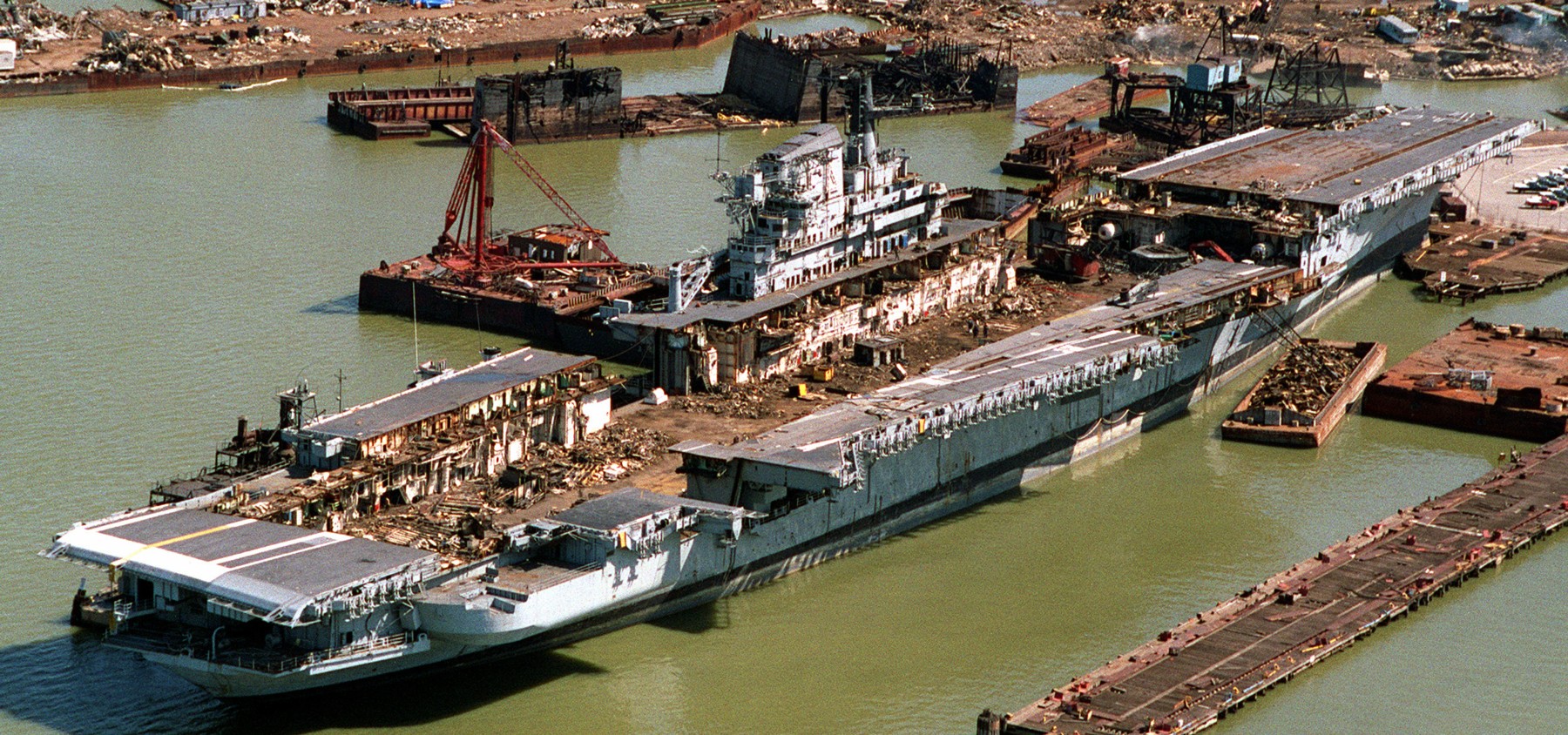 scrapping in Brownsville, Texas 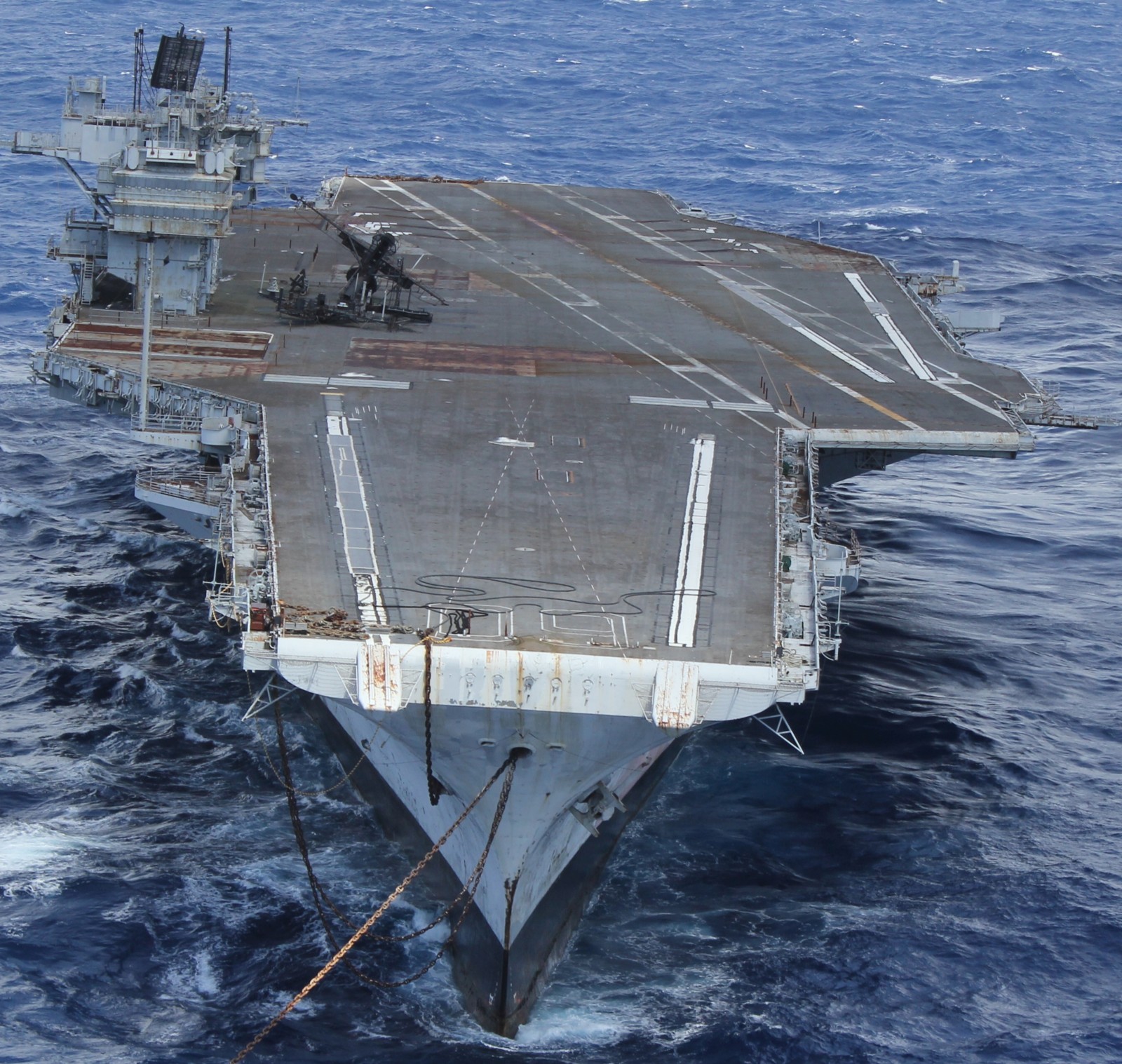 under tow on her way to Brownsville, Texas - August 25, 2014 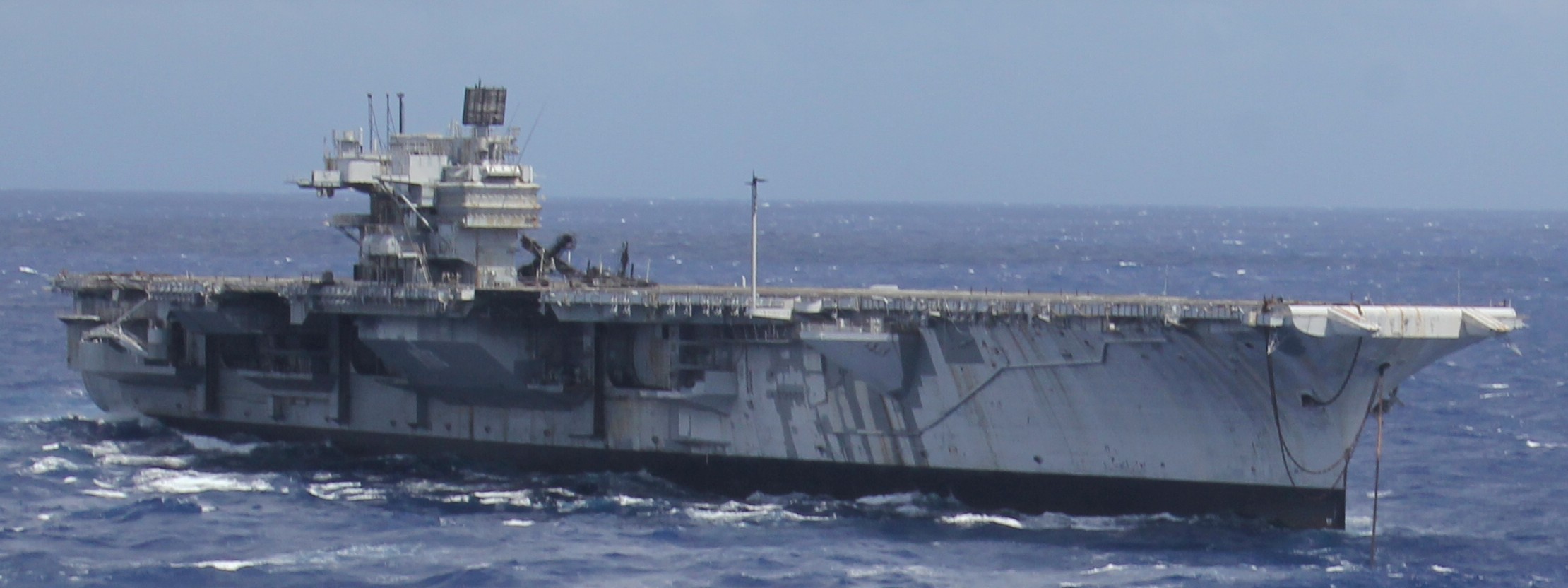 under tow on her way to Brownsville, Texas - August 25, 2014 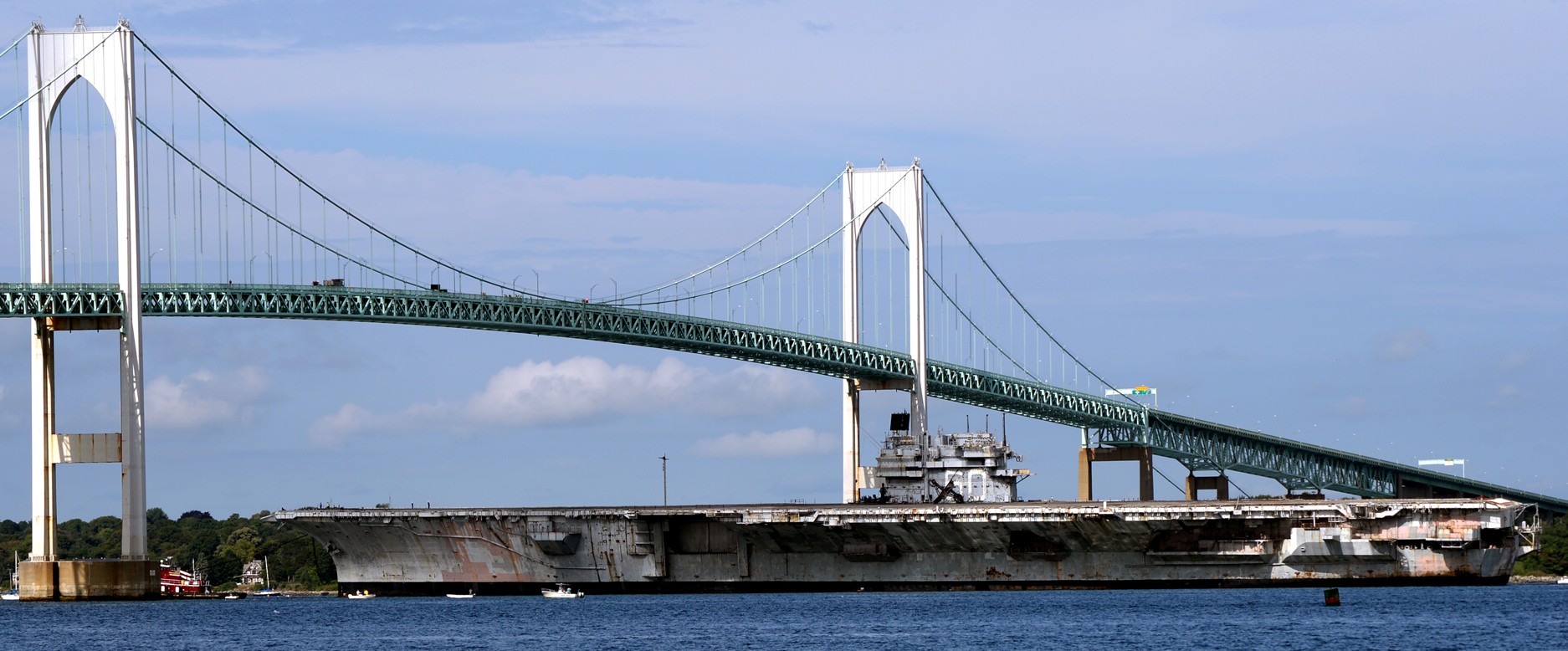 departing Naval Station Newport, Rhode Island for her final journey to Brownsville, Texas - August 21, 2014 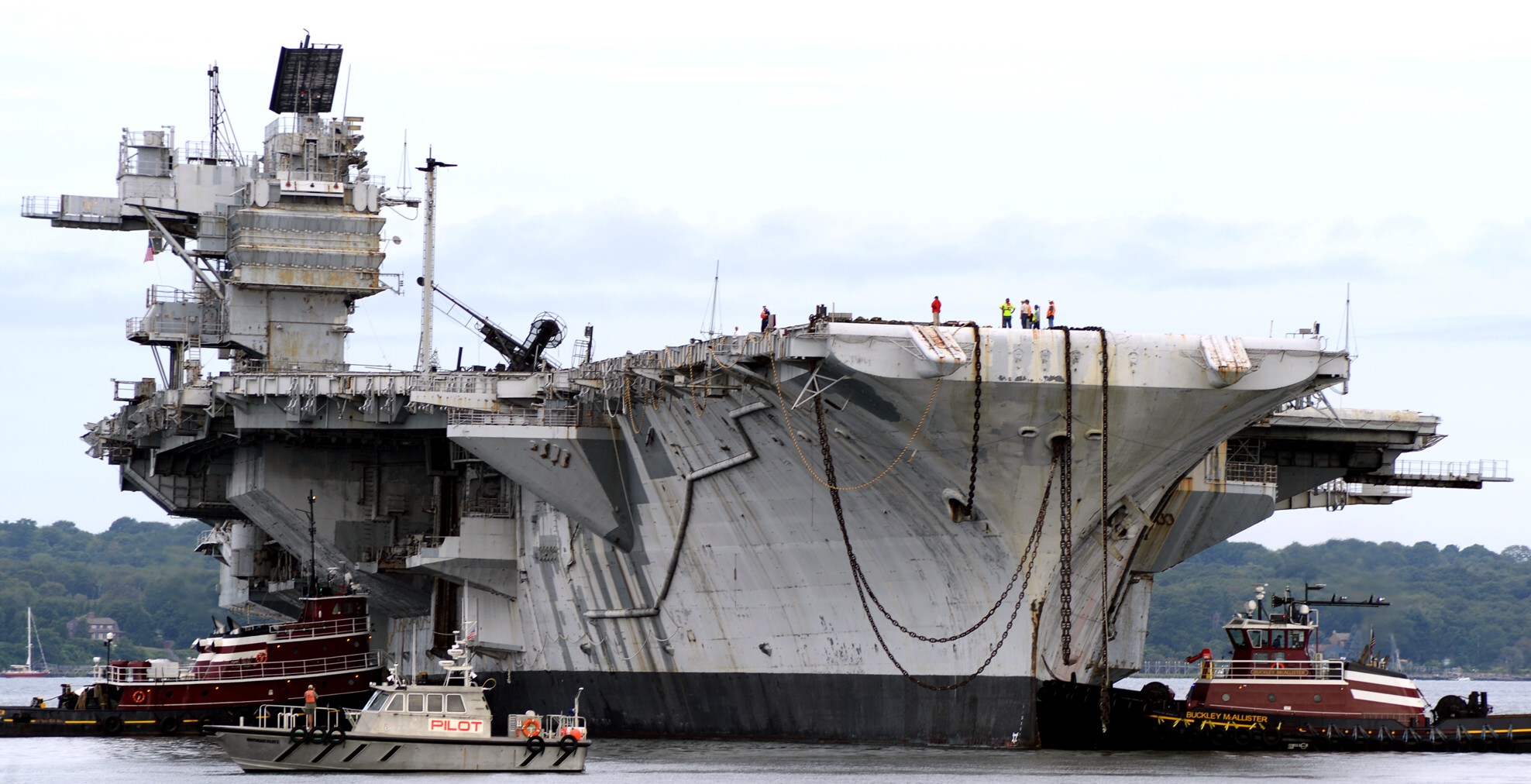 departing Naval Station Newport, Rhode Island for her final journey to Brownsville, Texas - August 21, 2014 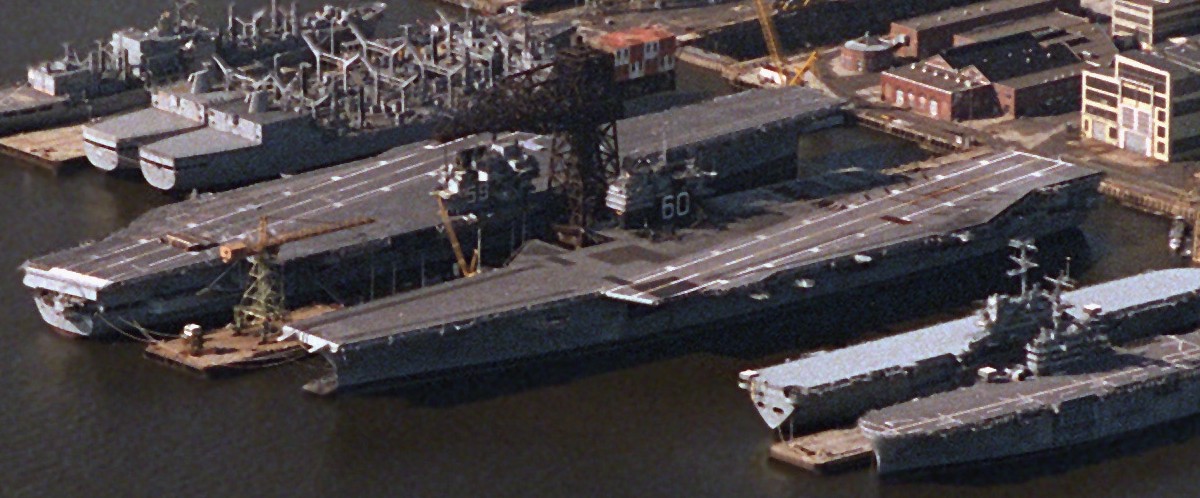 moored at Philadelphia Naval Inactive Ship Maintenance Facility (NISMF) - August 1995 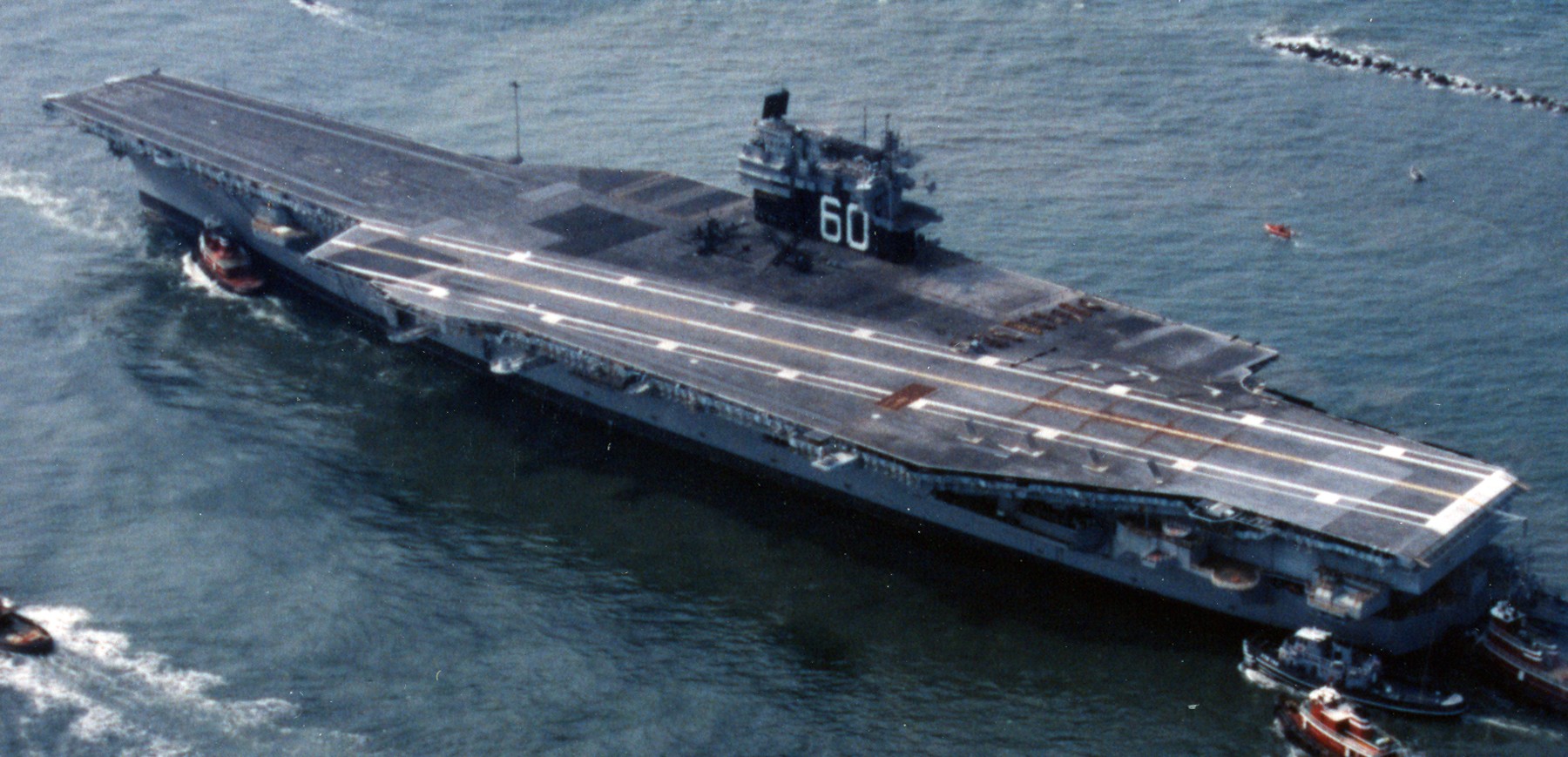 towed to Philadelphia Naval Inactive Ship Maintenance Facility (NISMF) - May 1995 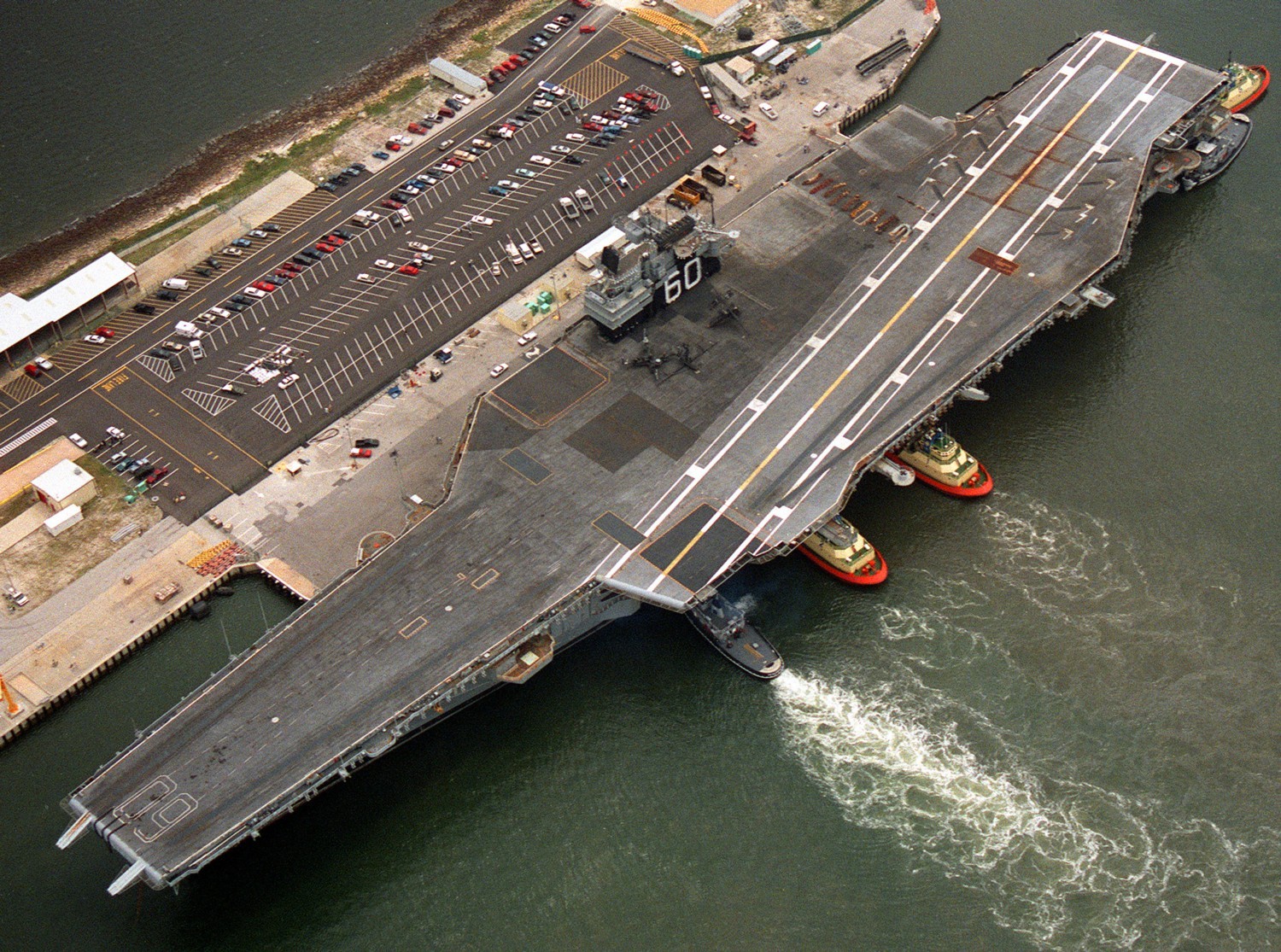 Naval Station Mayport, Florida - 1995 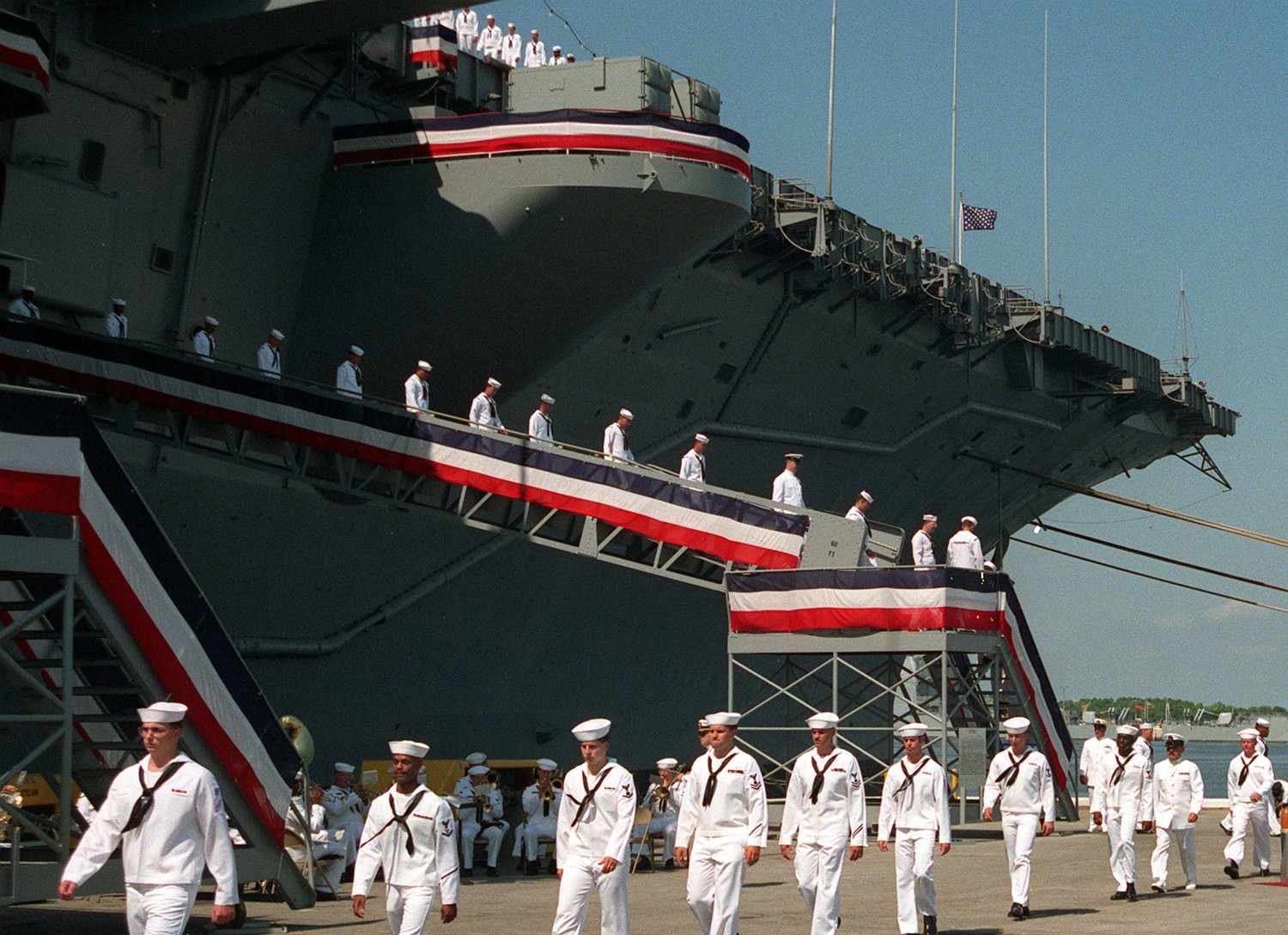 decommissioning ceremony at Naval Station Mayport, Florida - August 20, 1994 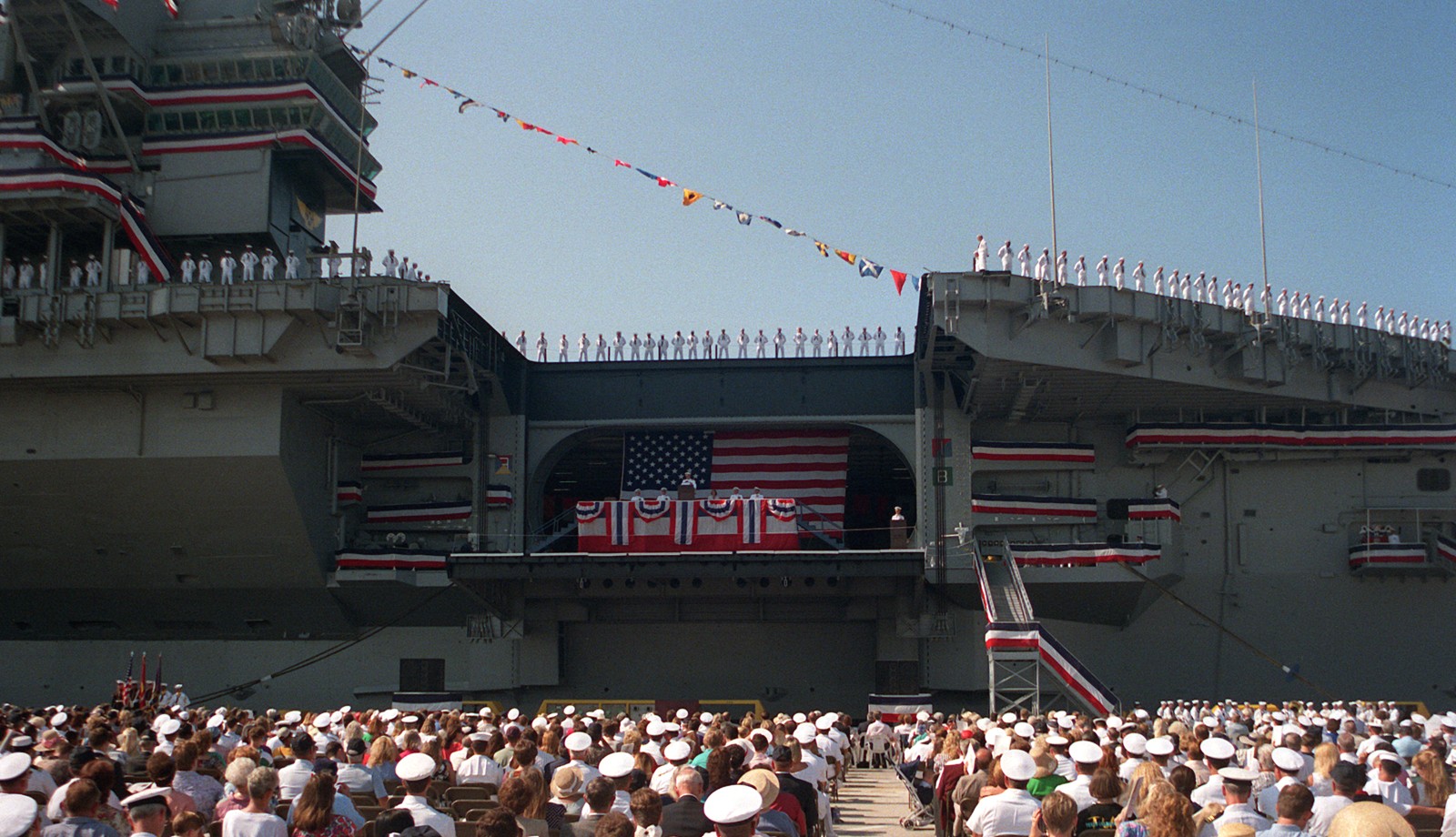 decommissioning ceremony at Naval Station Mayport, Florida - August 20, 1994 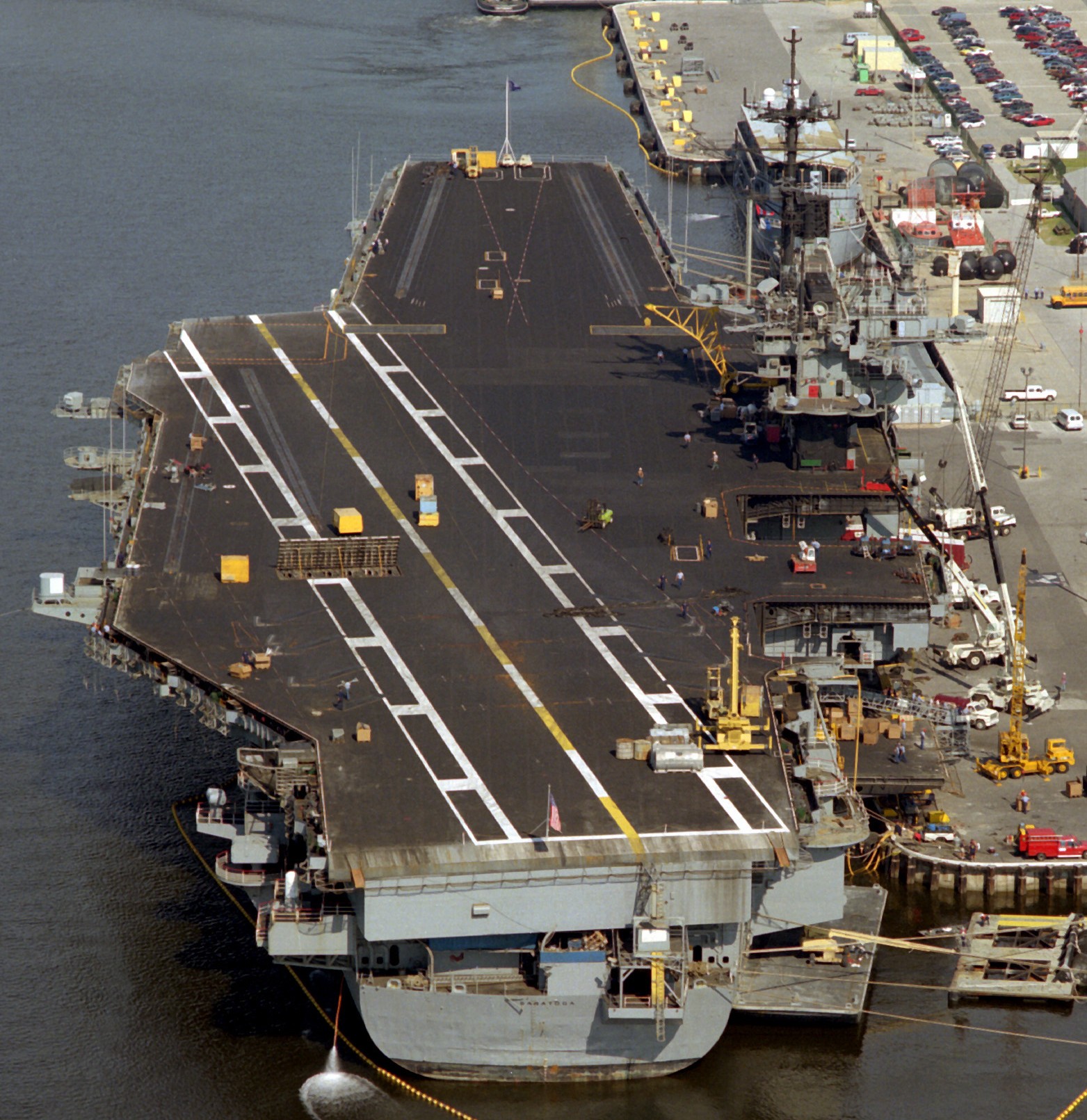 Naval Station Mayport, Florida - July 1994 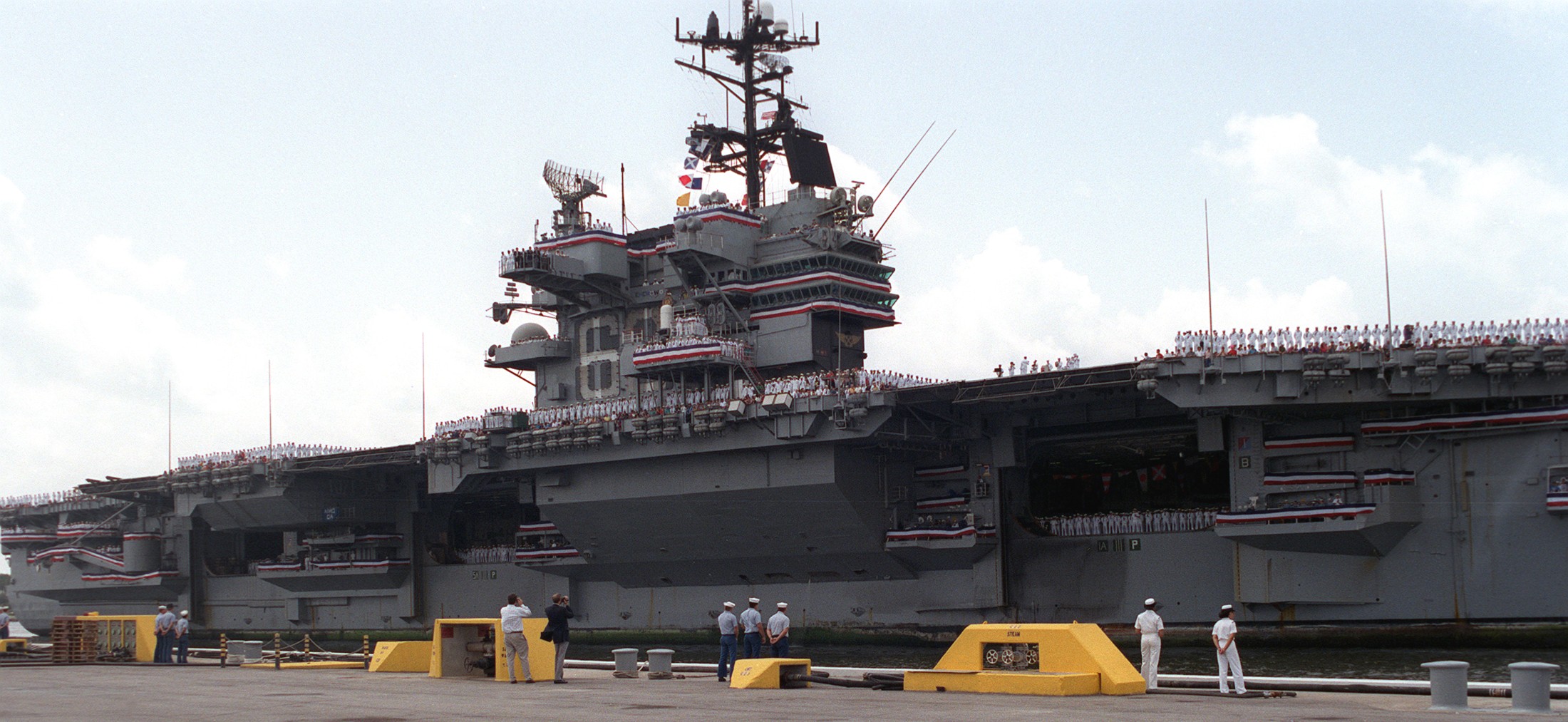 returning to Naval Station Mayport, Florida from her final deployment with CVW-17 - June 24, 1994 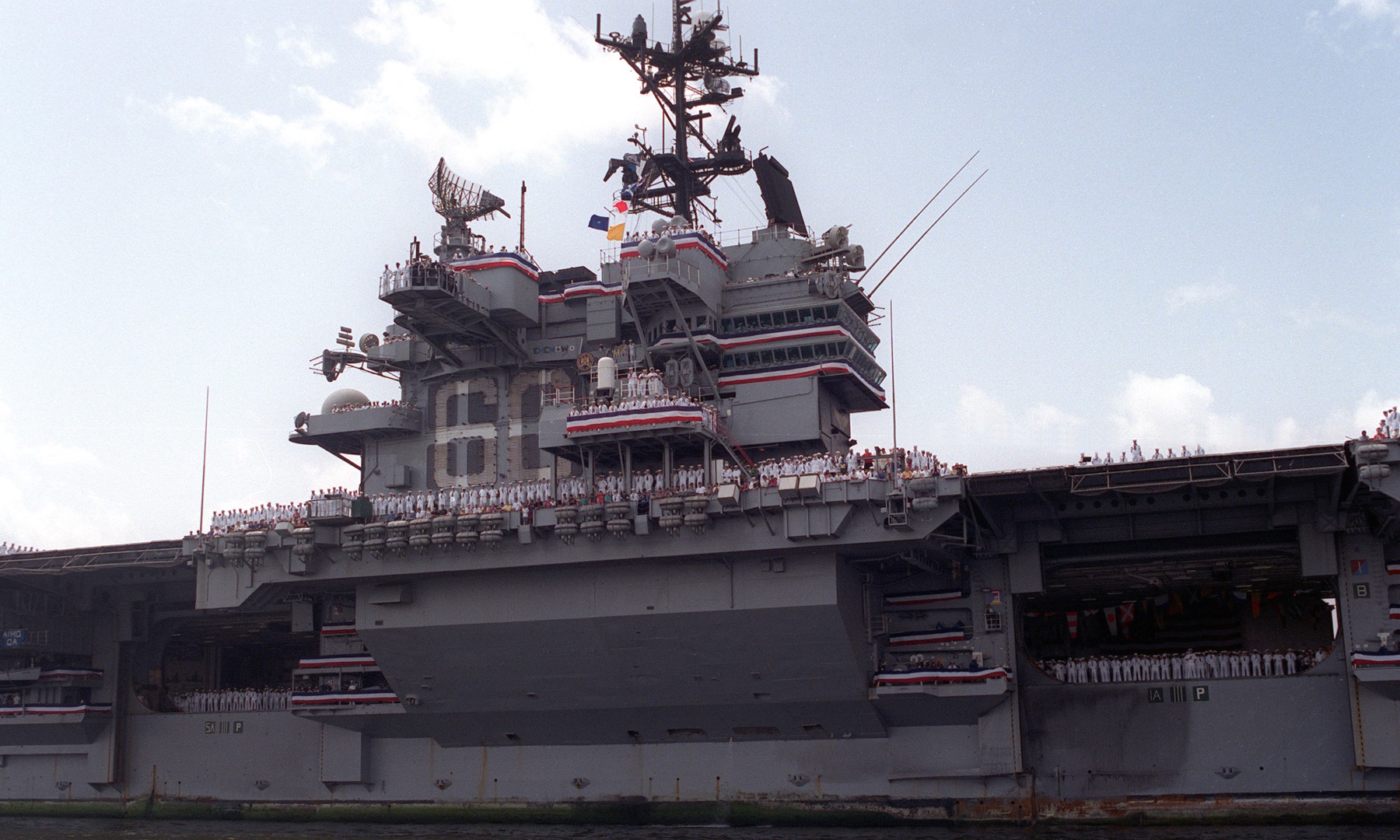 returning to Naval Station Mayport, Florida from her final deployment with CVW-17 - June 24, 1994 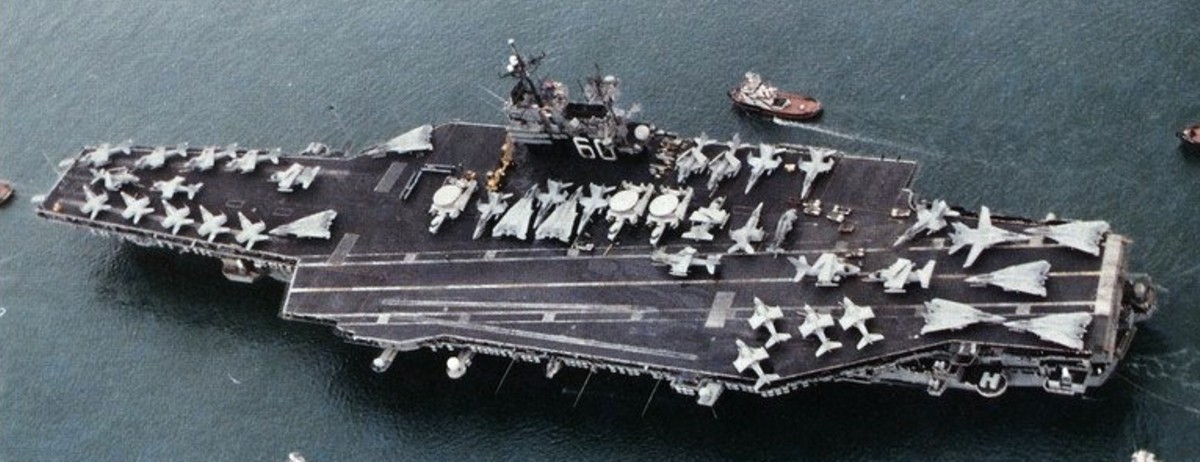 with CVW-17 embarked - Mediterranean Sea - 1994 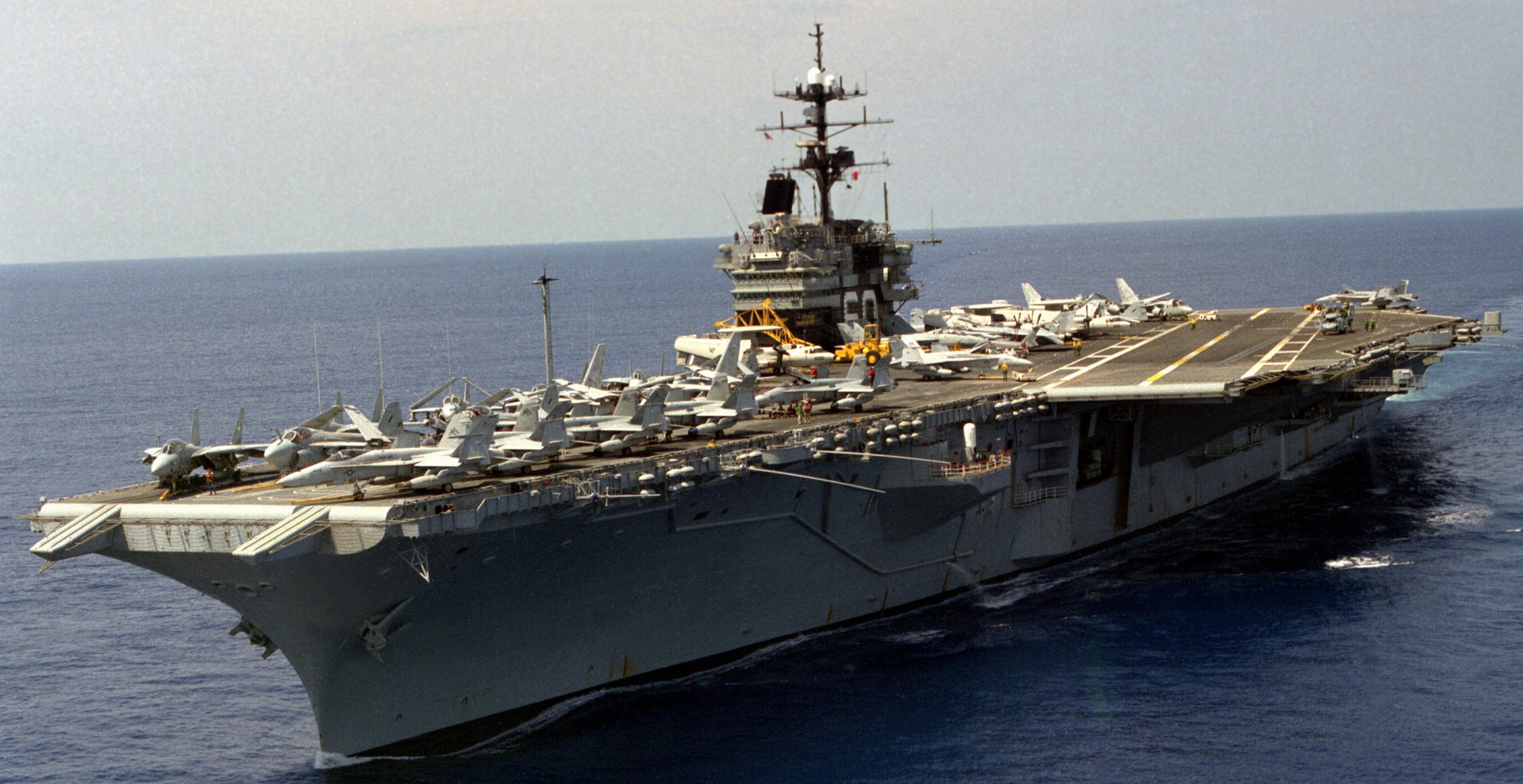 with CVW-17 embarked - Atlantic Ocean - August 1993 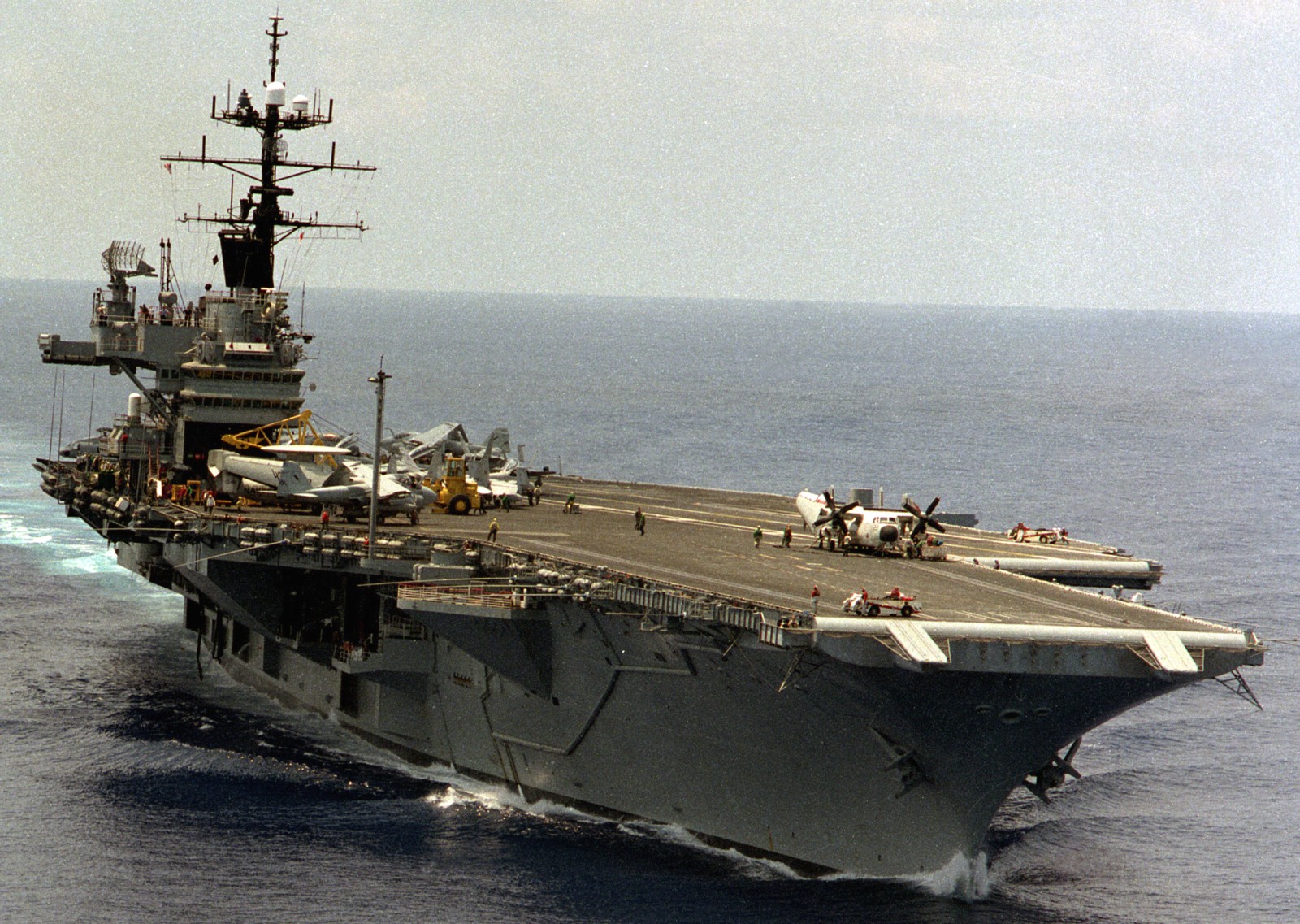 Atlantic Ocean - July 1993 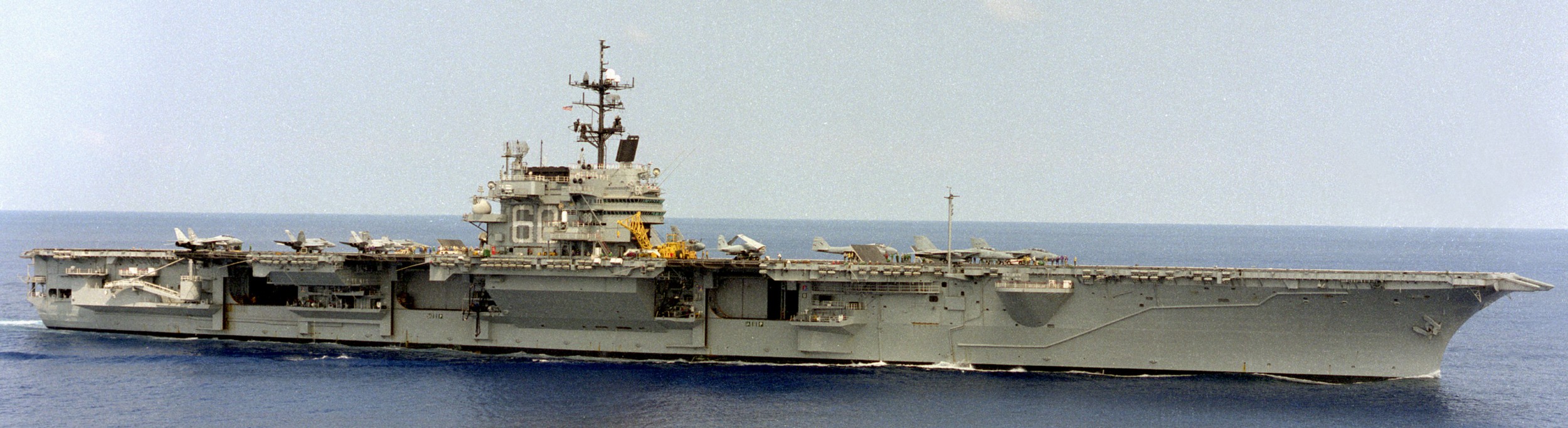 Atlantic Ocean - July 1993 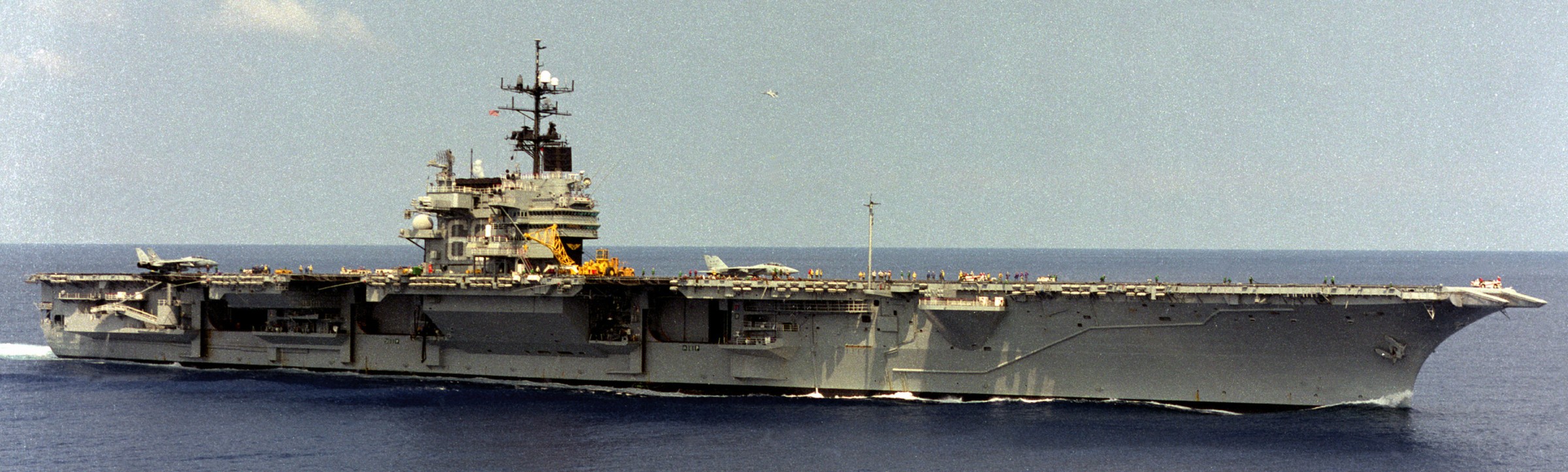 Atlantic Ocean - July 1993 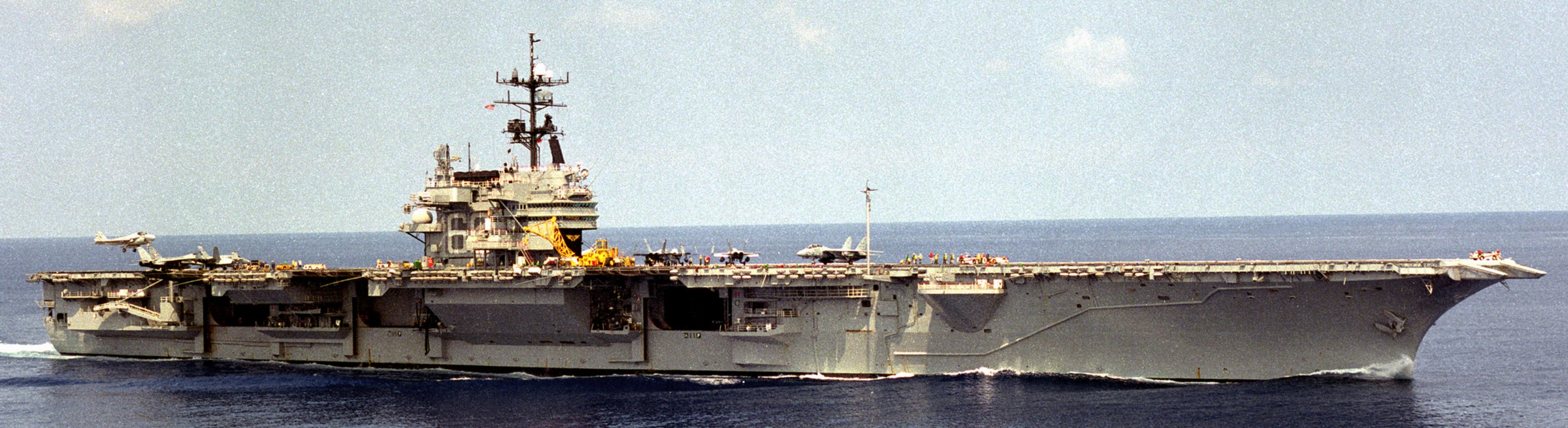 Atlantic Ocean - July 1993 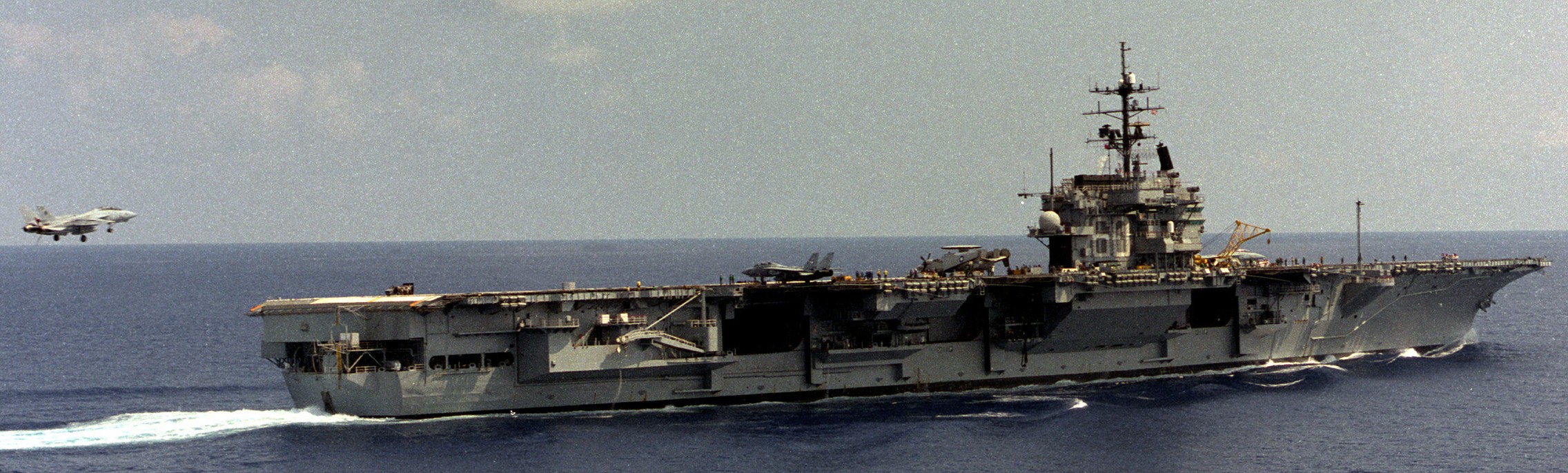 Atlantic Ocean - July 1993 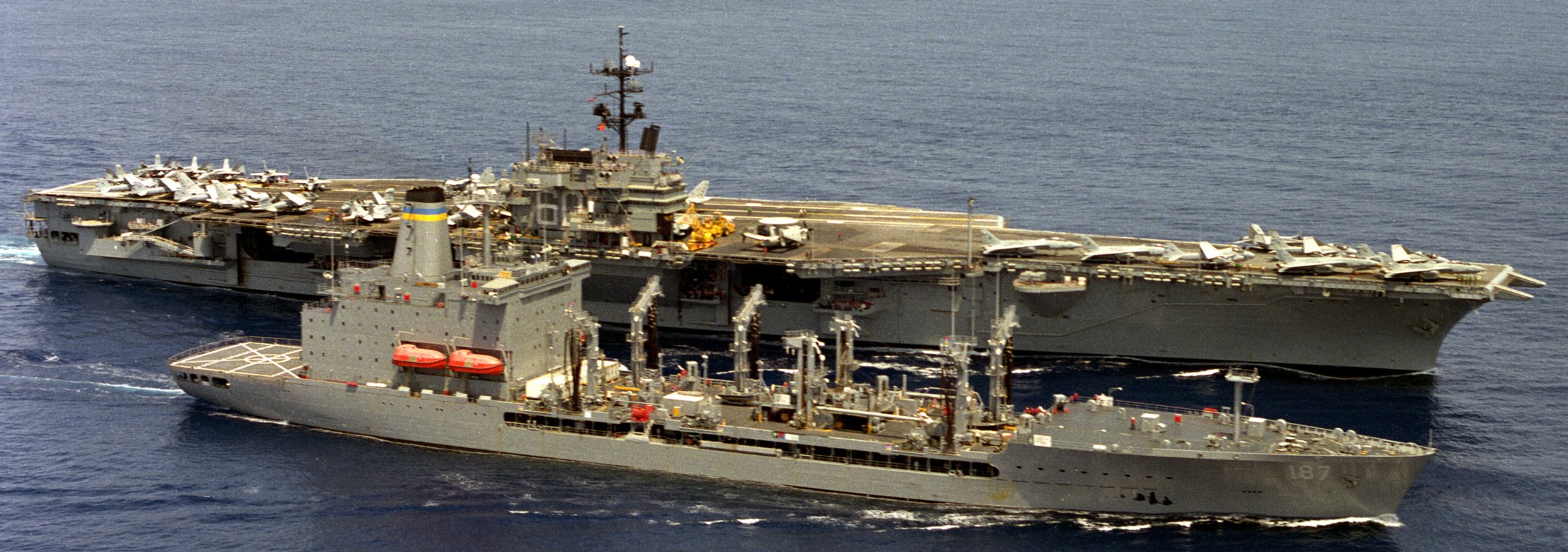 Atlantic Ocean - June 1993 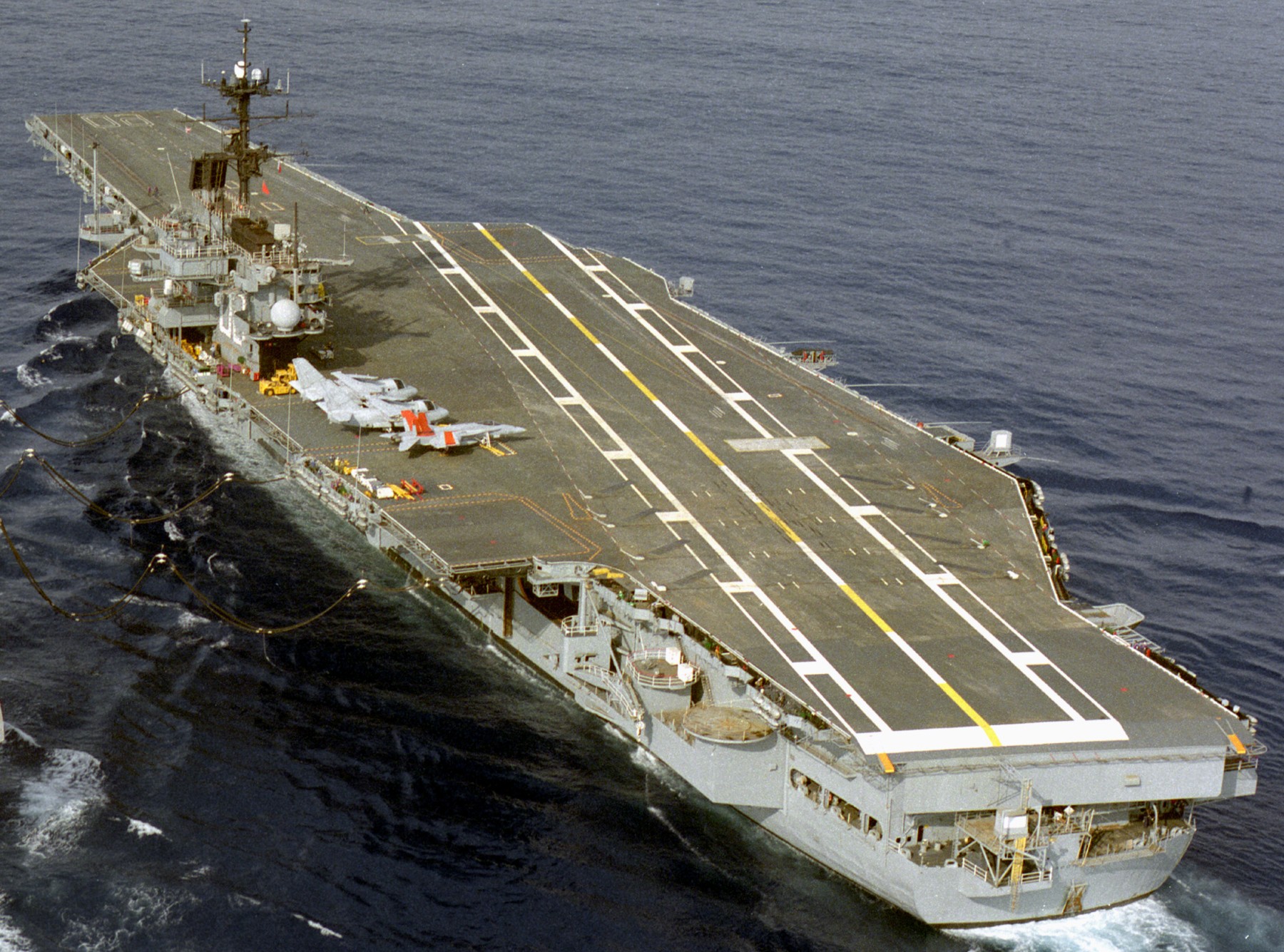 Atlantic Ocean - June 1993 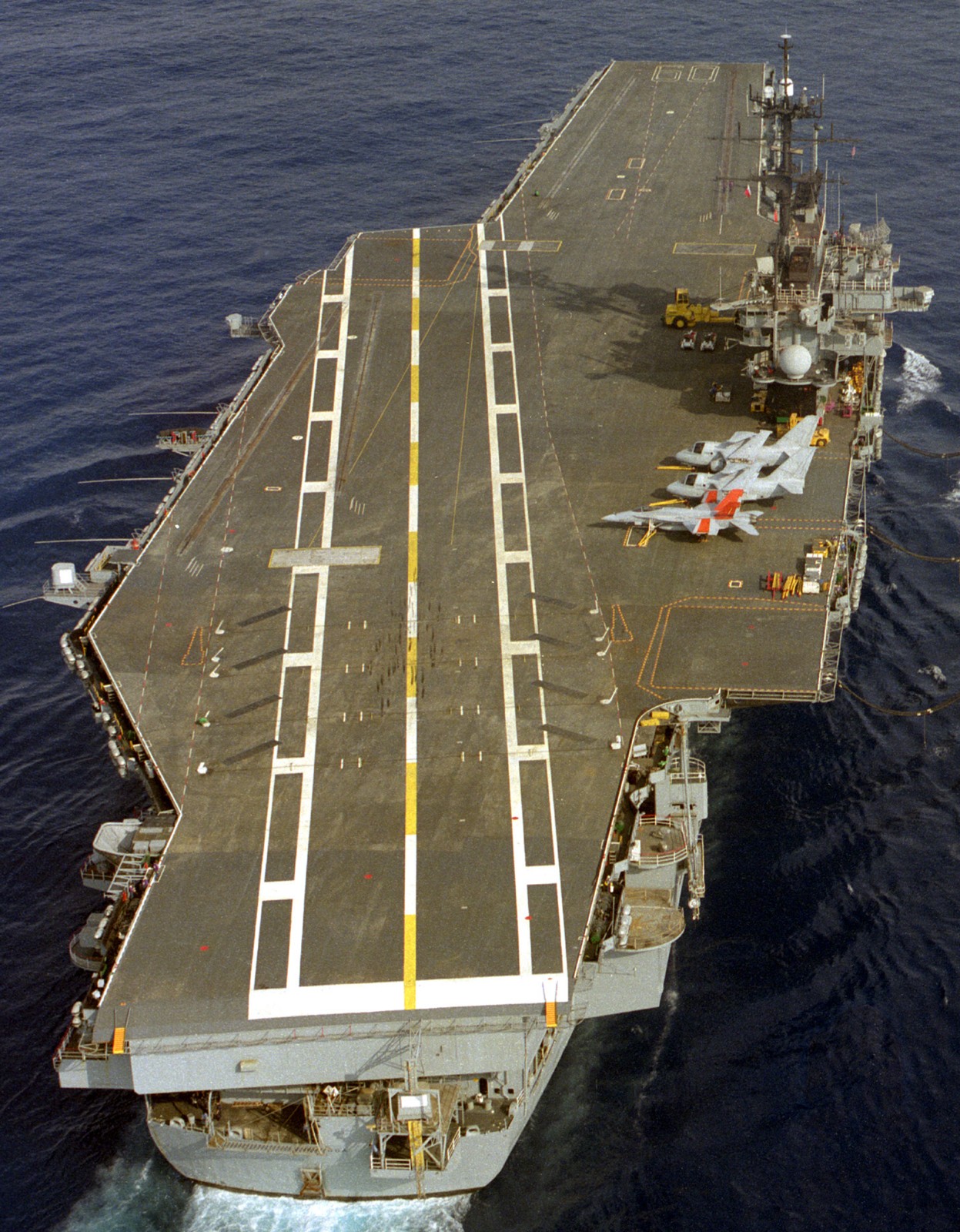 Atlantic Ocean - June 1993 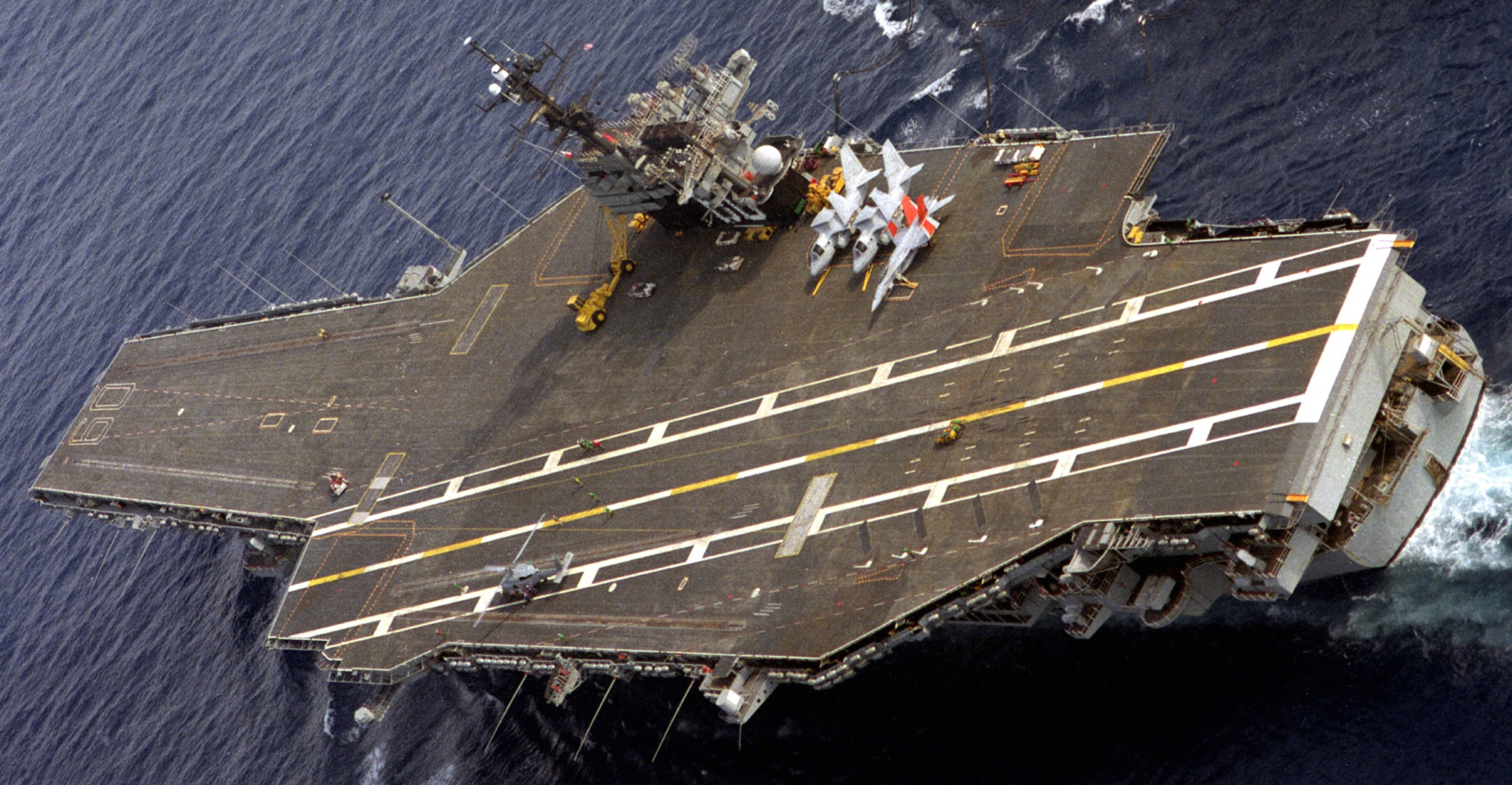 Atlantic Ocean - June 1993 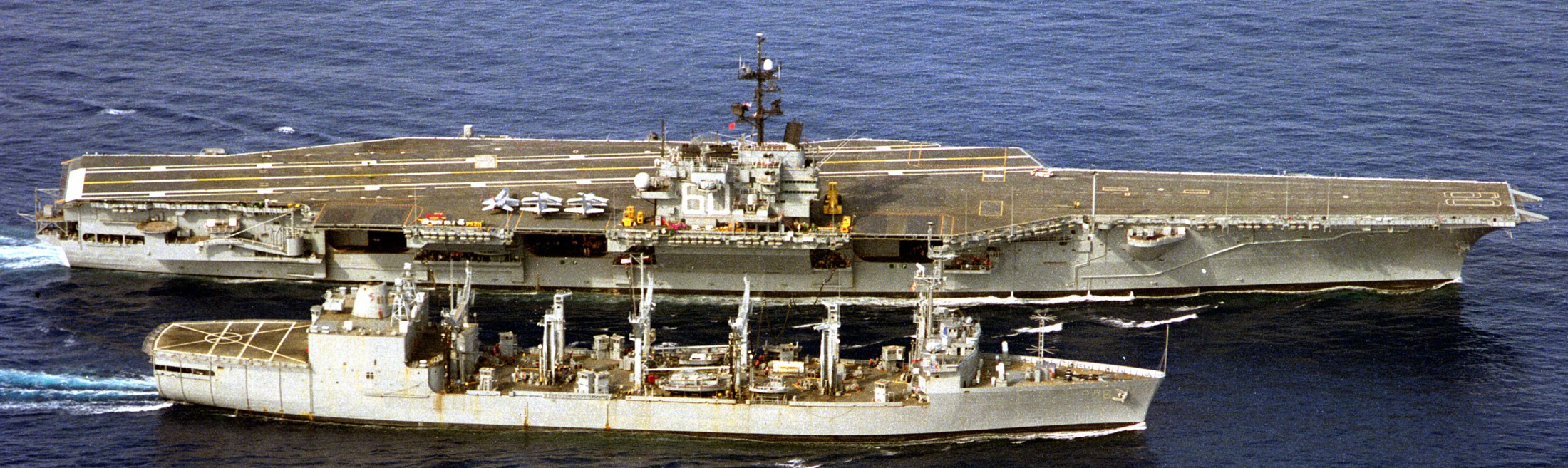 Atlantic Ocean - June 1993 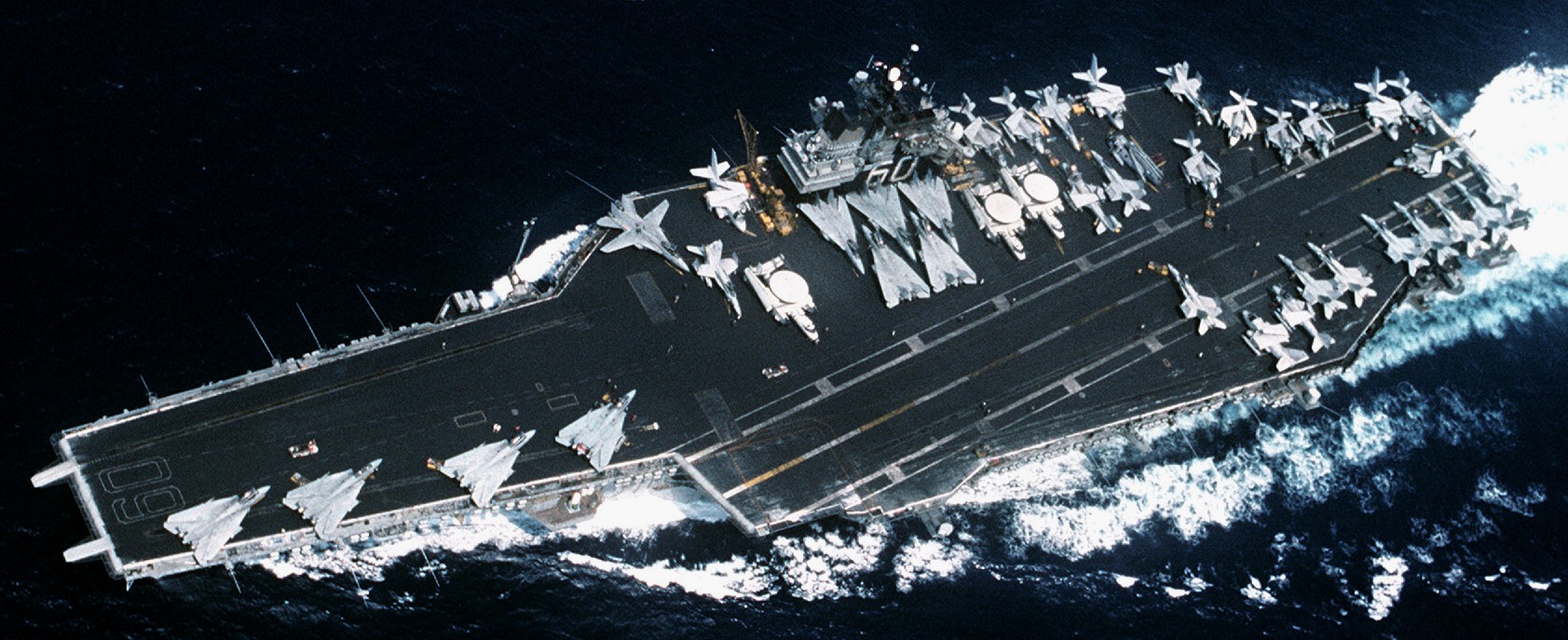 with CVW-17 embarked - Mediterranean Sea - August 1992 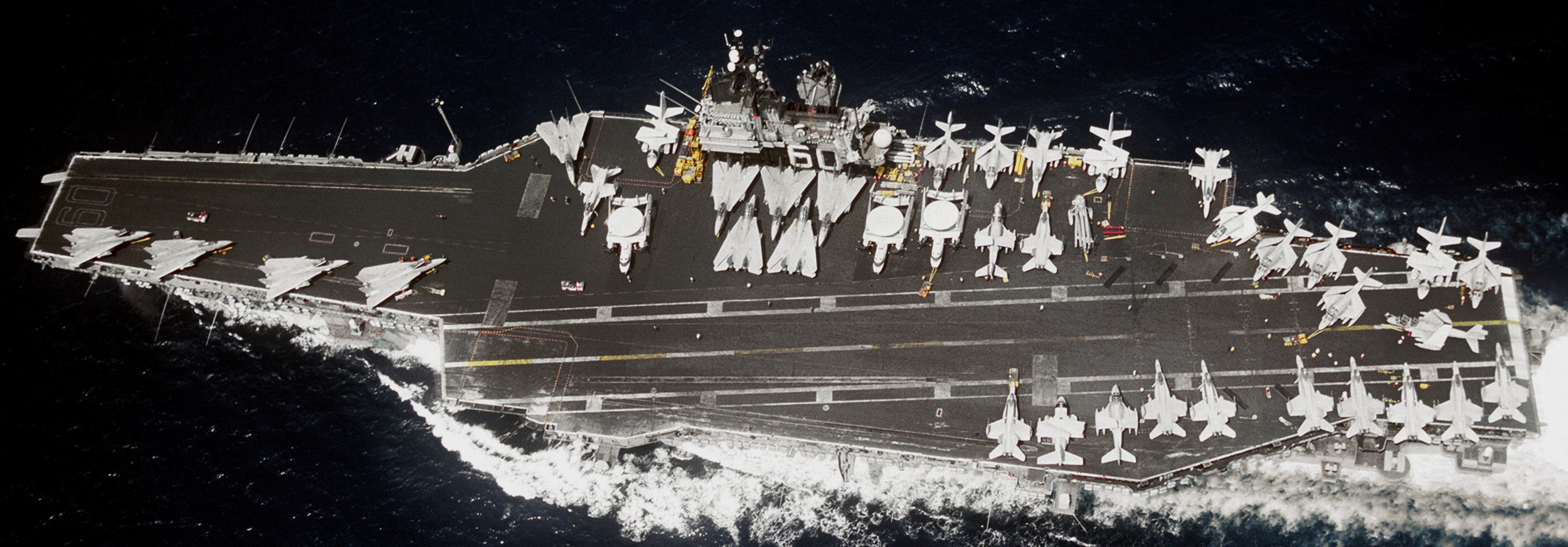 with CVW-17 embarked - Adriatic Sea - July 1992 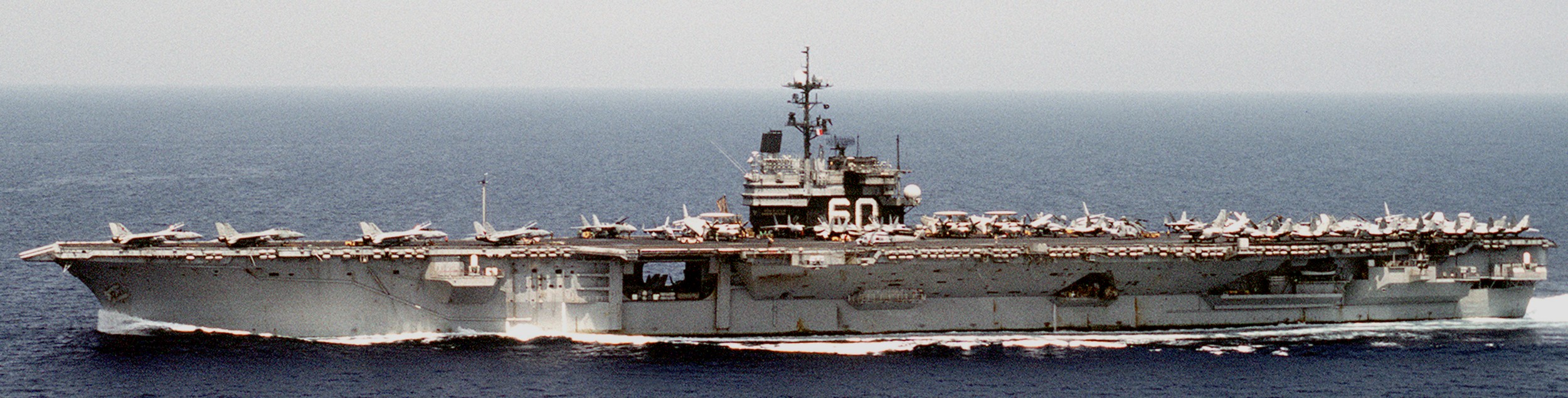 with CVW-17 embarked - Adriatic Sea - July 1992 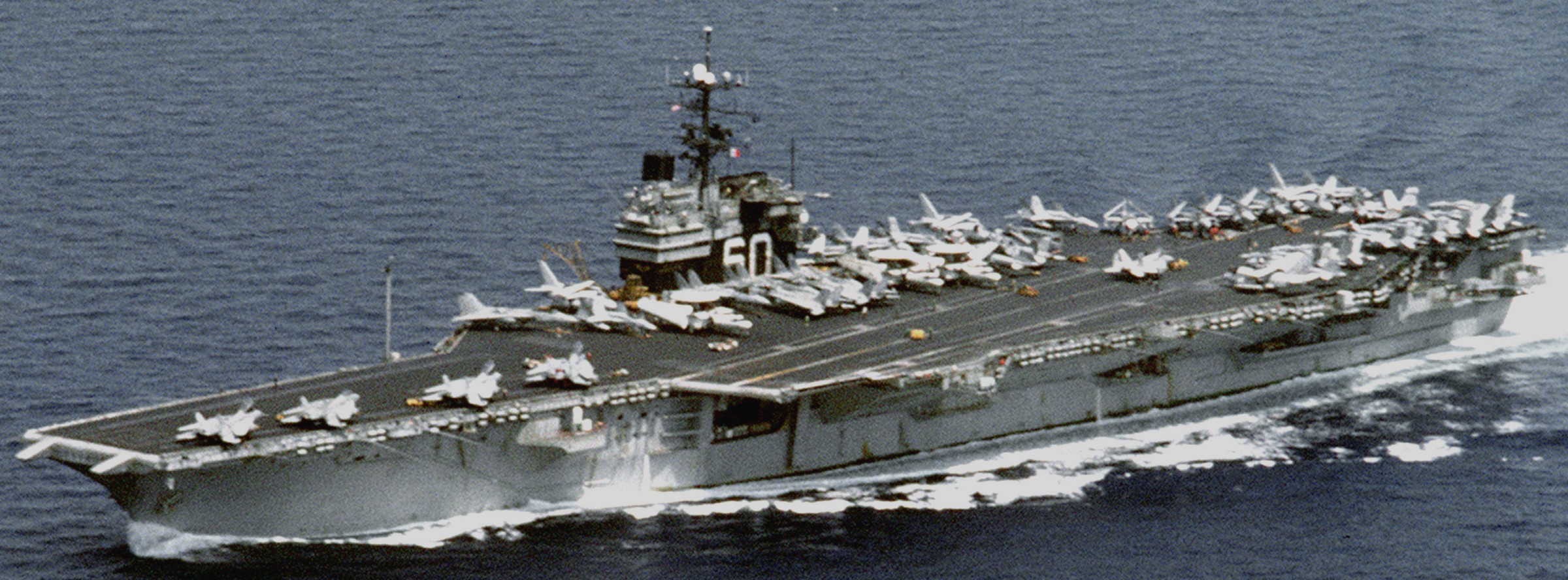 with CVW-17 embarked - Adriatic Sea - July 1992 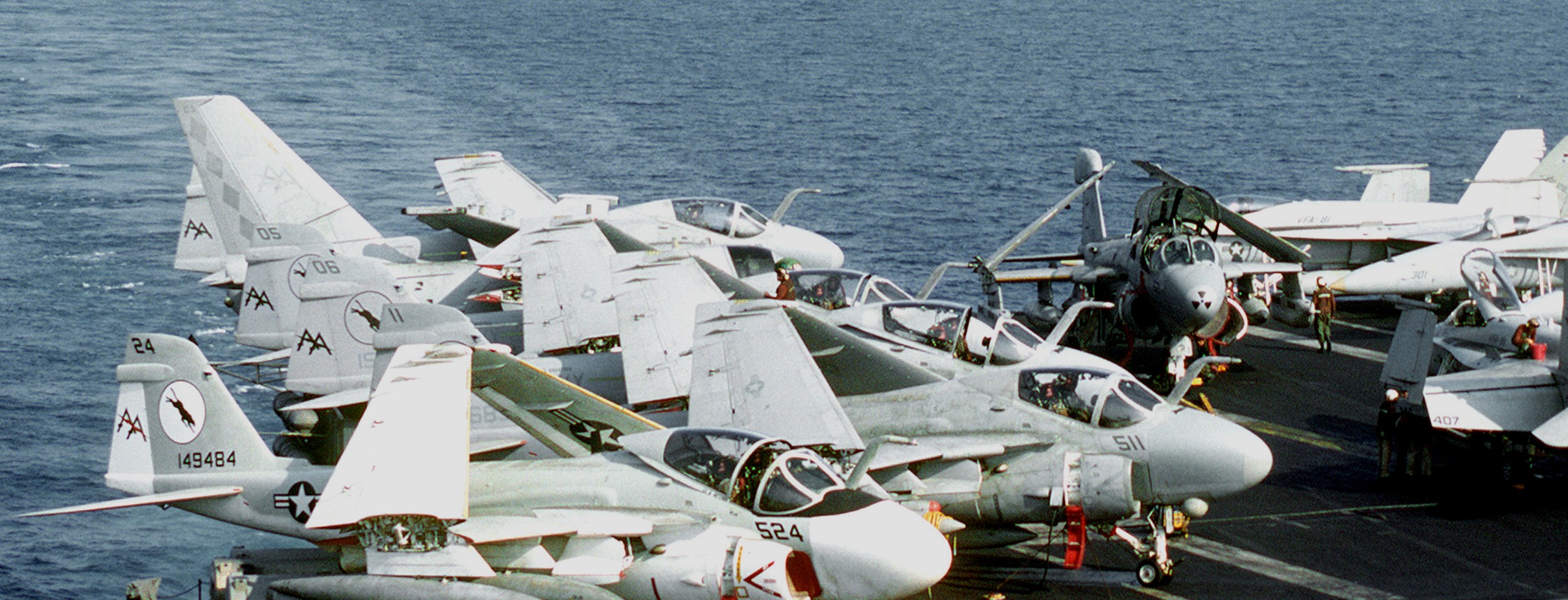 with CVW-17 embarked - Adriatic Sea - July 1992 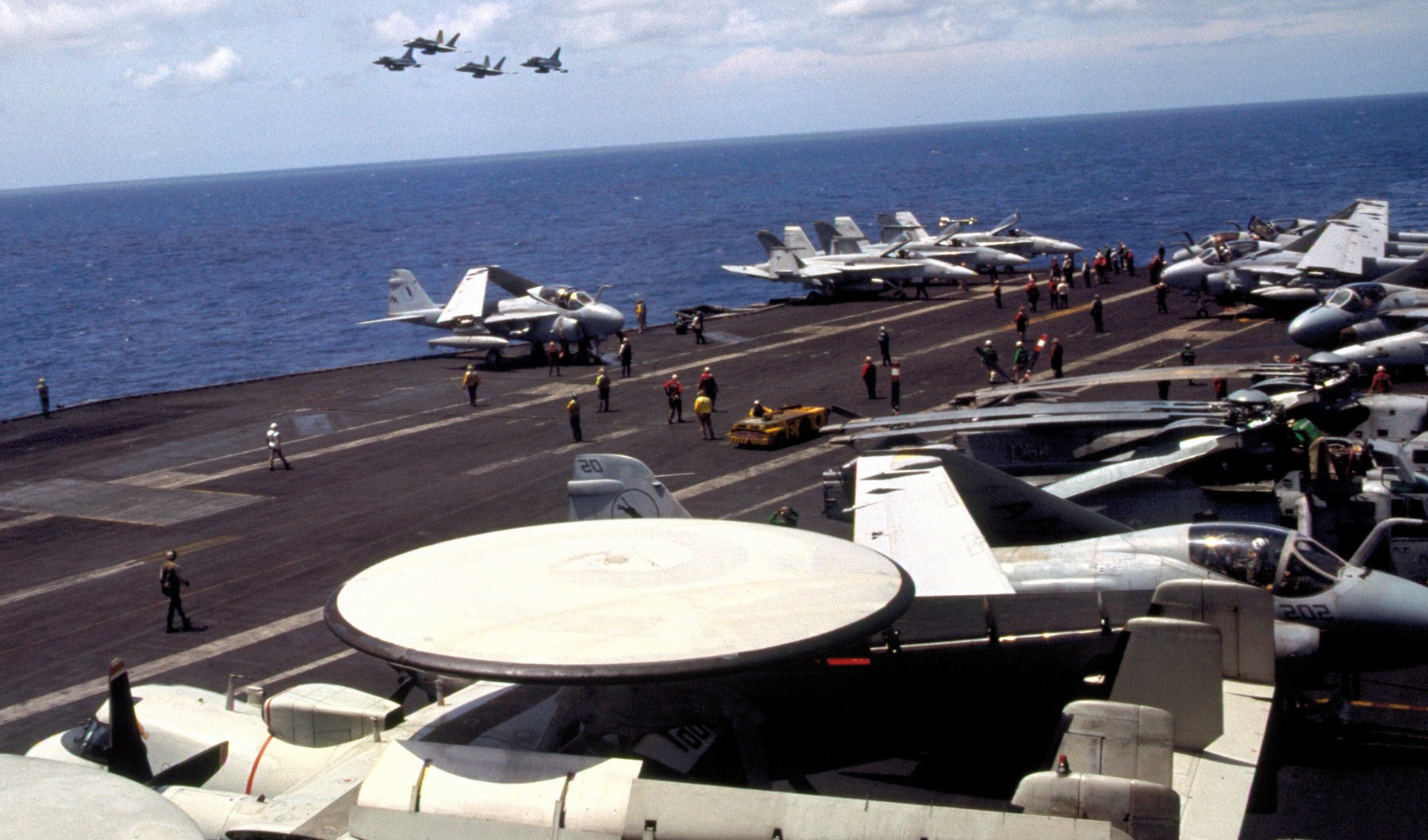 with CVW-17 embarked - Mediterranean Sea - June 1992 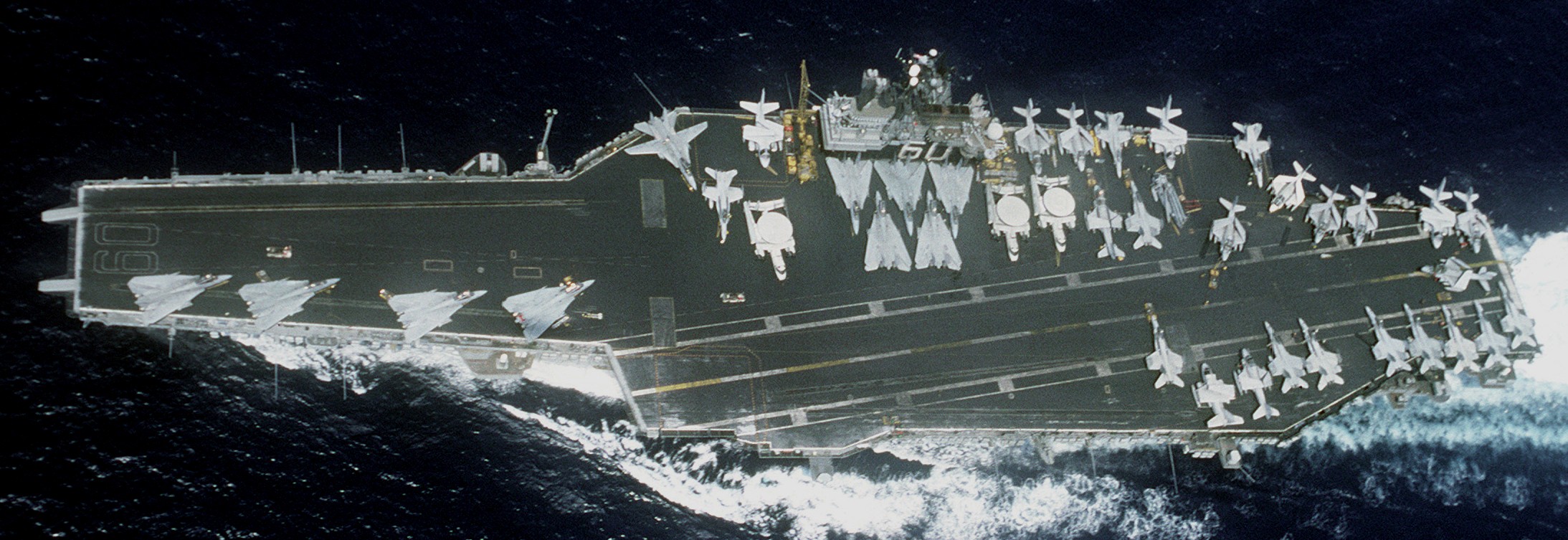 with CVW-17 embarked - Mediterranean Sea - 1992 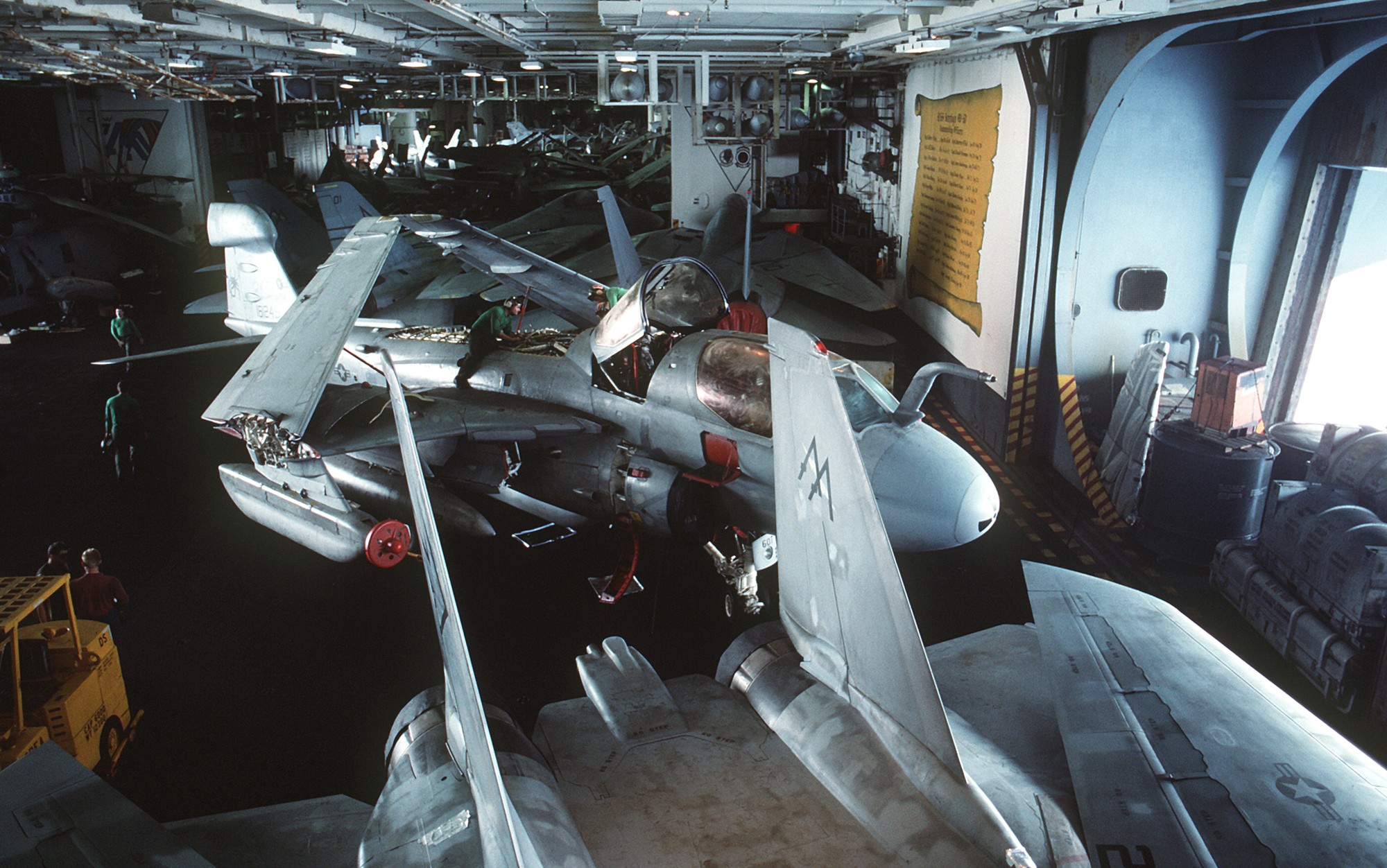 hangar bay - with CVW-17 embarked - Mediterranean Sea - May 1992 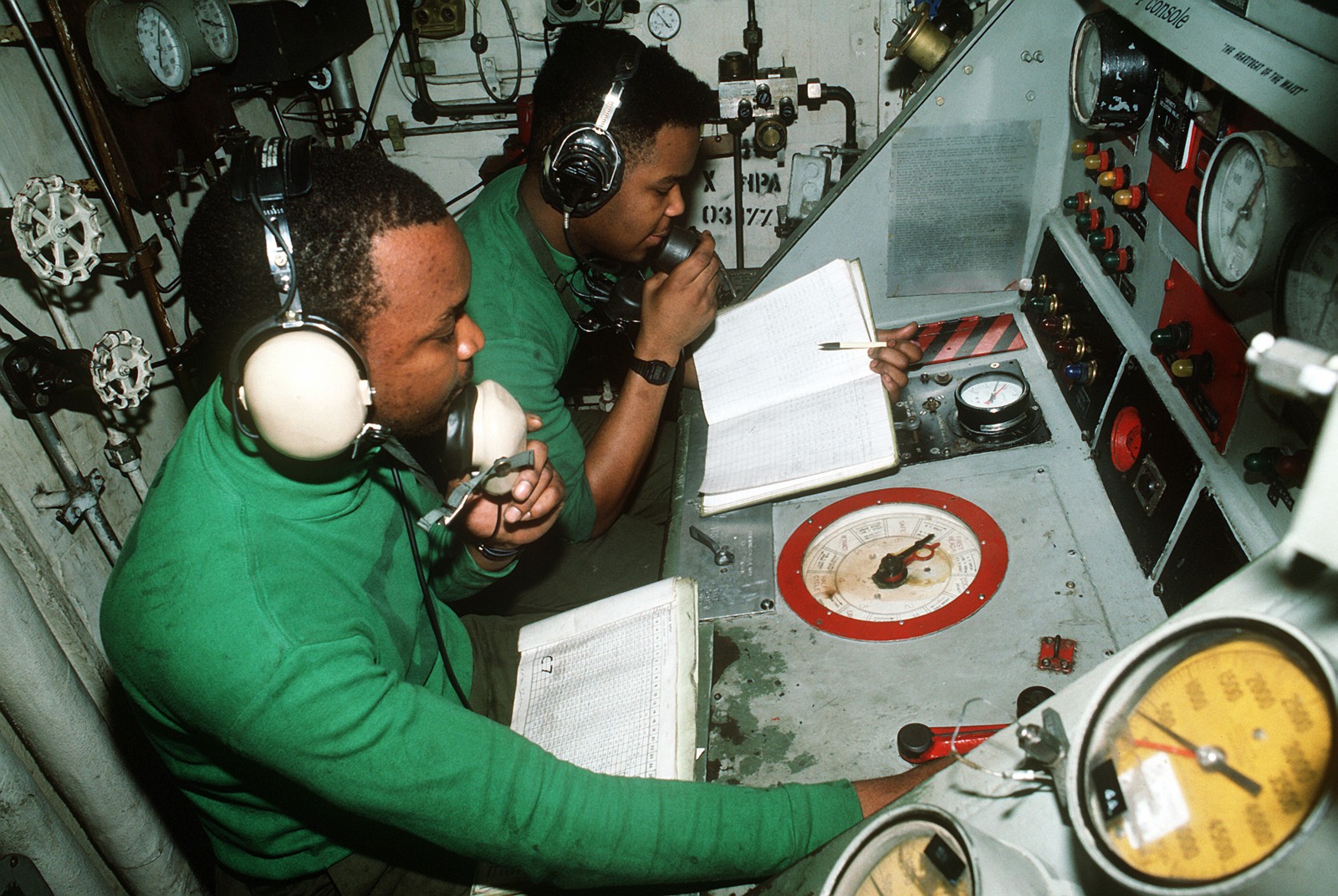 launch and recovery control - Mediterranean Sea - May 1992 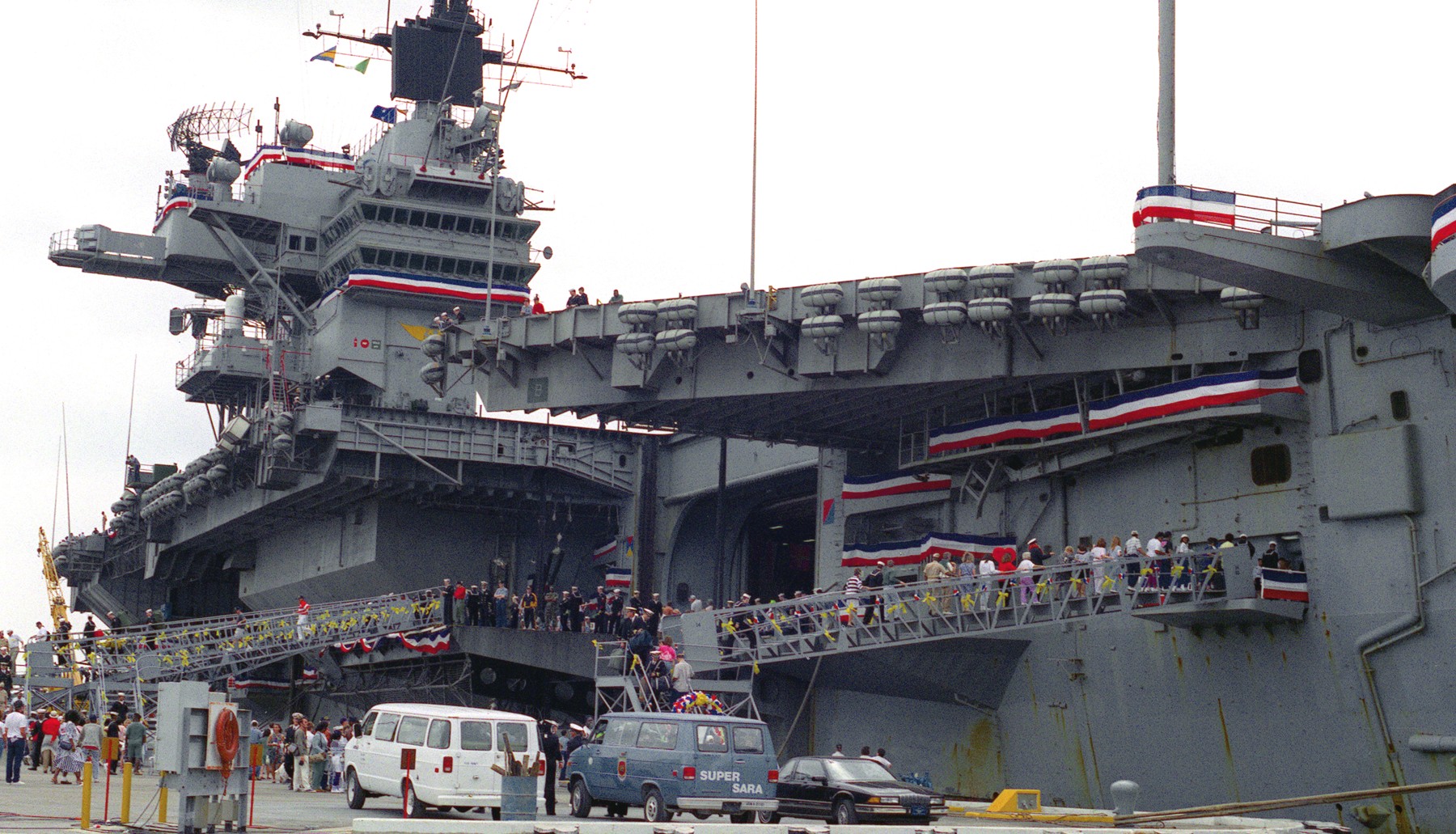 returning to Naval Station Mayport, Florida after operation Desert Shield/Storm - March 28, 1991 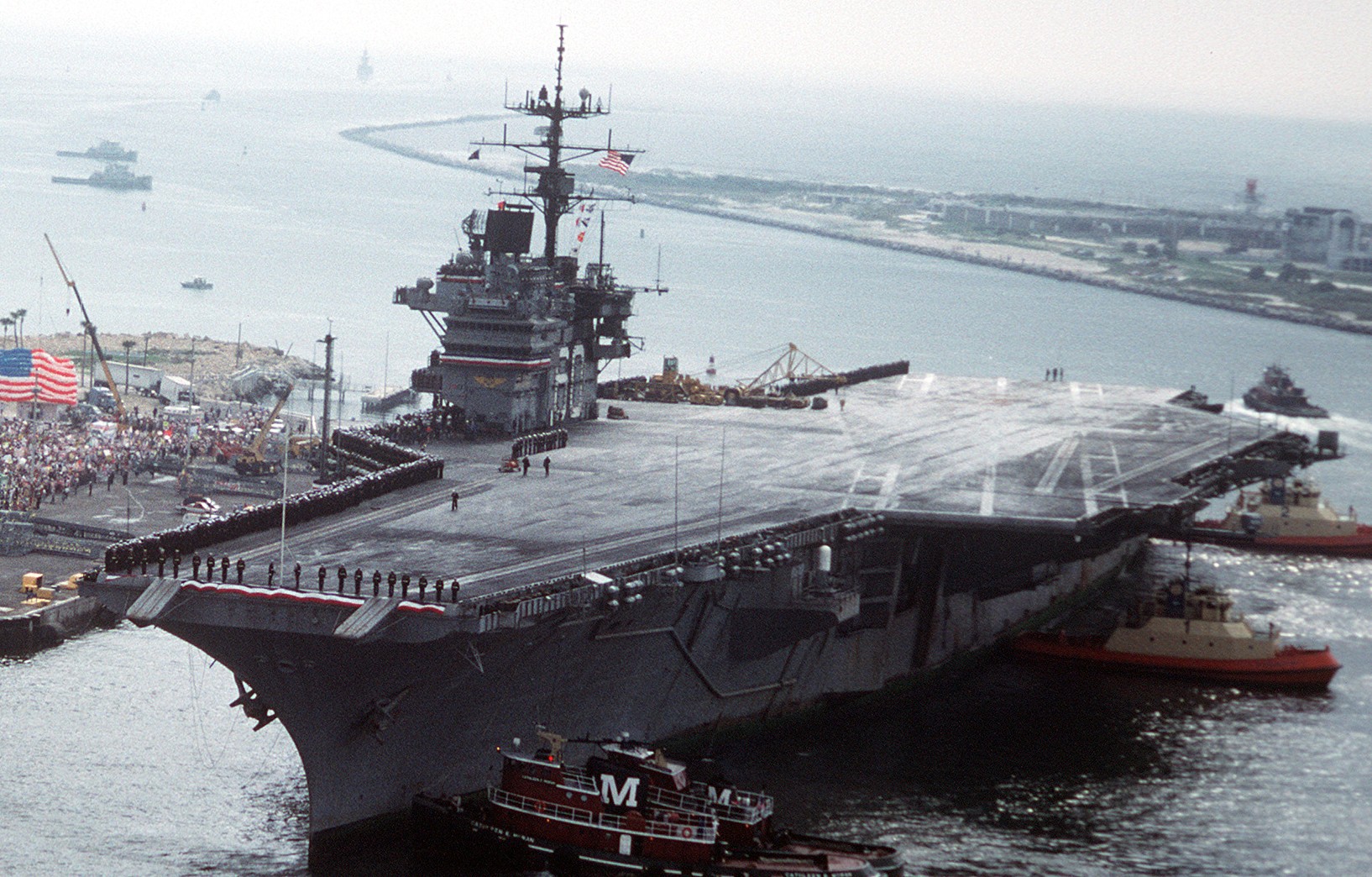 returning to Naval Station Mayport, Florida after operation Desert Shield/Storm - March 28, 1991 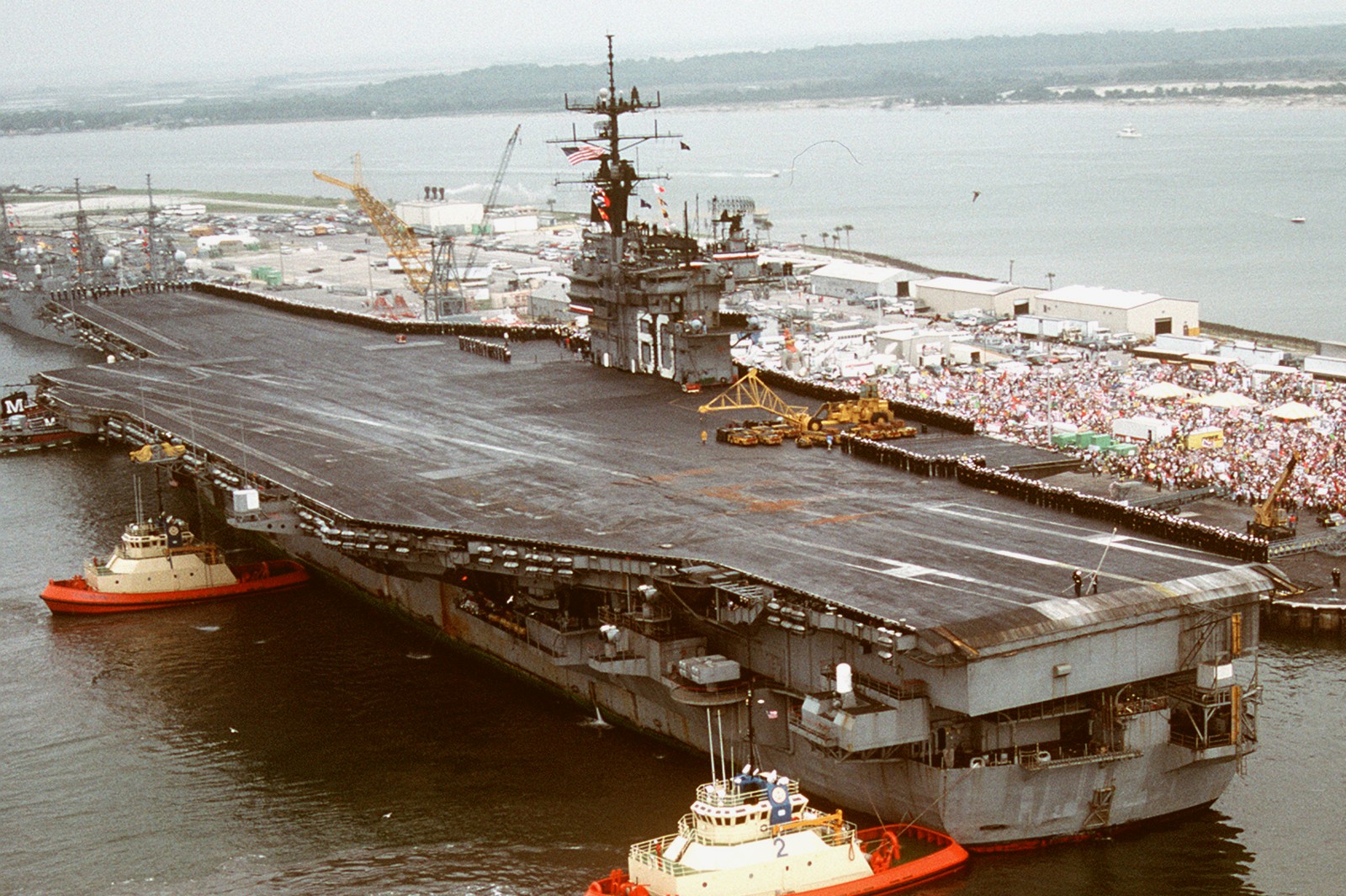 returning to Naval Station Mayport, Florida after operation Desert Shield/Storm - March 28, 1991 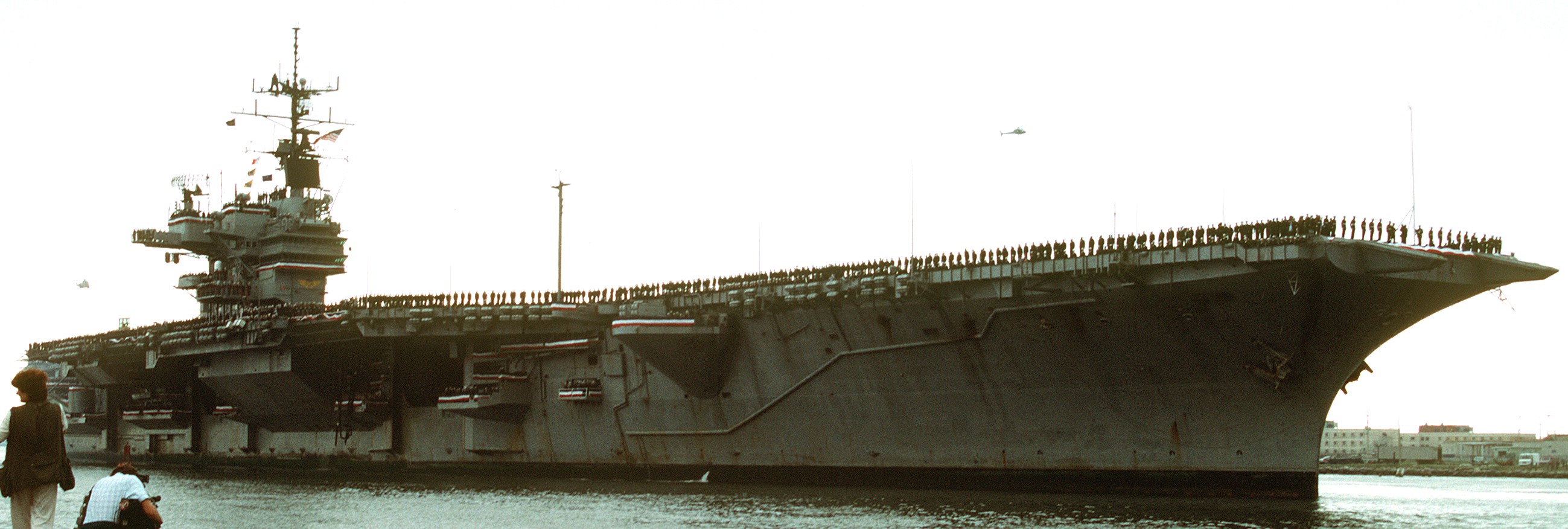 returning to Naval Station Mayport, Florida after operation Desert Shield/Storm - March 28, 1991 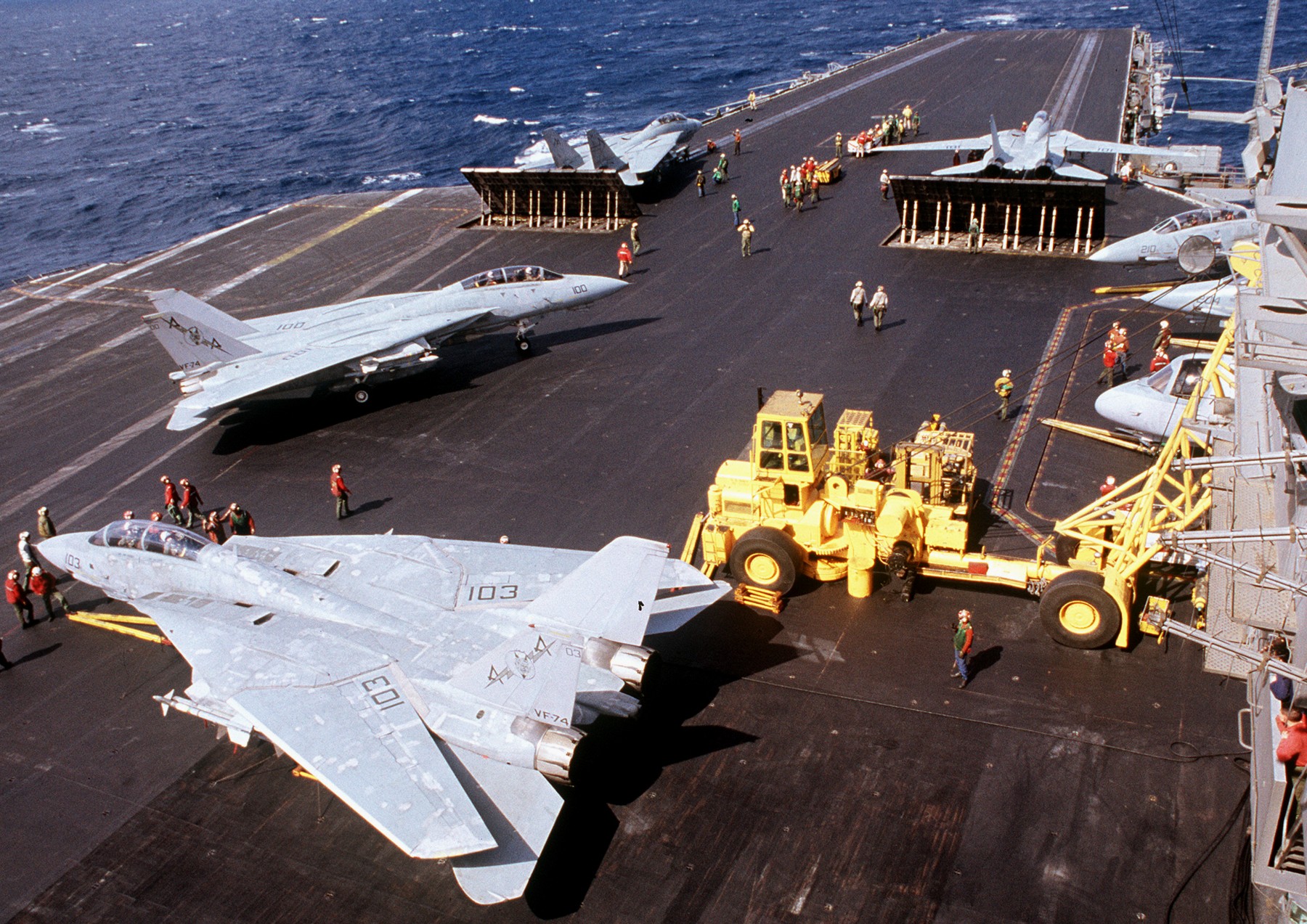 F-14B Tomcats (VF-74 / CVW-17) during operation Desert Shield/Storm - February 1991 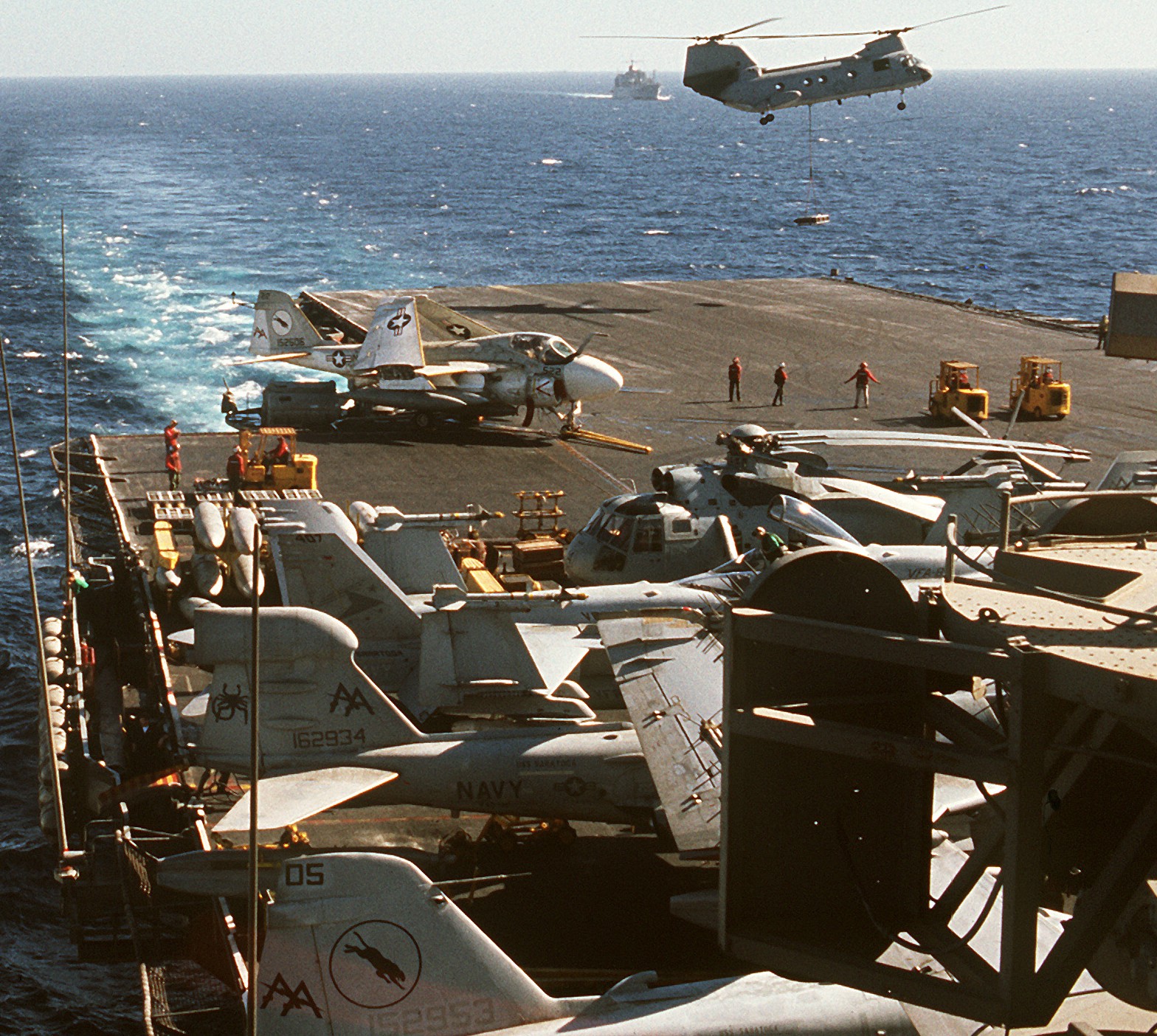 vertical replenishment (VERTREP) during operation Desert Shield/Storm - February 1991 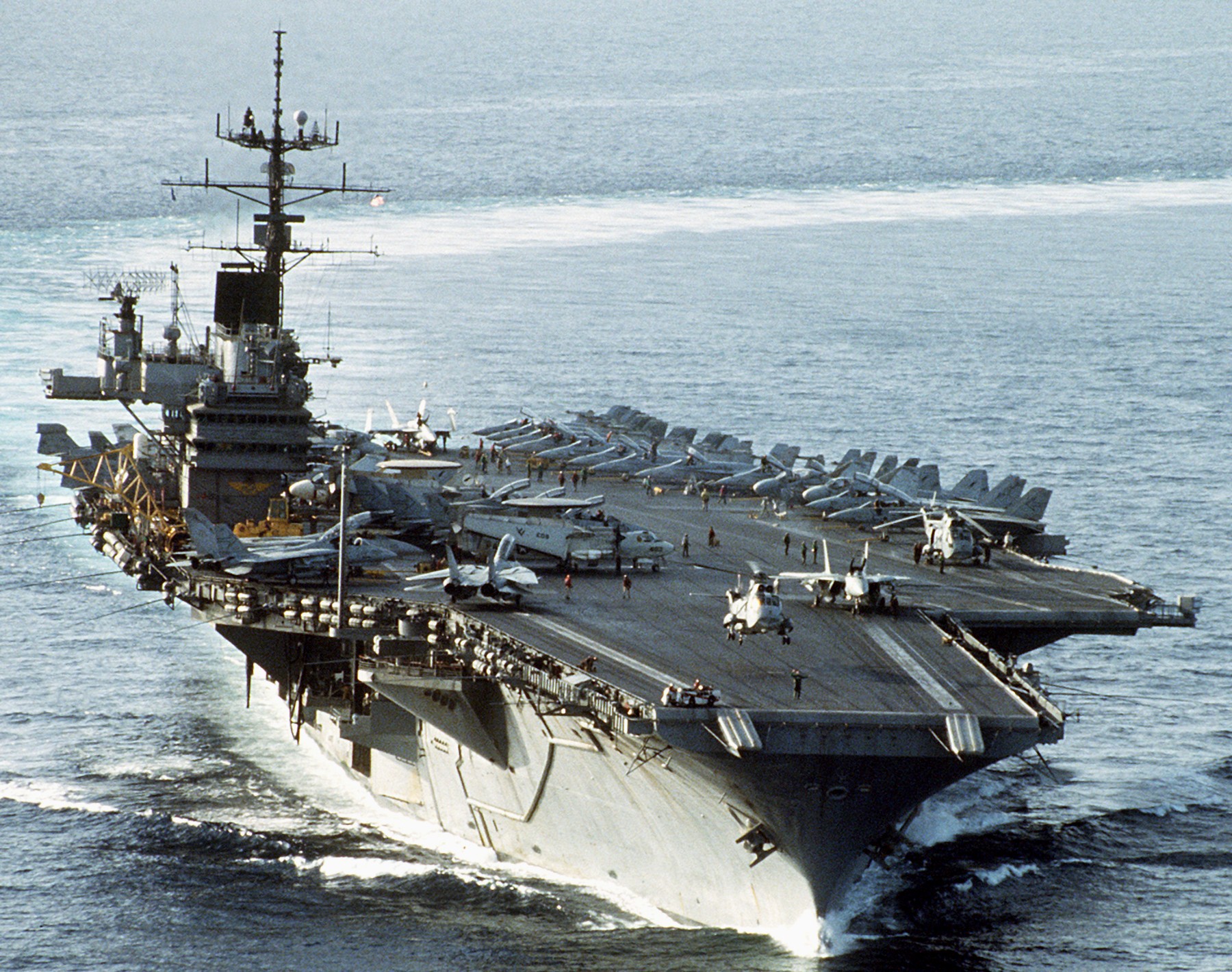 with CVW-17 embarked - operation Desert Shield/Storm - February 1991 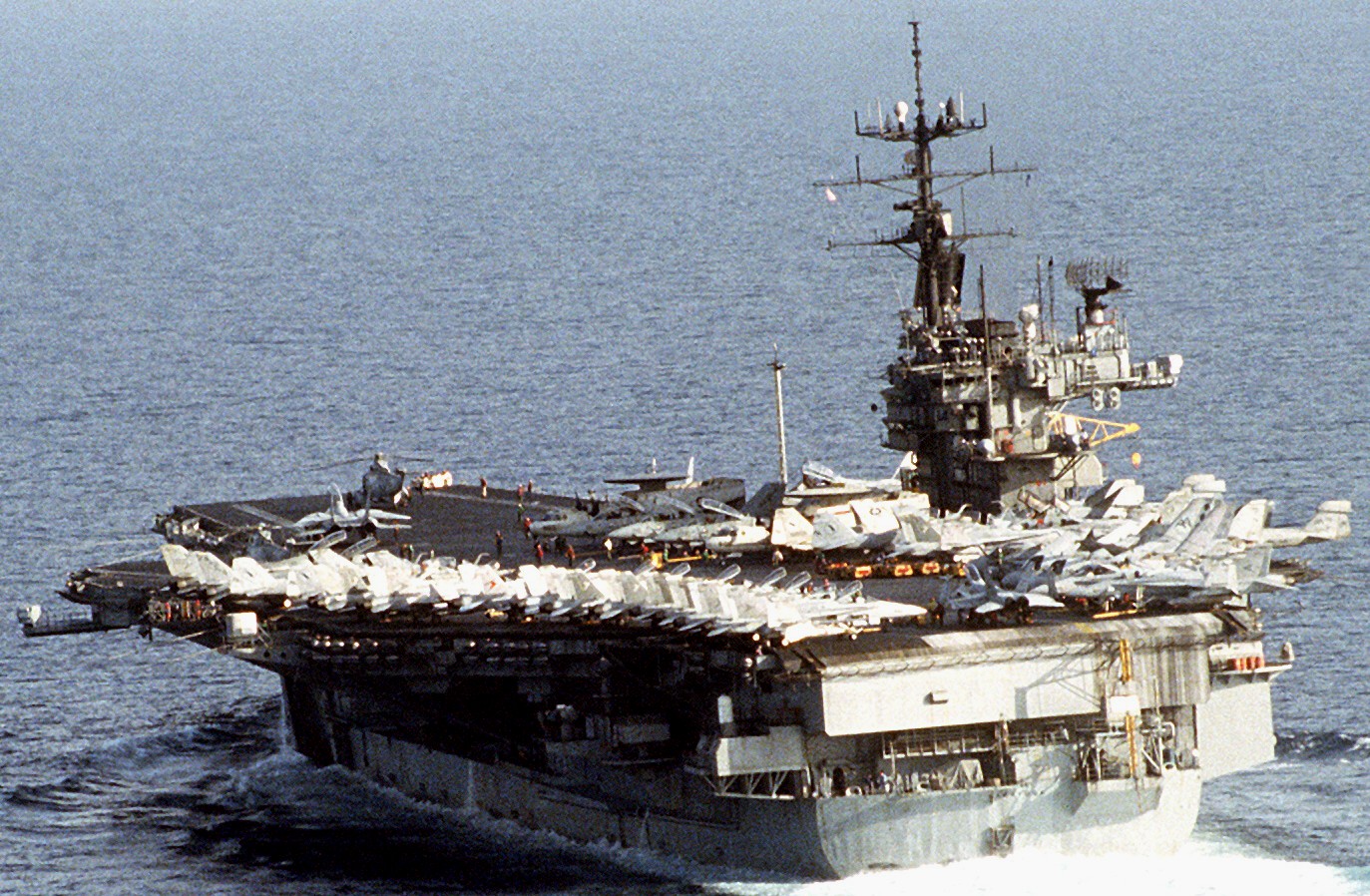 with CVW-17 embarked - operation Desert Shield/Storm - February 1991 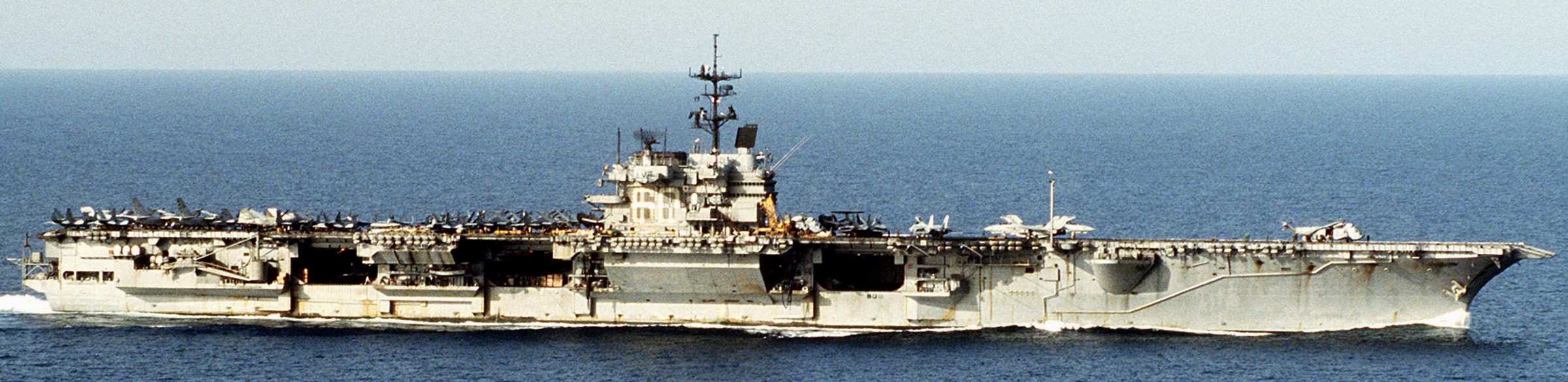 with CVW-17 embarked - operation Desert Shield/Storm - February 1991 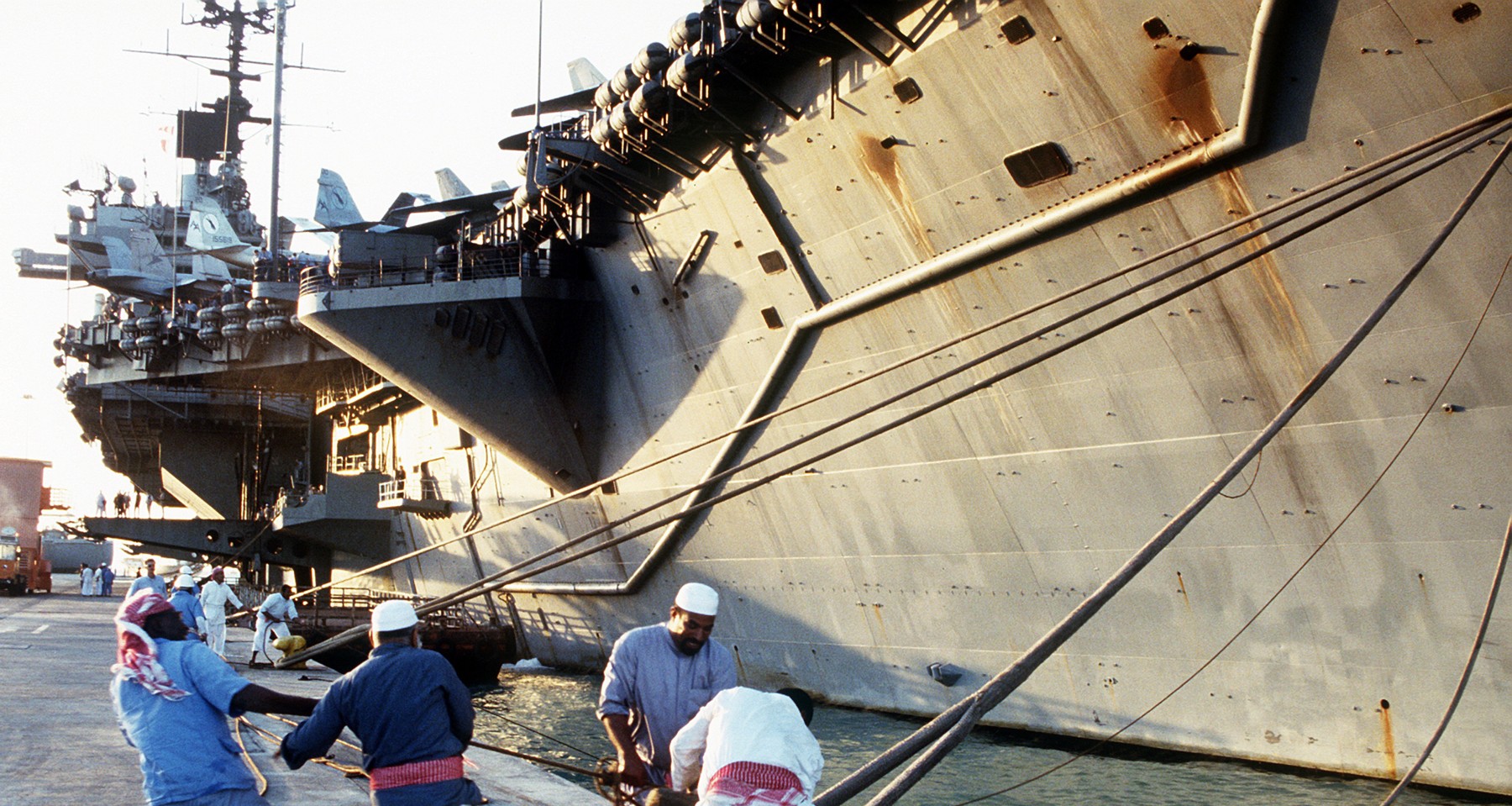 with CVW-17 embarked - Jeddah, Saudi Arabia - February 1991 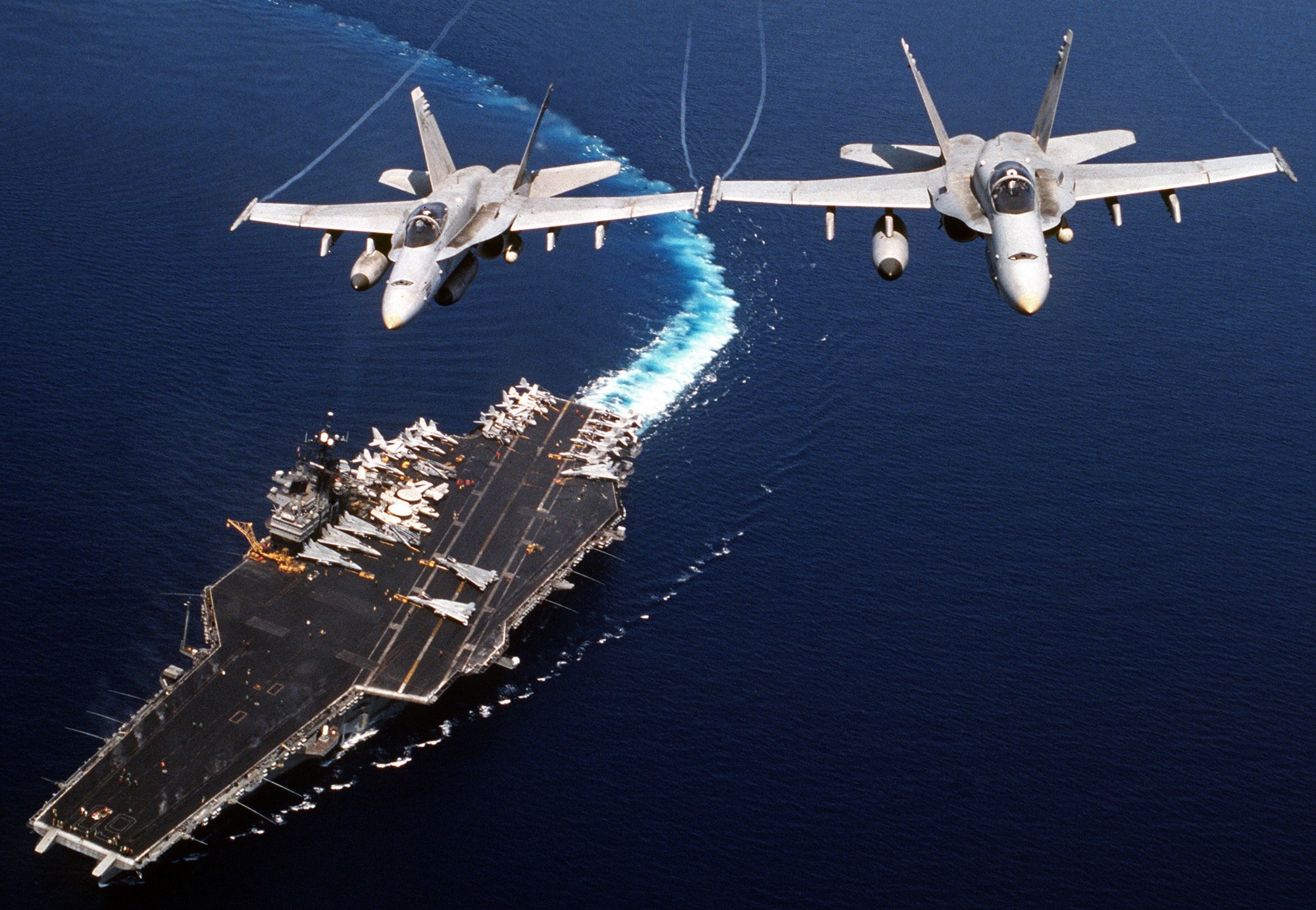 with CVW-17 embarked - operation Desert Shield/Storm - December 1990 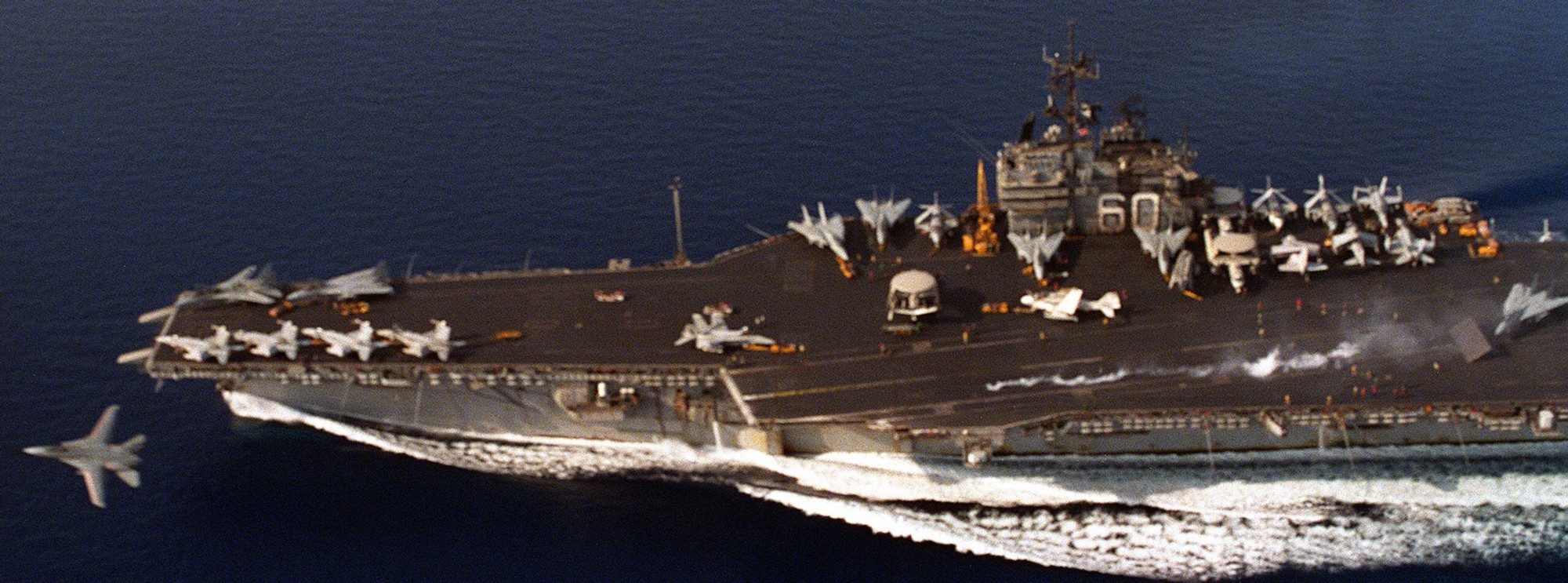 with CVW-17 embarked - operation Desert Shield/Storm - December 1990 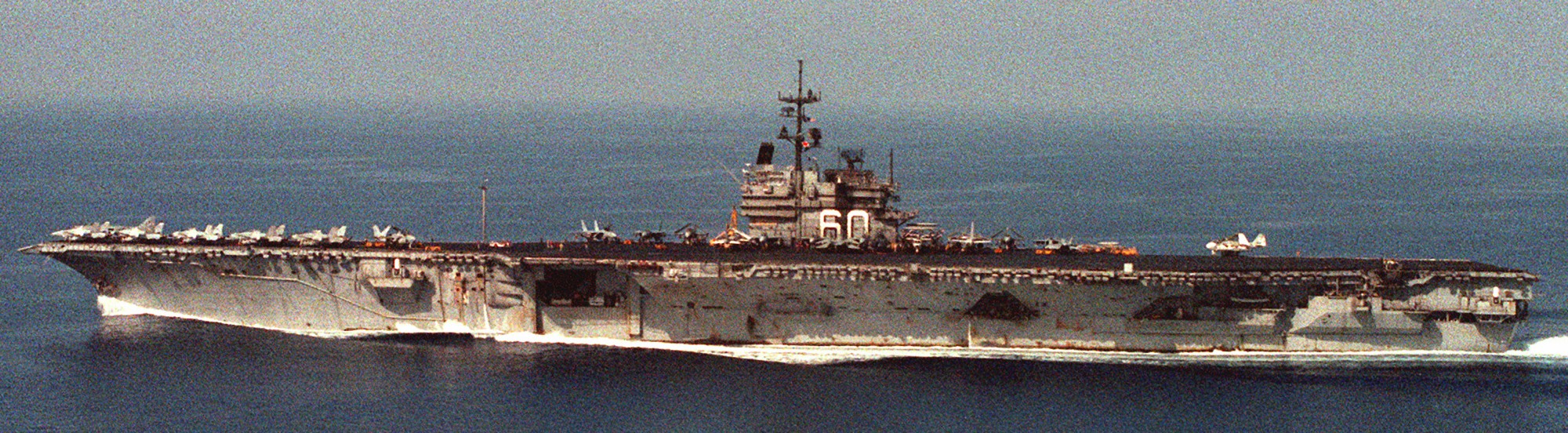 with CVW-17 embarked - operation Desert Shield/Storm - December 1990 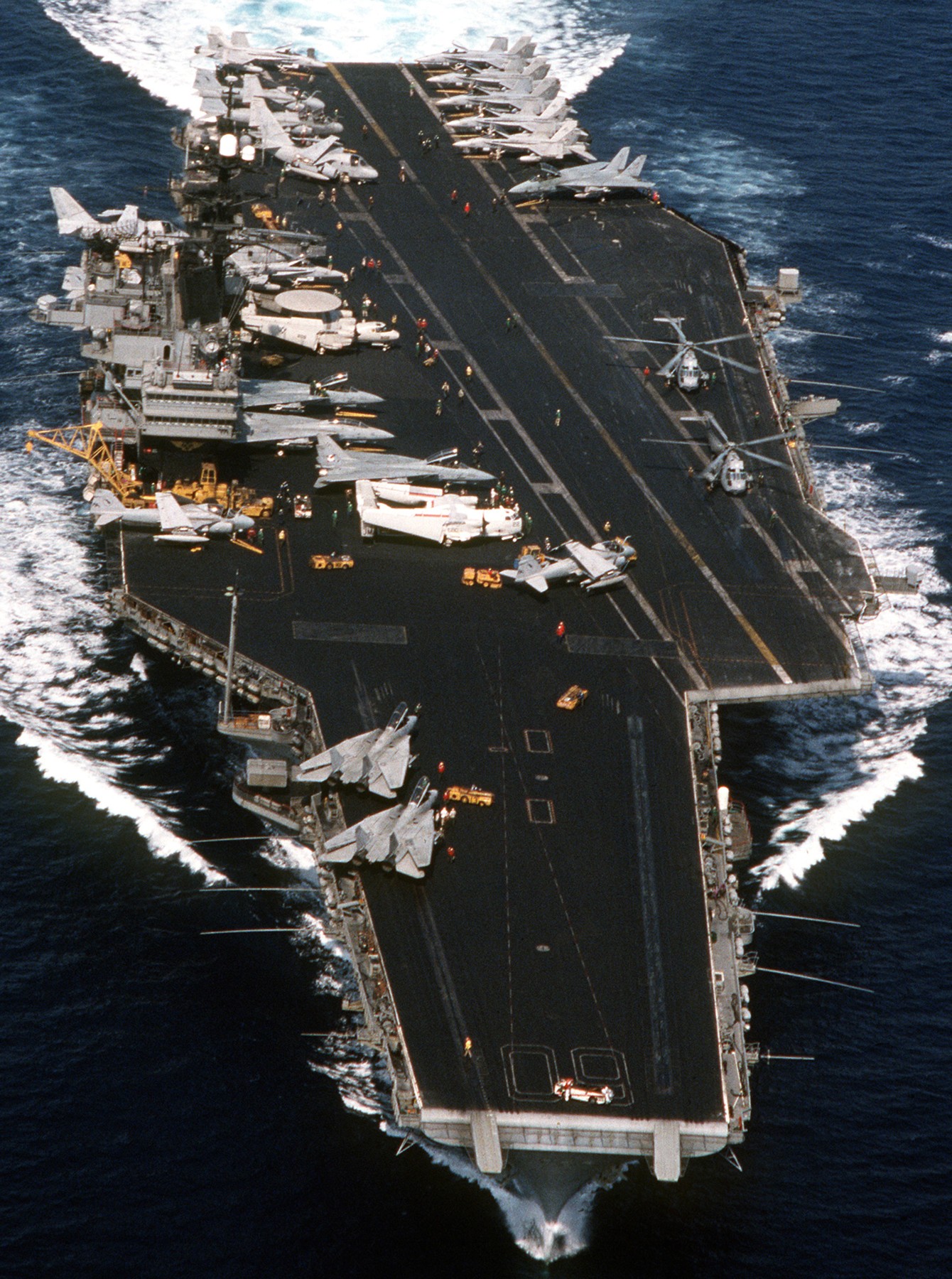 with CVW-17 embarked - October 1990 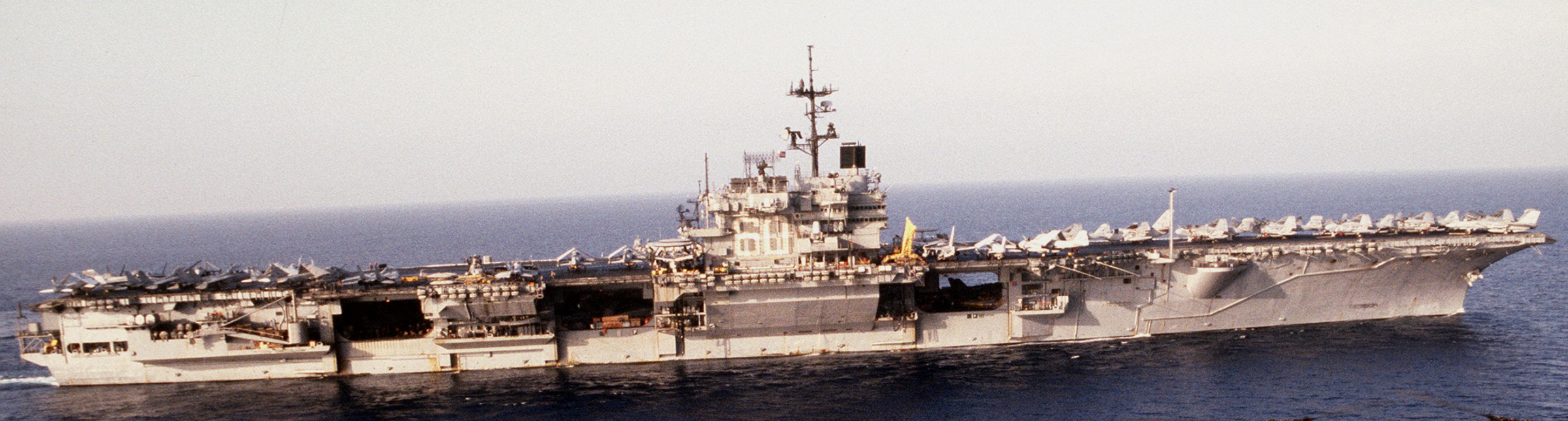 with CVW-17 embarked - October 1990 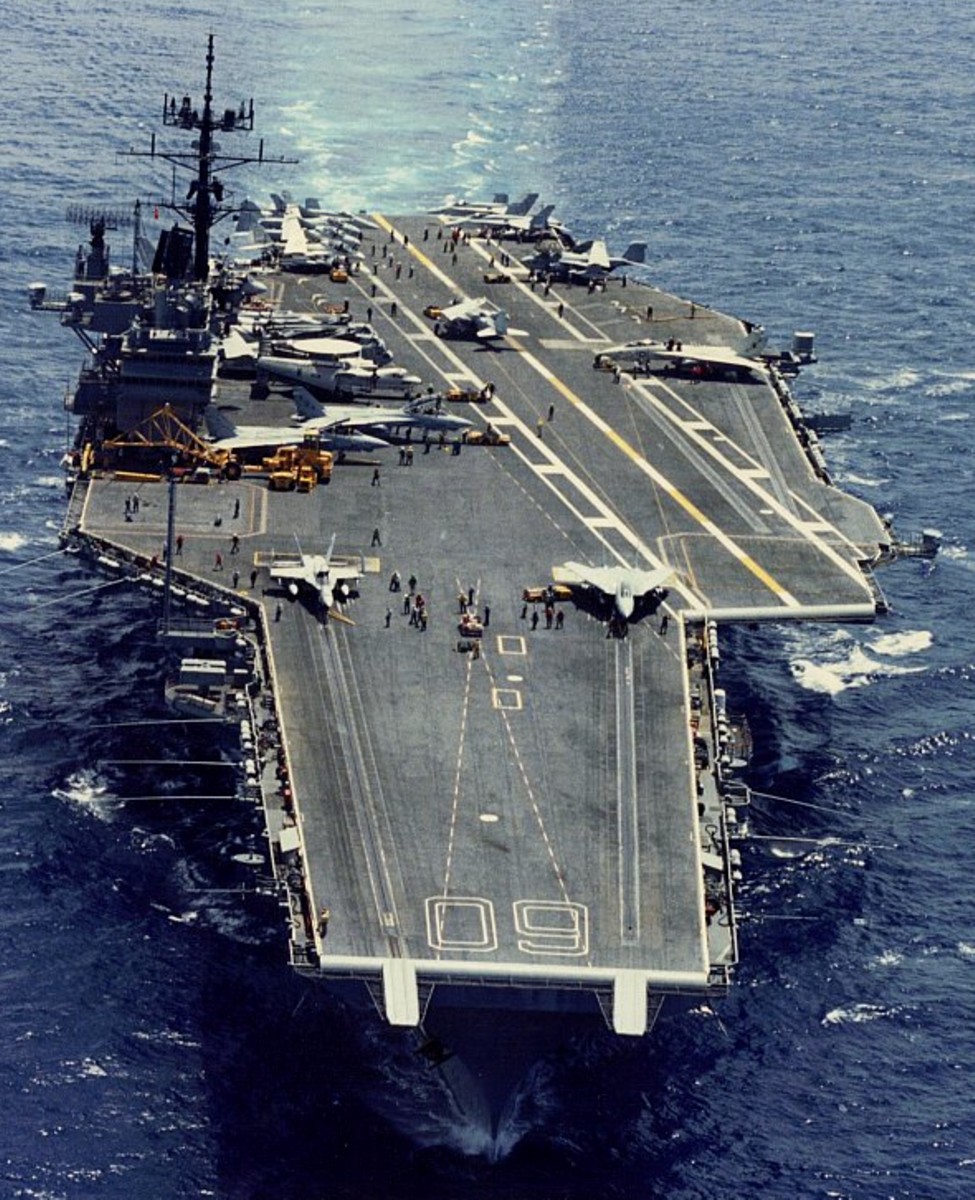 with CVW-17 embarked - 1990/91 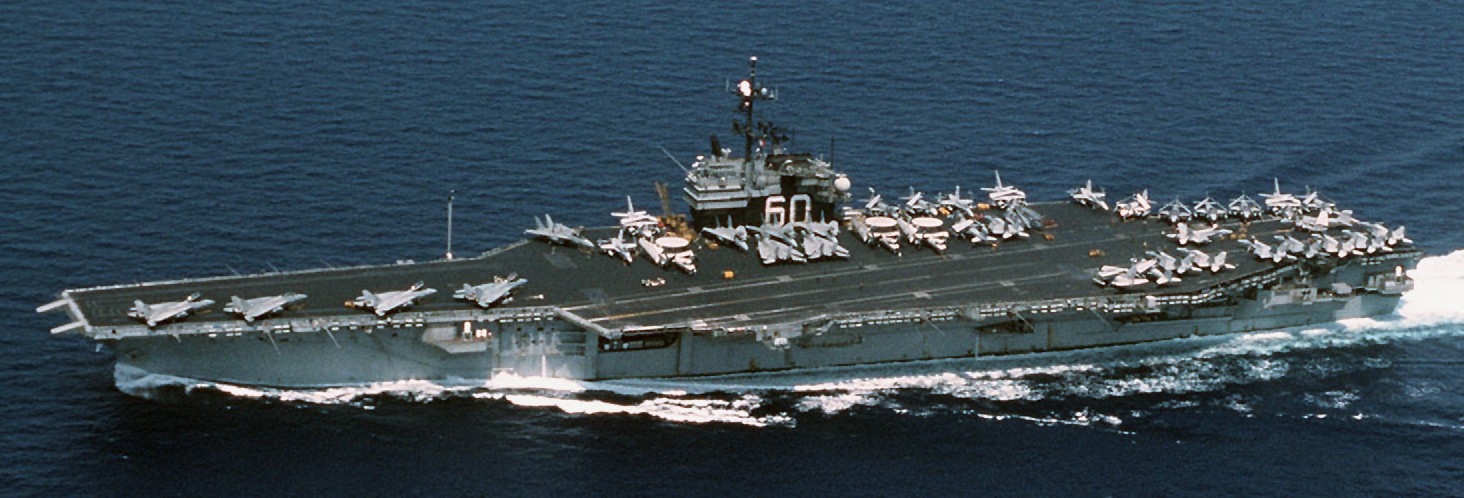 with CVW-17 embarked - 1990/91 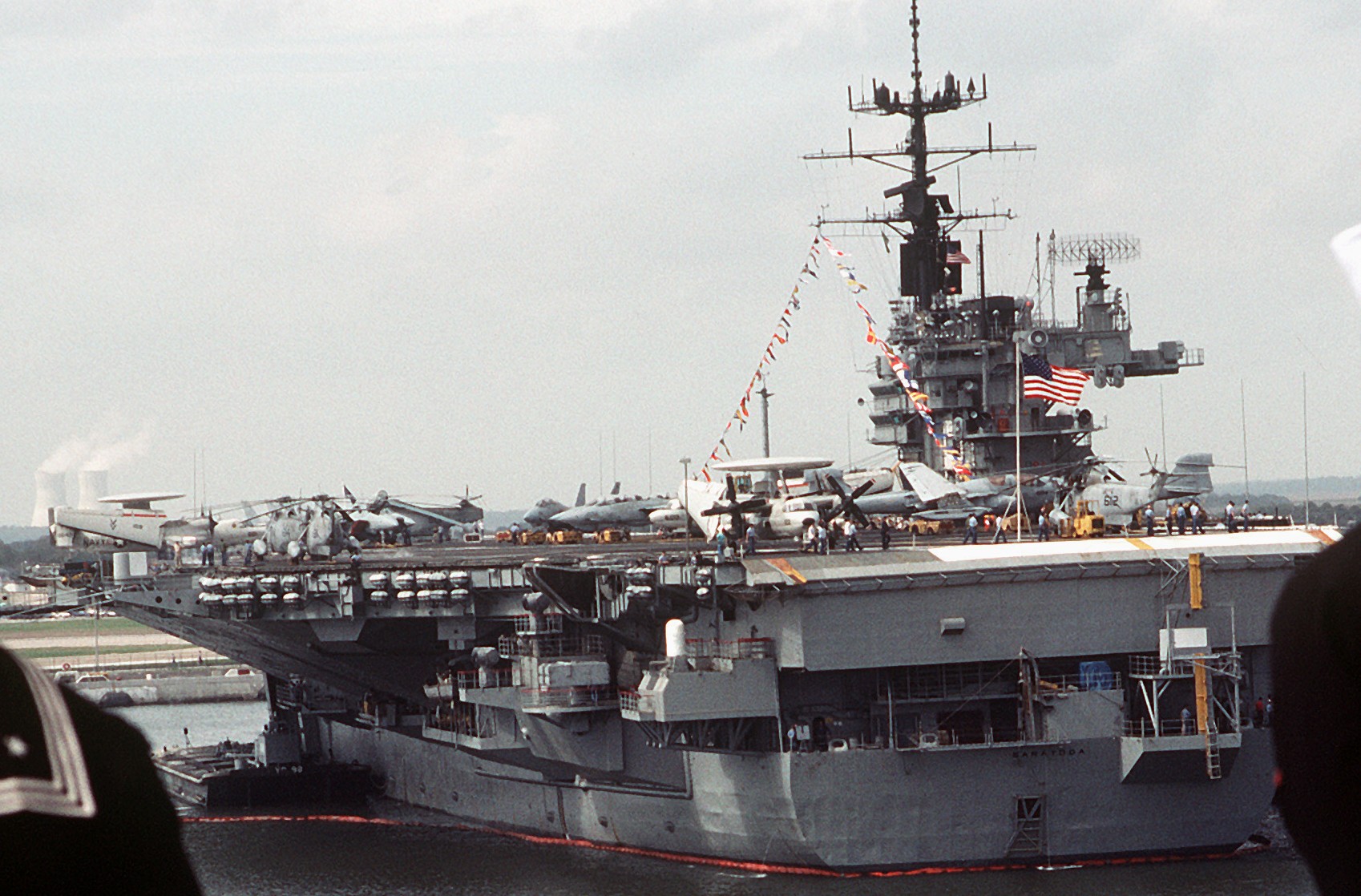 with CVW-17 embarked - Naval Station Mayport, Florida - February 1990 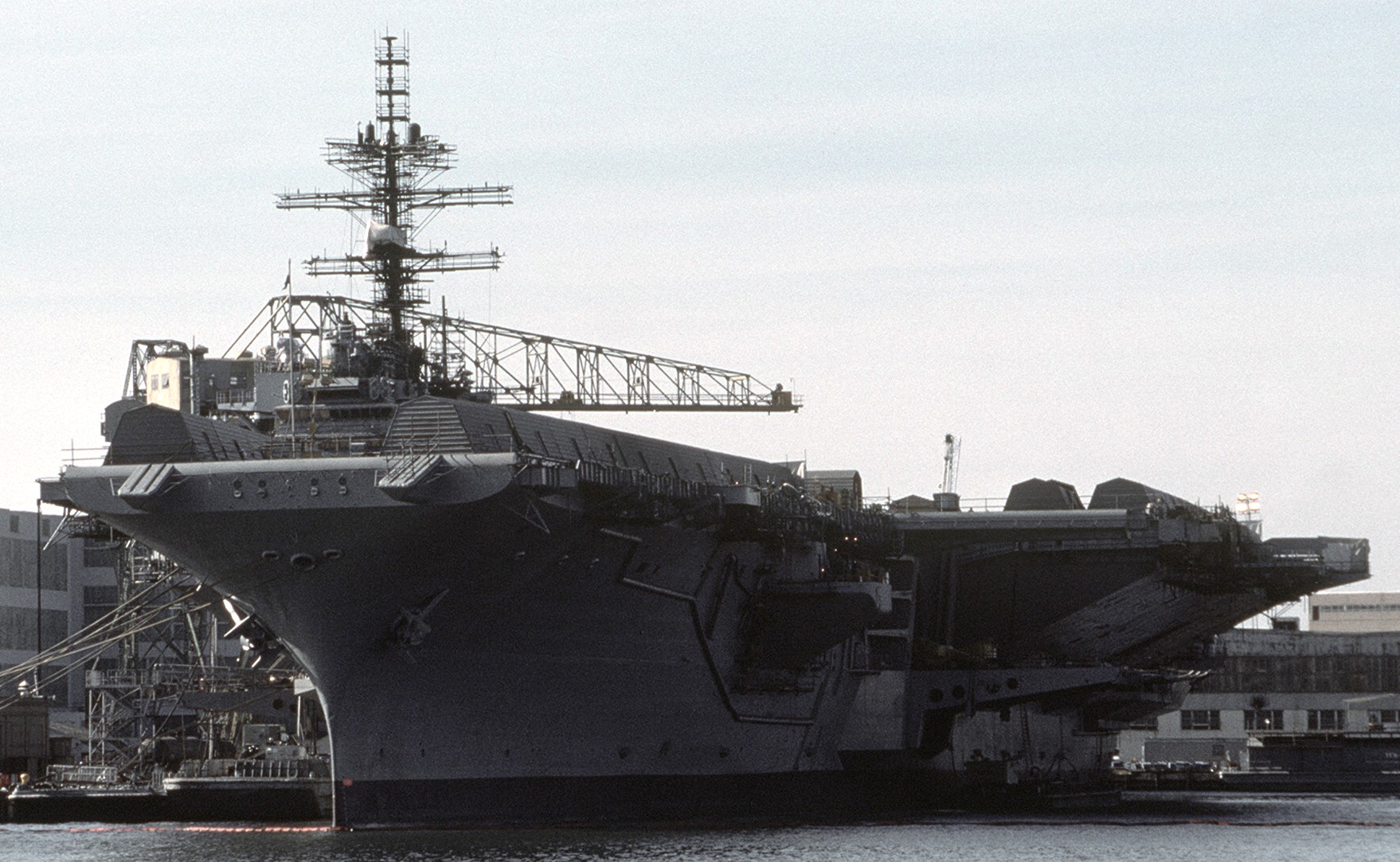 overhaul at Norfolk Naval Shipyard - October 1988 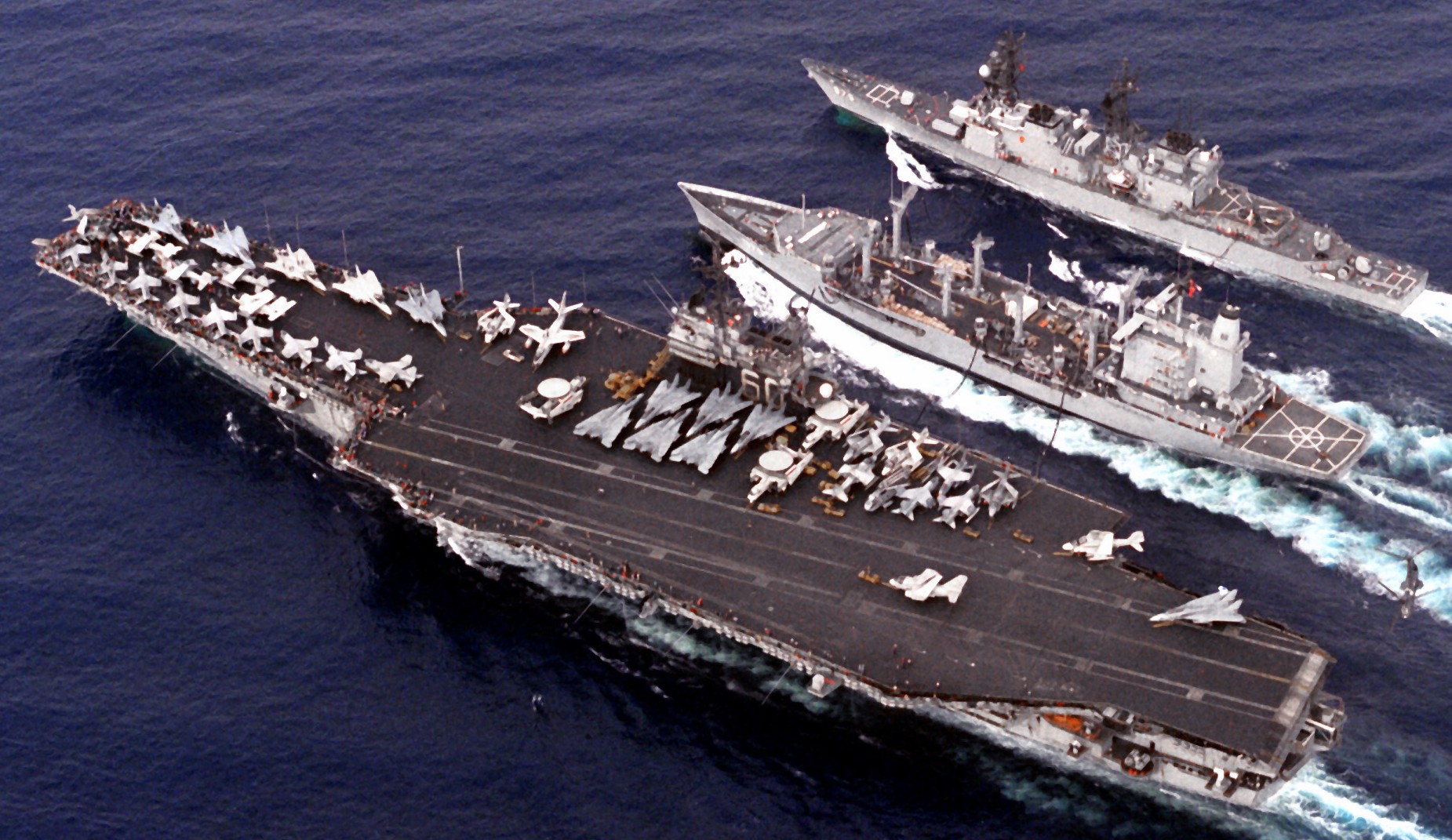 with CVW-17 embarked - Mediterranean Sea - November 1987 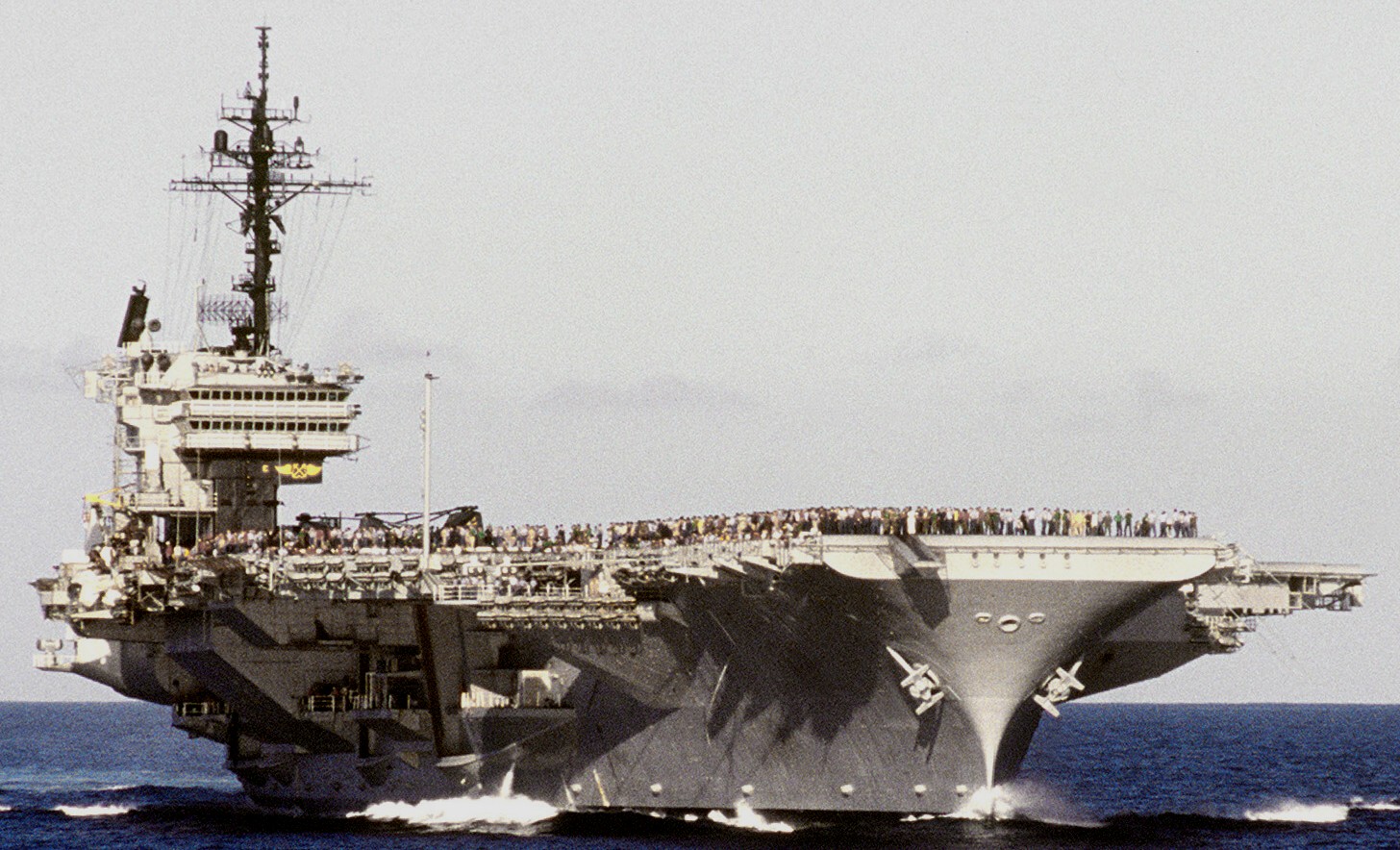 with CVW-17 embarked - Gulf of Oman - October 1987 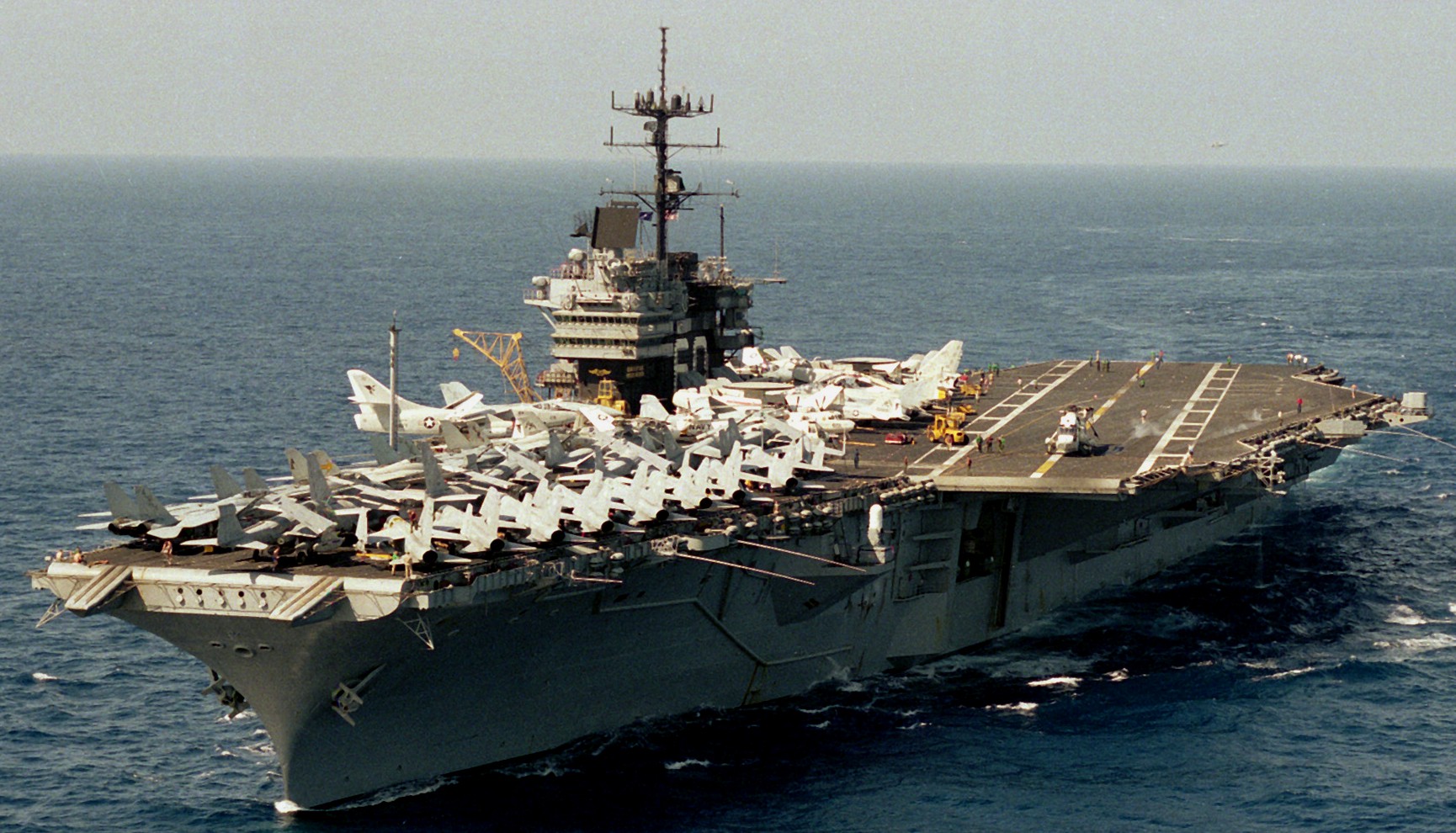 with CVW-17 embarked - Mediterranean Sea - June 1987 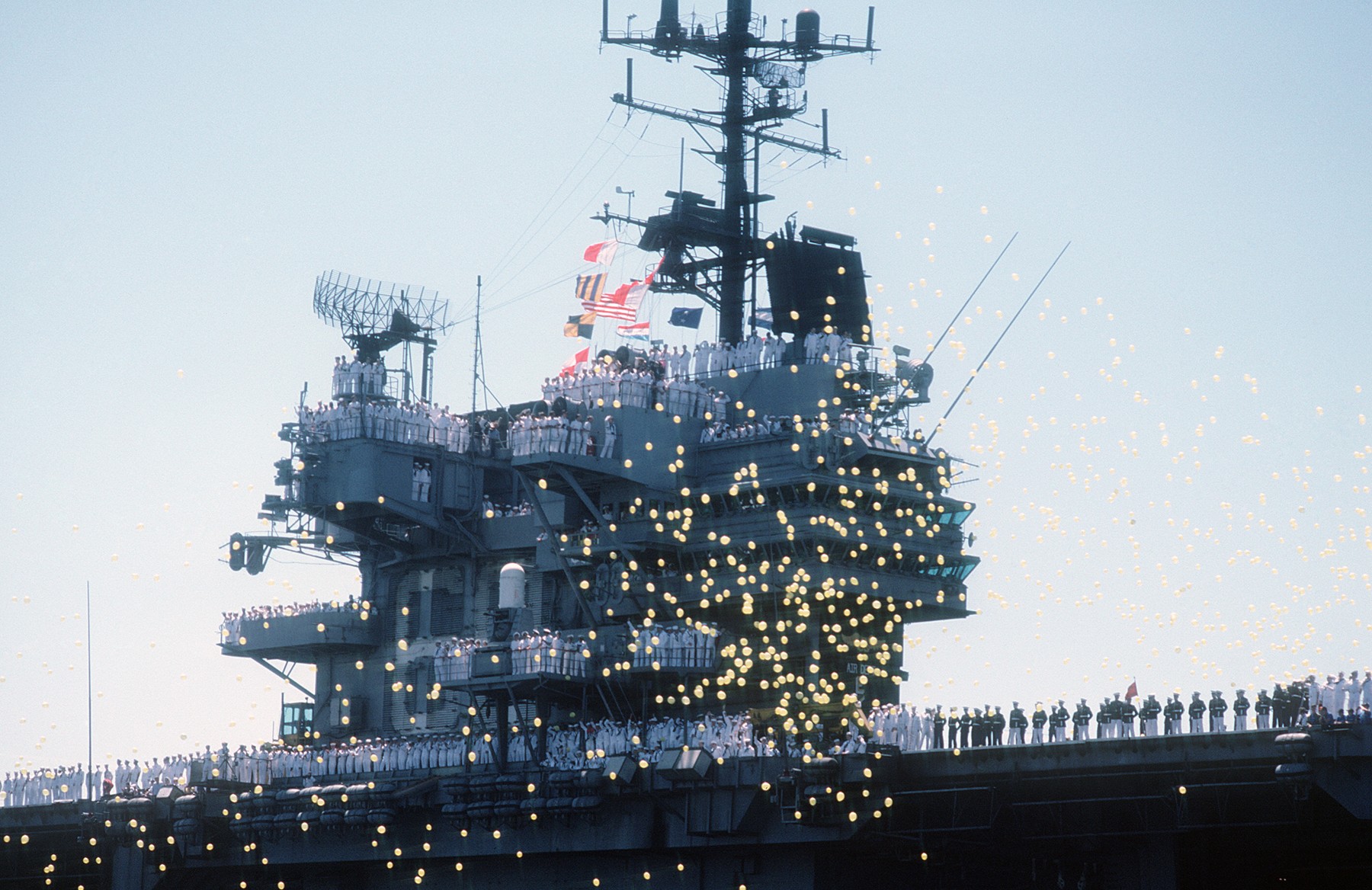 returning to Naval Station Mayport, Florida after an 8-month deployment - April 16, 1986 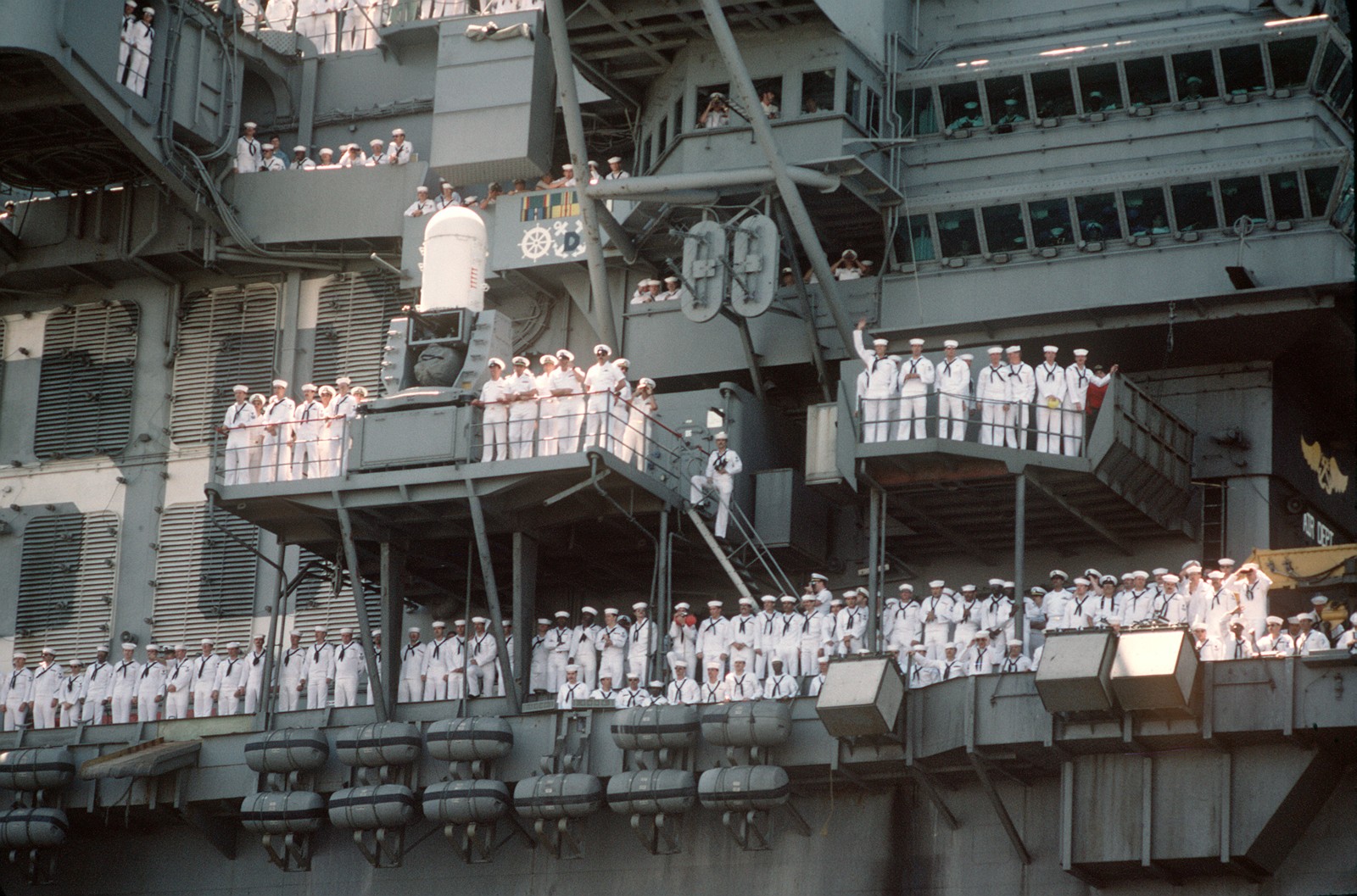 returning to Naval Station Mayport, Florida after an 8-month deployment - April 16, 1986 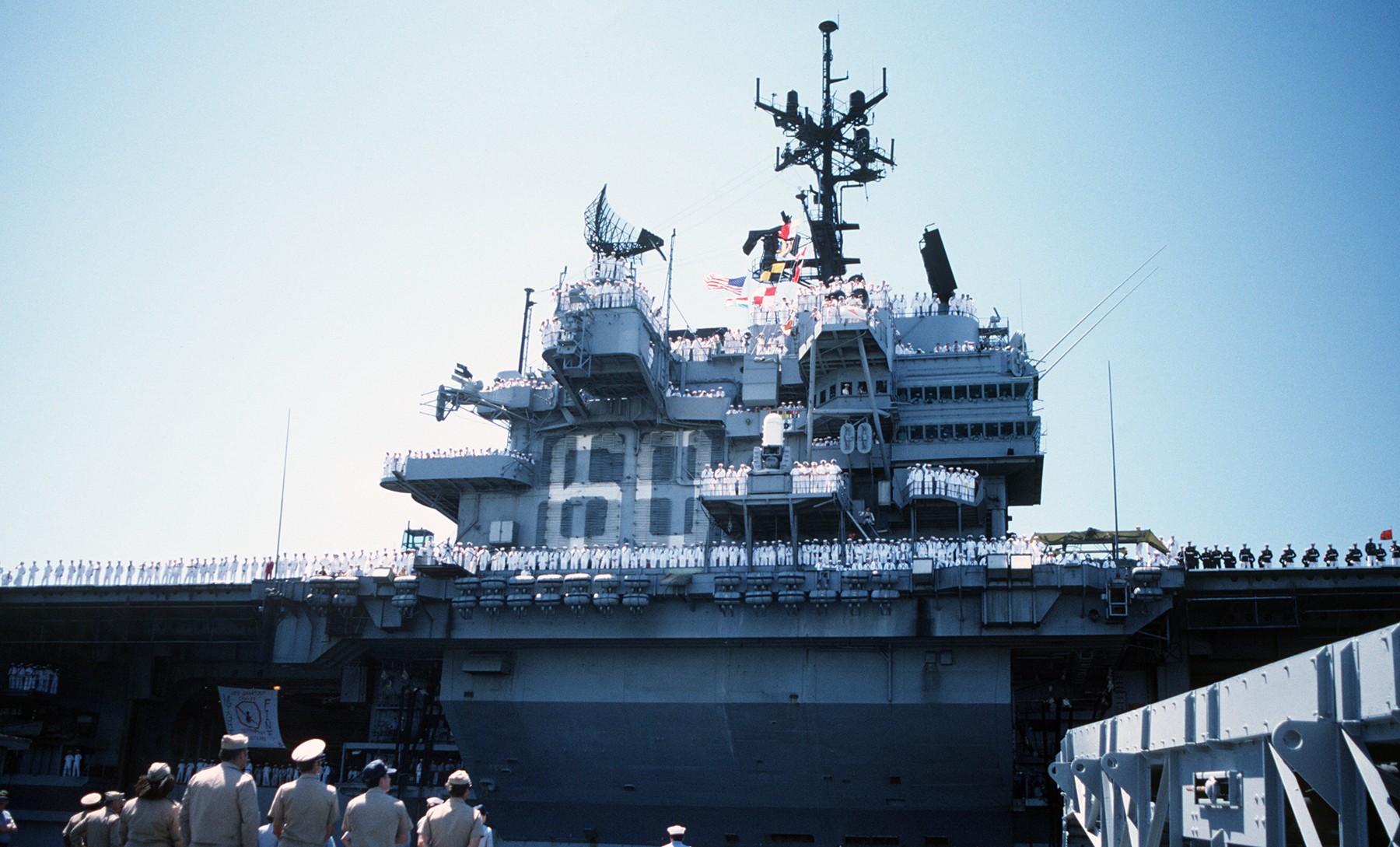 returning to Naval Station Mayport, Florida after an 8-month deployment - April 16, 1986 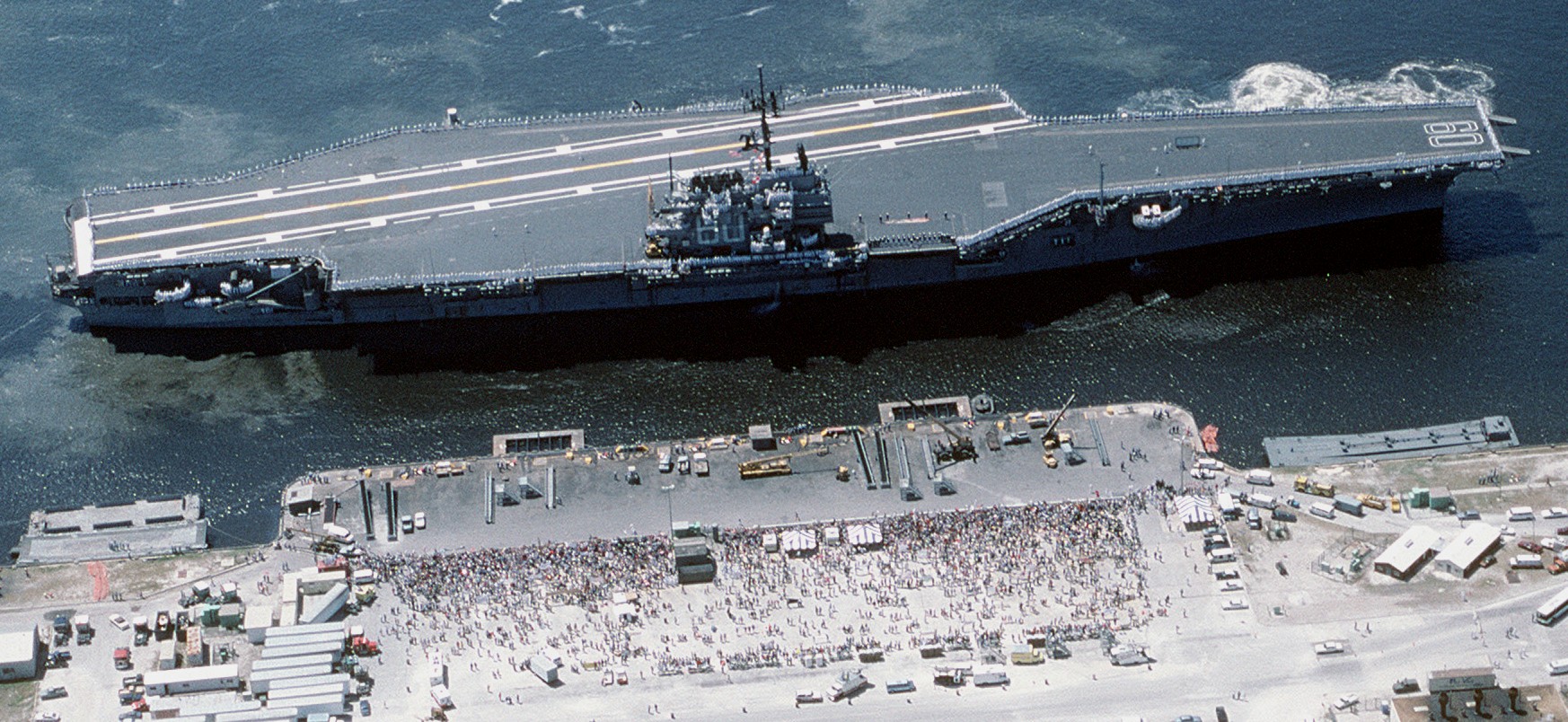 returning to Naval Station Mayport, Florida after an 8-month deployment - April 16, 1986 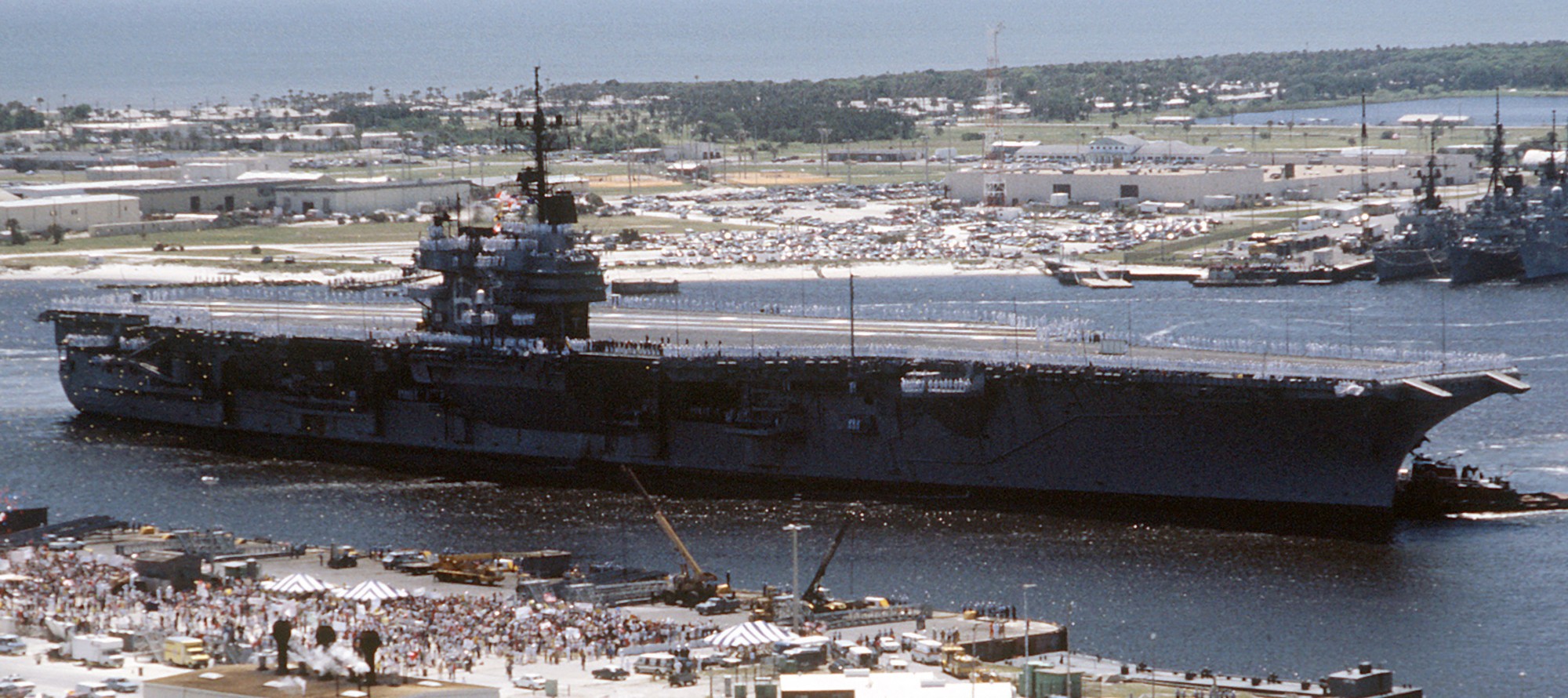 returning to Naval Station Mayport, Florida after an 8-month deployment - April 16, 1986 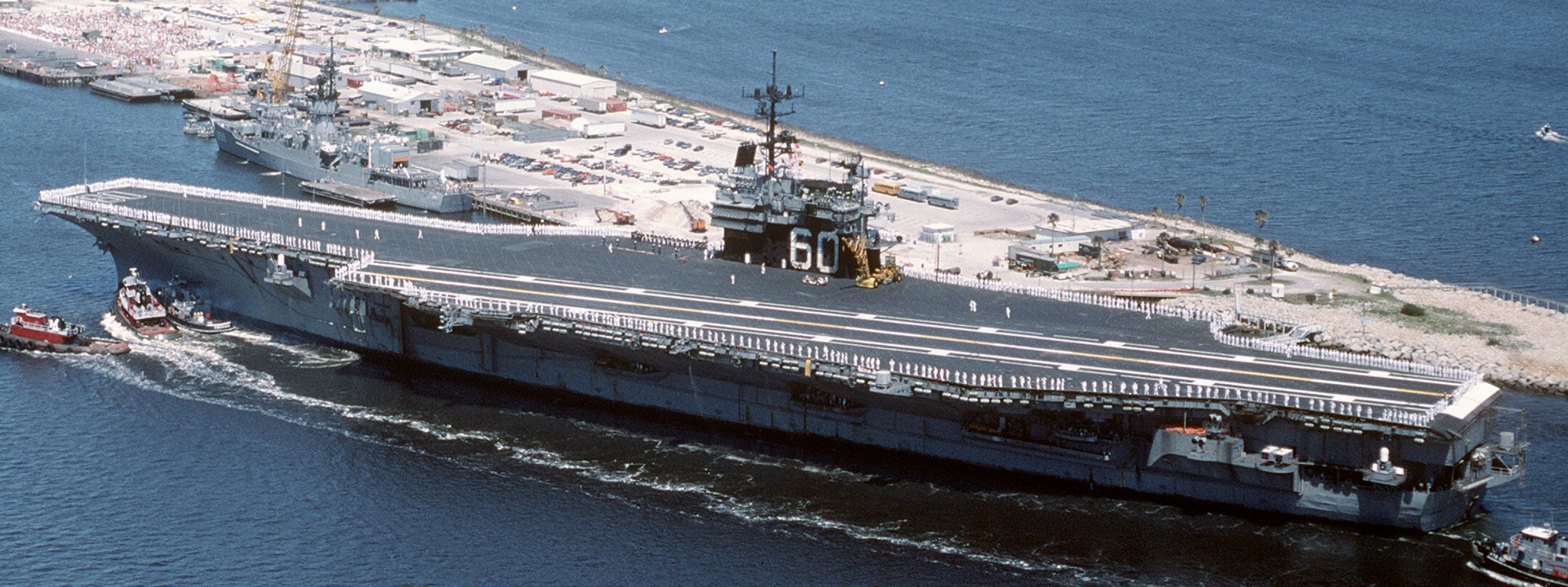 returning to Naval Station Mayport, Florida after an 8-month deployment - April 16, 1986 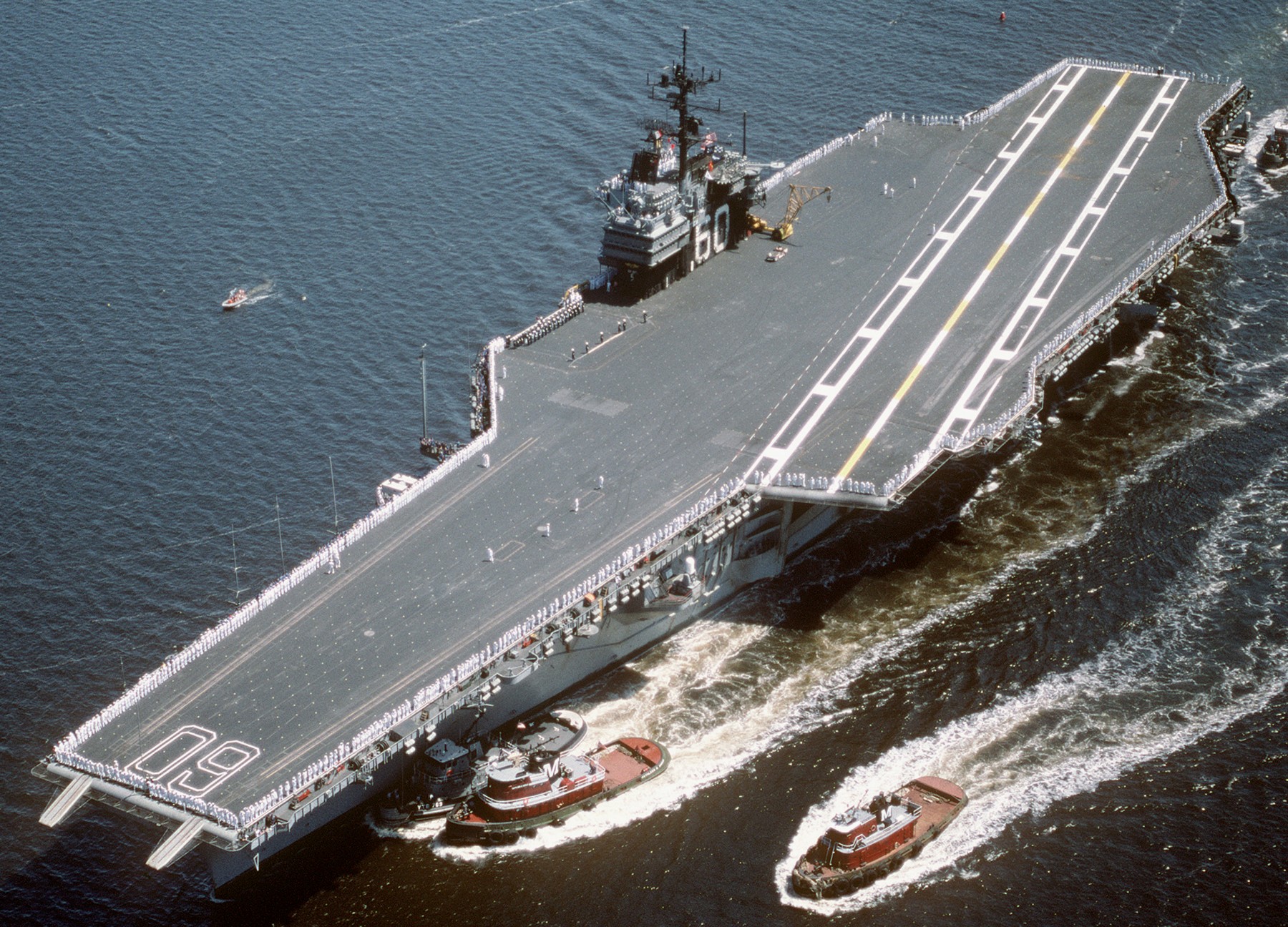 returning to Naval Station Mayport, Florida after an 8-month deployment - April 16, 1986 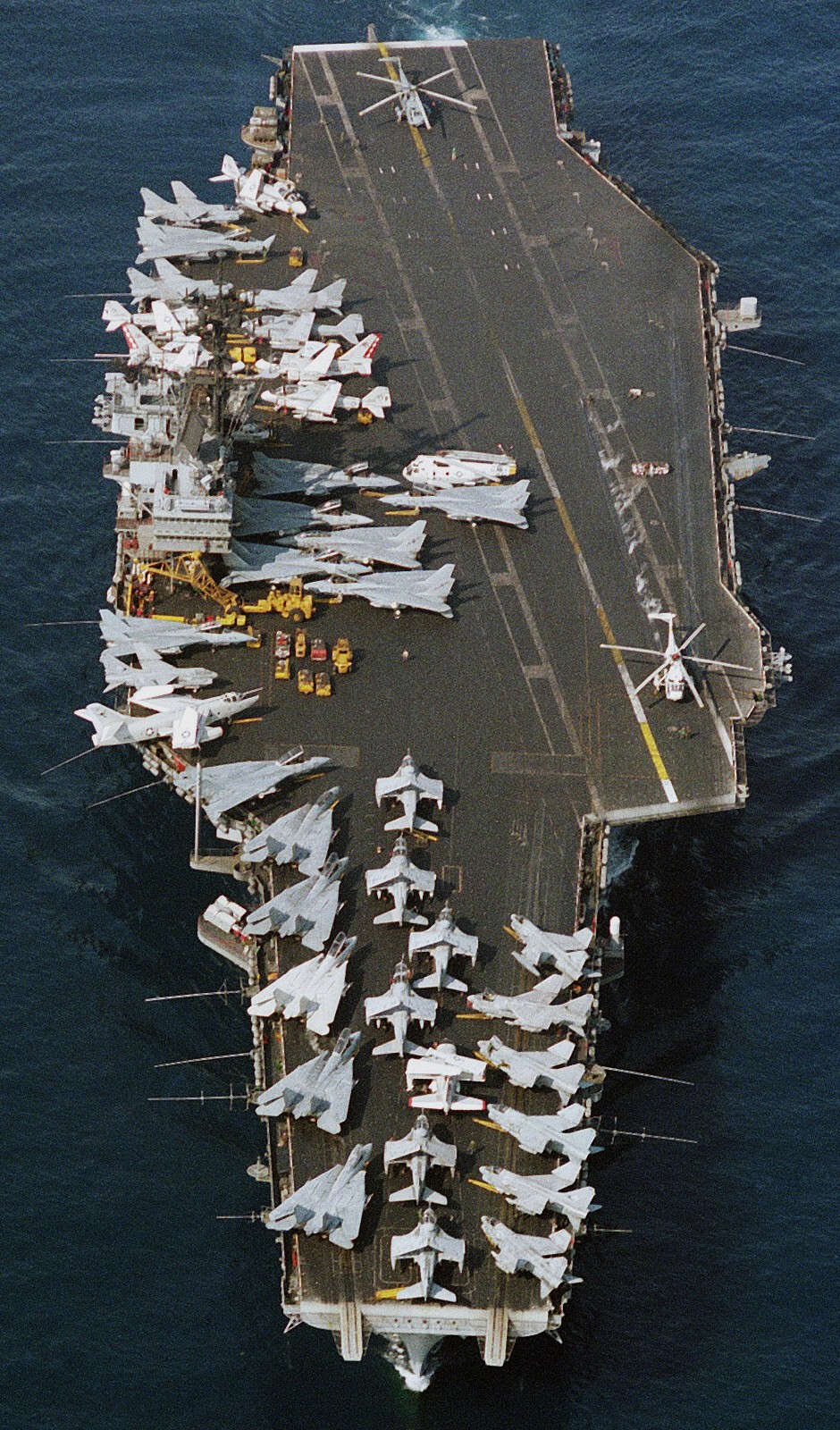 with CVW-17 embarked - Mediterranean Sea, off Lybia - March 1986 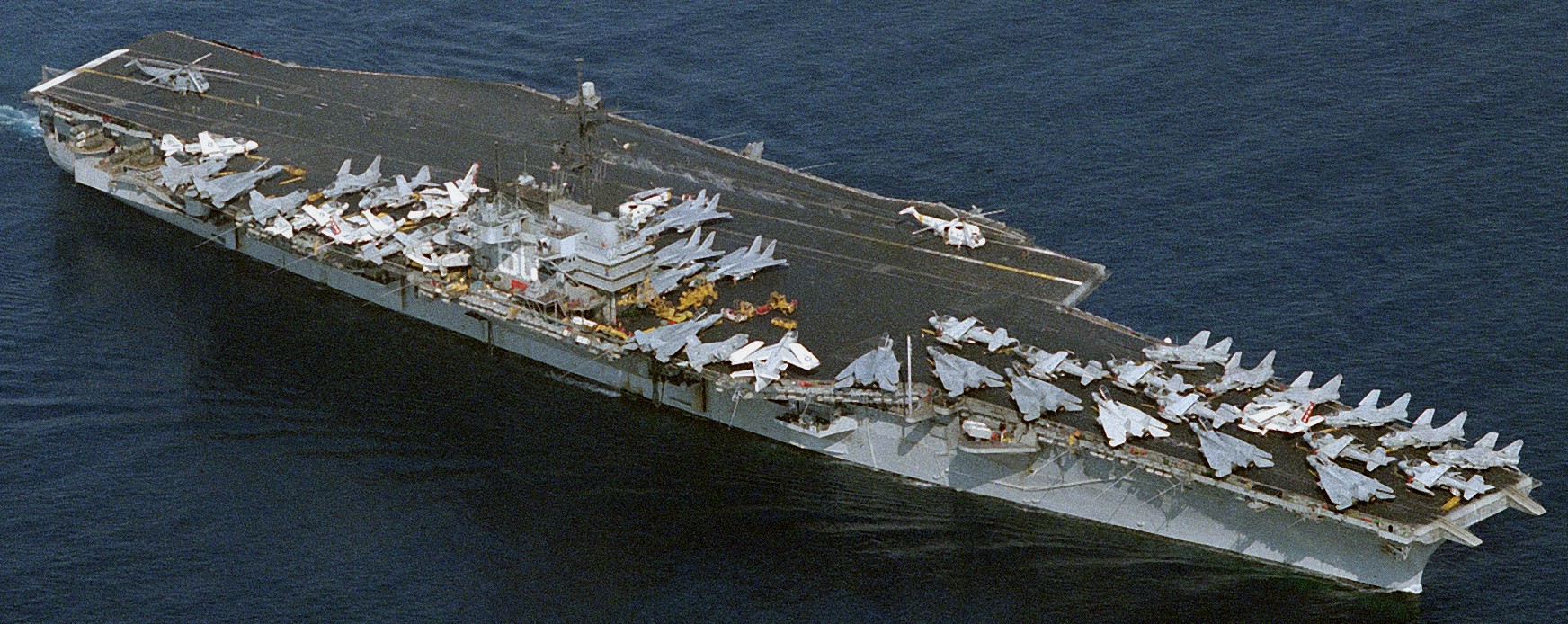 with CVW-17 embarked - Mediterranean Sea, off Lybia - March 1986 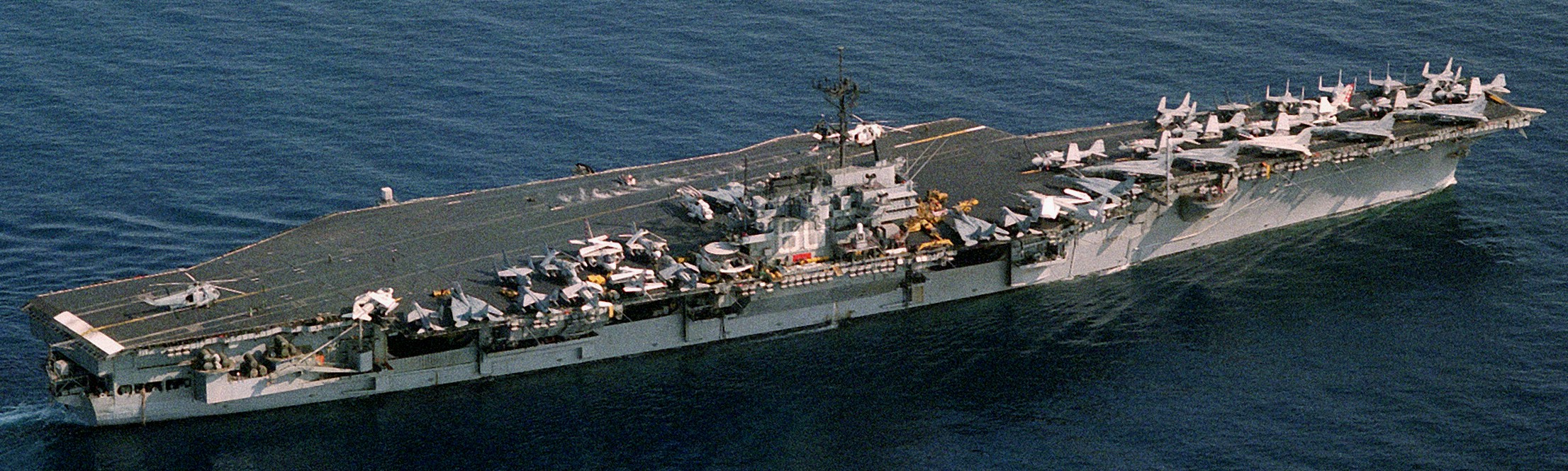 with CVW-17 embarked - Mediterranean Sea, off Lybia - March 1986 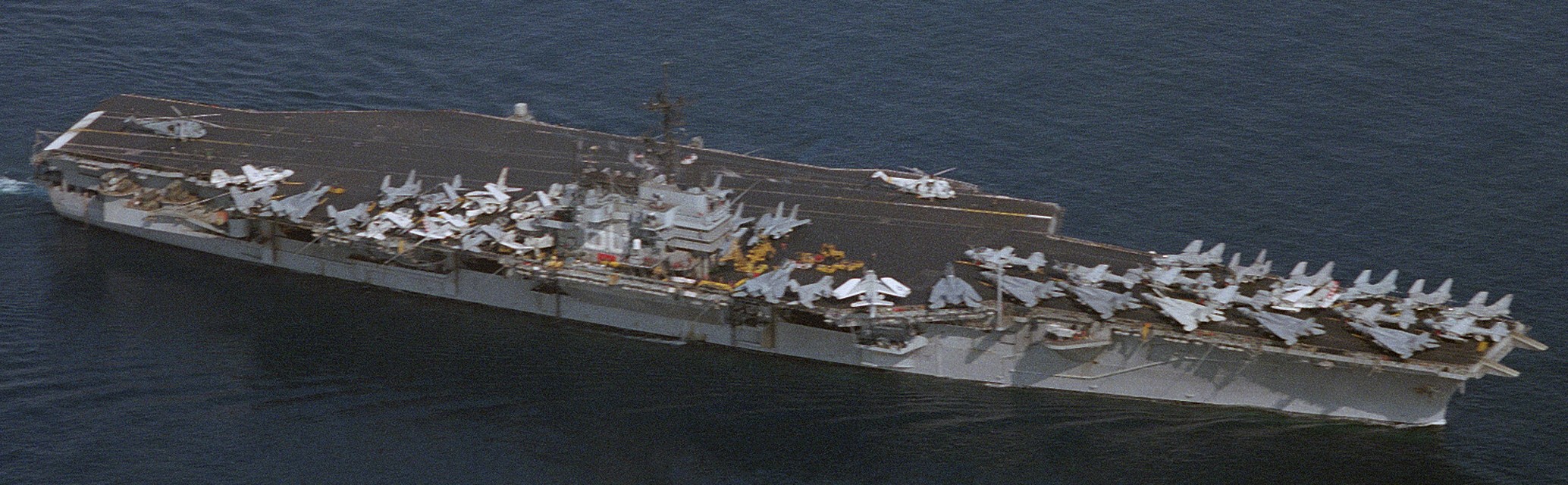 with CVW-17 embarked - Mediterranean Sea, off Lybia - March 1986 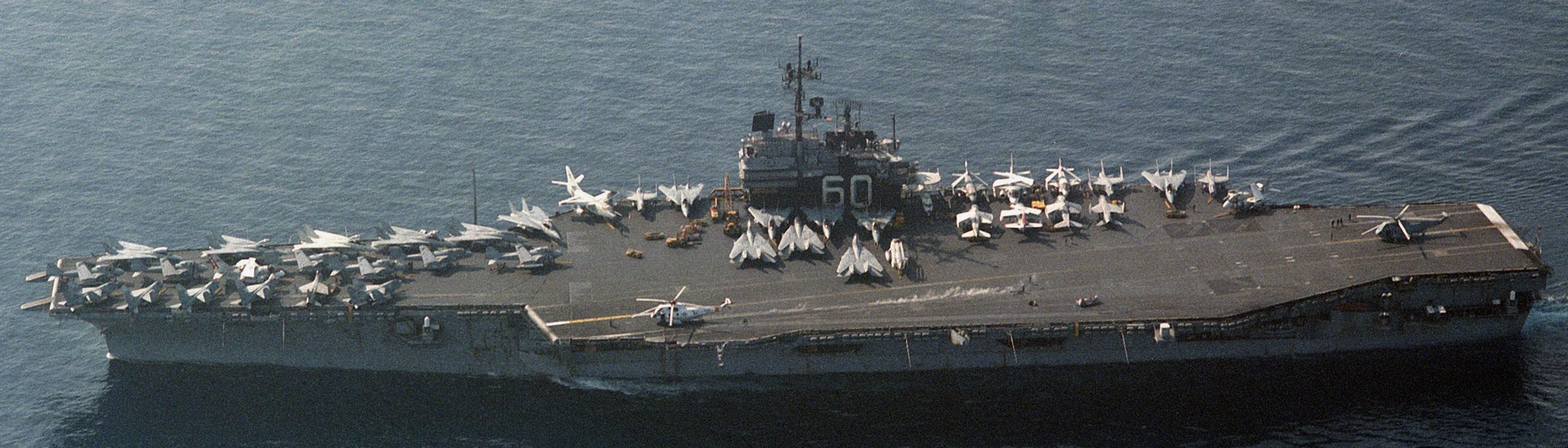 with CVW-17 embarked - Mediterranean Sea, off Lybia - March 1986 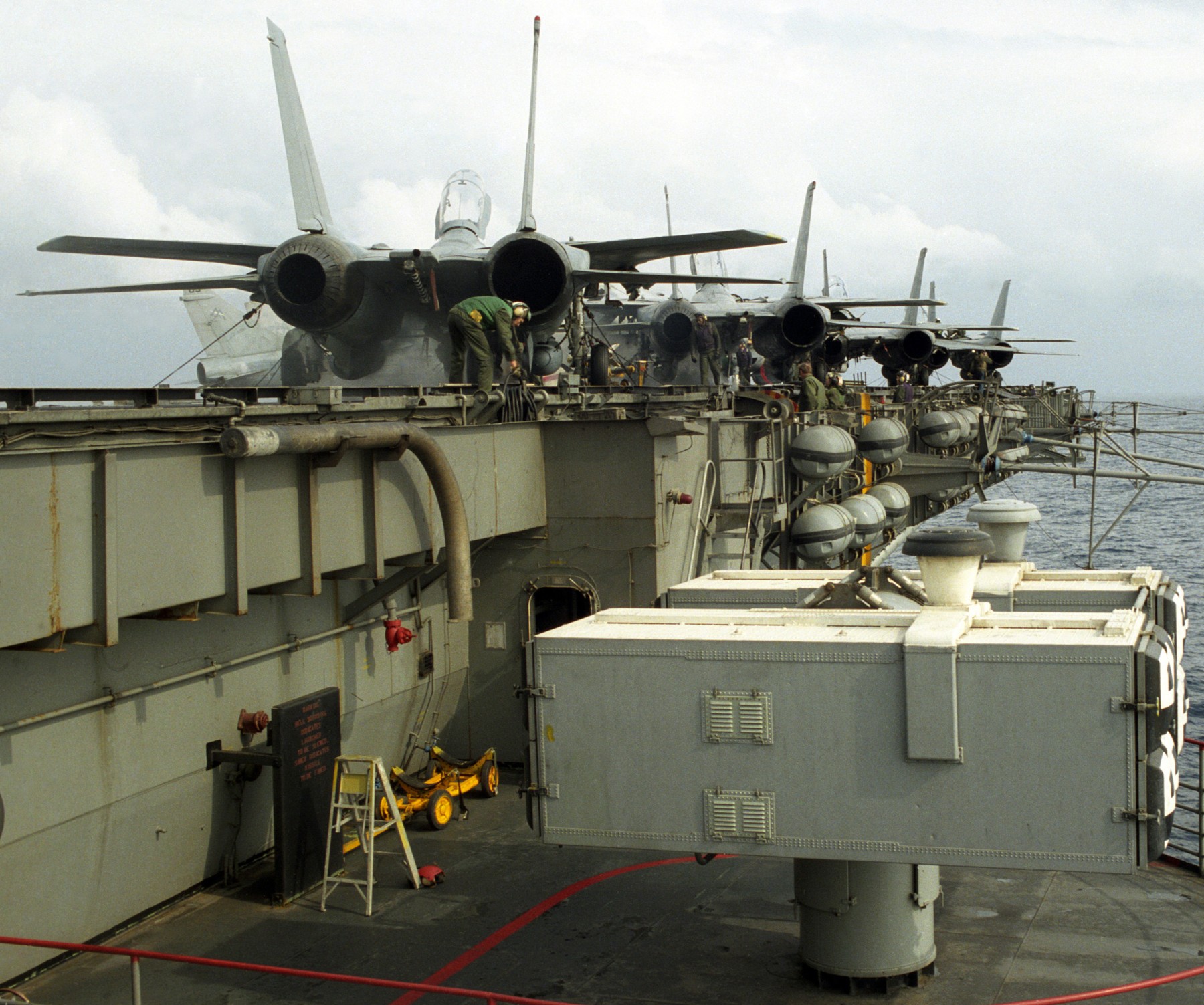 with CVW-17 embarked - Mediterranean Sea, off Lybia - March 1986 note the Mk.29 launcher for RIM-7 Sea Sparrow missiles 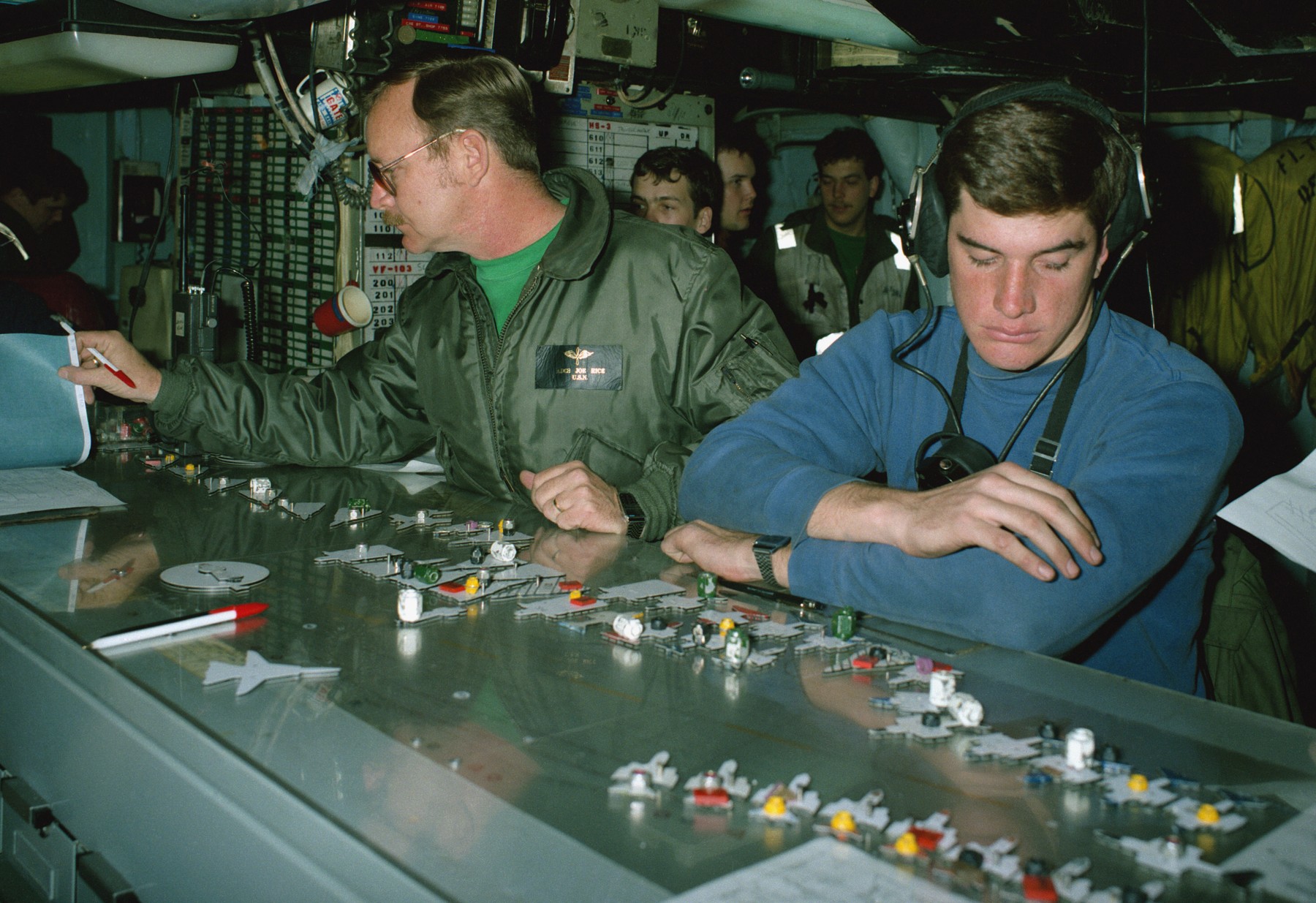 flight deck control - Mediterranean Sea, off Lybia - March 1986 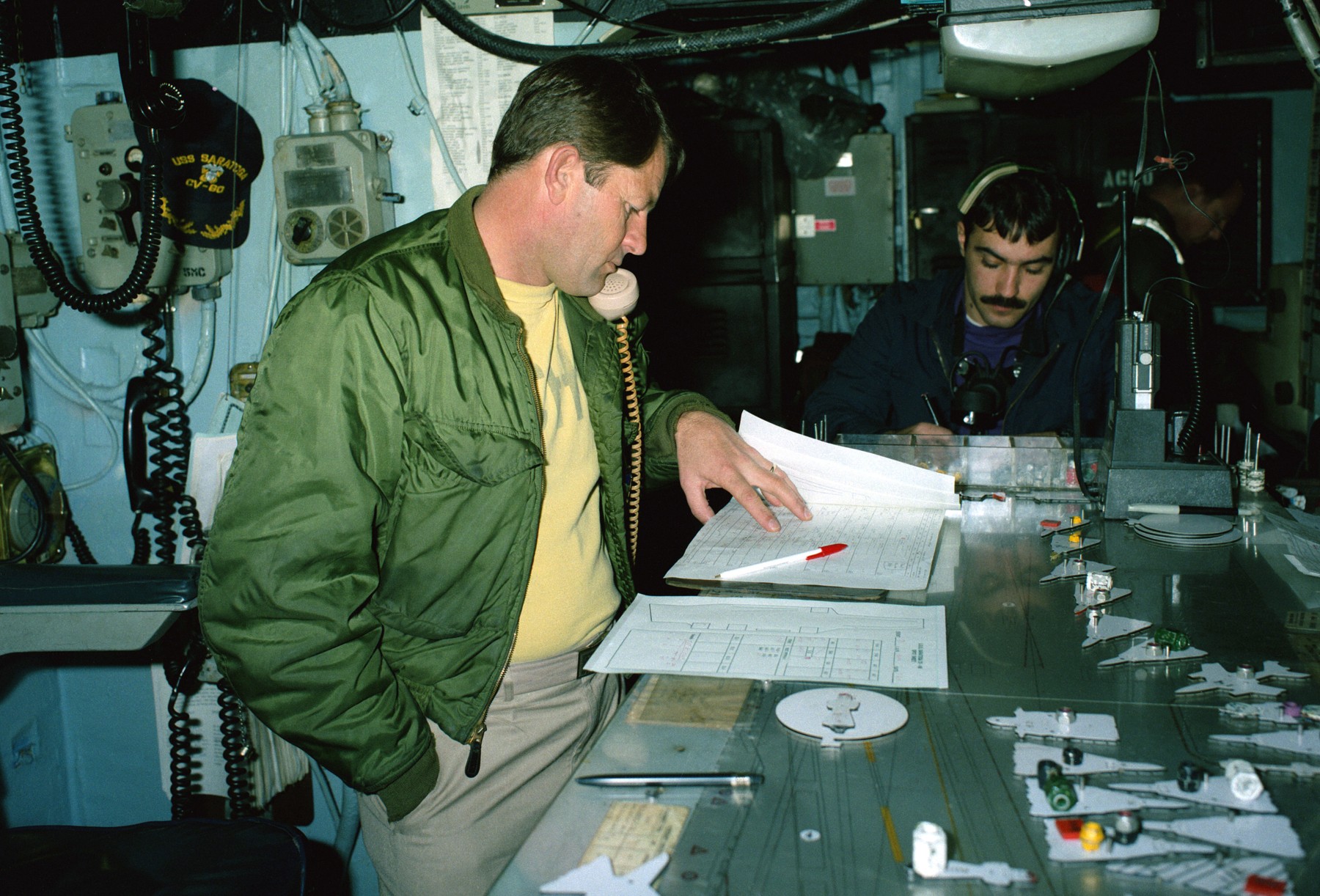 flight deck control - Mediterranean Sea, off Lybia - March 1986 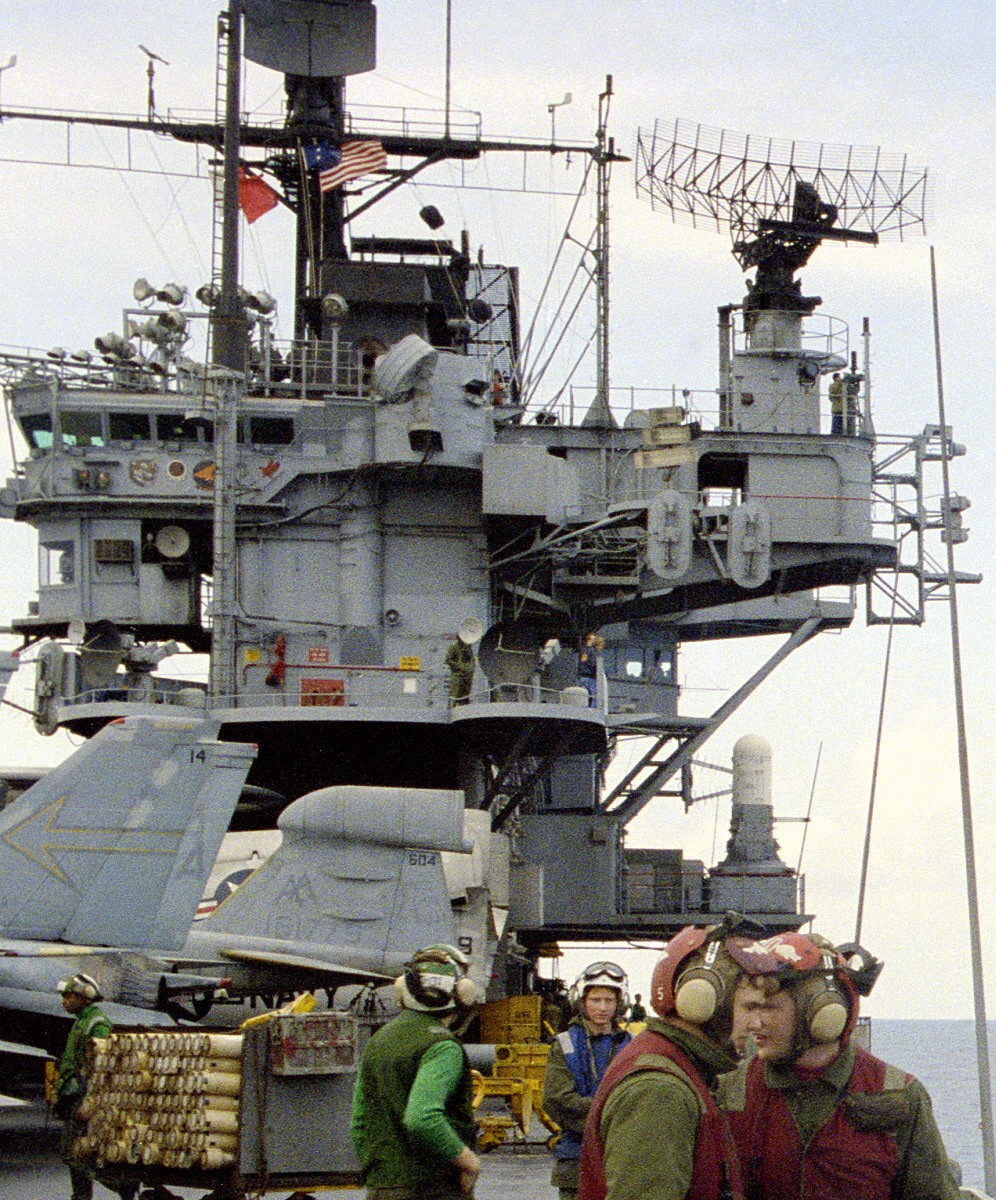 off Lybia - February 1986 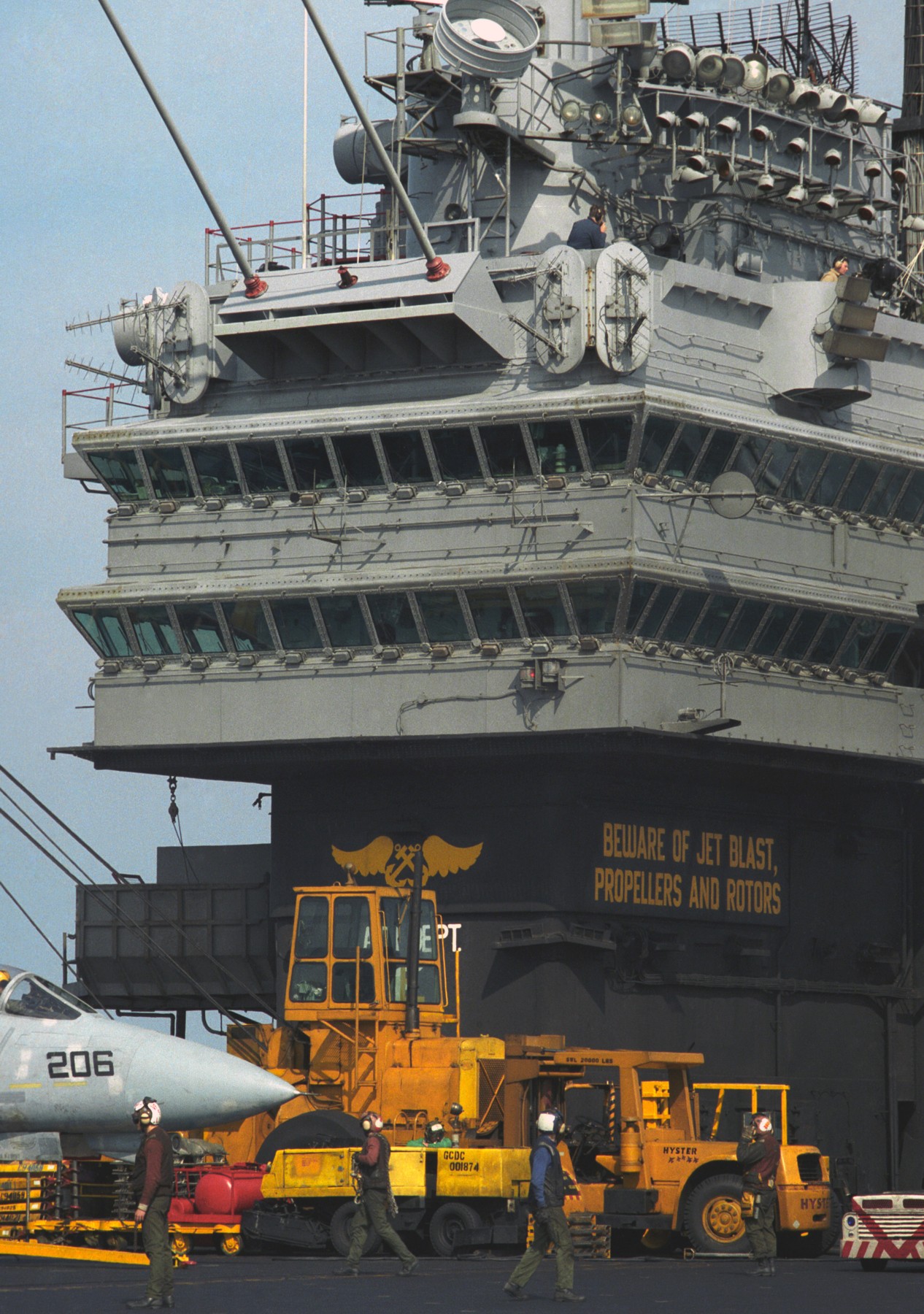 off Lybia - February 1986 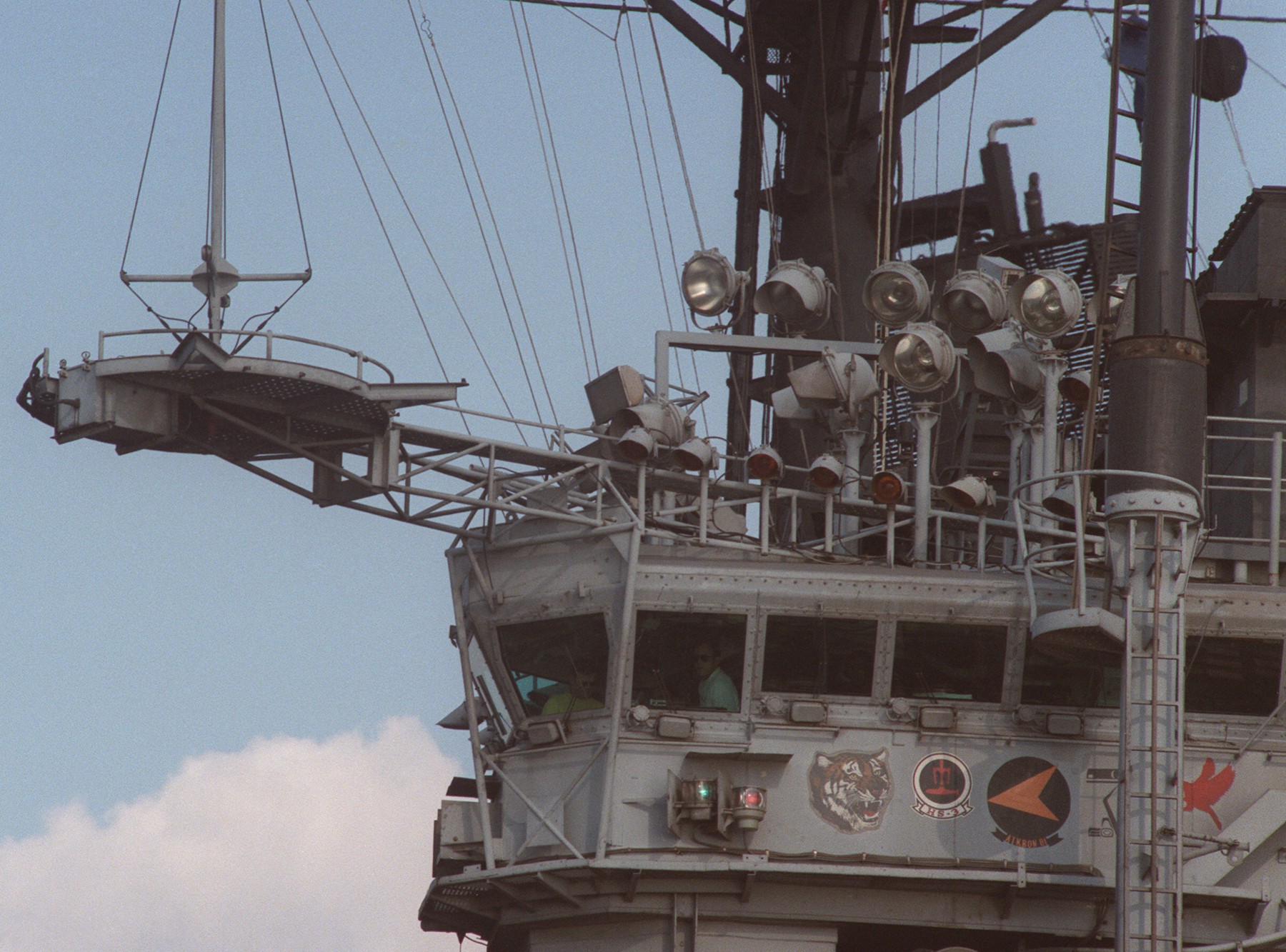 off Lybia - February 1986 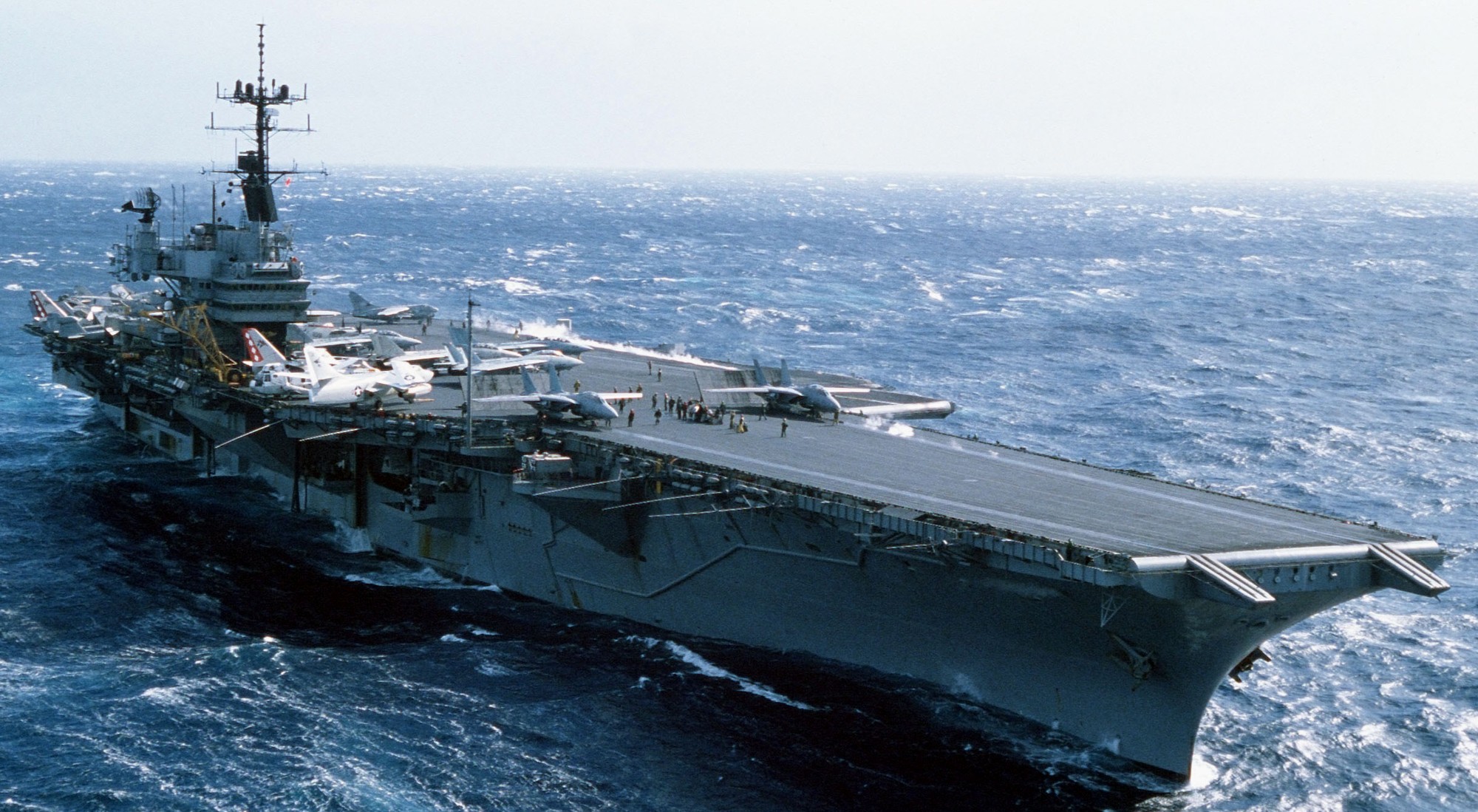 with CVW-17 embarked - Mediterranean Sea - January 1986 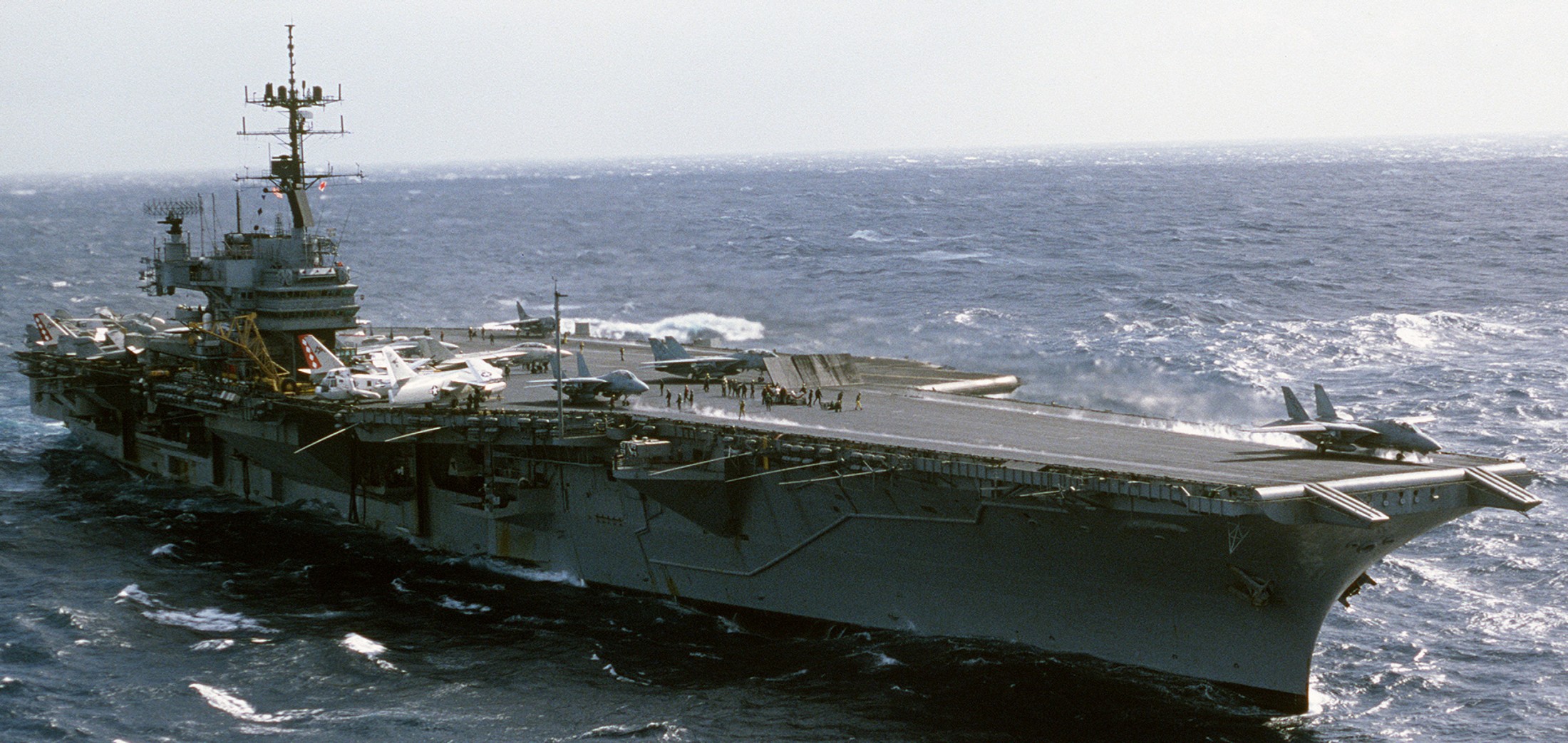 with CVW-17 embarked - Mediterranean Sea - January 1986 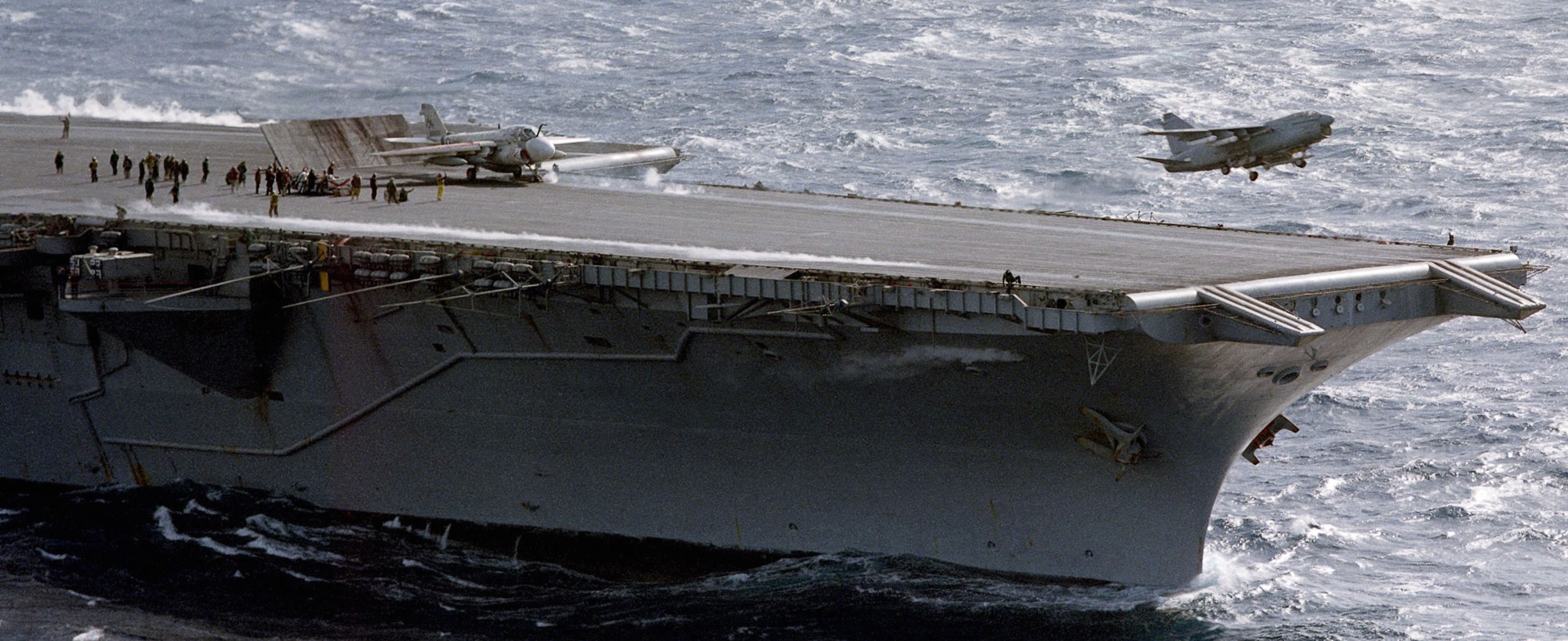 with CVW-17 embarked - Mediterranean Sea - January 1986 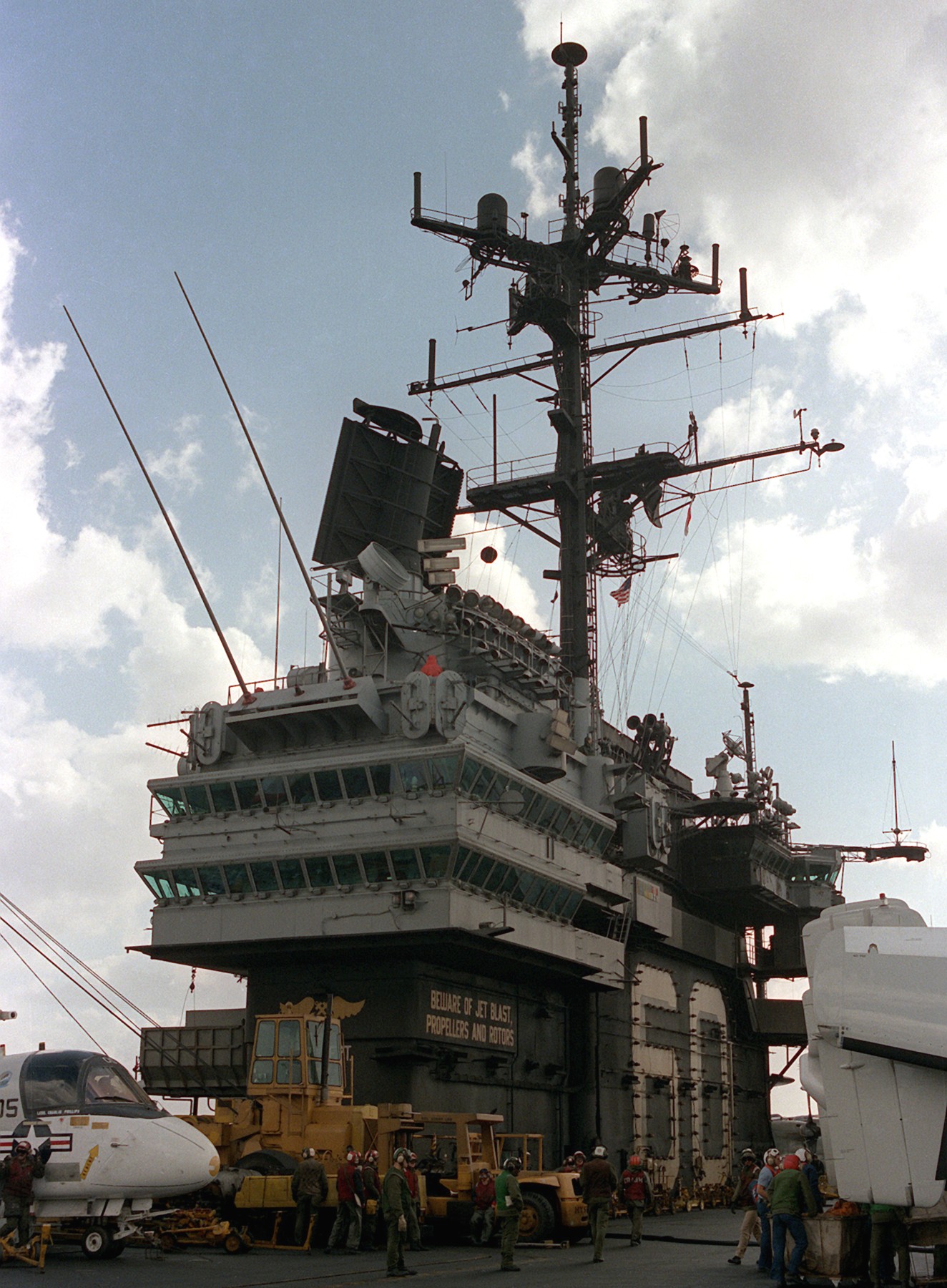 with CVW-17 embarked - Mediterranean Sea - January 1986 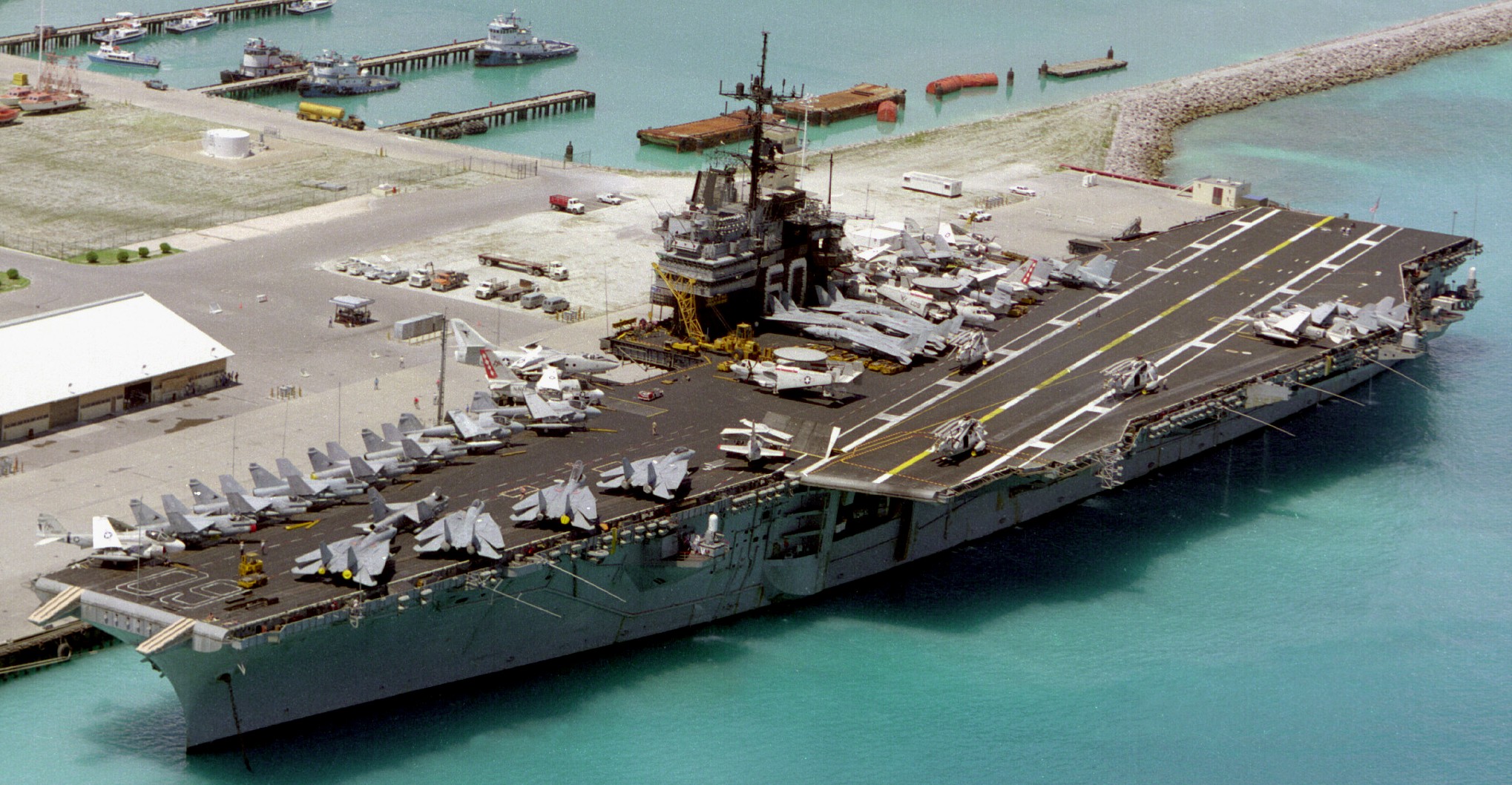 with CVW-17 embarked - Diego Garcia, British Indian Ocean Territory - December 1985 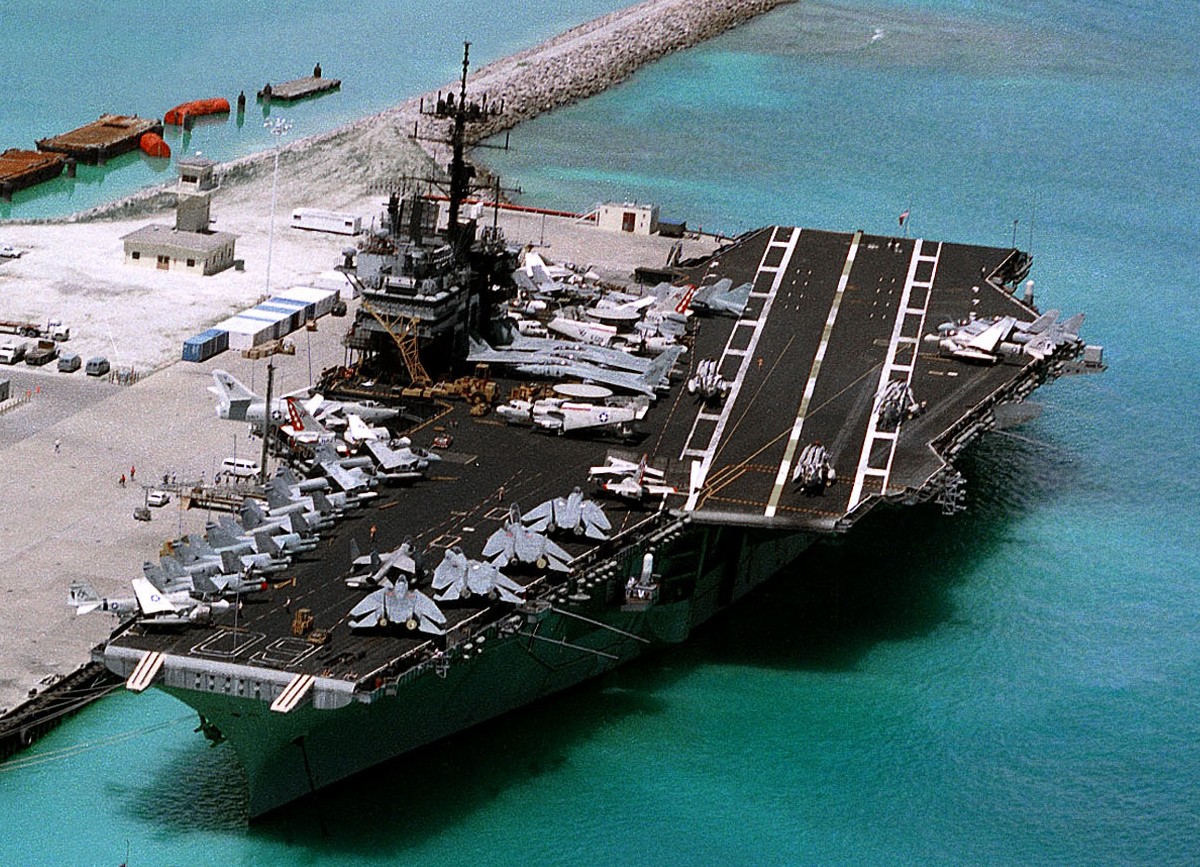 with CVW-17 embarked - Diego Garcia, British Indian Ocean Territory - December 1985 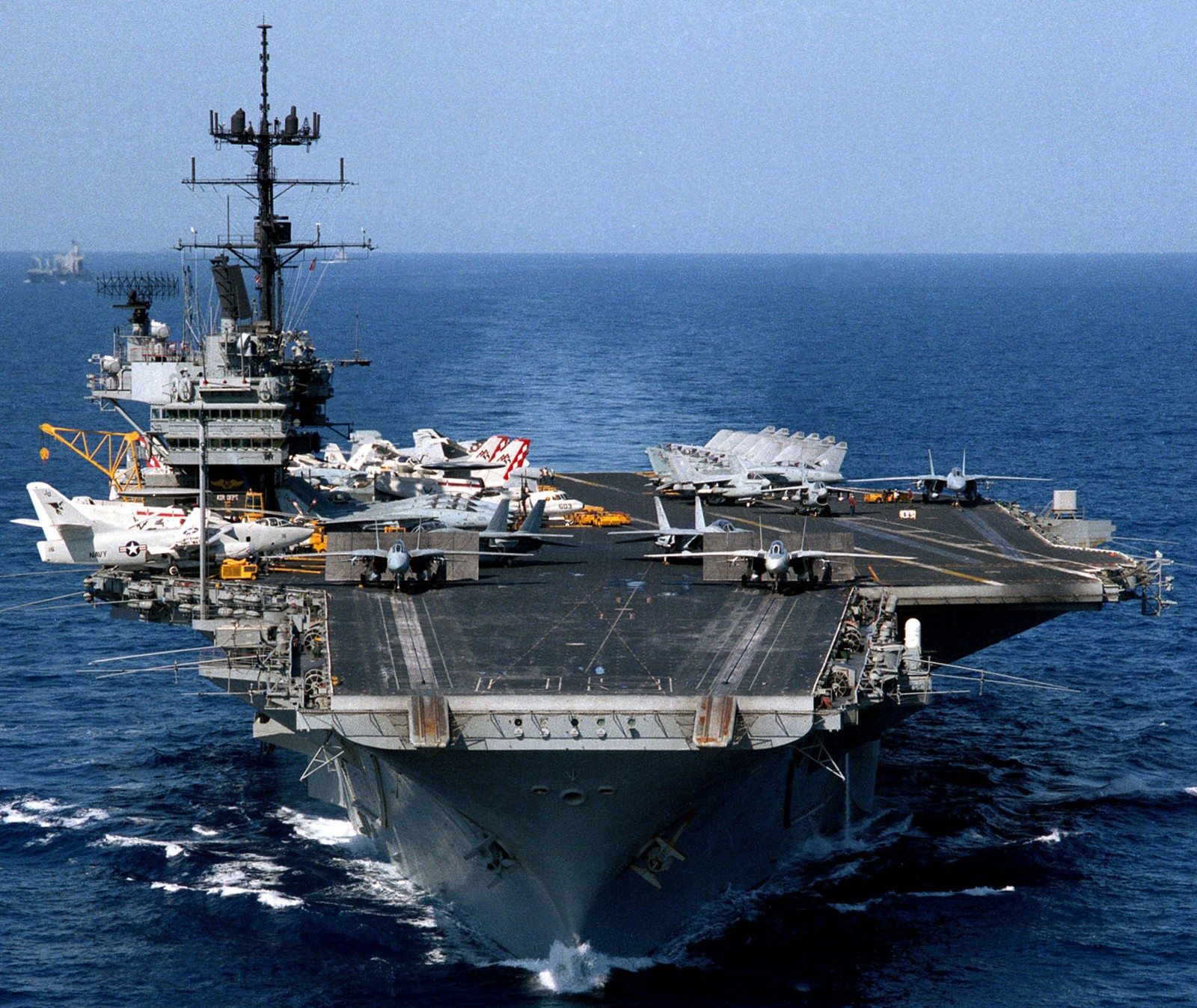 with CVW-17 embarked - Red Sea - November 1985 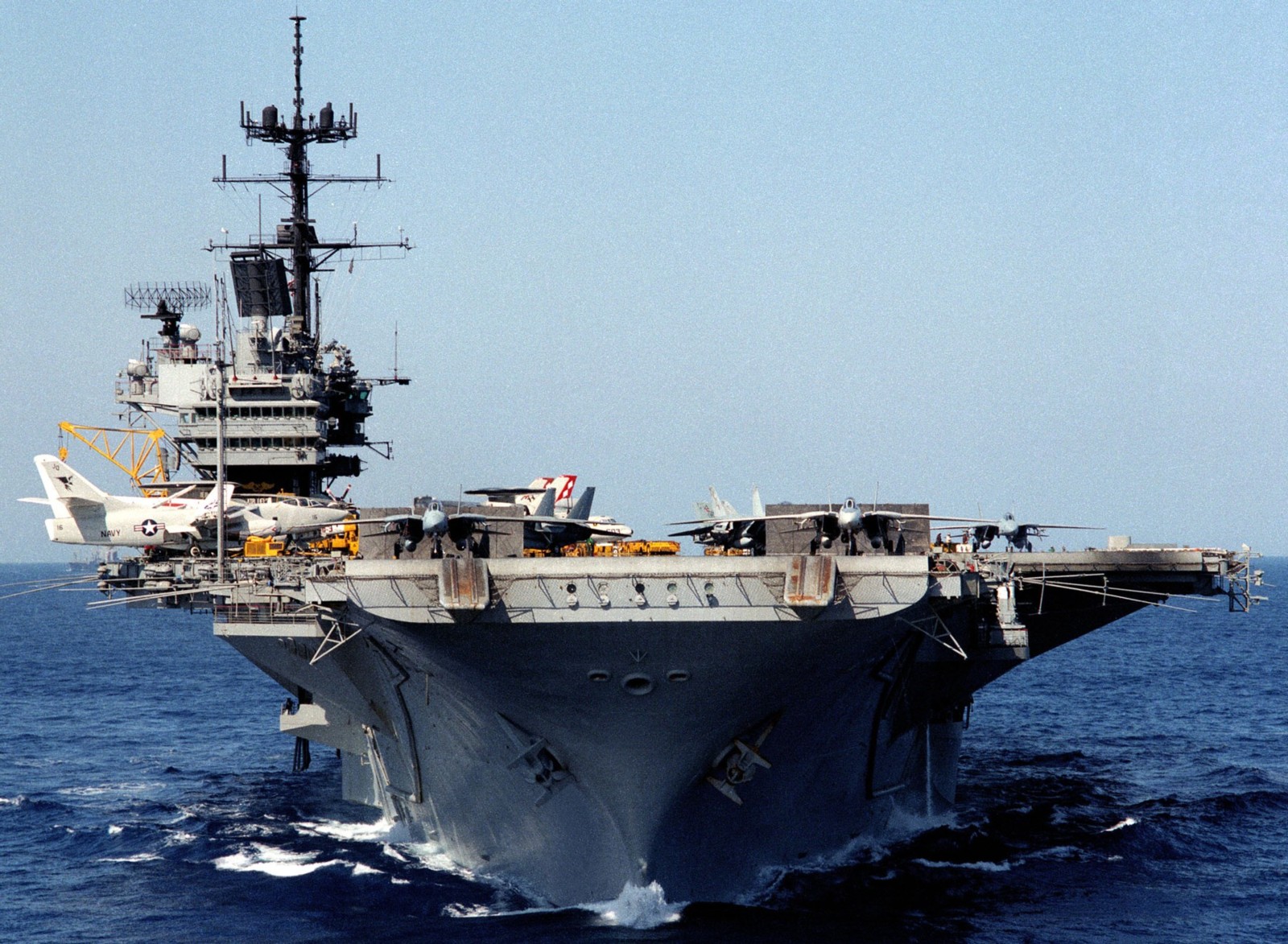 with CVW-17 embarked - Red Sea - November 1985 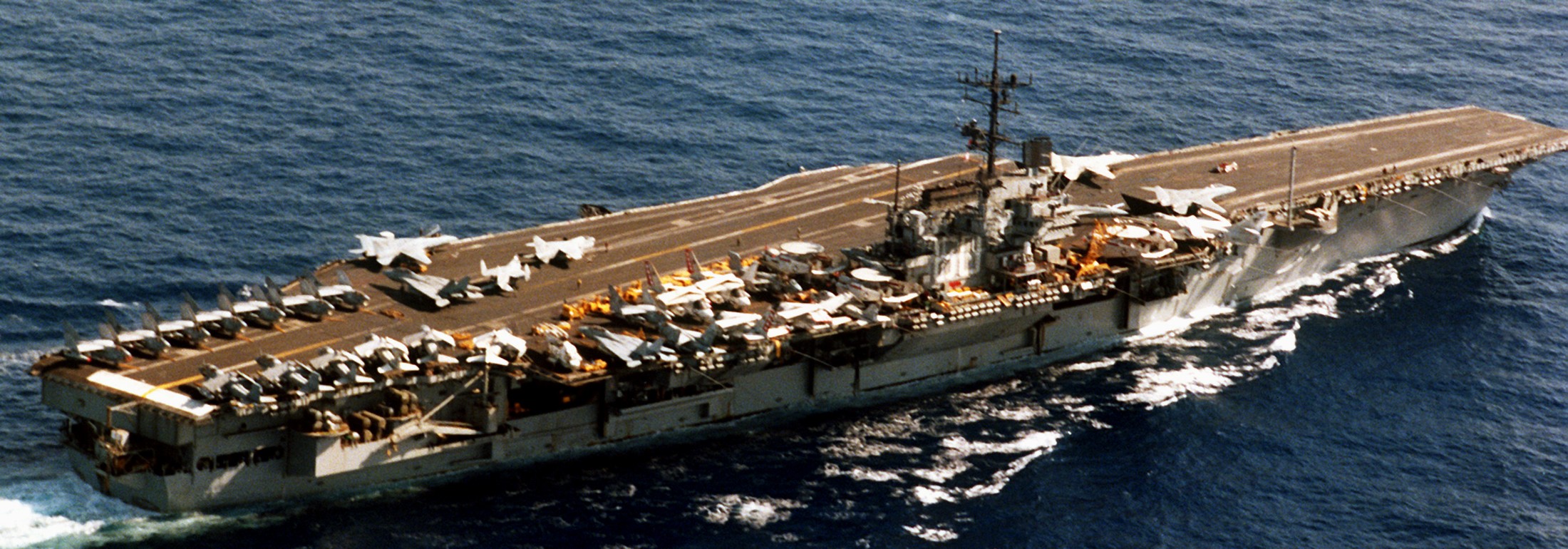 with CVW-17 embarked - Red Sea - November 1985 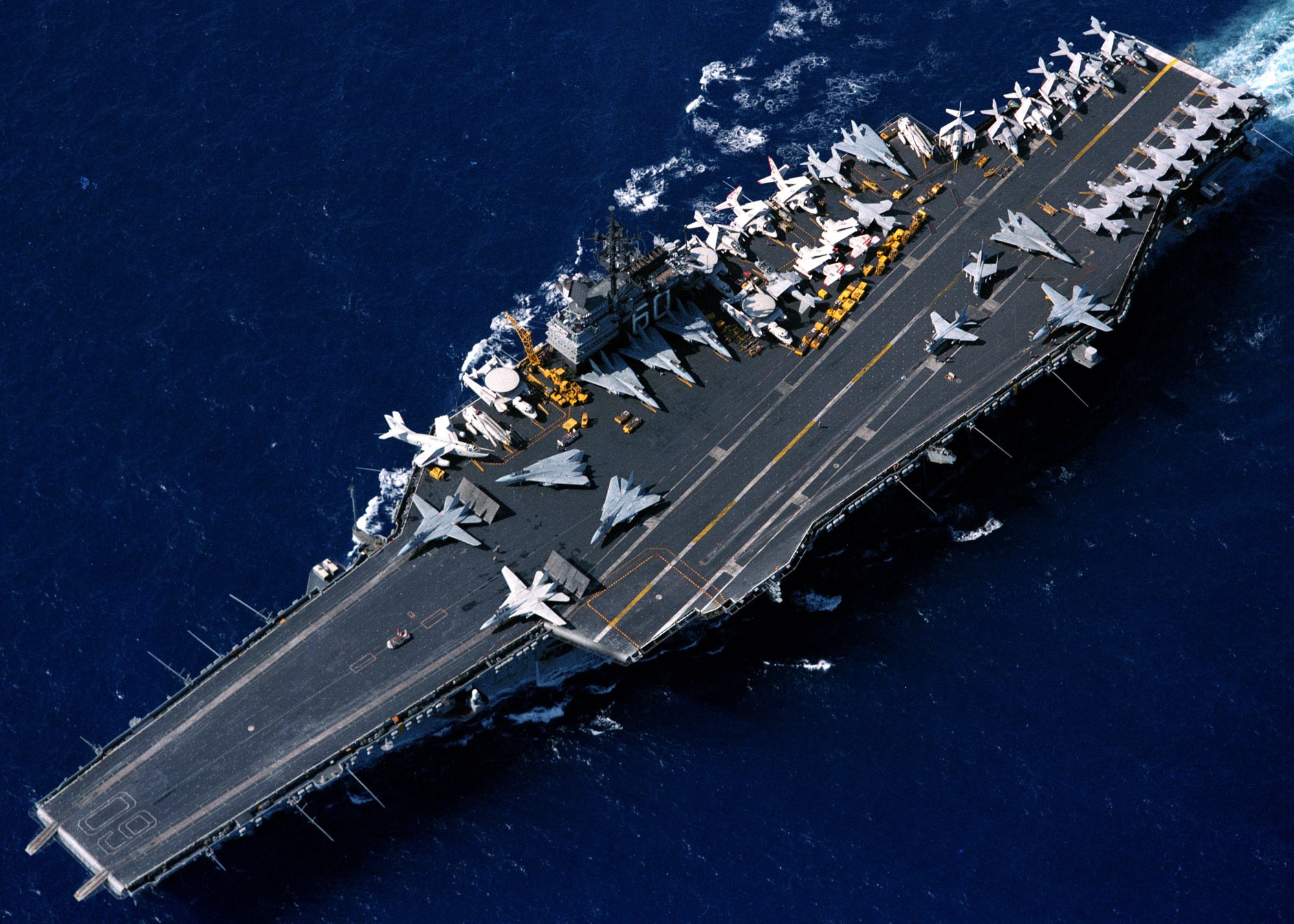 with CVW-17 embarked - Red Sea - November 1985 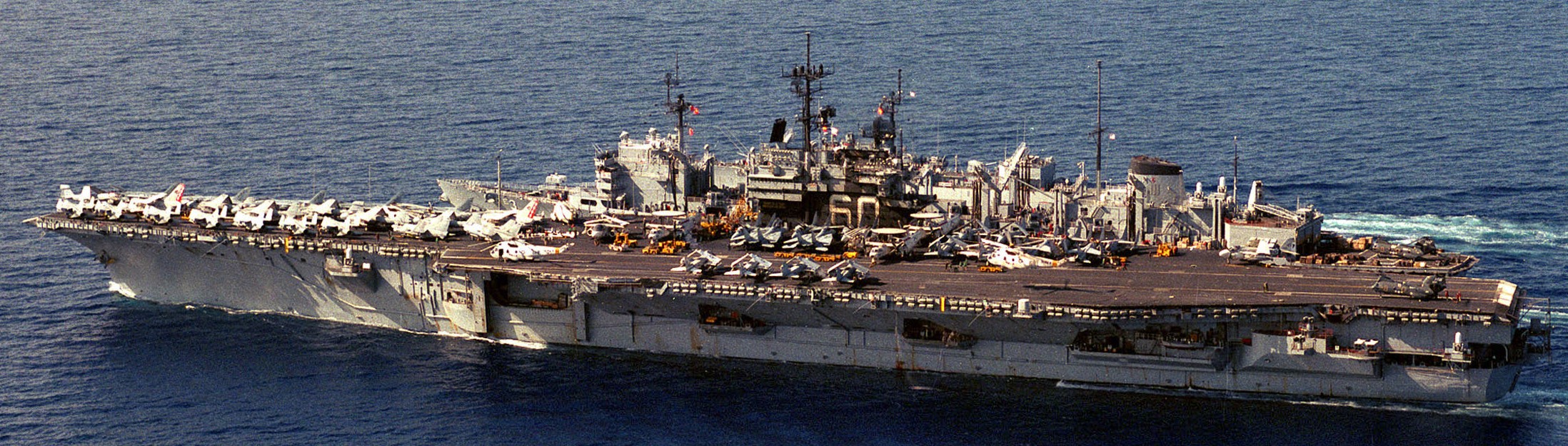 with CVW-17 embarked - Mediterranean Sea - October 1985 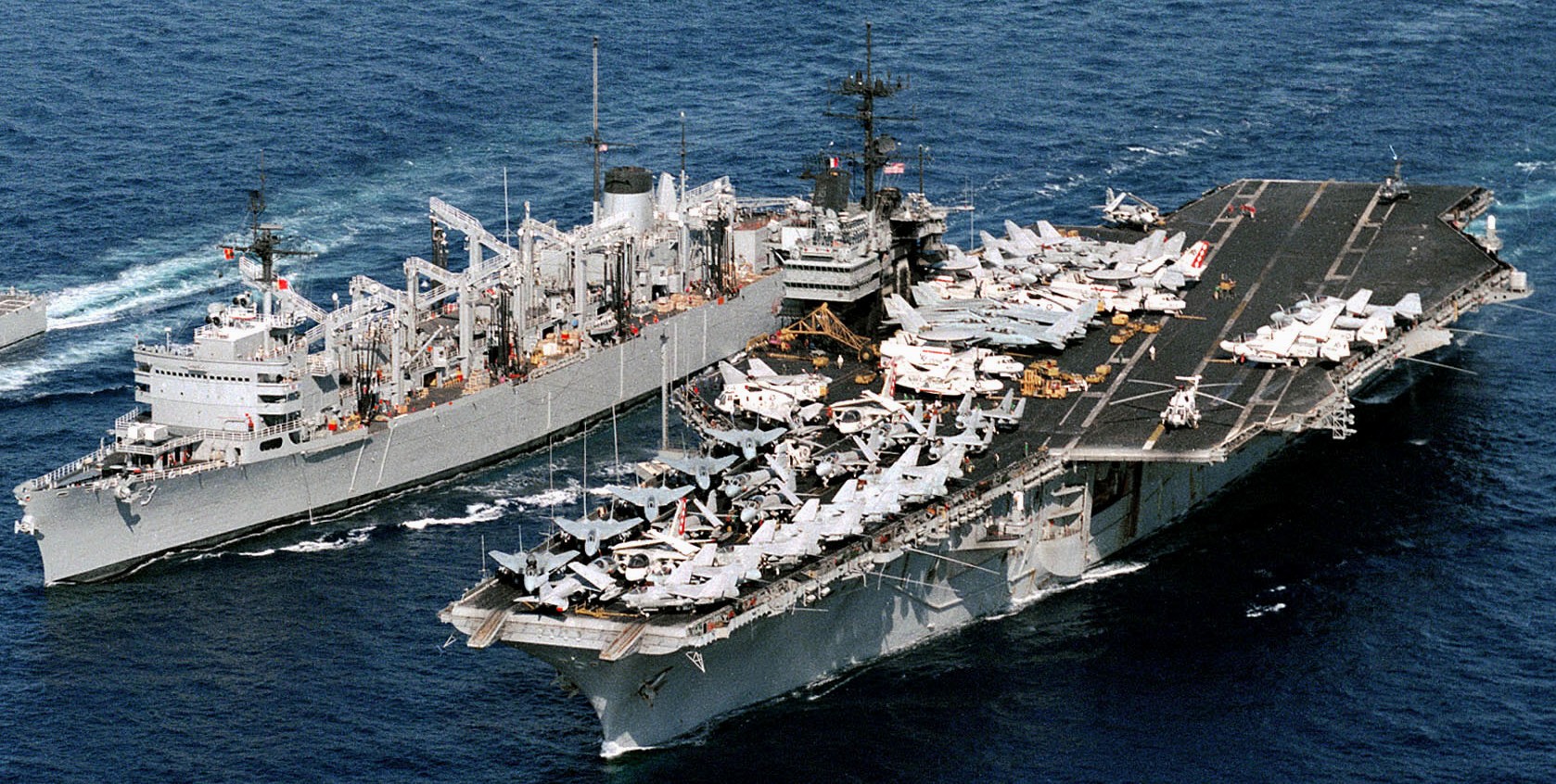 with CVW-17 embarked - Mediterranean Sea - October 1985 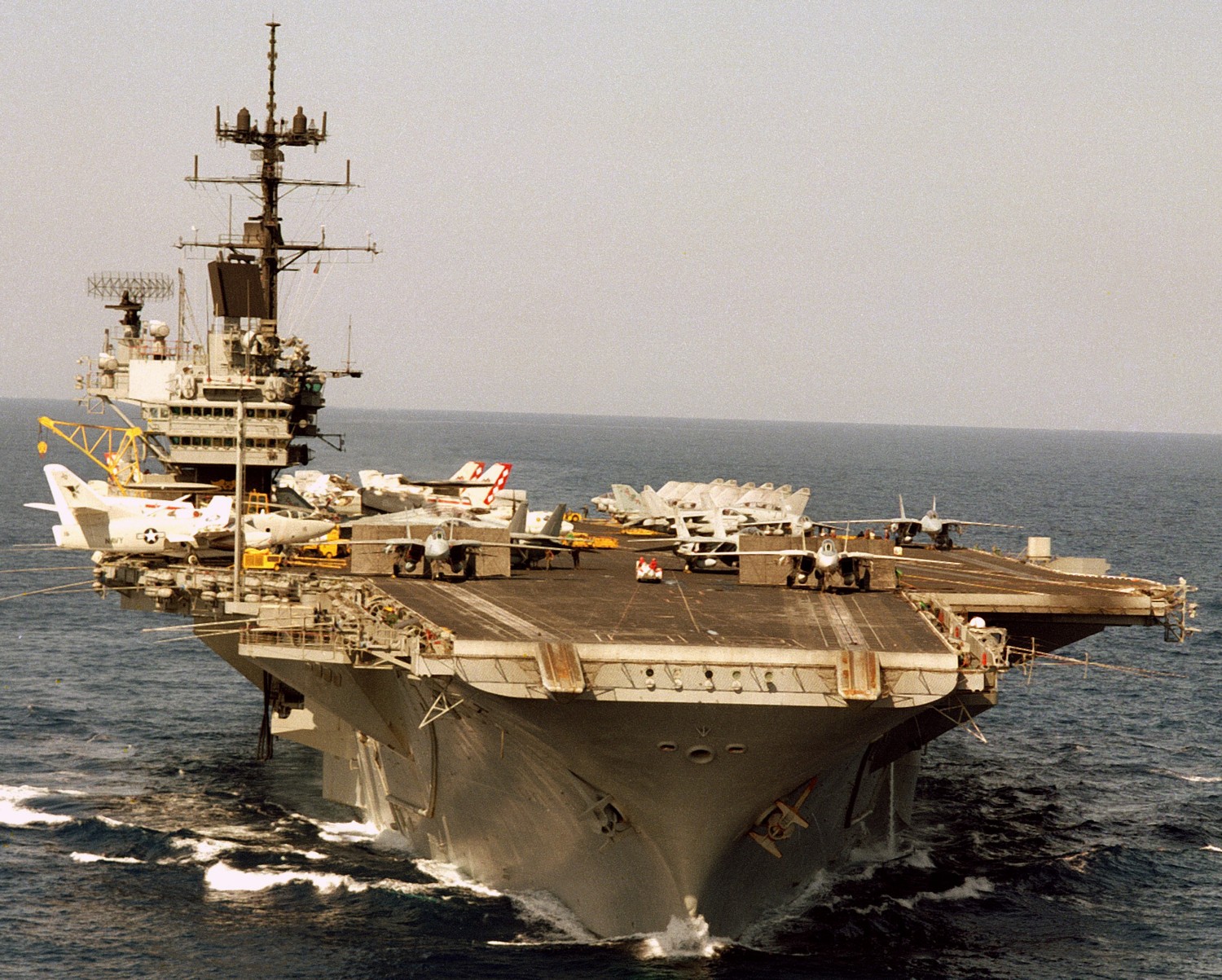 with CVW-17 embarked - Mediterranean Sea - September 1985 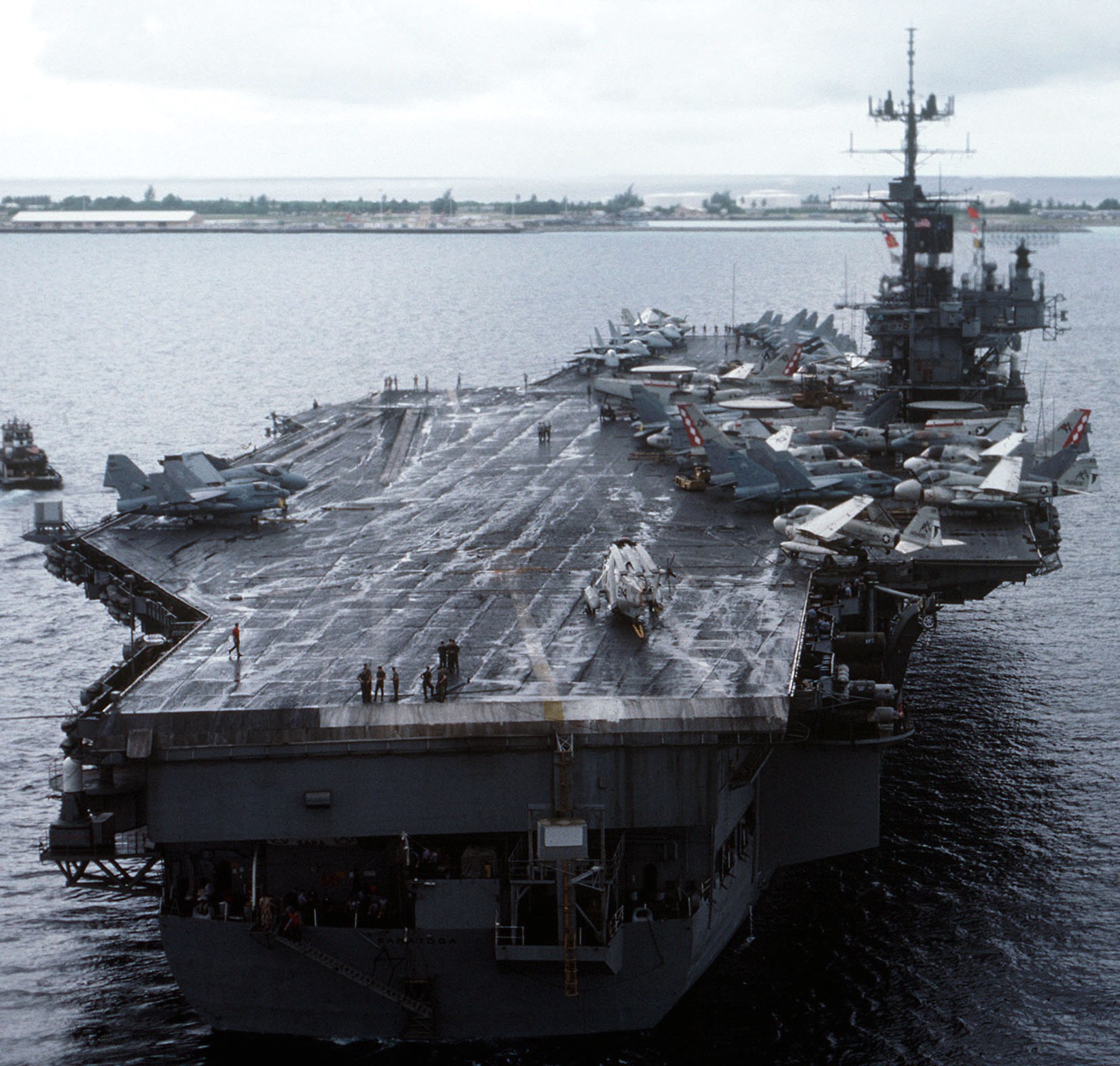 with CVW-17 embarked - 1985 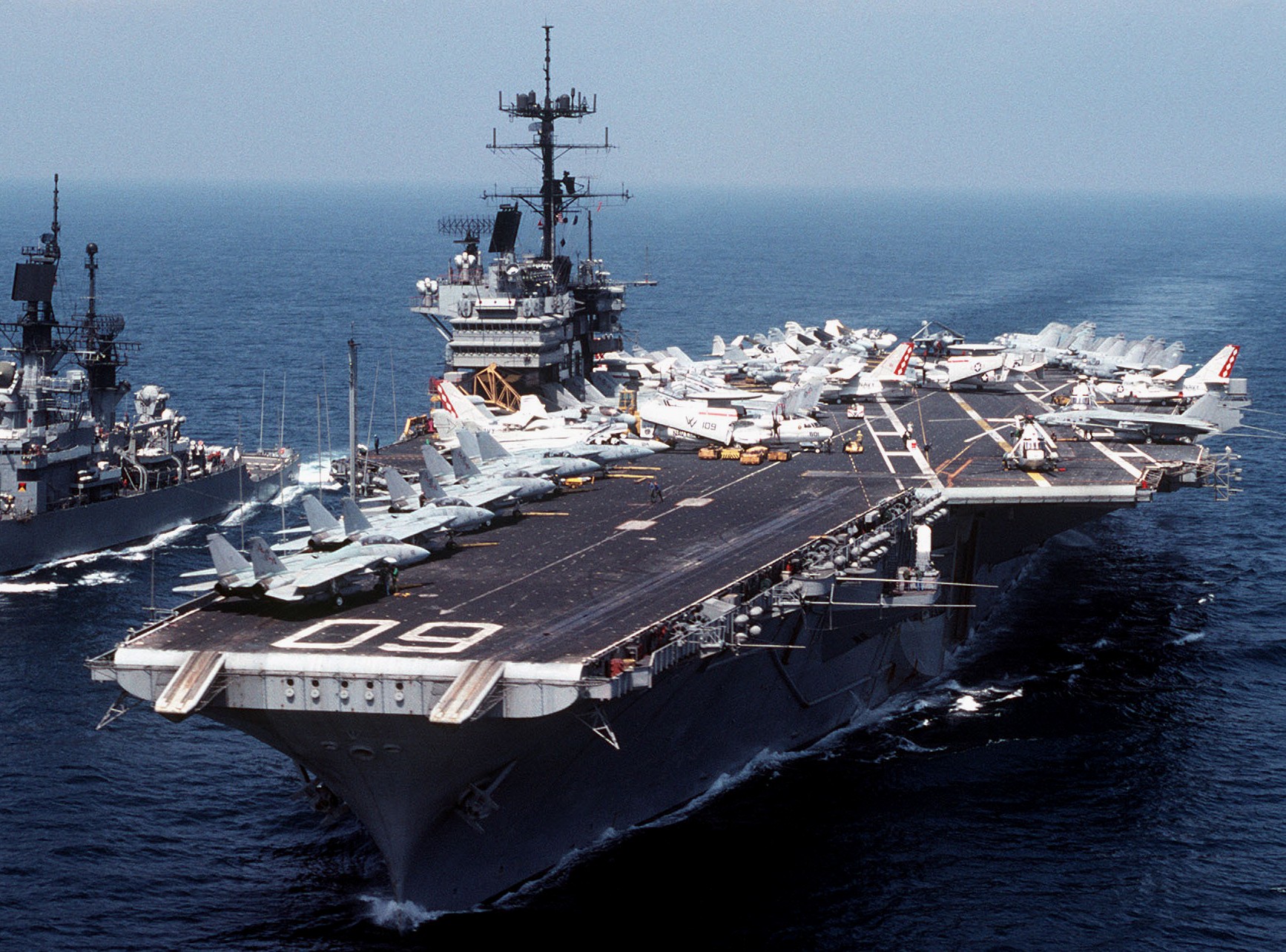 with CVW-17 embarked - April 1984 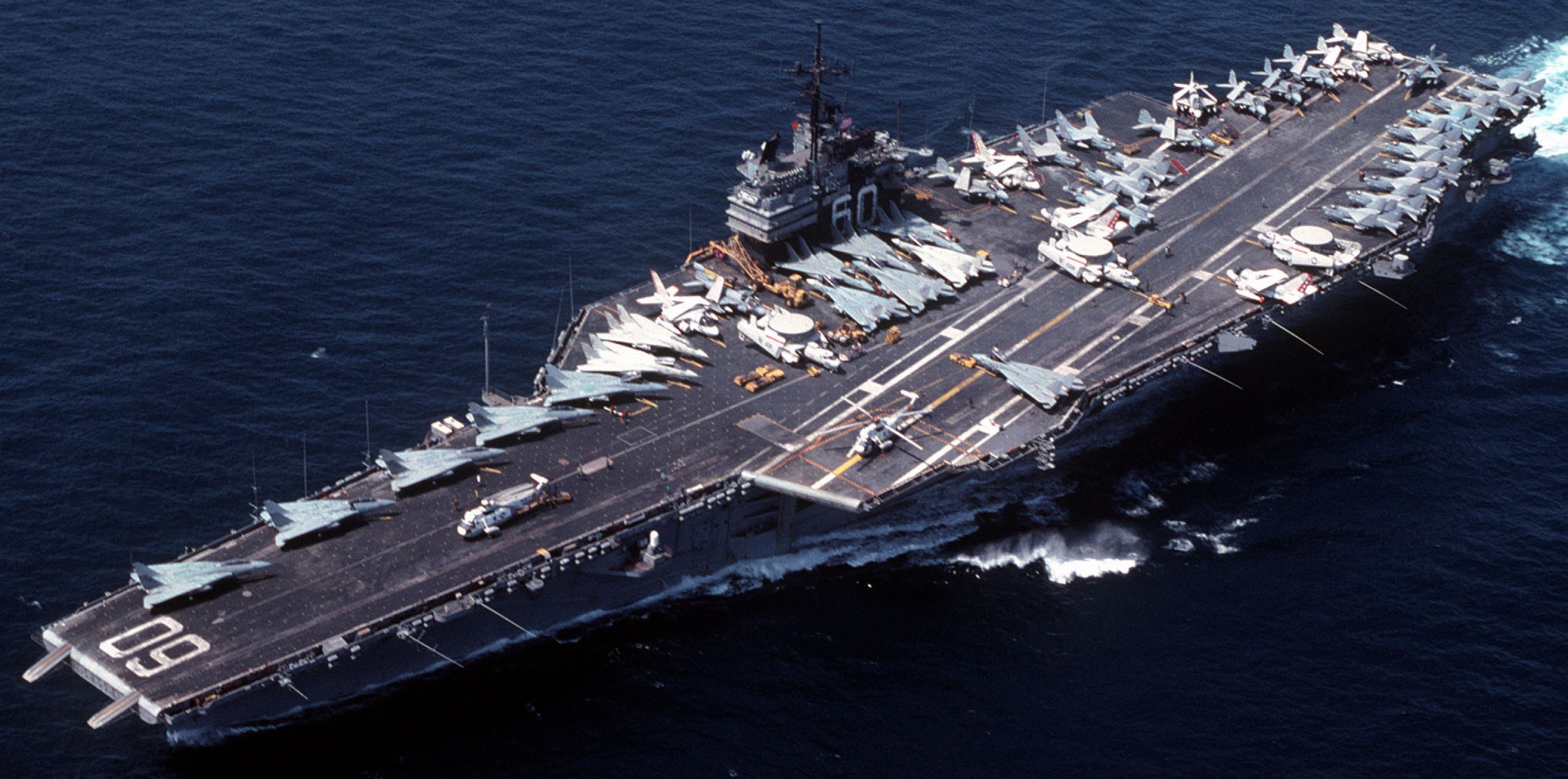 with CVW-17 embarked - April 1984 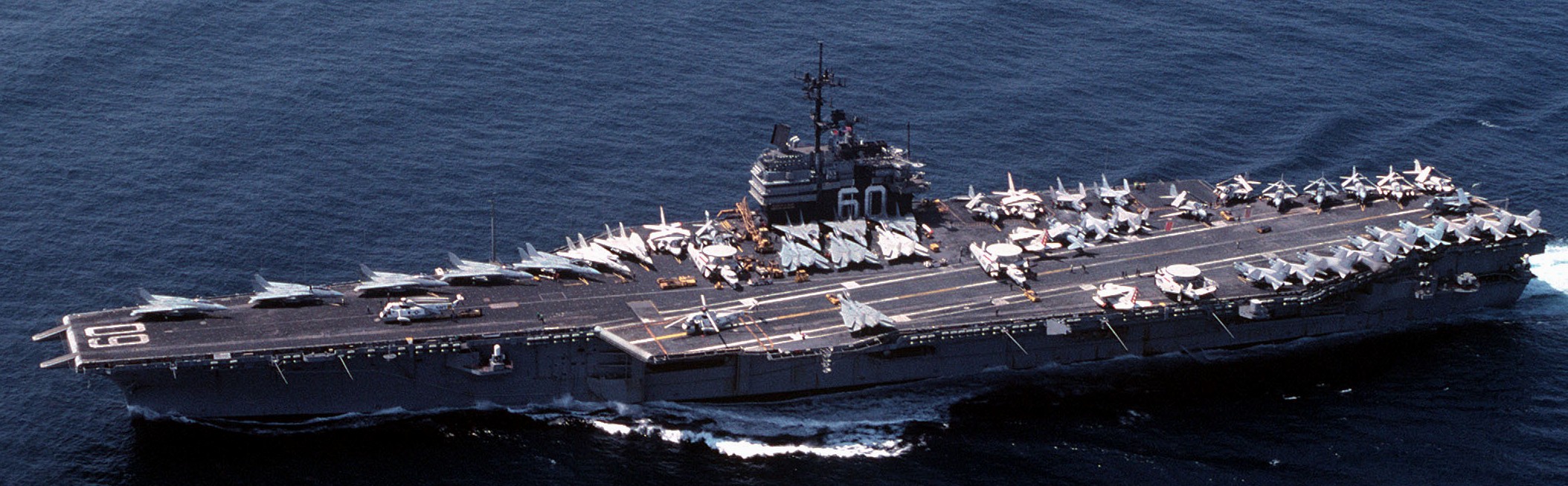 with CVW-17 embarked - April 1984 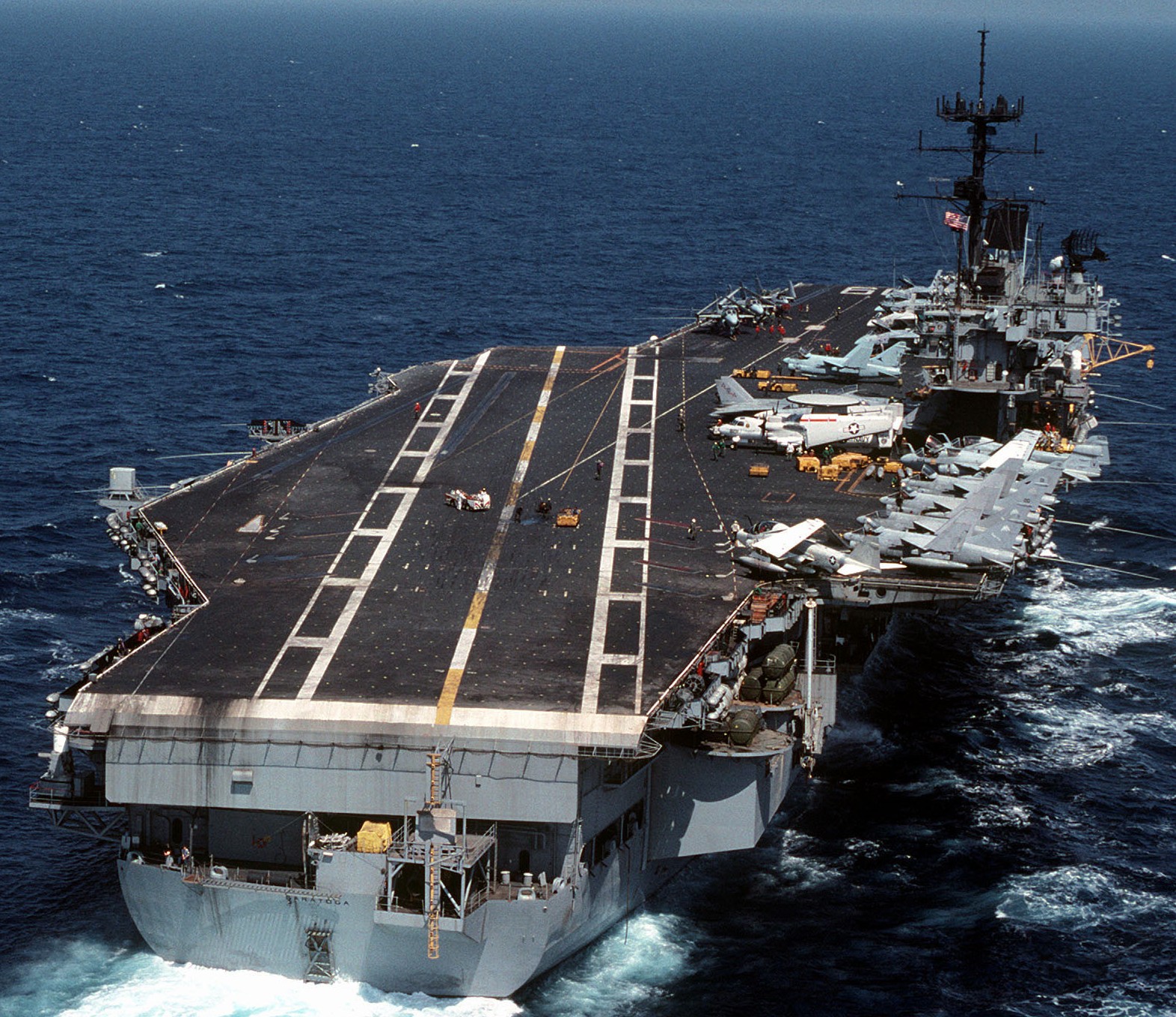 with CVW-17 embarked - April 1984 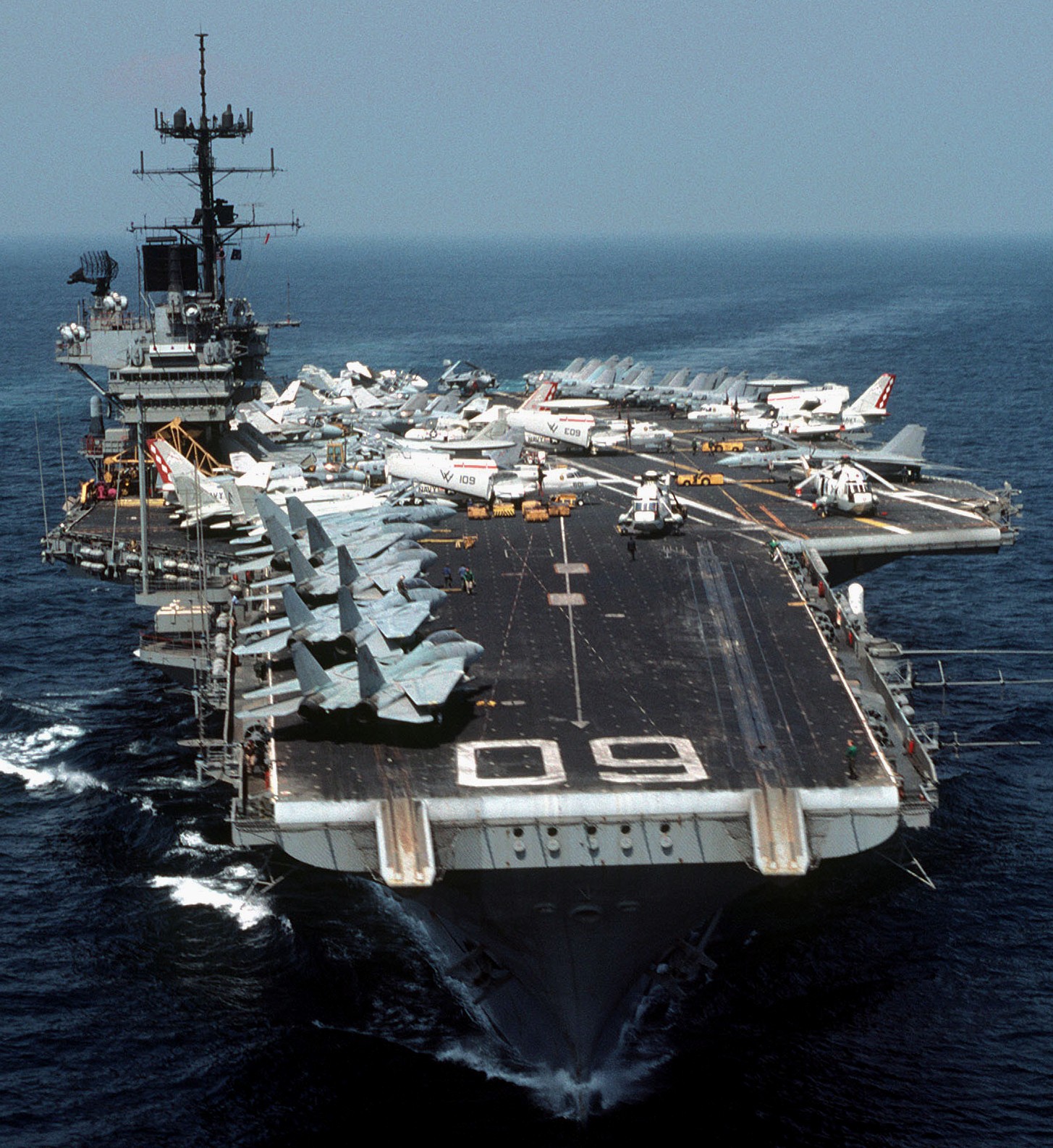 with CVW-17 embarked - April 1984 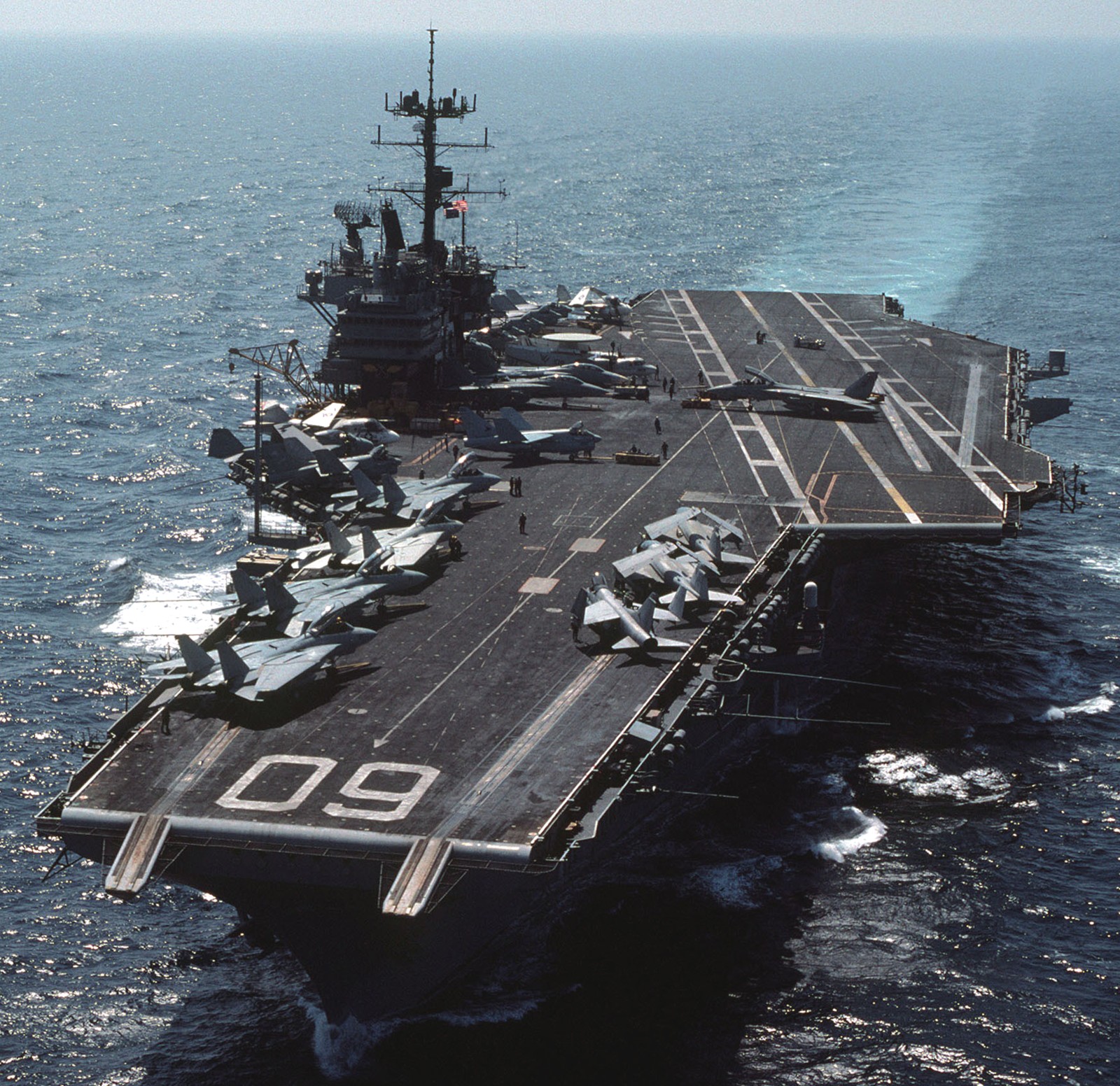 with CVW-17 embarked - April 1984 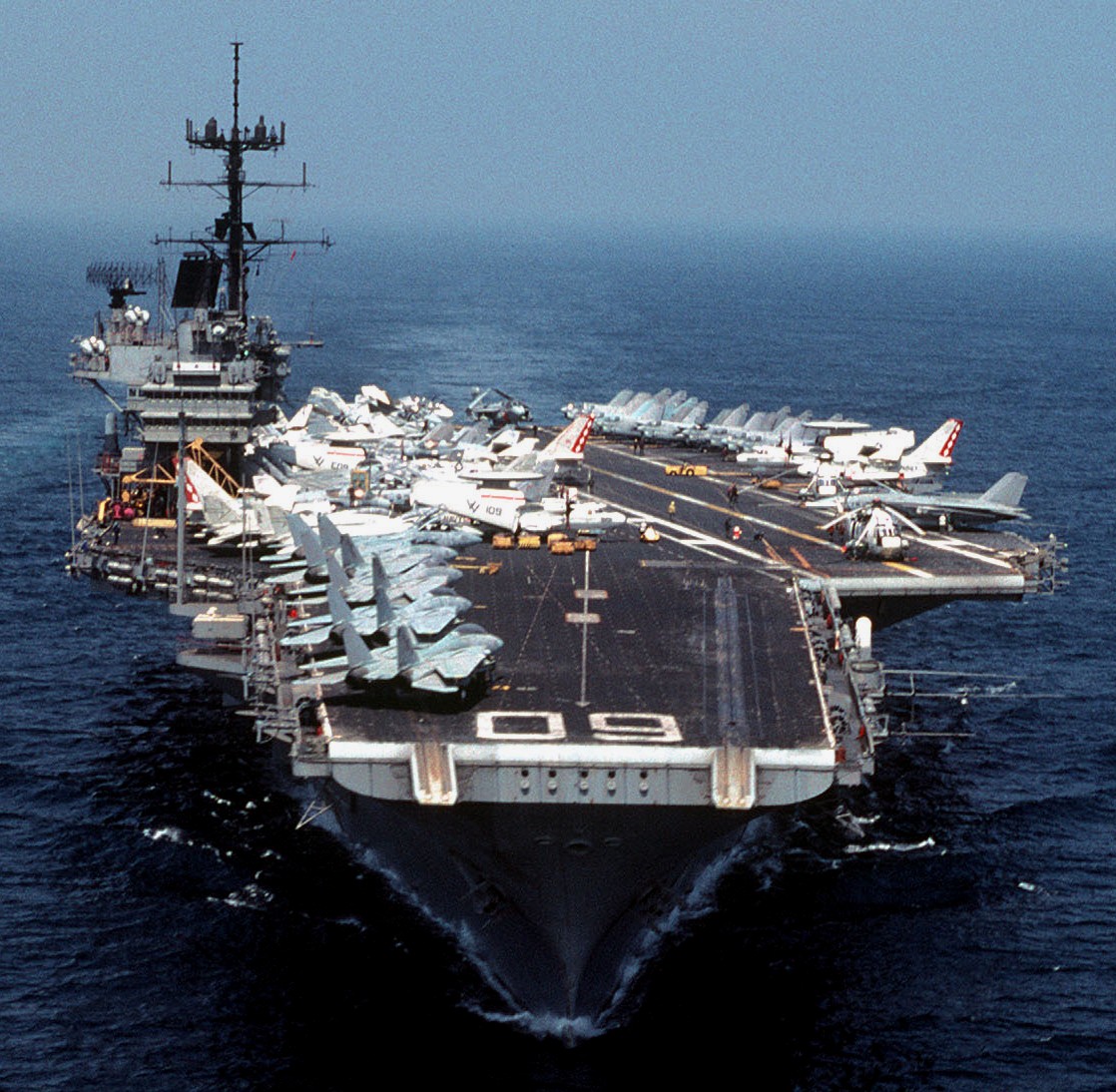 with CVW-17 embarked - April 1984 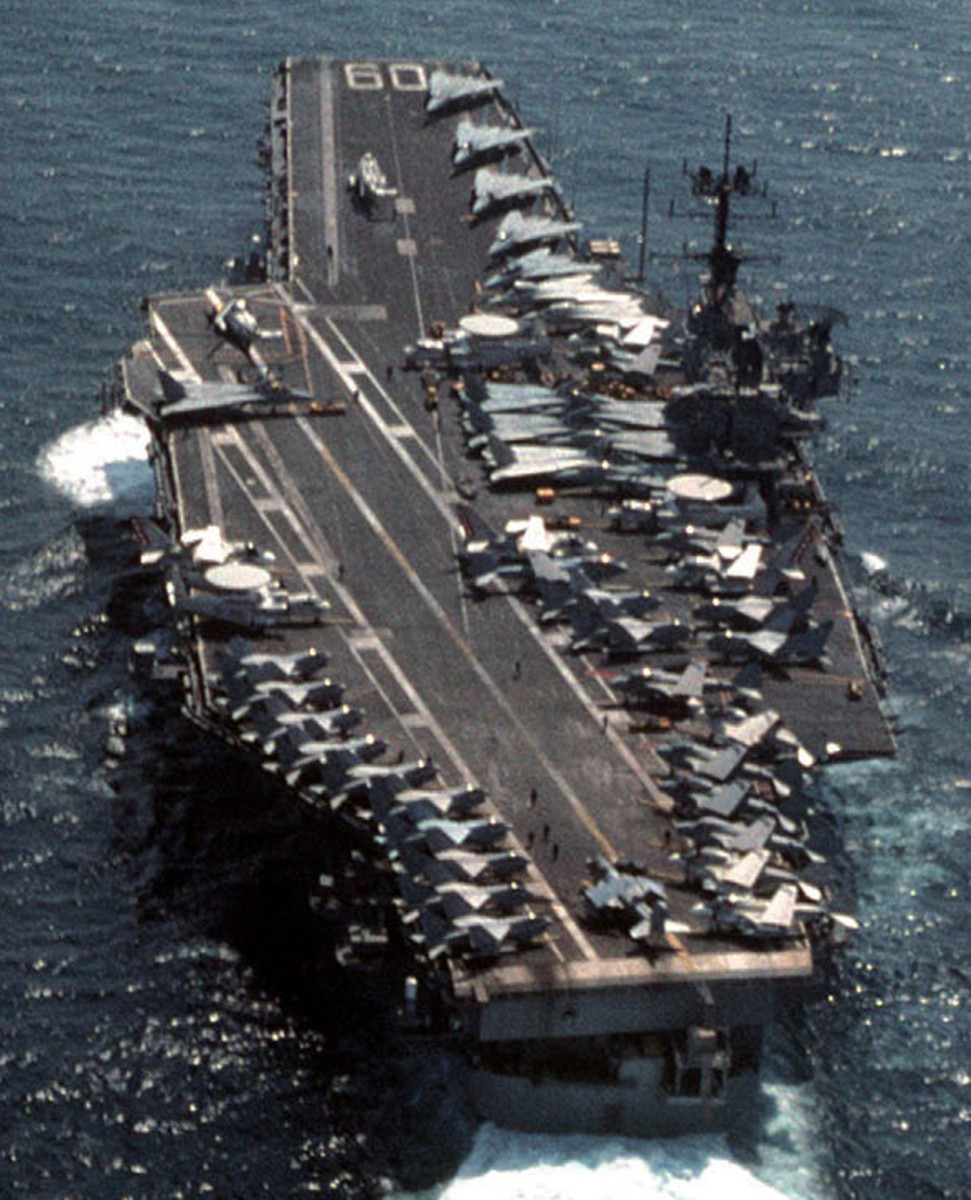 with CVW-17 embarked - April 1984 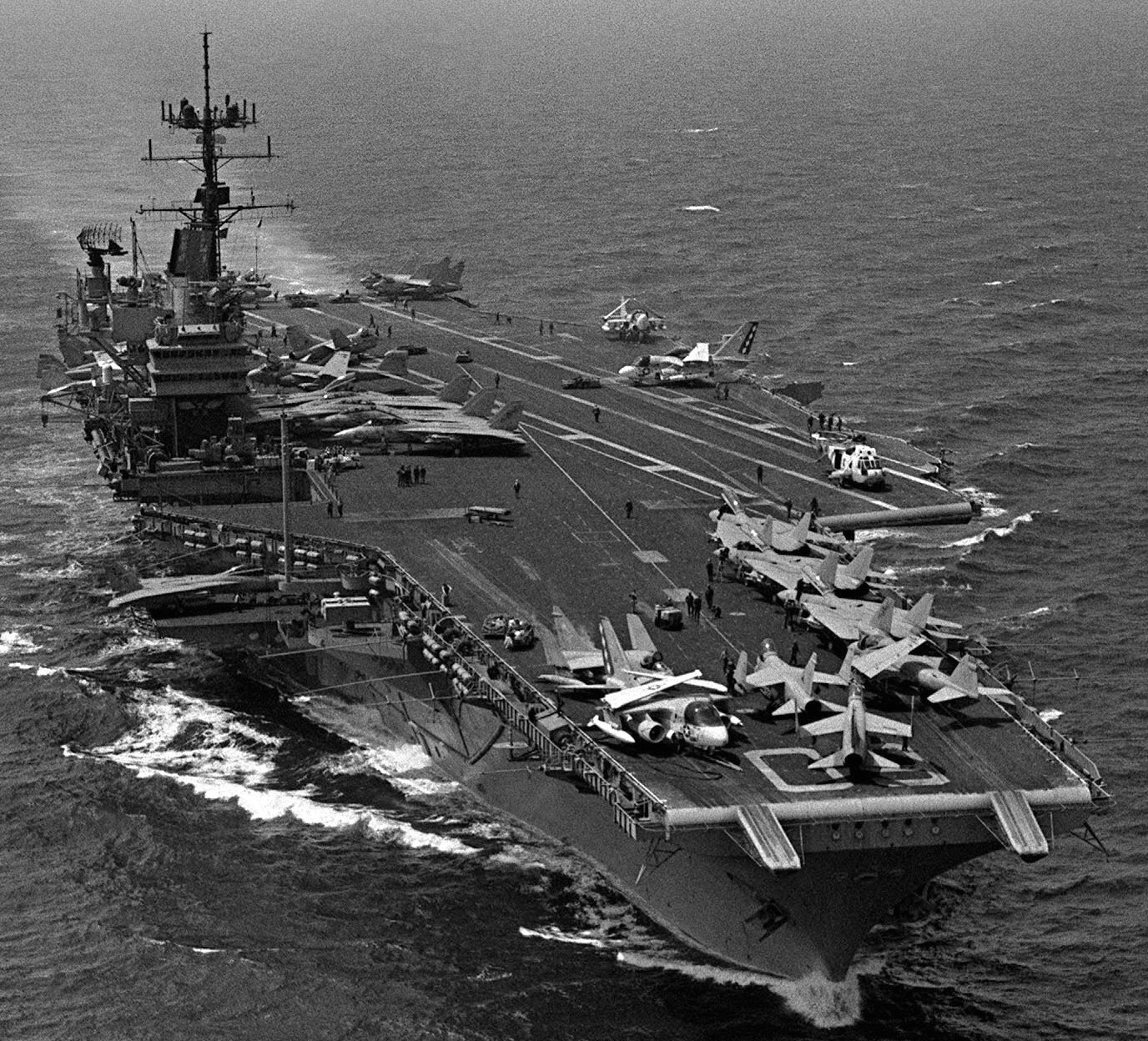 with CVW-17 embarked - April 1984 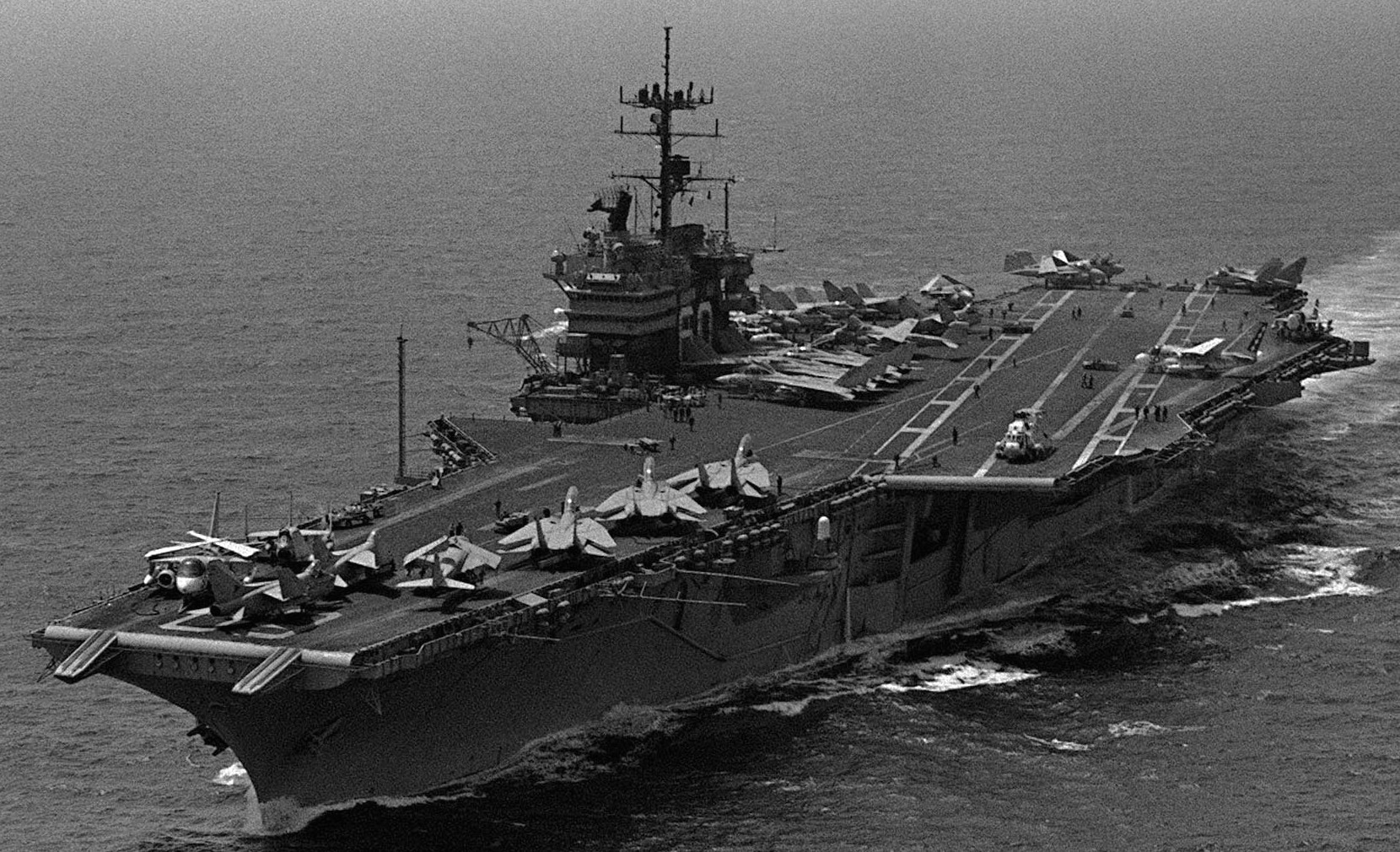 with CVW-17 embarked - April 1984 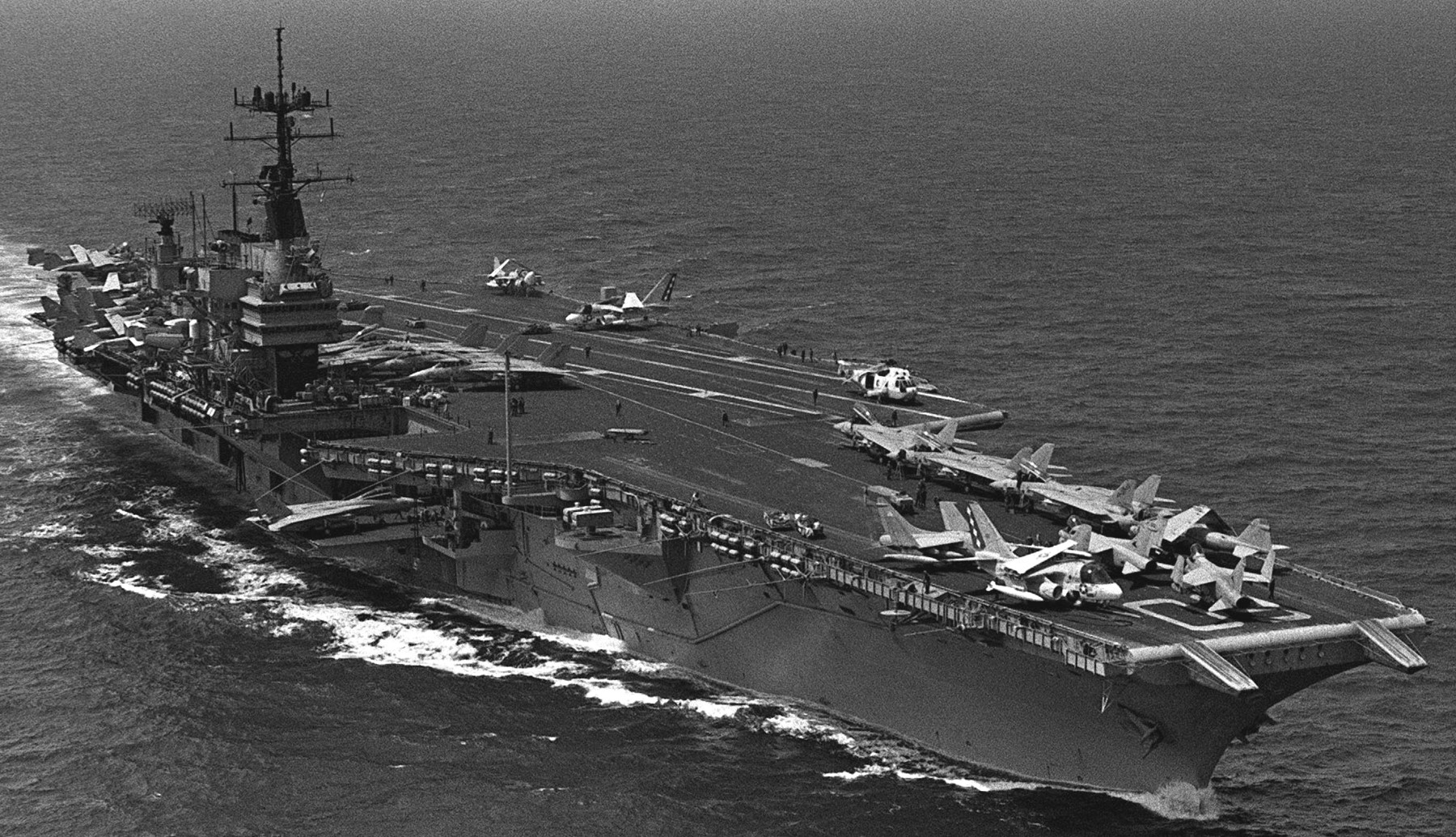 with CVW-17 embarked - January 1984 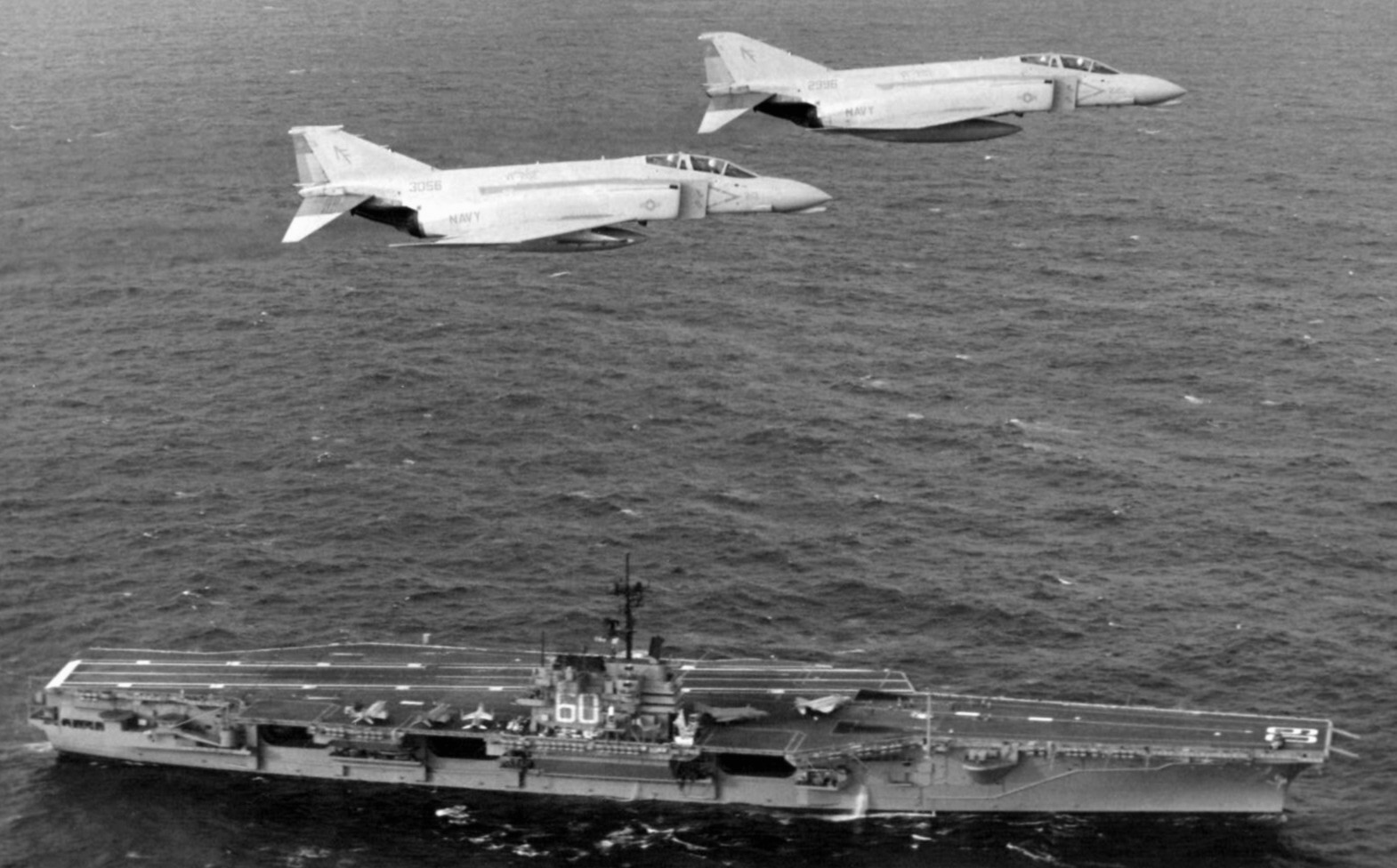 with aircraft of Reserve Carrier Air Wing 20 (CVWR-20) embarked - February 1983 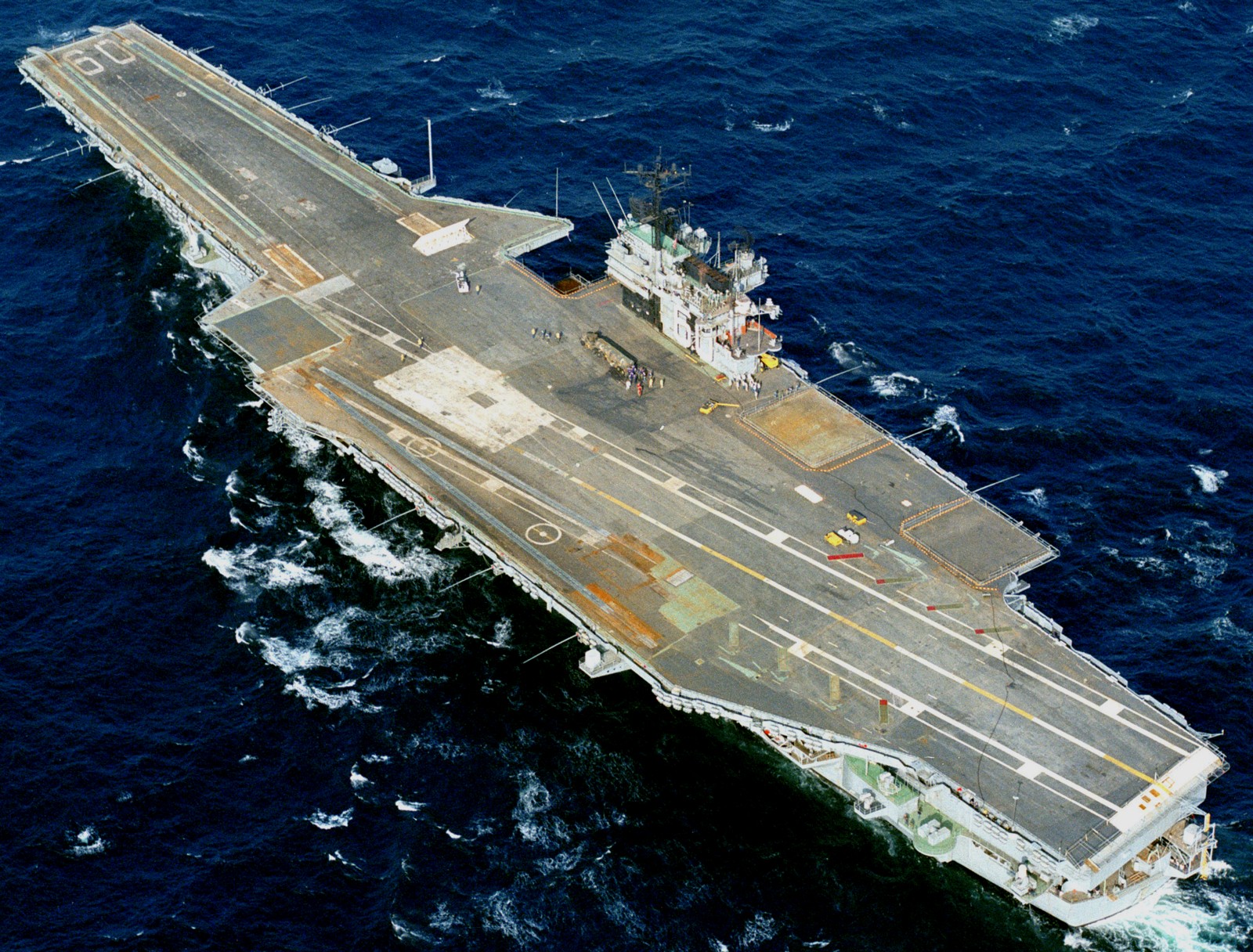 trials during her SLEP - Atlantic Ocean - October 1982 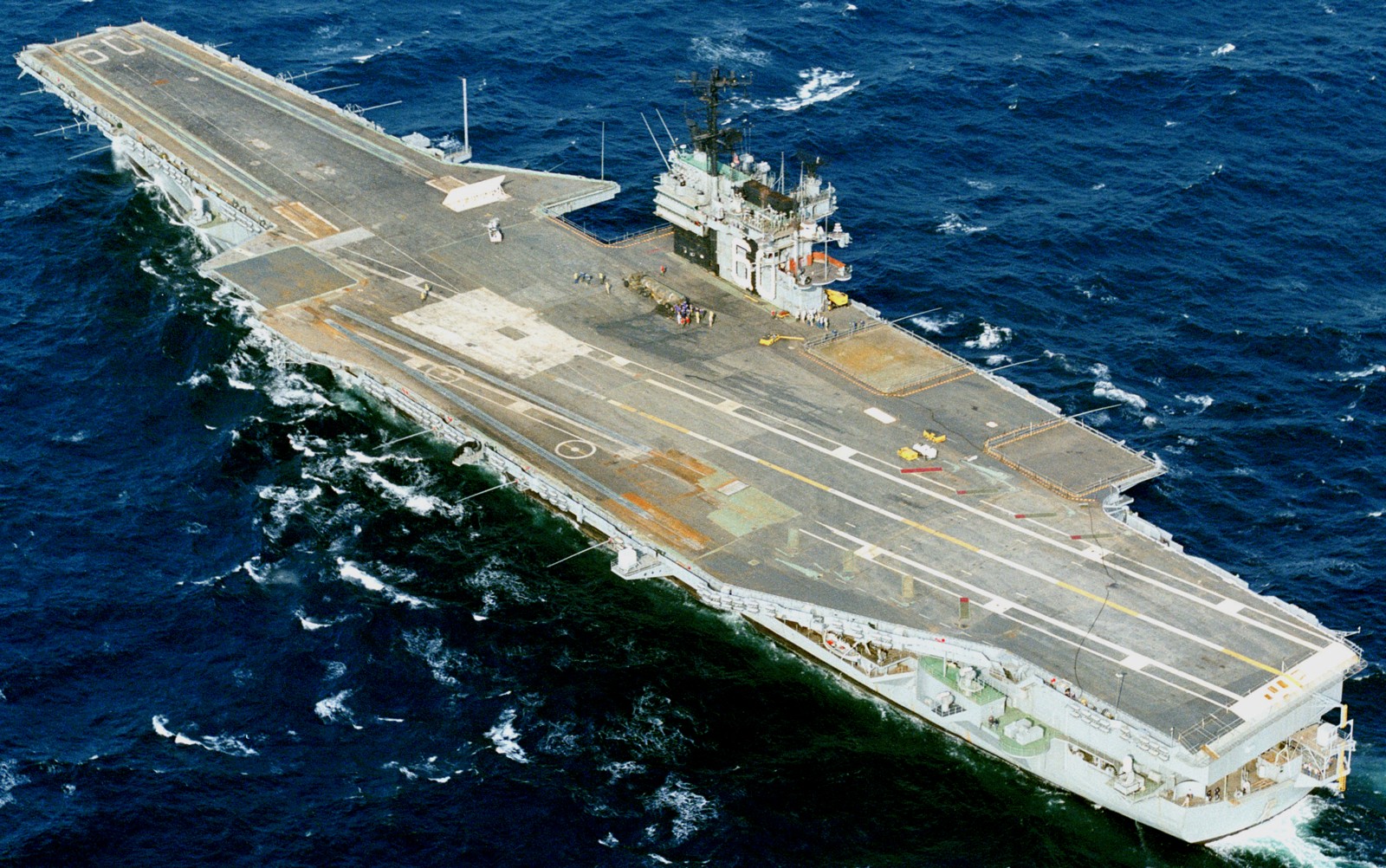 trials during her SLEP - Atlantic Ocean - October 1982 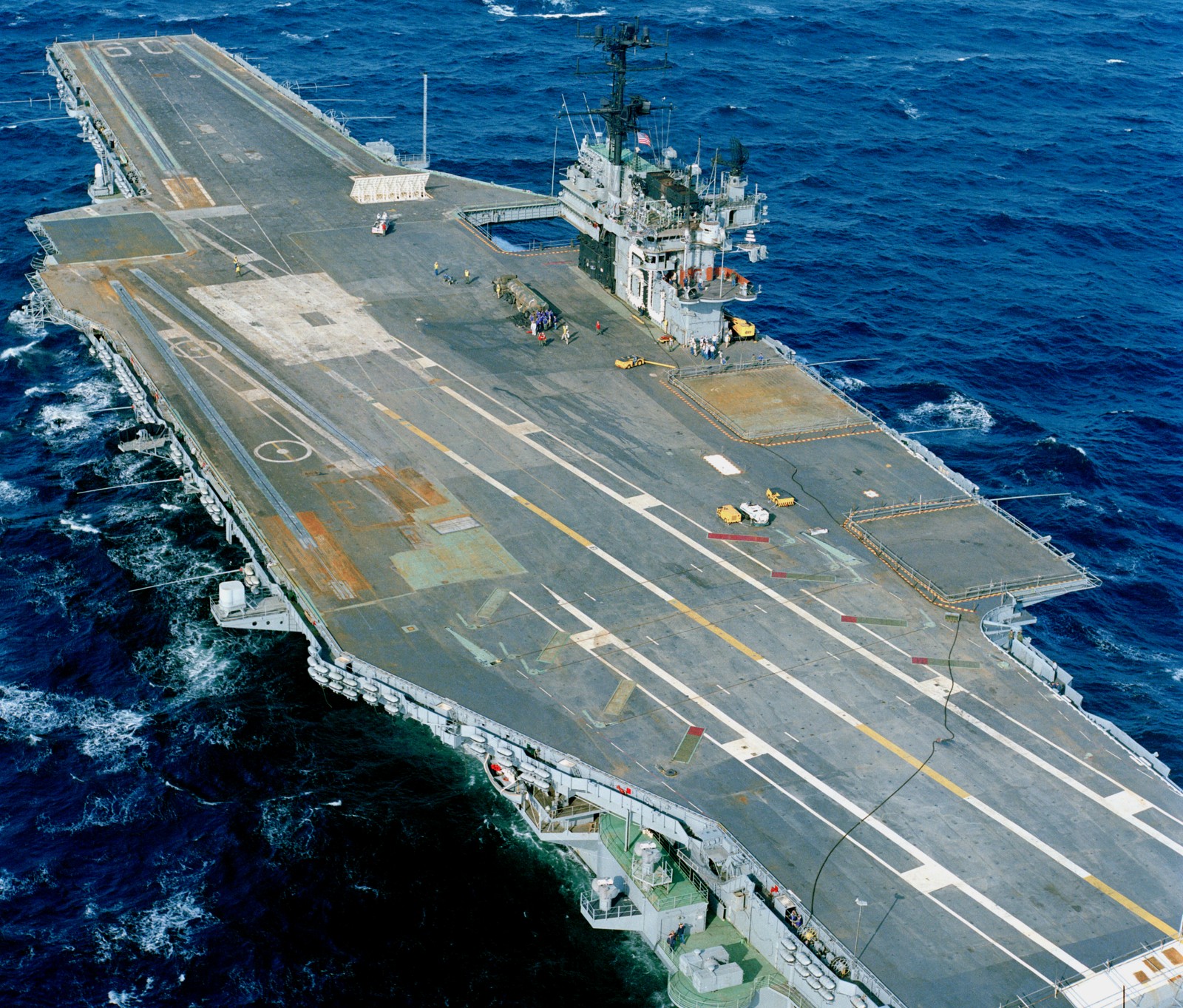 trials during her SLEP - Atlantic Ocean - October 1982 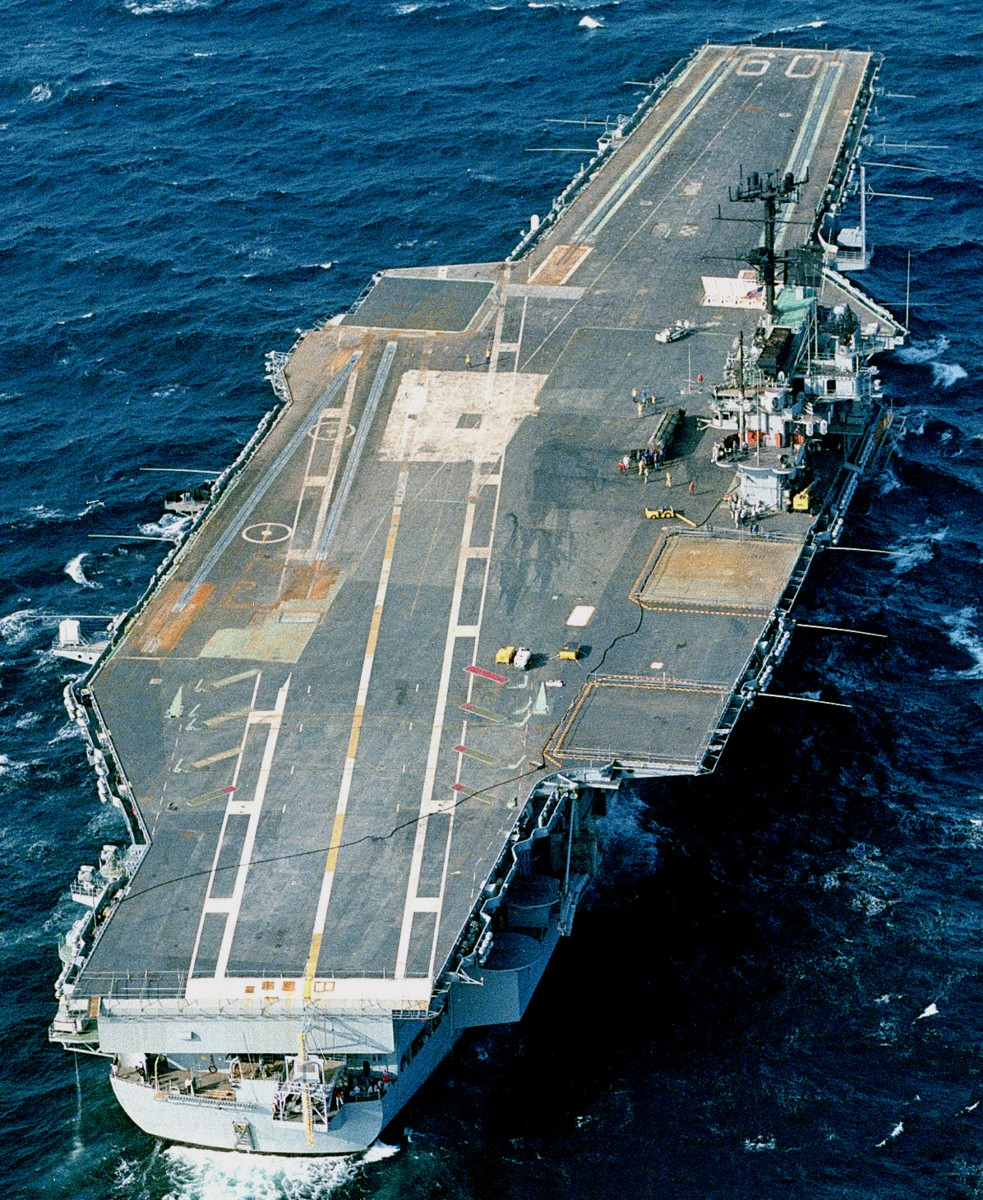 trials during her SLEP - Atlantic Ocean - October 1982 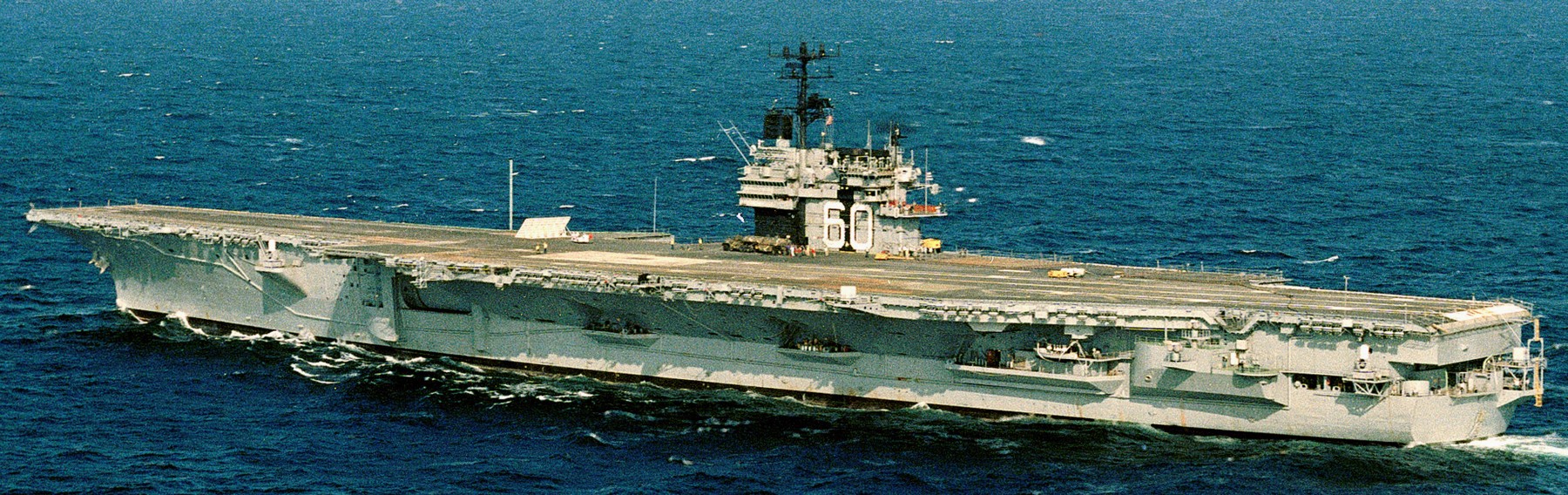 trials during her SLEP - Atlantic Ocean - October 1982 October 1980 - February 1983: Service Life Extension Program (SLEP) at Philadelphia Naval Shipyard 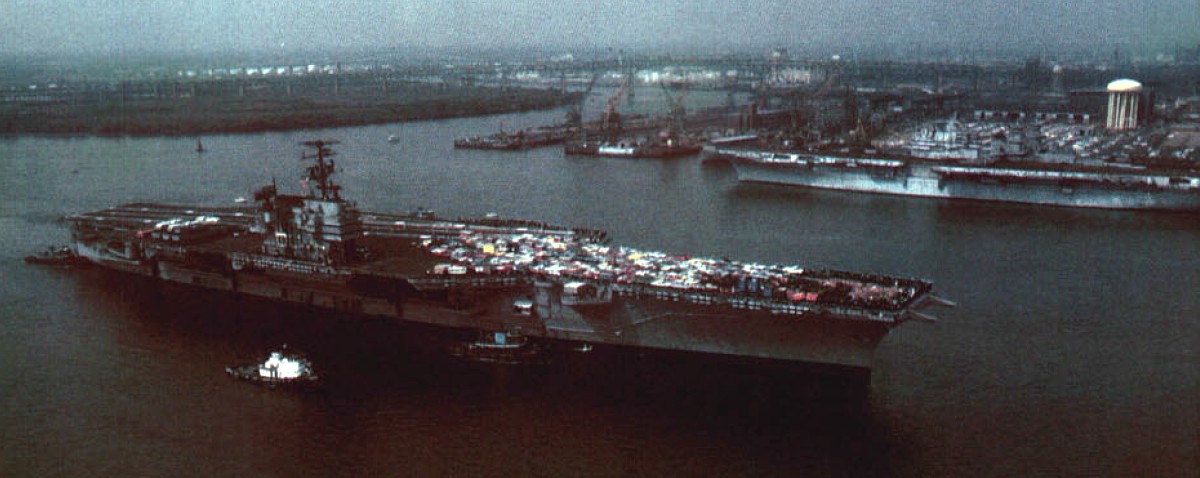 arriving at Philadelphia Naval Shipyard for her Service Life Extension Program (SLEP) - October 1980 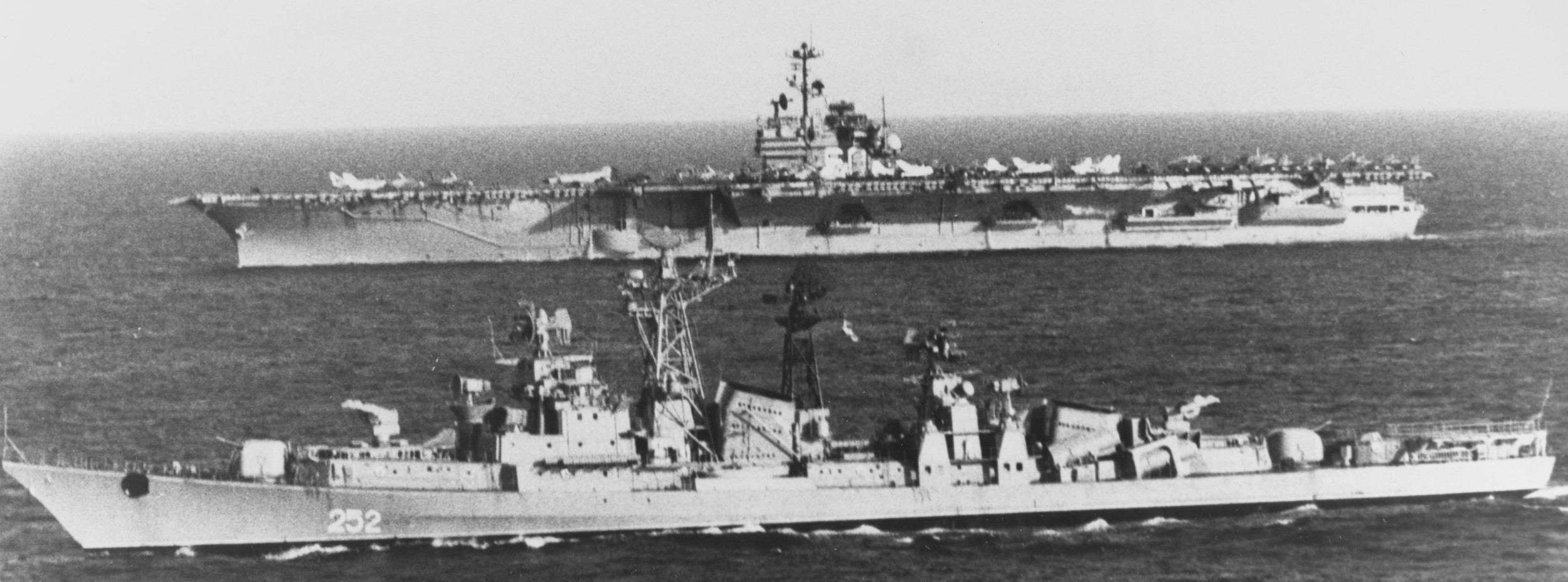 with Soviet Destroyer 252 Smely - May 1979 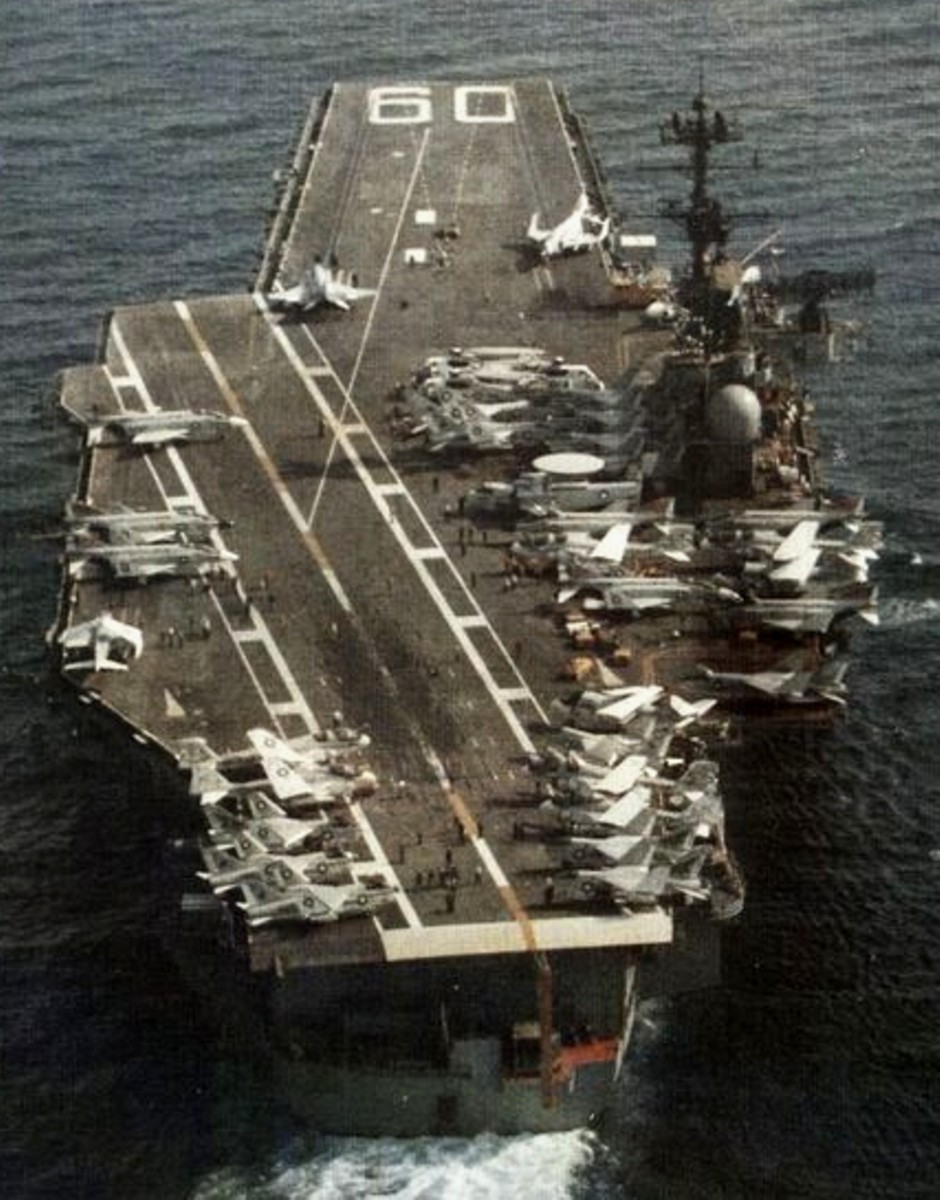 with CVW-3 embarked - 1976 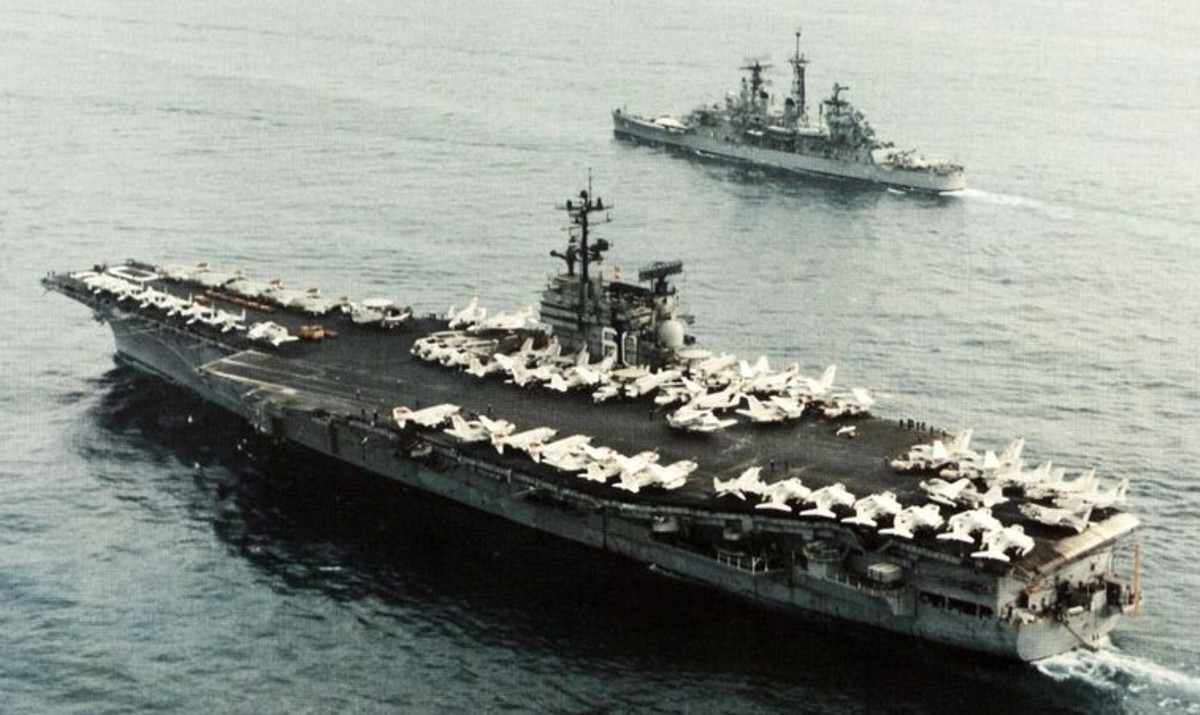 with CVW-3 embarked - 1976 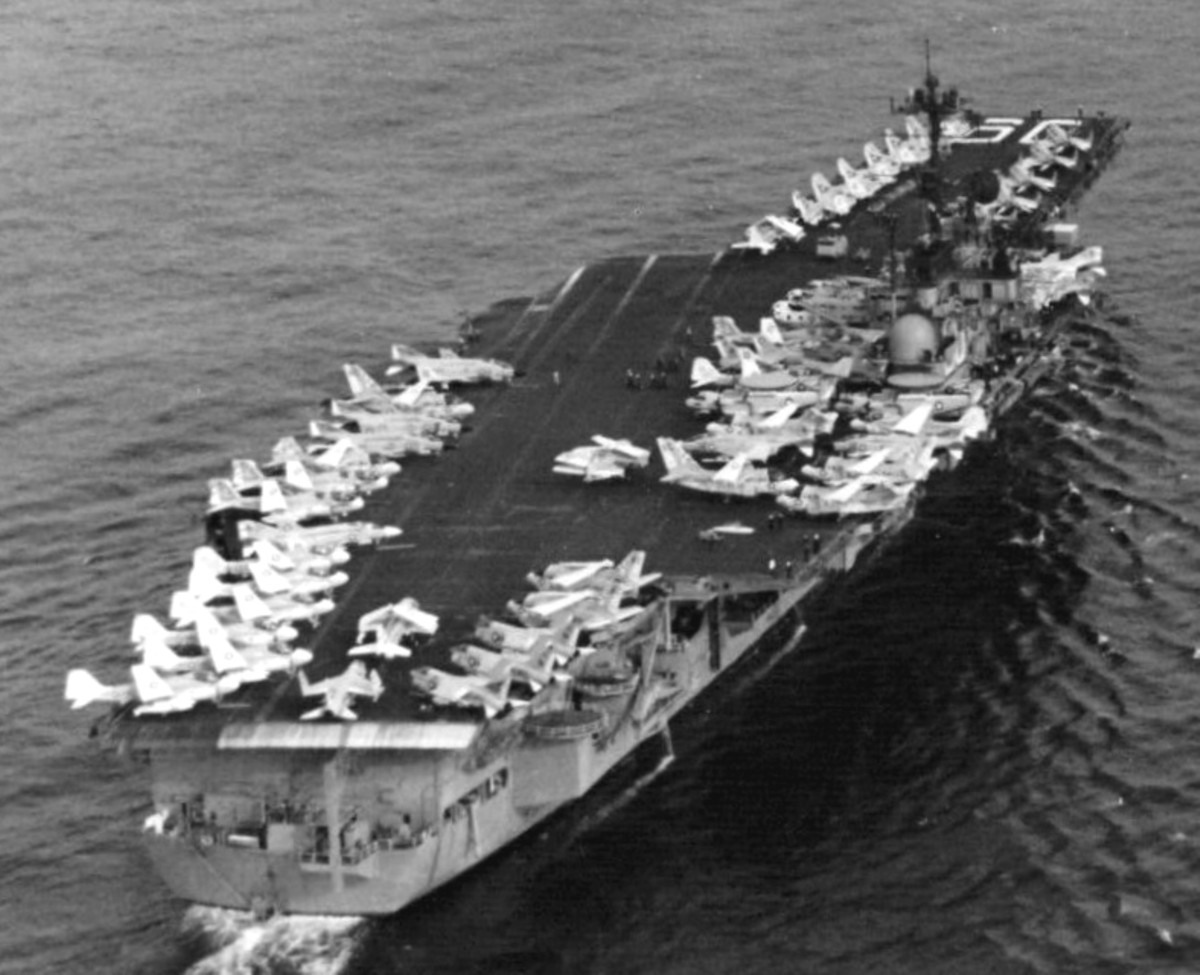 with CVW-3 embarked - 1976 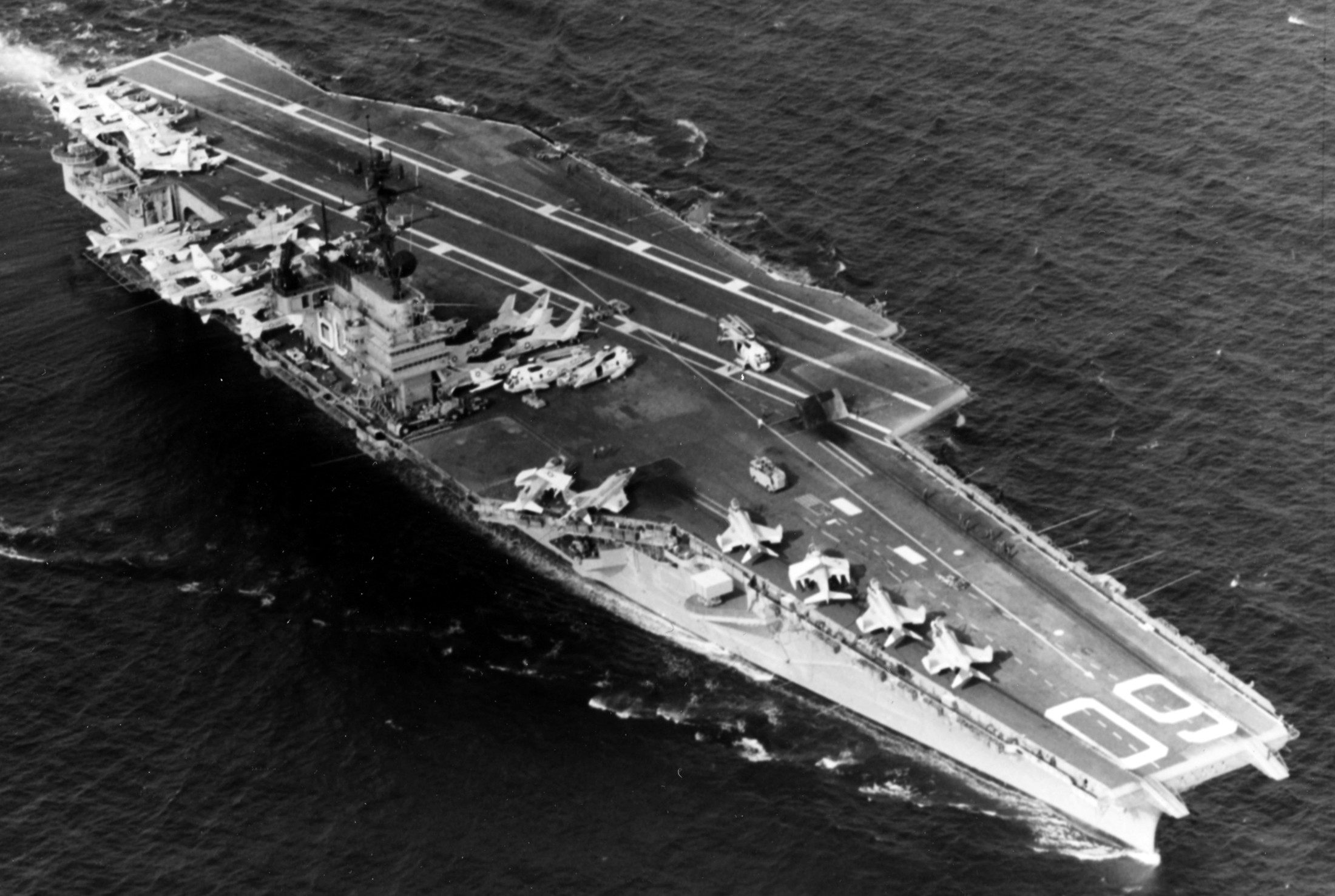 with CVW-3 embarked - Atlantic Ocean - October 1975 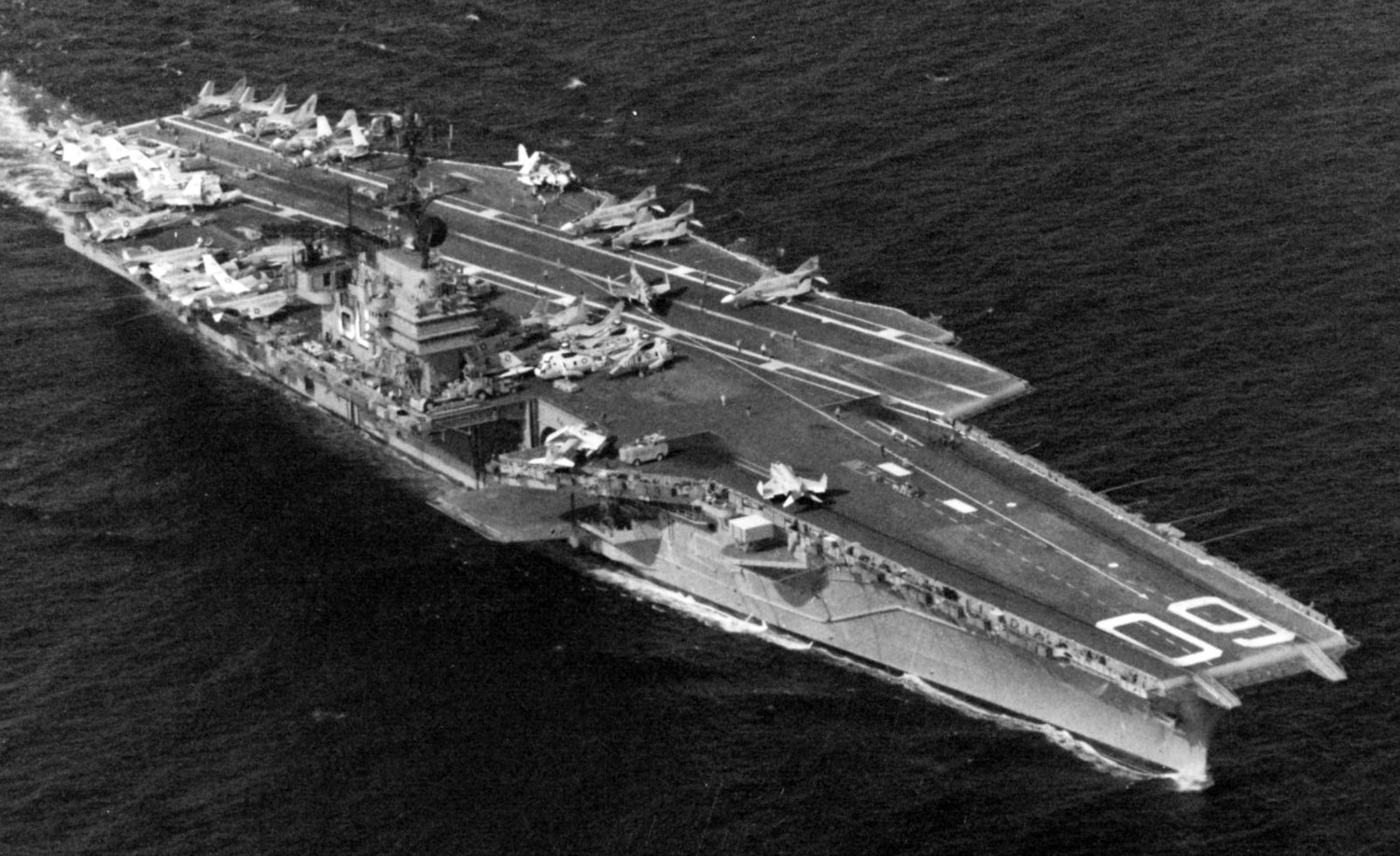 with CVW-3 embarked - Atlantic Ocean - October 1975 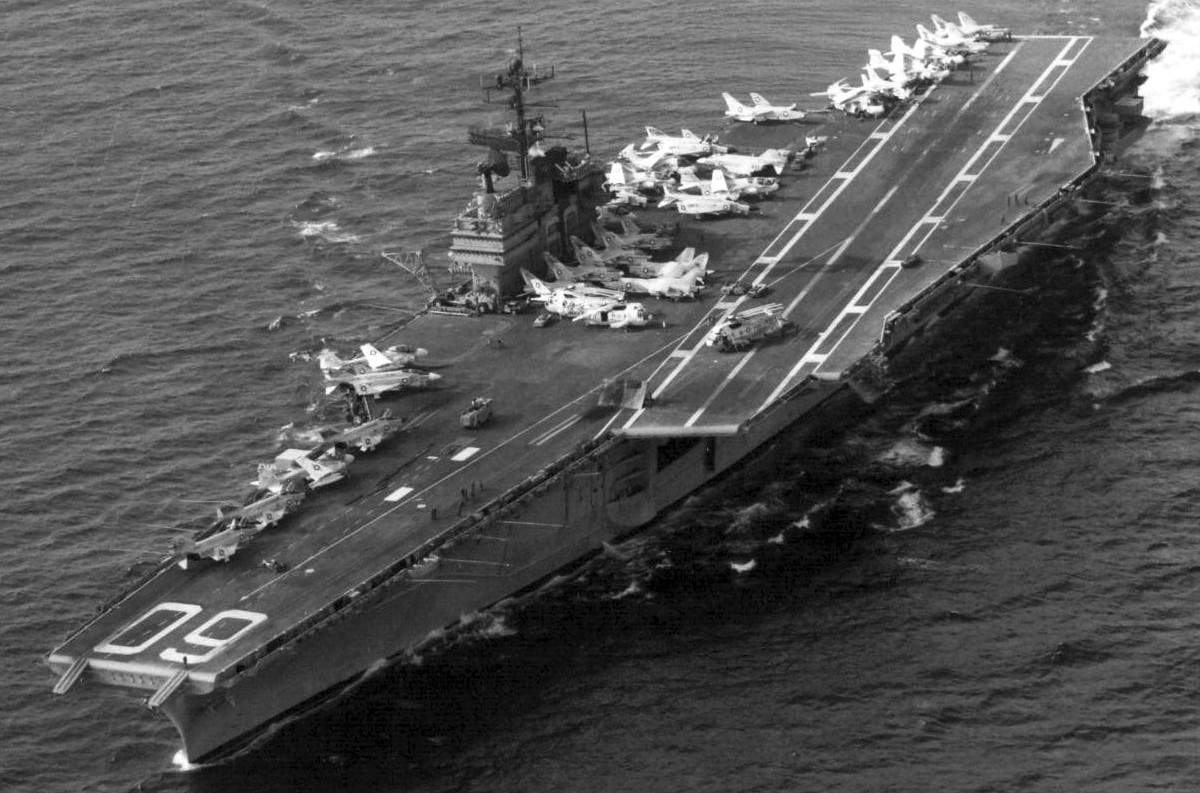 with CVW-3 embarked - Atlantic Ocean - October 1975 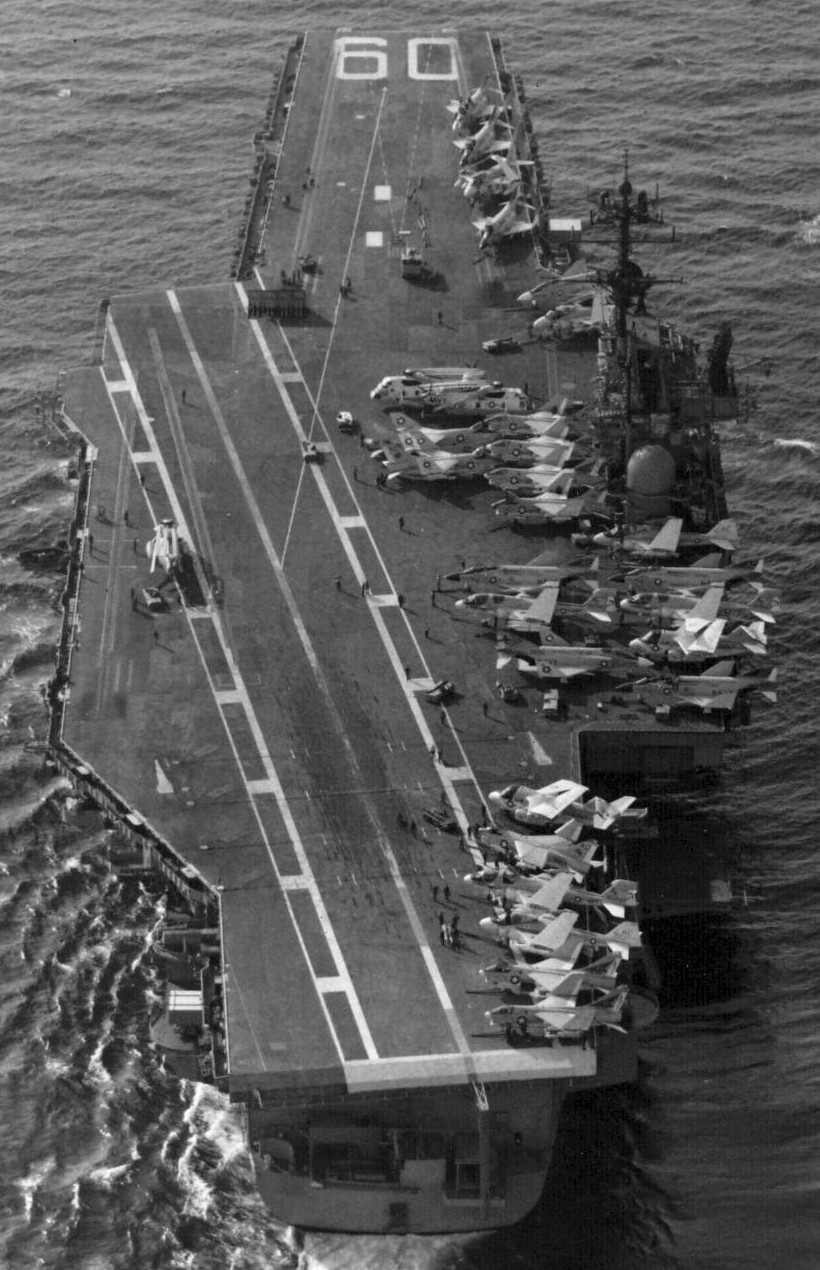 with CVW-3 embarked - Atlantic Ocean - October 1975 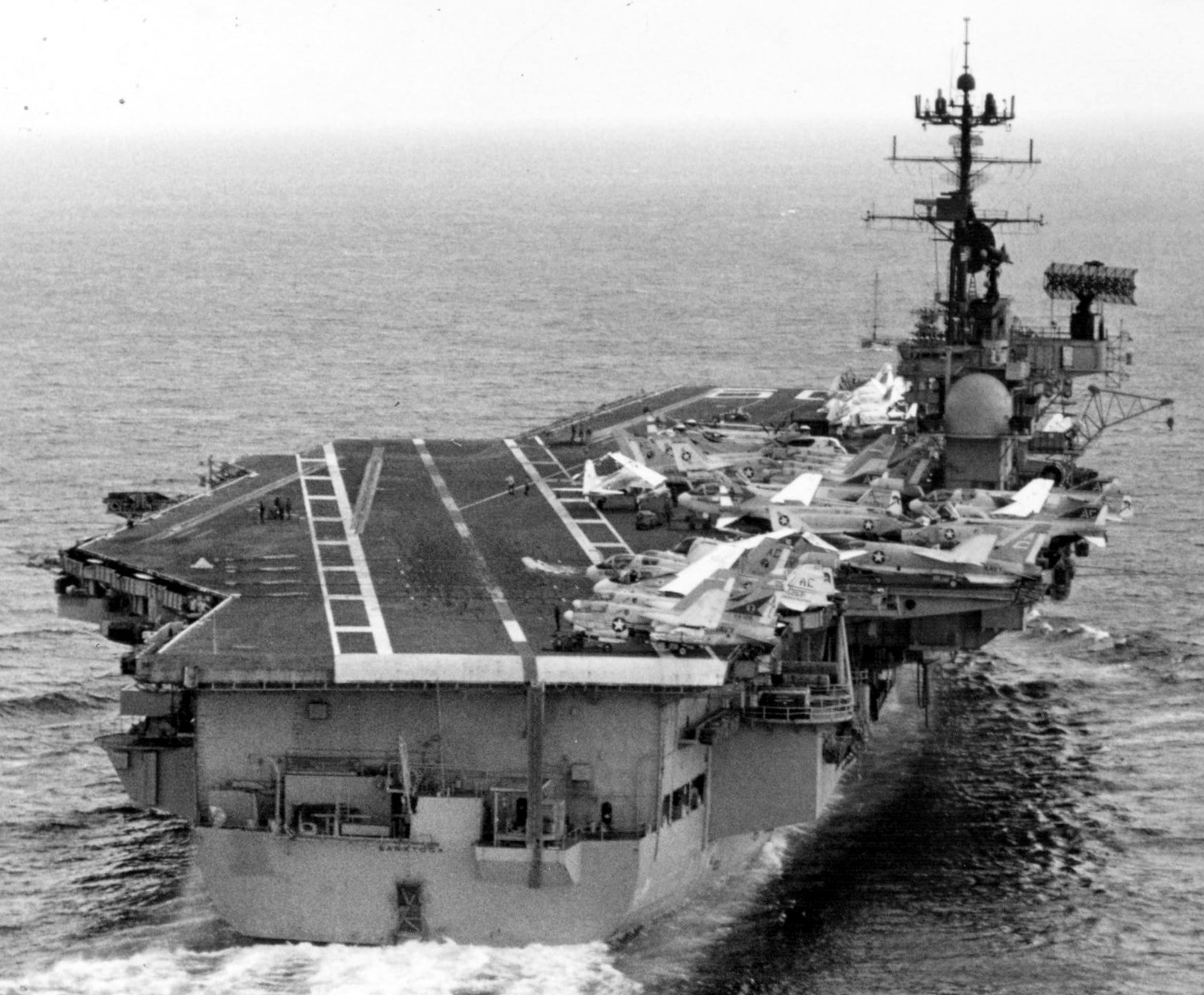 with CVW-3 embarked - Atlantic Ocean - October 1975 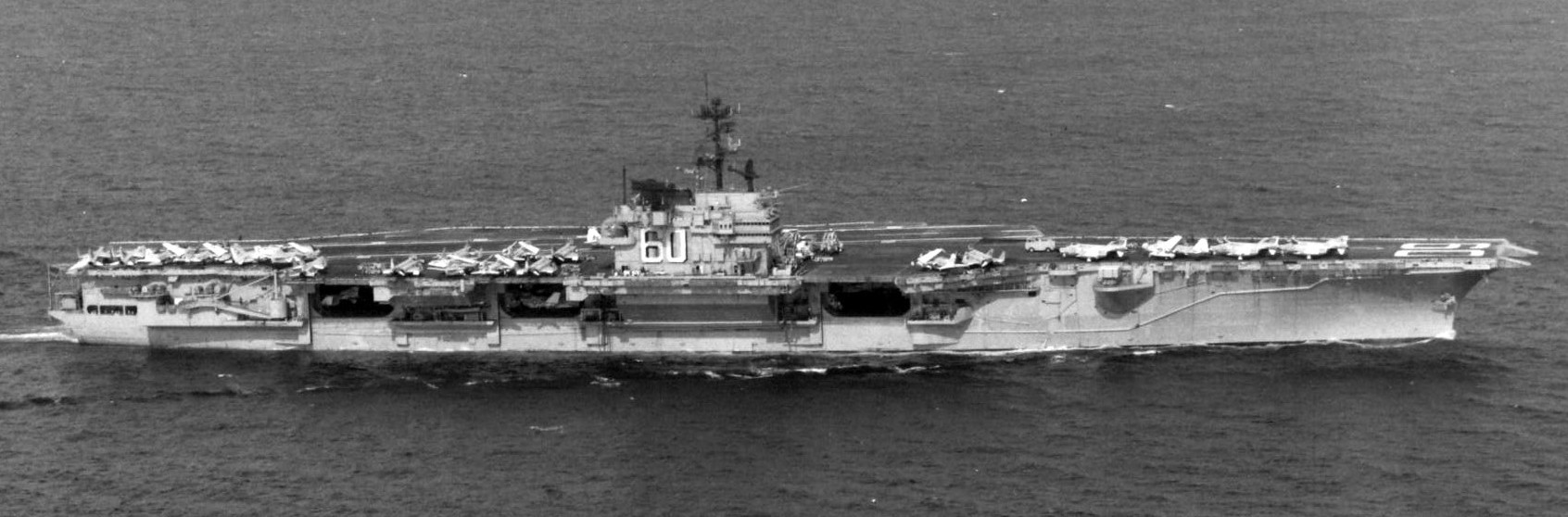 with CVW-3 embarked - Atlantic Ocean - October 1975 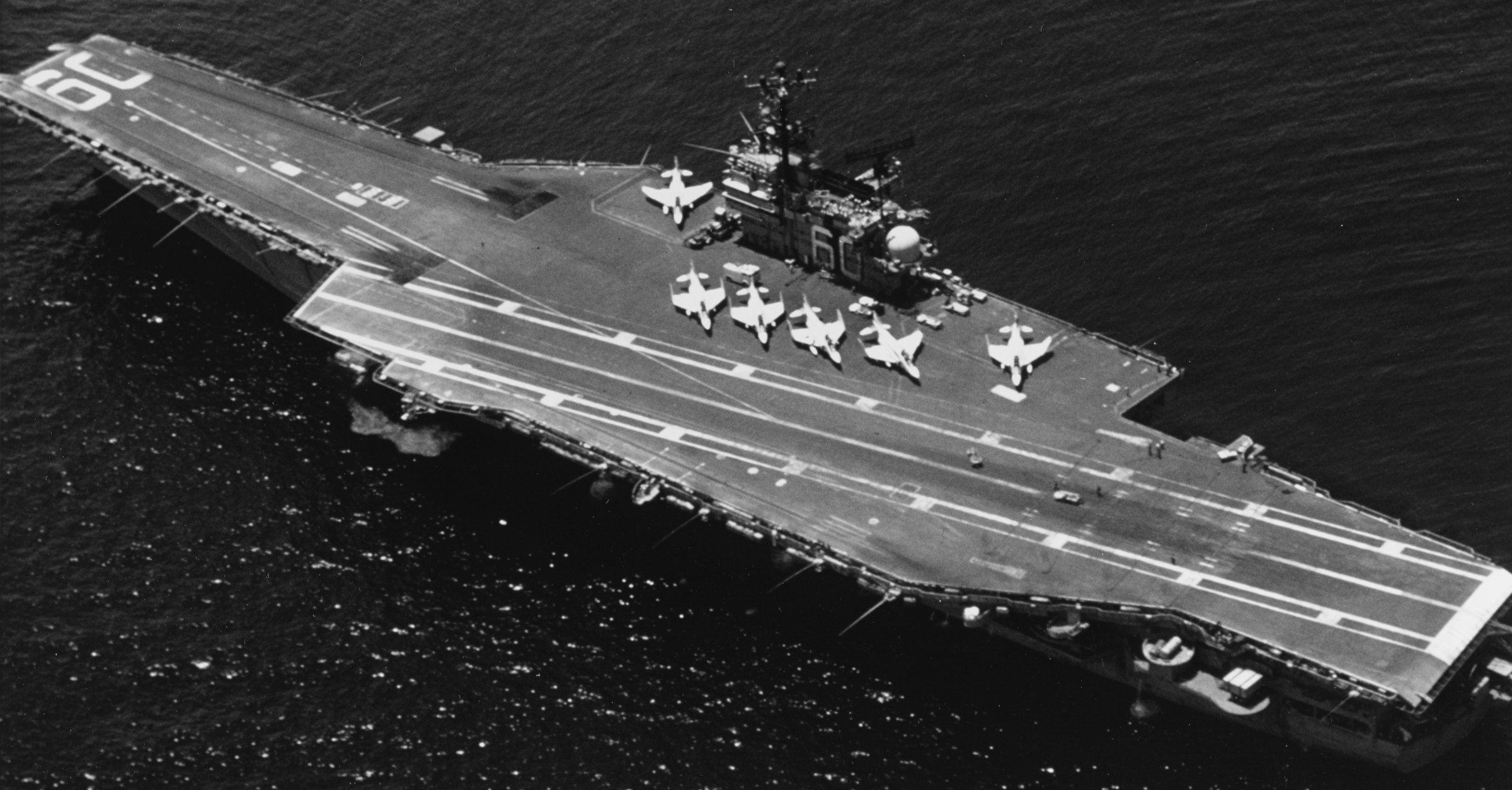 Atlantic Ocean - June 1975 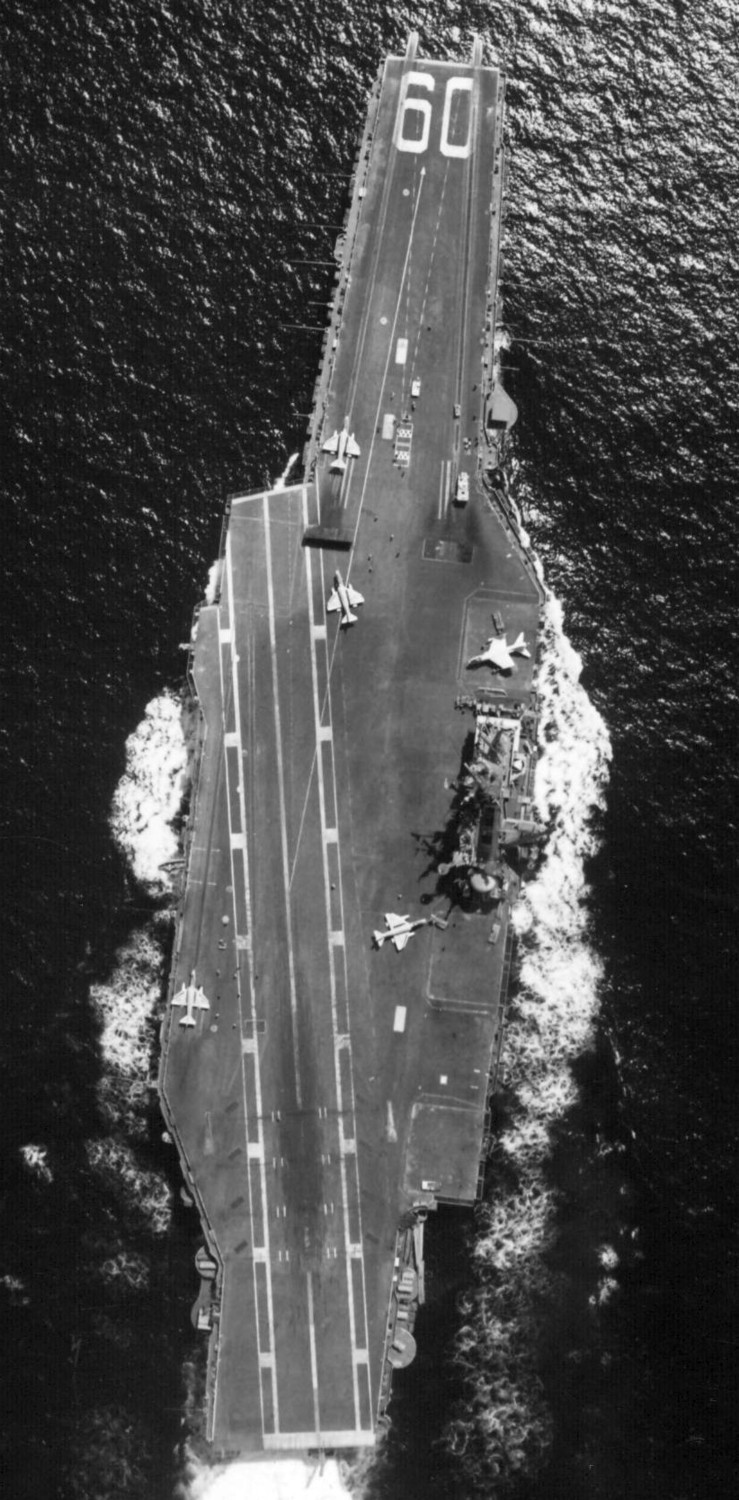 Atlantic Ocean - June 1975 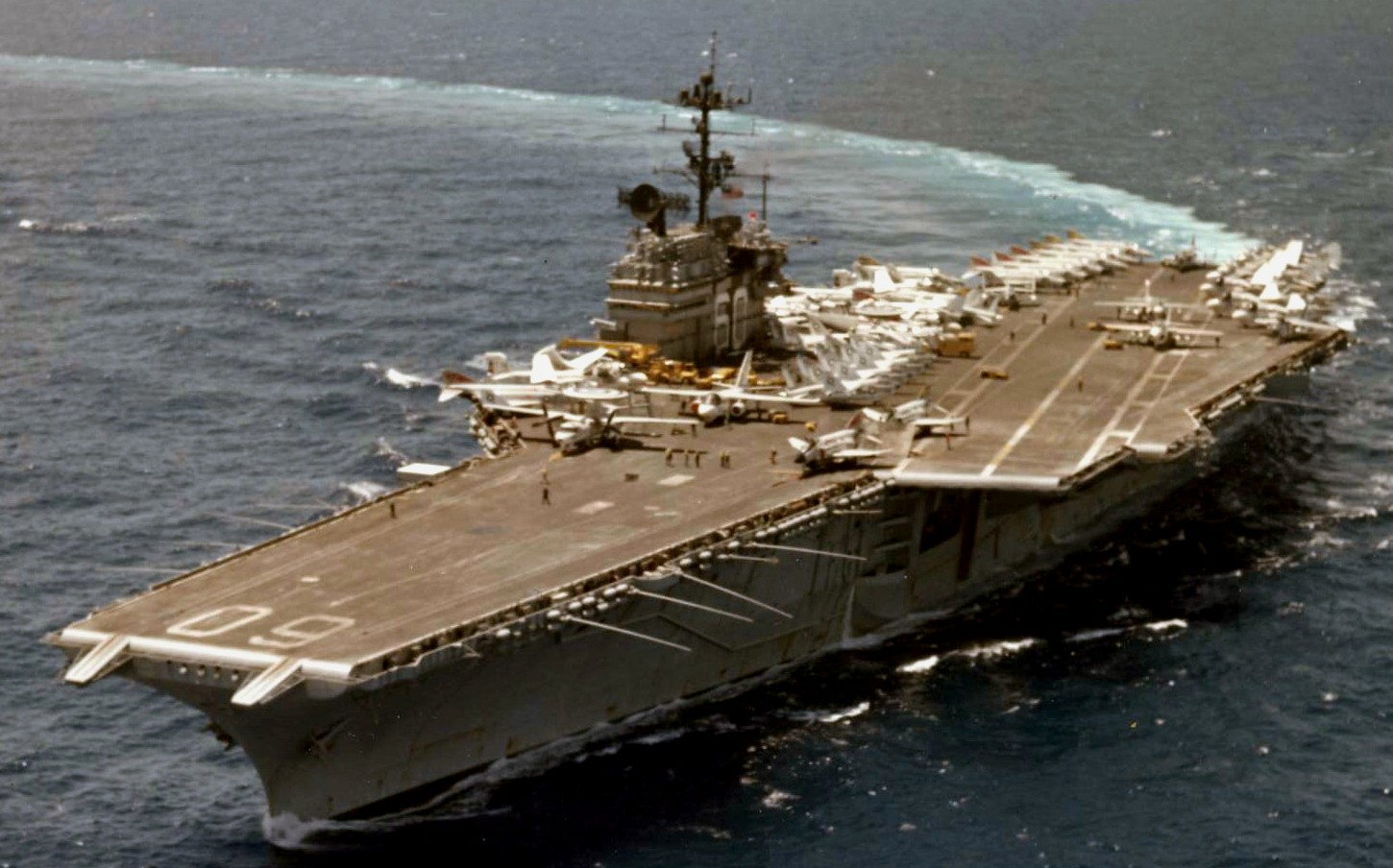 with CVW-3 embarked - 1975 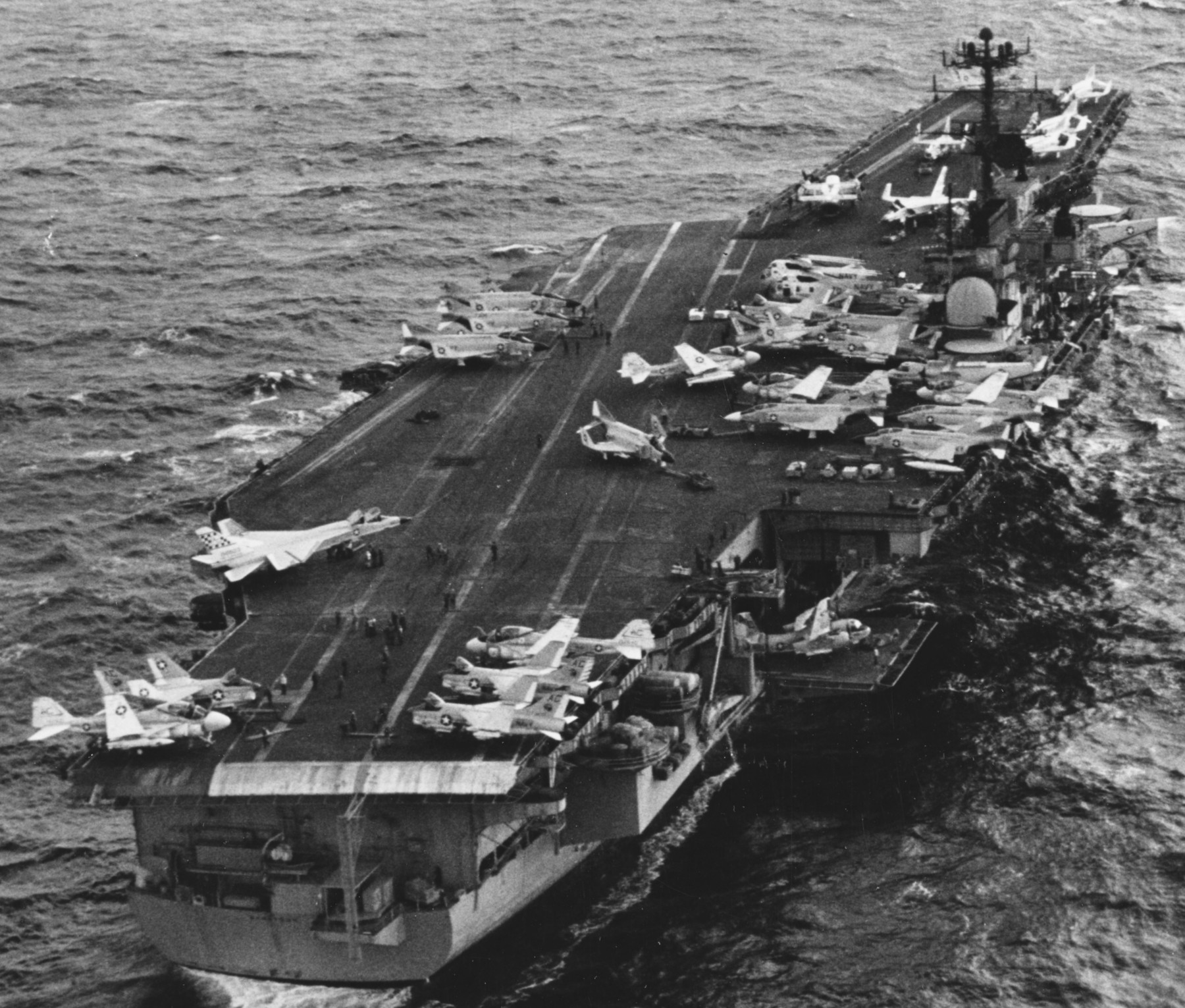 with CVW-3 embarked - Atlantic Ocean - November 1974 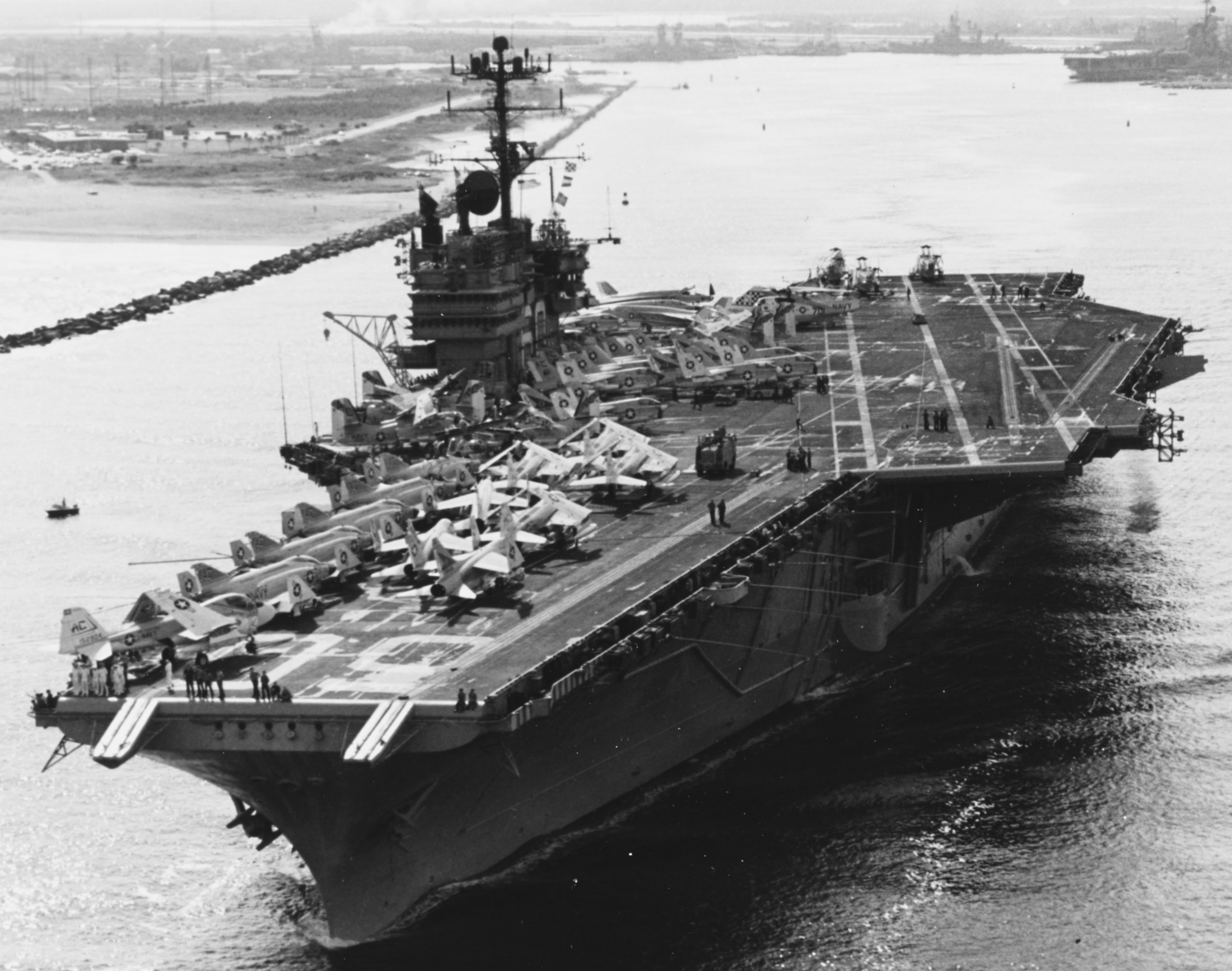 with CVW-3 embarked - departing Naval Station Mayport, Florida - September 1974 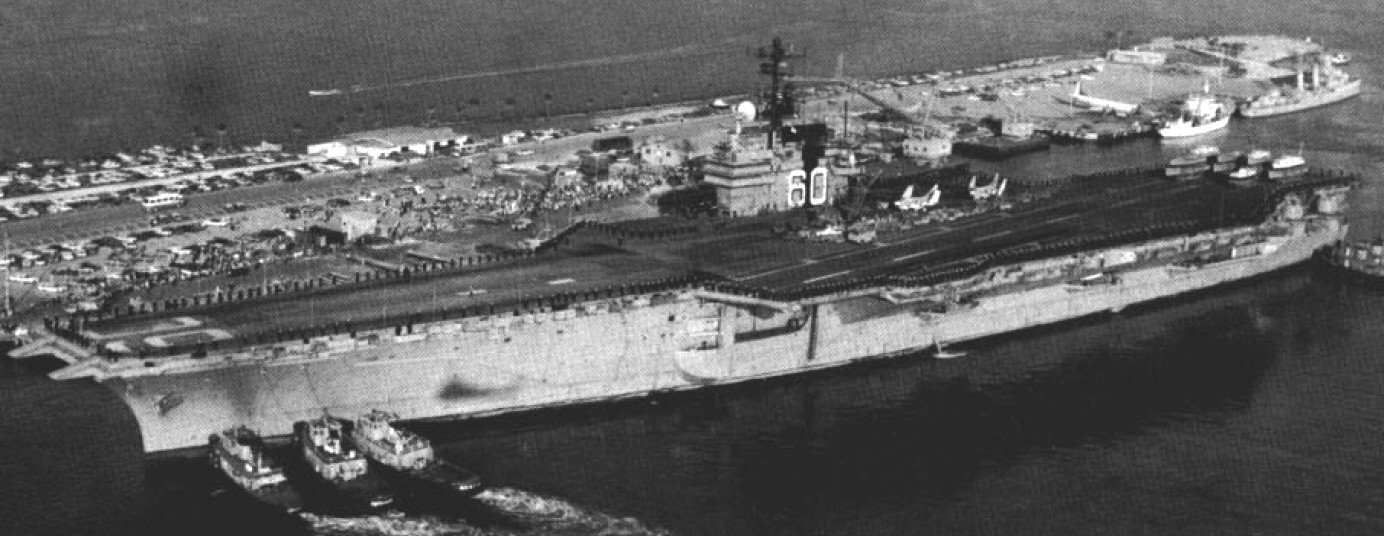 returning to Naval Station Mayport, Florida - October 1971 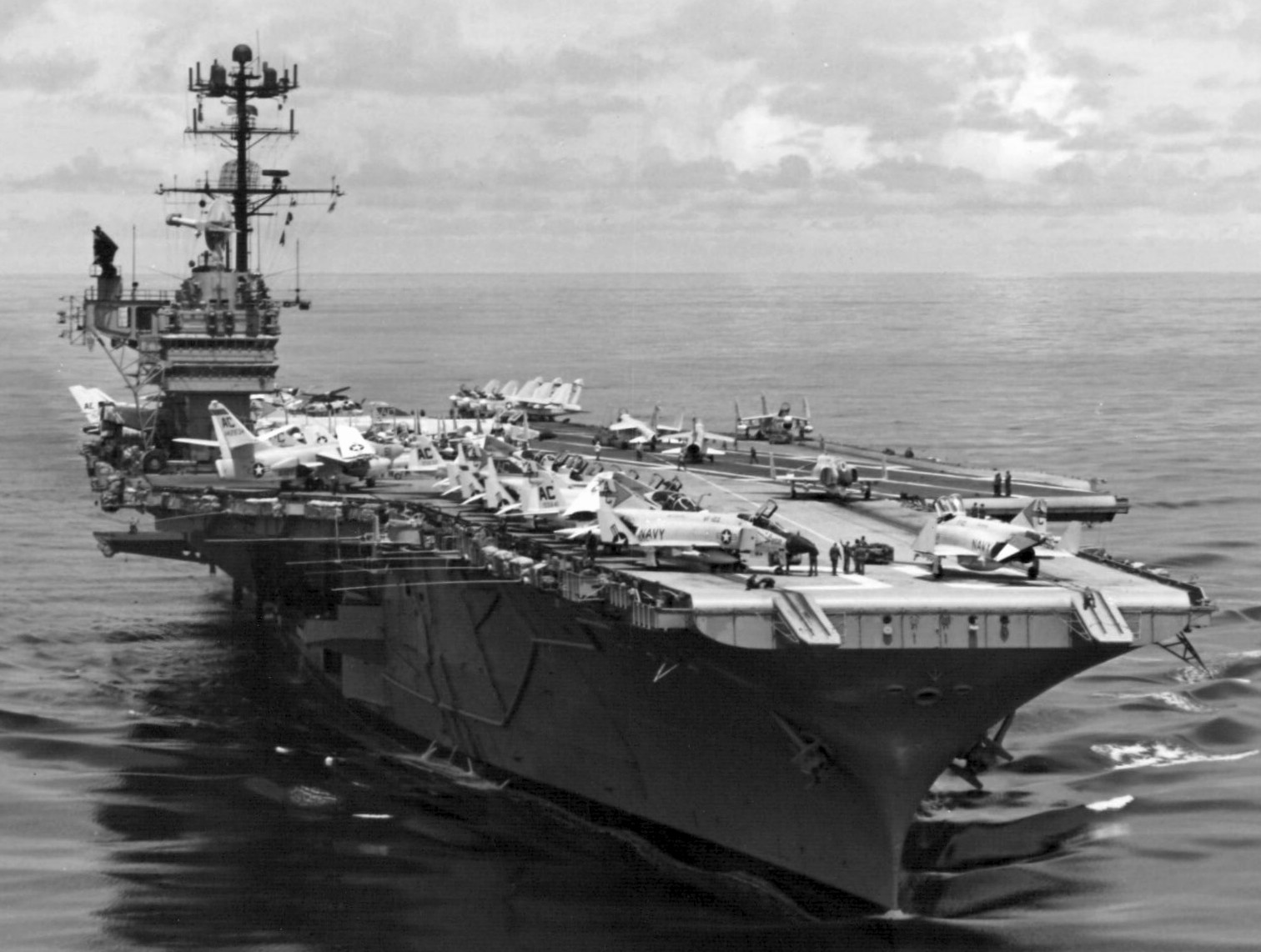 with CVW-3 embarked - 1969 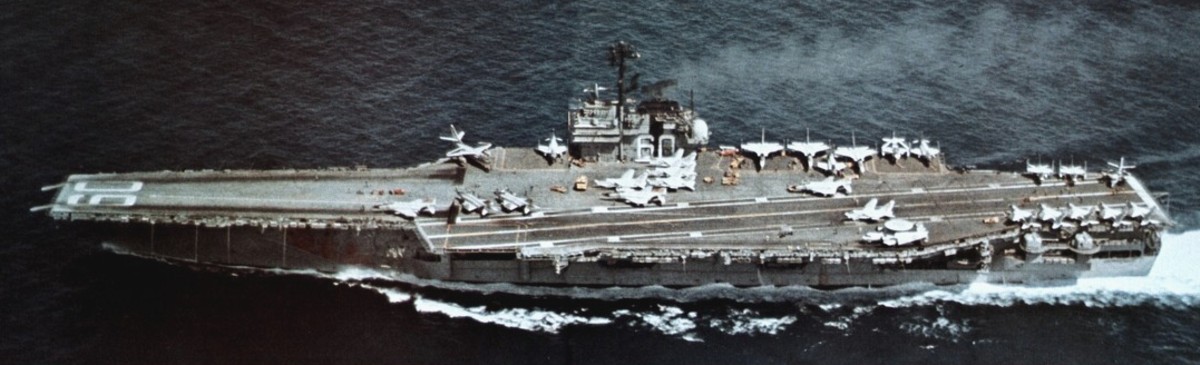 with CVW-3 embarked - 1969 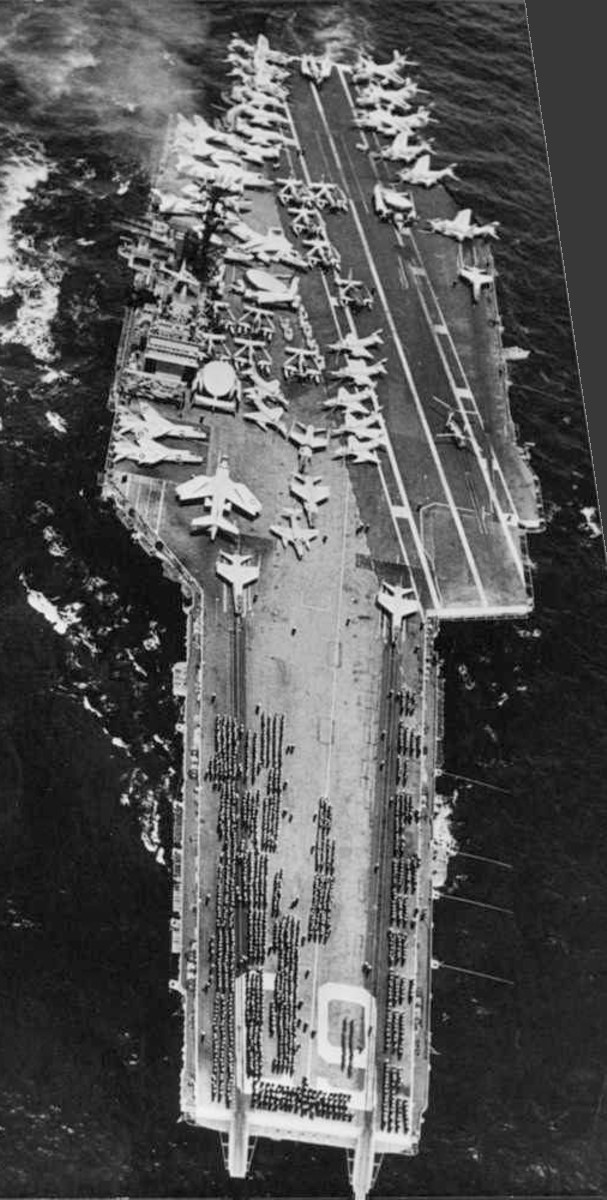 with CVW-3 embarked - October 1967 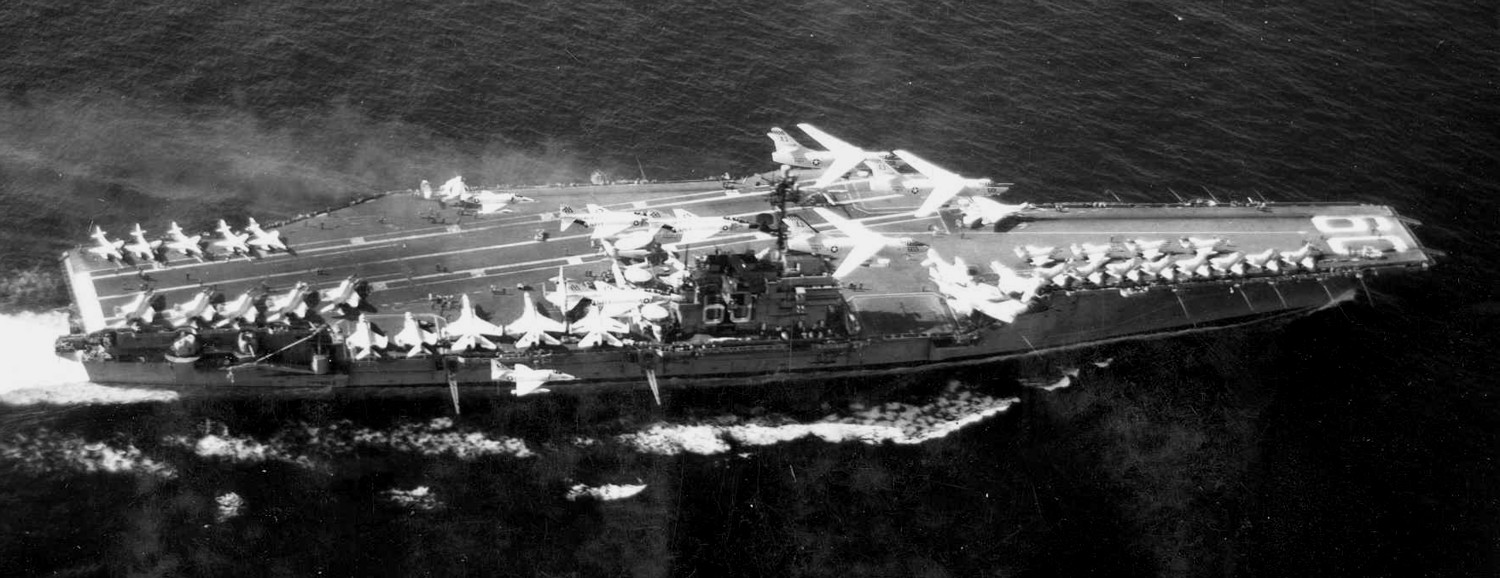 with CVW-3 embarked - 1965/66 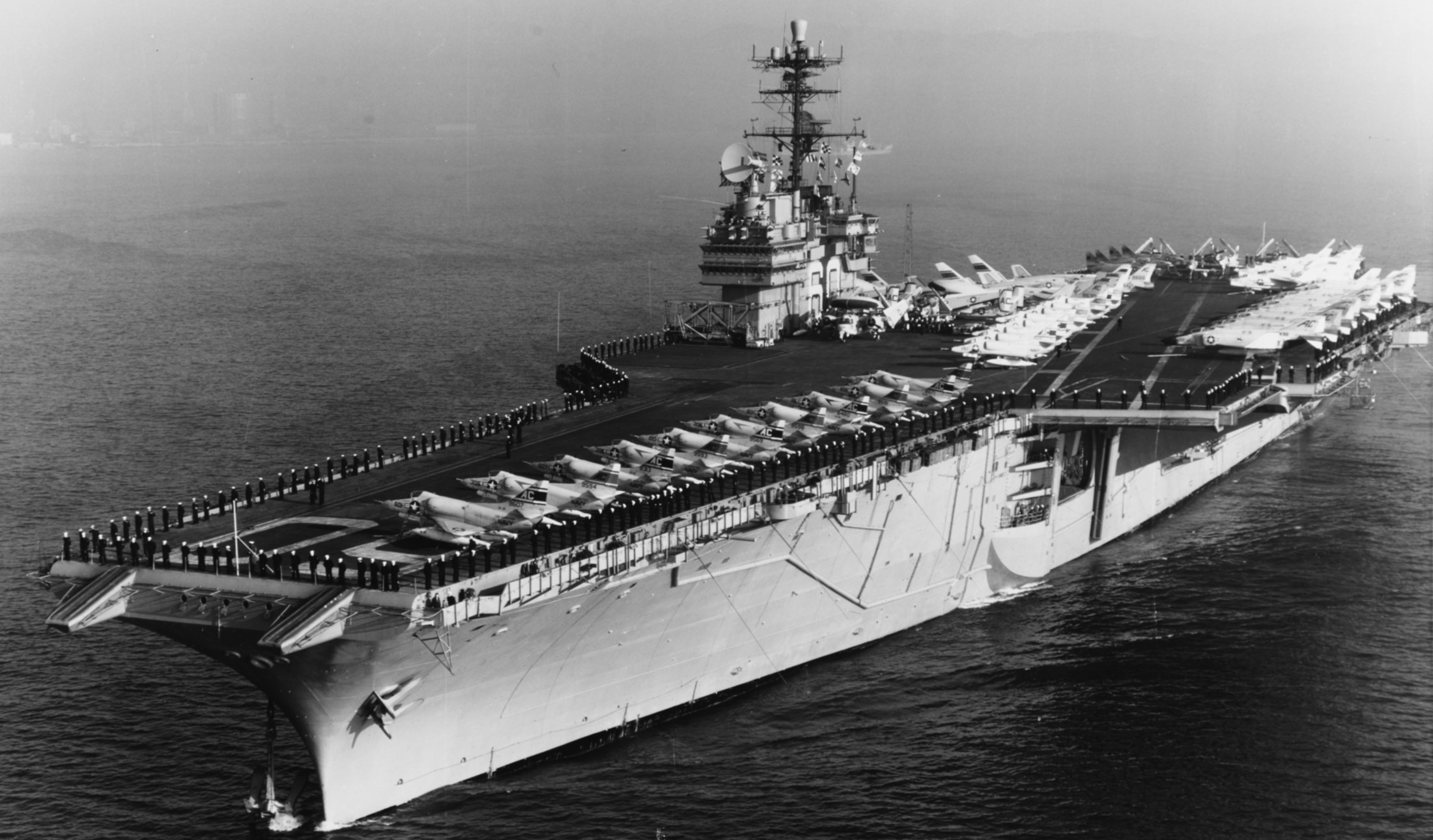 with CVW-3 embarked - off Barcelona, Spain - February 1965 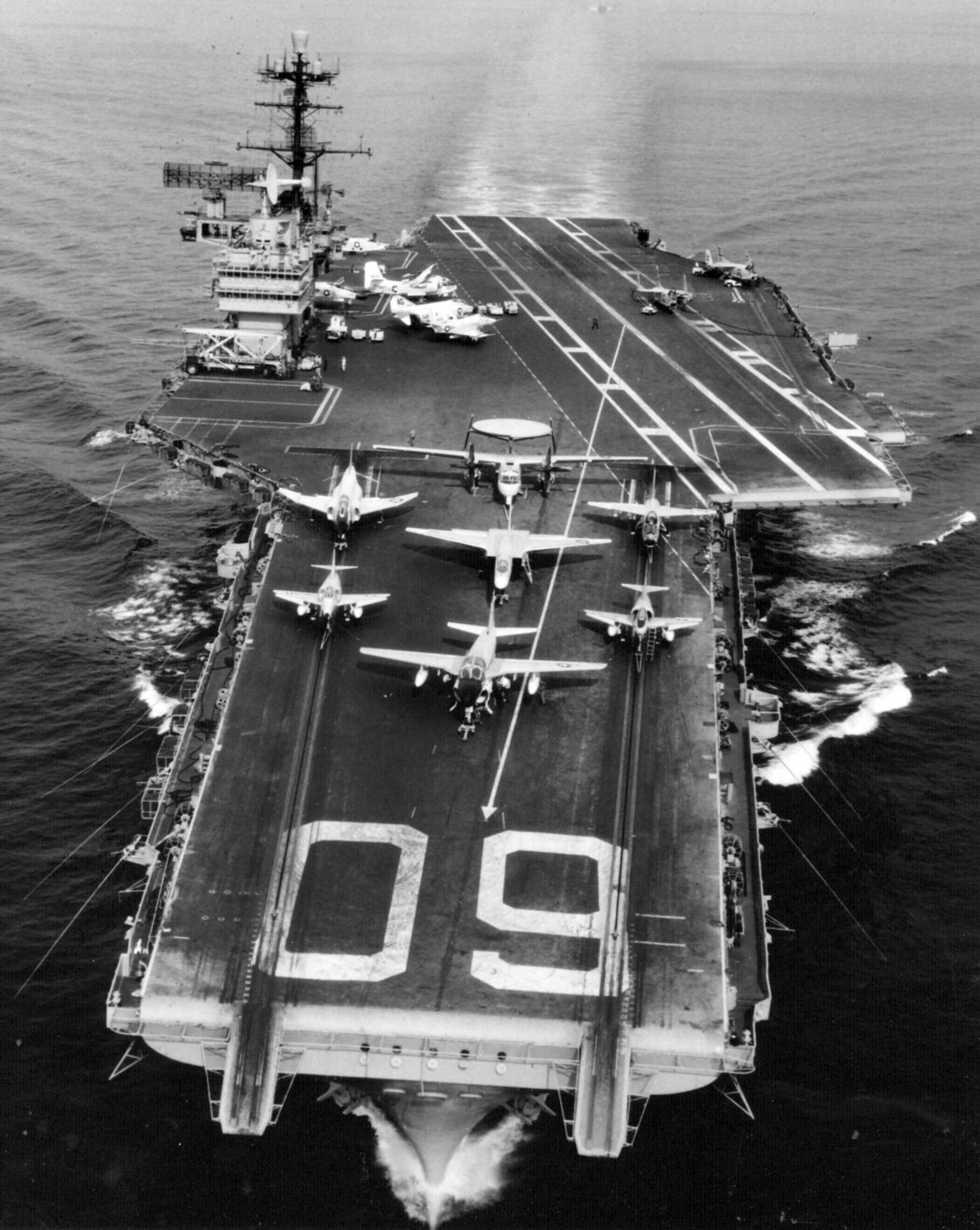 with CVW-3 embarked - 1965 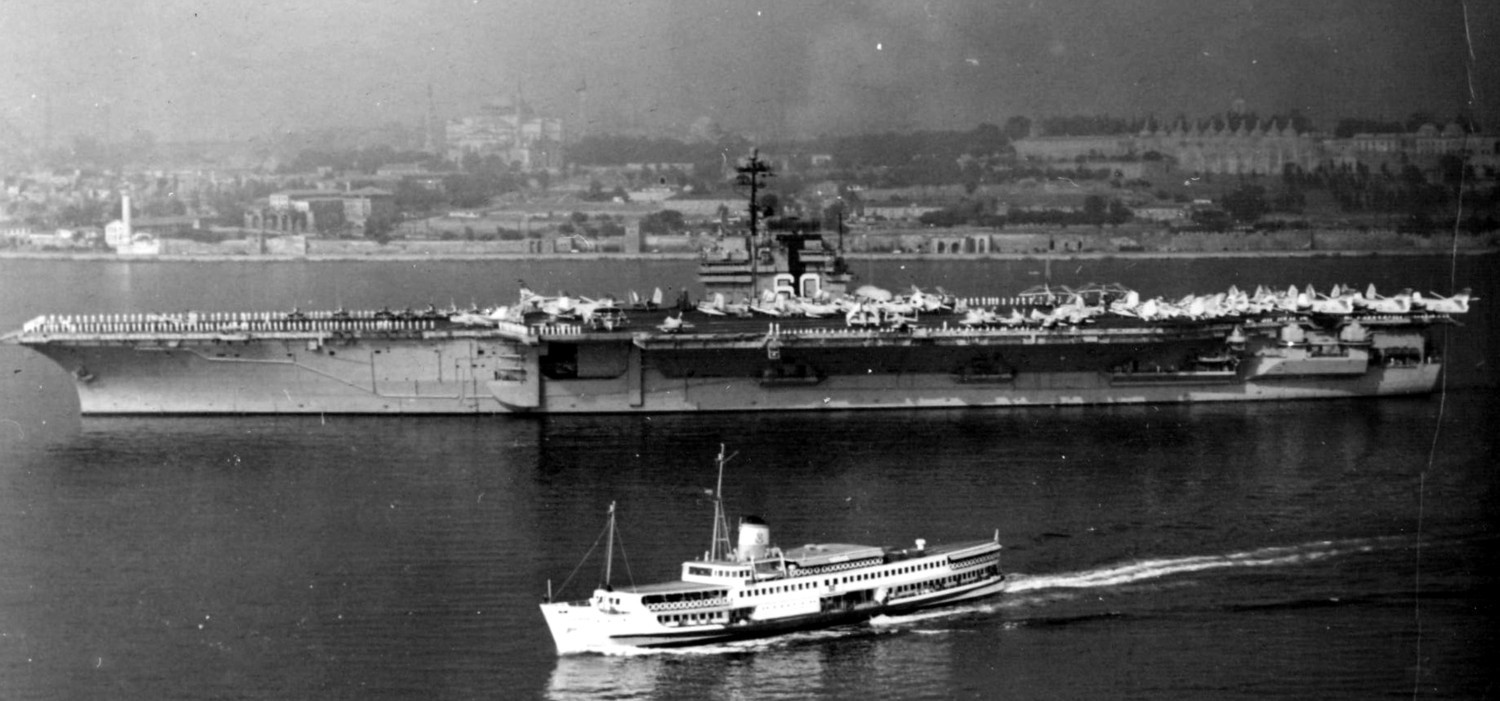 with CVG-3 embarked - Istanbul, Turkey - 1963 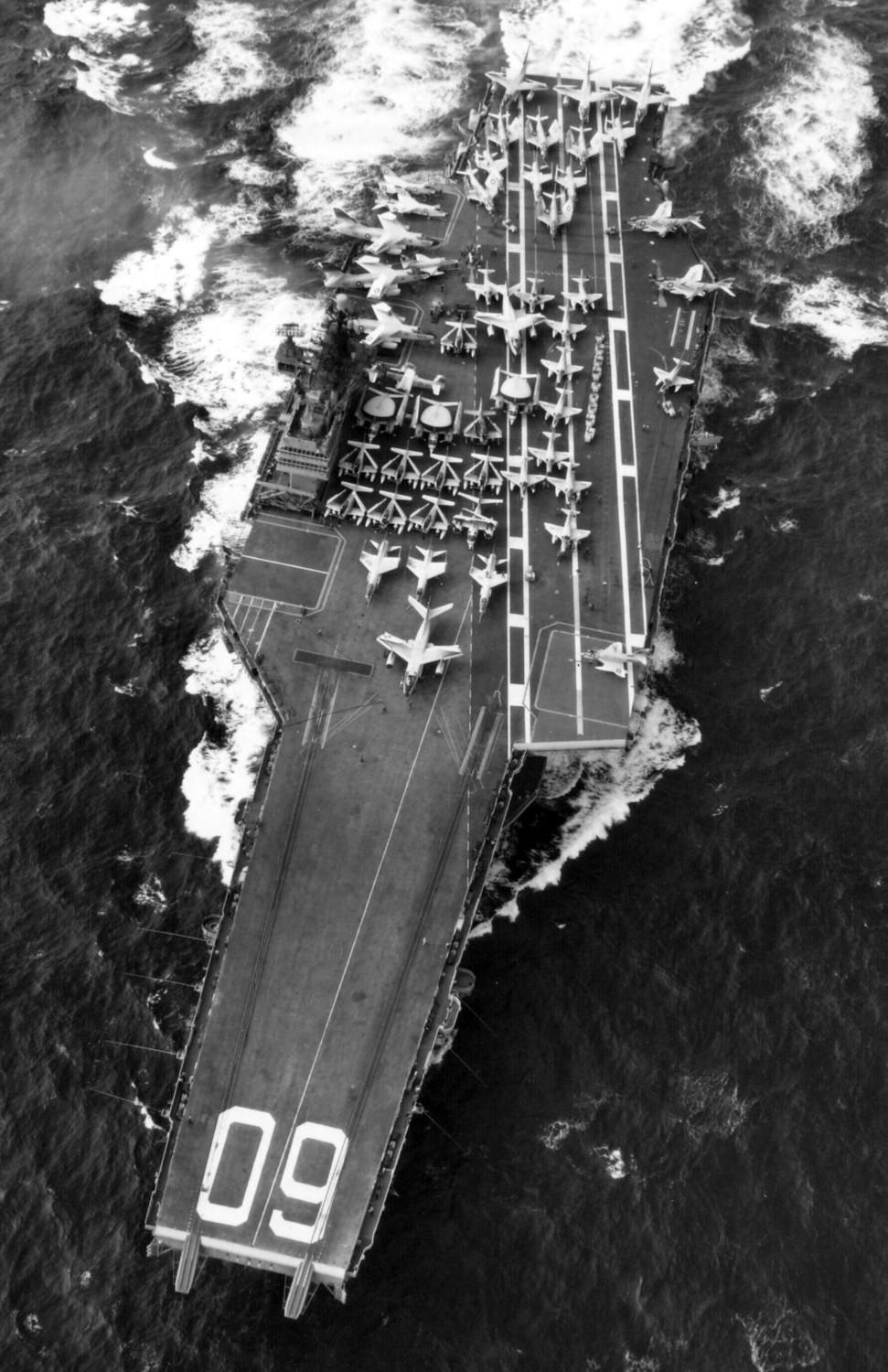 with CVG-3 embarked - December 1961 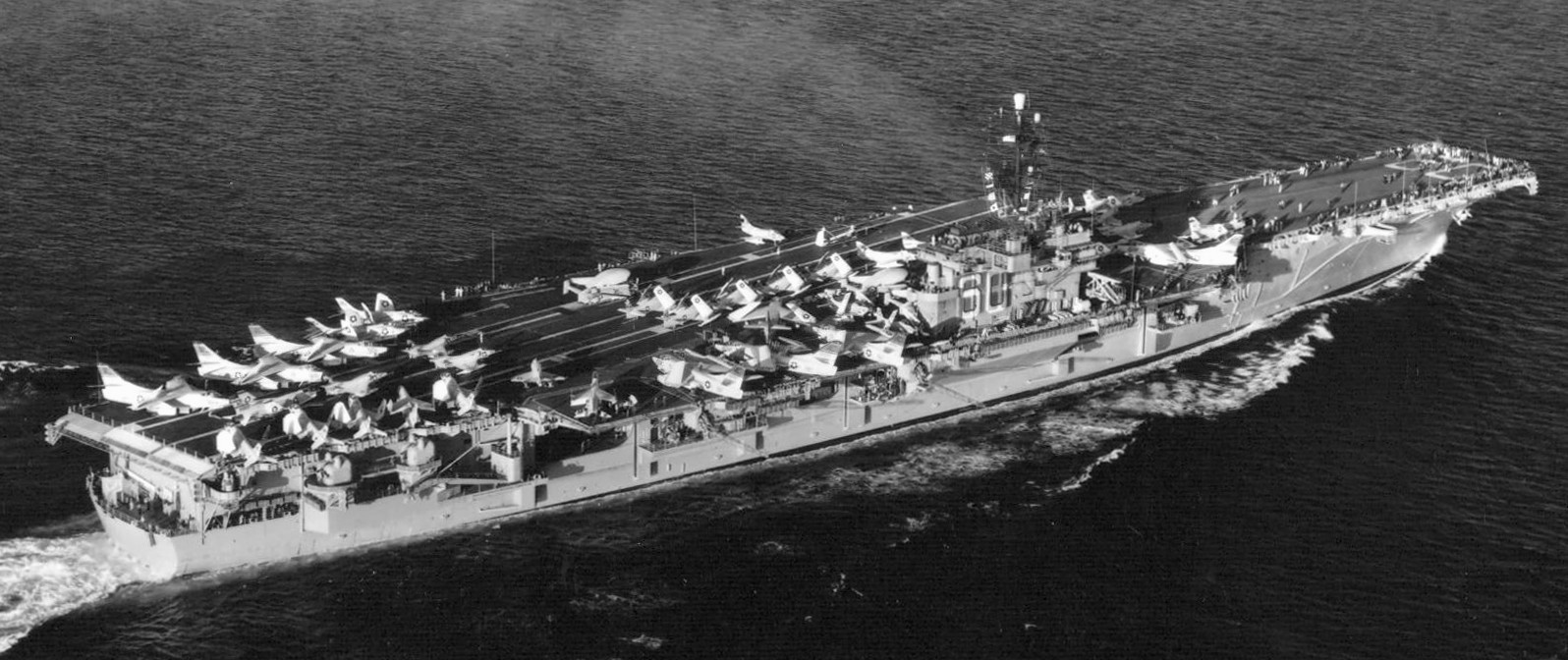 with CVG-3 embarked - December 1961 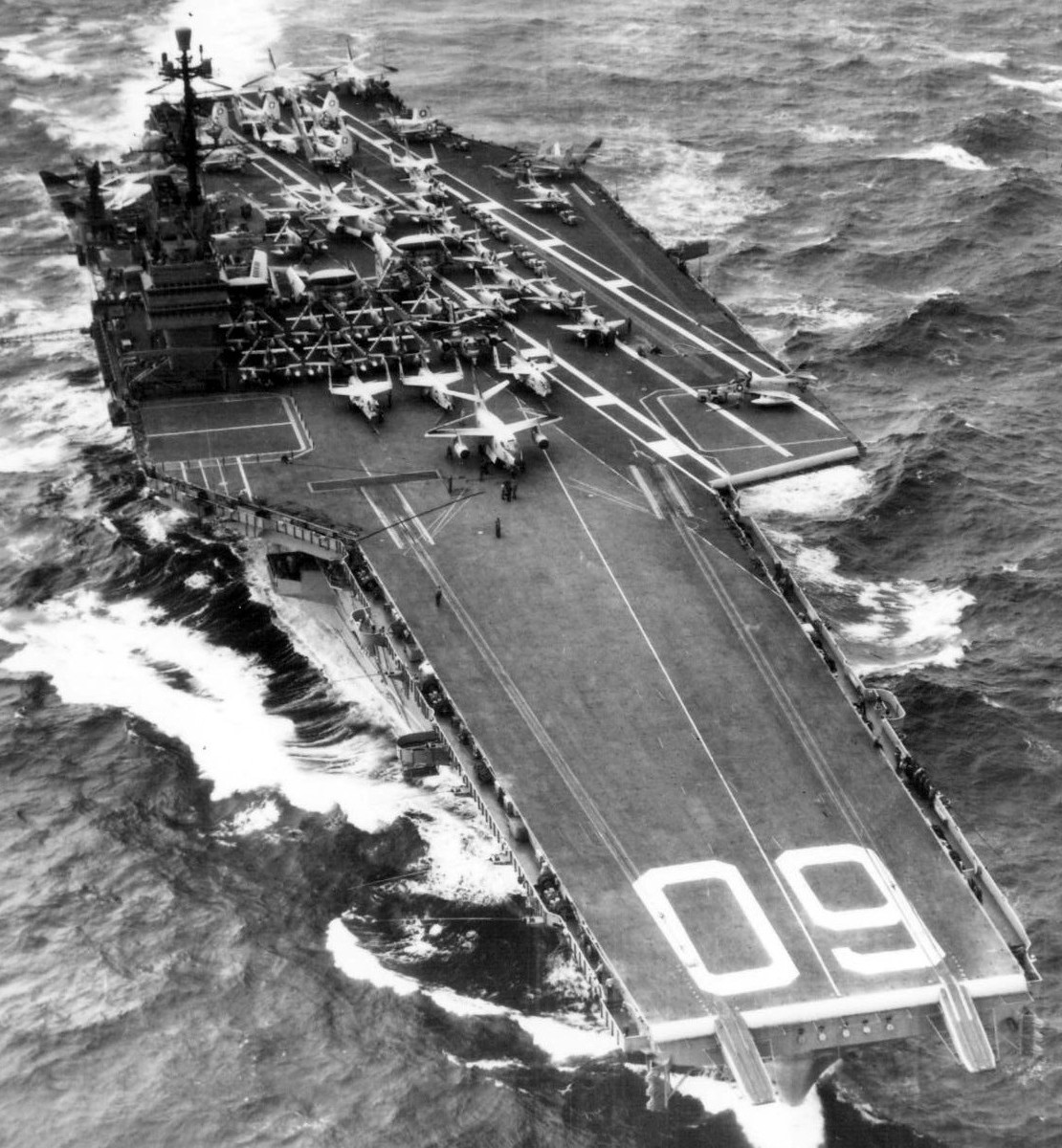 with CVG-3 embarked - December 1961 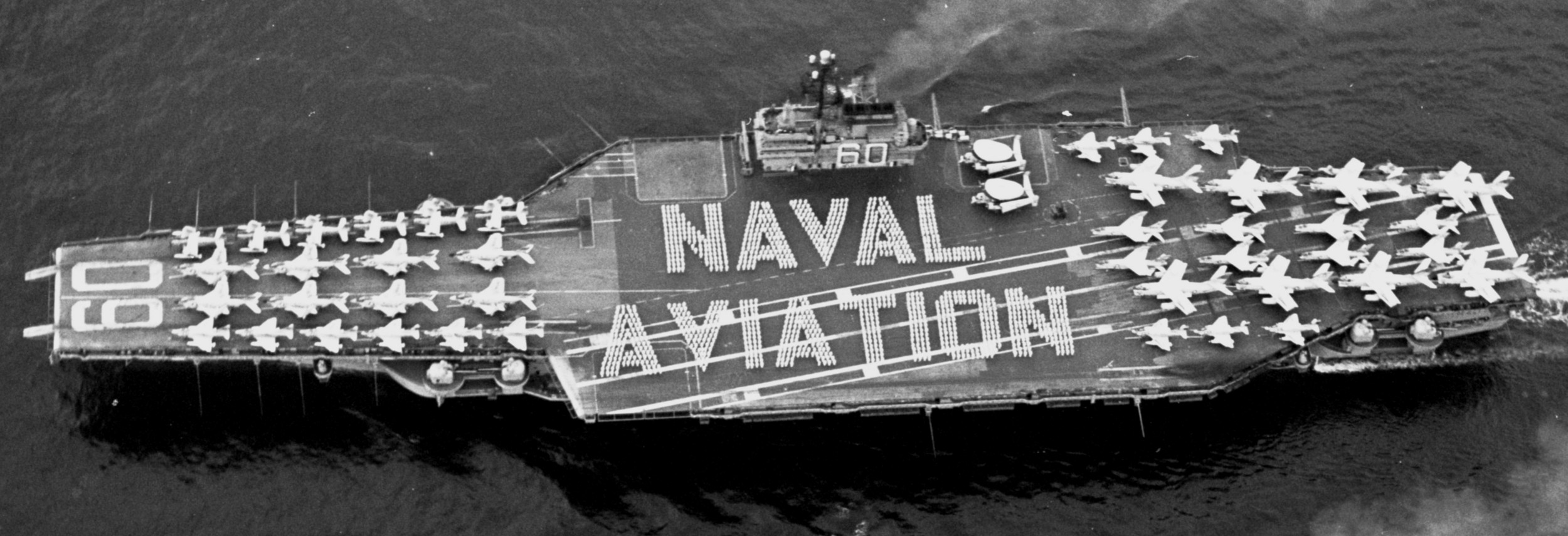 with CVG-3 embarked - commemorating the 50th anniversary of Naval Aviation - December 1960 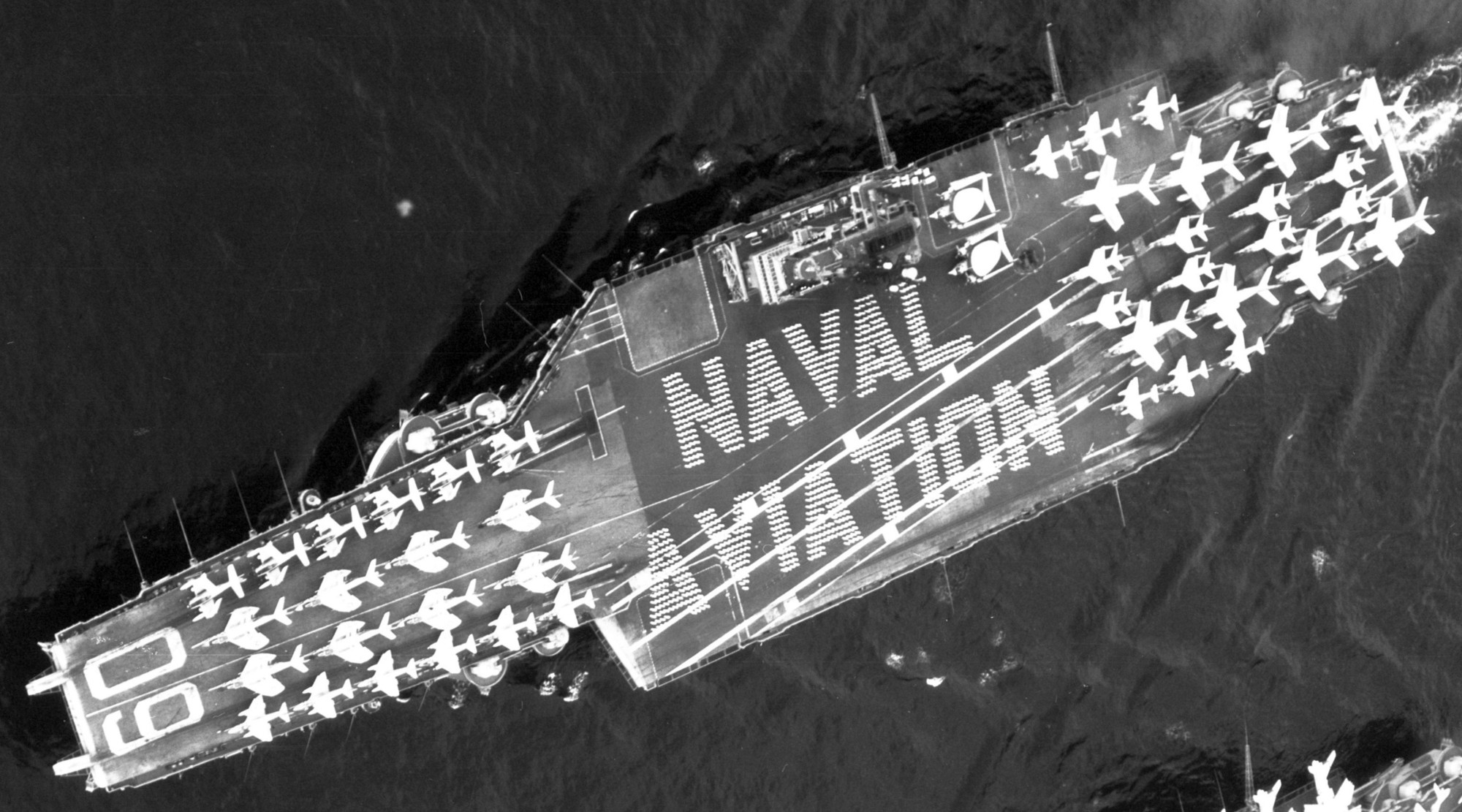 with CVG-3 embarked - commemorating the 50th anniversary of Naval Aviation - December 1960 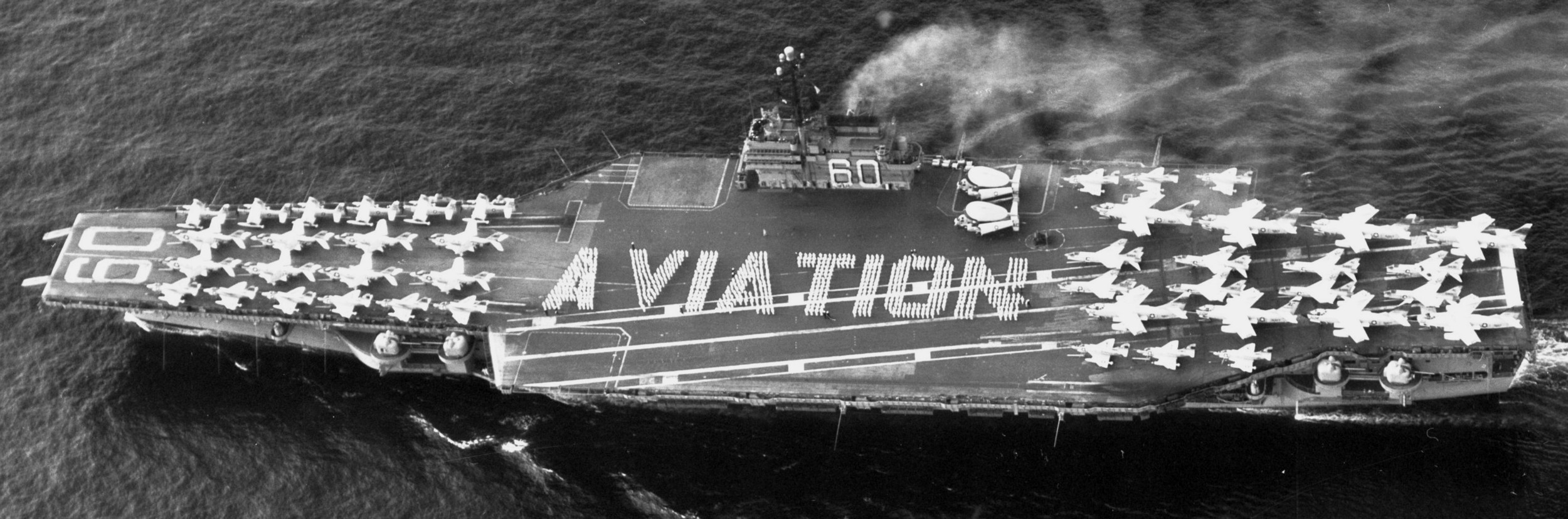 with CVG-3 embarked - commemorating the 50th anniversary of Naval Aviation - December 1960 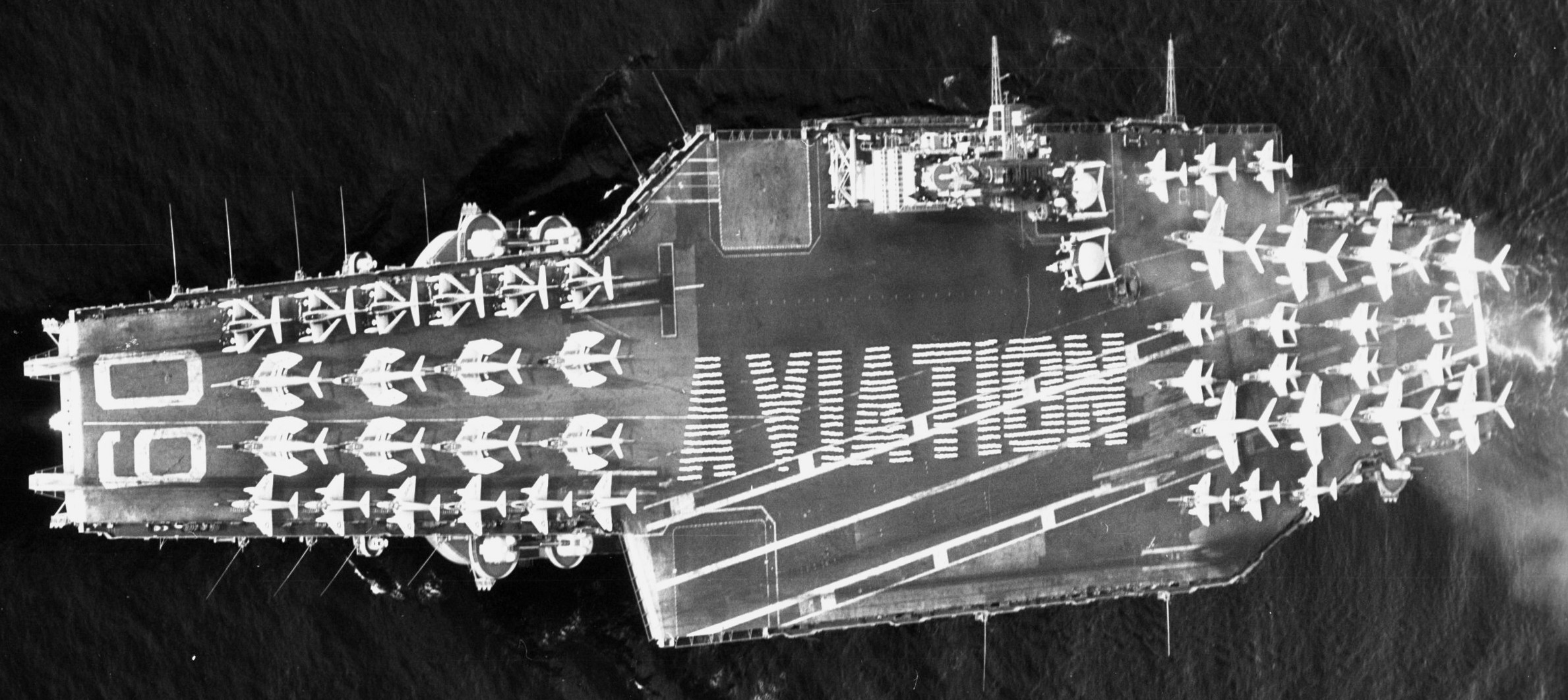 with CVG-3 embarked - commemorating the 50th anniversary of Naval Aviation - December 1960 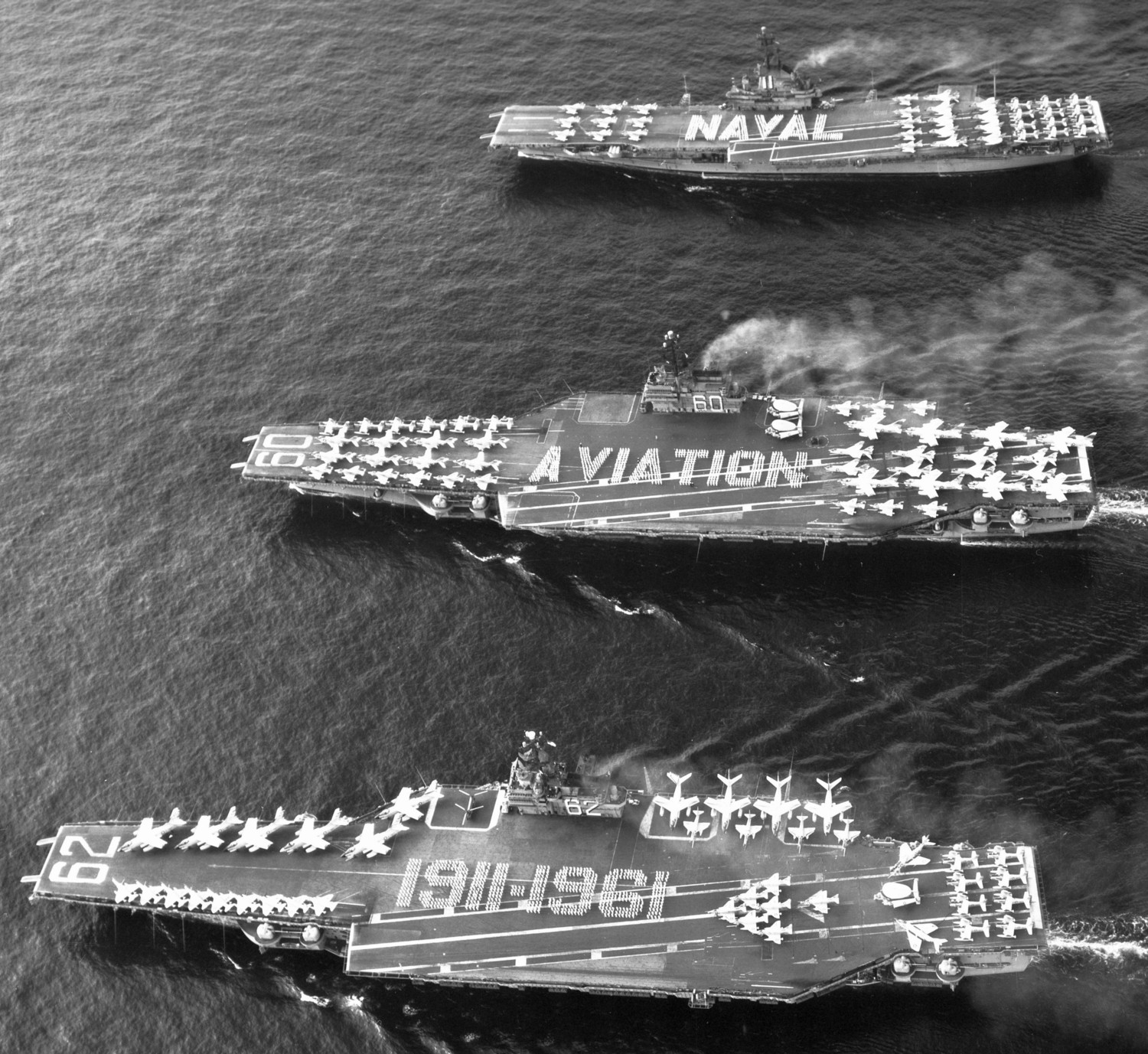 USS Intrepid (CVA 11), USS Saratoga (CVA 60) and USS Independence (CVA 62) commemorating the 50th anniversary of Naval Aviation - December 1960 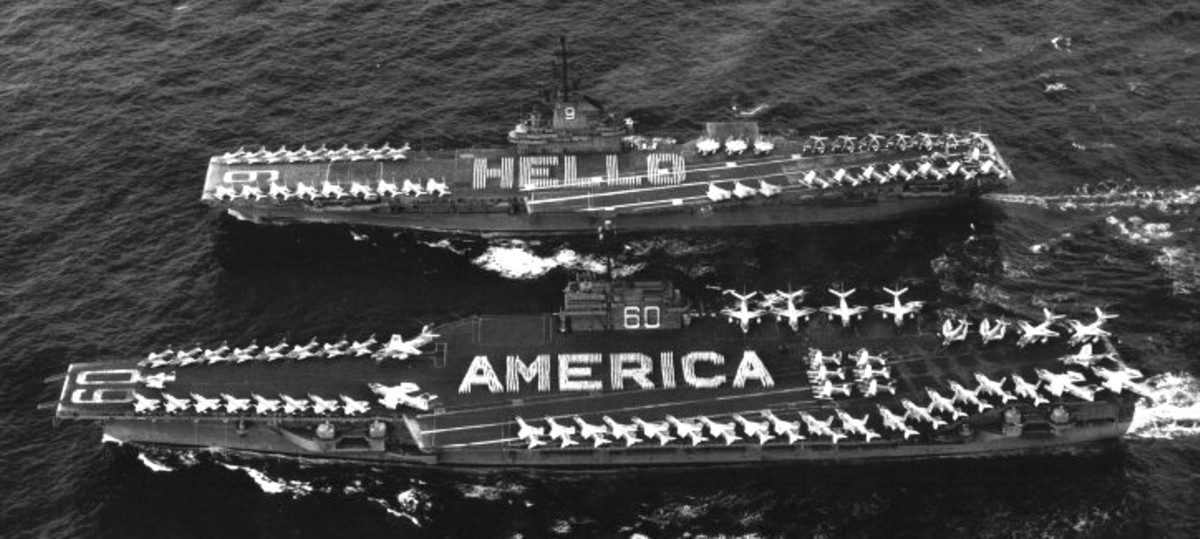 with CVG-3 embarked (alongside USS Essex CVS 9) - February 1960 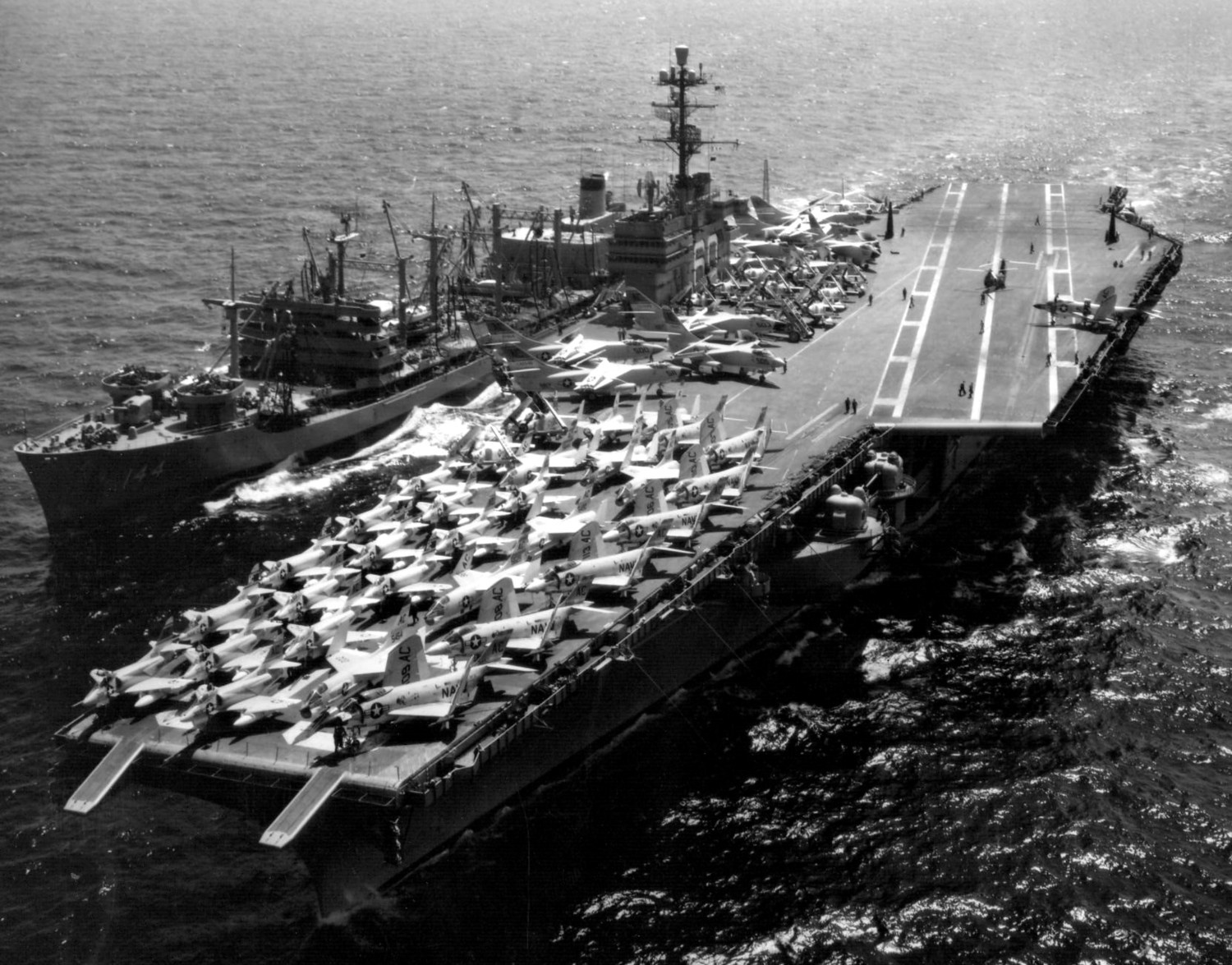 with CVG-3 embarked - August 1959 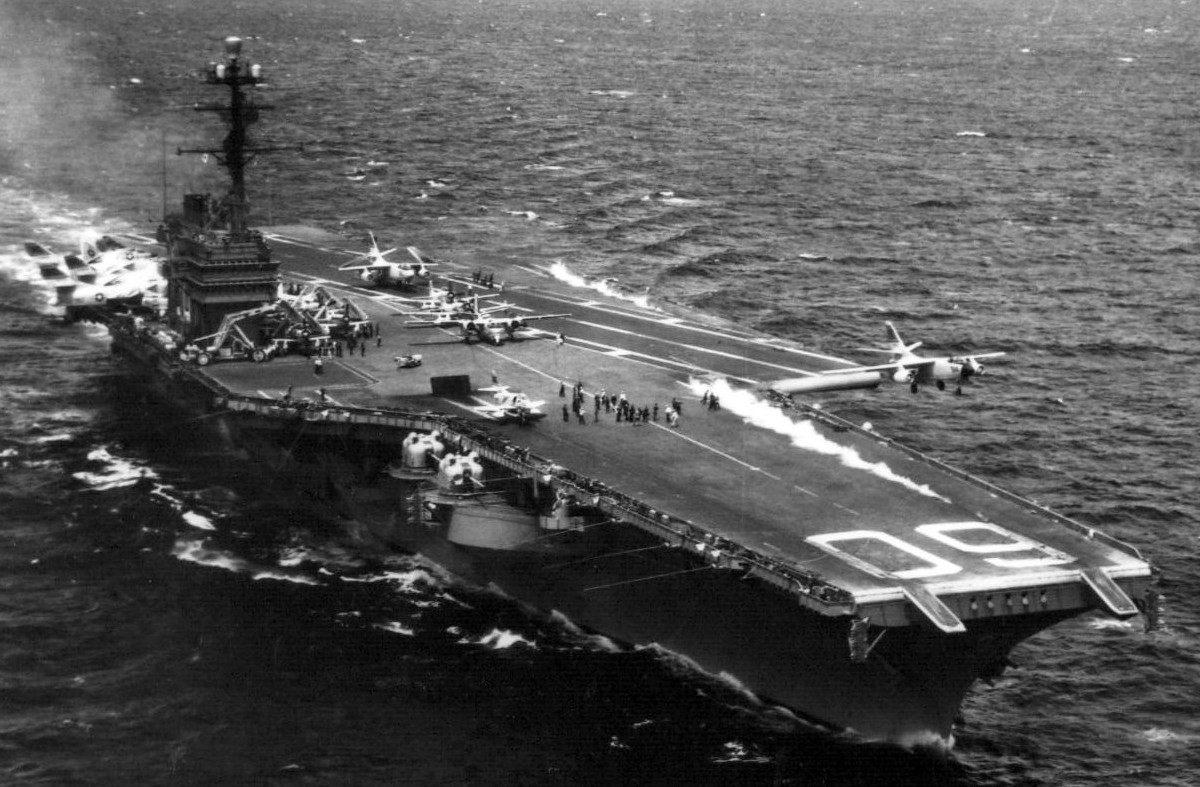 with CVG-3 embarked - May 1959 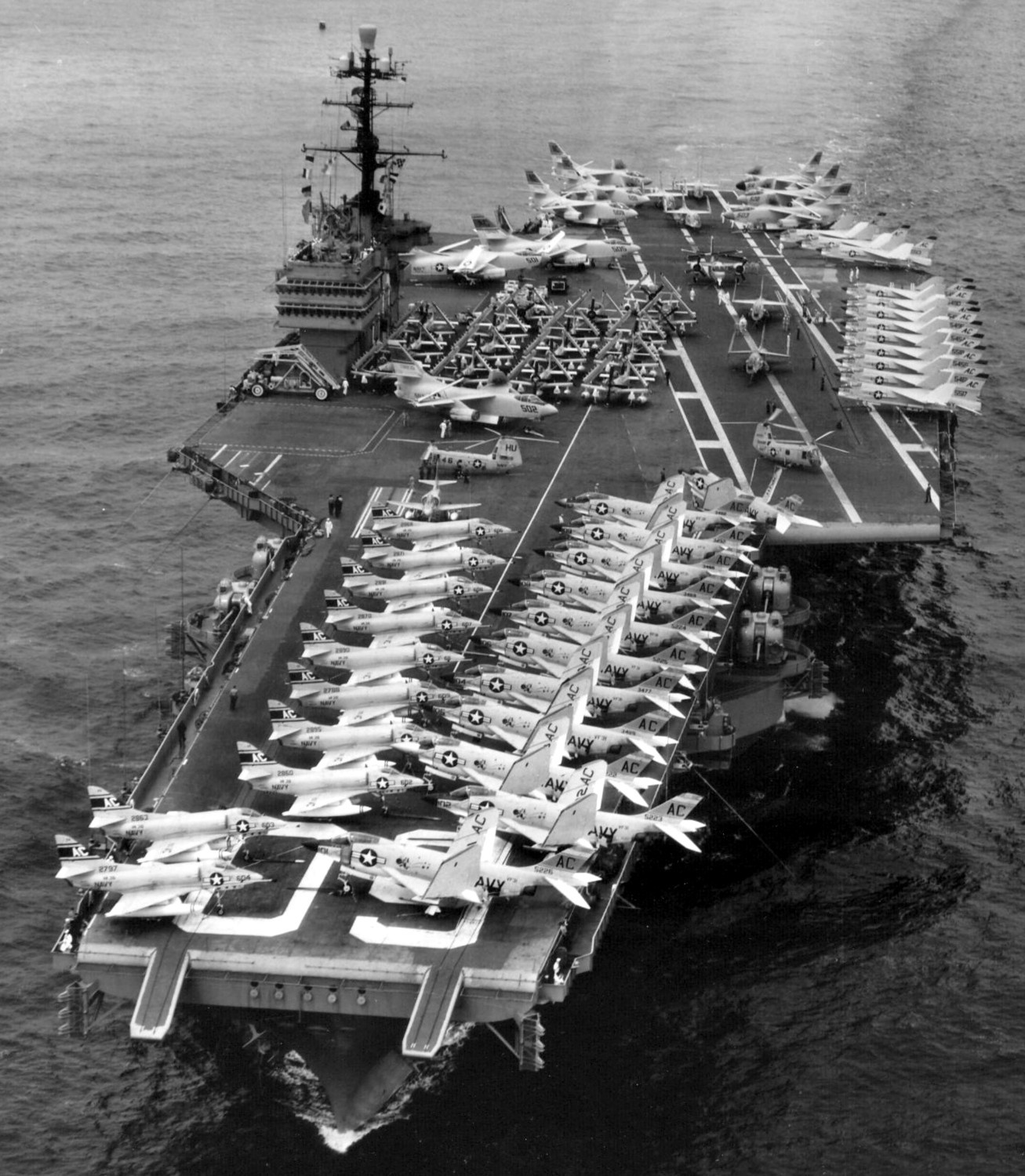 with CVG-3 embarked - April 1959 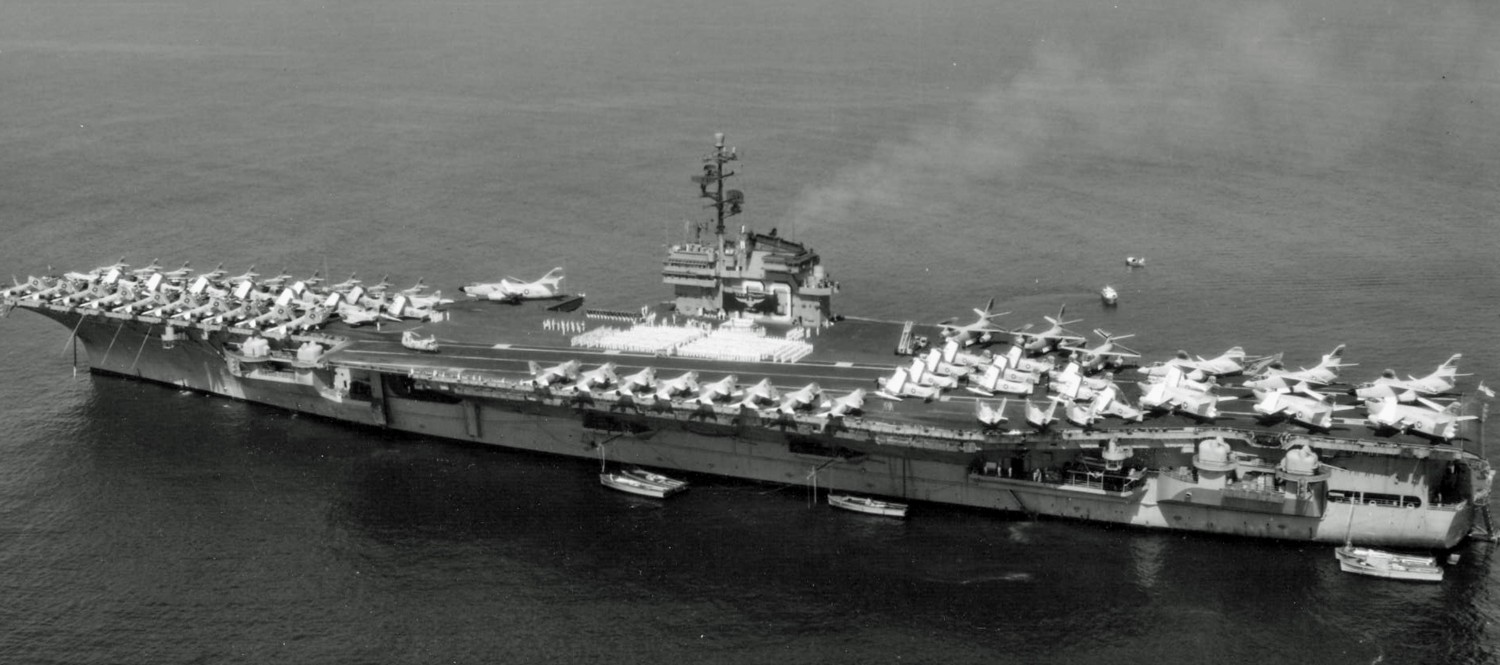 with CVG-3 embarked - 1959 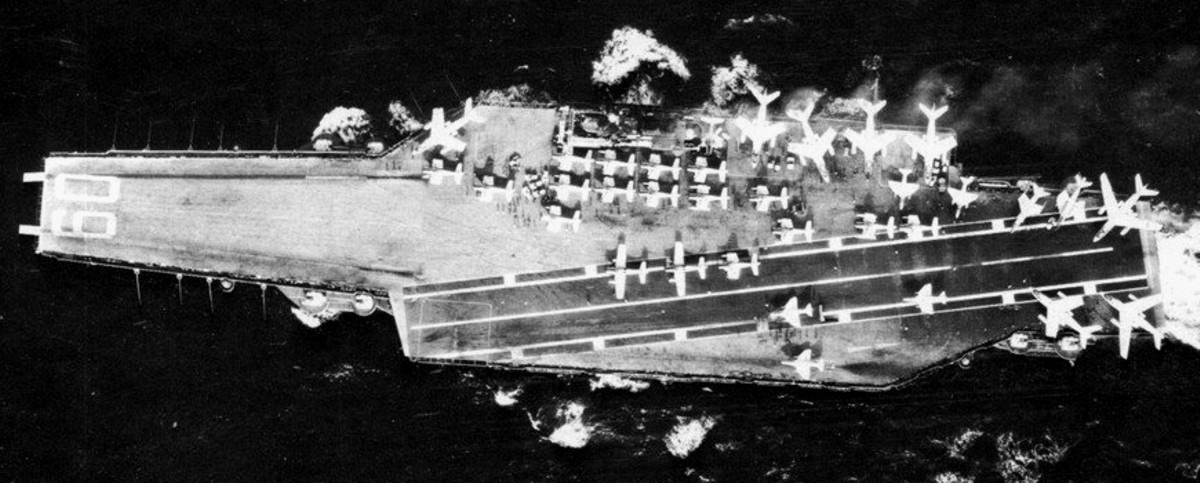 with CVG-3 embarked - 1959 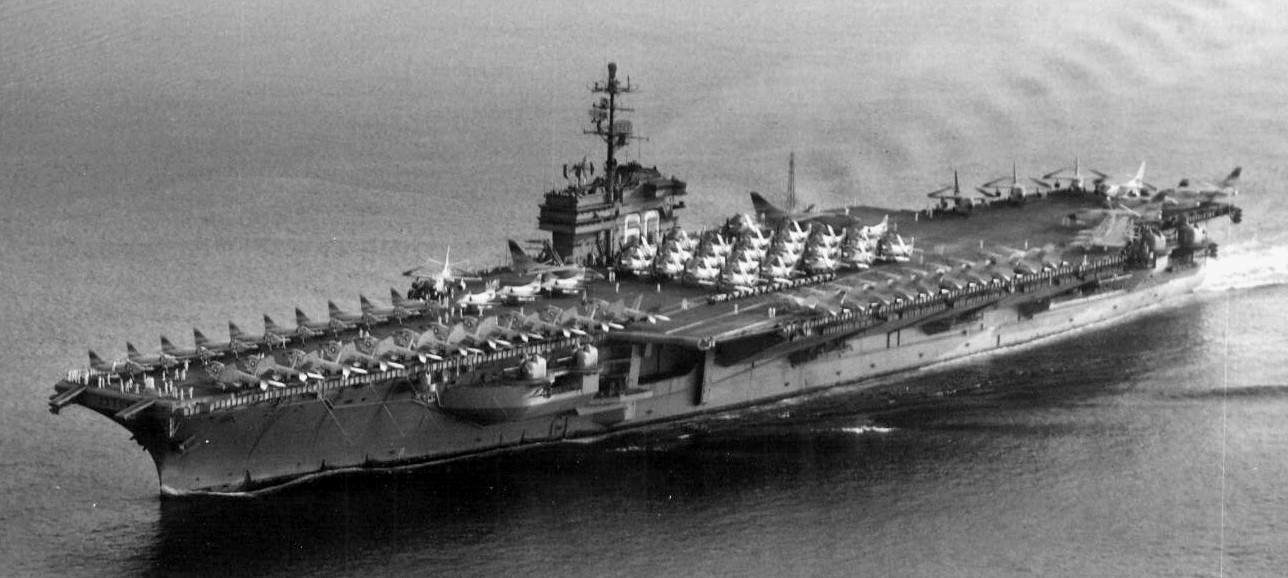 with CVG-3 embarked - 1958-60 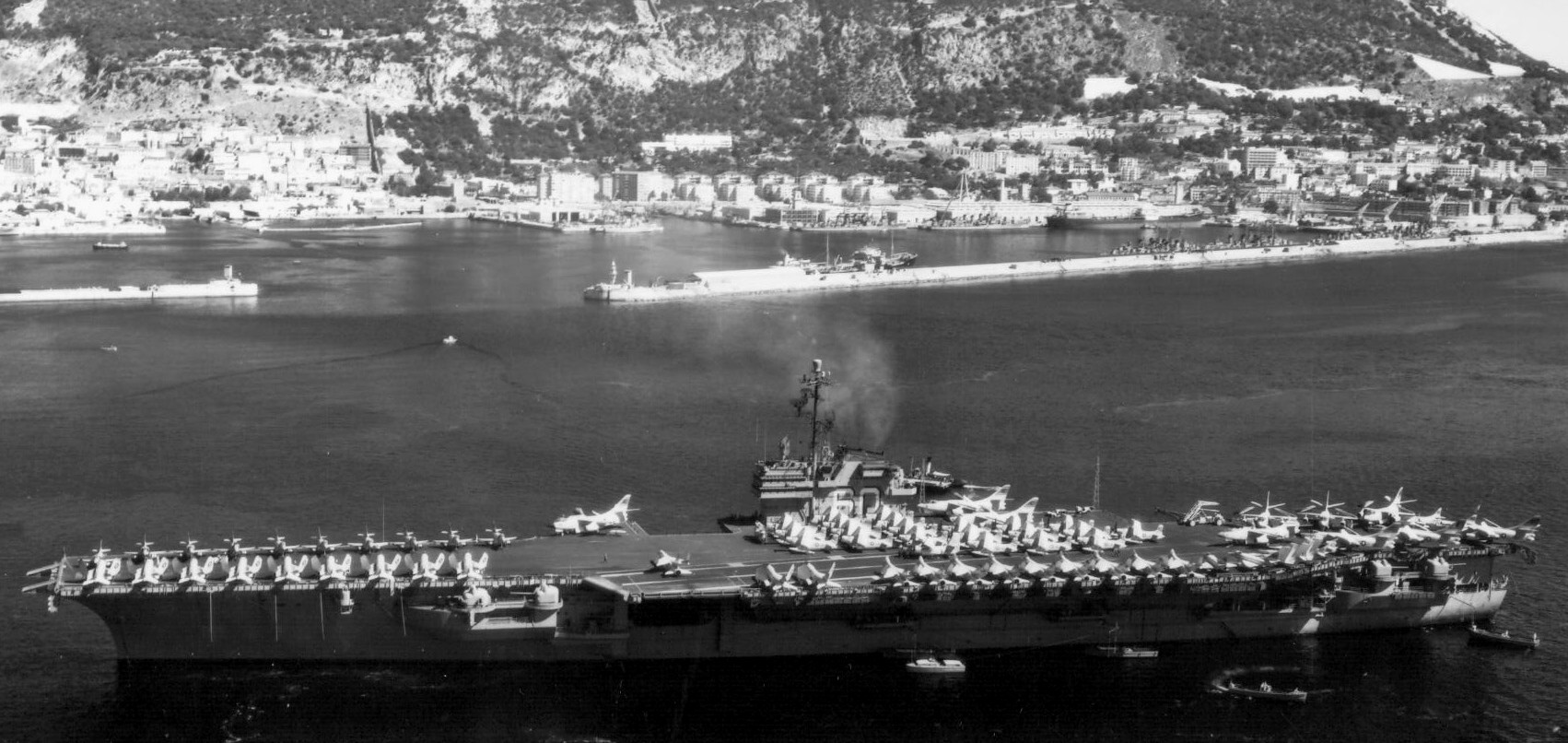 with CVG-3 embarked - Gibraltar - September 1958 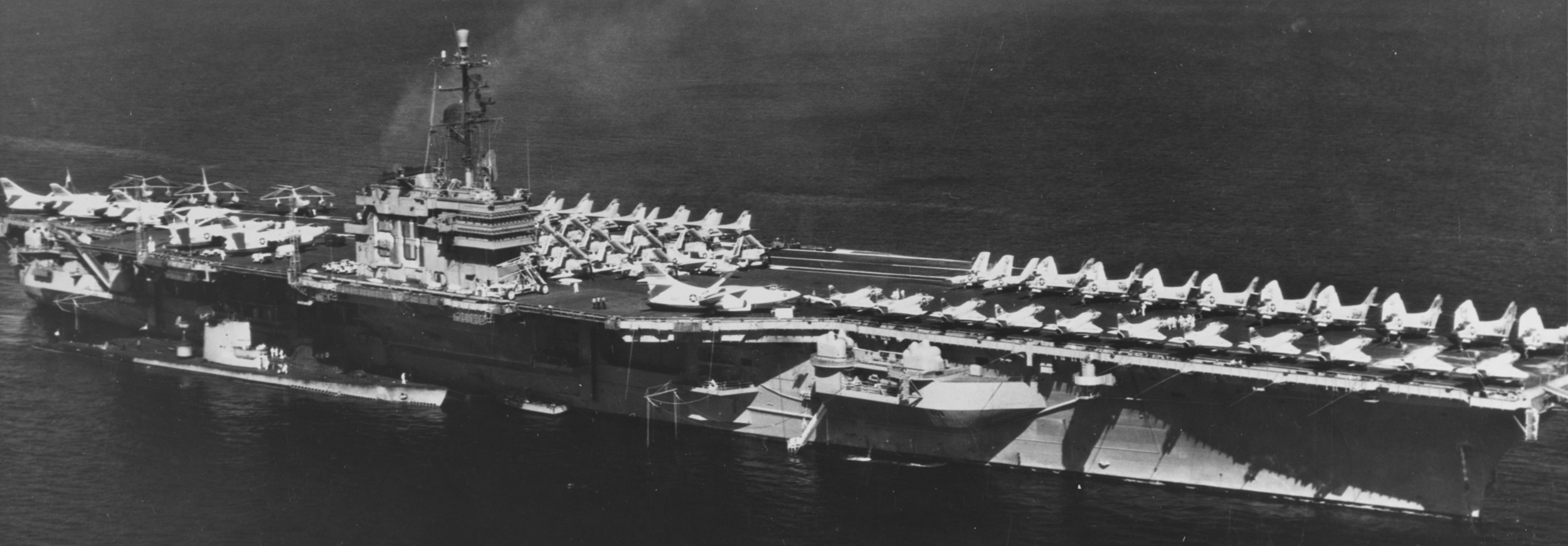 with CVG-3 embarked - Mediterranean Sea - August 1958 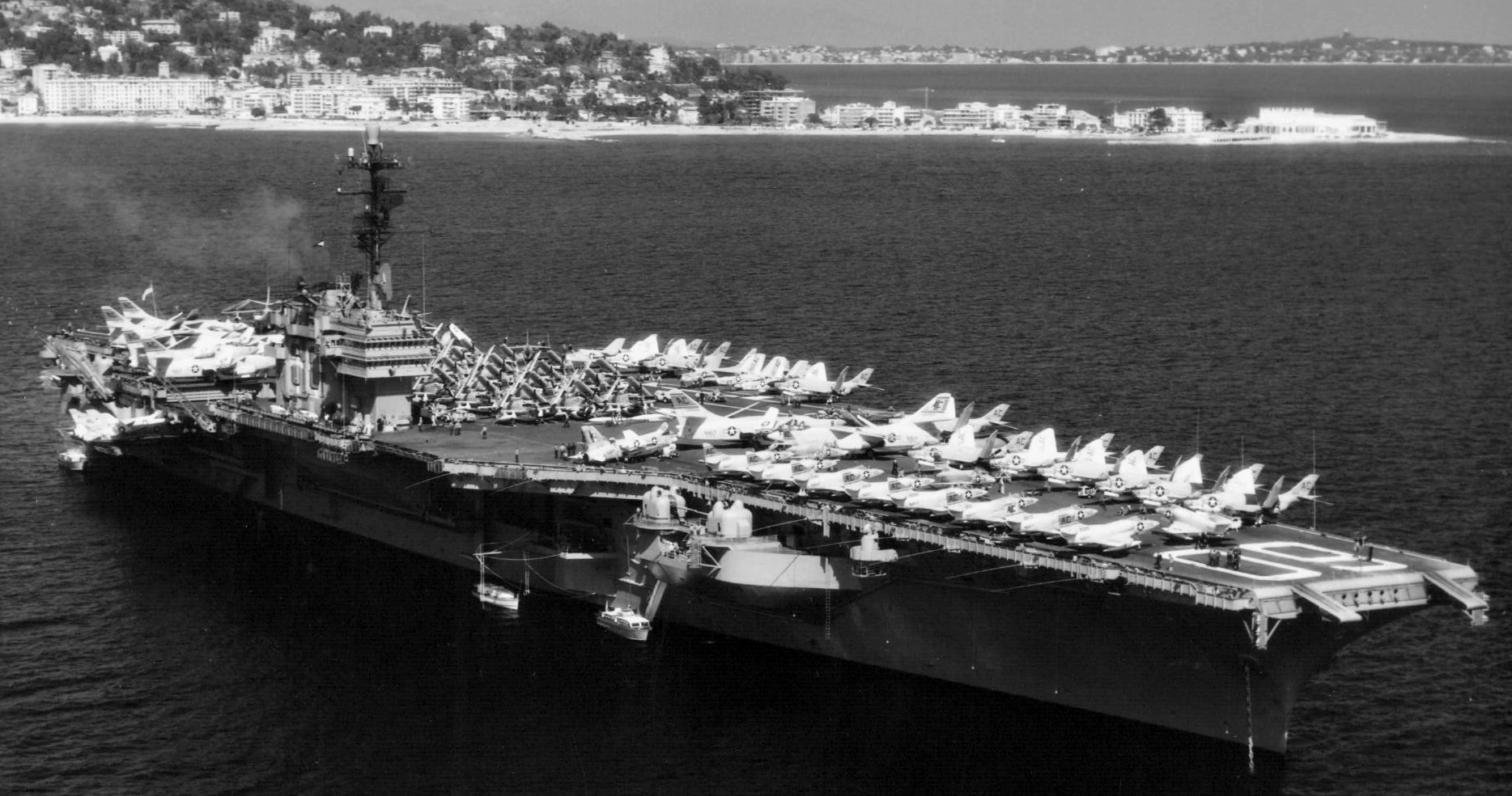 with CVG-3 embarked - Cannes, France - 1958 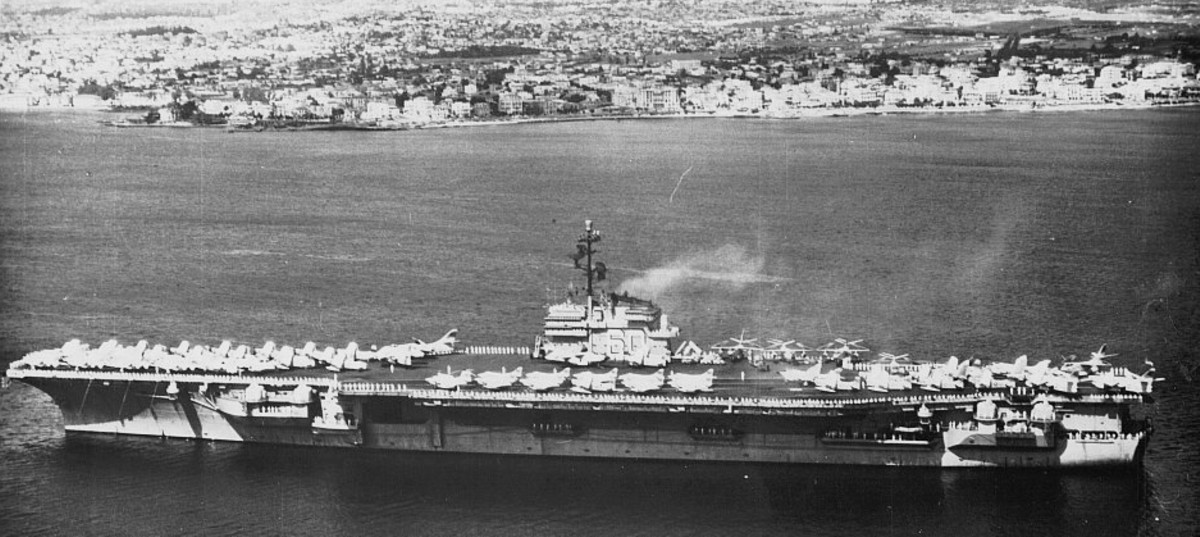 with CVG-3 embarked - Piraeus, Greece - May 1958 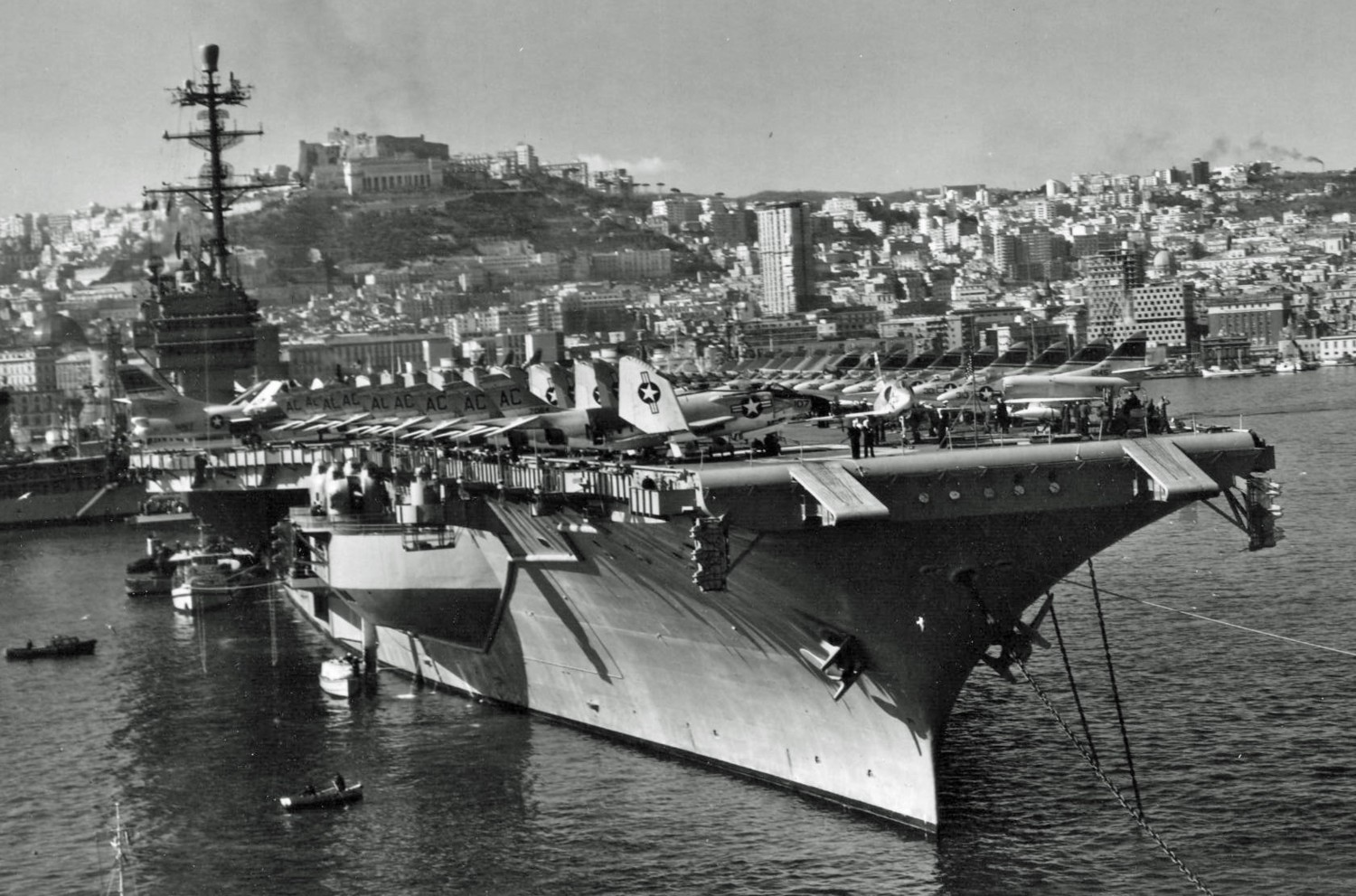 with CVG-3 embarked - 1958 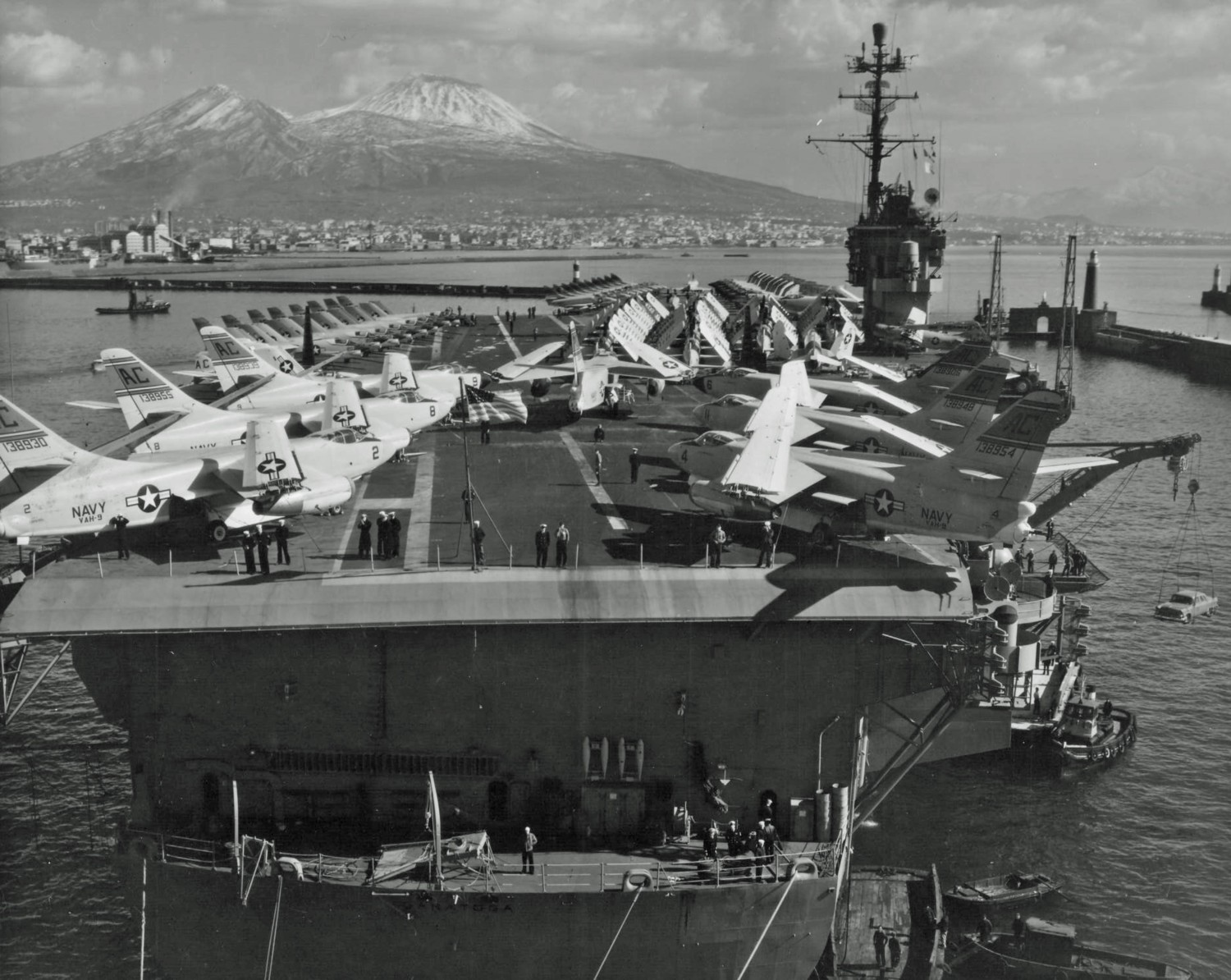 with CVG-3 embarked - Naples, Italy - 1958 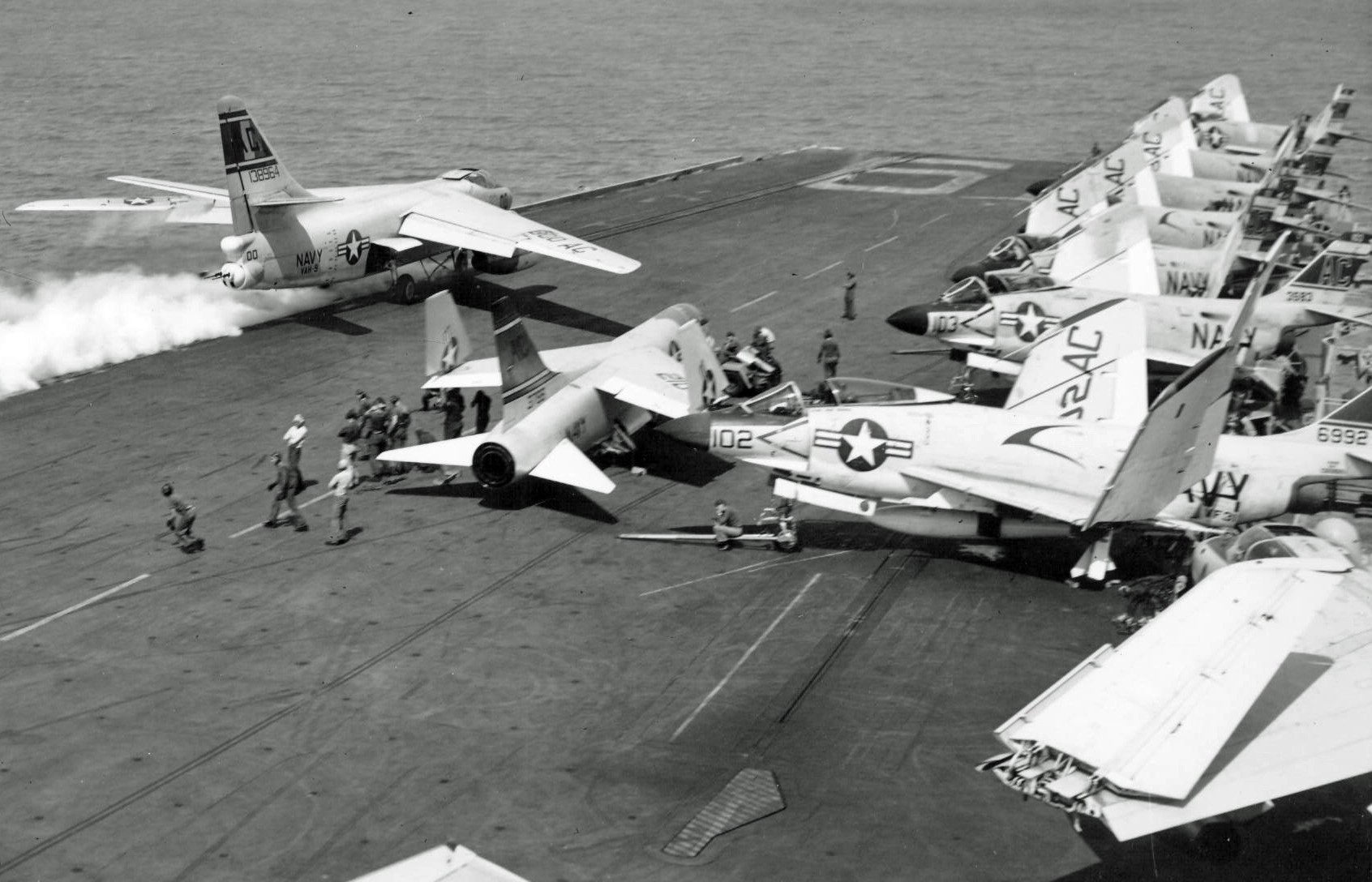 with CVG-3 embarked - May 1958 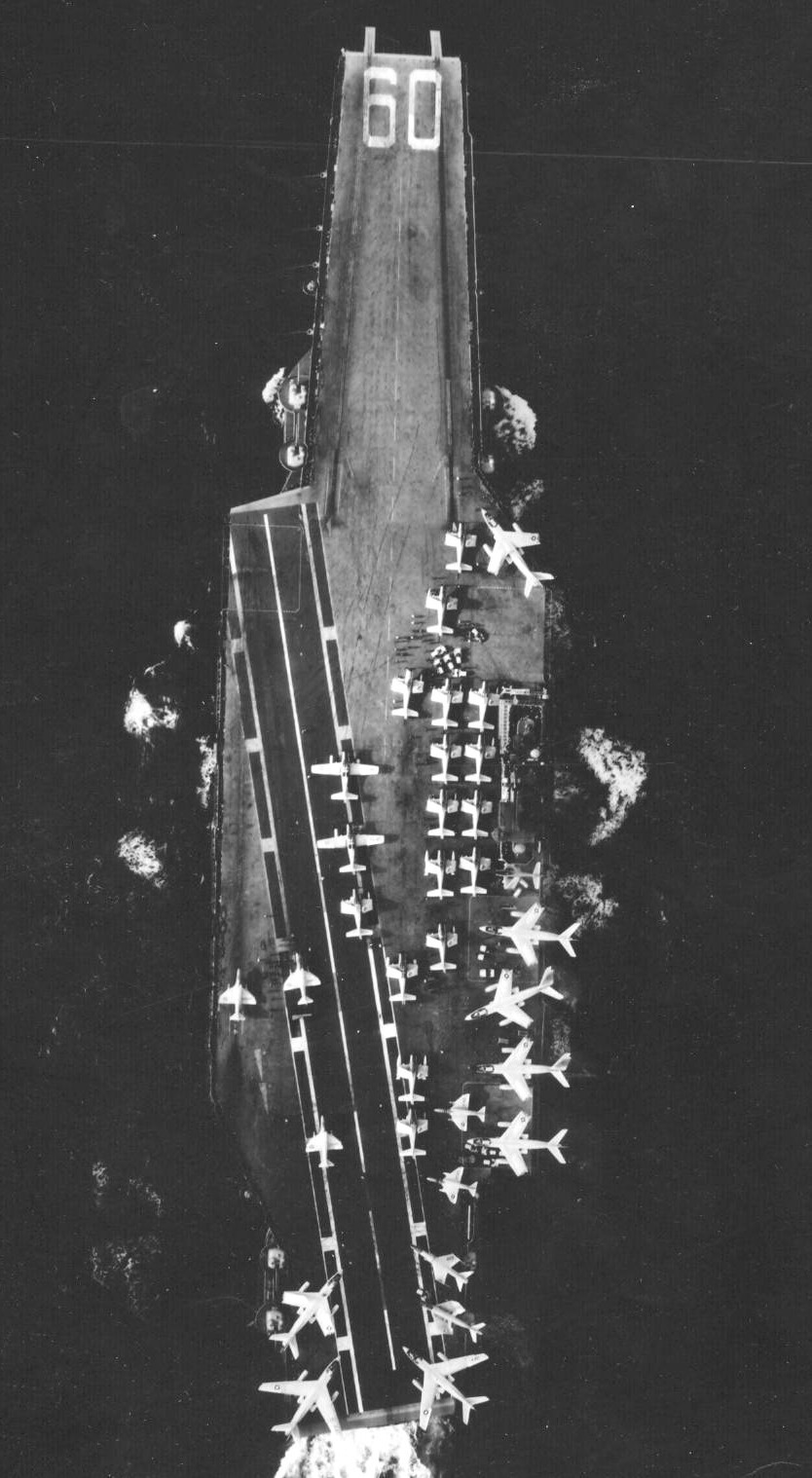 with CVG-3 embarked - 1958 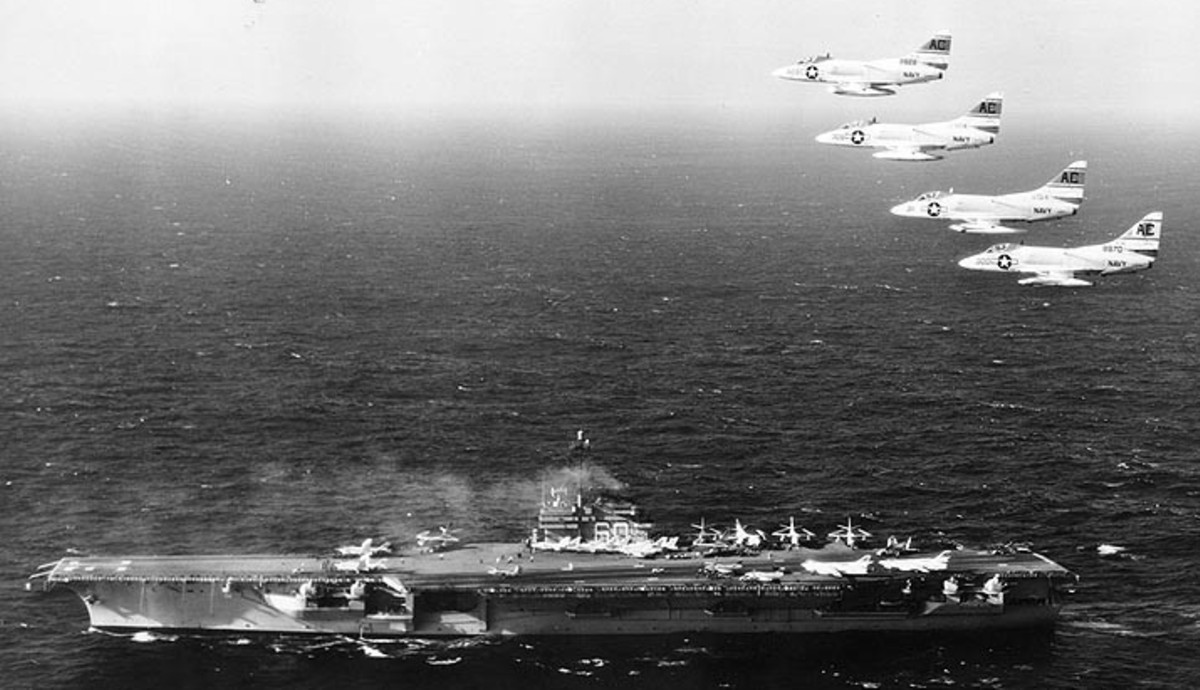 with CVG-3 embarked - February 1958 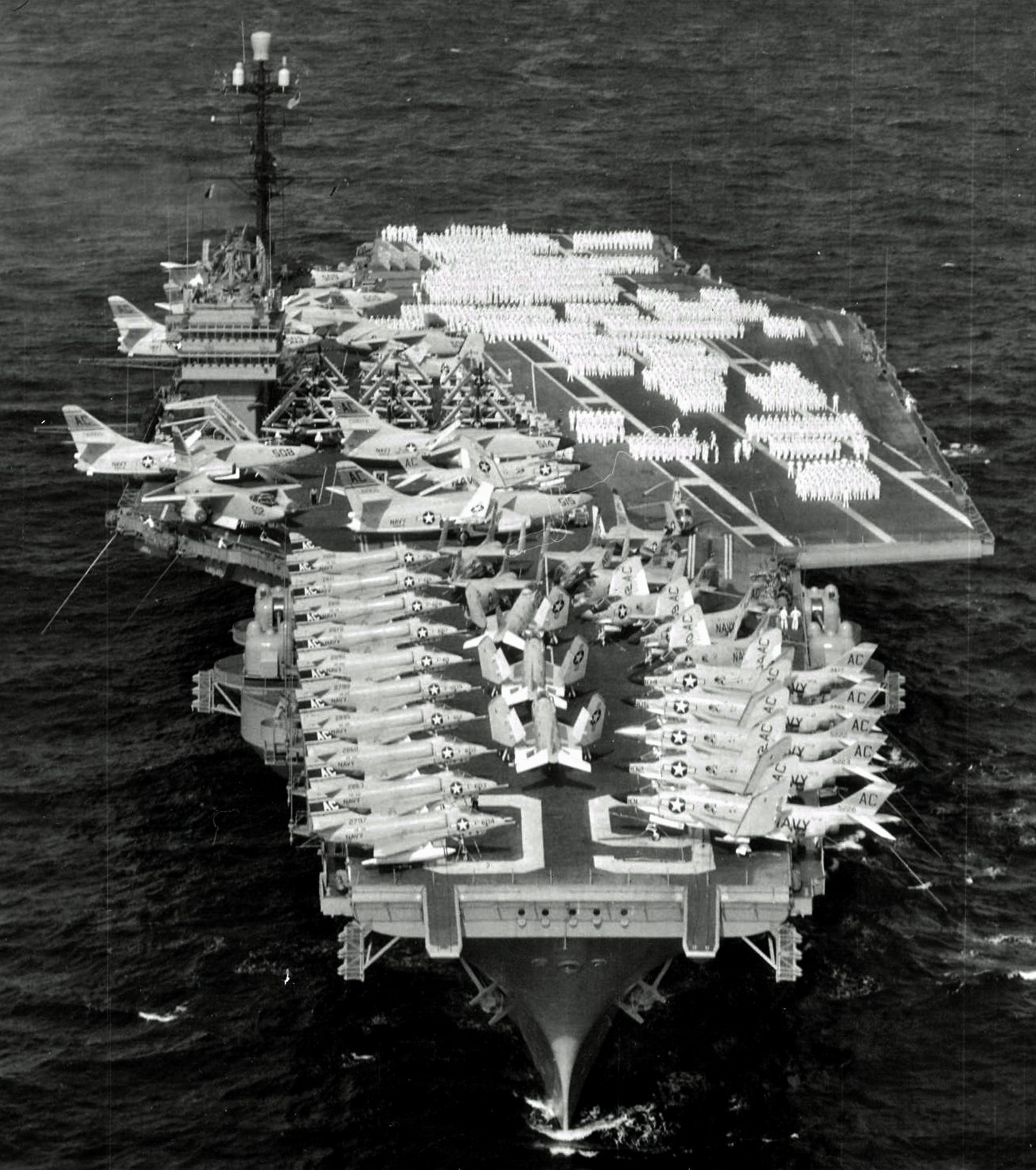 with CVG-3 embarked - 1958 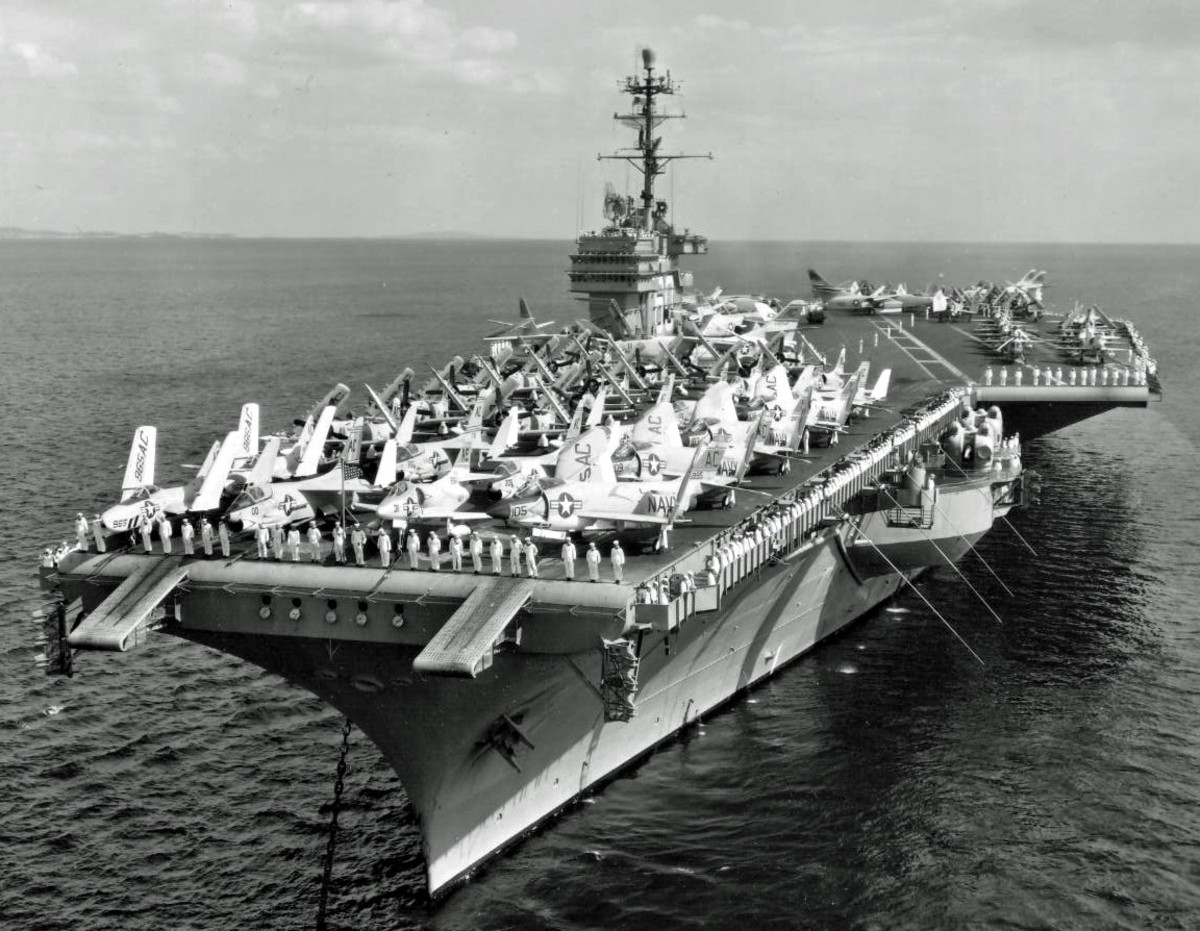 with CVG-3 embarked - 1958 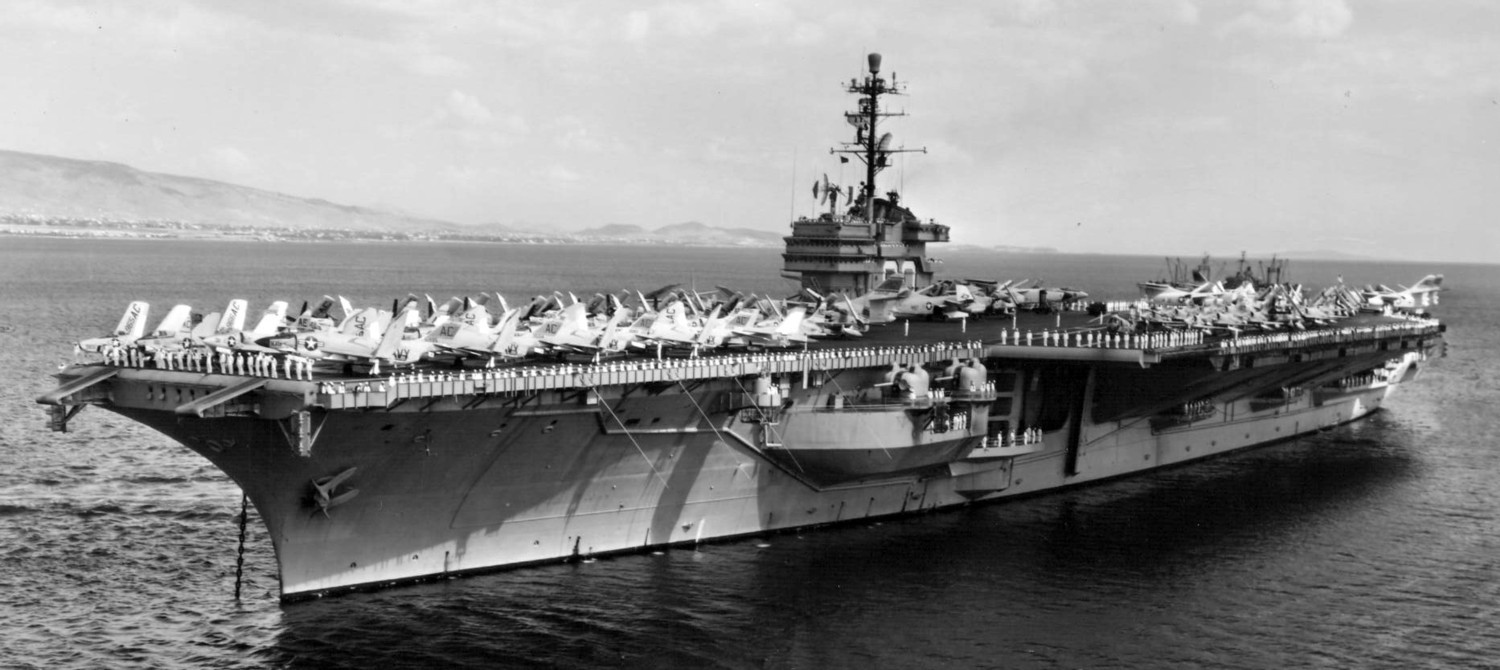 with CVG-3 embarked - 1958 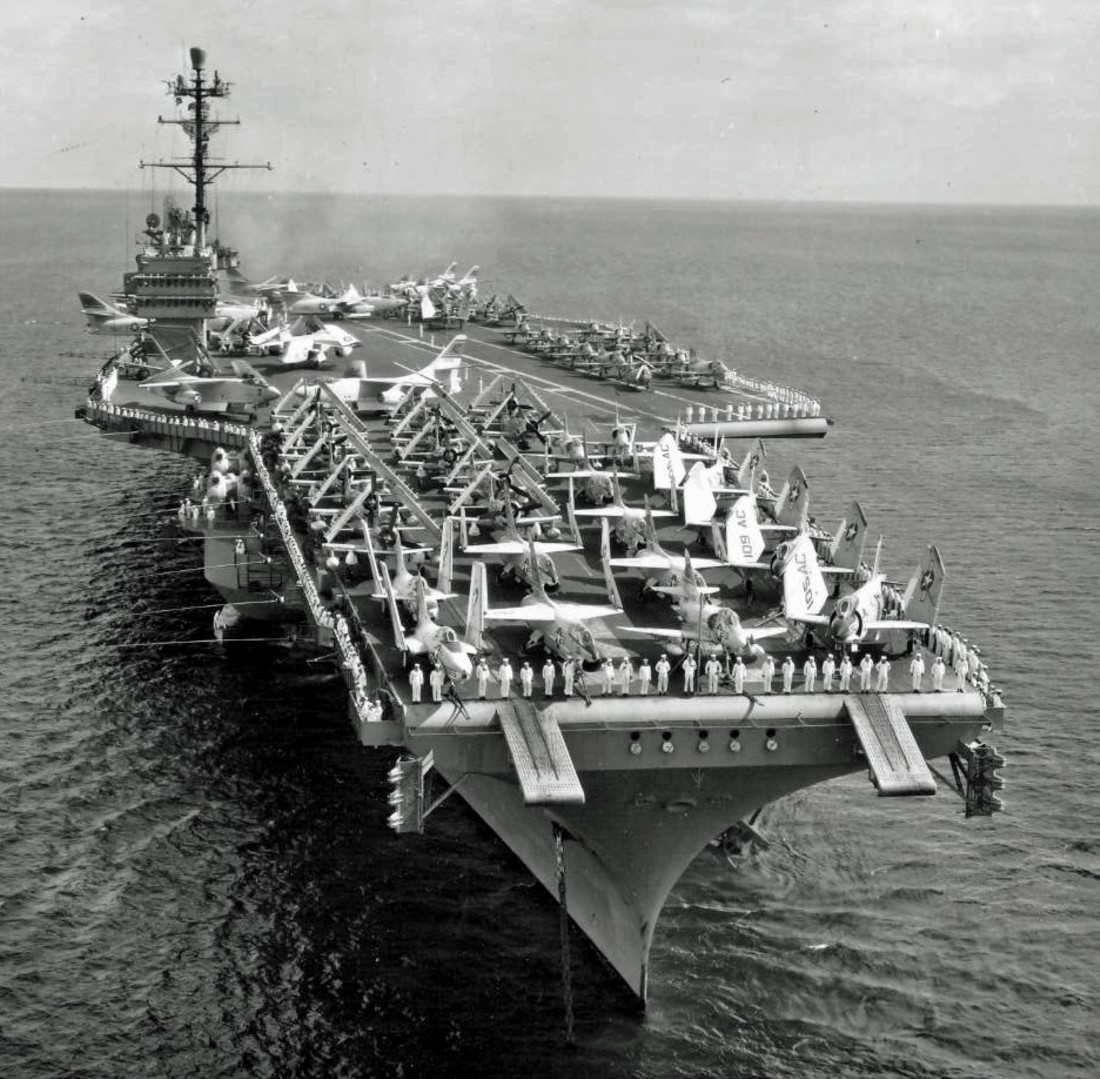 with CVG-3 embarked - 1958 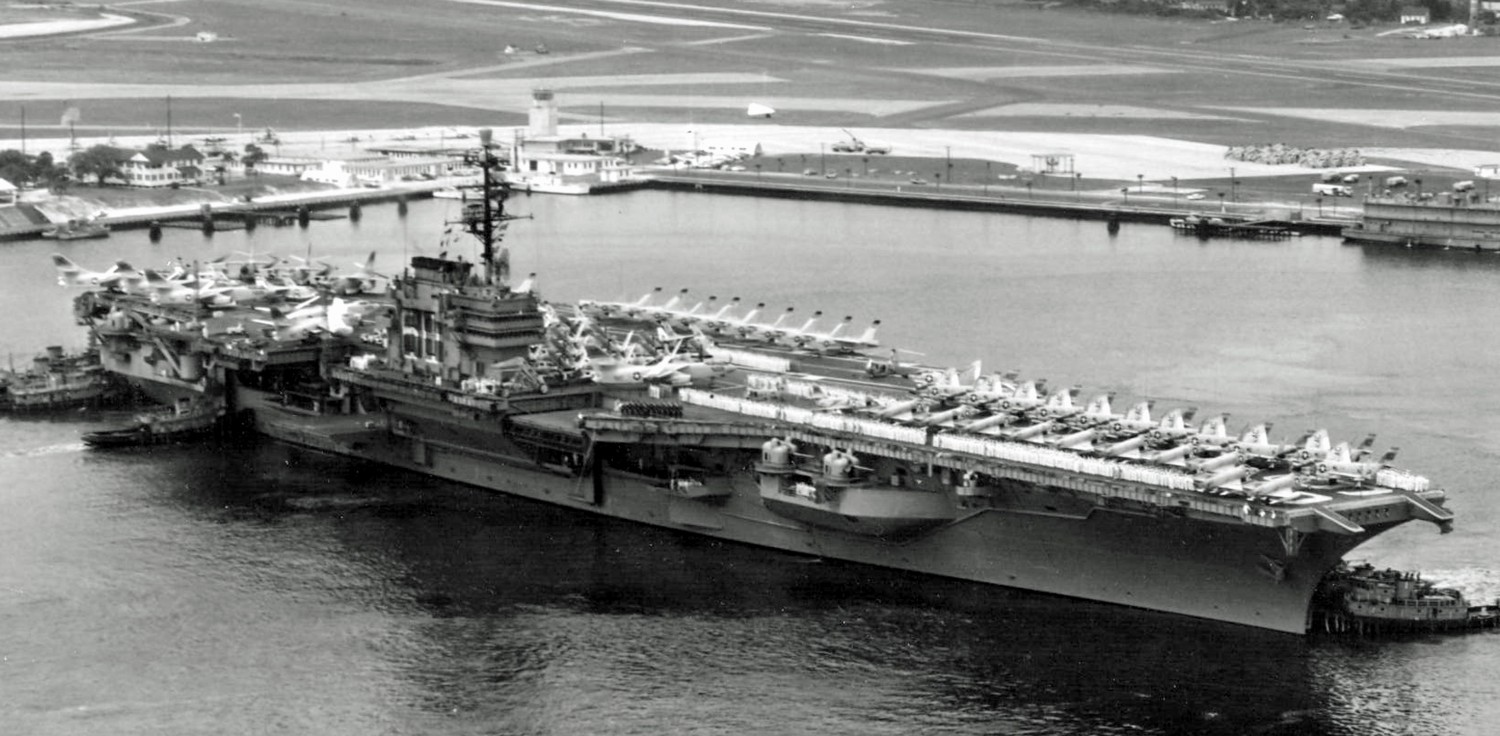 with CVG-3 embarked - Naval Station Mayport, Florida - 1958 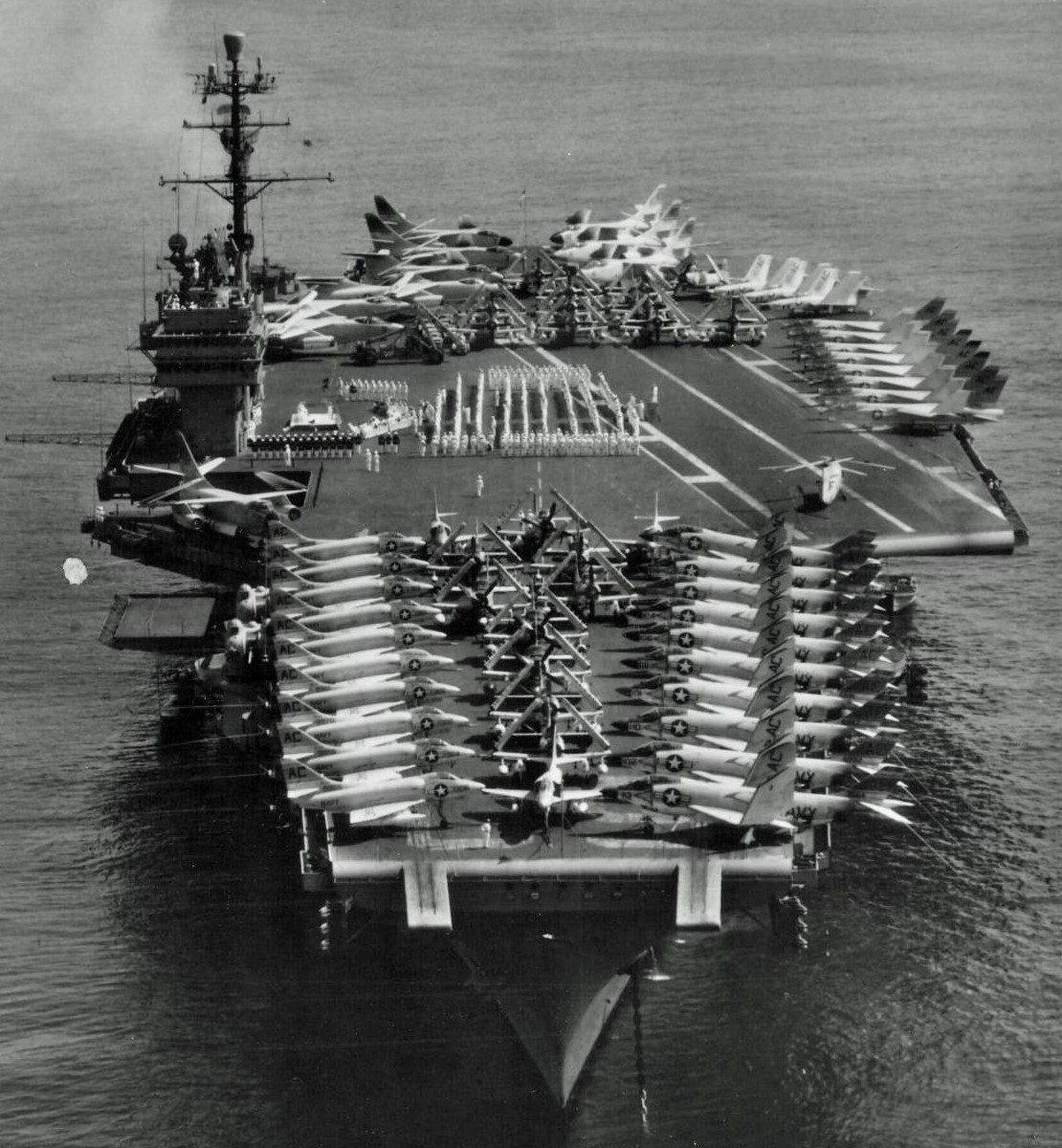 with CVG-3 embarked - 1957/58 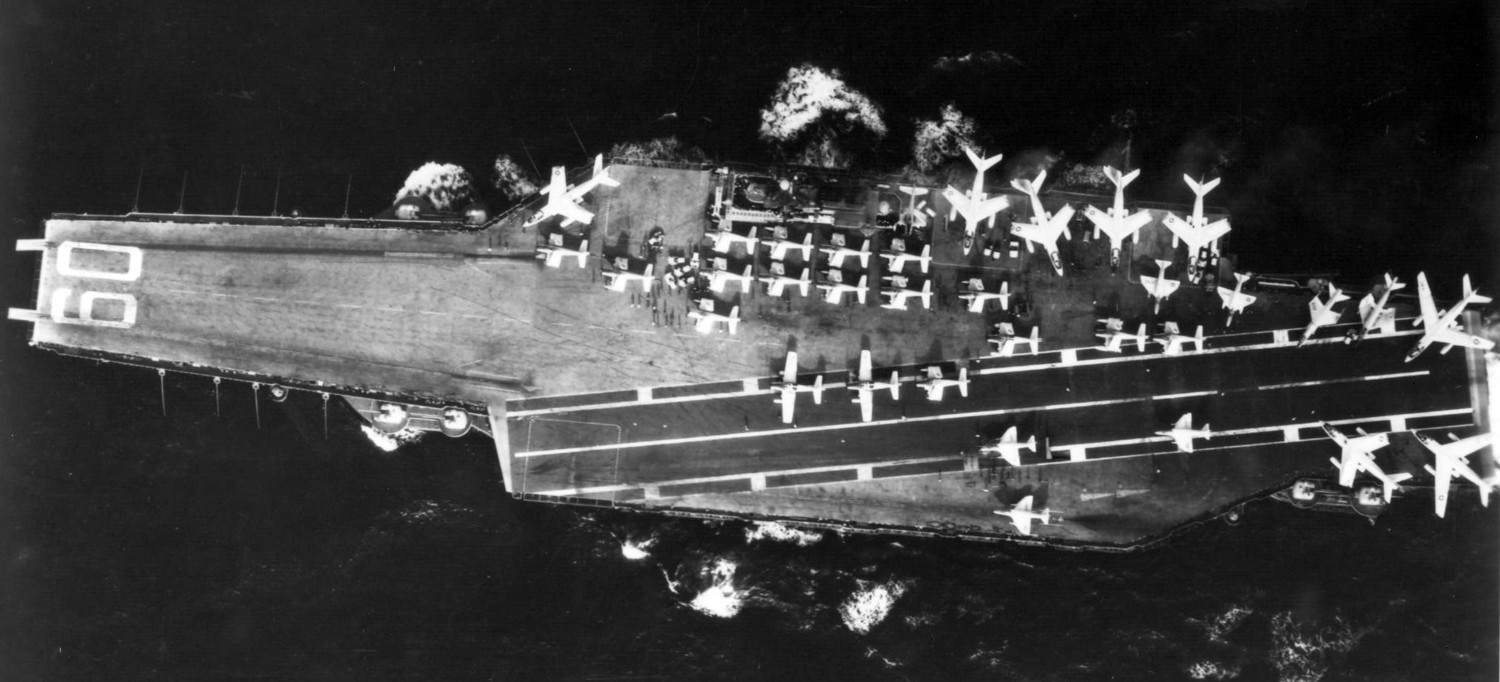 with CVG-7 embarked - 1957 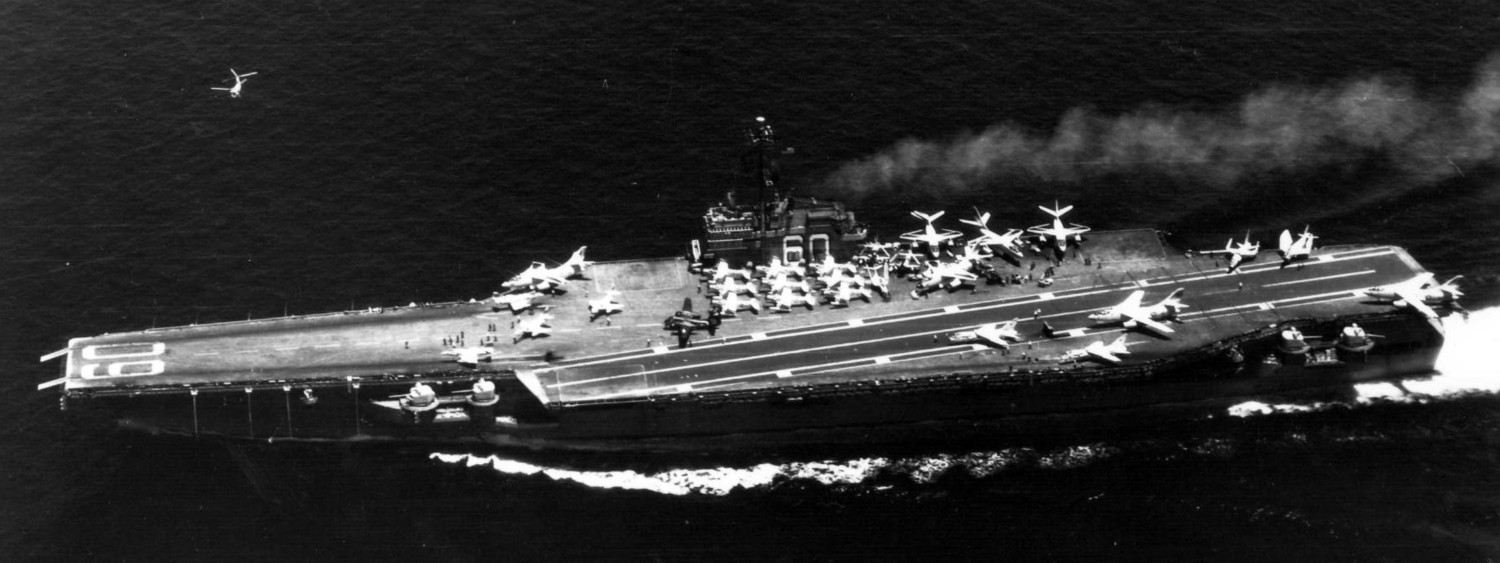 with CVG-7 embarked - 1957 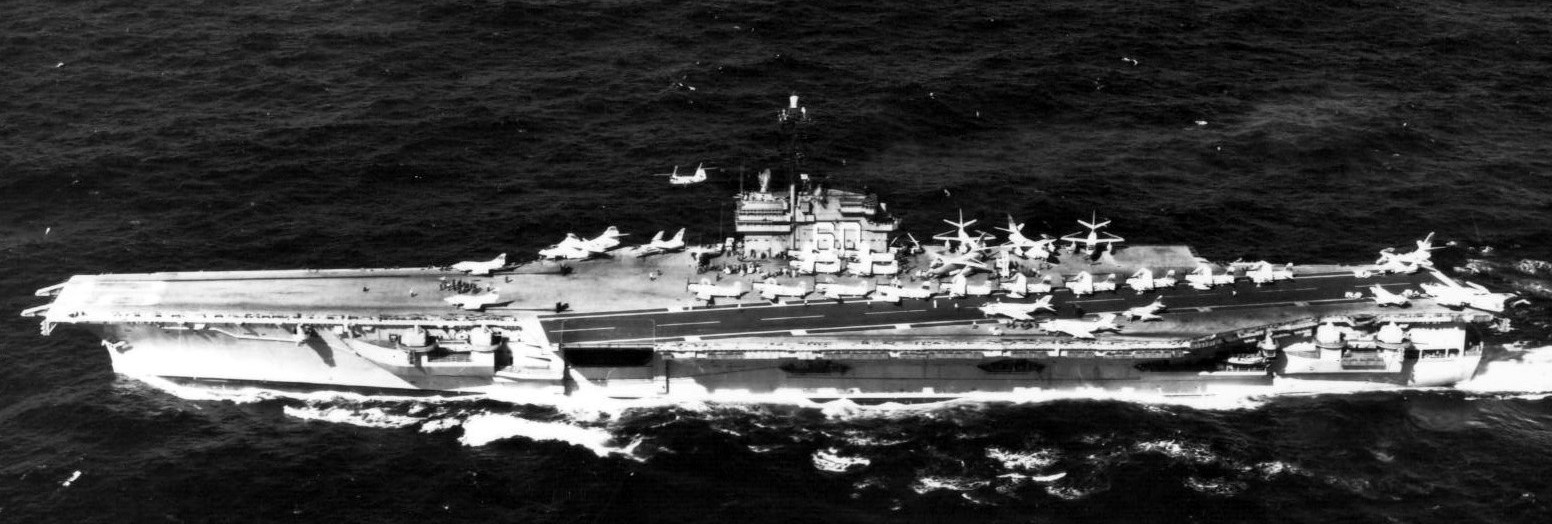 with CVG-7 embarked - 1957 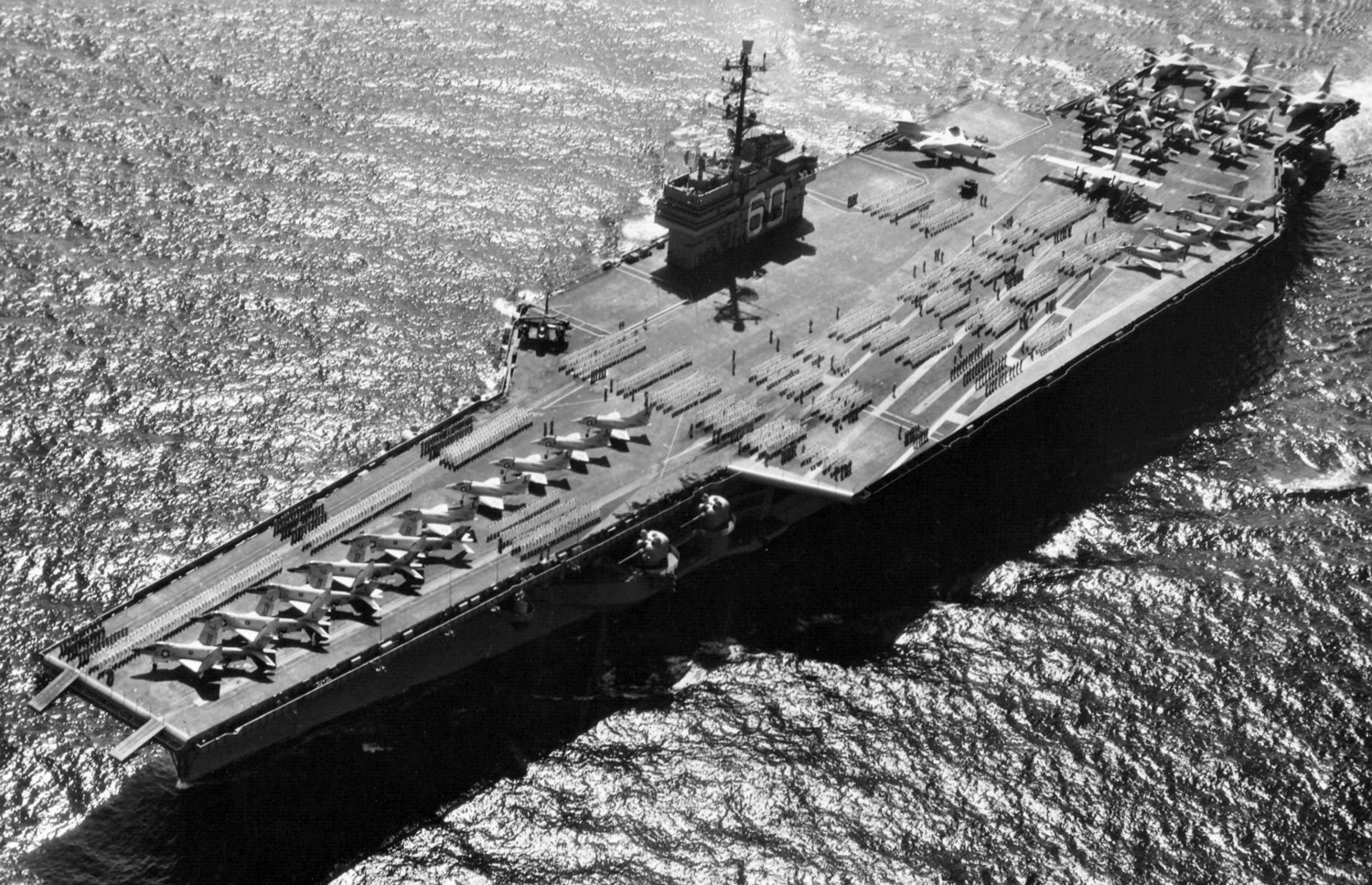 with CVG-7 embarked - 1957 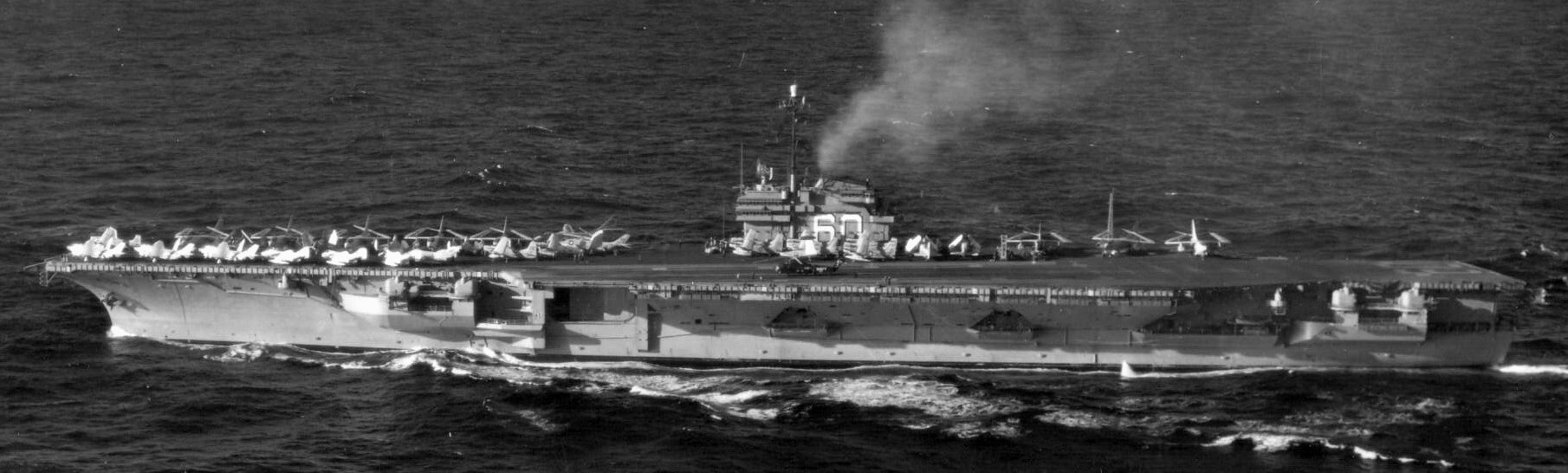 with CVG-7 embarked - NATO exercise/operation Strike Back - Northern Atlantic Ocean - September/October 1957 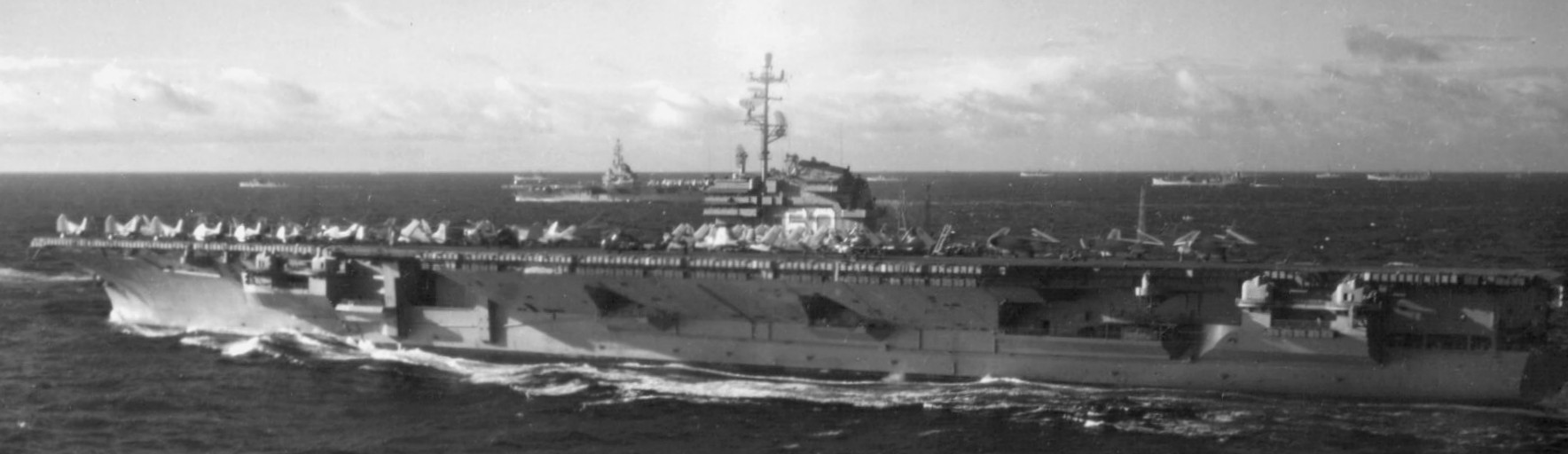 with CVG-7 embarked - NATO exercise/operation Strike Back - Northern Atlantic Ocean - September/October 1957 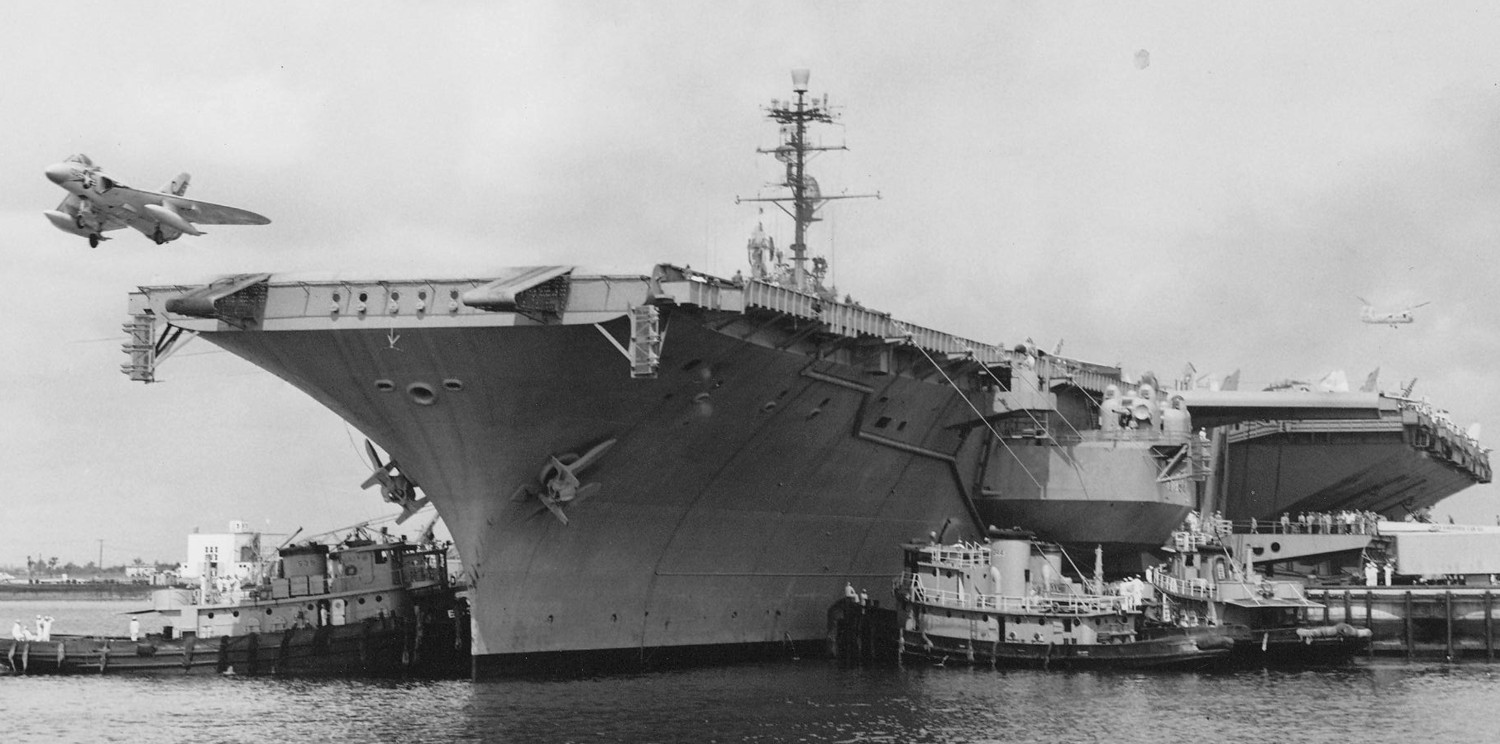 F3H-2 Demon launch - 1957 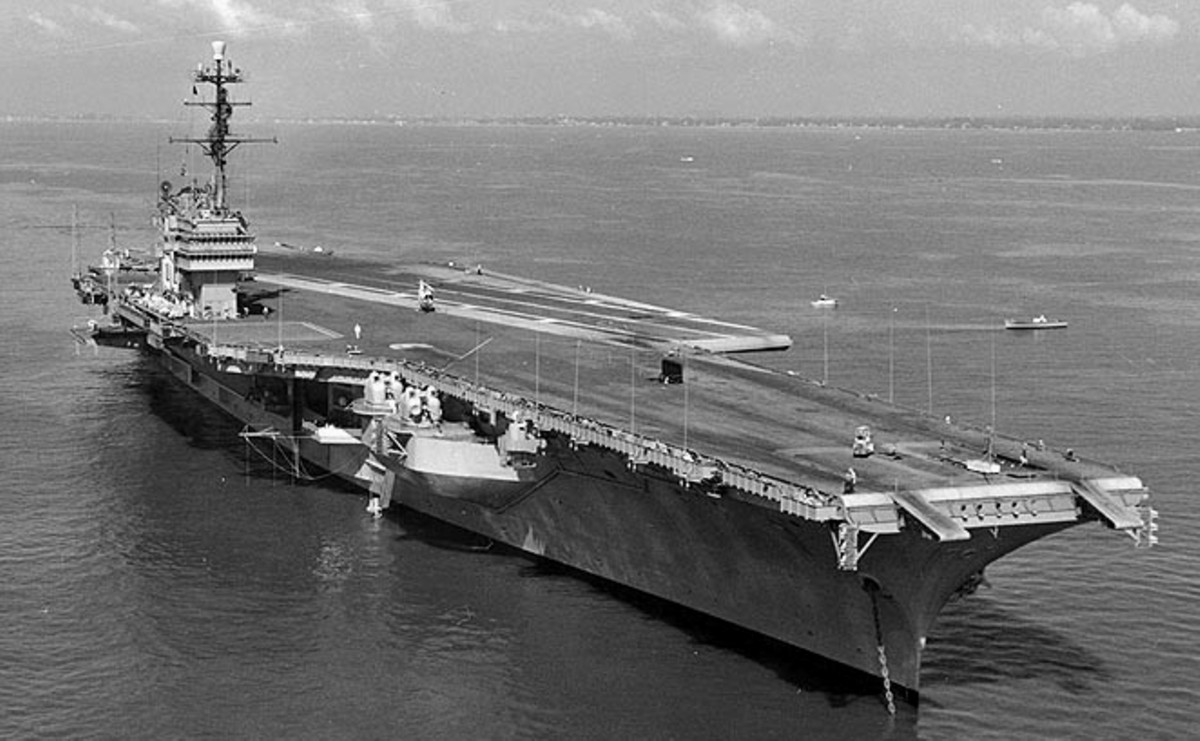 International Naval Review - off Virginia - June 1957 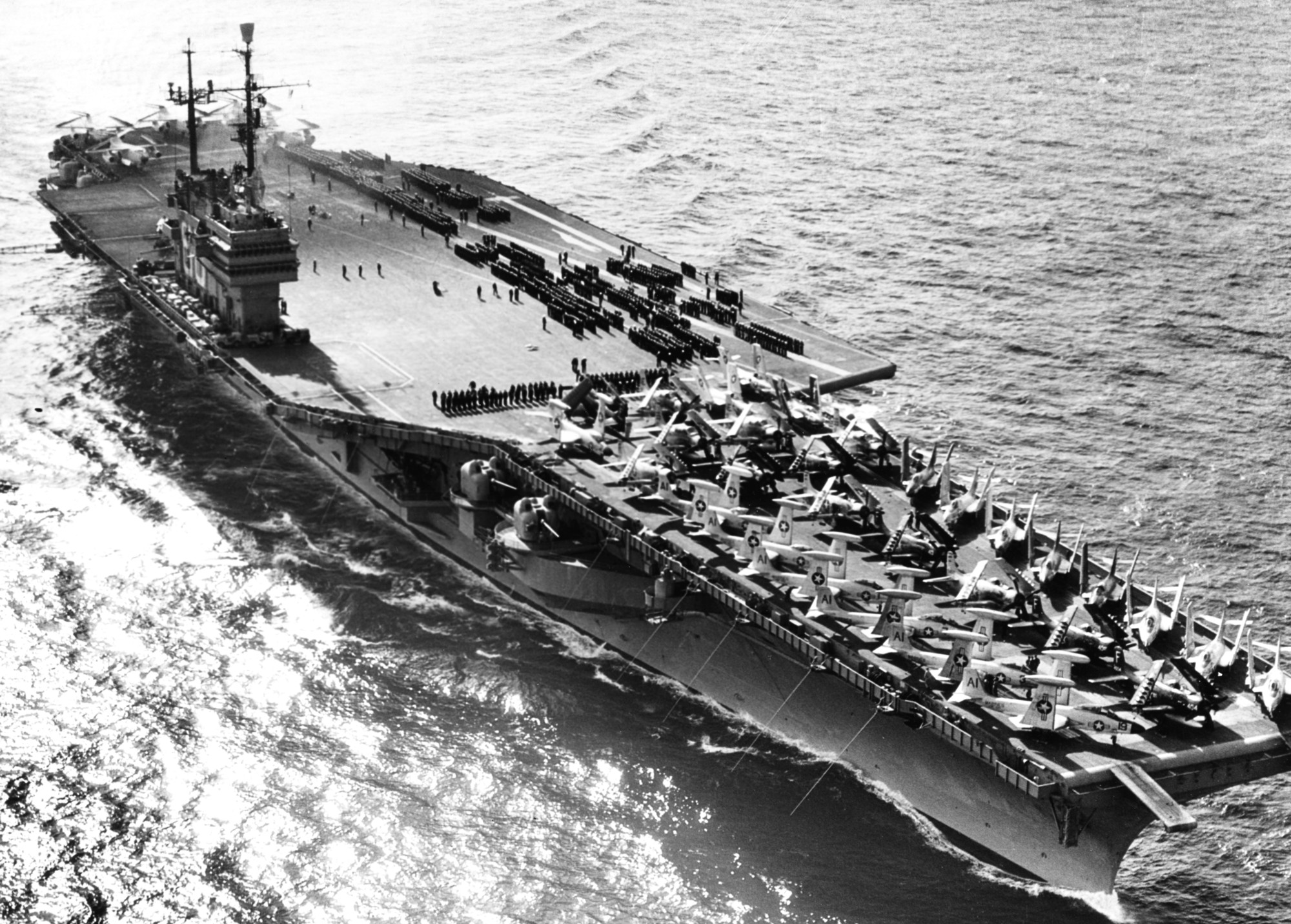 with CVG-4 embarked - shakedown cruise - Atlantic Ocean - October 1956 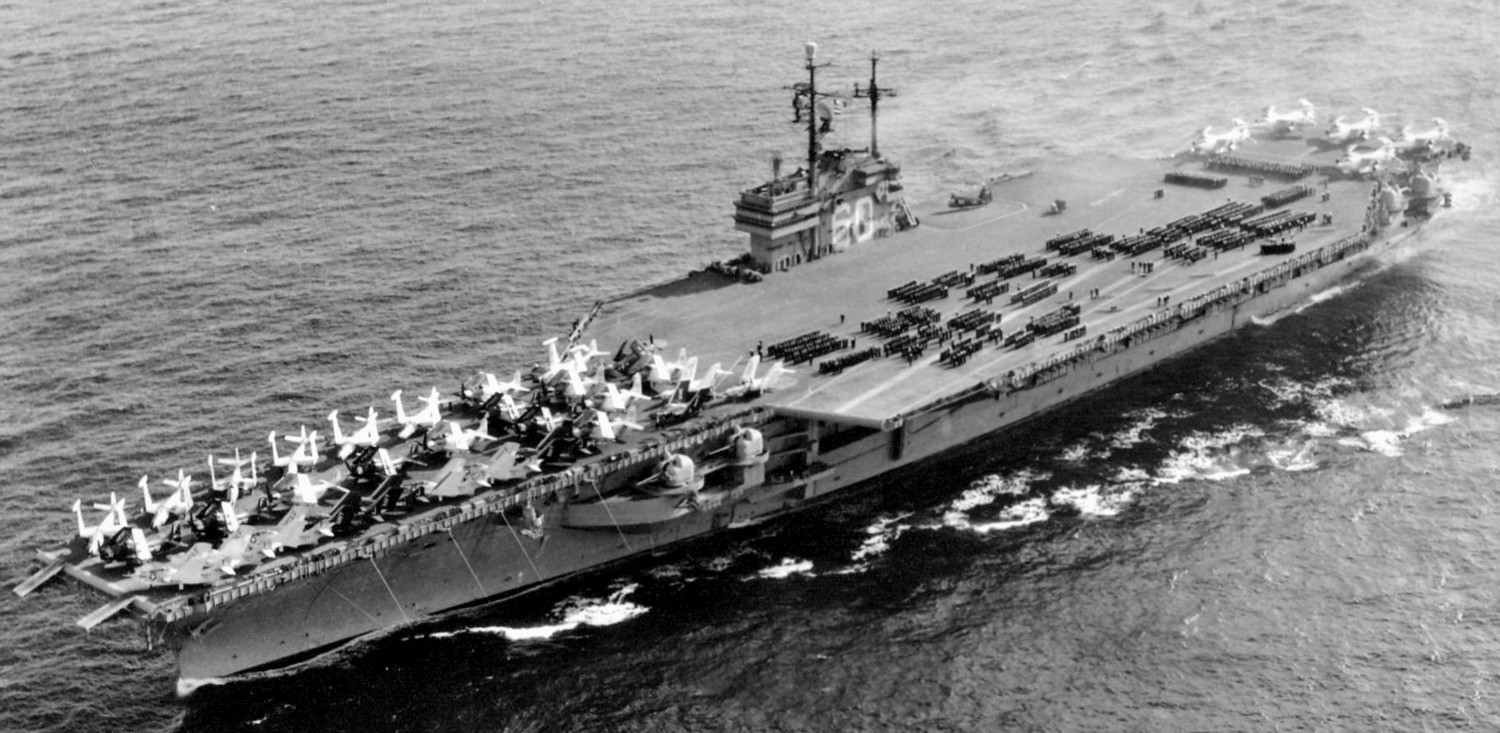 with CVG-4 embarked - shakedown cruise - Atlantic Ocean - October 1956 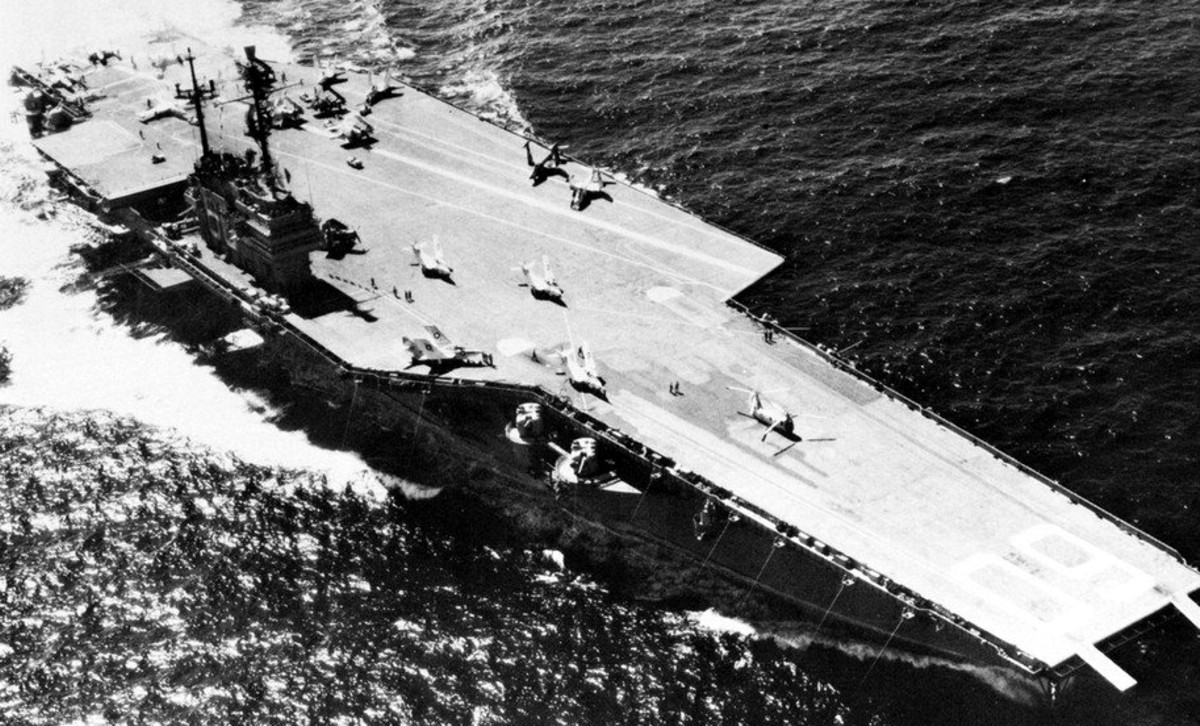 with CVG-4 embarked - shakedown cruise - Atlantic Ocean - September 1956 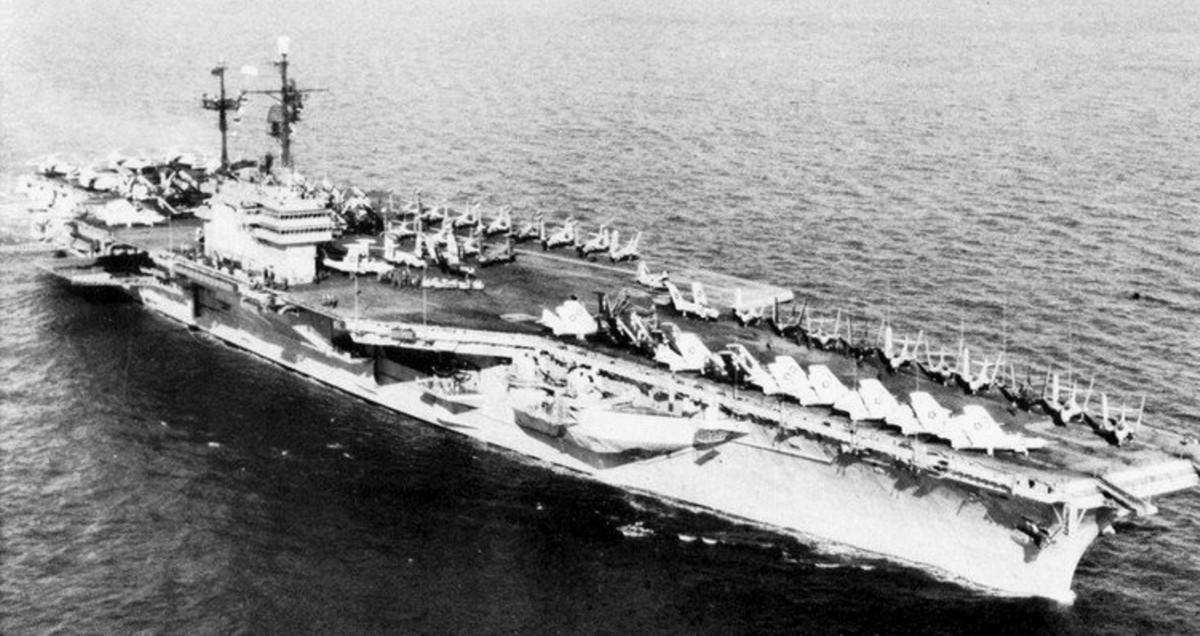 with CVG-4 embarked - shakedown cruise - Atlantic Ocean - September 1956 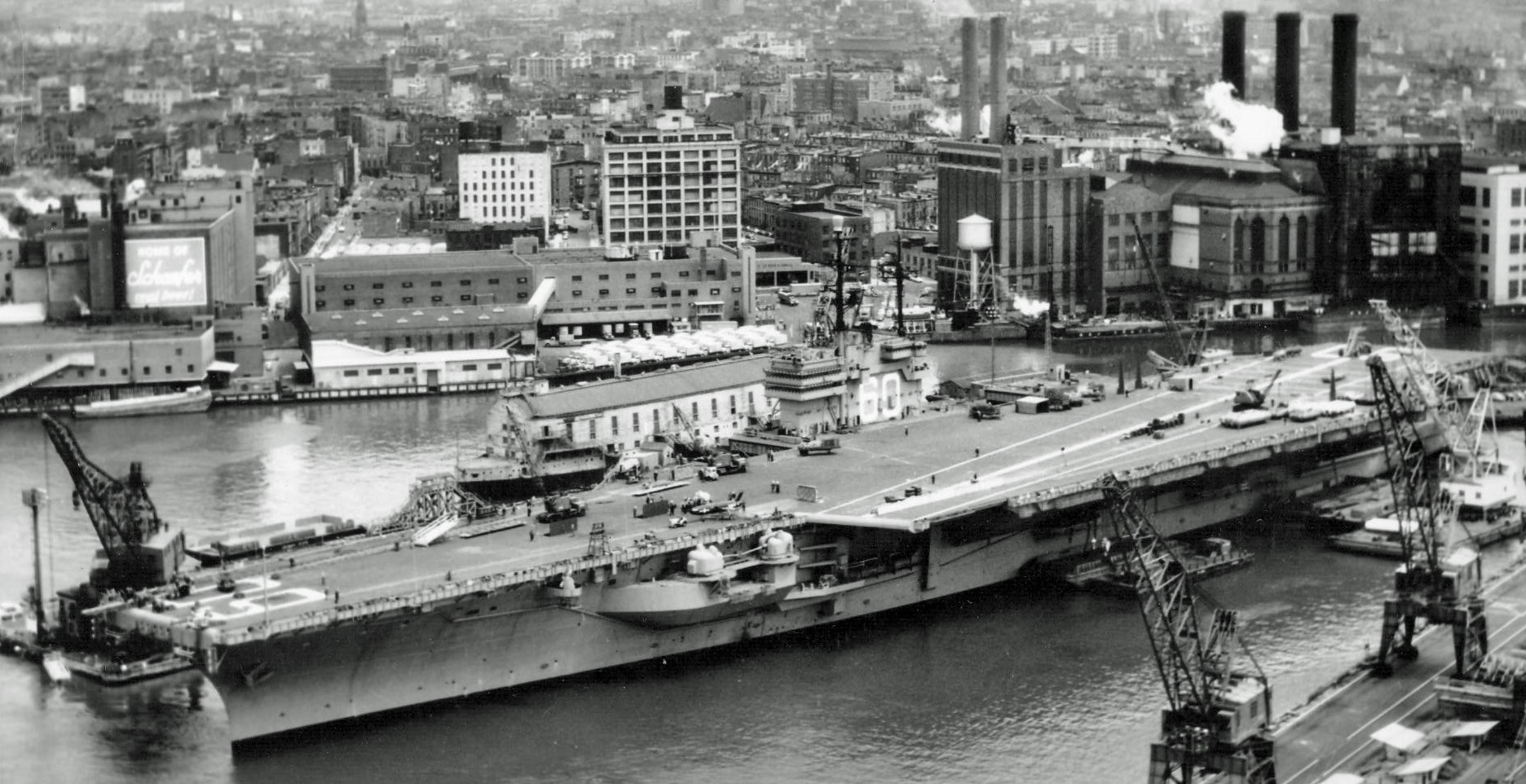 New York Naval Shipyard, Brooklyn - 1956 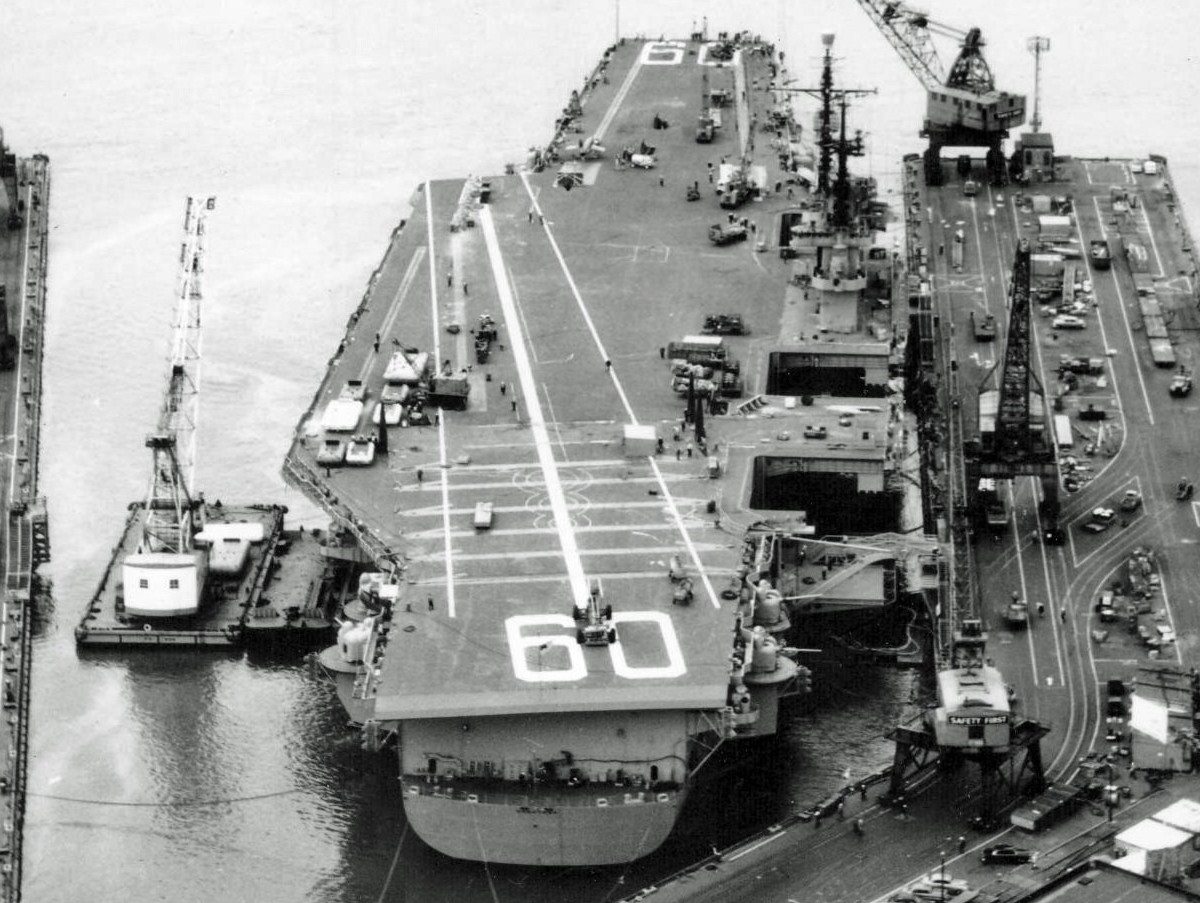 New York Naval Shipyard, Brooklyn - 1956 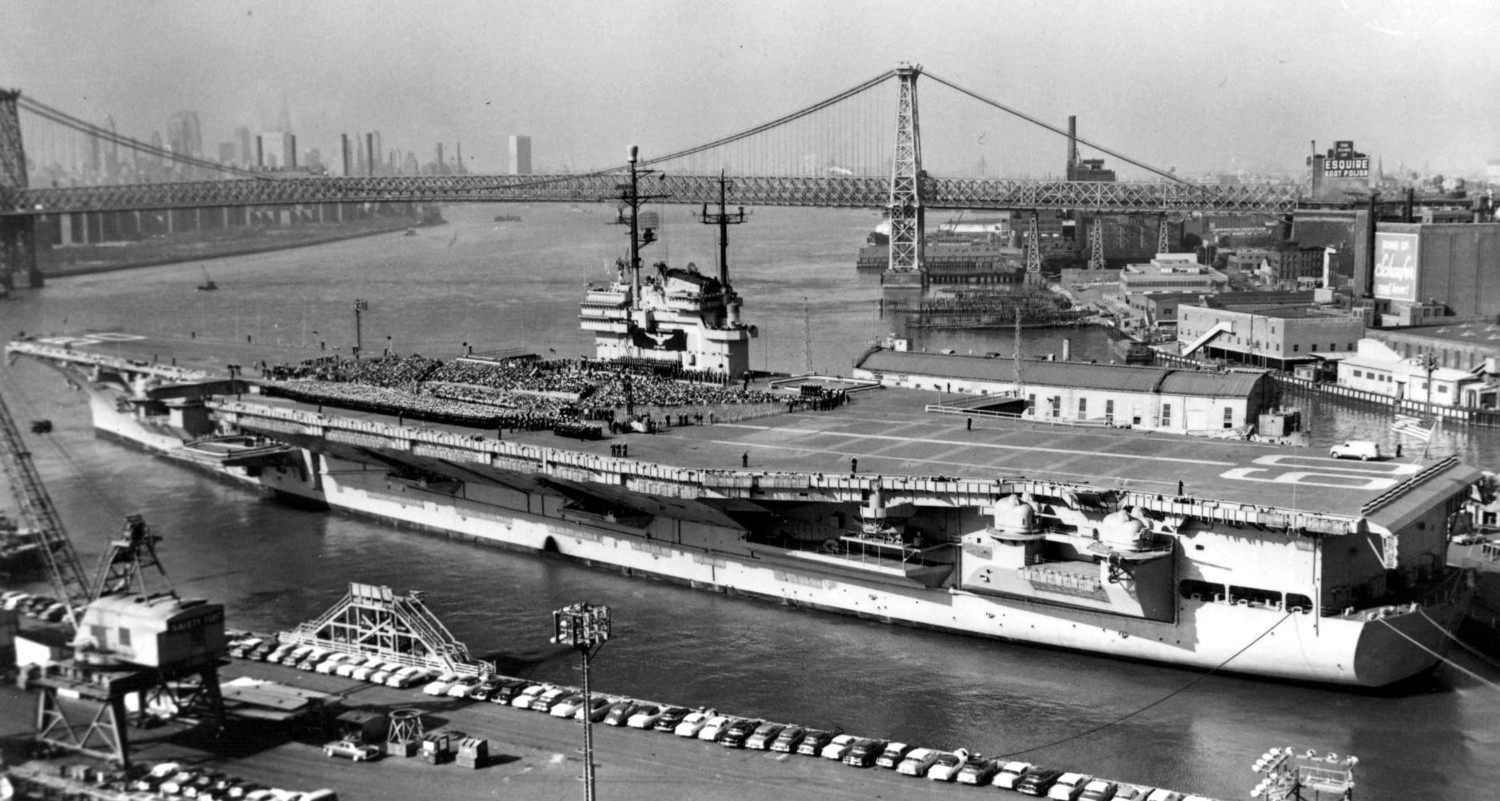 commissioning ceremony - April 14, 1956 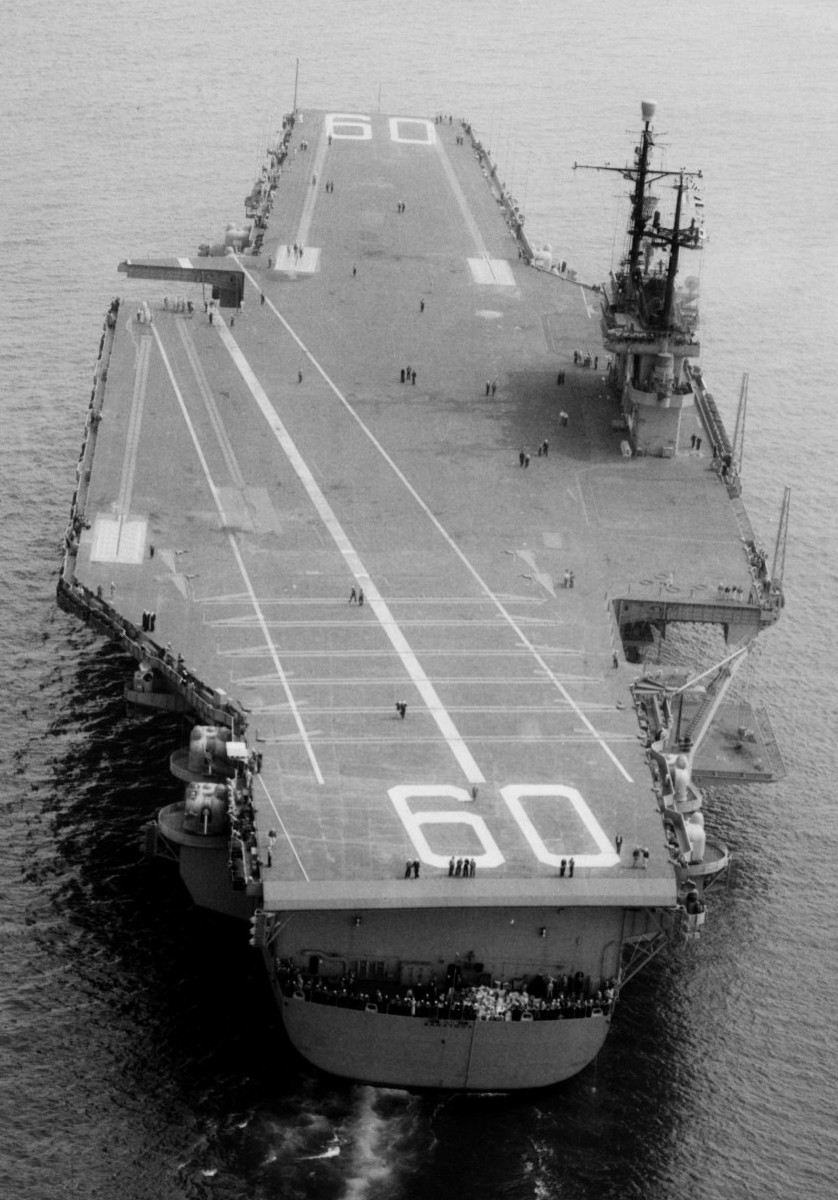 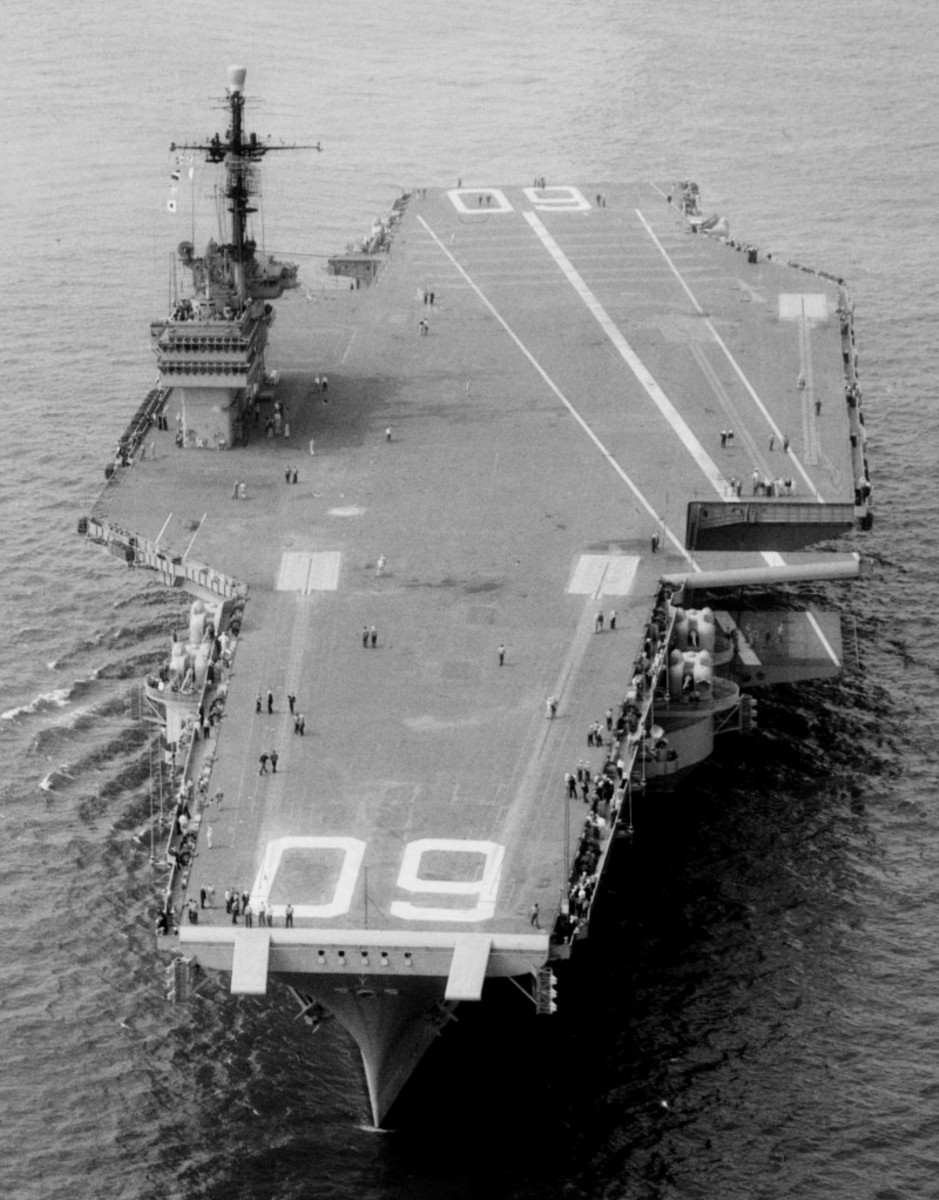 |
||
|
USS Saratoga (CVA 60 / CV 60): The fifth Saratoga (CV 60) was laid down on 16 December 1952 by the New York Naval Shipyard, New York City, N.Y.; launched on 8 October 1955; sponsored by Mrs. Charles S. Thomas; and commissioned on 14 April 1956, Capt. R. J. Stroh in command. For the next several months, Saratoga conducted various engineering, flight, steering, structural, and gunnery tests. On 18 August 1956, she sailed for Guantanamo and her shakedown cruise. On 19 December, she reentered the New York Naval Shipyard and remained there until 28 February 1957. Upon completion of yard work, she got underway on a refresher training cruise to the Caribbean before entering her home port, Mayport, Fla. On 6 June, President Dwight D. Eisenhower and members of his cabinet boarded Saratoga to observe operations on board the giant carrier. For two days, she and eighteen other ships demonstrated air operations, antisubmarine warfare, guided missile operations, and the Navy's latest bombing and strafing techniques. Highlighting the President's visit was the nonstop flight of two F8U Crusaders, spanning the nation in three hours and twenty-eight minutes, from USS Bon Homme Richard (CVA-31) on the west coast to the flight deck of the Saratoga in the Atlantic. The carrier departed Mayport on 3 September 1957 for her maiden transatlantic voyage. Saratoga sailed into the Norwegian Sea and participated in Operation Strikeback, joint naval maneuvers of the North Atlantic Treaty Organization countries . She returned briefly to Mayport before entering the Norfolk Naval Shipyard for repairs. On 1 February 1958, Saratoga departed Mayport for the Mediterranean and her first deployment with the Sixth Fleet. On 15 July 1958, while aircraft from Saratoga and USS Essex (CV 9) flew cover from long range, amphibious units landed 1,800 Marines on the beach near Beirut, Lebanon, to support the Lebanese government and to protect the lives of U.S. citizens. The situation was stabilized within a few days, without untoward incident. During her August 1959 deployment to the Mediterranean, Attack Squadron 34, flying A-4D Skyhawks and part of Saratoga's air wing, was the first squadron deployed to the Sixth Fleet equipped with Bullpup missiles. While deployed with the Sixth Fleet on 23 January 1961, a serious fire broke out in Saratoga's number two machinery space which took seven lives. The fire, believed caused by a ruptured fuel oil line, was brought under control by the crew, and the ship proceeded to Athens where a survey of the damage could be made. On 2 January 1968, Saratoga sailed for Philadelphia and an overhaul and modernization program which was to last 11 months. On 31 January, she departed Philadelphia for Guantanamo Bay, Cuba, via Hampton Roads and Mayport, for extensive refresher training of the crew and air wing. On 17 May 1968, Armed Forces Day, she was the host ship for President Richard M. Nixon during the firepower demonstration conducted by Carrier Air Wing Three in the Virginia Capes area. On 9 July, she departed Mayport for her ninth Mediterranean deployment. Underway, a Soviet surface force and a "November"-class submarine passed in close proximity, en route to Cuba. Off the Azores on 17 July 1968, Saratoga was shadowed by Kipelovo-based Soviet aircraft. They were intercepted, photographed, and escorted while in the vicinity of the carrier. She operated with Task Group 60.2 of the Sixth Fleet in the eastern Mediterranean during September in a "show of force" in response to the large build-up of Soviet surface units there, the hijacking of a Trans World Airlines plane to Syria and the political coup in Libya. Numerous surveillance and reconnaissance flights were conducted by Carrier Wing Three aircraft against Soviet surface units, including the carrier Moskva, operating southeast of Crete. Saratoga operated in this area again in October because of the crisis in Lebanon. She returned to Mayport and the Florida coast on 22 January 1969. On 24 June 1969, the first operational "hands off" arrested landing using the AN/SPN-42, Automatic Carrier Landing System (ACLS), on a carrier was performed by Lt. Dean Smith and Lt.j.g. James Sherlock of Fighter Squadron 103 when their F-4 Phantom landed aboard Saratoga. On 11 June 1970 Saratoga sailed again for duty with the Sixth Fleet. On 28 September 1970, President Richard M. Nixon and his party arrived on board. That night, word was received that Gamal Abdul Nasser, President of the United Arab Republic had died; an event that might plunge the entire Middle East into a crisis. The intelligence and communications personnel of Saratoga were required to supply the President, Joint Chiefs of Staff, and the Secretaries of State and Defense with the essential intelligence information to keep them abreast of the deteriorating situation. The Presidential party departed the ship the next evening, and Saratoga continued on patrol in the eastern Mediterranean until she sailed for the United States on 2 November. From her arrival at Mayport until 10 March 1971, she was in a "cold iron" status. She then operated off the Florida coast until 7 June when she departed for her eleventh deployment with the Sixth Fleet, via Scotland and the North Sea where she participated in Exercise Magic Sword II. She returned to Mayport on 31 October for a period of restricted availability and local operations. On 11 April 1972, Saratoga sailed from Mayport en route to Subic Bay, P.I., and her first deployment to the western Pacific. She arrived in Subic Bay on 8 May and departed for Vietnam the following week, arriving at "Yankee Station" on 18 May for her first period on the line. Before year's end, she was on station in the Tonkin Gulf a total of seven times: 18 May to 21 June; 1 to 16 July; 28 July to 22 August; 2 to 19 September, 29 September to 21 October; 5 November to 8 December; and 18 to 31 December. During the first period, Saratoga lost four aircraft and three pilots. On the plus side, on 21 June 1972, two of her F-4 Phantoms from VF-31 attacked three MiG 21s over North Vietnam. Dodging four surface to air missiles, one of the F-4s, piloted by Cmdr. Samuel C. Flynn Jr., with radar intercept officer Lt. William H. John, shot down one of the MiG aircraft. This Phantom, Bureau number 157307, was later transferred to the Smithsonian's National Air and Space Museum. The aircraft was transferred upon its arrival at Dulles International Airport on 29 November 1988. Saratoga's planes attacked targets ranging from enemy troop concentrations in the lower panhandle to petroleum storage areas northeast of Hanoi. On her second line period, she lost an F-4 to enemy fire northeast of Hanoi with the pilot and radar intercept officer missing in action. During this period, her aircraft flew 708 missions against the enemy. On 6 August 1972, Lt. Jim Lloyd, flying an A-7 on a bombing mission near Vinh, had his plane shot out from under him by a SAM. He ejected into enemy territory at night. In a daring rescue by helicopters supported by CVW-3 aircraft the following day, he was lifted from the midst of enemy soldiers and returned to Saratoga. It was the deepest penetration by U.S. helicopters into enemy territory since 1968. On 10 August 1972, one of the ship's CAP jet fighters splashed a MiG at night using Sparrow missiles. During the period 2 to 19 September, Saratoga aircraft flew over 800 combat strike missions against targets in North Vietnam. On 20 October, her aircraft flew 83 close air support sorties in six hours in support of a force of 250 Territorials beleaguered by the North Vietnamese 48th Regiment. Air support saved the small force, enabled ARVN troops to advance, and killed 102 North Vietnamese soldiers. During her last period on station, Saratoga's aircraft battered targets in the heart of North Vietnam for over a week. Saratoga departed "Yankee Station" for Subic Bay on 7 January 1973. From there she sailed for the United States, via Singapore and arrived at Mayport on 13 February 1973. On 21 January 1975, Saratoga, on a Mediterranean deployment, was released from a response alert for possible evacuation of U.S. citizens from Cyprus during a period of strife on that island. In March of 1980, Saratoga and embarked airwing CVW-17 departed on their 16th Mediterranean deployment. Highlights of the deployment included major exercises with the USS Forrestal (CV 59) battle group, and visits by the Chief of Naval Operations, Adm. Thomas B. Hayward, and Master Chief Petty Officer of the Navy Thomas C. Crow. Then-commanding officer, Capt. James H. Flatley III, made naval aviation history on 21 June 1980 when he completed his 1,500th carrier arrested landing. To make the event special, Midshipman James H. Flatley IV, the Captain's son, rode in the back seat. On 28 September 1980, only one month after her return from deployment, Saratoga departed Mayport and headed north to the Philadelphia Naval Shipyard where she underwent the most extensive industrial overhaul ever performed on any Navy ship. Saratoga was the first ship to go through the Service Life Extension Program (SLEP) overhaul that would last 28 months. She conducted sea trials on 16 October 1982, and left Philadelphia with much fanfare on 2 February 1983 with her new nickname - "Super Sara." Saratoga departed the Mayport Basin yet again for her 17th Mediterranean deployment on 2 April 1984. Saratoga's 18th deployment was anything but ordinary. After departing Mayport in August 1985, Saratoga steamed toward the Mediterranean for what was scheduled to be a routine deployment. But on 10 October, Saratoga was called into action. Arab terrorists had found and struck an Italian luxury liner, Achille Lauro. The ship had just departed Alexandria, Egypt, on a pleasure cruise of the Mediterranean. A few hours later, terrorists from the Palestinian Liberation Front hijacked the ship. After tense negotiations and the killing of an American tourist, the hijackers traveled in a battered tugboat to the city of Port Said, Egypt, after Achille Lauro anchored just off the coast. Egyptian authorities made hasty arrangements for the terrorists to depart the country. They boarded an Egypt Air 737 jumbojet at the Al Maza Air Base, northeast of Cairo. On orders from President Ronald Reagan, seven F-14 Tomcats from the VF-74 "Bedevilers" and VF-103 "Sluggers" were launched from Saratoga. Supporting the Tomcats continuously were VA-85 KA-6D air tankers and VAW-125 E-2C Hawkeye aircraft. Off the coast of Crete, the F-14s, without the use of running lights, eased up beside and behind the airliner. On command, the Tomcats turned on their lights and dipped their wings - an international signal for a forced landing. The E-2C Hawkeye radioed the airliner to follow the F-14s. Realizing they were in a "no-win" situation, the hijackers allowed the pilot to follow the Tomcats to Naval Air Station, Sigonella, Italy. One hour and 15 minutes later, the jumbo jet landed and the hijackers were taken into custody. Seven hours after the fighter jets were scrambled, all Saratoga aircraft returned home without a shot fired. On 23 March 1986, while operating off coast of Libya, aircraft from the Saratoga, USS Coral Sea (CV 43) and USS America (CV 66) crossed what Libyan strongman Mohammar Khadafi had called the "Line of Death." The very next day at noon, three U.S. Navy warships crossed the same 32° 30' navigational line. Two hours later, Libyan forces fired SA-5 surface-to-air missiles from the coastal town of Surt. The missiles missed their F-14 Tomcat targets and fell harmlessly into the water. Later that afternoon, U.S. aircraft turned back two Libyan MiG-25 fighter planes over the disputed Gulf of Sidra. Soon after, aircraft from the three super carriers fought back in defense. A heavily-armed A-6E Intruder fired Rockeye cluster bombs and a Harpoon anti-ship cruise missile at a Libyan missile patrol boat operating on the "Line of Death." Later that night, two A-7E Corsair II jets attacked a key radar installation at Surt. At the conclusion, three Libyan patrol boats and a radar site were destroyed by Navy aircraft. Following Saratoga's 19th Mediterranean deployment in June 1987, she was overhauled once again at the Norfolk Naval Shipyard at a cost of $280 million. Saratoga departed Mayport for her 20th deployment on 7 August 1990, just days after Iraqi tanks invaded Kuwait. Saratoga and Carrier Air Wing 17 rapidly crossed the Atlantic, the Mediterranean and transited the Suez Canal on 22 August to take up station in the Red Sea. In the early morning hours of 17 January 1991, Operation Desert Shield became Operation Desert Storm. Aircraft from Saratoga flew against Iraq in the first step to knock out the Arab nation's military power and drive it from conquered Kuwait. CVW-17 aircraft dropped more than four million pounds of ordnance on enemy targets. However, on 17 January, Lt. Cmdr. Michael Scott Speicher, flying an F/A-18C Hornet of VFA-81 aboard Saratoga, was shot down by an Iraqi surface-to-air missile, the first U.S. casualty of the Gulf War. He was placed in an MIA status the next day. On May 22, 1991, following a Secretary of the Navy status review board that found "no credible evidence" to suggest he had survived the shootdown, his status was changed to Killed in Action/Body Not Recovered (KIA/BNR). On 11 January 2001, Secretary of the Navy Richard Danzig changed the status of Cmdr. Michael Scott Speicher from KIA/BNR to Missing in Action (MIA), based on new information. On 21 January 1991, an F-14 Tomcat of VF-103 aboard Saratoga, was shot down by a surface-to-air missile. Pilot Lt. Devon Jones and Radar Intercept Officer Lt. Lawrence Slade were reported missing. Lt. Jones was recovered the following day, but Lt. Slade was captured as a prisoner of war. Flying on 30 January, all 18 F/A-18s aboard Saratoga delivered 100,000 pounds of MK-83 1,000-lb. bombs on Iraqi position in occupied Kuwait. This was the largest amount of bomb tonnage carried on a single mission. Saratoga departed the Gulf 11 March 1991. After seven months and 21 days, 11,700 arrested landings, 12,700 sorties flown, 36,382 miles traveled and a record six Suez Canal transits, Saratoga returned home 28 March to a hero's welcome. Saratoga's 21st Mediterranean deployment, which began 6 May 1992, was much more than normal operations in the Med. Her six month deployment found her in the Adriatic Sea, providing close-air support for humanitarian relief flights flying into the war-torn former Yugoslavia. Thousands of support missions were flown, but more importantly, not one single piece of ordnance was dropped - proving that U.S. military presence is a powerful deterrent. On 27 August, aircraft from Saratoga and USS Independence (CV 62), both in the Arabian Gulf, began enforcing the no-fly zone south of the 32nd parallel in Iraq under Operation Southern Watch. Any Iraqi warplanes violating that airspace would be shot down. This was to prevent the Iraqis from attacking Shiite Moslem ethnic groups in the marshes of southern Iraq. From the Gulf, Saratoga returned to the Mediterranean and was there relieved on 7 October by USS John F. Kennedy (CV 67). "Super Sara," along with Carrier Air Wing 17 (CVW-17), began her final deployment 12 January 1994, entering the Mediterranean Sea January 26 after a choppy Atlantic Ocean crossing. Ship and air wing spent that day, east of Gibraltar, receiving "turnover briefs" from Saratoga's predecessor in the Mediterranean, USS America (CV 66). As America ended her deployment, setting sail for home, Saratoga headed east for the area the crew would come to call "Groundhog Station" in the Adriatic Sea. Entering the Adriatic February 1, Saratoga and CVW-17 launched the first of thousands of sorties in support of U.N. and NATO operations Deny Flight and Provide Promise over Bosnia-Herzegovina. Actress Halle Berry, star of films Boomerang, Jungle Fever and The Last Boy Scout, spent an afternoon with Sailors on station in the Adriatic Sea aboard Saratoga 3 February. Then, after 44 consecutive days at sea, Saratoga visited the northern Italian city of Trieste for some eagerly awaited liberty. The ship departed Trieste 28 February 1994, taking up station in the southern Adriatic once again, in response to the U.S. Air Force downing of four Bosnian Serb Super Galeb attack aircraft The four jets had been flying in defiance of the U.N.-NATO "No Fly Zone" over the former war-torn Yugoslavia. Saratoga remained on station until 10 March. Departing for the eastern Mediterranean, ship and air wing participated in exercises over land and sea with U.S. allies in that part of the world. Finishing up on 18 March, Saratoga returned to Trieste for another well-deserved period of recreation, then to the Greek island of Crete for bombing exercises at the Avgo-Nisi bombing range. Completing the exercises, the Saratoga / CVW-17 team returned to the Adriatic for five more days of flying in support of Deny Flight and Provide Promise. Departing "Groundhog Station" 7 April , Saratoga transited the Straits of Messina between Sicily and the toe of the "boot" of southern Italy, for a port call at Naples, Italy, before returning to the Adriatic for the fourth time on 17 April. Saratoga anchored off the resort city of Palma de Mallorca, Spain, 3 May 1994, for one week of the most eagerly-awaited port calls of the deployment. After a week of liberty on the sun-drenched Spanish island, it was back to business as Saratoga participated in the Mediterranean exercise Dynamic Impact. This exercise featured joint maneuvers with several NATO-member navies, as well as the U.S. Air Force. Finishing six days of liberty in Valencia, Spain, Saratoga participated in Iles D'Or, or "Islands of Gold," -- an exercise with the French Navy, lasting until 9 June. Saratoga, the Navy's oldest active duty carrier, hen headed for the rendezvous point with her relief, the nuclear powered aircraft carrier USS George Washington (CVN-73), the Navy's newest carrier at the time. Saratoga arrived pierside at Naval Station, Mayport, Fla., early in the morning of 24 June 1994. With the end of the 164-day deployment - the last in the carrier's 38-year career - Saratoga's crew prepared to deactivate the ship, offloading material and closing out each of the ship's more than 3,500 spaces. Saratoga was decommissioned at the Naval Station, Mayport, Florida, on 20 August 1994, and stricken from the Naval Vessel Register the same day. She was towed to Philadelphia in May 1995, then, upon deactivation of the Philadelphia Navy Yard in August 1998, to Naval Station Newport in Newport, Rhode Island. There, she was first placed on donation hold, then her status was changed to "disposal as an experimental ship", and finally she was returned to donation hold on 1 January 2000. While a hulk at Newport, ex-Saratoga, like her sisters, has been extensively stripped to support the active carrier fleet. There was an active effort to make her a museum ship in Quonset Point in North Kingstown, Rhode Island. In April 2010 the Saratoga was removed from donation hold and scheduled to be disposed of. Efforts in 1994-95 to establish the ship as a museum in Jacksonville, Florida failed to raise even half of the start up costs. Jacksonville civic leaders attempted to raise funds, but the fundraising campaign, "Save Our Sara", fell short of the $3 million goal. Efforts were abandoned when startup costs increased from $4.5 million to $6.8 million. Officials had wanted to place the ship in downtown Jacksonville, on the St. Johns River along the Southbank Riverwalk. A major hurdle was competition with the National Football League, who had awarded the city the Jacksonville Jaguars franchise in November 1993. To secure the team as part of the agreement with the NFL, the city had to ensure a large financial commitment to fund re-building of the city's stadium at a cost of $130 million during 1994. This severely limited the city's available funding and support of the "Save Our Sara" effort to bring the Saratoga back to its home port. The Jacksonville USS Saratoga Museum Foundation, Inc ceased operating in the summer of 1995. On 8 May 2014, Naval Sea Systems Command announced that ESCO Marine, Brownsville, Texas, would scrap Saratoga for one cent. This was the minimum amount that could be paid for scrapping the ship. On 21 August 2014, Saratoga departed Naval Station Newport and made its way down Narragansett Bay to the Atlantic Ocean, en route to the Esco Marine ship recycling plant in Brownsville, Texas. The vessel arrived at the scrapyard on 16 September for final scrapping. Scrapping was completed by 31 March 2019. Both of Saratoga's anchors were reused on the 1998 commissioned, USS Harry S. Truman. source: US DoD + wikipedia |
||
|
The Battles of Saratoga (September 19 and October 7, 1777) ... marked the climax of the Saratoga campaign, giving a decisive victory to the Americans, significantly supported by the French, over the British in the American Revolutionary War. British General John Burgoyne led an invasion army of 7,200-8,000 men southward from Canada in the Champlain Valley, hoping to meet a similar British force marching northward from New York City and another British force marching eastward from Lake Ontario; the goal was to take Albany, New York. The southern and western forces never arrived, and Burgoyne was surrounded by American forces in upstate New York 15 miles (24 km) short of his goal. He fought two battles which took place 18 days apart on the same ground 9 miles (14 km) south of Saratoga, New York. He gained a victory in the first battle despite being outnumbered, but lost the second battle after the Americans returned with an even larger force. Burgoyne found himself trapped by much larger American forces with no relief, so he retreated to Saratoga (now Schuylerville) and surrendered his entire army there on October 17. His surrender, says historian Edmund Morgan, "was a great turning point of the war because it won for Americans the foreign assistance which was the last element needed for victory." Burgoyne's strategy to divide New England from the southern colonies had started well but slowed due to logistical problems. He won a small tactical victory over American General Horatio Gates and the Continental Army in the September 19 Battle of Freeman's Farm at the cost of significant casualties. His gains were erased when he again attacked the Americans in the October 7 Battle of Bemis Heights and the Americans captured a portion of the British defenses. Burgoyne was therefore compelled to retreat, and his army was surrounded by the much larger American force at Saratoga, forcing him to surrender on October 17. News of Burgoyne's surrender was instrumental in formally bringing France into the war as an American ally, although it had previously given supplies, ammunition, and guns, notably the de Valliere cannon which played an important role in Saratoga. The battle on September 19 began when Burgoyne moved some of his troops in an attempt to flank the entrenched American position on Bemis Heights. American Major General Benedict Arnold anticipated the maneuver and placed significant forces in his way. Burgoyne did gain control of Freeman's Farm, but it came at the cost of significant casualties. Skirmishing continued in the days following the battle, while Burgoyne waited in the hope that reinforcements would arrive from New York City. Patriot militia forces continued to arrive, meanwhile, swelling the size of the American army. Disputes within the American camp led Gates to strip Arnold of his command. British General Sir Henry Clinton moved up from New York City and attempted to divert American attention by capturing Forts Clinton and Montgomery in the Hudson River highlands on October 6, and Kingston on October 13, but his efforts were too late to help Burgoyne. Burgoyne attacked Bemis Heights again on October 7 after it became apparent that he would not receive relieving aid in time. This battle culminated in heavy fighting marked by Arnold's spirited rallying of the American troops. Burgoyne's forces were thrown back to the positions that they held before the September 19 battle, and the Americans captured a portion of the entrenched British defenses. |
||
| patches + more | ||
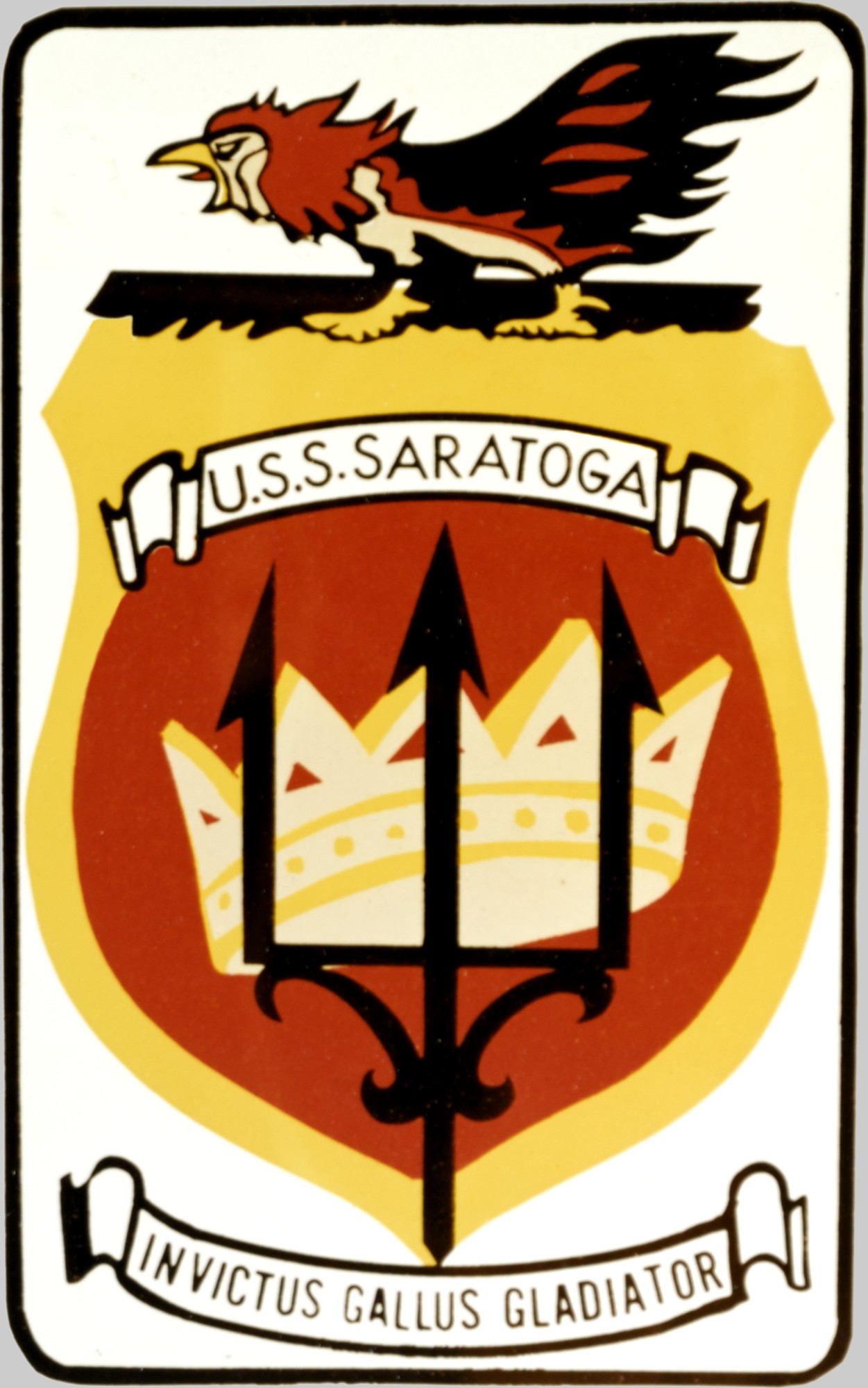
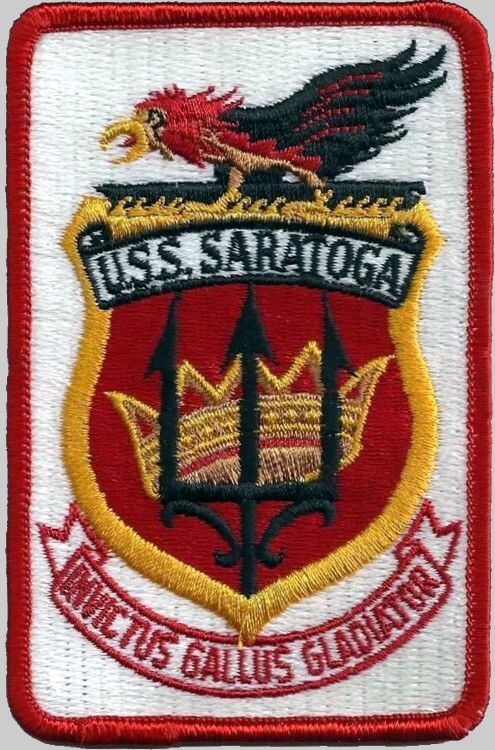 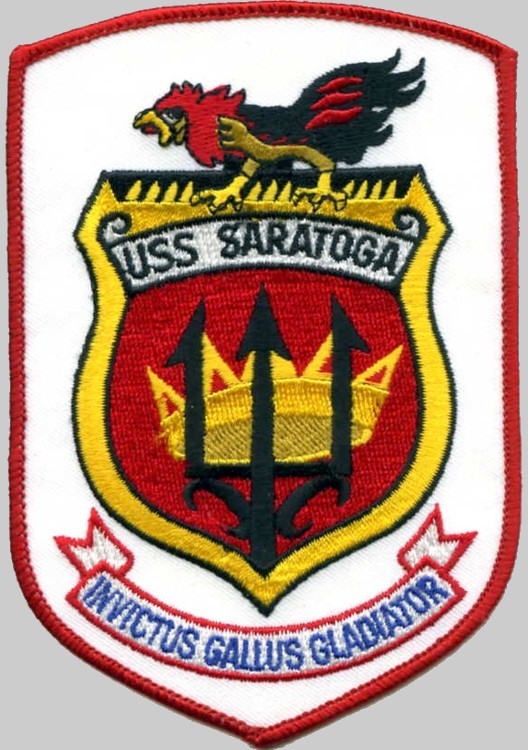
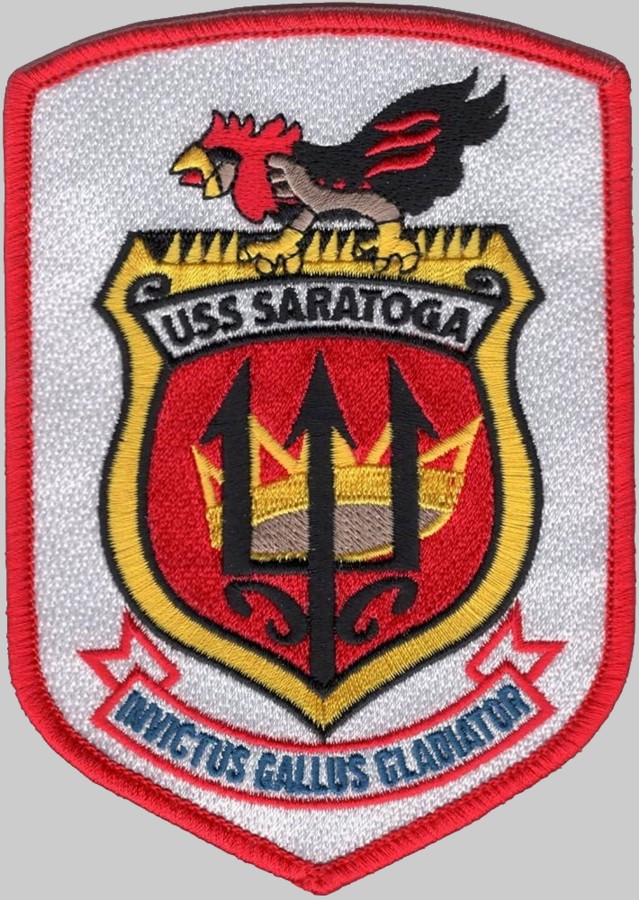 |
||
| | seaforces.org | USN ships start page | |