|
|||||
|
HOME
|
US Navy -
ships
|
US Navy - air
units
|
USMC - air
units
|
International
Navies
|
Weapon Systems
|
Special Reports |
|||||
|
US Navy - Aircraft Carrier CVB 42 / CVA 42 / CV 42 - USS Franklin D. Roosevelt |
|||||
|
|||||
|
Type, class: Aircraft Carrier, Midway class Builder: New York Naval Shipyard, Brooklyn, New York, USA STATUS: Awarded: Laid down: December 1, 1943 Launched: April 29, 1945 Commissioned: October 27, 1945 redesignated CVA 42 on October 1, 1952 decommissioned: April 1954 SCB-110 modification: March 1954 - June 1956 recommissioned: April 6, 1956 overhaul and modernization: December 1968 - June 1969 redesignated CV 42 on June 30, 1975 Decommissioned: September 30, 1977 Struck: October 1, 1977 Fate: towed to Kearny, New Jersey; scrapped in 1978 Namesake: Franklin D. Roosevelt (1882-1945), 32nd President of the USA Ships Motto: ? Technical Data: see: INFO > Midway class Aircraft Carrier - CV |
|||||
| 07/19 | |||||
|
Deployments - Carrier Air Groups/Wings embarked: January 1946 - March 1946 with Large Carrier Air Group 75 (CVBG-75) - Atlantic Ocean April 1946 - May 1946 with Large Carrier Air Group 75 (CVBG-75) - Atlantic Ocean August 1946 - October 1946 with Large Carrier Air Group 75 (CVBG-75) - Mediterranean Sea February 1947 - March 1947 with Large Carrier Air Group 3 (CVBG-3) - Caribbean Sea July 1948 - September 1948 with Large Carrier Air Group 3 (CVBG-3) - Caribbean Sea September 1948 - January 1949 with Carrier Air Group 4 (CVG-4) - Mediterranean Sea October 1949 - November 1949 with Carrier Air Group 6 (CVG-6) - Northern Atlantic Ocean January 1951 - May 1951 with Carrier Air Group 6 (CVG-6) - Mediterranean Sea September 1951 - February 1952 with Carrier Air Group 17 (CVG-17) - Mediterranean Sea August 1952 - December 1952 with Carrier Air Group 17 (CVG-17) - Northern Atlantic, Mediterranean Sea June 1953 - December 1953 with Carrier Air Group 1 (CVG-1) - Mediterranean Sea January 1954 - March 1954 with Carrier Air Group 8 (CVG-8) - Norfolk to Puget Sound Shipyard via Cape Horn June 1956 - August 1956 with Carrier Air Group 17 (CVG-17) - Puget Sound Shipyard to Mayport, Florida via Cape Horn August 1956 - October 1956 with Carrier Air Group 17 (CVG-17) - Southern Atlantic November 1956 - December 1956 with Carrier Air Group 17 (CVG-17) - East Atlantic (Suez Crisis) July 1957 - March 1958 with Carrier Air Group 17 (CVG-17) - Mediterranean Sea September 1958 - November 1958 with Carrier Air Group 1 (CVG-1) - Caribbean Sea, Cuba January 1959 - August 1959 with Carrier Air Group 1 (CVG-1) - Mediterranean Sea January 1960 - August 1960 with Carrier Air Group 1 (CVG-1) - Mediterranean Sea February 1961 - August 1961 with Carrier Air Group 1 (CVG-1) - Mediterranean Sea September 1962 - April 1963 with Carrier Air Group 1 (CVG-1) - Mediterranean Sea April 1964 - December 1964 with Carrier Air Wing 1 (CVW-1) - Mediterranean Sea June 1965 - December 1965 with Carrier Air Wing 1 (CVW-1) - Mediterranean Sea June 1966 - February 1967 with Carrier Air Wing 1 (CVW-1) - Vietnam War August 1967 - May 1968 with Carrier Air Wing 1 (CVW-1) - Mediterranean Sea January 1970 - July 1970 with Carrier Air Wing 6 (CVW-6) - Mediterranean Sea January 1971 - July 1971 with Carrier Air Wing 6 (CVW-6) - Mediterranean Sea February 1972 - December 1972 with Carrier Air Wing 6 (CVW-6) - Mediterranean Sea September 1973 - March 1974 with Carrier Air Wing 6 (CVW-6) - Mediterranean Sea January 1975 - July 1975 with Carrier Air Wing 6 (CVW-6) - Mediterranean Sea October 1976 - April 1977 with Carrier Air Wing 19 (CVW-19) - Mediterranean Sea |
|||||
| ship images | |||||
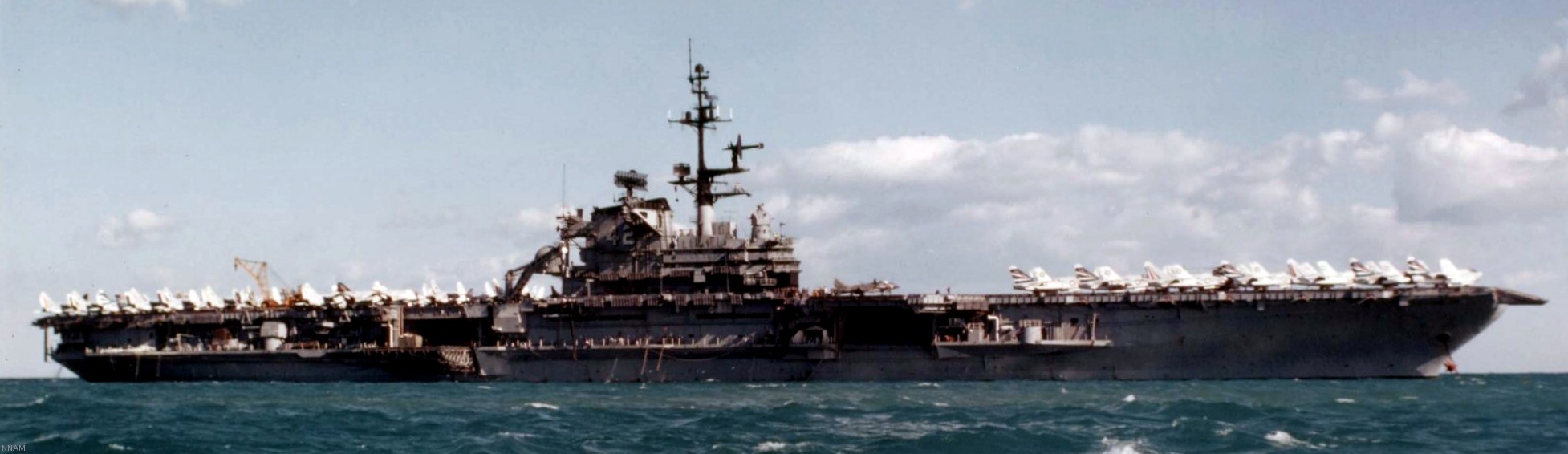 with Carrier Air Wing 19 (CVW-19) embarked - 1976-77 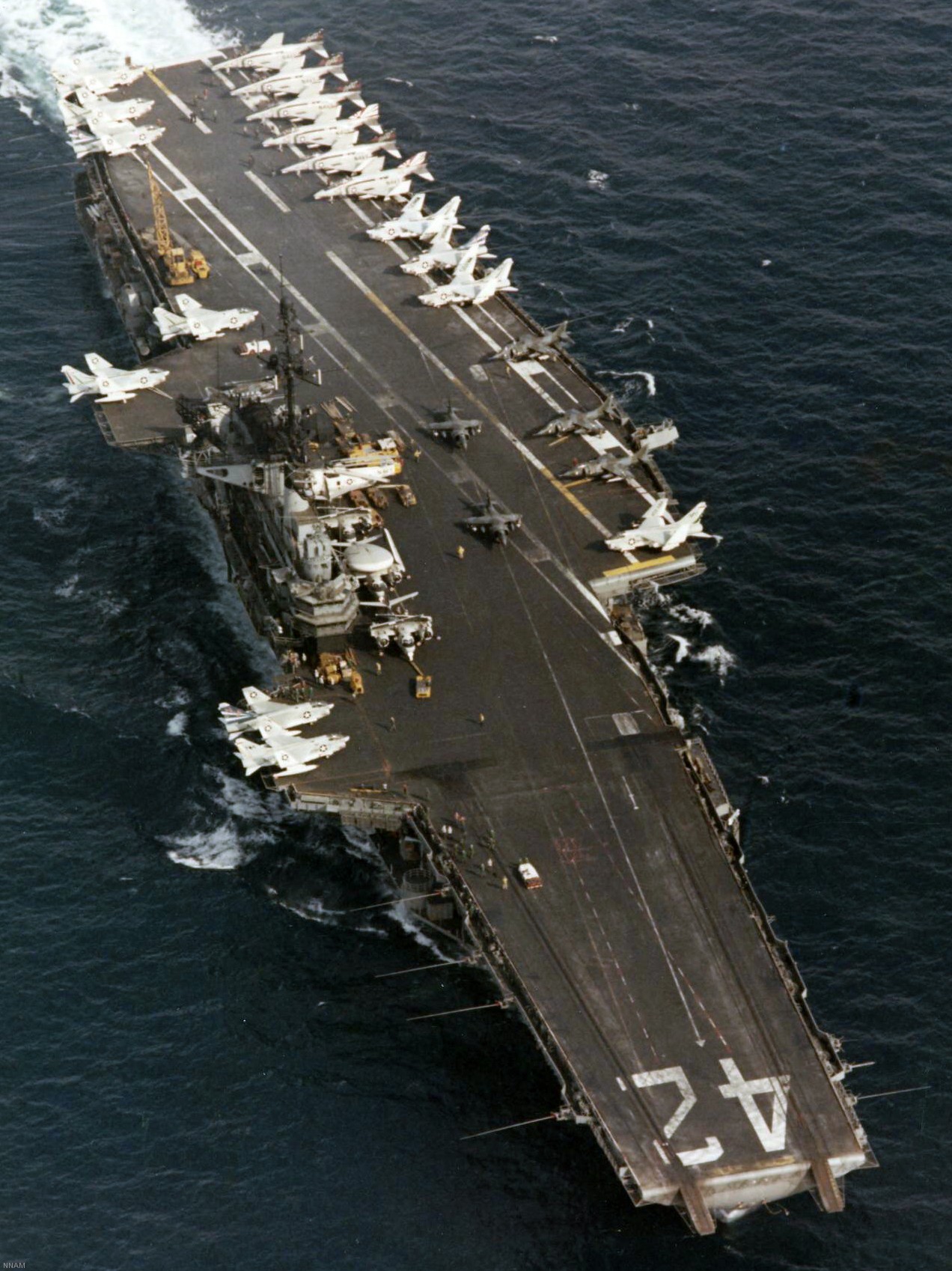 with Carrier Air Wing 19 (CVW-19) embarked - 1976-77 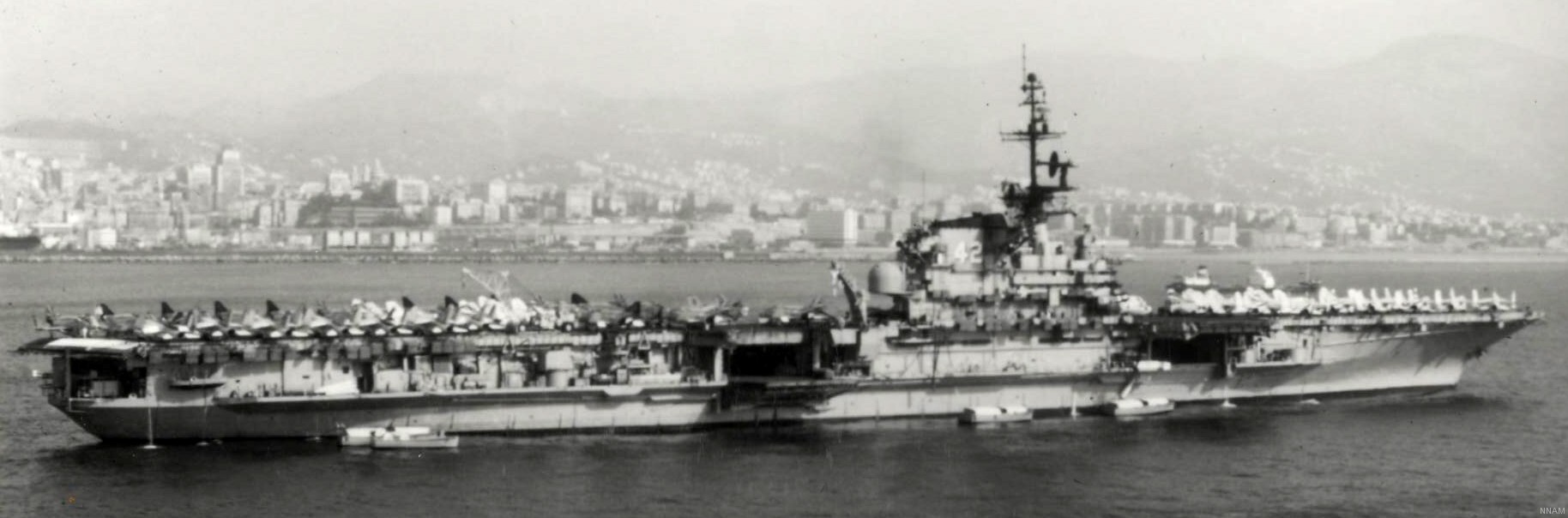 with Carrier Air Wing 19 (CVW-19) embarked - 1976-77 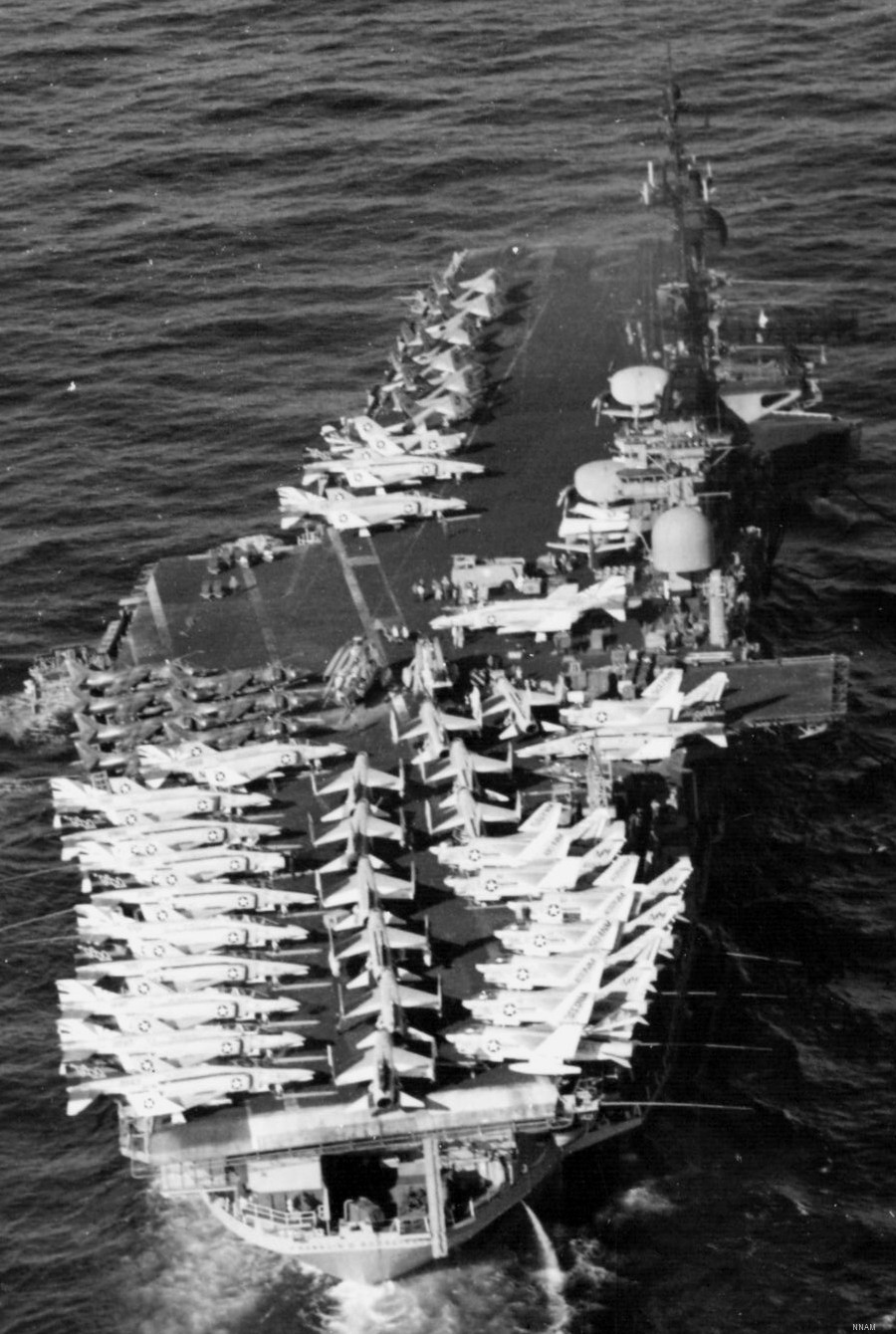 with Carrier Air Wing 19 (CVW-19) embarked - October 1976 redesignated CV 42 on June 30, 1975 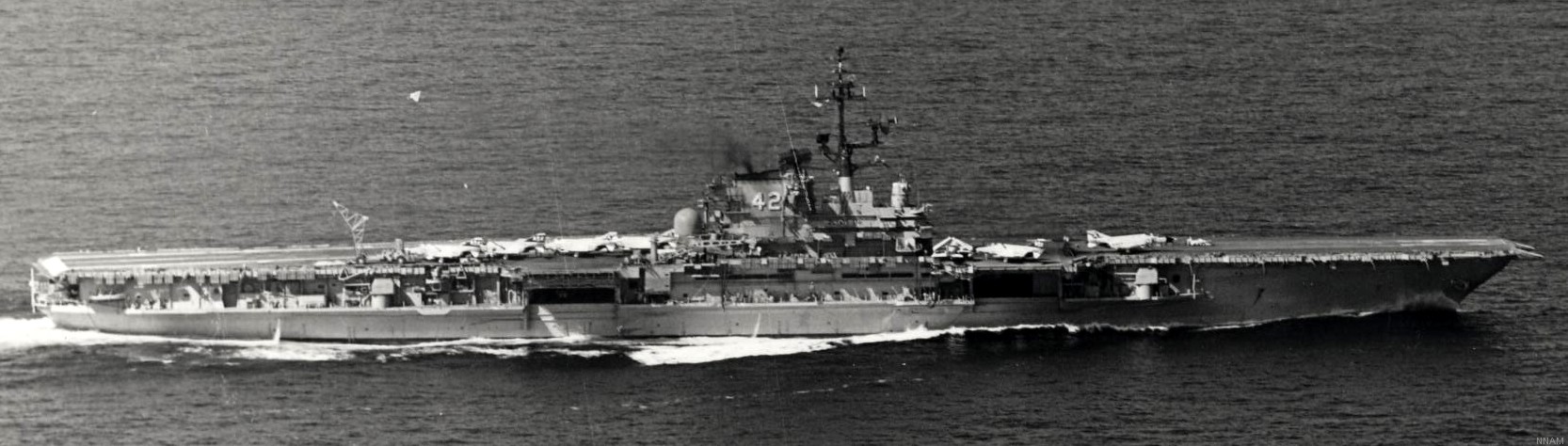 with Carrier Air Wing 6 (CVW-6) embarked - circa 1975 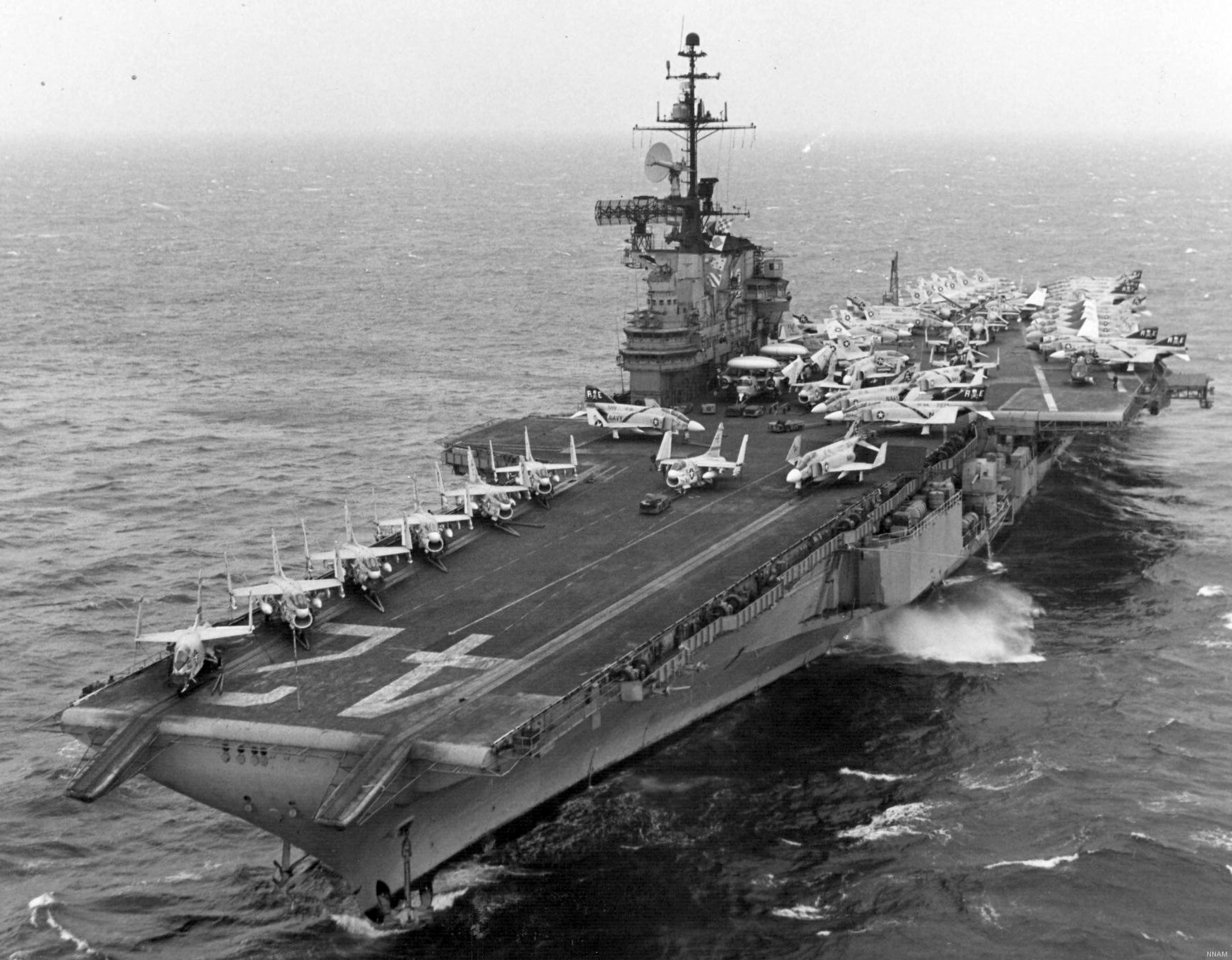 with Carrier Air Wing 6 (CVW-6) embarked - circa 1973 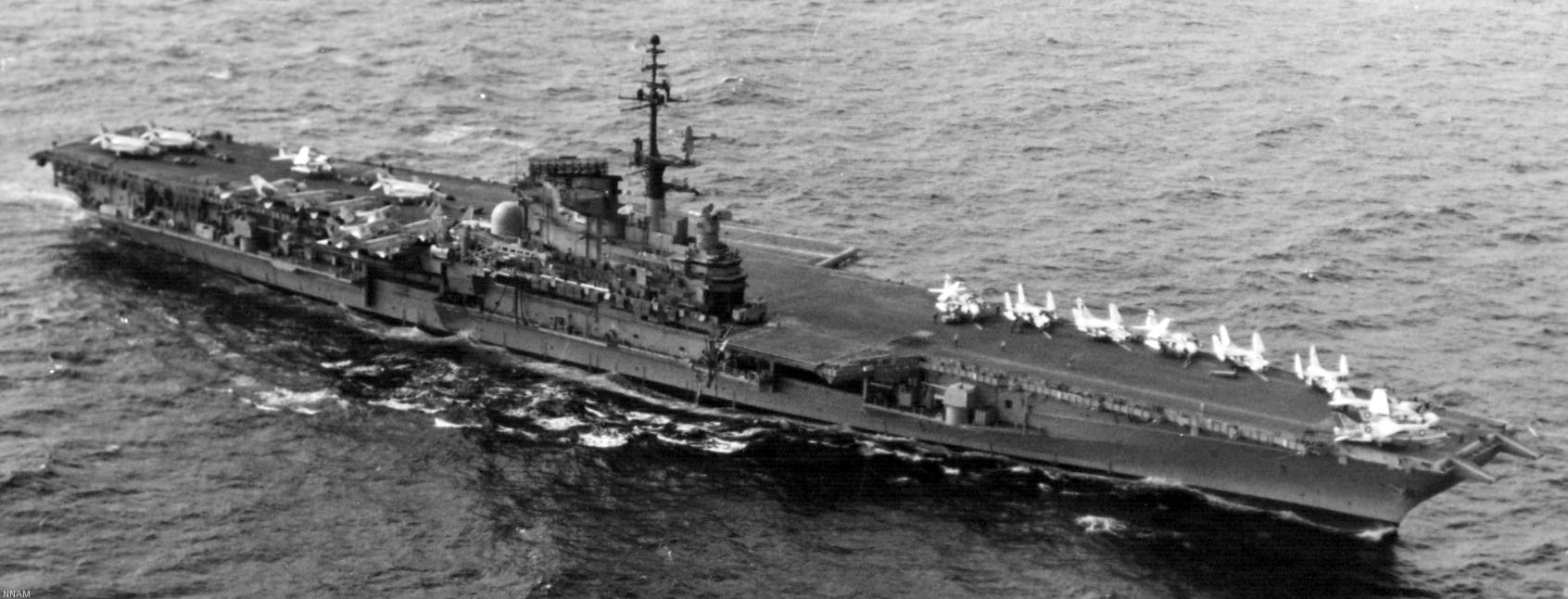 with Carrier Air Wing 6 (CVW-6) embarked - circa 1973 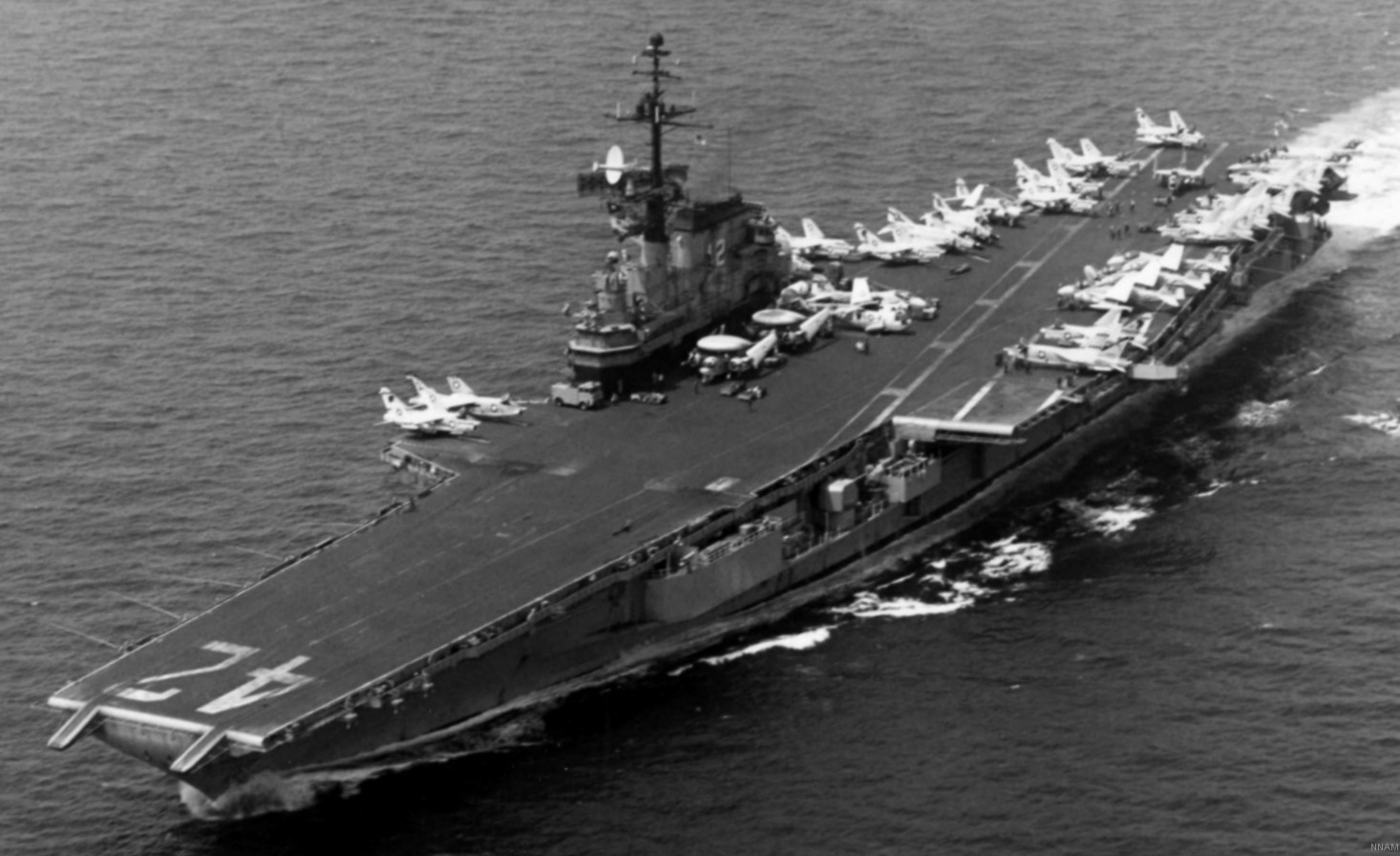 with Carrier Air Wing 6 (CVW-6) embarked - circa 1973 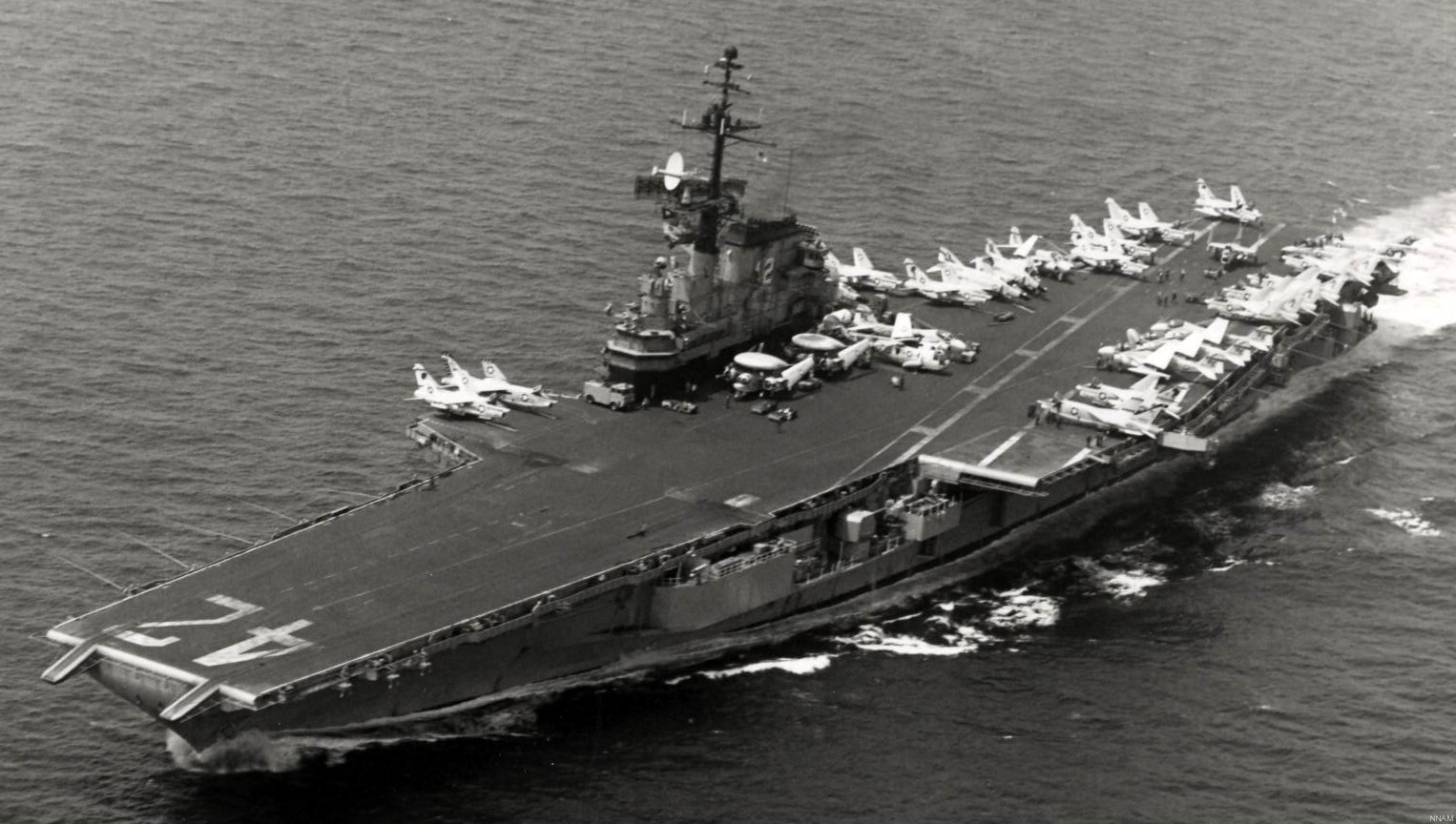 with Carrier Air Wing 6 (CVW-6) embarked - circa 1973 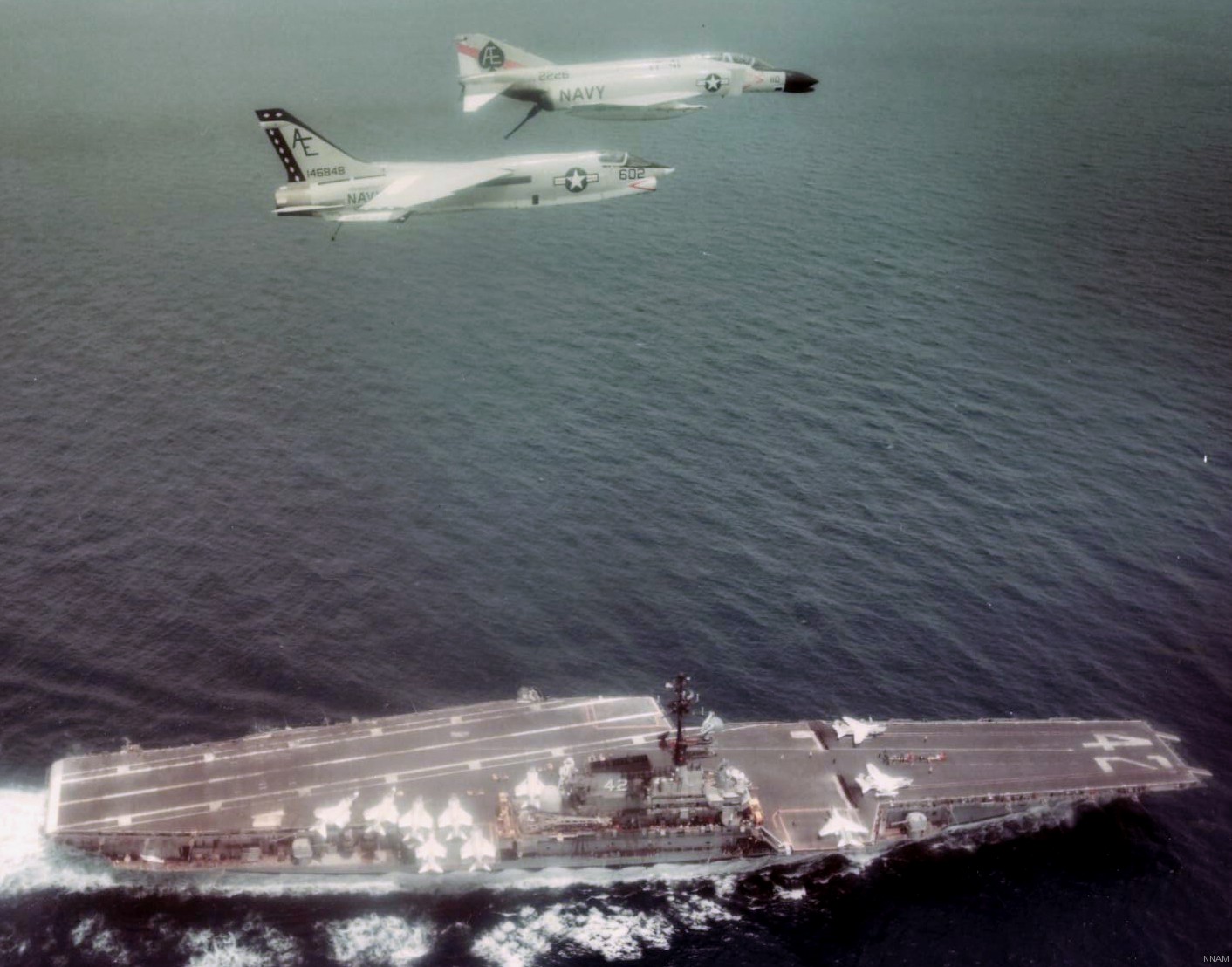 with Carrier Air Wing 6 (CVW-6) embarked - circa 1973 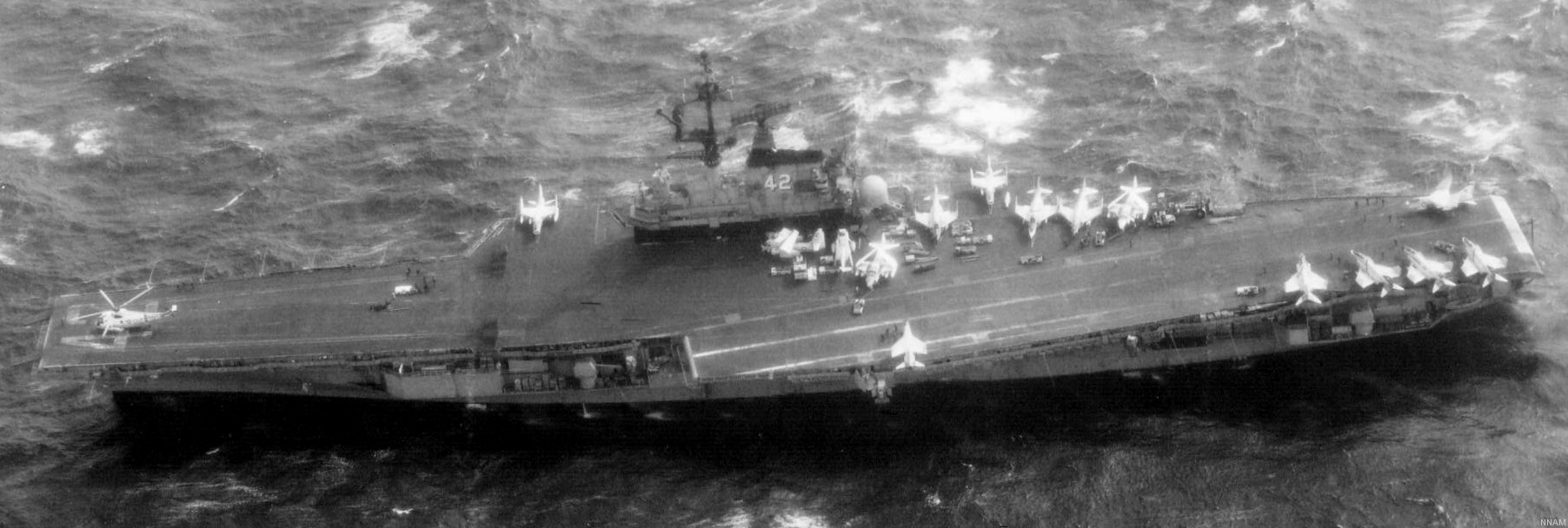 with Carrier Air Wing 6 (CVW-6) embarked - circa 1972 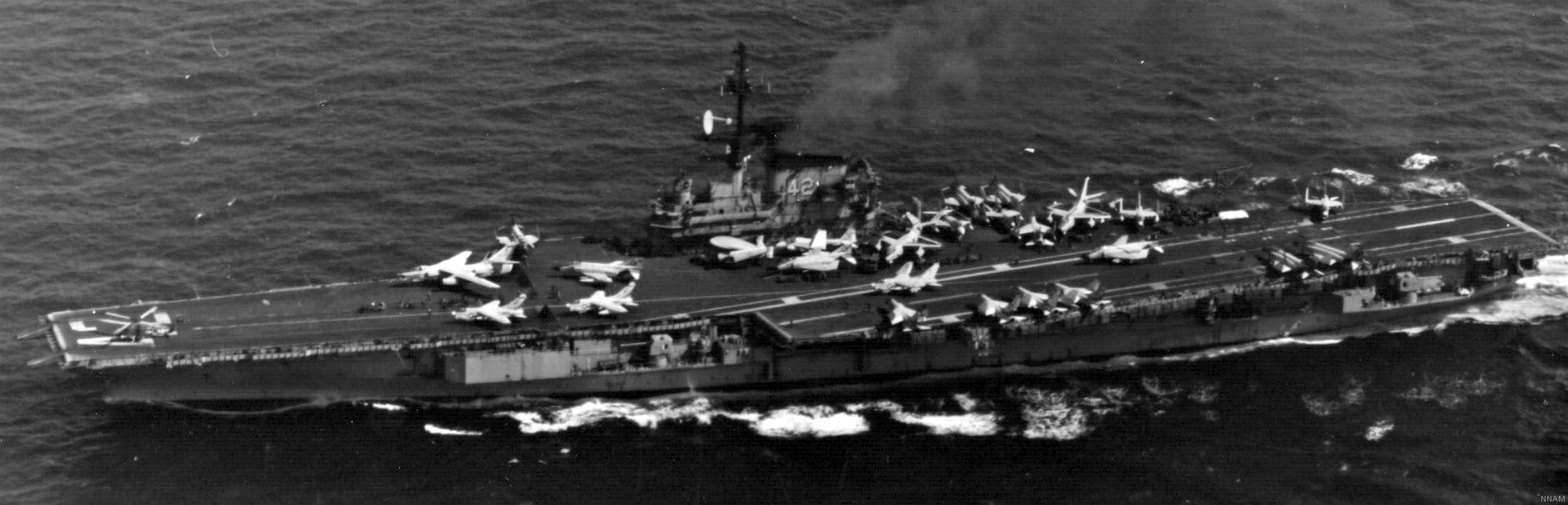 with Carrier Air Wing 6 (CVW-6) embarked - circa 1970-71 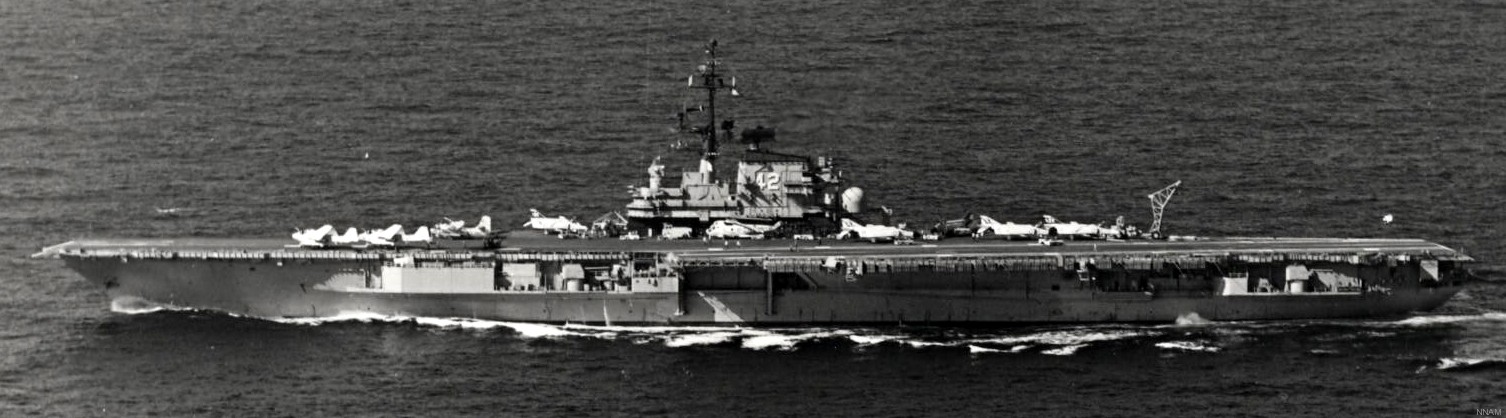 with Carrier Air Wing 6 (CVW-6) embarked - circa 1970-71 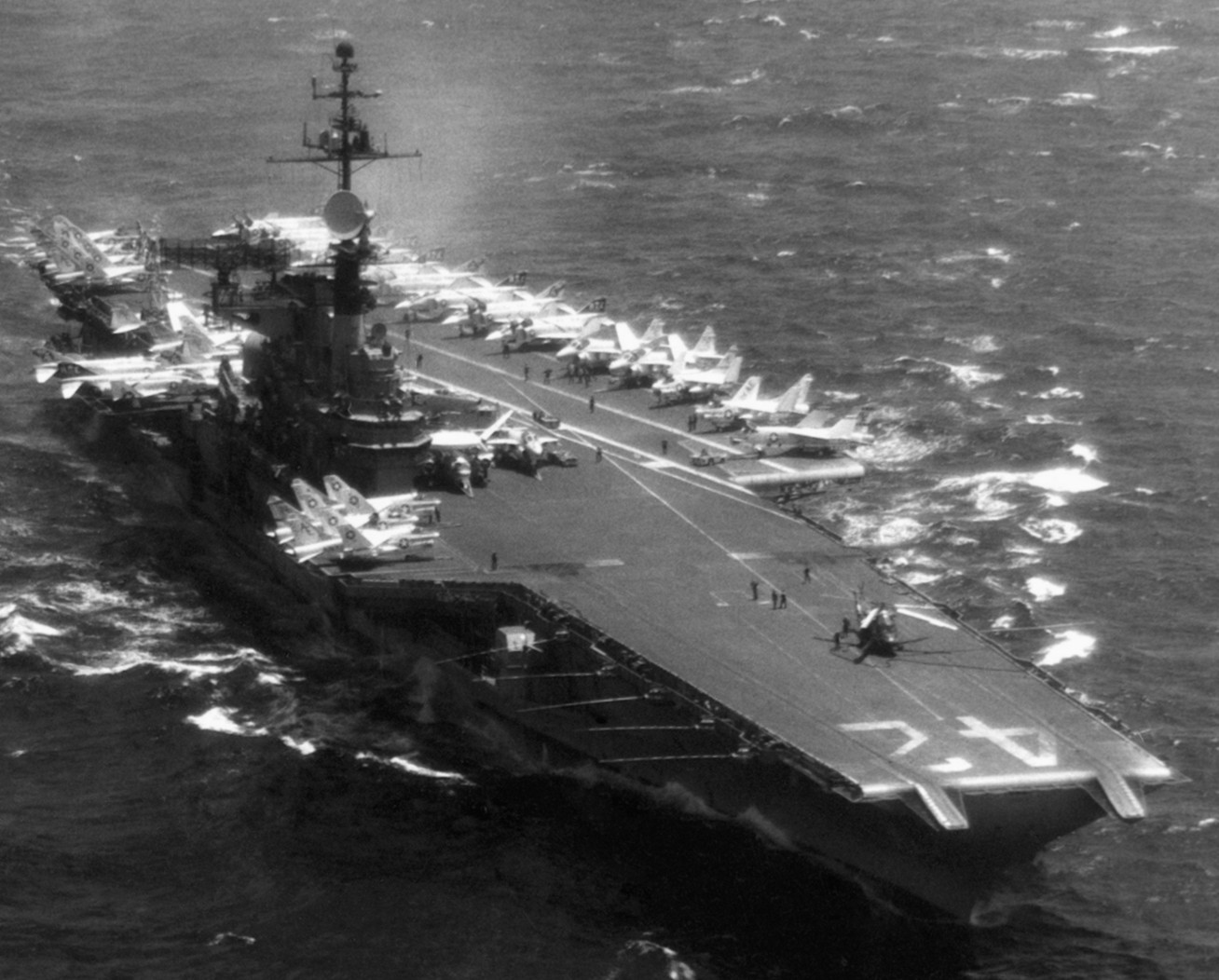 with Carrier Air Wing 6 (CVW-6) embarked - circa 1970-71 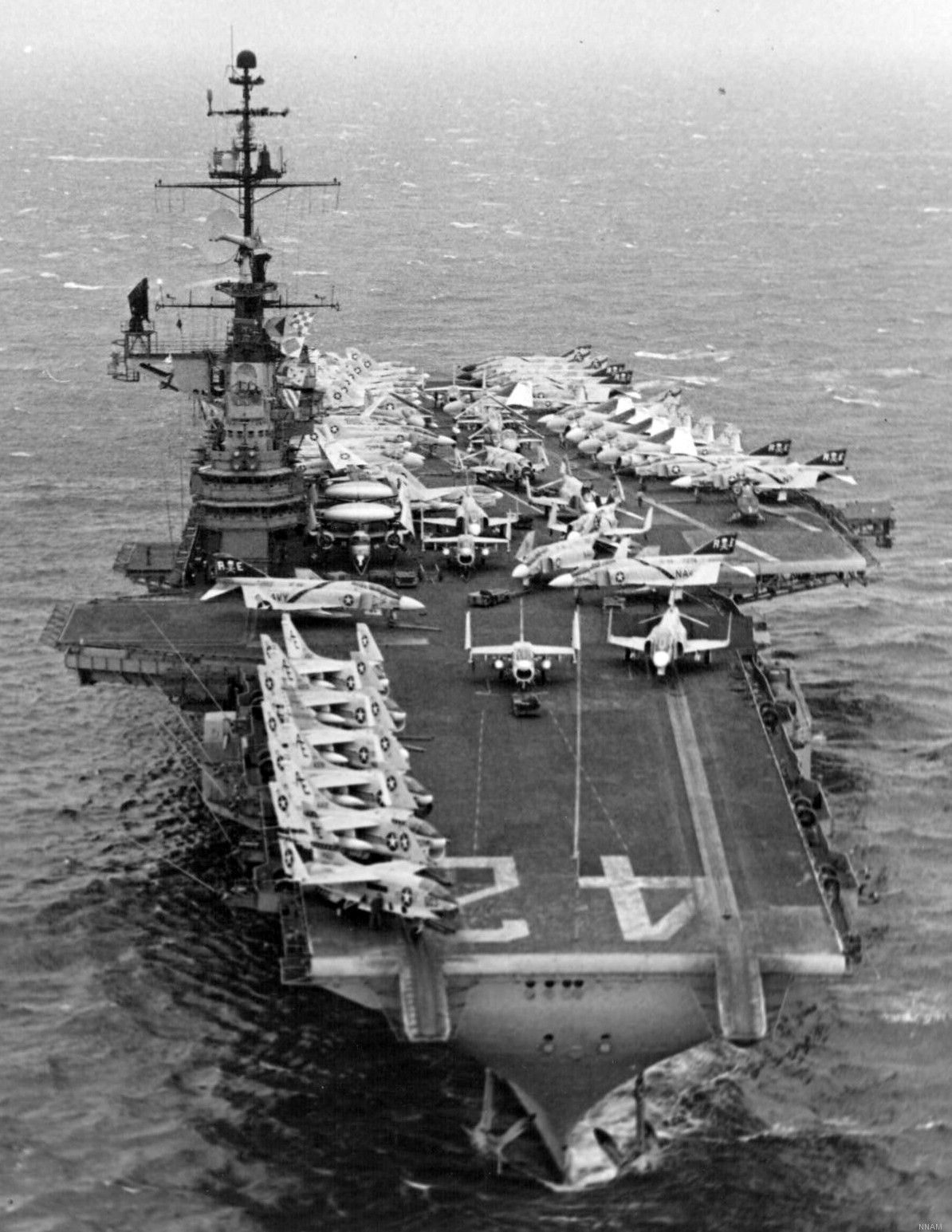 with Carrier Air Wing 6 (CVW-6) embarked - circa 1970-71 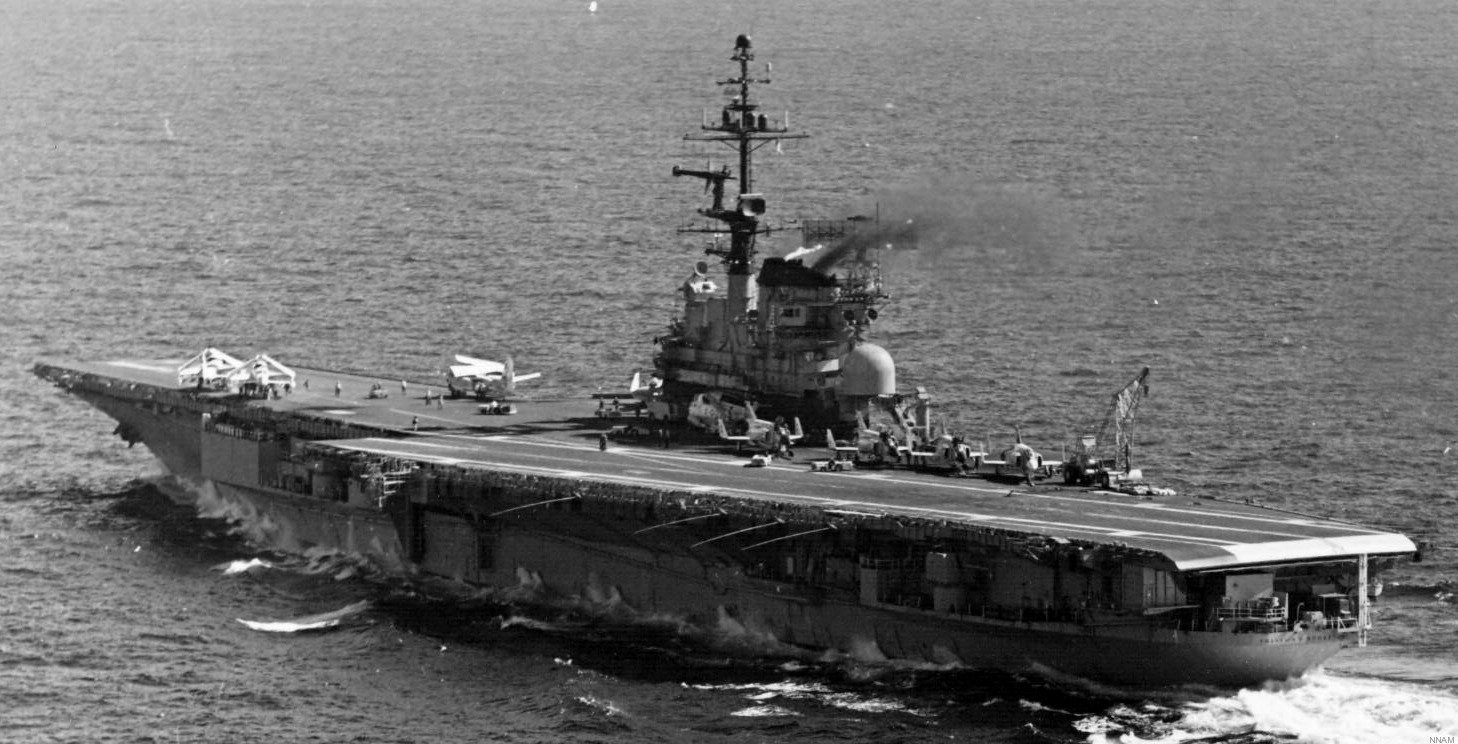 with Carrier Air Wing 6 (CVW-6) embarked - circa 1970-71 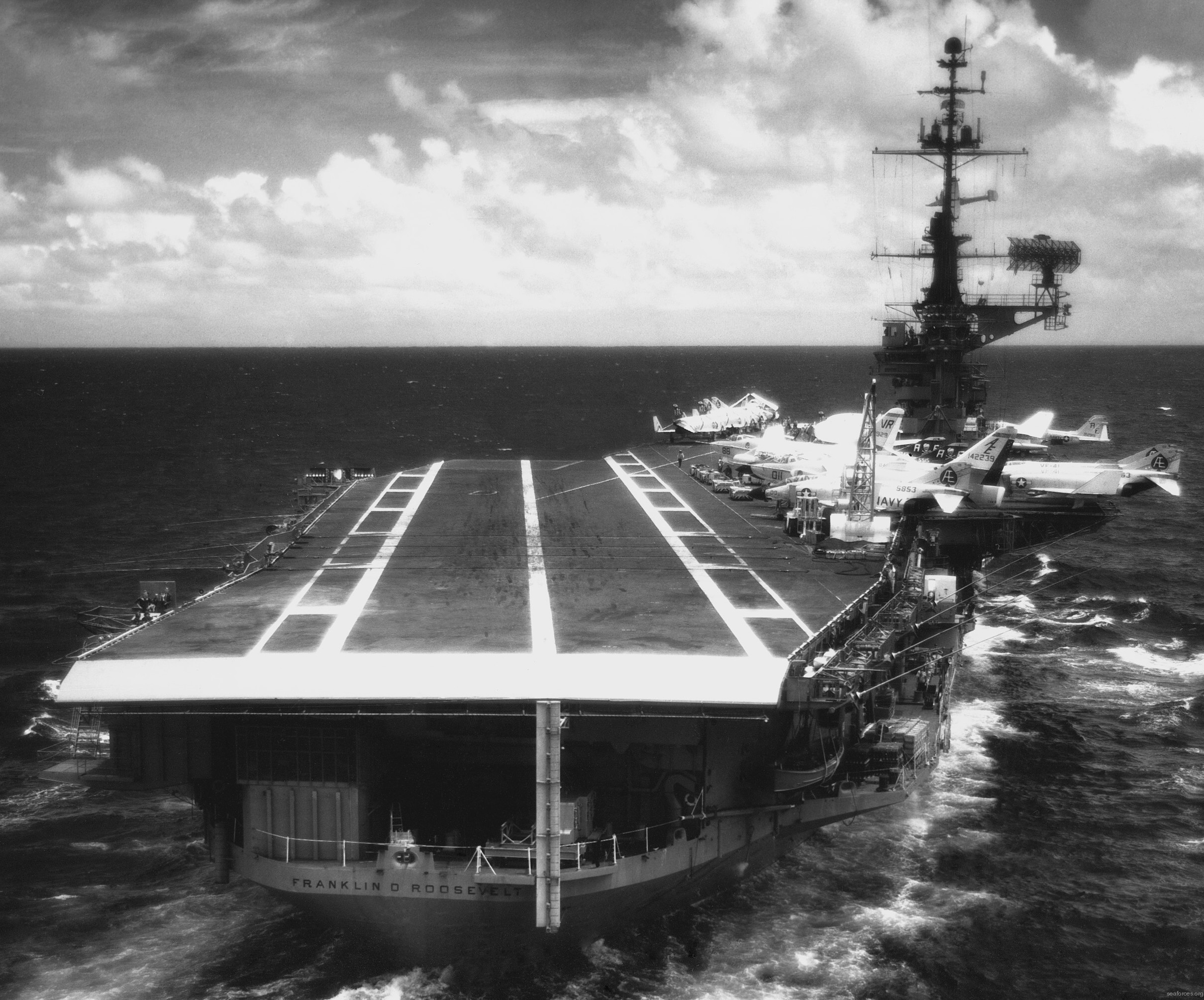 with Carrier Air Wing 6 (CVW-6) embarked - 1970's 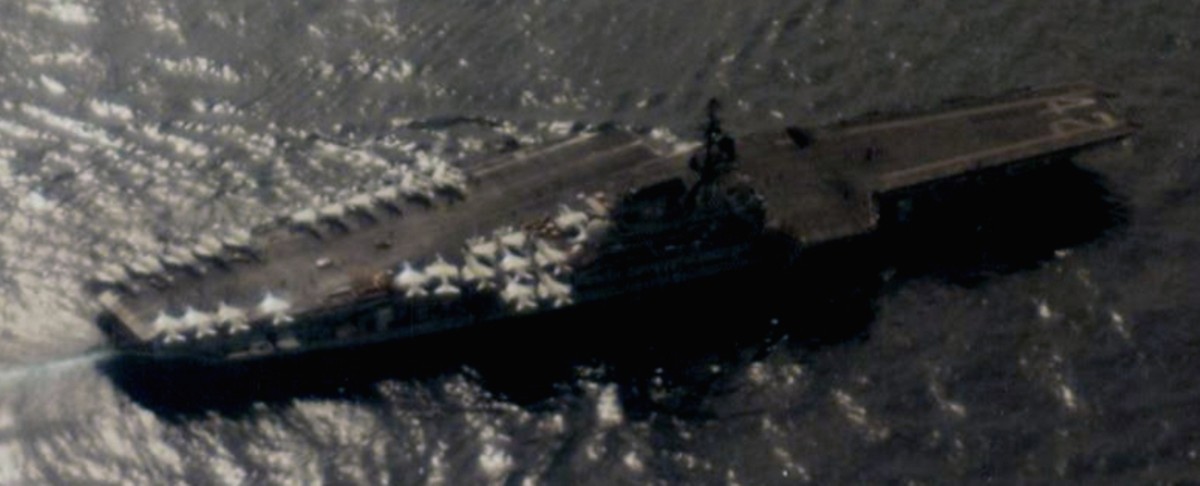 with Carrier Air Wing 6 (CVW-6) embarked - 1970's 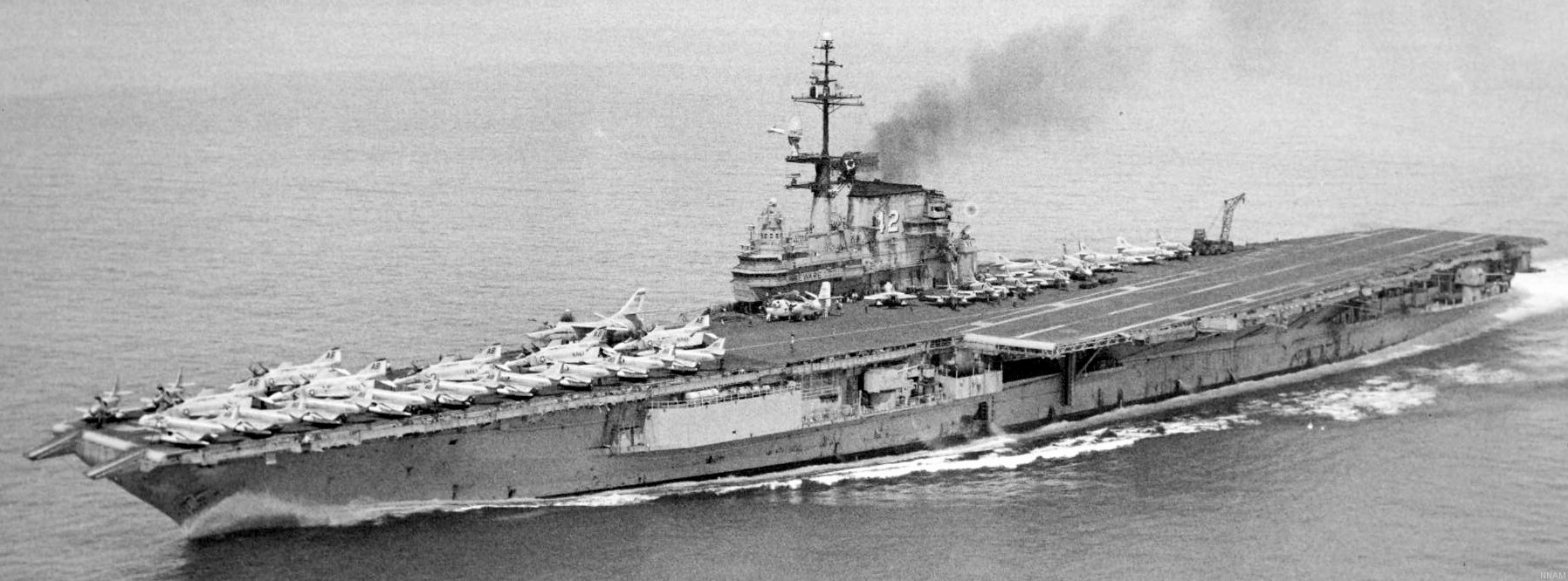 with Carrier Air Wing 6 (CVW-6) embarked - 1969 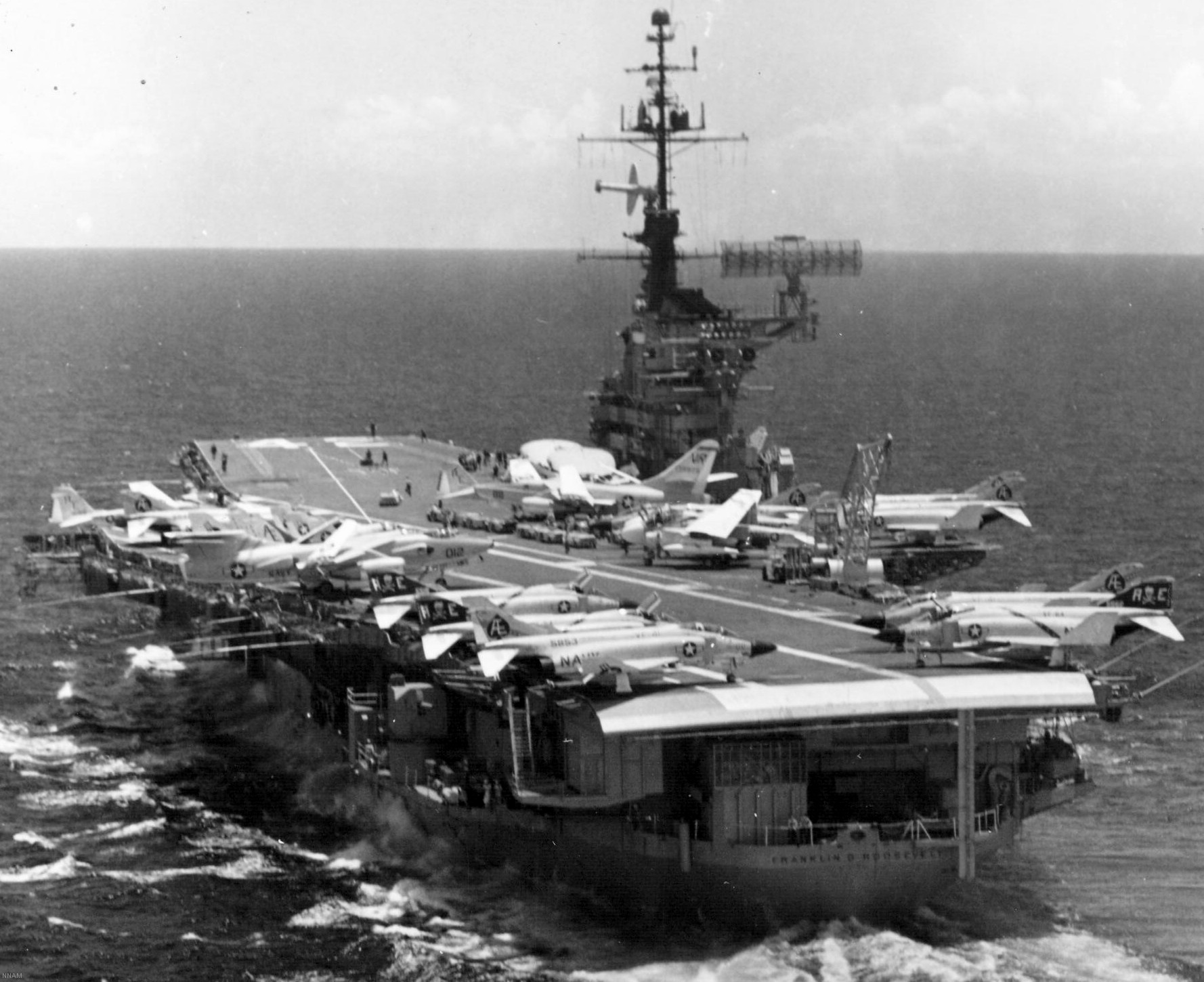 with Carrier Air Wing 6 (CVW-6) embarked - July 1969 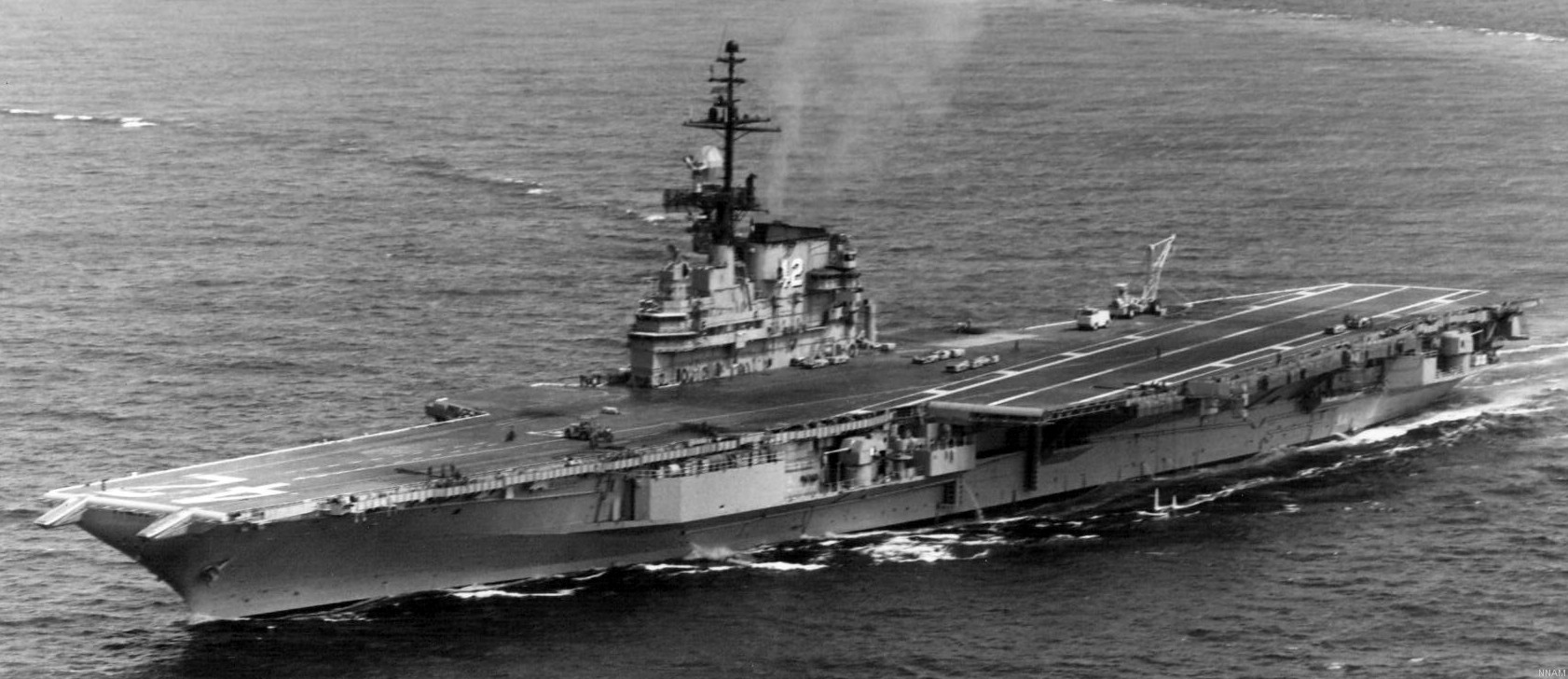 after refit - July 1969 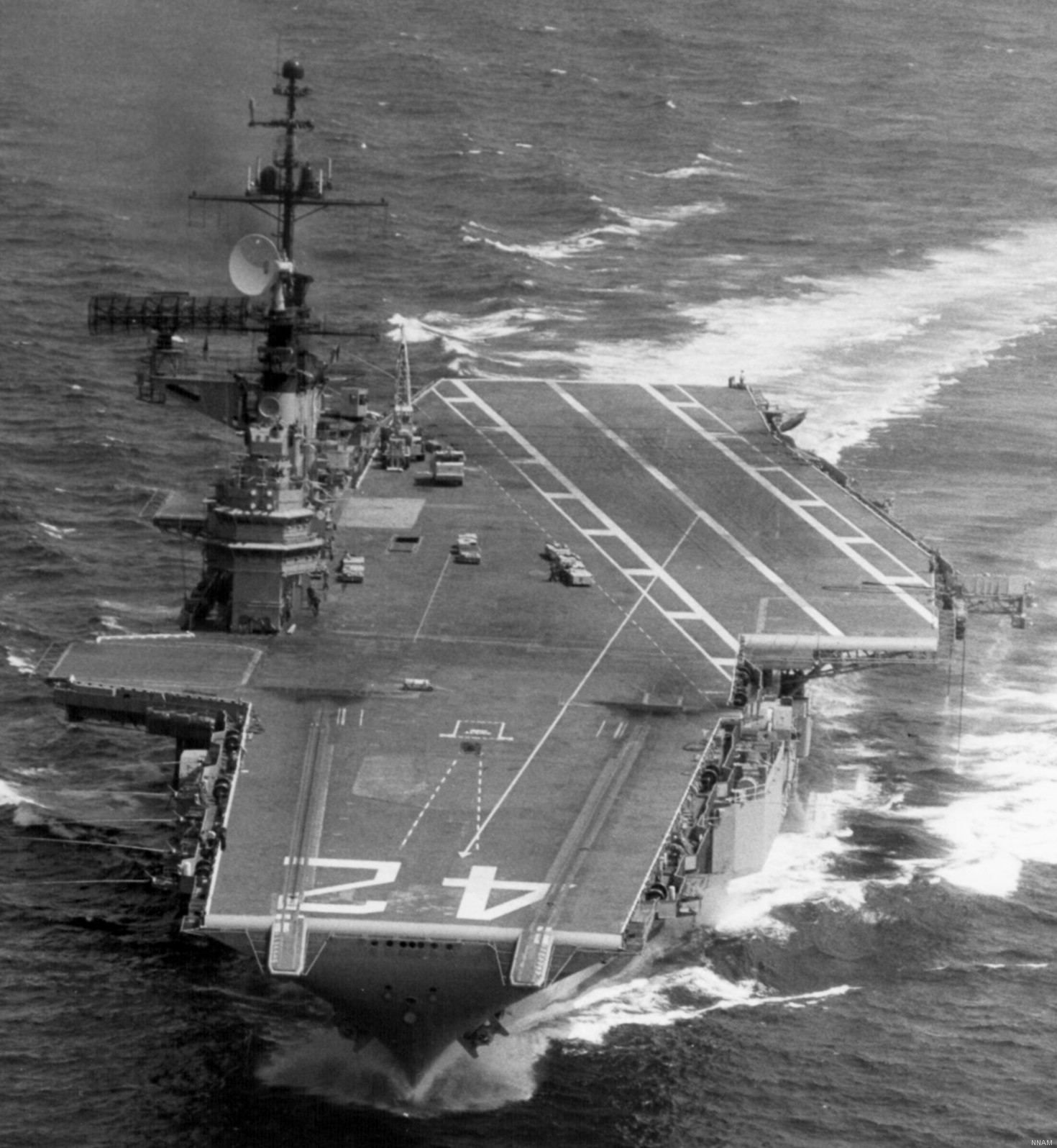 after refit - July 1969 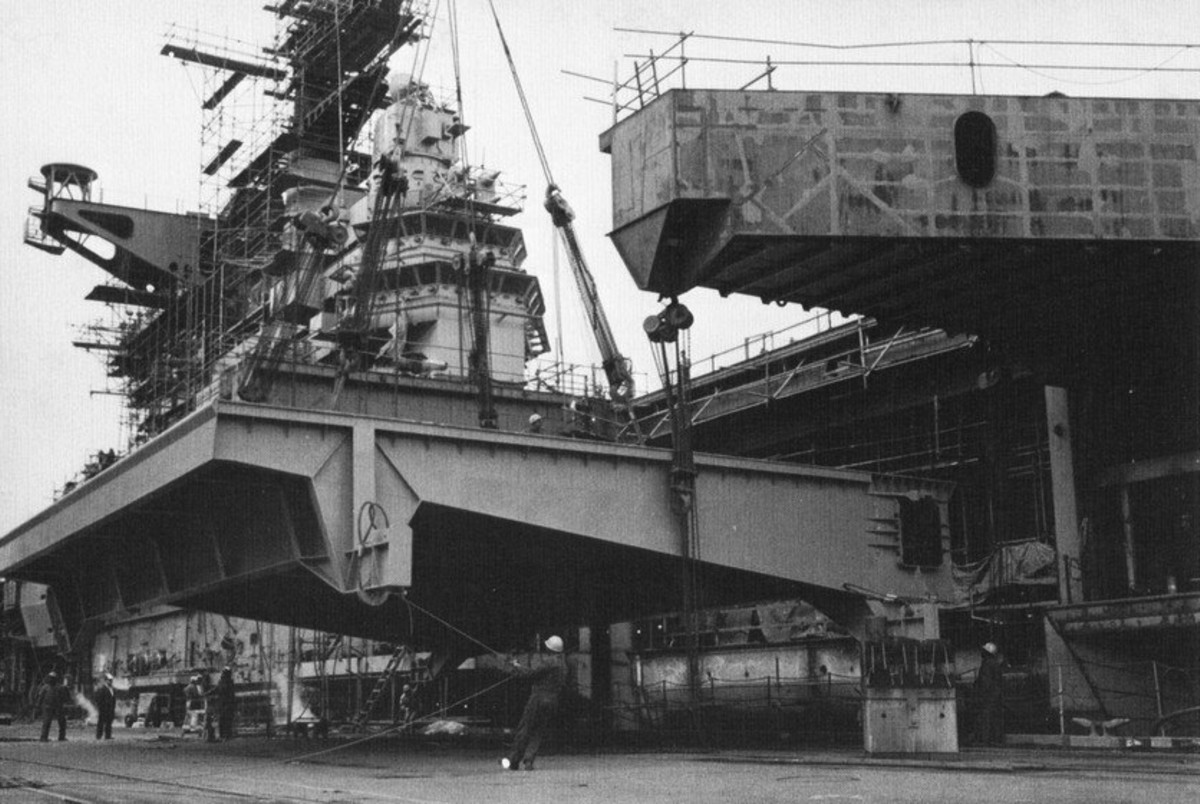 USS Franklin D. Roosevelt (CVA 42) receiving a new deck-edge elevator at the Norfolk Naval Shipyard, Virginia. Roosevelt was initially slated to undergo an extensive reconstruction (SCB 101.68) similar to that received by USS Midway (CVA 41) from 1966 to 1970. This plan was derailed by massive cost overruns in Midway's reconstruction, which eventually totalled $202 million. Roosevelt was therefore limited to an austere $46 million refit, enabling her to operate the Grumman A-6 Intruder and LTV A-7 Corsair II. In July 1968, Roosevelt entered Norfolk Naval Shipyard for her 11-month modernization program. The forward centerline elevator was relocated to the starboard deck edge forward of the island, the port waist catapult was removed, the crew spaces were refurbished, and two of the four remaining 127 mm anti-aircraft turrets were removed. Roosevelt also received a deck edge spray system using the new seawater compatible fire-fighting chemical, Light Water. She put to sea again on 26 May 1969. overhaul & modernization: December 1968 - June 1969 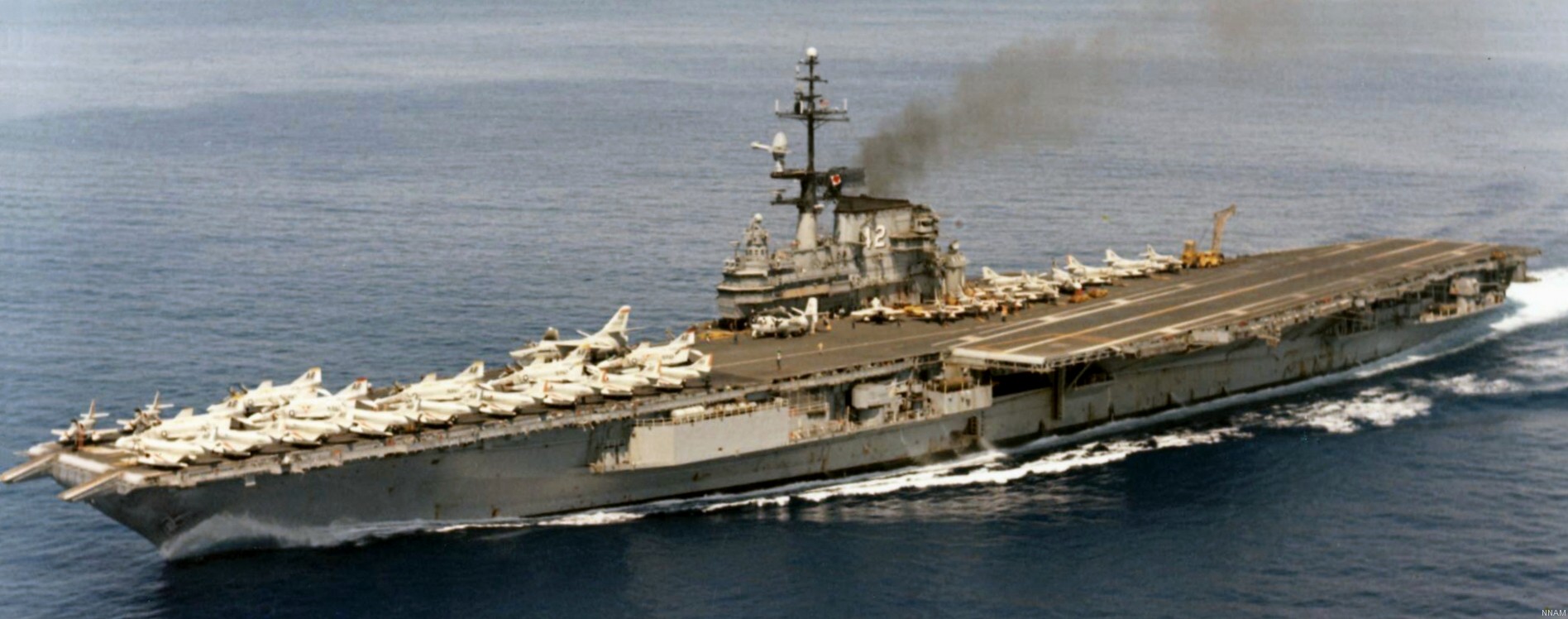 with Carrier Air Wing 1 (CVW-1) embarked - 1967 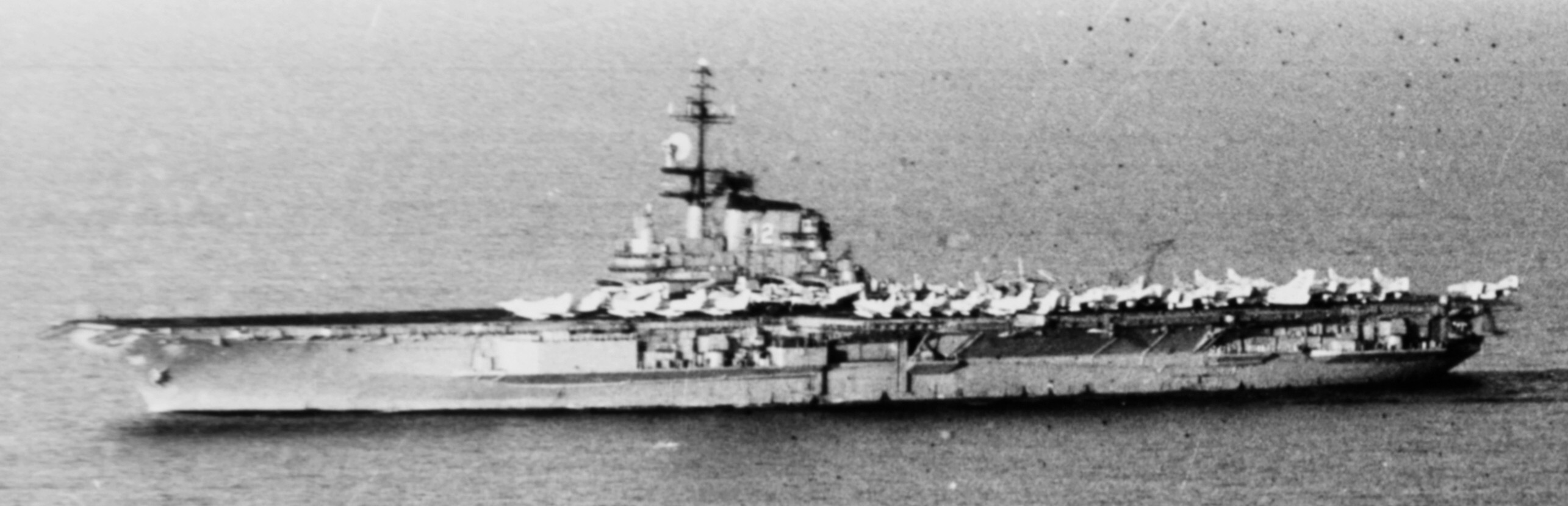 with Carrier Air Wing 1 (CVW-1) embarked - 1967 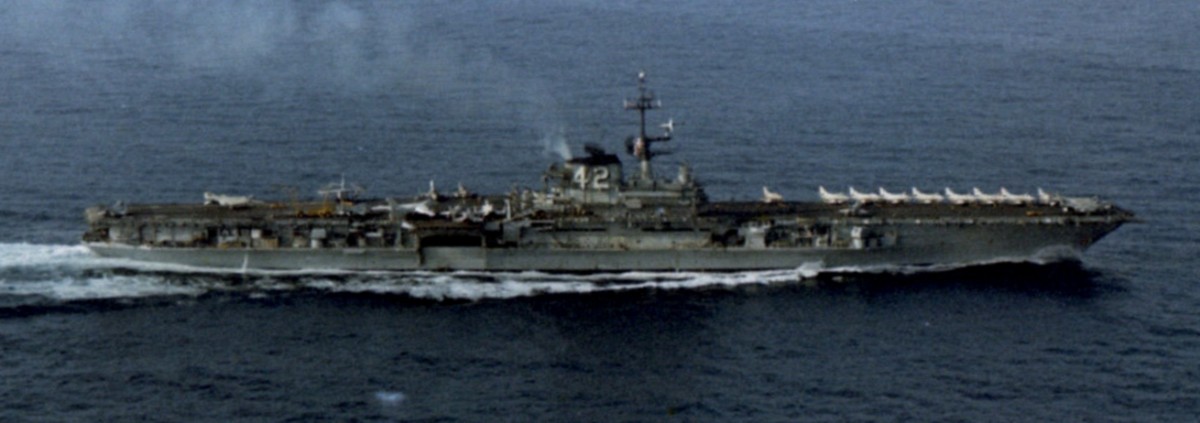 with Carrier Air Wing 1 (CVW-1) embarked - 1966-67 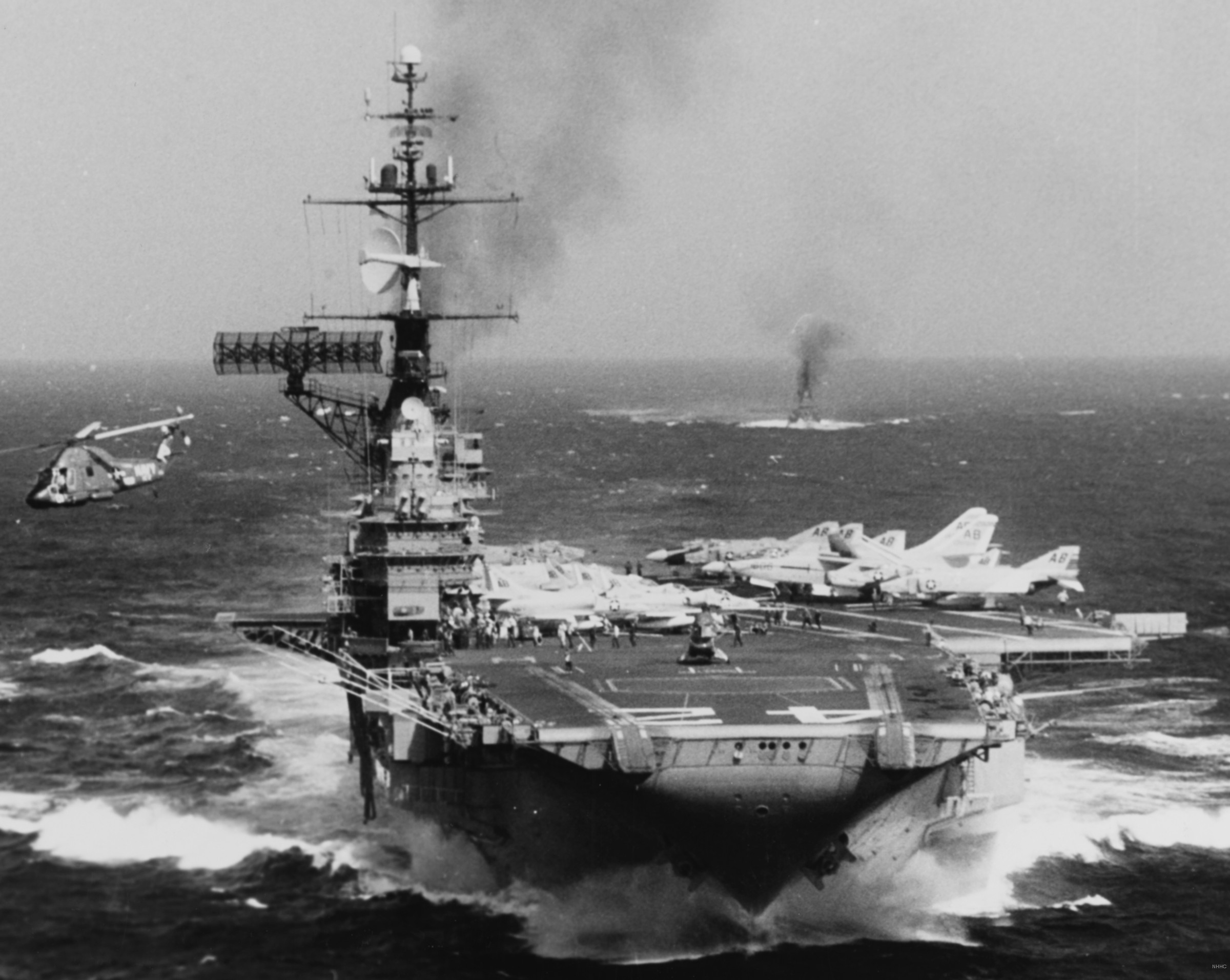 with Carrier Air Wing 1 (CVW-1) embarked - October 1966 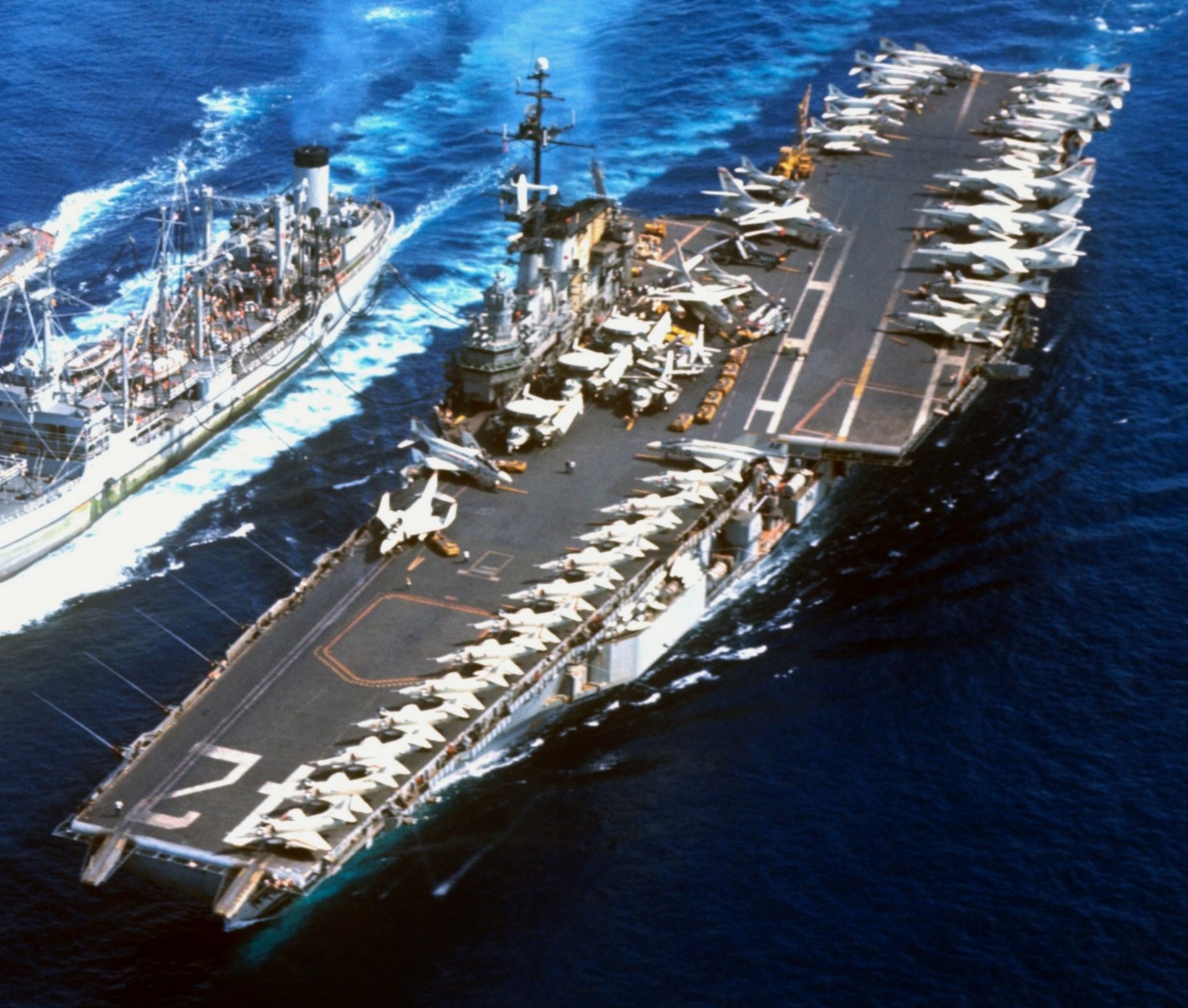 with Carrier Air Wing 1 (CVW-1) embarked - Gulf of Tonkin - September 1966 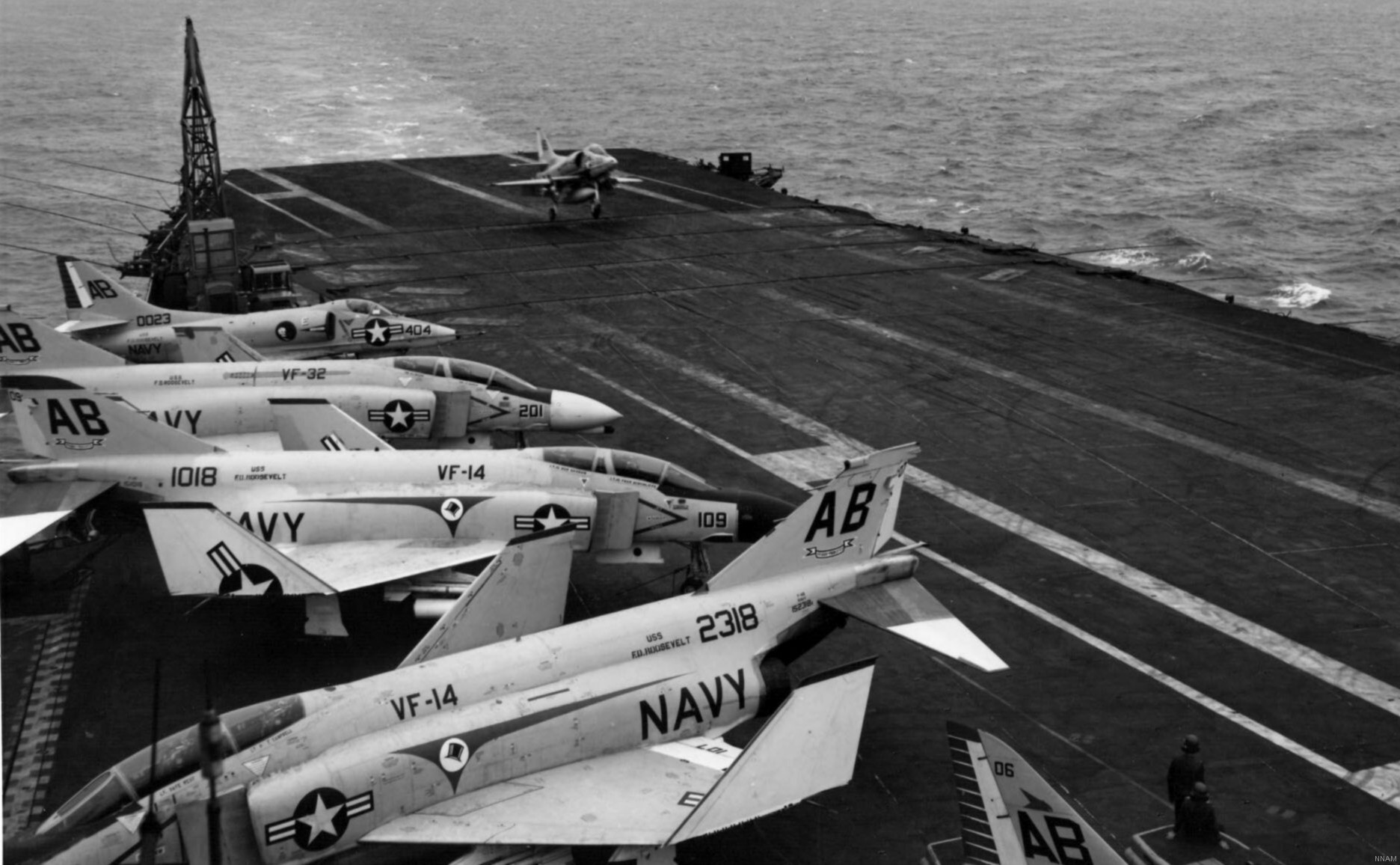 with aircraft of Carrier Air Wing 1 (CVW-1) embarked - August 1966 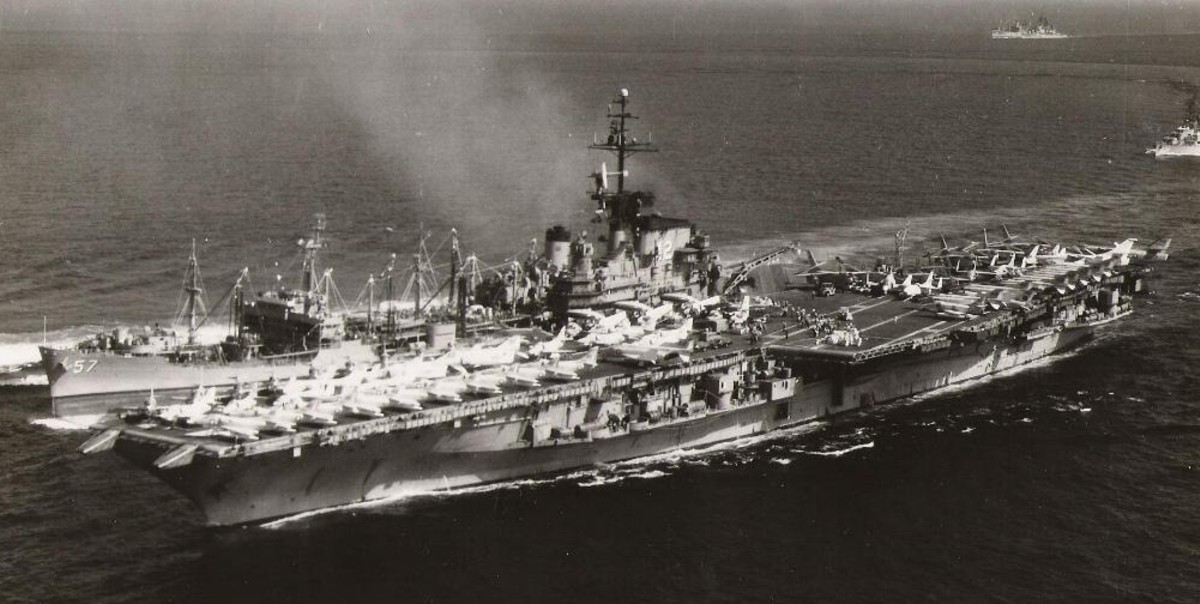 with Carrier Air Wing 1 (CVW-1) embarked - January 1966 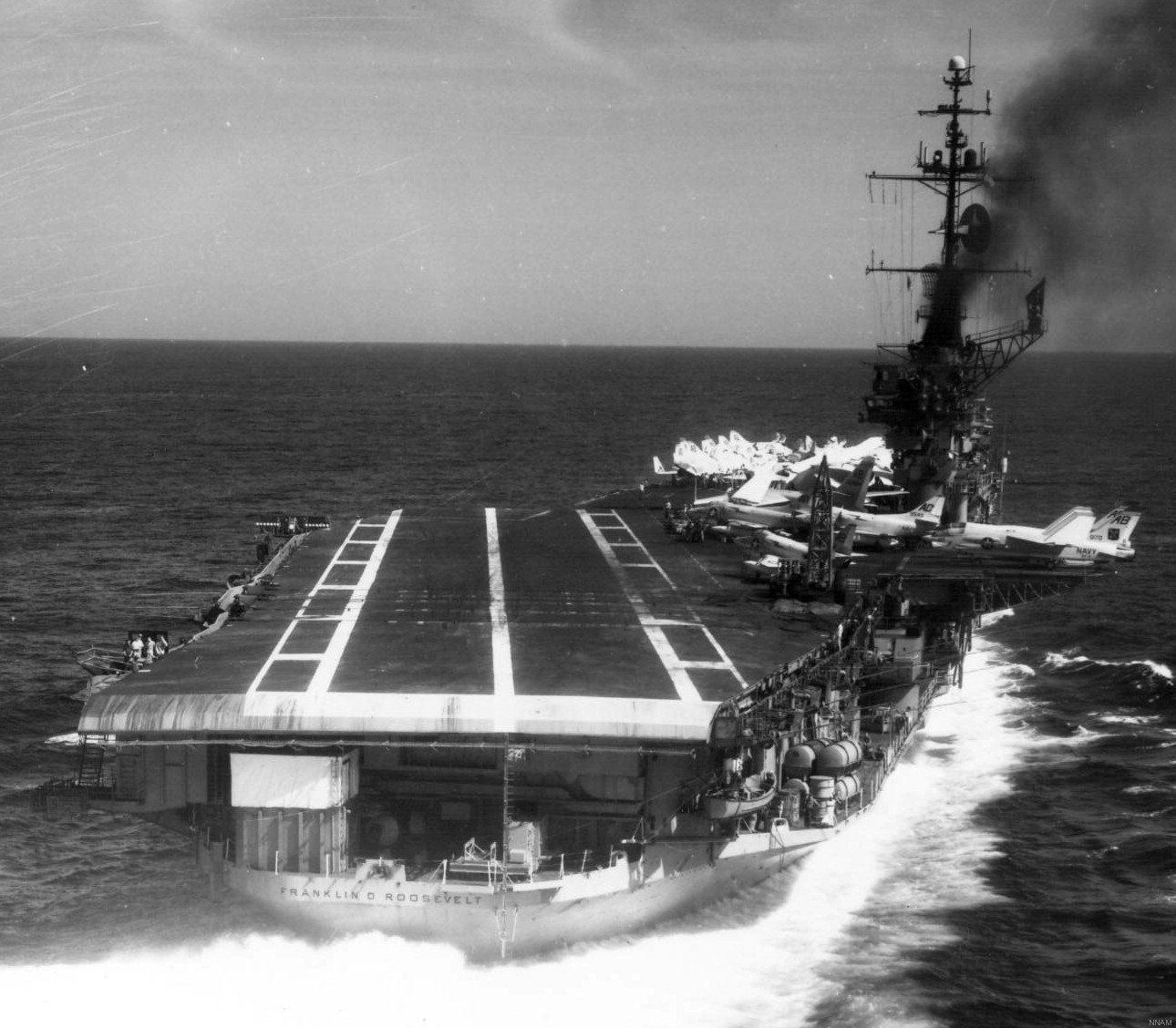 with Carrier Air Wing 1 (CVW-1) embarked - September 1965 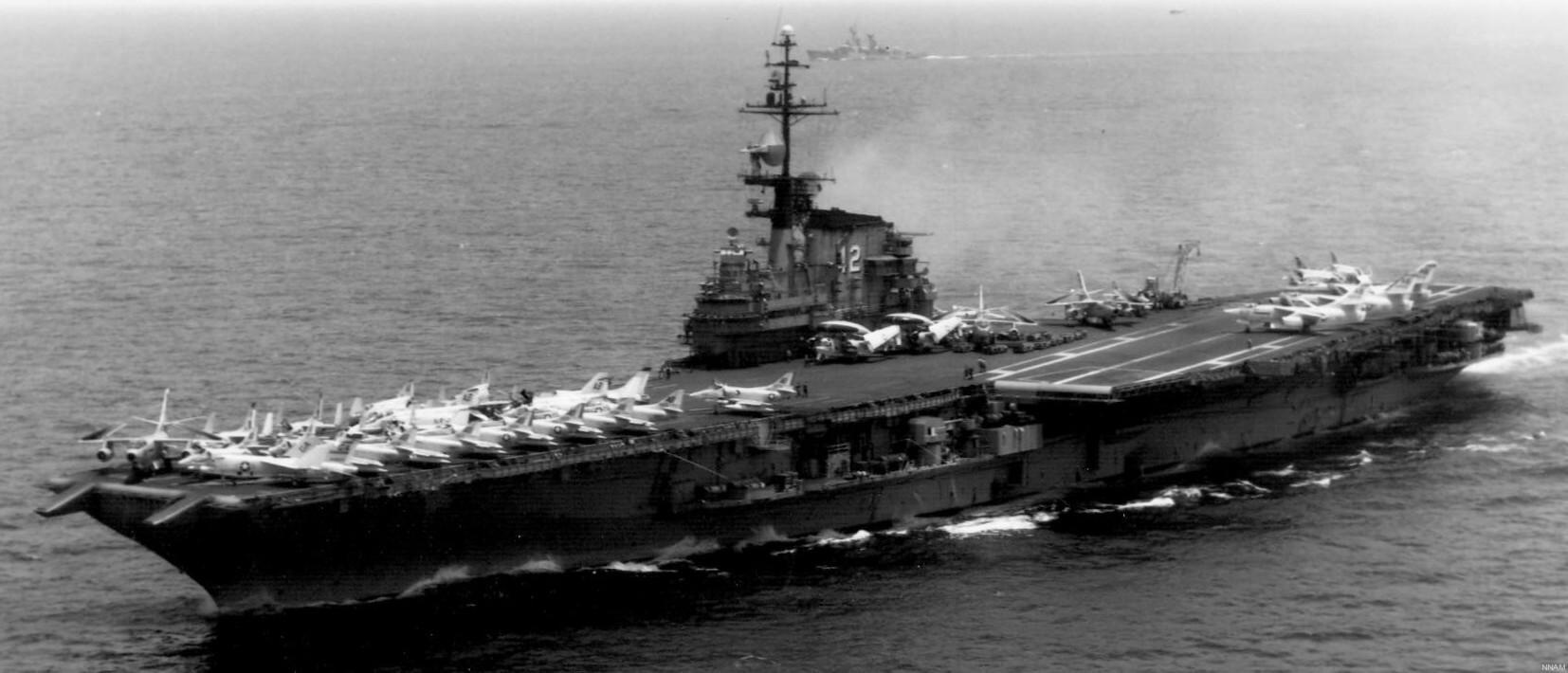 with Carrier Air Wing 1 (CVW-1) embarked - May 1965 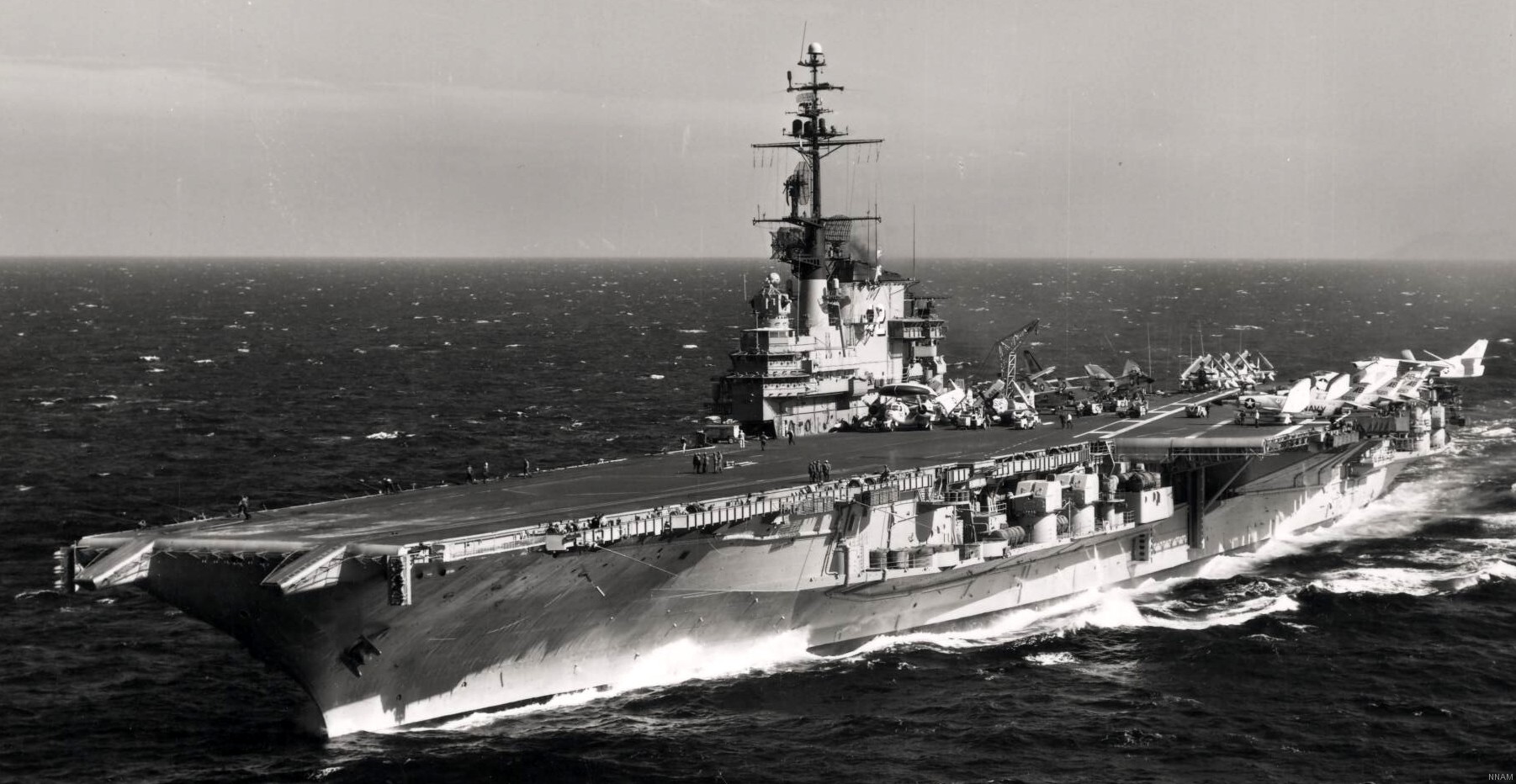 with Carrier Air Group 1 (CVG-1) embarked - March 1963 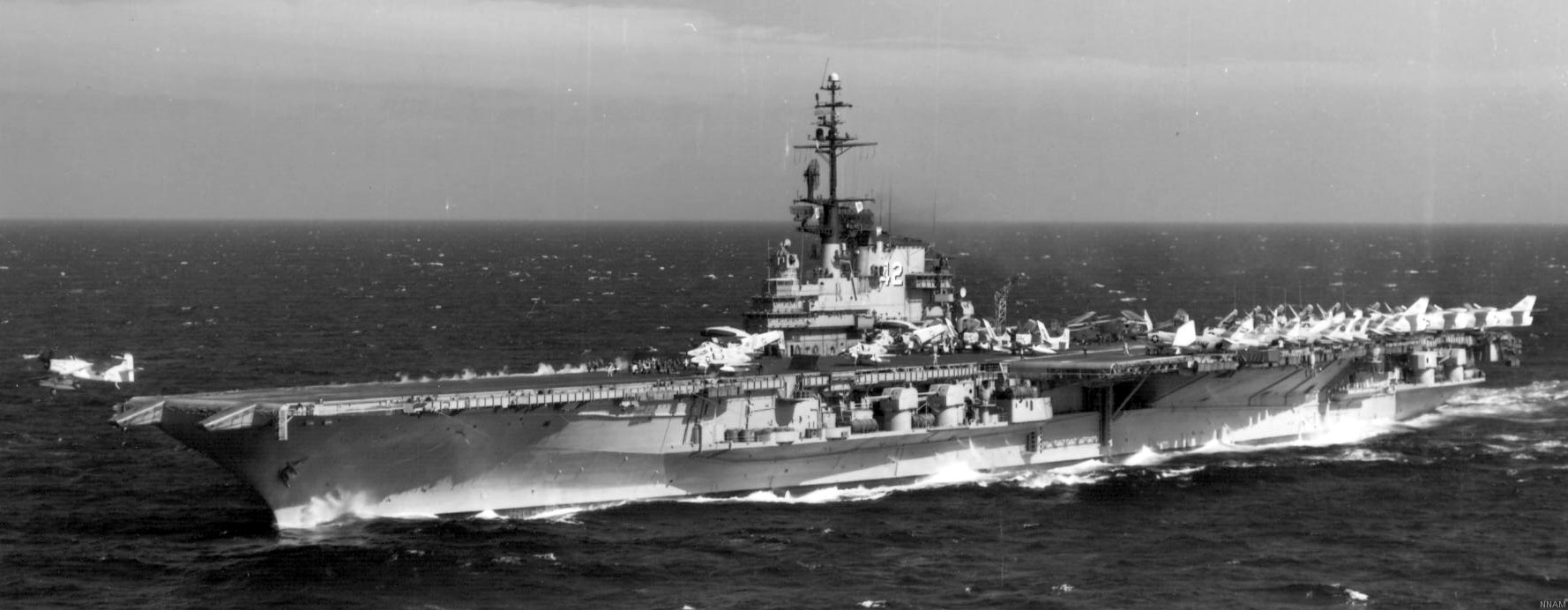 with Carrier Air Group 1 (CVG-1) embarked - March 1963 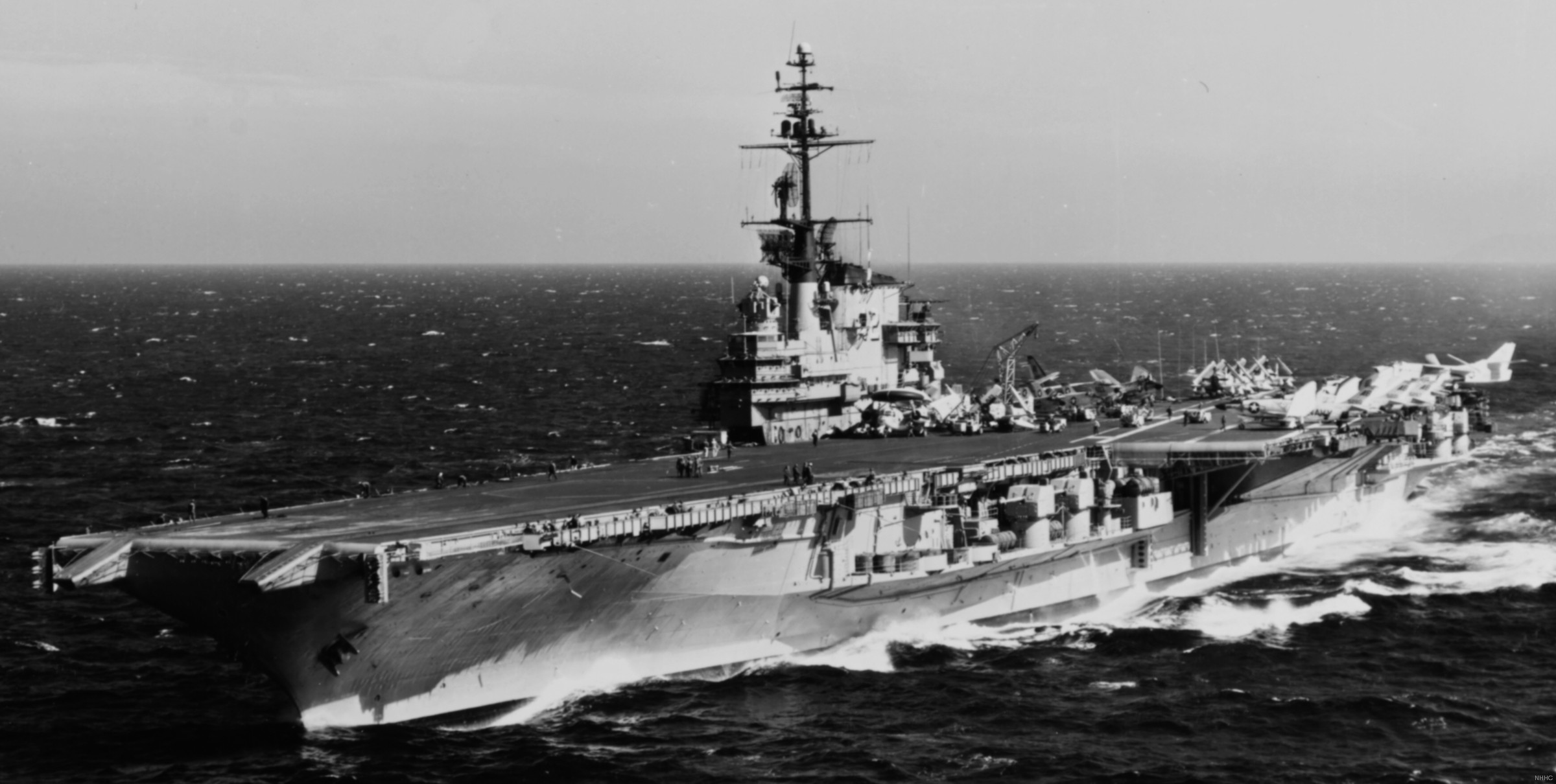 with Carrier Air Group 1 (CVG-1) embarked - March 1963 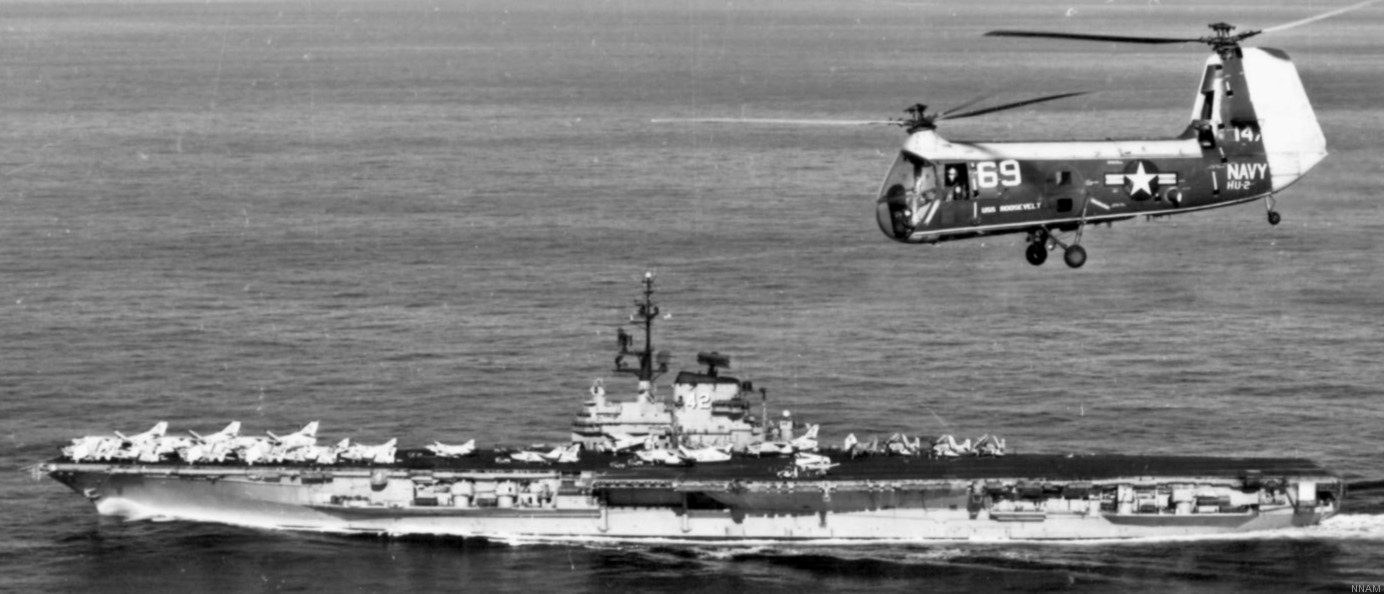 with Carrier Air Group 1 (CVG-1) embarked - January 1963 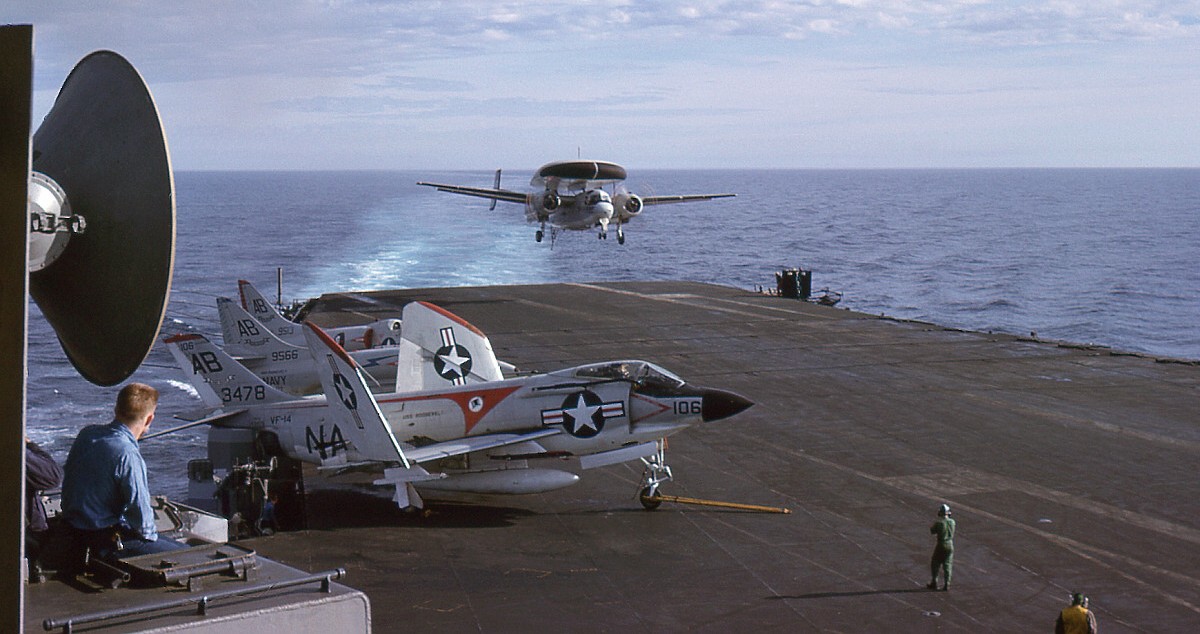 with aircraft of Carrier Air Group 1 (CVG-1) embarked - 1962-63 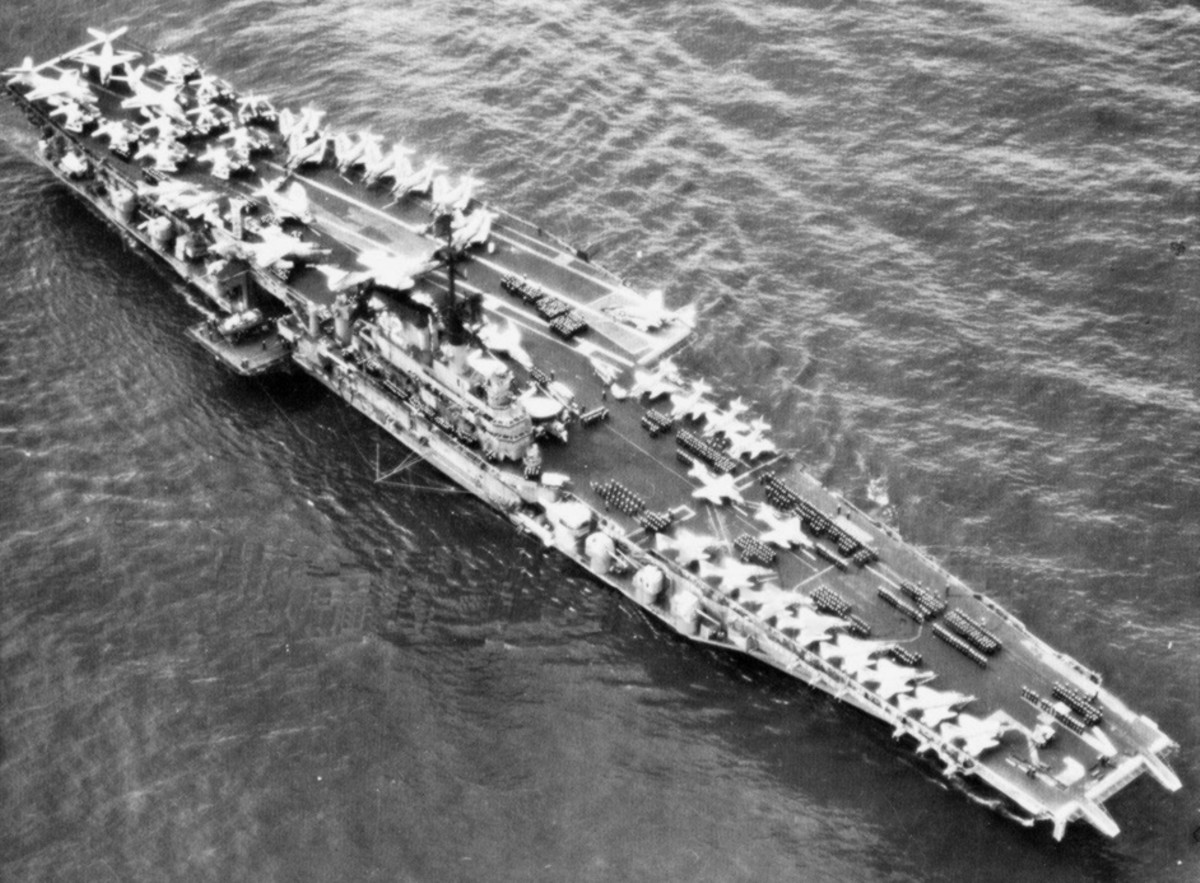 with Carrier Air Group 1 (CVG-1) embarked - 1961 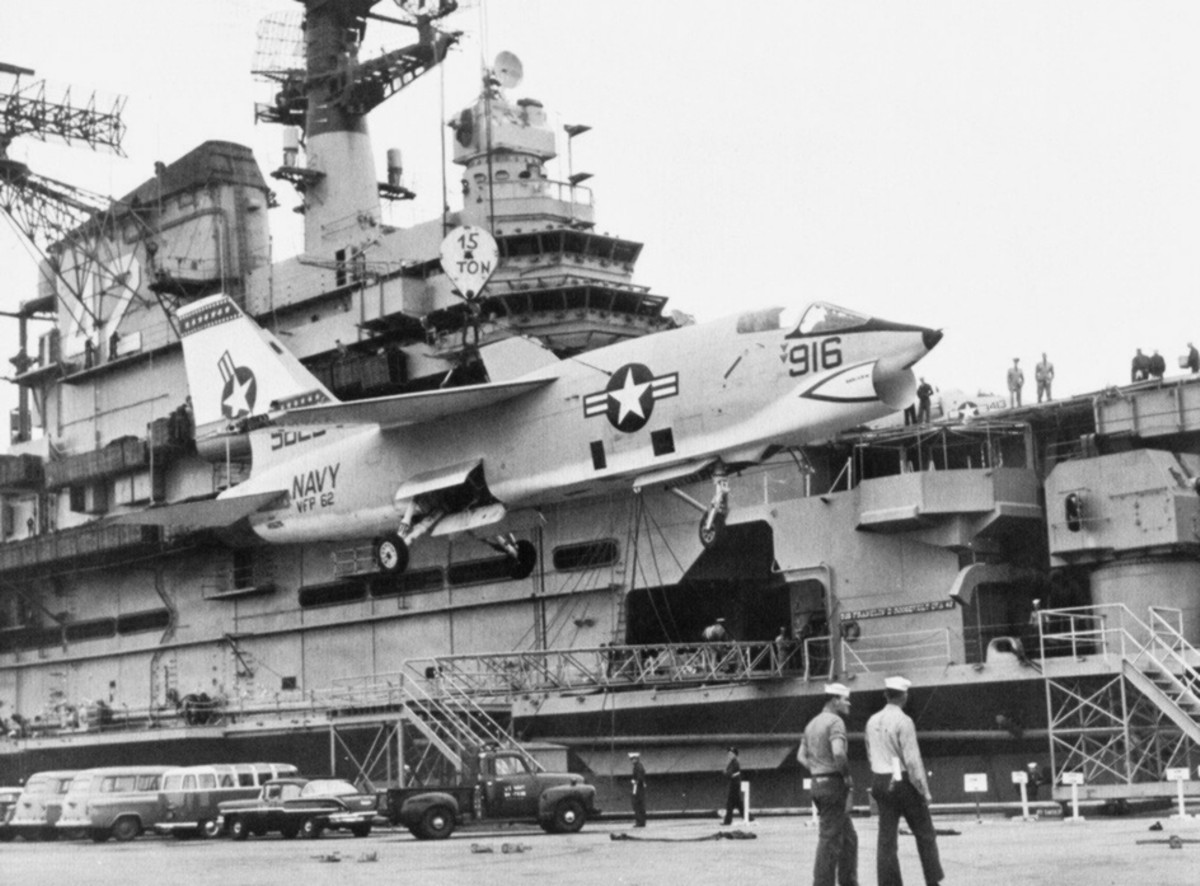 Vought F8U-1P Crusader from Photographic Reconnaissance Squadron VFP-62 Det.37 "Fighting Photos" is hoisted aboard USS Franklin D. Roosevelt (CVA 42) at Mayport, Florida, in preparation of FDR´s 1961 deployment to the Mediterranean Sea - February 1961 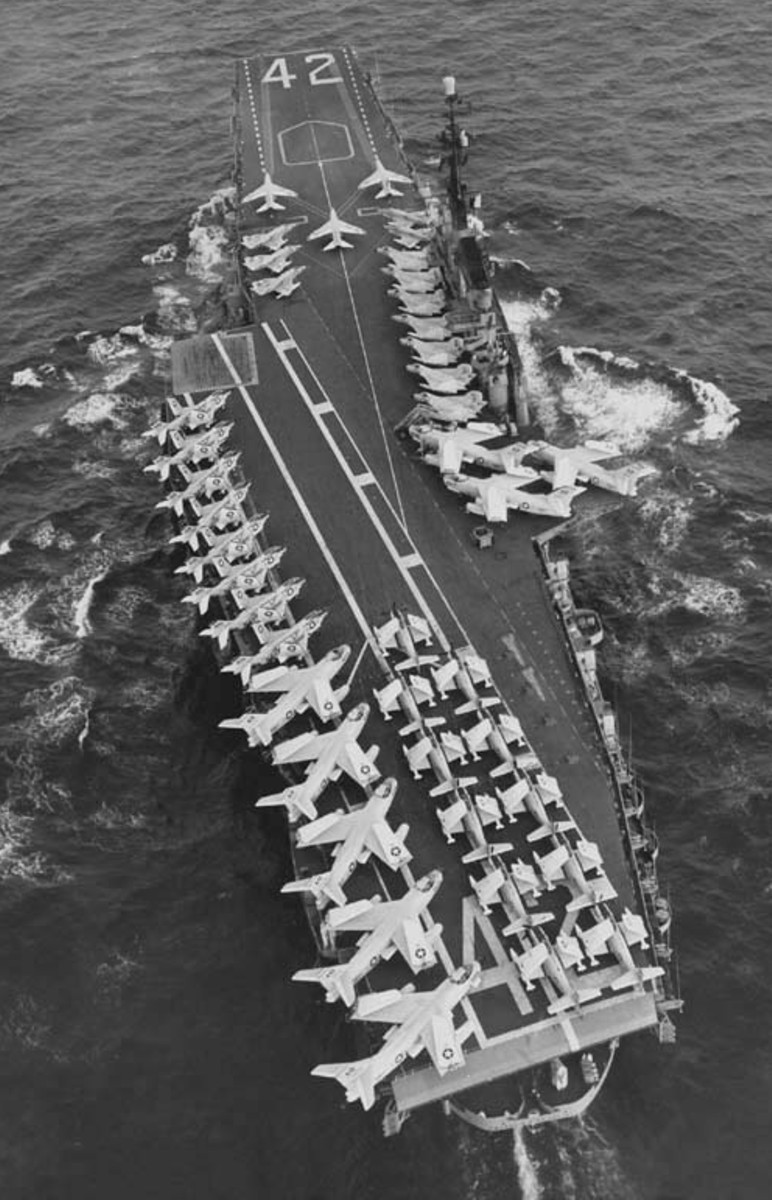 with Carrier Air Group 1 (CVG-1) embarked - 1959 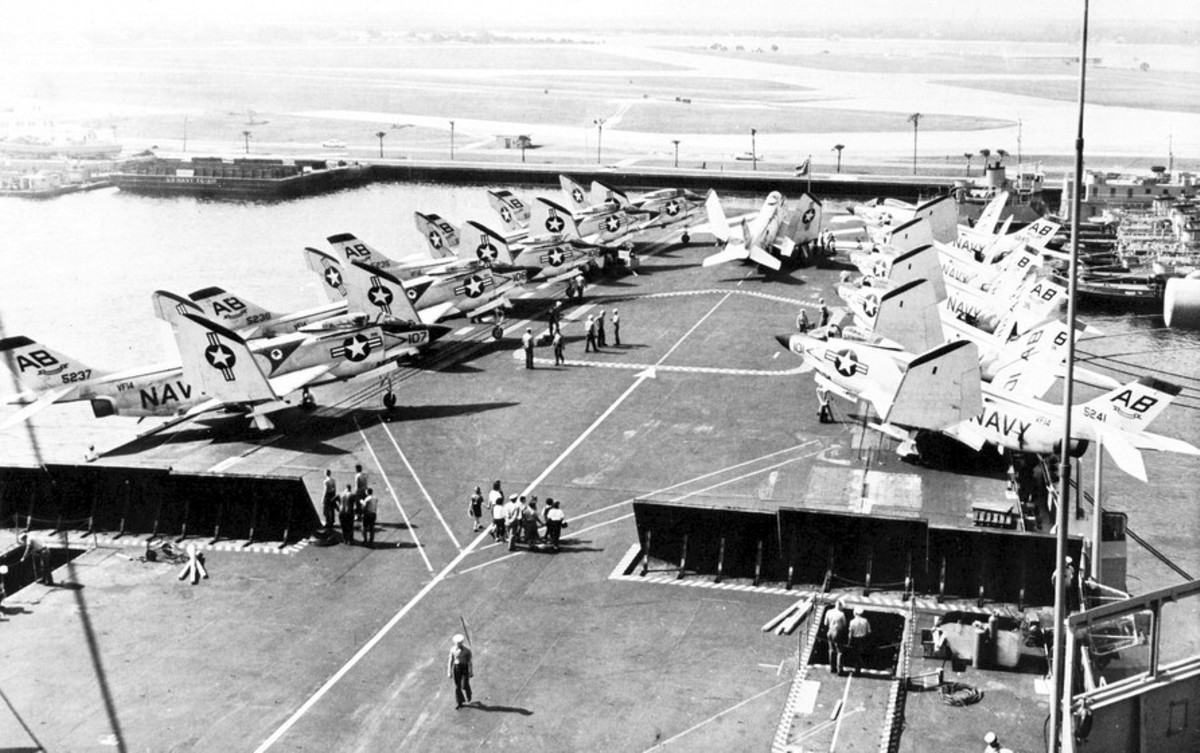 with Carrier Air Group 1 (CVG-1) embarked - 1959 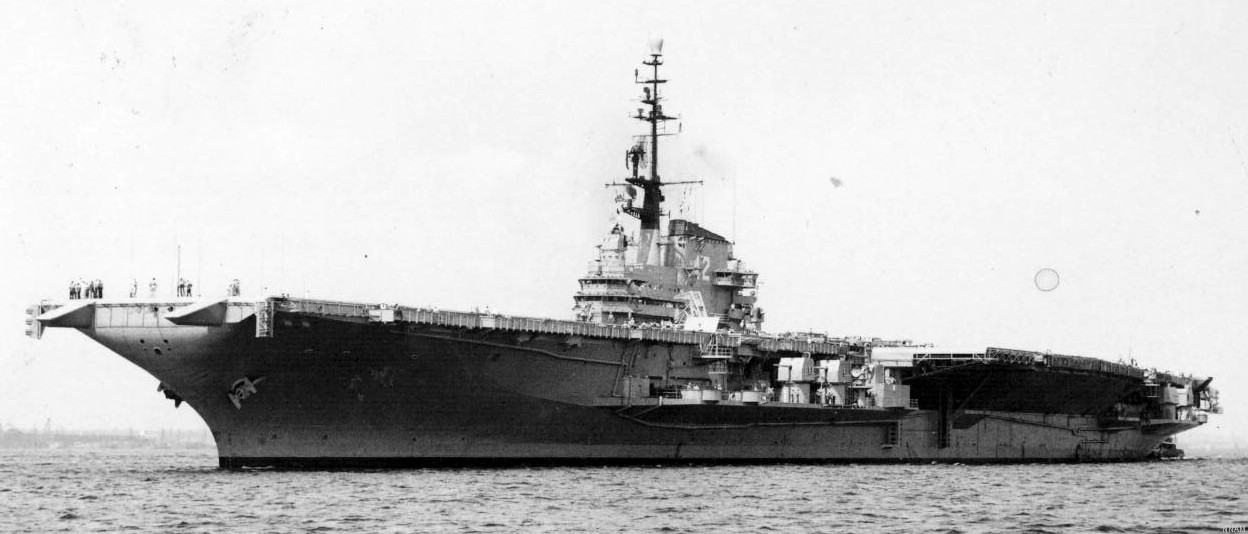 September 1958 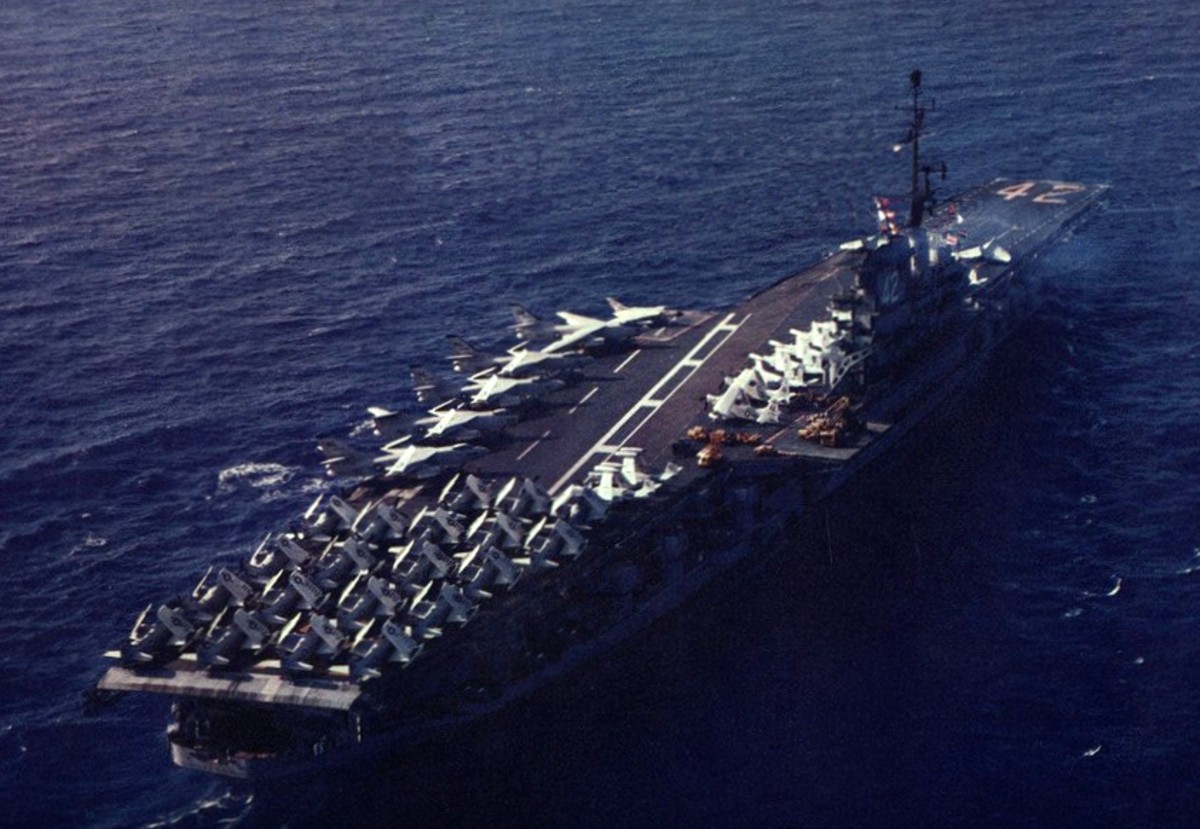 with Carrier Air Group 17 (CVG-17) embarked - circa 1957 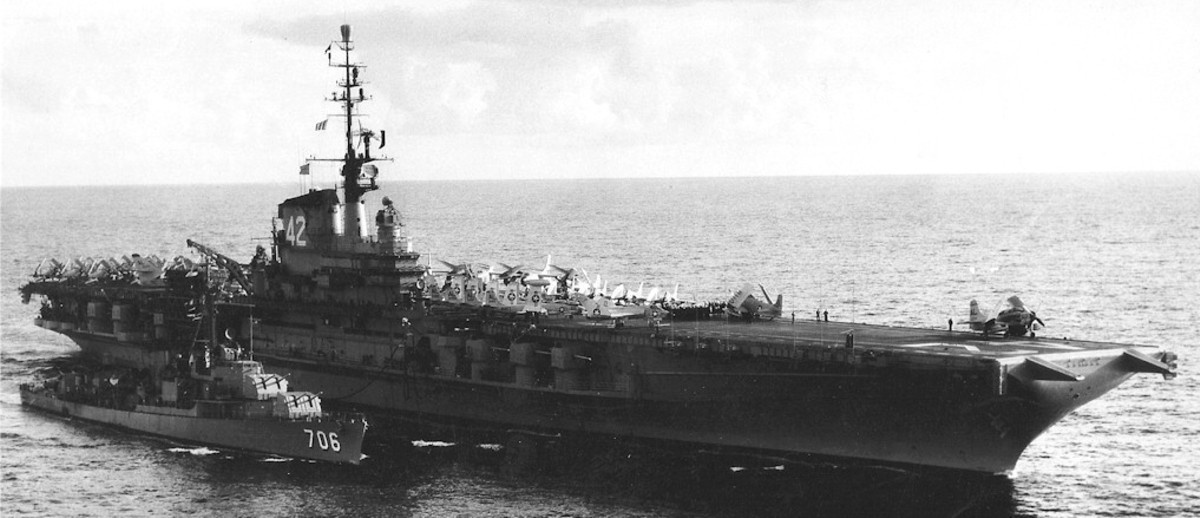 with Carrier Air Group 17 (CVG-17) embarked - circa 1957 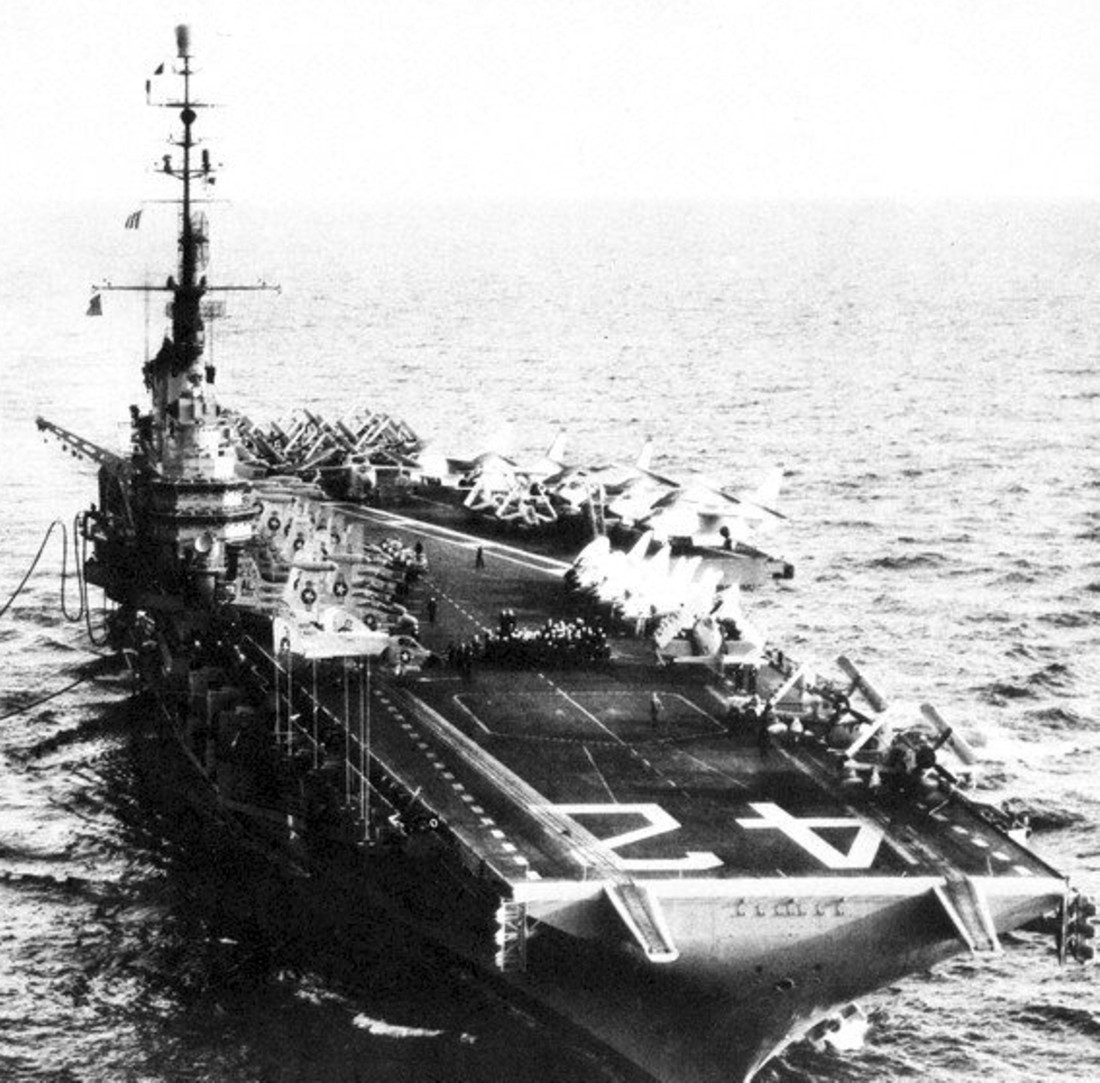 with Carrier Air Group 17 (CVG-17) embarked - circa 1957 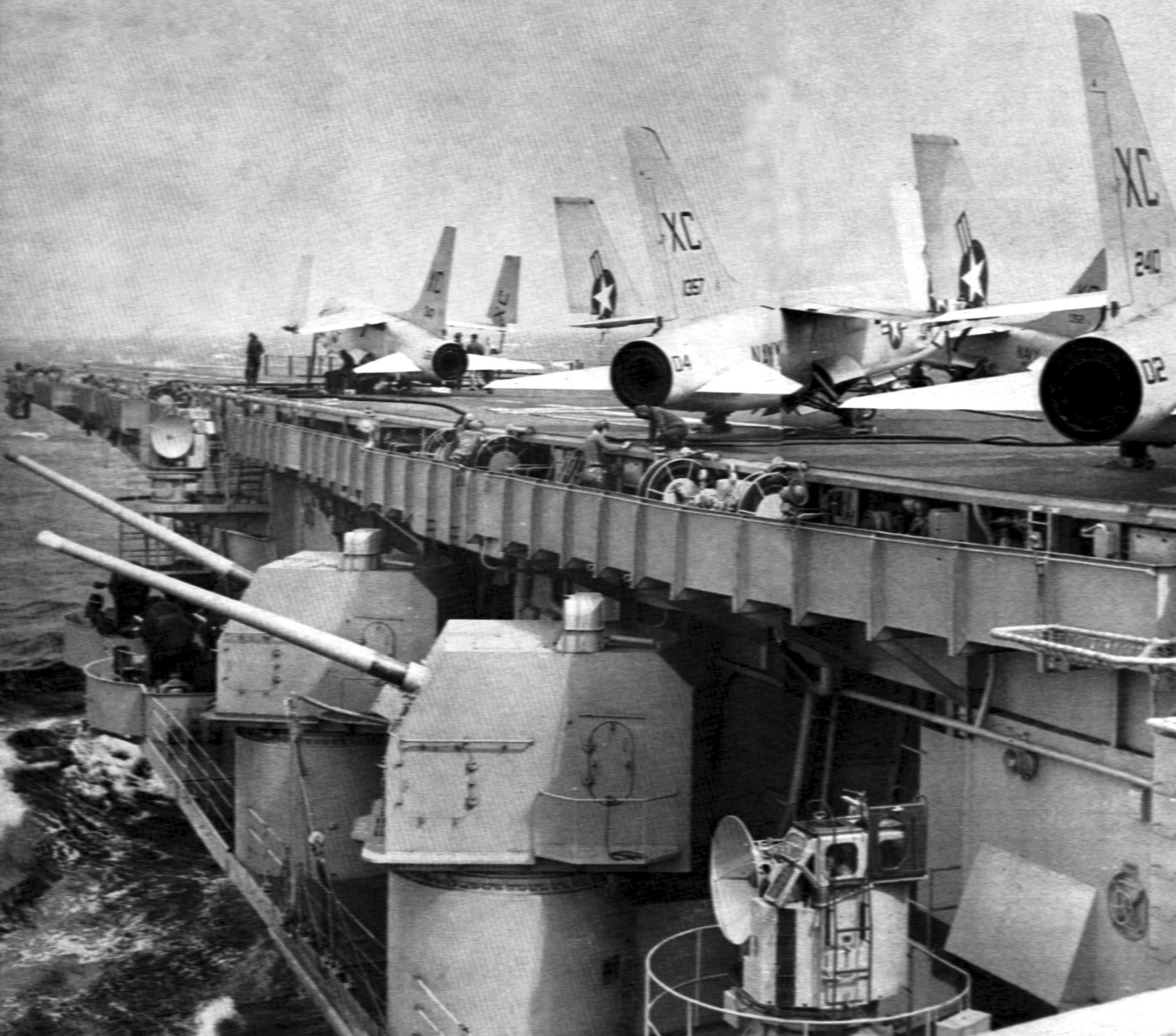 Mark 16 (5"/54-caliber) guns aboard USS Franklin D. Roosevelt - 1957 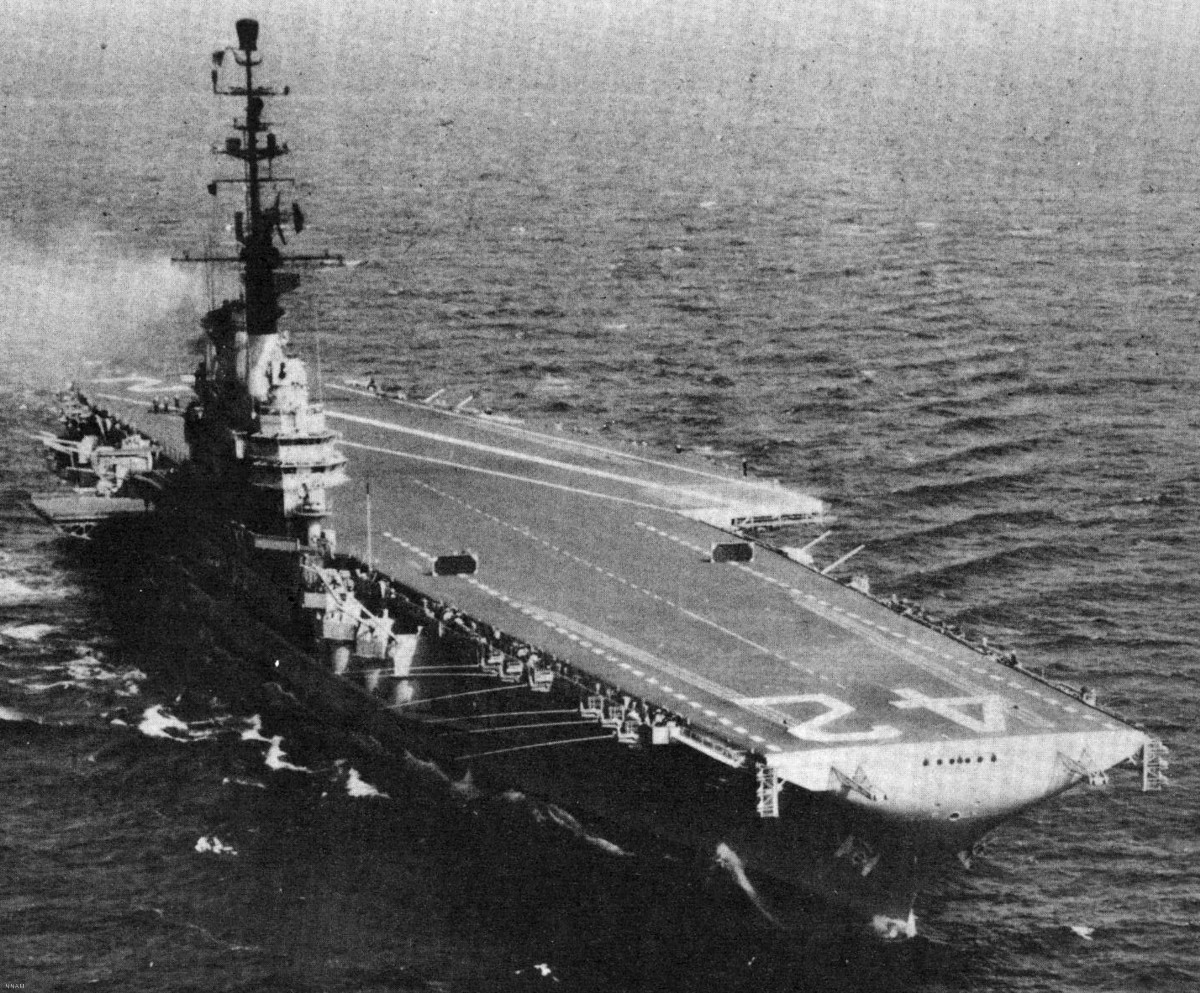 circa 1957 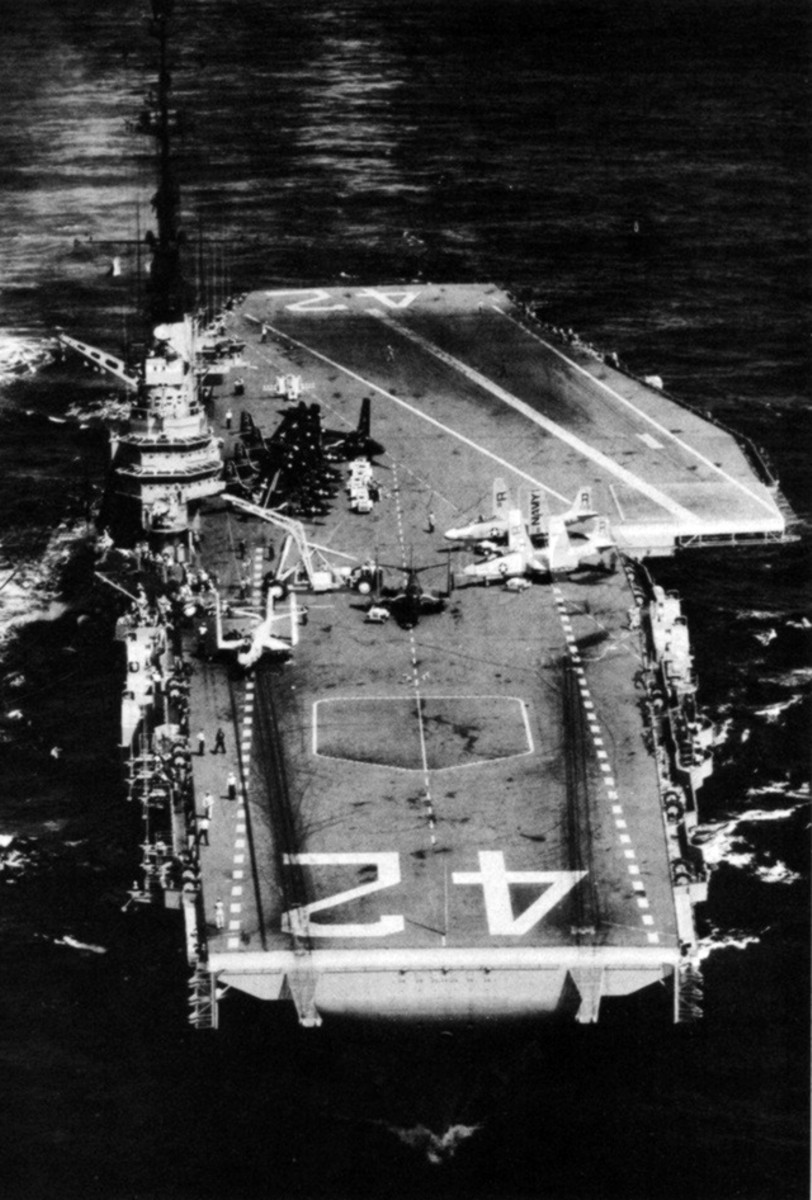 USS Franklin D. Roosevelt, with CVG-17 embarked, during her voyage from the Puget Sound Naval Shipyard, Washington to her new homeport Mayport, Florida, following her SCB-110 modernisation. The FDR circumnavigated South America via Cape Hoorn from 4 June to 8 August 1956 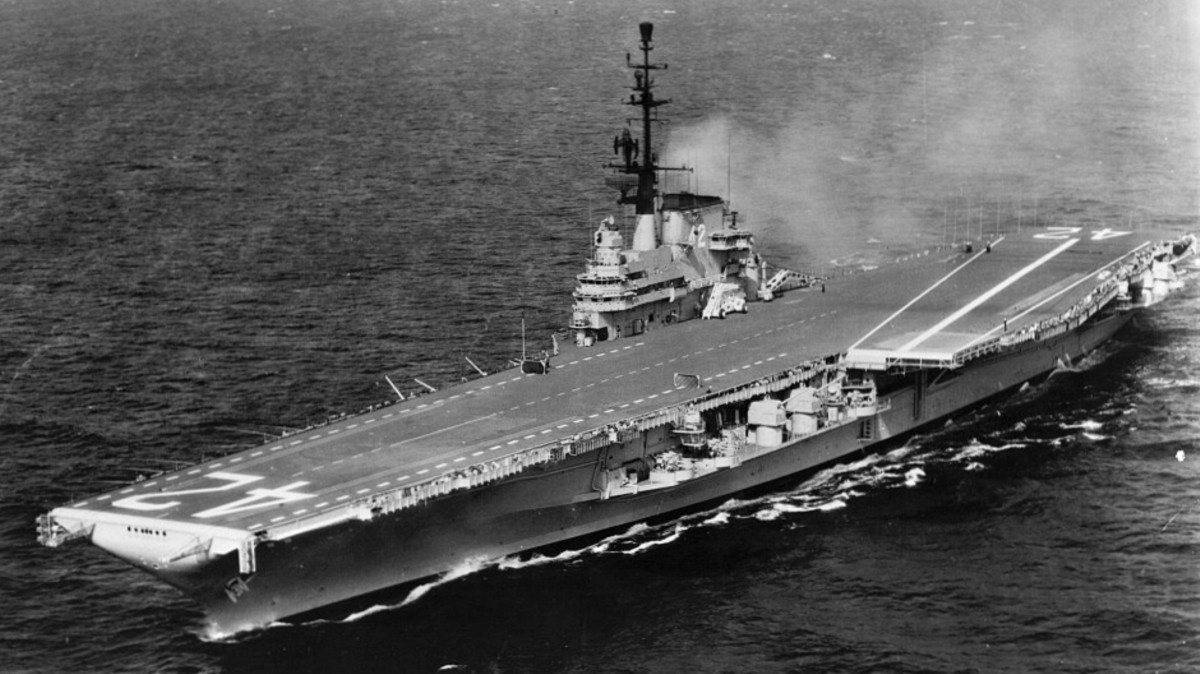 after her SCB-110 conversion - June 1956 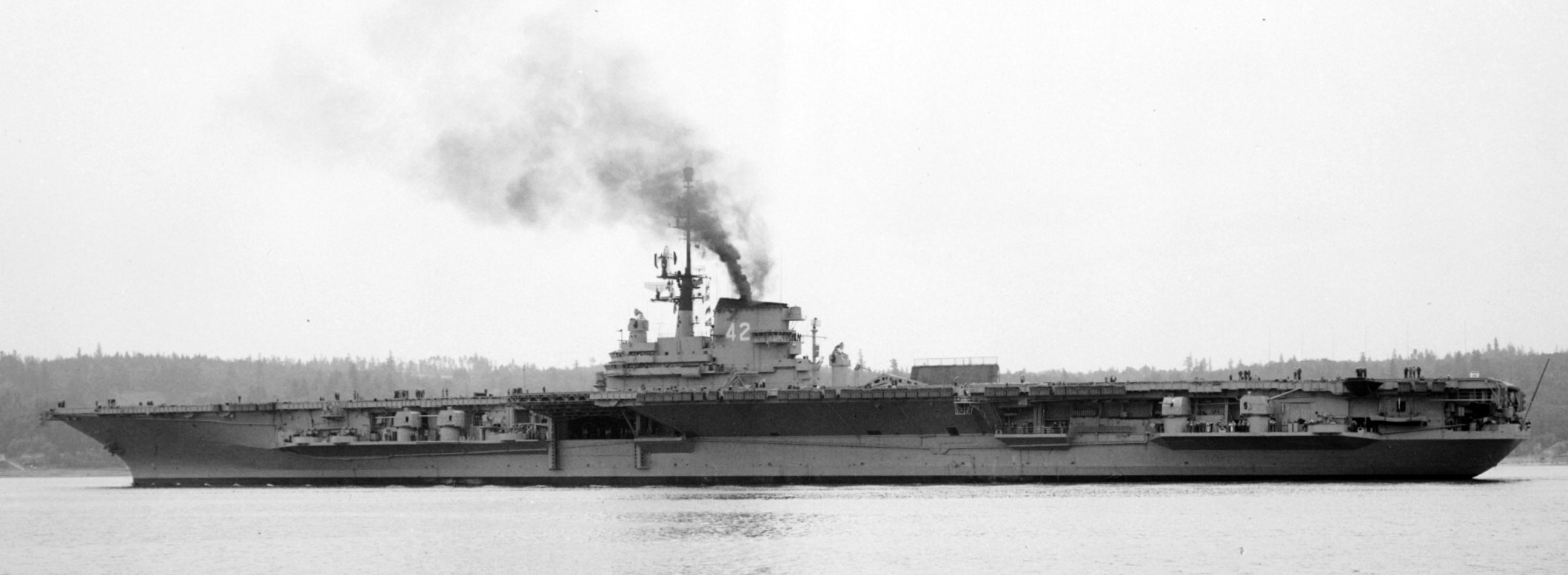 after her SCB-110 conversion - June 1956 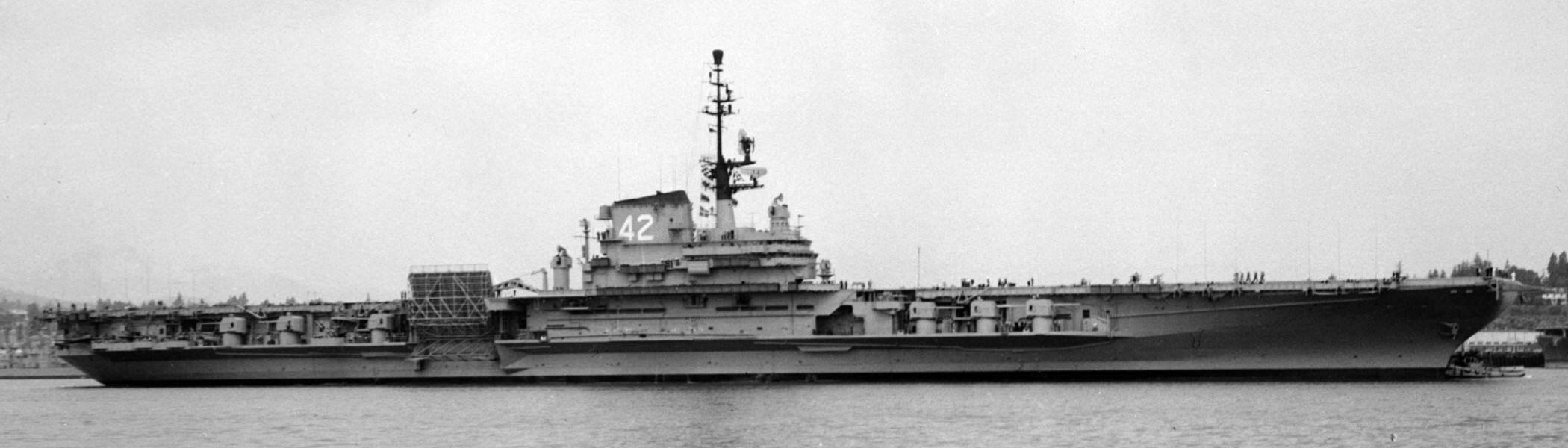 Puget Sound Naval Shipyard, Washington - June 1956 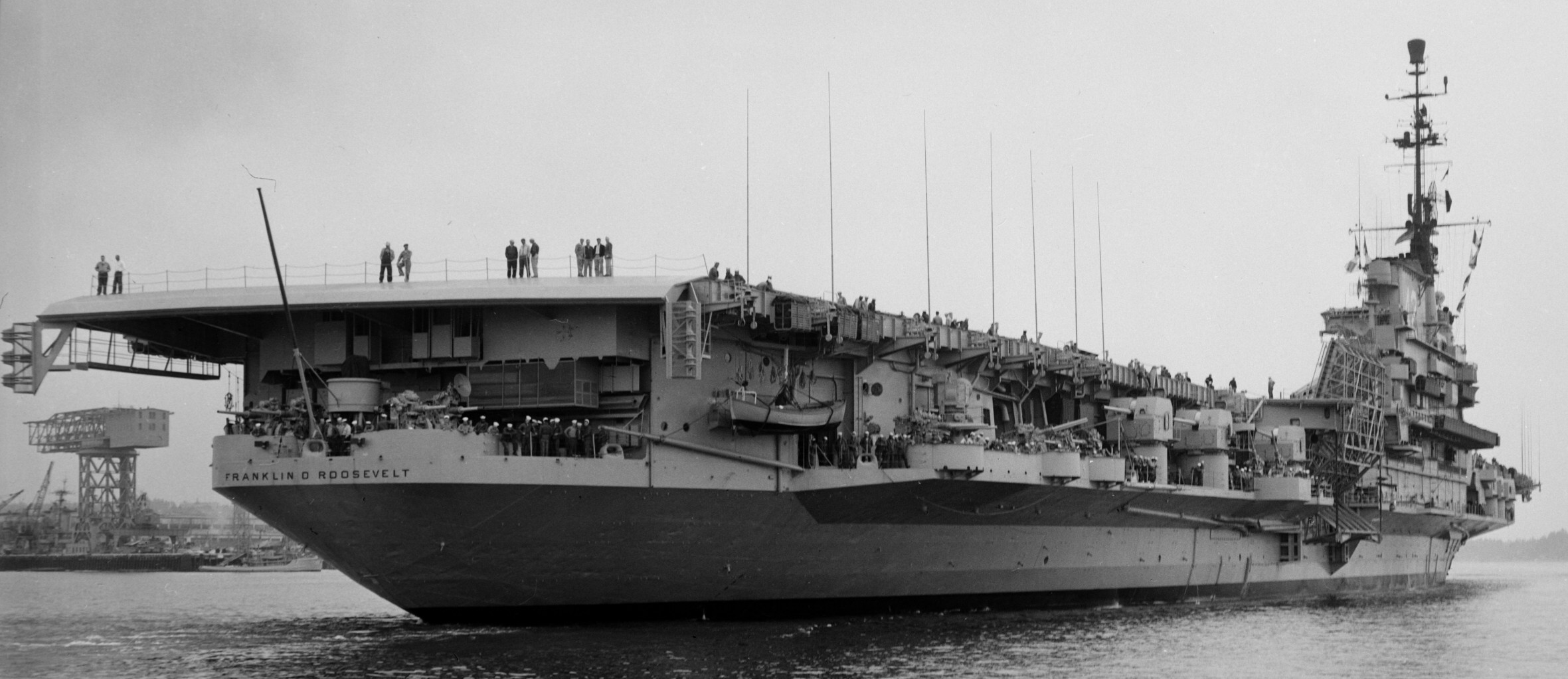 Puget Sound Naval Shipyard, Washington - June 1956 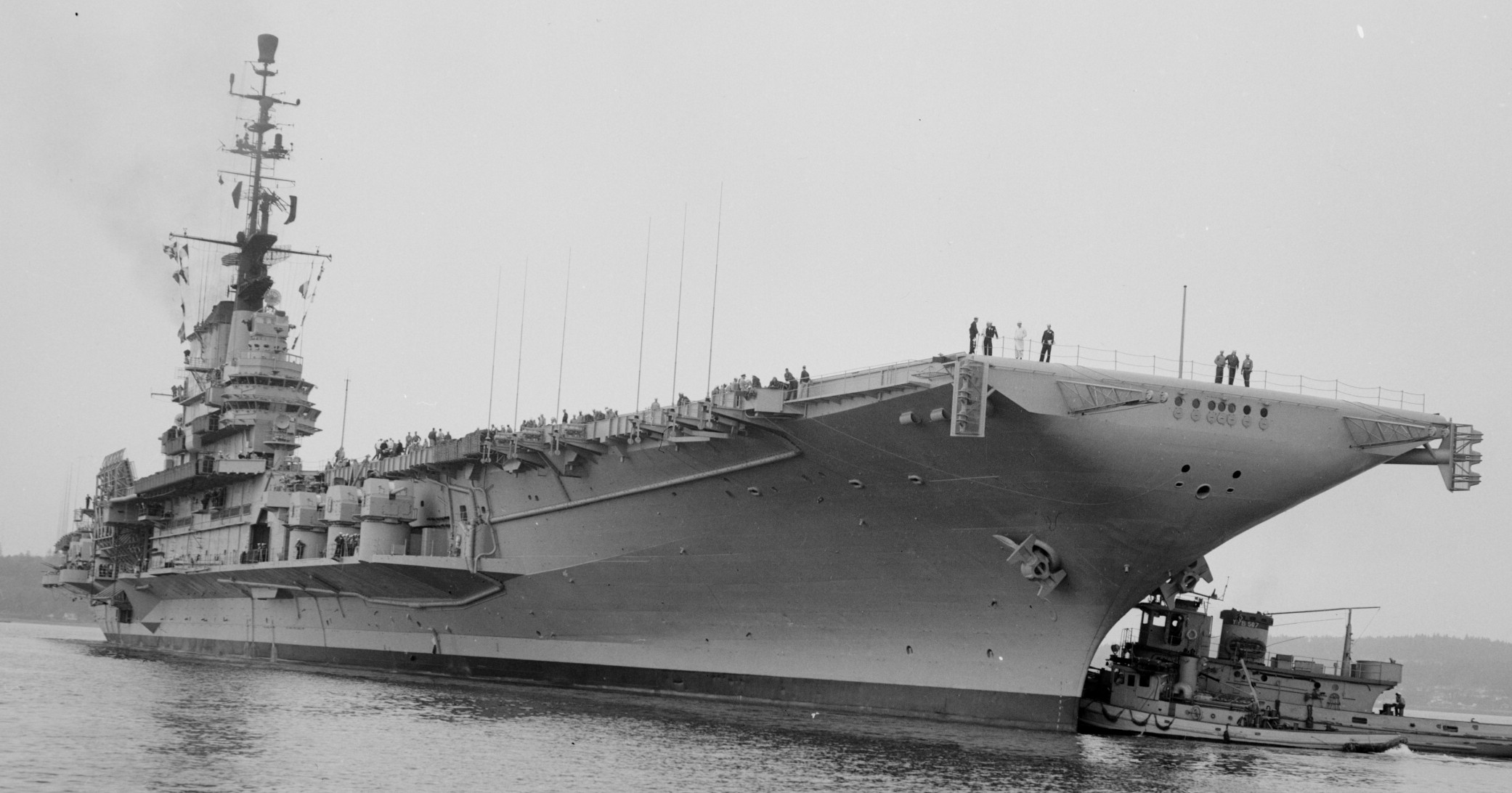 Puget Sound Naval Shipyard, Washington - June 1956 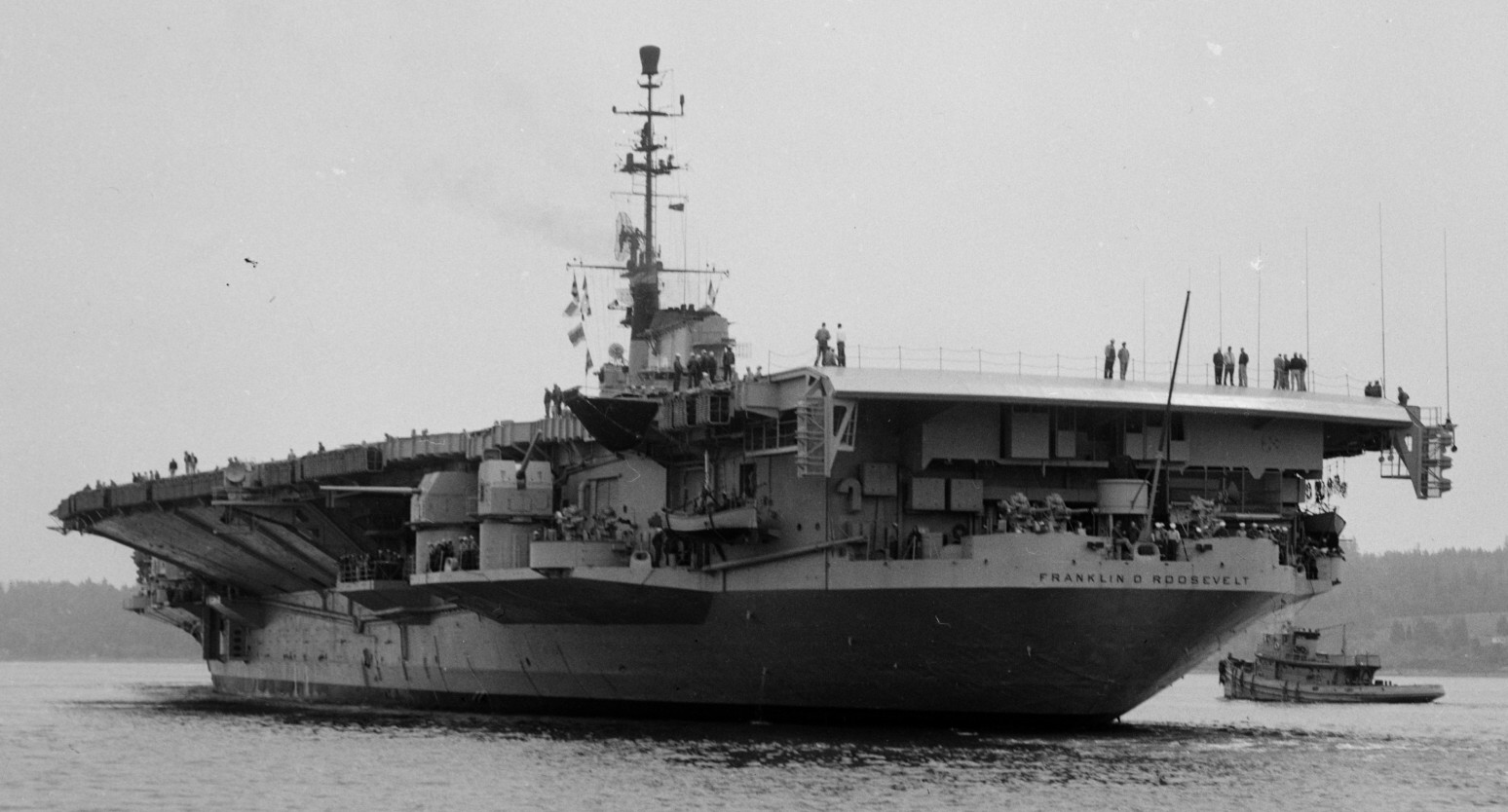 Puget Sound Naval Shipyard, Washington - June 1956 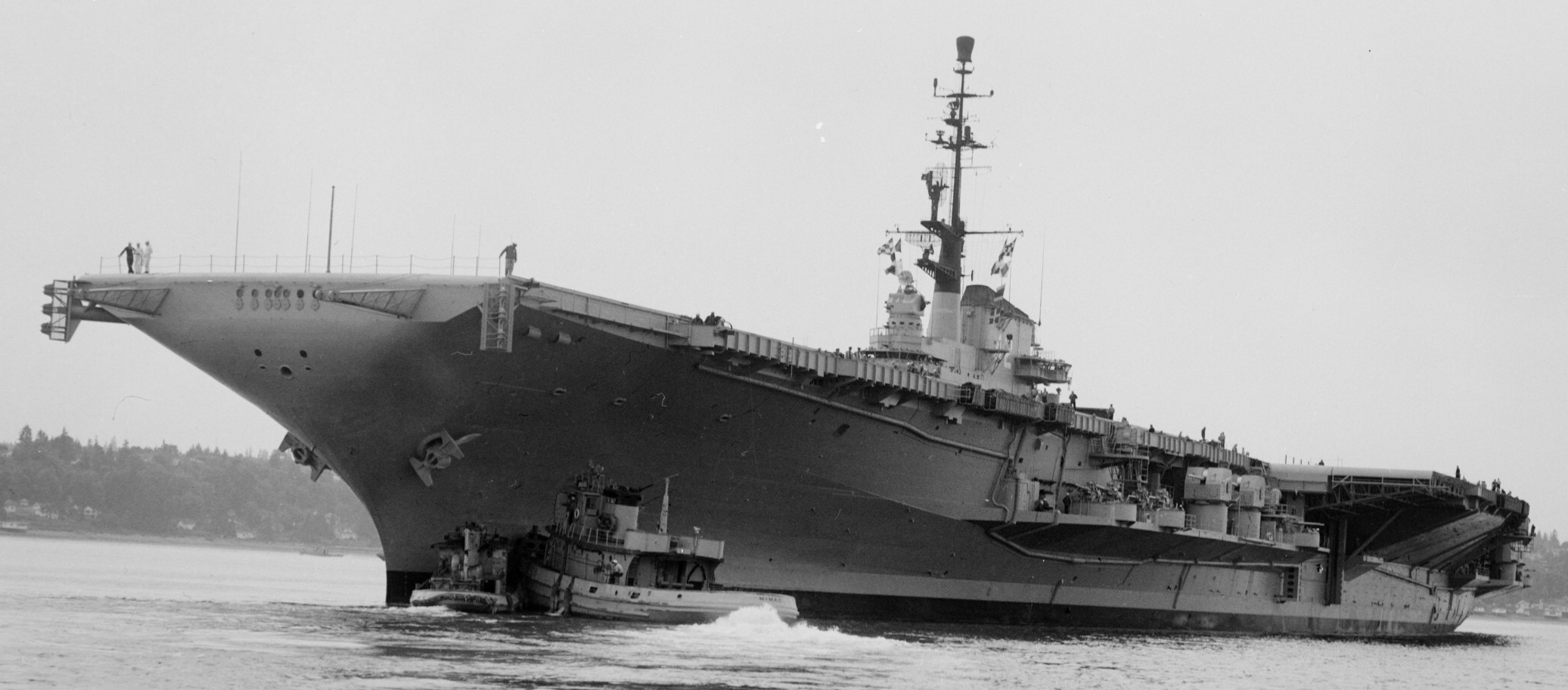 Puget Sound Naval Shipyard, Washington - June 1956 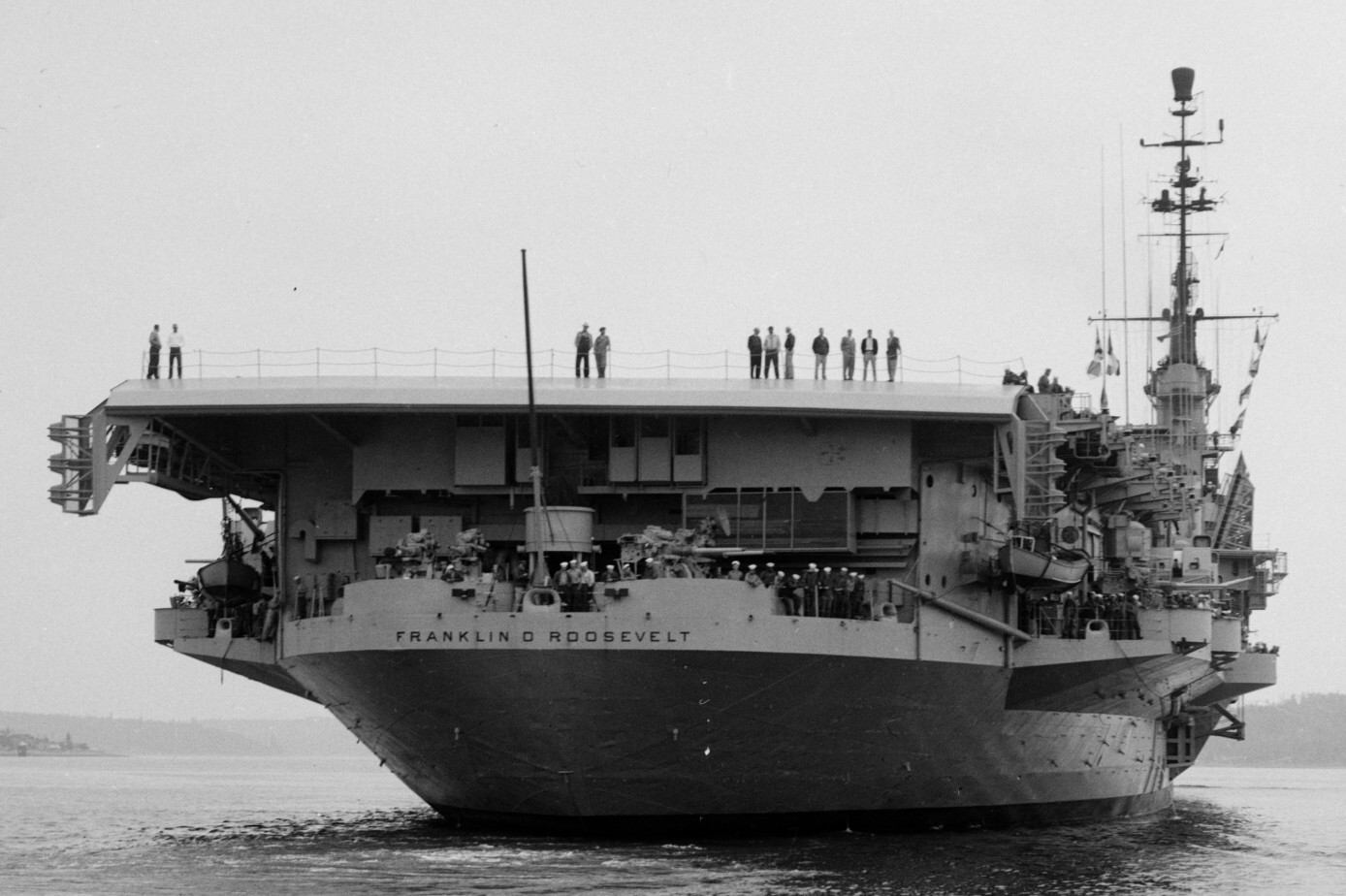 Puget Sound Naval Shipyard, Washington - June 1956 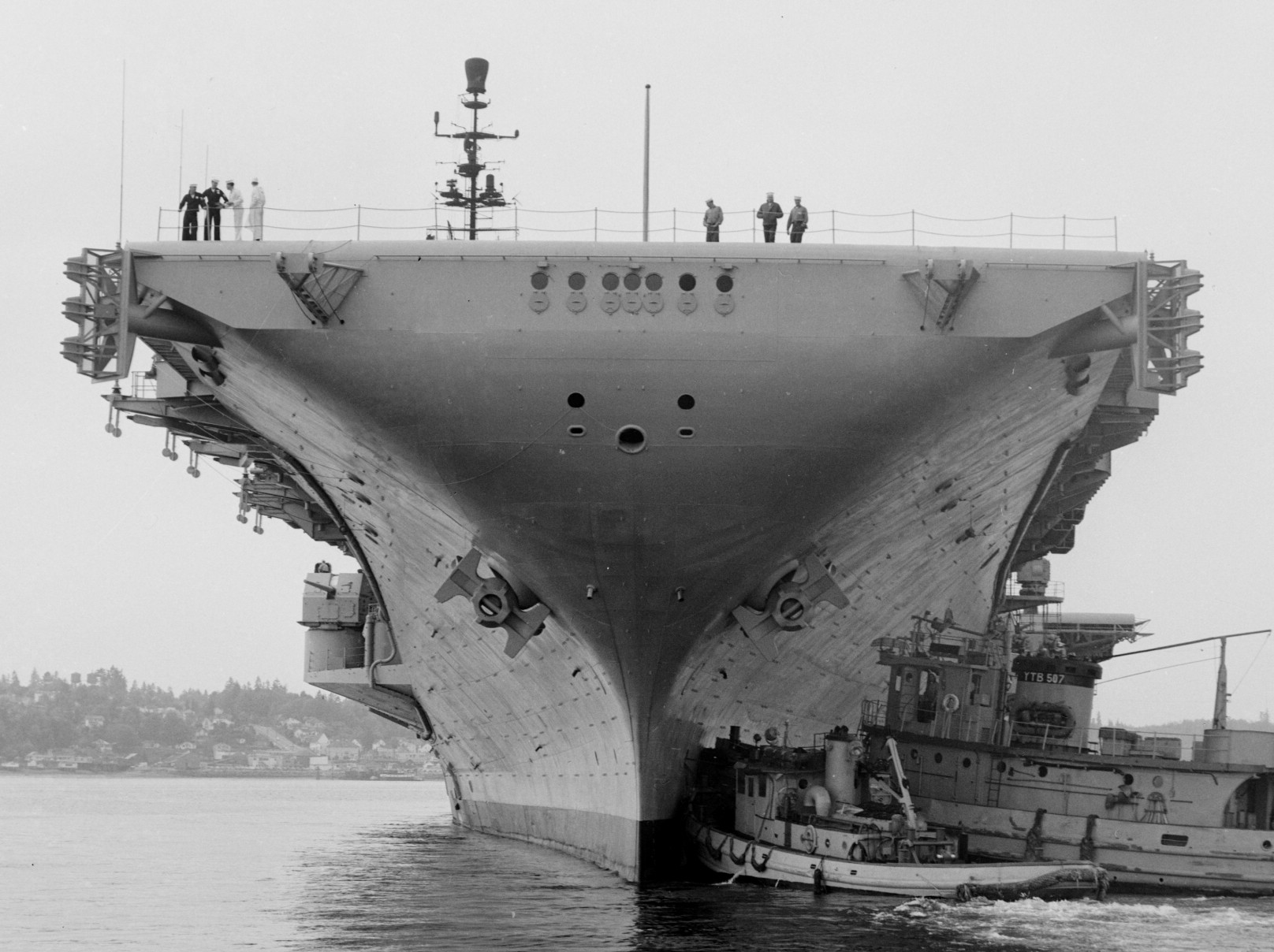 Puget Sound Naval Shipyard, Washington - June 1956 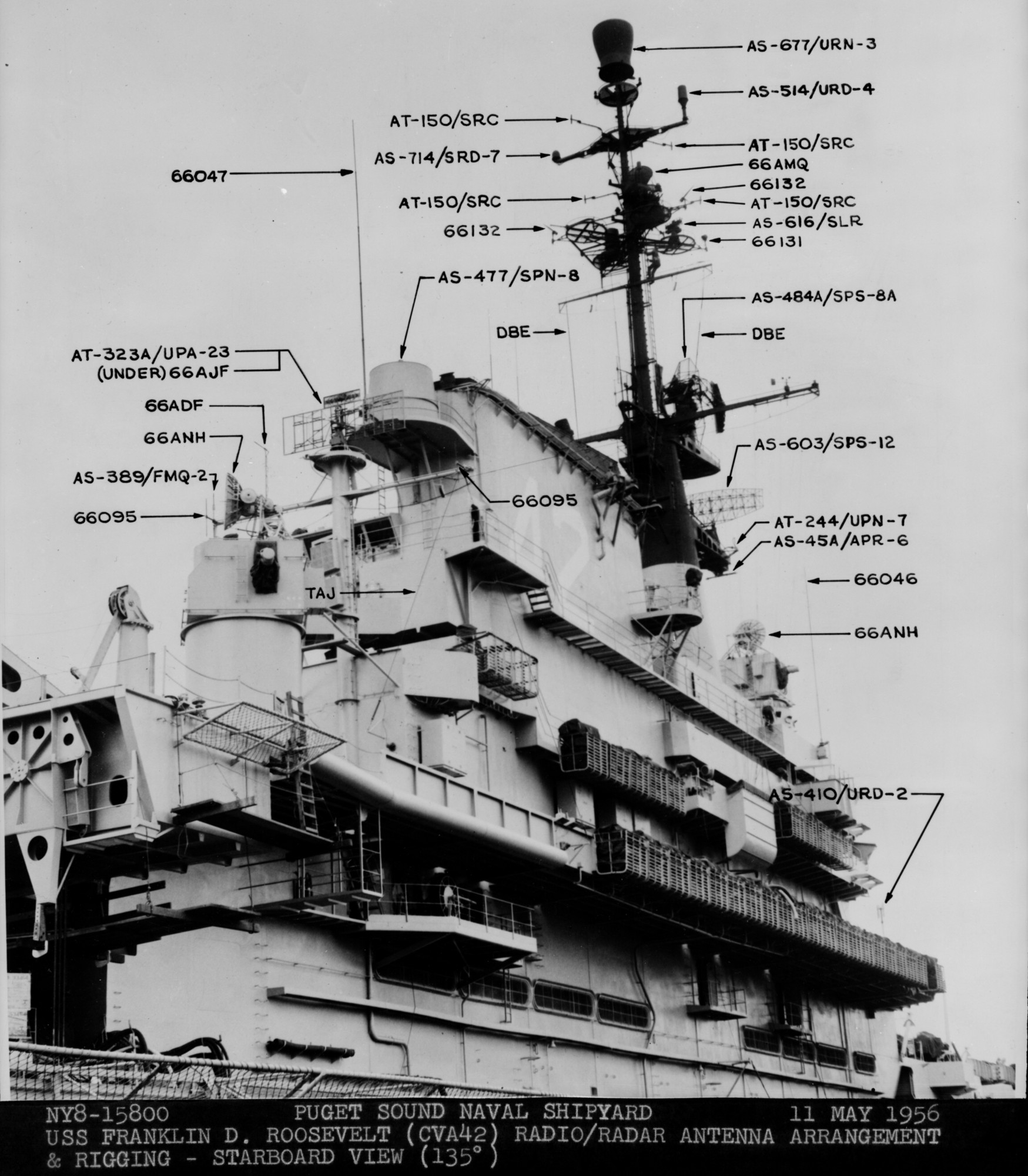 May 1956 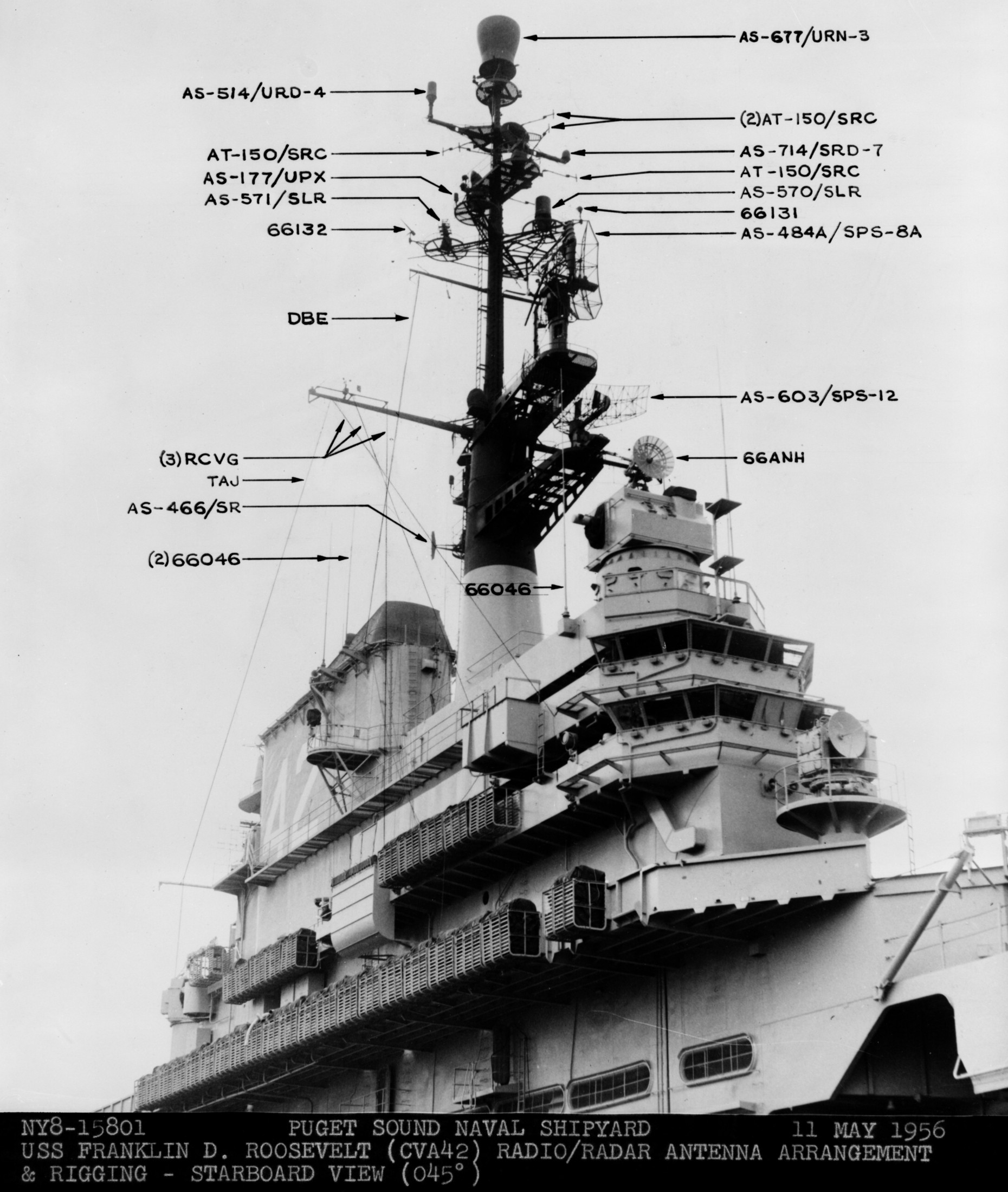 May 1956 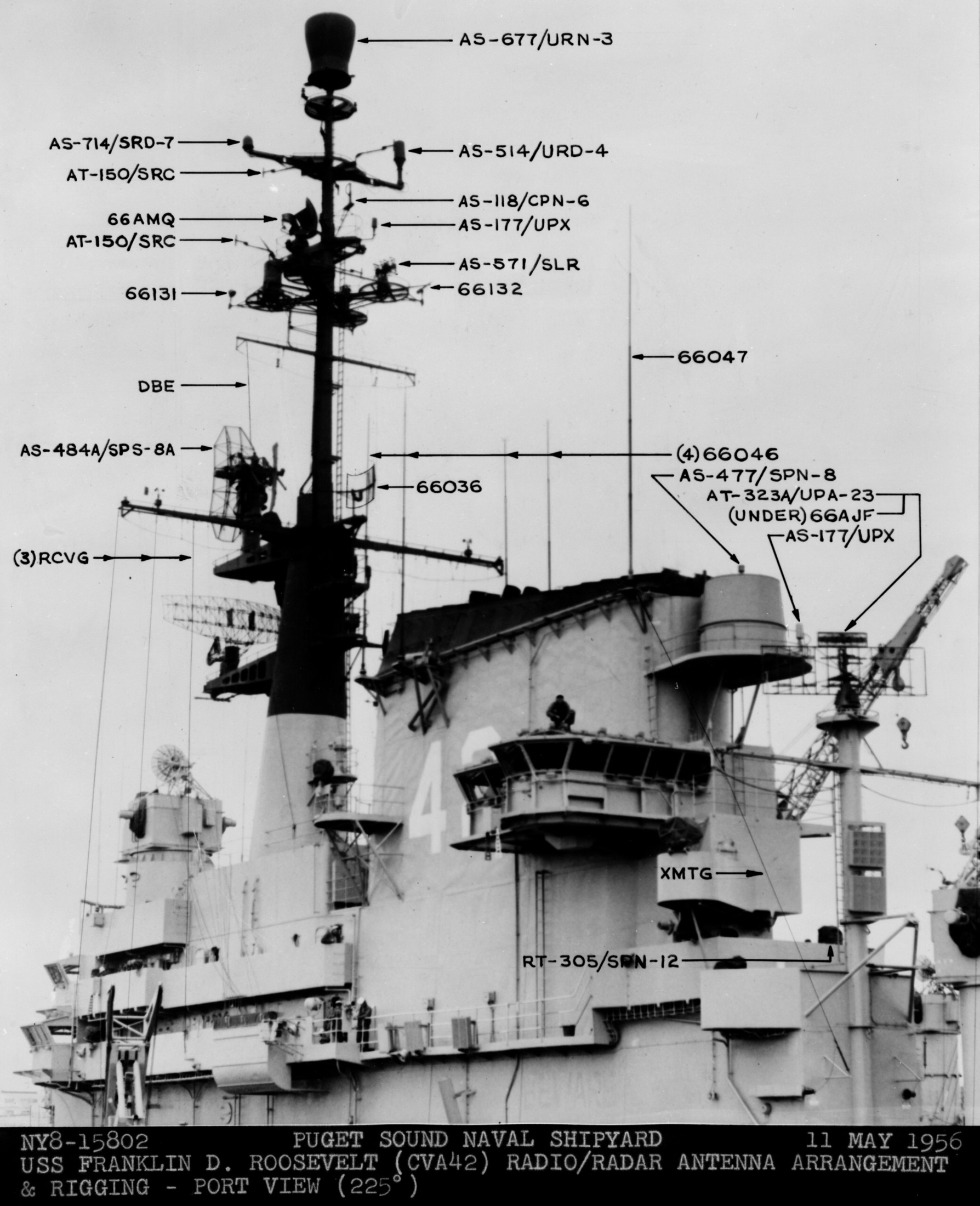 May 1956 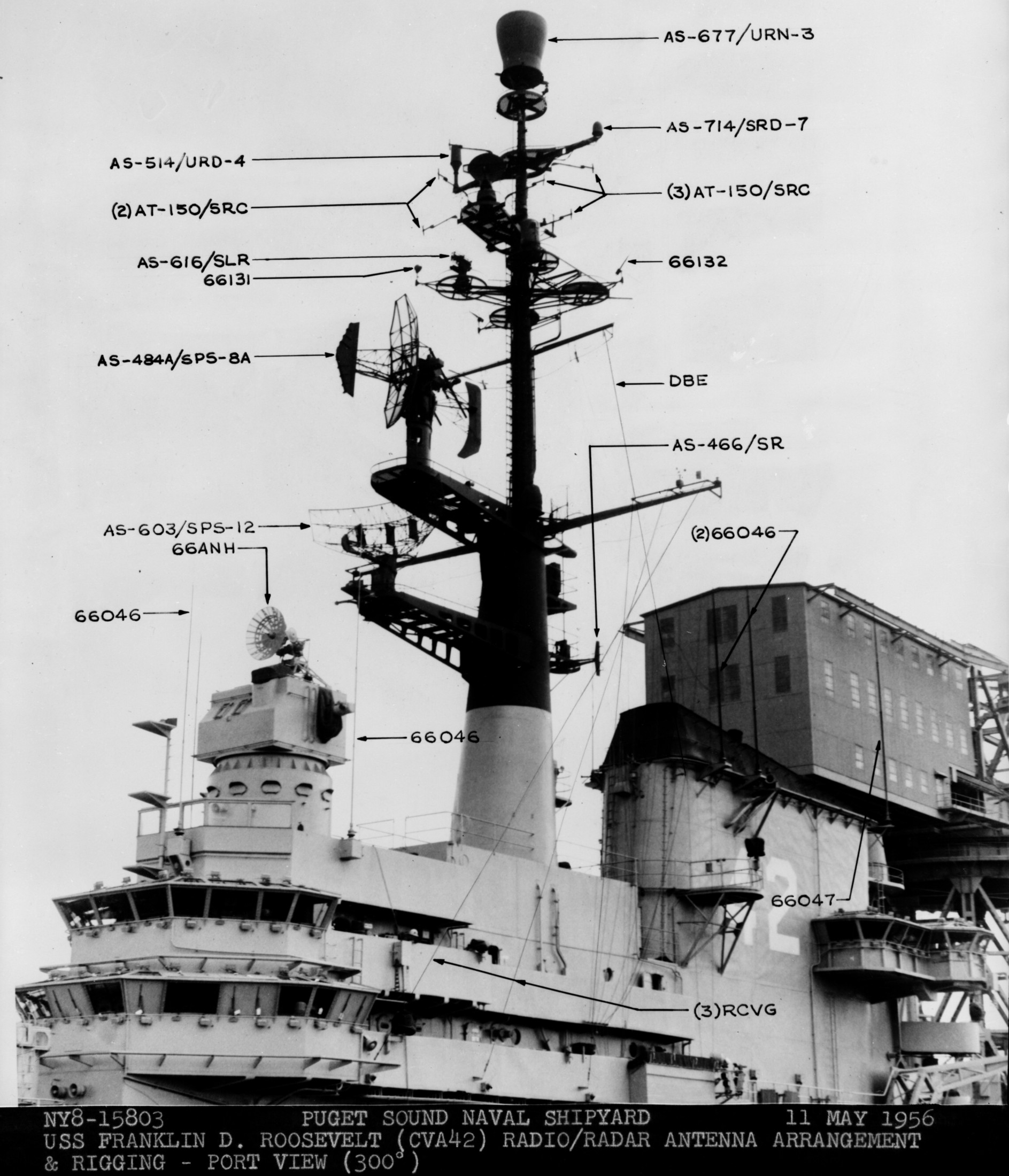 May 1956 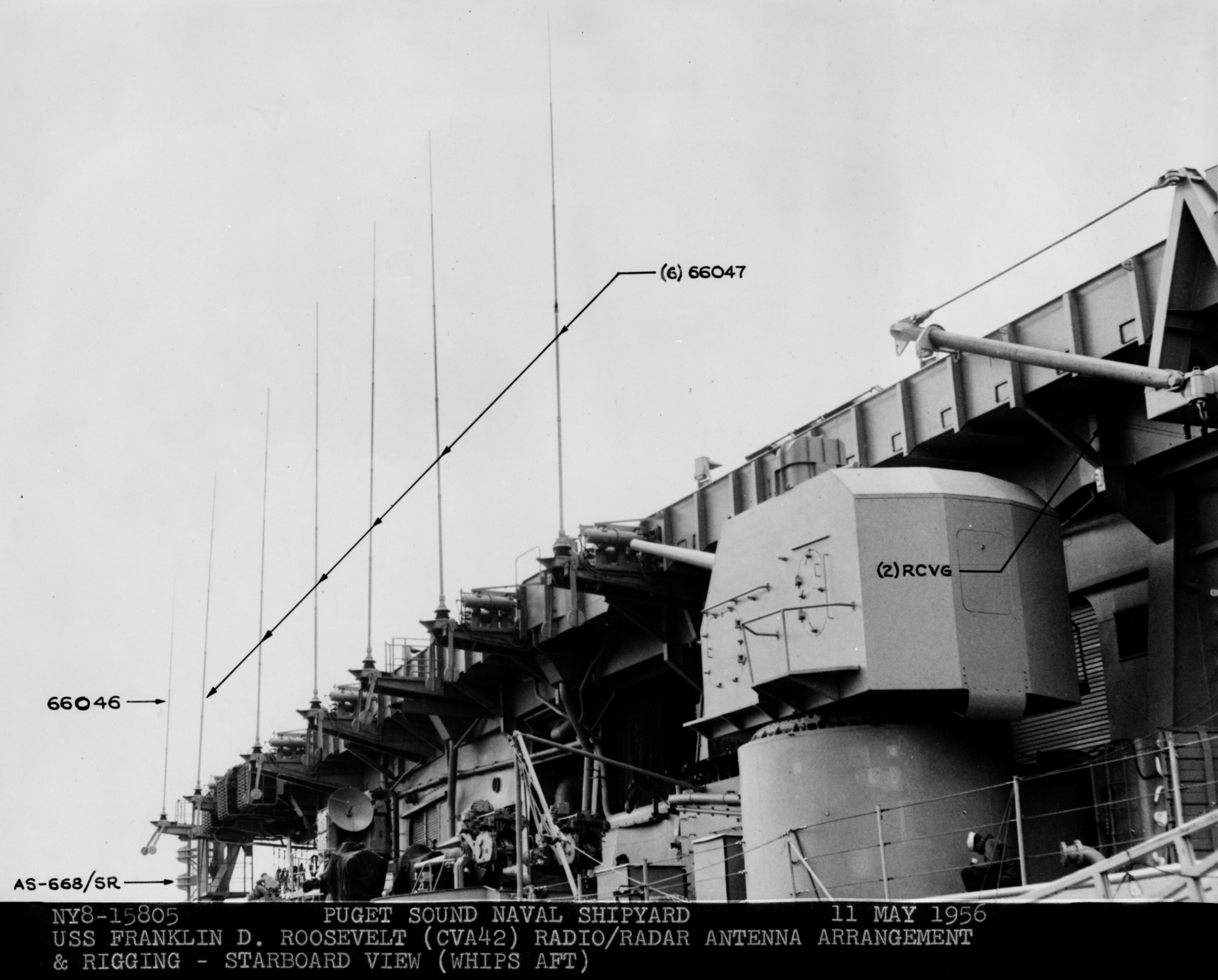 May 1956 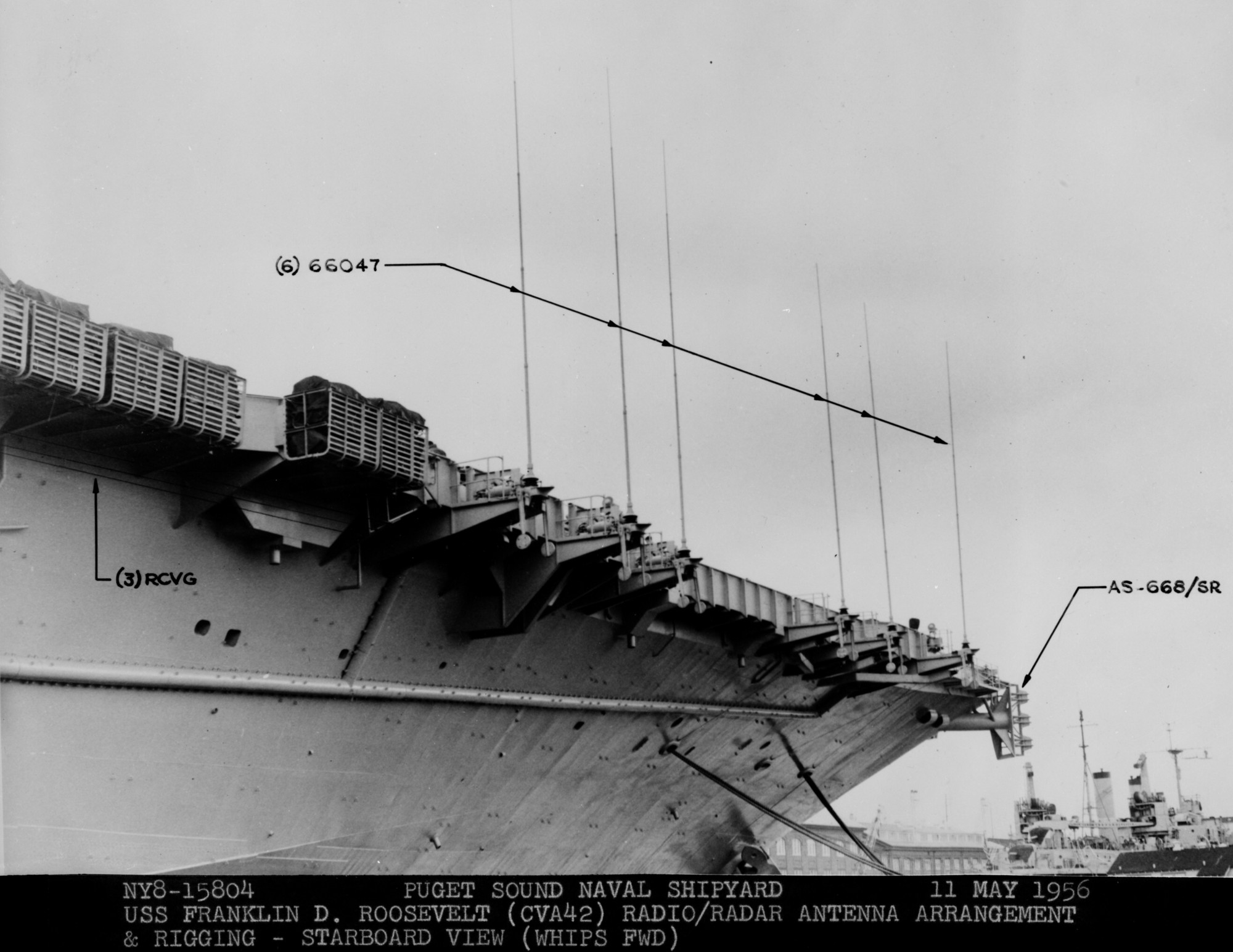 May 1956 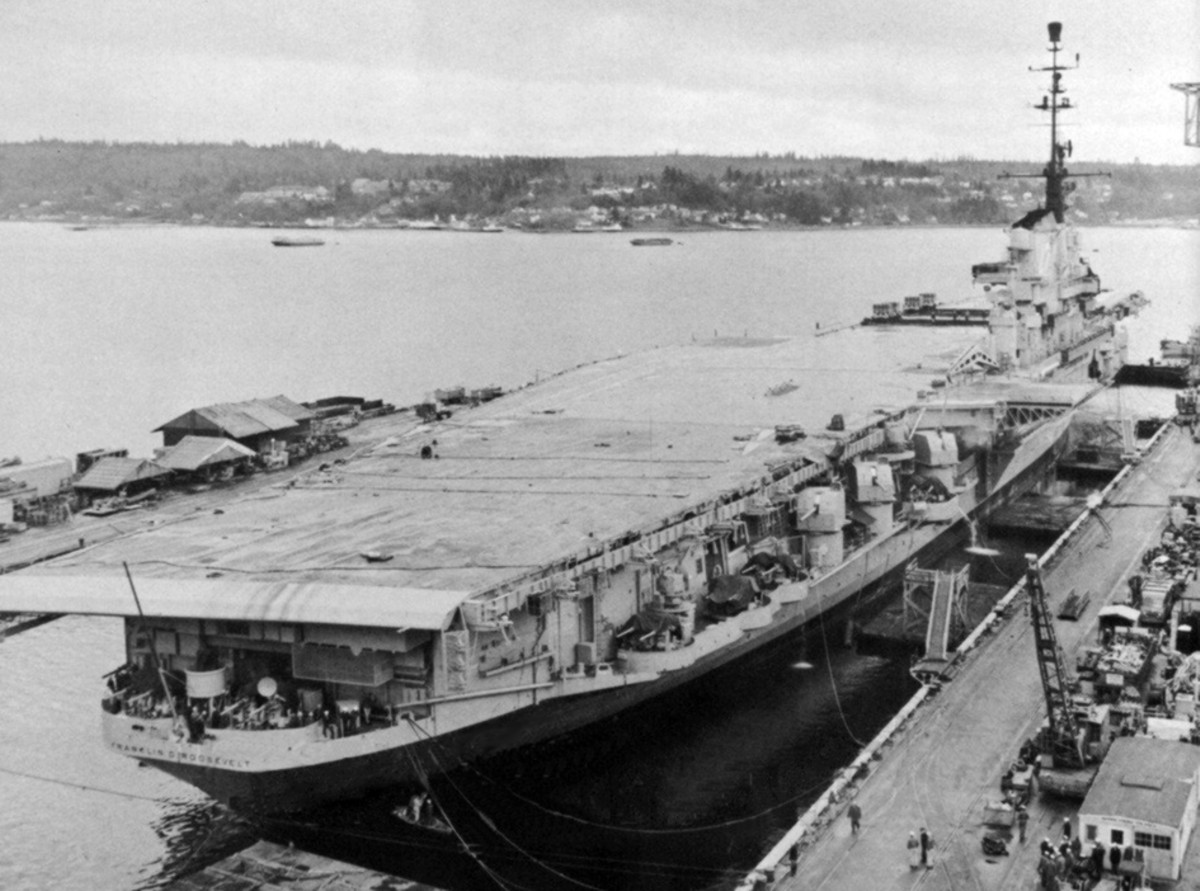 USS Franklin D. Roosevelt (CVA 42) during her SCB-110 modernisation at the Puget Sound Naval Shipyard which lasted from 5 March 1954 to June 1956 SCB-110 modification: March 1954 - June 1956 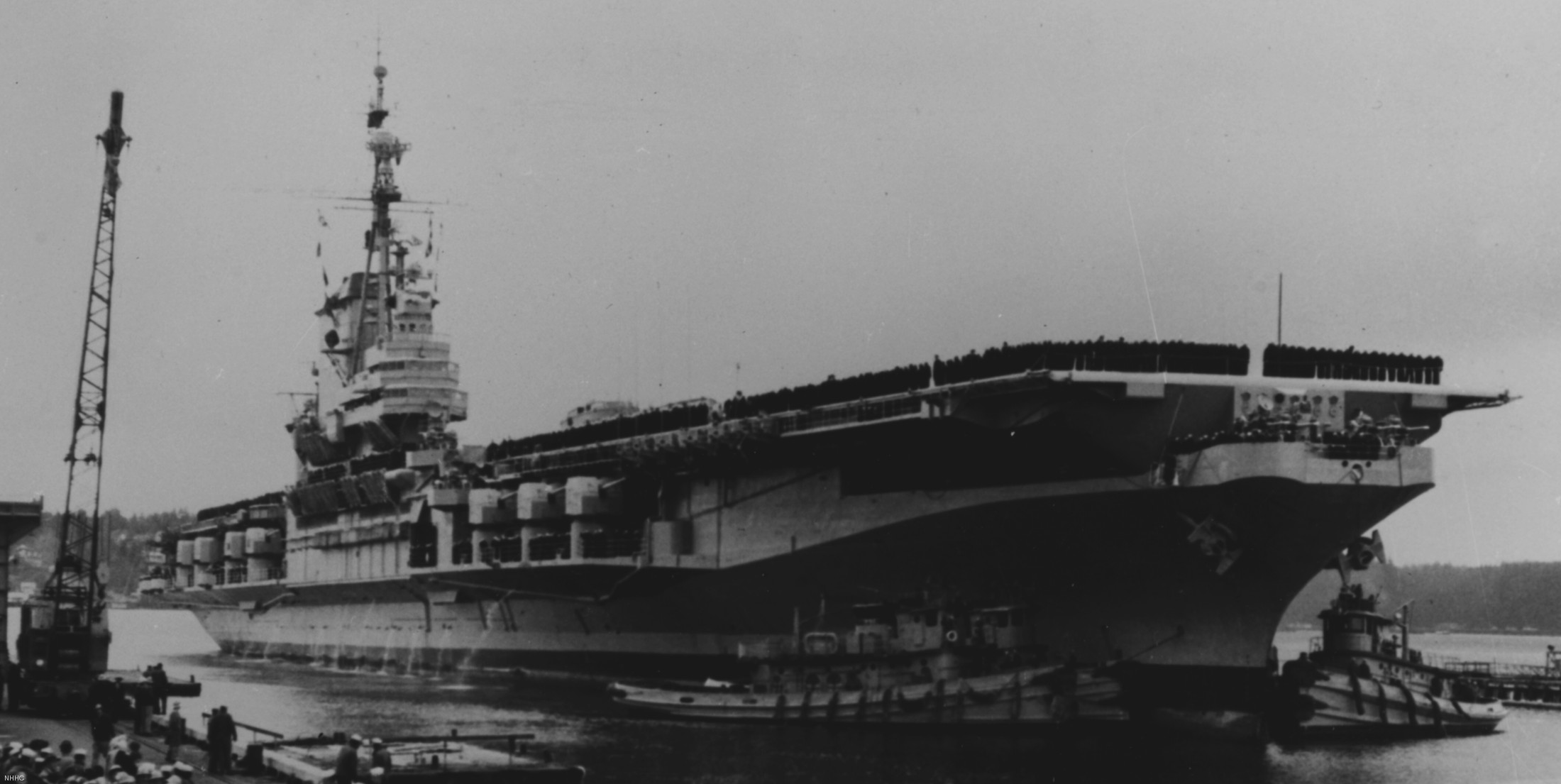 arriving at Puget Sound Naval Shipyard for her upcoming conversion - March 1954 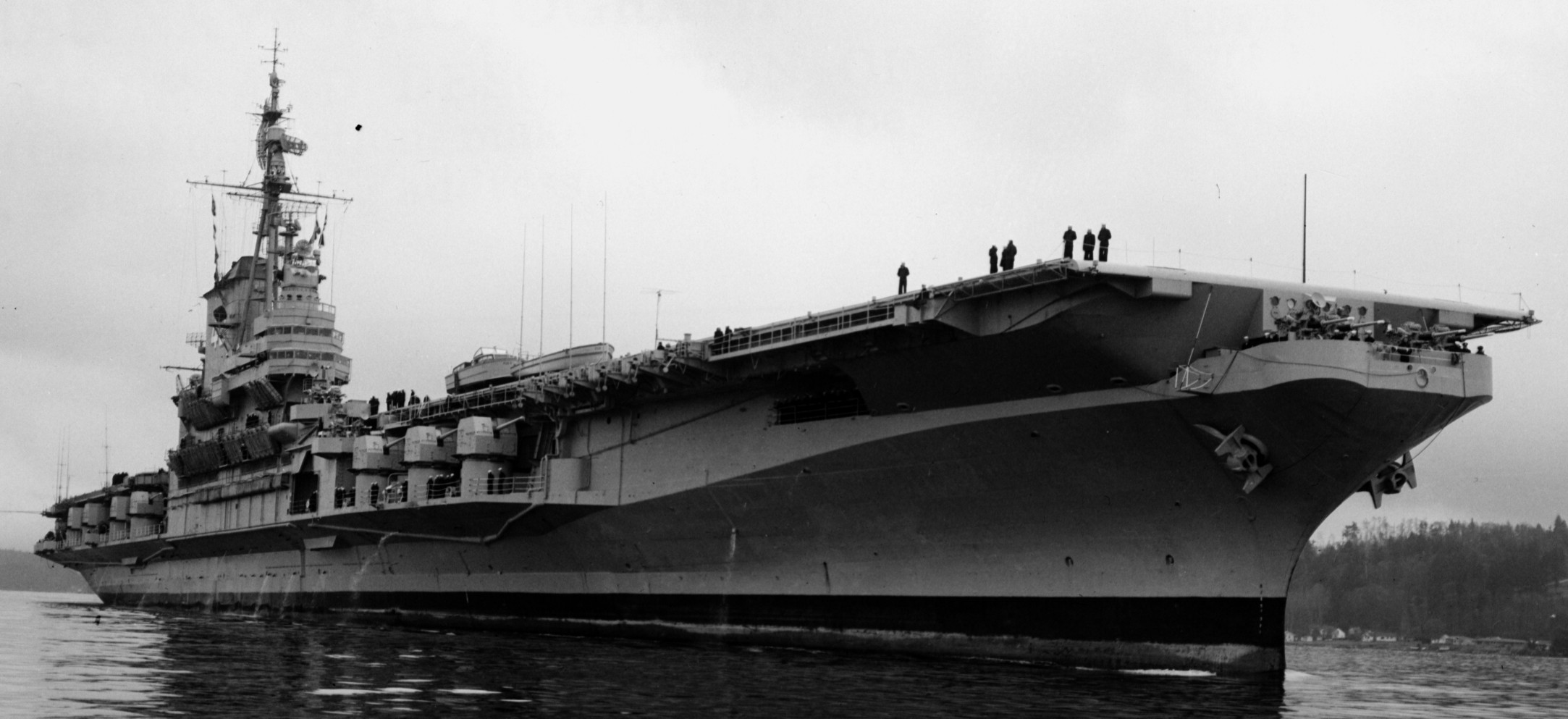 March 1954 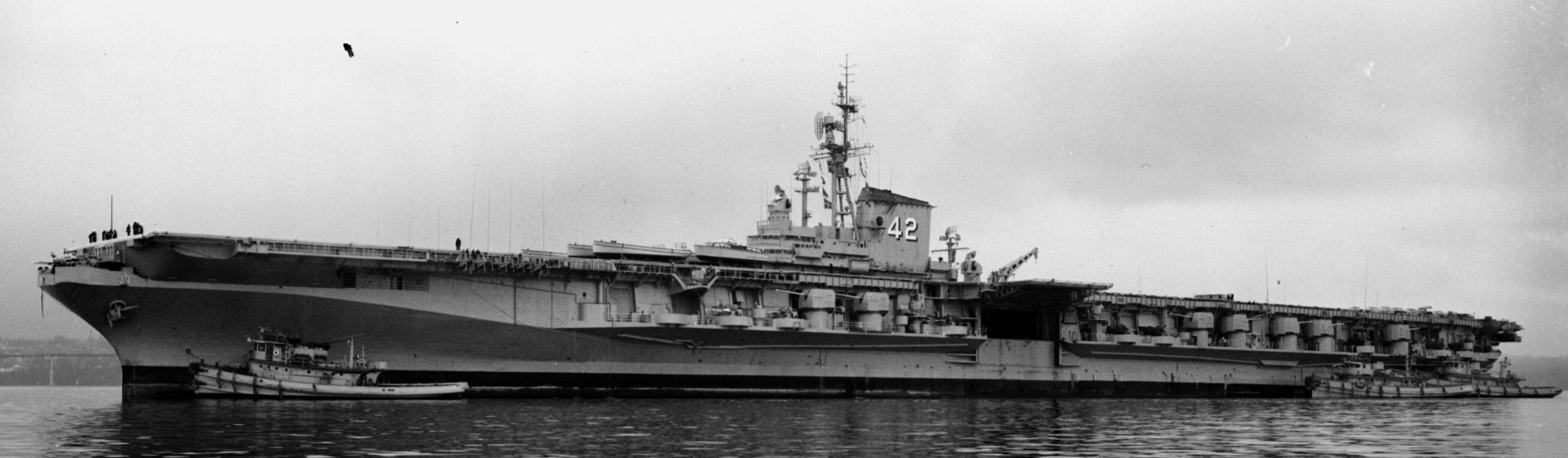 March 1954 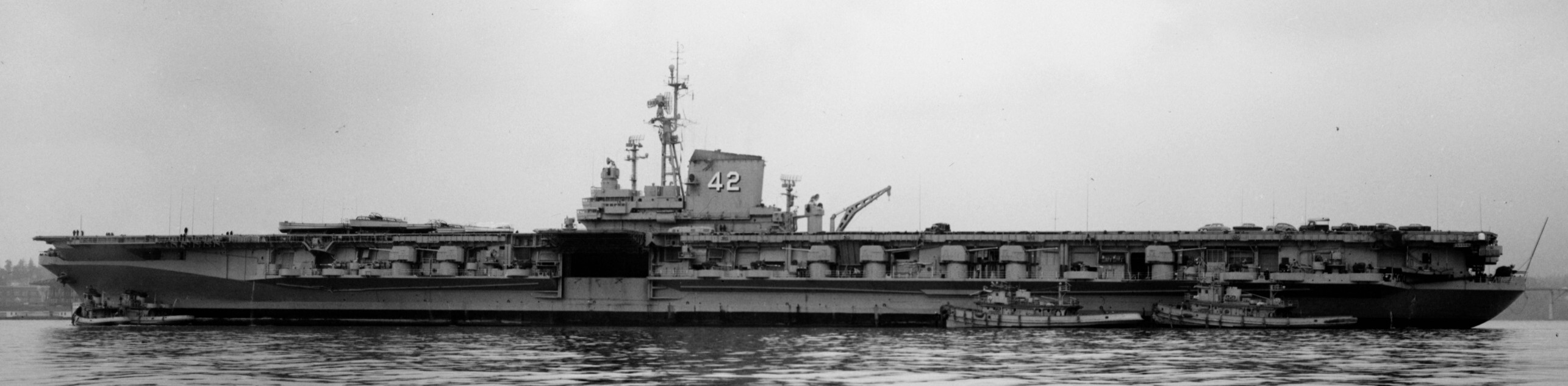 March 1954 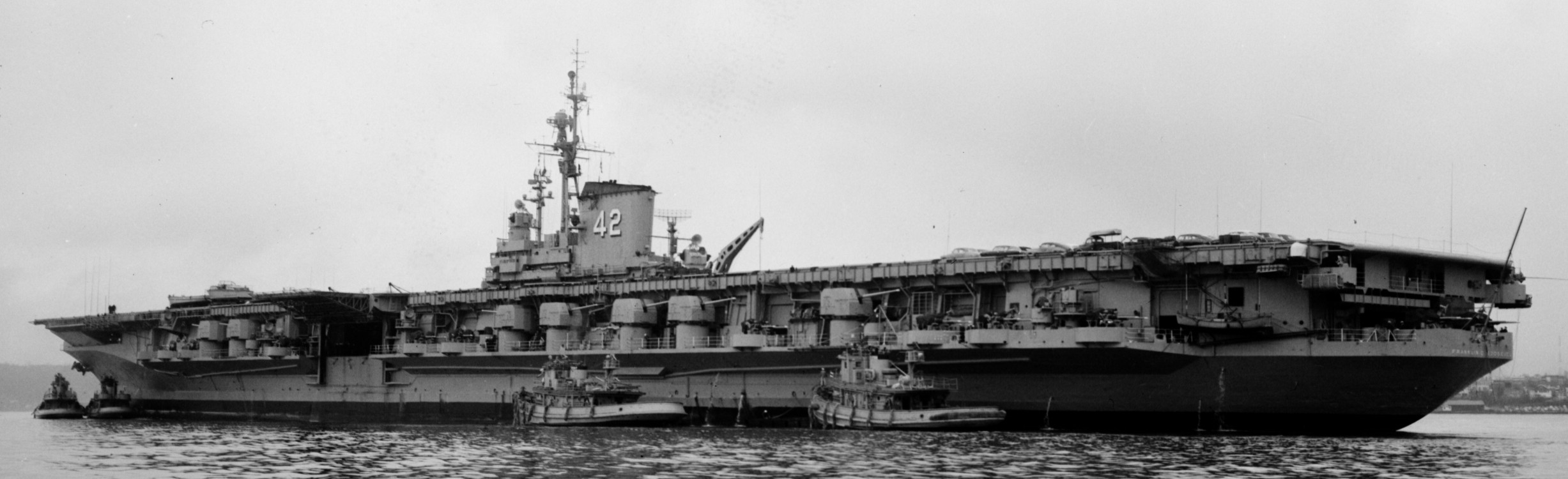 March 1954 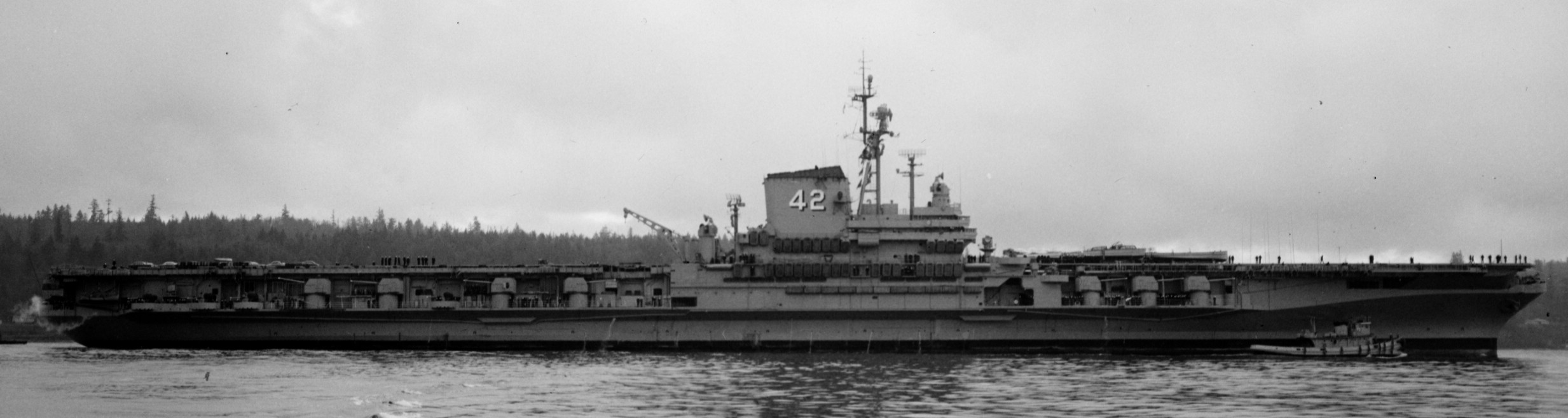 March 1954 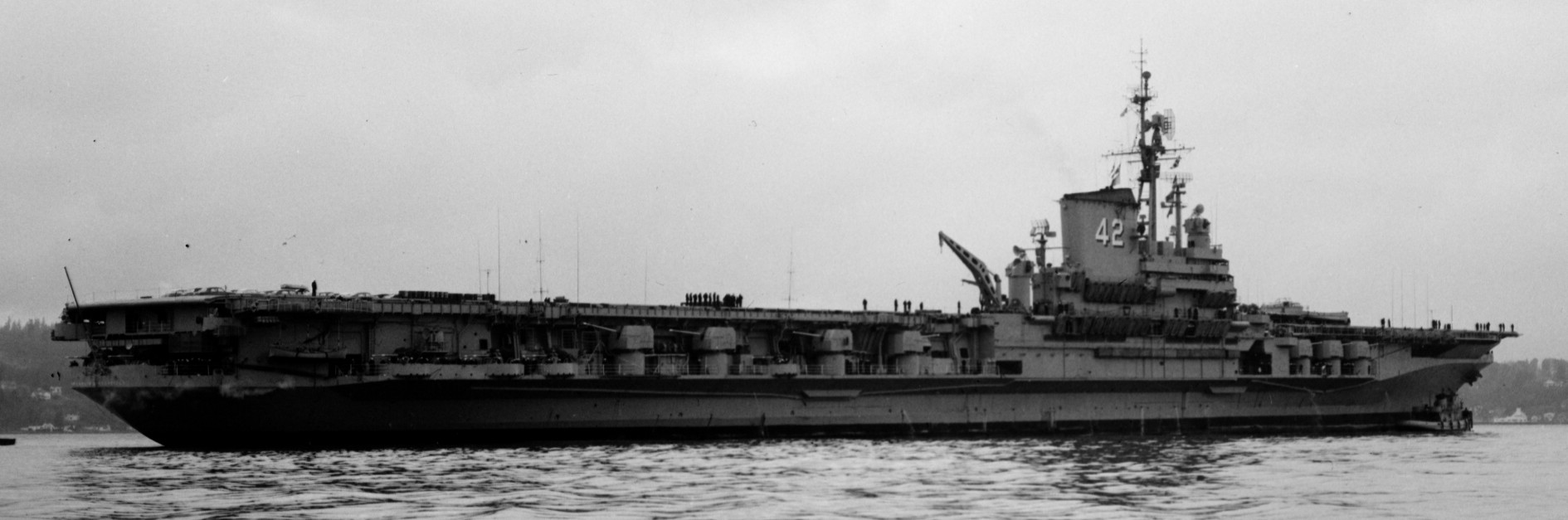 March 1954 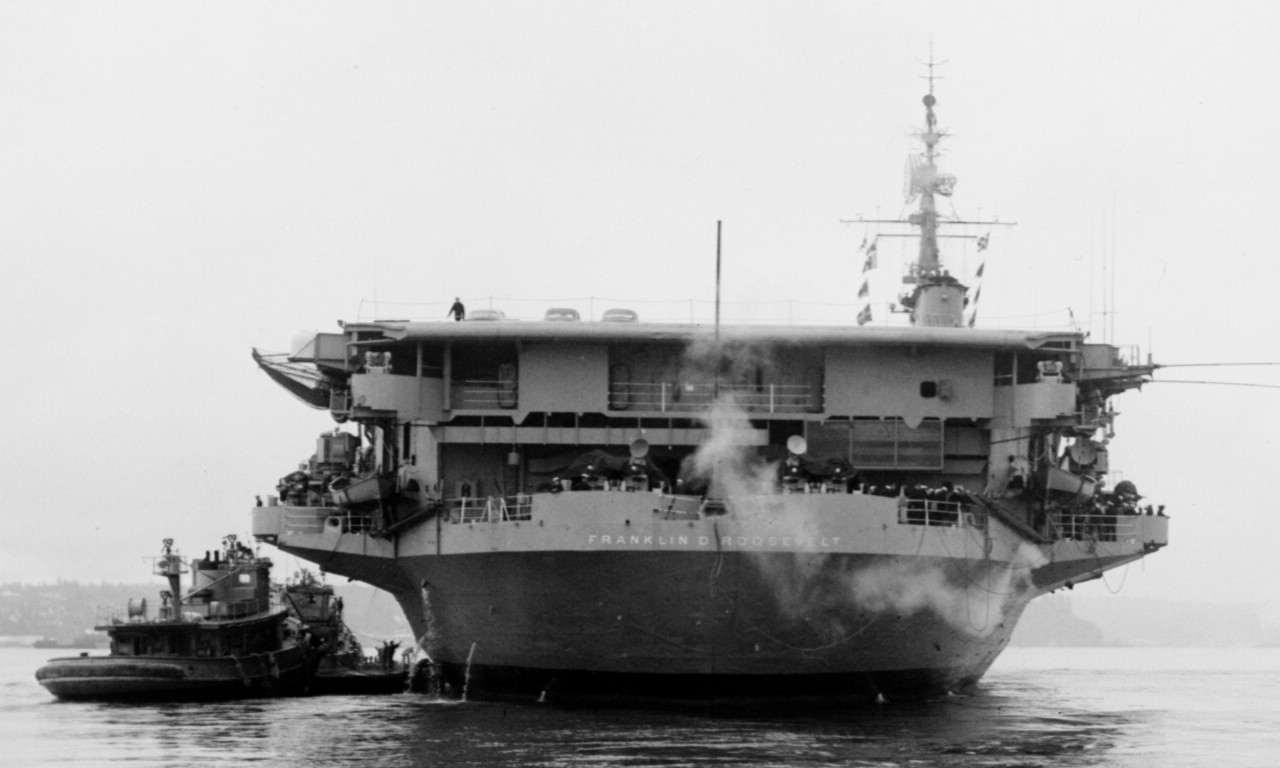 March 1954 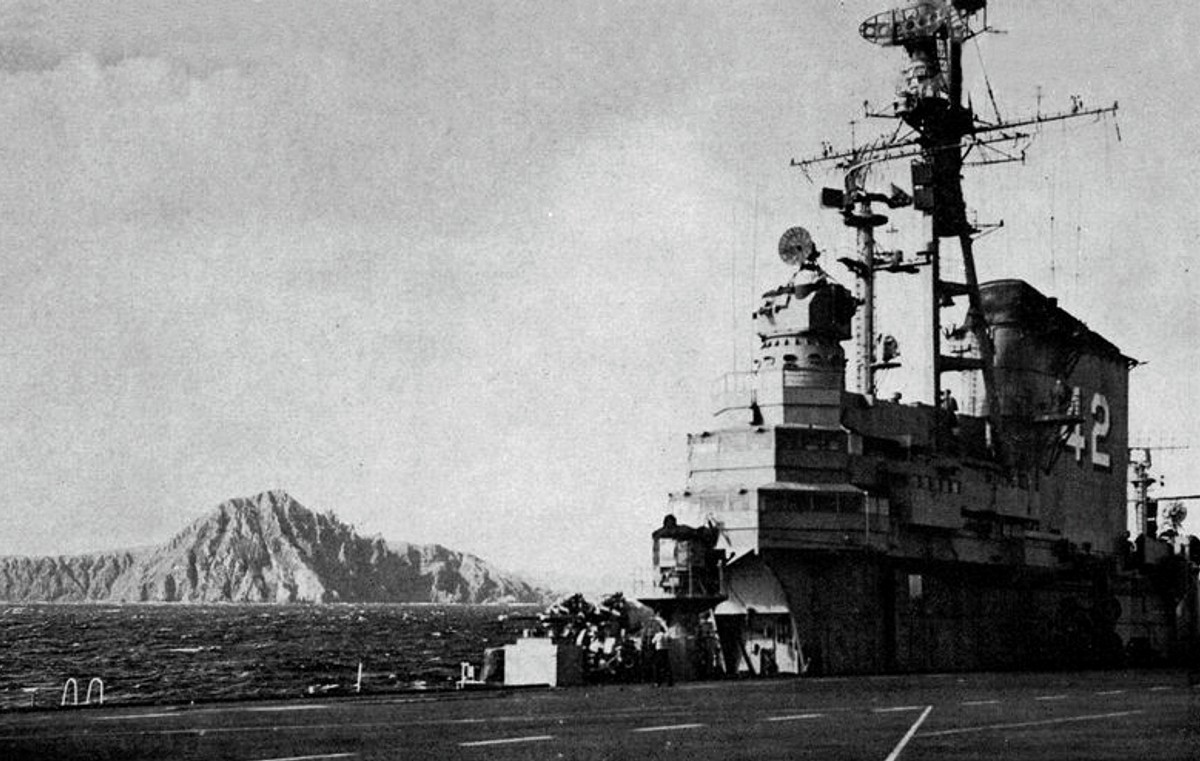 USS Franklin D. Roosevelt (CVA 42) off Cape Horn on 4 February 1954. FDR, with assigned Carrier Air Group 8 (CVG-8), circumnavigated South America between 7 January and 5 March 1954 to enter the Puget Sound Naval Shipyard, Washington (USA), for her SCB-110 modernization 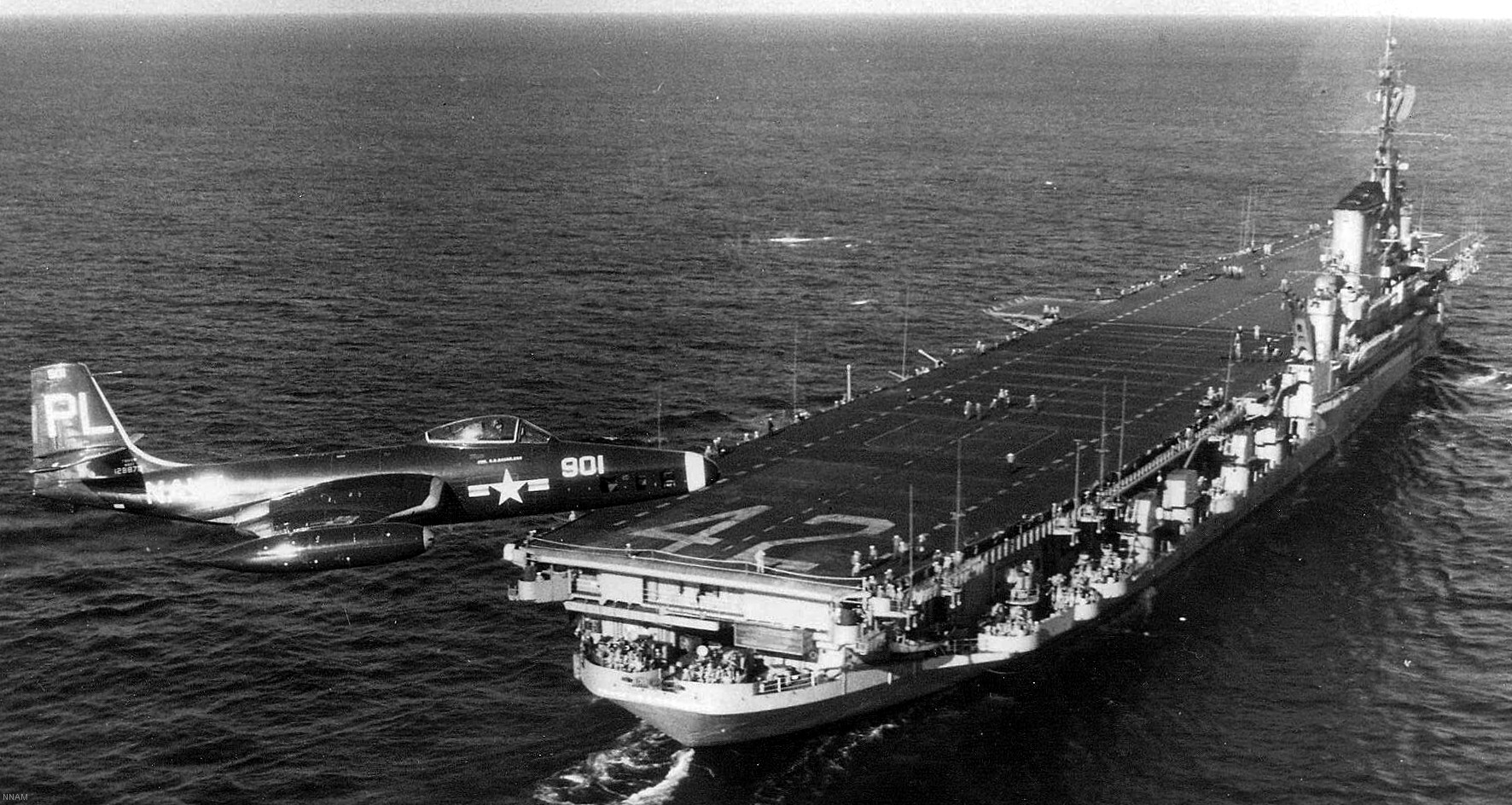 McDonnell F2H-2P Banshee of Composite Squadron 62 (VC-62) "Fighting Photos" in flight over USS Franklin D. Roosevelt (CVA 42) on 27 January 1953. VC-62 Det.7 was assigned to Carrier Air Group 17 (CVG-17) aboard the Franklin D. Roosevelt for a deployment to the North Atlantic and the Mediterranean Sea from 26 August to 19 December 1952 redesignated CVA 42 on October 1, 1952 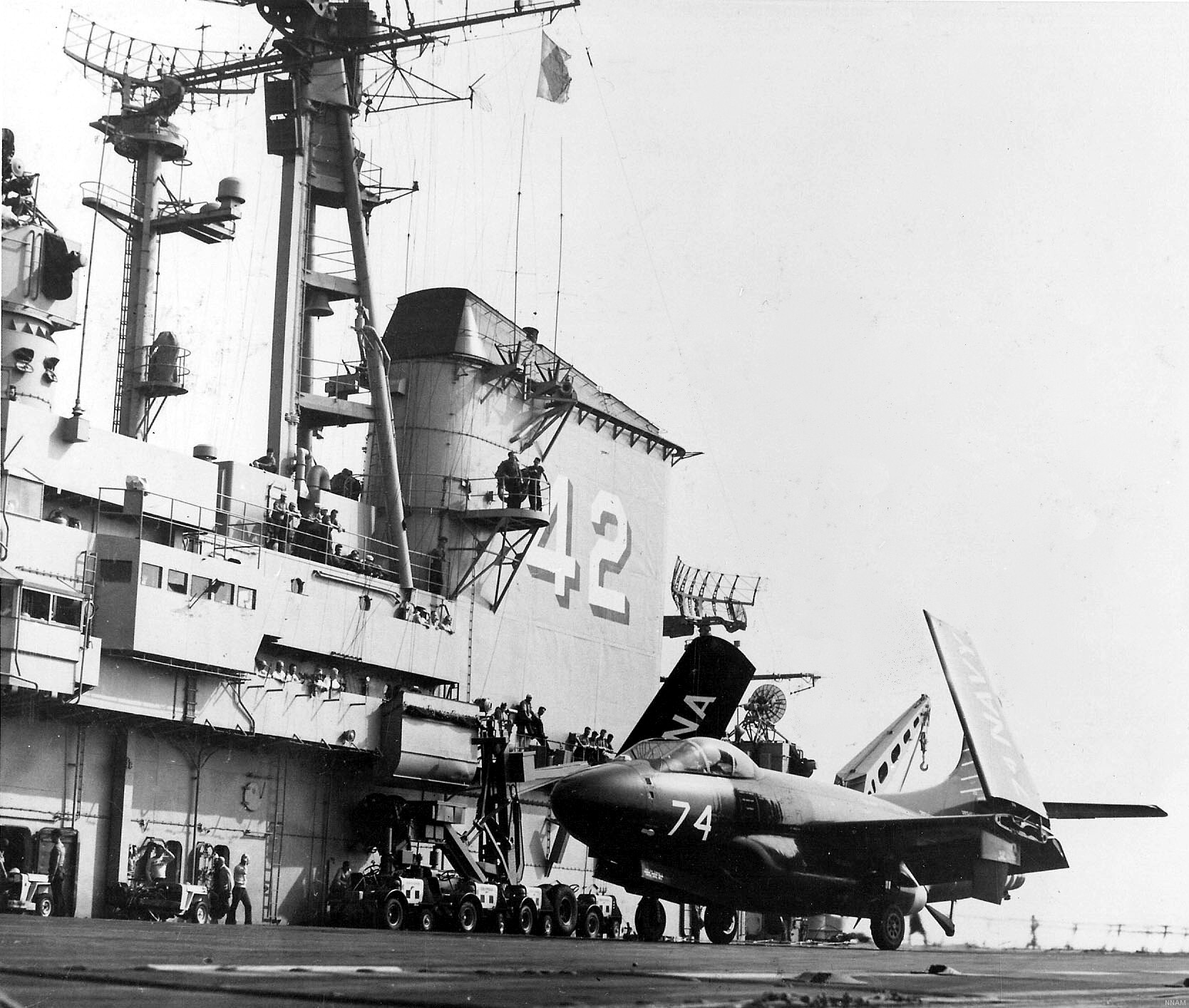 Douglas F3D-2 Skyknight of VC-4 on the flight deck - 1952 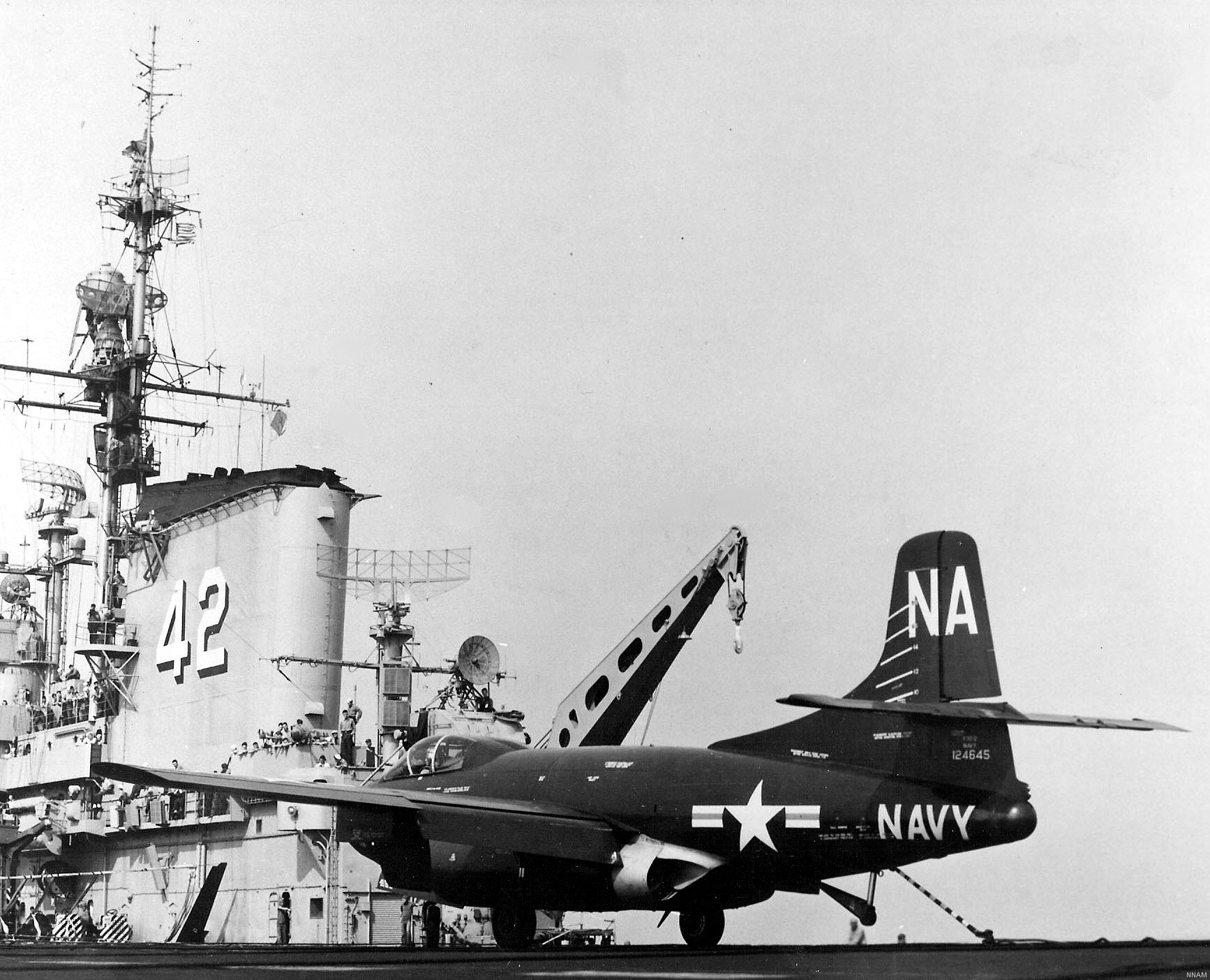 Douglas F3D-2 Skyknight of VC-4 on the flight deck - 1952 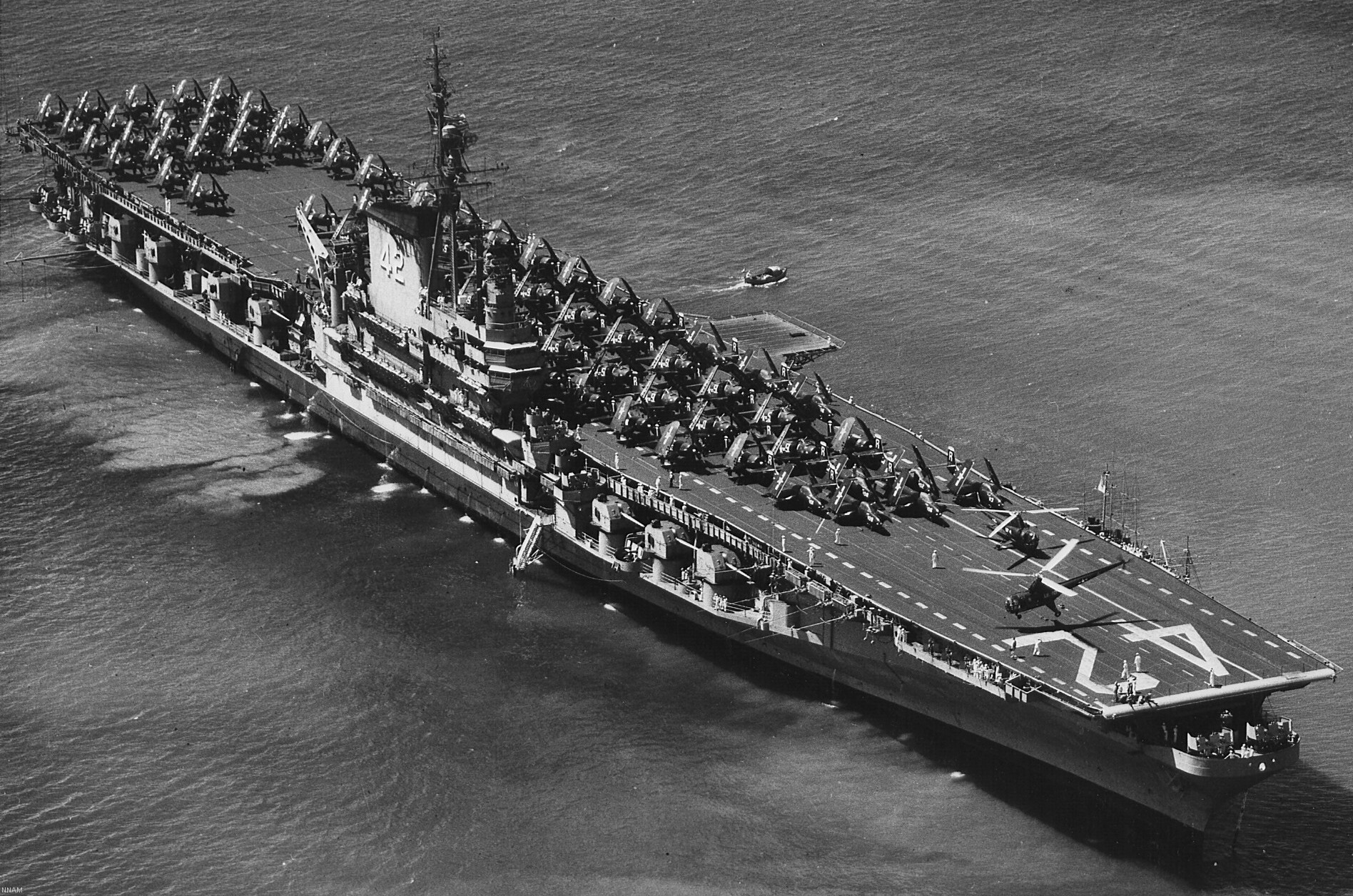 with Carrier Air Group 17 (CVG-17) embarked - early 1950's 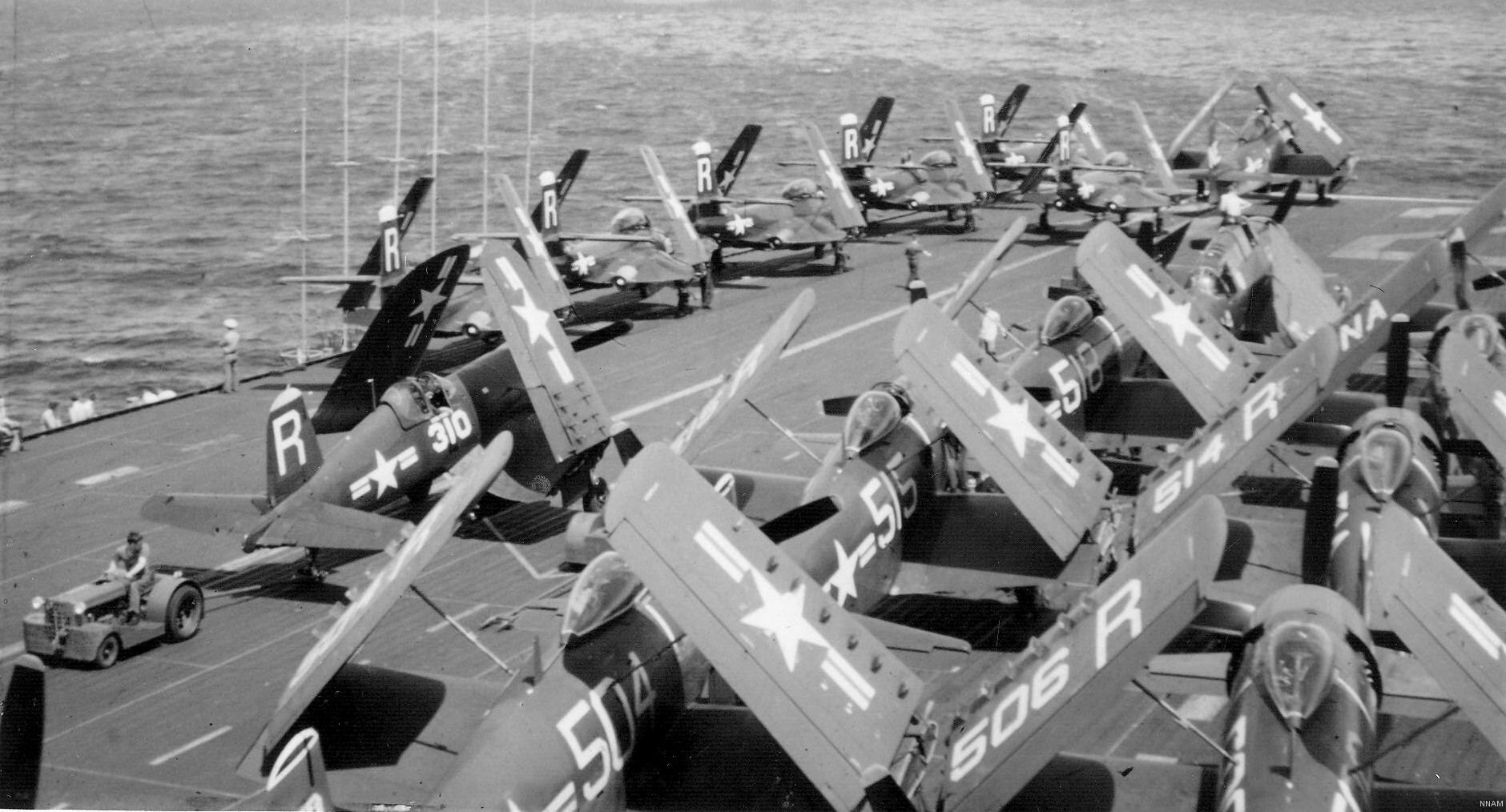 with Carrier Air Group 17 (CVG-17) embarked - early 1950's 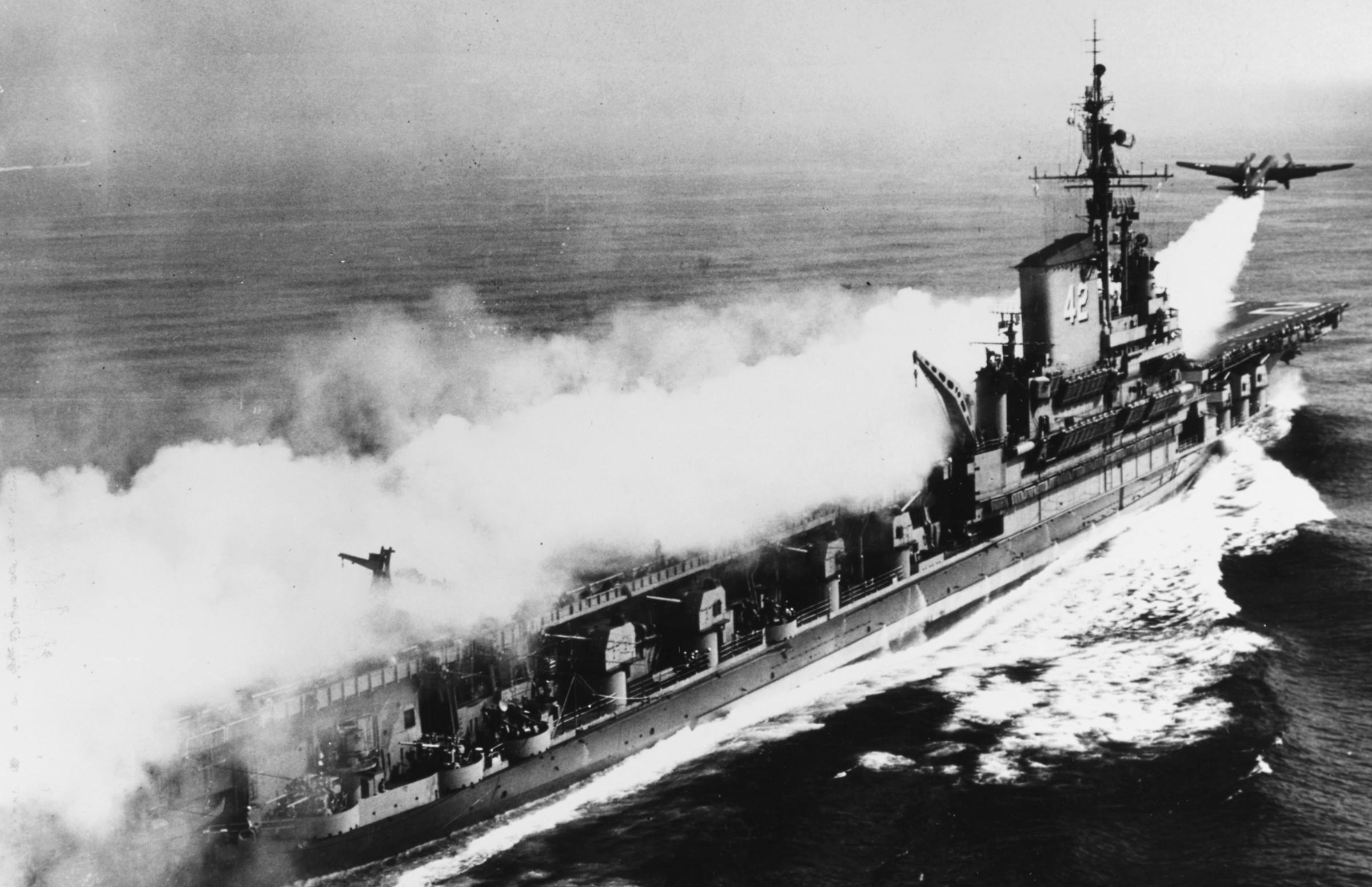 Lockheed P2V-3C Neptune launches with "Jet-assisted take-off (JATO)" from USS Franklin D. Roosevelt (CVB 42) on 2 July 1951 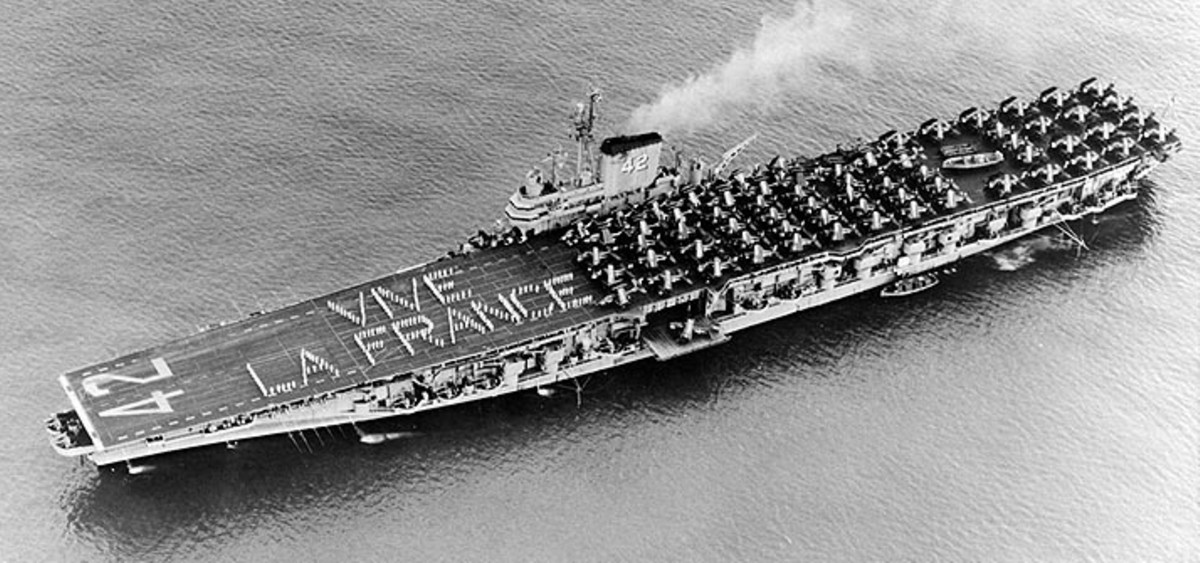 with CVG-6 embarked - off Nice, France - 1951 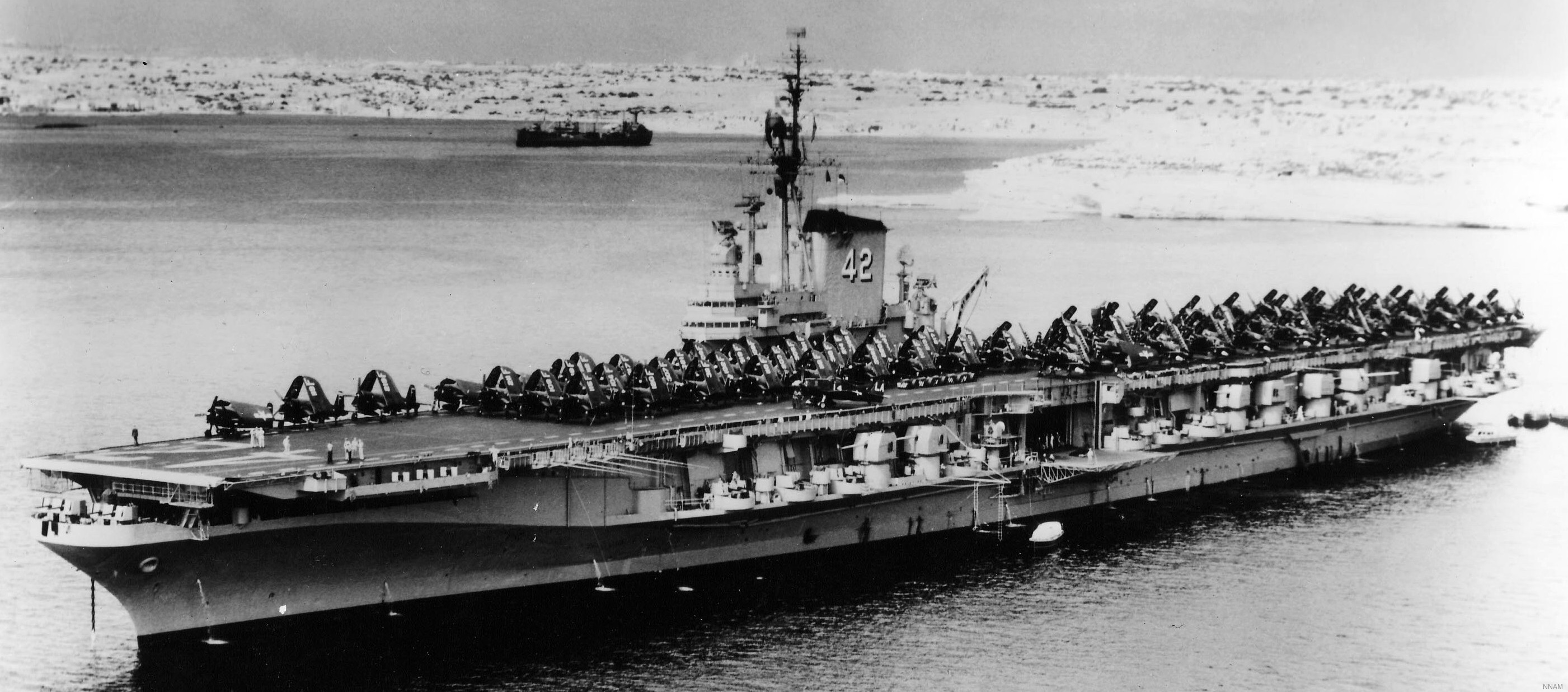 USS Franklin D. Roosevelt anchored at an unknown location in the Mediterranean Sea. On the flight deck are various aircraft of Carrier Air Group 4 (CVG-4) which was deployed aboard the FDR from 13 September 1948 to 23 January 1949 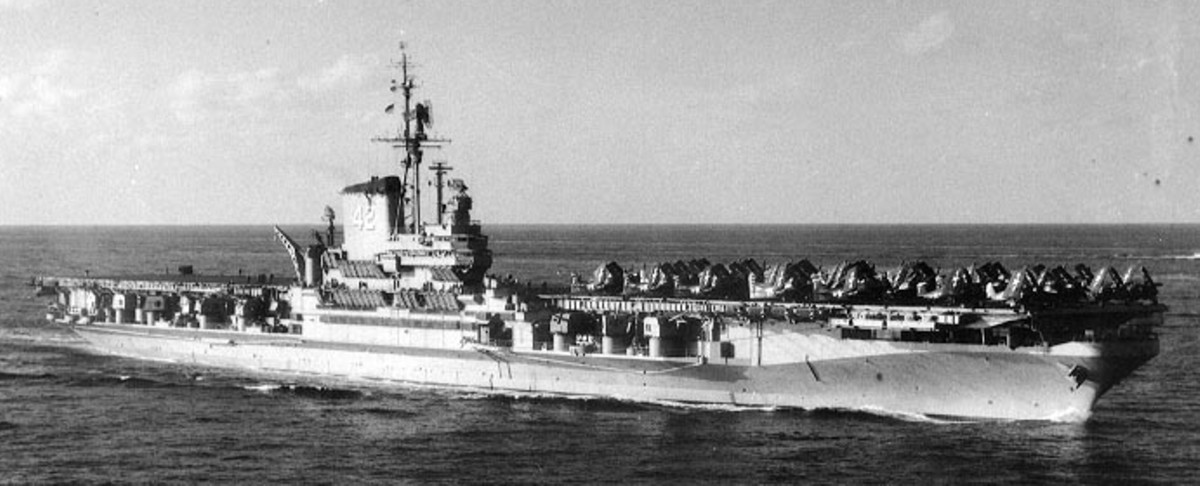 with Carrier Air Group 4 (CVG-4) embarked - November 1948 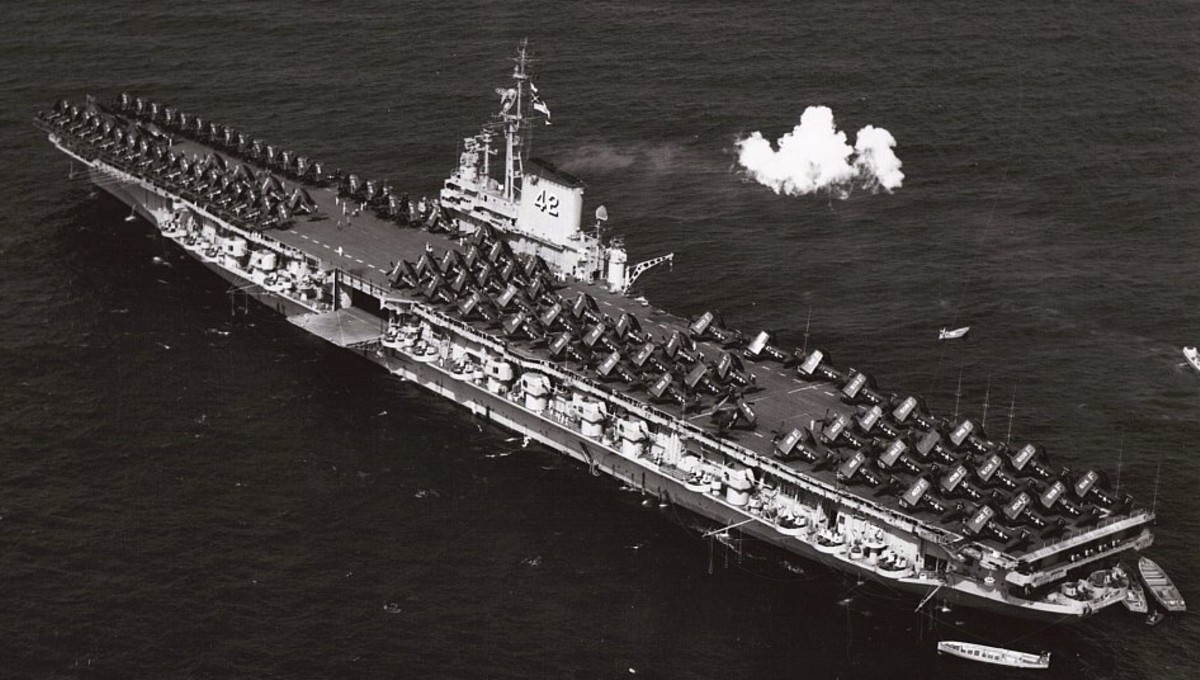 with Carrier Air Group 4 (CVG-4) embarked - late 1948 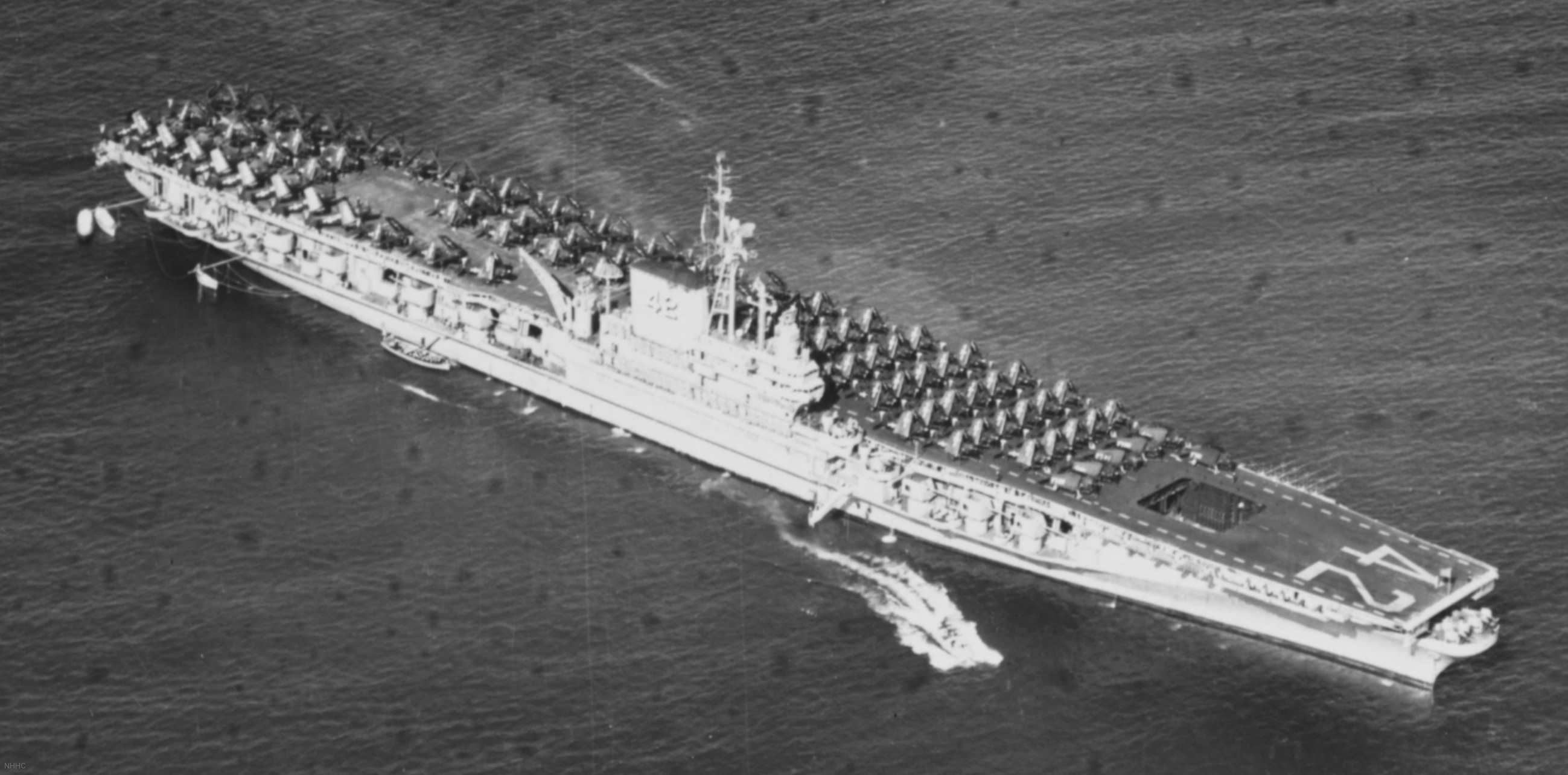 with Carrier Air Group 4 (CVG-4) embarked - off Piraeus, Greece - October 1948 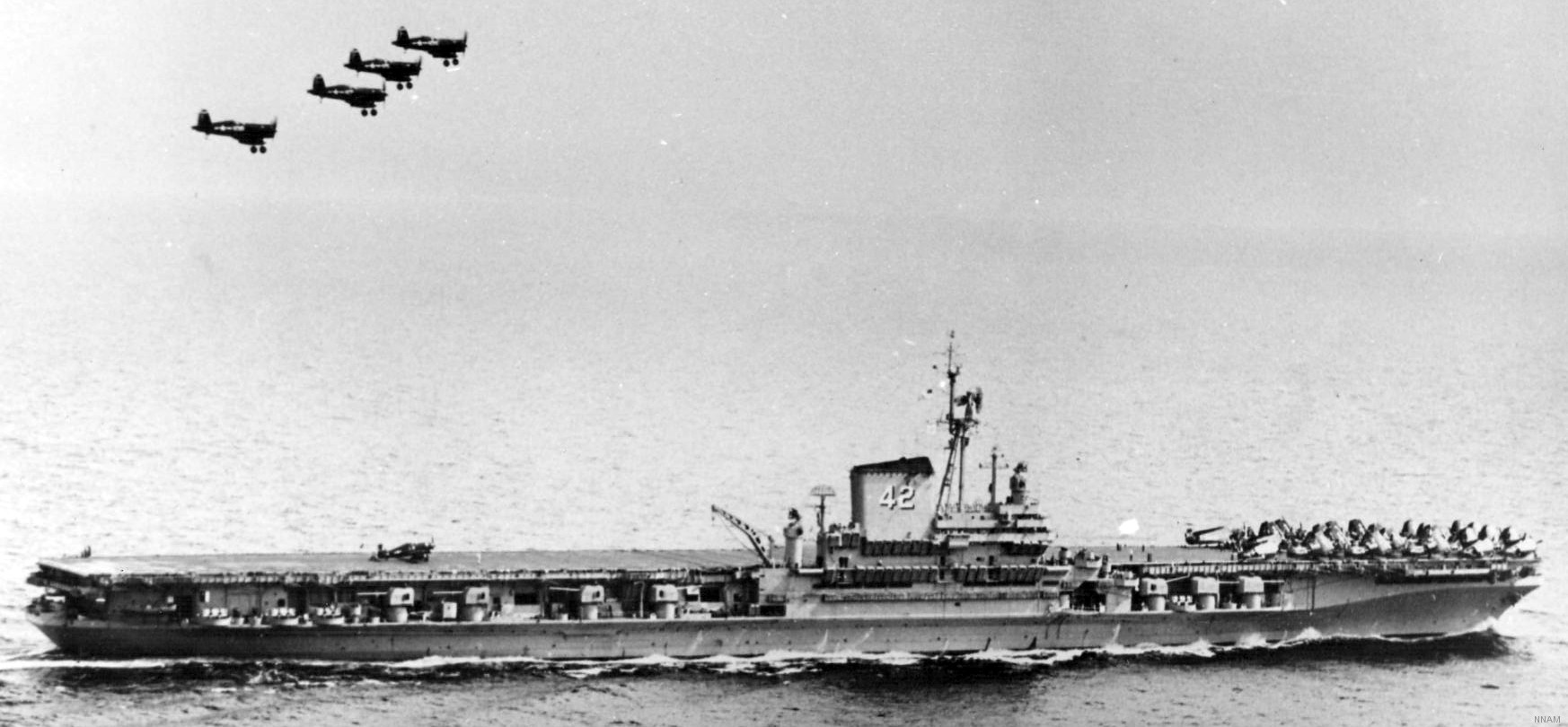 circa 1946-48 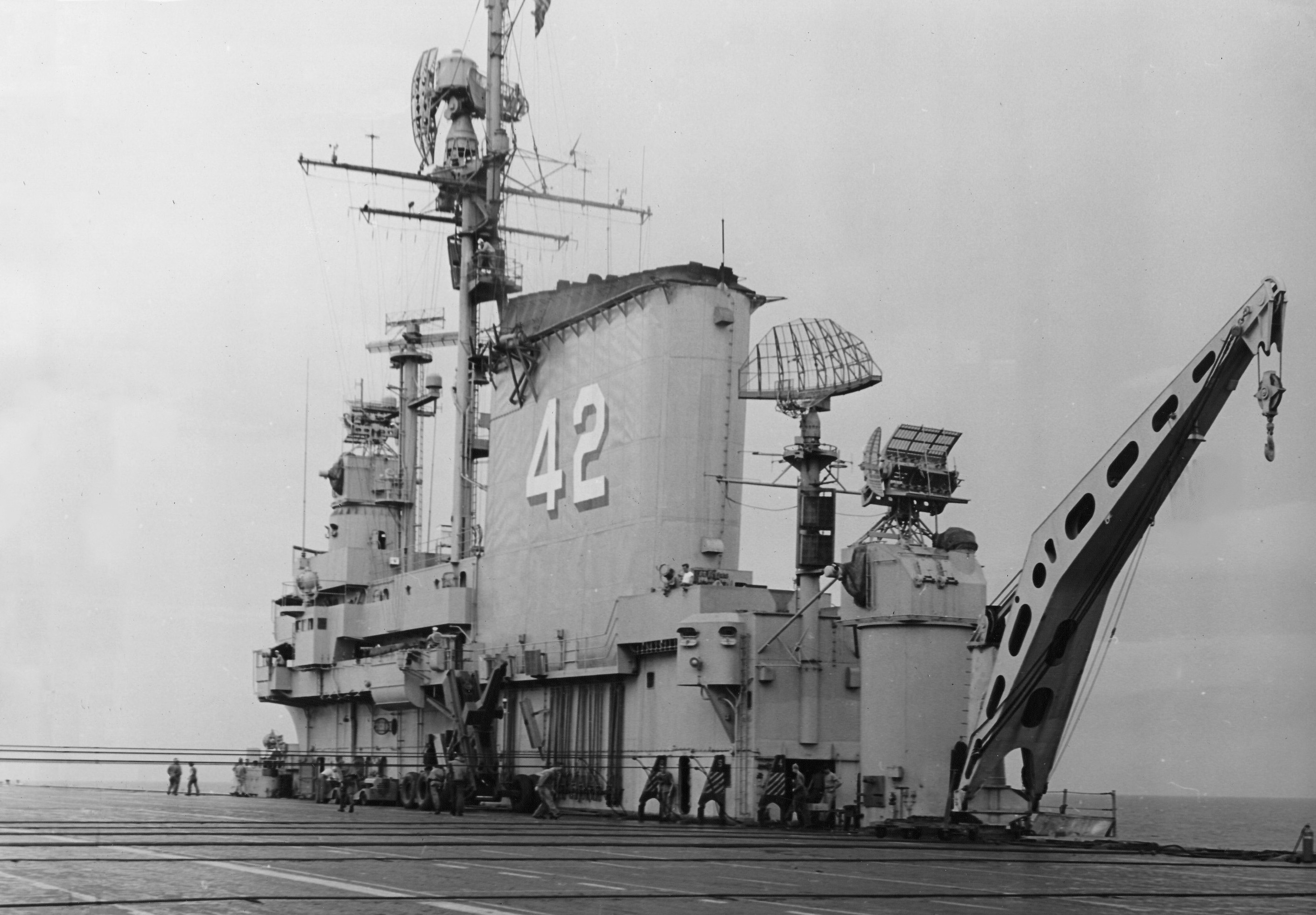 circa 1947 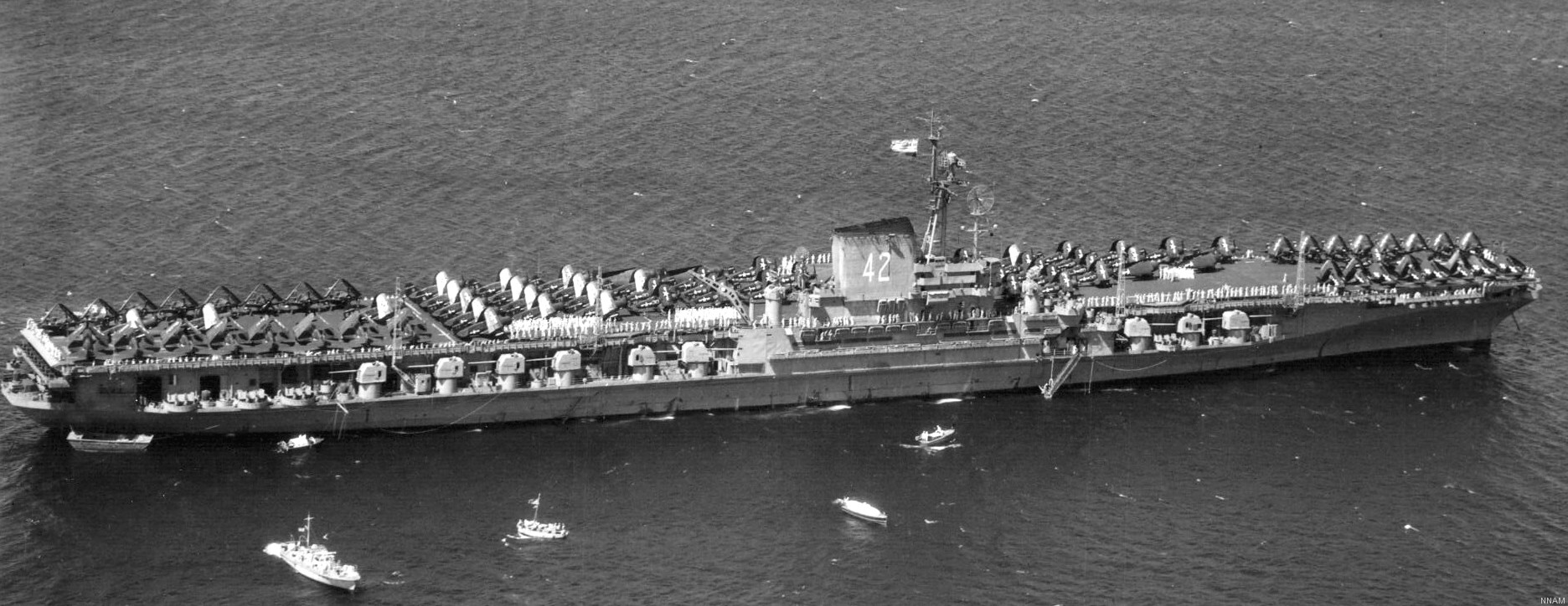 with CVBG-75 embarked - at anchor at Piraeus, Greece - September 1946 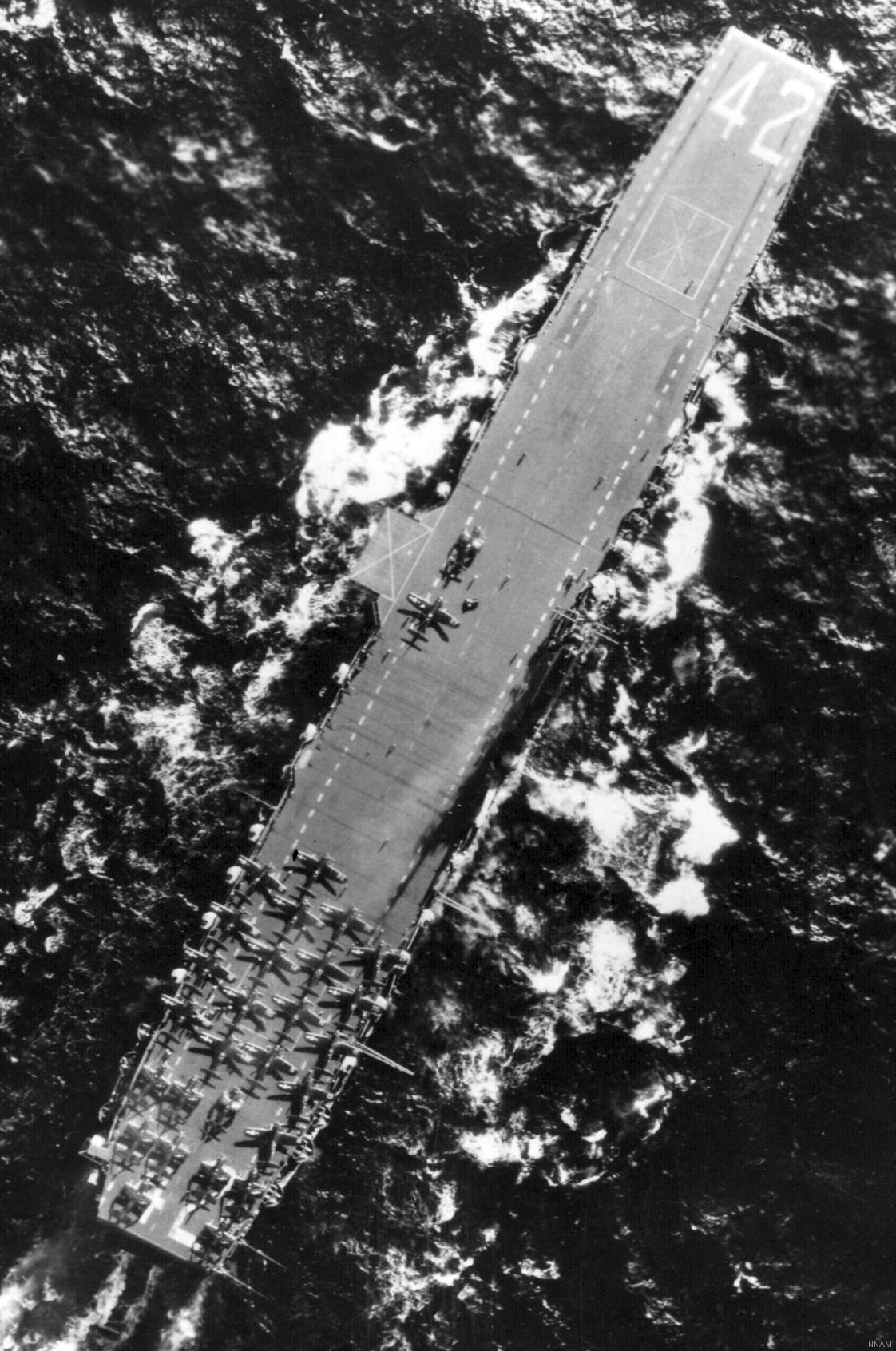 with CVBG-75 embarked - circa May 1946 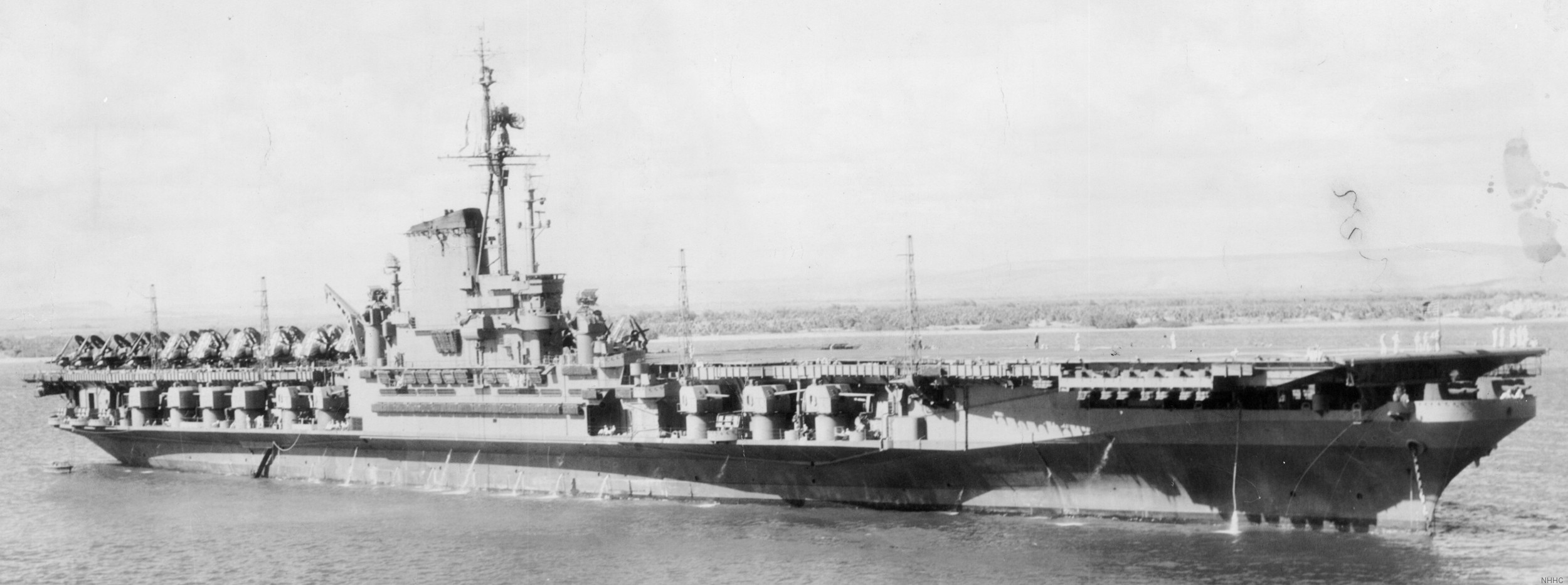 early 1946 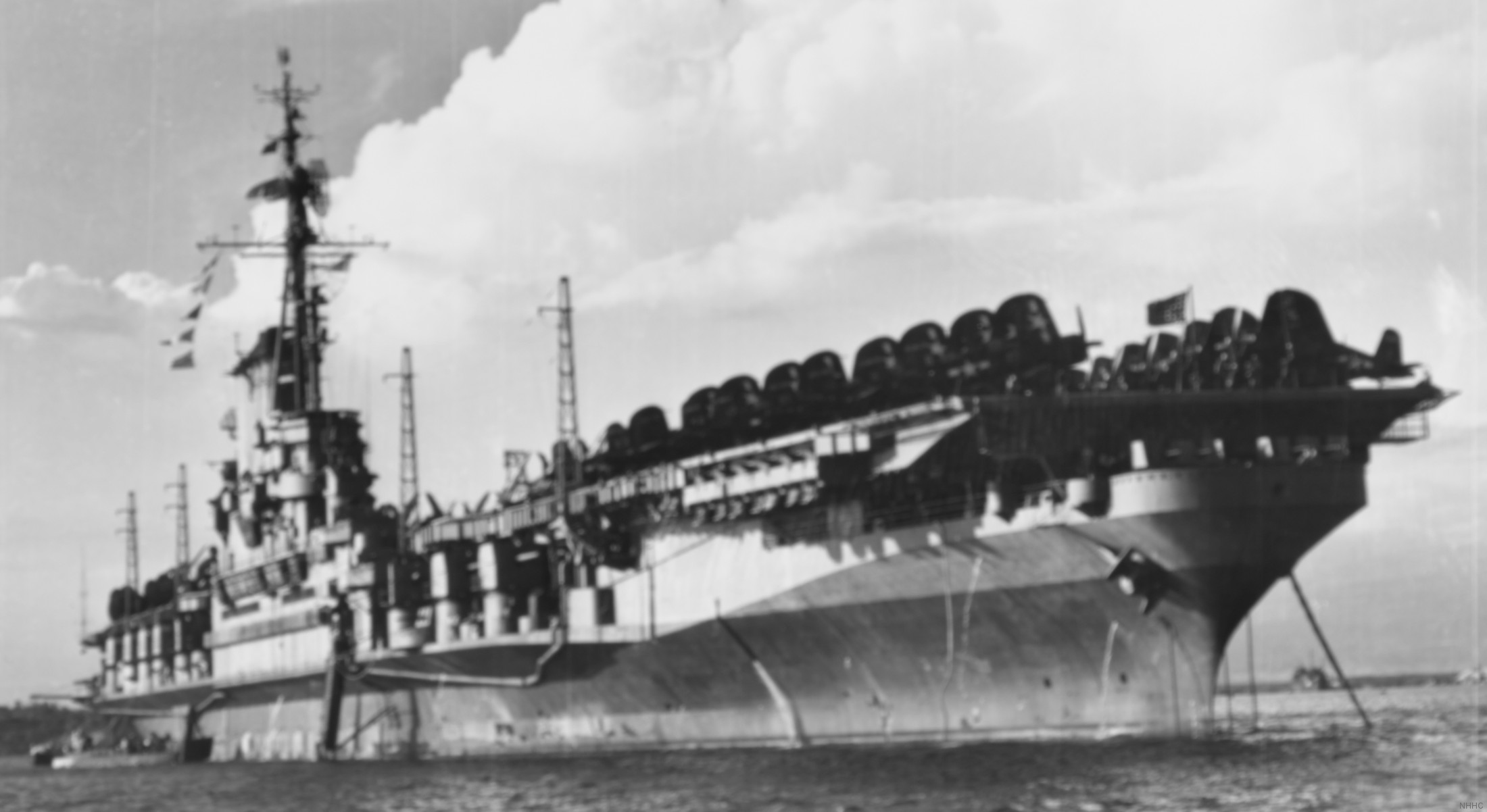 Guantanamo Bay, Cuba - May 1946 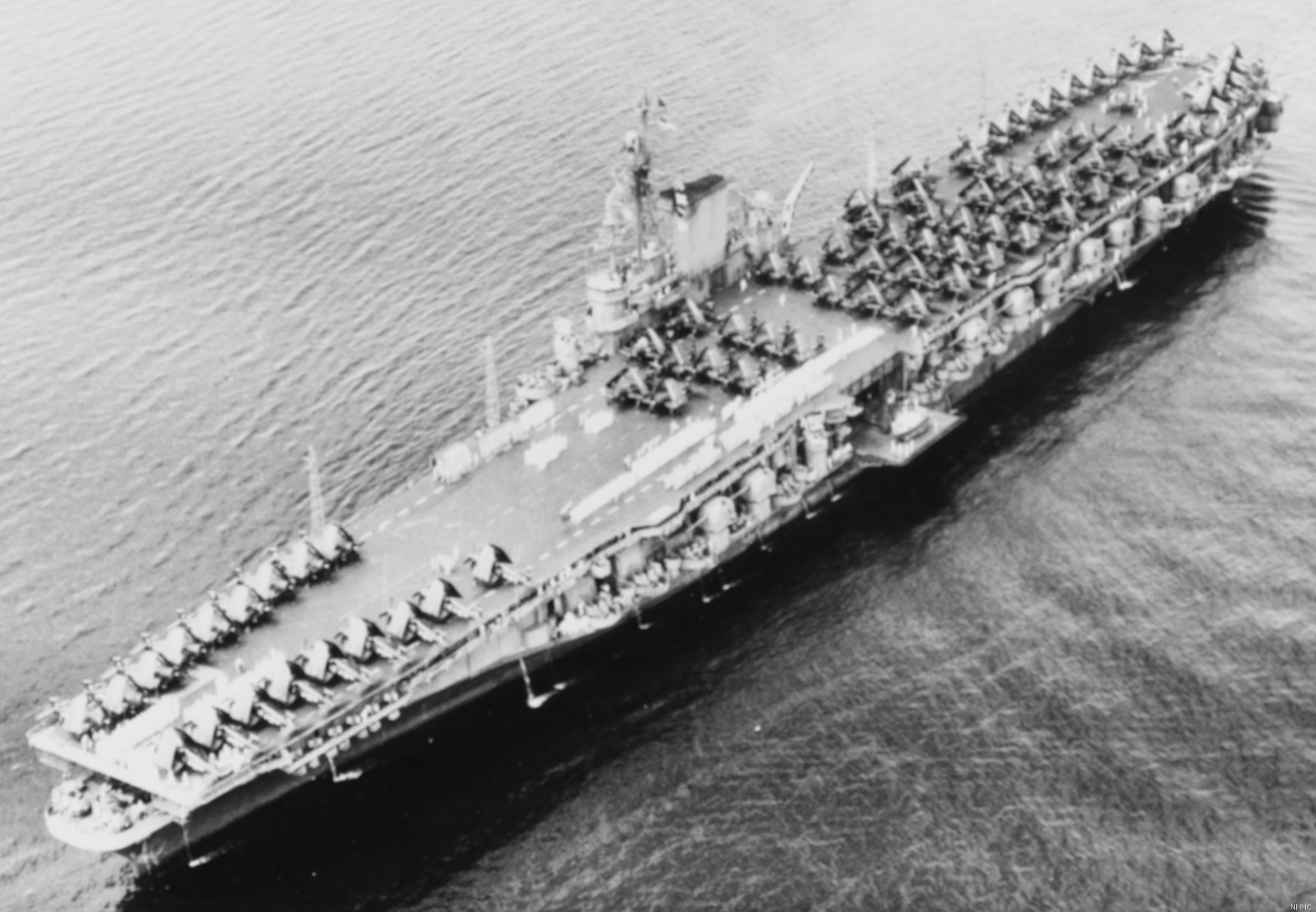 Gulf of Paria, off Trinidad - April 1946 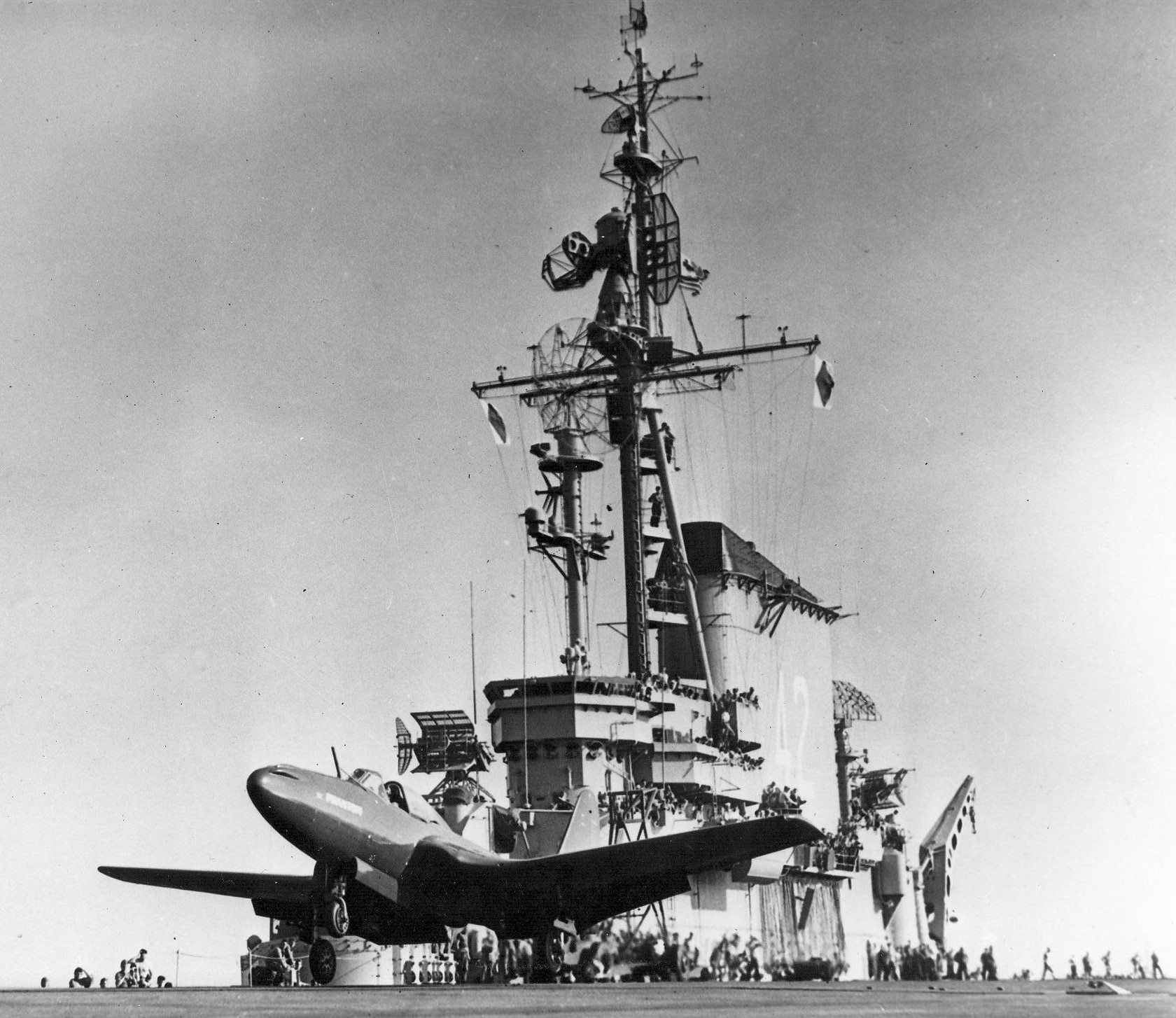 FH-1 Phantom taking off from USS Franklin D. Roosevelt - 1946 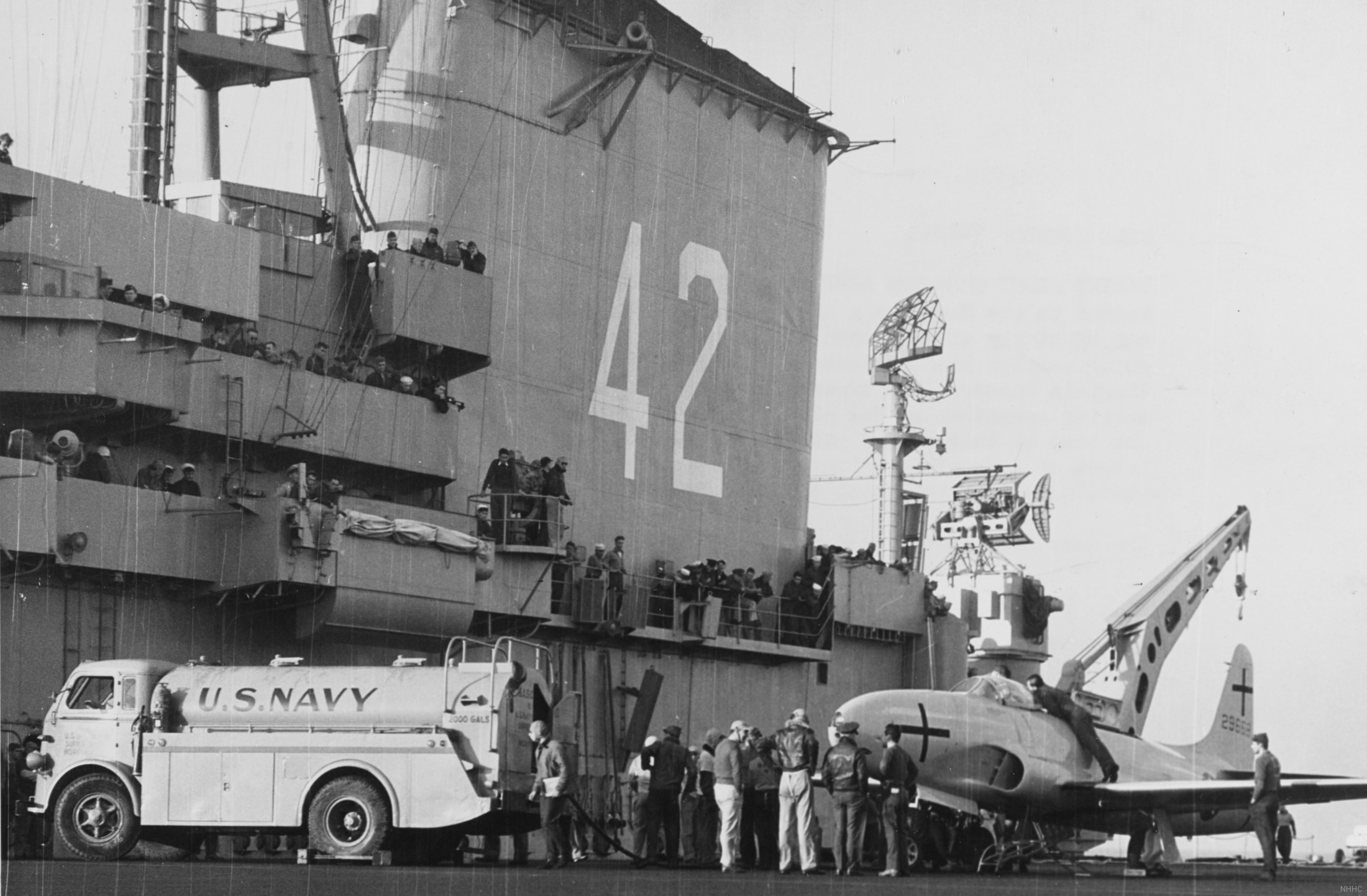 Lockheed P-80A fighter aircraft tests off Virginia - 1946 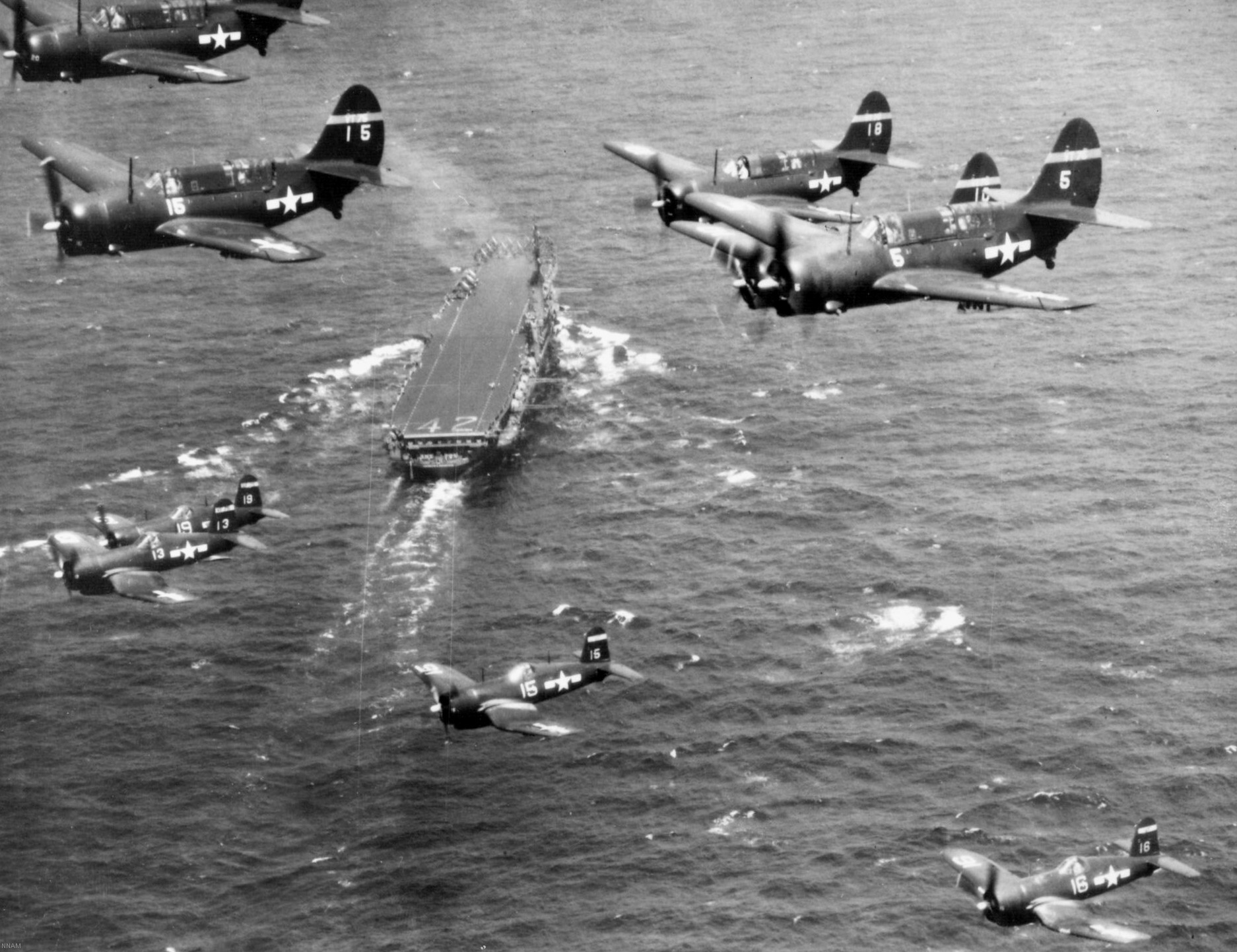 Vought F4U-4 Corsair fighters from Fighting Squadron VF-75 Gay Blades and Curtiss SB2C-4E Helldivers of Torpedo Squadron VT-75 Fish Hawks fly over USS Franklin D. Roosevelt (CVB 42). Both squadrons were assigned to Carrier Air Group 75 (CVBG-75) aboard the FDR for a cruise in the Western Atlantic from 19 April to 25 May 1946 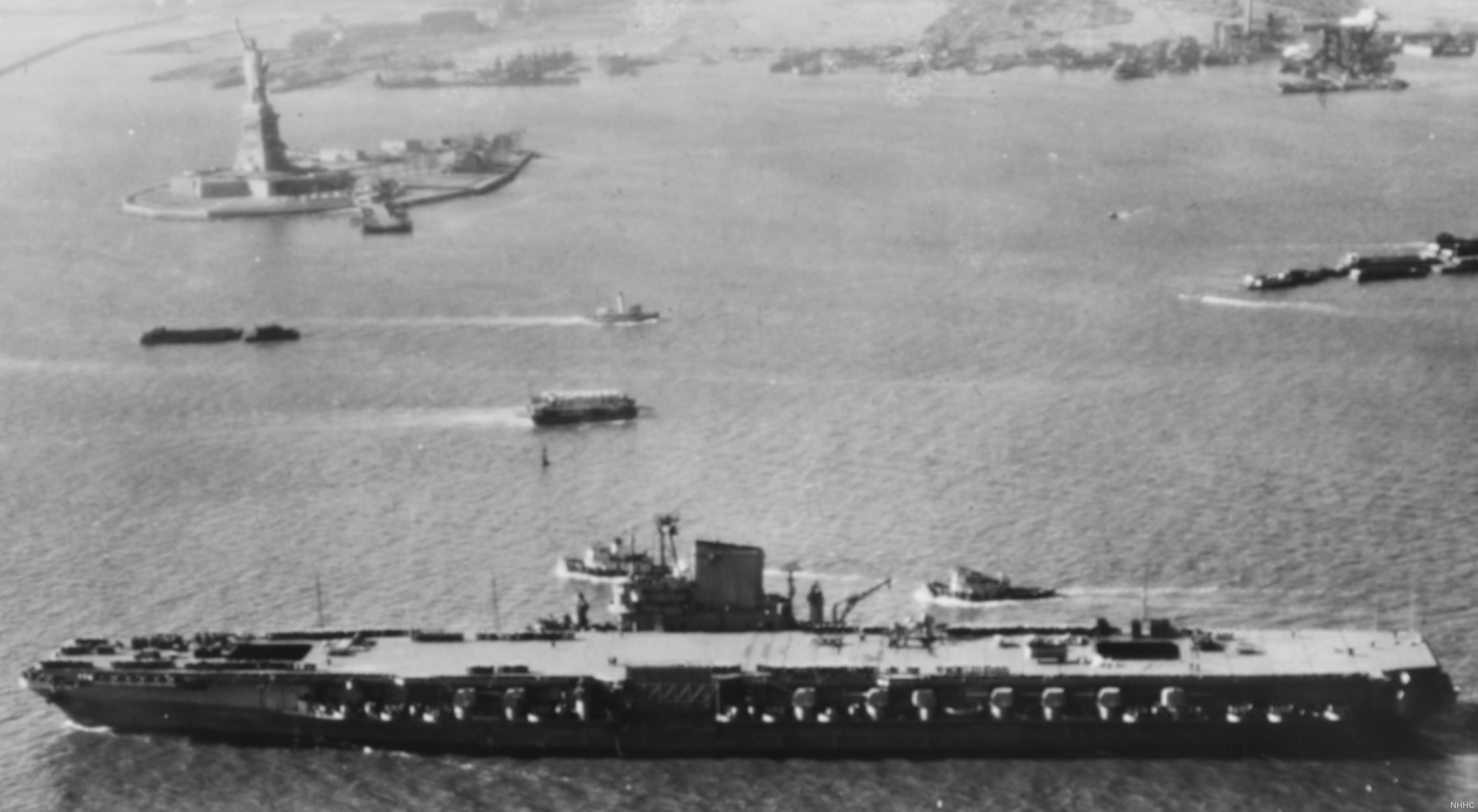 November 1945 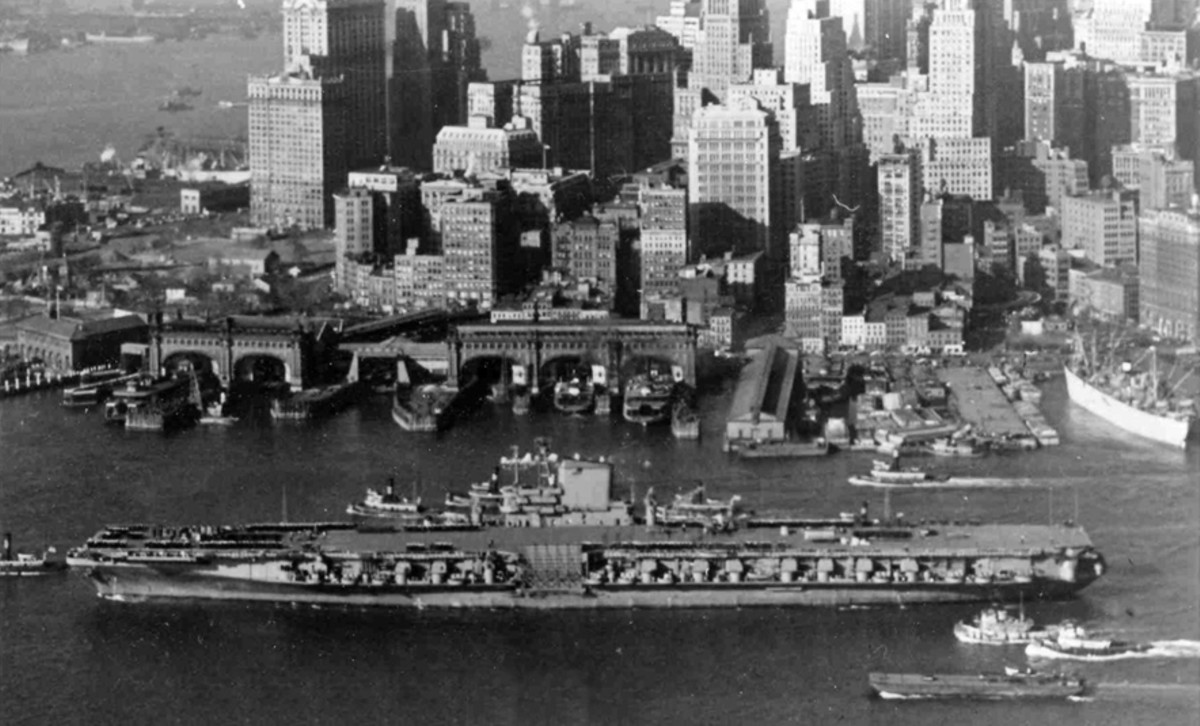 New York City - late 1945 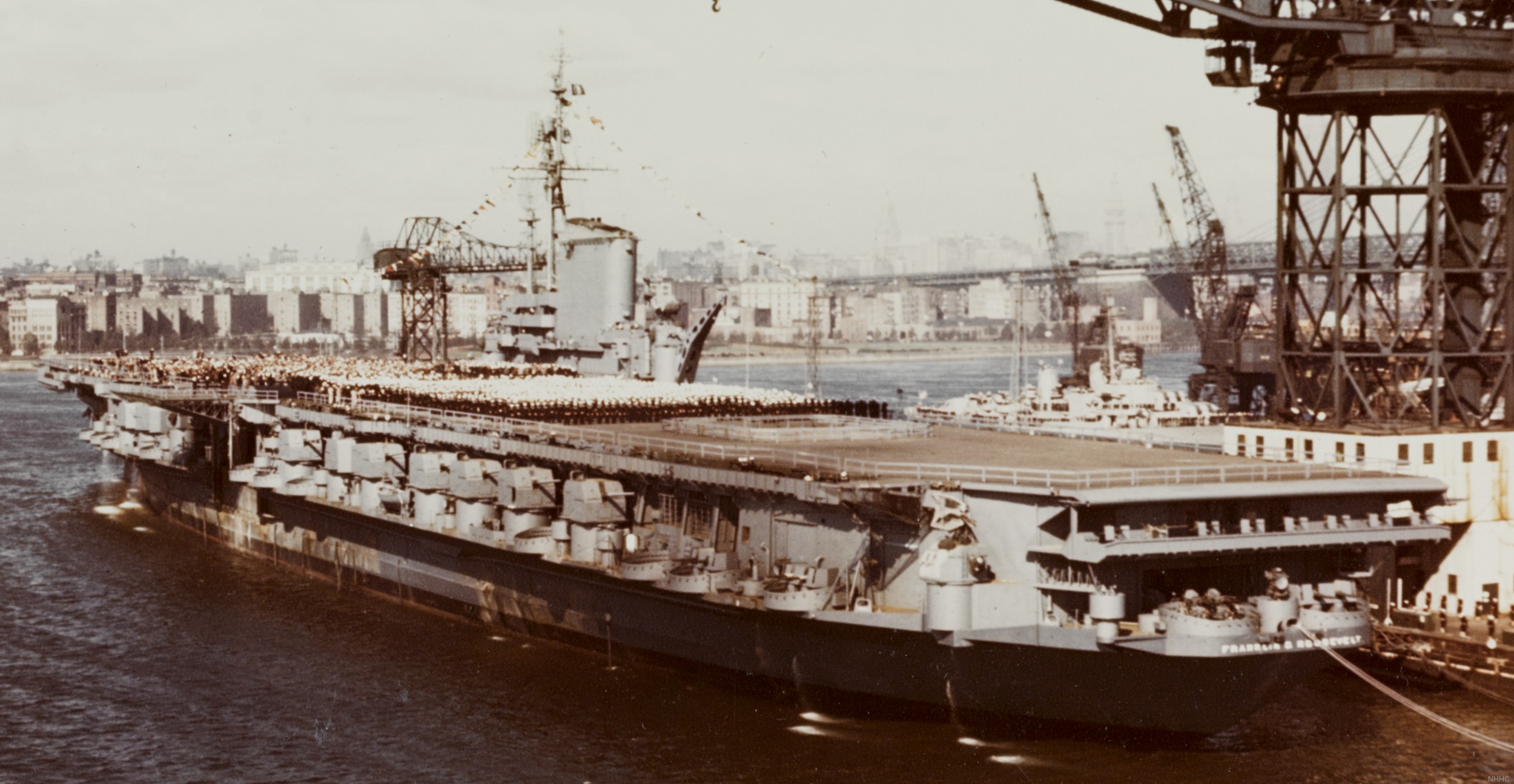 commissioning at the New York Navy Yard, Brooklyn on Navy Day - October 27, 1945 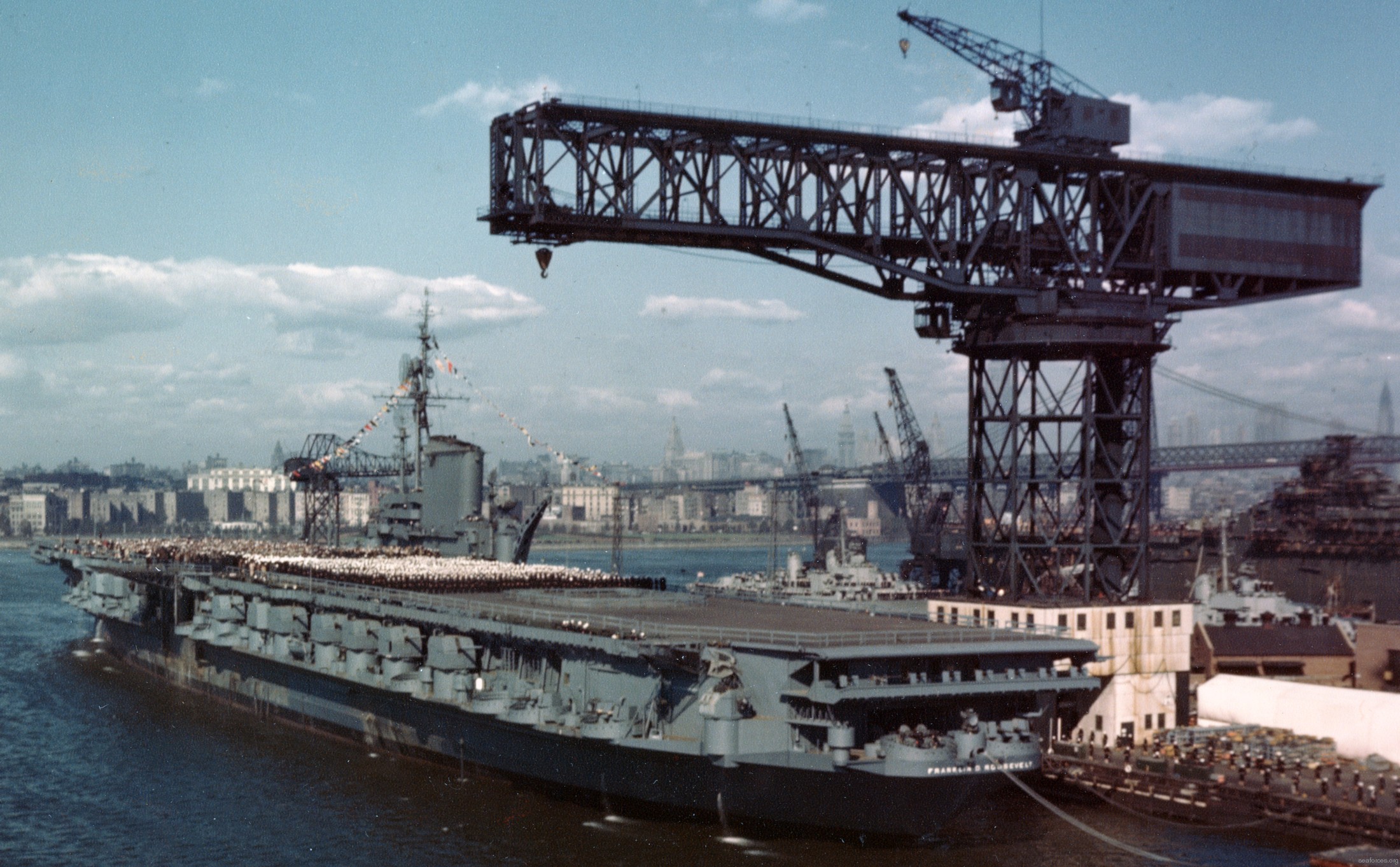 commissioning at the New York Navy Yard, Brooklyn on Navy Day - October 27, 1945 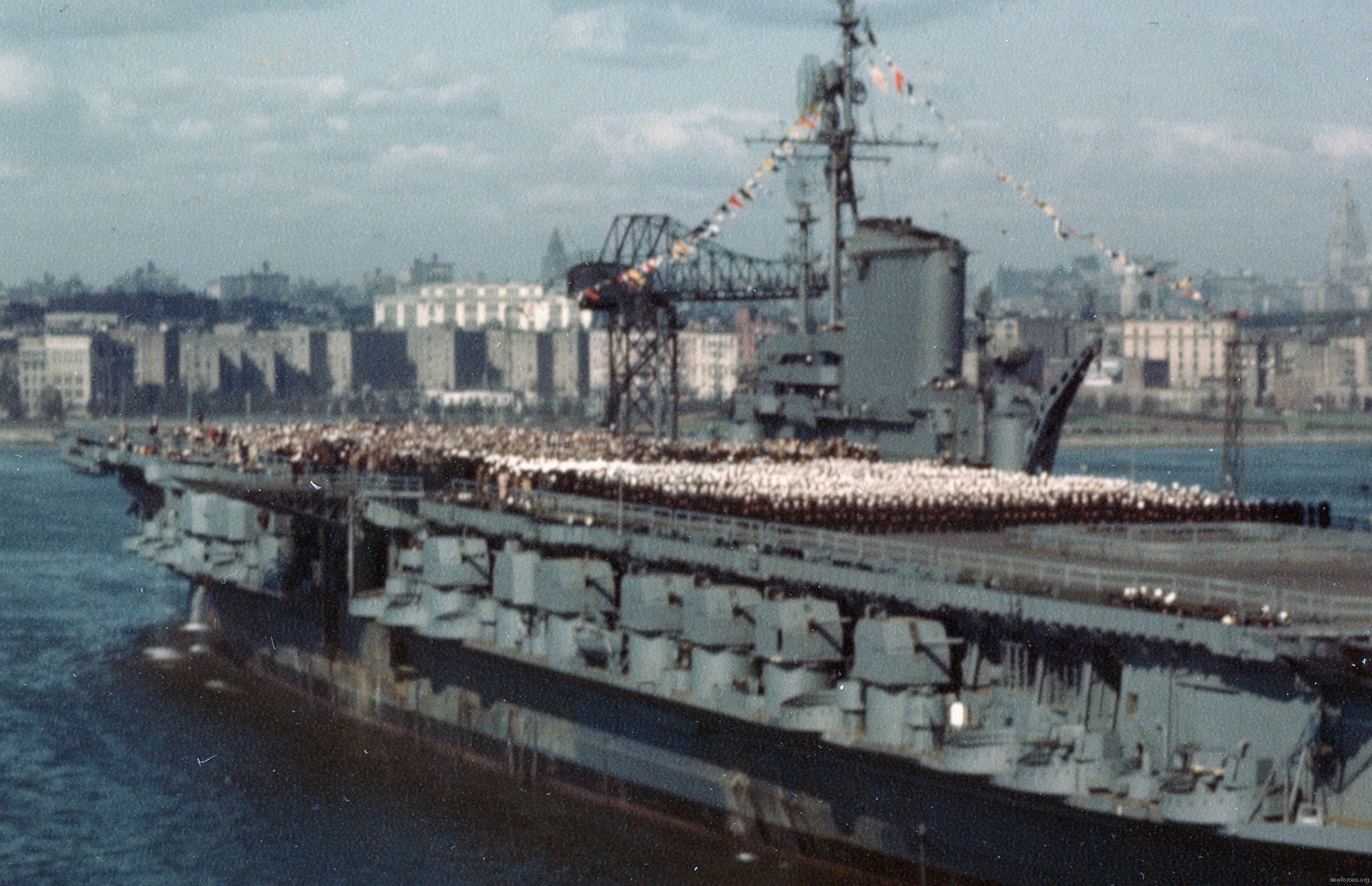 excerpt |
|||||
|
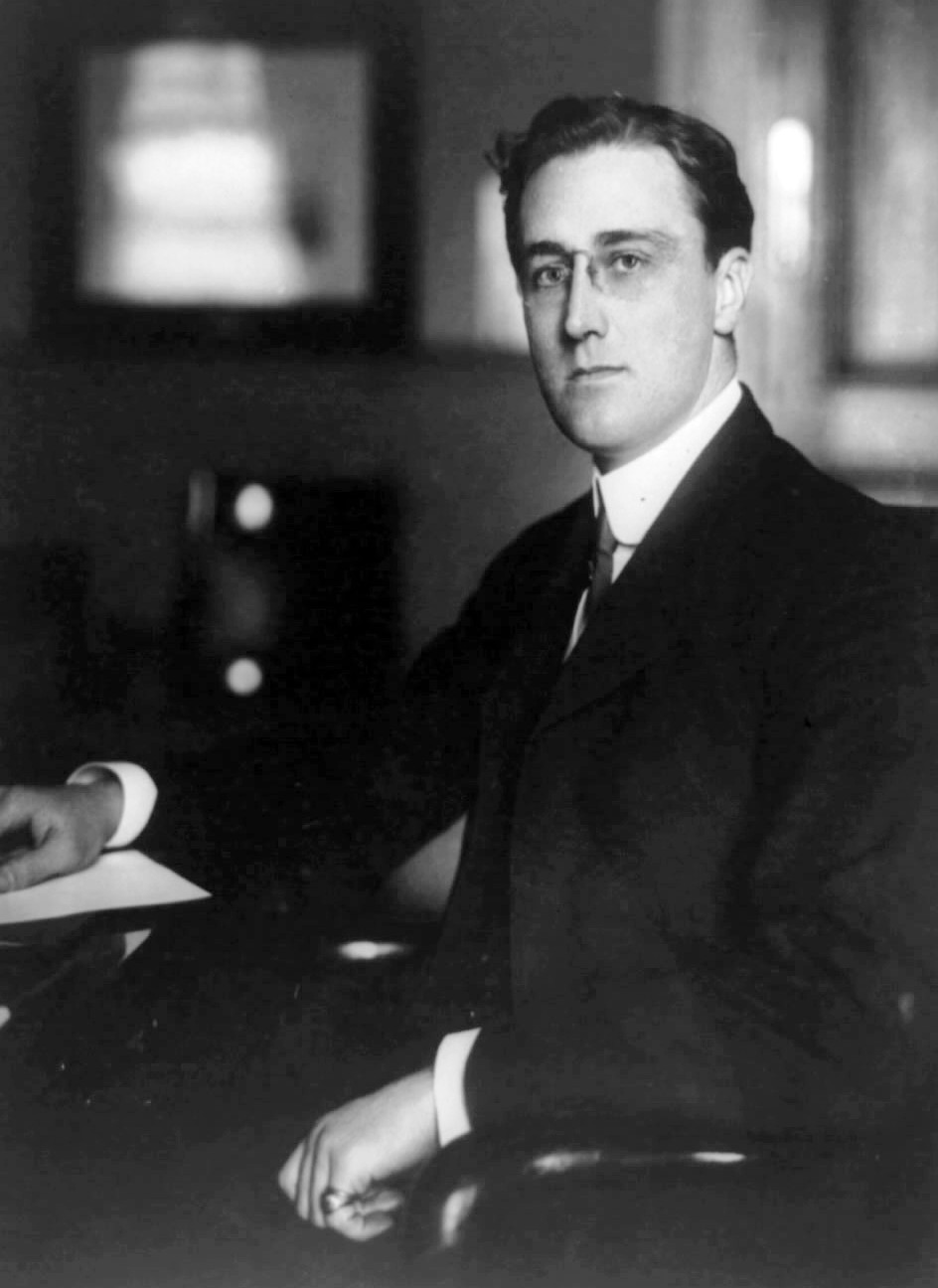
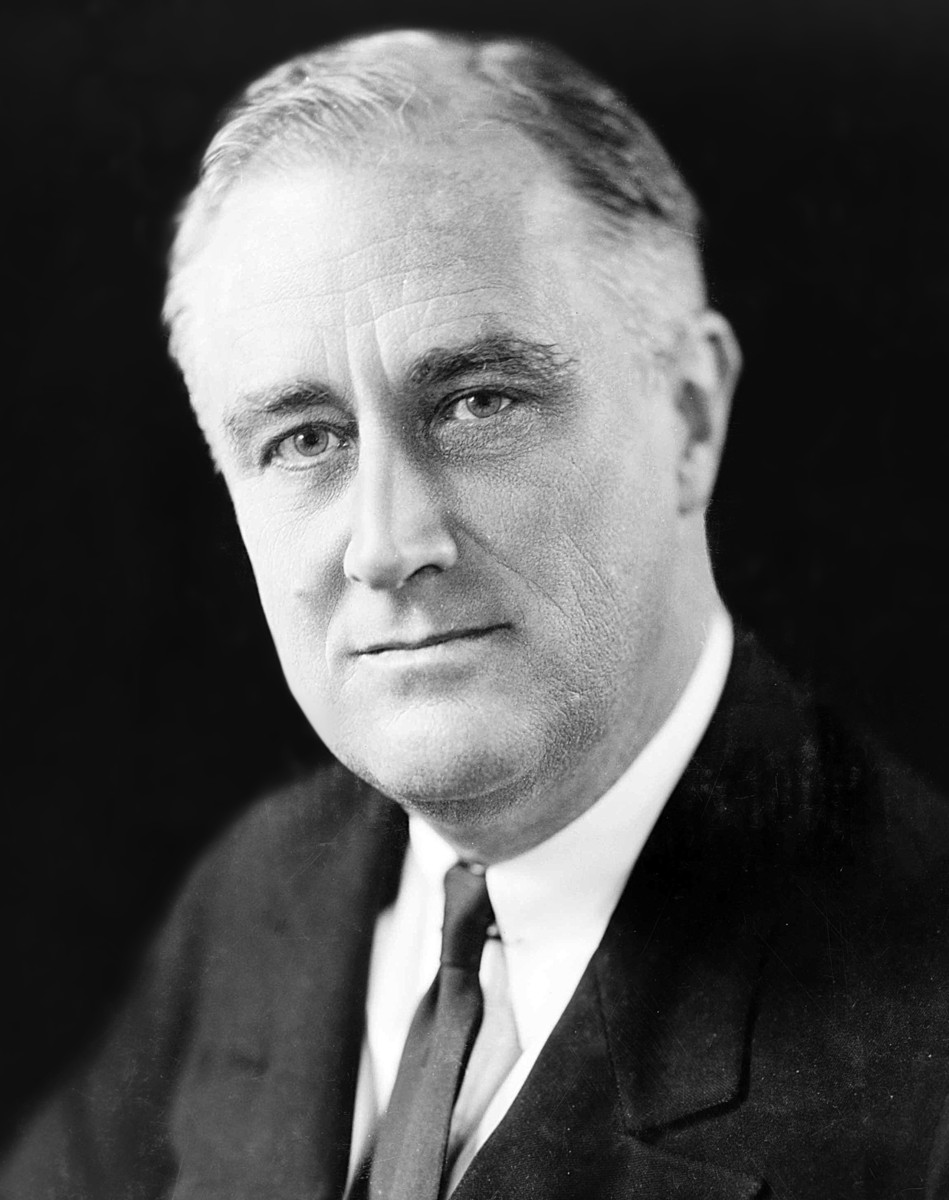
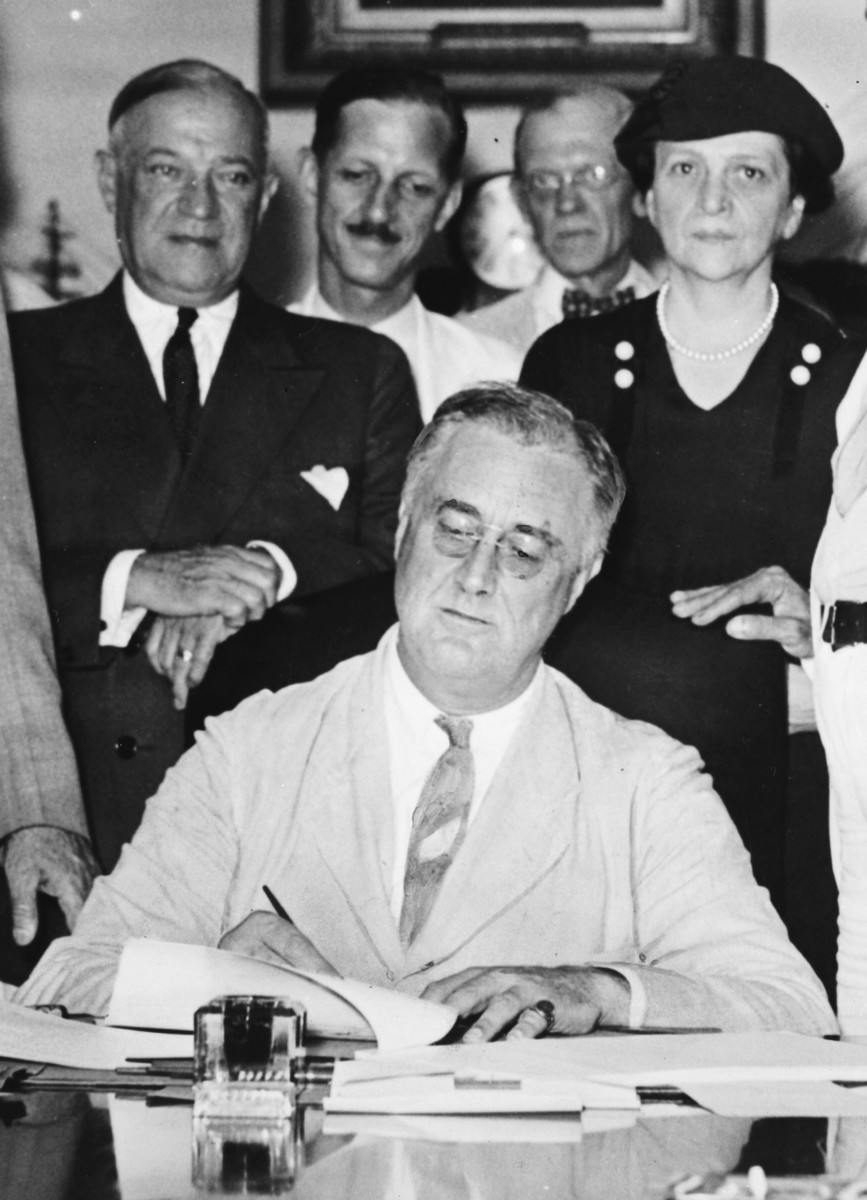
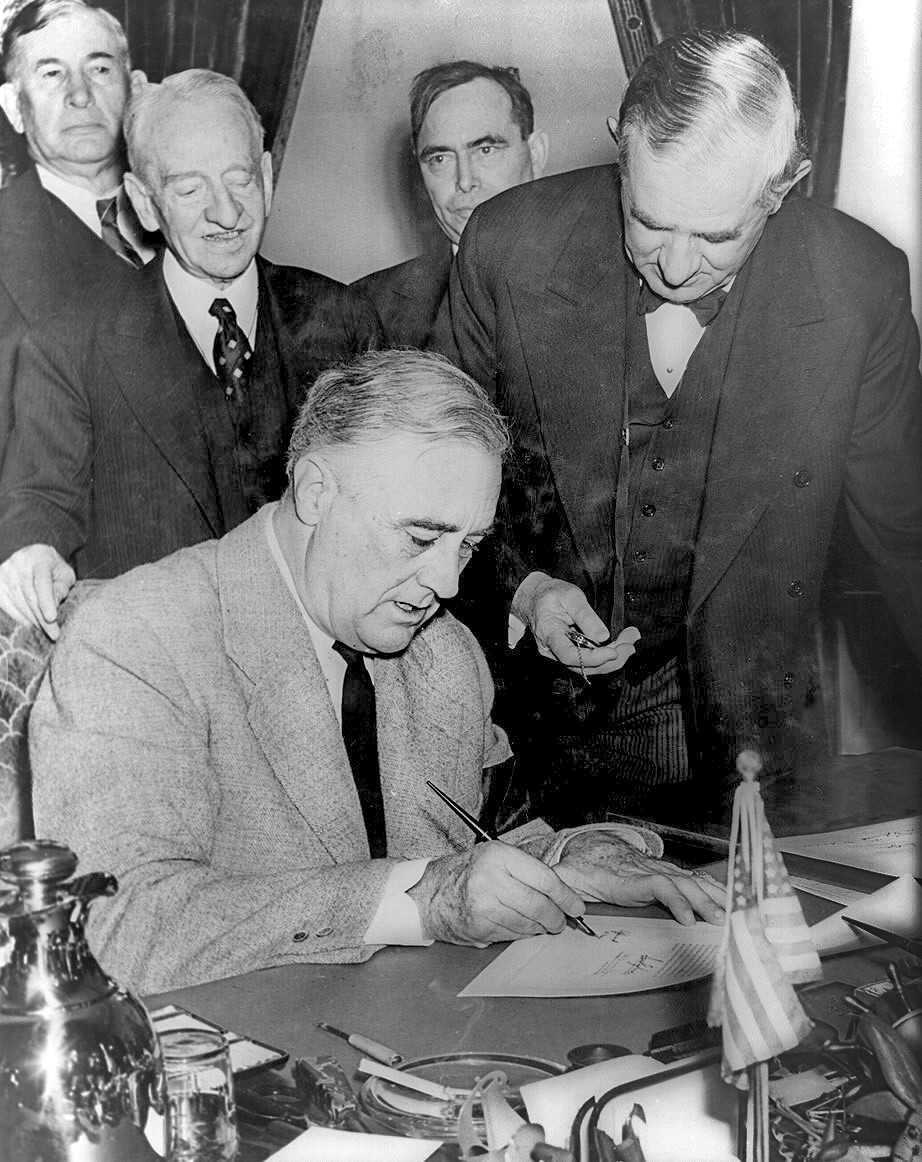
Franklin Delano Roosevelt (January
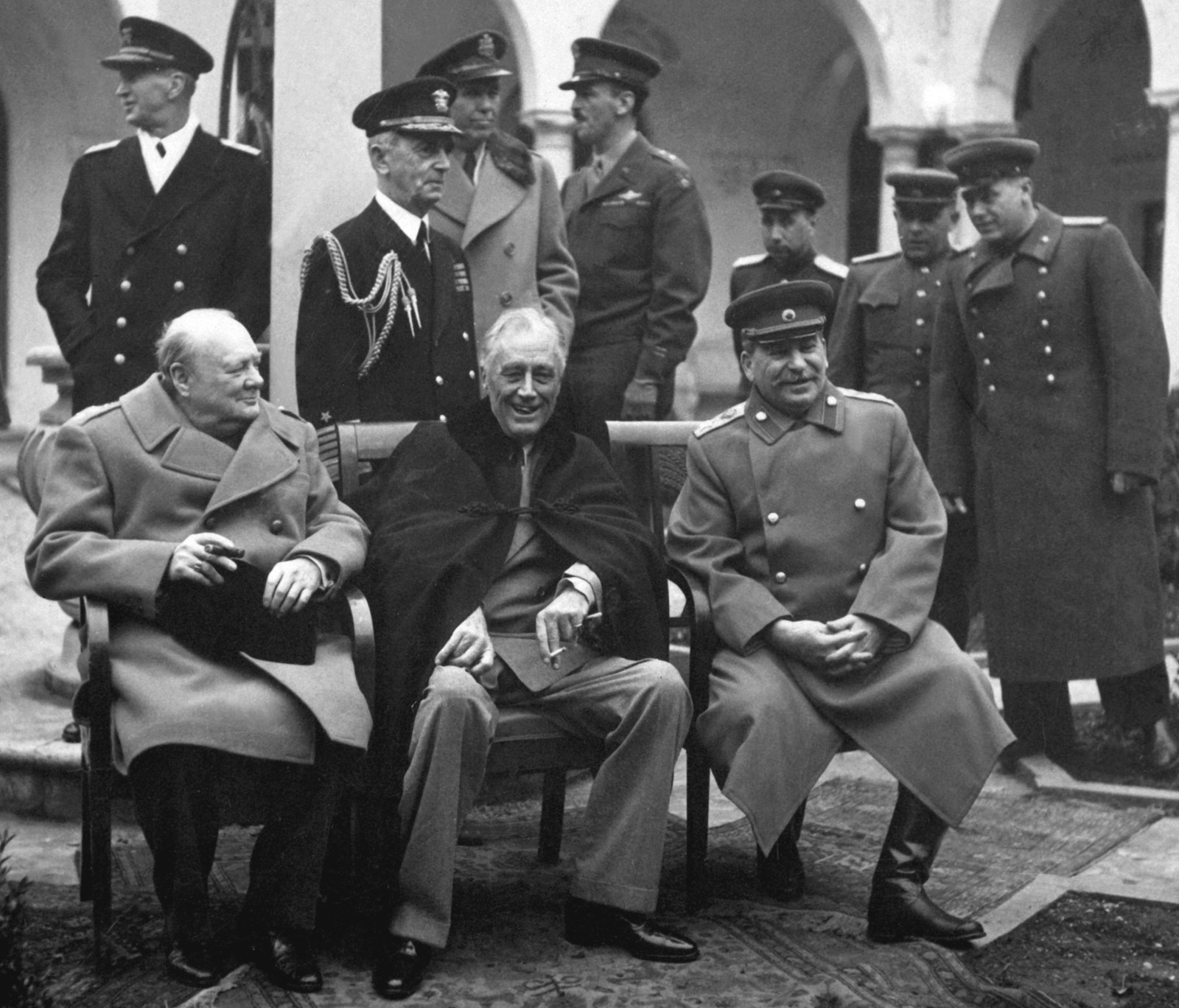
30, 1882 - April 12, 1945) ... often referred to by his initials FDR, was an American statesman and political leader who served as the 32nd president of the United States from 1933 until his death in 1945. A member of the Democratic party, he won a record four presidential elections and became a central figure in world events during the first half of the 20th century. Roosevelt directed the federal government during most of the Great Depression, implementing his New Deal domestic agenda in response to the worst economic crisis in U.S. history. As a dominant leader of his party, he built the New Deal Coalition, which realigned American politics into the Fifth Party System and defined American liberalism throughout the middle third of the 20th century. His third and fourth terms were dominated by World War II. Roosevelt is widely considered to be one of the most important figures in American history, as well as among the most influential figures of the 20th century. Though he has been subject to substantial criticism, he is generally rated by scholars as one of the three greatest U.S. presidents, along with George Washington and Abraham Lincoln. Roosevelt was born in Hyde Park, New York, to a Dutch American family made well known by Theodore Roosevelt, the 26th president of the United States, and William Henry Aspinwall. FDR attended Groton School, Harvard College, and Columbia Law School, and went on to practice law in New York City. In 1905, he married his fifth cousin once removed, Eleanor Roosevelt. They had six children, of whom five survived into adulthood. He won election to the New York State Senate in 1910, and then served as Assistant Secretary of the Navy under President Woodrow Wilson during World War I. Roosevelt was James M. Cox's running mate on the Democratic Party's 1920 national ticket, but Cox was defeated by Warren G. Harding. In 1921, Roosevelt contracted a paralytic illness, believed at the time to be polio, and his legs became permanently paralyzed. While attempting to recover from his condition, Roosevelt founded the treatment center in Warm Springs, Georgia, for people with poliomyelitis. In spite of being unable to walk unaided, Roosevelt returned to public office by winning election as Governor of New York in 1928. He was in office from 1929 to 1933 and served as a reform Governor, promoting programs to combat the economic crisis besetting the United States at the time. In the 1932 presidential election, Roosevelt defeated Republican President Herbert Hoover in a landslide. Roosevelt took office while the United States was in the midst of the Great Depression, the worst economic crisis in the country's history. During the first 100 days of the 73rd United States Congress, Roosevelt spearheaded unprecedented federal legislation and issued a profusion of executive orders that instituted the New Deal - a variety of programs designed to produce relief, recovery, and reform. He created numerous programs to provide relief to the unemployed and farmers while seeking economic recovery with the National Recovery Administration and other programs. He also instituted major regulatory reforms related to finance, communications, and labor, and presided over the end of Prohibition. He harnessed radio to speak directly to the American people, giving 30 "fireside chat" radio addresses during his presidency and becoming the first American president to be televised. The economy having improved rapidly from 1933 to 1936, Roosevelt won a landslide reelection in 1936. However, the economy then relapsed into a deep recession in 1937 and 1938. After the 1936 election, Roosevelt sought passage of the Judiciary Reorganization Bill of 1937 (the "court packing plan"), which would have expanded the size of the Supreme Court of the United States. The bipartisan Conservative Coalition that formed in 1937 prevented passage of the bill and blocked the implementation of further New Deal programs and reforms. Major surviving programs and legislation implemented under Roosevelt include the Securities and Exchange Commission, the National Labor Relations Act, the Federal Deposit Insurance Corporation, and Social Security. Roosevelt ran successfully for reelection in 1940. His victory made him the only U.S. President to serve for more than two terms. With World War II looming after 1938, Roosevelt gave strong diplomatic and financial support to China, the United Kingdom and eventually the Soviet Union while the U.S. remained officially neutral. Following the Japanese attack on Pearl Harbor on December 7, 1941, an event he famously called "a date which will live in infamy", Roosevelt obtained a declaration of war on Japan the next day, and a few days later, on Germany and Italy; all three declarations were very soon approved by Congress. Assisted by his top aide Harry Hopkins and with very strong national support, he worked closely with British Prime Minister Winston Churchill, Soviet leader Joseph Stalin and Chinese Generalissimo Chiang Kai-shek in leading the Allied Powers against the Axis Powers. Roosevelt supervised the mobilization of the U.S. economy to support the war effort, and implemented a Europe first strategy, making the defeat of Germany a priority over that of Japan. He also initiated the development of the world's first atomic bomb, and worked with the other Allied leaders to lay the groundwork for the United Nations and other post-war institutions. Roosevelt won reelection in 1944 but with his physical health declining during the war years, he died in April 1945, just 11 weeks into his fourth term. The Axis Powers surrendered to the Allies in the months following Roosevelt's death, during the presidency of his successor, Harry S. Truman. source: wikipedia
|
|||||
|
USS Franklin D. Roosevelt (CVB / CVA / CV 42): History: Franklin D. Roosevelt (CVB-42) was launched 29 April 1945 by New York Naval Shipyard as Coral Sea (CVB-42); sponsored by Mrs. John H. Towers, wife of the Deputy Commander in Chief, Pacific Fleet; renamed Franklin D. Roosevelt 8 May 1945 following the death of the President; and commissioned 27 October 1945 Captain A. Soucek in command. She was reclassified CVA-42 on 1 October 1952. During her shakedown cruise, Franklin D. Roosevelt called at Rio de Janeiro 1 to l1 February 1946 to represent the United States at the inauguration of the Brazilian president, Eurico G. Dutra, who came aboard for a short cruise. Fleet maneuvers and other training operations in the Caribbean preceded her first deployment to the Mediterranean, from 8 August to 4 October during which she was a part of a U.S. Navy force which visited Athens to bolster the government of Greece during its successful fight against the Communist. She received thousands of visitors during her calls to many Mediterranean ports, giving Europeans an opportunity to view this impressive addition to America's seapower for peace. On 21 July 1946, Lt. Cmdr. James Davidson, flying the McDonnell XFD-1 Phantom, made a series of successful landings and take-offs aboard Franklin D. Roosevelt in the first U.S. test of the adaptability of jet aircraft to shipboard operations. In November, Lt. Col. Marion E. Carl, USMC, flying a jet propelled P-80A made two catapult launches, four free take-offs, and five arrested landings aboard Franklin D. Roosevelt as part of continuing tests into the carrier suitability of the aircraft. Franklin D. Roosevelt operated off the east coast until July 1947 when she entered Norfolk Naval Ship Yard for a prolonged overhaul, during which she received improvements to her equipment and facilities. On 13 September 1948, the carrier sailed from Norfolk for a second tour of duty with the Mediterranean forces, from which she returned 23 January 1949. In a demonstration of carrier long-range attack capabilities, a P2V-3C Neptune, with Cmdr. Thomas Robinson in command, took off from Franklin D. Roosevelt off Jacksonville, Fla., and flew over Charleston, S.C., the Bahamas, the Panama Canal, up the coast of Central America and over Mexico to land the next day at San Francisco Municipal Airport. The flight, which covered 5,060 miles in 25 hours 59 minutes, was the longest ever made from the deck of a carrier. During the next few years, Franklin D. Roosevelt took part in intensive operations off the Virginia Capes, along the east coast, and in the Caribbean, and made four tours of duty in the Mediterranean. Assigned to extensive conversion at Puget Sound Naval Ship Yard, the carrier sailed from Norfolk 7 January 1954. Too large to pass through the Panama Canal, she rounded Cape Horn, and arrived at the shipyard 5 March. She was decommissioned there 23 April 1954. In February 1957, the recommissioned Franklin D. Roosevelt sailed to the Gulf of Maine for cold weather tests of catapults, aircraft, and other carrier equipment, including the Regulus guided missile. In July, she sailed for the first of three post-conversion cruises to the Mediterranean completed through 1960. Her assignments in the Mediterranean added NATO exercises to her normal schedule of major fleet operations, and found her each year entertaining a distinguished list of guests. Franklin D. Roosevelt supported the transport USS Kliensmith (APD 134) in the evacuation of 56 U.S. citizens and three foreign nationals from Nicara, Cuba, 24 October 1958, as the Cuban revolution came to a climax. On 6 March 1965, a Sikorsky SH-3A Sea King helicopter, piloted by Cmdr. James R. Williford, took off from USS Hornet (CVS 12) berthed at North Island Naval Air Station, San Diego, and landed 15 hours and 51 minutes later on the deck of Franklin D. Roosevelt at sea off Mayport, Fla. The flight surpassed the existing distance for helicopters by more than 700 miles. A new, major development in carrier fire prevention occurred on 26 May 1969 when Franklin D. Roosevelt put to sea from the Norfolk Naval Shipyard, Portsmouth, Va., after an 11-month overhaul which included installation of a deck edge spray system using the new seawater compatible fire-fighting chemical, Light Water. Continuing to serve, Franklin D. Roosevelt, along with USS Independence (CV 62) and USS Guadalcanal (LPH 7) stood by for possible evacuation contingencies during the Yom Kippur War between Israeli and Arab forces during October 1973. Another first was racked up by Franklin D. Roosevelt when, on 4 October 1976, the first overseas operational commitment on a carrier for the AV-8A Harrier began when VMA-231 embarked aboard for a Sixth Fleet deployment. On 13 January 1977, two other Harriers made bow-on approaches and landing aboard the carrier, marking the first time a fixed wing aircraft had made a bow-on, downwind landing aboard a carrier at sea. Franklin D. Roosevelt was decommissioned 30 September 1977, and stricken from the Navy List the following day. She was sold by the Defense Reutilization and Marketing Service (DRMS) for scrapping on 1 April 1978. source: US Navy - - - - - another history: Franklin D. Roosevelt was laid down at New York Naval Shipyard on 1 December 1943. Sponsor Mrs. John H. Towers, wife of the Deputy Commander-in-Chief, Pacific Fleet, christened the ship Coral Sea at the 29 April 1945 launching. On 8 May 1945, President Harry S. Truman approved the Secretary of the Navy's recommendation to rename the ship Franklin D. Roosevelt in honor of the late president, who had died four weeks earlier. Roosevelt was commissioned on Navy Day, 27 October 1945, at the New York Naval Shipyard. Capt. Apollo Soucek was the ship's first commanding officer. During her shakedown cruise, Roosevelt called at Rio de Janeiro from 1 to 11 February 1946 to represent the United States at the inauguration of Brazilian president Eurico Gaspar Dutra, who came aboard for a short cruise. During April and May, Roosevelt participated in Eighth Fleet maneuvers off the East Coast, the Navy's first major postwar training exercise. On 21 July 1946, Roosevelt became the first American carrier to operate an all-jet aircraft under controlled conditions. Lieutenant Commander James Davidson, flying the McDonnell XFD-1 Phantom, made a series of successful take-offs and landings as Roosevelt lay off Cape Henry, Virginia. Jet trials continued in November, when Lt. Col. Marion E. Carl, USMC, made two catapult launches, four unassisted take-offs, and five arrested landings in a Lockheed P-80A. Fleet maneuvers and other training operations in the Caribbean preceded Roosevelt's first deployment to the Mediterranean, which lasted from August to October 1946. Roosevelt, flying the flag of Rear Admiral John H. Cassady, Commander, Carrier Division 1, led the U.S. Navy force that arrived in Piraeus on 5 September 1946. This visit showed U.S. support for the pro-Western government of Greece, which was locked in a civil war with Communist insurgents. The ship received thousands of visitors during her calls to many Mediterranean ports. Roosevelt returned to American waters and operated off the East Coast until July 1947, when she entered Norfolk Naval Shipyard for an extensive overhaul. At that time, her quad 40 mm Bofors anti-aircraft guns were replaced by 40 3-inch (76 mm) Mark 22 guns in Mark 33 twin mountings. From September 1948 to January 1949, Roosevelt undertook a second tour of duty with U.S. Naval Forces, Mediterranean. In 1950, Roosevelt became the first carrier to take nuclear weapons to sea. In September and October 1952, she participated in Operation Mainbrace, the first major NATO exercise in the North Atlantic. Roosevelt operated with other major fleet units, including the aircraft carriers USS Midway, USS Wasp, and HMS Eagle, as well as the battleships USS Wisconsin and HMS Vanguard. Roosevelt was reclassified CVA-42 on 1 October 1952. On 7 January 1954, she sailed for Puget Sound Naval Shipyard to undergo extensive reconstruction. Too large to pass through the Panama Canal, Roosevelt rounded Cape Horn and arrived at the shipyard on 5 March 1954. She was temporarily decommissioned there for her refit on 23 April 1954. Roosevelt was the first of her class to undergo the SCB-110 reconstruction, at a cost of $48 million. She received an enclosed "hurricane bow," one C-11-2 and two C-11-1 steam catapults, strengthened arresting gear, an enlarged bridge, a mirror landing system, and a 482-foot (147 m) angled flight deck. SPS-8 height finding radar and SPS-12 air search radar were mounted on a new tubular mast. The aft elevator was relocated to the starboard deck edge, the forward elevator was enlarged, and all elevators were uprated to 75,000 lb (34,000 kg) capacity. Aviation fuel bunkerage was increased from 350,000 to 450,000 gallons (1,320,000 to 1,700,000 L). Standard displacement rose to 51,000 tons, while deep load displacement rose to 63,400 tons. As weight compensation, several of the 5-inch (127 mm) Mark 16 anti-aircraft guns were landed, leaving only 10, and the 3,200-ton armor belt was removed. Hull blisters were also added to cope with the increased weight. Roosevelt recommissioned on 6 April 1956. After post-refit trials, Roosevelt sailed for her new homeport of Mayport, Florida. In February 1957, Roosevelt conducted cold weather tests of catapults, aircraft, and the Regulus guided missile, in the Gulf of Maine. In July, she sailed for the first of three consecutive Sixth Fleet deployments. Her assignments in the Mediterranean added NATO exercises to her normal schedule of major fleet operations, and found her entertaining a distinguished list of guests each year. During a 1958 mid-year overhaul, the 22 remaining 3-inch (76 mm) guns were removed. On 24 October 1958, Roosevelt supported USS Kleinsmith in the evacuation of 56 American citizens and three foreign nationals from Nicara, Cuba, as the Cuban Revolution came to a climax. In late 1960, the Control Instrument Company installed the first production Fresnel Lens Optical Landing System (FLOLS) onboard Roosevelt. She recorded her 100,000th aircraft landing in March 1961. During a 1963 overhaul, six more 5-inch (127 mm) guns were removed. While operating in the Eastern Mediterranean in the fall of 1964, Roosevelt lost a blade from one of her 20-ton propellers. She proceeded from Naples, Italy to New York with the number one shaft locked. After replacing the propeller at Bayonne, New Jersey, Roosevelt returned to the Mediterranean to complete her cruise. From August 1966 to January 1967, Roosevelt made her only deployment to Southeast Asia, spending a total of 95 days "on the line." Her embarked airwing, Carrier Air Wing One, consisted mainly of F-4 Phantom IIs and A-4 Skyhawks. Roosevelt received one battle star for her service during the Vietnam War. In January 1968, Italian actress Virna Lisi was invited by Roosevelt's crew to participate in the ship's 22nd birthday celebrations. Lisi helped prepare 5,000 T-bone steaks at a large cook-out staged on the flight deck. Roosevelt was initially slated to undergo an extensive reconstruction (SCB 101.68) similar to that received by Midway from 1966 to 1970. This plan was derailed by massive cost overruns in Midway's reconstruction, which eventually totalled $202 million. Roosevelt was therefore limited to an austere $46 million refit, enabling her to operate the Grumman A-6 Intruder and LTV A-7 Corsair II. In July 1968, Roosevelt entered Norfolk Naval Shipyard for her 11-month modernization program. The forward centerline elevator was relocated to the starboard deck edge forward of the island, the port waist catapult was removed, the crew spaces were refurbished, and two of the four remaining 5-inch (127 mm) anti-aircraft turrets were removed. Roosevelt also received a deck edge spray system using the new seawater compatible fire-fighting chemical, Light Water. She put to sea again on 26 May 1969. From 1 August 1969, Roosevelt embarked Carrier Air Wing Six, which served as the ship's air wing for the next seven cruises. In January 1970, Roosevelt returned to the Mediterranean for another Sixth Fleet deployment. Roosevelt's twenty-first Sixth Fleet deployment was marked by indirect participation in the October 1973 Yom Kippur War, as she served as a transit "landing field" for aircraft being delivered to Israel. The Roosevelt battlegroup, Task Force 60.2, also stood by for possible evacuation contingencies. From 1973 through 1975, VAW-121 operated aboard Roosevelt as one of the last Grumman E-1 Tracer squadrons in the fleet. Roosevelt received a multipurpose designation, CV-42, on 30 June 1975, but she did not operate any anti-submarine aircraft. In June 1976, Roosevelt embarked VMA-231 with 14 AV-8A Harrier attack aircraft. The ship embarked Carrier Air Wing Nineteen for its final deployment, which lasted from October 1976 to April 1977. VMA-231 was on board for this deployment, which demonstrated that VTOL aircraft could be successfully and seamlessly integrated into fixed wing air operations. On 12 January 1977, Roosevelt collided with the Liberian grain freighter Oceanus while transiting the Strait of Messina. Both ships were able to proceed to port under their own power. By the late 1970s, Roosevelt was in poor material condition. Deprived of the upgrades that Midway and Coral Sea had received, Roosevelt was the least modern and least capable of the class. Furthermore, Roosevelt used General Electric turbines, which gave persistent problems and reduced speed compared to the Westinghouse units used on the other ships. The Navy therefore chose to decommission Roosevelt when the second Nimitz-class carrier, Dwight D. Eisenhower, entered service in 1977. Roosevelt completed her final cruise in April 1977. She was officially decommissioned on 30 September 1977. The decommissioning ceremony was held on 1 October 1977 and the ship was stricken from the Navy List on the same day. Efforts to preserve Roosevelt as a museum ship in New York City failed. Roosevelt's generally poor condition weighed against retaining her in the reserve fleet. Moreover, her low hangar height of 17 feet 6 inches (5.33 m) limited the aircraft types that she could handle. It was reasoned that existing Essex-class aircraft carriers could handle the same types of aircraft at lower cost. Some admirals also feared that if Roosevelt were retained, the Carter Administration would use her reactivation as a reason to cancel future Nimitz-class carriers. On 1 April 1978, the Defense Reutilization and Marketing Service sold the ship to River Terminal Development Company for $2.1 million. After usable equipment was removed from Roosevelt at the Norfolk Naval Shipyard's Inactive Ships Facility, the carrier was towed to Kearny, New Jersey. She arrived on 3 May 1978 and was scrapped that year. source: wikipedia |
|||||
|
|
|||||
| patches + more | |||||
|
|
seaforces.org |
USN ships
start page | |