|
||
|
HOME
|
US Navy -
ships
|
US Navy - air
units
|
USMC - air
units
|
International
Navies
|
Weapon Systems
|
Special Reports |
||
|
US Navy - Guided Missile Cruiser CG 67 - USS Shiloh |
||
|
||
| 07/22 | ||
|
Type,
class: Guided Missile Cruiser (CG); Ticonderoga
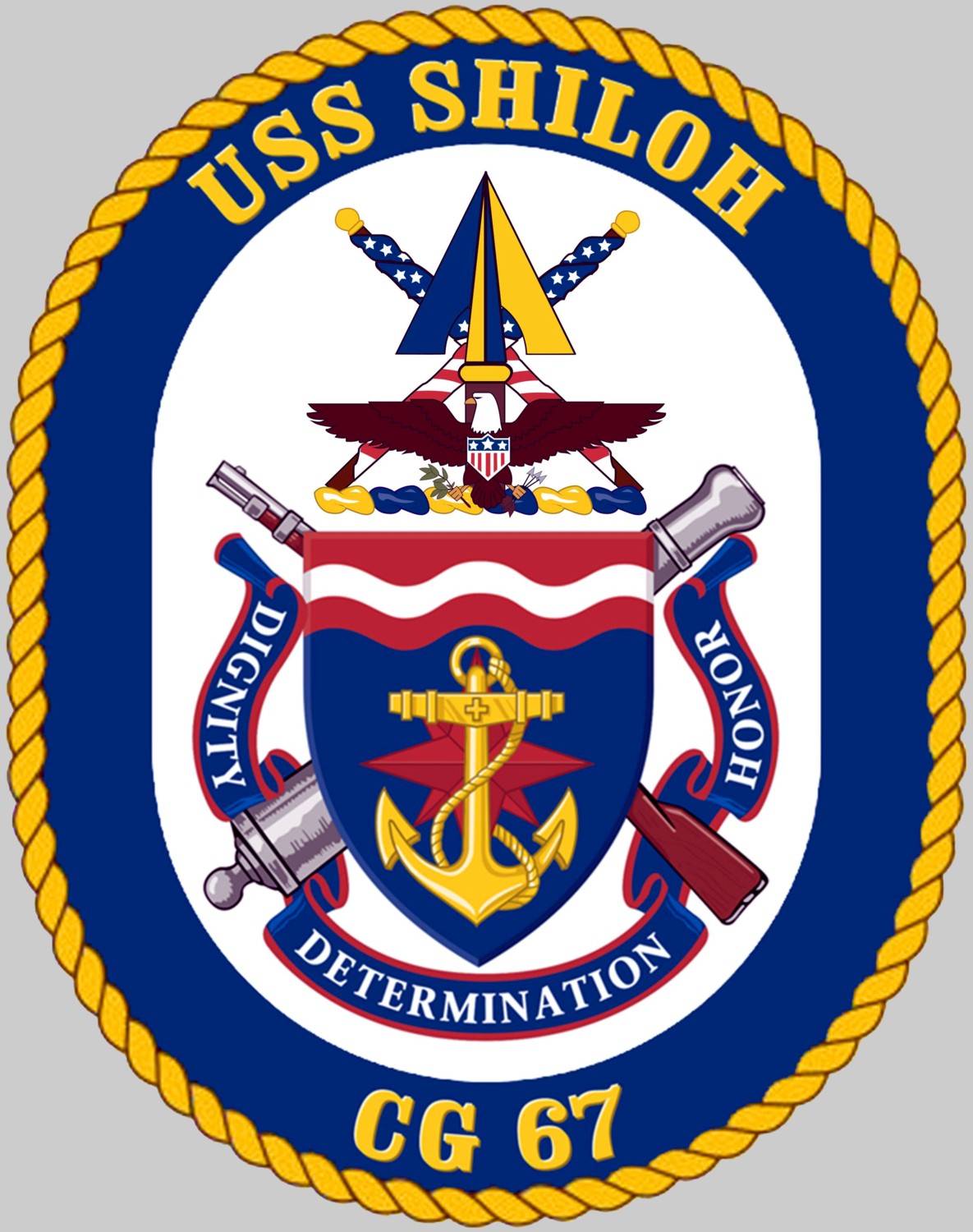
class Builder: Bath Iron Works, Bath, Maine, USA STATUS: Awarded: April 16, 1987 Laid down: August 1, 1989 Launched: September 8, 1990 Commissioned: July 18, 1992 IN SERVICE Homeport: forward deployed to Fleet Activities Yokosuka, Japan Namesake: the Battle of Shiloh, Tennessee (American Civil War, April 1862) Ships Motto: DIGNITY - DETERMINATION - HONOR Technical Data: see: INFO > Ticonderoga class Guided Missile Cruiser - CG |
||
| images | ||
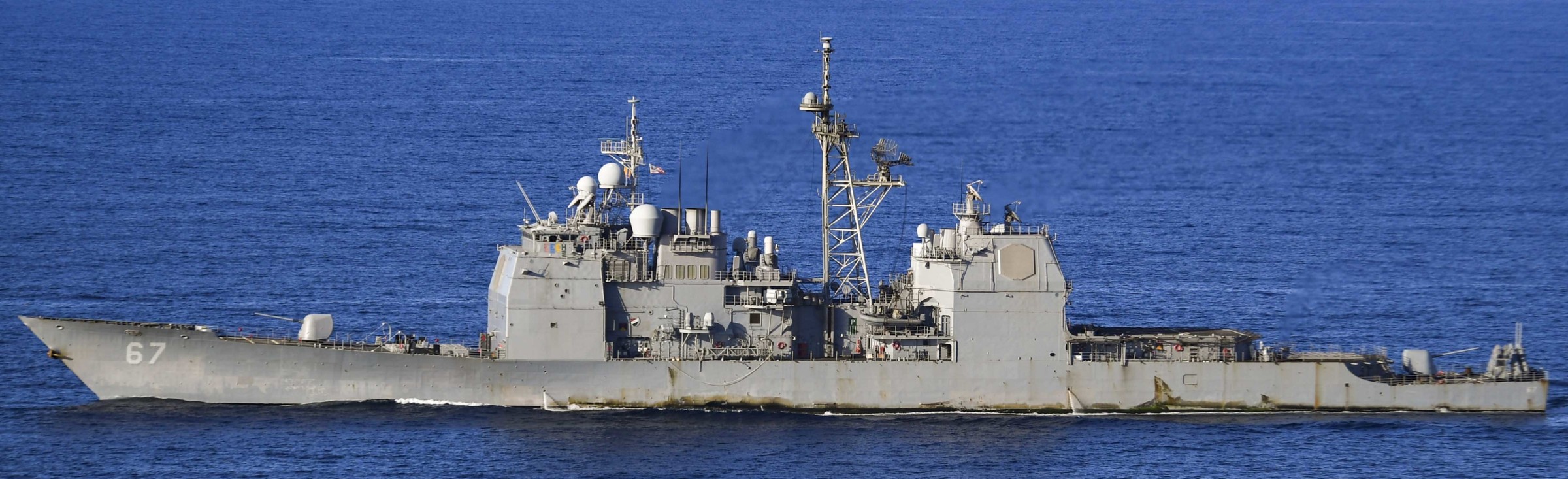 South China Sea - November 2021 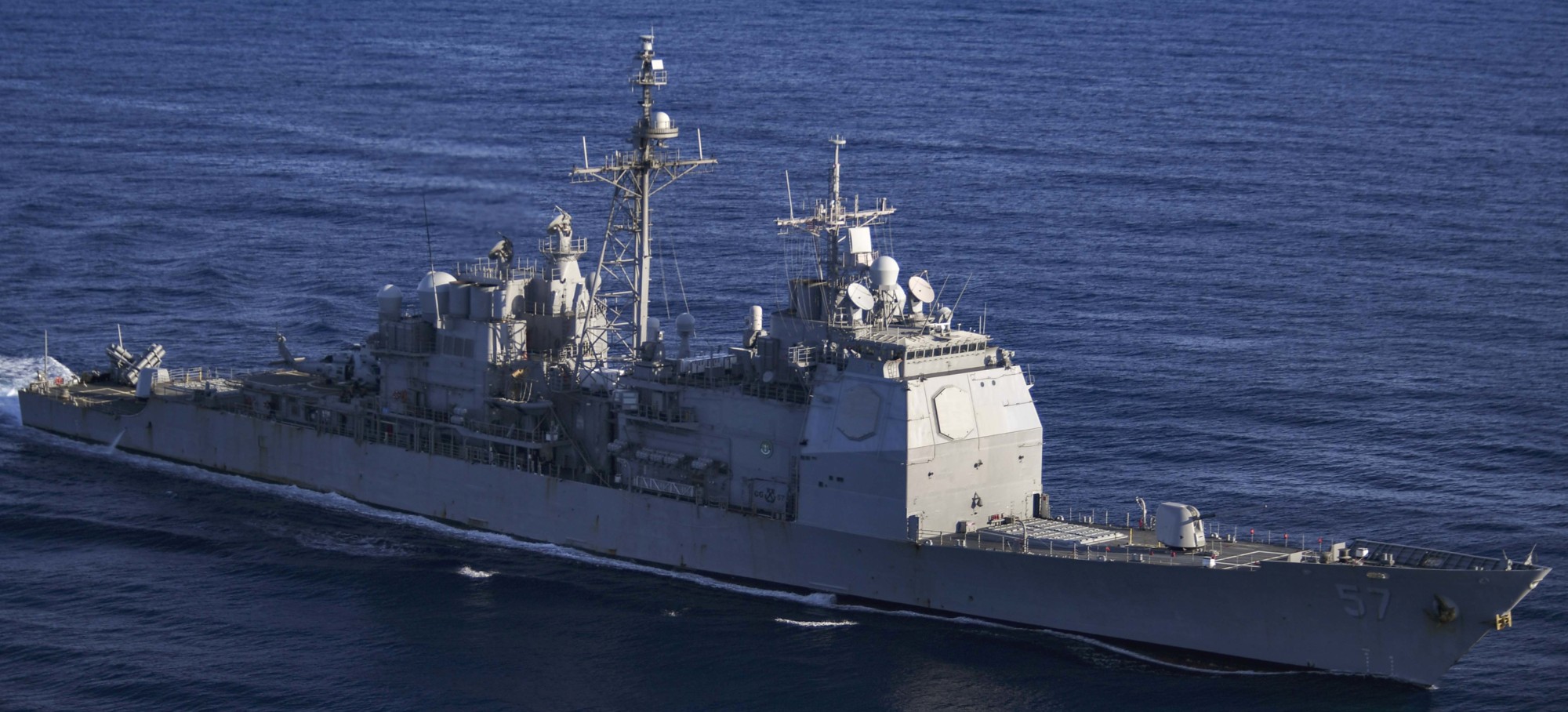 South China Sea - November 2021 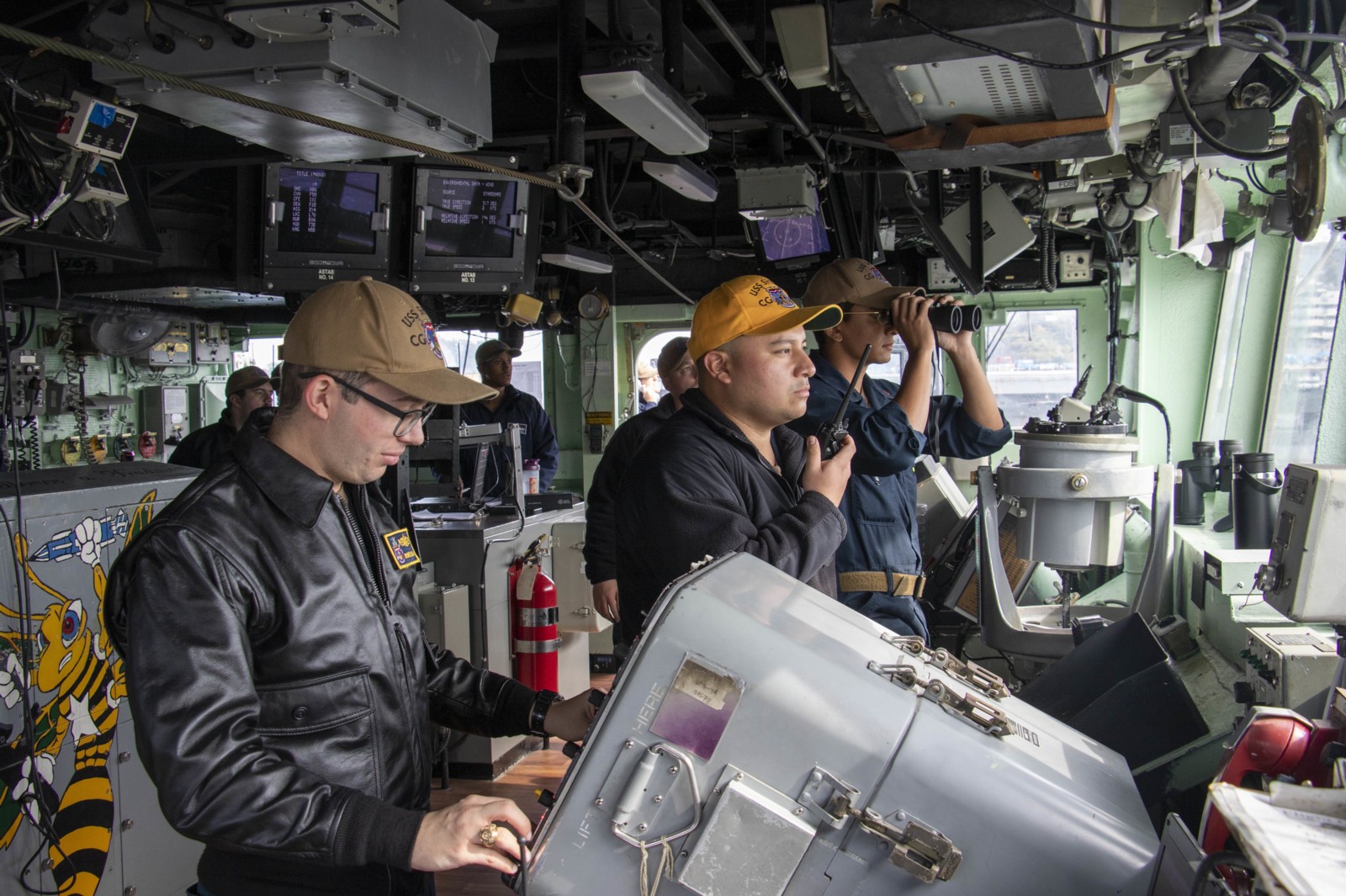 off Japan - November 2021 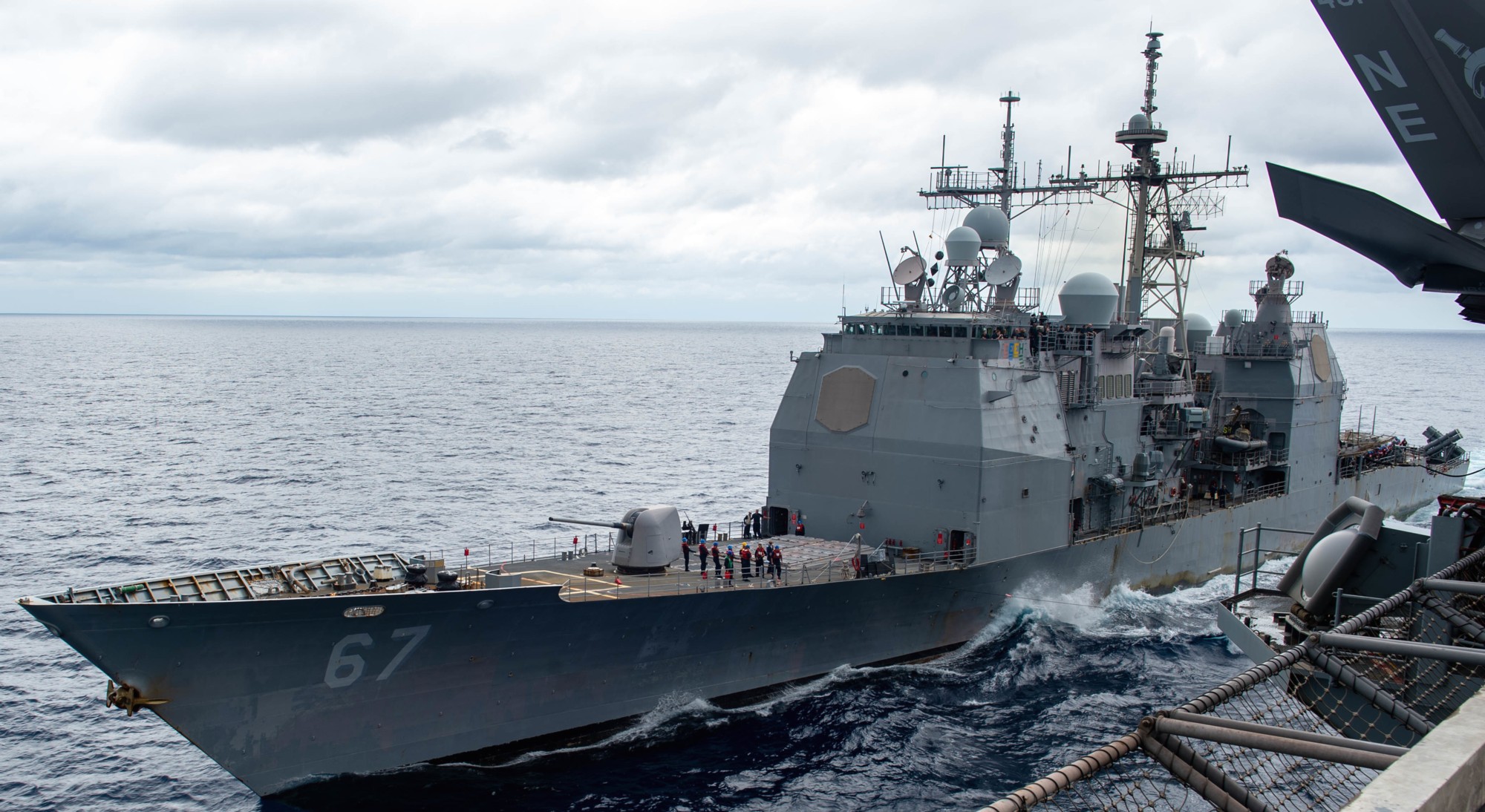 Sulu Sea - November 2021 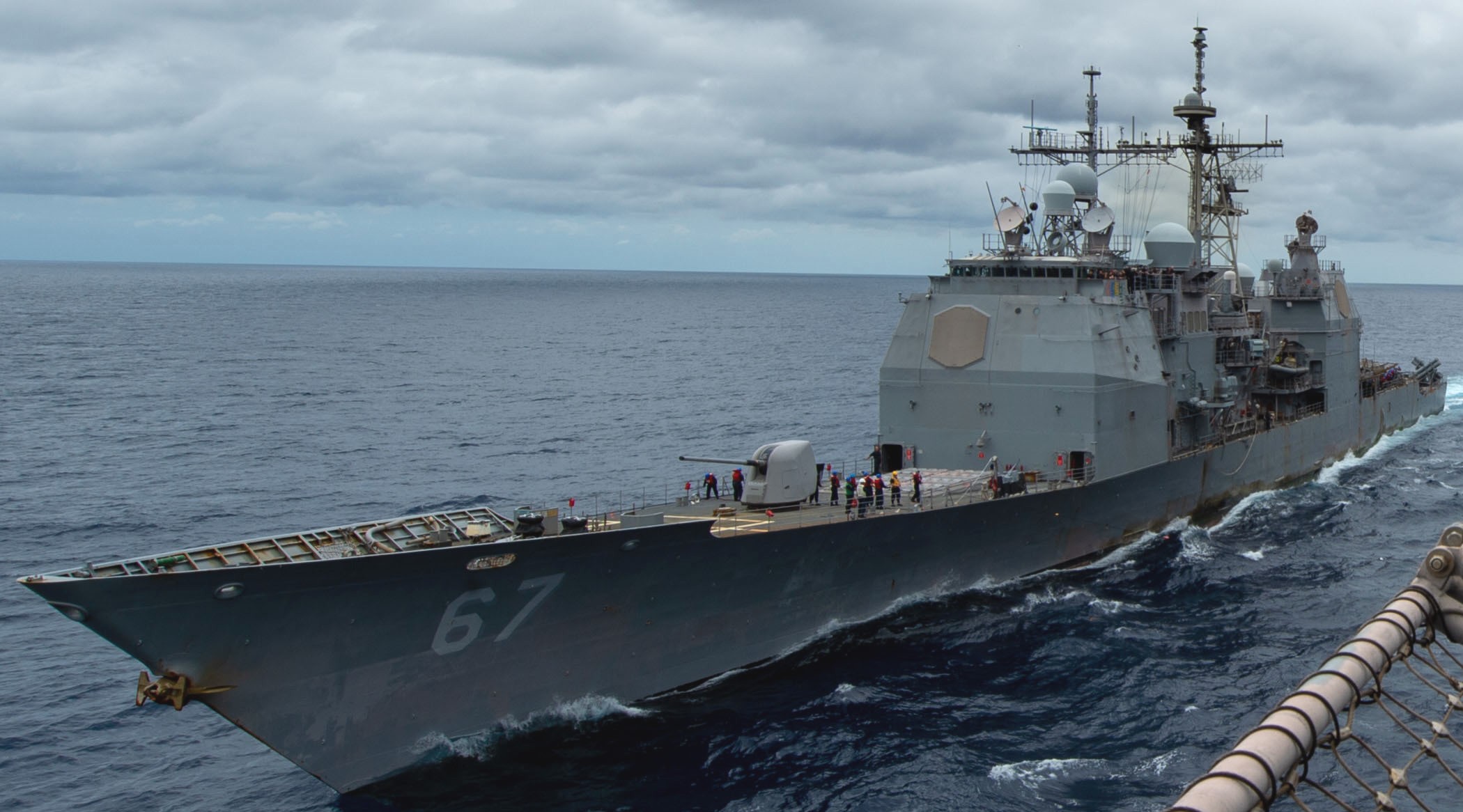 Sulu Sea - November 2021 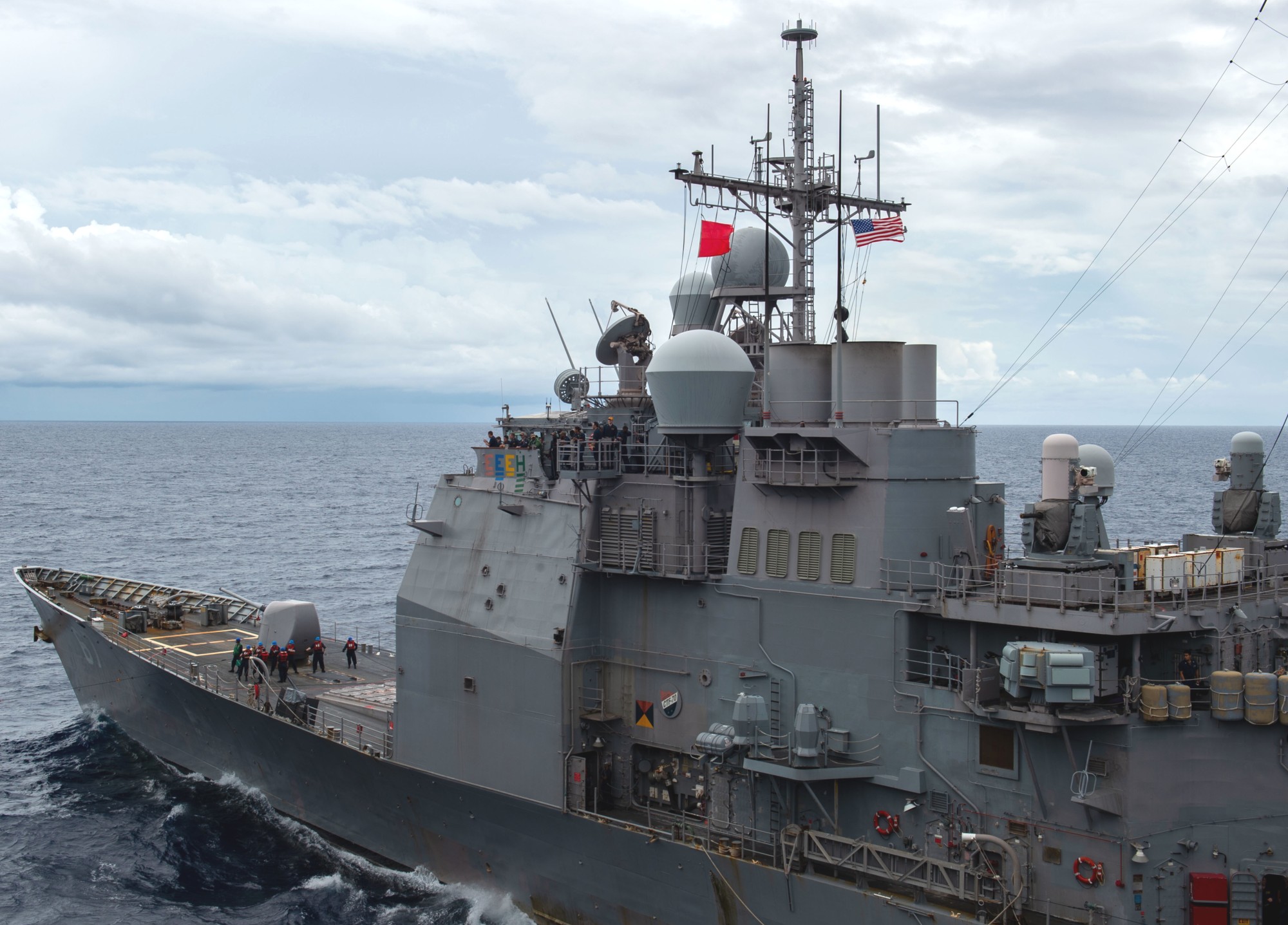 Sulu Sea - November 2021 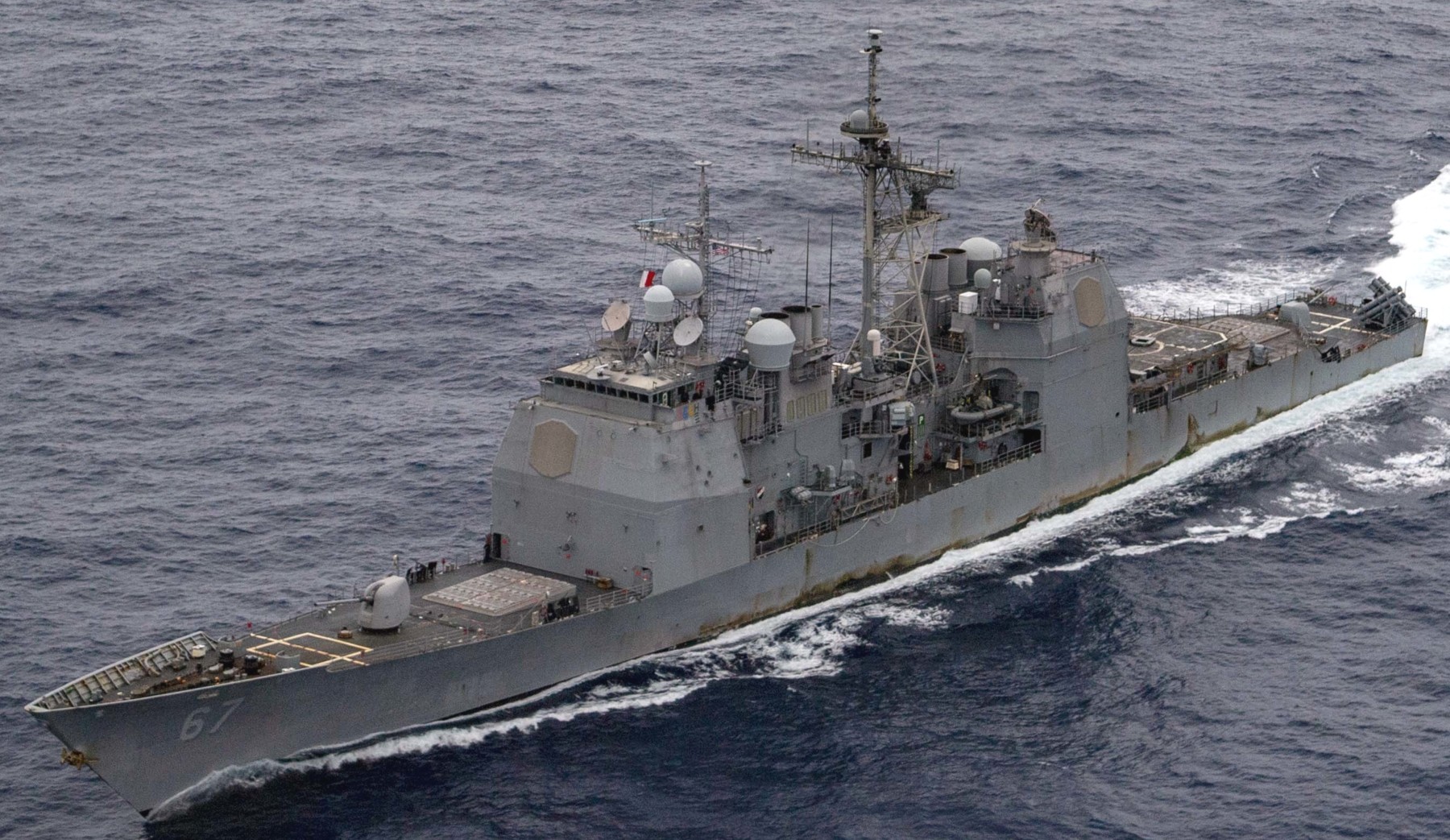 Philippine Sea - October 2021 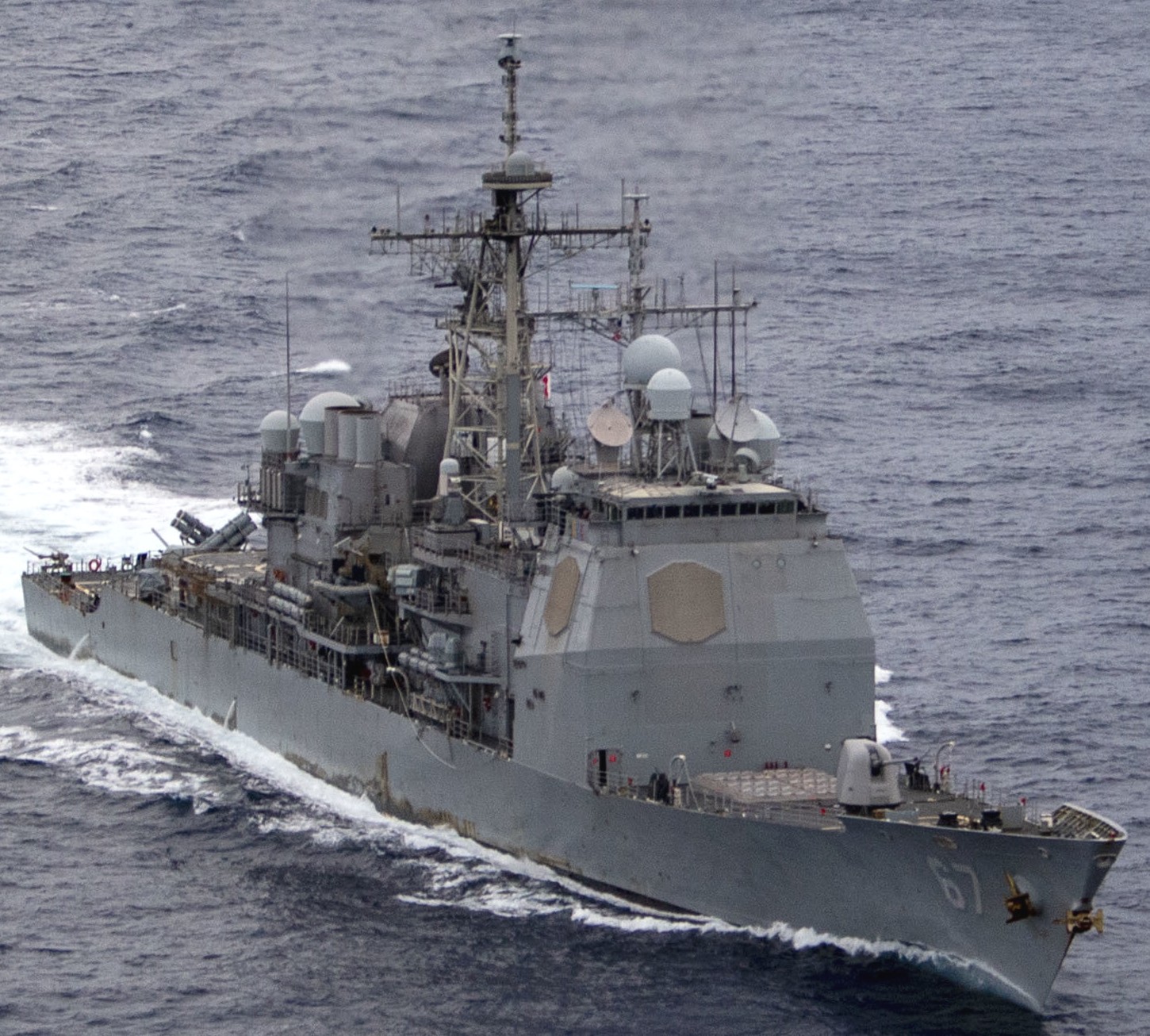 Philippine Sea - October 2021 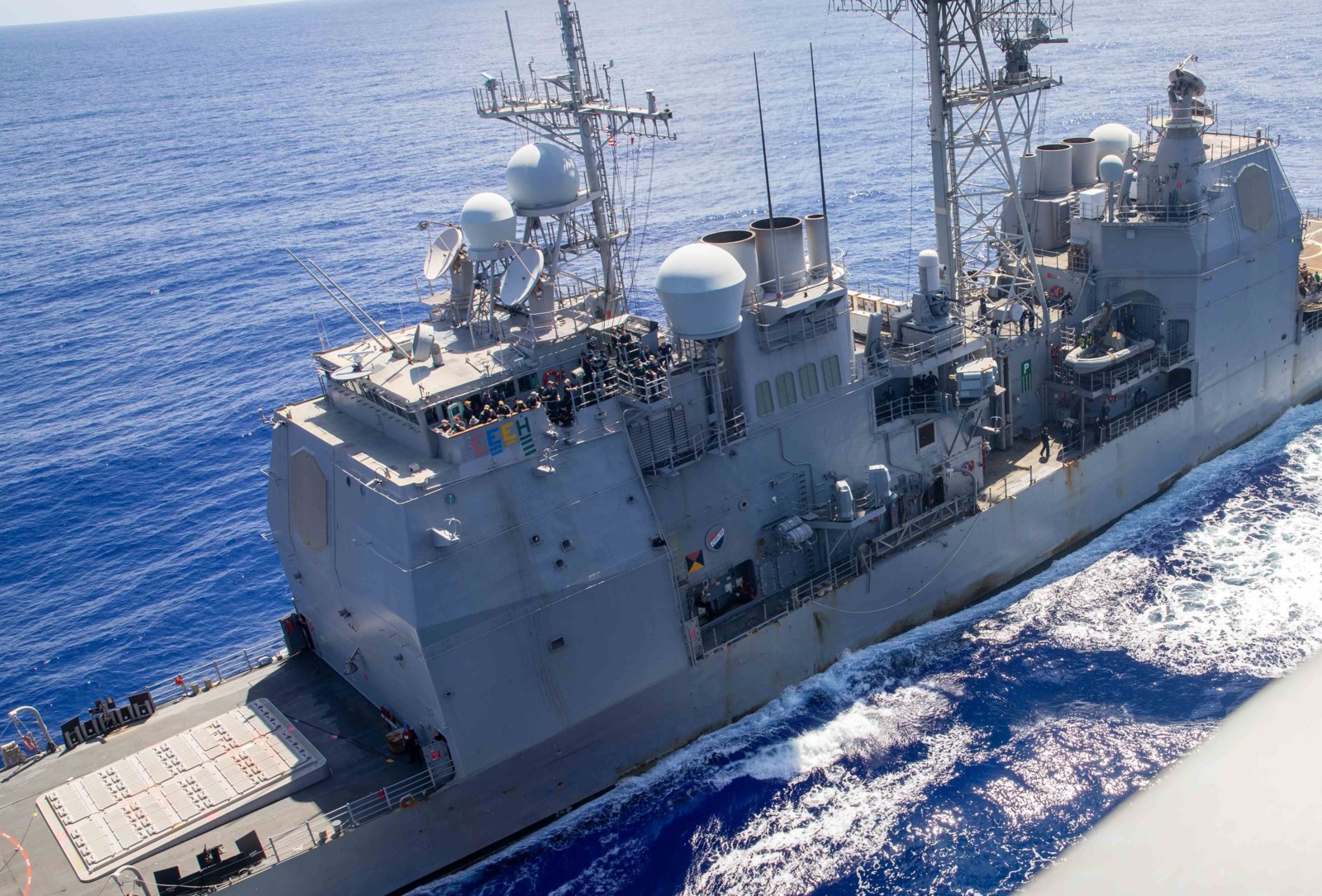 Philippine Sea - September 2021 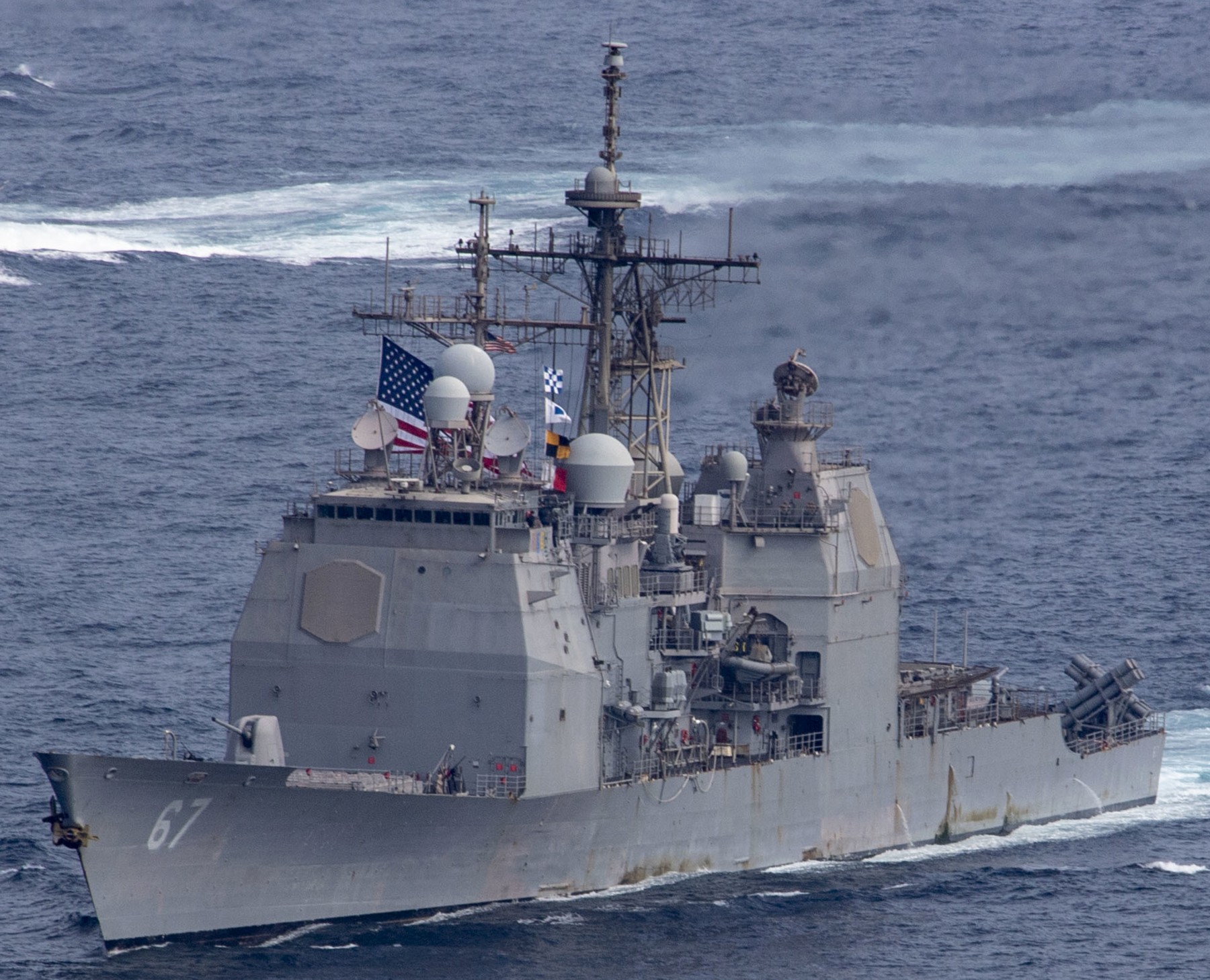 Arabian Gulf - September 2021 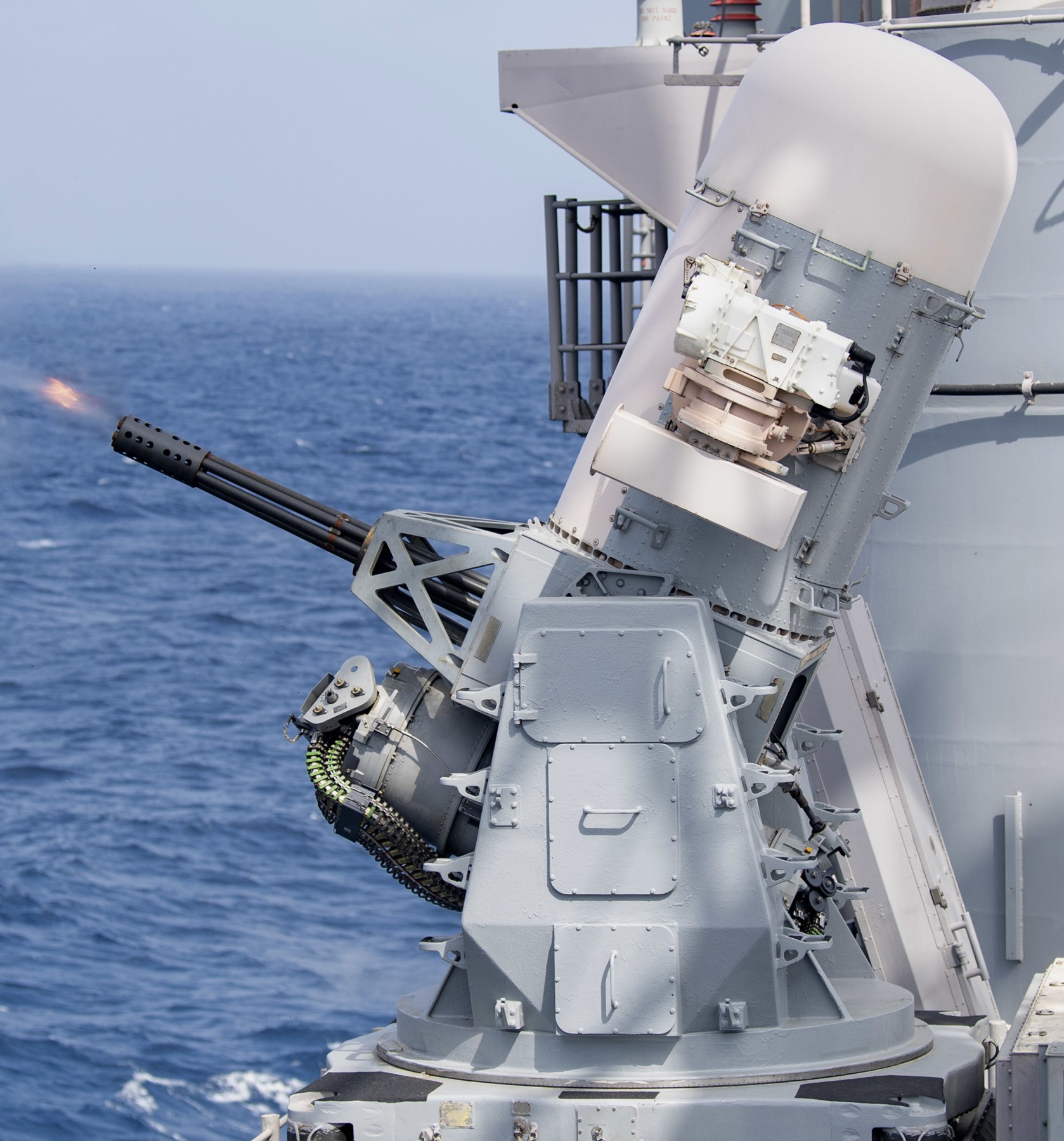 Mk.15 Phalanx CIWS fire exercise - Arabian Gulf - June 2021 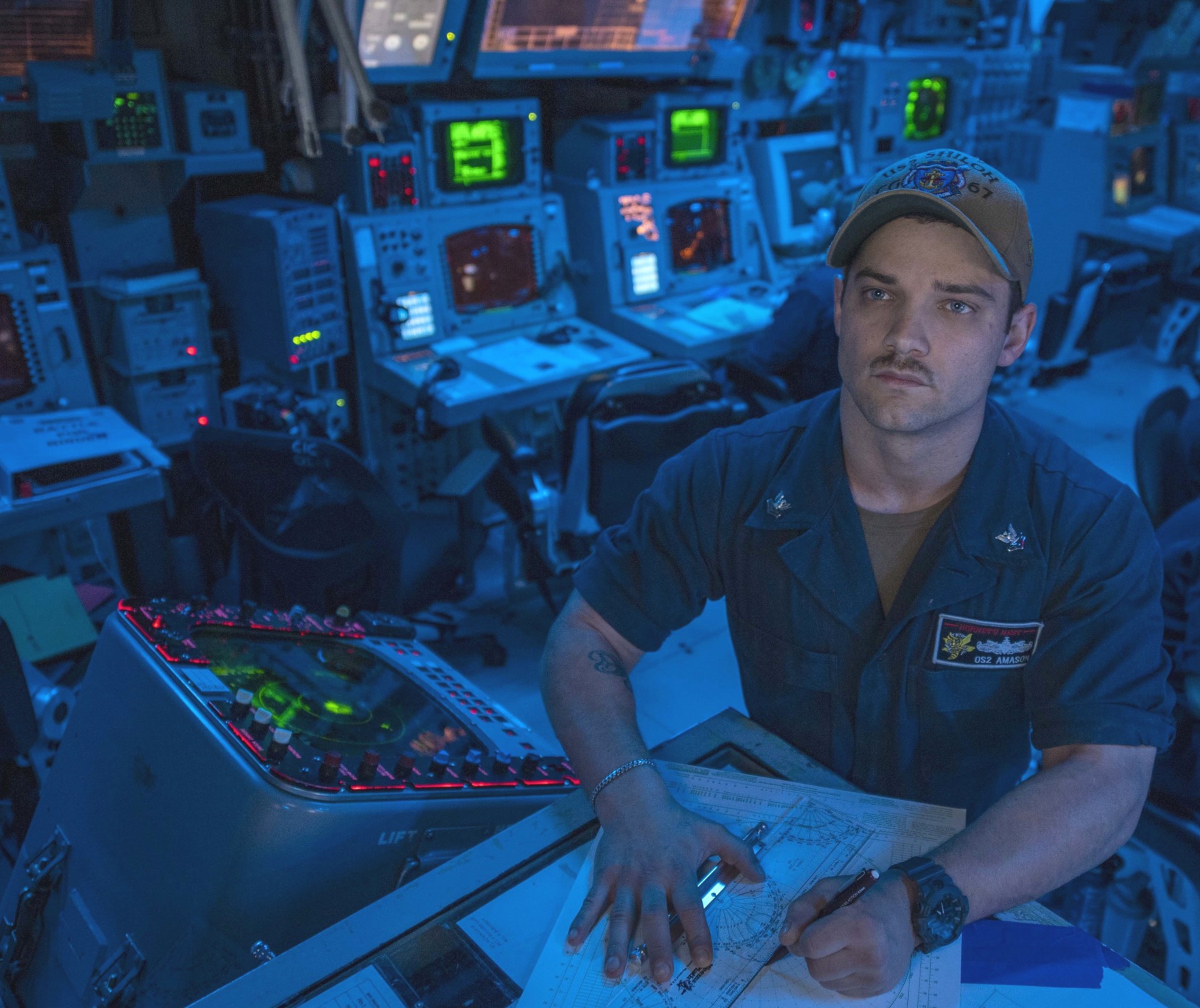 Combat Information Center (CIC) - Arabian Gulf - June 2021 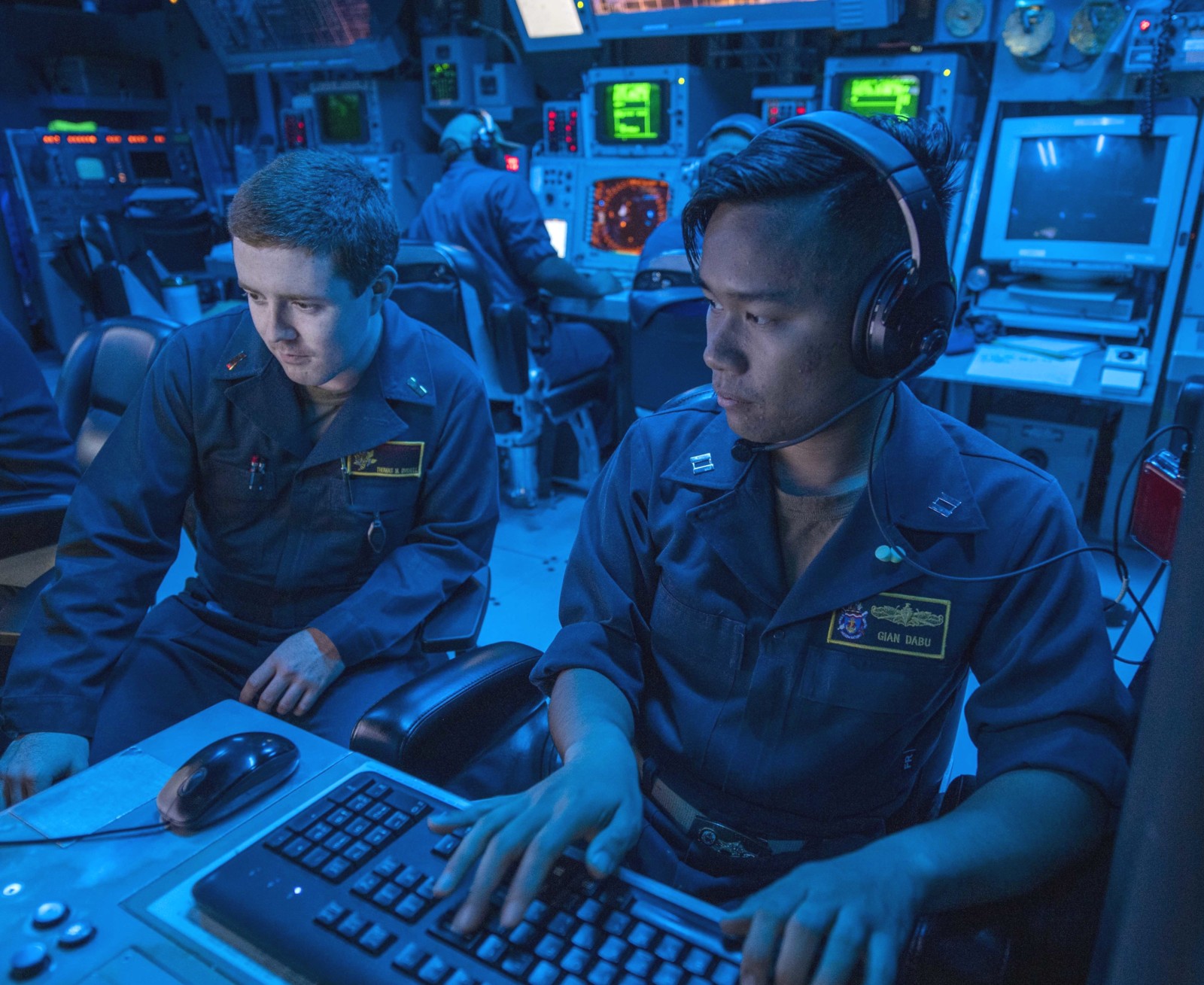 Combat Information Center (CIC) - Arabian Gulf - June 2021 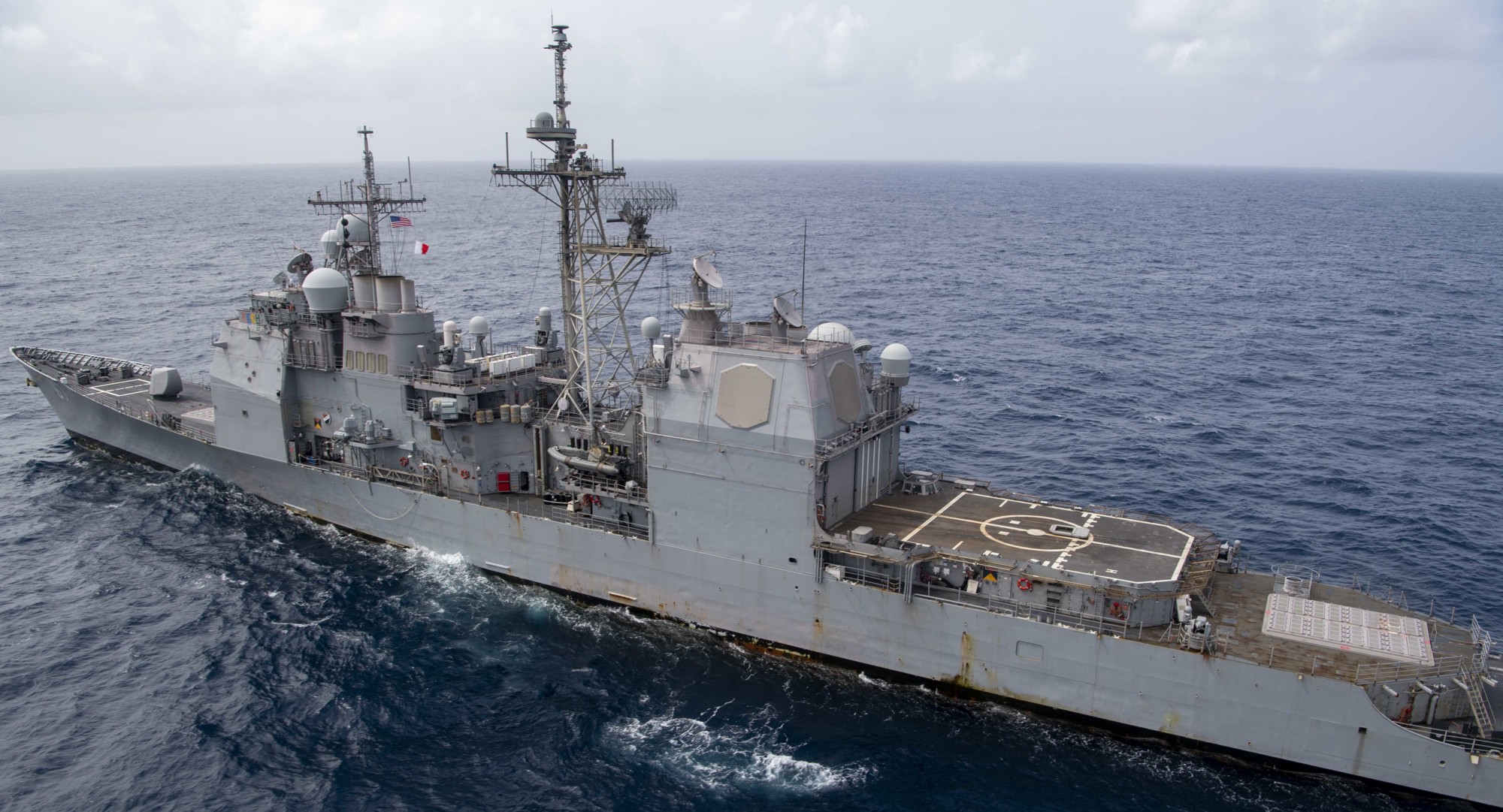 Indian Ocean - June 2021 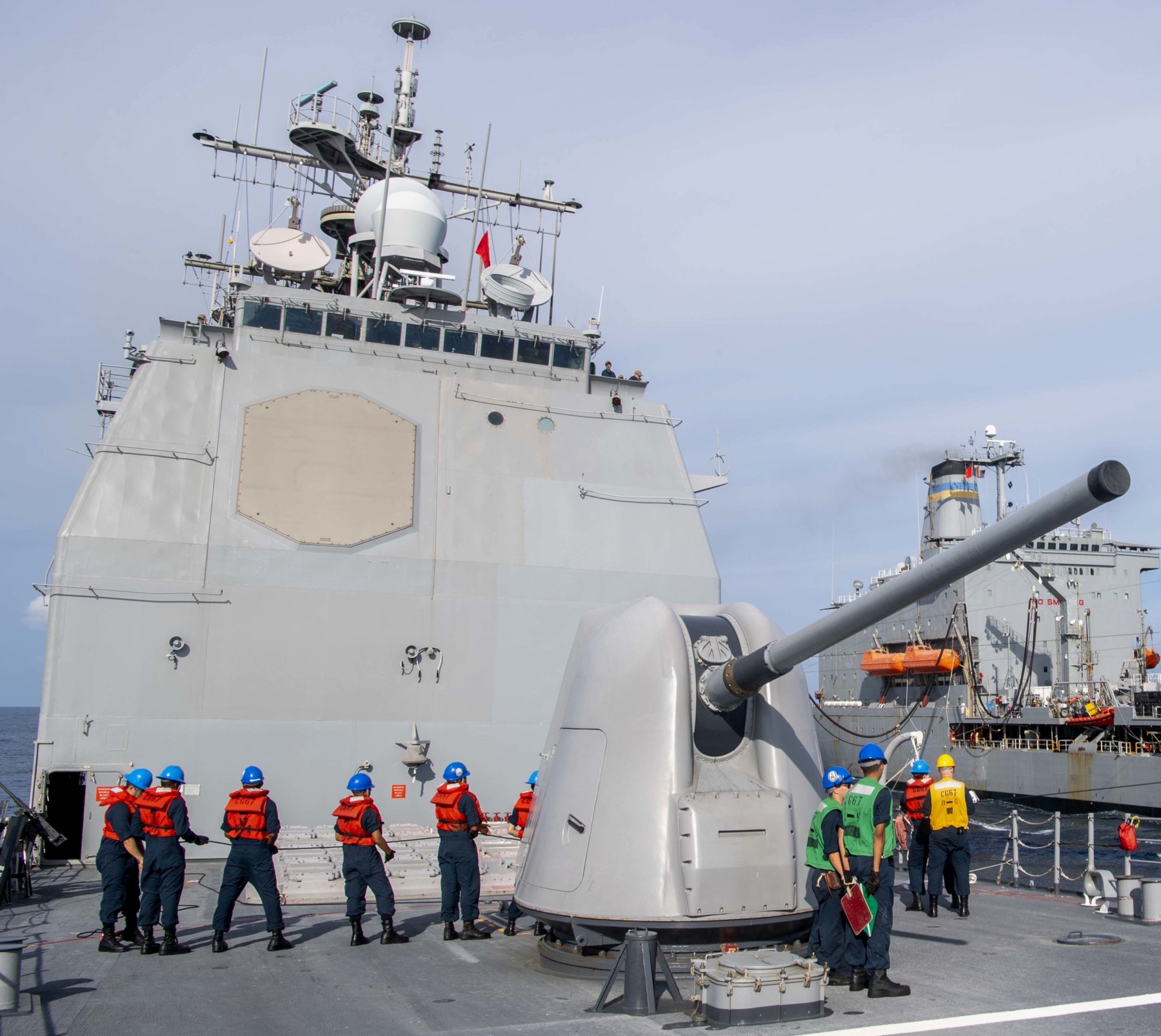 Strait of Malacca - June 2021 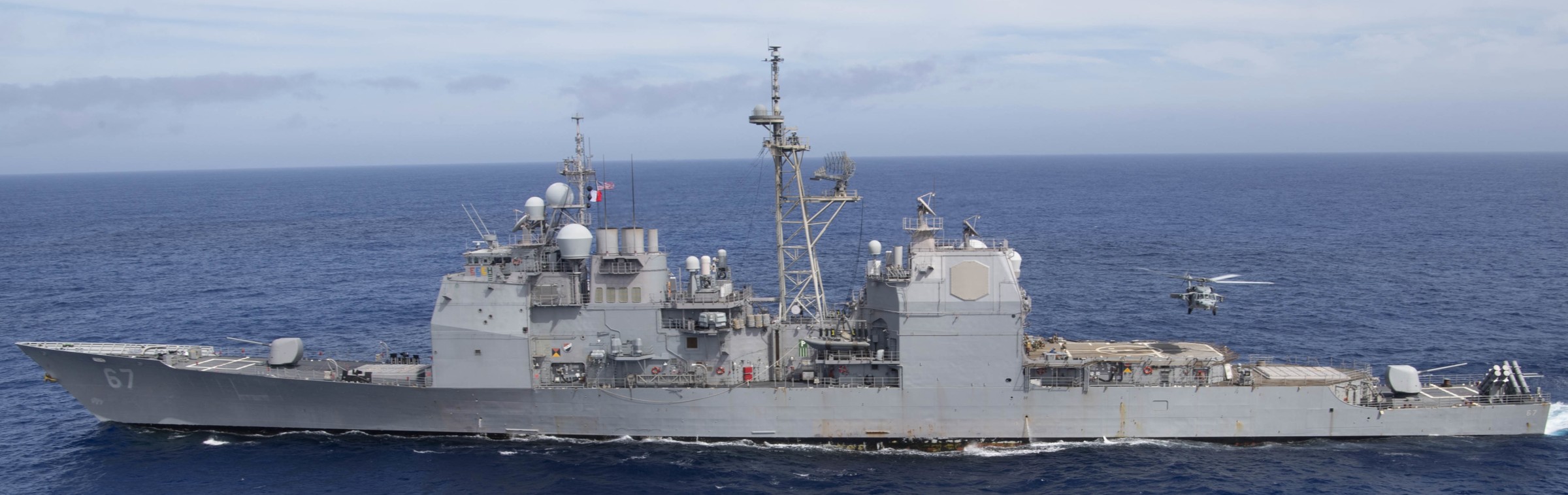 Philippine Sea - June 2021 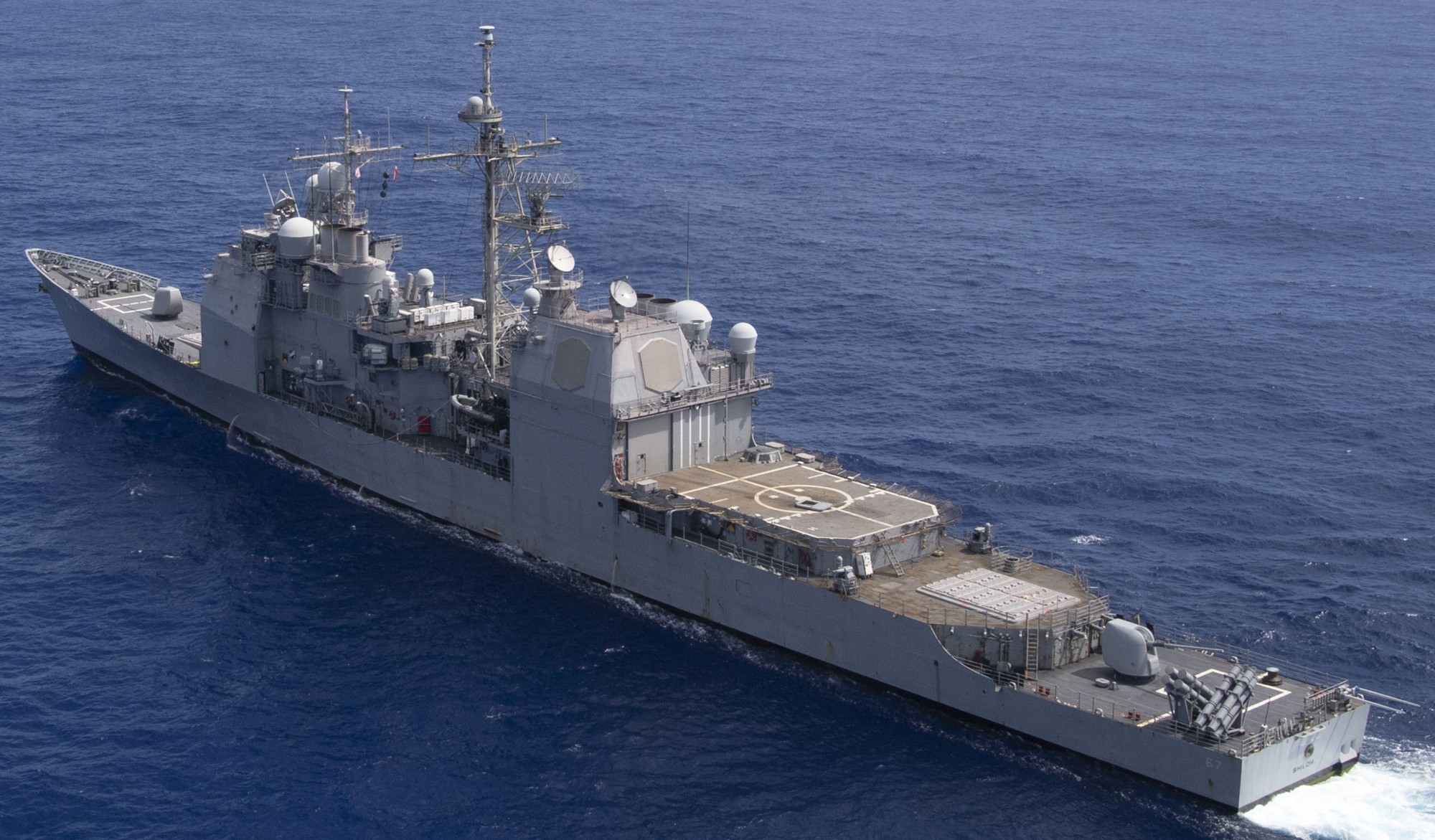 Philippine Sea - June 2021 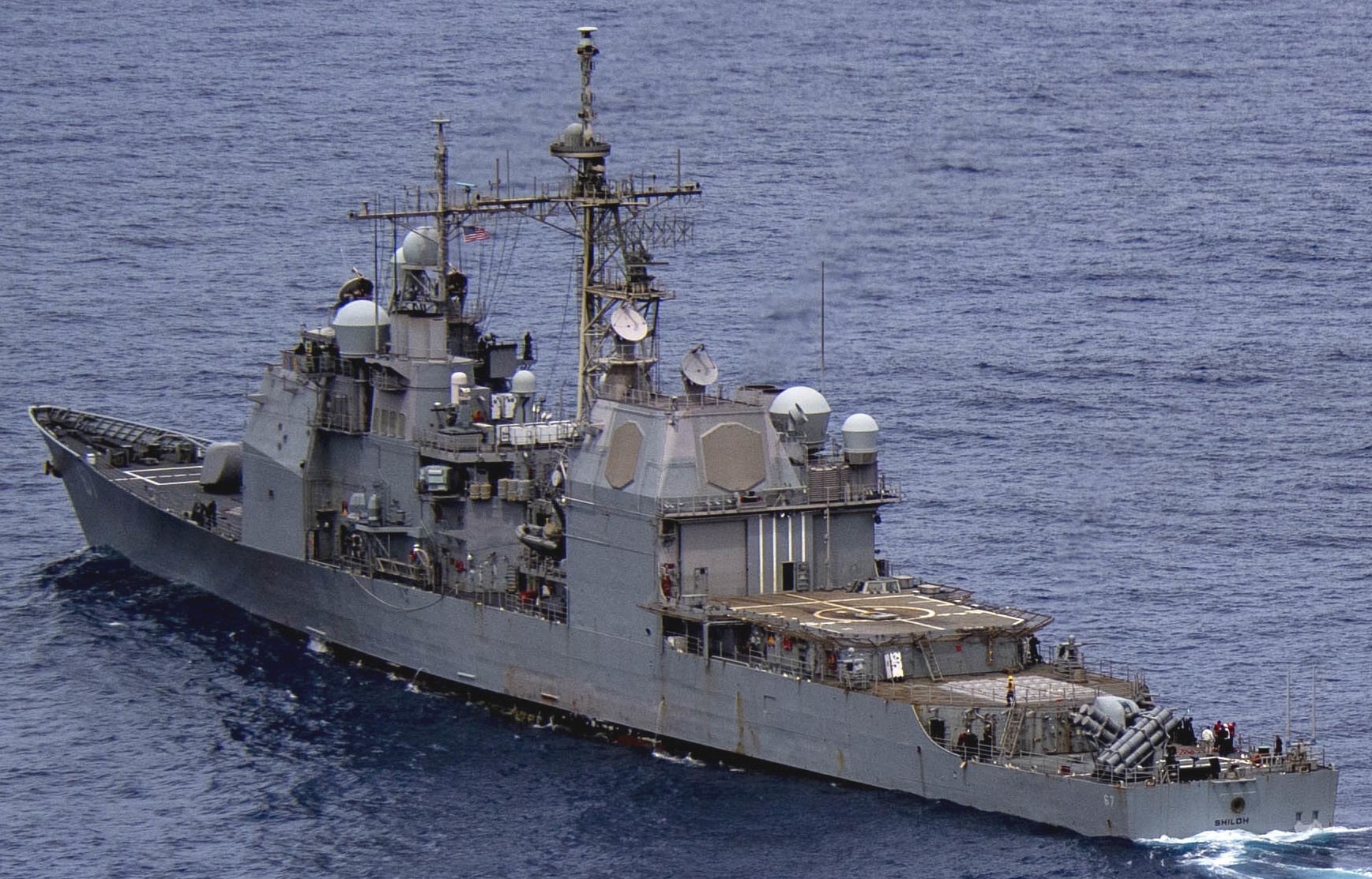 Philippine Sea - June 2021 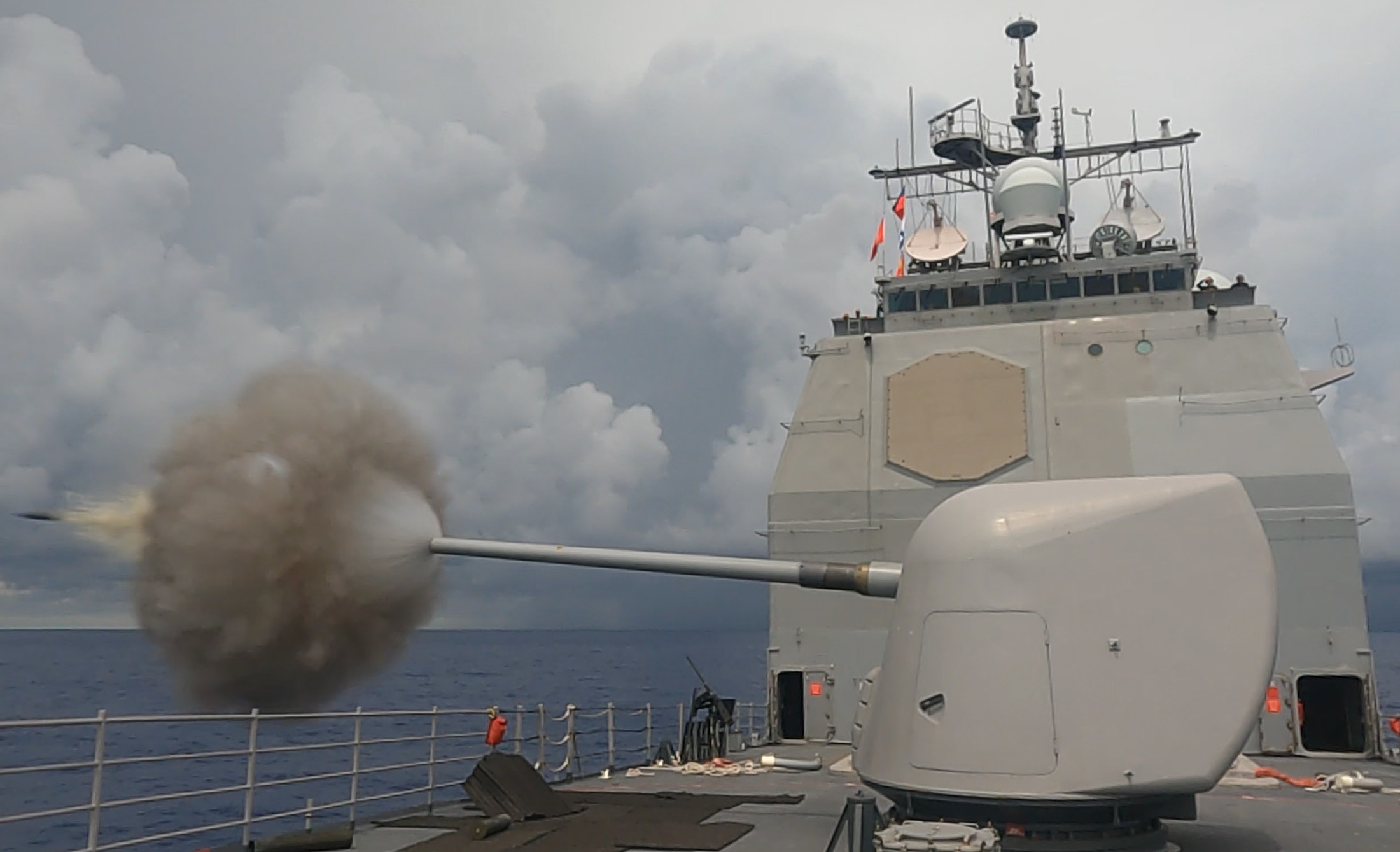 Mk.45 gun fire exercise - Philippine Sea - June 2021 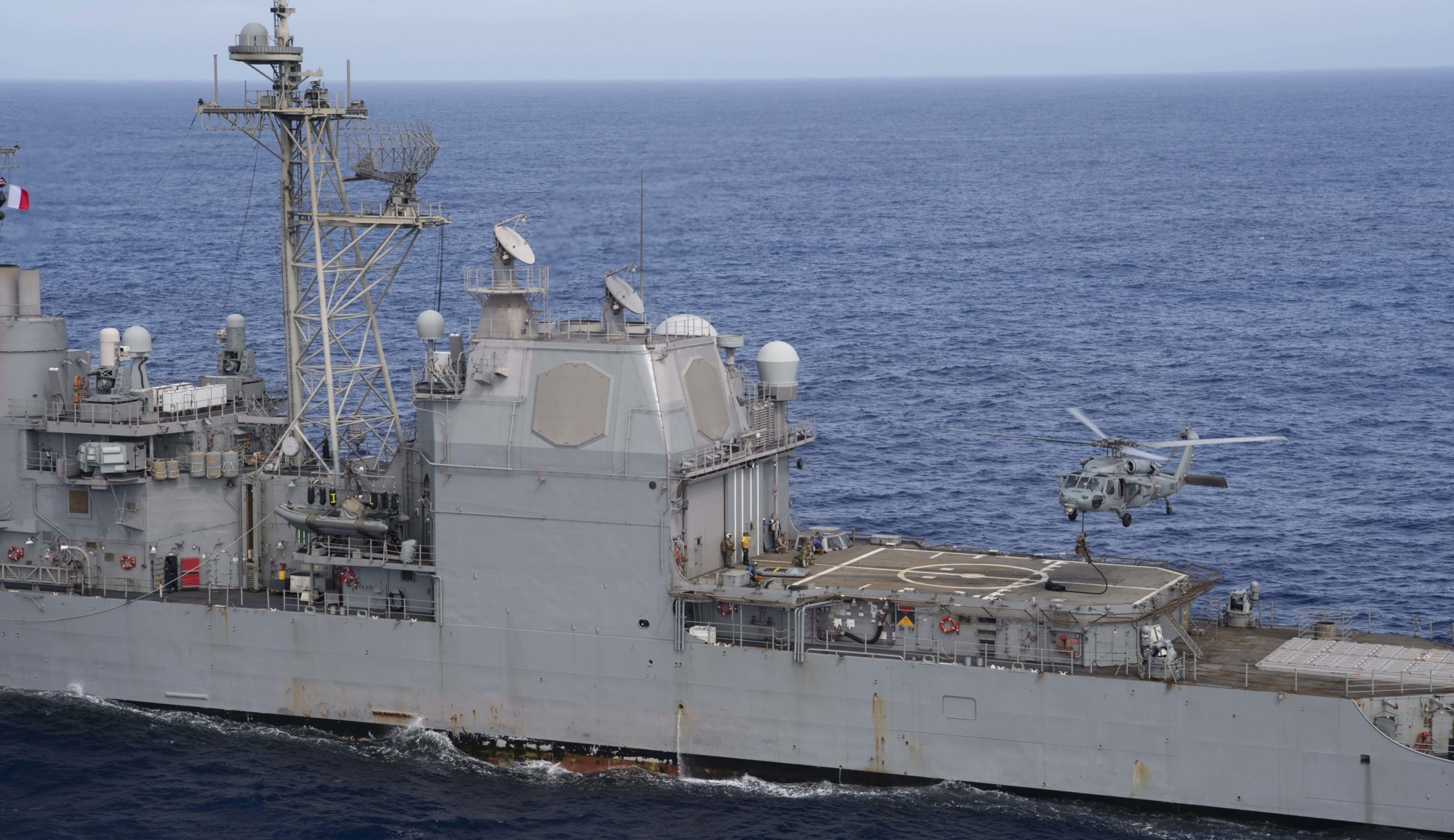 Philippine Sea - June 2021 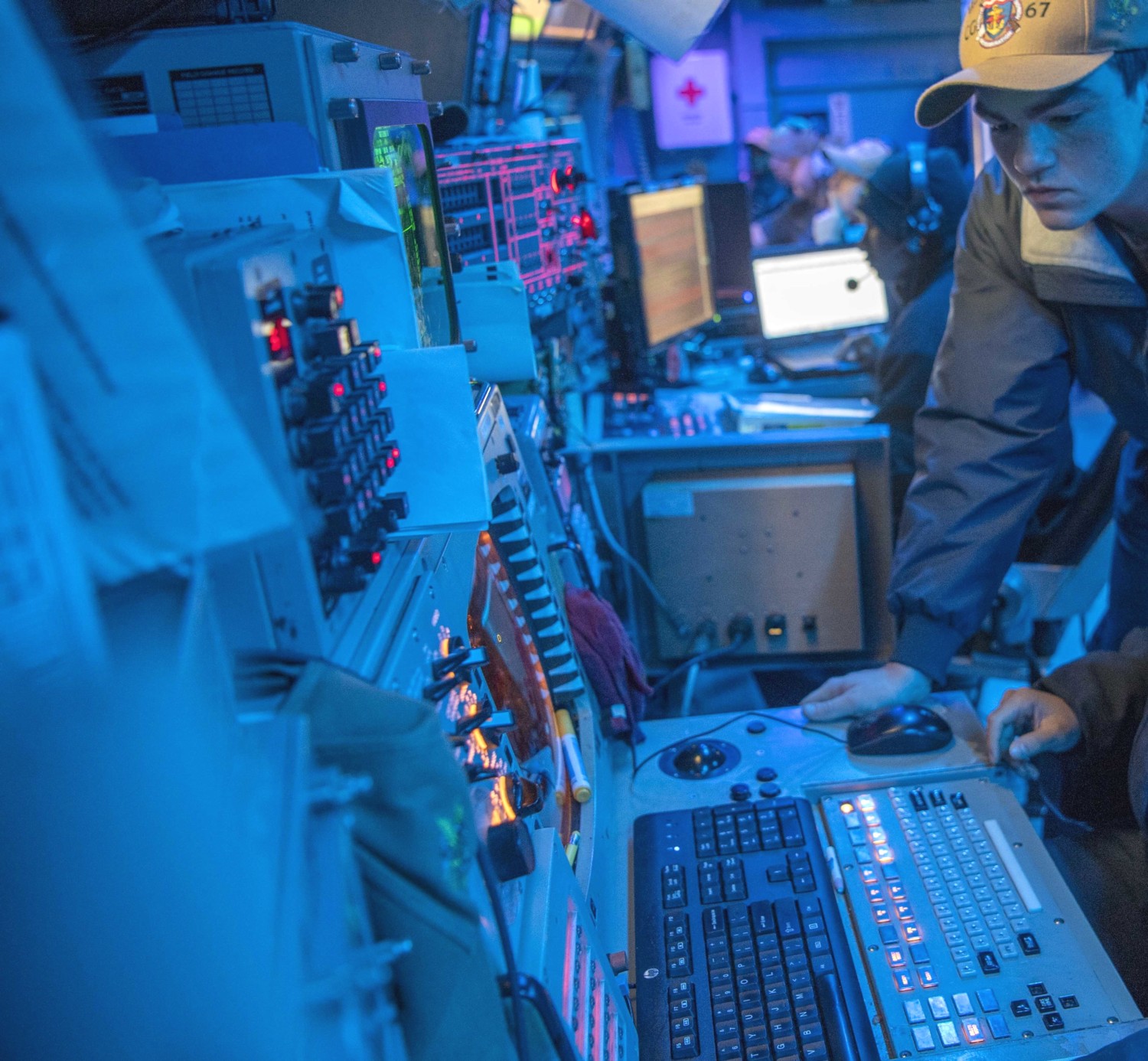 Philippine Sea - June 2021 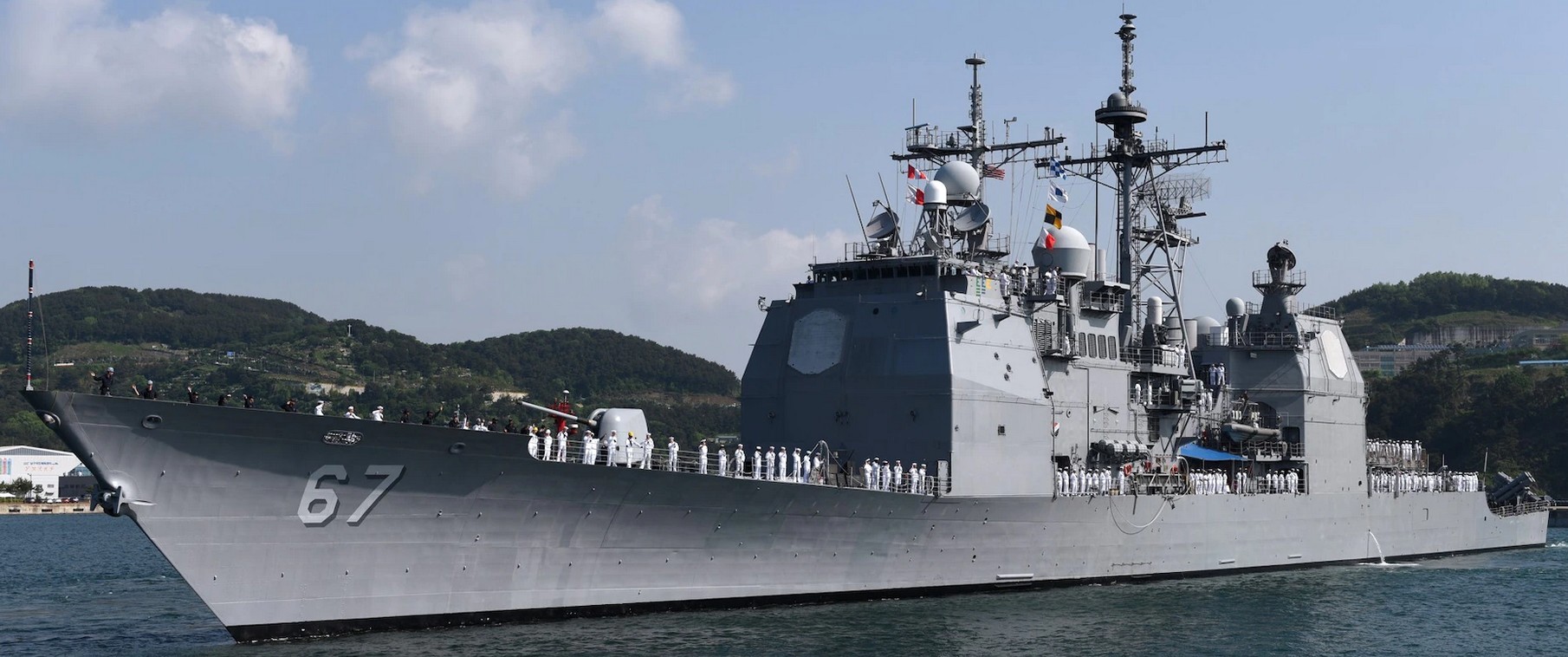 Fleet Activities Yokosuka, Japan - April 2021 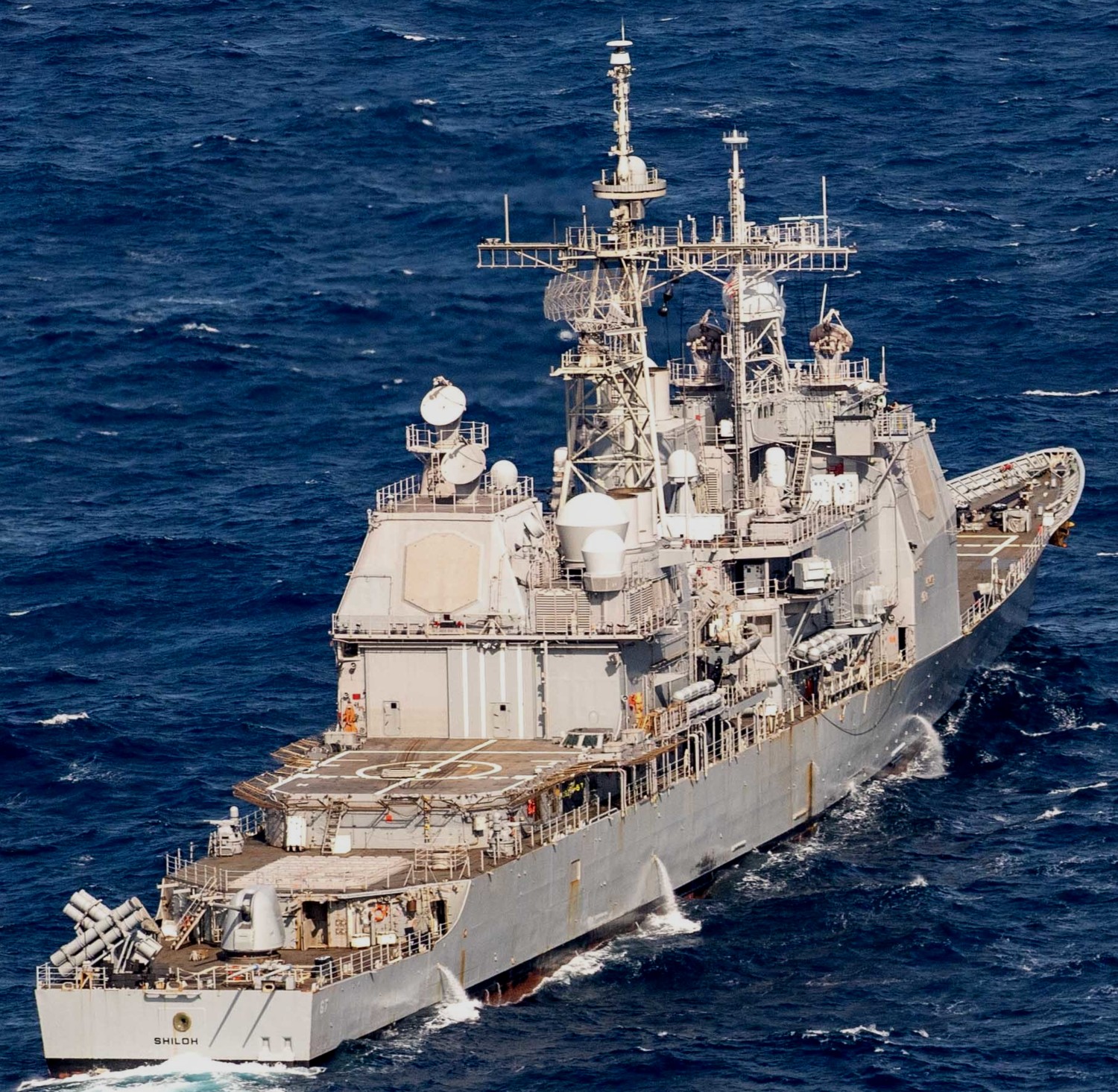 during exercise Keen Sword - Philippine Sea - October 2020 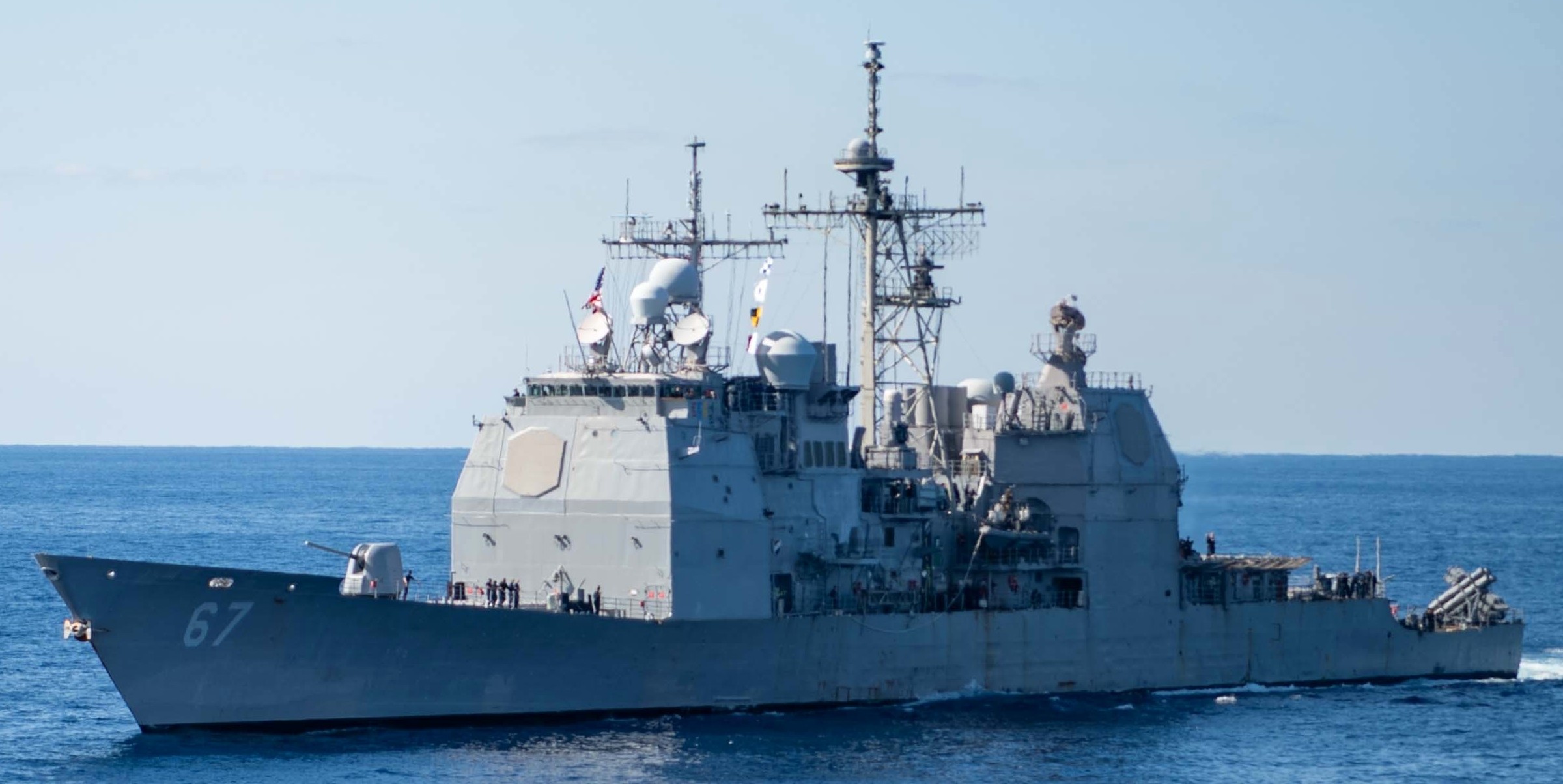 during exercise Keen Sword - Philippine Sea - October 2020 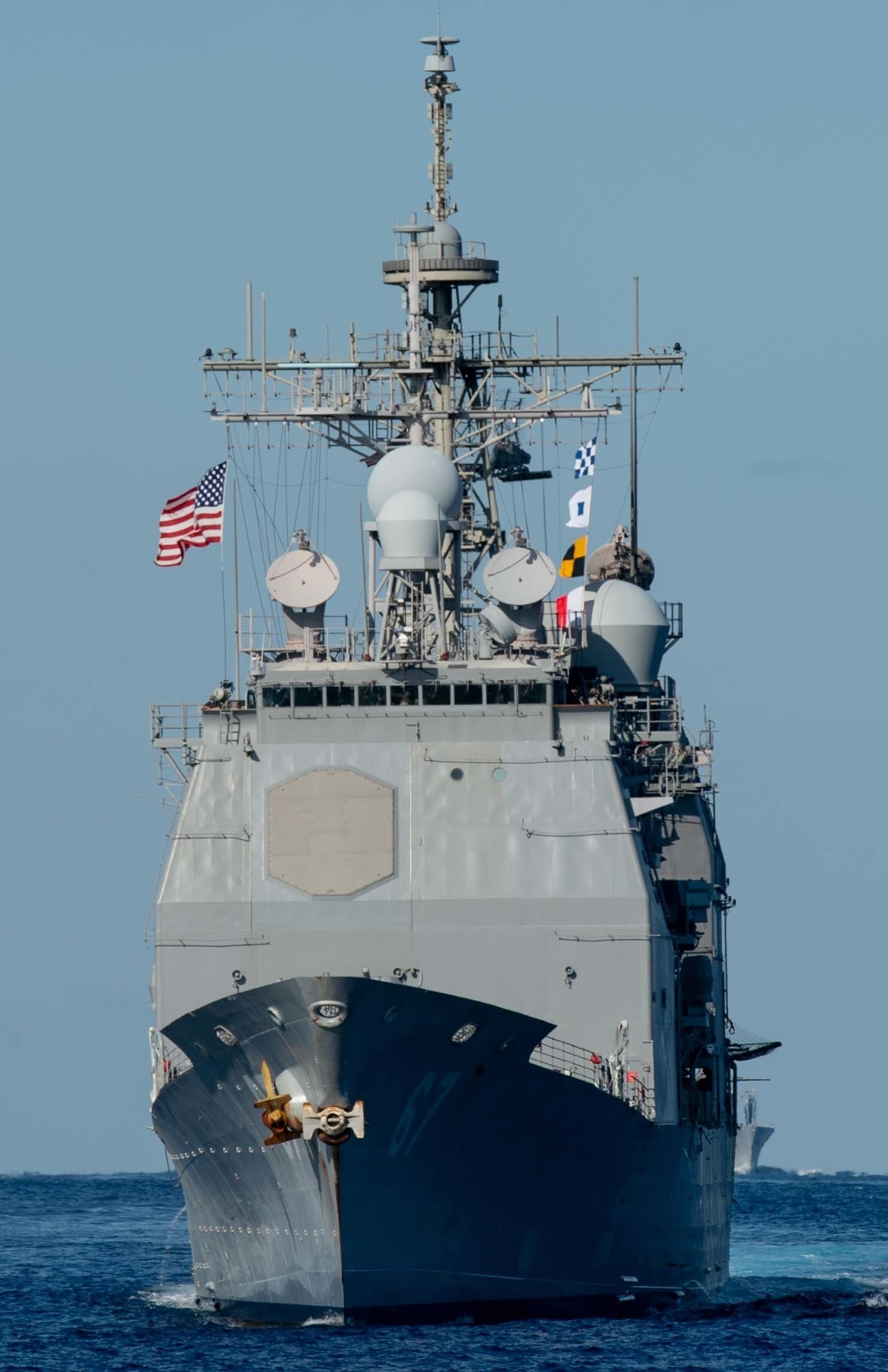 during exercise Keen Sword - Philippine Sea - October 2020 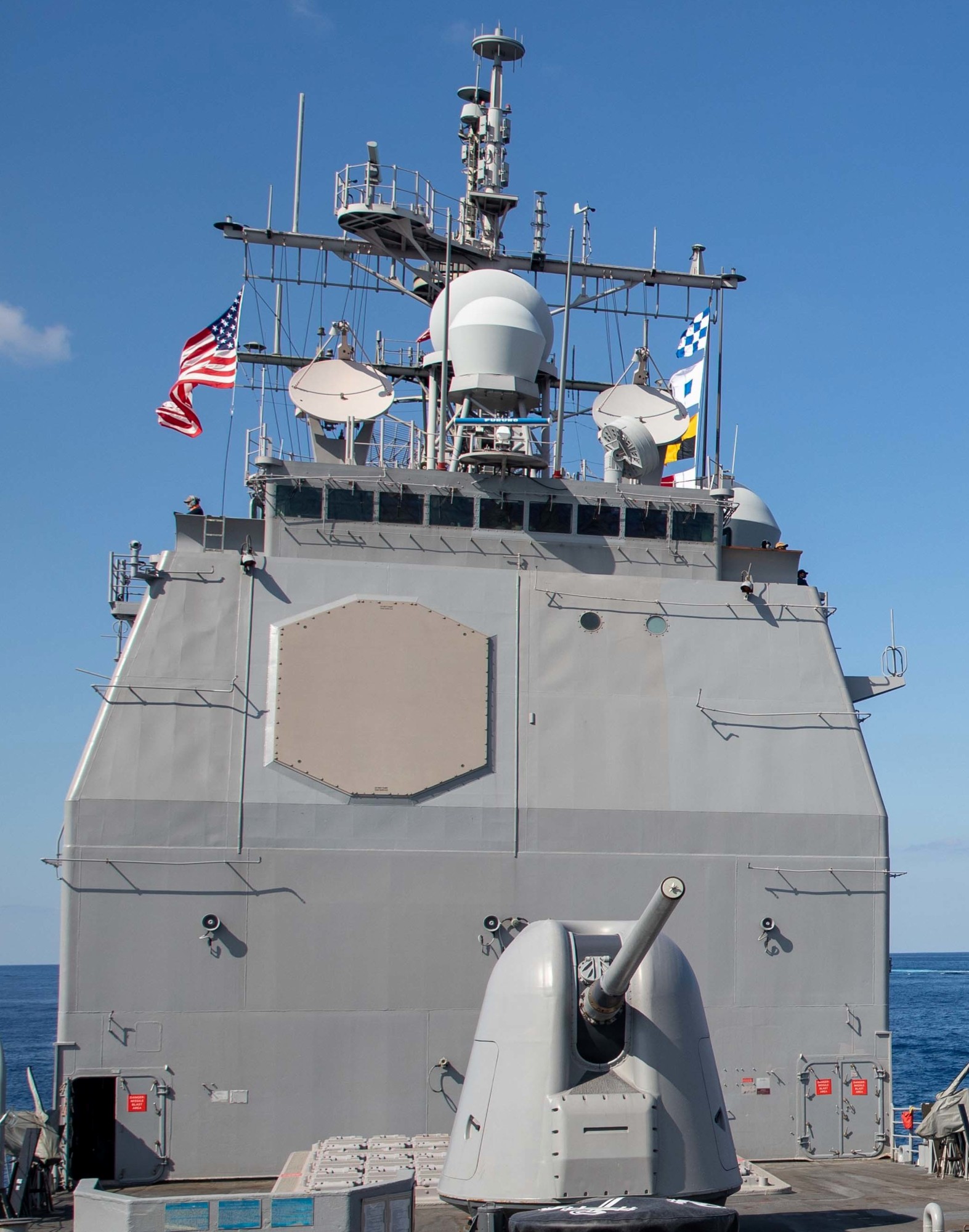 during exercise Keen Sword - Philippine Sea - October 2020 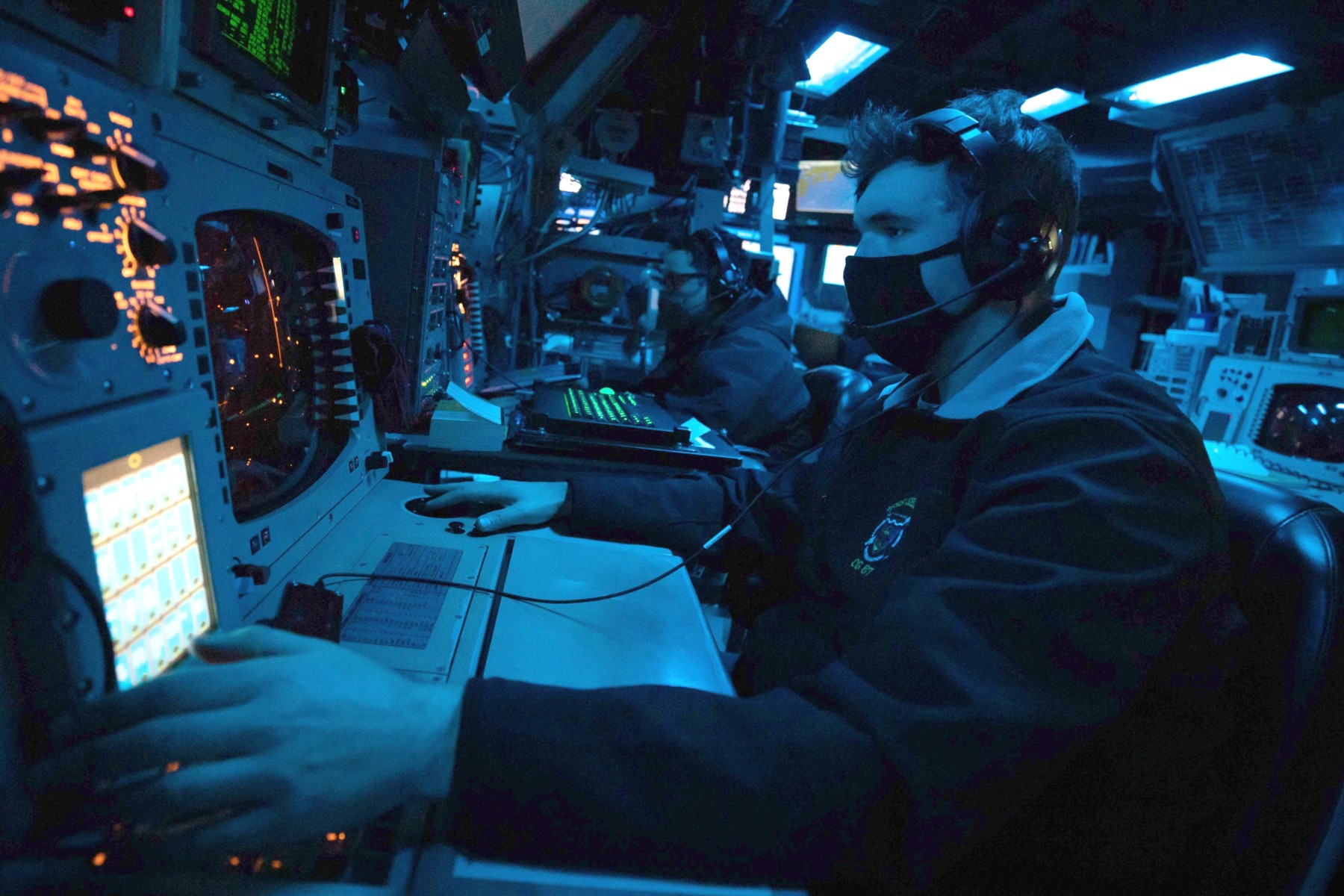 during exercise Keen Sword - Philippine Sea - October 2020 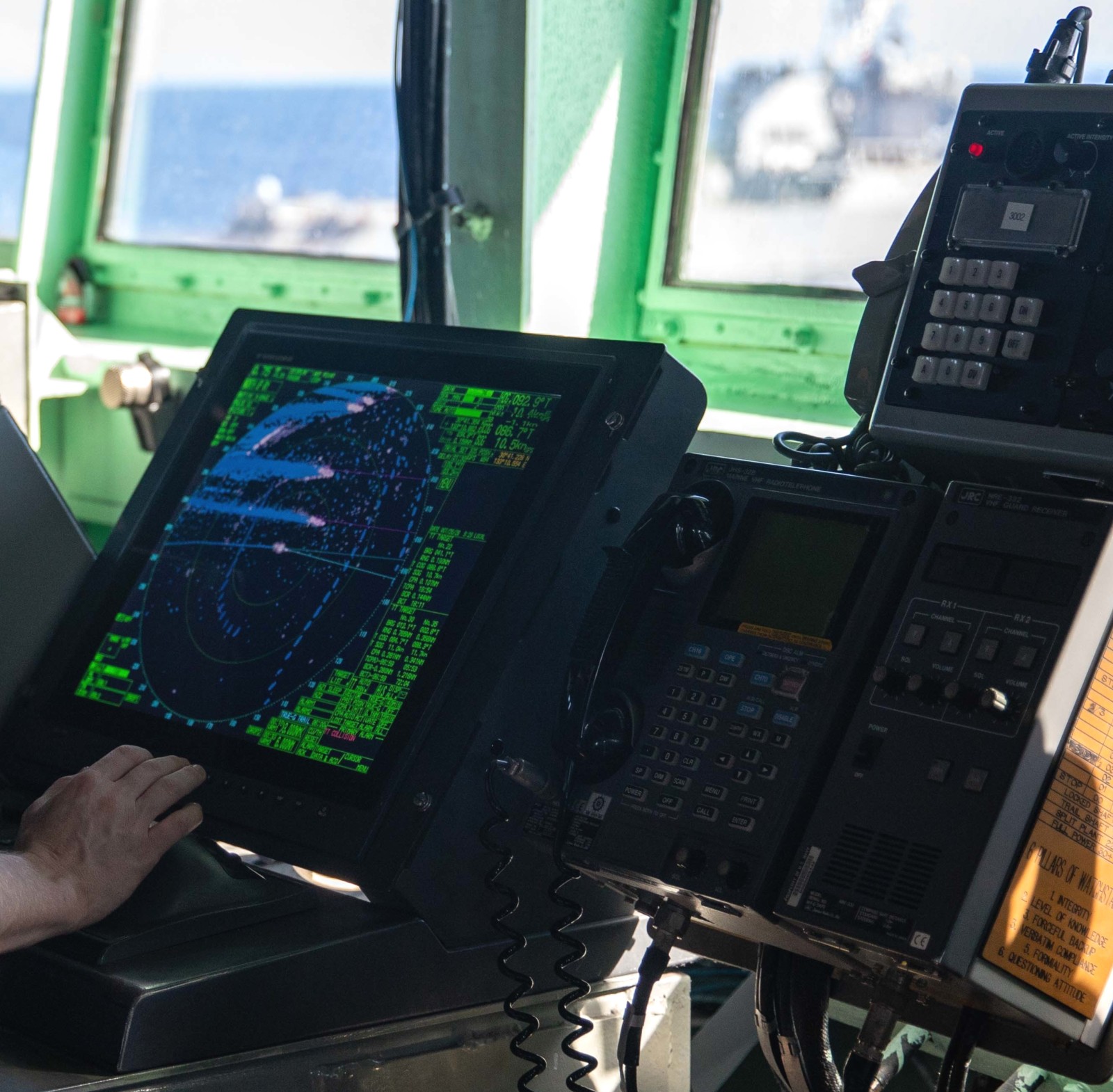 radar console on the bridge - October 2020 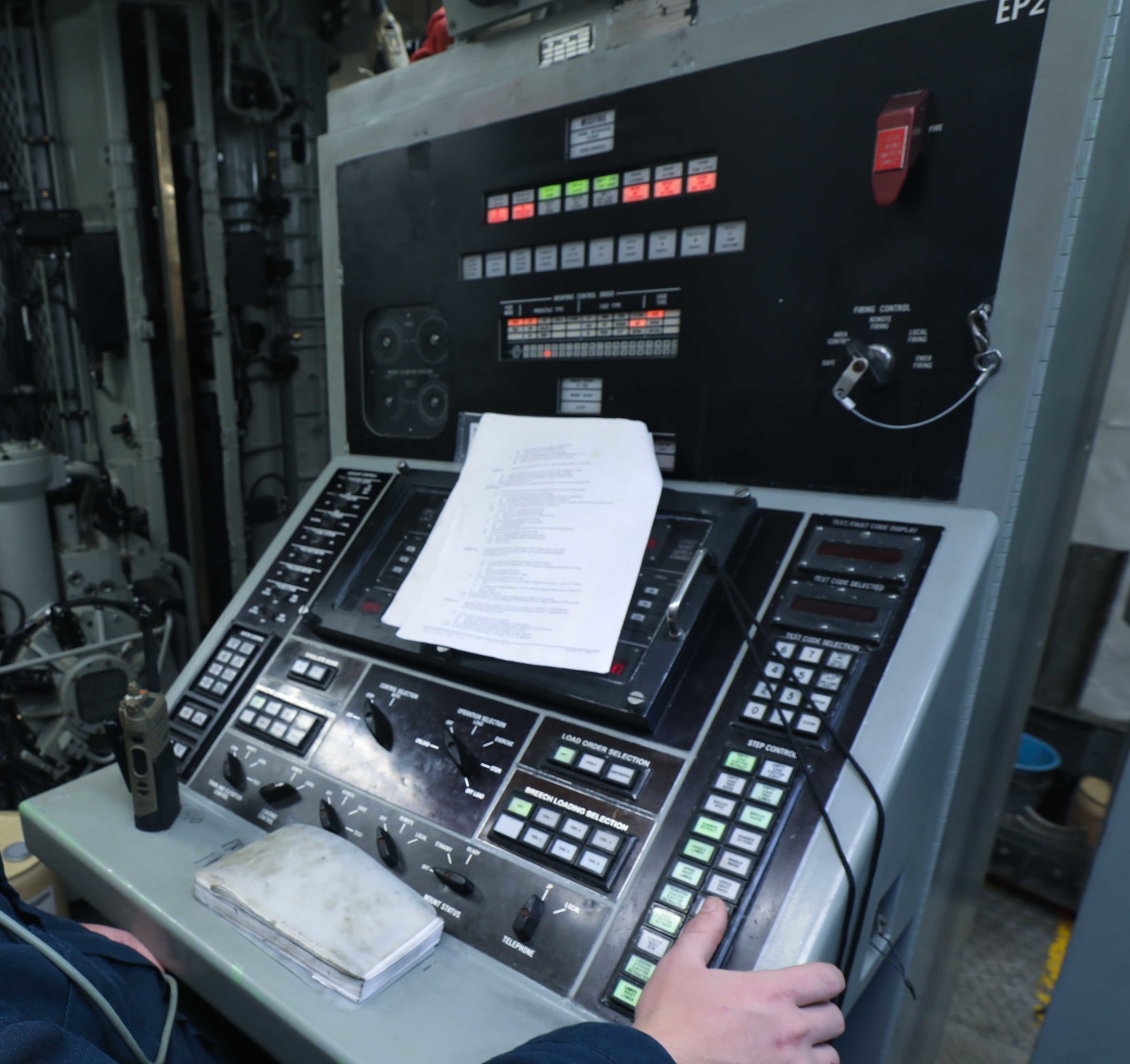 gun console - October 2020 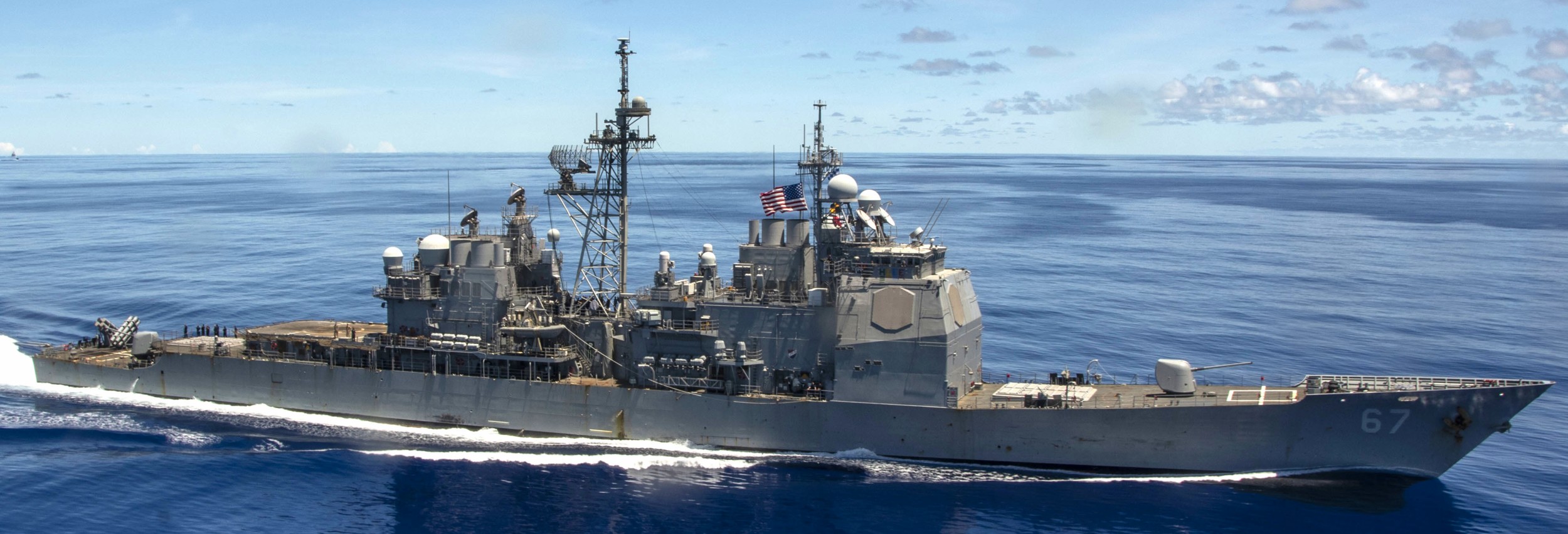 during exercise Valiant Shield - Philippine Sea - September 2020 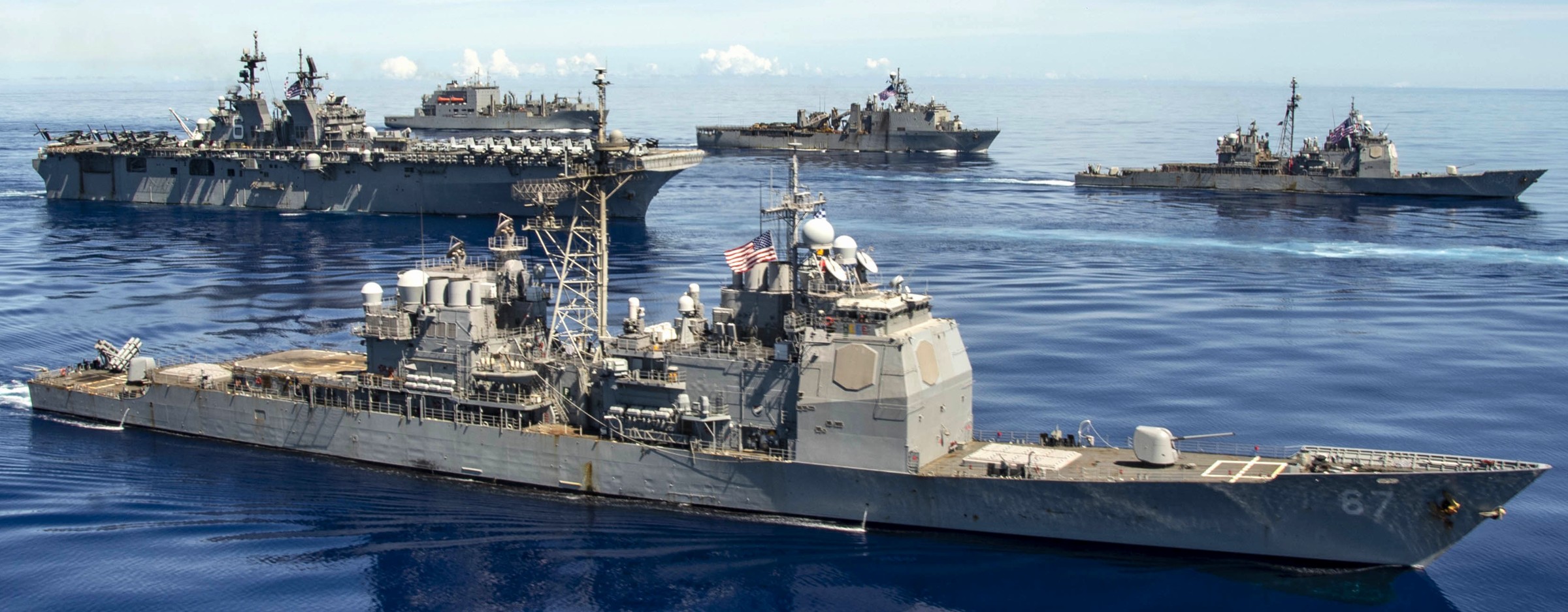 during exercise Valiant Shield - Philippine Sea - September 2020 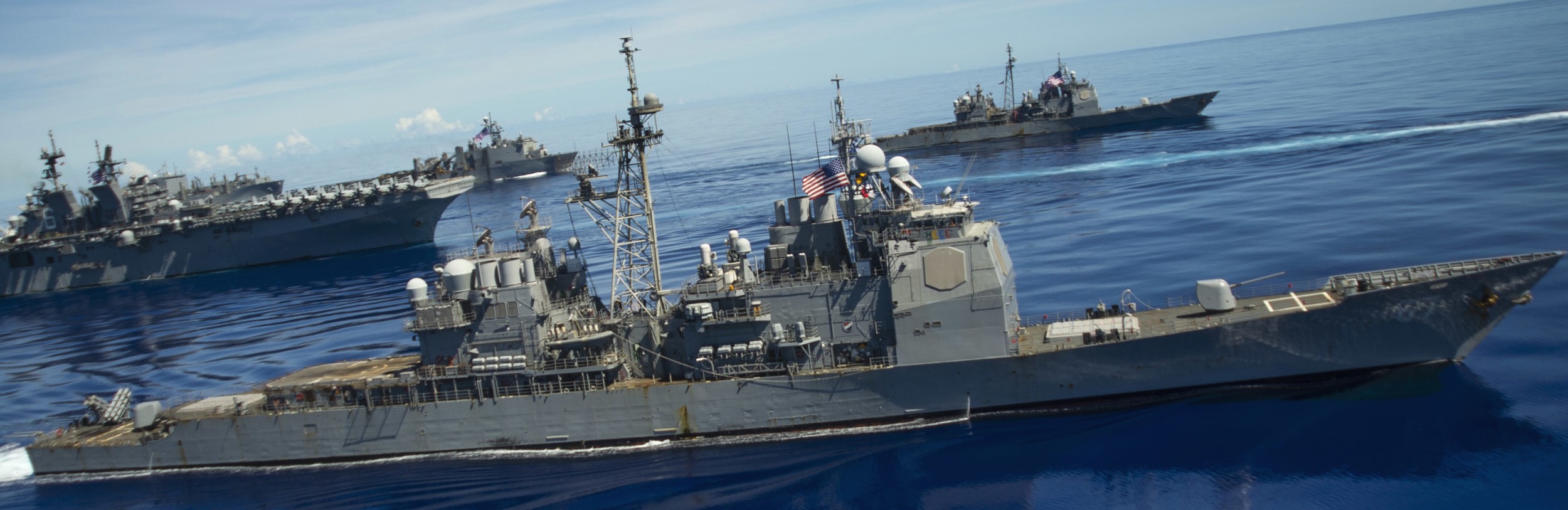 during exercise Valiant Shield - Philippine Sea - September 2020 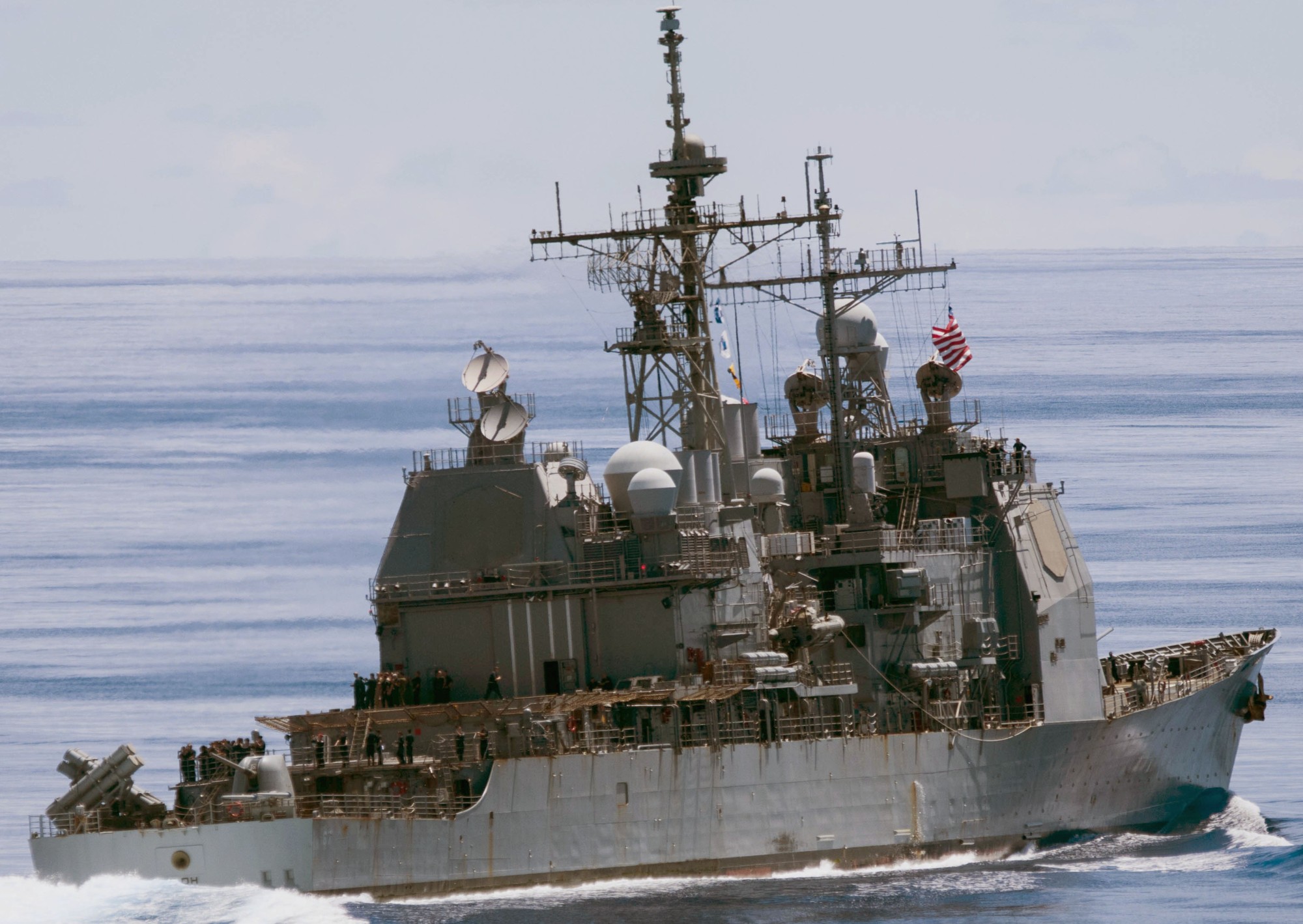 during exercise Valiant Shield - Philippine Sea - September 2020 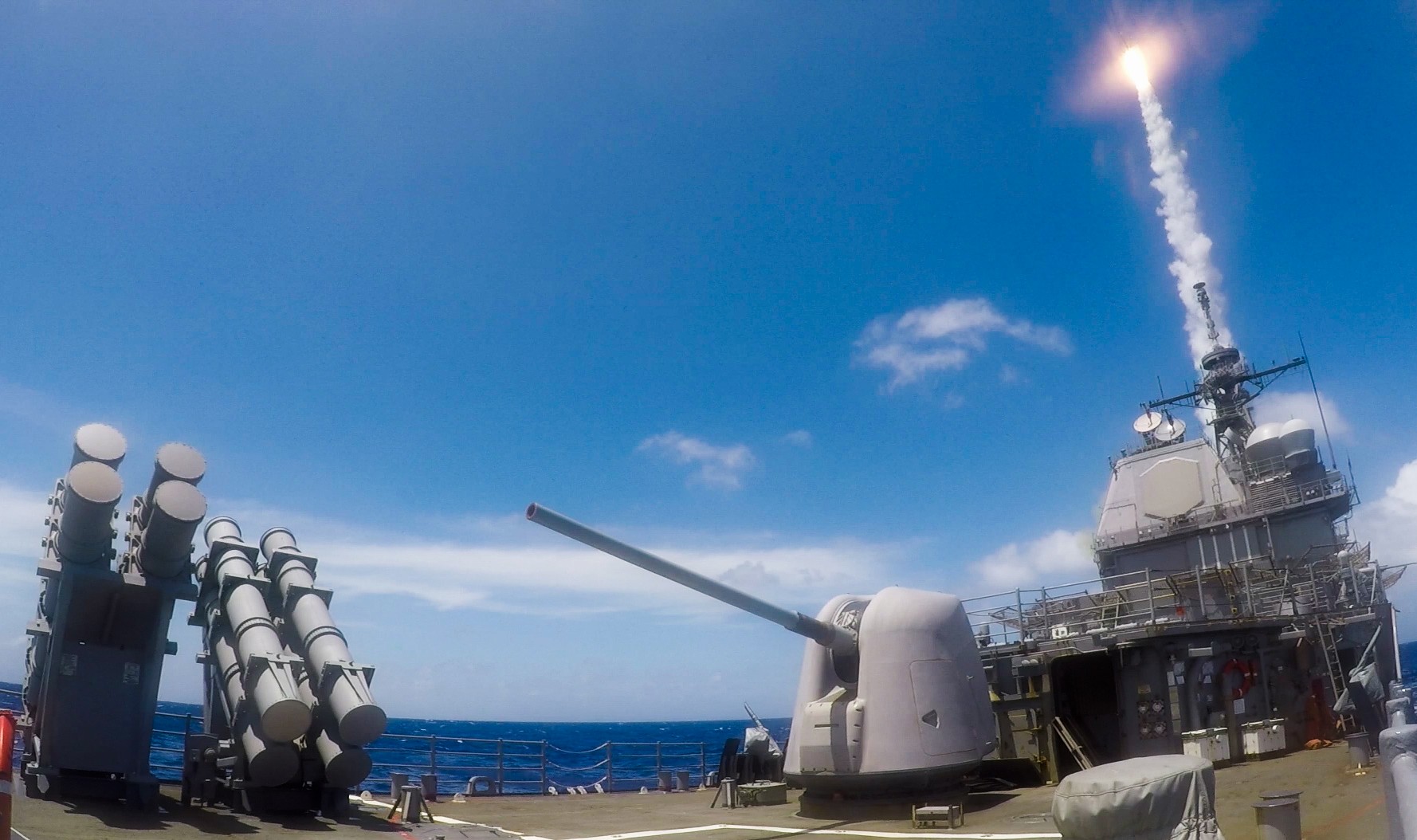 a Standard Missile SM-2MR was fired from the Mk.41 VLS - Philippine Sea - March 2020 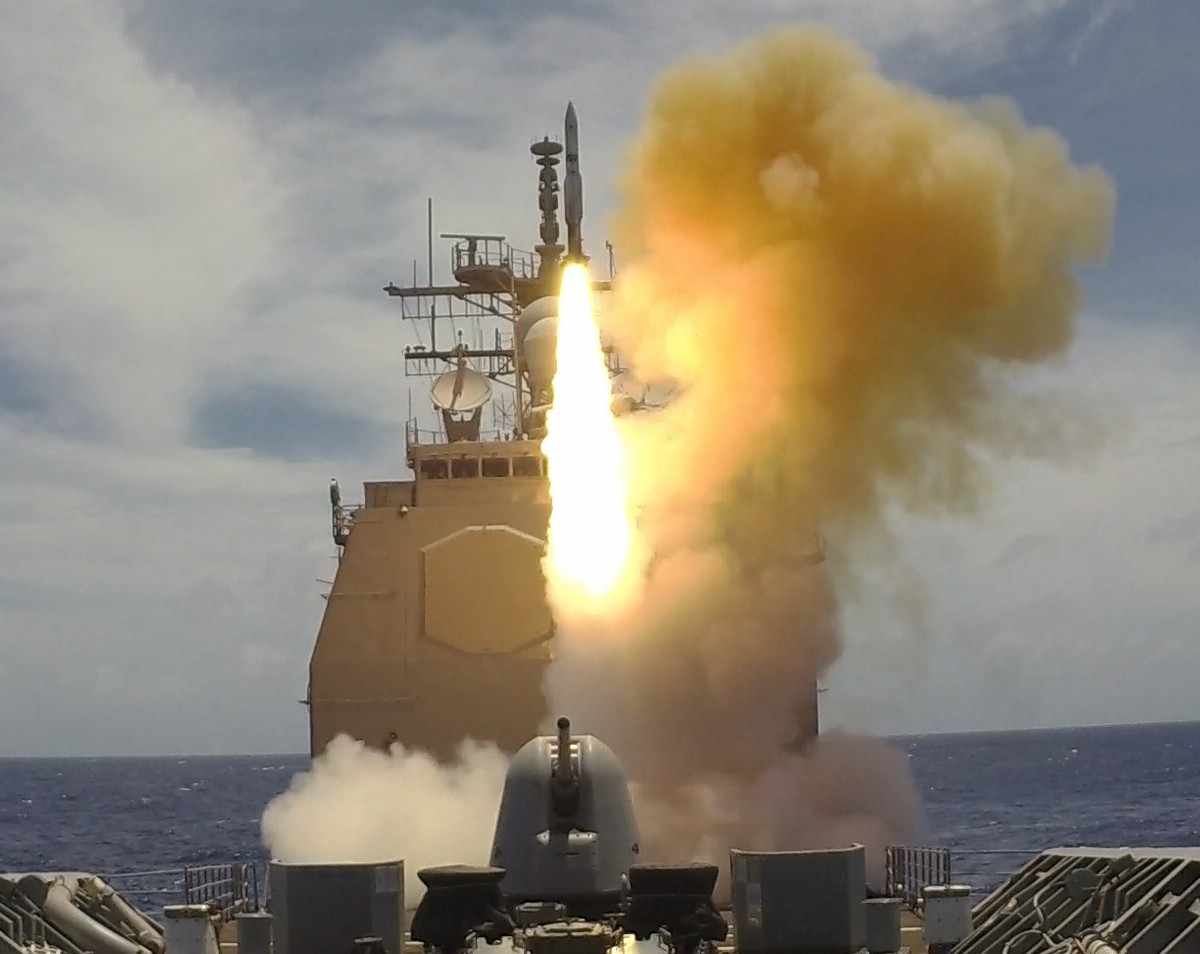 a Standard Missile SM-2MR was fired from the Mk.41 VLS - Philippine Sea - March 2020 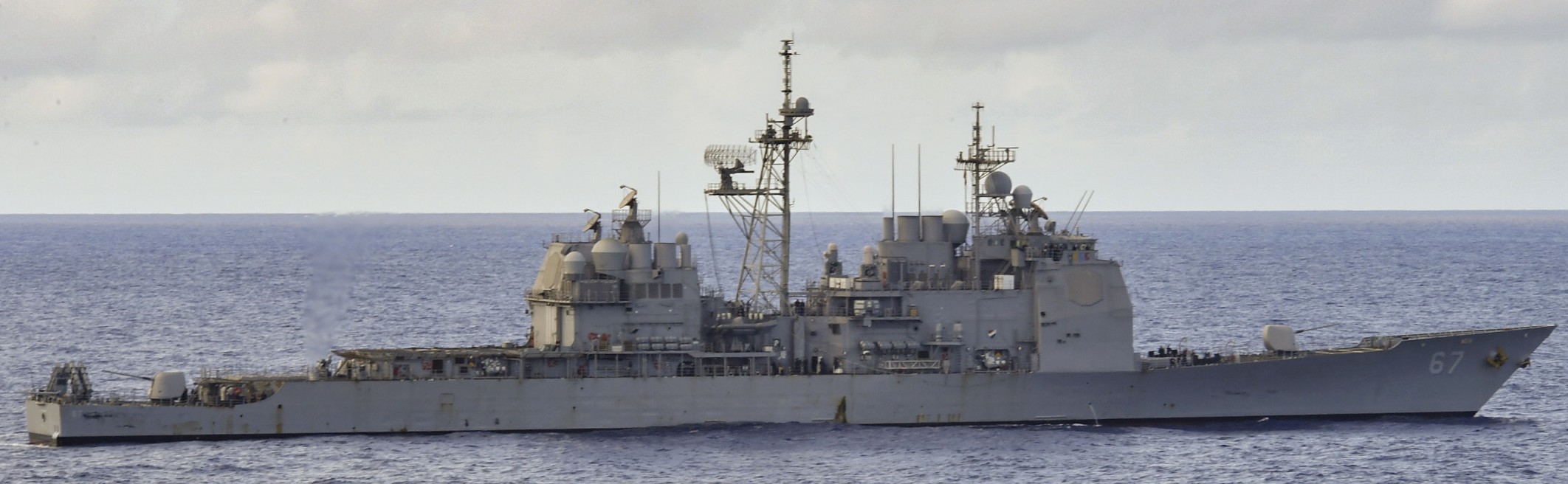 Philippine Sea - March 2020 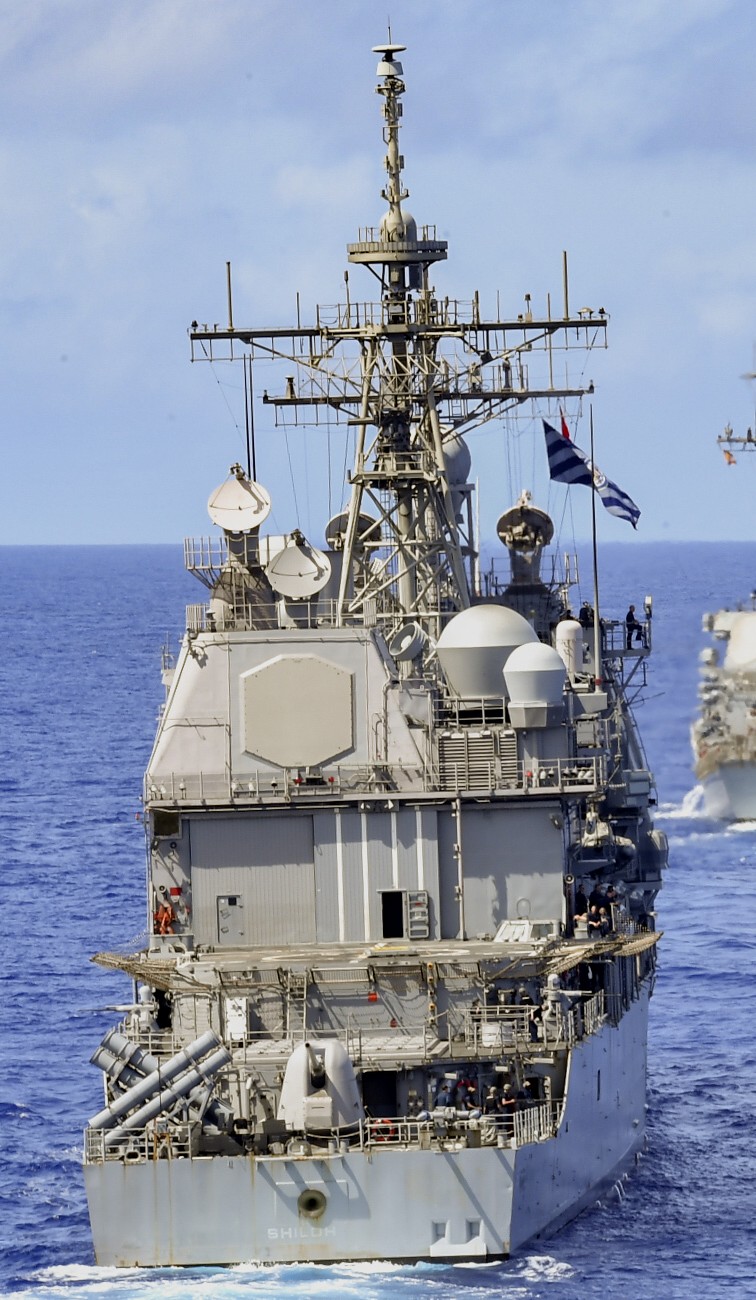 Philippine Sea - March 2020 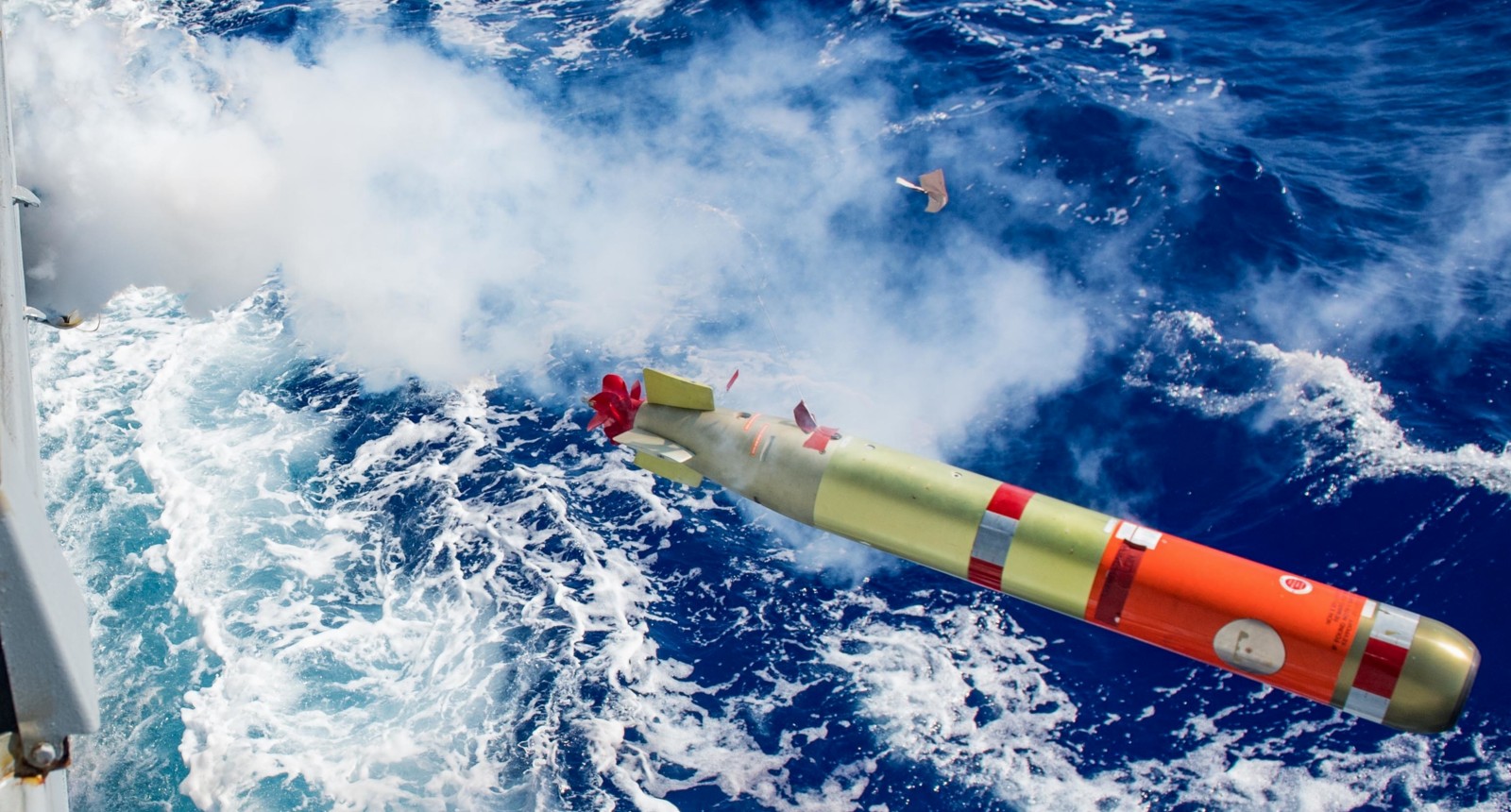 a Mk.46 recoverable exercise torpedo (REXTORP) was launched - Philippine Sea - March 2020 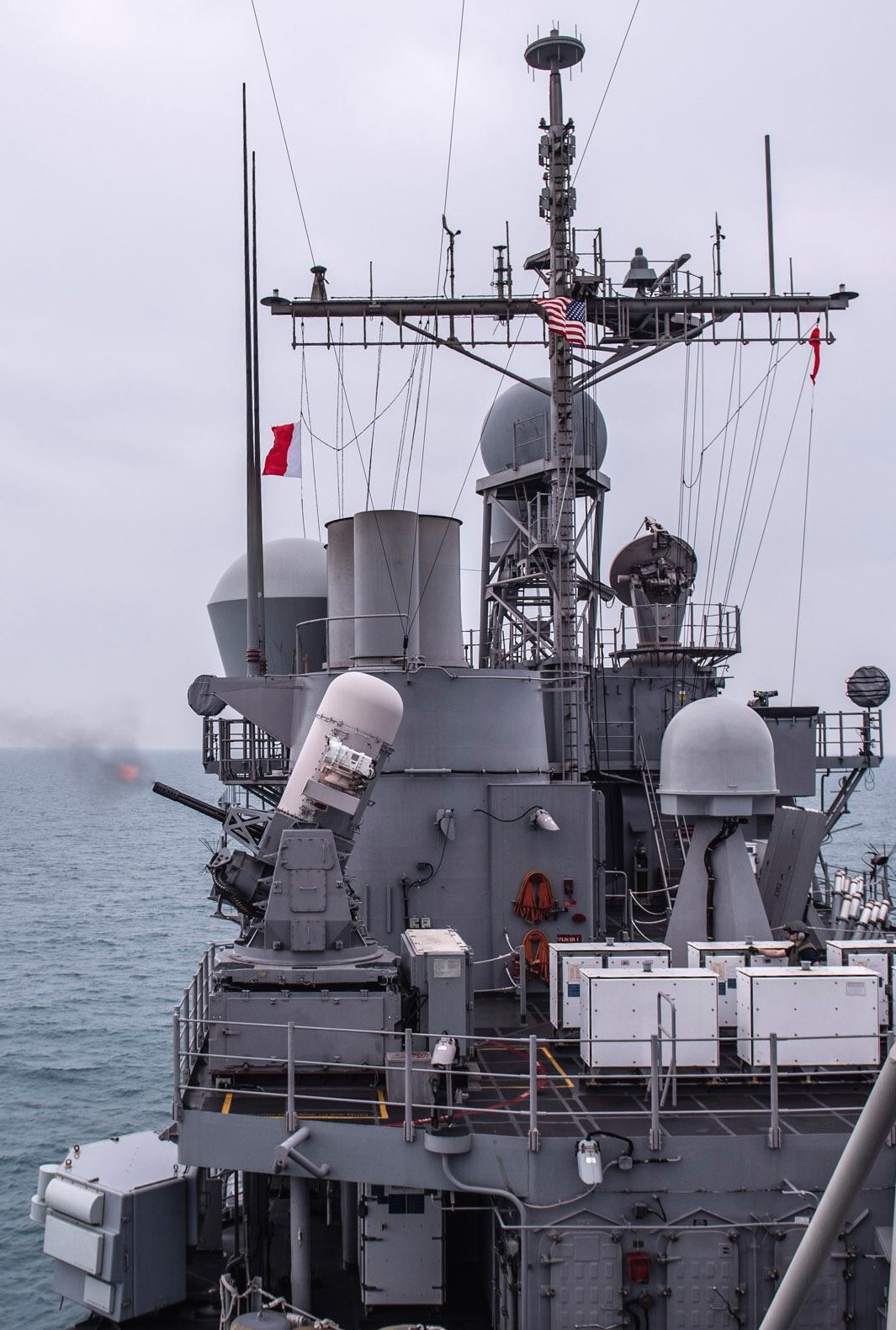 Mk.15 Phalanx CIWS fire exercise - Pacific Ocean - January 2020 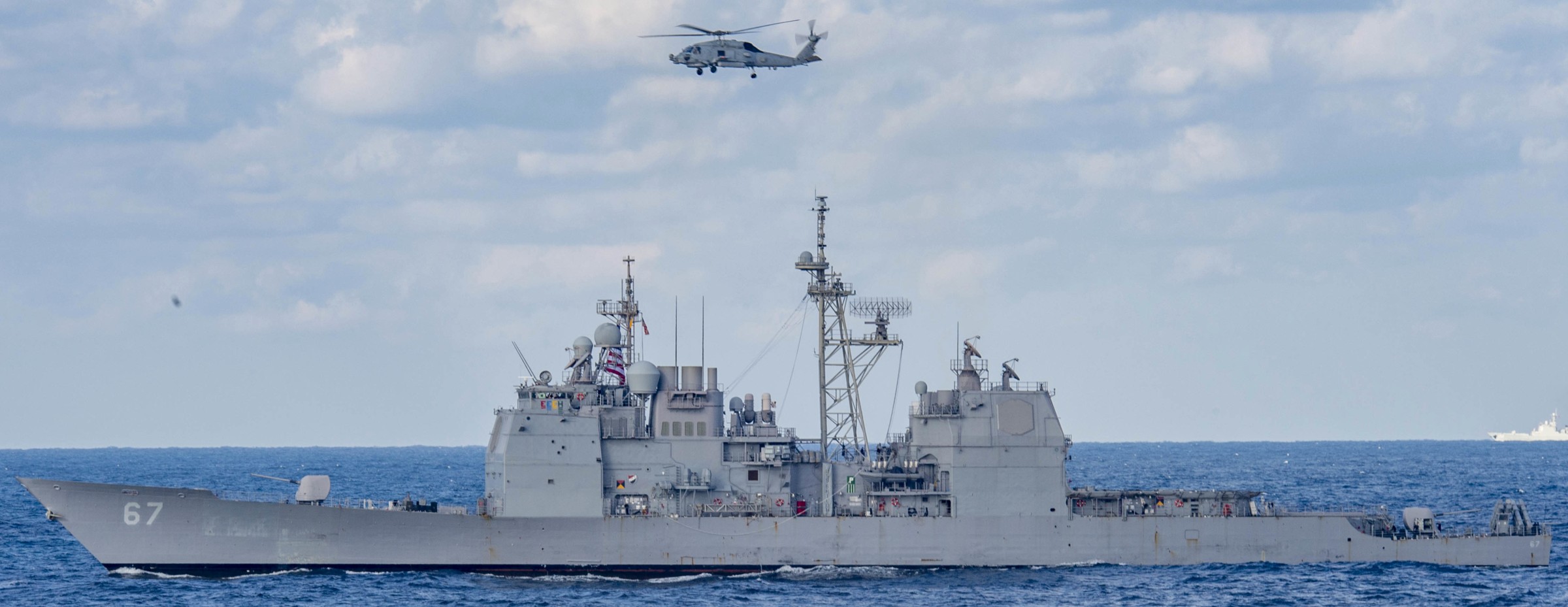 East China Sea - November 2019 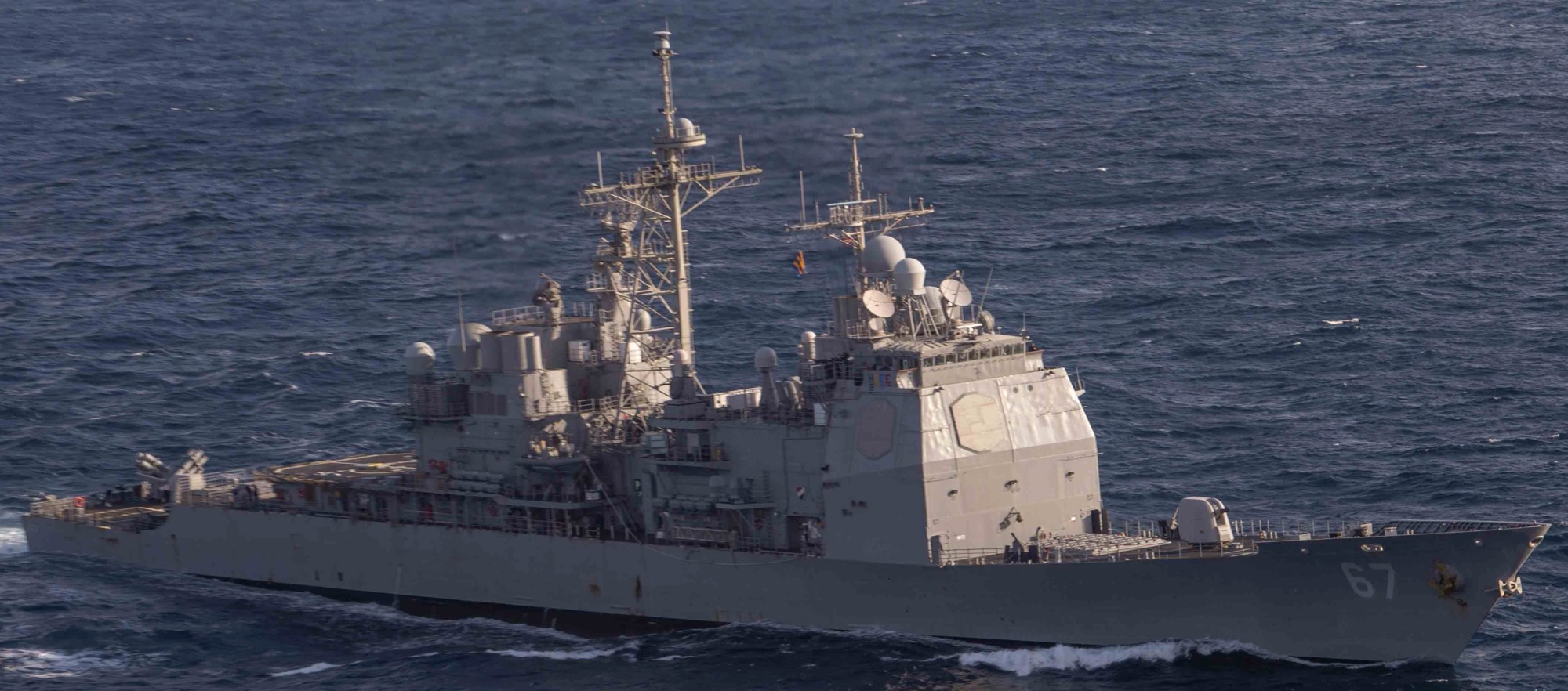 East China Sea - November 2019 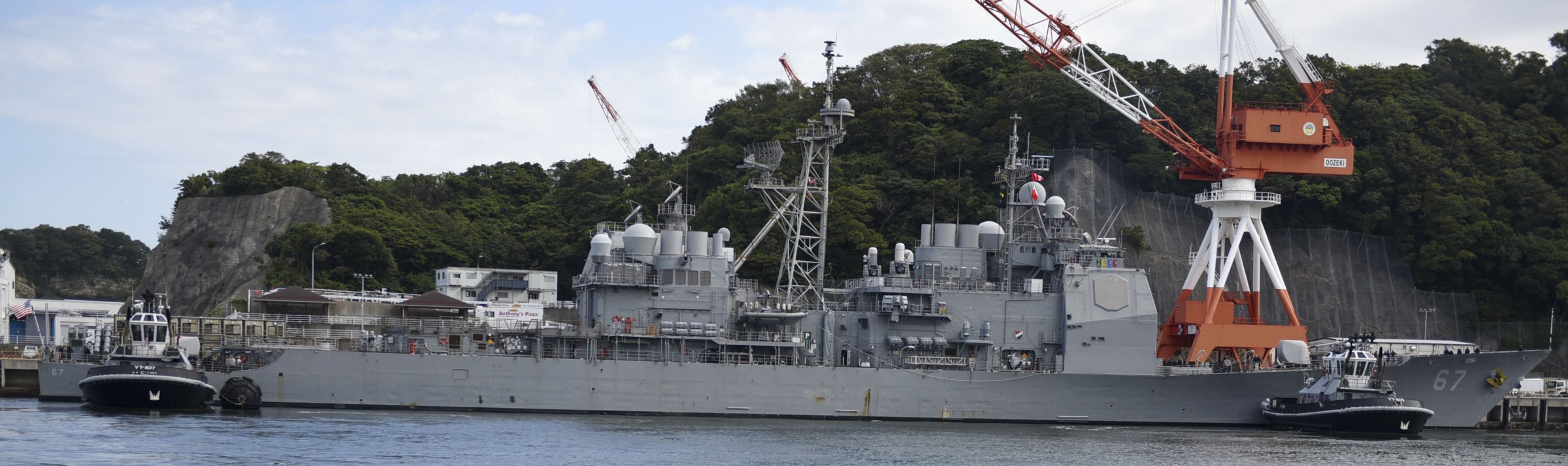 Fleet Activities Yokosuka, Japan - October 2019 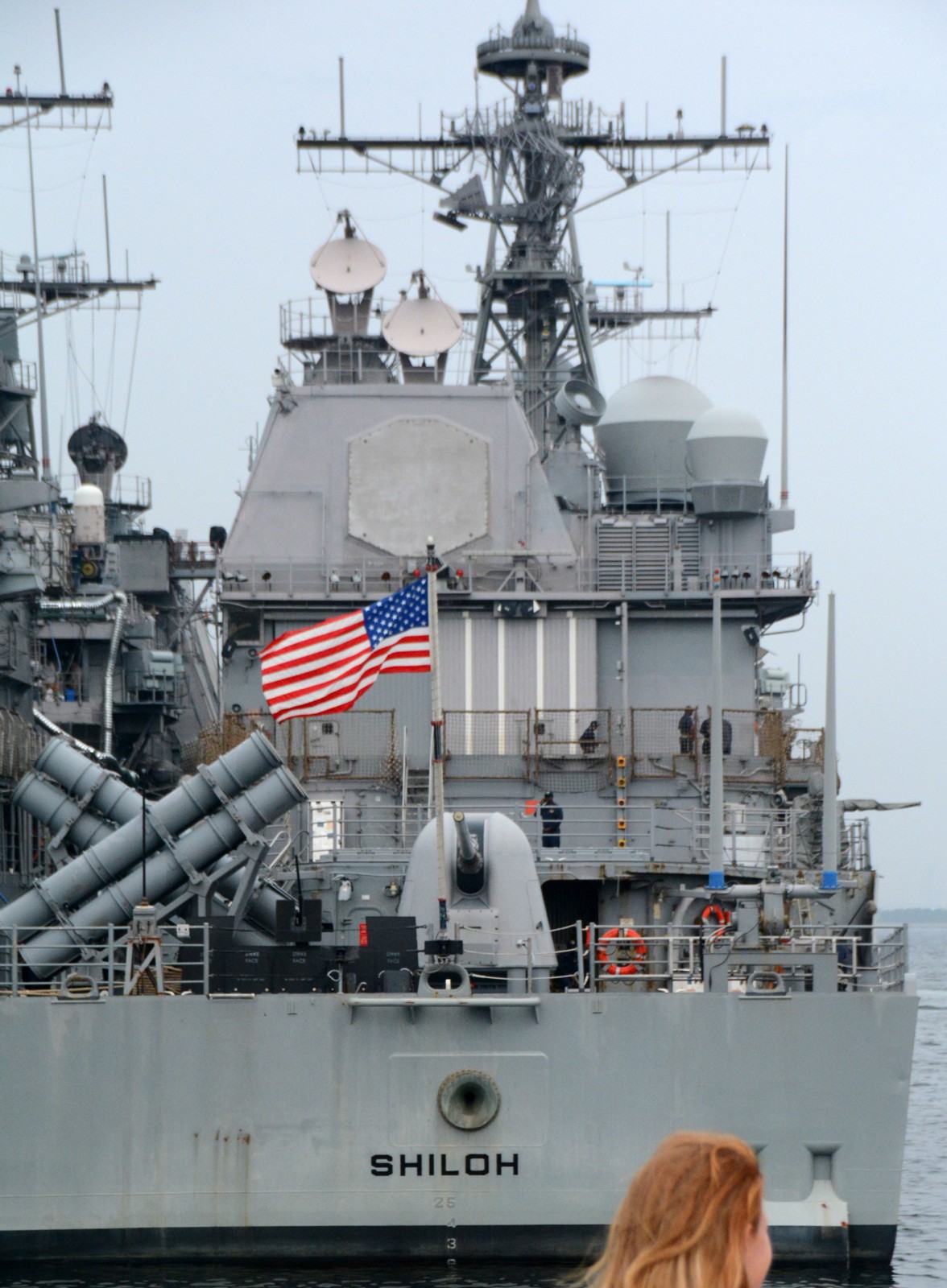 Fleet Activities Yokosuka, Japan - September 2017 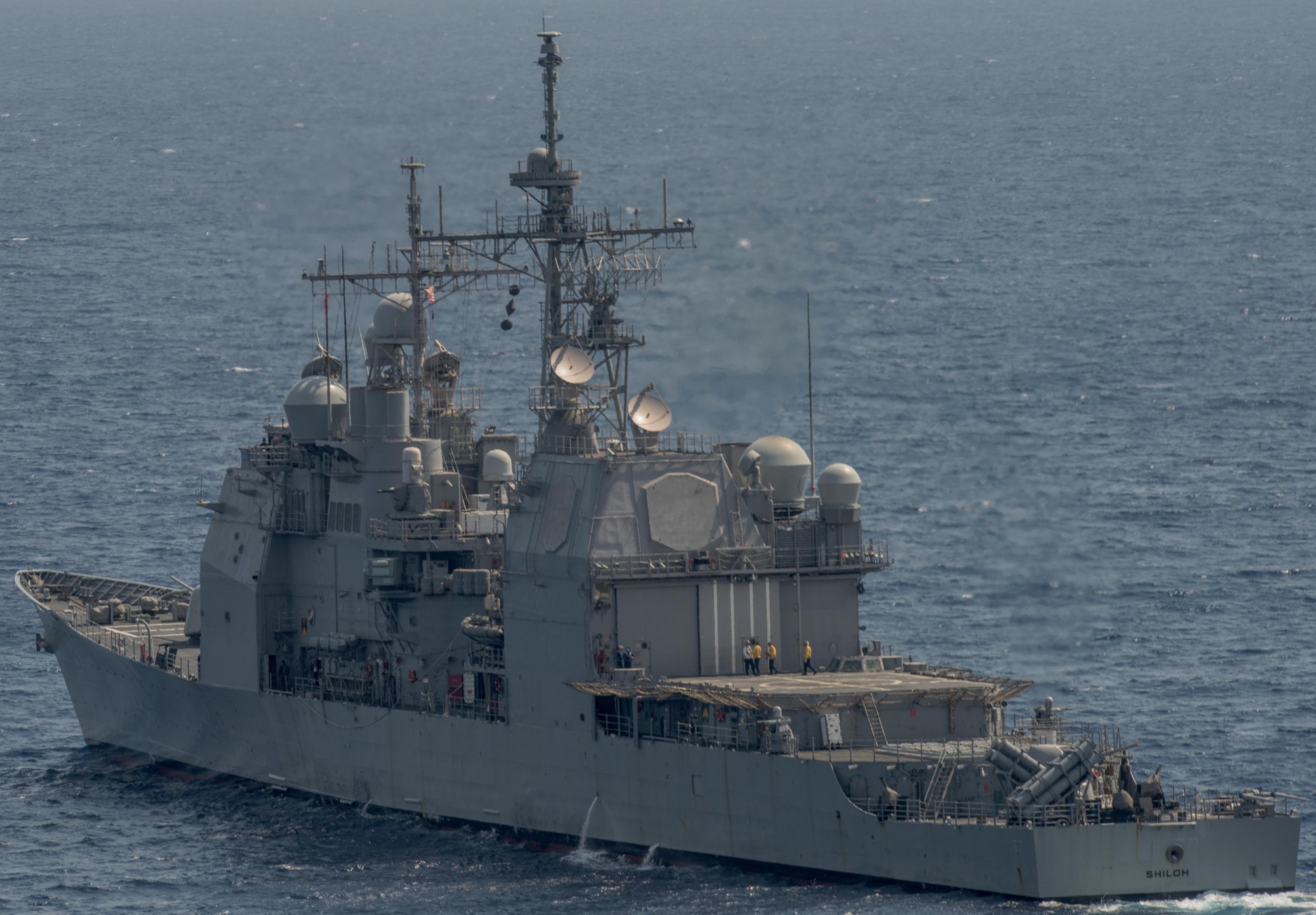 off Japan - May 2017 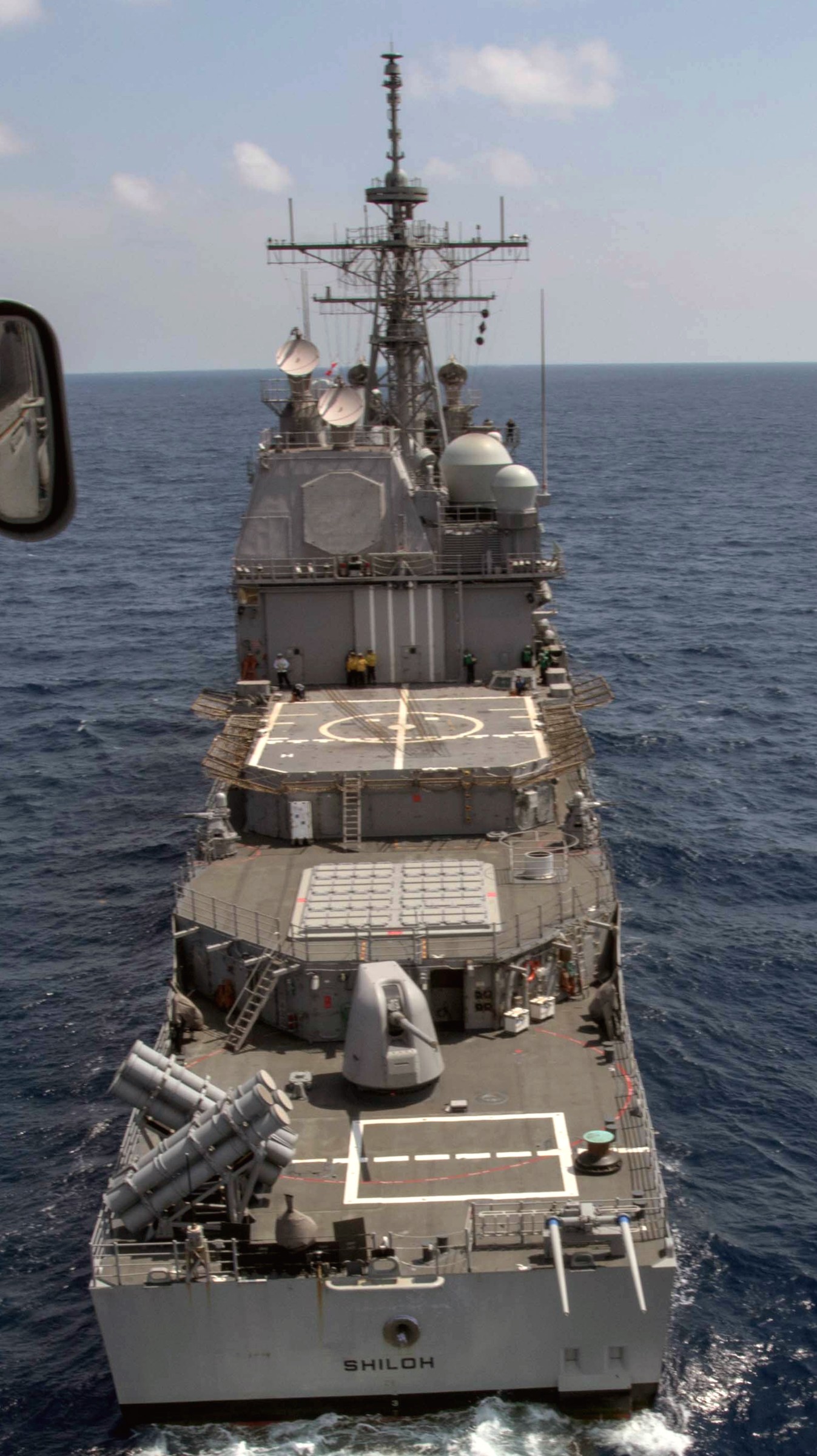 off Japan - May 2017 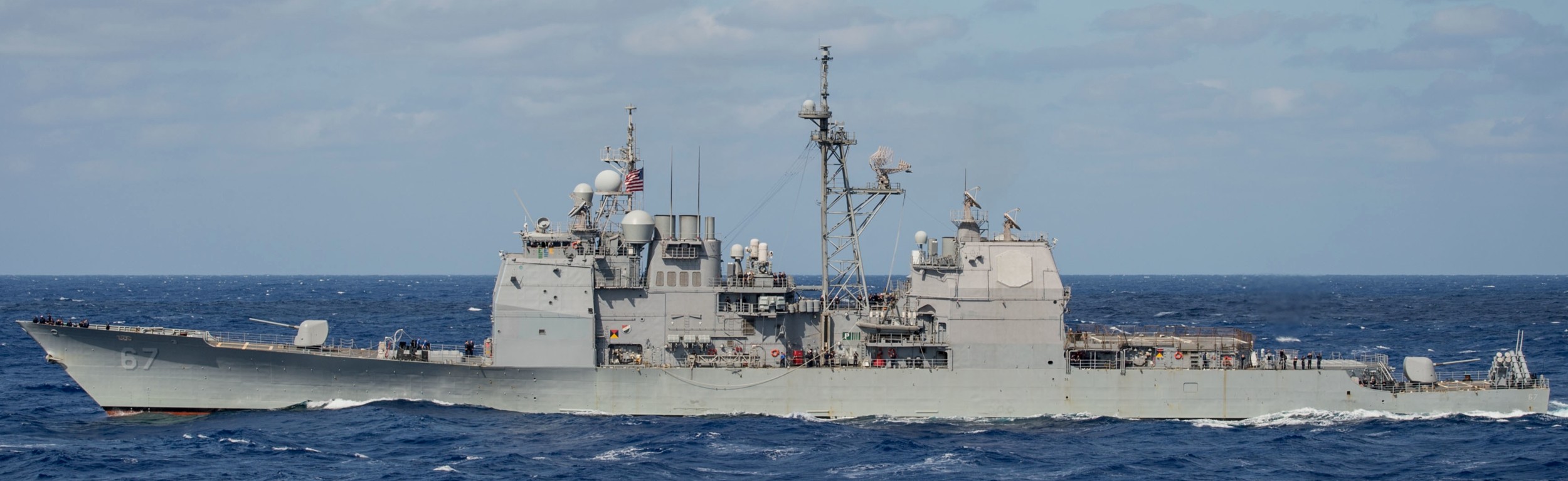 Philippine Sea - November 2016 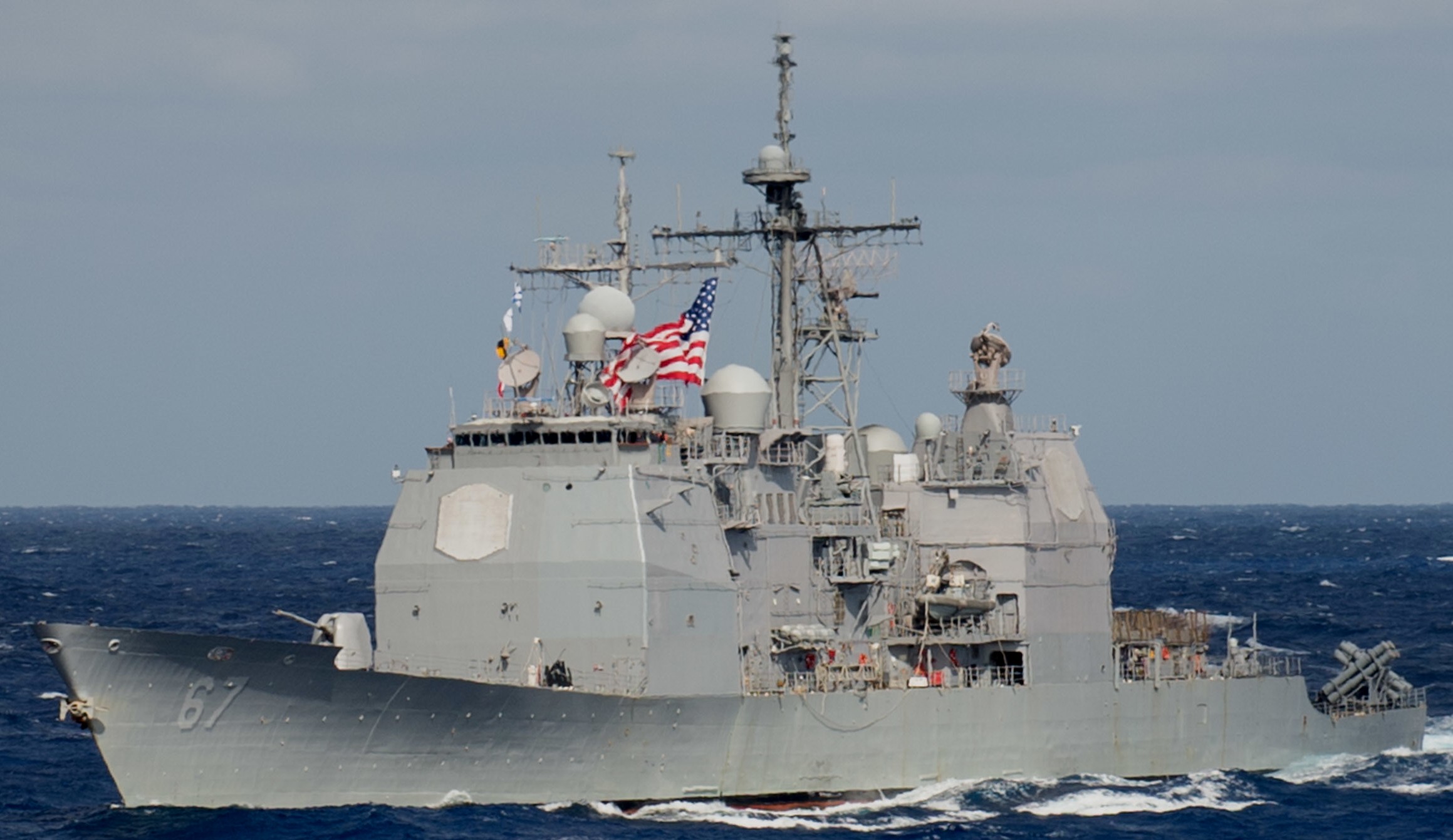 Philippine Sea - November 2016 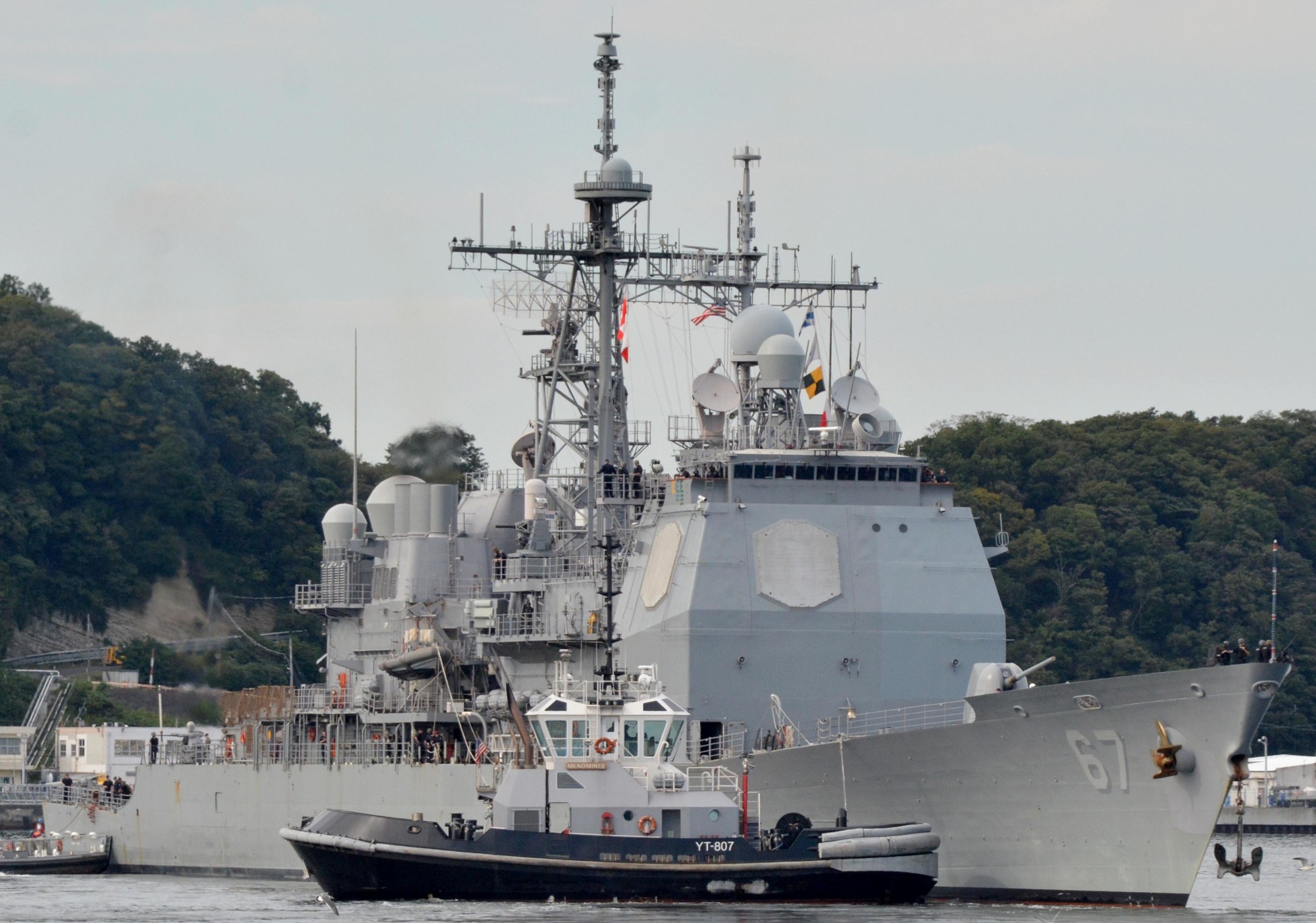 Fleet Activities Yokosuka, Japan - October 2016 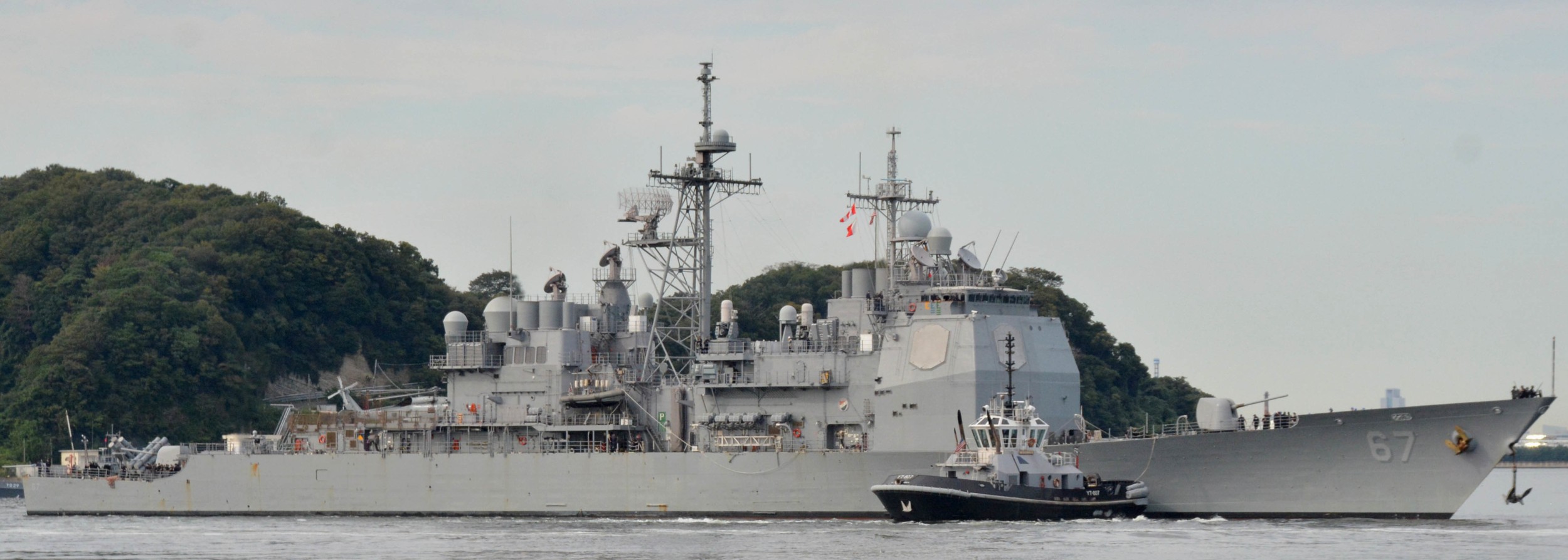 Fleet Activities Yokosuka, Japan - October 2016 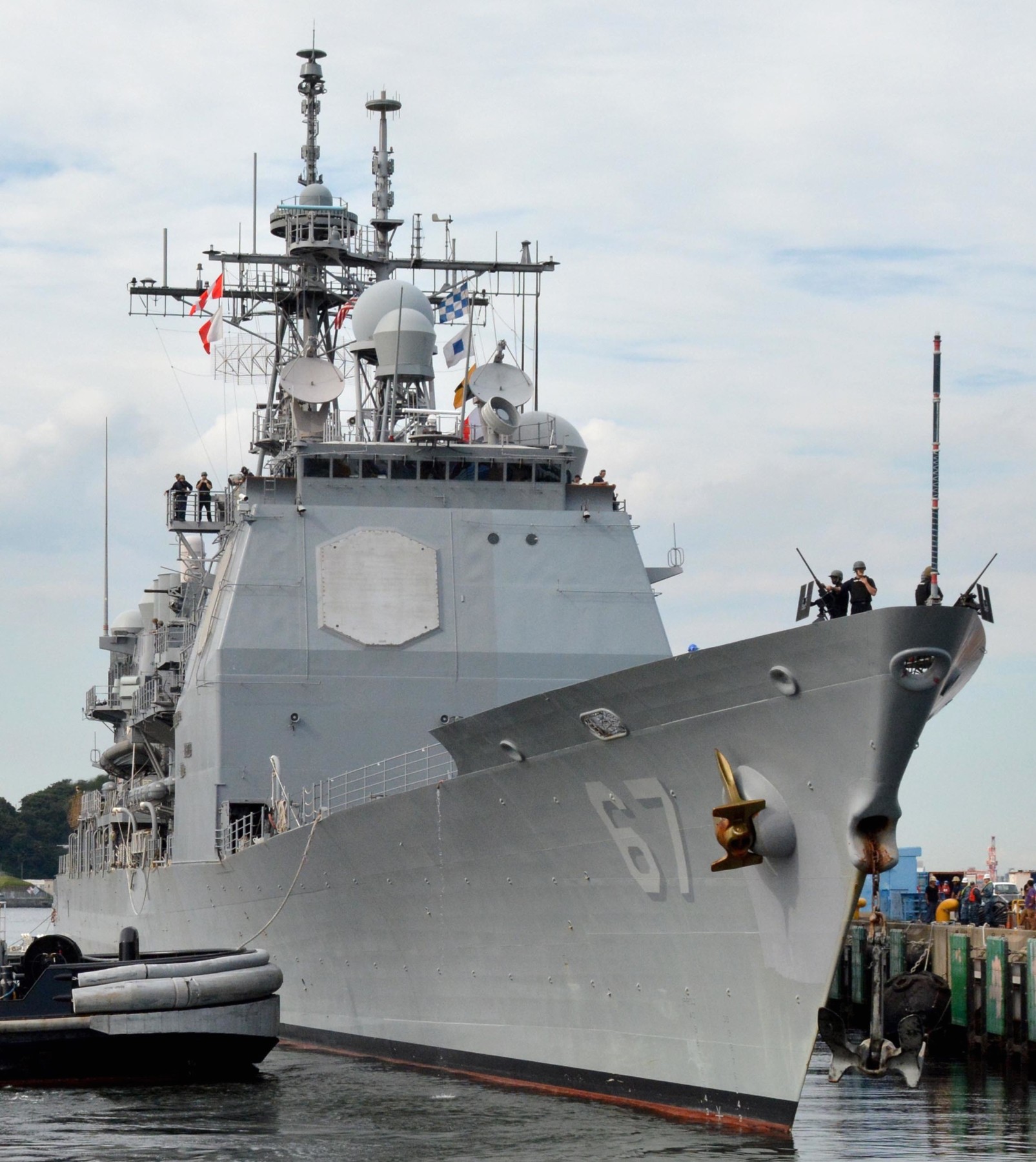 Fleet Activities Yokosuka, Japan - October 2016 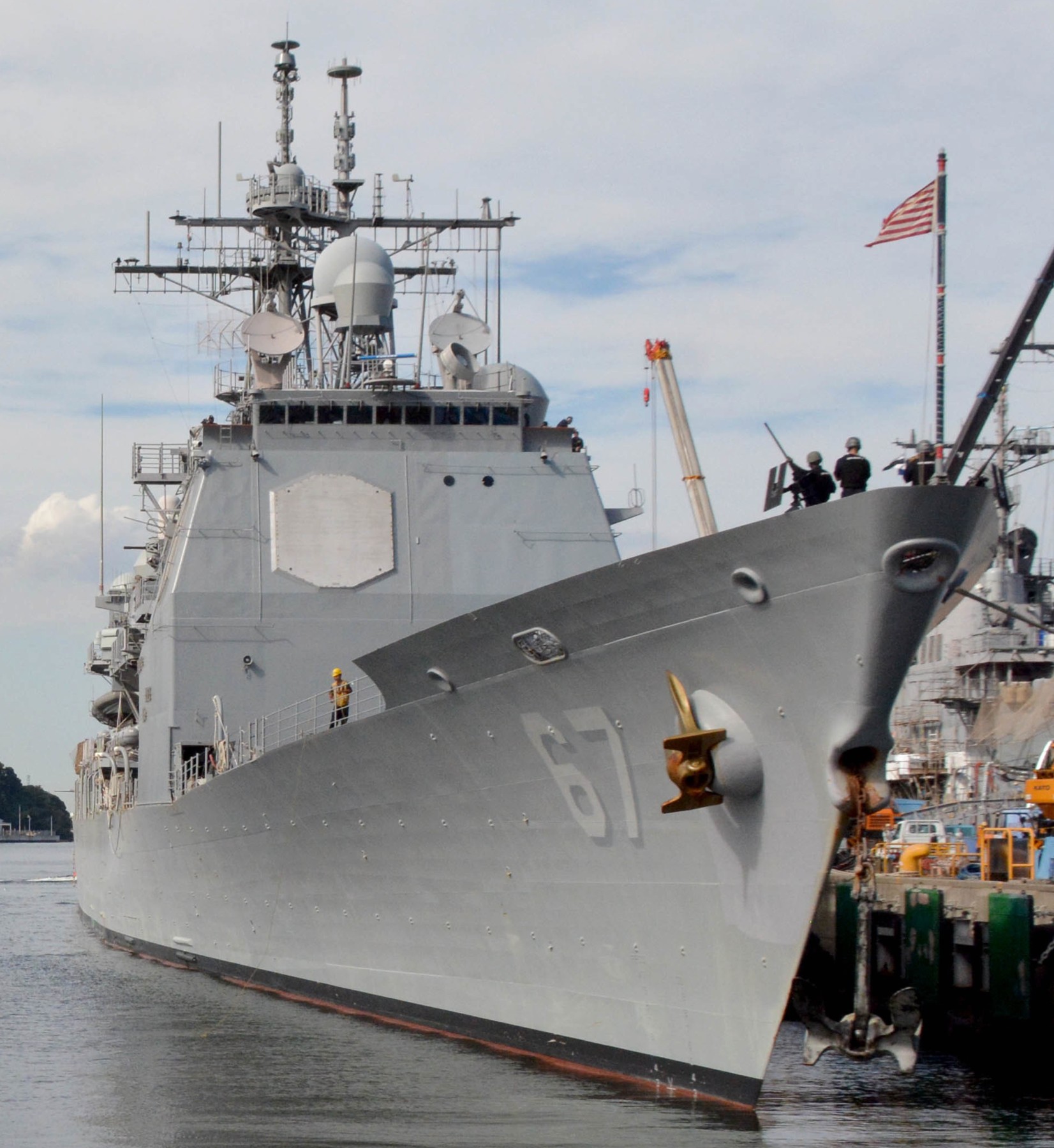 Fleet Activities Yokosuka, Japan - October 2016 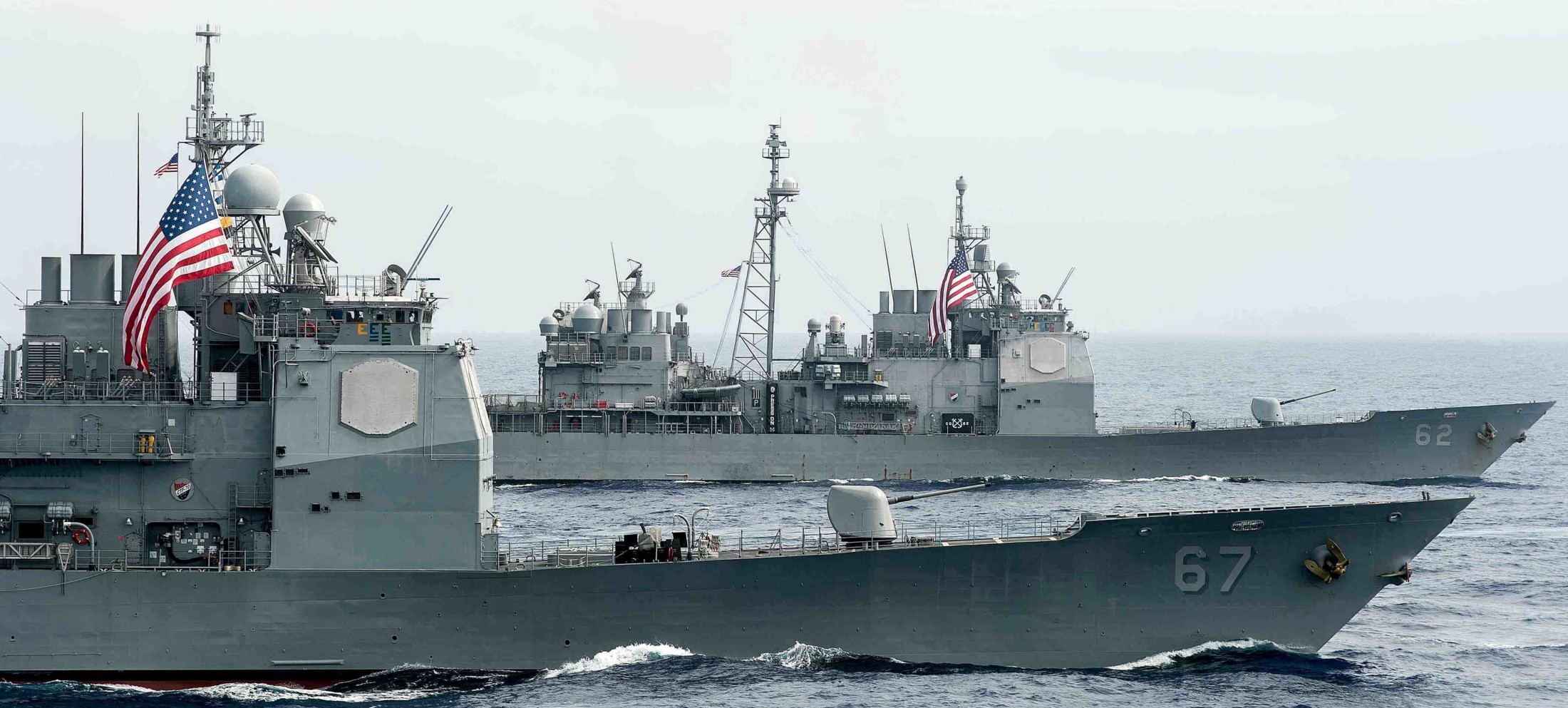 Philippine Sea - June 2016 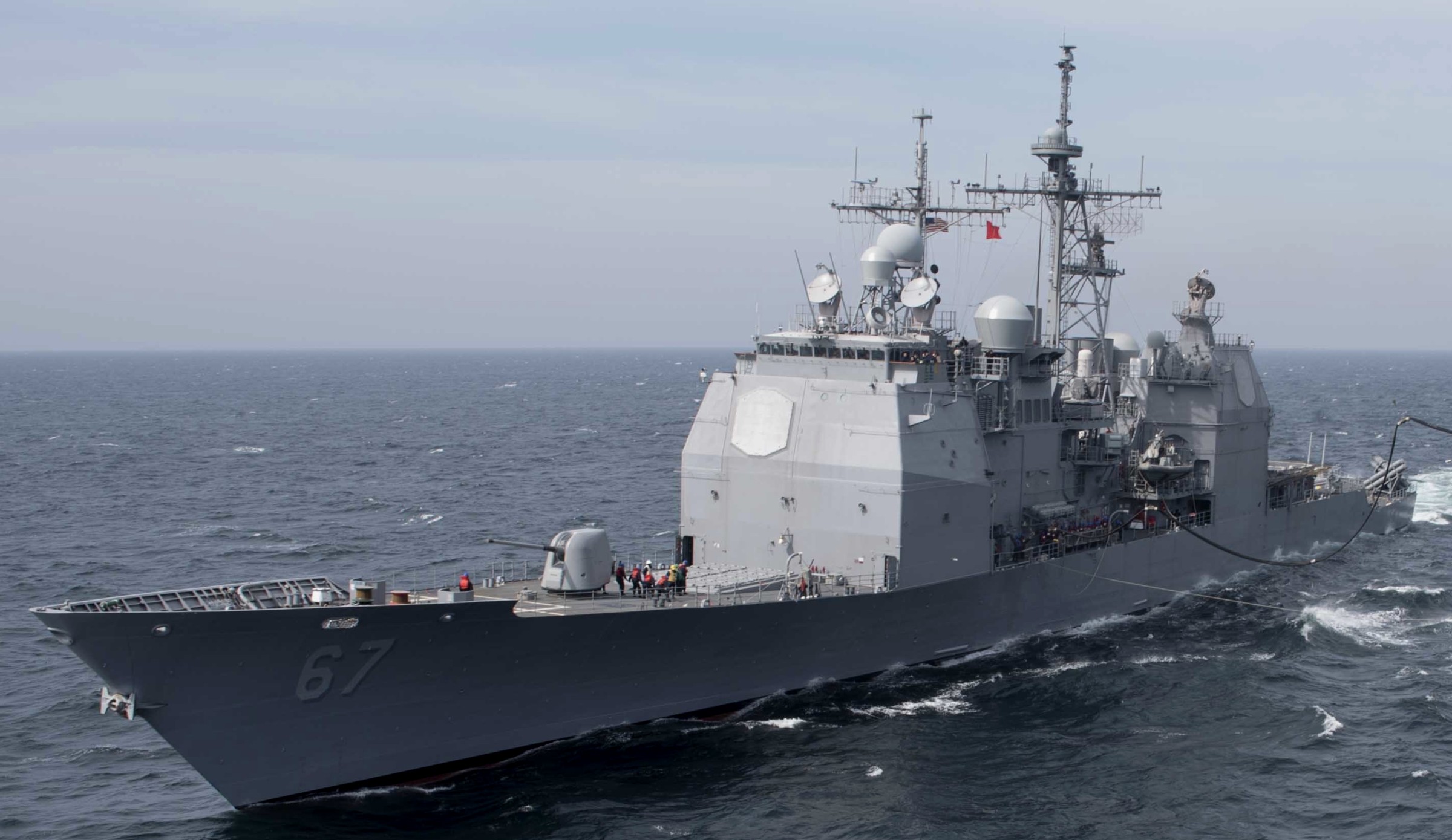 East China Sea - March 2016 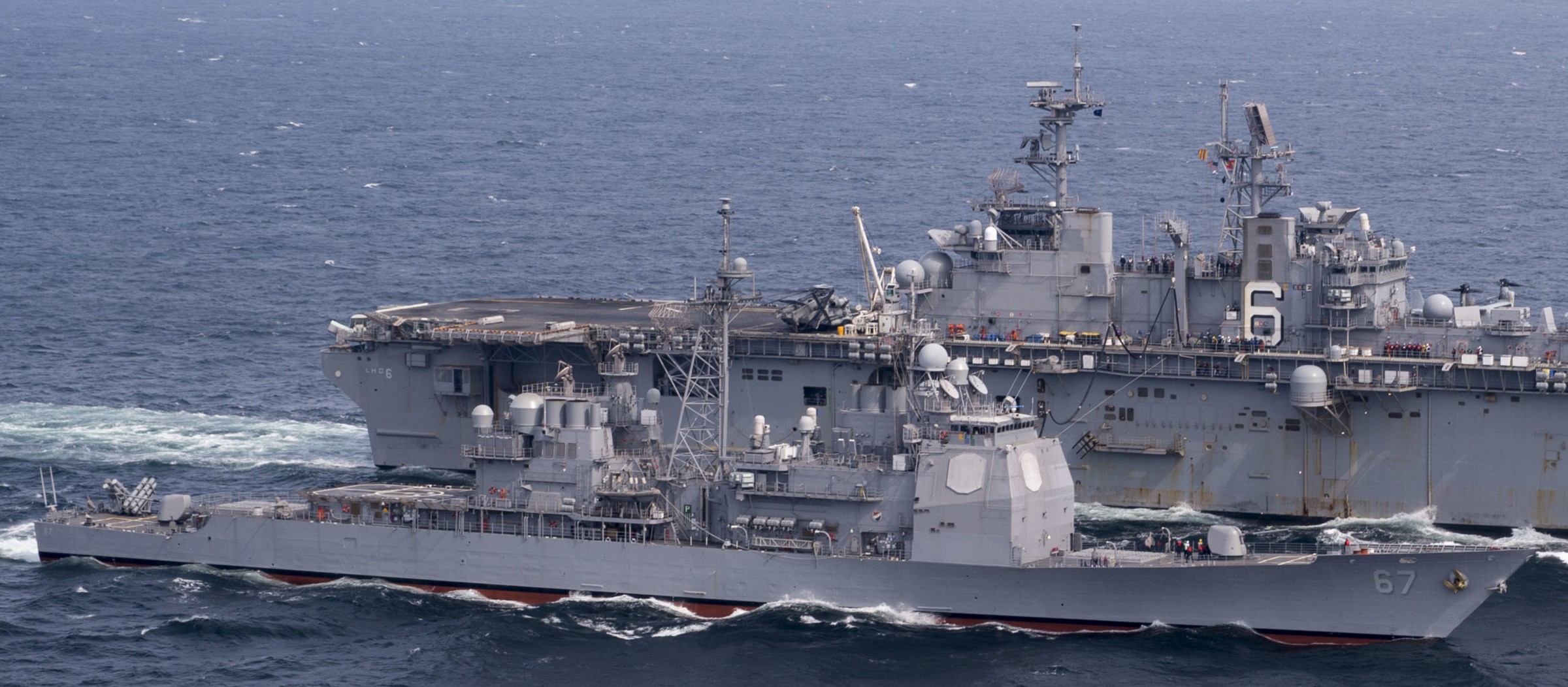 East China Sea - March 2016 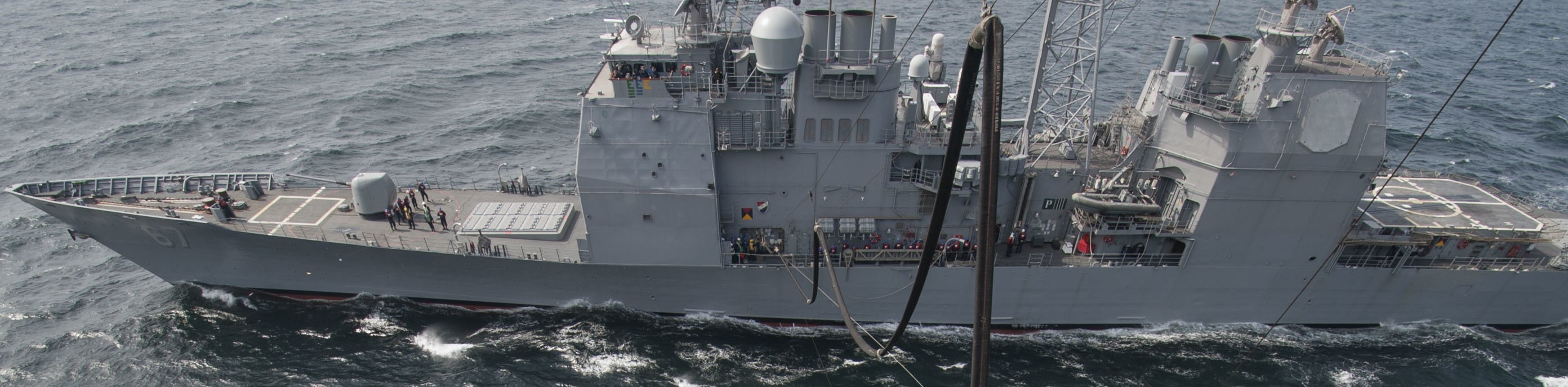 East China Sea - March 2016 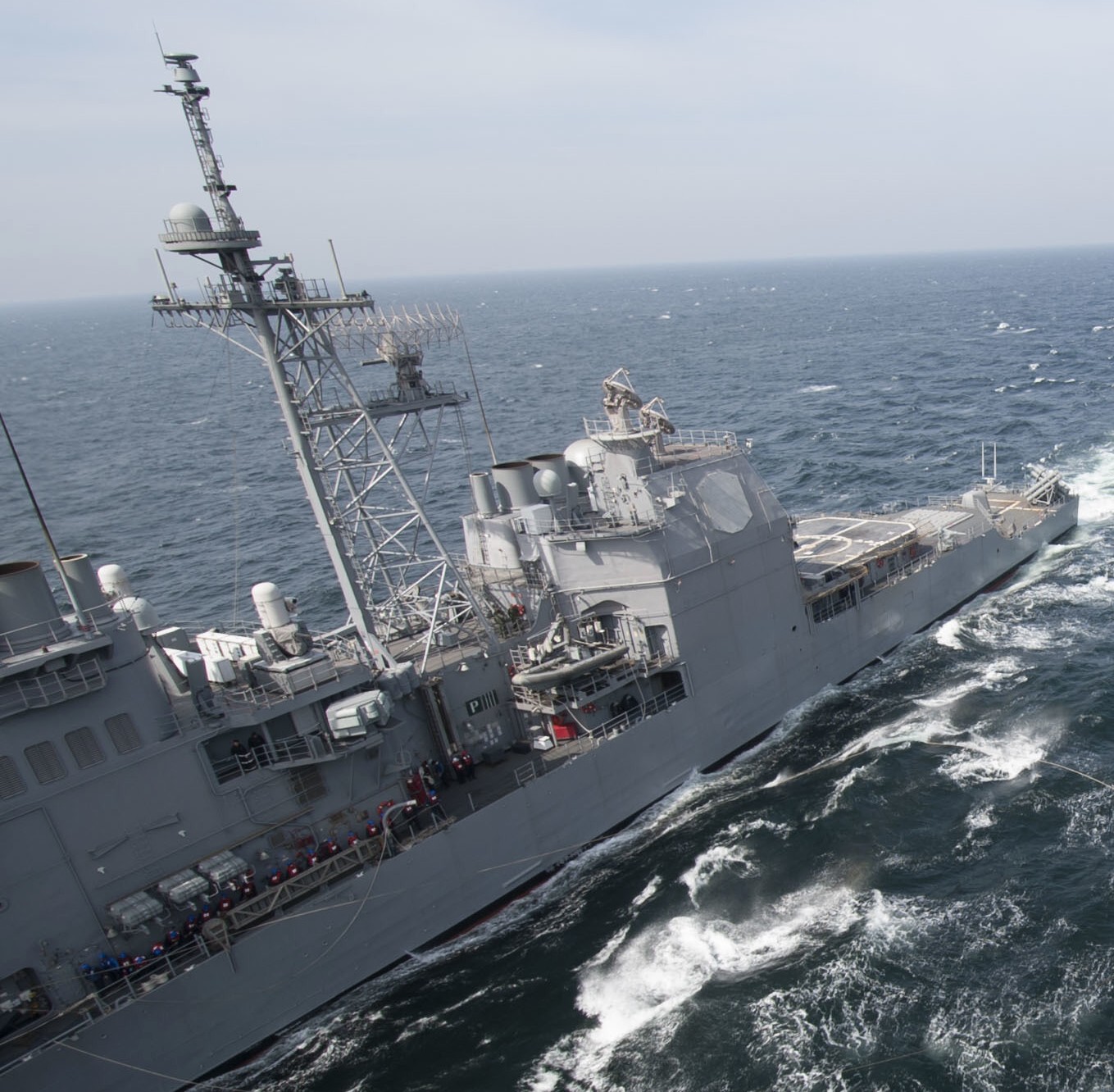 East China Sea - March 2016 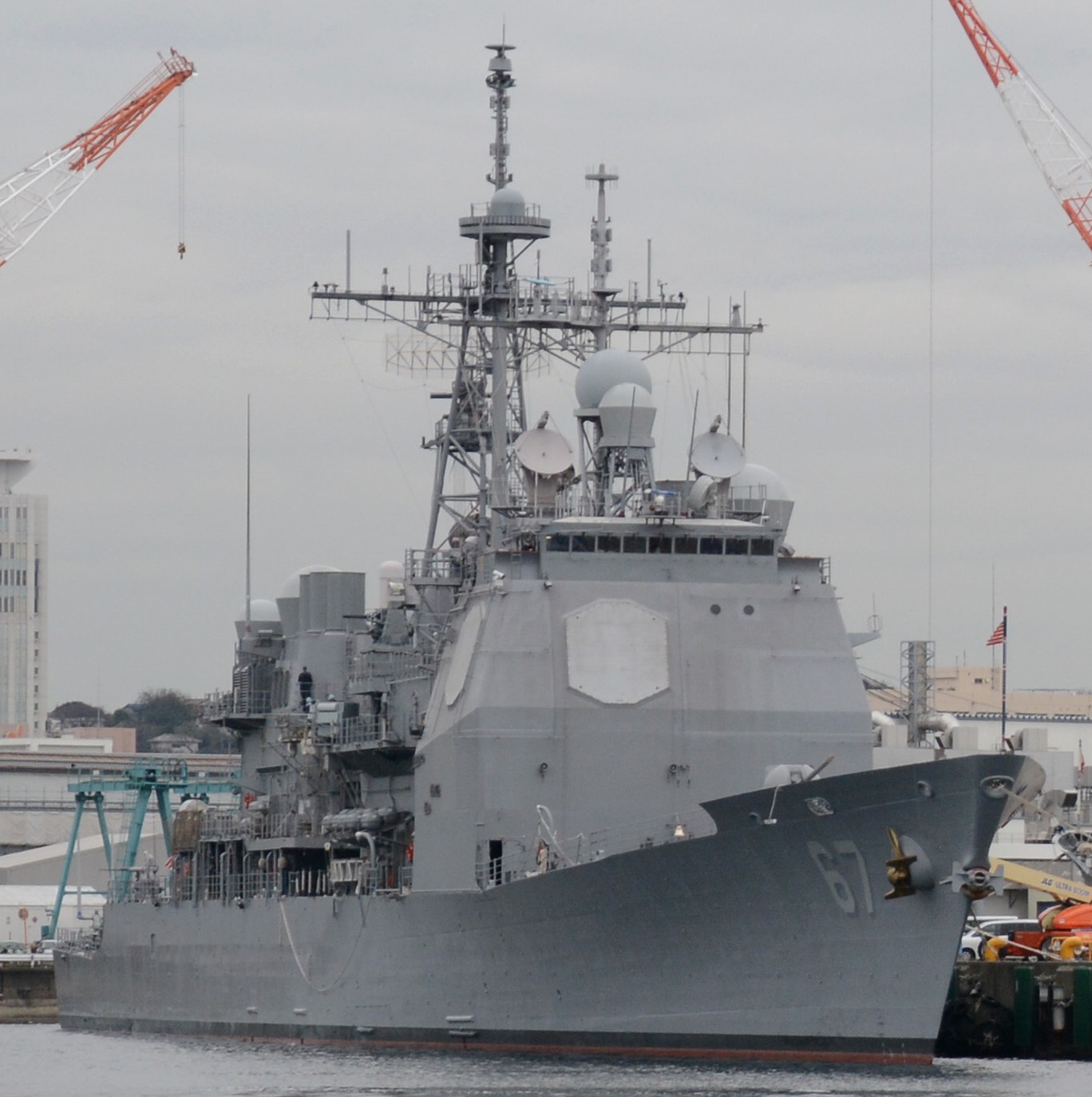 Fleet Activities Yokosuka, Japan - February 2016 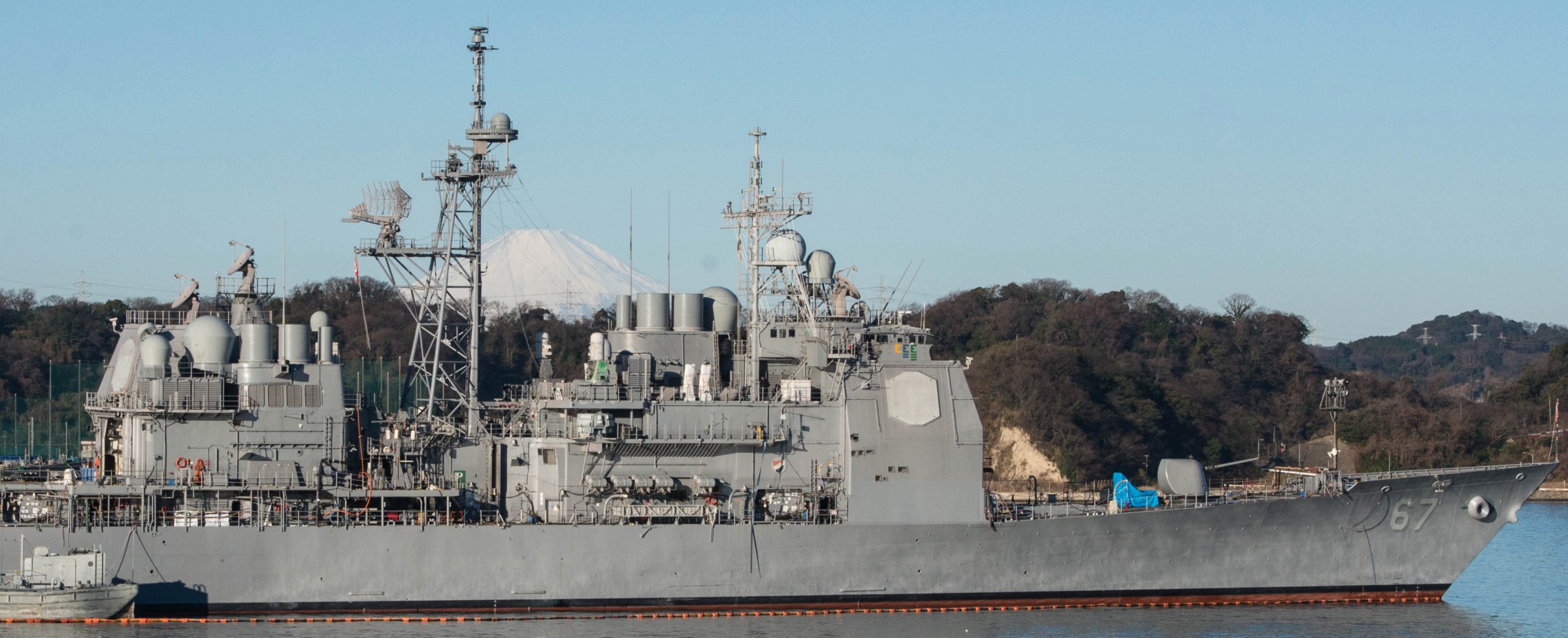 Fleet Activities Yokosuka, Japan - January 2016 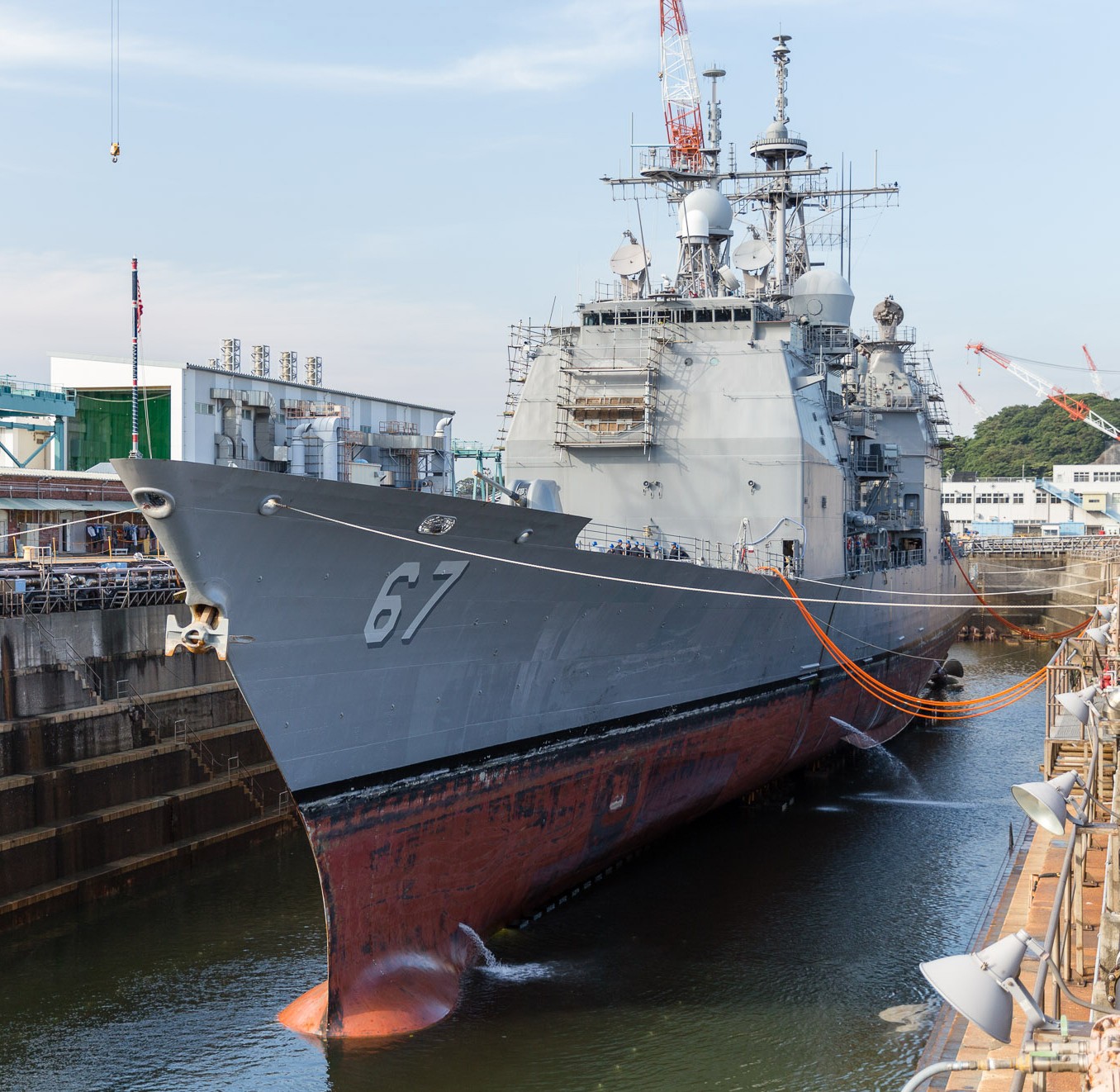 in dry-dock at Fleet Activities Yokosuka, Japan - July 2015 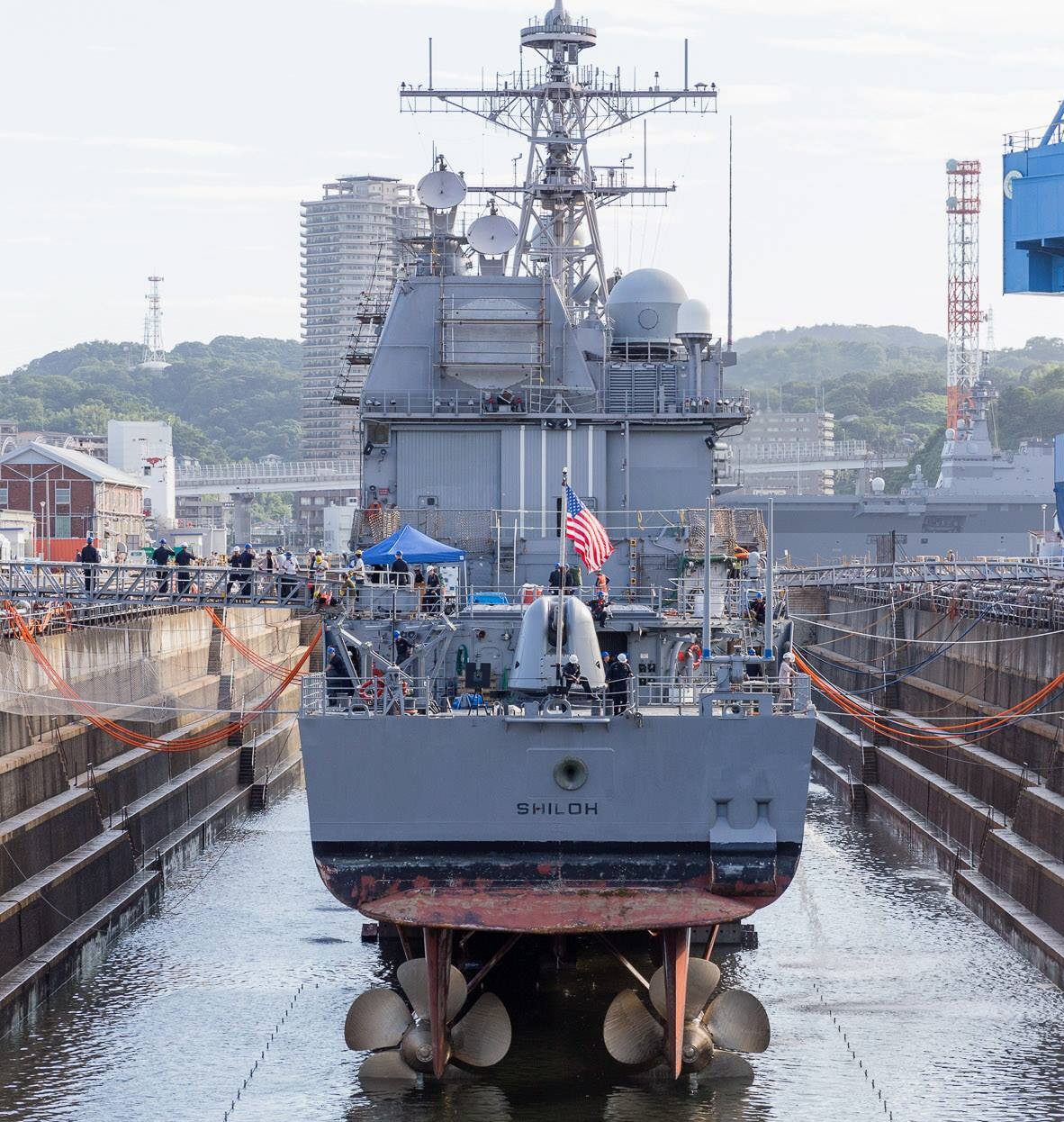 in dry-dock at Fleet Activities Yokosuka, Japan - July 2015 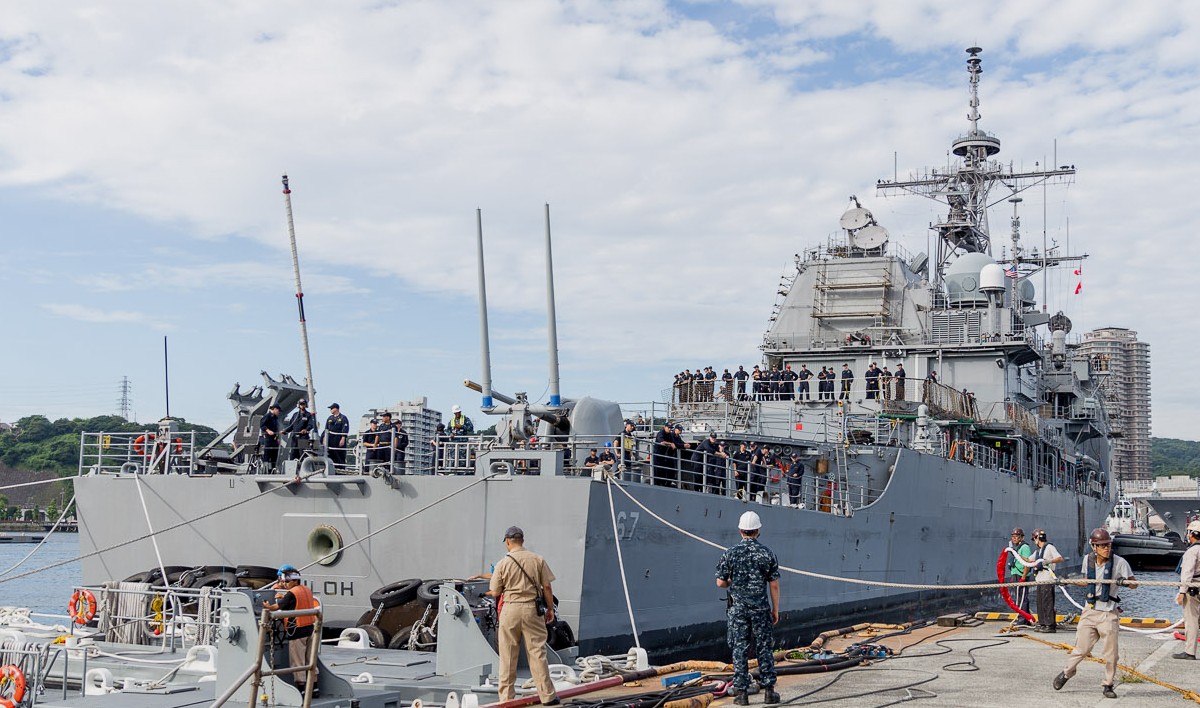 Fleet Activities Yokosuka, Japan - July 2015 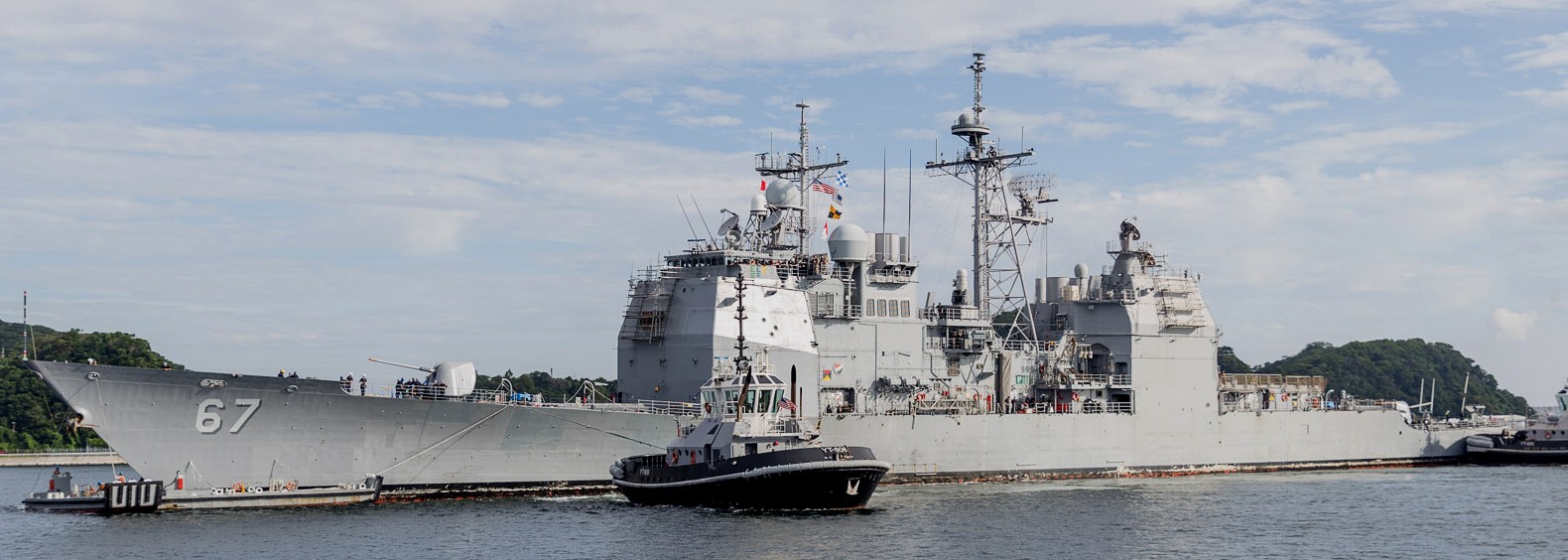 Fleet Activities Yokosuka, Japan - July 2015 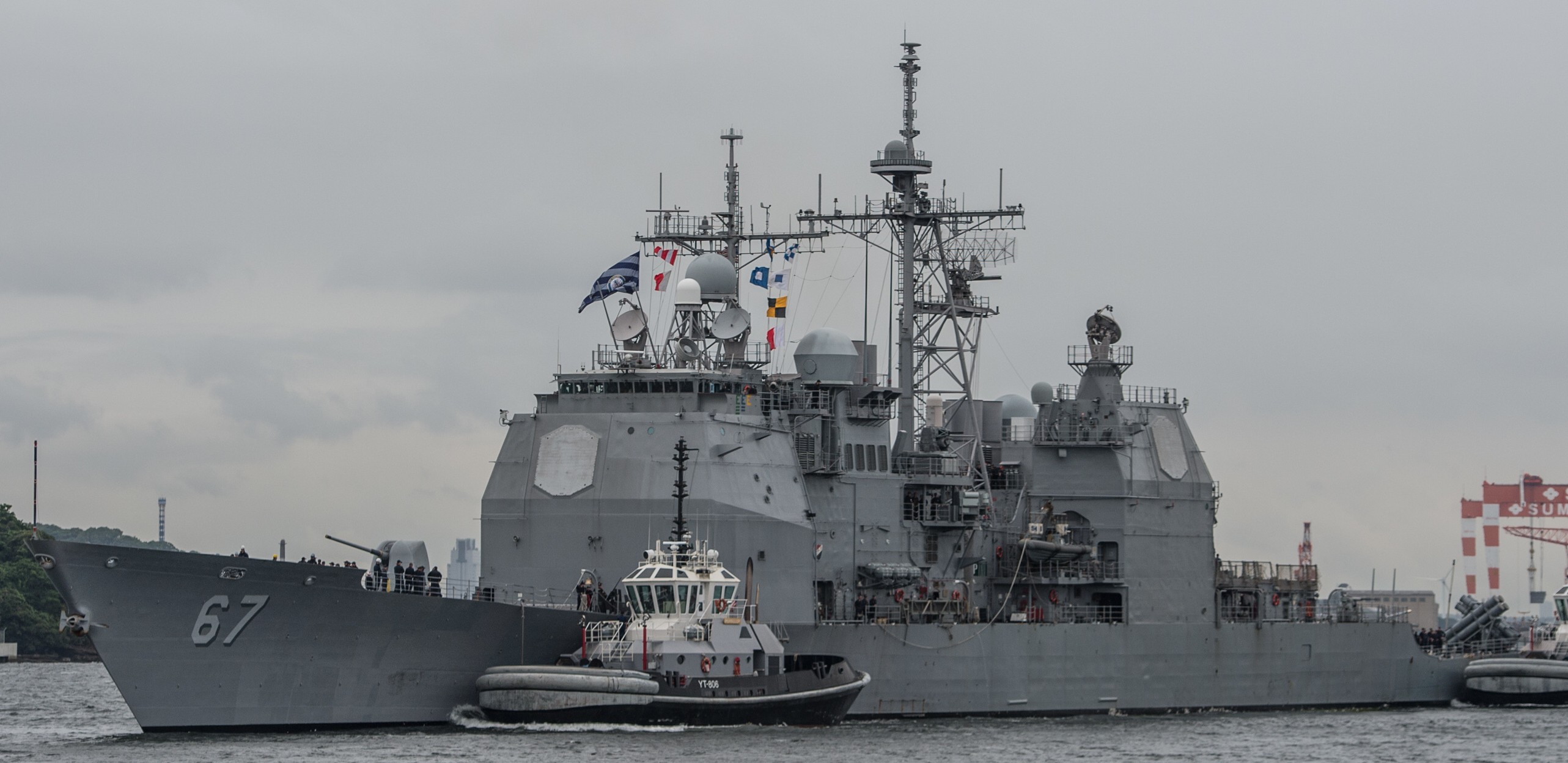 returning to Fleet Activities Yokosuka, Japan - June 2015 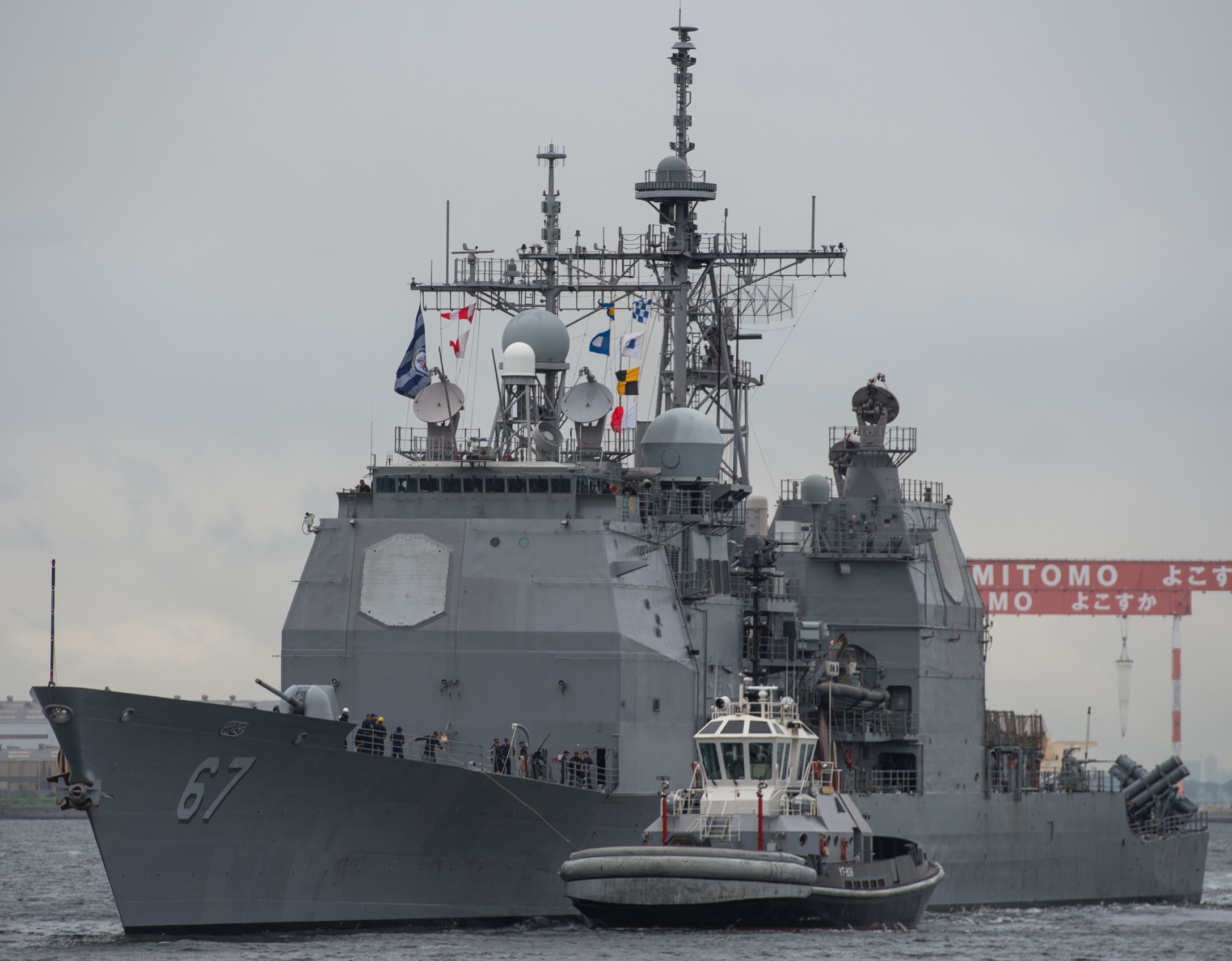 returning to Fleet Activities Yokosuka, Japan - June 2015 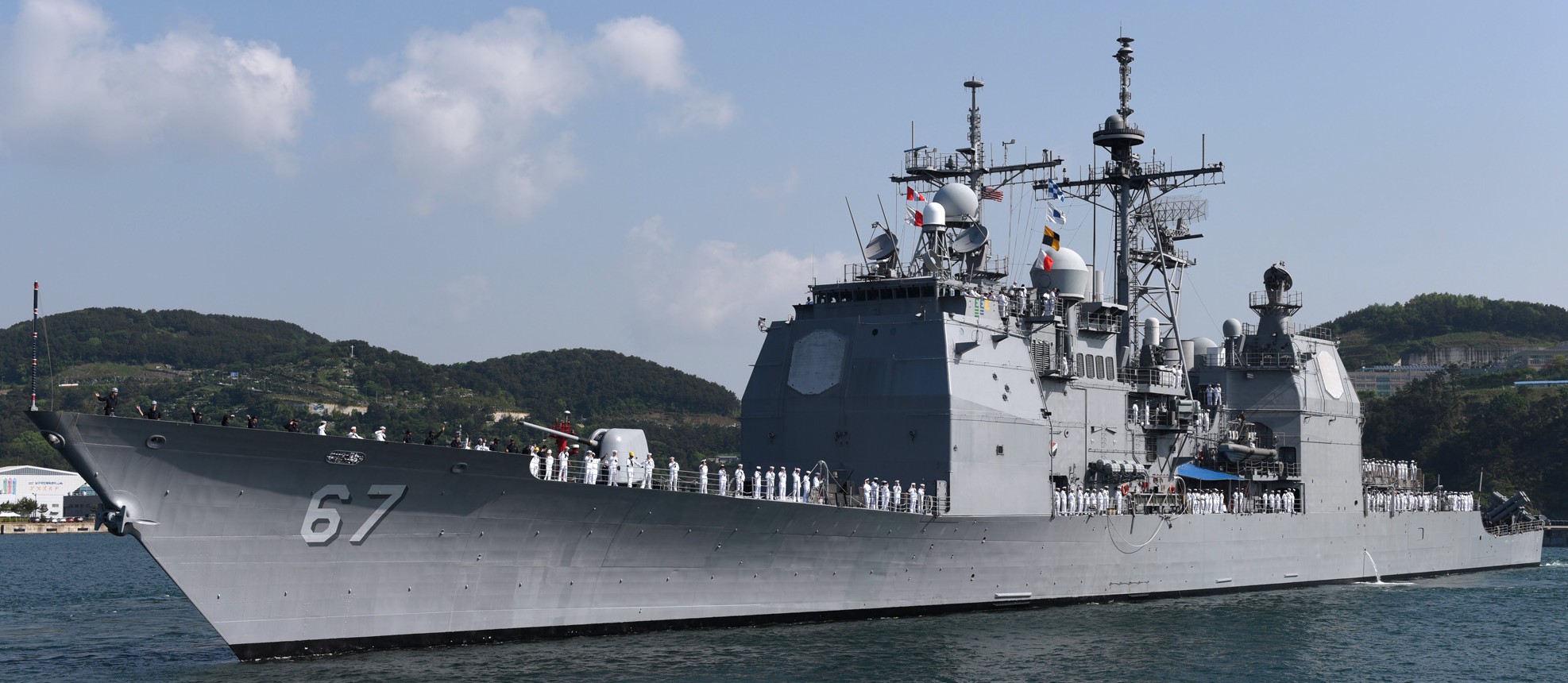 Busan, Republic of Korea - May 2015 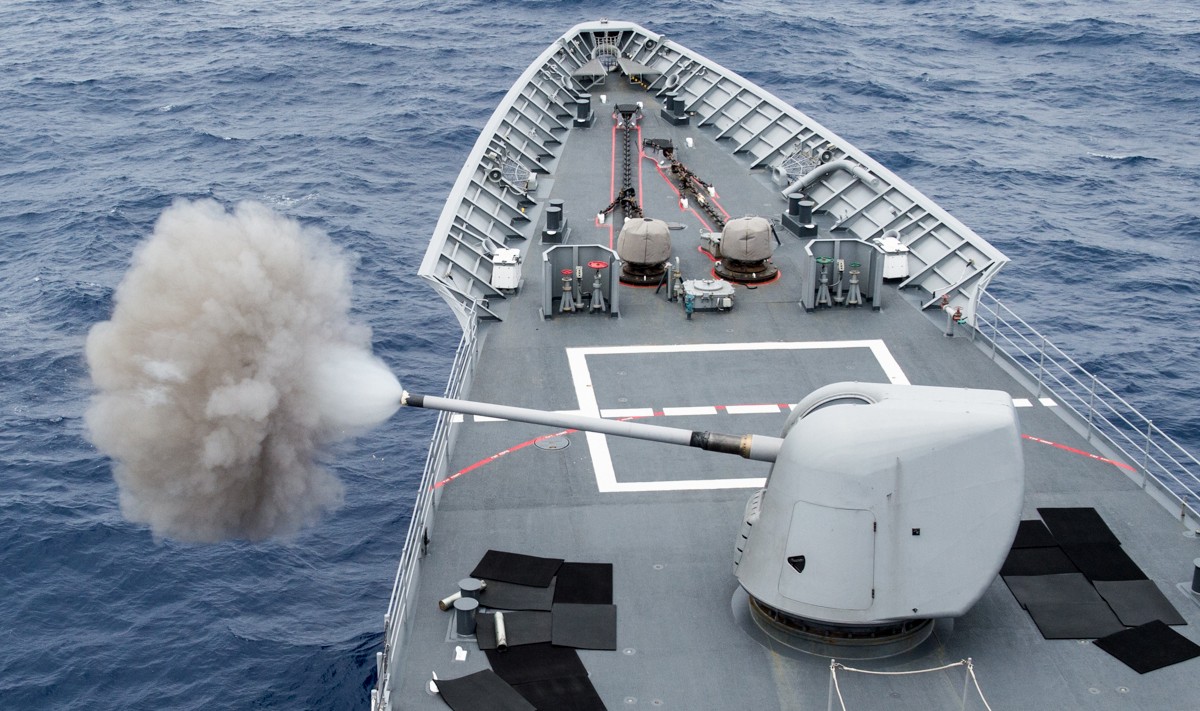 Mk.45 gun fire exercise - Philippine Sea - April 2015 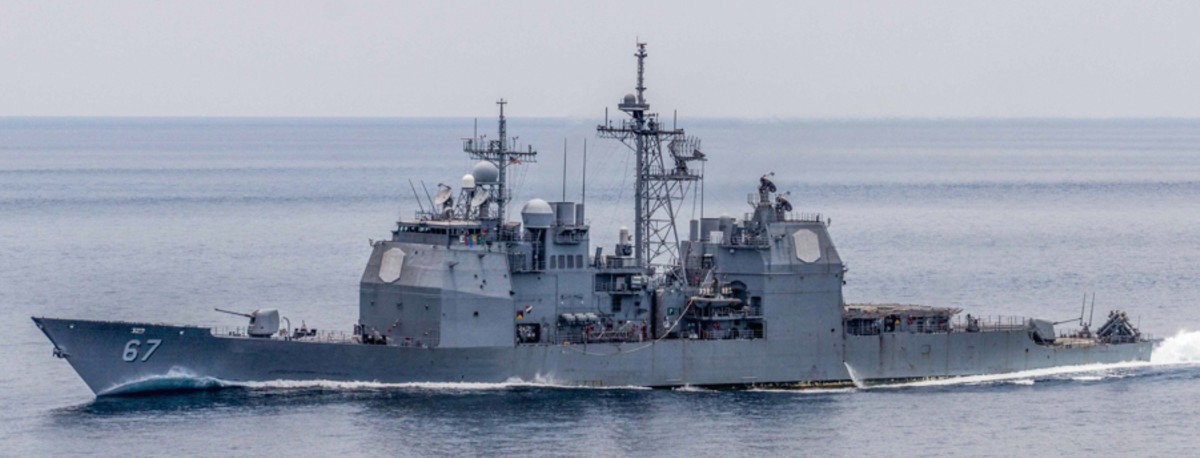 Andaman Sea - April 2015 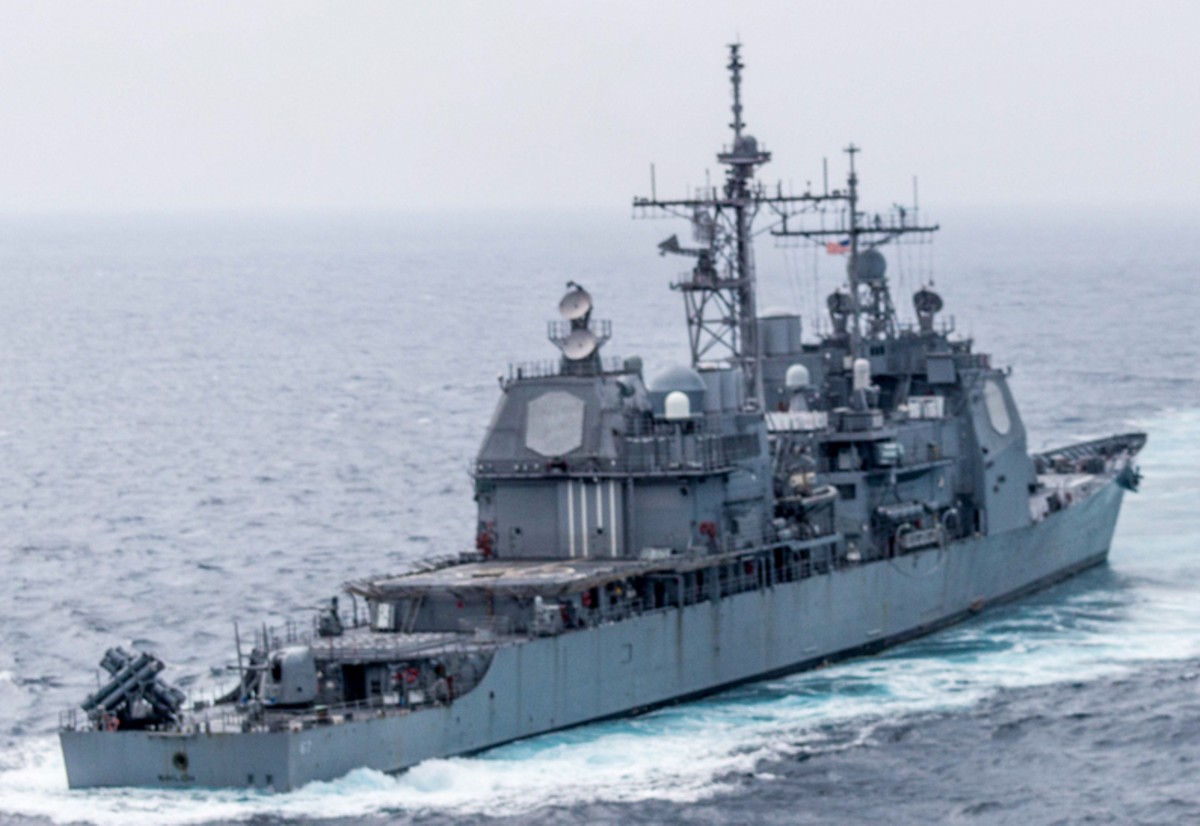 Andaman Sea - April 2015 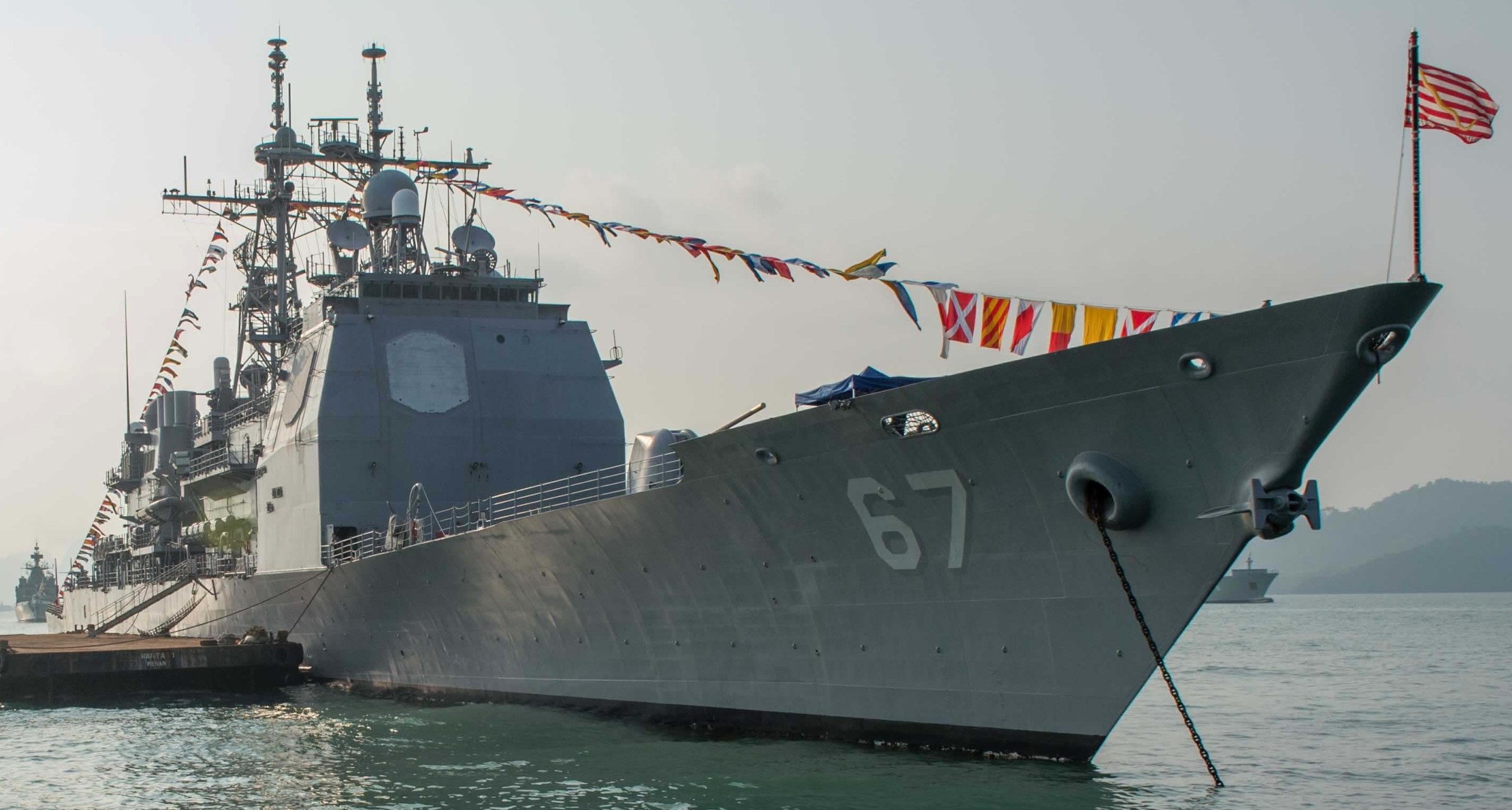 Langkawi, Malaysia - March 2015 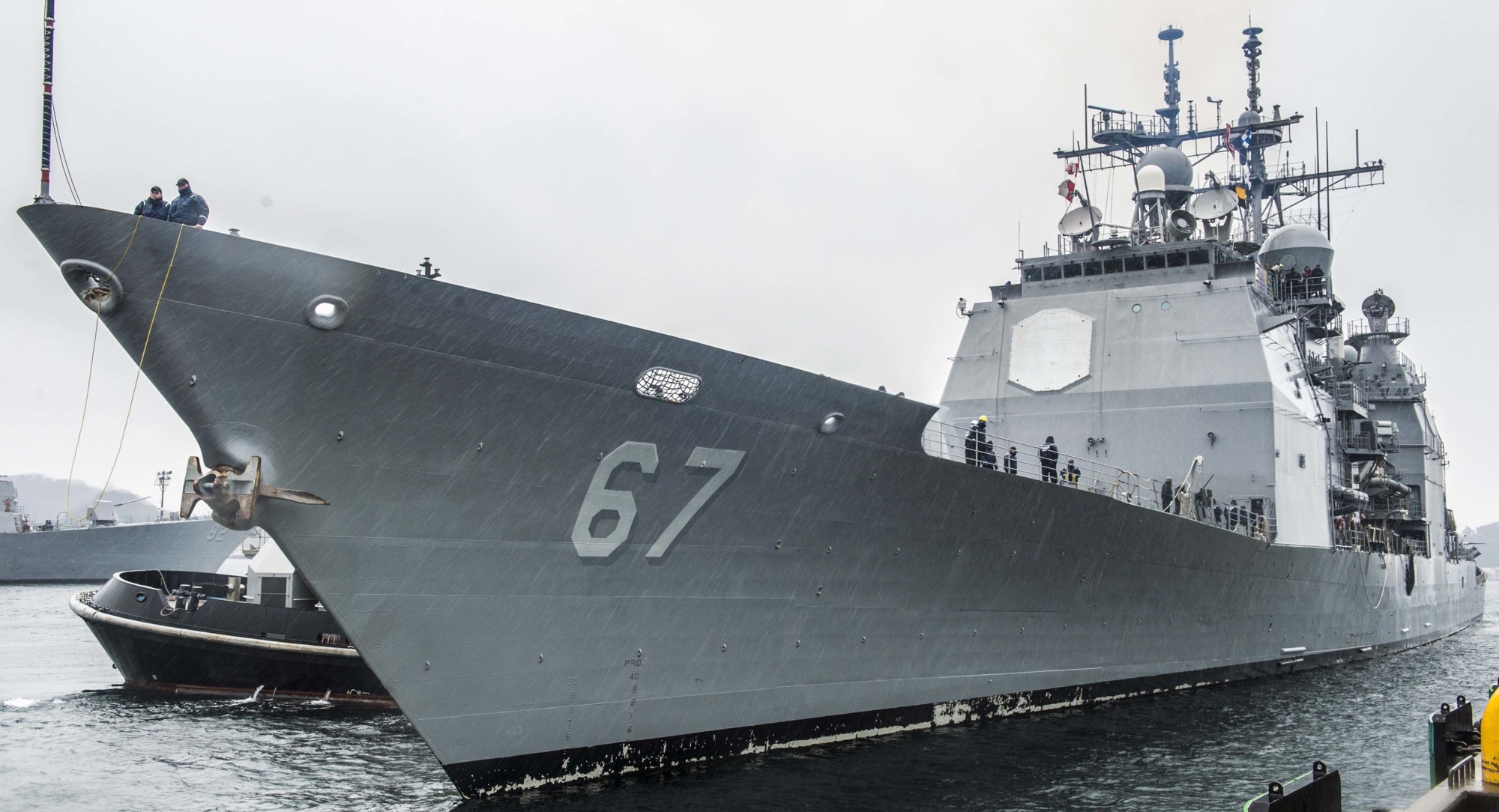 Fleet Activities Yokosuka, Japan - January 2015 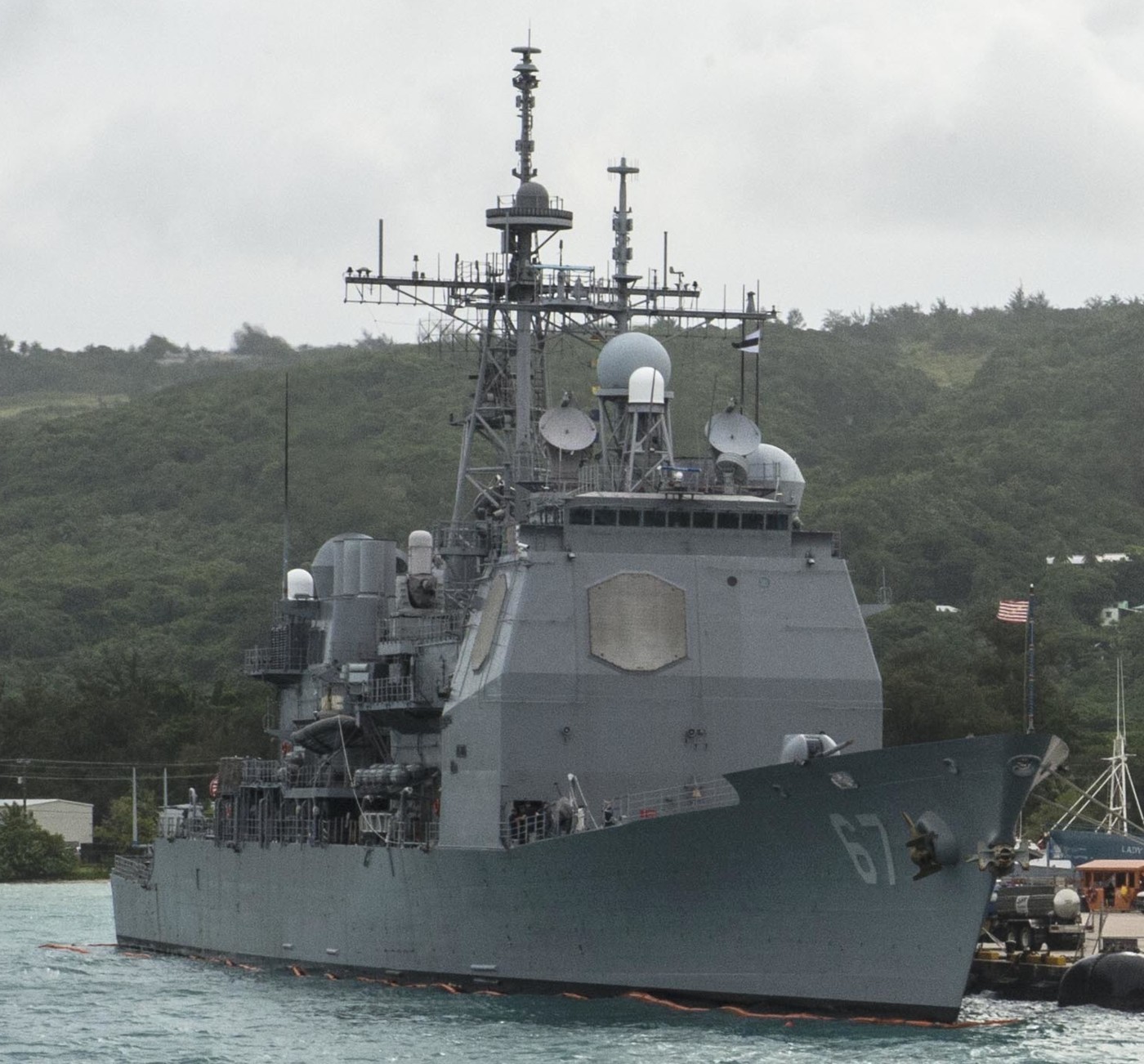 Northern Mariana Islands - September 2014 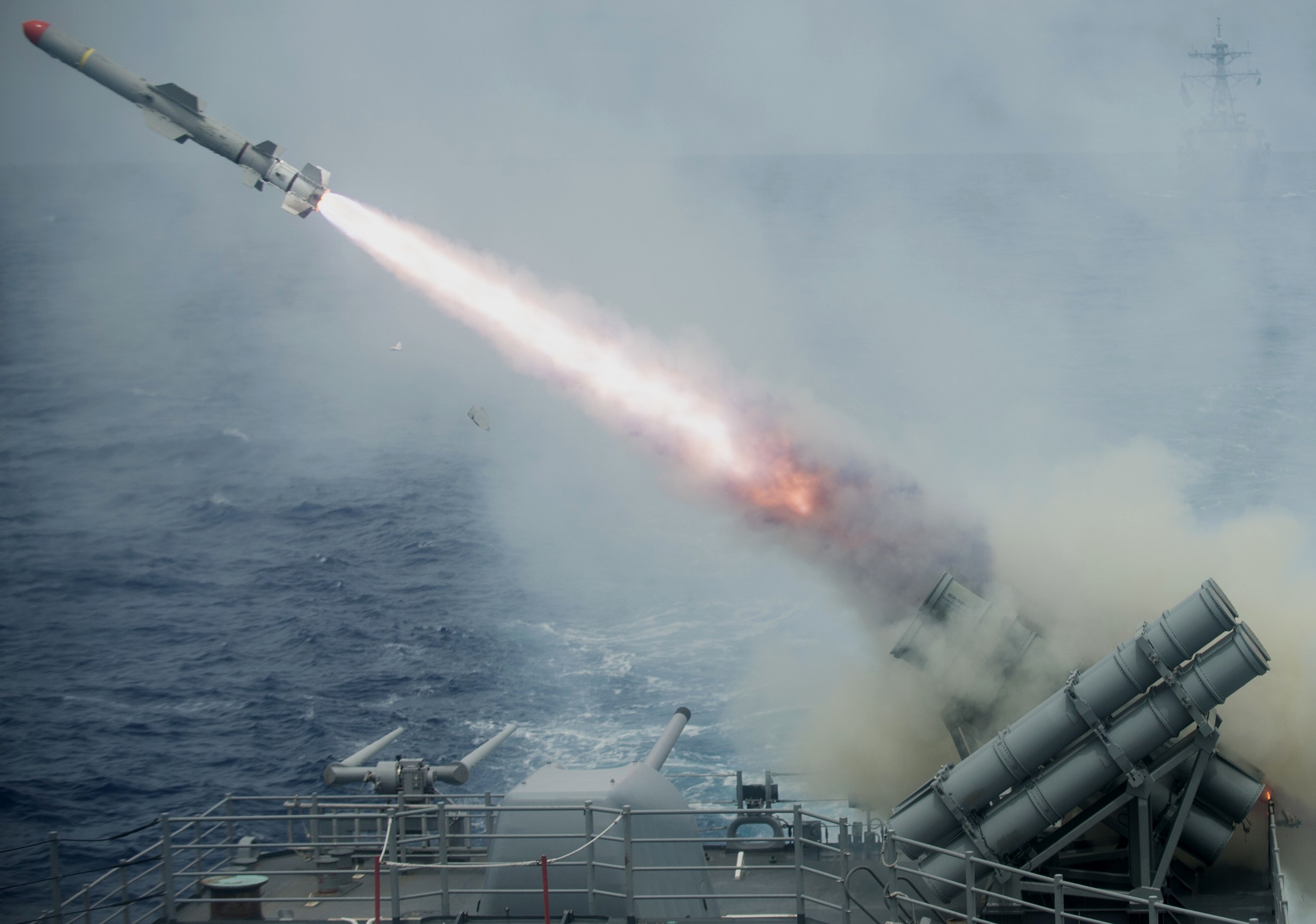 an RGM-84 Harpoon SSM missile was fired from the Mk.141 launcher - Pacific Ocean - September 2014 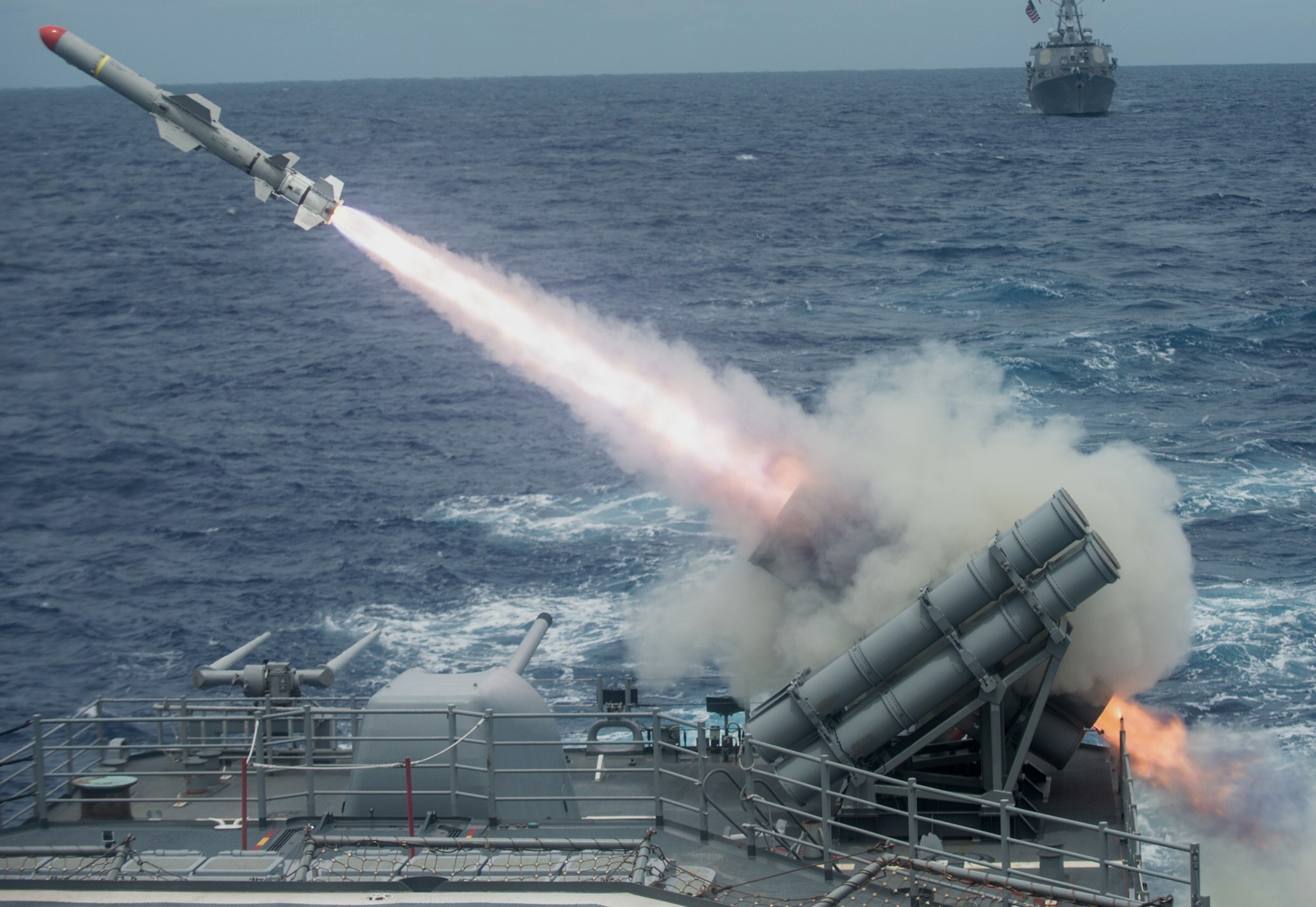 an RGM-84 Harpoon SSM missile was fired from the Mk.141 launcher - Pacific Ocean - September 2014 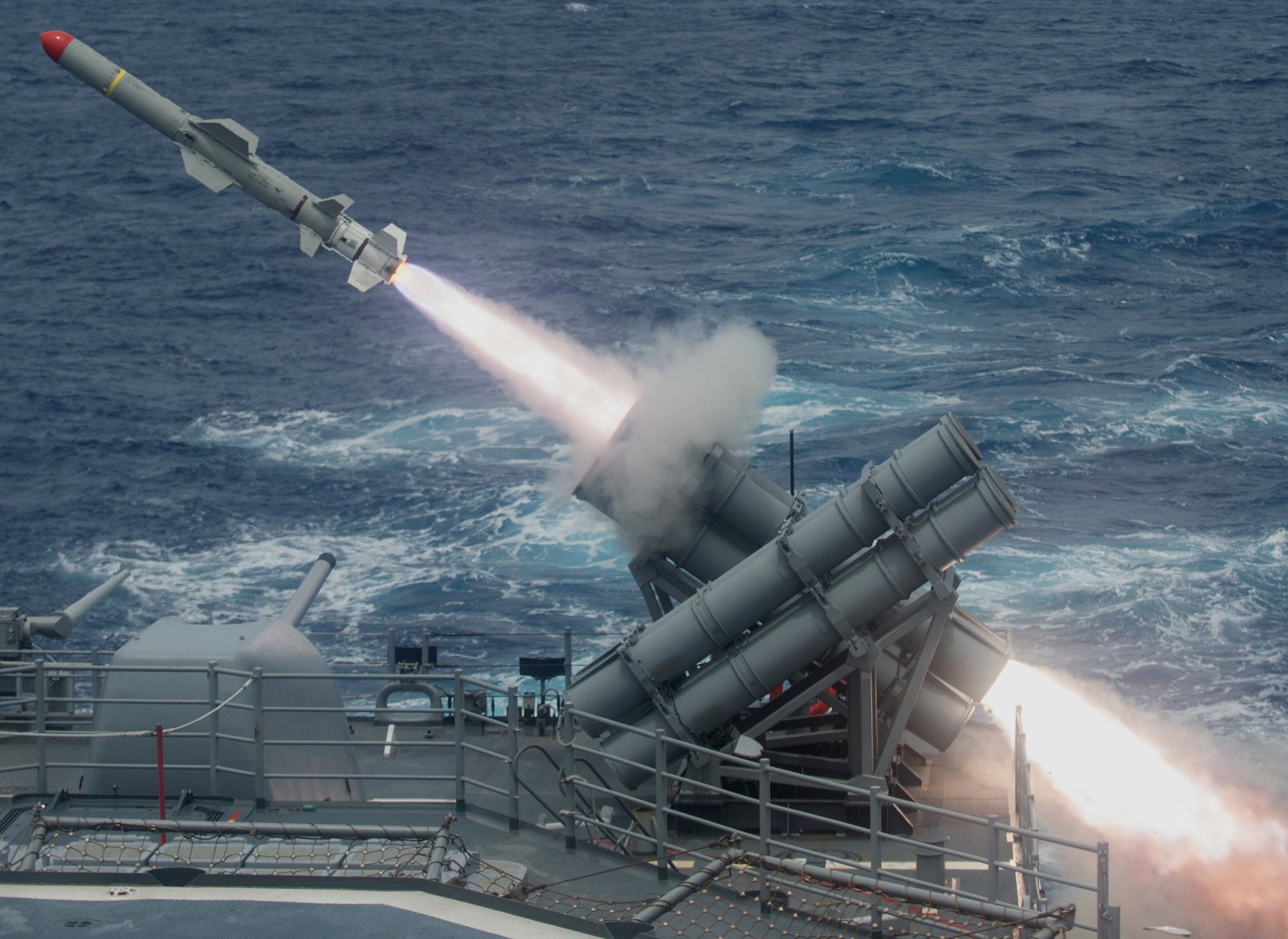 an RGM-84 Harpoon SSM missile was fired from the Mk.141 launcher - Pacific Ocean - September 2014 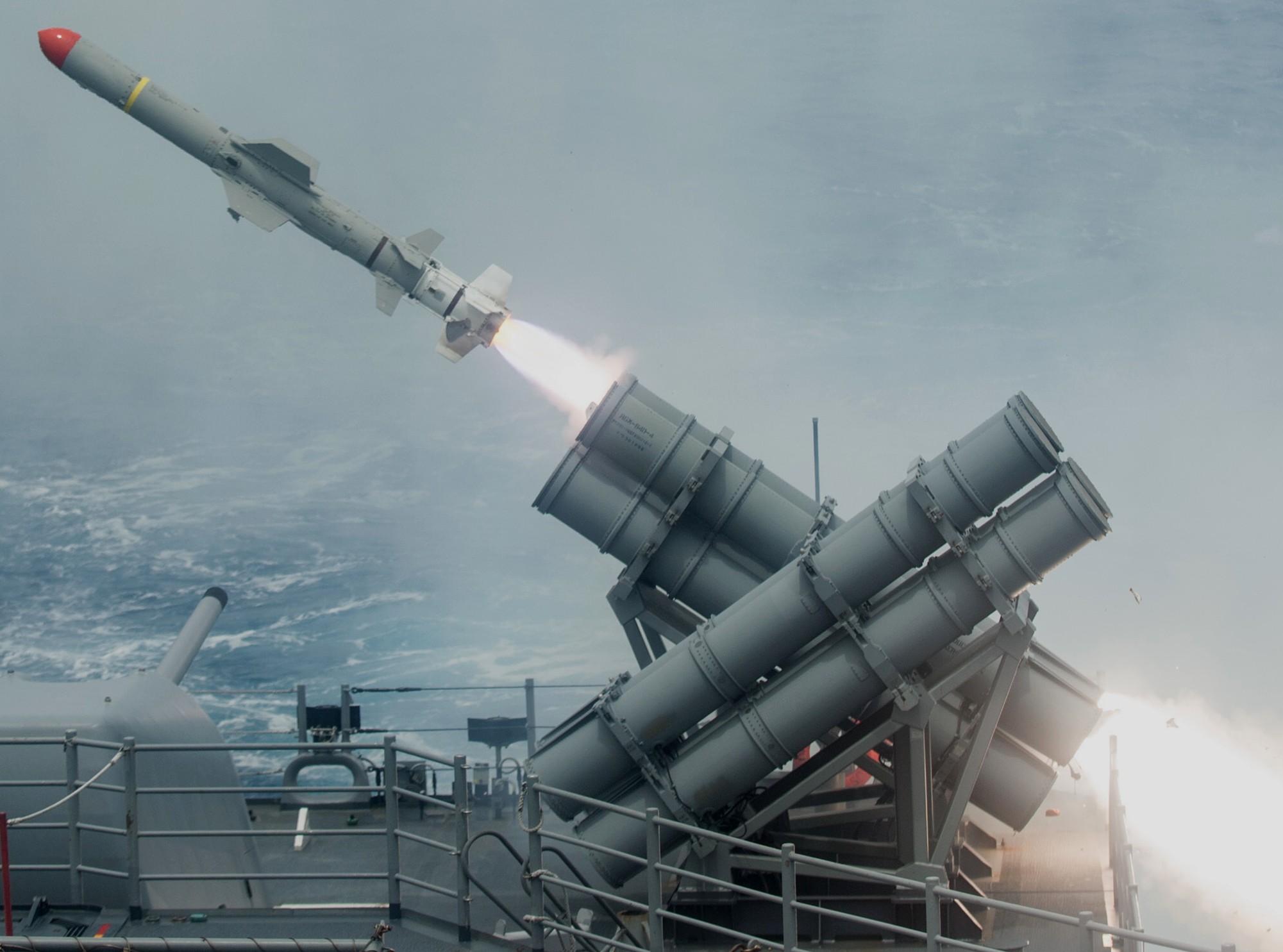 an RGM-84 Harpoon SSM missile was fired from the Mk.141 launcher - Pacific Ocean - September 2014 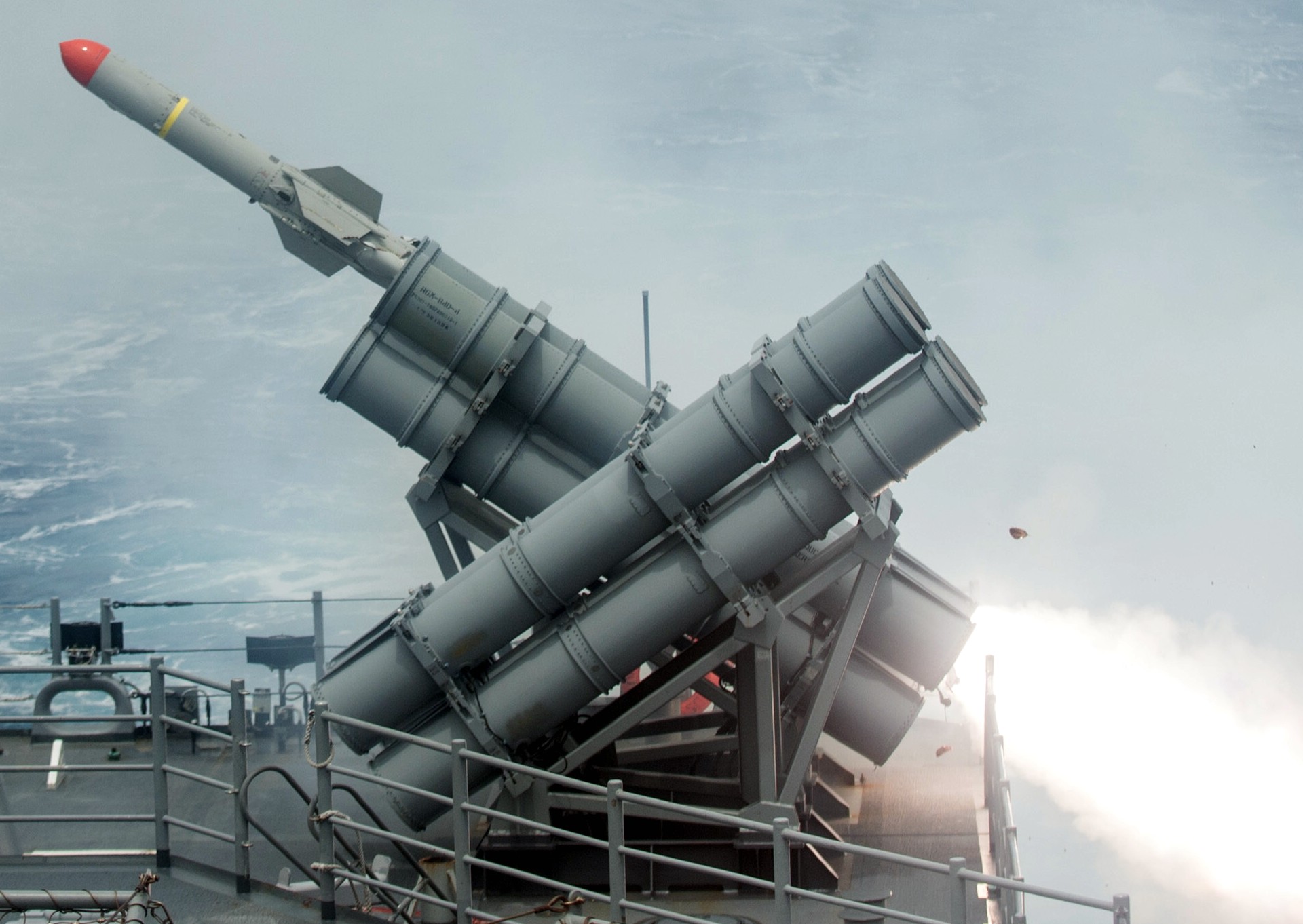 an RGM-84 Harpoon SSM missile was fired from the Mk.141 launcher - Pacific Ocean - September 2014 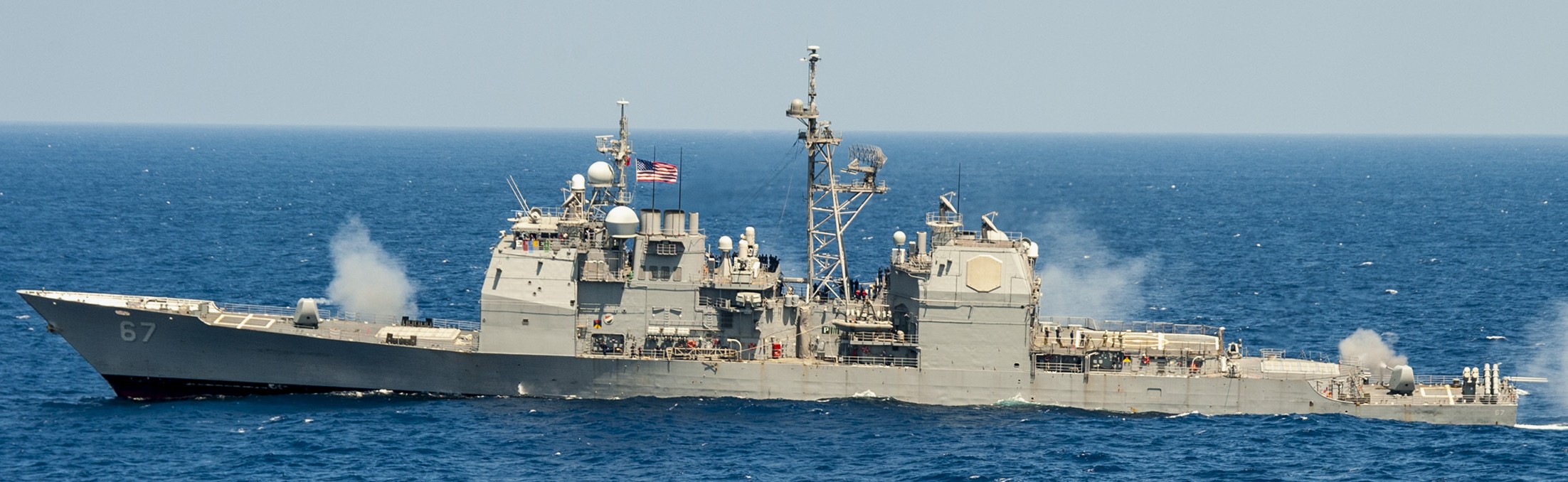 Mk.45 gun fire exercise - off Japan - August 2014 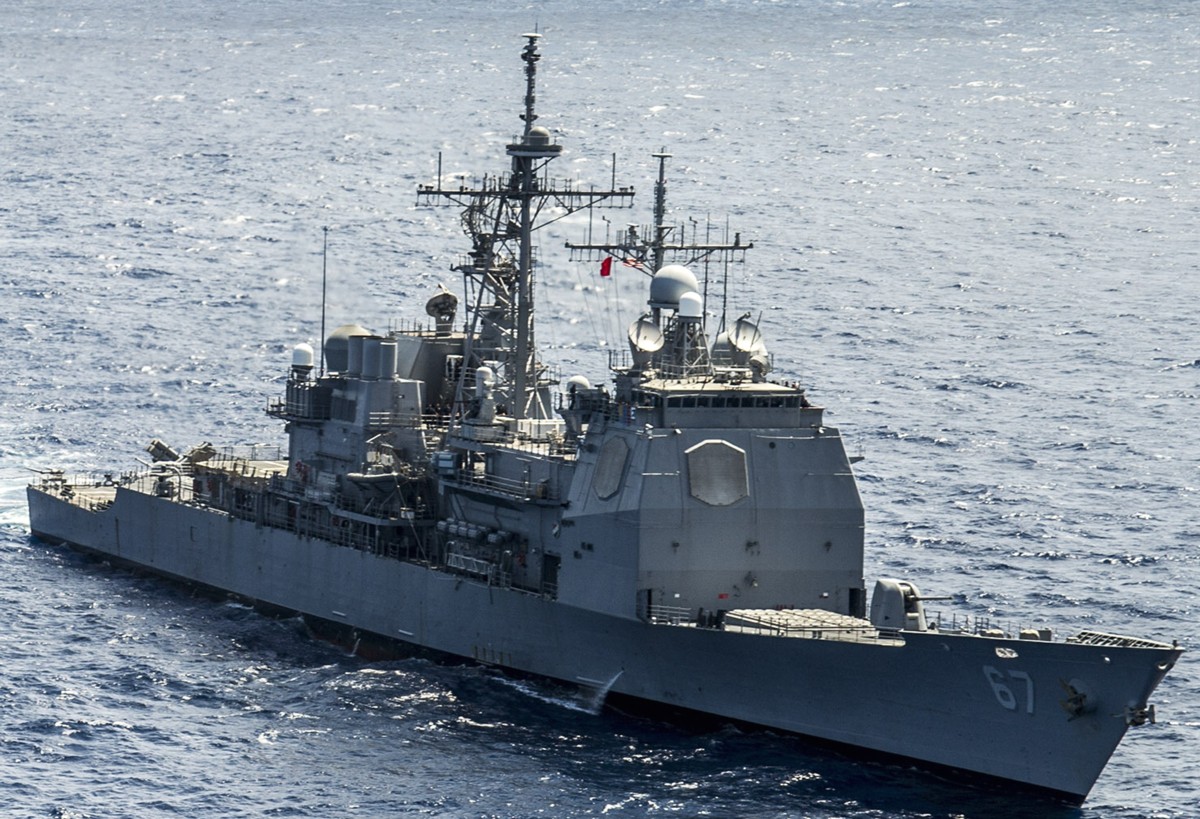 off Japan - August 2014 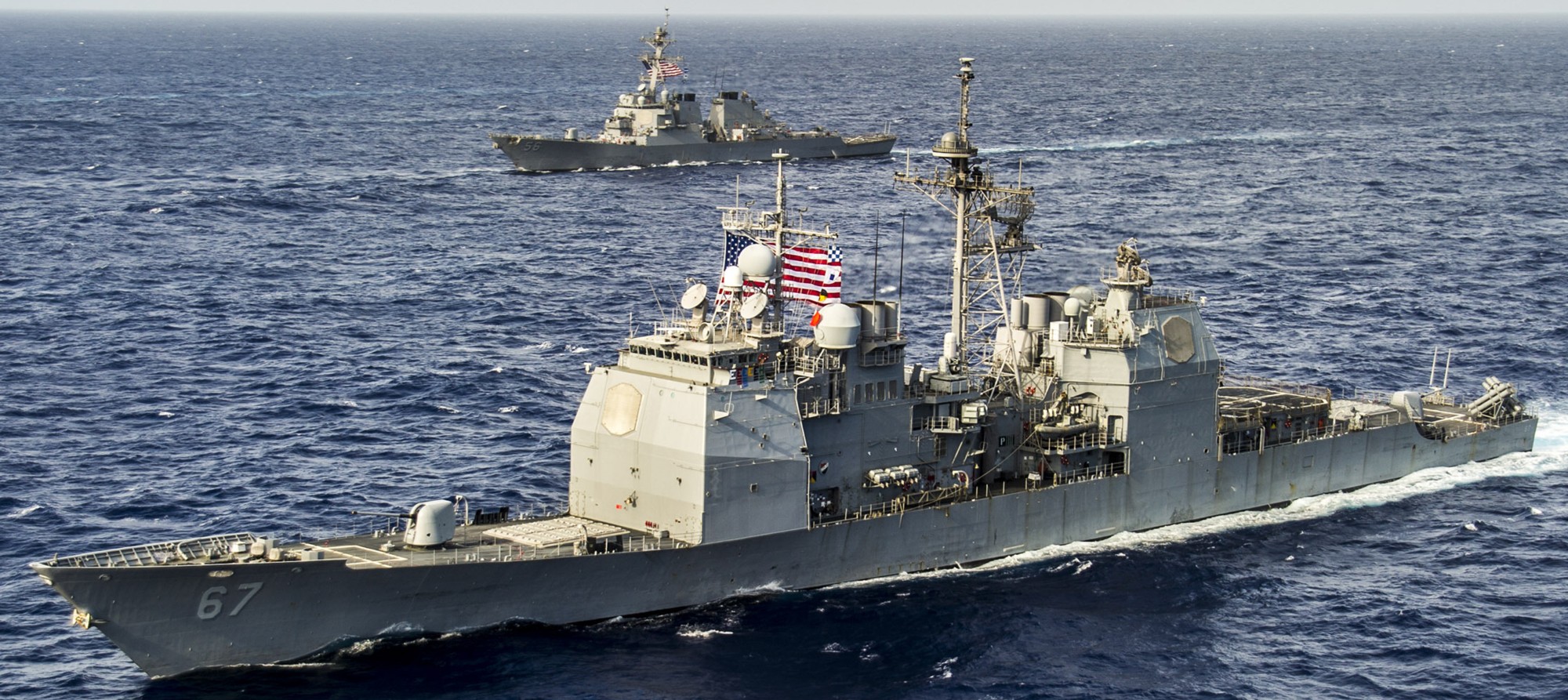 Pacific Ocean - July 2014 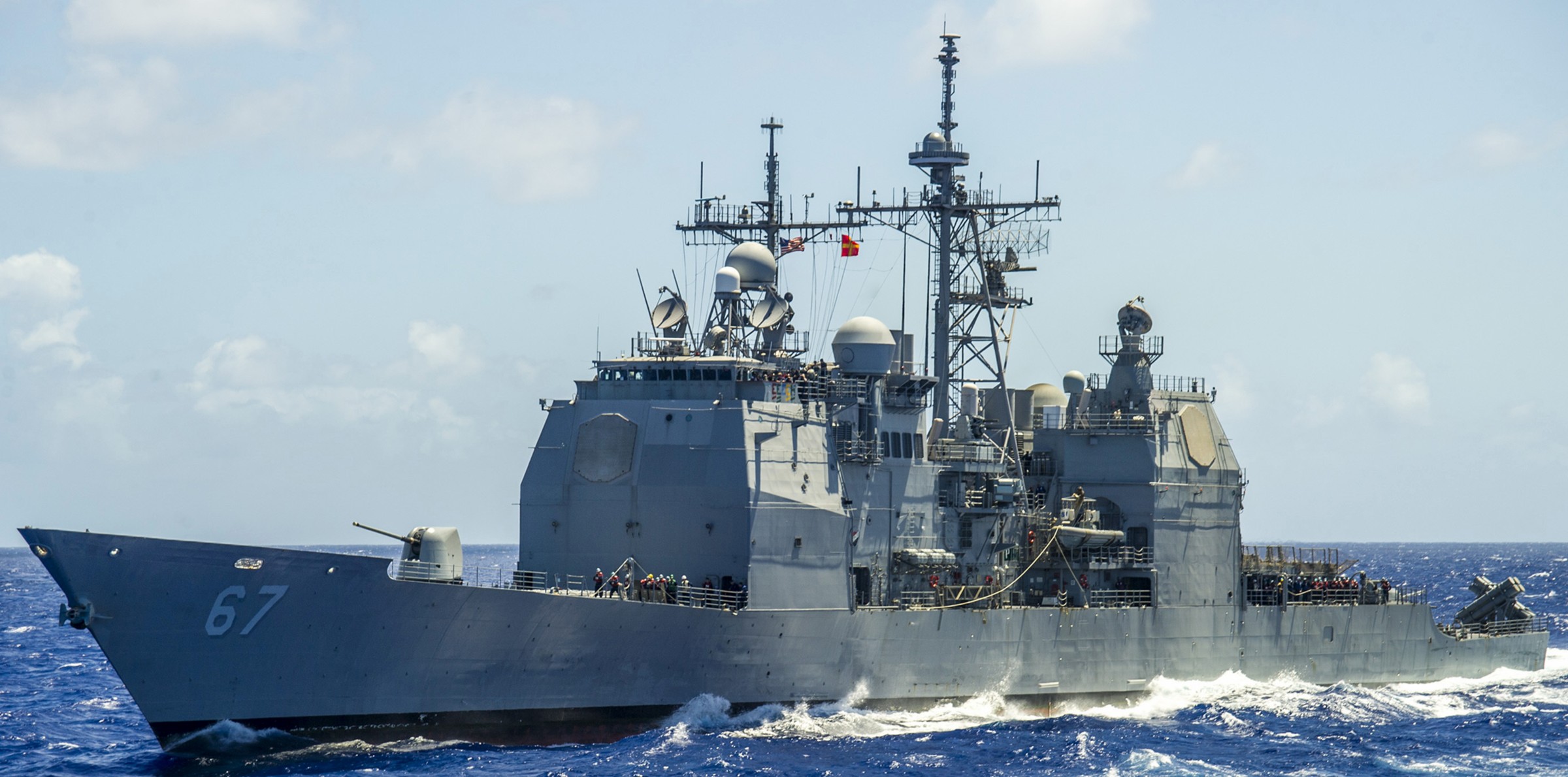 off Guam - March 2014 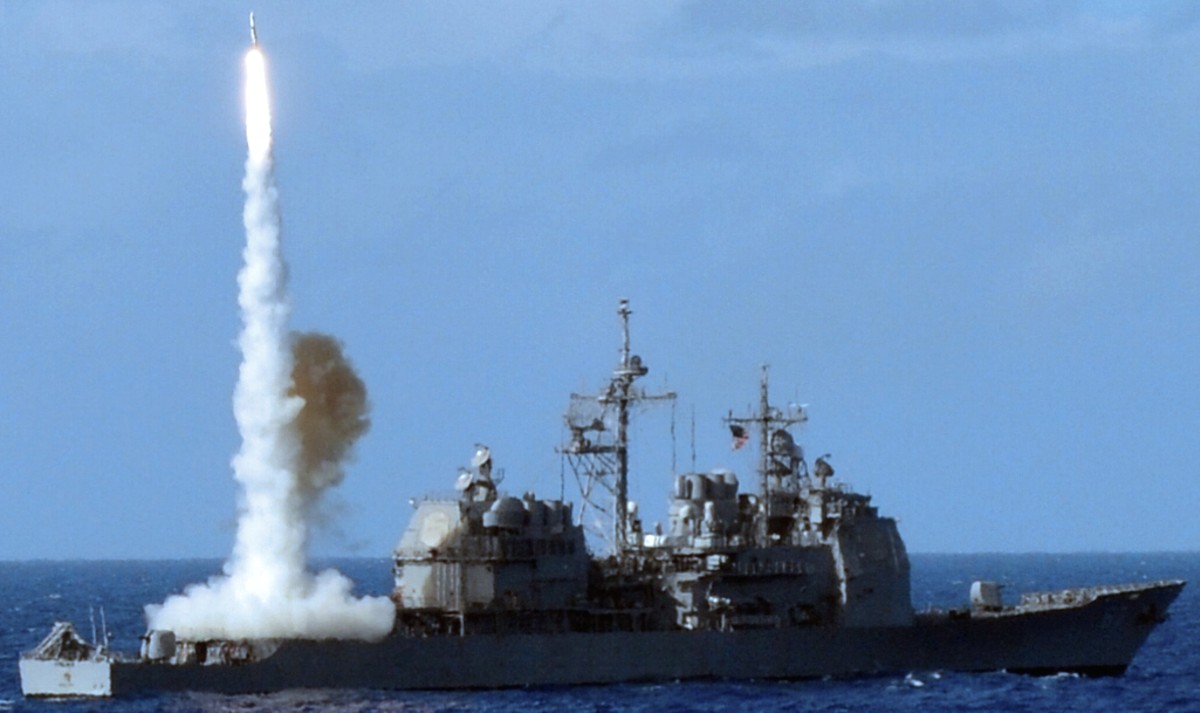 a missile was fired from the aft Mk.41 VLS - Pacific Ocean - March 2014 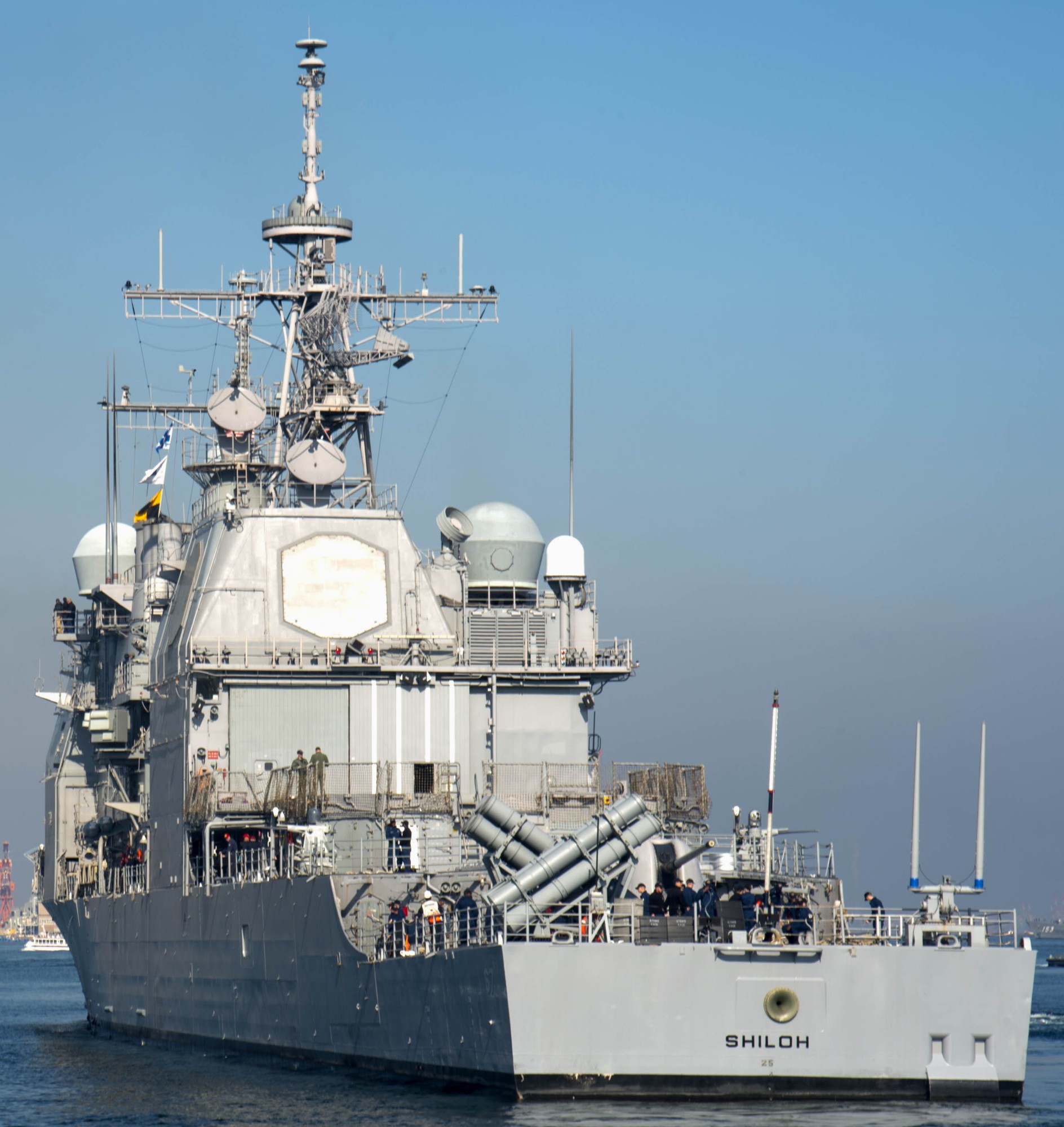 Fleet Activities Yokosuka, Japan - December 2013 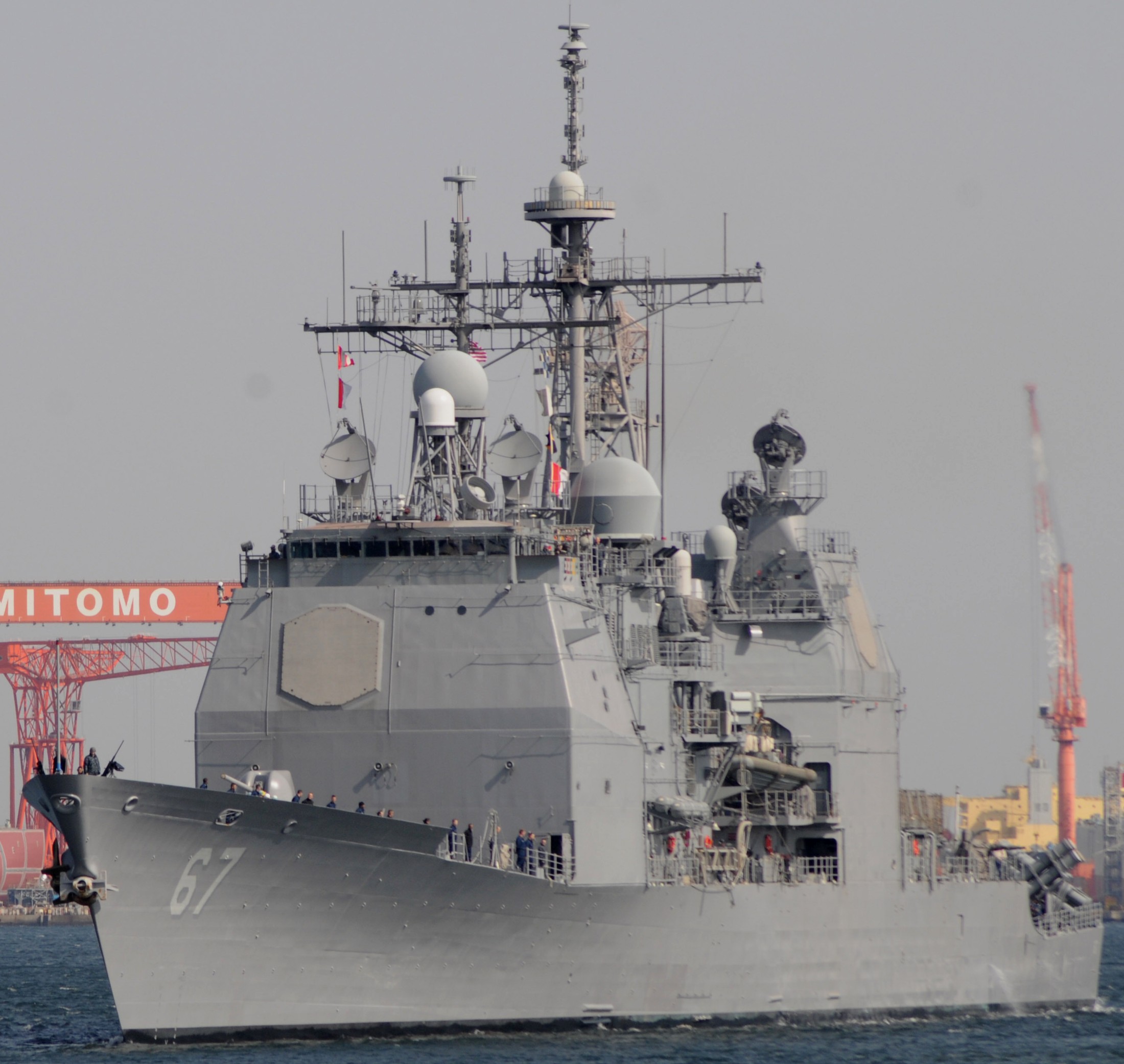 Fleet Activities Yokosuka, Japan - April 2012 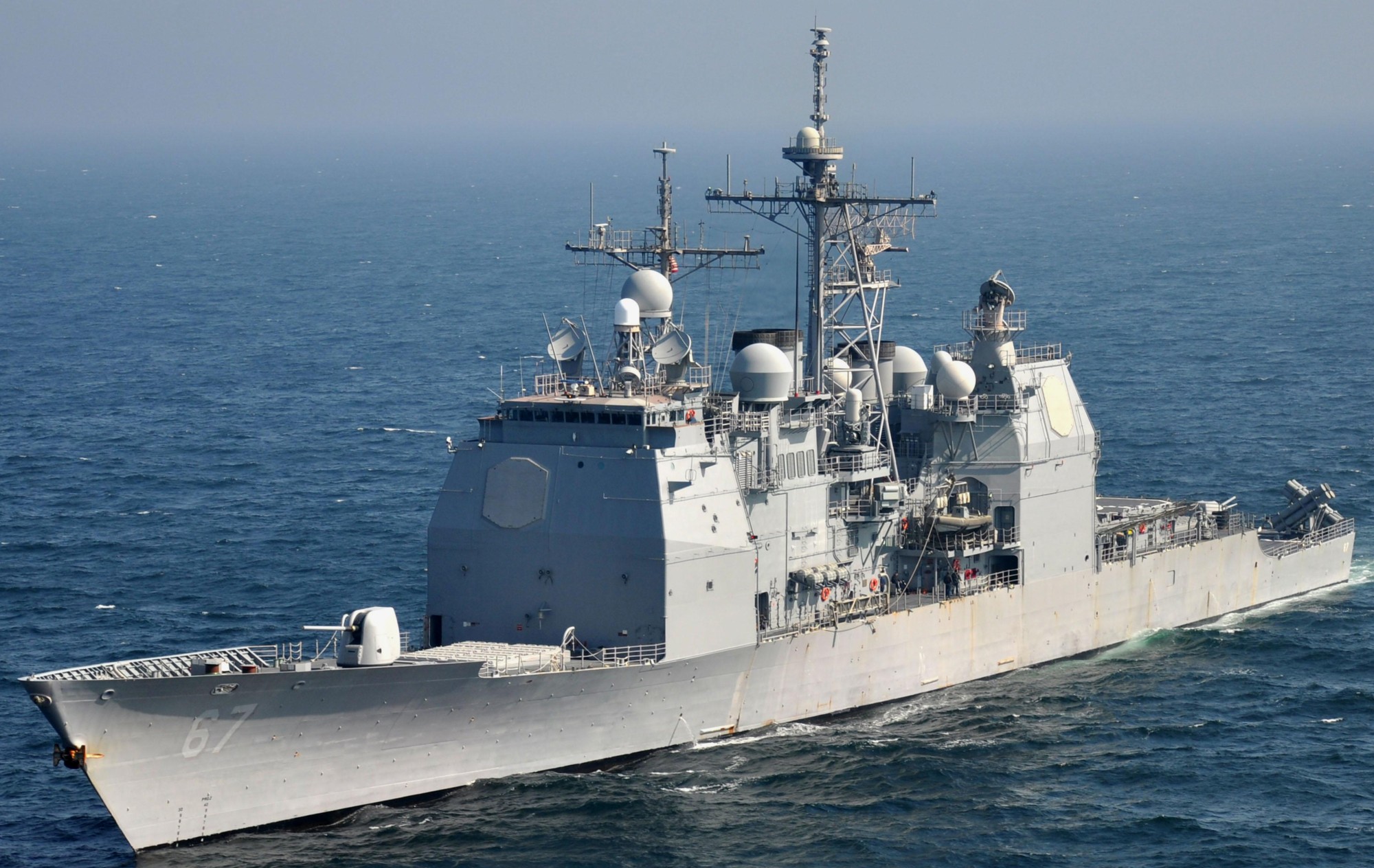 off Japan - April 2011 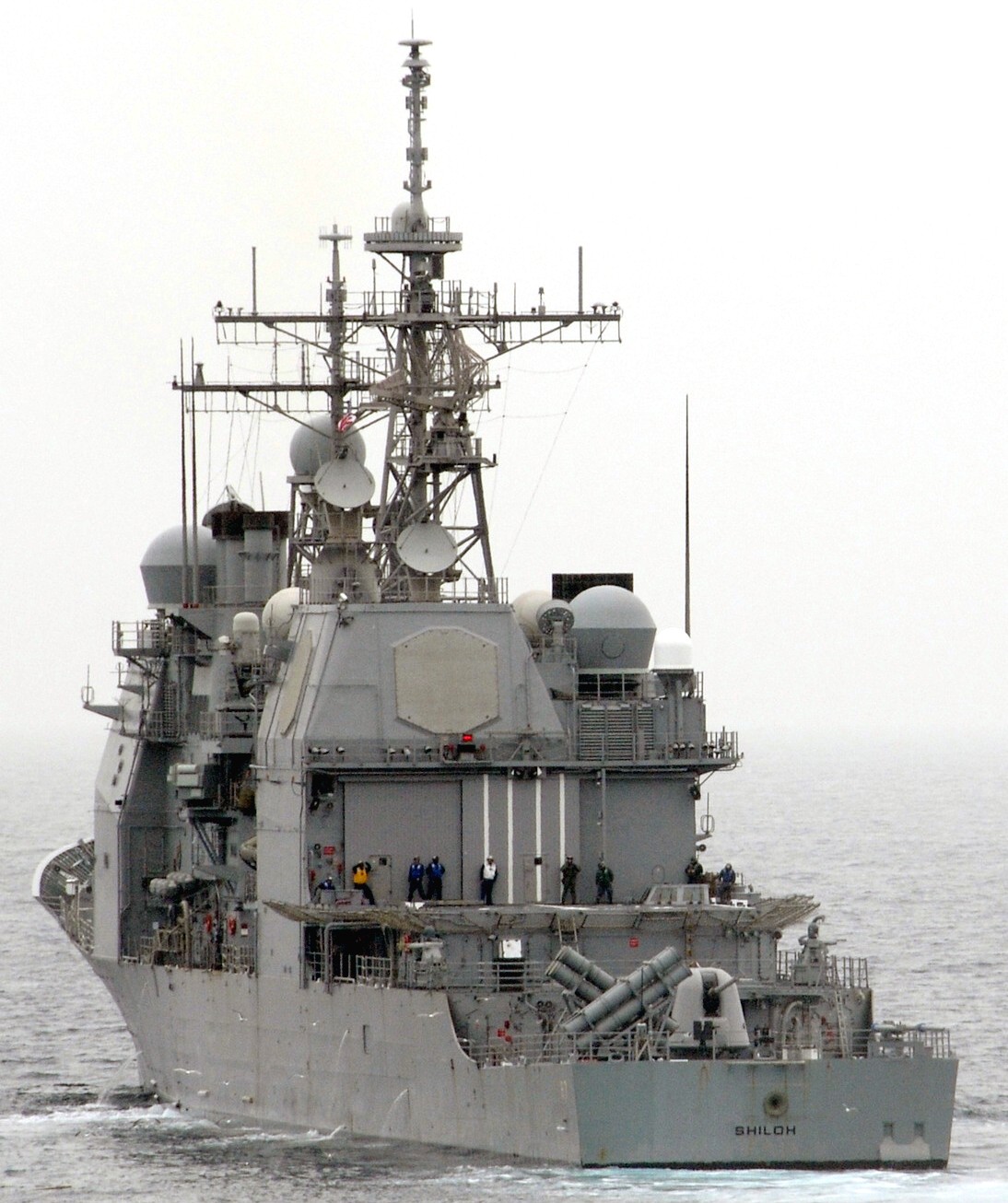 Pacific Ocean - March 2011 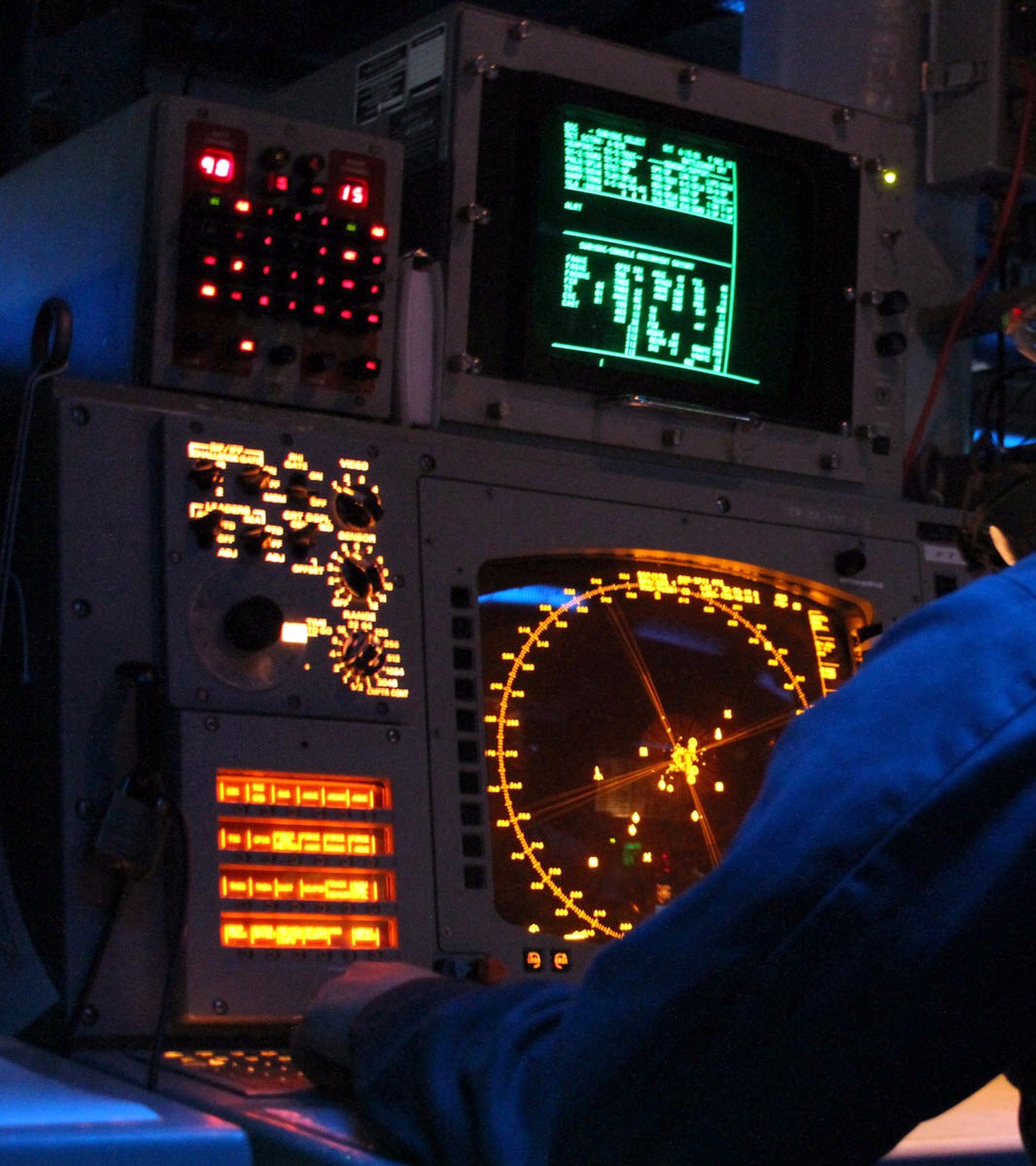 radar console in the Combat Information Center (CIC) - off Japan - December 2010 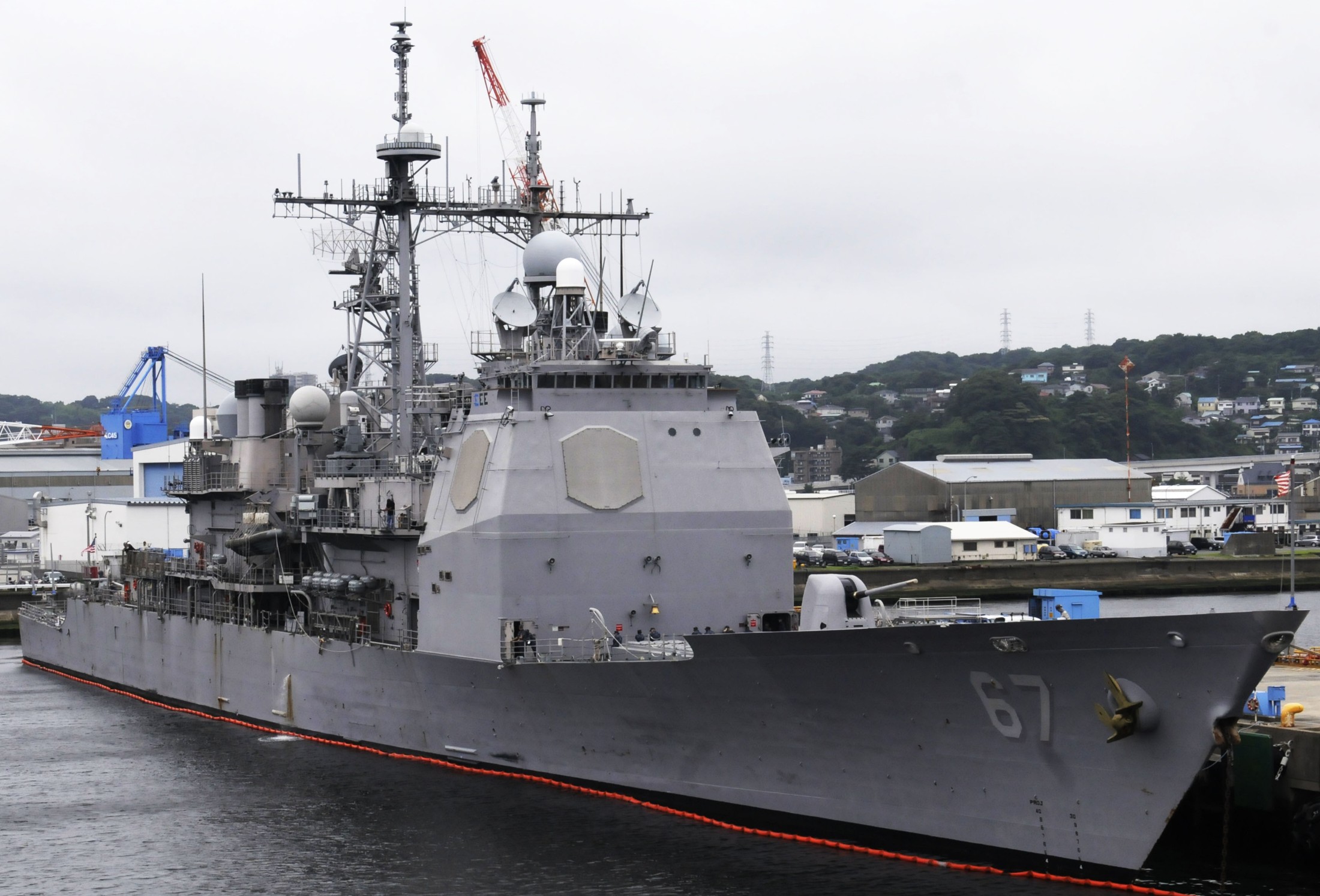 Fleet Activities Yokosuka, Japan - June 2010 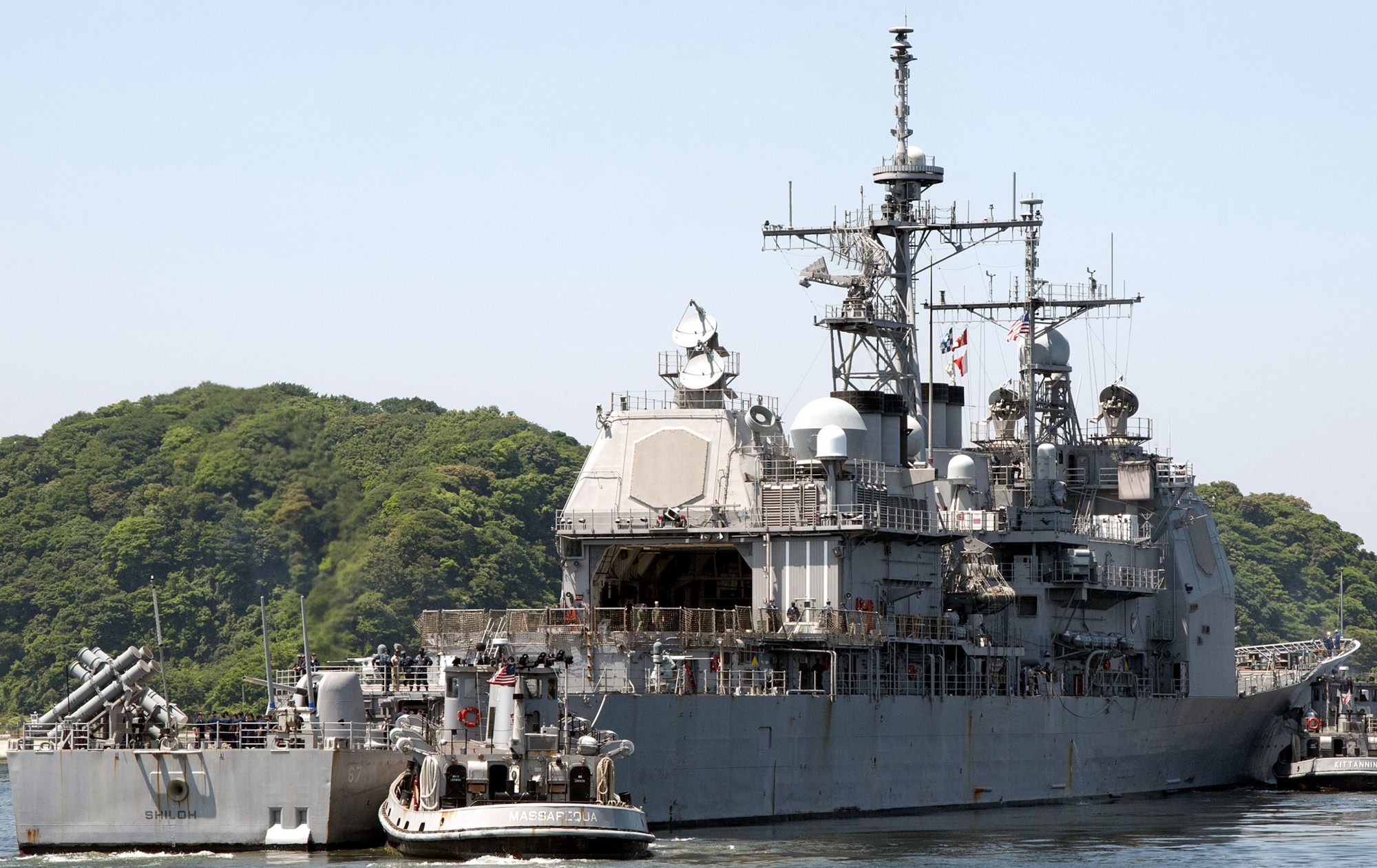 Fleet Activities Yokosuka, Japan - June 2010 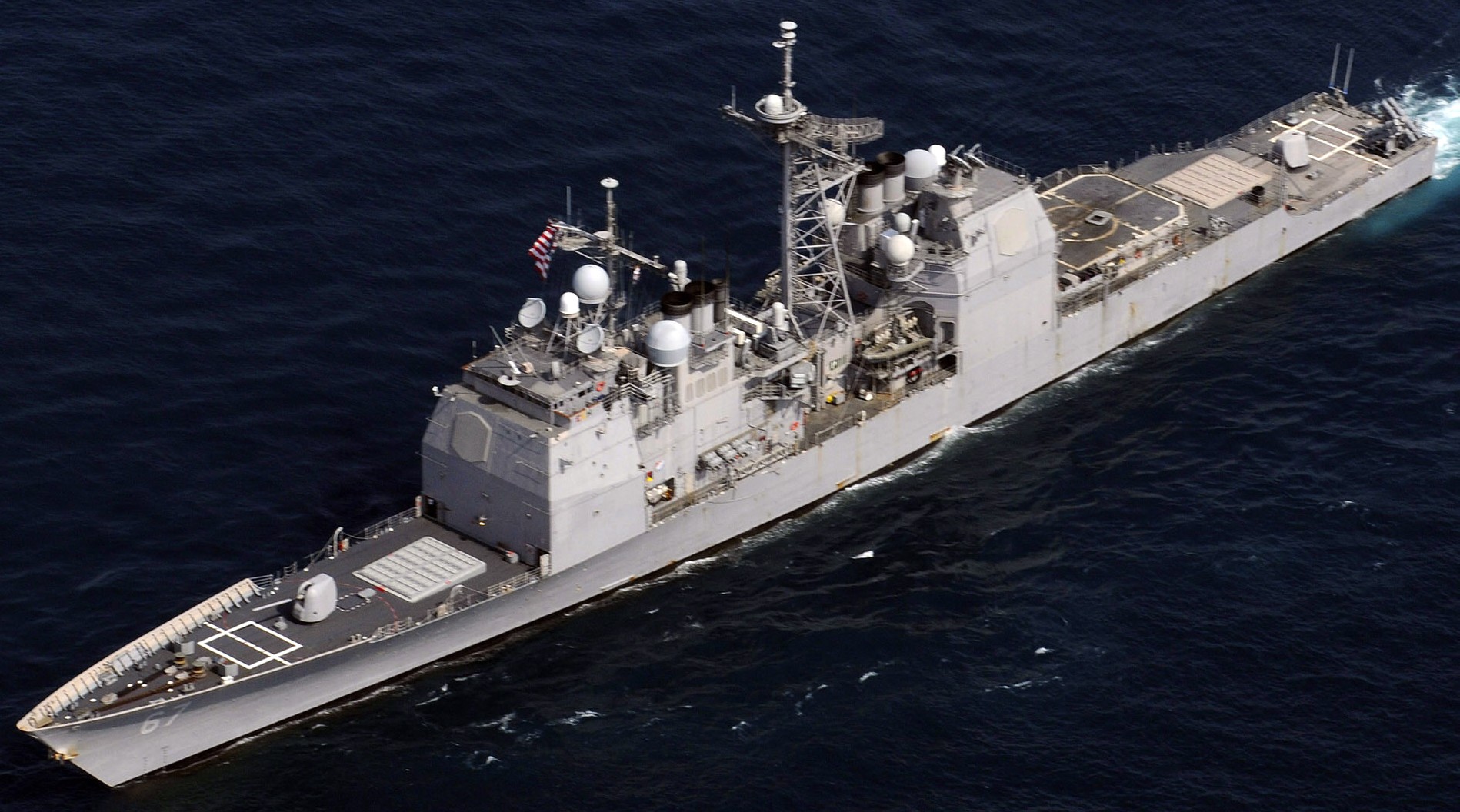 Gulf of Thailand - February 2010 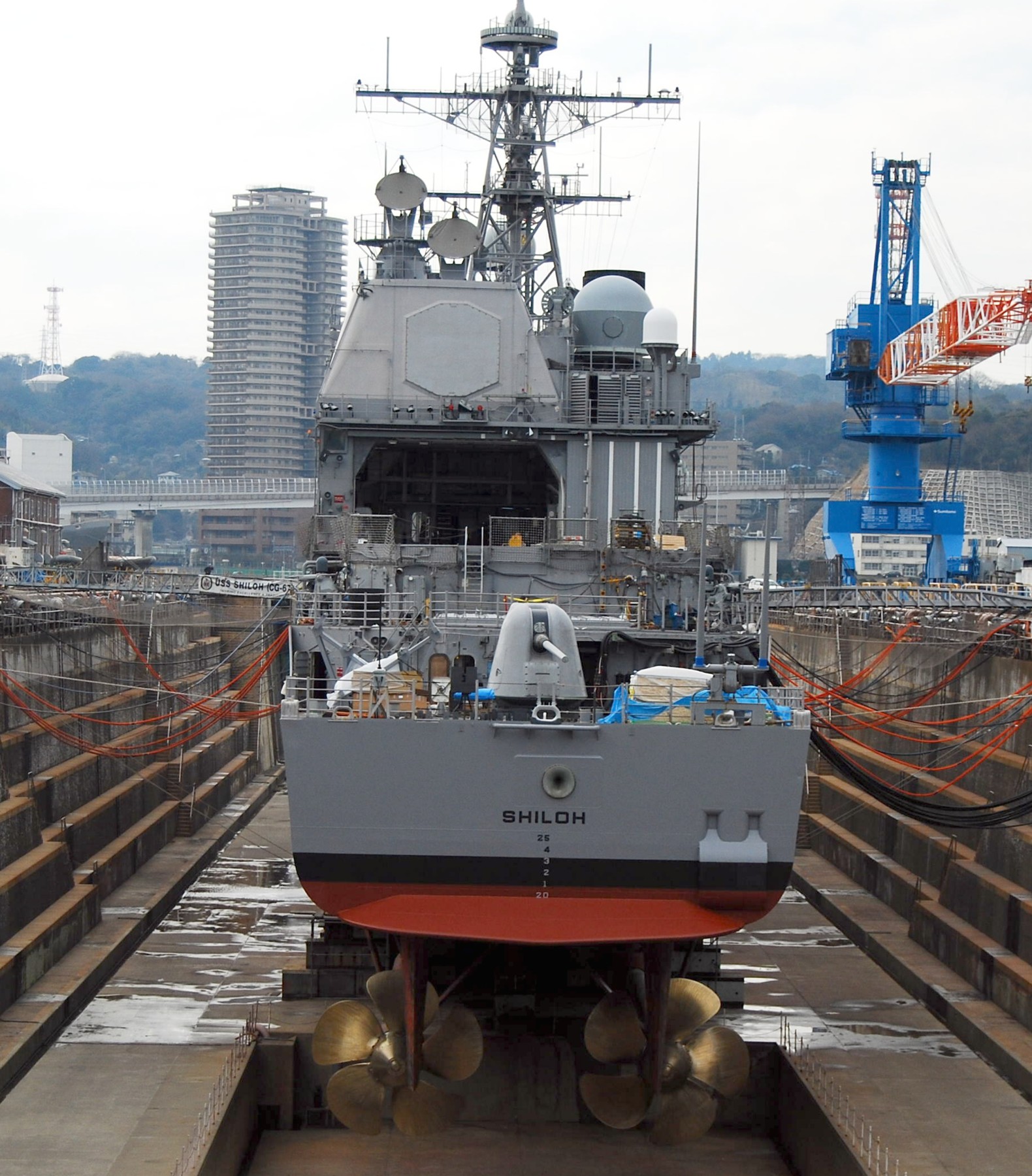 in dry dock - Yokosuka, Japan - January 2009 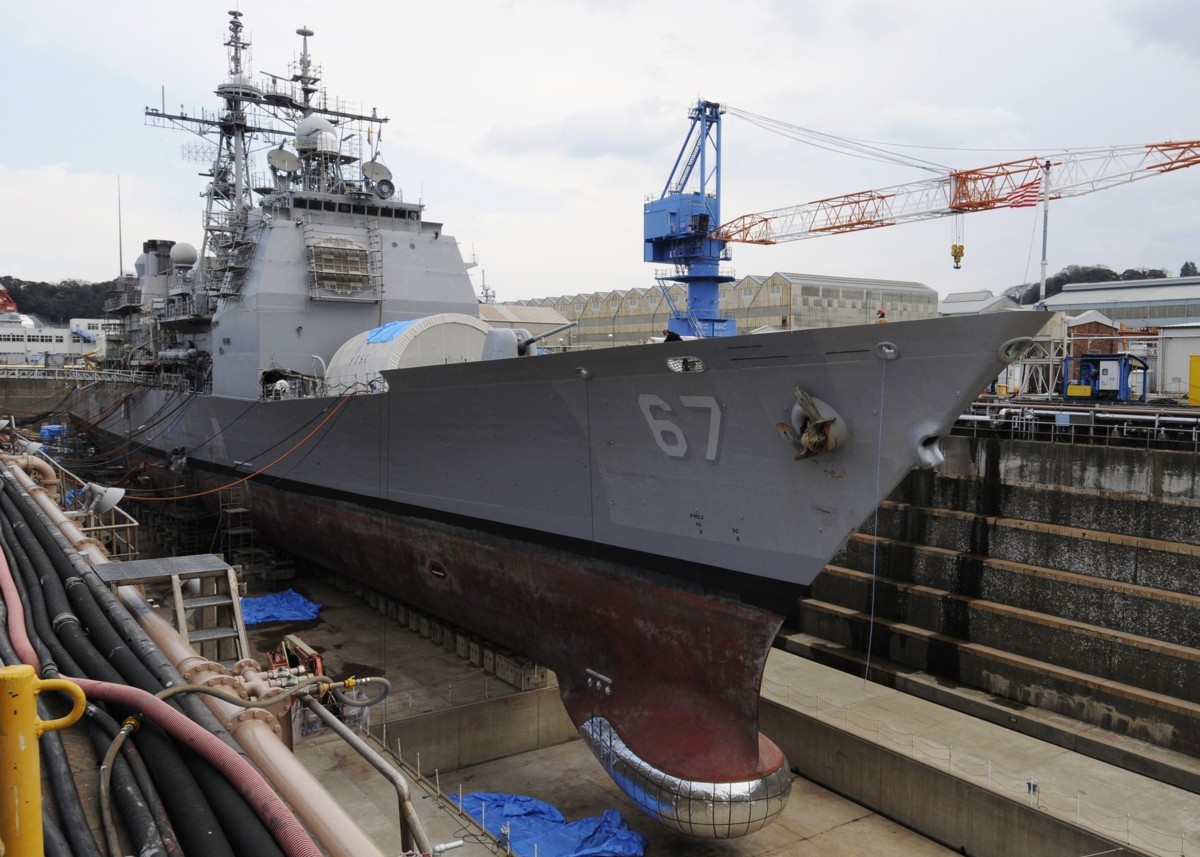 in dry dock - Yokosuka, Japan - January 2009 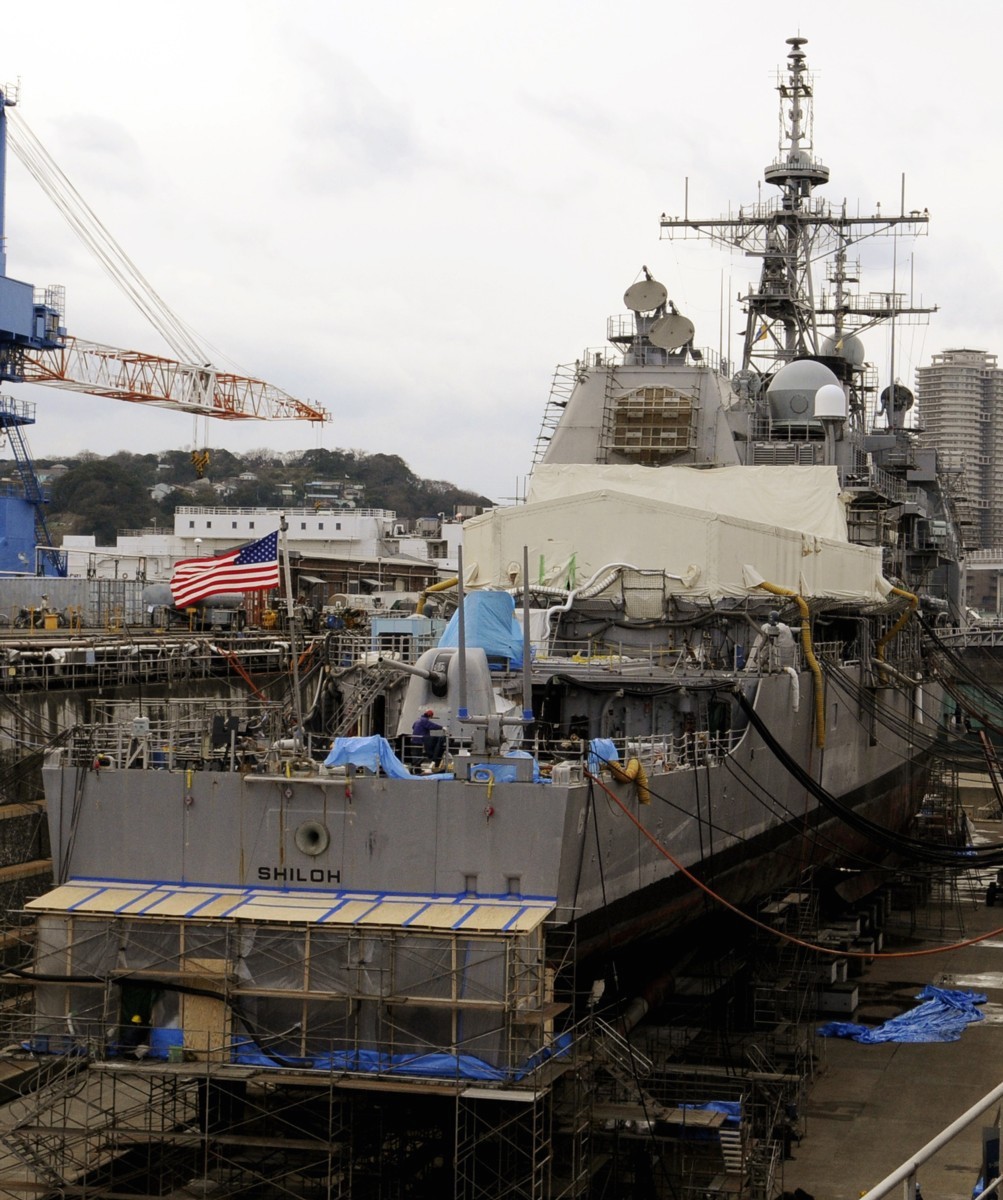 in dry dock - Yokosuka, Japan - January 2009 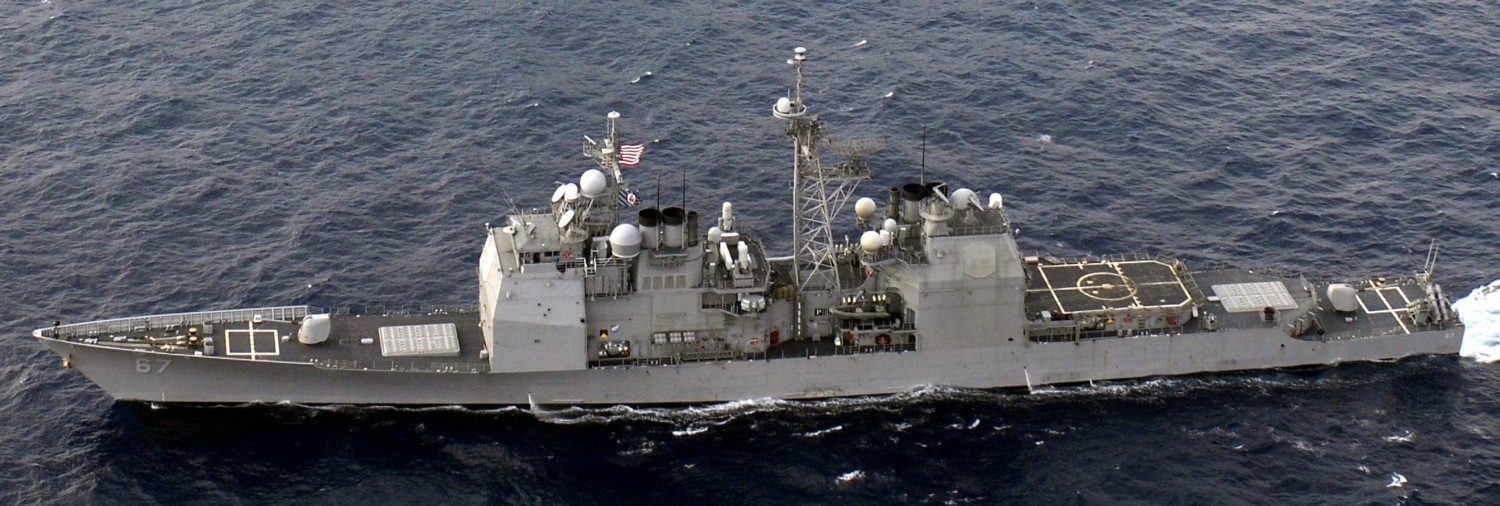 Pacific Ocean - March 2008 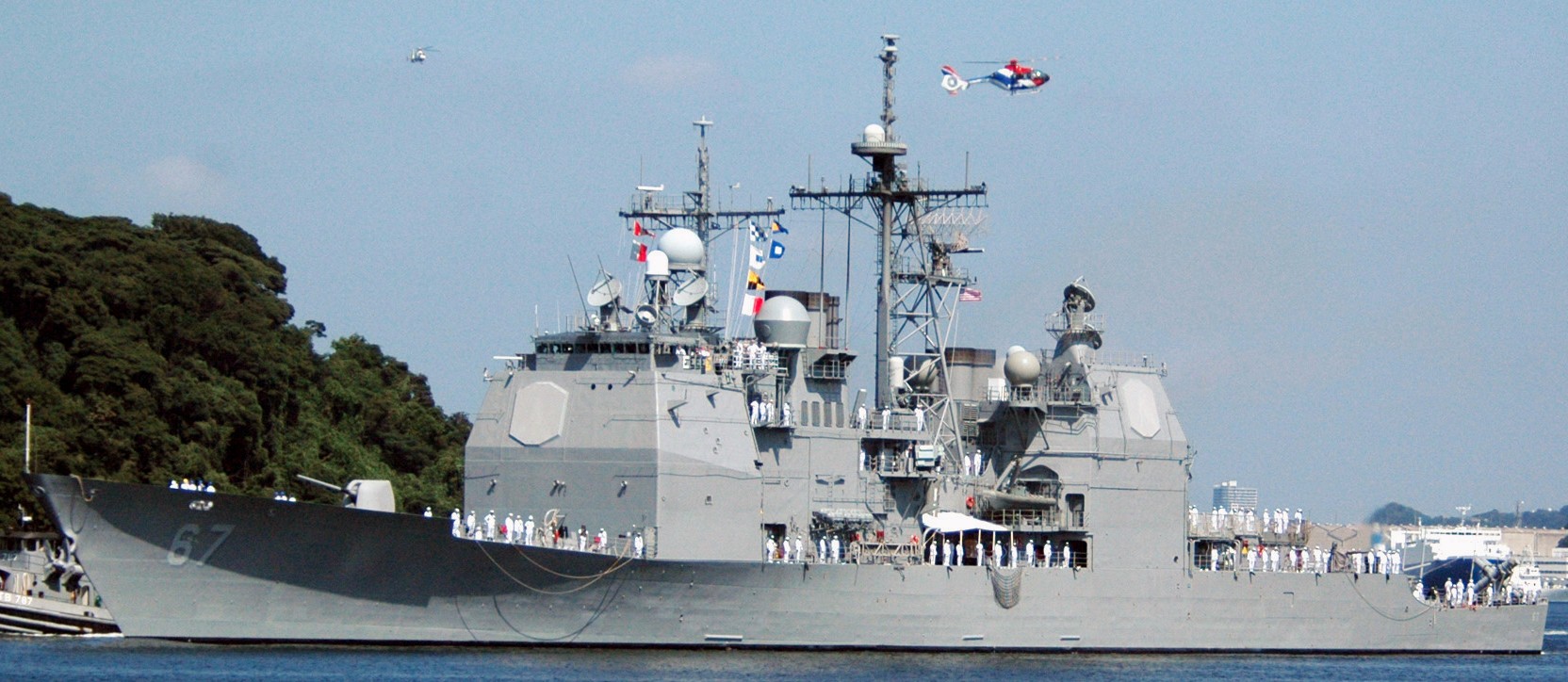 arriving at her new homeport, Fleet Activities Yokosuka, Japan - August 2006 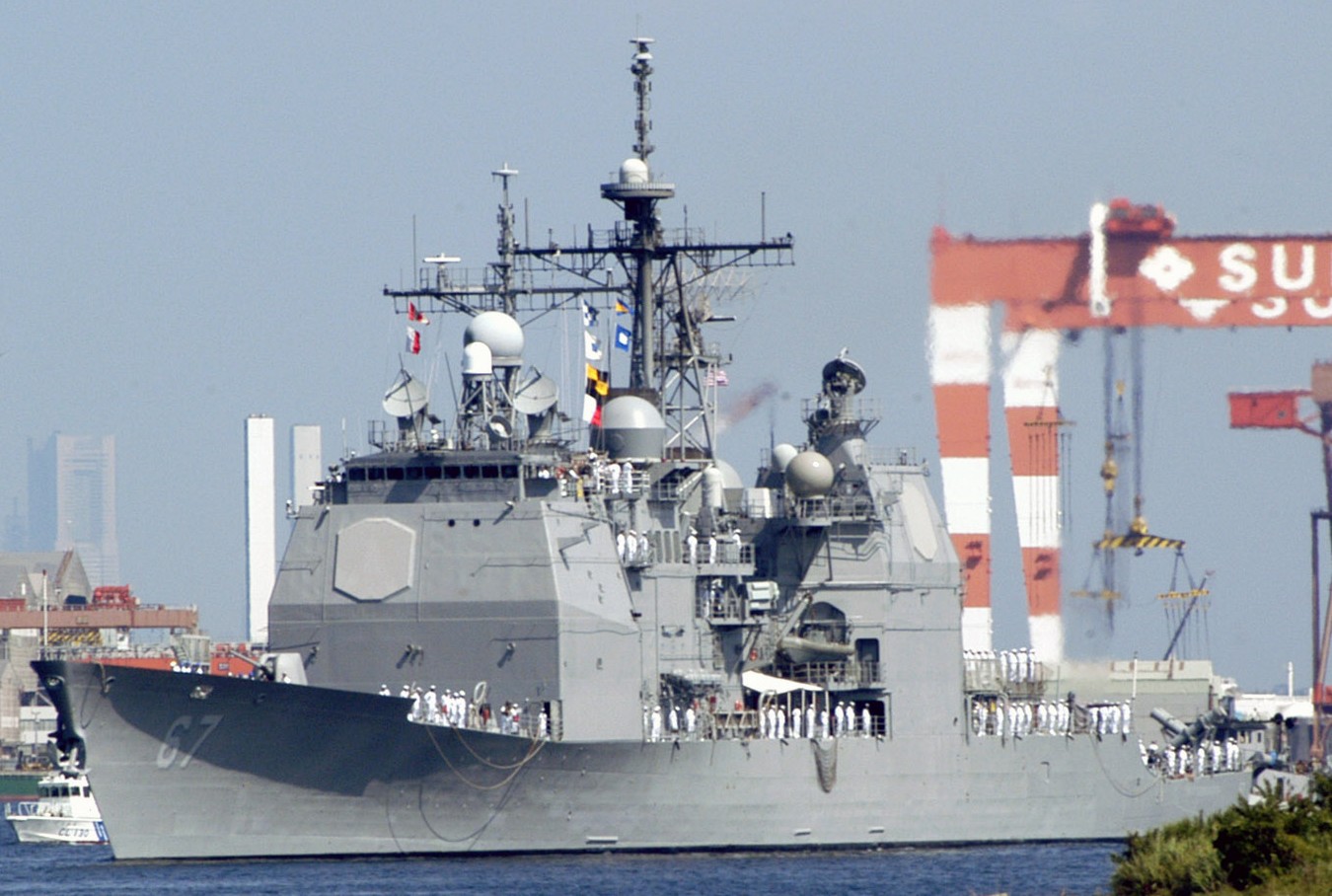 arriving at her new homeport, Fleet Activities Yokosuka, Japan - August 2006 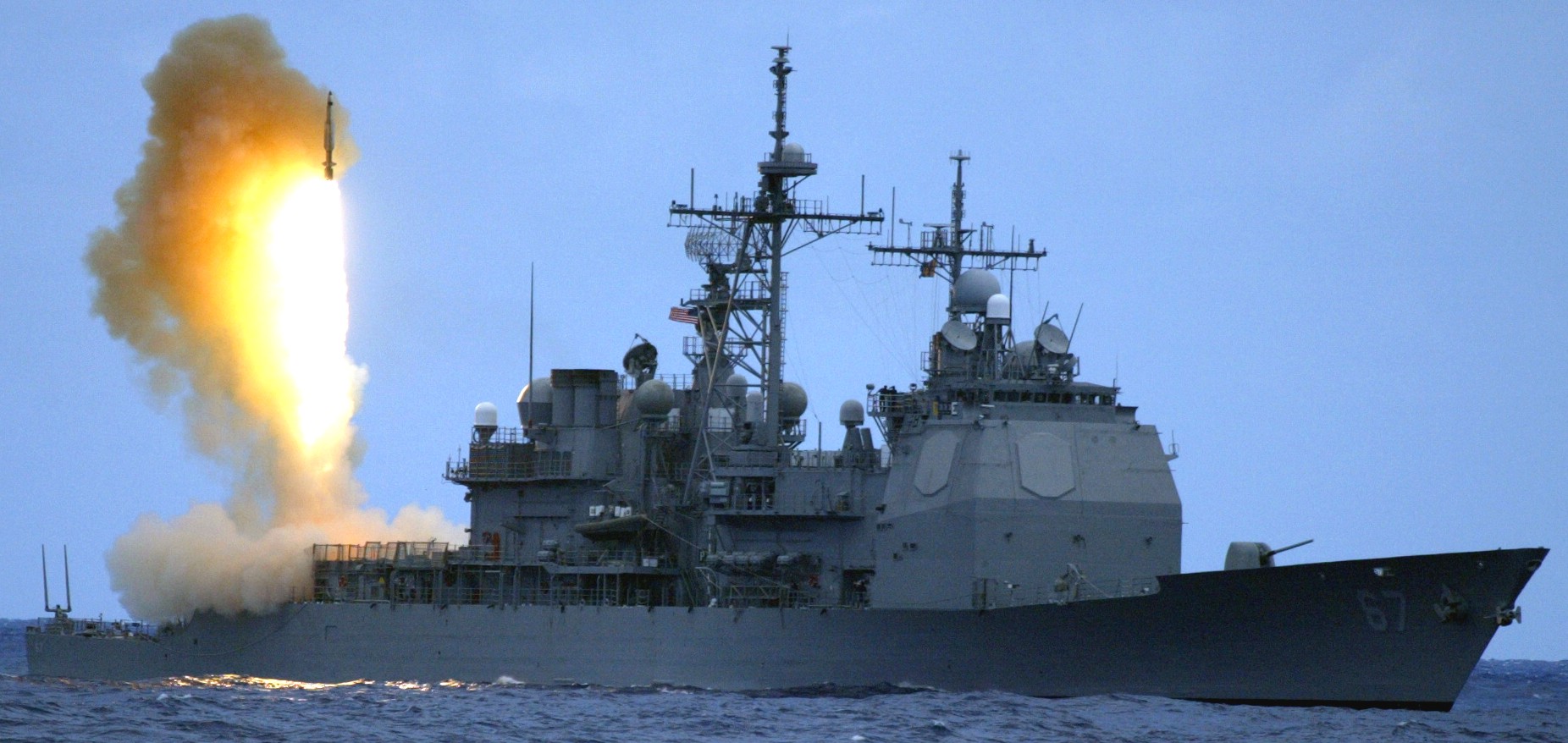 a RIM-161 Standard Missile 3 (SM-3) was launched from the Mk.41 VLS - Pacific Ocean - June 2006 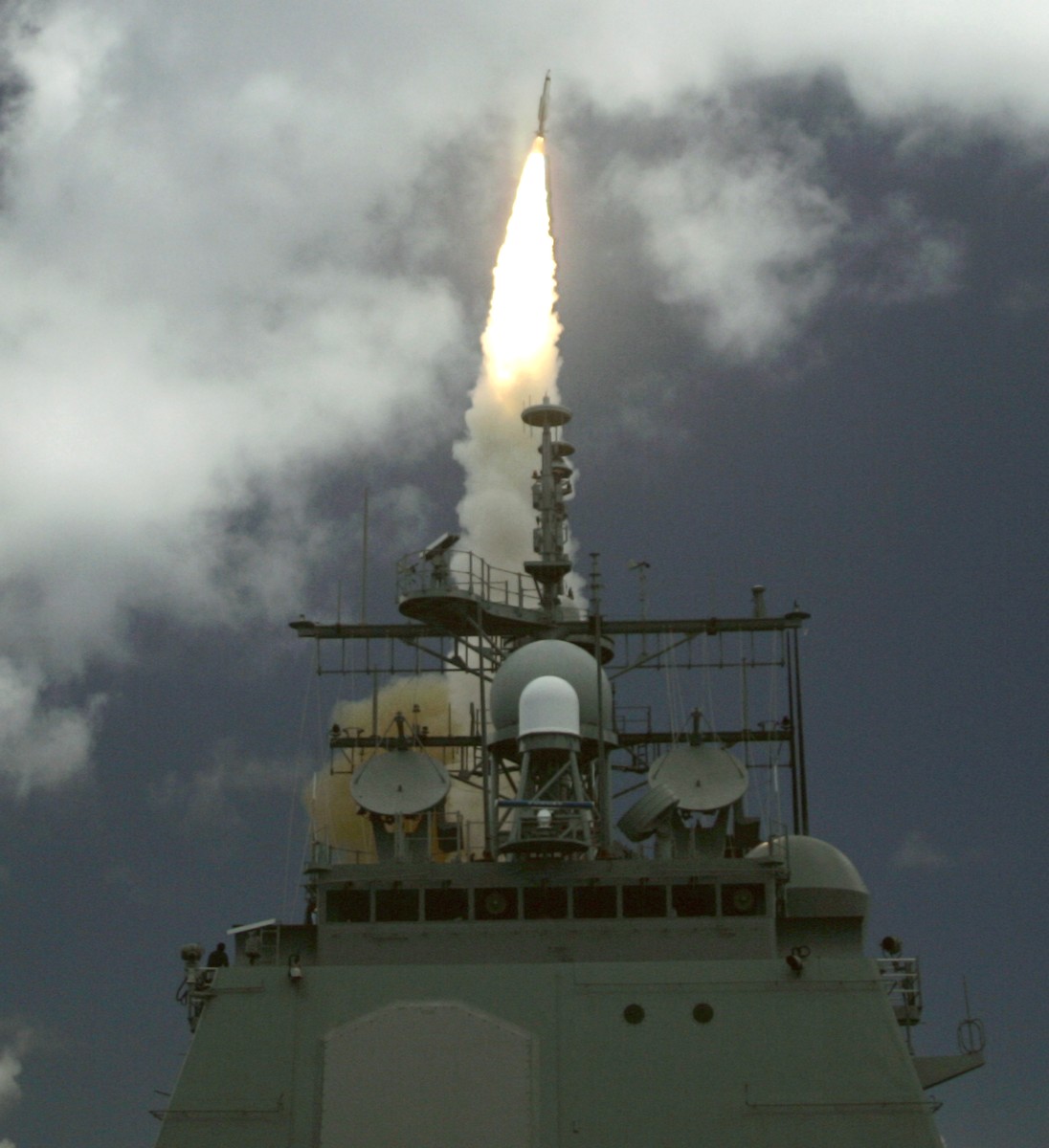 a Standard Missile was launched from the Mk.41 VLS - Pacific Ocean - June 2006 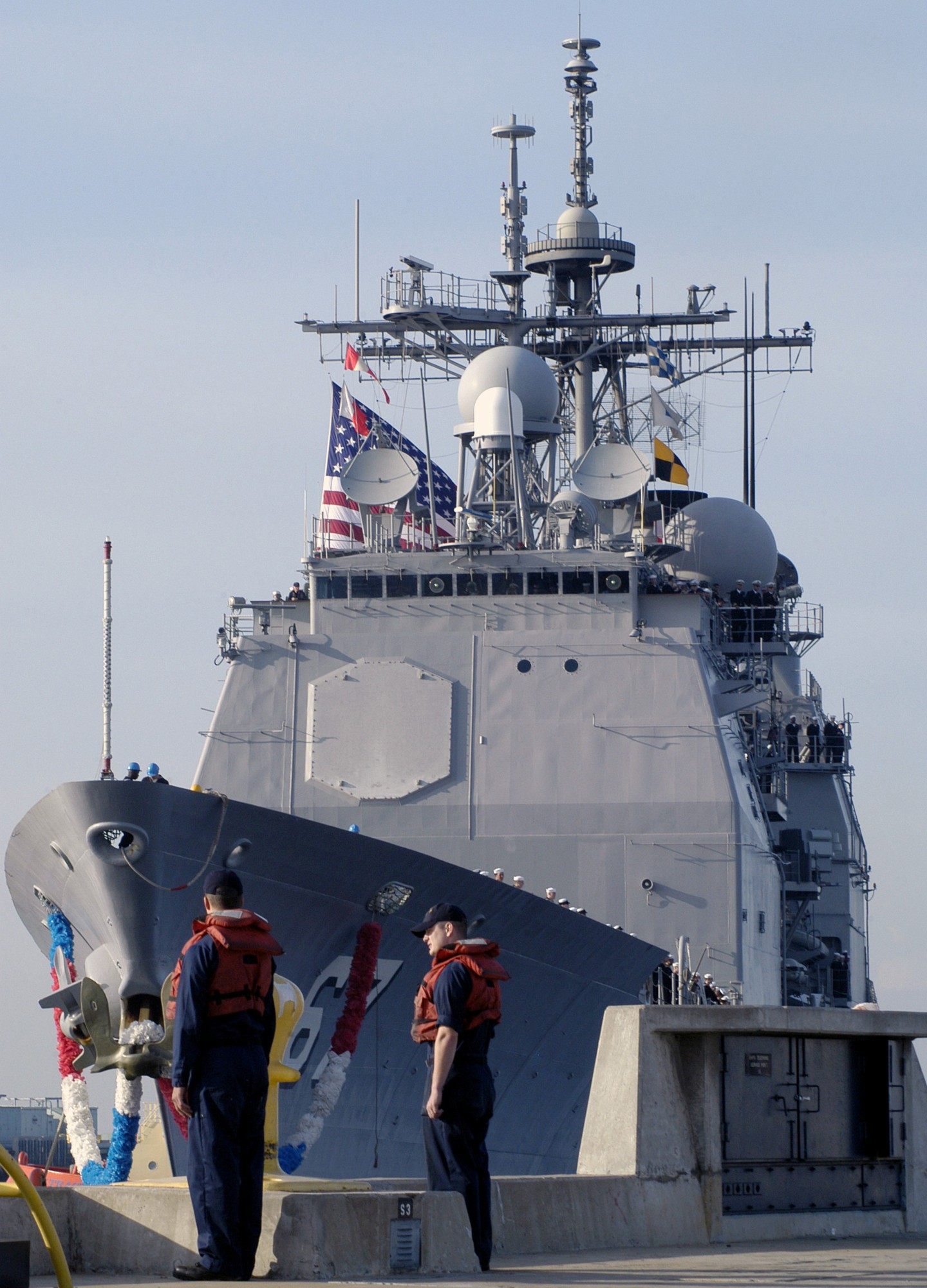 returning to Naval Base San Diego, California - March 2005 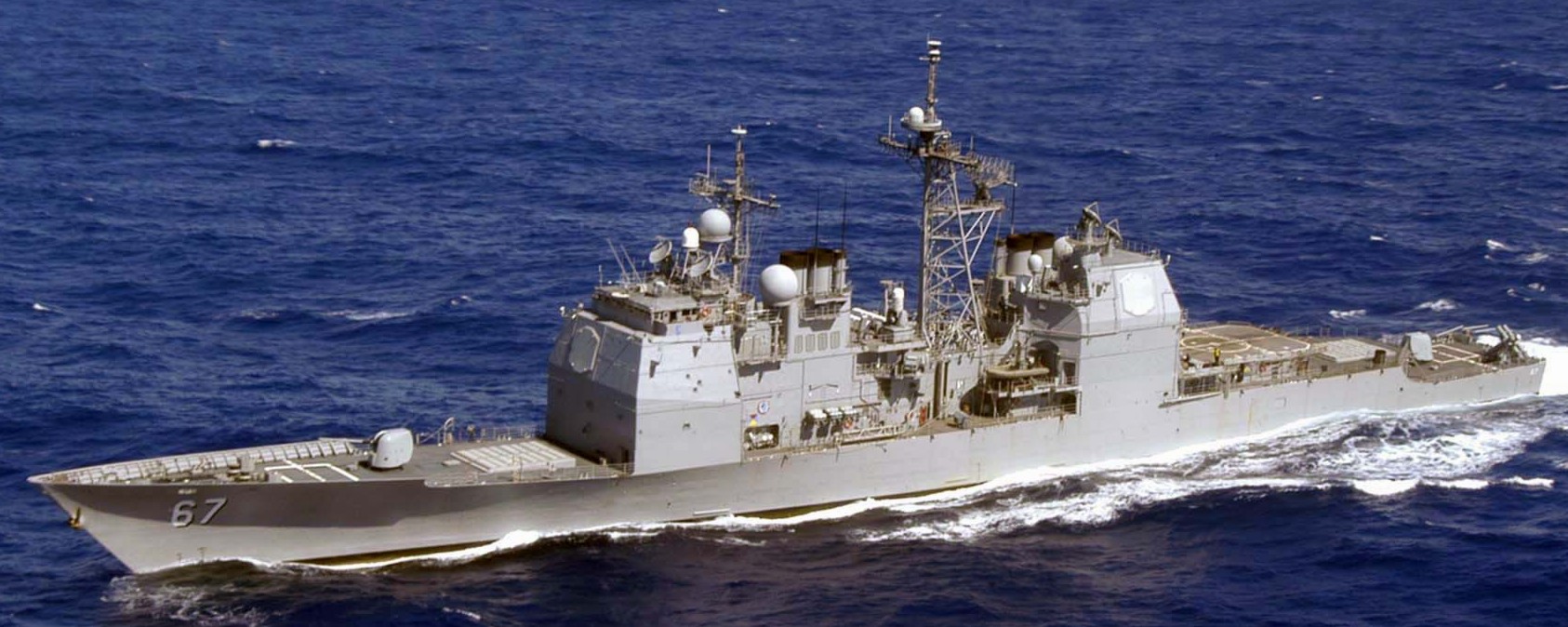 Pacific Ocean - December 2004 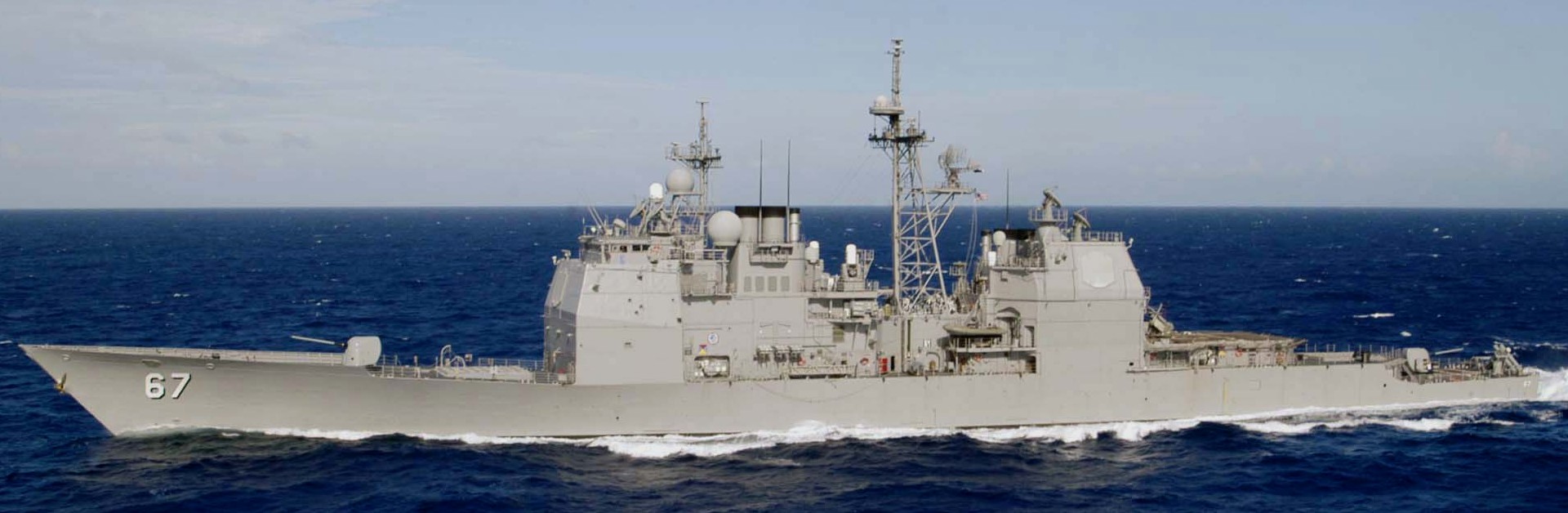 Pacific Ocean - December 2004 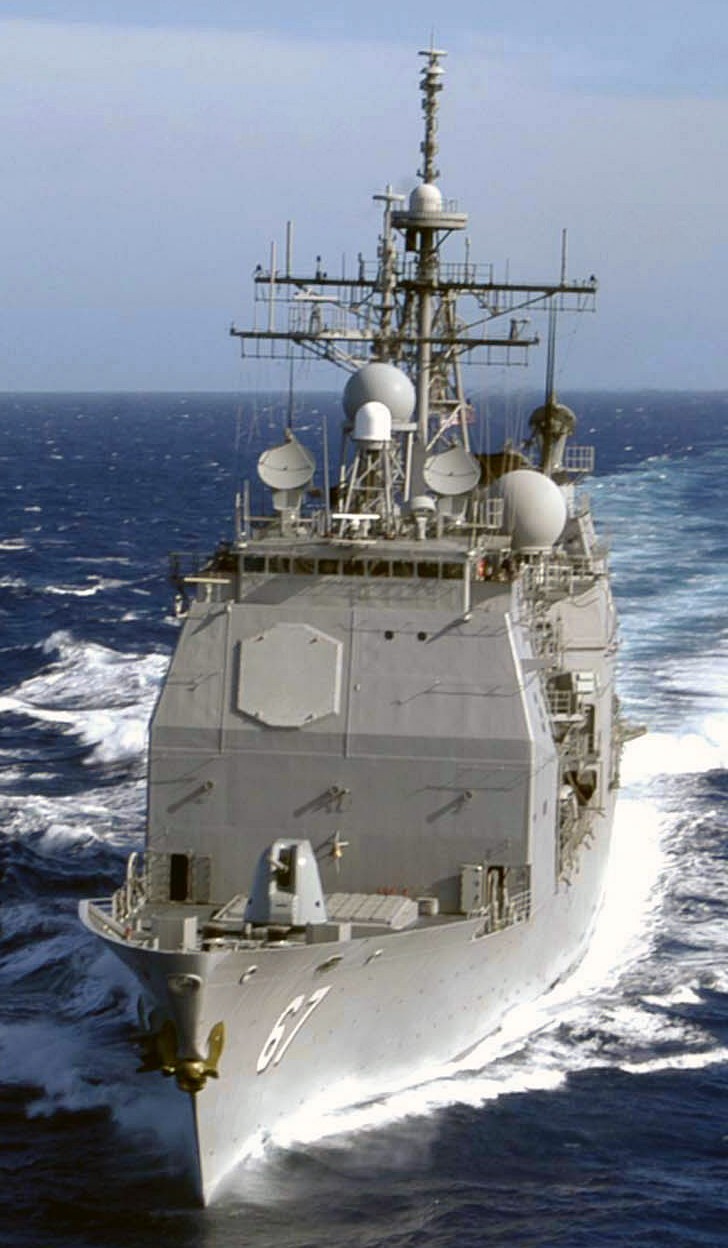 Pacific Ocean - December 2004 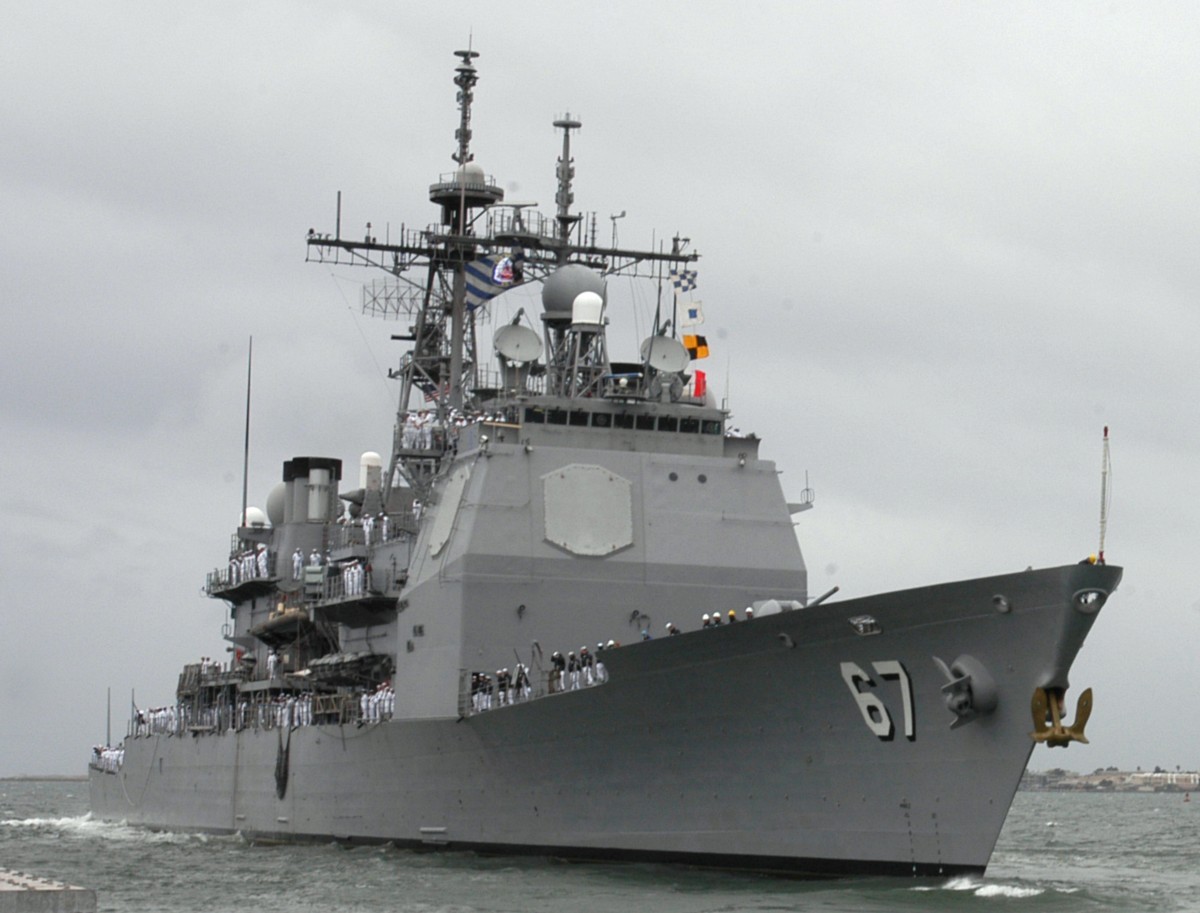 Naval Base San Diego, California - October 2004 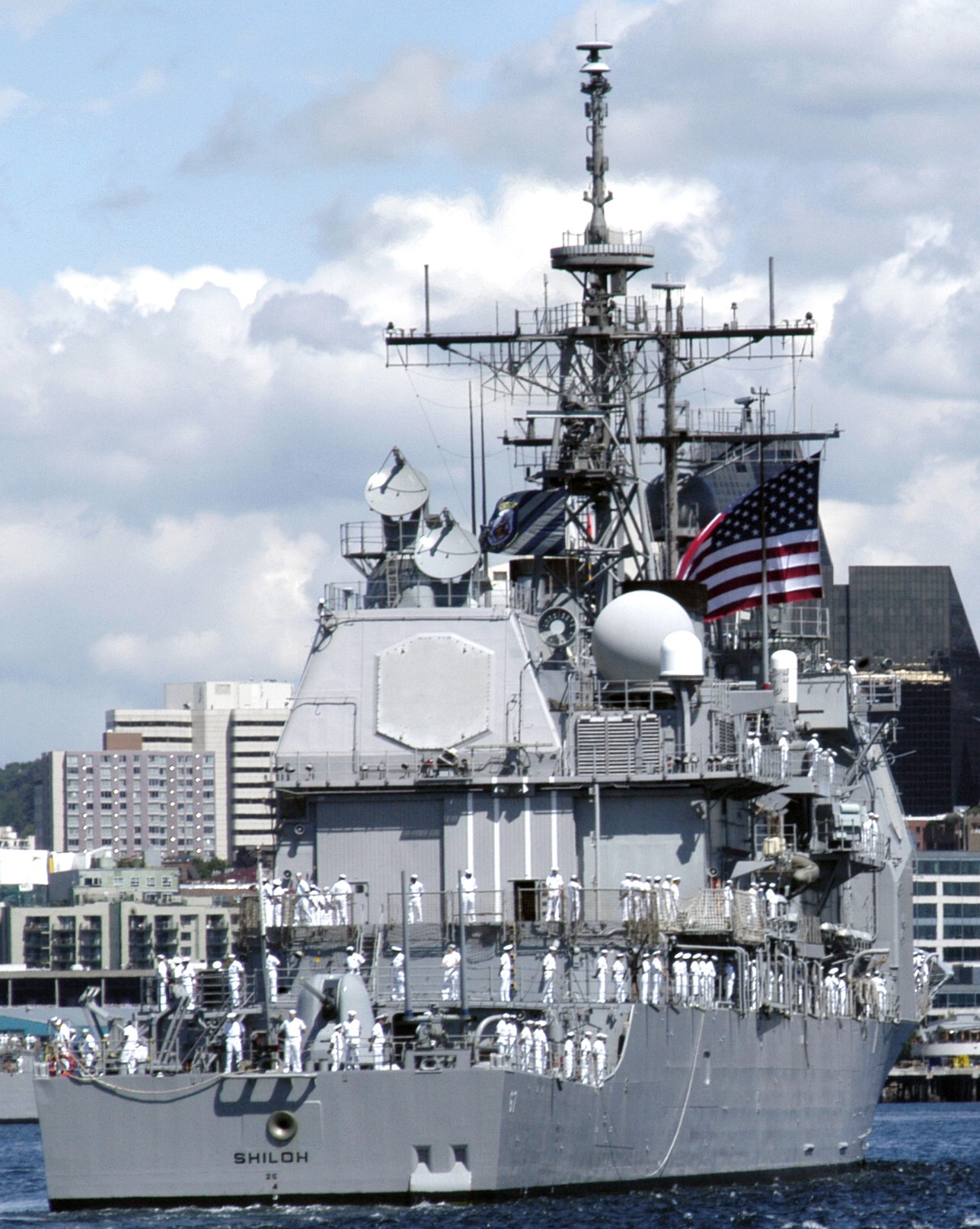 Seattle, Washington - August 2004 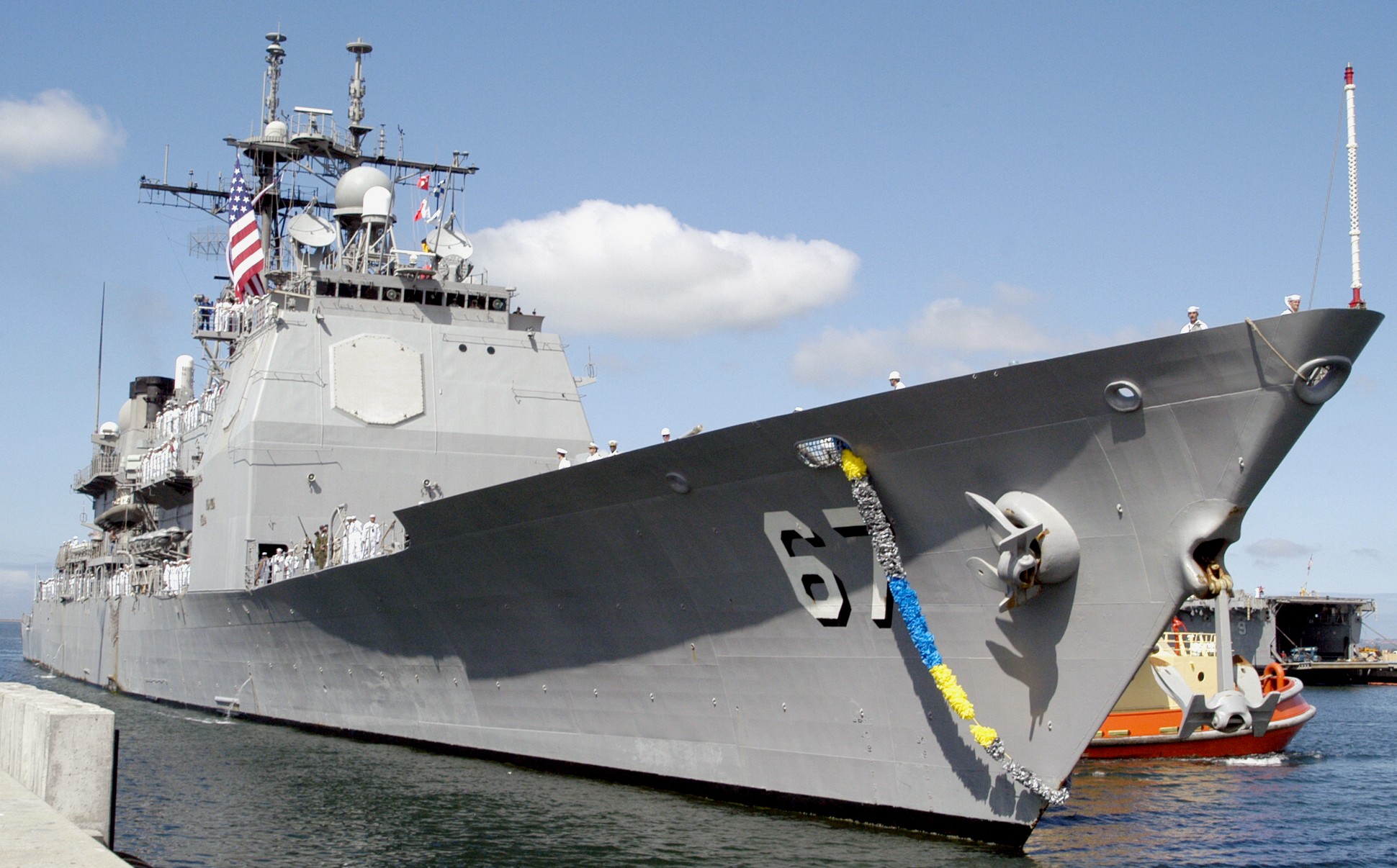 returning to Naval Base San Diego, California - April 2003 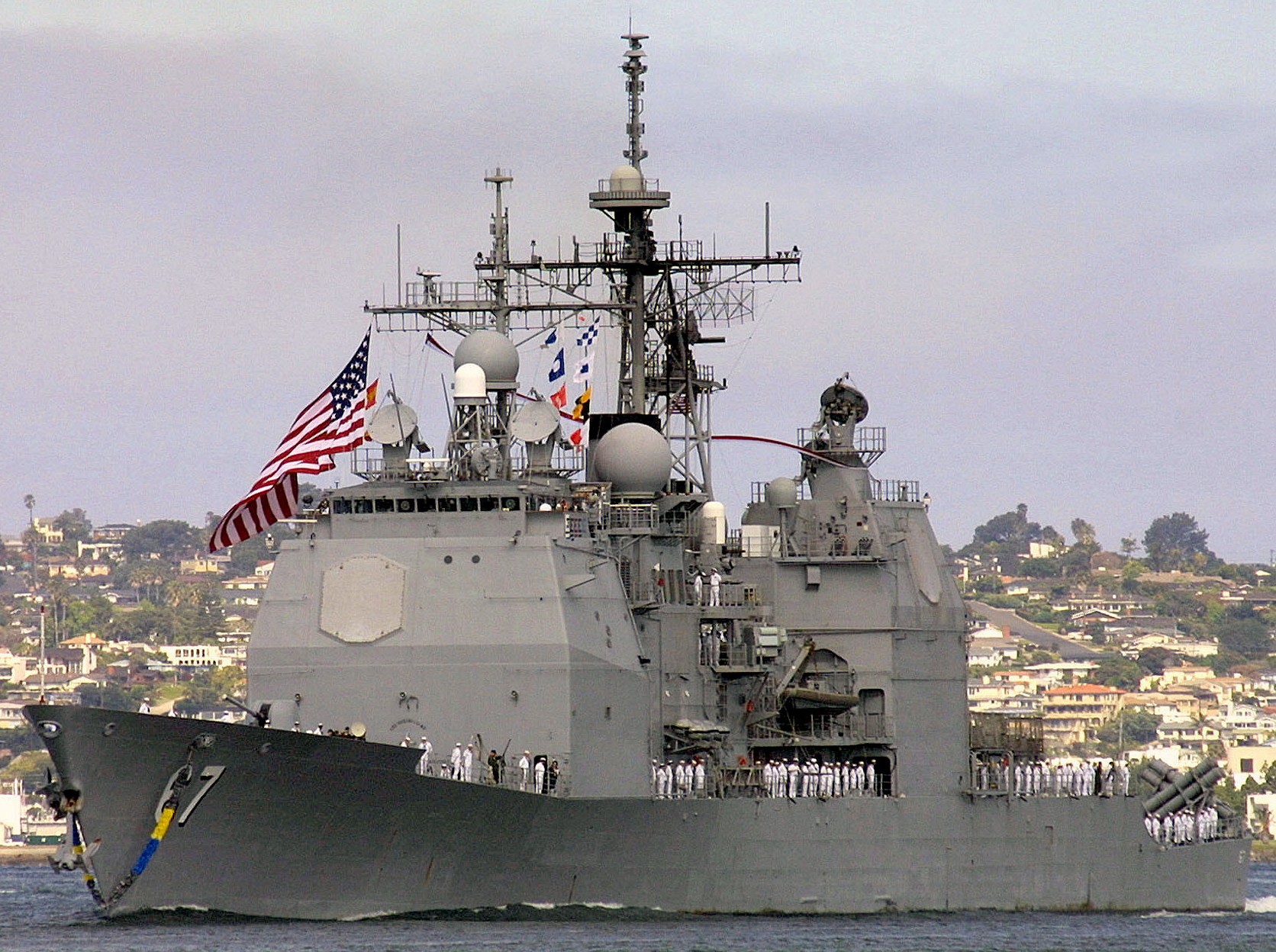 returning to Naval Base San Diego, California - April 2003 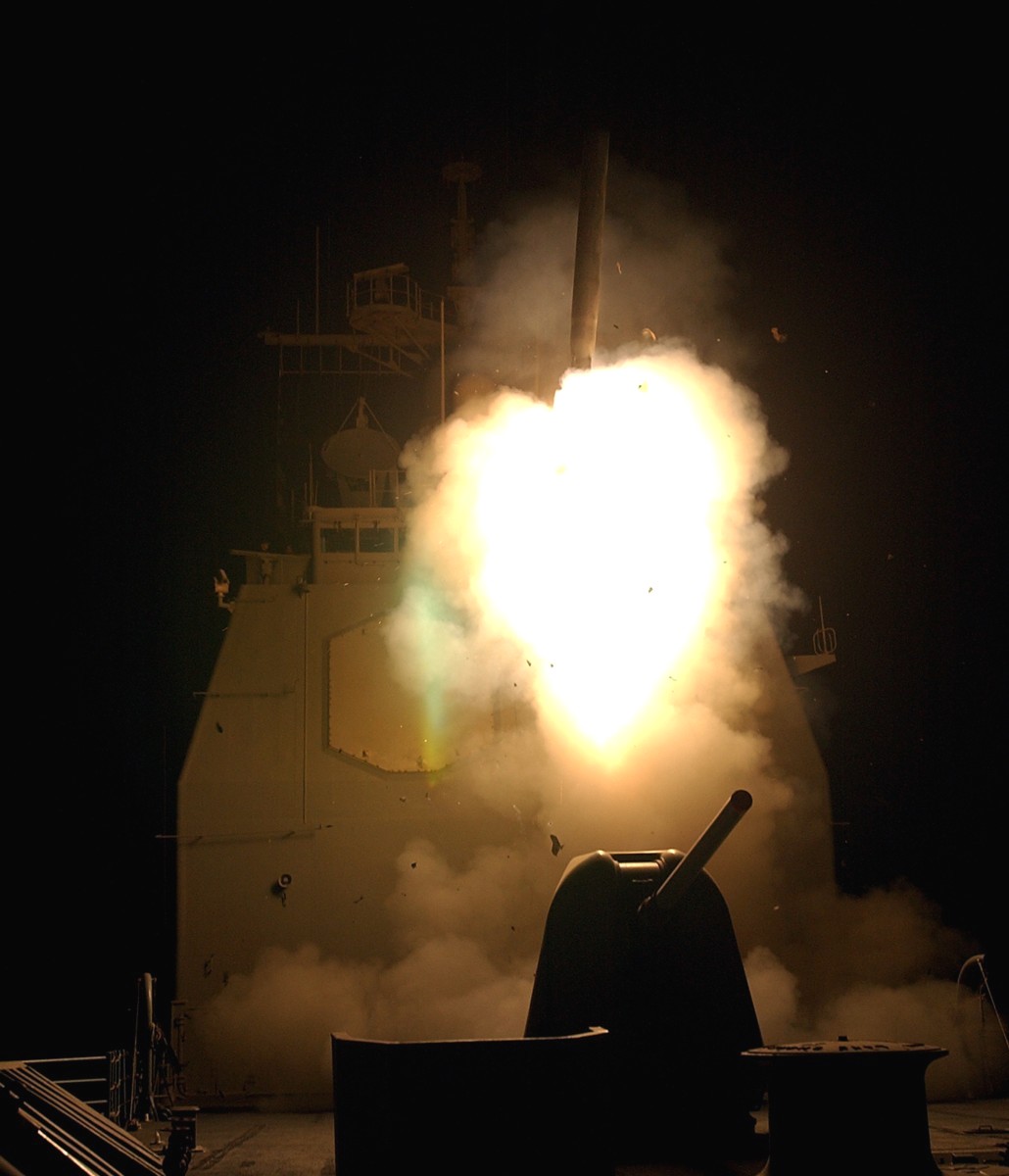 launching a BGM-109 Tomahawk Land Attack Missile (TLAM) - Operation Iraqi Freedom - March 2003 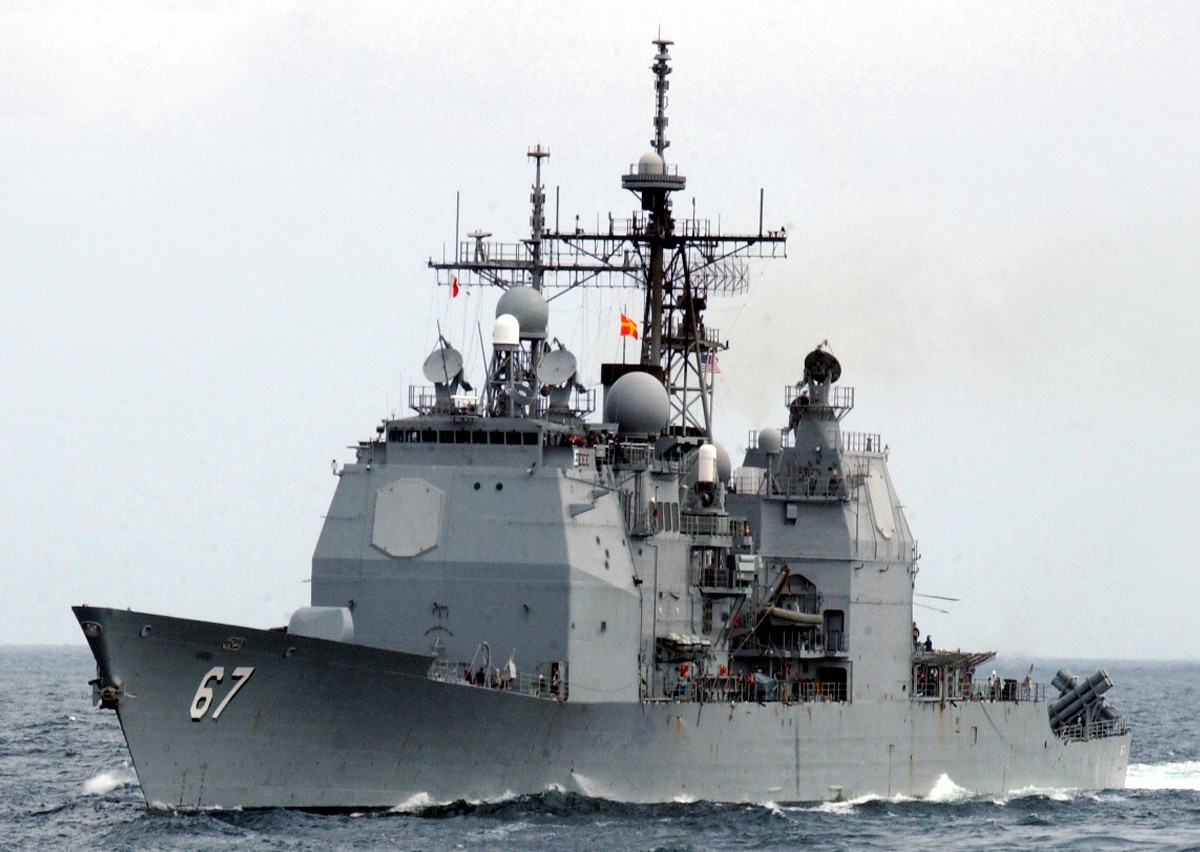 September 2002 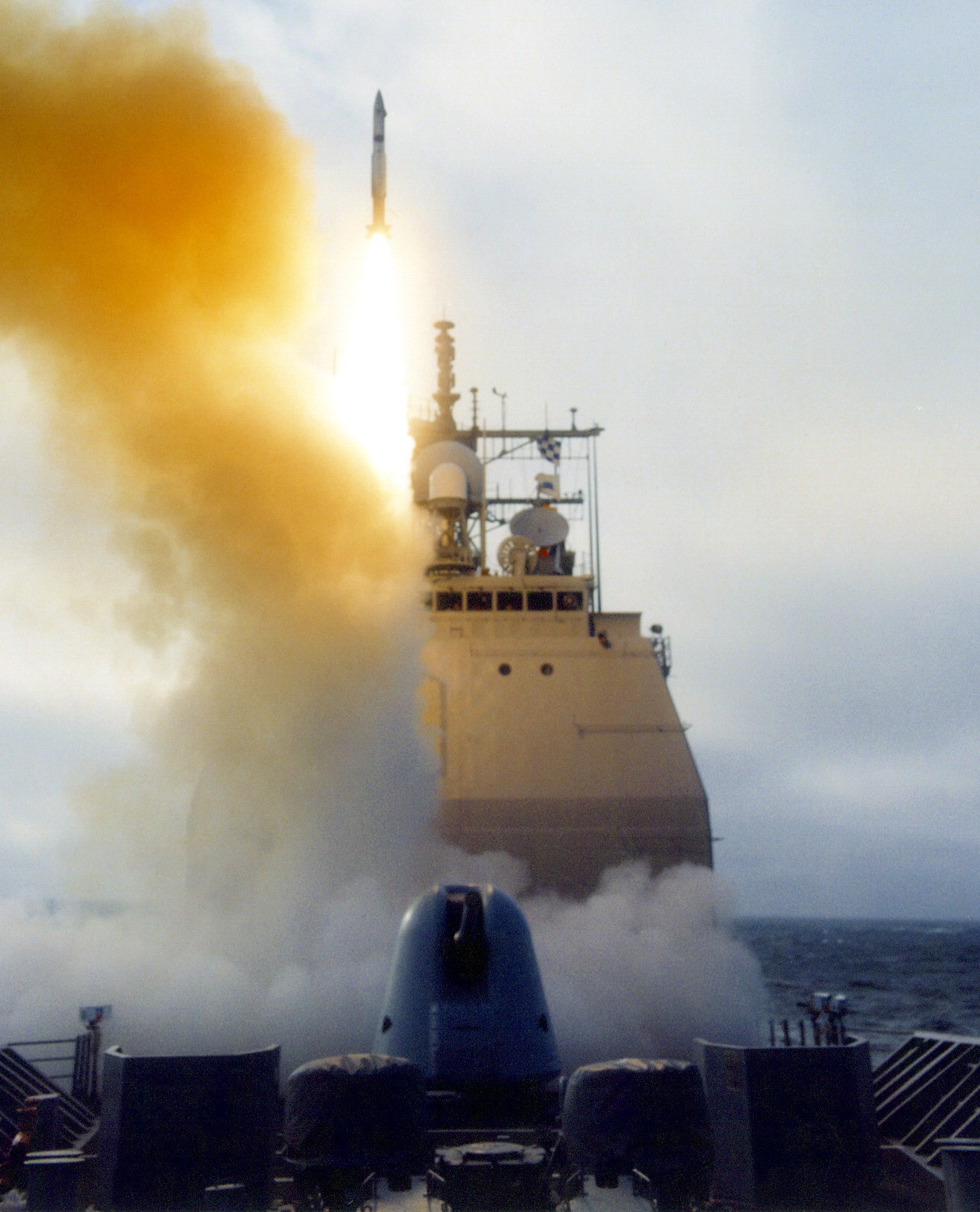 a RIM-156B Standard Missile SM-2ER Block IVA was launched from the forward Mk.41 VLS - November 2000 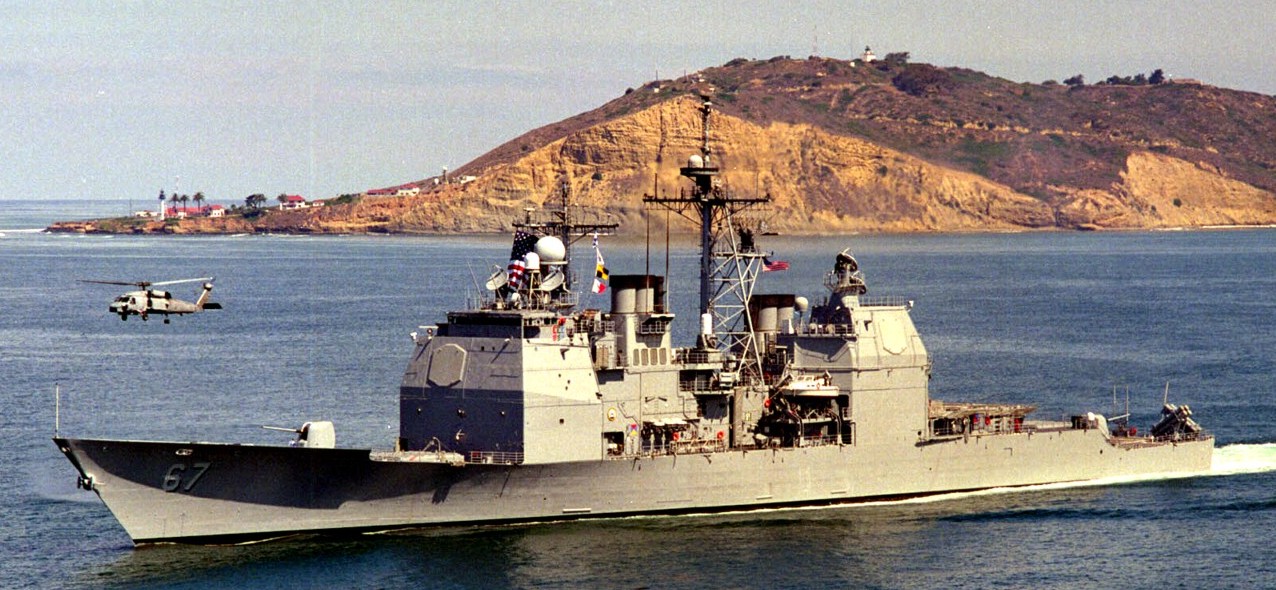 departing San Diego, California - September 1997 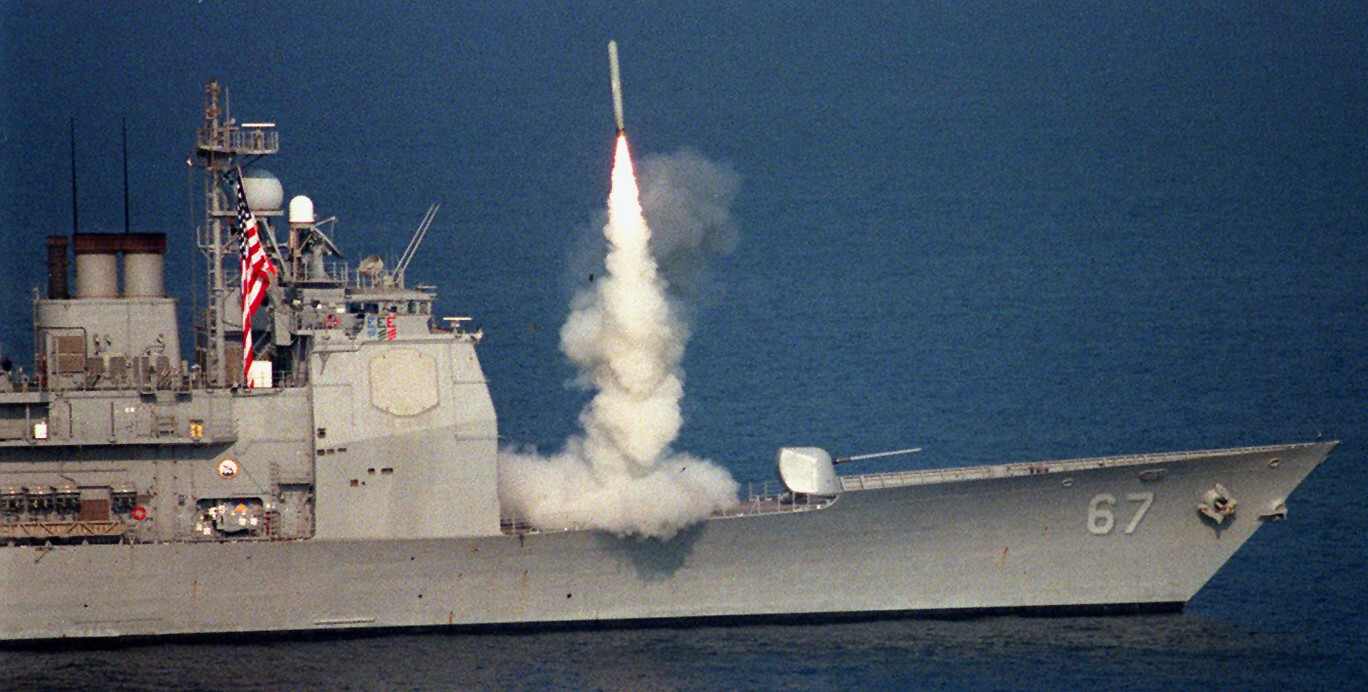 launching a BGM-109 Tomahawk land attack missile (TLAM) - Arabian Gulf - September 1996 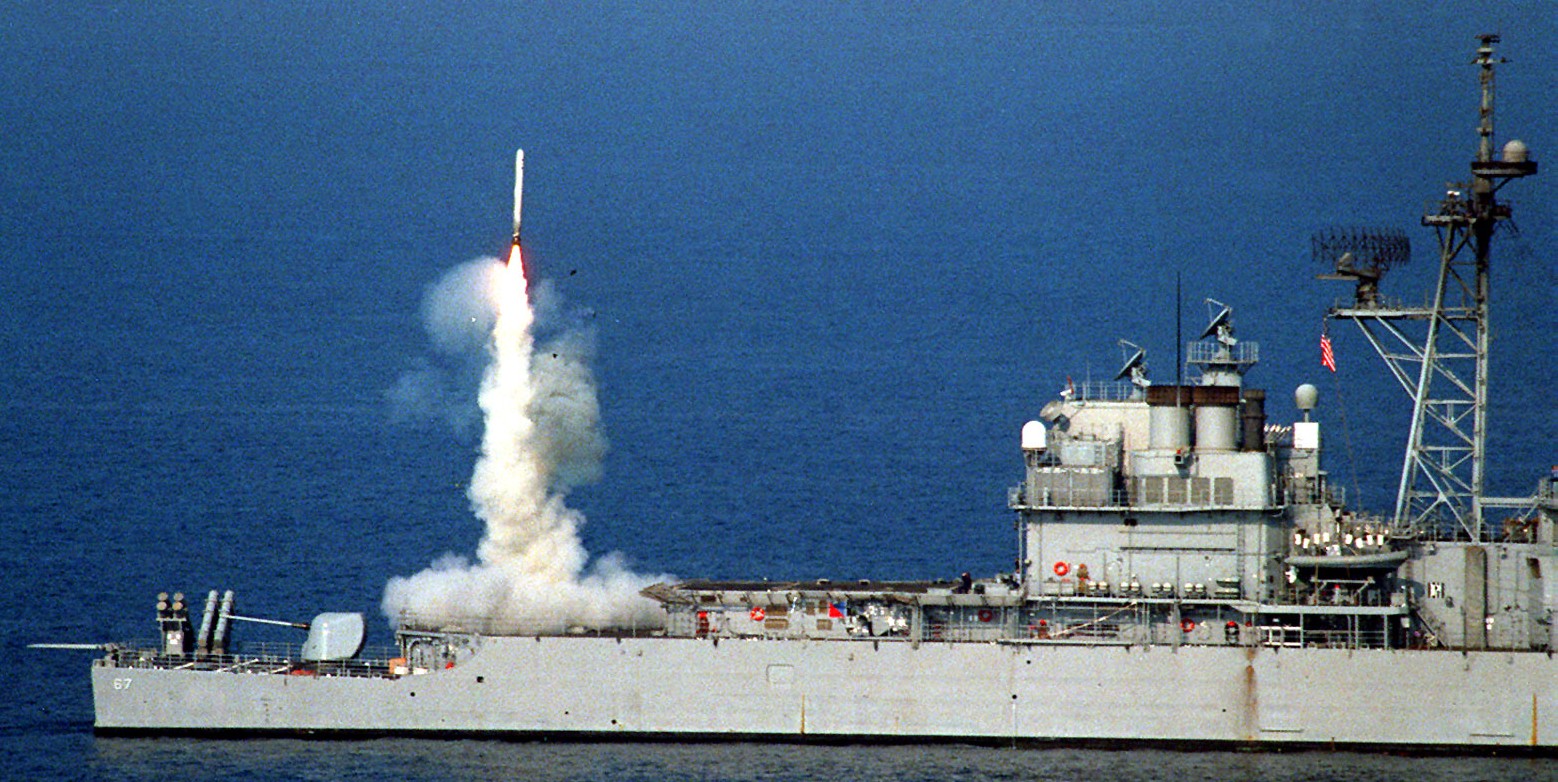 launching a BGM-109 Tomahawk land attack missile (TLAM) - Arabian Gulf - September 1996 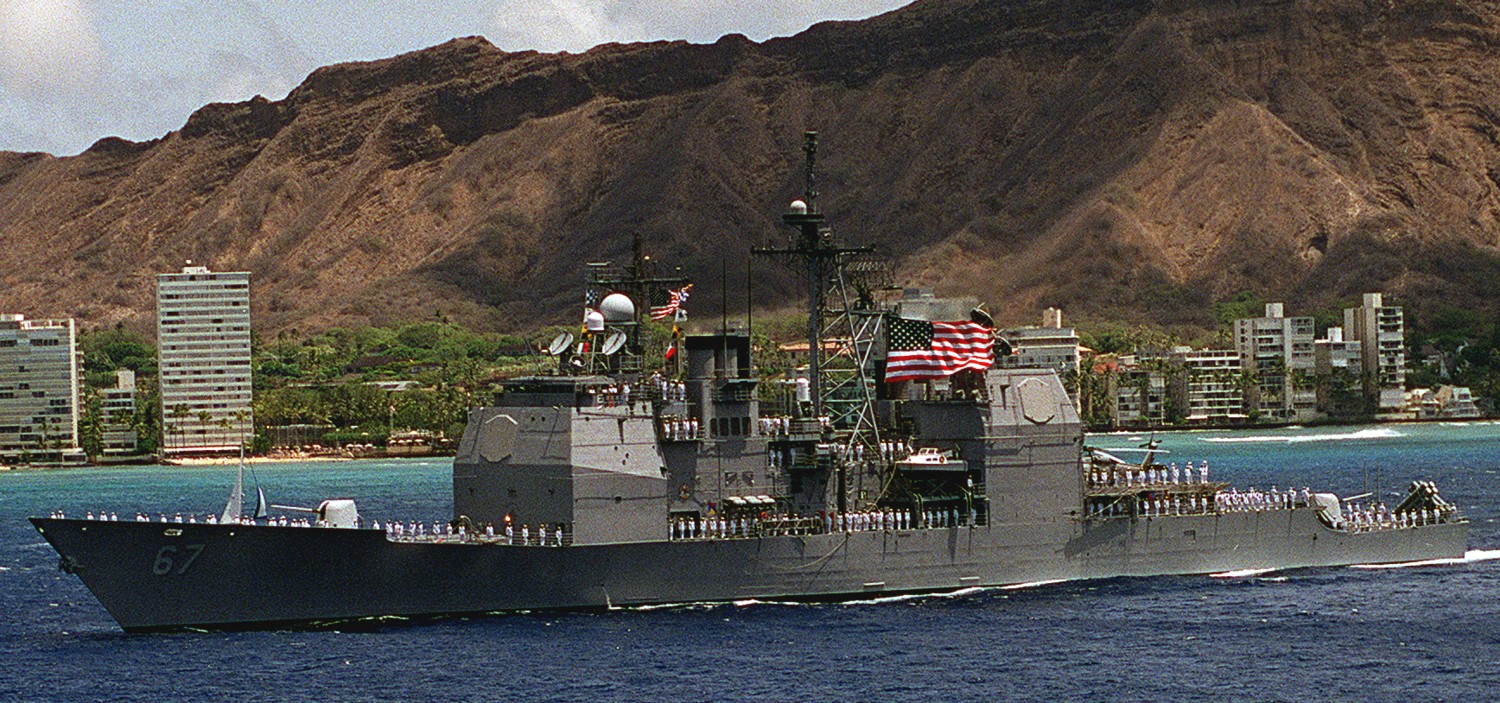 off Hawaii - September 1995 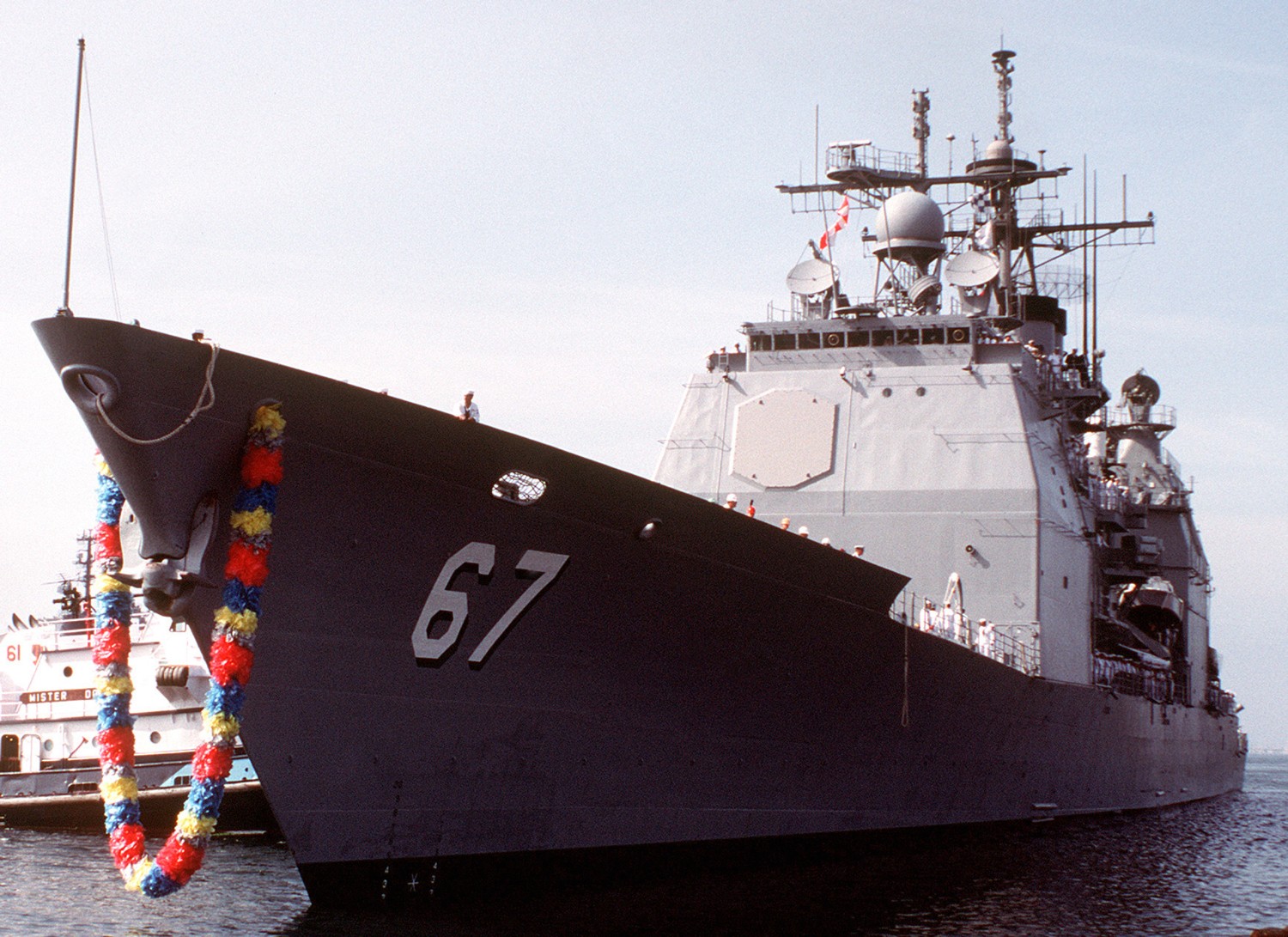 arriving at her new homeport - Naval Base San Diego, California - September 1992 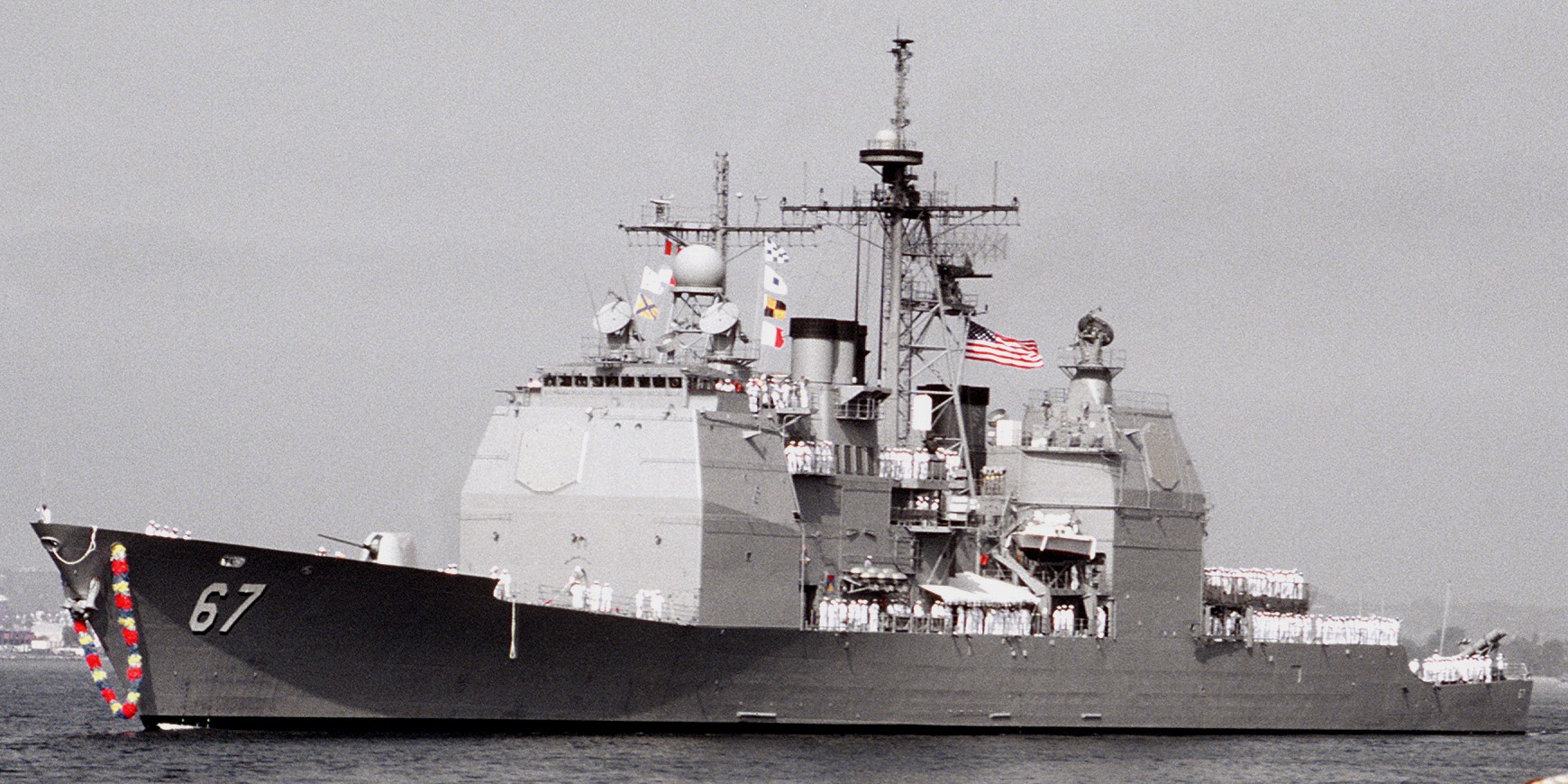 arriving at her new homeport - Naval Base San Diego, California - September 1992 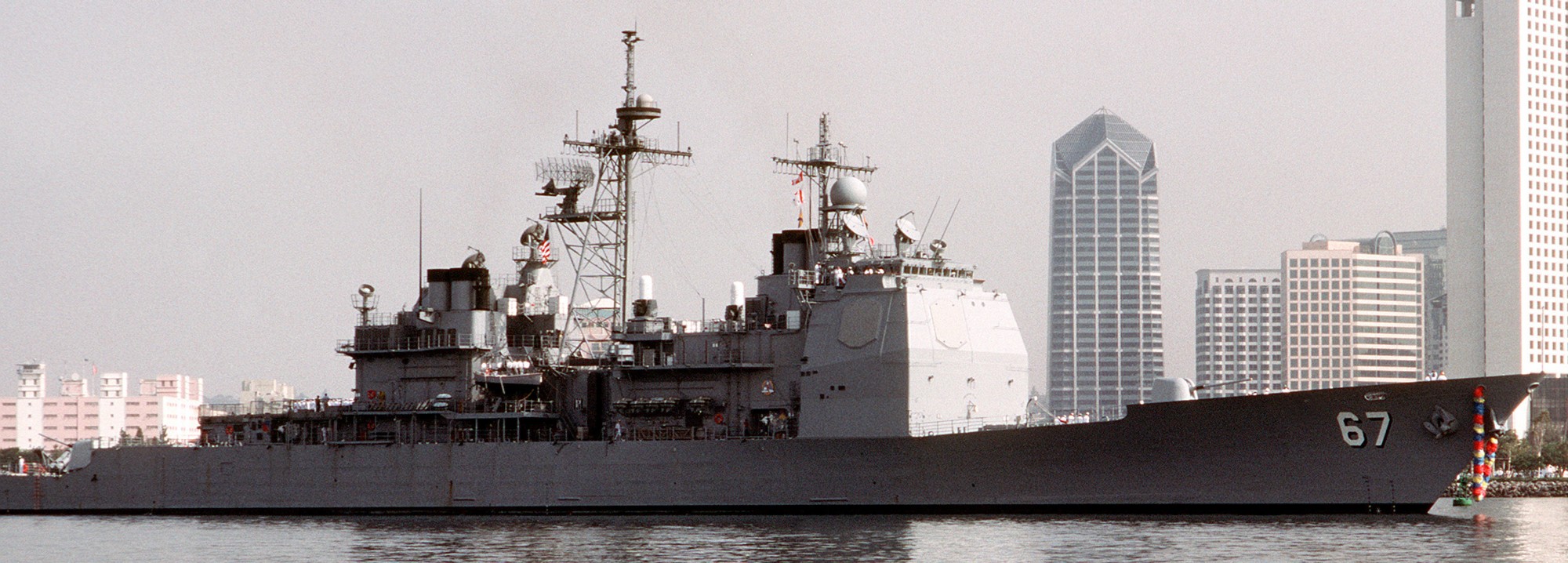 arriving at her new homeport - Naval Base San Diego, California - September 1992 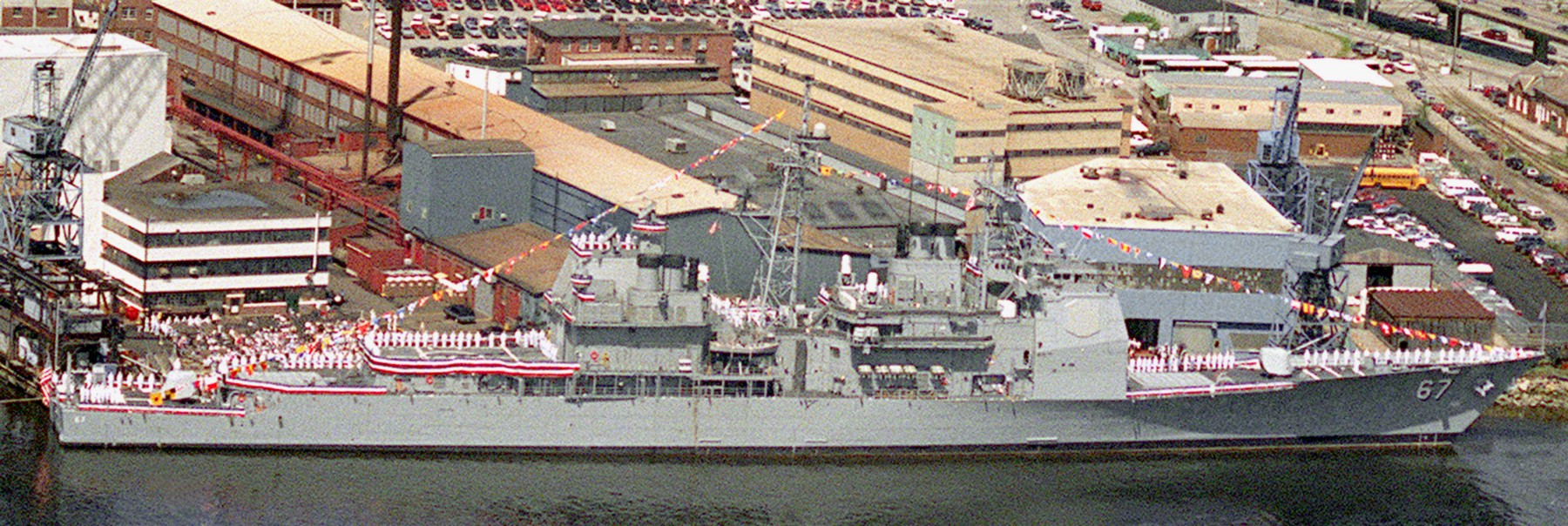 commissioning ceremony - Bath Iron Works, Maine - July 18, 1992 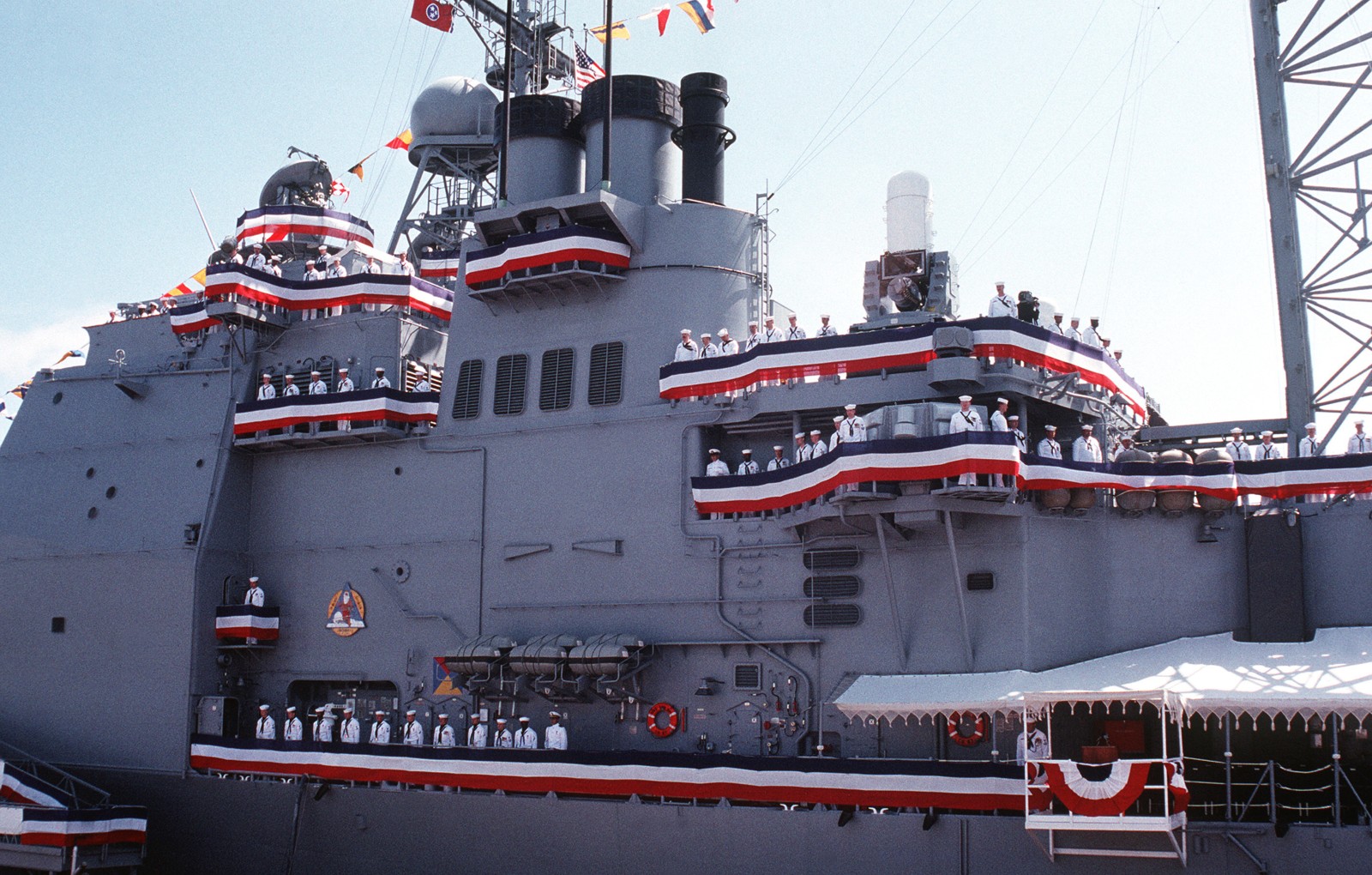 commissioning ceremony - Bath Iron Works, Maine - July 18, 1992 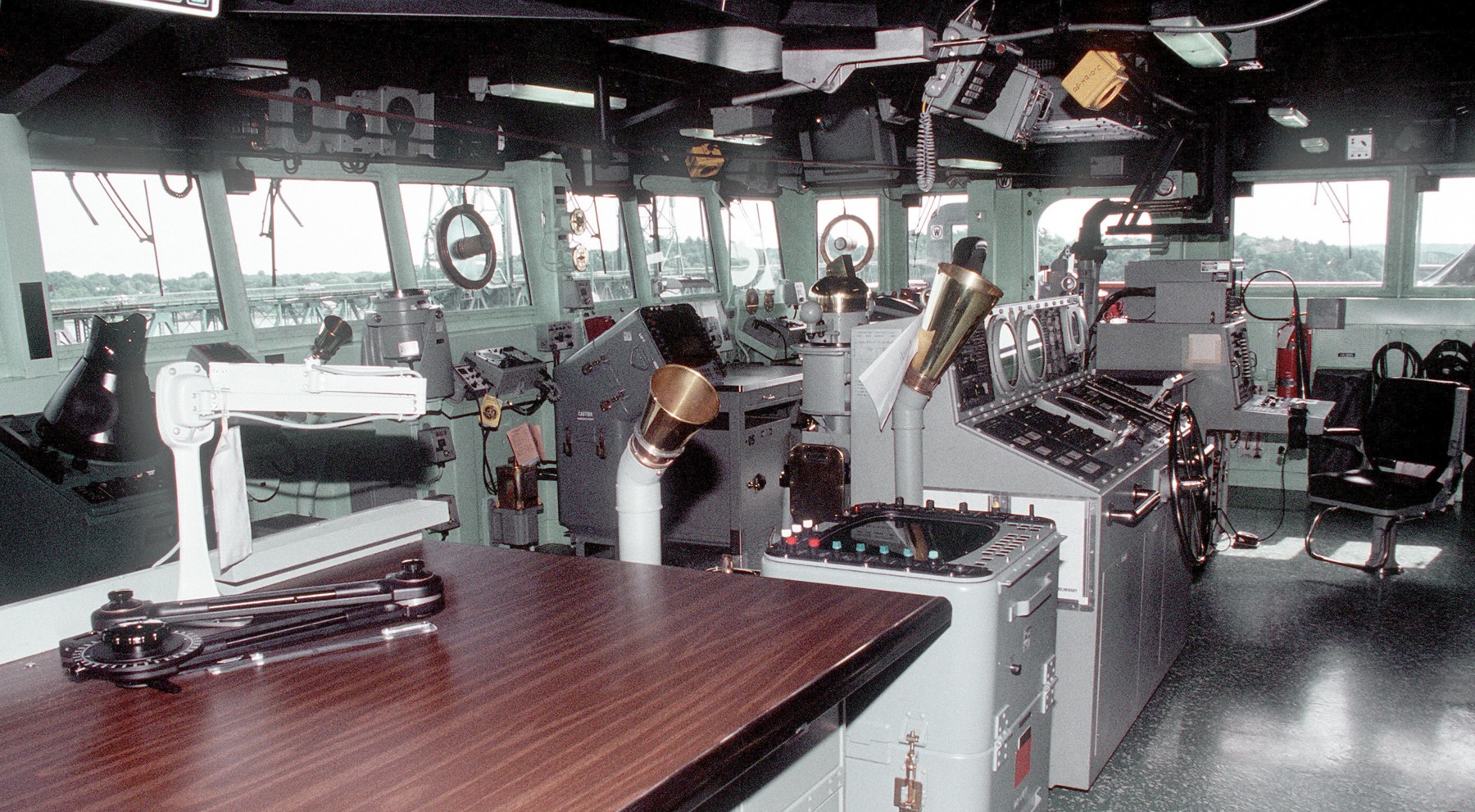 bridge - July 1992 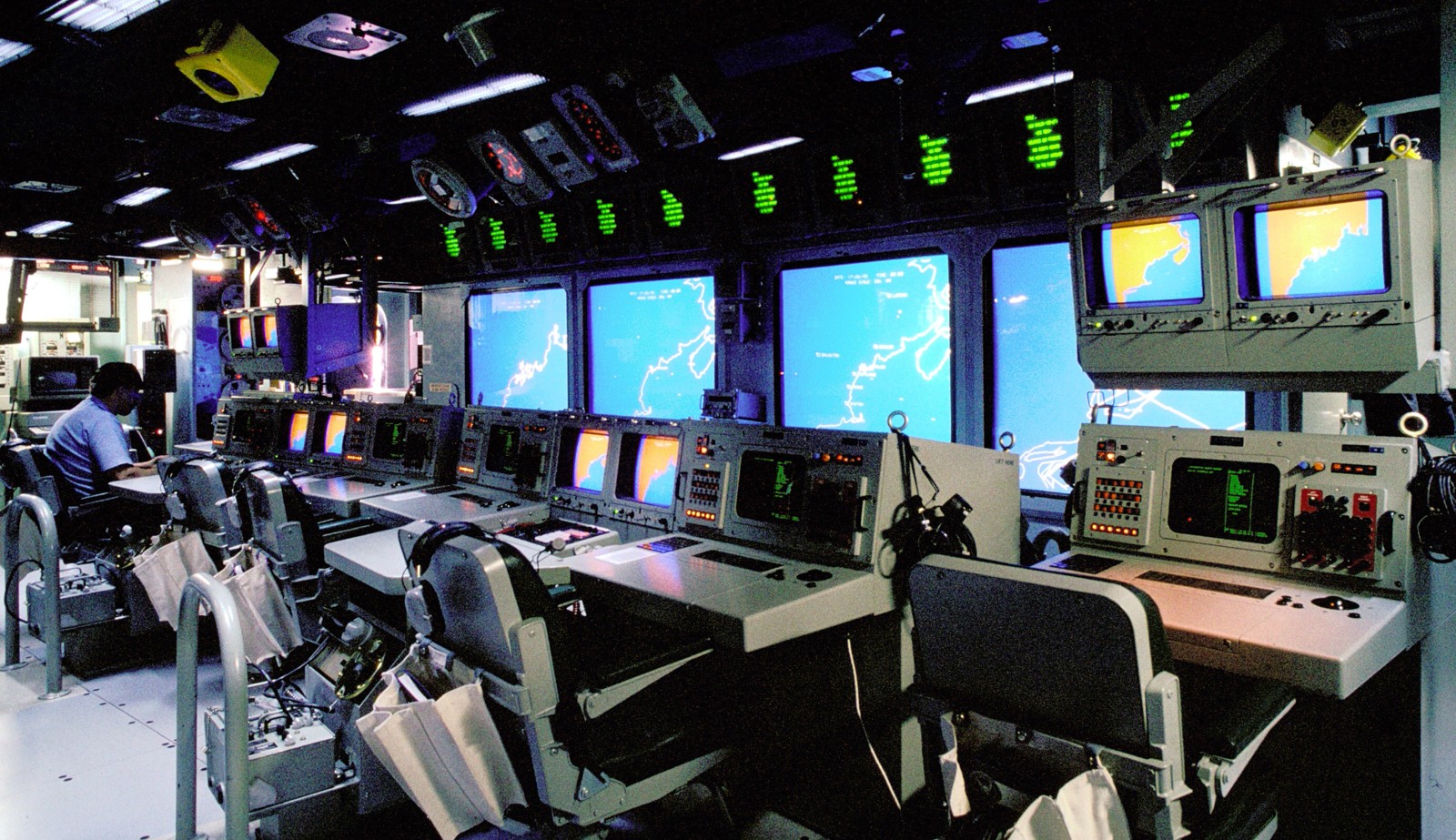 Combat Information Center (CIC) - July 1992 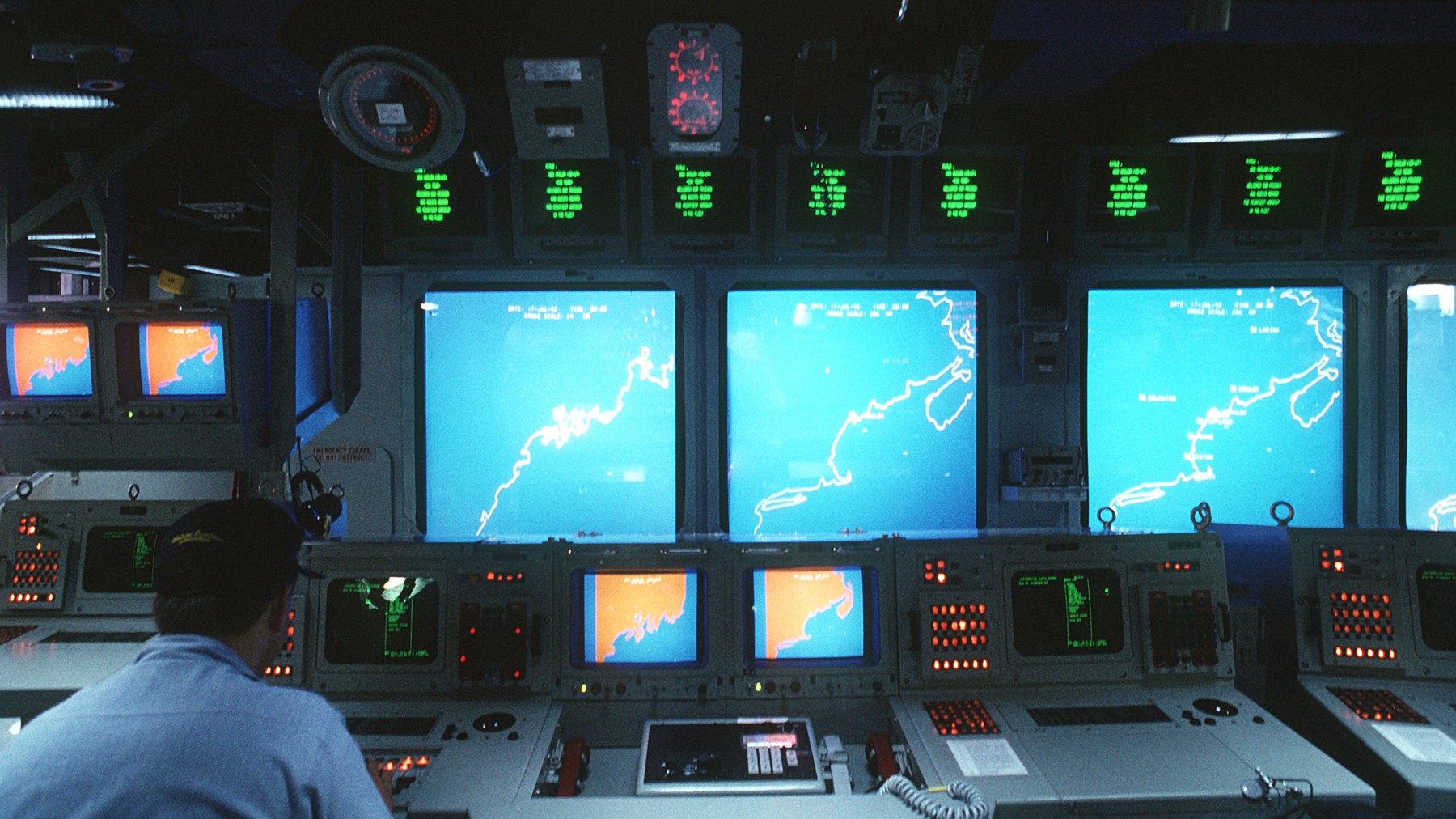 Combat Information Center (CIC) - July 1992 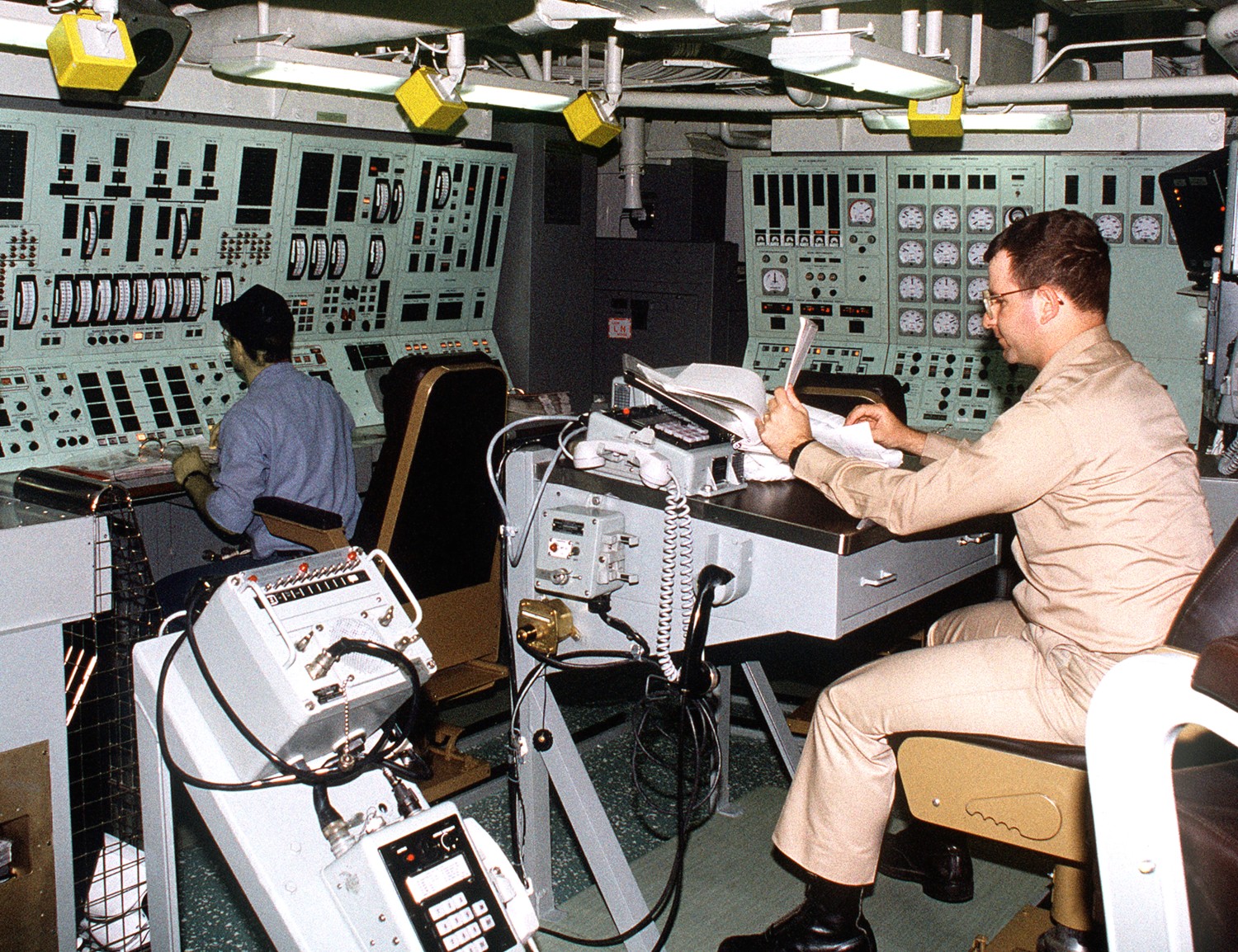 propulsion control room - July 1992 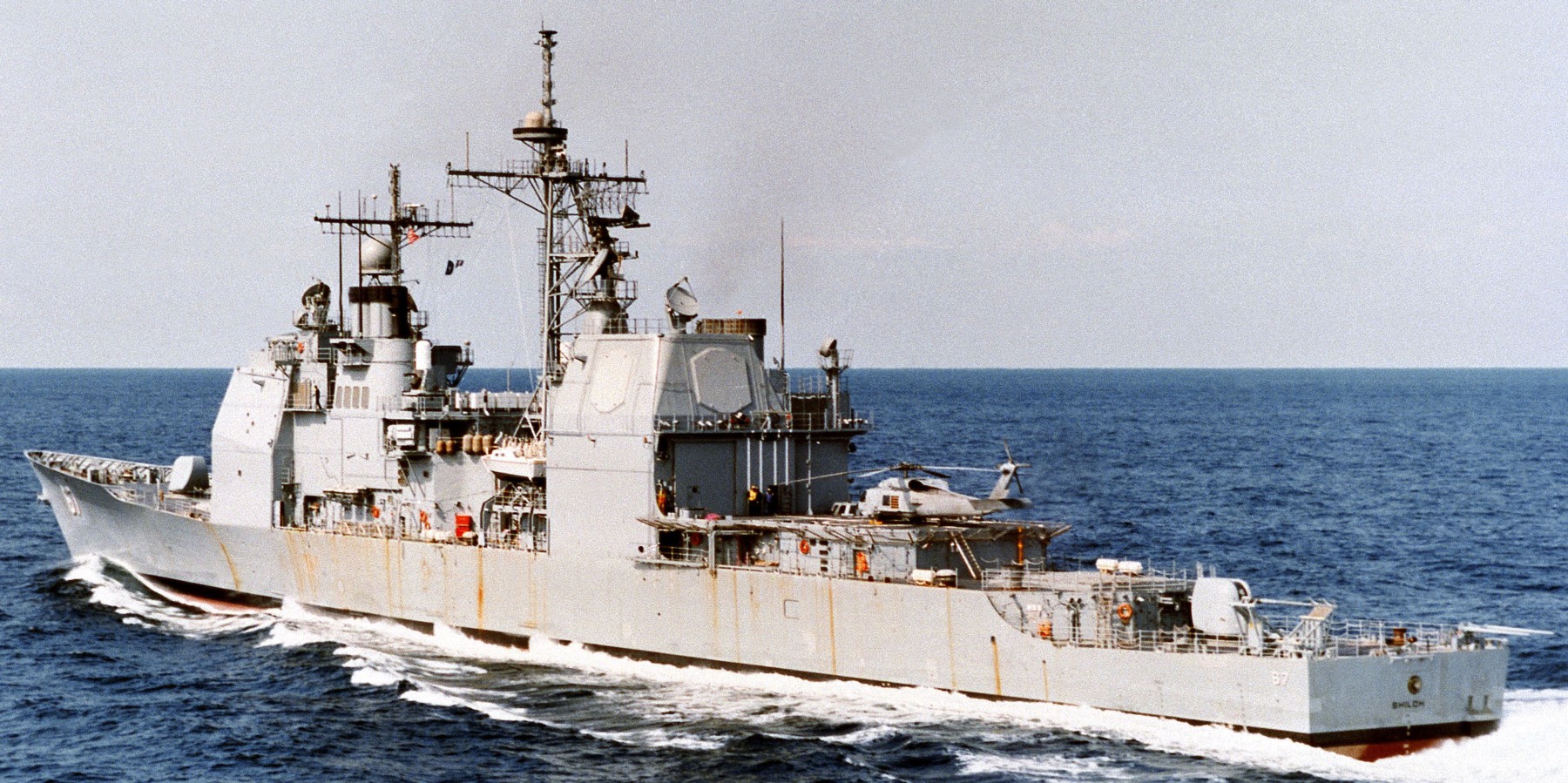 sea trials - March 1992 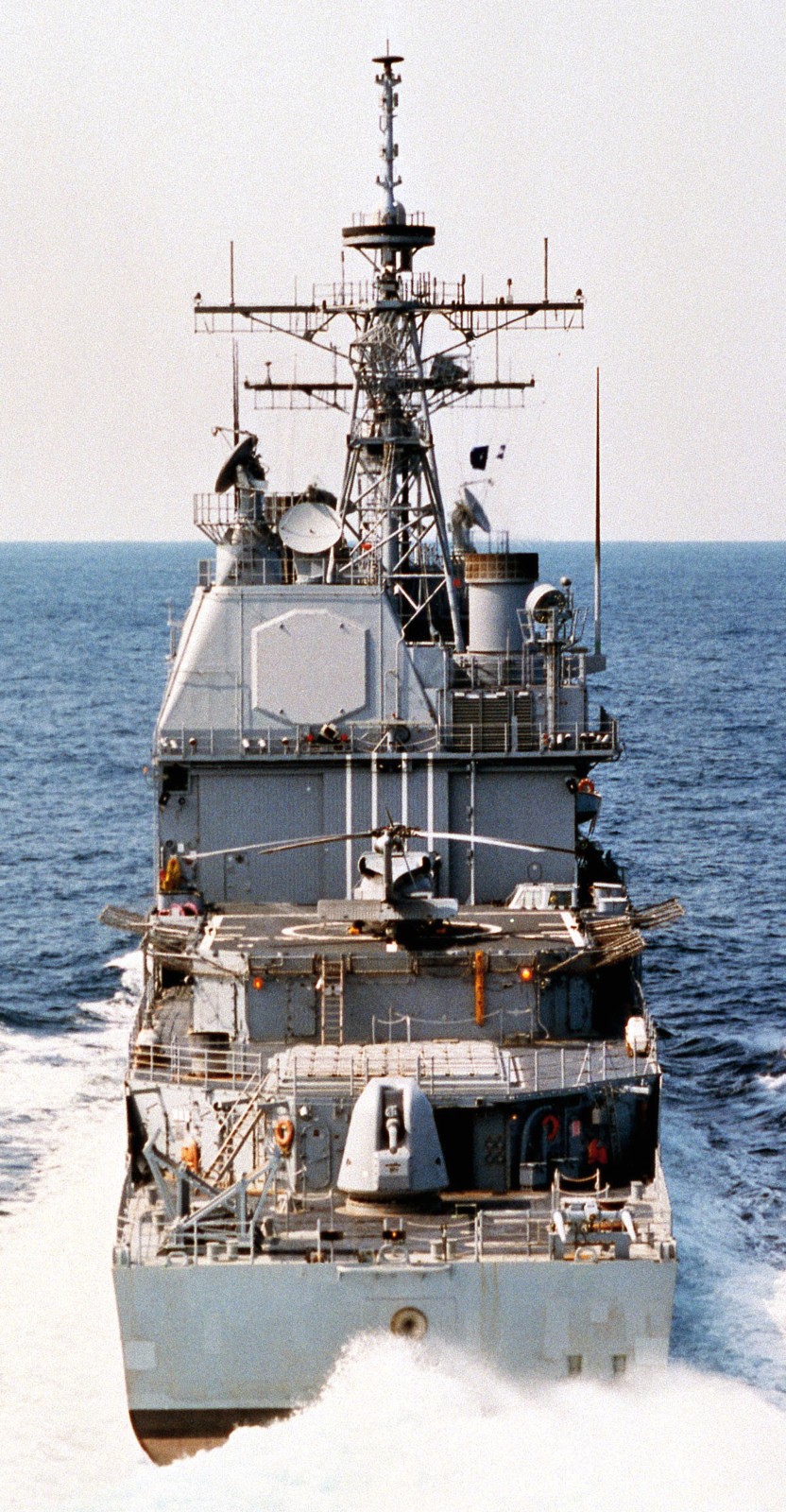 sea trials - March 1992 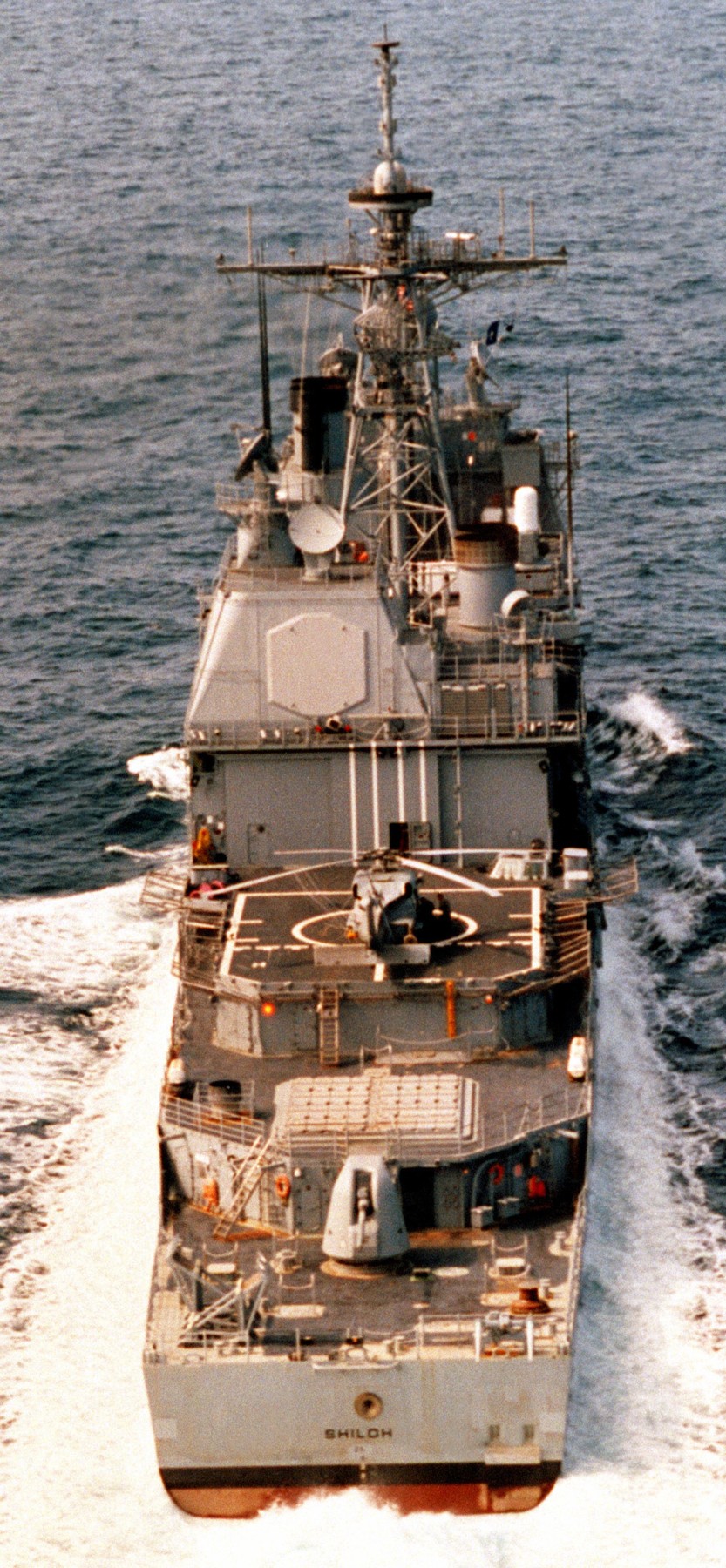 sea trials - March 1992 |
||
|
USS Shiloh (CG 67): USS SHILOH's keel was laid on August 1, 1989, and she was christened on September 8, 1990. USS SHILOH launched 14 Tomahawk cruise missiles to attack selected air defense targets south of the 33rd parallel in Iraq on 3 September 1996, as part of Operation Desert Strike. The attacks were designed to reduce risks to the pilots enforcing the expanded no-fly zone announced by President Clinton in response to an Iraqi attack against a Kurdish faction. The USS SHILOH was part of the USS CARL VINSON (CVN 70) Battle Group that moved into the northern Arabian Gulf the previous week responding to escalating activity by Iraqi ground forces. USS SHILOH entered in July 1998 as part of the ABRAHAM LINCOLN Battle Group the Arabian Gulf where it remained until late October to early November. On 24 September 1999, USS SHILOH launched an Standard Missile Three (SM-3) in the waters off the Hawaiian Islands off the Pacific Missile Range Facility and as part of the AEGIS Leap Intercept (ALI) project. The purpose of the test conducted in the waters off the Hawaiian Islands, was to collect valuable information to correct problems and have a successful launch testing of the first two stages of the missile. The SM-3 used to destroy aircraft, was slated to incorporate a new duty; that of intercepting and destroying intercontinental and theater ballistic missiles as part of the Navy Theater Wide Program. Once placed in service, the SM-3 missile would complement the armement of Aegis-class cruisers and ARLEIGH BURKE-class guided missile destroyers, with the SM-3 carried aboard cruisers and destroyers in greater numbers. During the test, the SM-3 flew a nominal trajectory through second/third stage separation. USS SHILOH successfully demonstrated the launch and flight sequence through third stage separation as well as verified flight stability at extreme altitude. Though the original plan had been to conduct all Flight Test Round shots from USS SHILOH, the need for further testing conflicted with the ship's operational schedule. Therefore, it was decided by the CNO to shift to USS LAKE ERIE (CG 70) to conduct the next firings in the ALI testing program. USS SHILOH took part in June 2000, in "Exercise Pacific Blitz" off the west coast of Kauai, Hawaii, at the Pacific Missile Range Facility (PMRF) located on Kauai. The exercise, held in conjunction with RIMPAC 2000, followed two days of target tracking and joint services interoperability testing. The exercise was a major step toward achieving joint service interoperability for Theater Ballistic Missile Defense and battle force management During the exercise, USS SHILOH tracked threat representative targets with SPY-1 radar and communicated these tracks to other units via JTIDS link. SHILOH, with the prototype Area Air Defense Commander (AADC) system installed, was also used to display and record the missile events throughout the exercise. USS SHILOH deployed in August 2000 as part of the ABRAHAM LINCOLN Battle Group for a scheduled six-month Western Pacific and Arabian Gulf deployment. During the deployment the Battle Group conducted operations in support of Operation Southern Watch. SHILOH returned to San Diego in February 2001. On July 20, 2002, SHILOH departed San Diego on her next deployment. Again assigned to the ABRAHAM LINCOLN Battle Group, SHILOH operated in the Arabian Gulf and was initially scheduled to return home on January 20, 2003, but the Battle Group - while already underway home - was ordered to remain in the Gulf area to be able to participate in Operation Iraqi Freedom which started in March. After more than 9 months at sea, SHILOH and the Battle Group finally returned home to the US in early May 2003. In January 2005, she participated in Operation Unified Assistance, rendering aid to those who suffered from the 26 December 2004 tsunami off the coast of Aceh, Indonesia. The Shiloh was one of the first American ships to arrive on scene. On 22 June 2006, a Standard Missile Three (or SM-3) launched from Shiloh intercepted a multi-stage ballistic missile launched from Barking Sands, Kauai, Hawaii. In August 2006, she arrived on station at Yokosuka Naval Base in Yokosuka, Japan, replacing the USS Chancellorsville, as part of a joint U.S.-Japanese ballistic missile defense program. On 8 July 2009, Petty Officer 1st Class Christopher Geathers fell from the ship's fantail into Tokyo Bay while rigging shore power cables. A two-and-a-half-day search failed to locate Geathers and he was declared missing and later was declared dead. A Navy investigation, led by Rear Admiral Kevin Donegan, commander of Task Force 70, found that the accident was preventable, in part because Shiloh personnel had observed Geathers working without proper safety equipment, but had failed to intervene. Nevertheless, the report did not recommend disciplinary action against any of the ship's crewmembers. In June 2017, a gas turbine systems technician named Peter Mims thought to have been lost at sea was found after seven days hiding in the engine room. Following the Mims incident, several sailors contacted the Navy Times about severe morale problems on the ship to which they attributed the Mims incident. The Navy Times requested "command climate surveys" through a Freedom of Information Act request. These surveys, completed voluntarily by sailors on the ship, reported extensive morale problems universally blamed on the CO, Captain Adam M. Aycock. Among the complaints were widespread depression and suicidal tendencies, a dysfunctional ship that sailors felt was ill-prepared for combat, an overworked and deeply stressed crew, and a constant worry of extreme punishment for minor infractions. Sailors were dismayed that despite a significant number of the ship's crew filing severely critical complaints of Aycock's leadership in the command climate surveys, the only action taken by the Navy was to counsel him. Capt. Aycock was relieved of command after completing his full 26-month tour. In 2020, a US Navy budget plan proposed putting Shiloh, as well as her sisters USS Monterey, USS Port Royal, and USS Vella Gulf, on a path to early decommissioning, as they had not been modernized. In December 2020 the U.S. Navy's Report to Congress on the Annual Long-Range Plan for Construction of Naval Vessels stated that the ship was planned to be placed Out of Commission in Reserve in 2024. |
||
|
The Battle of Shiloh / American
Civil War - 1862: In March 1862, Major General Henry W. Halleck was put in command of all Federal forces in the Mississippi Valley, and he initiated a slow advance which he sent his two armies along the Tennessee River. By early April Ulysses S. Grant had some 37,000 men near Shiloh Church and Pittsburg Landing, close to the Tennessee-Mississippi border, and off to the east Don Carlos Buell's 25,000 were on their way from Nashville to join him. Meanwhile, Albert Sidney Johnston was desperately assembling all the Confederate troops he could find Corinth, Mississippi. He had more than Grant, but he would have to strike before Buell arrived. The Union position was a reasonably strong one, but Grant and his division commanders felt it would be bad for morale to have the men entrench. General C.F. Smith told Grant, "By God, I want nothing better than to have the Rebels ... attack us! We can whip them to hell. Our men suppose we have come here to fight, and if we begin to spade, it will make them think we fear the enemy." In the Federal camps a peach orchard was in glorious bloom, and war and killing seemed remote. But just 25 miles to the south Johnston was pushing his raw levies onto the roads. Like most of Grant's men, these Confederates were as green as grass. They ambled along, whooping and shouting, firing their guns just to see if they would work, driving their officers into a frenzy. P.G.T. Beauregard, second in command, urged that the attack be called off, but Johnston was adamant: "I would fight them if they were a million." He ordered an assault for dawn on Sunday, April 6. Grant was caught off guard, and in the first day's fight his army was almost pushed into the Tennessee River. It rallied just in time, Johnston was killed in action, and at dark Buell's troops began to arrive and one of Grant's divisions which had been delayed in reaching the field got to the scene. On the second day the Federals reversed the tide, and by mid afternoon Beauregard had to admit defeat. He drew his badly battered army back toward Corinth, and the Federals, equally battered, made no more than a gesture at pursuit. The greatest battle ever fought on the American continent, up to date, was over. The Federals had lost 13,000 men, the Confederates, 10,000. The troops had fought with impressive valor, but they had been poorly handled. 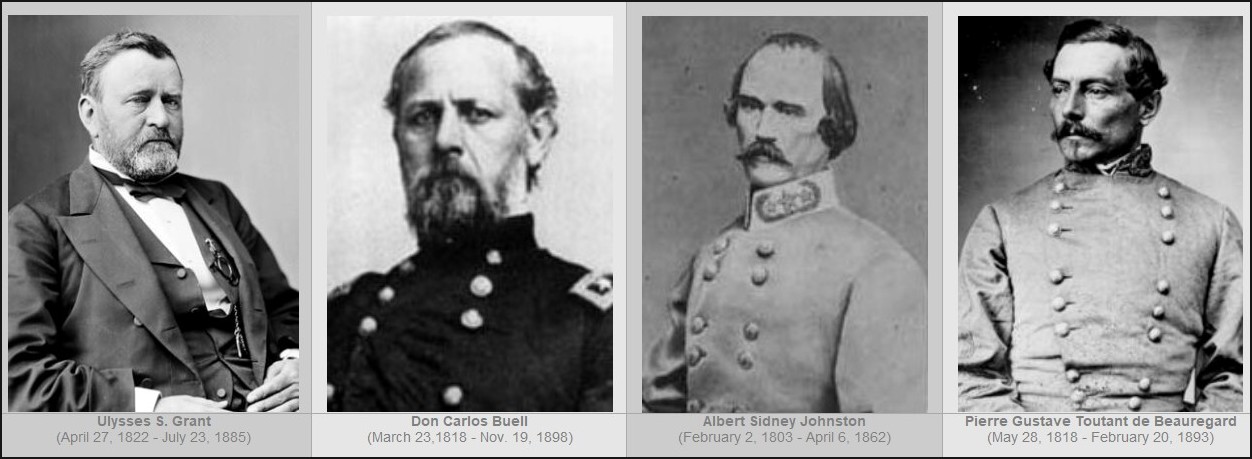 |
||
| patches + more | ||
 |
||
|
|
seaforces.org |
USN ships
start page | |