|
||
|
HOME
|
US Navy -
ships
|
US Navy - air
units
|
USMC - air
units
|
International
Navies
|
Weapon Systems
|
Special Reports |
||
|
US Navy - Guided Missile Cruiser CG 62 - Robert Smalls ex USS Chancellorsville |
||
|
||
| 11/23 | ||
|
Type,
class: Guided Missile Cruiser (CG); Ticonderoga
class Builder: Ingalls Shipbuilding, Pascagoula, Mississippi, USA STATUS: Awarded: November 26, 1984 Laid down: June 24, 1987 Launched: July 15, 1988 Commissioned: November 4, 1989 renamed USS Robert Smalls on March 1, 2023 IN SERVICE Homeport: forward deployed to Fleet Activities Yokosuka, Japan Namesake: Robert Smalls (1839-1915) Ships Motto: ? Technical Data: see: INFO > Ticonderoga class Guided Missile Cruiser - CG |
||
| images | ||
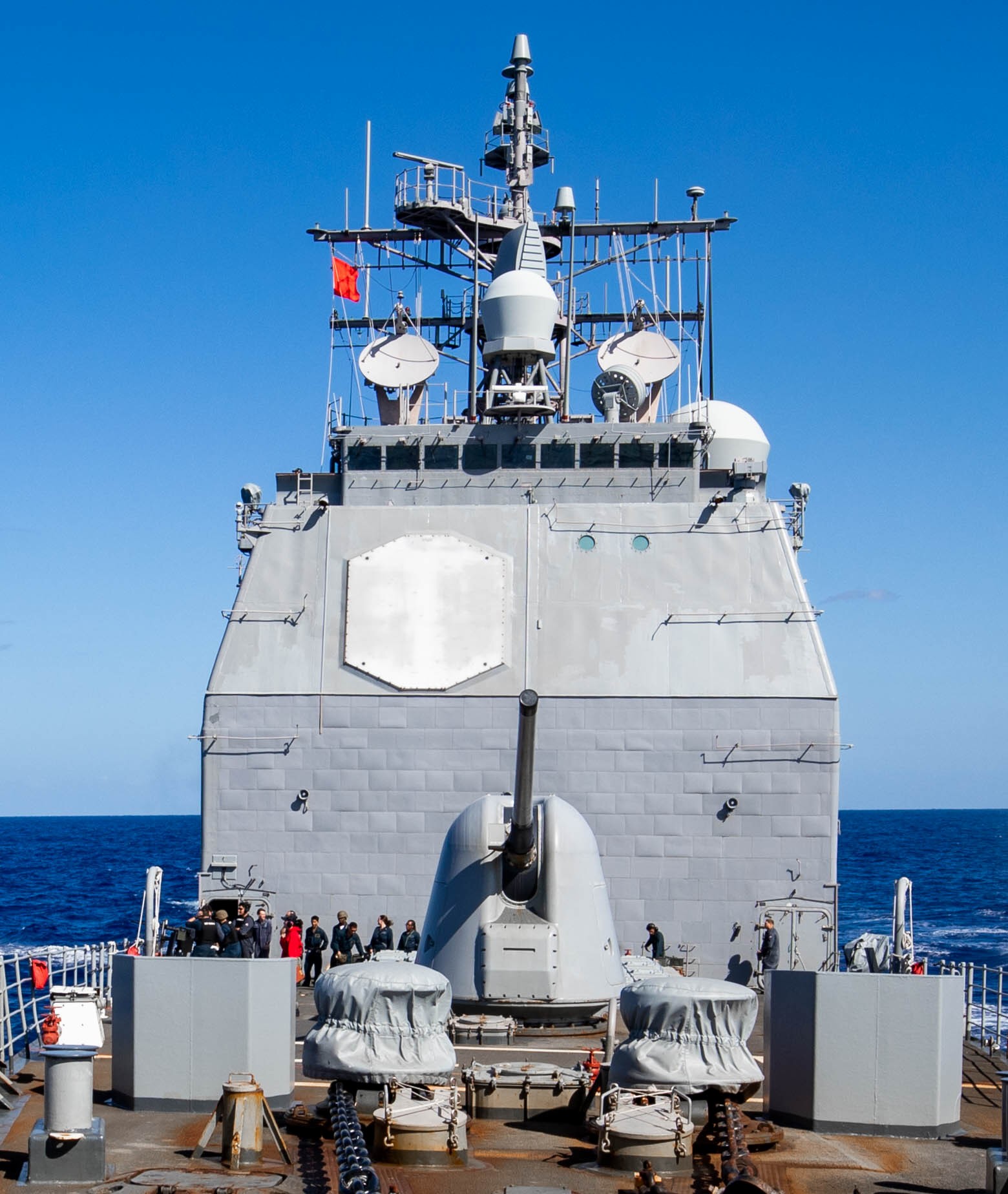 Philippine Sea - October 2023 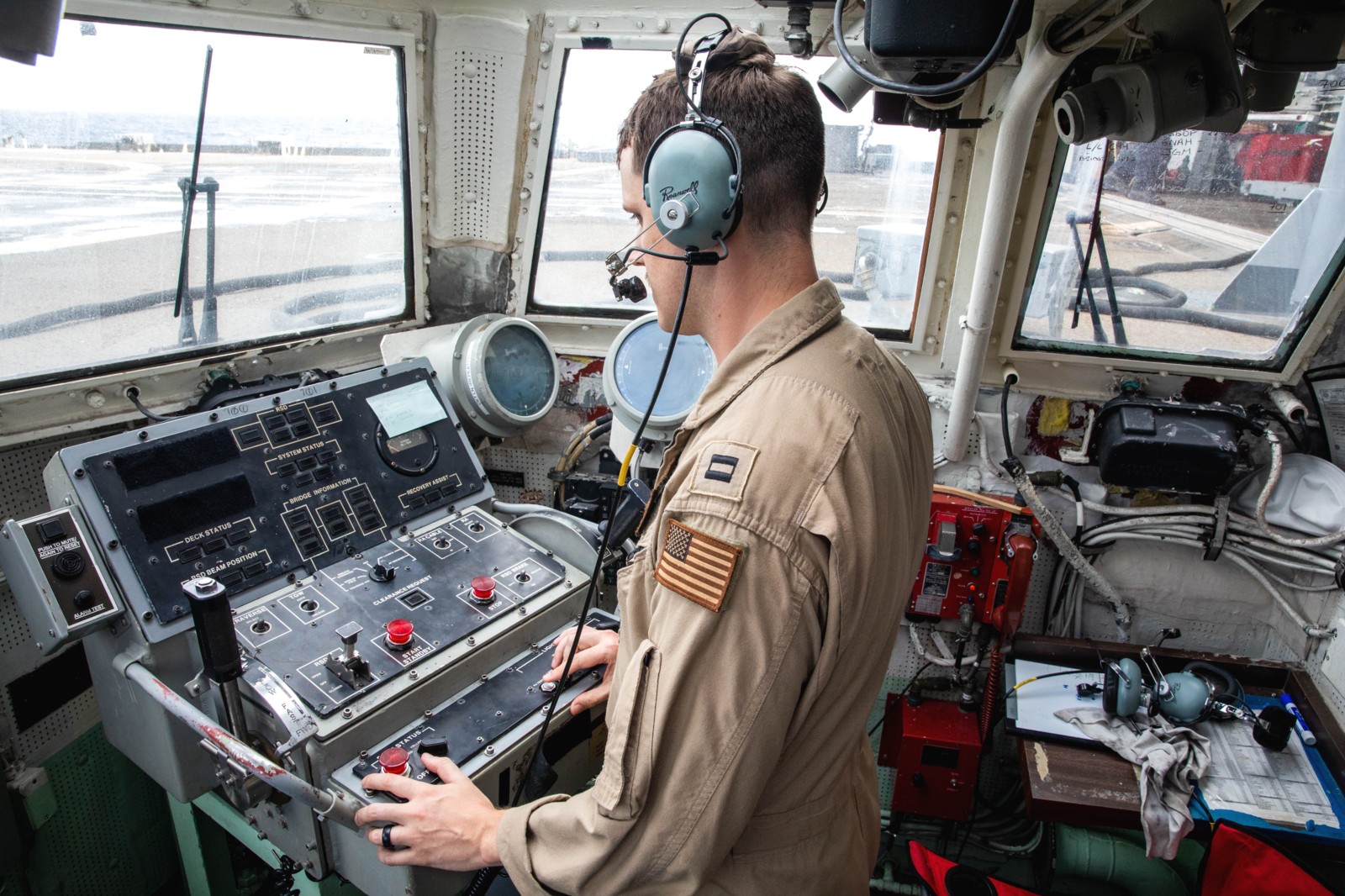 landing signal officer in the LSO shack - Philippine Sea - October 2023 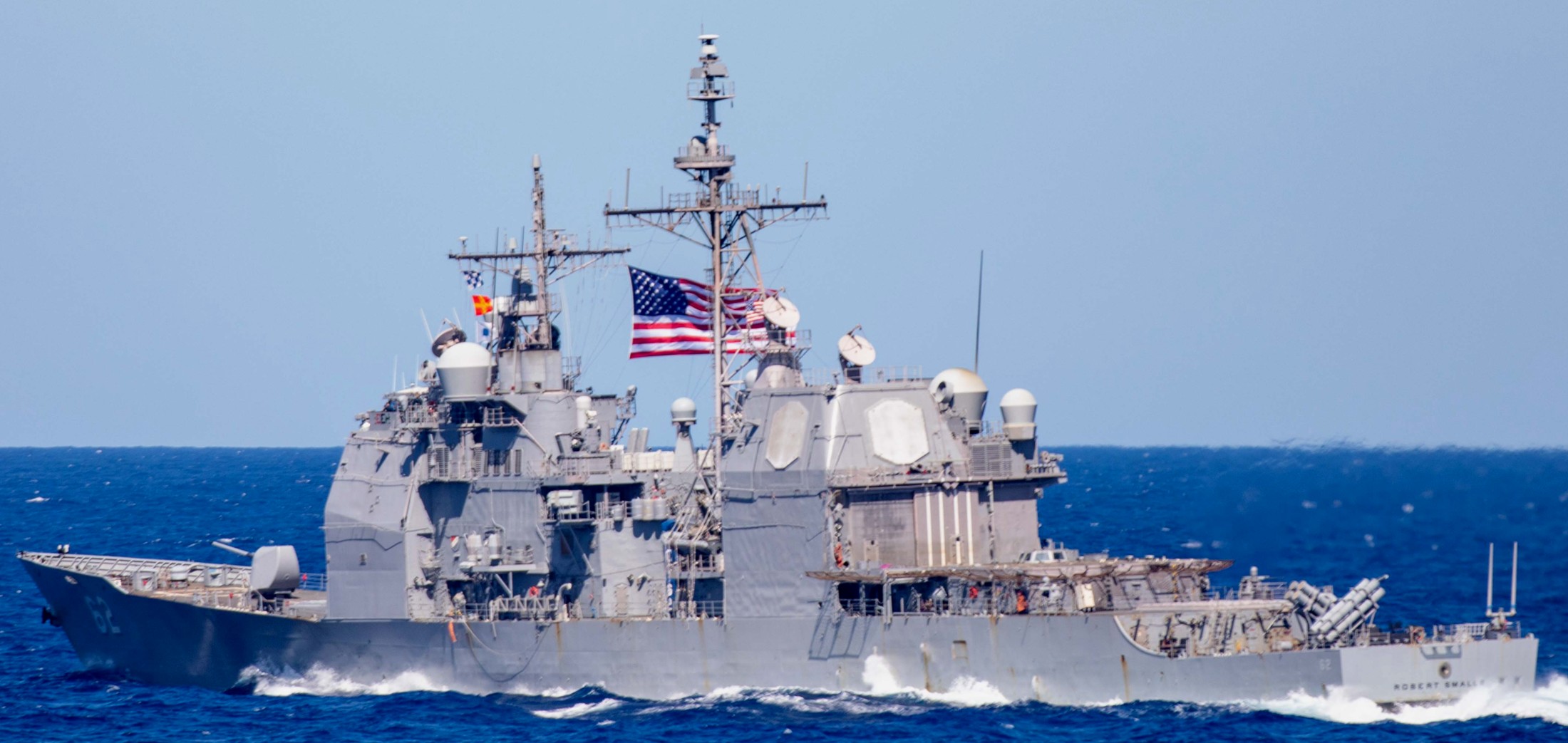 Indian Ocean - July 2023 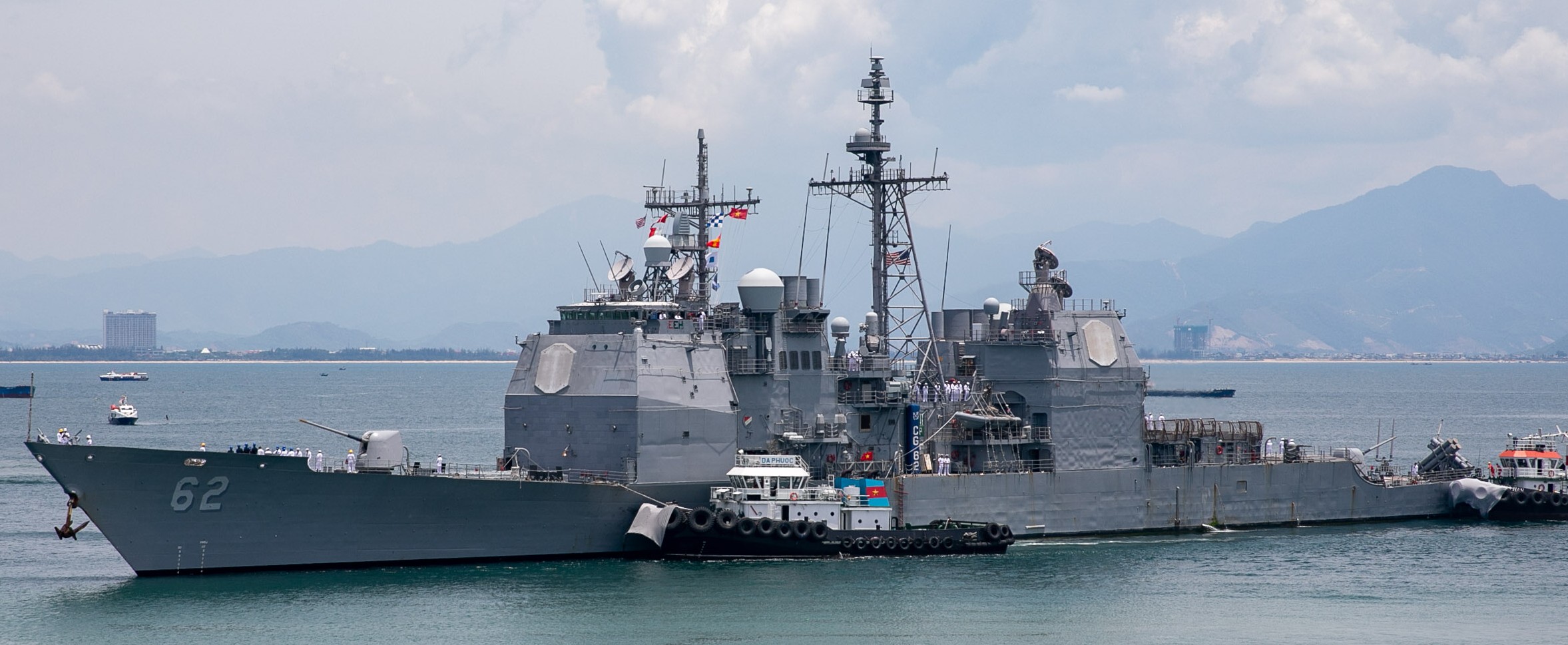 Da Nang, Vietnam - June 2023 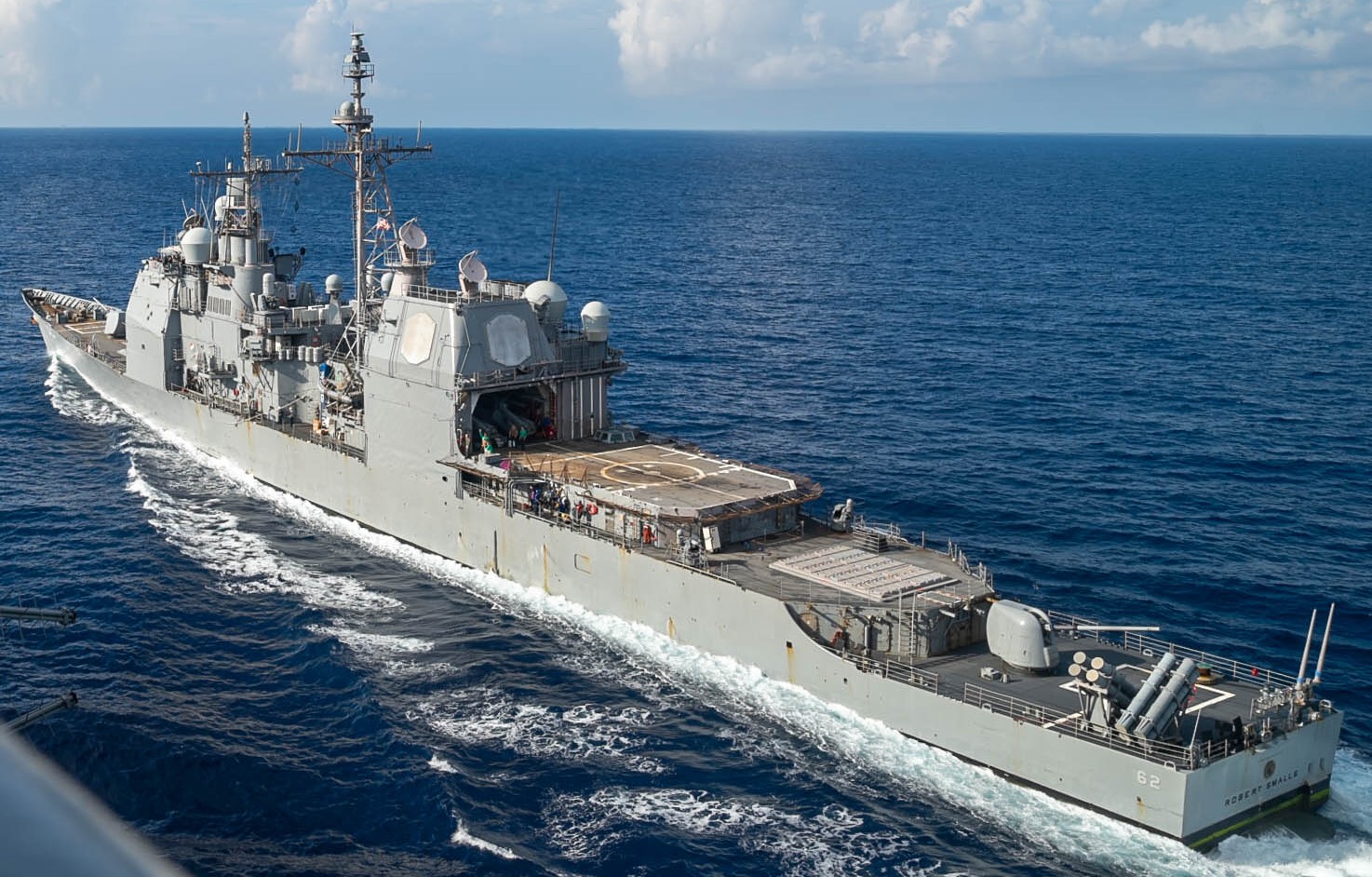 Philippine Sea - June 2023 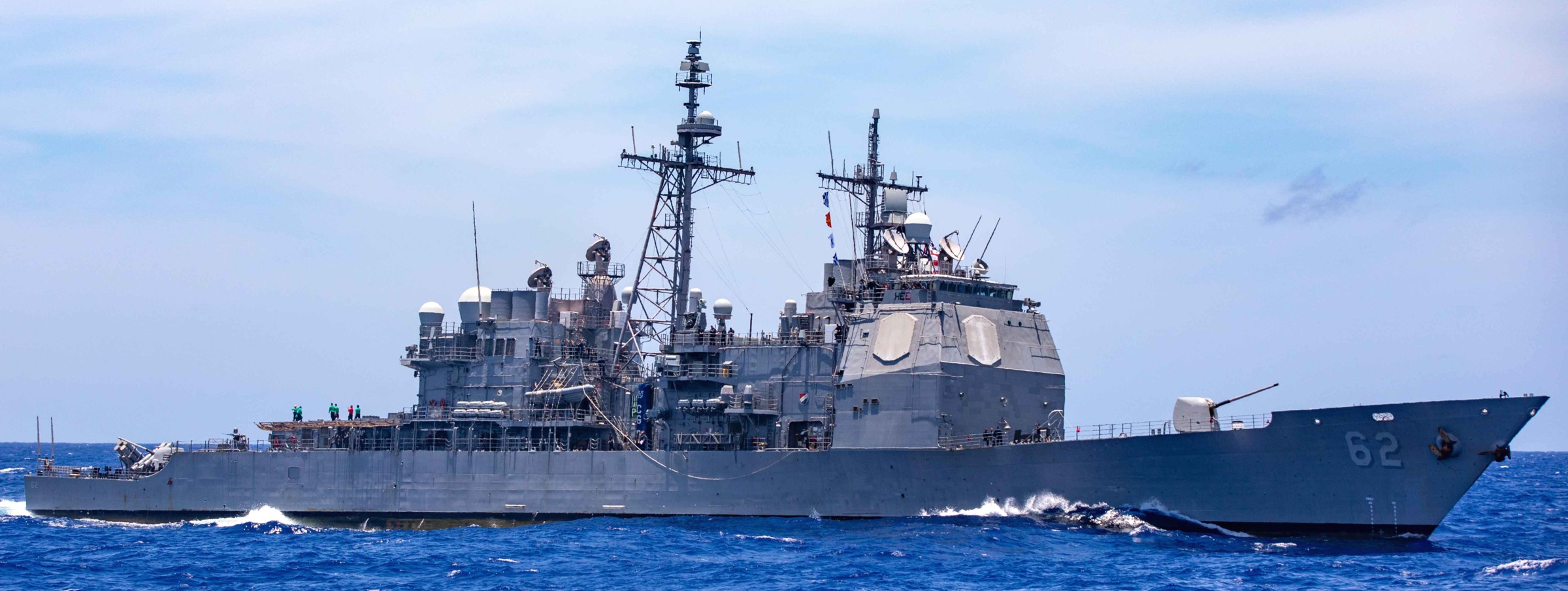 Philippine Sea - June 2023 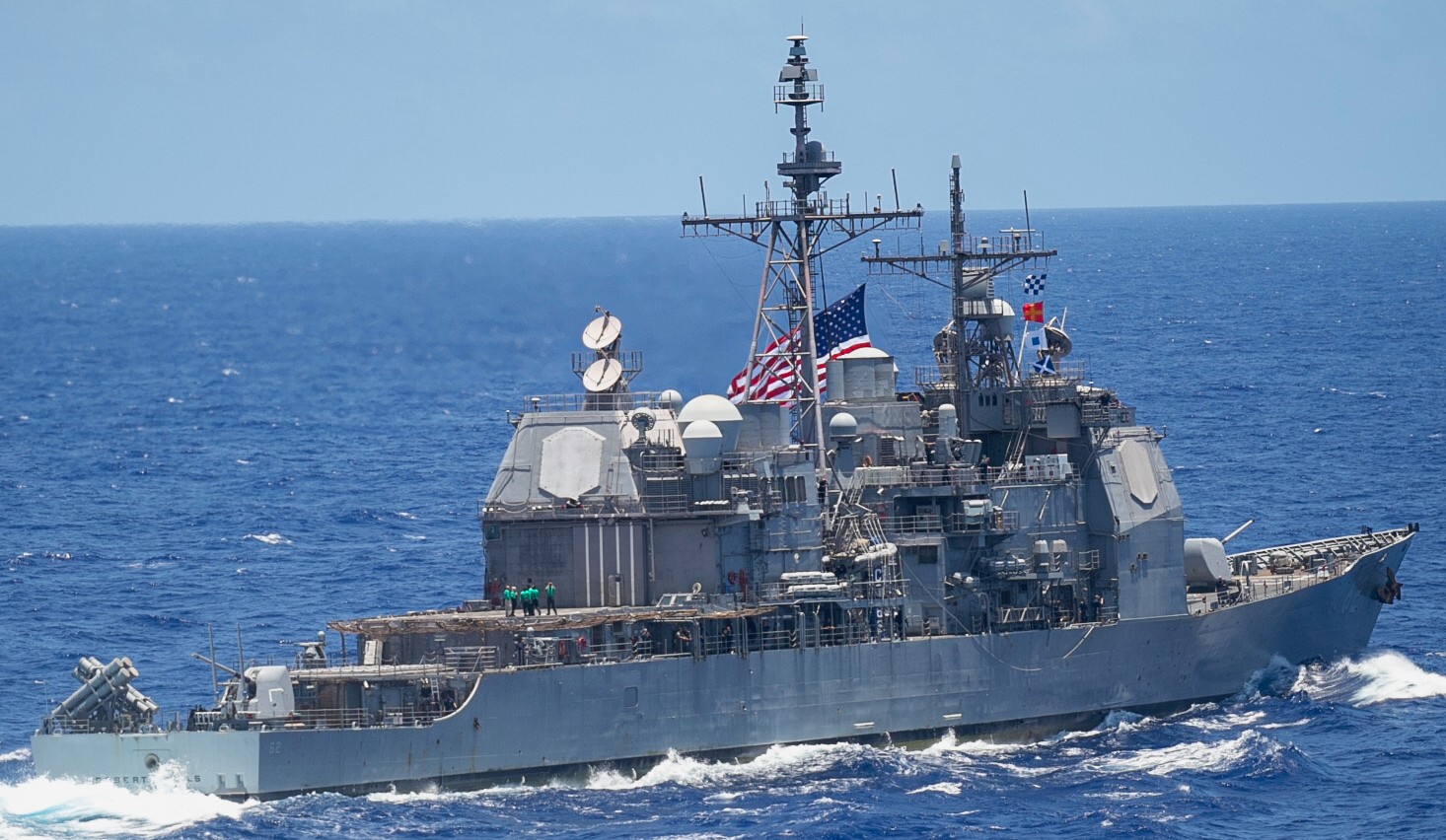 Philippine Sea - June 2023 renamed USS Robert Smalls on March 1, 2023 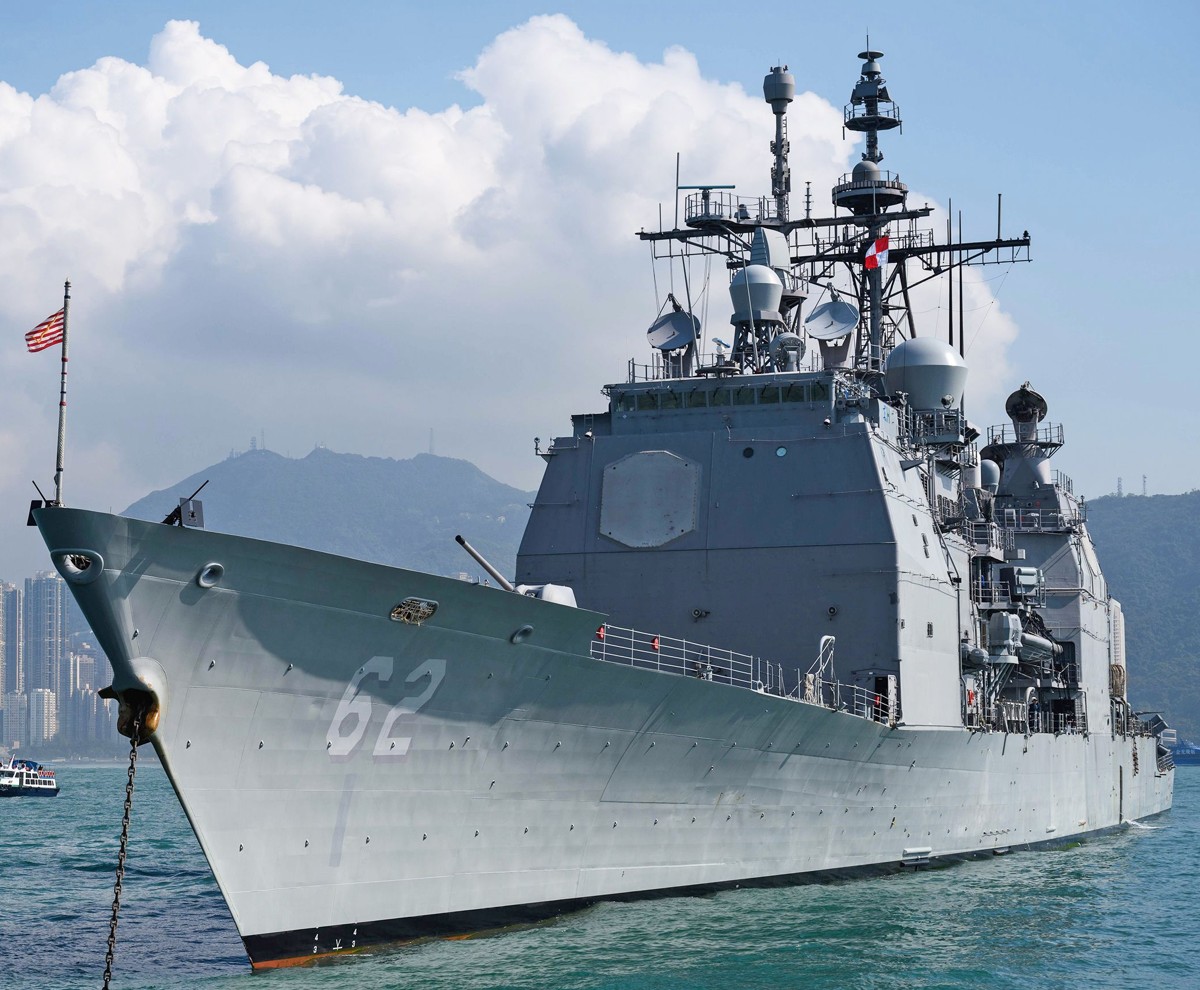 February 2023 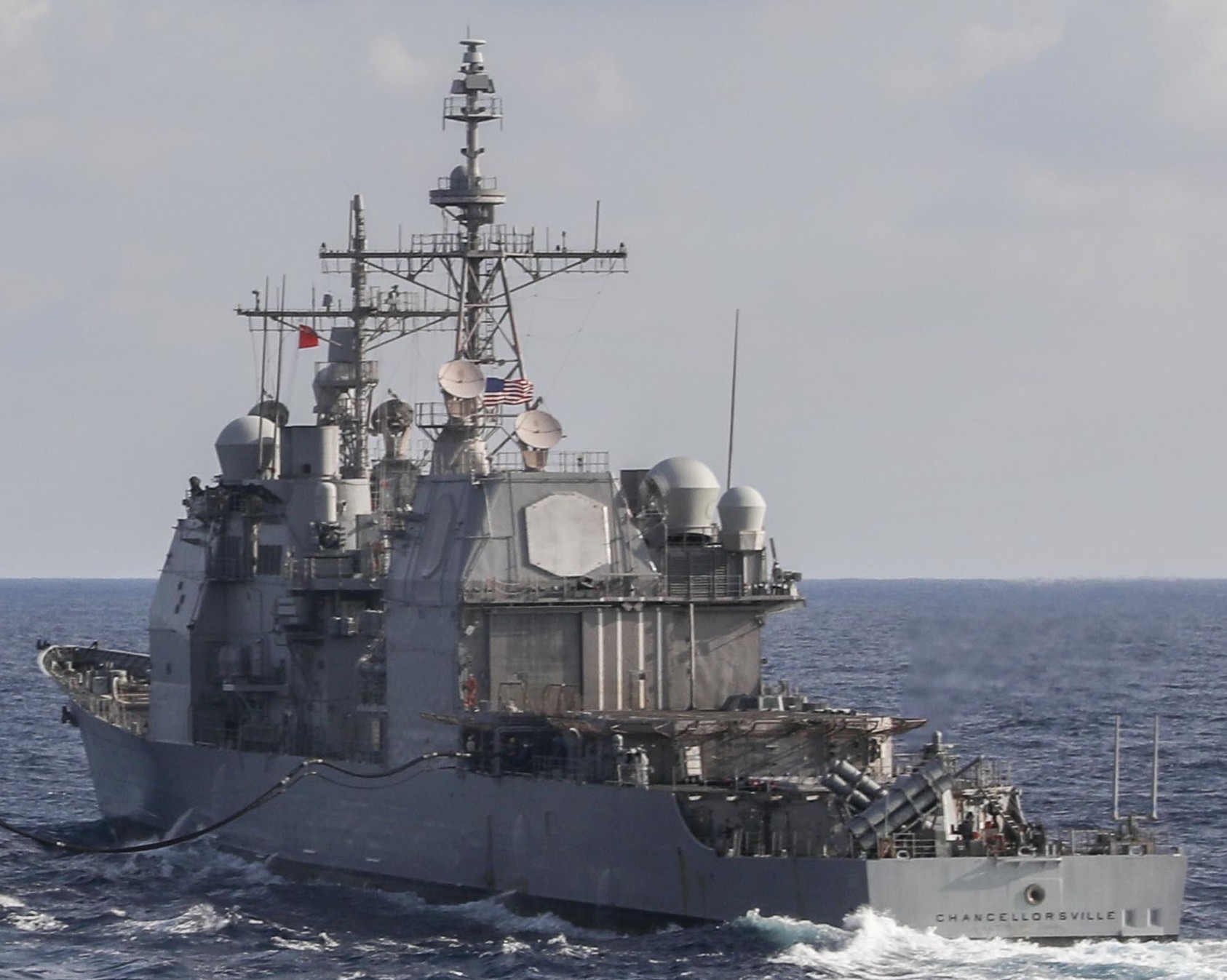 Philippine Sea - January 2023 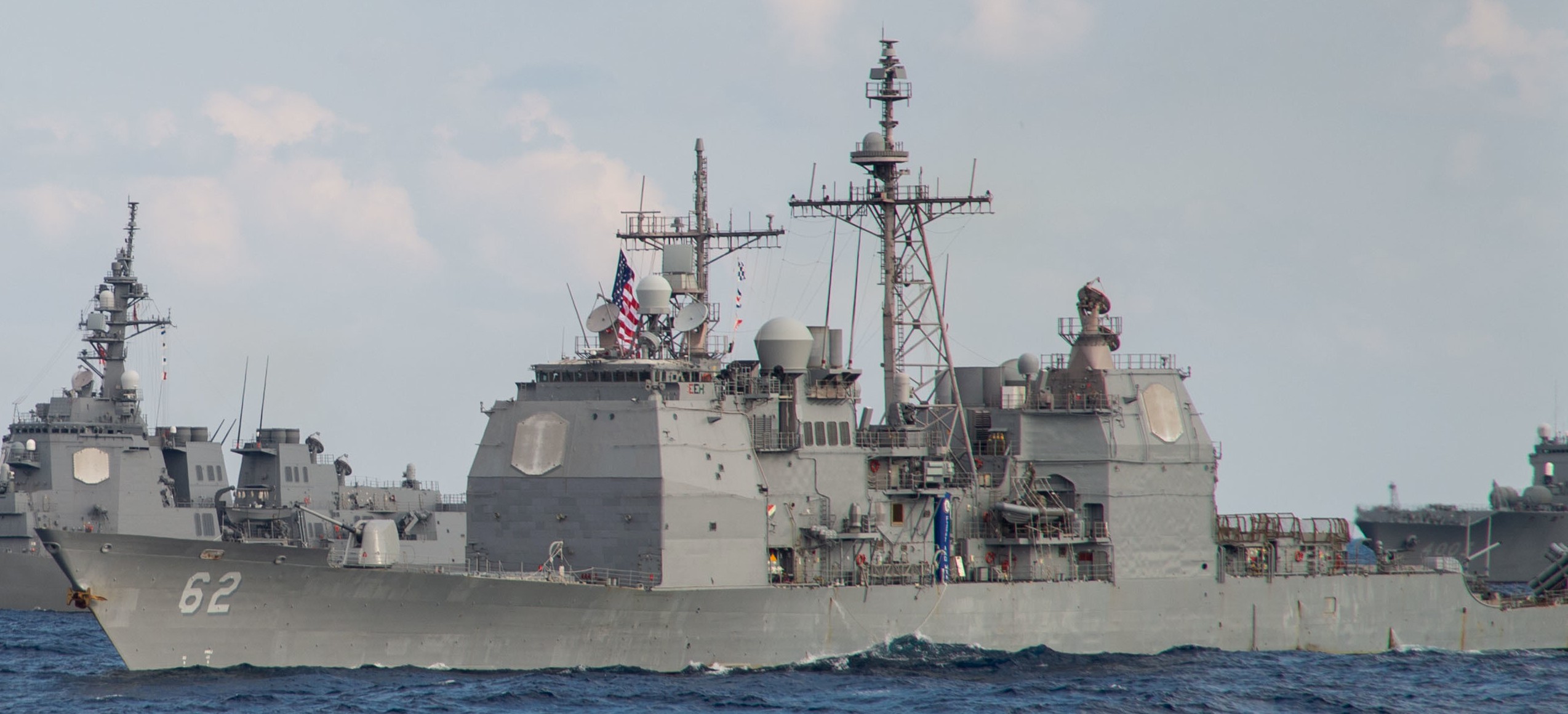 Philippine Sea - November 2022 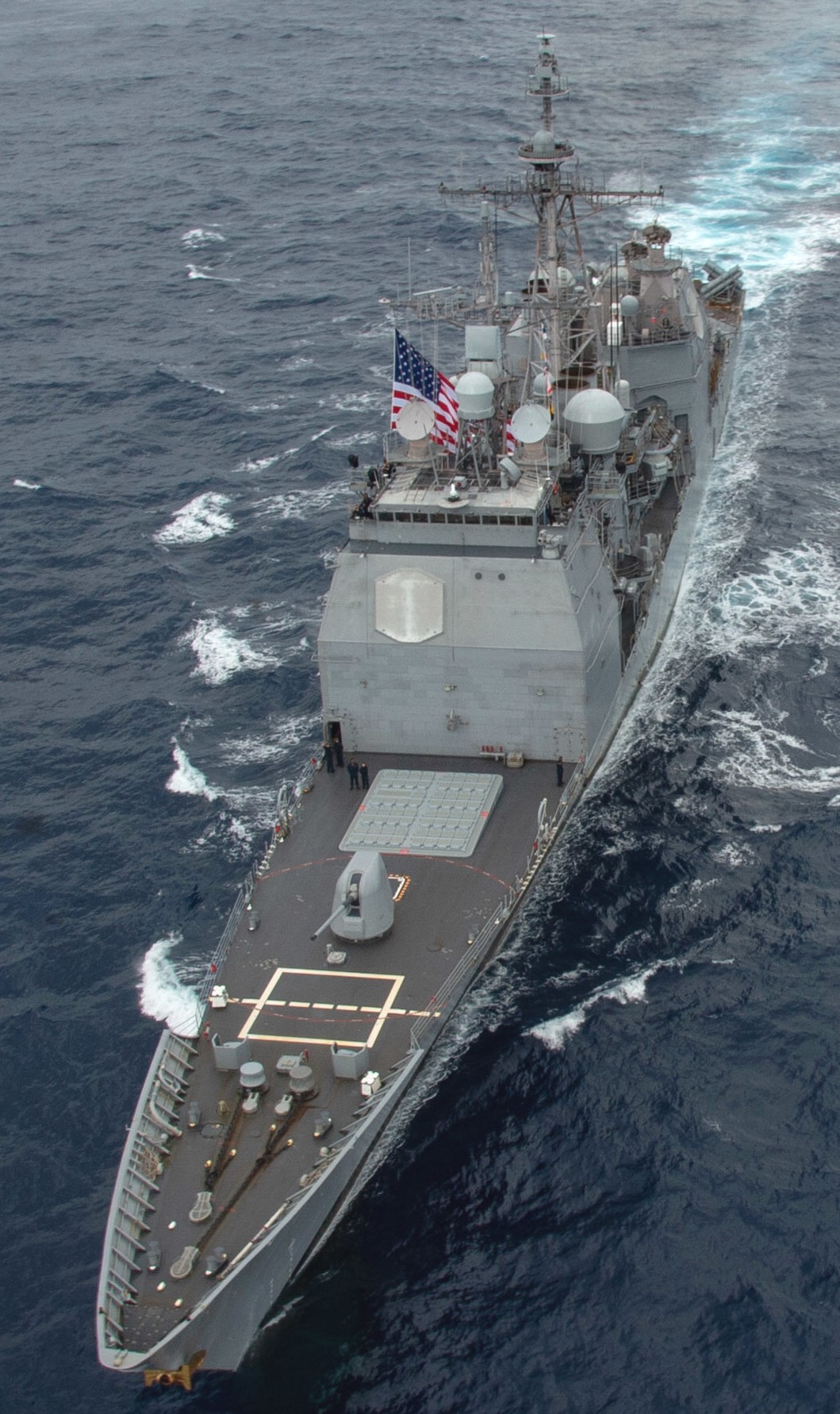 Philippine Sea - November 2022 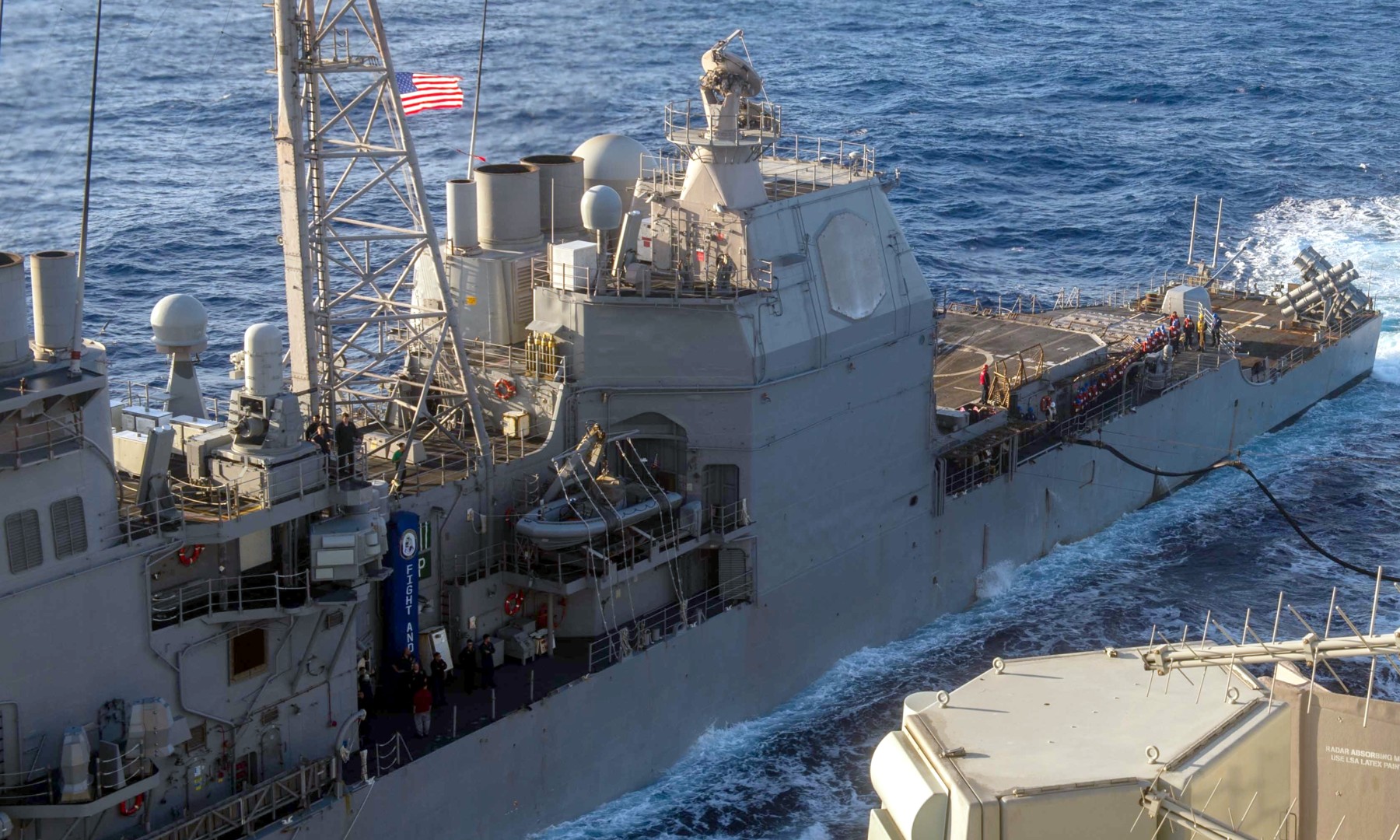 Philippine Sea - November 2022 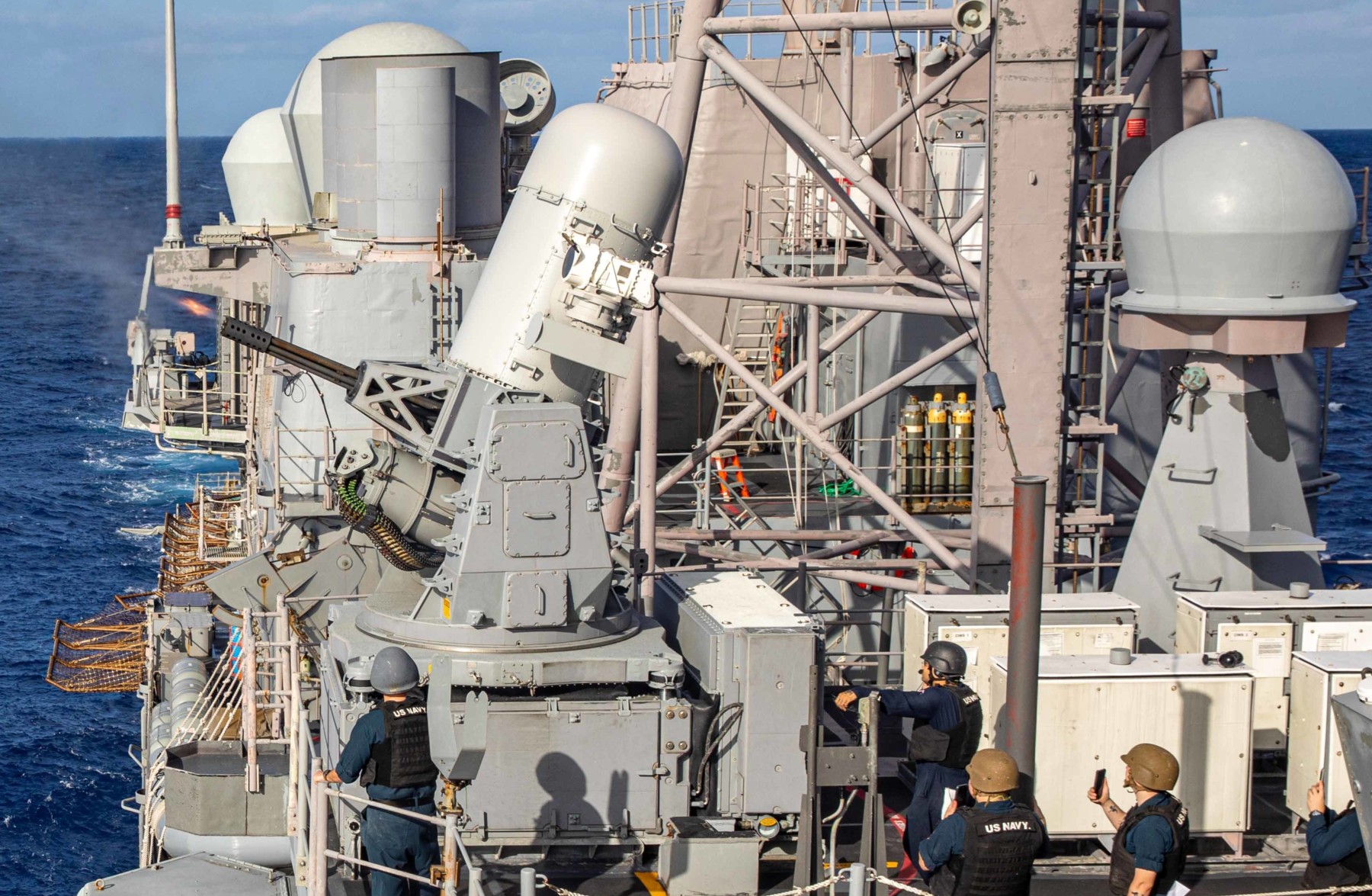 Mk.15 Phalanx CIWS fire exercise - Philippine Sea - October 2022 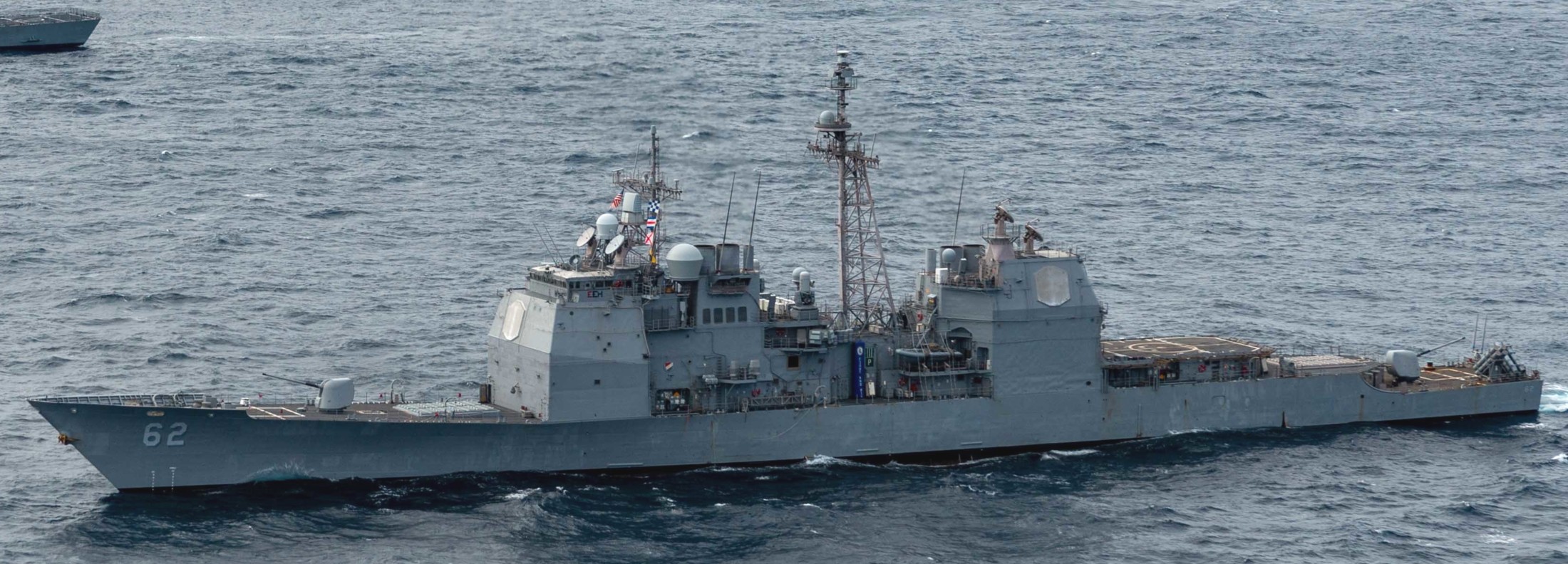 Sea of Japan - October 2022 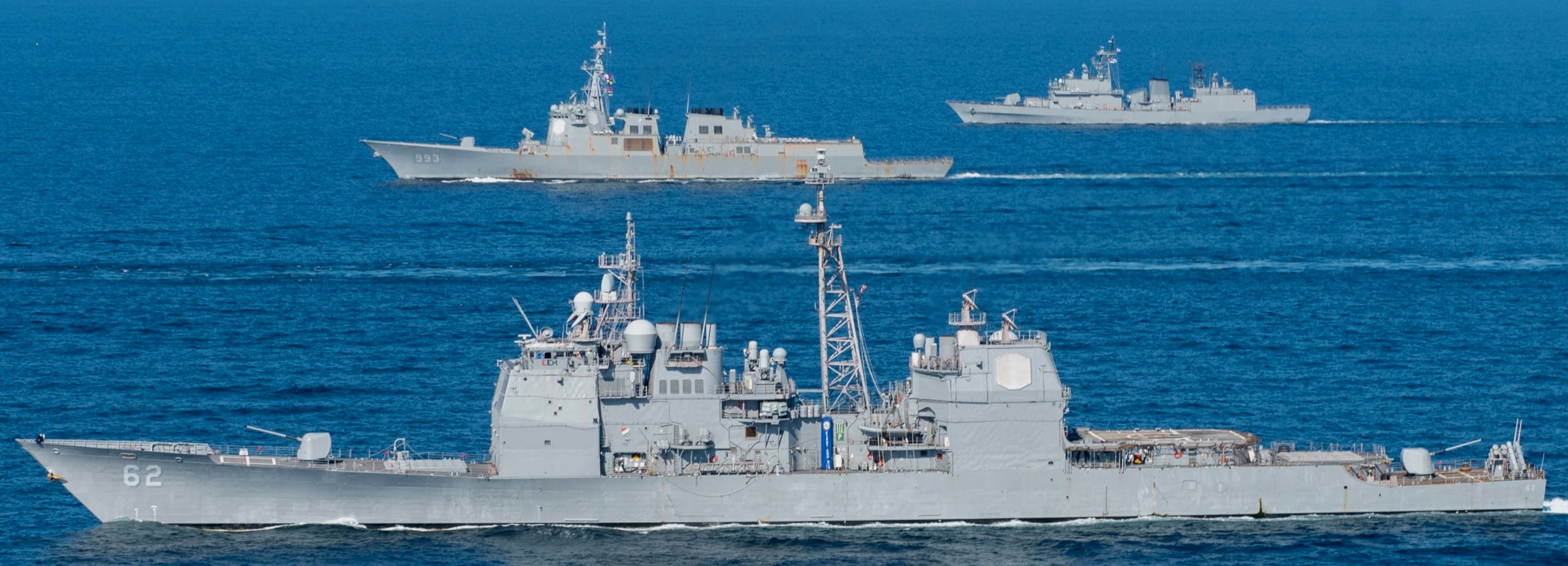 off Korea - September 2022 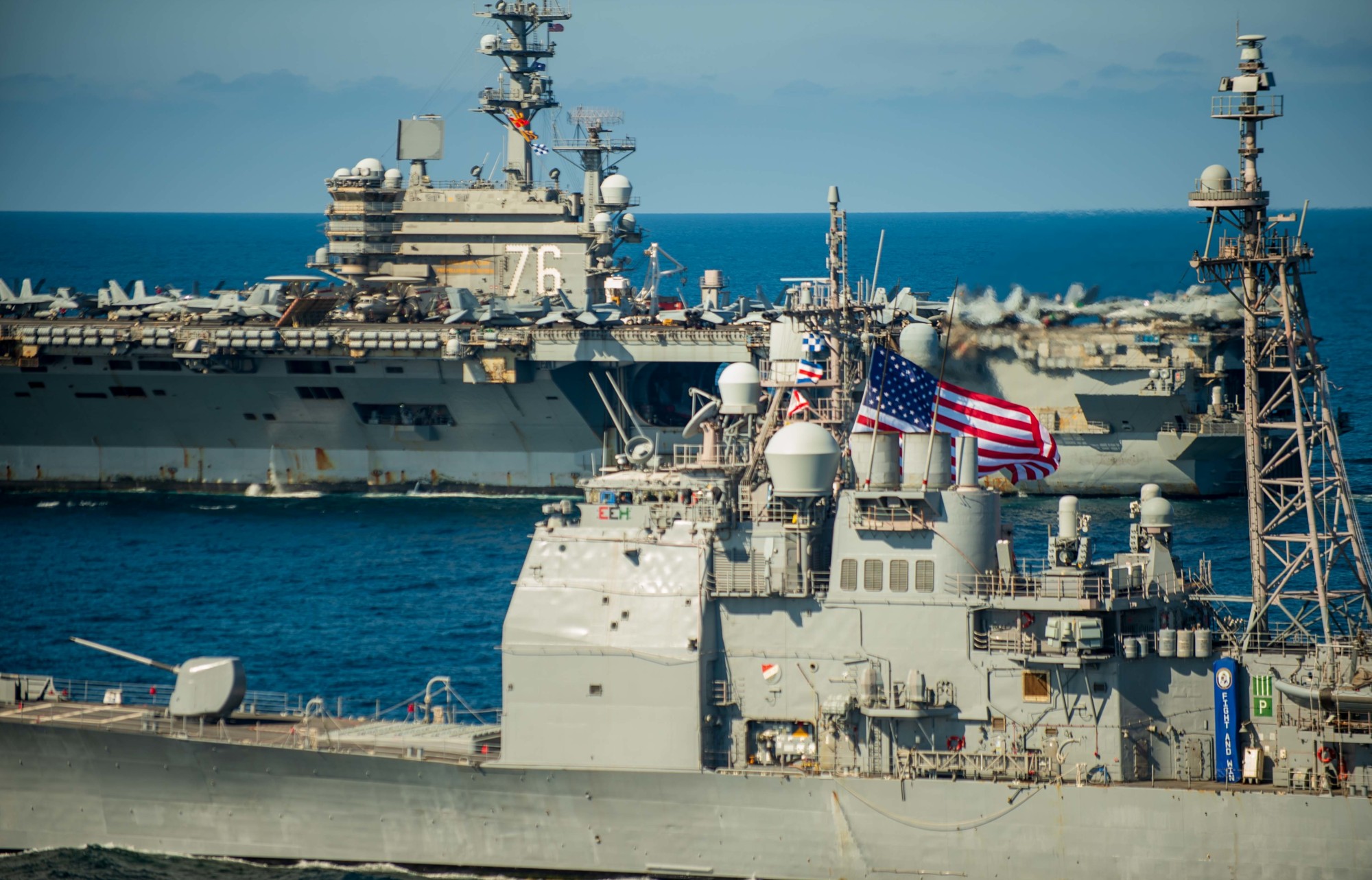 off Korea - September 2022 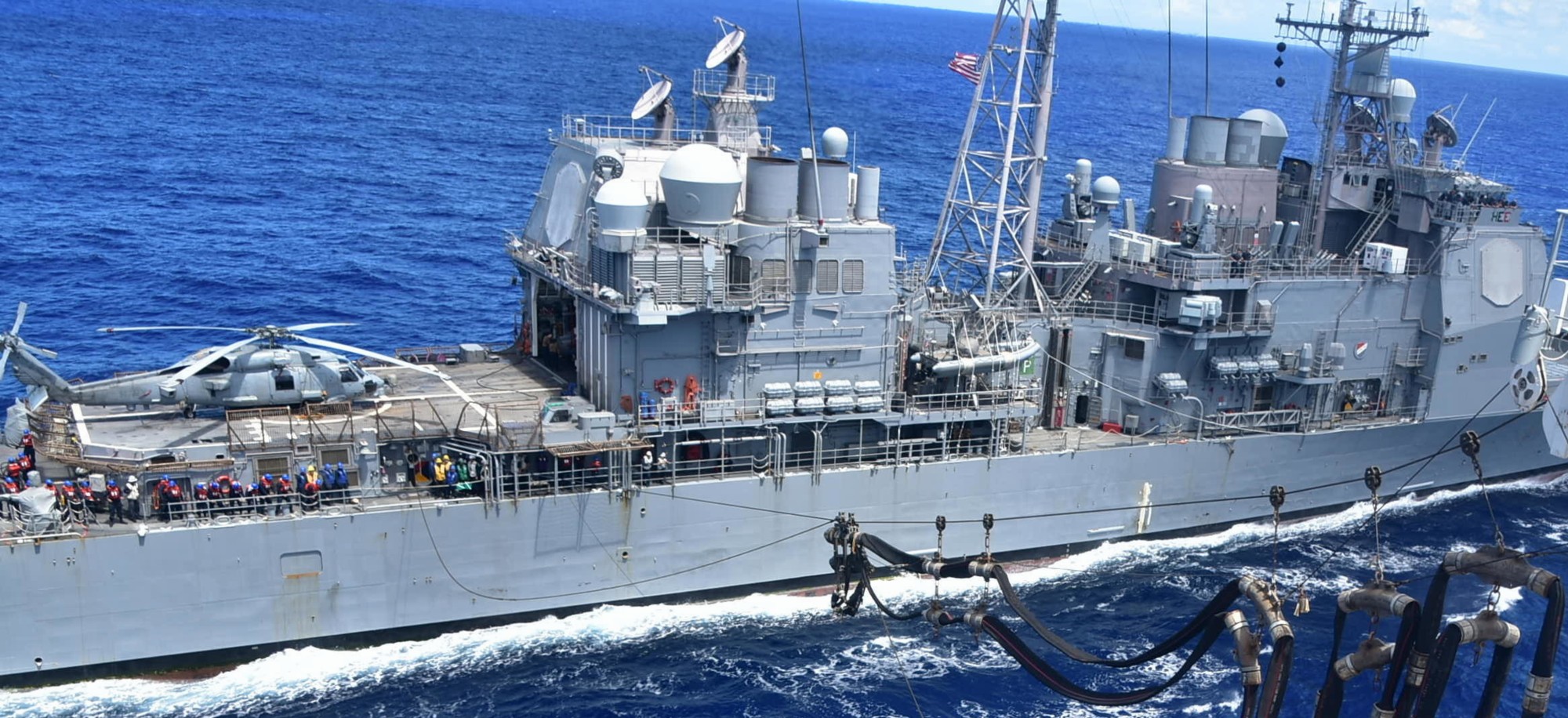 Philippine Sea - August 2022 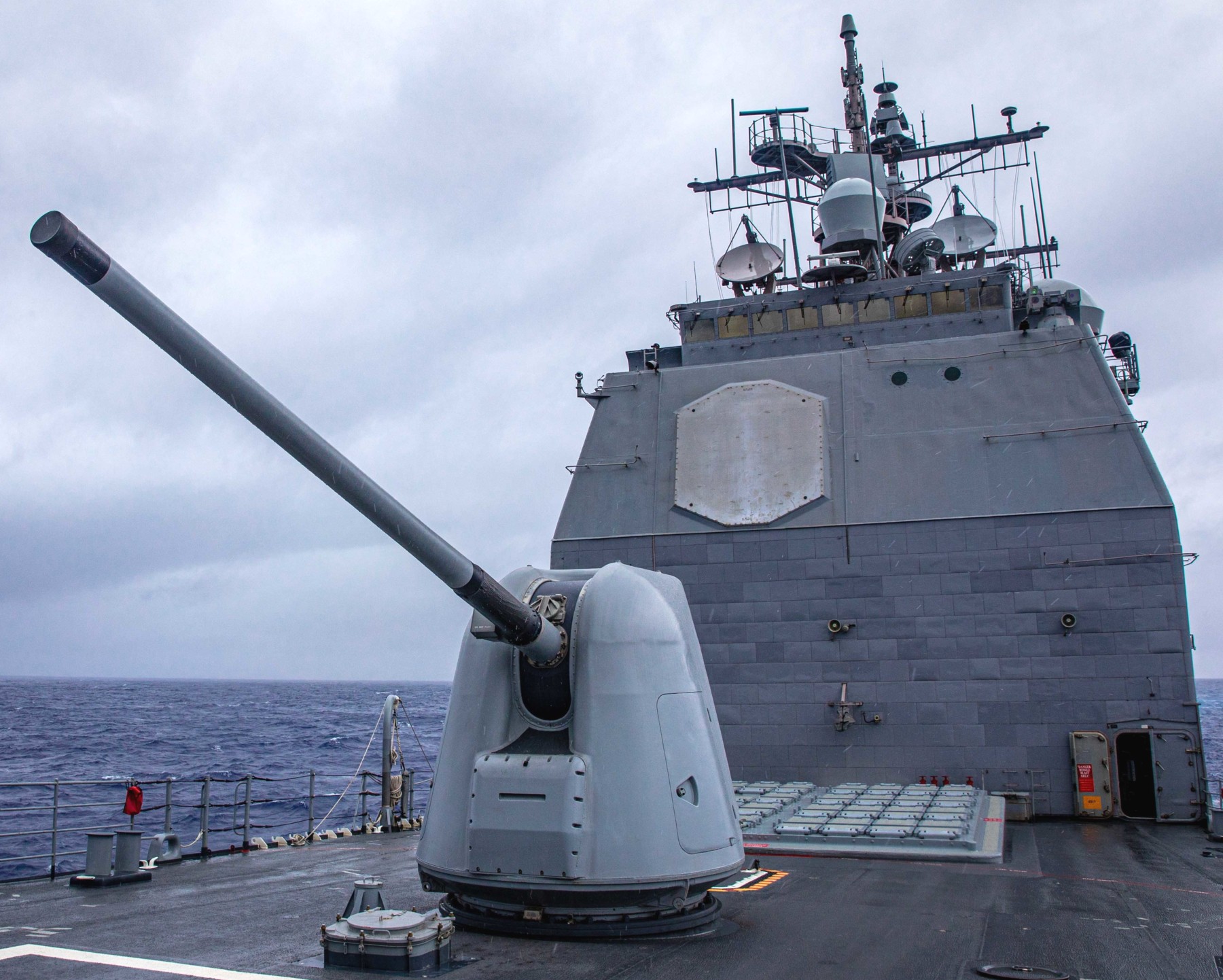 Philippine Sea - June 2022 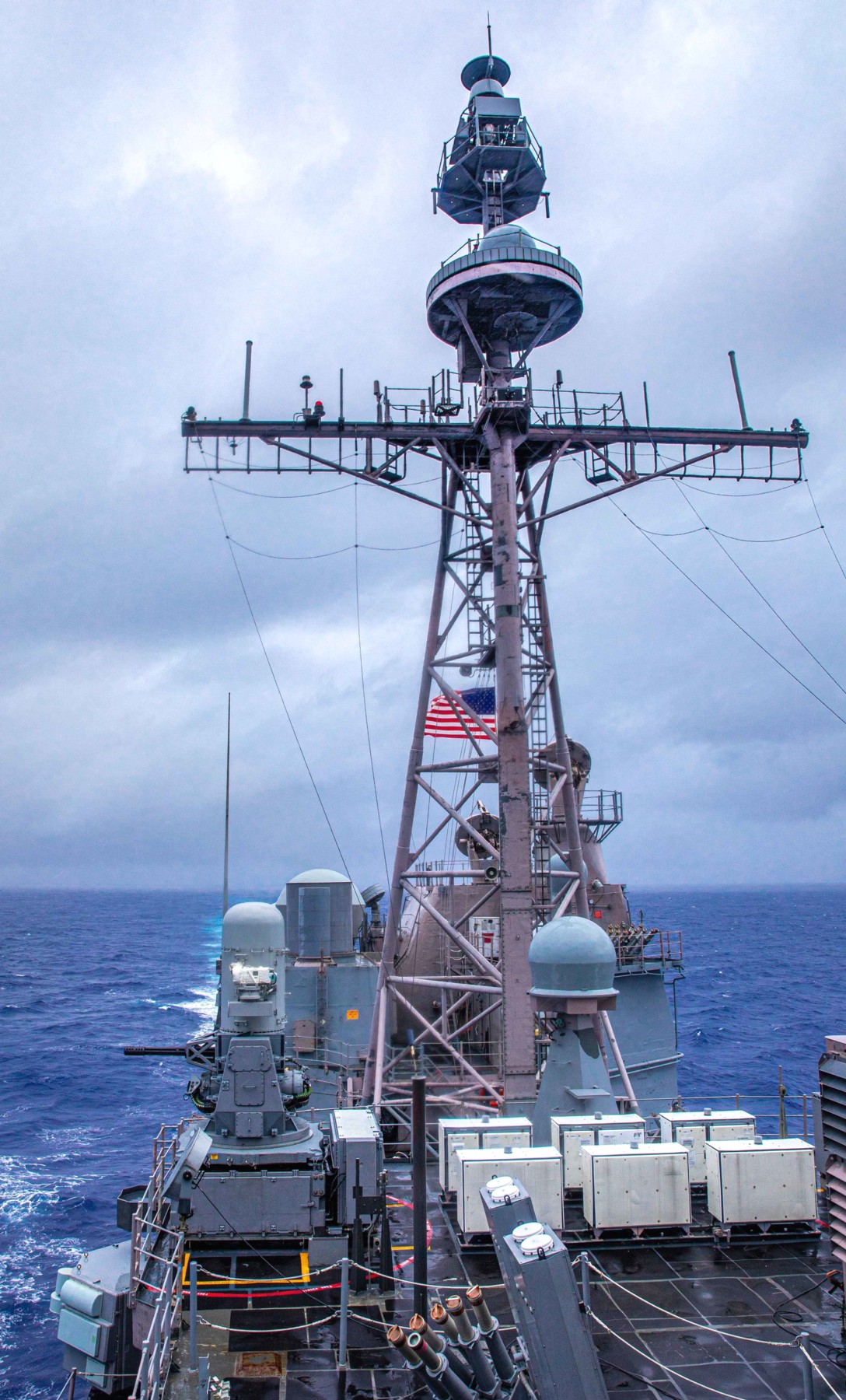 Philippine Sea - June 2022 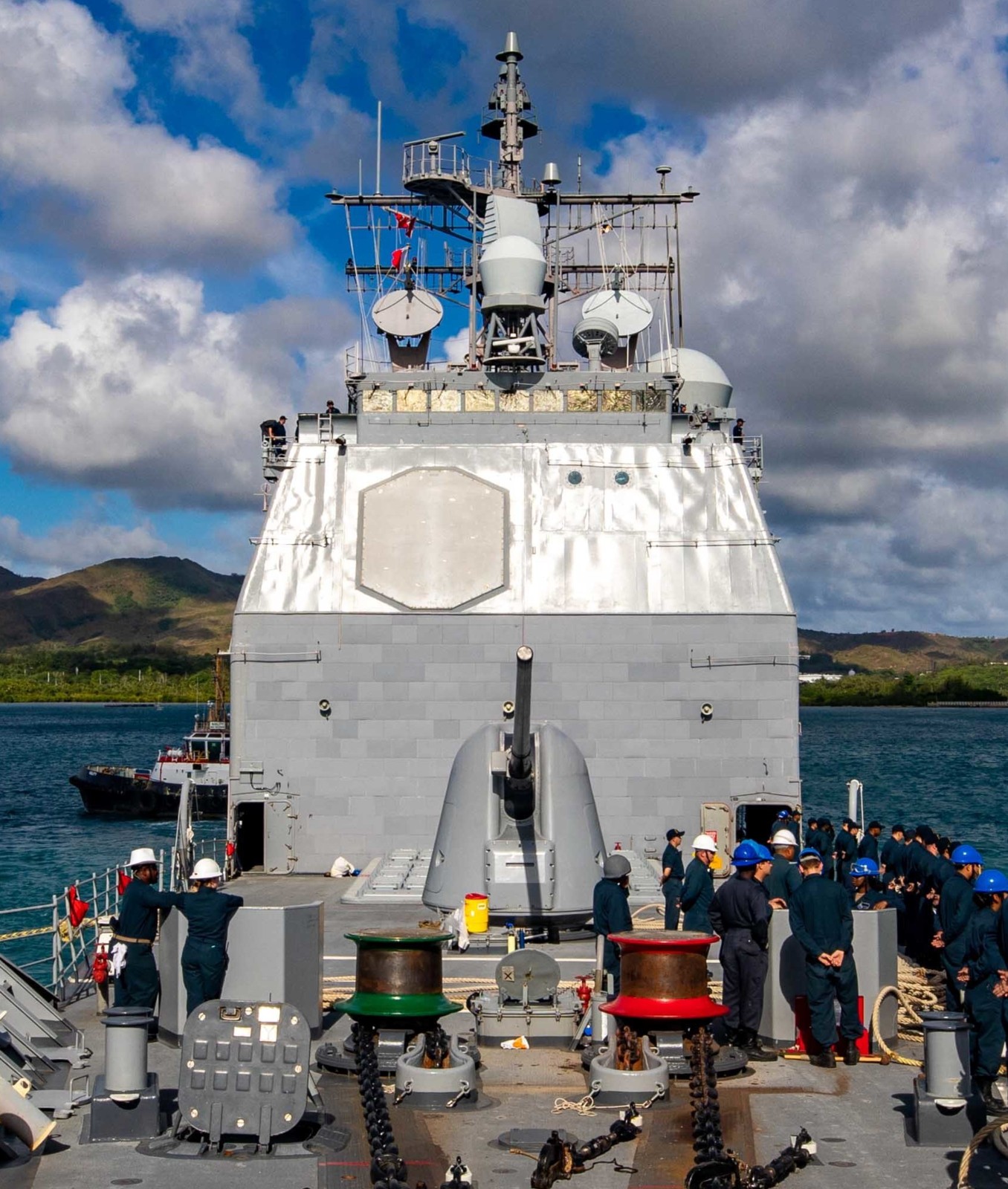 Apra Harbor, Guam - June 2022 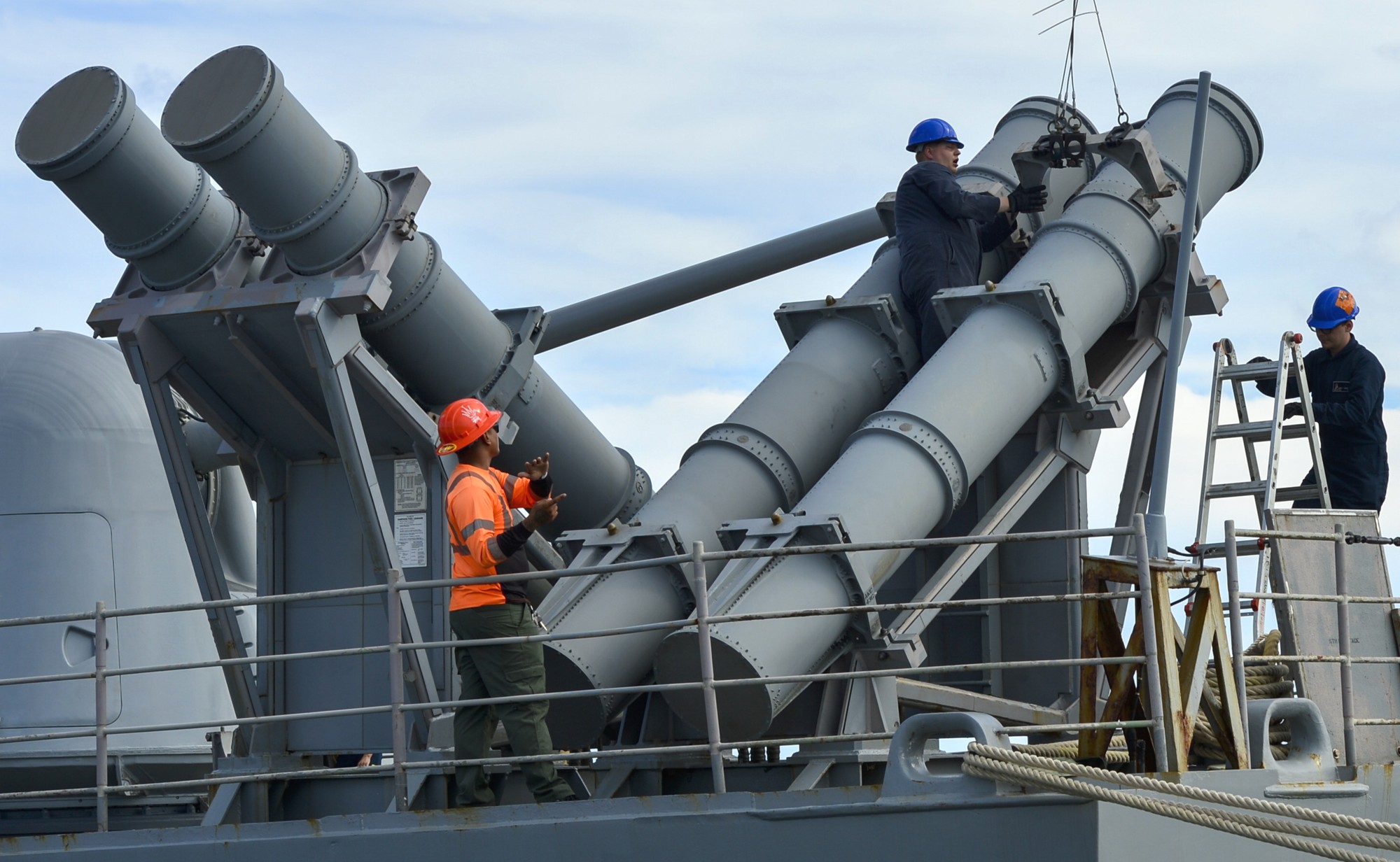 RGM-84 Harpoon SSM onload - Guam - June 2022 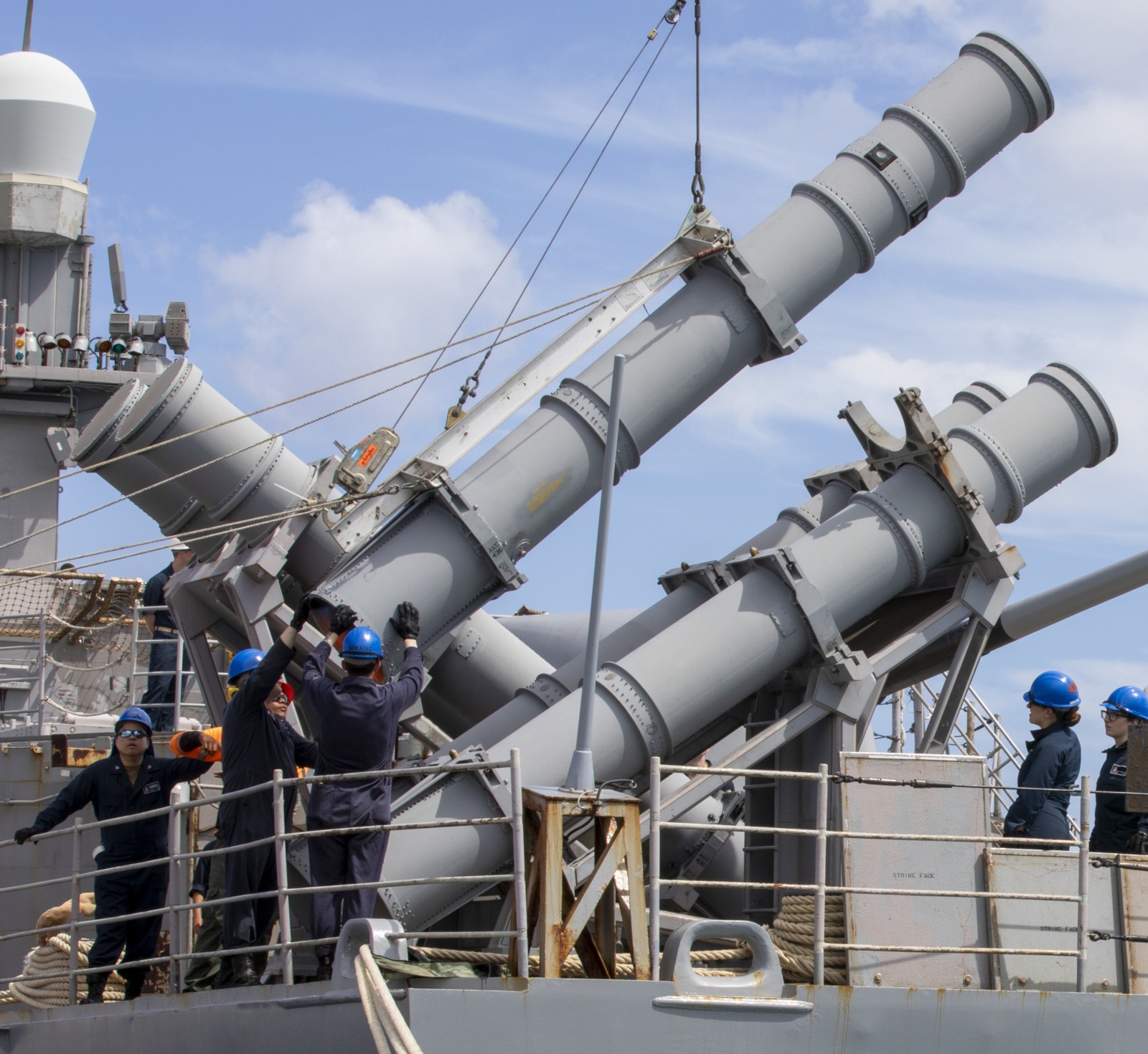 RGM-84 Harpoon SSM onload - Guam - June 2022 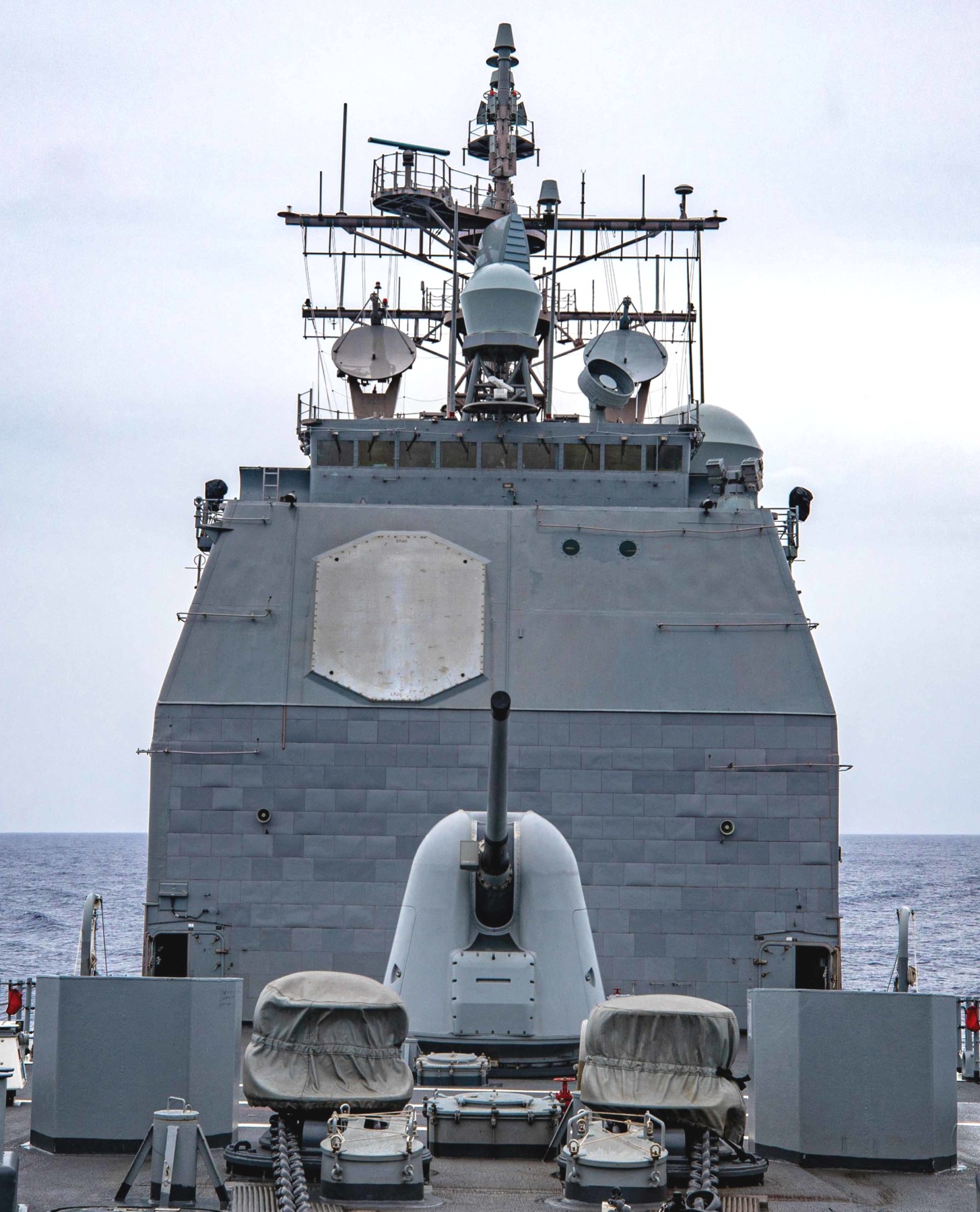 Philippine Sea - June 2022 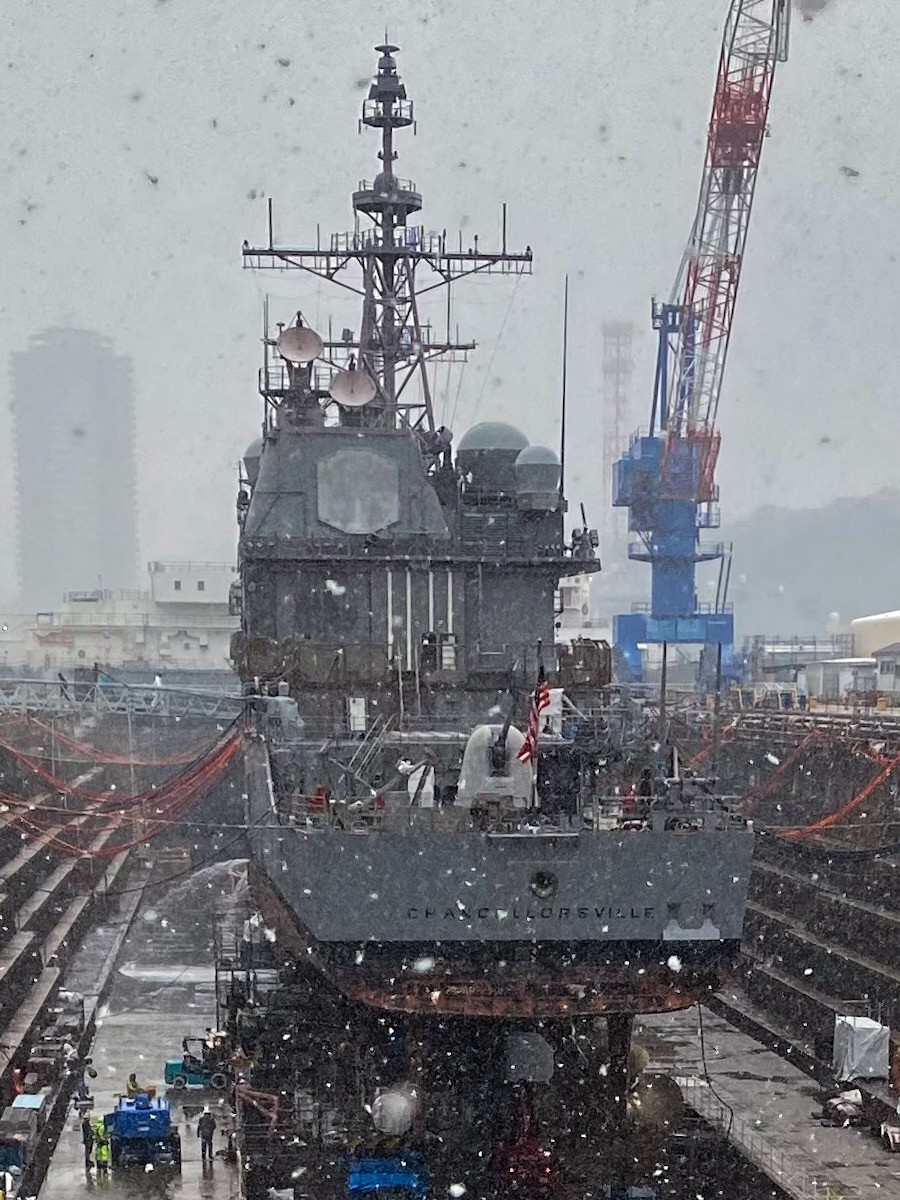 in dry-dock at Fleet Activities Yokosuka, Japan - January 2022 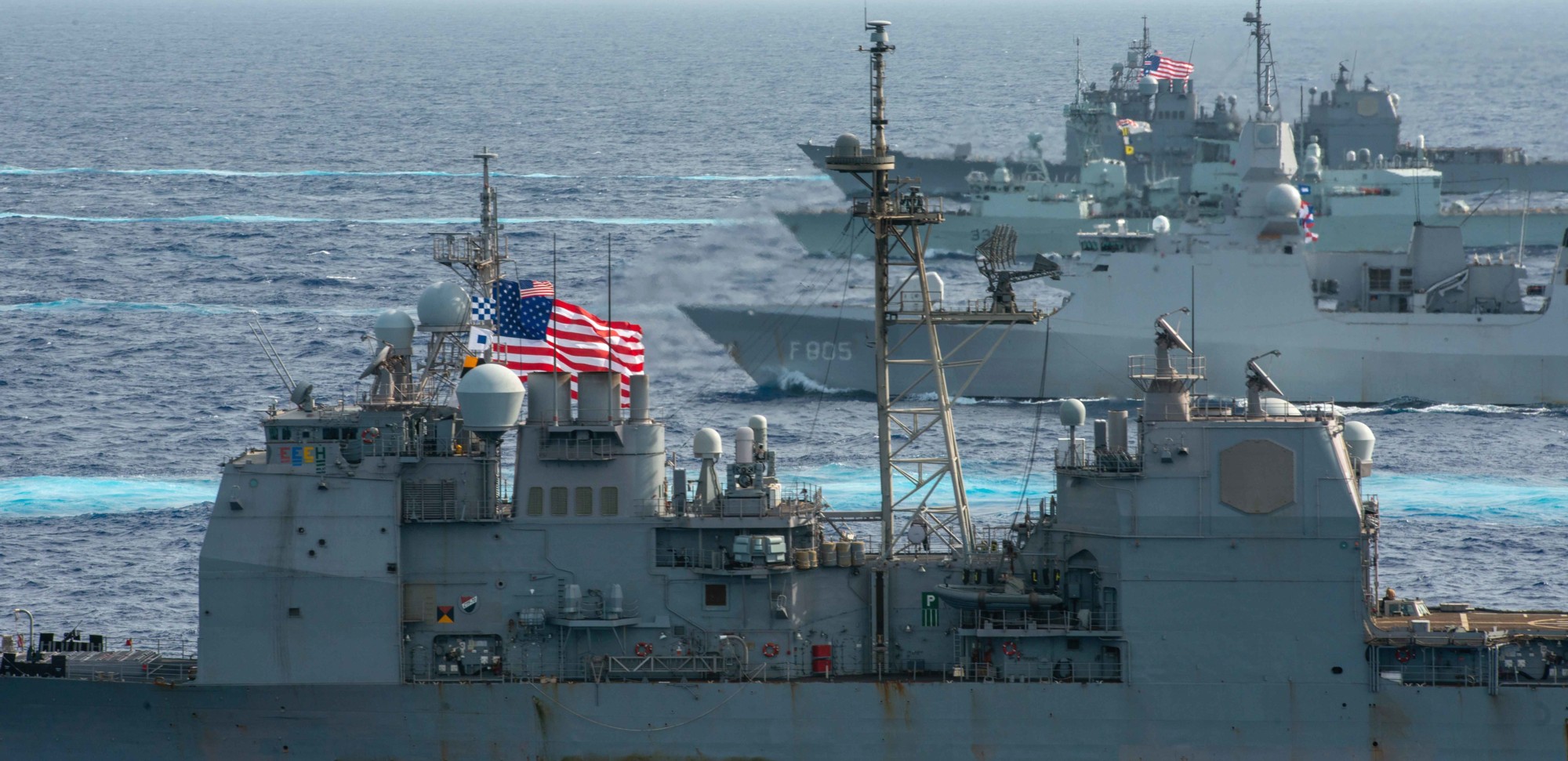 Pacific Ocean - October 2021 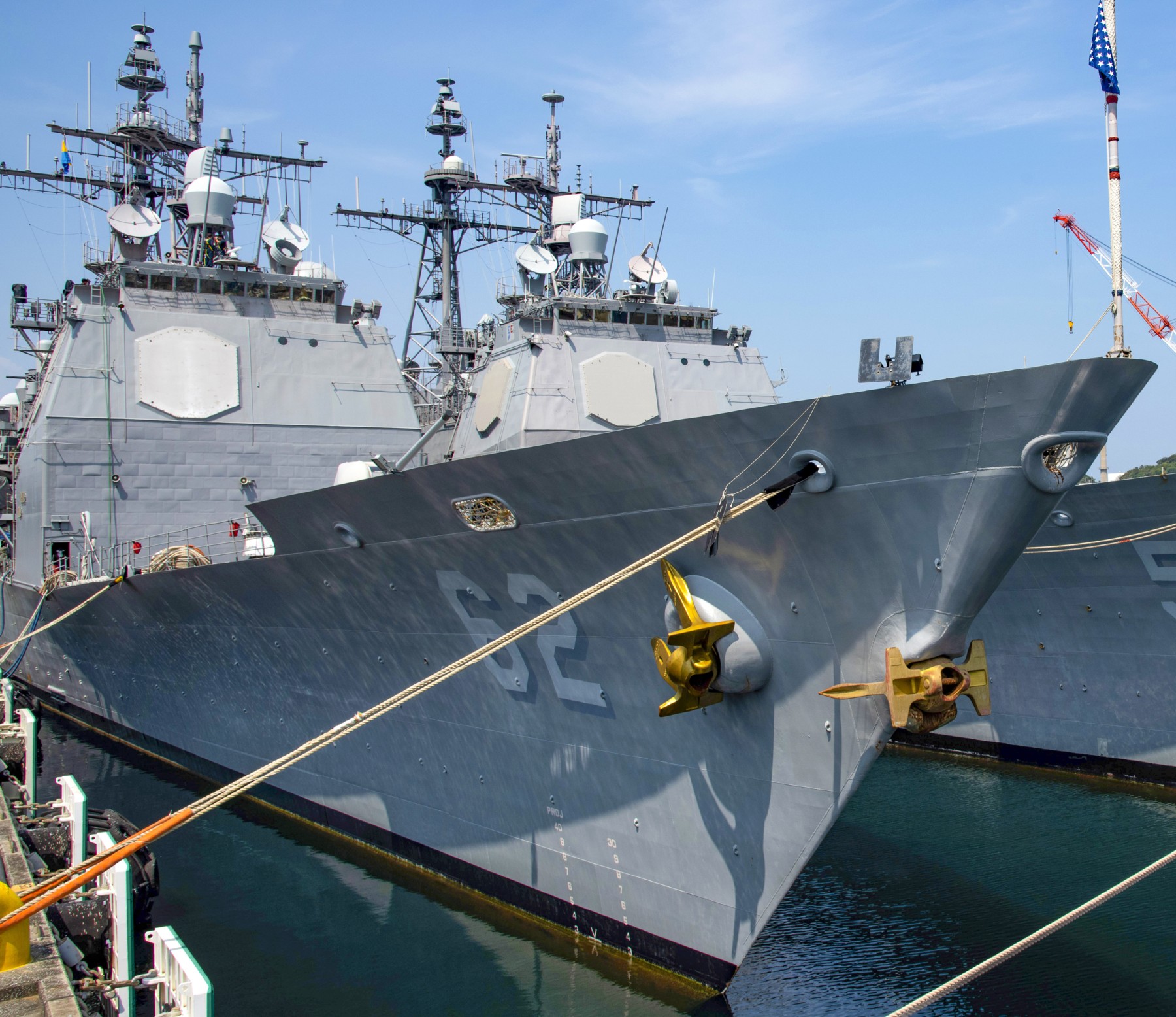 Fleet Activities Yokosuka, Japan - August 2021 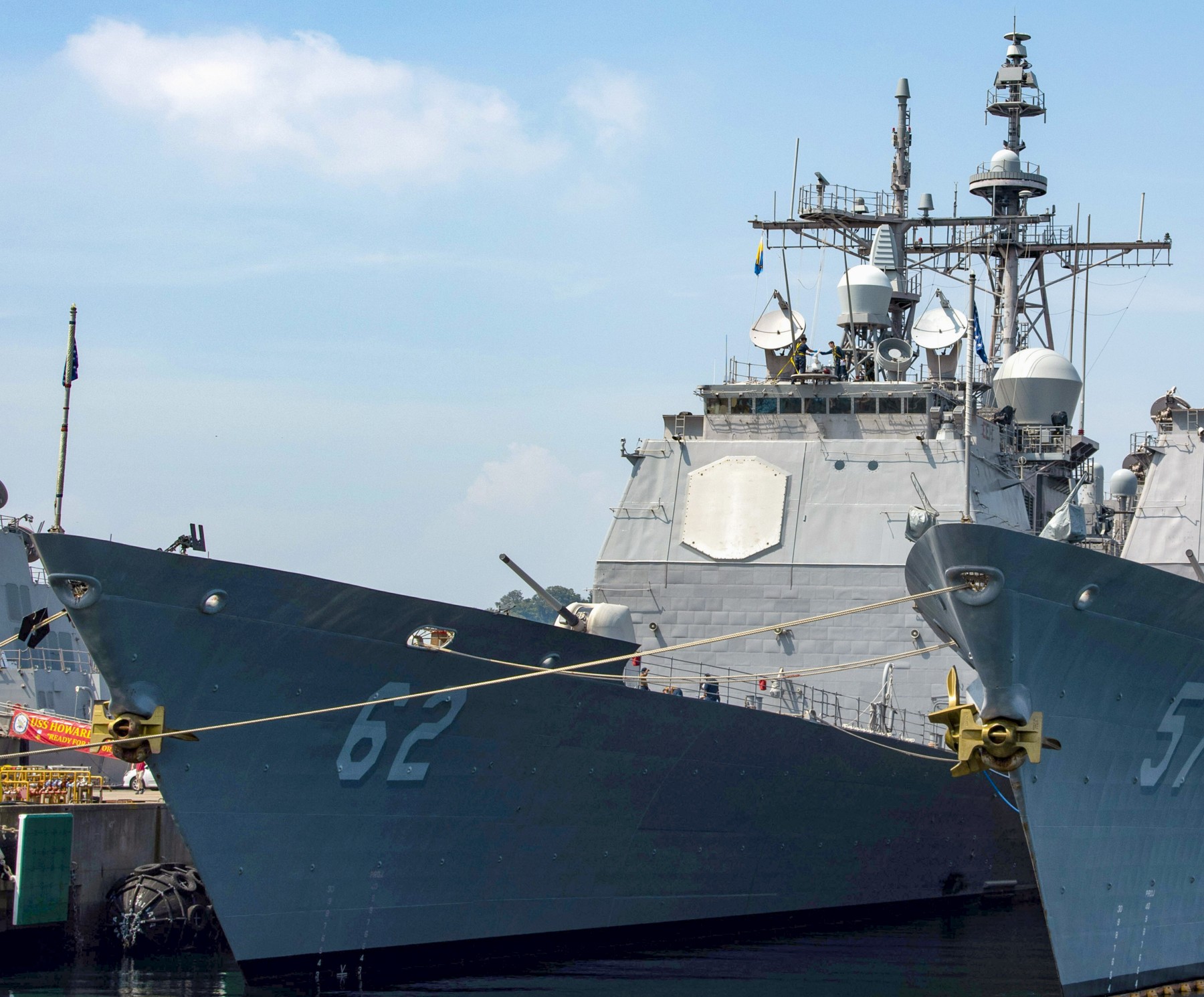 Fleet Activities Yokosuka, Japan - August 2021 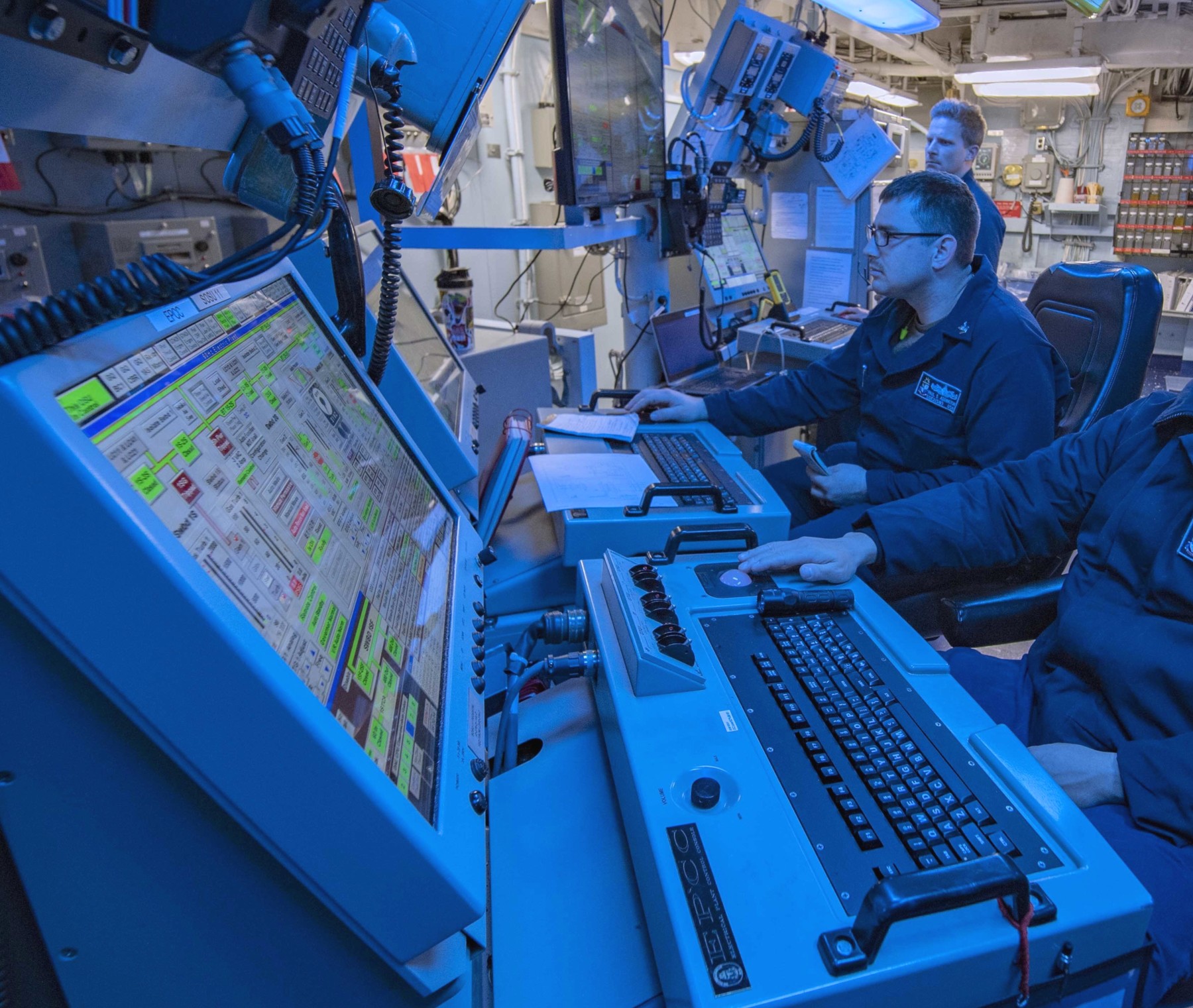 central control station - December 2019 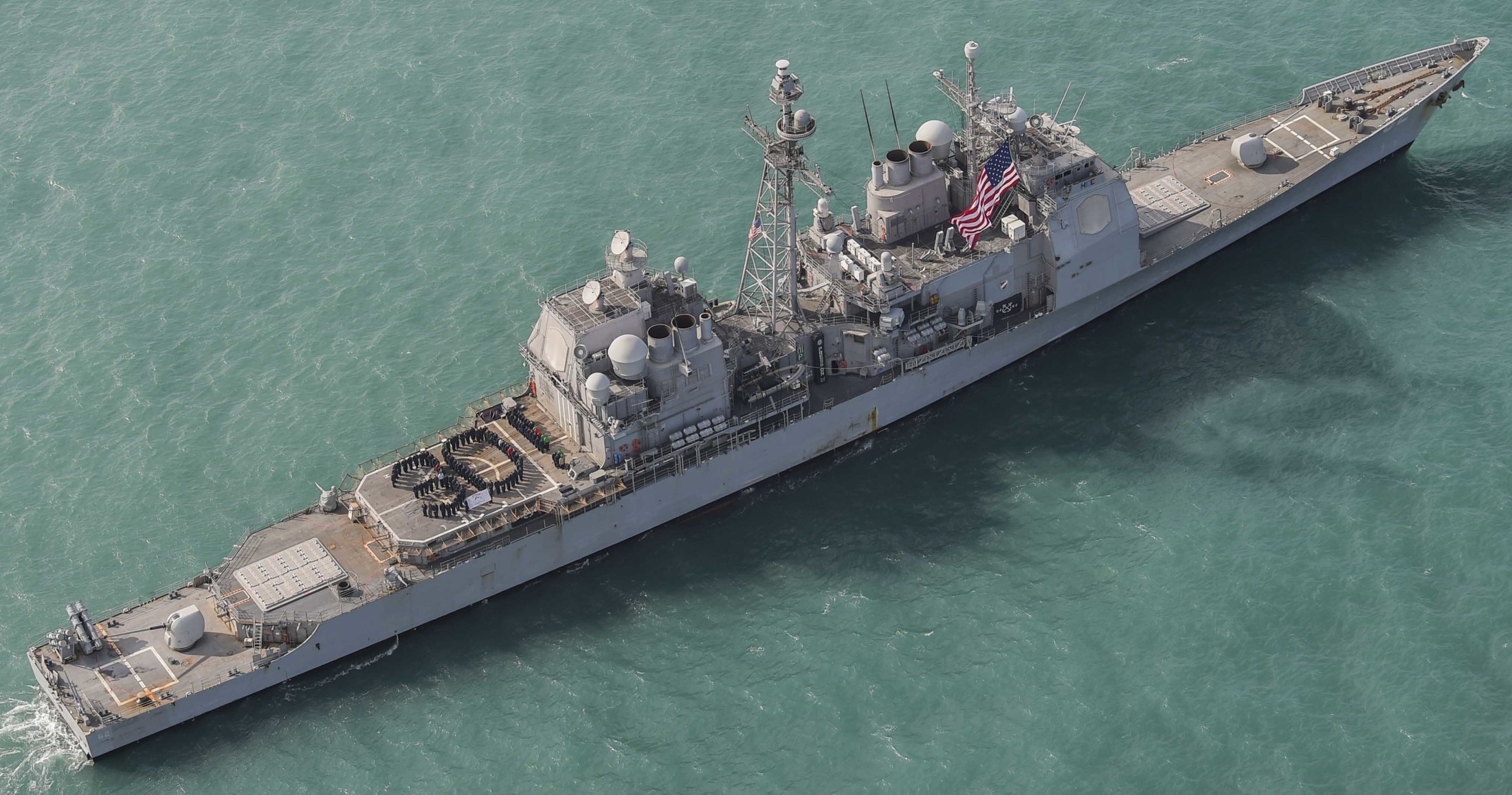 30 years anniversary since commissioning - Philippine Sea - November 2019 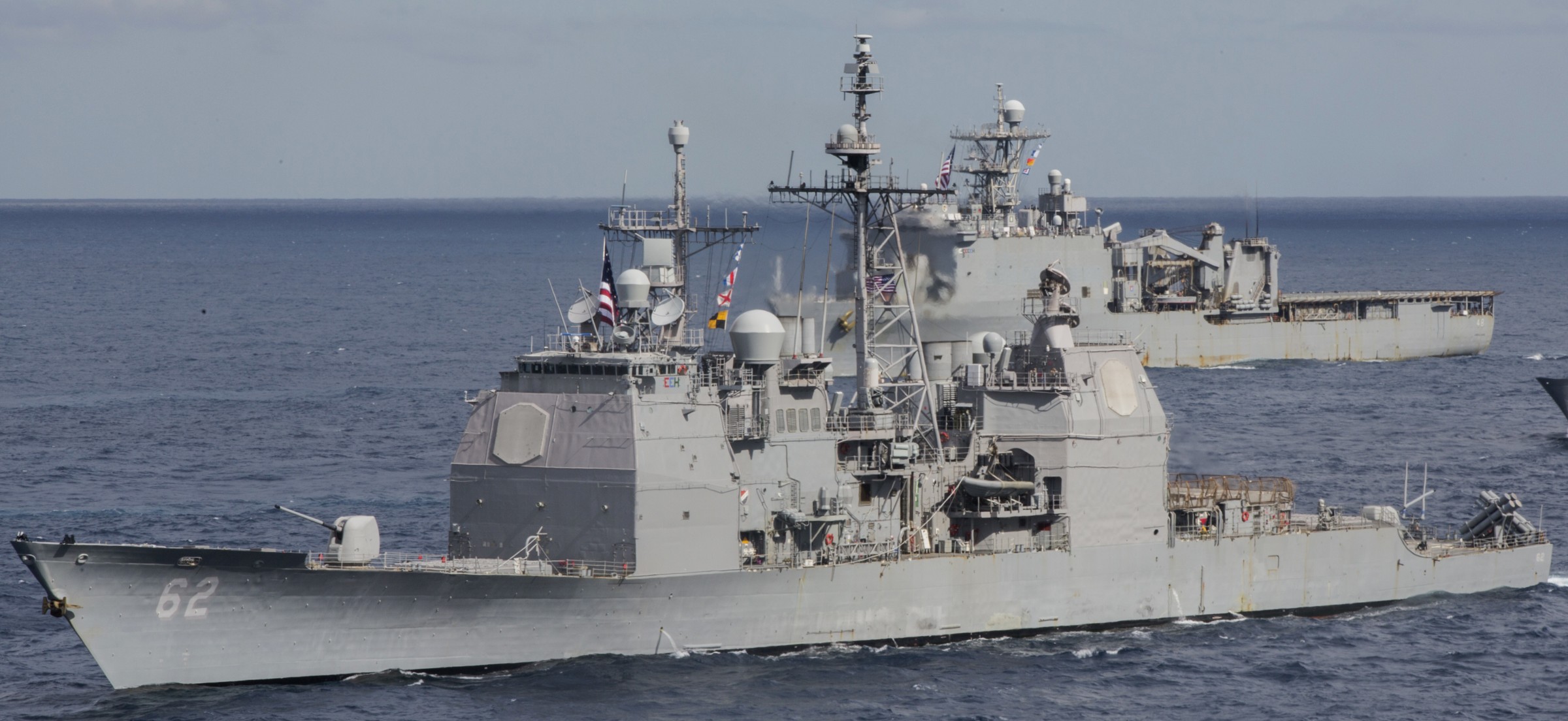 Tasman Sea - July 2019 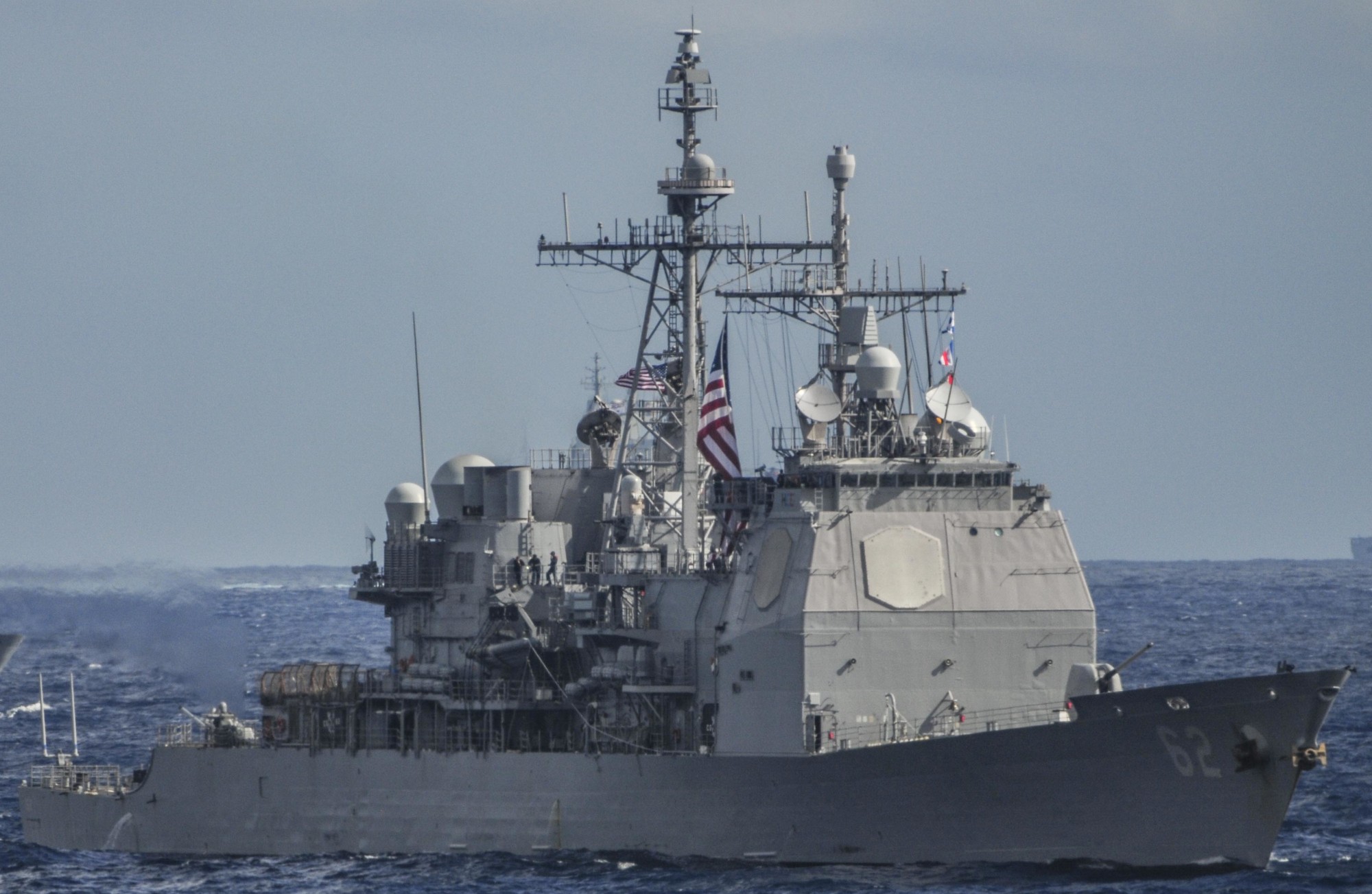 Exercise Talisman Sabre - Coral Sea - July 2019 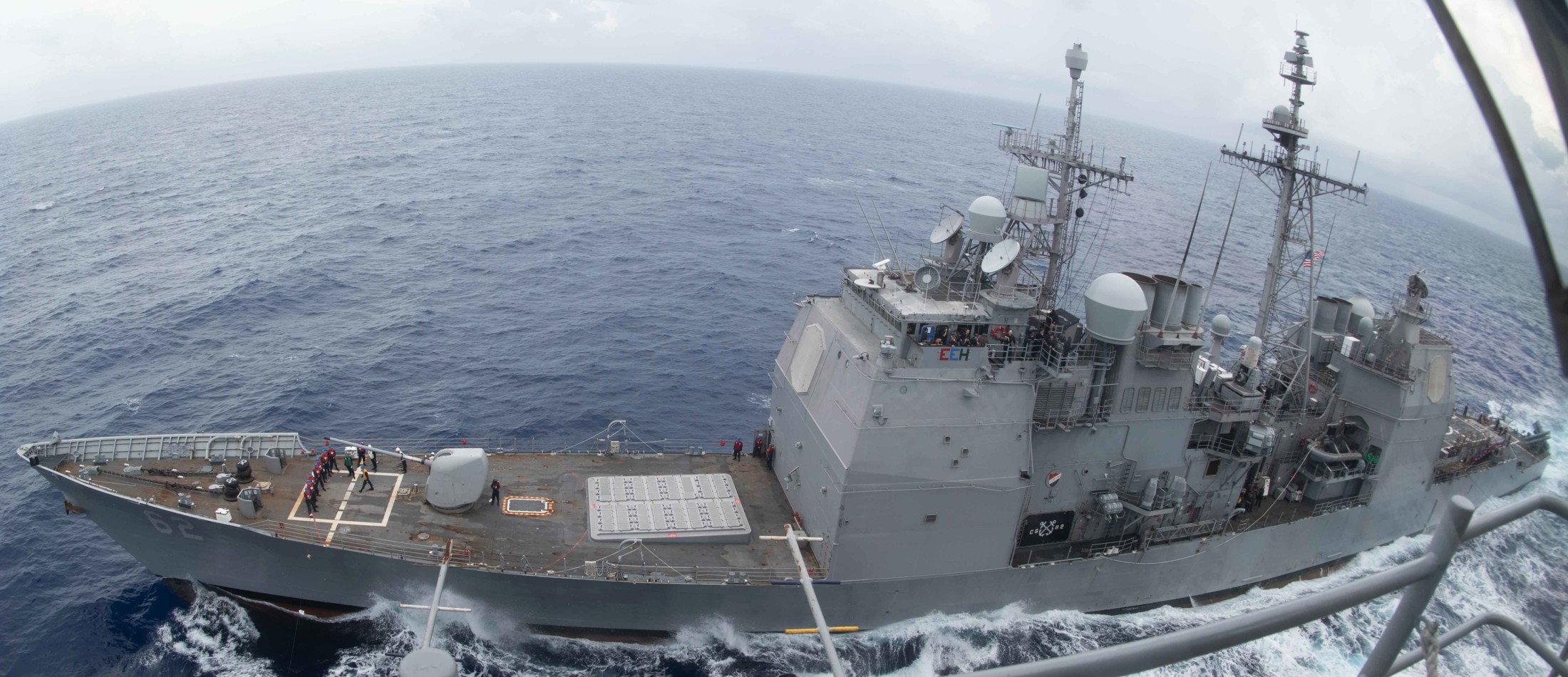 South China Sea - June 2019 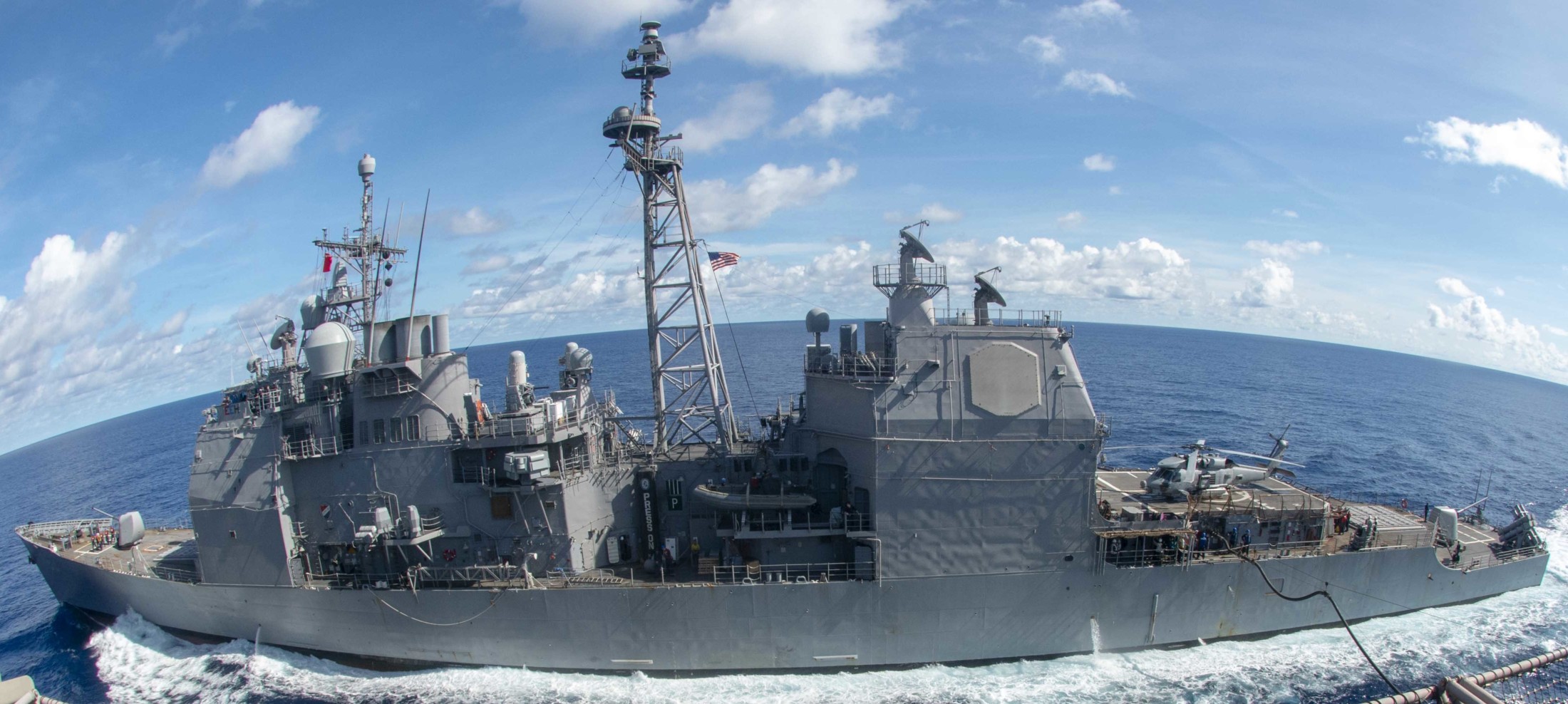 South China Sea - June 2019 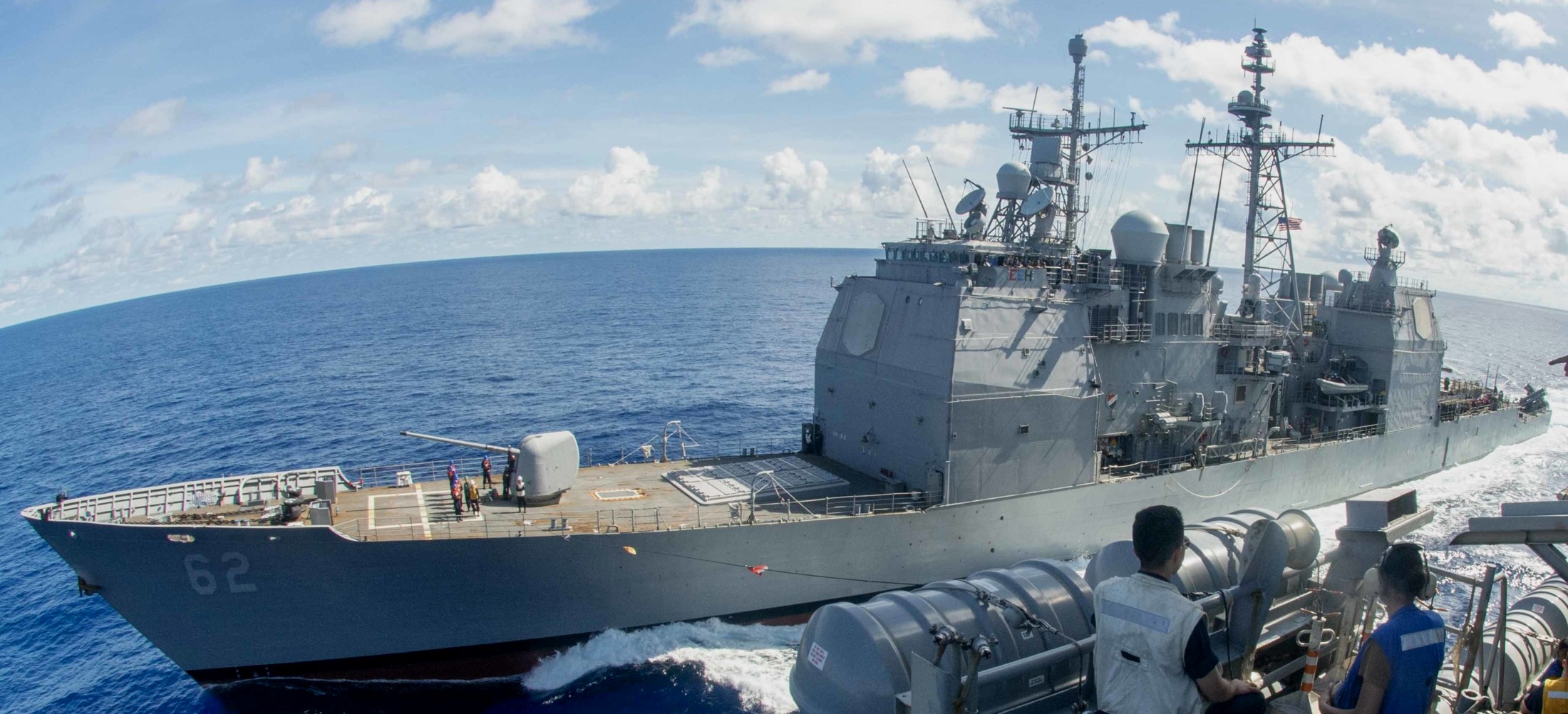 South China Sea - June 2019 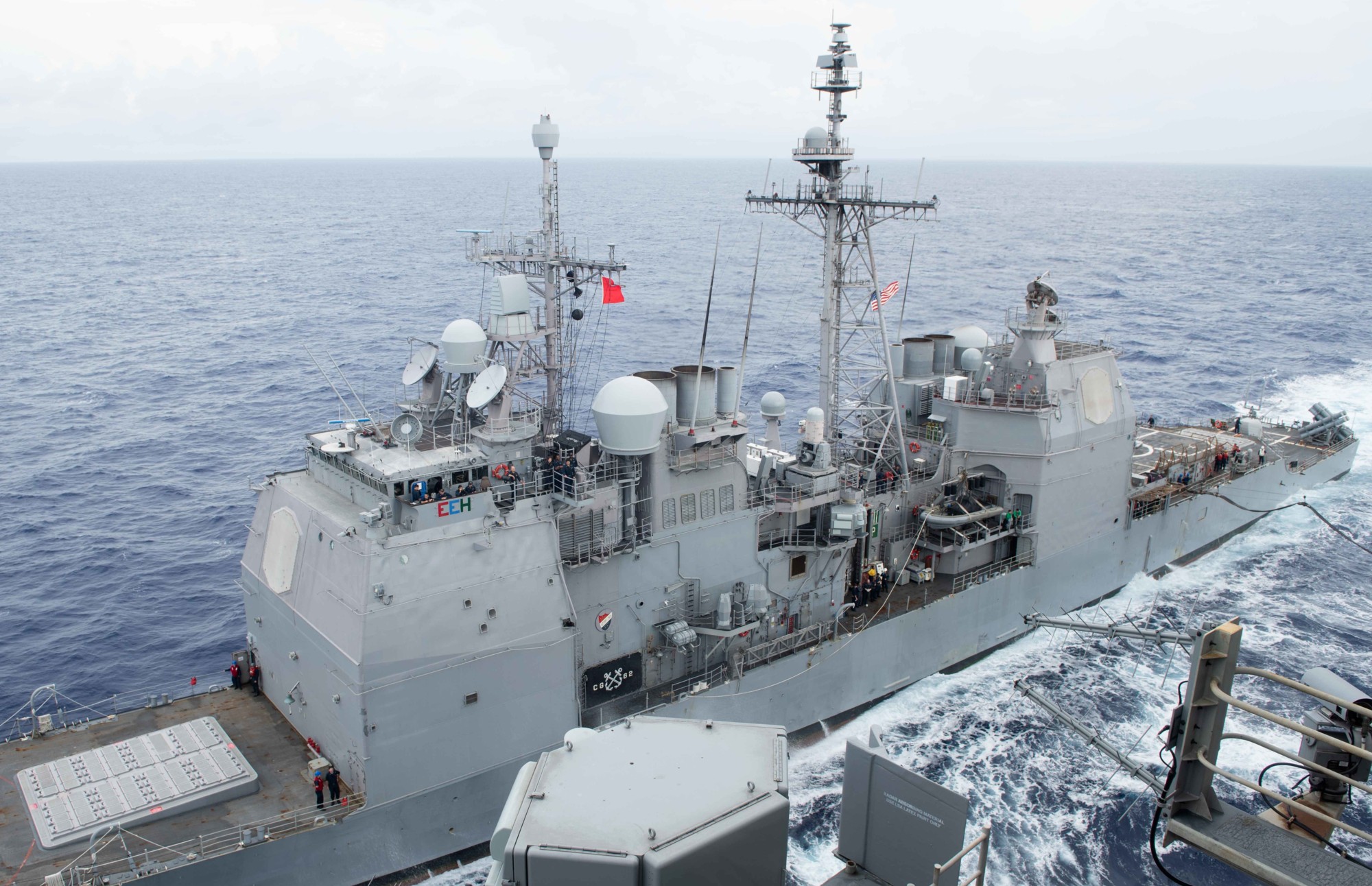 South China Sea - June 2019 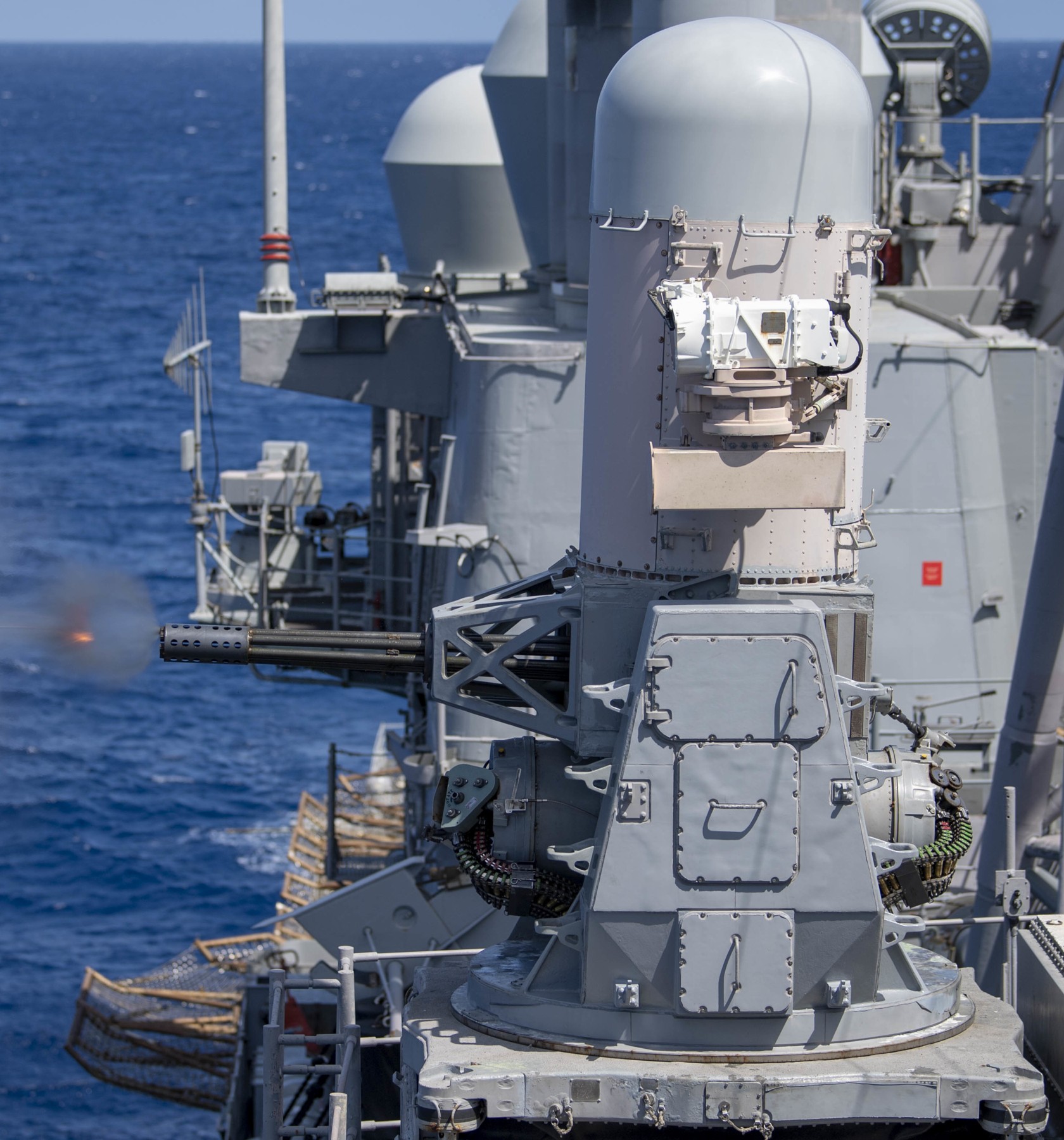 Mk.15 Phalanx CIWS fire exercise - East China Sea - June 2019 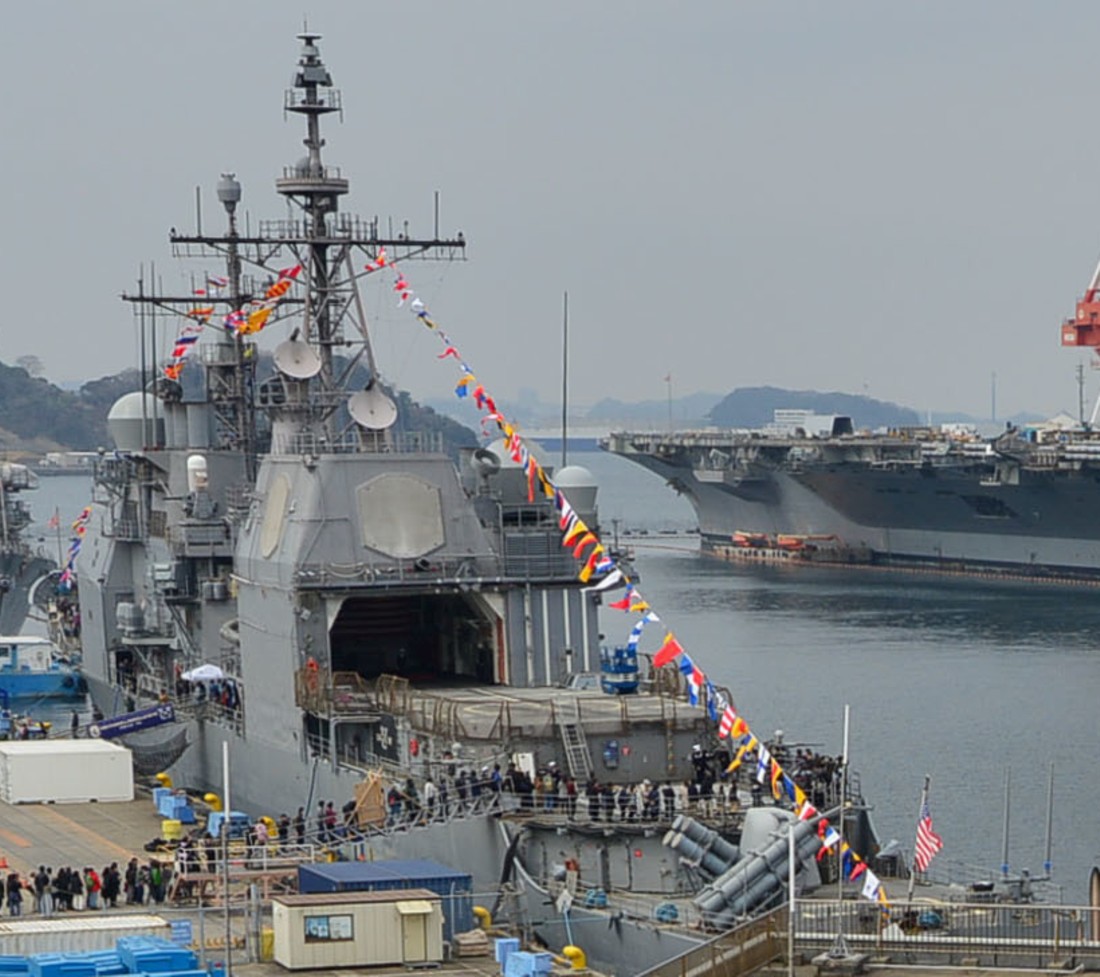 Fleet Activities Yokosuka, Japan - March 2019 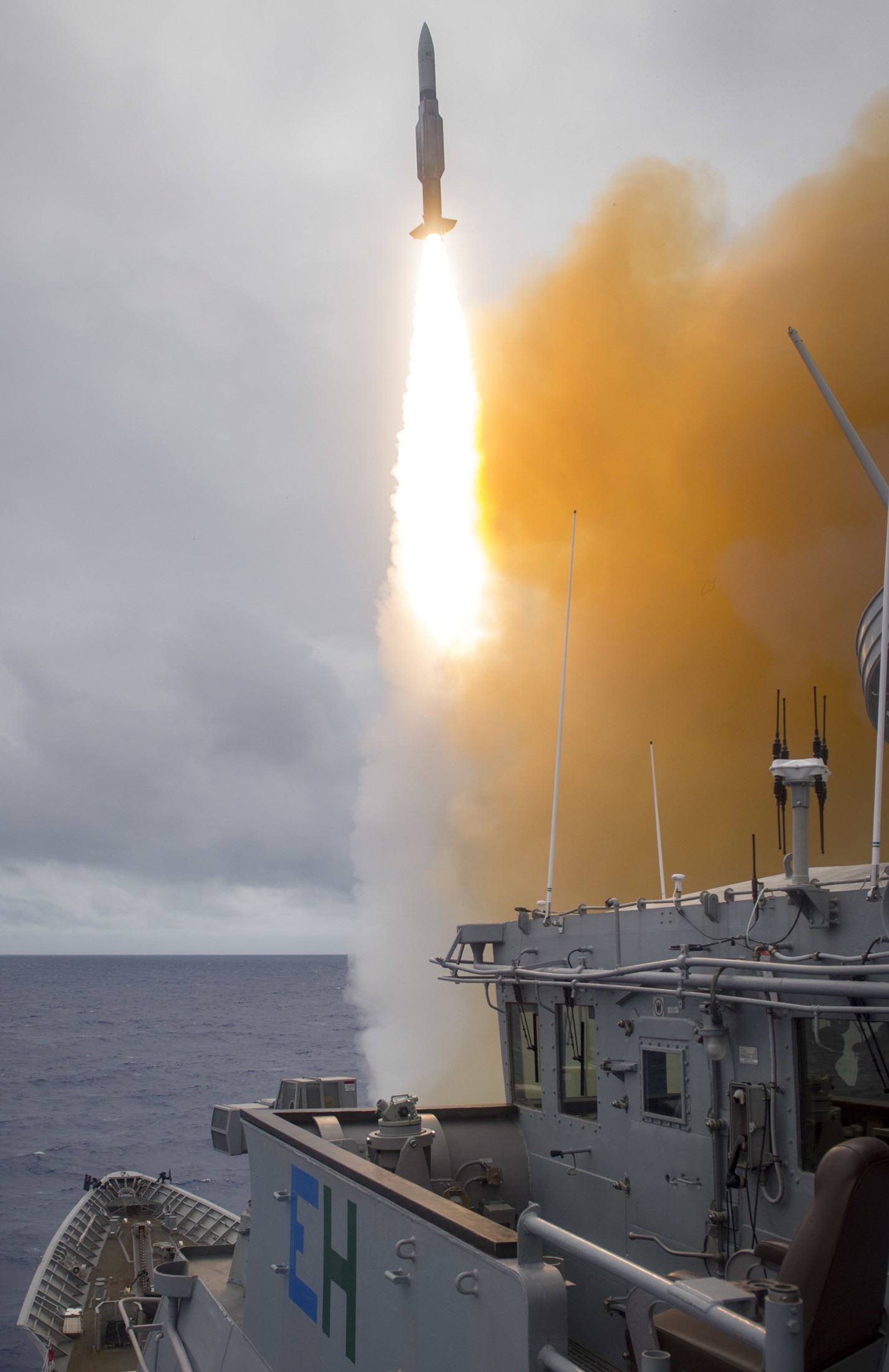 a Standard Missile SM-2 was fired - Pacific Ocean - March 2019 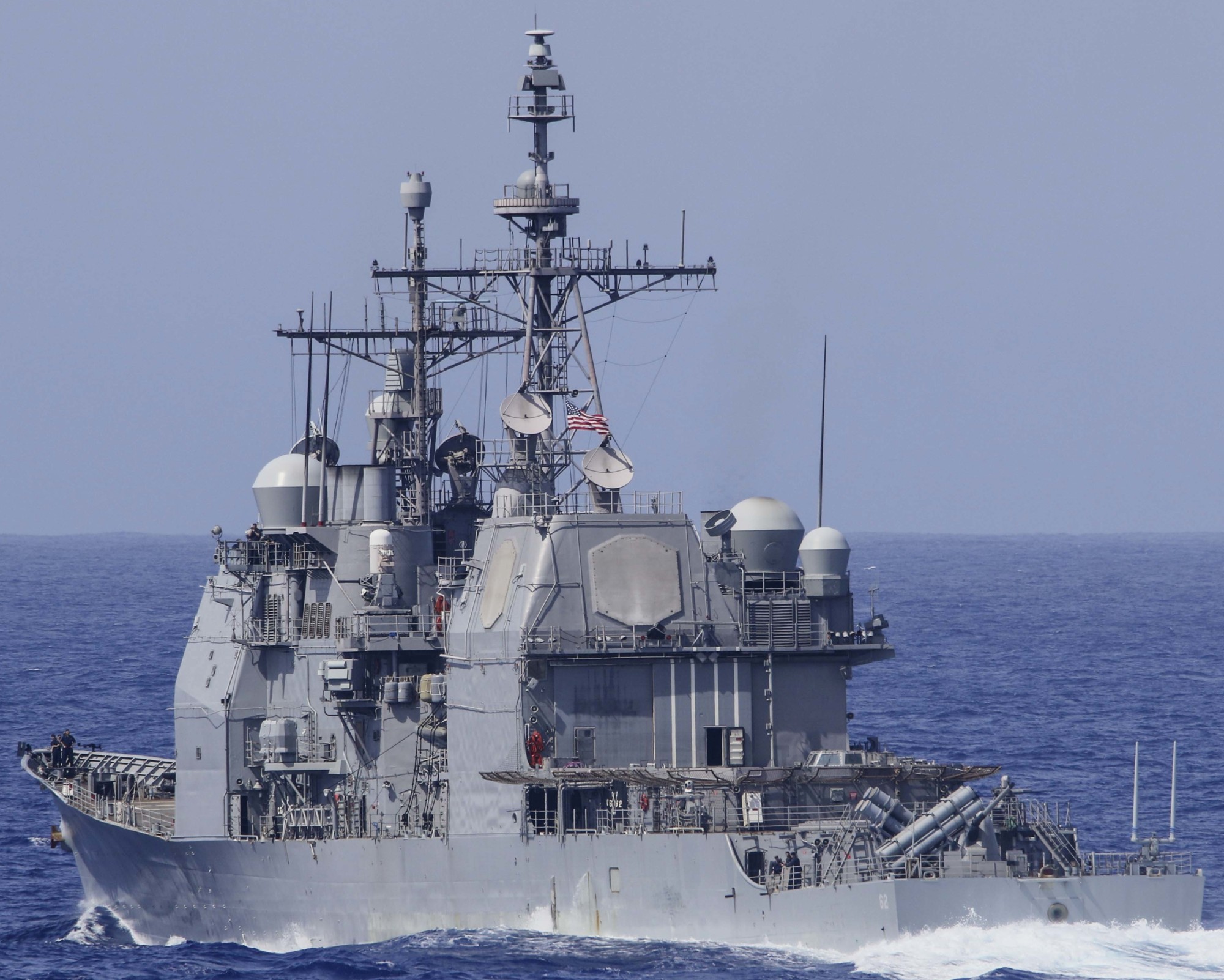 Philippine Sea - March 2019 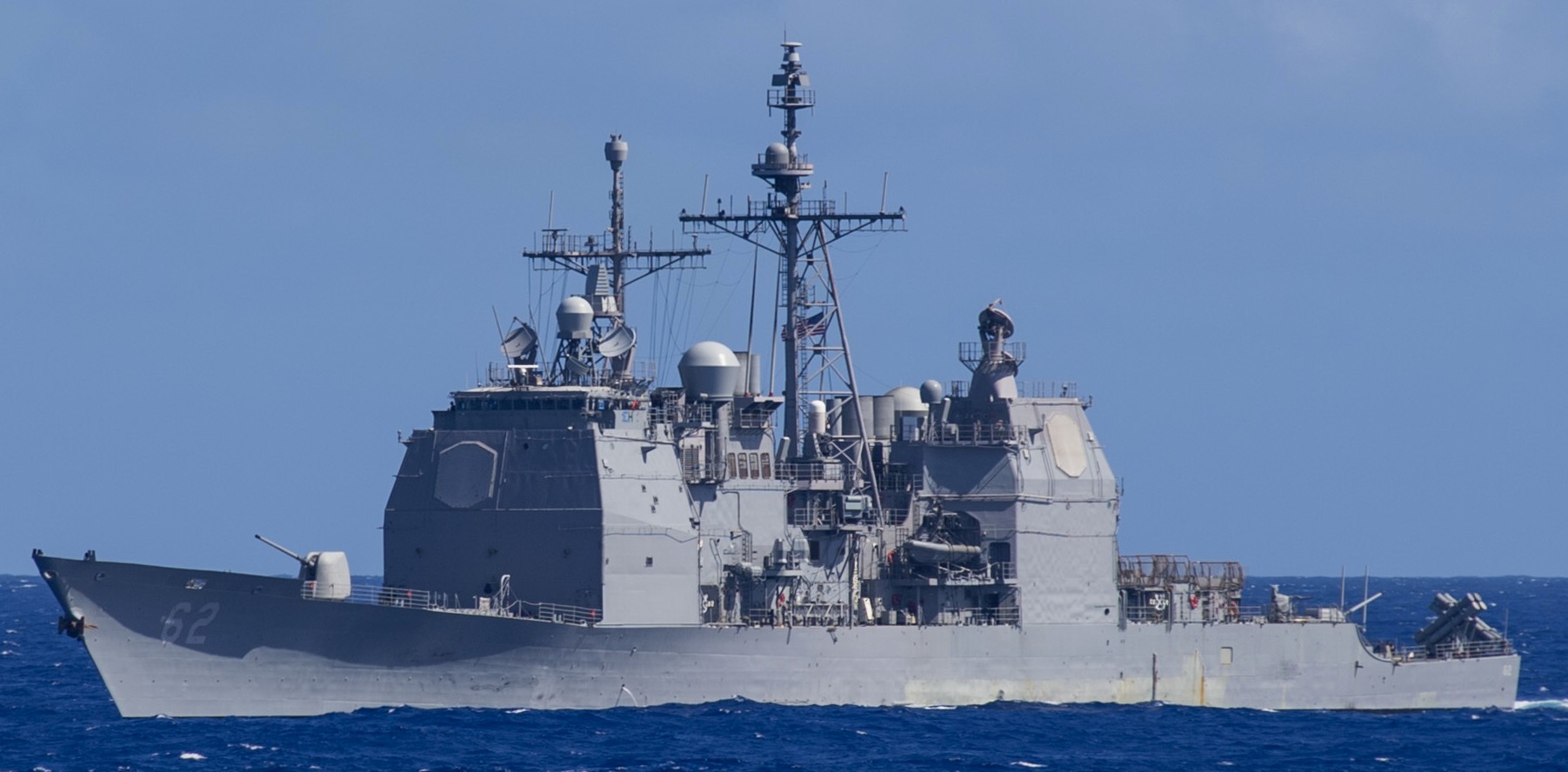 Philippine Sea - March 2019 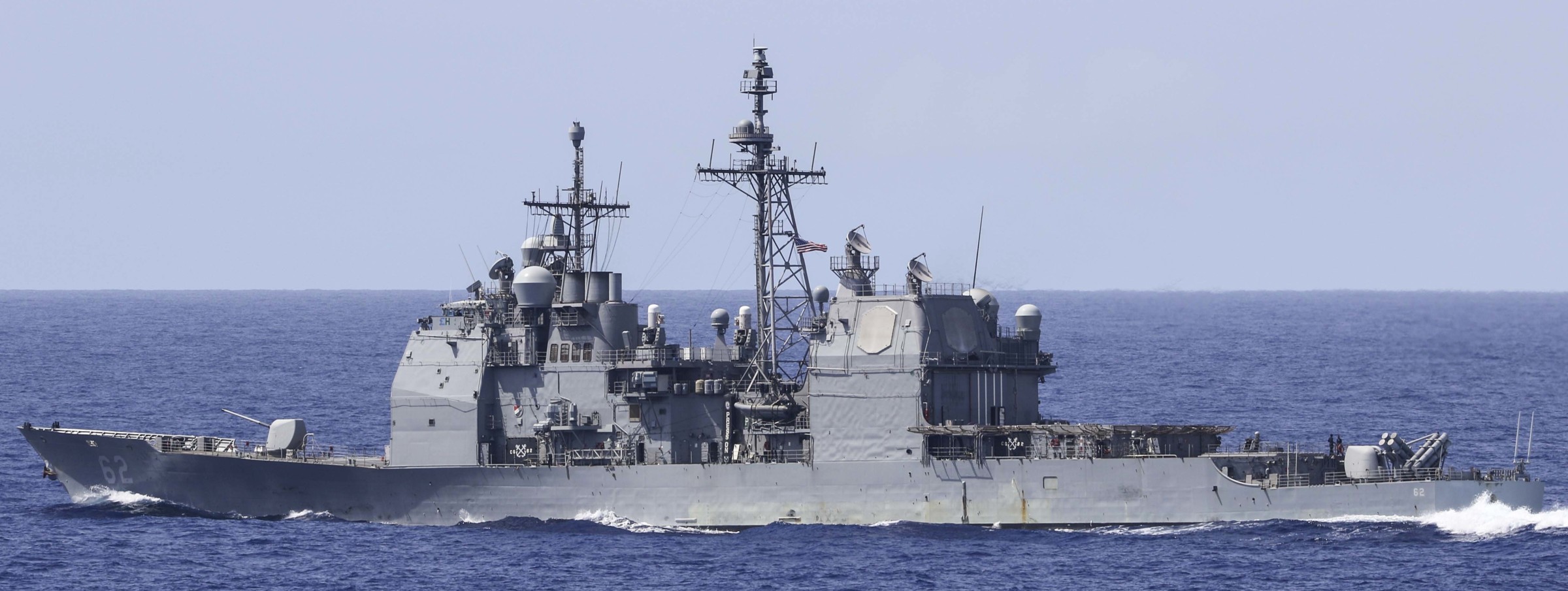 Philippine Sea - March 2019 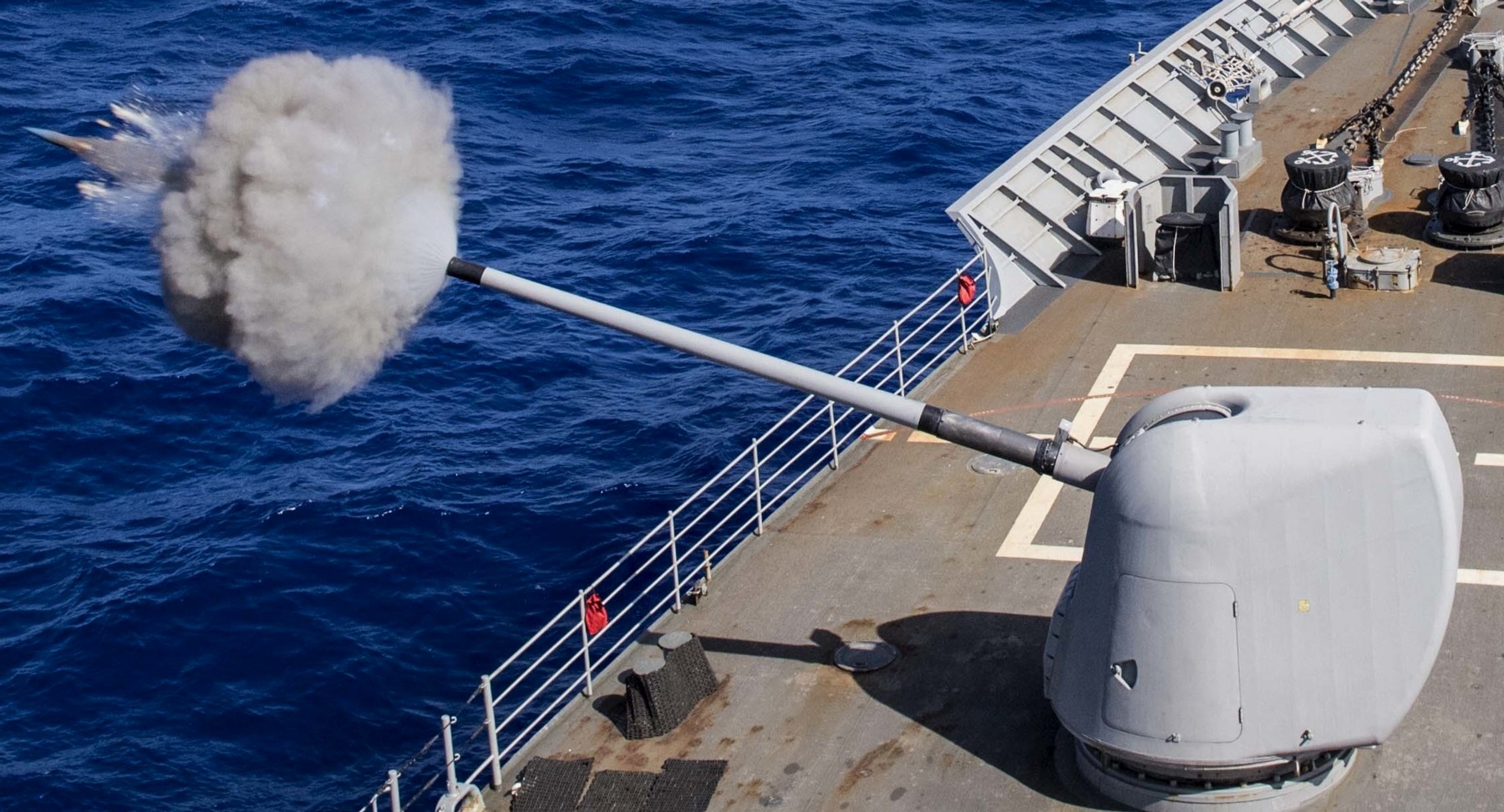 Mk.45 gun fire exercise - Philippine Sea - March 2019 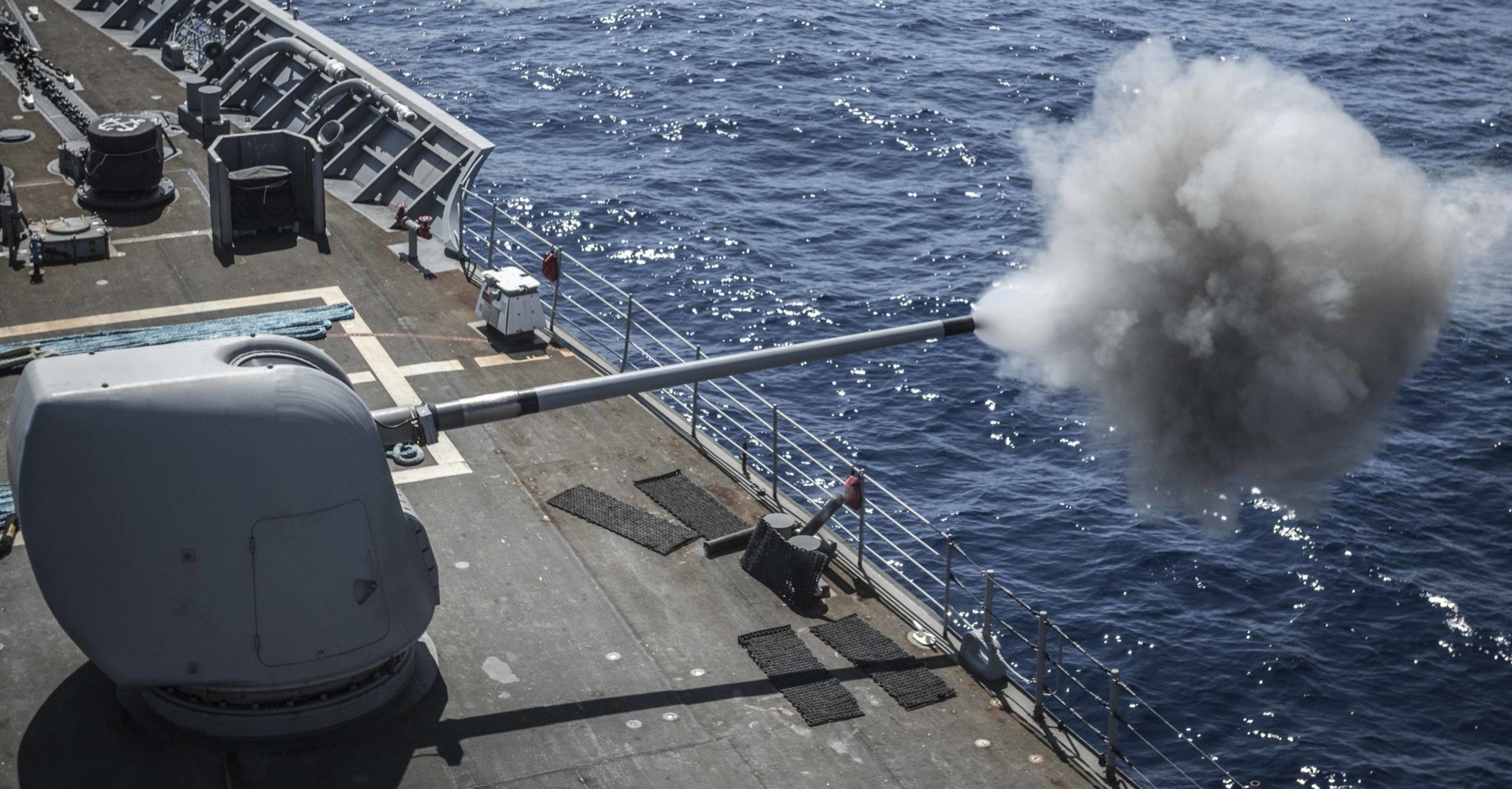 Mk.45 gun fire exercise - Philippine Sea - March 2019 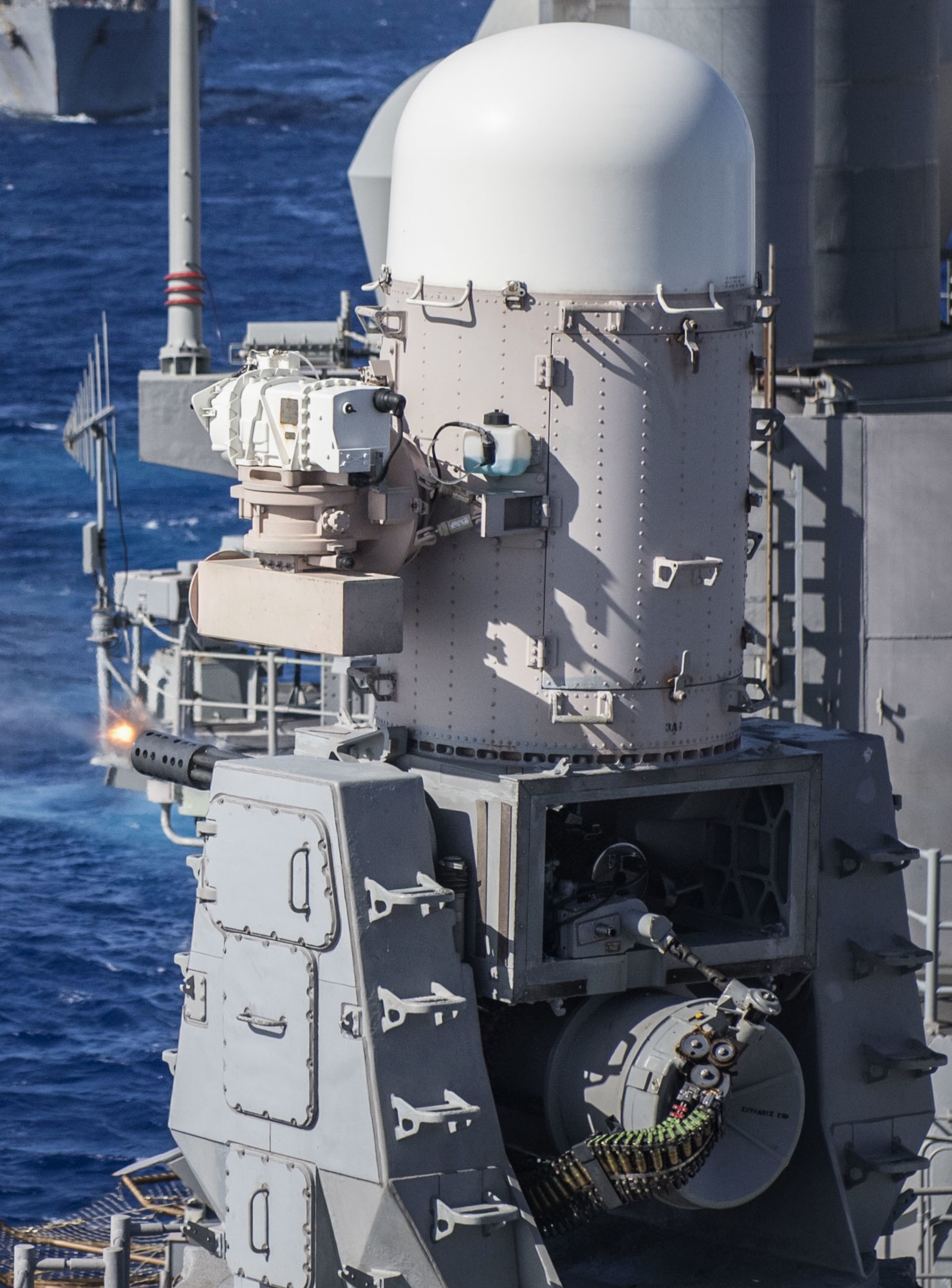 Mk.15 Phalanx CIWS fire exercise - Philippine Sea - March 2019 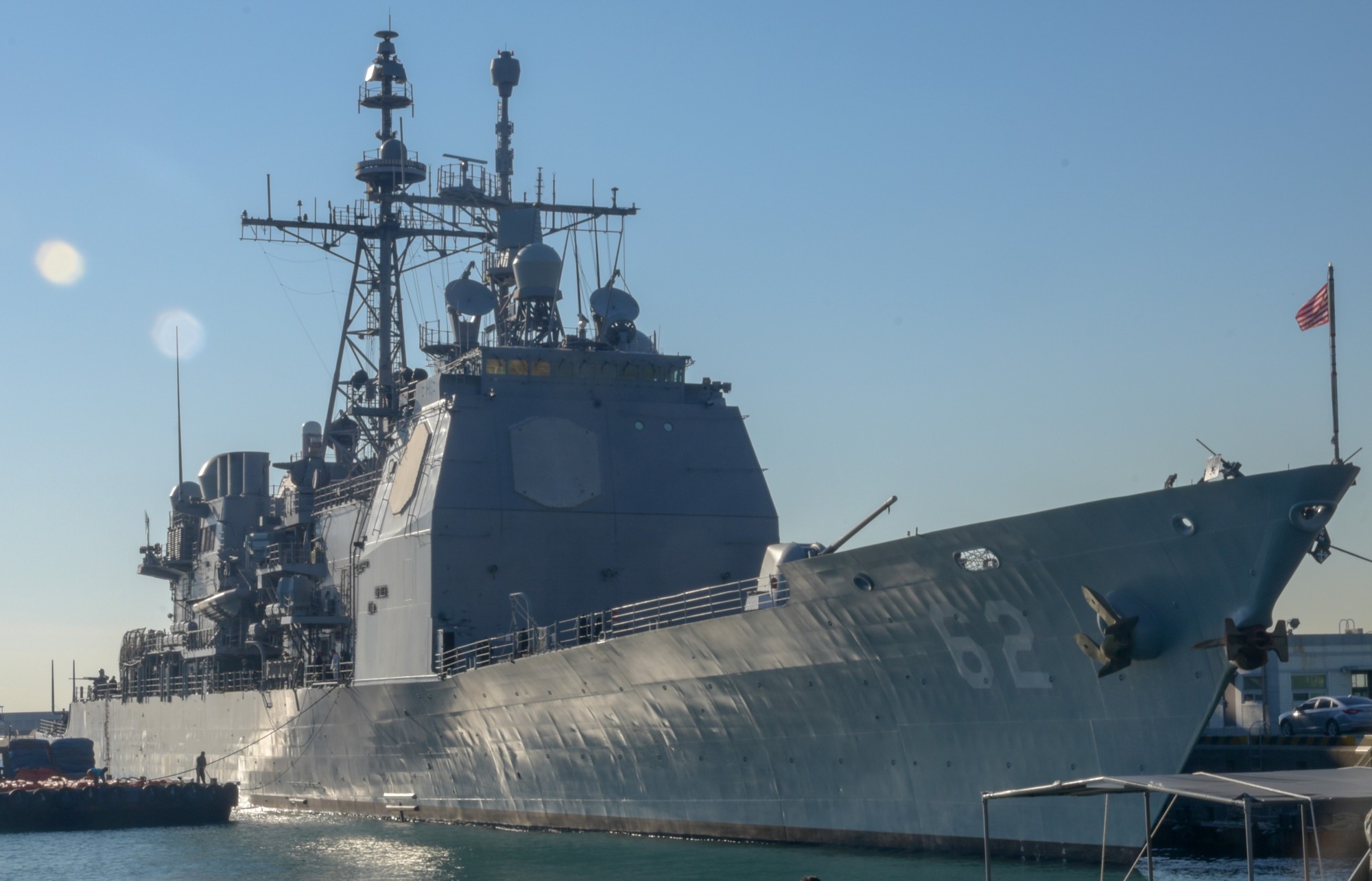 Busan, Republic of Korea - October 2018 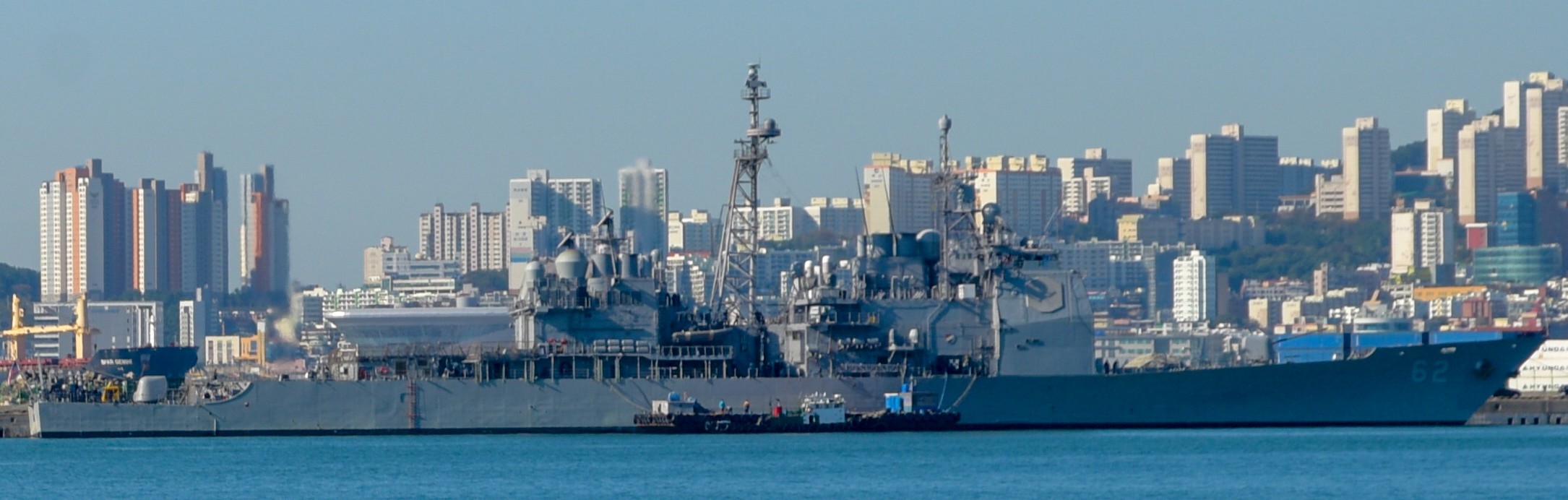 Busan, Republic of Korea - October 2018 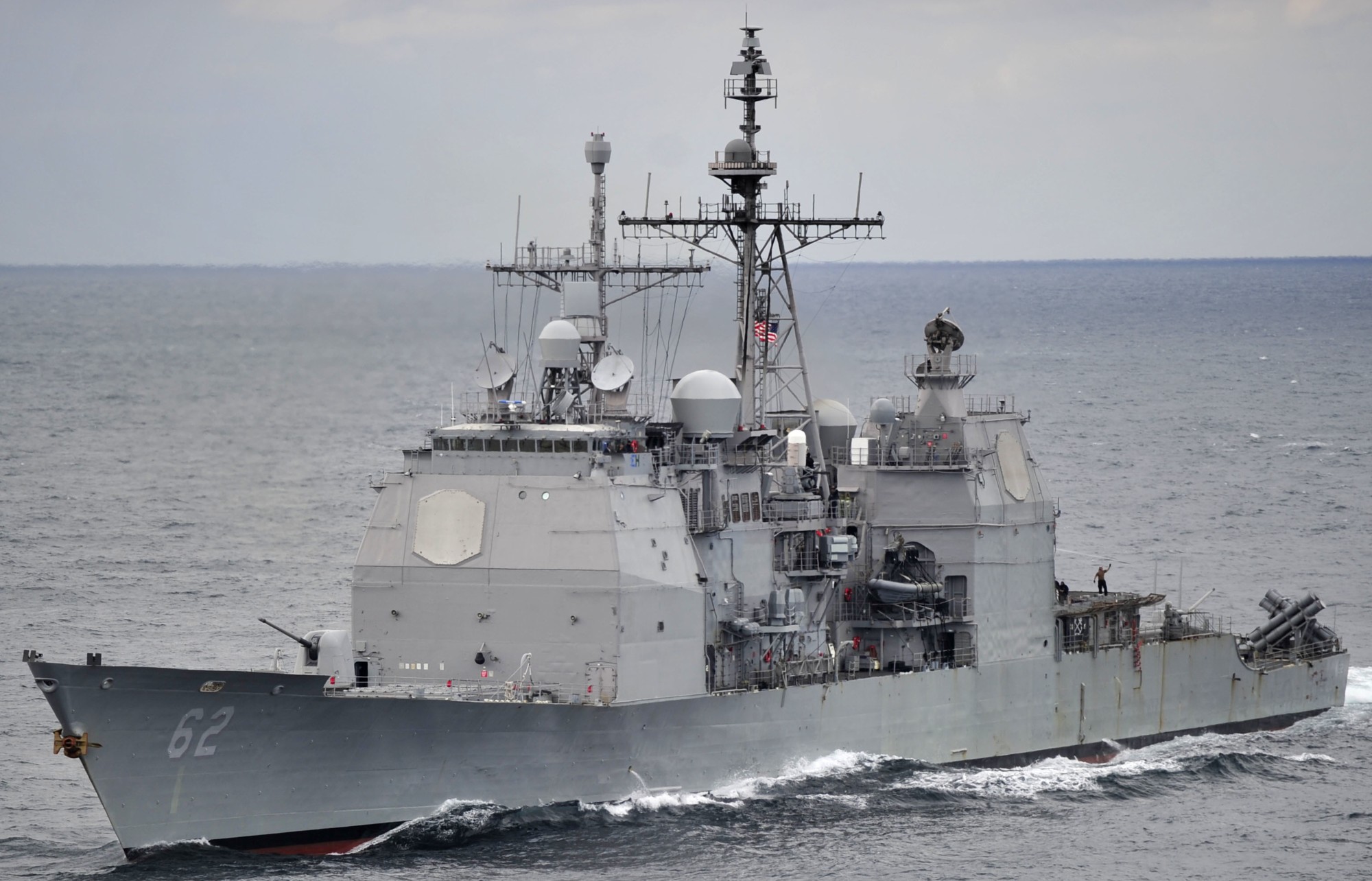 off Korea - October 2018 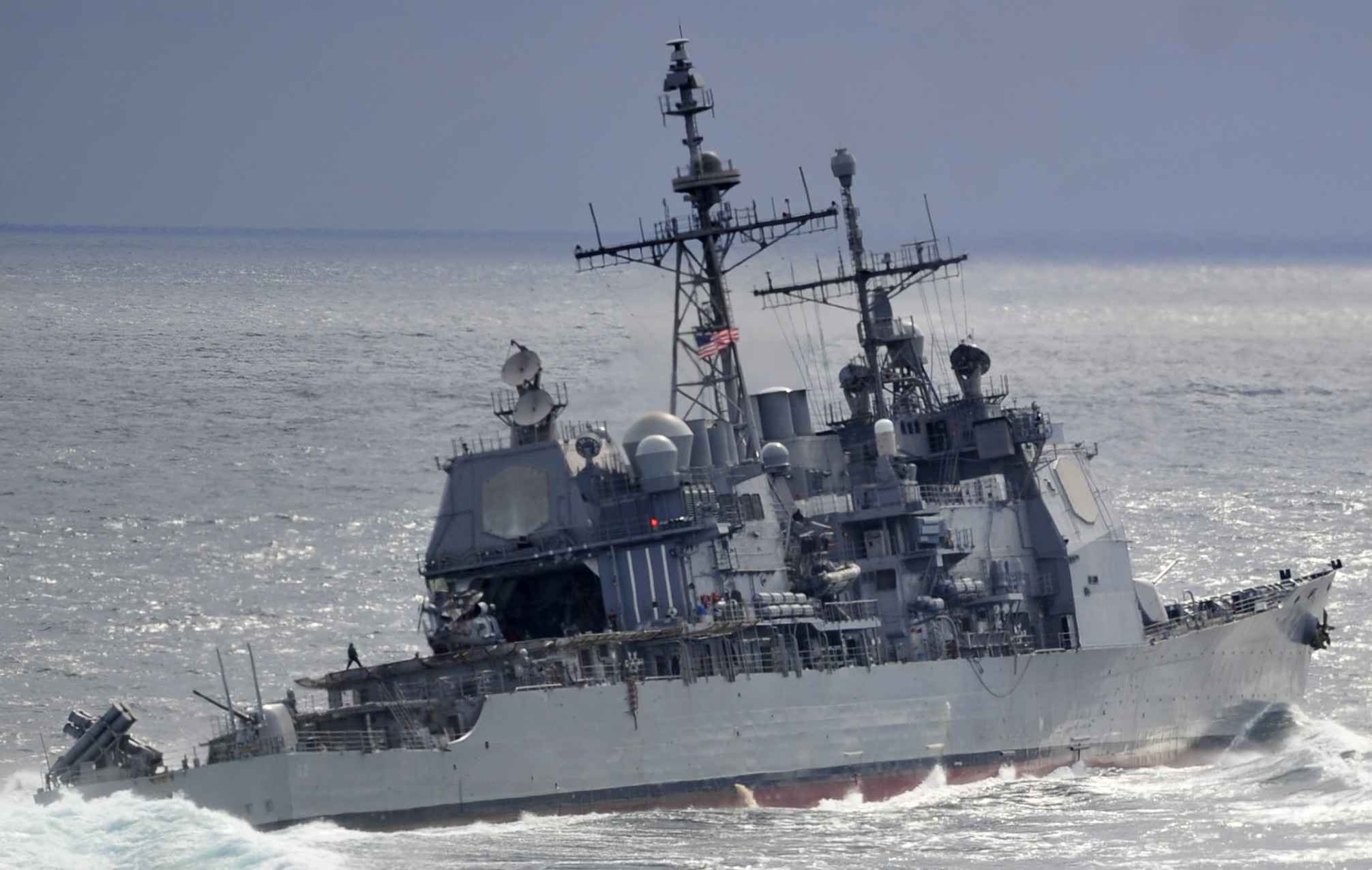 off Korea - October 2018 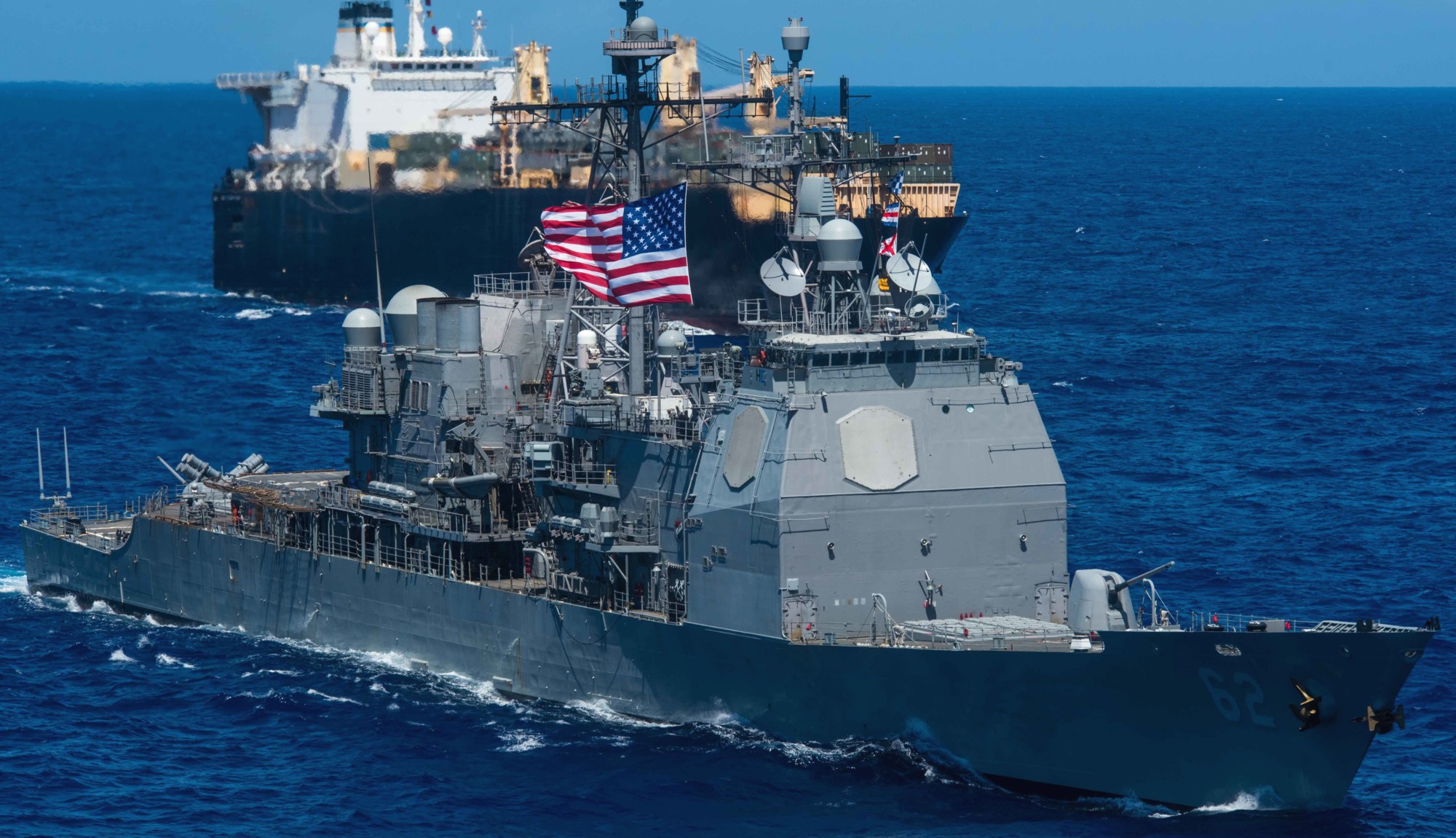 Philippine Sea - September 2018 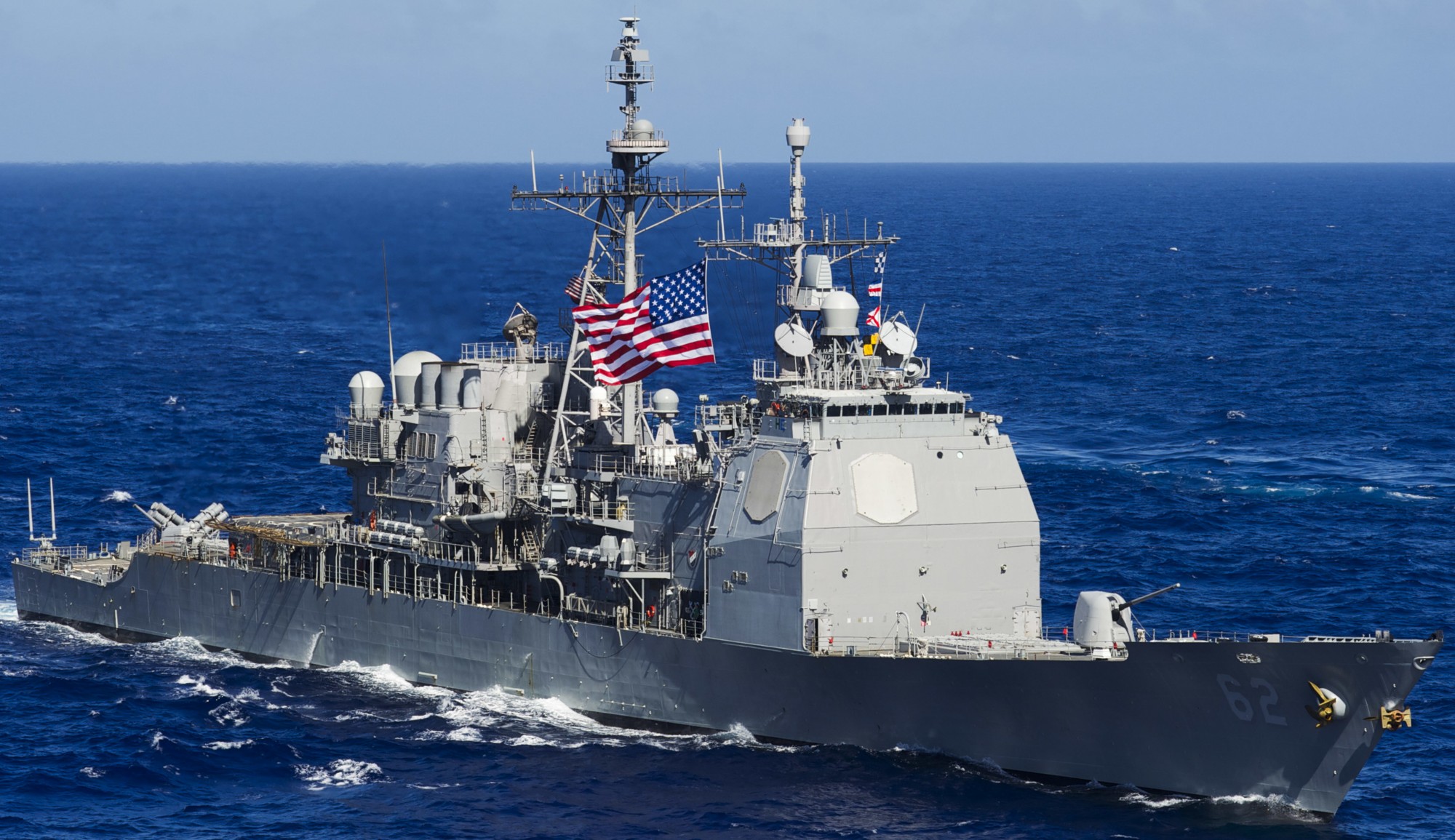 Exercise Valiant Shield - Philippine Sea - September 2018 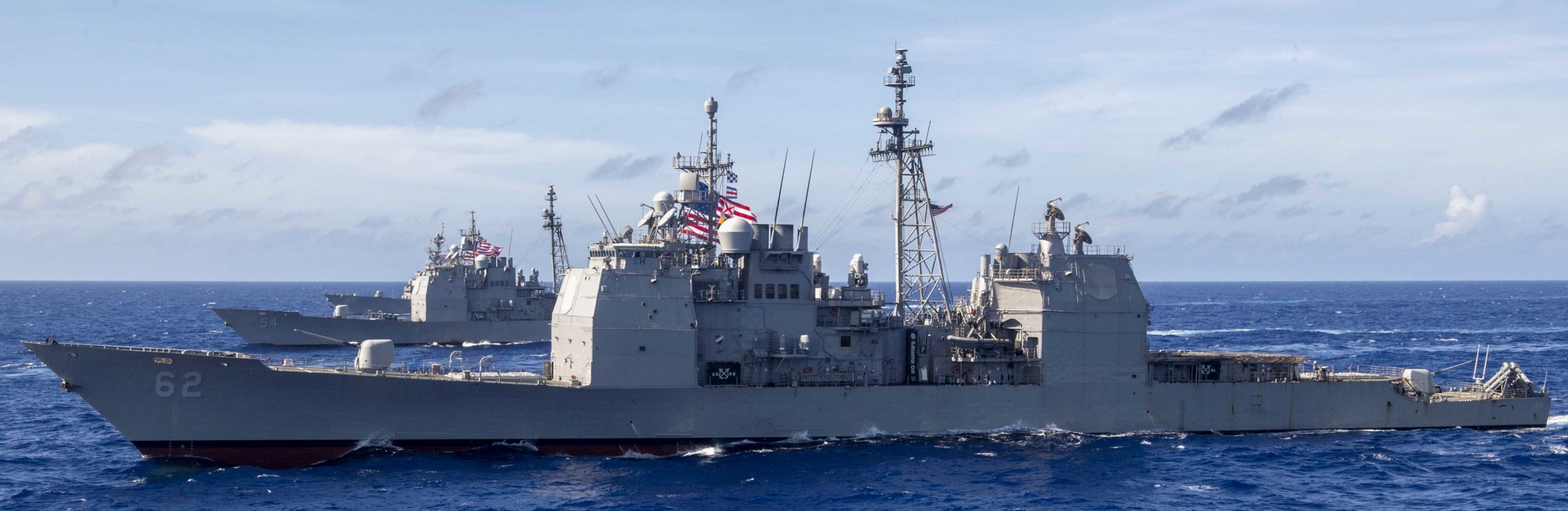 Exercise Valiant Shield - Philippine Sea - September 2018 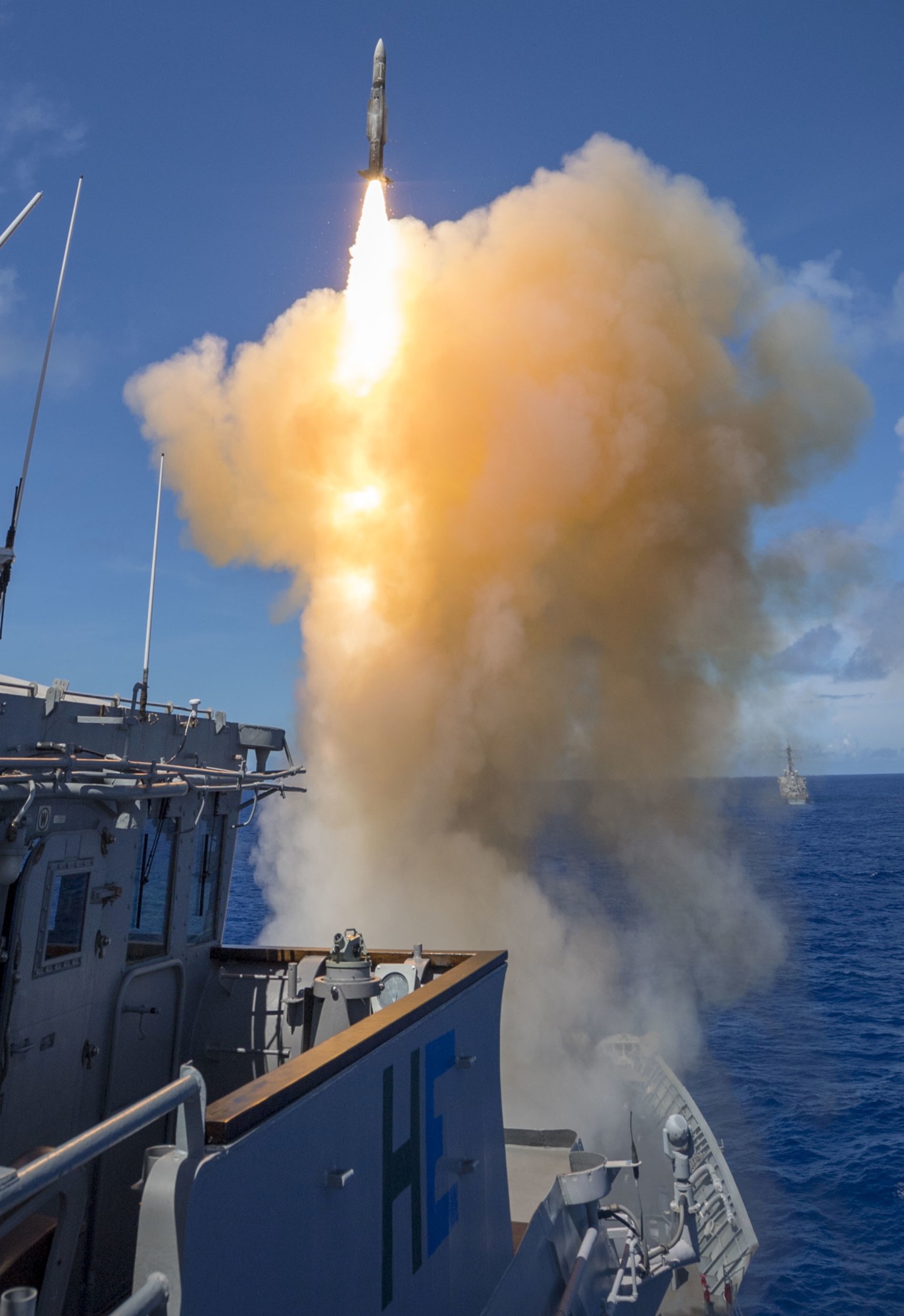 firing a Standard Missile SM-2 during Exercise Valiant Shield - Philippine Sea - September 2018 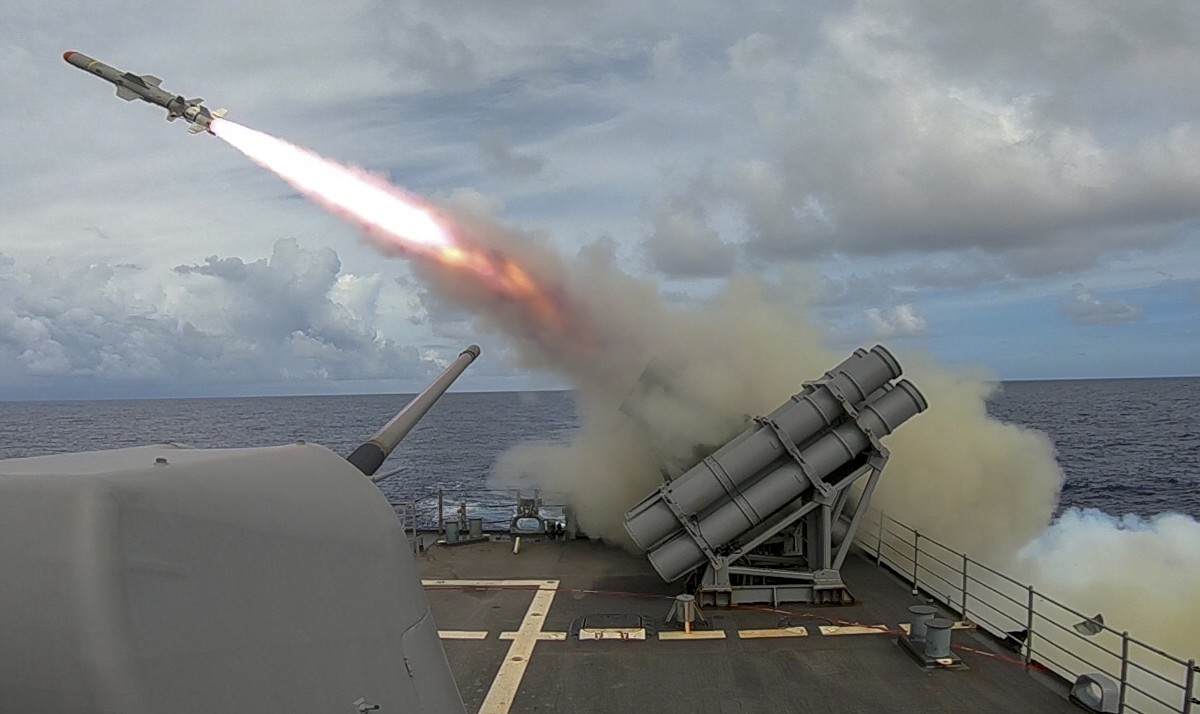 firing an RGM-84 Harpoon SSM missile during Exercise Valiant Shield - Philippine Sea - September 2018 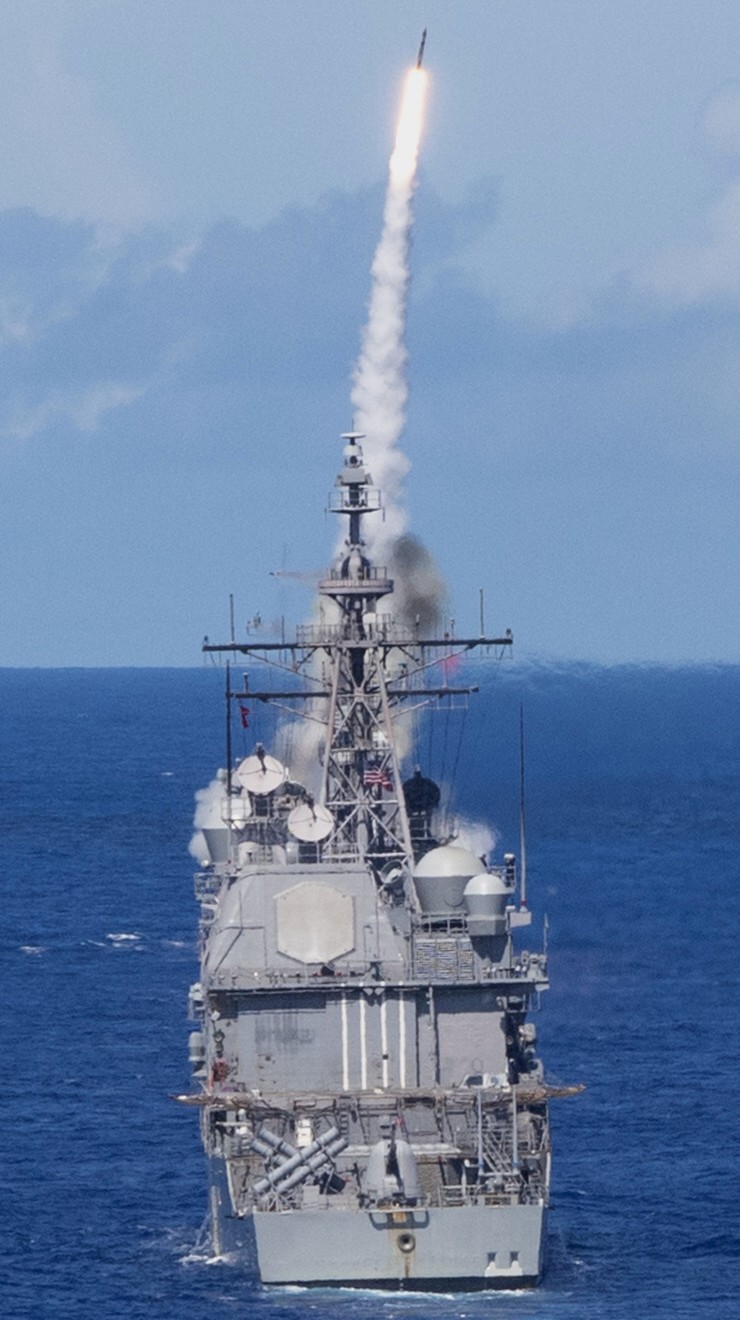 firing a Standard Missile SM-2 during Exercise Valiant Shield - Philippine Sea - September 2018 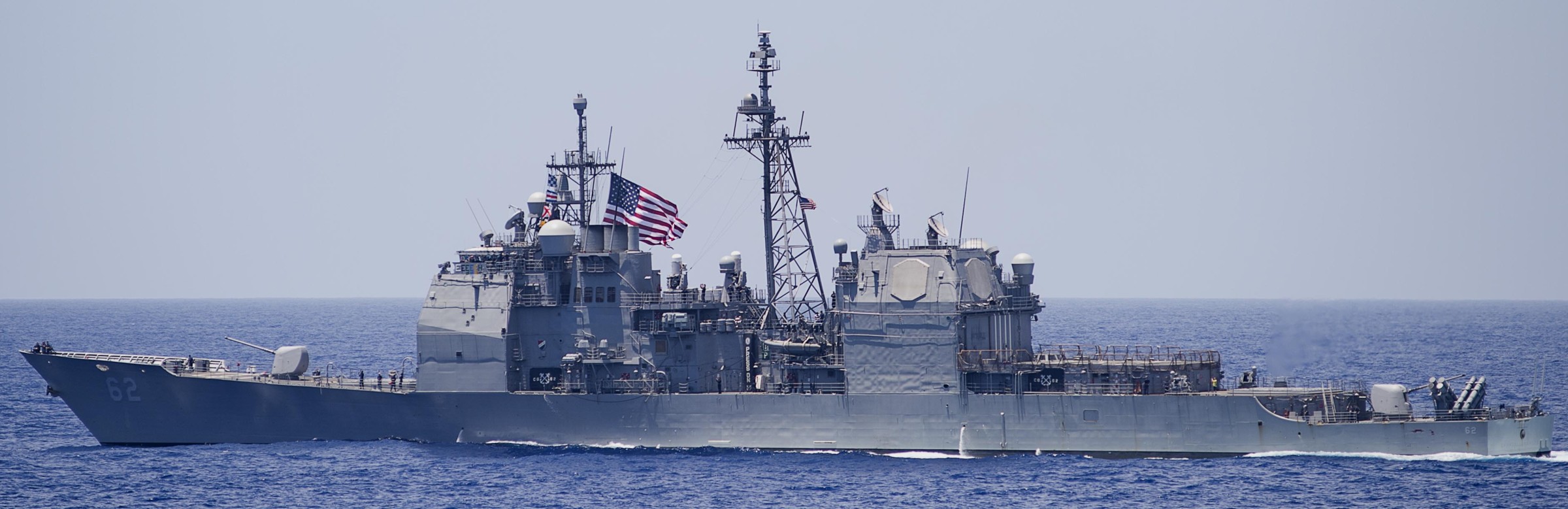 Philippine Sea - June 2018 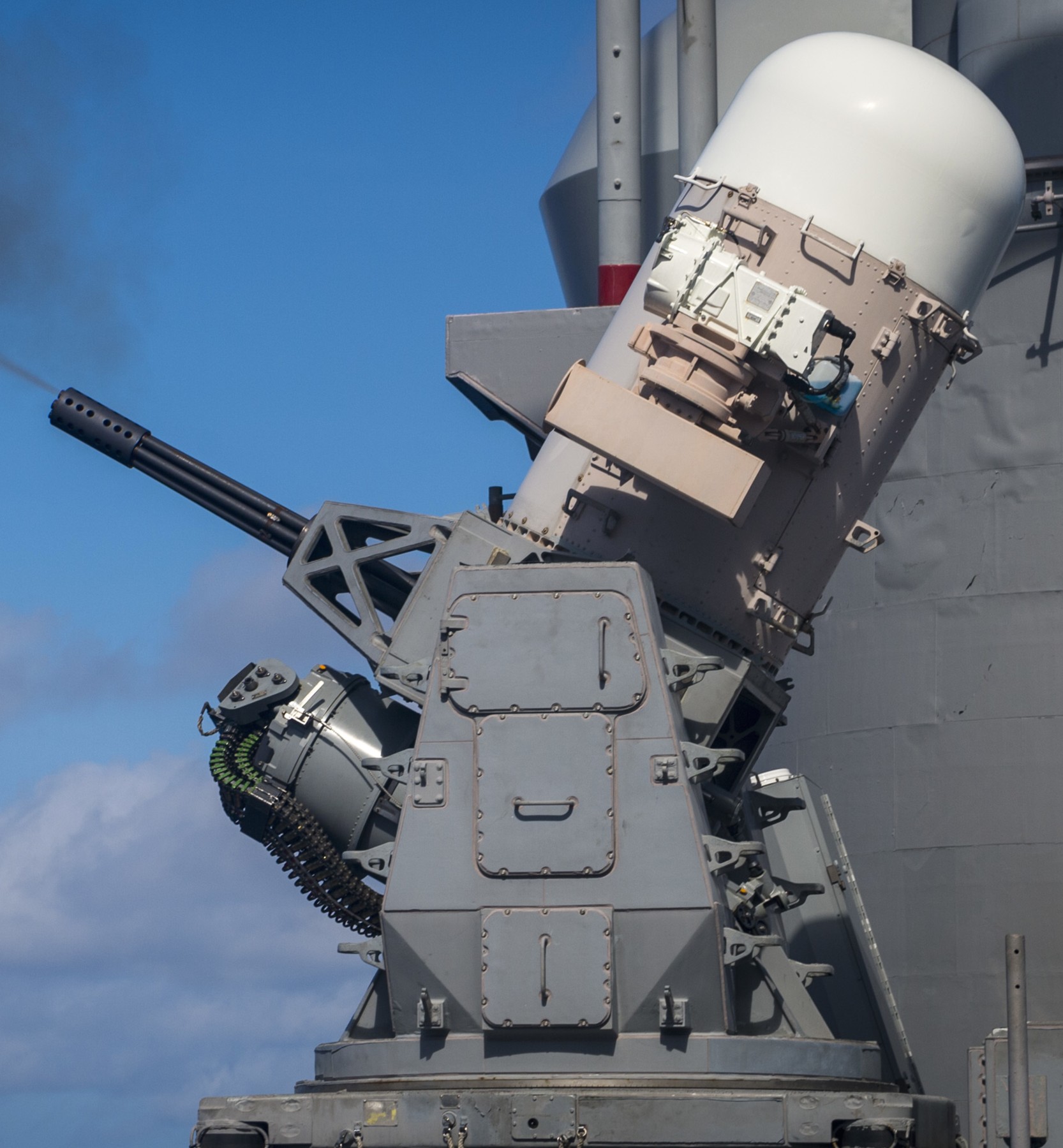 Mk.15 Phalanx CIWS fire exercise - Philippine Sea - June 2018 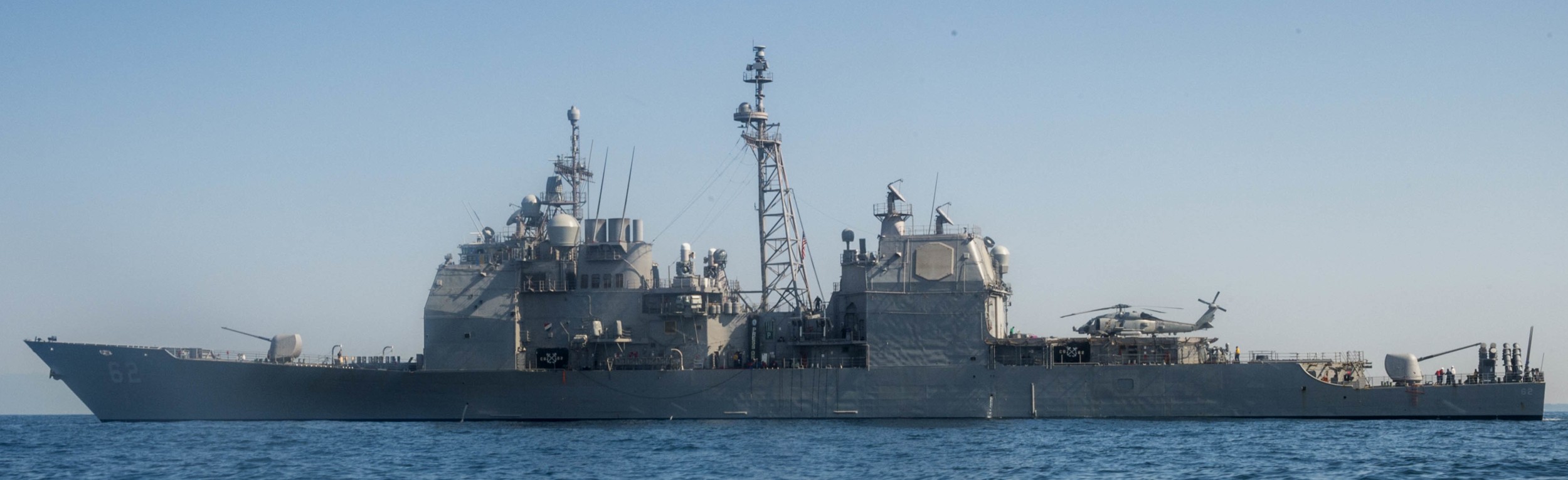 off Japan - May 2018 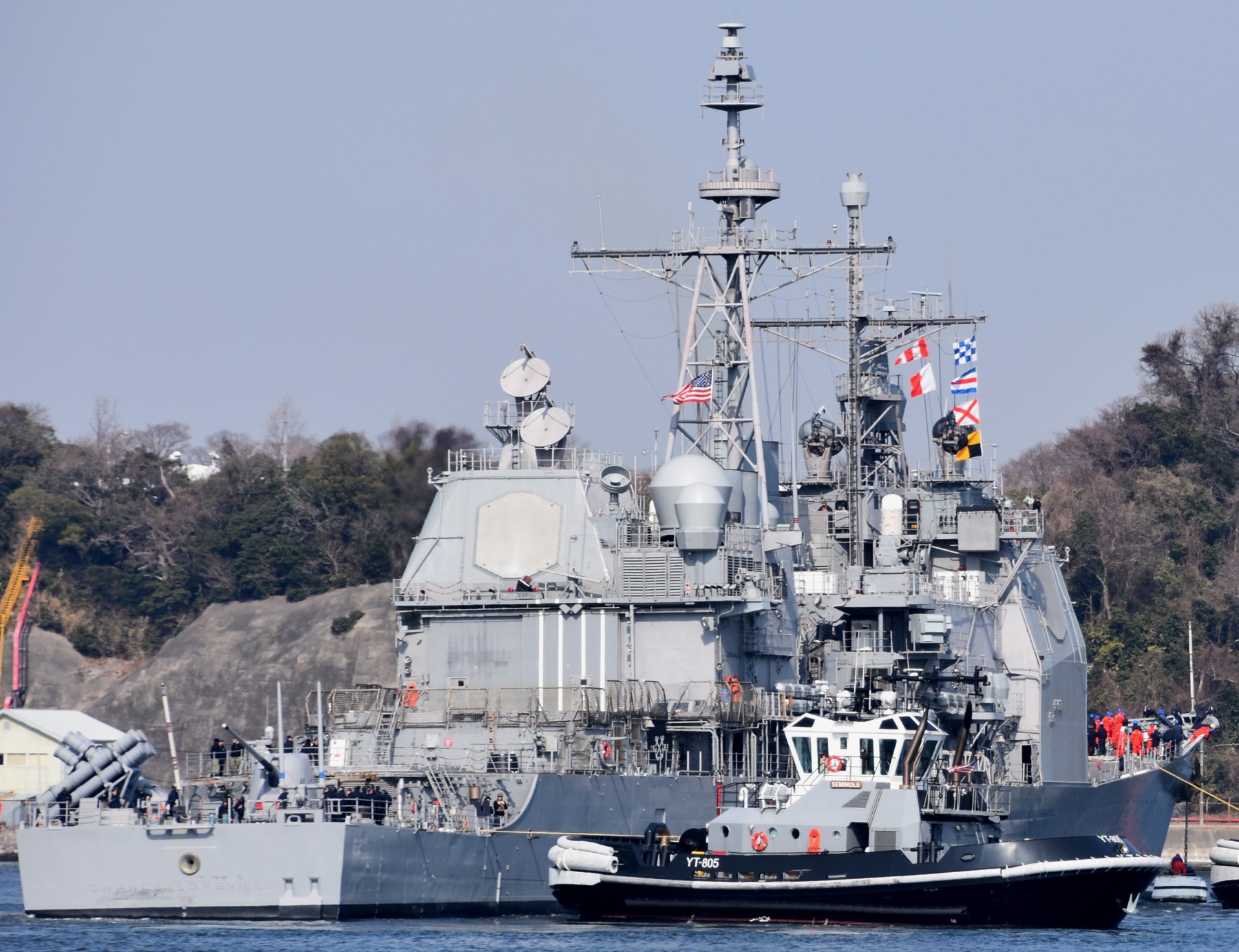 Fleet Activities Yokosuka, Japan - February 2018 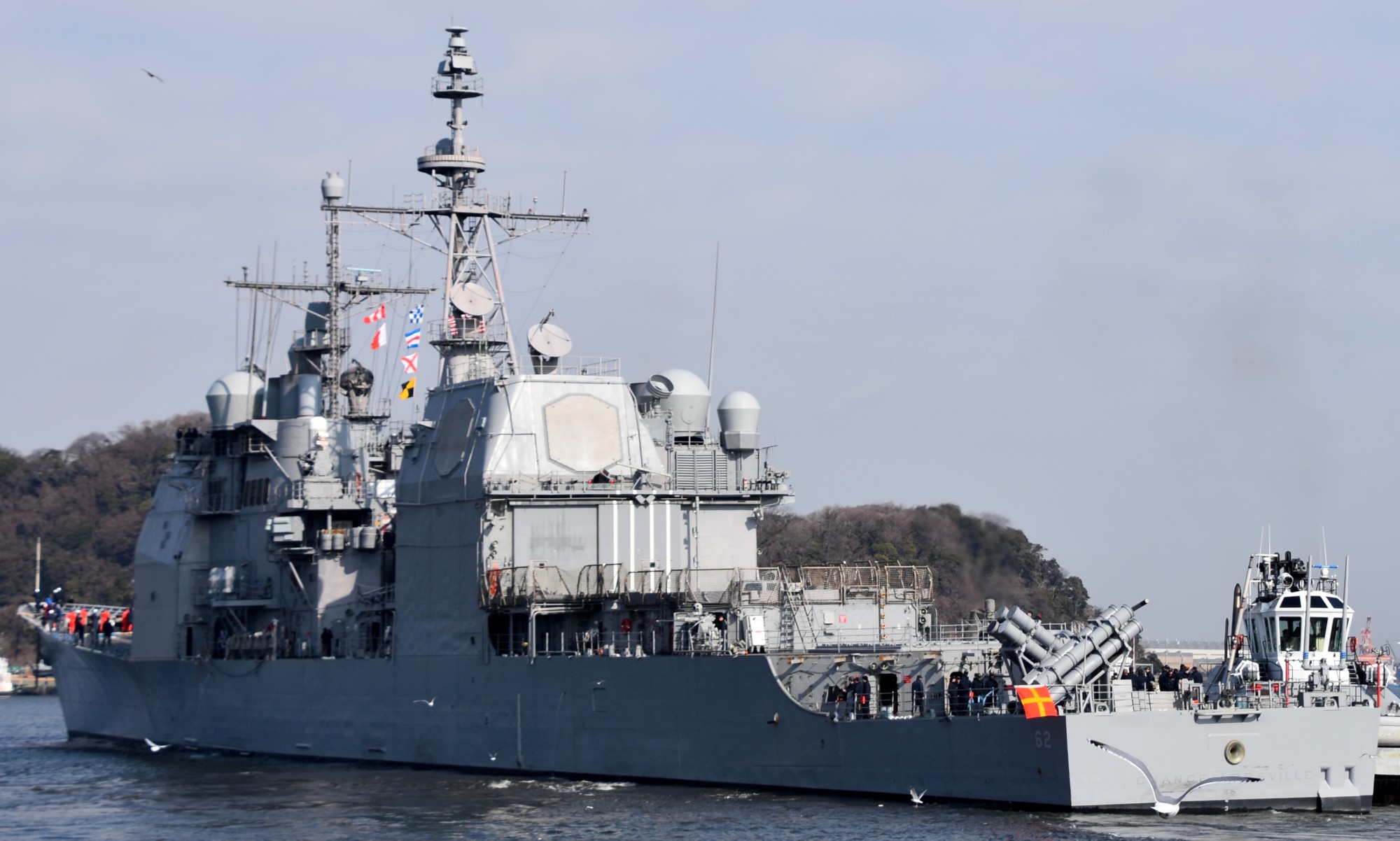 Fleet Activities Yokosuka, Japan - February 2018 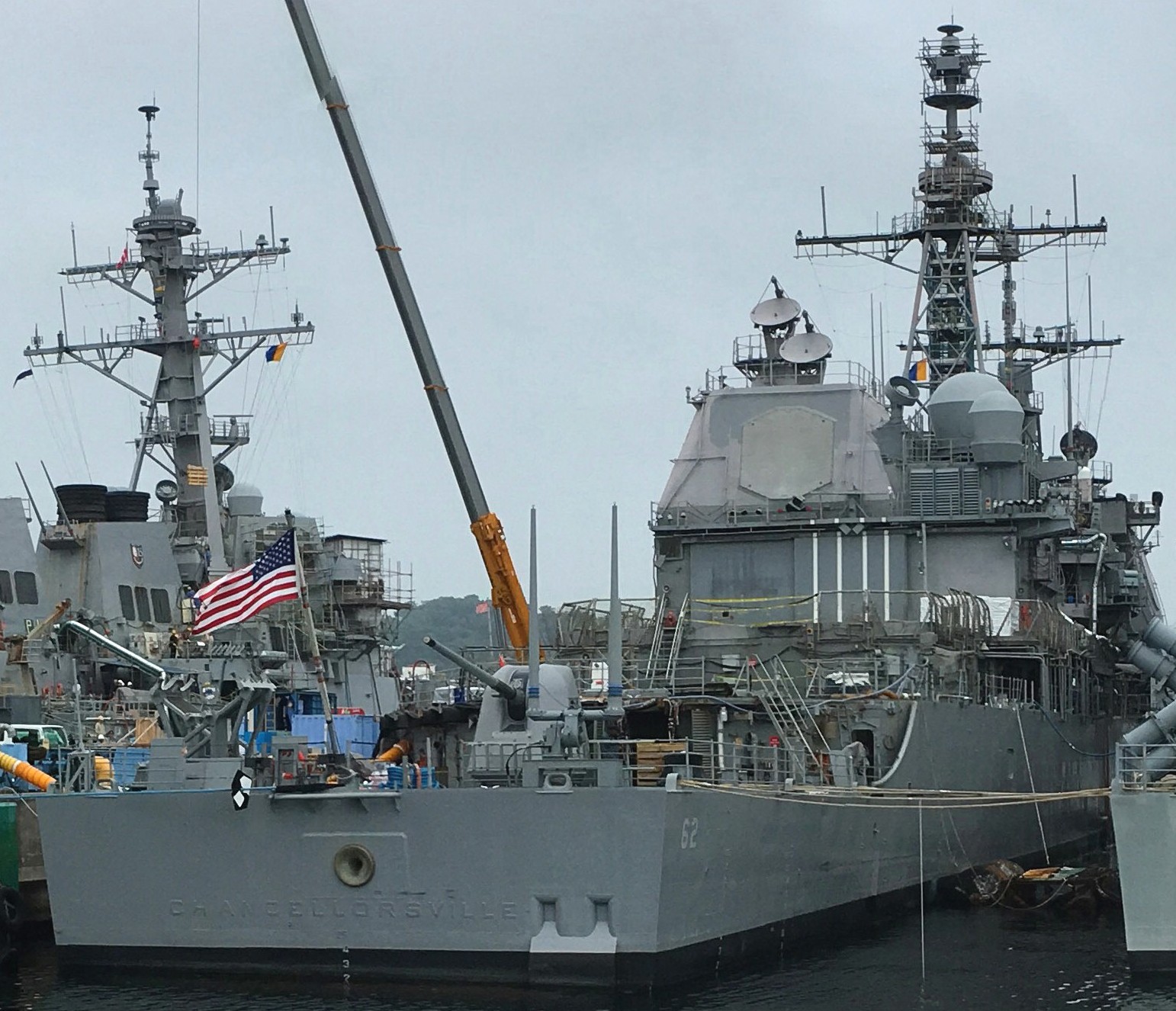 undocking at Fleet Activities Yokosuka, Japan - September 2017 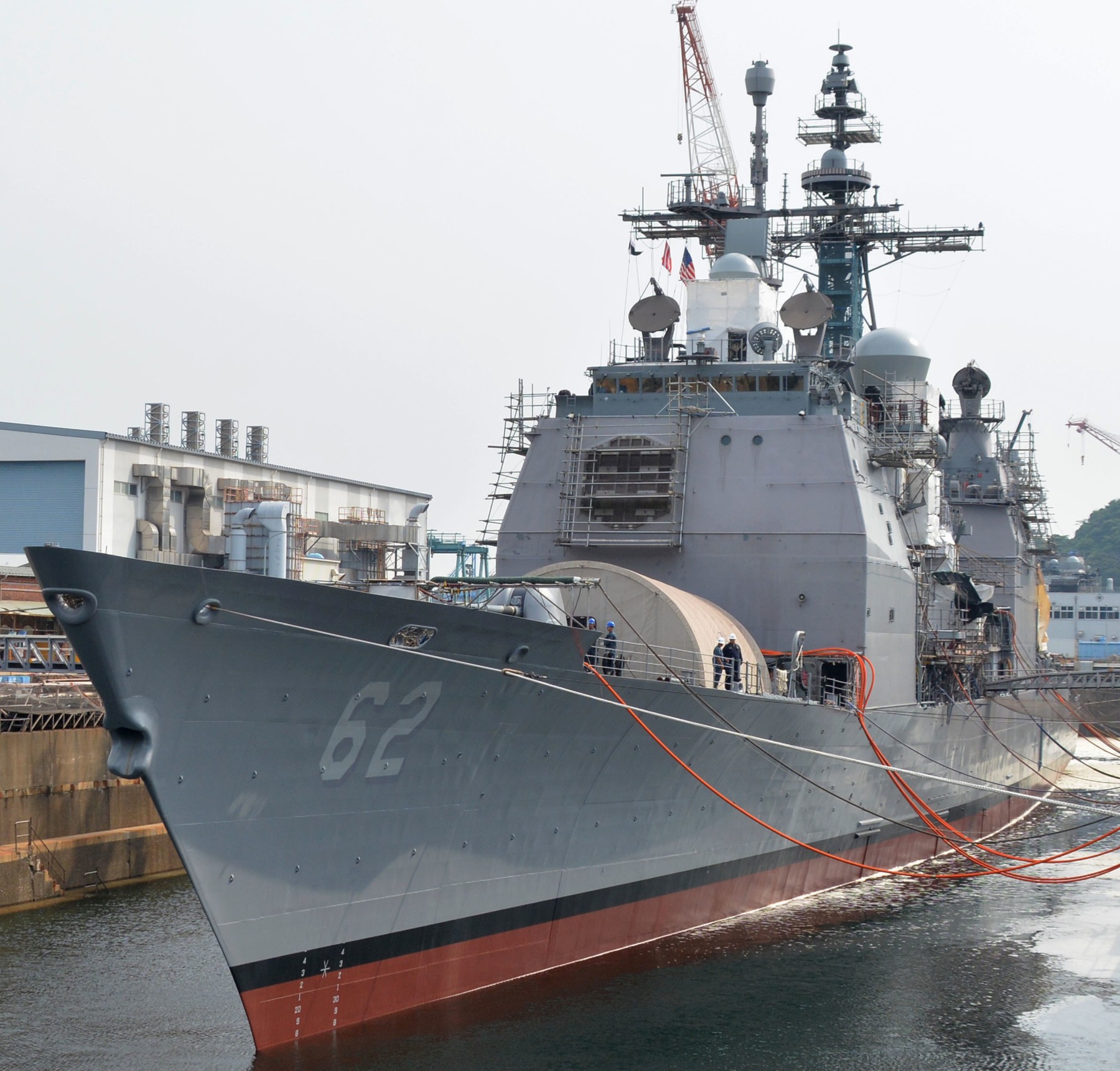 in dry-dock at Fleet Activities Yokosuka, Japan - May 2017 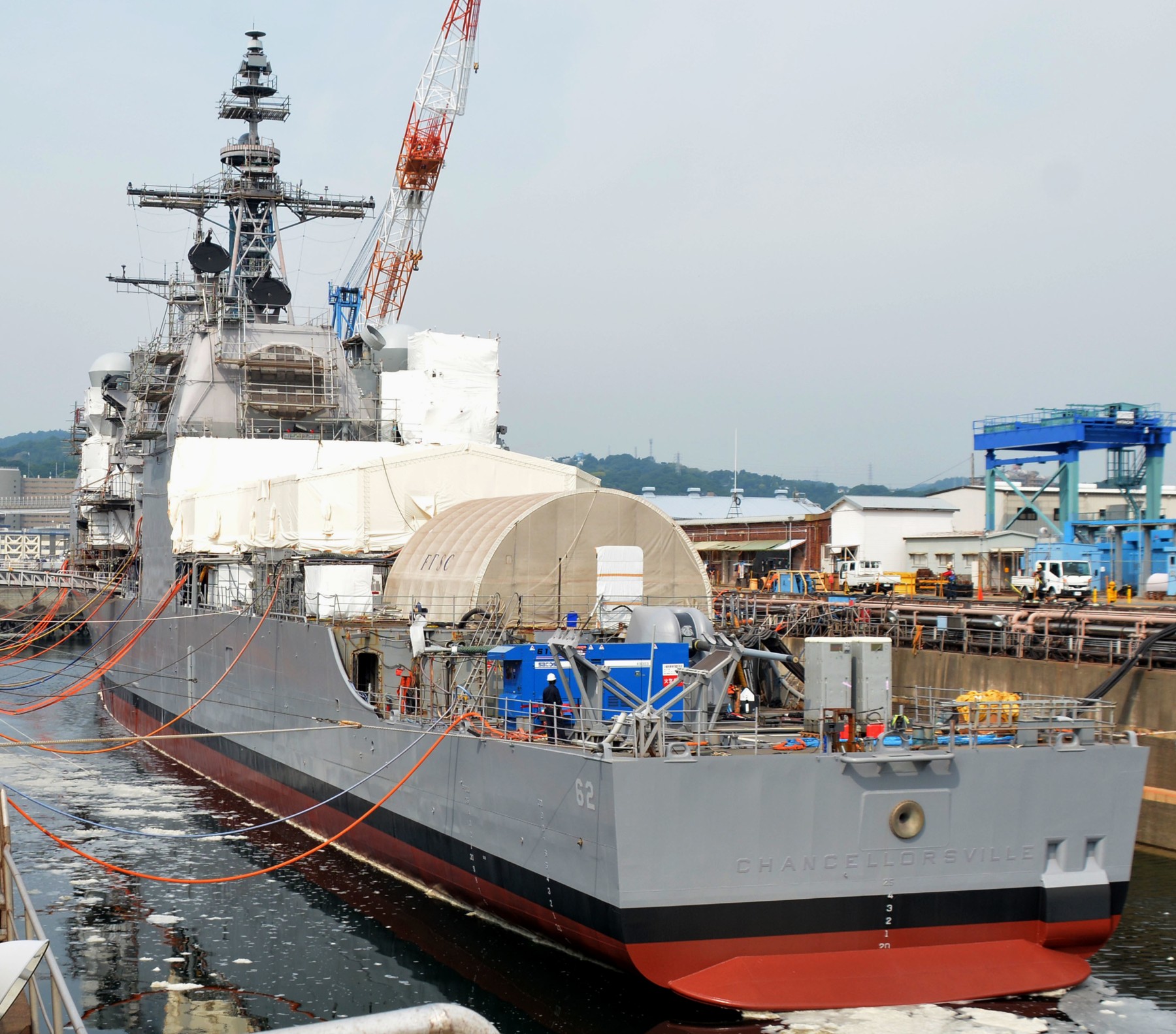 in dry-dock at Fleet Activities Yokosuka, Japan - May 2017 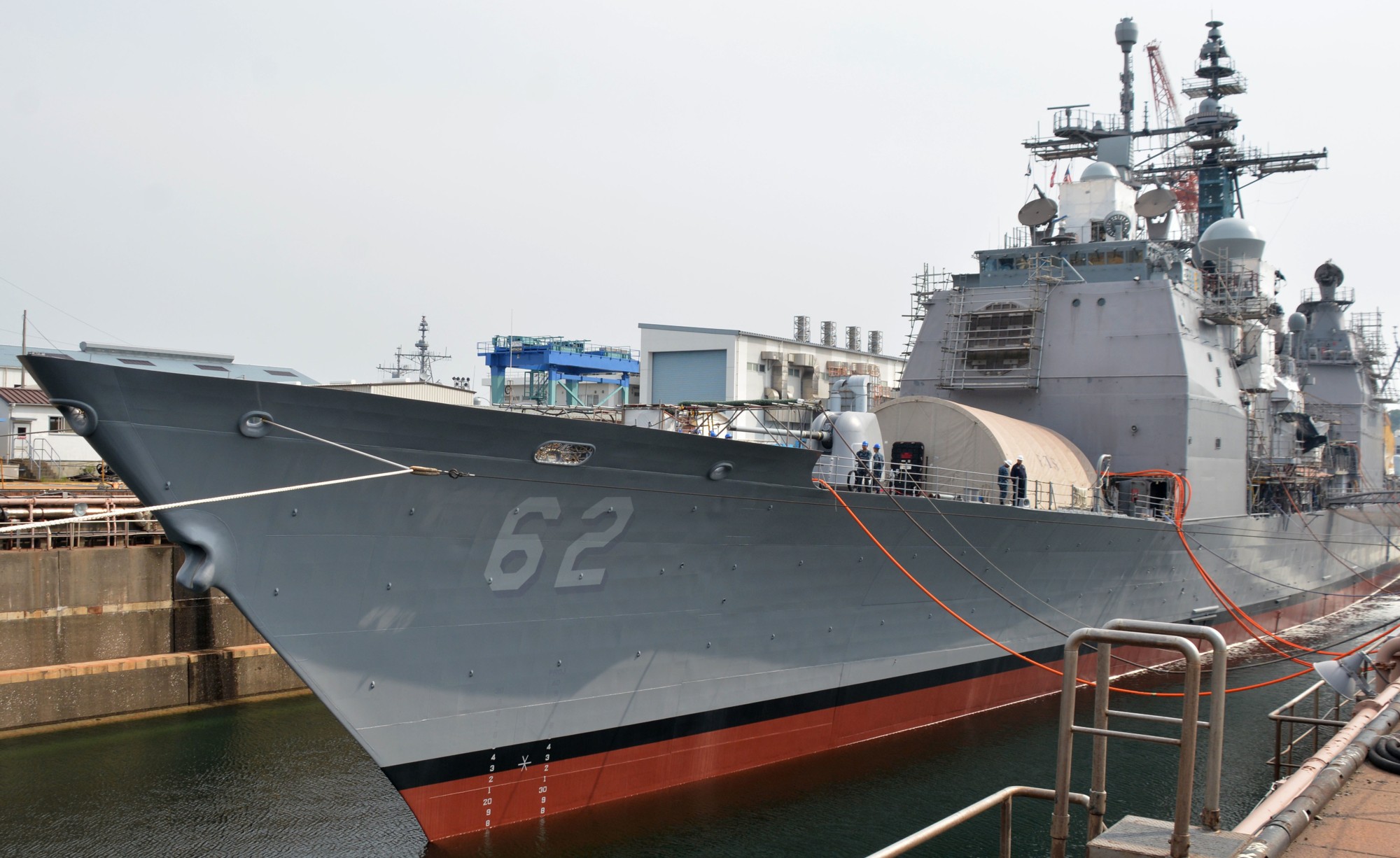 in dry-dock at Fleet Activities Yokosuka, Japan - May 2017 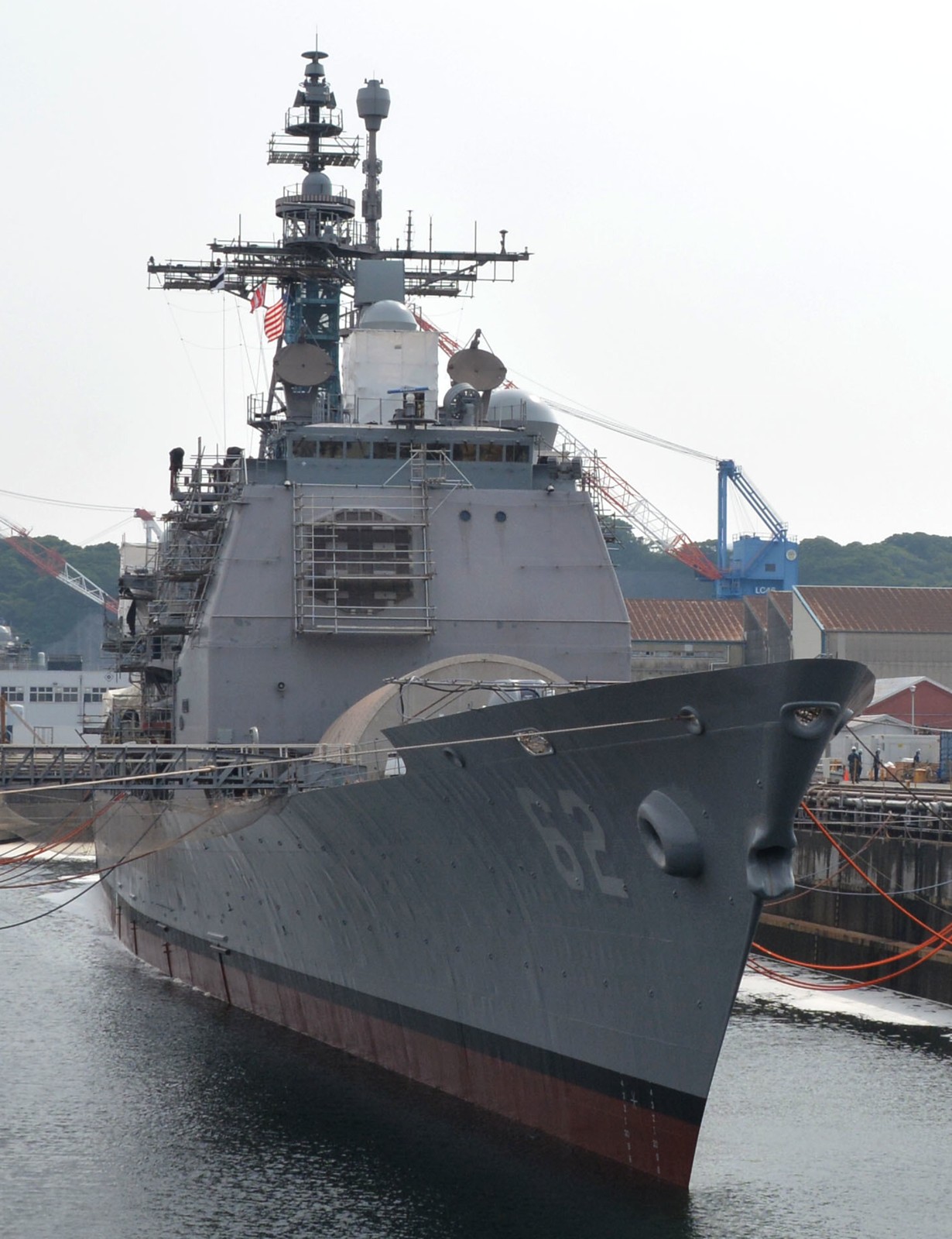 in dry-dock at Fleet Activities Yokosuka, Japan - May 2017 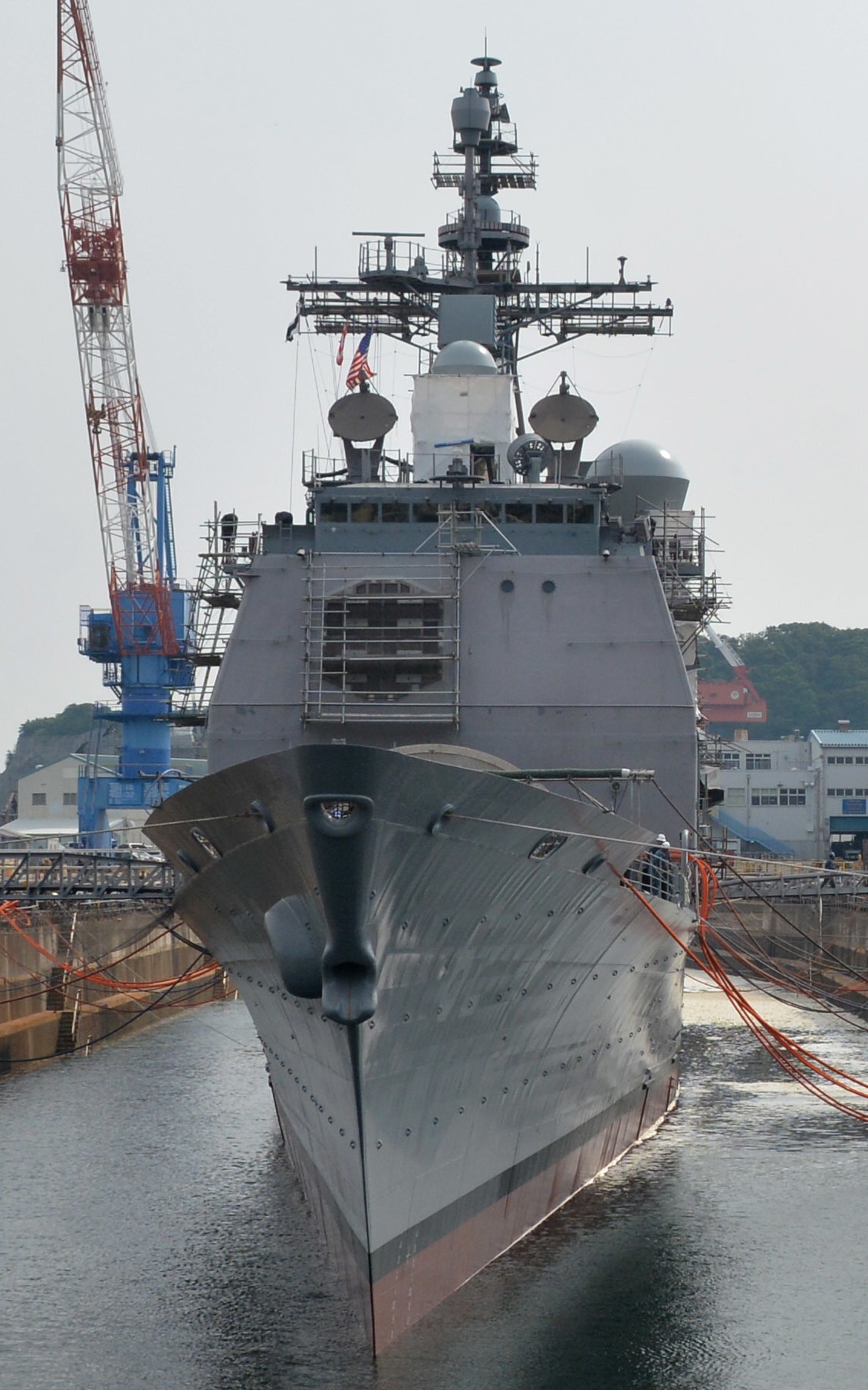 in dry-dock at Fleet Activities Yokosuka, Japan - May 2017 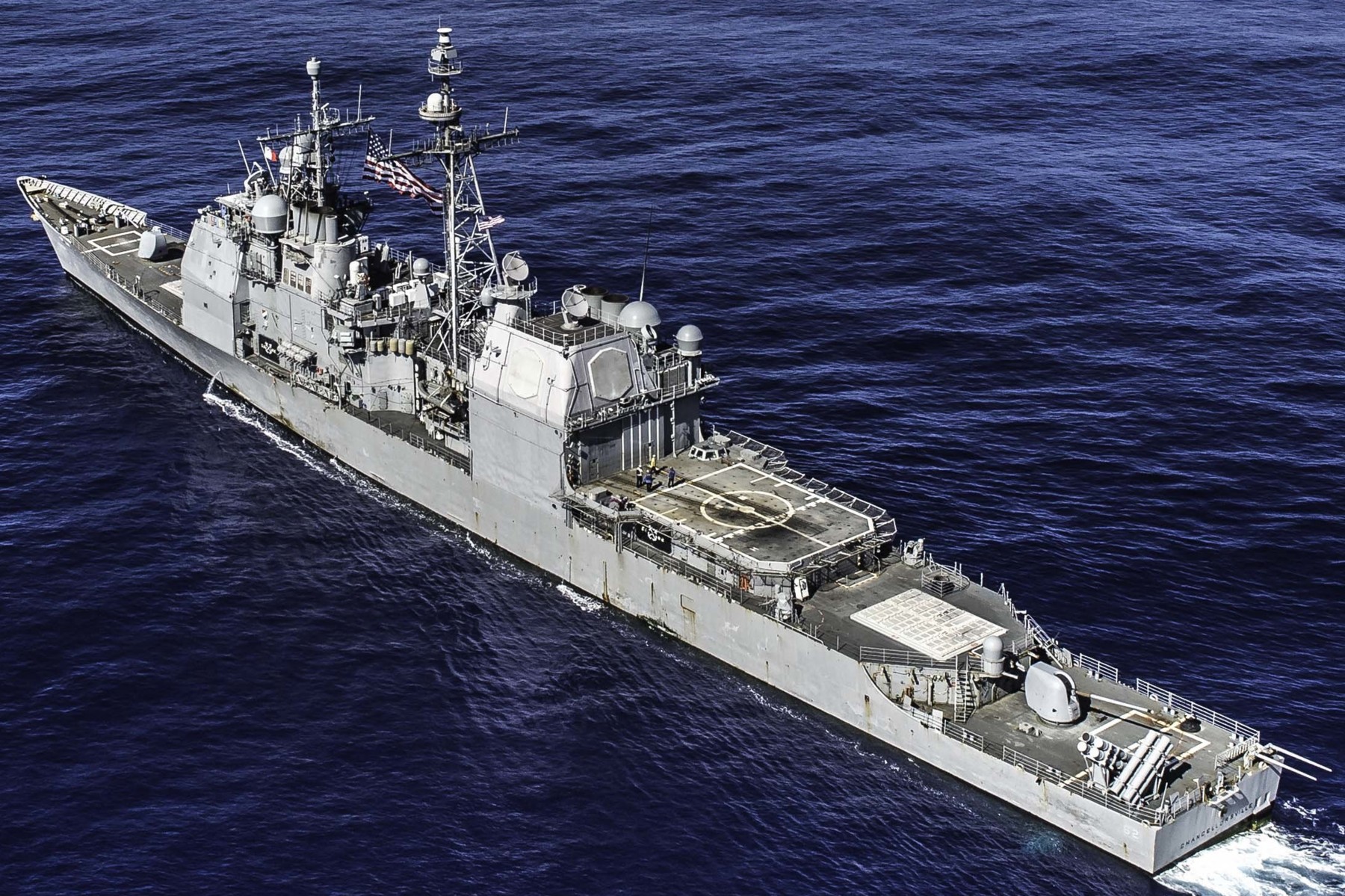 Philippine Sea - October 2016 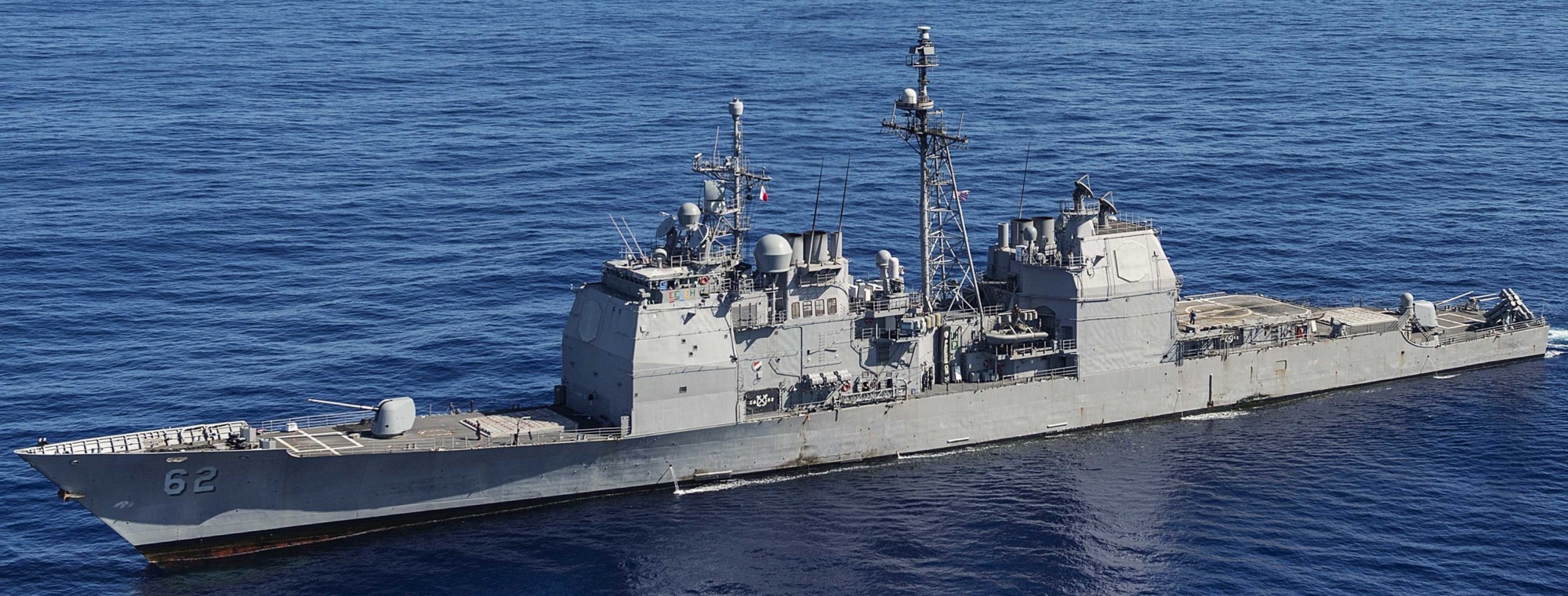 Philippine Sea - October 2016 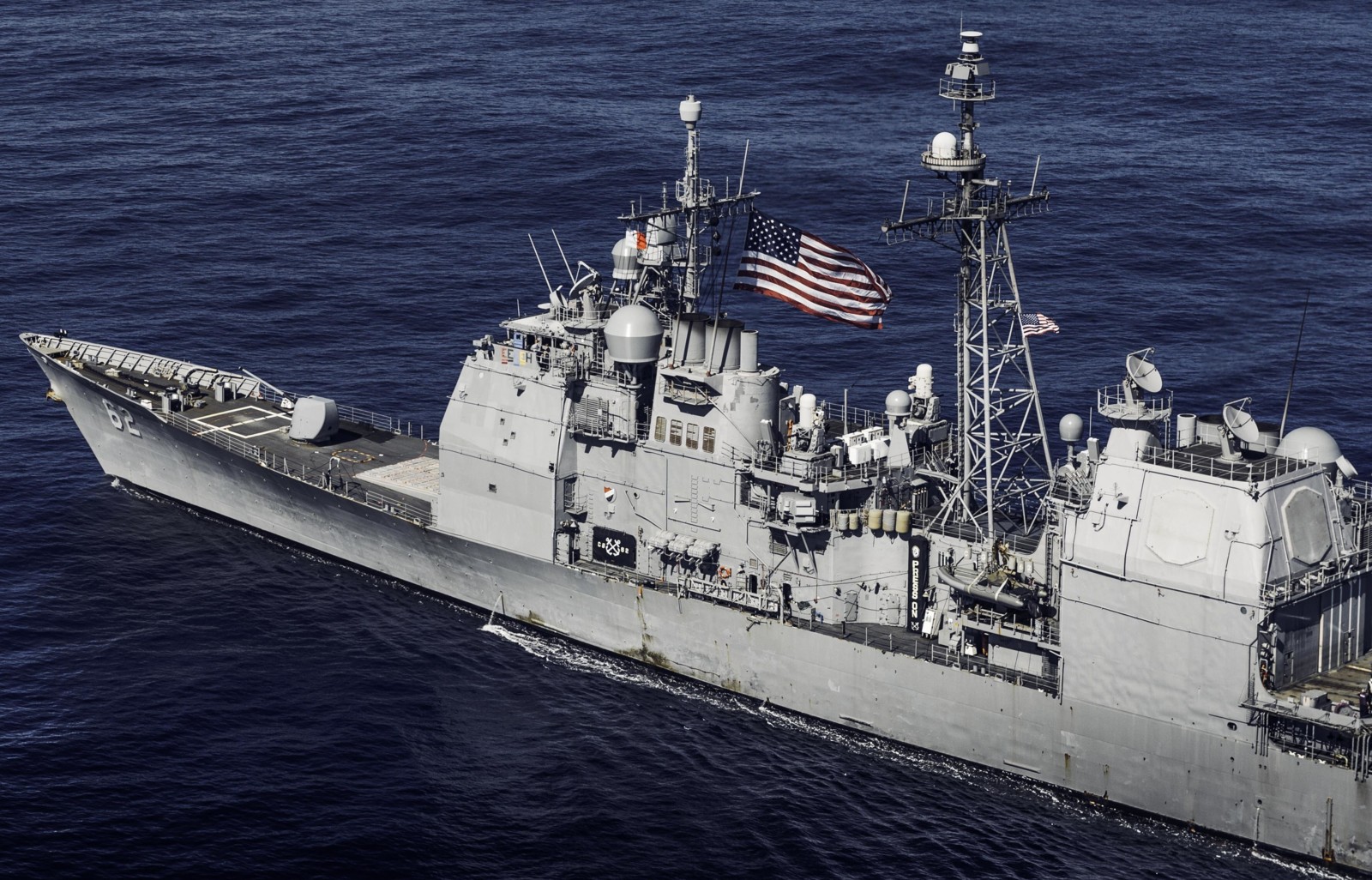 Philippine Sea - October 2016 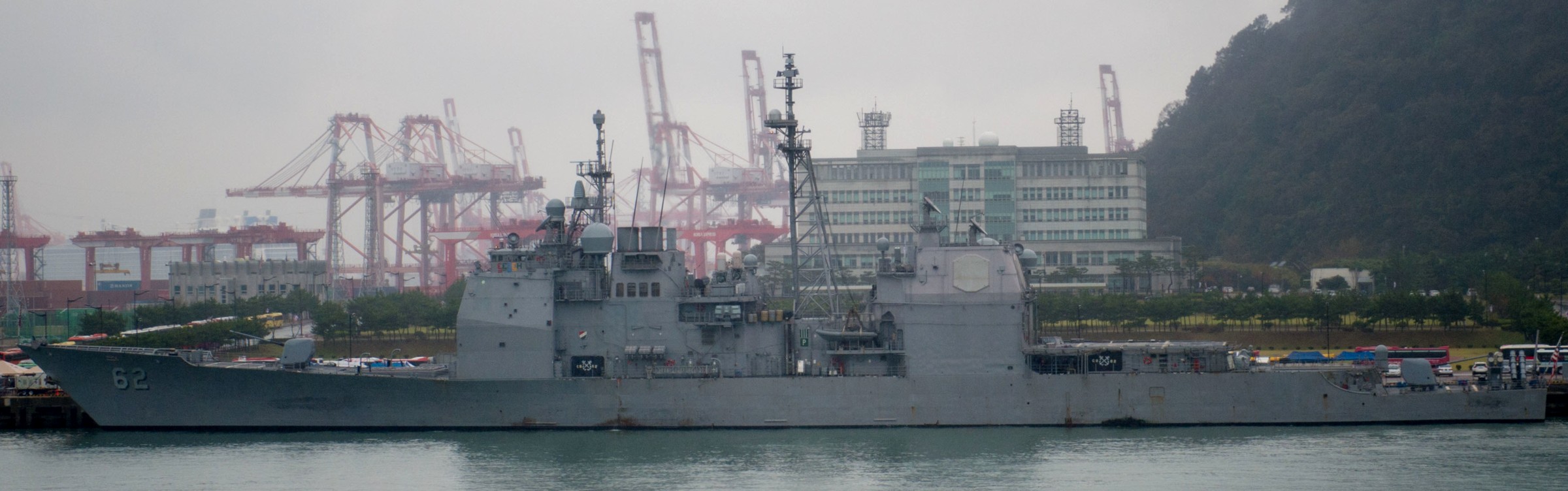 Busan, Republic of Korea - October 2016 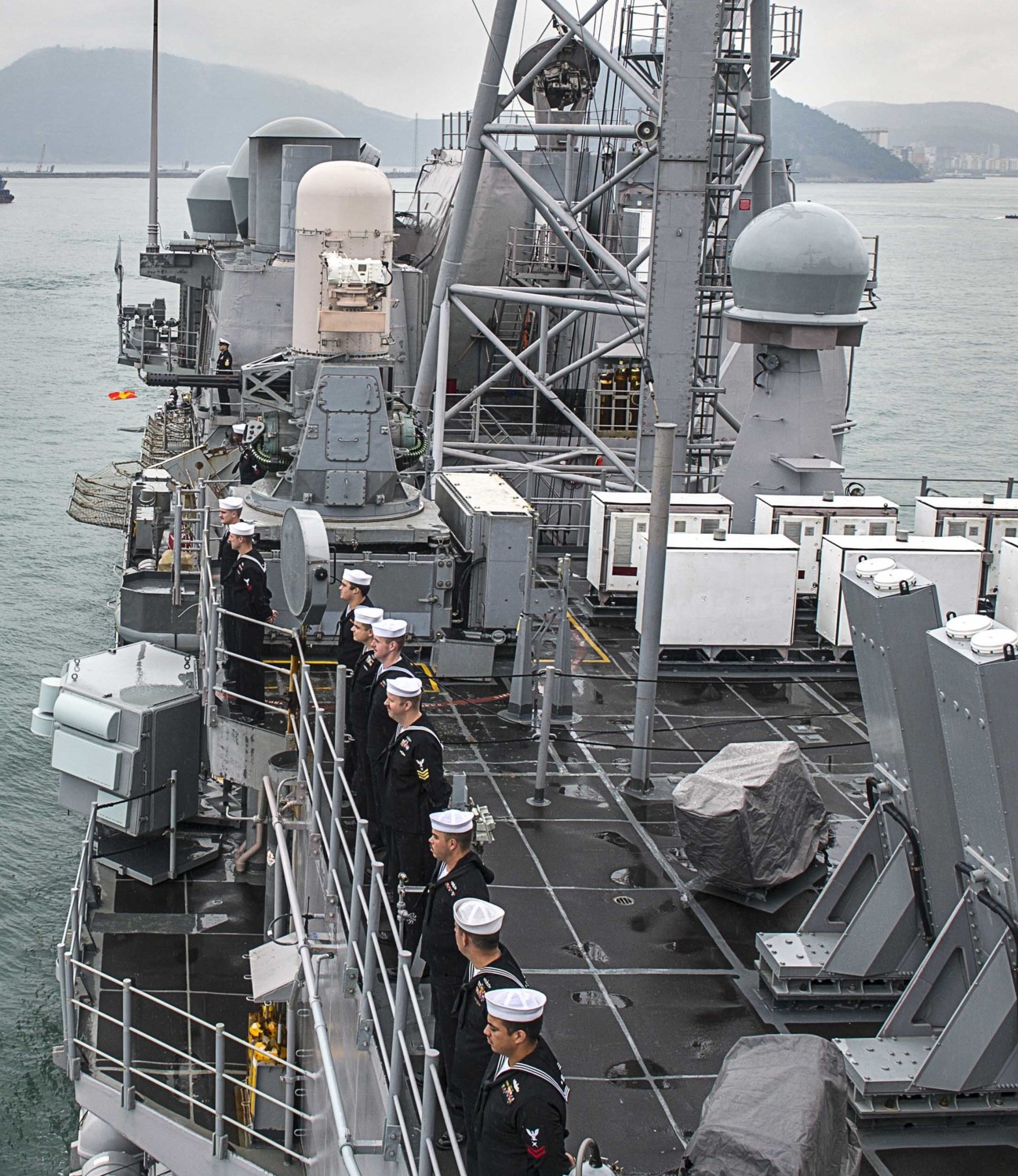 Busan, Republic of Korea - October 2016 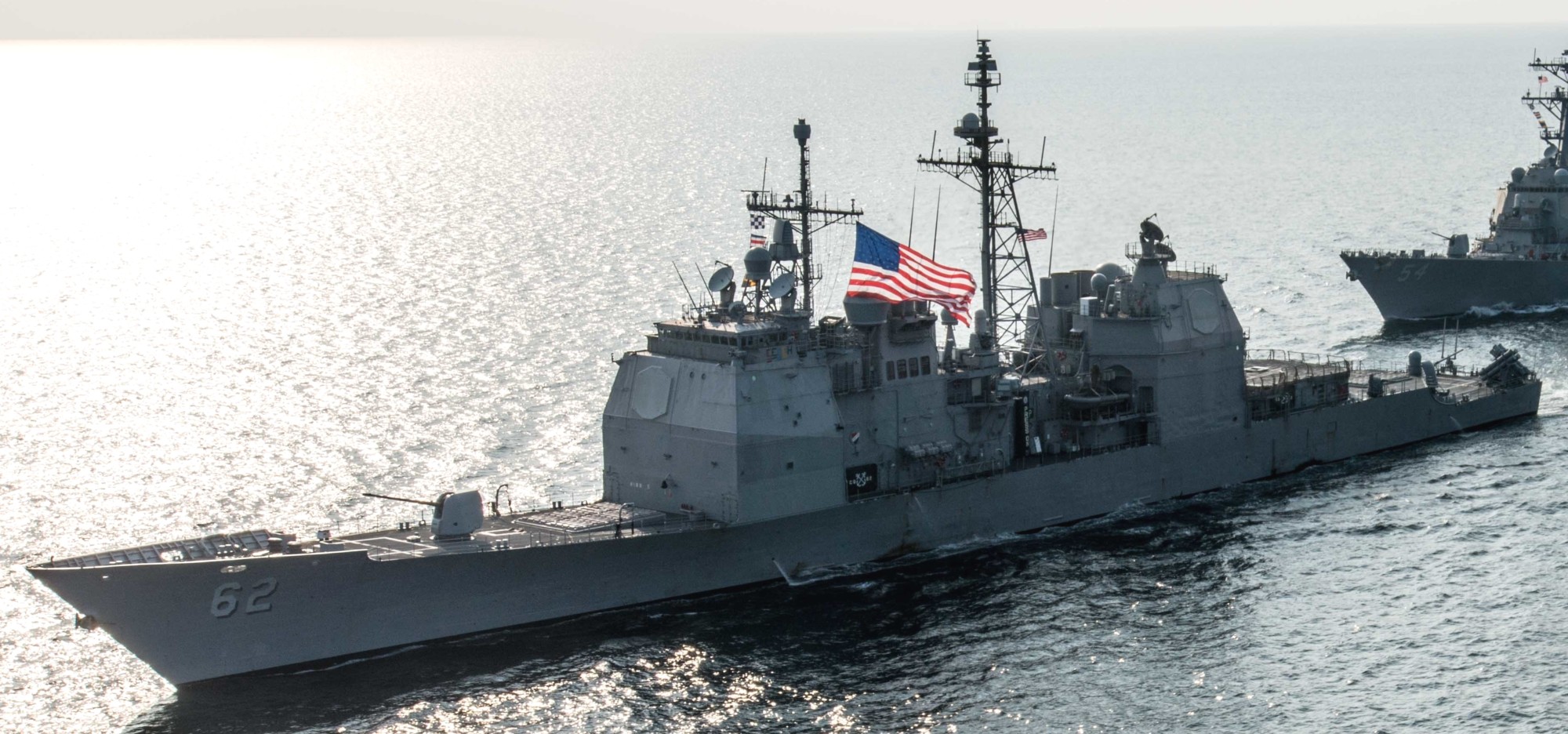 off Korea - October 2016 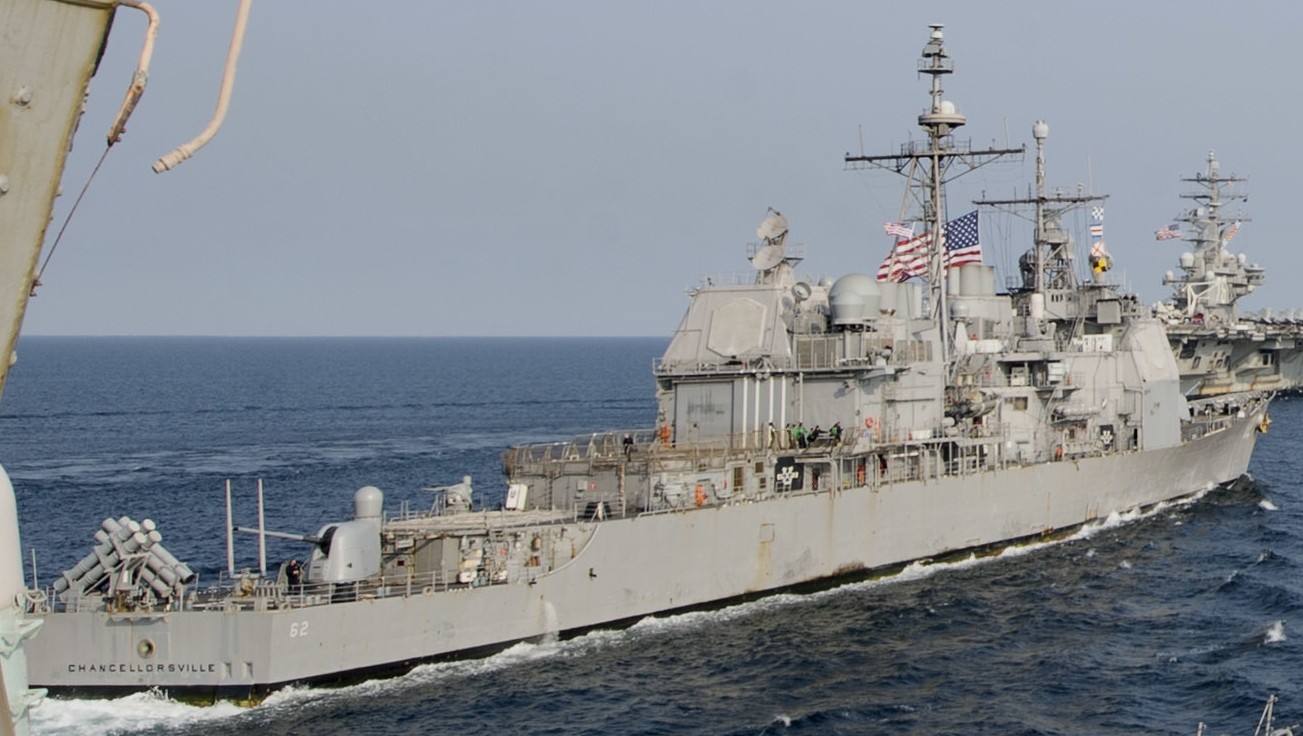 off Korea - October 2016 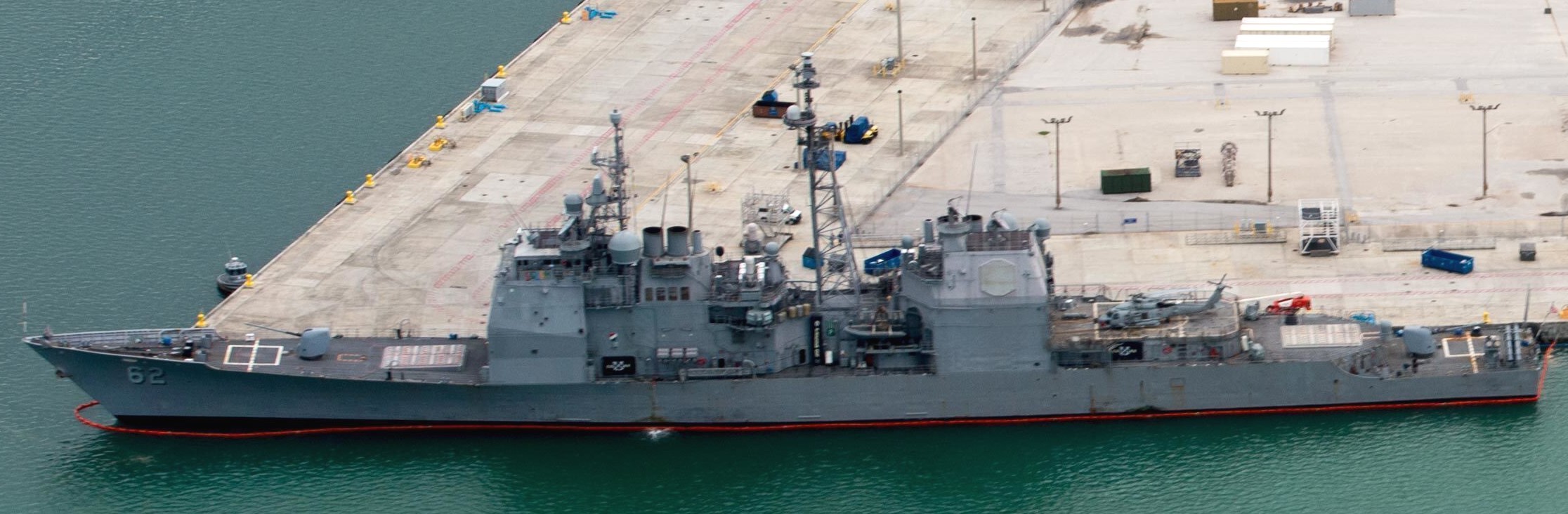 Apra Harbor, Guam - September 2016 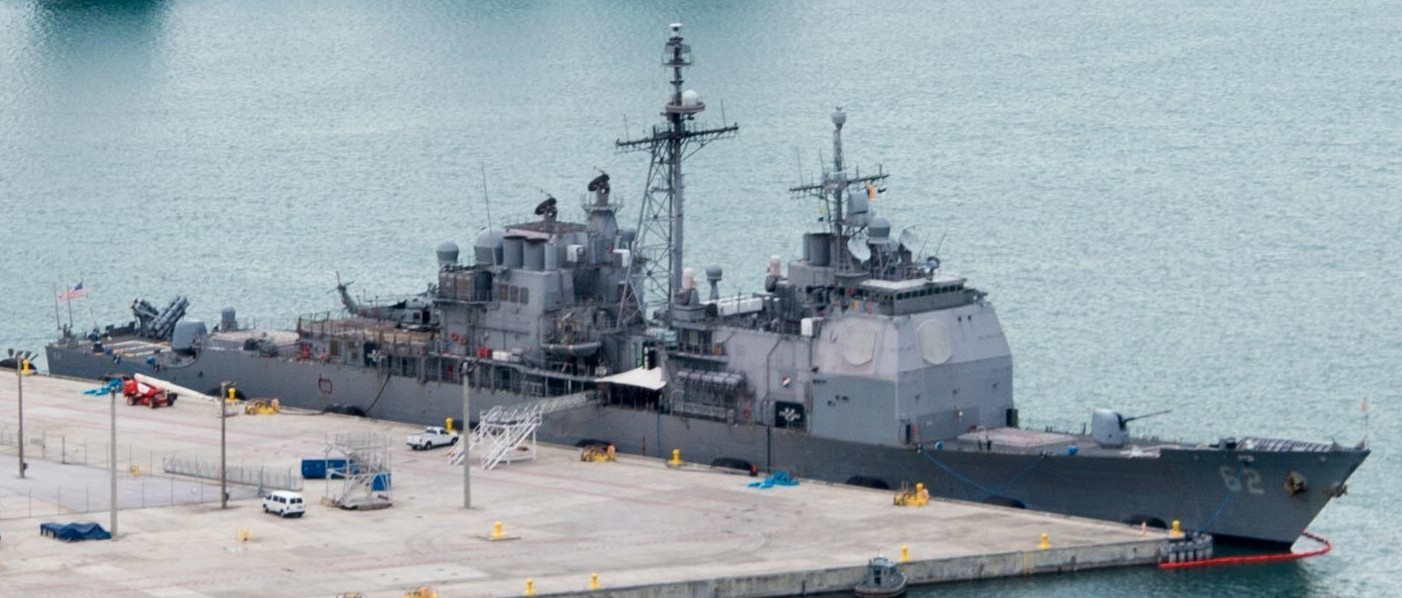 Apra Harbor, Guam - September 2016 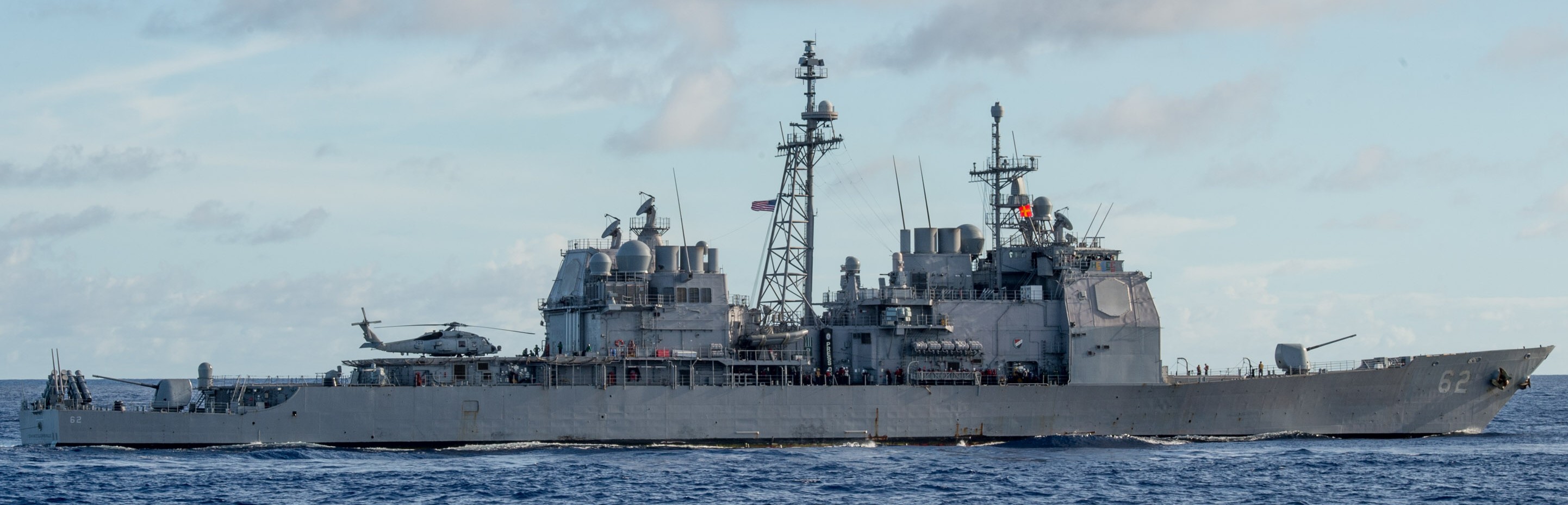 Philippine Sea - September 2016 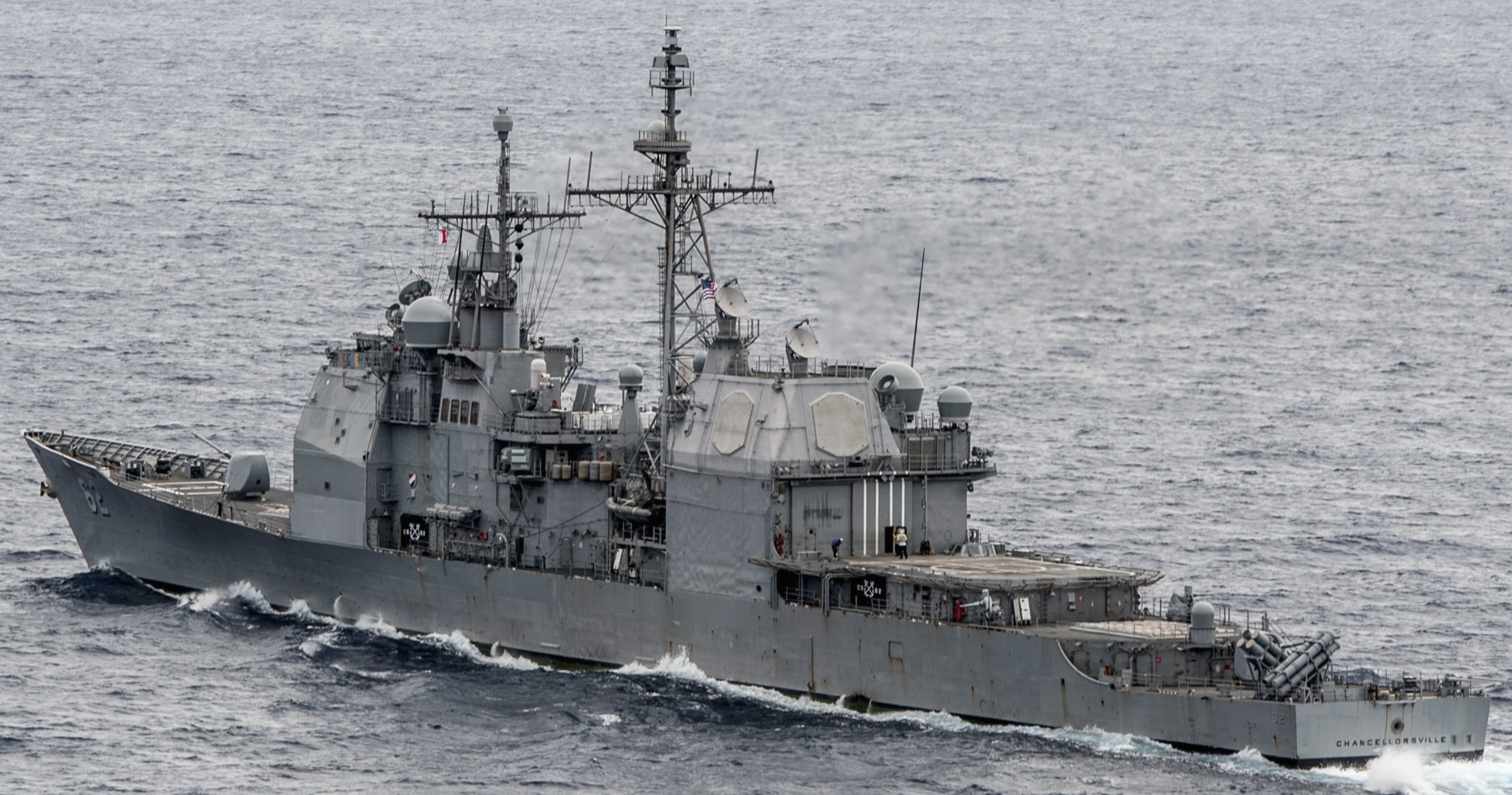 South China Sea - July 2016 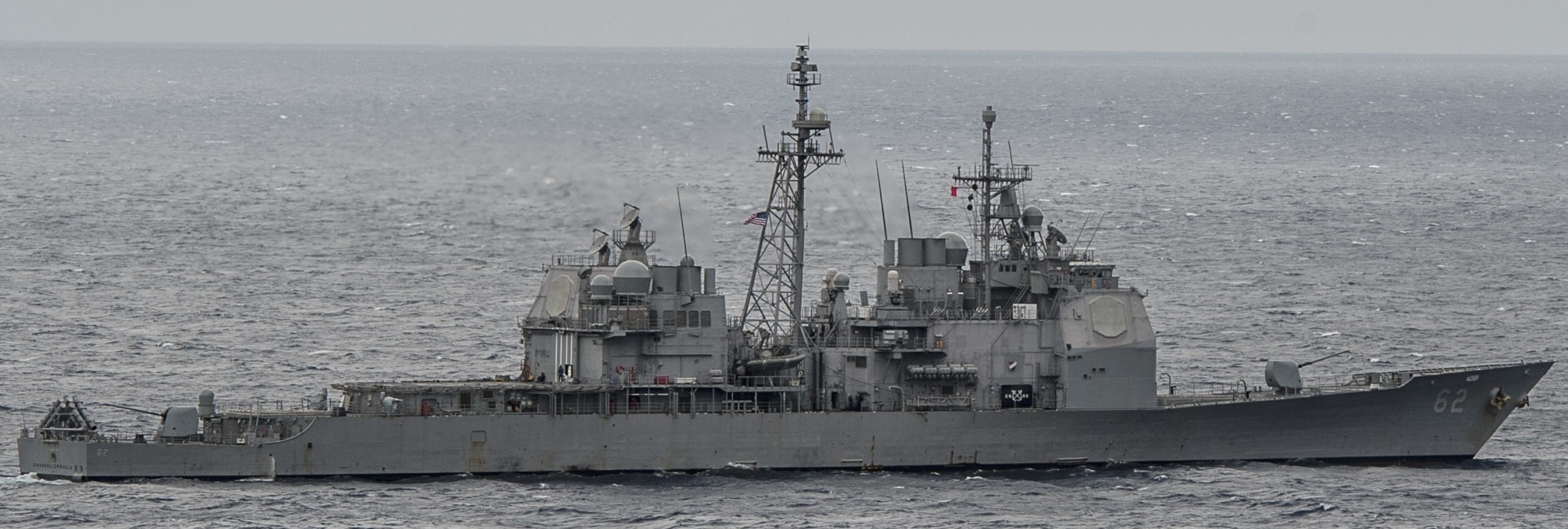 South China Sea - July 2016 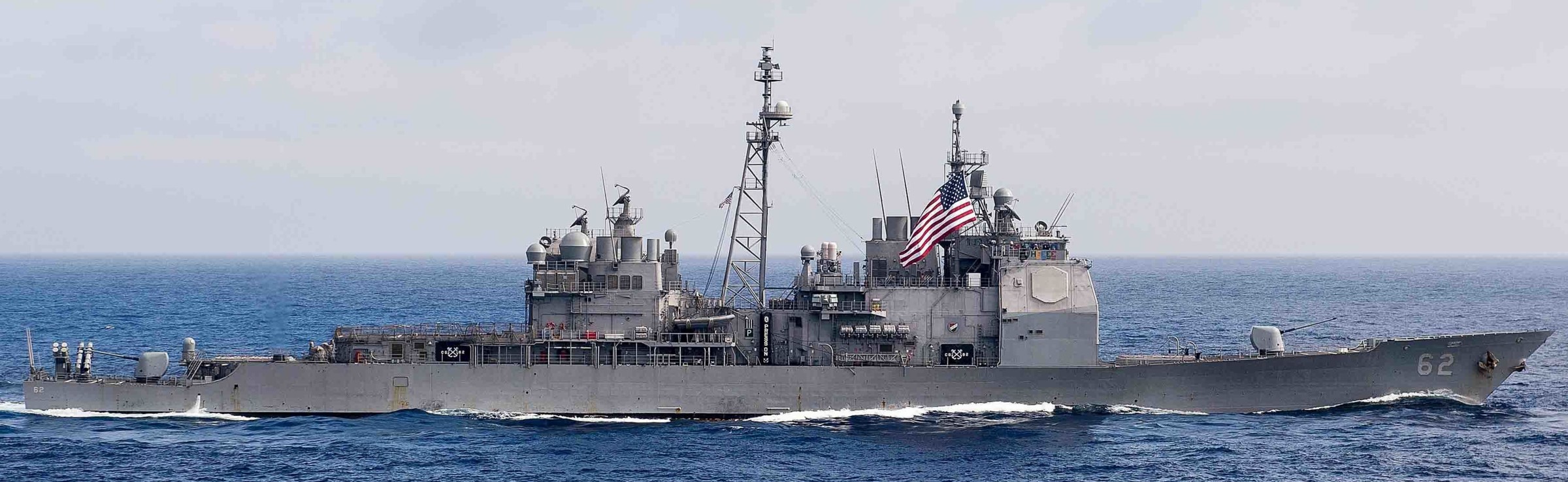 Philippine Sea - June 2016 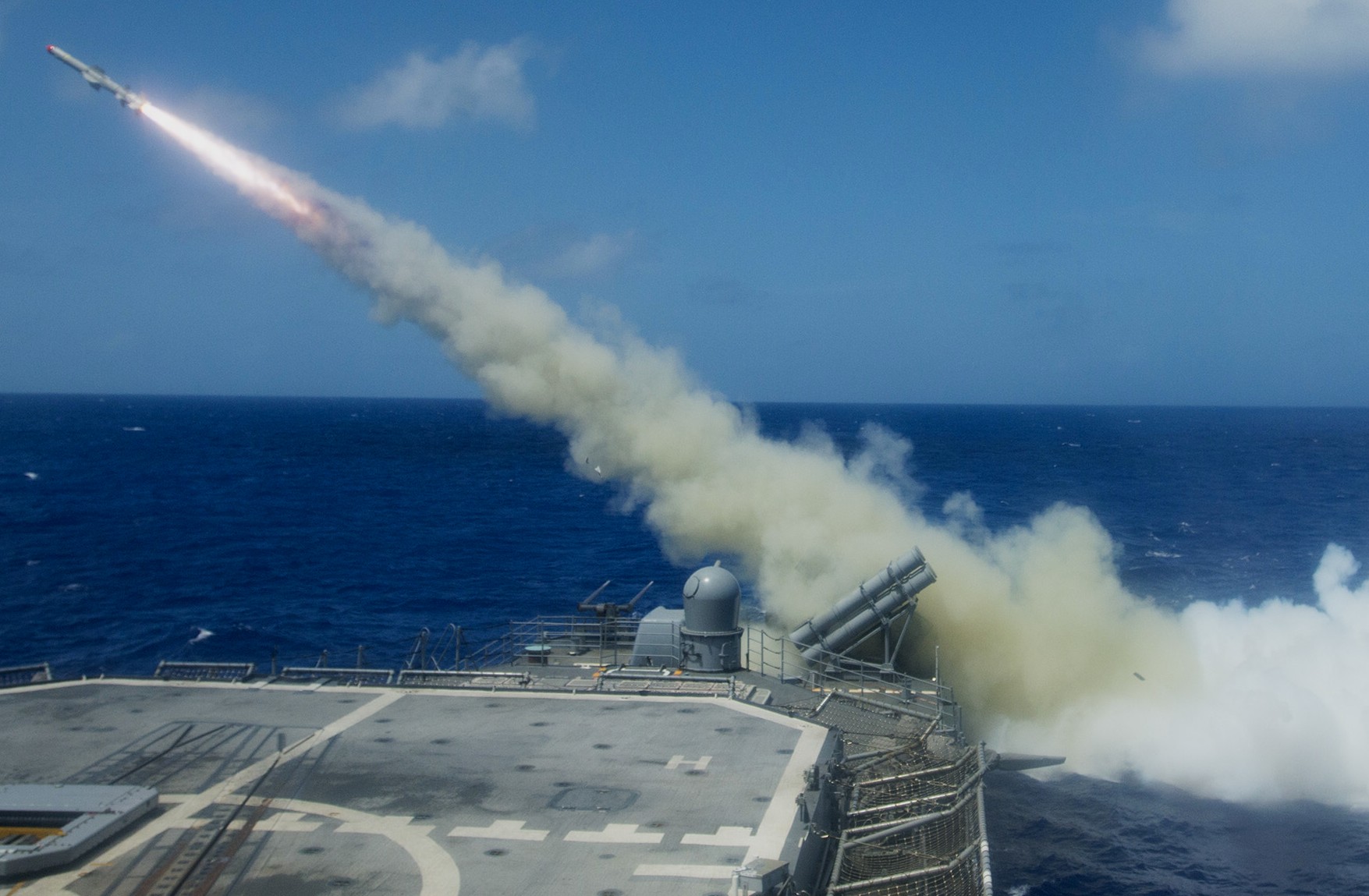 RGM-84 Harpoon SSM missile firing - off Guam - March 2016 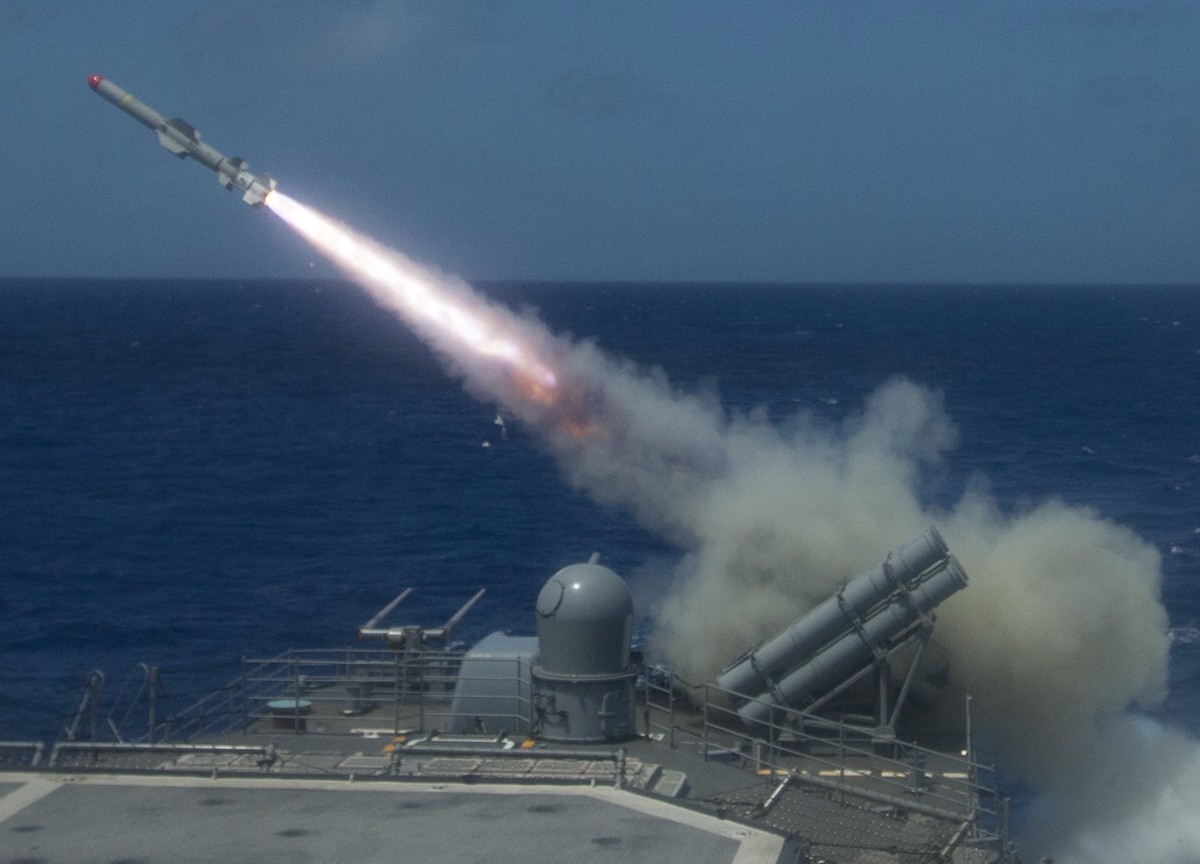 RGM-84 Harpoon SSM missile firing - off Guam - March 2016 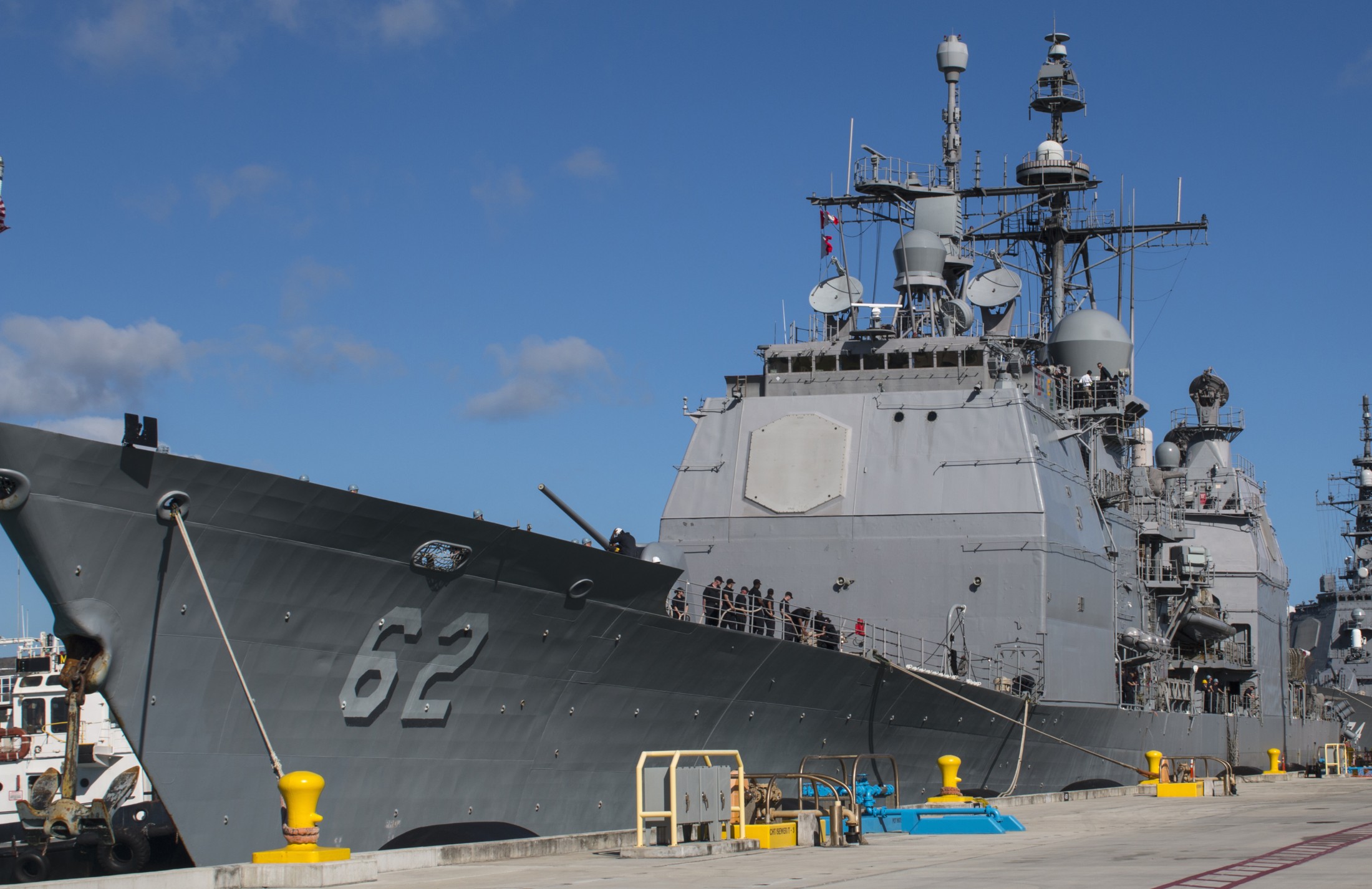 Apra Harbor, Guam - March 2016 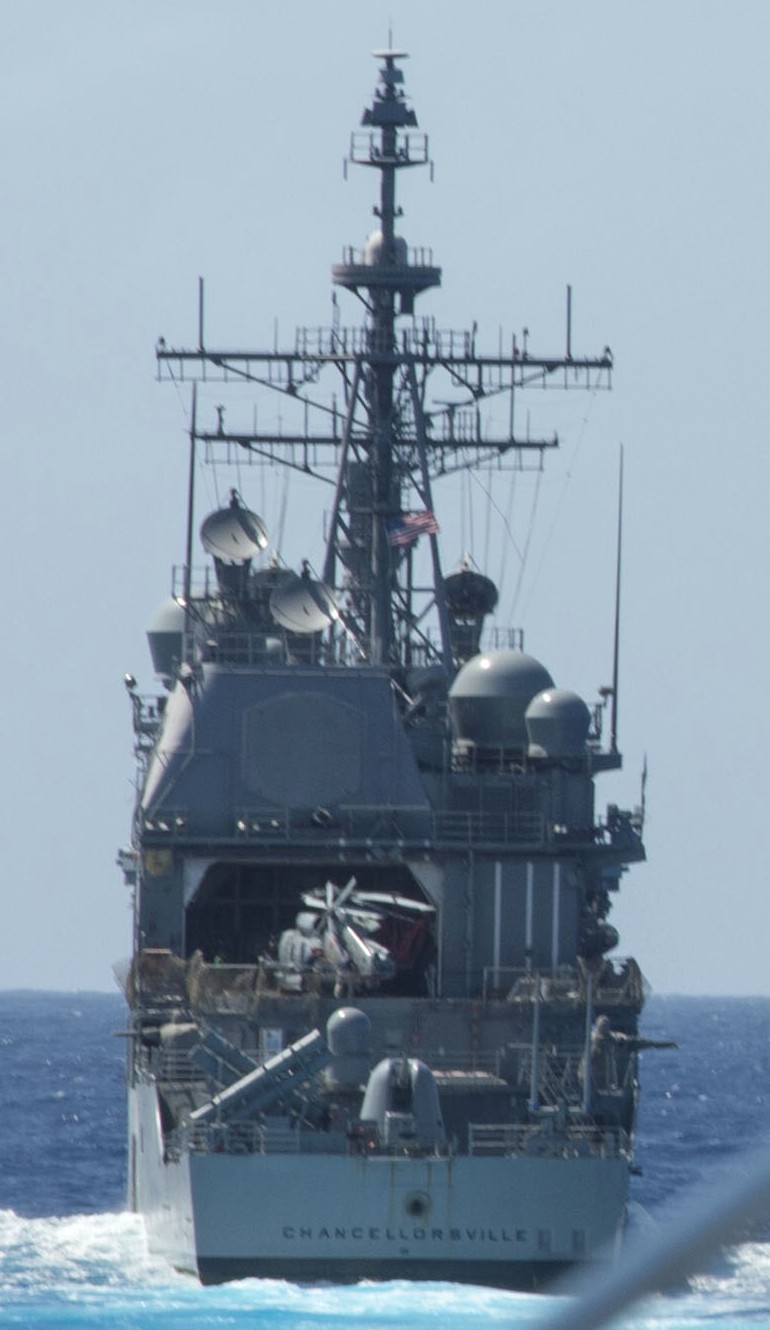 off Guam - March 2016 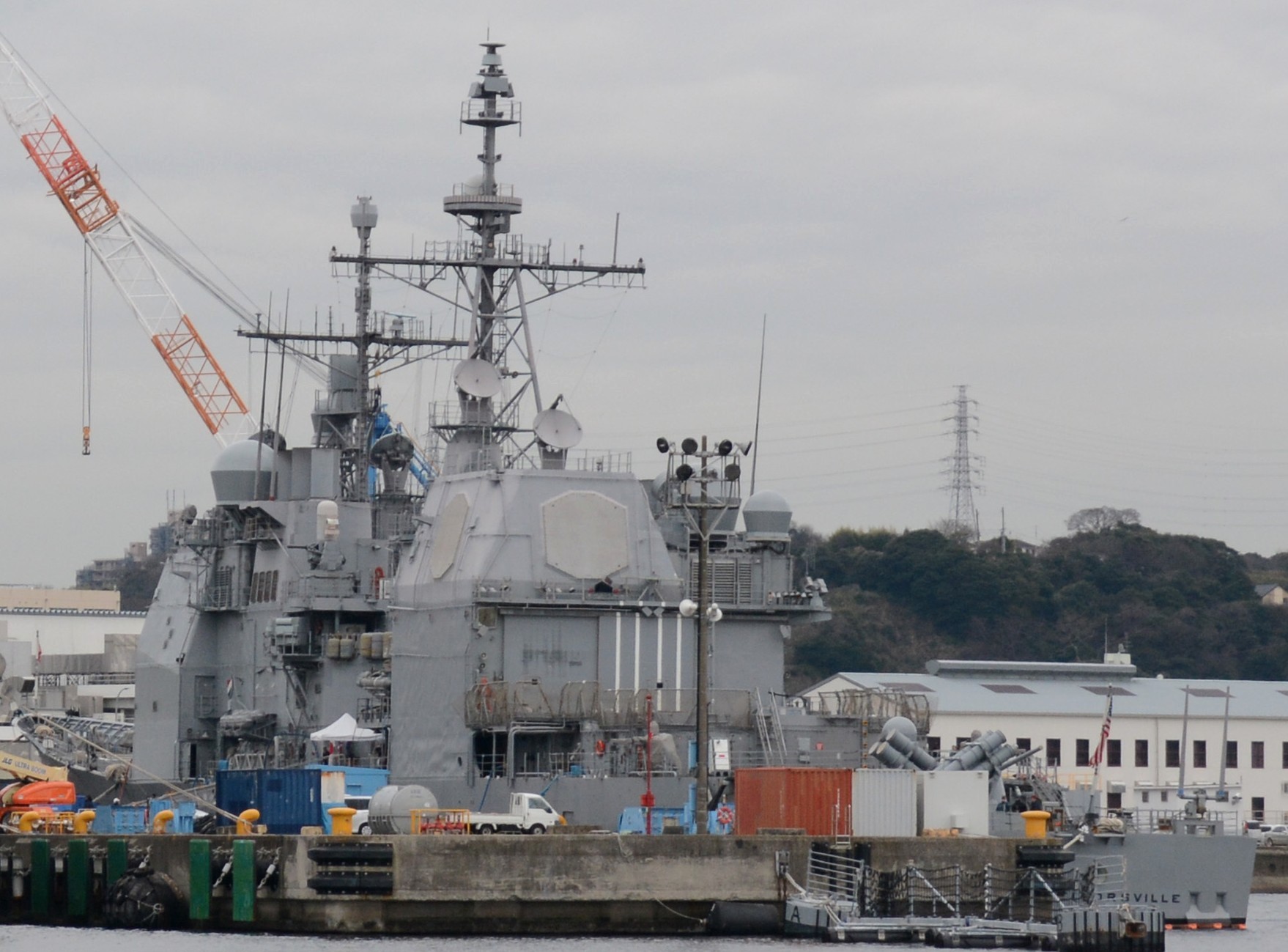 Fleet Activities Yokosuka, Japan - February 2016 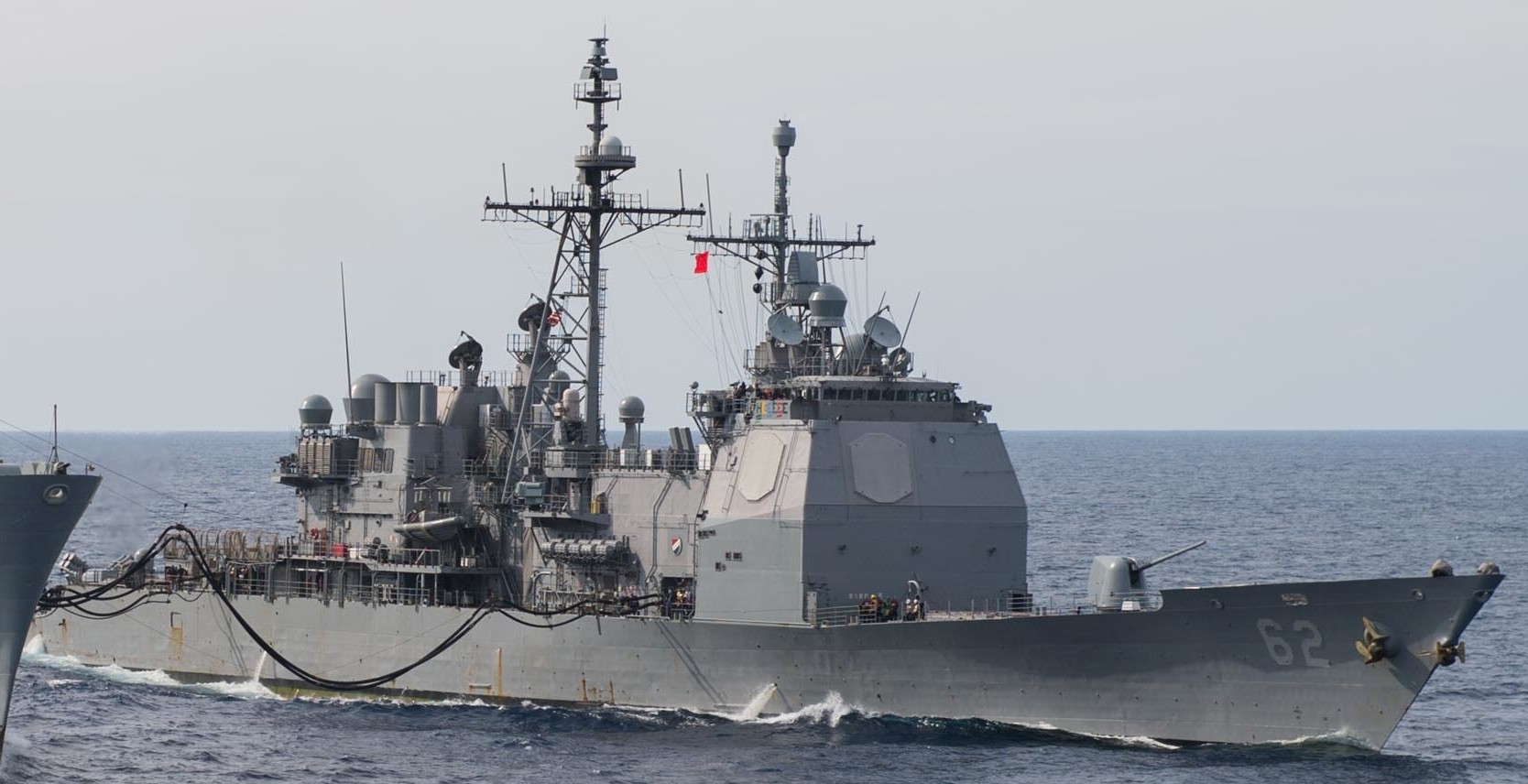 off Japan - November 2015 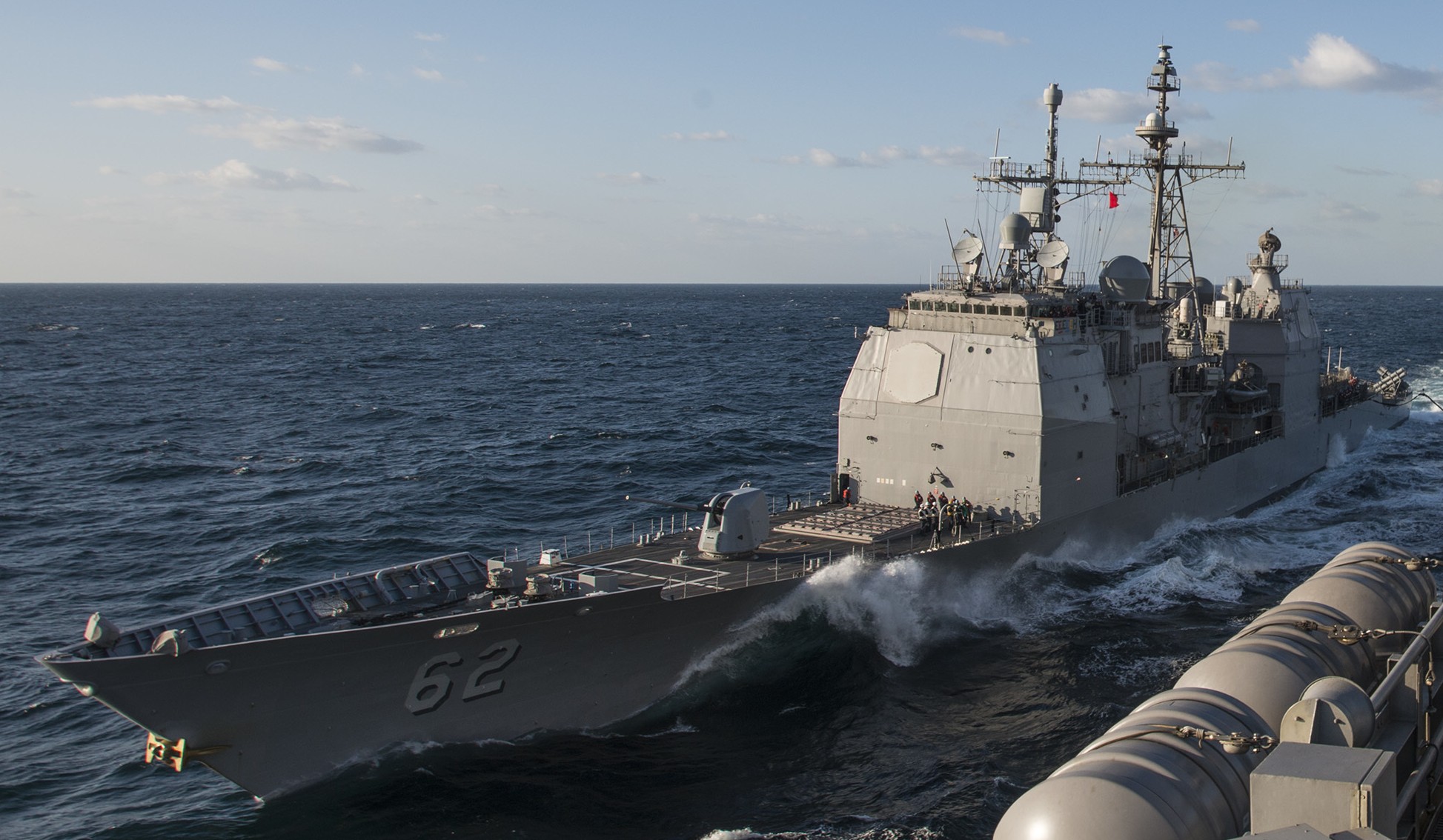 off Korea - October 2015 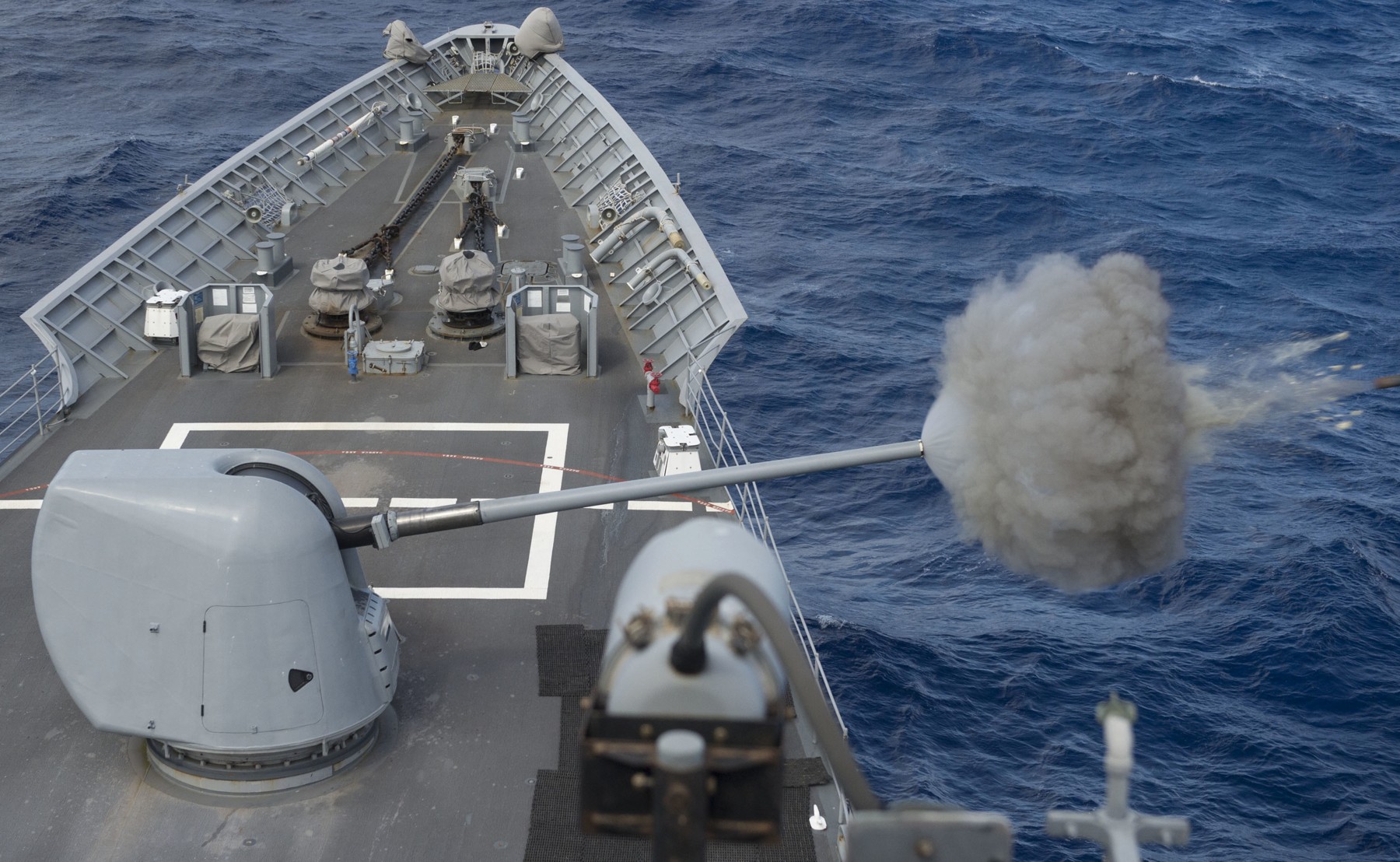 Mk.45 gun fire exercise - off Japan - September 2015 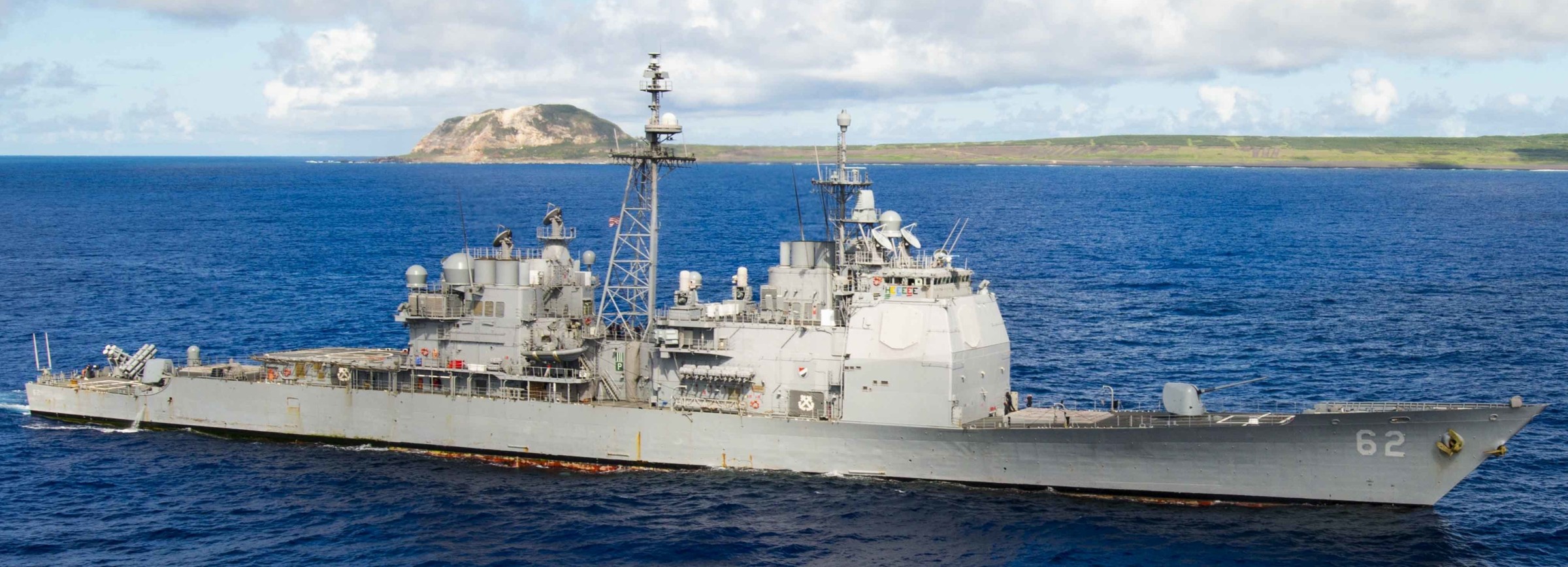 off Iwo To (formerly Iwo Jima) - September 2015 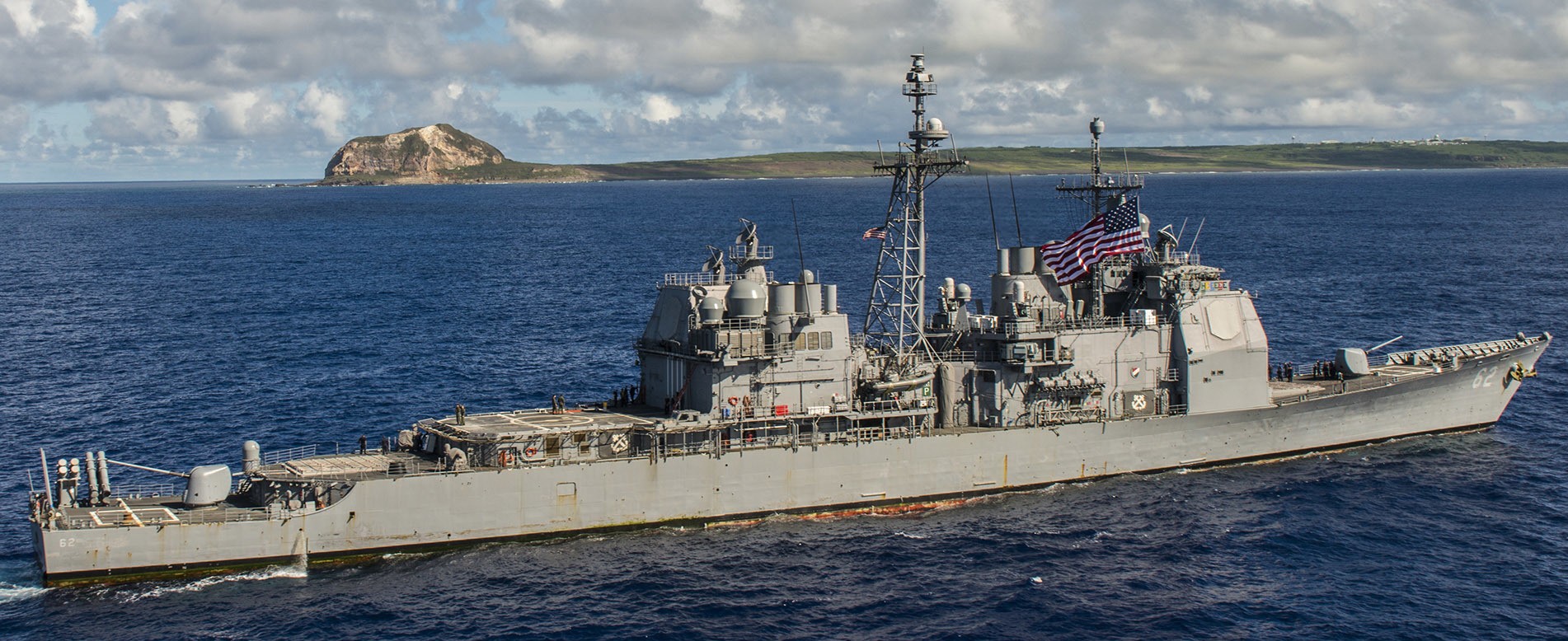 off Iwo To (formerly Iwo Jima) - September 2015 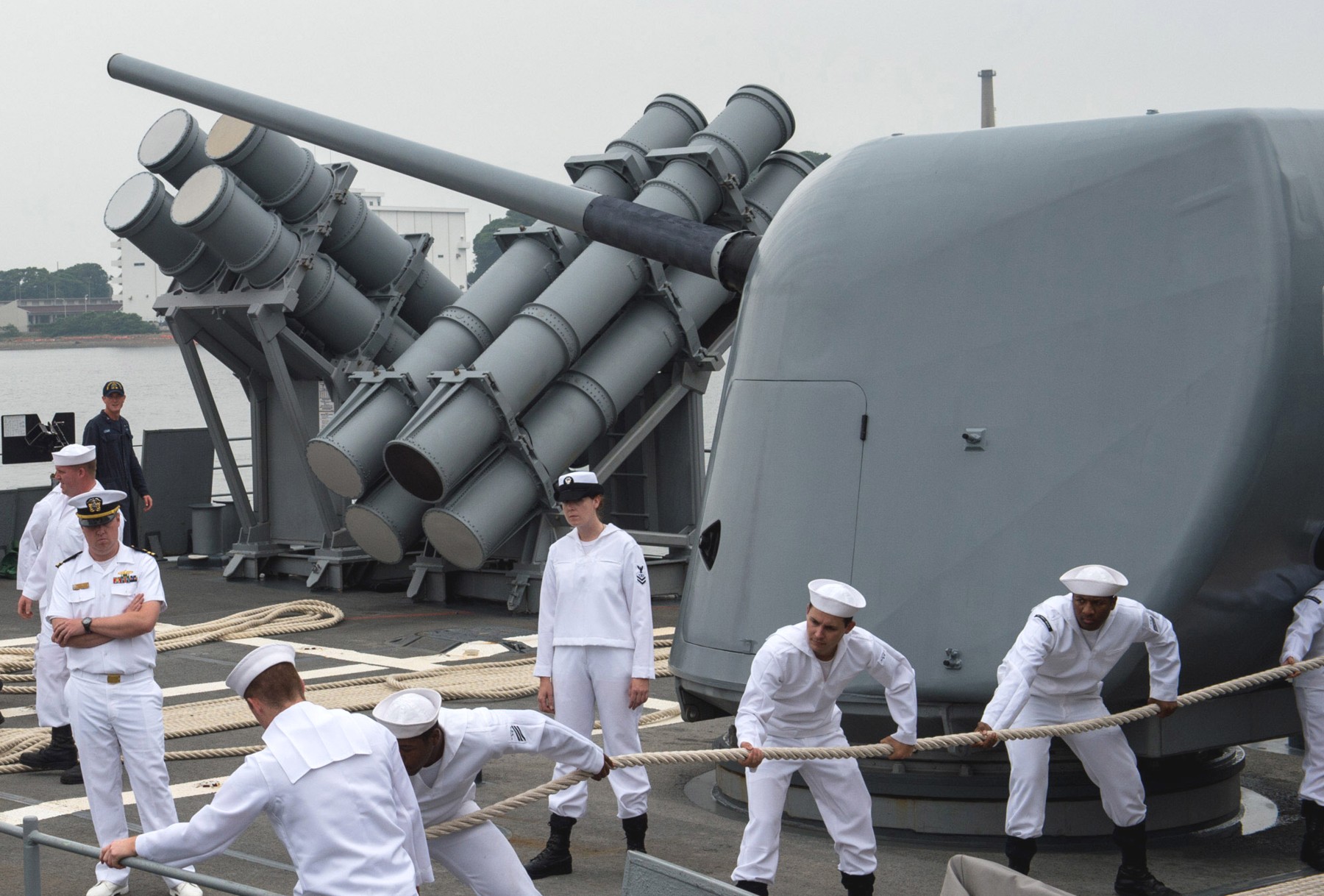 arriving at Fleet Activities Yokosuka, Japan - June 18, 2015 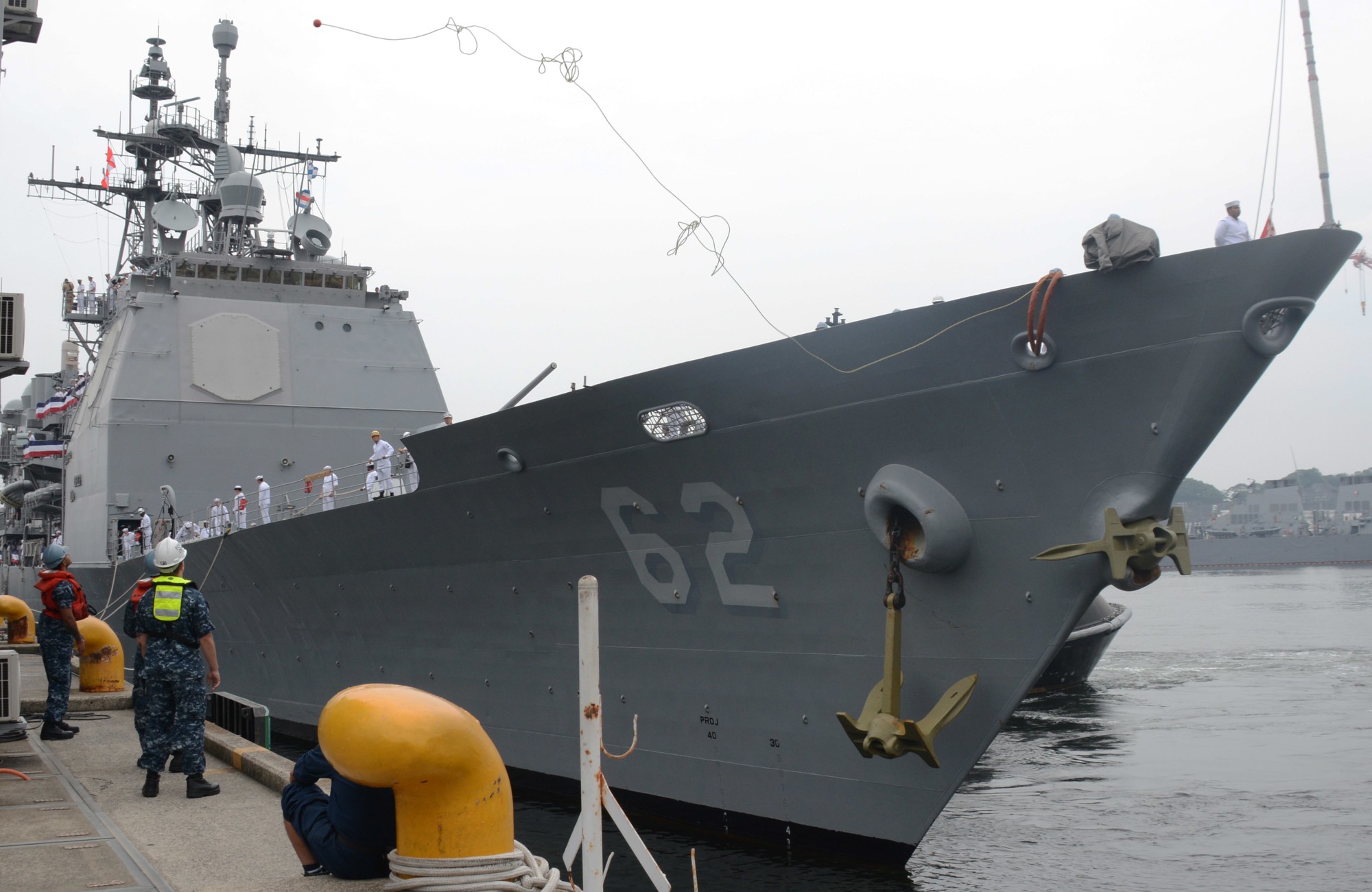 arriving at Fleet Activities Yokosuka, Japan - June 18, 2015 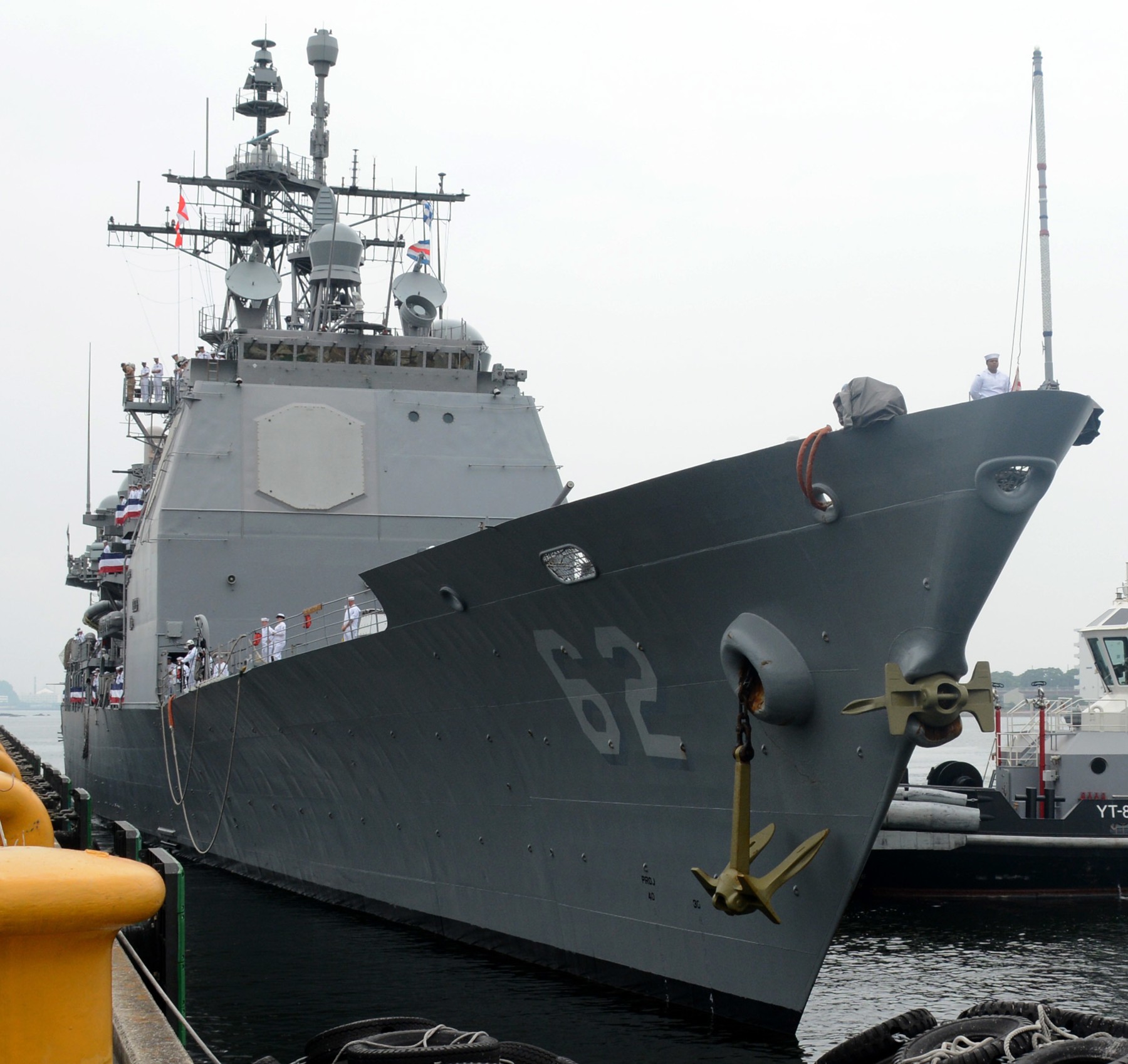 arriving at Fleet Activities Yokosuka, Japan - June 18, 2015 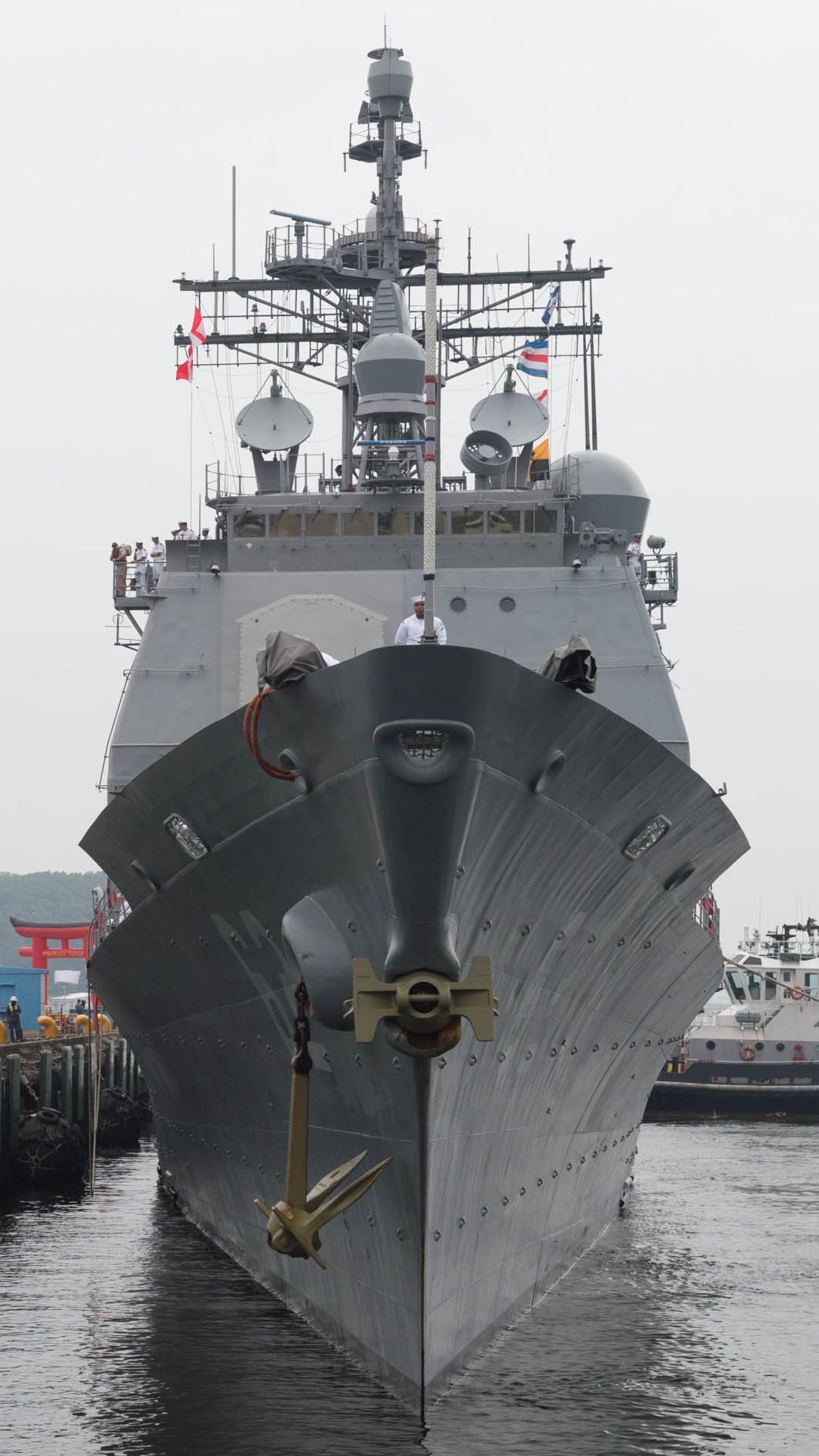 arriving at Fleet Activities Yokosuka, Japan - June 18, 2015 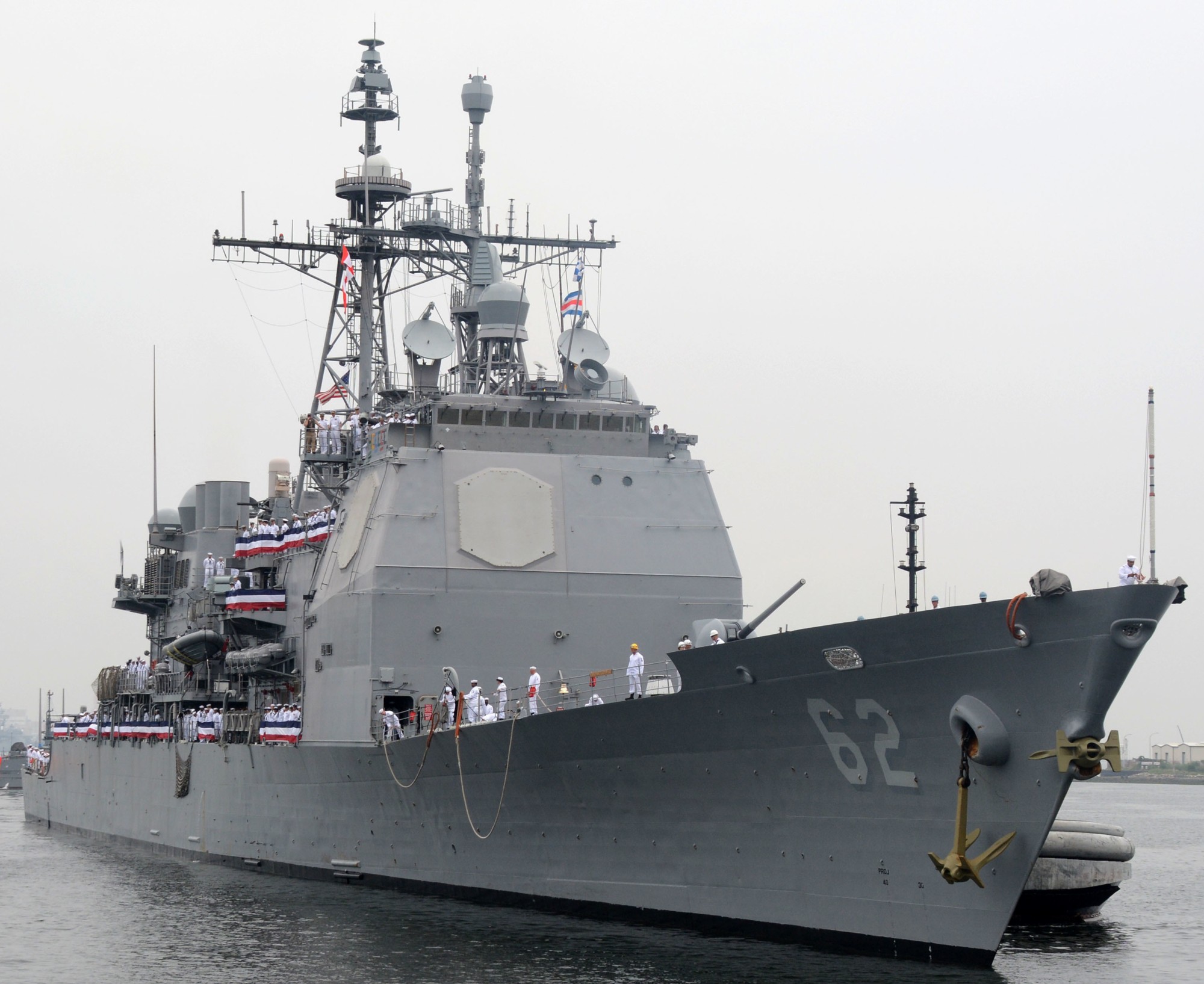 arriving at Fleet Activities Yokosuka, Japan - June 18, 2015 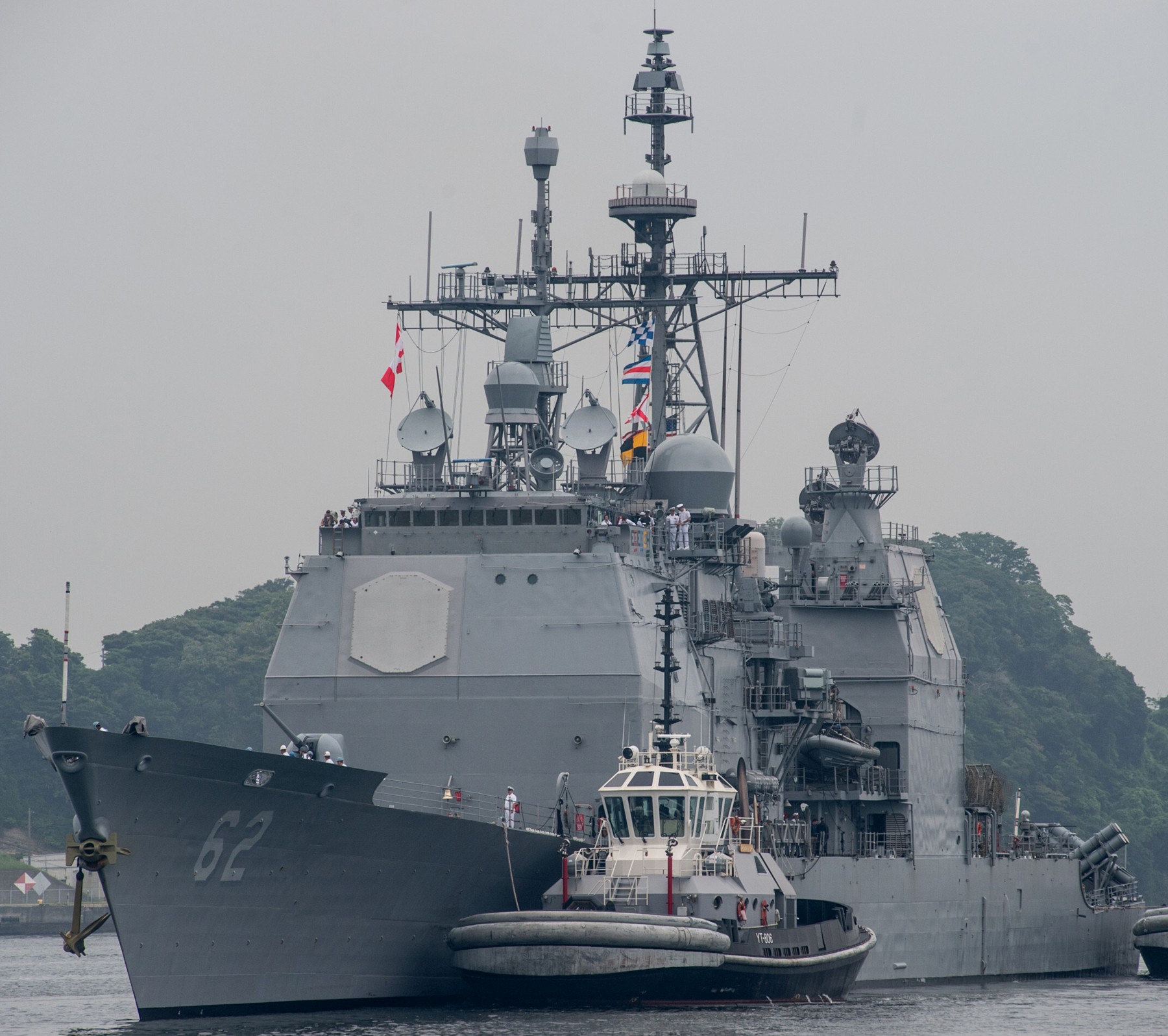 arriving at Fleet Activities Yokosuka, Japan - June 18, 2015 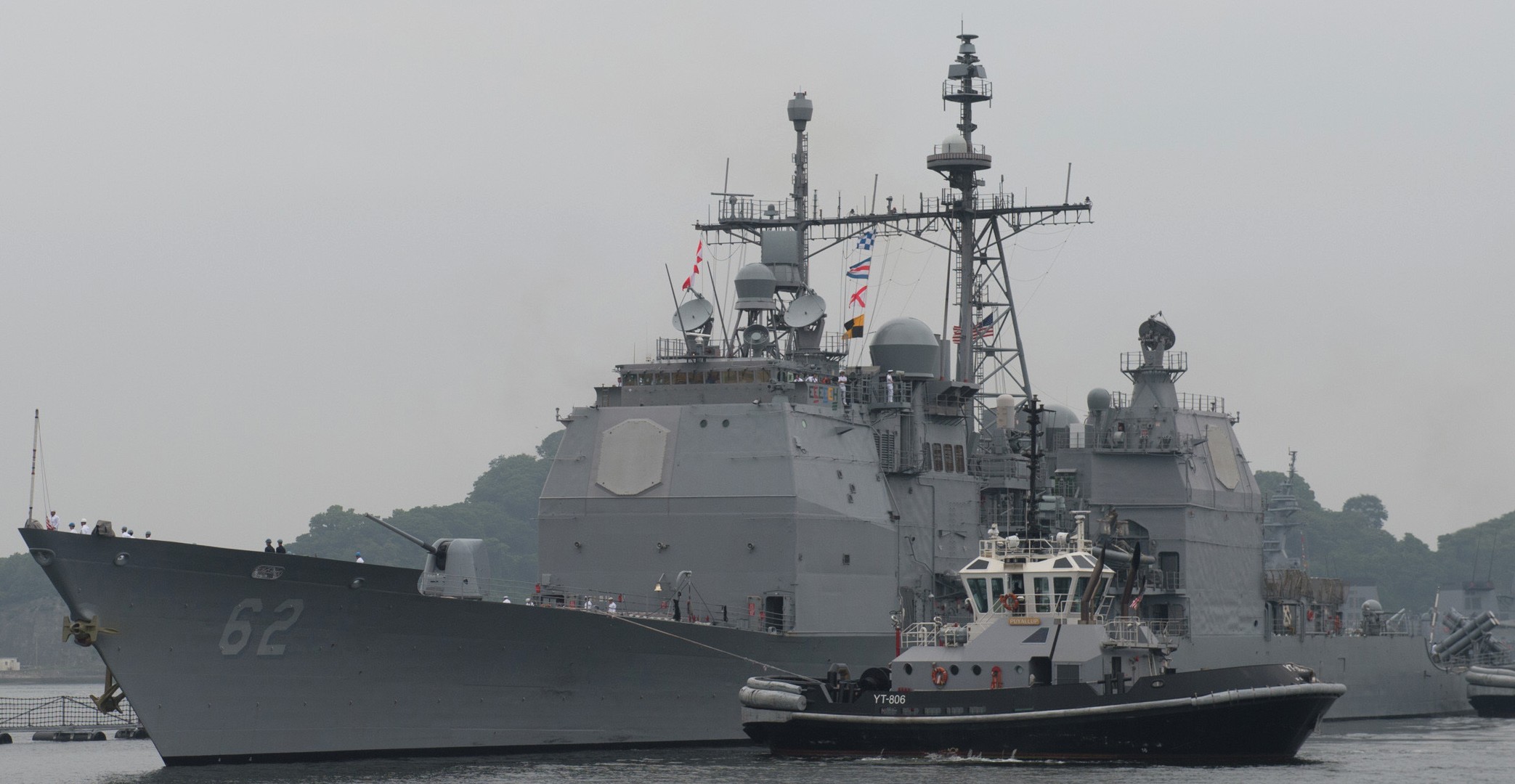 arriving at Fleet Activities Yokosuka, Japan - June 18, 2015 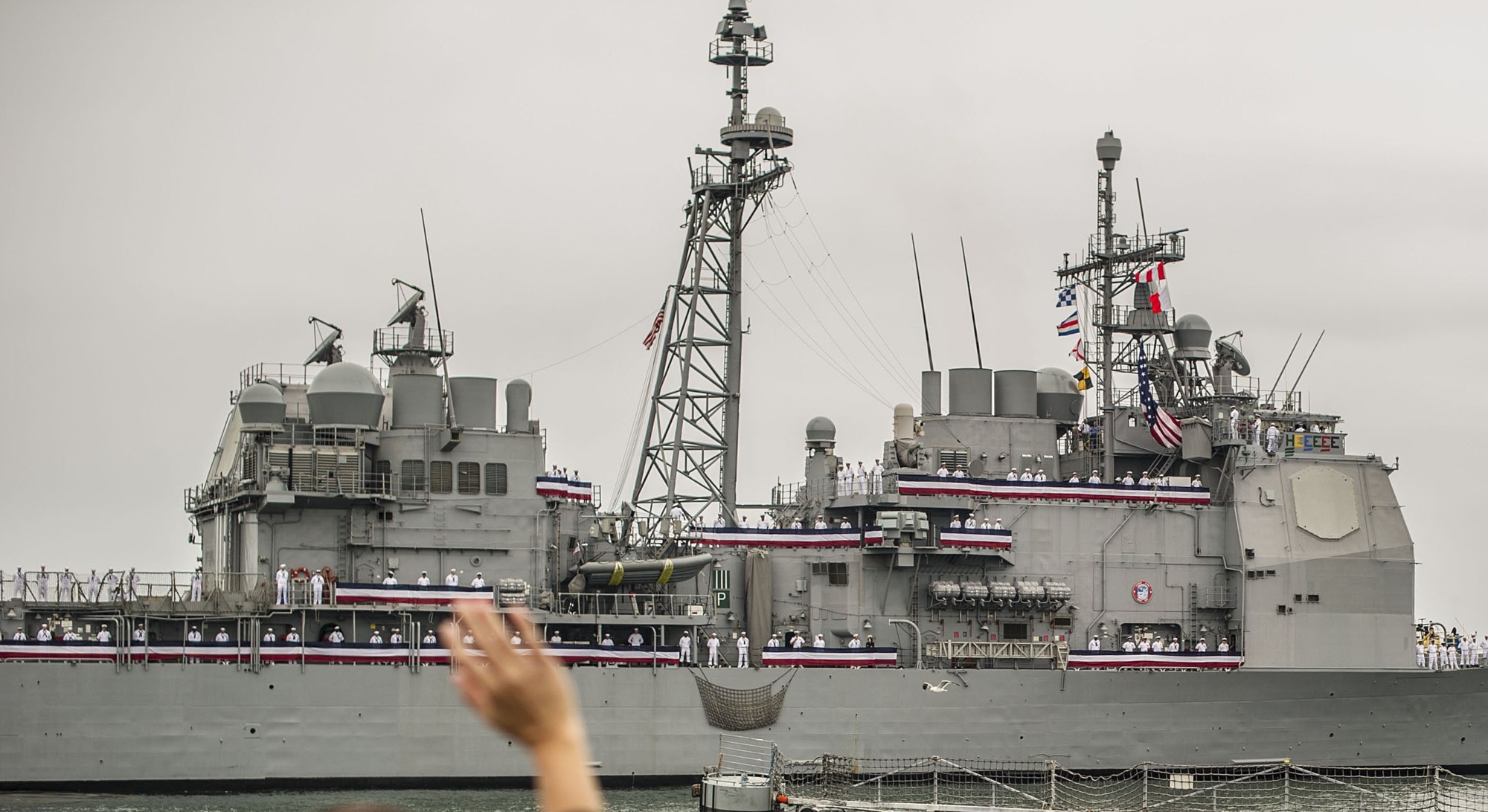 departing Naval Base San Diego, California - May 2015 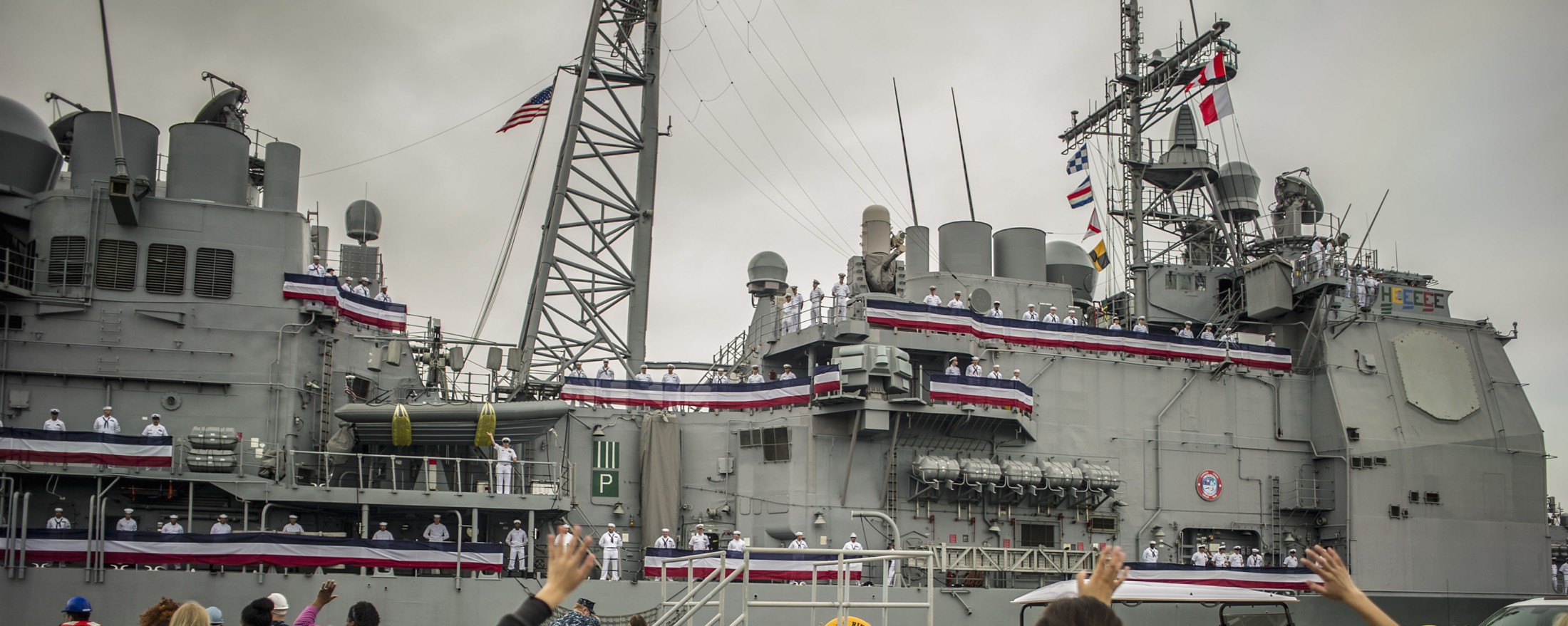 departing Naval Base San Diego, California - May 2015 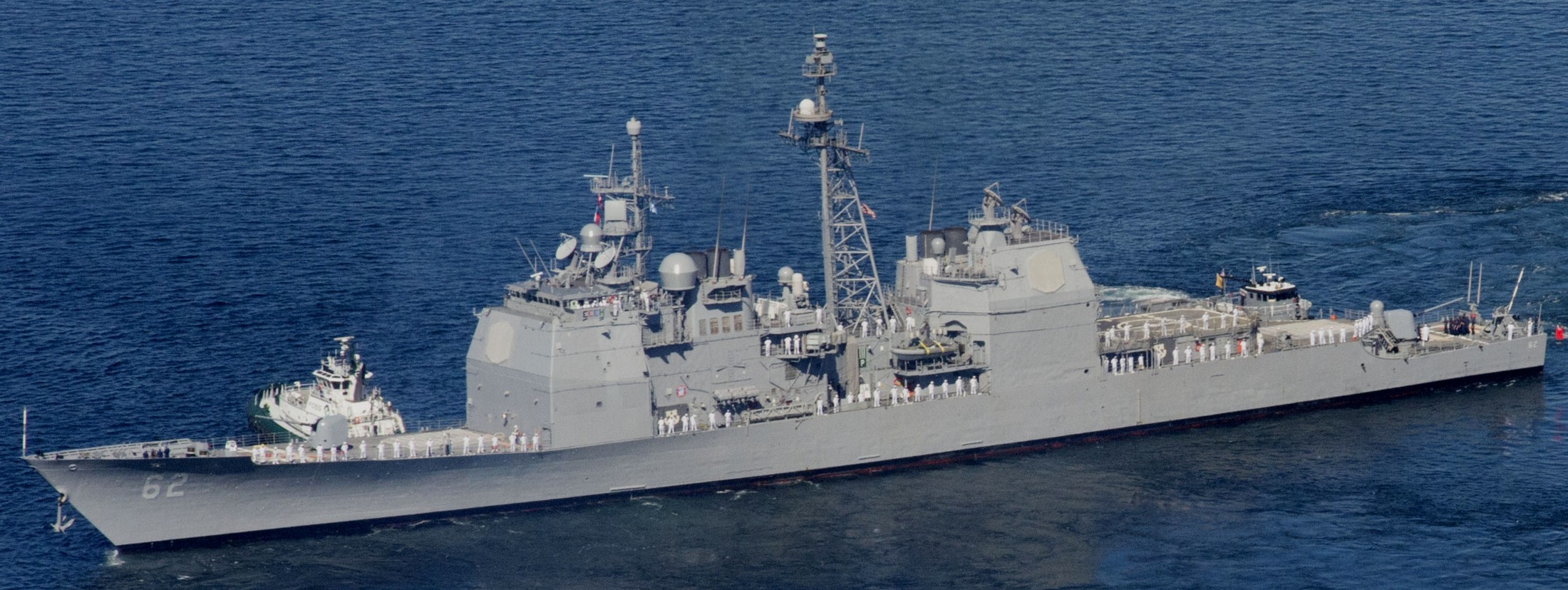 departing Seattle, Washington - August 2014 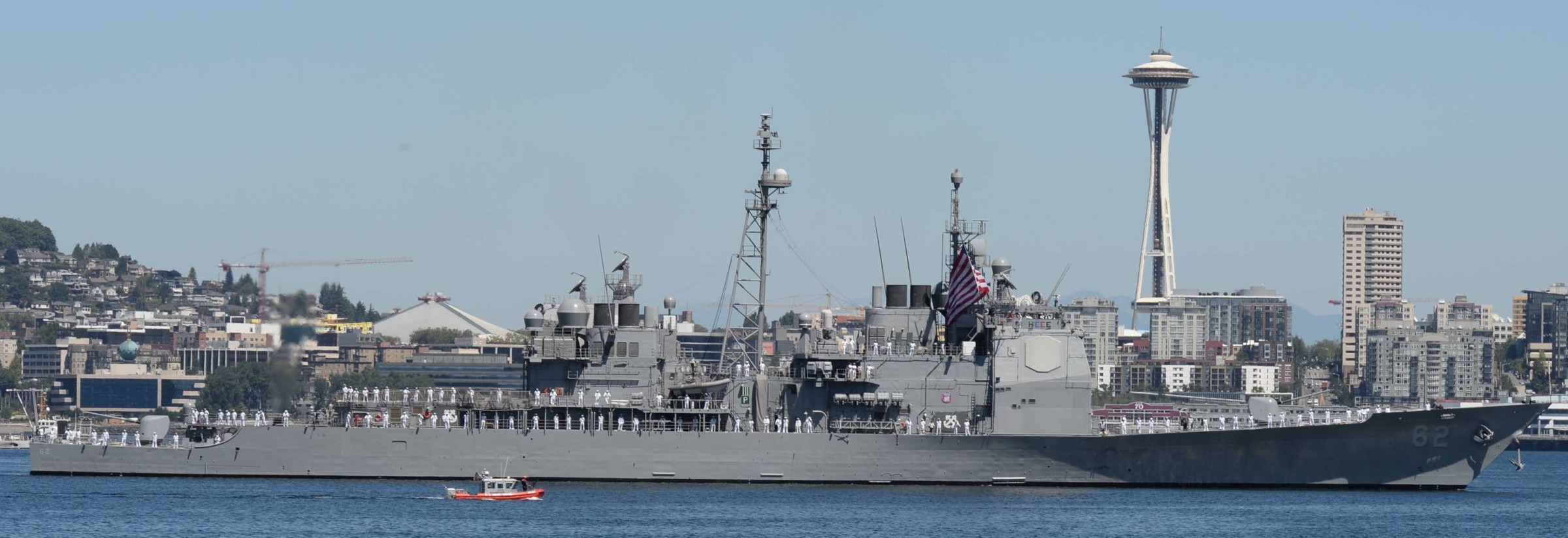 Seattle Seafair - July 2014 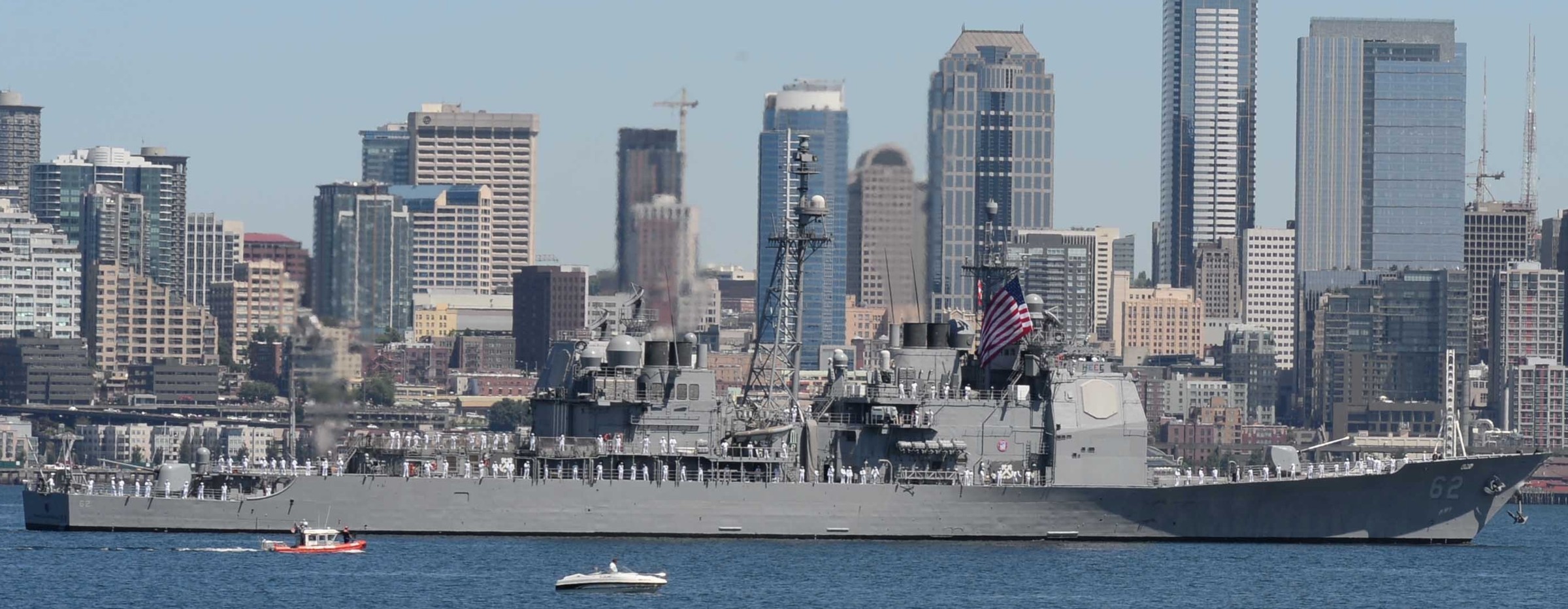 Seattle Seafair - July 2014 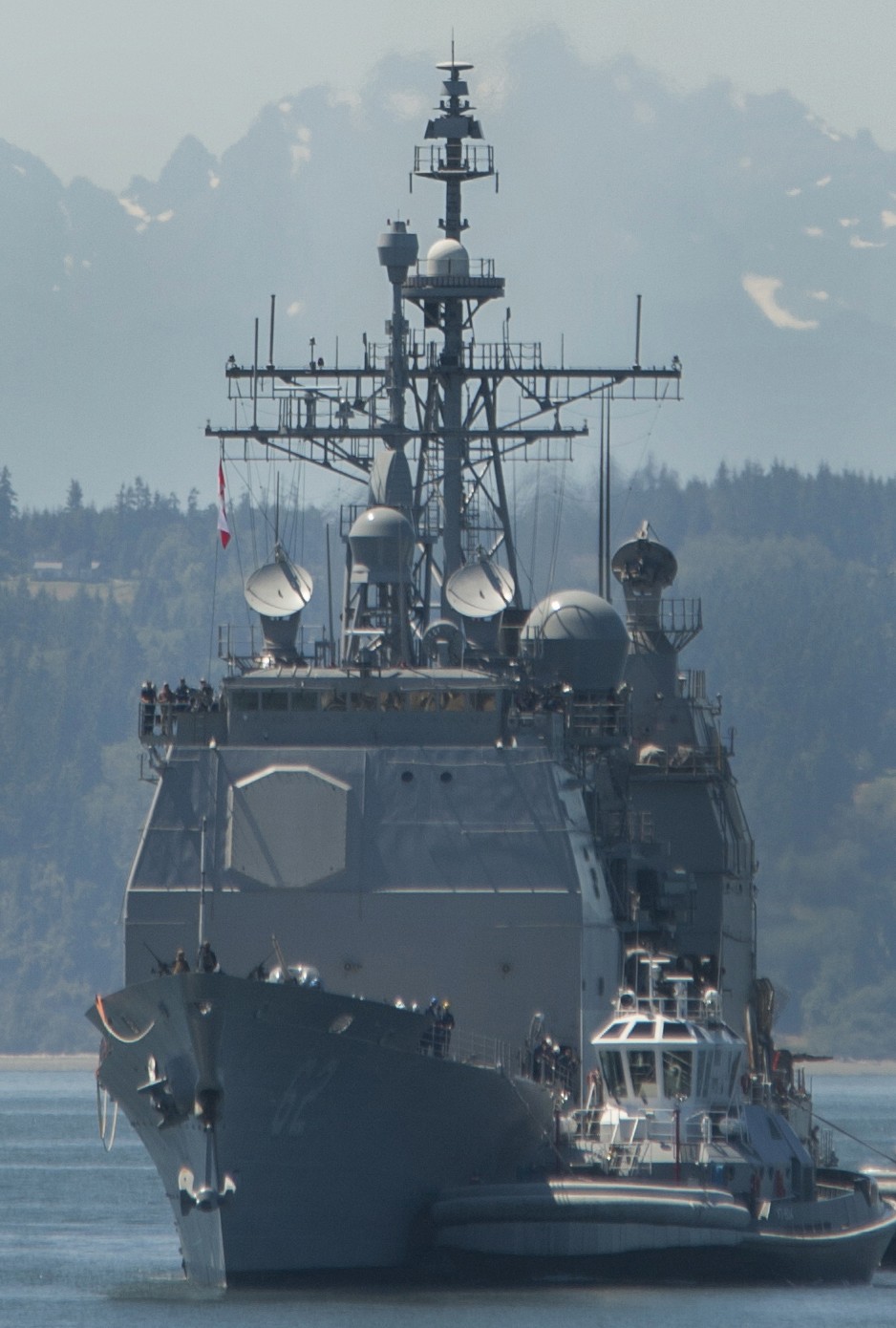 arriving at Naval Station Everett, Washington - July 2014 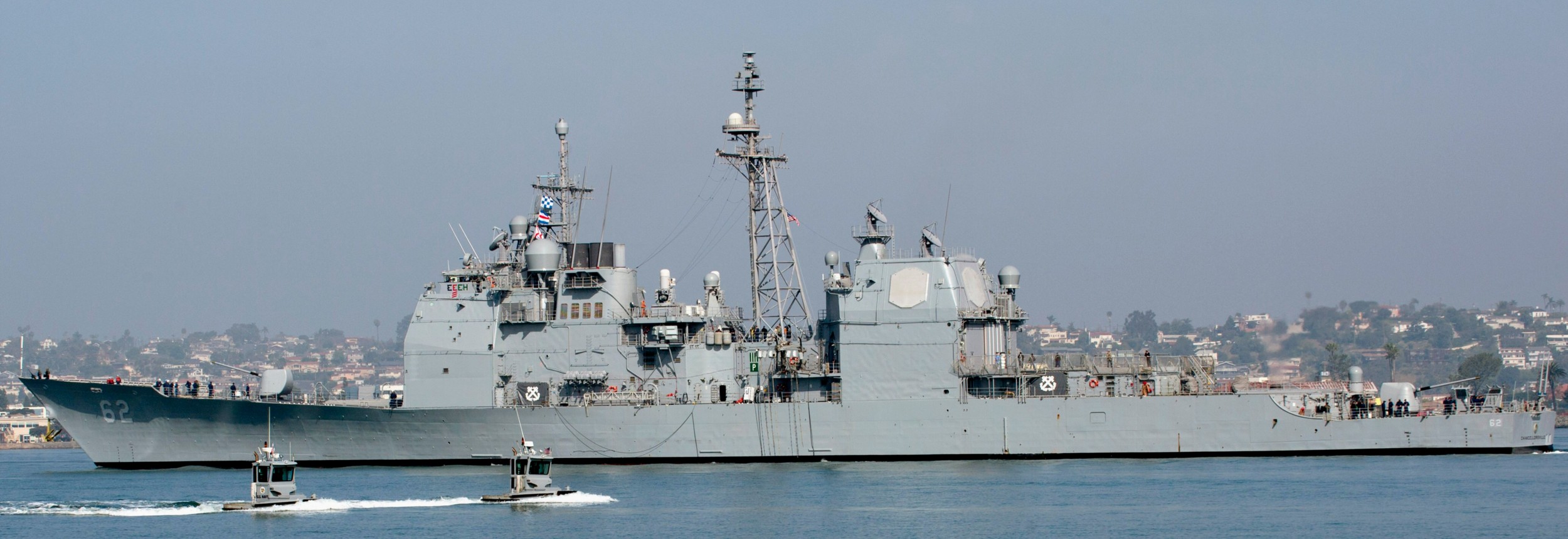 departing San Diego, California - March 2013 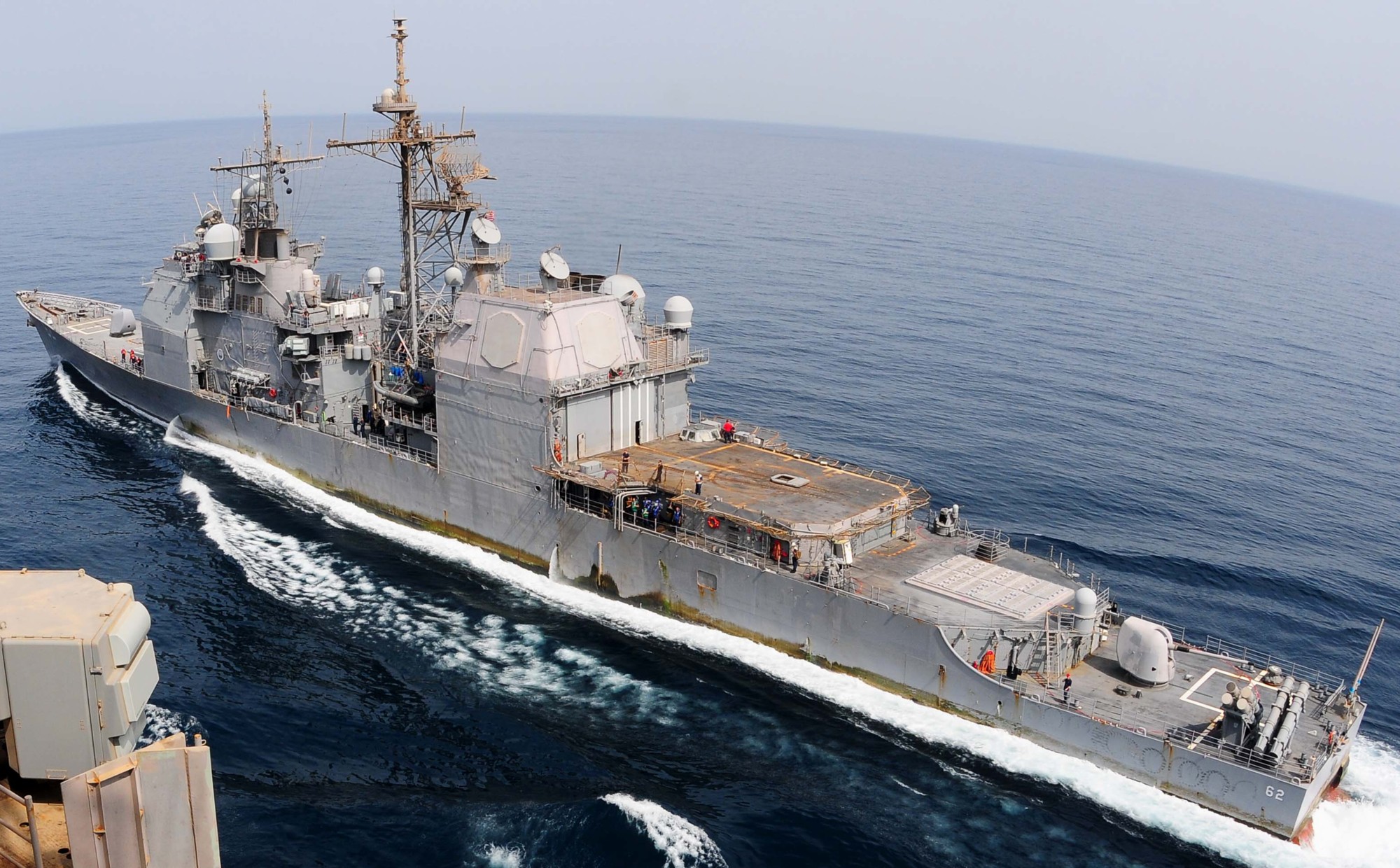 Gulf of Aden - July 2011 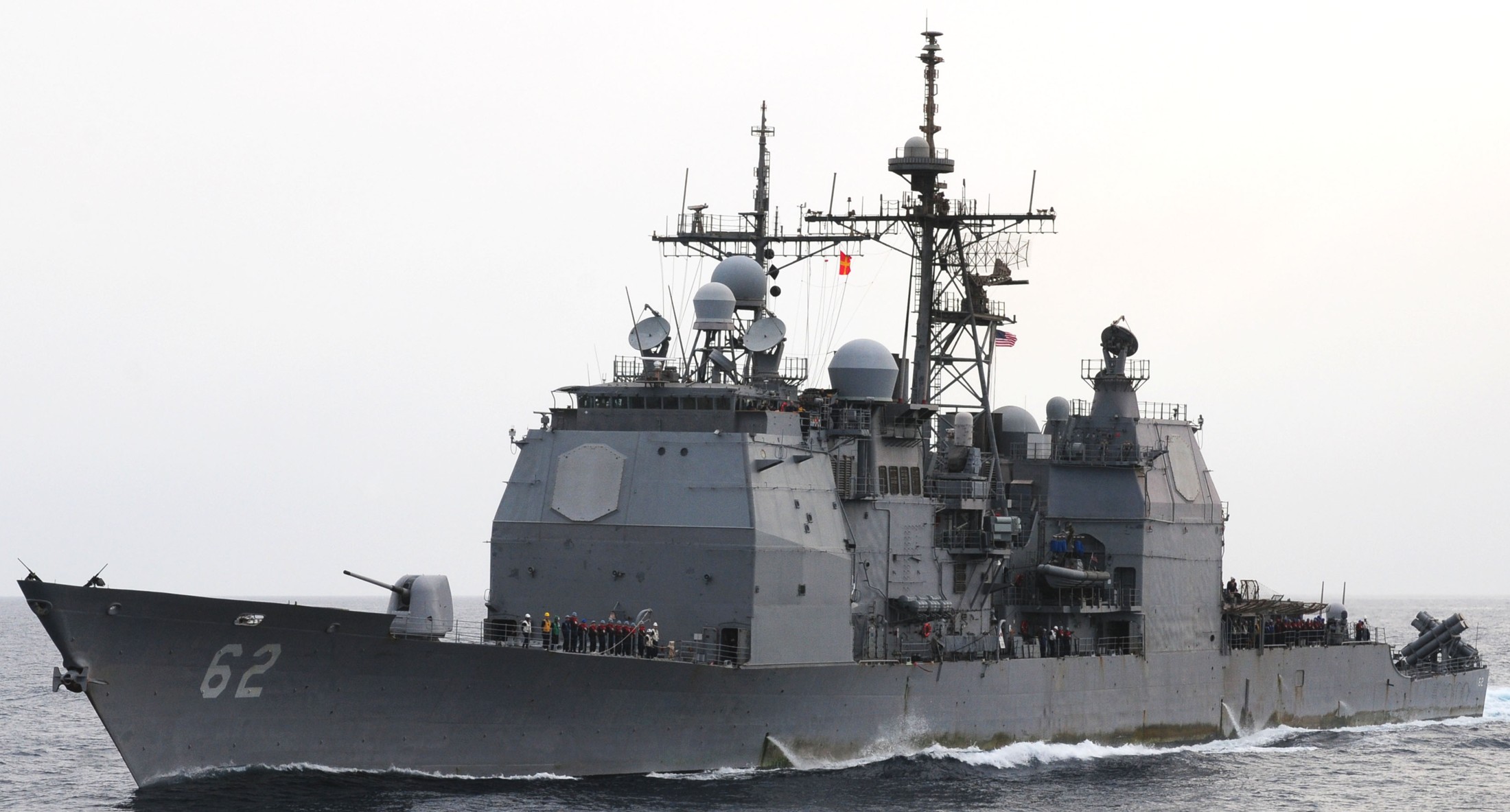 Gulf of Aden - July 2011 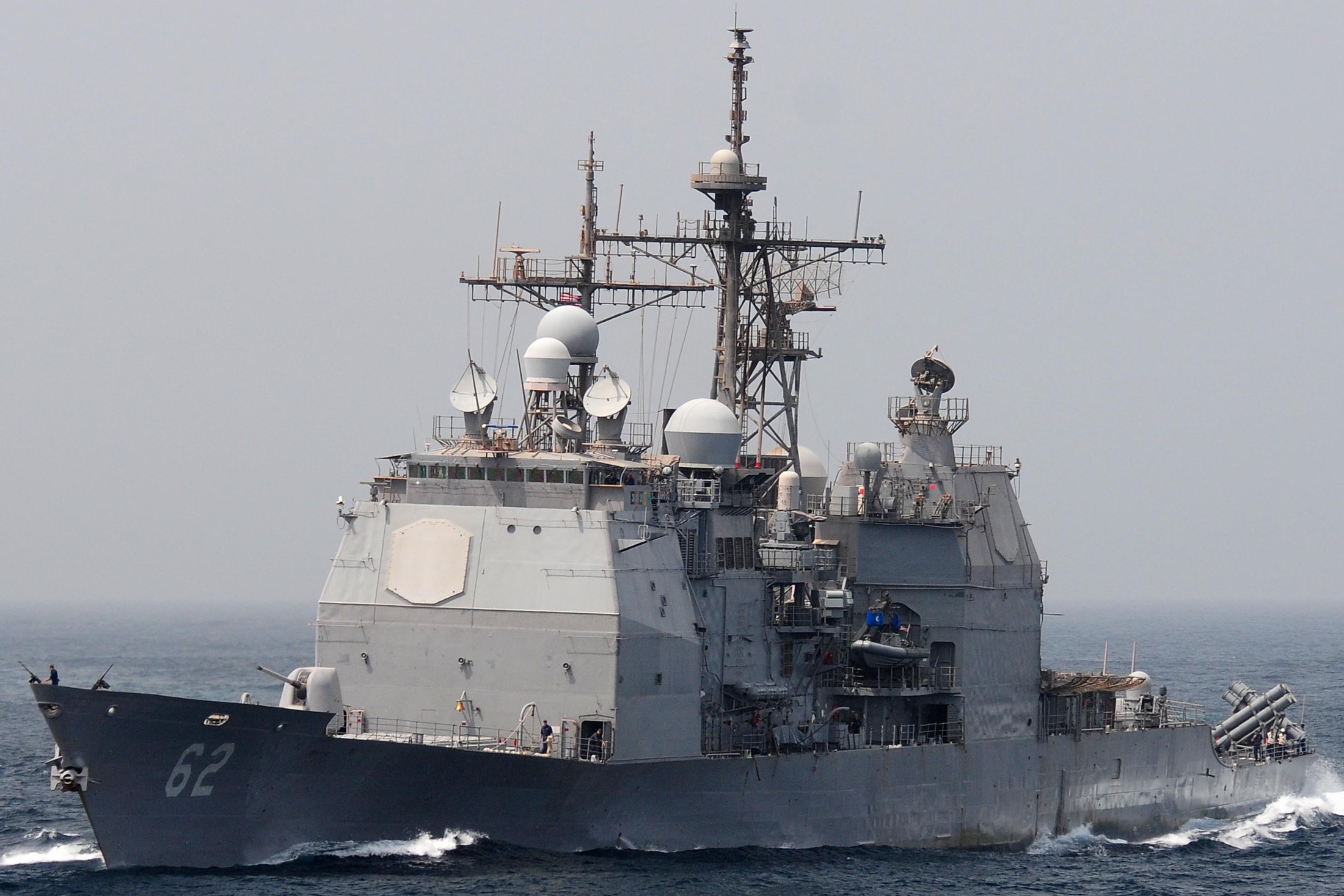 Arabian Sea - July 2011 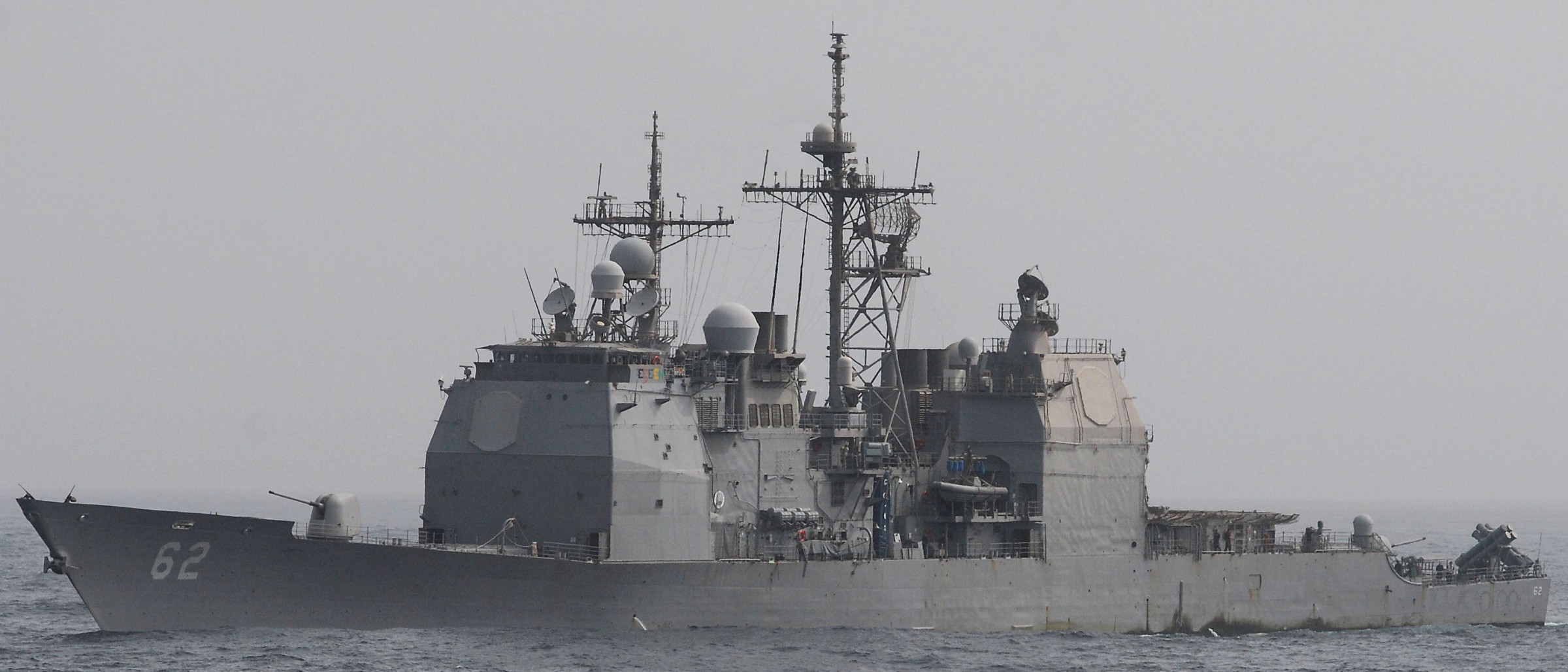 Arabian Sea - July 2011 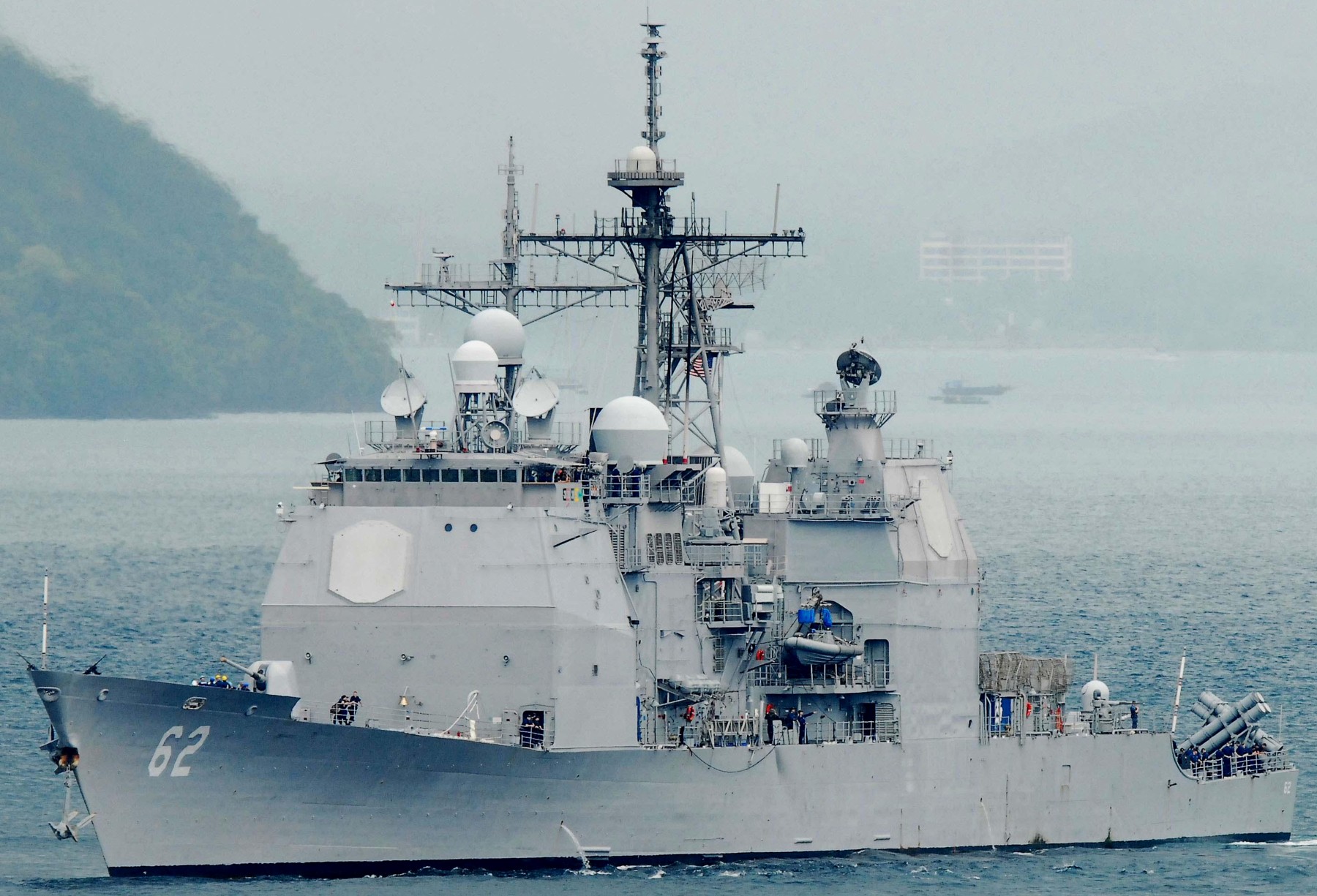 Makham Bay, Thailand - May 2011 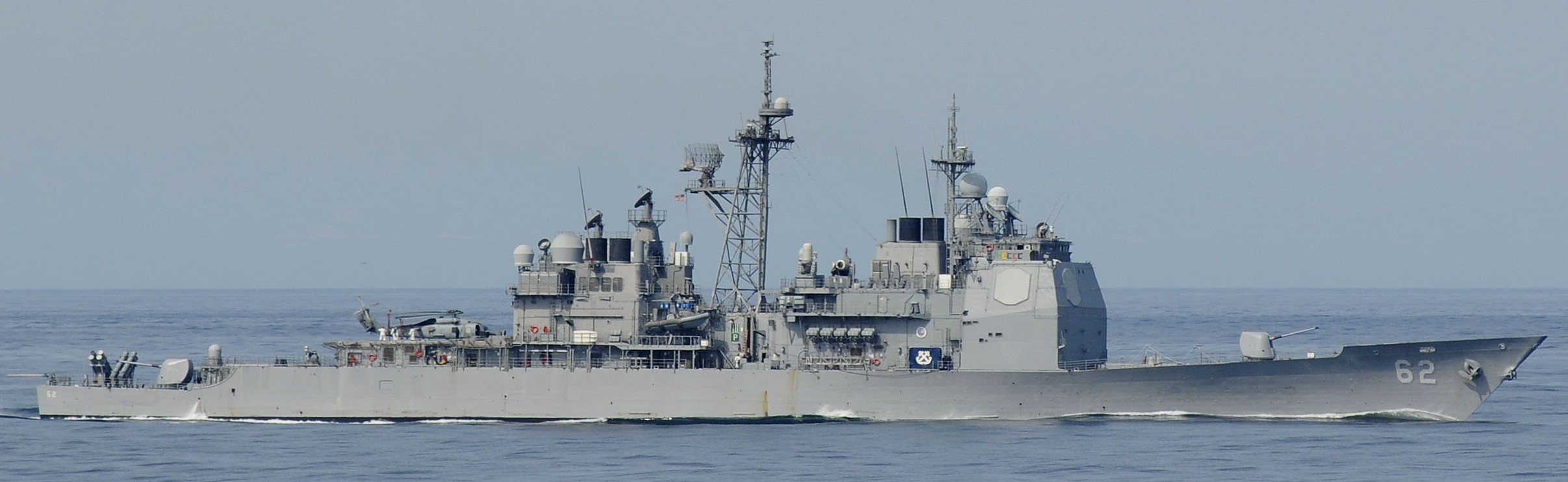 Pacific Ocean - March 2011 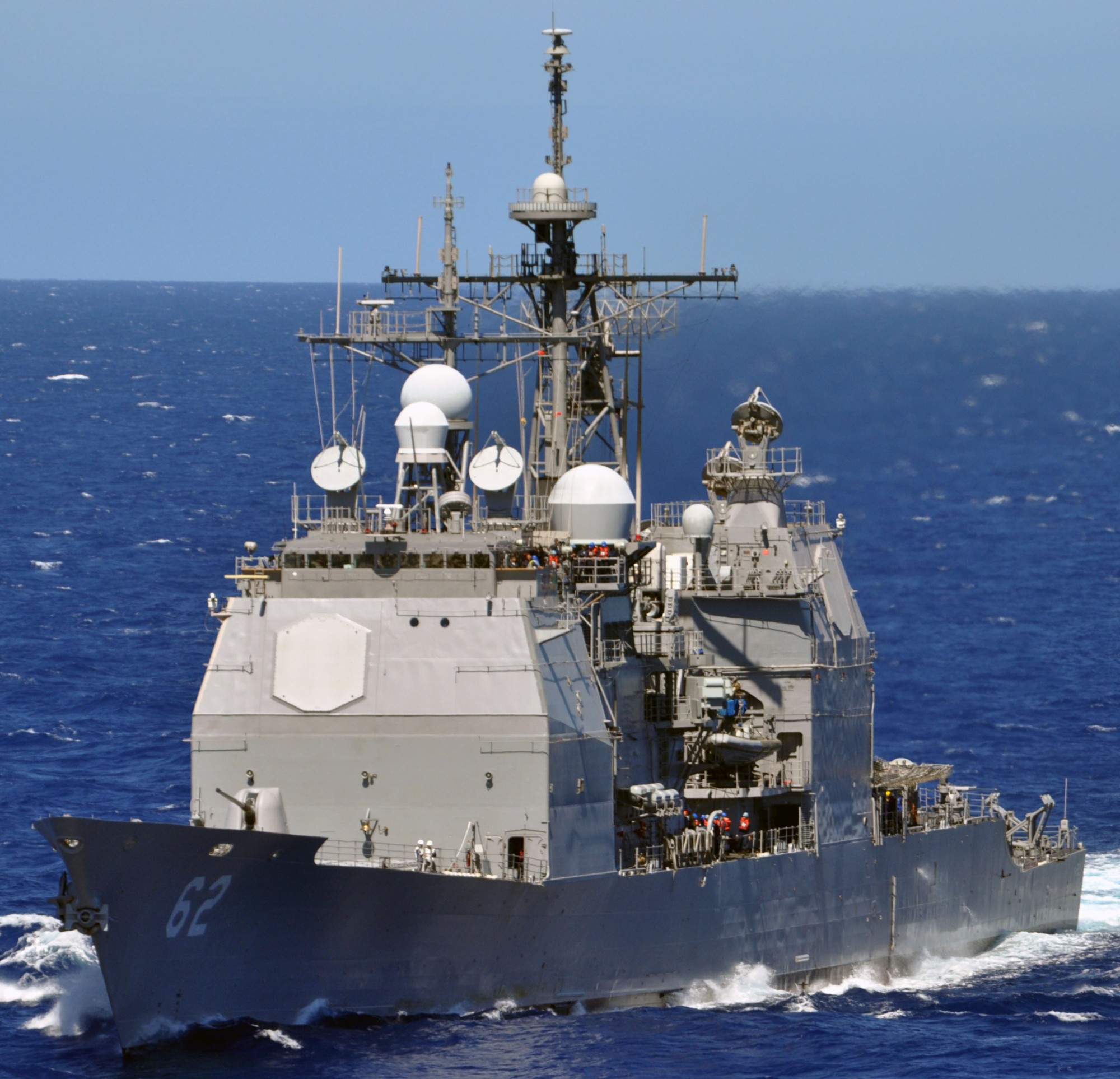 Exercise RIMPAC 10 - off Hawaii - July 2010 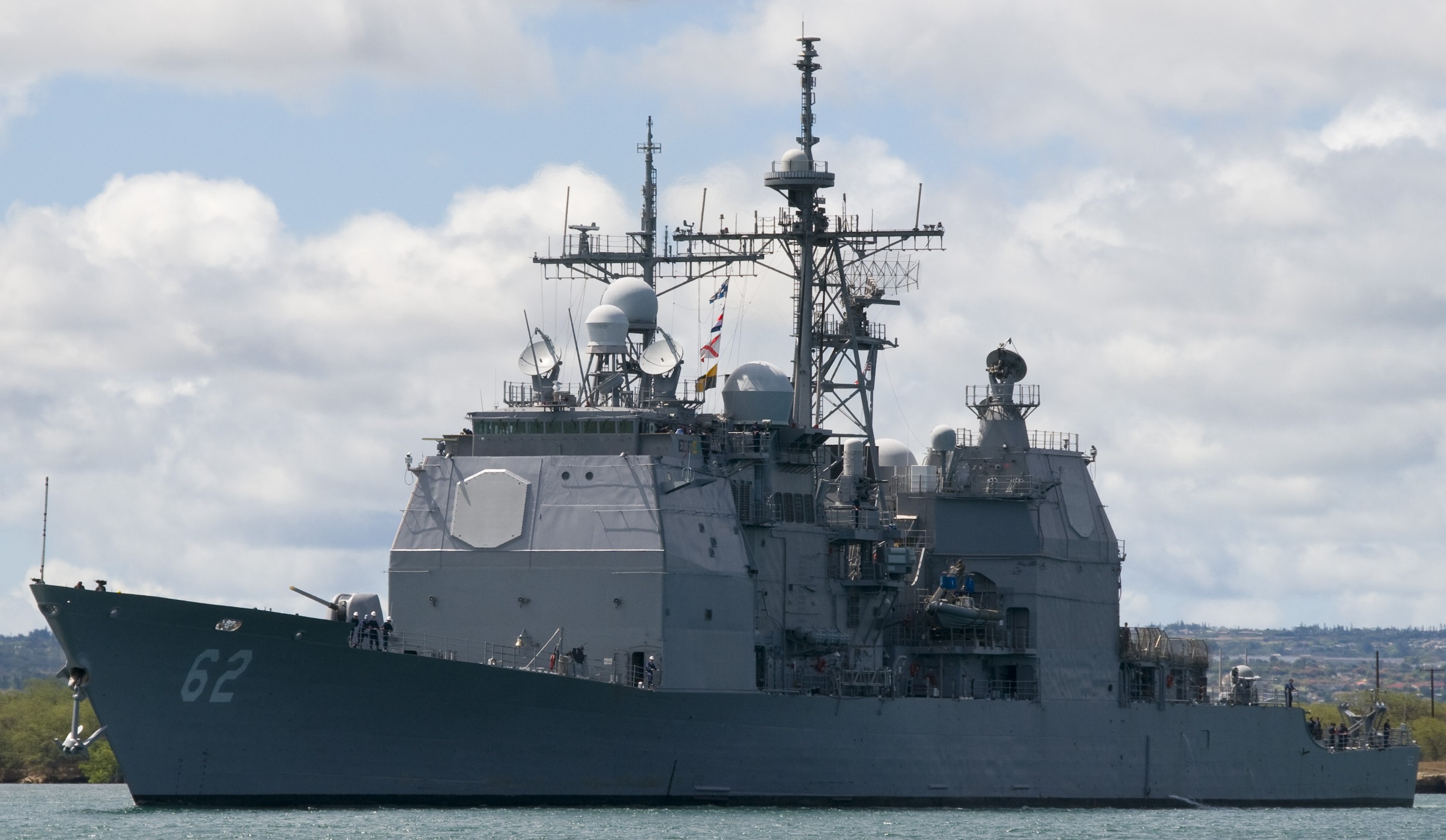 Exercise RIMPAC 10 - Pearl Harbor, Hawaii - July 2010 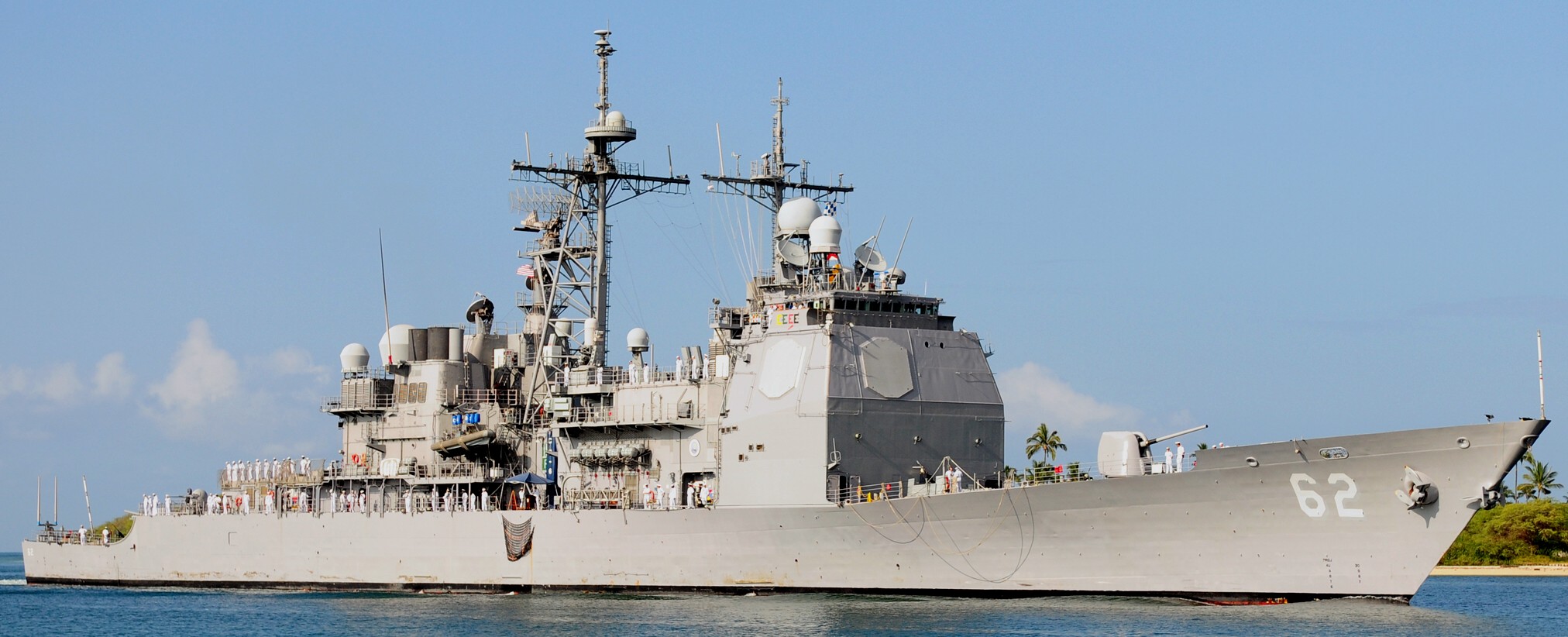 arriving at Pearl Harbor, Hawaii - June 2010 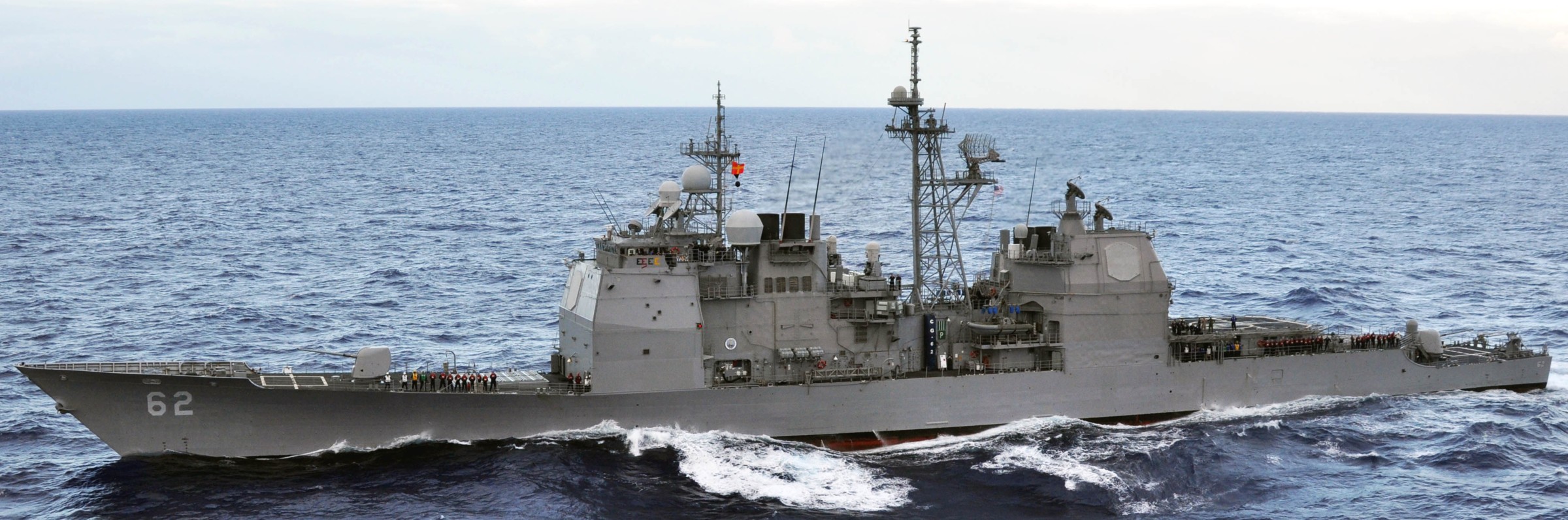 Pacific Ocean - June 2010 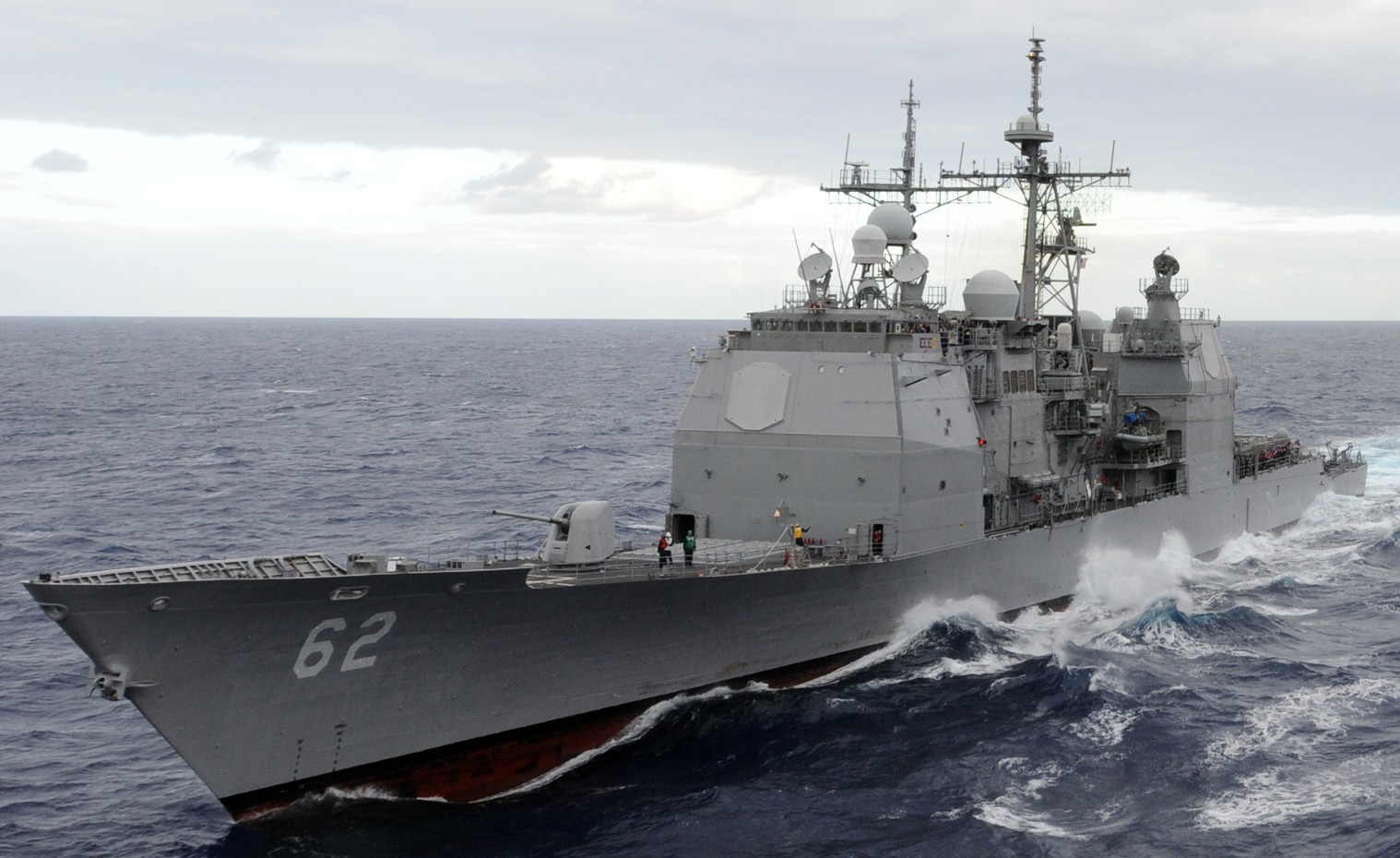 Pacific Ocean - June 2010 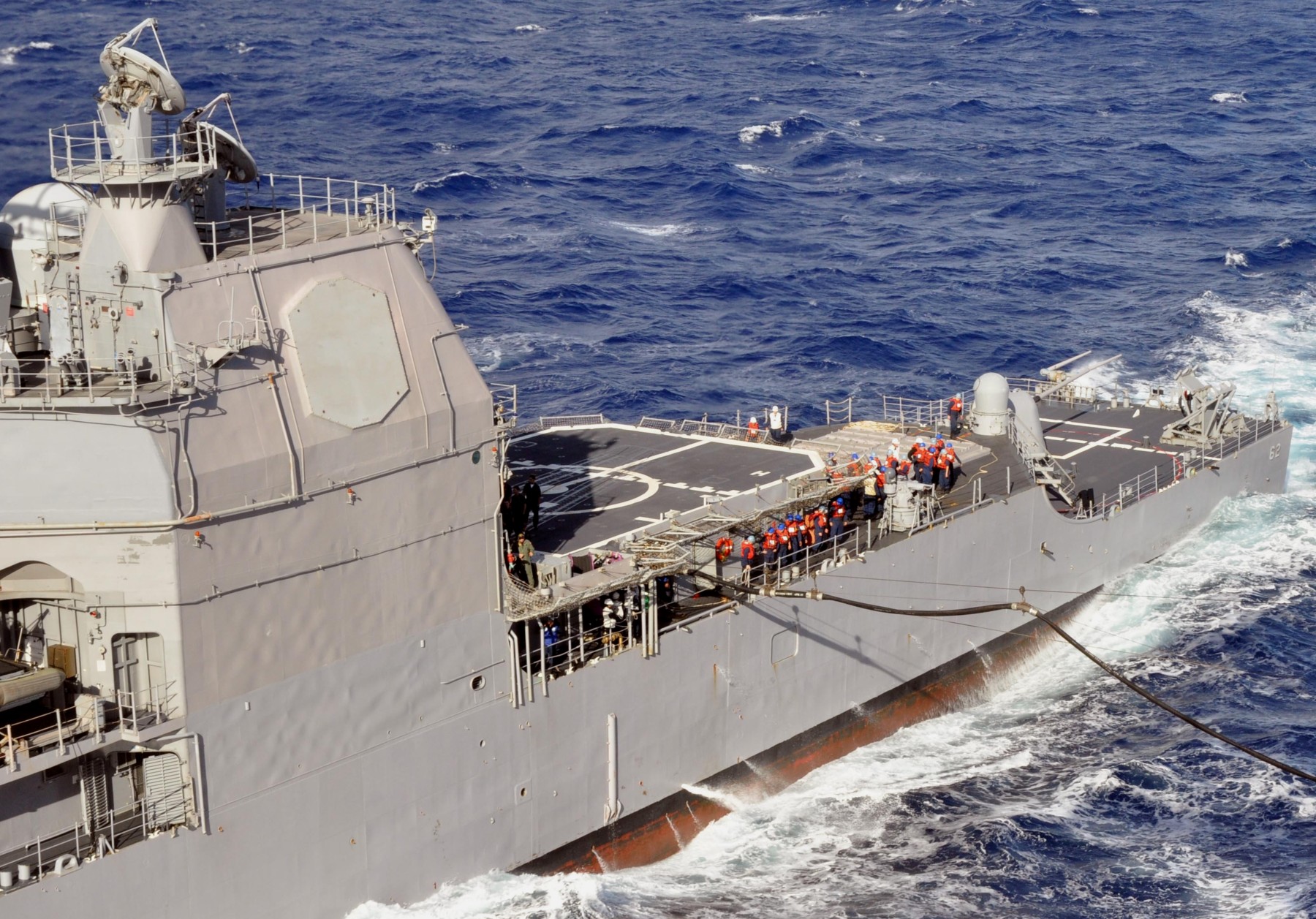 Pacific Ocean - June 2010 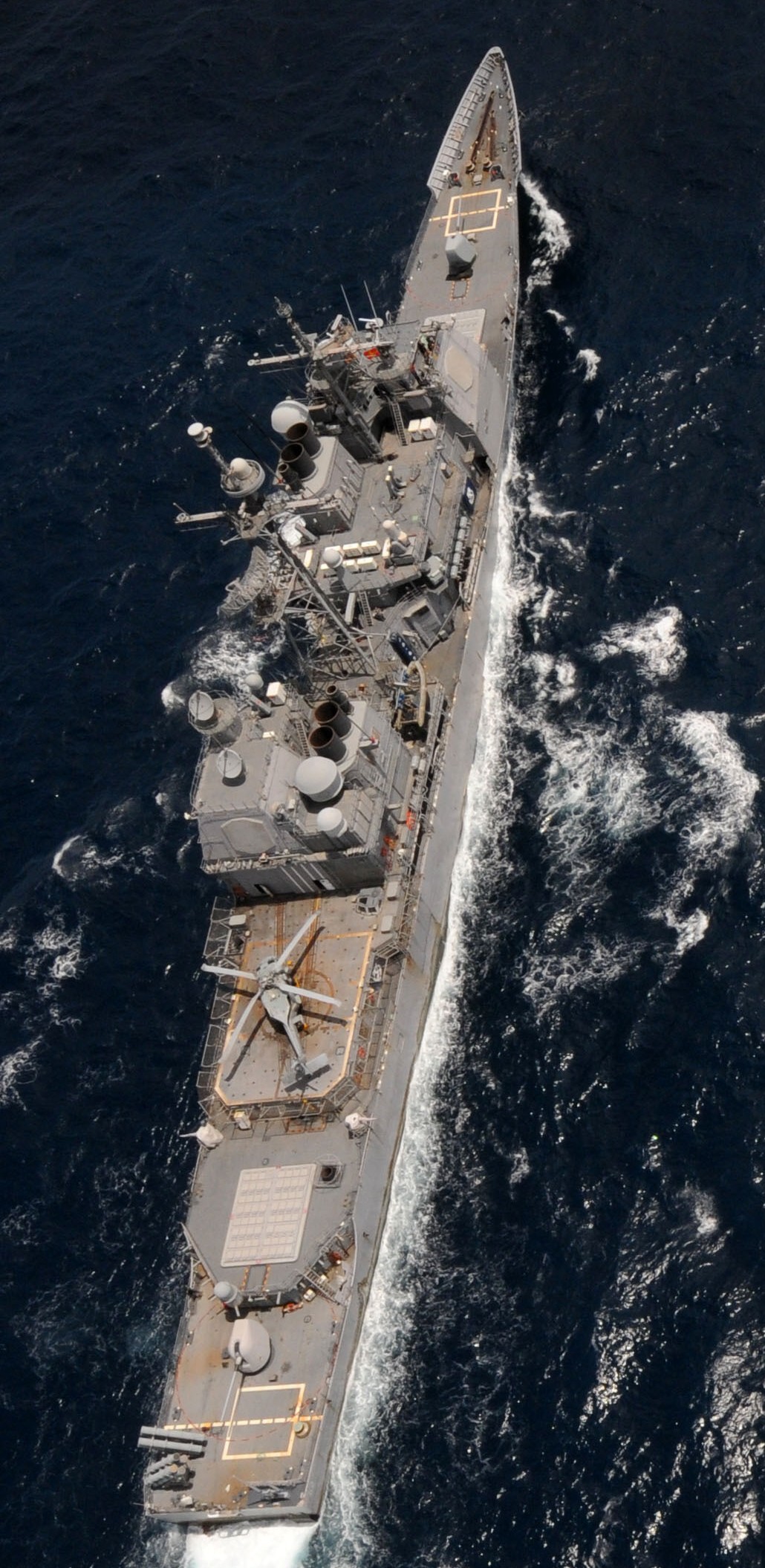 off Thailand - September 2009 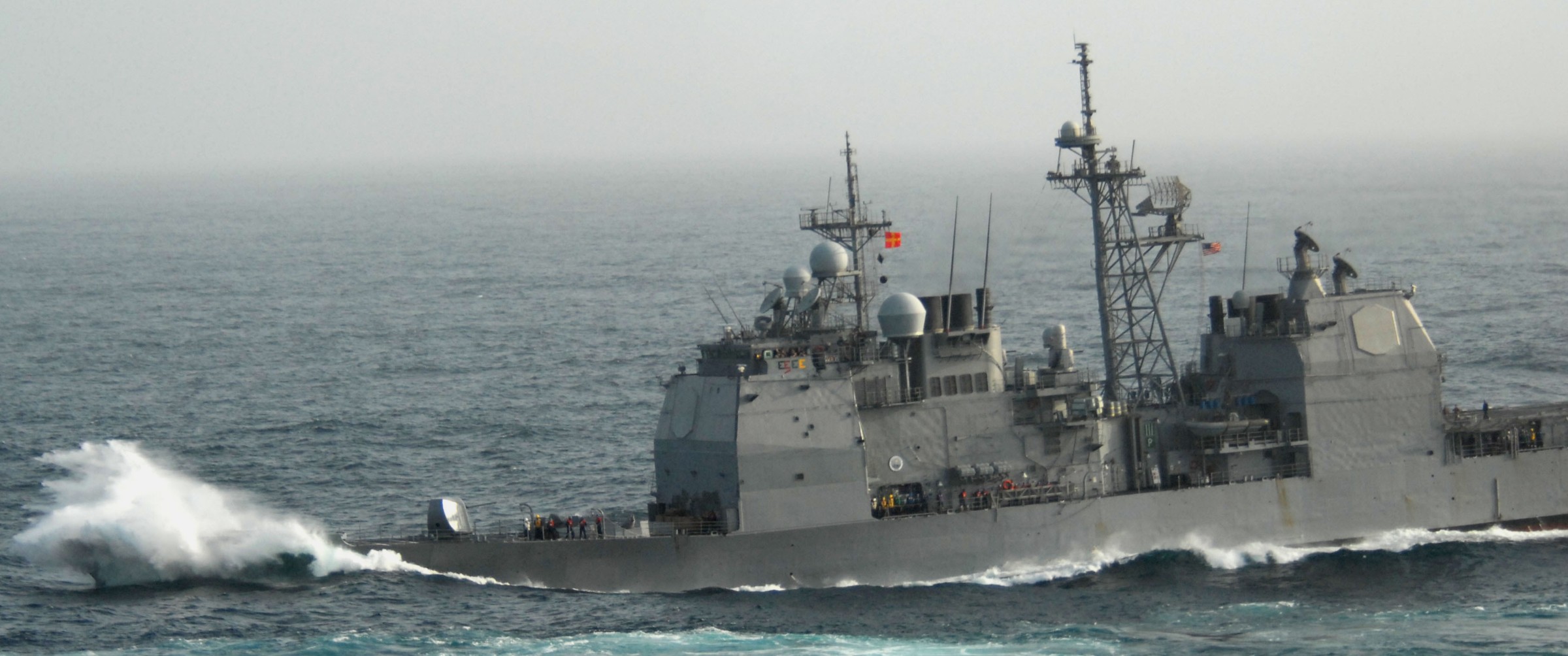 Pacific Ocean - July 2009 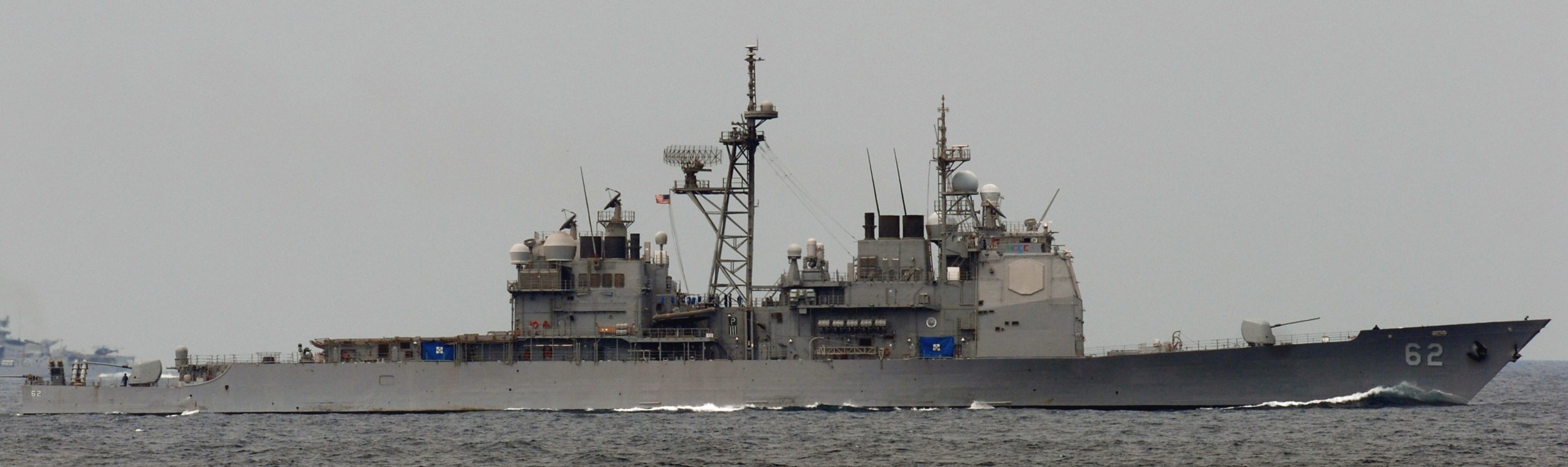 Indian Ocean - October 2008 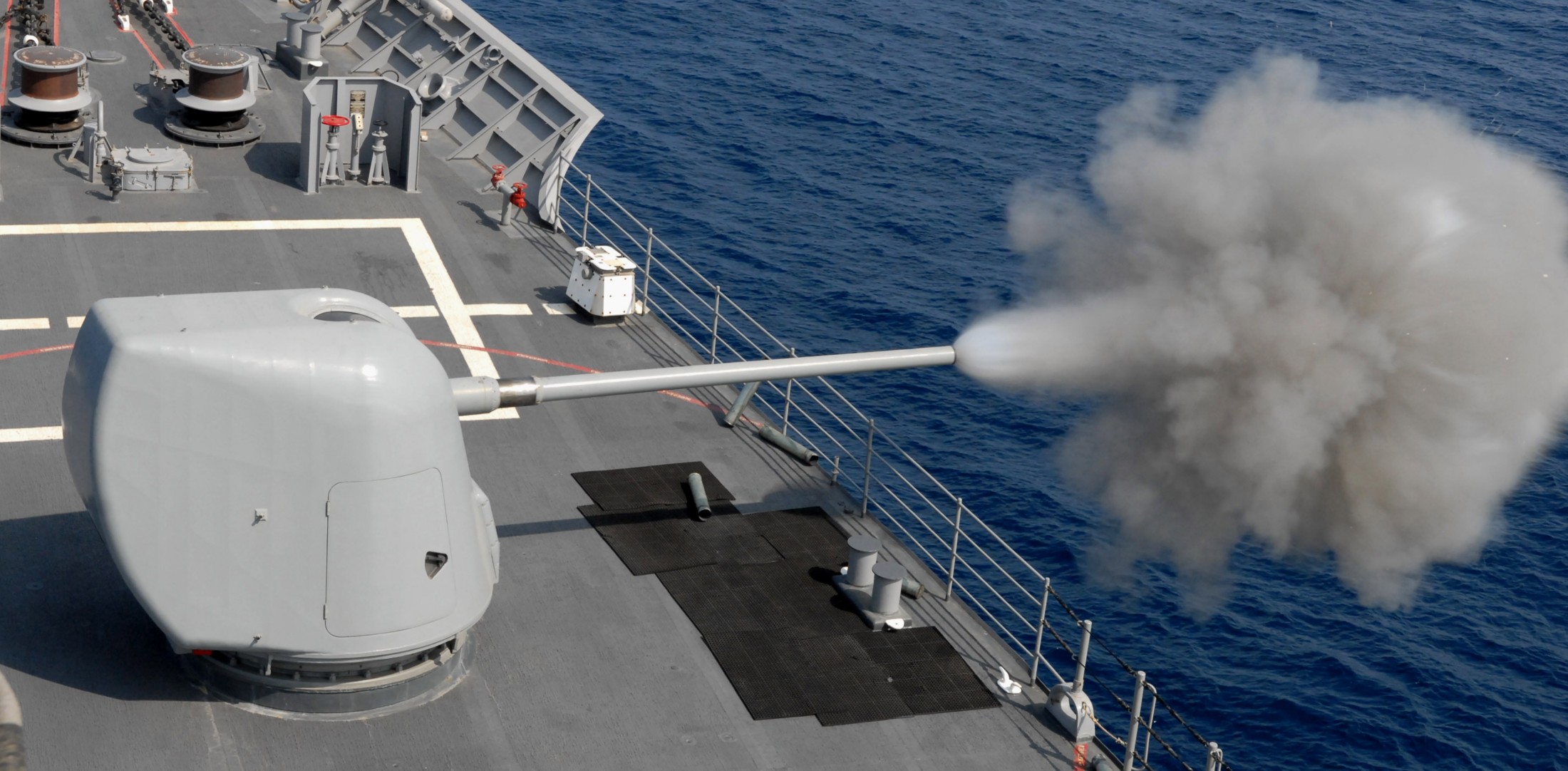 Mk.45 gun fire exercise - Indian Ocean - October 2008 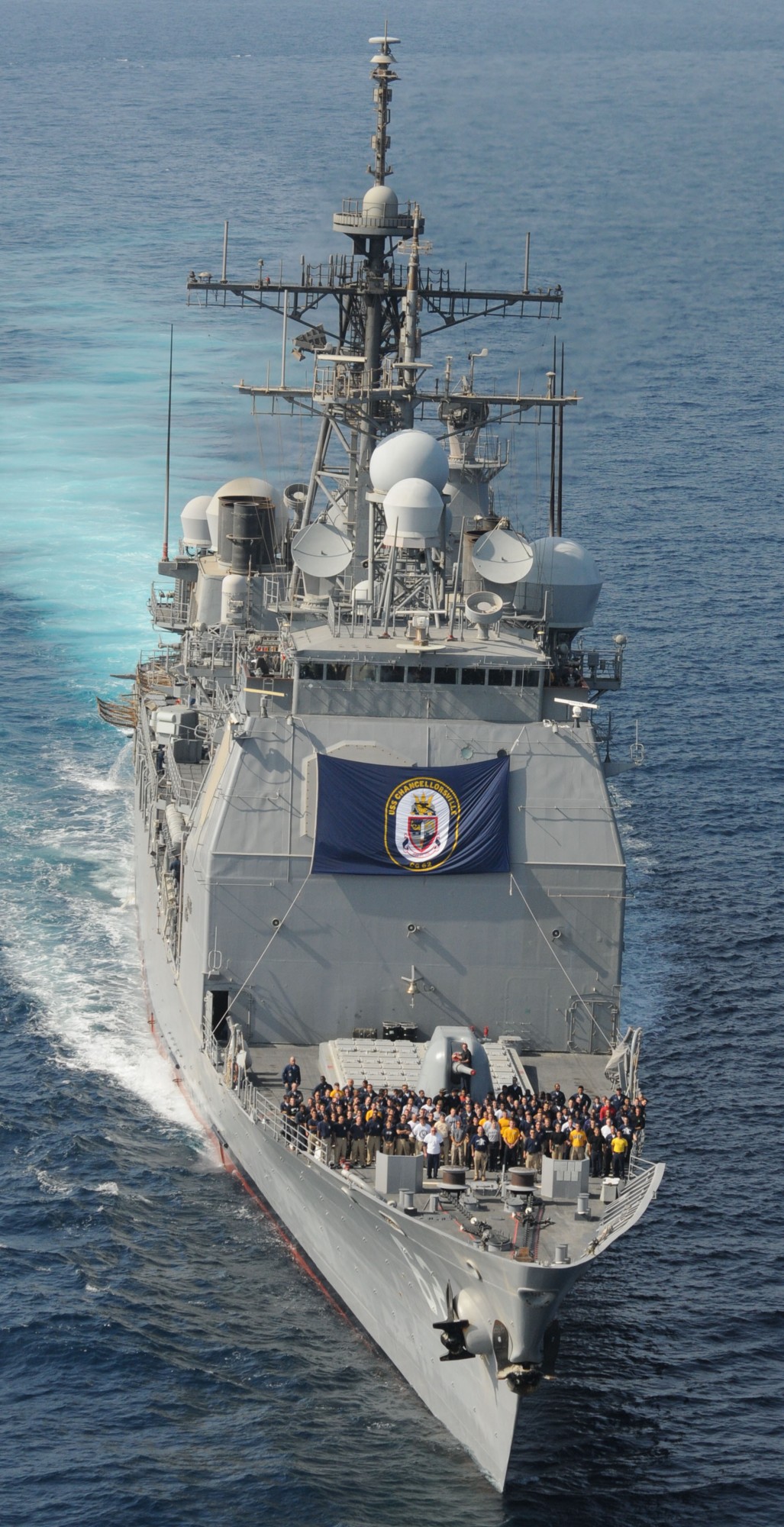
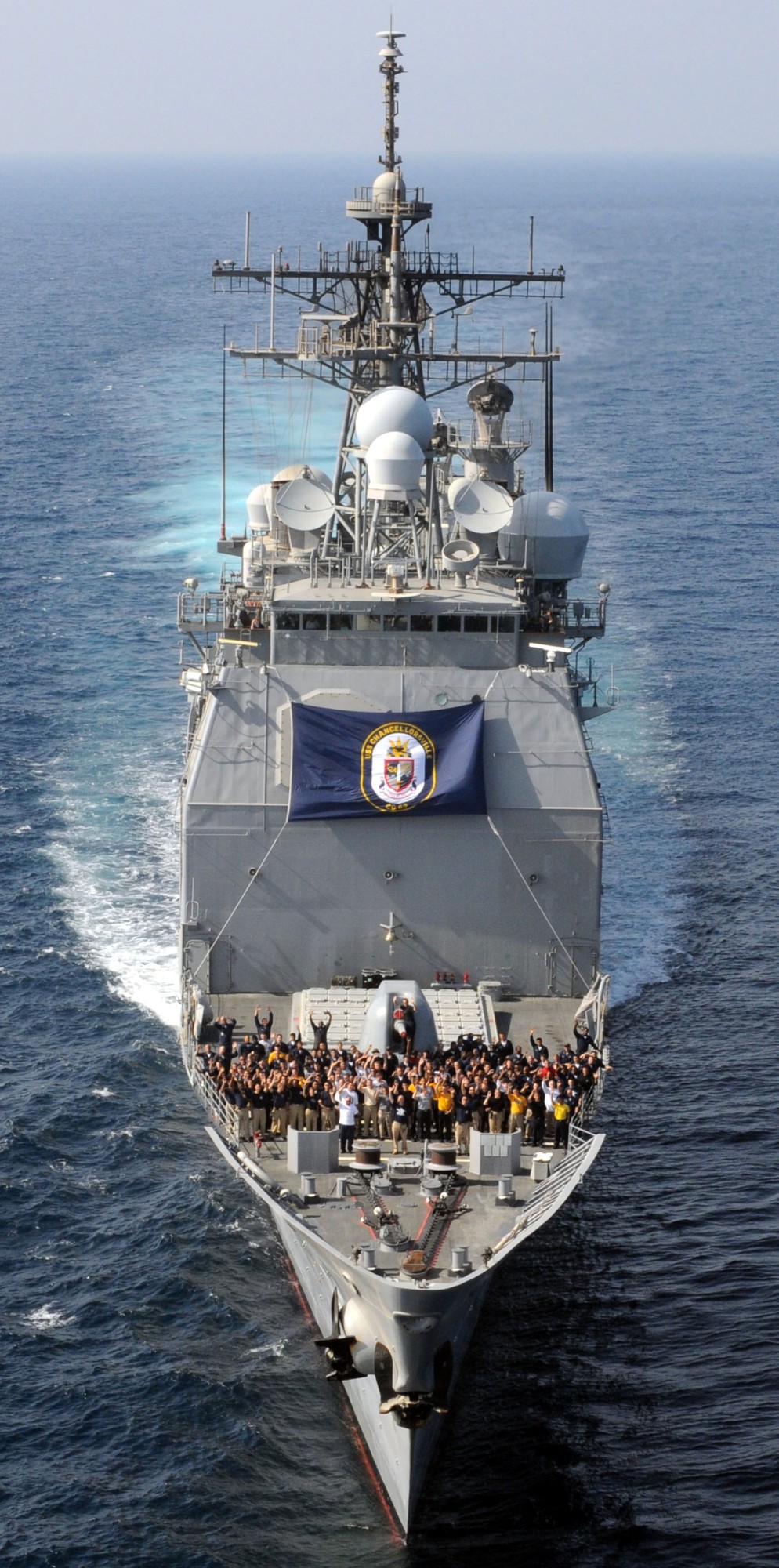 Gulf of Oman - October 2008 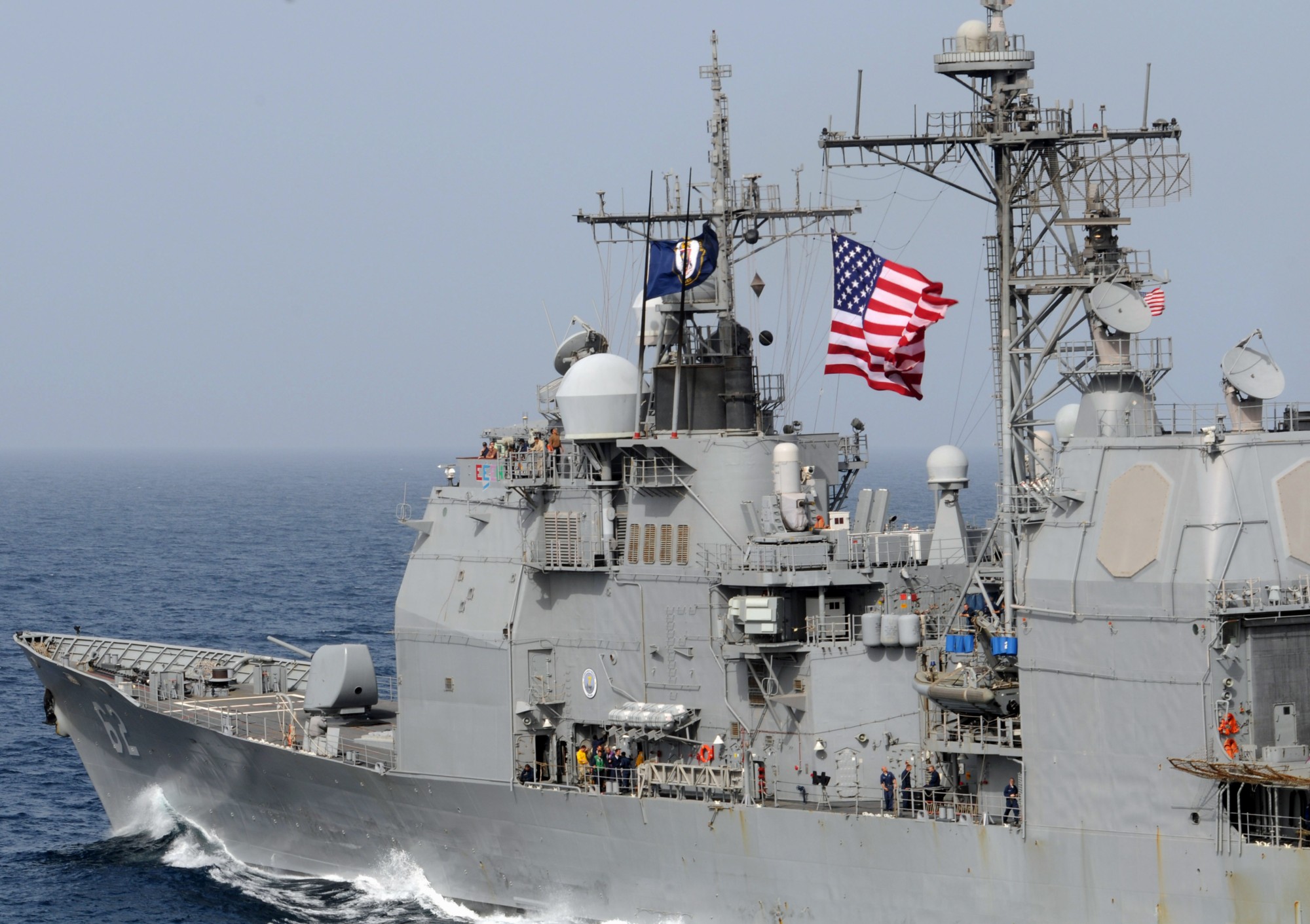 Arabian Sea - September 2008 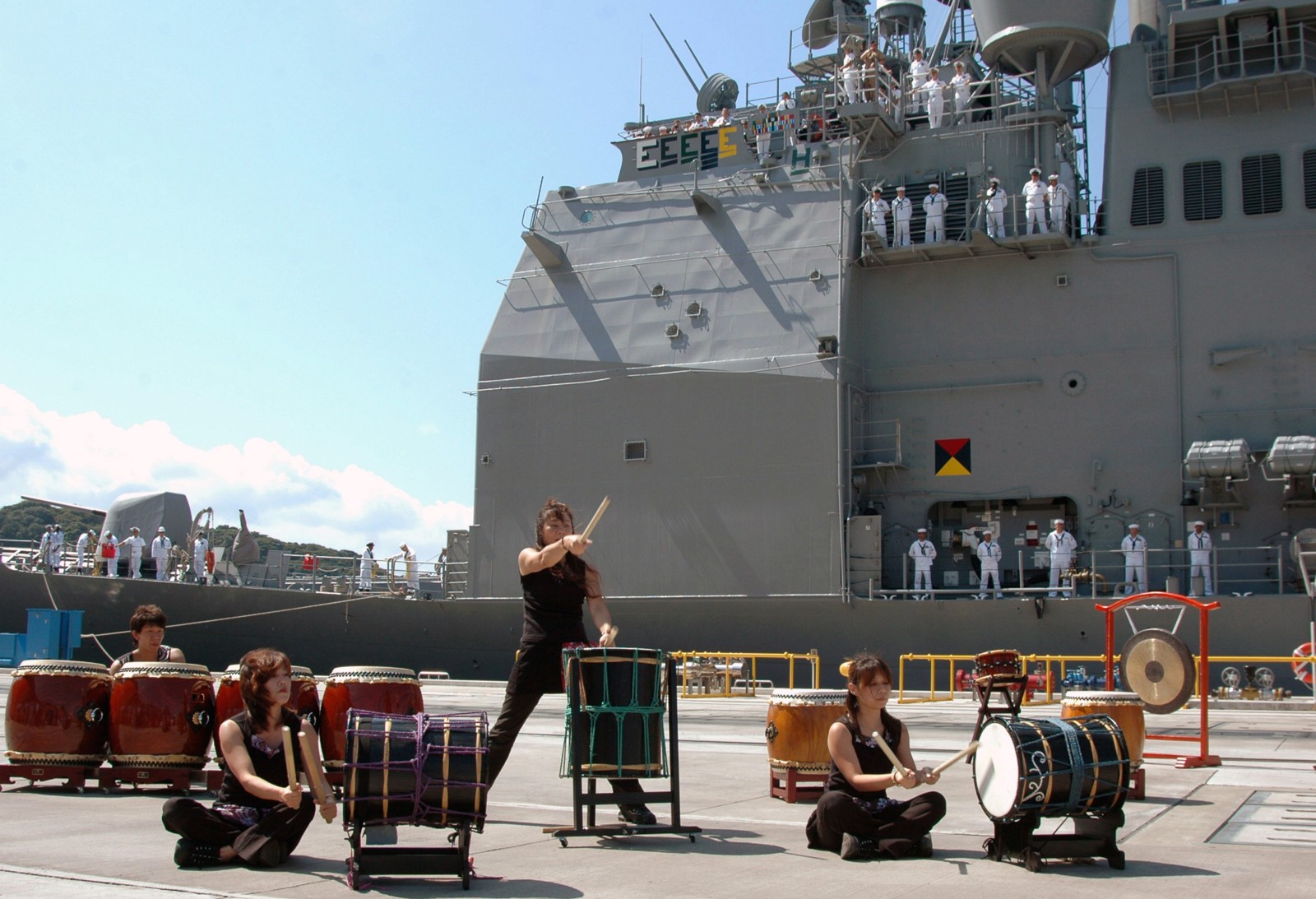 arriving at Fleet Activities Yokosuka, Japan - August 2006 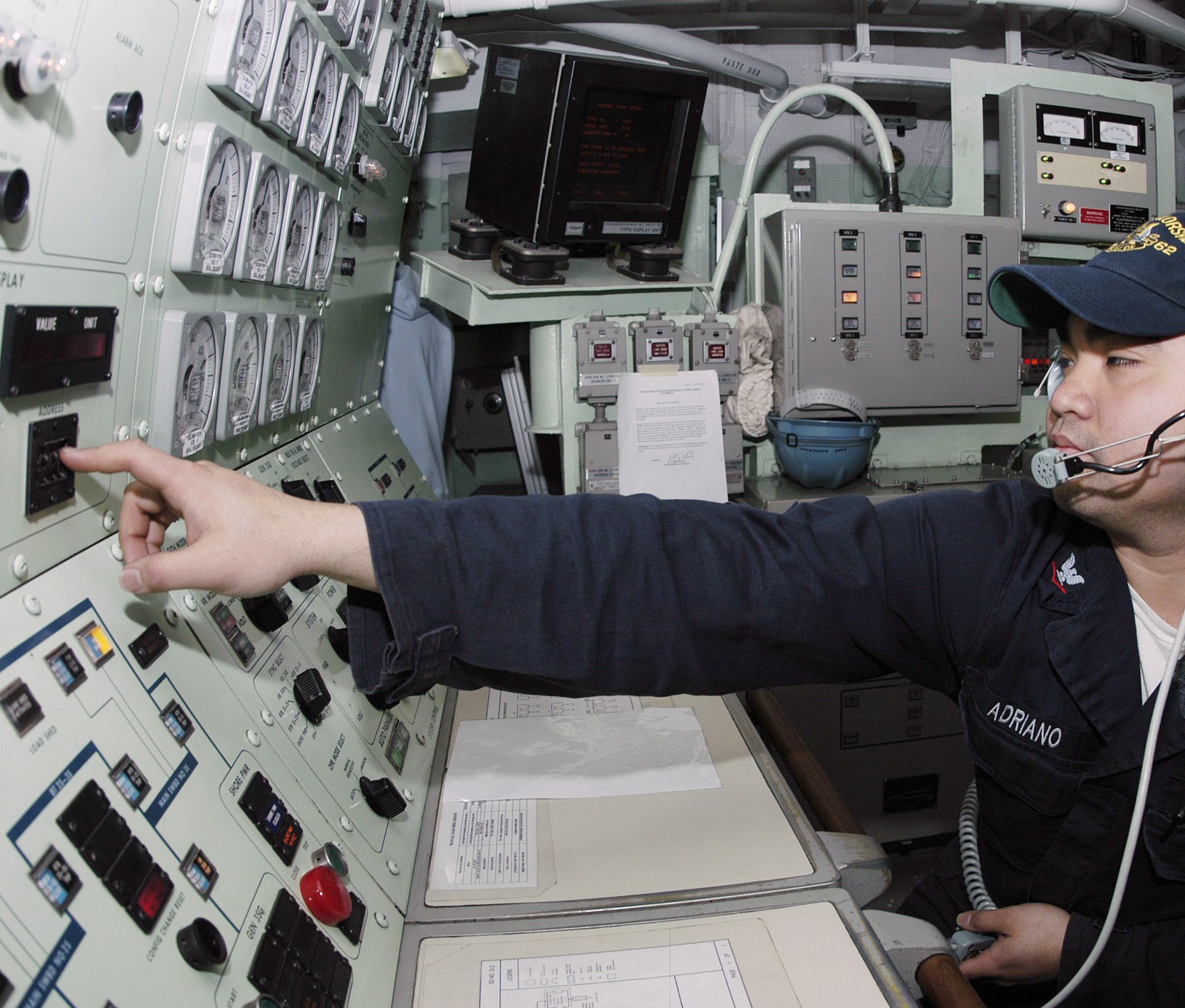 central control station - April 2006 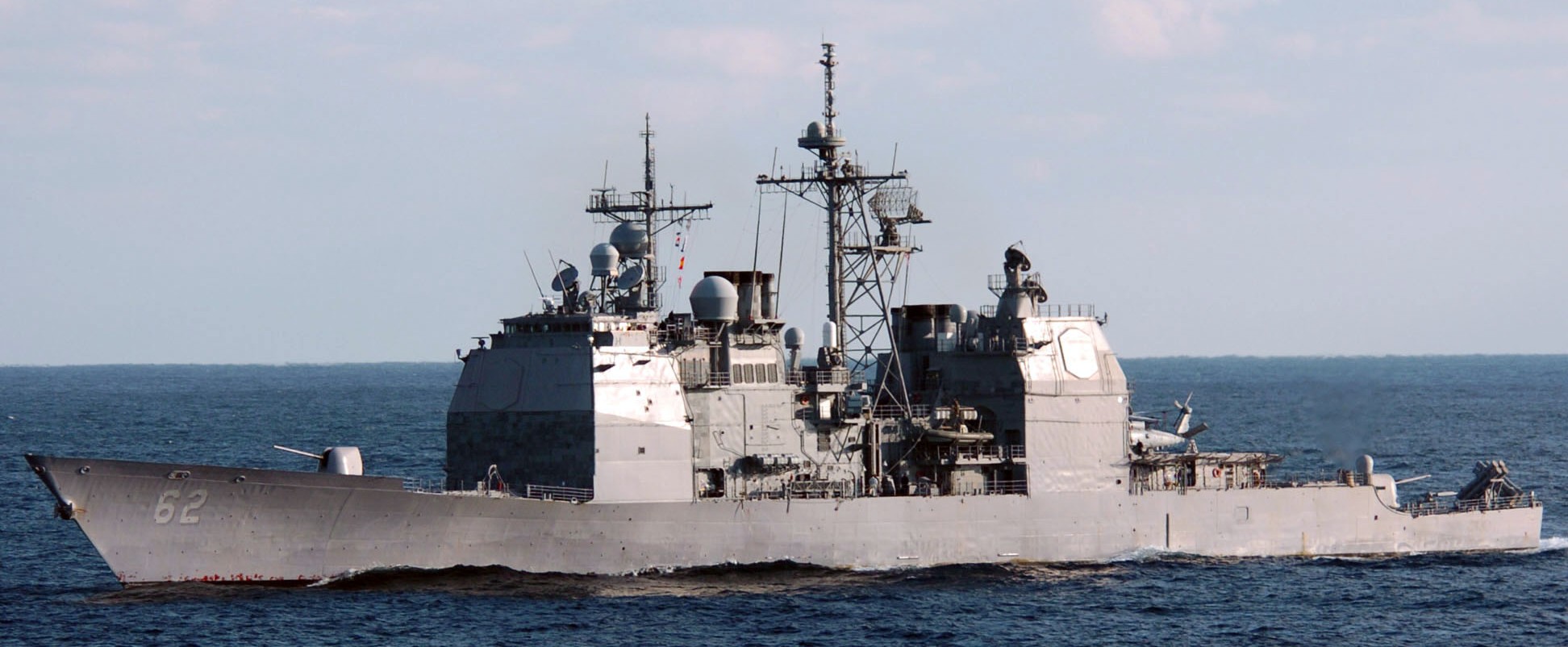 Pacific Ocean - December 2005 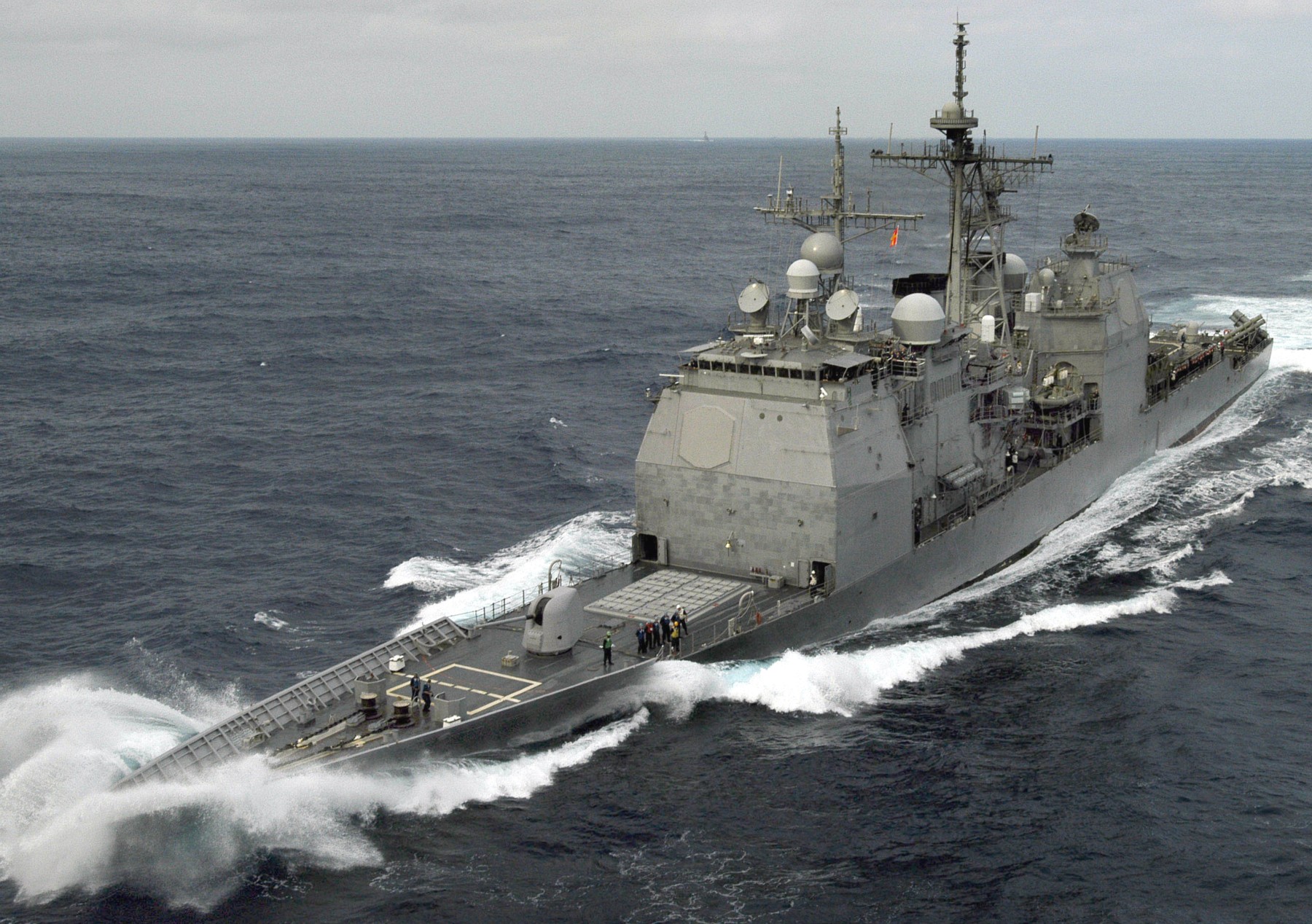 Pacific Ocean - August 2005 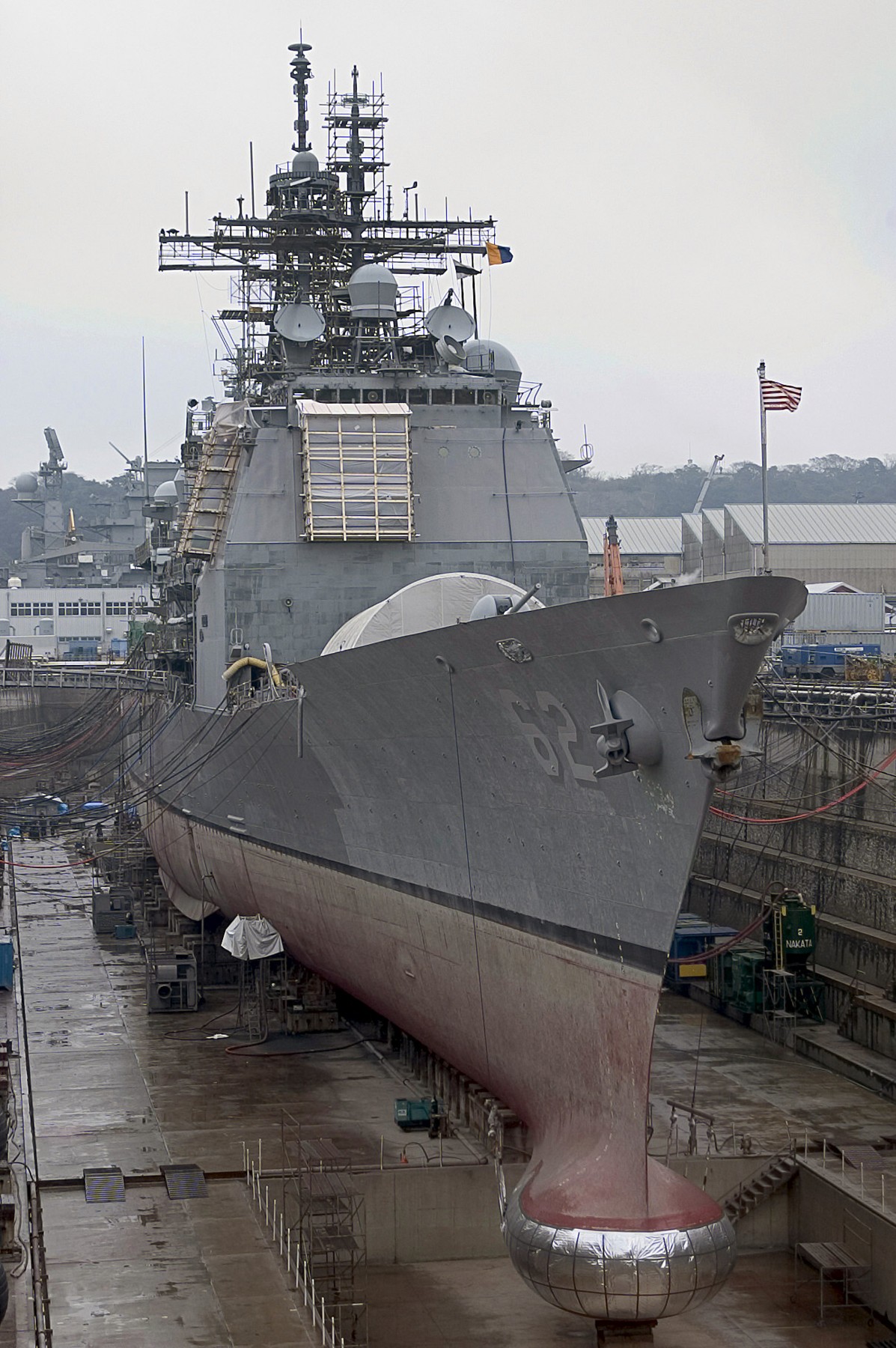 in dry-dock at Fleet Activities Yokosuka, Japan - February 2005 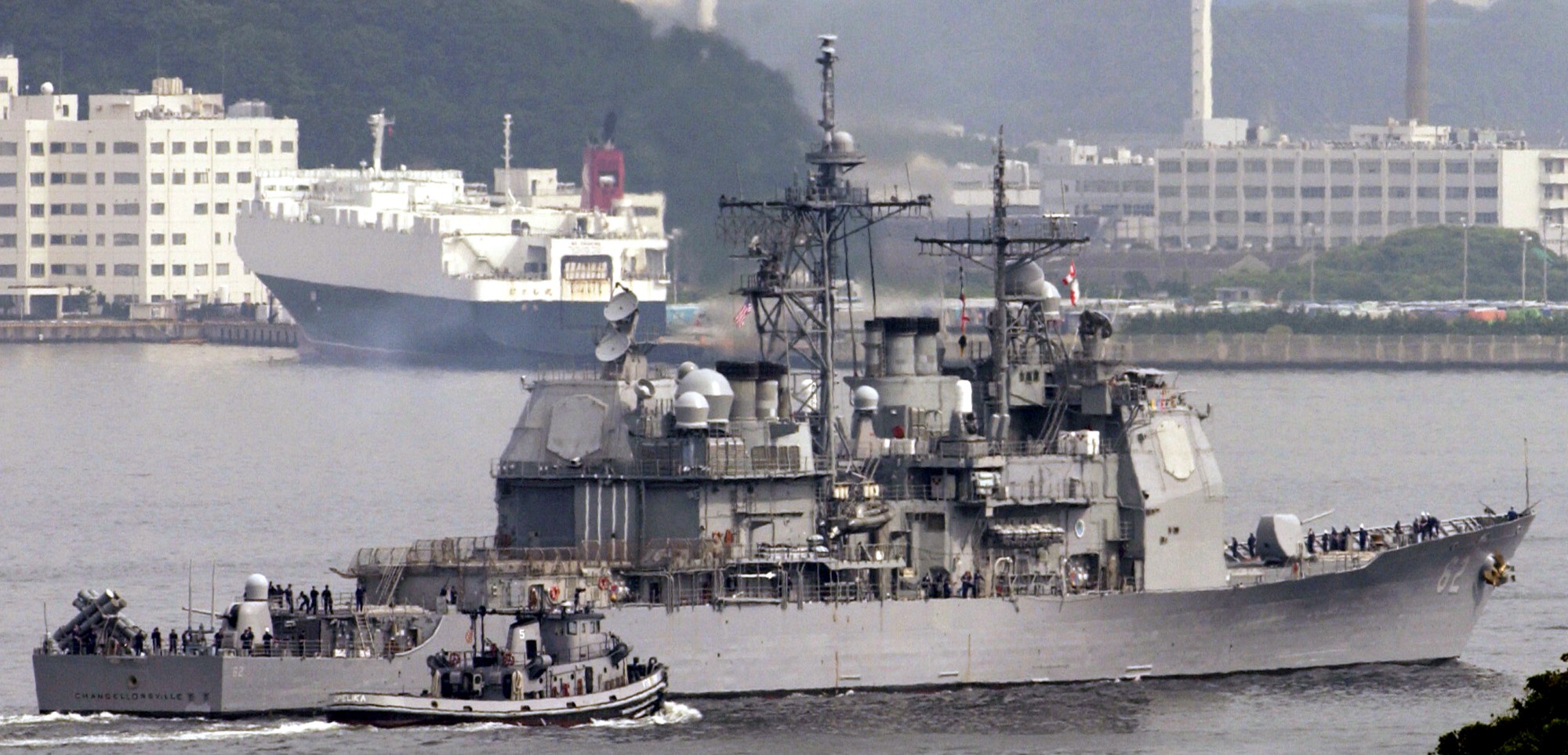 Yokosuka, Japan - July 2004 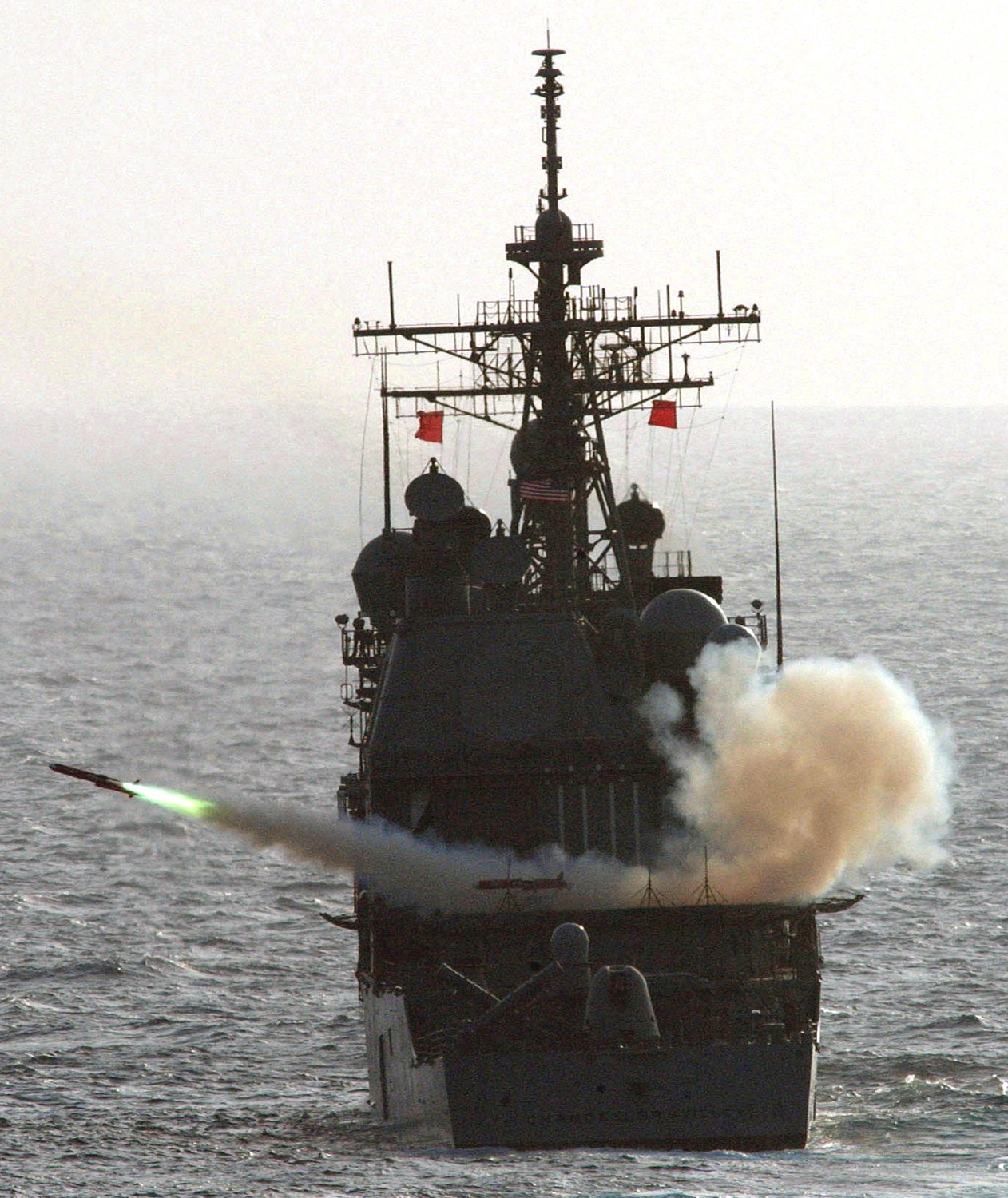 launching a BQM-74E aerial target drone - Pacific Ocean - February 2004 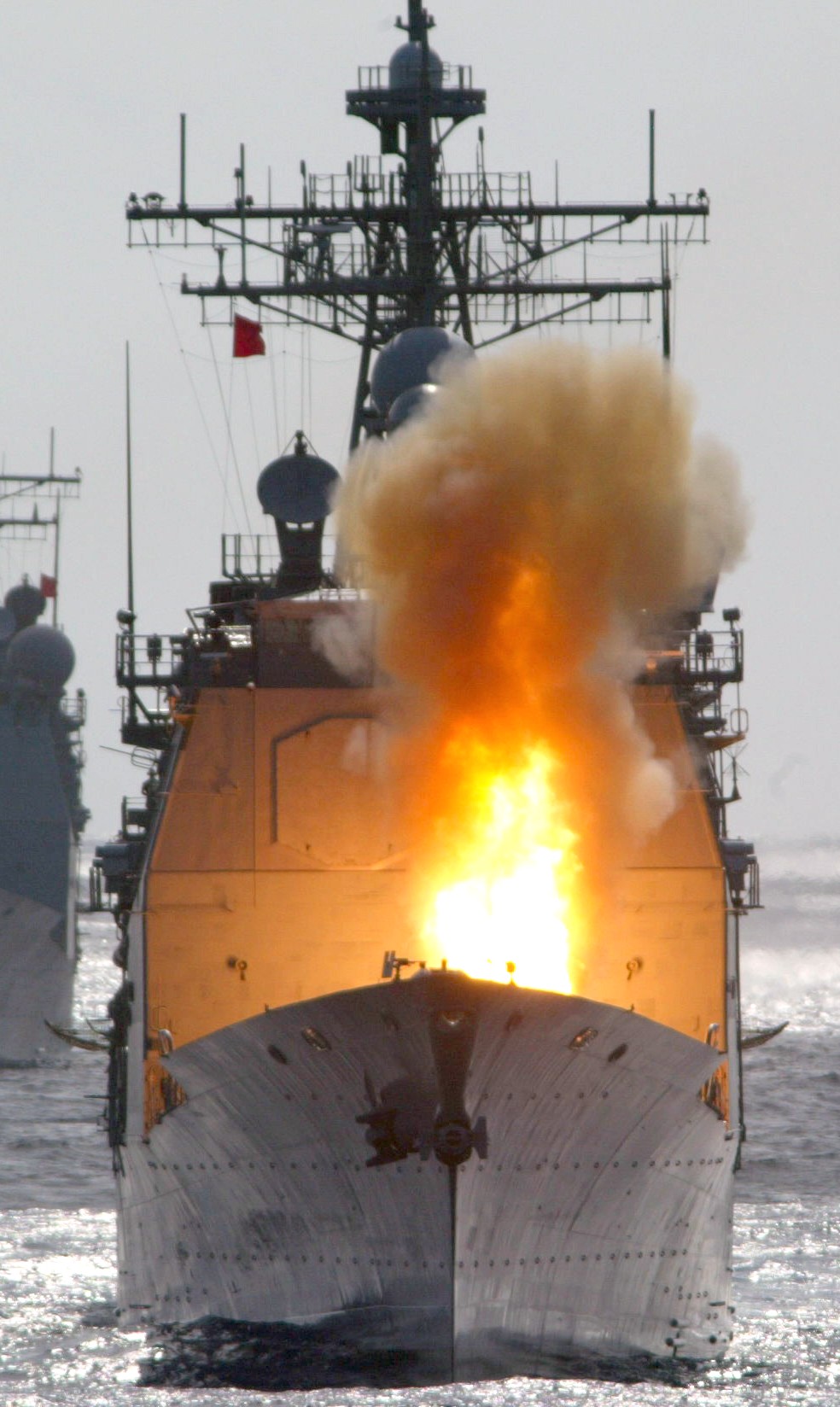 firing a Standard Missile SM-2 - Pacific Ocean - November 2003 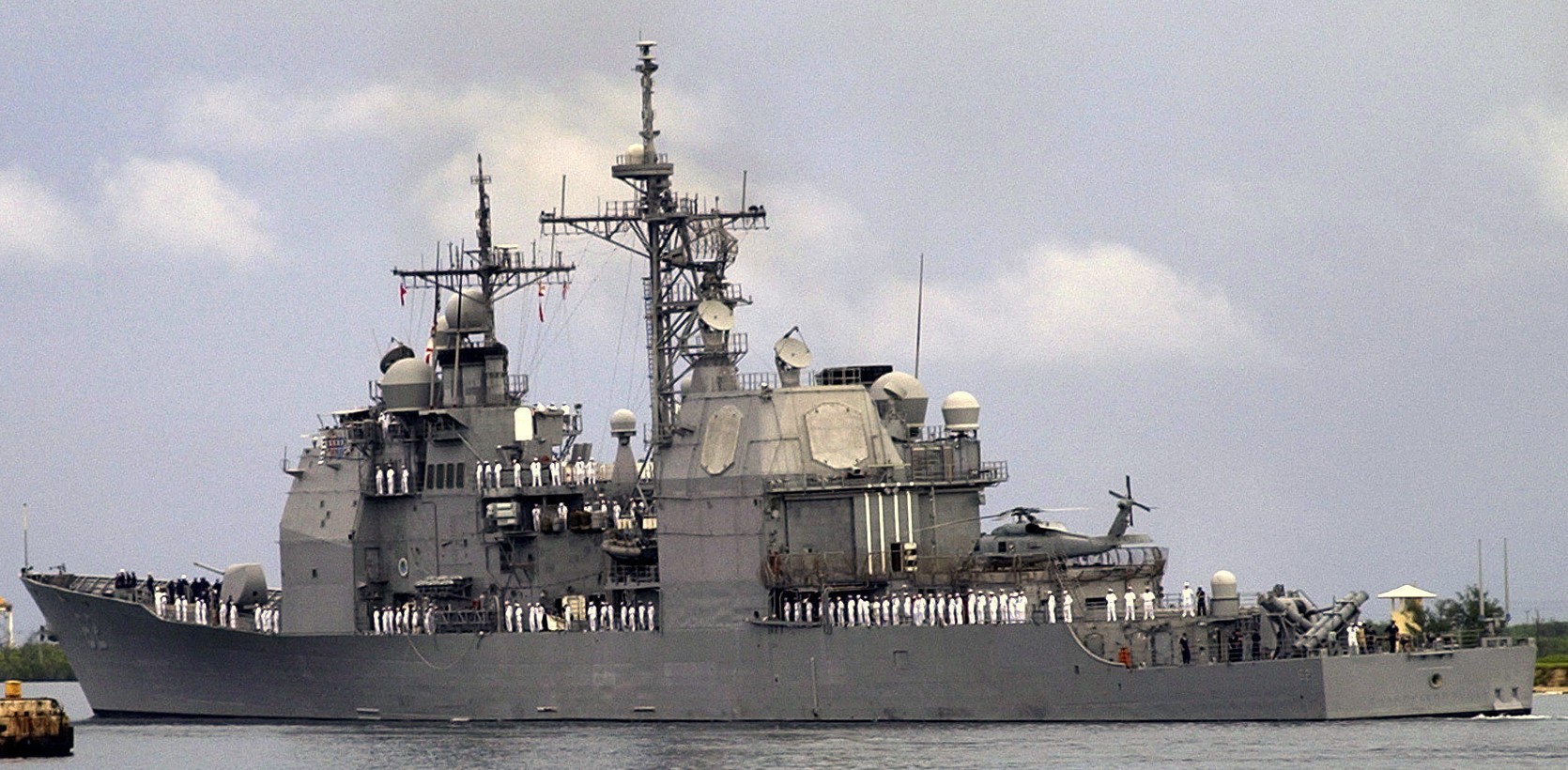 Apra Harbor, Guam - October 2003 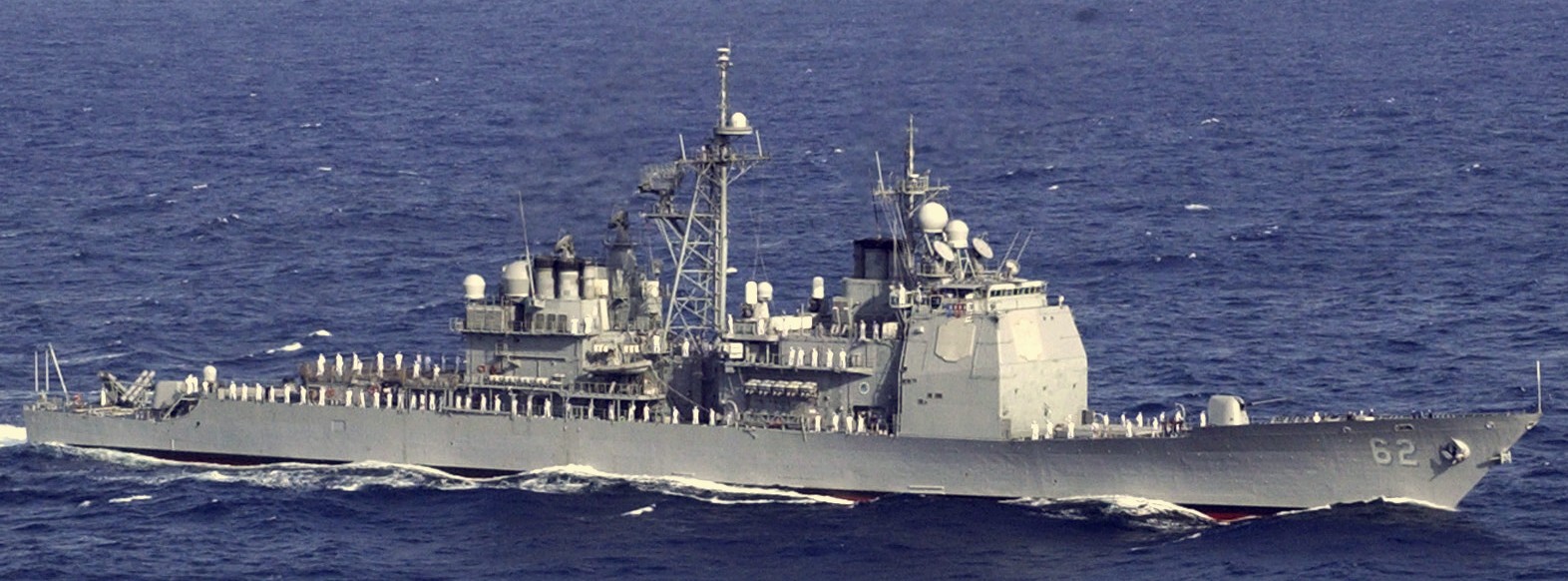 Apra Harbor, Guam - October 2003 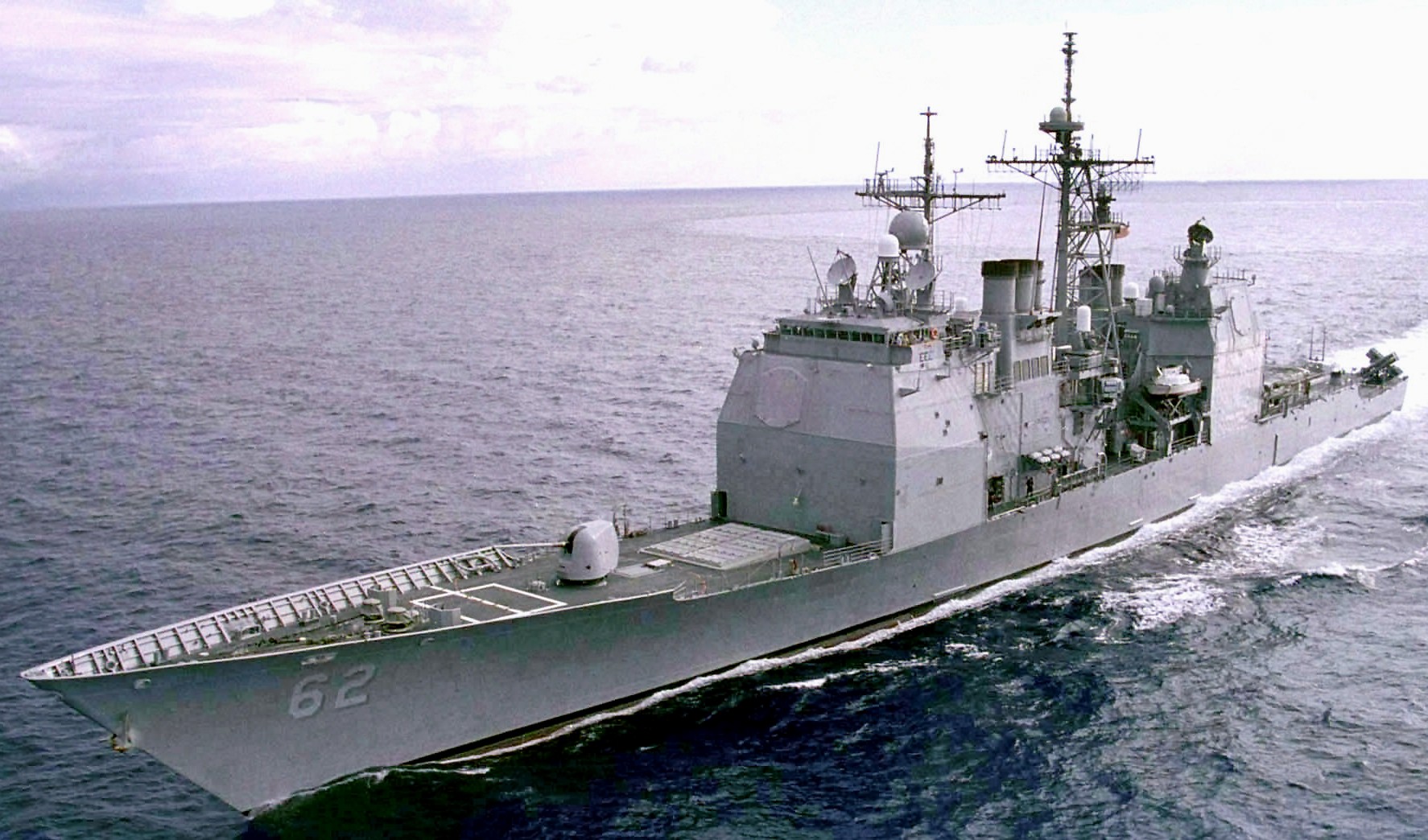 Philippine Sea - October 1998 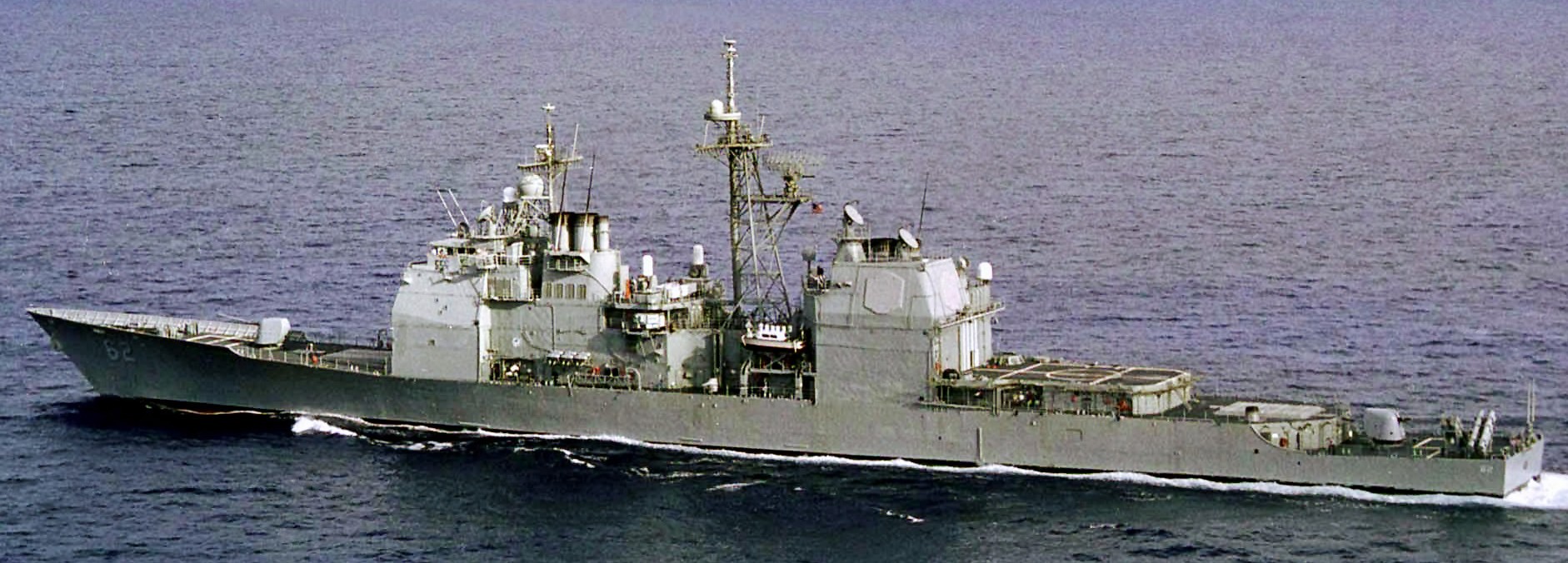 Philippine Sea - October 1998 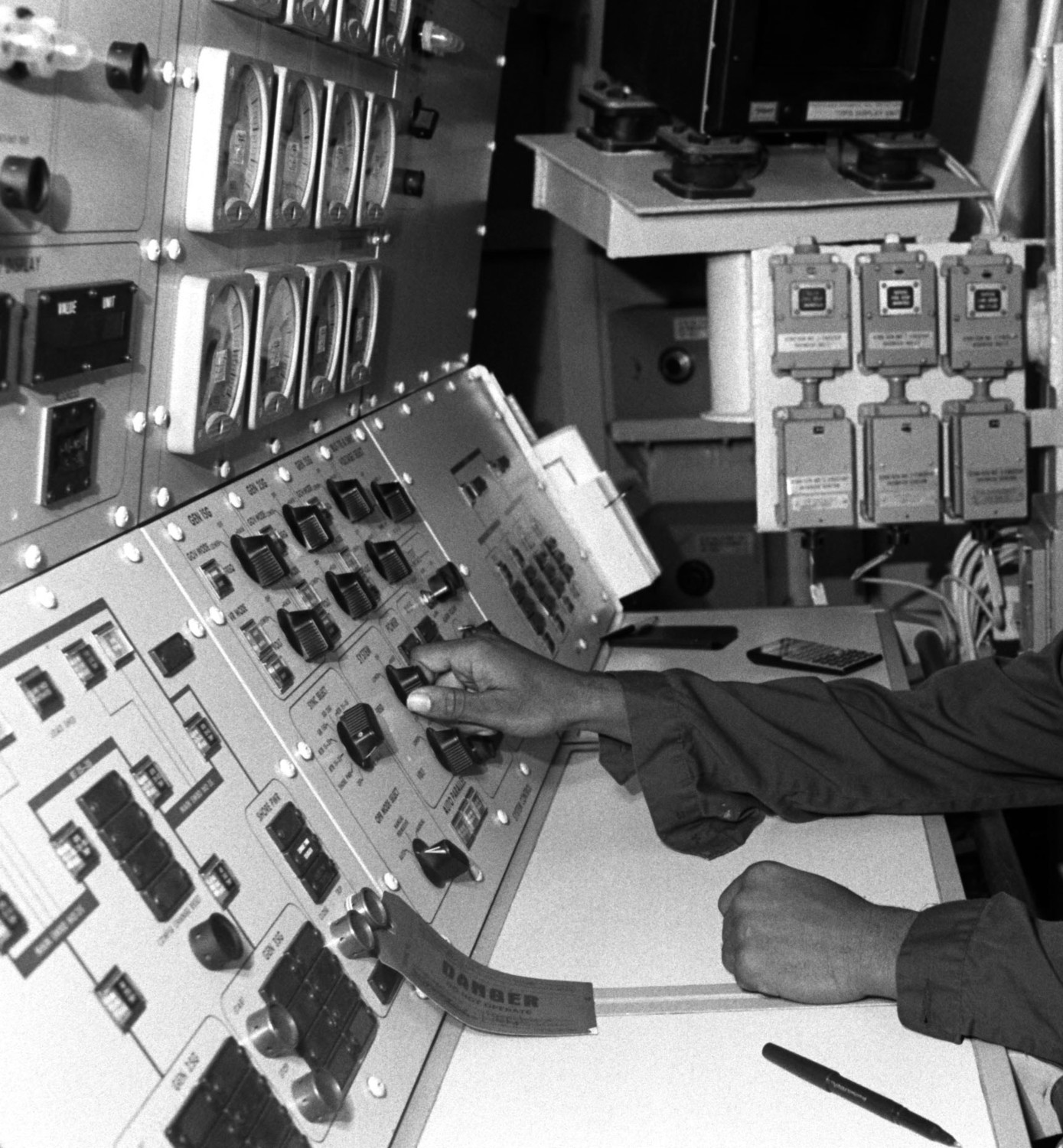 generator control console - September 1990 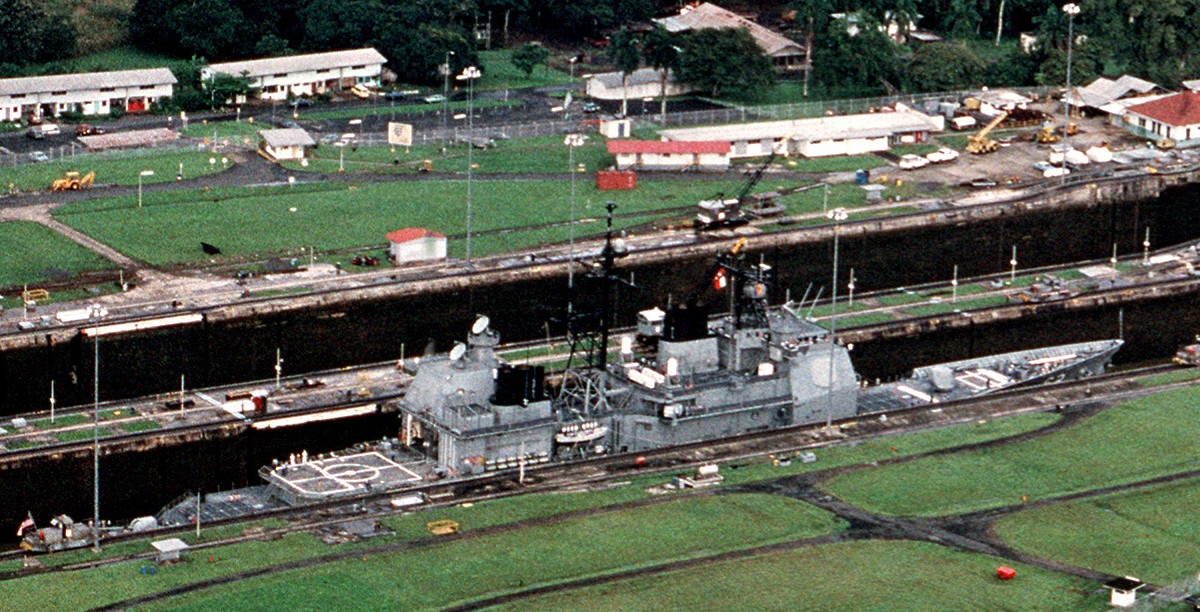 Pedro Miguel Locks - Panama Canal - November 1989 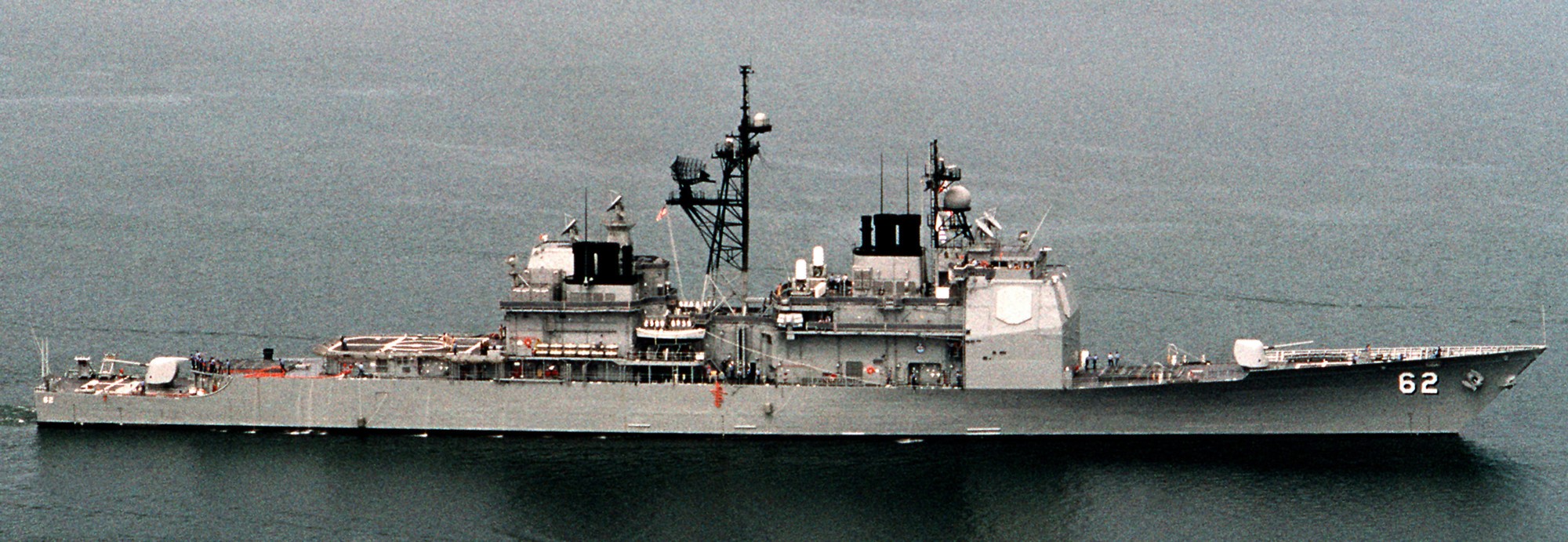 Panama Canal - November 1989 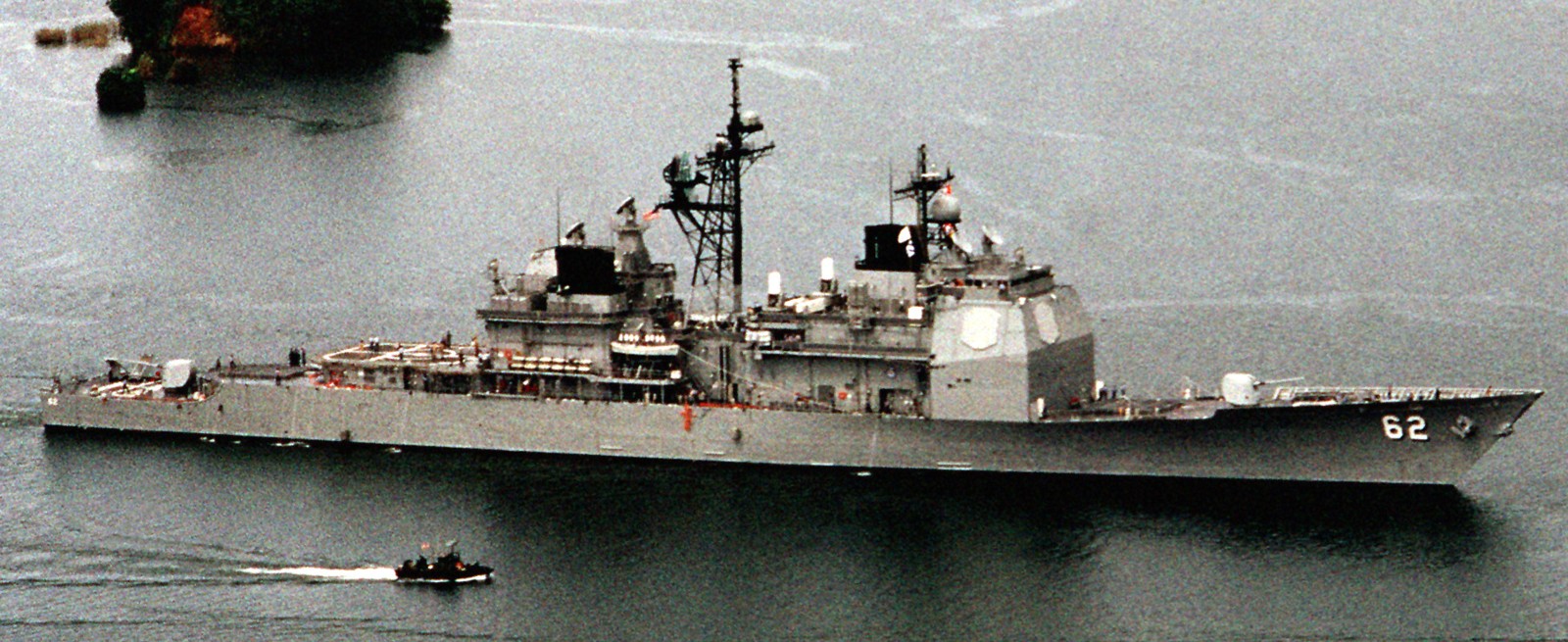 Panama Canal - November 1989 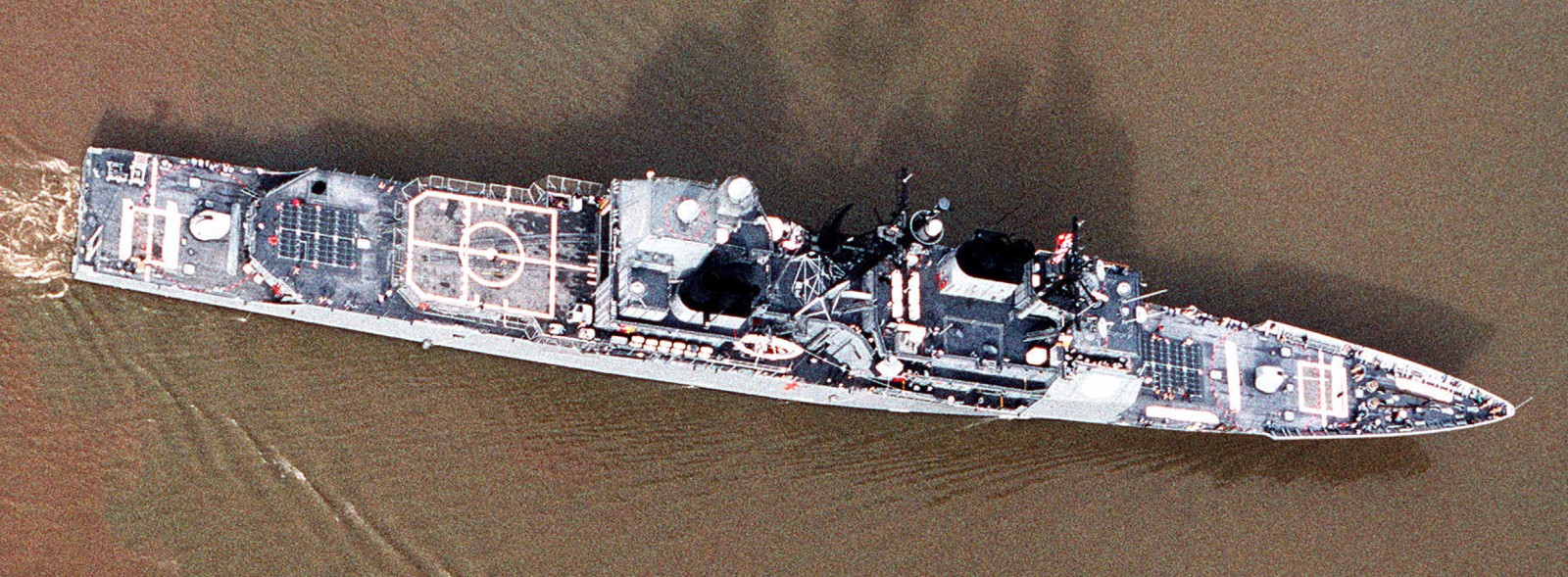 Panama Canal - November 1989 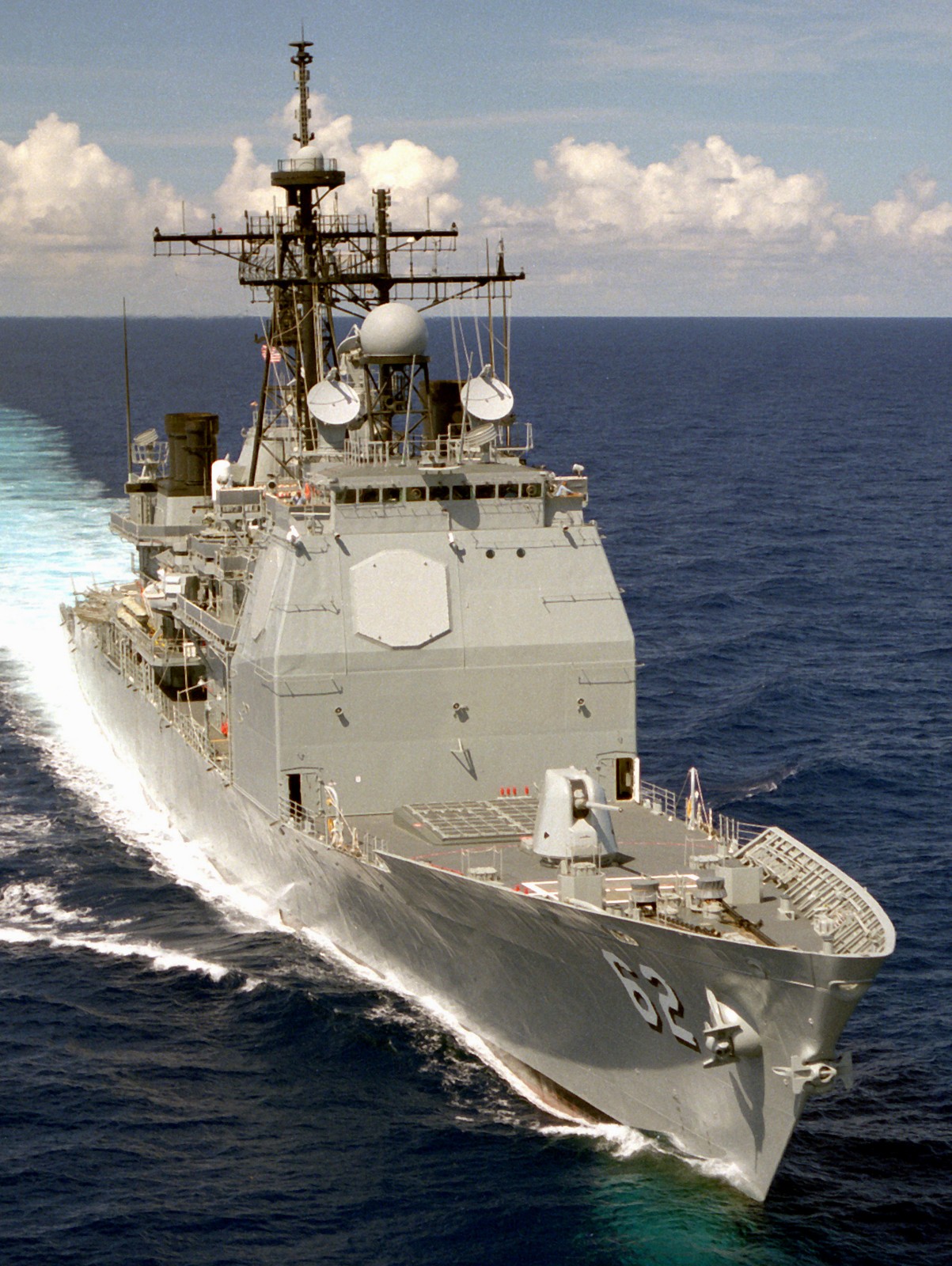 Caribbean Sea - on her way to the Panama Canal - November 1989 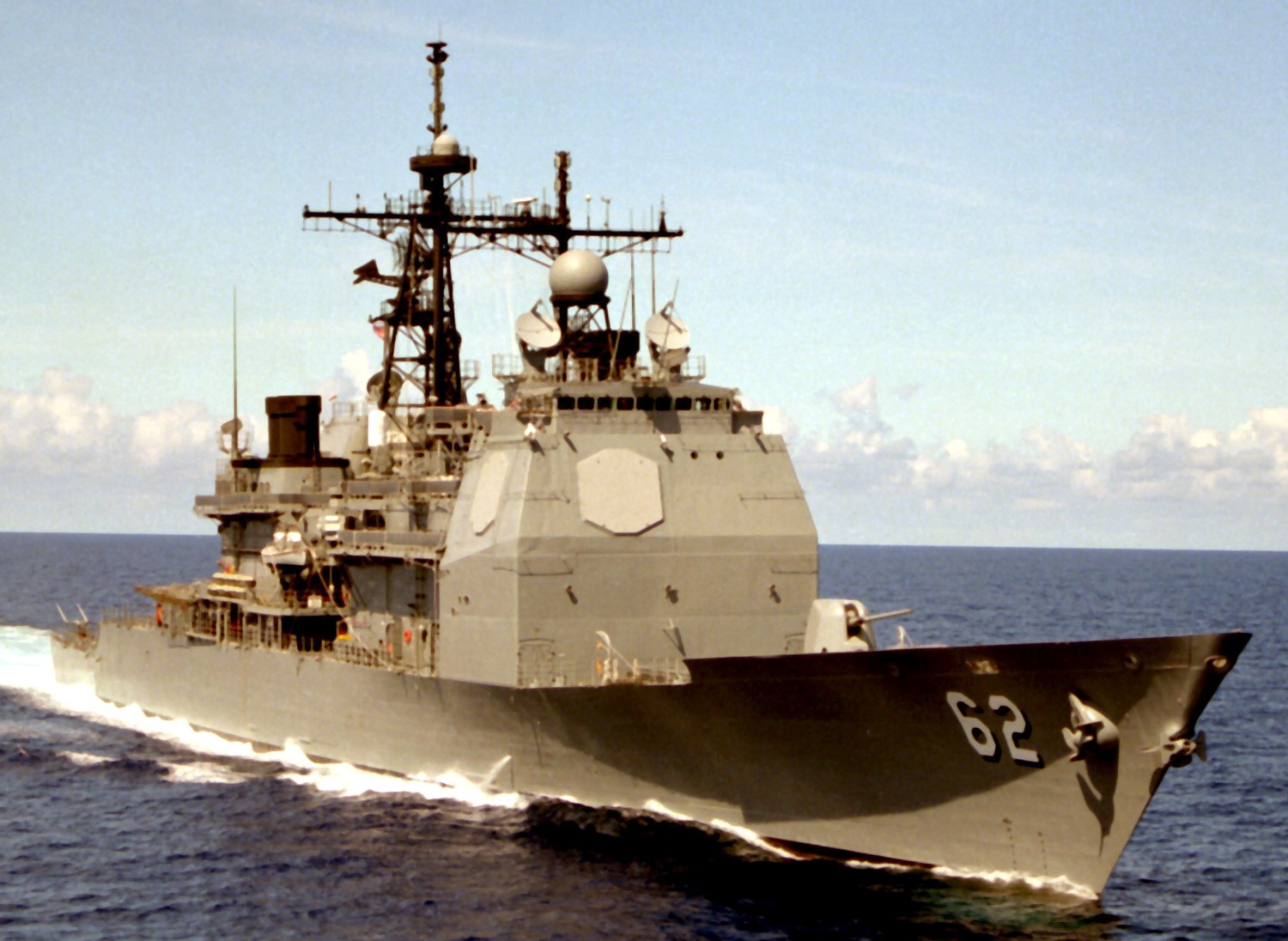 Caribbean Sea - on her way to the Panama Canal - November 1989 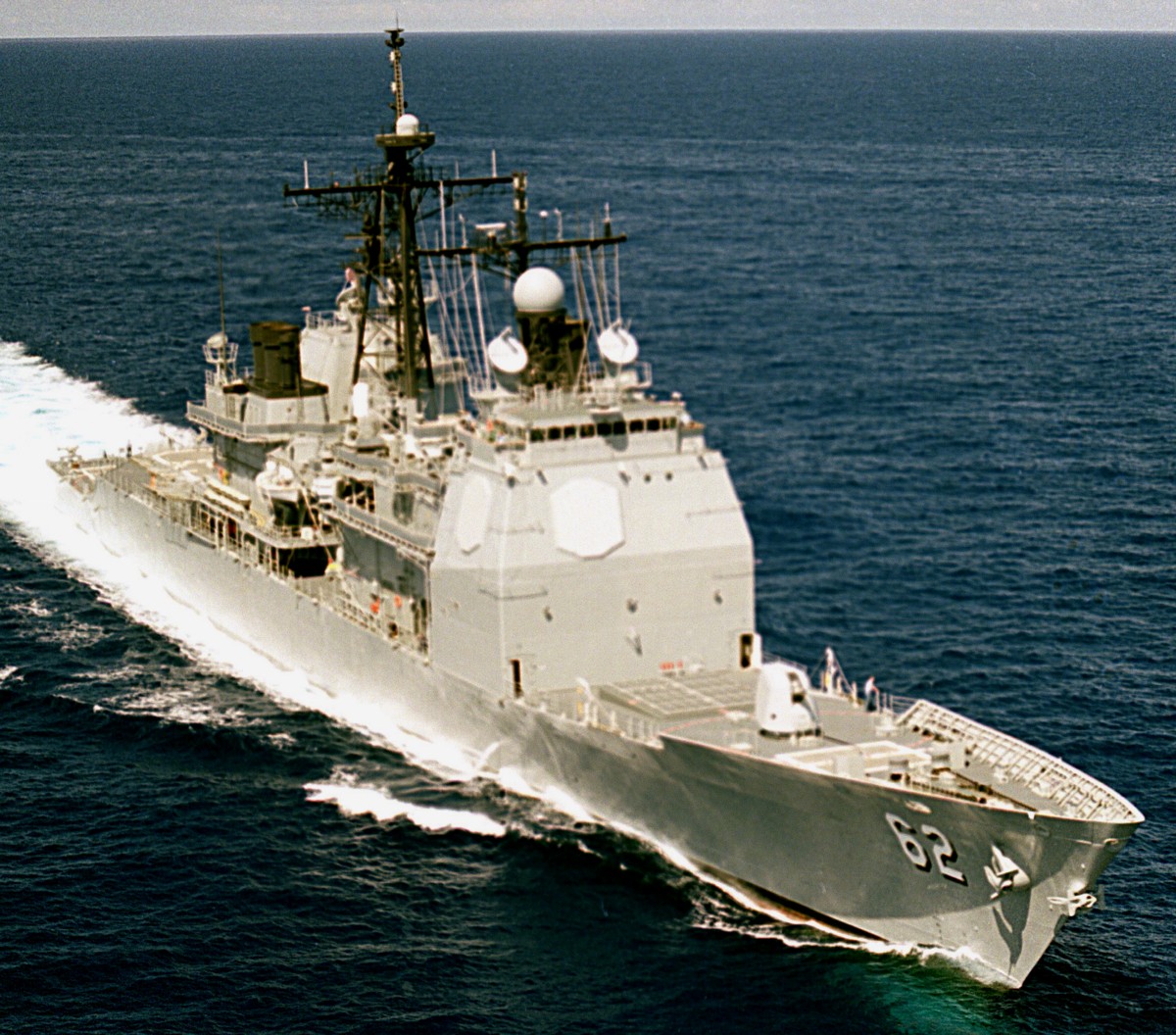 Caribbean Sea - on her way to the Panama Canal - November 1989 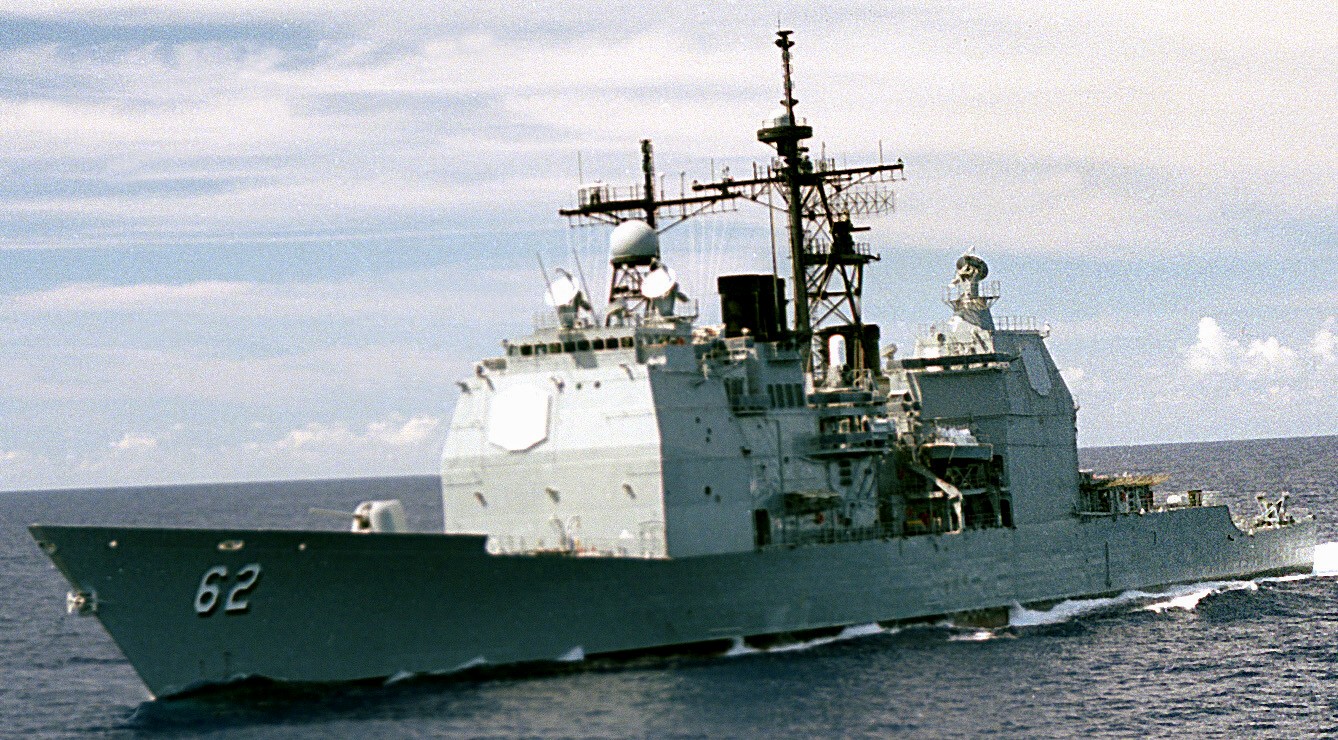 Caribbean Sea - on her way to the Panama Canal - November 1989 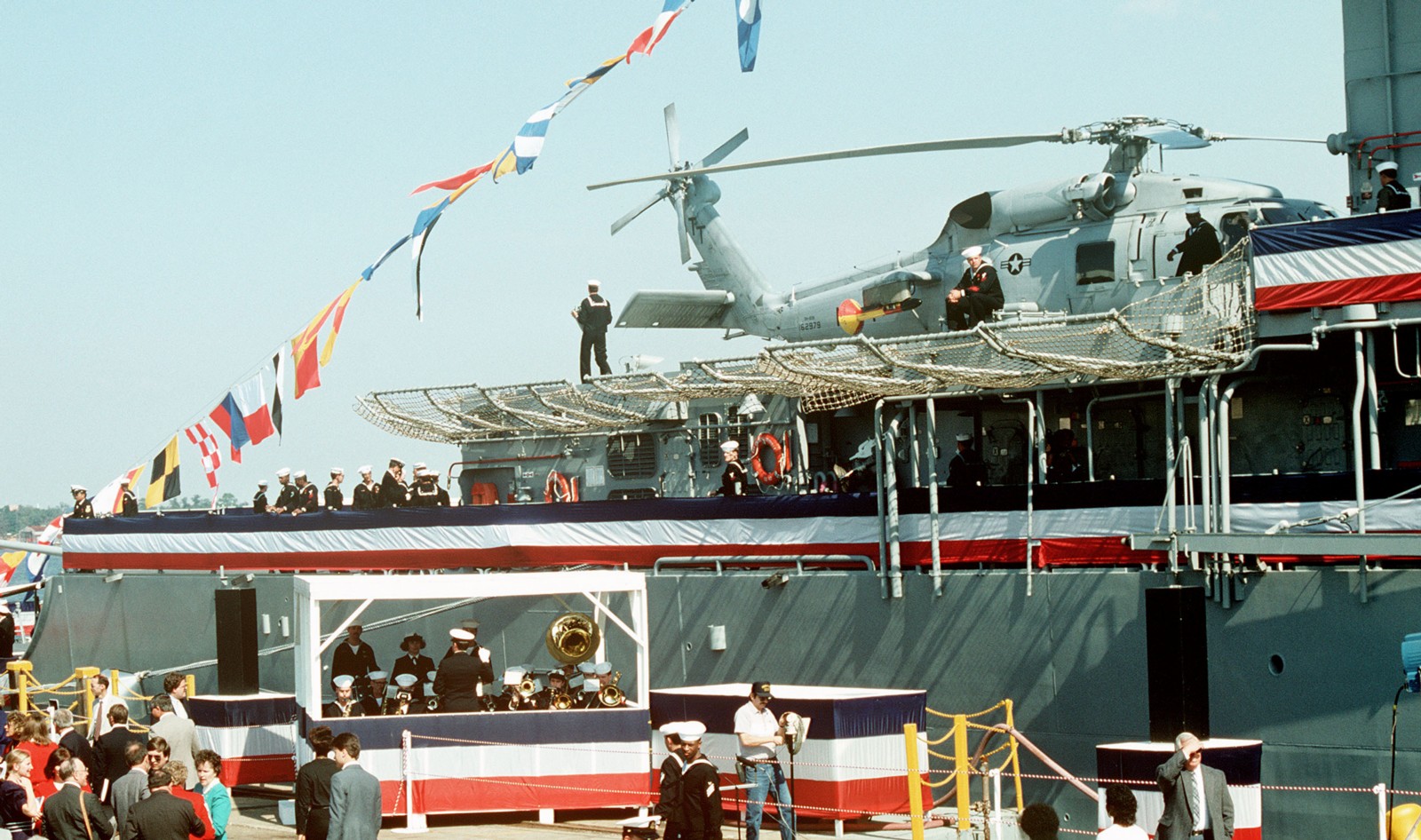 commissioning ceremony at Ingalls Shipbuilding, Pascagoula, Mississippi - November 4, 1989 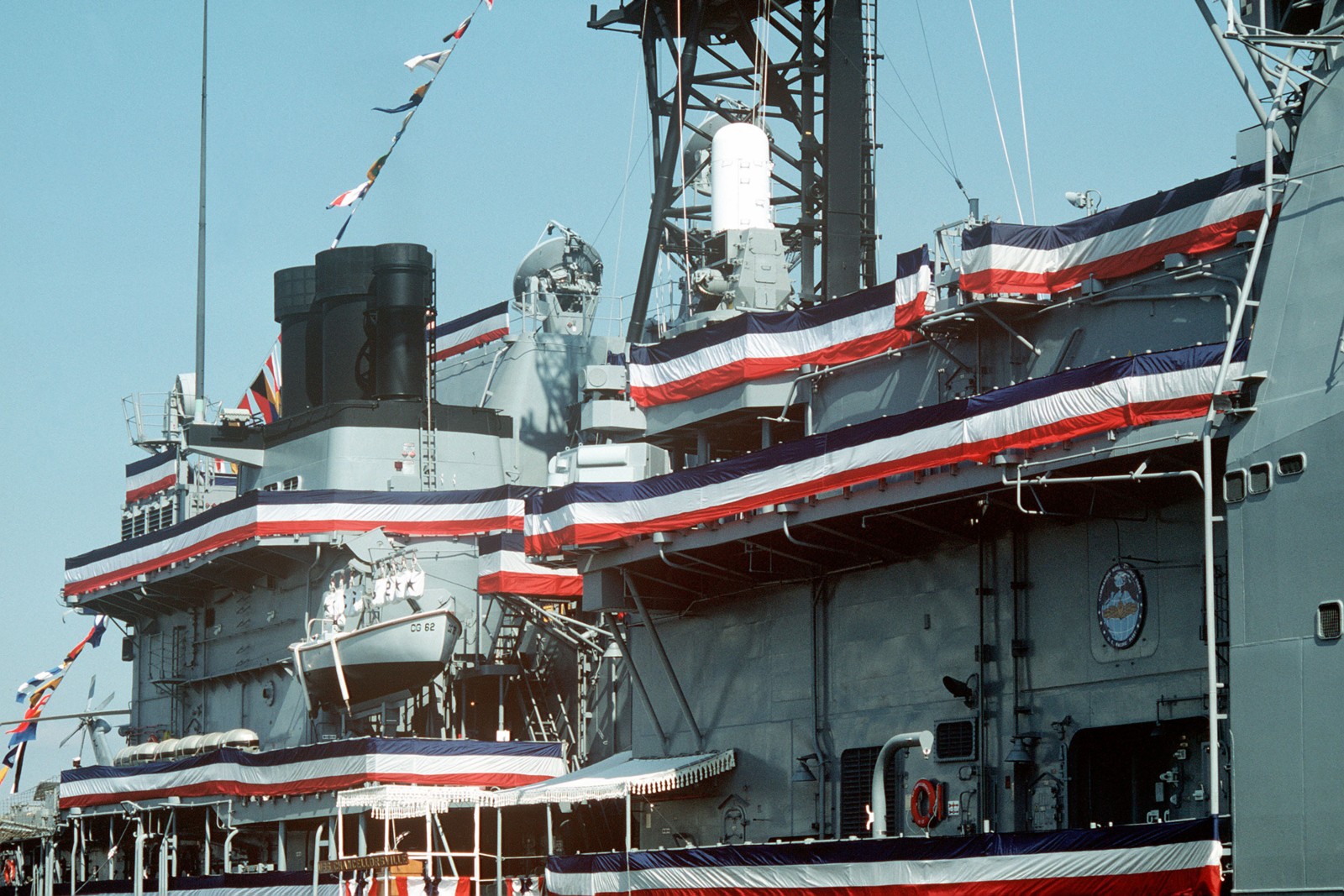 commissioning ceremony at Ingalls Shipbuilding, Pascagoula, Mississippi - November 4, 1989 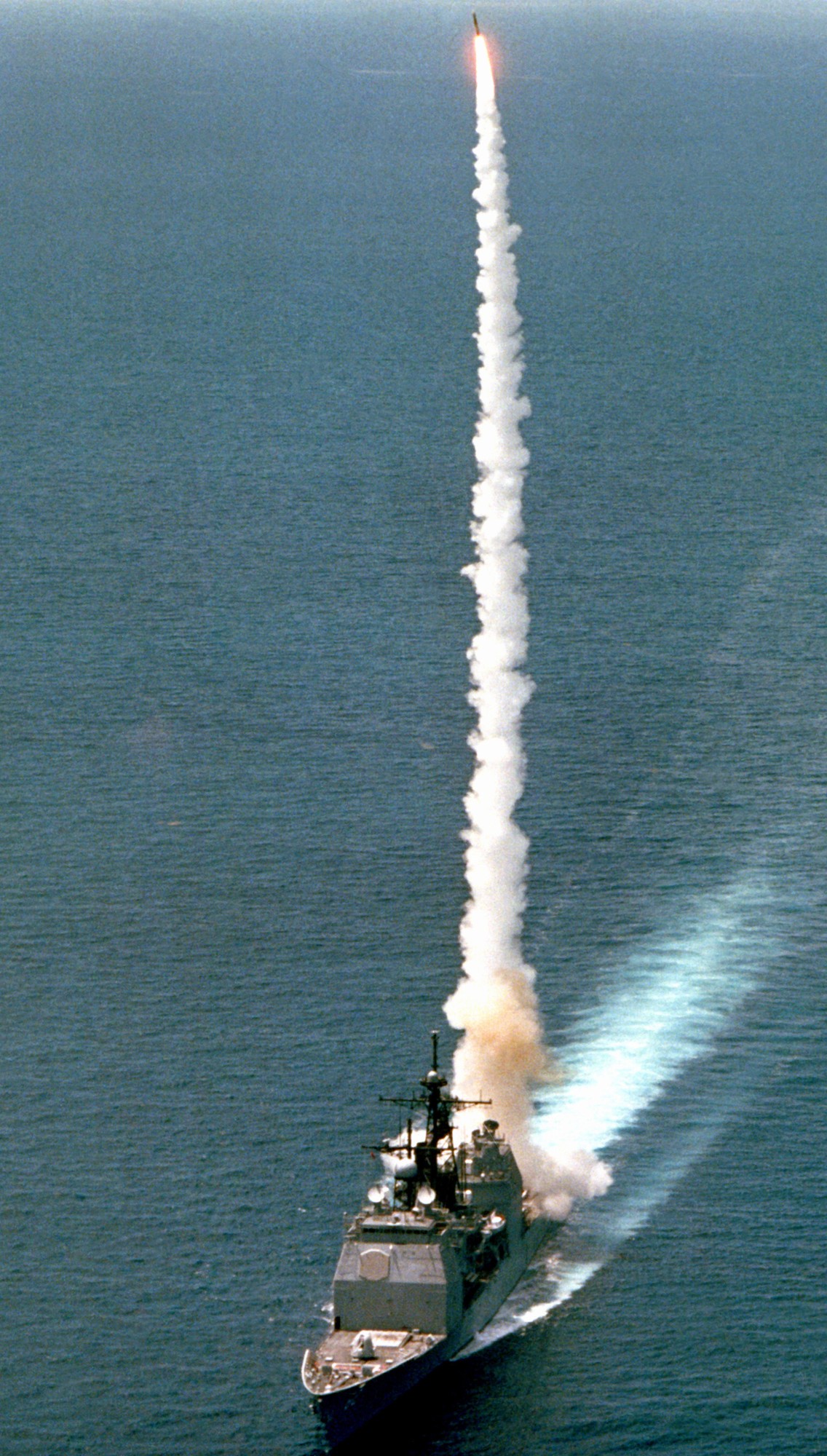 firing a Standard Missile SM-1 - November 1989 |
||
|
USS Robert Smalls / ex Chancellorsville (CG 62): USS Chancellorsville was commissioned at Ingalls Shipbuilding in Pascagoula, Miss, on 4 November 1989. She first deployed in March 1991, to the Persian Gulf in support of Operation Desert Storm. Chancellorsville was next deployed from February to August 1993, to the Persian Gulf as part of the Nimitz Battle Group. On 26 June 1993, Chancellorsville launched strikes on the Iraqi Intelligence Center in Baghdad with nine Tomahawk missiles in retaliation for the aborted assassination attempt on former President Bush. She deployed again to the Western Pacific and Persian Gulf from April to October 1995. Following a Fifth Fleet deployment to the North Persian Gulf in 1995, Chancellorsville was awarded the Spokane Trophy in 1996. The Spokane Trophy is awarded by Commander-in-Chief, United States Pacific Fleet to the surface combatant ship considered to be the most proficient in overall combat systems readiness and warfare operations. Chancellorsville deployed to the Caribbean and Eastern Pacific in support of joint counter-narcotics operations in November 1997. During this deployment, she rescued the crew of an Ecuadorian fishing vessel which had been adrift for 10 days. Upon her return home, Chancellorsville underwent her first major nine-month overhaul in San Diego, California. On 7 July 1998, Chancellorsville changed homeport from San Diego, to Yokosuka, Japan, joining Task Force 70/Battle Force Seventh Fleet, and probably, Carrier Group Five. After arriving in Yokosuka, Chancellorsville participated in multinational operations in the Sea of Japan, including the International Fleet Review. Chancellorsville took part in exercises with the Kitty Hawk Battle Group in the spring of 1999. On 6 April 1999, Chancellorsville deployed to the Persian Gulf in company with Kitty Hawk and Curtis Wilbur in support of Operation Southern Watch, and returned to Yokosuka on 5 January 2000. In May 2000, Chancellorsville participated in exercises with the Thai and Singaporean navies. Following a visit to Qingdao, China, in August 2000, Chancellorsville took part in ANNUALEX 12G, a joint U.S.-Japanese naval exercise. In November, Chancellorsville fired guns and SM-2 missiles as part of MISSILEX 01-1. In March through June 2001, she visited Singapore, Thailand, Saipan and Sydney, Australia, as part of an extended Spring Cruise. Chancellorsville then entered dry dock for an upkeep period in the fall. In September 2001, Chancellorsville deployed with the Kitty Hawk Battle Group in support of Operation Enduring Freedom, operating in the theater for several months. Chancellorsville paid her first visit to Vladivostok, Russia, in July 2002, celebrating Independence Day in Russia along with Fort McHenry. In March 2003, the ship was assigned to Carrier Group Five. On 22 October 2003, Chancellorsville played host in Guam to two warships of the People's Republic of China, which made the first-ever visit of the Chinese navy to Guam. By May 2004, she was back in the Southwest Asian region, where she lent aid to a disabled Indonesian fishing boat. On 19 July 2004, Chancellorsville departed Yokosuka to participate in Exercise Summer Pulse 2004 and Joint Air and Sea Exercises (JASEX) 2004, with the Kitty Hawk Battle Group. Summer Pulse was the Navy's first implementation of the new Fleet Response Plan (FRP). She returned to homeport 7 September. Chancellorsville entered a nine-week dry dock availability in February 2005. Following the maintenance period, she immediately returned to sea to participate in the exercises Talisman Saber 2005, the third annual Orange Crush and the Joint Air and Sea Exercise (JASEX) 2005. She returned to Yokosuka in August. ANNUALEX 2005 commenced in November with Chancellorsville participating, along with other U.S. and Japanese assets. The exercise saw a total of 61 naval vessels, including two U.S. submarines, 10 U.S. Navy ships and 49 Japanese ships. Chancellorsville visited Hong Kong at the end of November and returned to Yokosuka 12 December. In August 2006, Chancellorsville swapped with Shiloh based in San Diego. Chancellorsville's homeport was changed to San Diego, with Shiloh moving to Yokosuka. The crews remain in their respective locations. In winter of 2006, Chancellorsville deployed again into the Western Pacific, visiting Singapore and Pattaya, Thailand, in February. In April, she joined forces of the Republic of Korea for Reception, Staging, Onward-movement, & Integration and Foal Eagle 2006 (RSOI/Foal Eagle 06), exercises utilizing more than 70 U.S. and Korean ships. Chancellorsville returned to Yokosuka in August in preparation for a hull swap with Shiloh. Chancellorsville is scheduled to return to San Diego, in October 2006, making it her homeport once again. In March 2011, in company with the carrier Ronald Reagan, Chancellorsville was deployed off northeastern Honshu, Japan, to assist with relief efforts after the 2011 Tōhoku earthquake and tsunami.[7] During that time, helicopter crews from Ronald Reagan were exposed to leaking radiation from the nuclear accidents and ships from the carrier strike group were moved to avoid being downwind from the facility. During the latter half of 2012, Chancellorsville underwent equipment upgrades as part of the Aegis Modernization effort ACB-12. In January 2013, the ship spent five days under way off the coast of California to perform a series of tests of the updated ACB-12 equipment and software. In November 2013, while testing combat weapons systems off the coast of Point Mugu, California, a BQM-74E unmanned drone being used in the exercise failed to respond to commands to turn away from the ship and collided with Chancellorsville. Since it was a tracking exercise and not a live fire exercise, the crew did not engage the drone with the Phalanx CIWS. Two sailors received treatment for minor burns and the ship suffered some damage and returned to San Diego for assessment. The damage later proved to be more severe than initially assessed. Citing Navy sources, the U.S. Naval Institute reported that repairs to the ship would cost $30 million and take six months to complete. On 7 June 2019 Chancellorsville came close to a collision with the Russian destroyer Admiral Vinogradov. Each side blamed the other for the near collision. Russian sources stated that the incident occurred in the southeast of the East China Sea while US sources named the location as in the Philippine Sea. According to retired US Navy captain Carl Schuster, the Russian ship's wake shows that it "didn't adhere to either the rules of the road or the incidents at sea agreement." United States Seventh Fleet spokesman Commander Clayton Doss said the Russian destroyer came within 50 to 100 feet (15 to 30 m) of USS Chancellorsville, "putting the safety of her crew and ship at risk." The Russian Navy released a statement claiming that Chancellorsville had "suddenly changed its course and crossed the Admiral Vinogradov destroyer's course some 50 meters away from the ship." According to the same statement, this caused Admiral Vinogradov to take an "emergency maneuver" in order to avoid a collision with the American ship. In November 2019 and again on 15 February 2020, the ship transited the Taiwan Strait. During the 2020 George Floyd protests, the name of the ship came into question because it honors a victory of the Confederate Army fighting against the United States for southern independence and in defense of slavery. In December 2020, the U.S. Navy's Report to Congress on the Annual Long-Range Plan for Construction of Naval Vessels stated that the ship was planned to be placed Out of Commission in Reserve in 2026. In May 2022, Chancellorsville was homeported out of Yokosuka, Japan. She was as part of Carrier Strike Group 5 led by USS Ronald Reagan. - - - - - renaming - press release: WASHINGTON - 27 February 2023 Secretary of the Navy (SECNAV) Carlos Del Toro announced today that the Ticonderoga-class guided missile cruiser formerly named USS Chancellorsville (CG 62) will be renamed USS Robert Smalls (CG 62). This renaming honors Robert Smalls, a skilled sailor and statesman born into slavery in South Carolina. The decision arrived after a congressionally mandated Naming Commission outlined several military assets across all branches of service that required renaming due to confederate ties. In September 2022, Secretary of Defense Lloyd Austin accepted all recommendations from the naming commission and gave each service until the end of 2023 to rename their assets. “I am proud to rename CG 62 after Robert Smalls. He was an extraordinary American and I had the pleasure of learning more about him last year when I visited his home in South Carolina,” said Del Toro. “The renaming of these assets is not about rewriting history, but to remove the focus on the parts of our history that don’t align with the tenets of this country, and instead allows us to highlight the events and people in history who may have been overlooked. Robert Smalls is a man who deserves a namesake ship and with this renaming, his story will continue to be retold and highlighted.” Robert Smalls (1839-1915) was born into slavery in South Carolina. He became a skilled sailor and was an expert navigator of southern coasts. Smalls was conscripted in 1862 to serve as pilot of the Confederate steamer Planter at Charleston. On 13 May 1862, he executed a daring escape out of the heavily fortified Charleston harbor with his family, other enslaved people, and valuable military cargo onboard, and successfully surrendered Planter to the U.S. Navy. Smalls continued as pilot of the ship, but also piloted ironclad Keokuk and other vessels. He ultimately became captain of Planter. An ardent advocate for African Americans, Smalls led one of the first boycotts of segregated public transportation in 1864. This movement led to the city of Philadelphia integrating streetcars in 1867. After the Civil War, Smalls was appointed a brigadier general of the South Carolina militia, and from 1868 to 1874 he served in the South Carolina legislature. In 1874, he was elected to the U.S. House of Representatives and served for five terms, advocating for greater integration. After his time in Congress, Smalls was twice appointed collector of the Port of Beaufort, South Carolina. He died at Beaufort in 1915. The logistical aspects associated with renaming the ship will begin henceforth and will continue until completion with minimal impact on operations and the crew. CG-62 was commissioned in 1989 and named USS Chancellorsville (CG 62) to honor the Battle of Chancellorsville, a Confederate victory during the Civil War. CG-62 is currently assigned to Carrier Strike Group Five and is forward-deployed to Yokosuka, Japan. US DoD |
||
|
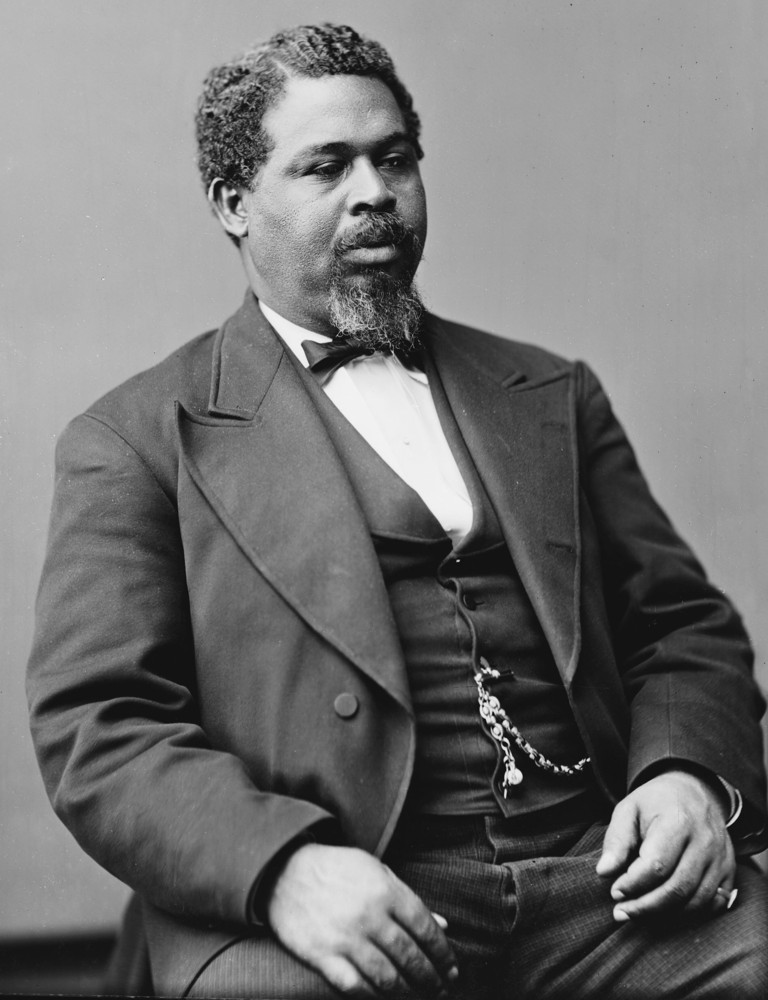
Robert Smalls (1839-1915): ... was born a slave at Beaufort, South Carolina, on 5 April 1839. He was able to obtain an education and was pilot of the Confederate Army steamer Planter at Charleston, S.C., in 1862. In the early morning of May 13 of that year, Smalls executed a daring escape, navigating the Planter out of heavily fortified Charleston harbor. The ship brought out members of his family and other slaves as well as a valuable military cargo. In Federal service, Robert Smalls continued as pilot of his ship, and ultimately became its captain. As a politically active advocate for his race, he served in the South Carolina Legislature and Militia. During the 1870s and 1880s, Smalls was a member of the U.S. House of Representatives. He was appointed collector of the port of Beaufort, S.C. in 1889 and occupied this position for many years. Robert Smalls died at Beaufort on 22 February 1915.
|
||
|
The Battle of Chancellorsville - 1863 ... was a major battle of the American Civil War (1861-1865), and the principal engagement of the Chancellorsville campaign. Chancellorsville is known as Lee's "perfect battle" because his risky decision to divide his army in the presence of a much larger enemy force resulted in a significant Confederate victory. The victory, a product of Lee's audacity and Hooker's timid decision-making, was tempered by heavy casualties, including Lt. Gen. Thomas J. "Stonewall" Jackson. Jackson was hit by friendly fire, requiring his left arm to be amputated. He died of pneumonia eight days later, a loss that Lee likened to losing his right arm. The two armies faced off against each other at Fredericksburg during the winter of 1862-1863. The Chancellorsville campaign began when Hooker secretly moved the bulk of his army up the left bank of the Rappahannock River, then crossed it on the morning of April 27, 1863. Union cavalry under Maj. Gen. George Stoneman began a long-distance raid against Lee's supply lines at about the same time. This operation was completely ineffectual. Crossing the Rapidan River via Germanna and Ely's Fords, the Federal infantry concentrated near Chancellorsville on April 30. Combined with the Union force facing Fredericksburg, Hooker planned a double envelopment, attacking Lee from both his front and rear. On May 1, Hooker advanced from Chancellorsville toward Lee, but the Confederate general split his army in the face of superior numbers, leaving a small force at Fredericksburg to deter Maj. Gen. John Sedgwick from advancing, while he attacked Hooker's advance with about four-fifths of his army. Despite the objections of his subordinates, Hooker withdrew his men to the defensive lines around Chancellorsville, ceding the initiative to Lee. On May 2, Lee divided his army again, sending Stonewall Jackson's entire corps on a flanking march that routed the Union XI Corps. While performing a personal reconnaissance in advance of his line, Jackson was wounded by fire after dark from his own men close between the lines, and cavalry commander Maj. Gen. J. E. B. Stuart temporarily replaced him as corps commander. The fiercest fighting of the battle - and the second bloodiest day of the Civil War - occurred on May 3 as Lee launched multiple attacks against the Union position at Chancellorsville, resulting in heavy losses on both sides and the pulling back of Hooker's main army. That same day, Sedgwick advanced across the Rappahannock River, defeated the small Confederate force at Marye's Heights in the Second Battle of Fredericksburg, and then moved to the west. The Confederates fought a successful delaying action at the Battle of Salem Church. On the 4th Lee turned his back on Hooker and attacked Sedgwick, and drove him back to Banks' Ford, surrounding them on three sides. Sedgwick withdrew across the ford early on May 5. Lee turned back to confront Hooker who withdrew the remainder of his army across U.S. Ford the night of May 5-6. The campaign ended on May 7 when Stoneman's cavalry reached Union lines east of Richmond. Both armies resumed their previous position across the Rappahannock from each other at Fredericksburg. With the loss of Jackson, Lee reorganized his army, and flush with victory began what was to become the Gettysburg campaign a month later. |
||
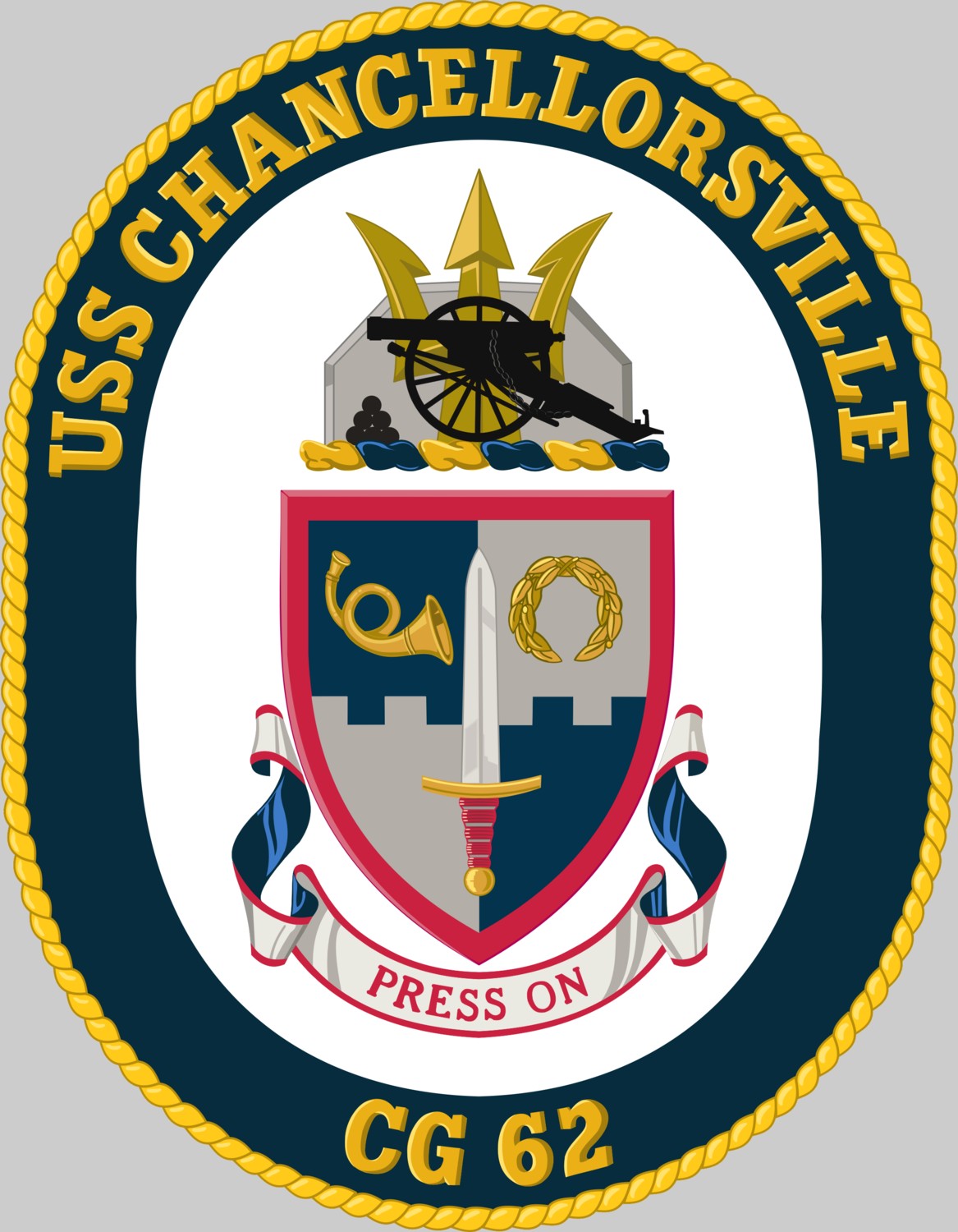
| patches + more | ||
 |
||
|
|
seaforces.org |
USN ships
start page | |