 |
||
|
HOME
|
US Navy -
ships
|
US Navy - air
units
|
USMC - air
units
|
International
Navies
|
Weapon Systems
|
Special Reports |
||
|
US Navy - Guided Missile Cruiser CG 60 - USS Normandy |
||
|
||
| 06/25 | ||
|
Type,
class: Guided Missile Cruiser (CG); Ticonderoga
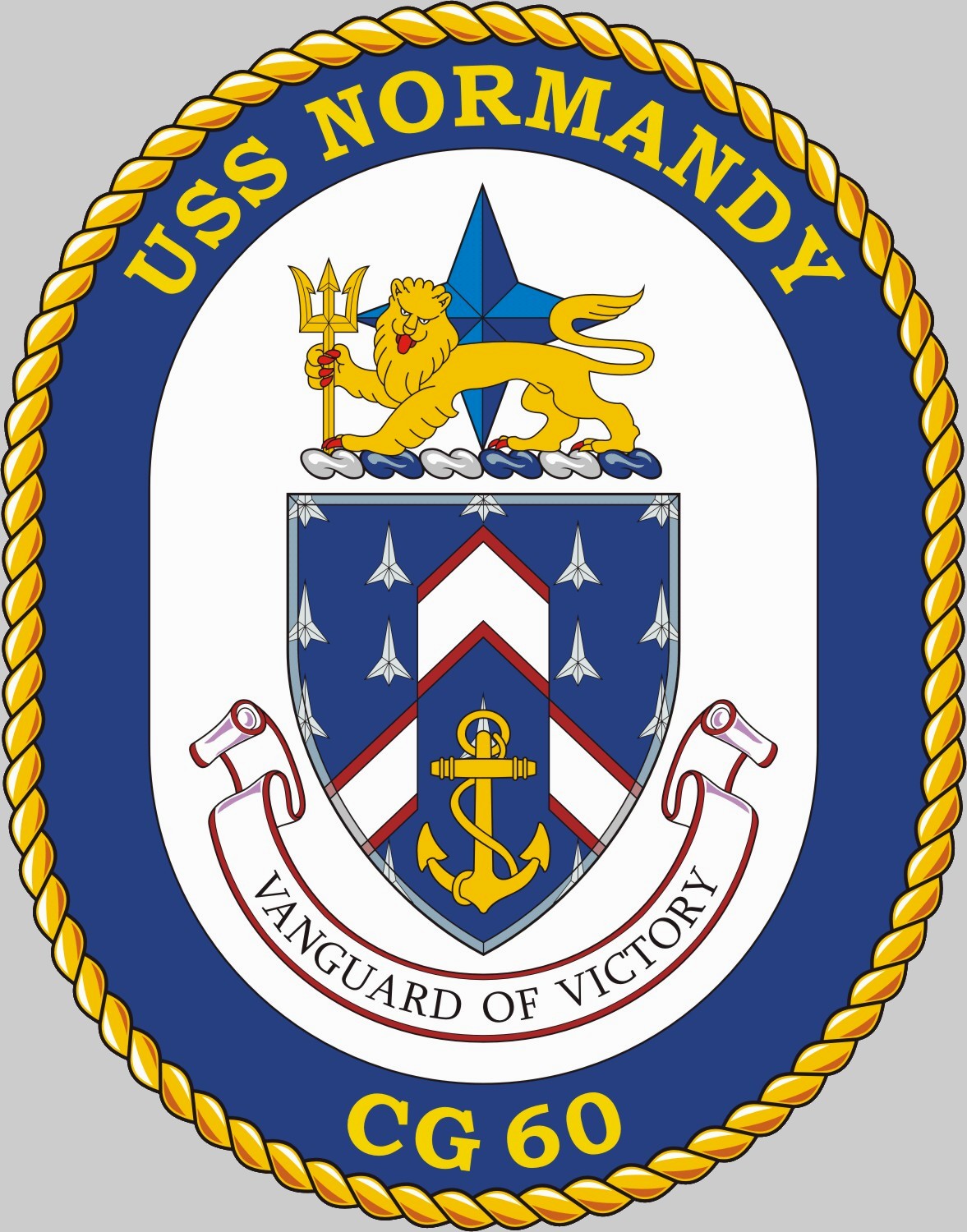
class Builder: Bath Iron Works, Bath, Maine, USA STATUS: Awarded: November 26, 1984 Laid down: April 7, 1987 Launched: March 19, 1988 Commissioned: December 9, 1989 IN SERVICE Homeport: Naval Station Norfolk, Virginia Namesake: the Battle of Normandy, World War II - 1944 Ships Motto: VANGUARD OF VICTORY Technical Data: see: INFO > Ticonderoga class Guided Missile Cruiser - CG |
||
| images | ||
 returning to Naval Station Norfolk, Virginia - May 15, 2025  Caribbean Sea - March 2025  Atlantic Ocean - off the coast of Guyana - March 2025  Atlantic Ocean - off the coast of Guyana - March 2025  Miami Fleet Week, Florida - May 2024 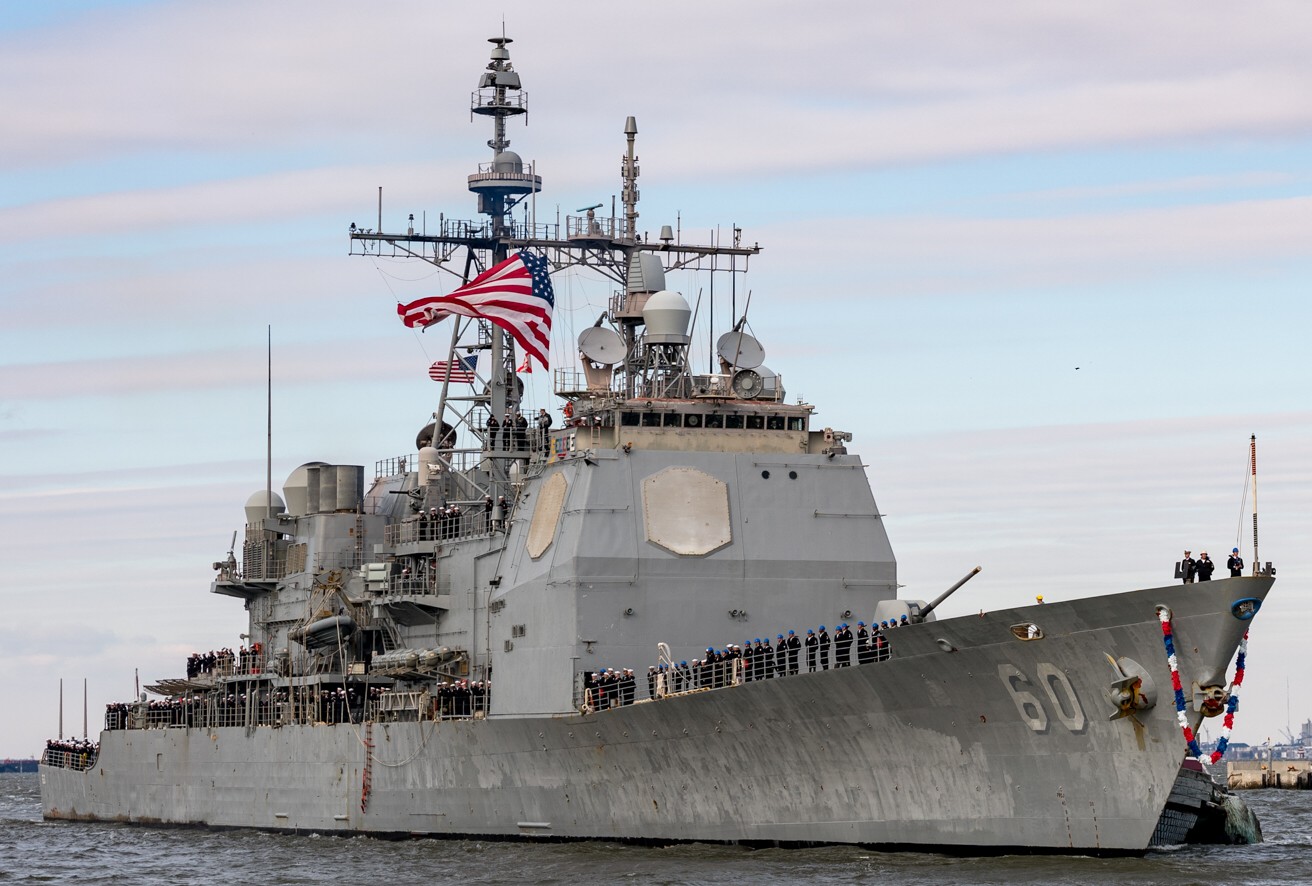 returning to Naval Station Norfolk, Virginia after an 8-month deployment with the Gerald R. Ford Carrier Strike Group (GRFCSG) / CSG-12 - January 20, 2024 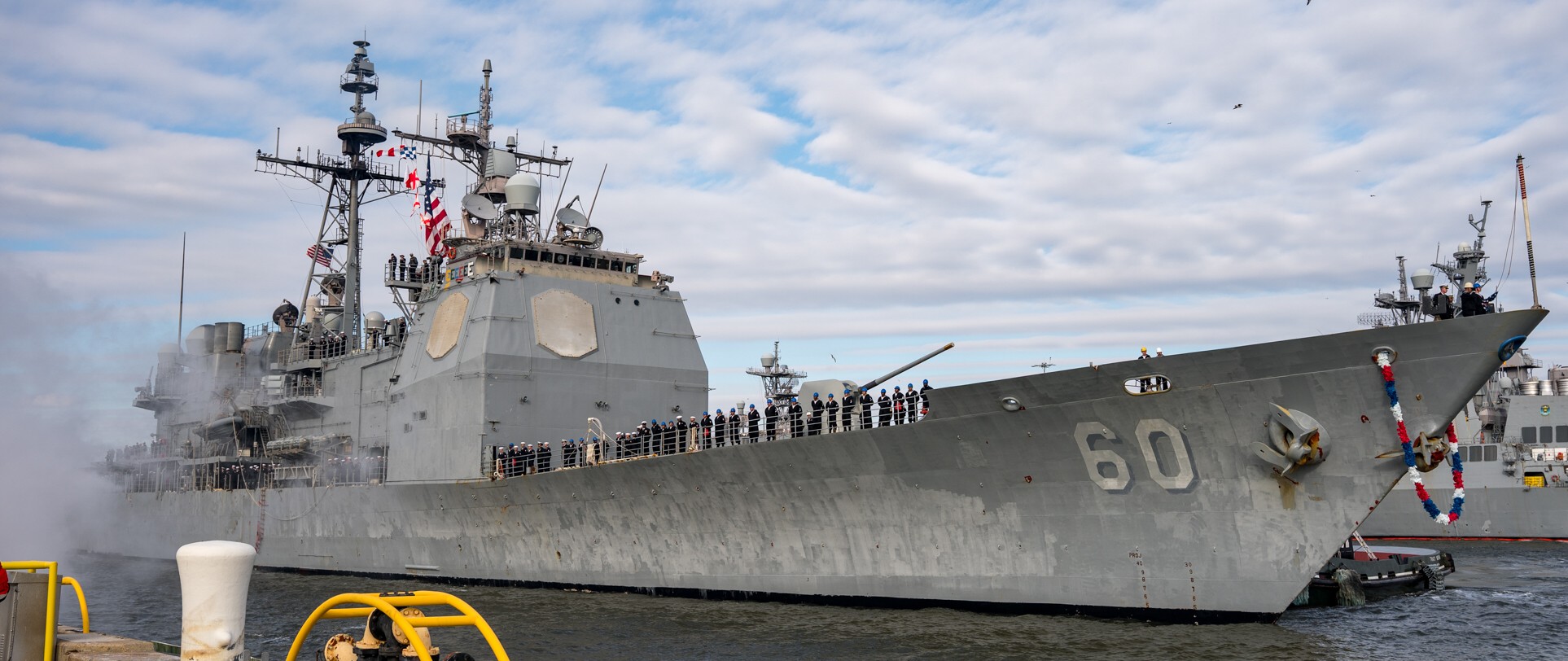 returning to Naval Station Norfolk, Virginia after an 8-month deployment with the Gerald R. Ford Carrier Strike Group (GRFCSG) / CSG-12 - January 20, 2024 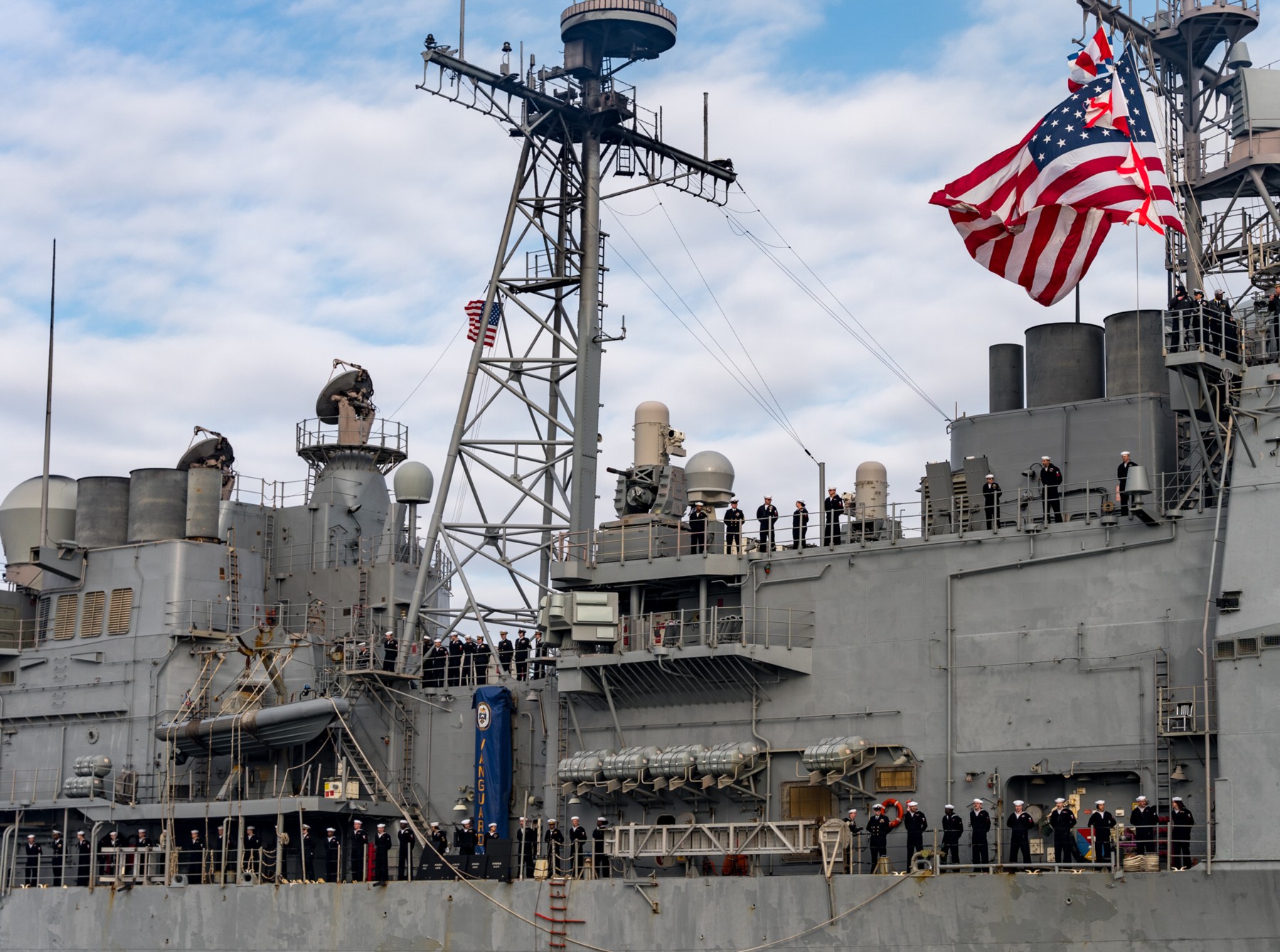 returning to Naval Station Norfolk, Virginia after an 8-month deployment with the Gerald R. Ford Carrier Strike Group (GRFCSG) / CSG-12 - January 20, 2024 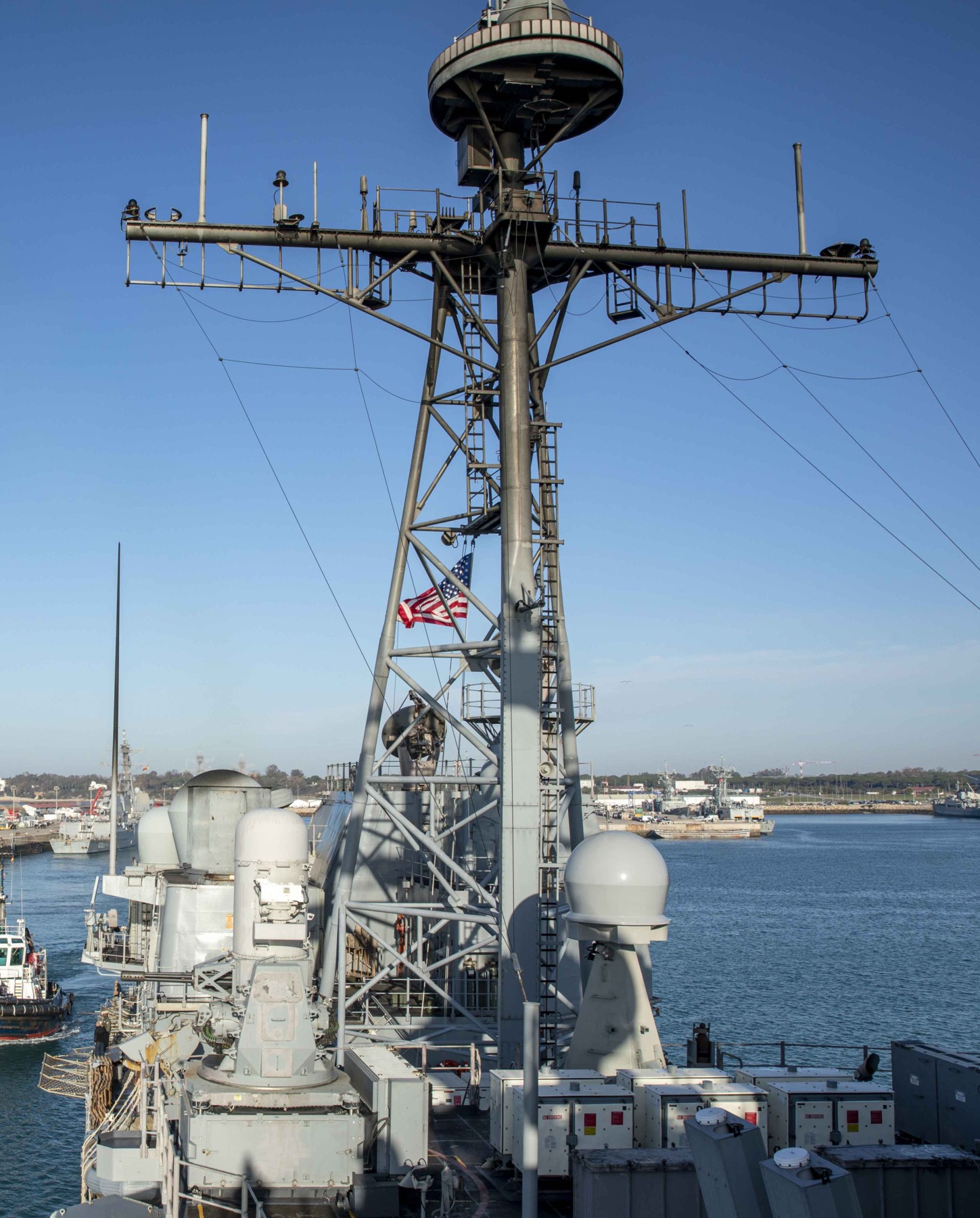 departing Naval Station Rota, Spain - January 12, 2024 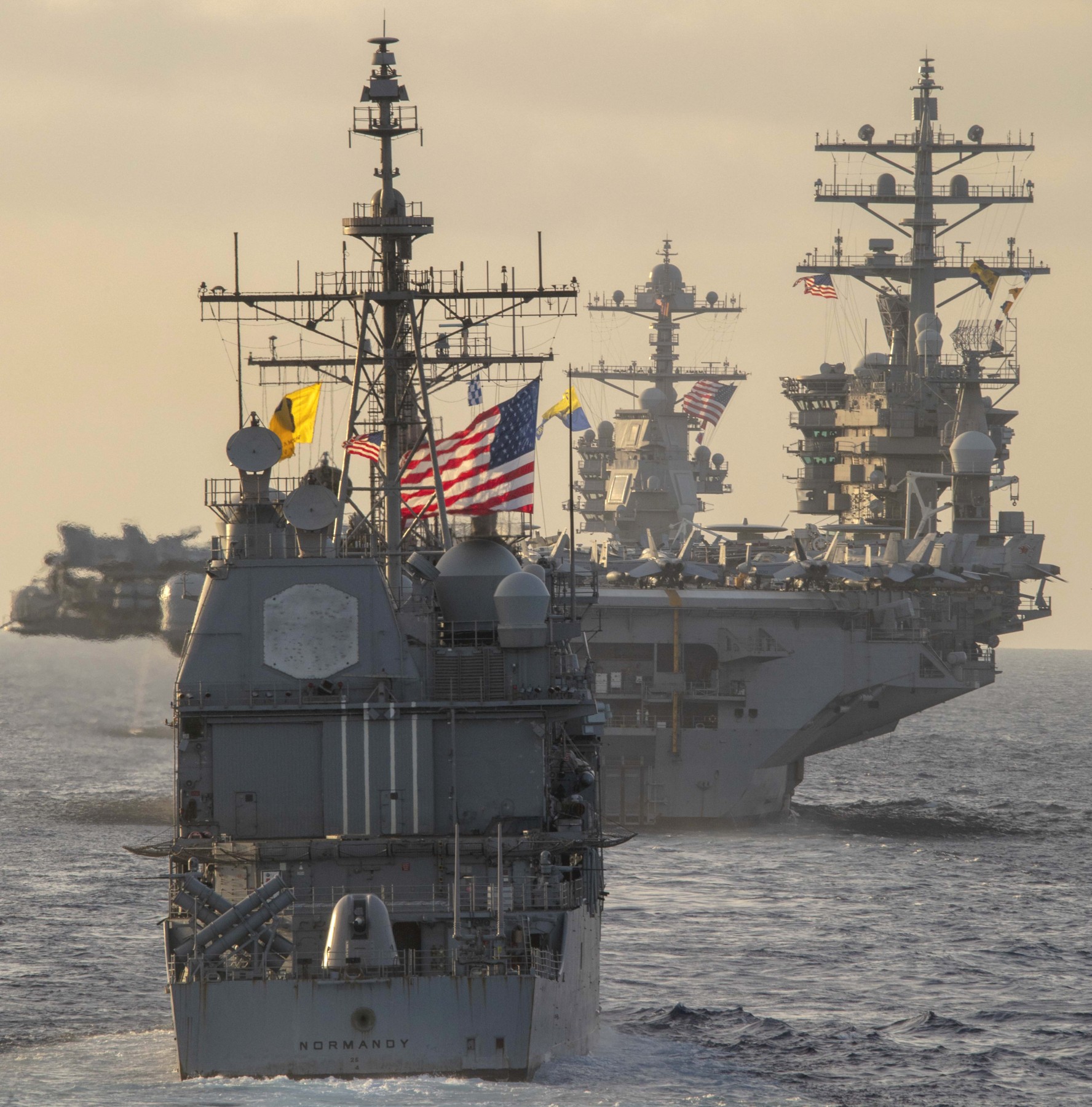 escorting USS Gerald R. Ford (CVN 78) and USS Dwight D. Eisenhower (CVN 69) - Mediterranean Sea - November 2023 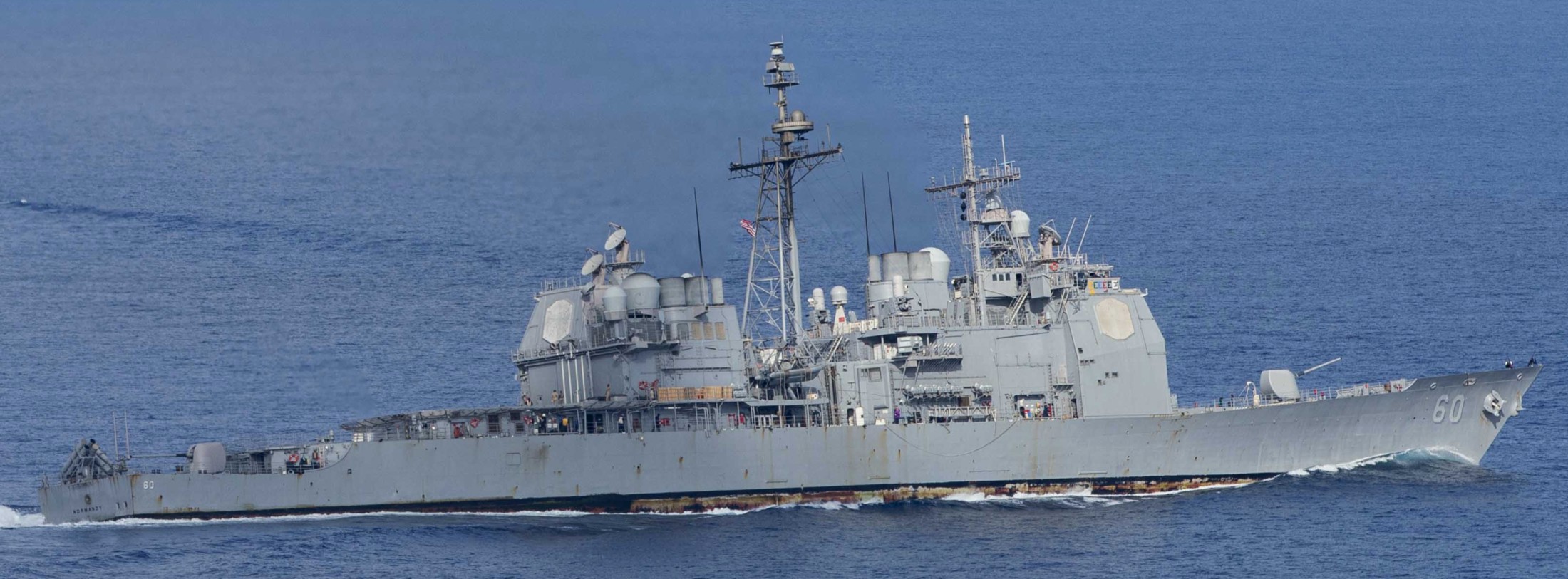 Mediterranean Sea - October 2023 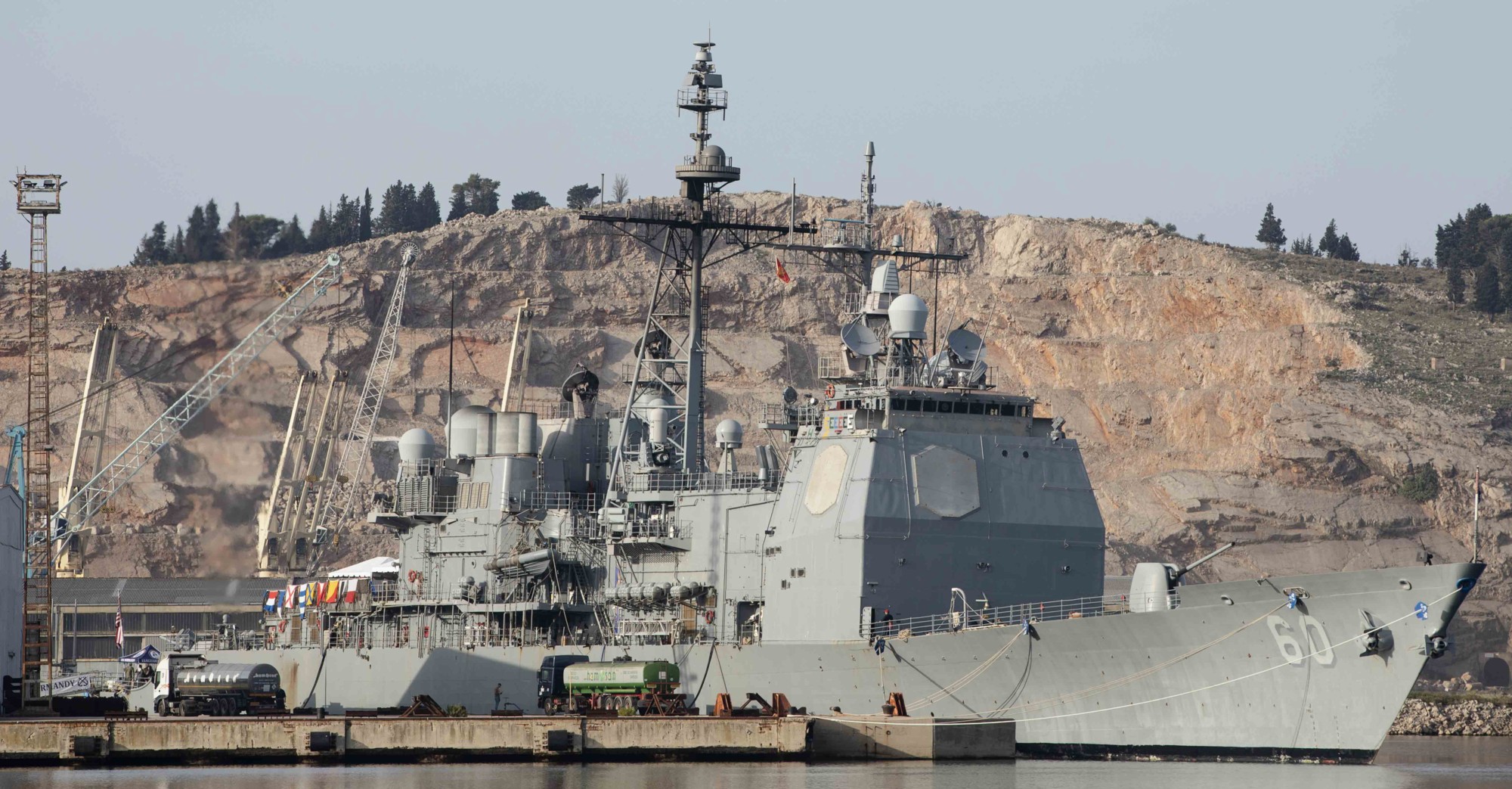 Bar, Montenegro - September 2023 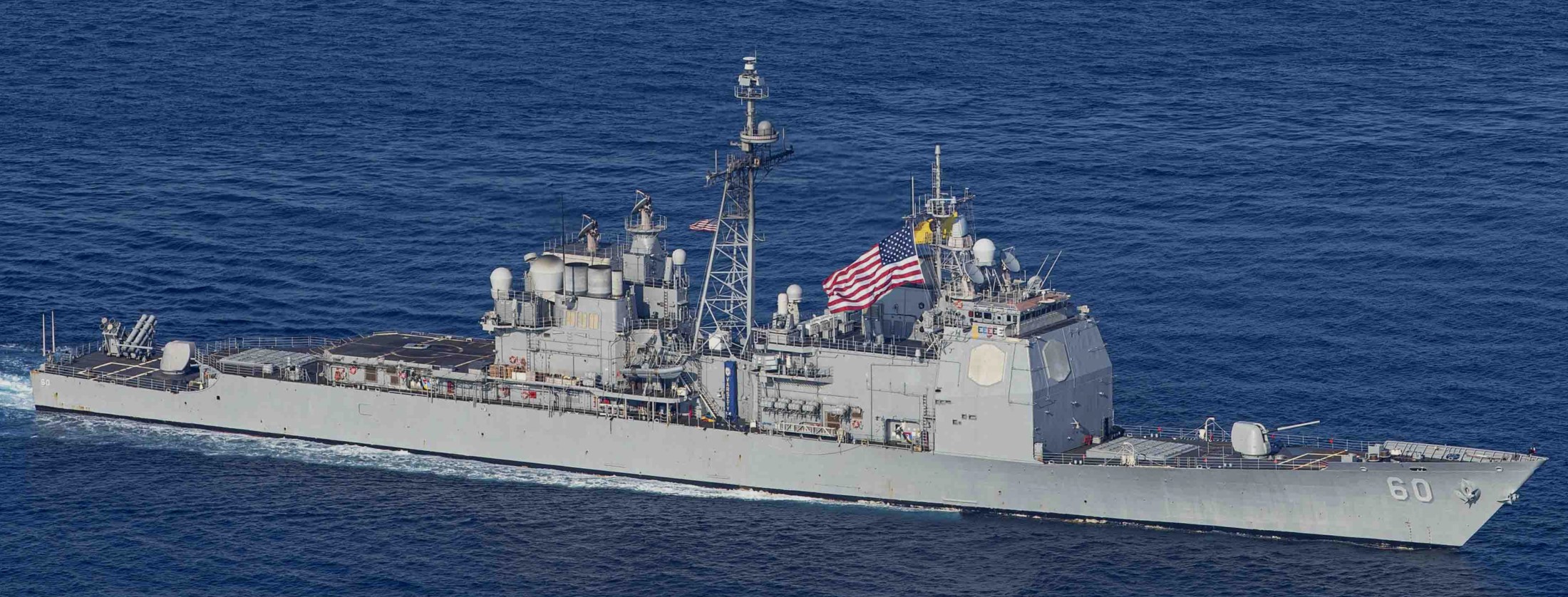 Mediterranean Sea - August 2021 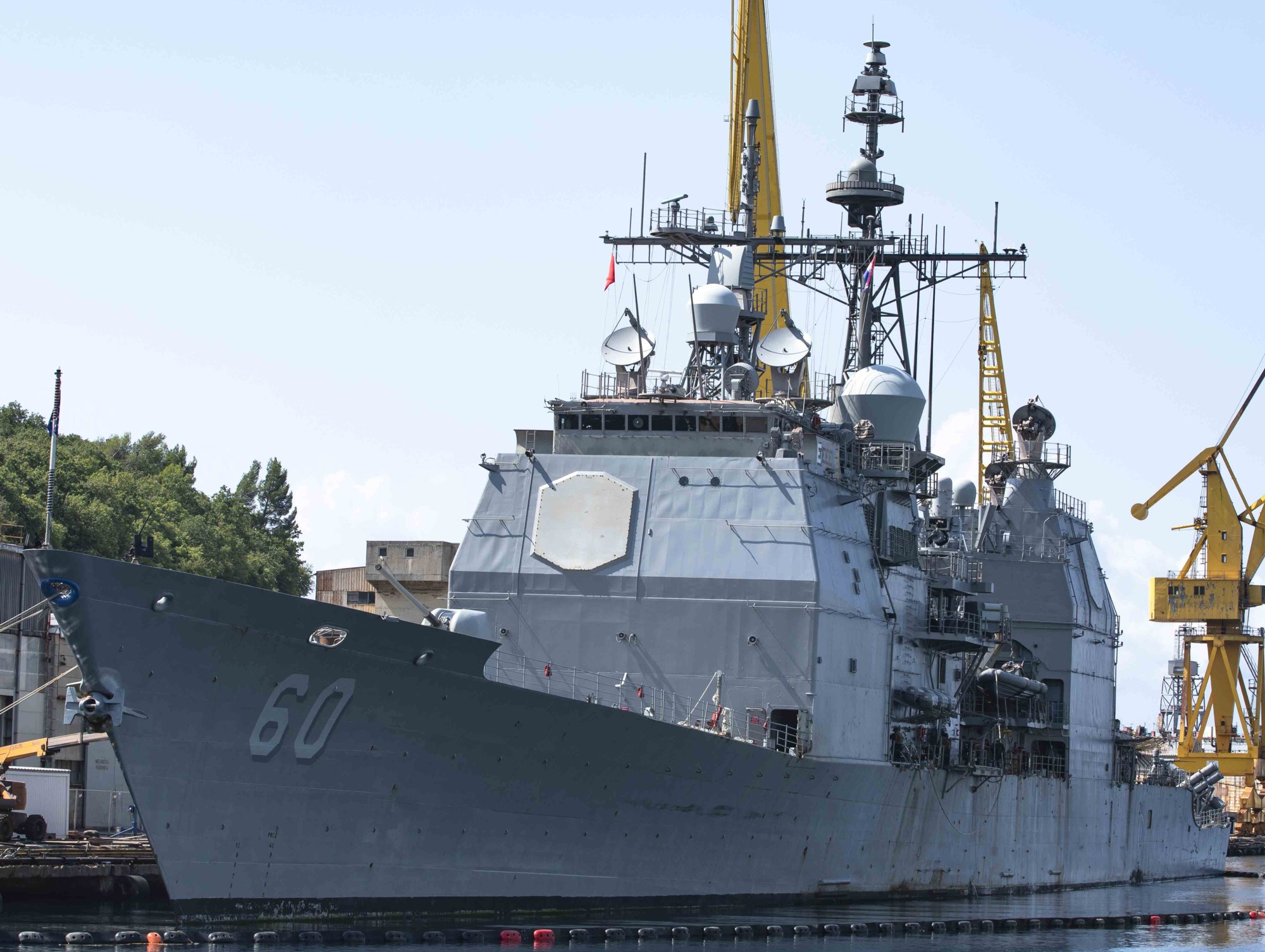 Rijeka, Croatia - July 2023 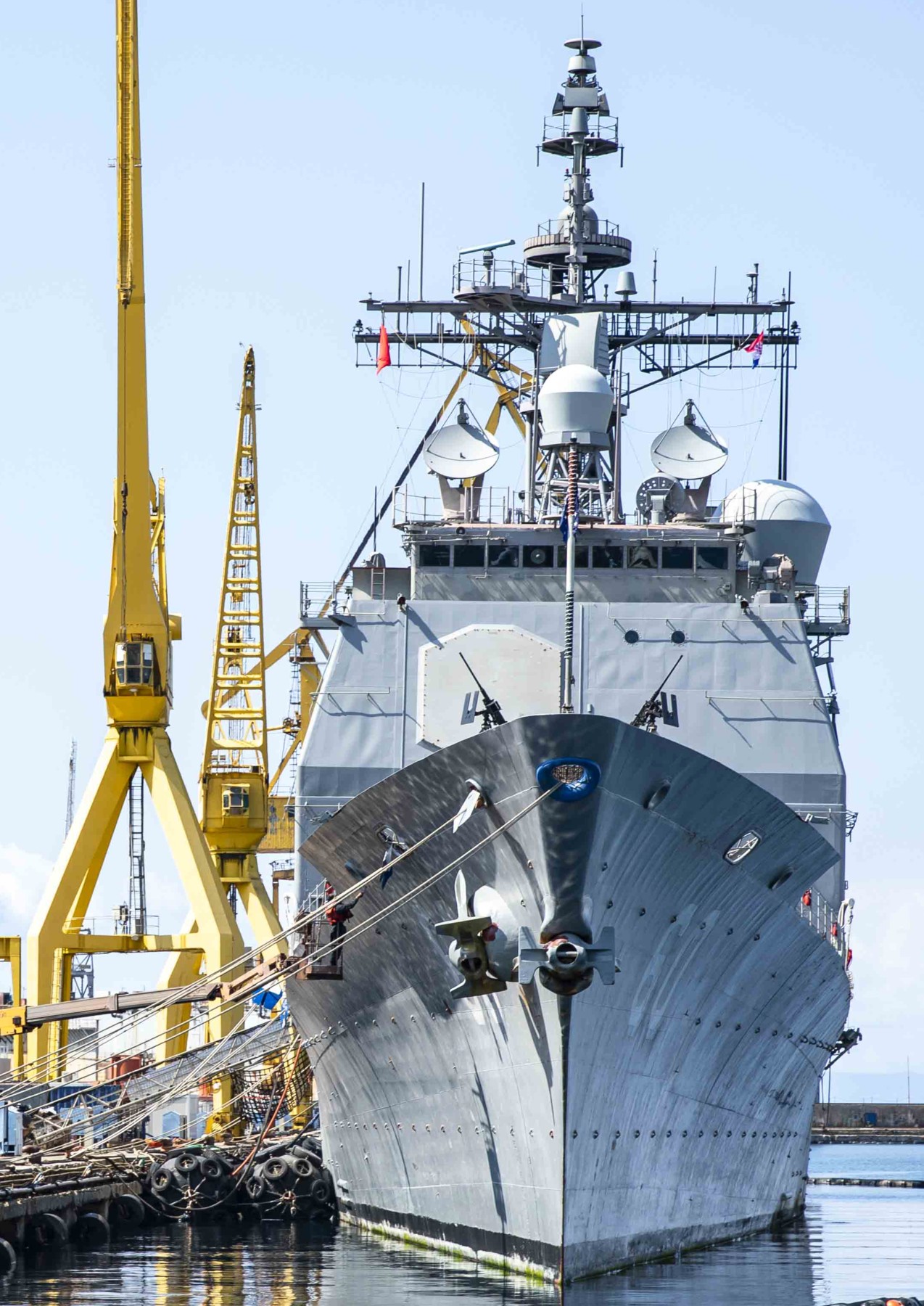 Rijeka, Croatia - July 2023 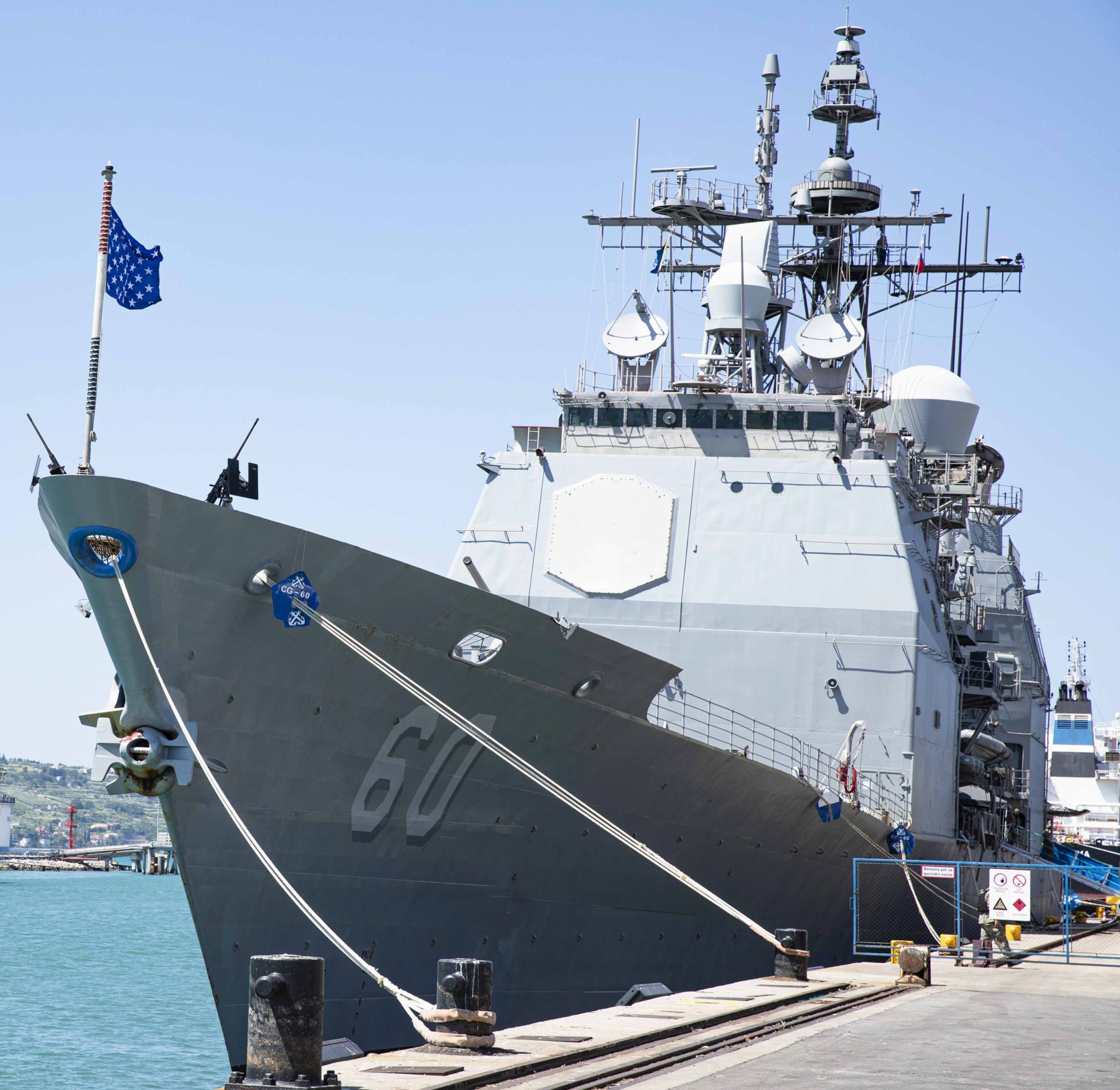 Koper, Slovenia - June 2023 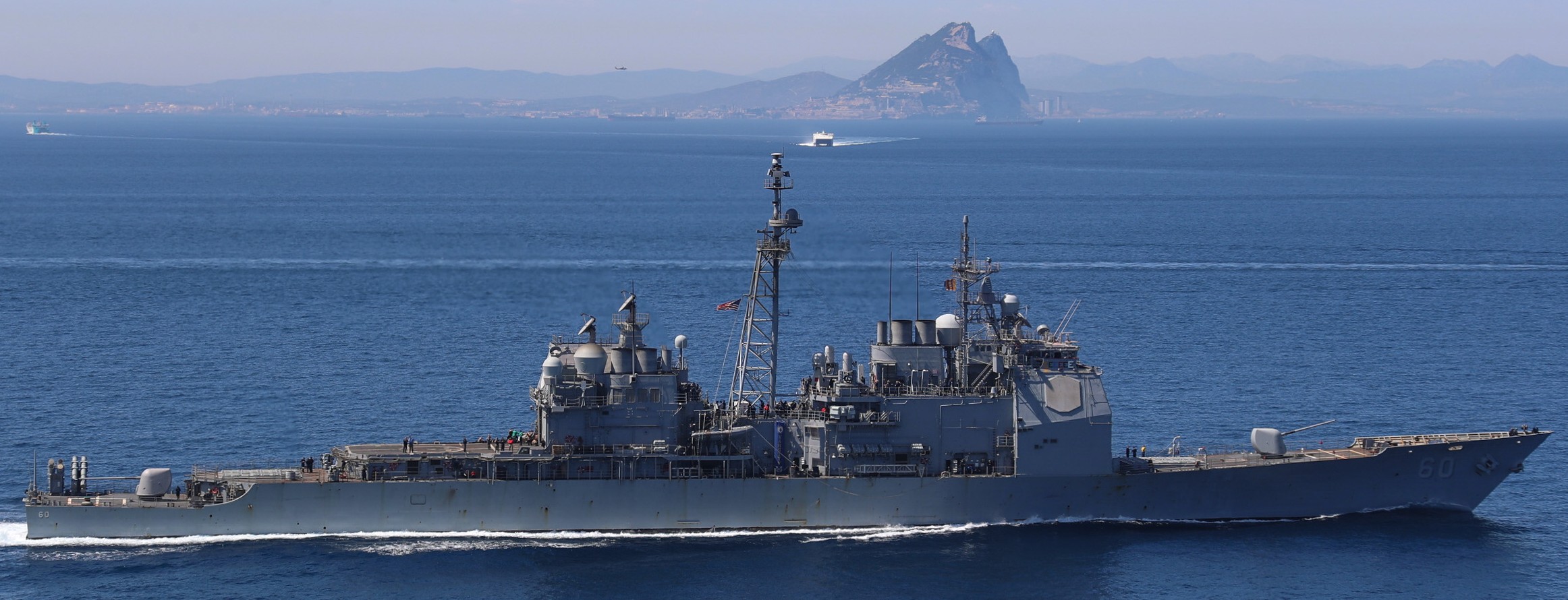 Strait of Gibraltar - June 2023 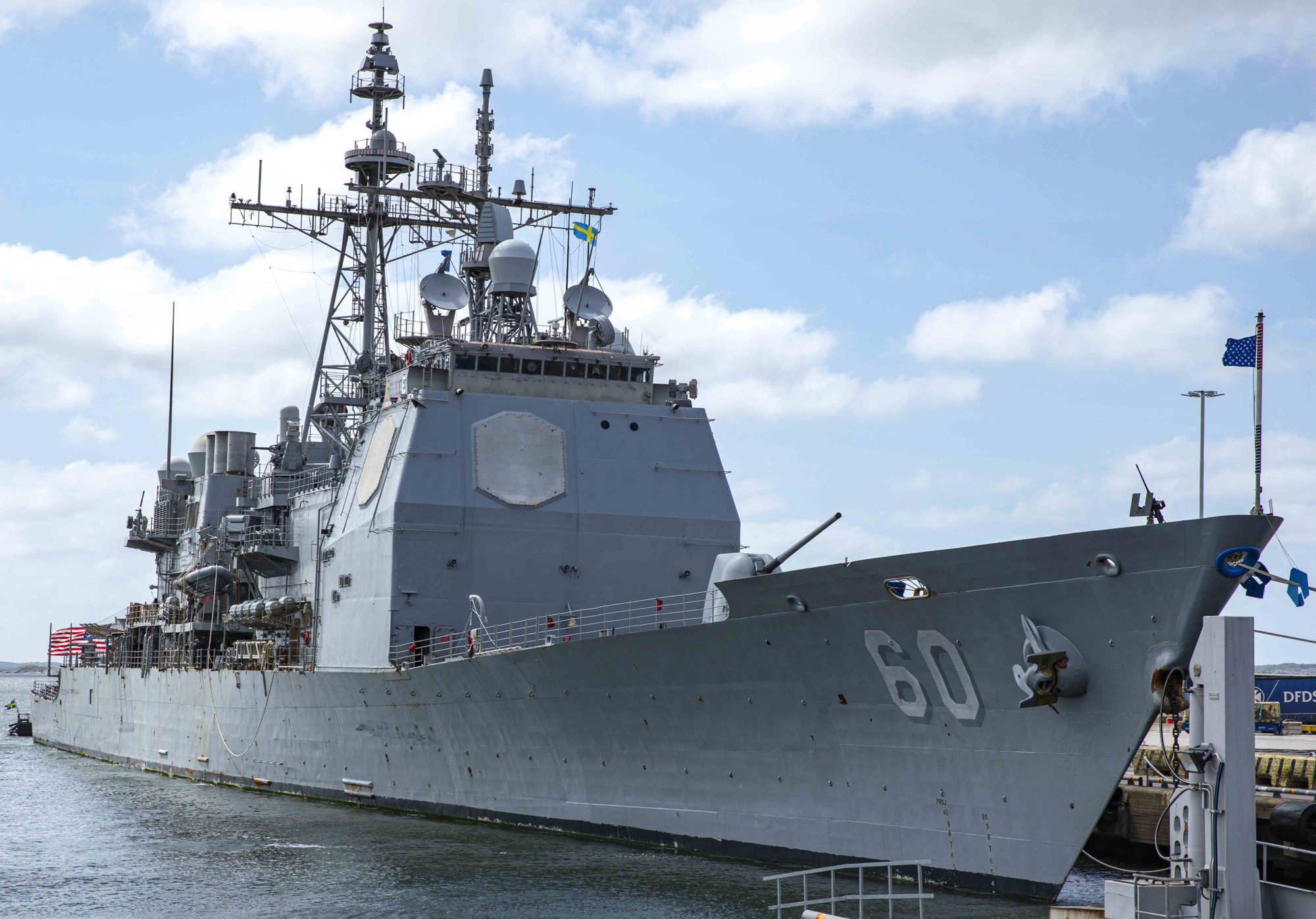 Gothenburg, Sweden - May 2023 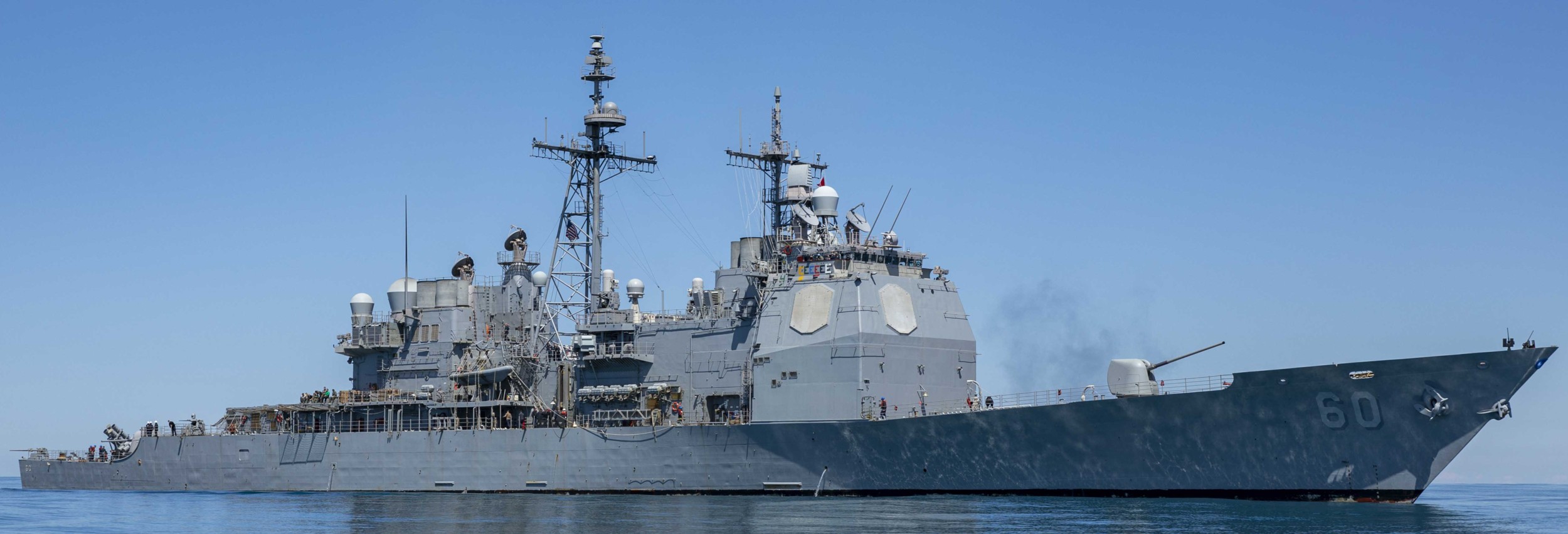 Atlantic Ocean - May 2023 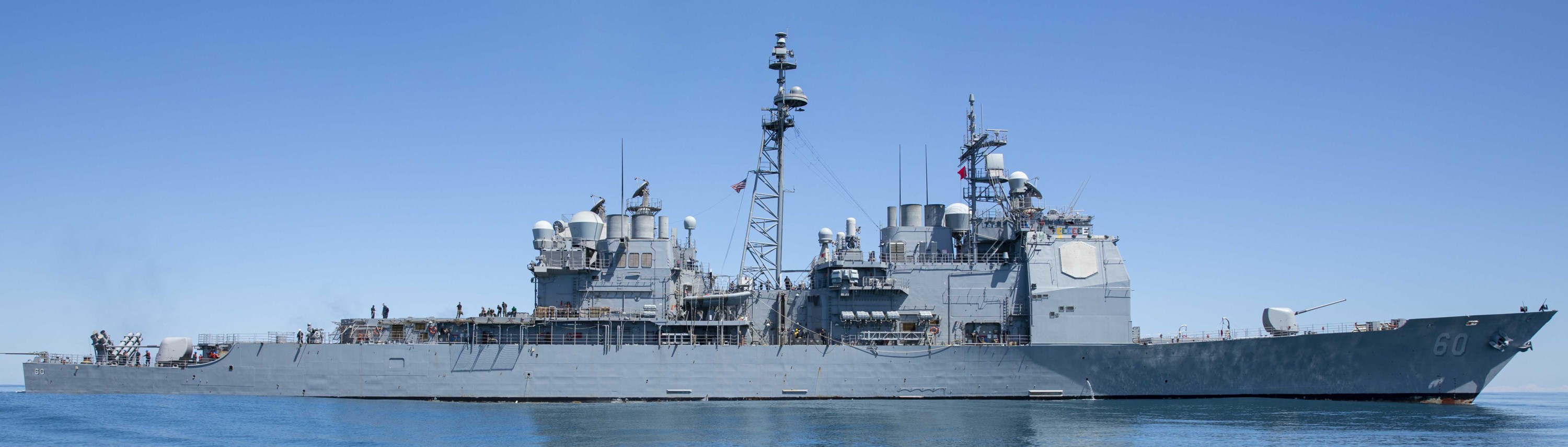 Atlantic Ocean - May 2023 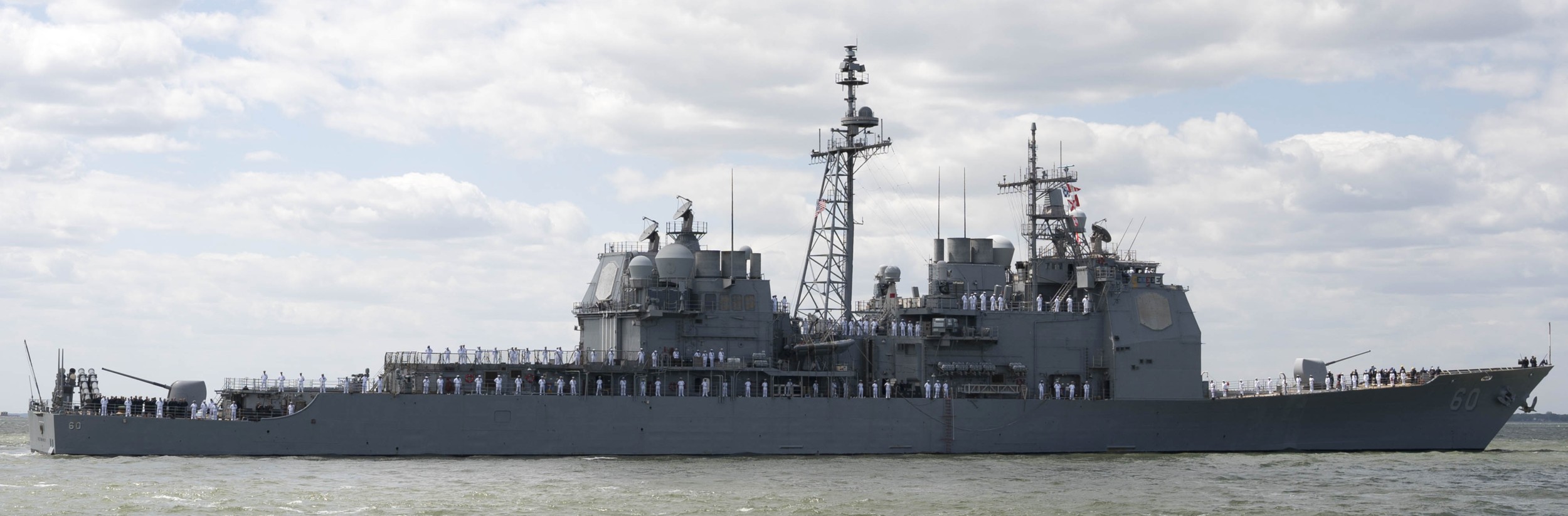 departing Naval Station Norfolk, Virginia - May 2023 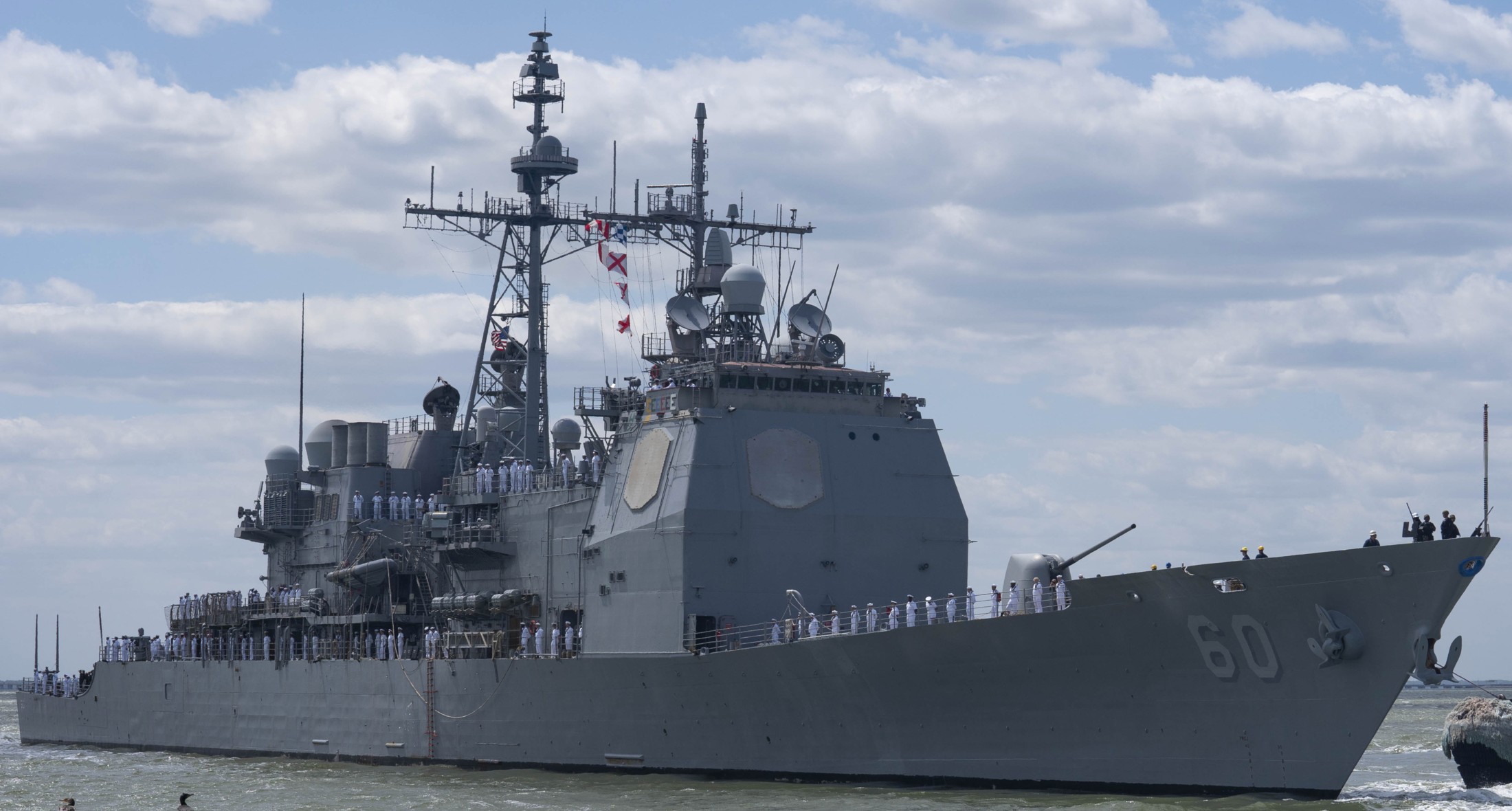 departing Naval Station Norfolk, Virginia as part of Gerald R. Ford Carrier Strike Group (GRF CSG) - May 2023 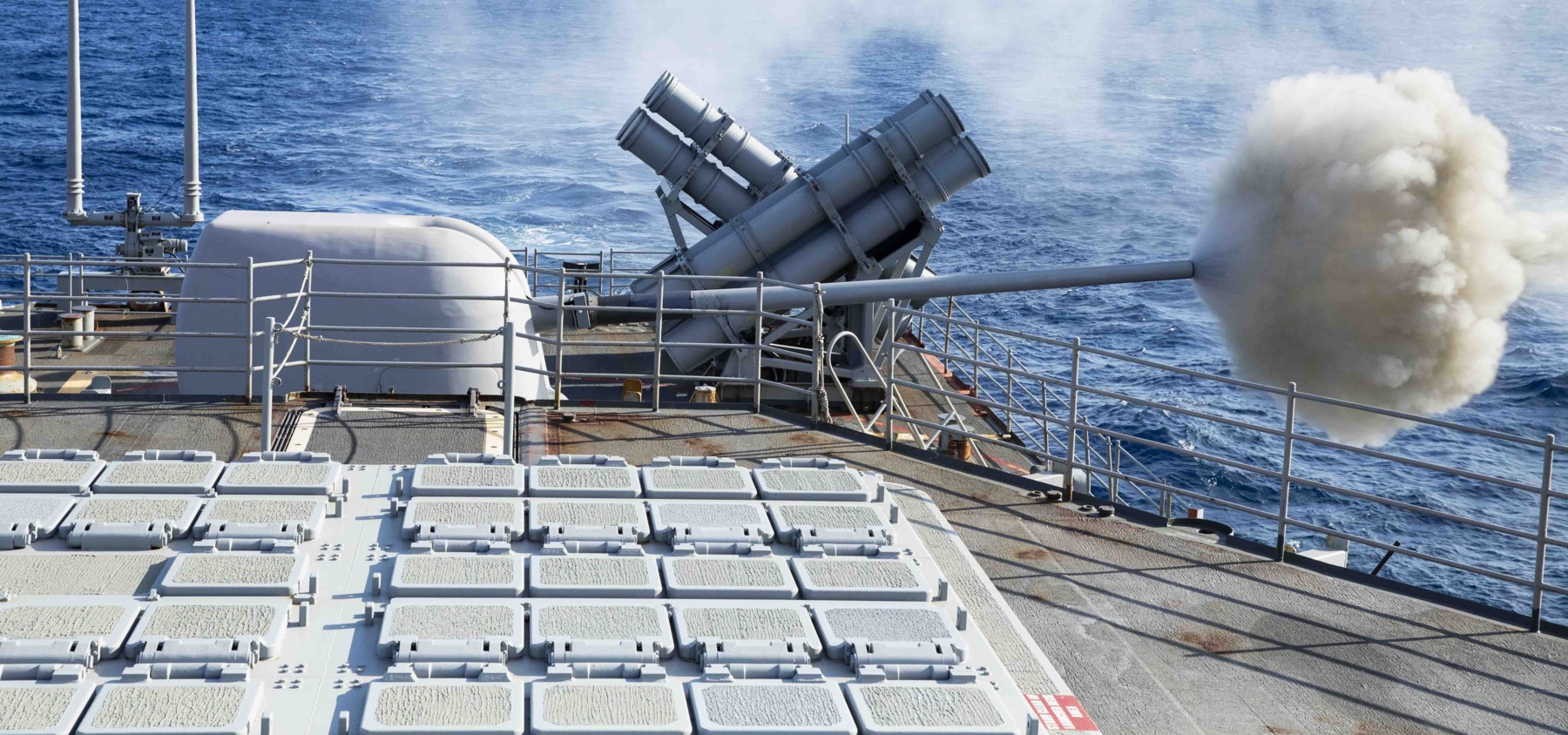 Mk.45 gun fire exercise - Atlantic Ocean - March 2023 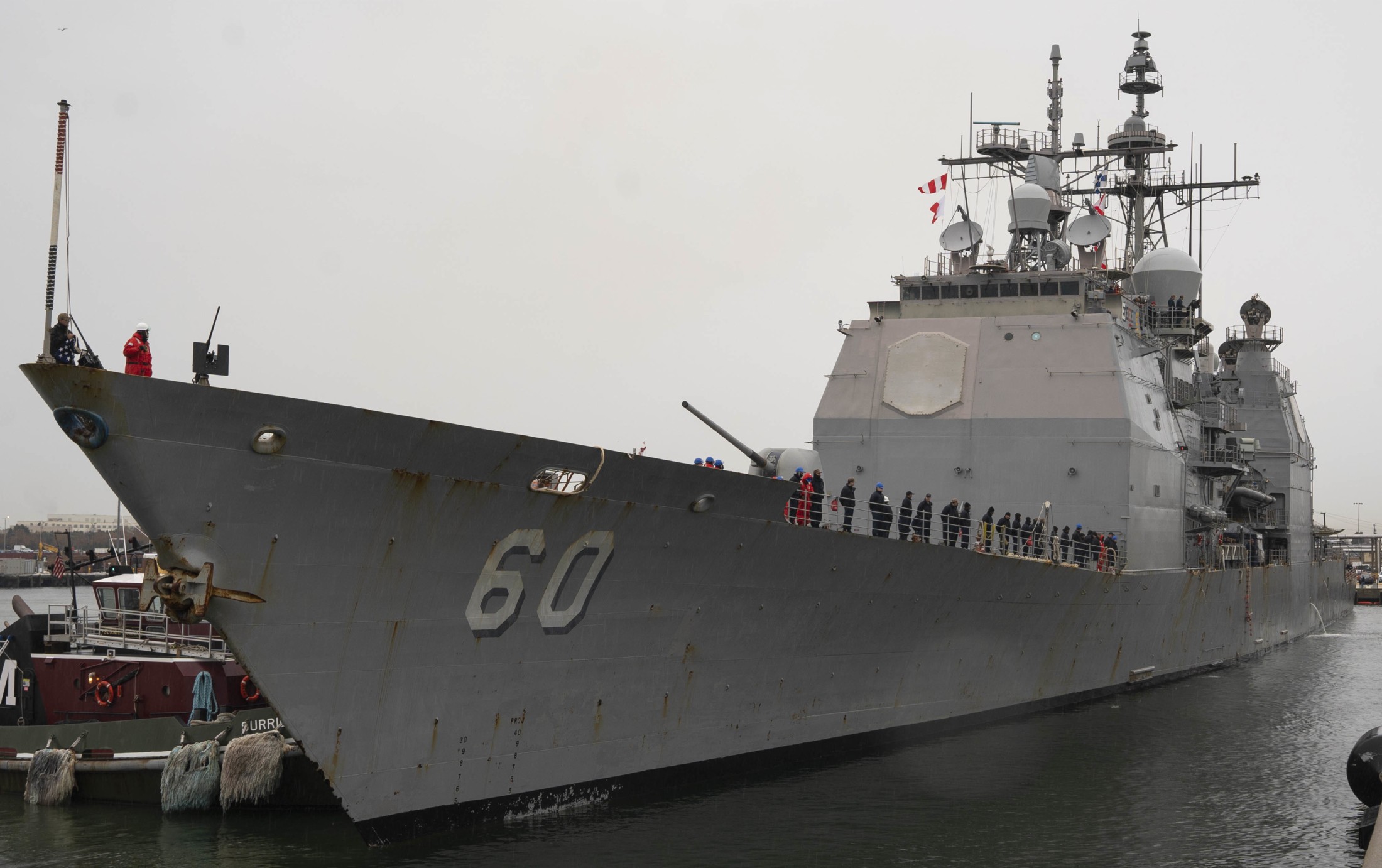 returning to Naval Station Norfolk, Virginia - November 2022 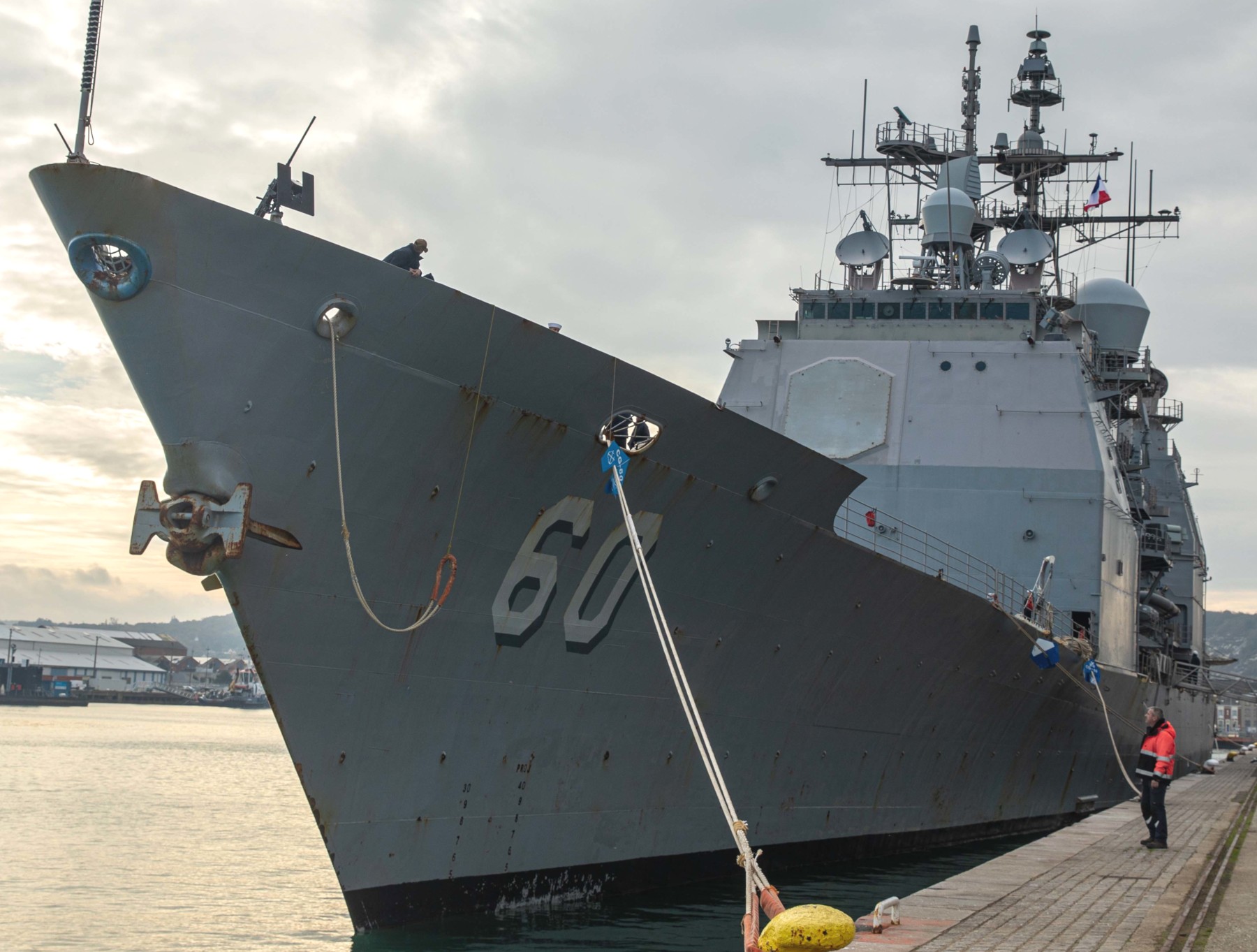 Cherbourg, France - November 2022 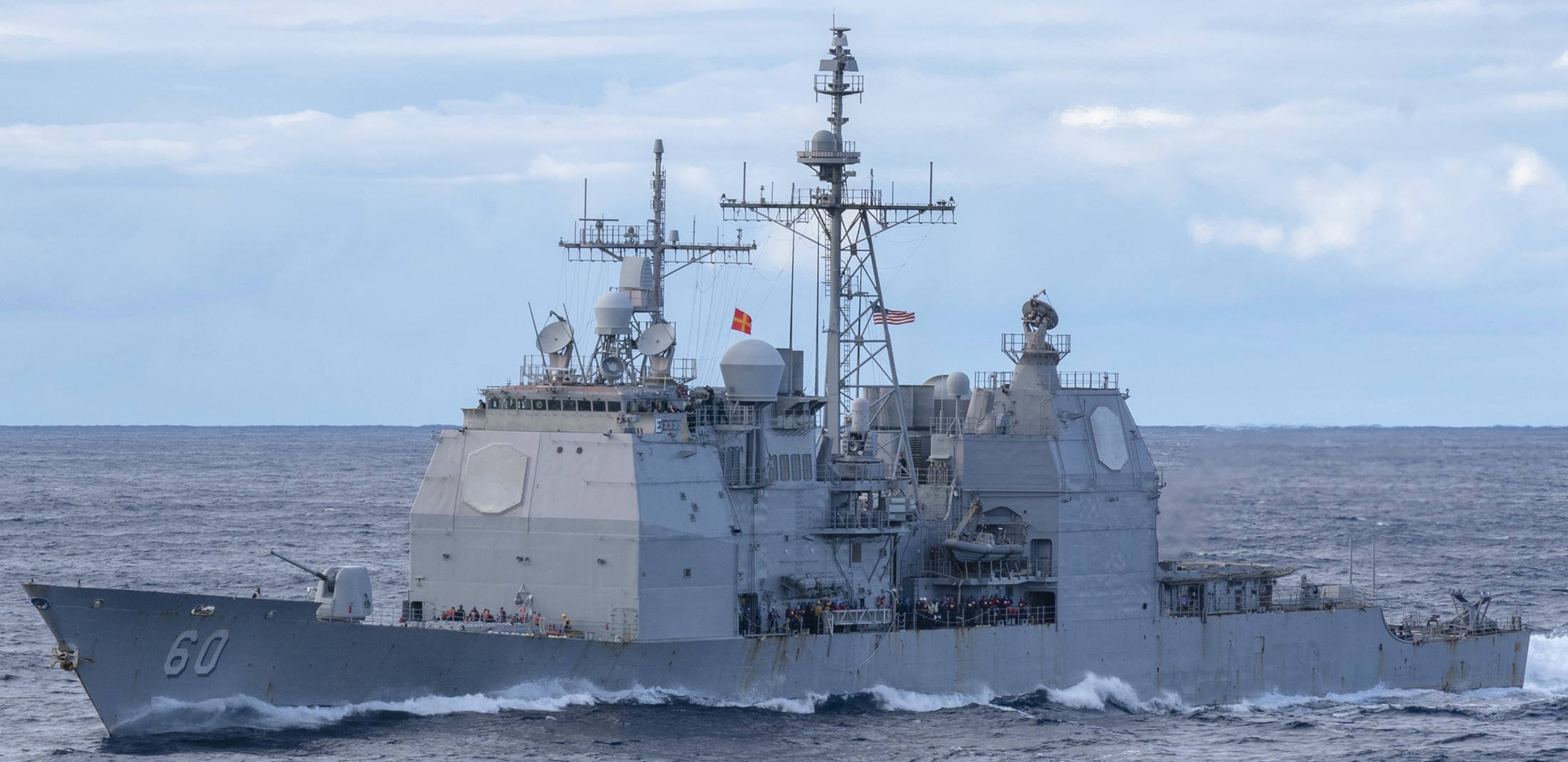 Atlantic Ocean - November 2022 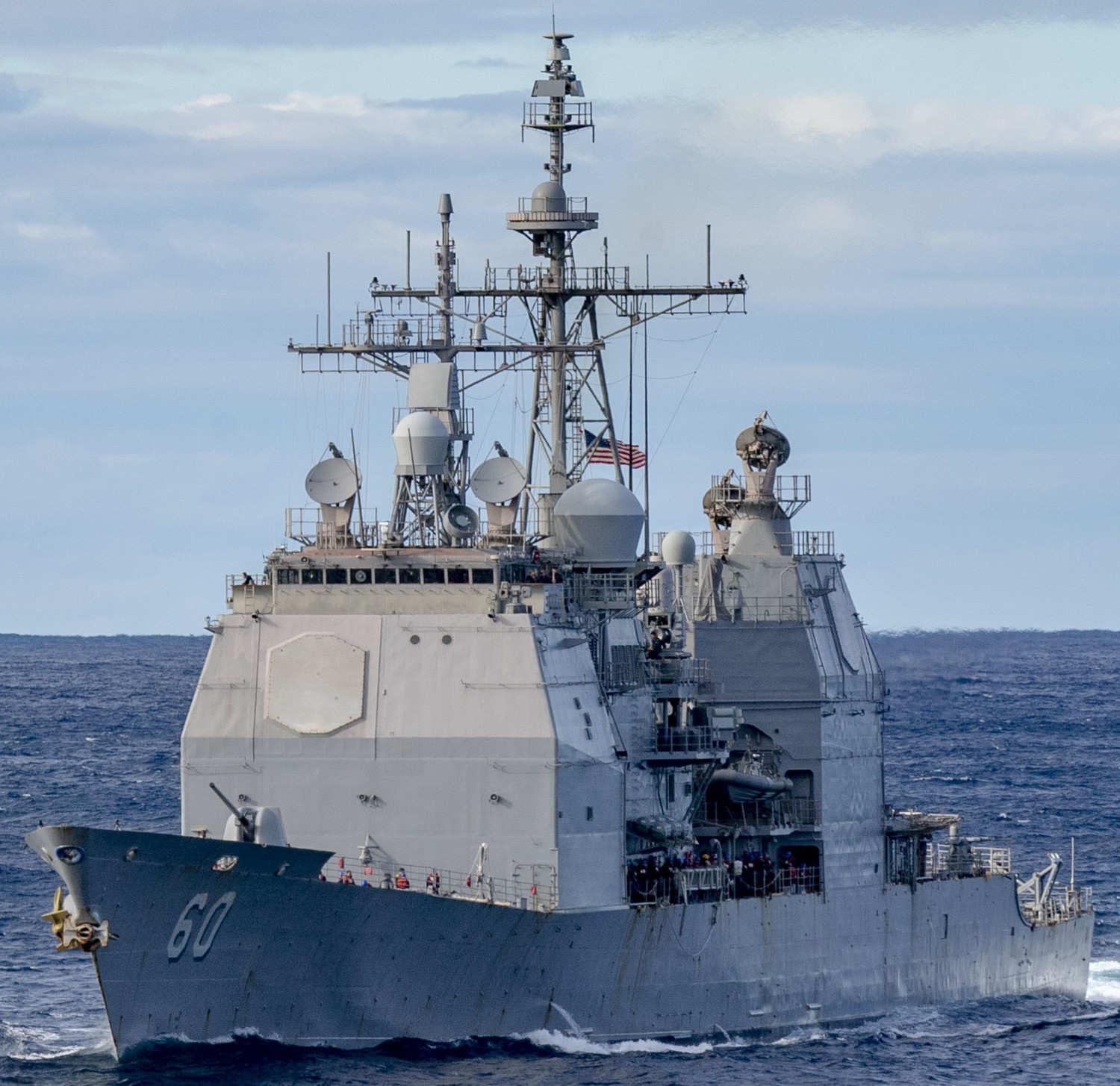 Atlantic Ocean - November 2022 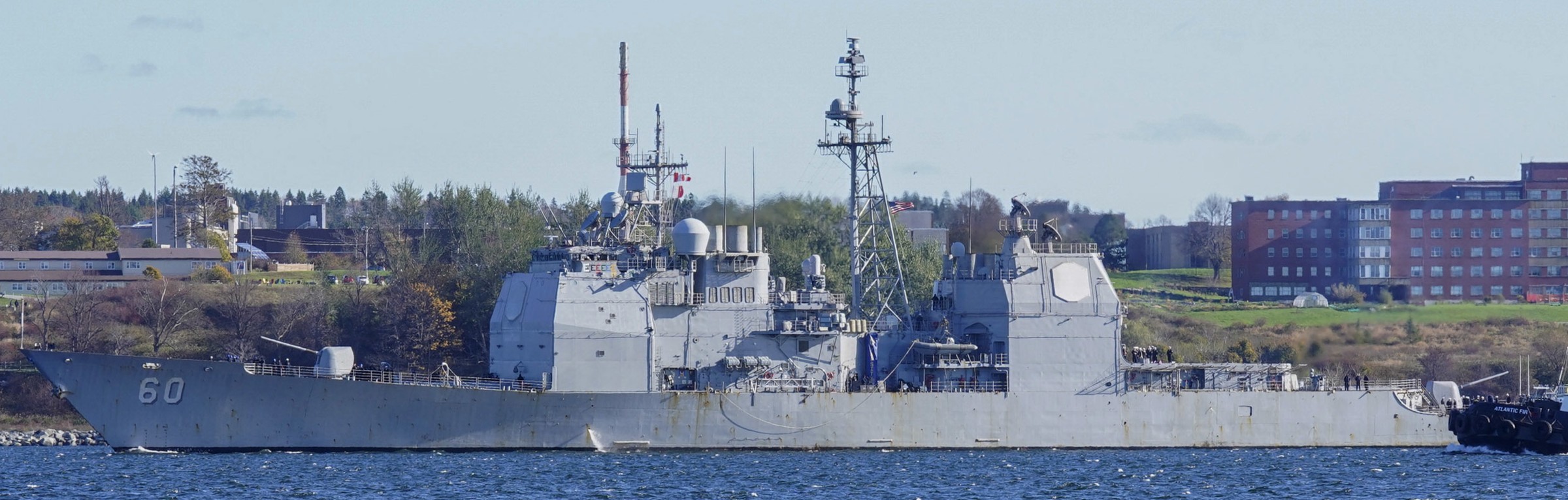 Halifax, Nova Scotia, Canada - October 2022 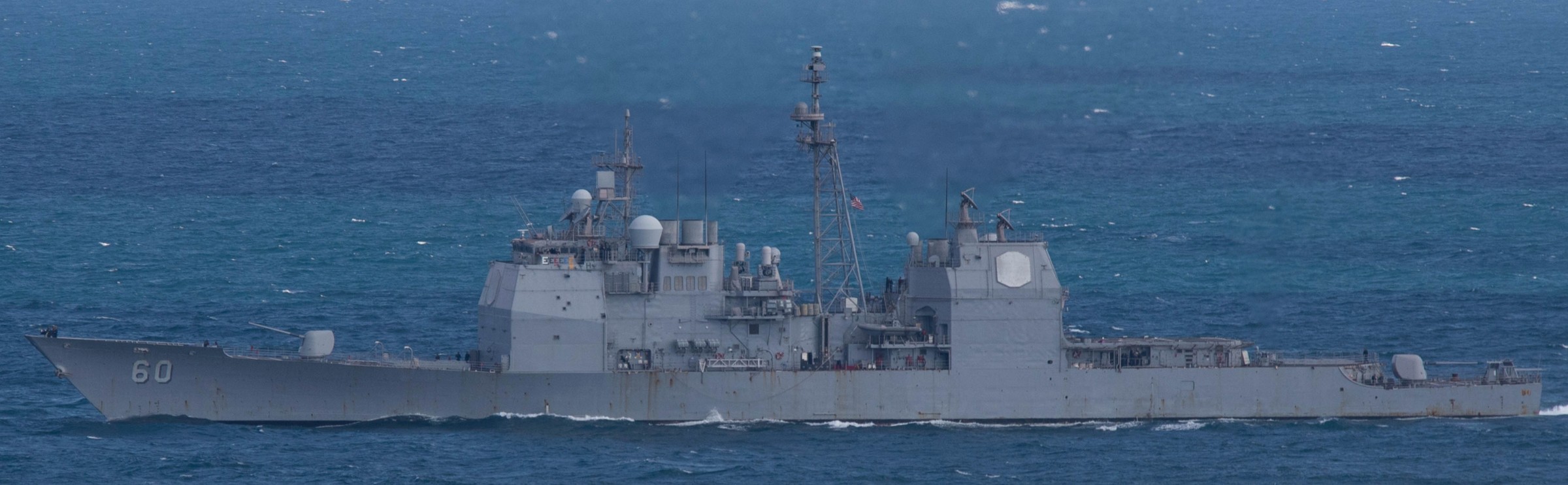 Atlantic Ocean - October 2022 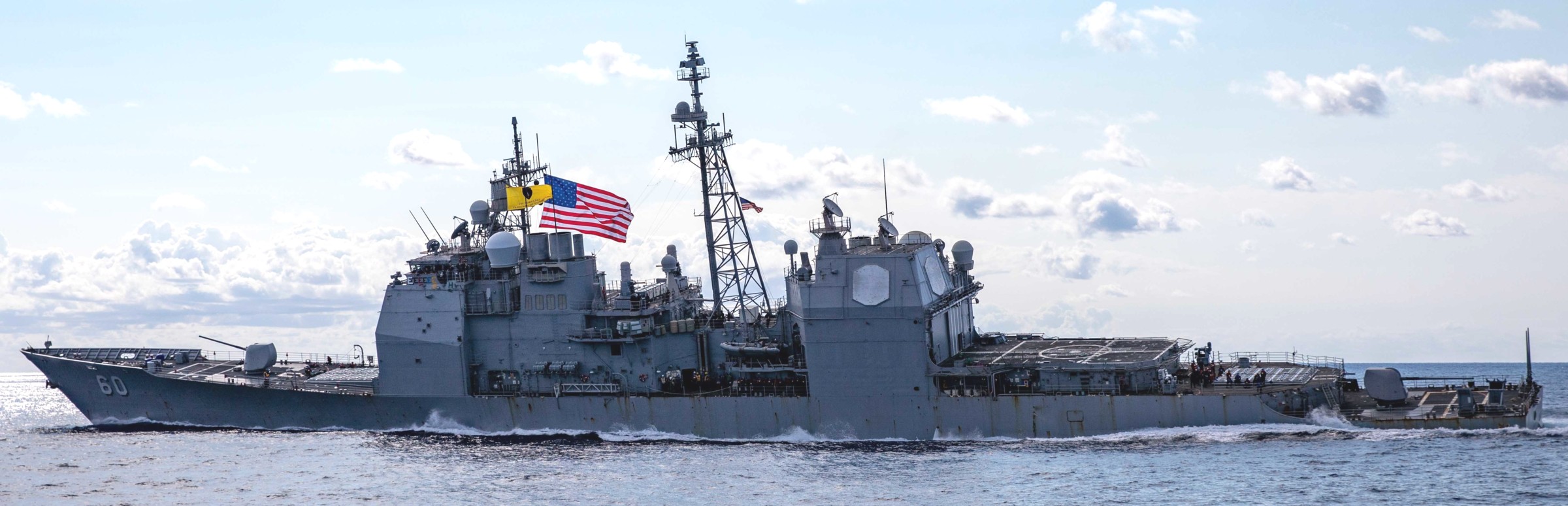 Atlantic Ocean - September 2022 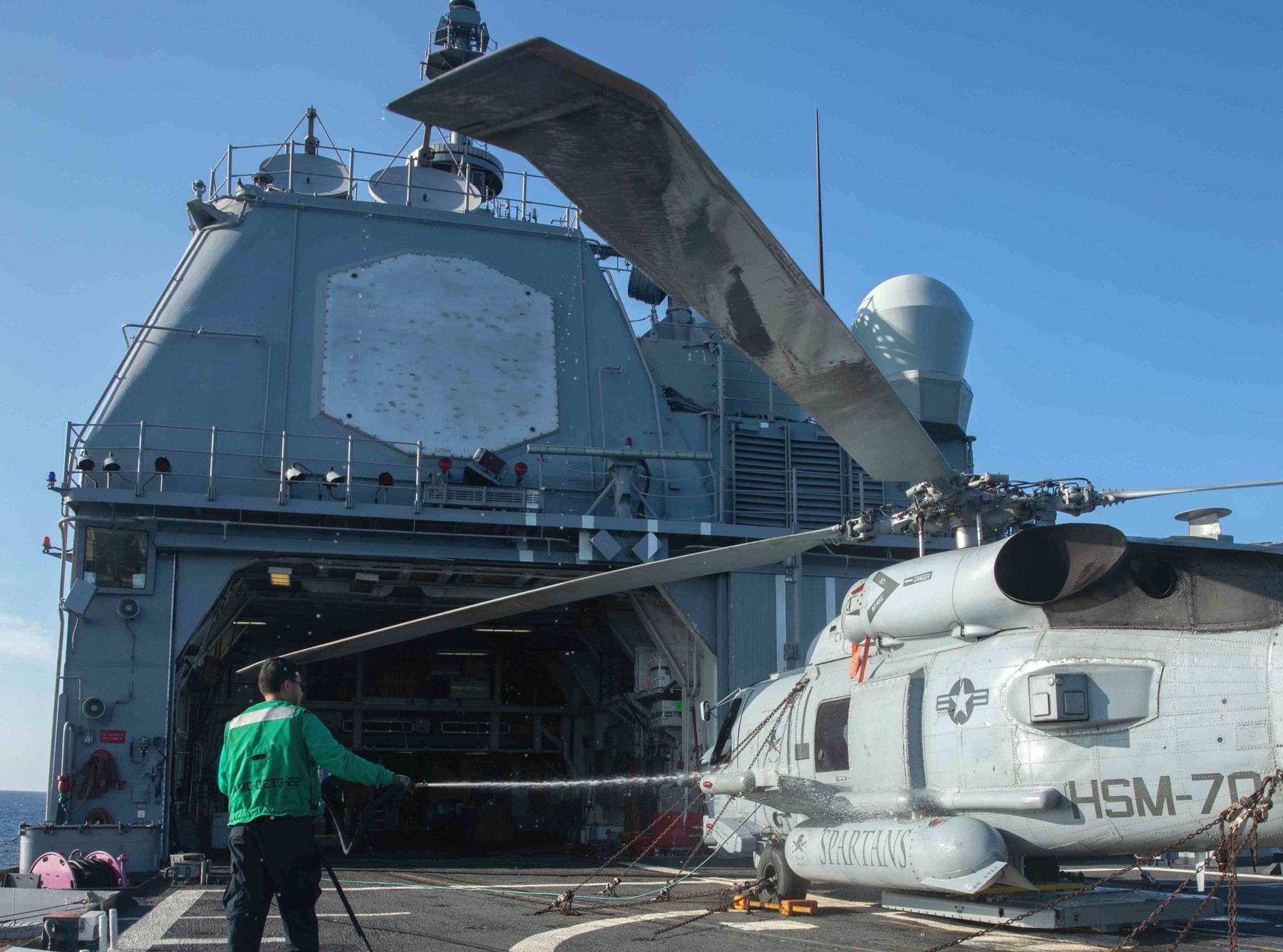 Atlantic Ocean - September 2022 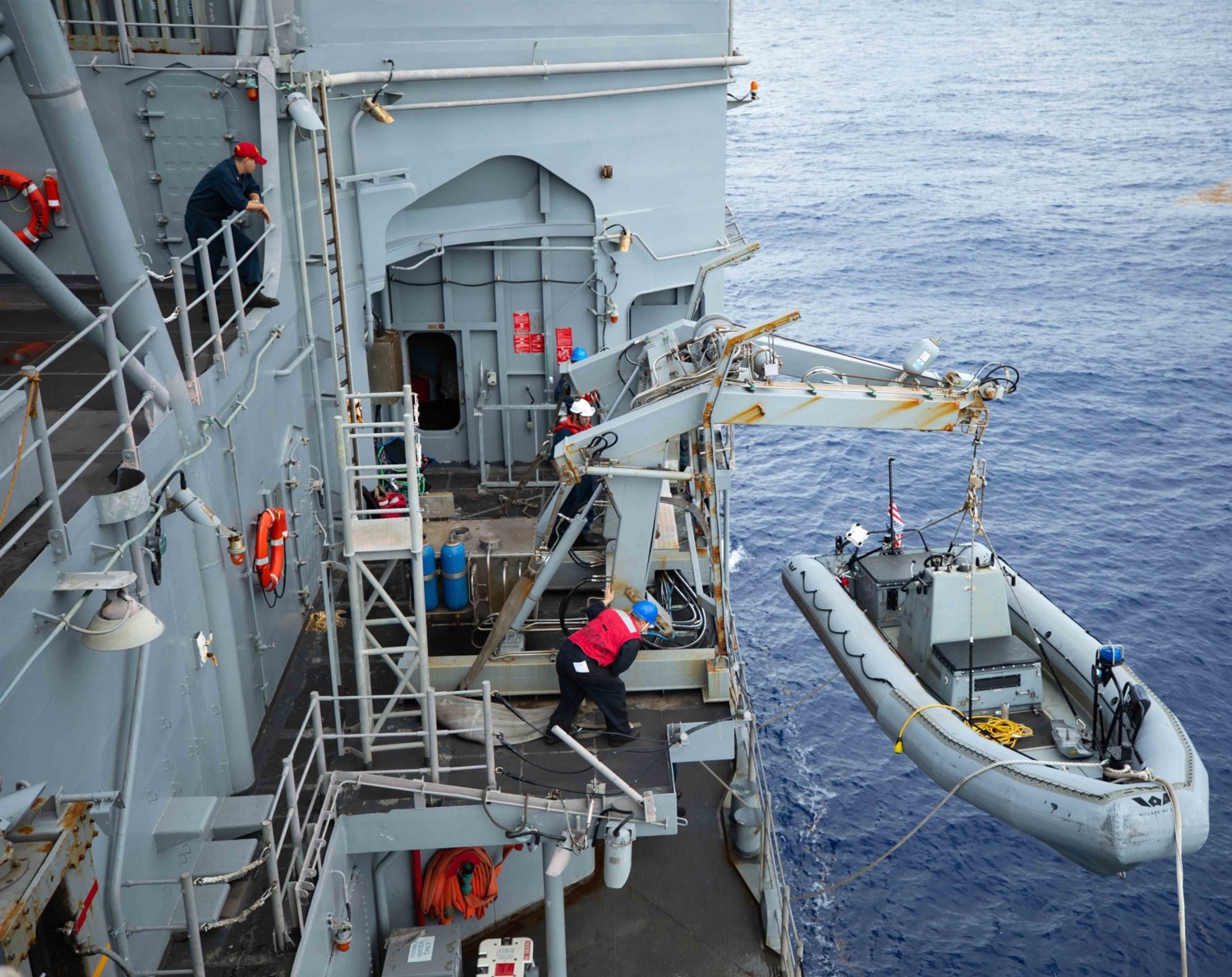 small boat operations - Atlantic Ocean - September 2022 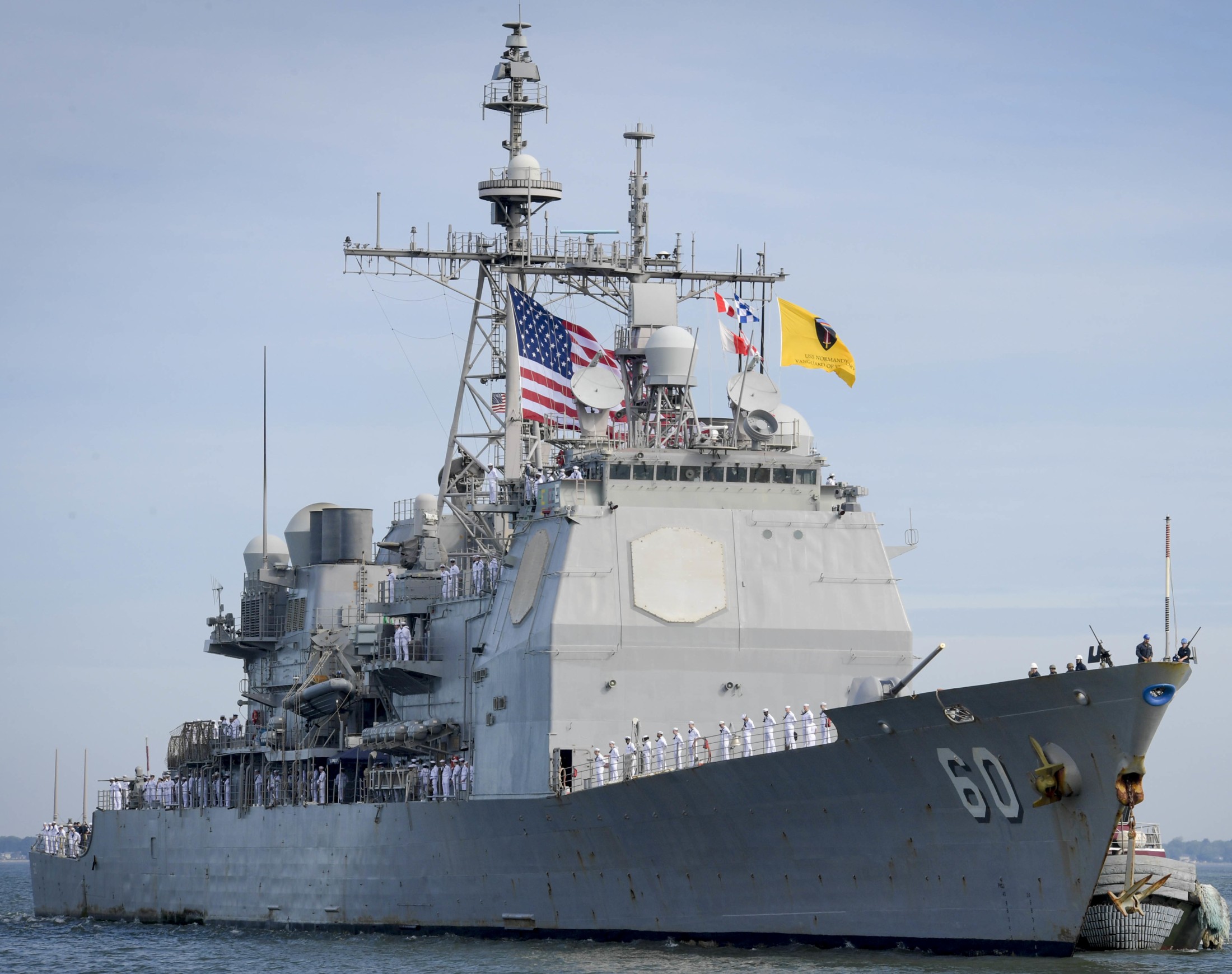 returning to Naval Station Norfolk, Virginia - June 2020 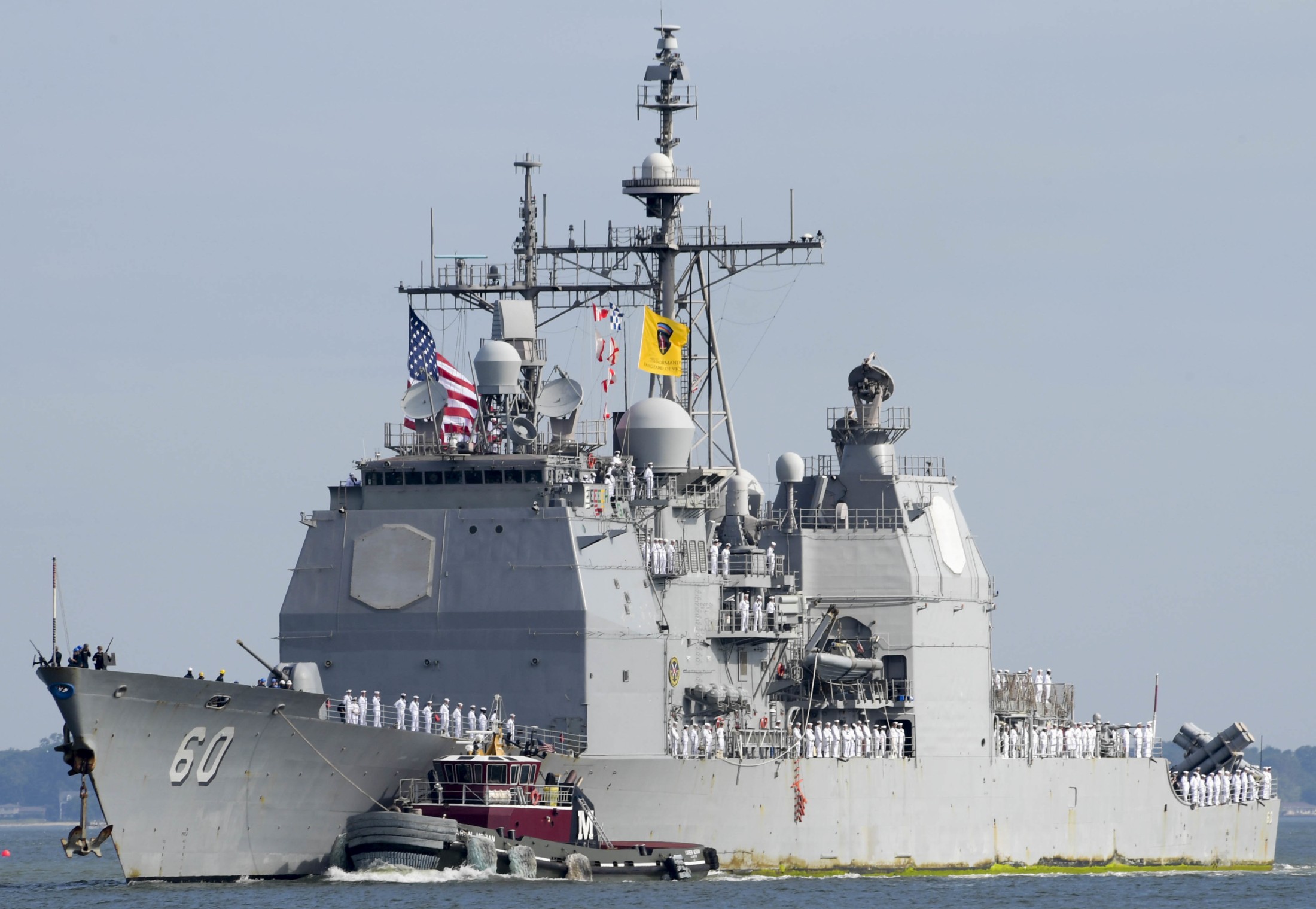 returning to Naval Station Norfolk, Virginia - June 2020 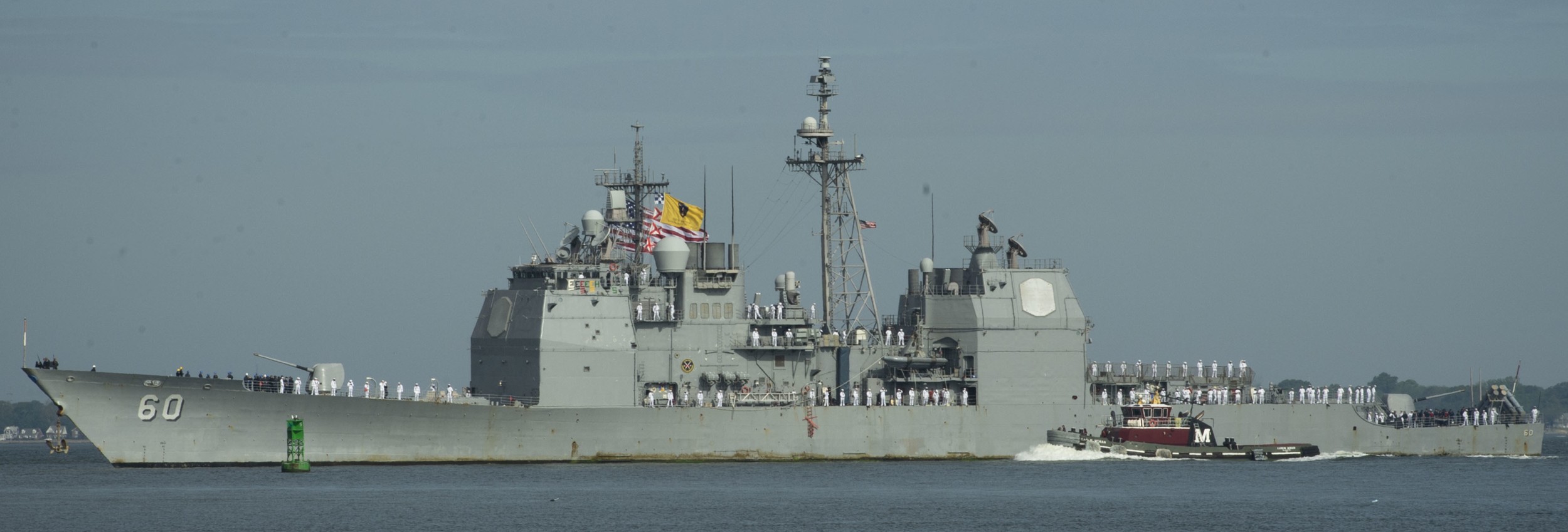 returning to Naval Station Norfolk, Virginia - June 2020 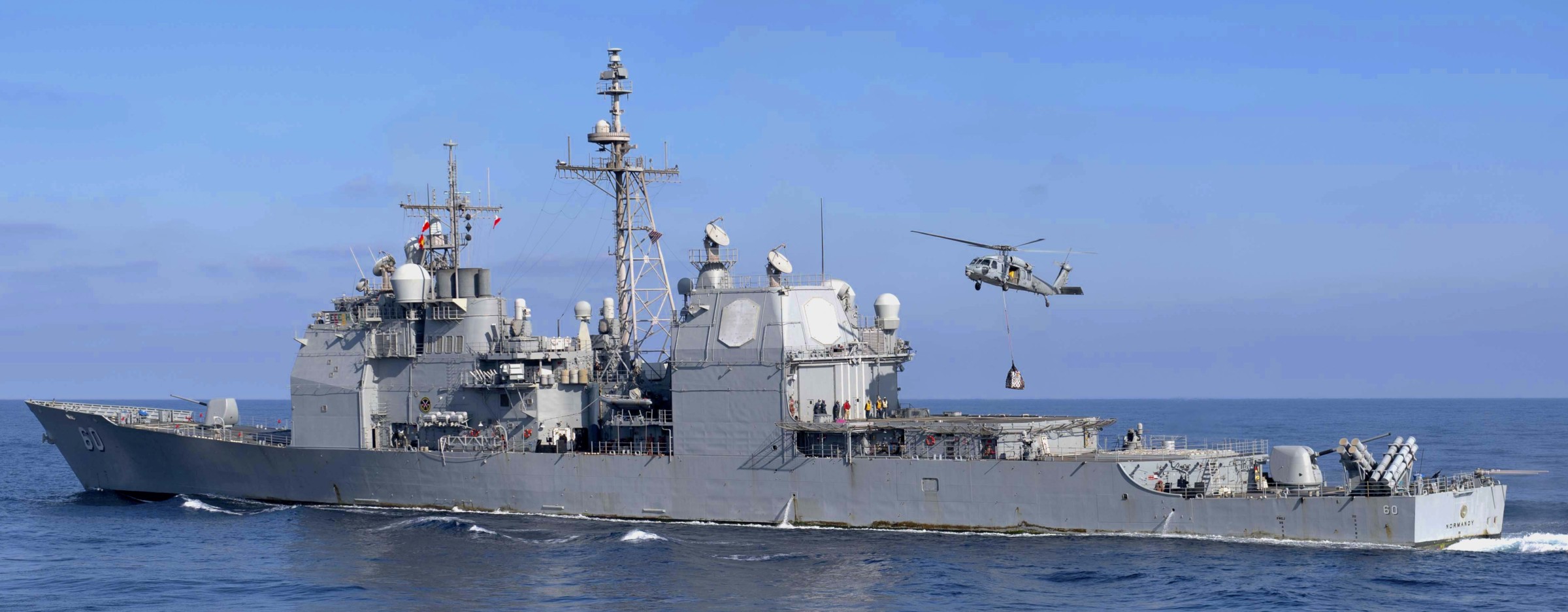 April 2020 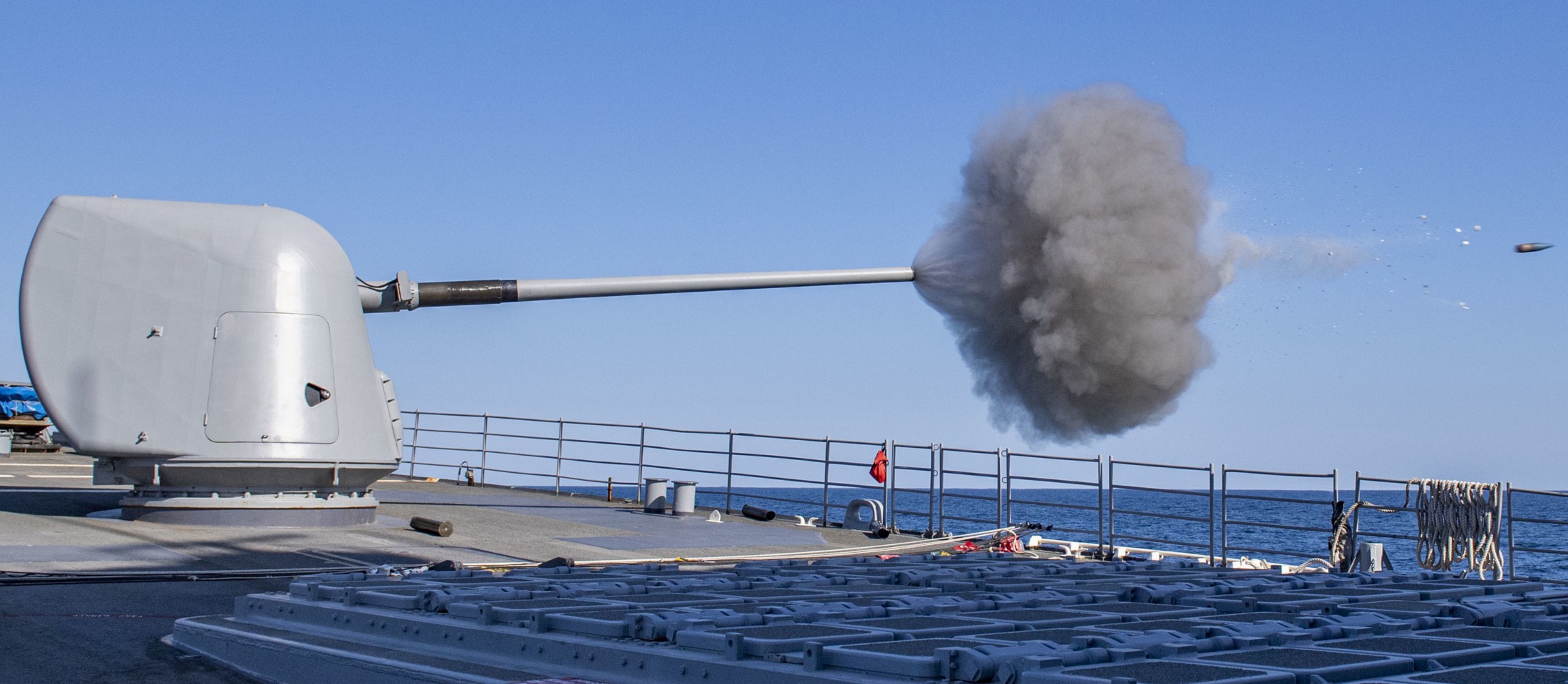 Mk.45 Mod.2 gun fire exercise - Arabian Sea - January 2020 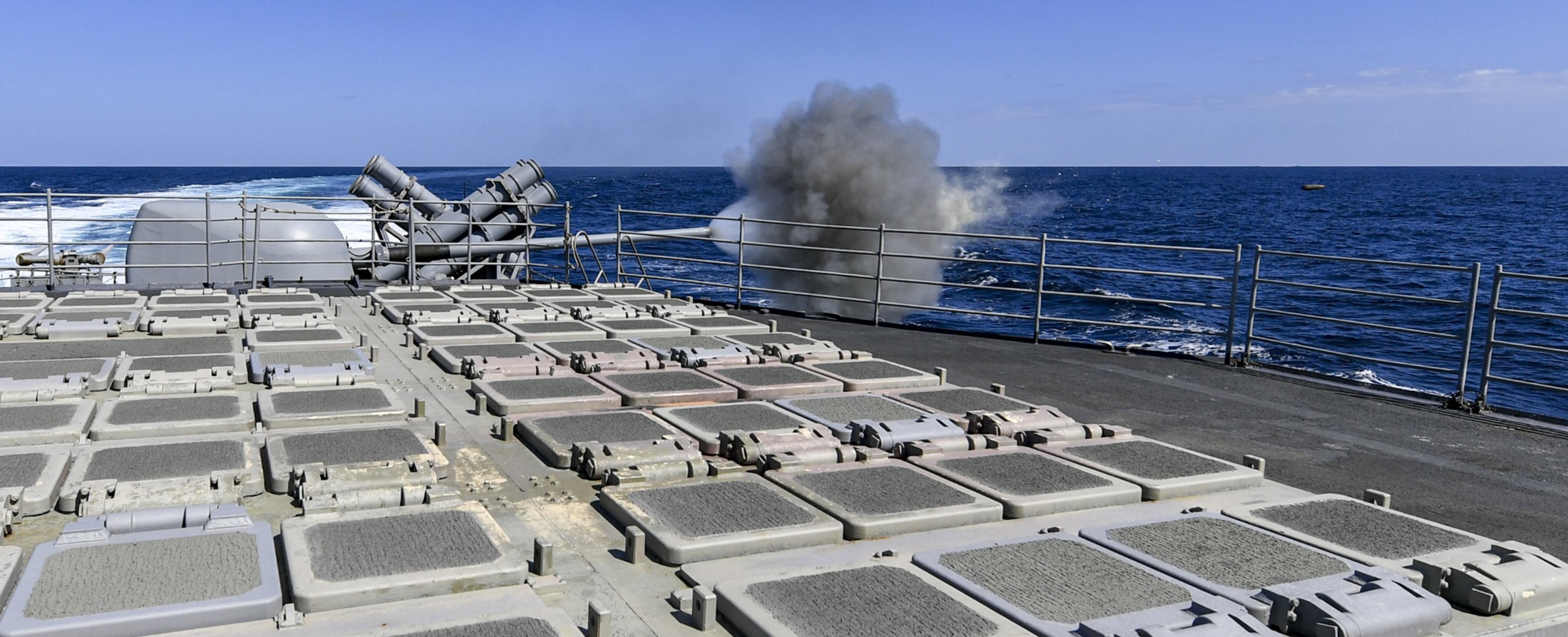 Arabian Sea - January 2020 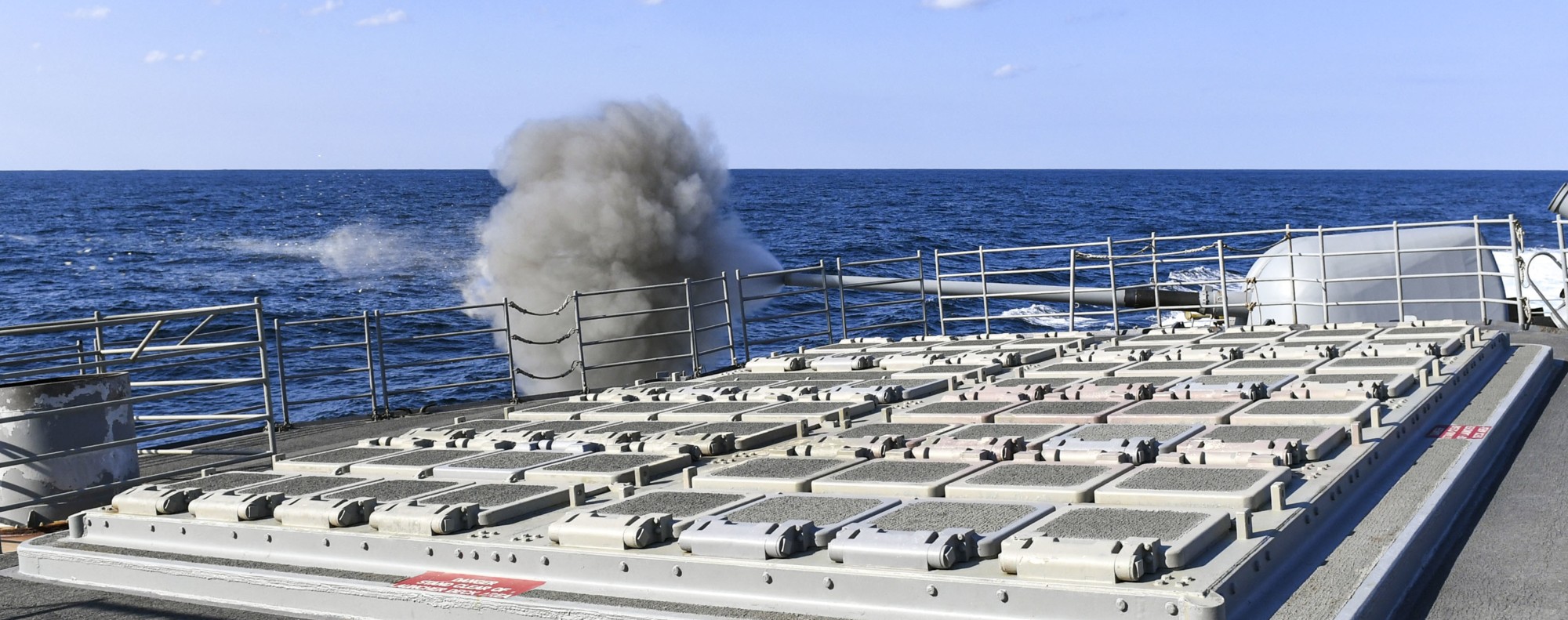 Arabian Sea - January 2020 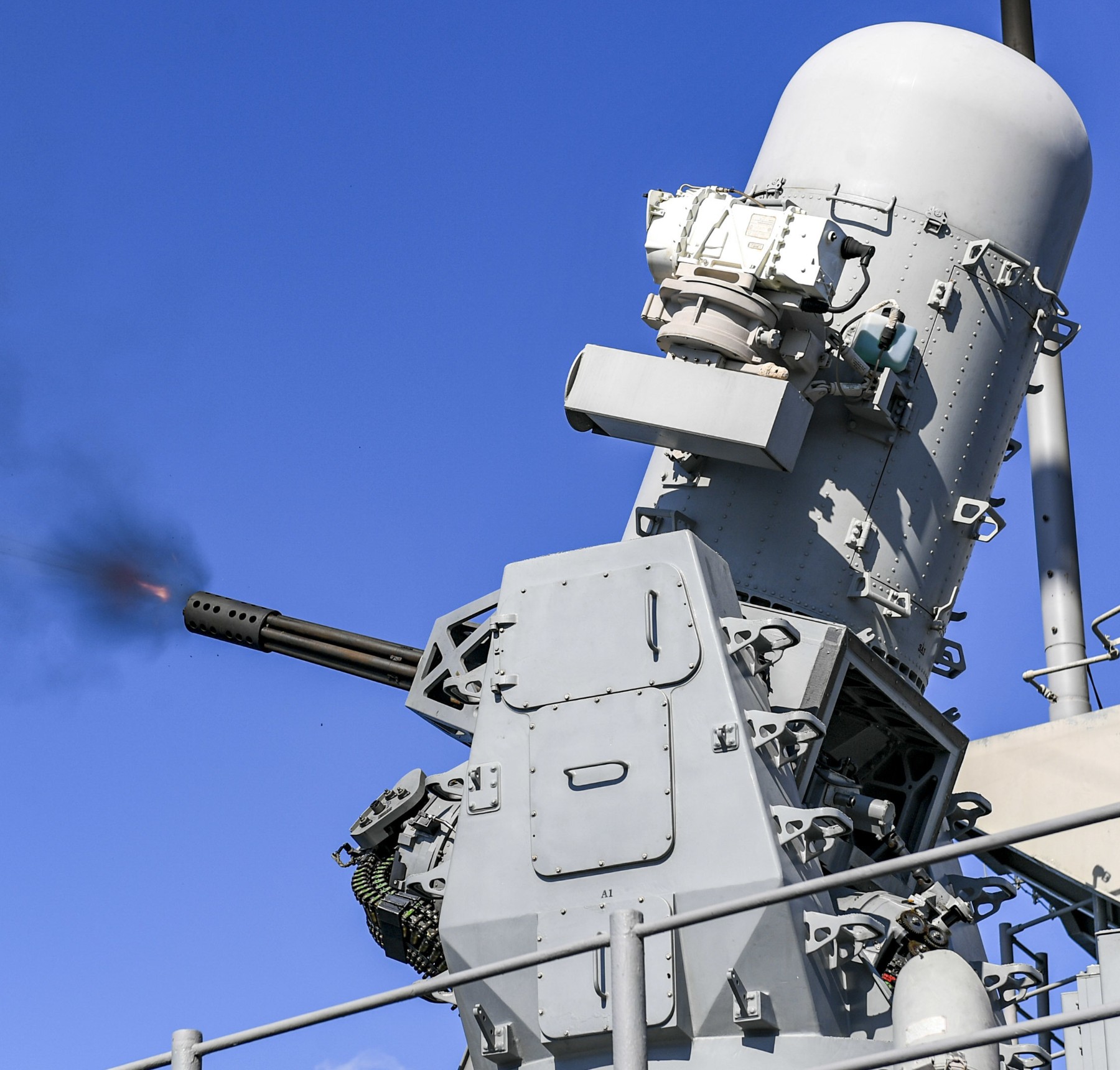 Mk.15 Phalanx CIWS fire exercise - Arabian Sea - January 2020 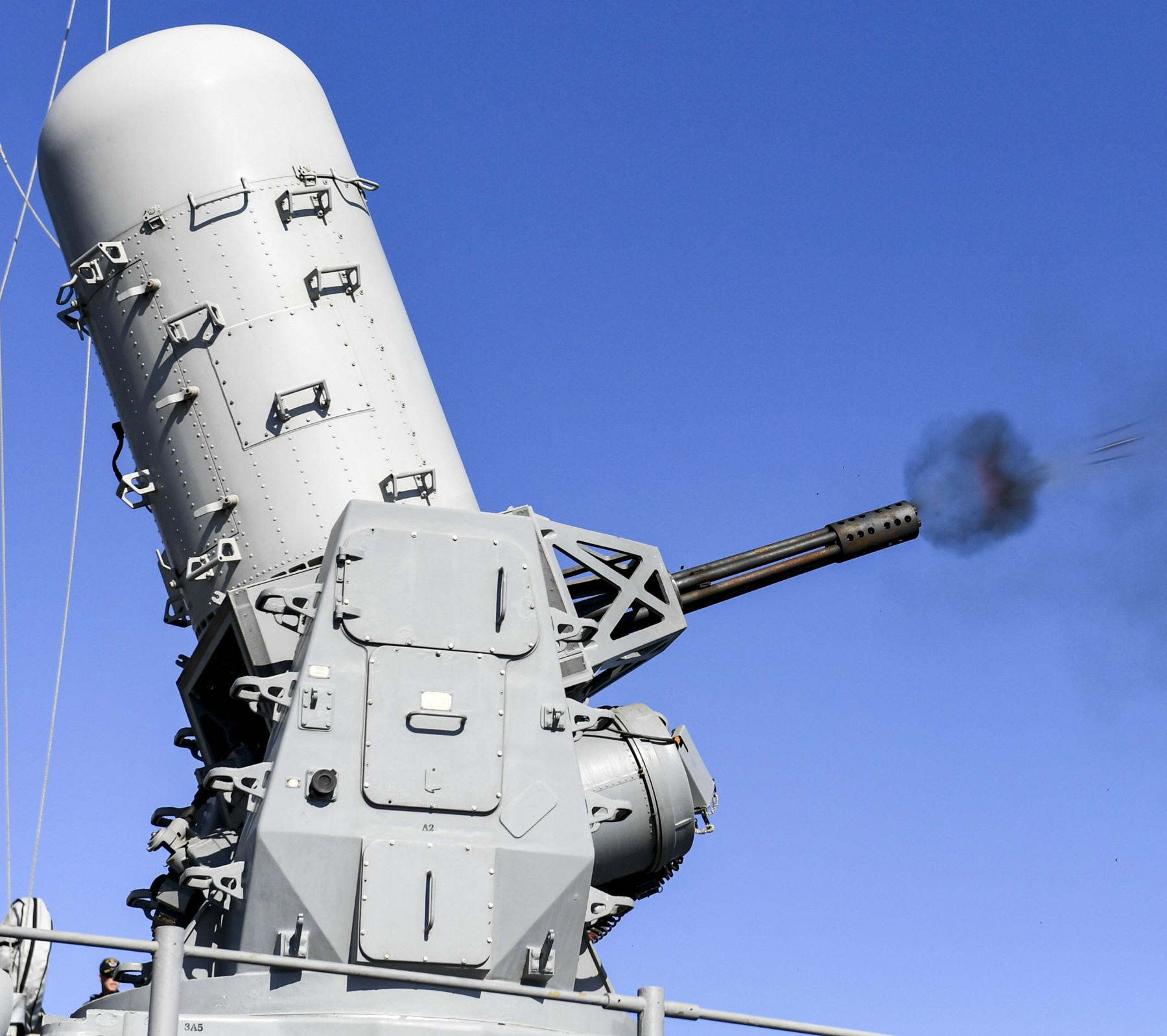 Mk.15 Phalanx CIWS fire exercise - Arabian Sea - January 2020 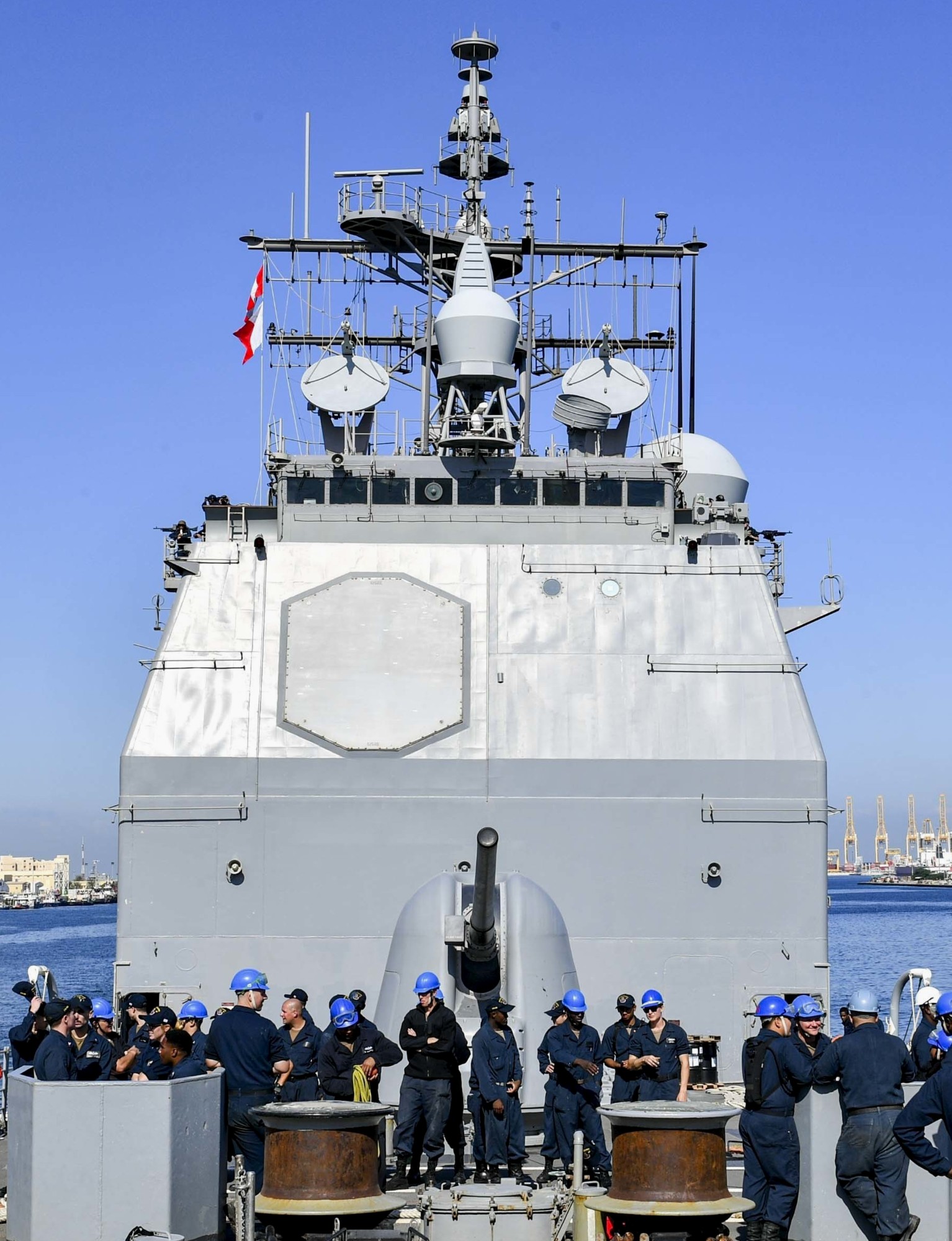 Jebel Ali, UAE - December 2019 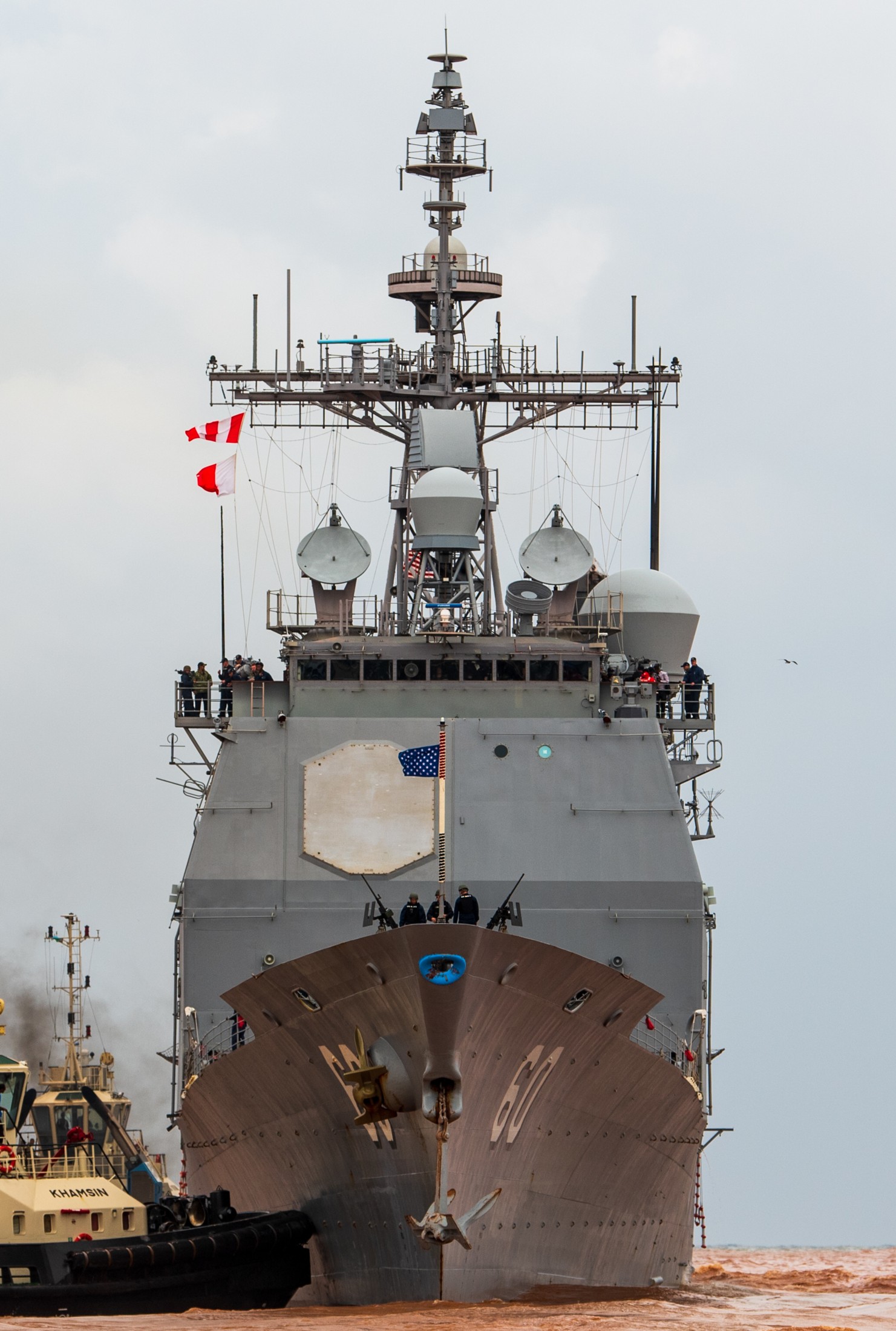 departing Djibouti - November 2019 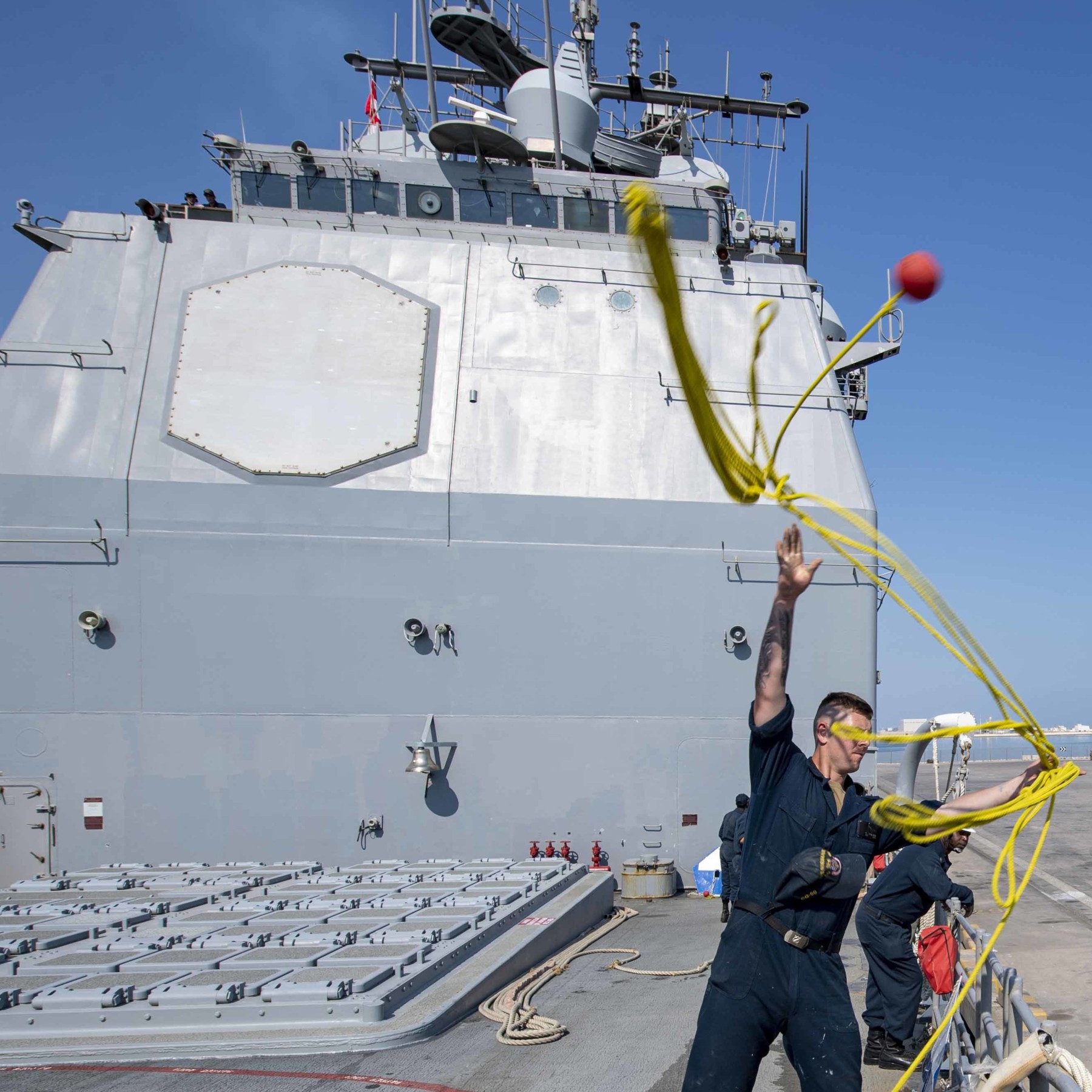 Manama, Bahrain - November 2019 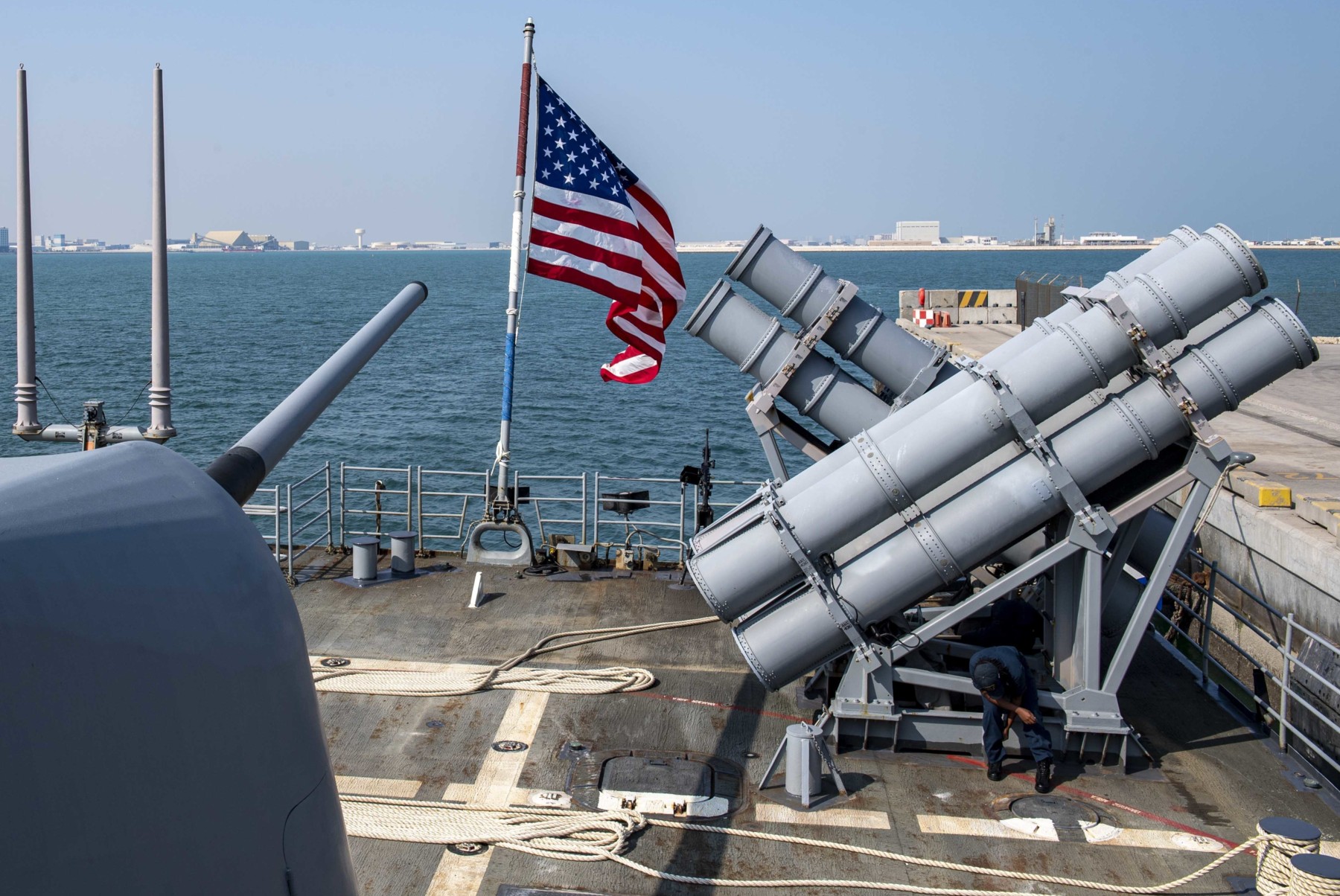 Manama, Bahrain - November 2019 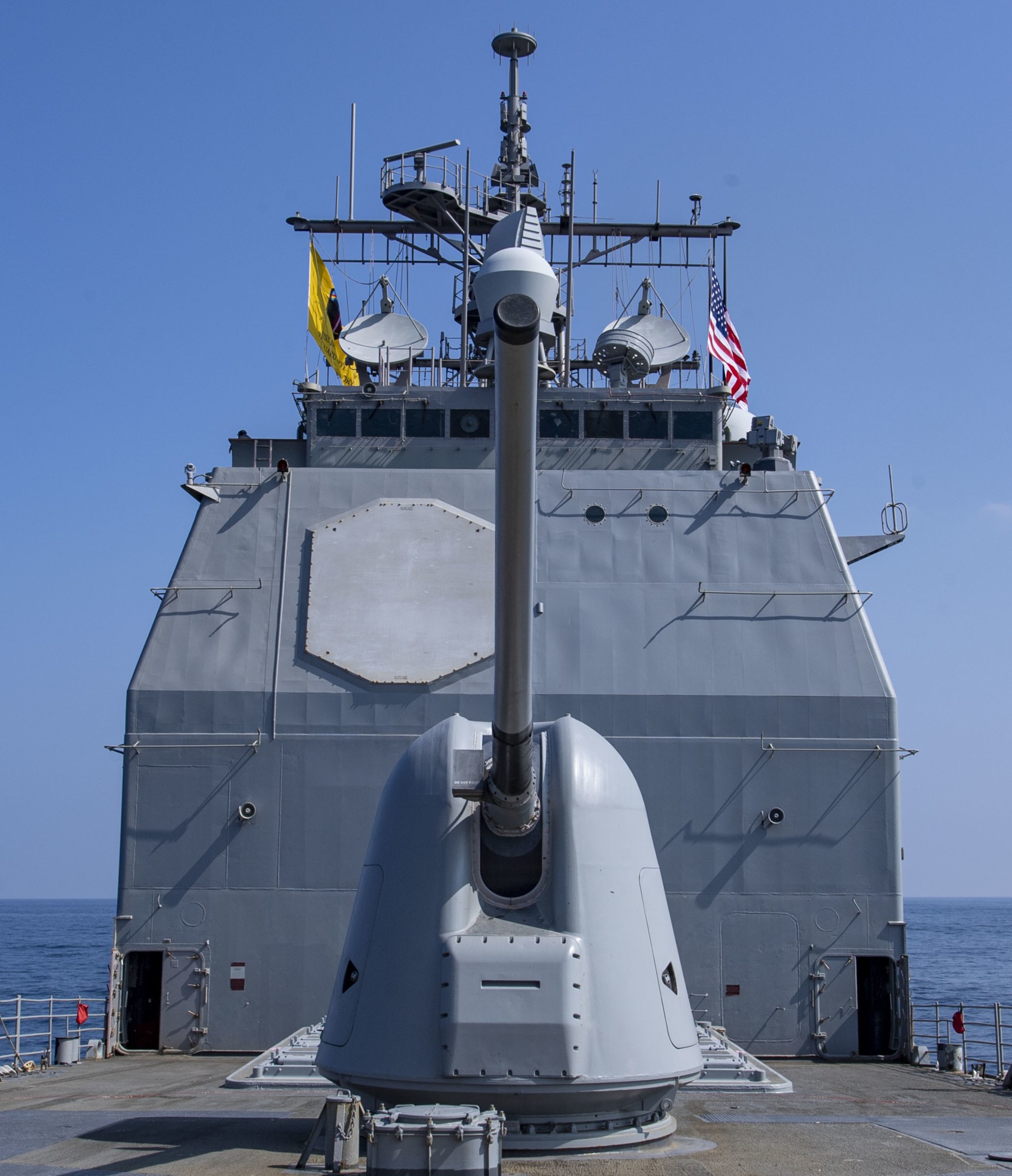 Gulf of Oman - November 2019 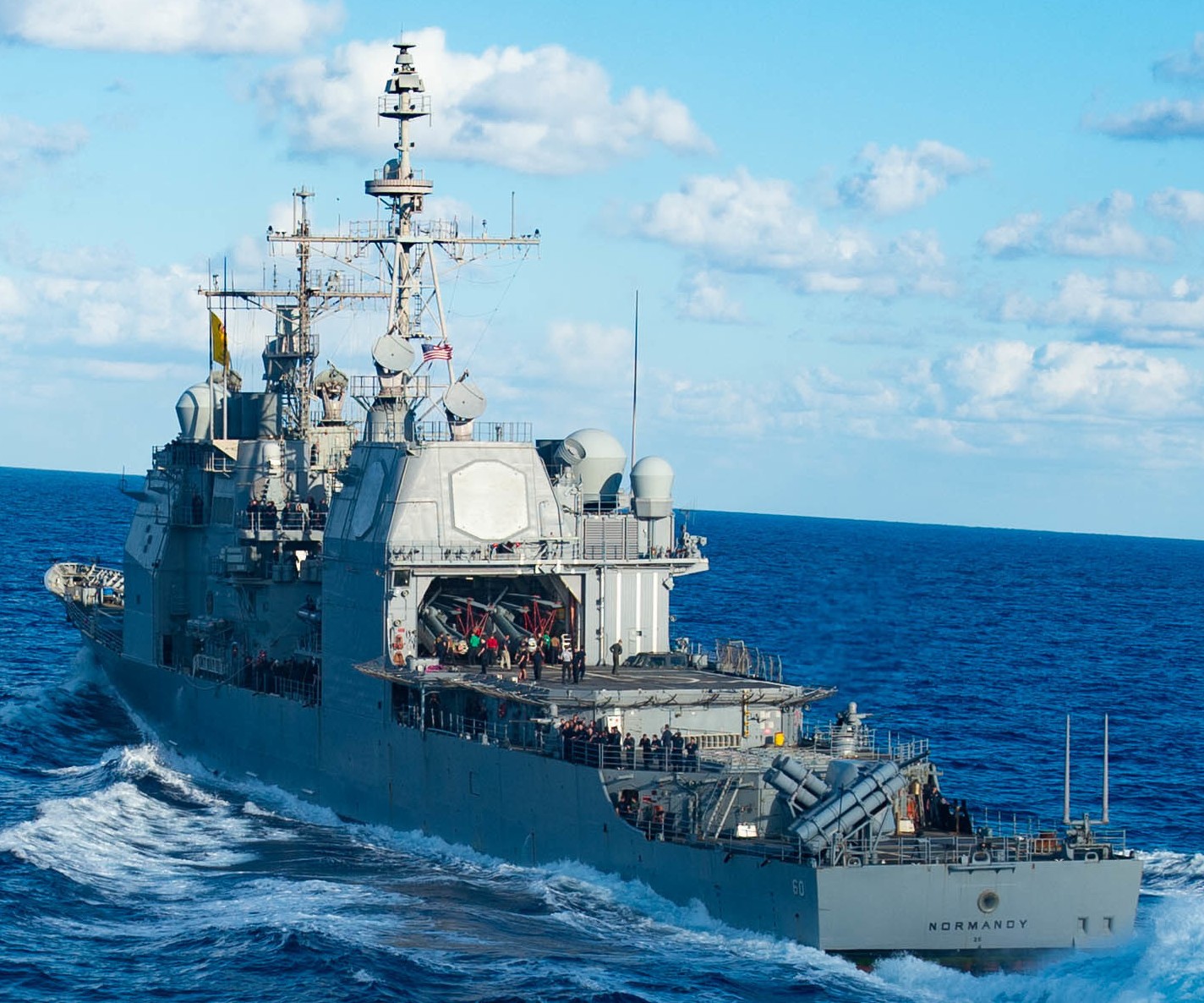 Mediterranean Sea - October 2019 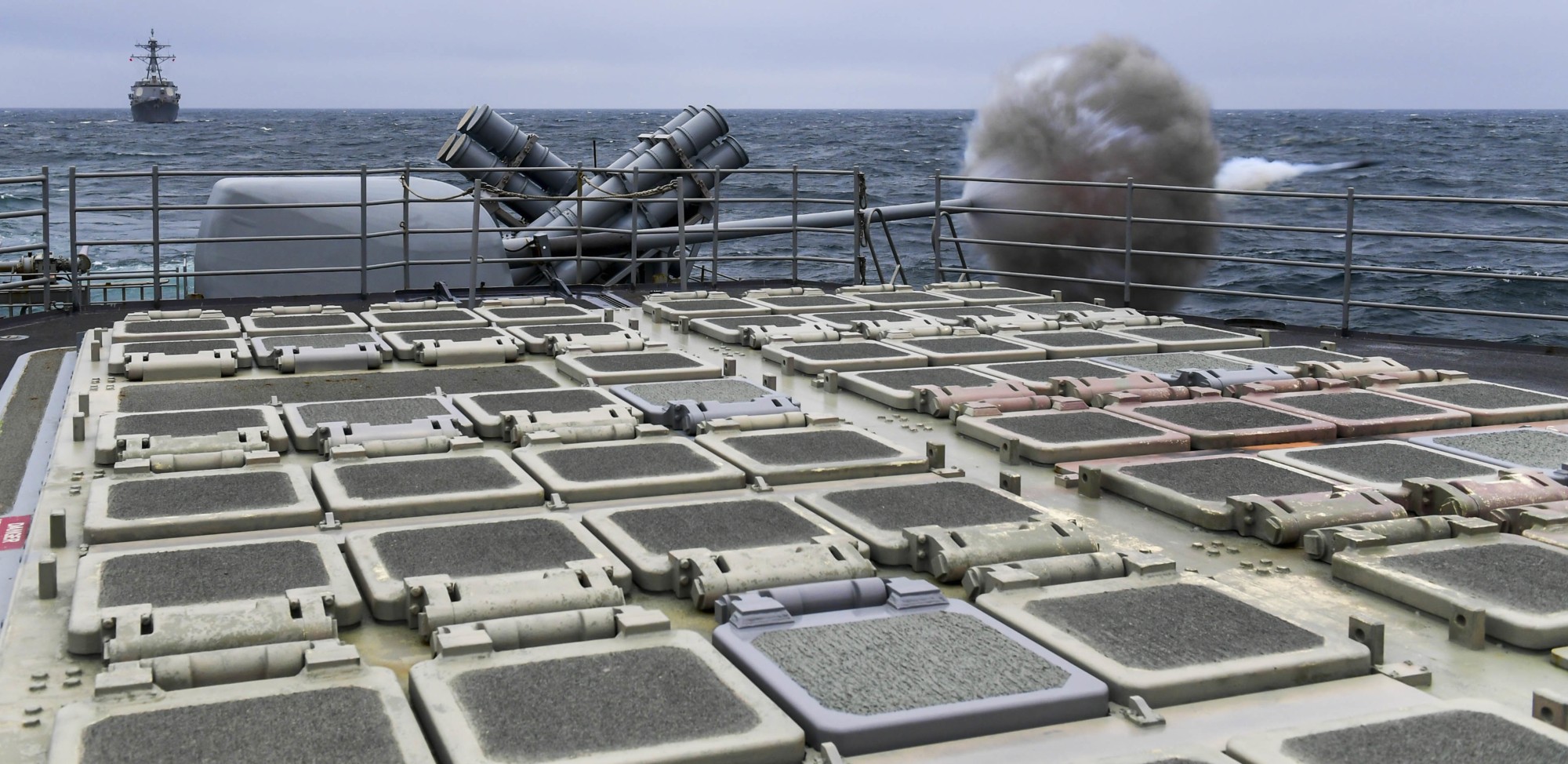 Arctic Ocean - September 2019 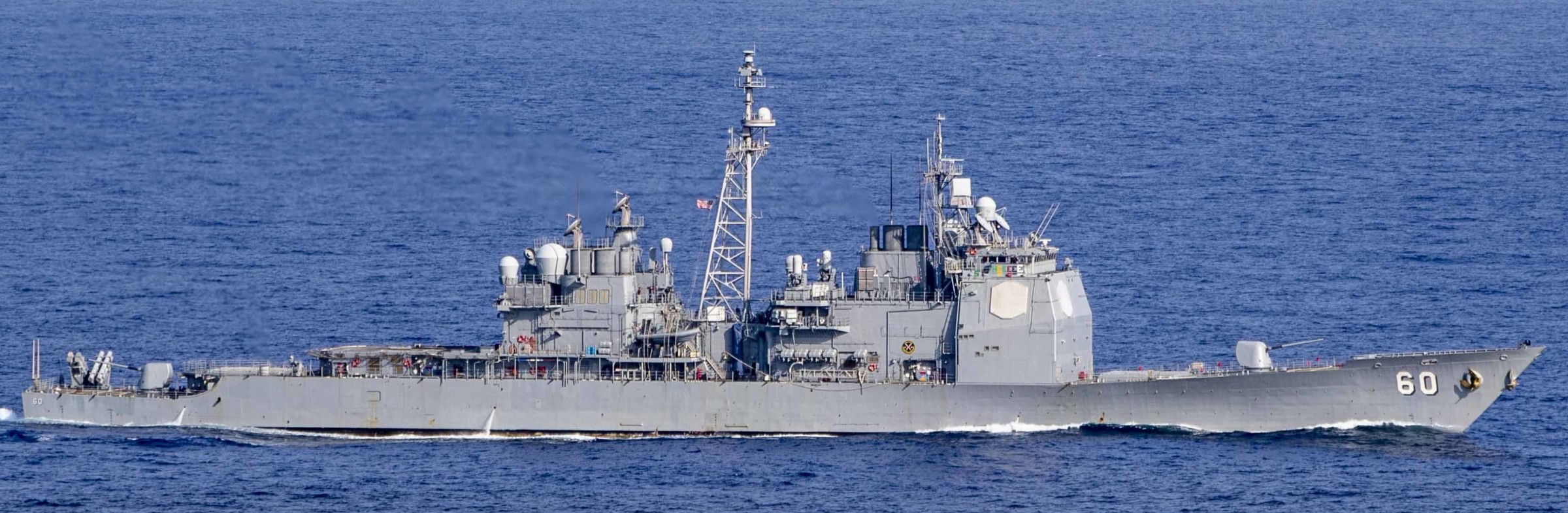 Atlantic Ocean - September 2019 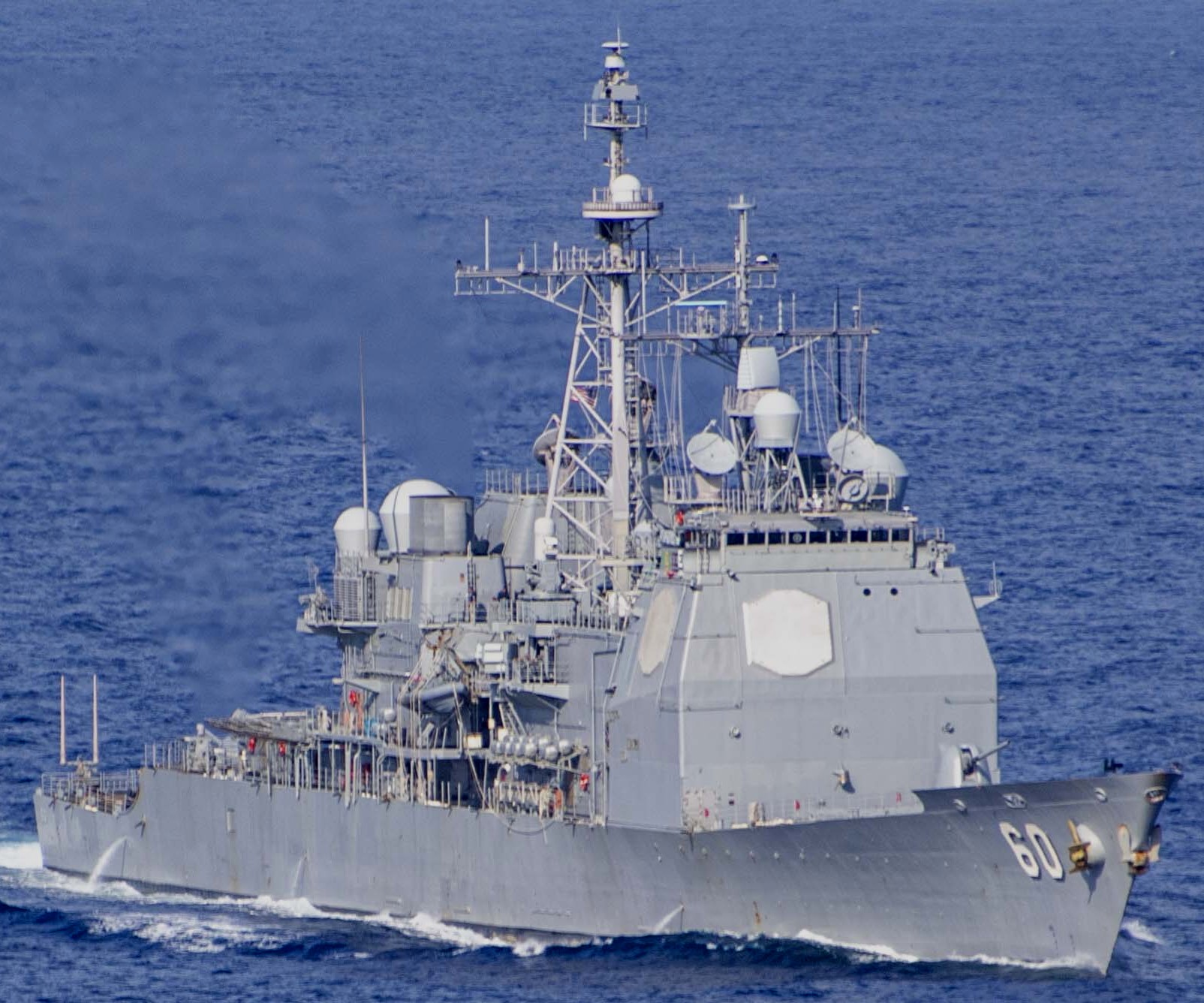 Atlantic Ocean - September 2019 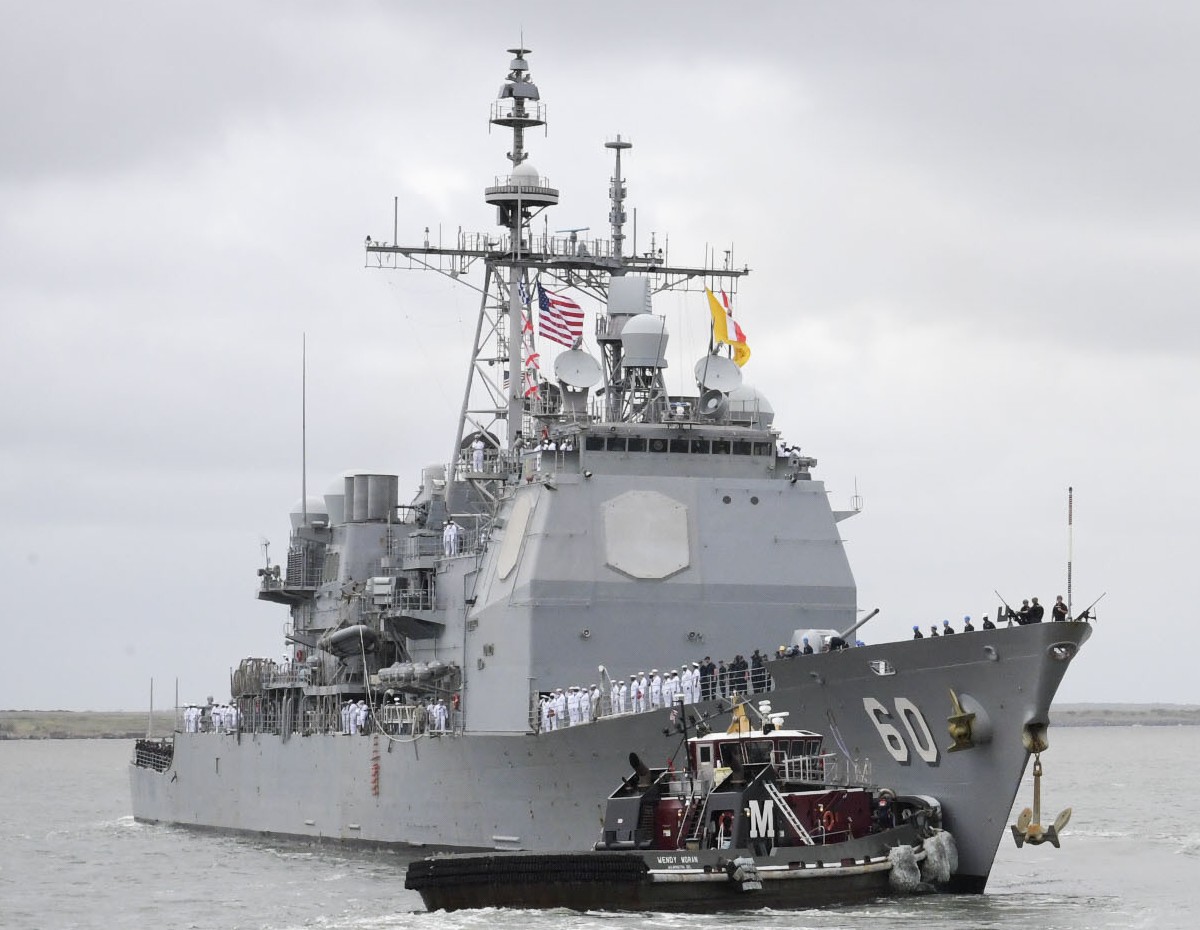 departing Naval Station Norfolk, Virginia - September 2019 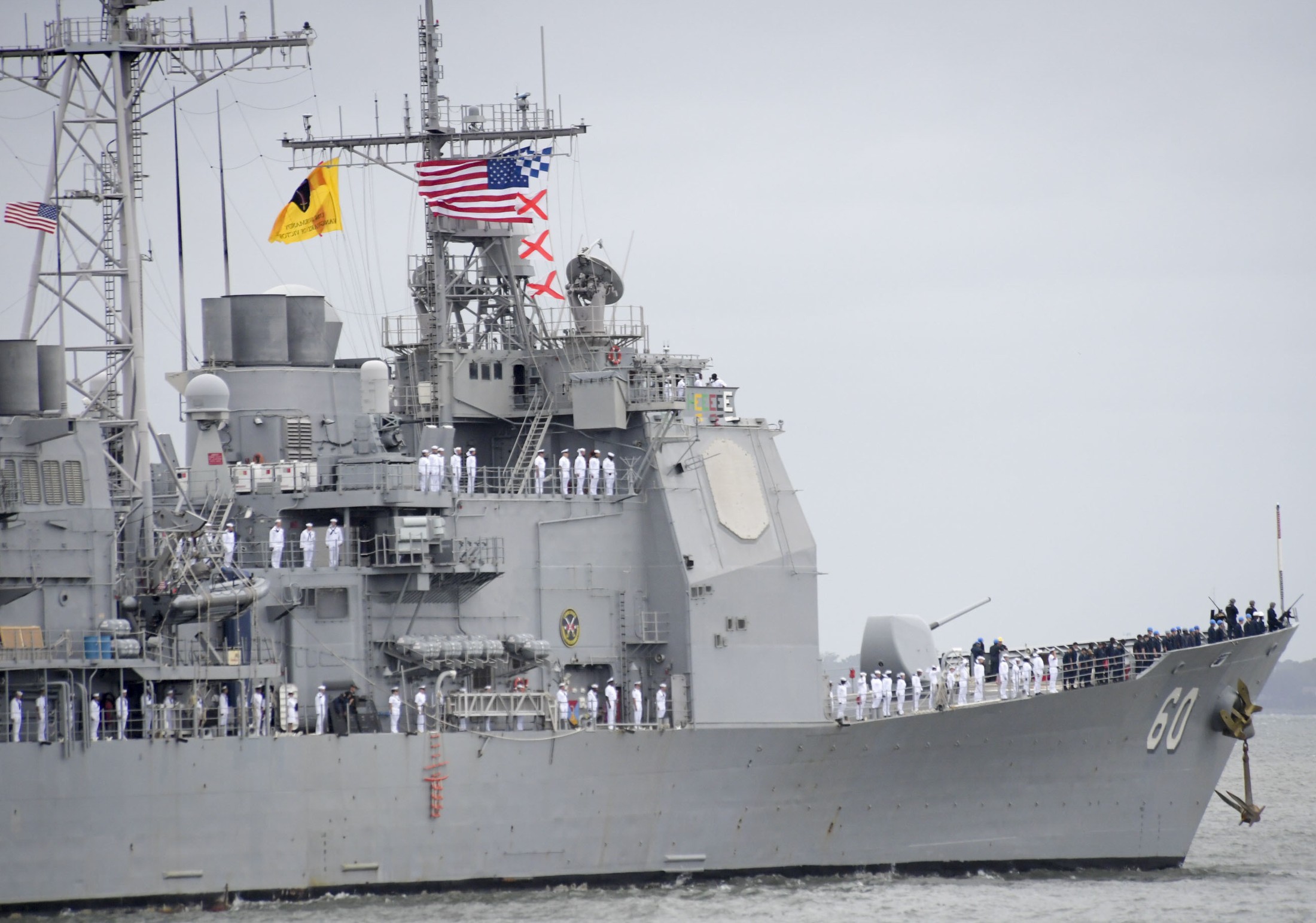 departing Naval Station Norfolk, Virginia - September 2019 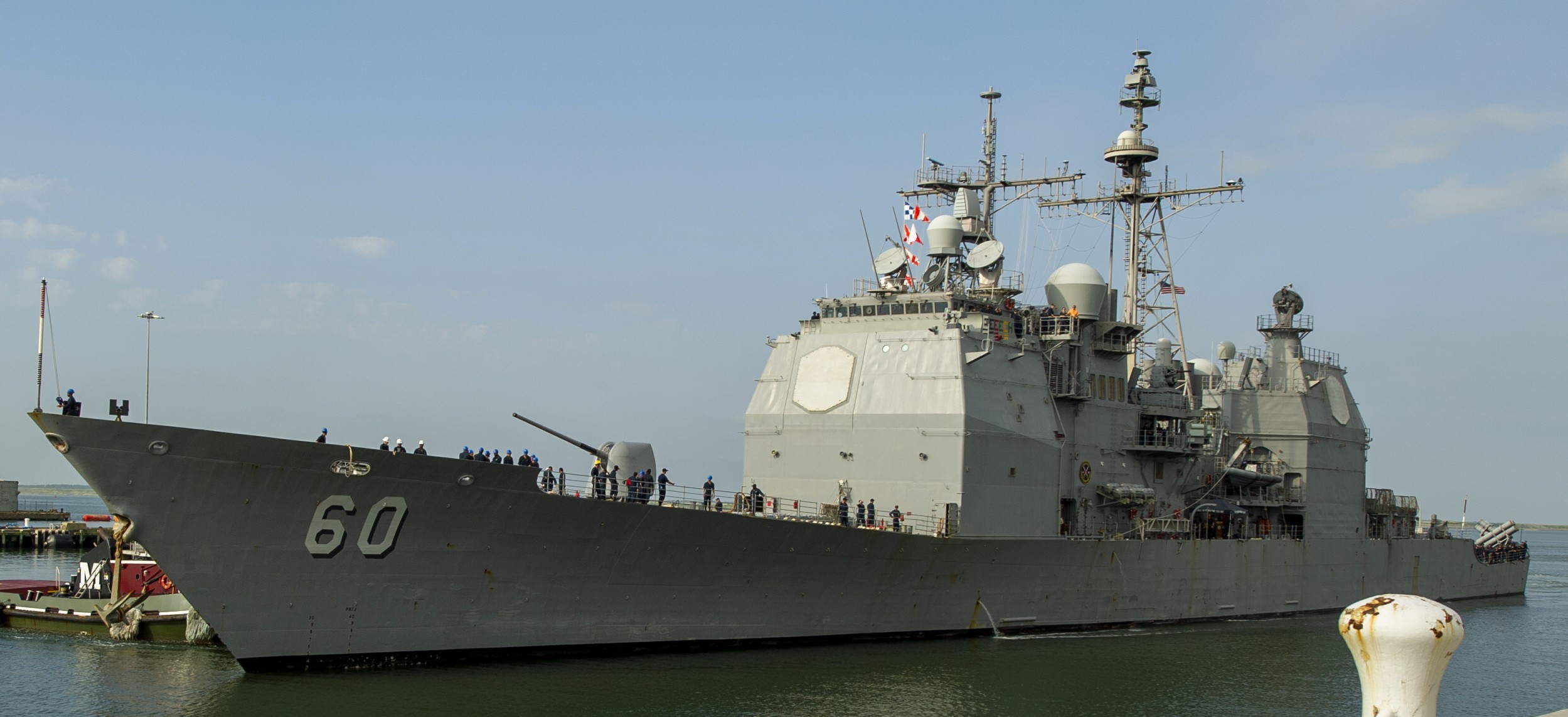 returning to Naval Station Norfolk, Virginia after hurricane Dorian - September 2019 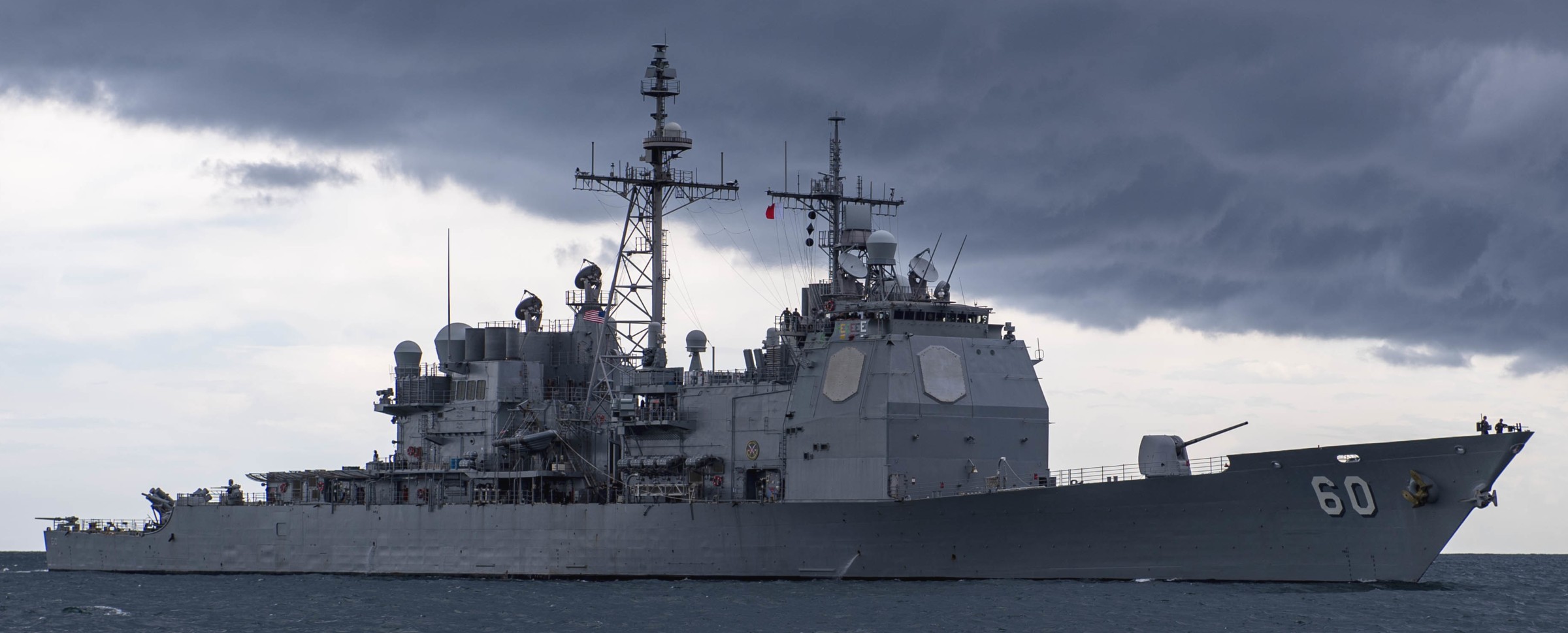 Atlantic Ocean - July 2019 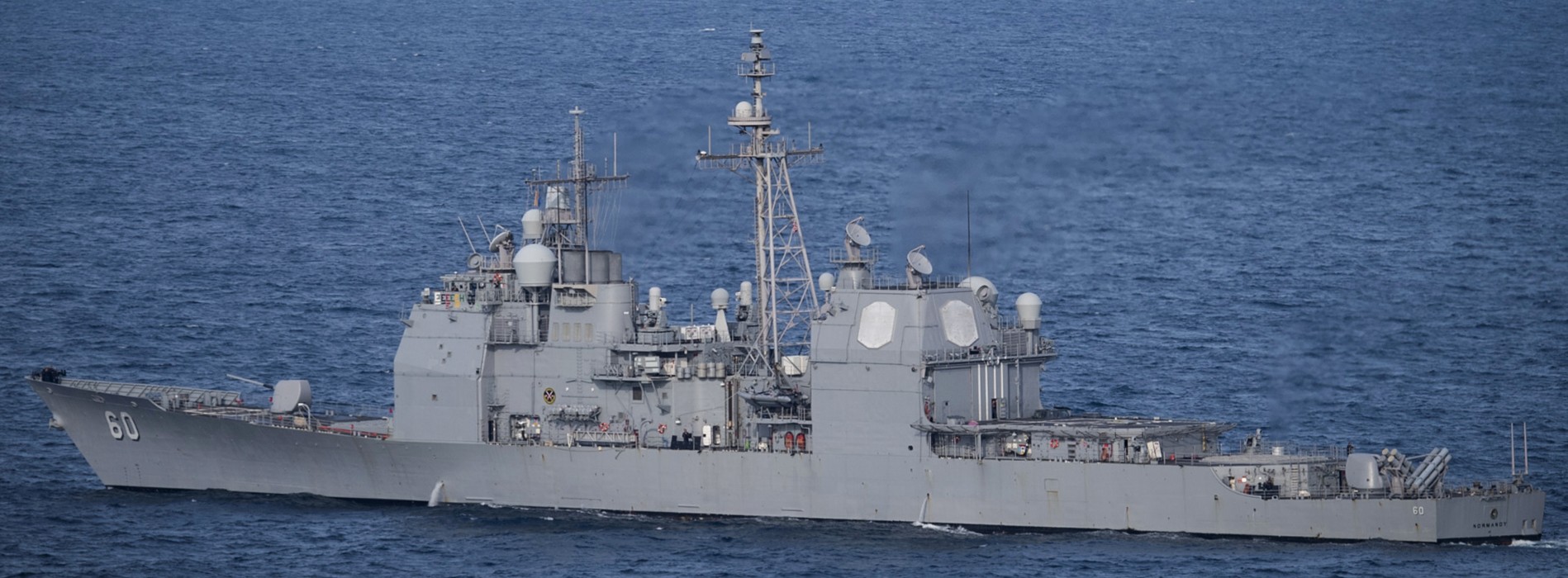 Atlantic Ocean - July 2019 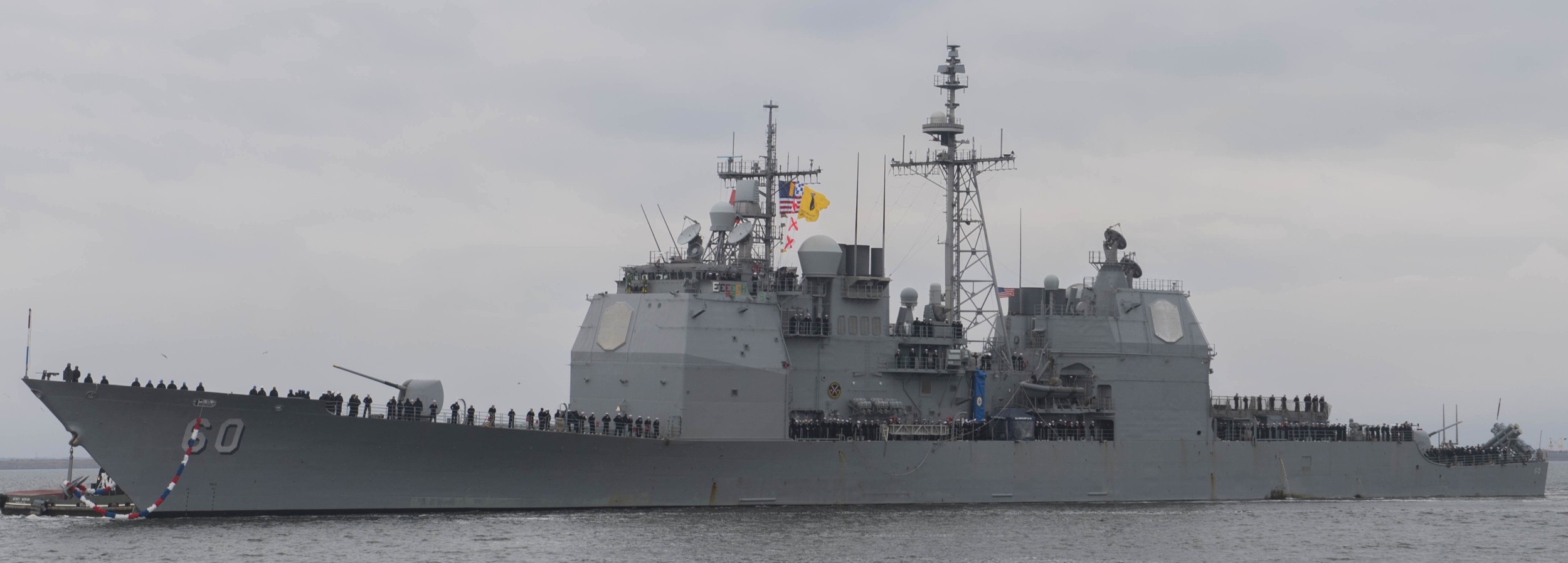 returning to Naval Station Norfolk, Virginia - December 2018 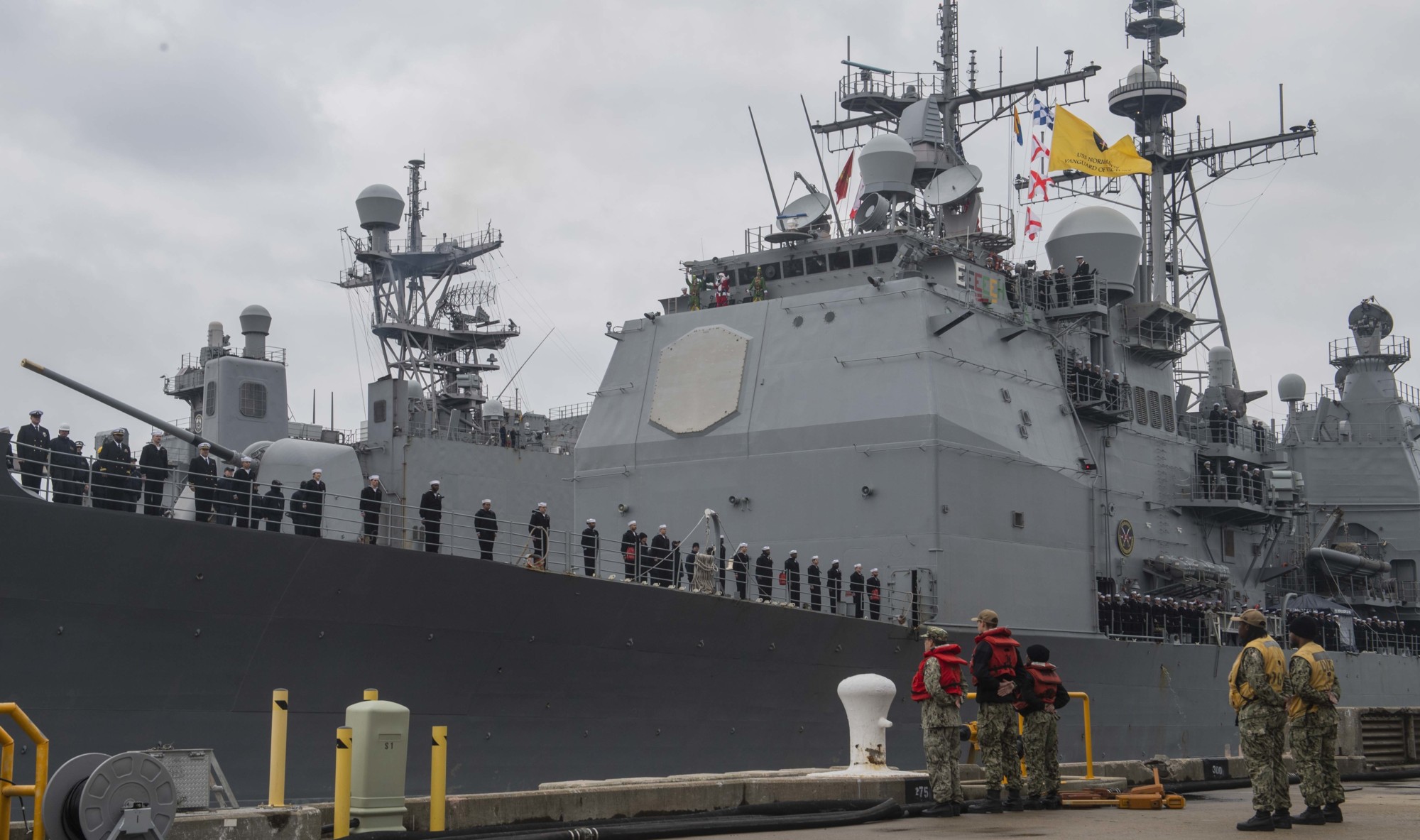 returning to Naval Station Norfolk, Virginia - December 2018 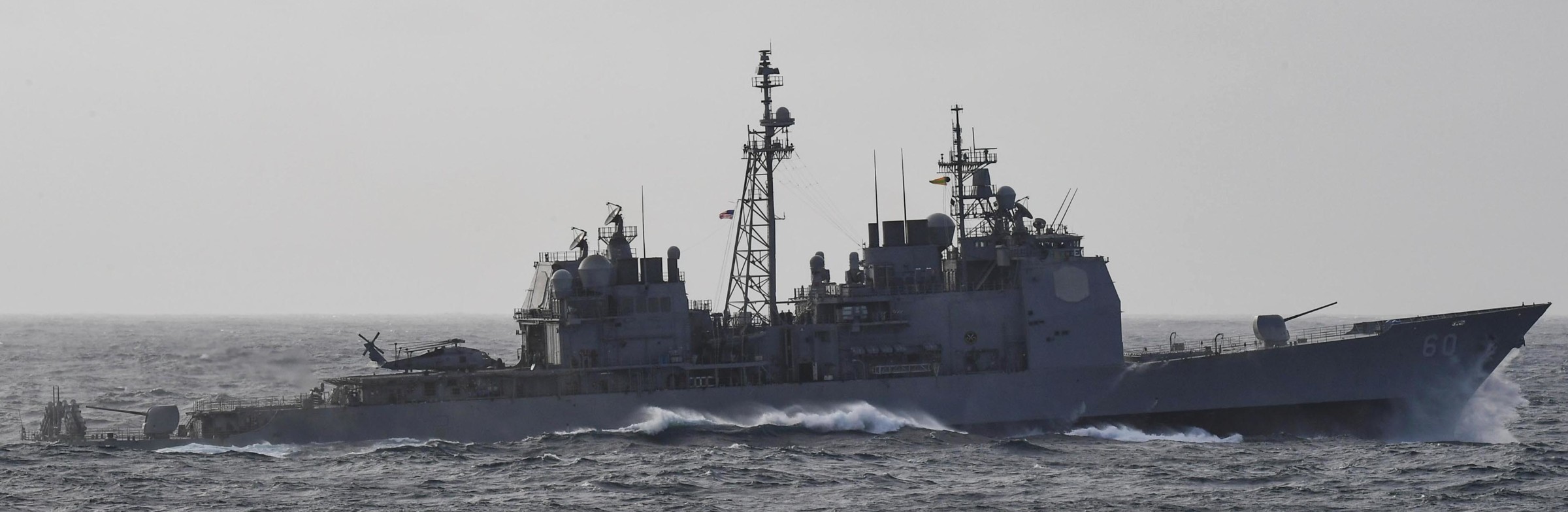 Mediterranean Sea - November 2018 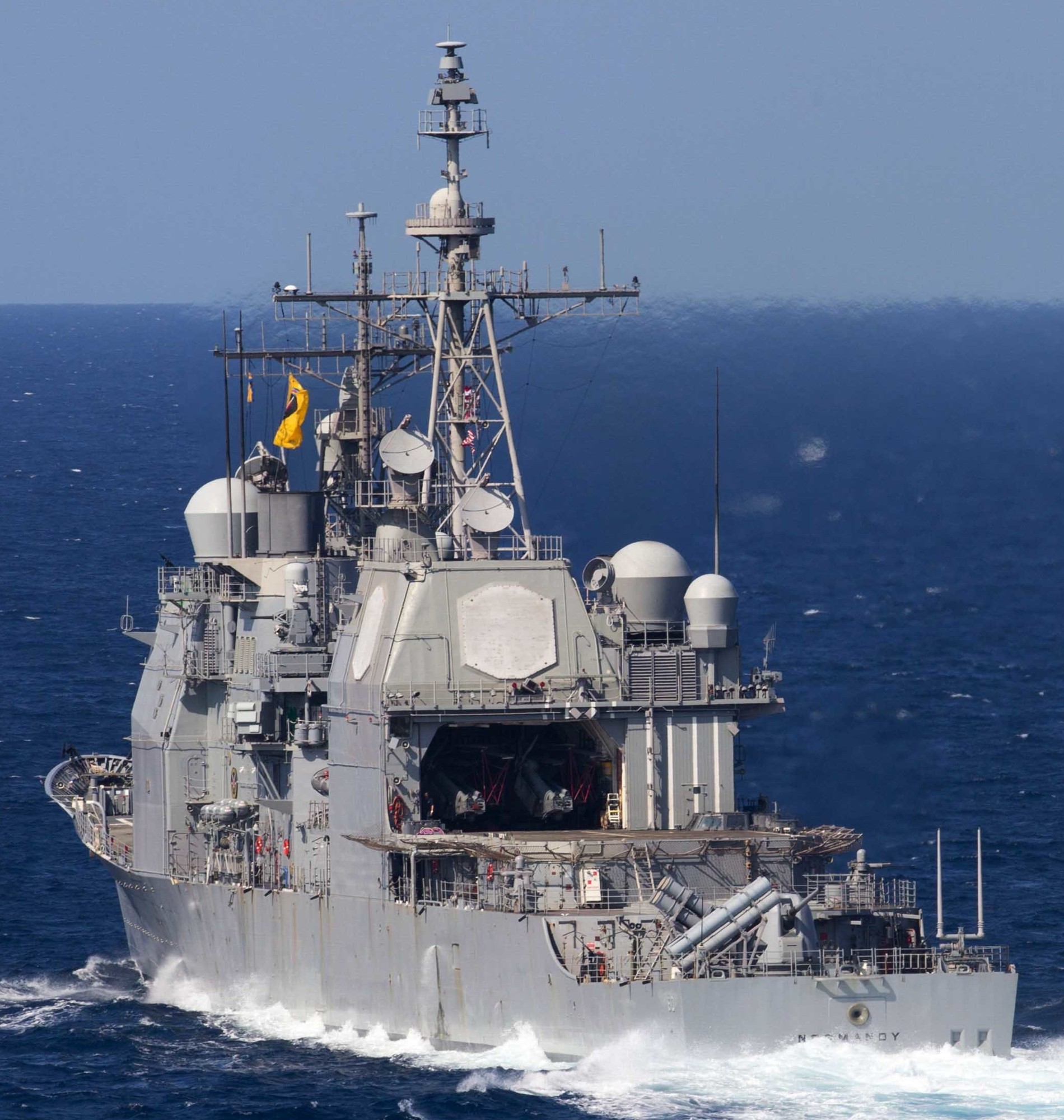 Atlantic Ocean - August 2018 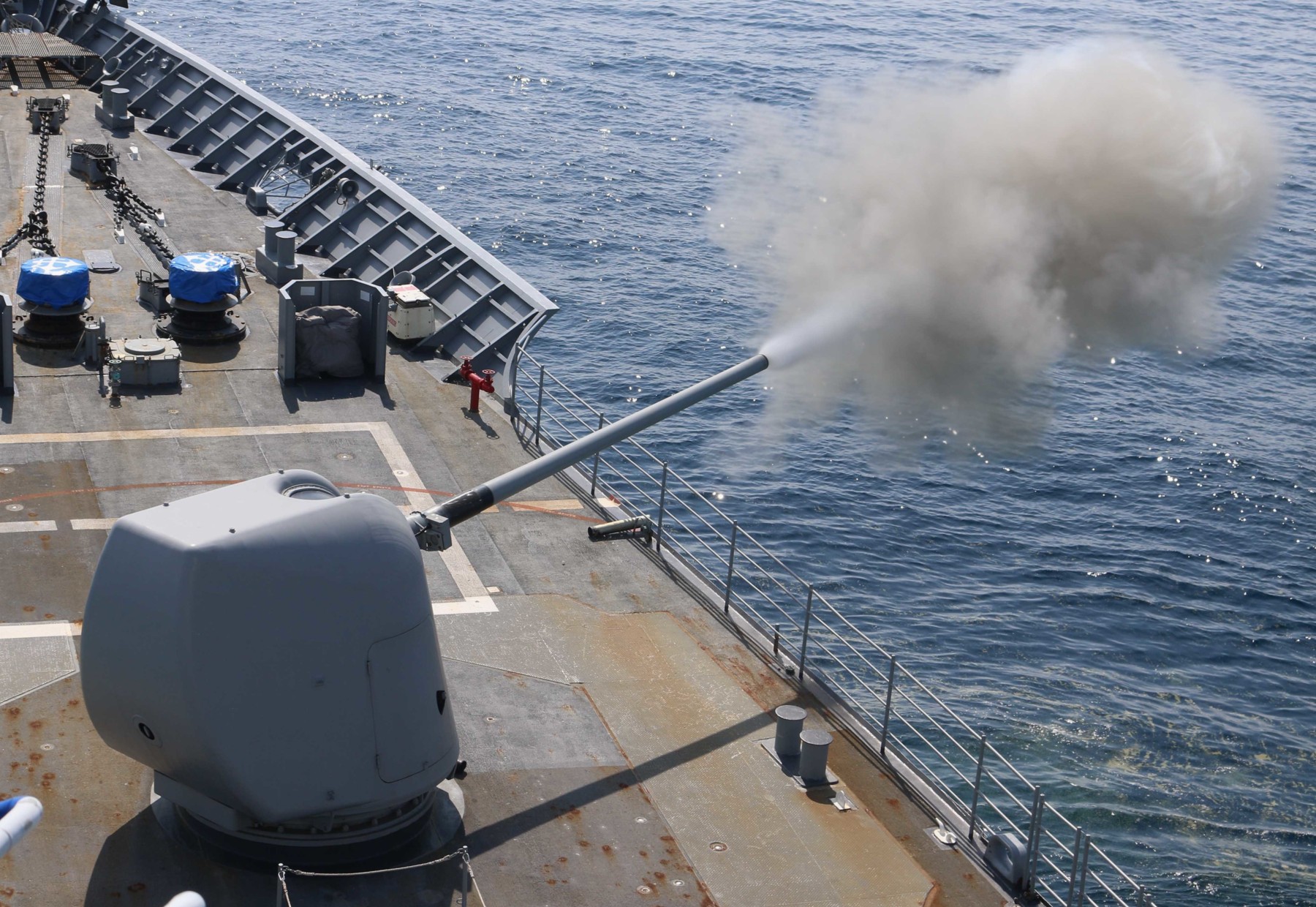 Mk.45 Mod.2 gun fire - Atlantic Ocean - August 2018 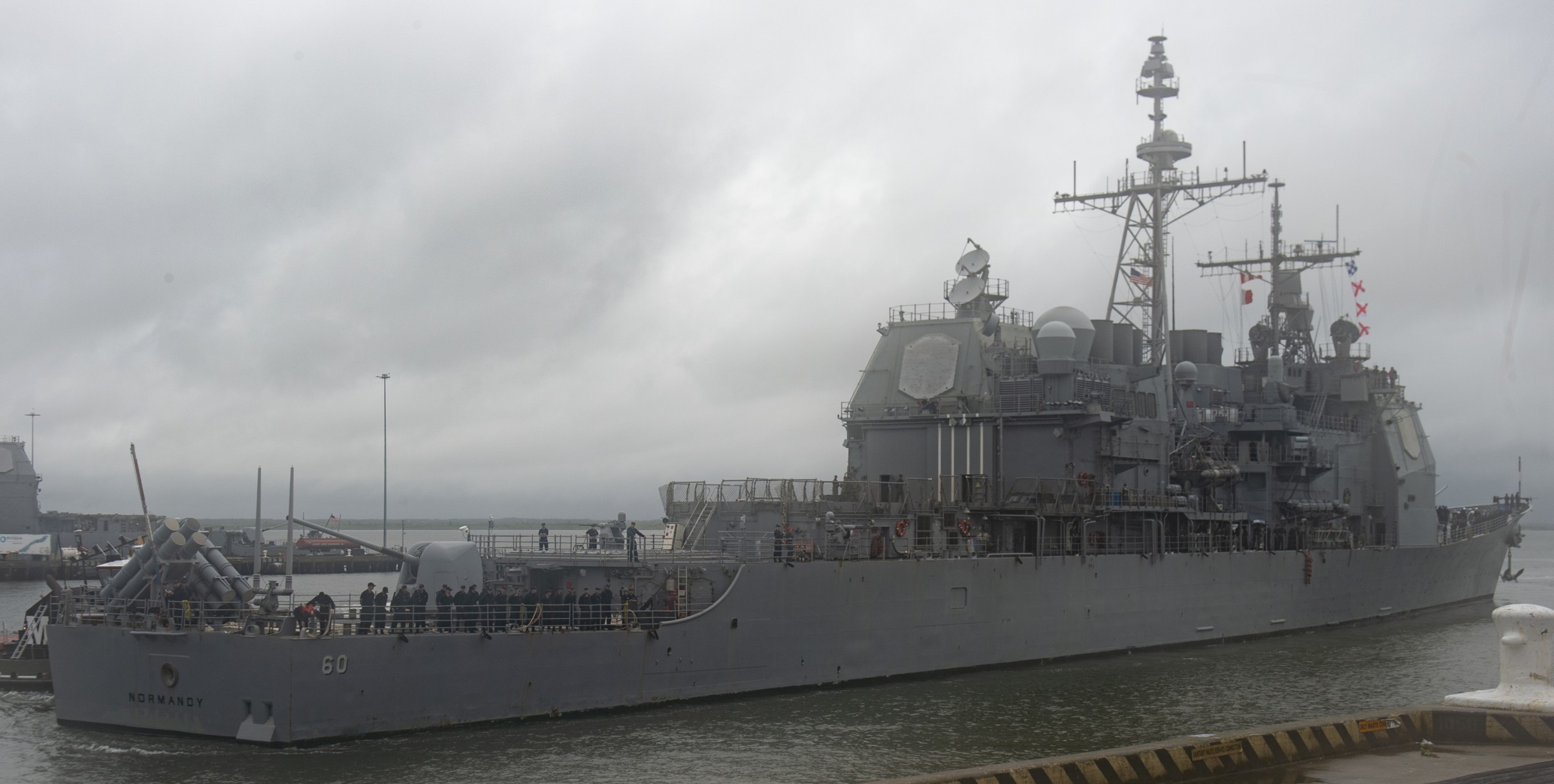 returning to Naval Station Norfolk, Virginia - July 2018 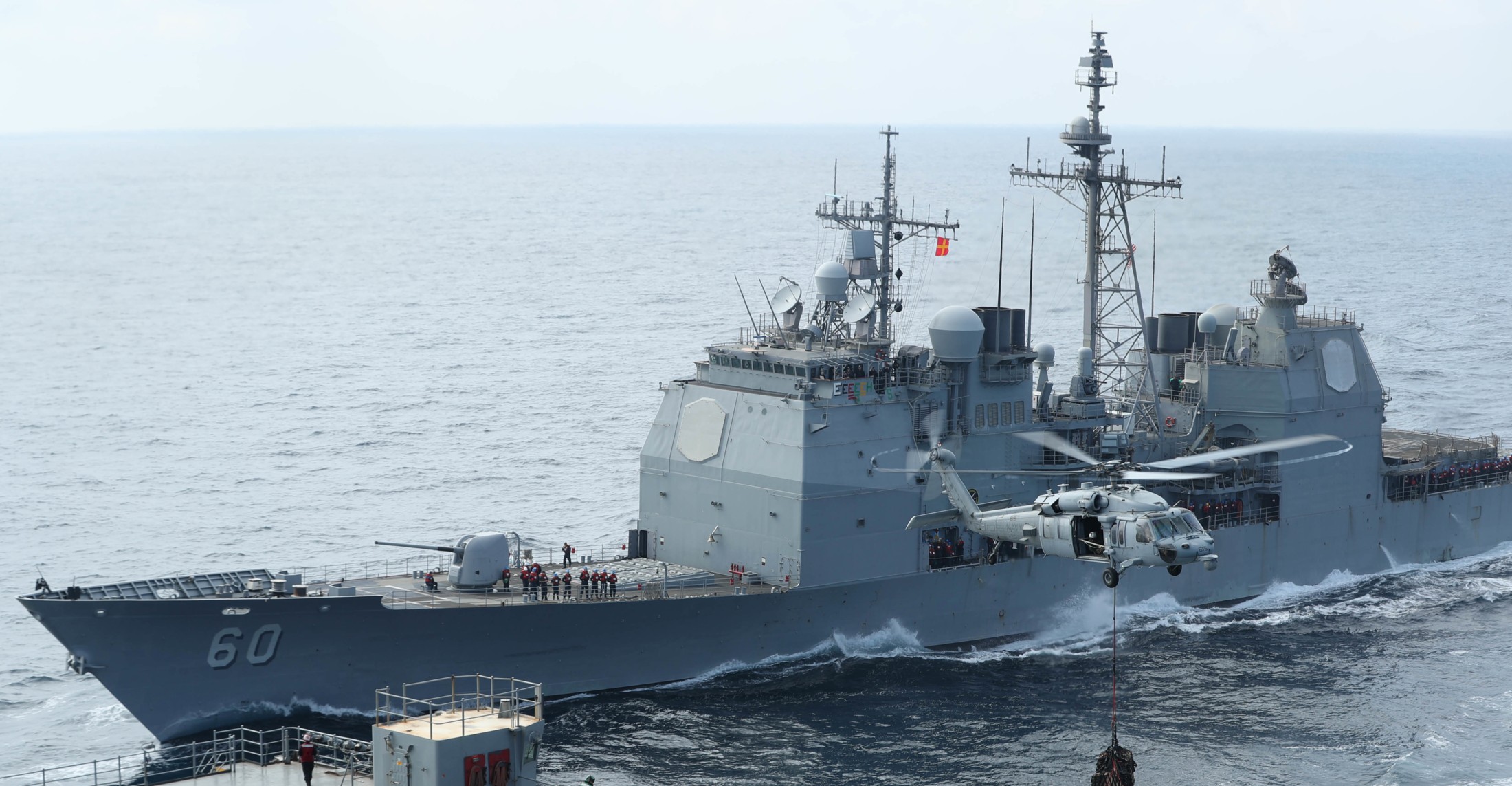 Atlantic Ocean - July 2018 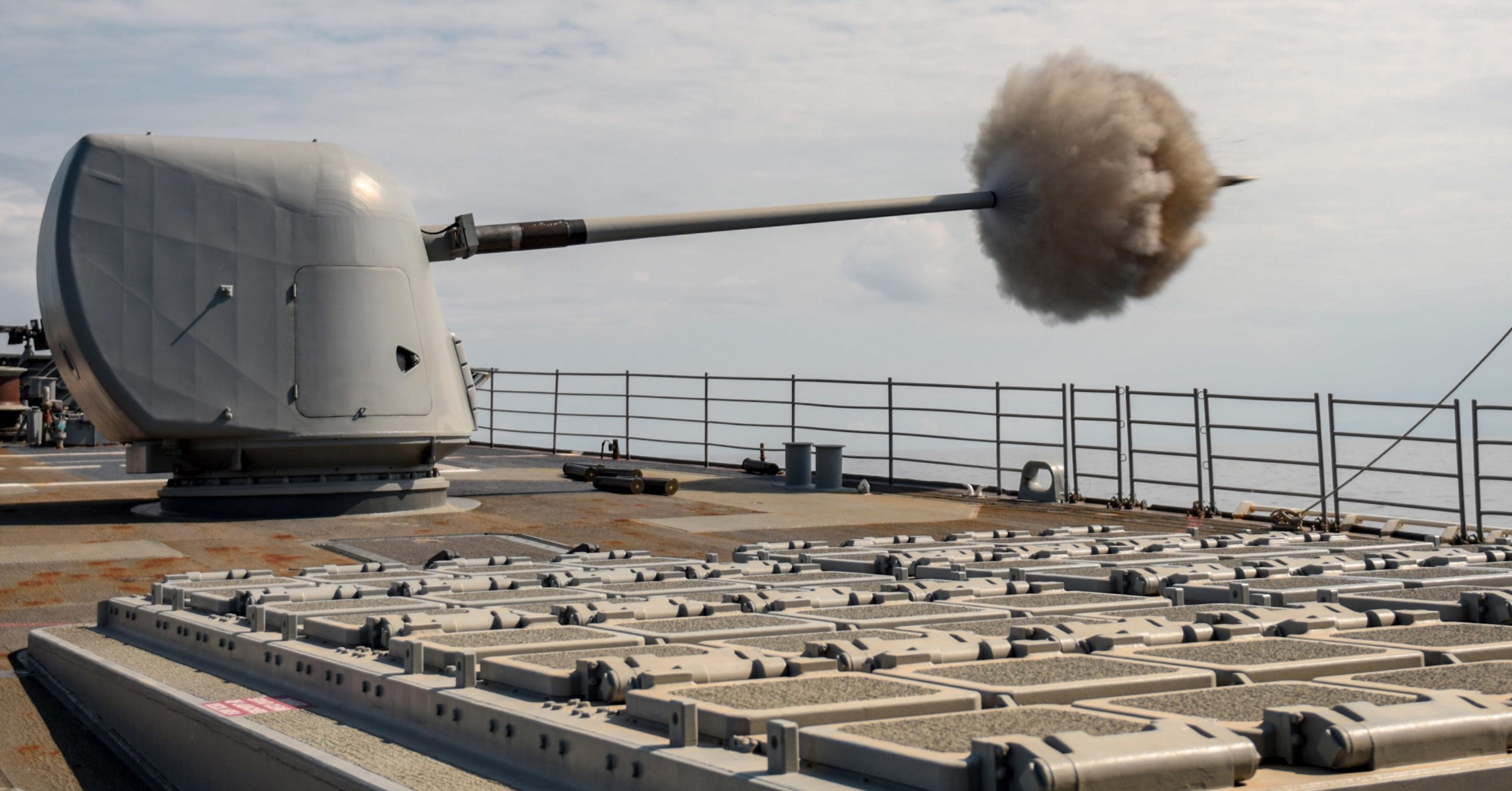 Mk.45 Mod.2 gun fire exercise - Adriatic Sea - June 2018 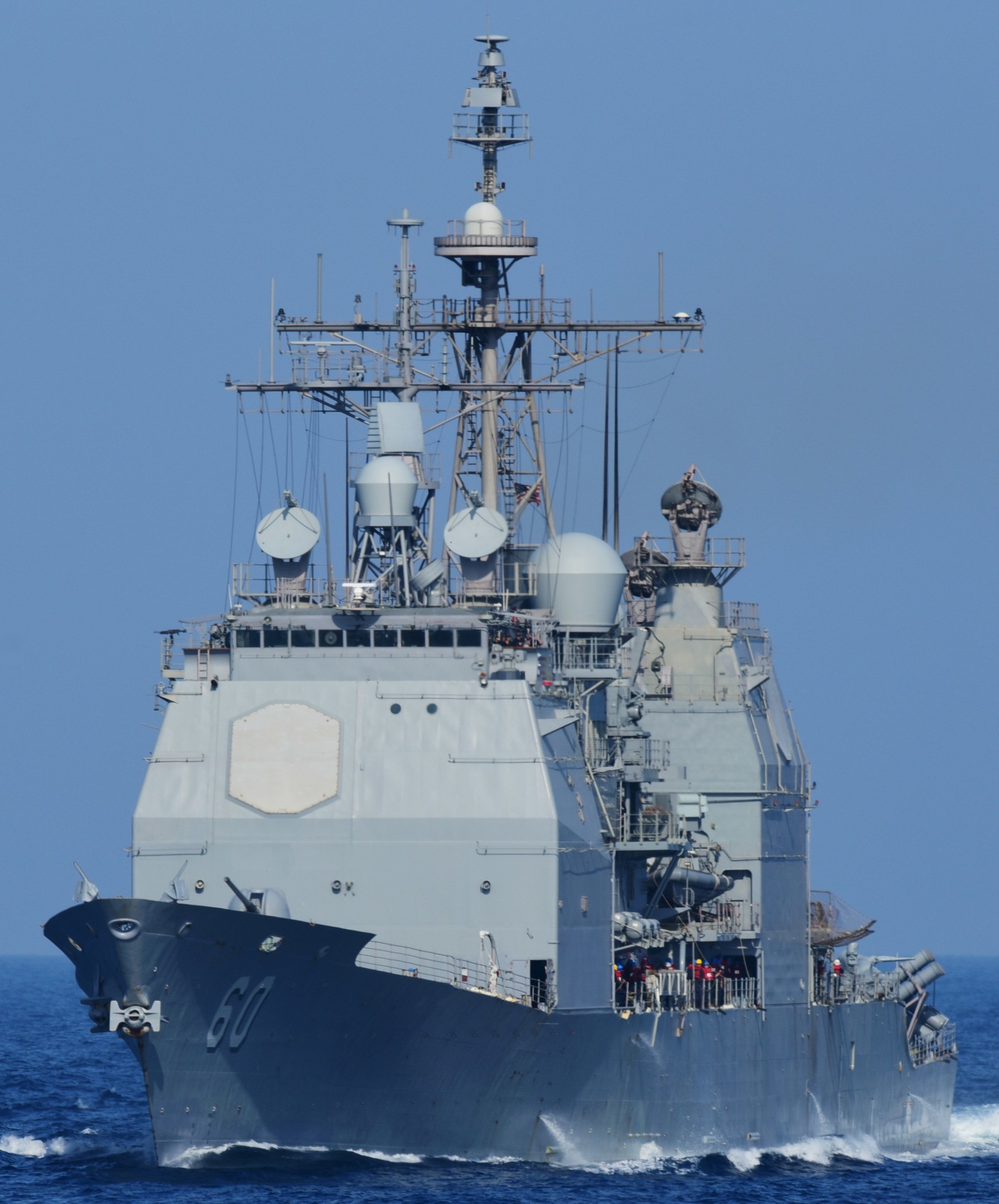 Mediterranean Sea - April 2018 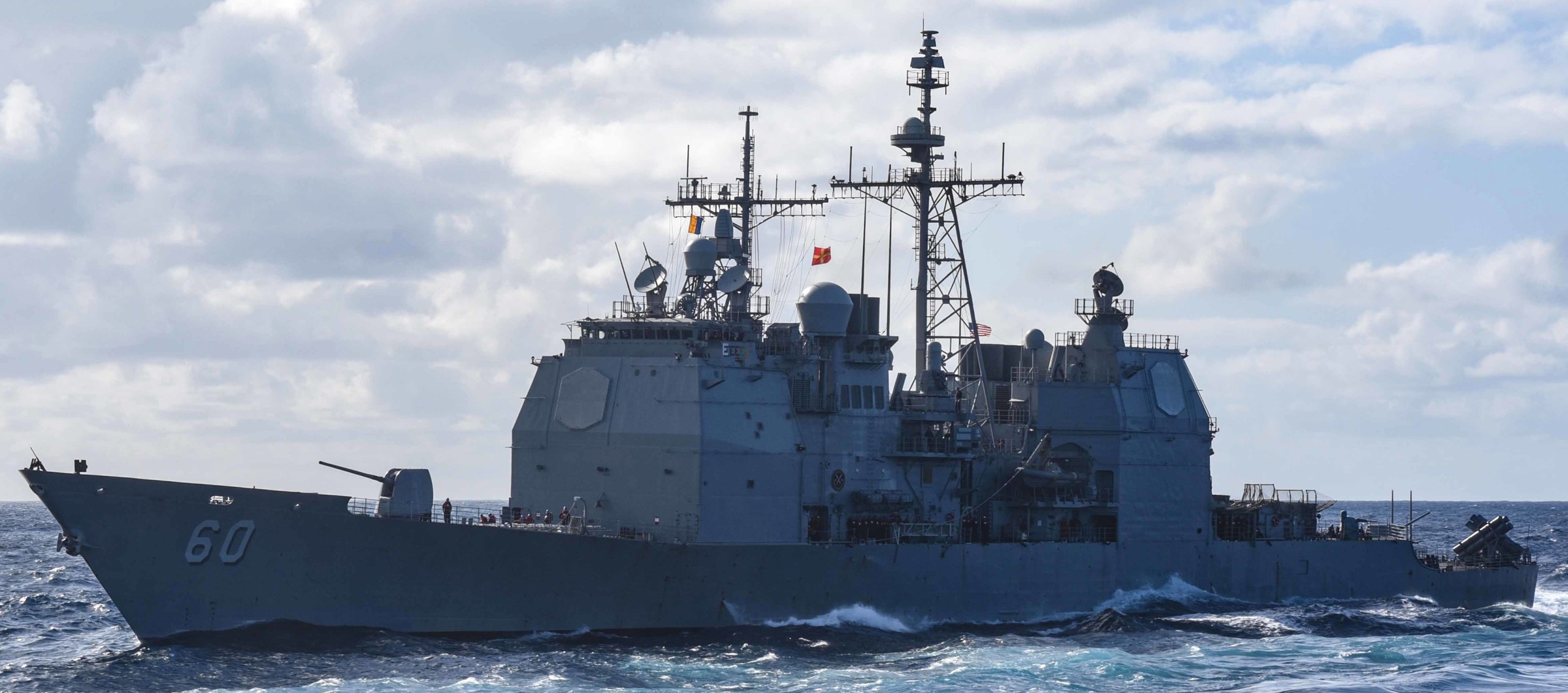 Atlantic Ocean - April 2018 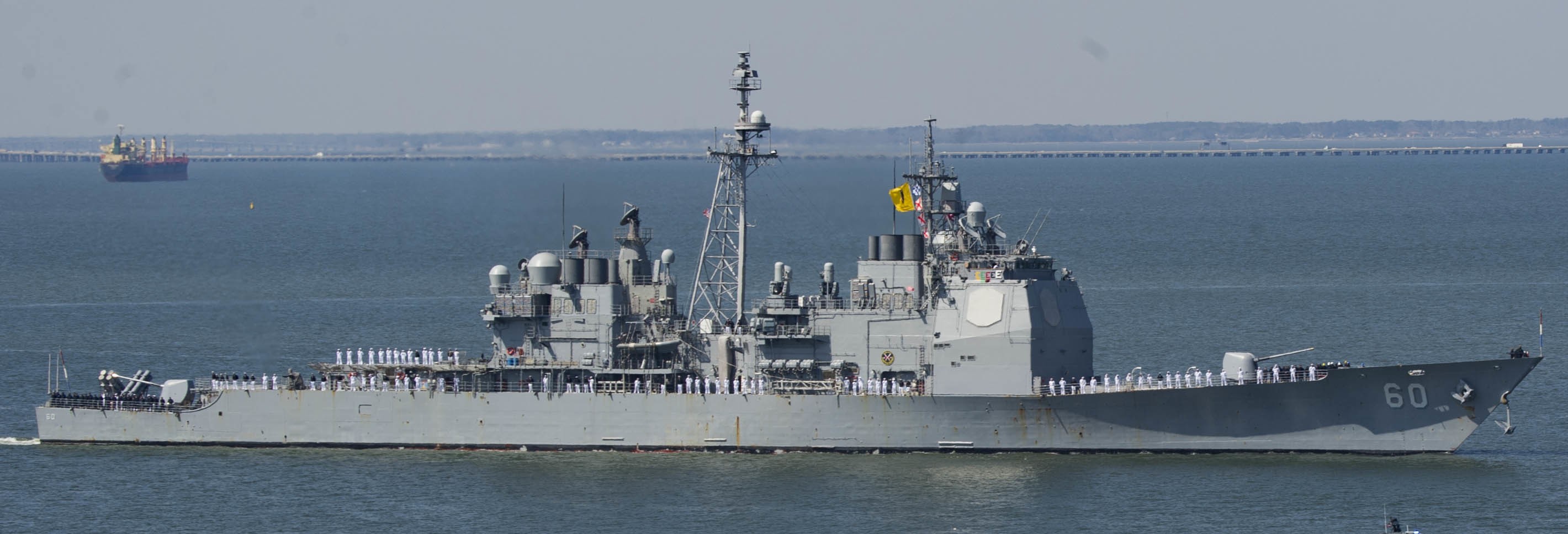 departing Naval Station Norfolk, Virginia - April 2018 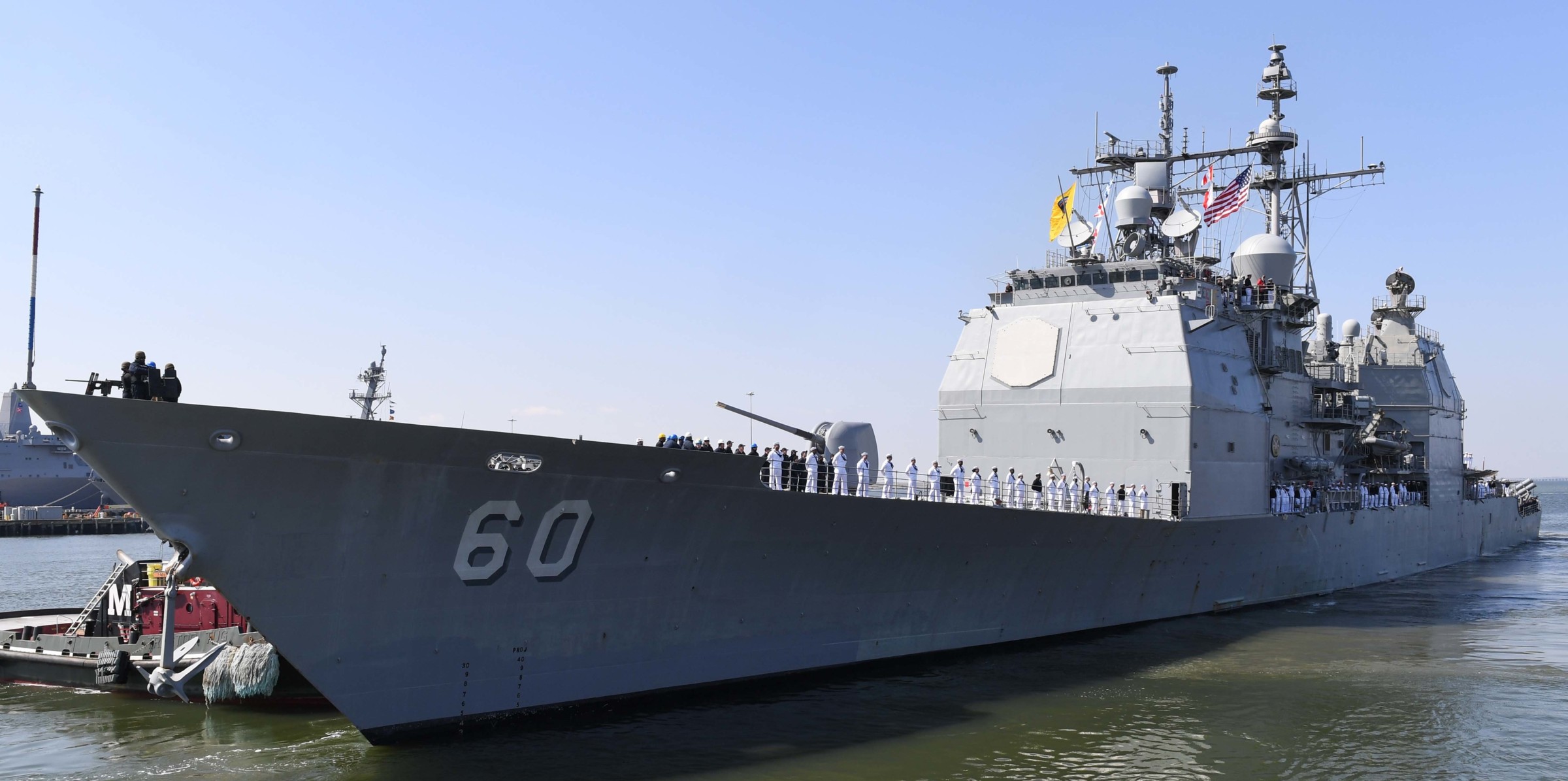 departing Naval Station Norfolk, Virginia - April 2018 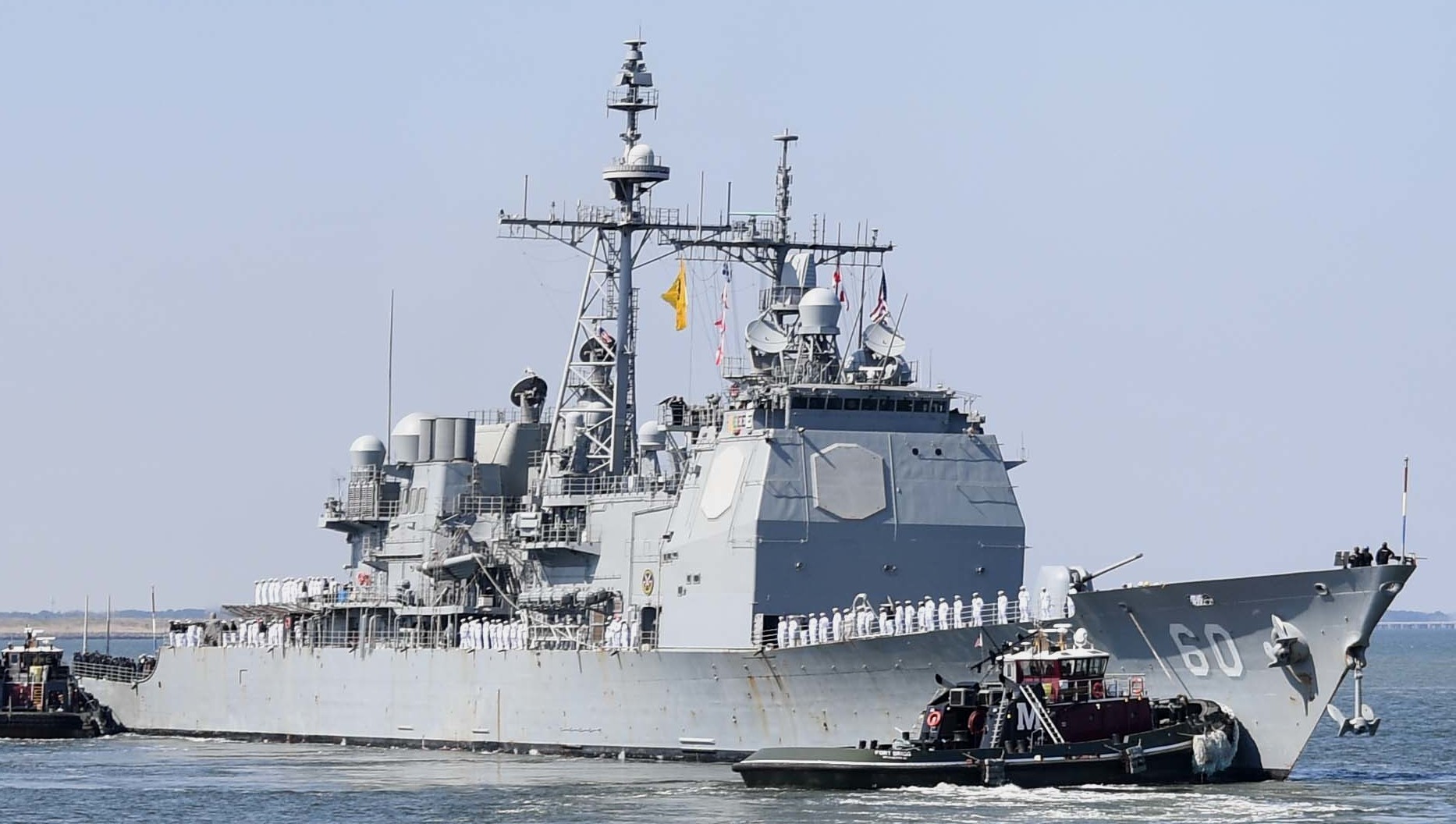 departing Naval Station Norfolk, Virginia - April 2018 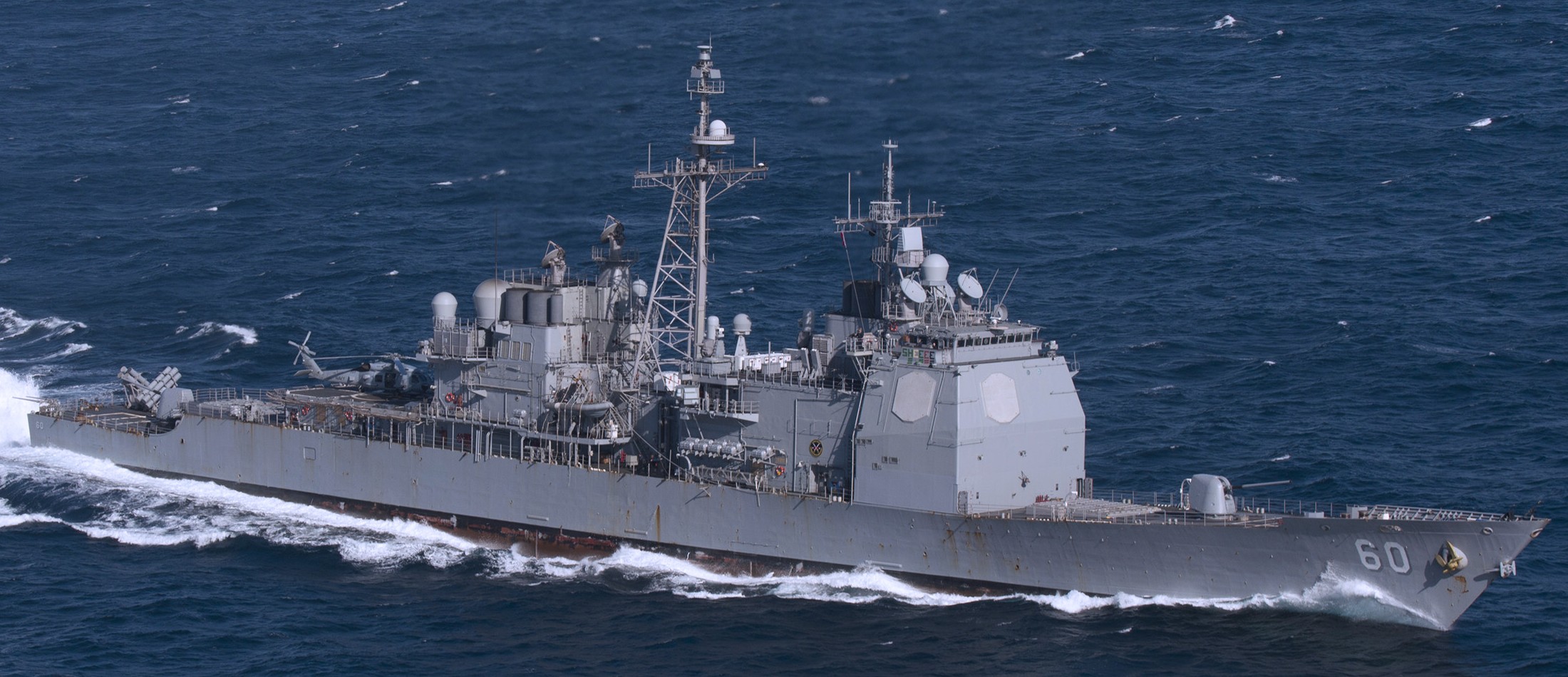 Atlantic Ocean - February 2018 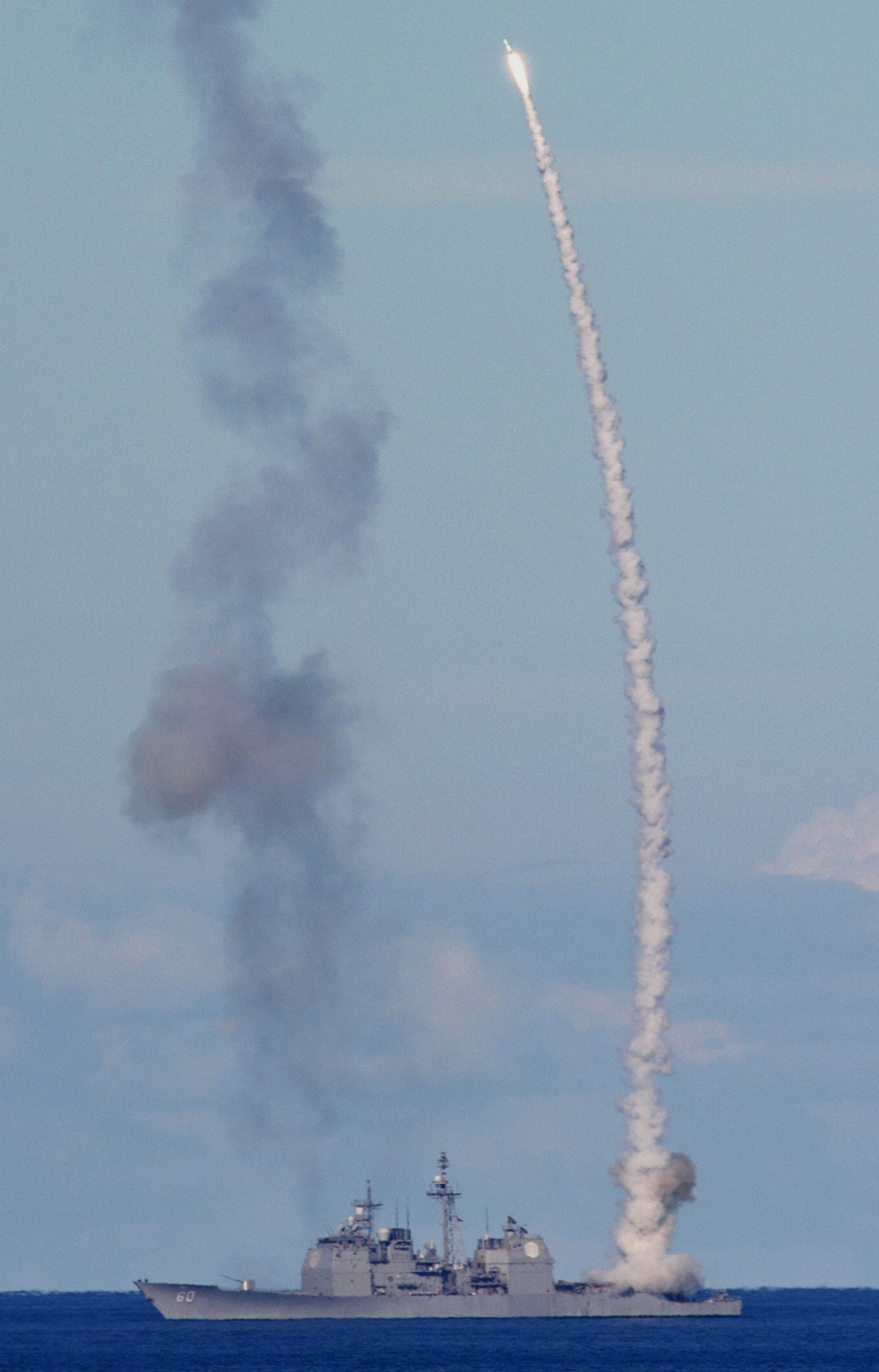 firing a Standard Missile SM-2 - Atlantic Ocean - November 2017 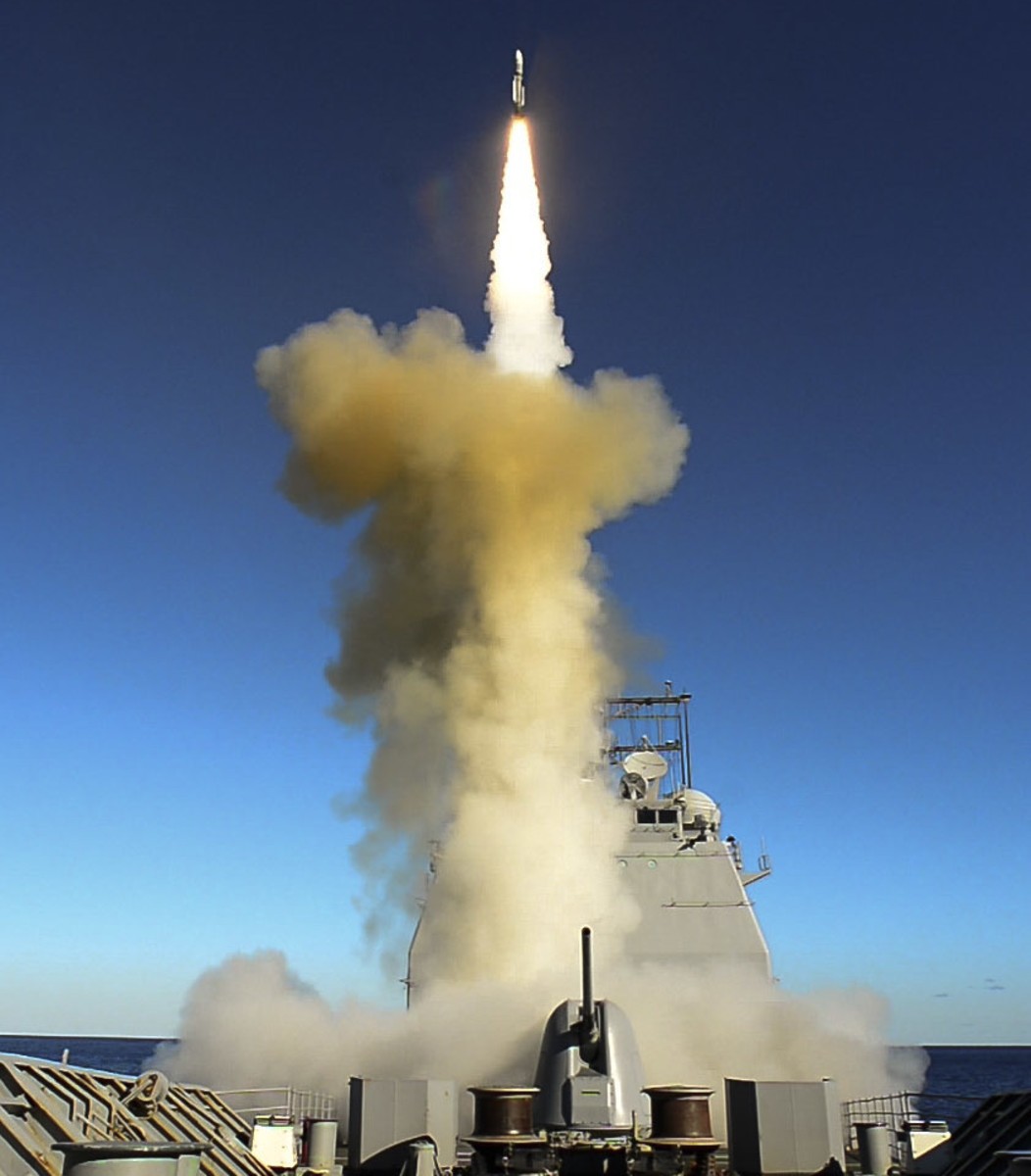 firing a Standard Missile SM-2 - Atlantic Ocean - November 2017 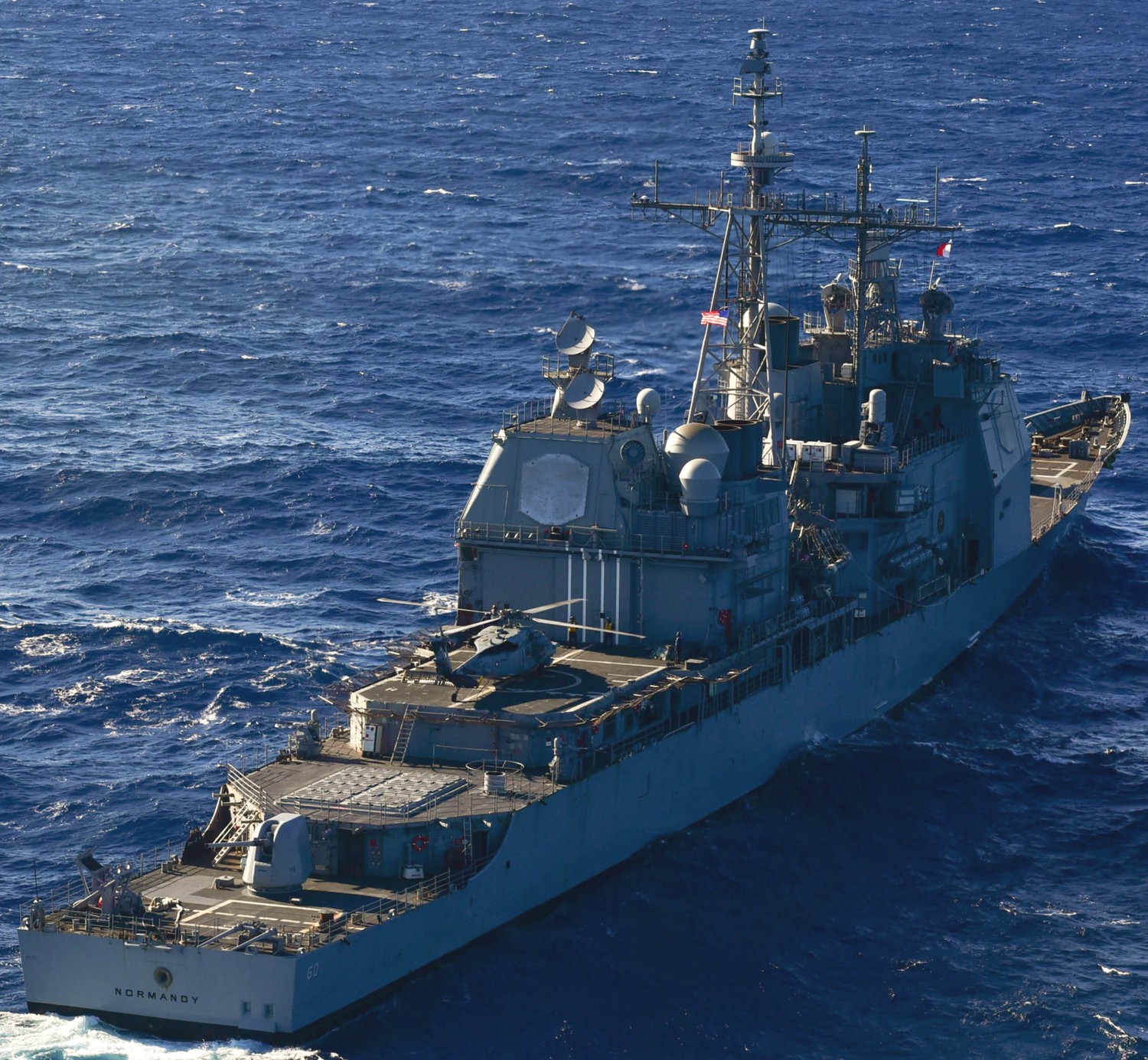 Atlantic Ocean - October 2017 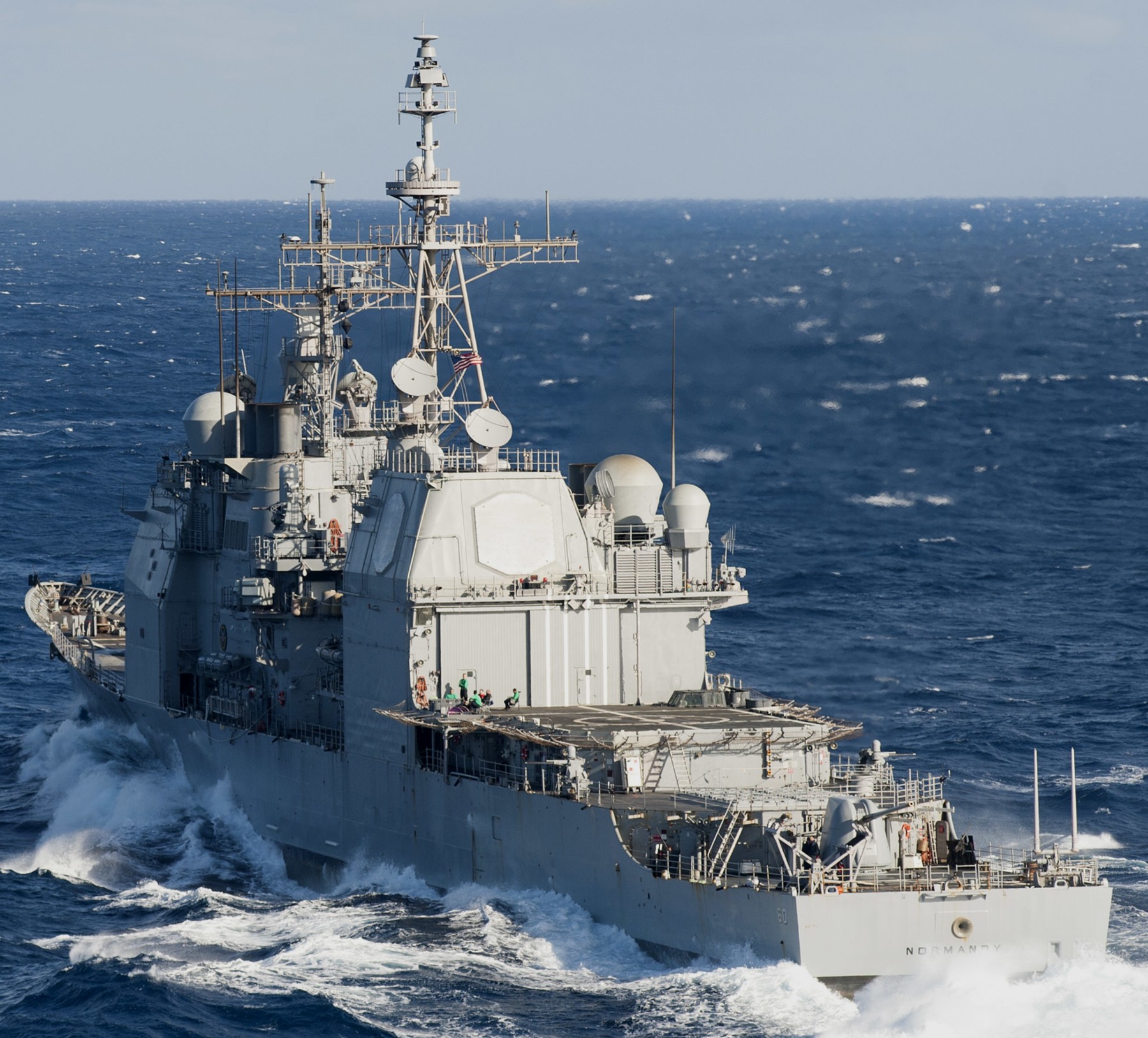 Atlantic Ocean - October 2017 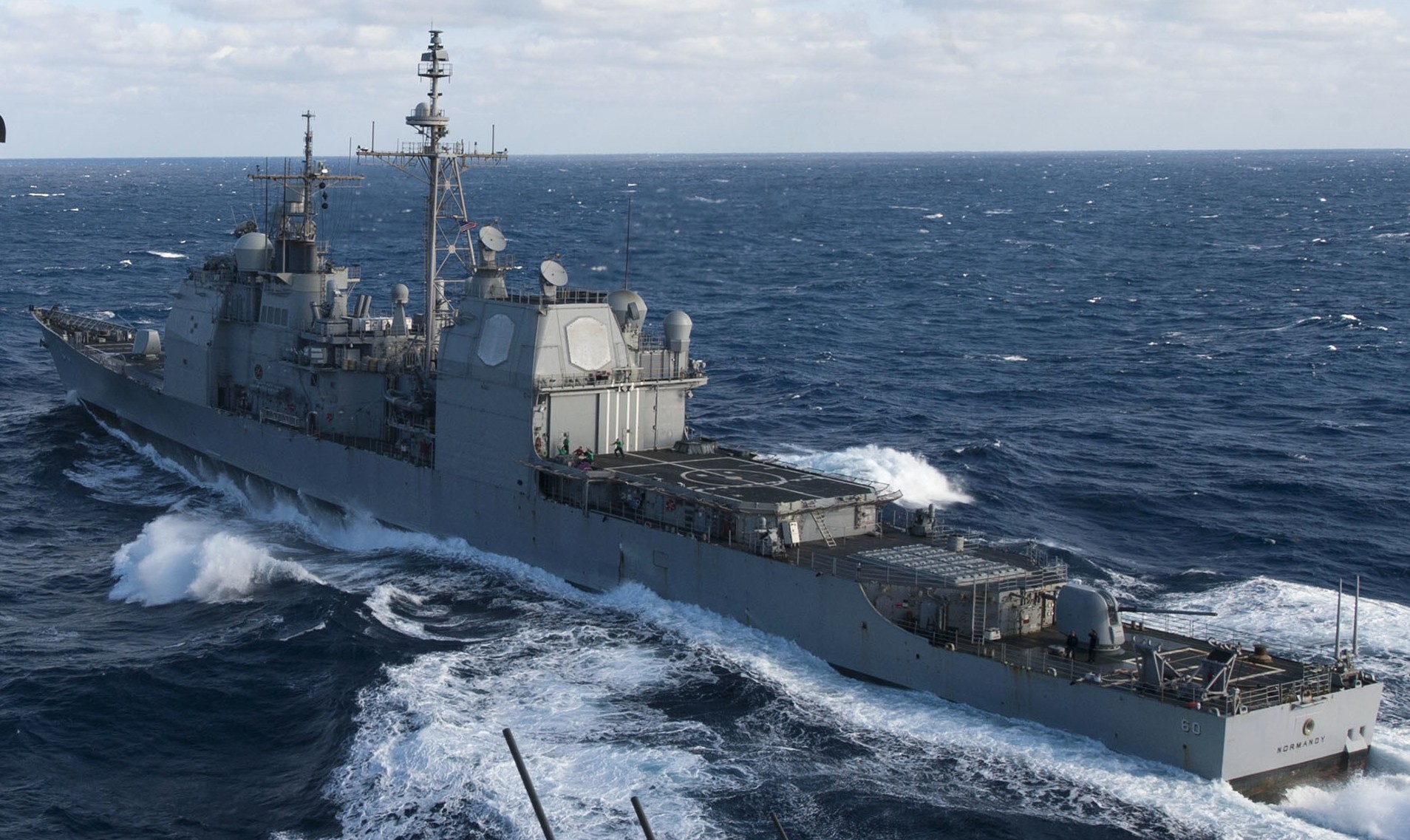 Atlantic Ocean - October 2017 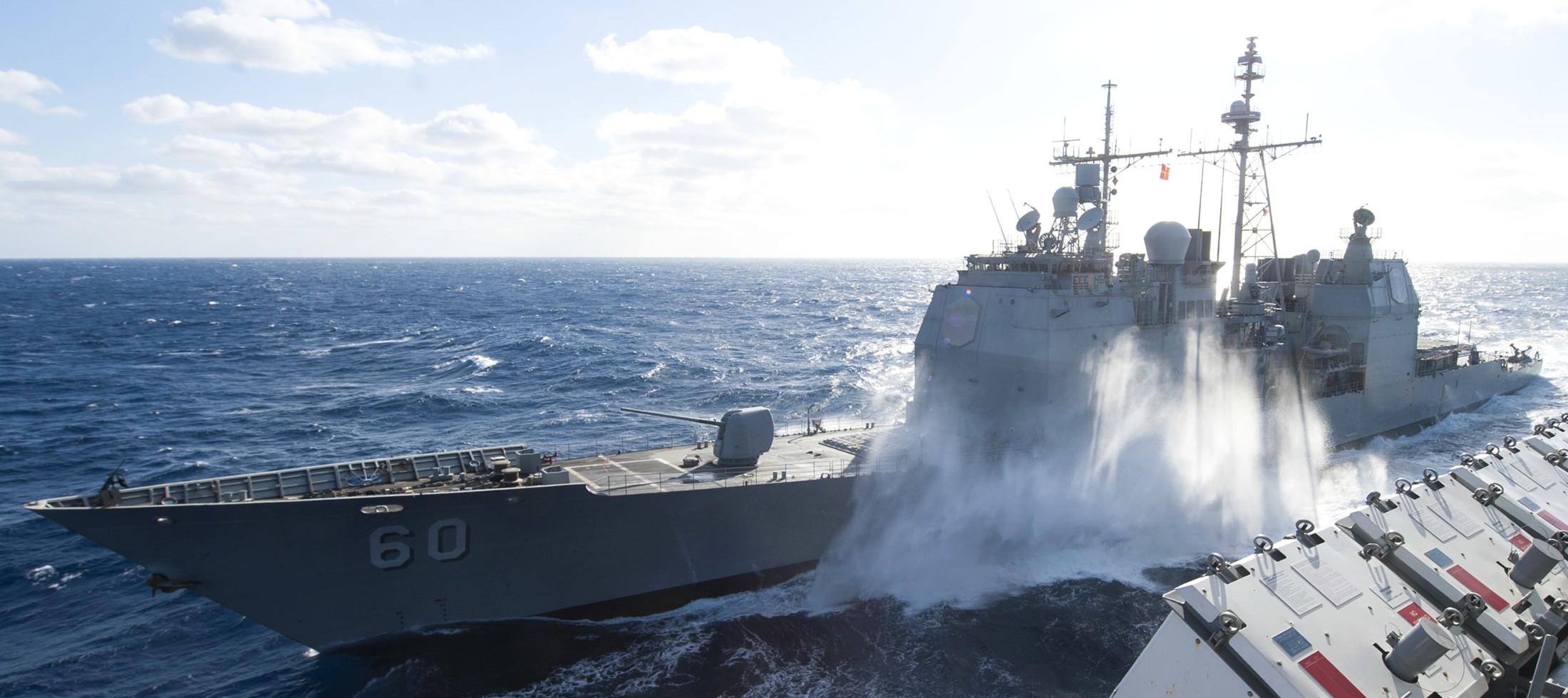 Atlantic Ocean - October 2017 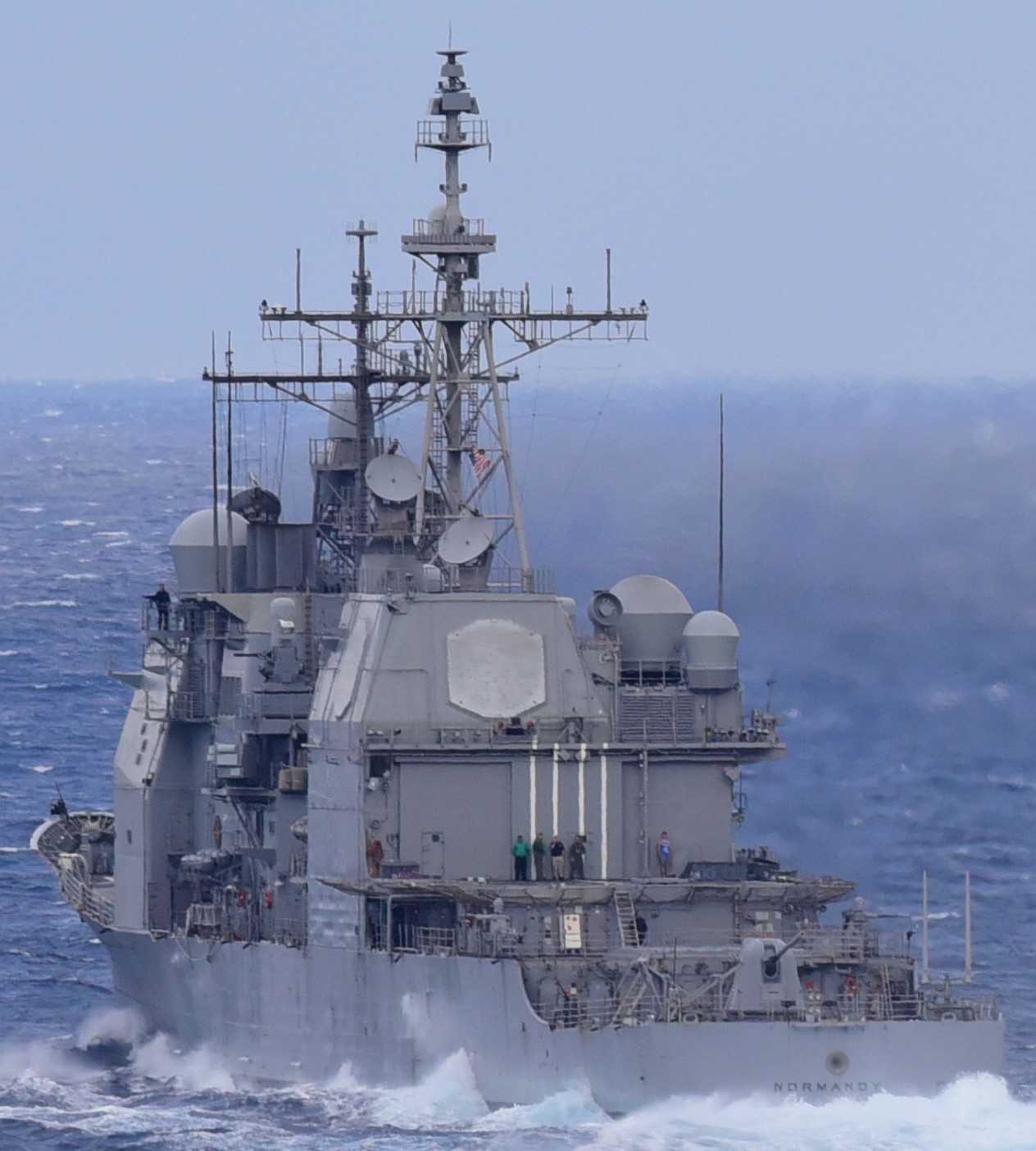 Atlantic Ocean - October 2017 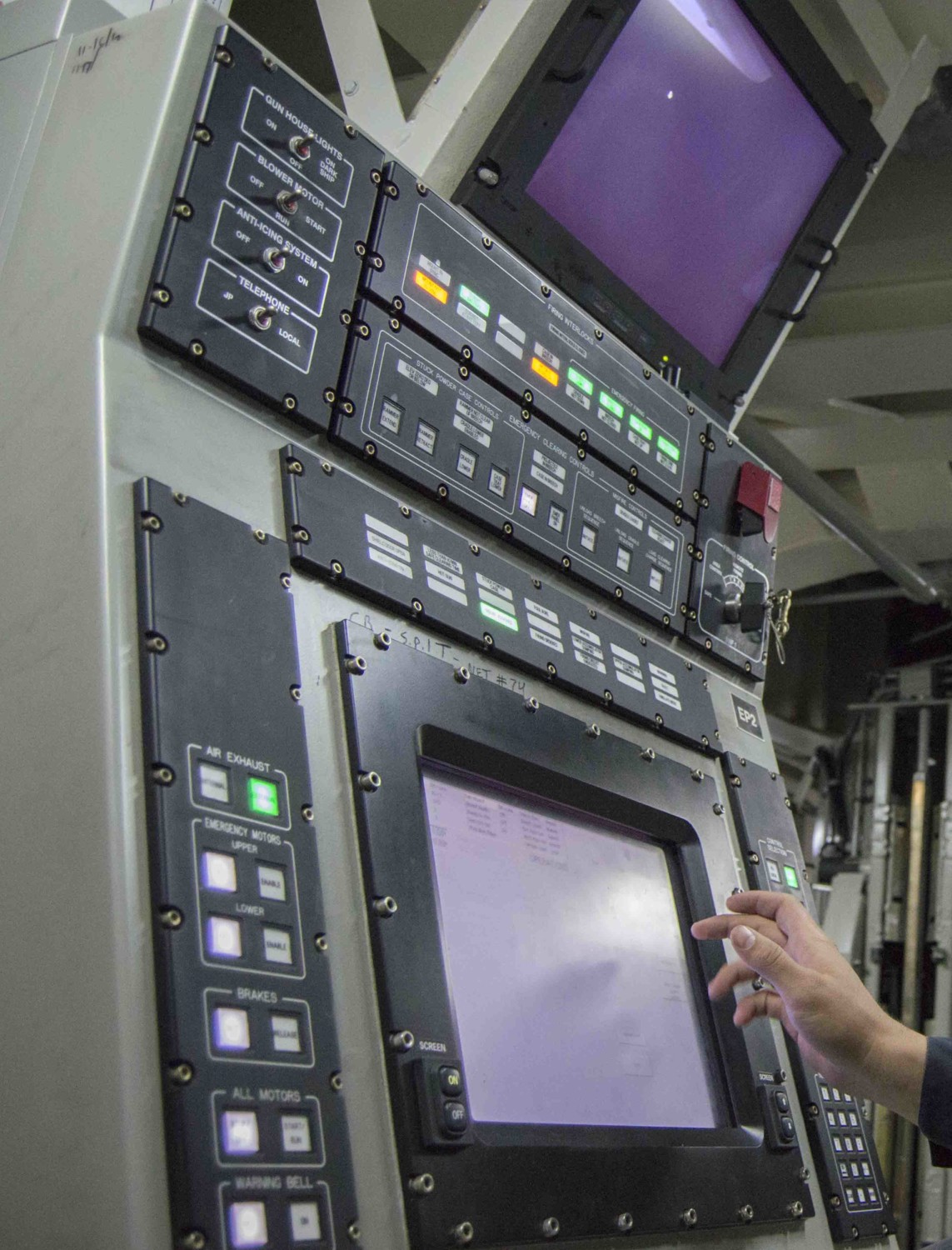 Mk.45 gun control console - November 2015 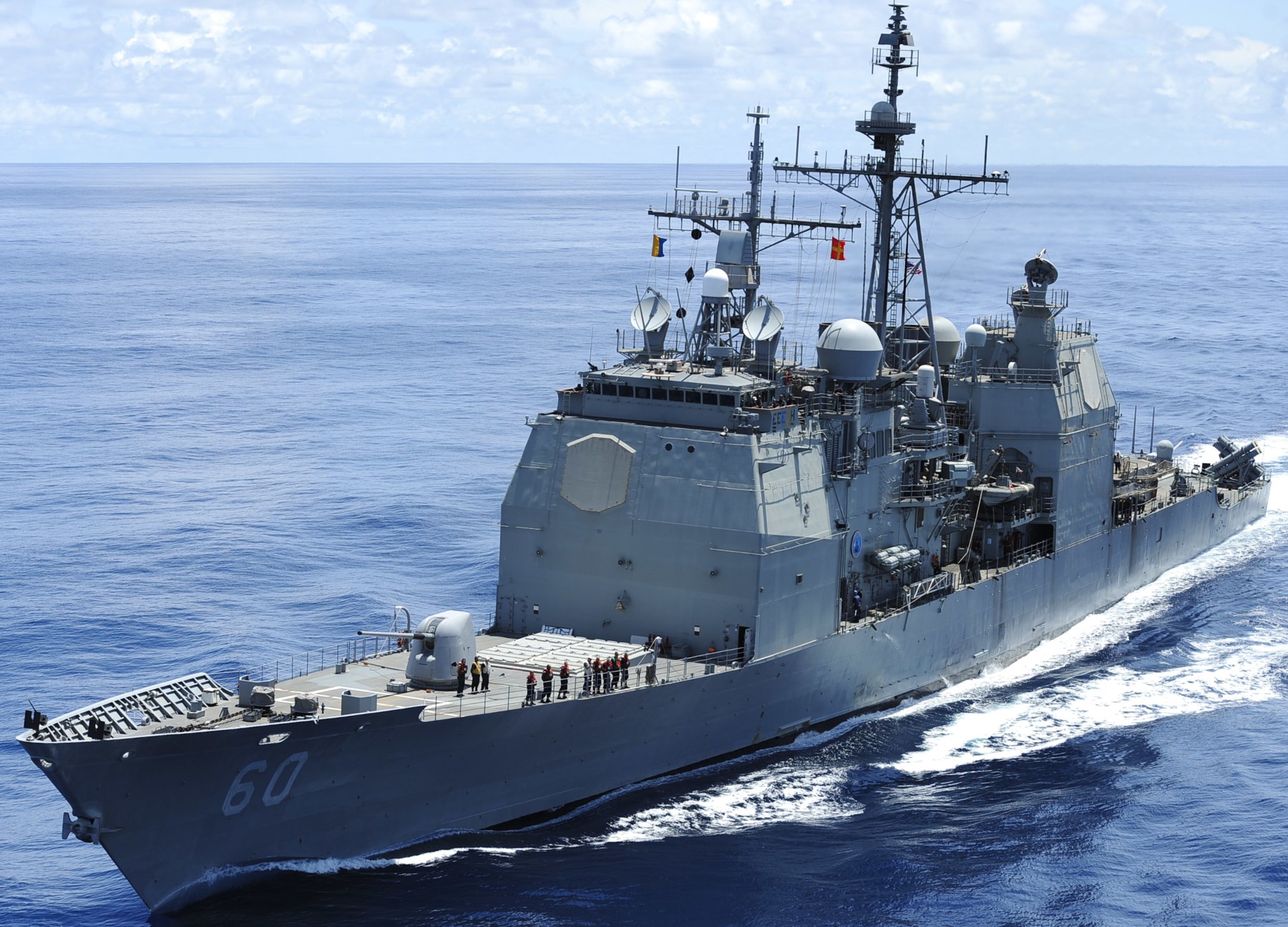 Indian Ocean - October 2015 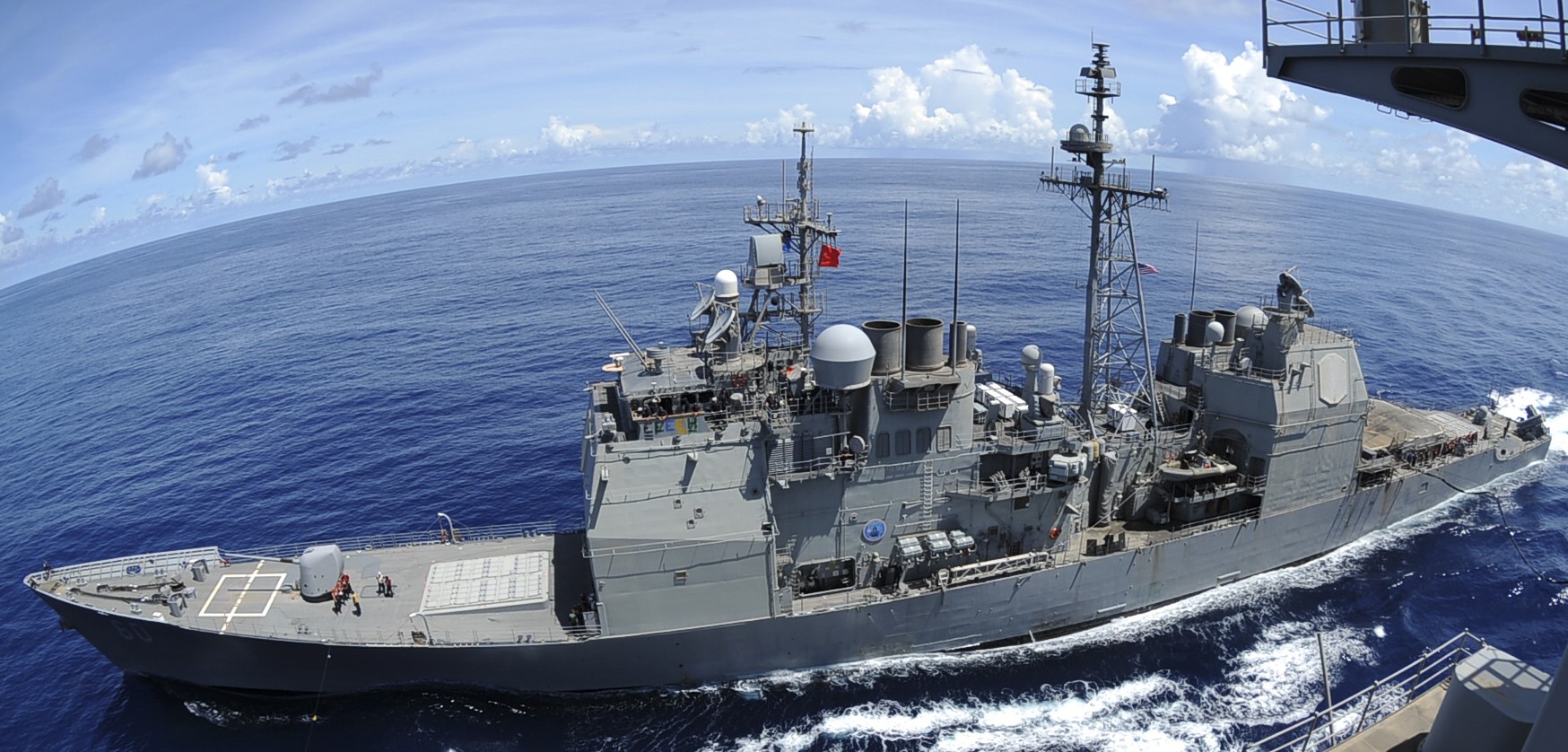 Indian Ocean - October 2015 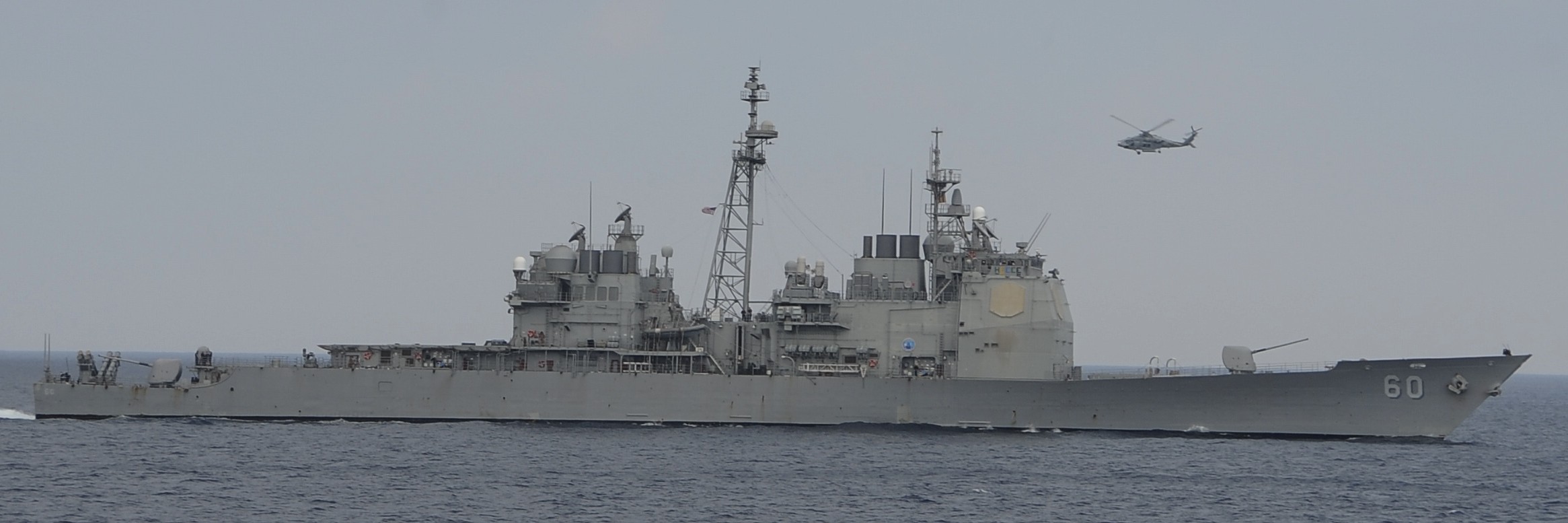 Indian Ocean - October 2015 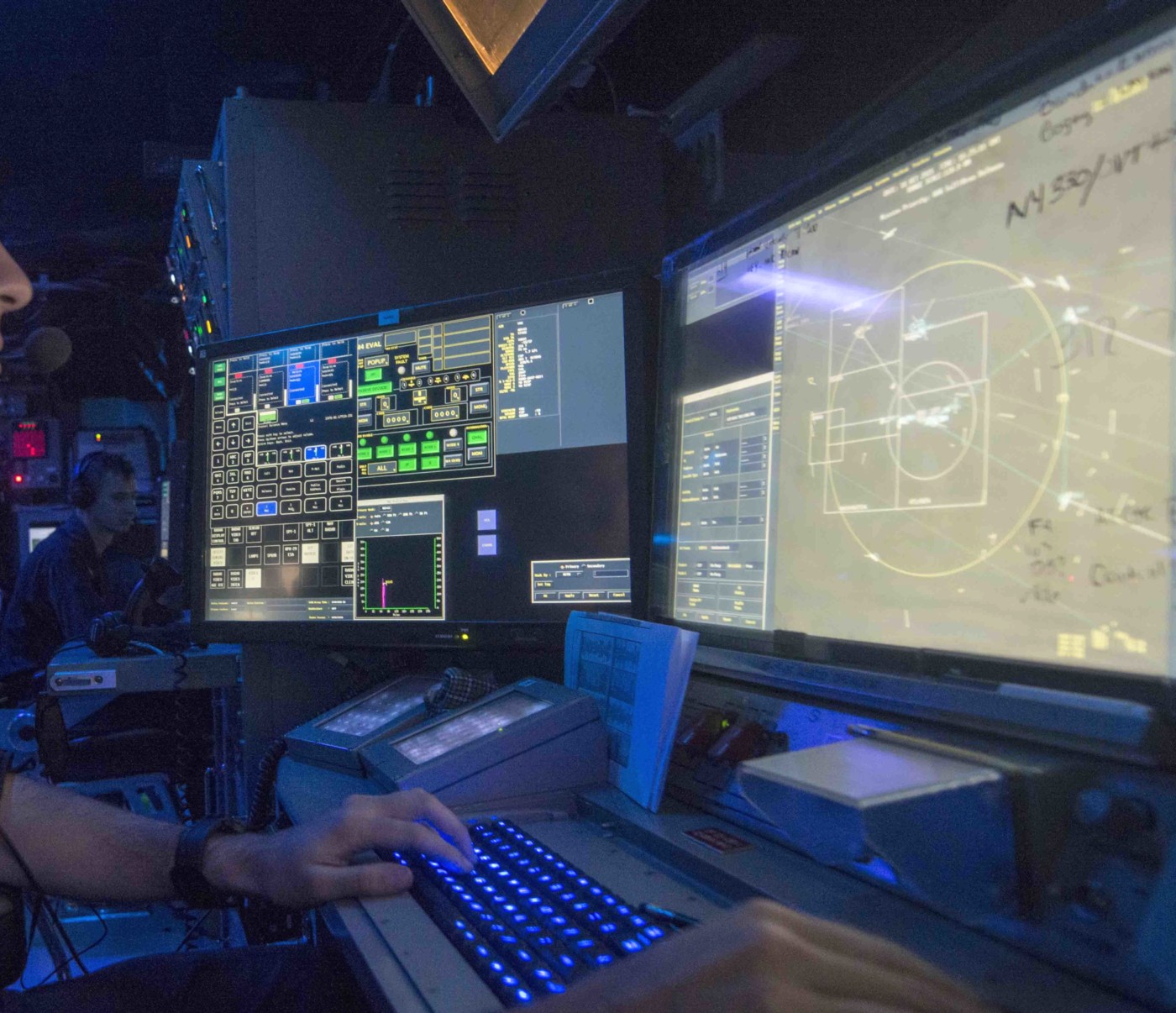 Combat Information Center (CIC) - Indian Ocean - October 2015 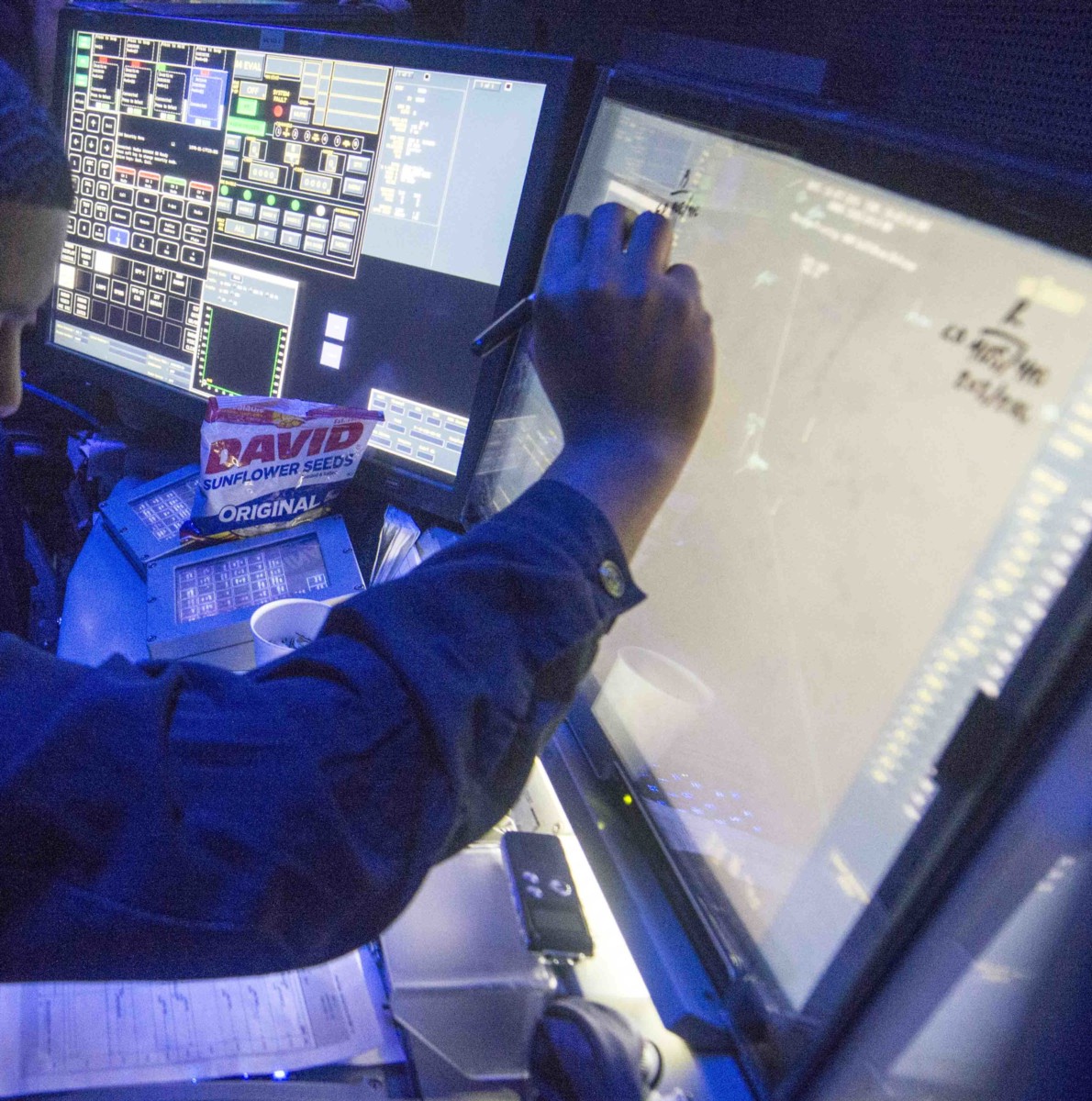 Combat Information Center (CIC) - Indian Ocean - October 2015 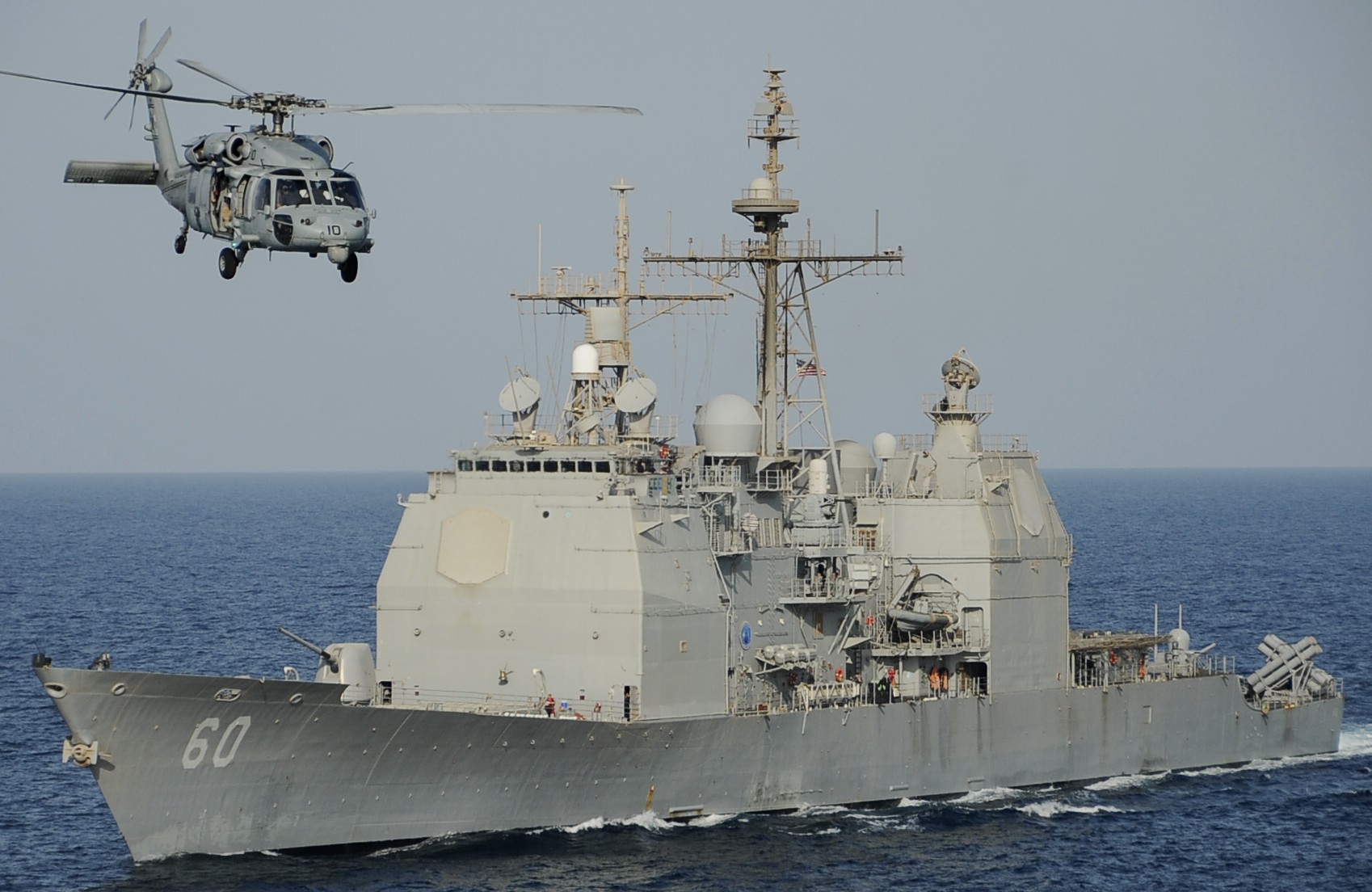 Arabian Gulf - September 2015 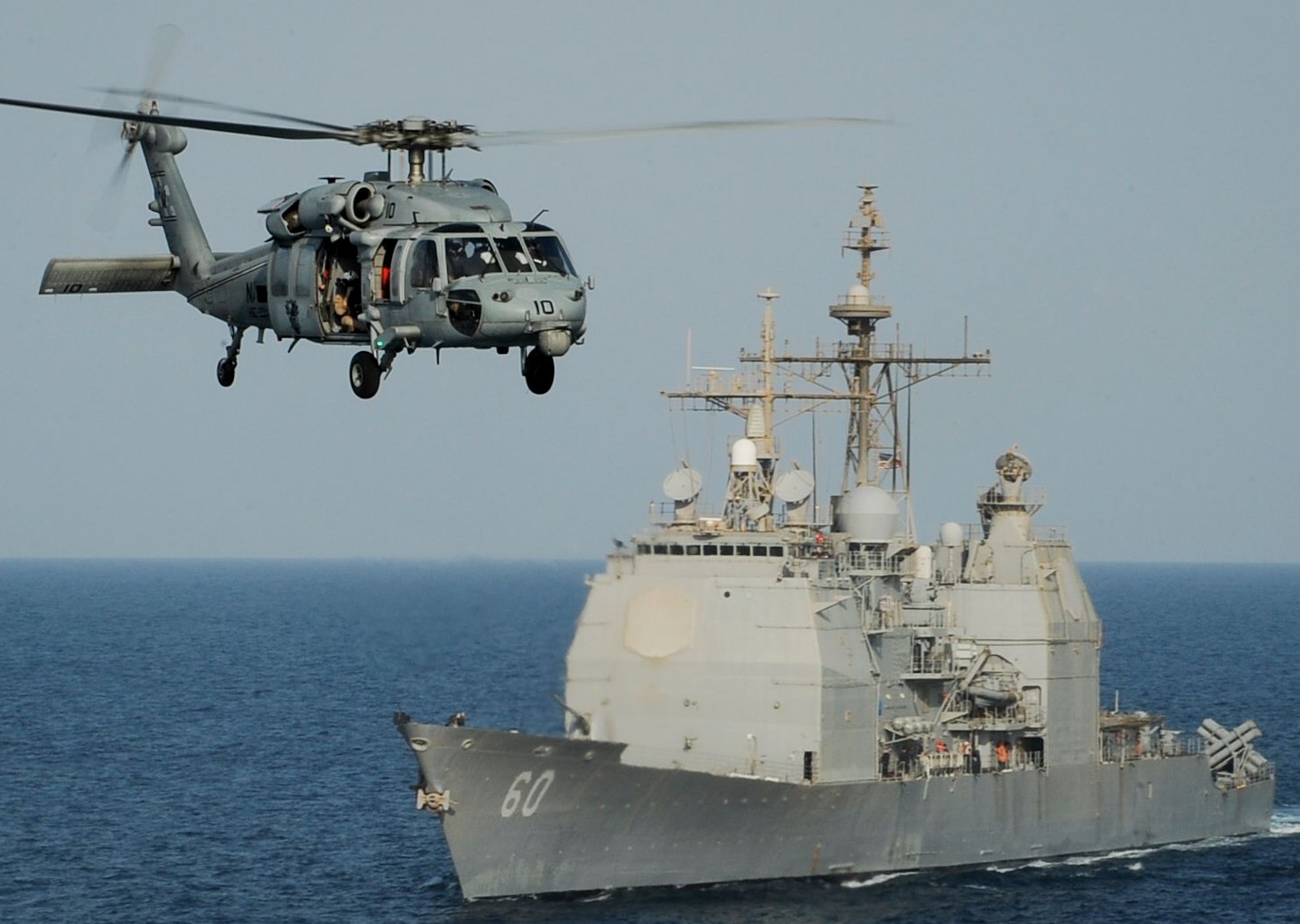 Arabian Gulf - September 2015 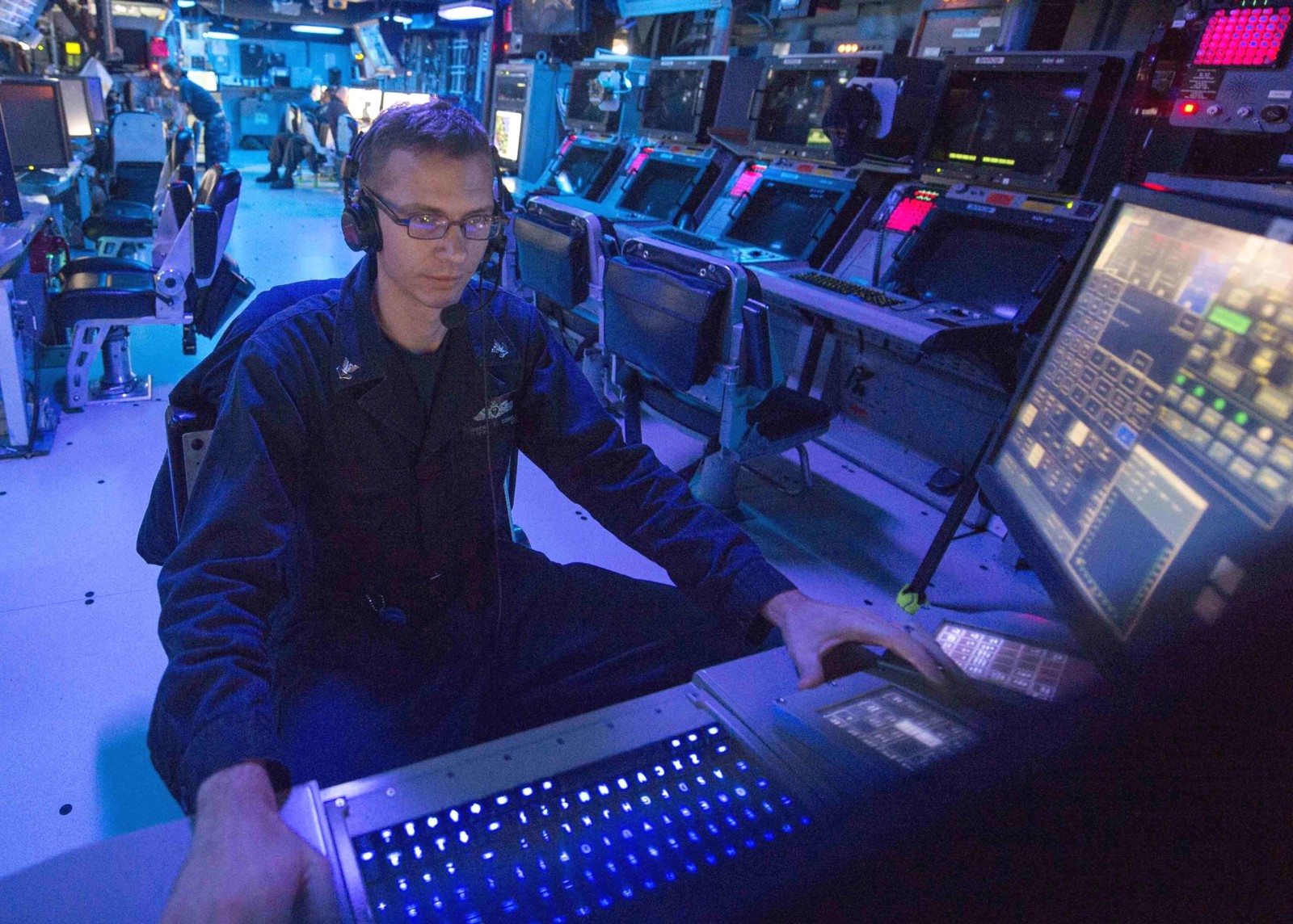 Combat Information Center (CIC) - 5th Fleet AOR - September 2015 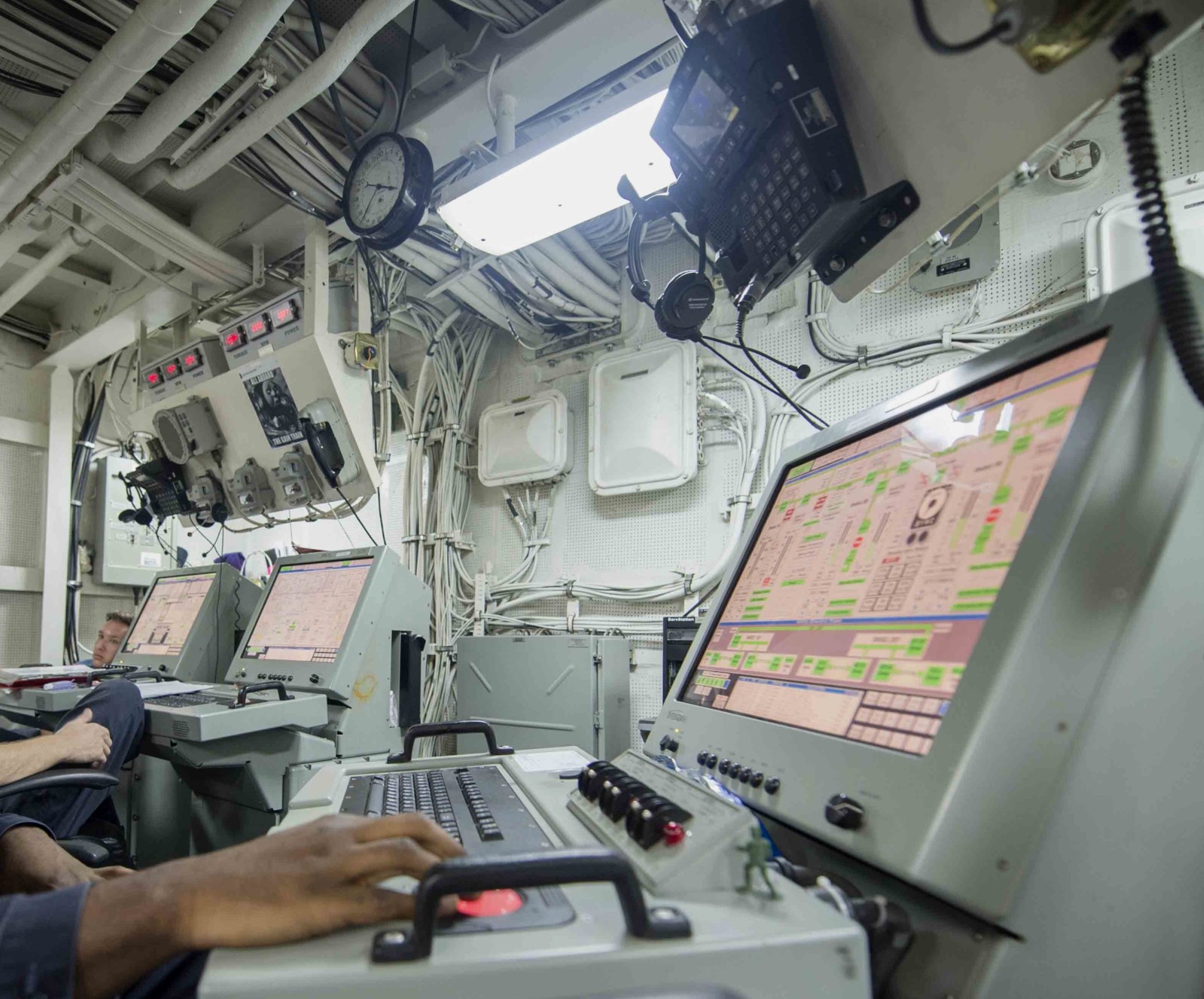 Central Control Station - August 2015 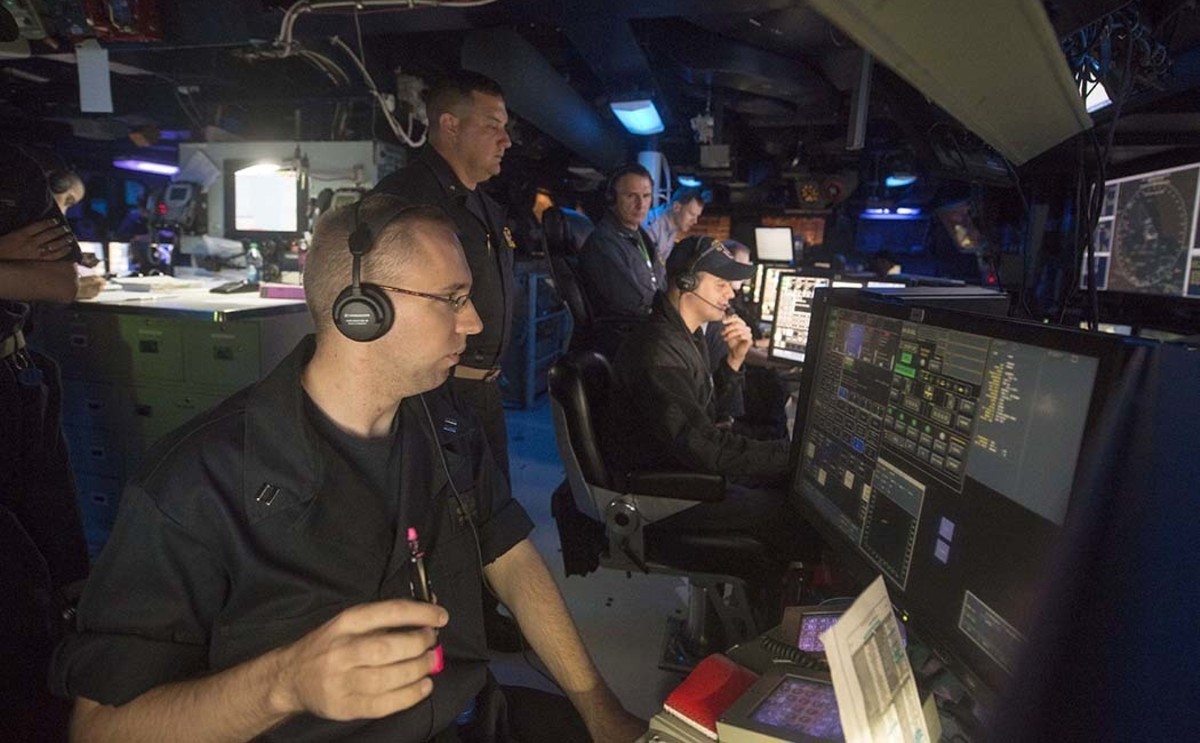 5th Fleet AOR - June 2015 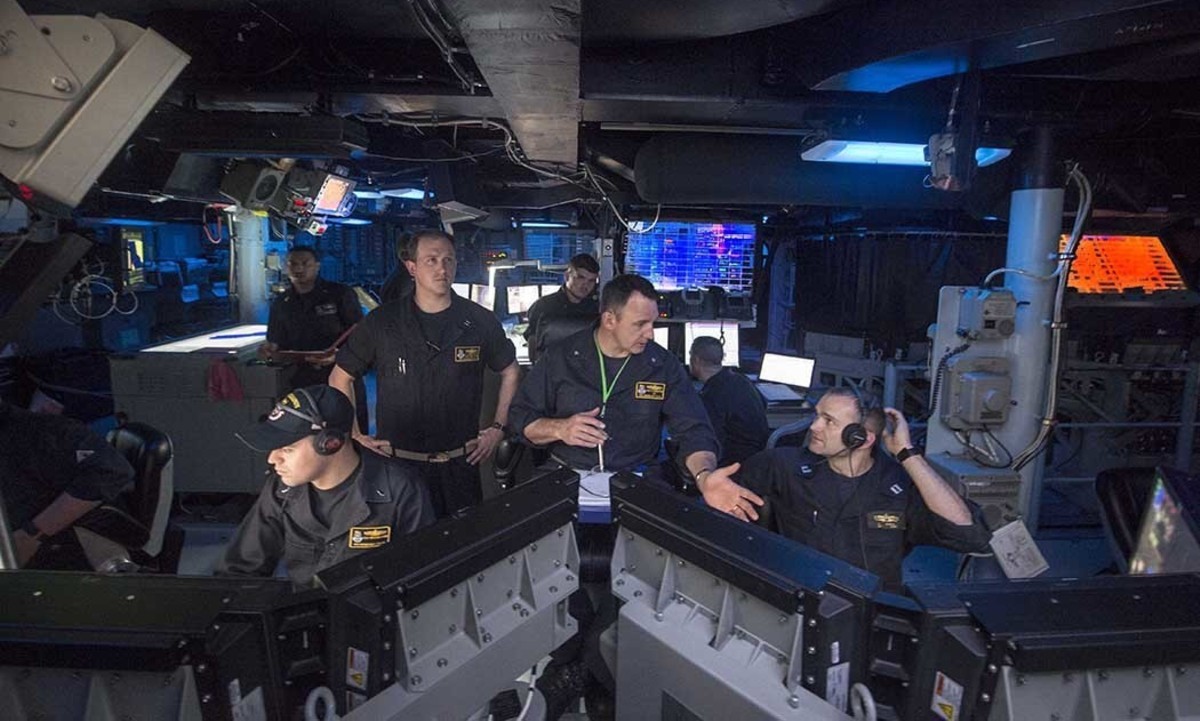 5th Fleet AOR - April 2015 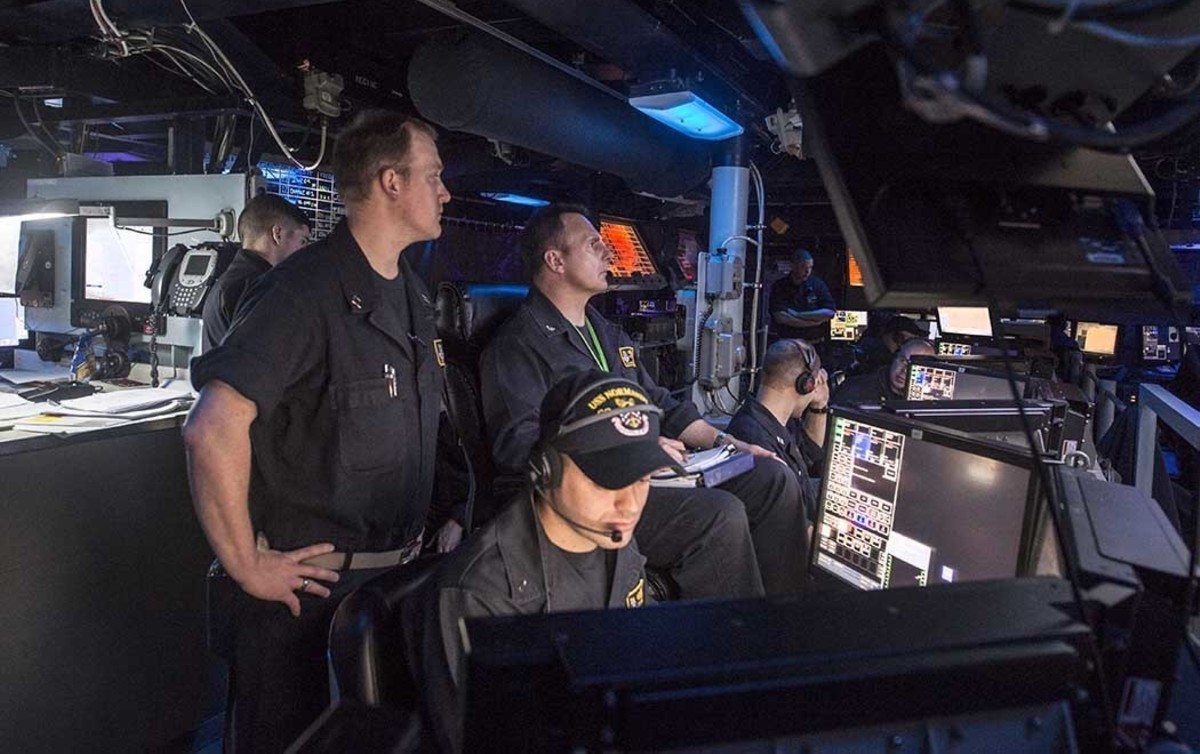 5th Fleet AOR - April 2015 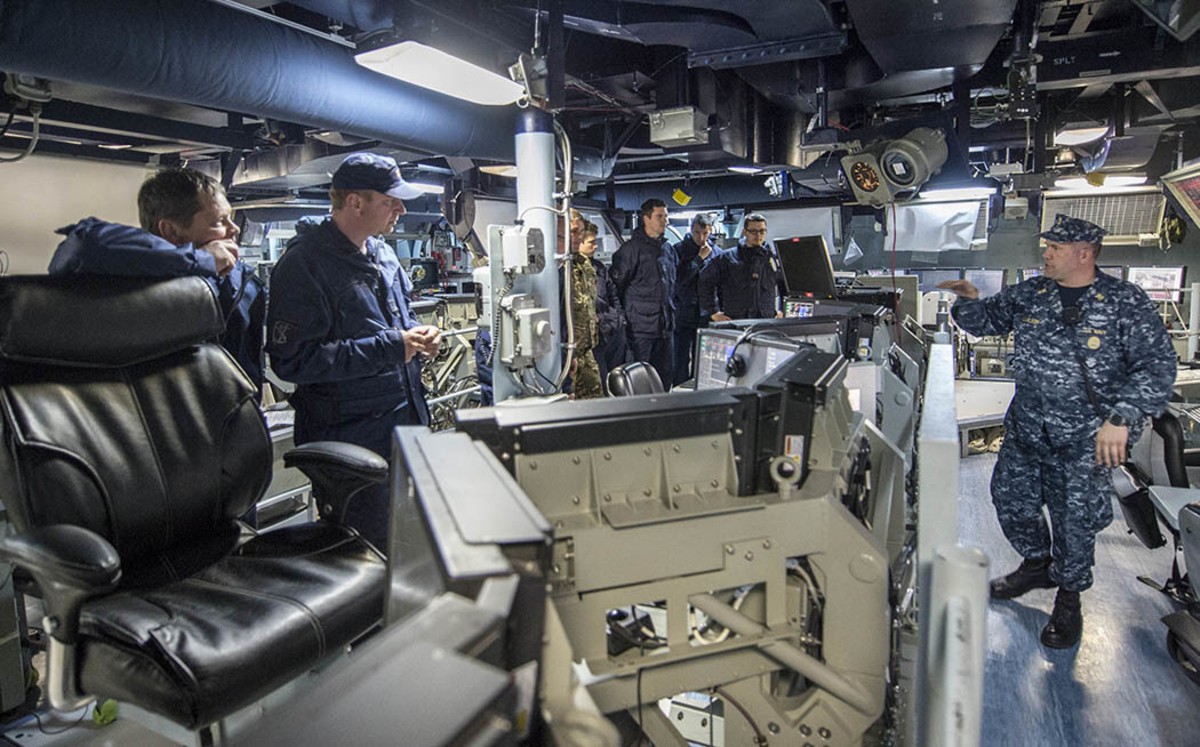 Combat Information Center (CIC) - April 2015 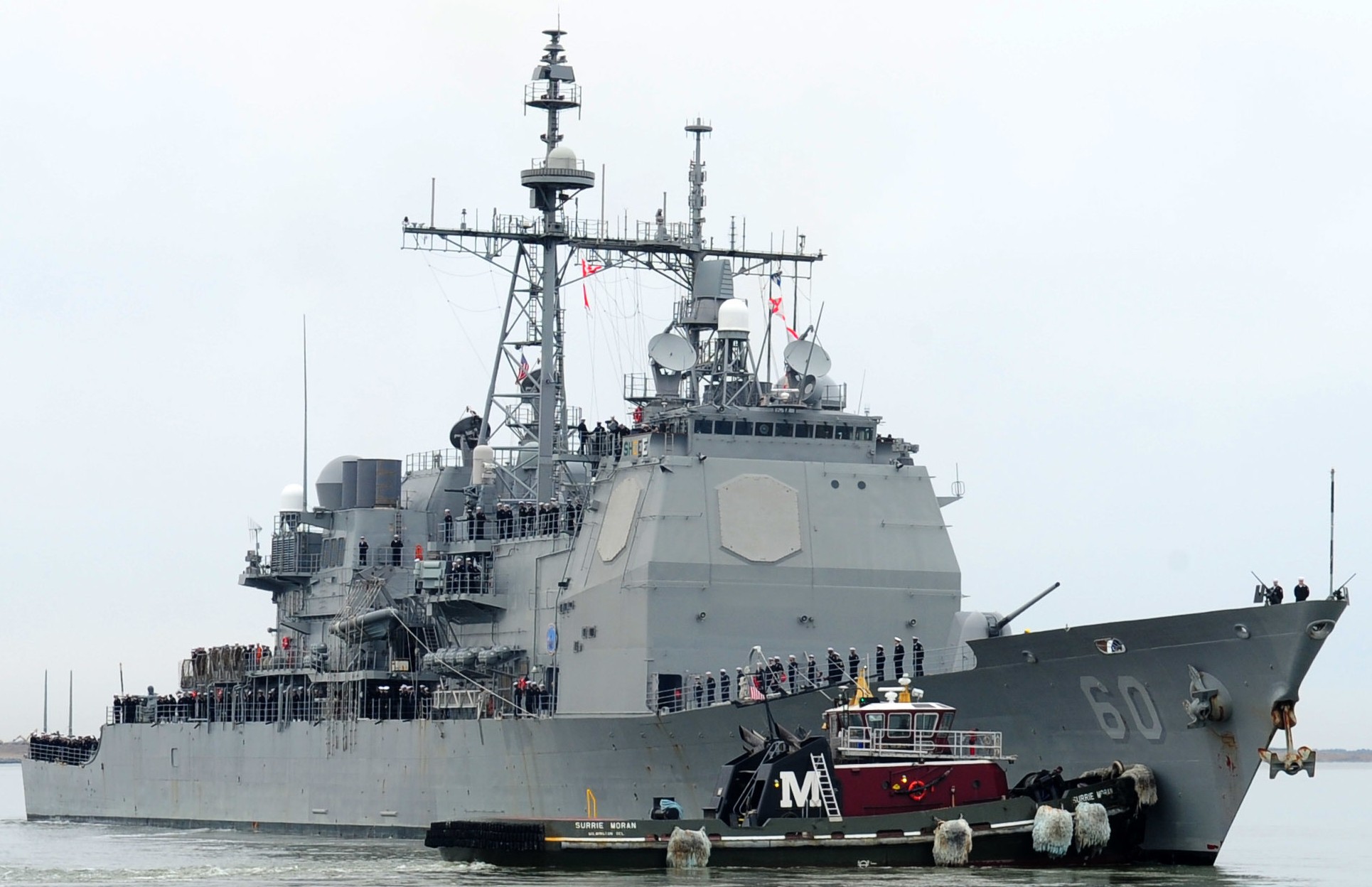 departing Naval Station Norfolk, Virginia - March 2015 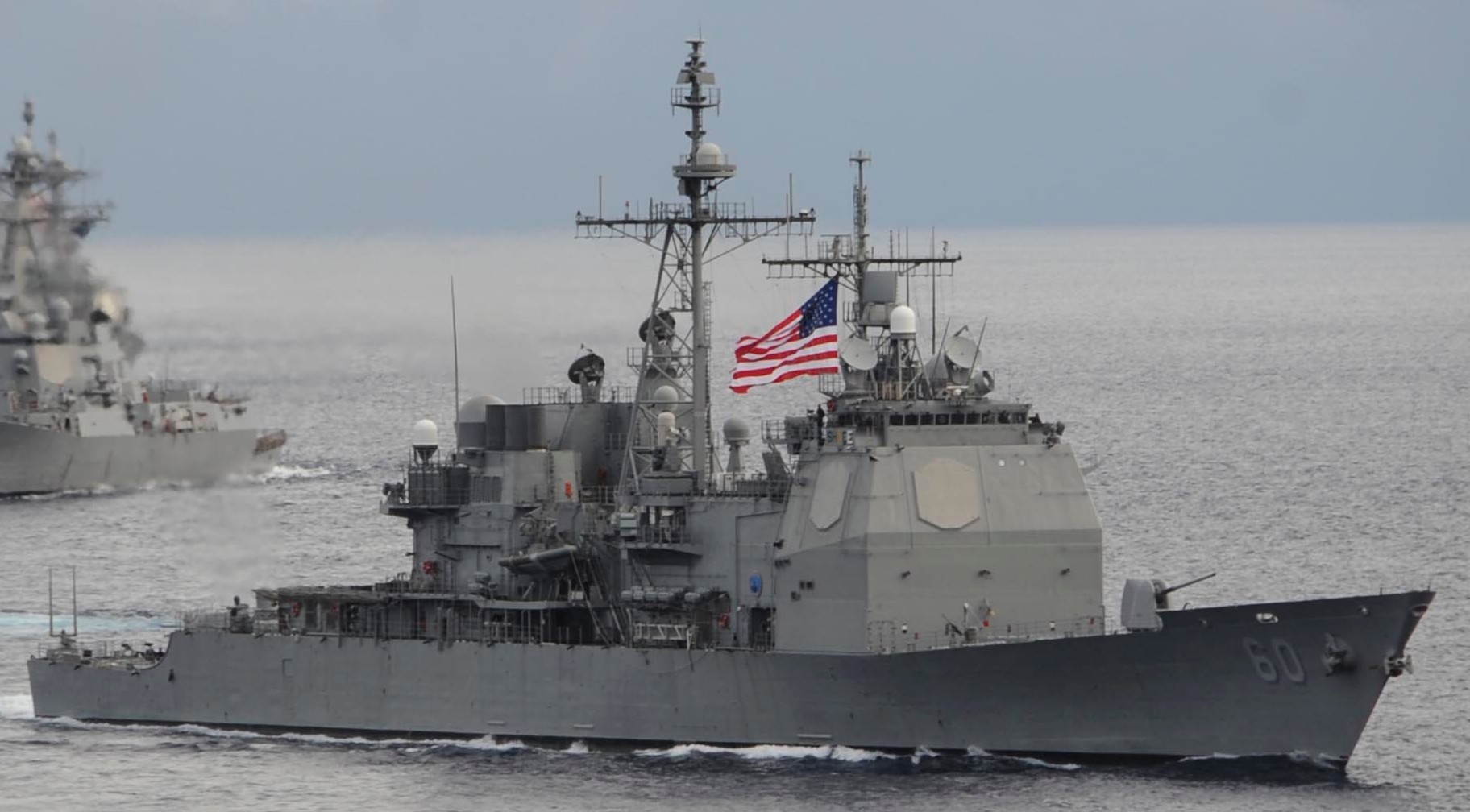 Atlantic Ocean - September 2014 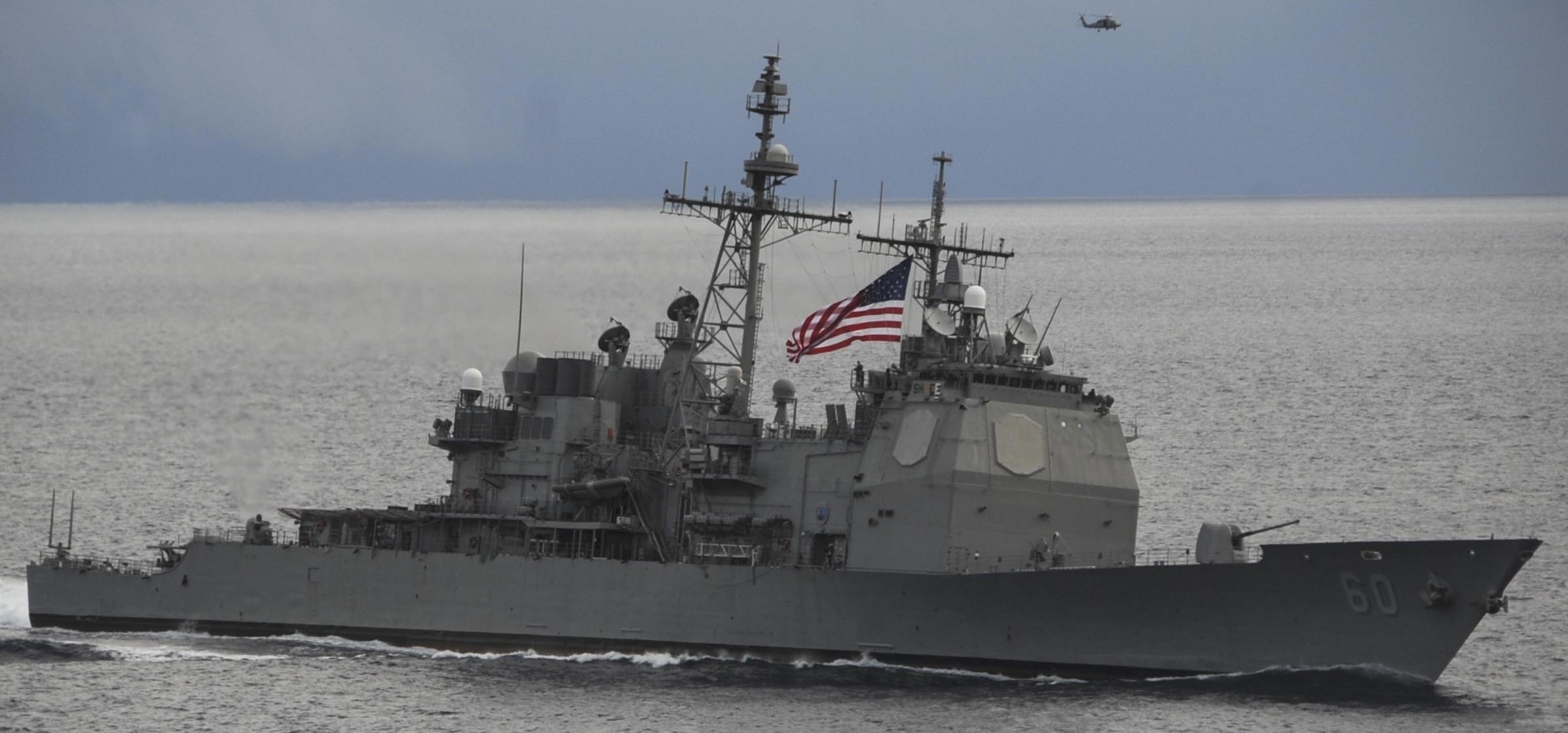 Atlantic Ocean - September 2014 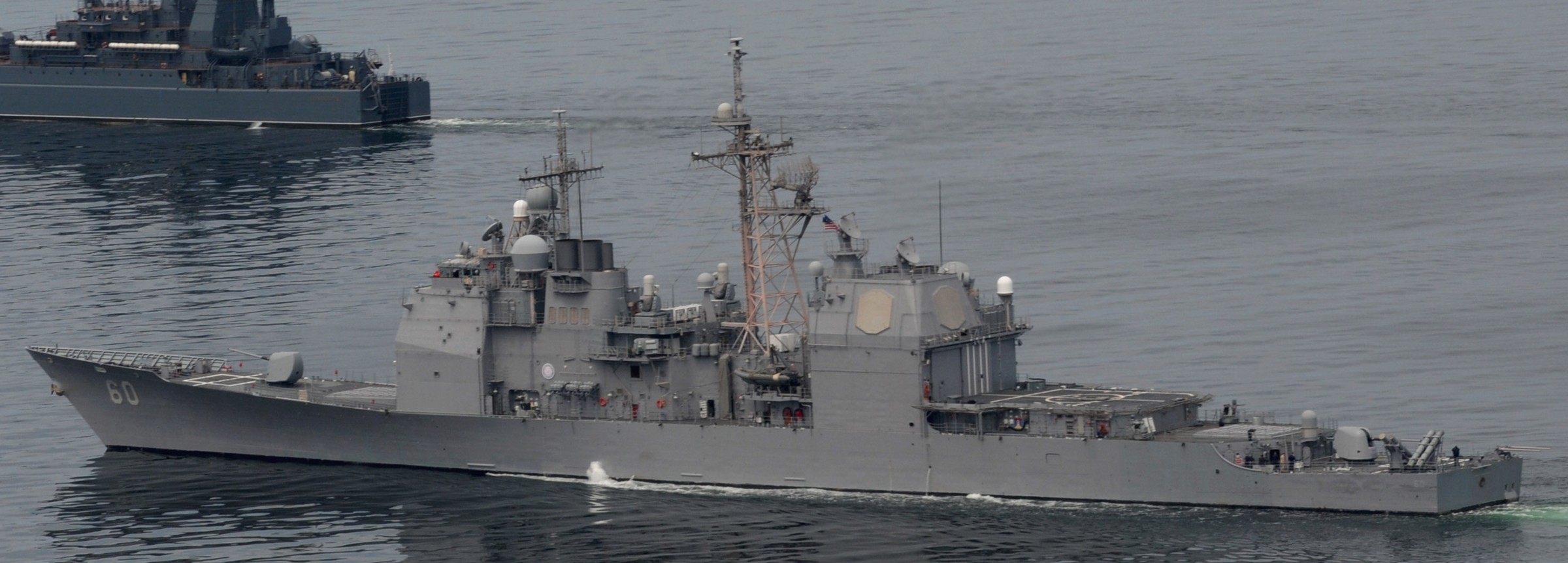 Exercise BALTOPS - Baltic Sea - June 2012 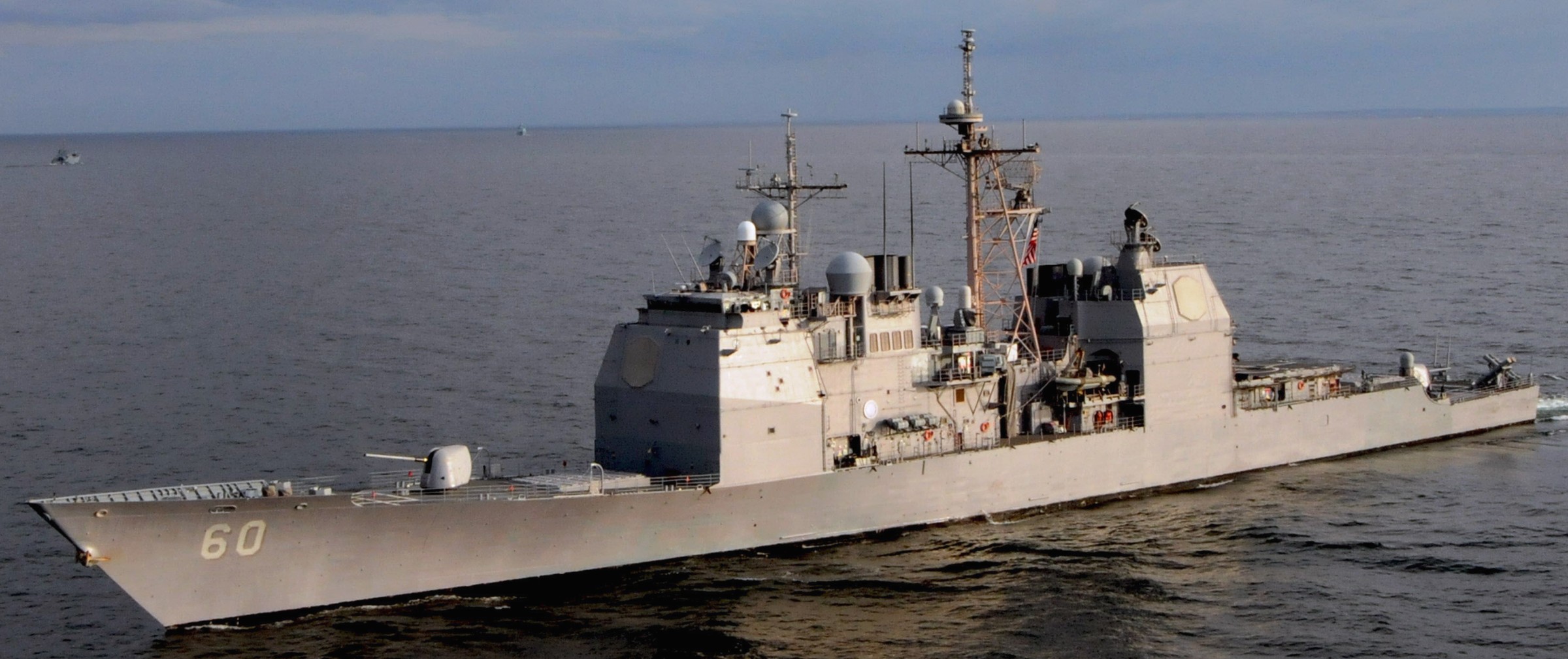 Exercise BALTOPS - Baltic Sea - June 2012 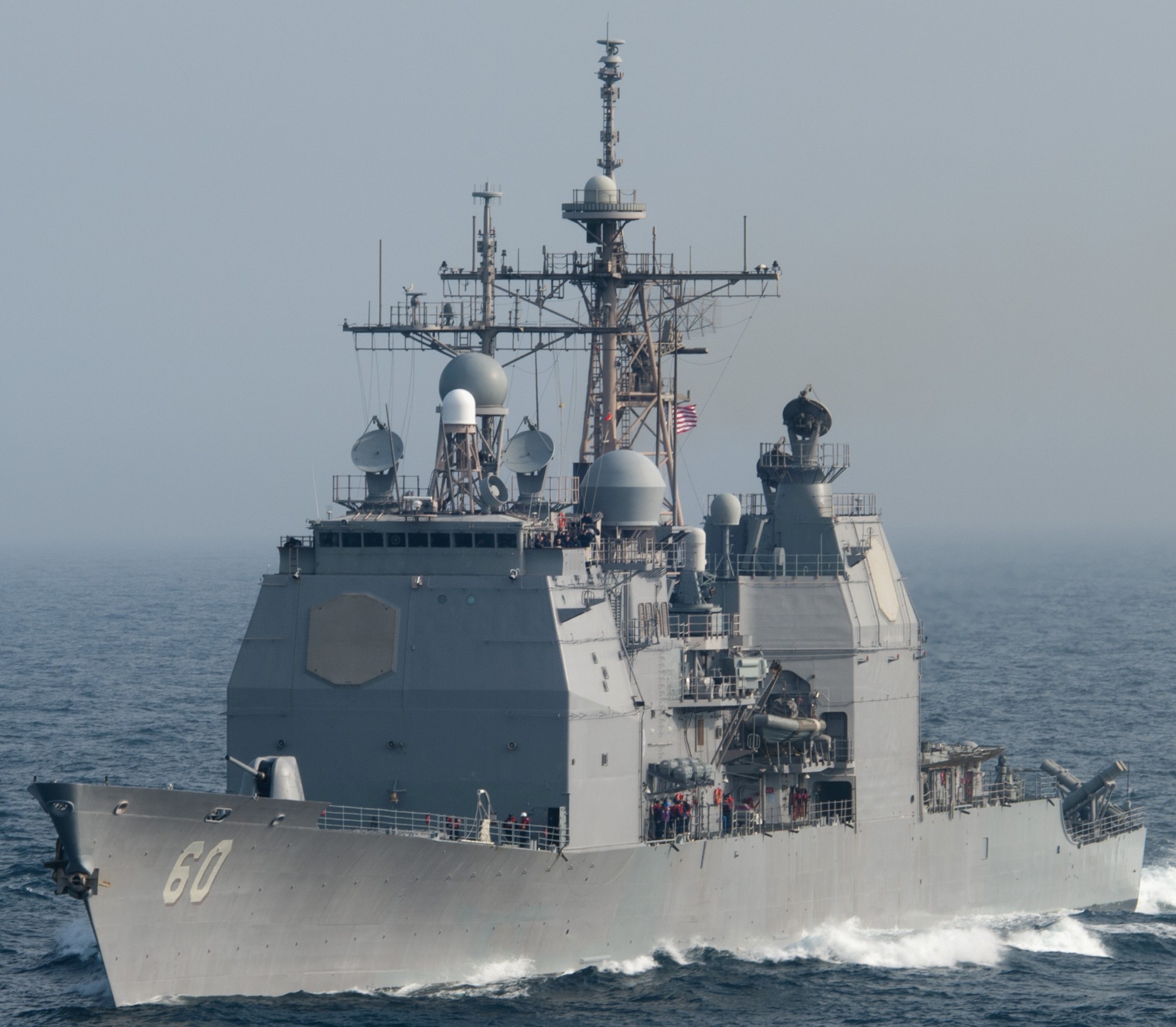 Atlantic Ocean - May 2012 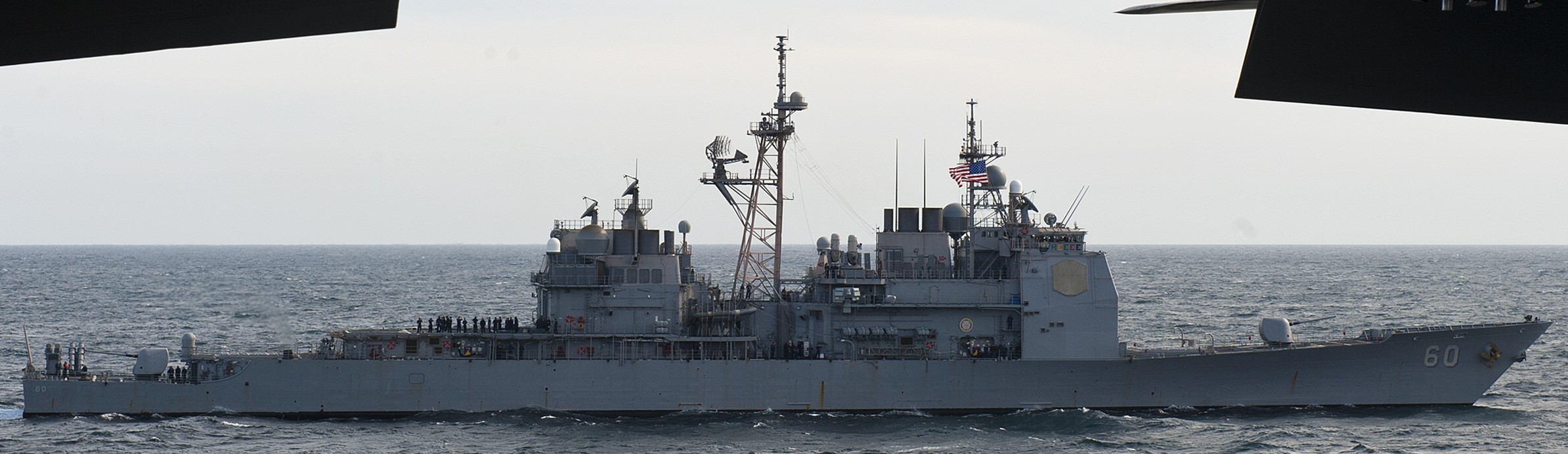 Atlantic Ocean - January 2012 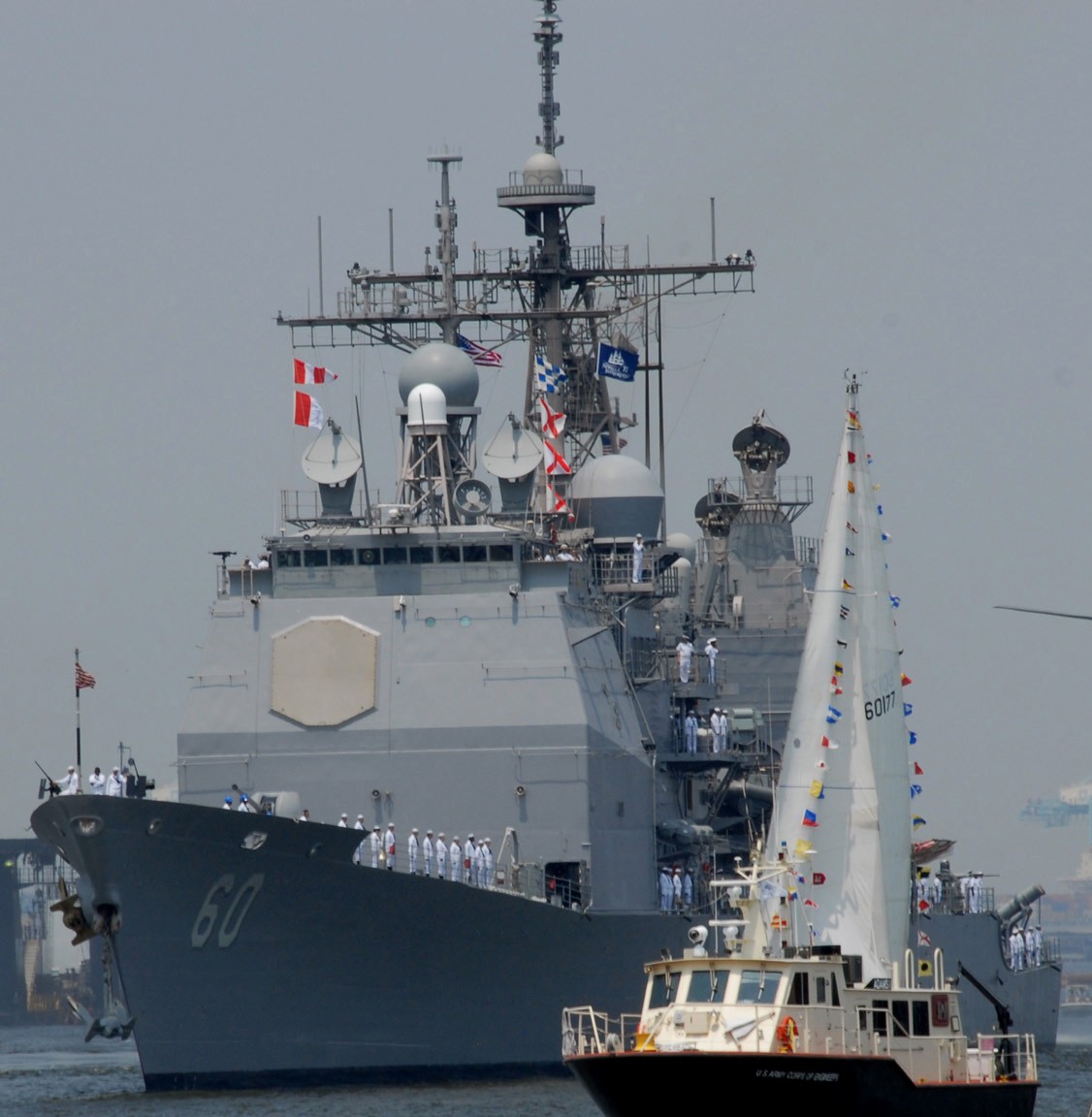 Norfolk Harbor Fest, Virginia - June 2011 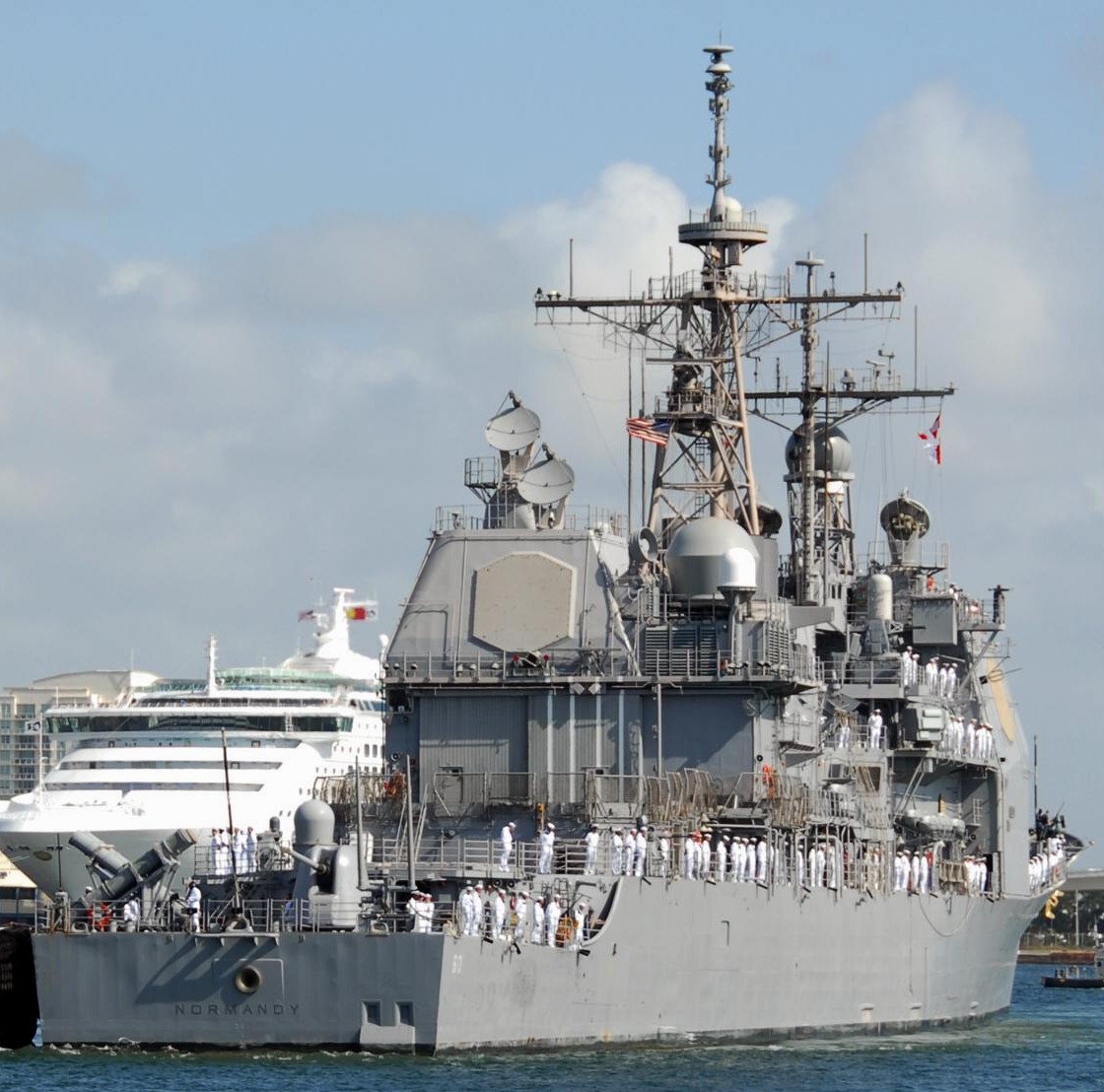 Port Everglades, Florida - April 2011 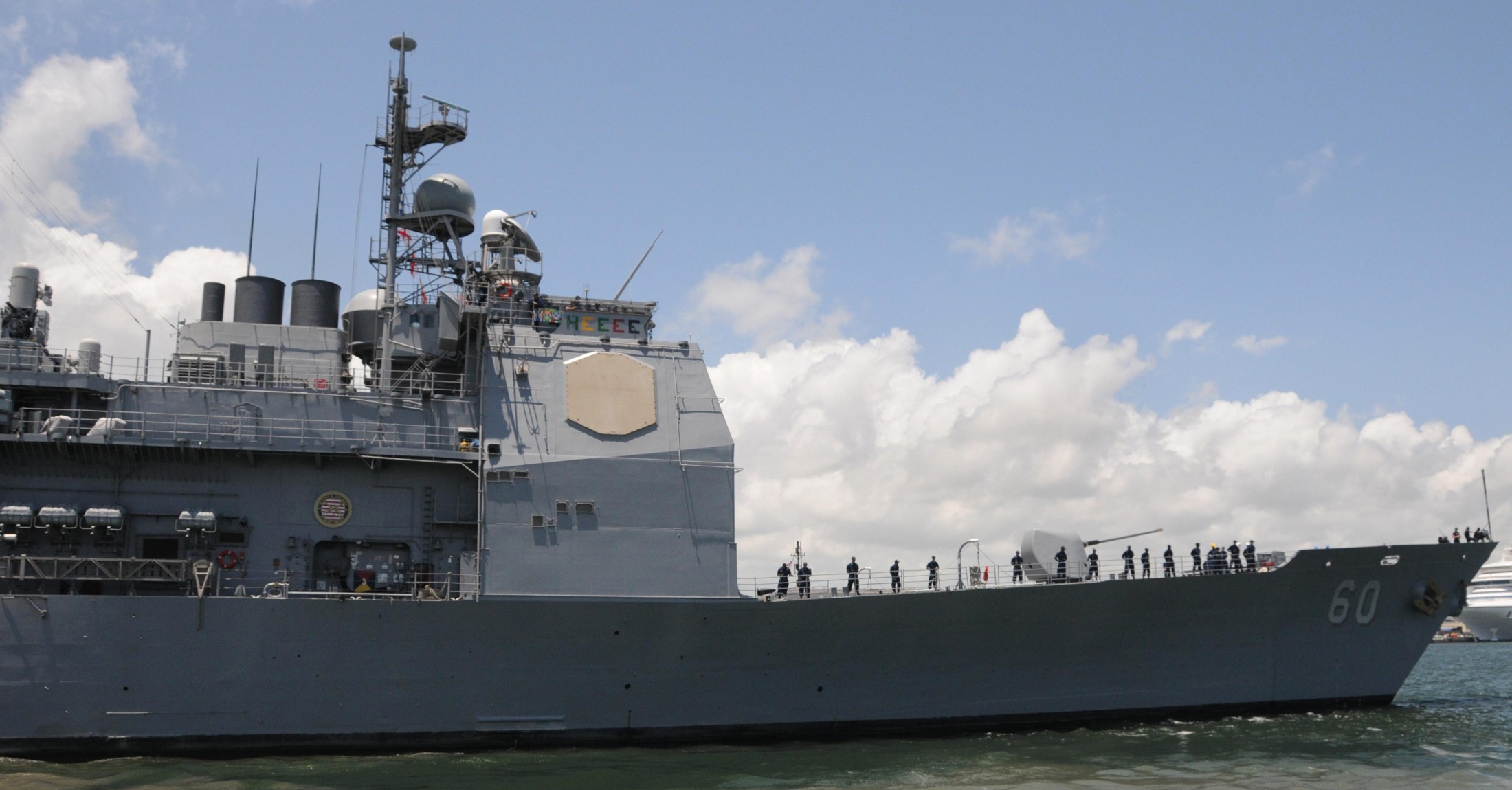 Port Everglades, Florida - April 2011 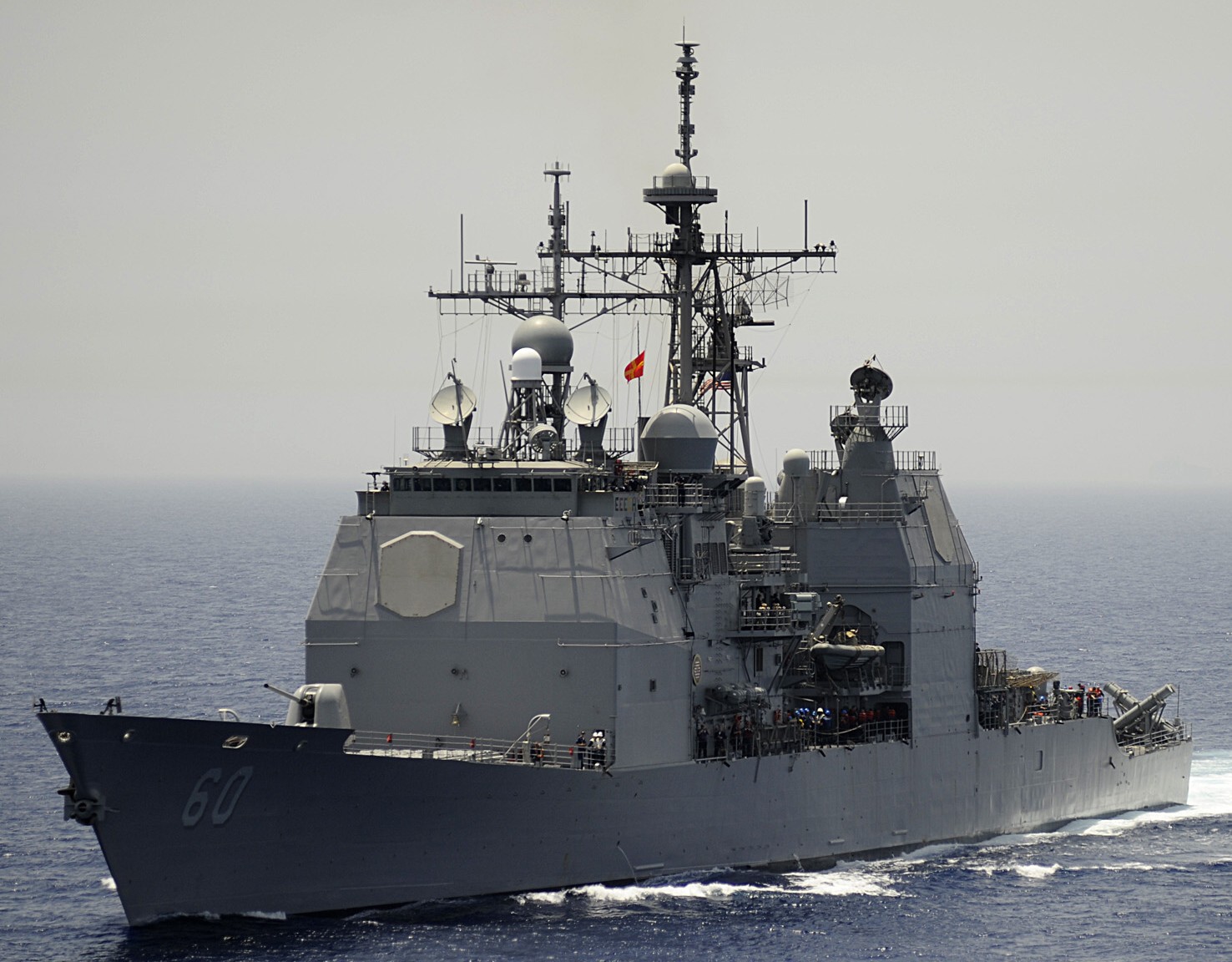 Mediterranean Sea - June 2010 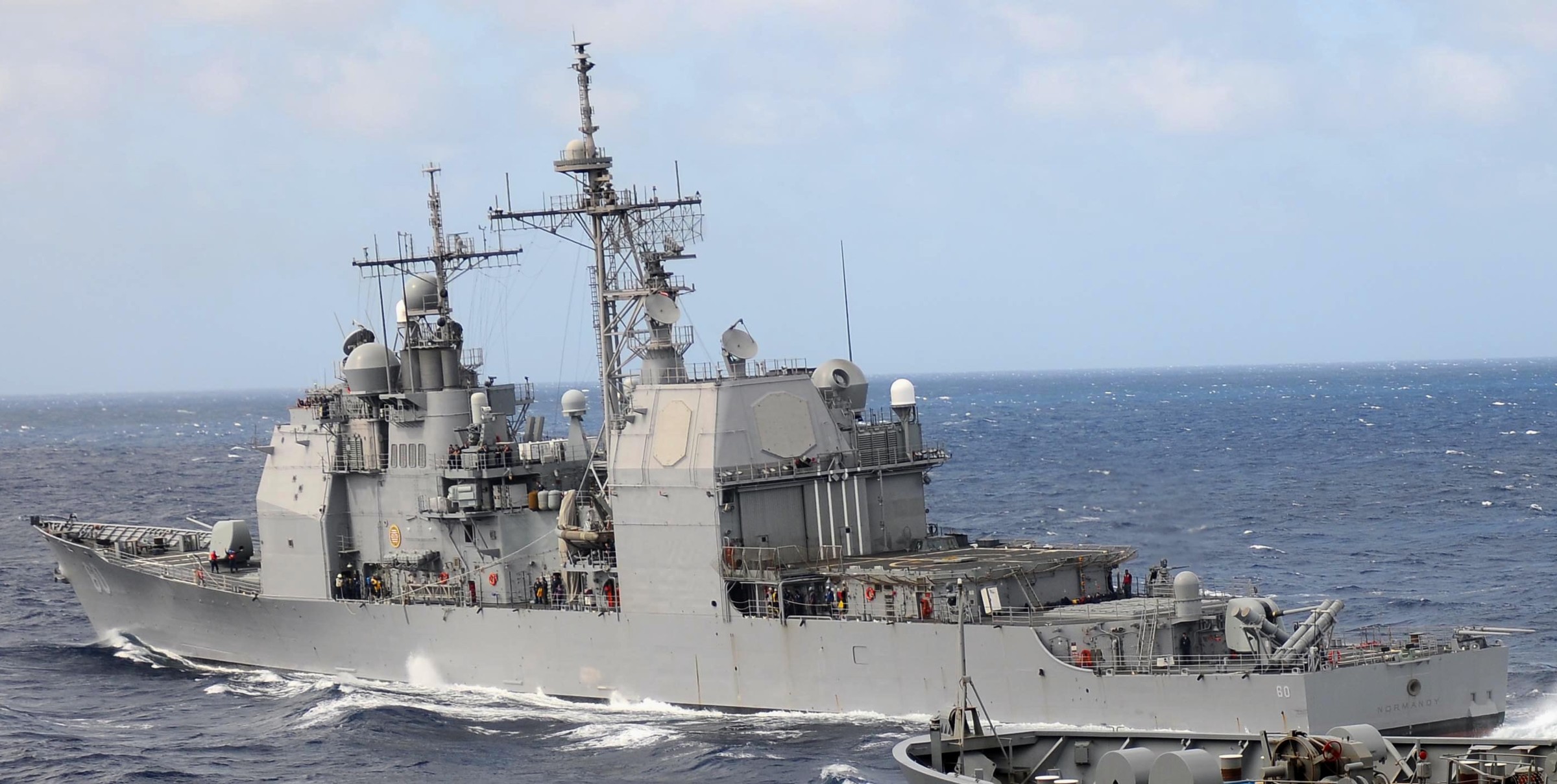 Caribbean Sea - January 2010 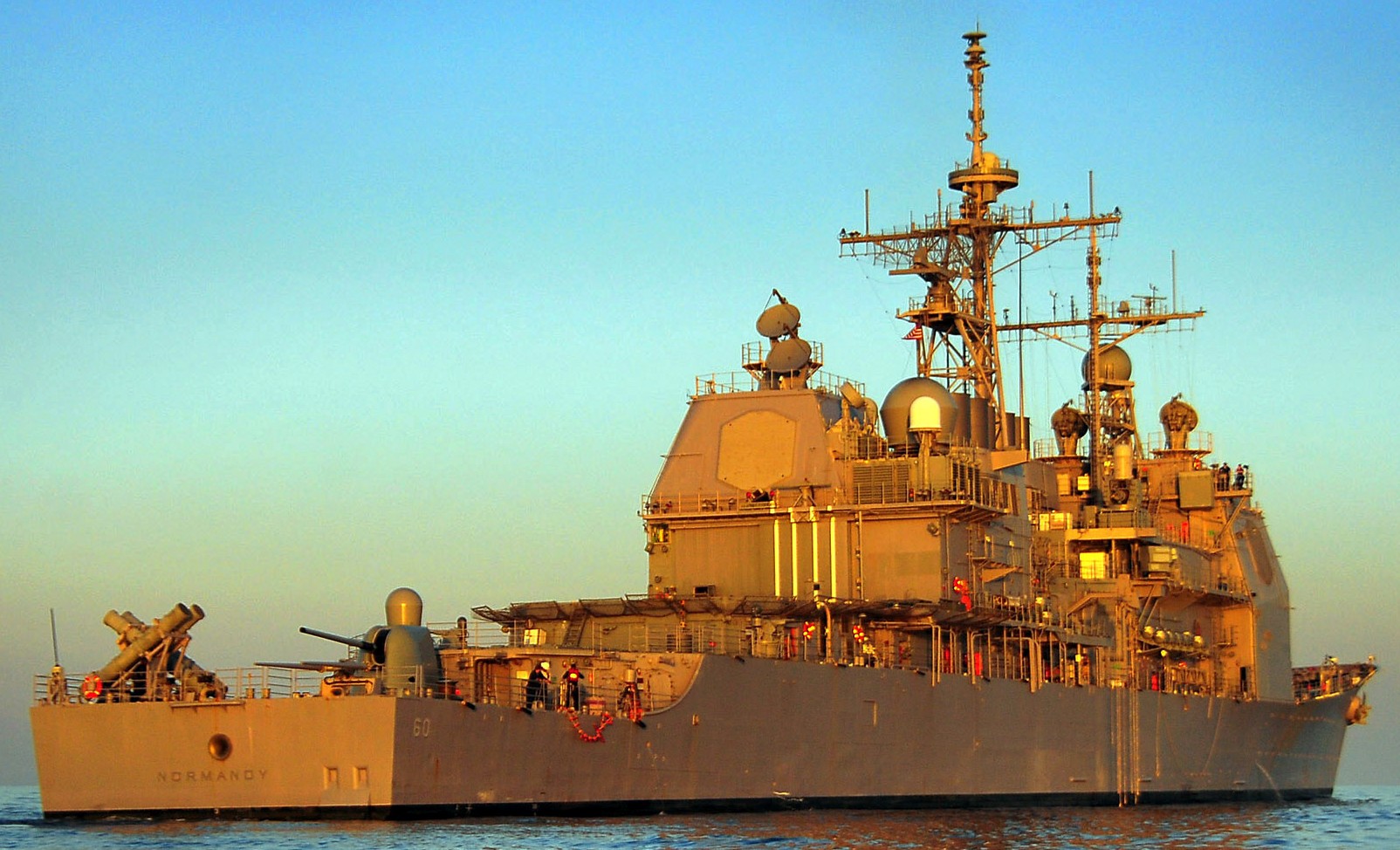 off Haiti - January 2010 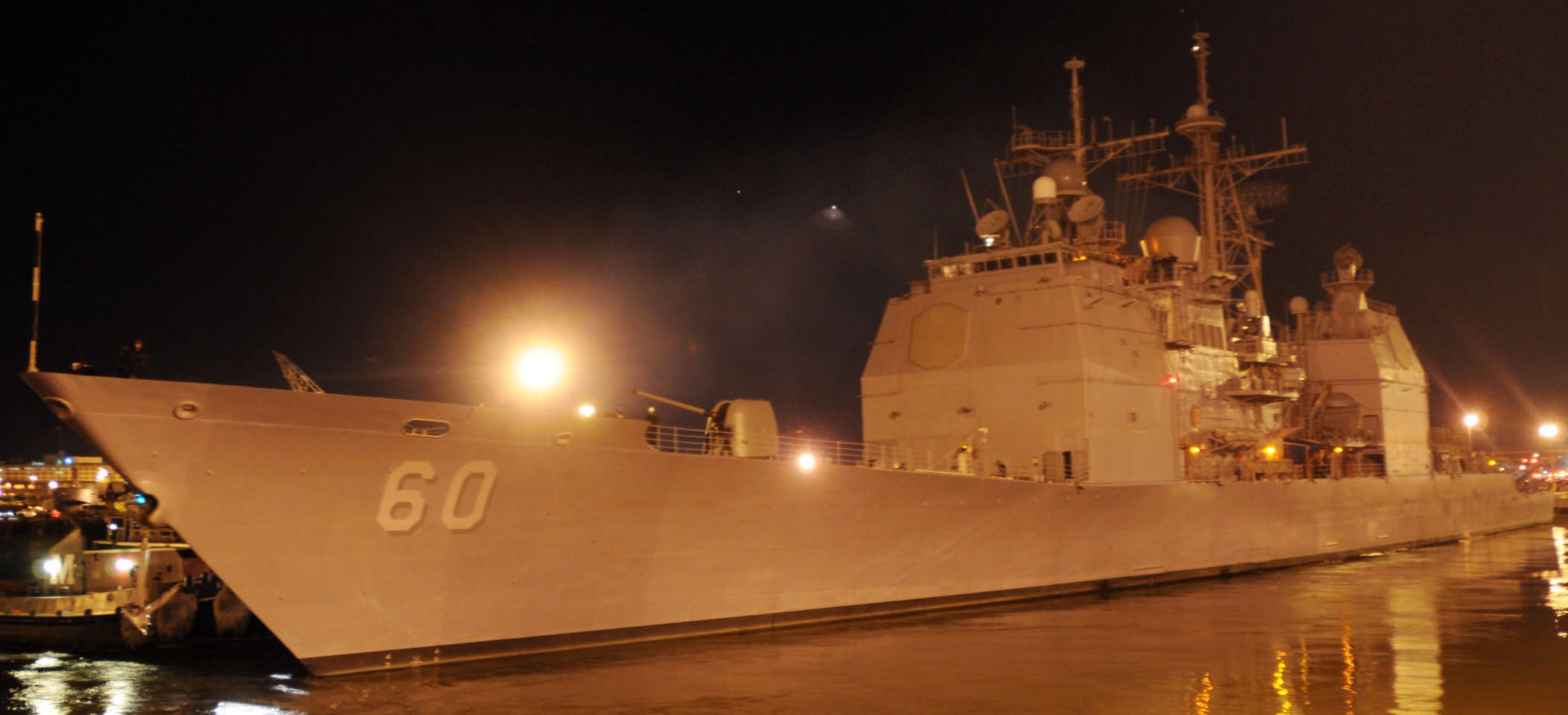 Naval Station Norfolk, Virginia - January 2010 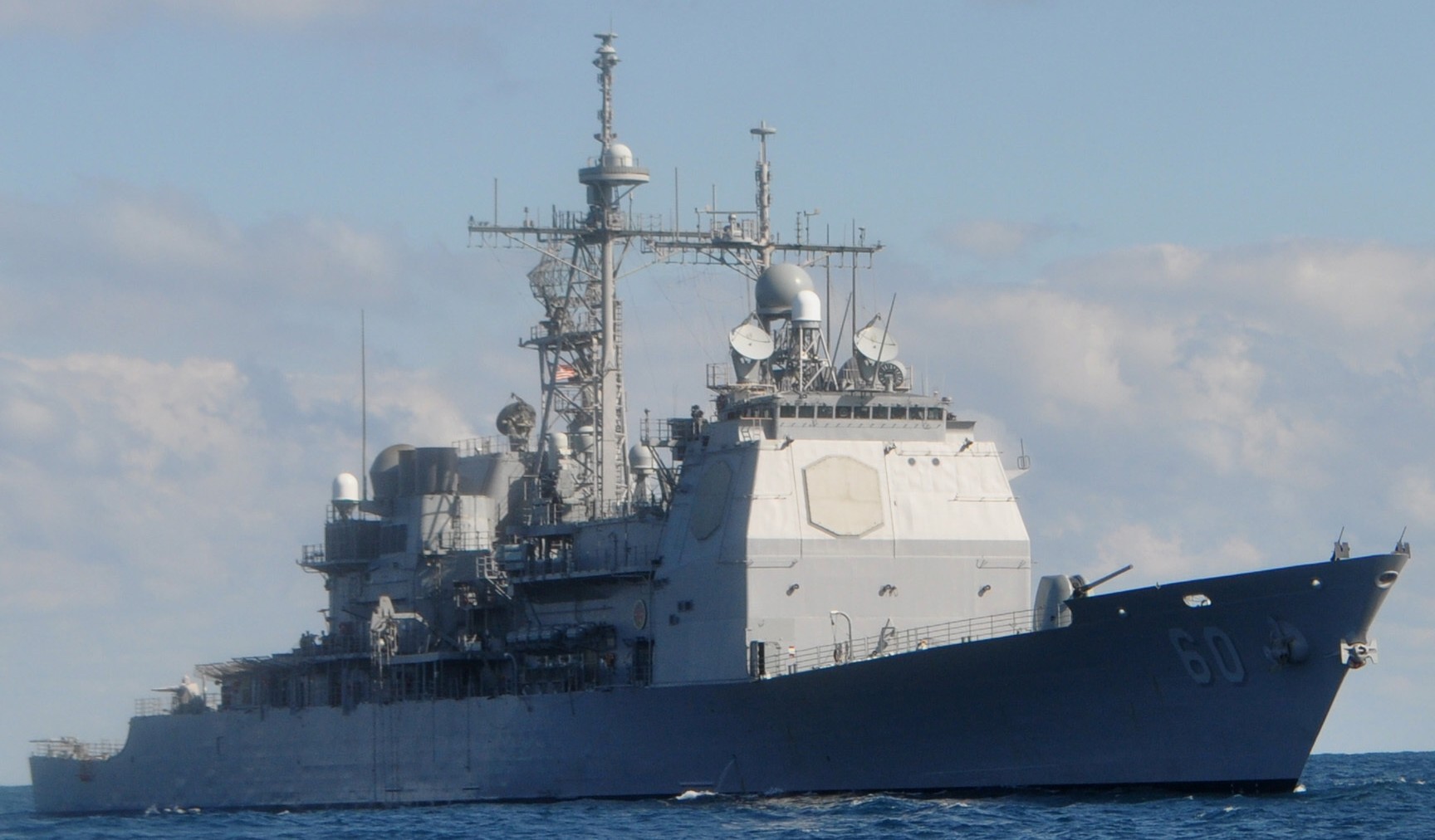 Atlantic Ocean - November 2009 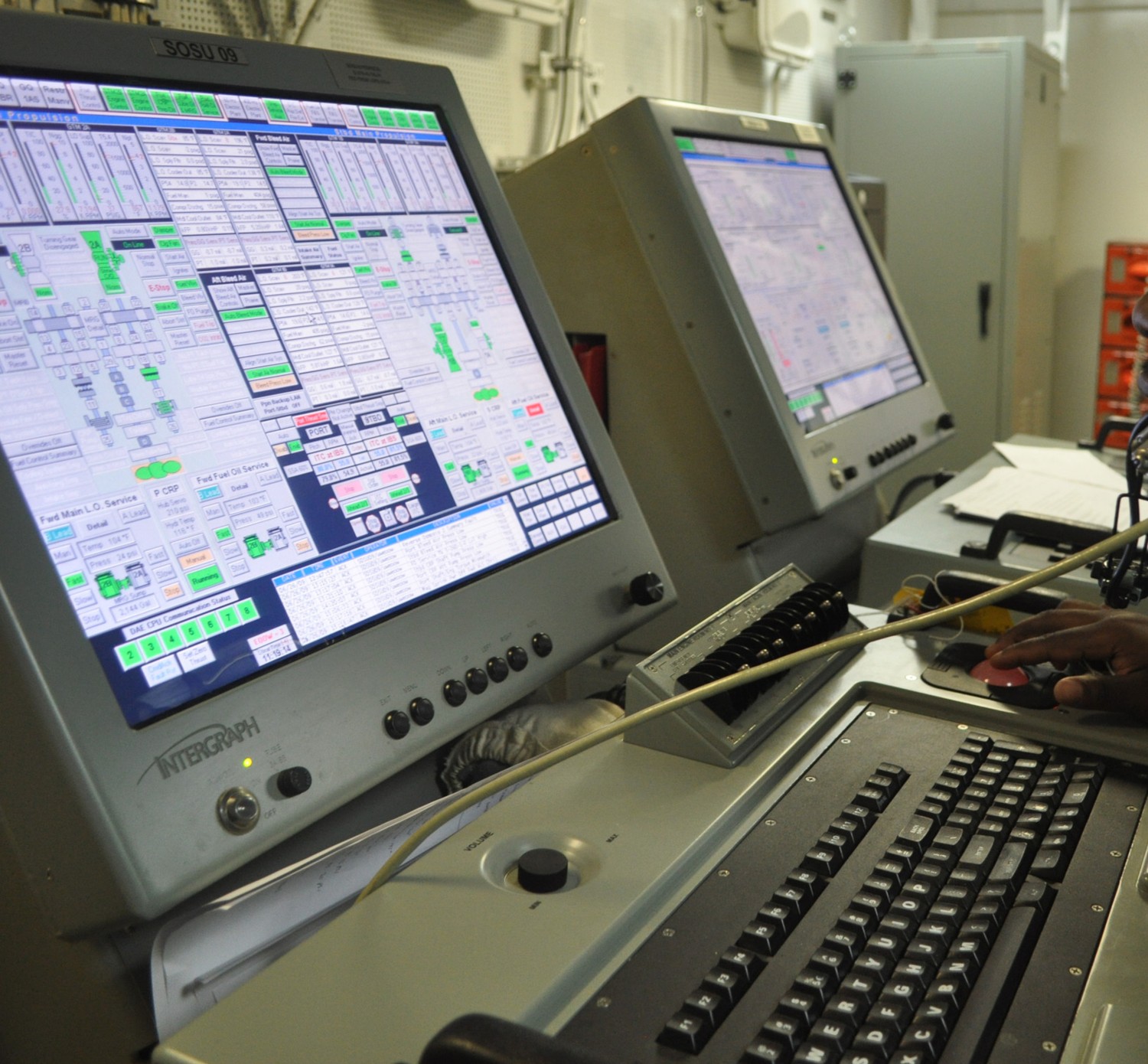 engine control console - June 2009 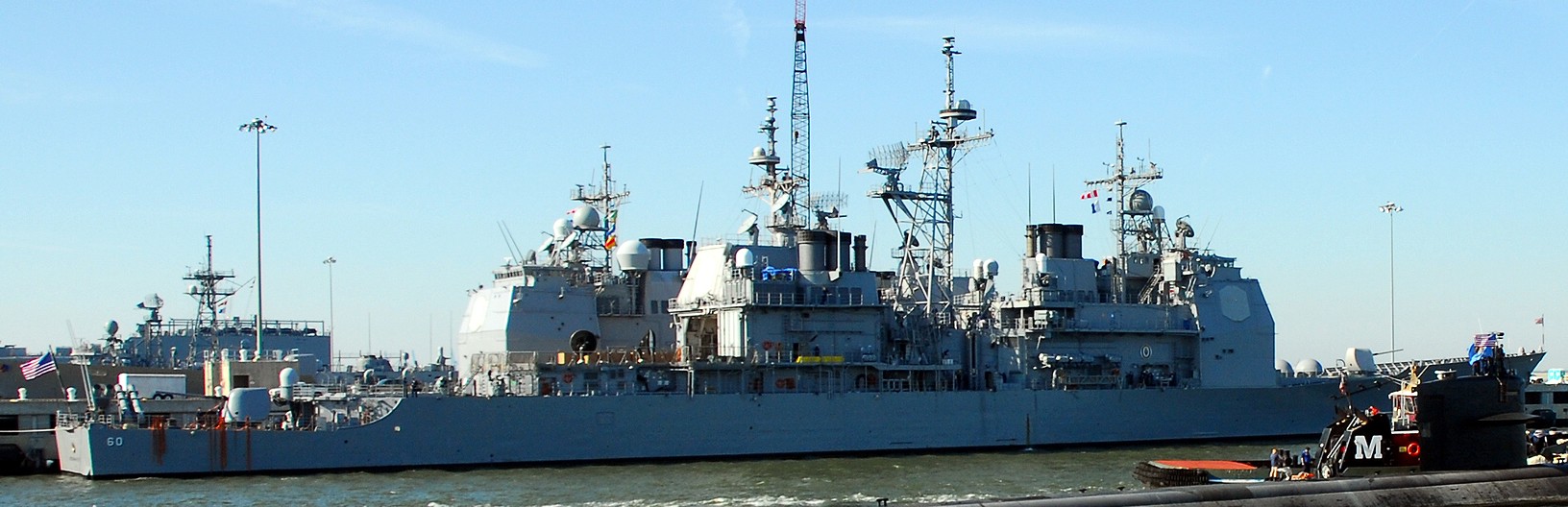 Naval Station Norfolk, Virginia - September 2008 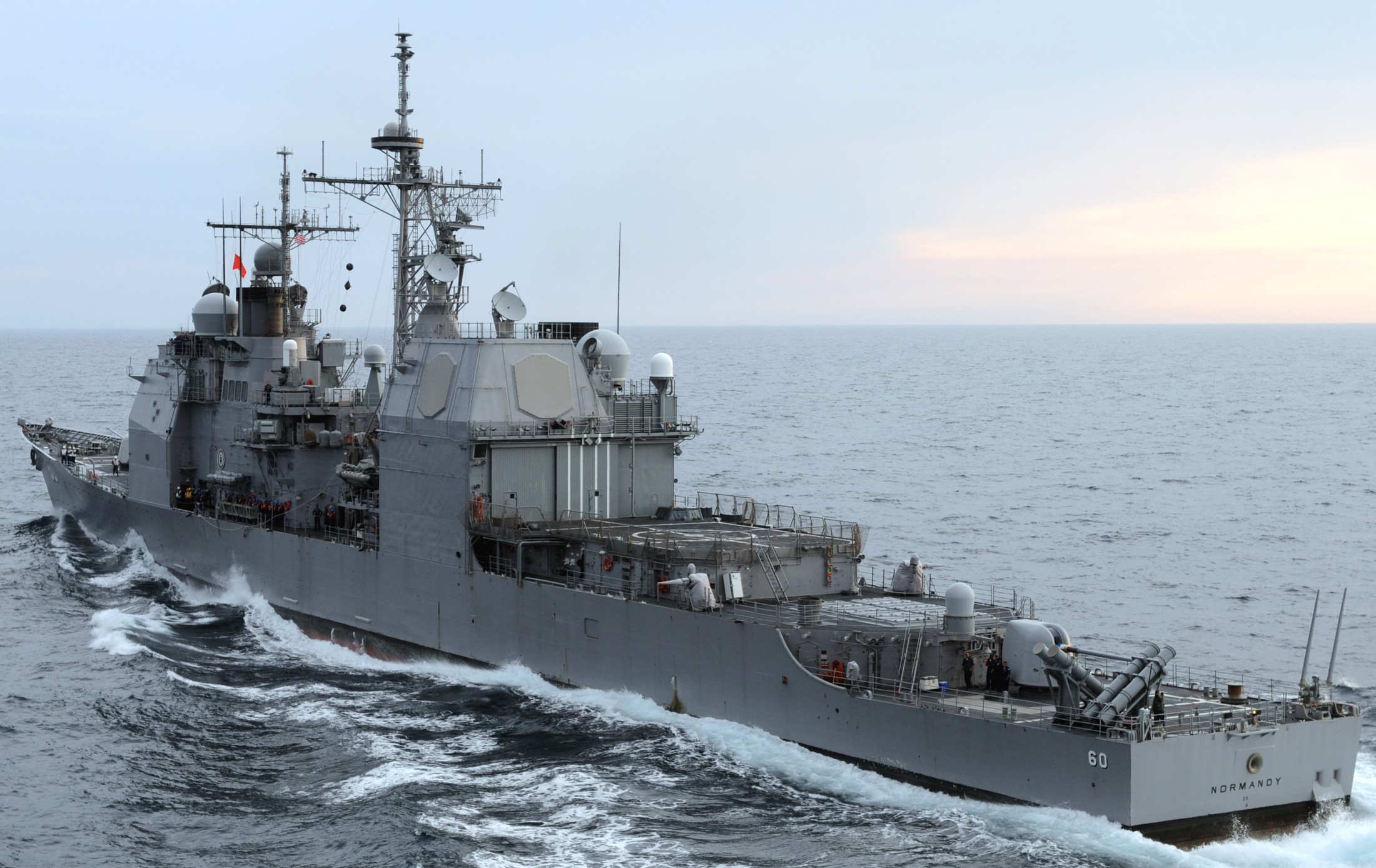 Atlantic Ocean - July 2008 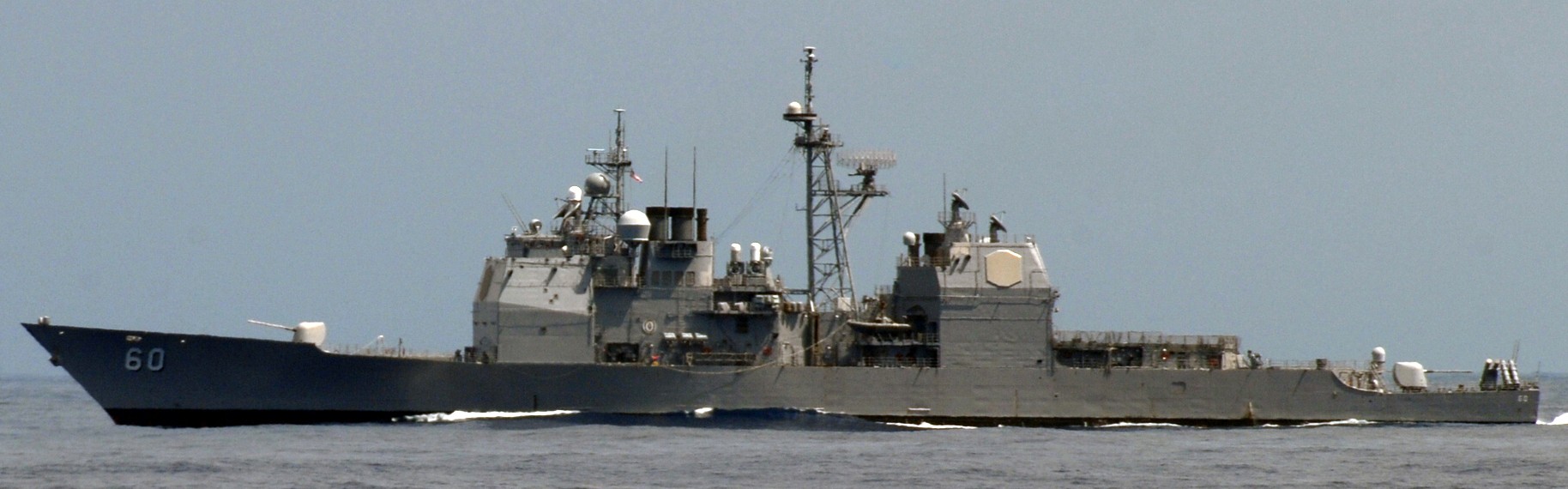 Atlantic Ocean - July 2008 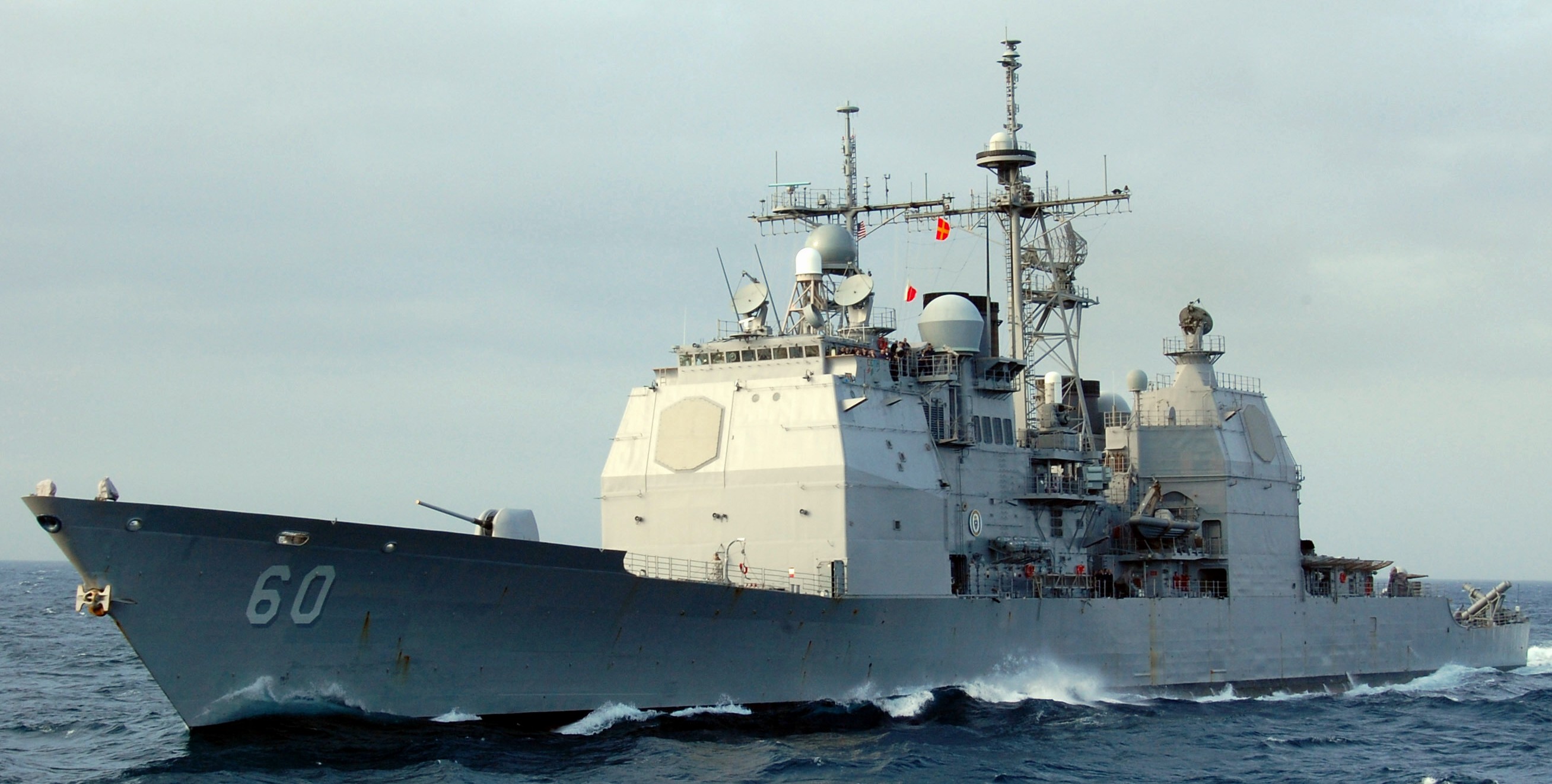 Atlantic Ocean - April 2008 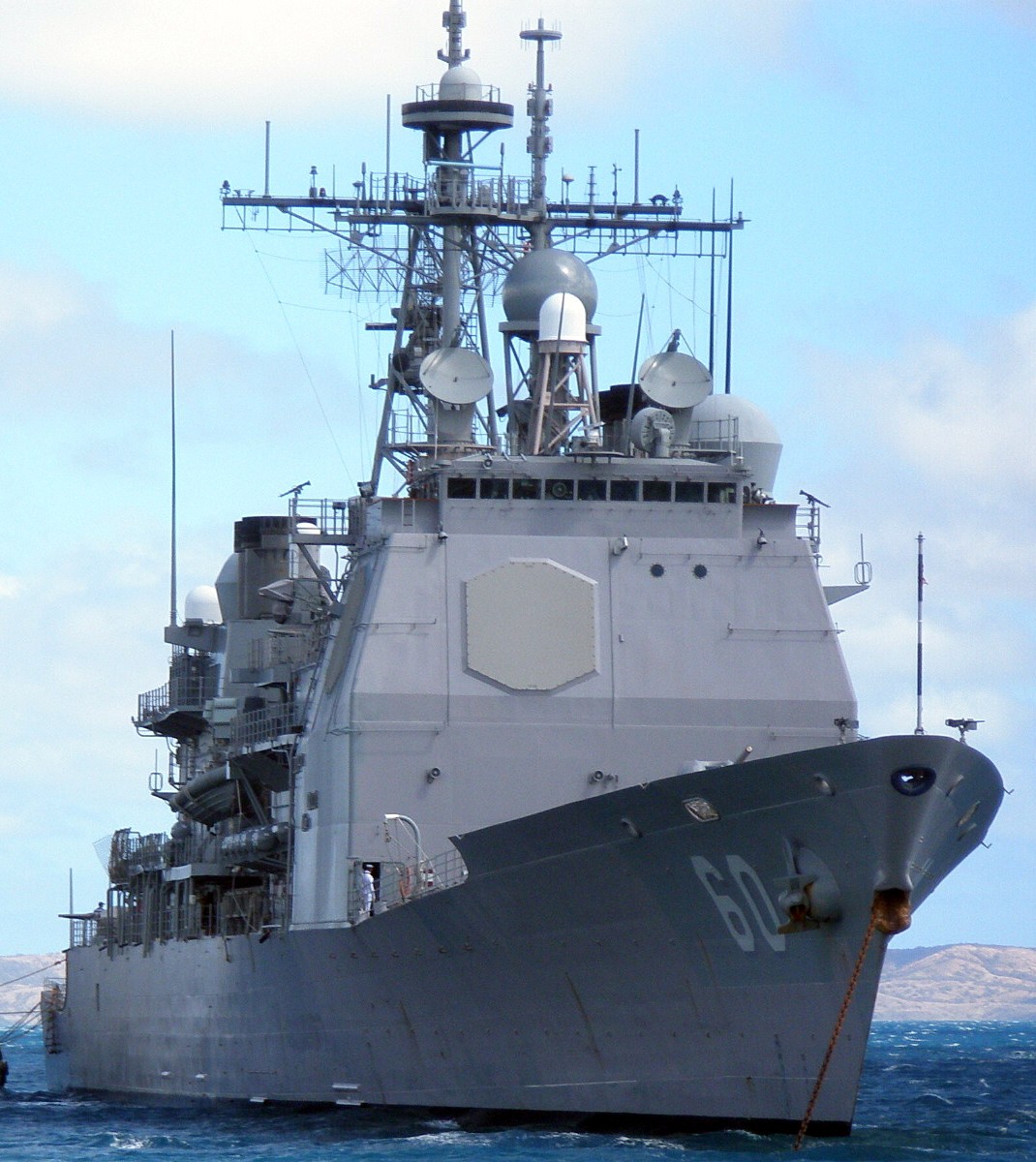 off Madagascar - October 2007 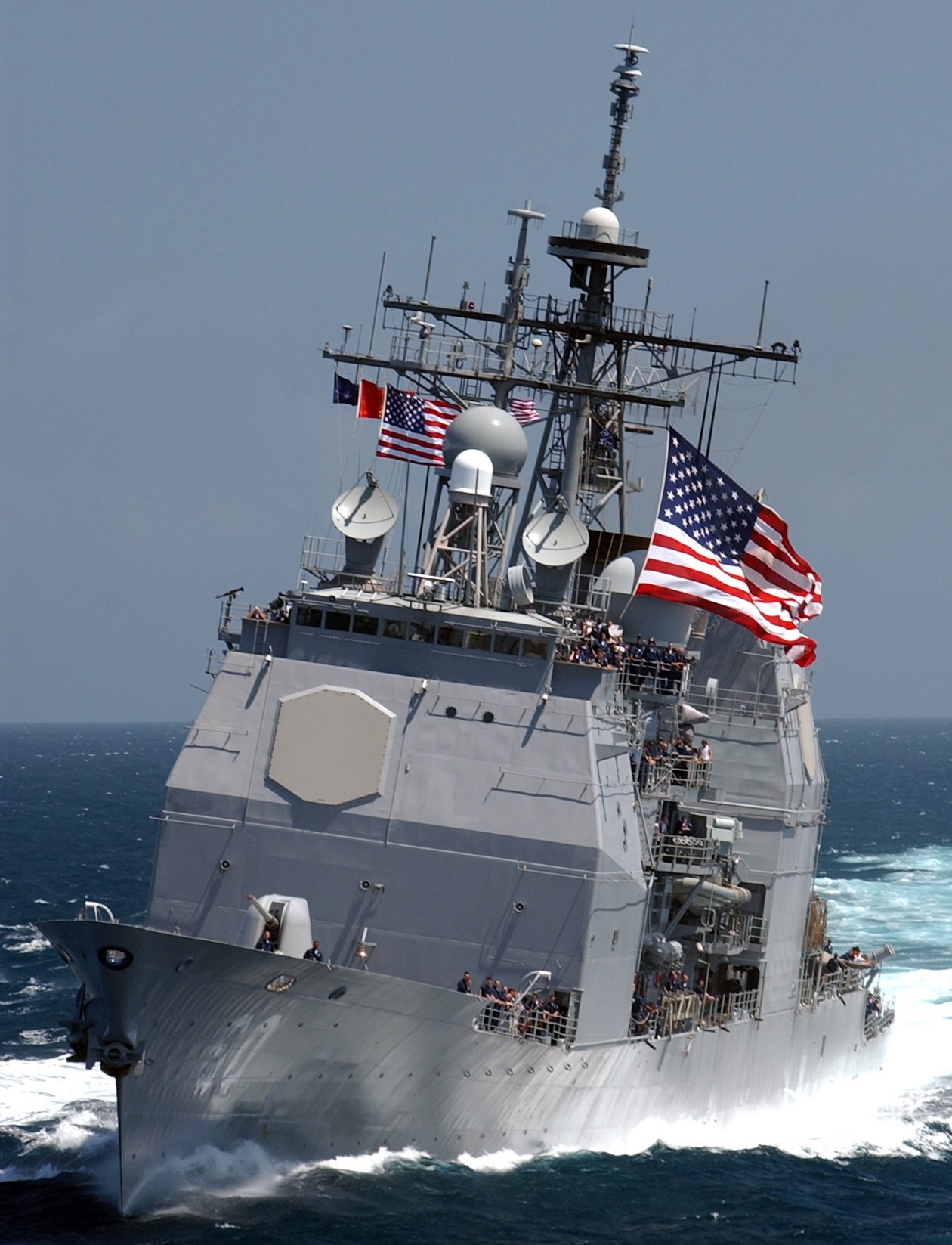 Indian Ocean - September 2007 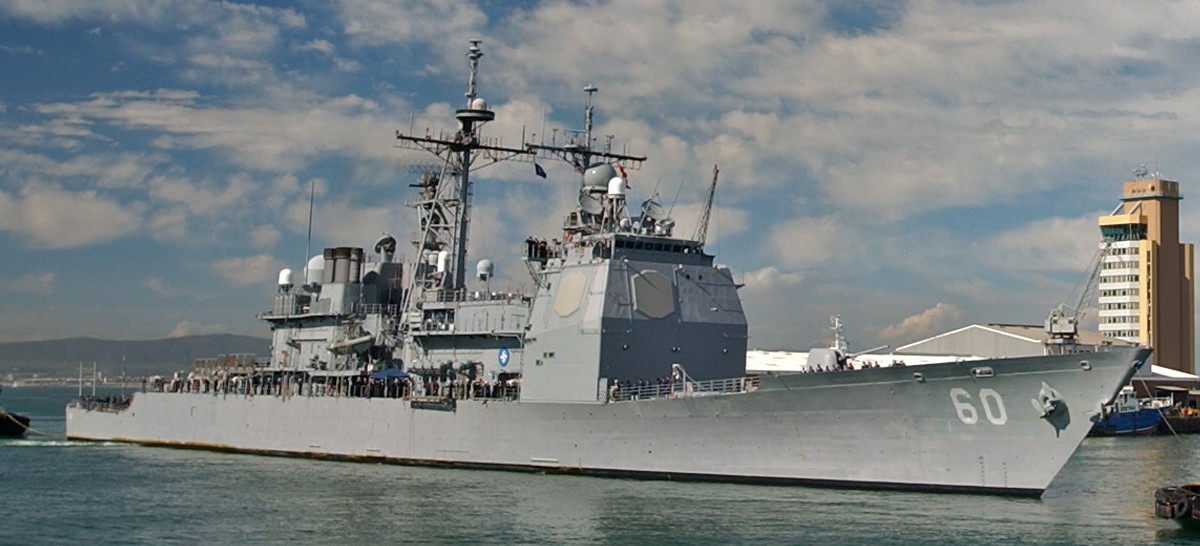 Cape Town, Republic South Africa - August 2007 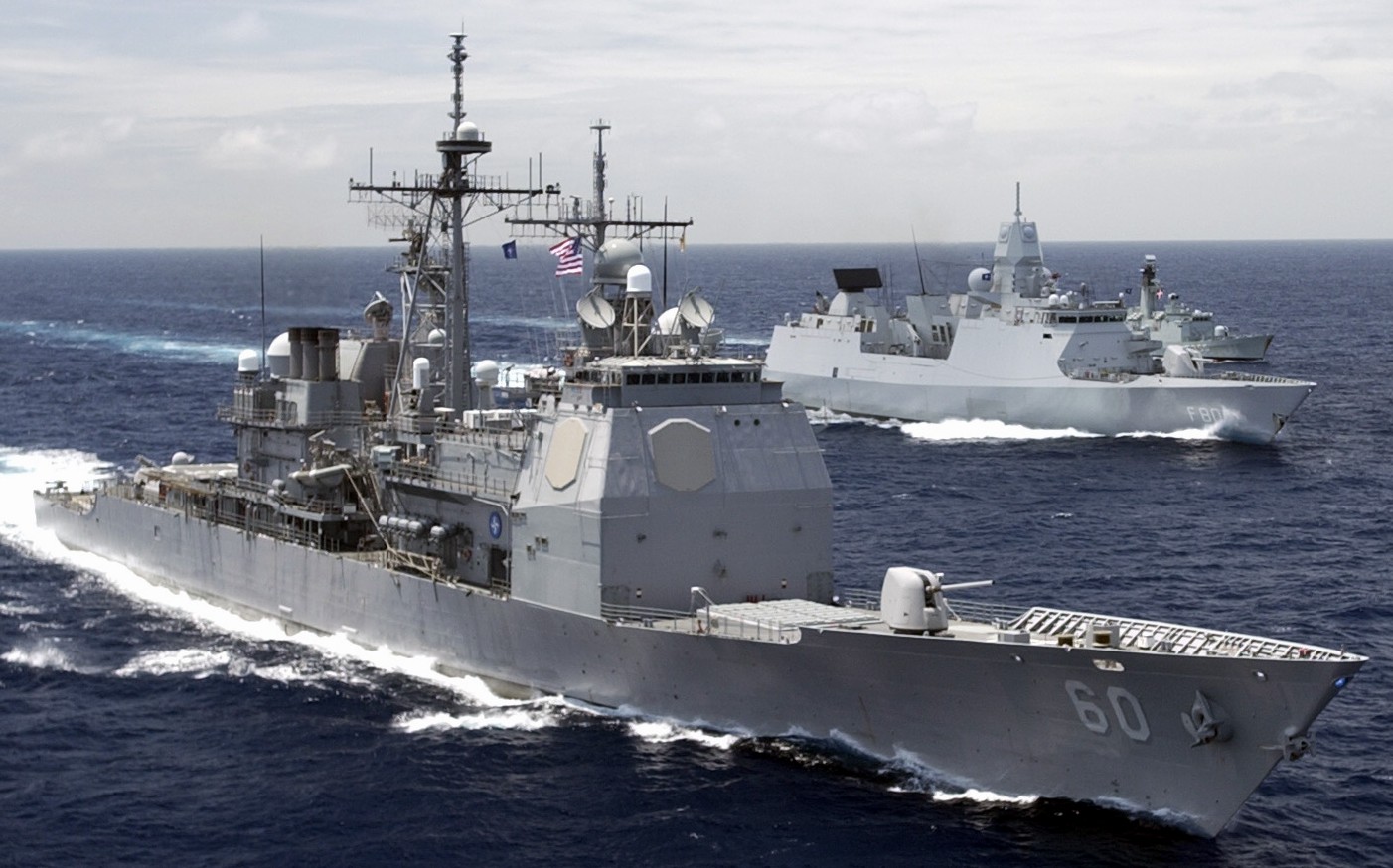 Atlantic Ocean - August 2007 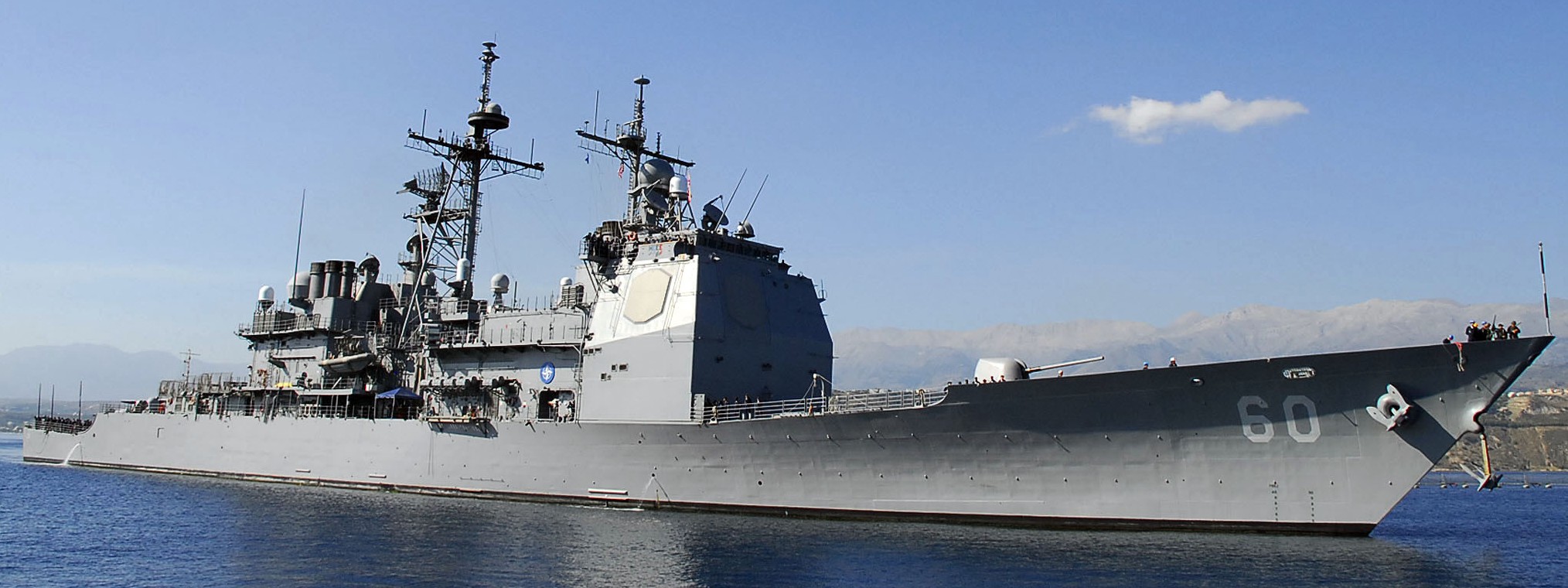 Naval Support Activity Souda Bay, Crete, Greece - July 2007 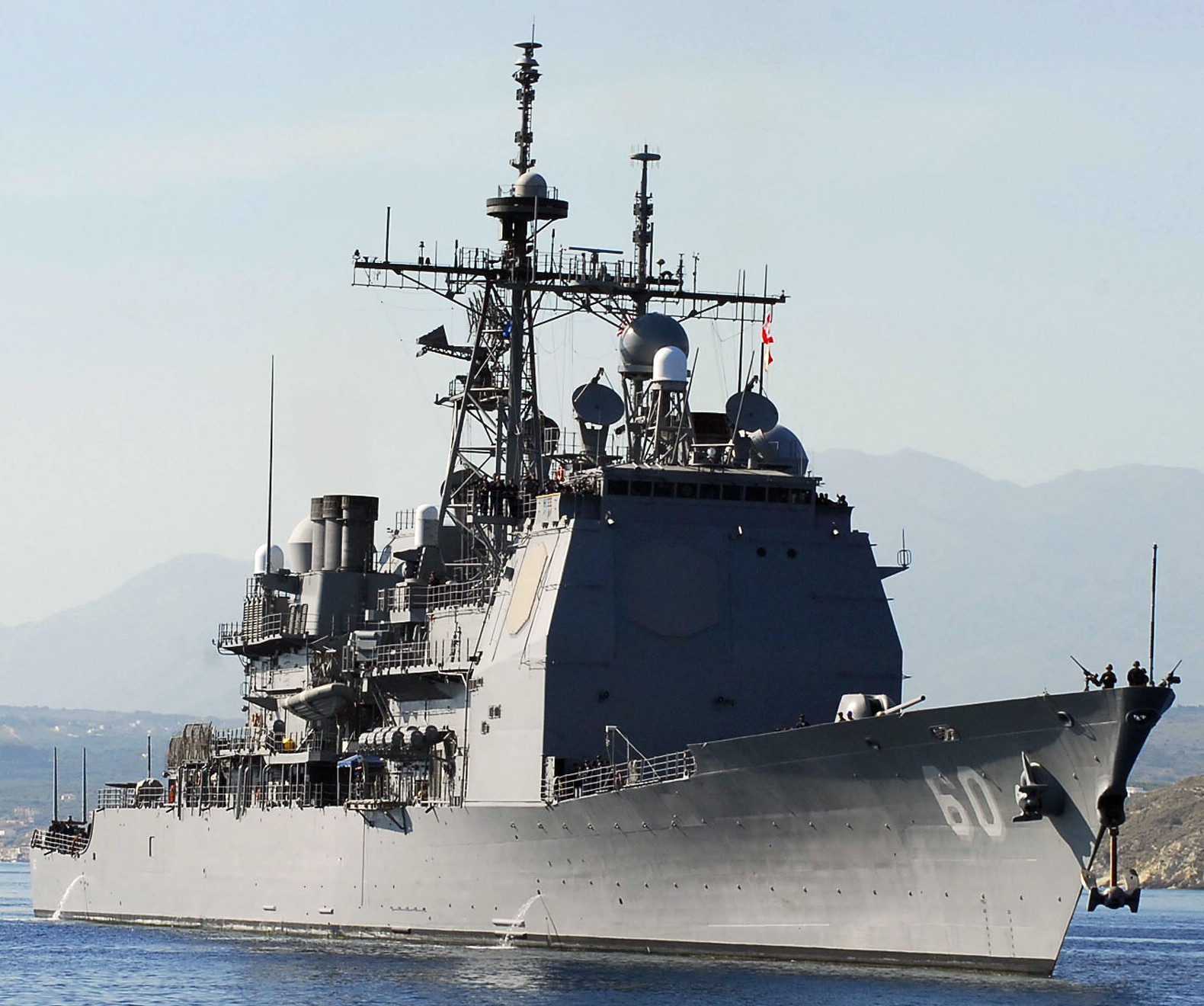 Naval Support Activity Souda Bay, Crete, Greece - July 2007 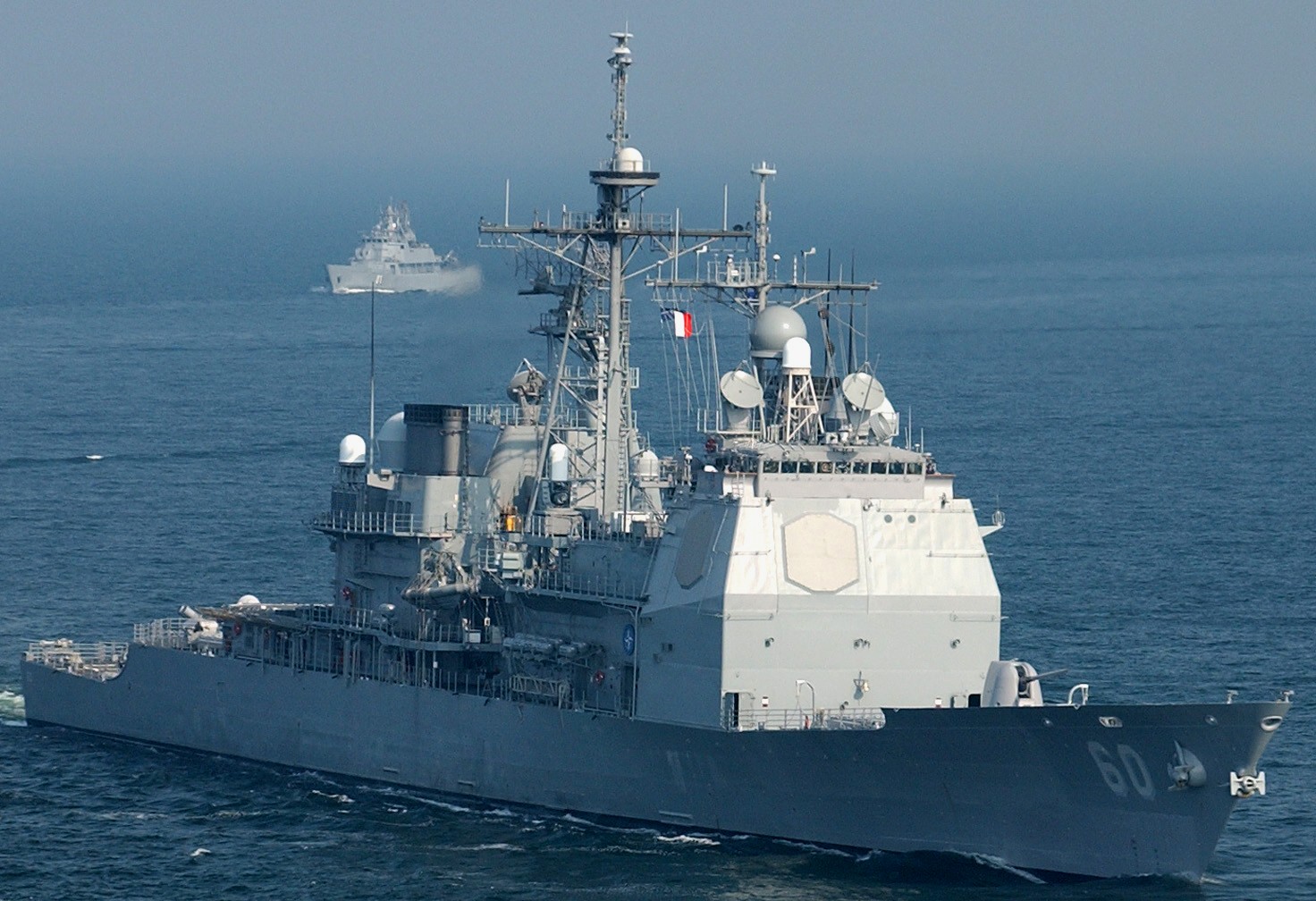 Baltic Sea - May 2007 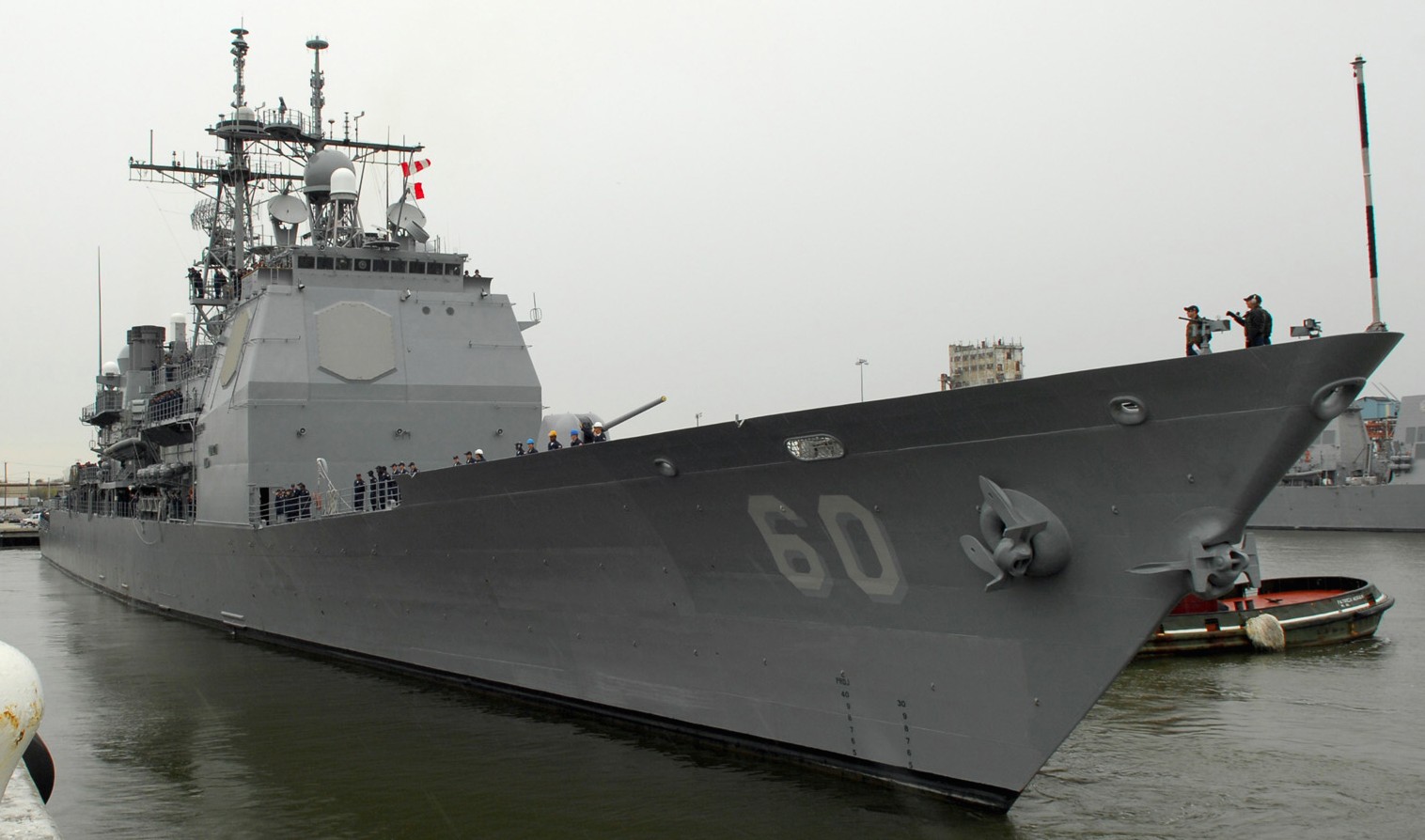 departing Naval Station Norfolk, Virginia - April 2007 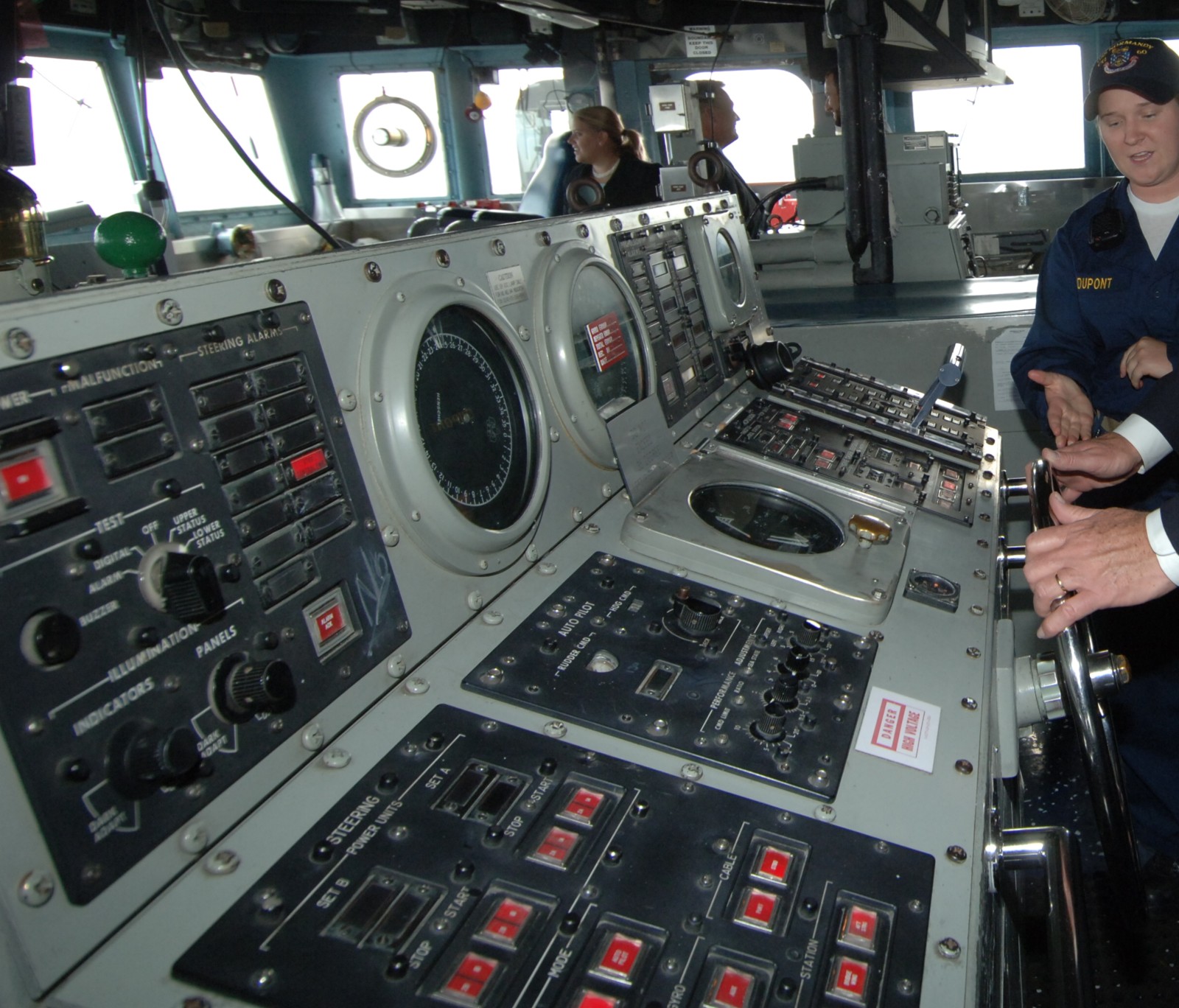 bridge/helm - Norfolk, Virginia - October 2006 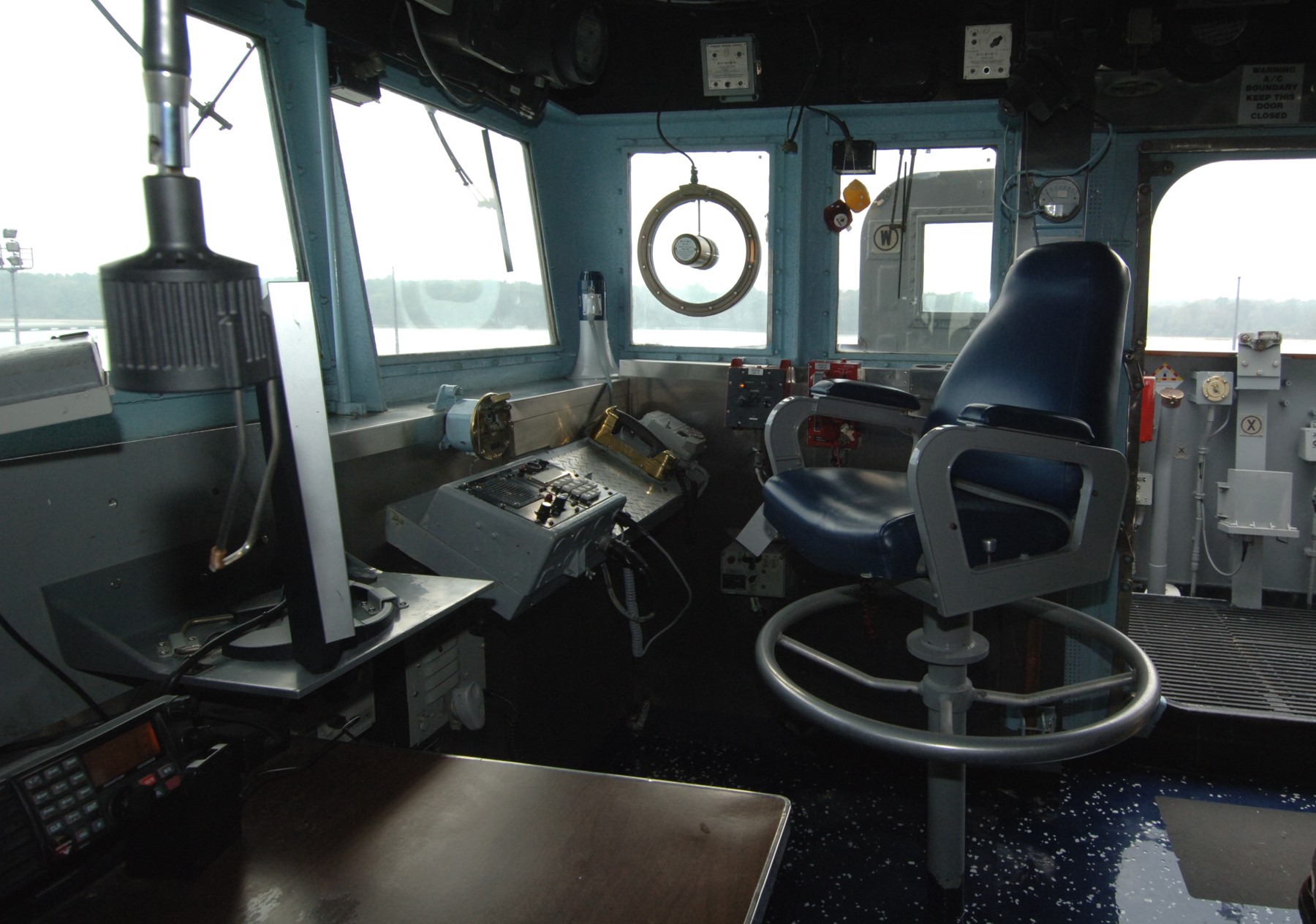 bridge / captain's chair - Norfolk, Virginia - October 2006 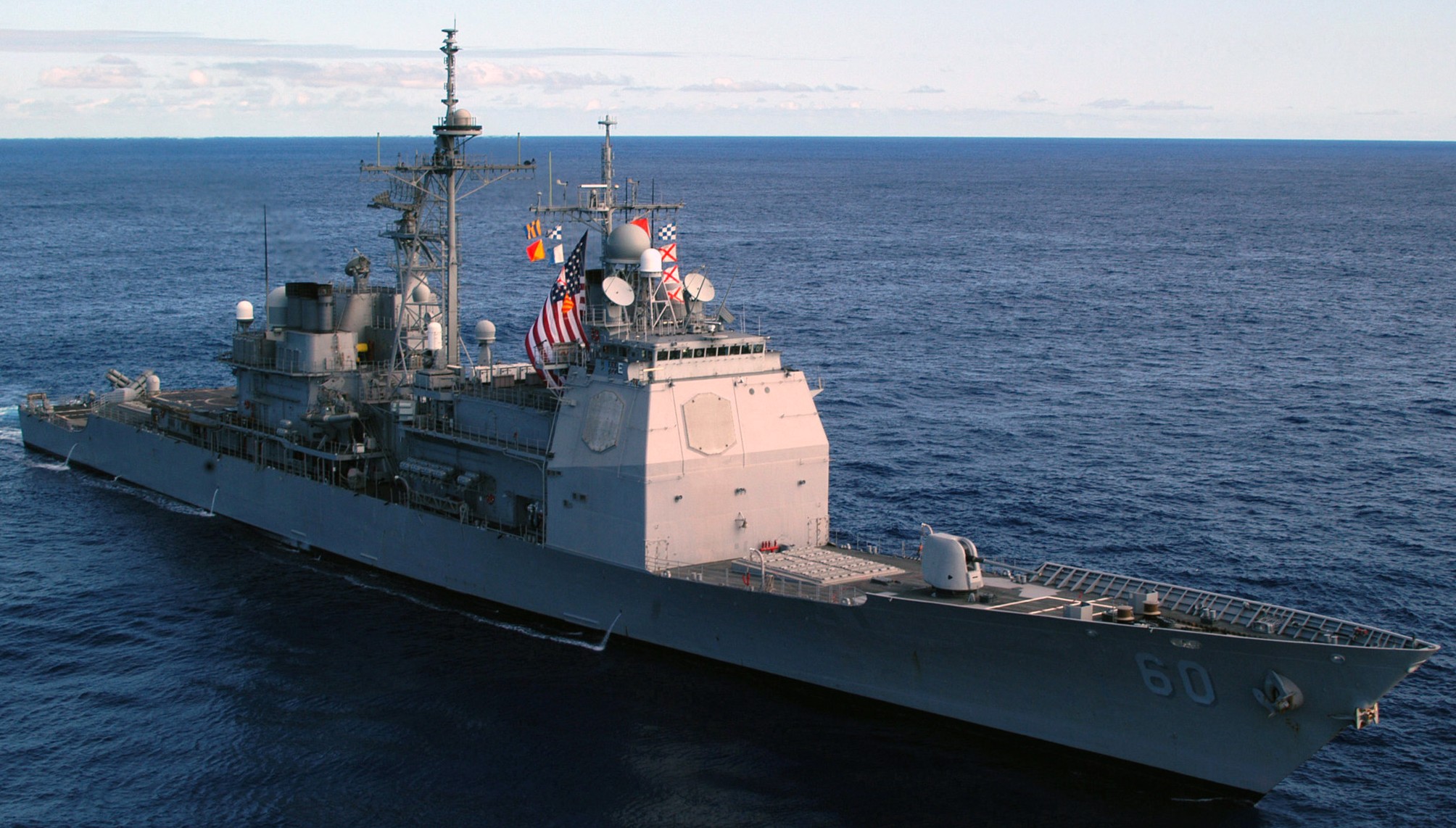 Atlantic Ocean - September 2005 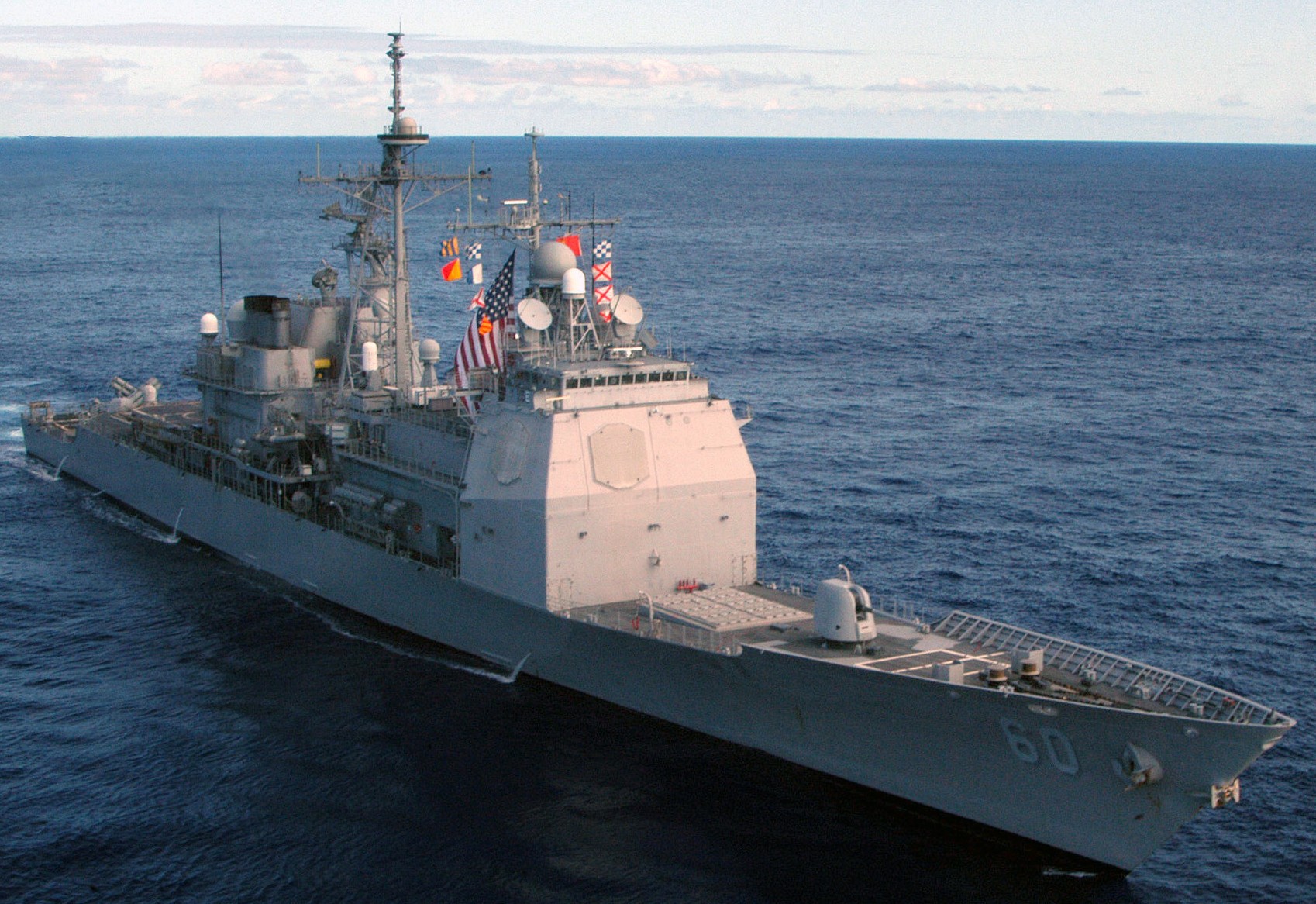 Atlantic Ocean - September 2005 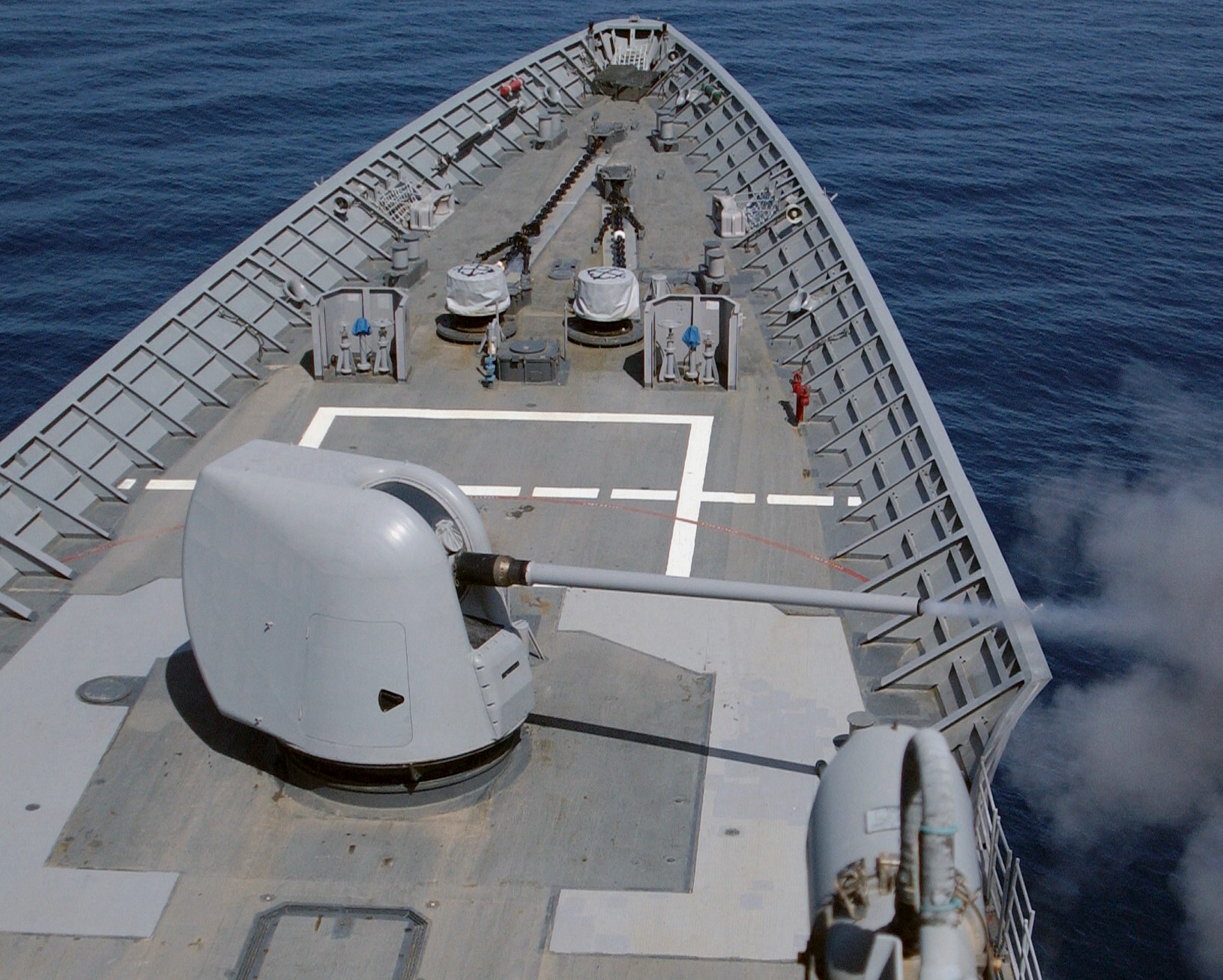 Mk.45 gun fire exercise - off Somalia - April 2005 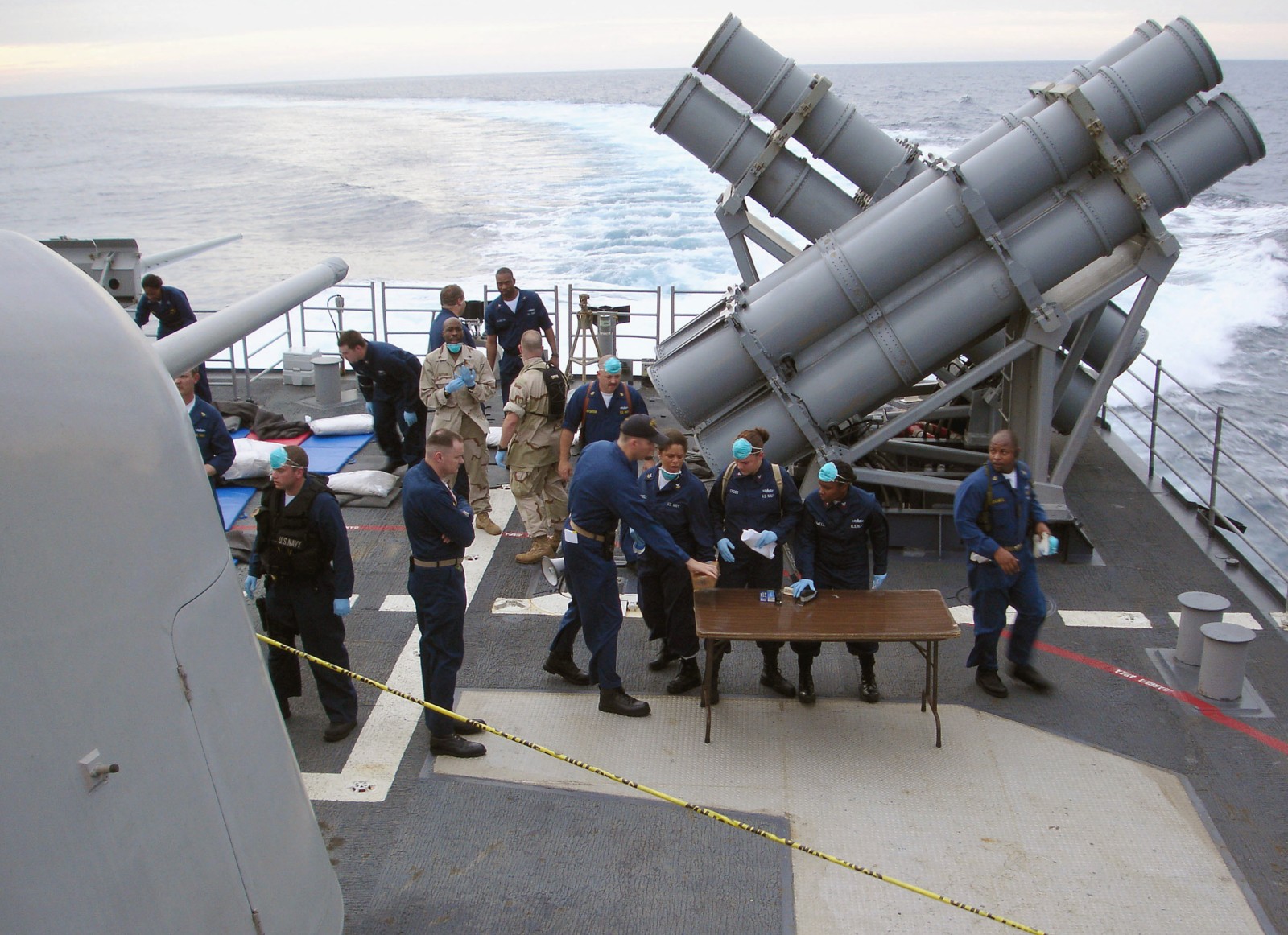 off Somalia - April 2005 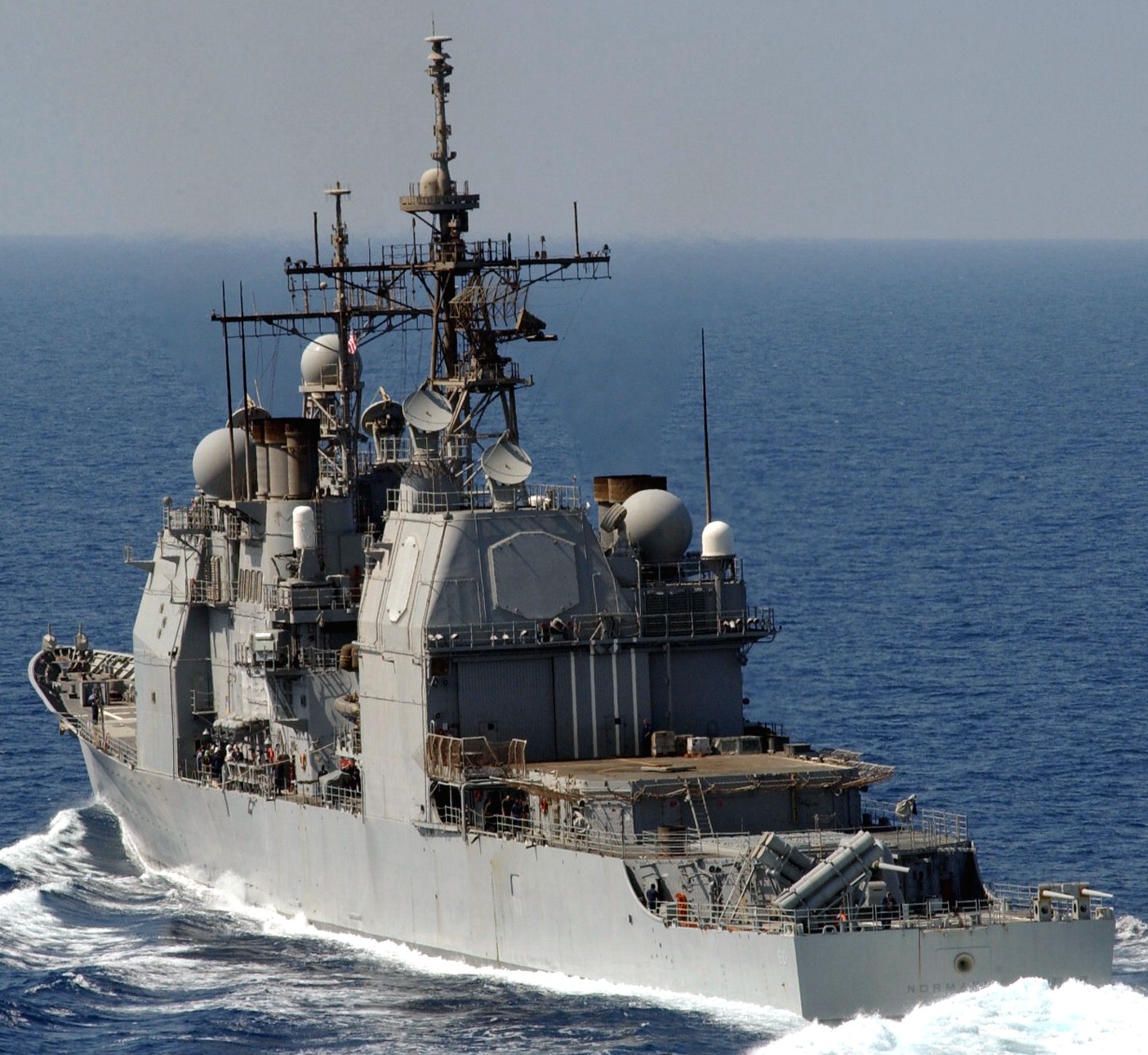 Operation Southern Watch - September 2002 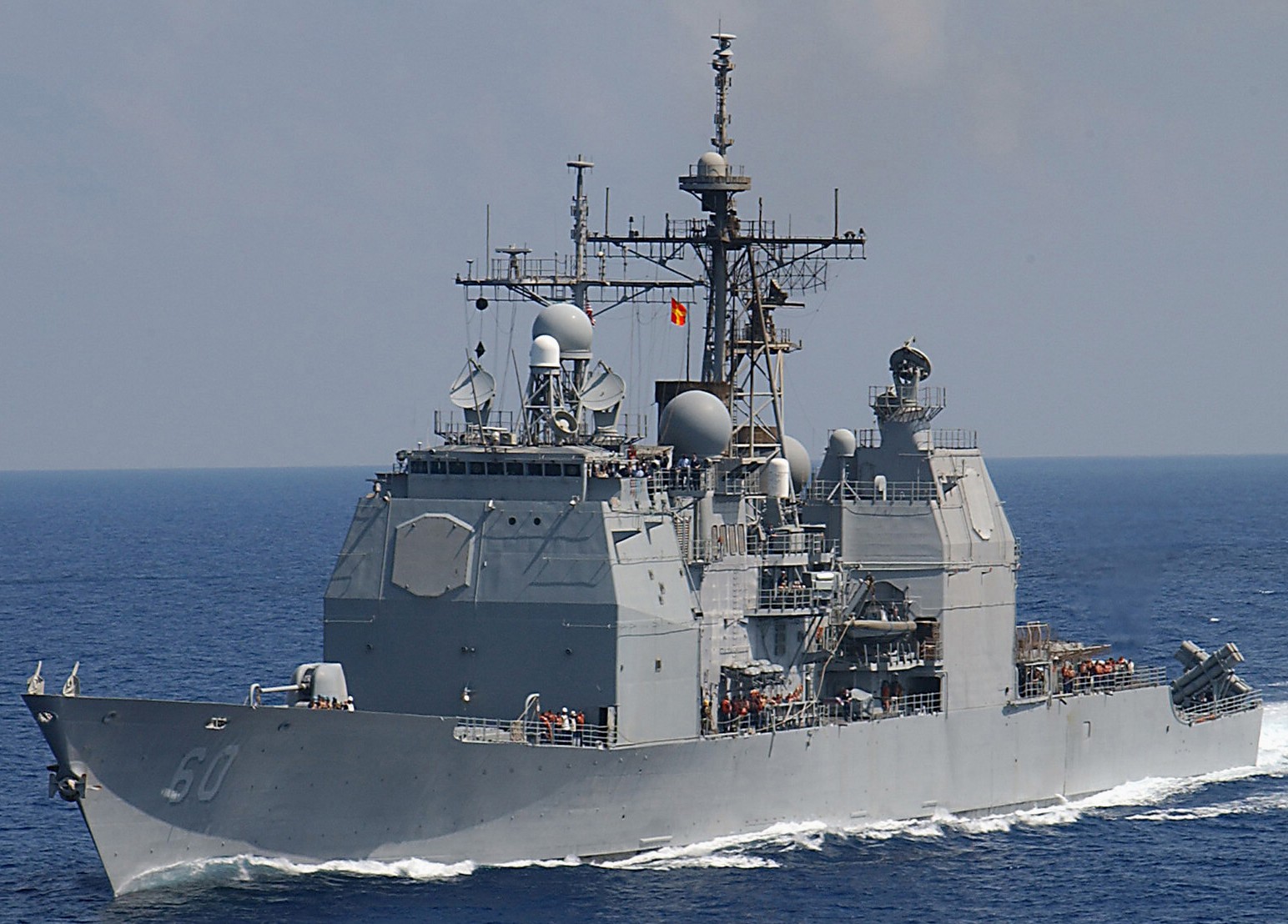 Operation Southern Watch - September 2002 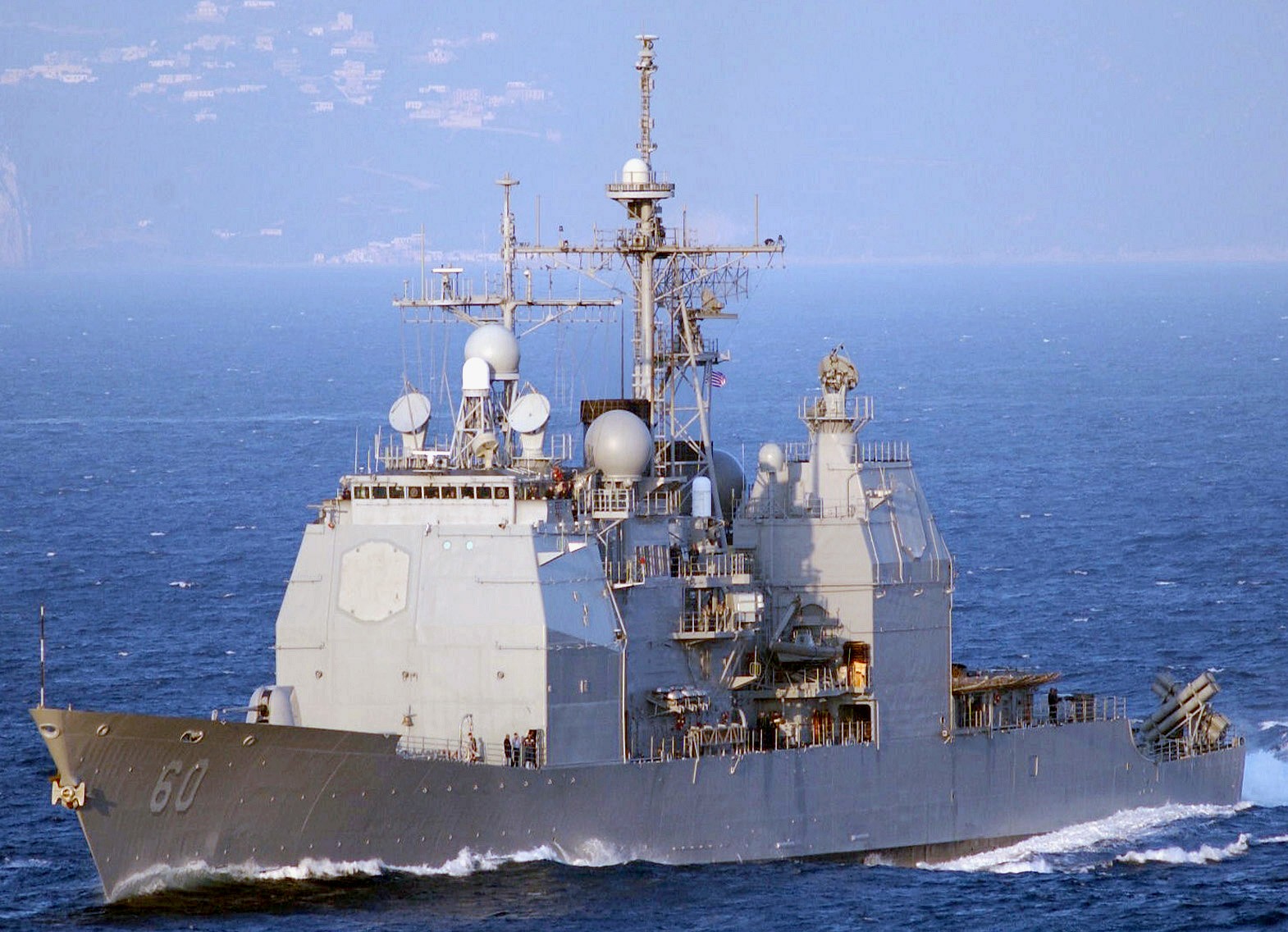 Strait of Gibraltar - July 2002 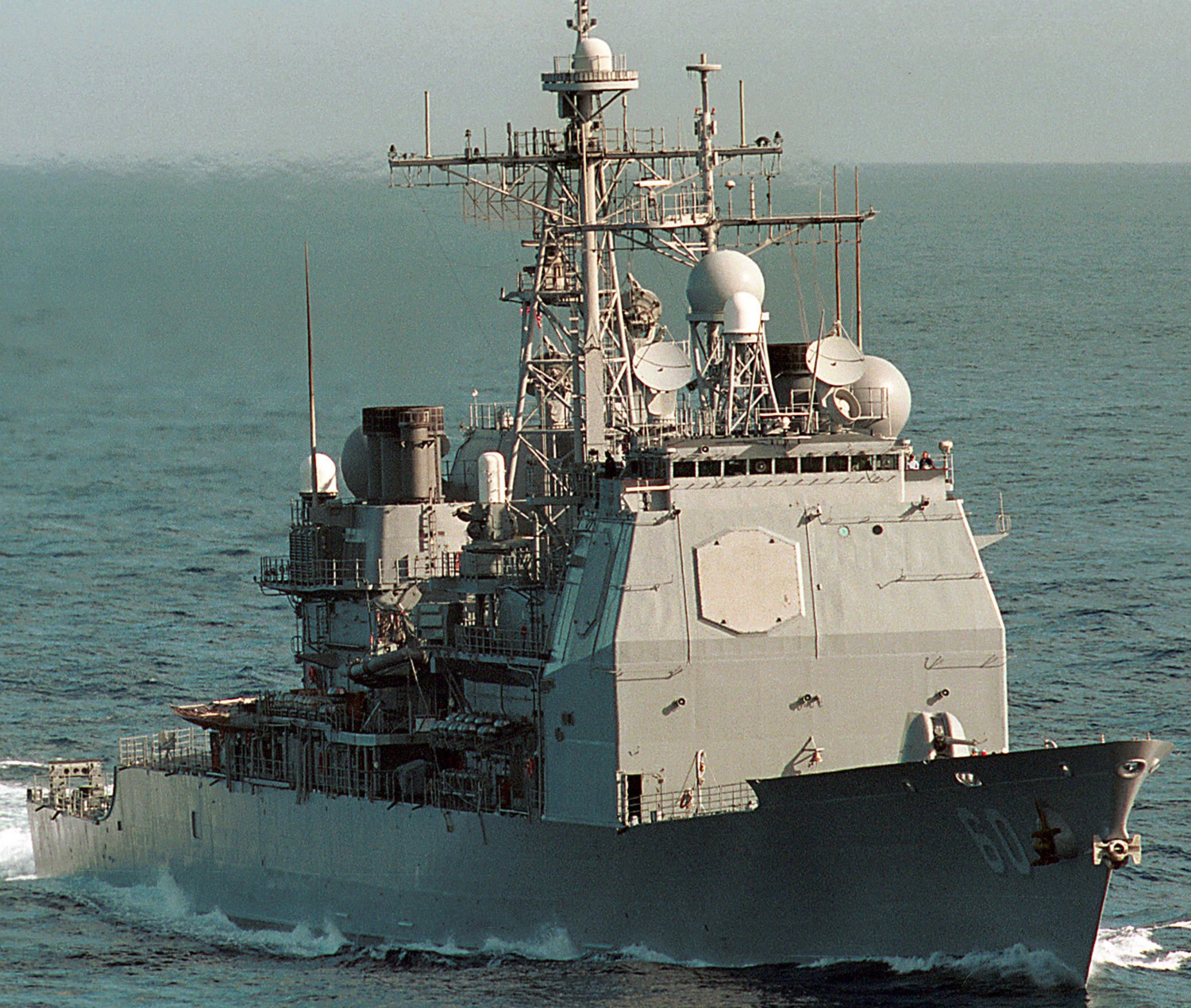 June 2002 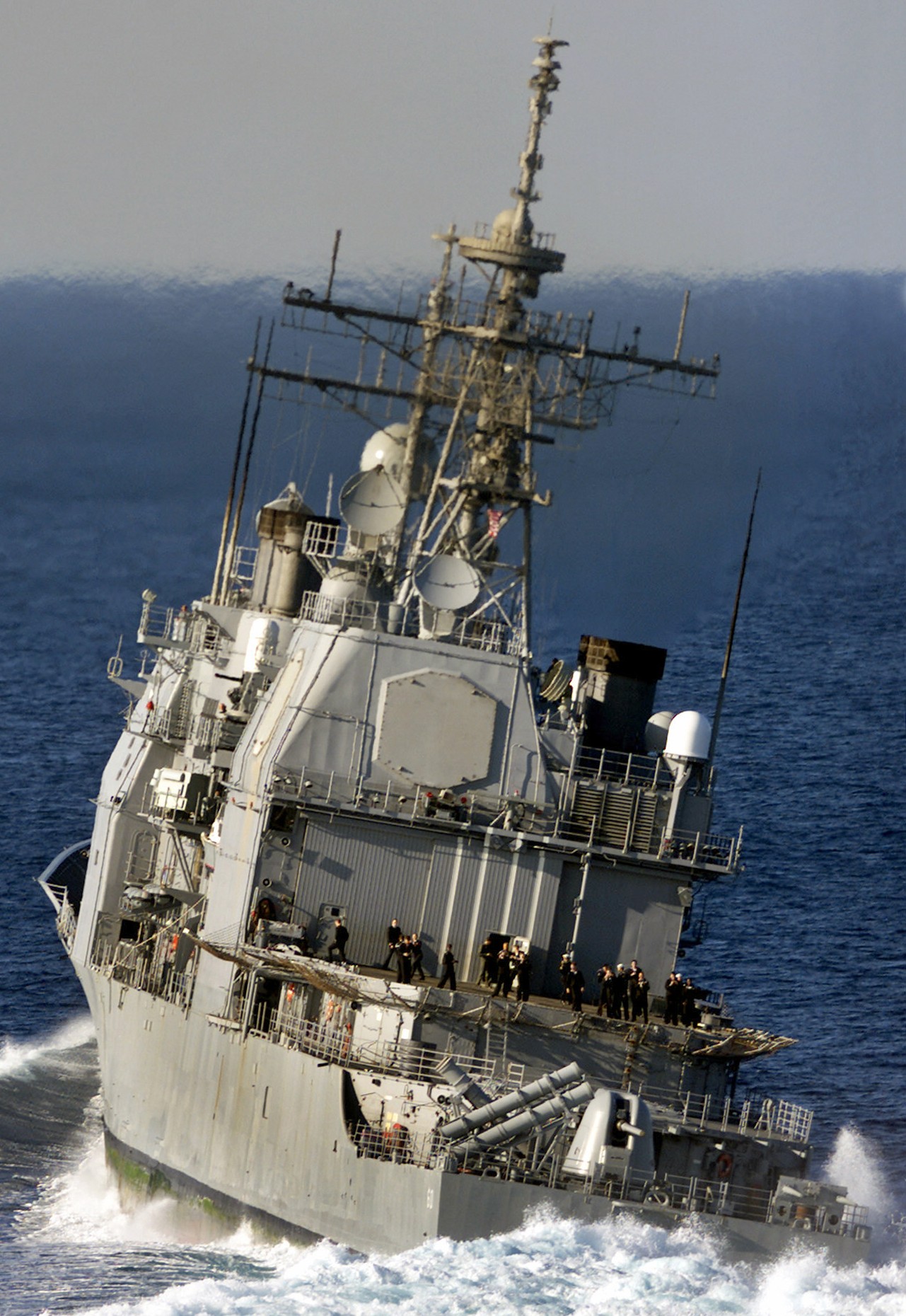 Mediterranean Sea - October 2000 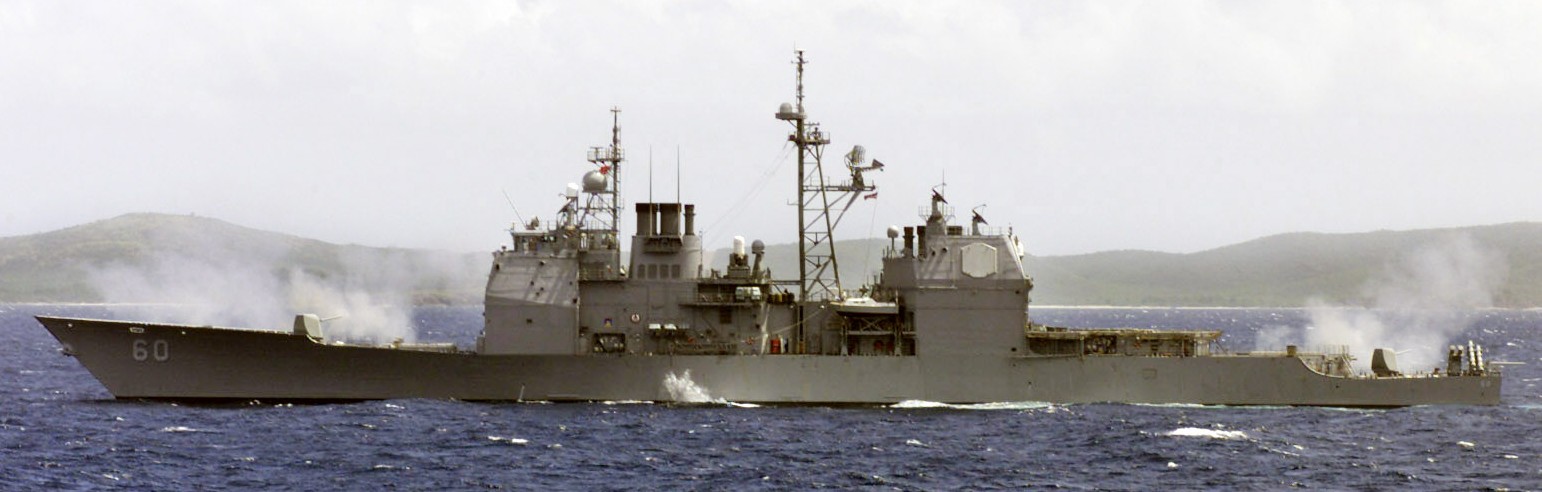 off Vieques Naval Training Range, Puerto Rico - June 2000 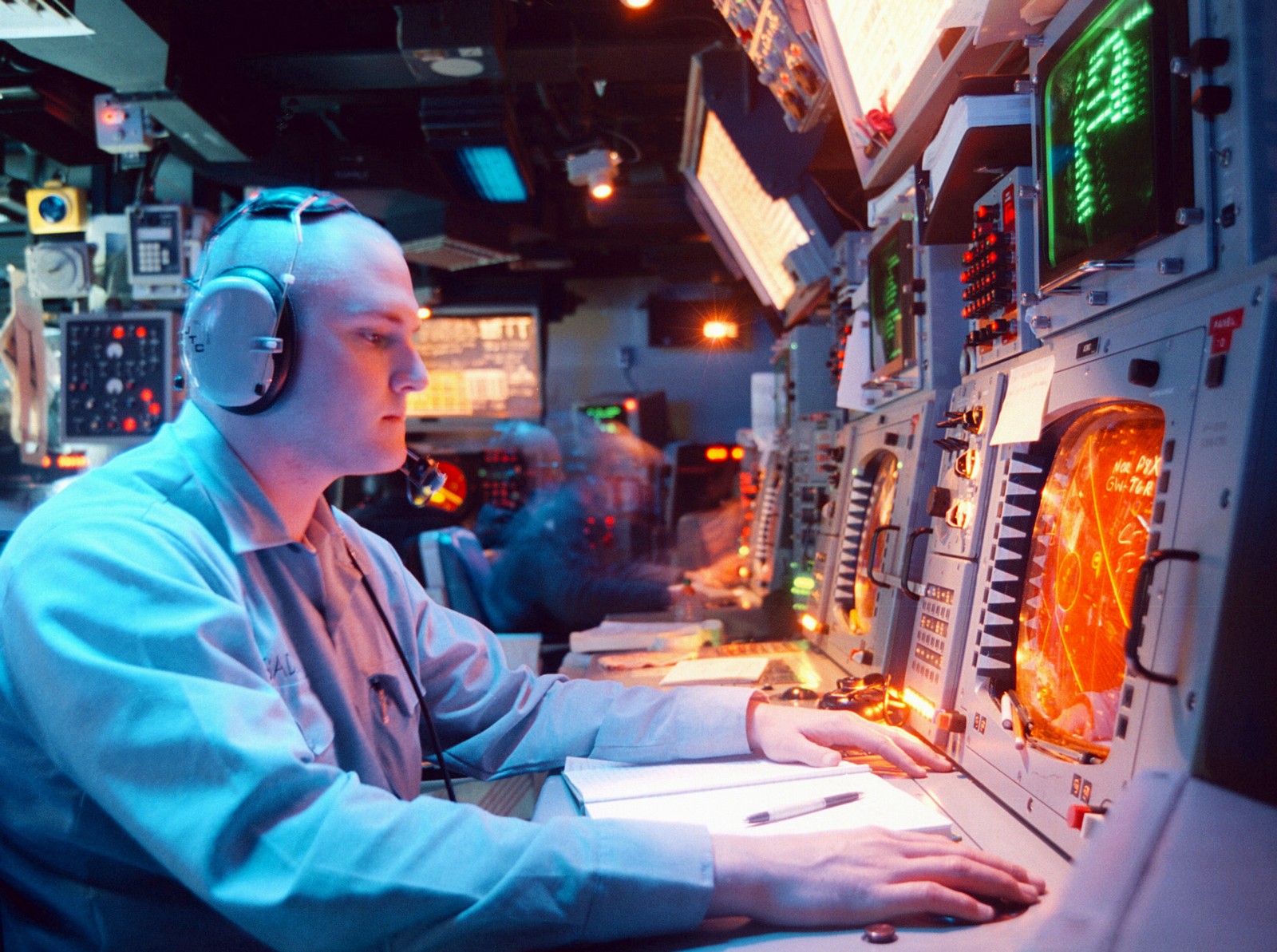 Operation Southern Watch - December 1997 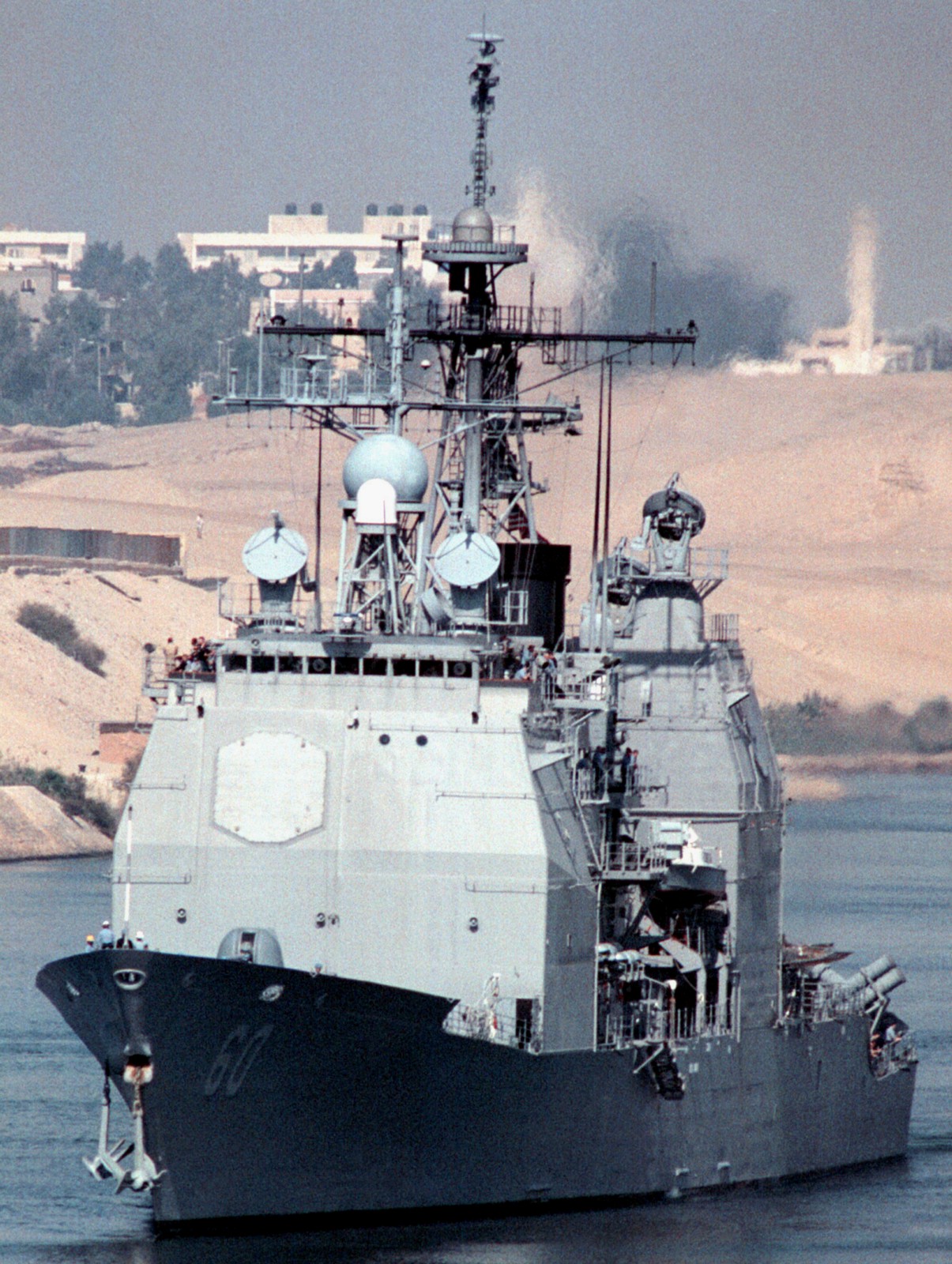 Suez Canal - November 1997 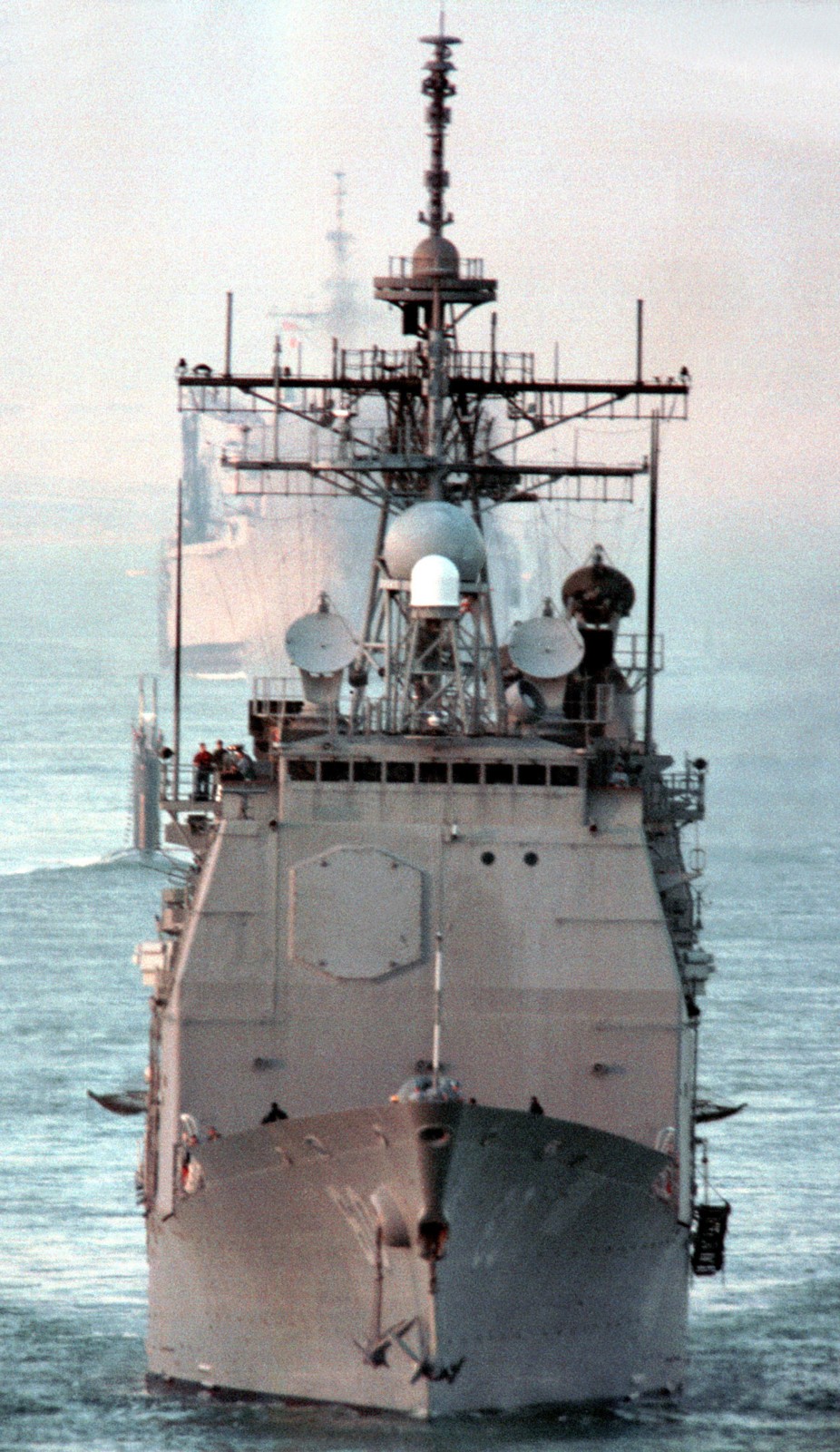 Suez Canal - November 1997 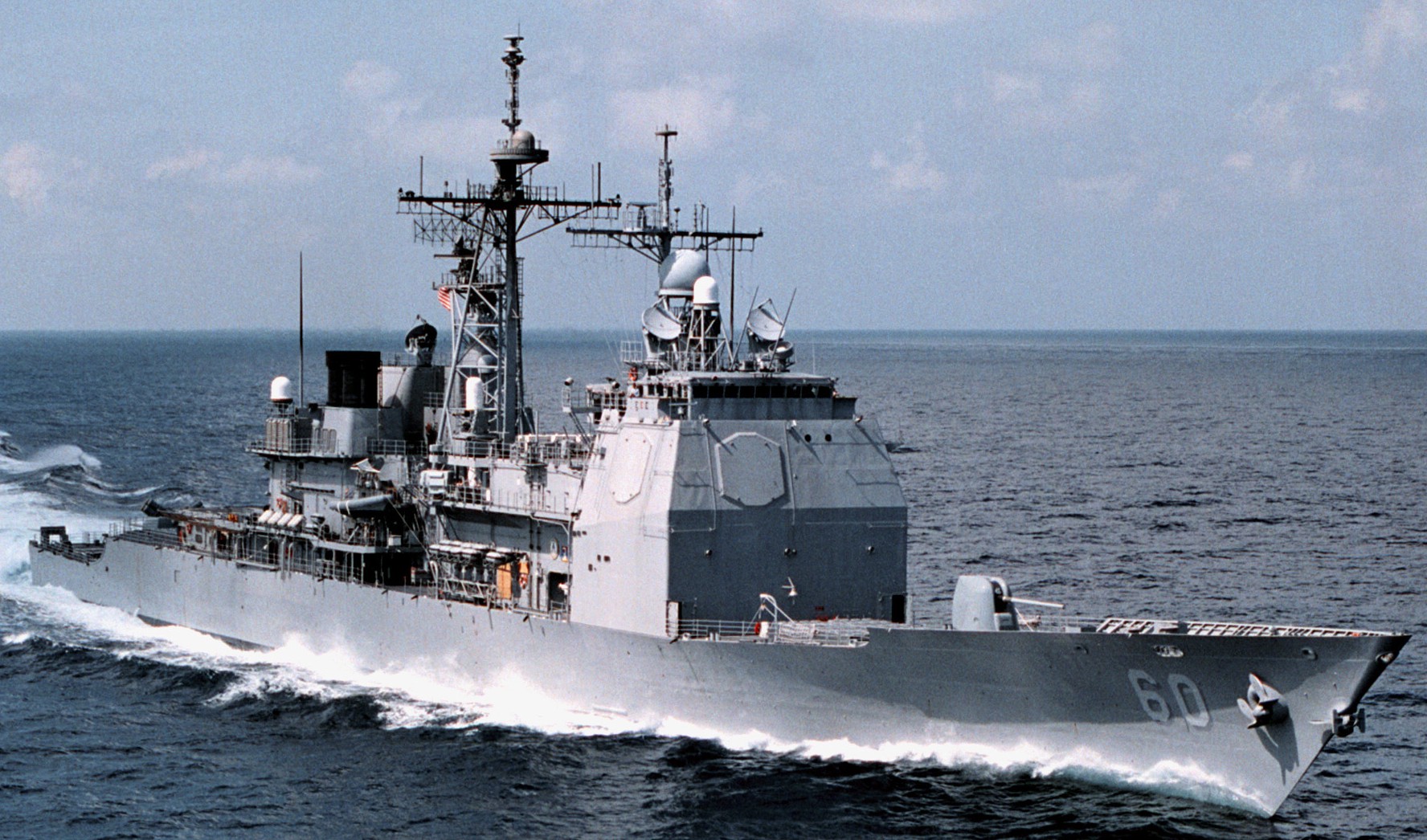 Operation Southern Watch - November 1997 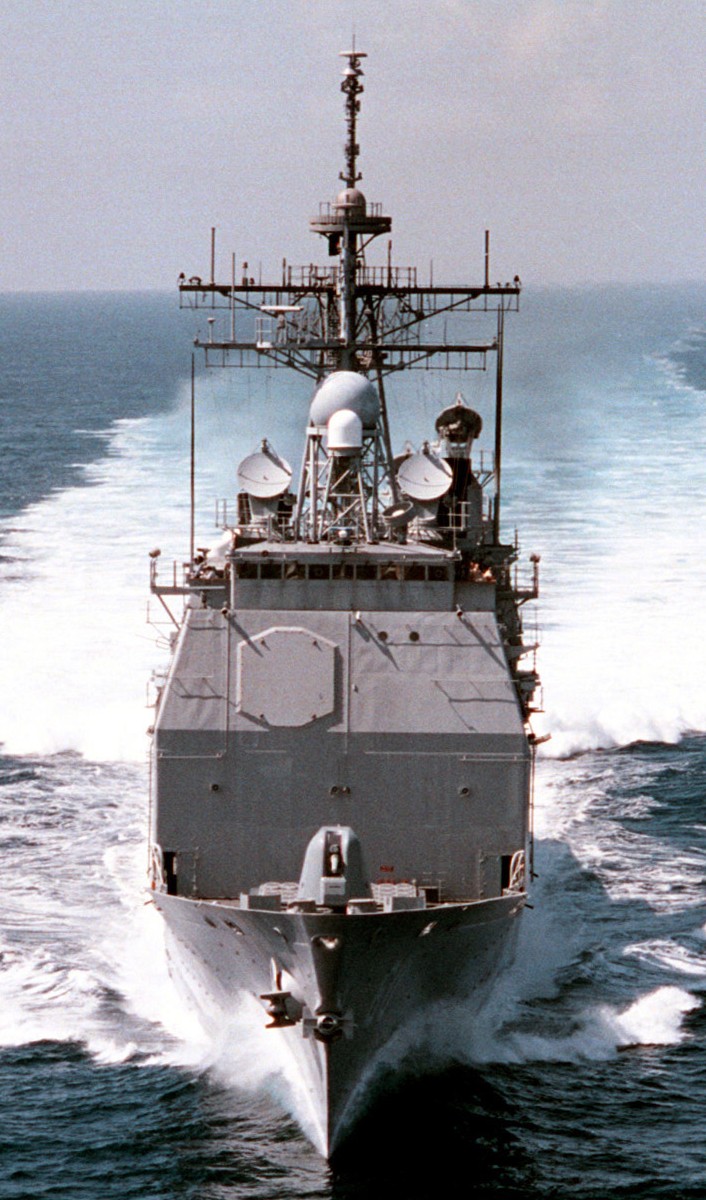 Operation Southern Watch - November 1997 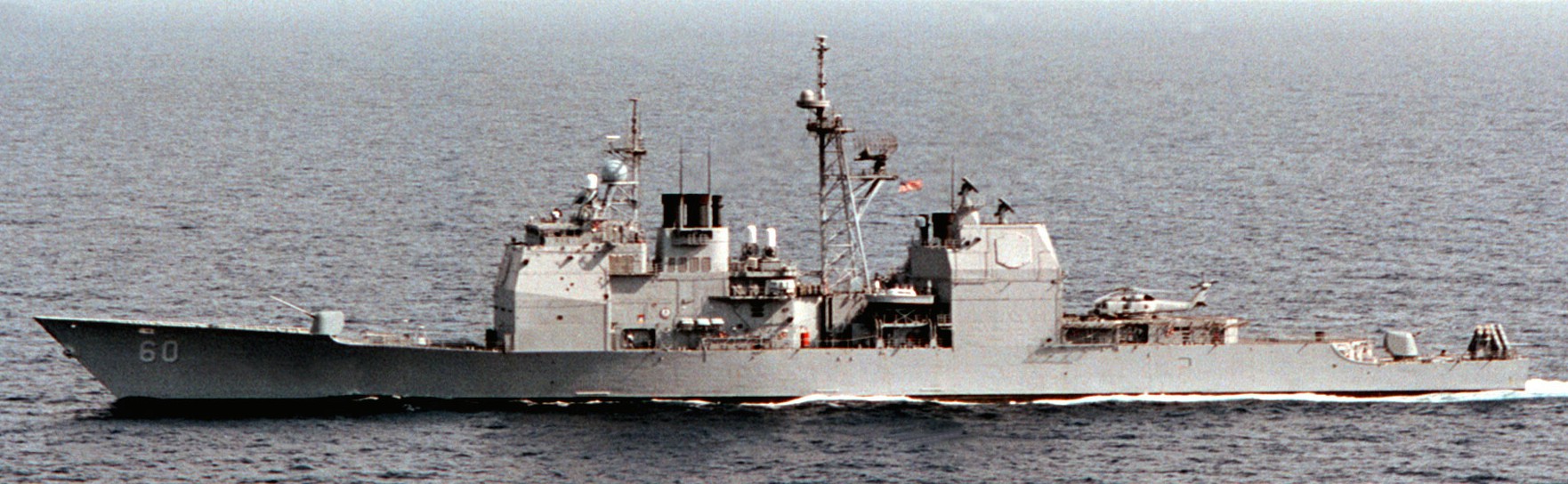 Mediterranean Sea - October 1997 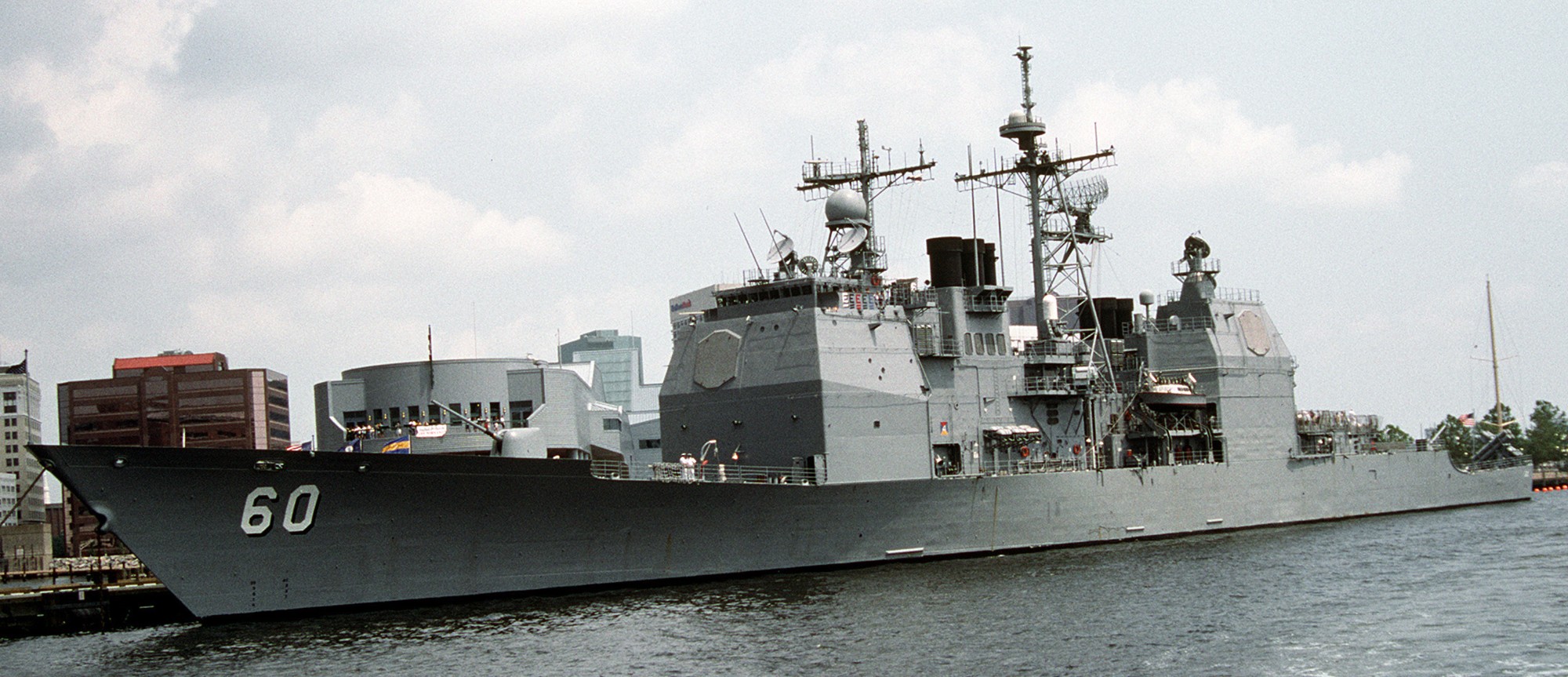 Norfolk, Virginia - July 1994 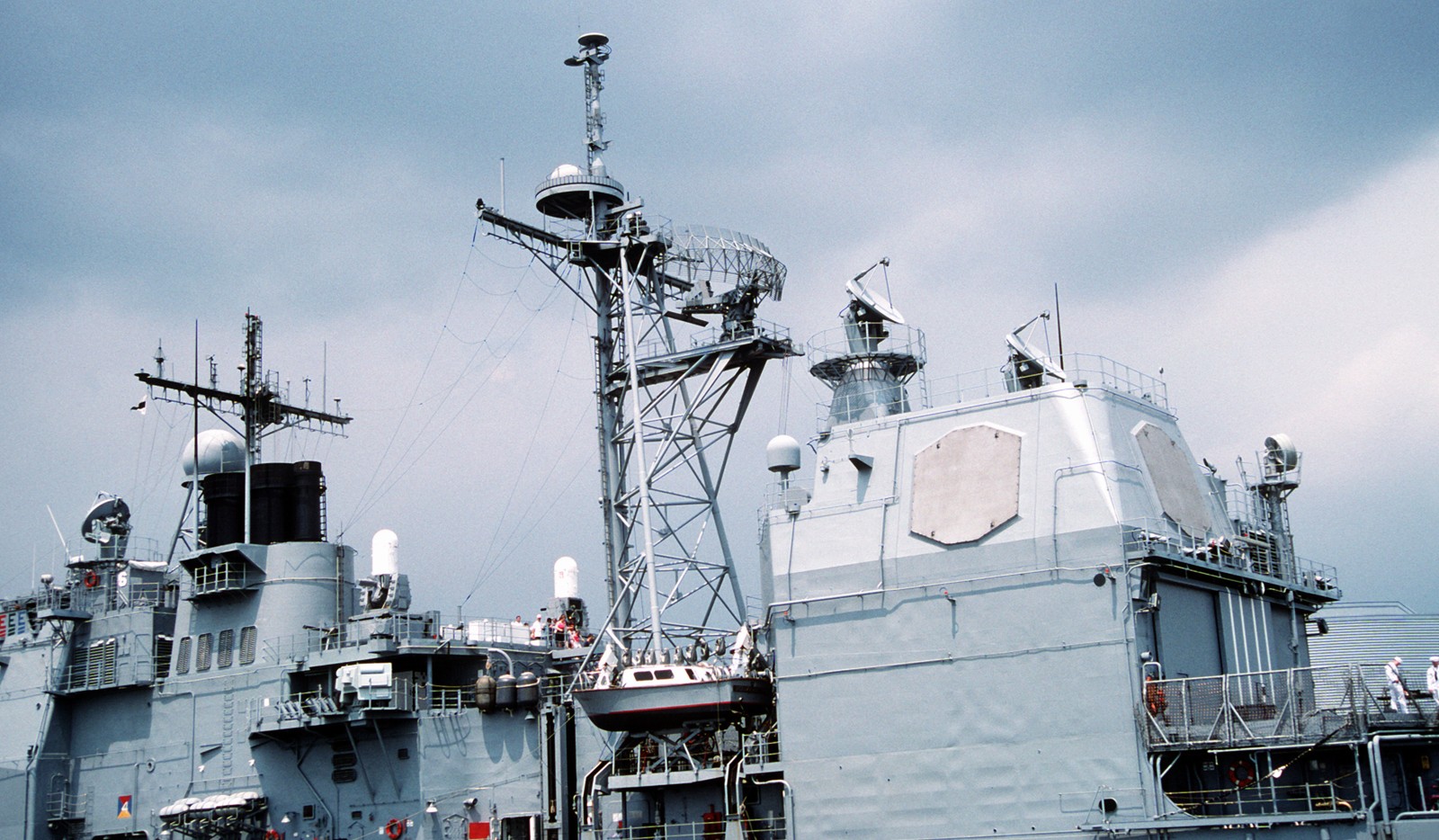 Norfolk, Virginia - July 1994 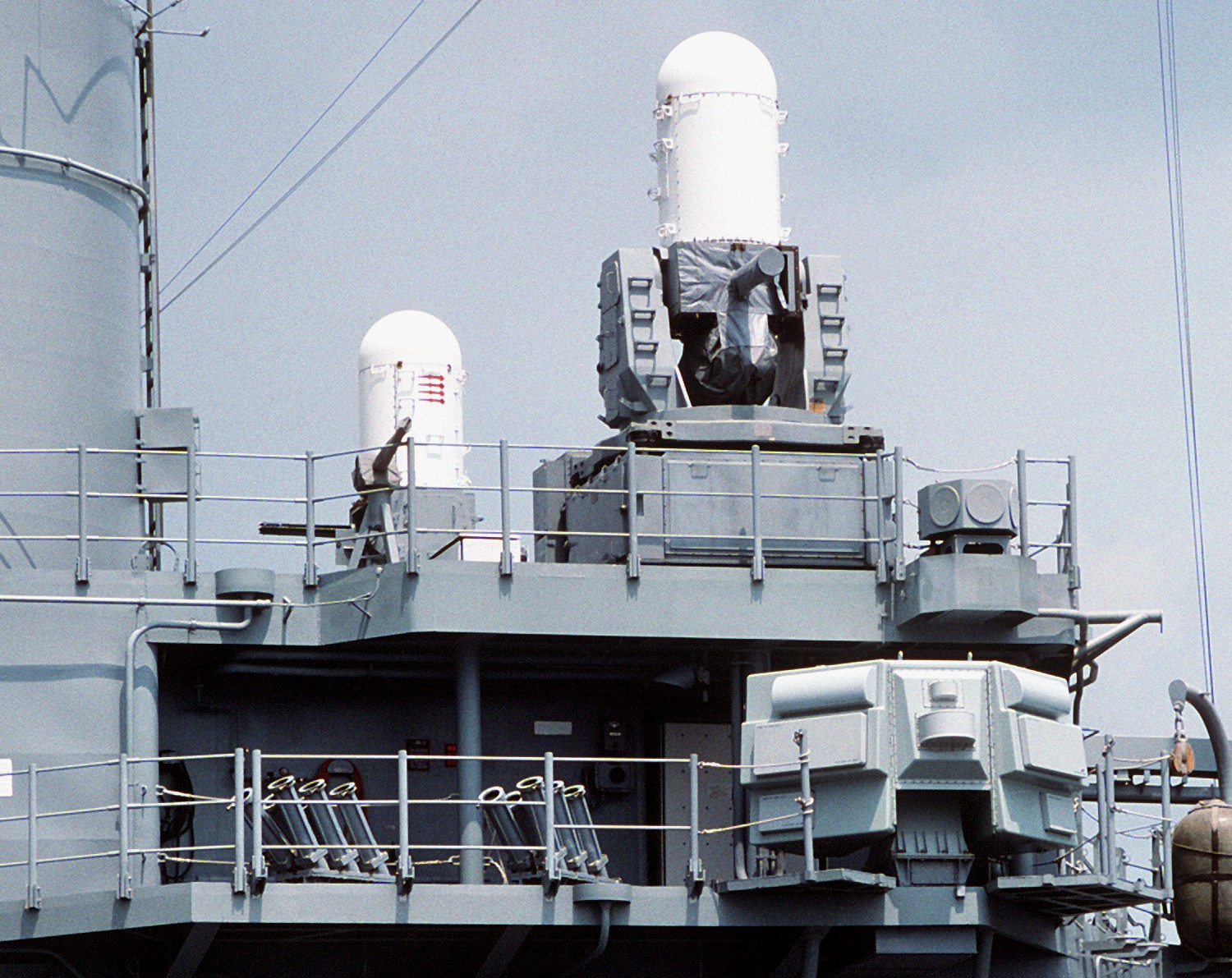 Norfolk, Virginia - July 1994 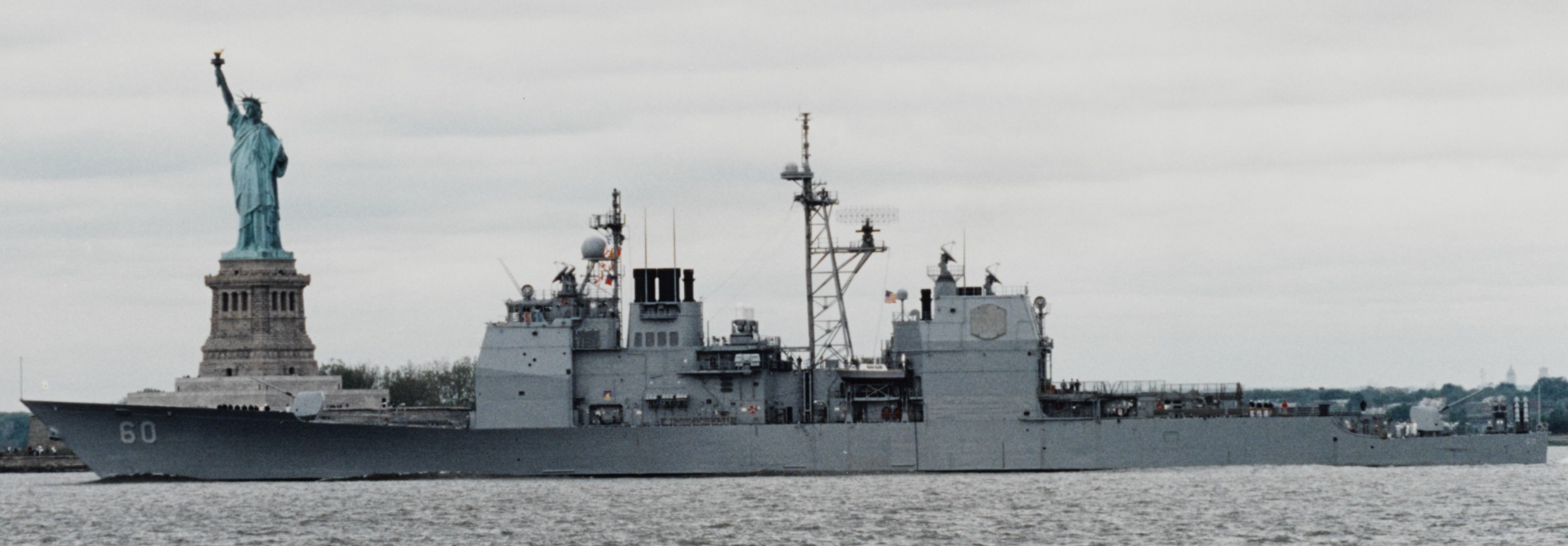 New York - May 1994 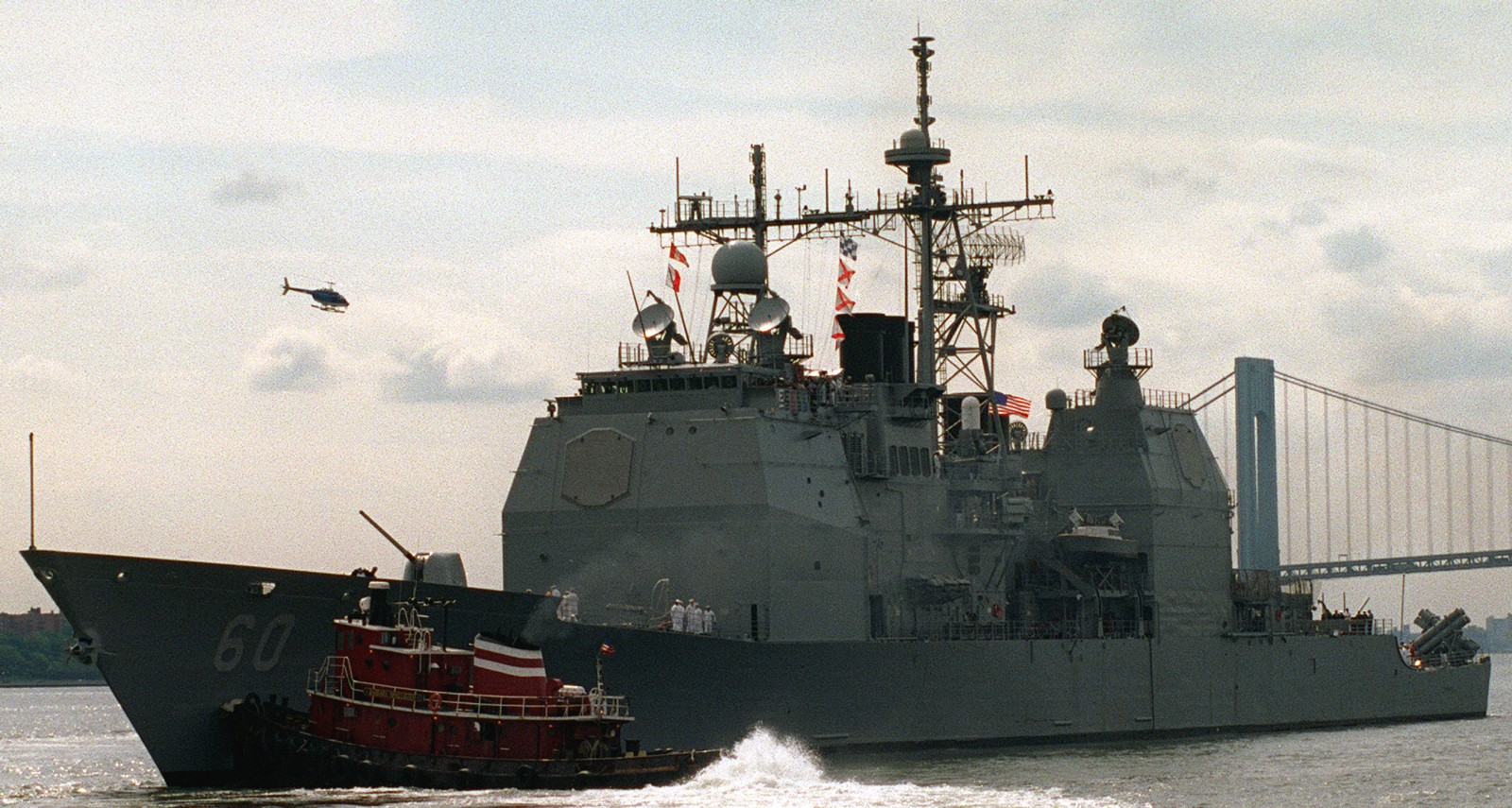 Staten Island, New York - May 1994 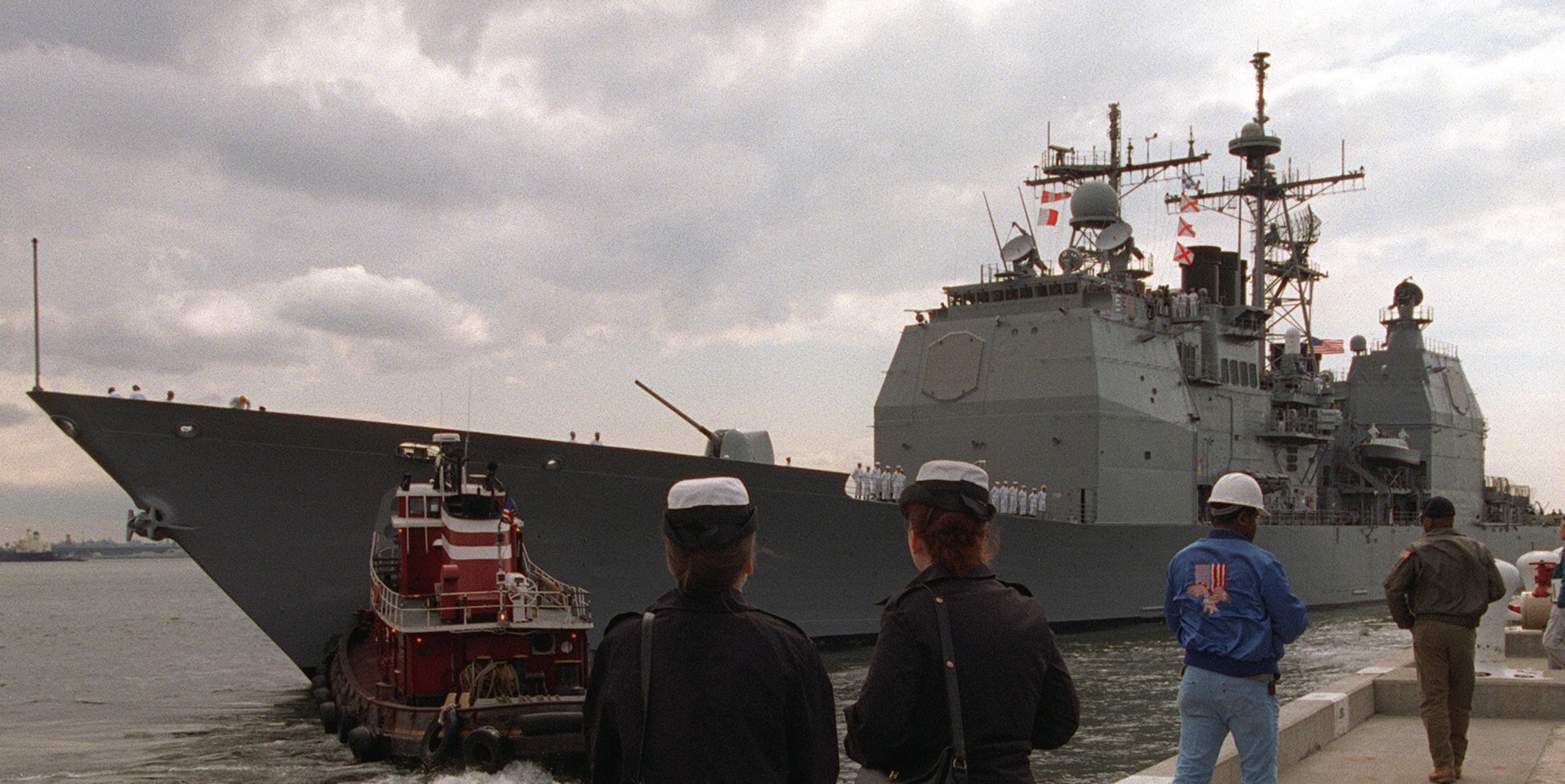 Staten Island, New York - May 1994 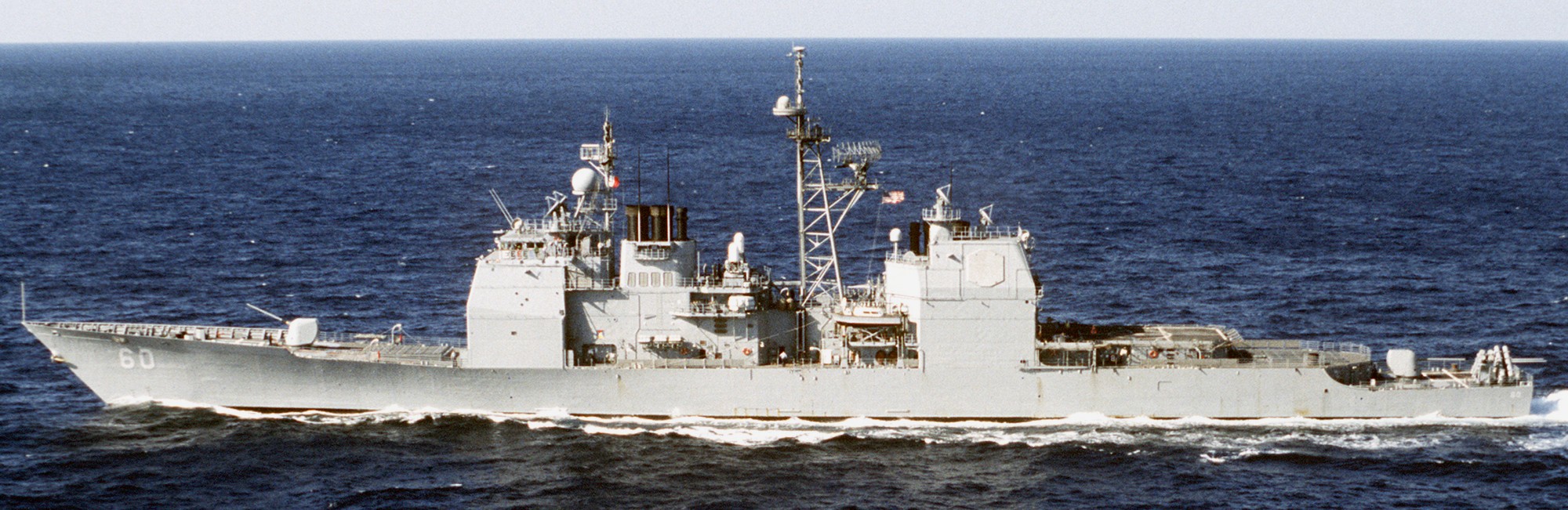 Adriatac Sea - August 1993 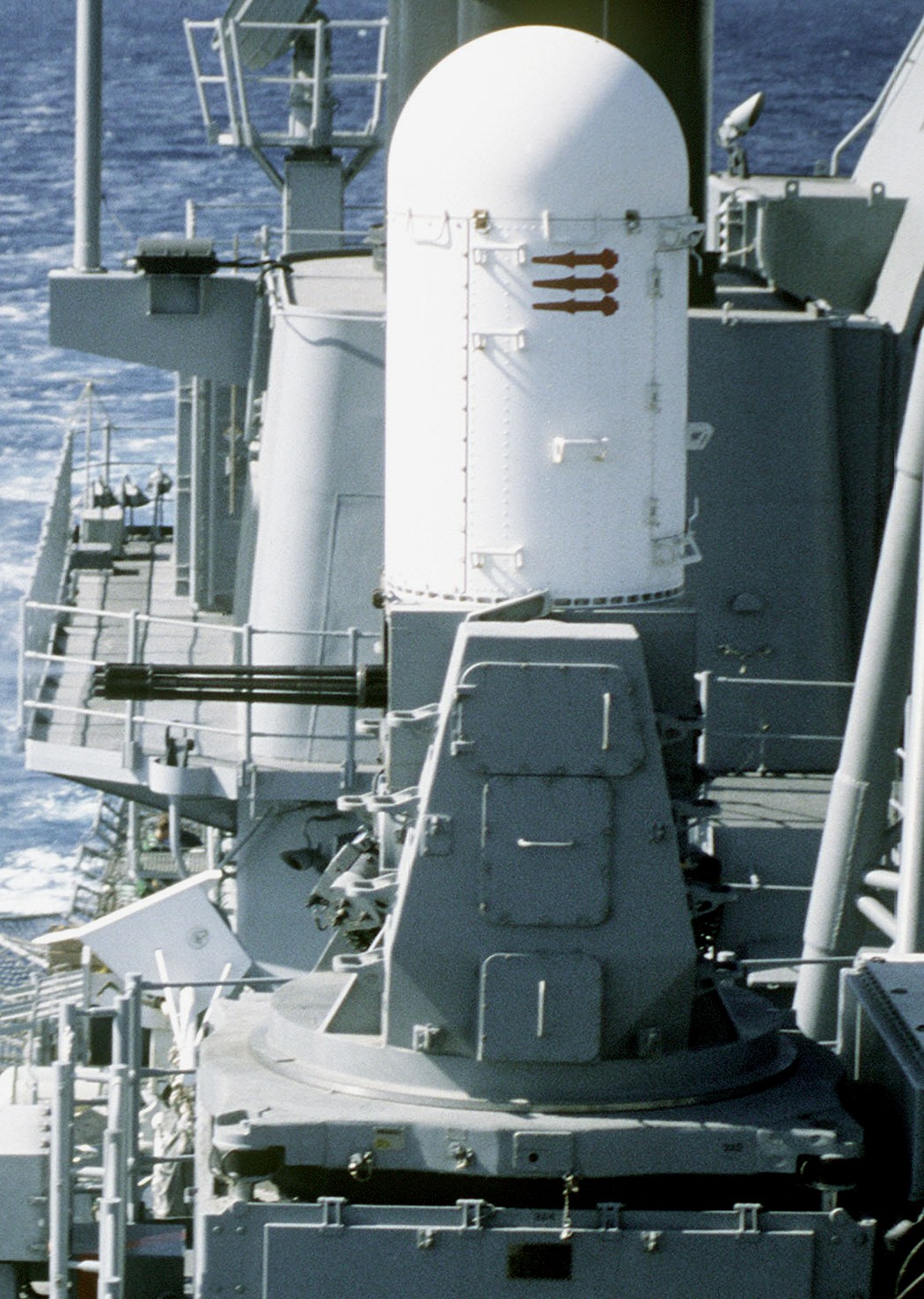 Adriatac Sea - July 1993 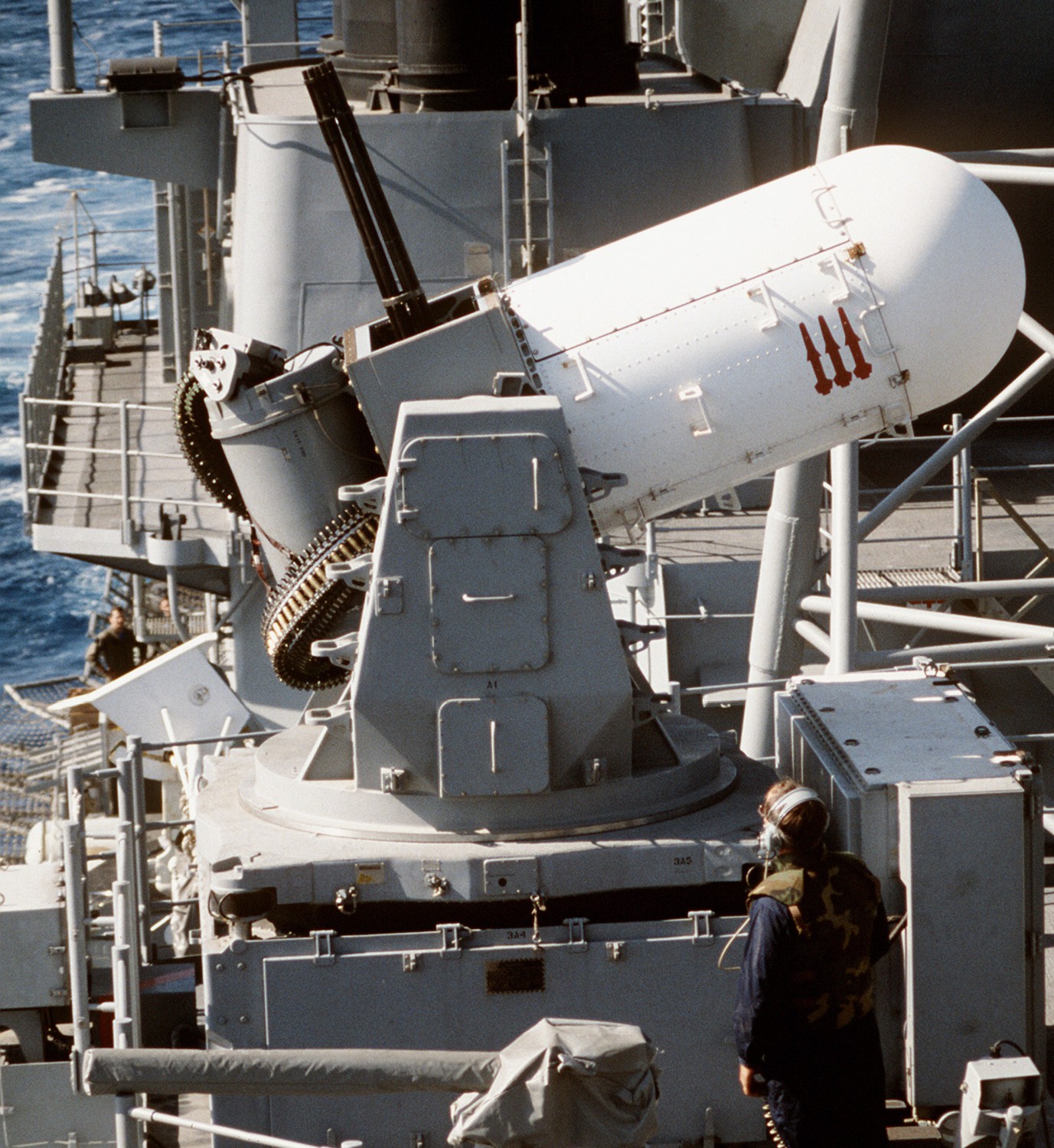 Adriatac Sea - July 1993 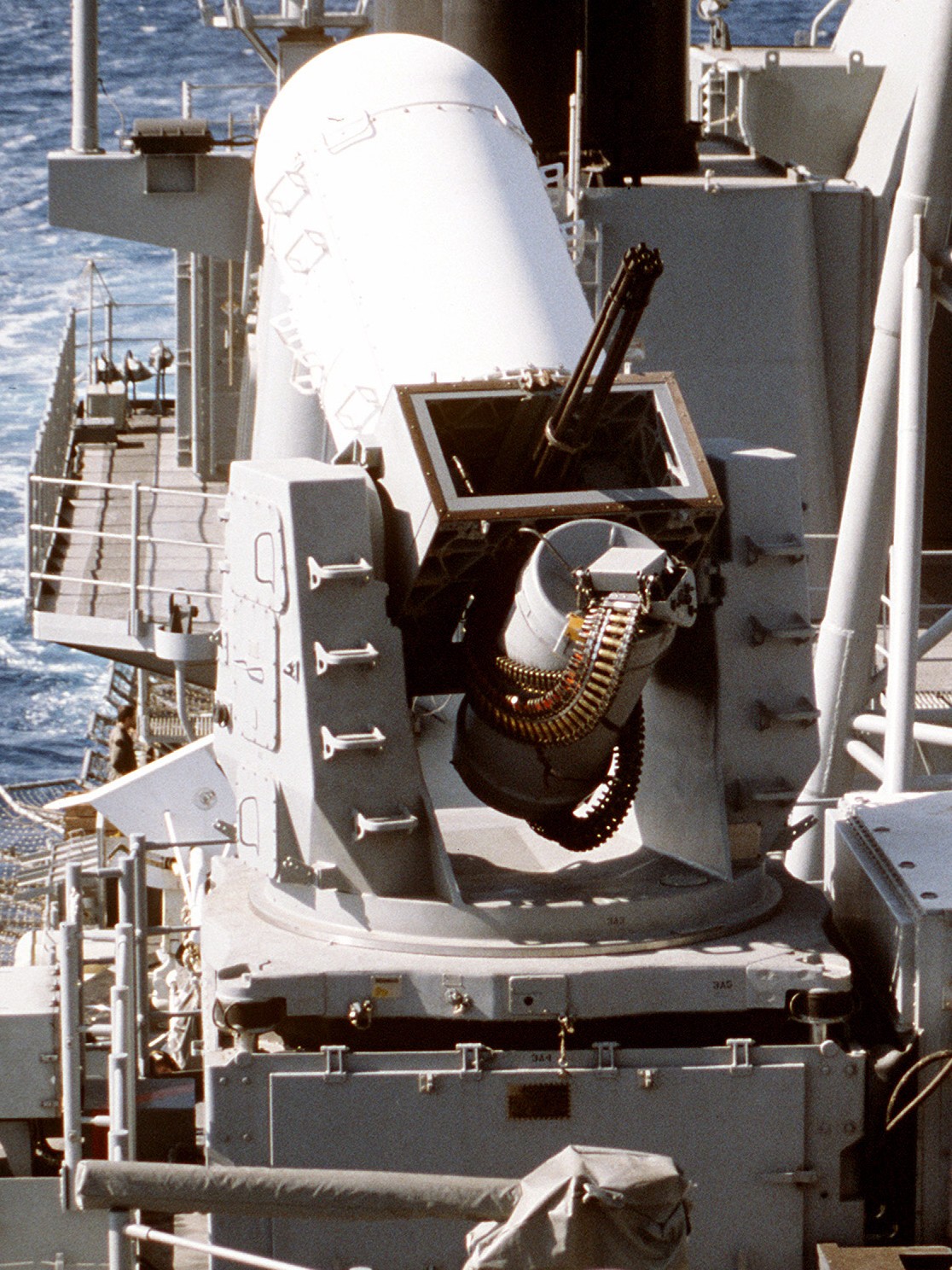 Adriatac Sea - July 1993 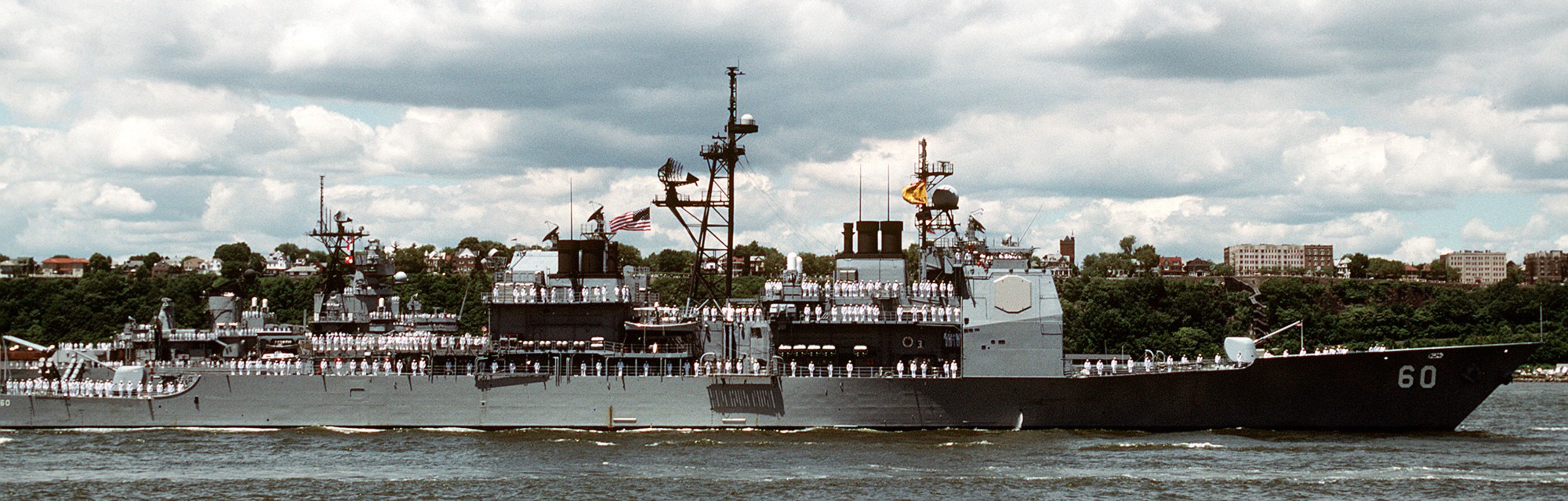 New York Fleet Week - June 1991 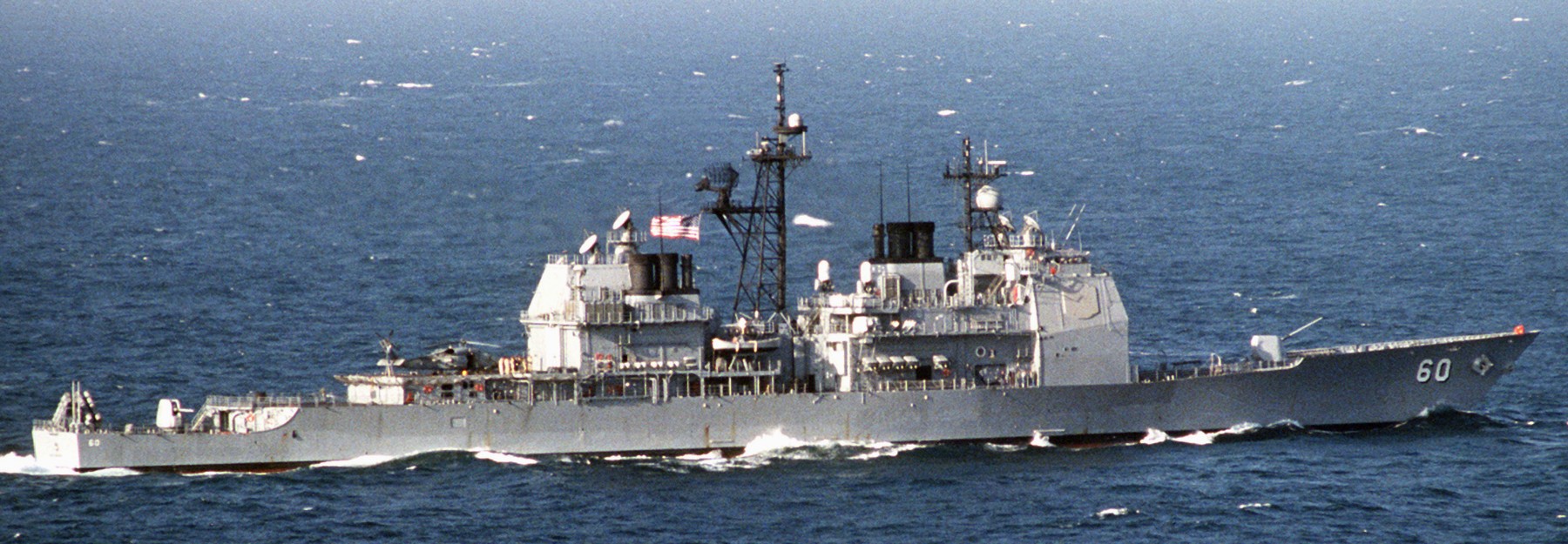 Operation Desert Storm - March 1991 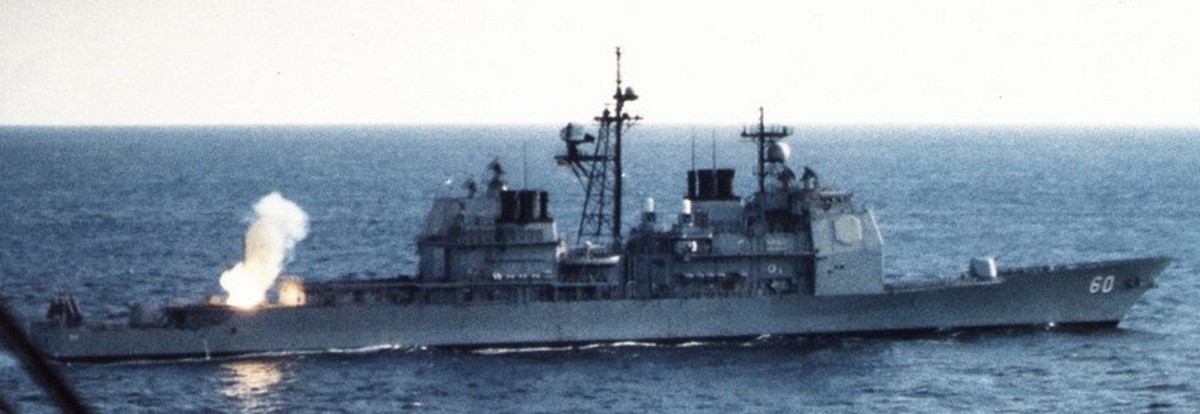 launching a Tomahawk TLAM missile - Operation Desert Storm - 1991 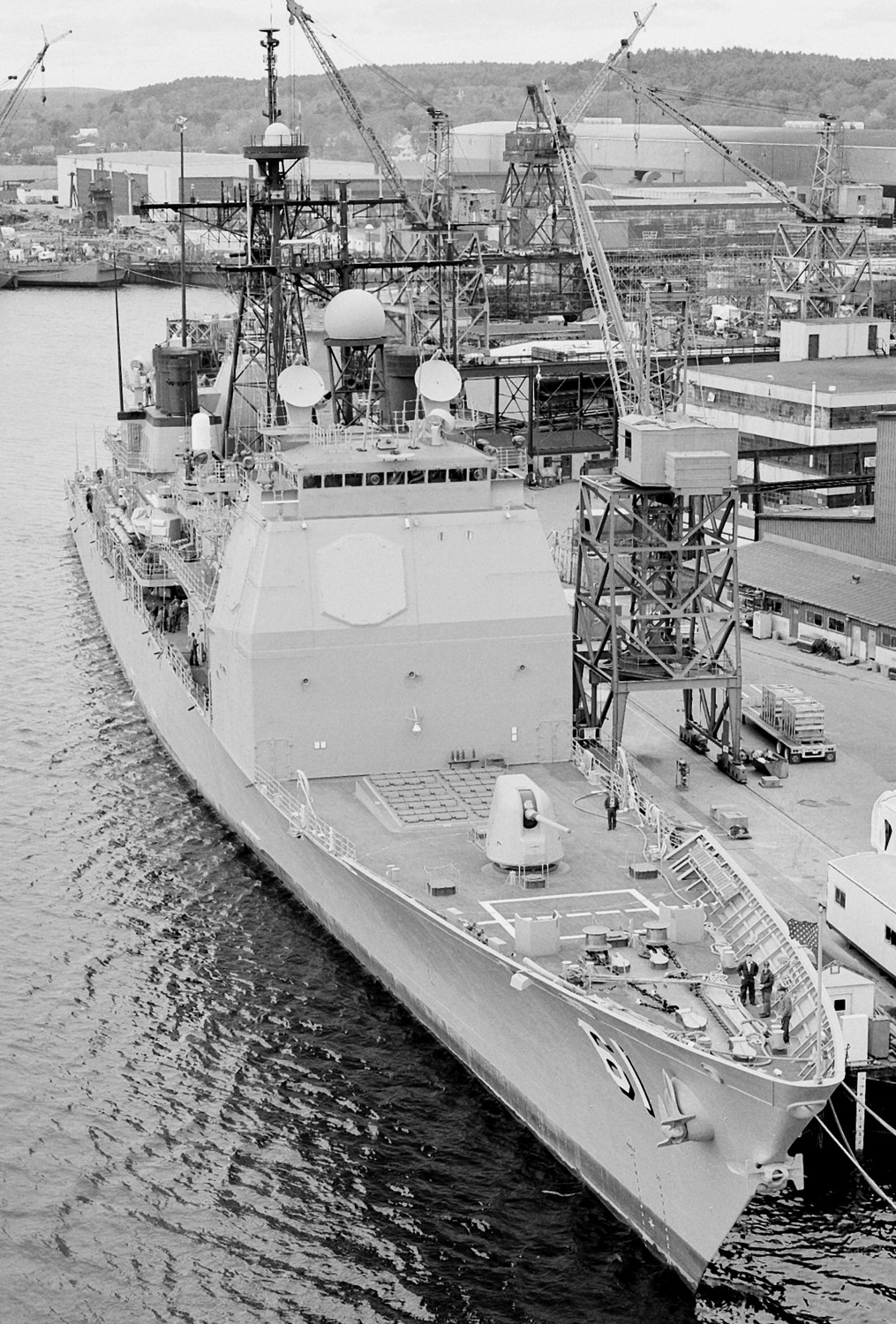 Bath Iron Works, Maine - May 1990 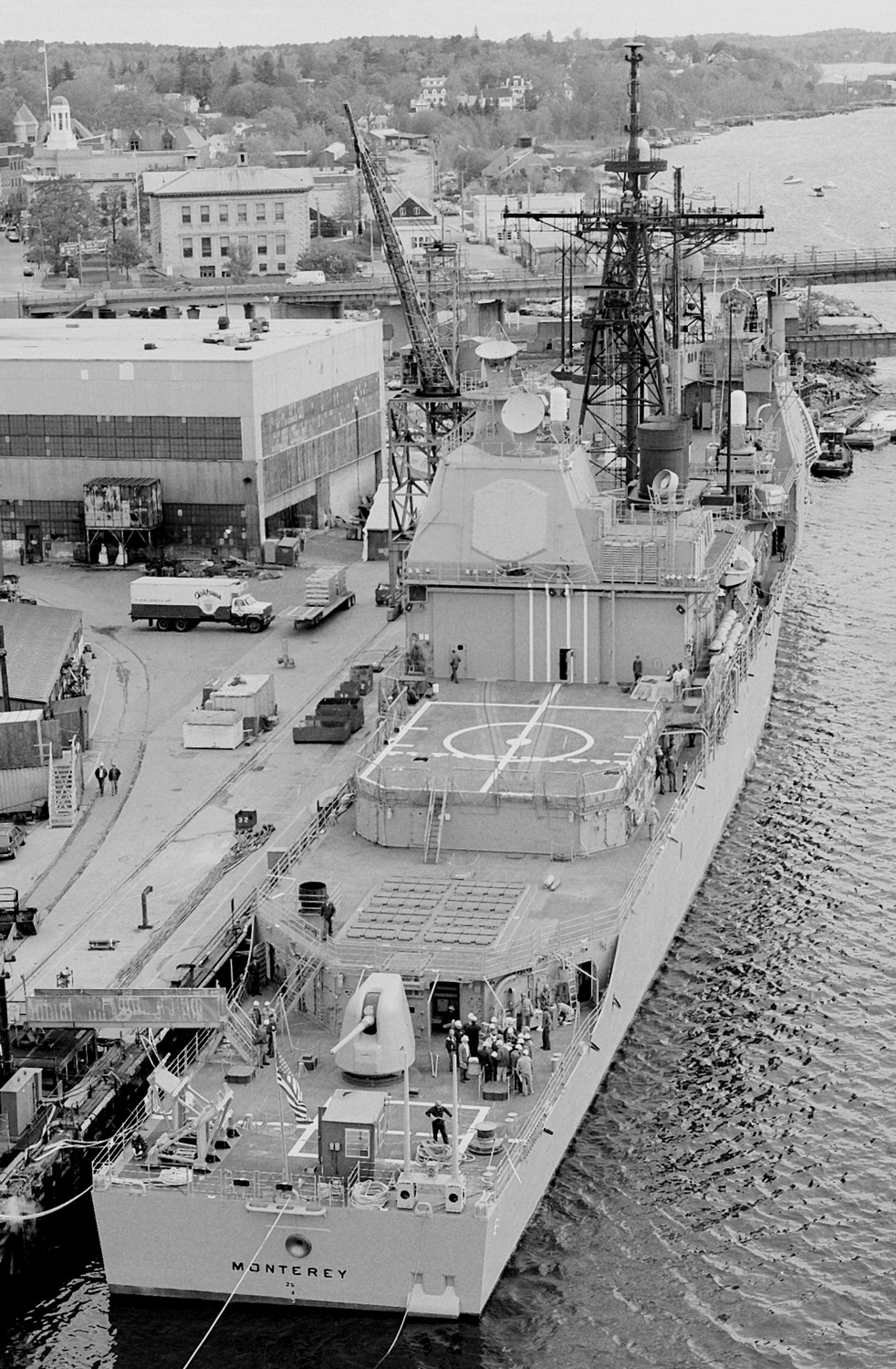 Bath Iron Works, Maine - May 1990 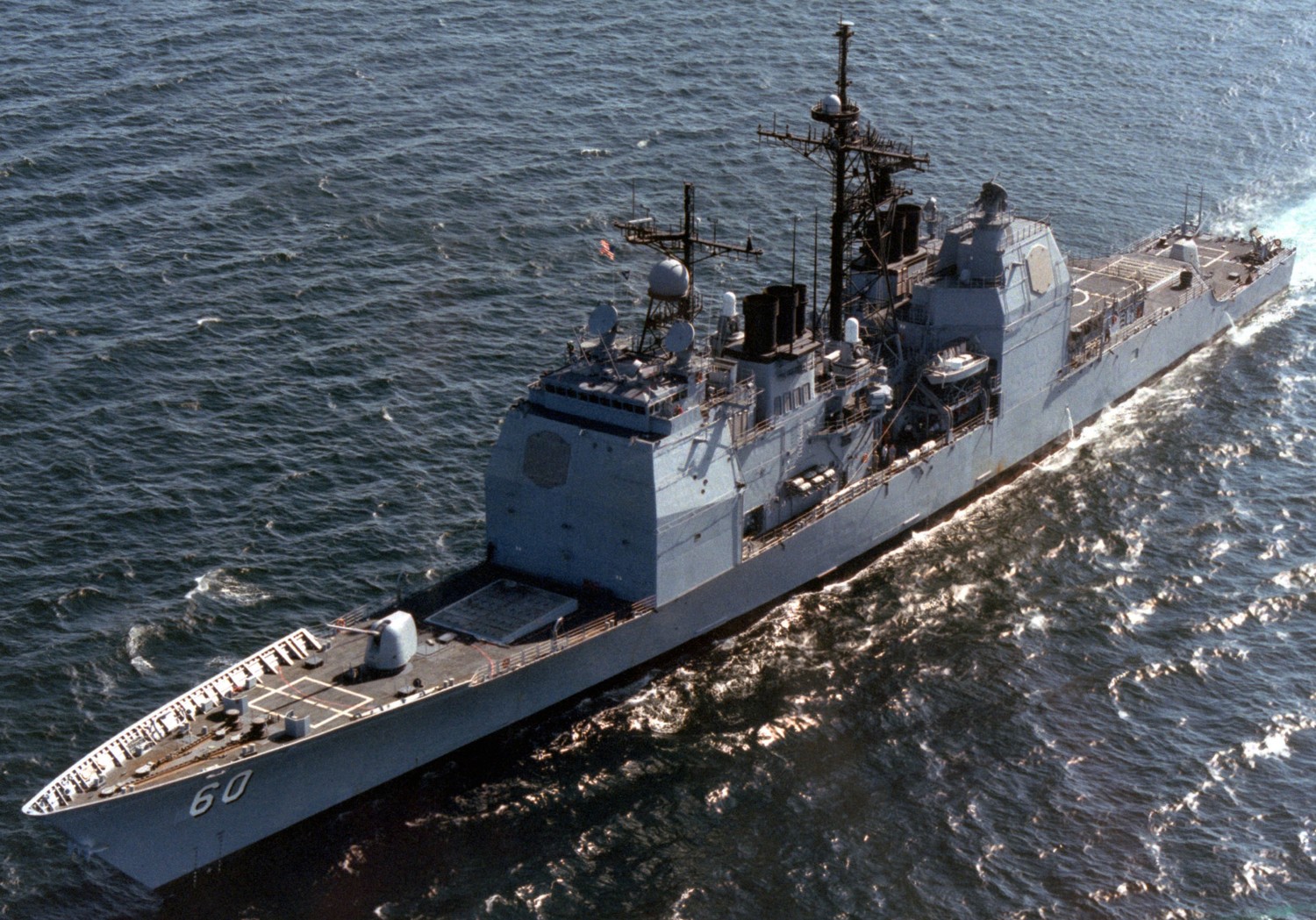 trials - off New England - August 1989 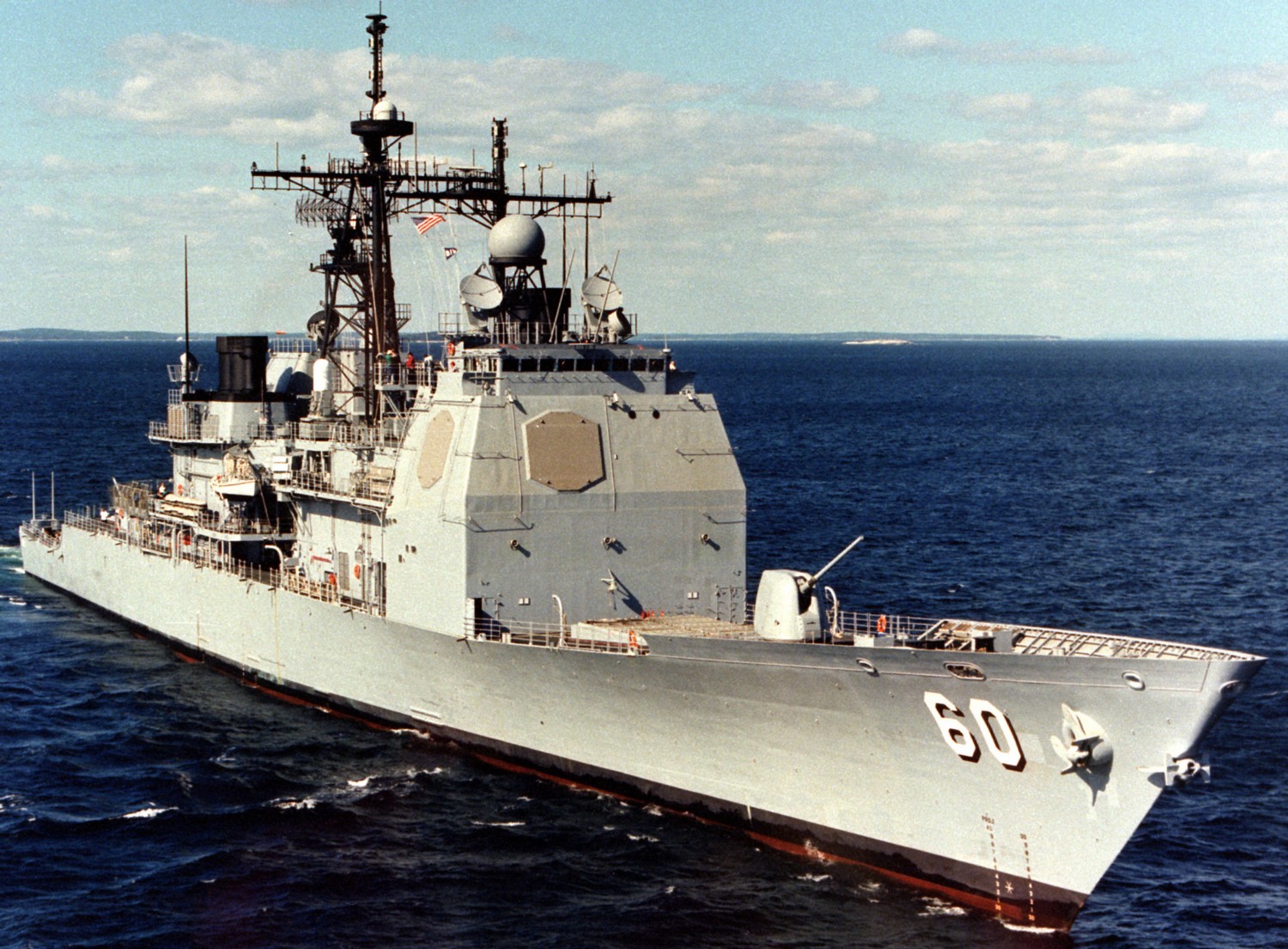 trials - off New England - August 1989 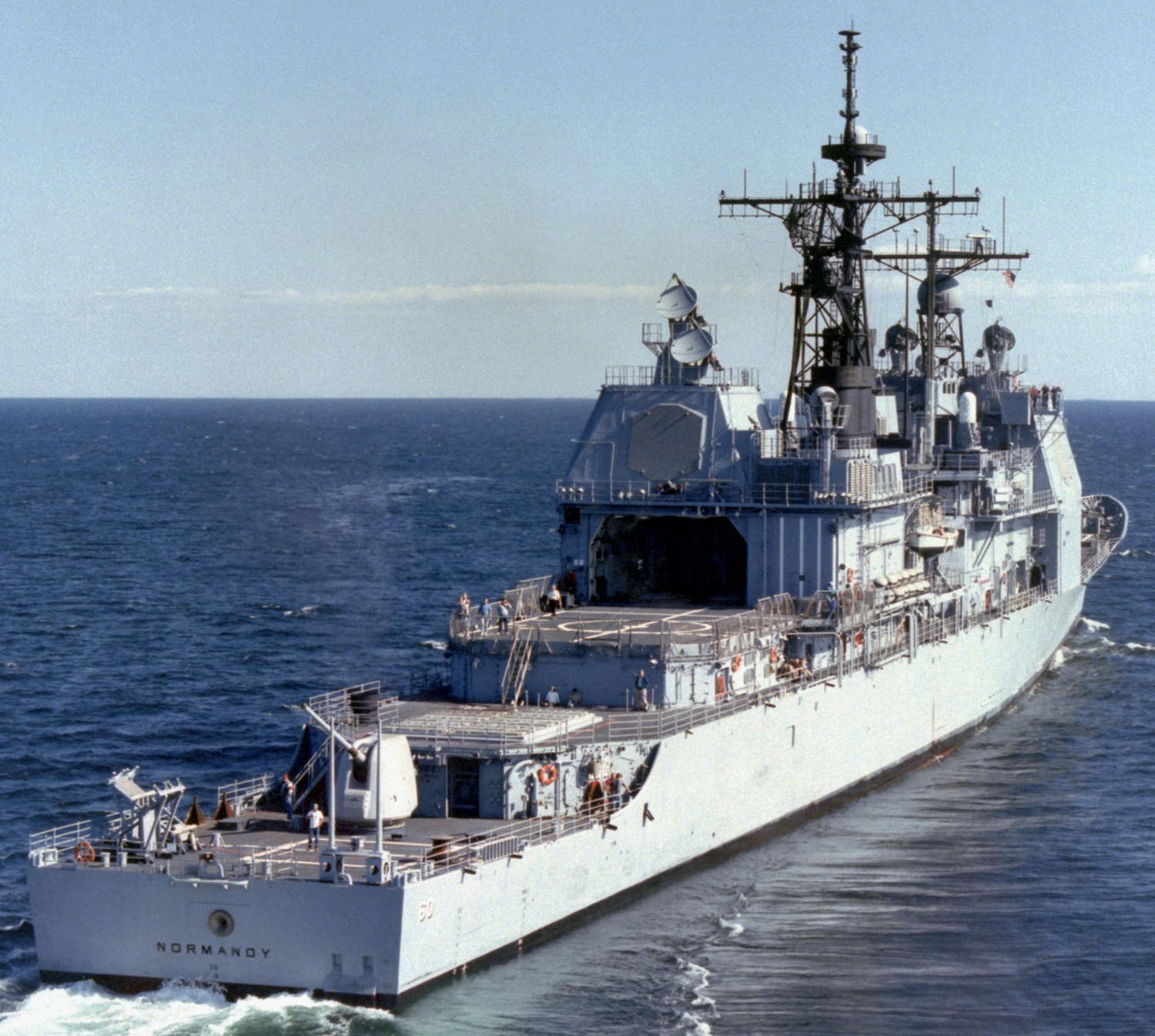 trials - off New England - August 1989 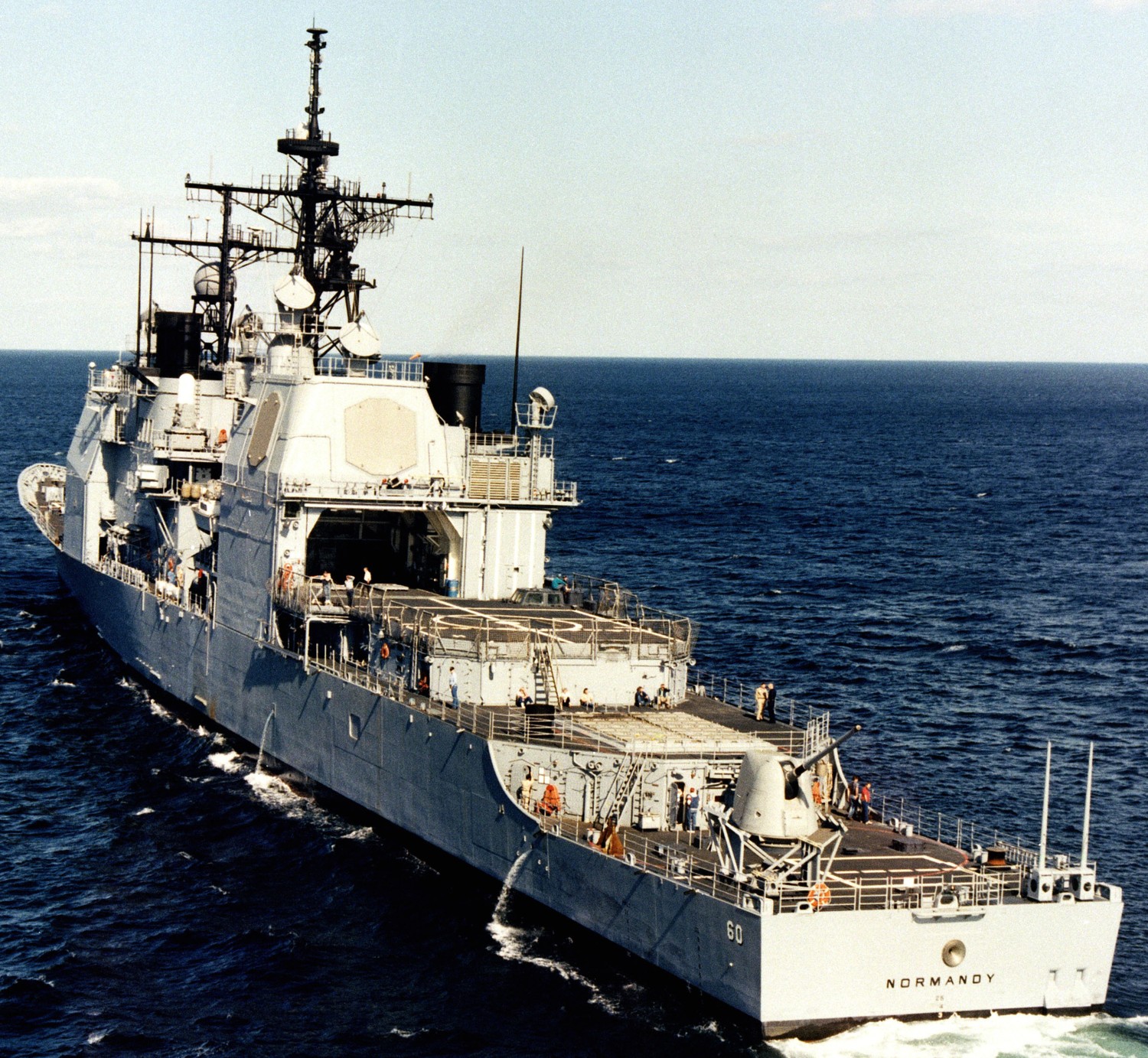 trials - off New England - August 1989 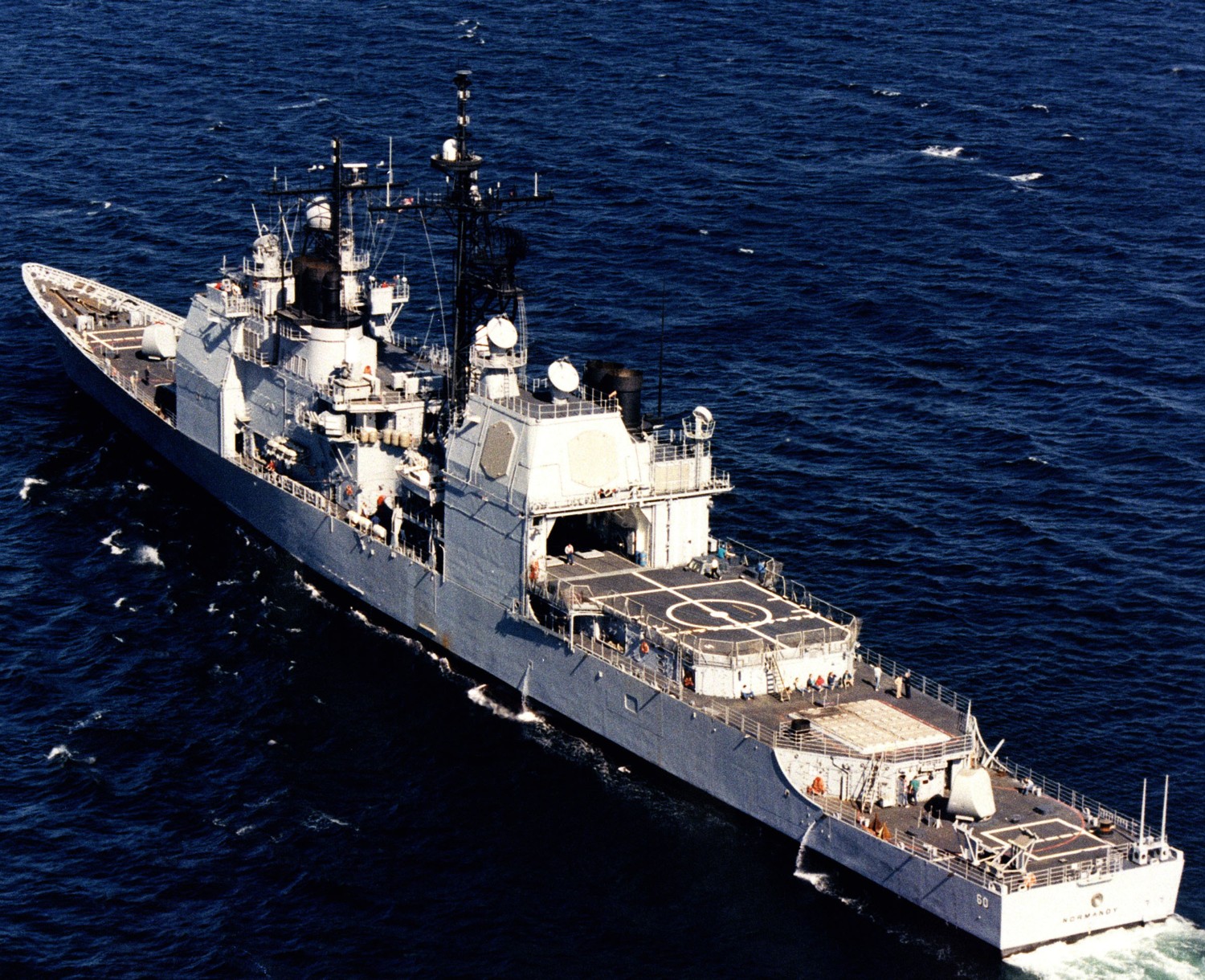 trials - off New England - August 1989 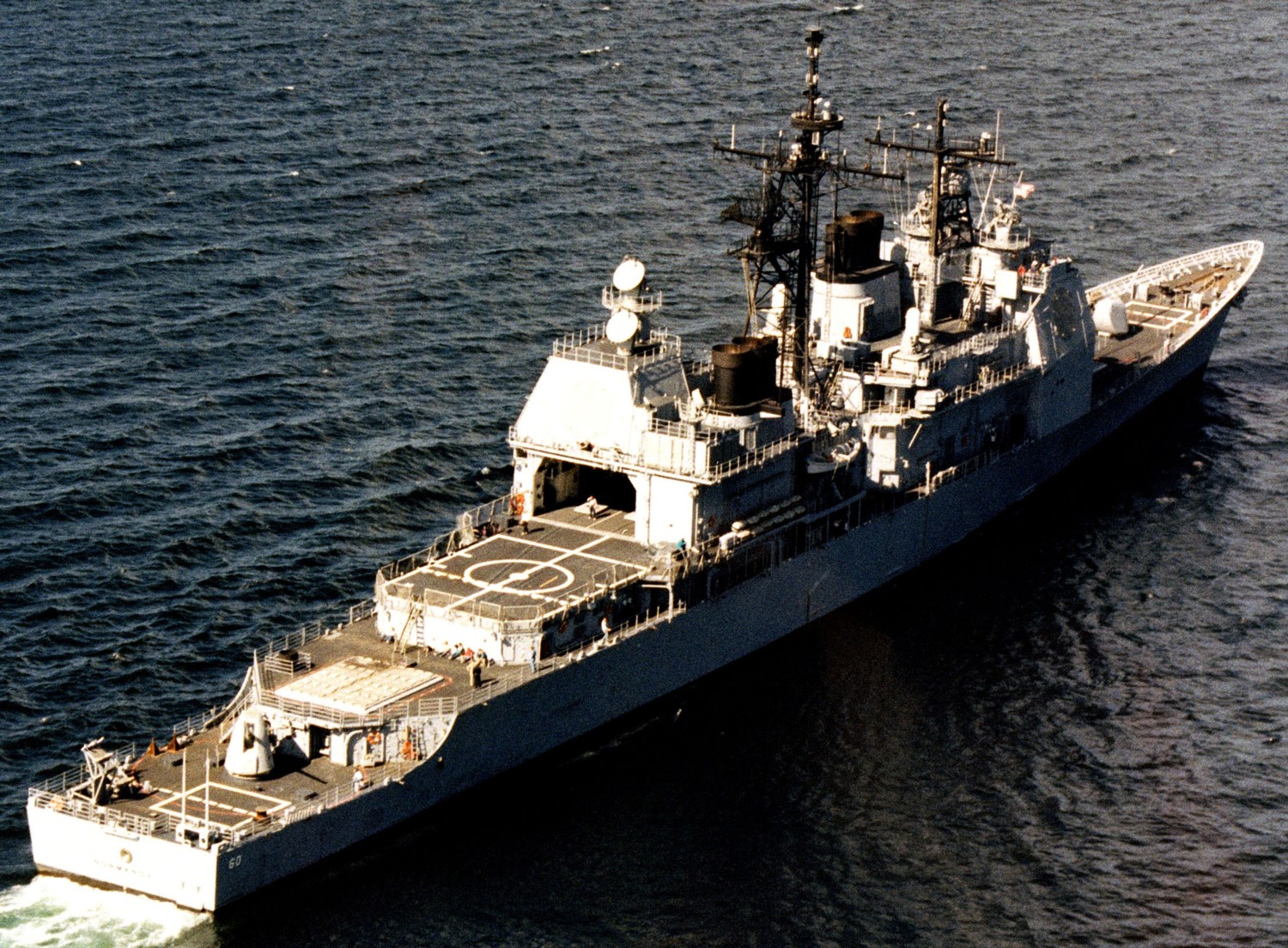 trials - off New England - August 1989 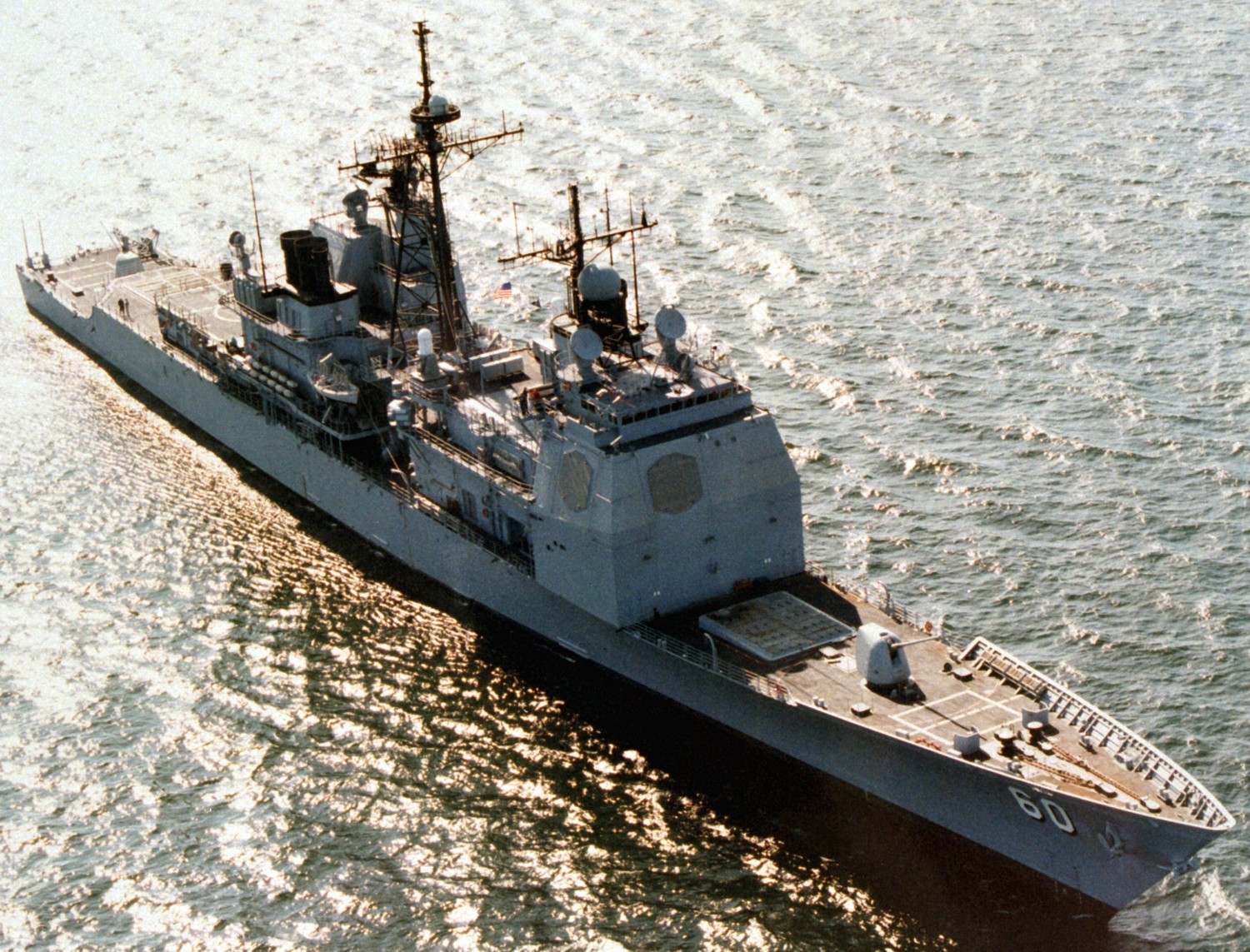 trials - off New England - August 1989 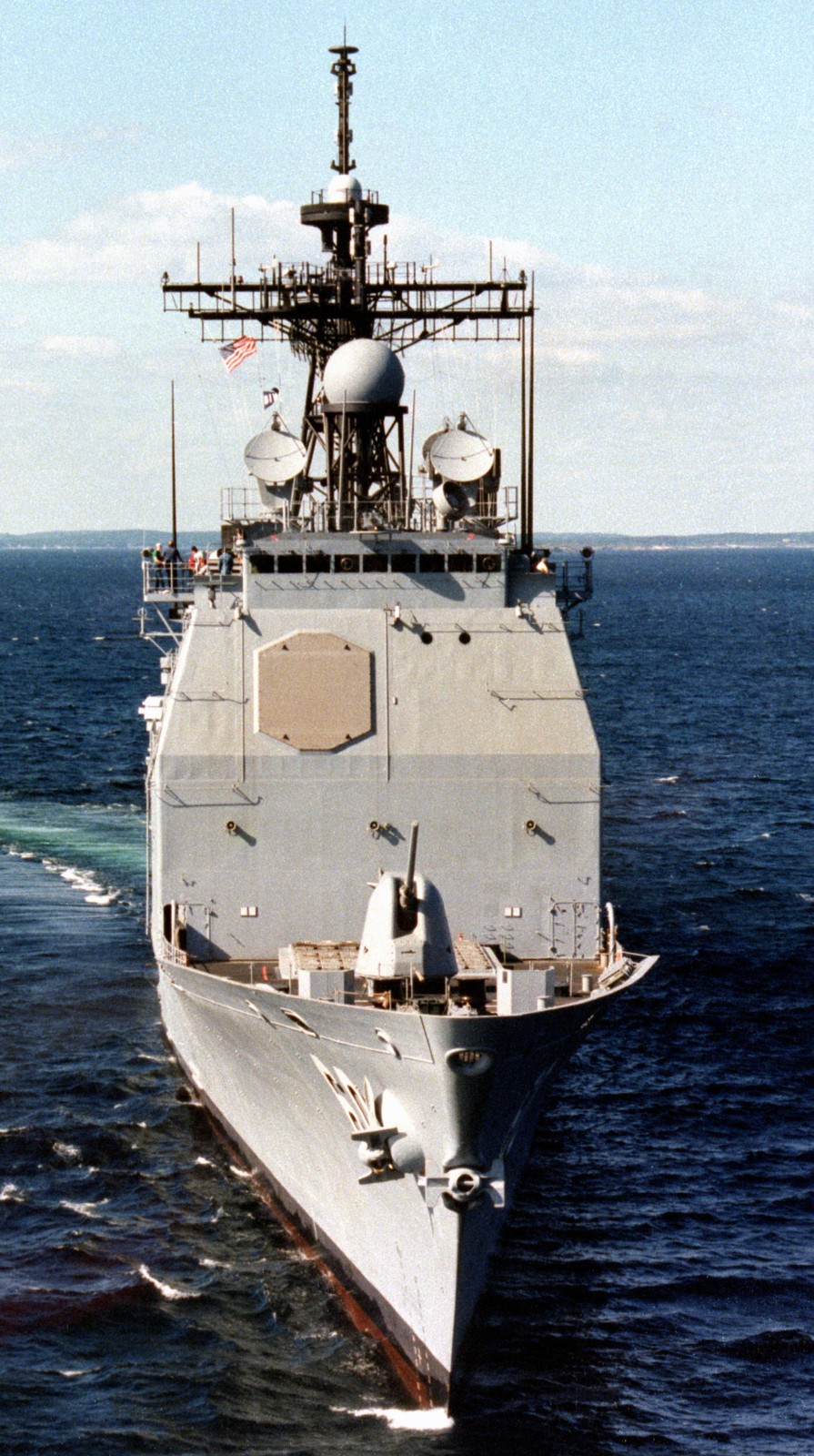 trials - off New England - August 1989 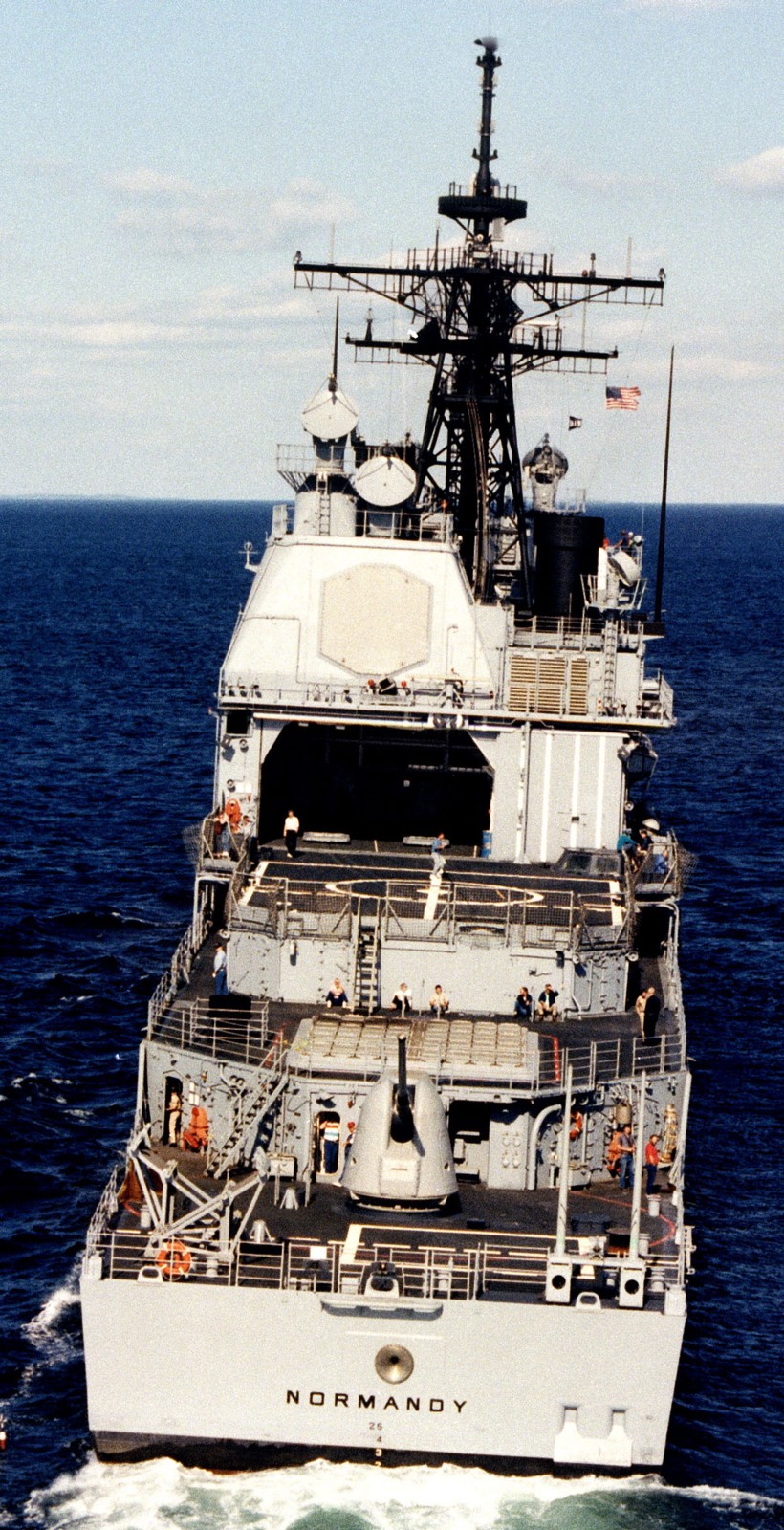
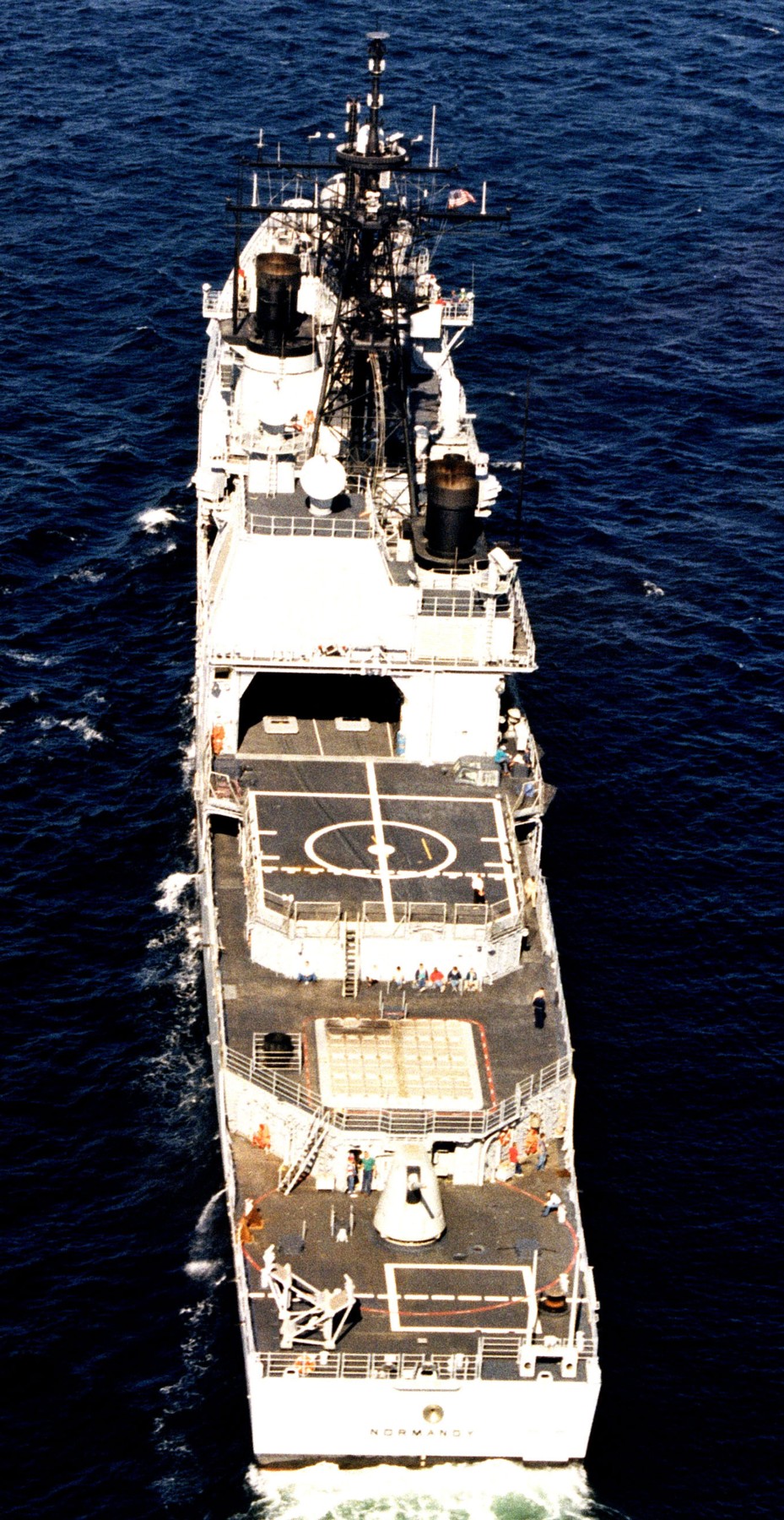 trials - off New England - August 1989 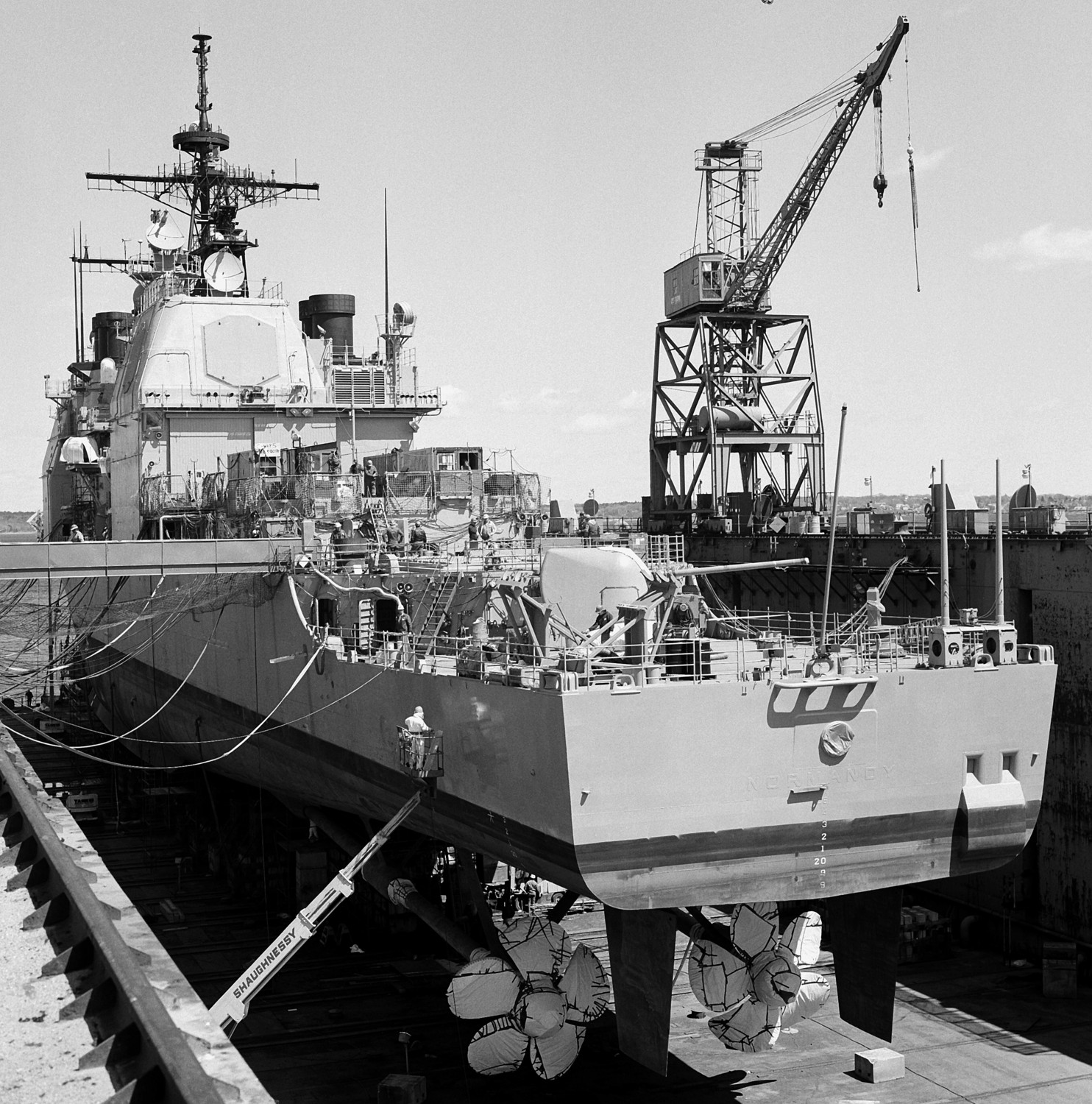 in floating dry-dock at Bath Iron Works, Maine - April 1989 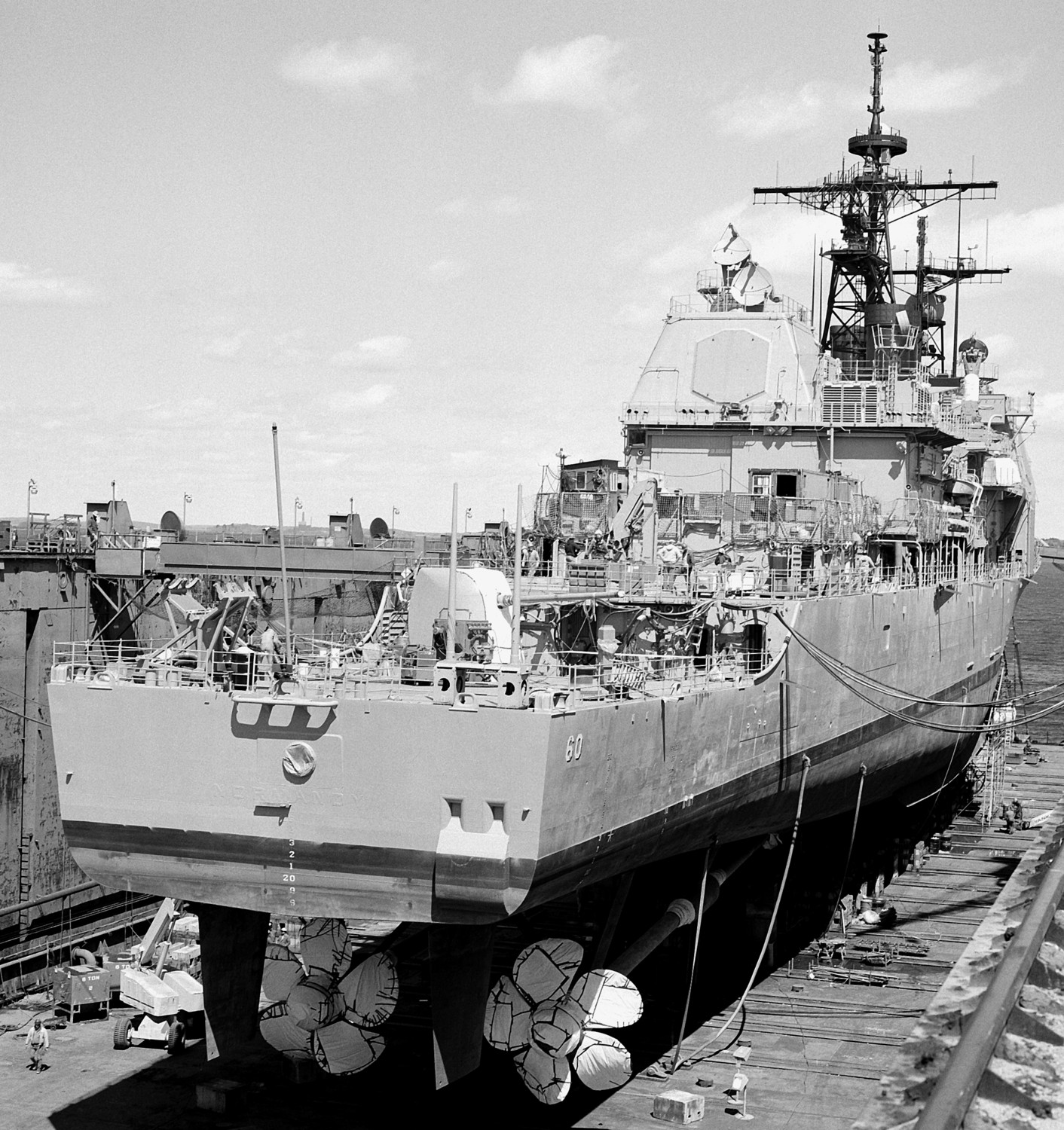 in floating dry-dock at Bath Iron Works, Maine - April 1989 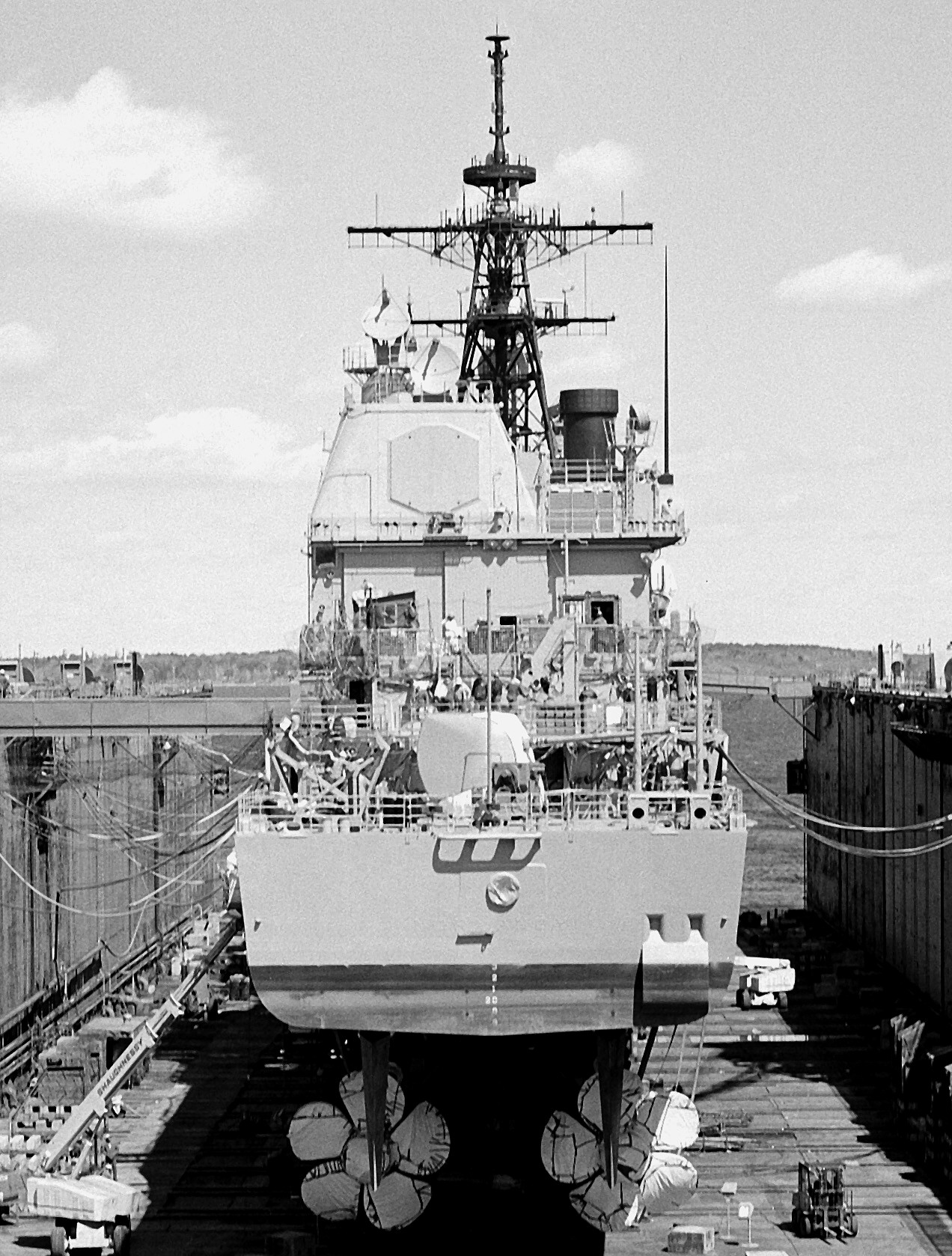 in floating dry-dock at Bath Iron Works, Maine - April 1989 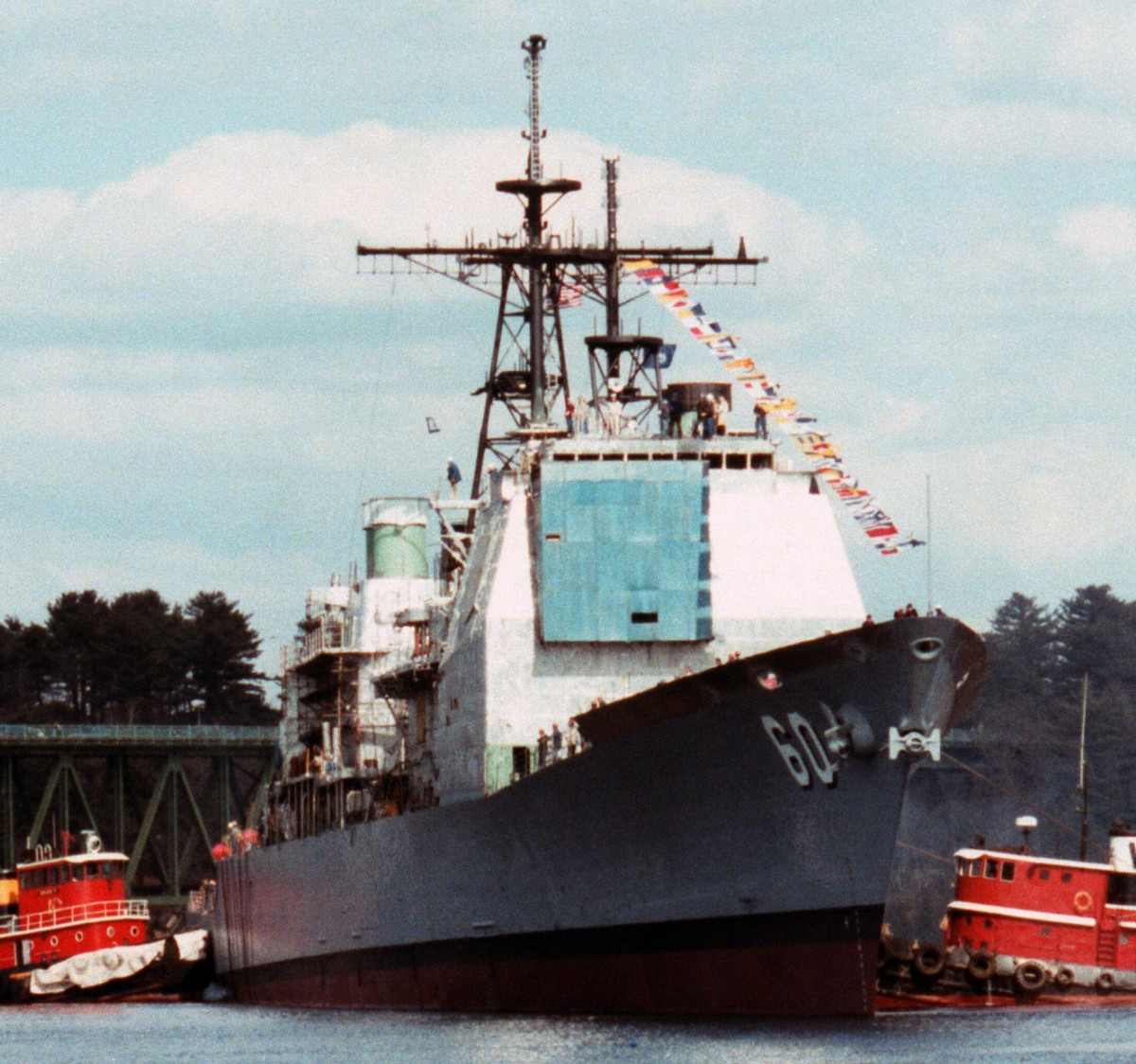 launching ceremony at Bath Iron Works, Maine - March 19, 1988 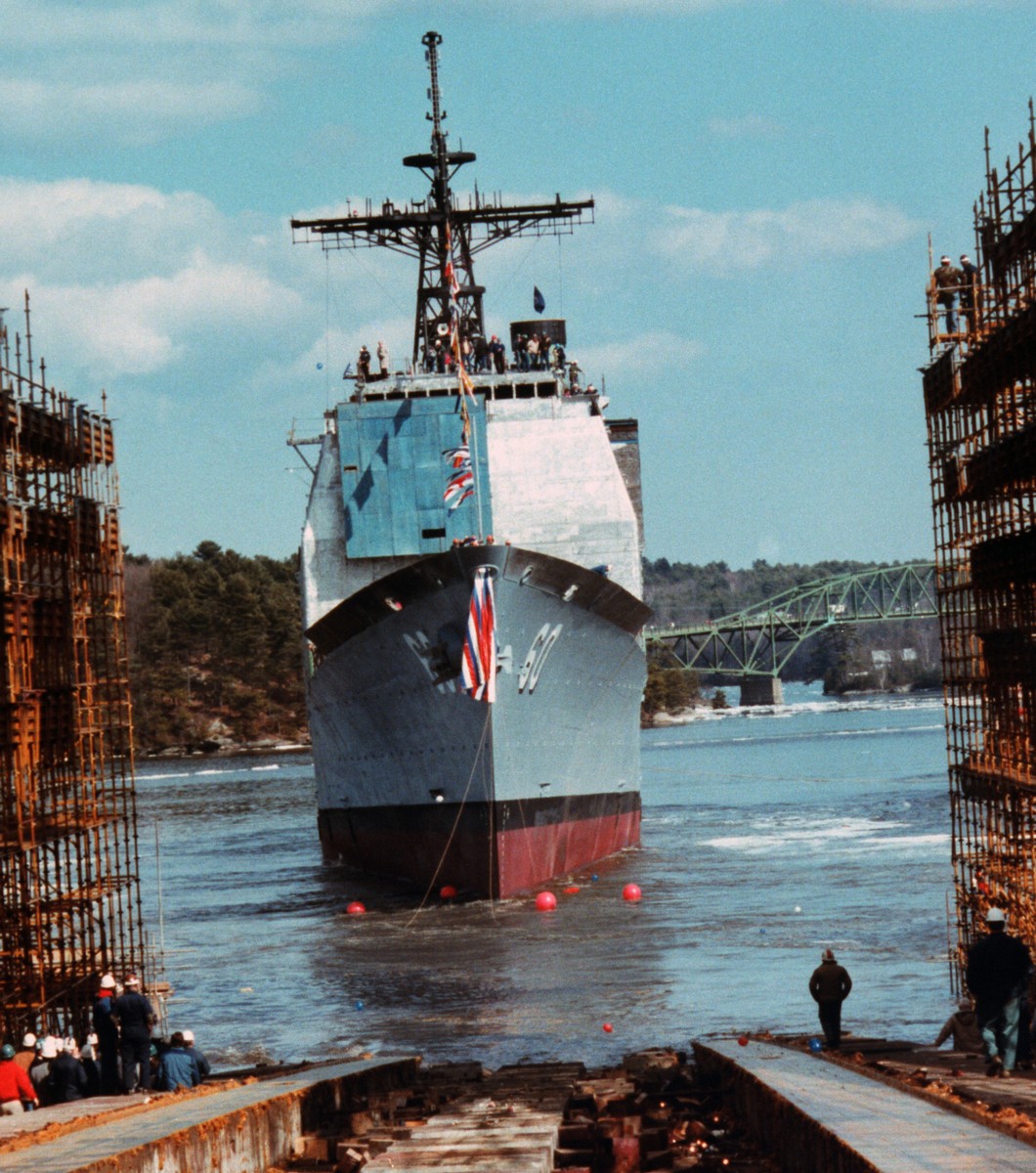 launching ceremony at Bath Iron Works, Maine - March 19, 1988 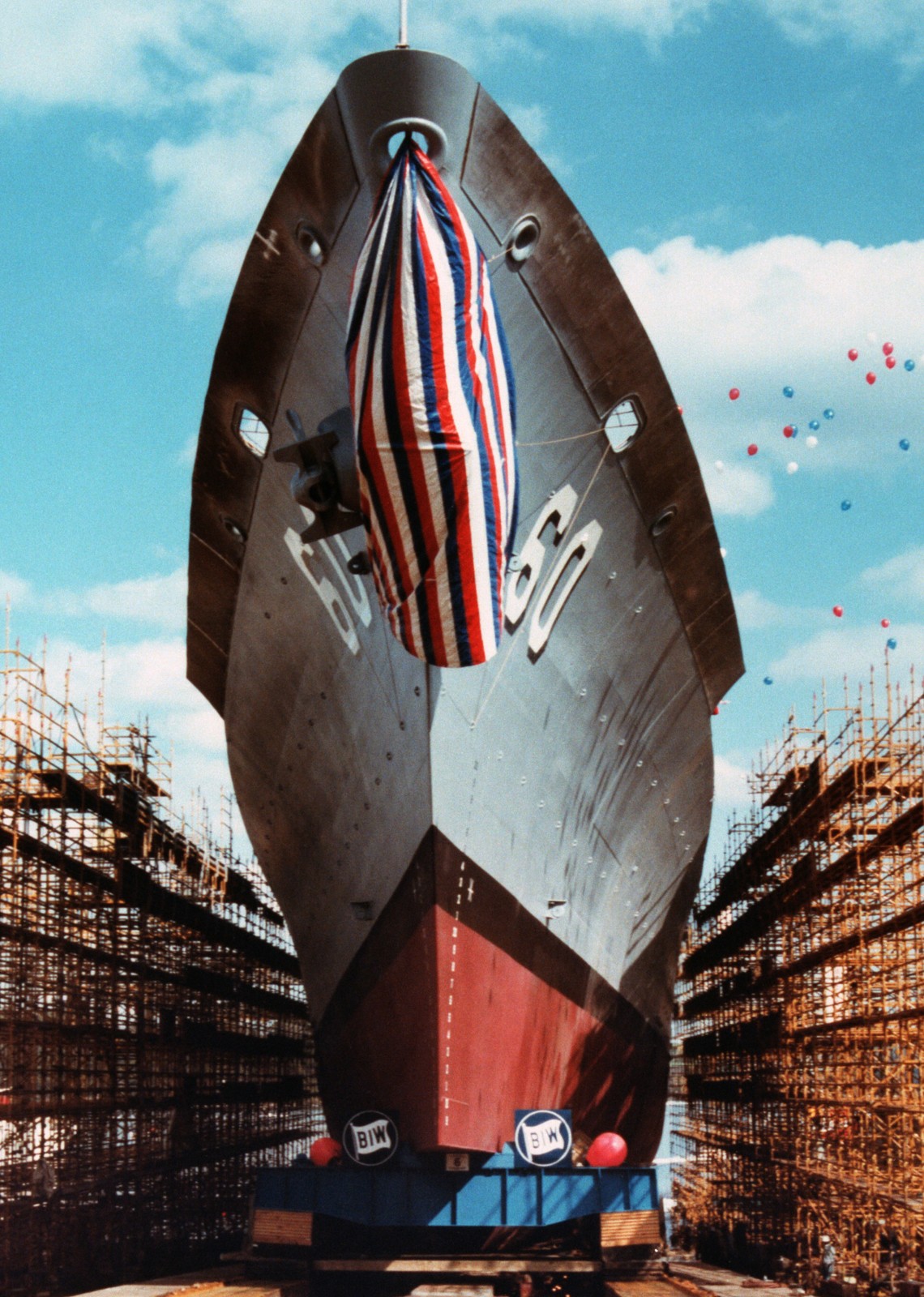 launching ceremony at Bath Iron Works, Maine - March 19, 1988 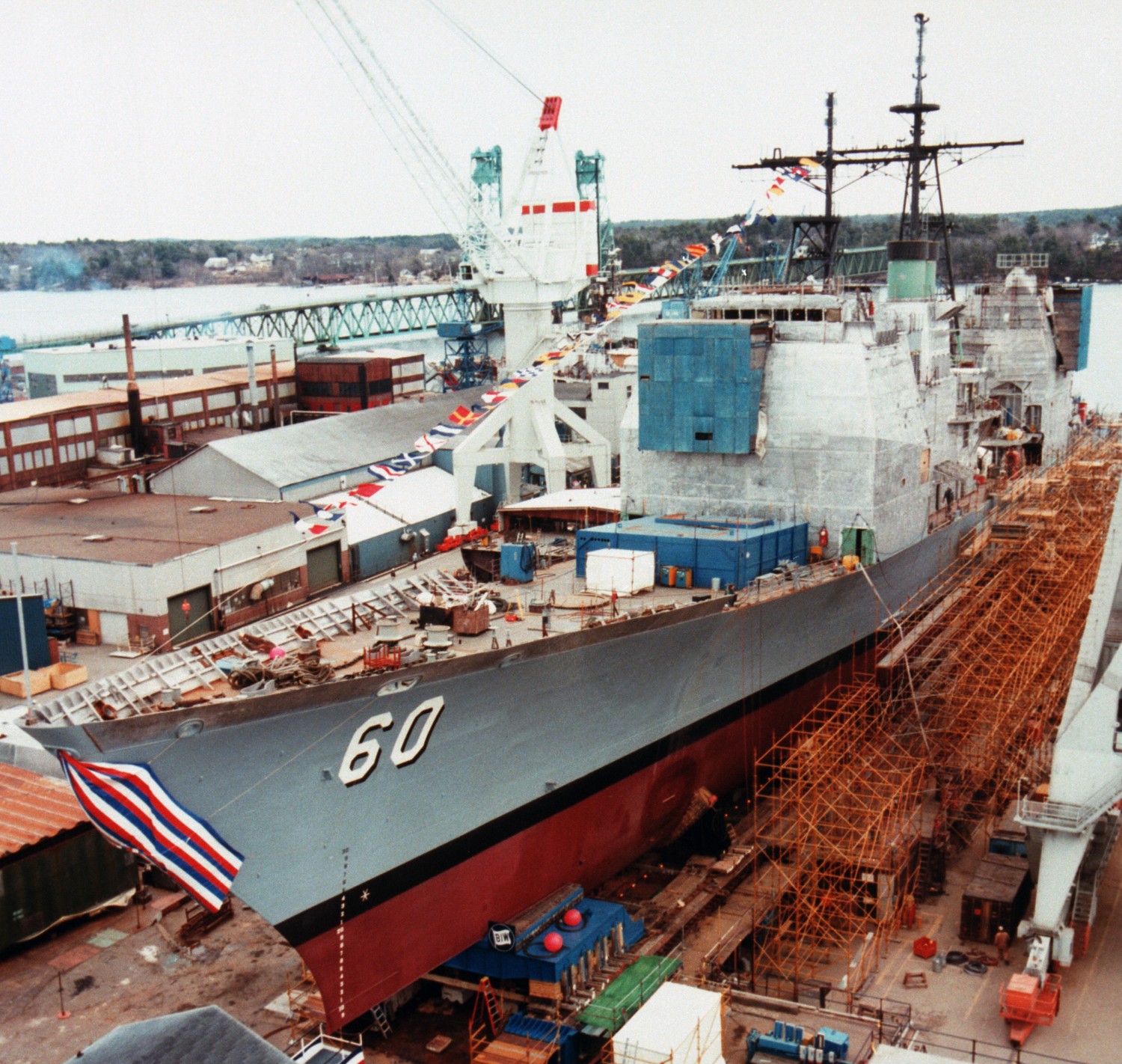 awaiting launching at Bath Iron Works, Maine - March 1988 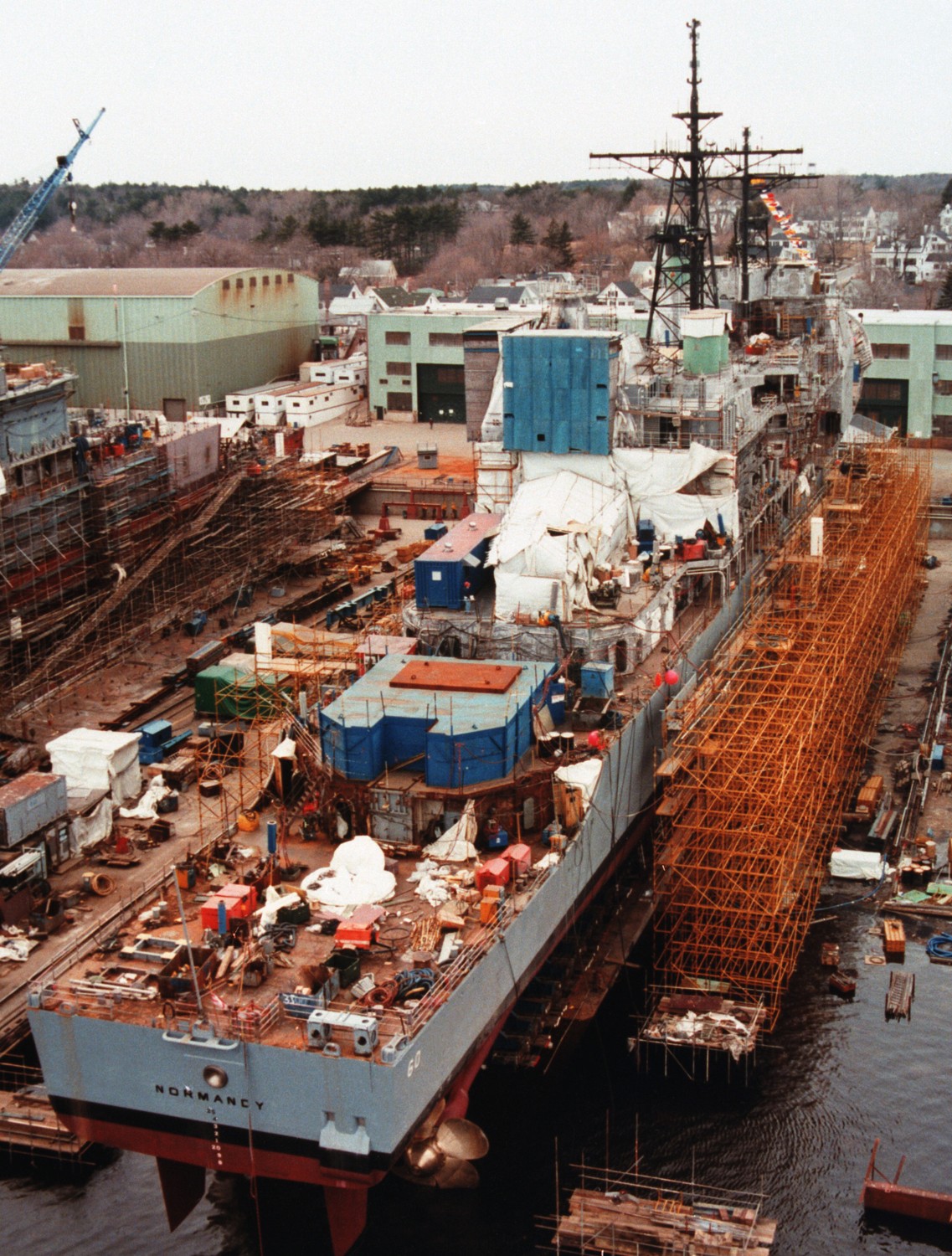 awaiting launching at Bath Iron Works, Maine - March 1988 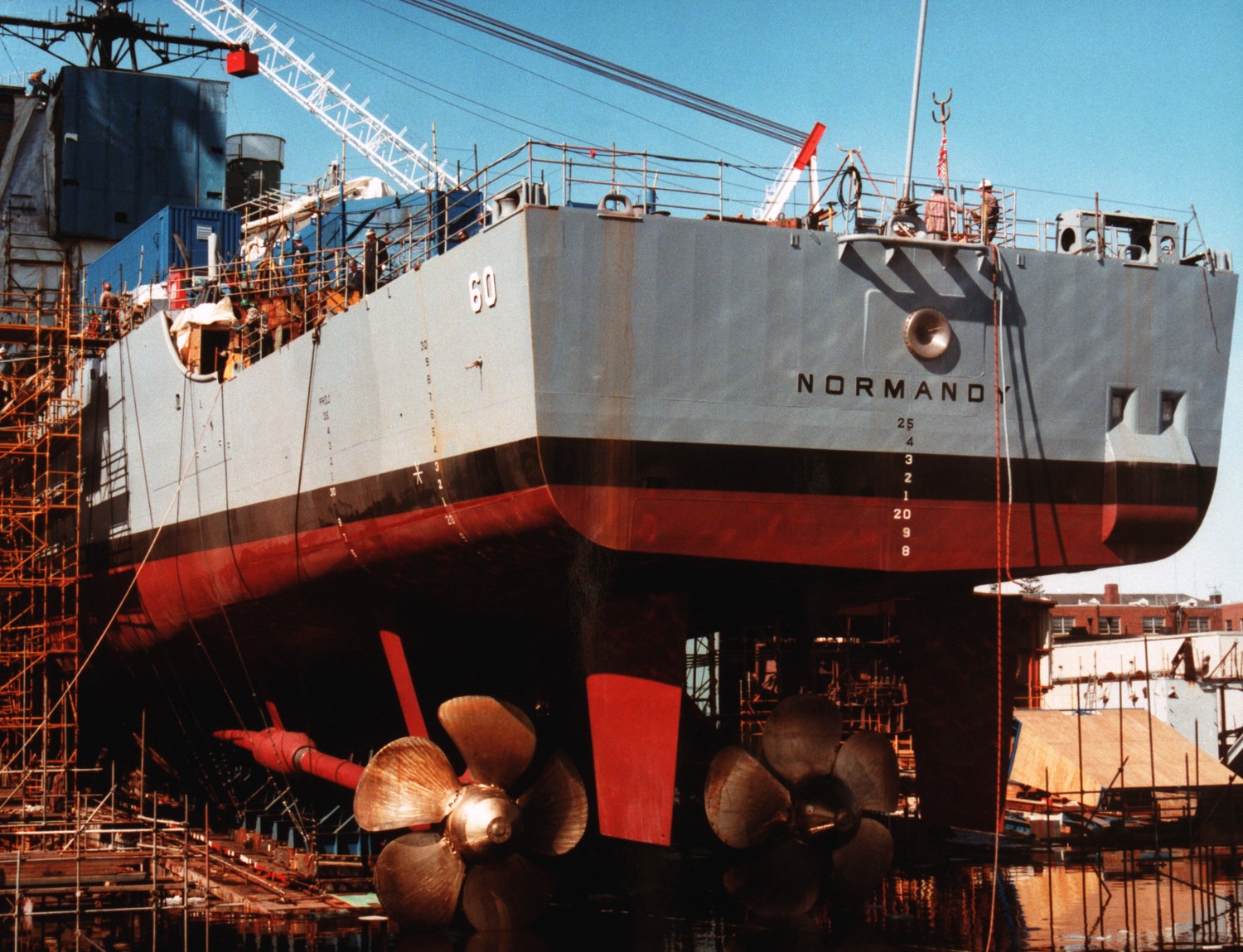 awaiting launching at Bath Iron Works, Maine - March 1988 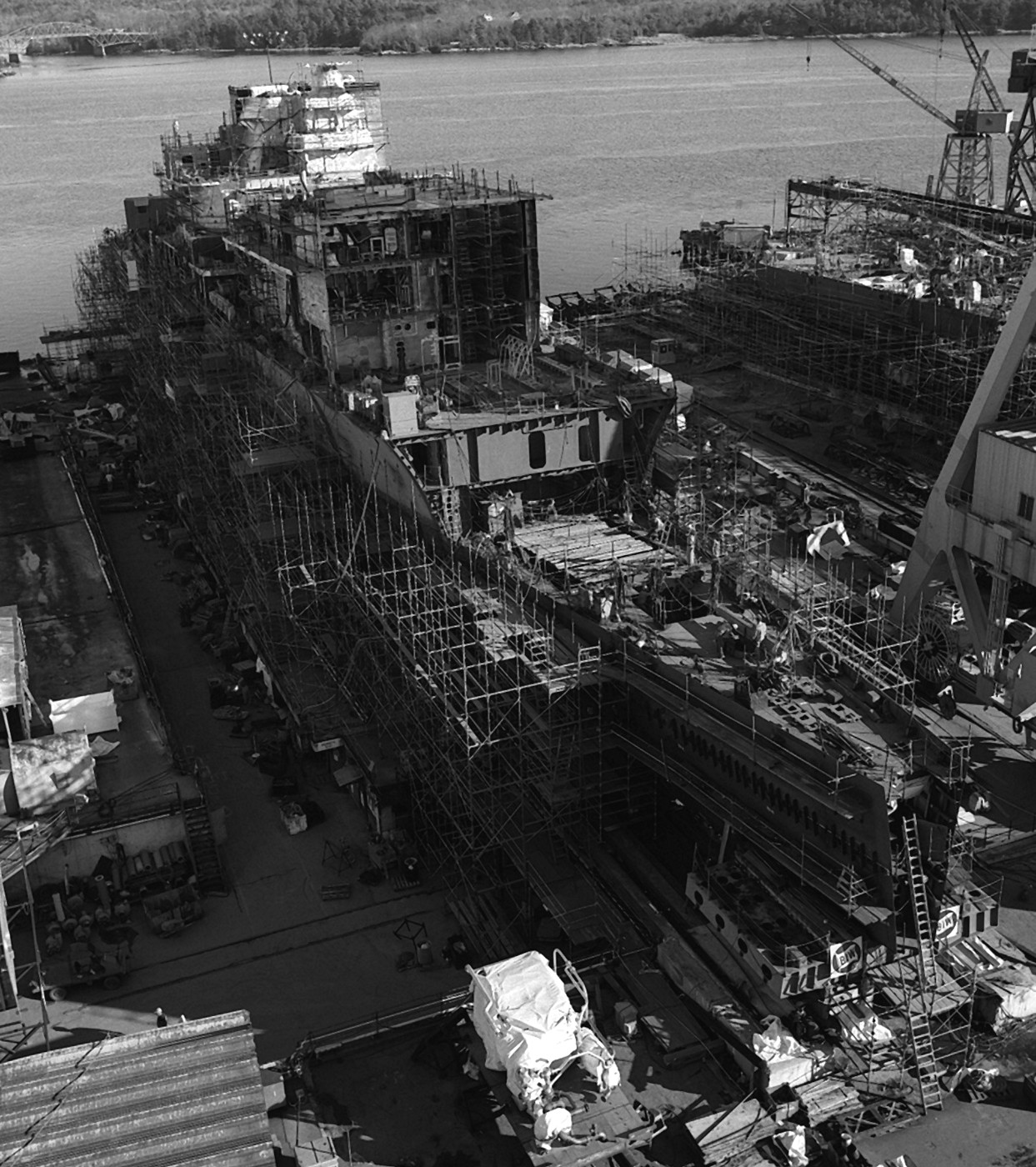 while under construction at Bath Iron Works, Maine - November 1987 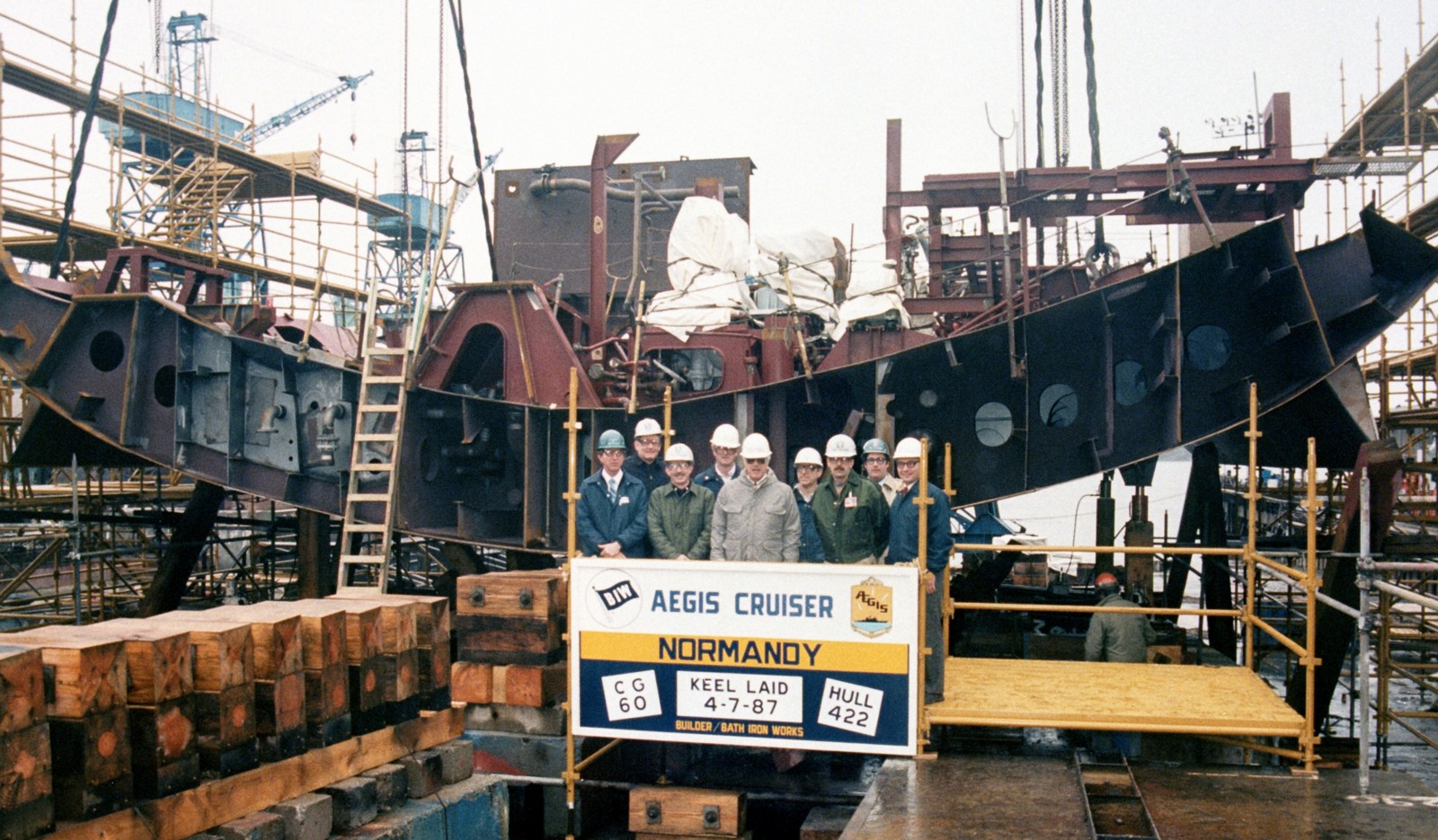 keel laying ceremony - Bath Iron Works, Maine - April 7, 1987 |
||
|
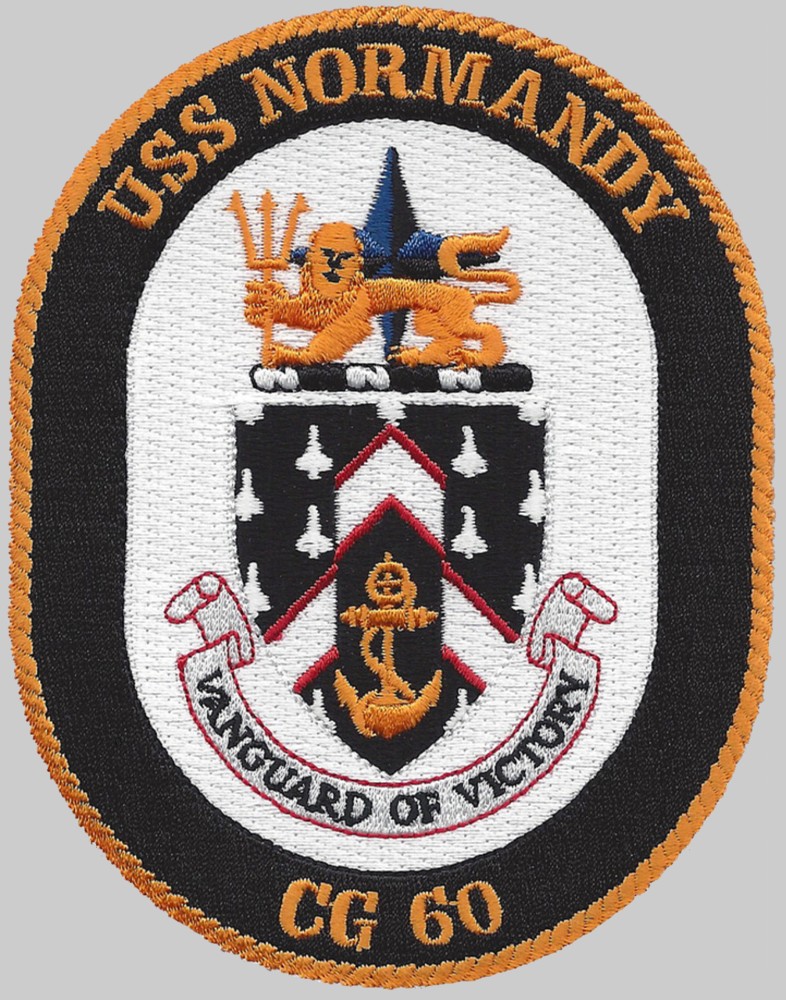
USS Normandy (CG 60): Commissioned December 9, 1989, USS NORMANDY (CG 60) is the third Bath, Maine built Aegis Cruiser and the 14th ship of the Ticonderoga class. NORMANDY is named after the allied invasion of Normandy, France, on 6 June 1944. The armada that conducted the invasion consisted of 702 warships protecting 9000 ships and landing craft. The invasion shifted the tide of WWII in favor of the allies. NORMANDY’s motto is “Vanguard of Victory” and her crew is known as the Vanguardmen. Just one year after her commissioning in Newport, Rhode Island, NORMANDY sailed into action in support of multinational efforts to free Kuwait. NORMANDY and her crew left on 28 December 1990, to join United Nations forces conducting OPERATIONS DESERT SHIELD and DESERT STORM. As part of the USS AMERICA CARRIER BATTLE GROUP, NORMANDY transited to the Arabian Gulf. NORMANDY fired 26 Tomahawk missiles, protected allied ships and aircraft in the area, conducted maritime interdiction operations, and helped to locate and destroy enemy mines. NORMANDY received the Navy Unit Commendation, the National Defense Service Medal, the Southwest Asia Campaign Medal (with two bronze stars), and the Sea Service Deployment Ribbon for her efforts in support of OPERATIONS DESERT SHIELD and DESERT STORM. On 11 August 1993, NORMANDY and the USS AMERICA CARRIER BATTLE GROUP deployed to the Adriatic Sea in support of United Nations efforts with the Former Republic of Yugoslavia. NORMANDY’s primary duty was Redcrown, Adriatic air-space controller for OPERATIONS PROVIDE PROMISE, DENY FLIGHT and SHARP GUARD. In a historic first, NORMANDY embarked 9 WWII veterans on May 18, 1994, for commemoration of the 50th anniversary of the Allied landings on the coast of France. These activities took place in Portsmouth, UK and LeHavre, France. Over 15,000 visitors toured the ship while NORMANDY honor guard and embarked veterans participated in various memorial services and events on both sides of the English Channel. NORMANDY served as a centerpiece over the two-week course of ceremonies, and specifically for national commemorations at Slaptons Sands, UK on 31 May by U.S. Ambassador Crowe, and at the Normandy beachheads on 6 June by President Clinton. NORMANDY received the Navy Unit Commendations in June 1994 for her magnificent performance at the D-Day commemoration. On 27 June 1994, NORMANDY participated in the Naval Station, New York closing ceremonies. Staten Island’s mayor, Guy Molinari, and his daughter Congresswoman Susan Molinari were the featured speakers as the Navy turned the base over to the city’s Emergency Services prior to departing for their new homeport in Norfolk, Virginia. NORMANDY was stationed in Staten Island, New York for almost four years. On 28 August 1995, NORMANDY began a six-month deployment to the Mediterranean Sea with the USS AMERICA CARRIER BATTLE GROUP. On 8 September 1995, NORMANDY received immediate tasking to proceed at best speed to the Adriatic. NORMANDY sped 1600 nautical miles across the Mediterranean at maximum speed. Arriving in the OPERATIONS DELIBRATE FORCE Theater of Operation in just under 48 hours, NORMANDY launched a thirteen missile Tomahawk strike against hostile air defense command and control sites in Northern Bosnian-Herzegovina. This precision strike, flawlessly executed with extremely short notice, paved the way for the follow-on tactical air strikes against Bosnian-Serb Military positions in the region. This action sent a strong signal of United States resolve and played a significant role in convincing the Bosnian-Serb government to cease hostilities and resume peace negotiations. During this six month deployment NORMANDY again served as Adriatic airspace controller for OPERATIONS DENY FLIGHT, SHARP GUARD, and DECISIVE ENDEAVOR. NORMANDY received the Navy Unit Commendation, Meritorious Unit Commendation, Armed Forces Services Medal, NATO Medal, and the Sea Service Deployment Ribbon for her efforts in OPERATIONS DENY FLIGHT, SHARP GUARD, and DECISIVE ENDEAVOR. On 3 October 1997, NORMANDY began a six-month deployment to the Mediterranean Sea with the USS GEORGE WASHINGTON BATTLE GROUP. Throughout the month of October, NORMANDY participated, along with 27 other international units, in EXERCISE BRIGHT STAR off the Egyptian Coast. Upon completion of BRIGHT STAR, NORMANDY was directed to proceed at best speed to the Arabian Gulf. Beginning November 16th, NORMANDY, along with other units of the GEORGE WASHINGTON BATTLE GROUP, transited the Suez Canal, Red Sea, Gulf of Oman, and Arabian Sea. In a record-setting five days, NORMANDY and GEORGE WASHINGTON entered the Arabian Gulf and joined the NIMITZ BATTLE GROUP in an impressive show of force and United Nations resolve with Iraq. Immediately, NORMANDY assumed the duties as the “Ready Strike” platform in the Gulf and, later, also assumed the duties as Area Air Defense Commander for the United States Fifth Fleet operating in the Arabian Gulf. For four months NORMANDY patrolled the Gulf in support of OPERATION SOUTHERN WATCH. During this time, she conducted several successful maritime interception operations along with her strike and air-defense duties. NORMANDY was relieved by the JOHN C. STENNIS BATTLE GROUP and returned to her homeport in Norfolk on April 3, 1998. On 21 June 2000, NORMANDY embarked on a six-month deployment, which included several operations in the Arabian Gulf, Adriatic, and Mediterranean Seas. In the Gulf Theater, NORMANDY conducted fifteen boardings of merchant ships in support of Maritime Interception Operations. NORMANDY left her mark on both the 5th and 6th Fleet Areas of Responsibility. During OPERATION SOUTHERN WATCH, NORMANDY provided an in-depth tactical picture of forces to operational level commanders. While in the Adriatic, NORMANDY participated in three highly successful NATO exercises: OPERATION DESTINED GLORY, SLUNJ 2000, and SARMENT 2000. In DESTINED GLORY, NORMANDY acted as the regional air defense commander for a multi-national amphibious operation in the Northern Aegean. In SLUNJ 2000, NORMANDY operated with the Croatian Navy to perform coordinated surface and submarine tracking and prosecution exercises. Finally, in SARMENT 2000, NORMANDY conducted a combined training exercise with forces from France and Belgium. Following her highly successful deployment, NORMANDY returned to homeport on 19 December 2000. NORMANDY then underwent an eight-month long availability period beginning February 2001. There, NORMANDY received major upgrades to her combat and engineering systems. Just one week prior to completing her yard period, the September 11th terrorist attacks took place. NORMANDY then successfully completed the most compressed work-up schedule of the entire GEORGE WASHINGTON BATTLE GROUP in preparation for a deployment that was moved up over two months early. On 20 June 2002, NORMANDY commenced a six-month deployment in support of OPERATION ENDURING FREEDOM, which included additional operations in the Indian Ocean, Arabian Gulf, Mediterranean, and Adriatic Sea. NORMANDY served as Air Defense Commander for the 5th and 6th fleets and was essential to the success of GEORGE WASHINGTON’s aircraft operations. While in the Gulf, NORMANDY participated in OPERATION SOUTHERN WATCH, which included Maritime Interdiction Operations and assumption as regional air defense commander. After two months in 6th fleet, NORMANDY transited the Suez along with the GEORGE WASHINGTON and conducted several highly successful operations in the Mediterranean, including MED SHARK, OPERATION DESTINED GLORY, and SHARK HUNT. In MED SHARK, NORMANDY operated with Moroccan military forces to perform integrated air warfare training. DESTINED GLORY consisted of a multi-national naval operation in which NORMANDY played a role as the opposing force. NORMANDY’s role in this operation was cut short; however, and immediate tasking was received to speed to the Adriatic. NORMANDY’s actions in the Adriatic were essential in preventing the illegal transportation of arms to Iraq. Finally, in SHARK HUNT, NORMANDY participated in an Anti-Submarine Warfare exercise designed to hone the submarine tracking skills of allied ships. NORMANDY was relieved by the HARRY S. TRUMAN BATTLE GROUP and returned to her homeport on December 20, 2002. NORMANDY holds four Battle “E” Awards. She also is the first U.S. warship since 1945 to go to war (DESERT STORM) on her maiden cruise. source: US Navy - - - - - another history: Gulf War: Just one year after her commissioning in Newport, Rhode Island, Normandy sailed into action in order to support the multinational effort to free Kuwait. Normandy and her crew left on 28 December 1990 to join United Nations forces conducting Operations Desert Shield and Desert Storm. As part of the USS America Battle Group, Normandy transited the Suez Canal and the Red Sea on her way to the Persian Gulf. Normandy fired 26 Tomahawk cruise missiles, protected allied ships and aircraft in the area, conducted maritime interdiction operations, and helped to locate and destroy enemy mines. She was the first US warship since 1945 to go to war on her maiden cruise. Adriatic Operations: On 11 August 1995, Normandy and the America Battle Group deployed to the Adriatic Sea in support of United Nations efforts with the war-torn Federal Republic of Yugoslavia. Normandy's primary duty was Adriatic air-space controller for Operations Provide Promise, Deny Flight, and Sharp Guard. 50th Anniversary of D-Day: In an historic first, Normandy embarked nine World War II veterans on 18 May 1994, for commemoration of the 50th anniversary of the Allied landings on the coast of France. These activities took place in Portsmouth, England, until 31 May, ending in Le Havre, France. Over 15,000 visitors toured the ship while Normandy's honor guard embarked veterans participated in various memorial services and events on both sides of the English Channel. Normandy served as a centerpiece over the two-week course of ceremonies, and specifically for national commemorations at Slapton Sands, United Kingdom, on 31 May, by U.S. Ambassador Crowe, and at the Normandy beachheads on 6 June, by President Bill Clinton. On 27 June 1994, Normandy participated in the Naval Station New York closing ceremonies. Staten Island's Borough President, Guy Molinari, and his daughter Congresswoman Susan Molinari were the featured speakers as the Navy turned the base over to the city's Emergency Services. After four years homeported at Staten Island, New York, Normandy departed for her new homeport of Norfolk, Virginia. Operation Deliberate Force: On 28 August 1995, Normandy began a six-month deployment to the Mediterranean with America. On 8 September, Normandy was in the Western Mediterranean conducting turnover with the outgoing battle group. After receiving immediate tasking to proceed at best speed to the Adriatic, Normandy sped across the 1,600 nautical miles (2,960 km) at maximum speed. Arriving in the Operation Deliberate Force theater of operations on 10 September, Normandy launched a 13 Tomahawk missile strike against hostile air defense command and control sites in Lisina, Bosnia-Herzegovina, north of the Bosnian Serb stronghold of Banja Luka, between 20:40 and 20:45. The cruiser used a new type of Tomahawk missile, the Block-III model, which included for the first time GPS guidance in combination with its TERCOM system based on topographic maps. This gave flexibility and speed to the attack. This precision strike, flawlessly executed on extremely short notice, paved the way for follow-on tactical air strikes against Bosnian Serb military positions in the region. This action sent a strong signal of United States resolve and played a significant role in convincing the Bosnian Serb government to cease hostilities and resume peace negotiations. During the six-month deployment Normandy again served as Adriatic air-space controller for Operation Deny Flight, Sharp Guard, and Decisive Endeavor. Exercise Bright Star and Operation Southern Watch: On 3 October 1997, Normandy once again began a six-month deployment, this time as Air Defense Commander of the George Washington battle group. Throughout the month of October, Normandy participated, along with 27 other international units, in Exercise Bright Star off the Egyptian coast. Upon completion of Bright Star, Normandy was directed to proceed at best speed to the Persian Gulf. Beginning 16 November, Normandy, along with other units of the George Washington battle group, transited the Suez Canal, Red Sea, Gulf of Oman, and Arabian Sea. In a record-setting five days, Normandy and George Washington entered the Persian Gulf and joined the Nimitz Battle Group in an impressive show of force and United Nation resolve to Iraq. Normandy immediately assumed duties as the "Ready Strike" platform in the Gulf and, later, also assumed duties as the air-defense commander for the entire Persian Gulf. For four months Normandy patrolled the Gulf in support of Operation Southern Watch. During this time, she conducted several successful maritime-interception operations along with her strike and air-defense duties. Throughout this deployment, Normandy achieved more than 300 mishap-free hours of flight operations, conducted 27 underway replenishments and sailed a total of 48,000 miles (77,000 km). Underway for the holidays, Normandy hosted pop singer Paula Cole on 23 December. On Christmas morning, it hosted Chief of Naval Operations Admiral Jay L. Johnson, his wife, and Master Chief Petty Officer of the Navy ETCM John Hagan. George Washington's battle group was relieved by the John C. Stennis Battle Group in the Persian Gulf, and Normandy returned to her homeport of Norfolk on 3 April 1998. Normandy finished a major overhaul period in Norfolk Naval Shipyard on 28 February. Miscellaneous Activities: On 8 May 1990, Normandy responded to a distress call by the destroyer Conyngham off of the coast of Virginia. A major fuel oil fire erupted from the ship's Forward Fire Room into the ship's superstructure, isolating the crew forward and aft. Fire crews from the Normandy boarded Conyngham via small boat transfer and were instrumental in extinguishing the fire. On 21 June 2000, Normandy and the George Washington Battle Group deployed to the Mediterranean and the Arabian Sea. On 19 December, Normandy returned to Norfolk just in time for the holidays. On 20 June 2002, Normandy left the US East Coast on deployment. Again assigned to the George Washington Battle Group, Normandy returned to Norfolk in December 2002. In 2003, the ship was assigned to Cruiser-Destroyer Group 2. On 25 March 2005, Normandy left the East Coast with the assault ship Kearsarge ESG, deployed to the Mediterranean and Northern Persian Gulf. Normandy returned to Norfolk in October 2005. In April 2007, Normandy deployed on her 7-month NATO cruise. The ship's crew was awarded the Article 5 NATO Medal. She returned on Halloween after 200 days of showing the flag, in the process becoming the first ship to circumnavigate Africa. On this cruise, sailors on board earned their Bluenose and Emerald Shellback. On 13 January 2010, Normandy was ordered to assist in humanitarian efforts following the 2010 Haiti earthquake. On 20 May 2010, Normandy deployed to the Persian Gulf for a seven-month deployment. It returned on 12 December 2010, on a bitterly cold, snowy day. In 2012, Normandy deployed for two months to the Baltic Sea in support of diplomatic relations in regards to BaltOps 2012 and FRUKUS 2012 (France, Russia, United Kingdom, and United States). On 20 April 2015, Normandy along with Theodore Roosevelt were deployed off the coast of Yemen to intercept suspected Iranian weapons shipments intended for the Houthi rebels, who are locked in battle with Yemeni government forces. On 9 February 2020 while patrolling in the Arabian Sea, Normandy captured a stateless dhow carrying a cargo of Iranian produced surface to air missiles. source: wikipedia |
||
|
The Battle of Normandy (Operation Overlord) ... was the Allied operation that launched the successful invasion of German-occupied Western Europe during World War II. The operation was launched on 6 June 1944 (D-Day) with the Normandy landings. A 1,200-plane airborne assault preceded an amphibious assault involving more than 5,000 vessels. Nearly 160,000 troops crossed the English Channel on 6 June, and more than two million Allied troops were in France by the end of August. The decision to undertake a cross-channel invasion in 1944 was taken at the Trident Conference in Washington in May 1943. General Dwight D. Eisenhower was appointed commander of Supreme Headquarters Allied Expeditionary Force, and General Bernard Montgomery was named commander of the 21st Army Group, which comprised all the land forces involved in the invasion. The coast of Normandy of northwestern France was chosen as the site of the invasion, with the Americans assigned to land at sectors codenamed Utah and Omaha, the British at Sword and Gold, and the Canadians at Juno. To meet the conditions expected on the Normandy beachhead, special technology was developed, including two artificial ports called Mulberry harbours and an array of specialised tanks nicknamed Hobart's Funnies. In the months leading up to the invasion, the Allies conducted Operation Bodyguard, a substantial military deception that used electronic and visual misinformation to mislead the Germans as to the date and location of the main Allied landings. Adolf Hitler placed Field Marshal Erwin Rommel in charge of developing fortifications all along Hitler's proclaimed Atlantic Wall in anticipation of an invasion of France. The Allies failed to accomplish their objectives for the first day, but gained a tenuous foothold that they gradually expanded when they captured the port at Cherbourg on 26 June and the city of Caen on 21 July. A failed counterattack by German forces in response to Allied advances on 7 August left 50,000 soldiers of the German 7th Army trapped in the Falaise pocket by 19 August. The Allies launched a second invasion from the Mediterranean Sea of southern France (code-named Operation Dragoon) on 15 August, and the Liberation of Paris followed on 25 August. German forces retreated east across the Seine on 30 August 1944, marking the close of Operation Overlord. |
||
| patches + more | ||
  |
||
|
|
seaforces.org |
USN ships
start page | |