 |
||
|
HOME
|
US Navy -
ships
|
US Navy - air
units
|
USMC - air
units
|
International
Navies
|
Weapon Systems
|
Special Reports |
||
|
US Navy - Guided Missile Cruiser CG 55 - USS Leyte Gulf |
||
|
||
| 09/24 | ||
|
Type,
class: Guided Missile Cruiser (CG); Ticonderoga
class Builder: Ingalls Shipbuilding, Pascagoula, Mississippi, USA STATUS: Awarded: June 20, 1983 Laid down: March 18, 1985 Launched: June 20, 1986 Commissioned: September 26, 1987 Decommissioned: September 20, 2024 Fate: departed Naval Station Norfolk, Virginia under tow in October 2024 laid up at Naval Inactive Ship Maintenance Facility (NISMF) Philadelphia, Pennsylvania Namesake: Naval Battle(s) in the Gulf of Leyte, Philippines 1944 Ships Motto: ARRAYED FOR VICTORY Technical Data: see: INFO > Ticonderoga class Guided Missile Cruiser - CG |
||
| images | ||
 moored at Naval Station Norfolk, Virginia - September 27, 2024  decommissioning ceremony at Naval Station Norfolk, Virginia - September 20, 2024  returning to Naval Station Norfolk, Virginia - May 2, 2024  returning to Naval Station Norfolk, Virginia - May 2, 2024  Guantanamo Bay Naval Base, Cuba - March 2024  departing Naval Station Norfolk, Virginia - January 28, 2024  departing Naval Station Norfolk, Virginia - January 28, 2024  departing Naval Station Norfolk, Virginia - January 28, 2024 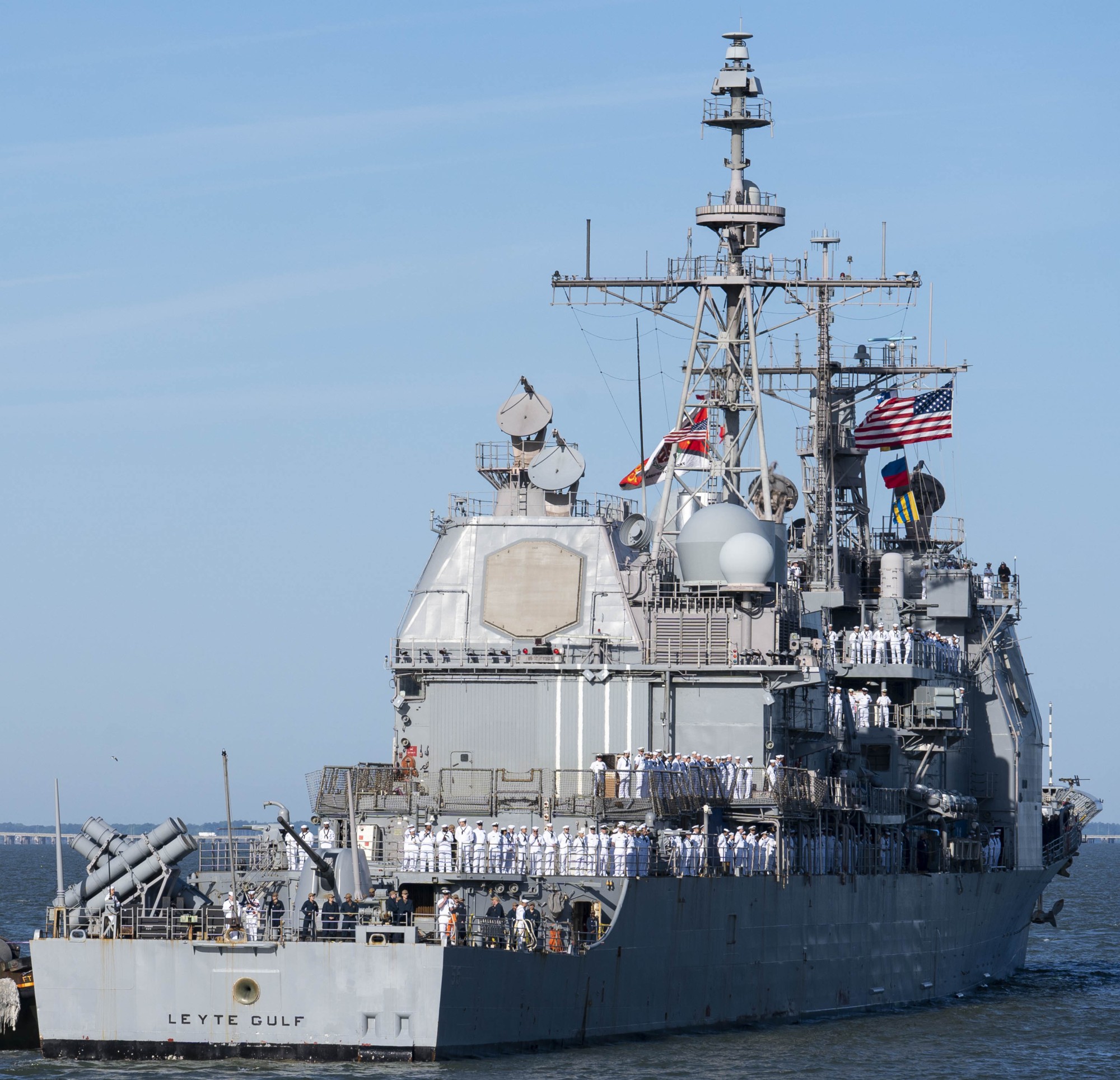 returning to Naval Station Norfolk, Virginia - April 2023 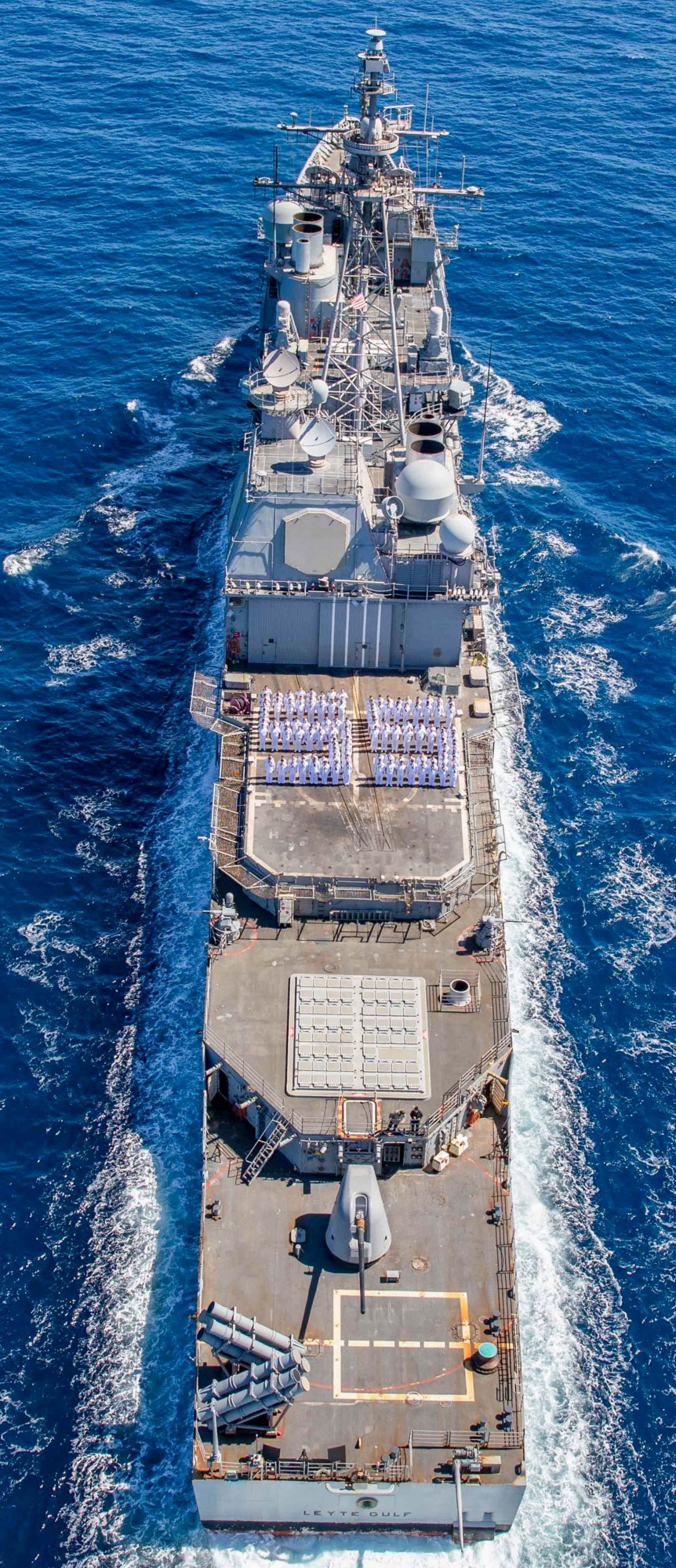 Mediterranean Sea - March 2023 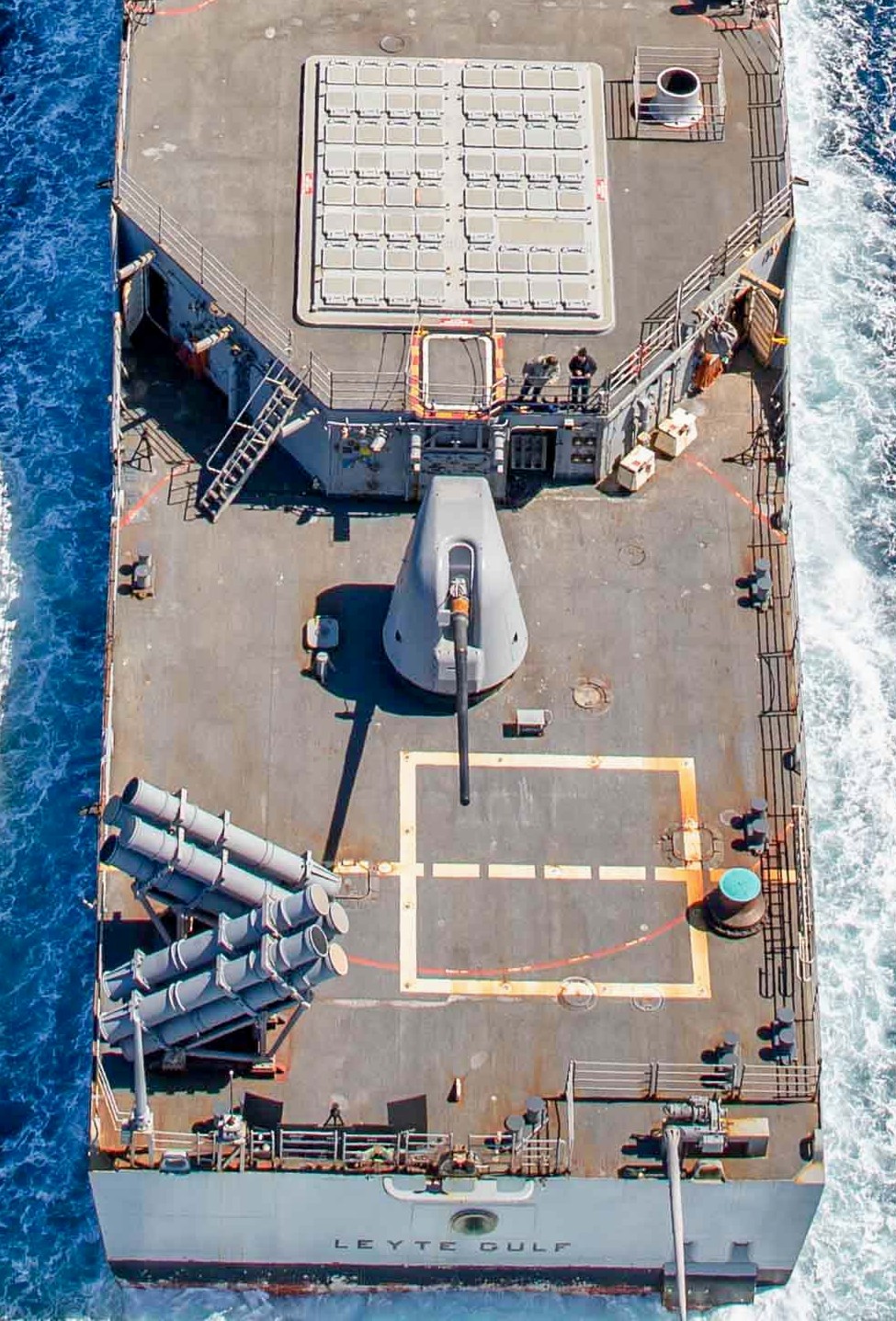 cutout for details 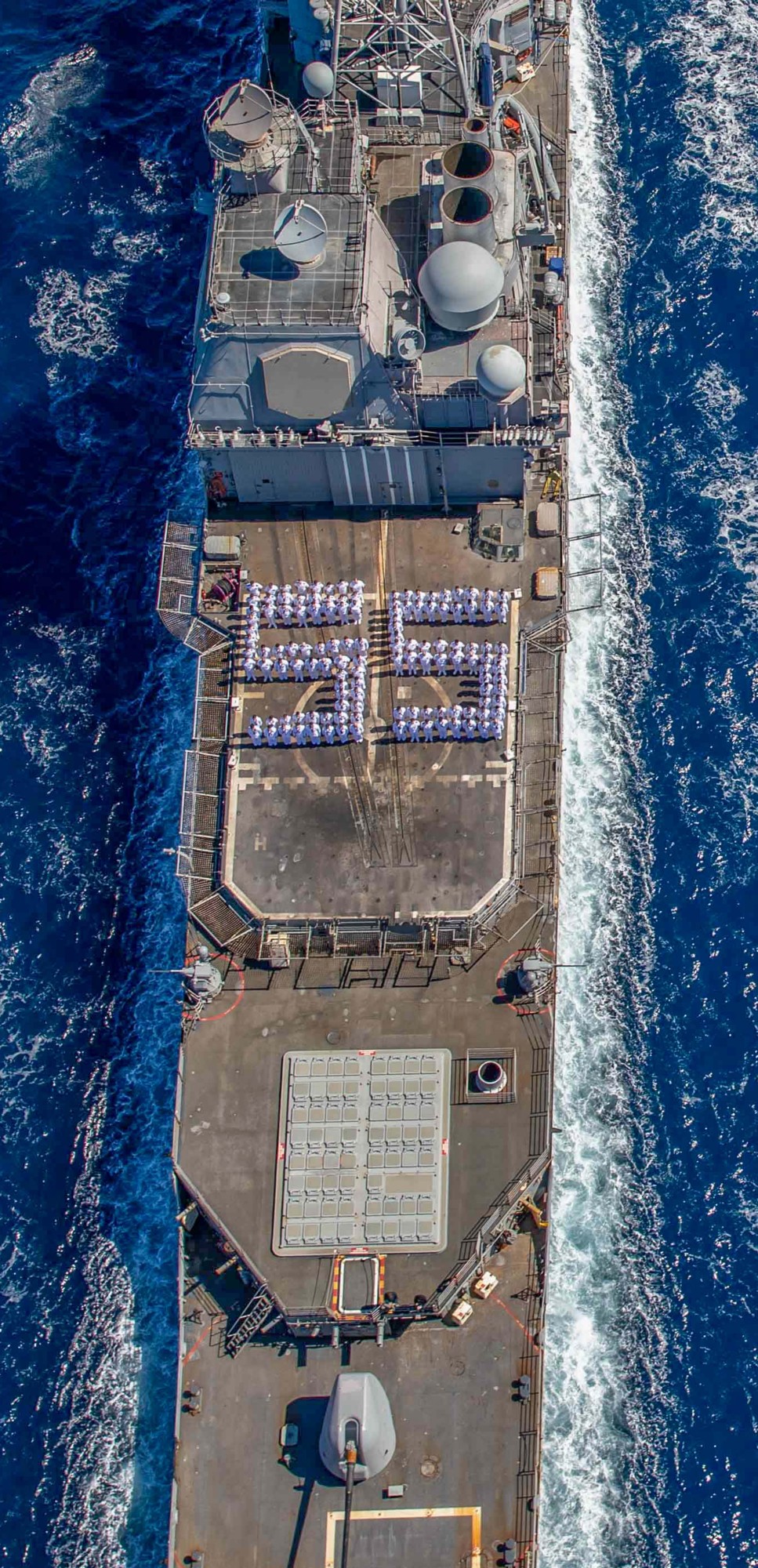 Mediterranean Sea - March 2023 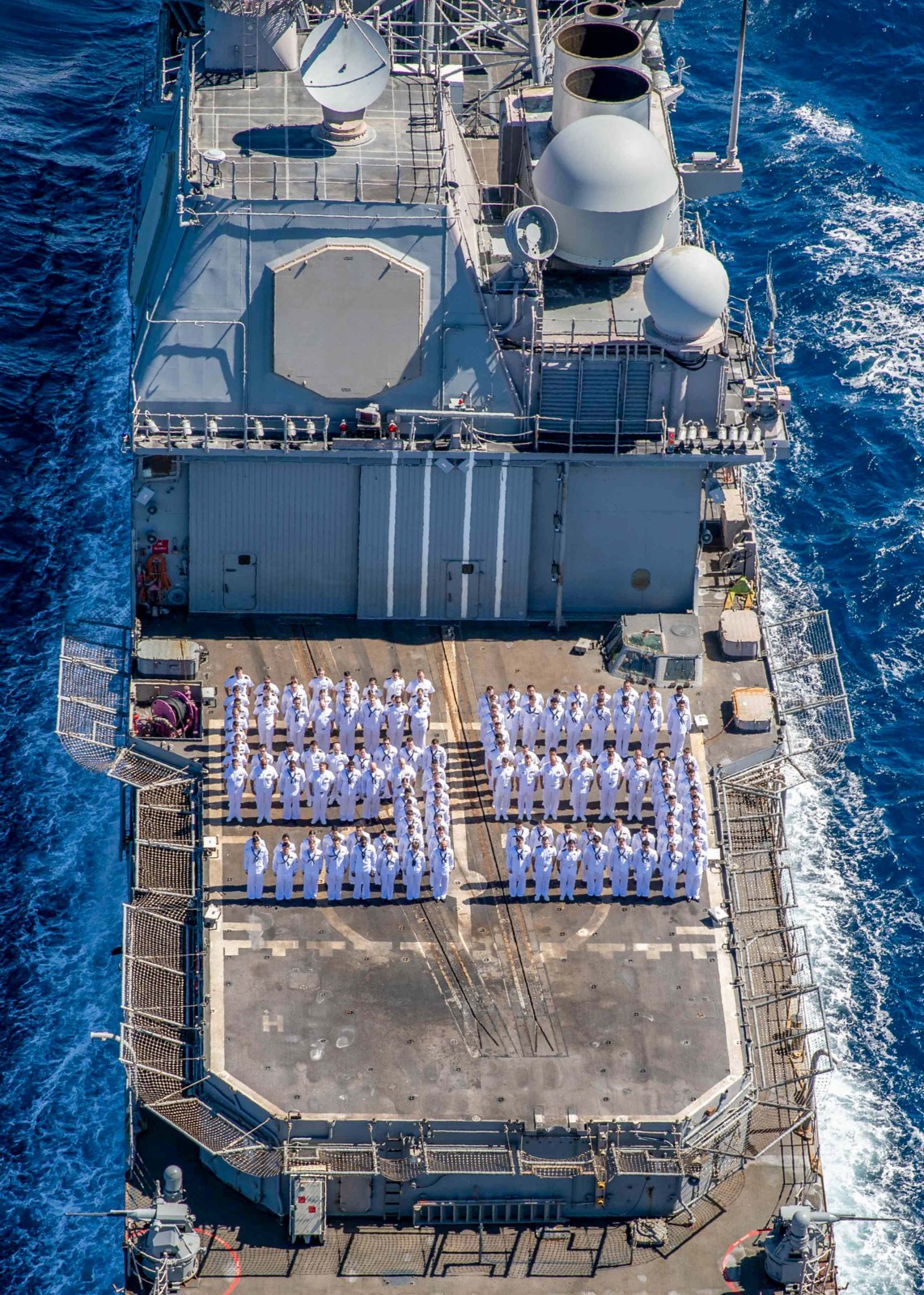 Mediterranean Sea - March 2023 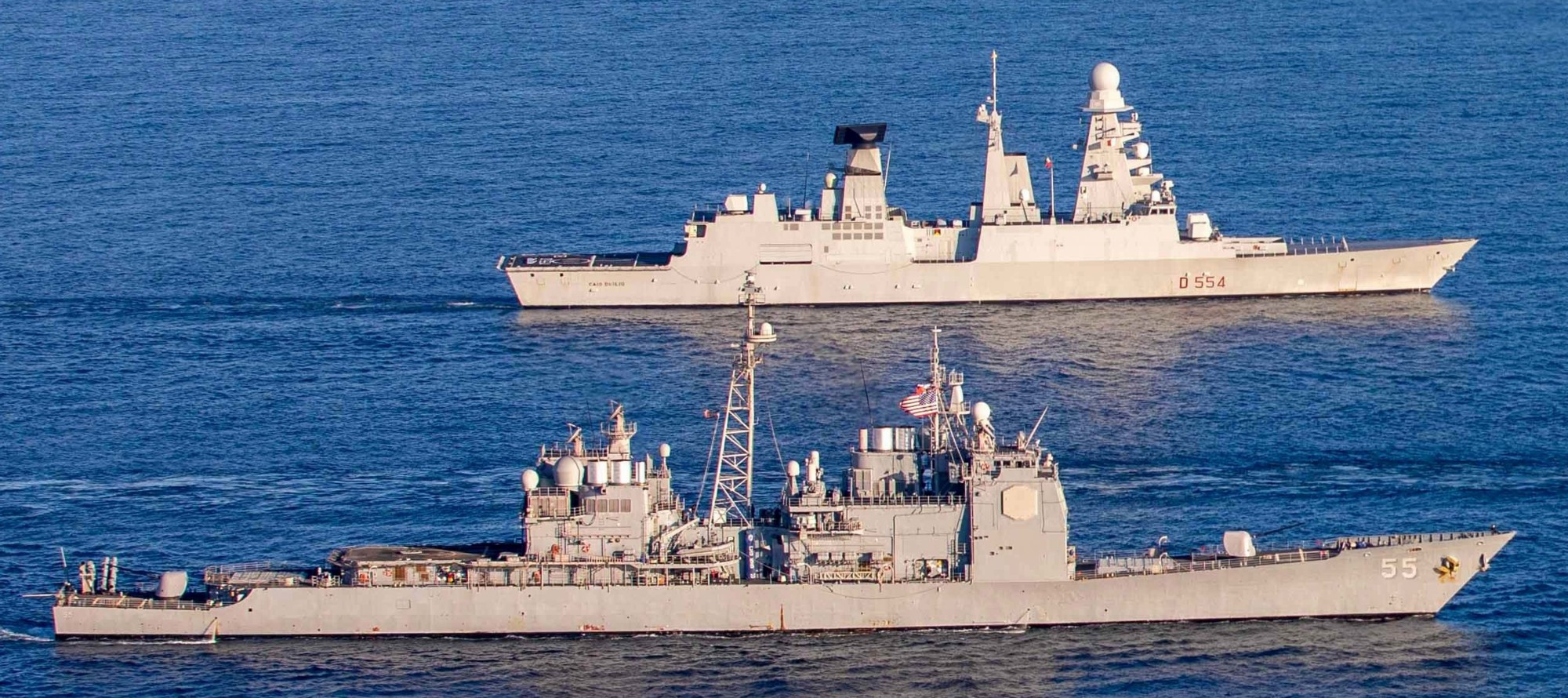 with Italian Navy Destroyer D 554 ITS Caio Duilio - Ionian Sea - February 2023 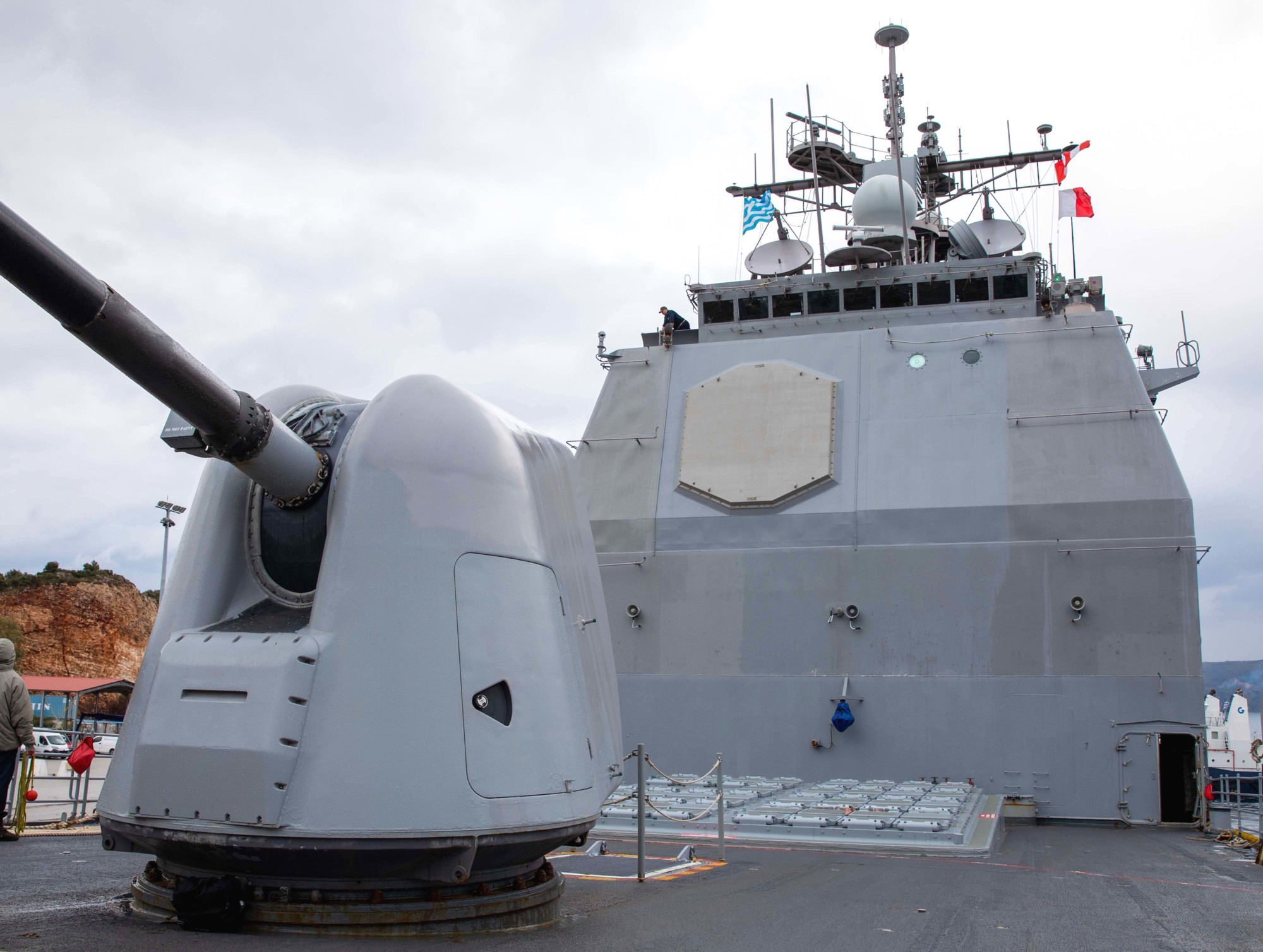 Naval Support Activity Souda Bay, Crete, Greece - January 2023 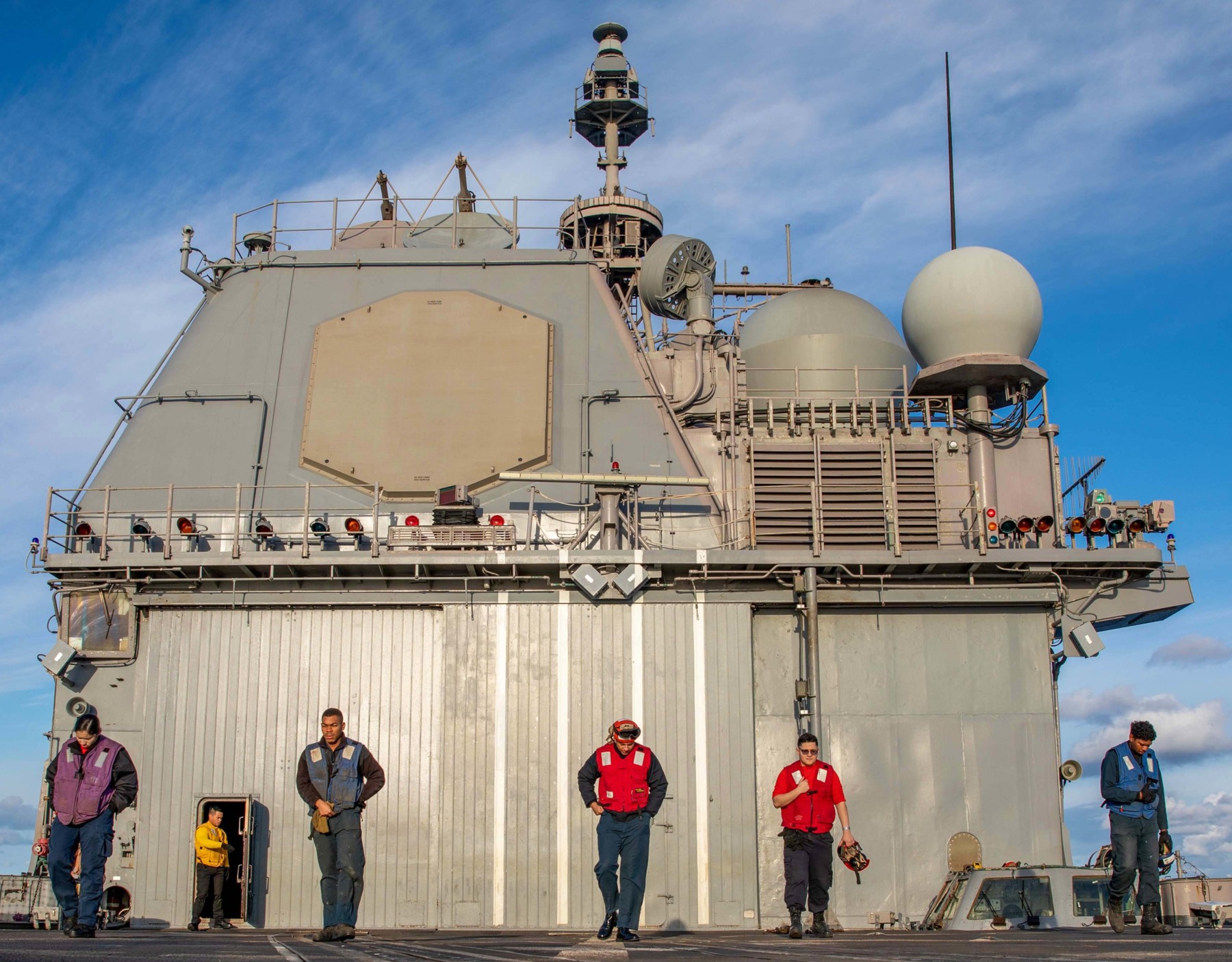 Ionian Sea - January 2023 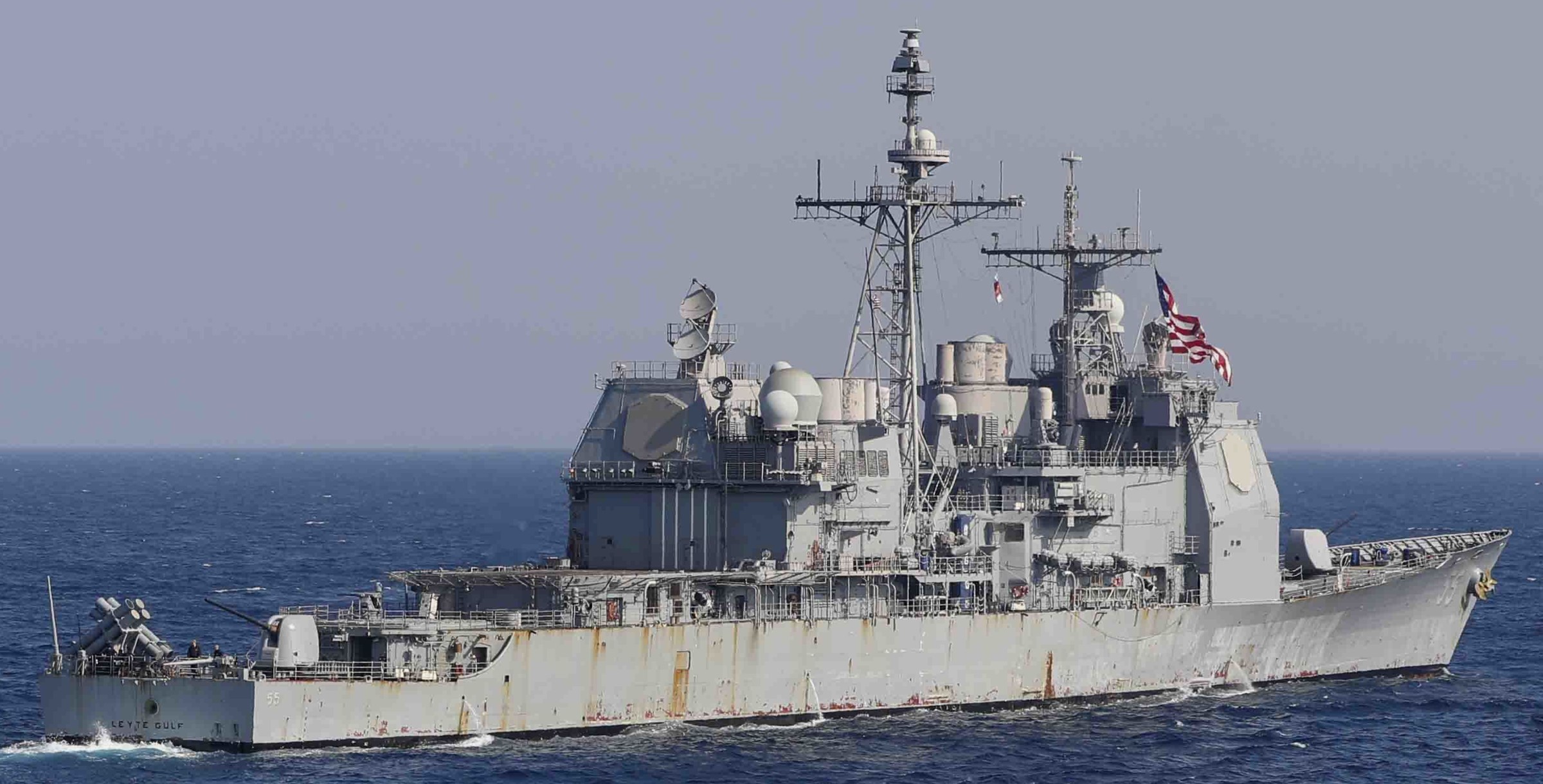 Mediterranean Sea - January 2023 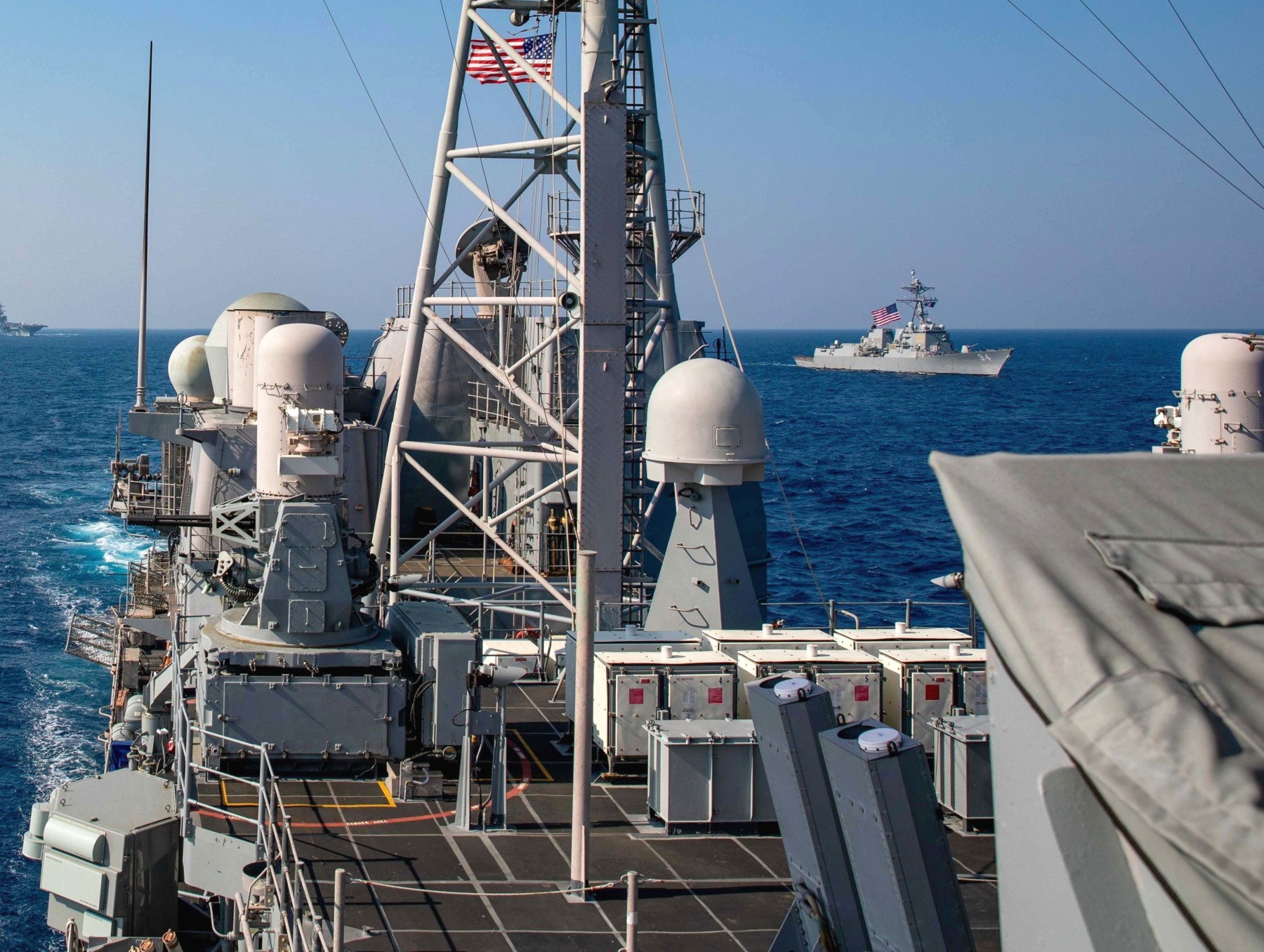 Mediterranean Sea - January 2023 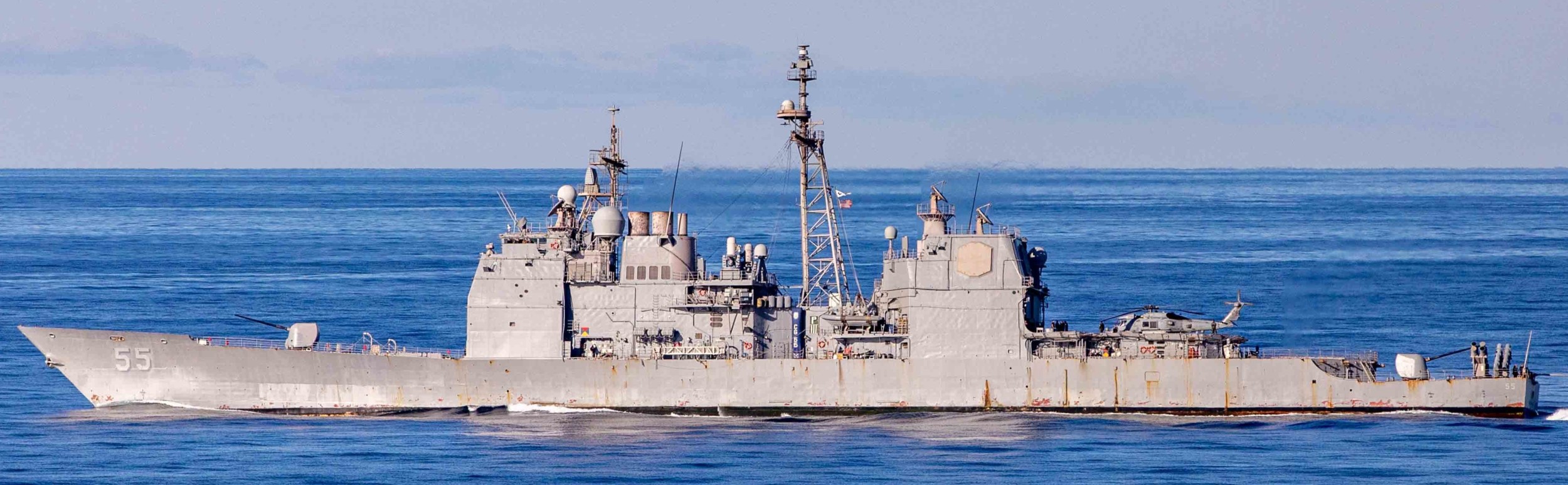 Adriatic Sea - January 2023 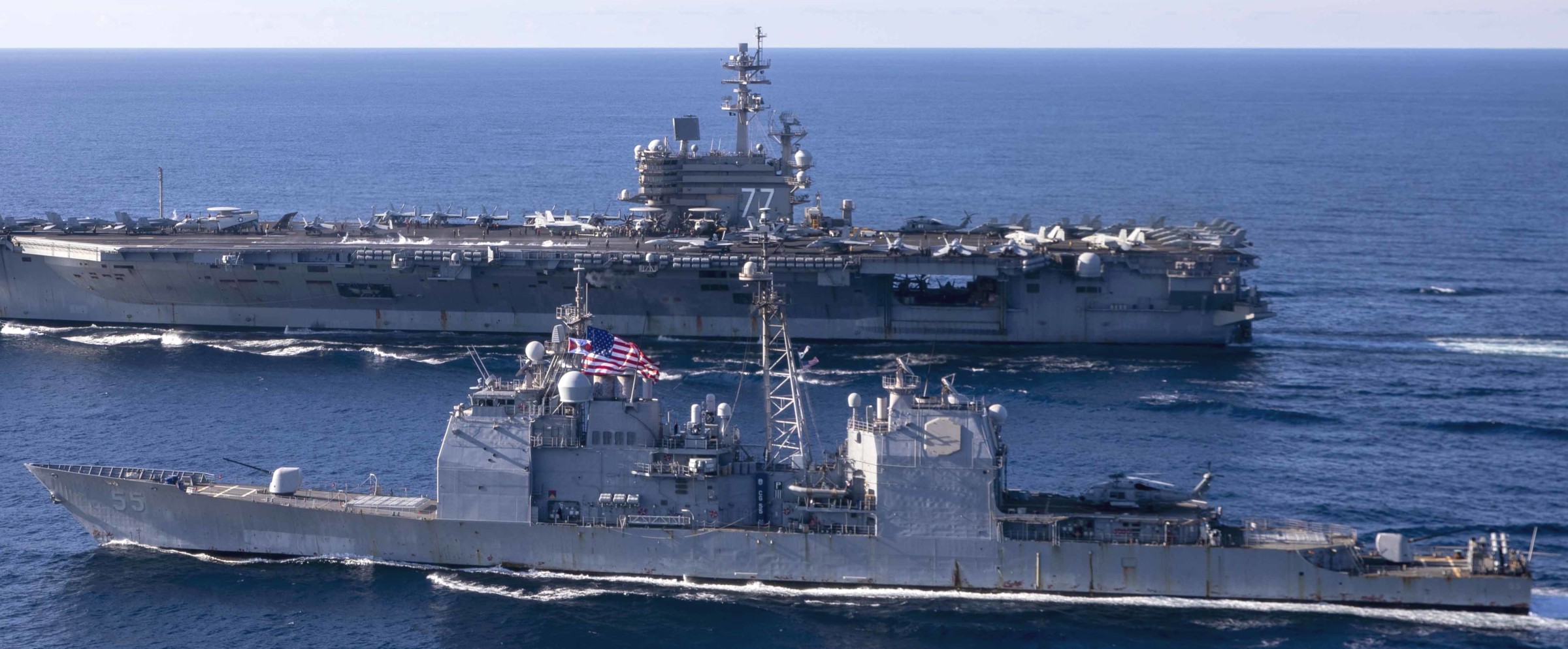 with USS George H. W. Bush (CVN 77) - Adriatic Sea - January 2023 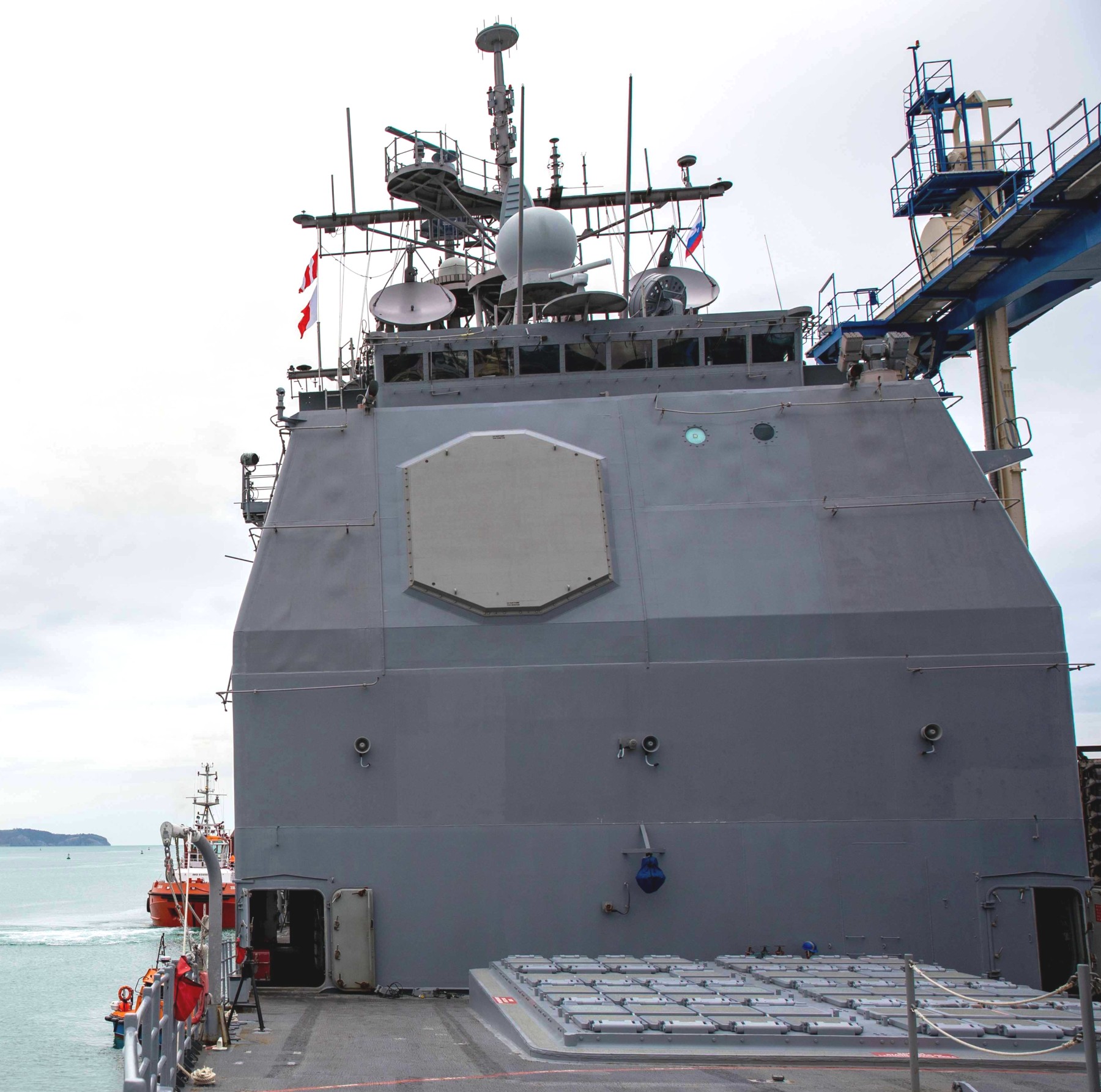 Koper, Slovenia - December 2022 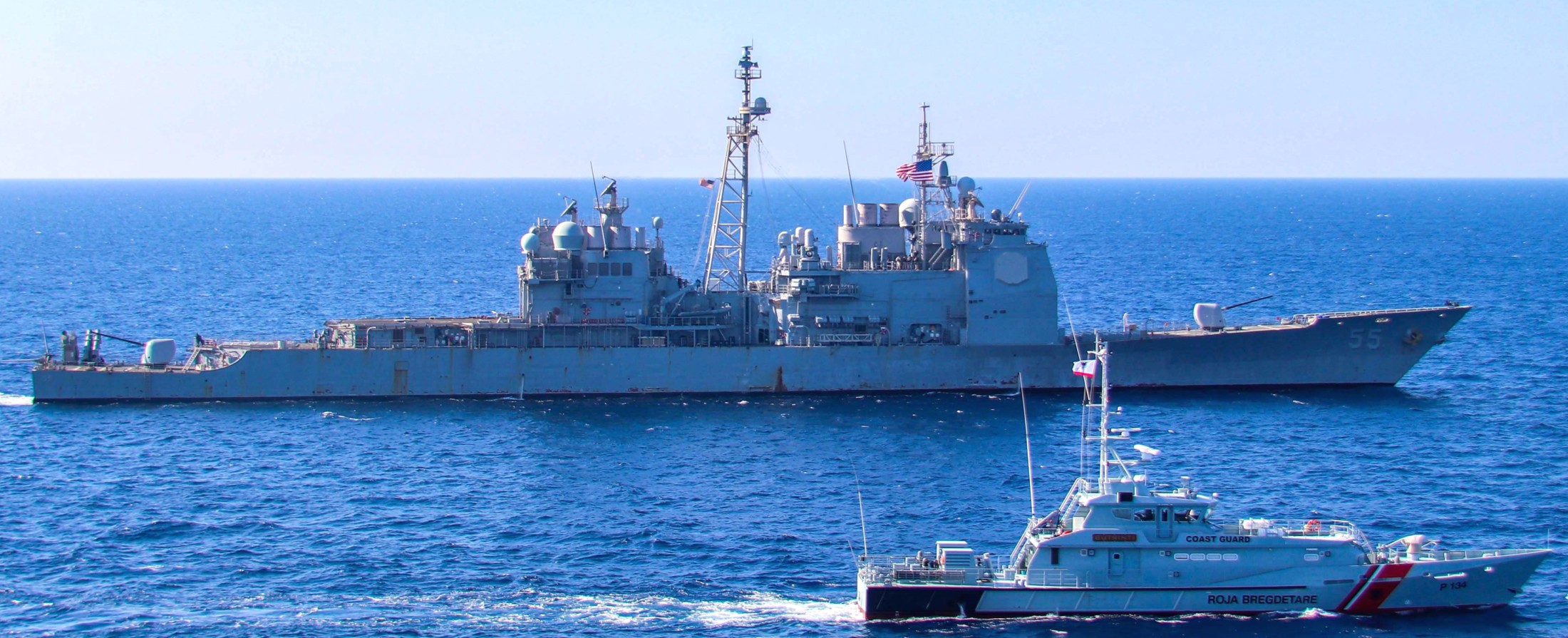 Adriatic Sea - October 2022 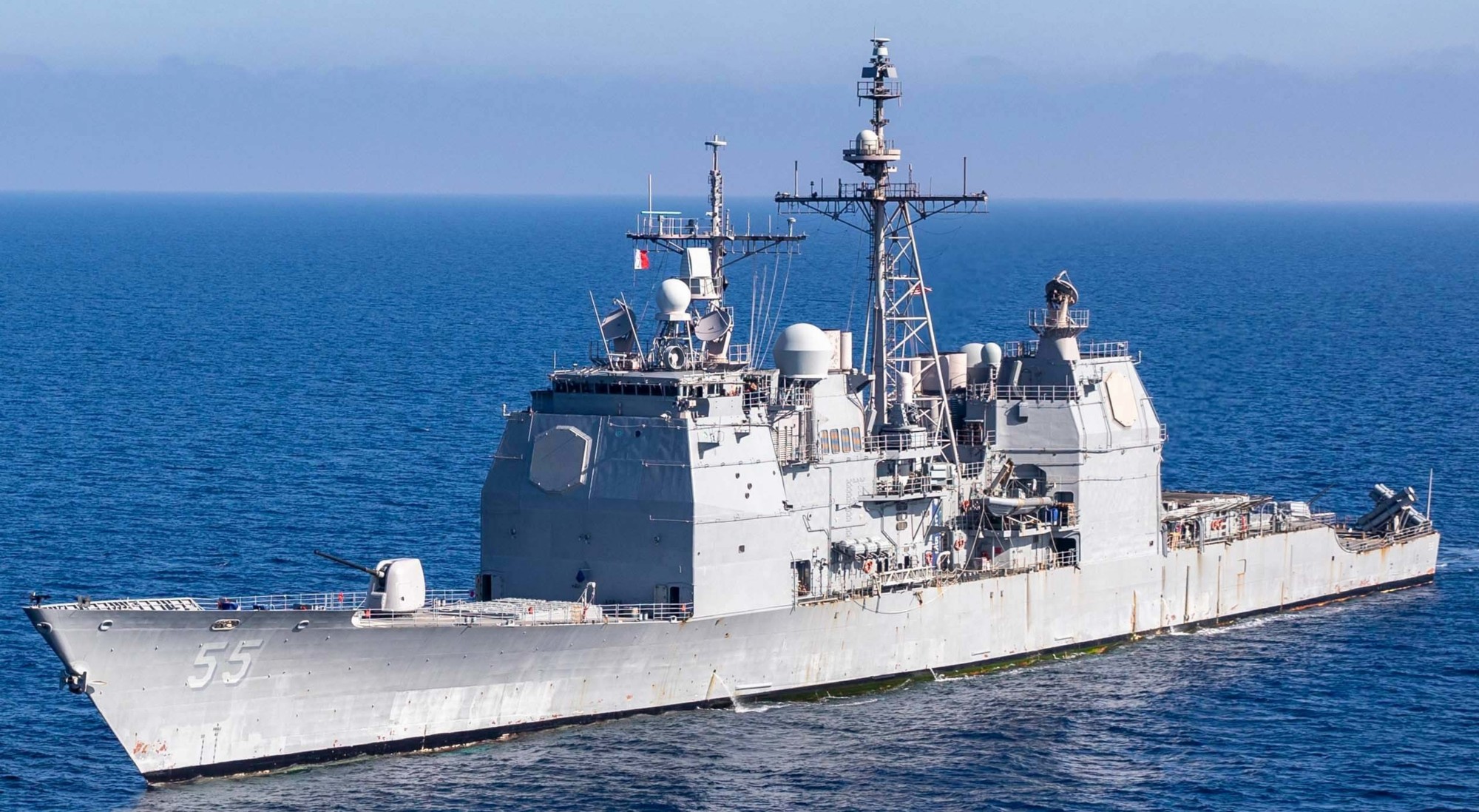 Ionian Sea - October 2022 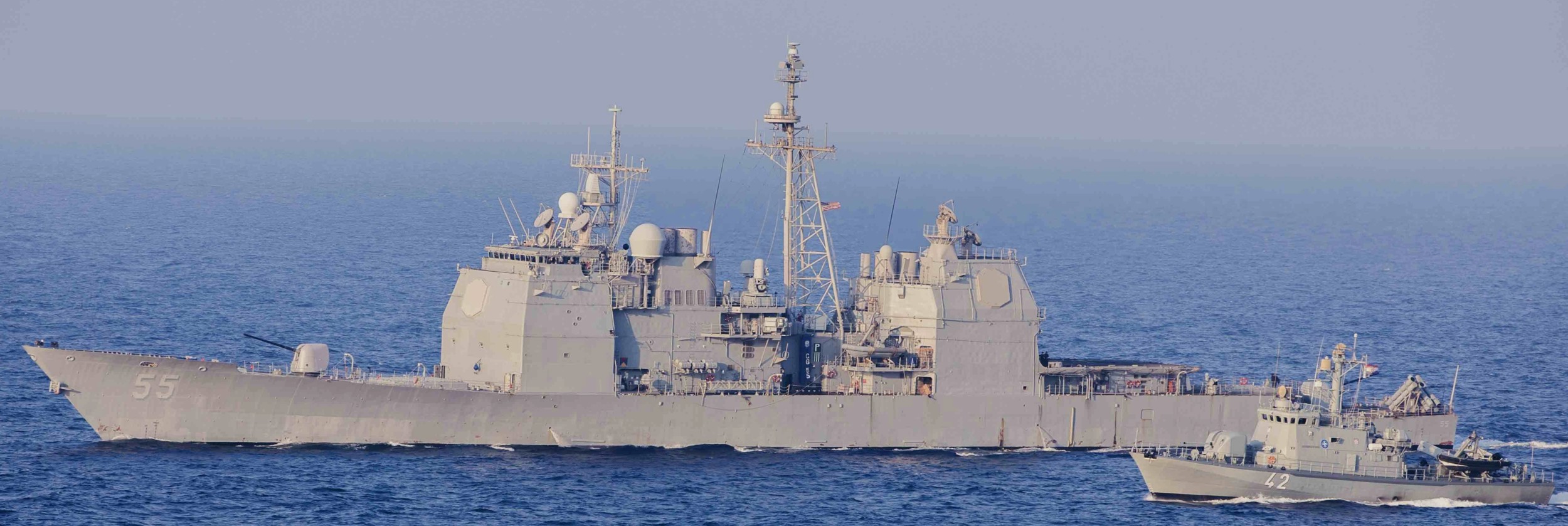 Adriatic Sea - October 2022 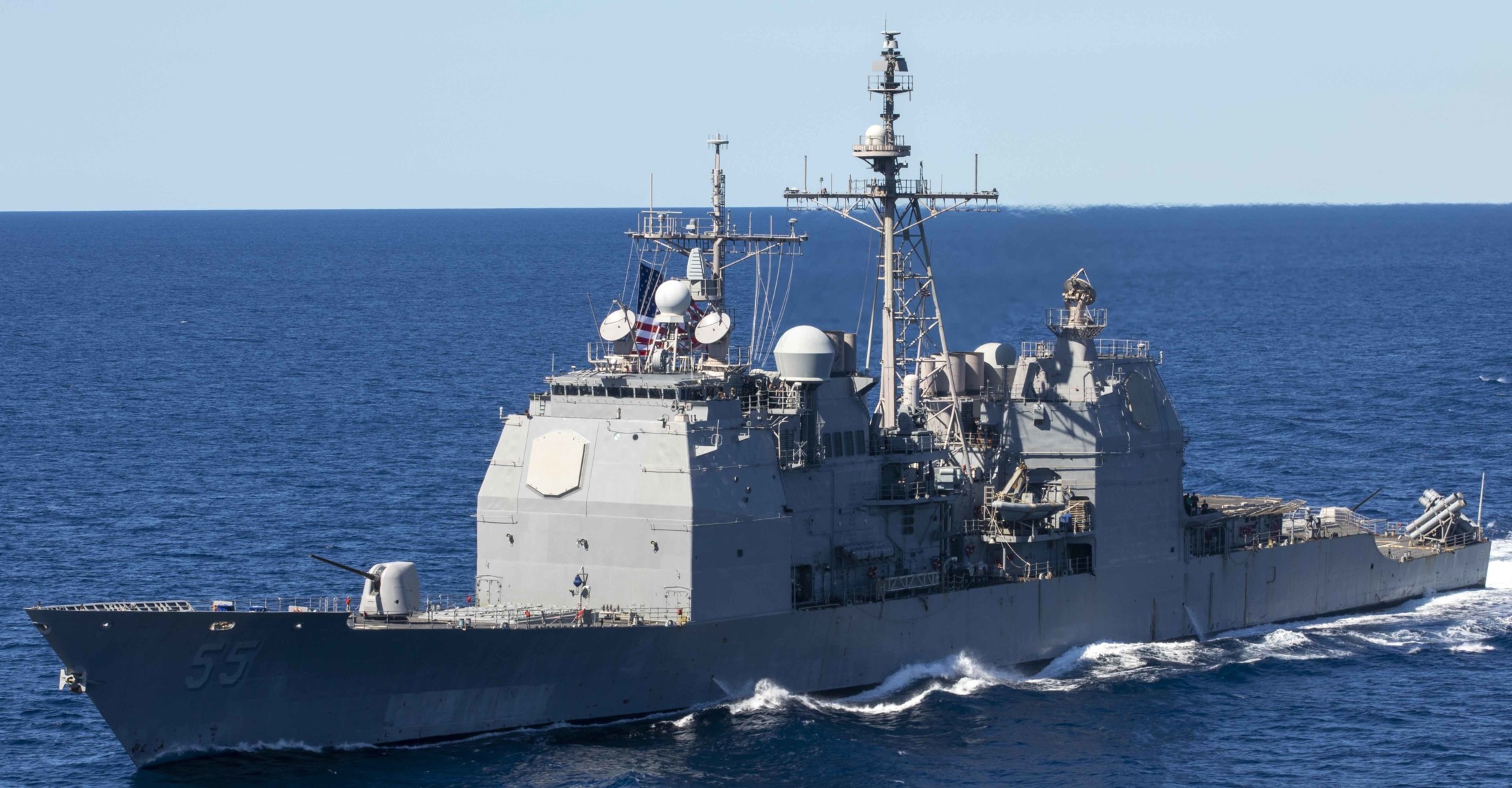 Adriatic Sea - September 2022 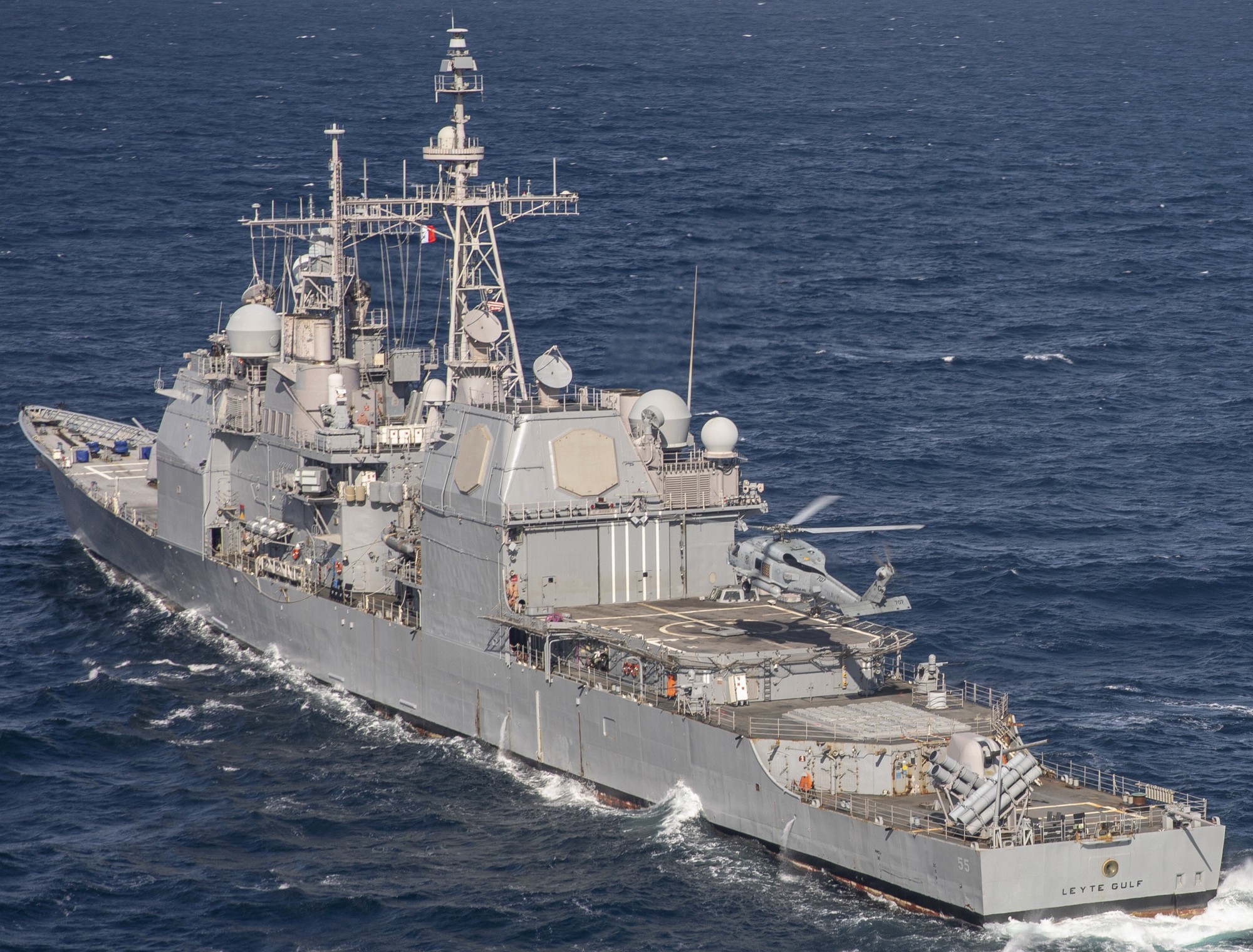 Atlantic Ocean - August 2022 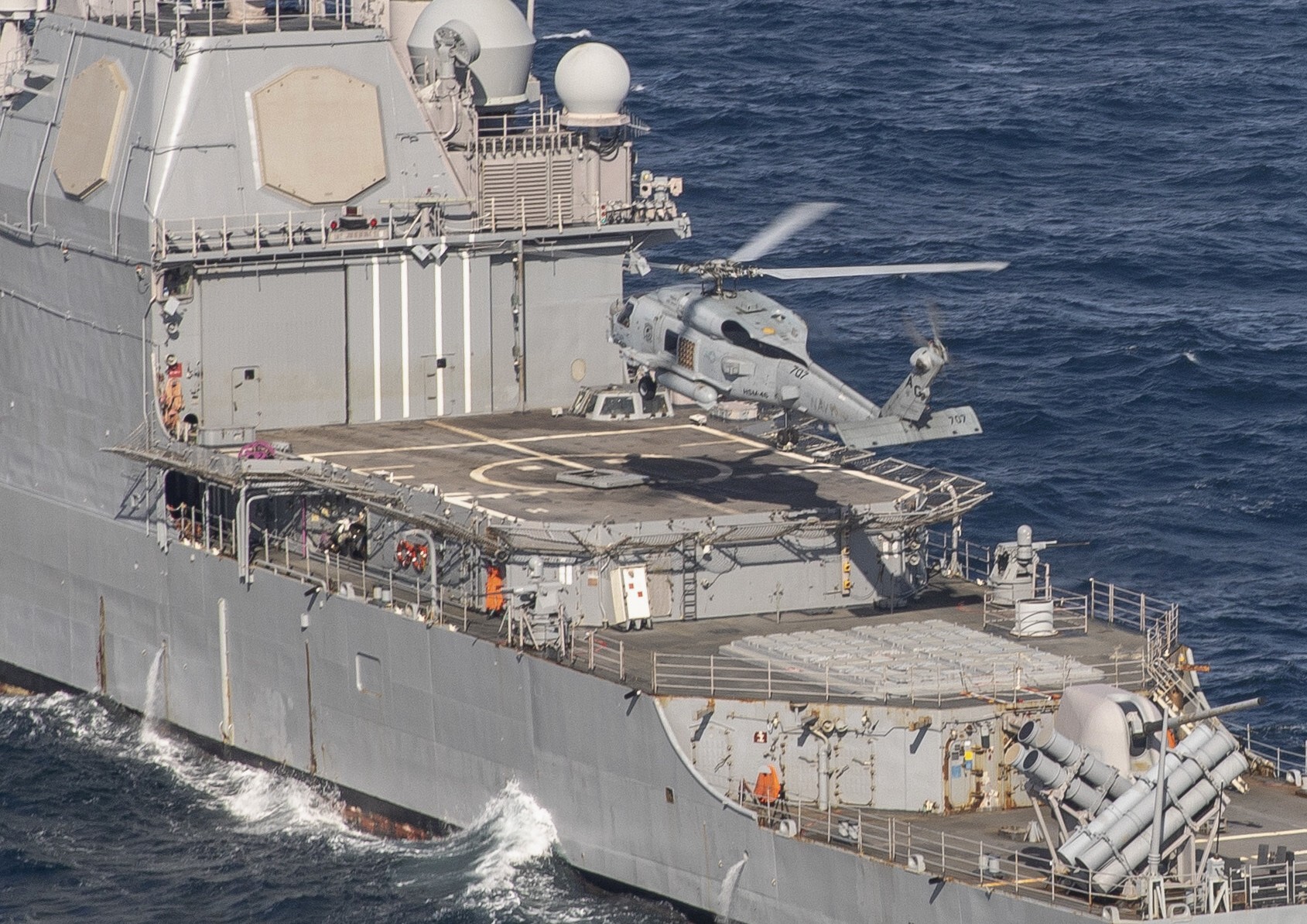 cutout for details 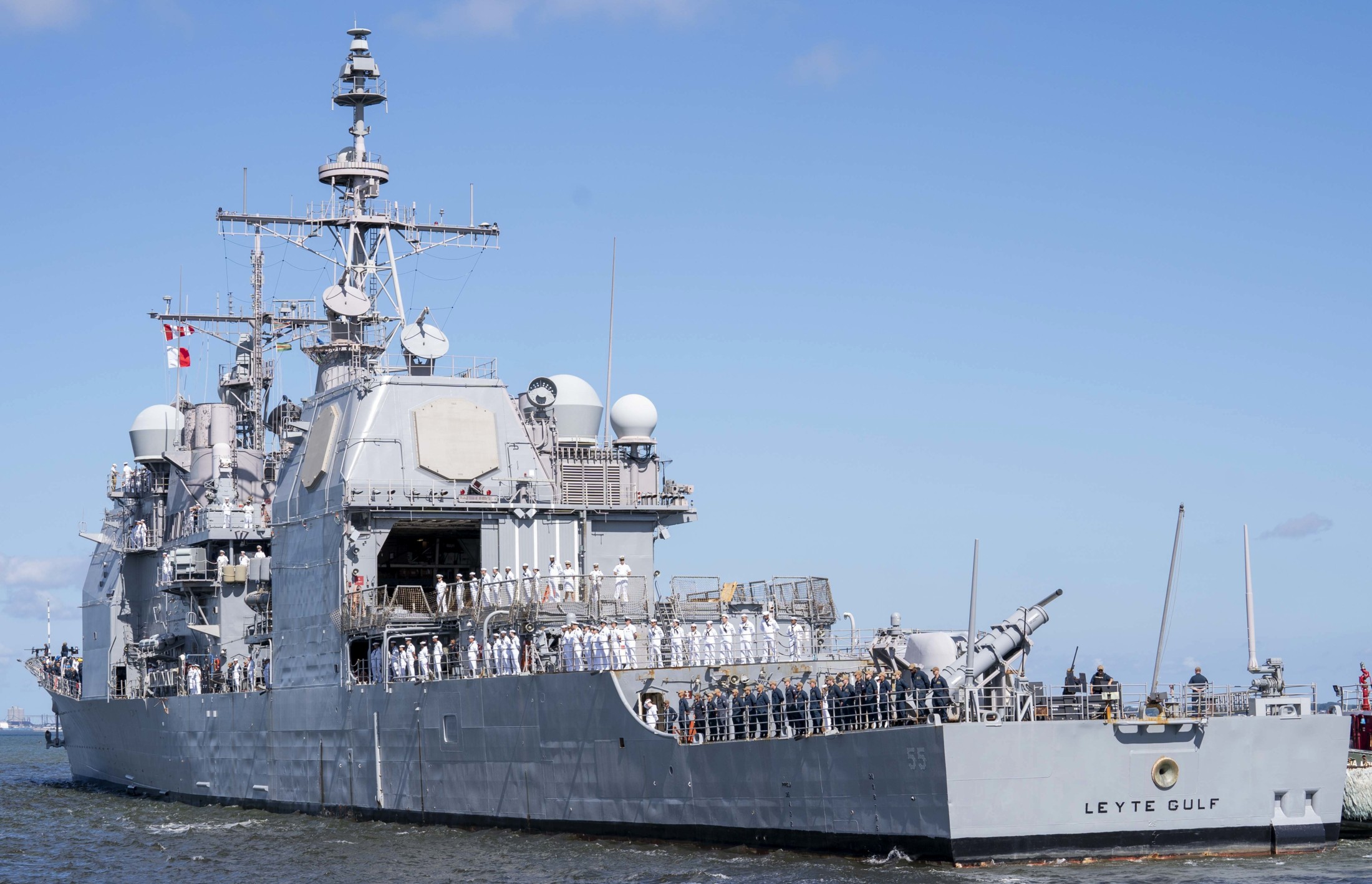 departing Naval Station Norfolk, Virginia - August 2022 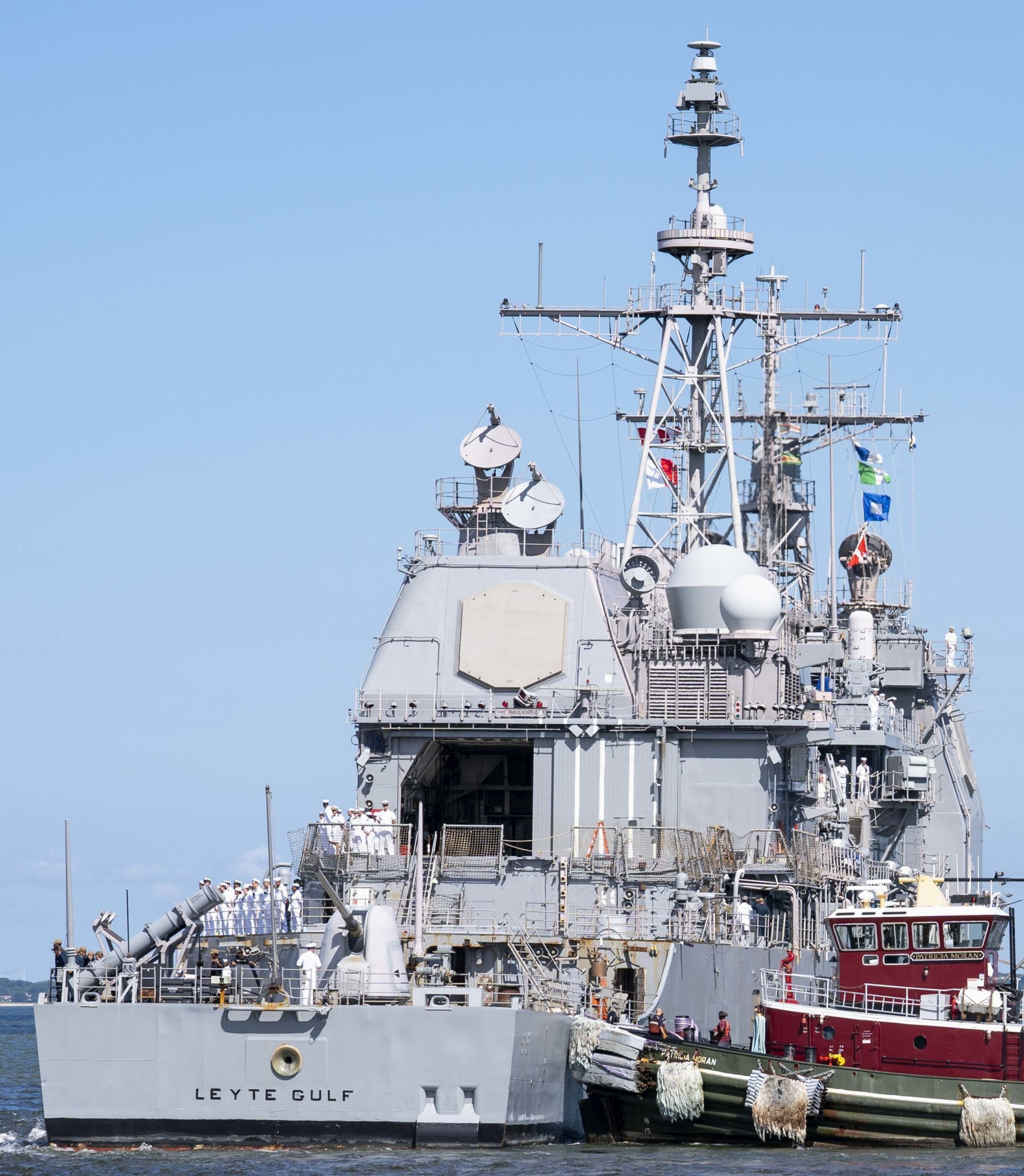 departing Naval Station Norfolk, Virginia - August 2022 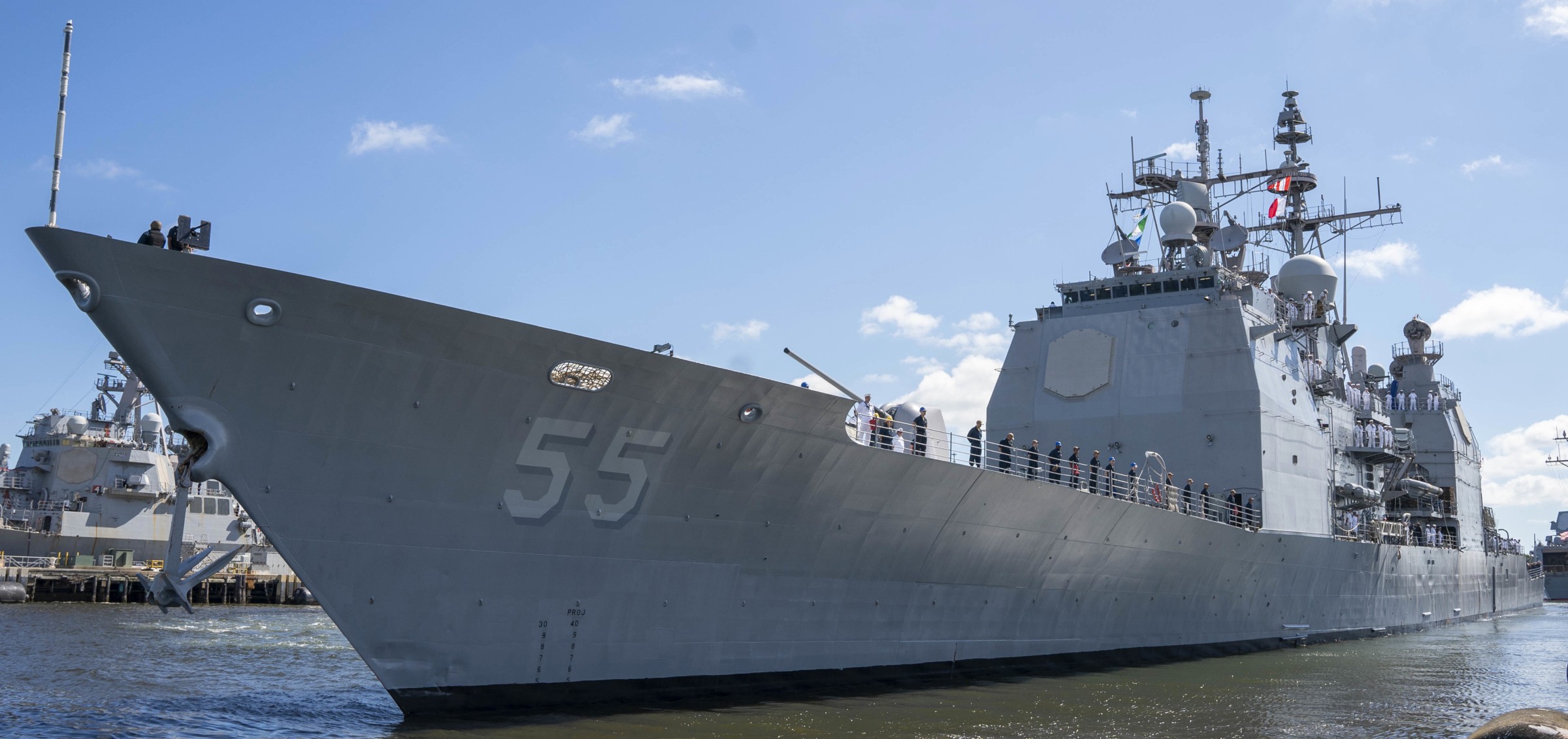 departing Naval Station Norfolk, Virginia - August 2022 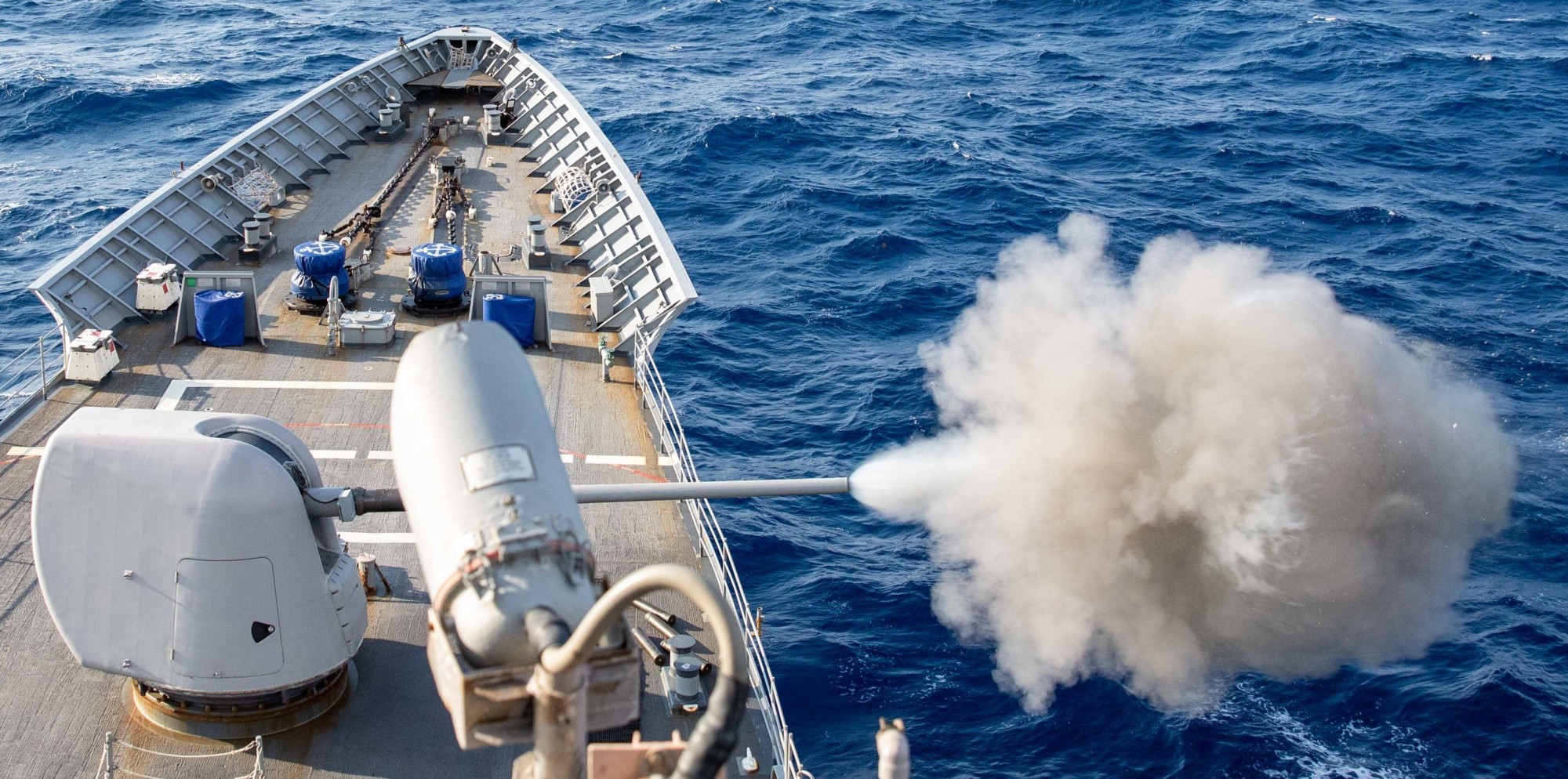 Mk.45 Mod.2 gun fire exercise - Atlantic Ocean - June 2022 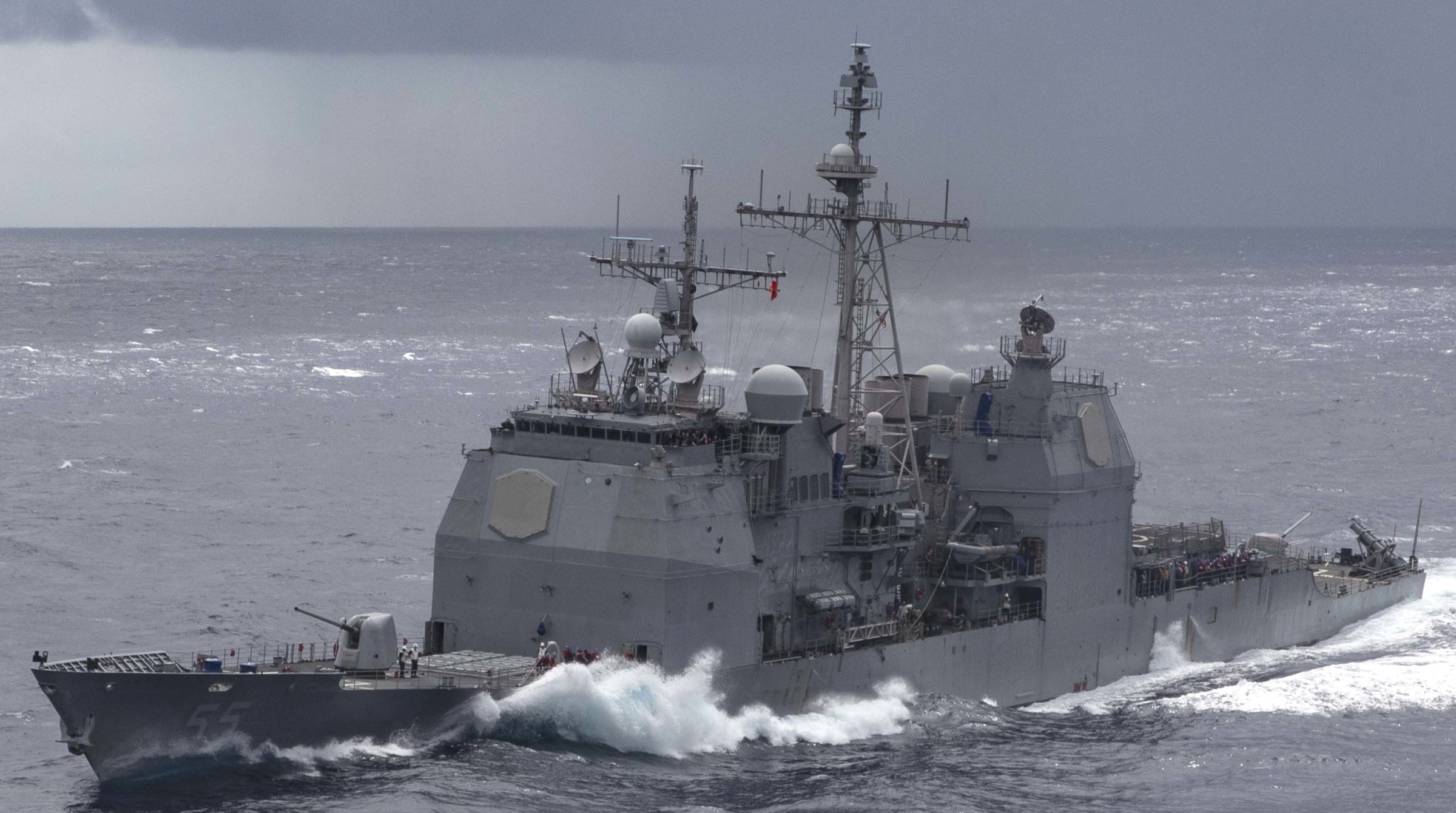 Atlantic Ocean - June 2022 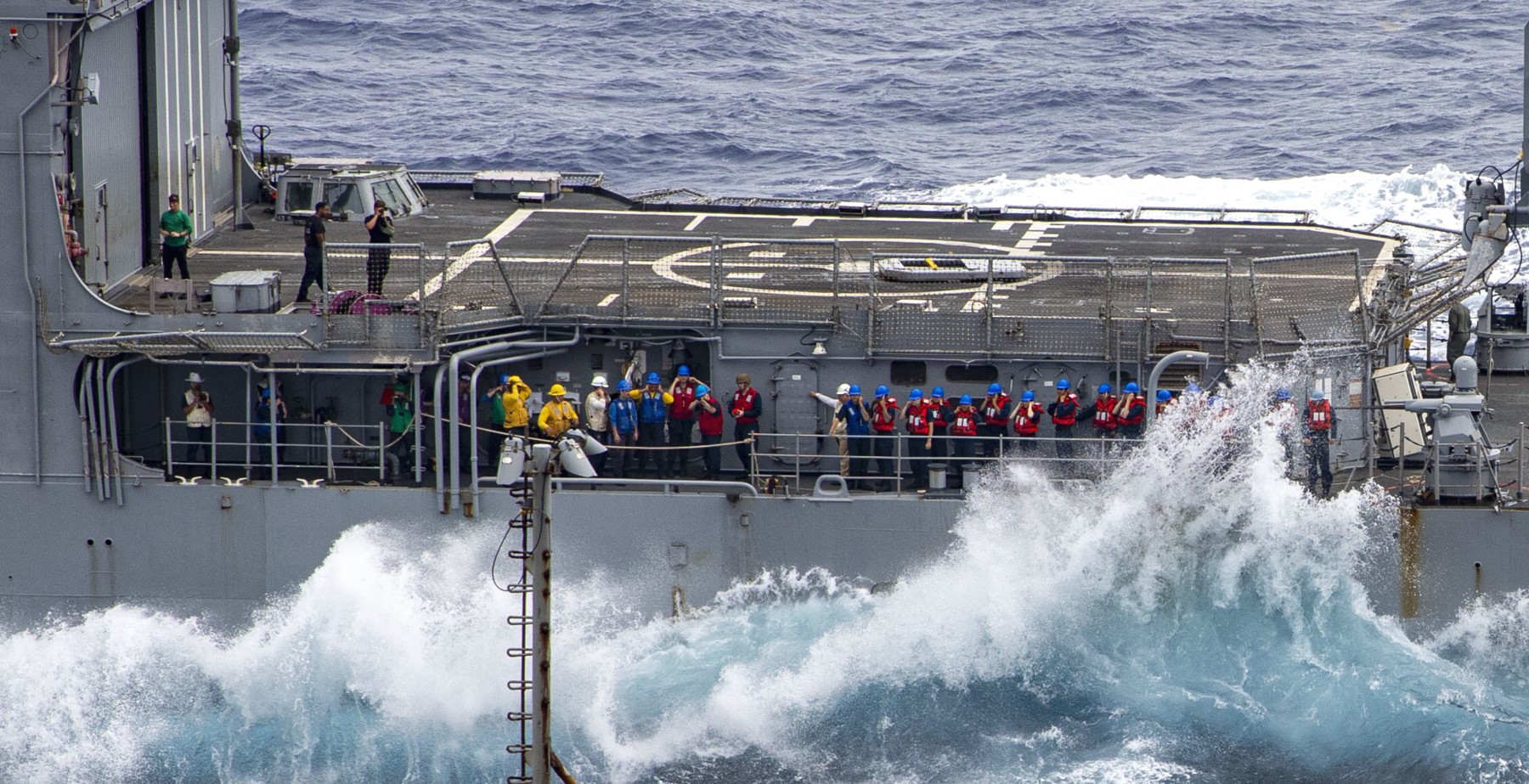 Atlantic Ocean - June 2022 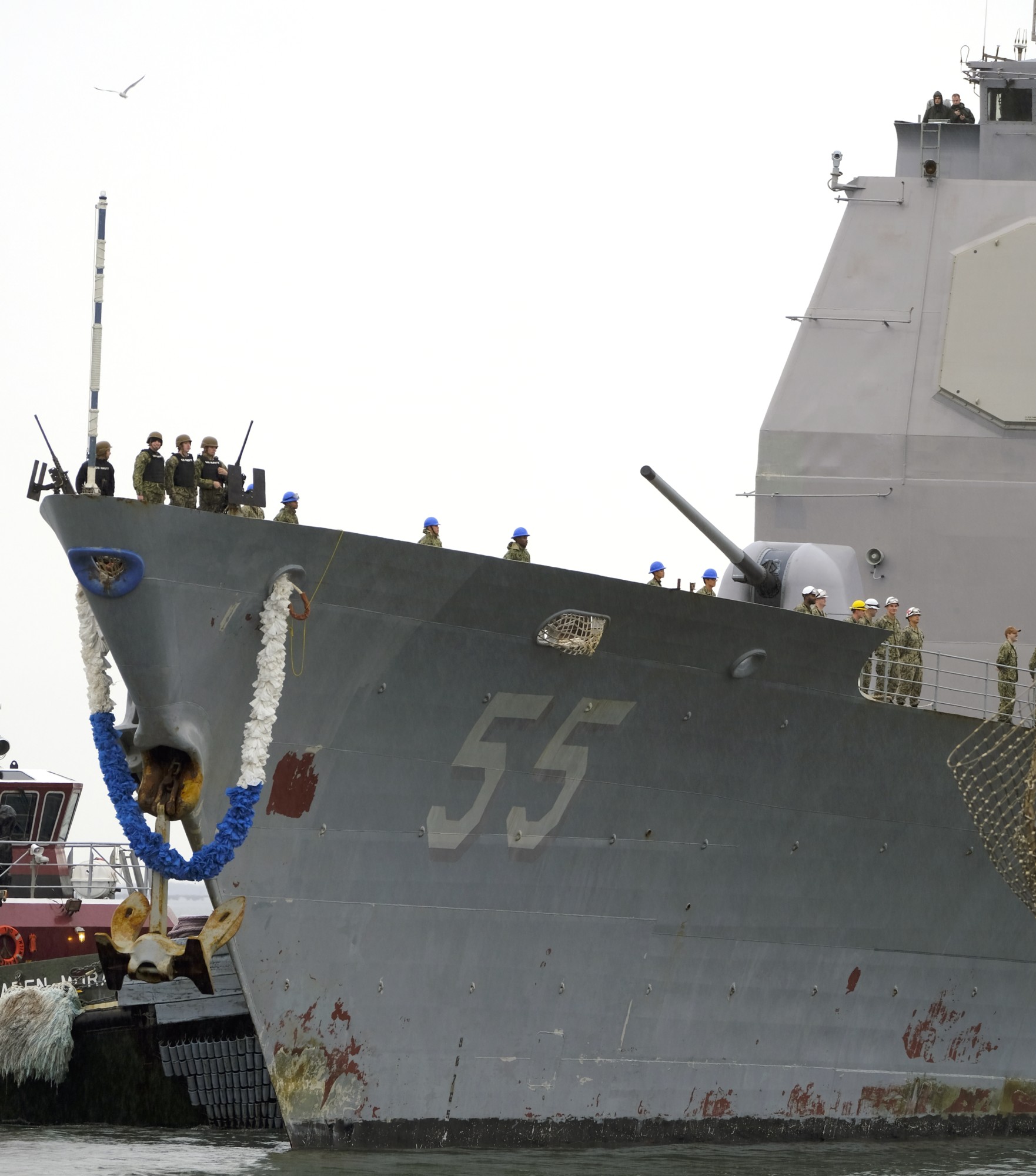 returning to Naval Station Norfolk, Virginia - January 2020 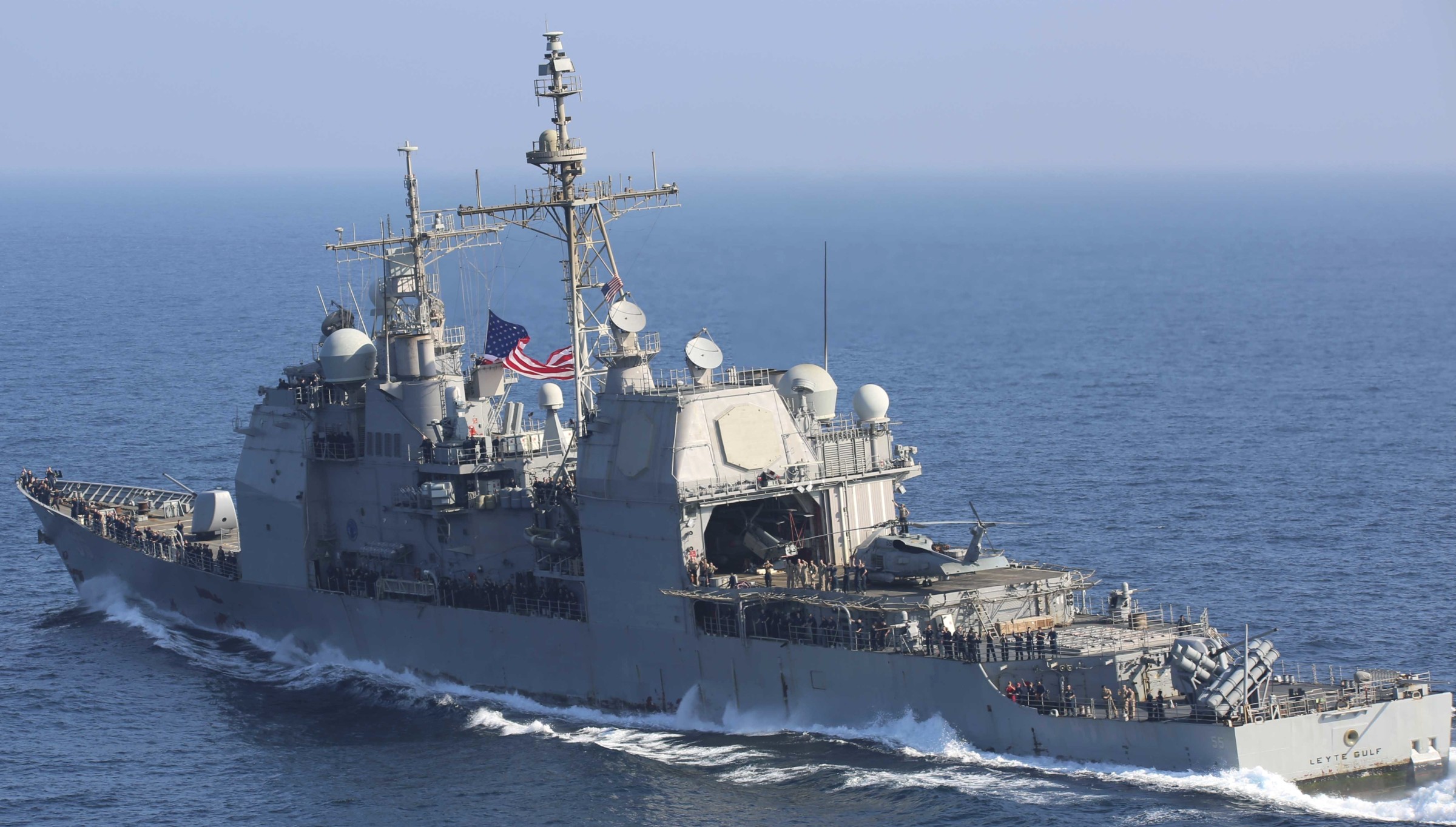 Arabian Sea - December 2019 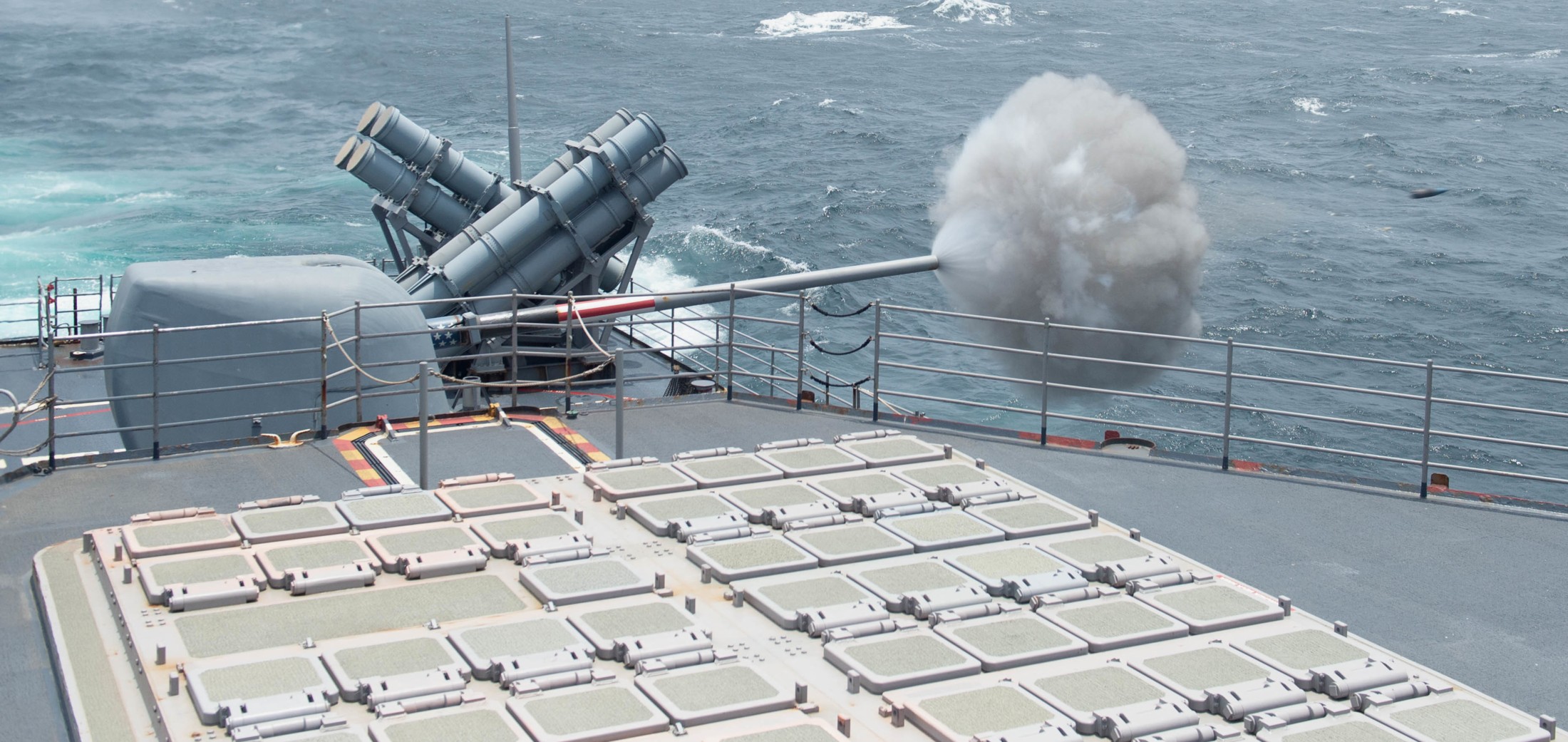 Mk.45 Mod.2 gun fire exercise - Arabian Sea - August 2019 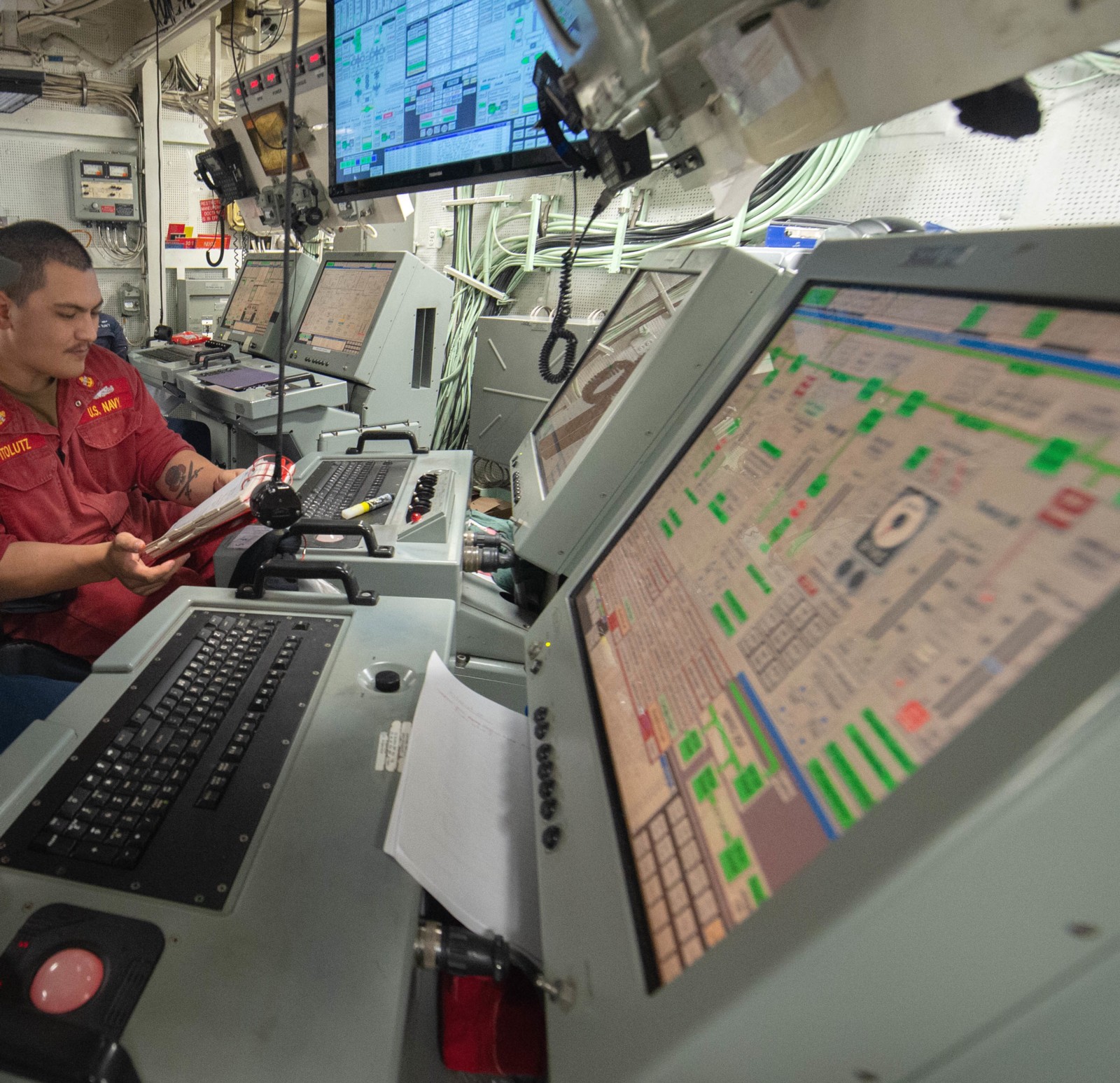 central control station - Arabian Sea - July 2019 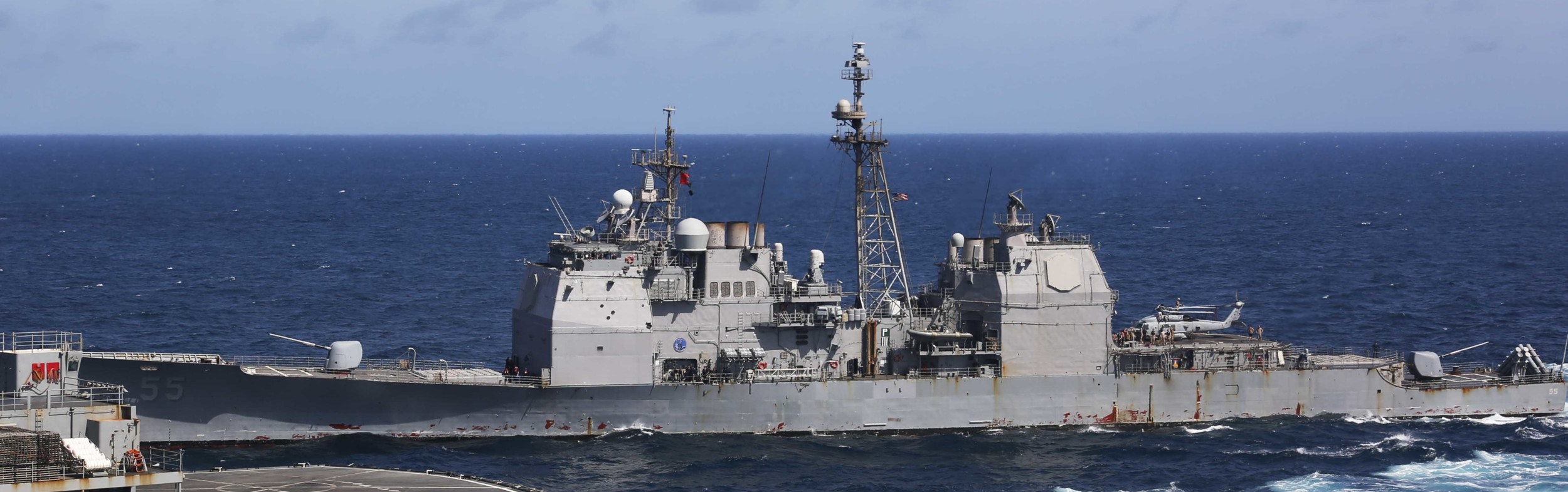 Arabian Sea - June 2019 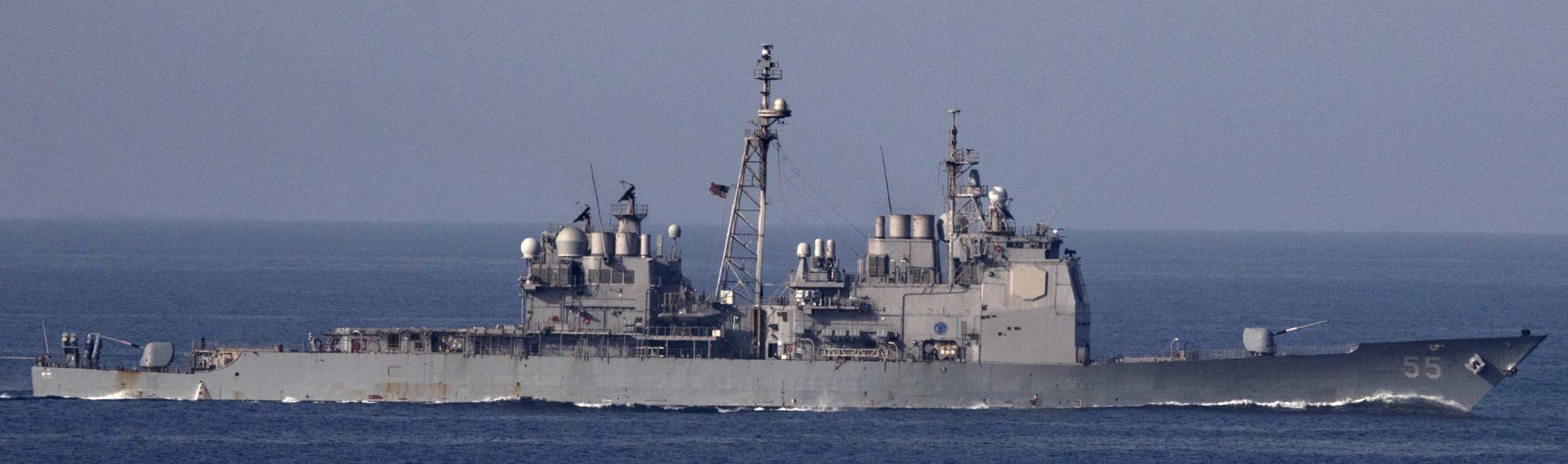 Red Sea - May 2019 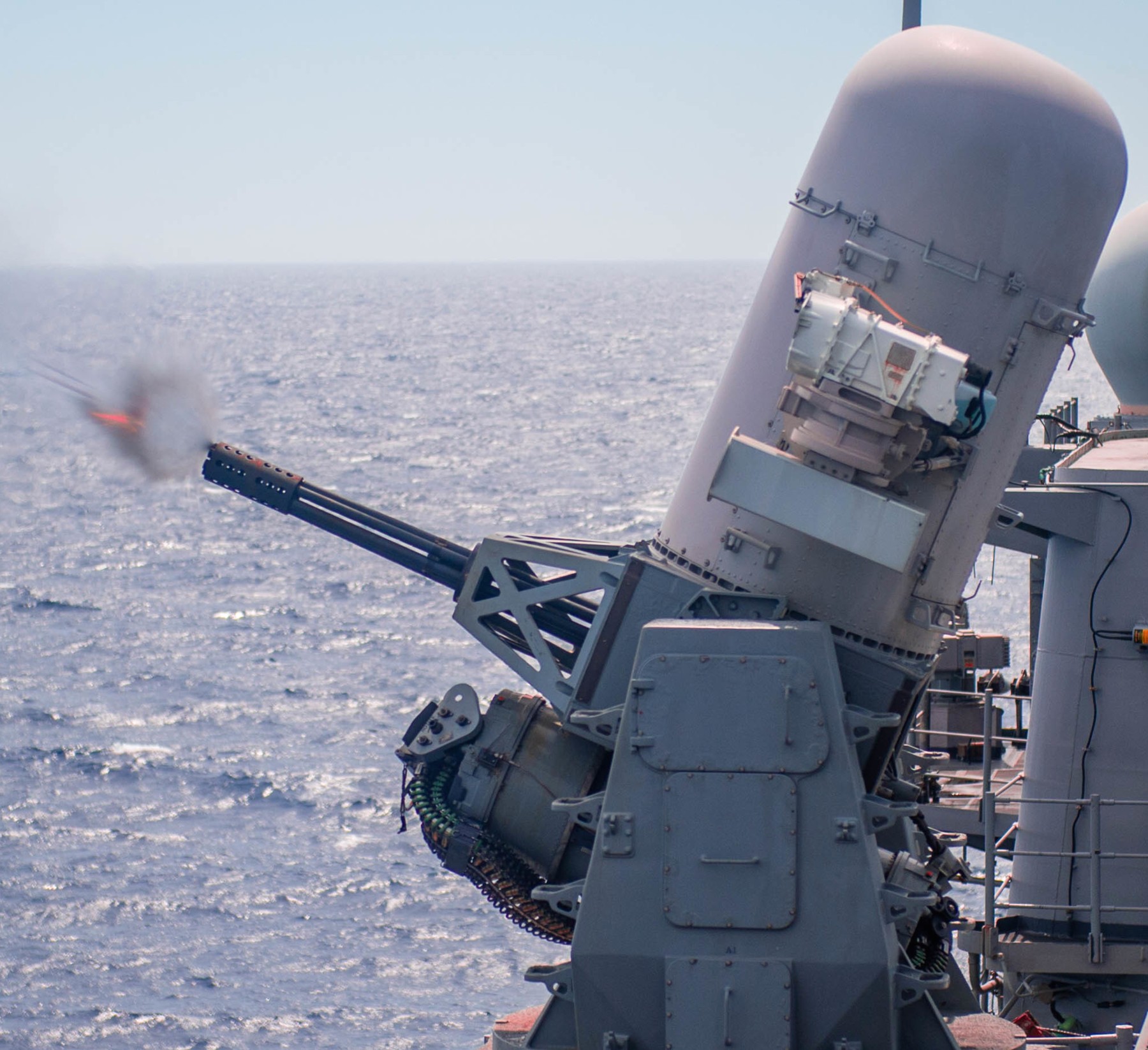 Mk.15 Phalanx CIWS fire exercise - Atlantic Ocean - April 2019 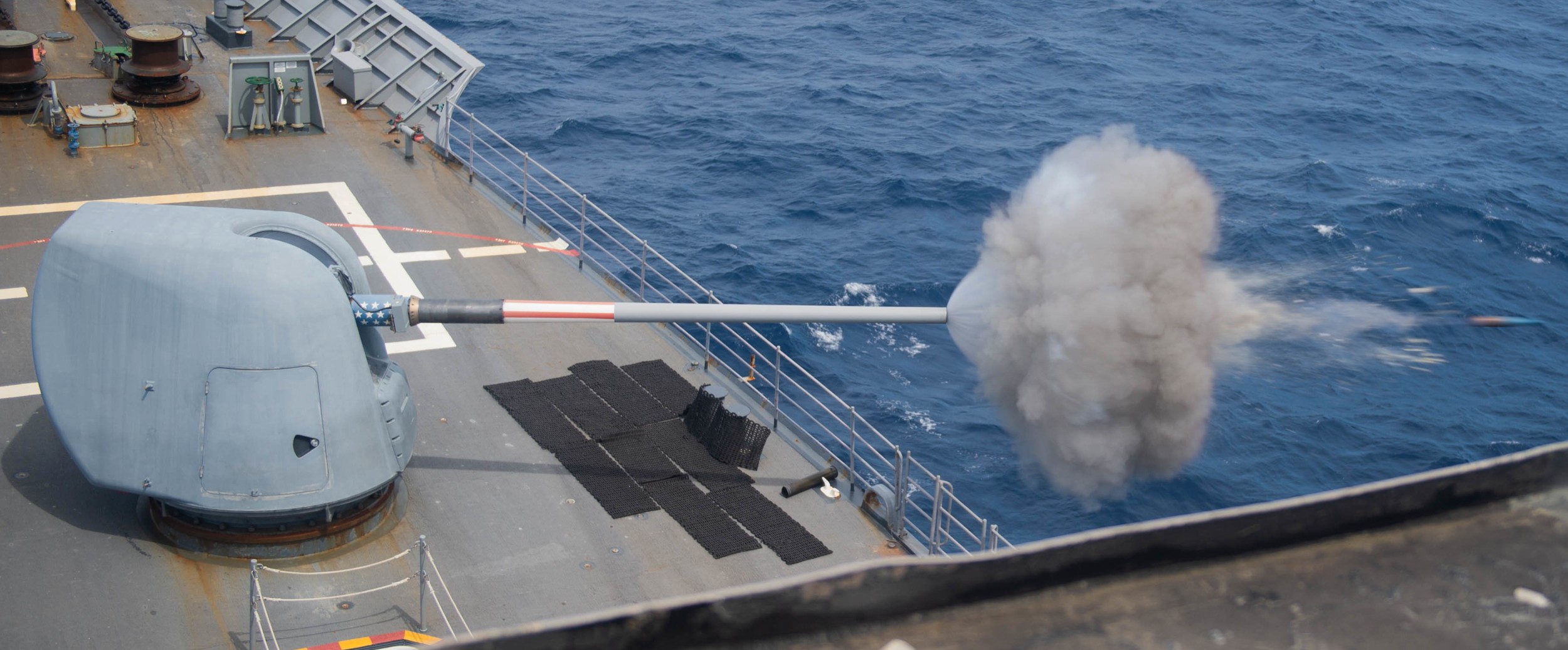 Mk.45 Mod.2 gun fire exercise - Atlantic Ocean - April 2019 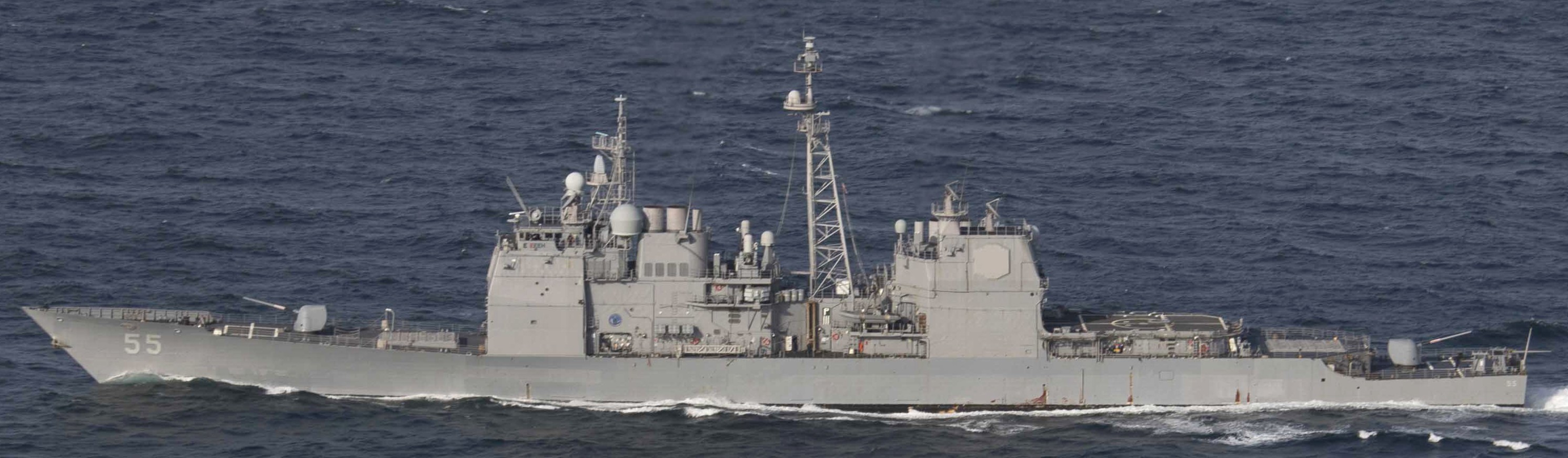 Atlantic Ocean - January 2019 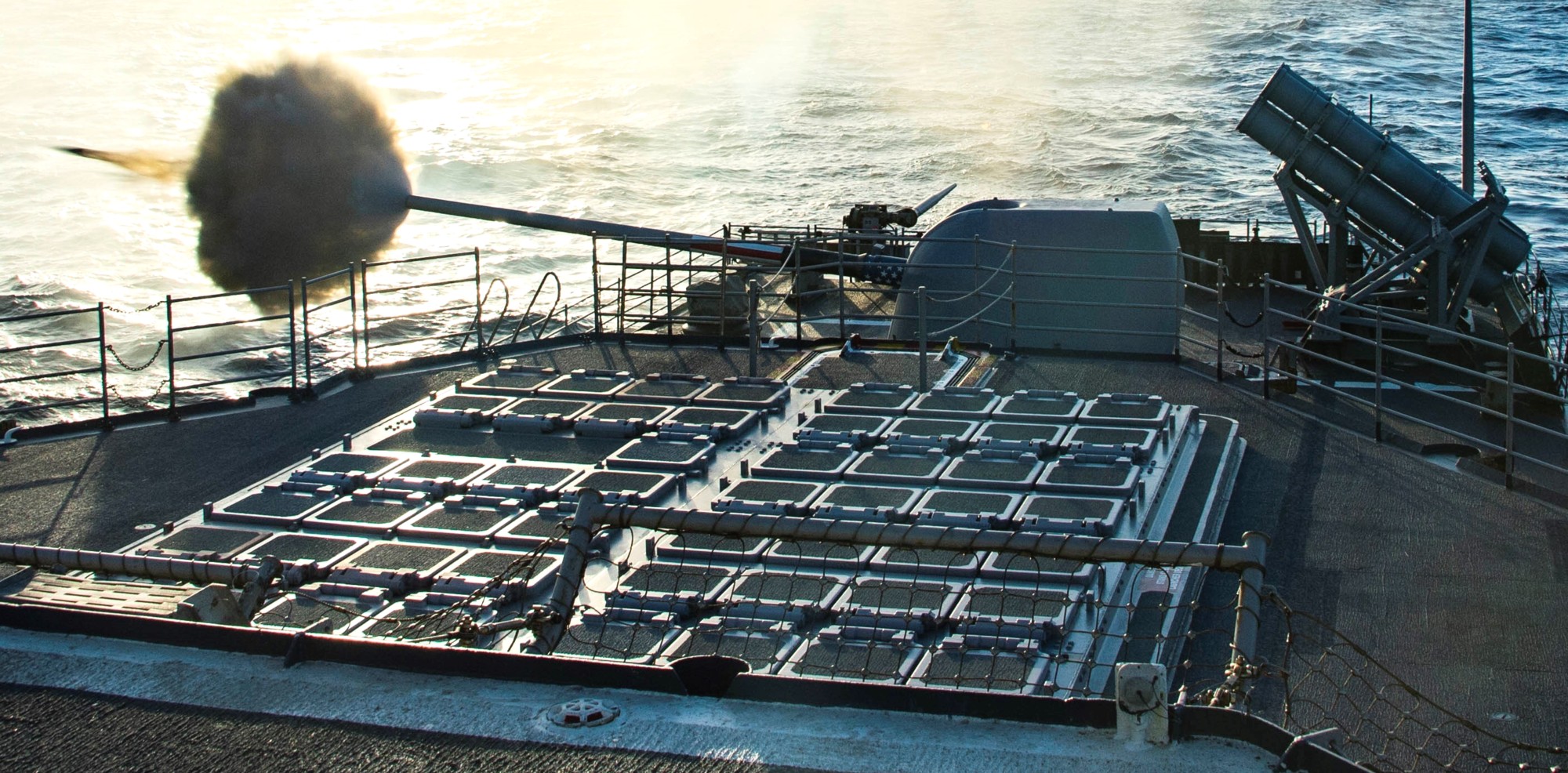 Mk.45 Mod.2 gun fire exercise - Atlantic Ocean - November 2018 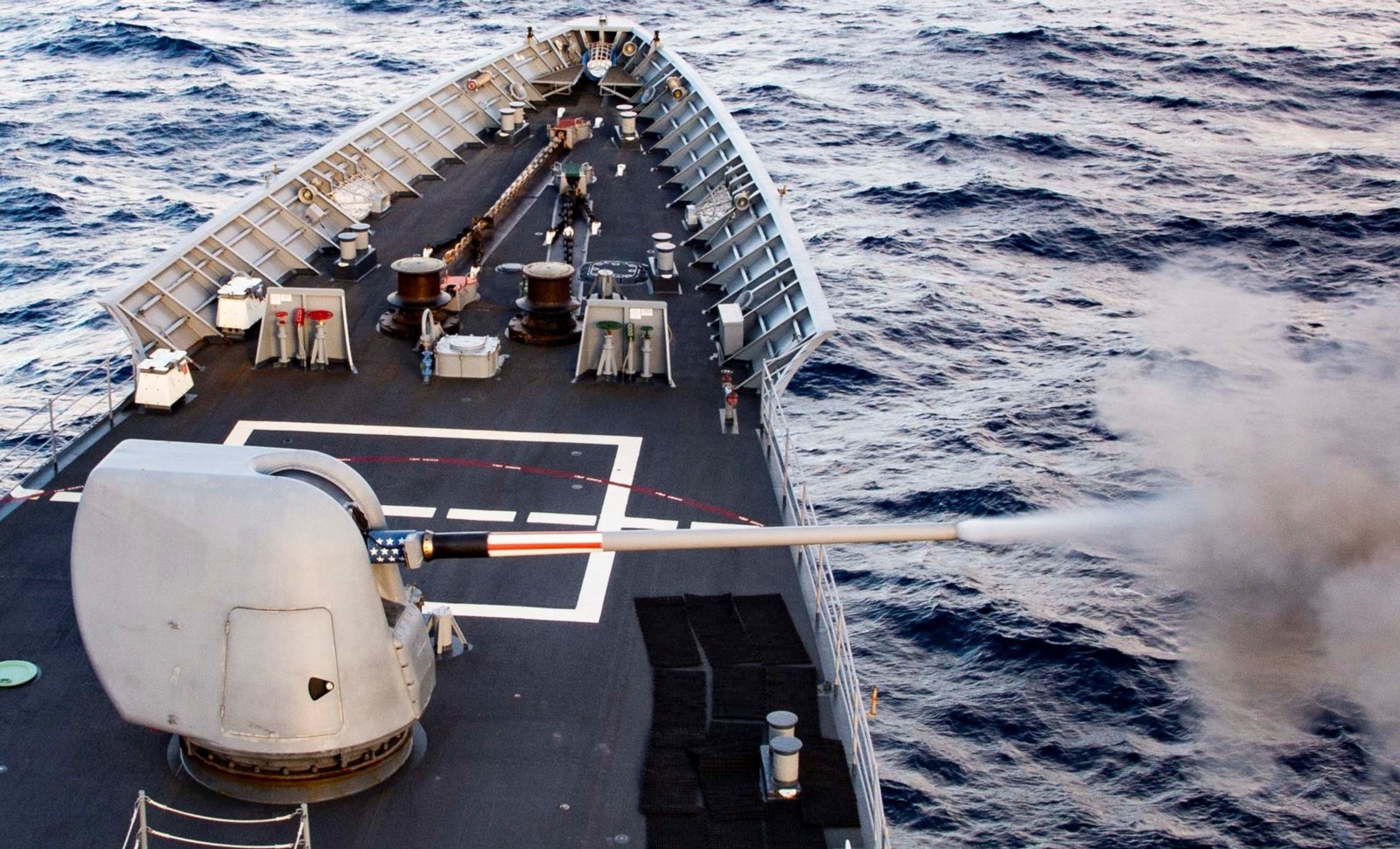 Mk.45 Mod.2 gun fire exercise - Atlantic Ocean - November 2018 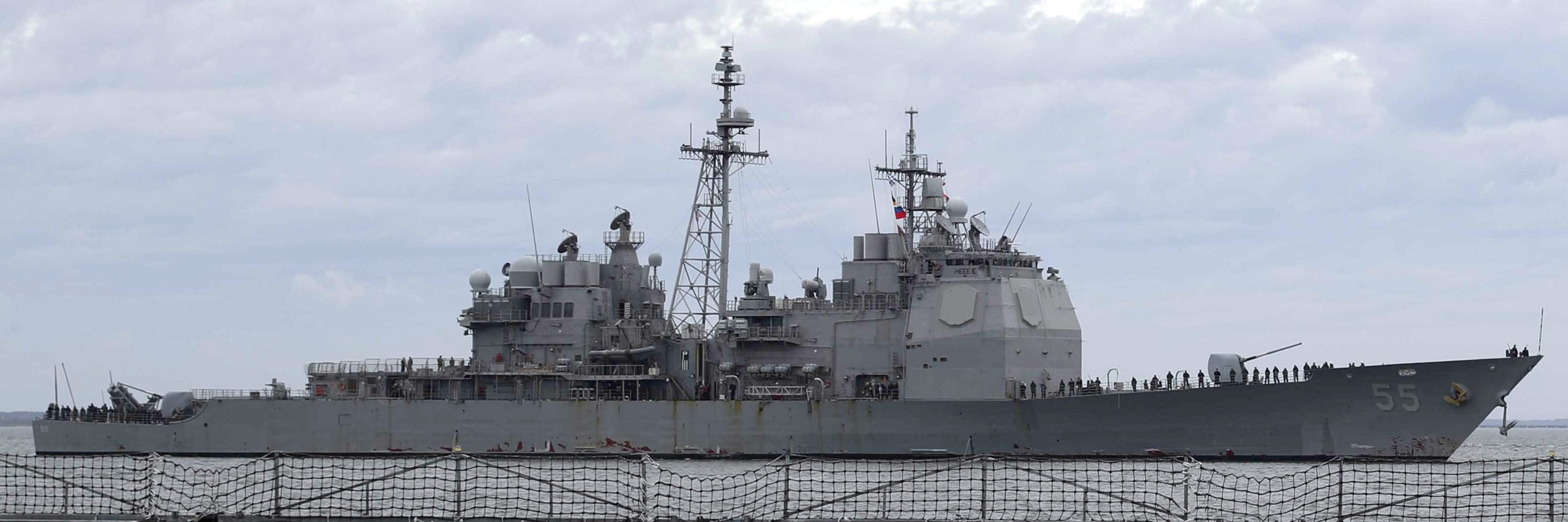 departing Naval Station Norfolk, Virginia - November 2018 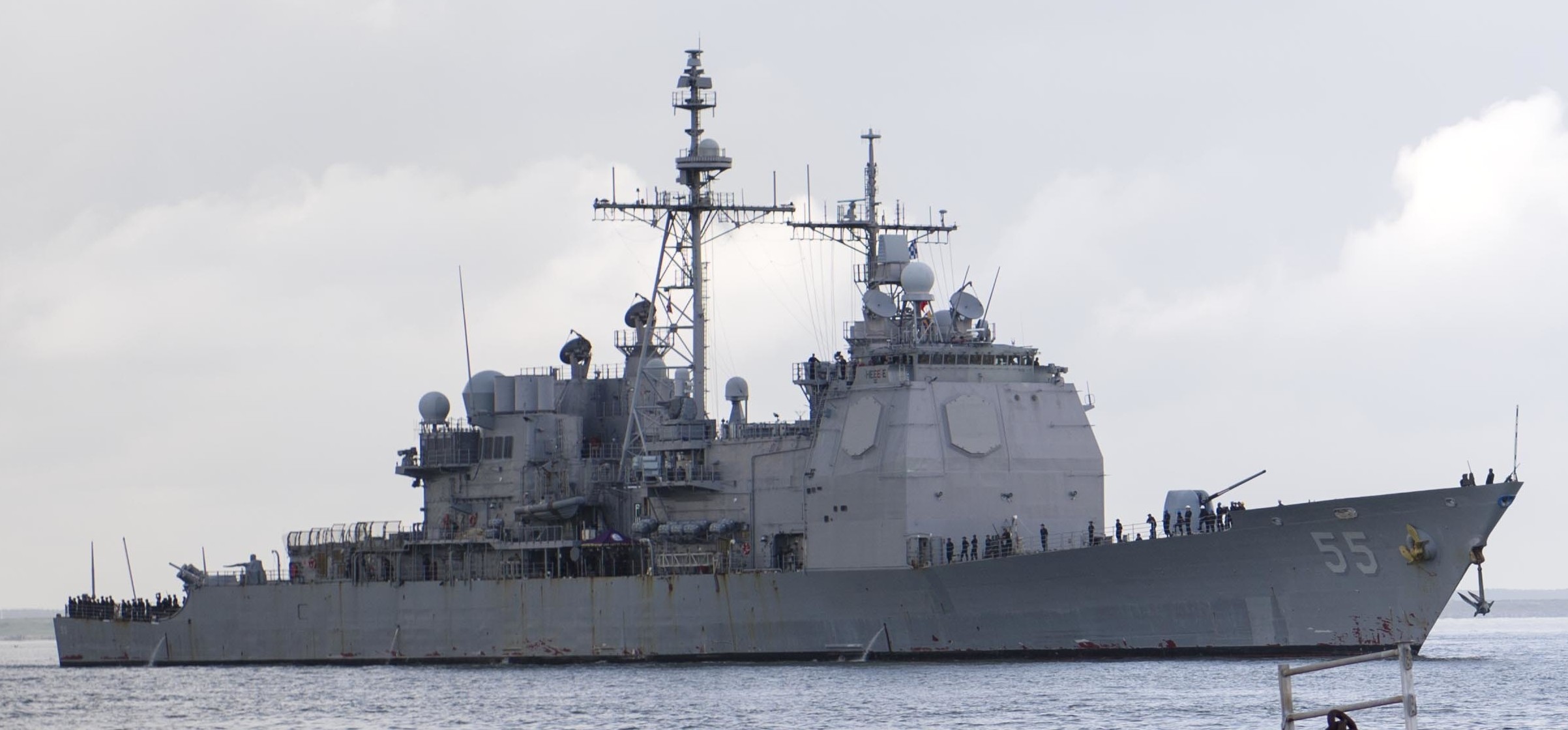 departing Naval Station Norfolk, Virginia in preparation of Hurricane Florence - September 2018 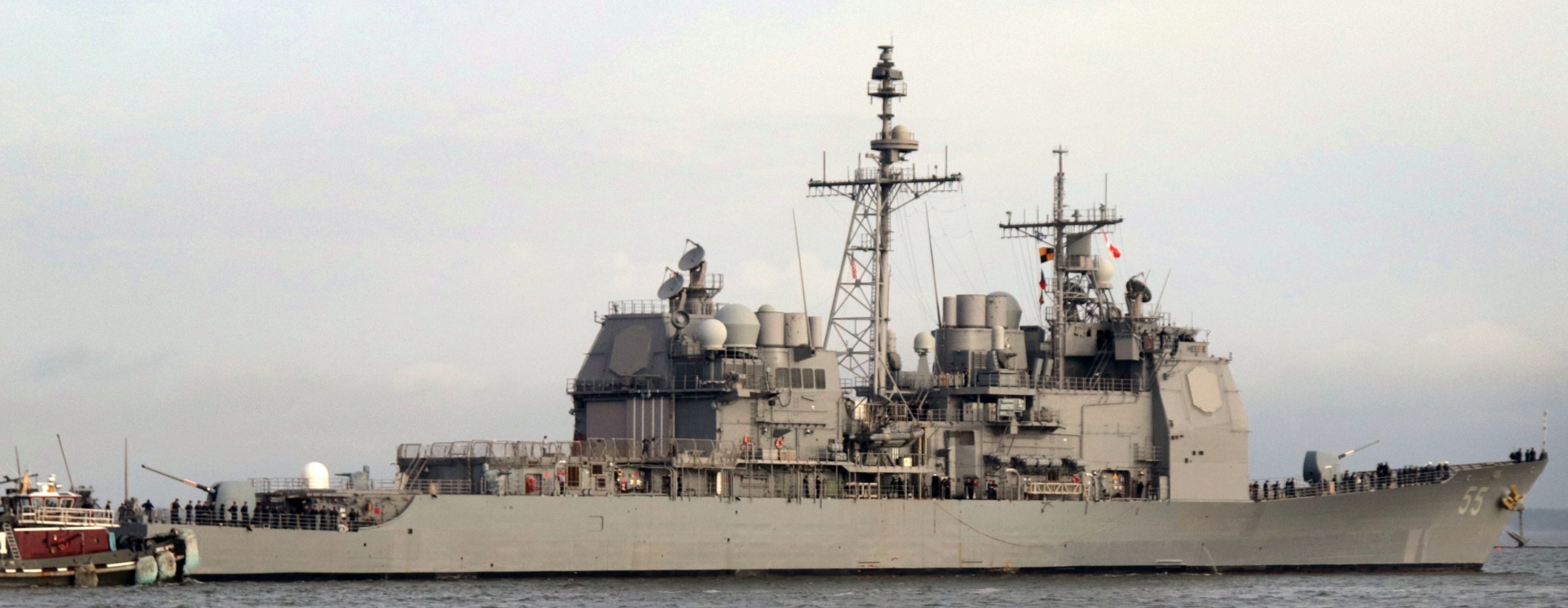 departing Naval Station Norfolk, Virginia - May 2018 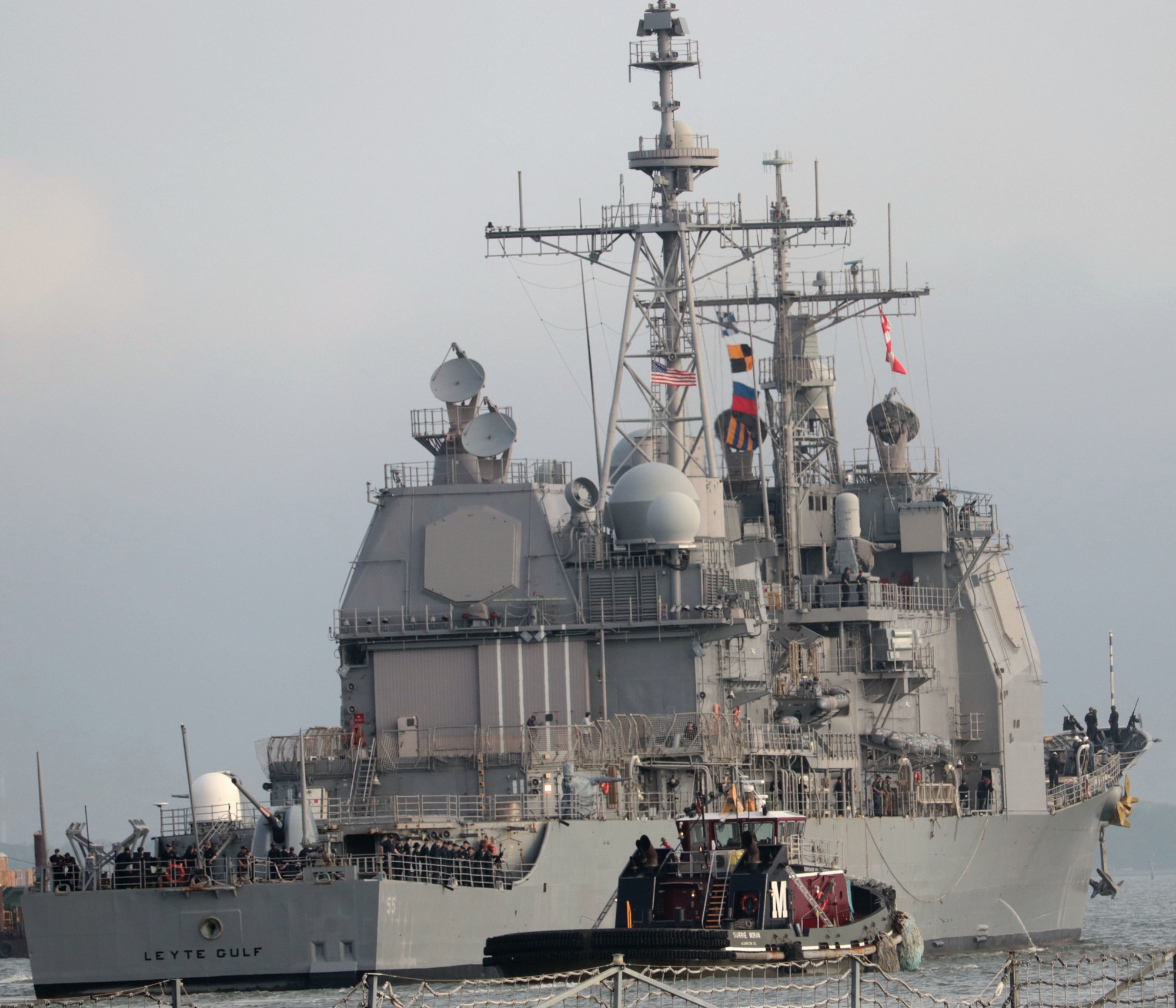 departing Naval Station Norfolk, Virginia - May 2018 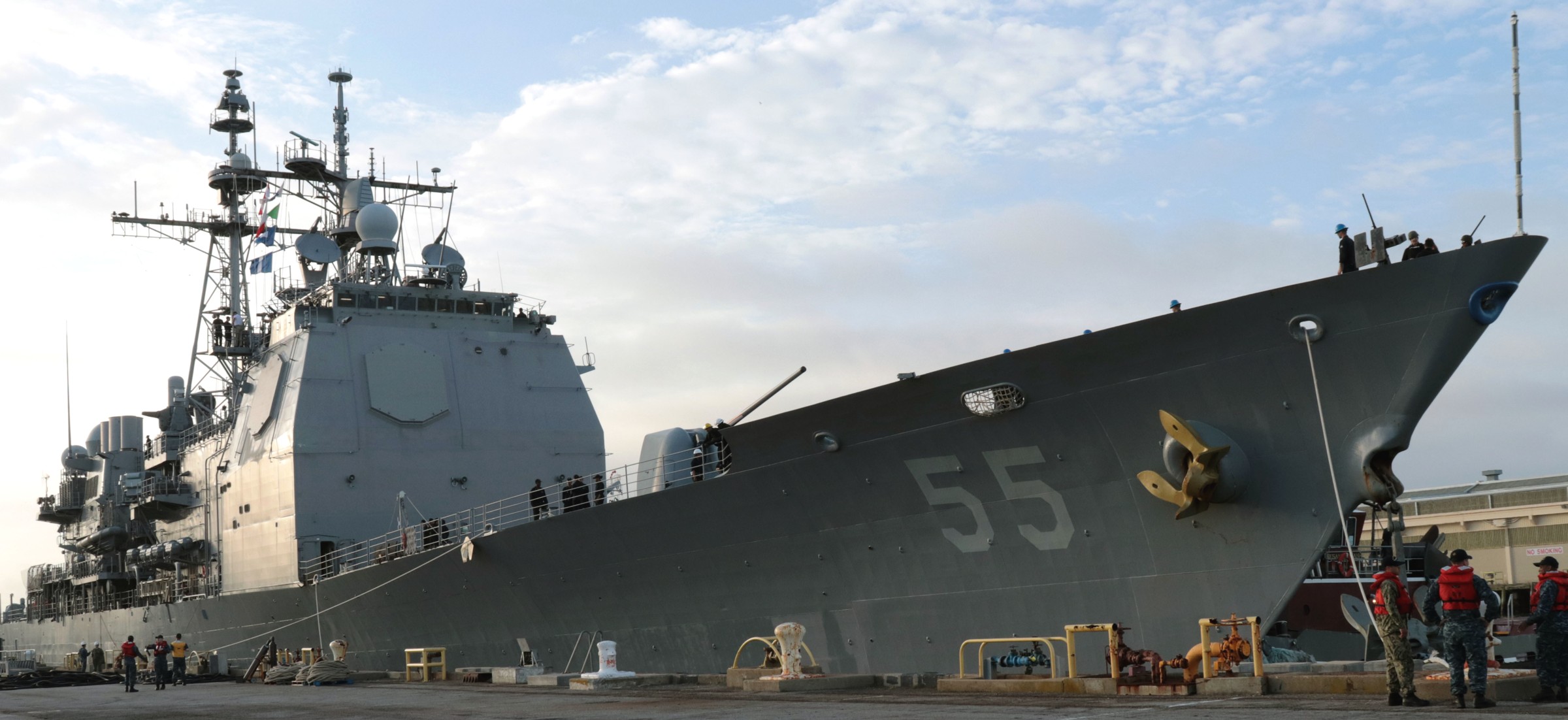 departing Naval Station Norfolk, Virginia - May 2018 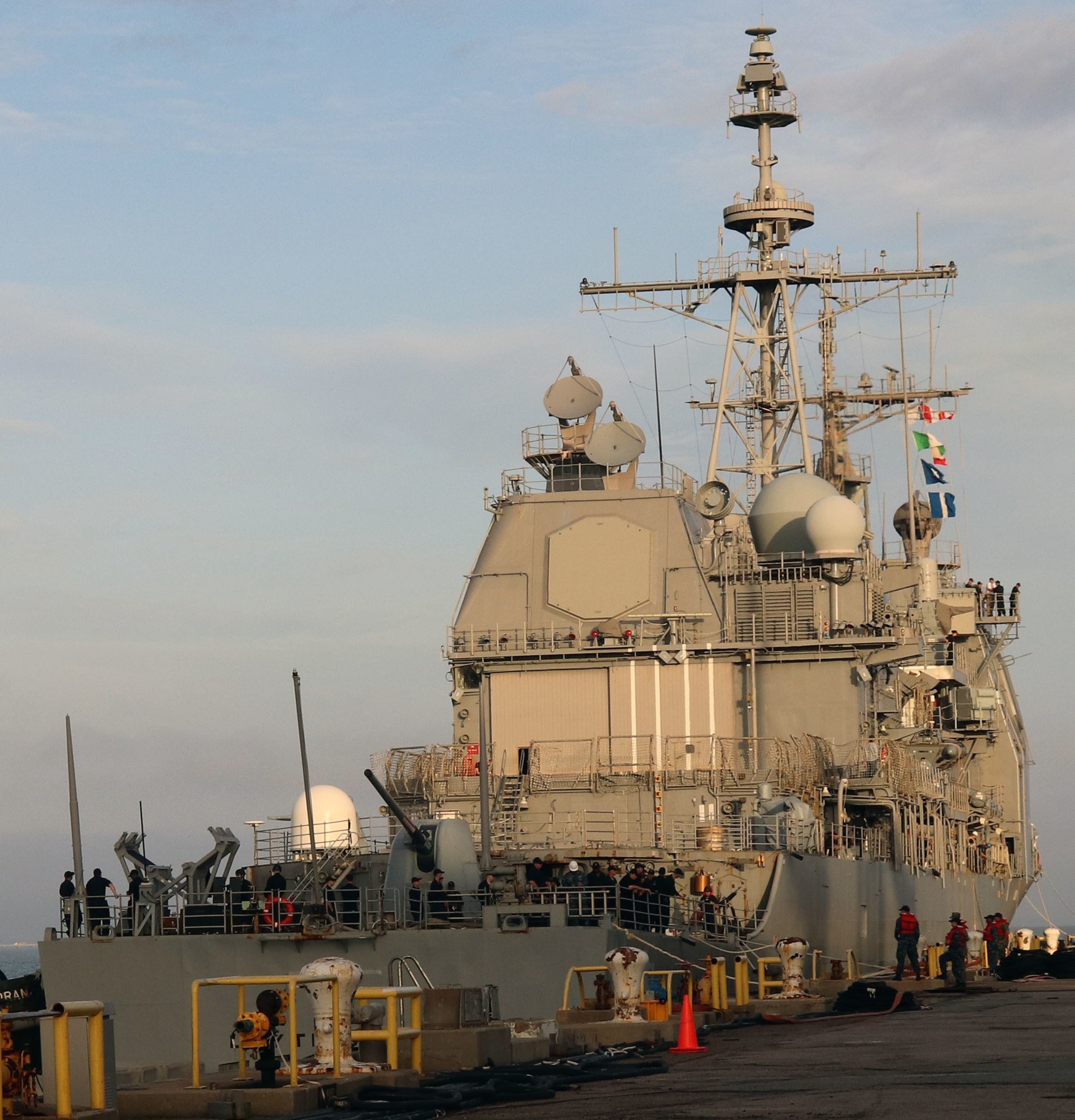 departing Naval Station Norfolk, Virginia - May 2018 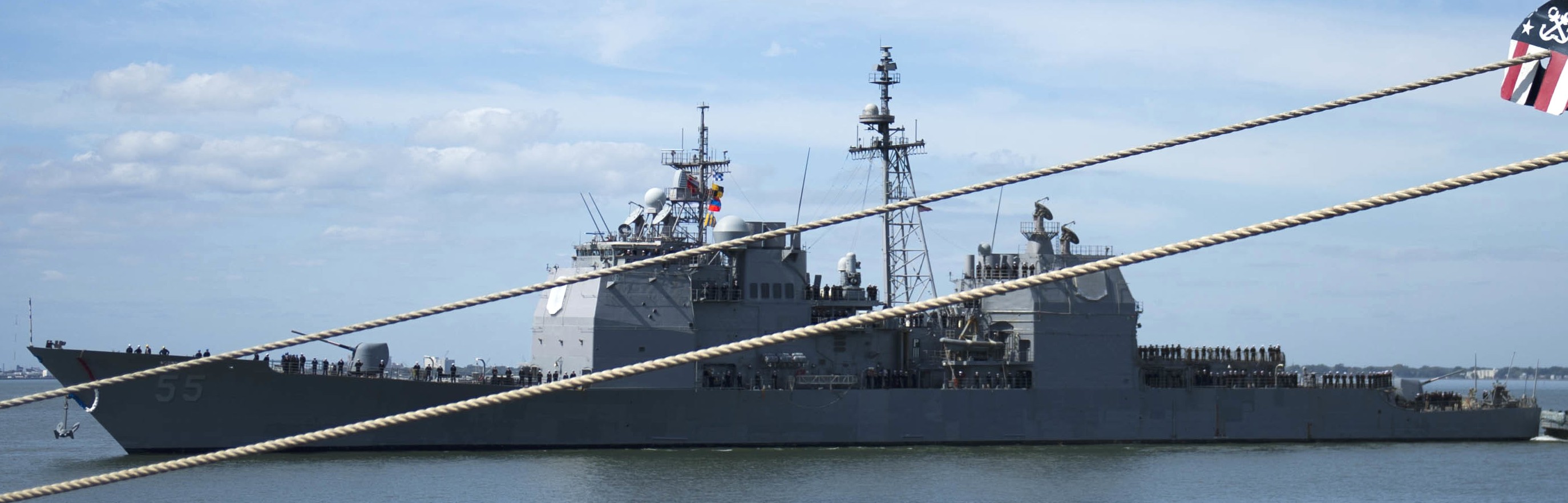 returning to Naval Station Norfolk, Virginia - October 2017 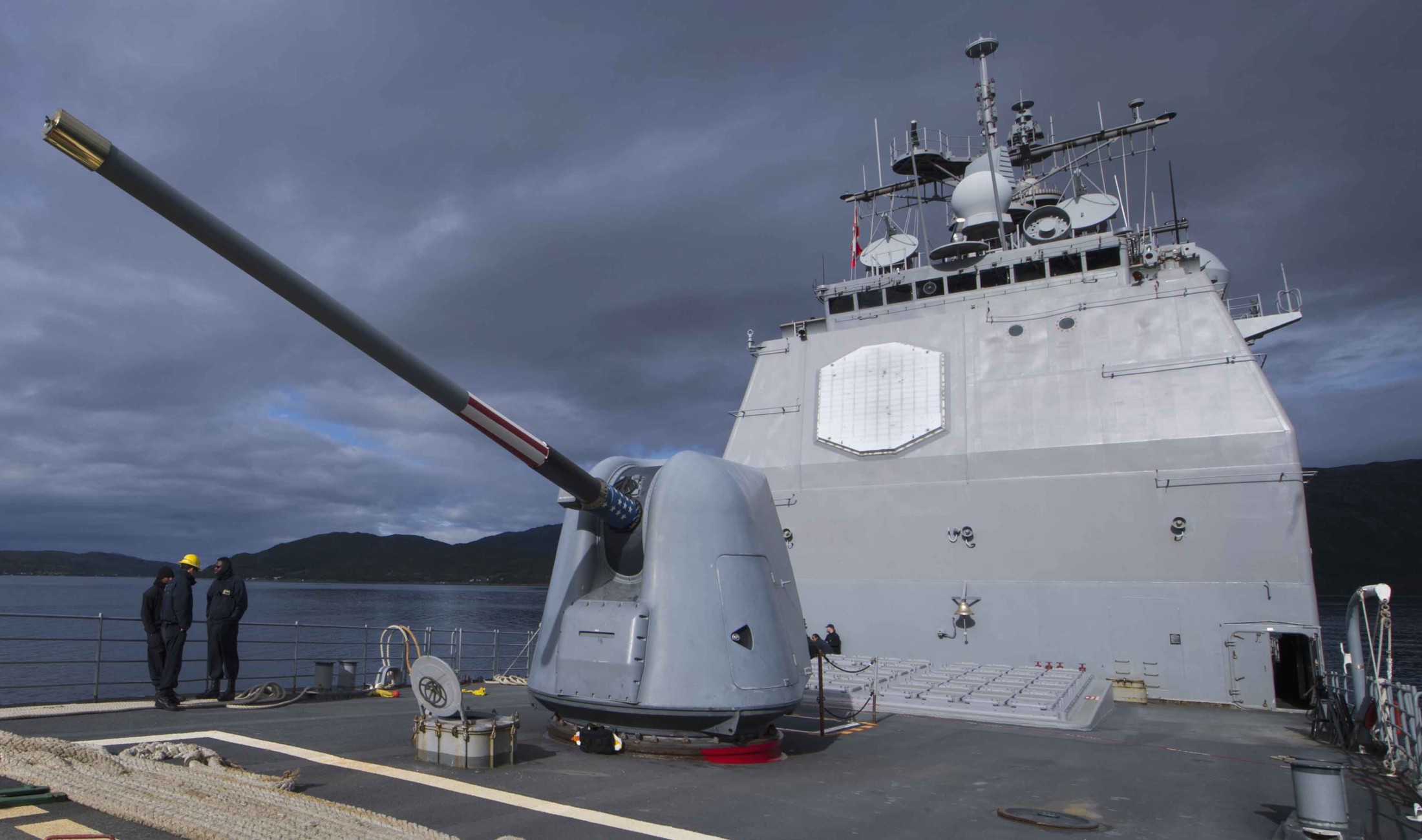 Tromso, Norway - September 2017 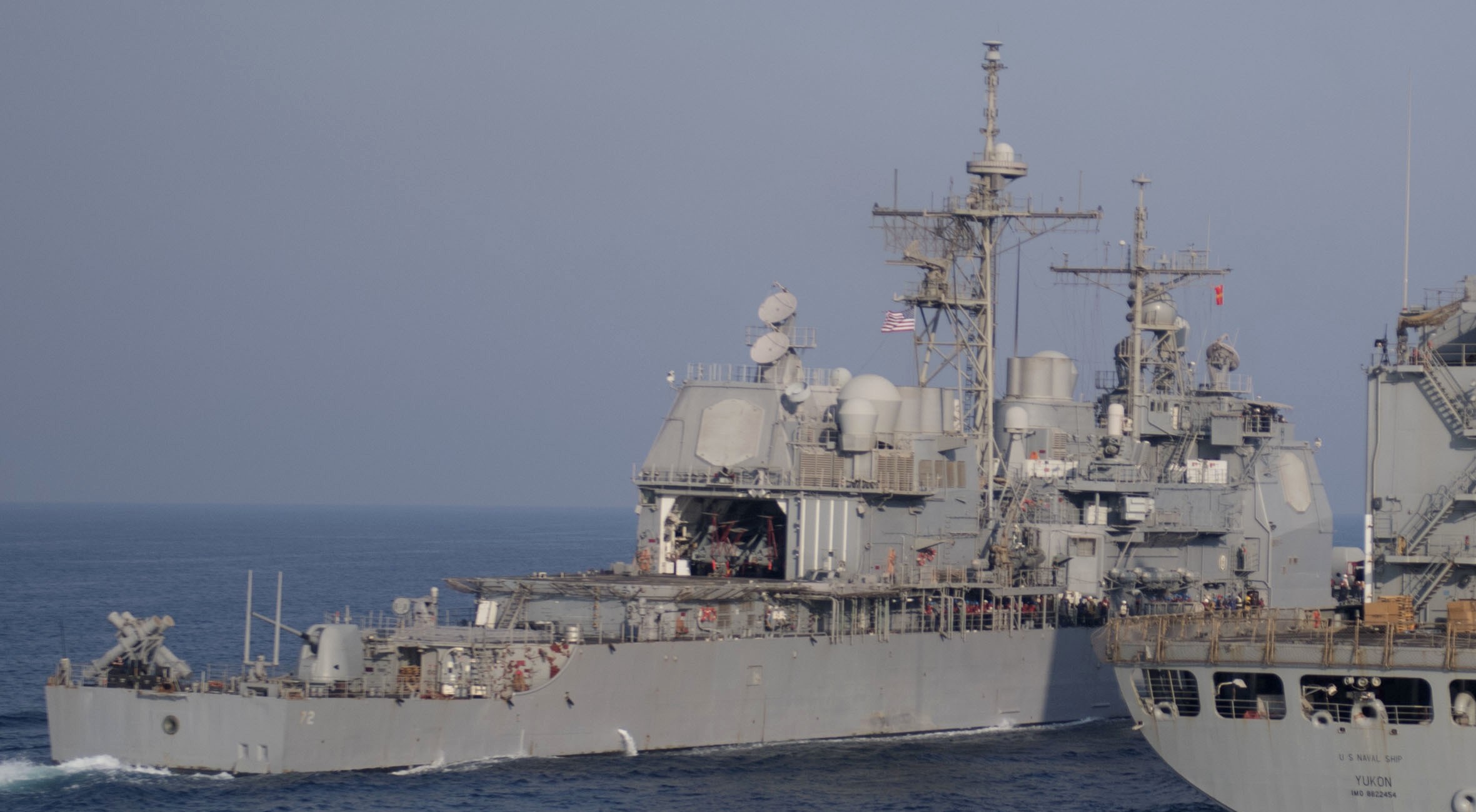 Arabian Gulf - August 2017 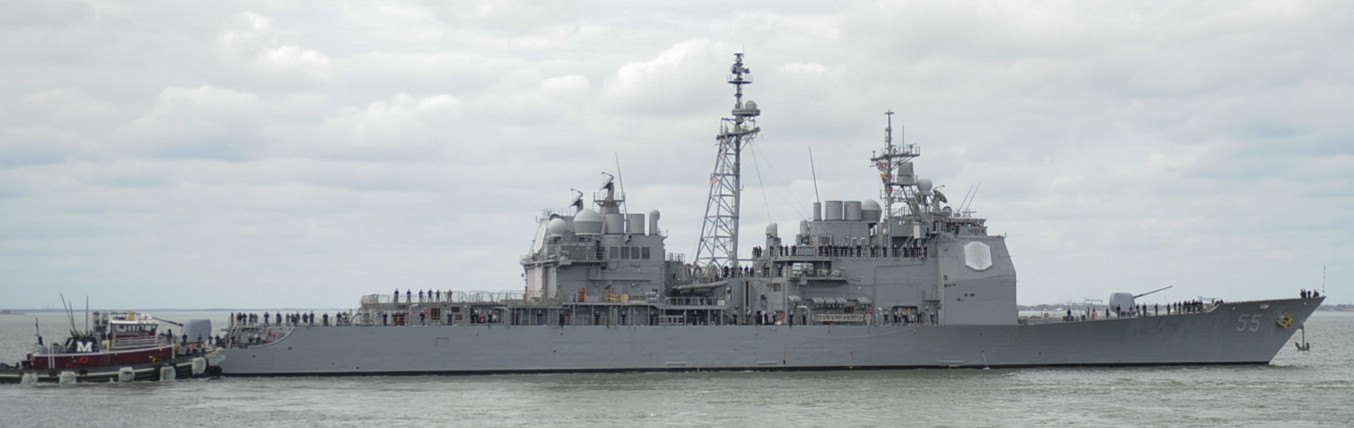 departing Naval Station Norfolk, Virginia - March 2017 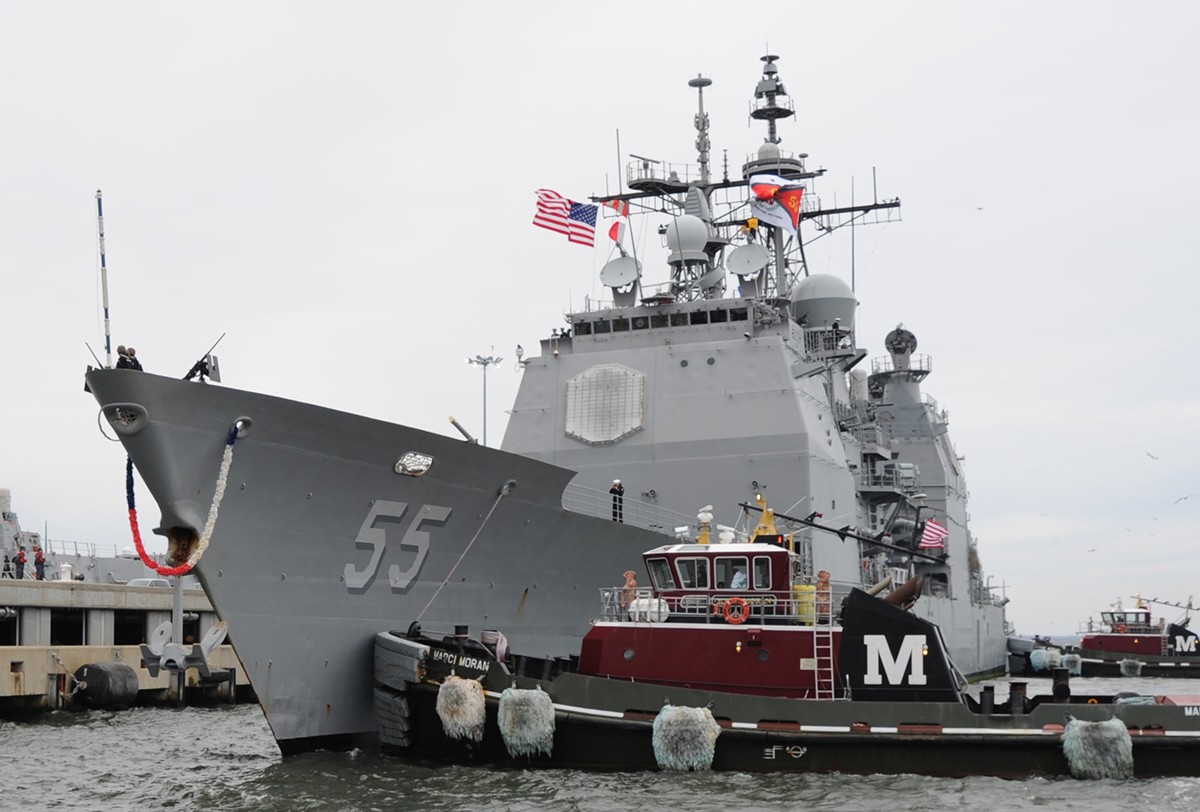 returning to Naval Station Norfolk, Virginia - January 2015 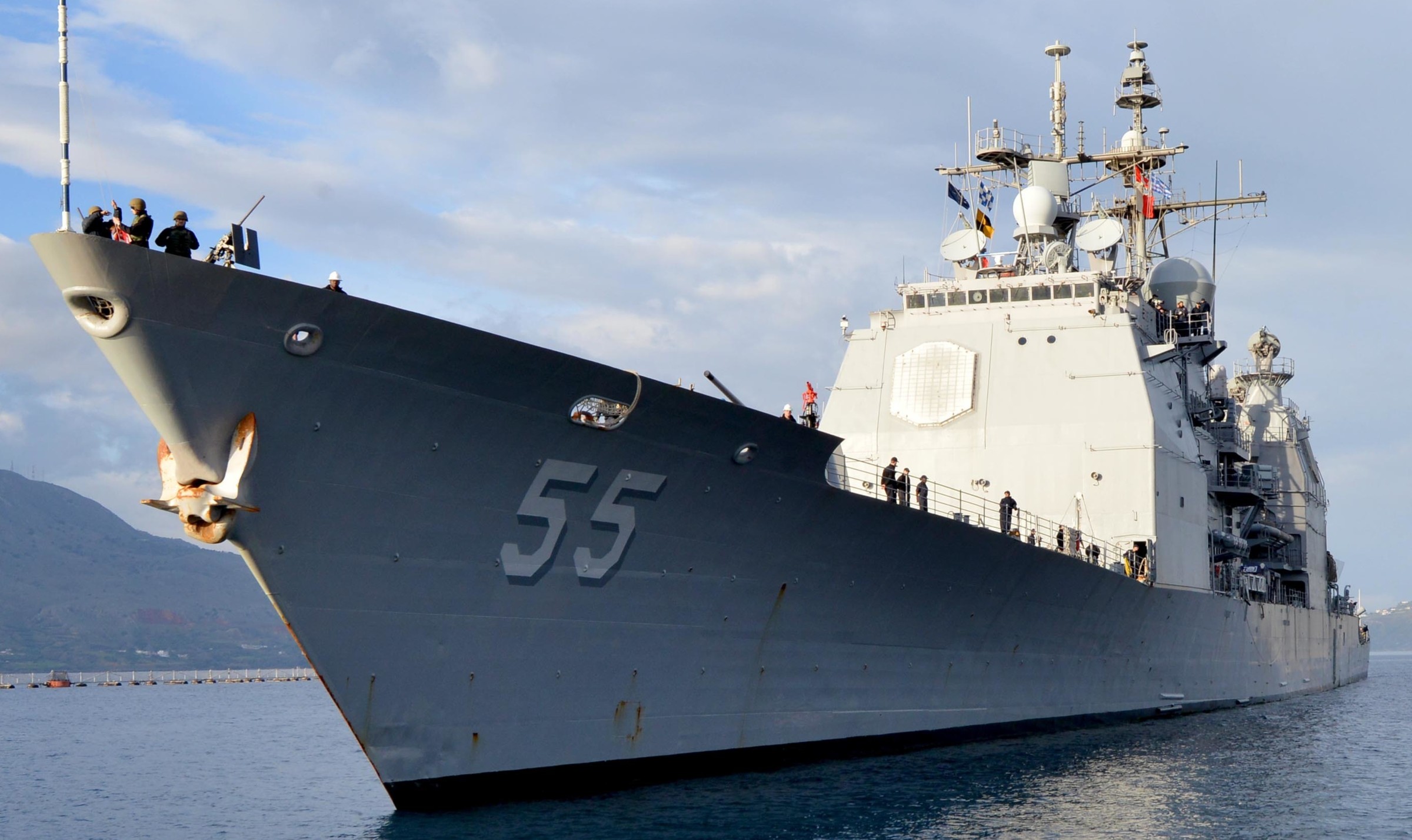 Naval Support Activity Souda Bay, Crete, Greece - December 2014 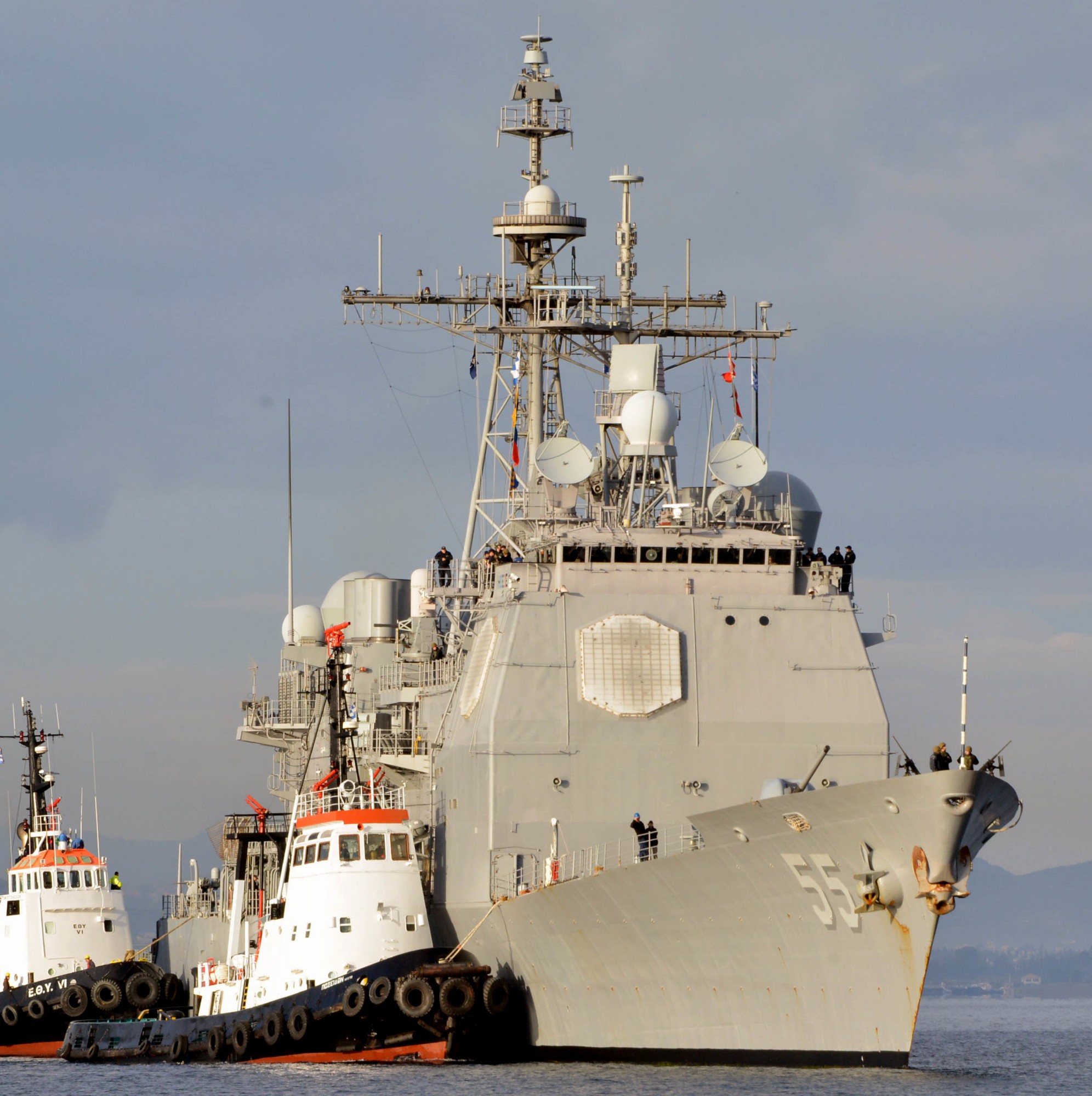 Naval Support Activity Souda Bay, Crete, Greece - December 2014 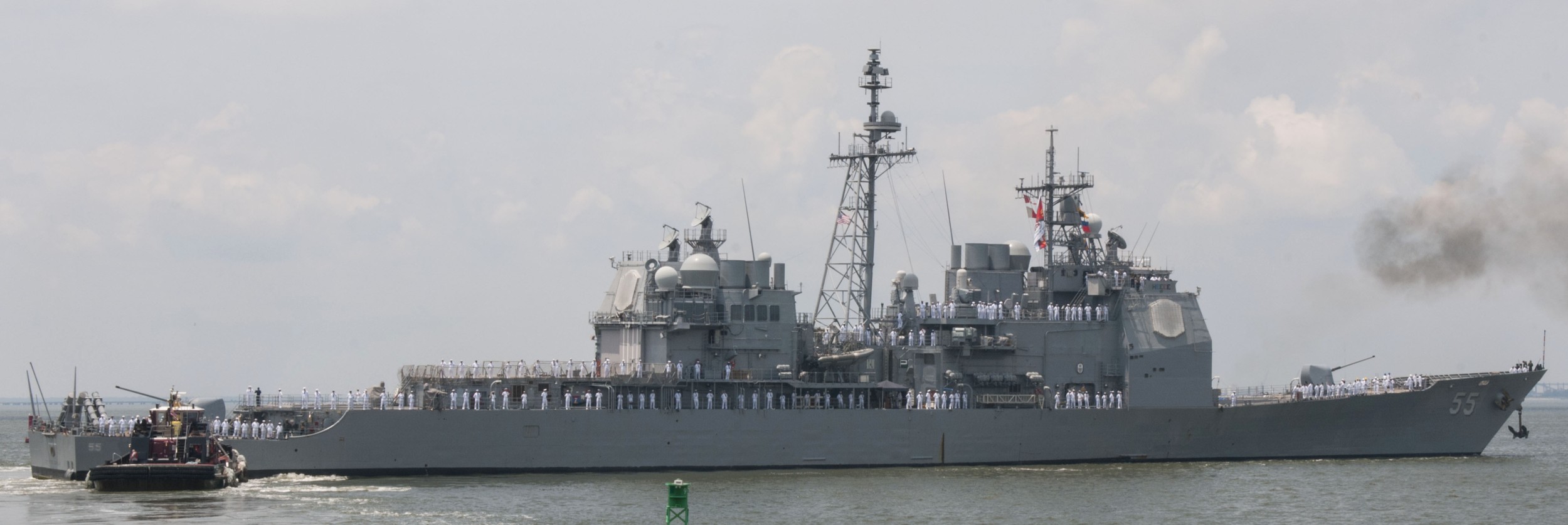 departing Naval Station Norfolk, Virginia - June 2014 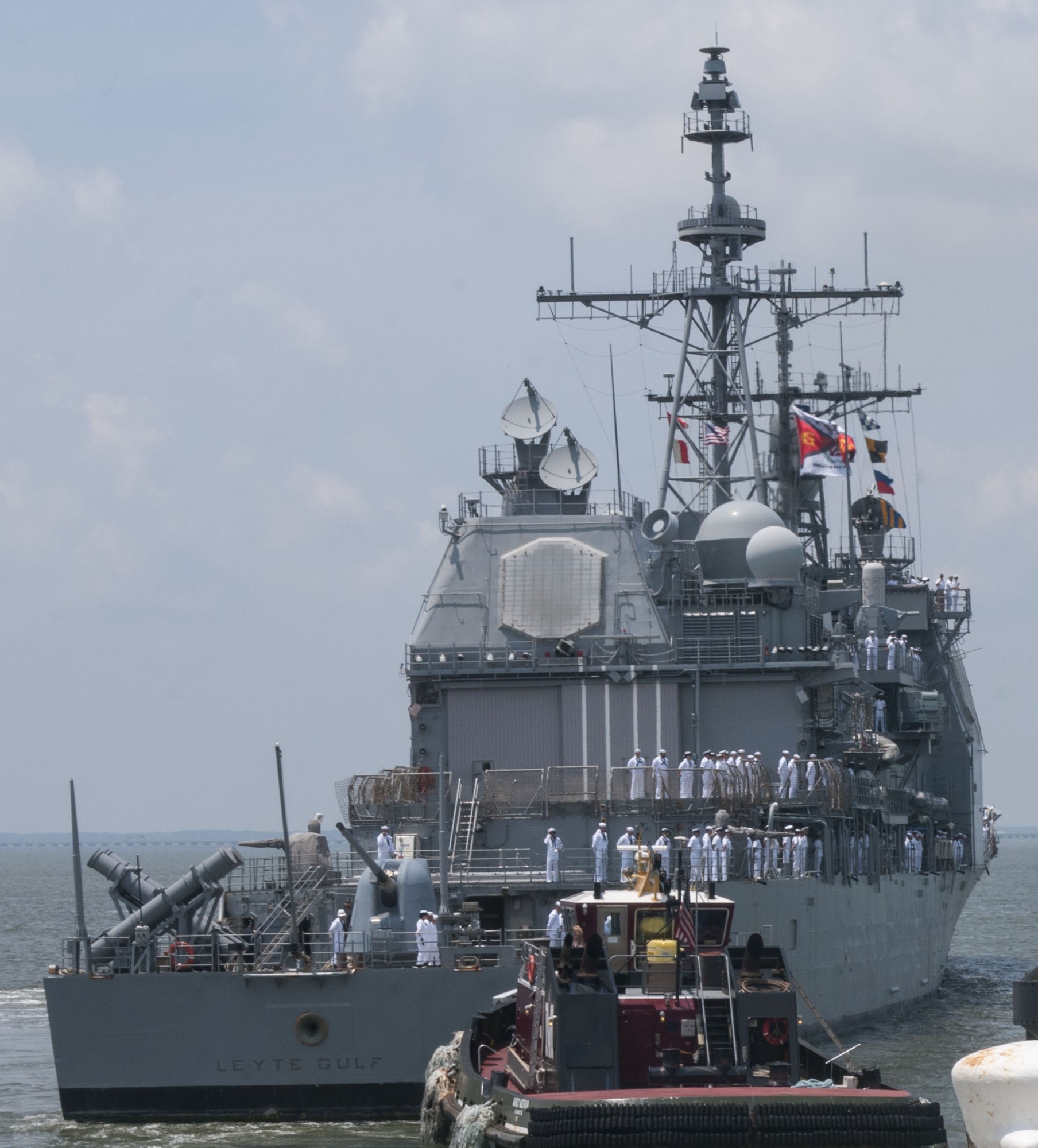 departing Naval Station Norfolk, Virginia - June 2014 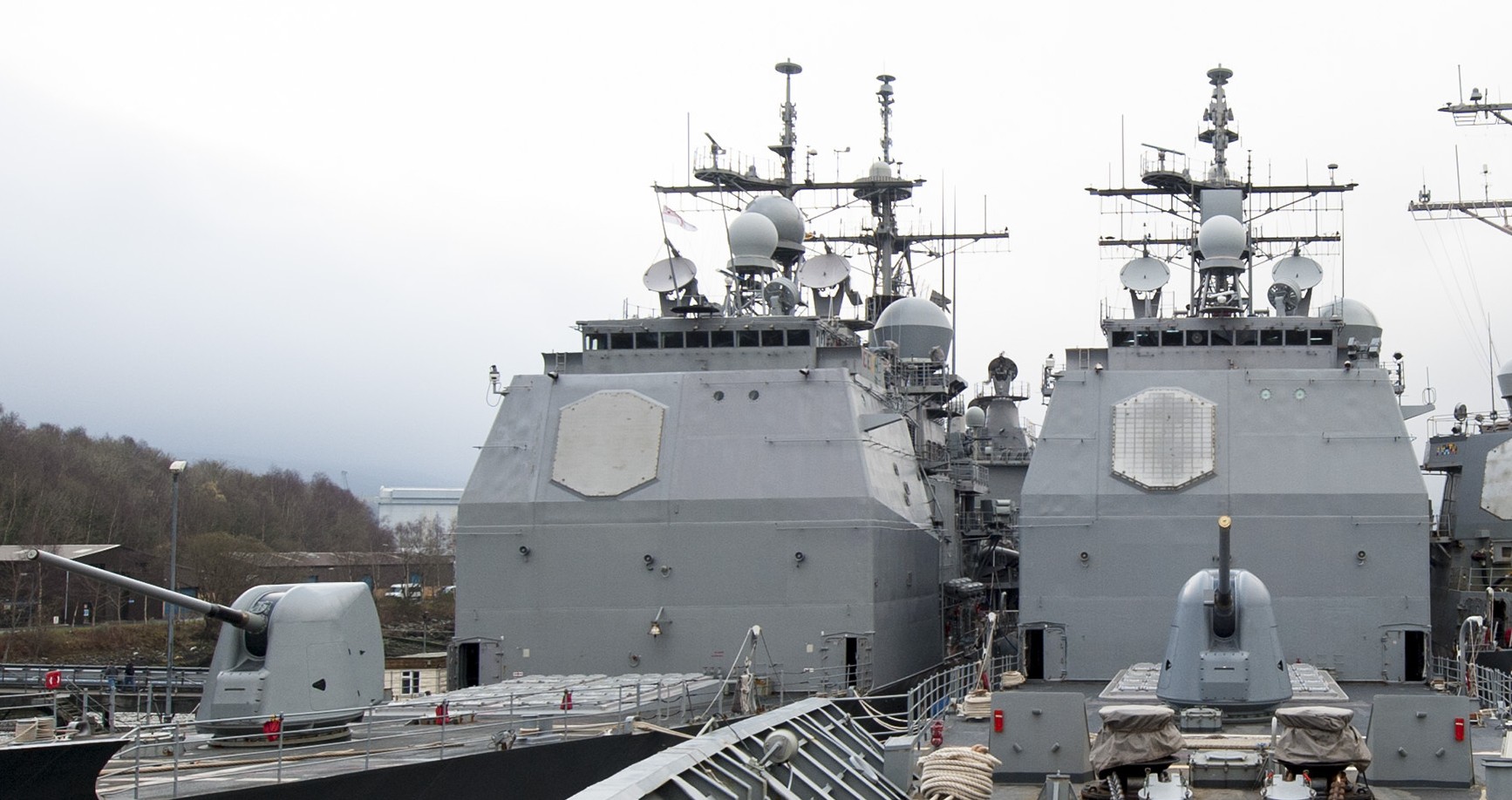 (USS Vicksburg, left and USS Leyte Gulf, right) during exercise Joint Warrior - HMNB Clyde, Scotland - March 2014 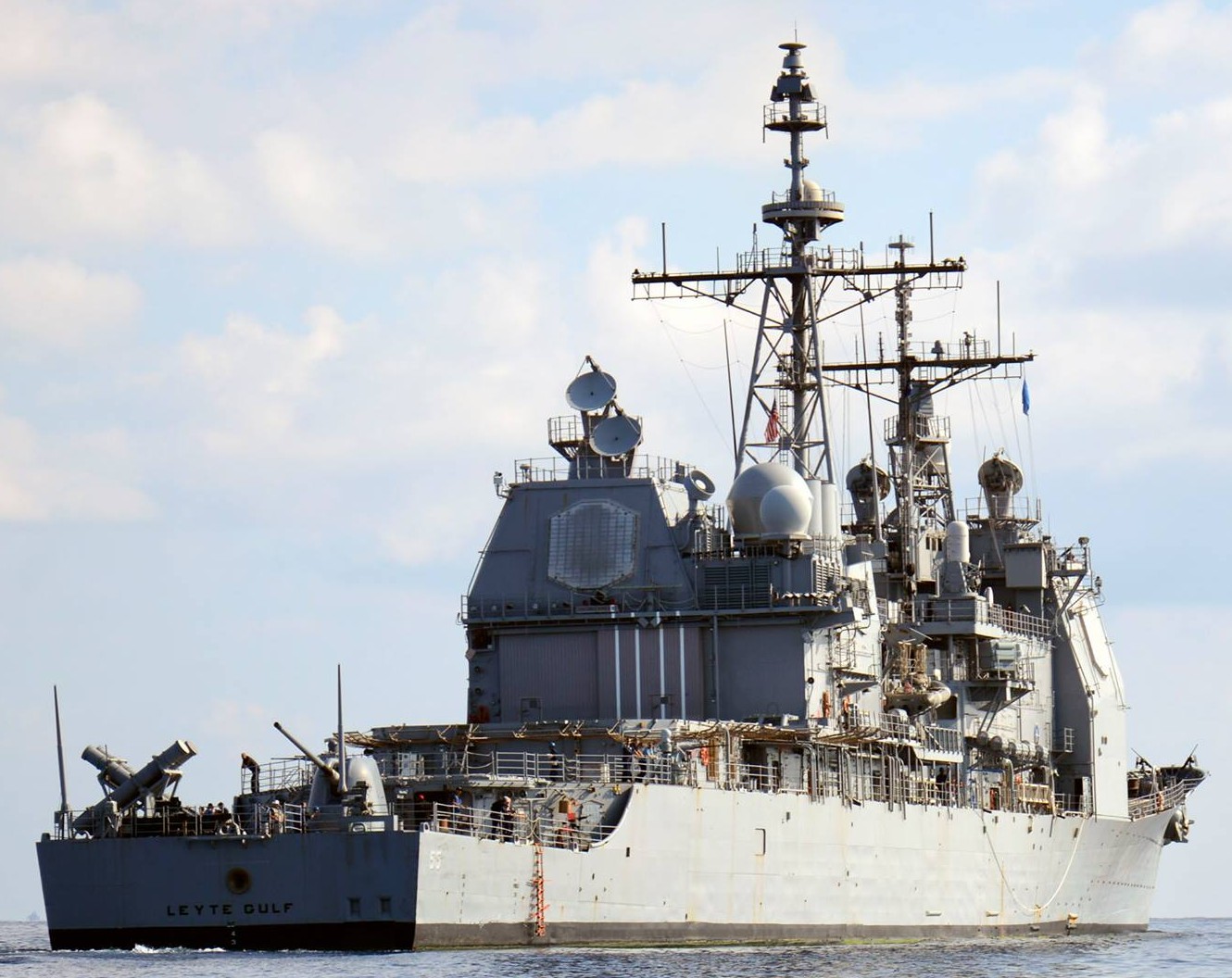 undated 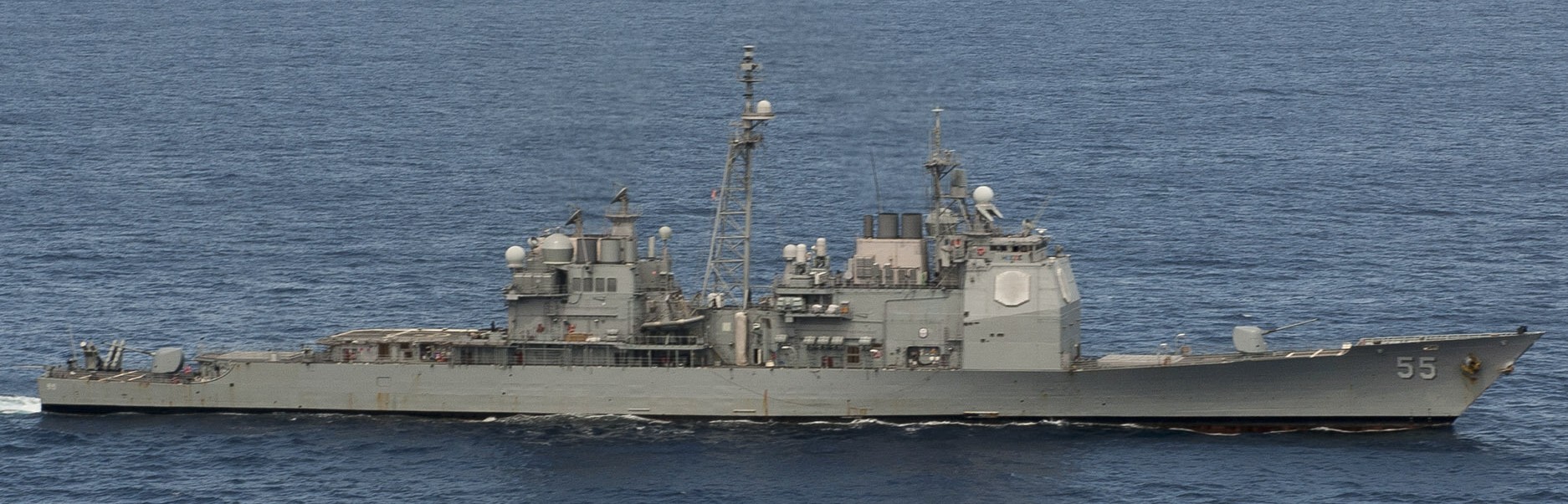 Atlantic Ocean - March 2014 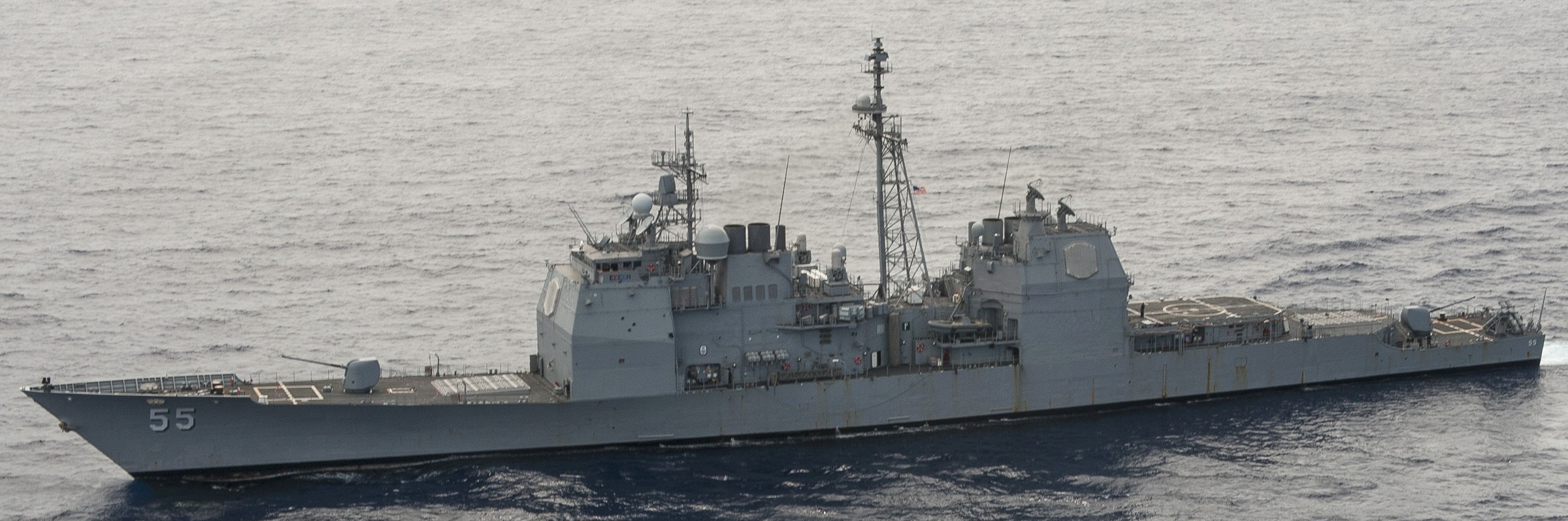 Atlantic Ocean - March 2014 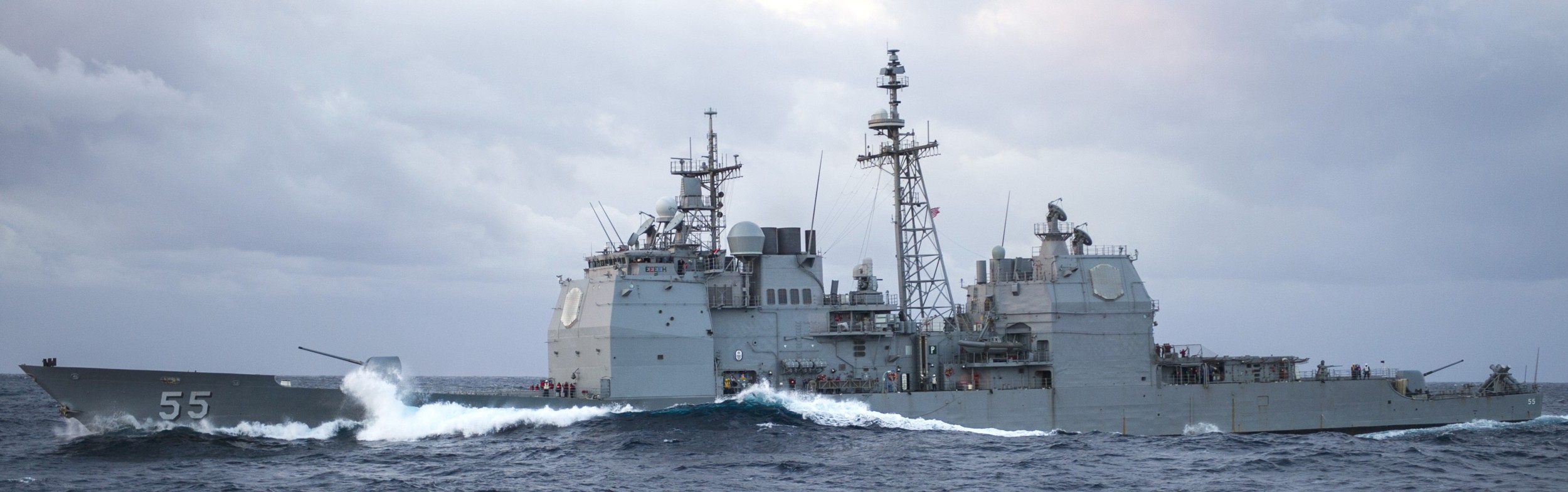 Atlantic Ocean - December 2013 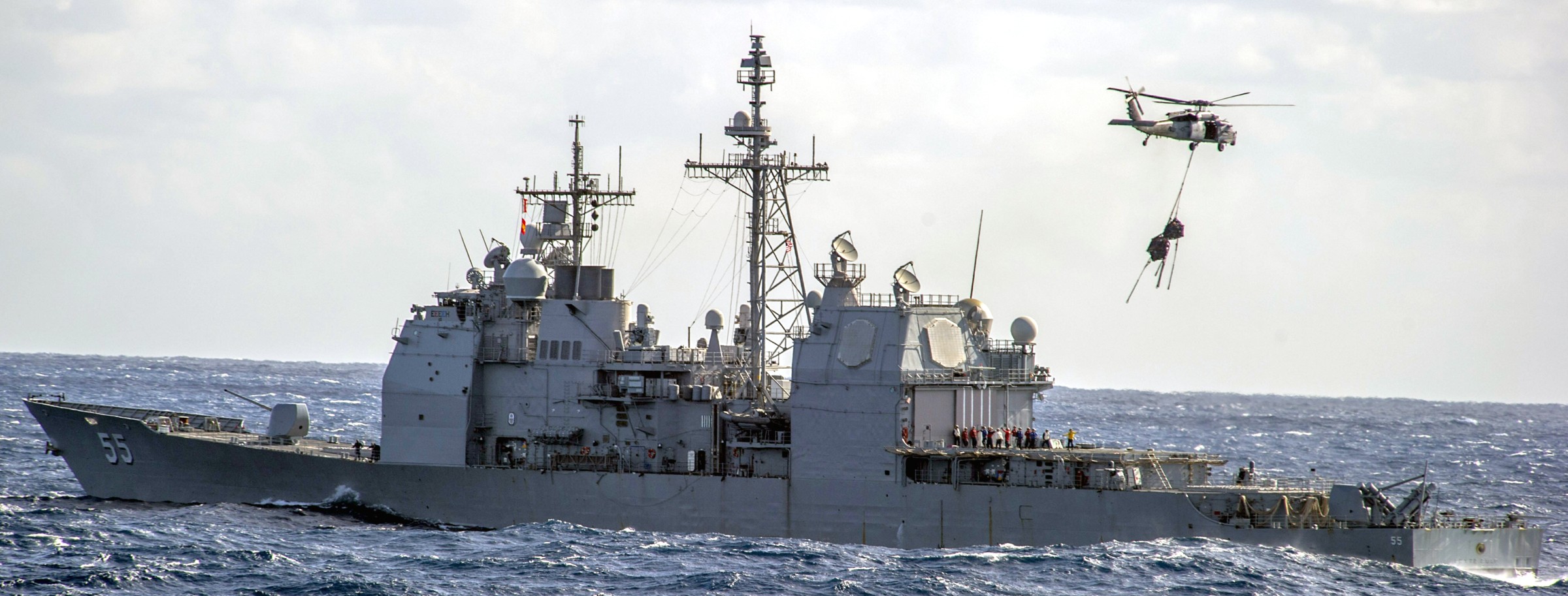 Atlantic Ocean - November 2013 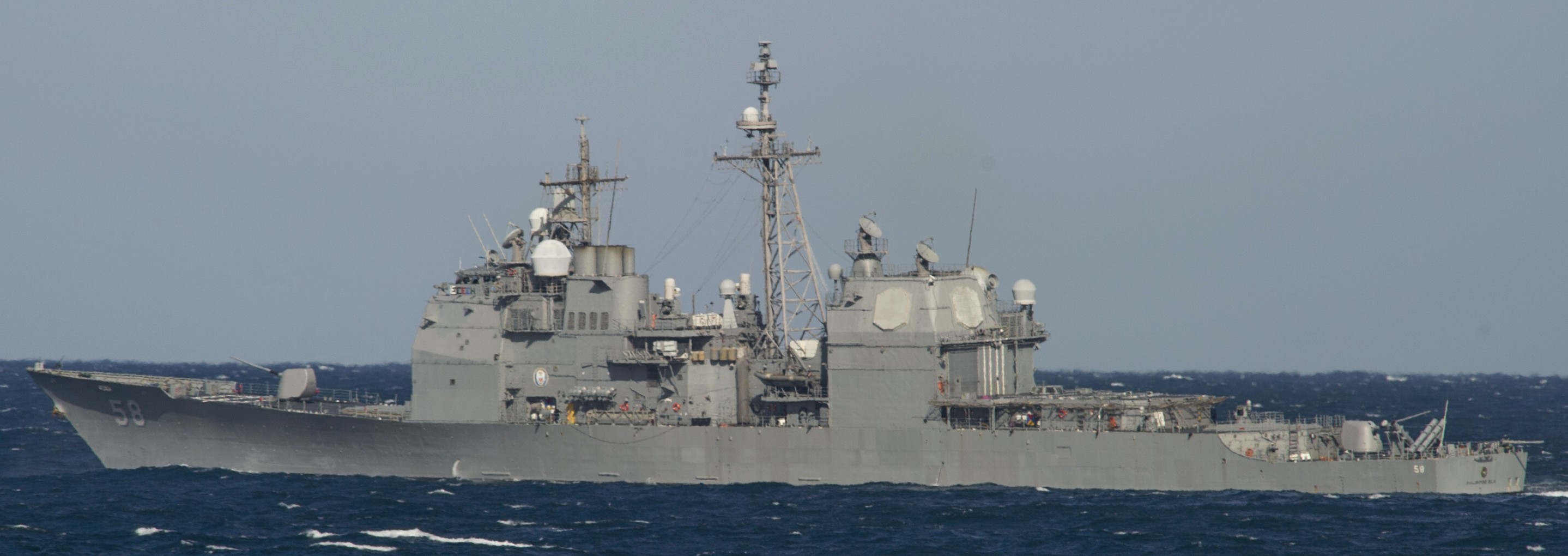 Atlantic Ocean - November 2013 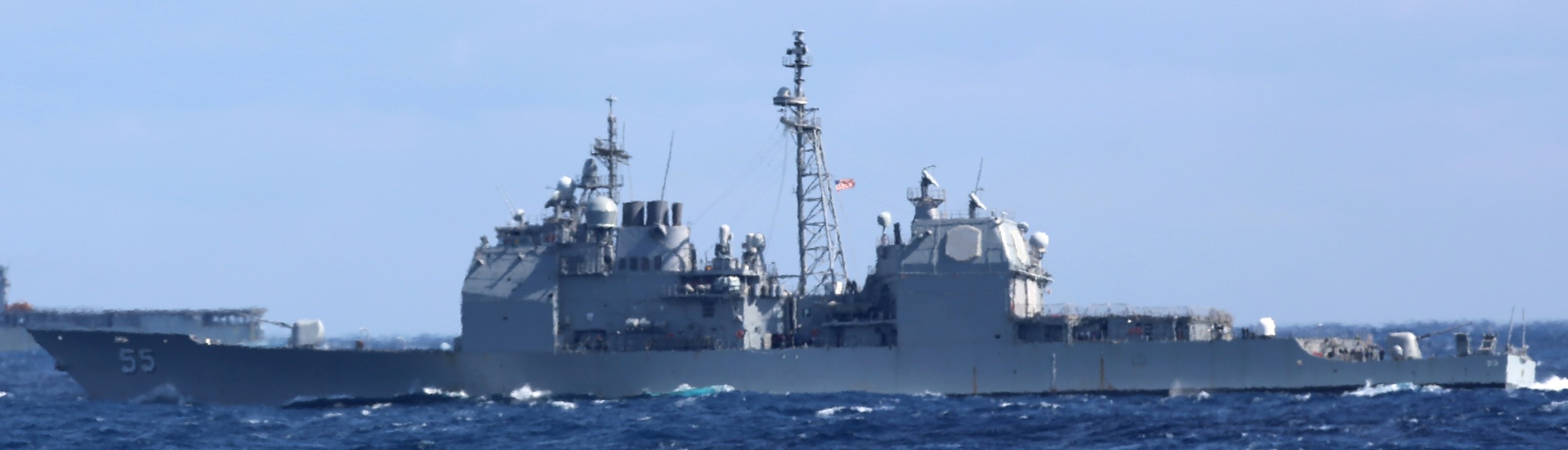 March 2013 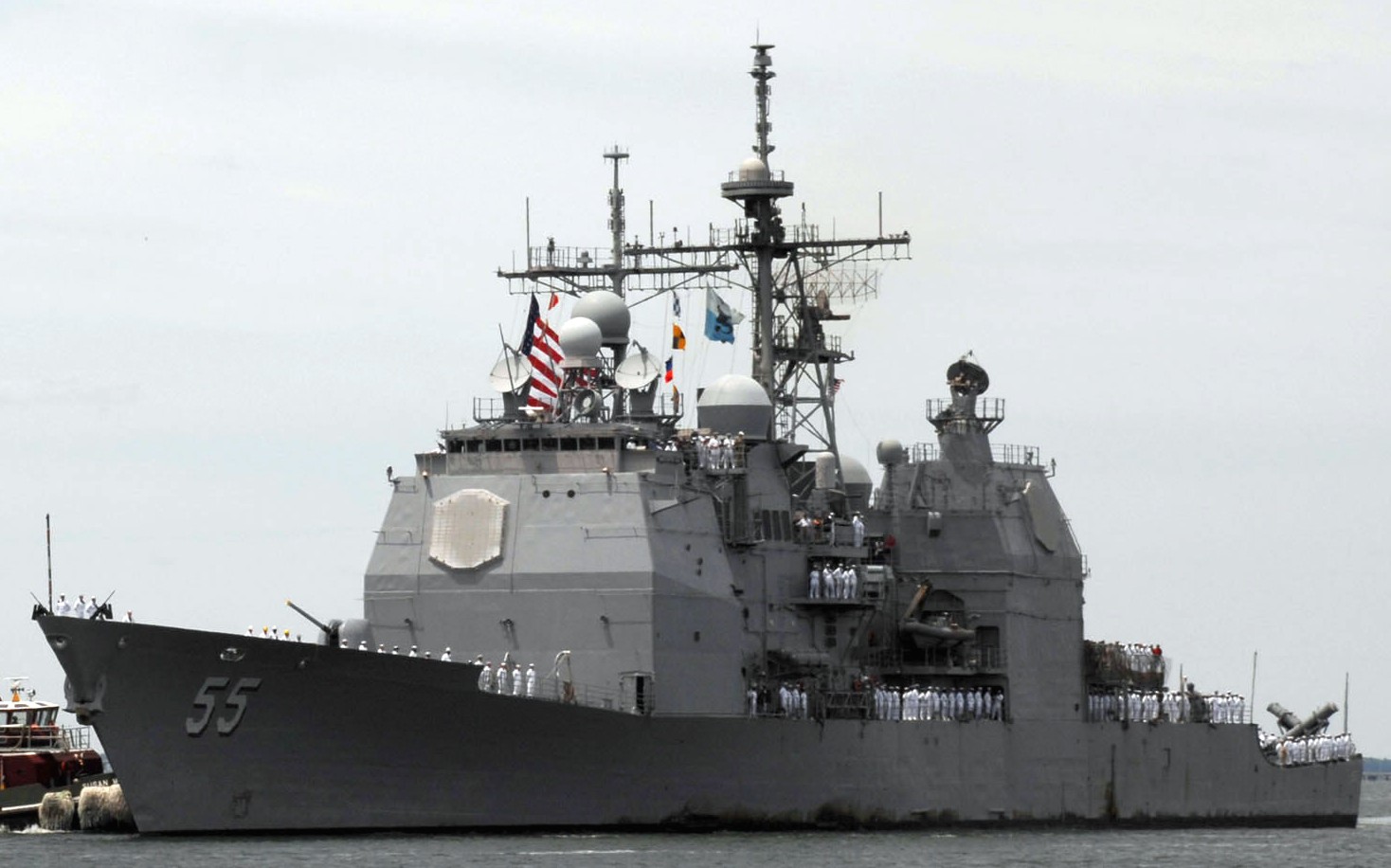 returning to Naval Station Norfolk, Virginia - July 2011 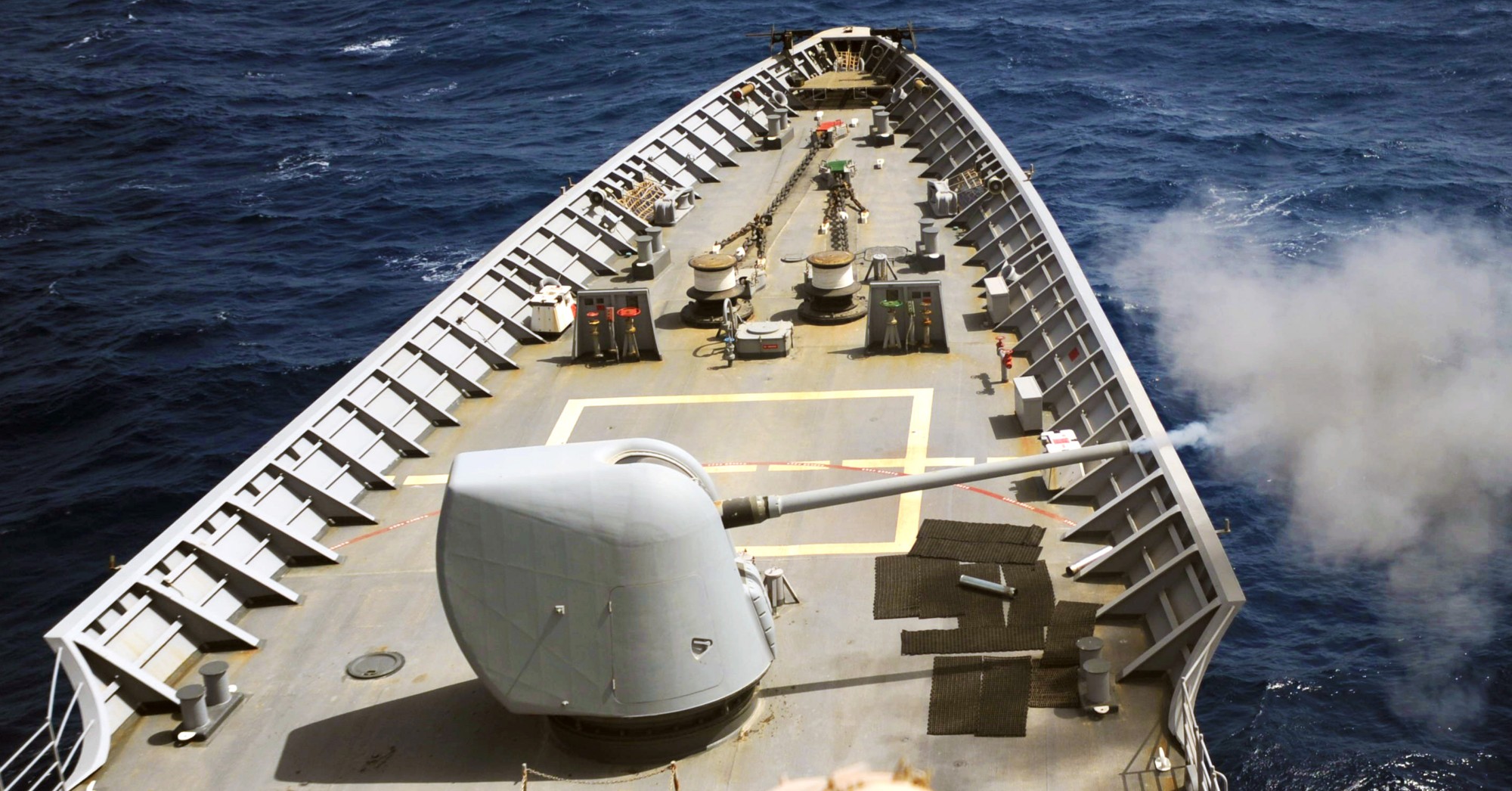 Mk.45 Mod.2 gun fire exercise - May 2011 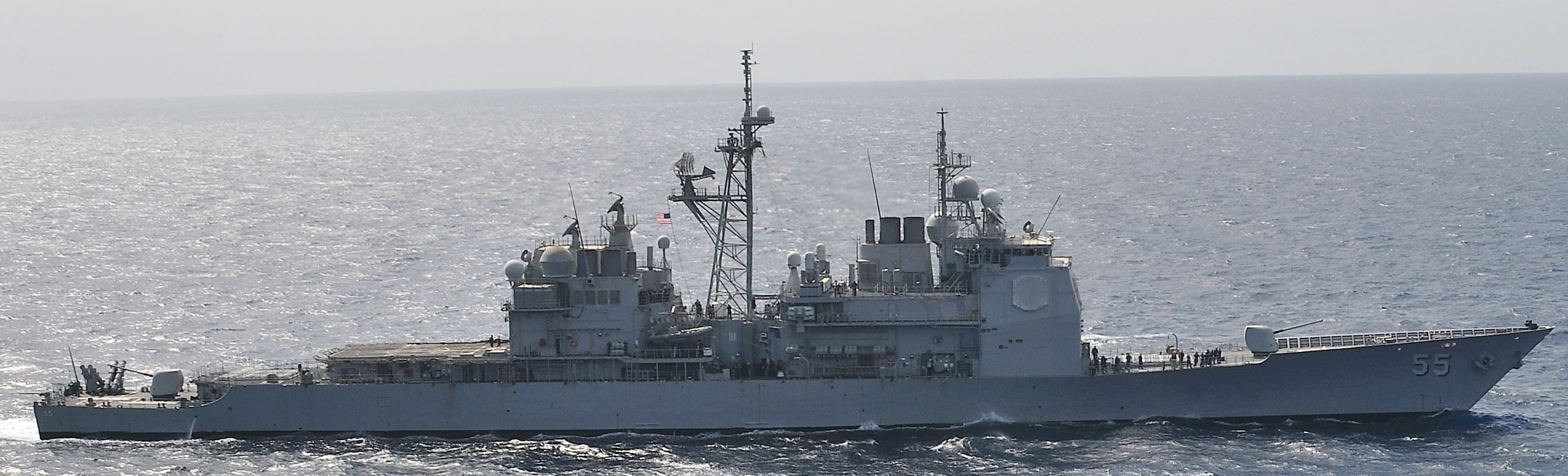 Red Sea - March 2011 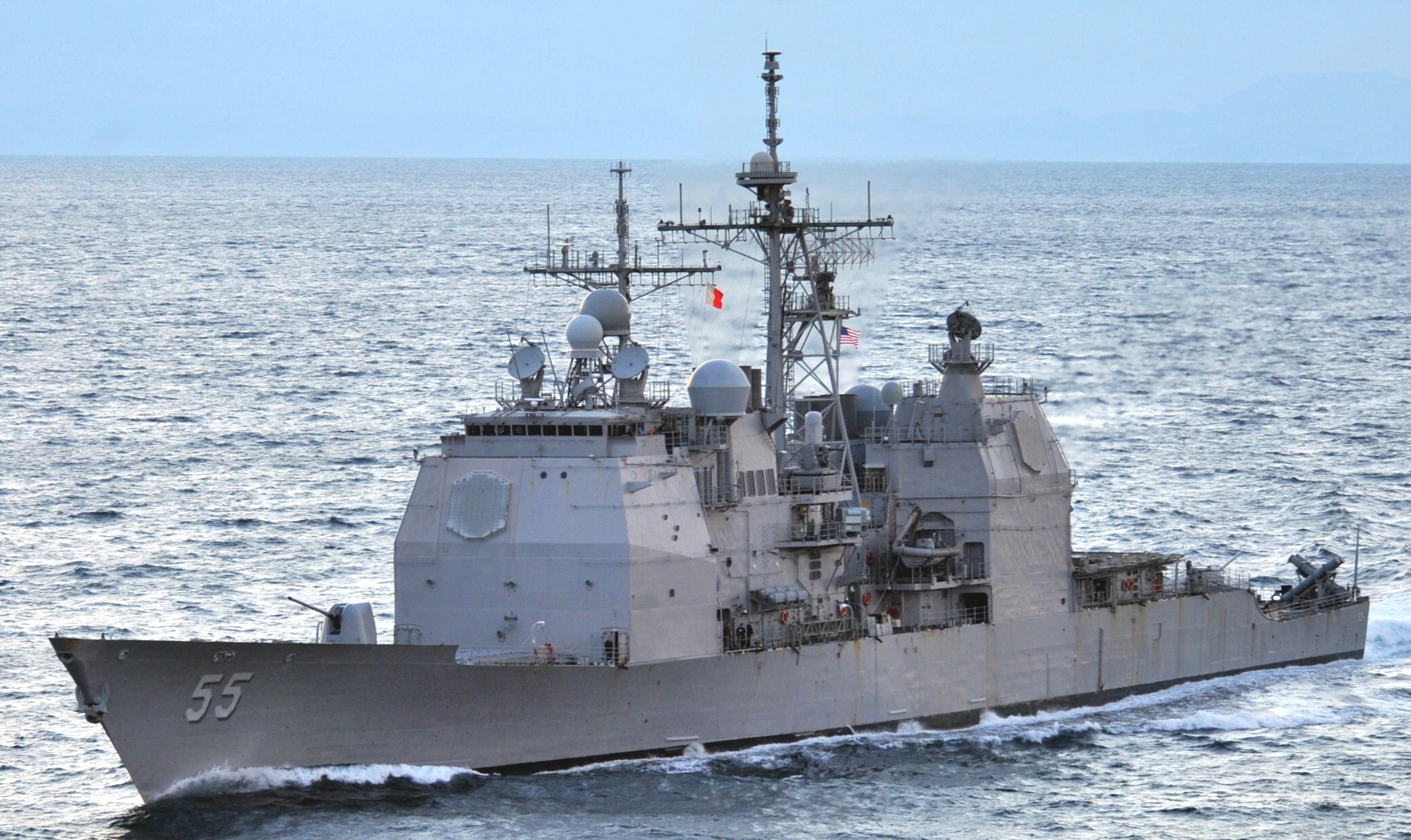 Strait of Gibraltar - January 2011 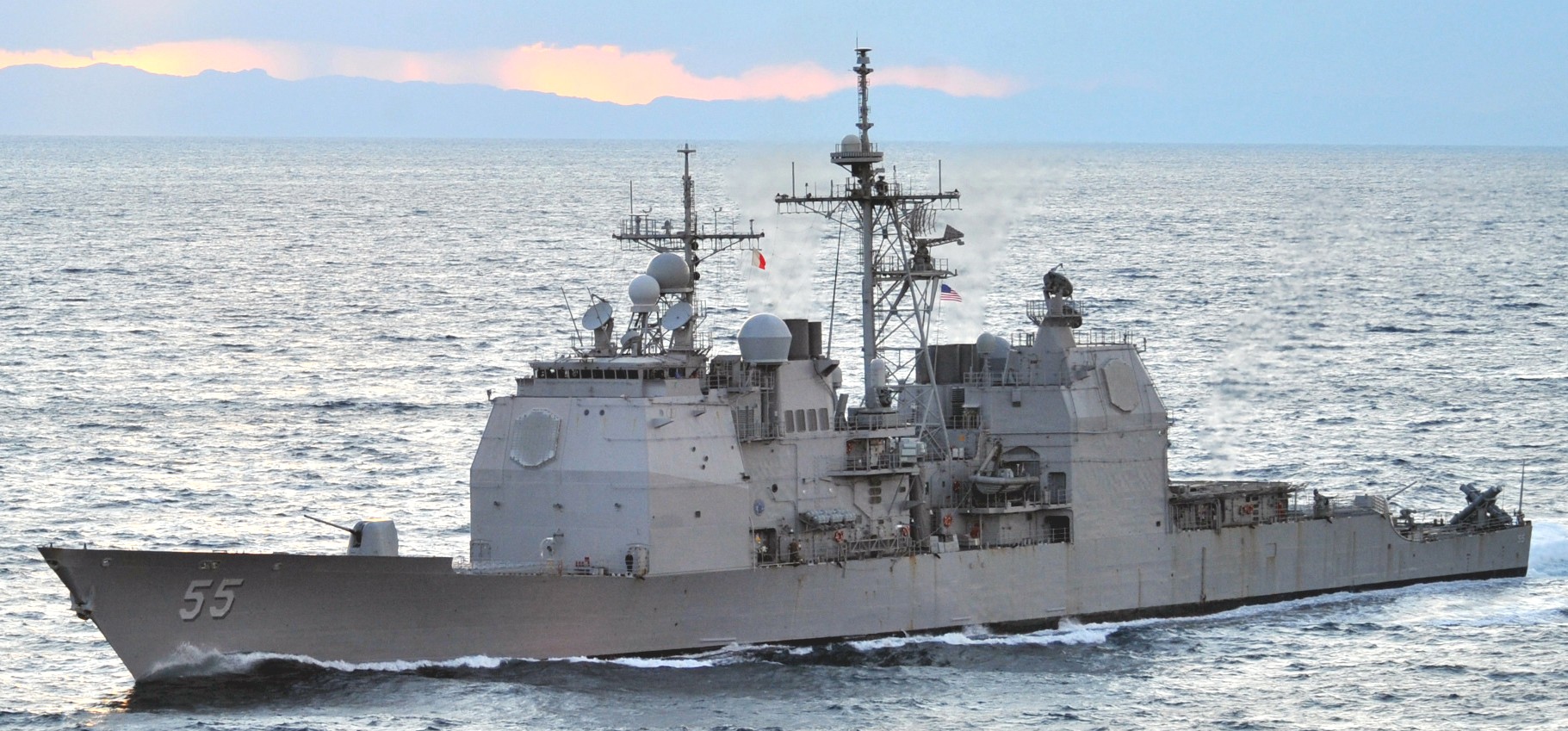 Strait of Gibraltar - January 2011 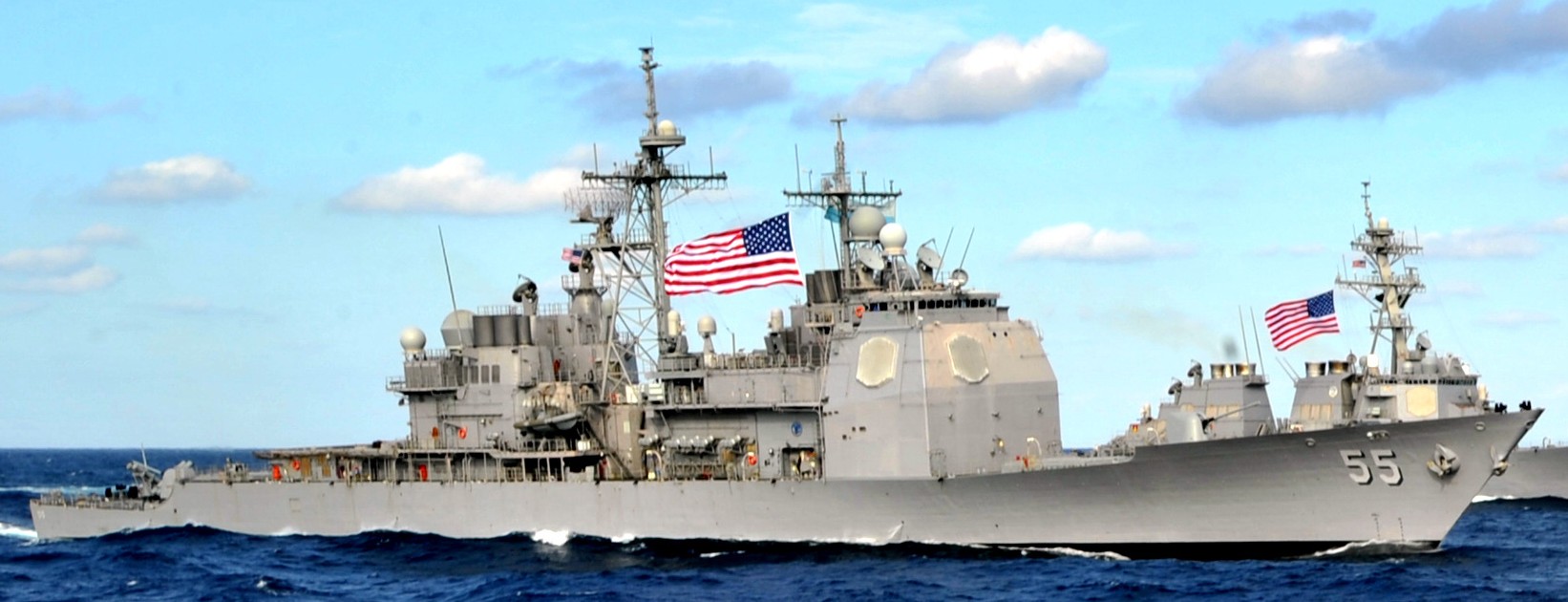 Atlantic Ocean - January 2011 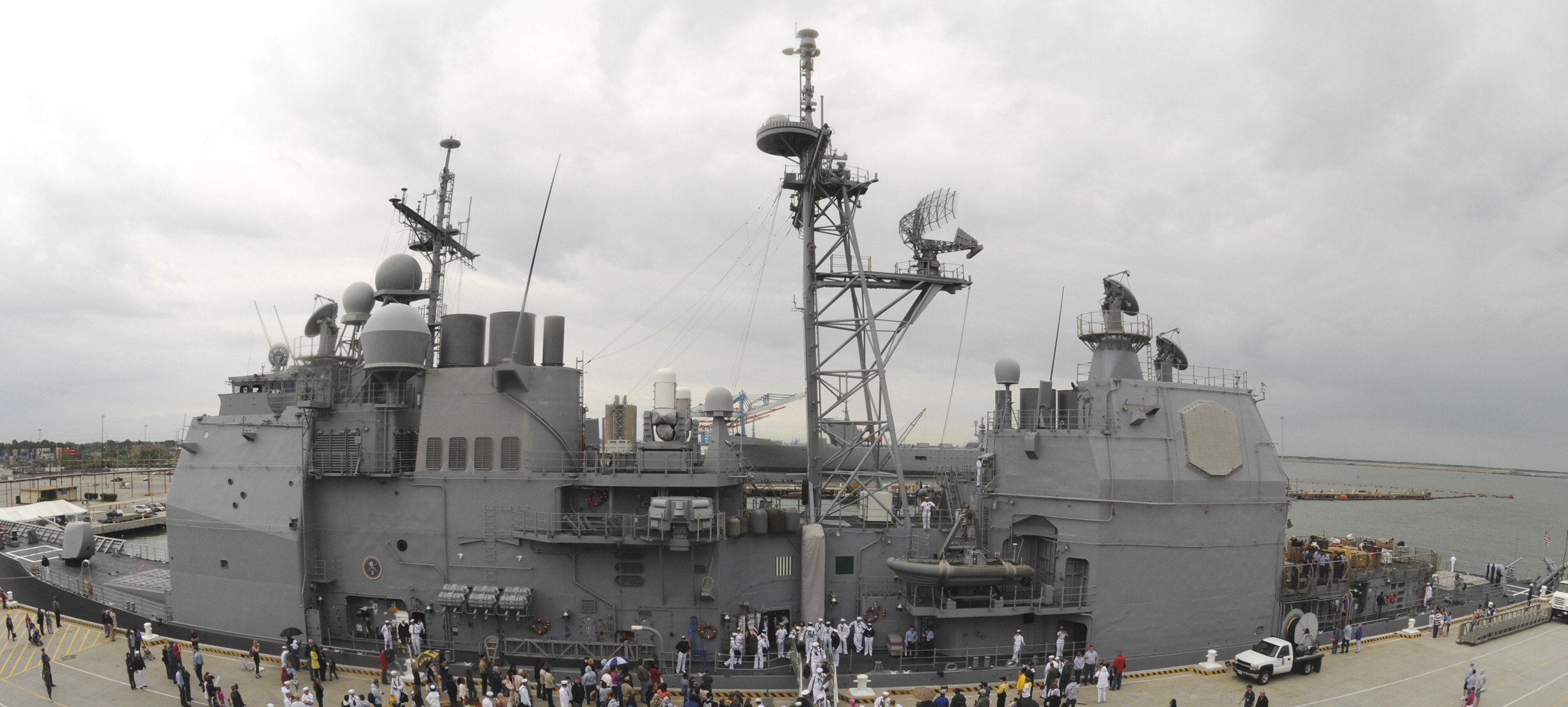 returning to Naval Station Norfolk, Virginia - May 2009 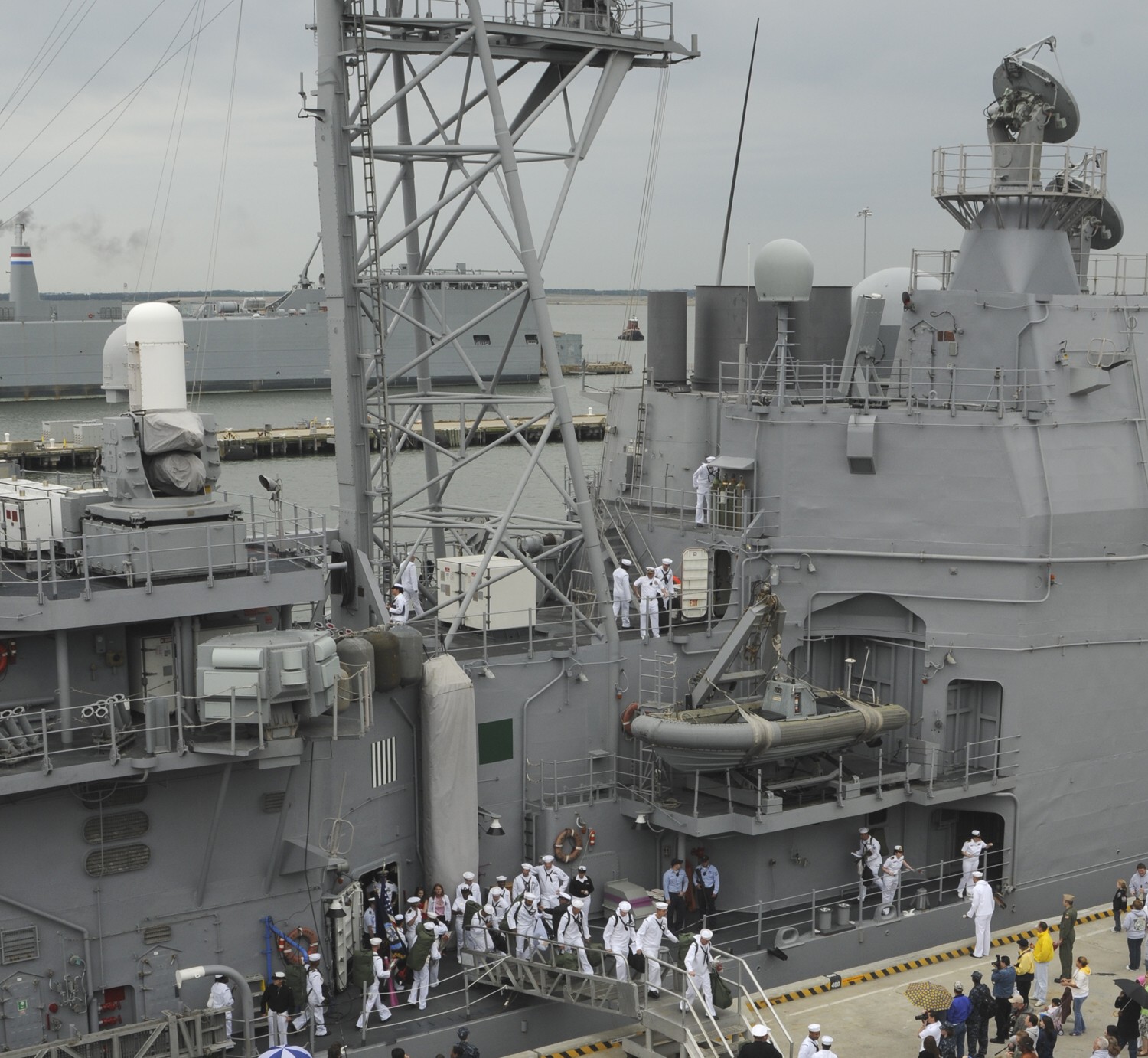 returning to Naval Station Norfolk, Virginia - May 2009 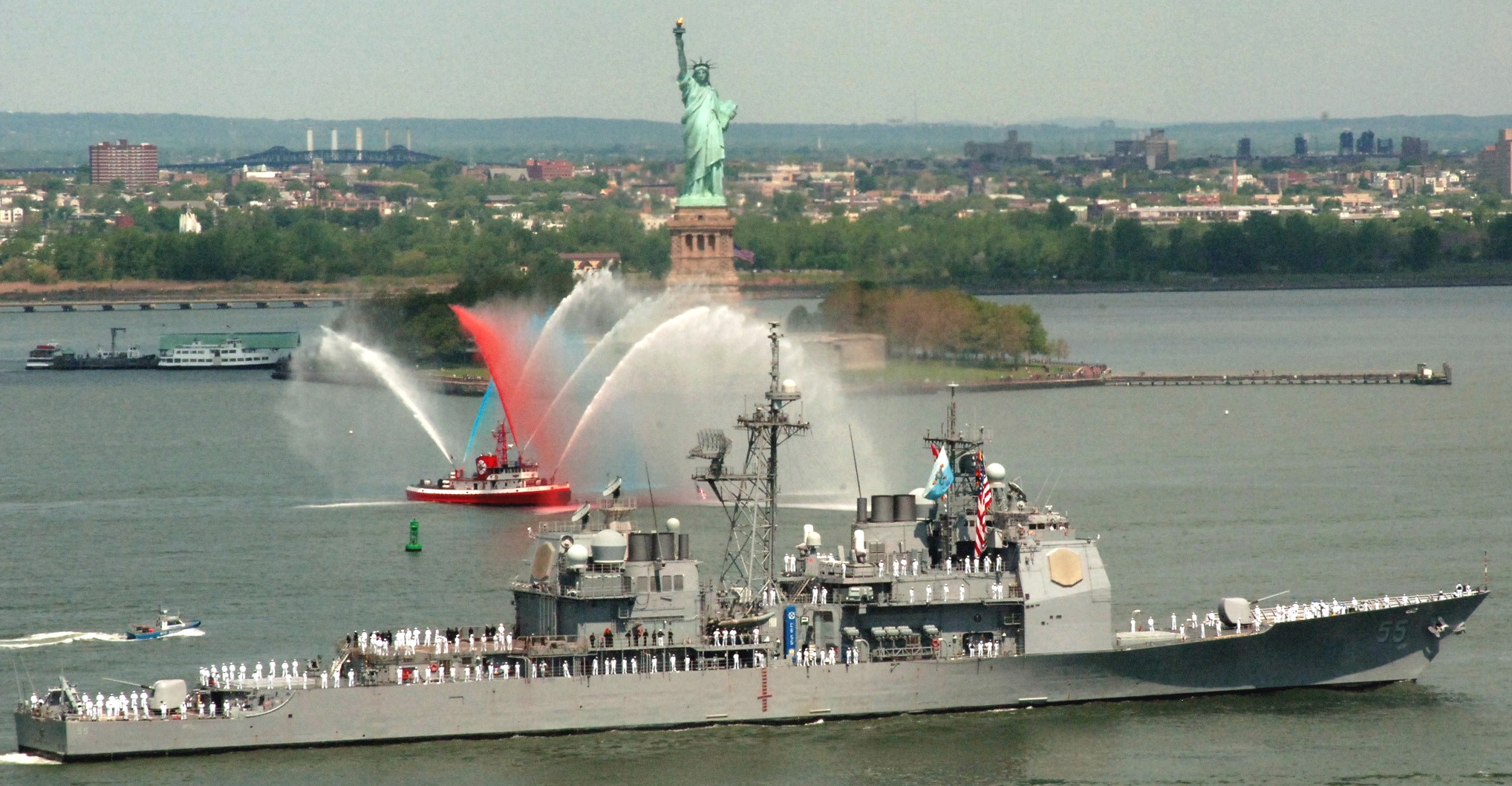 Fleet Week New York - May 2008 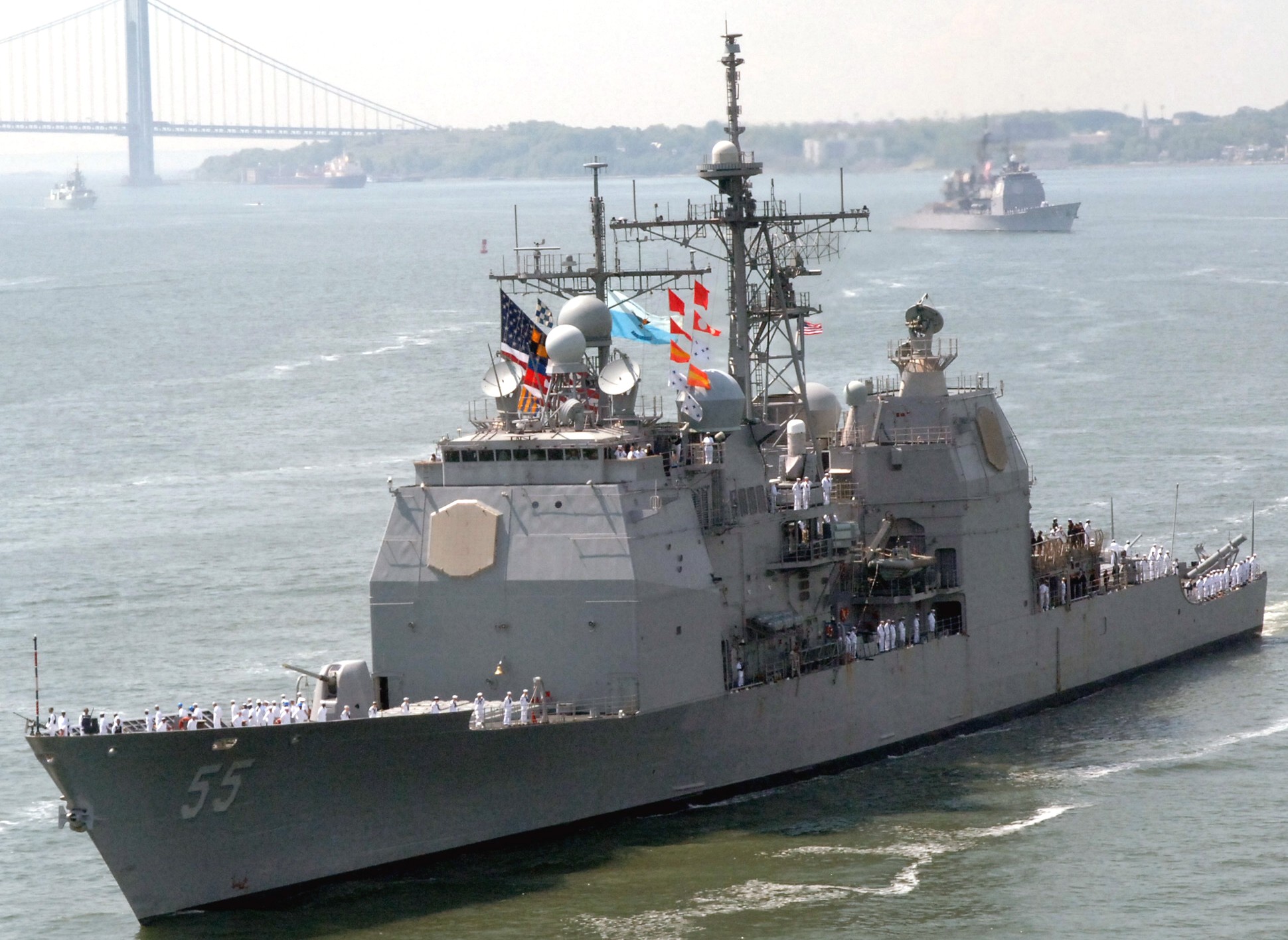 Fleet Week New York - May 2008 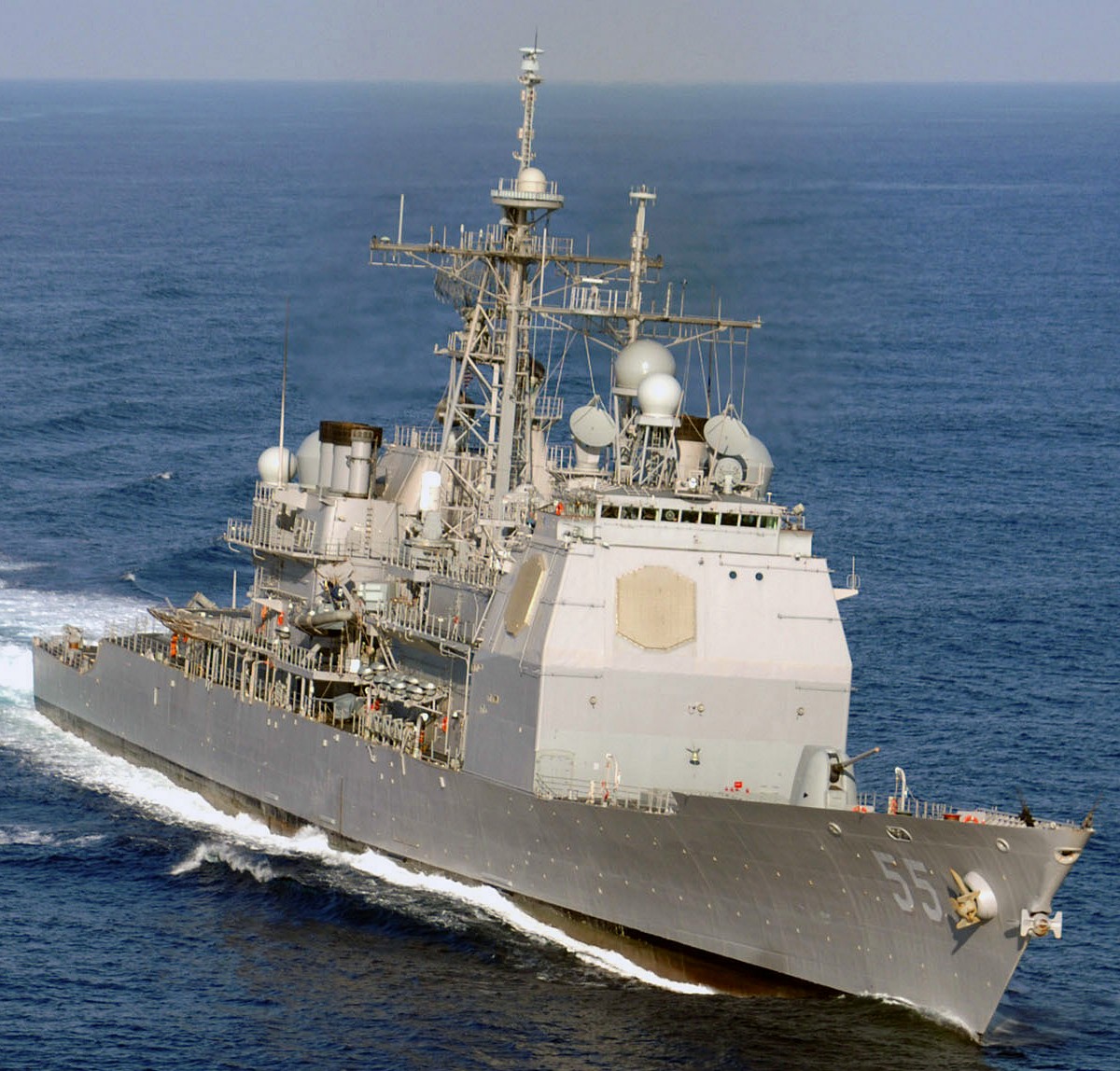 Atlantic Ocean - May 2006 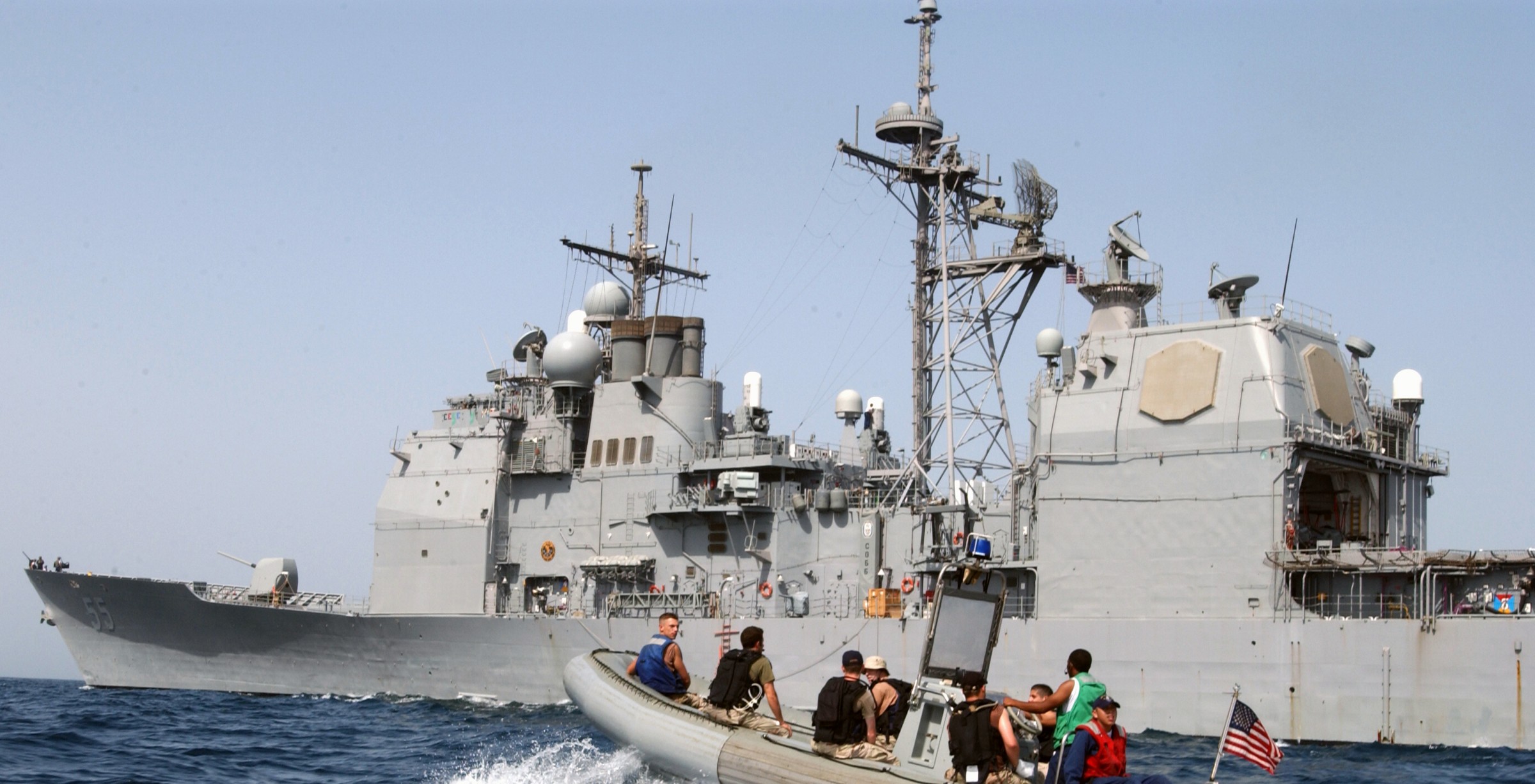 Gulf of Oman - May 2004 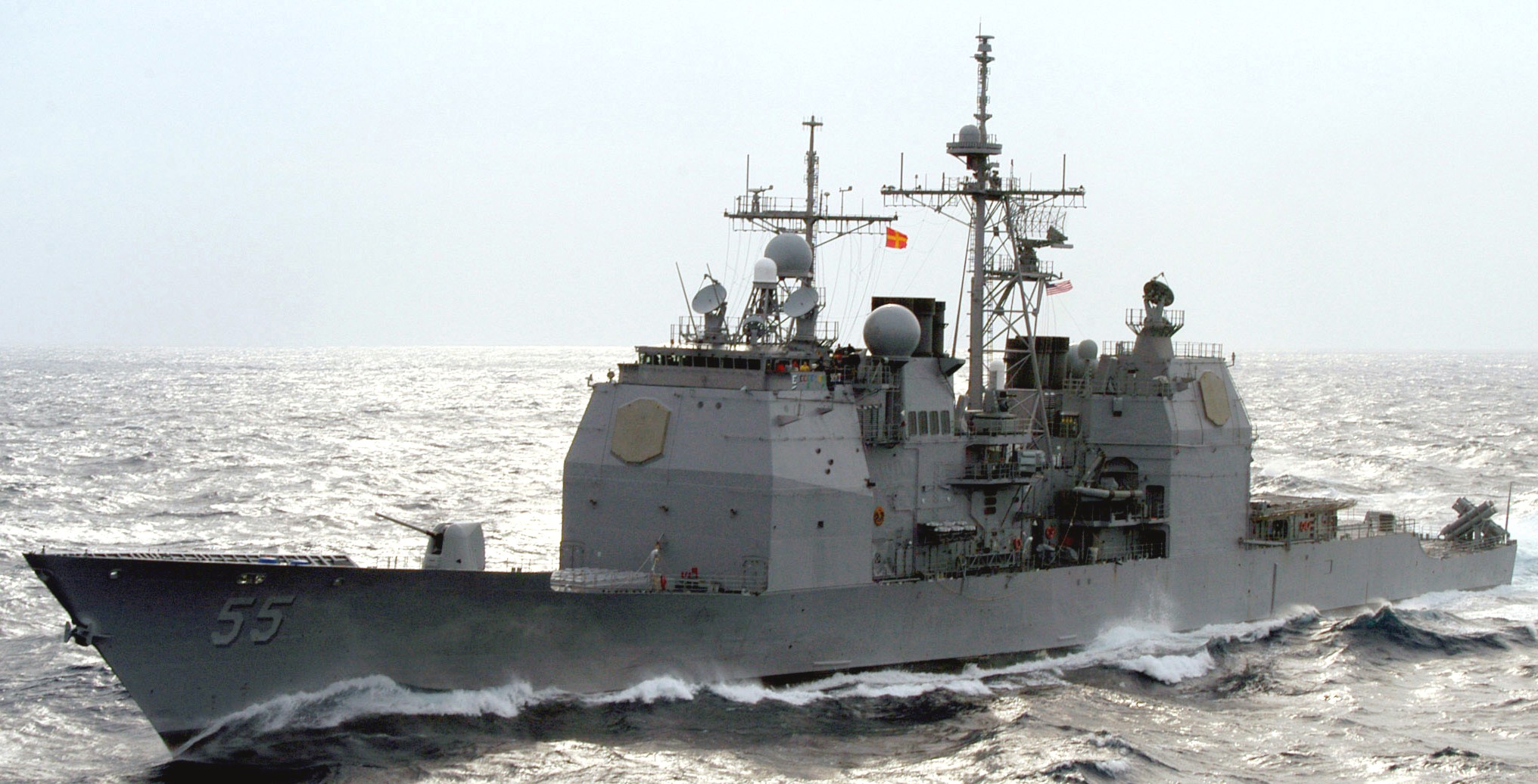 Atlantic Ocean - February 2004 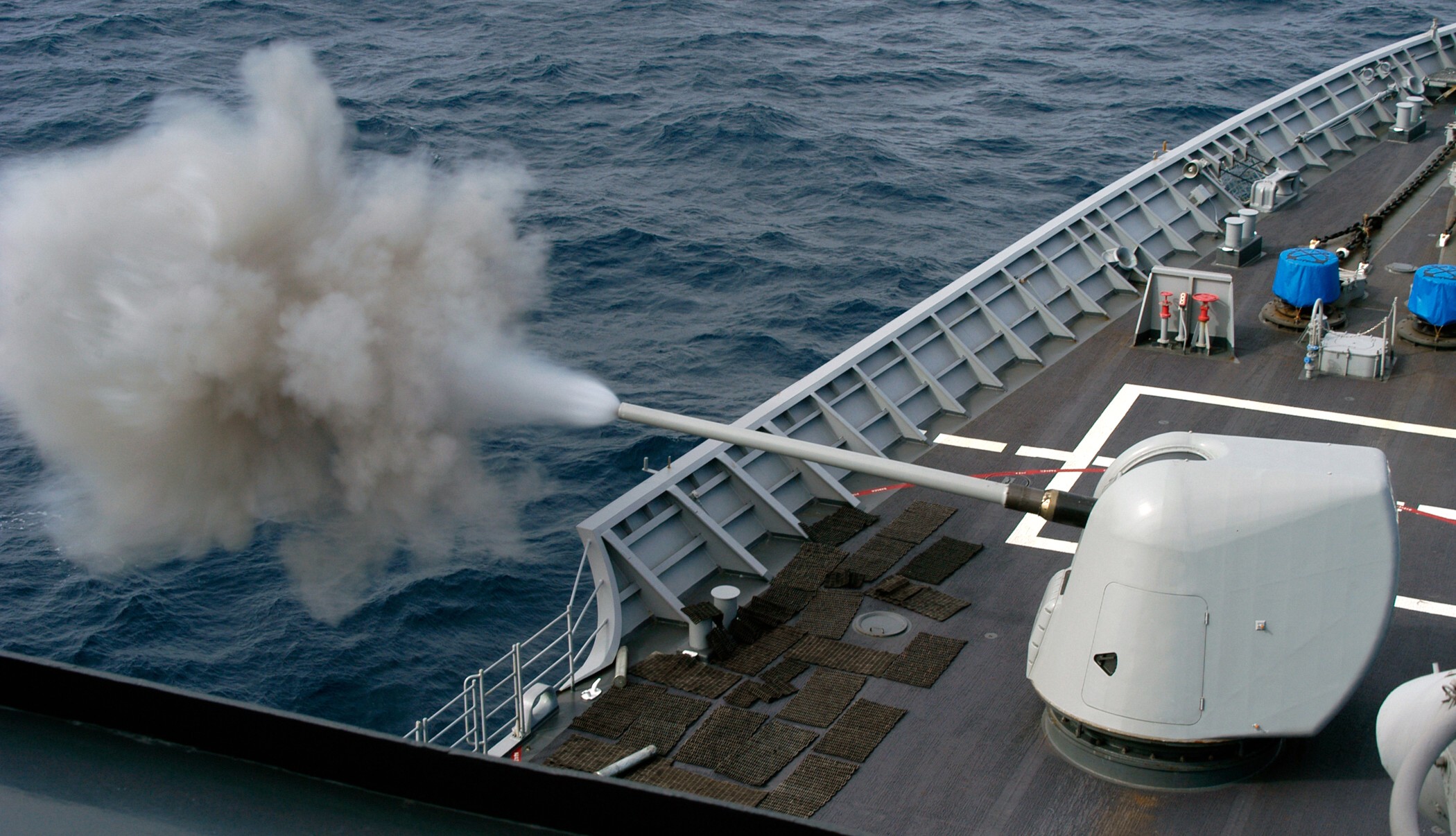 Mk.45 Mod.2 gun fire exercise - Atlantic Ocean - February 2004 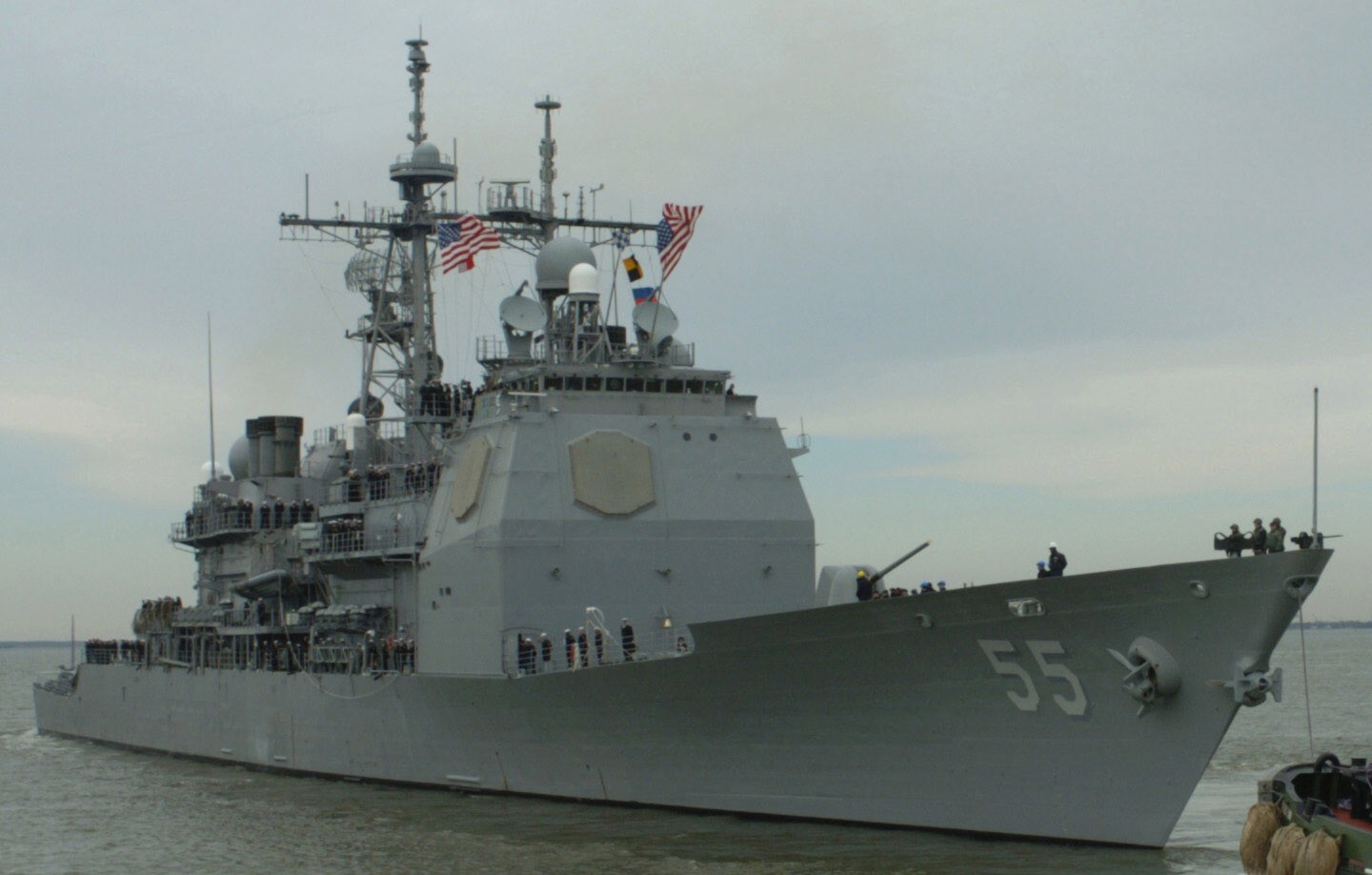 departing Naval Station Norfolk, Virginia - February 2004 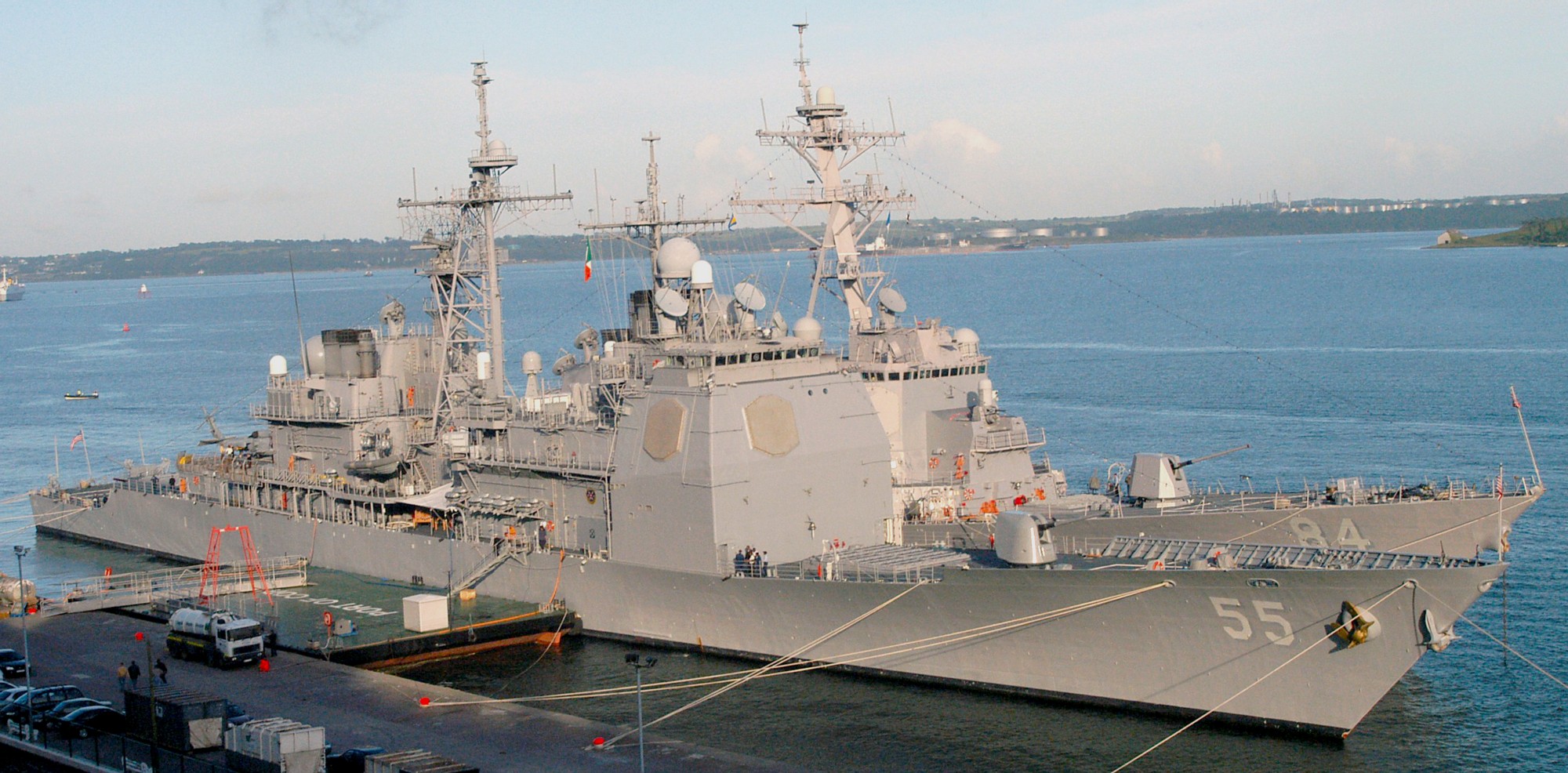 Cobh Cork, Ireland - June 2003 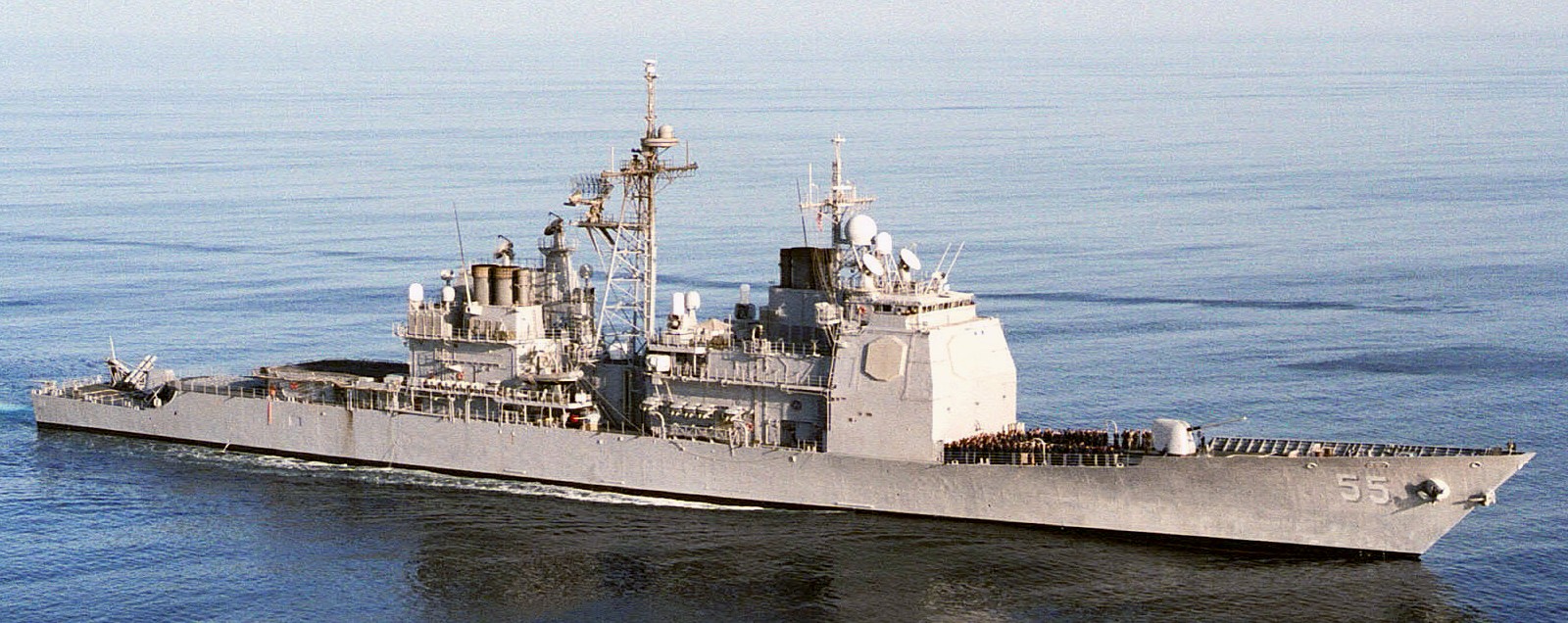 Operation Enduring Freedom - Arabian Sea - November 2001 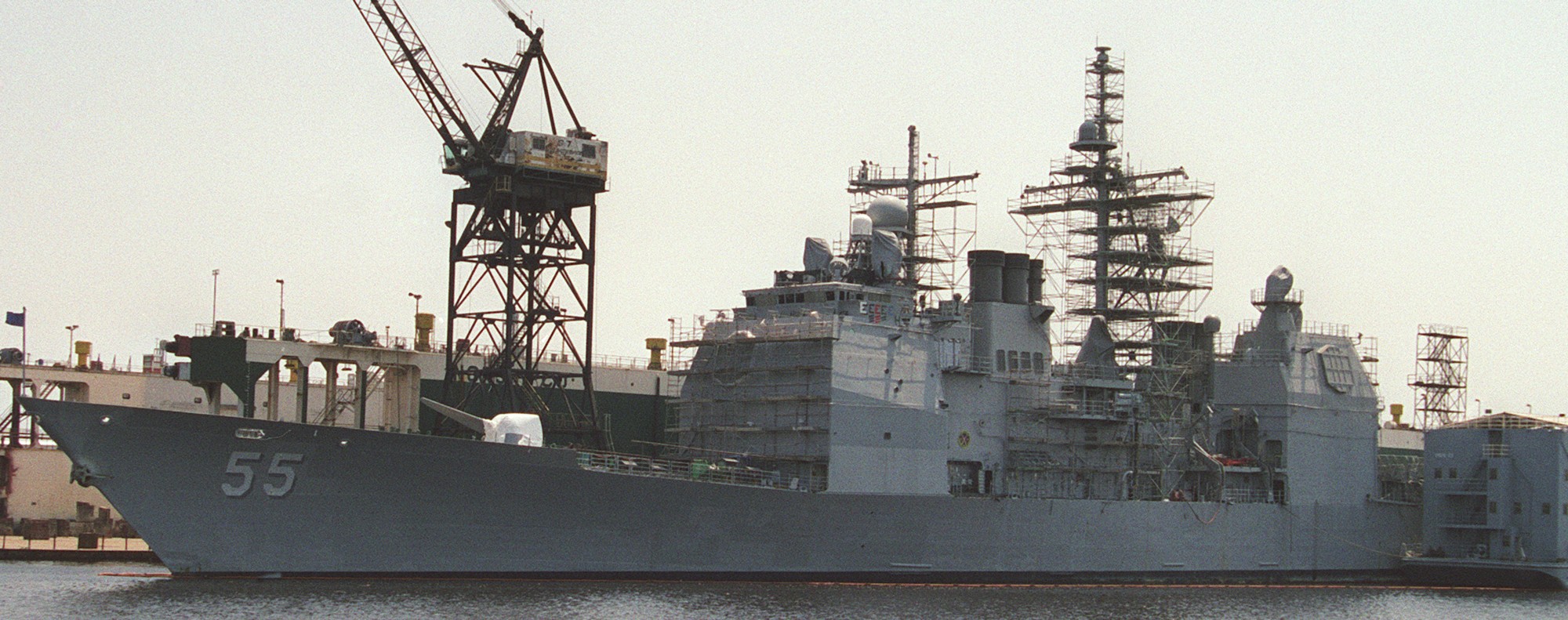 maintenance period at Naval Station Norfolk, Virginia - May 2000 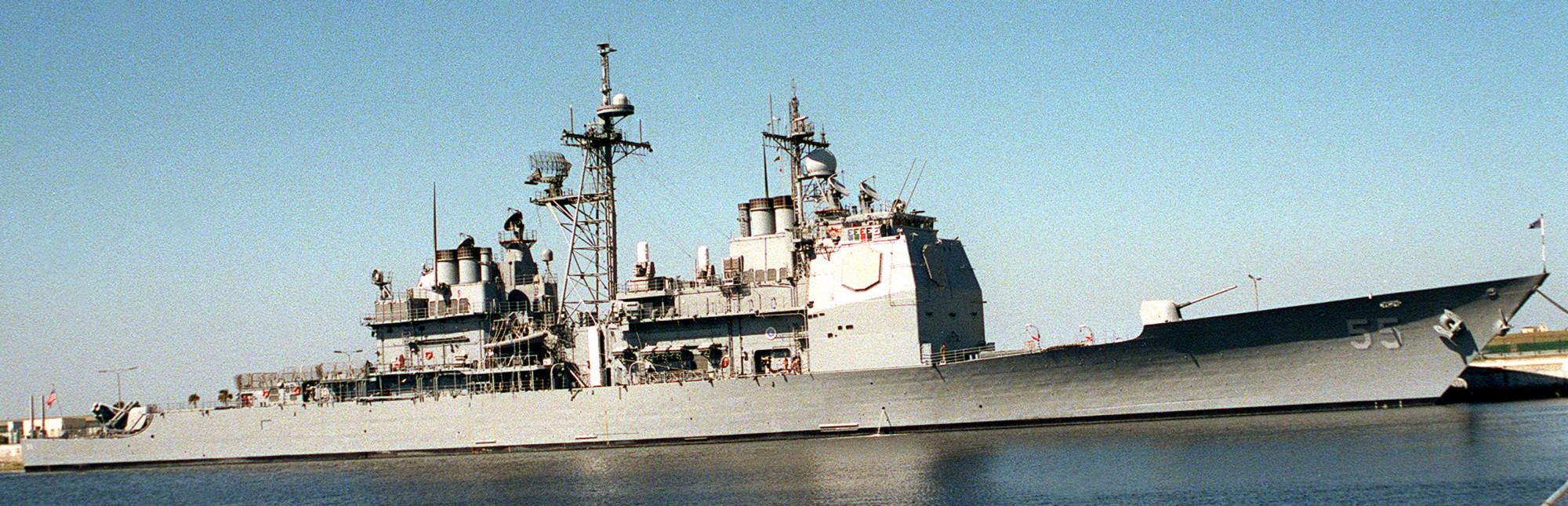 Naval Station Mayport, Florida - March 1994 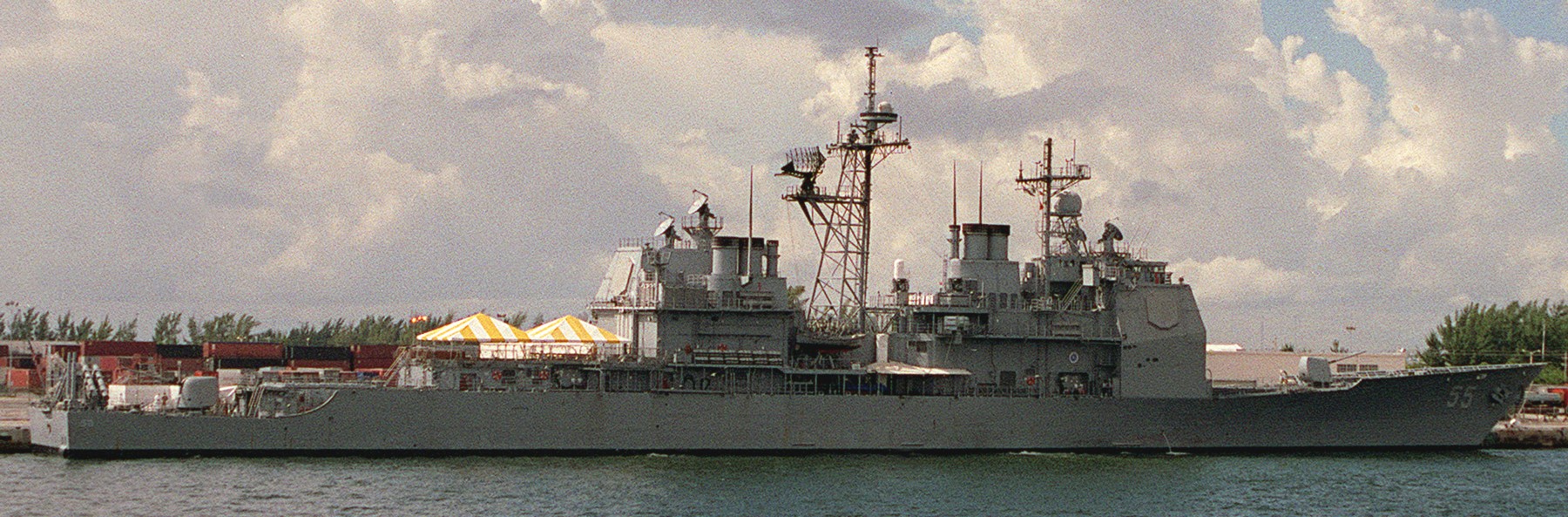 Port Everglades, Florida - September 1993 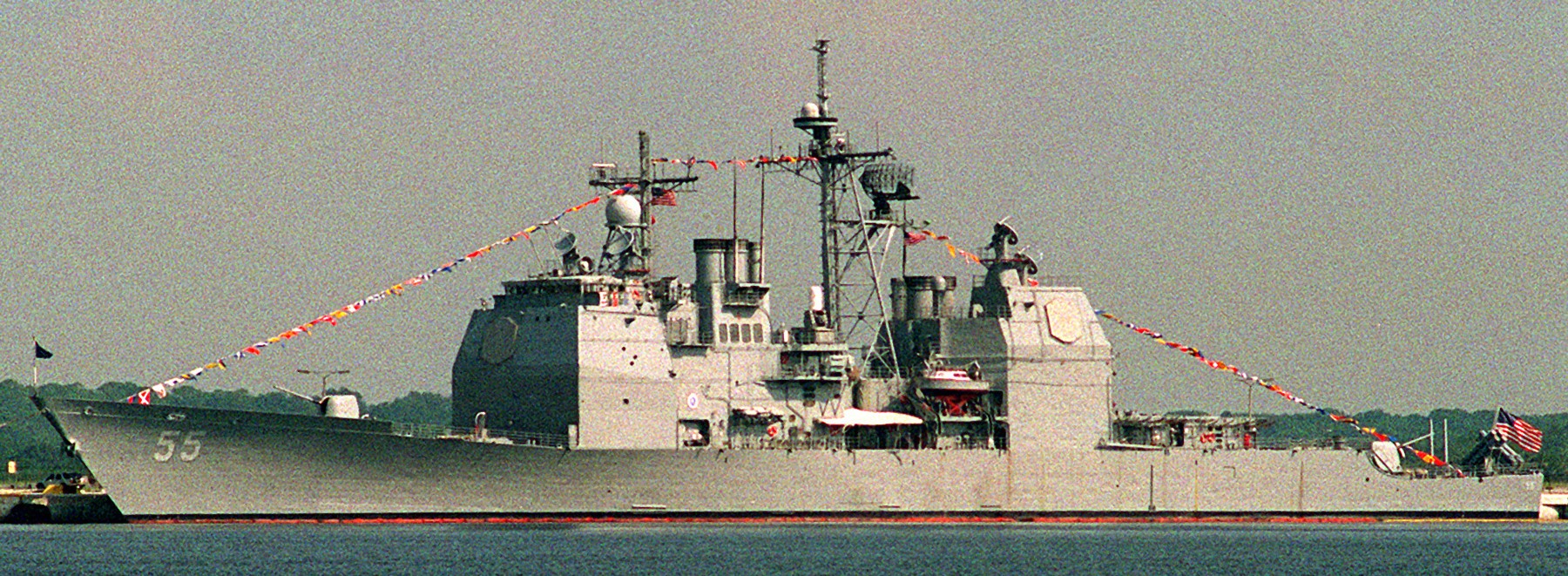 Naval Station Mayport, Florida - July 4, 1993 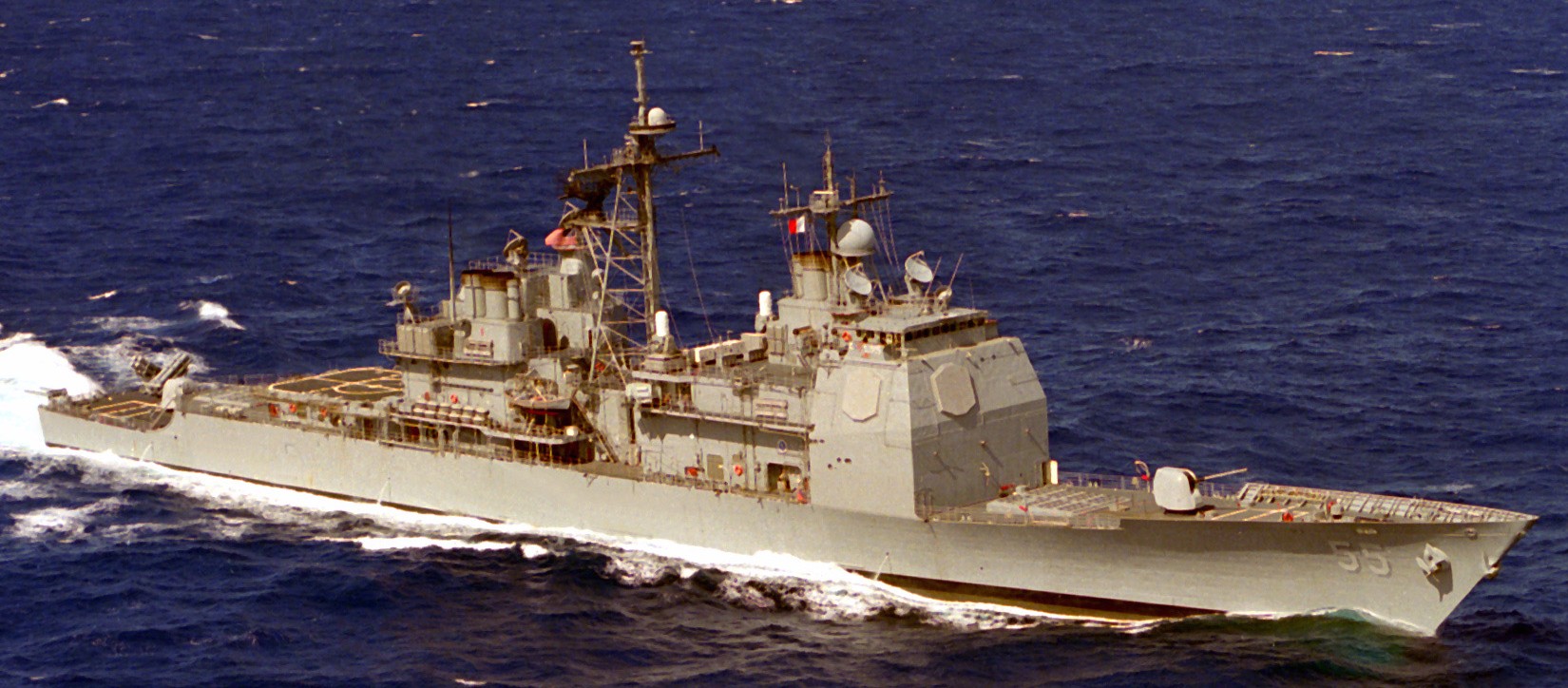 Atlantic Ocean - October 1992 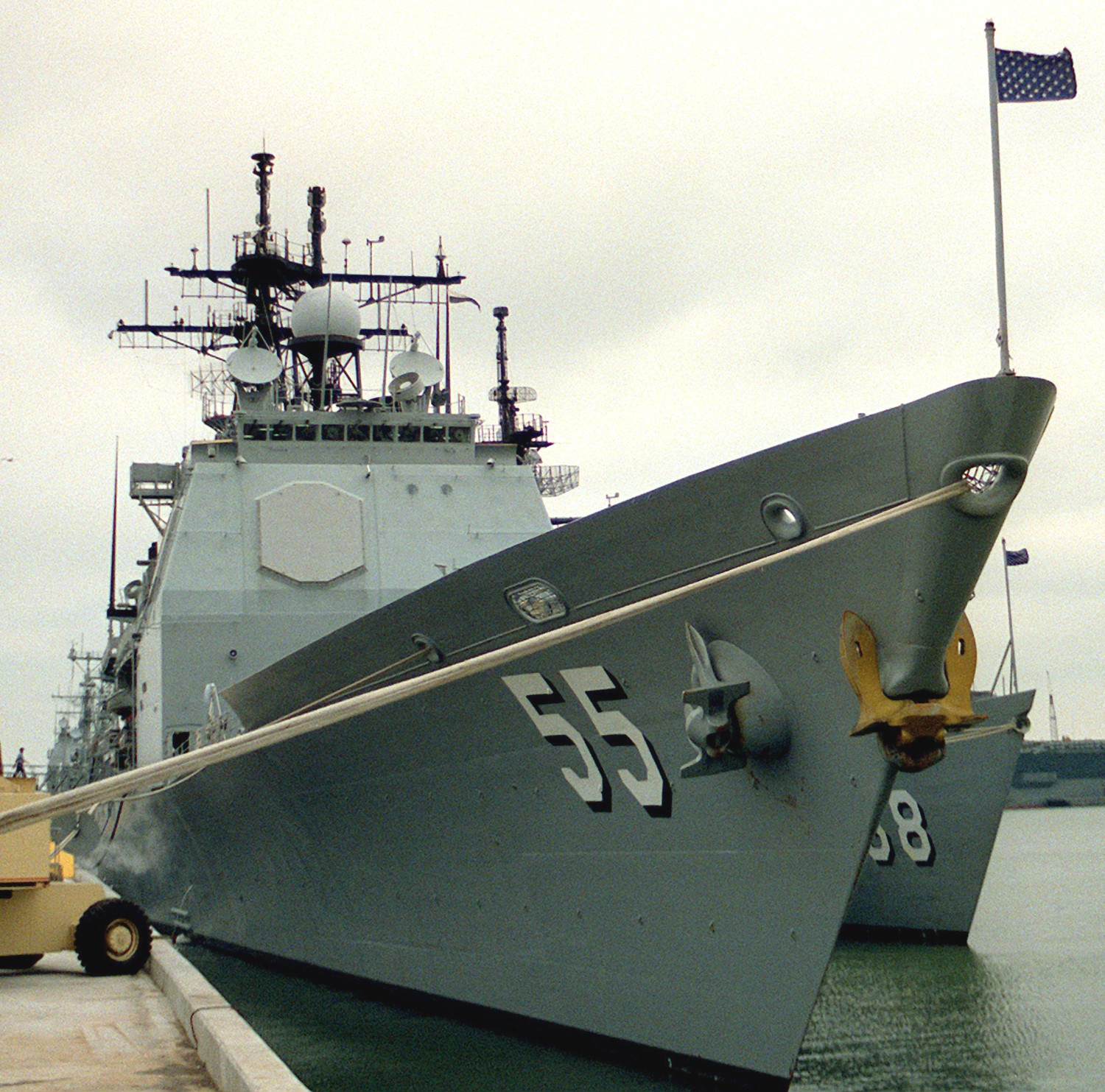 Naval Station Mayport, Florida - January 1992 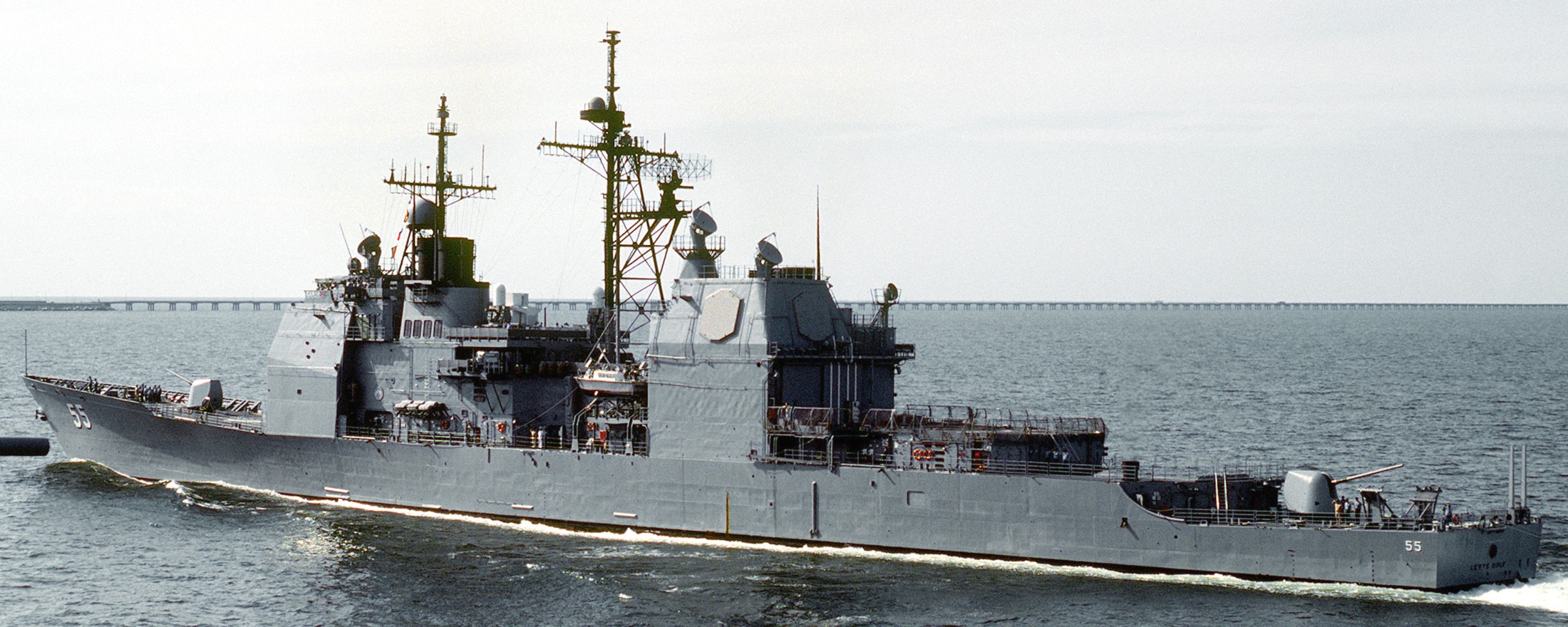 arriving at Naval Station Norfolk, Virginia - August 1990 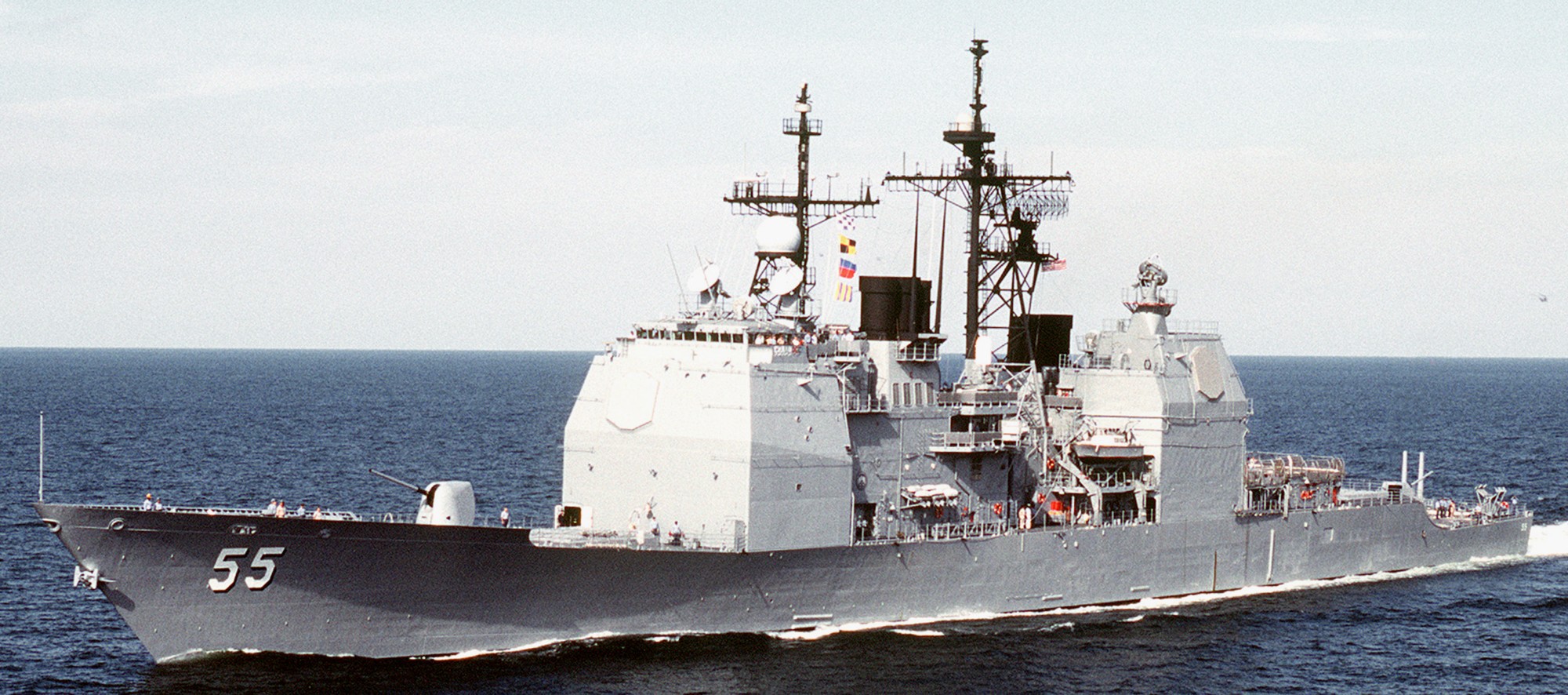 off Virginia - August 1990 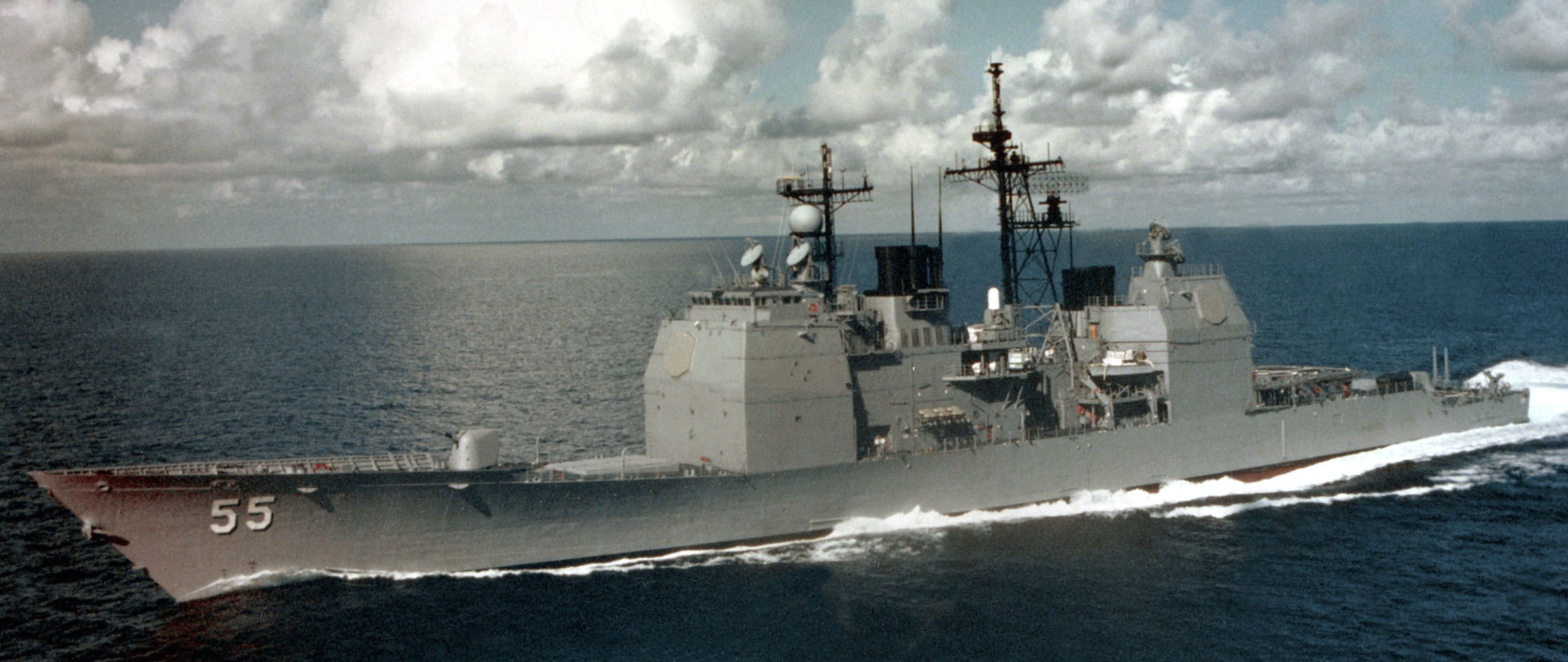 August 1988 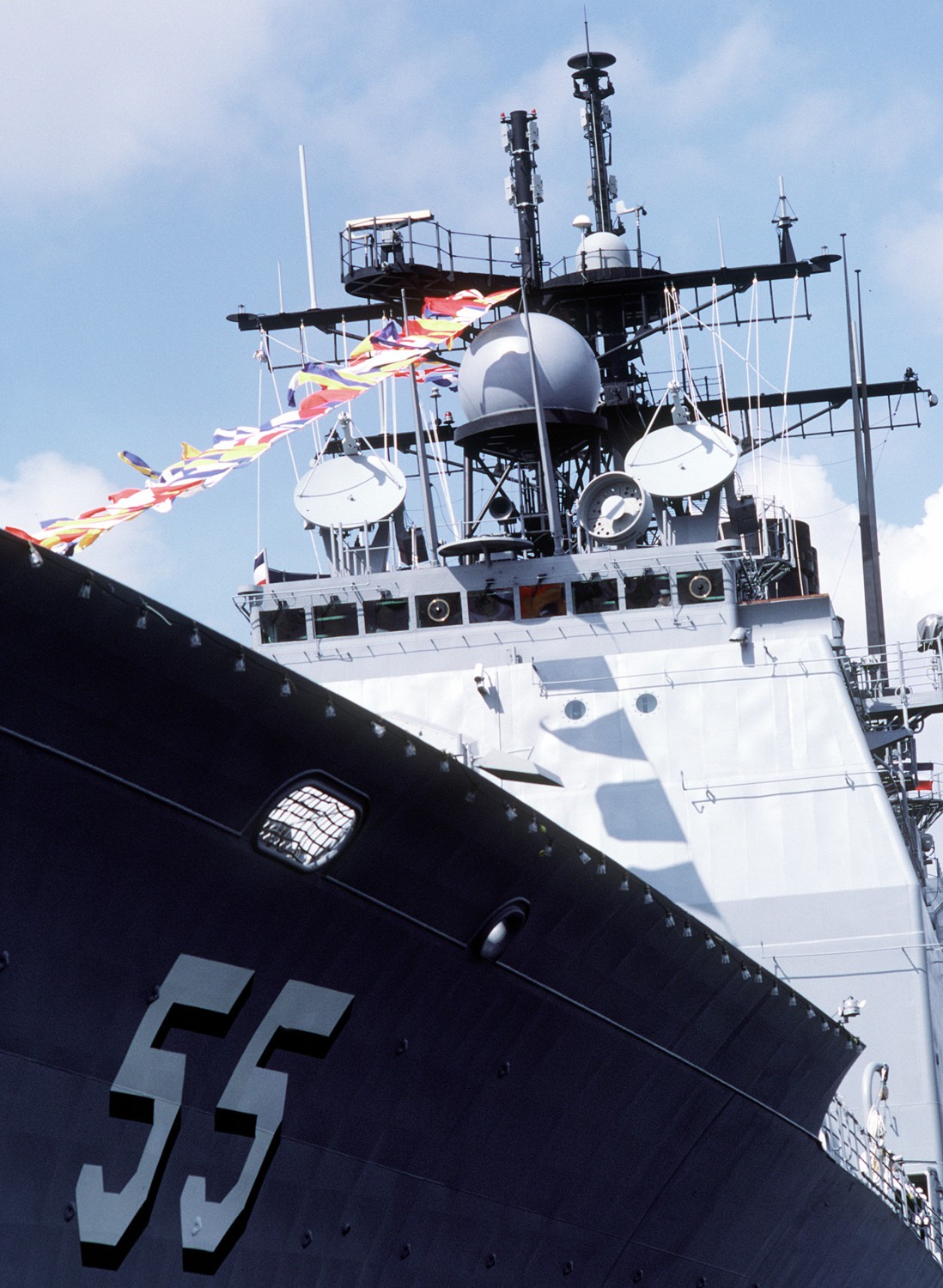 commissioning ceremony in Fort Lauderdale, Florida - September 26, 1987 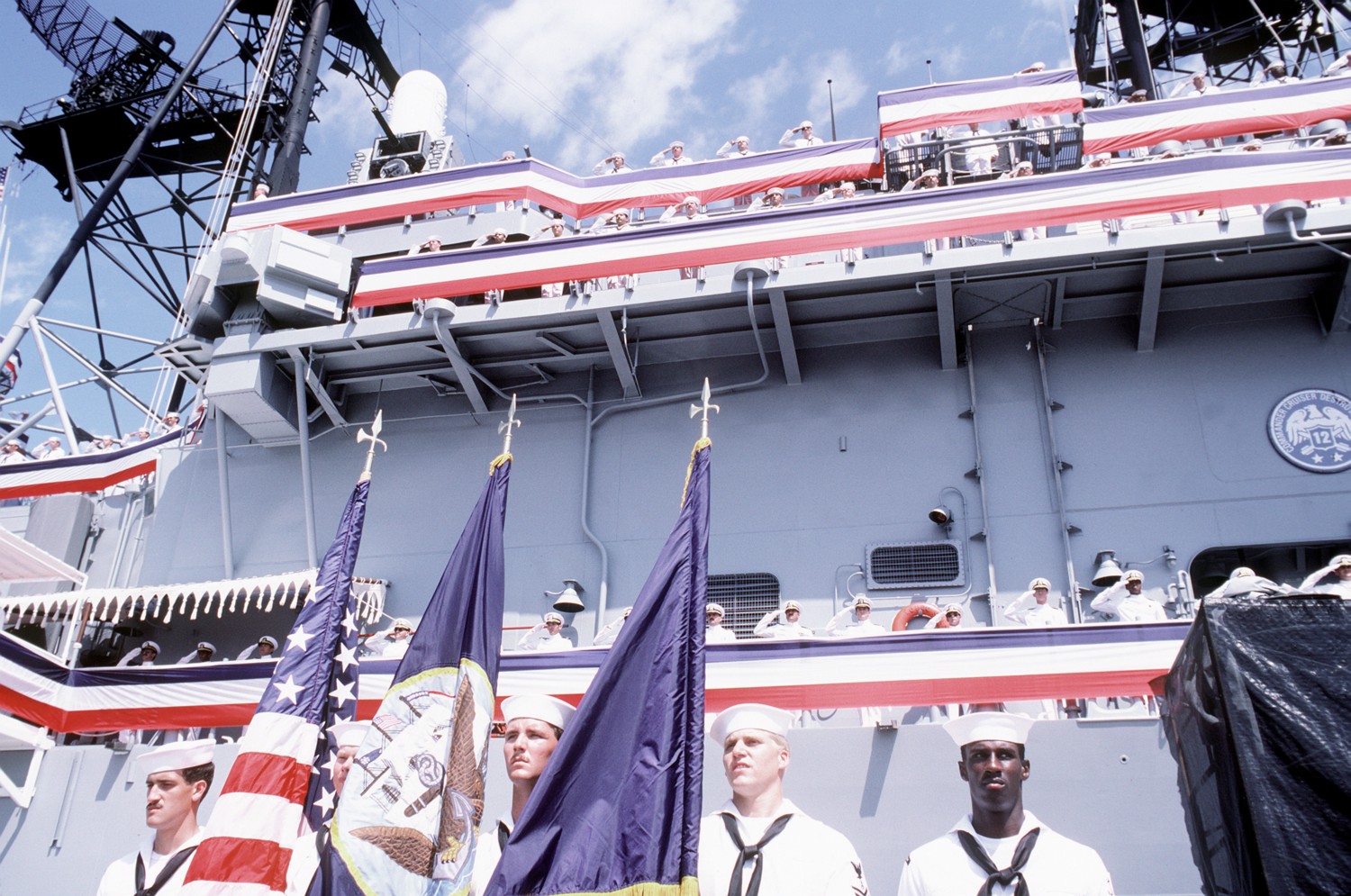 commissioning ceremony in Fort Lauderdale, Florida - September 26, 1987 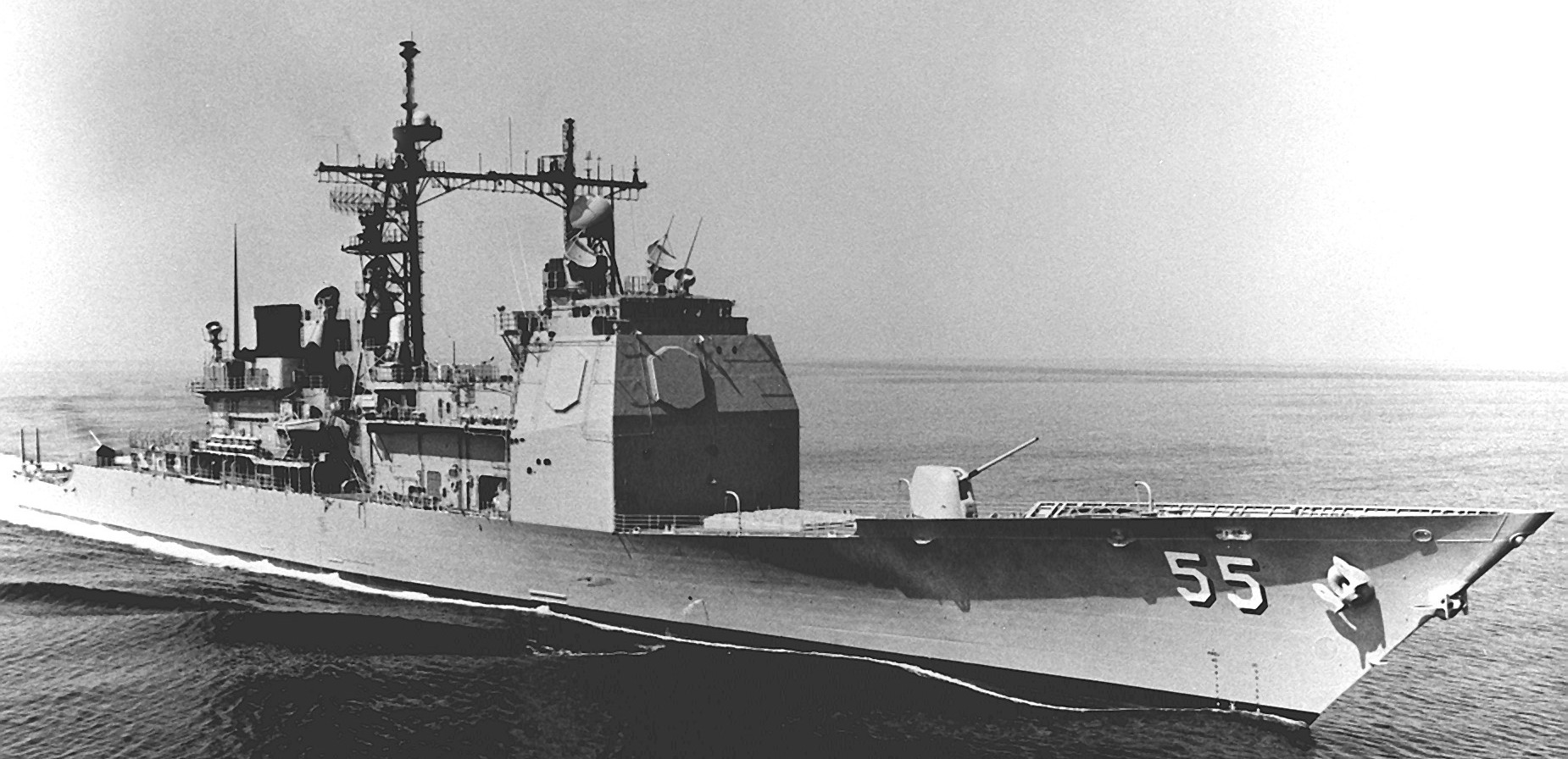 trials - Gulf of Mexico - 1987 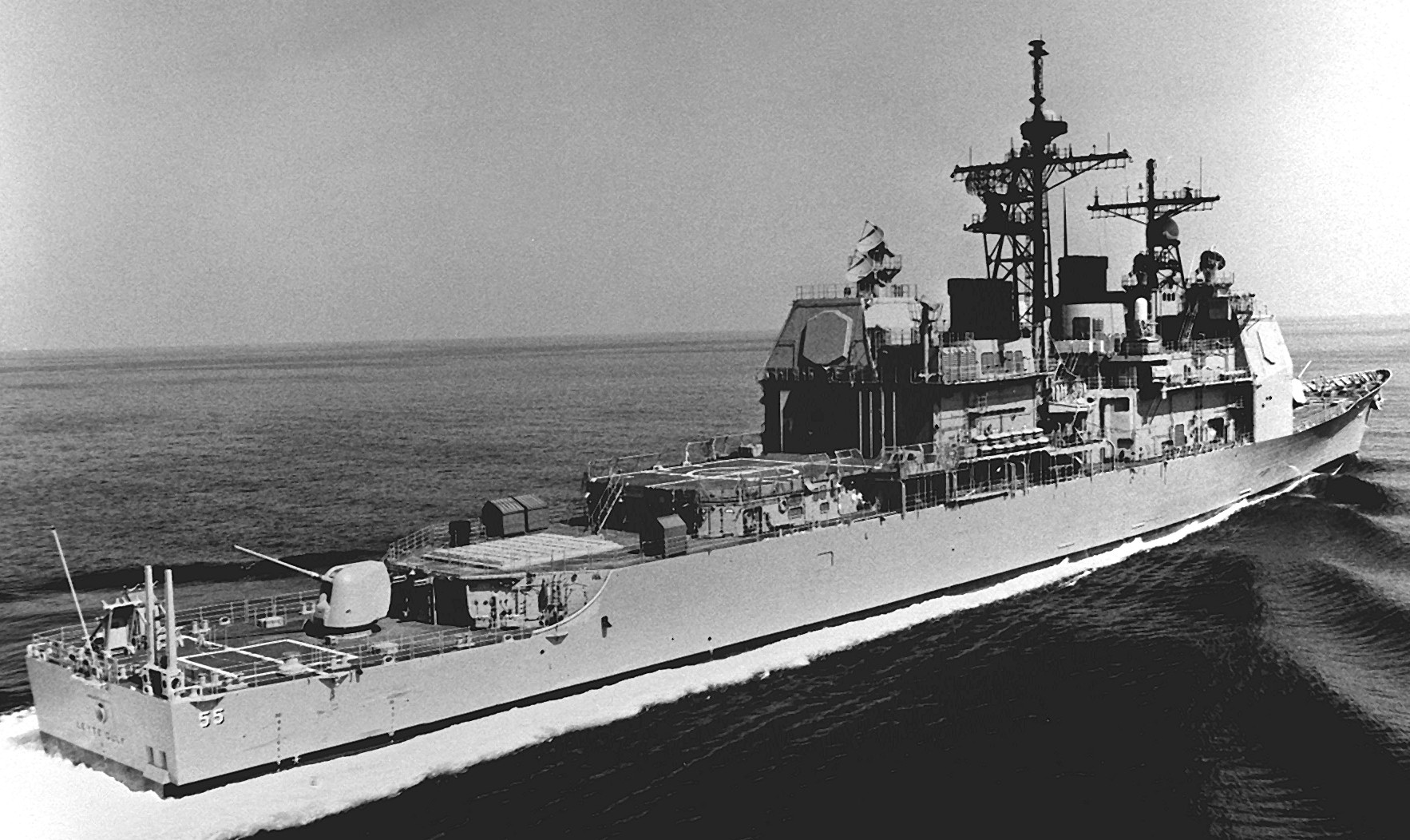 trials - Gulf of Mexico - 1987 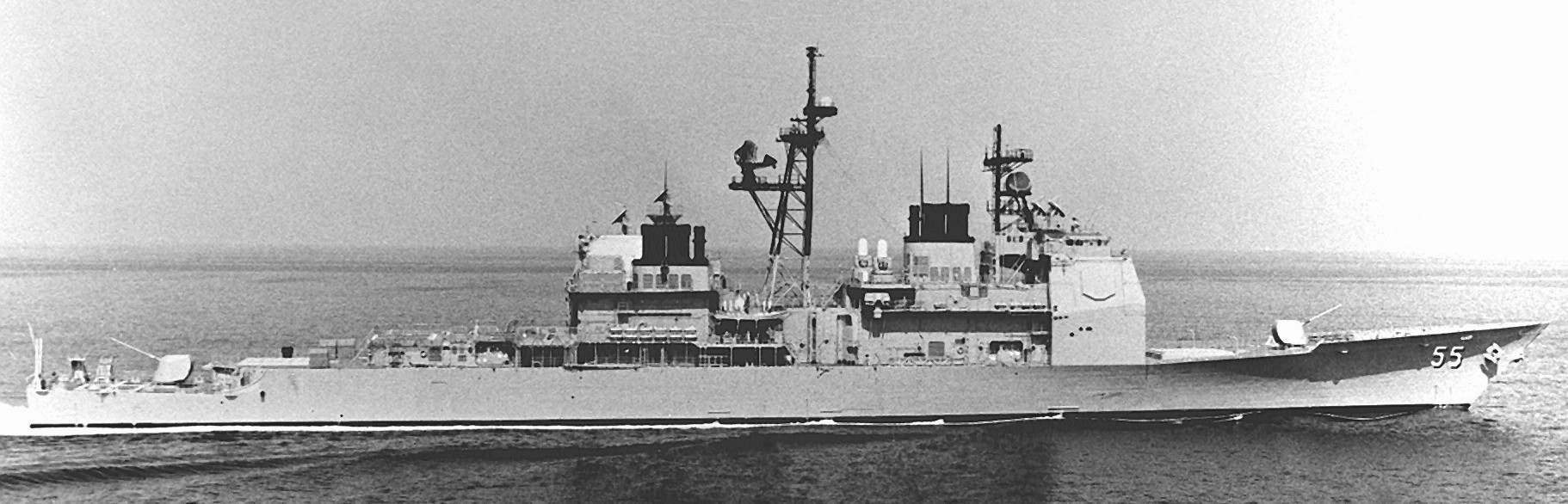 trials - Gulf of Mexico - 1987 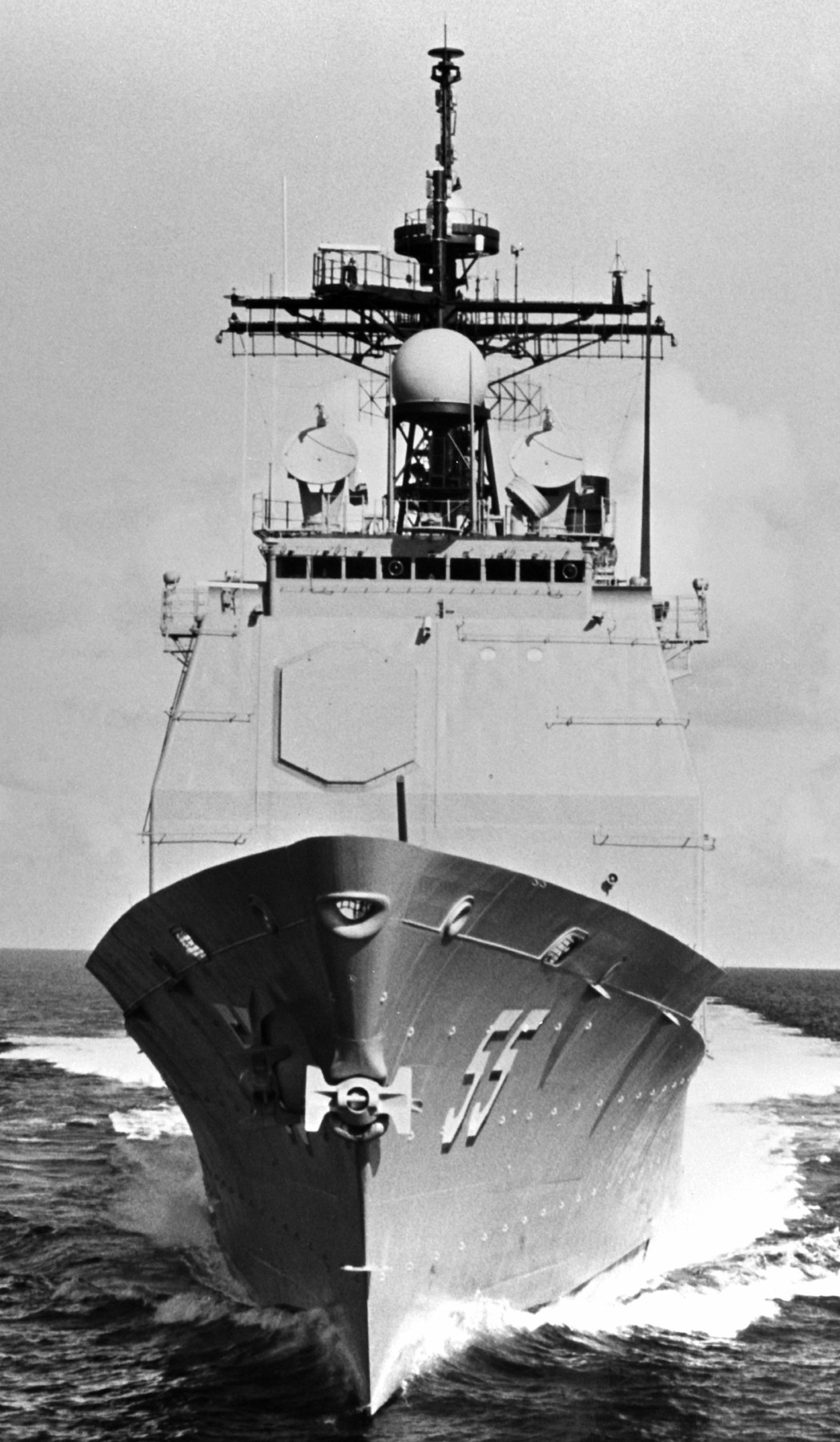 trials - Gulf of Mexico - 1987 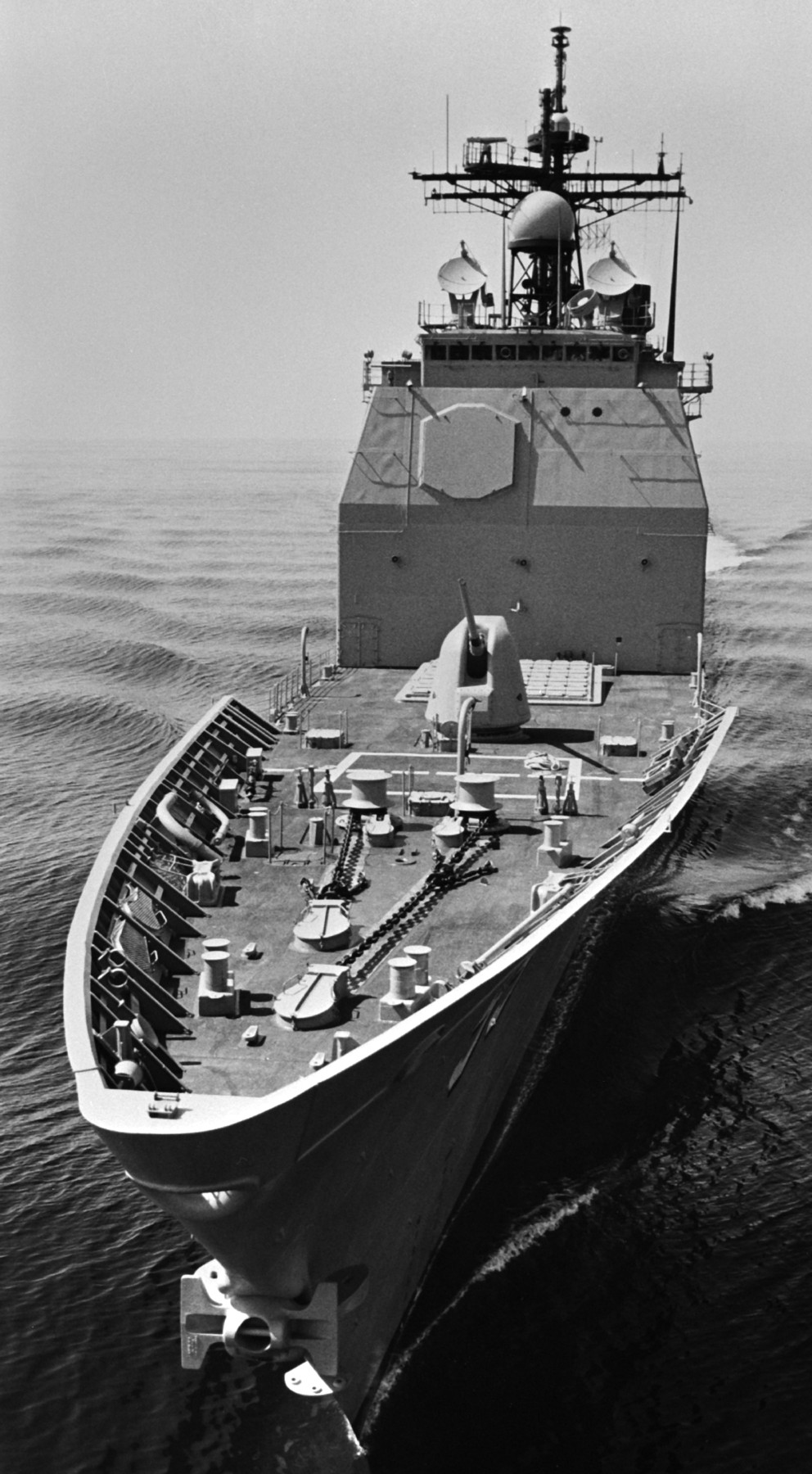 trials - Gulf of Mexico - 1987 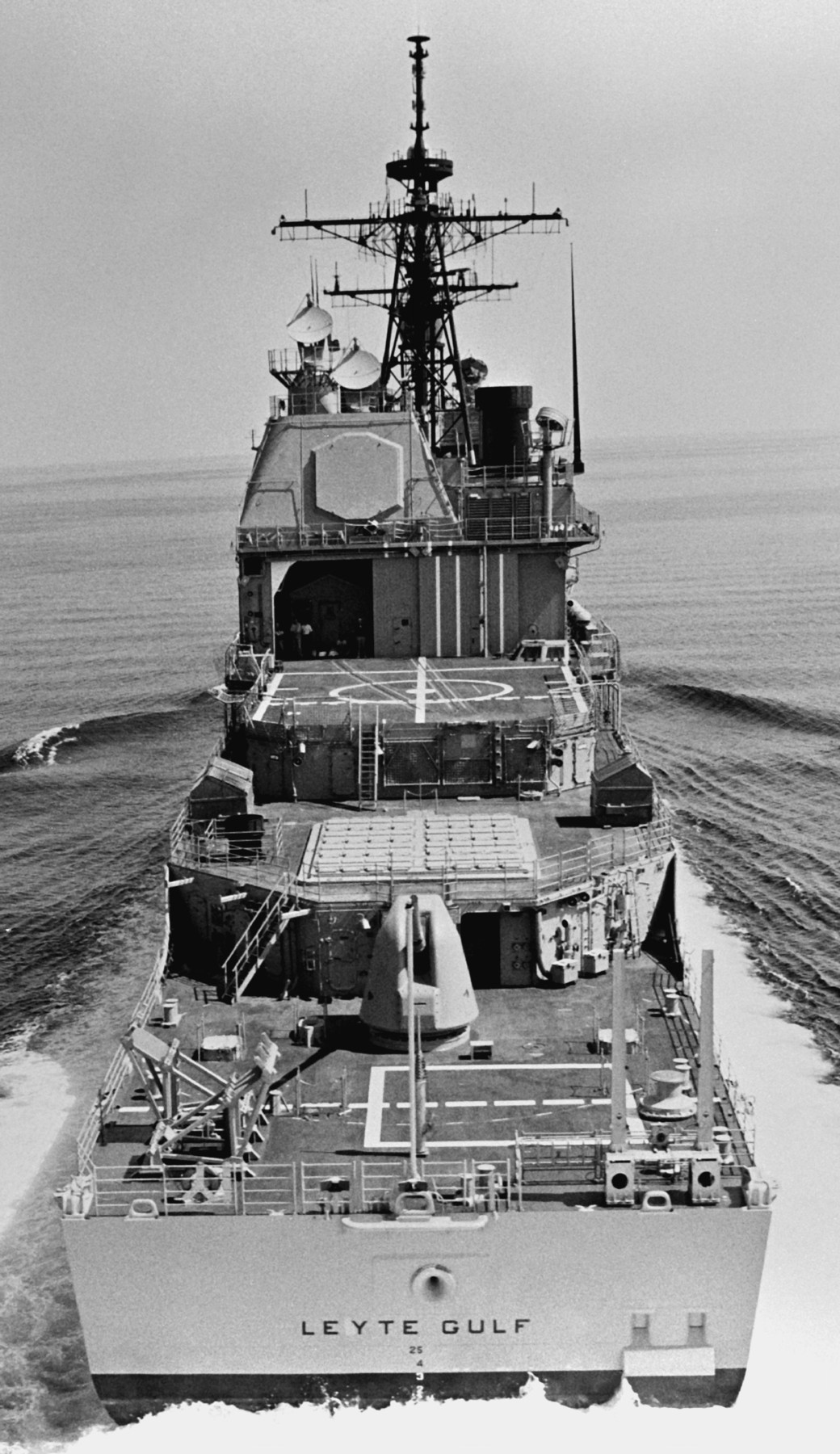 trials - Gulf of Mexico - 1987 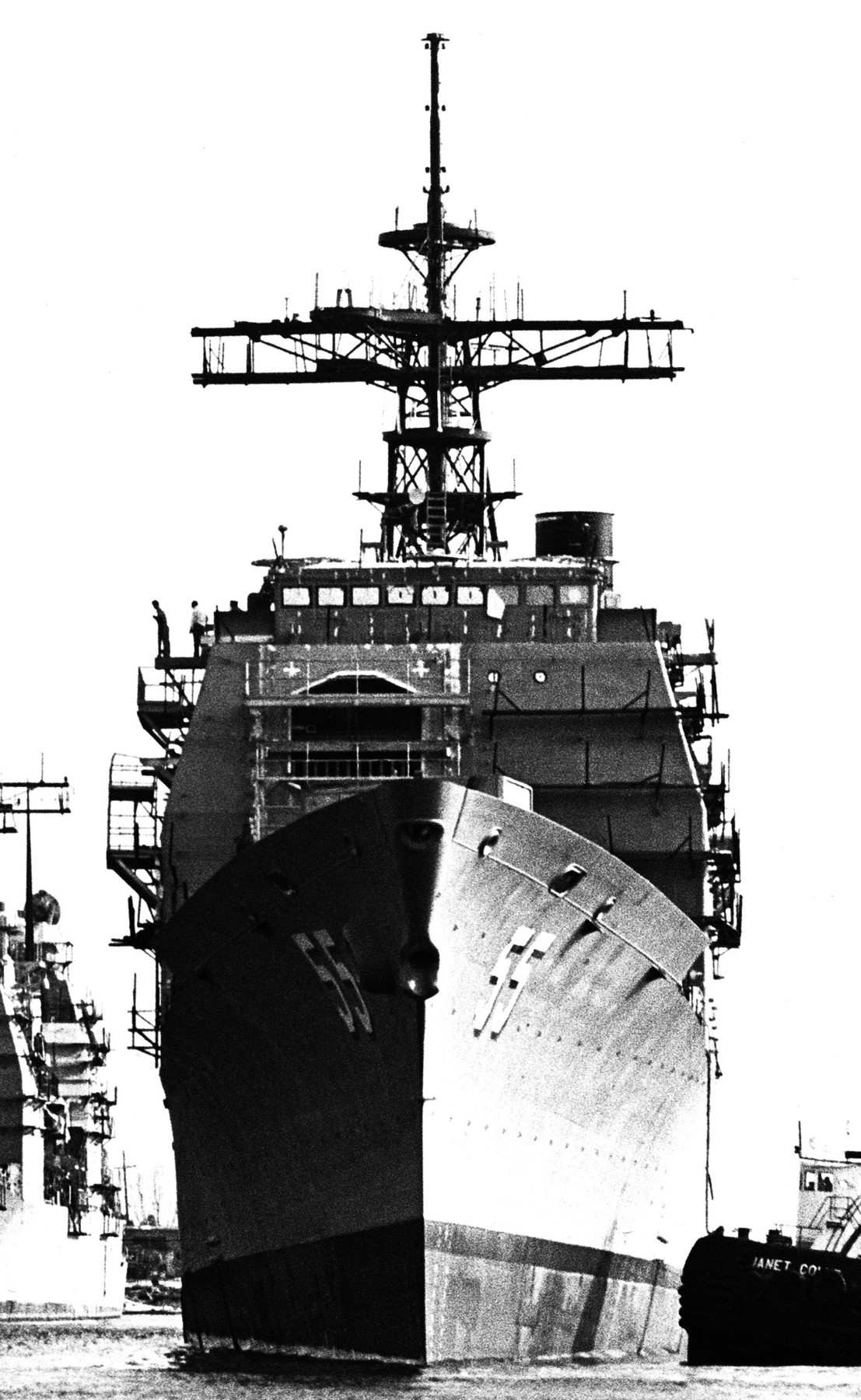 after launching at Ingalls Shipbuilding, Pascagoula, Mississippi - June 1986 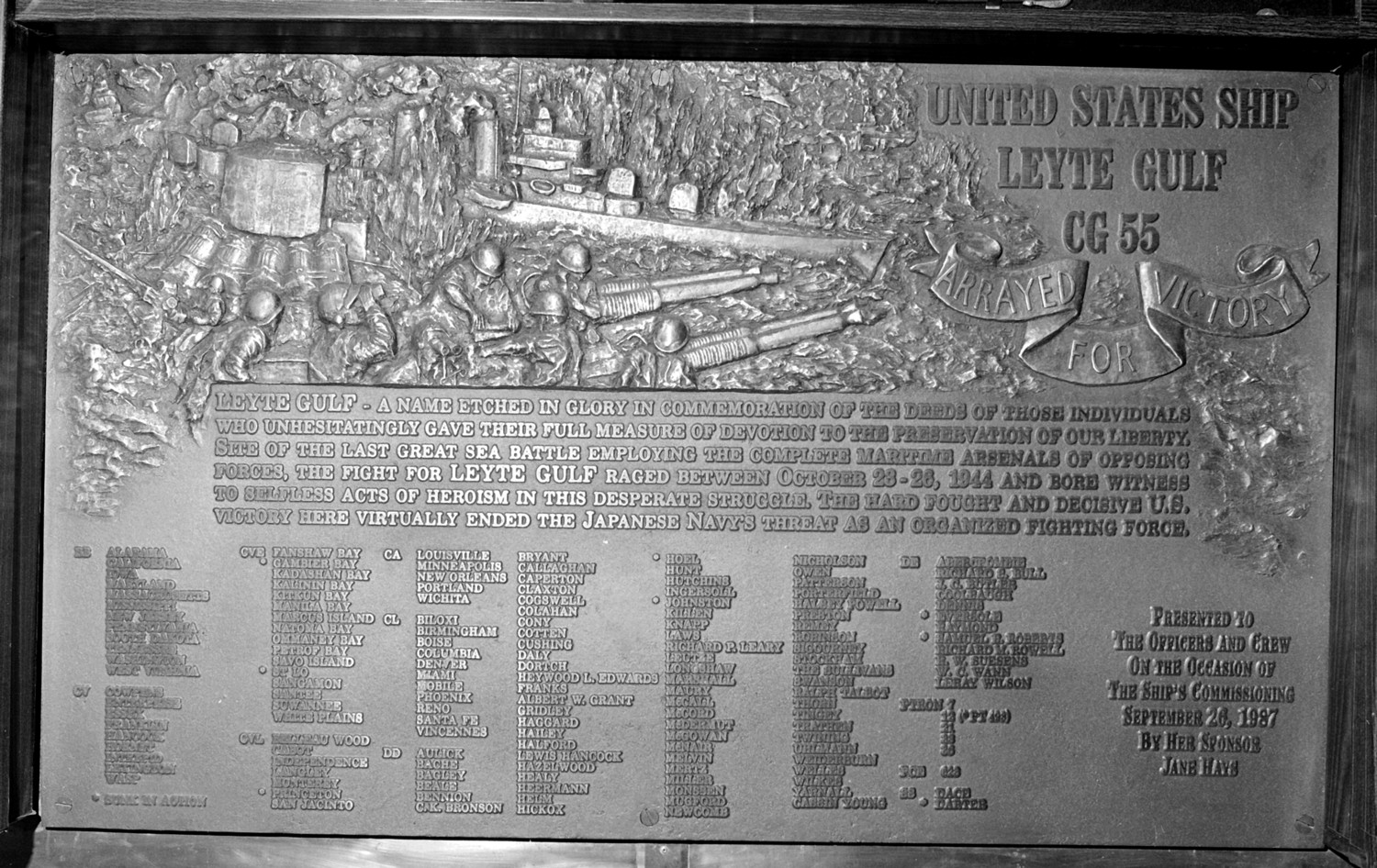 commemoration plaque aboard the ship 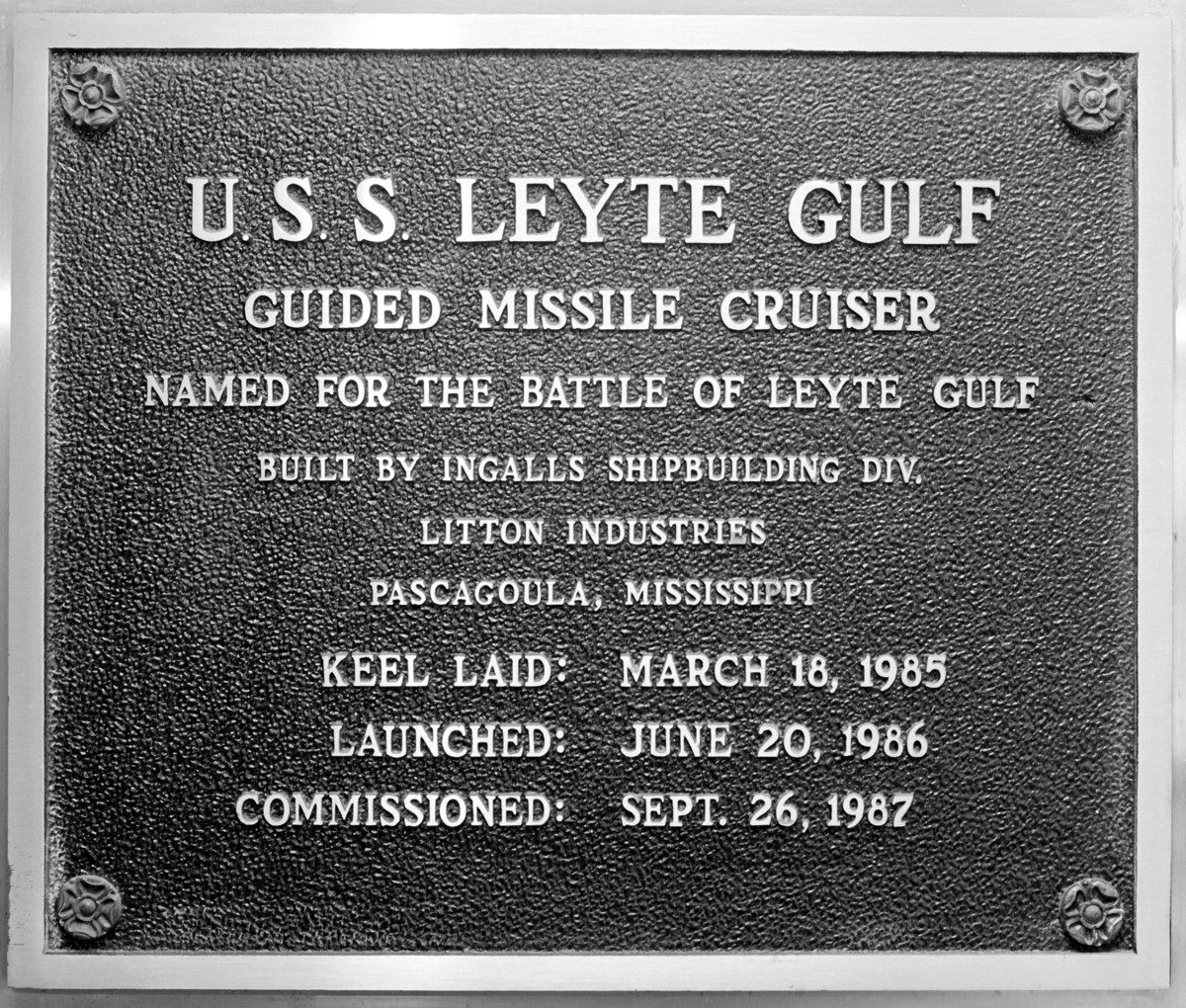 ship's plaque |
||
|
USS Leyte Gulf (CG 55): Leyte Gulf (CG-55) was laid down 18 March 1985 by Ingalls Shipbuilding, Pascagoula MS; launched 20 June 1986; and commissioned 26 September 1987. She served in the Arabian Gulf in 1991 in support of Operations Desert Shield and Desert Storm, where she launched Tomahawk cruise missiles at targets in Iraq, and served as local Anti-Air Warfare Commander for a four carrier battle force. In October 1992, she provided support for Operation Provide Comfort in the Adriatic Sea, joining other multi-national forces in response to the conflict in former Yugoslavia. As part of New York City's "Fleet Week'93", a celebration honoring the U.S. sea services, Leyte Gulf and the Russian guided missile destroyer Bezuderzhny conducted maneuvering and communication drills 80 miles southeast of New York for a three-hour exercise on 1 June. The two ships communicated using radio, signal flags and flashing light while maneuvering in formation. The ships also practiced rescue at sea operations. The exercise was part of an ongoing professional exchange between the two navies. In July 1993, Leyte Gulf operated in the Caribbean Sea supporting for the war on drugs. She coordinated several efforts that prevented over 100 million tons of cocaine from reaching the United States. Following a Selected Restricted Availability, which was completed early and under budget, she conducted a successful launch of the new BLOCK III Tomahawk missile in the Gulf of Mexico. The missiles traveled over 600 miles downrange, meeting 27 action points, arriving on target and on time. In July 1994, Leyte Gulf deployed to the Red Sea and Arabian Gulf in support of Operations Southern Watch and Vigilant Warrior. During this critical time, she served as the principle "Ready Strike" platform for United States Naval Forces Central Command, and was integrated into operations with two different Carrier Battle Groups. In October 1994, she made a high-speed, 3,600-mile transit to the Arabian Gulf (in just five days) as 80,000 Iraqi troops moved towards the Kuwaiti border in an act of aggression. As the first principle warship on the scene, stationed 15 miles off the Iraqi coast, Leyte Gulf provided a significant, visible deterrent to any planned invasion. The ship was praised by the Secretary of Defense and the CNO for her critical role in deterring another war in the region. In her role as Maritime Interception Operations Coordinator in the Northern Arabian Gulf, Leyte Gulf conducted over fifty boardings, resulting in the capture and diversion of five vessels, accounting for 90 percent of the diversions since the inception of operations in 1990. These efforts resulted in the capture of over 25,000 tons of contraband Iraqi oil. She changed homeport on 30 July 1997, from Mayport, FL, to Naval Station Norfolk, VA. The guided-missile cruiser came to Norfolk under a realignment plan that allowed Carrier Group Eight's two cruisers to be collocated, to improve maintenance and training efficiencies. The move took place after her recently-completed deployment and just prior to a maintenance period. Leyte Gulf deployed in the Adriatic Sea for Operation Allied Force as part of the Theodore Roosevelt (CVN-71) Battle Group. The battle group, which arrived in the Mediterranean on 3 April 1999, was originally slated to deploy directly to the Persian Gulf to relieve the Enterprise (CVN-65) Battle Group, but was ordered by Secretary of Defense Cohen to remain in the area to suppport Operation Allied Force. It returned home from deployment in September 1999. As part of the George Washington (CVN-73) Carrier Battle Group, and in response to the terrorist attacks of 11 September 2001, Leyte Gulf set sail in support of defense and humanitarian efforts off the coast of New York before she deployed on 19 September 2001, as part of the Theodore Roosevelt Carrier Battle Group, to the Mediterranean, and "to points East" in support of Operation Enduring Freedom. The Theodore Roosevelt Carrier Battle Group transited the Suez Canal on 13 October and arrived in the Arabian Sea on 15 October, before returning home in April 2002. Leyte Gulf departed Norfolk 17 February 2004 to join the Wasp Expeditionary Strike Group. As part of the Wasp Expeditionary Strike Group, she joined the Albanian military for exercise Adriatic PHIBLEX 04-5 from 8 to 12 March 2004. She returned to Norfolk 13 August 2004. On 15 September 2007, there was a fire aboard Leyte Gulf as she underwent an extensive modernization program in BAE Systems Shipyard in Norfolk, Virginia. Initially the fire received national attention due to the possibility that it was a terrorist incident, however, it was quickly revealed to be an industrial accident. Five shipyard workers were injured in the incident, one seriously, but no naval personnel were involved. In February 2011, Leyte Gulf was involved in an incident with Somali pirates after they captured the United States flagged yacht Quest. The cruiser returned to Norfolk on 15 July 2011. During her deployment, she had participated in operations which had captured 75 Somali pirates and had missile strikes by her carrier strike group against the Libyan government. In January 2015, Leyte Gulf returned from a six-month deployment to the Mediterranean Sea. The ship served as flagship of Standing NATO Maritime Group 2 for much of the deployment. In August 2022 Leyte Gulf was again deployed to the Mediterranean Sea. She returned to Norfolk on 09 June 2023. - - - - - another history: USS Leyte Gulf (CG 55) is an TICONDEROGA class AEGIS Guided Missile Cruiser home-ported in Norfolk VA. She was commissioned in Fort Lauderdale, FL in 1987. She served in the Persian Gulf for operation DESERT STORM. As part of New York City's "Fleet Week '93", a celebration honoring the U.S. sea services, USS Leyte Gulf and the Russian guided missile destroyer Bezuderzhny conducted maneuvering and communication drills 80 miles southeast of New York for a three-hour exercise on June 1. The two ships communicated using radio, signal flags and flashing light while maneuvering in formation. The ships also practiced rescue at sea operations. The exercise was part of an ongoing professional exchange between the two navies. USS Leyte Gulf returned to Mayport, FL, on January 9, 1995, after a successful deployment to the Red Sea and Arabian Gulf conducting Maritime Interception Operations in support of United Nations sanctions against Iraq. There, the Leyte Gulf steamed independently, providing ready strike capabilities to the U.S. Naval Forces Central Command. The ship also performed duties as anti-air warfare commander and strike coordinator for aircraft carriers USS George Washington (CVN 73) and USS Dwight D. Eisenhower (CVN 69) when 80,000 Iraqi troops moved toward the Kuwait border in an act of aggression. During the deployment, Leyte Gulf's efforts resulted in the capture of more than 25,000 tons of contraband Iraqi oil. In 1996, the USS Leyte Gulf deployed for six months as part of the USS Theodore Roosevelt (CVN 71) Carrier Battle Group (CVBG). USS Leyte Gulf changed homeport on July 30, 1997, from Mayport, FL, to Naval Station Norfolk, VA. USS Leyte Gulf deployed in the Adriatic Sea for Operation ALLIED FORCE as part of the USS Theodore Roosevelt Battle Group. The Theodore Roosevelt battle group, which arrived in the Mediterranean on April 3, 1999, was originally slated to deploy directly to the Persian Gulf to relieve the USS Enterprise battle group, but was ordered by Secretary of Defense Cohen to remain in the area to support Operation Allied Force. It returned home from deployment in September 1999. As part of the USS George Washington (CVN 73) Carrier Battle Group (CVBG), and in response to the terrorist attacks of September 11, 2001, Leyte Gulf set sail in support of defense and humanitarian efforts off the coast of New York. The Leyte Gulf deployed on September 19, 2001, as part of the Theodore Roosevelt Carrier Battle Group, to the Mediterranean, and "to points East" in support of Operation Enduring Freedom. The Roosevelt Carrier Battle Group transited the Suez Canal on October 13th and arrived in the Arabian Sea on October 15th, before returning home in April 2002. Following an extensive modernization in 2007 at BAE Systems Shipyard in Norfolk, Leyte Gulf in 2008 participated in many exercises off the coast of the United States and went to New York for Fleet week.In 2011 while on deployment with the Enterprise Carrier Strike Group (CSG 12), Leyte Gulf supported anti-piracy operations and counter narcotic operations off the coast of Somalia. USS Leyte Gulf also supported the missile strikes against Lybia. USS Leyte Gulf was involved with the Somali pirate hijacking of the motor vessel Quest in the Indian Ocean and captured 75 Somali pirates. During 2012, USS Leyte Gulf successfully completed an eleven month Extended Selected Restricted Availability (ESRA) and Cruiser Modernization which included significant Combat Systems upgrades and extensive hull, tank and superstructure work. USN |
||
|
The Battle of Leyte Gulf ... was a naval battle of the Pacific Campaign of World War II, fought in the seas around the island of Leyte in the Philippines from 23 October to 26 October 1944. The Japanese intended to repel or destroy the Allied invasion of Leyte. Instead, the Allied navies inflicted a major defeat on the outnumbered Imperial Japanese Navy which took away Japan's strategic force in the Pacific War. The battle is widely considered to be the largest naval battle in history. It was also one of the last major sea battles to use traditional line of battle tactics. Leyte Gulf also saw the first use of kamikaze aircraft by the Japanese. The Australian heavy cruiser HMAS Australia was hit on 21 October, and organized suicide attacks by the "Special Attack Force" began on 25 October. The battles of 1943 drove the Imperial Japanese Army from its bases in the Solomon Islands, and in 1944 a series of Allied amphibious landings supported by large carrier forces captured the Marianas Islands. The Allied victory in the battle of the Philippine Sea in June destroyed the Japanese carrier power and established Allied air and sea superiority over the Western Pacific. This gave the Allies freedom to choose where to strike next. Admiral Chester Nimitz favoured blockading Japanese forces in the Philippines and attacking Formosa (now Taiwan). Possession of Formosa would give the Allies control of the sea routes to Japan from Southern Asia, severing Japan's links with its garrisons, which would then perish from lack of supplies. General Douglas MacArthur favoured an invasion of the Philippines, which also lay across the supply lines to Japan. Leaving the Philippines in Japanese possession would be a blow to American prestige, and a personal affront to MacArthur, who in 1942 had famously vowed to return. President Roosevelt was called in to adjudicate the dispute; he chose the Philippines. The Allied options were equally apparent to the Imperial Japanese Navy. Combined Fleet Chief Toyoda Soemu prepared four "victory" plans: Shō-1 was a major naval operation in the Philippines, Shō-2, -3 and -4 were responses to attacks on Formosa, the Ryukyu Islands and the Kurile Islands respectively. The plans were uncompromising, complex, aggressive operations committing all forces to a decisive battle. Thus, when on 12 October 1944 Nimitz launched a carrier raid against Formosa to make sure that planes based there could not intervene in the Leyte landings, the Japanese put Shō-2 into action, launching wave after wave of attacks against the carriers, losing 600 planes in three days, almost their entire air force, and leaving the Japanese navy without air cover. Shō-1 called for Vice Admiral Jisaburo Ozawa's force to lure the US Third Fleet away from the landings using an apparently vulnerable force of carriers. The Allied landing forces, now lacking air cover, would then be attacked from the west by three Japanese forces: Vice Admiral Takeo Kurita's force, based in Brunei, would enter Leyte Gulf and destroy the Allied landing forces. Rear-Admiral Shoji Nishimura's force and Vice Admiral Kiyohide Shima's force would act as mobile strike forces. The latter three forces would consist of surface ships. The plan was likely to result in the destruction of one or more of the forces, but Toyoda later justified it to his American interrogators as follows: Should we lose in the Philippines operations, even though the fleet should be left, the shipping lane to the south would be completely cut off so that the fleet, if it should come back to Japanese waters, could not obtain its fuel supply. If it should remain in southern waters, it could not receive supplies of ammunition and arms. There would be no sense in saving the fleet at the expense of the loss of the Philippines. |
||
| patches + more | ||
 |
||
|
|
seaforces.org |
USN ships
start page | |